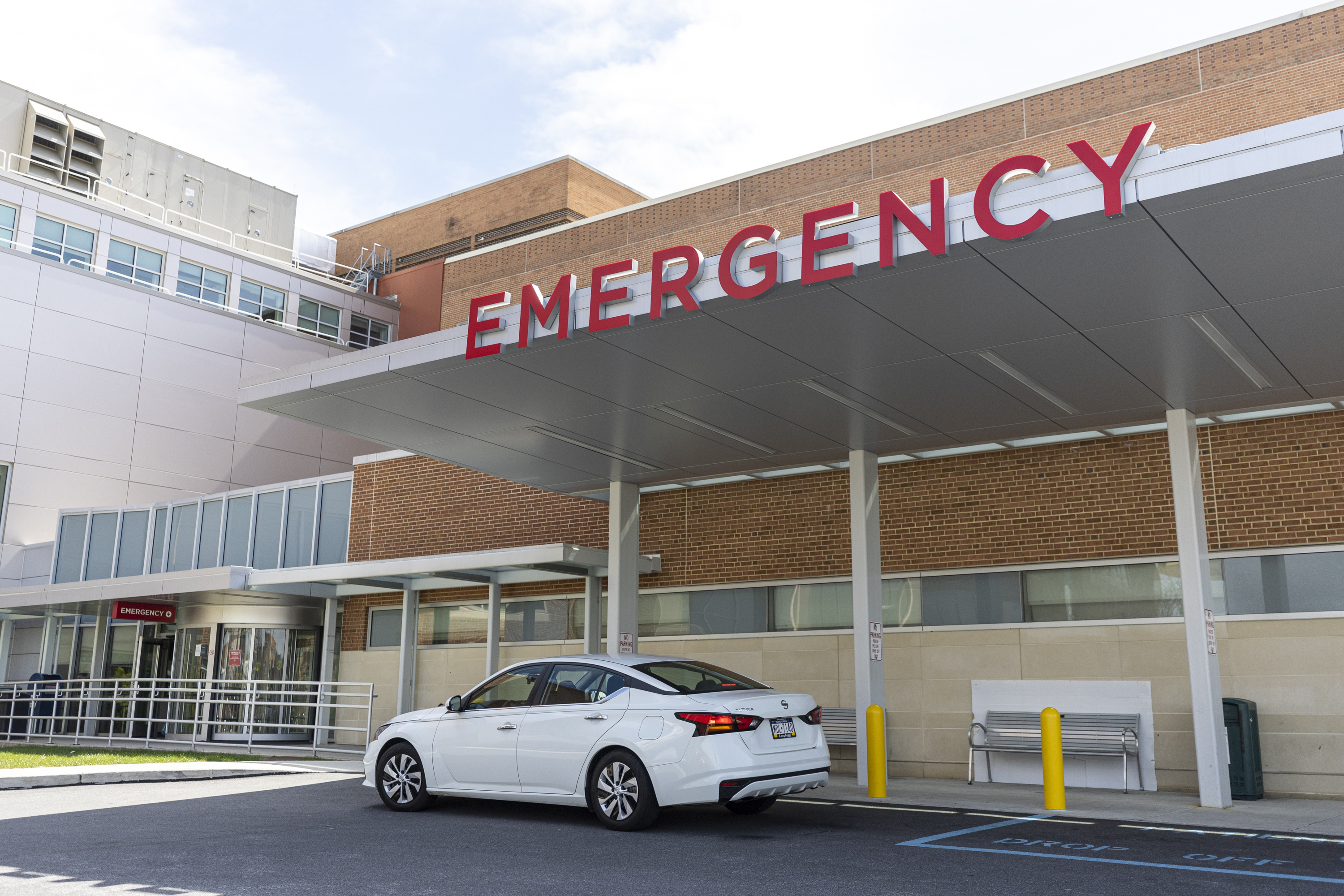
Main Line Health has stopped taking cash and checks for patient copays, gift shop purchases, and all other transactions at its four hospitals in Philadelphia’s western suburbs and 100 other locations.
The Oct. 4 transition was seamless, said Johanna Weller, Main Line’s system vice president of patient access and revenue cycle, who oversaw the transition to a cashless system. “It was like a blip.”
Many businesses focus on credit card fees and impose a surcharge when customers pay with plastic, but accepting cash is also costly, Weller said.
The nonprofit was spending in the hundreds of thousands of dollars annually ontwo or three cashiers at major facilities, time spent processing deposits, and couriers collecting the cash, Weller said. The cashiers were moved to different jobs.
“It’s a significant expense,” Weller said.
Weller didn’t know if any other local health systems had stopped taking cash. The region’s two largest health systems, the University of Pennsylvania Health System and Jefferson Health, still take it.
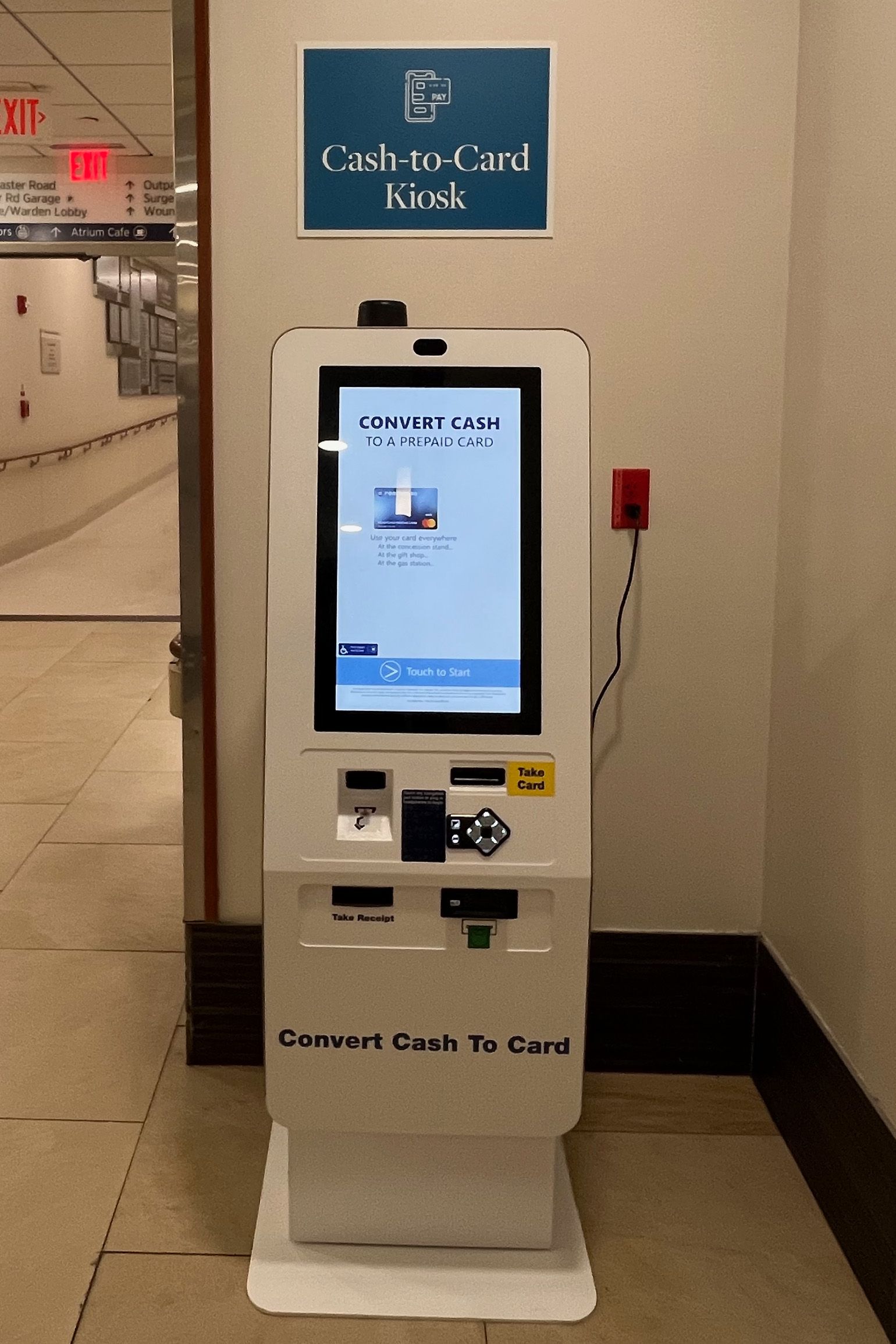
As part of Main Line Health’s decision to stop taking cash and checks, the nonprofit has installed “reverse ATMS” where customers can insert cash and get a debit card that they can use to make copays or make purchases at gift shops or food outlets.Main Line Health
Main Line had previous experience going cashless during the pandemic and found that it worked well, but didn’t make it permanent because the system’s since-retired chief financial officer didn’t think the time was right.
Now, given the continued societal shift away from cash to Apple Pay and other forms of electronic payment, Main Line felt confident enough to make the change, Weller said. The Federal Reserve Bank of Philadelphia stopped processing checks in 2009.
Main Line tracks patients’ payment preferences though its online patient portal — which the system encourages patients to use — and found that more patients were paying electronically anyway. Some locations, notably Lankenau Medical Center in Wynnewood, still had a significant number of people paying cash.
To prevent disruption for patients, Main Line installed what it calls “reverse ATMs,” which allow patients to insert cash and get a debit card to pay their co-pay or make other purchases. The health system covers the fees that the cash-to-card kiosk would normally charge.
Main Line has installed six reverse ATMs at hospitals and other major locations. In additional to Lankenau Medical Center, Main Line operates Bryn Mawr, Paoli, and Riddle Hospitals. It is considering whether to expand their availability tolarge outpatient sites, such as its clinics in Broomall and Exton, Weller said.
The Delaware County nurse who was arrested by ICE as she took her 3-year-old son to Disneyland last month faced her first agency check-in on Thursday ― emerging free and able to go home after three hours.
Friends and family had worried ICE would rearrest Monica Ryadi, 30, when she presented herself, despite a federal magistrate judge having earlier ordered her freed from detention. She continues to have to wear an ankle monitor to track her movements.
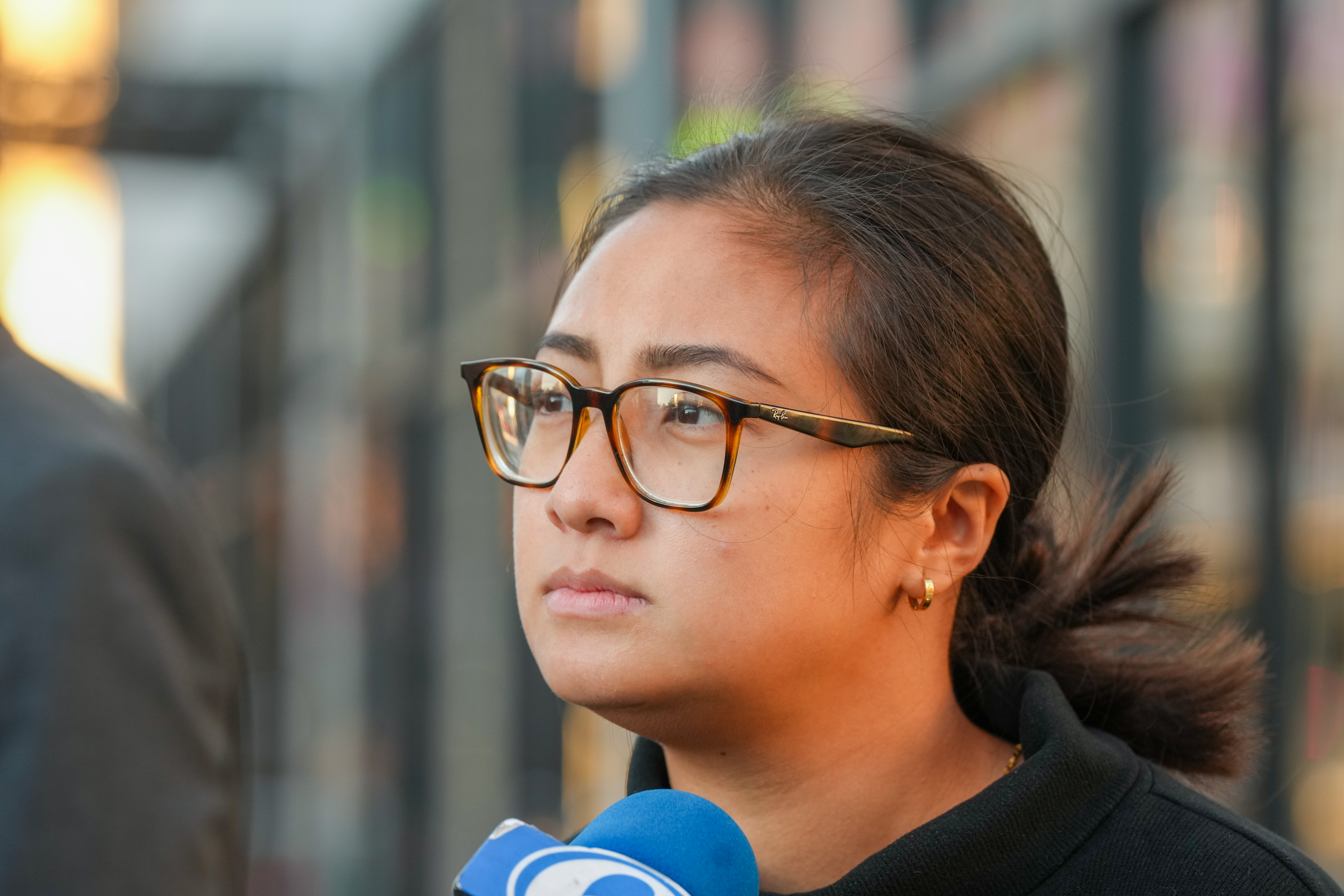
“I’m glad it didn’t go the way I thought it was going to go,” a tired Ryadi said afterward. “I thought I was going to be redetained.”
Ryadi arrived at the main ICE headquarters in Center City shortly before 8 a.m., supported by about 20 friends, family members, clergy, community members, immigration activists ― and Democratic U.S. Rep. Mary Gay Scanlon, who called Ryadi’s arrest “absolutely unforgivable.”
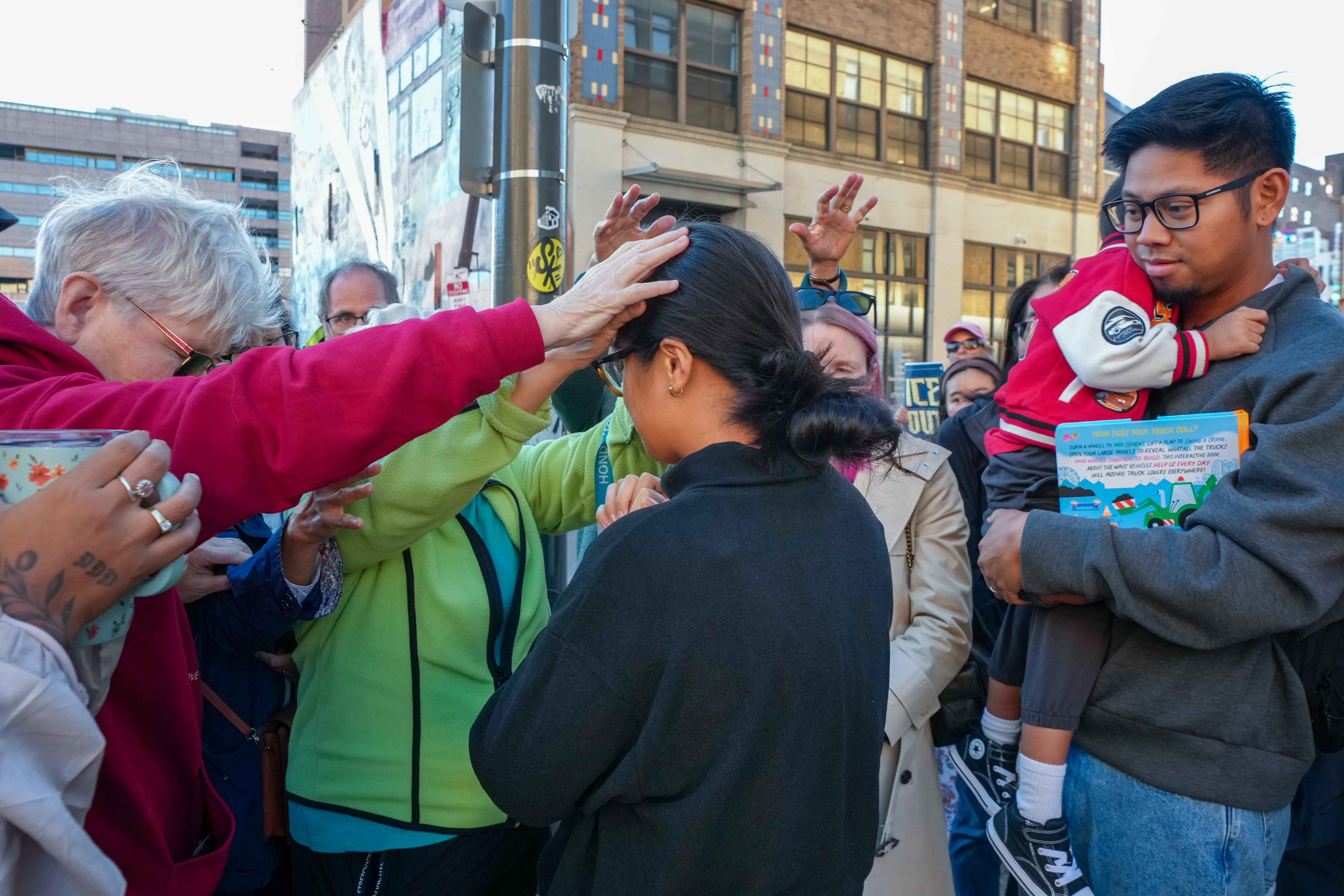
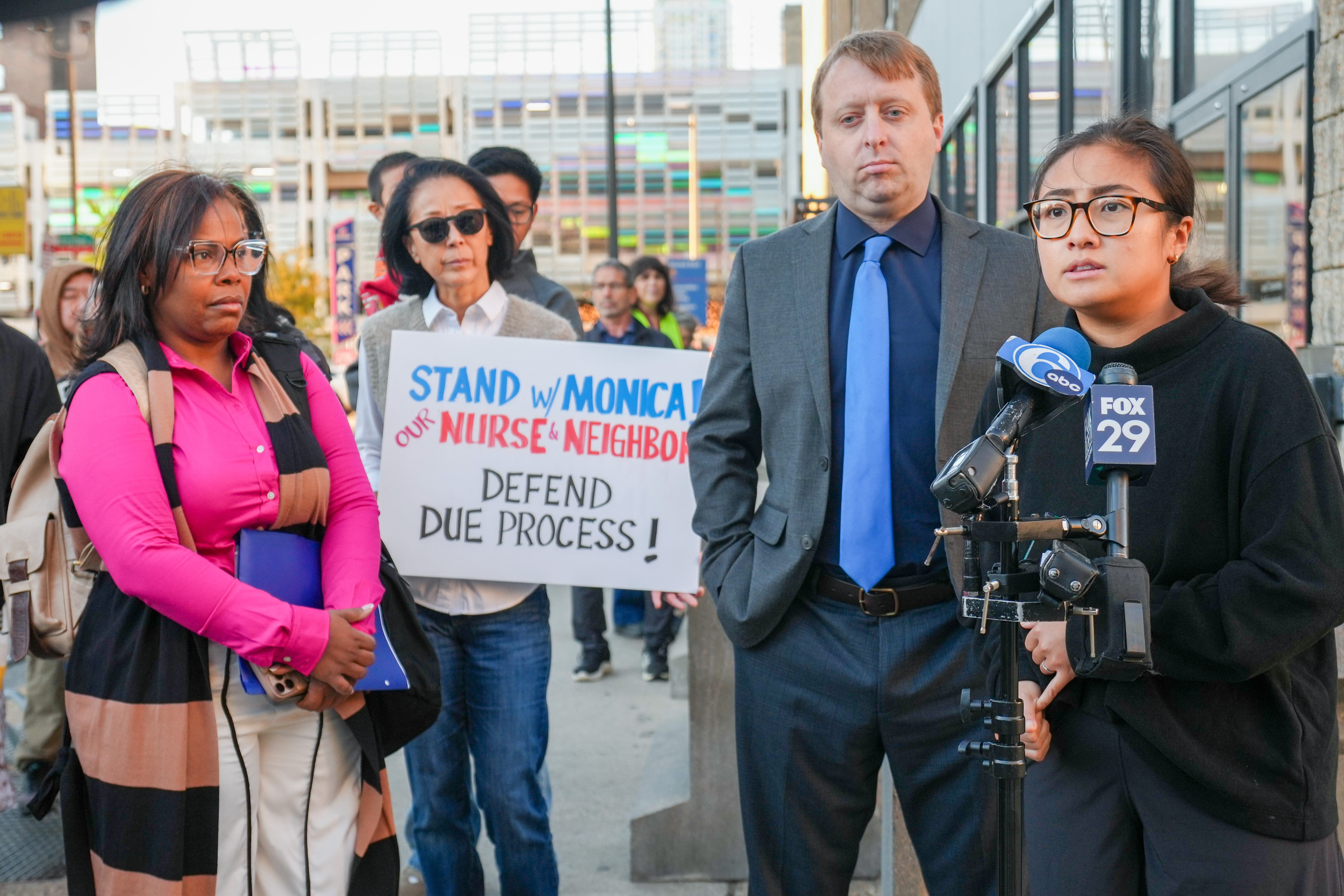
A nun laid hands on Ryadi and prayed for her. Another person held a sign that said, “Stand with Monica! Our nurse and neighbor.”
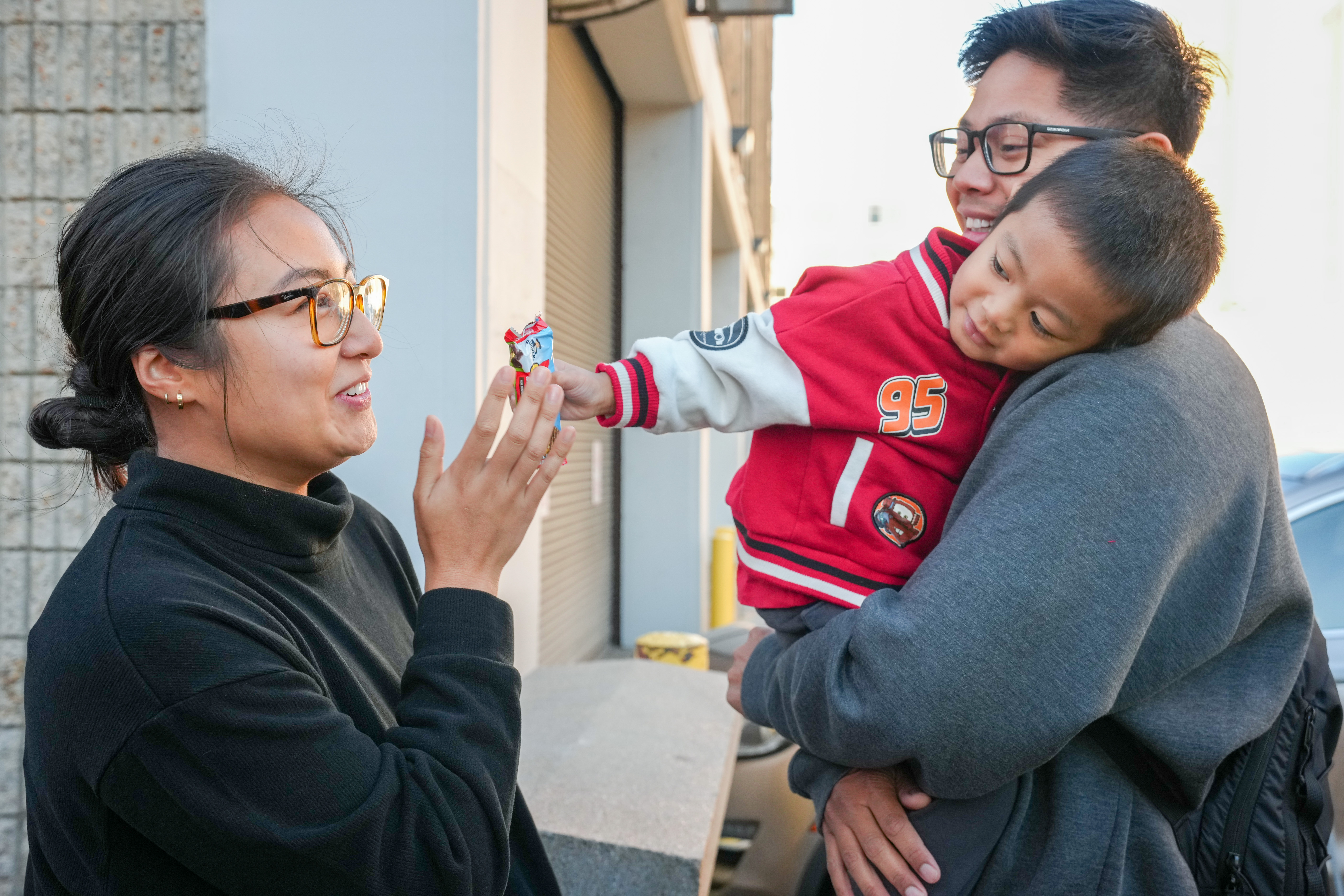
Monica Ryadi, center, is prayed for by supporters, as her husband and son stand nearby, right. People gathered outside the main ICE office at 8th and Cherry Streets.Jessica Griffin / Staff Photographer
Ryadi’s attorney, Eric Rosenfeld, said early Thursday morning he had received conflicting messages from the agency, one directing Ryadi to the headquarters at Eighth and Cherry Streets, and a second telling her to go to an office on Chestnut Street that handles intensive-supervision appearances.
After clarification, Ryadi went to the second office, where she was escorted inside by Rosenfeld and Scanlon, and accompanied by her husband, Steven Sary, 35, and their son, Luca.
Ryadi said afterward that she was overwhelmed and grateful for the support of so many people. Her husband said he was frustrated that his wife continues to be tracked by ICE.
“Why does she need the ankle monitor?” he said. “She’s not a criminal. Where is she going to go? We have no reason to run.”
Ryadi came lawfully to the U.S. at age 9, grew up attending Philadelphia schools, and continues to live here legally under a grant of what is called withholding of removal.
On Sept. 15, the family had barely stepped off a plane at Los Angeles International Airport when they were surrounded by four or five men in street clothes who said they were ICE agents, flashed a badge, and snapped Ryadi into handcuffs.
She and her husband were taking their son to the West Coast theme park so he could meet his favorite Cars movie characters and visit the Cars Land attraction there.
Monica Ryadi, right, stands with her attorney, Eric Rosenfeld, to talk with the news media outside of ICE headquarters at 8th and Cherry Streets.Jessica Griffin / Staff Photographer
Ryadi spent 15 days in custody at the Adelanto ICE Processing Center in California before being ordered released. Her husband and son flew to her immediately, and the family reunited at the Los Angeles hotel they had booked when they planned to visit Disneyland.
Asked for comment, the Department of Homeland Security said in a statement that Ryadi remained under immigration supervision “pending her removal from the country.”
The department reiterated its earlier comment that Ryadi was “an illegal alien” who was taken into custody “during a targeted enforcement operation at Los Angeles International Airport.”
DHS said she entered the U.S. legally in 2005 but “overstayed her welcome.” An immigration judge issued a deportation order in 2010, DHS said, although the agency did not note that such an order is a standard part of receiving permission to stay, work, and live in the U.S. under a grant of withholding of removal.
Ryadi was brought to this country as a child, by parents fleeing religious persecution in Indonesia.
They entered on legal visas in 2005, and five years later were officially granted withholding. That is where an immigration court judge agrees that deporting someone to their homeland could get them hurt or killed.
It is similar to asylum, though more limited. The key difference is that under withholding, the federal government retains the right to deport someone if it can find a third country willing to take them. Withholding does not include a path to citizenship.
Traditionally, people who gained that relief were left alone.
Now that has changed, as the Trump administration takes a new, hard view ― seeing those who have withholding, even people like Ryadi who have lived here for decades, as candidates for deportation. Some immigrants are held in ICE detention for months while the administration tries to find a foreign government to accept them.
Monica Ryadi is seen her with her husband, Steven Sary, and their son, Luca, outside the main ICE office at 8th and Cherry Streets.Jessica Griffin / Staff Photographer
Attorney Rosenfeld has noted that Ryadi is a healthcare professional, employed at Riddle Hospital in Media, a taxpayer, the spouse of a U.S. citizen, and the mother of a citizen son. She grew up in the United States with government permission and has work authorization, a REAL ID, and a Social Security number.
The couple has arranged their lives around their son, setting schedules so one parent is always home with him. Ryadi works weekends at the hospital while her husband works Monday to Friday as a UPS truck driver.
Rosenfeld said he plans to file petitions in federal court and immigration court to try to secure Ryadi’s safety and residency. He had argued on Thursday that Ryadi should not be made to wear an ankle monitor, and hopes to have it removed or replaced with a less uncomfortable device soon.
Delaware County nurse Monica Ryadi and her husband couldn’t wait to take their 3-year-old son to Disneyland, so he could meet his adored Cars movie characters — Lightning McQueen, Tow Mater, and the rest.
They didn’t get there.
The family had barely stepped off the plane at Los Angeles International Airport on Sept. 15 when they were surrounded by four or five men in street clothes who said they were ICE agents, flashed a badge, and snapped Ryadi into handcuffs.
When her husband protested, the officers threatened to arrest him and send their toddler, Luca, to child-protective services, the couple said in court filings. One officer told Ryadi she was here illegally and, “I don’t care if you are the president of the United States or a congresswoman like Ilhan Omar,” court records say.
Ryadi, 30, said she kept insisting that she was a legal immigrant.
And that’s true.
She has lived in the U.S. since she was 9, brought to this country by her parents when they fled religious persecution in Indonesia.
They entered on legal visas in 2005, and five years later were officially granted what’s called “Withholding of Removal.” That’s where an Immigration Court judge agrees that deporting someone to their homeland could get them hurt or killed.
It’s similar to asylum, the key difference being the federal government retains the right to deport someone if it can find a third country willing to take them. Withholding does not include a path to citizenship.
Traditionally, people who gained that relief were left alone.
Now that’s changed, as the Trump administration takes a new, hard view — seeing those who have Withholding, even those who have lived here for decades, as candidates for deportation. Some immigrants are held in ICE detention for months while the administration tries to find a foreign government to accept them.
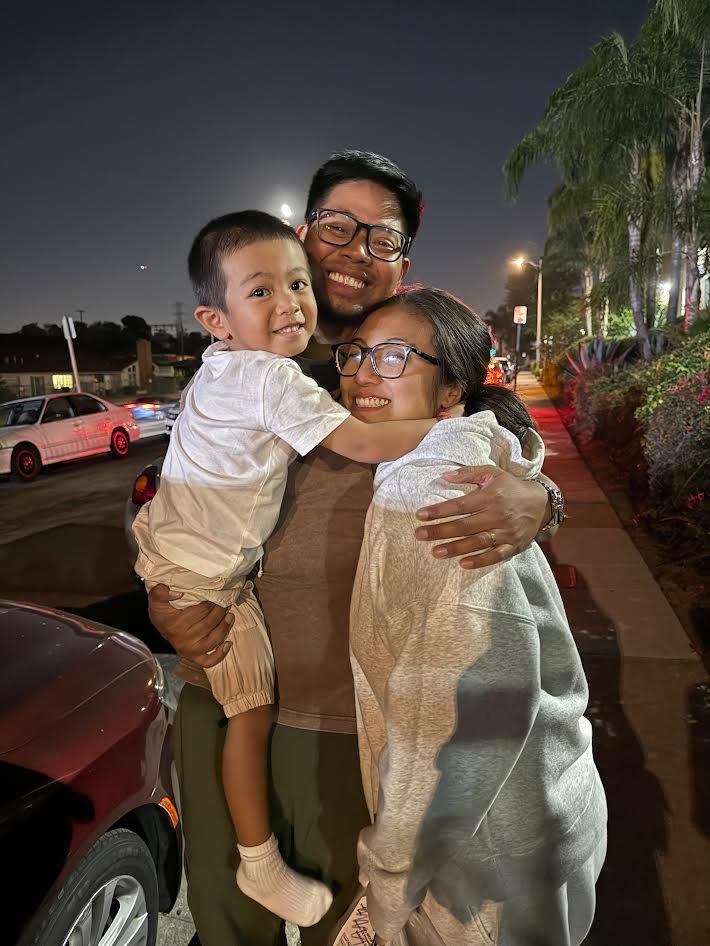
On Tuesday, after 15 days in custody at the Adelanto ICE Processing Center in California, Ryadi was ordered freed by a U.S. magistrate judge. Her husband and son flew to her immediately, and the family reunited that night, at the same Los Angeles hotel they booked when they planned to visit Disneyland.
“It’s a lot of emotions,” Ryadi said in an interview after her release. “I am still terrified, I’m still living under fear.”
At the same time, she said, “I can’t stop thinking about the other women that are in there.”
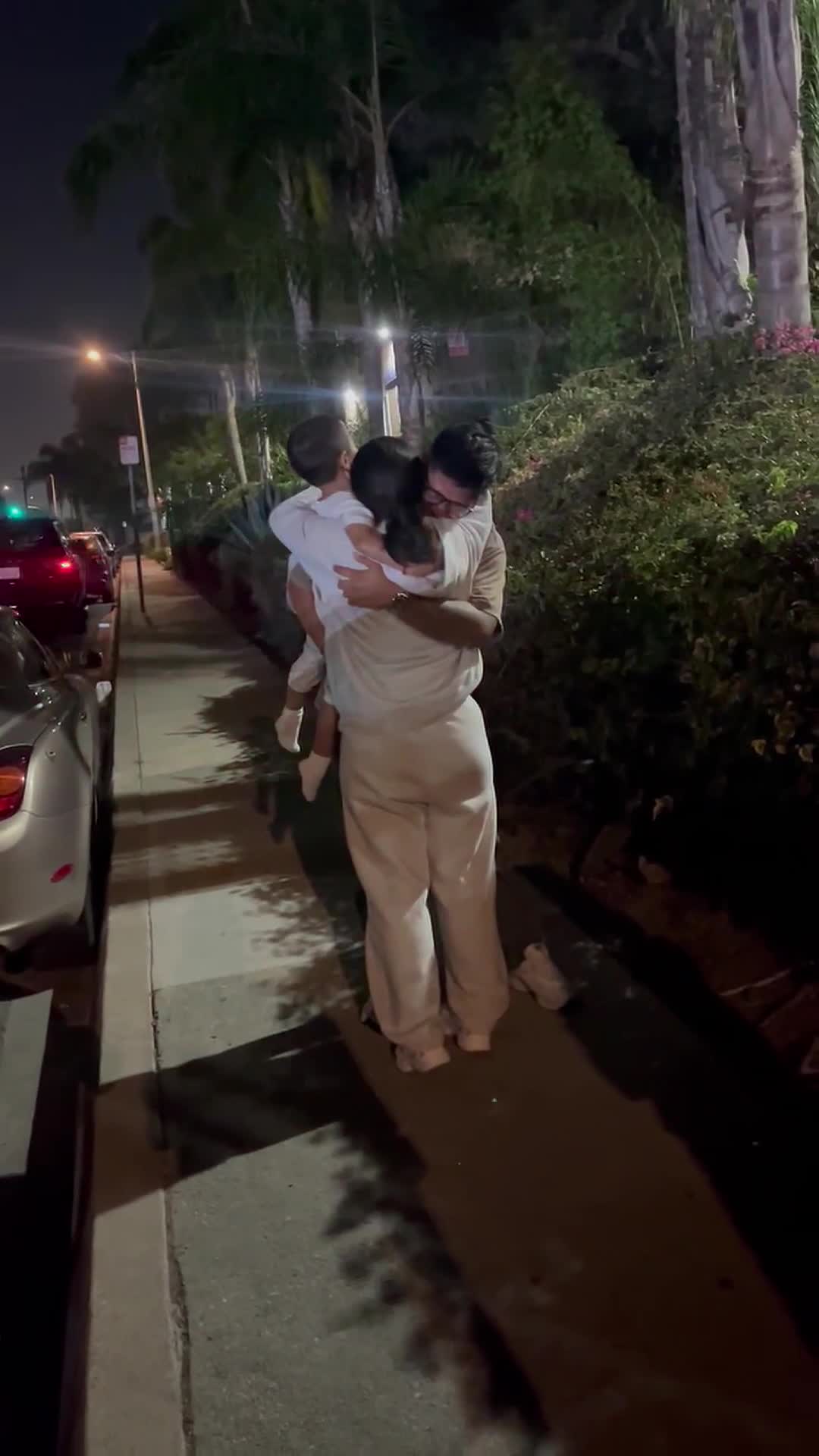
Video: A Delco nurse arrested by ICE reunites with her family
The Department of Homeland Security said in a statement that Ryadi was “an illegal alien” taken into custody “during a targeted enforcement operation at Los Angeles International Airport.”
DHS said she entered the U.S. legally in 2005 but “overstayed her welcome” in violation of immigration laws. An immigration judge issued a deportation order in 2010, DHS said, but did not note that such an order is a standard part of receiving permission to stay, work, and live in the U.S. under a grant of Withholding of Removal.
Ryadi’s husband, Steven Sary, 35, said he was overjoyed to be reunited with his wife. “But there’s still work to do,” he said. ”What’s the next step for us? We’re still living in fear.”
He tried to stay positive and supportive while Ryadi was detained, even at moments when they were both crying on the phone. He told her, “You don’t have to worry about Luca, I’m doing the best I can.”
The couple has arranged their lives around their son, setting schedules so one parent is always home with him. Ryadi works weekends at Riddle Hospital in Media, while her husband works Monday to Friday as a UPS truck driver.
The two met when they were children growing up in Philadelphia, and married in 2021.
Ryadi graduated high school from the Academy at Palumbo in the Bella Vista neighborhood, then earned an associate degree at Philadelphia Community College before obtaining her bachelor’s degree at Ohio University.
She became a nurse, she said, because she wanted to help people.
The court order that freed Ryadi came the same day that the Supreme Court ruled the Trump administration could resume the fast deportation of immigrants to countries other than their own.
The court granted the government’s emergency request to block an appeals court ruling that said the process was unlawful, because immigrants were not given sufficient opportunity to raise safety concerns.
The Supreme Court said it would hear oral arguments in the case in December, with a final ruling likely next year.
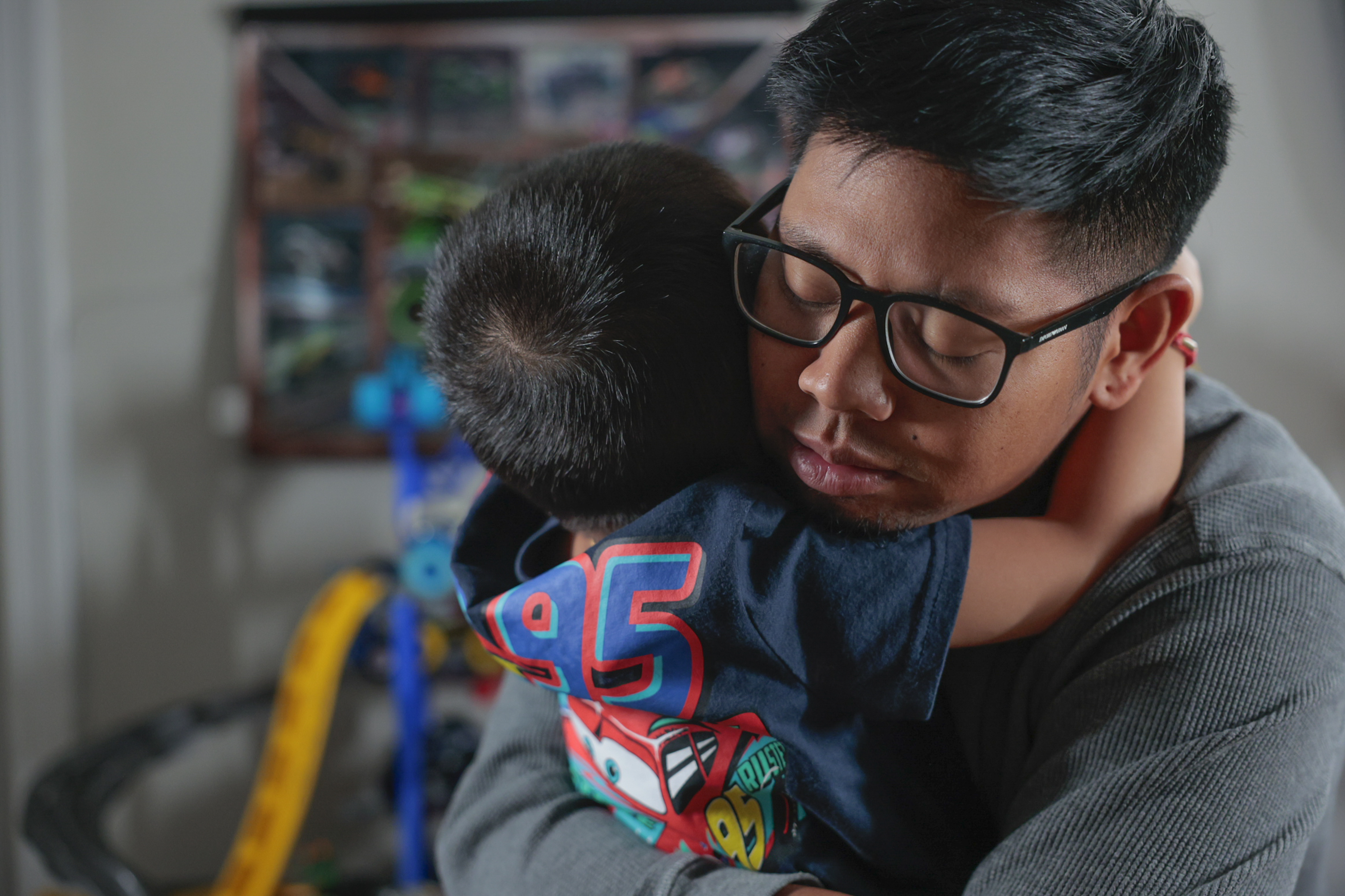
Steven Sary hugs his 3-year-old son, Luca, at their Delco home, waiting for word on his wife, who at the time was detained in California by ICE. She was detained by ICE agents after getting off a plane in Los Angeles as the family traveled to Disneyland. Steven M. Falk / For The Inquirer
“What happened to Monica should be treated as an extrajudicial kidnapping,” said Ryadi’s Philadelphia immigration attorney, Eric Rosenfeld, who is handling the case pro bono.
He noted that Ryadi is a registered nurse, the wife of an American citizen, and the parent of a son who is an American citizen — yet ICE casually told her she would be sent to an undisclosed third country.
She was never given any type of document or warrant to explain her arrest, he said. Upon release she was fitted with a GPS ankle monitor, and she knows ICE will likely try again to deport her, the attorney said.
“This is a respite. Not security,” Rosenfeld said.
As the Trump administration pursues its mass-deportation agenda, the protection offered by Withholding and similar relief “is proving to be very little protection at all,” the American Immigration Council wrote. “The Trump administration is trying to ship them out wherever it can — and keep them locked up in the meantime.”
A Philadelphia man who was arrested in July remains in detention, despite having lived legally for almost 20 years.
Mamadou Fadel Cherif of West Oak Lane was granted protection from potential political violence in his native Guinea. Now the administration wants to deport him to Ghana.
To receive Withholding of Removal, applicants must prove they were persecuted in the past or that their lives would be threatened in the future, that their home government harmed or will harm them — or failed to control others who might do so.
When that relief is granted, the immigration judge also enters a deportation order, then tells the government it cannot deport the person to their homeland. In that way the removal is “withheld.”
“We were planning to have an amazing trip with the family,” Sary said, “to see Cars Land with our son. But that changed.”
This image shows Delaware County nurse Monica Ryadi, left, in white, being arrested by ICE agents at Los Angeles International Airport on Sept. 15. She and her husband were taking their 3-year-old son to visit Disneyland.Courtesy of the family
“It felt like I was kidnapped,” Ryadi said. “I kept saying, ‘I’m legal, I’m a legal immigrant.’”
She grew up in the United States with government permission, has work authorization, a Real ID, and a Social Security number. She pays taxes. Yet she was chained wrist, ankle and waist like a criminal, she said.
Ryadi wonders if the ICE operation against her began in Philadelphia. As her family waited to board the plane, she said, a woman in a black jacket approached and made small talk.
The woman didn’t have luggage, Ryadi said, and she didn’t get on the flight. Instead, she walked away to talk to a man who also did not appear to be a passenger.
When Ryadi was released from the Adelanto detention center, 90 miles northeast of Los Angeles, immigrant-aid volunteers gave her a ride all the way to the city.
There she flew into the arms of her husband and son.
“I’m so happy to see you!” she cried.
At the hotel, the family saw people decked out in Disney attire, coming back from the theme park. Young Luca asked if they could go.
Pennsylvania’s new budget has $5 million in supplemental payments for the two Delaware County Hospitals that have seen significant increases in patient volumes since Crozer-Chester Medical Center and Taylor Hospital closed in the spring.
Main Line Health’s Riddle Hospital, near Media, is getting $3 million. The amount for Trinity Health Mid-Atlantic’s Mercy Fitzgerald Hospital, in Darby, is $2 million, according to budget documents.
The $5 million will be doubled by a federal match, said Democratic State Sen. Tim Kearney, who represents part of Delaware County. The $5 million is from a fund used to help hospitals the serve a large number of patients with Medicaid and used to go to Crozer Health, Kearney said Friday.
“Since Crozer’s shutdown in April, Riddle’s Emergency Department has experienced an unprecedented surge — 46% more patients than the same period last year, an increase of nearly 4,000 overall,“ the nonprofit said.
Main Line, which also owns Lankenau Medical Center, Bryn Mawr Hospital, and Paoli Hospital, said it has seen 55,000 patients from the Crozer market — a 15% increase over the same time period last year. That figure includes 8,000 patients who went to a Main Line facility for the first time, the health system said.
Trinity Health did not respond to a request for comment.
Shuttered hospitals in limbo
While Riddle and Mercy Fitzgerald have scrambled to accommodate patients who used to rely on Crozer Health, efforts are underway to bring healthcare services back to at least Taylor Hospital in Ridley.
A group from New Jersey called Chariot Allaire Partners LLC has agreed to pay $10 million for the former Crozer-Chester Medical Center in Upland but has not disclosed its plans. That facility served as a key safety provider for a low-income area of Delaware County.
A partnership of Restorative Health Foundation and Syan Investments won an auction for Springfield Hospital for $3 million, but it does not have support from township officials.
Delaware County legislators also obtained $1 million from the state to buy emergency department equipment if one of the closed hospitals, such as Taylor, reopens, Kearney said.
Editor’s note: This story has been updated with additional detail on the funding.
This suburban content is produced with support from the Leslie Miller and Richard Worley Foundation and The Lenfest Institute for Journalism. Editorial content is created independently of the project donors. Gifts to support The Inquirer’s high-impact journalism can be made at inquirer.com/donate. A list of Lenfest Institute donors can be found at lenfestinstitute.org/supporters.