Democrat Bob Harvie released his first general election TV ad Thursday morning, calling for a moratorium on artificial intelligence data center development and attacking U.S. Rep. Brian Fitzpatrick (R., Bucks) for his stance on the issue.
“I don’t want any more data centers. I want a moratorium. Big tech owns enough; they shouldn’t own our congressman, too,” Harvie says in the 30-second ad.
The ad marks the first timethe congressional candidate and Bucks County commissioner has called for a moratorium and signifies a shift in his position.
Previously, in an interview with The Inquirer last week and on his website, Harvie had calledonly for strict regulations on development. To focus his first major television ad on the topic shows how the projects are becoming a top issue for voters in Bucks County’s swingy 1st Congressional District amid a national backlash against data centers.
In Bucks County, both Harvie and Fitzpatrick have to grapple with the development of an Amazon data center in Falls Township, which is nearing completion.
Harvie, who lives just miles from the project, voted in December 2020 to approve acounty tax break for NorthPoint Development, the property owner of the Falls Township site.
Last year, Harvie celebrated Amazon’s investment in the data center and Fitzpatrick called it “one of the most transformative investments Bucks County has seen in decades.” More recently, they both supported Shapiro’s executive order.
In Harvie’s television ad, images of Elon Musk and Mark Zuckerberg flash on the screen. “Big tech is taking over our lives,” the candidate says in the ad. “And they want more. Grabbing our land, water, electricity, and sticking us with the bill.”
Heather Roberts, a spokesperson for Fitzpatrick’scampaign, said in a statement that the Bucks County Republican has always been supportive of “uniform federal regulations” and “100% control by local residents who could be impacted.”
She also pointed tohis cosponsorship of two bills aimed at regulating the effects of data centers: the Ratepayer Protection Act and the Data Center Transparency Act.
“Bob Harvie literally created this problem in our community — and he is now well aware of the massive albatross that this is around his neck. Hence, his latest lie in this ad,” Roberts said.
In an interview about data centers last week, Harvie did not call for a moratorium on the projects, but rather for strict regulations — as is also reflected on his campaign website. He also touted tasking the county planning commission with developing guidelines for municipalities facing potential data center proposals.
When asked last week why he had not called for a moratorium, Harvie said: “I think there’s probably areas in the country where data centers can make sense, where the energy grid can handle it, where there’s limits to it on the impact it could have on other people who might live in the area.”
“But I do think certainly we need to have a lot of cause for concern about how rapidly this is happening and making sure we can put some kind of handle on it,” he added.
He also echoed residents’ environmental concerns related to data centers and said that the developments need the increased oversight outlined in Shapiro’s executive order and that projects should not continue if the local community opposes.
Nine days later, Harvie said Thursday in another interview with The Inquirer that the decision for a moratorium did not come “out of left field for me” but was the product of many conversations amid what he says is a “complete failure of leadership” by Trump and Republicans, including Fitzpatrick, on the issue.
Of his 2020 vote to give NorthPoint a tax break, he said there was not an indication that the property was going to be used for data centers, but rather for e-commerce distribution.
He said that he is not set on one particular time frame for the moratorium but that “setting up guardrails” is most important, and he hopes a Democratic-controlled Congress would further hold hearings on imposing a moratorium.
“As we’ve seen more and more of what’s going on around the country with data centers just trying to gobble up space and build, build, build without any regulation, I’ve come to the point now where we have to do something to slow down this genie getting out of the bottle,” Harvie said.
Dennis Mahoney has spent a decade in disaster relief, dispatching humanitarian aid in the wake of devastating hurricanes in the United States and Puerto Rico and poverty crises in 18 countries in Asia, Africa, and Latin America.
Now the 34-year-old independent candidate is using that same determination to engage in an uphill battle as he seeks to represent Philadelphia’s 3rd Congressional District this November.
Mahoney, from South Philadelphia, is the lone opponent running against State Rep. Chris Rabb, a democratic socialist from Northwest Philly who won the crowded Democratic primary in May to succeed retiring U.S. Rep. Dwight Evans.
“I think it’s going to be a hard fight and a hard run, but I feel so strongly that people in Philadelphia want something different,” Mahoney said of his independent campaign.
Mahoney will have his work cut out for him to persuade voters to back his grassroots candidacy.
The 3rd Congressional District is one of the most Democratic-leaning districts in the country, where Rabb won with almost 45% of the vote. Rabb saw national support from big-name progressives, including U.S. Rep. Alexandria Ocasio-Cortez (D., N.Y.), and used his victory to support other like-minded candidates throughout the United States.
And the last time Pennsylvania elected an independent to Congress was in 1920, when Milton W. Shreve of Erie won as an Independent Republican.
But Mahoney and his allies view his candidacy as an opportunity to present an alternative option after more than half of 3rd District voters in the May primary cast their ballots for Rabb’s opponents. Mahoney’s platform focuses on addressing poverty, expanding access to affordable housing, and investing in education.
Rabb’s campaign did not comment on Mahoney’s candidacy Wednesday.
The race comes amid shifting political dynamics in the United States in response to growing frustration with the two-party system.
On one hand, progressive candidates — many of whom, like Rabb, are part of the Democratic Socialists of America — have been gaining momentum in elections nationwide.
Earlier this year, meanwhile, a Gallup poll showed a record high of 45% of U.S. adults identified as independents in 2025.
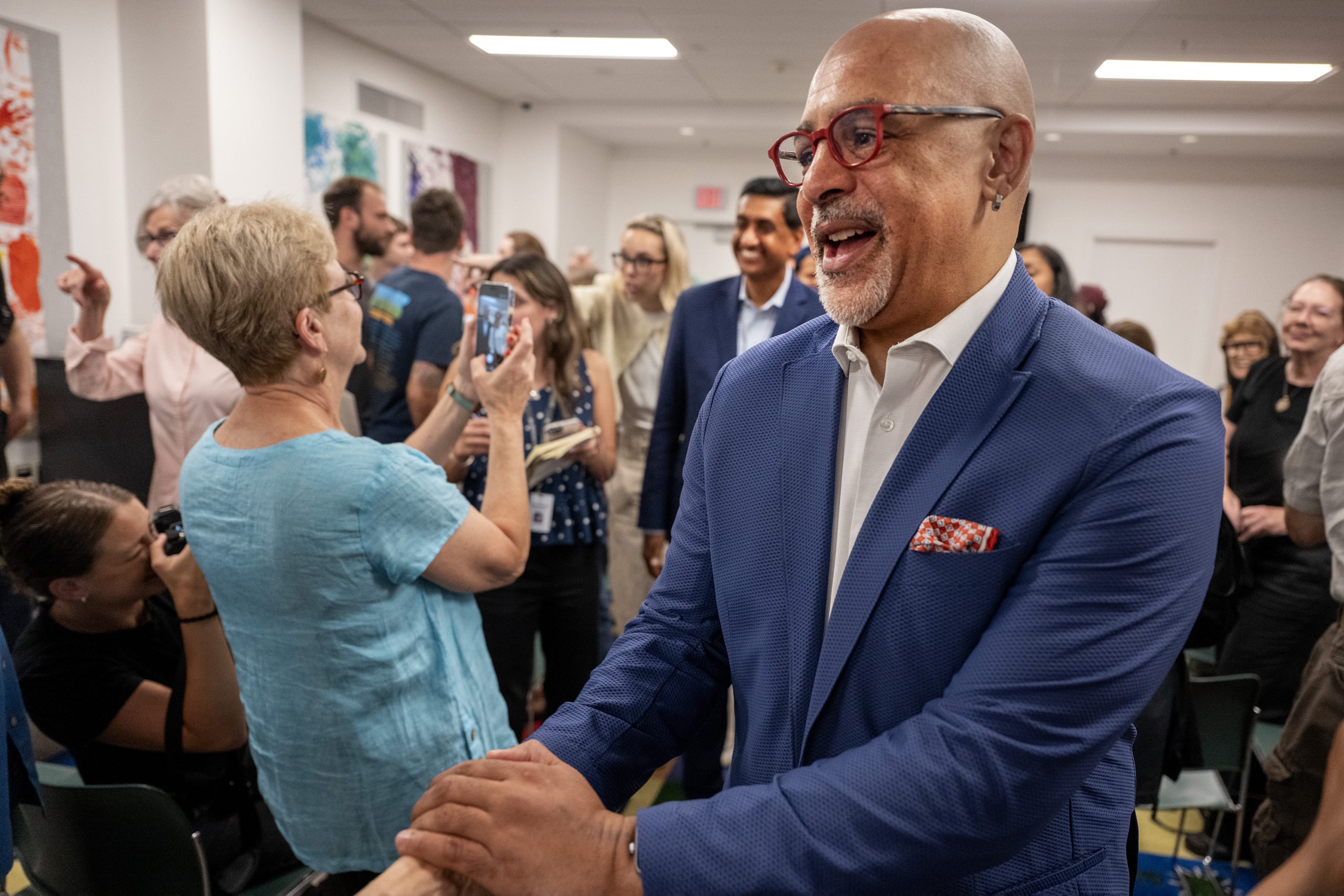
State Rep. Chris Rabb greets supporters after appearing with U.S. Rep. Ro Khanna (rear) Tuesday, July 28, 2026, on his “Made in PA: New Economic Patriotism Tour” at the City Institute Library on Rittenhouse Square.Tom Gralish / Staff Photographer
Mahoney said he has belonged to both political parties in the past, but did not find a home in either.
The first-time politicalcandidateworked in humanitarian aid through his former Washington, D.C., church, the Christiannonprofit Food for the Hungry, and now his own firm, AOI Solutions. He said the experience provides lessons for overcoming partisan division in Congress.
“Let’s build bridges and partnerships and bring results. And that’s the same work that I did in the disaster relief field, where we would land in a spot where a disaster happened, and we’d work with anyone we could to really make the place come back to whole,” Mahoney said.
‘Anti-MAGA’ and ‘anti-DSA’
It’s those middle-of-the-road qualities that made Mahoney an appealing candidate to Craig Snyder, a registered Republican who led an effort to support Vice President Kamala Harris’ presidential bid two years ago and is now leading the Philly-based Forward Party Victory Fund.
The super PAC plans to support Mahoney and other independent candidates across the country — including a pair of independent Senate candidates running in GOP-leaning states, Todd Achilles of Idaho and Brian Bengs of South Dakota — this fall via spending on digital ads and text messages. The PAC is also supporting U.S. Rep. Kevin Kiley, who switched from the GOP to run for reelection in California as an independent, and Kevin Block, an independent running for Rhode Island governor.
Snyder said the group is an independent offshoot of the Forward Party, founded in 2022 by former presidential candidate Andrew Yang and former New Jersey Gov. Christine Todd Whitman. He described the centrist candidates the PAC is backing as both “anti-MAGA” and “anti-DSA.”
He said a win in one of the group’s targeted races wouldbe “an earthquake in American politics.” But even if Mahoney is unsuccessful, Snyder said, it will be the start of elevating the independent movement in Philly politics.
“I think people don’t want to be told that they have to vote for somebody just because of the party label,” Snyder said. “I think that they want there to be alternatives, and so it’s our job to make that case.”
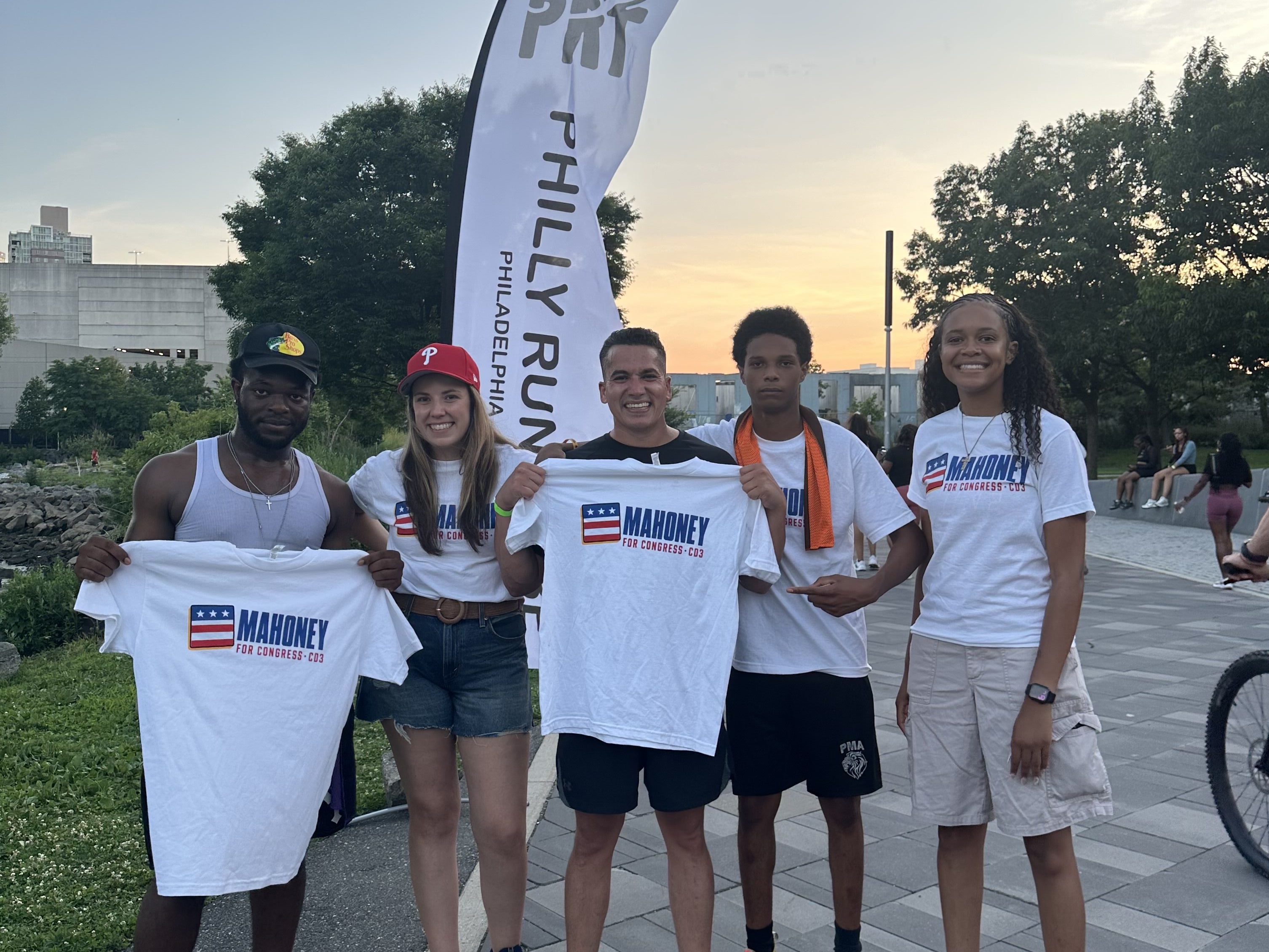
Dennis Mahoney (center) on the campaign trail as he prepares to run against State Rep. Chris Rabb in the general election in the 3rd Congressional District this November.Dennis Mahoney
Mahoney said, if elected, he would help form the first independent caucus in the U.S. House, contending he would become a coveted vote for both parties that would enable him to influence legislation and score committee assignments.
Butunder current House rules — which Kiley has proposed changing — Mahoney would not be able to hold a committee seat if he does not caucus with either party. Kiley, for instance, has continued caucusing with the GOP even after becoming an independent.
Mahoney pointed to the 19,000 signatures he received for his petition to join the ballot as a sign some voters are open to a choice in the deep-blue district.
He said he would like to debate Rabb.
“He talks a lot and engages a lot, and I think that that’s wonderful,” Mahoney said. “But I think at the end of the day, there’s people who are hurting in the district who need somebody who isn’t worried about being on, you know, MSNBC or TV, but who really is like, let’s just get into the community and drive results.”
Mahoney said he has been connecting with religious leaders, educational organizations, community groups, and youth organizers to hear feedback on what they want public service to look like in the 3rd District.
The independent will have scant resources to spread his name in just two months but said he is not concerned with raising big money for advertising. He had roughly $8,200 cash on hand in his most recent campaign finance report.
Rabb had a little more $21,000, but that was after the Democrat raised and spent more than $1.3 million for the primary campaign in which he out-raised his opponents.
Mahoney, meanwhile, has been trying to meet voters where they are — at running clubs and other fitness groups, for example.
“I think people find it refreshing to have somebody who wants to represent them out there running alongside them,” he said.
DALLAS — In an arena littered with President Donald Trump’s image — from the photos that lined the concourse to the gift shops selling merch depicting the president as a cowboy — one of Pennsylvania’s most vulnerable Republican lawmakers this fall went all-in.
U.S. Rep. Rob Bresnahan, running for reelection in a Scranton-based district that is one of the most competitive in the nation, addressed the Republican Party’s first-ever midterm convention during its opening night on Wednesday.
His decision to attend “Trump-a-palooza” (as the RNC has described it) at all was notable. Some Republicans in tight races decided to stay away out of concerns of associating themselves with a president with low approval ratings. U.S. Rep. Brian Fitzpatrick (R., Bucks), for example, is not attending and has distanced himself from parts of Trump’s agenda.
Bresnahan promoted Trump’s signature tax policy in a brief speech focused on supporting workers and their families.
“Tax relief matters,” Bresnahan told hundreds of party loyalists at the American Airlines Arena in a speech that followed Ken Paxton, the controversial Trump-backed U.S. Senate candidate in Texas. “In Northeastern Pennsylvania, we work until the job is done. And those extra hours should mean more money in your pocket.”
Democrats have used Bresnahan’s vote for the One Big Beautiful Bill Act, which included cuts to Medicaid and food assistance, as a wedge against Bresnahan and other vulnerable Republicans. But Bresnahan contended the income tax cuts and other policies in the legislation, like no tax on tips, are paying dividends for families.
Two other Pennsylvania GOP lawmakers in similar situations, U.S. Reps. Ryan Mackenzie (R., Lehigh) and Scott Perry (R., York), are also attending the two-day convention, with Mackenzie slated to speak Thursday.
Bresnahan spoke to a somewhat sparse crowd compared with Republican National Conventions during presidential election years, which served as a model for the novel midterm convention this year as the party looks to energize its base of voters while seeking to defend narrow majorities in the House and Senate.
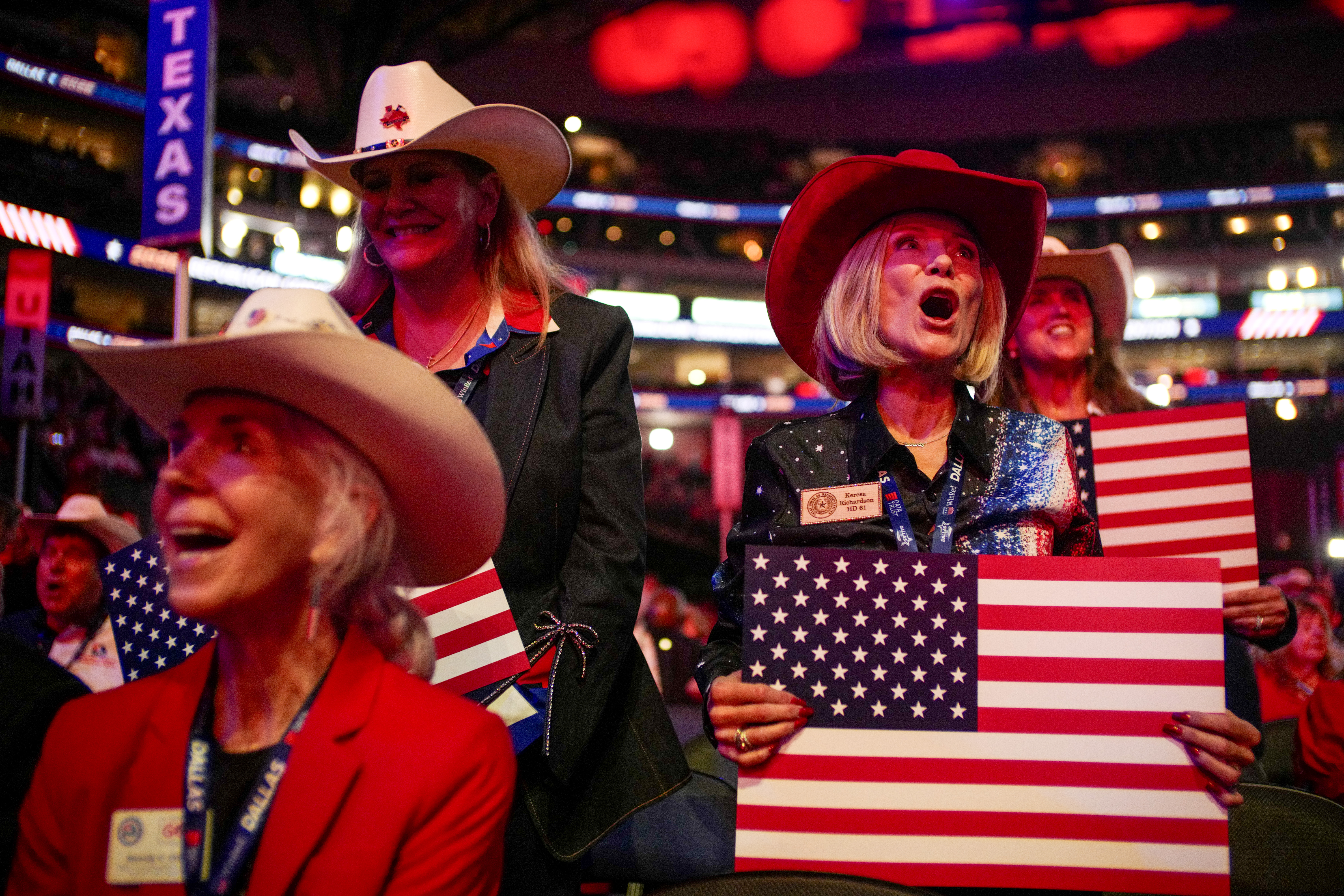
Delegates, clustered by state on the convention floor, cheered and waved signs reading “Keep the majority” and “Republicans are fixing Democrats’ mess.” The stands in the roughly 19,000-person arena remained largely empty, at least for the first few hours before Trump’s speech.
Merchandise shops were packed with Trump’s typical MAGA merchandise, copies of his son Eric Trump’s book, Under Siege, and new mugs and shirts showing Trump on a horse in cowboy gear. Red, white, blue, and — in an unmistakable nod toward the president — gold balloons waited in the rafters for the grand finale on Thursday.
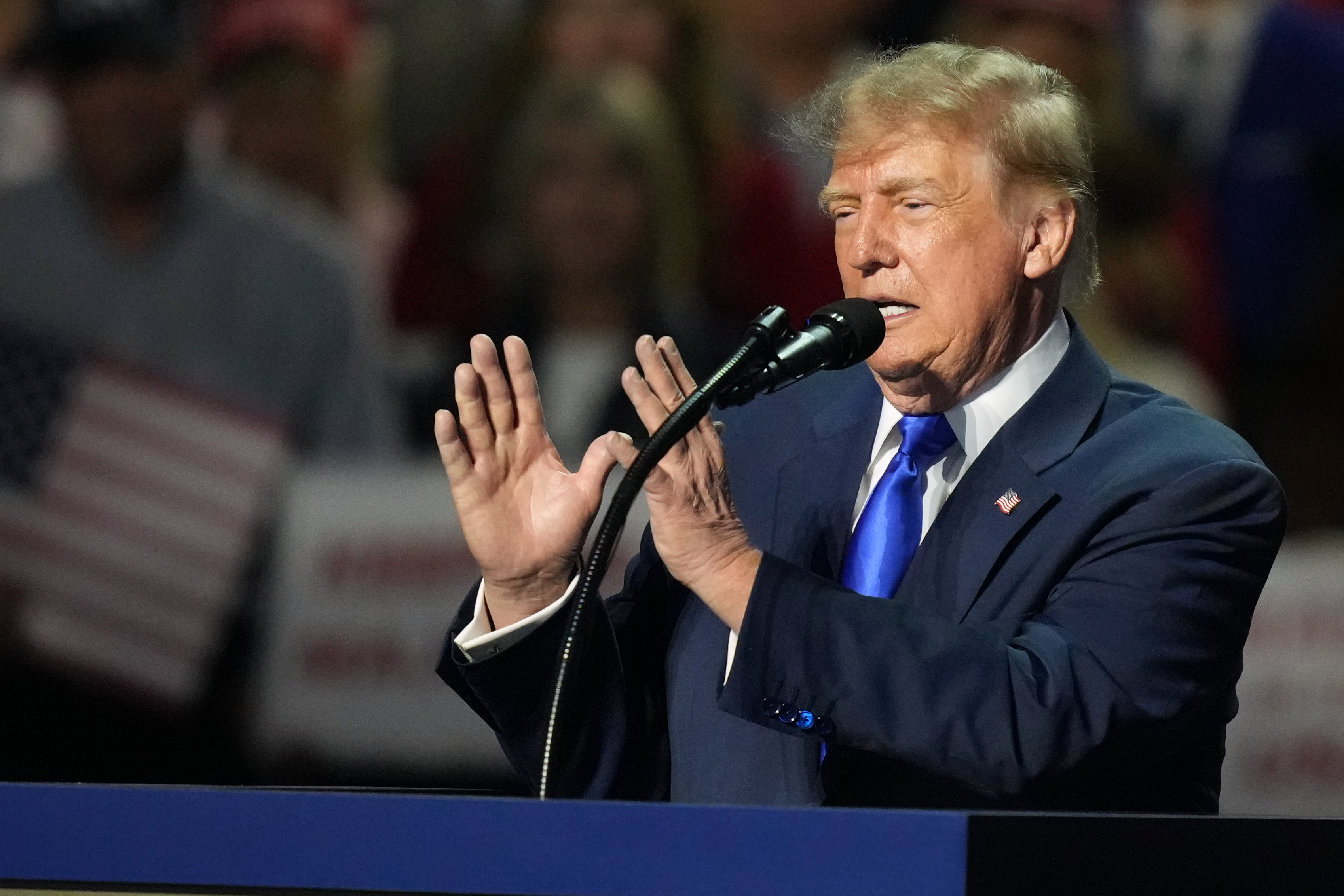
“I’m asking you to pretend that I’m on the ballot. I’m on the ballot, just one more time,” Trump told the cheering crowd in prime time, noting there were about 35 “swing” races the party was prioritizing.
President Donald Trump speaks at the Republican convention Wednesday, Sept. 9, 2026, in Dallas. (AP Photo/Alex Brandon)Alex Brandon
About 1,500 miles away, in another town called Dallas, one of Bresnahan’s constituents hatched a plan to tune in.
On the opening night of the annual Luzerne County Fair — in a booth yards from deep-fried Oreos, flying elephant kiddie rides, and life-size cardboard cutouts of Abraham Lincoln, Donald Trump, and Jesus — Dwayne McDavitt fiddled with his tablet to see if he could stream the convention.
The symmetry of Dallas, Texas, and Dallas, Pa., was “too good to pass up,” said McDavitt, the head of a conservative group called Thunder and Liberty PAC and also the Pennsylvania chapter of Bikers For Trump.
He said he supports Bresnahan, who lives in Luzerne County, over Scranton Mayor Paige Cognetti, the Democratic nominee.
“He shares our values of faith, family, and freedom — meaning free and fair elections,” McDavitt said.
Interviews with other voters in the district on Wednesday underscored the potentially risky nature of Bresnahan’s leaning into the Trump administration.
Malcolm Mabry, 28, of Wilkes-Barre, said he had been victimized by a “Trump bait and switch” as a Republican who voted for the president two years ago. He picked Trump, believing that better policing of the Southern border was paramount.
And while Trump has been using ICE to “grab up people,” as he said, Mabry said much of what else the president promised, like lowering prices and avoiding war, has not occurred.
“Trump just said what he had to, to get into office,” said Mabry, who was unaware of the convention happening at the same time.
A campaign about workers and affordability
Bresnahan won his seat by less than 2 percentage points in 2024 to take down a six-term Democrat in the northeast corner of the state. Trump won the district by more than 8 percentage points.
His Democratic challenger, Cognetti, has garnered high-profile supporters like Gov. Josh Shapiro, who is also up for election, and she has repeatedly targeted Bresnahan for trading stocks while in office despite his previous statements that he would not do so.
Bresnahan, the former head of a family-run electrical contracting business, has made jobs and the workforce a top focus in his campaign and in his brief congressional career.
On a few occasions, he has broken with House Republican leaders to support bills that would strengthen union protections for federal workers. He has said that he hopes his party changes tactics to support those kinds of bills.
“We need the unions that have trained generations of some of the most skilled workers in American history,” Bresnahan said onstage Wednesday. “We have those workers in Northeastern Pennsylvania, and communities across this country are ready for the same opportunity.”
Texas state Rep. Keresa Richardson (R), right, attends the GOP midterm convention. (Joel Angel Juárez/For The Washington Post)Joel Angel Juárez
Bresnahan has racked up a series of union endorsements that are otherwise rare for Republicans. While major unions like the AFL-CIO and the Pennsylvania State Education Association have backed Cognetti, he has won support from organizations like the American Federation of Government Employees and the Teamsters — groups that, in a region with a long history of union issues, could make a difference in a close race.
In his speech, Bresnahan talked generally about supporting workers and manufacturing in the U.S. He spoke about tax policies that put “more money in your pocket” and help “build communities where people can stay, raise a family, and build a life.”
They and other speakers did not address other affordability issues that Democrats have seized on and that polls show voters have top-of-mind heading into early voting.
Trump has mocked the Democratic attacks on the issue as a hoax, including in a speech in Bresnahan’s district last year. But it is a message, and a reality, that has resonated with voters in Pennsylvania, according to polls and interviews.
“I’m on a fixed income,” Bill Dudeck, 83, of Nanticoke in Luzerne County, said Wednesday. “But under Trump, gas, groceries, and utilities are skyrocketing.”
Trump promised a lower cost of living, “but now all our money is out the window,” said Dudeck, a Democrat and former construction worker in Bresnahan’s district.
Bresnahan, whose campaign said earlier this week that he was looking forward to bringing “NEPA to the national stage,” appeared onstage instead with a sheet metal worker and mother of seven from Baltimore.
Cognetti’s campaign noted the pairing in a comment Wednesday that criticized Bresnahan, in part, for trading stocks in office.
“That’s probably why he didn’t have a Pennsylvanian on stage with him tonight,” a Cognetti campaign spokesperson said in a statement. “His speech is just more empty words to try and distract from his broken promises.”
Nora Pruitt, who joined Bresnahan, had previously been recognized by the White House as a beneficiary of Trump’s second term. Listed on the agenda as an “everyday American, factory worker, working mother and manufacturing success story,” Pruitt said “things have really improved for our family since President Trump returned to office.”
“We are so grateful President Trump and Republicans in Congress like Congressman Bresnahan vote for families like ours,” she said.
Key figures in Pennsylvania Republican politics — including the state’s top elected federal GOP official and several lawmakers in the middle of heated reelection campaigns — will participate in their party’s first-of-its-kind midterm convention this week in Dallas.
The gathering, spurred and heavily promoted by President Donald Trump, arrives as Republicans look to defend their control of Congress this fall amid difficult circumstances. Trump’s approval ratings, including on key issues such as the economy and the war in Iran, have sunk, including in Pennsylvania.
After Trump successfully won the White House and ushered in a wave of downballot Republican wins just two years ago, the convention — described as “Trump-a-palooza” by Republican National Committee chairman Joe Gruters — is aimed at energizing the base at a critical time.
Pennsylvanians, representing a swing state that has been key to Trump’s success in the past, will play a role.
U.S. Sen. Dave McCormick (R., Pa.) and a pair of House lawmakers in competitive districts — U.S. Reps. Ryan Mackenzie (R., Lehigh) and Rob Bresnahan (R., Luzerne) — are among the more than 100 scheduled speakers over two days, starting Wednesday.
Their speaking slots were among the first to be announced. Underscoring the Keystone State’s role in keeping the House Republican majority, only the host state of Texas had more representatives on the initial list of elected officials scheduled to address the crowd.
The Pennsylvania Republican Party, meanwhile, has orchestrated a “full slate” of 55 delegates and alternate delegates.
“The Republican Party of Pennsylvania is excited and honored to be a part of the first ever RNC Midterm Convention in Dallas,” spokesperson James Markley said in a statement. “It will be a tremendous opportunity to hear from everyday Americans about how this administration has changed their lives for the better.”
The state party had not provided the names of the delegates as of Tuesday, though the list is expected to include party activists and other elected officials. State party leaders had encouraged Pennsylvanians to attend the gathering.
Democrats, who see the president’s lagging approval ratings as a key to their success in the midterms, were quick to blast Pennsylvania Republicans for attending. Their response includes plans to send a small group of House Democrats, including U.S. Rep. Madeleine Dean (D., Montgomery), to Dallas to push back against the GOP messaging.
“While swing seat House Republicans try to hide from their record of raising costs on working families, gutting Medicaid to fund tax breaks for billionaire donors and supporting a reckless war of choice in Iran, House Democrats will be present to hold them accountable,” House Minority Leader Hakeem Jeffries, the New York Democrat in line to become House speaker if his party wins the majority, said in a statement.
Fitzpatrick skips as other Pa. Republicans take center stage
Four of Pennsylvania’s 10 Republican-held U.S. House seats are considered key battlegrounds as the GOP looks to maintain its four-seat advantage nationwide.
Of those, only U.S. Rep. Brian Fitzpatrick (R., Bucks) has distanced himself from parts of Trump’s agenda and is not planning on attending the convention.
Mackenzie and Bresnahan, on the other hand, will be among the featured speakers, and U.S. Rep. Scott Perry (R., York) will attend.
Perry, a close Trump ally, has routinely won reelection in a Harrisburg-based district but is running this year against Democrat Janelle Stelson, a former local television anchor who nearly defeated him two years ago.
Freshmen Mackenzie and Bresnahan were elected to Congress in 2024 afterthey each defeated incumbent Democrats by less than 2 percentage points. Local, state, and national Democrats have rallied behind their challengers — union leader and retired firefighter Bob Brooks in the Lehigh Valley, and Scranton Mayor Paige Cognetti in the district that covers the northeast corner of the state.
Bresnahan campaign spokesperson Samantha Bullock said the lawmaker was “excited to bring NEPA to the national stage because these are the people driving his work in Washington.”
Mackenzie, in a statement that referenced his work to bring federal funds to his district and support areas like local healthcare and tax relief, said he was “looking forward to talking to the people of the Lehigh Valley, the Poconos, and the entire nation about these accomplishments, and how we can build on them in the years ahead.”
Brooks said Mackenzie was “flying to Dallas to kiss the ring of Donald Trump and his party bosses.”
“This is exactly why people are fed up with a broken Washington that isn’t working for working people,” Brooks said in a statement.
Mackenzie’s campaign has similarly criticized Brooks for campaigning with national Democrats — calling an event Brooks had with Jeffries in July a sign that “establishment backers” were trying to “bail him out.”
The convention will feature six hours of programming each night.
Topics that speakers will highlight include the elements of Trump’s signature One Big Beautiful Bill Act, which Republicans have rebranded as the Working Families Tax Cuts Act.
A “candidate showcase” that will highlight “key candidates in target districts” and contrast them with their “extreme” opponents is set for Wednesday night. And an “opposition contrast” to “[deliver] the night’s sharpest partisan case against the extreme liberal Democrats” is slated for Thursday night, according to the agenda.
Besides Trump, the members of his administration scheduled to speak include Vice President JD Vance, U.S. Attorney General Todd Blanche, Centers for Medicare and Medicaid Services Administrator Mehmet Oz, and Health and Human Services Secretary Robert F. Kennedy Jr., who has engaged in a war of words with Pennsylvania Gov. Josh Shapiro over the state’s measles outbreak.
National Republicans have described the convention as a way to energize voters in a tough election year.
The poll found that 51% of likely voters said they were more likely to vote for a Democrat for Congress and 53% said they would want to see the House flip to Democratic control, though the polldid not ask about specific congressional races.
For anyone who noticed I was gone, I’m back. It was a weird two weeks of flex time — half vacation, including jaunts to a couple of Jersey Shore points (see below) and an OG family reunion in the Hudson Valley, and half working on my biggest investigative reporting project in several years. It’s coming very soon. Stay tuned.
On the 25th anniversary of 9/11, anti-Islamic hate is getting worse
Amina Barhumi (center), the advocacy and policy lead of the Muslim Civic Coalition, prays with members of the Council on American-Islamic Relations outside the Will County Courthouse in Joliet, Ill., where a jury found defendant Joseph Czuba guilty of murder and hate crime charges in February 2025.Nam Y. Huh
The footprints of the World Trade Center’s twin towers are now a memorial attached to a well-attended museum. Osama bin Laden is dead, and the last U.S. combat troops finally left Afghanistan five years ago. But there is one thing that spiked immediately after the attack and never really went away.
In fact, anti-Islamic hate is a bigger force in our politics than it ever was. Republicans, desperate to cling to power in an election when all the cards — including another “dumb war” in the Middle East and sky-high gas prices — are stacked against them, are frantically waving the bloody shirt of 9/11 and the Islamophobia it inspired.
You can see it in Lower Manhattan, where the man who was New York City’s mayor in 2001, Rudy Giuliani, is now saying that the idea of the current mayor — Zohran Mamdani, the first Muslim American to hold the post, who was only 9 years old on the morning of the attack — attending the 9/11 memorial ceremony “offends me.” His comments were part of a bigger racist diatribe that somehow tied Mamdani to a Muslim plot aimed at “taking over certain parts of America and certain parts of Europe.”
You can see it in Michigan, where a wave of anti-Muslim hate has surged after an Islamic doctor and public health expert, Abdul El-Sayed, won the Democratic primary for U.S. Senate. This includes events like “the Christian Crusader March” organized by the Donald Trump-pardoned Jan. 6, 2021, insurrectionist Jack Lang, which flooded the city council of majority-Muslim Dearborn with anti-Islam placards and even a Nazi flag.
And you can read all about it when a sitting congressman like Tennessee’s Andy Ogles has no problem taking to the cesspool of Elon Musk-owned X last March to write that “Muslims don’t belong in American society.” The fact that the fanatically pro-Trump Ogles lost his GOP primary a couple of months later could have been a warning to his fellow Republicans to dial it back, but few seem to have gotten the memo as Sept. 11, 2026, arrives.
To be clear, I don’t believe Islamophobia is the only permanent scar from the day the United States was attacked by four planes and their 19 hijackers who were followers of bin Laden’s Islamist brand of extremism. It’s been five years — although it feels like yesterday — since the 20th anniversary of the attacks, when I wrote that the fear and loathing of the 9/11 aftermath hadn’t evaporated but instead metastasized.
I could write that exact same column today … so I won’t. The role the attack played in pointing America toward fascism hasn’t changed, but it is striking after five more years that while many overt symptoms of a 9/11 hangover have subsided over the years, the virus of Islamophobia has only grown more persistent.
Prejudice toward Muslims existed, of course, yet it exploded after the attacks on the World Trade Center, the Pentagon, and the fourth jetliner that crashed in Shanksville, Pa., in ways both large and small.
Large: On Sept. 15, 2001, a Dallas-area neo-Nazi killed a Pakistani immigrant working in a convenience store — the same day a Sikh native of India was also murdered at a Mesa, Ariz., gas station by a man who believed the victim was Muslim. Smaller but not insignificant: Islamic schoolchildren from coast to coast were bullied and slurred by classmates who called them “terrorists” or just “Osama.”
At the highest levels of the U.S. government, there was schizophrenia. Many recall that the president, George W. Bush, visited the Islamic Center of Washington, D.C., to insist that U.S. Muslims “love America as much as I do,” had no connection to the foreign extremists, and that “Islam is peace.”
Less well-remembered is the federal operation that targeted thousands of Muslims and South Asians — especially men under the age of 45 — in the weeks immediately after the attacks. They were detained, interrogated, fingerprinted, or subjected to deportation proceedings.
In a new piece, the “war on terror” historian Spencer Ackerman chronicled how agents went through a Brooklyn neighborhood known as Little Pakistan, dropping cards under doors with instructions such as: “This is the FBI. This is the INS. This is the NYPD. We need to talk. I have questions. Call me. ASAP.” It’s believed that thousands found the post 9/11-climate so hostile that they left Little Pakistan … and the United States.
Islamophobia has managed to both persist and change over the last quarter century. Certainly one can’t imagine Trump going to a mosque and acknowledging that Islam is a peaceful religion; the man who entered national politics by calling for — and partially enacting — a “Muslim ban” just last month labeled Democratic candidates in the midterms as “jihadists.” Today, the fish stinks from the head, and those middle-school punks who called their classmates “terrorists” are all grown up and running for office in November.
To some extent, it’s one step up and one step back for American Muslims. The stunning success of Mamdani, who’s more popular than ever after eight months in City Hall, and the rise of El-Sayed and other mostly progressive young Muslim American politicians is a next chapter of immigrant success that seems to have rattled the ancient U.S. hierarchies around race and religion.
But mostly it feels like Republicans — seeing that the crowd doesn’t want to hear the new stuff like the Iran war or data centers — have reverted to playing the hits, like railing against “men in women’s sports” in a desperate bid to get an unearned encore.
That’s pathetic yet predictable, but one thing I find appalling is that a news media that ought to know better keeps going along with this malarkey. That includes grilling every Democrat who appears on TV about what they think about a Turkish American Twitch streamer named Hasan Piker, even as most voters have never heard of Piker while some subjects of these inquisitions have never met him.
Last week, CBS News — purchased by a pro-Trump billionaire who put the over-her-head conservative opinion writer Bari Weiss in charge — ran one of the most irresponsible pieces of journalism I’ve ever read, implying there was something sinister about El-Sayed’s anodyne early 2020 social media comments that America should take the coronavirus seriously because it had killed (at that time) as many people as died on 9/11. One CBS staffer told the website Status that the dubious hit piece on El-Sayed was “shameful,” adding, “The racism is overt.”
The staffer was being kind.
Someday — hopefully in my lifetime — there’ll be a U.S. president who won’t only call Islam a religion of peace, but will also stop dropping bombs on Muslim countries. Until then, demagogues are going to demagogue, but the media needs to be calling out the racists, not empowering them. If we keep giving in to our worst instincts, then — as folks used to say 25 years ago — the terrorists will have won.
Yo, do this!
One reason my two-week hiatus passed so quickly was that I immersed myself (and thus finished too quickly, perhaps) in this month’s riveting audiobook, Housewives of the Underground: The Untold Story of the Women Who Made the JFK Assassination Our Most Enduring Mystery by the Atlantic writer Kaitlyn Tiffany. The book tells the story of how the majority of Americans came to doubt the Warren Commission’s official story of John F. Kennedy’s 1963 murder in Dallas through the persistence of very average citizens — including the three middle- or nearing-middle-age women of the 1960s at the center of Tiffany’s compelling narrative. This is not “another Kennedy assassination book,” but rather a robust and much-needed tale about regular folks successfully challenging their government to do better that resonates in the Trump era.
I did somehow find time to make the short drive (90 minutes from Center City Philadelphia) to Long Branch, N.J., for a Bruce Springsteen pilgrimage centered on a visit to the new and impressive Bruce Springsteen Center for American Music. It was just our luck that our tickets were for the day afterthe Jersey rock icon stunned fans with a surprise visit there (and also popped on stage that night at Asbury Park’s Stone Pony). But the collection of artifacts — amplified by a film and listening booths, and illuminating not only Springsteen’s 60-year career, but the artists from soul, country, and early rock ‘n’ roll who inspired a legend — is well worth the trip. Augment the day, as we did, with a trip to Asbury Park’s revived boardwalk and a drive-by of Bruce’s childhood homes in nearby Freehold. Bonus: Springsteen’s remarkable “Land of Hope and Dreams” show that wrapped up his 2026 tour at Philadelphia’s Xfinity Mobile Center in May was recorded for a full-length film that begins streaming Wednesday!
Ask me anything
Question: Given the current outbreak of measles in Pennsylvania and the start of the school year, how long will it be until the first case of polio is diagnosed? — @mcsween66.bsky.social via Bluesky
Answer: Hopefully a long time, or never, although polio has not been completely eradicated and there was a case earlier this year in Rockland County, N.Y. (here’s a good explainer of how that happened and what it means). Experts are right to be worried if low U.S. vaccination rates persist. But right now I’m more worried about something else that your question hints at: a stunning lack of information about the measles outbreak in Lancaster County, which seems to have caused two deaths, and which I know much more about from reading an article in the Atlantic than from our public health officials. At the core of this seems to be the politics of a Democratic governor in Josh Shapiro and a Trump-y GOP, including the elected county coroner in Lancaster County as well as in Washington. Public health is way too important to get tangled up in political spin.
What you’re saying about …
My question from late August about transgender politics in the November election drew a spirited response from readers, most of whom agree with me that Democrats should openly embrace transgender rights and not either run away or equivocate on the issue. The most passionate response came from Zoë Sparks, a transgender woman, who wrote it would be best for Dems if they “stood up boldly, made it an issue of civil rights, pointed out that history, statistics, science, and medicine are all on our side and MAGA has only fake history, fake statistics, pseudoscience, and quack medicine in their favor …” But Arlene Stach argued that it’s commonsense politics to support keeping transgender athletes who were born with male biology out of women’s sports. She wrote, “If the Democrats think this will win for them, they are mistaken!”
📮 This week’s question: The passage of Labor Day means it will be Election Day in what will feel like the blink of an eye. Democrats seem all but certain to gain at least the handful of seats needed to retake the House, but the Senate is up for grabs. Do you think Dems will win at least 51 Senate seats, and why? What are the key races? Please email me your answer and put the exact phrase “a Democratic Senate” in the subject line.
Backstory on the mysterious masked men of Dover
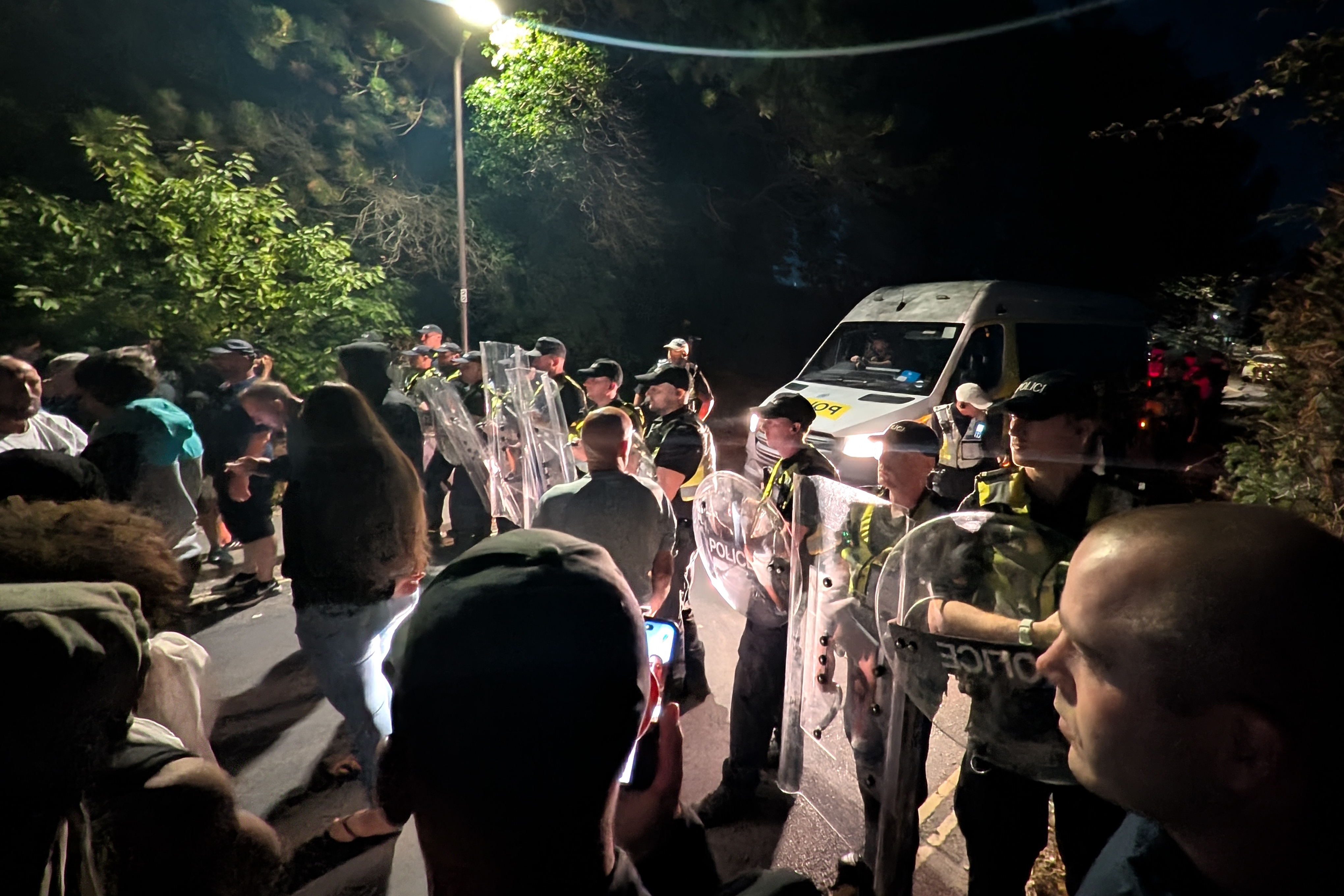
Police officers form a line to block protesters near Eastney Beach, in Portsmouth, England, on Sunday.PA
The myth that nothing ever happens on Labor Day weekend was punctured repeatedly in 2026, including the gruesome Miami crash of a cargo jetliner that killed five people on the ground and an armed man lunging at Ohio Democratic gubernatorial candidate Amy Acton at a campaign event. But the weekend’s most puzzling and arguably most alarming news was barely covered on American television: the sudden appearance in two British port cities — Dover and Portsmouth — of hundreds of black-clad, right-wing male protesters, their heads covered in balaclavas, there to cause chaos and protest the arrival of migrant boats.
The mysterious men — eventually tied to a self-proclaimed Christian group called the Patriot Platform, led by a former associate of the anti-Islamic, far-right political activist Tommy Robinson — attempted to block lifeboats carrying migrants from landing, and also tried to blockade their buses once on shore, while snarling local traffic as Dover’s famed white cliffs loomed in the background. The protests were a dramatic public illustration of the rising tide of right-wing reaction — much of it xenophobic rage over refugees — that has increasingly roiled politics in the United Kingdom, posing a threat to the milquetoast, inept Labour government.
But, in the spirit of the U.K.’s most famous fictional detective Sherlock Holmes, the real mystery along the British seacoast was the dog that did not bark. Although police did eventually restore order in the two port cities, the authorities were painfully slow to respond to such a large-scale civil disturbance, and few or no arrests were made. That’s in stark contrast to the frequent images over the last year of grandmothers and other peaceful, placard-carrying protesters getting dragged away by British bobbies when protesting for a free Palestine.
The reaction from the government of new Labour Prime Minister Andy Burnham was equally languid. A Burnham spokesperson, pressed by a reporter for a political response, would only call the shocking protests “an operational matter for the police to set out their response to the protests on the ground. So I will leave them to respond to that.” Winston Churchill, who (despite his many flaws) famously promised to fight fascists “on the beaches,” must have been spinning in his grave.
Speaking of Nazis, the protests and the sudden police embrace of pacifism coincided with a regional victory in a battered former industrial corner of eastern Germany for the extreme right AfD (Alternative for Germany) Party, the unholy heirs to Adolf Hitler’s legacy. This weekend’s echoes of Western Europe’s failed appeasement of the Nazis in the late 1930s are almost as troubling as the thuggish extremism itself. The coddling needs to end, or else we are condemned to repeat the absolute worst of our past.
What I wrote on this date in 2016
The protests in South Dakota, led by its Indigenous people, against the Dakota Access oil pipeline that erupted in the late summer of 2016 were a peak moment of 2010s political activism, and a lost cause (the pipeline opened the following year, after Donald Trump became president) that was totally worth fighting for. On this date 10 years ago, I was crusading — also unsuccessfully — for the Pennsylvania State Employees’ Retirement System (PSERS) to drop its roughly $192 million investment in the pipeline owner. I wrote, “Pennsylvania doesn’t have a great track record of environmental leadership — but there’s no reason why that history can’t be altered.”
I’ve mentioned it before in this space, but no one has done more to keep the tradition of the great American sports columnist alive than The Inquirer’s Mike Sielski. Last week he published a remarkable — and remarkably timely — deep dive into the case of a then-19-year-old from Pennsylvania Amish country whose addiction to online sports gambling and social isolation led him to make a bomb threat against the U.S. Open tennis tournament. The case was hardly an isolated incident, but the hallmark of an alarming trend: the growing number of threats not just against major sporting events but individual athletes, as more and more people — especially vulnerable young men like the one Sielski chronicles here — get addicted to the ubiquitous, heavily advertised betting sites. The piece is a reminder that great storytelling doesn’t need to be a dying art — but also that in-depth journalism requires time and your support. You provide that — and get some great reads in return — when you subscribe to The Inquirer.
By submitting your written, visual, and/or audio contributions, you agree to The Inquirer’s Terms of Use, including the grant of rights in Section 10.
It is as important to remember what happened after the Sept. 11, 2001, terrorist attacks as it is to recall the nearly 3,000 lives lost, dozens of buildings mangled or destroyed, and the millions of prayers said in response to what many believed could never happen to the most powerful nation in the world.
In the immediate aftermath 25 years ago, this country became unified across income, religious, and racial lines in a manner it had not shown since imperial Japan’s despicable aerial attack on Pearl Harbor in 1941. But in both instances, there was shameful xenophobic backlash. The Japanese suffered internment. The anti-Muslim rhetoric and actions continue to this day.
Just as undeniable was that unity after the attacks — including President George W. Bush’s words that “Islam is peace” — helped blunt prejudice.
Black people, white people, Christians, Jews, Muslims, Republicans, Democrats, the rich, the poor, citizens and new arrivals — they all saw themselves as Americans on 9/11. We found common ground in using the nightmare that had just occurred as the impetus toward a greater sense of community.
That spirit of togetherness was a reminder of just how important the word united is in calling our country the United States of America. The 9/11 attacks made it easier to see why we as a nation must not let our differences be exploited by calculating entities looking for ways to weaken our resolve.
A quarter century later, the U.S. is much different in that respect.
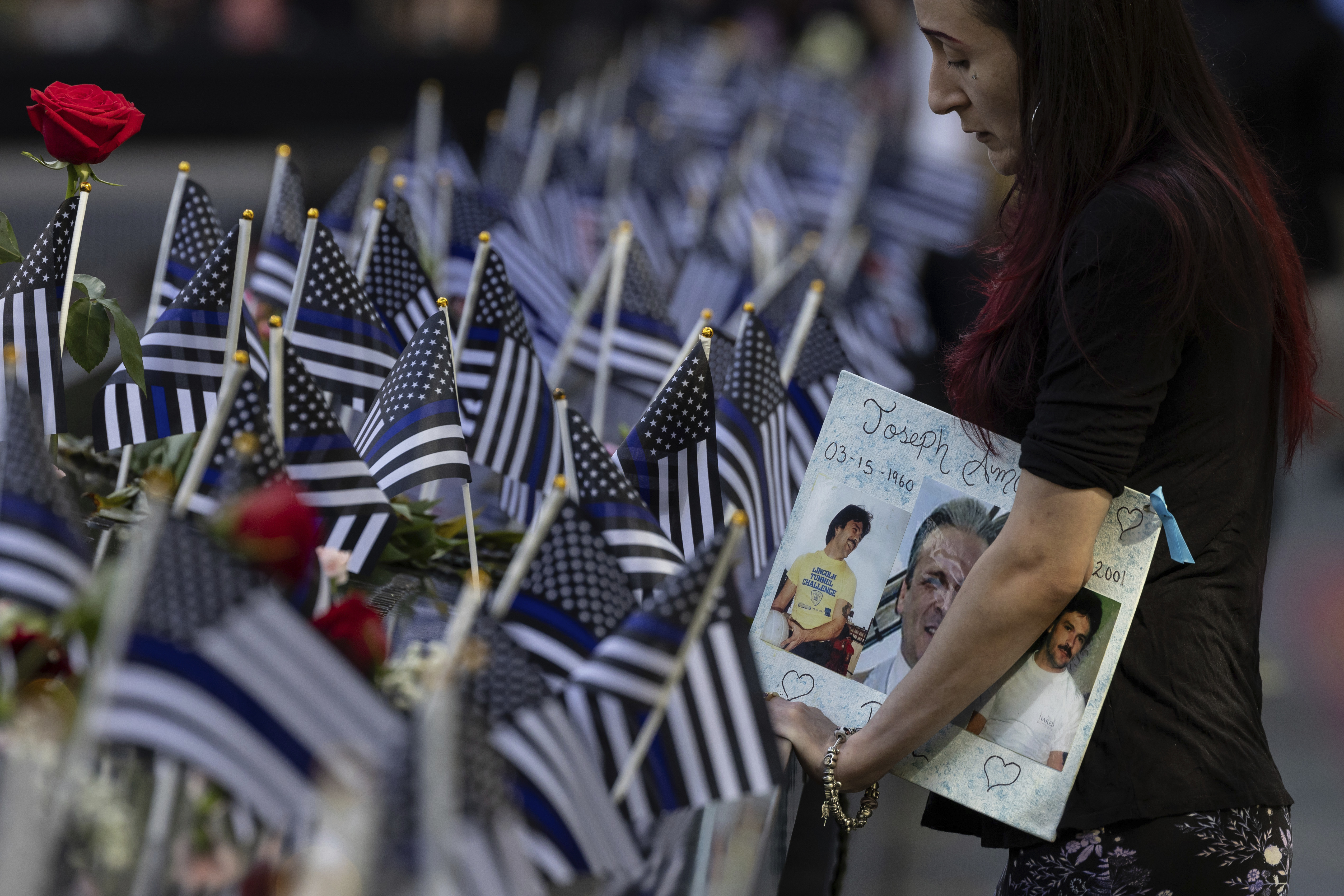
Mercedes Arias stands by the name of her father, Joseph Amatuccio, on the south pool during the 9/11 memorial ceremony on Sept. 11, 2024.Yuki Iwamura
Our current leadership prefers sowing seeds of division instead of reaching past political, economic, religious, social, and ethnic distinctions to help Americans of every station and persuasion work together for our common good.
Instead of trying to unify, this nation’s current leaders decided it was more important to wage war with Iran and argue with our allies. Iran may one day develop a nuclear weapon, they said. Dismissing that Russia and China already have that capability and, unlike militarily feeble Iran, have delivery systems to reach our shores.
Washington also decided to overthrow Venezuela’s despotic president to seemingly gain control of its oil reserves, and has made threats against Cuba and Greenland. It’s hard to believe the same Donald Trump who is now so eager to use military force once promised that if reelected, “we will have no more wars, no more disruptions, and we will have prosperity and peace for all.”
Are we supposed to forget the president said that? Is he playing games with the American public? Is he distracting our attention by waging wars that lack clear goals, abruptly destroying historic settings like the White House Rose Garden, and putting unqualified people in charge of public health, public safety, and national security?
So much is going on that too little attention has been paid to all the money changing hands amid the clamor.
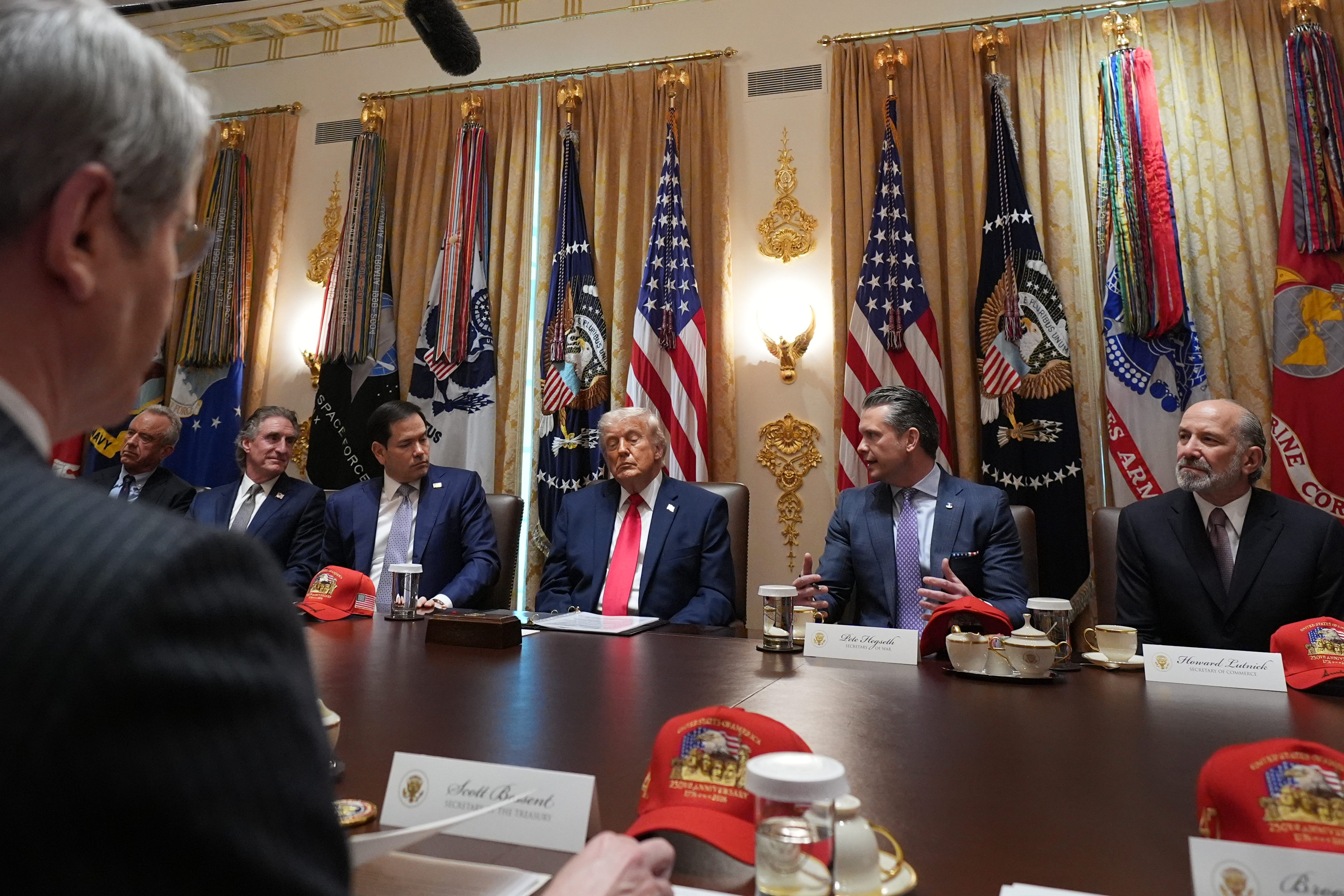
President Donald Trump attends a cabinet meeting at the White House in May.Jacquelyn Martin
Trump’s personal wealth has increased by a staggering $2 billion since he took office, much of it in cryptocurrency holdings. Investors in these schemes have lost about $3 billion as the currencies’ value continues to decrease, but many see their losses as the price to get the president’s ear.
As Trump continues to be Trump — more engaged with building monuments to himself and posting aggrandizing AI slop on social media — everyday Americans struggle to make ends meet because of his policies. Although the cost of his mindless tariffs and needless war goes beyond the high prices people are paying at the pump and the checkout line, it is emblematic of the president’s complete abandonment of the American people.
While Trump counts bitcoins, our healthcare system continues to undergo dramatic changes that have allowed insurance companies to acquire hospitals, doctors’ offices, pharmacies, and otherwise take control of this nation’s medical institutions.
The president’s draconian immigration policies haven’t really solved the problem. There will always be people seeking a better life who will do anything, legal or illegal, to cross the border or stay past their visas’ expiration. That’s because despite its faults — and Trump’s best efforts — the United States remains the land of opportunity, even if dwindling.
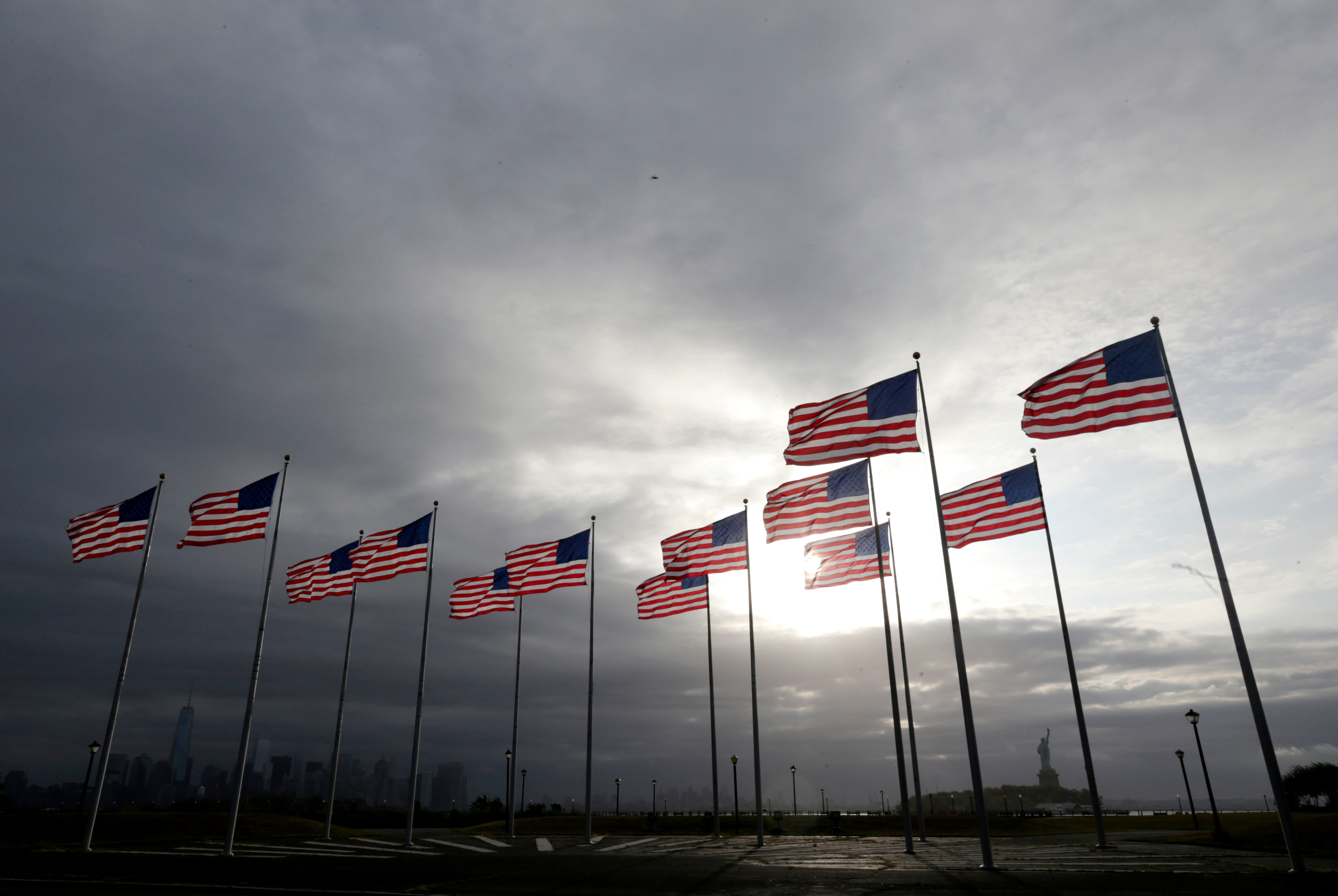
Thirteen United States flags representing the 13 original colonies are seen at Liberty State Park with 1 World Trade Center (bottom left) and the Statue of Liberty (bottom right) in the background, in Jersey City, N.J.Julio Cortez
America’s problem isn’t immigrants, most of whom have no criminal intent; it’s the lack of an effective system to better manage border crossings and adjudicate the cases of people who may have lived here illegally for years but otherwise committed no crimes.
Effective immigration reform almost occurred 20 years ago, when the so-called Gang of Eight senators, including now-Secretary of State Marco Rubio, supported a bipartisan bill written primarily by Republican John McCain and Democrat Edward Kennedy that would create a 10-year registered provisional immigrant status for eligible illegal residents who paid fines and back taxes to eventually obtain permanent legal residency.
This country also needs innovative equal opportunity ideas to replace the diversity, equity, and inclusion programs now considered reverse discrimination by federal judges. But instead of addressing that issue, the president and his enablers choose to demonize trans people, crack down on speech they disagree with, and abandon civil rights enforcement — all while embracing economic and tax policies that favor the rich.
None of these issues will be resolved with leaders who seem to thrive with our nation as divided as it is now.
It shouldn’t take another 9/11 to bring us closer as Americans. But as we seek a greater sense of community, let’s remember that day and what Todd Beamer was heard saying after he and fellow passengers aboard thehijacked United Airlines Flight 93 realized they had no alternative but to forget their differences and act: “Are you ready? OK, let’s roll.”
It’s time for us to fight together for each other, too.
Ben Hummer would like to own a house one day in Pittsburgh. He dreams of a two-bedroom, one-bathroom town house where he can live near his job.
But for now, Hummer, 29, rents his 500-square-foot, one-bedroom apartment, and his monthly rate since he moved in has continued to increase by $50 each year, making the goal seem further out of reach.
“Anything that could increase the supply and affordability of housing in the Pittsburgh area would be massive,” said Hummer, who works in human resources.
Like most voters in Pennsylvania, according to a recent poll from The Philadelphia Inquirer, the New York Times, and Siena University, the economy and cost-of-living concerns are the most important issues deciding Hummer’s vote in the 2026 governor’s race between incumbent Democratic Gov. Josh Shapiro and his Republican challenger, state Treasurer Stacy Garrity.
And as Election Day draws nearer, both campaigns are focusing their messaging on these kitchen table issues.
(function() { var l = function() { new pym.Parent( ‘nyt-afford__graphic’, ‘https://media.inquirer.com/storage/inquirer/ai2html/nyt-afford/index.html’); }; if(typeof(pym) === ‘undefined’) { var h = document.getElementsByTagName(‘head’)[0], s = document.createElement(‘script’); s.type = ‘text/javascript’; s.src = ‘https://pym.nprapps.org/pym.v1.min.js’; s.onload = l; h.appendChild(s); } else { l(); } })();
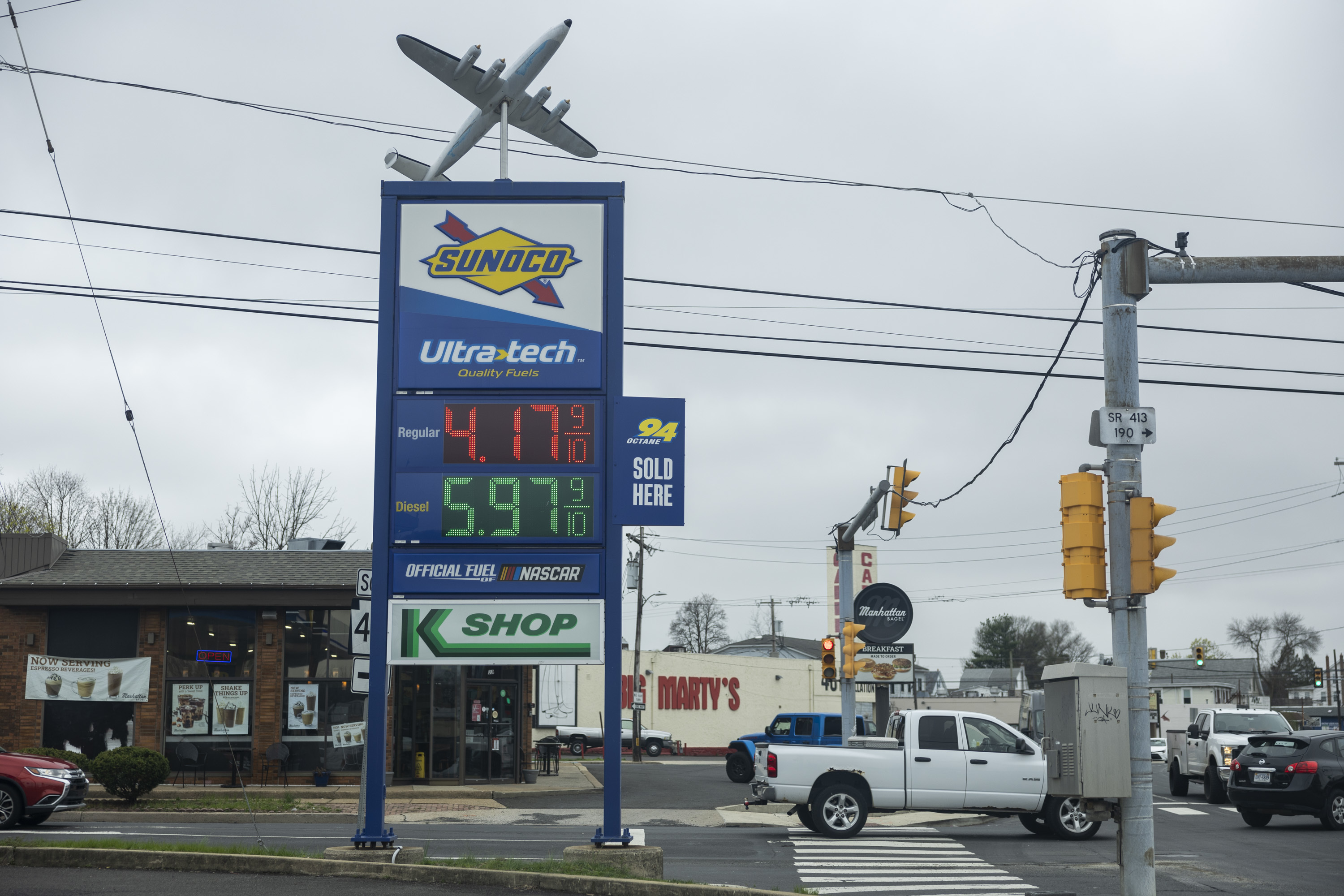
Two years ago, it was the cost of eggs, gas, and groceries that were top priorities among the electorate in Pennsylvania and elsewhere. Voters’ trust in President Donald Trump’s ability to bring down high prices propelled him back to the White House, sending Democrats scrambling to hone an affordability pitch that could land in time for the high-stakes 2026 midterm elections. But in that same time, prices have continued to climb; gas prices have topped $4 per gallon; and tariffs instituted by Trump — who called affordability “a hoax” at a Pennsylvania rally last year — have driven up the cost of every day life. Now both parties are latching on to a focus on affordability.
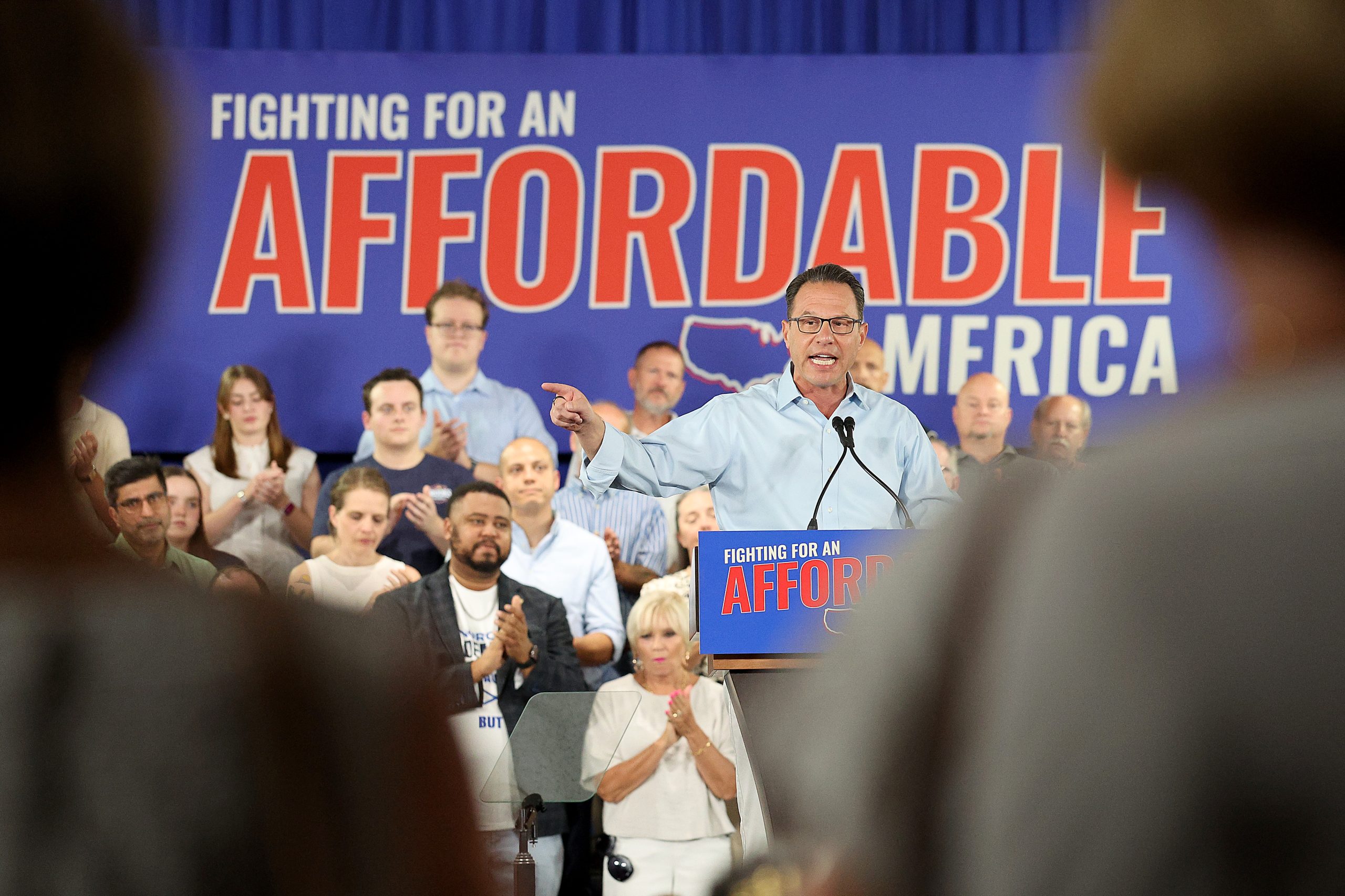
As he mounts a reelection campaign, Shapiro — who holds a commanding lead in polls — is highlighting his accomplishments during his first term that his campaign says has given Pennsylvanians more money back through tax cuts and wage increases for childcare workers.
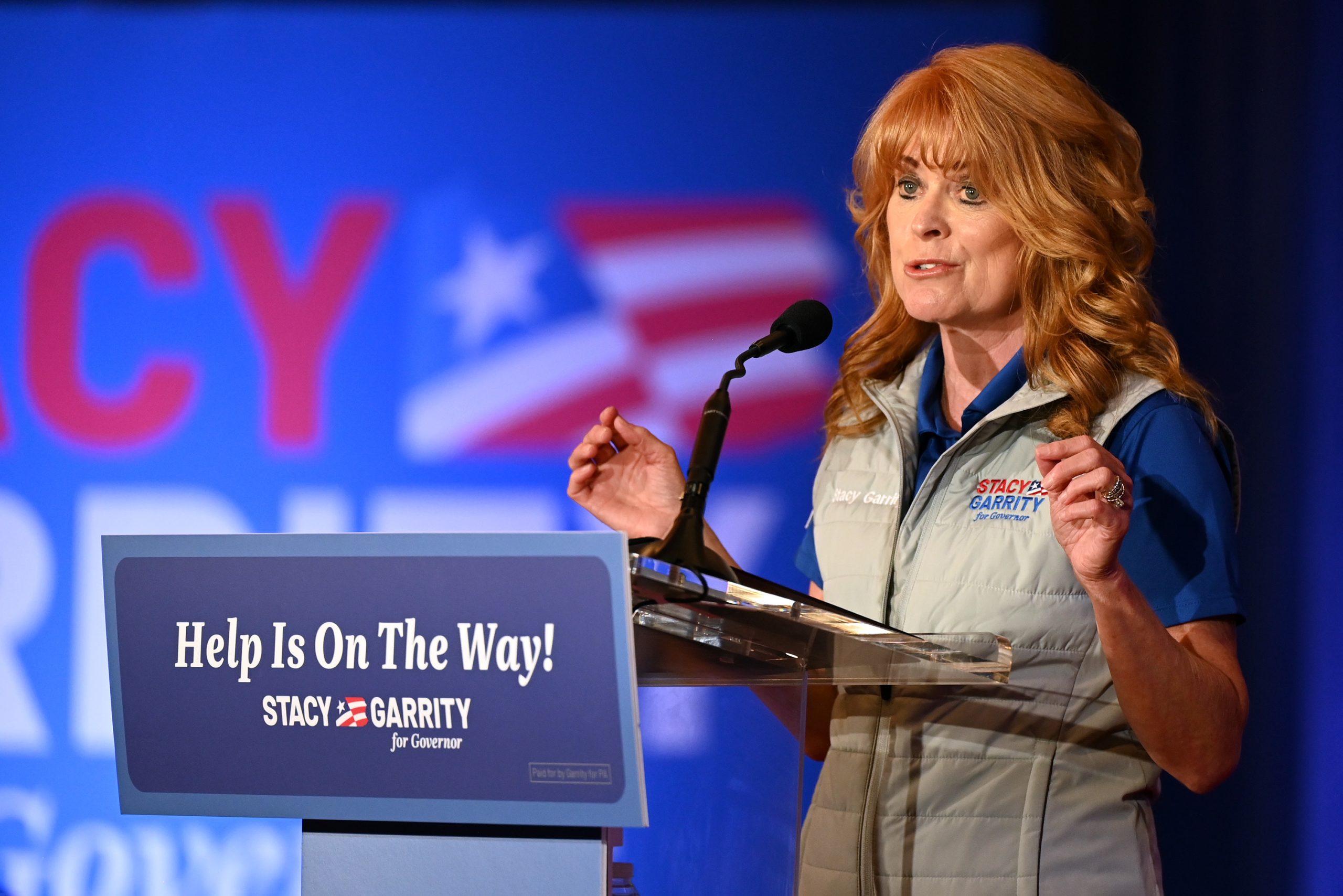
Meanwhile, Garrity has recently shared her own plan, called “Turnaround PA,” to make living more affordable with an outline of how she’d lower prescription drug costs, reduce property taxes, and aim to cut energy bills to get there. But she’s also closely aligned with Trump, who has endorsed her in the race and has dismal markings from voters on two of their top priorities: the economy and cost of living.
(function(){function e(){window.addEventListener(`message`,function(e){if(e.data[`datawrapper-height`]!==void 0){var t=document.querySelectorAll(`iframe`);for(var n in e.data[`datawrapper-height`])for(var r=0,i;i=t[r];r++)if(i.contentWindow===e.source){var a=e.data[`datawrapper-height`][n]+`px`;i.style.height=a}}})}e()})();
That puts her in a difficult spot to challenge Shapiro, said Mark Zandi, the chief economist at Moody’s Analytics.
There’s no easy answer for Republicans to win on economic issues in the midterms, but Zandi said his best advice is to focus on what is in the governor’s control and draft ideas that mitigate the fallout from Trump’s policies.
Hummer, a Democrat who plans to vote for Shapiro this fall, said he trusts the governor to handle the economy and cost of living issues better. More than half of likely Pennsylvania voters in the Inquirer/New York Times/Siena poll agree.
Fifty-five percent said Shapiro would do a better job of handling the state’s economy, and 56% said they think Josh Shapiro would do a better job of handling cost-of-living issues.
“I’m well aware he’s limited in his options to do things, but I would say he’s kept a steady hand on the wheel of the Pennsylvania economy — to the extent that he can,” he said.
Garrity pitches affordability as Republicans seek to overcome Trump’s ratings
Among other proposals, Garrity has pitched a “first-time homebuyer assistance initiative,” which could help house seekers like Hummer and would provide qualified buyers 3% mortgage interest rate support from the state.
She also has proposed cutting taxes by seeking a constitutional amendment that exempts Pennsylvania seniors from paying school property taxes and gives voters the final say over whether to increase property taxes. Her plan would also “reprioritize state spending for property tax relief.”
State Treasurer and Republican candidate for governor Stacy Garrity holds a rally in Bucks County on Sept. 25, 2025, at the Newtown Sports & Events Center.
But there’s no free money, Zandi said. “If you’re giving tax cuts over here,” he said, “you’ve got to figure out how to pay for it … and that means you’re cutting spending.”
Garrity’s plan also would address rural healthcare, and she would “aggressively pursue available federal funding to strengthen rural healthcare.”
But there’s little money left in the pot after Trump cut government spending in last year’s federal budget. His One Big, Beautiful Bill Act directed a reduction in Medicaid spending by $1 trillion over 10 years, starting after the midterm elections, and rural hospitals and nursing homes are more dependent on federal funds. Additional dollars would likely need to come from Harrisburg.
For Pennsylvanians like Caitlyn Needham, 28, the consequences of an unexpected medical bill on top of a limited income meant she went without substantial meals for weeks.
“I have a rabbit, and she had a medical emergency [in November],” she said. “So for two months, the only thing I could afford to eat while paying off those bills was peanut butter and jelly sandwiches for breakfast, lunch, and dinner.”
Needham, a cake decorator in Pittsburgh, said she’s always been frugal and saved a little bit of money from each paycheck, but increasing expenses are pushing her budget to the limit. She said she plans to vote for Shapiro this November.
“Pennsylvanians need a relief valve before things get worse,” she said. “So many people are one bad week away from not being able to keep their housing, or losing their medical coverage, or losing their job because their car broke down and they can’t afford to get service. It’s like everyone is just one accident away from not being able to live.”
(function(){function e(){window.addEventListener(`message`,function(e){if(e.data[`datawrapper-height`]!==void 0){var t=document.querySelectorAll(`iframe`);for(var n in e.data[`datawrapper-height`])for(var r=0,i;i=t[r];r++)if(i.contentWindow===e.source){var a=e.data[`datawrapper-height`][n]+`px`;i.style.height=a}}})}e()})();
“If you’re trying to infer I’m out of line with the president, I don’t think I am,” she said last month during a news conference she held on data centers.
In a statement, she blasted Shapiro’s handling of the economy, saying he has put a tax burden on families and tied businesses up with unnecessary regulations.
“Josh Shapiro’s Pennsylvania is simply unaffordable for the commonwealth’s hardworking families,” Garrity said. “He allowed utility and energy costs to skyrocket due to his unwillingness to expand generation capacity and instituting policies that benefit our neighboring states instead of us.”
Shapiro emphasizes his record is separate from national picture
Shapiro, the incumbent, is leaning on his record on economic policy.
According to his campaign, his administration created more than 25,000 jobs during his first term and brought in $41 billion in private-sector investment.
“Governor Shapiro is fighting for all Pennsylvanians — and he has a track record of creating jobs and economic opportunity, putting money back in Pennsylvanians’ pockets, and standing up to Washington’s reckless, cost-raising policies,” said Samantha Reposa, a spokesperson for the campaign. Garrity, she said, “fully supports the failed economic policies that are raising costs and hurting working families across the commonwealth.”
Gov. Josh Shapiro addresses the audience during a July 26 rally for congressional candidate Bob Brooks at the United Steelworkers Union Hall in Bethlehem.David Maialetti / Staff Photographer
His campaign released a Spanish-language digital ad focused on benefits of the Working Pennsylvanians Tax Credit and the Property Tax/Rent Rebate Program, which is targeted toward seniors and people with disabilities.
“If you’re working, you get to keep more of your money. Up to $800 more, more money in your pocket. And right now, every little bit helps,” a woman in the commercial said in Spanish.
Ultimately, Zandi said, “it’s very difficult for lawmakers at any level of government to change the picture on affordability, at least any time quickly,” because those issues are due to broader national and international forces.
There’s also no one-size-fits-all approach for a governor to tackle the costs of education, housing, energy, childcare, elder care, healthcare, and groceries.
“Each issue that makes up the affordability crisis requires its own set of solutions and efforts, so it feels like a laundry list of policy steps, and it is,” he said. “But that actually is probably the only way to make a difference.”
For many Pennsylvanians, paychecks feel like simply treading water: By the time all expenses are covered, there’s little money left to save and build toward the future.
“It just seems that money doesn’t go as far as it used to,” said Thomas Schank, 49, of Scranton. “I’ve gotten raises at work over the last two years, but everything else went up also, so really, no net gain.”
In the country’s premier battleground state, Pennsylvania Democrats believe they’re in striking distance of a tidal-wave victories that would dramatically shift the balance of power in both Washington and Harrisburg.
For the first time in decades, the party could take full control of the legislature. That would give Democratic Gov. Josh Shapiro — seeking reelection with a wide polling gap on his Republican challenger Stacy Garrity— significantly more power to shape the direction of the state as he potentially pursues a White House bid in 2028.
Democrats also see a chance to flip four congressional seats and take control of the U.S. House. Republicans, meanwhile, are prioritizing defending the Pennsylvania seats with their House majority on the line as President Donald Trump, who won the state justtwo years ago, sinks in popularity.
The path forpower in Washington inthe high-stakes midterms runs through Pennsylvania and its results will be closely watched as both parties prepare for a presidential race in two years when the state promises to play a pivotal role.
Voters across Pennsylvania will head to the polls in November to cast their ballots for races that will decide the balance of power in the state and nation.
Here are the races to watch and how to vote.
Shapiro’s November could dictate his 2028
Shapiro, widely viewed as a likely contender for the 2028 presidency, has big ambitions this fall when he’ll stand for reelection against Garrity, the state’s treasurer.
More than just securing his own reelection, Shapiro hopes to run up the margin and carry downballot Democrats across the finish line.
Another double-digits win and a string of coattail victories would be ashow of strength about his ability to perform in a key swing state that his party lost in the last presidential election.In a presidential primary, Shapiro could use that result to make an argument that he’s a strong general electioncandidate who can boost the Democratic brand.
Will Republicans hold on in competitive congressional seats?
There are four U.S. House districts in the eastern portion of Pennsylvania, targeted by both parties as must wins. In each, the Republican incumbents are seeking to fend off highly financed challengers amid deep frustration among voters with the leader of their party that could translate into a wave of Democratic victories down ballot.
7th Congressional District: Freshman Republican U.S. Rep. Ryan Mackenzie narrowly flipped the Lehigh Valley district two years ago and is widely seen as one of most vulnerable incumbents in Congress. He’s facing a challenge Democrat Bob Brooks, a retired firefighter and union leader whose blue-collar campaign has attracted support across the party’s ideological spectrum with endorsements from Shapiro and U.S. Sen. Bernie Sanders.
10th Congressional District: Republican U.S. Rep. Scott Perry, a close ally of Trump, faces a November rematch against Democrat Janelle Stelson, a former TV anchor, in the Harrisburg area district. Stelson has consistently outraised Perry after narrowly losing in 2024.
In addition to these four races both national parties have targeted, Shapiro has argued that the 9th Congressional District, where Democrat Rachel Wallace is taking on incumbent GOP U.S. Rep. Dan Meuser, is flippable — despite the strong GOP lean in the district, which stretches from Berks County to the New York state border. The district is home to two warehouses that ICE was planning to convert into detention centers before abandoning the plan after a backlash from residents.
This year, Shapiro wants to flip the chamber and win a trifecta to push forward his key priorities, such as codifying abortion access, raising the state’s minimum wage, and increasing funding for transit.
Republicans currently hold 27 of the chamber’s 50 seats. Democrats, who currently hold 23 seats, need to win at least two additional seats and the governor’s office to win control of the chamber with the lieutenant governor as a tiebreaking vote.
The seats, drawn advantageously for Republicans, have been stubbornly resistant to political change for decades.
But this year a blue wave could usher in Democratic pickups in Philadelphia suburbs and the Lehigh Valley.
Races to watch include:
Bucks County’s 6th District, where Republican incumbent State Sen. Frank Farry faces a challenge from Democrat Eileen Hartnett Albillar.
Montgomery County’s 24th District, where incumbent Republican State Sen. Tracy Pennycuick is up for reelection against Democrat Chris Thomas.
Bucks and Lehigh County’s 16th District, which will see a rematch race between incumbent Republican State Sen. Jarrett Coleman and Democrat Mark Pinsley, the Lehigh County controller.
What are the important dates to know?
Election Day is Nov. 3.
The deadline to register to vote is Oct. 19. You must be at least 18 years old, a resident of Pennsylvania and a citizen of the United States to vote. You can register online, by mail, at your county elections office, or at one of several other government buildings.
Pennsylvanians can vote by mail with no excuse required. To apply, fill out an application by mail, online, or in-person and send it into your county election office. Applications must be received by Oct. 27 at 5 p.m. and the completed mail ballot must be received — not just postmarked — by 8 p.m. on Election Day.
An application and mail ballot can be completed in one visit at an election office, essentially functioning as early voting.
Staff writer Fallon Roth contributed to this article.
Philadelphia’s police union on Tuesday endorsed Gov. Josh Shapiro’s reelection bid, announcing its continued support for the first-term Democratic governor while touting his commitment to law enforcement.
“Every day, he has shown a commendable ability to work with local law enforcement and deliver the resources and support we need to protect and serve our friends, families, and neighbors,” said Roosevelt L. Poplar, president of the Fraternal Order of the Police Lodge 5, which represents over 14,000 active and retired Philadelphia police officers and sheriff’s deputies.
In a statement, Shapiro said he was “honored” by the endorsement.
“I’m going to keep fighting for the brave law enforcement officers who work to keep Philadelphia safe every single day,” he said. “I believe all Pennsylvanians deserve to be safe and feel safe in their communities — and we have focused every day on funding law enforcement and supporting the men and women that protect and serve our Commonwealth.”
It marks the second time the police union has embraced Shapiro for governor after endorsing him in 2022 over Republican candidate Doug Mastriano, who the then-president of the union said couldn’t be trusted to protect their collective bargaining rights. Shapiro, a former state attorney general, was a reliable government official who the union said was “there to help us with whatever we need to do.”
This election cycle, Shapiro holds a commanding lead over his Republican opponent, Treasurer Stacy Garrity, according to a recent poll from The Philadelphia Inquirer, the New York Times, and Siena University. The union has previously supported President Donald Trump, but Shapiro attracted its backing over Garrity, who Trump has endorsed in the Pennsylvania governor’s race.
Shapiro has also received support from other organized labor unions, including the Pennsylvania AFL-CIO and the Pennsylvania Professional Fire Fighters Association. On Monday, he received the backing of the Pennsylvania State Troopers Association.
Shapiro has maintained a comfortable relationship with law enforcement, and his campaign noted that he has signed multiple state budgets funding 2,000 additional officers across Pennsylvania and allocated more than $1 billion in community-based violence prevention grants.
Roosevelt Poplar, president of Fraternal Order of Police Lodge 5, on Jan. 26, 2024.Elizabeth Robertson / Staff Photographer
In his statement, Poplar also commended Shapiro for providing funding for police department needs.
“The Governor has delivered on his promise to invest in public safety, he has shown up with us in times of tragedy, and he has proven his commitment to keeping our officers and the communities we serve safe,” he said.
The police union’s endorsement of Shapiro is notable for an organization that just a few years ago was seen by some Philadelphia Democrats as politically toxic.
In the aftermath of the 2020 Minneapolis police killing of George Floyd, protests by racial justice activists swelled in Philadelphia and across the country with many of the movement’s participants calling to “defund” or abolish the police. They pressed local lawmakers to redirect police funding to social services, and Philadelphia City Council in June 2020 canceled a planned increase to the Philadelphia police budget.
Amid the calls for reform, the FOP was a major point of contention, as was its bombastic former leader, John McNesby. Activists — and many of their allies in elected office — said the union was too resistant to change and protected bad cops.
Former FOP president John McNesby holds a news conference on Oct. 19, 2022.Joe Lamberti
At the time, Shapiro was running for reelection as the state attorney general, and his campaign presented him as a “progressive reformer” who had established a unit in his office to review criminal convictions that may have been unfairly applied and a council to support people leaving prison with housing and employment opportunities. The FOP endorsed Shapiro’s 2016 and backed his 2020 campaign for attorney general.
Unlike some Philadelphia Democrats, Shapiro — who has rumored ambitions for a presidential run in 2028 — did not embrace the “defund” movement. He argued during a 2020 trip to Philadelphia that addressing structural inequities in the department and having strong law enforcement, especially in communities with high levels of poverty, were not mutually exclusive endeavors.
“We reject that poverty or institutionalized indifference and marginalization should mean that some people don’t get to have a safe community to live in,” he said. “We won’t give up on the belief [of] law enforcement showing up in a community to make people feel safer.”
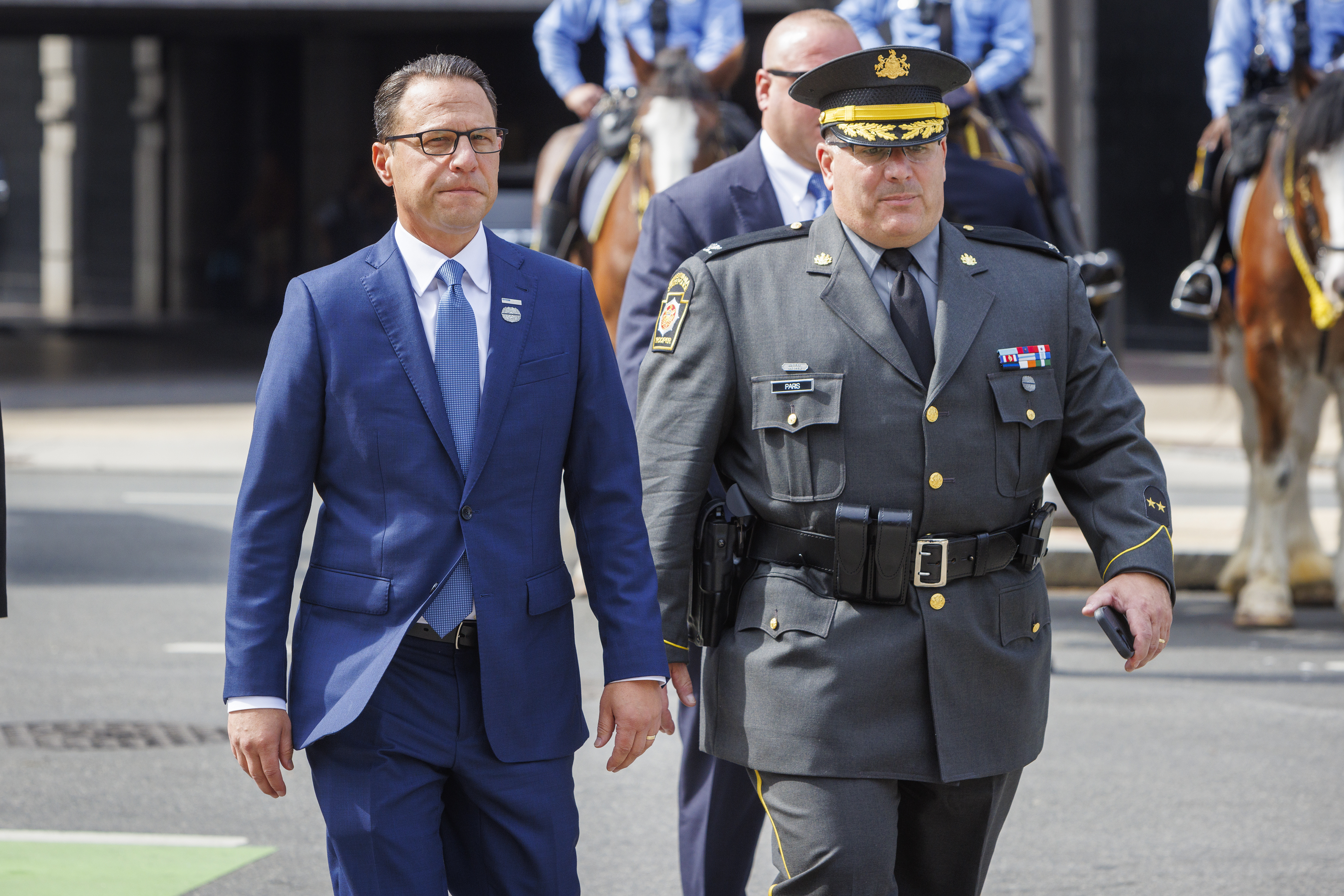
Gov. Josh Shapiro with Pennsylvania State Police Col. Christopher L. Paris. They were attending the funeral for Philadelphia police officer Jaime Roman at the Cathedral Basilica of SS. Peter and Paul on Sept. 19, 2024.Alejandro A. Alvarez / Staff Photographer
In the years following 2020, public support for police in Philadelphia appeared to grow. The city saw a historic spike in gun violence, and Republicans nationally portrayed Democrats as soft-on-crime. When a half-dozen Democrats were fighting for the mayoral nomination in 2023, polling showed that most voters saw public safety as the No. 1 issue driving the race. None of the candidates embraced “defund,” and most of them supported proposals to provide additional resources to the police department as it sought to solve shootings.
In the end, the tough-on-crime mayoral candidate — then-City Councilmember Cherelle L. Parker — won decisively.
As a businessman, Donald Trump often cut corners, broke promises, and made bad deals. Now that he has the power of the U.S. government at his disposal, the submission of Republicans in Congress, and a pliant U.S. Supreme Court, the only difference is the scale of the abuse, corruption, and foolishness he brings to his ventures.
Late Friday, the president announced on Truth Social that he had reached an agreement with Venezuela to secure more than 65 billion barrels of oil. “This Historic Transaction MORE THAN DOUBLES American Oil Reserves, greatly increases our Oil Supply, and will substantially lower Gas Prices for all Americans, long into the future,” he wrote.
The deal, such as it is, is, in fact, very significant, as total proven U.S. reserves are about 81 billion barrels. But the rest of Trump’s claims, and the agreement itself, should be buried under caveats.
Trump noted that this comes “at no expense to the American taxpayer.” This is true unless you count the roughly $5 billion the U.S. has spent on military operations around Venezuela since August of 2025, including extrajudicial killings at sea and the illegal invasion that ended with the kidnapping of President Nicolás Maduro and his wife on Jan. 3.
There is also the incalculable reputational cost as the United States’ revived imperialistic push into Latin America mirrors the president’s transactional nature and authoritarian bent.
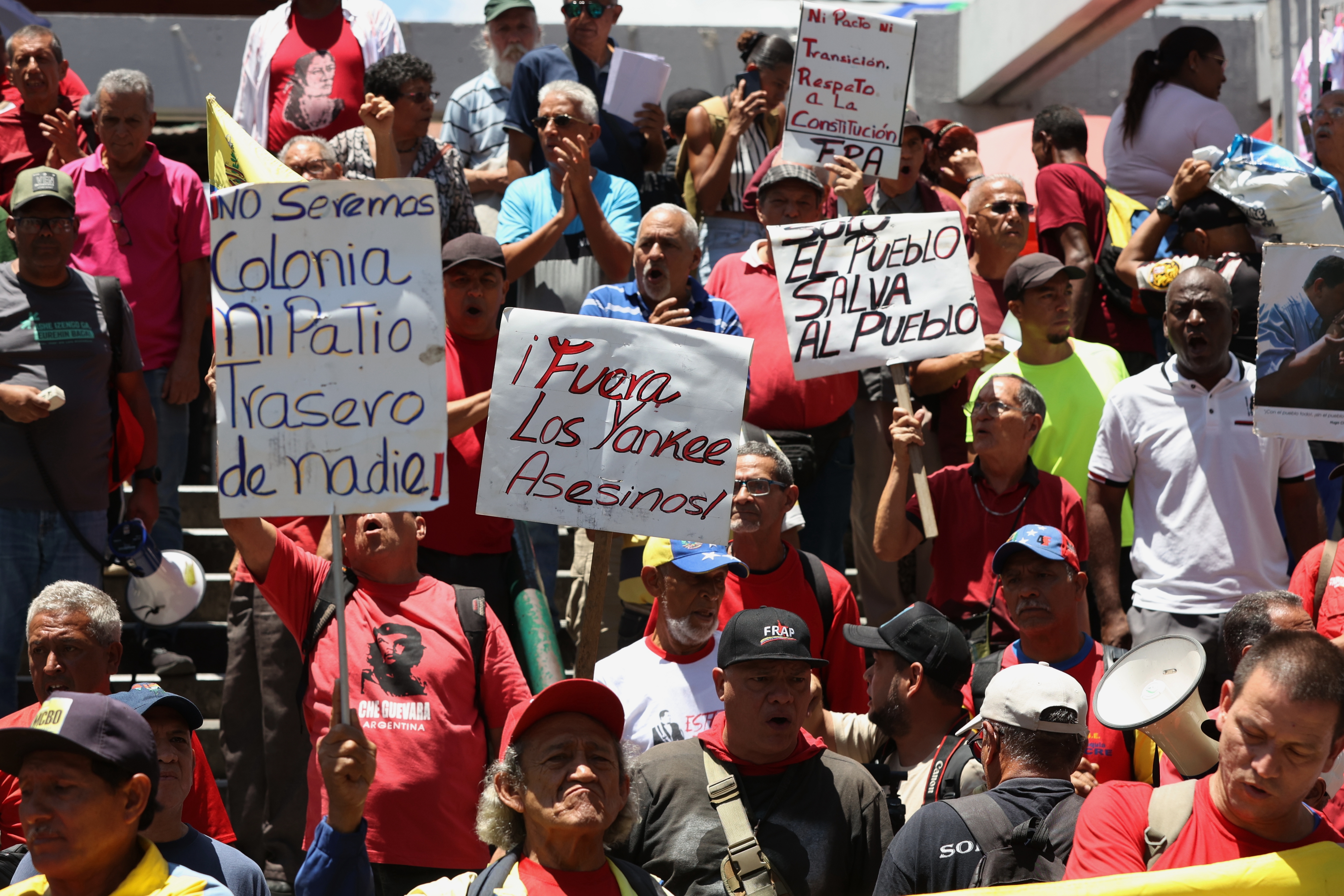
The deal was reached with the unelected Venezuelan President Delcy Rodríguez, who took office after Maduro was taken. Never mind that she was part of the same repressive socialist regime that is accused of rampant corruption and human rights abuses; she has proved a lot more willing to work with the Trump administration than her predecessor.
Venezuelans protest against President Donald Trump’s deal giving the United States a stake in Venezuela’s oil reserves in Caracas, Saturday.Pedro Mattey
Reports out of Venezuela find some people are hopeful U.S. investment will benefit the nation, yet under a government rife with cronyism, only a select few will likely reap any reward. Although details are still scarce, the agreement already sees the U.S. partner with a private company run by Alejandro Betancourt, an ally of Rodríguez, who has been under investigation by prosecutors in Zurich.
Trump’s assertion that gas prices will drop thanks to this deal is delusional, at least any time soon, as it would take years for this Venezuelan oil to have any impact on costs at the pump.
And that’s if the deal comes to fruition at all. The risks, at home and abroad, are significant.
The agreement would reportedly give Betancourt’s company access to 17 oil fields that are said to contain 65 billion barrels of oil. Development would cost billions of dollars and could take more than a decade. The Pentagon would finance the plan, but the legality of its participation is in question — as well as how the deal was crafted in the first place — meaning court challenges may be inevitable.
There are also political realities to contend with.
With Maduro gone and Trump threatening use of force, the Venezuelan government changed its position on working with the U.S. overnight. That could change just as quickly once Trump leaves office and if the new occupant of the White House has different priorities or if the current government of Venezuela is replaced and decides to honor the country’s 1999 constitution, which states that oil reserves belong to the nation and cannot be sold.
The high investment cost and political volatility are why U.S. oil companies have been reticent to enter Venezuela, even under pressure from Trump. According to the Wall Street Journal, Exxon and other energy interests are in talks to expand operations there, which is the prerogative of any private company that is willing to roll the dice on long-term investment, but should be far from the purview of the U.S. government and its taxpayers.
Trump’s half-baked oil agreement in Venezuela tramples that country’s sovereignty, benefits corrupt interests, and will likely fail to deliver for the American people. The art of the deal strikes again.