Tag: Reading Terminal Market

  • Reading Terminal Market’s efforts to prevent food waste get the attention of the EPA

    Reading Terminal Market’s efforts to prevent food waste get the attention of the EPA

    The Reading Terminal Market is often bustling with voices, crowded aisles, and populated hallways. But on Monday, the real motion was behind the scenes, among the trash cans and scraps.

    After two years of diverting as much food waste from landfills as possible, the market has managed to keep 1,045,931 pounds of organic waste from the trash fields.

    A pilot program began in April 2024, through a partnership with the composting service Mother Compost, and 10 of the market’s sellers. Now, as part of the celebrations for the nation’s 250th, the Environmental Protection Agency’s Feed it Onward program is highlighting initiatives that ensure food resources are redistributed instead of wasted.

    EPA officials toured the market’s facilities on Monday, getting a behind-the-scenes look at how the composting and other recycling and reuse programs work.

    “We are not just one organization championing for change, but more than 80 small, family-owned businesses under one roof who have the potential to make a difference,” said Annie Allman, Reading Terminal Market CEO and general manager.

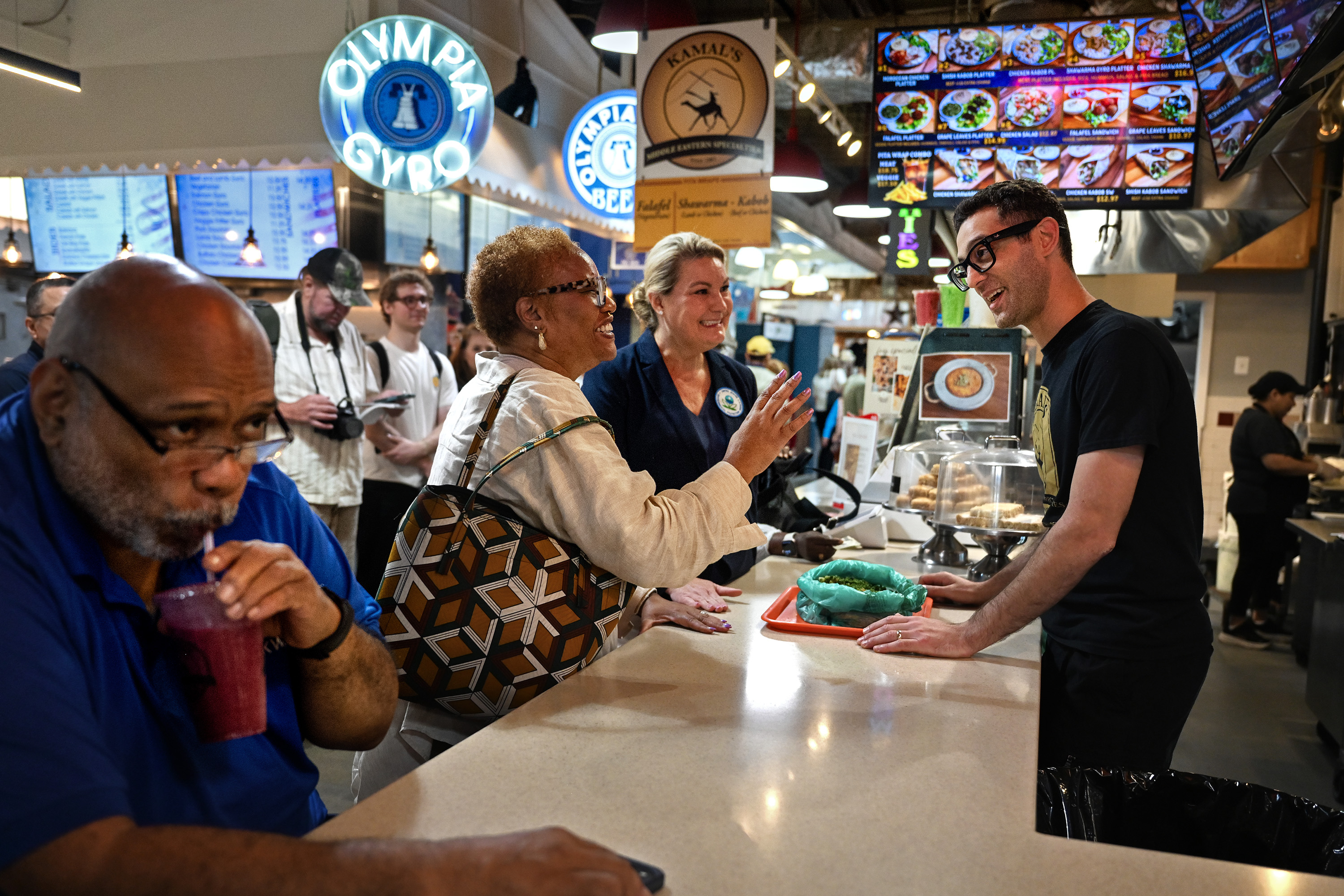
    Kamal’s Middle Eastern Specialties is one of them. Its owner Adham Albarouki, has been in the market for 45 years and sees in the composting program a way for his juice bar to give back.

    “We produce about 15 to 30 pounds of waste per day. Being part of something a little bit bigger here we can contribute a lot more,” Albarouki said. “It’s something to give back to mother nature.”

    The process is easy, Albarouki said. He or his workers run the vegetables and fruits through juicers. The juice goes to the customers, while the peels, fiber, and leftover organics are taken to a merchants-only area.

    Behind closed doors, 20 Mother Compost green trash cans are lined up, waiting to be fed scraps.
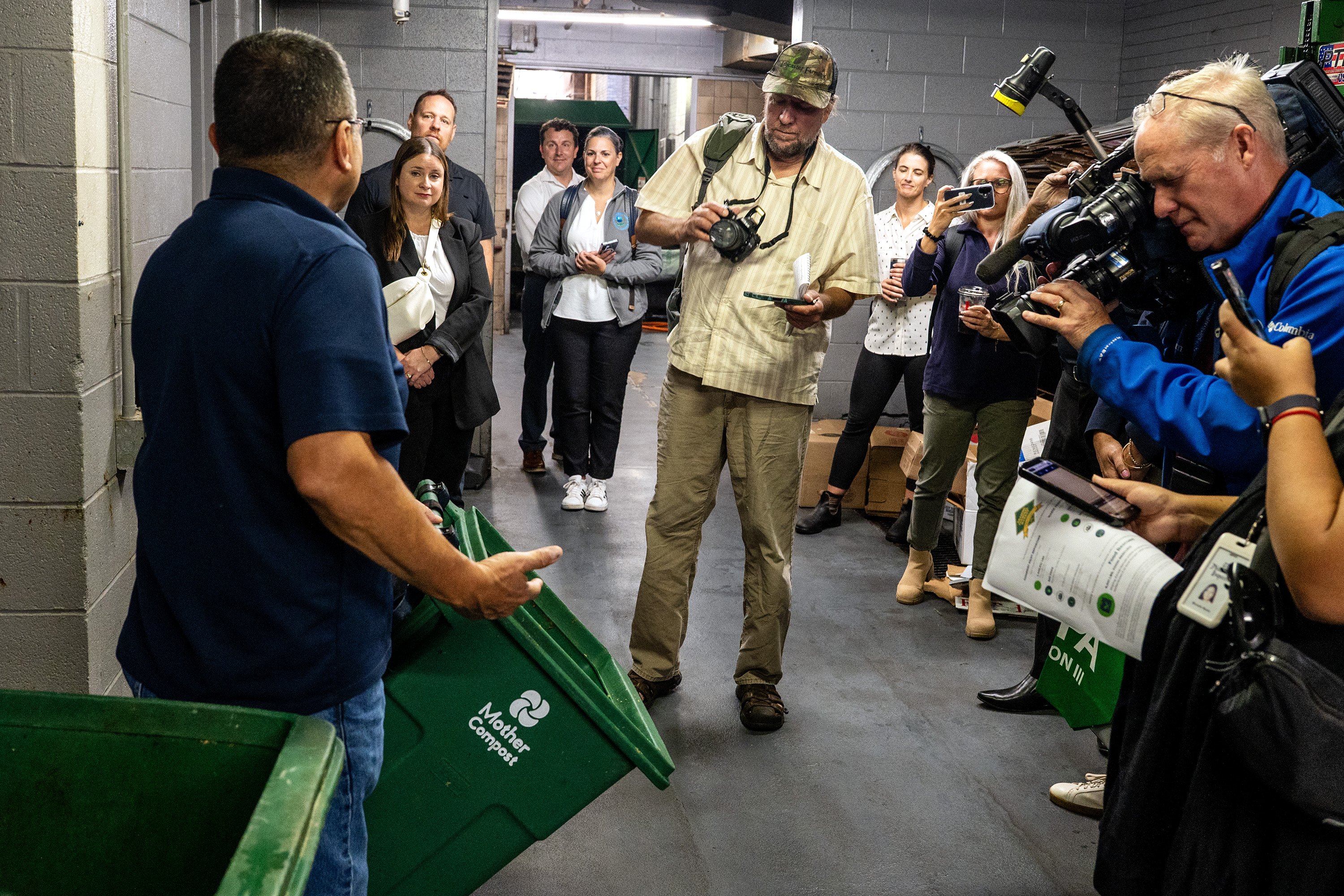
    Miguel Servellon (left), assistant general manager at Reading Terminal Market, gives merchants, EPA officers, and news media a behind-the-scenes tour of the market’s food waste diversion operations and sustainability programs on Monday. The green bins are from Mother Compost, a local, woman-owned pickup service, that composts organic materials to keep food scraps out of landfills and return their nutrients to local soils.Tom Gralish / Staff Photographer

    Miguel Servellon, the market’s assistant general manager, runs a tight machine to ensure the compost doesn’t get contaminated.

    On Monday morning the cement room smelled like orange peels, as one trash can had already been loaded with the citrusy scraps ahead of an early pick up, Servellon said.

    Fruit and vegetable peels, meat, eggs, cheese, milk, coffee grinds, and even fish all go inside the green containers.

    “The smell is not so inviting; occasionally it can be a challenge,” Servellon said.

    The organic waste is layered on top of each other.

    Mother Compost takes as much as 1,300 pounds of composting per pickup, which happen three times a week, Servellon said. The waste then goes to be repurposed at Linvilla Orchards, in Delaware County.

    But organic waste is not the only thing being recycled.

    At the other end of the room, two big gray containers sat full of vegetable oil waiting to be picked up by LifeCycle Renewables.

    Since 2022, the market has gathered 100,209 gallons of oil from sellers to be used as heating fuel in commercial buildings, Allman said.

    And since 2023, the nonprofit Sharing Excess has been working with the market’s sellers to redistribute surplus food.

    Earlier this year, Sharing Excess got its own fridge inside the market where sellers can deposit their donations to be redistributed in places with food insecurity.

    “We come by five days a week, and our driver weights them and tracks who donated each so we can give them their proper tax credit,” said Braden Walper, Sharing Excess retail rescue manager.

    The food goes to stock food pantries and provides as much as 100 meals a day for people experiencing food insecurity, Walper said.

    These Reading Terminal Market programs are crucial to inspire businesses across the region to reuse and recycle their food, said EPA Mid-Atlantic regional administrator Amy Van Blarcom-Lackey.

    “More than one million pounds diverted from landfills is an impressive milestone, but what really stands out to me is how the merchants made these practices part of their everyday operations,” Van Blarcom-Lackey said. “It’s important to continue because it’s good for the community and better for the environment.”

  • The best thing Kiki Aranita ate this week: The savory tomato tart from Market Day Canelé

    The best thing Kiki Aranita ate this week: The savory tomato tart from Market Day Canelé

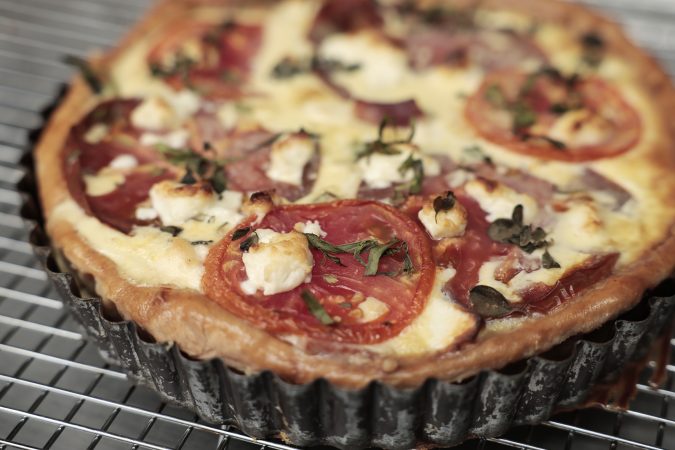
    Market Day Canelé’s savory tart is a scrapbook of sorts for owners Gil Ortale and Nem Ngo. It’s sold at farmers’ markets on weekends, each tart a collection of every interaction they’ve had through the week, shopping from their fellow vendors at Rittenhouse, Headhouse, Chestnut Hill, and Swarthmore Farmers’ Markets, and filling in the gaps at Reading Terminal Market, where Ortale once ran Fireworks, a charcoal-grill stall four decades ago.

    It’s tomato season, and the Market Day savory tomato tart ($30) is an ode to this area’s most covetable, most anticipated fruit. Crimini and white button mushrooms, corn, herb-roasted cotto ham from Claudio, Alderfer Farm eggs, and gruyère play supporting roles to the tomato slices splayed across its top. It’s a tart that’s also a philosophical meditation on produce.

    “Flavors [in my cooking] should be crystal clear examples of the very thing you imagine,” said Ortale, whose resume reads like a highlights reel of Philadelphia’s most storied restaurants, as he has worked everywhere from Frog to La Terrasse. “Like when you’re a child and tasting herring or Roquefort for the first time.”

    Ortale’s goal is to make food that tastes exactly like one’s first recollection of tasting any food. And so, his tomato tart reminds me of the first time I tasted fresh tomatoes cooked gently on a pizza, when I was five years old. It made me think of the first time I had sweet, fresh corn and the kernels burst in my mouth, and the savory British pies I ate growing up in Hong Kong.

    Nem Ngo and Gil Ortale are the folks behind Market Day Canelé. They were photographed in their Philadelphia home on Thursday, July 30, 2026.Elizabeth Robertson / Staff Photographer

    It’s so good that I was hesitant to write about it, as Ortale and Ngo usually only make two dozen to sell every week, and if you get one, there’s far less of a chance I’ll be able to get one.

    The crust is intentionally imperfect and not uniform, which makes it so flaky, it will stop you in your tracks, mid-bite. Ortale makes every single tart by hand. He doesn’t use a mixer or a Robot Coupe. “He blends the butter into the dry ingredients for each dough ball. That’s why they taste the way they do, they’re light and never stodgy,” said Ngo. “You can’t get that without elbow grease. It can’t be done with a machine.”

    This approach is also why Market Day Canelé has never opened a brick-and-mortar bakery. They have no desire to scale up.

    “We’re not hardcore capitalists. We just genuinely want to make good food. The farmers’ market industry is the most supportive and values-driven part of the food economy. People are shopping there because they want to know where their food is coming from and they want to see the faces of the people who make the food. We try to uphold that by doing everything by hand, with love, and to the best of our ability,” said Ngo.

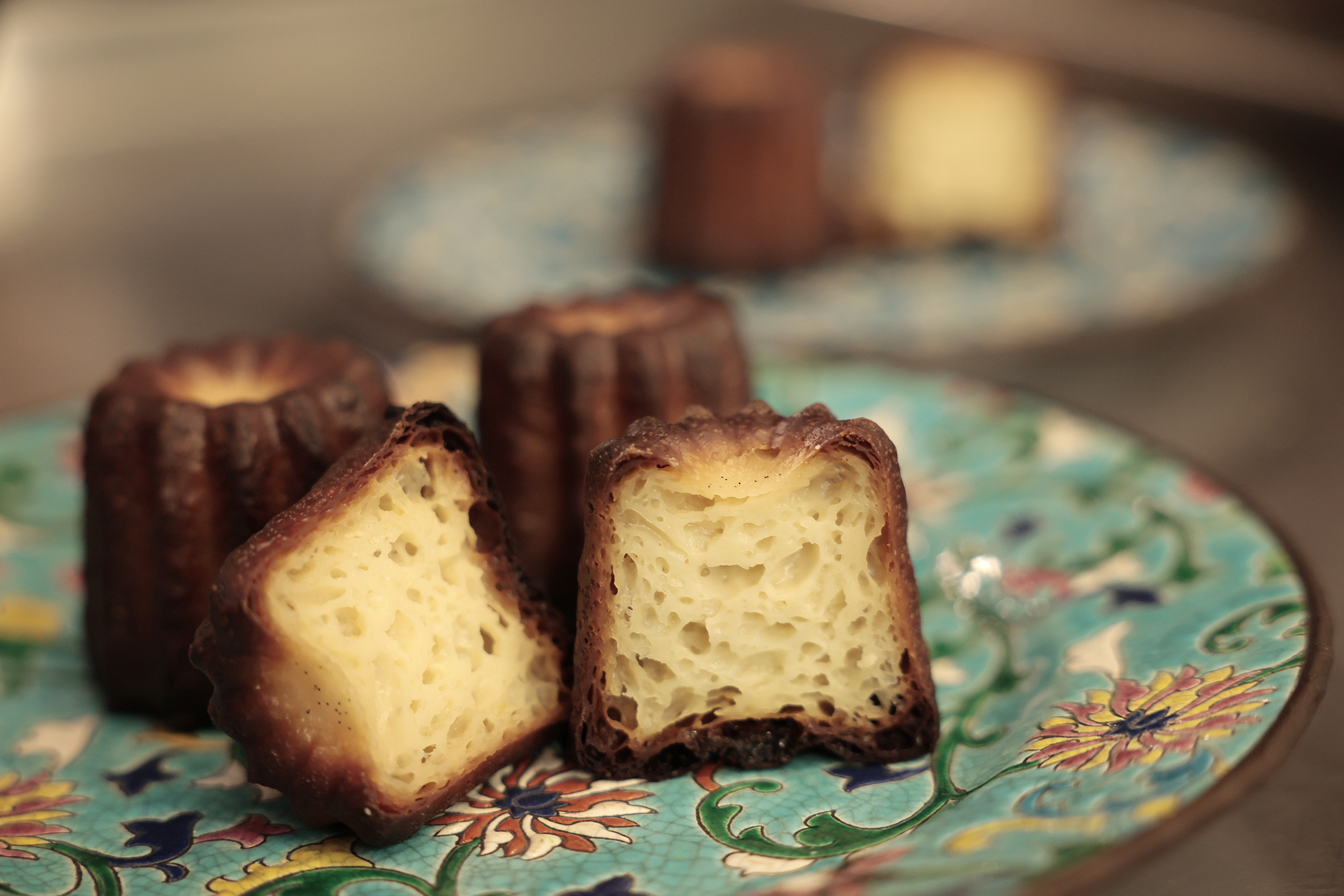
    The canelé by Market Day Canelé is a vanilla custard pastry that is the traditional pastry of Bordeaux. It was photographed in Philadelphia on Thursday, July 30, 2026.Elizabeth Robertson / Staff Photographer

    The airy, honey-combed crevices of beeswax and butter-slicked canelés may be the emblem of their business. They certainly have sent Ortale and then Ngo down an obsessive path of perfecting a corner of French-rooted baking traditions. But their savory tarts, with a rotation of ultra-local ingredients, many sourced from their friends, are the finest illustration of how skilled hands and devotion to one’s community can produce extraordinary things.

    Market Day Canelé, instagram.com/marketdaycanele. Hours: Every Saturday, 9 a.m. to 2 p.m. at Rittenhouse Farmers’ Market and every Sunday, 10 a.m. to 2 p.m. at Headhouse Farmers’ Market. Every other Saturday: Chestnut Hill Farmers’ Market and Swarthmore Farmers’ Market, 9 a.m. to 12 p.m.

  • After years working behind the scenes, Royal Tavern chef Nic Macri is opening his own Center City restaurant

    After years working behind the scenes, Royal Tavern chef Nic Macri is opening his own Center City restaurant

    After decades of opening and running restaurants for other people, chef Nic Macri and operations executive Suzanne O’Brien are becoming owners themselves.

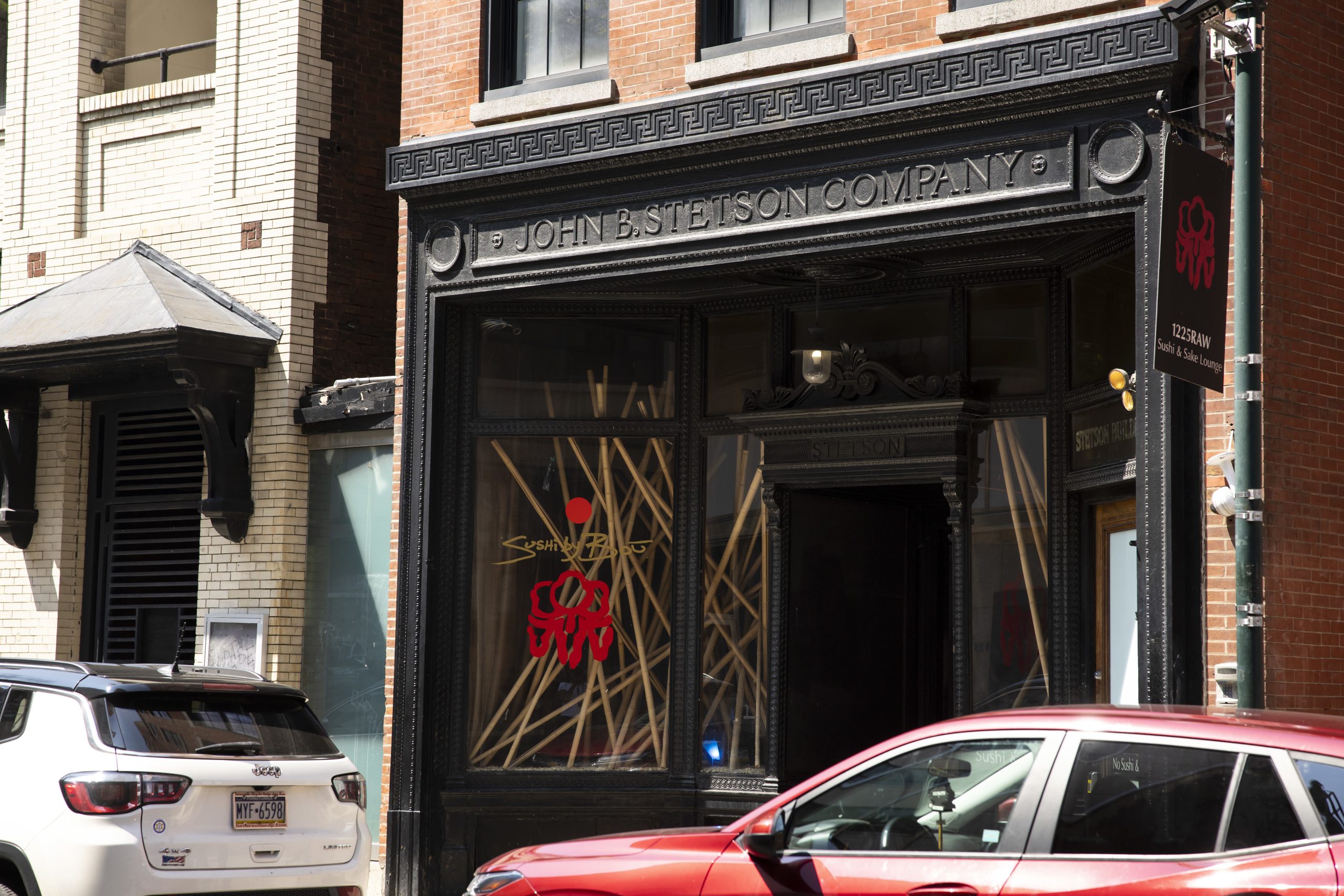
    The Royal Restaurant Group colleagues are joining cofounder Stephen Simons as partners in a still-unnamed Italian-inspired tavern planned for the former 1225 Raw space at 1225 Sansom St. in Washington Square West. It’s just steps off the 13th Street bar-restaurant cluster that includes El Vez, Prunella, Pearl & Mary, Double Knot, Vintage, Time, Barbuzzo, Darling Jack’s, and Little Gay Pub.

    The restaurant space at 1225 Sansom St. was last 1225 Raw and Sushi by Bou.Monica Herndon / Staff Photographer

    The project remains in the design stage, with demolition expected to begin shortly. Simons said a late April 2027 opening would be the best-case scenario, though it could take about a year.

    For Macri, 41, the restaurant will be the big leap in a career that has taken him from his native Ontario to some of Philadelphia’s best-known kitchens and butcher shops. O’Brien, 58, has spent more than three decades opening and operating restaurants, including Dock Street Brewery, Cantina Los Caballitos, Royal Boucherie, and dancerobot, but has never before held an ownership stake.

    Macri, the son of Calabrian immigrants who settled in the Toronto suburbs, came to Philadelphia on a Drexel University soccer scholarship. After cooking at Osteria and Southwark, he founded La Divisa Meats, the acclaimed Reading Terminal Market butcher shop that established him as one of the city’s premier charcutiers. He joined Royal Tavern as executive chef at its 2023 reopening from the pandemic shutdown.

    The new restaurant will draw partly on Macri’s Sunday Sauce dinners at Royal, though he described the idea more broadly as “Philadelphia cooking with an Italian accent.”

    “It won’t be rooted in one particular style or region,” he said. “It’s more about the Italian diaspora than one specific place.”

    The menu will include fresh and dried pastas, house-made bread and salumi, preserved vegetables, and shareable large plates. Vegan dishes will be built around vegetables rather than meat substitutes.

    One likely signature is a house-made mortadella sandwich on ciabatta, which Macri hopes can become the restaurant’s counterpart to Royal Tavern’s burger. His charcuterie program will focus on one featured item at a time rather than a large assortment.

    “Especially if we’re making it ourselves, I want to highlight one thing and give people a chance to really enjoy it,” he said.

    The beverage program is expected to include wines by the glass, a larger selection of Italian bottles, frozen cocktails, nonalcoholic drinks, and a small beer list. Desserts will likely include tiramisu and seasonal fruit tarts or crostatas.

    Macri said the partnership offered a chance to take on more responsibility without moving away from the daily work of running a restaurant.

    “I wanted to do something slightly larger and have more involvement than I do at Royal Tavern,” he said. “This seemed like the best opportunity for me to grow.”

    He jokingly proposed calling it “Another Italian Restaurant,” an idea that did not survive.

    “I don’t think they thought it was as funny as I did,” he said.

    O’Brien brings deep operations background to the partnership. In 1991, she began waiting tables at the then-hotspot Metropolis — now the Fine Wine & Good Spirits store at 1515 Locust St. — and moved into management at the Palm and Cuba Libre before helping Simons and Frank build Royal Restaurant Group, whose holdings include Royal Sushi & Izakaya and Triangle Tavern. She is now the company’s CEO and said she would remain so.

    “I’ve opened many restaurants, but this is the first one that’s actually mine,” she said. “It’s kind of funny.”

    Macri was the deciding factor.

    “I trust Nic,” O’Brien said. “He just likes really good food. It doesn’t have to be fancy, and he doesn’t try to make things into something they’re not. We’re very aligned on that.”

    The restaurant will occupy the former 1225 Raw space and the adjoining former Sushi by Bou space, vacant since the city Revenue Department shut it down in early 2025 over tax and liquor-licensing issues surrounding the former operator, Glu Hospitality. The property extends a block to Chestnut Street, and will have about 100 indoor seats, a private dining room, and a courtyard and terrace that could accommodate about 40 more.

    O’Brien, who oversees landscaping at several Royal properties, including the seasonal PHS pop-ups, said the outdoor space and the building’s historic character would help shape the design. Ambit Architecture, which worked with Royal on dancerobot, is handling the project.

    The partners envision a restaurant priced between Royal Tavern and Royal Boucherie, with enough flexibility for a casual weeknight dinner, a date, or a family meal.

    “It’s going to be fun,” O’Brien said. “It’s the kind of place where you might come a couple of times a week, bring your mom to dinner one night, or go on a date another night.”