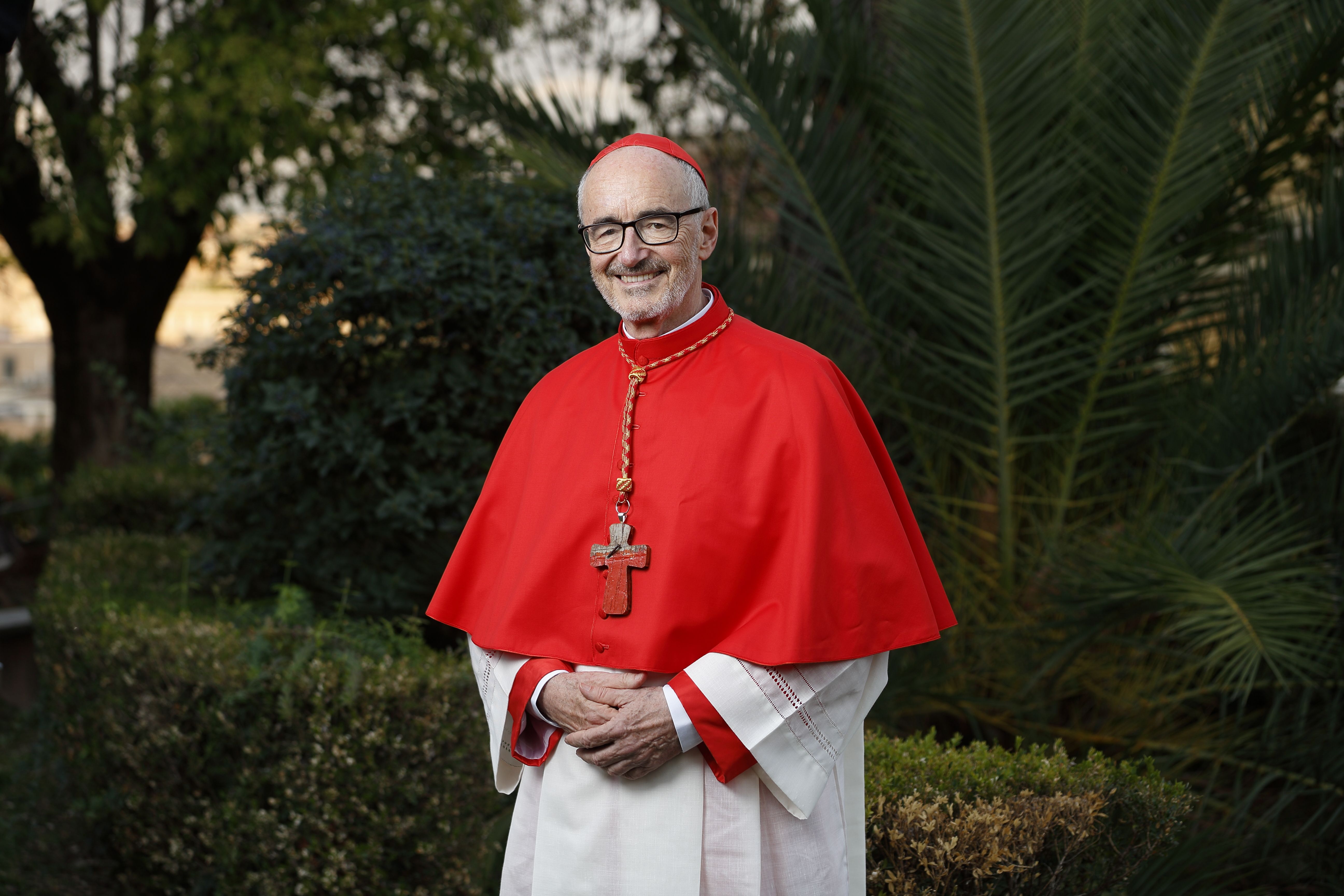
A Czechoslovakian-born cardinal who is based at the Vatican will receive Villanova University’s inaugural sustainability medal for his work “at the intersection of human dignity, social justice, care for vulnerable communities and care for creation,” the university announced Monday.
Pope Leo XIV, a Villanova alumnus,will present the medal named for him to Cardinal Michael Czerny on Oct. 13 at the university’s international sustainability conference in Italy.
Villanova established the award earlier this year to honor someone whose work shows “exceptional commitment to ecological responsibility, social justice, care for the most vulnerable and responsible stewardship of economic and human resources.”
The award is in part inspired by Pope Leo’s call to serve the poor and marginalized, said the Rev. Peter M. Donohue, Villanova’s president, who announced the winner at a news conference in Rome. Taking care of the environment and the poor are inextricably linked, Villanova said.
“The Medal reflects a deeply held belief at Villanova: care for our common home and care for one another are inseparable,” Donohue said in a statement. “Cardinal Czerny’s work has shown us that care for creation cannot be separated from care for people.”
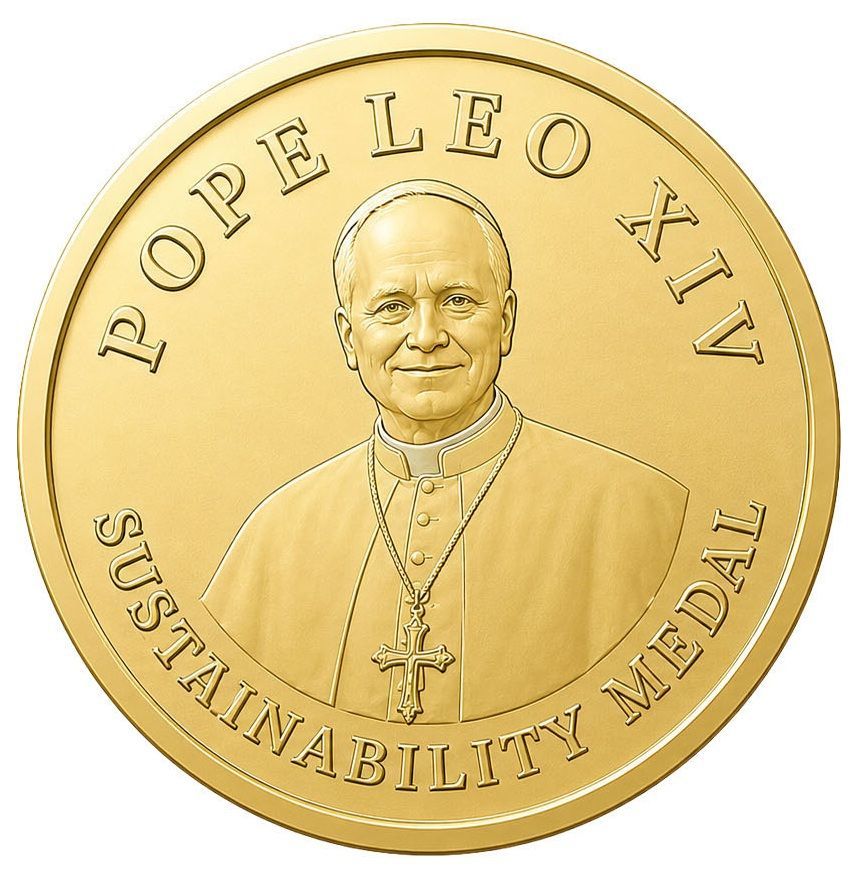
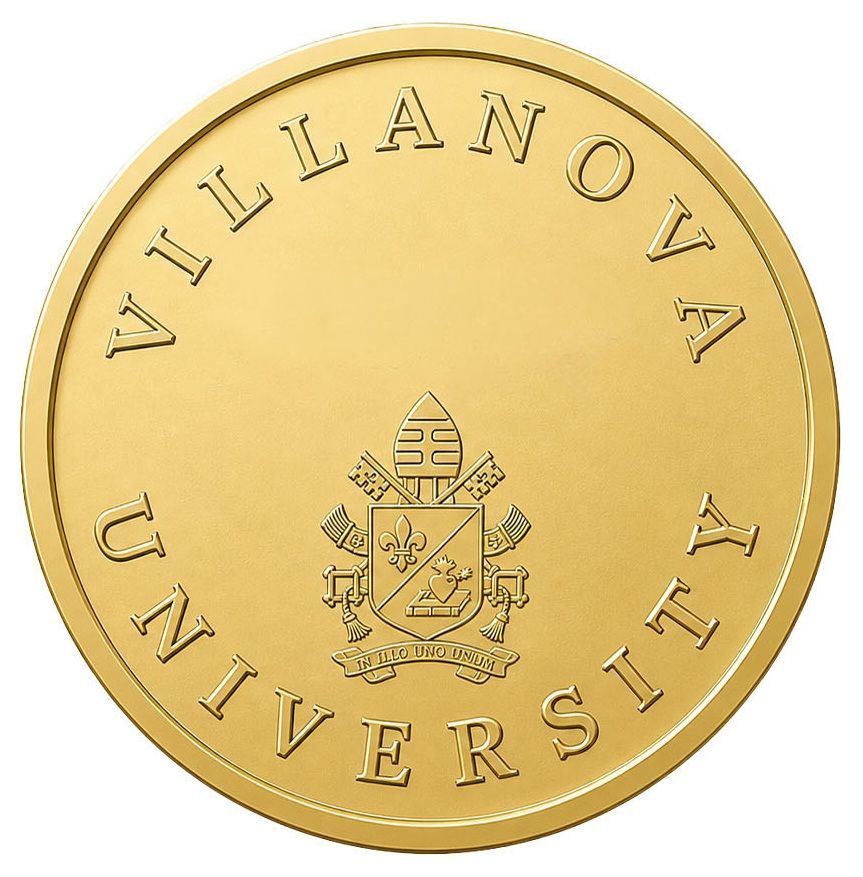
The medal features Pope Leo on one side and Villanova University’s name on the other and is meant to highlight the pope’s commitment to sustainability, the school said. The winner can come from any field or discipline and is selected by a committee of members of the university’s Sustainability Leadership Council.
The medal carries a $25,000 award to be used toward continued work in sustainability, the university said.
Born in 1946 in the former Czechoslovakia, Czerny, 80, moved to Montreal with his family as a small child. His mother was Jewish and the family had converted to Catholicism, but several members of his family had died at the hands of Nazis, according to the National Catholic Reporter, which featured an article on Czerny in 2022.
“My mother’s family — both parents and two brothers — were also Catholic but shared the Jewish origins that the enemy abhorred,” Czerny said in a homily, quoted by the National Catholic Reporter. “My maternal grandmother Anna, my grandfather Hans and my uncles Georg and Carl Robert, were all interned in Terezín, where Hans died… My grandmother and uncles were transported to Auschwitz. From here my uncles were sent to labor camps and eventually murdered there.”
His mother and father were forced to work as farm laborers because of her Jewish ancestry and his unwillingness to divorce her.
Czerny became a Jesuit priest in 1973 and got a doctorate in human sciences, social thought and theology from the University of Chicago in 1978. He was named a cardinal by Pope Francis in 2019.
Over the last five decades, his work was focused on helping vulnerable people worldwide, the university said. In 1979, Czerny founded and led a center for faith and social justice in Toronto. He volunteered to be based in El Salvador during the country’s civil war, and from 2002 to 2010, he worked in Africa and founded the African Jesuit AIDS Network in Kenya.
“That organization he led brought in a lot of hope,” said the Rev. John Abubakar, Villanova’s chief sustainability officer, who is from Nigeria. “It made a massive, massive influence or difference in the lives of people.”
From 2022 until Sept. 1, Czerny headed the Vatican’s Dicastery for Promoting Integral Human Development as Prefect, a role in which he led the Church’s work on justice, migration, health and care for creation. Pope Francis in 2022 sent him to Slovakia to greet refugees fleeing Ukraine following the Russian invasion.
Czerny said he was grateful for the medal and the honor it brings.
“What’s most important I think is the commitment the university is making to include sustainability in how it is forming the future leaders of our church and in this case the United States,” he said in a video on the Vatican news site.
Pope Leo XIV will present a new Villanova University-created award in his name that recognizes outstanding leadership in sustainabilityat a conference in Italy in October, another sign of the school’s close ties to the pontiff.
It will be several weeks before Villanova and Notre Dame officially open their basketball seasons in Rome with a men’s and women’s doubleheader on Nov. 1.
While Villanova has had a longstanding relationship with the Vatican, including an internship program that sends students there every year, both events signify the Catholic university’s deepening relationship with the Vatican and Italy since Pope Leo, a Villanova graduate, became pope last year.
In 1977, Pope Leo, then known as Robert Prevost, earned a bachelor’s degree in mathematics from Villanova and in 2014 received an honorary doctorate from the university.
The medal winner — an international honor — will be announced in September and then presented in October at the university’sInternational Sustainability Conference, Responding to the Cries of the Earth and the Poor,in Castel Gandolfo near Rome, the school said. The conference, which is expected to draw 300 participants including academics, church representatives, and leaders from the public and private sectors, will be held Oct. 12 to 15.
The front side of a new international medal recognizing leadership in sustainability that Villanova University will award in Italy in OctoberCourtesy of Villanova University
It is the university’s second sustainability conference, the first to be held in Italy. Its first conference in 2024 was on Villanova’s campus.
“The Pope Leo XIV Sustainability Medal reflects a deeply held belief at Villanova University: that care for our common home and care for one another are inseparable,” the Rev. Peter M. Donohue, Villanova University’s president, said in a statement. “By recognizing leaders whose work advances both environmental stewardship and the common good, we hope to inspire meaningful and lasting impact in communities around the world.”
The back of the new international medal that Villanova University will award for the first time in Italy in OctoberCourtesy of Villanova University
The award, which will be a biennial honor, will recognize those who have advanced “sustainability, ecological responsibility and integral human development,” the school said. It specifically will highlight those who excel at “integrating care for the environment, social justice, concern for vulnerable populations, and responsible stewardship of economic and natural resources.”
The winner can come from any field or discipline and will be selected by a committee of members of the university’s Sustainability Leadership Council. The award includes a monetary component, but details are still being determined, a university spokesperson said.
The medal will feature Pope Leo on one side and Villanova University’s name on the other and is meant to highlight the pope’s commitment to sustainability, the school said.
Addressing a Philadelphia crowd live from the Vatican, Pope Leo XIV called for a “recommitment” to American ideals.
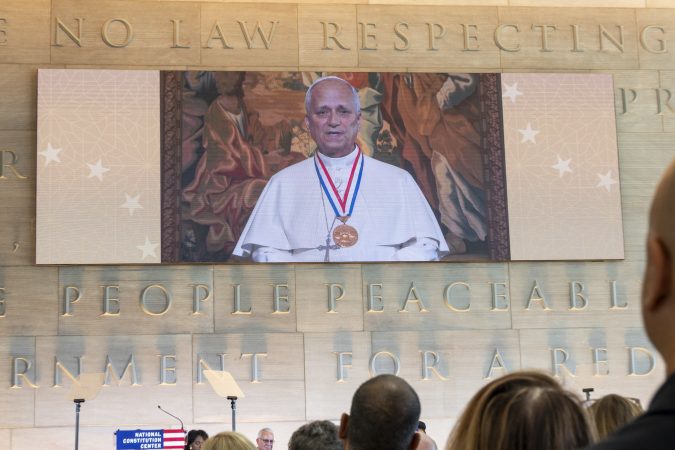
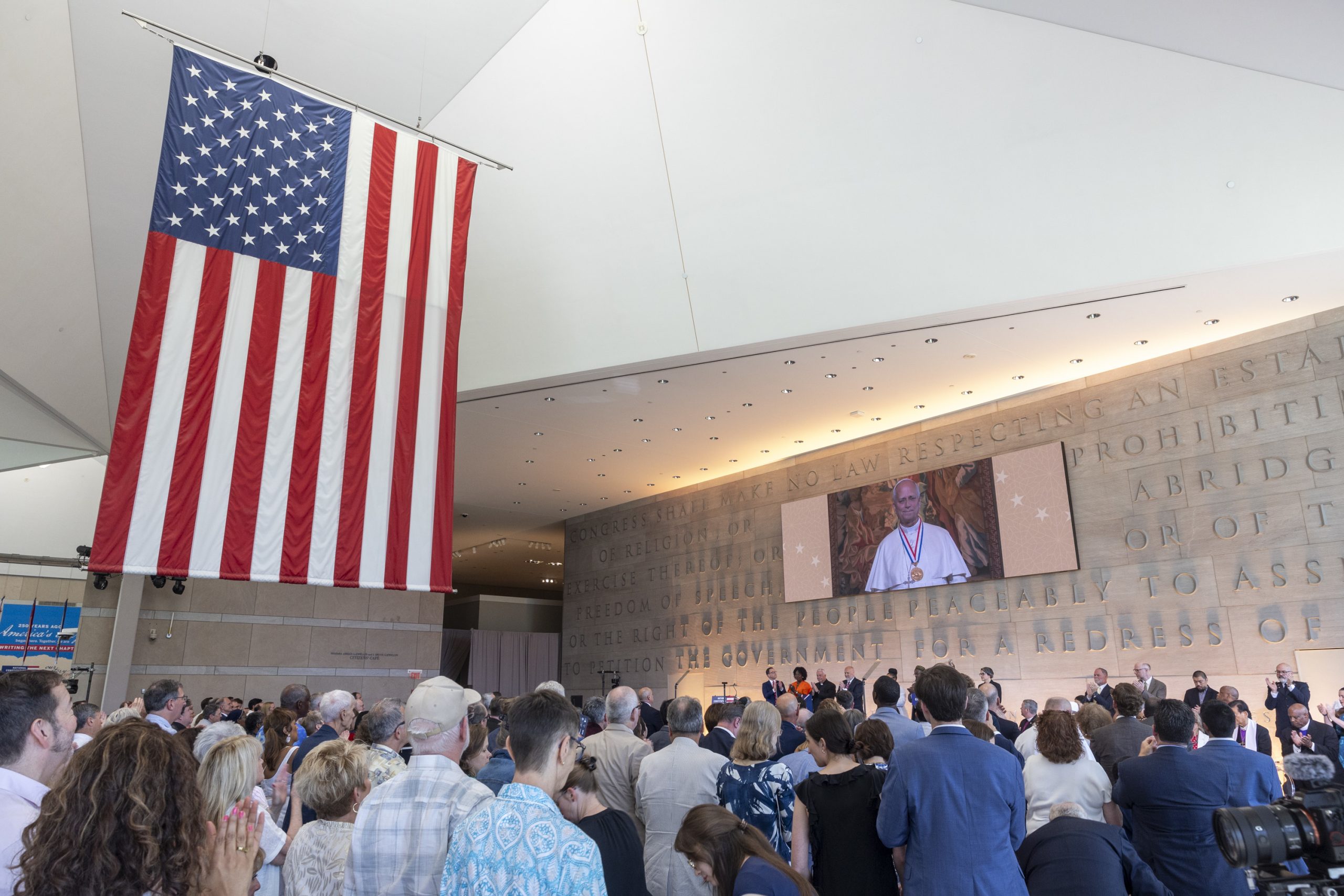
The first U.S.-born pope delivered remarks virtually at an interfaith ceremony inside Philadelphia’s National Constitution Center on the eve of the United States’ 250th birthday to accept the center’s prestigious Liberty Medal.
Facing a screen showing the live, cheering Philadelphia audience, the pontiff wore his Liberty Medal along with a cross around his neck.
Leo, who grew up in Chicago and attended Villanova University, quickly pointed out his American roots, calling himself “a son of this great country.”
“I join you in asking God’s blessings upon America’s future that the lofty ideals enshrined at the beginning of the Declaration of Independence may continue to guide the flourishing of the nation in unity, justice, and peace,” he said.
Leo, who was elected pope last year, spent years servingthe church in Peru and has been outspoken about calling for international peace. That’s landed him at odds with President Donald Trump’s administration on the issue of migrants, the war in Iran, and more.
The pope leaned into some of those themes in his speech, even though he did not refer to the president directly.
He nodded to his advocacy for humane treatment of immigrants and noted that the founders of the United States “made America a byword for freedom, as the country opened its doors to successive waves of immigrants, enabling them and their children to play their part in shaping the future of the nation.”
He said the “love of freedom” in the United States has inspired the country “to look beyond itself and at great sacrifice to champion the cause of freedom beyond its own borders.” But he acknowledged that mission hasn’t been straightforward, noting that building a society that embodies such ideals “was not always easy and, in many respects, is still a work in progress.”
The pontiff’s speech comes the day before he plans to visit Lampedusa, an Italian island known as a stop for migrants making the dangerous journey across the Mediterranean Sea from North Africa to Europe. His predecessor Pope Francis made his first official visit outside of Rome in 2013 to the same island and condemned the “globalization of indifference” toward migrants.
Pope Leo XIV speaks at the Liberty Medal Ceremony at the National Constitution Center in Philadelphia on Friday.Tyger Williams / Staff Photographer
Julie Silverbrook, the chief content and learning officer for the National Constitution Center, emphasized in a Friday interview that Leo is a “global leader who has been uniquely shaped by American ideals.”
“He has brought together people of different faith traditions, and through his ministry really reflected his belief in the inherent dignity of all human beings,” she said.
Leo declined an invitation from Trump to the United States to celebrate the country’s 250th birthday on July Fourth, the New York Times reported. The first American-born pope opting to visit migrants instead sends a stark message as the president pursues his mission of mass deportations.
But the pontiff’s participation in the Philadelphia program highlights his connections to the region, which isn’t lost on the National Constitution Center.
The Philadelphia-based private nonprofit organization chose Leo for the award due to “his lifelong work promoting religious liberty and freedom of conscience and expression around the world — ideals enshrined by America’s founders in the First Amendment to the U.S. Constitution.” That, and also because he is the first pope born in the United States, and has connections to Philadelphia, Silverbrook said.
“He was shaped by those freedoms … in much the same way that the Declaration of Independence was shaped by the city of Philadelphia, and of course a reflection of American values that have been carried globally,” she said.
When a delegation from Philadelphia’s National Constitution Center met with Leo at the Vatican in April to present him with the medal in person, they also bore a few local goodies: a bundle of Villanova swag, a replica of George Washington’s Acts of Congress, and a Wawa tote bag filled with Tastykakes.
“I think he very much so feels a connection to Philadelphia, both having been educated here, and I think in this semiquincentennial moment, I think the eyes of the world are on Philadelphia, and we’re thinking about the ideals that have emanated from this place for 250 years,” Silverbrook said.
Leo, a 1977 Villanova alum, recently passed on a surprise message to graduates of his alma mater. Vince Stango, the interim president and CEO of the National Constitution Center, also went to the Augustinian university on the Main Line, which co-sponsored the NBC10 broadcast of the event along with the archdiocese and Malvern Prep.
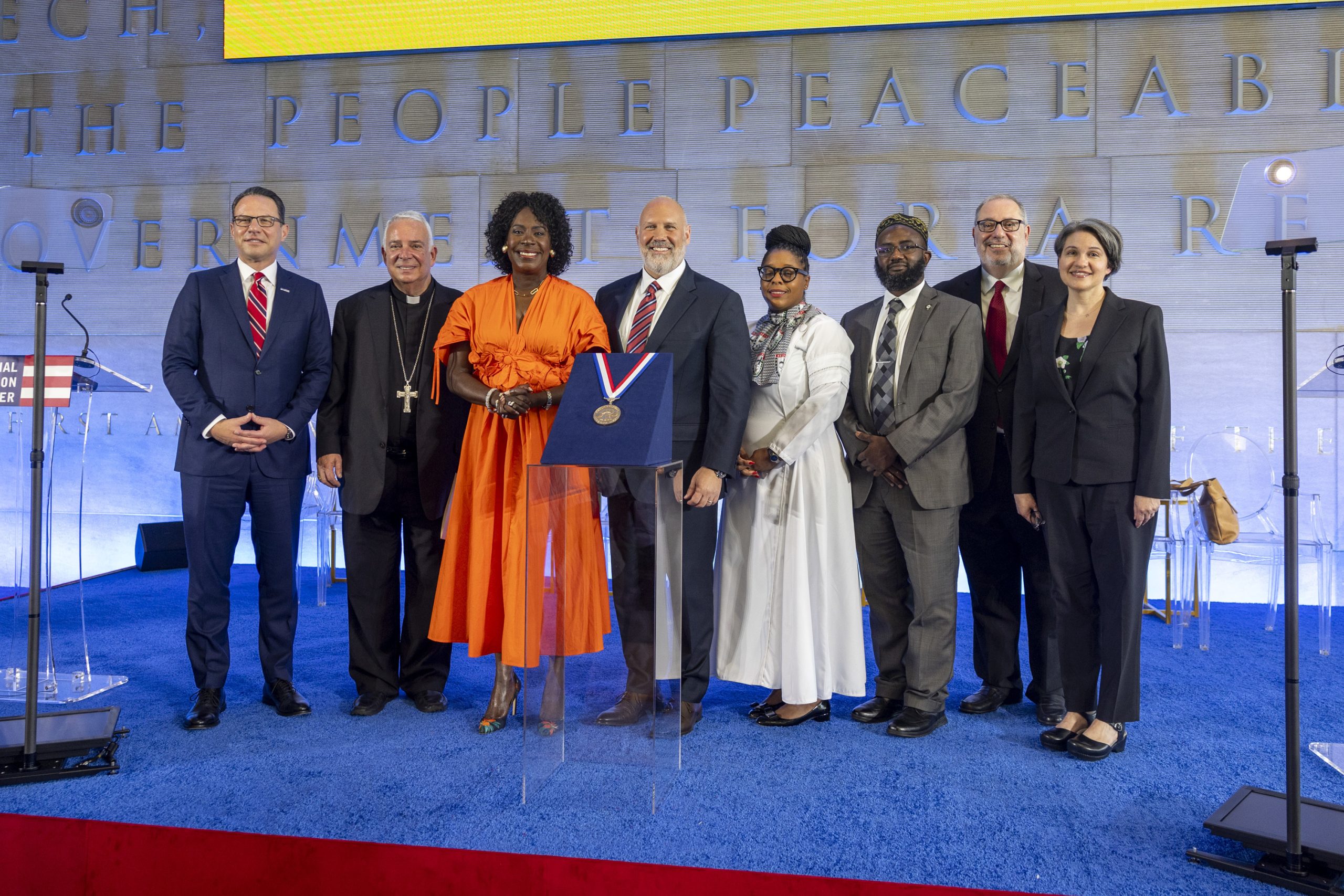
(From left to right) Gov. Josh Shapiro, Rev. Nelson J. Pérez, Mayor Cherelle L. Parker, Interim President & CEO of National Constitutional Center Vince Stango, Rev. Carolyn C. Cavaness, Imam Quaiser D. Abdullah, Rev. Luis A. Cortés Jr., and Rabbi Jill L. Maderer, pose for a photo at the Liberty Medal Ceremony at the National Constitution Center in Philadelphia, Pa., on Friday.Tyger Williams / Staff Photographer
Clashing with Trump
The pope has contended that it’s up to each country to determine how they want to accept migrants while also denouncing the Trump administration’s “extremely disrespectful” treatment of them.
He has also spoken out against Trump’s threats against Iran, and declined to participate in the president’s “Board of Peace” for Gaza’s reconstruction.
In an April social media rant, Trump complained that he doesn’t “want a Pope who criticizes the President of the United States.” The president called the Catholic leader weak and accused him of “catering to the Radical Left.”
Leo told reporters that month that he has “no fear, neither of the Trump administration, nor of speaking out loudly about the message in the Gospel, and that’s what I believe I am called to do, what the church is called to do.”
In his Friday remarks, the pope made a call for unity but warned that a country should come together with “ideals that do not fade with the passing of time.”
He called on the United States to recognize its values of “peace and prosperity, a country characterized by generosity and nobility of heart,” and said the values of “shared human dignity, equality, and the rights laid out in the Declaration of Independence” can help unite and guide the nation.
The Liberty Medal
The Liberty Medal was created in 1988 and has been hosted by the National Constitution Center since 2006.
The award has gone to storytellers, philanthropists, civil rights leaders, and politicians on both sides of the aisle, such as Ukrainian President Volodymyr Zelenskyy, former Supreme Court Justice Ruth Bader Ginsberg, the Bushes, Malala Yousafzai, and Thurgood Marshall.
The center describes its recipients as individuals who “strive to secure the blessings of liberty to people around the globe.”
The process of selecting Leo began about a year ago, Silverbrook said.
The speech was initially going to be projected on Independence Mall, but the event was moved indoors due to the extreme heat and livestreamed by the center online.
Rich Russo, 63, a Fishtown resident who attended the event in person, called the experience “once in a lifetime.”
“How many times do you get the pope talking to you?” said Russo, who works for a bank.
Gov. Josh Shapiro, who is Jewish, and Mayor Cherelle L. Parker, a Baptist — bothDemocrats who have been outspoken about their own faiths — joined Philadelphia Archbishop Nelson J. Pérez and other religious leaders who made remarks on stage prior to the pope’s speech. Pennsylvania Attorney General Dave Sunday, a Republican, rang a replica Liberty Bell outside.
“Philly is proud that the pope is a graduate of Villanova University who spent time living and working in our region,” Pérez said on stage. “Pope Leo knows us, and we feel like we know him, too.”
“His influence, however, extends beyond Philadelphia,” the archbishop added.
Here is the full text of Pope Leo XIV’s speech to the National Constitution Center, livestreamed from the Vatican on July 3 for his acceptance of the Liberty Medal. The Inquirer’s coverage of the event can be found here.
Thank you very much.
Dear friends,
I am honored to accept the Liberty Medal of the National Constitution Center in this year that marks the 250th anniversary of the founding of the United States of America with the signing of the Declaration of Independence on July 4, 1776. On the eve of this momentous occasion, I offer a warm greeting to all those assembled at the National Constitution Center in Philadelphia. As a son of this great country, founded by courageous men and women who dreamed of liberty and of a better life for themselves and for their children, I join you in asking God’s blessings upon America’s future, that the lofty ideals enshrined at the beginning of the Declaration of Independence may continue to guide the flourishing of the nation in unity, justice and peace.
From our youth, most of us have admired the eloquence of those words, with their resounding appeal to the law of nature and to nature’s God as the basis of their assertion that all men and women are created equal and endowed by their Creator with certain inalienable rights, including the right to life, liberty and the pursuit of happiness. While couched in the language of the Enlightenment, that claim is ultimately grounded in an understanding of the human person inspired by the great biblical vision of man and woman being created in the divine image. It is indeed here that we discover the basis of human dignity; dignity which precedes the establishment of any state, and whose custody constitutes its very purpose.
In these past 250 years, for so many peoples throughout the world, it was the firm resolve to achieve the noble vision of the nation’s founders that made America a byword for freedom, as the country opened its doors to successive waves of immigrants, enabling them and their children to play their part in shaping the future of the nation. It was this same love of freedom that inspired the United States, in the darkest hours of the last century, at the time of the two world wars, to look beyond itself and, at great sacrifice, to champion the cause of freedom beyond its own borders.
As every American knows, however, the path to building a society that would embody those high ideals of liberty and justice for all was not always easy and, in many respects, is still a work in progress. Indeed, the effort to realize this vision is one that must be taken up anew in each generation and in the face of ever new challenges. Today, as we look to the future, this historic anniversary presents us with the opportunity to reflect once again on the nation’s founding principles in the hope that America will remain ever true to the dream that has earned it the title of land of the free and home of the brave.
The first right enshrined by the nation’s founders was the right to life, for no one who is deprived of life can enjoy liberty or pursue happiness. A country’s vitality is deeply tied to the value it affords to human life in every form and condition, acknowledging the dignity endowed upon every human person by virtue of their very existence. The inherent worth of every human life has led the noble hearts of generations to praise the marvelous works of the Creator and stand in reverence before so precious a gift. Indeed, it is precisely this reverence that we must continue to cultivate — one that sways the hearts of individuals and inspires laws that recognize and safeguard this gift from the moment of conception to natural death. Reverence, too, will aid us in discovering that we are guardians and stewards of those entrusted to our care. In this regard, the moral greatness of a nation is manifested, above all, in its capacity to support, protect and cherish the lives of all, especially the most vulnerable and those whose worth is questioned.
Following the right to life, liberty was and is preeminent among the principles revered by the men and women who have sought within this nation’s borders a new beginning, often equating it with previously undreamed-of hope. Though frequently understood as the ability to act as one would like, authentic freedom runs much deeper. It is founded upon the human person’s capacity to know the truth and adhere to what is good, even at great cost — a sacrifice well known to many who have labored to shape this country. The desire for truth and freedom, as well as the very pursuit of happiness, continues to inspire people of all generations to ask fundamental questions regarding the meaning of life, our ultimate purpose, and indeed about God, and it is proper for magnanimous hearts to endeavor to answer these questions with sincerity. These answers inevitably determine the direction which we seek to give to our lives, and America has long championed the religious freedom necessary to follow responsibly the dictates of conscience in this regard, free from fear and coercion, as enshrined in the First Amendment to the United States Constitution.
It is this freedom that holds sacred the inner sphere of the person where convictions are formed and where conscience can guide the decisions made in the intimacy of the human heart. This same freedom also ensures the right of every person to worship according to one’s own belief, and of individuals, communities and associations to give public expression to their faith. In fact, religious freedom gave rise to the American tradition of allowing for interfaith dialogue and interreligious cooperation in promoting the public good and enriching the debates on the great moral and ethical issues that have faced the nation and shaped the course of its history. It is my hope that this tradition will continue to bear fruit in a public discourse marked by moderation, respect for the views of others and an ongoing effort to find common ground in promoting the cause of peace and reconciliation, at home and abroad.
The forbearers of this country, men and women of diverse backgrounds, religions and languages, were able to find that common ground and the strength necessary to pursue a better future. The principles that inspired America’s founders, rooted as they are in the truth of the human person, brought them together in a single cause, a common dream. Unity lent strength to that dream, giving rise, under God, to the United States of America. E pluribus unum — out of many, one. In order for a nation to flourish, it must be truly united; united not by goals bound to momentary endeavors, but by ideals that do not fade with the passing of time. May the principles we have reflected upon today — a shared human dignity, equality and the rights laid out in the Declaration of Independence — ever be a source of such unity and a guiding light for the present moment and the years to come.
In accepting this award, I therefore pray that this, the 250th anniversary of the founding of this great nation, may be the occasion of a solemn recommitment to these ideals that have made America a country that values peace and prosperity, a country characterized by generosity and nobility of heart. I commend all of you, as well as the future of the nation, to the One who is himself the source of true freedom and lasting peace, the One whose very name is Peace.
Pope Leo XIV will accept the National Constitution Center’s Liberty Medal on Friday, delivering remarks live from the Vatican that will be broadcast inside the Sixth and Arch building.
The U.S.-born pontiff’s speech is a major addition to Philadelphia’s already extensive lineup of activities and events on the eve of the United States’ 250th birthday on July Fourth.
His speech will be particularly anticipated in Philadelphia given the Semiquincentennial and Leo’s deepties to the Philly area.
The Catholic leader has garnered attention for clashing with President Donald Trump’s administration, which will be further exemplified by his visit with migrants on Independence Day.
His award acceptance speech also comes just two days after traditionalist Catholics in Switzerland defied him by consecrating bishops without his consent, which Leo called “a sin of extreme gravity,” the Associated Press reported.
His Friday remarks were initially going to be broadcast on Independence Mall but it was moved inside due to extreme heat.
Here’s what to know ahead of his Liberty Medal speech.
What are Pope Leo’s connections to the Philly area?
Not only is he the first U.S.-born pope, but he has connections to the Philly area — despite being from Chicago.
Leo graduated from Villanova University in 1977 with a bachelor’s degree in mathematics. He received an honorary doctorate of humanities in 2014 from the Augustinian university.
Those who knew him at the time described him as a Midwesterner with a sense of humor who was tuned in to global issues like immigration and poverty — and like anyone who goes to Villanova, a big basketball fan. He worked part-time at St. Denis Catholic Church in Havertown as part of the cemetery maintenance crew during his studies.
In May, he passed along a surprise commencement message tothis year’s graduates. In that message, he fittingly referenced America’s 250th anniversary.
“May the graduates of 2026 always be faithful to the guiding light that has been so important for these 250 years,” Leo said.
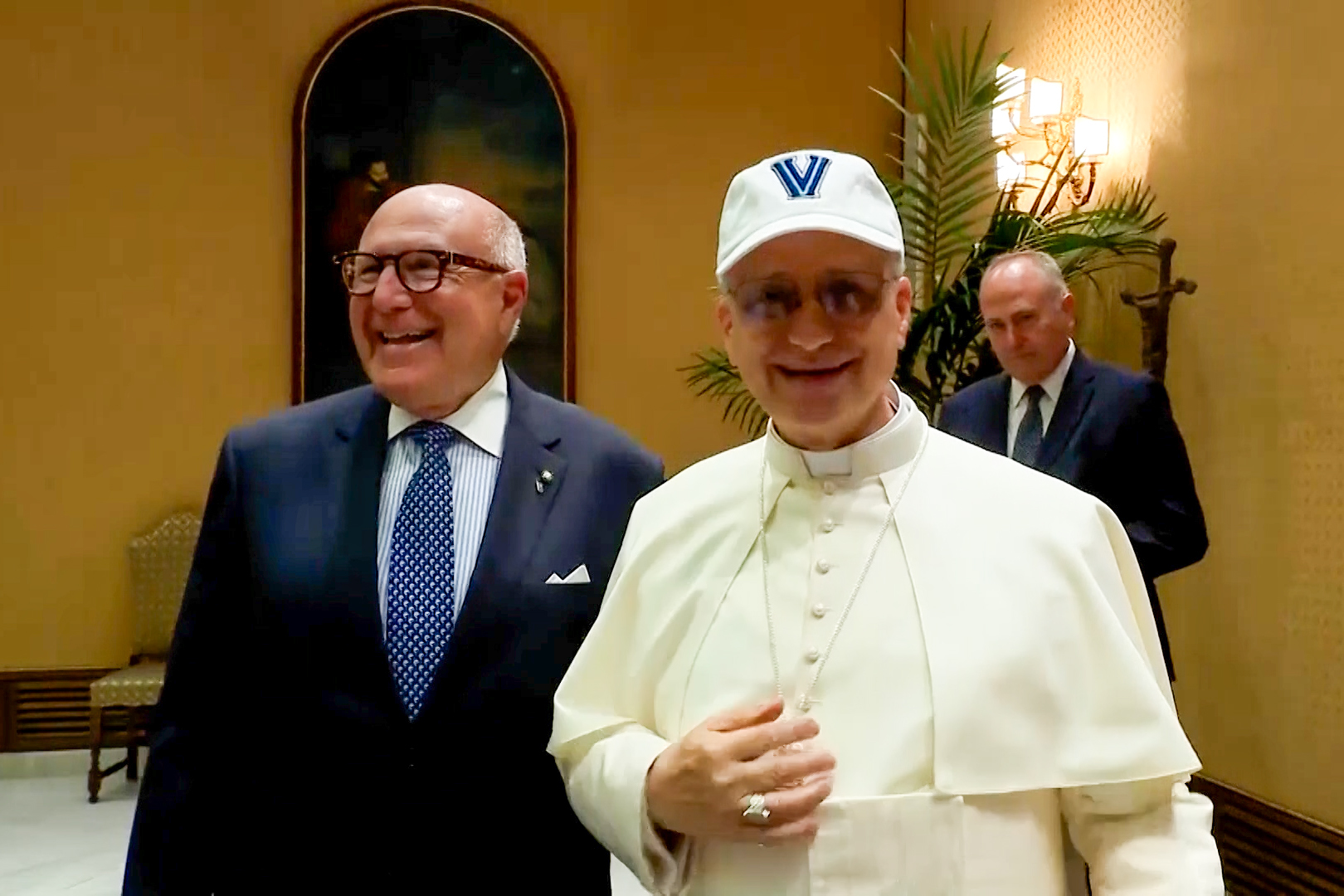
This video screen grab shows Pope Leo XIV wearing a Villanova hat given to him during a meeting with an Italian heritage group.Associated Press
Last month, a delegation from Philadelphia’s National Constitution Center met with Leo at the Vatican to present him with the medal. They would have been remiss to forget to celebrate his Philly connections.
So they brought him a few local goodies: a bundle of Villanova swag, a replica of George Washington’s Acts of Congress, and, best of all, a Wawa tote bag filled with Tastykakes.
Vince Stango, interim president and CEO of the Constitution Center, said the visit had “a real Philadelphia vibe that was unmistakable.”
What’s the Liberty Medal?
The Liberty Medal has been presented by the nonpartisan National Constitution Center since 2006, offering the esteemed prize to individuals and organizations who “strive to secure the blessings of liberty to people around the globe.”
In Leo’s case, he’s receiving the award because of his work in promoting religious liberty.
Previous recipients of the award include Ukrainian President Volodymyr Zelensky, the late U.S. Supreme Court Justice Ruth Bader Ginsburg, the late U.S. Sen. John McCain (R., Ariz.), and the late civil rights leader and U.S. Rep. John Lewis (D., Ga.).
How do I watch?
The National Constitution Center is streaming the ceremony live onits YouTube channel at 10:45 a.m. NBC10 will also broadcast the awards.
Tickets to the event were previously made available to the public and other invited guests.
What’s going on with the pope and Trump?
Trump invited the pontiff to visit the United States on July Fourth to celebrate the 250th anniversary of the country. He declined.
Instead, the pope will spend Independence Day visiting Lampedusa, an Italian island in the Mediterranean Sea located between Tunisia, Malta, and Sicily. It‘s a major entry point for migrants seeking refuge in Europe from North Africa. It’s one of the deadliest migration paths in the world, Reuters reported.
Leo’s predecessor, Pope Francis, visited the island in 2013.
Francis, who was close with Leo, also clashed with President Donald Trump and Vice President JD Vance on issues like immigration, and that tension has continued under the new pontiff.
The pope said in November that the United States has been treating migrants “in a way that is extremely disrespectful” under the Trump administration. A month prior, he suggested that the United States’ treatment of immigrants is “inhumane.”
Vance, who converted to Catholicism in 2019, said this week on Fox News that he finds the Vatican’s immigration views “troubling,” saying that “mass migration has victims.”
Trump has not held back on his criticism of the pope, calling him “WEAK on Crime, and terrible for Foreign Policy” in an April social media rant. He faced condemnation from Catholics — who have found themselves taking a side between the pope and the president — after sharing a now-deleted image of himself presented as Jesus.
It will be telling whether Leo leans into his disagreements with the Trump administration, whether directly or indirectly, during his speech on Friday.
Did Pope Leo XIV actually go to a Villanova University fraternity party?
That’s what one user on X purported when he posted an aged photo of the leader of the Catholic Church standing with a group of young men — one wearing a Villanova T-shirt and holding a small dog — in front of a brick bungalow. “The future Pope Leo XIV at a Villanova frat party in 1976,” the caption read.
The tweet had 1.4 million views and more than 15,000 likes as of Sunday.
But internet sleuths were suspicious:
“Not one of them is holding even a beer. That’s one tame frat party,” one of nearly 150 comments read.
“Doesn’t this look more like a step ranch in/near Chicago than anything on the Main Line?” another user smartly deduced.
The photo was actually taken at a fellow Wildcat’s house on the South Side of Chicago, where the pontiff is from, according to a classmate who has a copy. The classmate, who declined to be named for privacy reasons, assured The Inquirer it was not a frat party and dated the photo to the mid-’70s.
Still. Tina Fey is from Upper Darby. Taylor Swift is from Reading. At some point, Pennsylvania has to ask whether we’re comfortable with this arrangement.
We’re not saying they have to root for the Sixers. The Sixers haven’t always made that easy.
We’re just saying there are certain things that hit differently when they come from your own people. And watching two Pennsylvania icons cheer on the Knicks in the NBA Finals is one of them.
And somehow the marketing may be even better than the product. “It tastes like the oil from a real cheesesteak wrapper!” was highlighted as a testimonial, which is an astonishing sentence to see in the wild. Because that’s not a flavor profile most companies would voluntarily advertise.
The reaction online was divided. Half the internet was horrified, and the other half was brainstorming recipes involving Sarcone’s bread, pizza, omelets, pasta, and popcorn.
Somewhere between “that’s disgusting” and “OK, I’d try it” lies the city’s entire food identity.
The best part, though, is that the olive oil helps support Mama-Tee Community Fridge, which stocks community refrigerators across Philadelphia with prepared meals. And, let’s be honest, nobody can convincingly argue they aren’t at least a little curious.
A Wawa bag full of Tastykakes made it to the Vatican: A
According to the National Constitution Center, the pope, a Villanova graduate, gave a “big belly laugh” when he saw the Tastykakes.
And the story contains one of the most Philadelphia sentences ever printed: “Where else would this happen that you meet up with the archbishop toting Tastykakes in a Wawa bag?” Iconic.
The delegation was there for a serious purpose ahead of next month’s Liberty Medal ceremony. But it’s hard not to appreciate that somewhere inside the Apostolic Palace sat a Wawa bag and a box of Tastykakes.
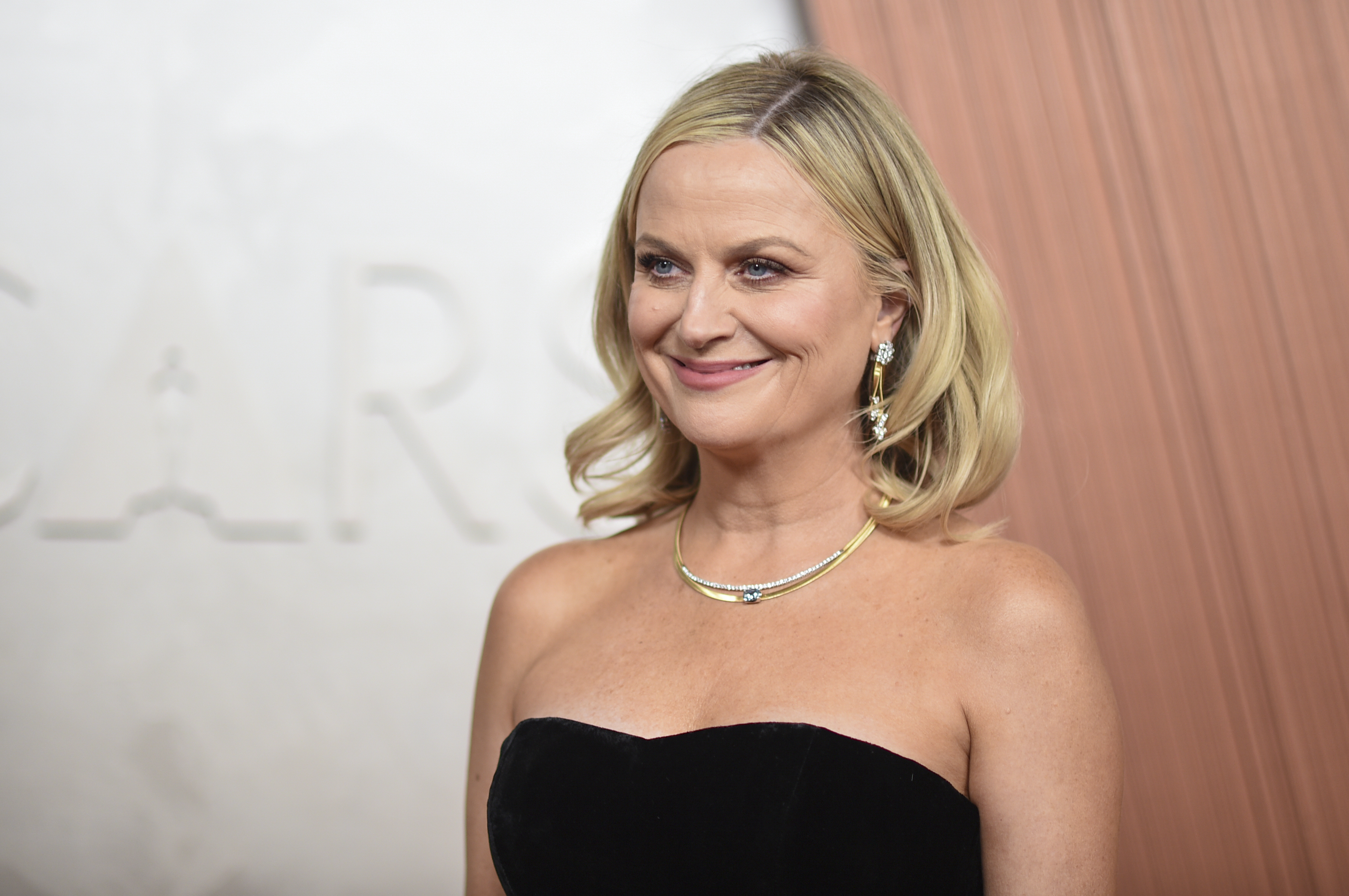
Amy Poehler arrives at the Oscars on Sunday, March 2, 2025, at the Dolby Theatre in Los Angeles. (Photo by Richard Shotwell/Invision/AP)Richard Shotwell
Amy Poehler got cursed out at PHL. Tina Fey had the perfect response: A
Tina Fey’s response? “Welcome to Philly.” No outrage, no apology, and no attempt to explain the behavior.
Just a simple acknowledgment that, yes, this sort of thing occasionally happens here. Philadelphia is one of the few places where somebody might yell at you in an airport and another person will later explain that this is actually part of the culture.
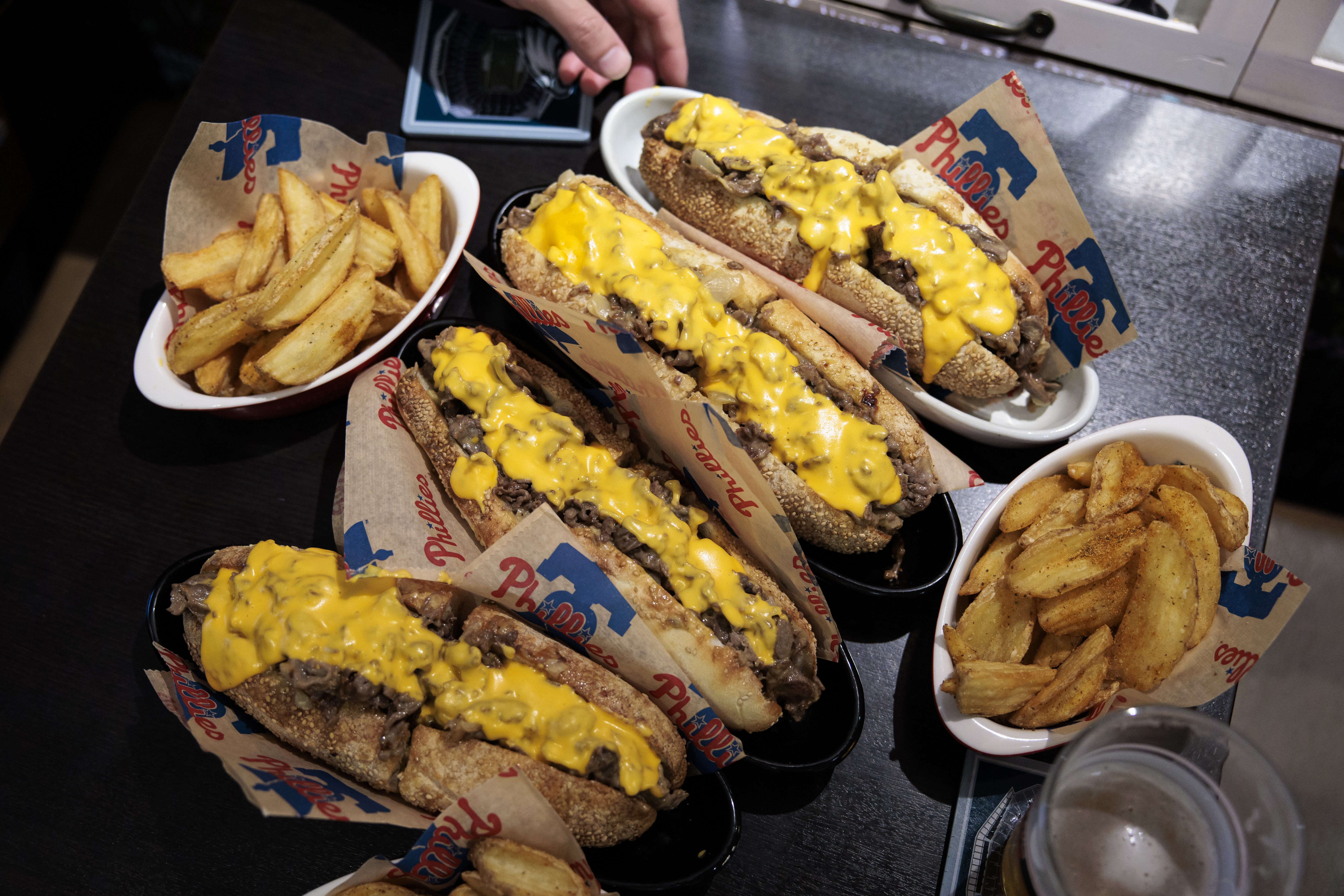
Philly cheesesteaks at Nihonbashi Philly on Sunday, Nov. 9, 2025, in Tokyo, Japan.Monica Herndon / Staff Photographer
An American cheese shortage in Japan is now a Philadelphia emergency: A-
There are international crises, and then there are international crises.
Philadelphia, of course, was ready to give solutions. Offers to smuggle in Cooper Sharp. Debates over Whiz vs. provolone. Strong opinions about what constitutes an authentic cheesesteak from 6,700 miles away.
The whole thing feels oddly moving. A couple in Tokyo became so obsessed with Philadelphia that they built a restaurant around cheesesteaks, pretzels, Tastykakes, and Eagles fandom. Now Philadelphians are responding as if a neighborhood institution is facing hard times. You stand up for us, we’ll stand up for you.
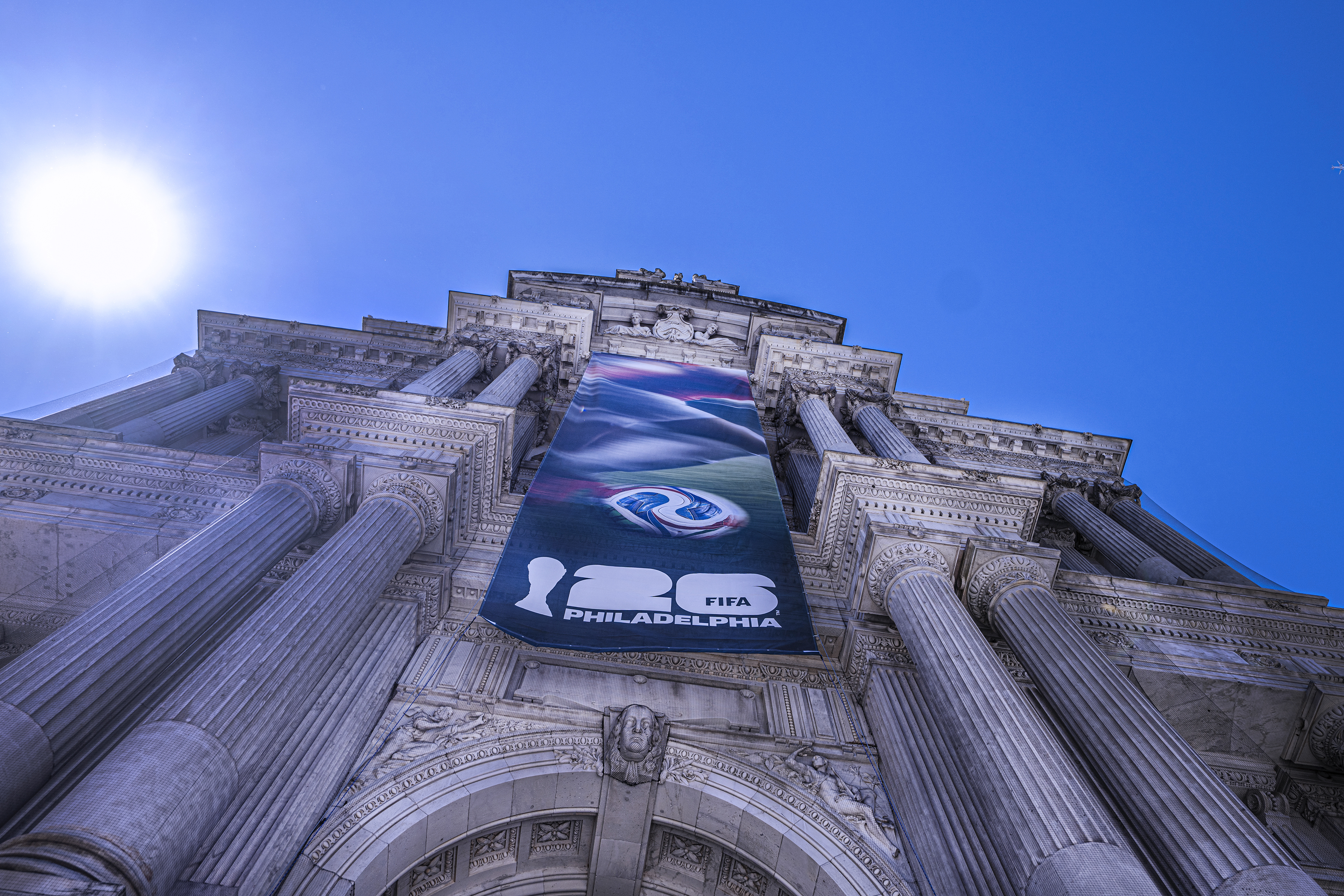
A large FIFA World Cup banner hangs from an entrance of Philadelphia City Hall as the city prepares to host matches during the FIFA World Cup, Wednesday, June 3, 2026, in Philadelphia.Jose F. Moreno / Staff Photographer
The World Cup hotel boom hasn’t exactly arrived: C+
For years, the World Cup was sold as a tourism bonanza that would fill hotel rooms, pack Airbnbs, and send visitors flooding into host cities.
Days before kickoff, plenty of hotel rooms remain available. Some Airbnb hosts who expected a month-long gold rush are still waiting for bookings. One South Philly host told The Inquirer she expected to be full all month and has gotten just a few nights reserved.
That’s not exactly soccer Coachella.
To be fair, this doesn’t mean the World Cup won’t be successful. Tens of thousands of fans are still coming, and hotels expect a solid summer between FIFA, the Semiquincentennial, and the MLB All-Star Game.
They’re just apparently not paying $900 a night for an Airbnb in South Philly.