Tag: Philly Gives

  • A workforce training program at Congreso de Latinos Unidos helps students build economic self-sufficiency | Philly Gives

    A workforce training program at Congreso de Latinos Unidos helps students build economic self-sufficiency | Philly Gives

    Luckily, Janice Roman and Jonathan Perez have each other.

    And luckily for them, they both have Congreso de Latinos Unidos.

    Because after years of bouncing around, doing about almost any job to make ends meet (and sometimes barely succeeding), they are embarking on what will be a new life for them and their four children.

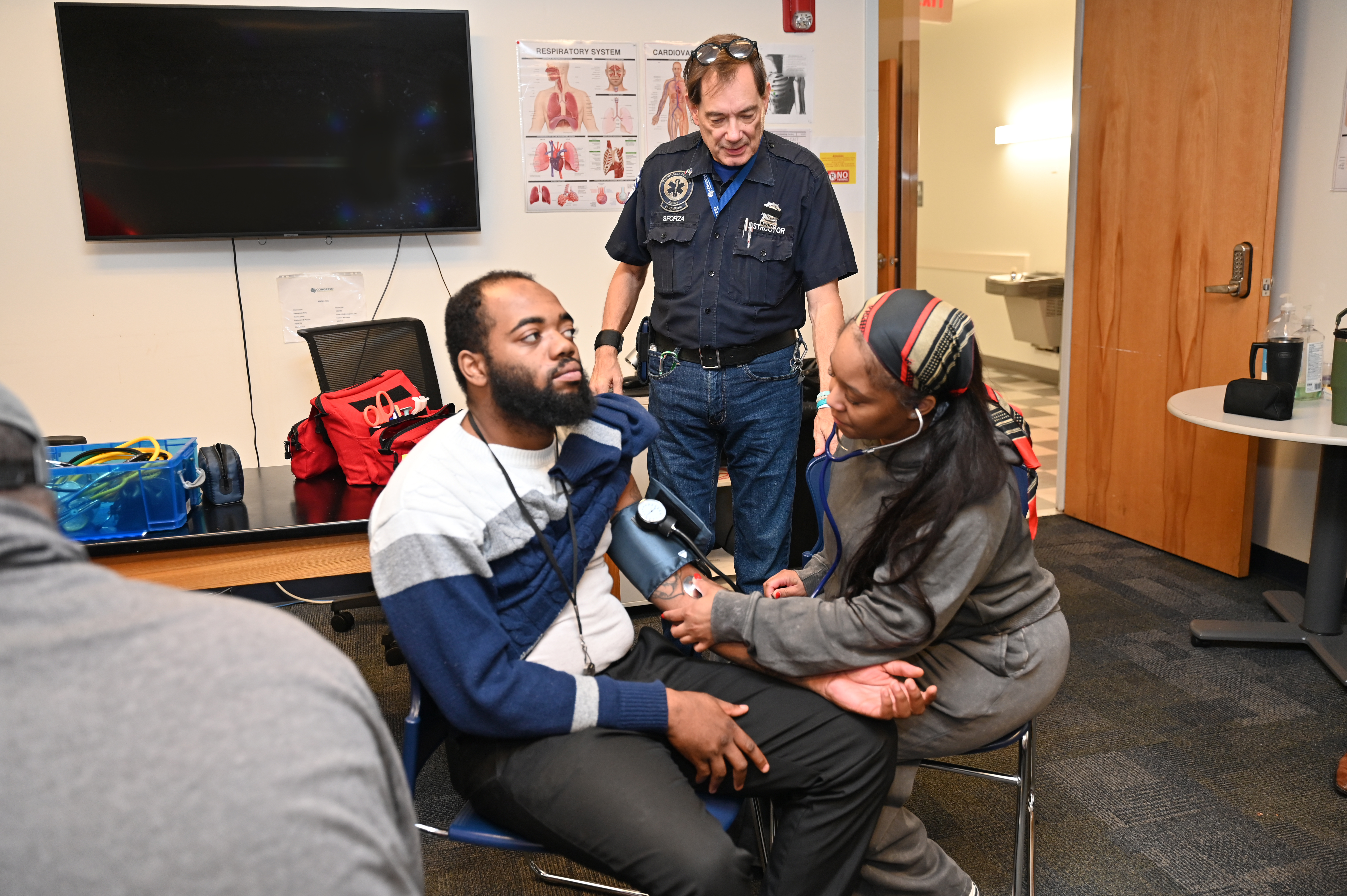
    Roman began EMT training at Congreso in late October. Perez is enrolled in Congreso’s commercial driver’s license (CDL) training. Beyond that, both of them have joined Congreso’s program for first-time homebuyers.

    “It will be a major step,” Roman said. “It’s exciting and, at the same time, a little scary — going back to study and being around people.

    “We’re looking forward to everything.”

    In any given year, 250 students are enrolled in Congreso’s many workforce development programs, part of an array of offerings from family services to educational and cultural programs, all meant to build economic self-sufficiency and well-being.

    Aspiring truck drivers, emergency medical technicians, childcare development associates, medical assistants, sterile processors, and dental assistants come to Congreso’s North Philadelphia headquarters to learn what they need to launch careers and boost themselves out of poverty. If they didn’t graduate from high school, they can study for their high school equivalency diplomas, as well.

    But there’s something Kimberly Cromer, director of Congreso’s workforce initiatives, wants donors to know.

    At Congreso, she said, it’s not just about the classes and the certificates, although, of course, those are important.

    “This is workforce training with a human-centered learning management approach,” she said. “We want to humanize the experience. We assess what else is going on in their lives.”

    Some come to the classroom facing evictions. Some are about to lose electricity, or heat, or water. “We need to alleviate those barriers so they can concentrate on school,” Cromer said.

    Flexible funding from the William Penn Foundation allows Congreso to help with a rental payment or a utility bill, or to hand out gift cards for groceries and gas. Almost every course includes a session on credit repair taught by a financial counselor. Some students have experienced domestic violence. Congreso will get them counseling, help them move to a safer place, and also will teach students in the various programs how to recognize signs of domestic abuse.

    The people Congreso serves “are used to empty promises and lip service,” Cromer said. “We need to restore their faith in humanity by offering them empathy and compassion so this place can be a beacon of hope. It’s important to be that hope for them.”

    Hope is what Roman was experiencing on her first day of EMT class. “I grew up in a low, low-income family,” she said. “We had to struggle on a daily basis to pay bills.” Alcoholism and abuse were part of her childhood. She dropped out of high school. Perez’s situation was similar, she said.

    Neither of them had the strong family support that might have helped them in their early years, as they both worked odd jobs to cobble together the money they needed for themselves and their kids.

    “I’m trying to give my kids a different environment,” Roman said. “I want them to have everything I didn’t have.”

    Their teacher understands. Tina McKee, a newly retired fire department paramedic who has taught these kinds of courses for years, grew up in the neighborhood where Congreso is based. “I was born and raised on welfare,” she said. Four kids and a divorce meant just scraping by, like many of her students.
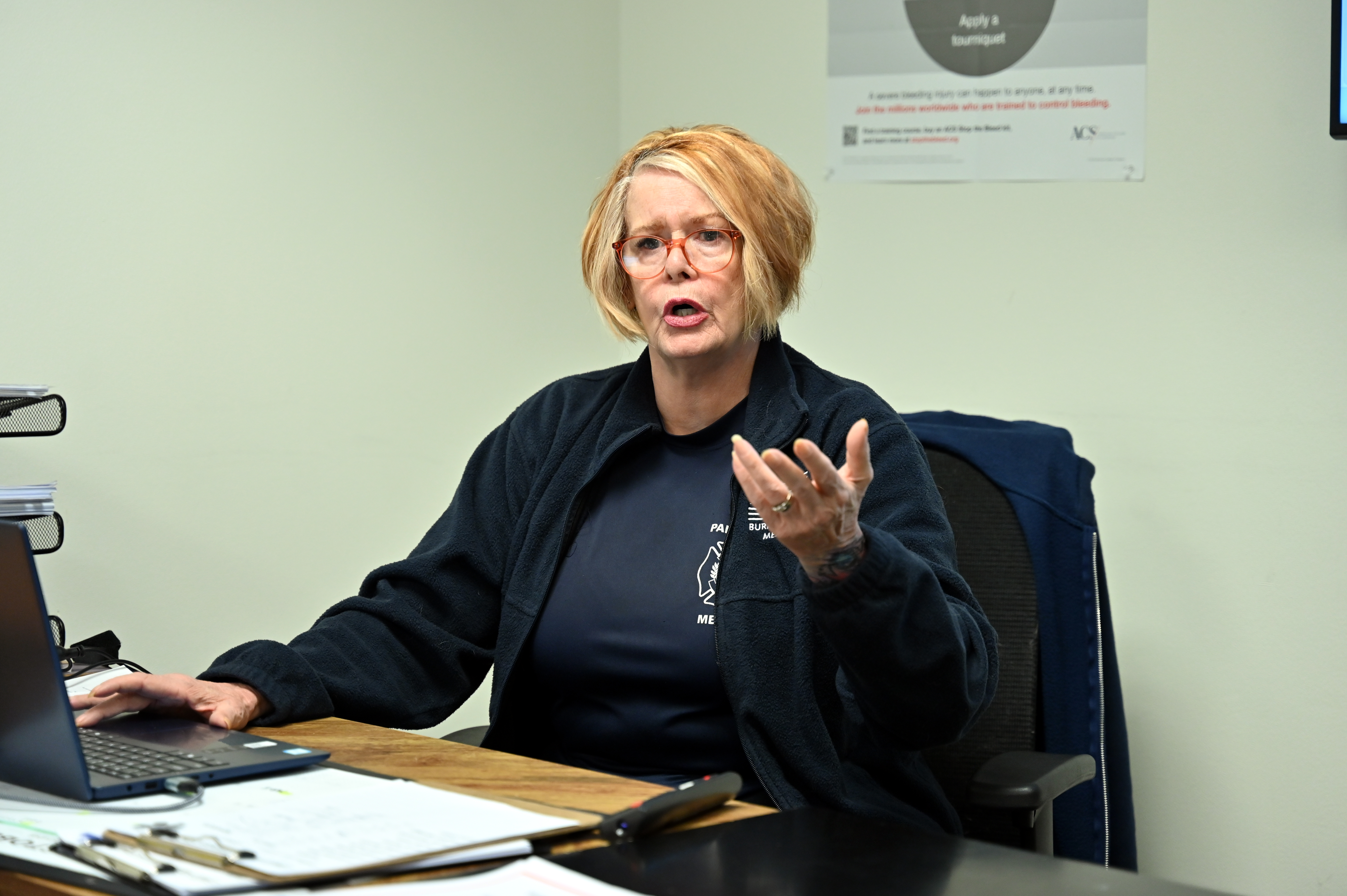
    Tina McKee, an EMT course instructor, grew up in the neighborhood where Congreso is based. “I was born and raised on welfare,” she said.I. George Bilyk

    So when her students pass what really amounts to an early step on a medical career ladder, she can see what they may not be able to envision — a stable life with stable employment, a stable paycheck, and a future. “I have had students that are now doctors,” she said.

    It’s the vision thing that has engaged Abraham Medina, a former White House medical officer and military medic who grew up in Congreso’s neighborhood and now serves on the organization’s board. He’s been instrumental in encouraging Congreso to embark on the EMT program, which was officially government-certified in September.

    “Most of my childhood friends are in jail or have passed away from gun violence and drugs,” he said. A high school dropout, Medina eventually joined the Army, excited about the idea of parachuting out of airplanes. But the recruiter suggested he undergo training as a medic — a medic who could also jump out of airplanes. Medina took the qualifying test and scored high.

    “I never imagined myself that I could be in the medical profession,” he said. “That was probably the first time that I saw I had some potential myself, that I had some smarts.”

    When Medina looks around, he sees others like him — high school dropouts who just can’t envision themselves as people in the medical profession. Because of that one moment of clarity during recruiting, he took training after training and kept advancing. And it’s that kind of career ladder he wants for the people at Congreso.

    “There’s a lot of potential here that we don’t tap into,” he said.

    Congreso’s EMT program partners with local employers so graduates can typically get jobs as soon as they are finished, provided they pass a national certifying exam.

    The program includes many certifications such as the Emergency Vehicle Operator Certificate, which qualifies them to drive an ambulance, and training on the Incident Command System, which is a national disaster management communications protocol, said Tim Hinchcliff, Congreso’s consultant for emergency medical programs.
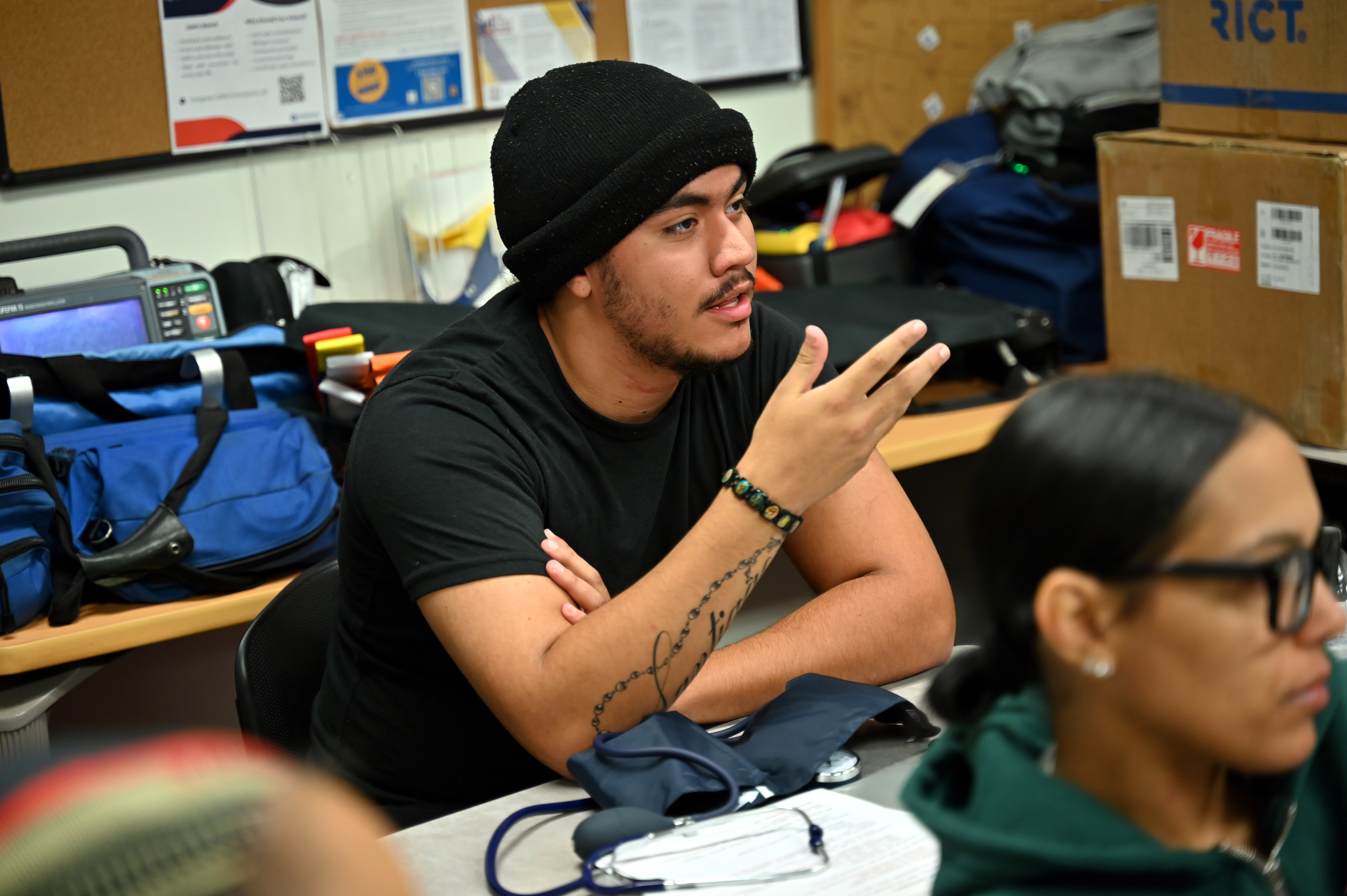
    Jayden Santiago asks a question during an EMT training class at the offices of Congreso de Latinos Unidos.I. George Bilyk

    The training includes a visit to the Philadelphia Medical Examiner’s Office, where students can witness an autopsy. They experience clinical practice in hospitals and on ambulances on all shifts.

    It can be daunting, said Saul Garcia Robles, who finished Congreso’s first EMT cohort under the government certification. Like some of the others, he dropped out of high school, in his case frightened by gang violence and deeply depressed because of struggles in his family.

    Eventually, though, through church, he came out of it. He earned his high school equivalency diploma at Congreso before joining the EMT program. He came back to Congreso as a motivational speaker for the second cohort of EMT students on their first day of classes.

    “Time flies. If you don’t do it now, when is it going to happen?” he said, saying that years passed with work that was going nowhere and was too physically demanding. He had to make changes for his wife and two daughters.

    So he urged the students to persevere even when the coursework is challenging. Even if they want to give up, just come back for one more day, day after day, he advised.

    “You might be going through a lot of issues like I was,” Garcia Robles said.

    But, he said, “put that aside right now. Focus on your future, because your family needs you.”

    About Congreso de Latinos Unidos

    Mission: To enable individuals and families in predominantly Latino neighborhoods to achieve economic self-sufficiency and well-being.

    People served: 14,005 unique clients served in fiscal year 2026

    Annual Spend: $31 million

    Point of Pride: Congreso has been named a Top Workplace for seven consecutive years by The Inquirer. The organization is also home to a trademarked Primary Client Model that drives Congreso’s bilingual and bicultural approach to delivering services in a client-centered, data-informed, and culturally appreciative way, whether a community member is receiving support in education, workforce development, housing, health, or family services.

    You can help: Become a monthly donor or a volunteer in the Congreso Cares Program. Volunteers help by participating in program initiatives like Congreso’s free tax preparation, toy drives, back-to-school, and agency events.

    To get help: 215-763-8870

    What your Congreso donation can do:

    • $25 can help provide food baskets to individuals living with HIV.
    • $50 can help cover past-due utility bills and prevent shutoffs for a family to stay safe in their home.
    • $100 covers an immunization visit at the Congreso Health Center for a child entering the school system.
    • $200 provides a new uniform or professional wardrobe for a community member entering the workforce.
    • $250 provides a semester of after-school programming for a high school student.
  • SEAMAAC works to steady immigrant communities facing new concerns on top of old challenges | Philly Gives

    SEAMAAC works to steady immigrant communities facing new concerns on top of old challenges | Philly Gives

    Supermarket owner Joyce Lin jab-scrolled through her phone’s call history — five hours on hold, again and again, week after week. So frustrating, so aggravating, so upsetting.

    If Lin wants to keep the doors open at her No. 1 Supermarket, pay the mortgage, pay the taxes, pay the electric bill that powers her refrigerator and freezer cases plus walk-ins down in the basement, she’s got to get her merchants’ electronic benefits transfer (EBT) license back.

    Dominic Brennan, SEAMAAC’s community building coordinator, looked on as Lin showed him the calls she made in vain to the government agency in charge. “I can help you with that,” he offered.

    She needs his help.

    After all, 75% of her sales come from customers using their EBT (food stamp) cards to buy groceries at her store on South Seventh Street, the heart of South Philadelphia’s Asian business district. She didn’t know the license had expired and that she would have to renew it.

    Maybe Brennan can find the time to deal with a balky bureaucracy and wait on hold so Lin can run her business, a business that’s now barely hanging on.

    SEAMAAC has gathered grants to pay for planters on the corridor, for motion-sensor lights to illuminate block corners at night, for bulbs strung across the street to add cheer and happiness. Brennan wrangled a forgivable merchants’ loan for Lin so she could buy several freezer cases and some shelving to hold produce.

    The grants SEAMAAC (Southeast Asian Mutual Assistance Associations Coalition) manages to corral help to improve the neighborhood and give a hand to merchants like Lin. But they don’t pay for Brennan to help save Lin’s business — or her home, for that matter. She, her husband, and their three children live upstairs.

    Administrative support is critical, but it’s that kind of support that many grants don’t often fully cover. Donations need to make up the difference.

    Including Brennan, the majority of people who work for SEAMAAC are immigrants in an organization that began in 1984 by serving people from countries like Vietnam and Cambodia, and now assists all low-income and marginalized people, including immigrants from Asia, Africa, Europe, and South and Central America.

    SEAMAAC serves its community in 55 languages with a wide array of programs. It partners with Jefferson Health to provide healthcare to the neighborhood. A lawyer from Community Legal Services can help people gain benefits. Many refugees come to Philadelphia from places where they experienced trauma, and there are culturally sensitive art groups to help them and victims of domestic violence. In its space in the former Bok High School, SEAMAAC offers English-language classes and social gatherings to combat isolation among the elderly. A new headquarters will open in January.

    Brennan and his colleague, Sabia Afroz, community development program manager, work in SEAMAAC’s community development wing.

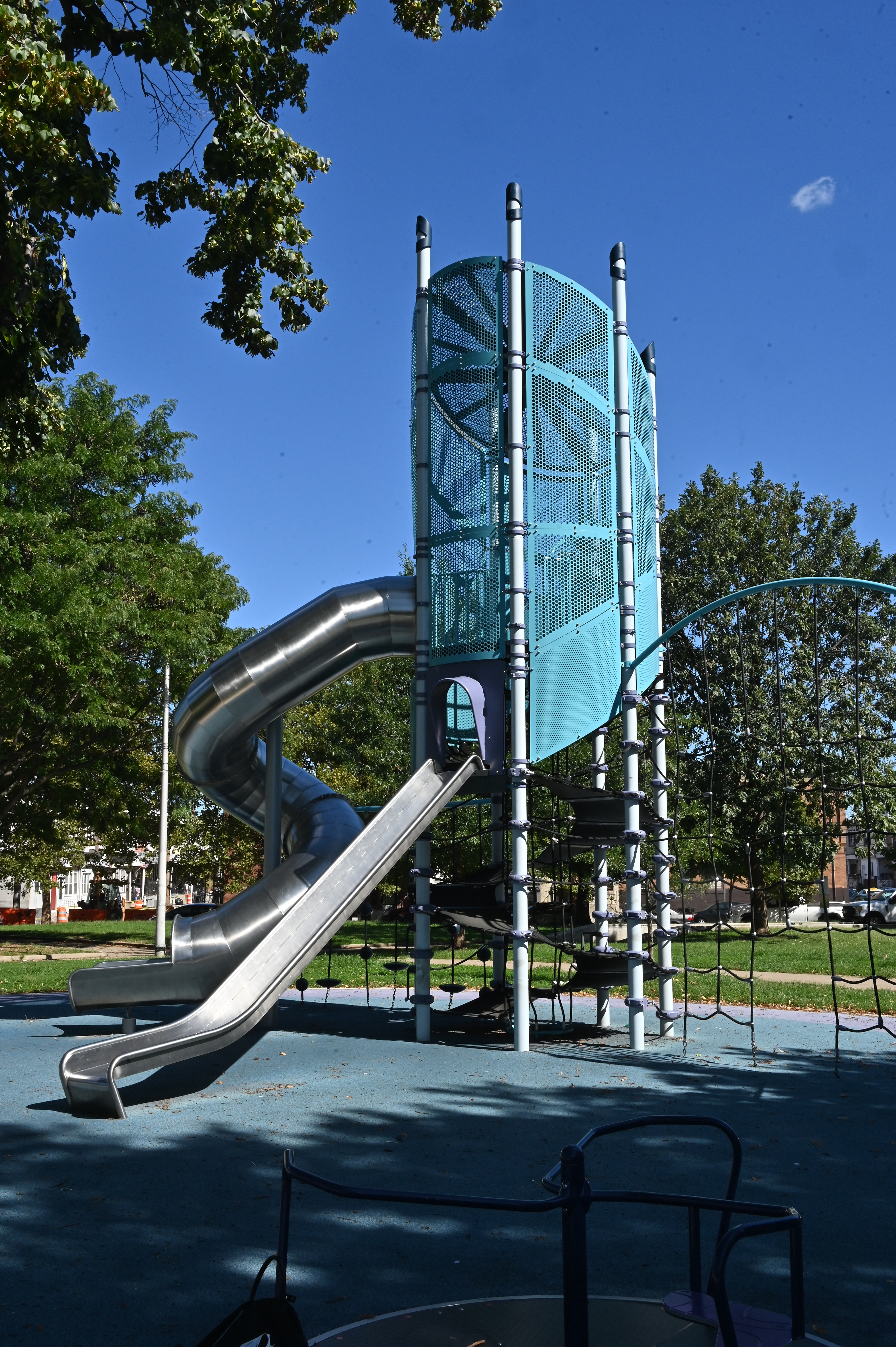
    Together, they and partners raised funds for a wonderful new playground at Mifflin Square Park. Refurbished basketball courts are coming next.

    To improve the cleanliness of the neighborhood, they partnered with an outside contractor to increase trash pickup. They added trash cans and mounted an educational campaign for merchants.

    “They don’t understand the rules about the days, or the designated places because they can’t read the warning signs,” Afroz said. She’s proud that the campaign has paid off. The corridor, once one of Philly’s most trash-filled, has improved.

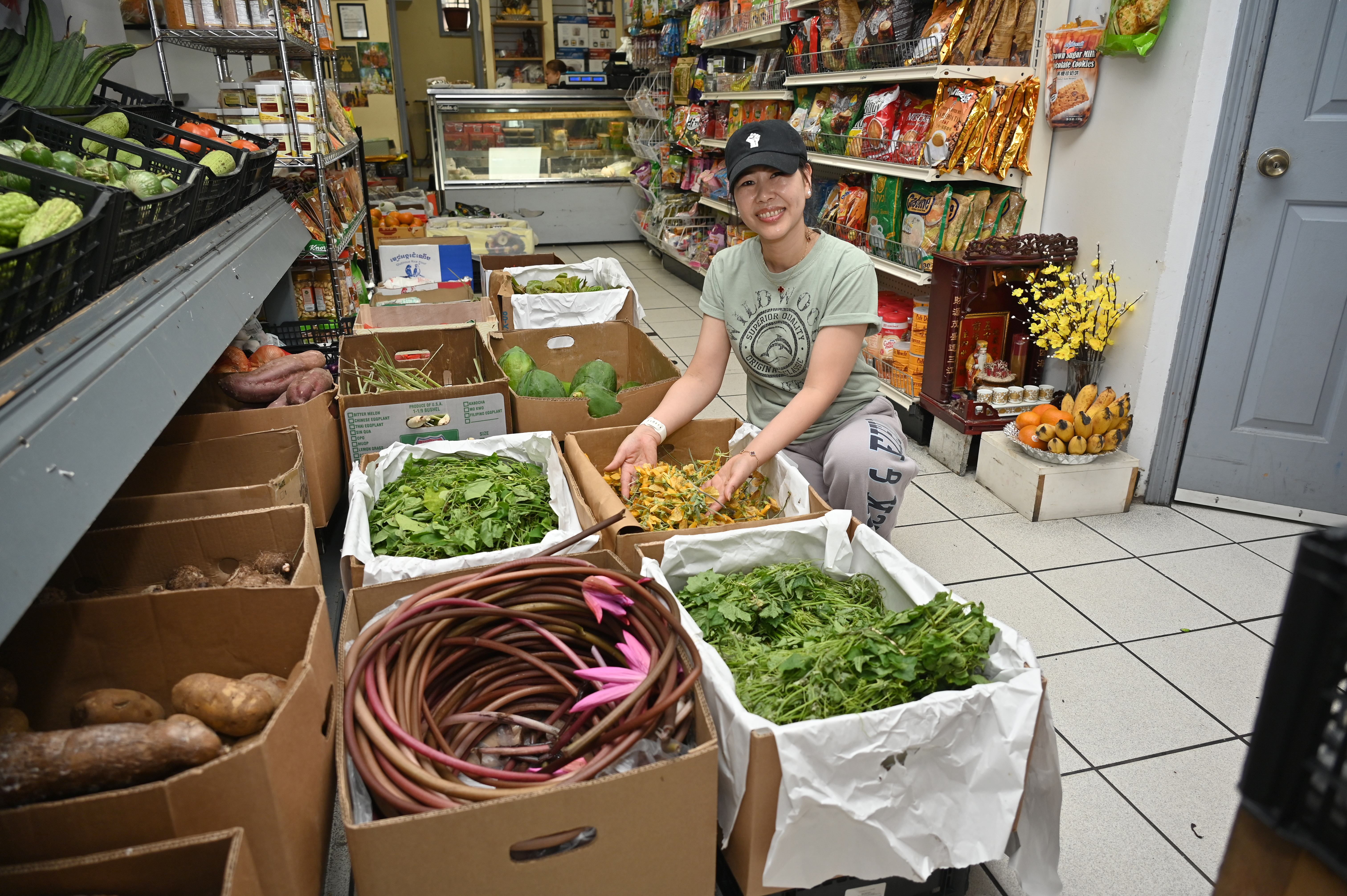
    At the City Angkor Market, Sivteang Lor shows her rare produce. According to Sabia Afroz, they are: “The circular plant with the magenta/light purple flower is a water lily, and its stem is edible. The yellow flower is from a vining plant called bagbagkong, an edible wild vine flower. It is also known by regional names such as sabidukong, dukep, pusapusa, and kapas-kapas.”I. George Bilyk

    “Grants cover the costs of planters and supplies, but not what it takes to build trust and relationships,” Brennan said. That takes time and shoe leather — many, many walks along the corridor — learning the different business challenges involved in running a fish market vs. a deli vs. a grocery, hair salon, or bike store.

    “Many people have experienced systemic violence, and there’s a hesitancy and reluctance to trust, born of good reason,” he said.

    Lin’s business, like others along the corridor, has been hit hard. Some immigrants, who used to shop, aren’t coming anymore, afraid of being targeted by U.S. Immigration and Customs Enforcement (ICE). Tariffs have raised the prices of some imports — which are valued by immigrant customers who come to Lin’s No. 1 Supermarket for food from home.

    Lin now pays the person who delivers her milk a $4 gas fee, plus the wholesale cost of milk has increased.

    She’s worried about a change in Philadelphia’s city business taxes. She used to be exempt from paying the city Business Income and Receipts Tax (BIRT) on the store’s first $100,000 in revenue. Now, though, she’ll owe taxes on all her revenue, hiking her tax bill even as her revenues decline.

    She has had to lay off two employees, and knows that other merchants are doing the same. Where will those families get the money to patronize local businesses? It’s a downward cycle. Now it’s just her and her husband, working seven days a week and many more hours a day. “My children complain,” she said.

    And then there are other complications. On-and-off border tensions between Cambodia and Thailand, half a world away, mean many Cambodians won’t buy Thai products. And so, packages of giant gourami fish from Thailand sit in the freezer.

    Which is why, when Brennan offers his very practical help, it matters. “When I call him, he comes,” she said.

    Walking the Seventh Street corridor from Porter to McKean Streets with Brennan and Afroz turns into a hugs-and-appliances tour — new refrigerators, new shelving, and new stoves — all acquired with help from SEAMAAC.

    On the corridor, SEAMAAC’s help is friendly, but also practical and businesslike. The fees merchants pay for credit card transactions are expensive. So SEAMAAC helped business owners acquire ATMs so customers can pay in cash.

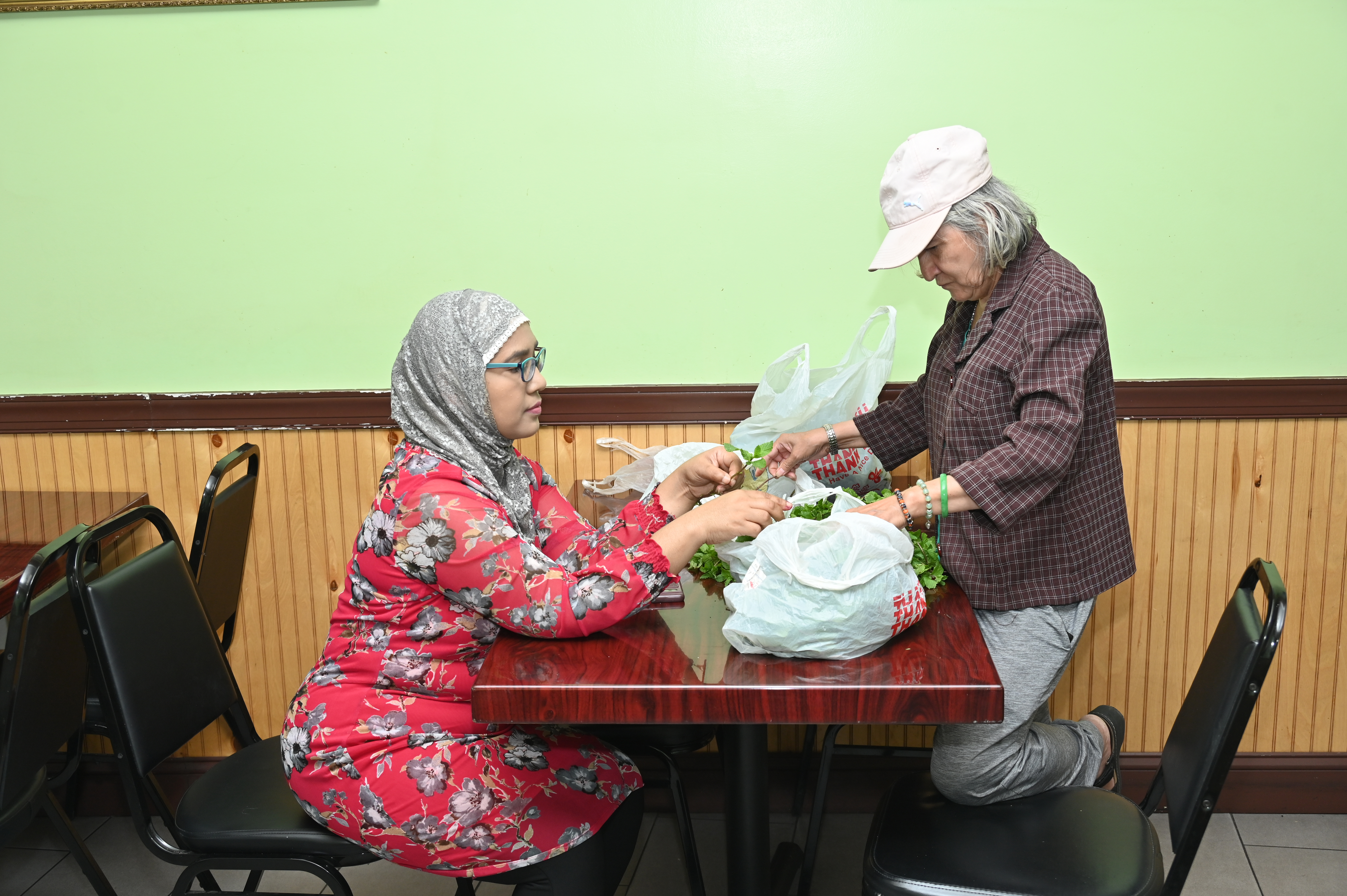
    Sabia Afroz (left) helps Ha take mint leaves off stems at Phinga Trinh’s Vietnamese restaurant, Cafe Vinh Long. Ha did not want her last name used.I. George Bilyk

    SEAMAAC works with 78 businesses along the corridor, helping merchants who speak 16 languages. At Cafe Vinh Long, Afroz sits across the table from an employee, helping her to separate mint leaves from their stalks. The leaves will build a soup. The help builds trust.

    Hor Chou, a citizen and leader among the Philadelphia Tse Chow group of Cambodian-Chinese, came to the United States many years ago via a refugee camp on the Cambodian-Thai border. He remembers seeing so many people massacred along the Mekong River that the waterway was clogged with bodies floating on top. Thirty people in his family were killed.

    Chou, owner of New Happy Garden Chinese restaurant, now serves as an ambassador in his community, helping SEAMAAC organize events like community-wide Lunar New Year celebrations. His daughters have graduated from college. And thanks to SEAMAAC’s work, he points out a gleaming new three-wok stainless steel stove in the restaurant’s kitchen.

    “It’s about build community — spend time together, learn together, and living in this community,” he said.

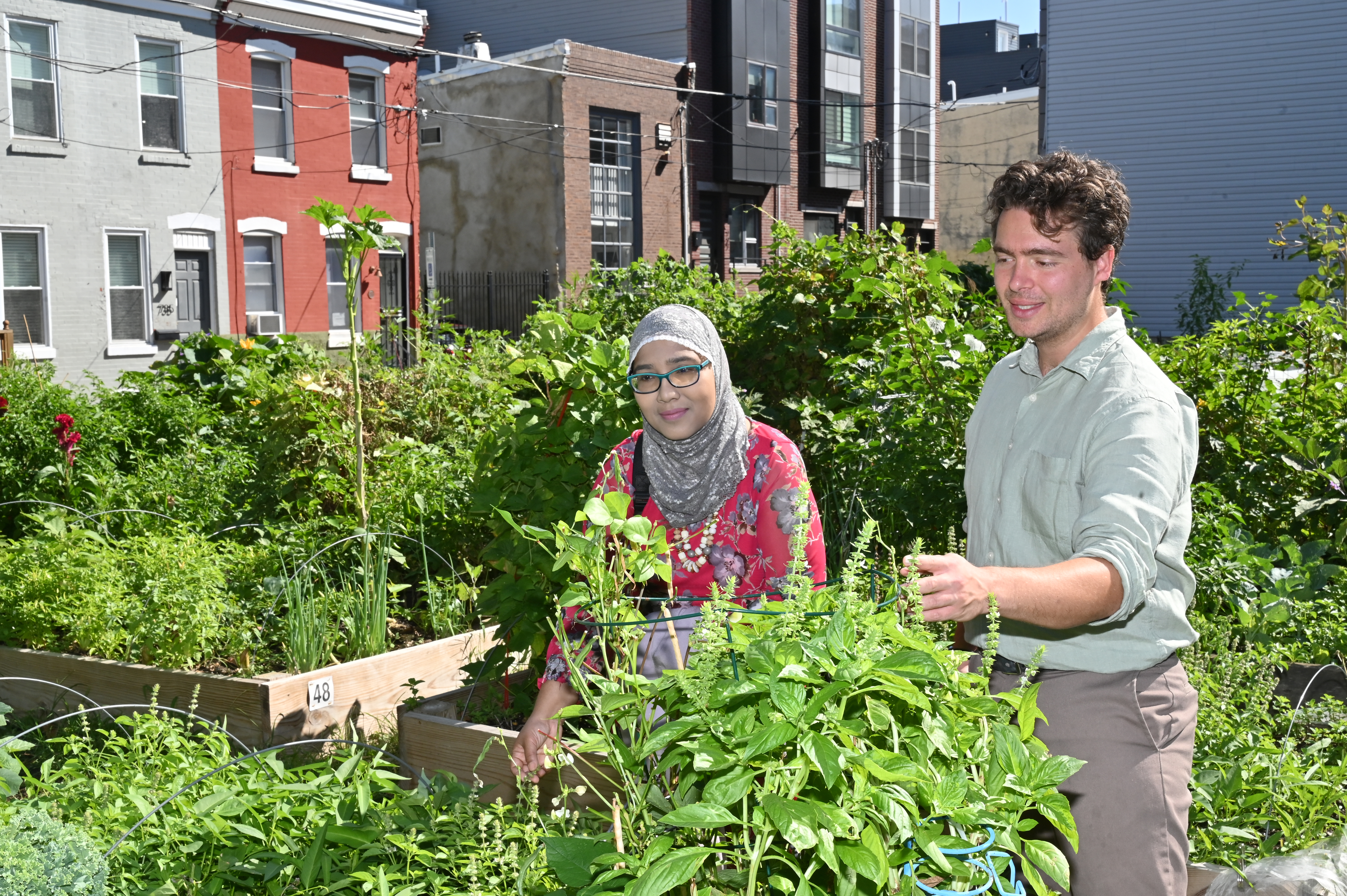
    Community is also cultivated in SEAMAAC-organized gardens, aptly named “Growing Home Gardens.” On side streets, area residents apply for plots to grow food for their own use in what amounts to a United Nations of very specific produce.

    The new playground equipment at Mifflin Square Park in South Philadelphia. SEAMAAC and other organizations helped to renovate the park.I. George Bilyk

    For example, the Karen people from southern Myanmar plant lemon tulsi, while the Nepali and Bhutanese folks harvest Krishna tulsi, another variety. In the evening, the Nepalis use the Krishna tulsi in a prayer ritual to protect their homes from overnight evil.

    At SEAMAAC, all the tulsis and their gardeners are welcome.

    Afroz, a gardener herself, said that no matter where gardeners come from, they bond with each other, watering each other’s plots, examining each other’s plants, and sharing what they grow with friends old and new.

    “They can grow something that is not available in any other place, or if it is, it’s very expensive,” she said. “In a city like Philadelphia, it gives them an opportunity to stay connected with their roots, with their culture, and with their cuisine.”

    In October, SEAMAAC hosts a harvest at the community garden on Emily Street. “They share their food,” she said. “They share their recipes. They share their culture. They share their views. It brings them together.”

    About SEAMAAC Inc., Philadelphia

    Mission: To support and serve immigrants and refugees and other politically, socially, and economically vulnerable communities as they seek to advance the condition of their lives in the United States.

    People served: 15,000 families

    Annual spend: $3,793,384 in FY2025

    Point of pride: SEAMAAC provides direct services to approximately 15,000 families annually through a variety of services and programs, supporting them through ESL classes, job readiness, domestic violence support, services for low-income elders, food security, public benefits, health and nutrition education, business development, and more. SEAMAAC plans to increase its impact to serve even more Philadelphians at its newly constructed main office and community center, located at 626 Snyder Ave., Philadelphia, PA 19148, which is scheduled to open in January.

    You can help: Volunteer to beautify and improve Philadelphia’s neighborhoods through SEAMAAC’s urban gardening, neighborhood and public park cleanings, school and places of worship beautification, and tree-planting events.

    How your donations support the communities we serve:

    • $50 provides toys for two children at SEAMAAC’s annual toy distribution.
    • $100 covers maintenance for an entire growing season and the annual registration fee for one gardener’s plot at SEAMAAC’s community garden.
    • $150 covers the full cost of supplies for one youth in SEAMAAC’s summer programs.
    • $200 covers four hours of ESL instruction.
    • $250 provides a family with emergency food, hygiene items, diapers, and social service support for one month.
    • $500 supports a domestic violence survivor’s move into safe housing by covering the cost of utility hookups and household supplies.
    • $1,000 covers the full cost for one high school student to participate in SEAMAAC’s eight-week summer career exploration program.
  • To help those living with dementia, a Jewish Family and Children’s Service program includes care for their caregivers | Philly Gives

    To help those living with dementia, a Jewish Family and Children’s Service program includes care for their caregivers | Philly Gives

    It has been hard enough for Annette Reyman to deal with the reality that — day by day, month by month — she’s losing her 100-year-old mother to dementia.

    But two summers ago, amid the demands of caring for her mom, Reyman faced another jarring realization: She was on the verge of losing herself, as well.

    The sleepless nights — half-listening for her mother to get up and maybe fall on the way to the bathroom. The time her mother tried to walk the dog and instead tumbled to the ground. Reyman had no life. She couldn’t go out with her husband or have lunch with a friend. Her business, helping people organize for moving, nearly tanked.

    “I didn’t know who I was. I didn’t know what I wanted. I’d ask for help, but people didn’t know what to do,” Reyman said. “I couldn’t even go to the grocery store. I was feeling trapped.”

    And then Brie Yousaitis came along.

    Director of senior services for Abramson Senior Care of Jewish Family and Children’s Service of Greater Philadelphia (JFCS), Yousaitis visited Reyman and her mother, Florence Lauria, in their home in Media as part of JFCS’s GUIDE program. GUIDE (Guiding an Improved Dementia Experience) provides comprehensive care management for seniors with dementia — care that also includes help for the caregivers, people like Reyman.

    For Reyman, JFCS’s GUIDE program was a lifesaver, but GUIDE is only one of many JFCS programs that serve seniors, Holocaust survivors, children and families, teens, people living with disabilities, and the Orthodox Jewish and LGBTQ+ communities. Services include help with housing, socialization, workforce development, substance use, hoarding, and suicide prevention.

    At that first visit in August 2025, Reyman did a lot of the talking. Yousaitis listened and held Lauria’s hand. More than anything, that’s what Reyman noticed.

    “She was holding her hand, but supporting me,” Reyman said.

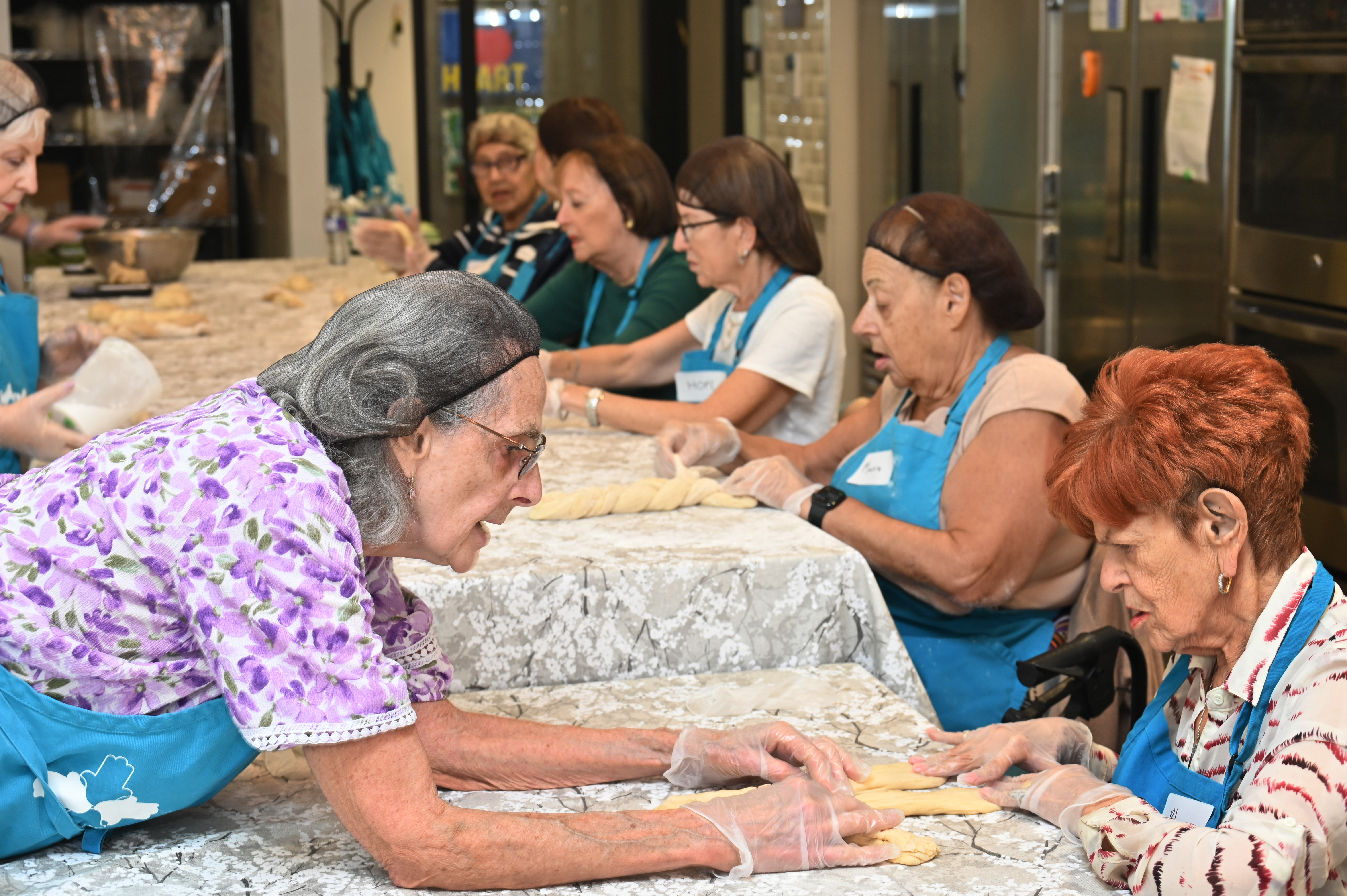
    Barbara Kurland works with Rhea Huber as they make challah bread. Behind them are Maxine Goldman (Apple Watch), Hope Kirschner (white shirt), Joyce Avrach (green shirt), and others.I. George Bilyk

    The feelings are so complicated. Reyman’s an achiever by nature, so surely, she thought, she could be the Wonder Woman who can do anything, handle anything.

    “But no, I’m human,” she said. “I can’t do it.”

    She wrestled with anger at herself and at the situation with her mother. She struggled with guilt for feeling angry. After all, being 100 wasn’t her mother’s fault. Having dementia wasn’t her mother’s fault. “It felt like anger, but there was also guilt and defeat,” she said.

    But Yousaitis understood all of it. “She took the guilt out of it,” Reyman said.

    Instead, there was practical help — even something as simple as watching Yousaitis hold her mother’s hand mattered. Touch can be effective in reaching through the fog of dementia. Yousaitis modeled the behavior. Reyman modeled Yousaitis.

    Yousaitis told Reyman about a statewide art contest for seniors. Reyman entered a painting her mother made of flowers. It was one of 30 paintings to be exhibited at the governor’s mansion in Harrisburg. Both she and Lauria traveled to Harrisburg to attend the ceremony.

    The GUIDE service includes a 24-hour hotline for emergencies, like what to do when a parent wanders out of the house at 3 a.m. in the winter wearing a nightgown, or when an older person won’t get out of the car at midnight because he thinks he’s about to go on a trip.

    Jewish Family and Children’s Service serves caregivers of people living with dementia | Philly Gives
    Video: Jewish Family and Children’s Service serves caregivers of people living with dementia | Philly Gives

    The care management component involves making sure the myriad medications dementia patients take don’t conflict with one another. There’s also a home-safety check. JFCS has connections with contractors who not only do the construction work, but also understand the reasoning behind it.

    “Care plan development, that’s another big component,” Yousaitis said. “And then the resources — if you can think of [a problem], we have a resource for it.”

    And there’s expertise. For example, Yousaitis and her staff may suggest hanging a picture of a toilet on the bathroom door, and a photo of mugs on the kitchen cupboard where they’re kept. Worried about someone leaving the house? Wrap the door in paper that looks like a bookshelf. Put baby gates at the stairs and paste neon-green strips on them, since neon green appears to be the last color lost to those with dementia.

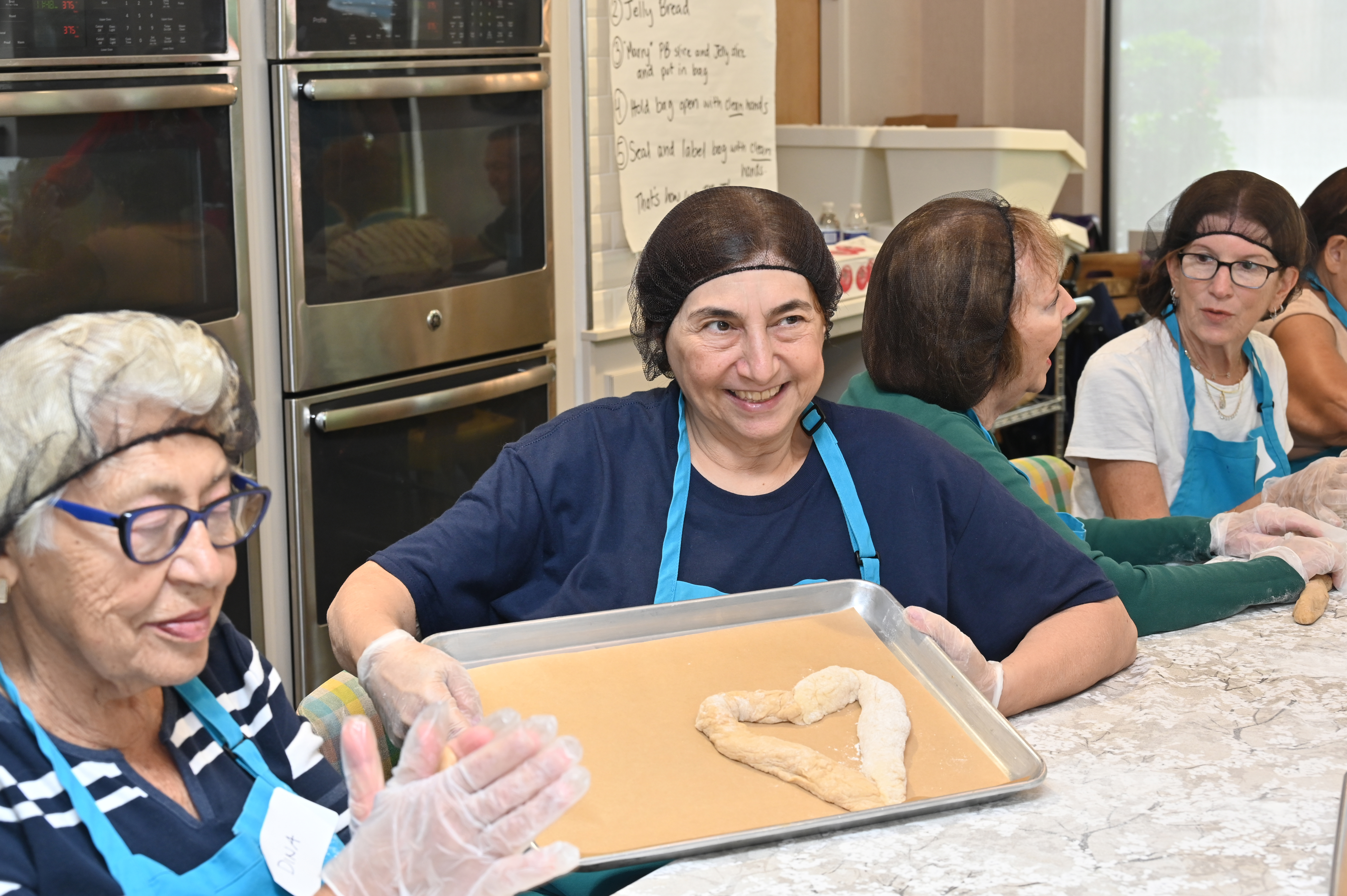
    Susan Wolff displays a heart-shaped piece of challah bread that she created during a recent baking event at the Barbara and Harvey Brodsky Enrichment Center in Bala Cynwyd.I. George Bilyk

    Beyond that, there are support groups for people like Reyman. She remembers going to one, and what she noticed at first was that everyone looked tired, extremely tired. But they trade tips and jokes, and somehow the load gets lighter.

    Sometimes there are activities — arts and crafts for the elderly while their caregivers get a chance to relax and unwind in another room.

    A favorite activity involves making challah bread, with caregivers and their loved ones working separately to fold strips of dough into braided loaves that they’ll eat together later, when it’s hot, fragrant, and fresh from the oven.

    “When the challah is baking, the aroma radiates through the building, and sometimes the aroma therapy triggers remembrance and reminiscence, and the client is able to verbalize,” even if they hadn’t spoken much for months, said Lana Pozdnyakov, chief senior care officer for Abramson Senior Care of JFCS.

    “The caregiver is actually able to hear that their loved one still has the memory to verbalize. It brings tears to their eyes to see, for a fleeting moment, that they can verbalize something with their loved one,” she said.

    The traditional Jewish challah loaf seems symbolic in the way it braids the dough together — the same way preparing the bread brings many groups served by the JFCS together.

    Just before Yom Kippur this past September, nearly a dozen elderly bakers gathered in the spacious kitchen in the Barbara and Harvey Brodsky Enrichment Center in Bala Cynwyd.

    They are part of the Social Programs for Positive Aging group that meets for field trips and activities. Besides the challah baking, there’s the group’s “travel” club. They see slides and movies of countries around the world, from Egypt to Morocco. Afterward, they share a meal with food from the region.

    What does the group mean to them?

    “Oh my God, it makes my hair stand up just to hear that question,” said Barbara Kurland, of Warminster, who recently moved to Florida to live with her family. “To be part of a community like this? No more fish out of water.”

    Over time, she said, ties with family and friends diminish. People die. People move away. Children and grandchildren have their own busy lives. And all of a sudden, where did everybody go?

    “I had no meaningful connections with either family or friends,” she said. “But here, I love us.”

    Among the bakers were several Holocaust survivors, including Ruth Shiloh, 90, who sang a blessing in Hebrew, echoing the sentiments of another reading earlier: “Blessed are You, Lord our God, King of the universe, who has kept us alive, sustained us and brought us to this season.”

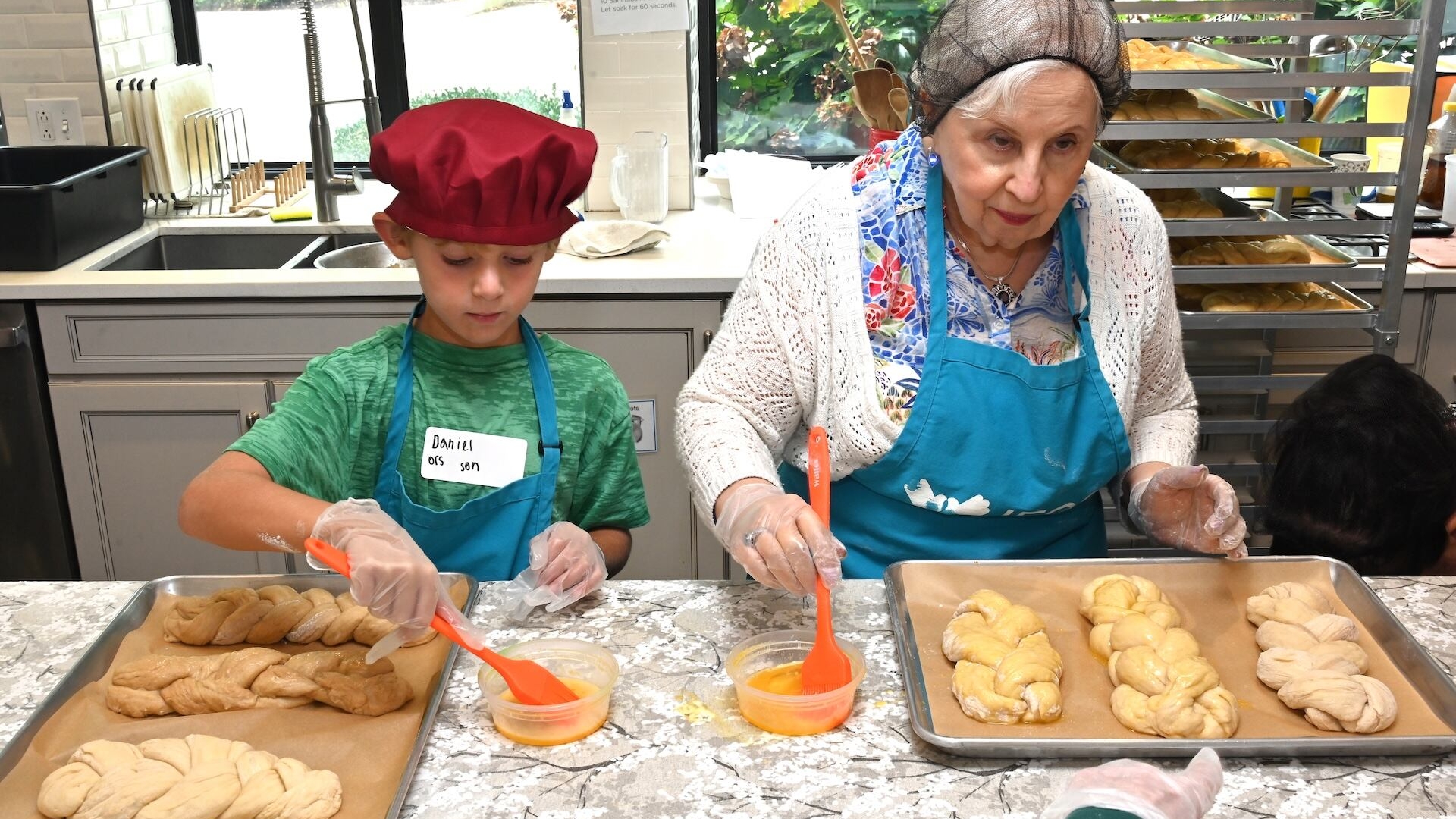
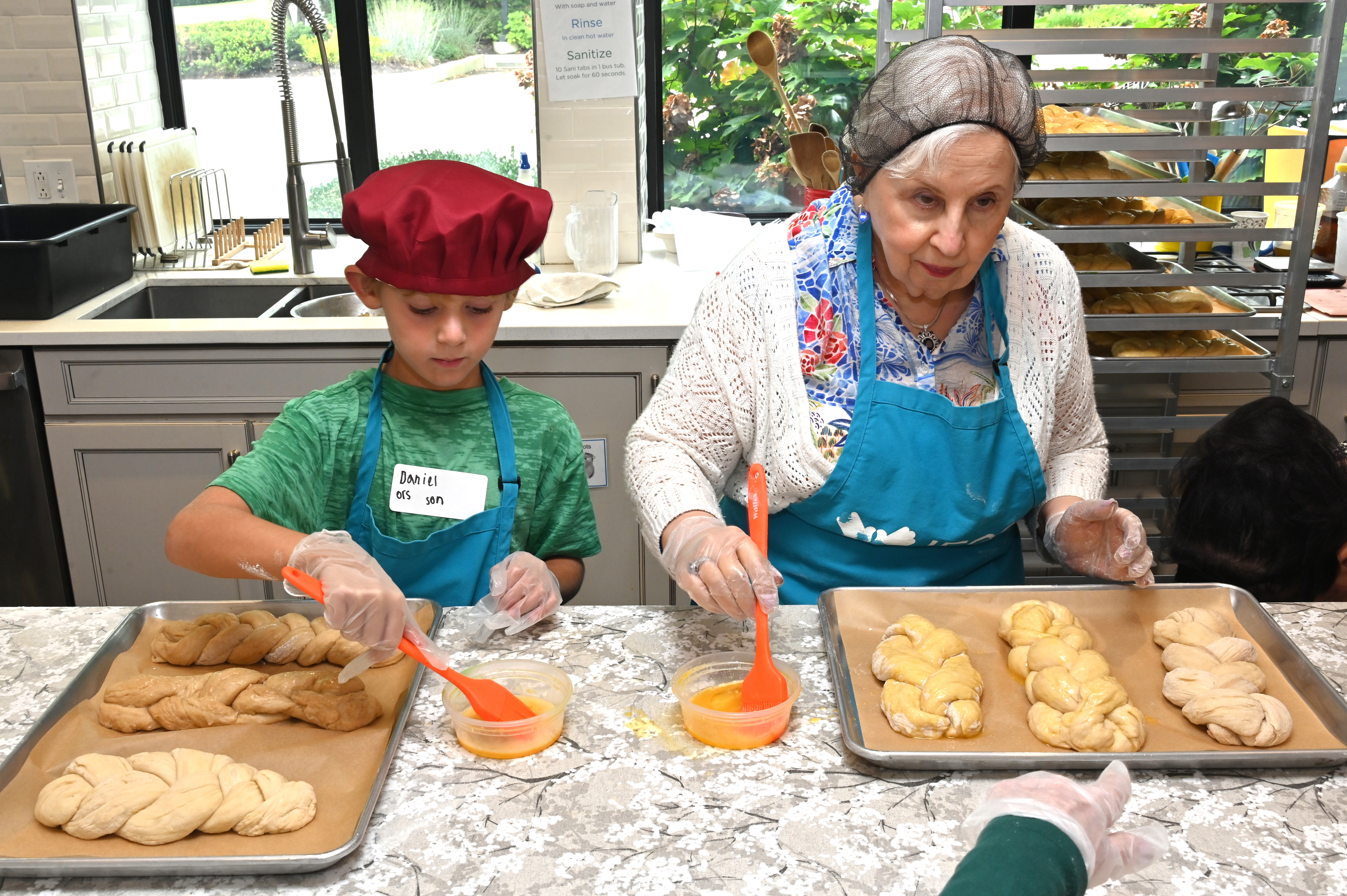
    Eight-year-old Daniel Ben-Ari helps apply a coating to trays of challah bread alongside Odile G. Silberberg. His father, Or Ben-Ari, is the JFCS director of programming at the Barbara and Harvey Brodsky Enrichment Center.I. George Bilyk

    Her father, Shiloh said, had the foresight to get her family, including eight siblings, out of Lithuania before the Nazis took over. She lived in Russia and Poland and Israel before coming to the United States. As an adult, everywhere she lived, she taught mathematics and physics, including at Benjamin Franklin High School in Philadelphia. She speaks or understands at least nine languages.

    “I come here for the camaraderie,” she said, before sitting down for a bowl of soup, some salad, and hunks of freshly baked challah. “At my age, I don’t have many neighbors and friends, so this is my connection to my Jewishness.

    “Wherever we are in the world, we Jews contribute to growth, yet we were always treated like pariahs,” she said. “When I come here, I am among my own people. I am home.”

    About Jewish Family and Children’s Service of Greater Philadelphia, Bala Cynwyd

    Mission: Driven by the Jewish values of community, dignity, and repairing the world, Jewish Family and Children’s Service of Greater Philadelphia works to strengthen families and individuals across generations and cultures to achieve stability, independence, and community.

    People served: Over 33,000 annually

    Annual spend: $16.470 million for FY2025

    Points of pride: Helping Hands Summer Work Readiness Program for 52 students in a citywide collaboration with Philadelphia’s Department of Behavioral Health and Intellectual disAbility Services, the Mental Health Network, an innovative collaboration of mental health providers to increase access to care, and expanded senior services following a recent merger with Abramson Senior Care. JFCS will further expand its senior services in a new building in Northeast Philadelphia, set to open soon.

    You can help: Volunteers can sort donated clothing, package food in collaboration with people living with disabilities, and prepare food for people in need, among many other volunteer opportunities.

    How your donations support the communities we serve:

    • $25 buys a warm winter coat for a child.
    • $50 purchases a grocery store gift card for a family.
    • $100 pays the heating bill for an individual with a disability.
    • $360 subsidizes the cost of therapy for an individual experiencing a mental health crisis.
    • $500 covers medical bills for an aging senior.
    • $1,000 funds suicide prevention training for at-risk teens.
    • $2,500 installs a chair lift in the home of a Holocaust survivor.
  • For women clinging to hope, Catholic Charities offers a refuge where they can ‘lift each other up’ | Philly Gives

    For women clinging to hope, Catholic Charities offers a refuge where they can ‘lift each other up’ | Philly Gives

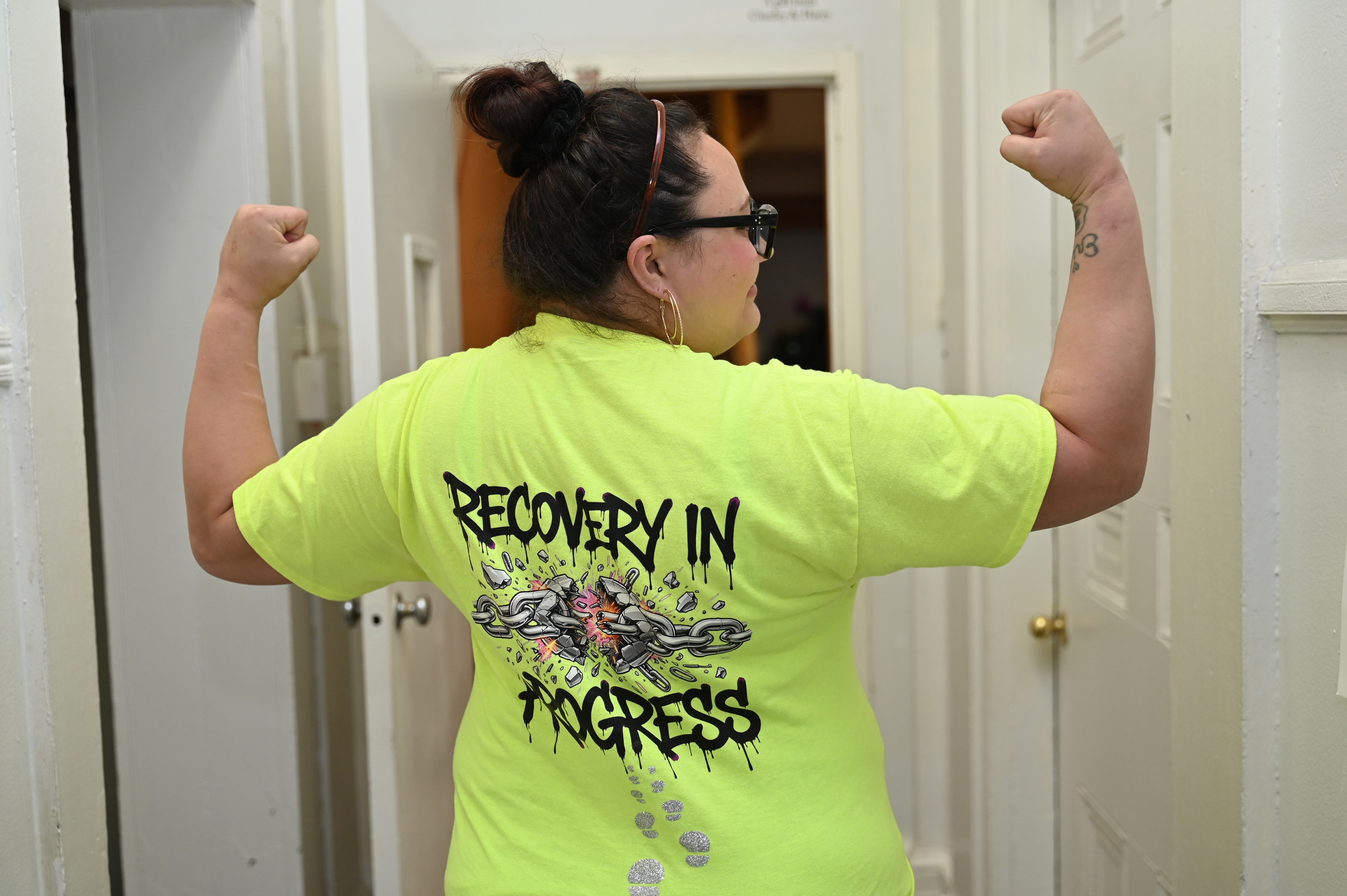
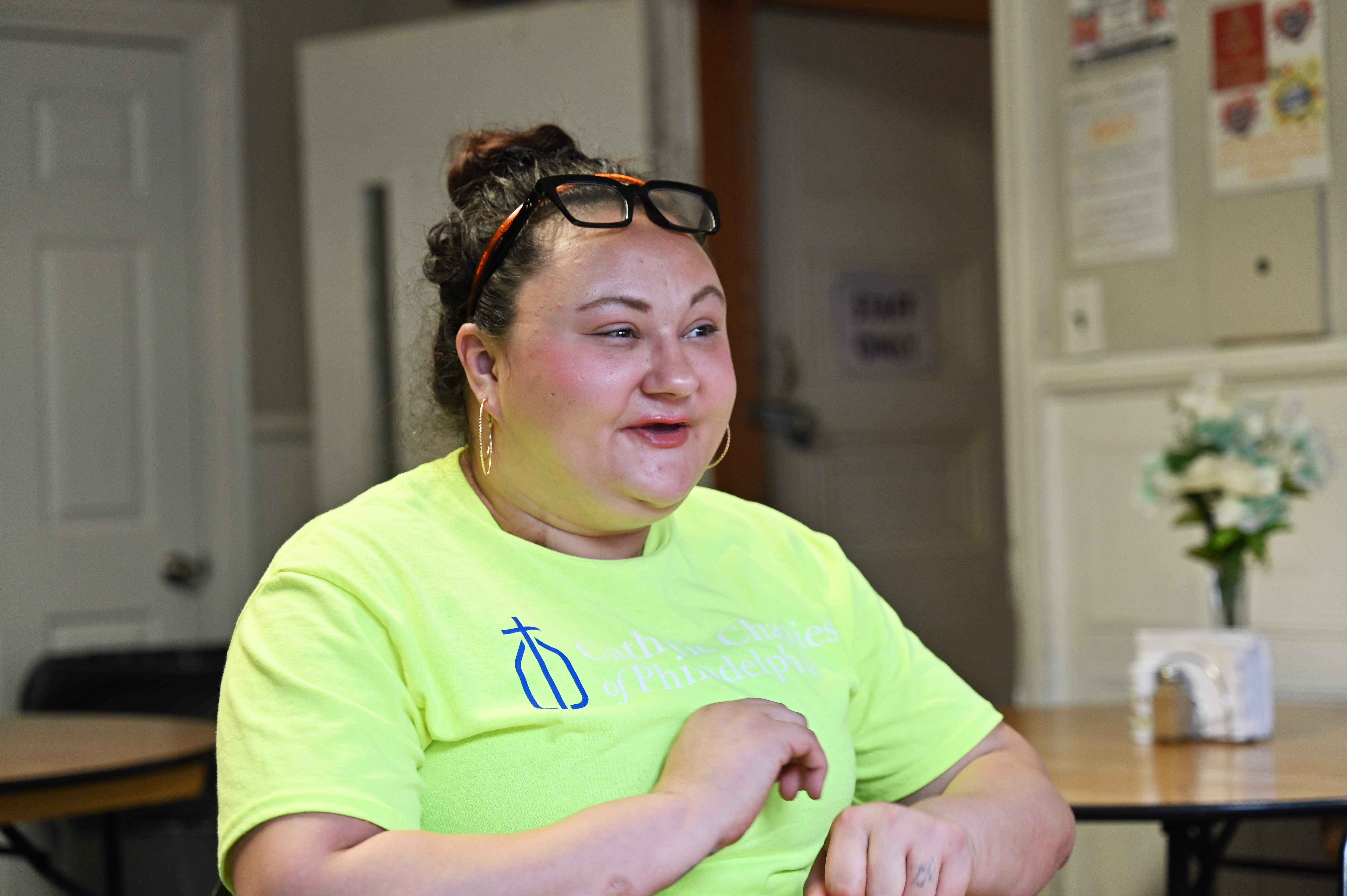
    Thirteen months ago, Teresa Bowers was battling drug addiction, homeless, hopeless, and reconciled to her own death on the streets of Philadelphia.

    “I had come to terms that I was going to die an addict,” Bowers said in a recent interview. “That nobody cared about me, that nobody loved me.”

    But there is Mercy in this world, and because of it, Bowers is no longer trapped in what she described as a degrading cycle of humiliation and shame. Bowers recently celebrated her 34th birthday at Mercy Hospice, a recovery home operated by Catholic Charities of Philadelphia.

    It was her first sober birthday since she turned 13.

    After detox, with the necessary medical supervision required as drugs leave the body, most people recovering from substance use begin their journey in an intense 30-day inpatient or outpatient treatment program.

    But 30 days plus detox is usually not enough.

    What’s needed next is a longer stay — maybe months, maybe years — in what is known as recovery housing, where therapy, workshops, and skill-building combine in a drug-free, supervised place. Mostly, those places aren’t set up for children, but Mercy Hospice, in Center City, houses 31 women, including rooms for seven mothers and their children, plus a toy-stocked playroom and a little playground out back.

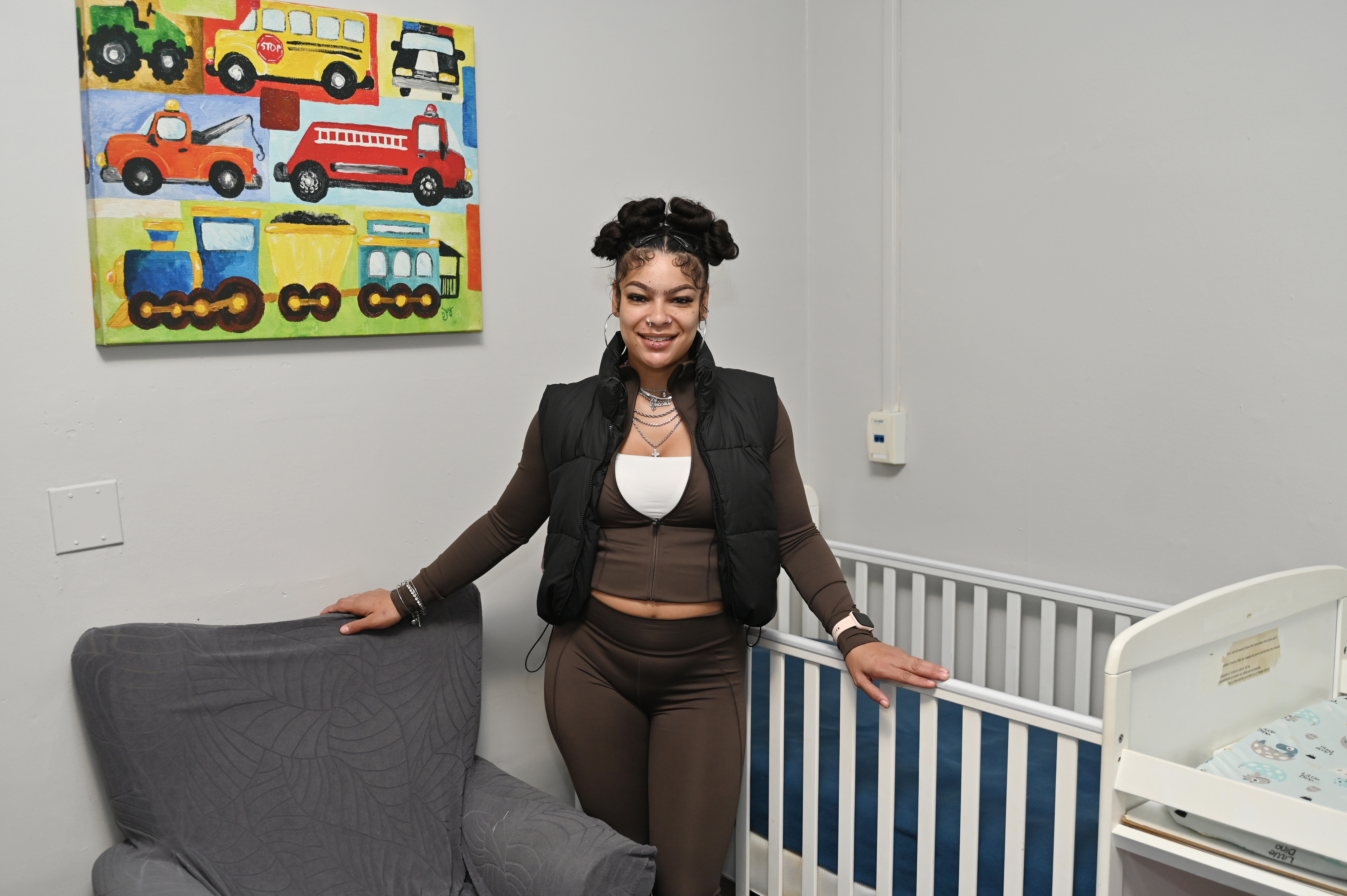
    It made all the difference for one of Bowers’ former Mercy Hospice housemates, Erica Reason, who was able to live there with her son, now 5, for two years during her struggle to stay clean after on-and-off drug use since she was a teenager.

    “People need long-term treatment programs. If I become rich, I’m going to open a `Mommy and Me’ program” like Mercy Hospice’s, Reason said. She just moved into her own apartment (where her 5-year-old son gets his own bedroom!) — new housing arranged by her social worker at Mercy Hospice.

    Mercy Hospice receives government grants to pay services to the women it houses, but relies on donations to underwrite the $500,000 it costs annually to house and care for their children.

    As she recovers from substance abuse, Teresa Bowers recently celebrated her 34th birthday at Mercy Hospice. It was, she said, her first sober birthday since she turned 13.I. George Bilyk

    “While there is no reimbursement for these costs, it is paramount to the mission of Catholic Charities of Philadelphia to make efforts to keep families together,” said James Kerrigan, Catholic Charities’ director of homeless services.

    In addition to Mercy Hospice, Catholic Charities provides transitional and emergency housing for nearly 500 people. On any given day, 350 people without homes eat meals, take showers, do laundry, and receive mail through other Catholic Charities programs.

    But the Philadelphia nonprofit’s services reach beyond the homeless and food insecure with programs for families — assisting them with everything from housing to diapers — young people in the juvenile justice system, immigrants who need legal help, seniors, and people with intellectual and physical disabilities.

    For Reason and Bowers, help came in the form of a safe place to recover from a lifetime of trauma.

    Catholic Charities offers a refuge where women can ‘lift each other up’ | Philly Gives
    Video: Catholic Charities offers a refuge where women can ‘lift each other up’ | Philly Gives

    On Nov. 2, 2025, Bowers wound up in Temple University’s emergency room with a blood clot in her arm. Doctors also saved her leg, which had been ravaged by wounds from Tranq, the street name for xylazine, a large-animal sedative that is often mixed into fentanyl.

    “I woke up, and I asked for help,” she said. She wanted to be clean — not for her mother, not for her friends, not even for her son, who is living with her mother. It was her decision.

    Erica Reason stands next to a crib at Mercy Hospice. She and her son, now 5, lived at Mercy Hospice for two years.I. George Bilyk

    In between, though, it was rough.

    To sleep, she searched for abandos (abandoned buildings) near Kensington and Allegheny Avenues. “I would pray that I didn’t get robbed,” she said. She remembered a time when, as a prostitute, she jumped into someone’s car. The man put a gun to her head and demanded a sexual service.

    “It’s so degrading that you use more and more to not have to think about it,” she said.

    When she does think about it, she can easily be overwhelmed with guilt and shame — and overcoming that has been as big a battle as fighting substance use itself. When she was pregnant at age 17 with her son, she kept using. “I couldn’t stop.”

    When she got pregnant again, she rejoiced to have a second chance to be a good mother. “But I just chose drugs again,” she said. Bowers gave birth to her daughter, but the baby didn’t survive her own withdrawal.

    “The guy I was dating, he’d say, ‘You killed your baby. You’re a horrible person.’”

    Through counseling at Mercy, and help and advice from her family, she has learned to look beyond the tragedy.

    The community also lifts her. “We are women. There are 30 of us, and there are some bad days,” Bowers said. “But at the end of the day, we have each other’s backs. It’s showing us how to be a friend. We lift each other up, and we pull each other up.”

    One thing that helps is Mercy’s stable routine — wake up at 4 a.m. for medicine, breakfast at 5 a.m., a visit to a methadone clinic at 6 a.m., followed by a morning meditation when Bowers adds to her gratitude list.

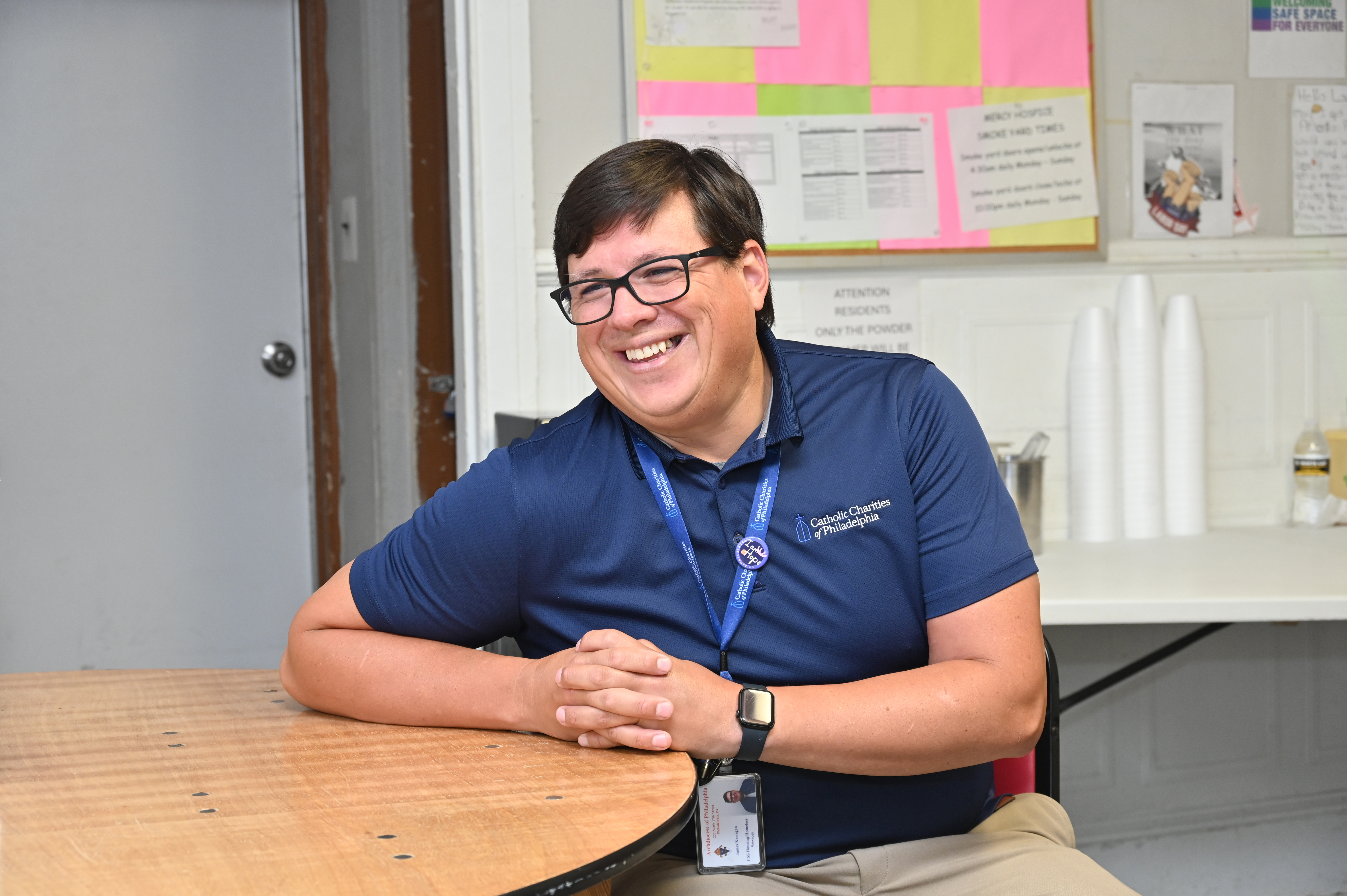
    James Kerrigan, director of homeless services for Catholic Charities of Philadelphia, sitting in the dining room at Mercy Hospice. “It is paramount to the mission of Catholic Charities of Philadelphia to make efforts to keep families together,” he said.I. George Bilyk

    At 8:30 a.m., there’s a daily check-in. The rule is that each person must describe their mood in one word, and it can’t be fine, OK, or good. A few weeks ago, Bowers’ morning word was motivated.

    Which brings her to a discussion of why people should be motivated to help Catholic Charities in general, and Mercy Hospice in particular.

    “I’m sure [everyone’s] highly aware of addiction,” she said. “We all know the facts. You see the world. It would just be saving a lot of women’s lives. All that’s coming to mind is saving lives, and that’s it, point blank, period.”

    These days, Bowers is beginning classes to gain her high school diploma so she can study business in college and learn how to buy houses and turn them into recovery homes. Like Reason, she wants to give back.

    “I want to help little girls the most,” Bowers said. “I wish someone had done that for me.

    “Now I’m a young woman who is excited about life and has accepted that there’s a better way. I didn’t have to die an addict.”

    This article is part of a series about Philly Gives — a community fund to support nonprofits through end-of-year giving. To learn more about Philly Gives, including how to donate, visit phillygives.org.

    About Catholic Charities of Philadelphia

    People served: 200,000 annually (FY ’24-’25)

    Annual spending: $168.8 million across four pillars of mercy and charity

    Point of pride: Catholic Charities of Philadelphia is the heart of the church’s mission in action, serving all people regardless of background. With decades of experience, nearly 40 comprehensive programs, and deep community partnerships, we turn compassion into action, and action into lasting and impactful change.

    You can help: By serving meals, volunteering at a food pantry or shelter, hosting a food or clothing drive, and sharing your gifts and passions with seniors.

    What your Catholic Charities donation can do:

    • $25 provides five nutritious lunches for children through our School Lunch Program.
    • $50 provides three hot lunches at St. John’s Hospice for individuals experiencing food insecurity.
    • $100 provides an instructor and supplies for an art or recreation class for 50-100 seniors at a senior community center.
    • $275 provides one week of groceries for a family of four.
    • $325 provides a mother with formula, diapers, and wipes for a month.
    • $550 provides emergency shelter and meals for a week for someone experiencing homelessness.