Tag: Philly First – newsroom

  • Aramark forged a partnership with Penn Medicine for more affordable employee health benefits

    Aramark and the University of Pennsylvania Health System launched a partnership this year to offer the food service giant’s Philadelphia-area employees healthcare in a test of a new model for reducing costs.

    Aramark employees who choose the benefit option, called the Penn Medicine Premier Plan, face no deductibles and lower copays when they and their dependents use Penn doctors and facilities.

    The move by Aramark into what is called direct contracting comes as employers are contending with years of surging healthcare costs. It’s an example of experimentation designed to slow spending growth in spending and perhaps improve quality, experts said.

    “We certainly would like to save money on the model, but its primary focus is to make benefits more affordable” by getting lower prices than it would get by going through an insurer, said James Startare, Aramark’s vice president for benefits.

    The model is called direct contracting because Aramark negotiated prices and other terms of the contract directly with Penn, instead of relying on an insurer to negotiate prices.

    It’s Penn’s first such contract and the first large-scale direct contract in the Philadelphia region. Aramark talked with other systems in the area, but Penn emerged as the partner willing to enter into the experimental contract. Penn described the deal as a multiyear contract ultimately expected to roll over from year to year.

    Aramark didn’t provide details on savings, but its goal was to negotiate prices that are lower than those it would pay though a benefits administrator, such as Aetna.

    By eliminating deductibles that function as a barrier to care, the plan is expected to encourage primary care visits. This could reduce long-term costs by catching patients’ health problems early.

    For health systems like Penn, such contracts offer a chance to increase market share, streamline payments, and hone their ability to manage the health of a population.
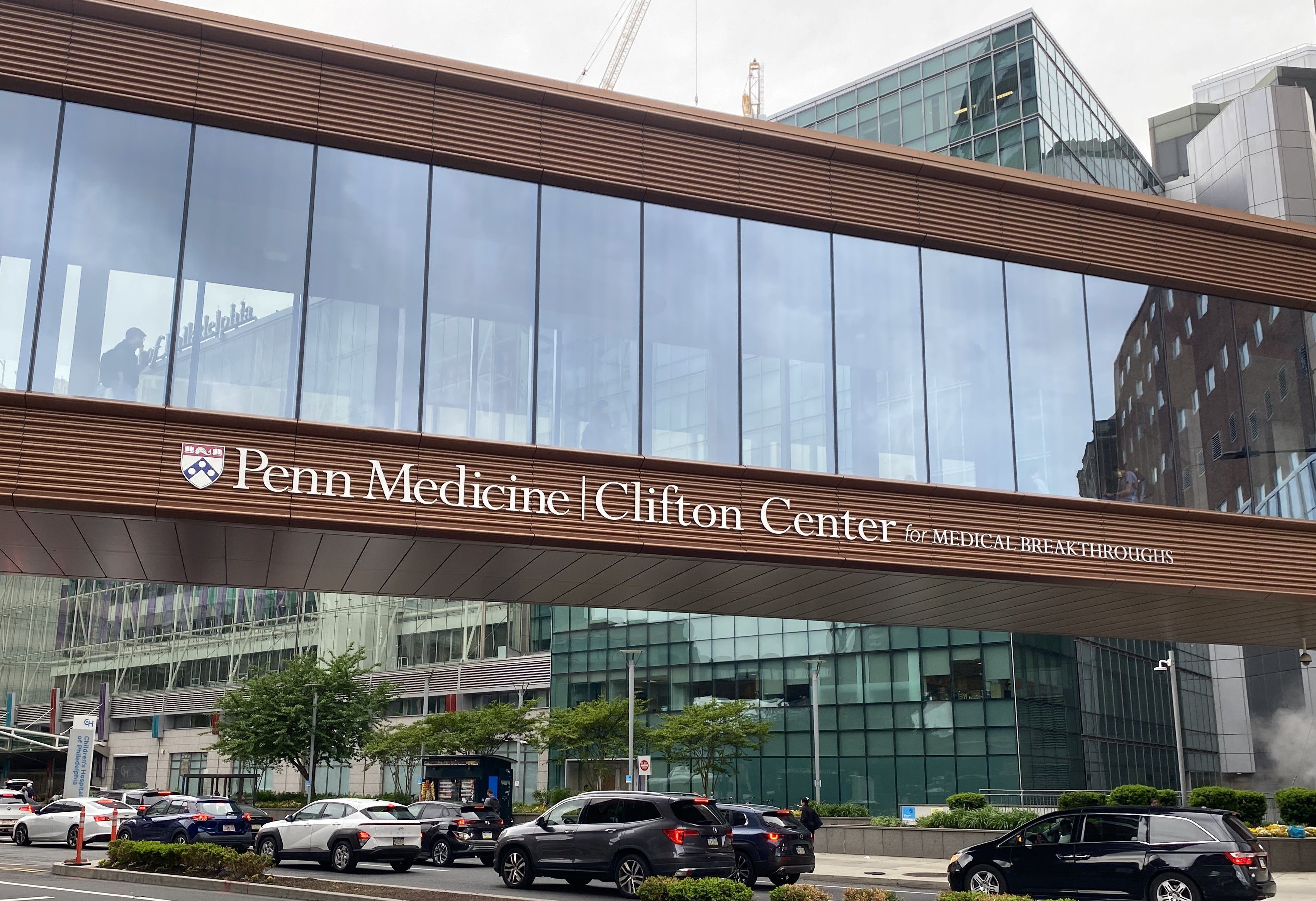
    The Penn Medicine Premier Plan features no deductibles and lower copays when Aramark employees and their dependents use Penn doctors and facilities. Harold Brubaker / Staff

    Aramark’s move into direct contracting

    Penn is Aramark’s third major direct contracting partner.

    Employers, even those like Aramark that are self-insured, typically rely on an insurer’s negotiated prices.

    With the new direct contract, an Aetna administrative unit still processes the claims for Aramark, and patients who go outside Penn for care use the Aetna network.

    Aramark launched its first such contract in 2024 in Dallas and expanded to Chicago last year, each time getting a strong employee enrollment, though it took two years in Chicago, Startare said.

    In the Philadelphia region, 35% of eligible employees (those who work 30-plus hours a week on average) have chosen the Penn plan, which took effect Jan. 1, Startare said. That amounts to 800 employees.

    Coincidentally, the health contract started at the same time as Aramark’s contract to manage food and other services at Penn Medicine facilities, but the two deals were not linked.

    Employees who were moving to Aramark with the food services contract were worried about losing their Penn benefits, said Megan Lieberman, a patient services manager at Chester County Hospital who was among those who became an Aramark employee.

    But the Penn Premier Plan was very similar to what they were used to. “It was definitely a huge relief to know that we got to hang on to those benefits,” Lieberman said.

    A separate contract covers pediatric services at Children’s Hospital of Philadelphia for Aramark employees and their families.

    Next year, Aramark plans to take direct contracting into central New Jersey, but did not name the system it’s using there.

    What’s in it for Penn

    The Aramark contract is an opportunity to focus on “chronic disease management, preventive care, cancer screenings, things like that” for a specific group of 1,400 patients who are motivated to stay within the Penn system, said Mark Angelo, Penn’s chief medical officer for population health.

    A key goal is to reduce the deductibles, copays, and prior authorizations that can slow access to preventive care. The model is designed to take care of people before they end up in high-cost places like the emergency department or hospital, Angelo said.

    Keeping more patients within Penn is expected to result in savings because of better care coordination and fewer repeated tests, Angelo said. Penn Premier plan members can seek care outside of Penn, but it will cost them more out-of-pocket.

    As it is, the typical Penn patient also uses other health systems for some services, said Roy Schwartz, Penn’s vice president for payer strategy.

    “Sometimes it’s the right choice, sometimes it can fragment their care,” Schwartz said. “There should be savings just simply coming from having integrated, coordinated care at a place like Penn.”

    Penn does not yet have much of its own data on Aramark employees, but indications from Aramark are that the plan’s members were using more Penn services in the first six months, Schwartz said. “It was not just patients who were using Penn anyway for pretty much everything.”

    Penn and Aramark officials plan to meet regularly to review results and consider modifications. “We’re hoping this works out well for everybody because we’d love to do some more of these,” Schwartz said.

    Momentum behind direct contracting

    Employers nationally have long contracted directly with doctors and health systems for specific procedures, like joint replacements, cancer care, and heart surgery. For years, they’ve also paid directly for primary care through on-site clinics.

    Aramark’s move to an all-encompassing healthcare plan with a single provider fits into a newer trend gaining momentum nationally. Investors have created platforms like Cost Plus Wellness, Mishe Health, Nomi, and Transcarent to help health systems implement direct contracts.

    Northwell Health, a major health system in New York and Connecticut, started a for-profit subsidiary called Northwell Direct and now has more than 70 contracts that cover more than 300,000 people.

    Northwell Direct’s biggest contract covers 100,000 building service workers in the New York area and their dependents. It took effect this year and is expected to save 20% in the first year.

    Big savings to start are not guaranteed.

    “They may not go into it with a lower cost, but they’re going to go into it with better access, better quality for their employees, and what they’re finding is eventually those lower costs will come,” said Jenny Goins, chief of staff at the National Alliance of Healthcare Purchaser Coalitions.

    The Washington nonprofit is putting together a direct contracting advisory council to help more employers to do what Aramark is doing, Goins said.

    The model is not expected to replace traditional coverage anytime soon in the Philadelphia region.

    “It is not for everyone, and it does take effort and coordination on the part of the employer,” said Tom Belmont, CEO of the Greater Philadelphia Business Coalition on Health. “Also, some health systems are ready for the discussion, while others are not.”
  • Meet the South Jersey business making food carts for Jersey Shore vendors and Disney World

    Meet the South Jersey business making food carts for Jersey Shore vendors and Disney World

    In a country-industrial stretch of Hammonton halfway between Philadelphia and Atlantic City sits a concrete-block maze of machine shops, where workers have built thousands of stainless-steel hot-sandwich and coffee carts and catering trucks.

    This is the one-story home of Custom Mobile Food Equipment, which for 74 years has built these customized portable kitchen-storefronts of varying sizes, and kept them on the road with extra helpings of customer support. They roll onto Jersey Shore boardwalks and Center City street corners, at weeklong public festivals and private events across America, and in fancy resorts and on military bases abroad.

    It’s a South Jersey fixture, with Camden roots and deep Philly ties.

    “We started small,” with hot dog carts cut to fit, not block, city sidewalks, said Custom vice president David Kyle. He said his family helped Philadelphia officials write the city’s street vendor ordinances, and made sure the carts fit.

    Custom has outlasted food fashions and changes in the ways workers lunch. Kyle said he’s confident the enterprise will outlast recent inflation, global competition, and import tariffs: “A lot of our business is repeat business, and the big names we go after,” he said during a tour of the plant. “People rely on us to turn out a product that will last.”

    From pony-cart produce to theme-park fixture

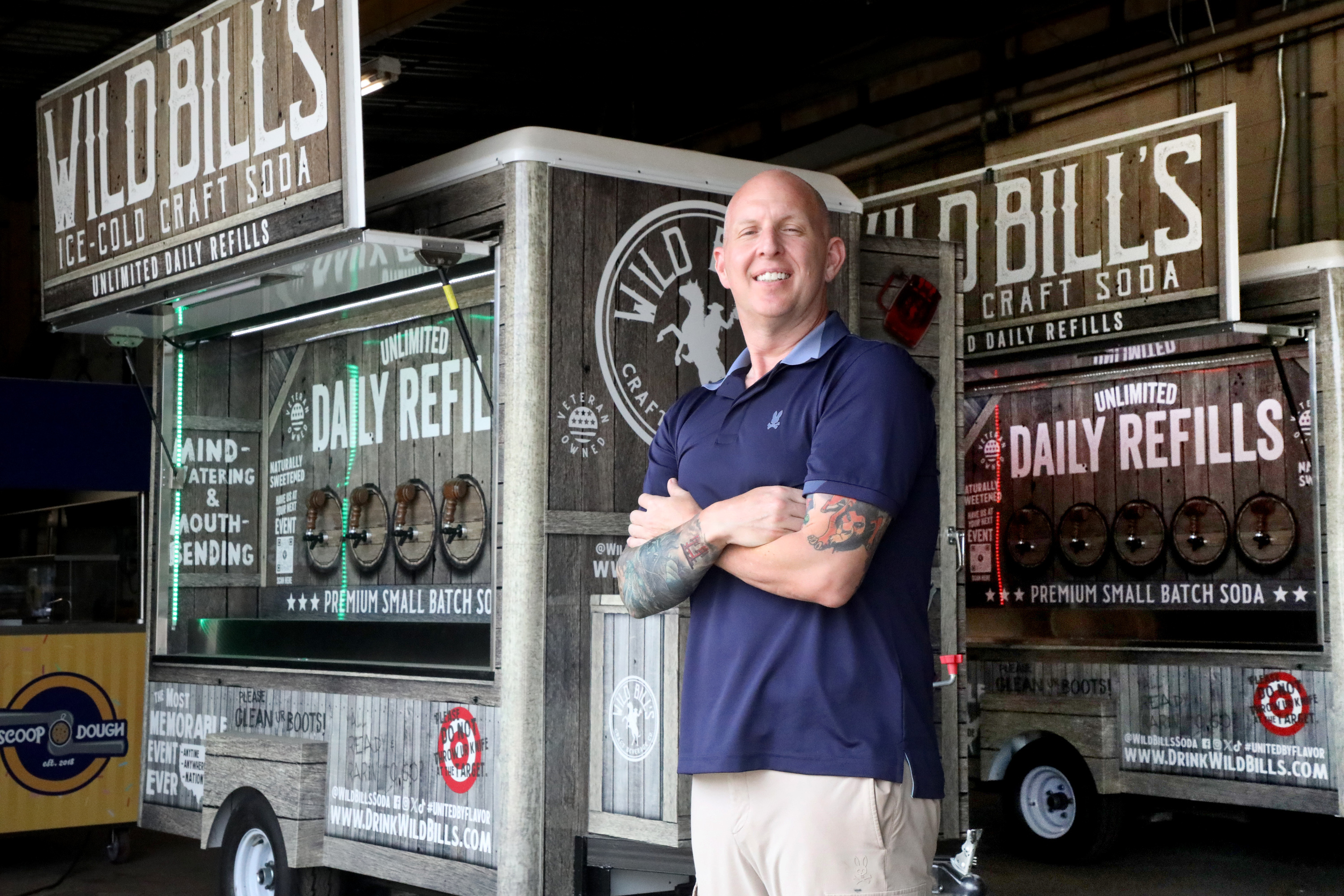
    Lehigh Valley-based Wild Bill’s Craft Beverage Co. serves its old-fashioned sodas from kegs mounted in Custom vehicles of several sizes. They sell drinks at crowded motorcycle rallies in Gettysburg and Sturgis, S.D., the Ohio State Fair, the Great State of Maine Air Show in Brunswick, San Diego Comic-Con, and Schuylkill regattas.

    “These are high-end, unique stands. We have 60 of them. We add a couple a year,” said Wild Bill’s chief executive, Mike Quilty. “One of our franchisees in Utah just drove one of Custom’s self-propelled Ford barrel wagons to Vancouver.”

    To make trips like that, the equipment has to be built well, Quilty said, noting Custom’s “unlimited support” for when technical issues arise, which doesn’t require buying a service contract.

    Custom’s late founder, William Sikora, developed the catering truck in the early 1950s as a kitchen on wheels installed on a Detroit-made chassis. Sikora as a grade-school kid in Camden had sold vegetables from a pony-drawn cart, then opened a grocery. He bought apartment buildings and diners, and became a top officer of First Peoples Bank.

    Walking room to room past heavy presses and cutters on the Hammonton shop floor, Sikora’s grandson Kyle said 40 workers build more than 100 pieces of equipment a year — food trucks, trailers, catering wagons, specialty equipment with kitchen-sized stoves, refrigerators, freezers.

    “We’ve sold to Disney World and SeaWorld, Sesame Place, and U.S. bases in Japan,” Kyle said on a muggy midsummer morning as room fans, metal-forming machinery, and new-cart test motors whirred. “We have 18 projects going right now.”

    Custom built 32 commercial kitchens on caster wheels for Carnival Cruise Line’s Calypso Lagoon in the Bahamas, which opened last year, with rounded bull-nose counters instead of sharp industrial edges to accommodate peak work flow.

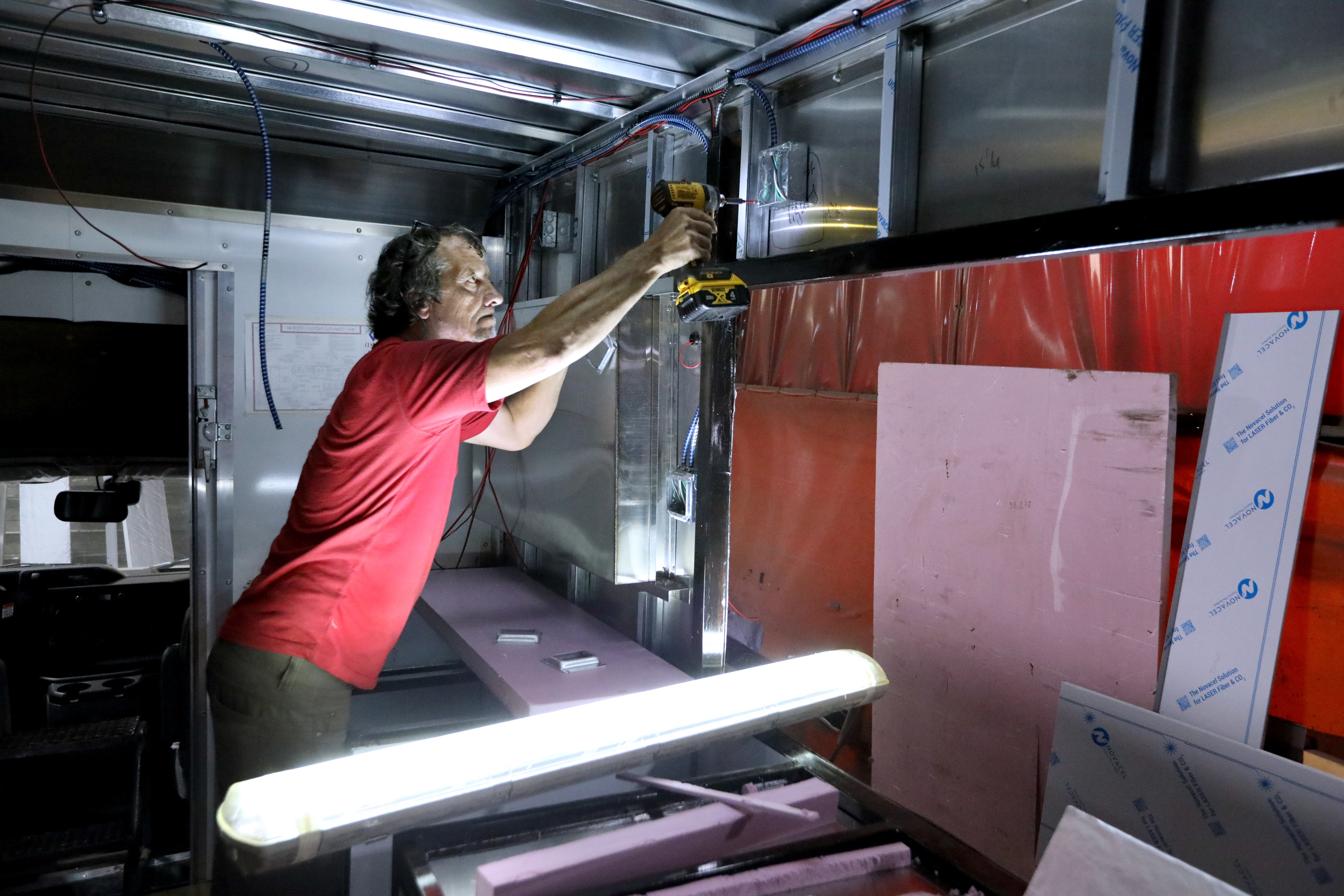
    Paul McIlvaine, an electrician, works on the interior of a Chickie & Pete’s food cart at Custom Mobile Food Equipment, in Hammonton, Tuesday, July 21, 2026.Vernon Ogrodnek / For The Inquirer

    How much does it cost to launch a kitchen cart?

    Today, Custom’s basic Model 525 carts retail for around $6,500. For that sum, plus storage, food, fuel, and licensing costs, “you’re in business serving food,” said Kyle.

    “It’s rewarding, you get to meet so many kinds of people,” he added.

    New catering trucks start at more than $125,000, like a high-end camper.

    All the carts and trucks are built from stainless steel sides, stamped with Custom’s distinctive elongated-diamond pattern over tubular steel framing. The company uses multiple steel suppliers, including Allegheny Ludlum Steel Corp. in Pittsburgh. It was harder to find domestic steel when the U.S. auto industry demand was stronger, Kyle said. But now materials costs are much higher, often in response to higher tariffs.

    “We try to use built-in-USA [materials], but some stuff you cannot get here,” Kyle said. Robertshaw Controls, for example, makes the only burner controls that fit Custom’s standards. They moved the operation to Mexico from Texas, so Custom now imports them.

    Cart metal is just one inflating cost vendors face, said Christian Subashi, second-generation owner of Loudogs hot-dog carts in Sea Isle City. Refrigerators were 50% cheaper before last year’s new tariffs, he said, and sausage prices have “gone through the roof.”

    Kyle said his company’s hot-dog cart price “has gone up $1,000 or $2,000 in 10 years,” lower than the general inflation rate. “We have to absorb some. It’s how you do business,” he said. He’s confident steel prices will stabilize eventually.

    The future of food carts

    The company has no plans to automate, Kyle said. “All our products are custom built — handmade and hand-fabricated. No two carts are exactly alike,” he said, noting that the company also retrofits and rehabs units as needed. “They can last forever.”

    “Our pricing is more, but it lasts longer than assembly-line stuff coming in from Mexico or China at low cost.”

    One once-robust market that has all but evaporated is carts for vendors who work construction sites. Custom employed over 100 during the building boom of the late 1990s. The company built a catering truck a day, on average, back then; now it’s closer to one a week.

    “Wawa and DoorDash are delivering deli trays to jobs sites now. And Wawa has built out so many stores in their area, guys can just leave the job and run to Wawa. So that business is down for us,” said Kyle.

    The focus now is on larger orders that can be built more efficiently. Plus it’s gotten harder, Kyle said, to hire skilled craftsmen.

    Local buyers of carts and trucks include Shore ice cream and water-ice vendors, as well as the food vendors that sell at breweries, thanks to the New Jersey’s restrictions on breweries serving food

    But Custom is also very much “a national brand,” said James Evans, who runs the food-truck division for Ocean City-based Manco & Manco Pizza, including eight Phillies stadium locations.

    Like Custom, Manco is a third-generation South Jersey business, and Evans said he wouldn’t have gone anywhere else to build stadium-ready trailers. The two firms cut a deal last February for Custom to build an initial “food truck you can drive, available for private parties, corporate functions, MLB events, anywhere we can take a truck.”

    The first was delivered in July, with four propane-fueled Baker’s Pride deck ovens “to cook our pizzas to Manco standards.”

    Custom faces a string of manufacturing challenges with any order, Kyle said.

    But from Manco’s perspective the passage of his project from plan to delivery “was seamless,” said Evans.

    “As we morph into their larger trucks, we will add wings and tenders,” he said. “If everything in business and life went that easy, it’d be great.”

  • Was the World Cup good for Philly’s economy? The early signs are in

    Prior to the kickoff of the World Cup, the organizers of the city’s events projected the soccer tournament would bring $770 million to Pennsylvania in gross revenue.

    Yet, George Diemer, a sports economist at Temple University, said those in his field tend to be skeptical of pre-event projections. Organizers “have an incentive to blow the numbers up,” he said.

    Midway through the tournament, the Economy League of Greater Philadelphia estimated that $30 million to $90 million would actually stay in the city. The economists factored in metrics such as leakage, when a share of money spent goes to national organizations instead of staying local. The current analysis, done after the tourists have left, leans “toward the lower end of that range,” said Saloni Tandon, director of research and analytics at the Economy League, the region’s independent civic think tank.

    “Even if it goes up, it feels like our estimation is likely to stay in the tens of millions, rather than cross into the range of hundreds of millions,” said Tandon.

    The cleat-kicked dirt is still settling, and Tandon said conclusions will continue to change as more data comes to light. The city is looking for a consultant to craft a postmortem analysis on the year’s largest events’ economic impact.

    Here is what we know so far.

    Hotels and short-term rentals made more money

    Center City hotels made out well, as almost 410,000 fans from more than 190 countries flocked to Philadelphia to watch the six matches at Lincoln Financial Field.

    The Philadelphia Convention & Visitors Bureau data say on the dates of the six soccer Philadelphia matches, hotels saw a 50.3% increase in revenue compared to those same dates in 2025.

    Using that data, however, Tandon calculated that Center City hotel occupancy on the game days increased around 3% — modest gains. Much of that revenue increase was thanks to higher per-night pricing by the hotels due to the special event.

    A 3% occupancy increase doesn’t validate “a massive spike in terms of tourism,” Tandon said.

    Ethan Conner-Ross, executive vice president of consultancy firm Econsult Solutions Inc., noted that hotels may have lost some business to short-term rentals, with “people finding a different way to stay based on their needs,” he said.

    An Airbnb spokesperson said the World Cup was the biggest hosting event in the company’s history in all host cities.

    For short-term rentals in Philadelphia, revenue reached $38.3 million over the tournament window — up 25% from the same period last year, according to AirDNA, a research company that tracks the short-term rental market.

    But that gain was almost purely pricing — with $7.5 million of the $7.8 million increase coming from higher rates. Translation: hosts drove revenue by increasing prices rather than filling more nights. Occupancy dropped in 12 out of 16 host cities compared to the same period last year, including Philadelphia, as supply outpaced demand.

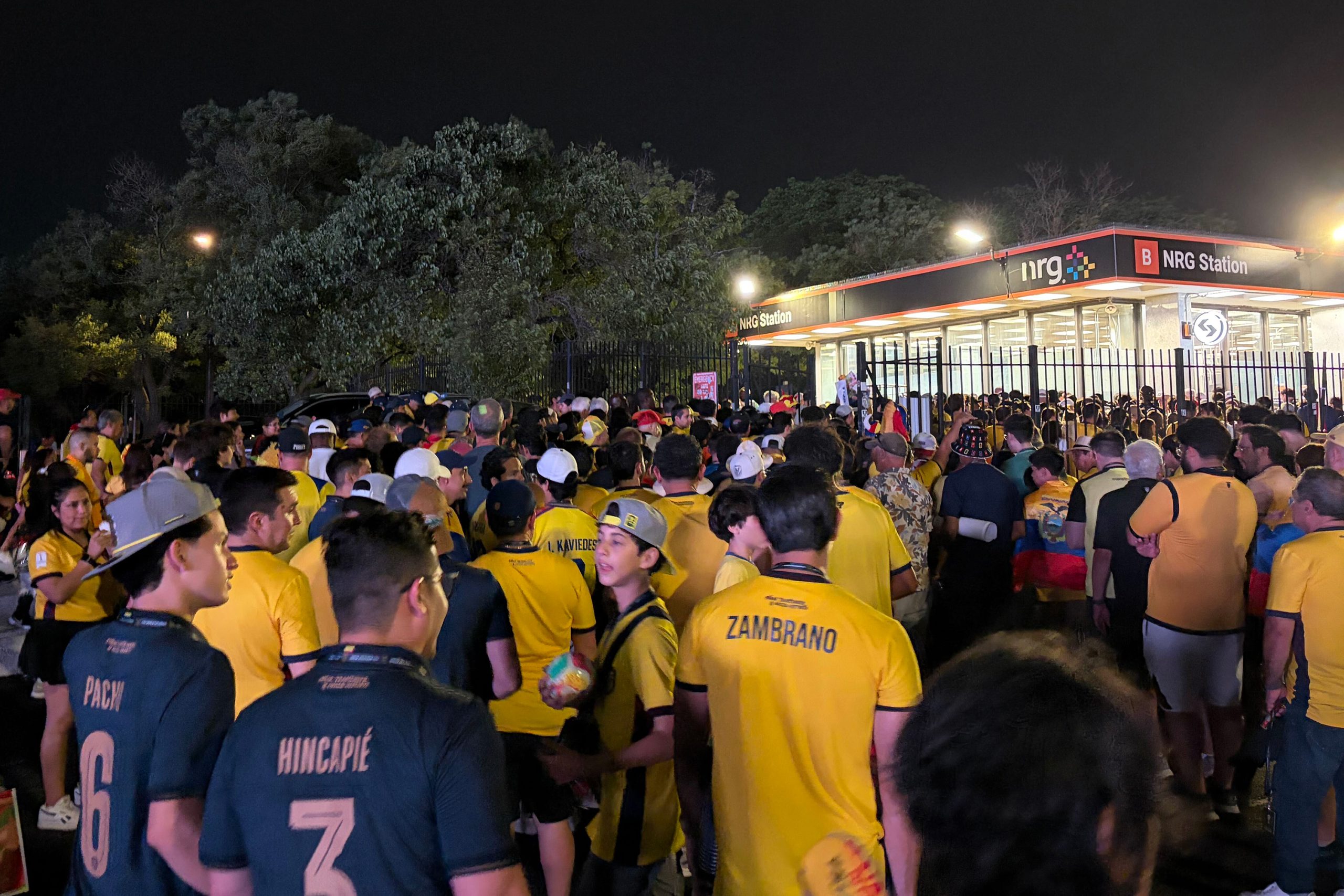
    Fans wait outside SEPTA’s NRG Station near the stadium following Ivory Coast’s victory over Ecuador on Sunday, June 14, 2026.

    How SEPTA, PHL, and rideshare handled more travelers

    Hosting a large sports event can strain local infrastructure as tourists crowd public transit and other services, leaving high costs of building infrastructure or congestion for locals.

    Diemer pointed out that it took Montreal 30 years to pay off its debt from hosting the 1976 Olympics.

    Since the six World Cup matches in Philly were spaced out over June and July, Diemer said that helped diffuse the costs.

    “I think it was successful,” said Diemer of the decision to ”spread out the games so it won’t be overloading the local infrastructure.”

    SEPTA, for example, saw manageable bumps in ridership over the summer. On June 19, the day of the Brazil vs. Haiti match, SEPTA recorded the second-highest event ridership ever on the B line. (The first was after the Eagles won the NFC Championship in January 2025.)

    Travelers took advantage of public transit to get to and from the airport, as well. On the two days sandwiching a match, ridership on the Airport Regional Rail line typically increased at least 20%.

    At Philadelphia International Airport (PHL), international arrivals were up 8.3% in June year-over-year.

    Spokesperson Heather Redfern said that in a usual summer, PHL is typically a big outbound and connecting market to other destinations. This summer, there were more inbound passengers coming to Philadelphia from countries playing games in the city. In addition, many travelers, notably Scottish fans and Czech fans, took advantage of unique nonstop routes through PHL on the way to games in other cities.

    “We focused on delivering an experience for those passengers that made them fond of Philadelphia and want to come back and visit,” said Redfern, “From this perspective, we are very happy.”

    Despite some rideshare restrictions surrounding the FIFA Fan Festival in Lemon Hill, Uber drivers transported tens of thousands of fans to and from the festival and the stadium complex, according to Jazmin Kay, head of public affairs for Pennsylvania at Uber.

    Prior to the tournament, Uber onboarded more drivers and maximized earning opportunities for them: one way was creating an event-rider surcharge near venues, with 100% of those surcharges paid directly to drivers.

    For Lyft, on days when Philadelphia hosted a World Cup game, rides to bars increased by 18% compared to their typical average on the same day of the week. On June 19, rides to bars were 49% above average.

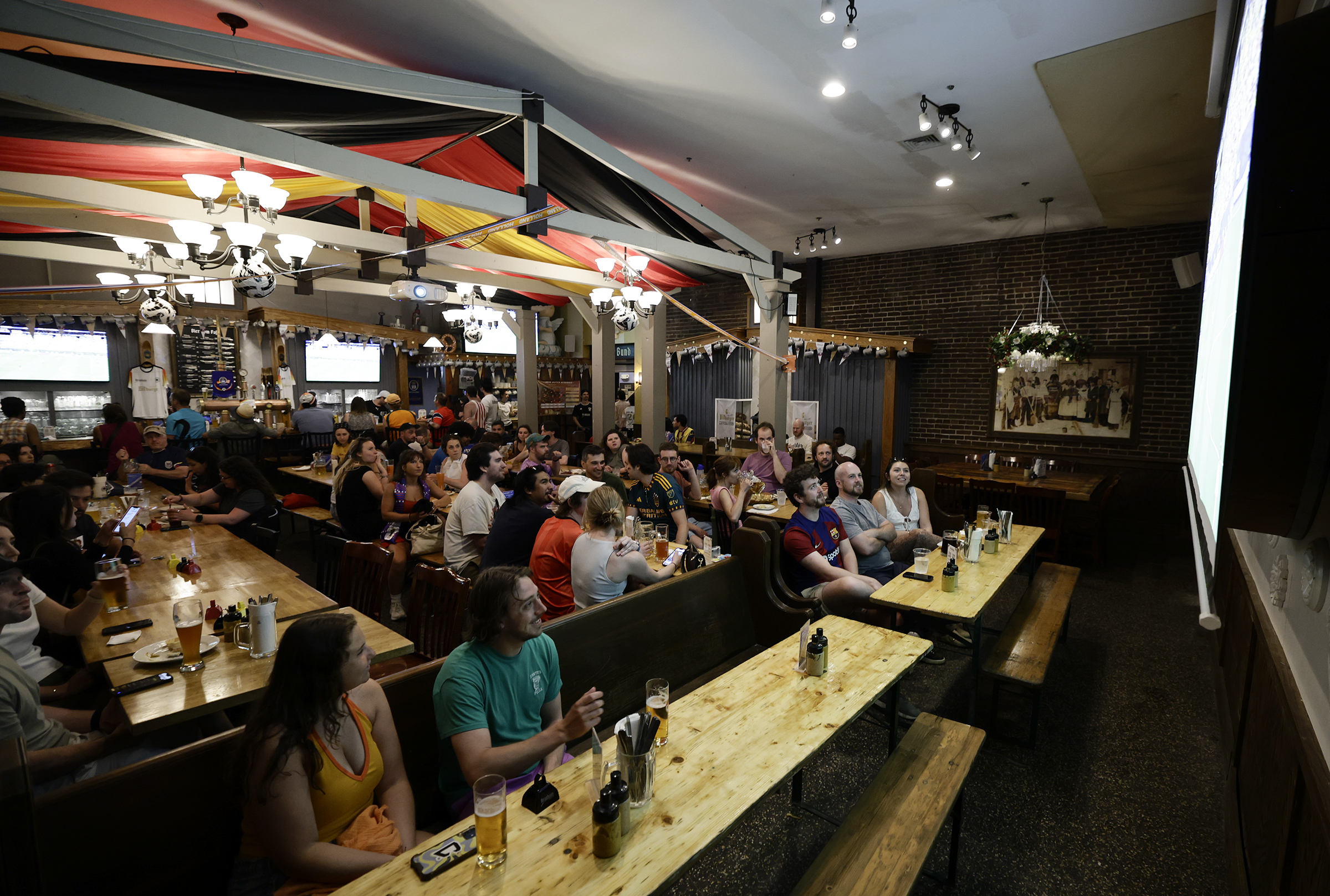
    Soccer fans watch Ecuador take on the Ivory Coast during a World Cup soccer watch party at Brauhaus Schmitz on Sunday, June 14, 2026.Yong Kim / Staff Photographer

    Where soccer fans ate and drank

    Philly’s fan festival saw 575,304 attendees, and bars nearby, like the Black Taxi, saw greater foot traffic and a boost in sales.

    For other Philadelphia restaurants, outcomes seem more mixed.

    On four of the six World Cup game dates, local restaurants that use reservation site OpenTable saw an increase in seated diners, according to OpenTable data. The biggest gain was 22% on June 25, and of the two dates when reservations decreased, June 14 was the worst with a 44% decline.

    At Reading Terminal Market, soccer fans helped drive a 13% year-over-year increase in June foot traffic. On June 19, the market saw more than 30,000 customers, setting a five-year record for Friday visitation.

    “Our prepared food merchants — especially if you are in the pretzel, cheesesteak, pizza, or burger business — had a great month,” said Annie Allman, CEO of Reading Terminal Market.

    Still, Allman noted that there was a drop in the number of loyal local customers that shopped at the market’s butchers, fishmongers, and grocers, “as they chose to stay home to avoid the crowds.”

    A longer-term reputation boost for Philly?

    It’s tricky to untangle the effects of the World Cup from tourism spending driven by other coinciding large events, such as the July Fourth celebrations for America’s 250th birthday.

    Additionally, not all impacts will be observed within the short period of the tournament. Some benefits, like an improvement of Philly’s reputation or publicity on an international stage, could be realized later on.

    “But it’s definitely in a mix of assets that affect how people think about Philadelphia,” Conner-Ross said, “and that contributes to those decisions that happen down the line.”

  • Bayada Home Health Care’s new CEO Bryony Winn wants to provide higher levels of care at home

    Bayada Home Health Care’s new CEO Bryony Winn wants to provide higher levels of care at home

    Bryony Winn became the CEO of Pennsauken-based Bayada Home Health Care in March after a career at two big Blue Cross health insurers and at the consulting firm McKinsey & Co.

    Those experiences, she says, prepared her to take the reins at one of the nation’s largest home health companies at a time when Bayada is wants to increase the intensity of its home care offerings — and get insurers to pay for it.

    “Hospitals are full,” and patients want to be at home, said Winn in an interview this month at Bayada’s headquarters in Pennsauken.

    The company, whose founder Mark Baiada converted it to a nonprofit in 2019, operates in 22 states and five additional countries, employs 44,000 people, and had $2.2 billion in revenue last year.

    Winn, Bayada’s first non-family CEO, grew up in Zimbabwe and went to college in South Africa. “Being around so many challenges and so much opportunity every day in the developing world, I always had a sense that I wanted to do things that made lives healthier,” she said.

    When she came to the United States in 2009 to work as a consultant in Chicago, it struck her how specialized and disconnected healthcare is here. “In the developing world, there’s not enough trained people, so it’s a much more connected system around patients and humans,” she said.

    The Inquirer spoke with Winn about the importance of taking care of people at home as the nation’s healthcare providers come under increasing financial strain. Questions and answers have been lightly edited for length and clarity.

    How did your jobs at McKinsey and at Blue Cross of North Carolina and Elevance Health prepare you to lead one of the nation’s largest home healthcare companies?

    I learned a lot about the U.S. healthcare system and became more and more convinced that this lack of connection was driving unsustainable cost, and I still think it’s driving unsustainable cost. Pre-COVID, I used to say affordability is the greatest healthcare crisis of our time. Then COVID really was for a while, and I think we’re back to that now. The quality of care here is amazing if you have a really rare form of cancer. I’d prefer for it to be treated in some of the amazing institutions here than anywhere else in the world. But if you are just a typical person, and especially an aging person here with two or three chronic conditions, you are pushed from pillar to post across a system who doesn’t ever see you as a human being.

    (function(){function e(){window.addEventListener(`message`,function(e){if(e.data[`datawrapper-height`]!==void 0){var t=document.querySelectorAll(`iframe`);for(var n in e.data[`datawrapper-height`])for(var r=0,i;i=t[r];r++)if(i.contentWindow===e.source){var a=e.data[`datawrapper-height`][n]+`px`;i.style.height=a}}})}e()})();

    What do you think you can accomplish at Bayada, which was founded more than 50 years ago, to address that connectivity issue?

    What I can bring to it is really understanding the place of home health in the entire healthcare ecosystem. This is the place where clients and patients want to be; they want to be in their homes. And so the question I’m asking is not what are the kinds of conditions that should be addressed at home, but rather flip that on its head and say, what are the kinds of capabilities you need in the home to be able to address things for clients who want to be there?

    What’s happening now that makes it so important to solve this problem?

    For two decades in healthcare, we’ve been talking about people aging into Medicare. Ten thousand people a day aging into Medicare. Now 10,000 people a day are 20 years older. They’re aging into 85 every day. Because it’s not a change in insurance, it doesn’t generate the same conversation. But it’s a huge change in health status. We now have all of these seniors with two or three chronic conditions, and with a decent chunk of life expectancy still. The delivery system really needs to shift in how we care for these folks.

    What has to change?

    One thing that’s needed is a collection of multiple services in the home. Very rarely do you need just skilled nursing. You need skilled nursing and a home health aide and potentially wound care. That requires care management, a much more connected ecosystem, versus what is today much more a siloed set of services. The second thing is we just need more intense care at home. We have done this quite successfully, and we’re doing it even more now around NICU babies [in partnership with Children’s Hospital of Philadelphia and insurers Highmark and Independence Blue Cross].

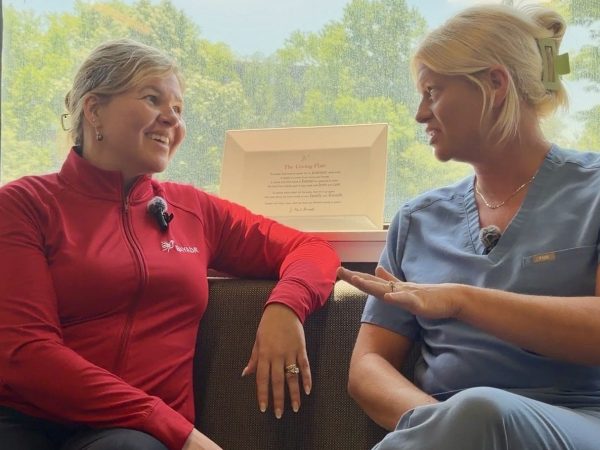
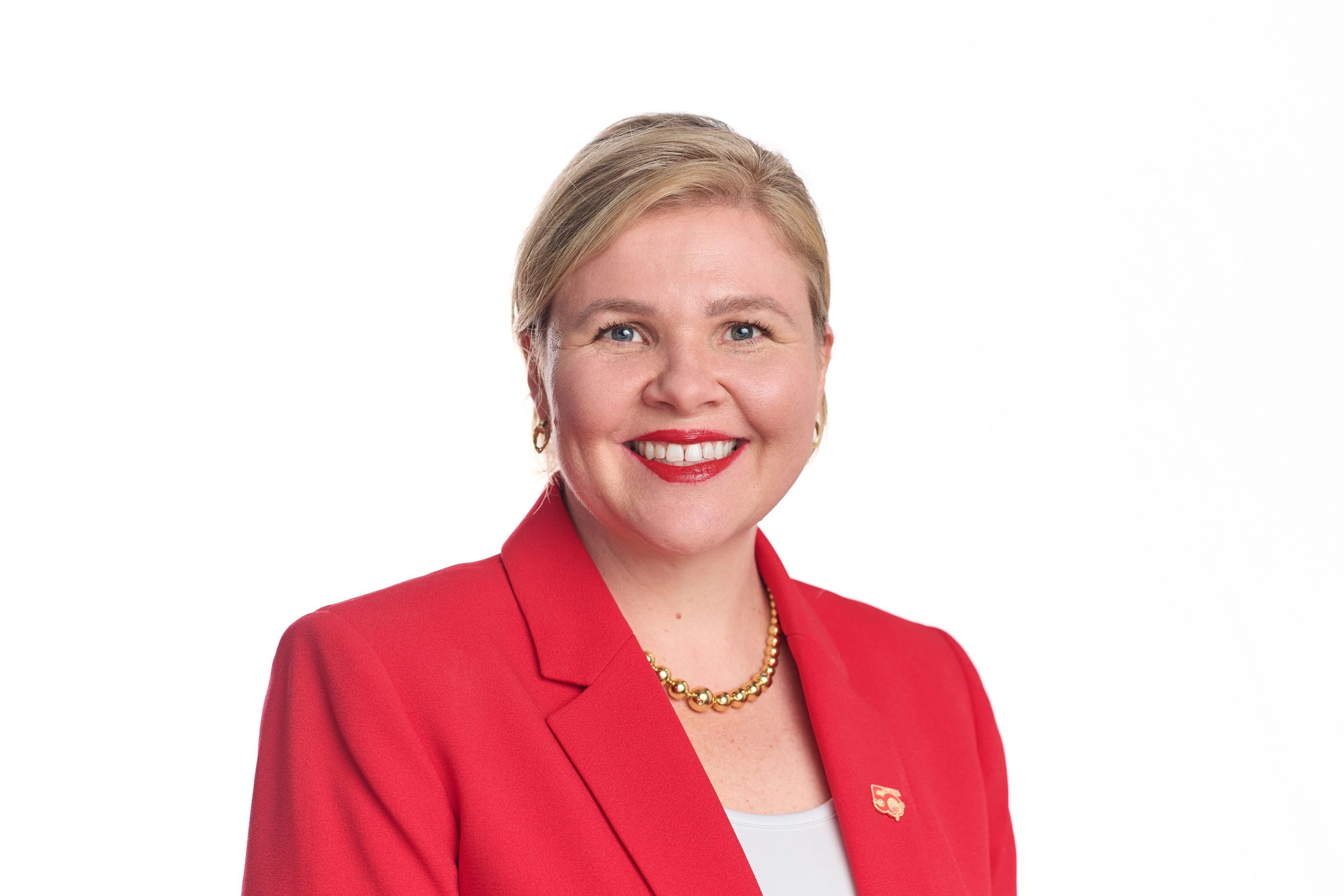
    Bryony Winn, who became Bayada’s CEO in March, said her background in health insurance will help the nonprofit expand by finding ways to get paid for new services.Bayada Home Health Care
    Do you see Bayada playing a broader role in health systems’ hospital at home programs?

    I do. We can serve higher-intensity patients at home with more complex care needs, and we do a lot of this today. We’re just not really paid for it, or it’s not the service that we’re meant to provide. So it’s really, how can we more sustainably do this high-intensity work at home? That’s a shift for us. Our clients want it. Wound care at home is hard. It’s one of the biggest reasons for readmission back into the hospital after post-acute discharge. How we can build really strong clinically evidence-based wound care capabilities is one of the big pieces that we’re looking at in this elderly population.

    Providing more intensive care has higher costs. How do you convince insurers to pay more, especially given the prevalence of Medicare and Medicaid in home health?

    There is not a ton of wiggle room, but this is where my background helps. I’ve worked on the payer side for a long time. They truly care about affordability and quality as well, and so it’s really working together to say how does what we need for our caregivers, clinicians, and ultimately clients map with what you can afford, and how do we build this together? I’m not sure home health has ever had those conversations as intently as we need to have them now. It’s a very fragmented industry. Hospitals have been having these more strategic conversations with health insurers for decades.

    Editor’s note: The caption with the main photograph has been updated to correct the name of the person Winn is speaking with. It’s Lillian Floyd, a nurse with Bayada’s Camden County Visits unit.