Independence Blue Cross (IBX) is more than a health insurer. As Philadelphia’s hometown health plan for almost 90 years, IBX has a deep and enduring commitment to improving the health of the communities it serves. That dedication starts with the relationships IBX builds with regional health care organizations.
“We actively seek out and invest in partnerships with local health systems, physicians, researchers, and community organizations to develop innovative solutions that improve access, advance quality, and make health care more affordable,” Dr. Richard Snyder, IBX executive vice president, said. “By bringing together the people and organizations best positioned to address our region’s most pressing health challenges, we’re helping transform promising ideas into programs that benefit our members and strengthen the health of Southeastern Pennsylvania.”
From groundbreaking treatments to new models of care, a focus on collaboration, innovation, and local investment is helping to build a healthier future for the region.
Creating Pathways for Transformative Treatment
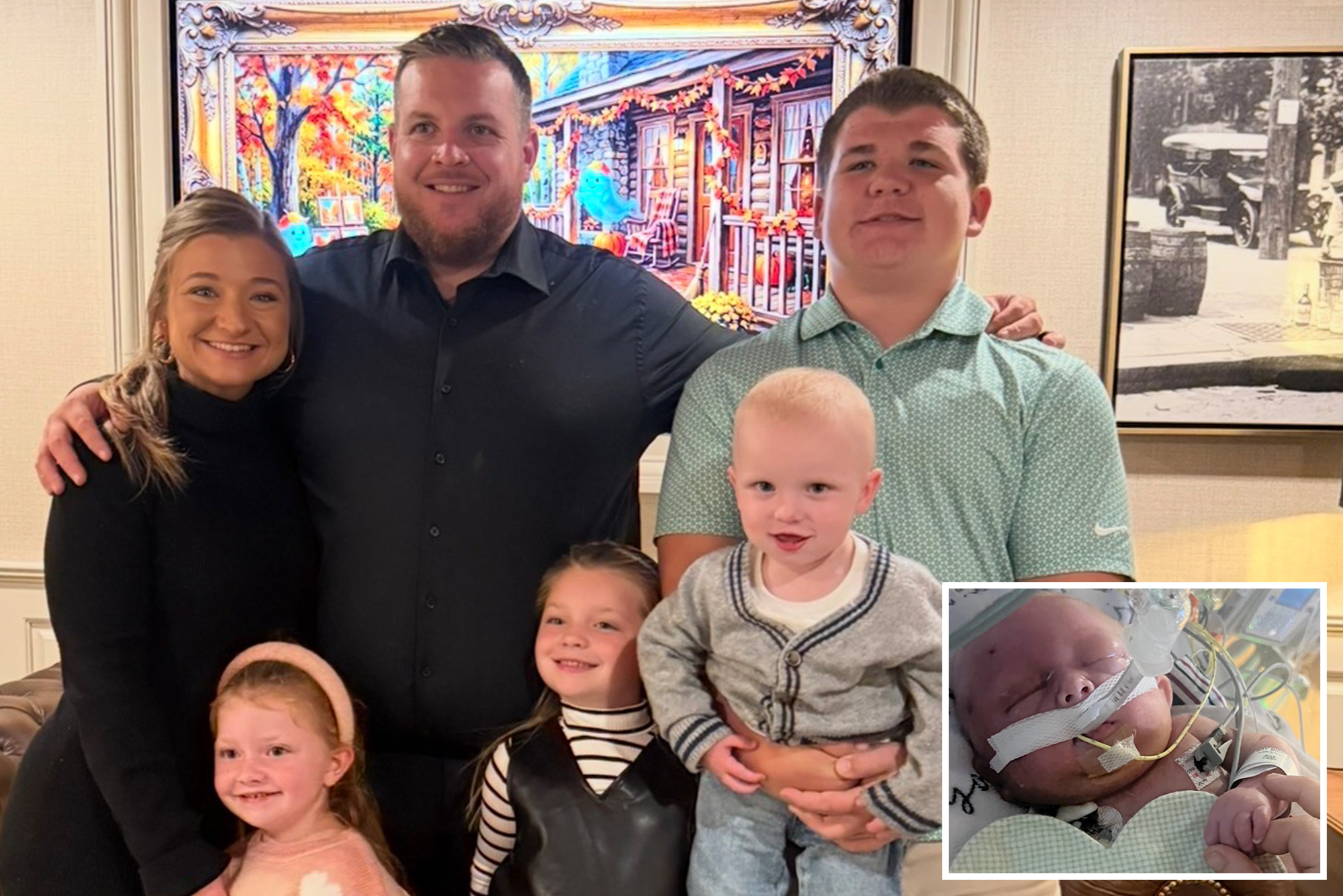
K.J. Muldoon was 6 months old when he became the first person to undergo personalized CRISPR gene-editing therapy. Days after his birth in August 2024, the Delaware County infant was diagnosed with severe carbamoyl phosphate synthetase 1 (CPS1) deficiency, a rare metabolic disorder that impairs the liver’s ability to process protein, causing potentially fatal amounts of ammonia to collect in the blood.
Through their coverage with IBX, K.J.’s parents, Kyle and Nicole Muldoon, sought care at Children’s Hospital of Philadelphia (CHOP), one of the nation’s leading pediatric hospitals and research institutions. Researchers there had been exploring ways to treat rare genetic diseases like CPS1 deficiency using experimental gene editing. “At IBX, we’re proud to help create pathways that connect members to these innovative therapies and the experts delivering them,” Dr. Reetika Kumar, IBX’s senior vice president and chief of customer product, clinical solutions, and pharmacy services, said. The health insurer is investing in medical innovation as part of its mission to bring exceptional care to its members.
For the Muldoons, a health plan with IBX gave them access to world-class care at CHOP, where the team spent six months working closely with Penn Medicine to develop a customized therapy for K.J., using groundbreaking CRISPR technology that enables precise changes to DNA, including the correction of disease-causing mutations. In K.J.’s case, scientists were able to send the gene-editing drug through his bloodstream to his liver. Following his pioneering treatment, K.J. made considerable progress, and his protein intake increased.
Now two years old, K.J. has met developmental milestones that his parents feared he might not reach. “He’s doing really well,” Nicole said. “He fits right in with the rest of his siblings. He keeps right up with them, and we’re very active, so we stay busy. He loves Philadelphia sports and loves watching his big brother play football.”
Still, K.J. continues to require medical attention, and his parents are exploring the possibility of a liver transplant. “We knew going in that gene editing wasn’t going to be the ultimate cure for him, but it took a very, very severe disease and made it much [more] mild,” his mother Nicole said. “And now we’re at a place where it’s safe enough for him to receive a transplant.”
K.J.’s dad said his son is a hero. “Every day, I watch my two-year-old get up and have to do all these things,” Kyle said. “When he’s done being upset about whatever poke and prod he’s got [from his treatment], he goes right back to smiling and watching Buzz and Woody, and doing all the things every two-year-old should do.”
IBX played an important role in the Muldoons’ health journey, helping to connect the family to experienced care teams through its groundbreaking Advanced Network for Gene-Based Therapeutics. The network is just one of the initiatives in IBX’s broader strategy to expand access and help ensure members can benefit from advances in care.
“One of the key objectives of the Advanced Network for Gene-Based Therapeutics is to help eligible members access leading experts and specialized centers capable of delivering these highly complex treatments,” Dr. Kumar said. “Gene-based therapies are transforming medicine, particularly for people living with rare genetic disorders and serious conditions,” she said. “As these treatments began reaching the market, we recognized the need to ensure our members could access them.”
Through partnerships with leaders in gene therapy research like Penn Medicine and CHOP, IBX’s network creates pathways for members to access cutting-edge medical care. At its core, the network’s goal is “to connect members with high-quality care, support the best possible outcomes, and help navigate the complexity and cost associated with these groundbreaking treatments,” Dr. Kumar said. But IBX’s commitment extends beyond providing coverage. “As new therapies continue to emerge, the network provides a structure that helps members access care while receiving support from dedicated nurse health coaches and experienced clinical teams,” she said.
It’s a testament to the company’s mission to “never stop caring,” a sentiment that reflects the company’s belief that “health care is fundamentally about people,” Dr. Kumar said. “Our partnerships with organizations like Penn Medicine, Temple Health, and the Children’s Hospital of Philadelphia help turn that belief into action,” she added. “By working together on innovative programs, expanding access to advanced treatments, and investing in new approaches to care, we’re helping members receive the right care at the right time from trusted providers.”
And it’s an ethos that resonates deeply with IBX members like the Muldoons. “Part of what could be a very hard process has been relatively seamless,” Nicole said, referring to the family’s coverage through IBX. Their plan offers access to their son’s tests and medications as well as the support of an IBX nurse whom they can call with any questions outside of their regular check-ins. “She is somebody that I look forward to talking to on a monthly basis. Since [K.J.] was born, she’s kind of gone through all this with us and has been a fantastic liaison,” Nicole said. “That’s been a blessing, especially for me as mom, trying to juggle all the things and knowing I can rely on her.”
“While the clinical achievements rightly belong to the physicians, researchers, and the family themselves, we’re grateful to have played a supporting role in helping members access specialized care,” Dr. Kumar said.

Driving Innovation to Improve Health Outcomes
Gene therapy isn’t the only area IBX is focusing on as it strives to expand access to groundbreaking care. Through its Clinical Care Innovation Grant Program, IBX has awarded $4.8 million to health systems and specialty groups as they develop and test new care delivery models that improve the patient experience, advance equitable, whole-person health, and lower health care costs, among other objectives. These programs are designed to benefit patients regardless of whether they are IBX members.
The program was established in 2020 with the goal of scaling successful models to improve health throughout the Greater Philadelphia region and beyond. To date, the competitive program has awarded 29 grants to respected institutions such as Penn Medicine, Main Line Health, Temple Health, Trinity Health Mid-Atlantic, and Jefferson Health. After a rigorous selection process, recipients are announced, with grants typically running for around two years. IBX’s Clinical Care Innovation team meets with awardees bimonthly to offer guidance and support along the way.
“The grant funding is truly a gift,” Patrick Dudley, IBX’s director of clinical care innovation, said, noting that funded studies may benefit patients beyond IBX’s membership. “The study is open to any patient at the institution who meets the inclusion criteria. Ultimately, we want to know whether the care model achieved its intended outcomes and validated the underlying hypothesis.” When it does, the findings can inform broader adoption of the model and improve health outcomes for everyone.
IBX’s Clinical Care Innovation Grant Program has a high success rate, with 66% of its awardees going on to scale new care models, Dudley said. It’s proof of the initiative’s impact in just six years, he added, noting that, within the health industry, it normally takes, on average, approximately 17 years to develop, test, and implement new care models.
Finding New Ways to Meet Patients Where They Are
With funding from IBX’s Clinical Care Innovation Grant Program, health care providers like Temple Health have developed and scaled care models that meet patients where they are. Temple’s Trauma-Informed Oncology Evaluation Clinic (MVP-CAN) is a powerful example. The wraparound clinic serves Philadelphia’s underserved communities by evaluating potentially cancerous findings and connecting patients with Temple specialists for a diagnosis and treatment plan, instead of referring them to a primary care physician. By doing so, MVP-CAN expedites what can be a lengthy process and helps ensure that people without access to primary care aren’t falling through the cracks.
More than 40% of Temple patients don’t have consistent access to primary care, Dr. Dharmini Shah Pandya said, noting that many people either don’t have a doctor, haven’t engaged with their doctor in some time, or have lost access to them after relocating. Dr. Shah Pandya is a professor of medicine; a vice chair of quality, safety, and innovation in the Department of Medicine at the Lewis Katz School of Medicine at Temple University; and a patient safety officer for Temple University Hospital. Dr. Shah Pandya found that the lack of primary care created a risk that patients may not follow up on potentially cancerous screenings. Her efforts to close the gap resulted in the MVP-CAN clinic, which she launched with her colleagues, Dr. Claire Raab and Dr. Rachel Rubin. Dr. Rubin is chief of the Section of Hospital Medicine at Temple University Hospital and associate professor of clinical medicine at the Lewis Katz School of Medicine.
During the grant period, approximately one-third of IBX members evaluated through MVP-CAN were ultimately diagnosed with cancer, including several advanced-stage malignancies. The rest were either determined to be cancer-free or enrolled in appropriate cancer screening programs, sparing unnecessary procedures while ensuring that concerning findings remained under clinical observation. These outcomes demonstrate the program’s value in improving care coordination and supporting timely, evidence-based follow-up.

The clinic opened in May 2025, a year after securing funding from IBX, and continues to provide Temple patients with high-touch care. “You have providers communicating to providers behind the scenes, diagnostic pathways identified, and then patient navigation — all before the patient has to actually do anything themselves,” Dr. Esme Singer, chief medical officer of Temple Faculty Physicians and associate professor of clinical medicine at the Lewis Katz School of Medicine, said. So, instead of telling patients, “You come to us, and we’ll tell you what is going to happen next,” she added, “it becomes us going to them and saying, ‘This is the plan.’”
That proactive approach is also reflected in My Health Aide, another Temple-led initiative awarded an IBX Clinical Care Innovation Grant. The project uses conversational AI to help patients with Type 2 diabetes manage their health between doctor visits. Dr. Janet Lee, assistant dean for clinical research; director of the Laboratory for Implementation and Dissemination Science; and associate professor of pediatrics at the Lewis Katz School of Medicine, saw an opportunity to bring the technology to Temple patients with Type 2 diabetes. “Our goal is to improve outcomes by providing patients with personalized, easy-to-use support between clinic visits, helping them manage medications, monitor their condition, and access trusted health information while enabling clinicians to identify issues earlier through real-time insights,” she said.
“Thanks to funding from Independence Blue Cross, we are able to offer the innovative technology free of charge to patients in North Philadelphia, many of whom face significant social and health care access challenges,” Dr. Lee said. Lee and her team will evaluate the platform’s impact on medication adherence, glycemic control, patient engagement, and overall care delivery.
IBX’s involvement doesn’t end with funding. “One of the most valuable aspects of working with Independence Blue Cross has been their commitment as a collaborative partner rather than simply a funding organization,” Dr. Lee said. “Their team remains actively engaged, offering thoughtful guidance, sharing best practices, and leveraging their expertise to help projects succeed and achieve meaningful impact for patients and communities.”
For IBX, that kind of collaboration is part of what it means to be Philadelphia’s hometown health plan: bringing organizations together, investing in promising ideas, and helping successful approaches reach more people across the region.
Chloé Pantazi-Wolber is a writer and editor. Her work has appeared in Business Insider, Philadelphia Magazine, The Rooted Journal, Travel Bulletin, The Paris Review, and more.