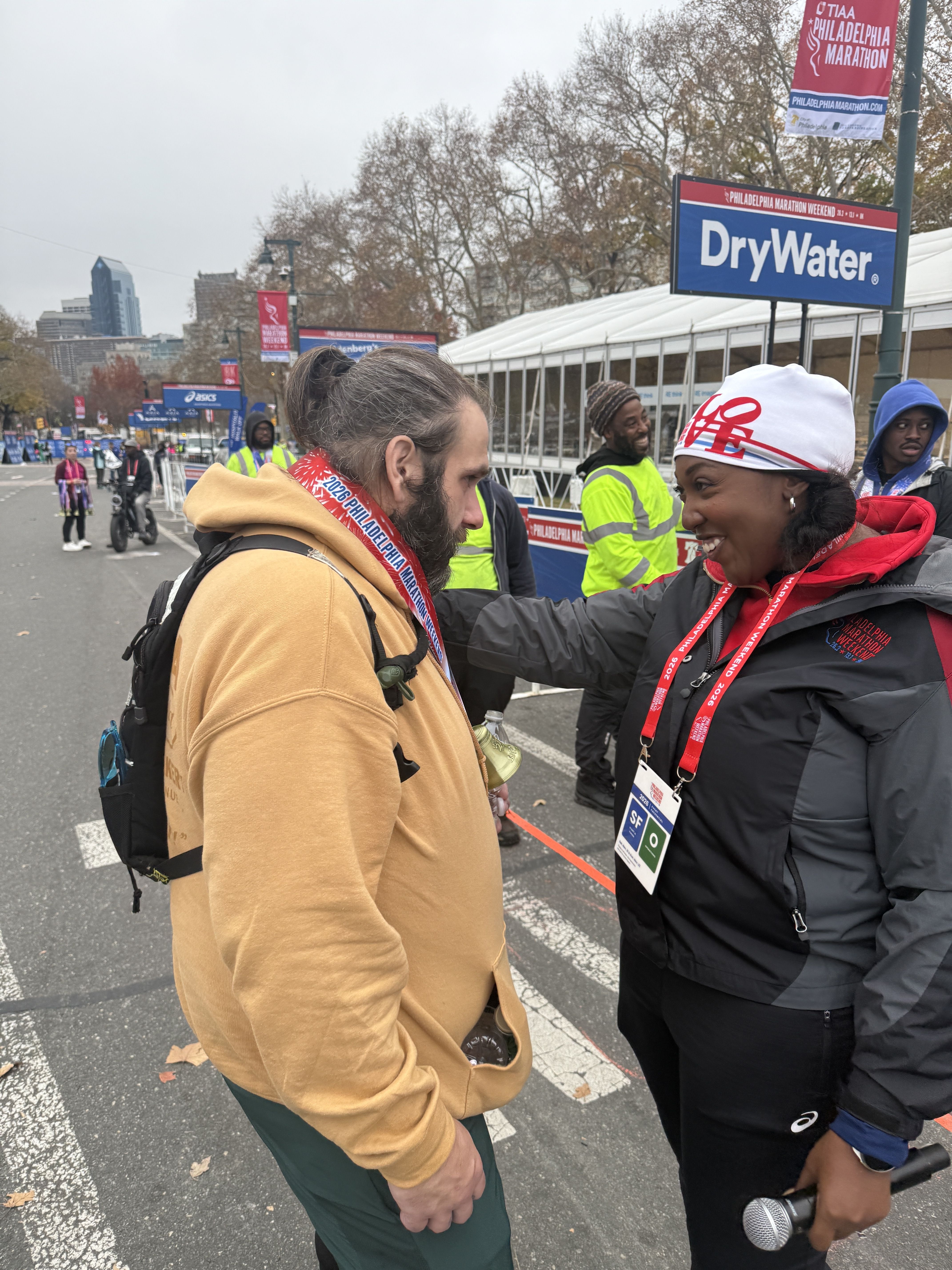
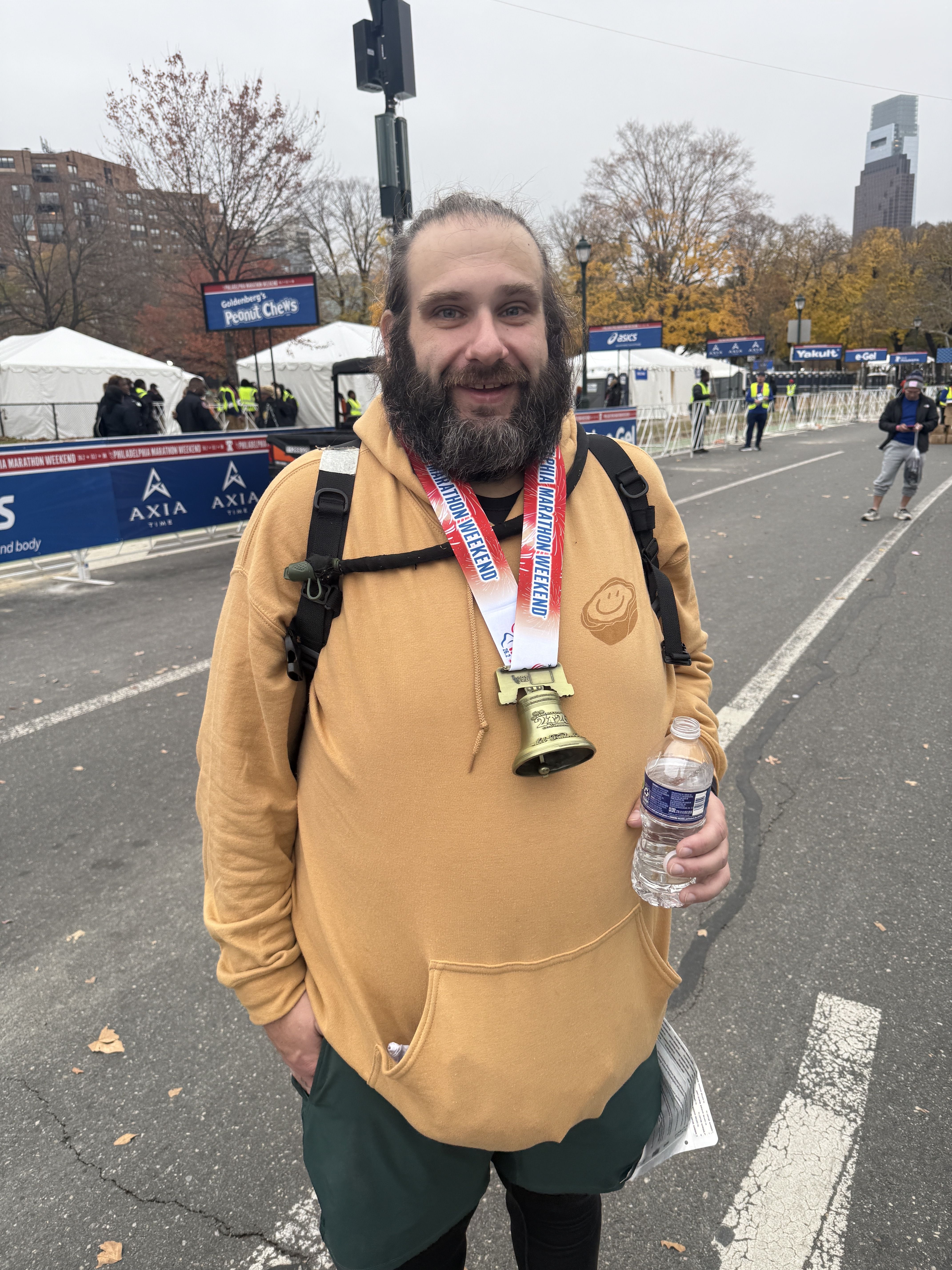
Five years ago, Douglas Hicks weighed around 500 pounds. On Sunday, he completed the 2026 Philadelphia Marathon, the very last person to officially cross the finish line.
Hicks, who lives in the State College, Pa., area, ran past the Philadelphia Art Museum steps, concluding his race 7hours, 31 minutes, and 58 seconds after he began.
Hicks, Samuel Gonzalez Jr., and Angela Vetere were the final three runners to officially complete Sunday’s race. By the time each one crossed the finish line, marathon staff had already begun unclipping banners from fences, lowering the crane that propped up a race photographer, and boxing up heat wraps. But, for those three, there was a goal to be achieved and they wouldn’t let up until the soles of their feet touched the elevated piece of blue-and-red track that marked the end of 26.2 miles. For all three it was their first marathon.
For Hicks, 40, movement is a gift he never takes for granted. Five years ago, his range of motion was deeply restricted by his weight. Back then running a marathon seemed an absurd dream.
Douglas Hicks, 40, was the last person to finish the 2026 Philadelphia Marathon.Dana Munro
“I never thought that I would” run 26.2 miles, he said as a race worker draped a Liberty Bell medal over his head while Elton John’s “I’m Still Standing” blasted over the speakers. “It’s crazy.”
But it didn’t happen overnight. He started out with small goals and stepped it up each time. Over the intervening years he ran longerstints, finishing his first half-marathon about a year and a half ago in Oklahoma City.
“Just start moving,” Hicks advised people struggling with their weight. Running — setting daunting goals and meeting them — “It lifts you up,” he said.
Moments after the marathon, Hicks was already dreaming up his next goal.
“I think I can do better,” he said. “I’ll have to try again.”
As for that afternoon, he had slightly more modest dreams. Immediately after the race, he said what he planned to do first was “sit.”
“I just want to sit,” he said.
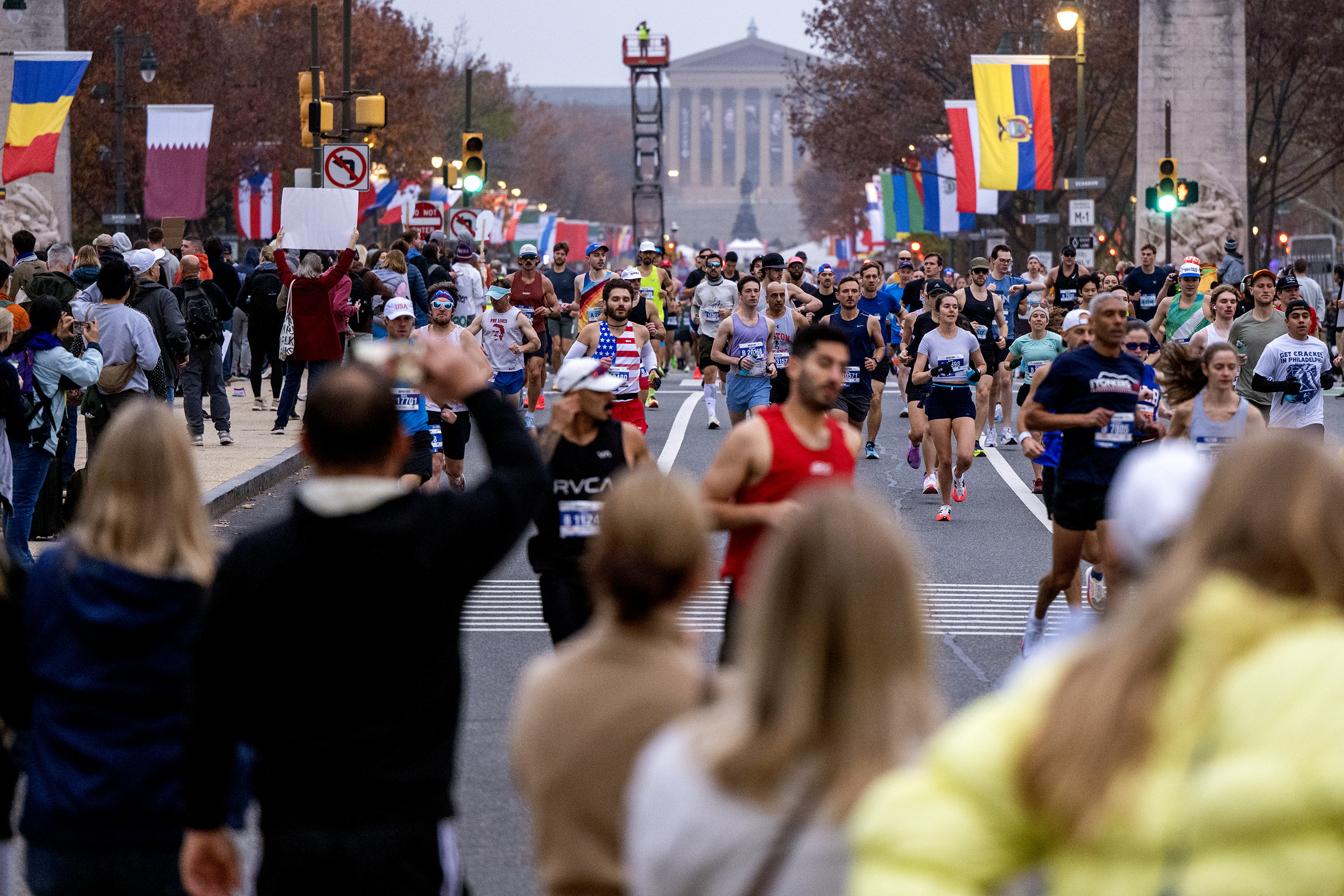
Runners are on the Benjamin Franklin Parkway at the start of the 2026 Philadelphia Marathon on Sunday.Tom Gralish / Staff Photographer
Samuel Gonzalez Jr., who finished the marathon just before Hicks at 7 hours, 29 minutes, and 3 seconds, credits his younger brother with inspiring him. He watched his brother compete in triathlons and a marathon. Gonzalez began wondering if it was something he’d ever be capable of.
“I doubted myself,” said Gonzalez, a 30-year-old Vineland resident. “But he was like, ‘No, you can do it.’”
Throughout the process of training and running the course, Gonzalez, a software developer at a healthcare company, learned that, really, “It’s a mental game.”
Success is all in the self-talk, Gonzalez said. If he let his mind wander to negative places, he’d start to contemplate quitting.
When his spirits got low, he’d pull out his phone and check his texts. Throughout the race, friends tracked his progress and sent him encouraging messages. It pushed him to keep going.
“I realized that it’s all in my mind,” he said with a Phillie Phanatic sweatband wrapped around his head. “Sometimes we think that something’s impossible, but if we put our mind to it, it can always be possible.”
Angela Vetere, a 30-year-old middle school teacher from New York, beamed a freckled smile as she passed the finish line within the same minute as Gonzalez at 7 hours, 29 minutes, and 44 seconds.
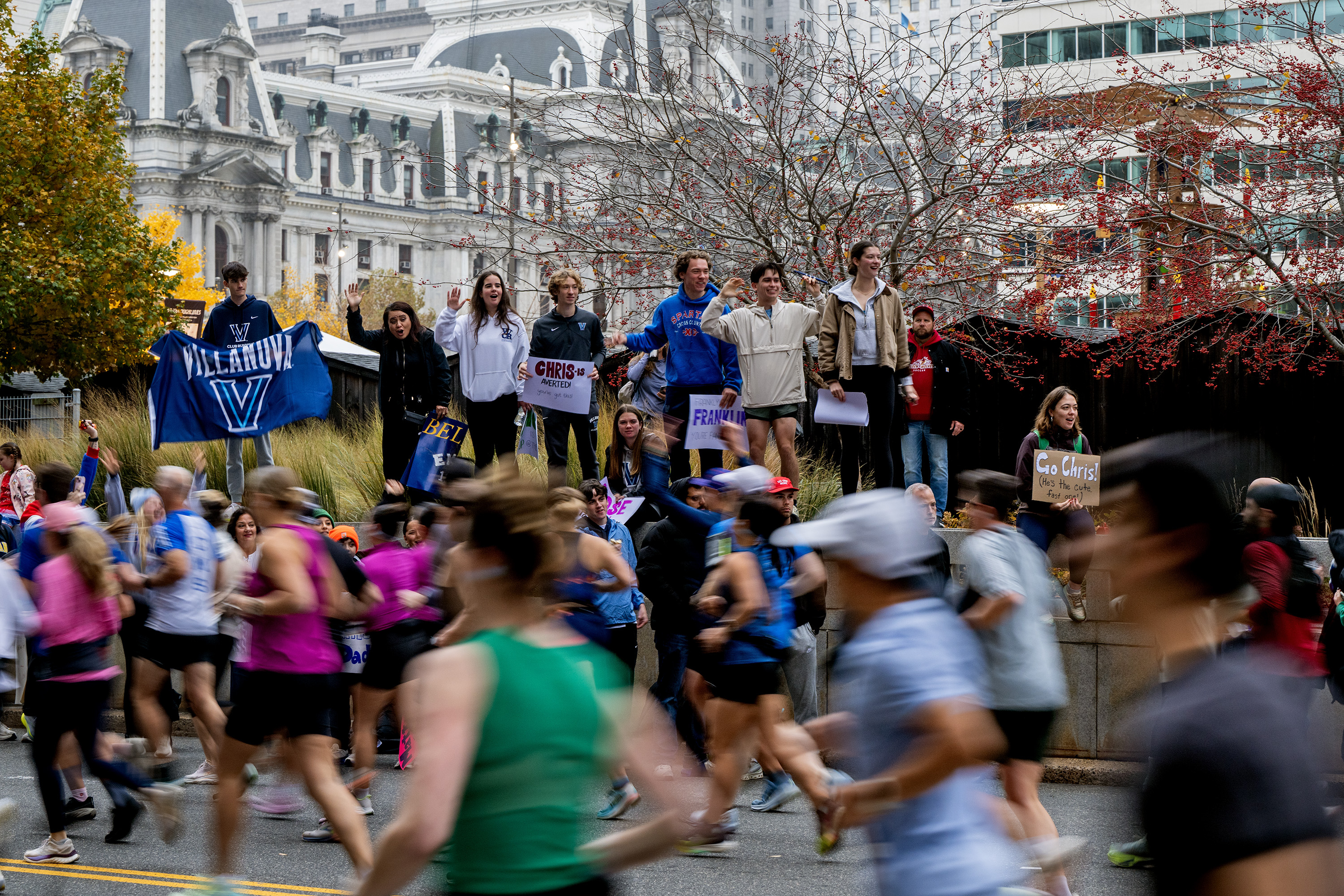
Runners pass spectators at LOVE Park in the 2026 Philadelphia Marathon on Sunday.Tom Gralish / Staff Photographer
She’d done a few half-marathons and was eager to visit Philadelphia again after her first visit as a child.
“This was a great way to see the city,” she said. “My feet hurt but I am ready to ring my bell and eat a snack.”
Completing the marathon, she said, made her see herself in a different light.
Along the path, friends from home reassured her: “You can quit. No one will judge you.”
But completing the race wasn’t about proving anything to them or anyone else.
“I’d feel like I failed myself,” if she didn’t finish, she said. “That was the motivation.”
Now on the other side of the finish line, with a peanut butter-and-jelly sandwich beckoning in her hotel room, she felt invincible.
“I definitely feel like I can do anything I put my mind to,” she said.
Dave Raymond always opened himself to the conversation but he often knew how it would end. Someone wanted to do a project about the Phillie Phanatic and they wanted Raymond on board. Raymond, the first person to wear the costume in 1978, was usually interested. And then that was it.
Sometimes the people never called back. Some projects stalled at the finish line. Others got caught in Hollywood purgatory.
But Raymond knew there was something different about the brothers who reached out in August 2024. Hoag Kepner and his older brother Tyler grew up Phillies-obsessed in Montgomery County where they loved the mascot as much as they did Mike Schmidt.
They sat in Section 234 of Veterans Stadium, roared at the Phanatic’s bits, and shrieked when their grandmother plucked a feather from the mascot’s tail.
Hoag couldn’t believe there had never been a documentary about the Phanatic and he told Raymond he wanted to be the filmmaker who finally did it. He sent him a pitch, explaining why this project would not sputter like the rest.
Big Phan — which premieres Saturday at the Philadelphia Film Festival — took two years to finish as the brothers tapped into their childhood and told a story that only they could. First, Hoag and Tyler Kepner needed to convince Raymond that they were the right people to do it.
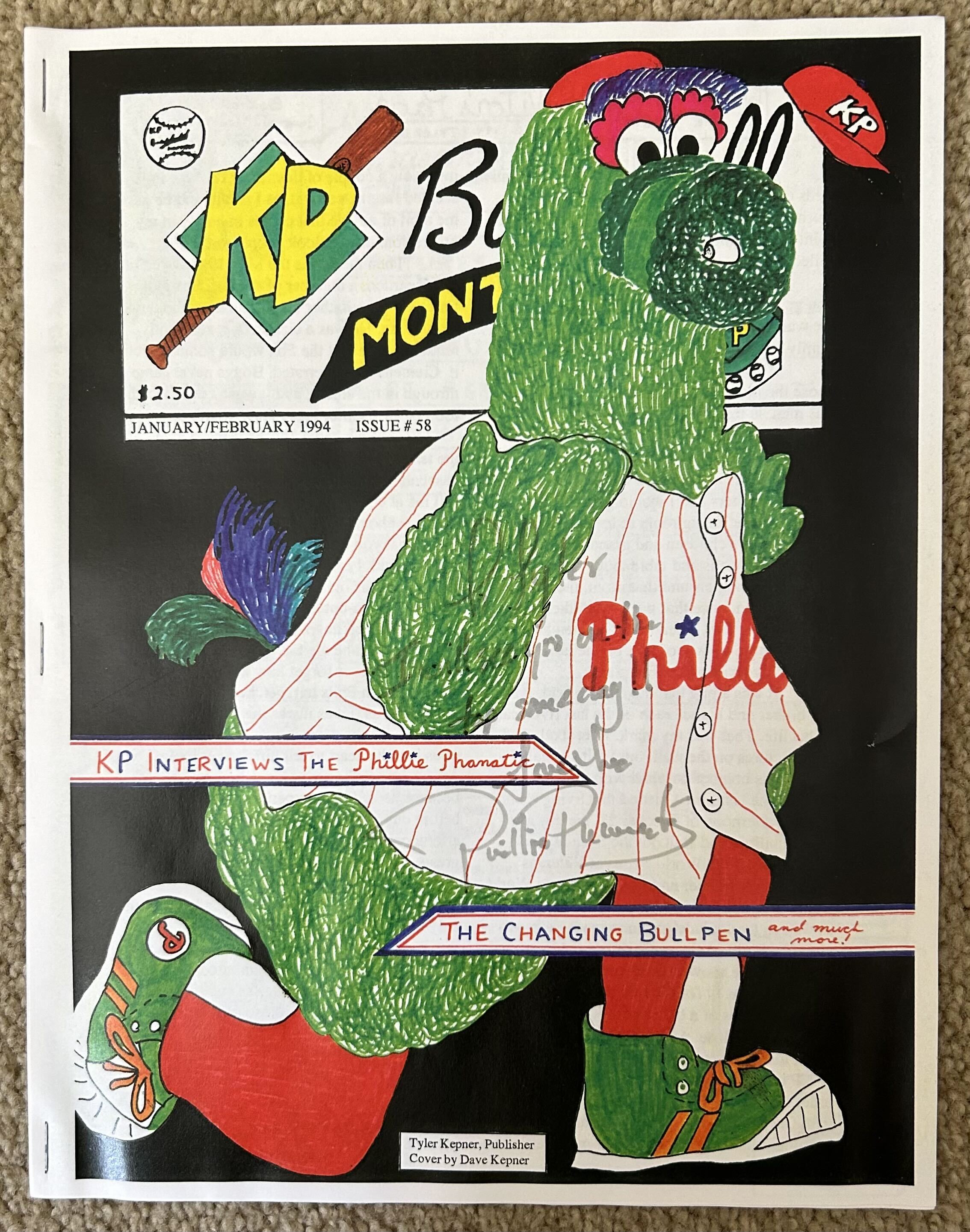
The January/February 1994 issue of KP Baseball Monthly featuring the Phillie Phanatic.Hoag Kepner
The last page of their pitch included an illustration of the Phanatic from 1994 that Hoag made for the baseball newsletter his brother produced from their Montgomery County home. Tyler, now a national baseball writer with The Athletic, wrote the words for KP Baseball Monthly and Hoag drew the covers.
The January/February 1994 issue included a feature on Raymond — “KP Interviews The Phillie Phanatic,” it said — shortly after Raymond retired from the Phils. The brothers told Raymond that they wanted to tell the mascot’s story again. Yes, there was something different about this conversation.
“That’s what really sold me: two Philadelphia brothers who have all this backstory,” Raymond said. “At the very least, I have to say yes just because of that.”
He was magic
The Kepners had season tickets at The Vet and their plan came with perks.
“We had the Dave Montgomery plan,” Tyler, 51, said.
Their father, John, served in Army Reserves with Montgomery, the longtime team executive who later became part owner. Montgomery let the Kepner boys pick out 16 games every offseason as the brothers built their own partial season-ticket package without any filler games. They only paid for the games they wanted to go to.
Montgomery placed the Kepners in Section 234, which was usually filled with notable faces. Arlen Specter sat behind them once and kept score. Charles Barkley signed their baseball. And the Phanatic always seemed to barrel through.
“He was magic, man,” said the 46-year-old Hoag, who is the film’s director, while his brother is an executive producer. “It’s the same with Santa Claus. I still wonder about that. When you’re little, you have one foot in knowing that something isn’t real, but you want to believe so you do. He just came alive. This seemed real. He seemed animated.”
“He was enormous. I think that’s something that as you get taller, you lose sight of. But as a kid, he’s like 7-feet tall. I think there’s an initial fear, but you know he’s friendly.”
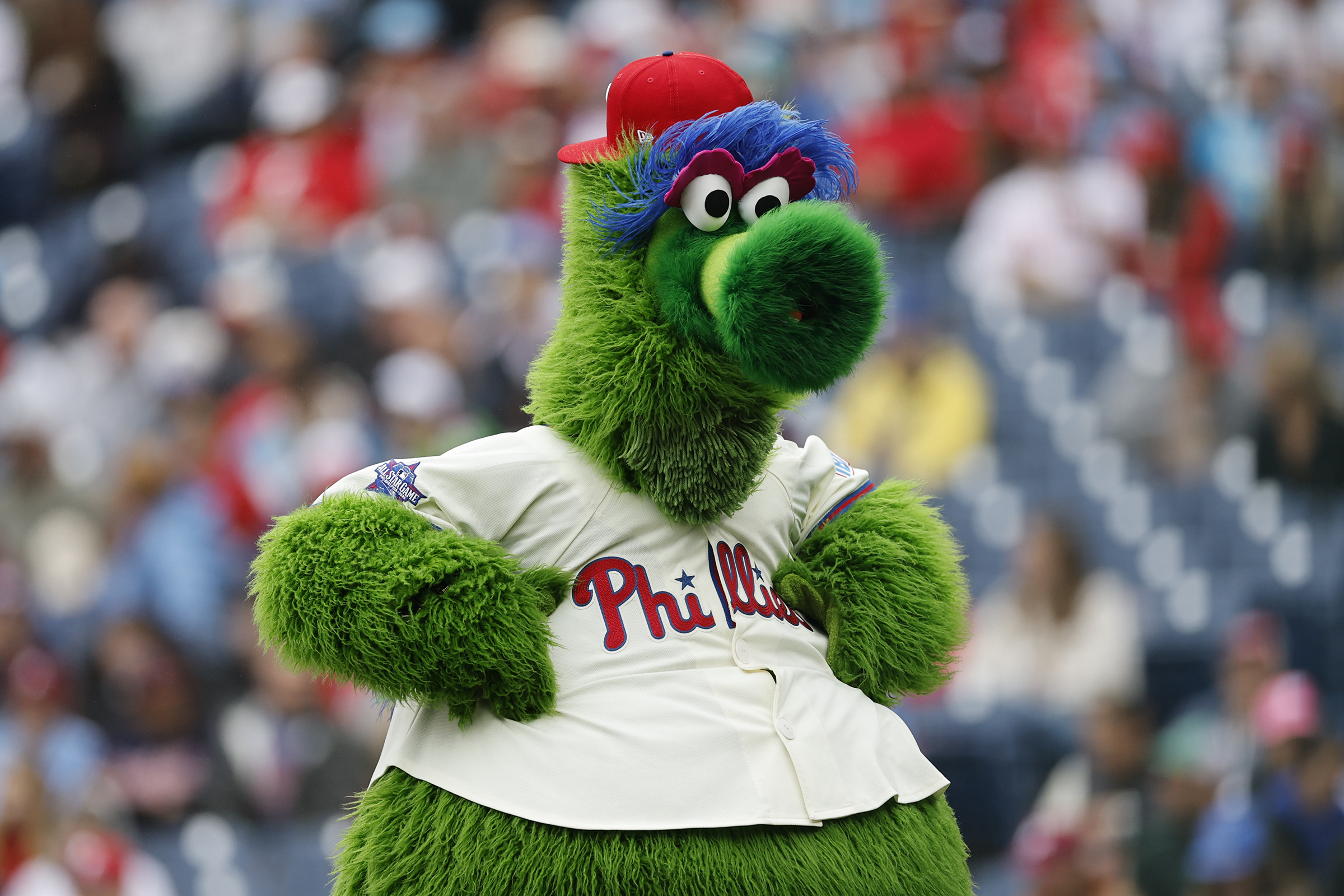
The Phillies introduced the Phanatic in 1978 as another way to drum up interest at The Vet. Bill Giles already tried Kite Man, Benny The Human Bomb, and the Great Wallenda. He was up for anything, but the documentary details how Giles needed to be convinced before greenlighting the Phanatic.
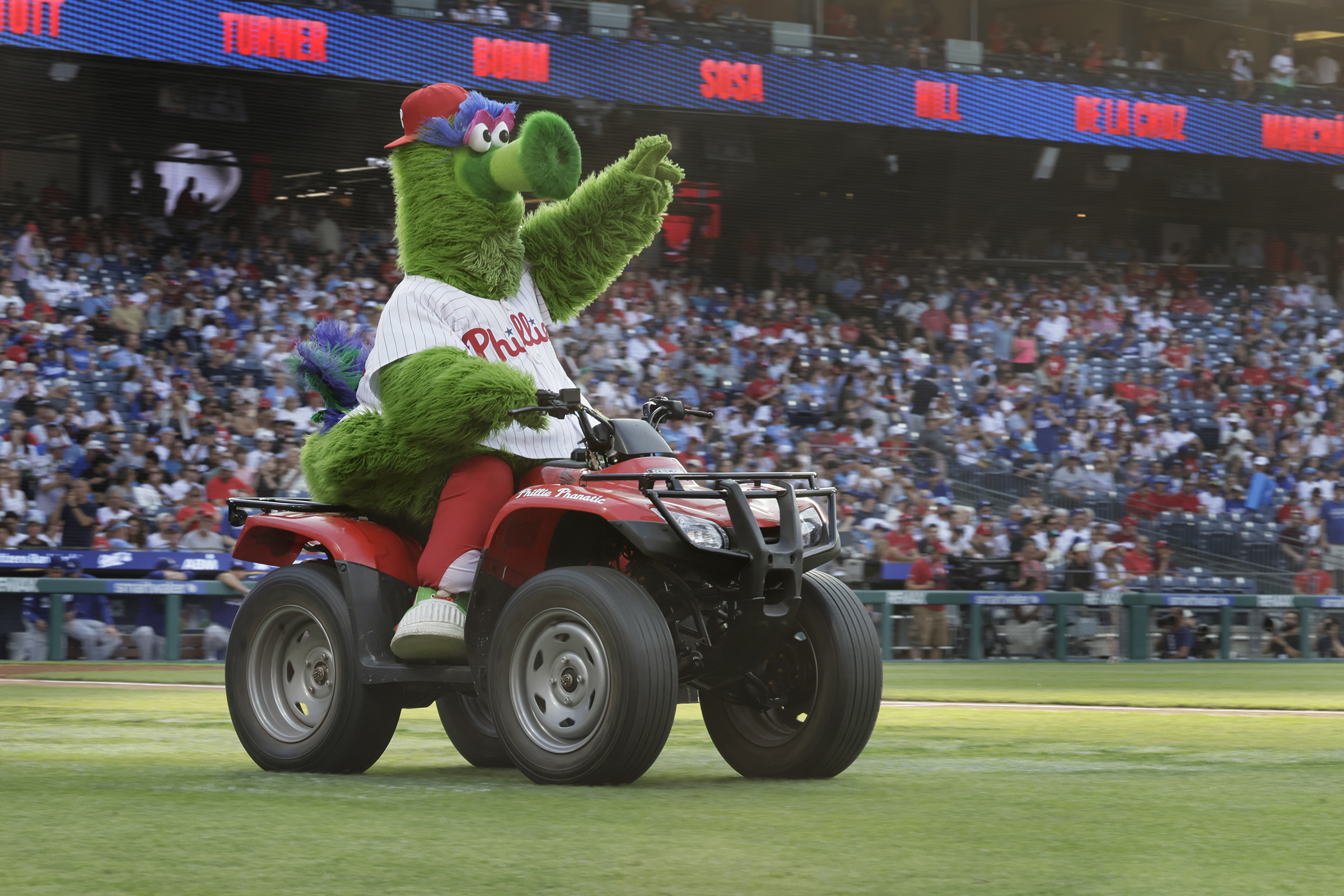
The Phillie Phanatic has been entertaining fans since 1978.Elizabeth Robertson / Staff Photographer
The costume was designed by the same people who created Miss Piggy and the Phanatic was introduced on a random weeknight in case the mascot was a bust. Giles tapped Raymond, then an intern from the University of Delaware, to step into the costume. Big Phan explains why that choice was perfect: Raymond had a big personality and had communicated non-verbally at home because his mother lost her hearing from Meniere’s disease.
The Phanatic became a sensation that quickly outgrew South Philly. The mascot has appeared everywhere from late night TV to The Simpsons to rock concerts. In Philly, he’s the Phanatic. But elsewhere, he’s more than just a Major League Baseball team’s biggest fan. The Phanatic grew into a piece of pop culture. So who better to tell the story than people who lived it?
“I’m not under the illusion that I’m the only one who could make it, by any means,” Hoag said. “But I do feel like you have to be from Philly. I think it helps if you were around the Phanatic as a kid and had those experiences that I did and had a personal connection to it.”
‘A very selfish idea’
Hoag had recently finished his latest film and was wondering what he could do next while he was watching a Phillies game on TV. There was his next project: The Phanatic.
“Who wouldn’t want to make a documentary about the Phanatic?” said Hoag, who lives in Austin, Texas. “In many ways, it was a very selfish idea. I wanted there to be one so I tried to get people to let me make one.”
The film was funded by local donors, worked on by a Philly illustrator, and aided by a local puppeteering company. Morgan Betz, the grandson of a former Phillies owner, is a producer. The brothers were not the only local connection to a film about a local icon. Hoag said they hope to secure a distribution deal with a streaming service after the Philadelphia Film Festival.
The 95-minute film encapsulates how a green flightless bird from the Galápagos Islands became a piece of Philadelphia. It helped that everyone working on it already knew why.
“I didn’t have to explain to them how powerful the Phanatic is to young kids because they lived it,” Raymond said.
The brothers from Section 234 traveled the country as they conducted interviews with people like Bryce Harper, Chase Utley, and Schmidt along with Lil’ Dickey, Jason Kelce, and Simpsons producer Christine Nangle, who grew up in Northeast Philly. Tyler peppered the questions while Hoag rolled the camera, working together just like they did in their home in Gwynedd Valley.
“We really became kids again,” Hoag said. “We would always be texting about mascots. I don’t want to talk smack on other mascots, but we have opinions on the other ones we see. He goes to a lot of games and he would snap a photo and be like ‘Look at this clown’ or ‘This one’s pretty good.’ It was fun to relive our Phillies days.”
The documentary traces the mascot’s history before it tackles the depression Raymond battled, the stress of being the Phanatic, and the death of his mother. Raymond left the Phillies after the 1994 season and handed the Phanatic to Tom Burgoyne, his understudy who has done the job ever since.
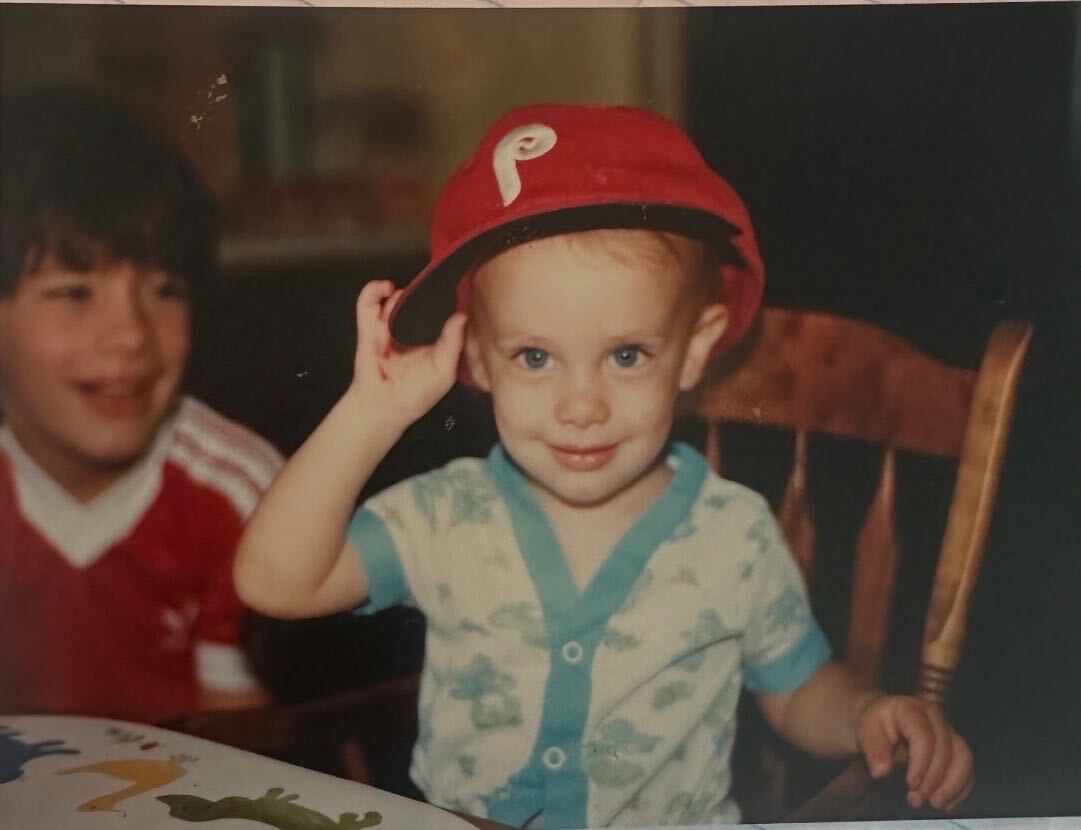
Tyler Kepner (left) and brother Hoag as children in Montgomery County.Hoag Kepner
Raymond has spent years as a motivational speaker, training himself to not become emotional when he talks. But that didn’t help him when he sat with the Kepners and talked about his mom.
“As a speaker, the worst thing you can do is to disengage your audience,” Raymond said. “So what they teach you is if you’re going to go through something emotional, you don’t want to lose your audience. It’s a human feeling but as soon as you lose composure, the audience is worried about you and you’ve disengaged them. I’ve told this story so many times on stage and it requires practice and focus.
“When I told it in front of the cameras, I just broke down. So what I felt good about is that it was finally coming out in a way for me. It was cathartic because I wasn’t worried about telling it to an audience. It just happened.”
The brothers interviewed Giles, who died earlier this month, and spoke to the person inside the Gritty costume but didn’t reveal their identity. The doc tells how Burgoyne found the job by searching The Inquirer’s classified ads after feeling burned out by his entry-level sales gig. And it follows Burgoyne around the ballpark as the 61-year-old still makes the mascot come alive all these years later.
“It’s about the Phanatic, but don’t think it’s about this furry mascot,” Hoag said. “It’s about these two guys and their journey and purpose. Talk about two people whose purpose was so clearly defined. That’s all we want in life: What’s my purpose? I want to feel like I was made for something and I really do something. These guys were perfectly suited for it and they fulfilled their purpose in a way that’s like, ‘Ahh, Wouldn’t it be great if we all had that?’ Hopefully this inspires people to find that.”
The 95-minute film “Big Phan” encapsulates how a green flightless bird from the Galápagos Islands became a piece of Philadelphia.Yong Kim / Staff Photographer
The coup de gras
The Phanatic came into Section 234 with the same chaotic energy he did years earlier when he visited the Plymouth Meeting Mall.
“You’re that little and you can’t believe he’s at your mall,” Tyler said. “Like ‘Oh my god, he’s here.’ He’s not at the stadium. He’s where I hang out. It was like seeing Bob Dernier at the Magarity Chevrolet. I was like, ‘I can’t believe Bob Dernier is at the Magarity Chevrolet.’ It blew my mind. It was the same thing with the Phanatic.”
The mascot spotted Barkley in Section 234, started bowing to him, and then brought him gifts. First, he stole someone’s popcorn and brought it to Barkley. Next, a hot dog.
“Then he grabs a woman’s purse and gives it to Charles,” Tyler said. “And then in a bit that you could never do anymore, he grabs a lovely young lady, sweeps her off her feet, and brings her to Charles as the ultimate gift he could give Charles Barkley. Charles was dying. He was literally knee slapping. That was the Phanatic. He could go right up to the edge sometimes. That’s the stuff you would see in 234.”
Phillies PR director Larry Shenk gave Tyler a press credential when he was still a kid, allowing him to go into dugouts and interview players for his newsletter. Tyler typed them at home, had friends armed with magic markers help color the covers, and mailed it to subscribers like Bob Costas, Harry Kalas, and Tug McGraw.
One of Tyler’s final issues was the cover story with Raymond. He mailed Raymond a copy and the Phanatic returned it with a signature.
“To Tyler, I will see you at the top someday” Raymond wrote. “Love, The Phillie Phanatic.”
The newsletter was the launching pad for Tyler’s sports writing career as he is now one of baseball’s esteemed chroniclers. And the brothers dug up that old issue two years ago, hoping it would convince an old friend that they were the guys for the job.
“I think that was the coup de grâce for Dave,” Hoag said. “He said he was looking at it with his wife and she said, ‘These are the guys.’ I think he enjoyed that there was a real connection. I said, ‘We met when I was 8 and you high-fived me in Section 234. He said, ‘Oh yeah, I remember.’ All of a sudden I have this responsibility that I wanted. But I’m like, ‘Wait, I’m telling the Phanatic story? Whoa. This is important.’”
The child gasped for air, sitting alone in front of an upstairs television, near death inside her Northeast Philadelphia home.
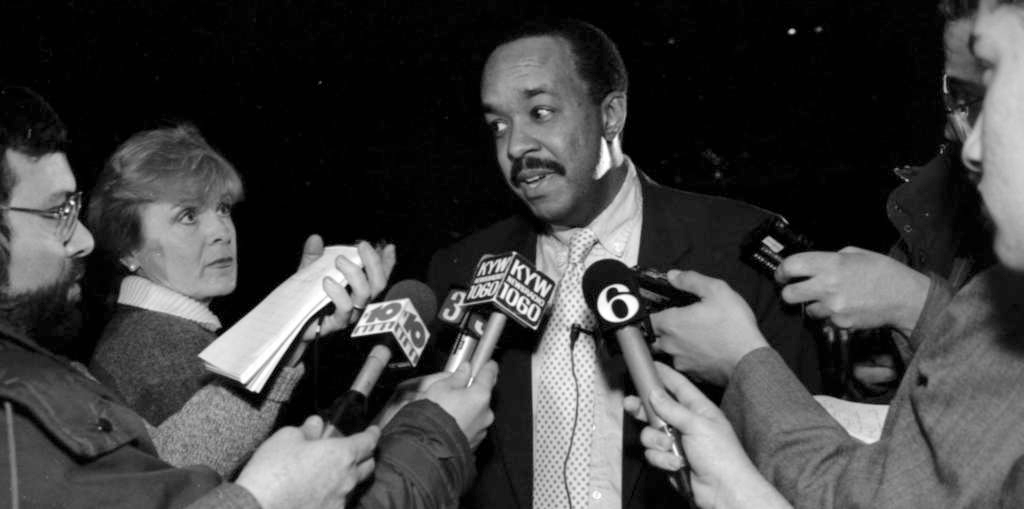
As a measles outbreak ravaged the city, Philadelphia’s deputy health commissioner, Robert Ross, used the home phone to call a judge for a court order to treat the girl. Her family worshiped at Faith Tabernacle Congregation, a fundamentalist Christian church at the center of the outbreak. Many members were refusing all medical care, including vaccinations.
The 1991 outbreak would eventually sicken 1,400 people across Philadelphia and kill nine children. It spurred the city to pursue the nation’s first and only court-compelled vaccinations. Some parents at Faith Tabernacle were ordered, against their wishes, to vaccinate their children against measles.
The girl in the house in Northeast Philadelphia was about 9 years old and “minutes, maybe an hour, away from respiratory failure,” Ross recalled. And when he tried to call for medical care, her grandmother tried to block him from the phone.
The child ended up on a ventilator at St. Christopher’s Hospital for Children and ultimately survived. Her story became a defining moment in the public health response to the state’s last major measles outbreak, part of a nationwide surge between 1989 and 1991 that sickened tens of thousands of people and led to at least 166 deaths.
Then and now, the highly contagious disease spread in communities with low vaccination rates, but for different reasons. The 1991 outbreak spread in a community that rejected vaccines — and across a city with limited access to vaccination even for those open to them. Now, vaccines are easier to access — but too many people don’t want them.
So far, Philadelphia has been spared as measles actively spreads in the region’s western suburbs of Chester County and just beyond in Lancaster County, whose 401 reported cases lead the state.
Ross and other physicians who treated children in Philadelphia in 1991 lament the return of measles, which tops the list of vaccine-preventable diseases once common during childhood.
“I would have said there was no chance this would ever happen again,” said Ross, who went on to spend decades as a public health administrator in California. “We were looking forward to decades of measles-free, whooping cough-free, polio-free livelihoods for children.”
In 1991, parents flocked to vaccine clinics organized around the city. At one event that May, doctors handed out shots to 60 children — with Nerf balls and a DJ on hand to make the medicine go down — in Fishtown and South Kensington, then without full-time pediatricians to routinely provide vaccines. Another vaccination effort immunized 6,000 children over a weekend, with help from the Phillie Phanatic.
Today, families increasingly are opting out of vaccines, often by taking advantage of religious and philosophical exemptions that provide legal outs from immunizations otherwise required to enter school. And vaccine skeptics once relegated to the fringes of public discourse now are setting the federal health agenda under President Donald Trump.
Years of declining vaccination rates have left not only children but also many unvaccinated adults vulnerable. Where only children died in 1991, three of five deaths in the current outbreak appear to have occurred in adults.
“It felt like a more winnable battle in ’90, ’91, than right now,” Ross said.
‘You just knew that an outbreak was imminent’
In the spring of 1989, an R.E.M. concert led to Philadelphia’s first reported cases, involving concertgoers at the Spectrum. The city health department interviewed teenagers exposed at the show, ramped up vaccinations, and braced for the worst.
Pennsylvania laws requiring vaccinations for school admission were still relatively new — on the books for less than a decade — and federal health officials had only just begun recommending a second dose of measles, mumps, and rubella vaccines for children.
Tens of thousands of preschoolers had not received even one dose of the MMR vaccine, the Daily News reported when the first cases emerged. Nearly two-thirds of Hispanic toddlers in North Philadelphia had not received the one dose recommended by age 2, The Inquirer noted at the time.
The virus started spreading: 89 cases were reported in the city in 1989, followed by more than 200 the next year.
The numbers followed a nationwide trend: By December 1990, measles had infected more than 25,000 people across the country, a 68% increase over the year before.
At Philadelphia’s children’s hospitals, St. Christopher’s was receiving three to four measles cases a day in city neighborhoods with high poverty and low access to medical care. Children’s Hospital of Philadelphia was handling one to two at its main campus in West Philadelphia, where at least half of preschoolers had received their recommended shots.
In 1991, officials told The Inquirer that roughly 60% of preschoolers citywide were vaccinated against measles, well below the 95% threshold that scientists now say is necessary to prevent the virus from spreading in a community.
In part, this reflected access challenges. The federal government had reduced public health funding under President Ronald Reagan, a Republican, as rising poverty contributed to a growing uninsured population. The illicit drug use that defined the crack epidemic also meant some parents neglected to seek medical care for their kids, Ross said. All contributed to “a toxic brew” that kept kids from getting immunized, he said.
“You just knew that an outbreak was imminent,” Ross said.
Deaths mount
In January 1991, Philadelphia recorded its first measles death in 20 years — an unvaccinated 18-month-old who developed pneumonia after contracting measles.
The next month, two unvaccinated girls involved with Faith Tabernacle died from measles. Church members told the Daily News their views required rejecting medical care: Only God could cure illness. “They effectively had a ban not just on vaccines but on all medical care,” Ross said.
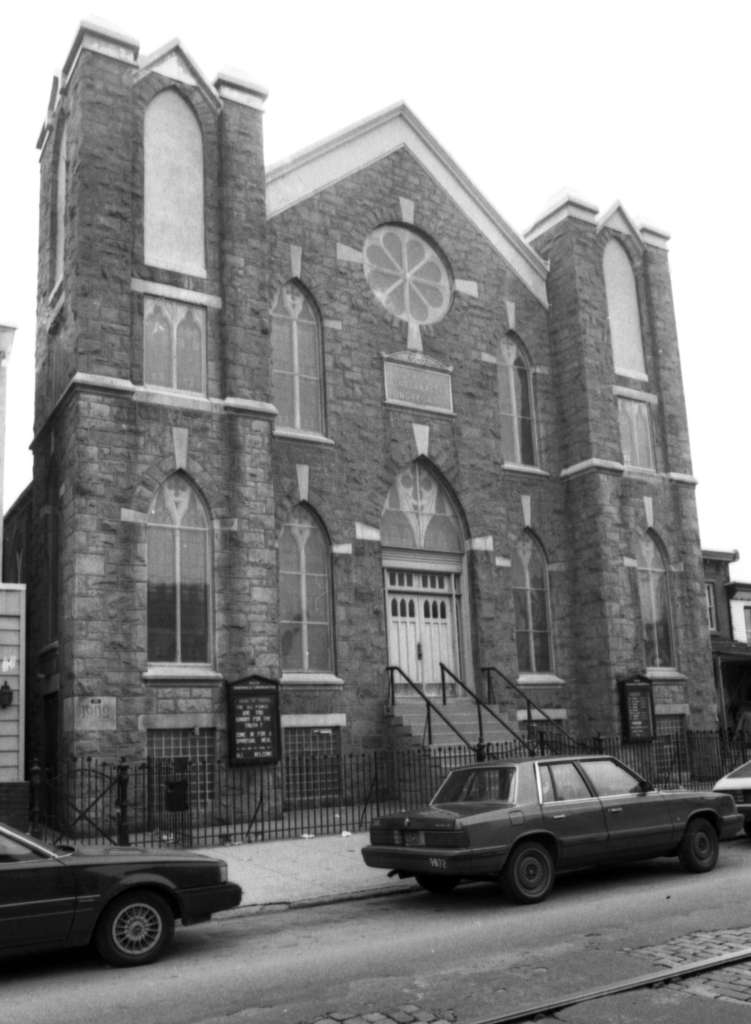
Faith Tabernacle Church at Fifth and Erie Streets in 1991. Children from the congregation died in a measles outbreak that year.File Photograph
Some church members refused to call a doctor or visit a hospital even as their children lay dying. Other parents associated with the church, however, did take their children to the hospital as their conditions deteriorated.
Sarah Long, then an infectious-disease physician at St. Christopher’s, remembers the first child with measles she treated in 1991 — a 2-year-old with a high fever and rapid breathing, characteristic of a case of pneumonia.
But with a classic case of pneumonia, “the child is hyperalert and anxious,” Long said.
“These children — they were not able to sit up. Not able to take fluids. They’re just lying there, incapacitated,” she recalled.
She was stunned by the consequences of a disease avoidable through immunization since the 1960s. “This was a completely preventable problem,” Long said.
After a third death, of a Cheltenham girl whose family attended the church, Ross and other health department workers grew concerned that phone calls with the church’s members were not producing accurate information.
With a judge on call to order medical treatment if necessary, Ross and others knocked on congregants’ doors.
At the house where he discovered the girl gasping for breath upstairs, Ross met eight other children recovering from measles infections, the virus’ characteristic rash fading from their faces.
Hundreds of children not affiliated with the church also fell ill. Six of the nine children who died were church members.
Reached by phone, Faith Tabernacle’s pastor said news reports over the years had “misconstrued the truth” about the church’s experience during the outbreak.
Declining to give his name, and noting that he was not its leader at the time, he said the church supports personal choices about medical care. “We’re not a cult. We present the word. It’s up to the individual,” he said. “We trust the Lord for our healings.”
‘We had to resort to it’
In March 1991, after another child died, several judges upheld a Common Pleas Court ruling that ordered five Faith Tabernacle parents to vaccinate their children. Their parents cried as they brought their children to court for the shots.
“We had to resort to it,” Ross said. ”We just had nothing else available to us to protect those kids.”
Such a ruling is unlikely to happen again in the current political landscape, said Paul Offit, a vaccination expert who heads CHOP’s Vaccine Education Center and worked at the hospital during the 1991 outbreak.
The 1991 court rulings were much more stringent than typical vaccine requirements for schools or employment, Offit said. Under a vaccine mandate, for example, a person might face a penalty for not being vaccinated — like not being able to work a specific job — but can still decline a vaccine.
Philadelphia courts compelled Faith Tabernacle parents to vaccinate their children — with no way to opt out.
By the time courts were compelling parents to vaccinate their children, the city’s large-scale vaccine drives helped ensure that few children still lacked immunity to measles, he said.
The arrival of spring and summer — measles traditionally spreads in the fall and winter — also helped quell the outbreak. So did a wave of media coverage that raised awareness about the virus and spurred many parents to vaccinate.
Offit published a book, Bad Faith, in 2015 about religious objections to vaccination, including Faith Tabernacle’s experience.
In 1991, immunization rates came up as shots were made more widely available.
Now, stricter vaccine mandates for school entry could help reduce measles transmission — but that is politically unviable, Offit said.
Pennsylvania has some of that nation’s most permissive exemption laws, requiring only that parents indicate a religious or philosophical objection to vaccinations on a form before sending unvaccinated kids to school.
An Inquirer analysis found a 15% increase in the use of these exemptions in the last two years, reflecting increasing public mistrust in vaccines.
In the state’s current outbreak, Health Secretary Robert F. Kennedy Jr. has spent years stoking skepticism of the vaccine, although he recently said the MMR vaccine is effective.
Downplaying the dangers of the state’s measles outbreak, he has accused Pennsylvania Gov. Josh Shapiro, a Democrat, of politicizing the outbreak and said his administration may have “fabricated” the first reports of measles-related deaths.
Kennedy later acknowledged that one of the deaths was caused by measles. Yet the Centers for Disease Control and Prevention website currently lists two measles-related death across the nation this year, despite Pennsylvania’s reports of five deaths.
Now local physicians and health systems have limited options to combat anti-vaccination sentiment to increase immunization rates.
“We have two tools: quarantine and vaccine mandates,” Offit said, “and there’s been an erosion in both because people like RFK Jr. say you can’t trust medical experts. I am worried we’re going to be seeing this for years.”
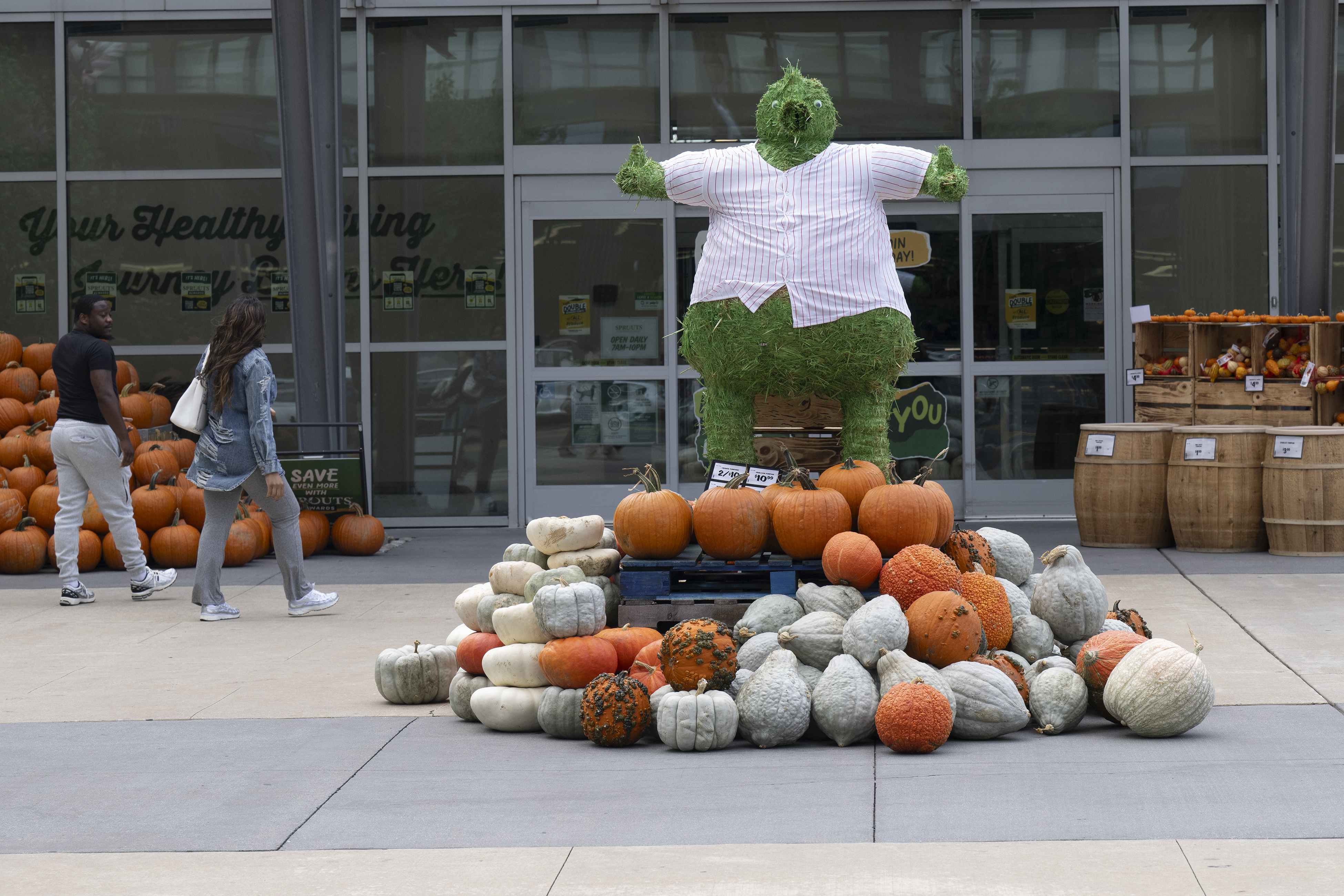
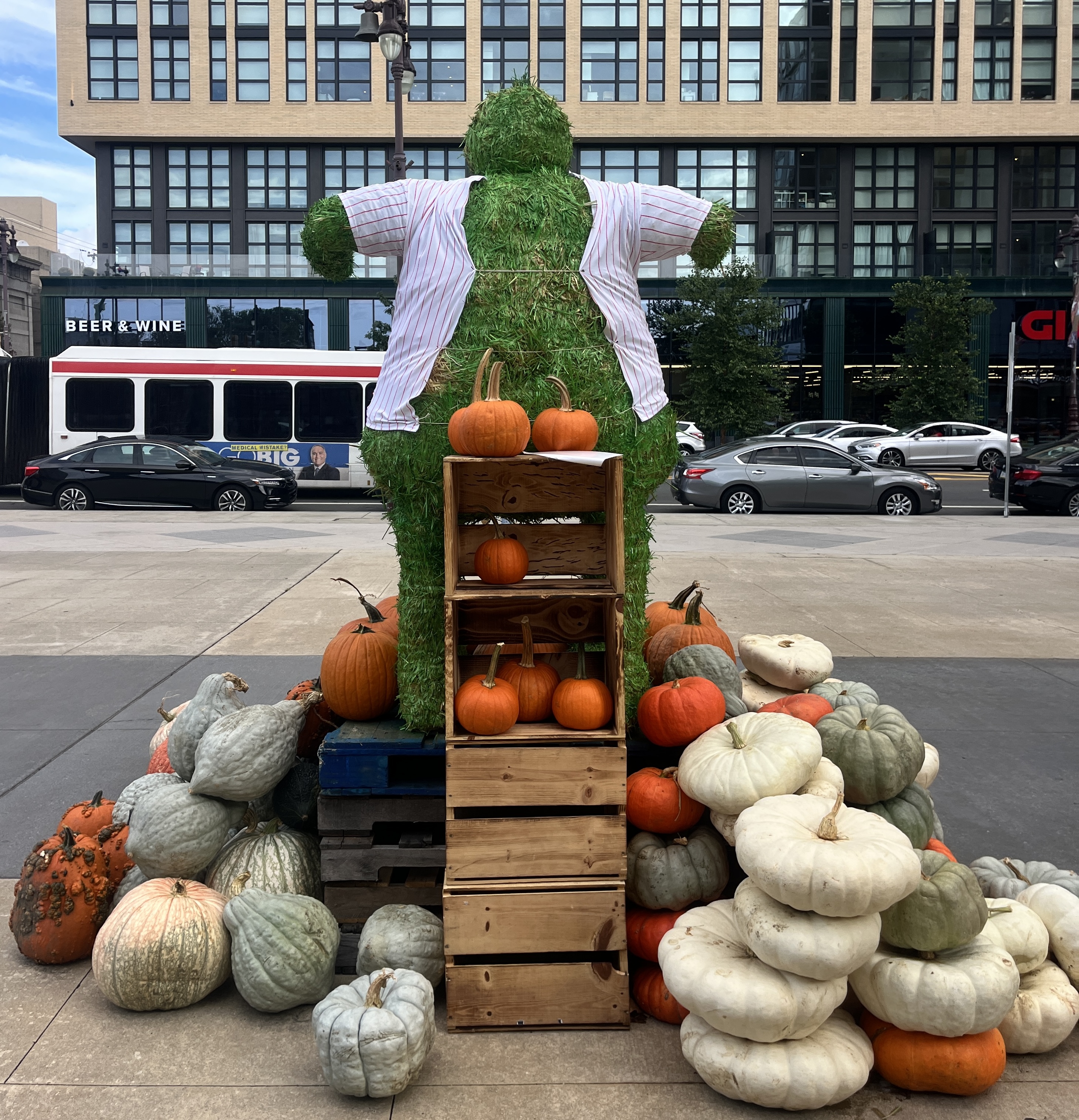
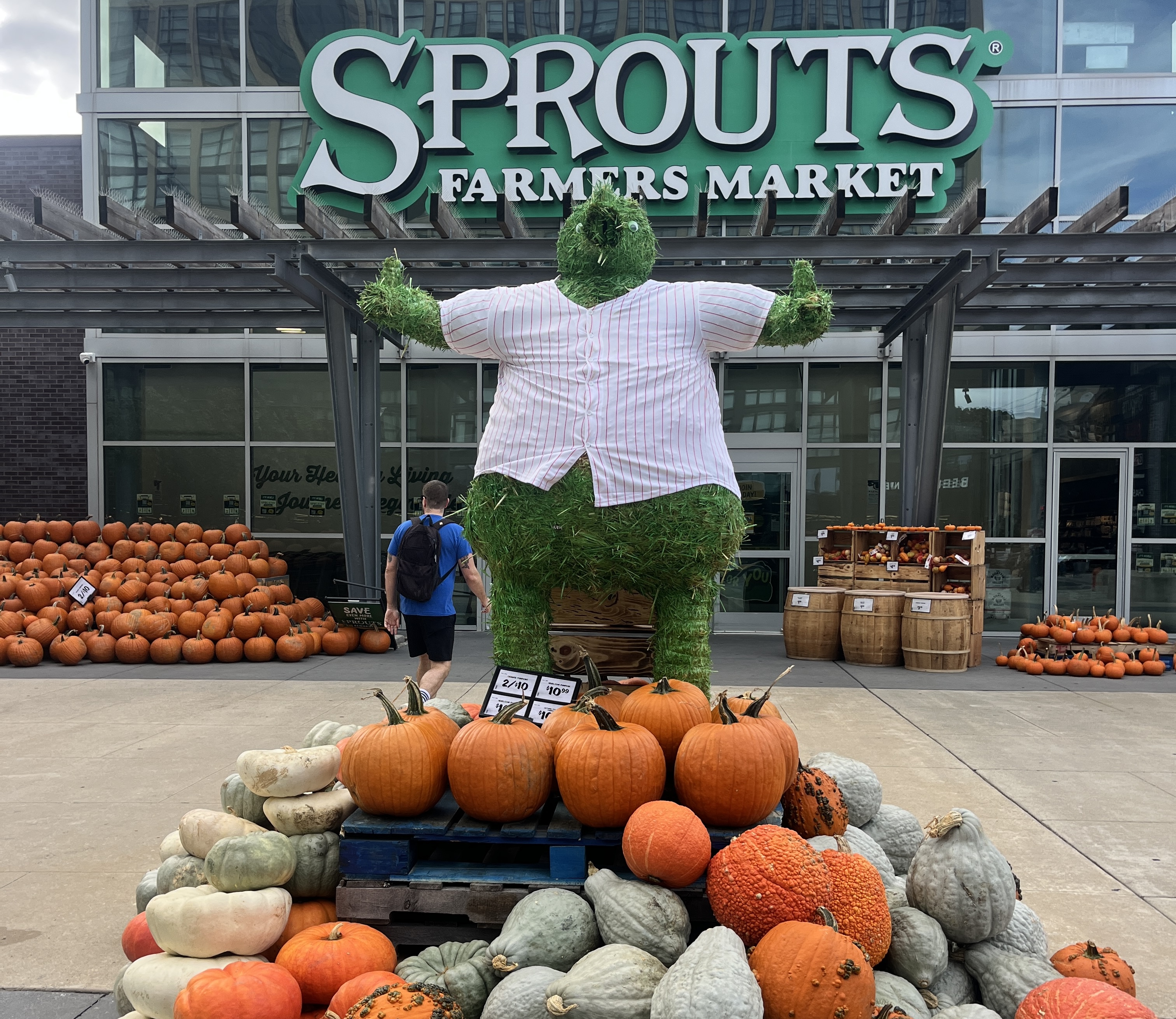
The new display at the Sprouts Farmers Market on Broad Street looks as if someone was forced to draw the Phanatic both from memory and out of spite.
That’s the best description I can give of the haggard green giant that was erected outside the supermarket in mid-September.
Rotund, snouted, and wearing a pinstripe baseball tee, the creature has all the trappings of our dear Phillie Phanatic, the Galapagos-born flightless bird who reps the Phillies. Somewhere along the way, however, the details got lost in translation.
“That is not the Phanatic. What the f—?” wrote user @JamesPhl96 on X on Sept. 19 above two photos of the Sprouts monster staring unblinkingly into the night. Viewed over 113,000 times, the post has helped the figure take on a life of its own as equal parts landmark, monster, and friend-shaped photo-op.
“The Sprouts Phanatic fall display can’t hurt you. He’s not real,” one X user wrote, attributing the advice to his therapist.
“That’s my sleep paralysis demon,” wrote another. The creature has also been called many names, including — but not limited to — the “Fauxnatic,” “Phil E. Guy,” and Phrank, aka the Phanatic’s weird cousin.
Faisal Khan, who has managed the Broad Street Sprouts location since December, is quick to defend his store’s creation as “beautiful” and not at all scary.
The knockoff Phanatic was designed by Four Seasons Produce, a national produce distributor based in Ephrata that delivers to Sprouts locations in the Philadelphia region, Khan said.
The 5’7″ Phanatic knockoff outside the Sprouts Farmers Market at 1000 S. Broad St. does not fit into his baseball jersey.Beatrice Forman / Staff
The company (not to be confused with the landscapers) creates seasonal displays for the store every fall, according to Khan. Four Seasons retains full creative control, he said. They’ve mostly stuck to piles of artfully arranged pumpkins and other gourds — until now.
“They kind of went all out this year,” Khan said. “I was very happy.”
The Fauxnatic has quirks beyond his lump-like figure and piercing googly eyes.
The 5′7″ topiary is made of hay that was dyed green. It flakes off like dead skin. Measuring at 76 inches around at its widest point, the creature also cannot be contained by a baseball jersey. The back is held together by string so the Fauxnatic does not flash the general public, even if he does come close to mooning us. (Rest assured: two pumpkins are placed where his butt cheeks would be.)
His baseball tee doesn’t even bear the Phillies logo. The Fauxnatic had a hat, Khan conceded, but it blew away in the wind.
Khan says the creature has been a boon for the Sprouts location, which was the organic supermarket chain’s first to open in Philly at 1000 S. Broad St. in 2018. Since the day the monster went up, Khan has watched what he estimated as “100-plus people” stop by to take photos.
“It’s mostly families coming with their kids,” Khan said. The Fauxnatic “brings a lot of foot traffic in.”
Shawn Erwin and her 5-year-old daughter Skylar are one of those families. Erwin and her daughter took photos with the creature at the end of an early evening grocery run Thursday. They giggled the entire time.
The Phillie Phanatic outside the Broad Street Sprouts Farmers Market lacks branded merch. He had a hat at some point, the store’s manager said, but it blew away.Beatrice Forman /
Skylar, for her part, thinks he looks just like the Phanatic. Her mom isn’t so sure.
“He looks like he’s made from hay,” Erwin said. “What happened to his hat?”
Khan said the store plans to keep the Fauxnatic up through Halloween, at which point he will be swapped out for a holiday motif.
“I’m honestly surprised,” Khan said. “You know we’re just a grocery store, right?”
As Philly guys go, the Phanatic is one suave dude. His gyrating belly, chameleonlike tongue, and ability to burn our opponents without uttering a single word have charmed generations of Philadelphians.
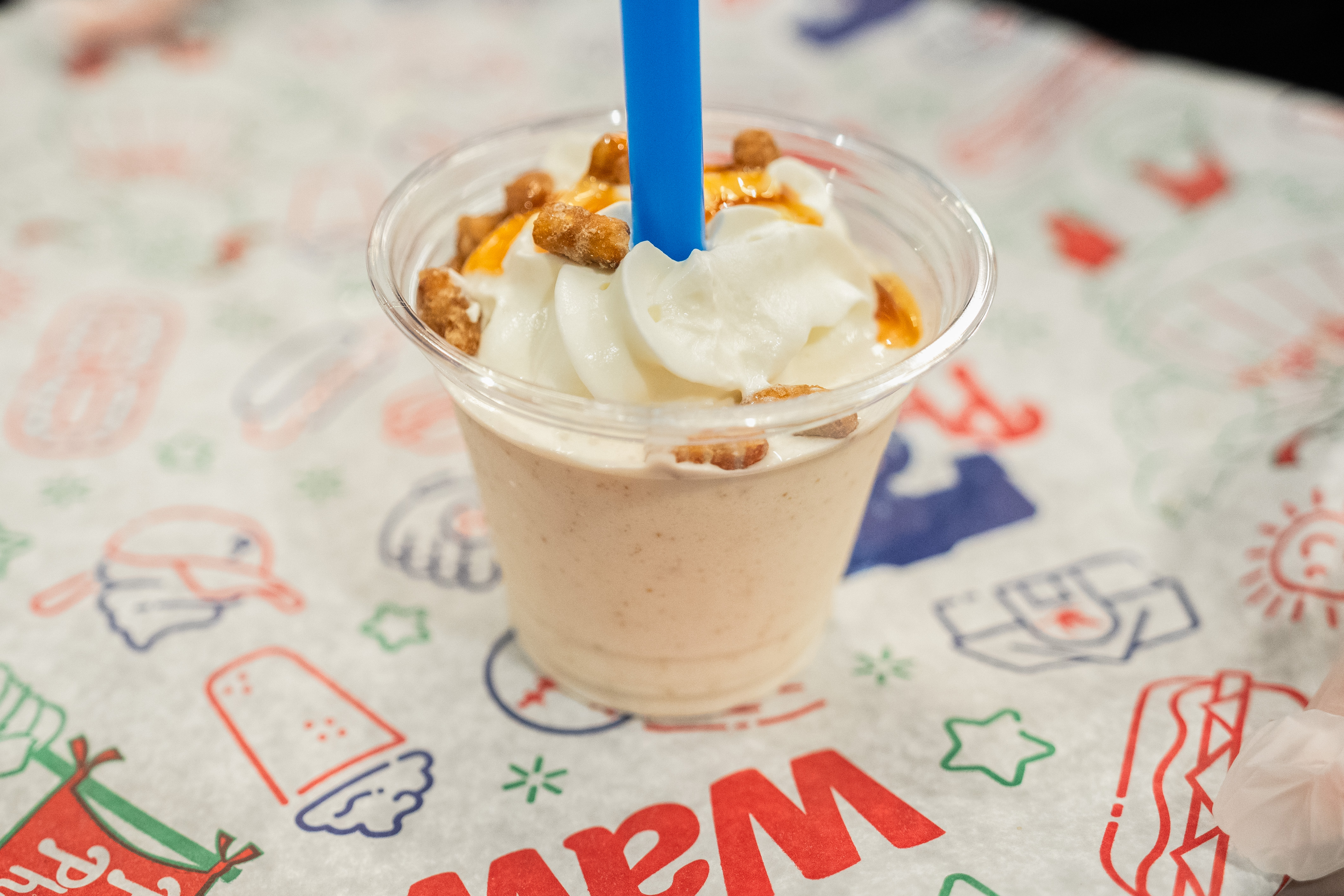
Now, this smoothie operator has a smoothie all his own and it tastes like the tears of our rivals — sweet, salty, and delicious.
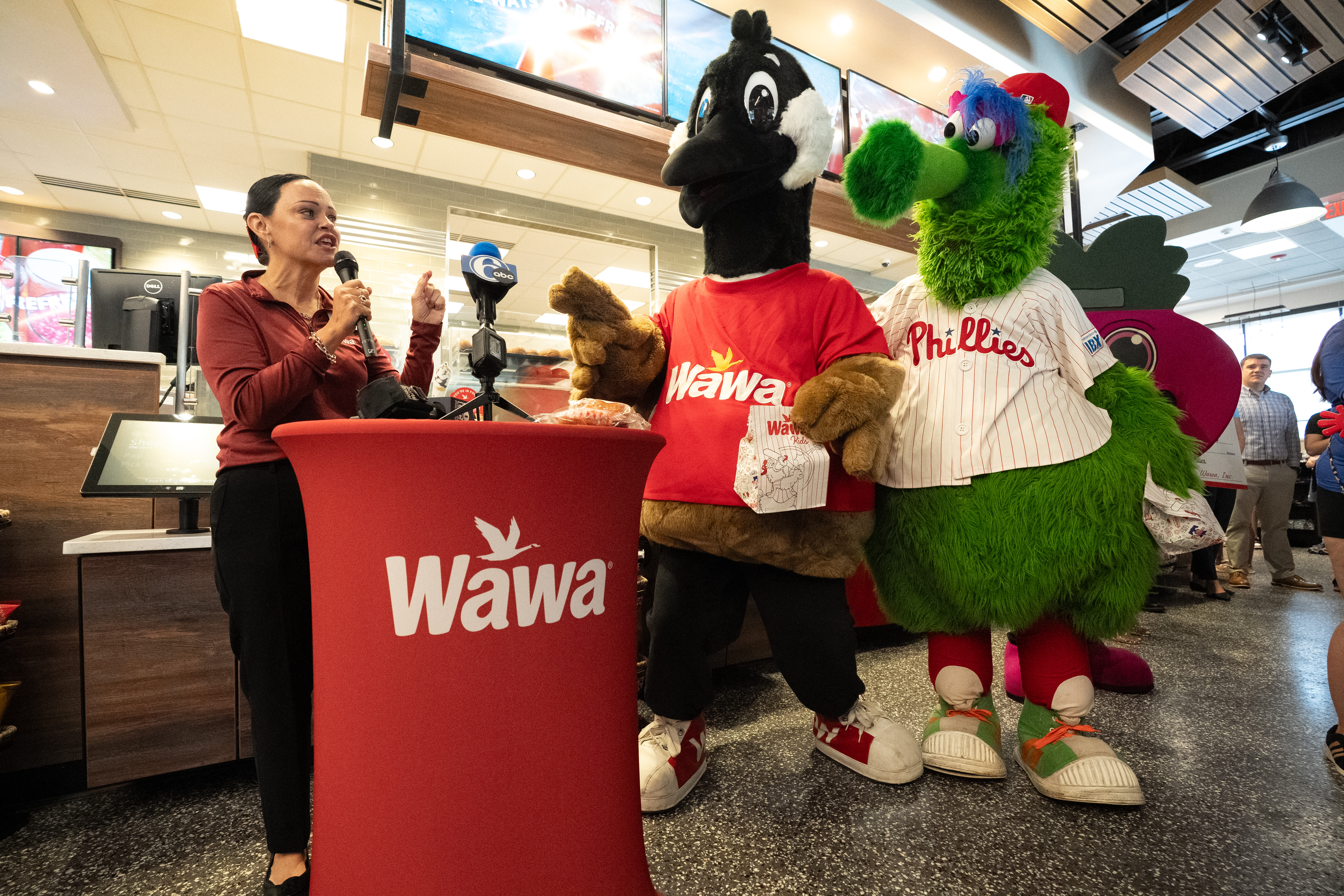
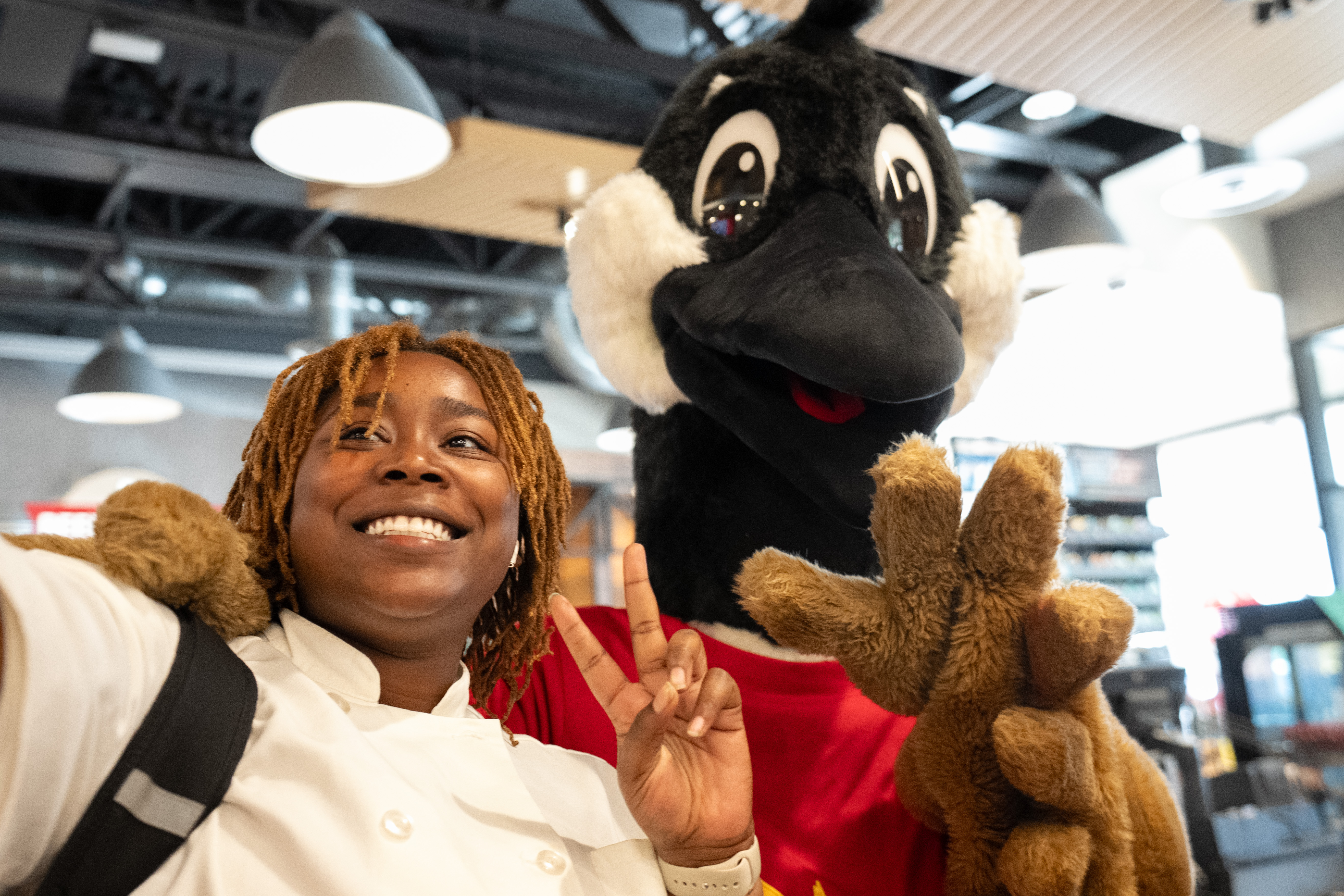
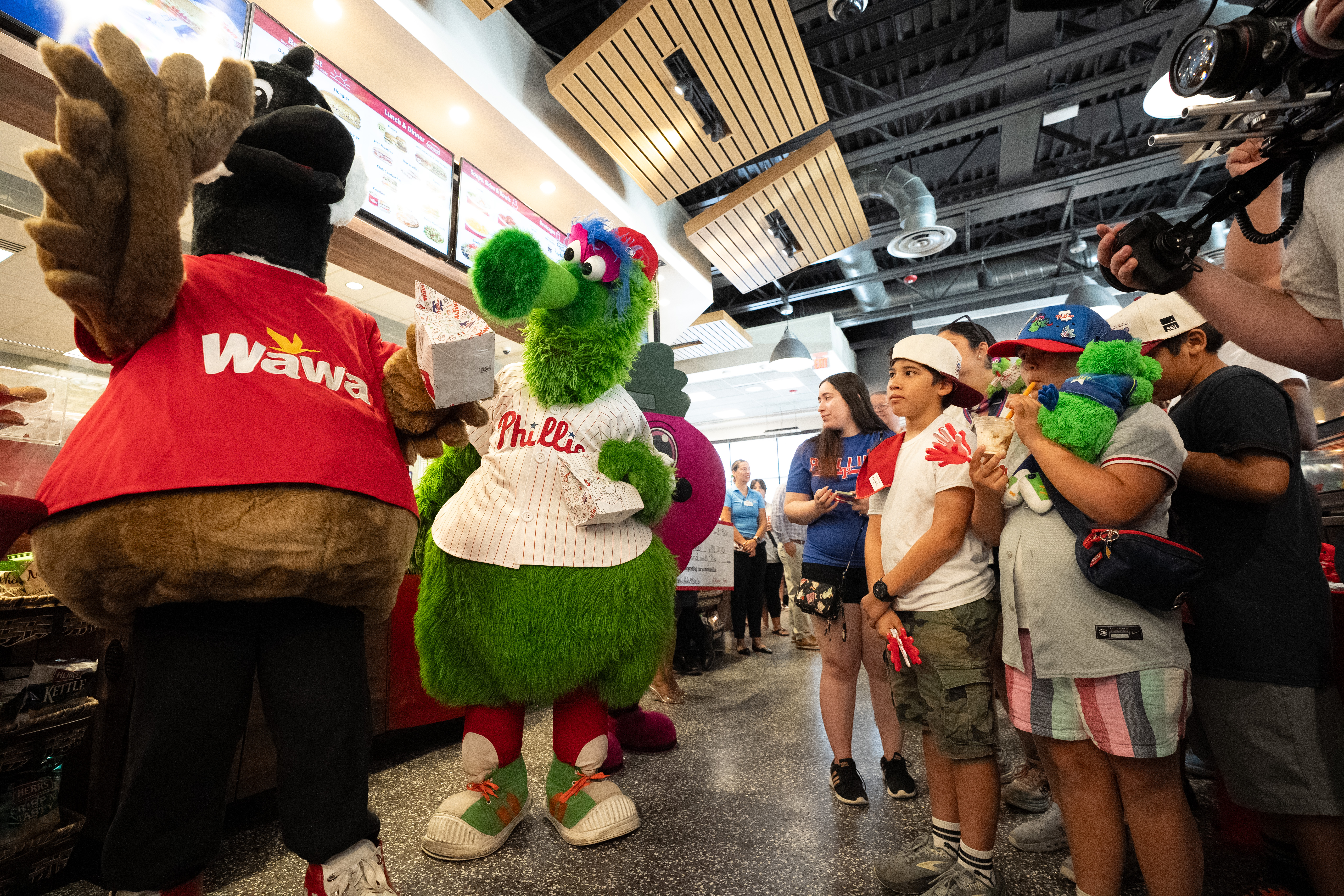
Kim Rodriguez, Wawa manager, along with the Wawa mascot Wally Goose and the Phillie Phanatic in Philadelphia on Aug. 17, 2026.Jessica Griffin / Staff Photographer
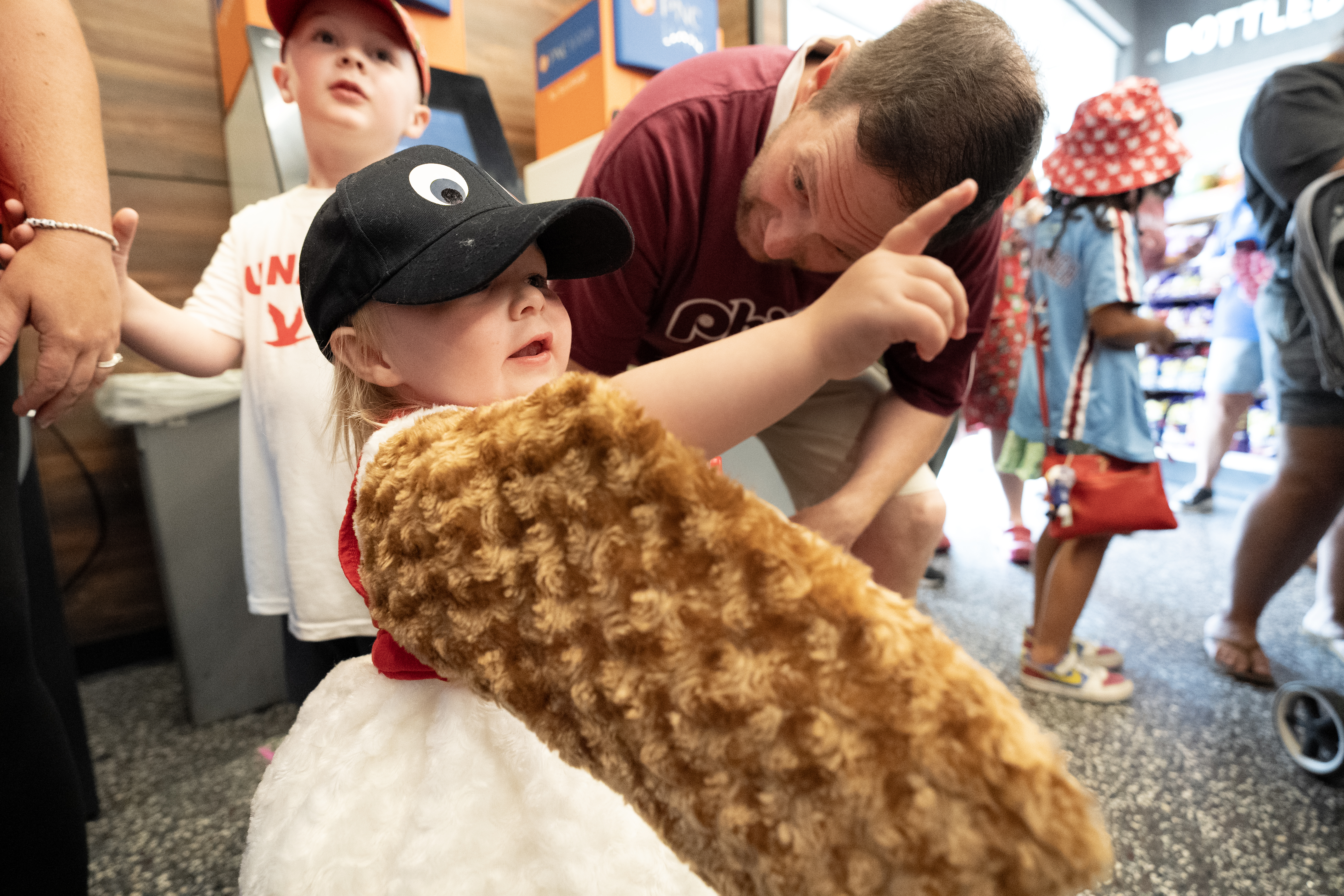
Wawa debuted its new, limited-edition Phanatic Caramel Curveball Cream Smoothie during an event at the chain’s Penrose Avenue store Monday that was part news conference, part pep rally, and perfectly preposterous.
Fans packed the store — for what, they weren’t exactly sure — they just knew it would be a chance to “hang with the Phillie Phanatic and Wally Goose,” according to Wawa’s Facebook page for the event.
The two-birds-one-store offer was enough to bring out a flock of more than 75 people dressed in Phillies, Phanatic, and Wawa gear, including sisters Elizabeth and Jennifer Bertolet of Doylestown. They arrived 90 minutes before the event and decided that whatever was about to happen, it was “going to be awesome.”
“Wally is going to be here and the Phanatic is going to be here. Why wouldn’t we be here?” Elizabeth Bertolet said.
Maggie McNulty, who is dressed as Wally Goose, and her father, Glenn McNulty, attend an event at Wawa’s Penrose Avenue store celebrating the partnership between the Phillies and Wawa. Jessica Griffin / Staff Photographer
Justin Tichy, chief operations officer for Wawa, announced during his remarks that the smoothie is part of a new partnership between Philly’s hometown baseball team and its hometown convenience store.
Fans at Friday’s Phillies’ game against the St. Louis Cardinals will receive a Wawa Kyle Schwarber bobblehead, samples of the Phanatic smoothie, and a chance to see Wally Goose throw out the first ceremonial pitch.
When asked how he’s feeling about taking the mound, Wally shuddered with nervous energy then practiced his pitching wing.
She Willians, of Job Corps culinary, and the Wawa mascot Wally Goose at Wawa’s Penrose Avenue store Monday. Jessica Griffin / Staff Photographer
Perhaps he’ll throw a curveball like Wawa did by not making its Phanatic smoothie green. A source said it’s because the Phanatic is unlikely to put anything green in his smoothie, which 100% tracks. You don’t get that bouncy belly by drinking kale.
When asked what he thought about the new drink bearing his name, the Phanatic raised his arms overhead then circled his belly around in approval.
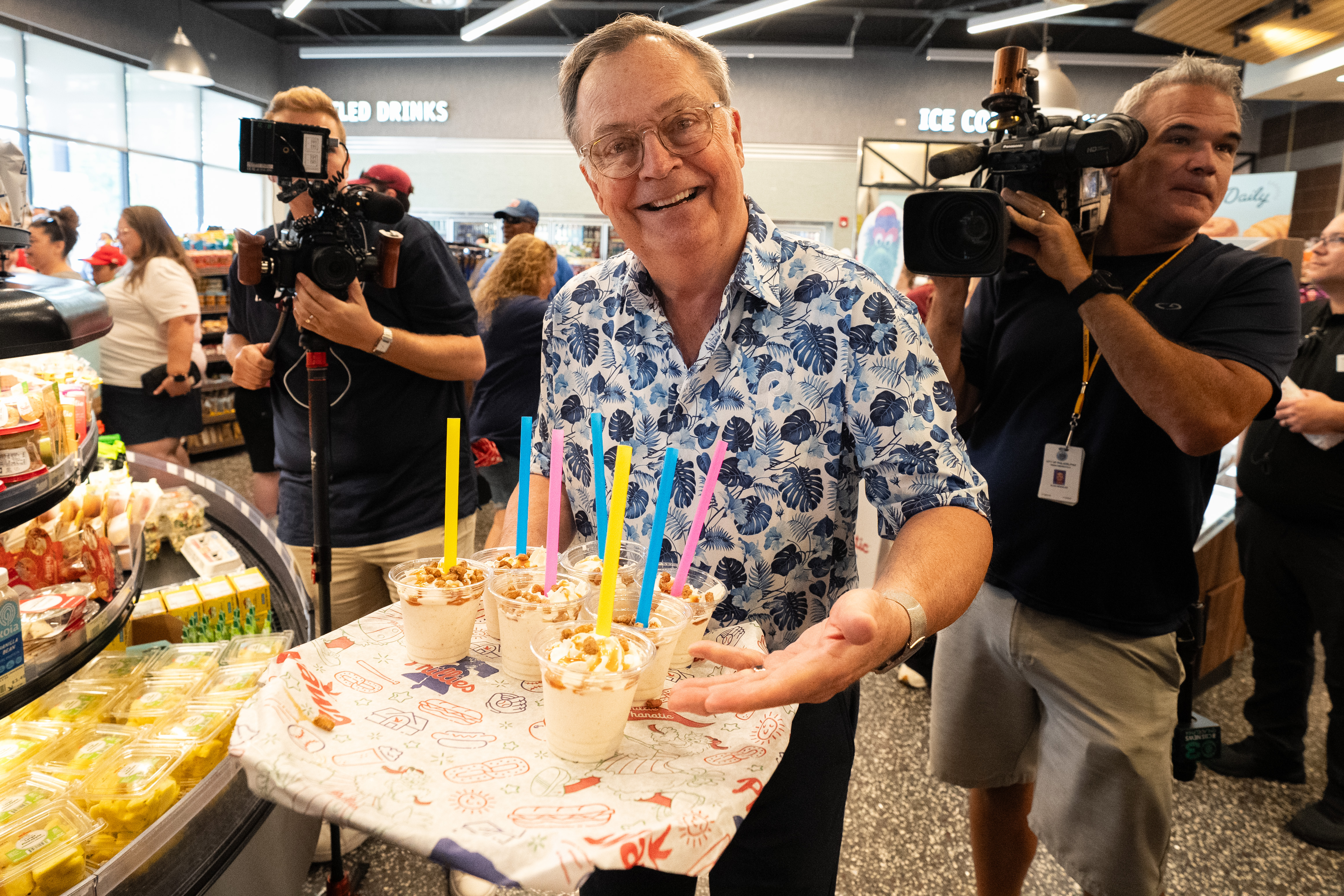
The smoothie is made with vanilla ice cream, caramel sauce, whipped cream, salted caramel syrup, and sea salt pretzel pieces. It comes in a limited-edition cup featuring the Phanatic’s eyes and the tip of his snout and it only comes in one size — phanatically large — clocking in at 970 calories.
Zack Sminkey of Woodstown, N.J., who wore a matching red shirt-and-shorts combo featuring repeating patterns of the Phanatic, brought his 7-year-old daughter Zoe to the event. Both approved of the new smoothie in the big green guy’s honor.
“It’s really good. It’s very ballpark-tasting,” Sminkey said. “I almost feel like it tastes like Cracker Jacks. It’s delicious.”
Jennifer Bertolet described it another way as she and her sister toasted their free samples of smoothie.
“It tastes like World Series win with a sprinkling of Mets tears,” she said.
Phillies ambassador Scott Palmer with a tray of new Wawa limited-edition Phanatic Caramel Curveball Cream Smoothies.Jessica Griffin / Staff Photographer
When Wawa released a limited-edition Gritty Smoothie in the spring in honor of Philly’s prince of chaos, it was only a matter of time before the OG mascot king got one of his own, too.
The partnership between Wawa and the Phillies solidified Wawa as the team’s official hoagie in June. Wawa hoagies now come wrapped in Phillies-themed paper, and the chain is selling red-and-white striped Phillies doughnuts and Phillies-themed kids meals, which come with stickers of the Phanatic and Wally Goose. A portion of the proceeds from the kids meals go to Philabundance.
In turn, Wawa has an increased presence at Citizens Bank Park with new advertising and ballpark activations.
Wally Goose and the Phillie Phanatic represent Wawa and the Phillies at a news conference on Monday about their recently-announced partnership. Jessica Griffin / Staff Photographer
But the Phillies and Wawa were in a situationship long before they made things official this summer. Whenever the Phillies make the playoffs, Wawa brings back its Kyle Schwarber-themed Schwarberfest, a Hoagiefest spinoff featuring discounted hoagies. And in 2024, Bryce Harper was fined by MLB for showing his love for the chain by wearing custom-made Wawa cleats and a headband during a game.
The Phillies and Wawa collaborations, including the Phanatic smoothie, will be available at stores in the region through Sept. 28.
No word on if the offers will be extended in the event of a Red October.
Today while interviewing a woman inside of a Wawa whose baby was dressed like Wally Goose, I was surprise-attacked from behind by the Phanatic, who put me inside of his shirt.
That is a sentence only a Philly journalist could write – and believe and live through.