Tag: Philadelphia Flower Show

  • The Pennsylvania Horticultural Society announces the 2027 Flower Show theme and ticket prices

    The Pennsylvania Horticultural Society announces the 2027 Flower Show theme and ticket prices

    In recognition of the Pennsylvania Horticultural Society’s 200th anniversary, the theme for the 2027 Philadelphia Flower Show is Iconic.

    The annual showcase, scheduled for March 13-21 at the Pennsylvania Convention Center, will feature more than 30 exhibitors whose floral artistry, sprawling gardens, and vast horticultural displays reflect the “power of gardening as a source of beauty, sustenance, and inspiration.”

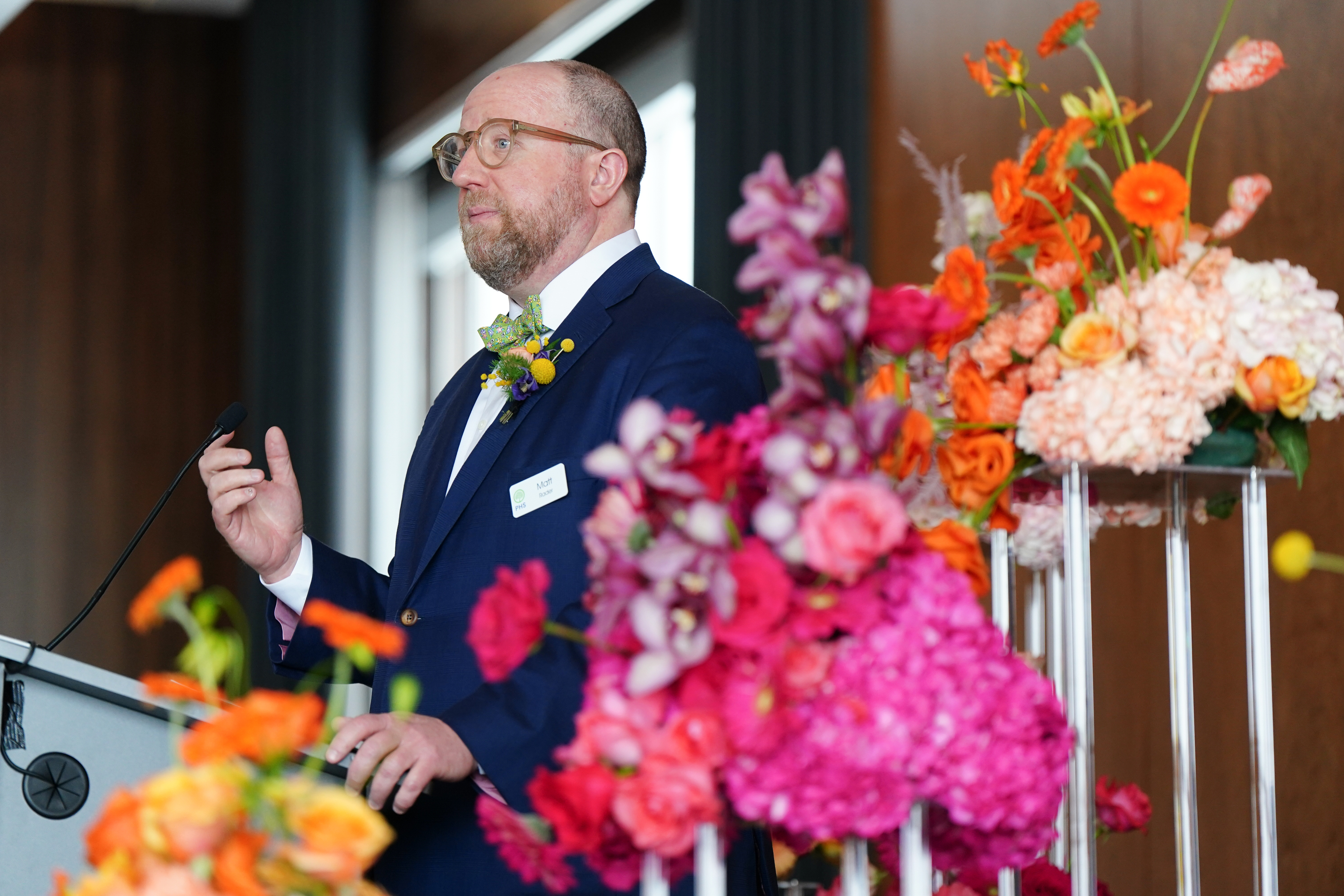
    “Iconic reflects our longstanding belief in the extraordinary power of gardening to shape lives and strengthen communities,” PHS president Matt Rader stated in a news release Wednesday. “The Philadelphia Flower Show has always been where we bring the possibilities of gardening to life on the grandest scale, and there is no better place to celebrate this milestone.”

    PHS, the organizer of the nation’s largest and longest-running horticultural event and fundraiser, is also assembling five historic gardens from across the commonwealth.

    Longwood Gardens, Chanticleer Gardens, Pittsburgh Botanic Garden, Phipps Conservatory and Botanical Gardens, and The Arboretum at Penn State will each present a distinct garden that reflects their horticultural vision.

    This year’s lineup will also see a fashionable spin on the Flower Show’s signature after-hours event. On March 20, the Flowers After Hours: Stylin’ & Wildin’ party invites guests to dress in their favorite animal prints or jungle-inspired looks while enjoying live entertainment, cocktails, music, dancing, and the show’s lush gardens.
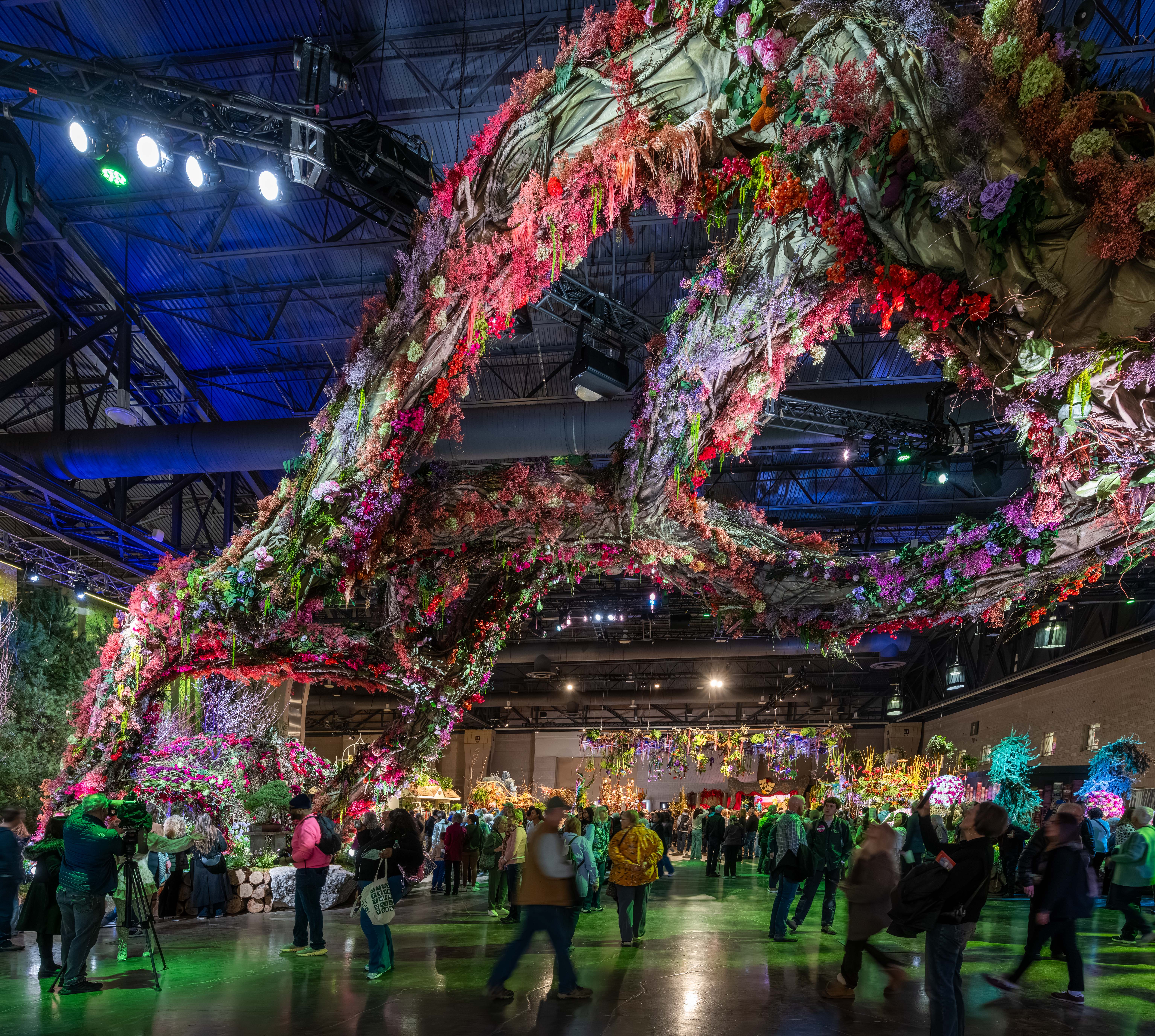
    A photo from the Member’s Preview Day on Feb. 27, 2026, of “Rooted: Origins of American Gardening.”Courtesy of Rob Cardillo

    Other events include competitions among botanical artists and exhibitors and a speaker series led by gardening experts and practitioners that’s designed to send guests home with new ideas and techniques.

    There will also be a marketplace, filled with plants, gardening essentials, and gifts for purchase, as well as a zone for children to explore the world of botanicals through hands-on activities.

    PHS also announced the tiers for single and multiday tickets, which are divided by weekday, weekend, and evening hours.
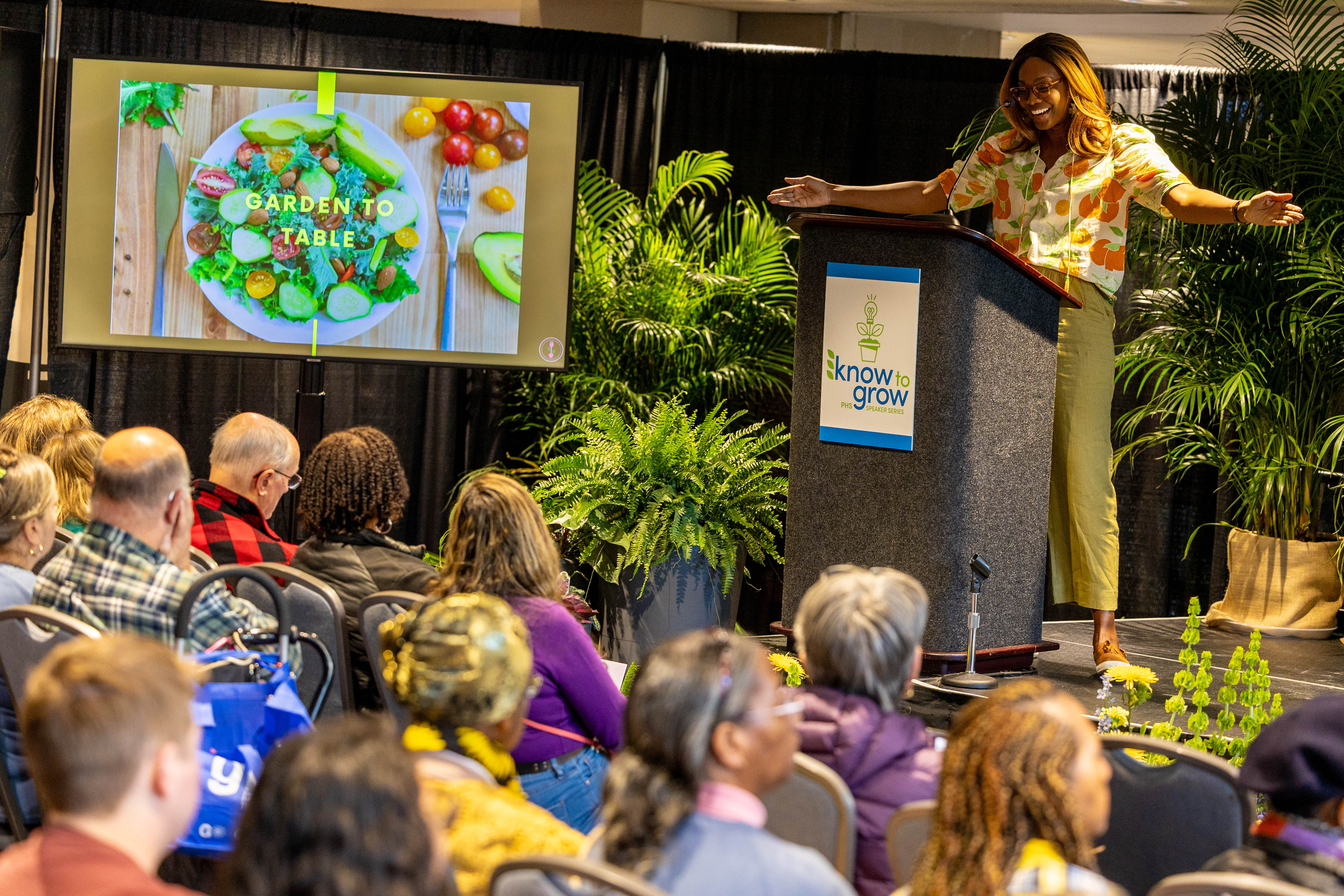
    An image from the 2025 Philadelphia Flower Show.Courtesy of

    From Monday to Thursday, online tickets for adults are $45, and $35 after 4 p.m..

    Tickets for students ages 18-24 and children 5-17 years old are $25 and $20, respectively. Groups of more than 25 people are $38 per person.

    Weekend pricing is $55 for adults, and $45 after 4 p.m. Student and child tickets are $30 and $25 from Friday to Sunday, and groups of 25-plus are $43 per person.

    The Adult Flex Pass, which offers one-time admission on any day of the Flower Show, is $60. The Floral Fantastic Pass provides daily entry throughout the show, priced at $105 per guest.
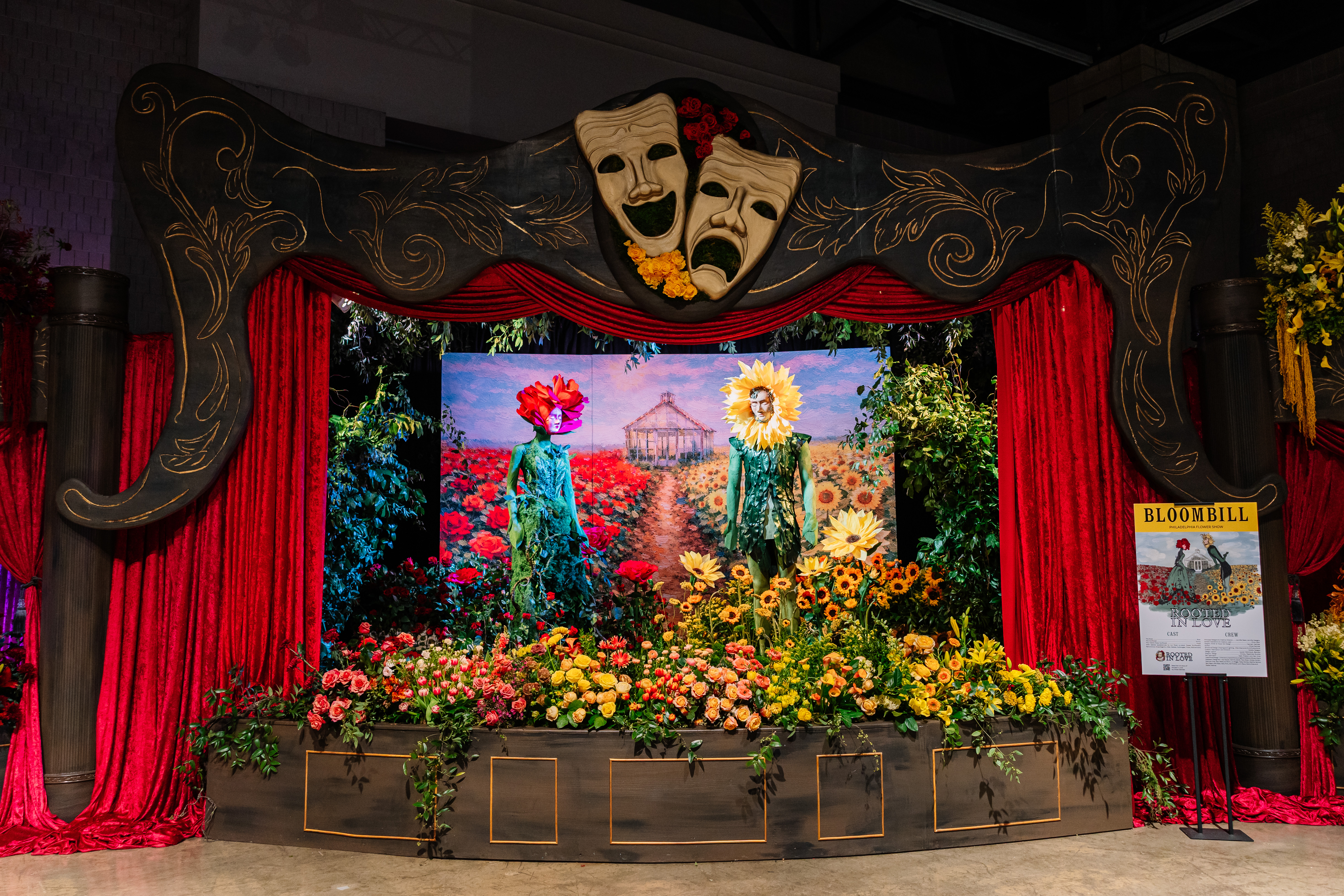
    A photo from the 2026 Member’s Preview Day.Courtesy of Becca Mathias

    Box office tickets are $20 for children to $50 for adults on weekdays, and $25 to $60 on weekends.

    PHS members at the Activist-level or higher receive free access to the show.

    All prices are subject to change and each ticket will incur a $3 processing fee, according to the PHS website.

    For more information, visit phsonline.org.
  • Pennsylvania Horticultural Society is moving its office to West Market Street

    Pennsylvania Horticultural Society is moving its office to West Market Street

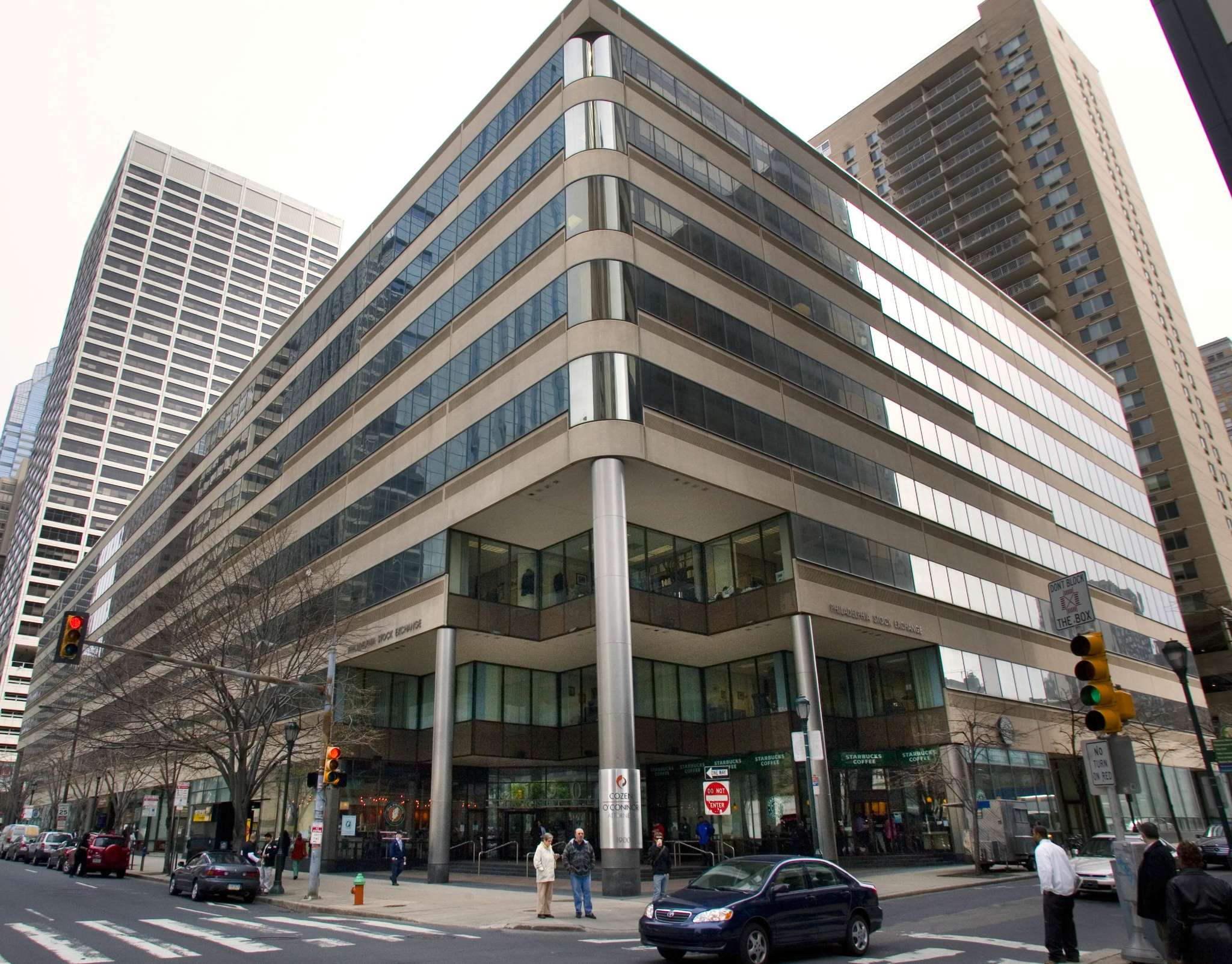
    The Pennsylvania Horticultural Society is moving to West Market Street after 30 years at 20th and Arch, as the nonprofit behind the Philadelphia Flower Show requires employees to work at the office more regularly.

    The move comes as PHS prepares to mark its 200th anniversary next year.

    PHS’s roughly 100 office-based employees have worked on a hybrid schedule since 2022, president Matt Rader said. The in-person cadence ranges from a couple days a week to a couple times a month, he said.

    That will change starting in the spring at PHS’s new office at 1900 Market St., where the organization signed a 16-year lease. Rader said employees would be required to come into the office three days a week.

    In its current building at 100 N. 20th St., PHS leases 31,000 square feet, subleasing two-thirds of that space to another tenant, Big Brothers Big Sisters. Its workforce is split into two suites on different floors. The new location, at the site of the former Philadelphia Stock Exchange building, is a single space spanning 18,000 square feet.

    “Our current office space that we’re occupying is quite small because we’ve been on this largely hybrid model, and we wanted to move into a situation where we could have the team comfortably in-office three days a week and have everybody in one space,” Rader said.

    Matt Rader, president of the Pennsylvania Horticultural Society, in 2024.Jessica Griffin / Staff Photographer

    “PHS, despite being two centuries old, has the nimbleness of a start-up,” he said. “We’ve been in a significant chapter of growth, particularly in our neighborhood work. We do a lot of work around tree planting, community gardening, vacant land greening, small-business development, and job training across the city and region, and that work has grown significantly since 2019.”

    Staying in Center City was an easy decision, Rader said.

    “We believe very much in Center City,” he said. “We work in more than 230 city and suburban neighborhoods. So our PHS community of supporters, volunteers, staff is kind of everywhere.”

    That means easy access to public transit is important, Rader said.

    1900 Market is owned by Brandywine Realty Trust, Philadelphia’s biggest office landlord. PHS’s move was first reported by the Philadelphia Business Journal.

    As for its 200th anniversary, PHS plans to double down on its neighborhood greening work, invest more in the annual Flower Show, and launch a new vision, Rader said: “Every person, every place, gardening for the greater good.”

    “Our job is to scale up the places and people involved in using gardening to improve the health and well-being of the region, and we see this new headquarters office space as a great first step on that journey,” he said.

  • On a tree-lined Fairmount row, a newer resident became an instant gardening prizewinner

    On a tree-lined Fairmount row, a newer resident became an instant gardening prizewinner

    Toward the end of April, Noah Johnson’s street in Fairmount fills with pink cherry blossoms. The cherry trees may have been planted, he believes, when rowhouses were built in 1876.

    Longtime Fairmounters call the block Centennial Boulevard. The homes were designed to showcase the latest trend in residential architecture as part of the celebration of the 100th anniversary of the signing of the Declaration of Independence.

    The three-story homes were faced with stucco modeled to resemble stone and had tiled mansard roofs and enviable front gardens. Most houses in Fairmount, then and now, have small backyards but no front yards. Owners compensate with window boxes and planters.

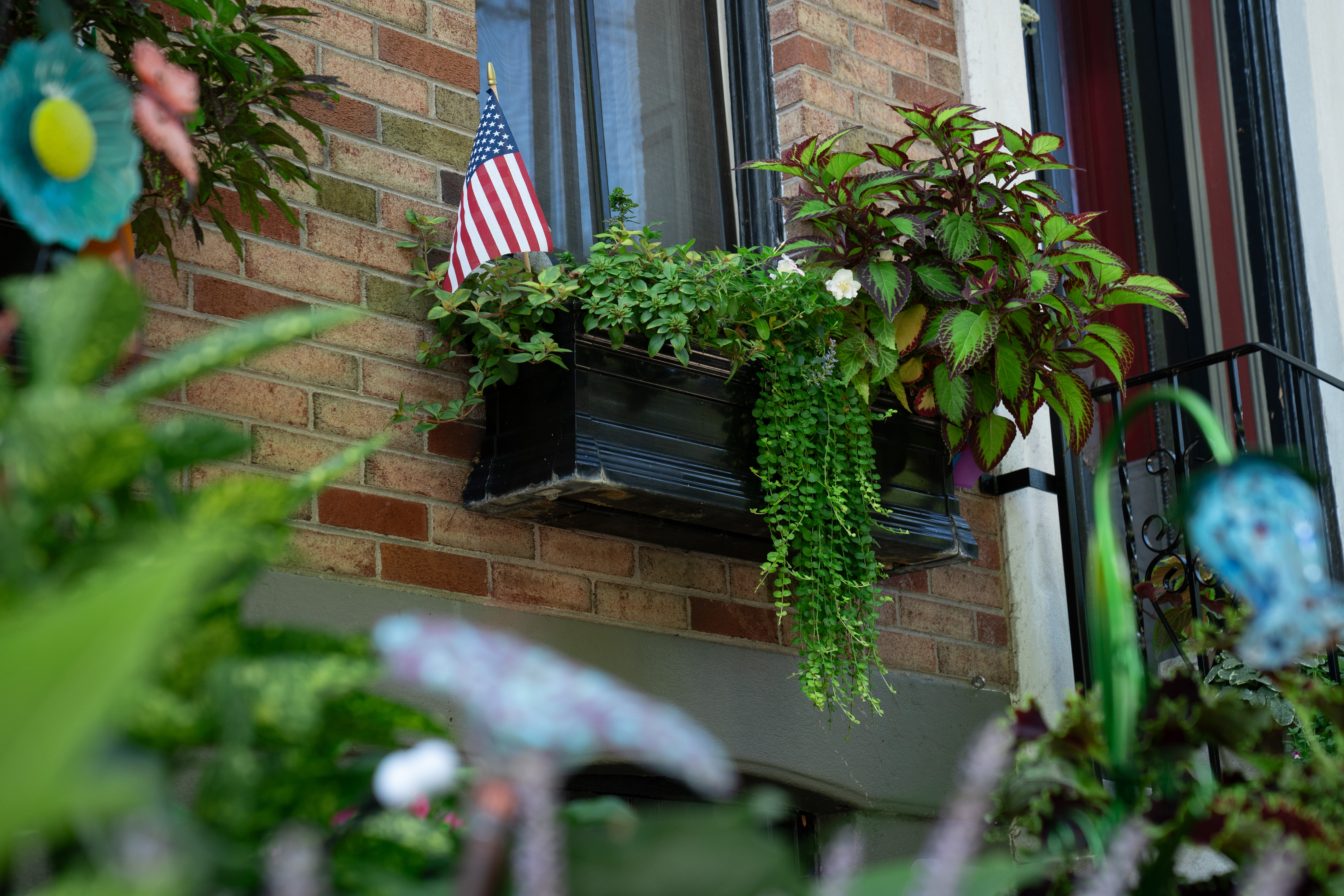
    A window box at Burns and Johnson’s Fairmount home.Sarah Silbiger / For The Inquirer
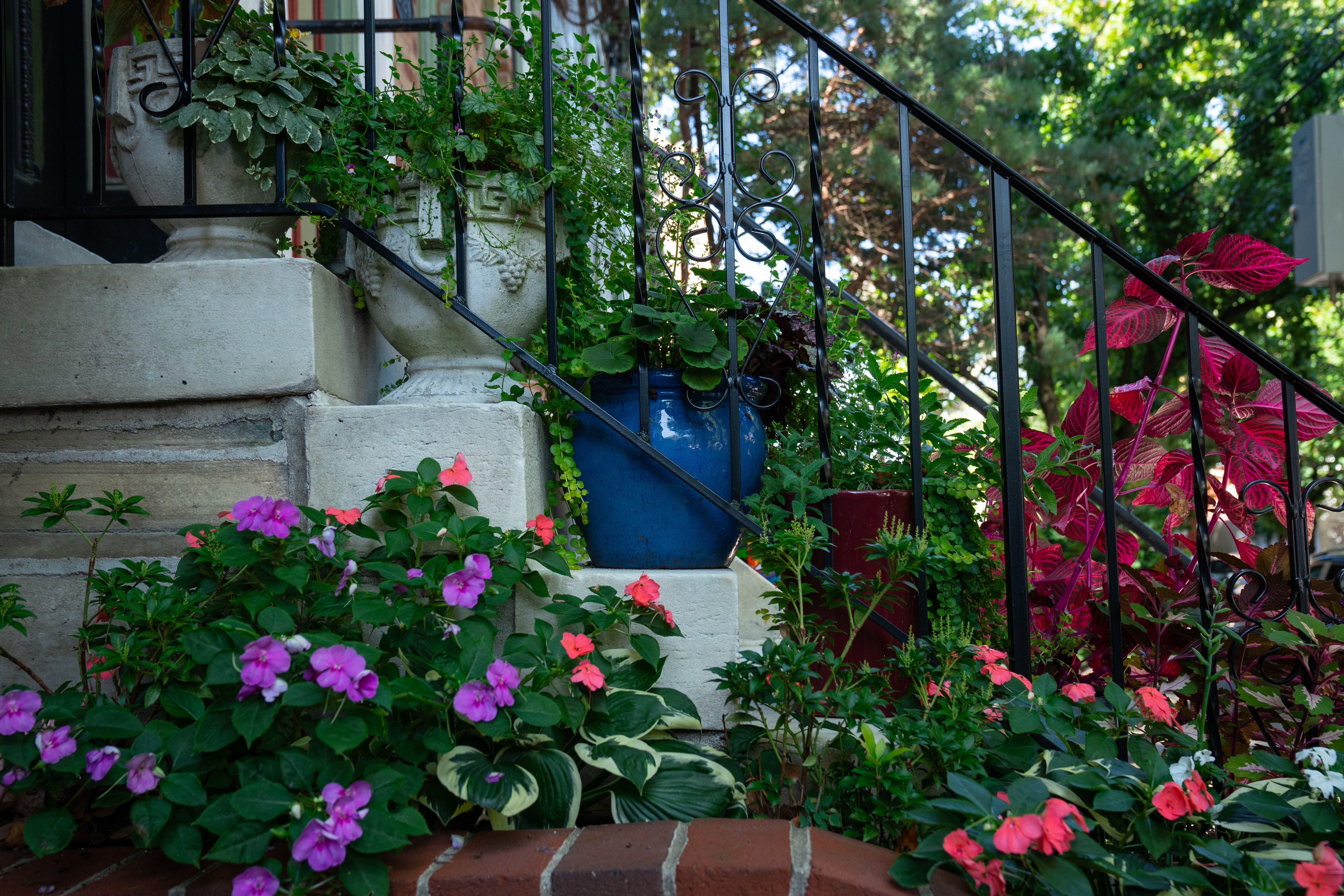
    Impatiens and verdant potted plants line the front steps of the home.Sarah Silbiger / For The Inquirer

    Over the last 150 years, the “Centennial” homes have been altered. Some have been re-stuccoed or faced with brick. But they all still have their front gardens.

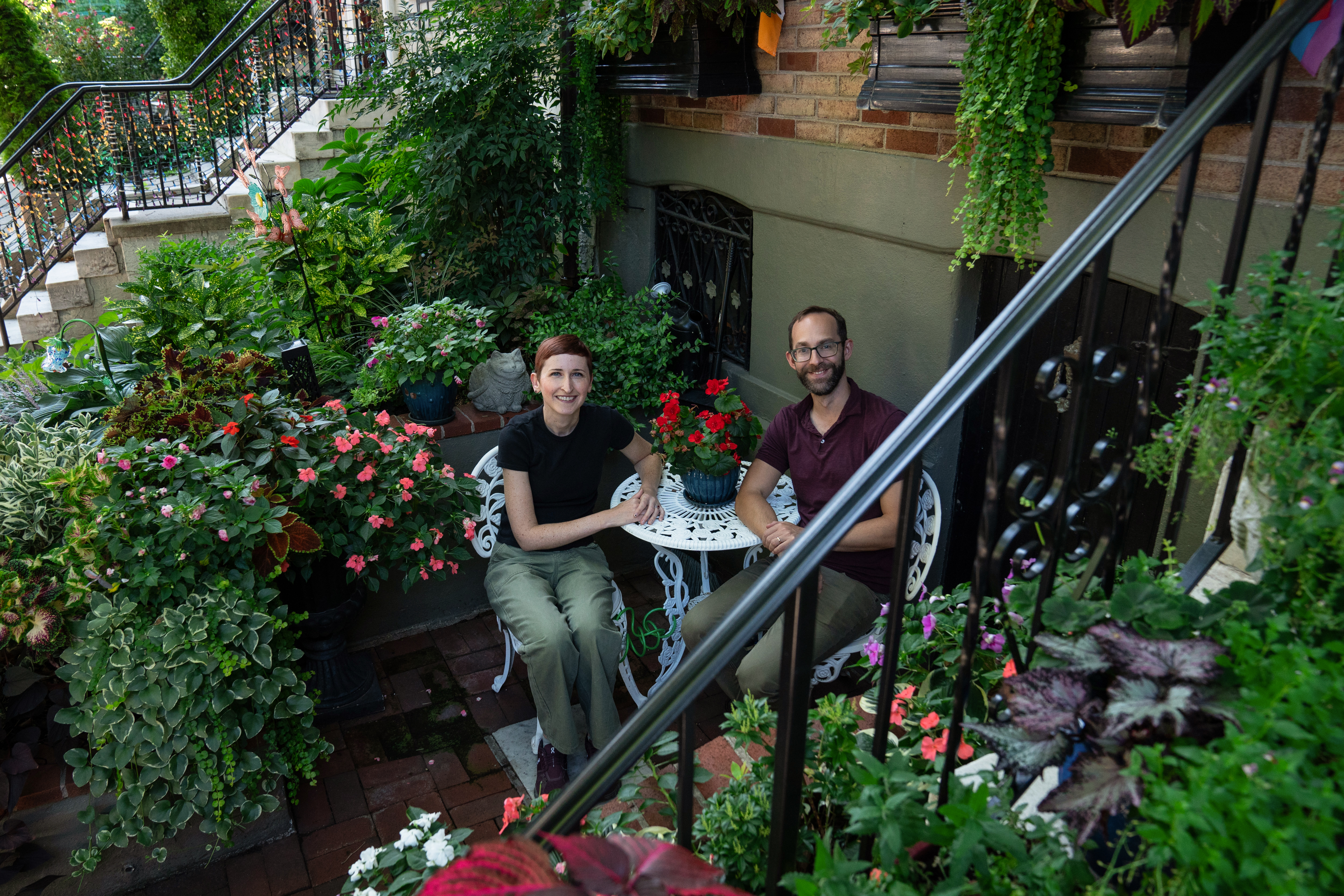
    Johnson and his wife, Charlotte Burns, like their neighbors, have planted their precious plot with flowers and greenery.

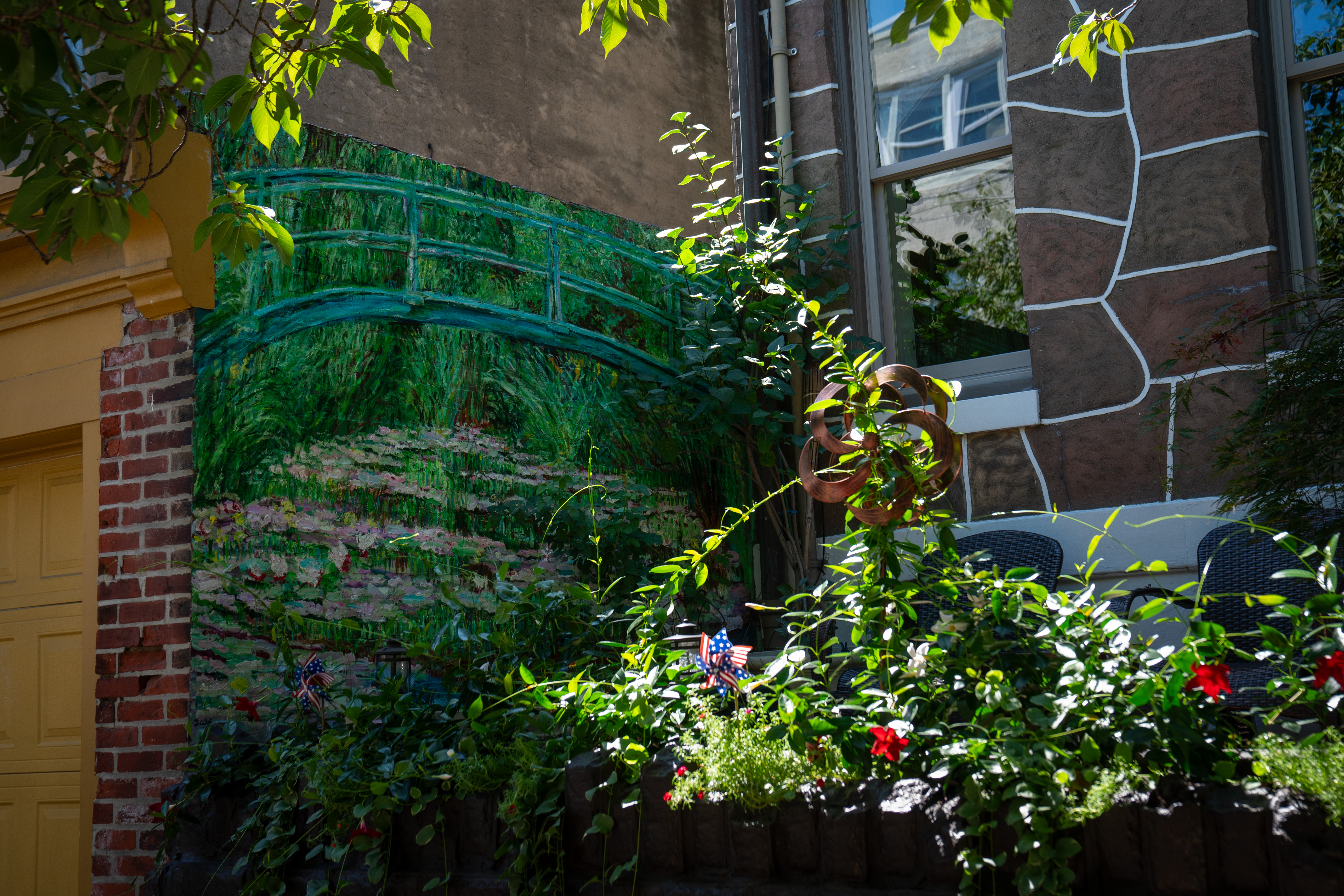
    The floral motif begins at the east end of the block, where Brian Augustine has painted a mural on the garage wall adjacent to his house. Augustine, a contractor and amateur artist, copied a Claude Monet painting of the garden at Giverny, the famous impressionist’s home in France. Augustine planted white rocktrumpet vines in his garden to complement the white water lilies in the mural.

    A mural by Brian Augustine, imitating a Monet painting, is seen in the neighborhood, known as Centennial Boulevard.Sarah Silbiger / For The Inquirer

    Farther down the block Sam Cifelli has wound Christmas lights around the handrail going up his front steps next to shrubbery. He adds more lights during the holidays to the delight of Johnson and Burns, who live next door.

    The couple purchased their four-bedroom, 2½-bath home in February 2025. Johnson said he let Charlotte do all the gardening.

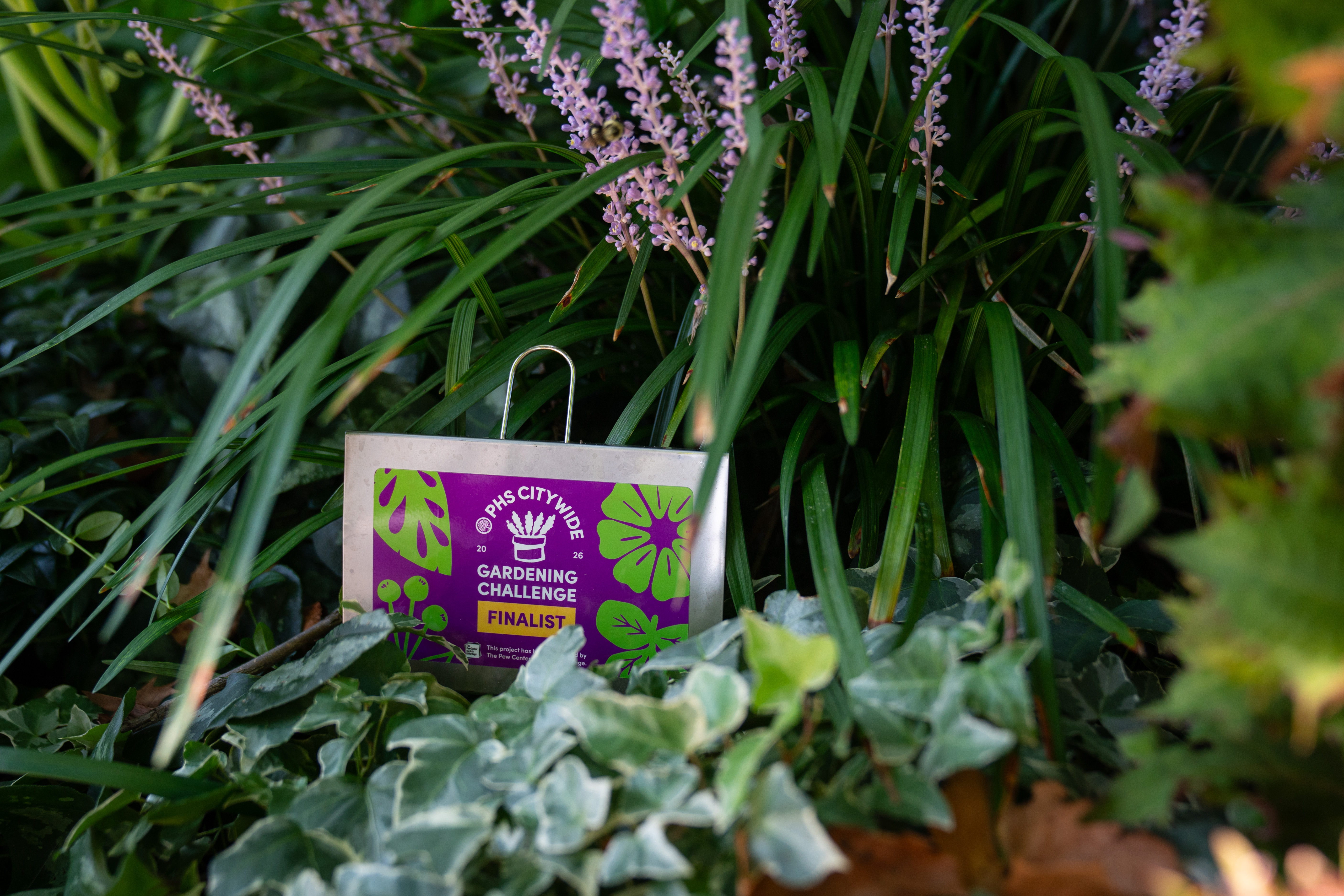
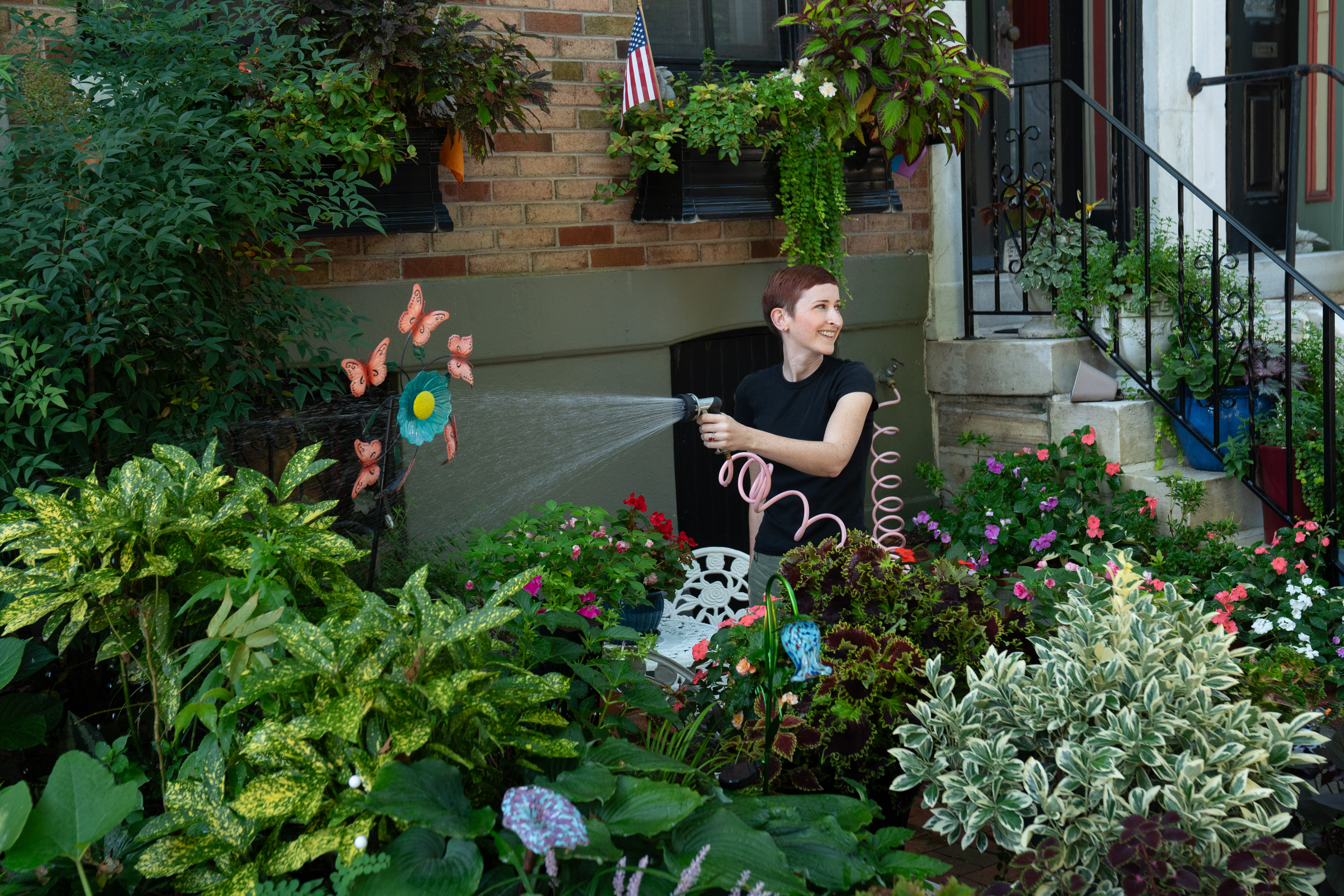
    By summer, Burns’ plantings were so lush a neighbor gave her a flier about the Flowering Fronts of Fairmount Competition sponsored by the Fairmount Civic Association. Burns entered the contest and won a prize. This summer she was a finalist in the Pennsylvania Horticultural Society’s Citywide Gardening Challenge.

    A plaque from the Pennsylvania Horticultural Society 2026 Gardening Challenge sits in front of some purple liriope.Sarah Silbiger / For The Inquirer
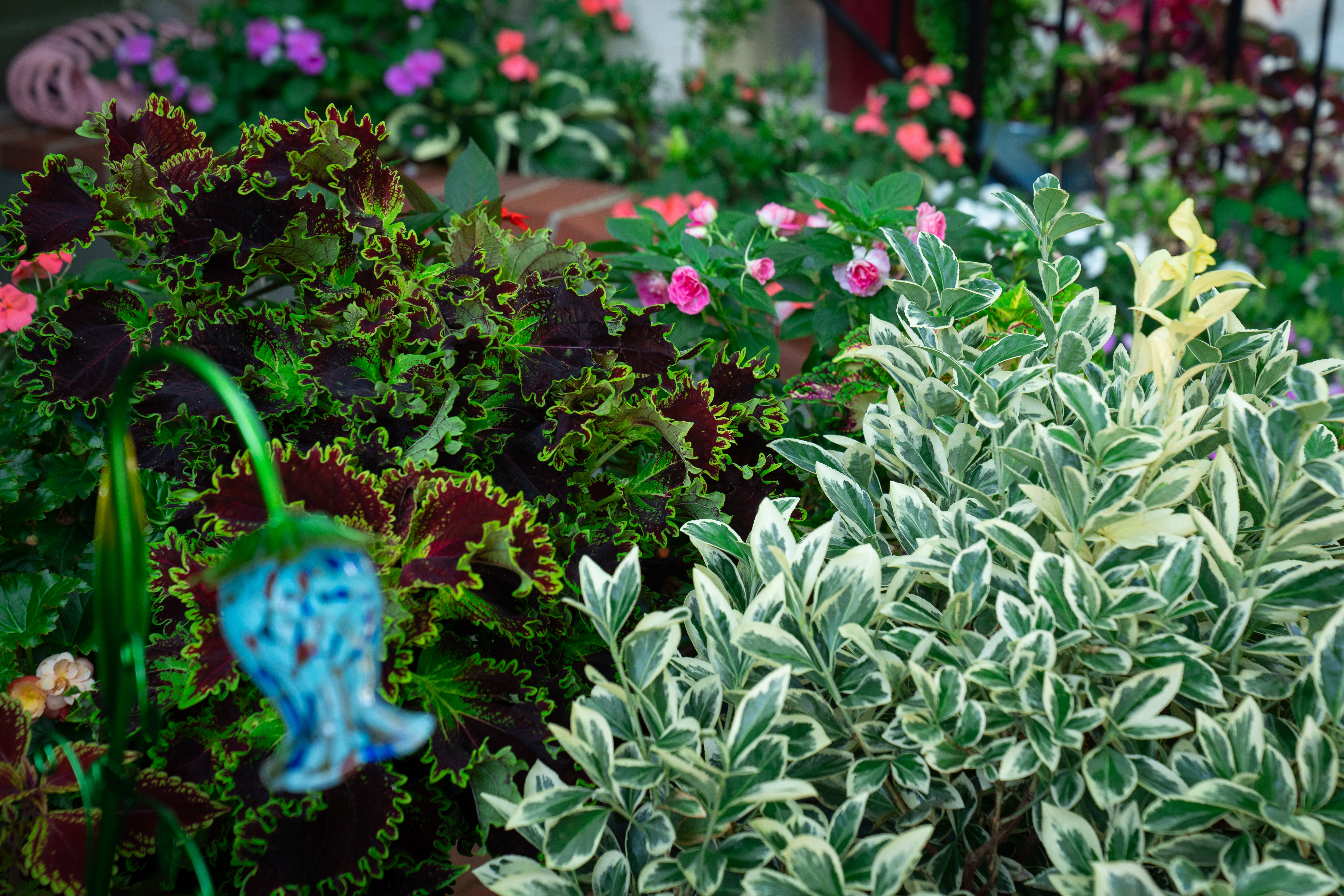
    Coleus and Silver King Euonymus, with flowers behind.Sarah Silbiger / For The Inquirer

    Burns’ success wasn’t just beginner’s luck. She grew up watching her landscape designer father, Brian Burns, at work. Before moving to Philadelphia she gardened at a house she and her husband rented in Georgia.

    Burns kept the English ivy and the heavenly bamboo she found in the garden and purchased annuals including begonias, impatiens, vincas, and multihued coleus at the local Ace Hardware store.

    Her father helped Burns choose and plant perennials such as spikes of purple liriope, Silver King Euonymus — which has green, leathery leaves edged in white and speckled with gold dust — red-tinged pieris japonica and glossy abelia.

    Gardening is challenging. While Burns’ creeping Jenny, an annual, “grew back this year,” she said, the hydrangea did not bloom, and she had to use a pesticide “for the first time” to remedy a lace bug infestation on the Japanese hosta.

    Charlotte Burns waters her prize-winning garden.Sarah Silbiger / For The Inquirer

    Besides planting in the ground, Burns has filled window boxes and ceramic pots with colorful plants that line her front steps.

    On the brick patio in the middle of the garden red begonias in a blue pot are centered on the white wrought iron table. She found the table and matching chairs at a Bucks County estate sale.

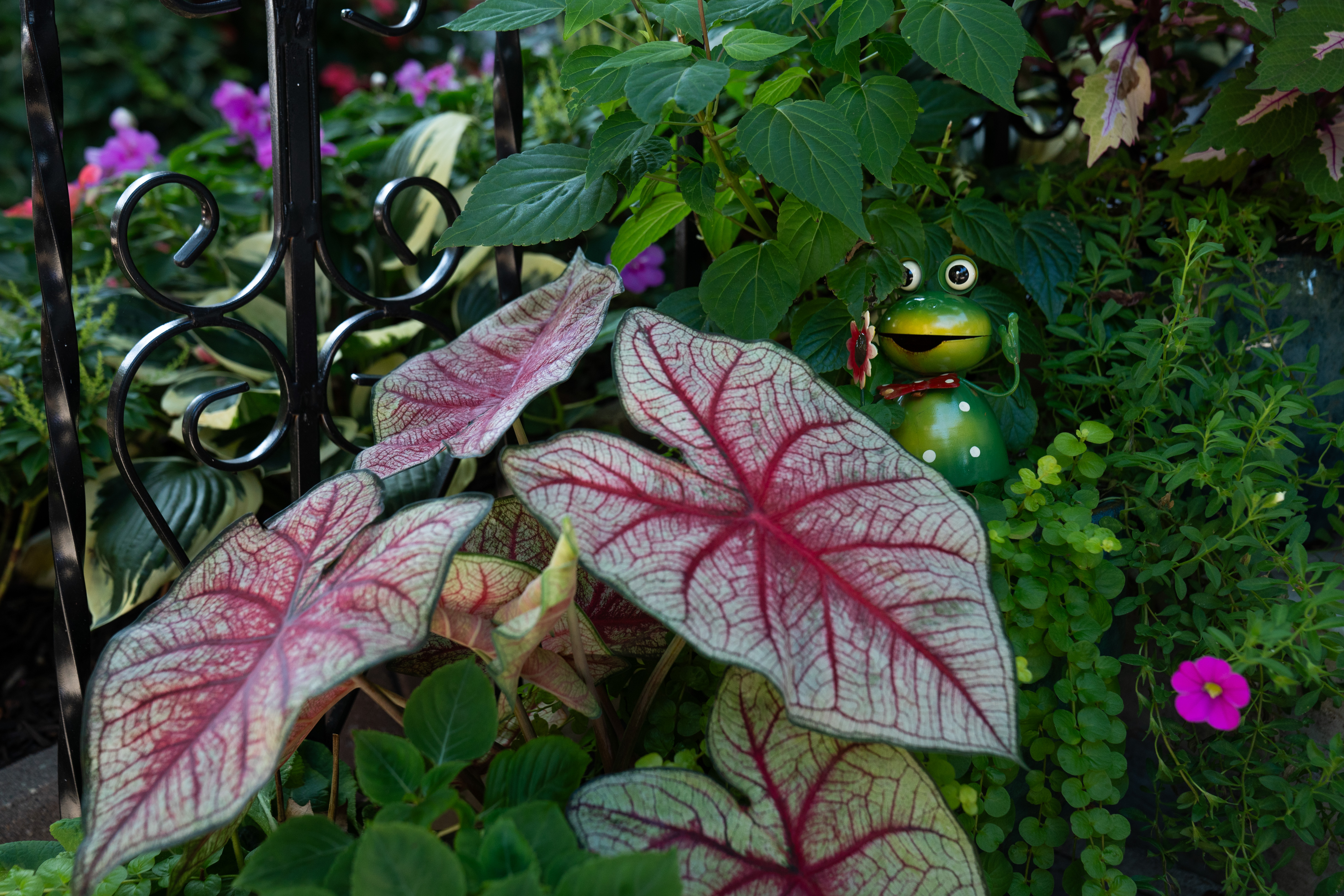
    Burns embellished the garden with glass birds from the Pennsylvania Renaissance Faire and glass flowers from the Philadelphia Flower Show. A ceramic frog was purchased at the annual Fairmount Flea Market. The cat banner and front door wreath were gifts from her mother, Cheryl Cunningham.

    Johnson helps his wife with the heavy lifting, spreading bags of mulch, and moving the pots to the basement for storage in the winter.

    Burns, a veterinary anesthesiologist, and Johnson, a battery scientist, met as students at Drexel University and married in 2021.

    A frog figurine peeks out from behind caladiums and other greenery.Sarah Silbiger / For The Inquirer
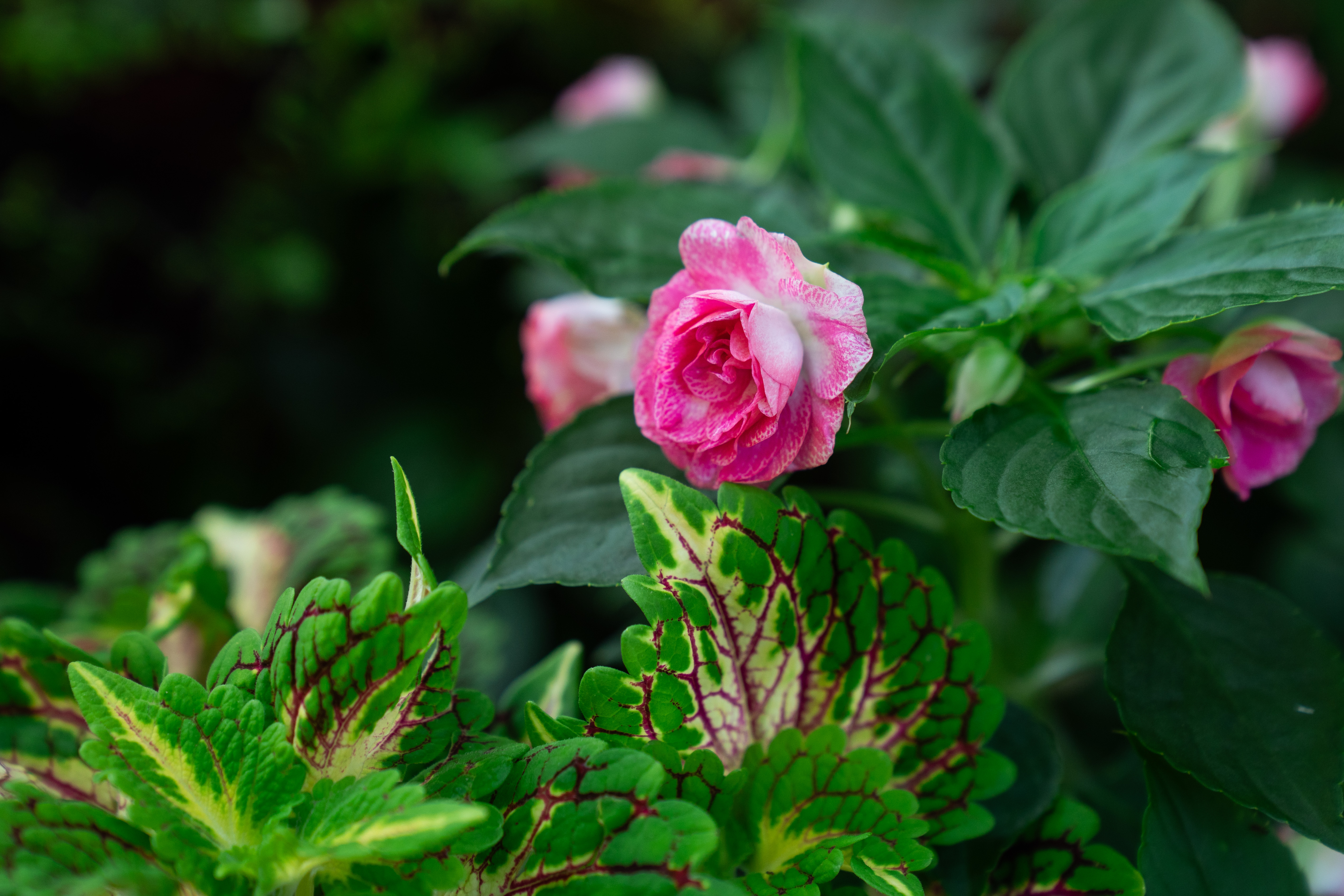
    A rose in bloom among the coleus.Sarah Silbiger / For The Inquirer

    The couple had permission to string lights around Mario and Anna Crociata’s oak tree next door.

    Burns planted periwinkle and hosta in the tree well and created a miniature village with gnomes and tiny houses. If an enchanted child takes one of the gnomes, Burns will purchase more at the nearby dollar store.

    They hope Fairmounters will enjoy the flowering fronts on Centennial Boulevard for another 150 years.

    Is your house a Haven? Nominate your home by email (and send some digital photographs) at properties@inquirer.com.