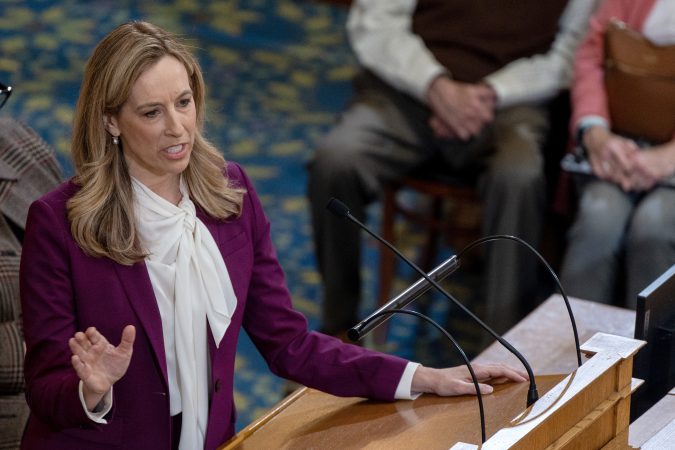
The overall approval rating for the first-termDemocratic governor also remains steady eight months into her tenure, the poll said.
The poll found 44% of New Jerseyans approve of the way Sherrill is handling her job, 34% disapprove, and 22% are unsure. The poll was conducted from Sept. 24 through 27, a period covering the investigation’s release and former Lt. Gov. Dale Caldwell’s resignation.
South Jersey residents were less supportive of Sherrill, however, with 33% approving of her performance, 47% disapproving, and 21% unsure.
(function() {
var l2 = function() {
new pym.Parent(‘SHERRILLPOLL3.html’,
‘https://media.inquirer.com/storage/inquirer/projects/innovation/arcgis_iframe/SHERRILLPOLL3.html’);
};
if (typeof(pym) === ‘undefined’) {
var h = document.getElementsByTagName(‘head’)[0],
s = document.createElement(‘script’);
s.type = ‘text/javascript’;
s.src = ‘https://pym.nprapps.org/pym.v1.min.js’;
s.onload = l2;
h.appendChild(s);
} else {
l2();
}
})();
“Gov. Sherrill’s approval numbers look much like they did at 100 days, which in this political climate — and after a challenging summer — is itself an accomplishment,” said Ashley Koning, an assistant research professor and director of the Eagleton Center for Public Interest Polling at Rutgers University-New Brunswick.
”She continues to draw more positive reactions than negative ones, and more New Jerseyans have formed an impression of her than had of Phil Murphy at this same point in his first term,” Koning said. “But a quarter of residents still have no opinion of her almost a year in, and how those New Jerseyans eventually break will decide whether her net positive ratings hold.”
Stephen Sigmund, a spokesperson for Sherrill, said the poll reflects how the governor has approached the job.
“Since day one, Gov. Sherrill has been taking action to drive down costs, build a stronger future for our kids, make Trenton more accountable, and stand up to Donald Trump’s attacks on our state. That work is resonating with New Jerseyans, and her focus will always be on delivering for them,” Sigmund said.
The pollster asked participants to evaluate how well she had handled the independent investigation into claims that Caldwell used his job to meet women.
The center had to adjust the question to reflect Caldwell’s resignation last Friday, but there was no statistically significant difference in how people responded. The poll found 68% saying she handled the situation “very well” or “somewhat well,” 14% “not very well” or “not well” at all, and 19% were unsure, the poll said.
Sherrill released the independent counsel’s report, which corroborated allegations of sexual harassment, last Thursday. Caldwell resigned the following day. He and his attorney, Thomas Calcagni, denied any wrongdoing and called the investigation flawed.
“She brought in an outside investigator and then called publicly for her own lieutenant governor to resign, and most residents read that as accountability rather than protecting her own or politics as usual,” Koning said.
The governor released a 61-page report from a monthlong investigation conducted by an outside law firm late Thursday afternoon. The report said Caldwell had made inappropriate comments to women and violated ethics rules. Caldwell, a minister, is the former president of Centenary University.
According to the report, Caldwell made a “romantic advance toward a female staffer’s friend.” When she turned him down, Caldwell told the staffer that ambitious women like her and her friend needed a man in his position to help them “but you young women are looking for young sperm,” according to the report.
Although Sherrill’s marks are favorable, participants were less optimistic on the direction of the state, with 43% saying New Jersey was on the wrong track, 37% on the right track, and 20% unsure.
The poll also asked residents their opinion on President Donald Trump. He remained overwhelmingly unpopular in New Jersey, with 24% saying they had a favorable impression of him, 66% unfavorable, and 10% no opinion.
In South Jersey, 60% of residents had an unfavorable opinion, 30% had a favorable opinion, and 10% had no opinion. The poll defined South Jersey as Camden, Burlington, Gloucester, Cumberland, Salem, and Cape May Counties.
The results are based on a survey of 1,004 adults. The poll has a margin of error of plus or minus 4.1 percentage points.
Getting all prekindergarten students to consistently attend school has proven to be a challenge as the Cherry Hill district rapidly expands its program for early learners.
Absenteeism rates among the district’s pre-K students is second only to Cherry Hill high school seniors, the grade with the highest chronic absenteeism rate, according to state data. The district’s experience is similar to other districts rolling out pre-K programs with state funding, which reaches $1.4 billion in the latest budget.
“Unfortunately, I have to say that preschool had one of the highest rates of chronic absenteeism,” Farrah Mahan, assistant superintendent for pre-K to grade 12 and curriculum, told school board members at this week’s meeting. She explained some tactics being used to combat high absenteeism.
The chronic absenteeism rate, a widely used measure in education, shows the percentage of students absent 10% or more days in the school year.
In Cherry Hill public schools in 2024-25, the latest year available, the rate for Cherry Hill pre-K students was 23.5% compared with a statewide average of 29.9%, according to the New Jersey Education Department School Performance Reports.
Overall, the district’s rate was 14%, slightly less than the state average of 14.4%. However, 25.8% of all high school seniors were chronically absent — more than the statewide average of 21%.
The district’s preschool social workers and other staff members have been working with parents to get the youngest children to attend school, Mahan said.
“They’ve really been acting almost as like a social service agency, which is really sometimes what our families need, making sure that they are connected to the appropriate resources that are available in the community to ensure that their child is able to get to school on a daily basis,” she told board members.
Sometimes it is as simple as greeting students at the bus or as they’re exiting the family car in the morning or providing extra attention during the school day, she said.
“But we’ve also had some tough conversations like, this really matters,” Mahan said. “When you were in a private preschool location, maybe it was OK to take a vacation that second week, because it was more convenient and a little bit cheaper for families. But really expect your preschooler, if they’re enrolled in the program, to be in school.”
She said the focus has resulted in reducing the chronic absenteeism rates among the preschoolers.
Mahan joked that when schools open on Wednesday she looks forward to welcoming the Class of 2041.
Pre-K enrollment has increased sharply in Cherry Hill and some other districts as former Gov. Phil Murphy and Gov. Mikie Sherrill have supported free and expanded access to early childhood education.
Cherry Hill and other districts have had to rely heavily on private providers to help take on the growing enrollment as parents shift from privately paid to publicly funded preschool. The district has two district preschool locations and uses nine private providers.
With its expansion to 11 sites last year, the district was able to clear the initial wait list, Mahan said. All 559 students who applied for a pre-K seat were accepted, so the district opened up the list to additional families. A total of 93 applied and the district could offer spots for 34.
In the new school year, nearly 900 preschoolers have been offered spots. The total will include 740 general education seats, 55 preschool inclusion seats, and 96 disabled student seats, Mahan said.
The district’s program has grown from 17 classrooms after preschool expansion was announced in 2023 to 53 classrooms in the 2026-27 school year.
Mahan said the goal is to eventually expand to a projected 1,700 seats — more than a 90% increase over this coming year’s group. She said 110 classrooms will be needed to accommodate the enrollment.
The district’s private providers for the new school year are Adventure Kids, Cadence Academy, Discovery Corner, Goddard School, KinderCare, Lightbridge Academy. Primrose School, Chesterbrook Academy of Voorhees, Mosaic Early Learning of Oakland. The two in-district locations are at Kilmer Elementary School and the Malberg Early Childhood Center.
“Children who participate in early childhood education programs generally enter kindergarten with stronger foundational skills,” Mahan told the board. “The research in early childhood education states that early learning environments foster essential language skills, early literacy, and basic math concepts,” she said.
Supervision of curriculum and teaching at all 11 locations is important to the preschool program, she explained.
“It is imperative that we have consistency across all of our locations. So when we speak about our preschool private provider locations and our in-district locations, we talk about consistency across all of our guidelines, our curriculum,” Mahan said.
70and73.com is a hyperlocal news site focused on South Jersey, including the communities of Cherry Hill, Evesham, Mount Laurel, Voorhees, Medford, Medford Lakes, and Moorestown.
New Jersey students are going back to school with a new phone-free routine in September.
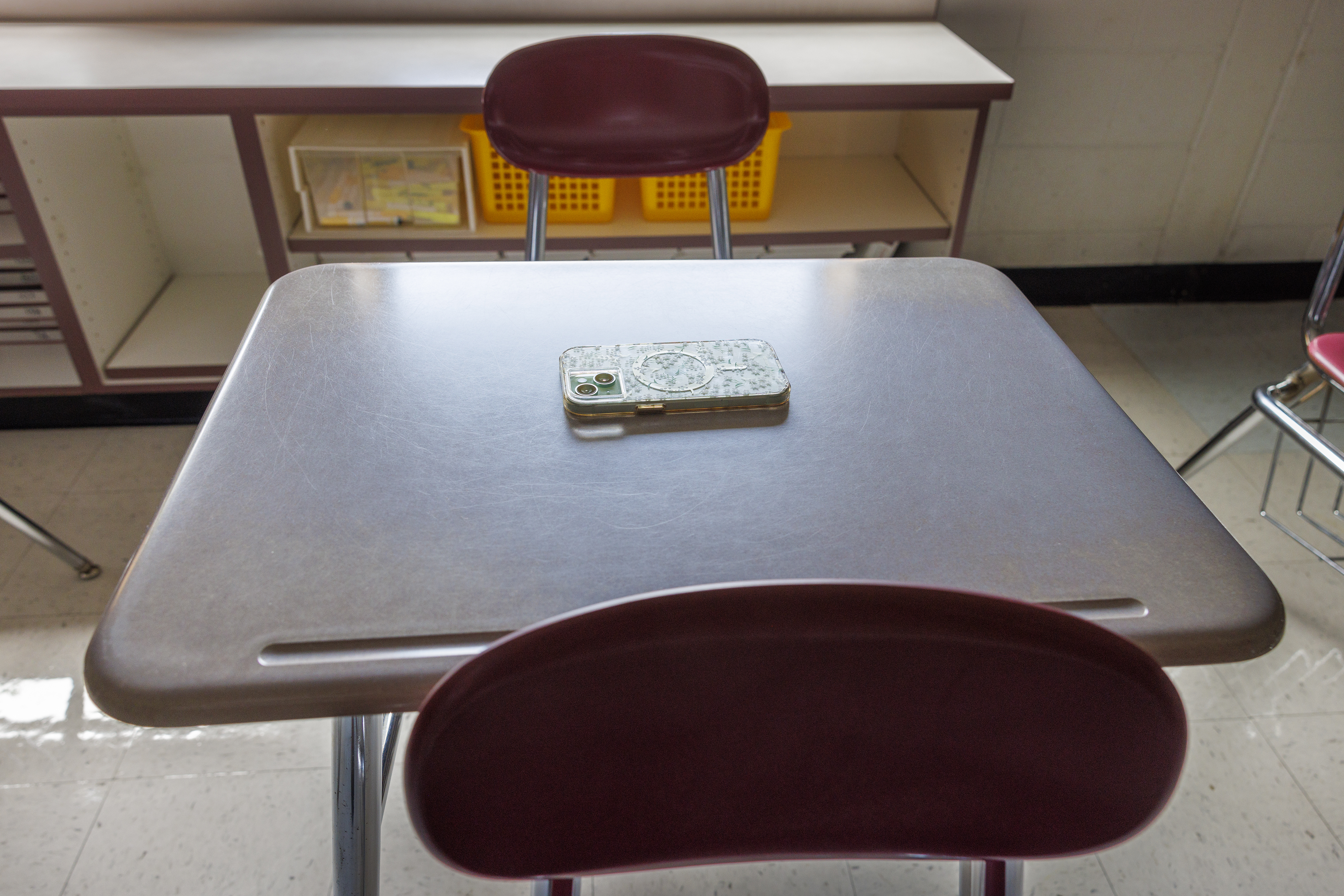
Starting on the first day of classes, all K-12 students in public schools must power off and put away phones and most internet-enabled devices before the bell rings, with only a few exceptions.
Heartily endorsed by educators who believe it will ease classroom distractions, promote academic performance, and improve student mental health, New Jersey’s new rule marks a big change for students accustomed to having their cellphones and other devices nearby and checking them regularly — even during class.
Some districts, such as Cherry Hill and Woodbury, have voluntarily implemented cell phone bans. Woodbury Superintendent Andrew Bell said most students embraced the restrictions and spend more time interacting with each other during breaks.
“At this point, it’s simply part of our culture and daily routine,” Bell said of the cell-free policy, passed two years ago.
The state left it to local school boards to determine how to implement the law at a district level, while complying with the guidelines. Because policies may vary, parents and students should check with their local district.
The law requires the state’s nearly 600 public school districts to adopt a policy banning the use of cell phones and other personal devices for the entire school day. The law allows some flexibility on enforcement and how the devices are stored.
The state Department of Education issued guidelines this summer to help district set local policies. Some districts including Cherry Hill in Camden County and Washington Township in Gloucester County this month are voting on amending existing policies.
Districts had to decide whether students would be required to store their phones in their lockers or bins, in locked pouches, or in their backpacks with their personal belongings. The devices must be powered off.
The guidelines apply to all internet-enabled devices, typically smartphones, smartwatches, smart glasses, and ear buds, or any device that can access online content.
Some districts have also included other communication devices like flip phones, two-way radios, and walkie-talkies. Some rules may vary, for age appropriateness, depending on grade level, too.
What is bell-to-bell?
Cherry Hill school board member Bridget Palmer explained the restriction this way at a recent board meeting: “The minute you walk in to the meeting, you leave.”
The law restricts students from using their phones during lunch and study hall periods.
Districts get to decide whether phones can be used before and after school on school grounds, on school buses, and during school-sponsored events, such as athletic events and extracurricular activities.
“We’re not going to tell kids they can’t use their phones when they’re at Disney,” Washington Township Superintendent Eric Hibbs said at a board meeting. “We couldn’t enforce it anyway.”
Districts must also provide parameters for how and when parents can contact their children during an emergency. Hibbs said Washington Township will have phones available in every office that a student can use, and is developing a way for parents to contact their child on a district-issued device.
“A true emergency — all of this goes away,” Hibbs said. “No child will ever get in trouble for calling 911 for reporting an emergency.”
Where will the phones be stored?
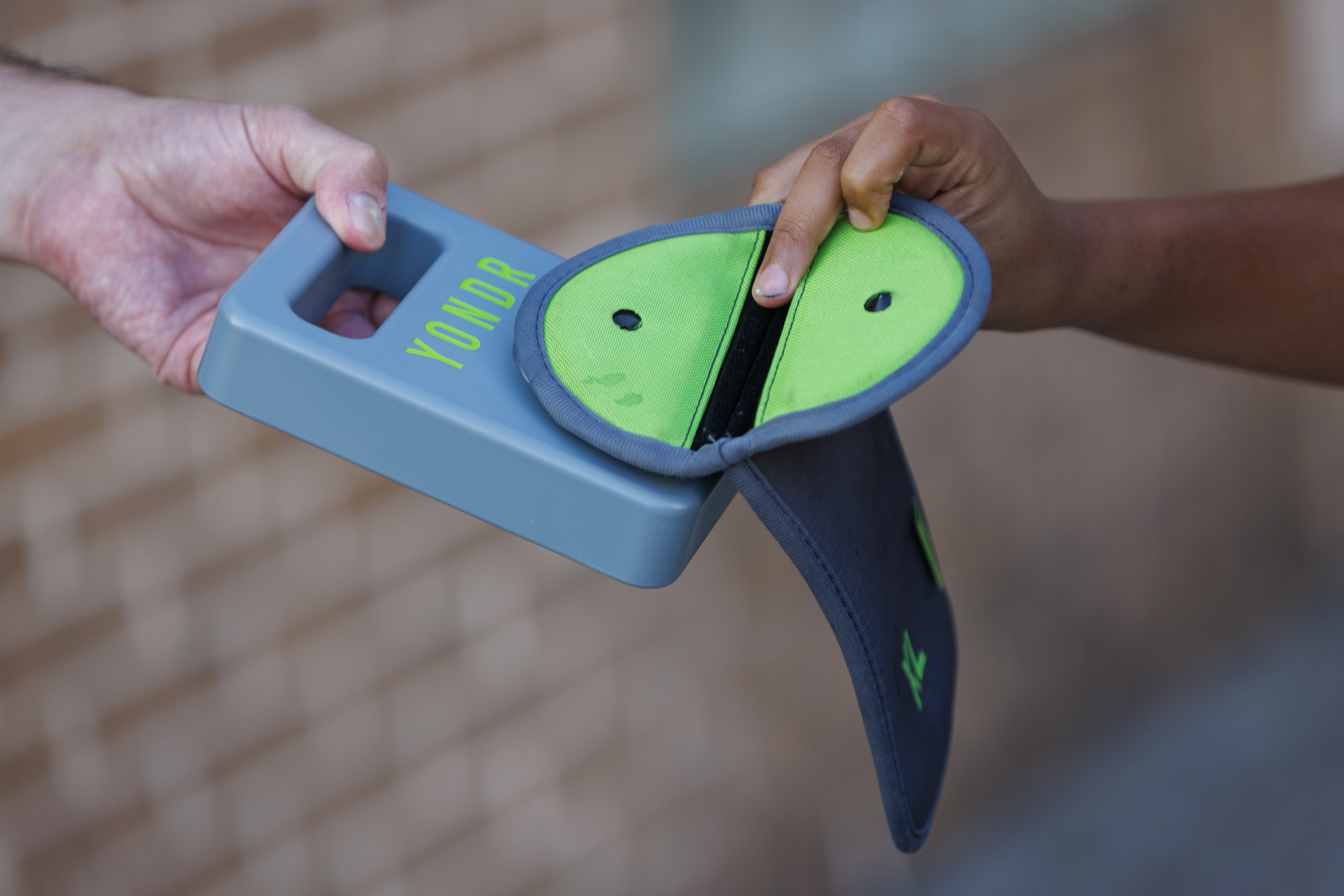
The law lets the districts decide where the phones will be stored during the school day. The state provided some funding for districts to purchase locked Yondr pouches. Others are designating lockers or bins.
Lianah Carruolo, 12, a seventh-grade student, unlocks her cell phone pouch outside the junior high entrance to Woodbury Junior/Senior High School on Friday, Sept 20, 2024. Alejandro A. Alvarez / Staff Photographer
Cherry Hill’s amended policy would allow students to keep their phone in their personal belongings. It must be turned off, not just on vibrate or silent.
“We prefer that you don’t bring it to school, but if you bring it to school, it has to be off and in your backpack or your locker for the duration of the day,” Palmer said.
In Camden, the district’s new “off and away” policy says phones should be off and out of sight. They are permitted at a teacher’s discretion for instructional purposes. After a first offense, the phone will be confiscated and returned to the student at the end of the day; for subsequent offenses, the phone will be returned to a parent or guardian.
In Washington Township, pre-K to fifth graders must store their phones in their backpacks, sixth to eighth graders must store theirs in their lockers, while high schoolers will be allowed to keep theirs in their backpacks.
Hibbs said few high school students use their lockers so it was decided to allow them to keep their phones in their personal property. With about 2,100 students, the high school is among the largest in South Jersey.
Are there any exceptions to the law?
The law mandates exemptions for students with a disability or an Individual Education Plan (IEP) or 504 plan that stipulates the need for an internet-enabled device.
The exemptions include students with a health plan, such as students with diabetes who need their phone to check glucose levels.
There are also exemptions for students who use the cell phone for translation, or are the primary caregiver responsible for the well-being of a family member.
School policies must also outline procedures for mobile devices that will be implemented in the event of an emergency, such as a lockdown.
In the event of a family emergency, parents should contact the school office, and not the student directly, according to the guidelines.
How will violations be handled?
Districts are posting the new policy on district and school websites, in newsletters, and on social media sites to inform parents and students about the changes. They may also review it at back-to-school-nights, orientations, and training sessions for staff.
The disciplinary action may vary, depending on the district, and typically begins with a warning that could escalate with additional violations. Districts must specify how a phone may be confiscated.
Washington Township’s policy calls for progressive discipline, based on grade level. Administrators, not teachers, will be responsible for confiscating a phone if warranted.
There are 10 possible “consequences” for high school students beginning with an administrative warning for the first two violations, Hibbs said.
For additional violations, students will get a lunch detention and have their phone confiscated for three to four infractions, Hibbs said. Sanctions for additional violations include requiring a student to store the phone in a locker or main office, a two-day internal suspension, and a mandatory parental meeting.
“It’s going to be a very big change, but we’re going to navigate it,” Hibbs told the board.
Burlington County was left behind when a new free shuttle bus for South Jersey launched in June. That is going to change in September.
The South Jersey Transportation Authority (SJTA) announced June 1 that a free shuttle bus program called South Jersey Connects was launching that day with routes in all seven southern counties: Atlantic, Camden, Cape May, Cumberland, Gloucester, Salem — and Burlington.
But as the other routes launched, the promised Burlington County route never began. On the authority’s website, it is still marked as “coming soon.”
That is because until recently, the transportation authority was not actually authorized to operate in Burlington County. The county considered operating its own route for the program but ultimately agreed to have the authority run it instead.
But that required legislation.
South Jersey lawmakers had proposed bringing Burlington County into the authority back in the 2022-23 legislative session, but it was not until the South Jersey Connects program was about to launch this year that legislators had the wherewithal to actually hit the gas pedal in Trenton.
“We worked in partnership with our county commissioner, then the administration of Burlington County, and just realized we just couldn’t pull that off,” Sen. Troy Singleton, a Burlington County Democrat, said in an interview. “And speaking with the administration, they were like, look, we feel more comfortable running this through the SJTA, and we already had this legislative vehicle, so that’s when it took on a greater sense of urgency.”
The bill to bring Burlington County into the SJTA passed the Assembly in mid-May and was approved by the Senate just a few days before the June 1 announcement. But Gov. Mikie Sherrill did not sign it into law until the night of the budget deadline — a month after the program had been announced.
“The timing just didn’t work out,” Singleton said.
The Burlington route is expected to start in September, said Dominic D’Amico, director of transportation services at the SJTA, but a start date has not been announced.
The new shuttle’s path has been finalized but has not been shared publicly. D’Amico said in an interview that, like the other routes that launched June 1, it will connect with NJ Transit’s existing infrastructure and the region’s “eds and meds.”
Burlington County Commissioner Felicia Hopson said the new shuttle will enhance the NJ Transit River Line and help residents access jobs, appointments, stores, and schools.
“Stretching 820 square-miles, Burlington County is New Jersey’s largest county, making transportation essential but also challenging for residents without motor-vehicles,” she said in a statement.
The idea of South Jersey Connects emerged from the Chamber of Commerce Southern New Jersey’s advocacy after former Gov. Phil Murphy implemented the 2.5% Corporate Transit Fee on businesses to fund NJ Transit in 2024.
The project was granted $5 million for an 18-24 month pilot, and the future beyond that is uncertain. The South Jersey chamber unsuccessfully requested more money for the effort in this year’s budget, and proponents of the project are hoping to show that it is worth the investment during next year’s budget negotiations.
The summer launch so far has been a little slow, which is to be expected, according to D’Amico.
The authority has seen about 600 one-way trips in the first month of the program, he said, a number he expects to go up as people learn about the routes and as school starts in the fall. He wants to see the service hit at least 5,000 one-way trips each month.
“It takes some time to spread the word, for the marketing campaign to reach the social media platforms, getting brochures delivered to each facility — all those types of things factor into what is a normal slow start,” he said.
“It could be worse, it could be better,” he said.
Why wasn’t Burlington County part of the SJTA before?
Sherrill said in a statement that Burlington County deserves to be part of the authority as “a vital part of the region.”
The reason Burlington County has not been included in SJTA is not because anyone was denying the county is part of South Jersey. Rather, the agency was set up to replace an entity that oversaw the Atlantic City Expressway, which does not go into Burlington, said David Zappariello, the authority’s director of communications.
Along with adding Burlington County to the authority’s coverage zone, the new law allows Sherrill to appoint another member to its board. Members of the board represent the region as a whole, not their home county, Zappariello said, and there is already a Burlington County resident sitting on the board.
Assembly member Alex Sauickie, an Ocean County Republican who also represents part of Burlington County, voted against the bipartisan legislation because it did not also add Ocean County to the authority.
“I just don’t like it when you’re picking winners and losers for political reasons,” he said.
Assembly member Andrea Katz, a Burlington County Democrat, said none of the South Jersey Connects routes will touch her district, where she has concerns about transit deserts. But she is hopeful about public transit expanding in the region and the county getting a seat at the transit table.
“Burlington County now being included means that we’re going to get to have that voice,” she said. “We’re going to get to not be the one stuck in the middle there. We’re going to start to get our own access to public transportation.”
It was the first weekend of summer break. Abigail Gillon, an honor student, had just finished sixth grade. She was free.
“My last text to her was at 2:14” on June 14 last year, said Abby’s mom, Lori Kralle.
An hour later, Kralle received a call from an emergency room nurse about her 12-year-old daughter.
Abby had been riding an electric scooter with her best friend, Isabelle, in Aston Township. The girls were sharing the scooter when they drove off the curb and fell into the street. They were struck by an oncoming car at 2:22 p.m. Emergency responders found them holding each other in fetal position, Kralle said. Abigail died two days later. Her friend was severely injured.
“It didn’t just tear away and take away Abigail’s life, it took apart everybody’s life, her friends and family,” Kralle said.
Lori Kralle with her daughter, Abby Gillon.Lori Kralle
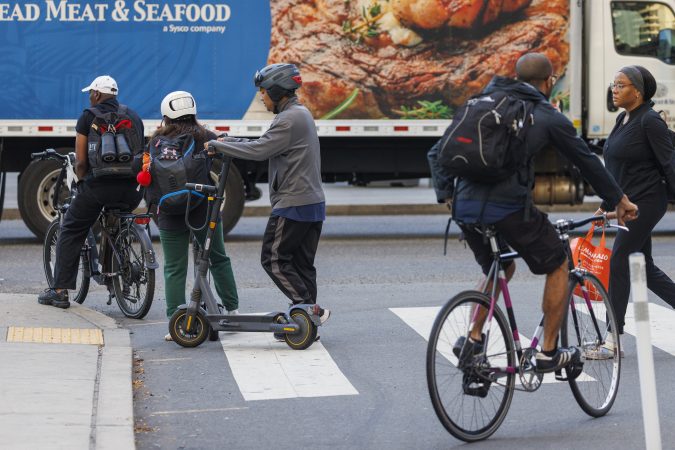
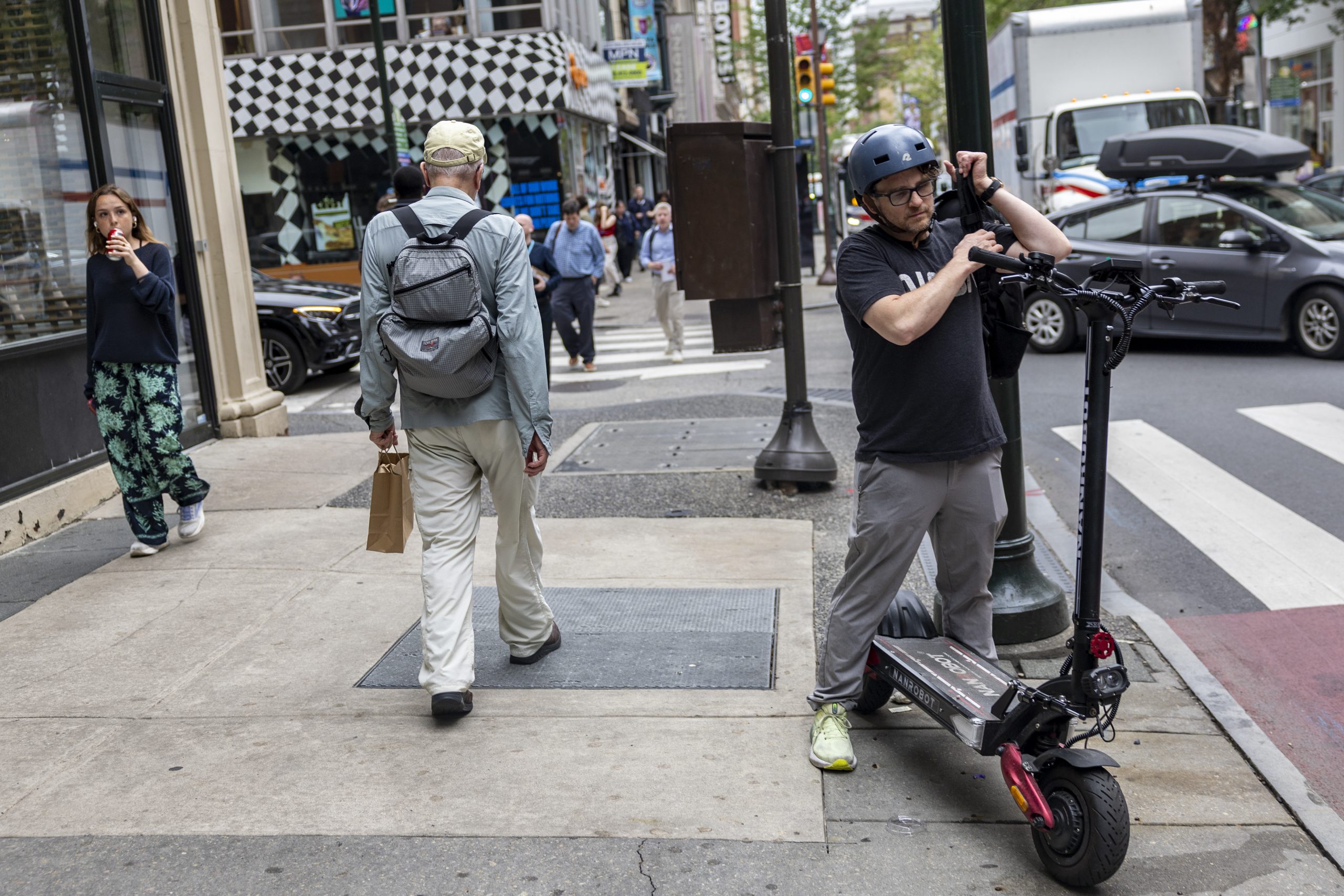
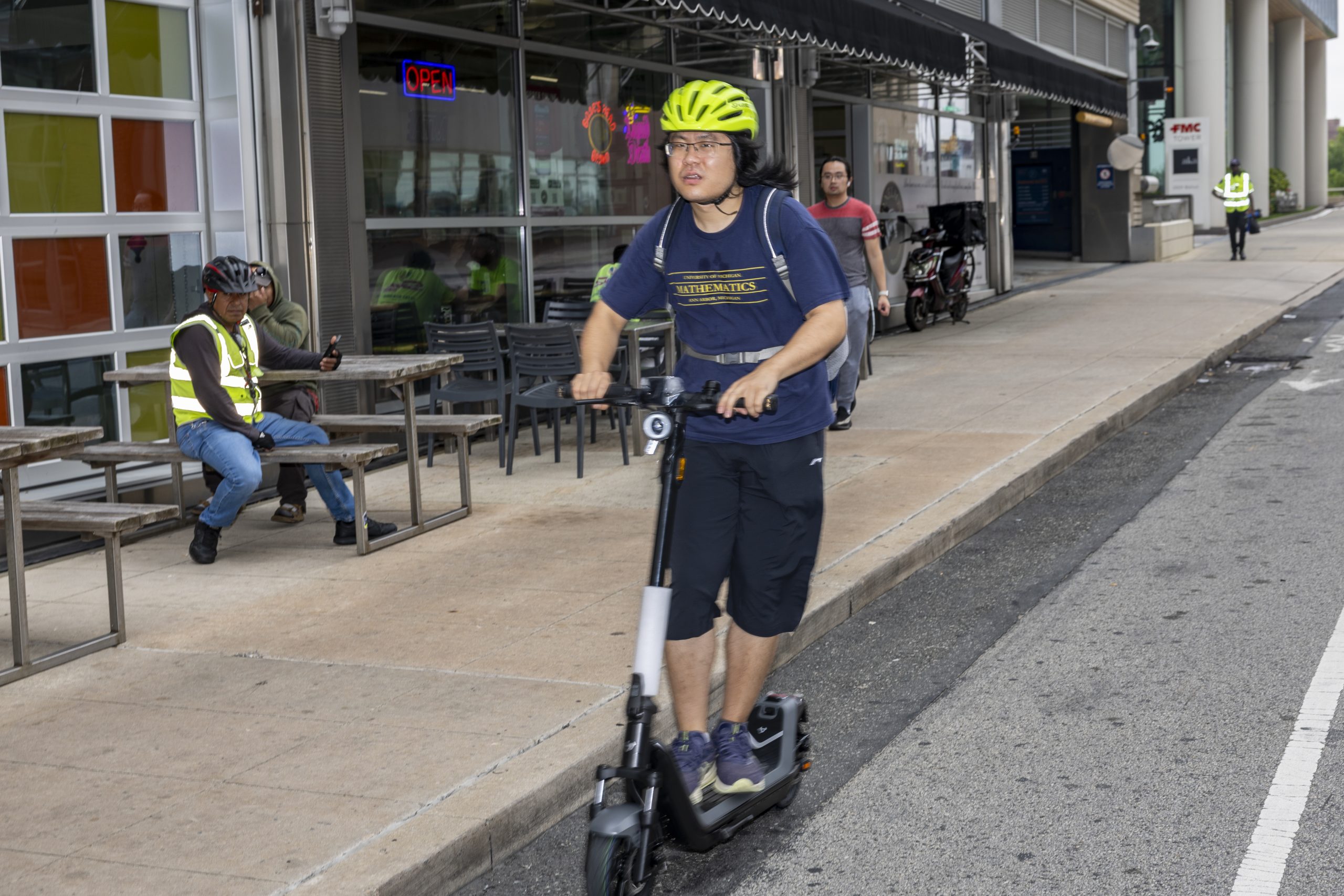
Last year, more traffic crashes causing injury and death in Philadelphia involved electric bikes and scooters than manual ones, according to Pennsylvania Department of Transportation data. The finding highlights a new reality in which e-bikes and e-scooters present a major safety problem, the state confirmed.
The high numbers of injuries and deaths point to the need for legal clarity, statewide safety regulations, and new infrastructure to protect users of e-bikes, e-scooters, and bicycle riders from cars and trucks, traffic safety advocates contend.
(function(){function e(){window.addEventListener(`message`,function(e){if(e.data[`datawrapper-height`]!==void 0){var t=document.querySelectorAll(`iframe`);for(var n in e.data[`datawrapper-height`])for(var r=0,i;i=t[r];r++)if(i.contentWindow===e.source){var a=e.data[`datawrapper-height`][n]+`px`;i.style.height=a}}})}e()})();
“There’s a lot of technology out there and there is no real enforcement and regulation,” said Nicole Brunet, president of PA Safe Roads PAC. “It’s causing devices to be on the road that are unsafe.”
In 2025, e-bikes and e-scooters were involved in 197 crashes on city streets, excluding interstates — a 40% increase over 2024. Four riders were killed and 193 were injured in those collisions, PennDot figures show.
Meanwhile, 193 reported crashes involved standard bikes, more numerous in the city than their electric cousins, as well as traditional foot-propelled scooters, the state figures indicate.
E-bikes and scooters are poorly defined in Pennsylvania law. The ambiguity makes it hard for governments to identify problems; PennDot did not analyze separate crash data for the electric devices until 2024, for instance, due in part to uneven reporting.
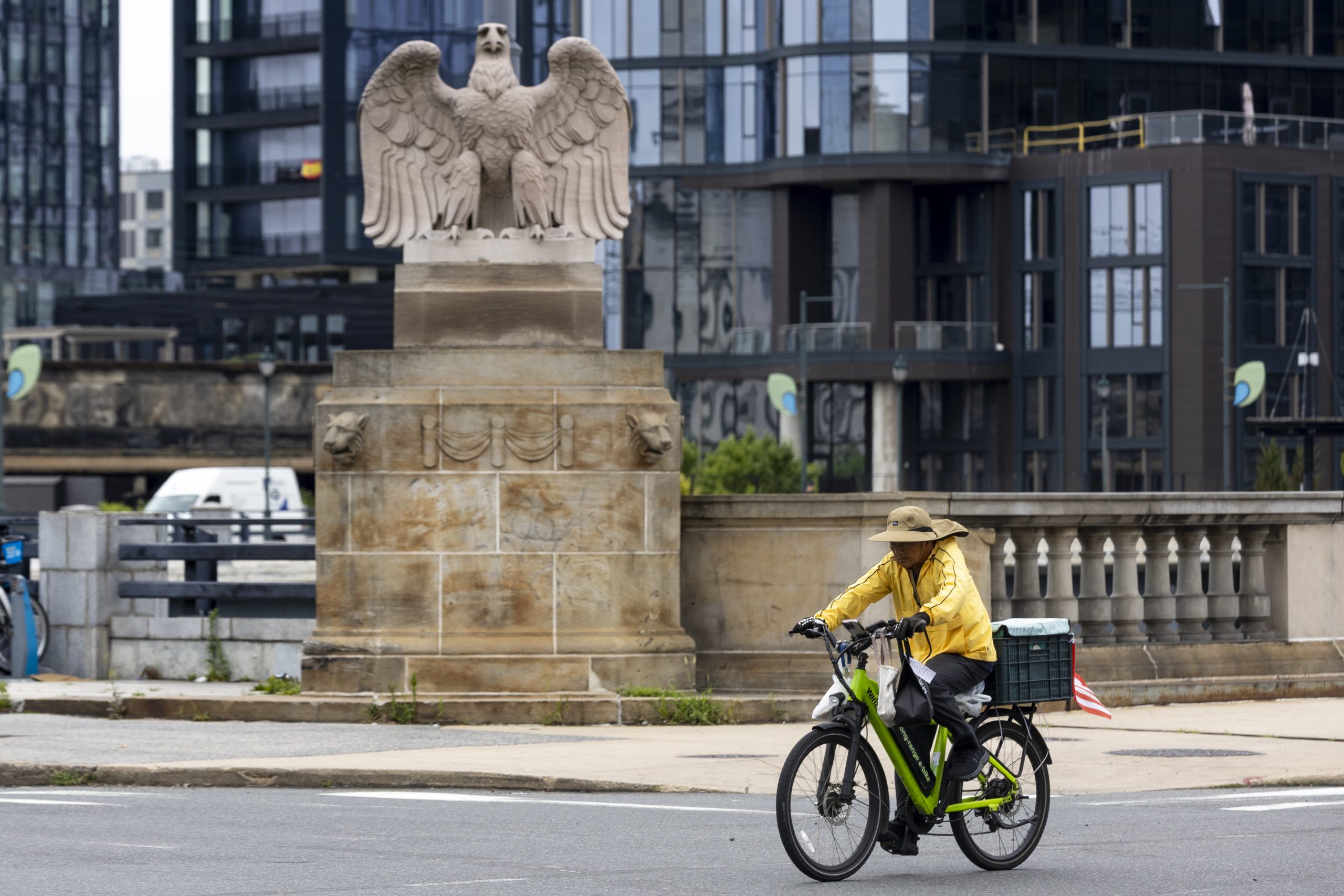
A delivery driver riding an e-bike drives past an intersection on Walnut Street in West Philadelphia on Tuesday, July 7, 2026.Aidan T. Gallo / Staff Photographer
State law authorizes the use of low-speed electric bikes — those that weigh less than 100 pounds, have engines that generate no more than 750 watts, and travel below 20 mph — on public roadways. E-scooters are not street legal in Pennsylvania.
This narrow definition, however, does notdifferentiate among the many new types of electric bikes or e-scooters for sale, which can reach speeds of 60 mph or even 100 mph.
(function() { var l = function() { new pym.Parent( ‘crash-types3__graphic’, ‘https://media.inquirer.com/storage/inquirer/ai2html/crash-types3/index.html’); }; if(typeof(pym) === ‘undefined’) { var h = document.getElementsByTagName(‘head’)[0], s = document.createElement(‘script’); s.type = ‘text/javascript’; s.src = ‘https://pym.nprapps.org/pym.v1.min.js’; s.onload = l; h.appendChild(s); } else { l(); } })();
Two states, two speeds
Governmental response has been uneven, with neighboring states moving in opposite directions and local jurisdictions sometimes banning e-bikes and e-scooters or enacting bespoke rules.
“What we’re seeing right now is sort of a wild, wild west,” said State Sen. Tim Kearney, a Delaware County Democrat.
Kearney wrote and introduced “Abby’s Law” — SB 1008 — in September last year.
The bill says no person under 16 could operate a privately owned “low-speed electric scooter” on public roads; a helmet would be required until age 18. The bill would set a uniform 20 mph speed limit and prohibit tandem riding on e-scooters.
Local police would issue summonses for those and other traffic violations by riders. Municipalities could increase penalties for second and third violations, as long as the fine is no more than $250.
(function() { var l = function() { new pym.Parent( ‘crash-types3__graphic’, ‘https://media.inquirer.com/storage/inquirer/ai2html/crash-types3/index.html’); }; if(typeof(pym) === ‘undefined’) { var h = document.getElementsByTagName(‘head’)[0], s = document.createElement(‘script’); s.type = ‘text/javascript’; s.src = ‘https://pym.nprapps.org/pym.v1.min.js’; s.onload = l; h.appendChild(s); } else { l(); } })();
In New Jersey, former Gov. Phil Murphy, a Democrat, signed the most restrictive electric cycling law in the nation on his last day in officeearlier this year. The law, which takes effect later this month,requires all e-bike users to obtain a license and register their devices with the New Jersey Motor Vehicle Commission, even if they do not go over 20 mph.
Models that can travel between 21 and 28 mph or have a throttle are classified as “motorized bicycles” and must also have liability insurance. The lower-powered e-bikes provide “pedal assist,” which cuts off at 20 mph.
Enforcement could be tricky, especiallyat the Shore. The MVC says out-of-state visitors can ride legally, but language in the law appears to grant the exemption just to people who have registered devices in their home states. That is not an option in Pennsylvania.
The MVC is now taking reservations for appointments; officials have acknowledged the deadline might need to be extended.
E-scooters with a top speed of 19 mph are legal.
In Pennsylvania, more than a year after Abby Gillon’s death, Kearney’s bill has not had a public hearing or a vote in the Senate.
“We need to get people to acknowledge what’s actually happening on the road, and then stop sticking our heads in the sand about the various bureaucratic reasons not to move forward with it,” Kearney said.
Wide use, thin information
Government officials face challenges identifying and classifying the many varieties of electricbikes and scooters — also known as micromobility vehicles — transportation activists and state officials said. That makes information, including about crashes, hard to come by.
PennDot, for instance, began counting electric bikes and scooters separately from pedal cycles, unmotorized scooters, and pedestrians for its annual tally of crashes only in 2024.
A man gets ready to leave on his electric shooter in Center City.Aidan T. Gallo / Staff Photographer
After a vehicular crash, law enforcement is required to report to PennDot details of crashes that involve injuries, fatalities, or significant damage to vehicles.
Regarding the data prior to 2024, Robert A. Ranieri, crash-analysis manager at PennDot, said via email: “I don’t find that fully reliable since we didn’t look at all the narratives and the police may not have reported them properly at the time.”
While his office works to verify the data, “not all reports are touched by my staff,” Ranieri said.
Similarly, the crash data on electric bikes likely include vehicles known as e-motos, which look like pedal bikes but go faster than 20 mph, said John Boyle, research director at the Bicycle Coalition of Greater Philadelphia.
In general, e-motos being lumped in with e-bikes is causing a lot of issues as communities and states try to regulate the higher-speed micromobility devices, Brunet said.
E-scooter law is ‘basically ignored’
The recently released PennDot data include at least 92 crashes in Philly involving e-scooters, which are technically illegal to ride on public streets in Pennsylvania.
Last year, there were four reported fatalities involving e-scooters, though they made up only 14% of micromobility devices, according to the Bicycle Coalition’s 2025 bike count data.
Standard bikes, in comparison, resulted in the same number, a total of four deaths, last year.
“Some of the e-scooters have a top speed of 60 mph, which is crazy fast,” Boyle said, but “the law is basically ignored.”
There is a gray market of electric scooters and bikes available for purchase, transportation experts told The Inquirer.
“You can purchase electric bikes or scooters for $800 on Amazon and they have 1,000 to 2,000 watts,” Boyle said.
The bikes are sometimes marketed as “Class 2,” meaning their motor tops out at 20 mph, but with a few basic adjustments can easily go faster, Boyle said.
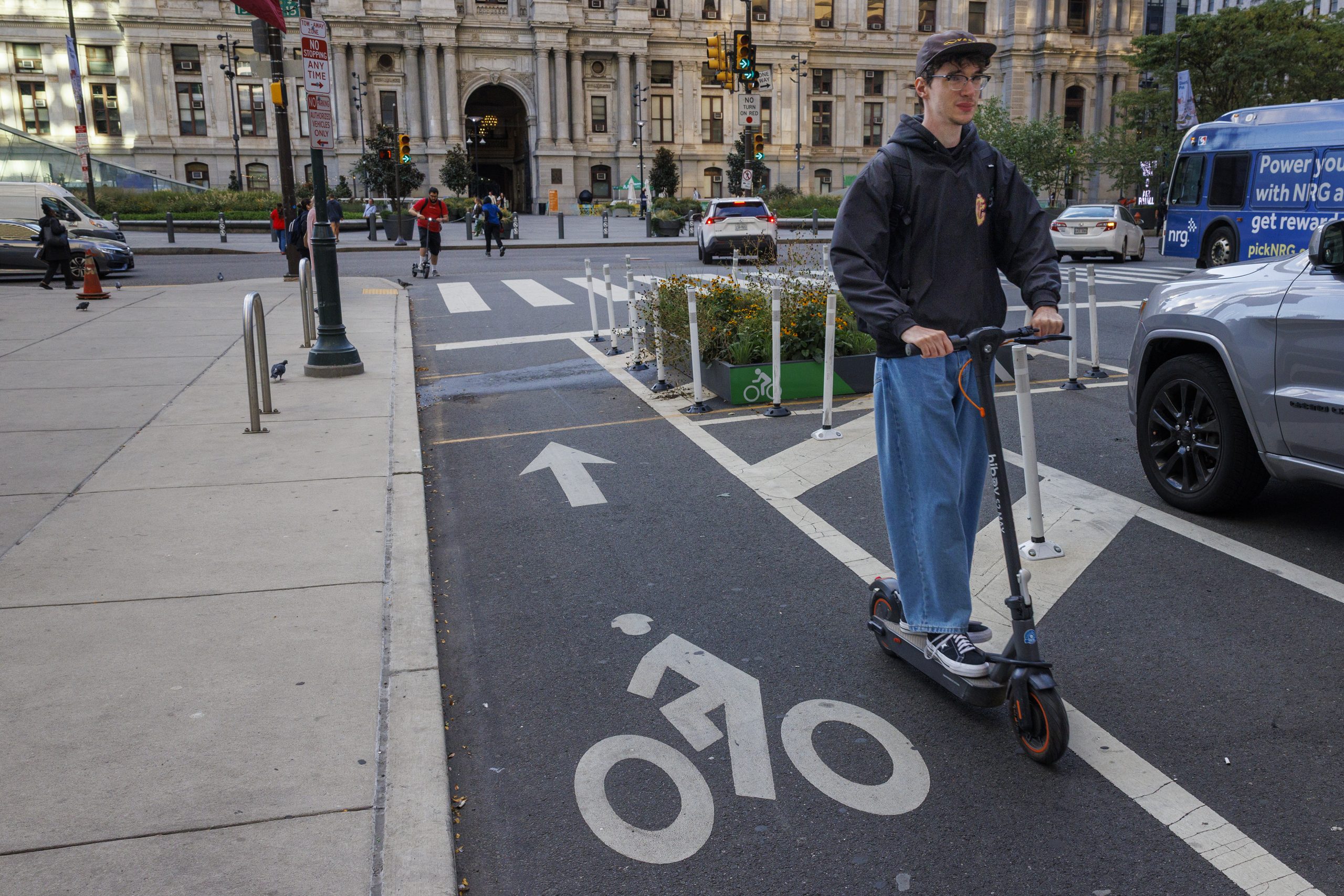
A man rides an electric scooter down a bike lane near Drexel University’s campus.Aidan T. Gallo / Staff Photographer
Motorcycles, unlike e-motos, have quality standards and regulations. When it comes to selling a motorcycle in Pennsylvania, dealerships are required to handle legal requirements, title transfers, and state registrations.
Reiningin the manufacturers and dealers of electric bikes, motos, and scooters is an important step, Boyle said, but the state first needs to better define in the law what electric bikes and scooters are.
Brunet, president of PA Safe Roads PAC, said her organization supports the Safe System approach to transportation safety, which involves education, enforcement, and infrastructure.
“Philly just needs to keep building better bike infrastructure. … There is definitely a lot to do to make roads safer so that the people choosing these devices get home safe,” Brunet said.
Several bills to regulate e-scooters have been proposed in the state legislature, but none have been passed.
Special legislation gave Pittsburgh the right to test a shared e-scooter rental program in partnership with Spin, a private company, from 2021 to 2023, when the trial expired.
Kinkead called it a success, noting her north Pittsburgh district has steep hills and limited transit links.
“What I saw … was not college kids goofing around, it was people who were trying to get around the North Side with grocery bags,” Kinkead said at a recent public hearing on the bill.
The city had 230,000 unique e-scooter users during the test, said Ryan Seiferet, who managed the program for the Pittsburgh Department of Mobility and Infrastructure.
A survey of about 1,000 participants showed 44% of e-scooter riders used them to get to work and one-third to travel between transit stops and home. Regular users tended to have low incomes.
While rules are needed in the state, especially for privately owned scooters, “We want to make sure we aren’t penalizing or disincentivizing a valuable micromobility travel option” for people, said Jessie Amadio, an organizer for Philly Bike Action.
The electric scooter program was relatively safe, with one reported injury per 17,000 rides, according to a DOMI report.
Electric scooters going against directed traffic flow at Market Street at 15th in Center City.Alejandro A. Alvarez / Staff Photographer
News site Next Pittsburgh found, however, that a handful of the injuries were serious and, in some cases, life-threatening. Spin planned to deploy scooters with larger tires for stability, the site reported.
Kinkead said shared e-scooters can be tightly controlled in agreements between a city and an e-scooter firm; in Pittsburgh, the scooters could not exceed 15 mph, enforced by software. E-scooters stopped working if the rider strayed into a town that did not allow them.
Philadelphia, however, is opting out. Mayor Cherelle L. Parker’s administration asked that the city not be included in the shared e-scooter bill, said State Rep. Ed Neilson, a Democrat who represents a Northeast district and chairs the House Transportation Committee.
“Because of the historic nature of the city and the millions of people that come every year, we just don’t want to block or impede that,” Neilson told colleagues in the hearing.
Most agree that the state needs to take some sort of legislative action soon.
“Getting as far as we have gotten [with Abby’s Law] on the Senate’s desk and to still not have anything signed or put into order is very frustrating,” Lori Kralle said.
“What does it take? For another mother to get that phone call?” she added. “I don’t wish that on anybody.”
Julie Harrison, a clinical psychologist in South Jersey who works with children who have experienced abuse, received a letter from Rowan University: Notice of Layoff.
Her position as a teacher, researcher, and provider in Camden County would be eliminated “due to the loss of state appropriation funding,” the May 12 letter said. Harrison works for the Rowan-Virtua Child Abuse Research Education and Service Institute (CARES), which provides evaluation, treatment, and other services to children who have experienced abuse in South Jersey, and conducts research on the subject.
The notice came after Gov. Mikie Sherrill proposed slashing the $1.85 million line item in her state budget plan for the program.
CAREShas offices in Stratford in Camden County and Vineland in Cumberland County. The Vineland location, which opened two years ago to provide better access to families in deeper South Jersey, is shutting down due to the anticipated cuts.
“With Mikie Sherrill being in office, we had a lot of hope because she really was pretty loud about wanting to help kids, wanting to help families, wanting to really champion mental health services, and so we were pretty surprised about this budget,” Harrison said in an interview.
The clinician ispregnant with twins and her job prospects are uncertain as the clock ticks until her final day at CARES. But she is mostly concerned about the impacts the funding cuts will have on children facing trauma in South Jersey, and the workers caring for them.
The South Jersey program serves more than 1,500 children across more than 4,000 visits in both locations. Though just about 200 families use the more rural Vineland location, that is where these types of services can be the most critical, Harrison said.
“It’s a pretty resource-dry community,” she said. “There’s not a ton of public transportation to get around. … The amount of services that are available to these families generally is much lower than other parts of New Jersey.”
Harrison is one of about 20 people whose jobs are being impacted by the anticipated funding cuts across both office locations, according to union members. The majority of those are layoffs, and some employees had their hours dramatically reduced to the point they lost their healthcare benefits, according to union members.
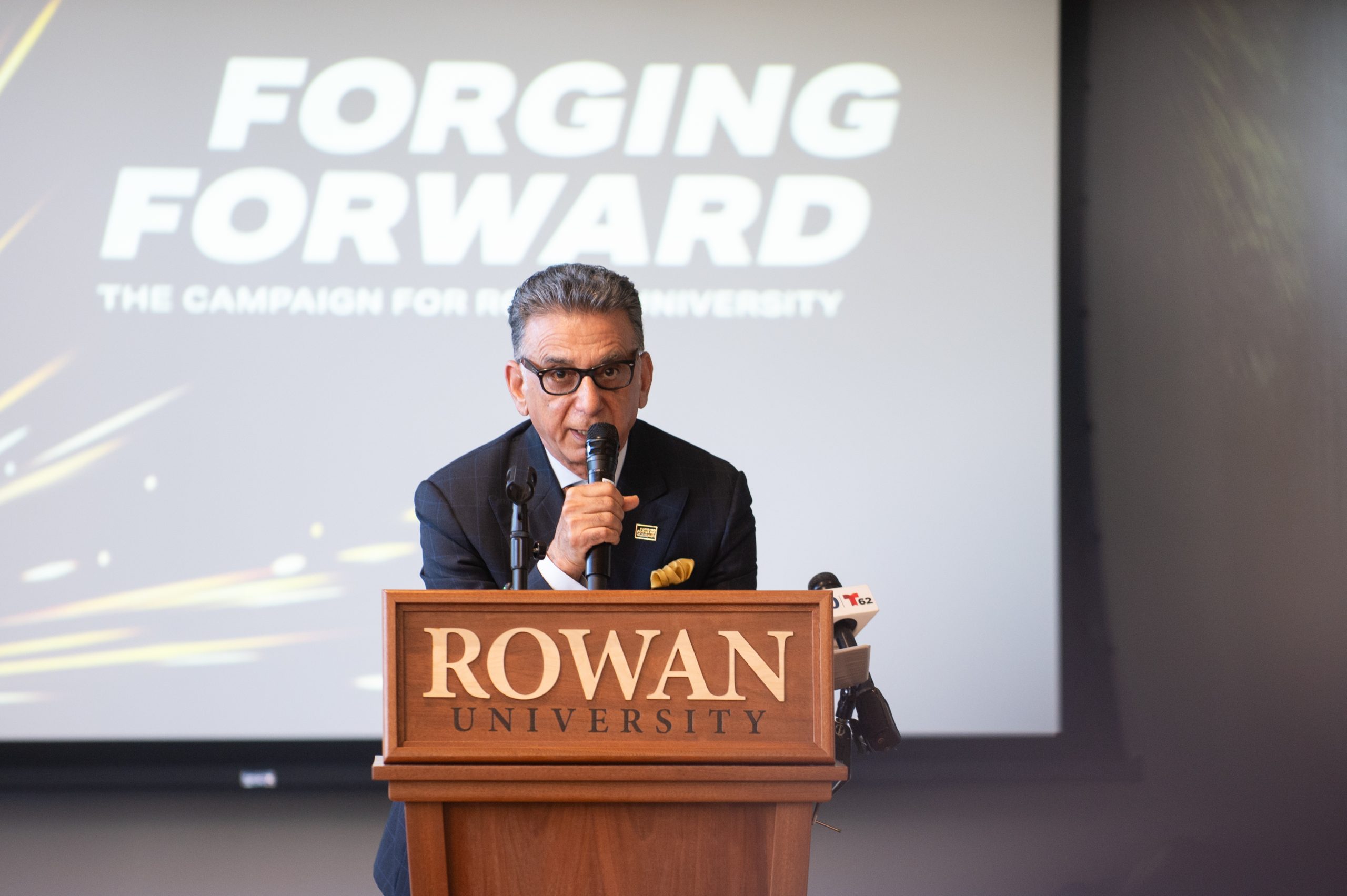
Ali A. Houshmand, president of Rowan University, said in a May 11 email that Sherrill’s proposed cuts forced the child abuse care center to pull back its services beginning July 1. He announced the closure of the Vineland office without saying it outright.
“CARES will consolidate its work into our Stratford campus offices and will continue to fulfill its mission there: delivering high‑quality evaluations and treatment, supporting partner agencies across the region and educating the next generation of physicians and health professionals,” he said in the email.
Joe Cardona, a Rowan University spokesperson, said the program also receives $3 million from other state agencies that will not be cut. He said the program’s goal is to offer the same services but reduce the quantity of care.
“The exact outcome, of course, is to be determined,” he added.
What is clear is that the closing of the Vineland center will have a domino effect on Stratford.
“It’s creating an environment where people who are already doing multiple roles, performing multiple jobs, are going to be asked to do more,” Harrison said. “It’s just that horrible ‘do more with less.’”
Harrison said she was just days away from submitting a grant application to start a food pantry out of the Vineland office when she heard the news. Her team did not submit the application after learning about the cuts and Vineland’s planned closure.
CARES is one of four legislatively mandated diagnostic and treatment centers through the New Jersey Department of Children and Family, though it provides more expansive medical and mental healthcare than legally required. The center champions trauma-focused cognitive behavioral therapy, an internationally recognized model that was developed by the South Jersey program’s codirector.
The program has tried to keep waiting lists for trauma care to under three weeks, but it has now grown to 10 to 12 weeks and the wait for care will probably get longer, Harrison said.
“There is a high cost to what untreated trauma can look like for medical, mental health, all those services down the road if trauma isn’t treated early on,” she said.
Dr. Ali A. Houshmand, president of Rowan University, speaks to students and staff at a fundraising event in September 2025. Erin Blewett / For The Inquirer
‘Tough choices’
Sherrill championed improving mental health for young people on the campaign trail and in her budget proposal by allocating $33 million to expand mental health services for students with high needs in K-12 schools, $500,000 for a new social media research center focused on young people’s mental health, and $125,000 for the newly created New Jersey Office of Youth Online Mental Health Safety and Awareness.
Her office did not respond to a request for comment on her proposal to decrease funding for CARES.
In response to a request for comment for an earlier Inquirer story about Sherrill’s decision to cut all state funding for Rowan’s brand-new veterinary school, an administration official cited the governor’s “blanket cut to all legislative add-ons.” These items refer to funding allocations legislators secure for their district that are sometimes criticized as “pork” or “Christmas tree items.” They can range from improvements for a local park to community services, like CARES.
Sherrill, in her budget address, spoke about making “tough choices” in order to have “the most fiscally responsible budget that our state has seen in years.”
The state budget is a negotiation between the governor and legislative leaders due June 30, so it is unclear how much funding these programs will get in the end. But Rowan has moved forward as if the money for CARES is not on the table.
This is not the first time the program has been at risk as part of the budget dance.
Former Gov. Phil Murphy proposed cuts to the program last year, citing “belt-tightening,” but legislators were able to get the money back in the budget.
This year, Harrison said, people are not optimistic because CARES is one of so many programs Sherrill struck a pen through.
Dio Tsitouras, the executive director of the American Association of University Professors Biomedical and Health Sciences union, said he hopes Sherrill allocates more money to CARES because more state revenue has been identified since her budget proposal. But state officials have still warned of financial uncertainty on the horizon.
“The CARES program is invaluable to protecting our state’s most vulnerable children,” Tsitouras said.