Tag: Ocean City

  • How Sandy prepared parts of the Jersey Shore for last week’s nor’easter

    How Sandy prepared parts of the Jersey Shore for last week’s nor’easter

    BRIGANTINE, N.J. — With its full moon and stacked high tides over multiple days, last week’s nor’easter left Shore towns with some of the worst flooding and erosion since Hurricane Sandy.

    In dramatic fashion, the nor’easter produced some feared Shore scenarios: dunes sliced into cliffs, beaches vertically eroded, popular restaurants flooded to the point of closing altogether for the season, water lapping into ground floors, cars ruined. Days later, firefighters were responding to raging electrical fires, at least one of which was linked to a flood-soaked golf cart.

    Still, the nor’easter was also a testament of what went right, a test of flood resilience tactics implemented in the 14 years since Sandy — a series of flood pumps in Brigantine, an elevated artery in Ocean City, raised homes throughout the Shore — that prevented a much worse outcome.

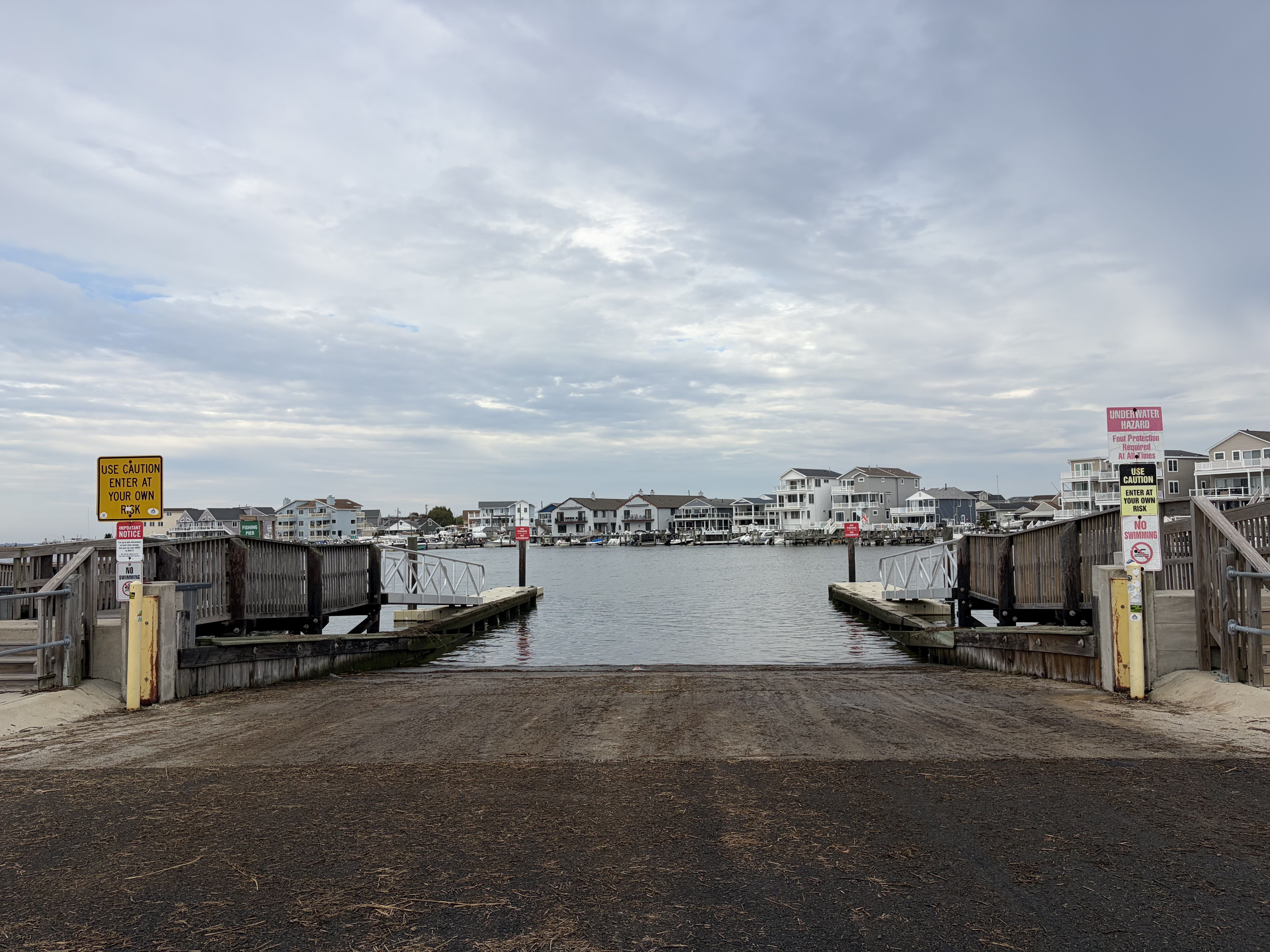
    During the September 2026 nor’easter, metal floodgates were brought in to the city’s Municipal Boat Ramp by the city of Brigantine to physically block flood waters.John Cunnion
    Brigantine’s municipal boat ramp was previously an entry way to devastating flooding. But city officials installed flood pumps and metal gates to keep the water off the island, and to drain the island between high tides.Amy S. Rosenberg / staff

    ‘Our girl took a beating’

    In parts of Holgate, Brigantine, Atlantic City, and North Wildwood, the storm left cliffs six feet or higher, cutting off access to the beach at multiple street ends. Vertical erosion uncovered old structures including rotting old wooden piers.

    Streets in Long Beach Township, West Wildwood, and Atlantic City took on water through multiple days of high tide, damaging residential garages and other ground floor spaces.
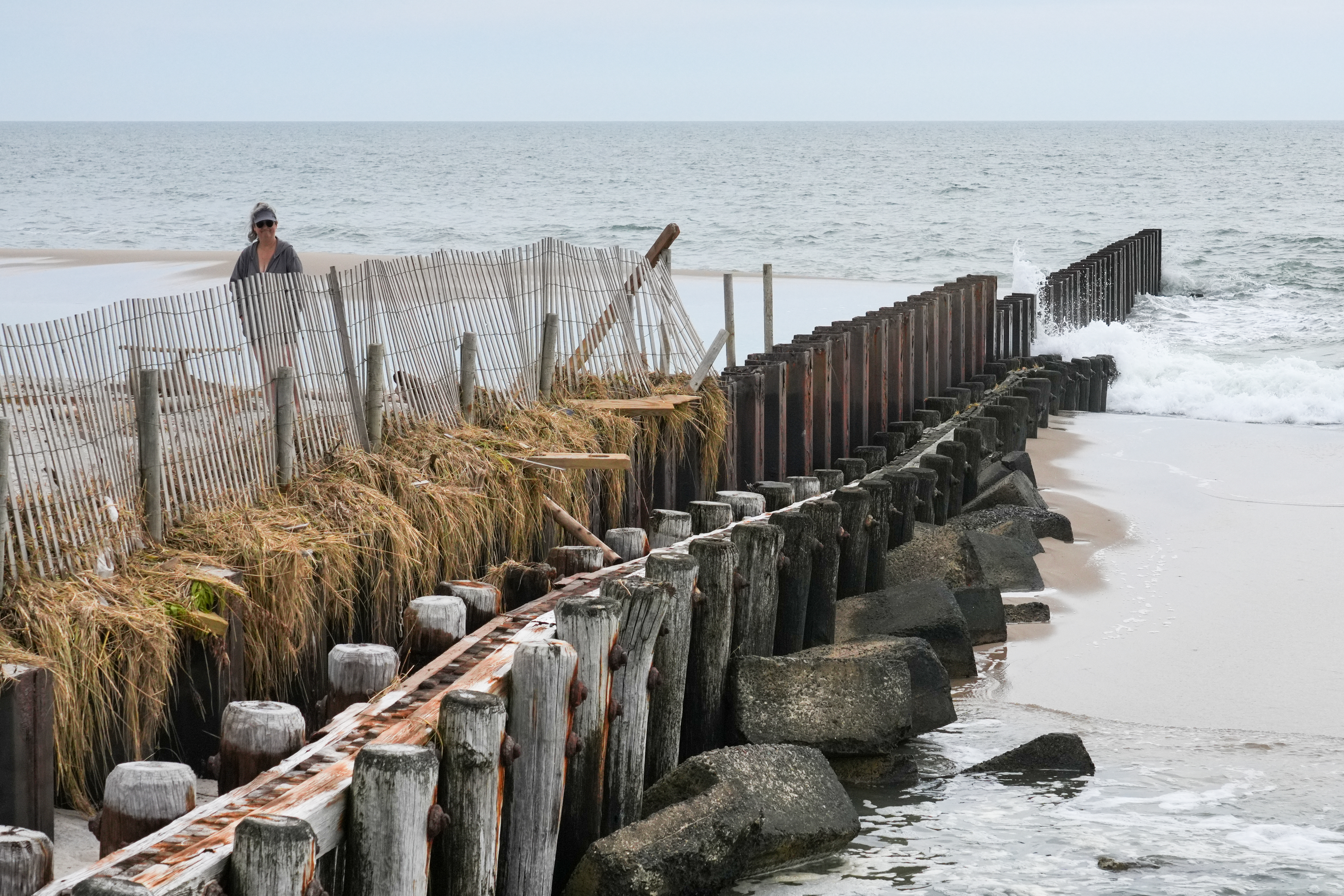
    Abby Mason, of Pottstown, looks at storm damage in Holgate on Thursday.Tim Hawk / For The Inquirer

    On Sigsbee Avenue, contractor Vincent Allen of B. Grigoletto Contractors was ripping out ruined insulation and dry wall on two houses, both second homes.

    He noted that since Sandy, a lot of the smaller homes had been torn down and replaced by elevated homes, where the ground floors are not, technically, living spaces. “Basically, if you lived on the bay, you got water,” he said. “This wasn’t as high as Sandy, nowhere near it.”
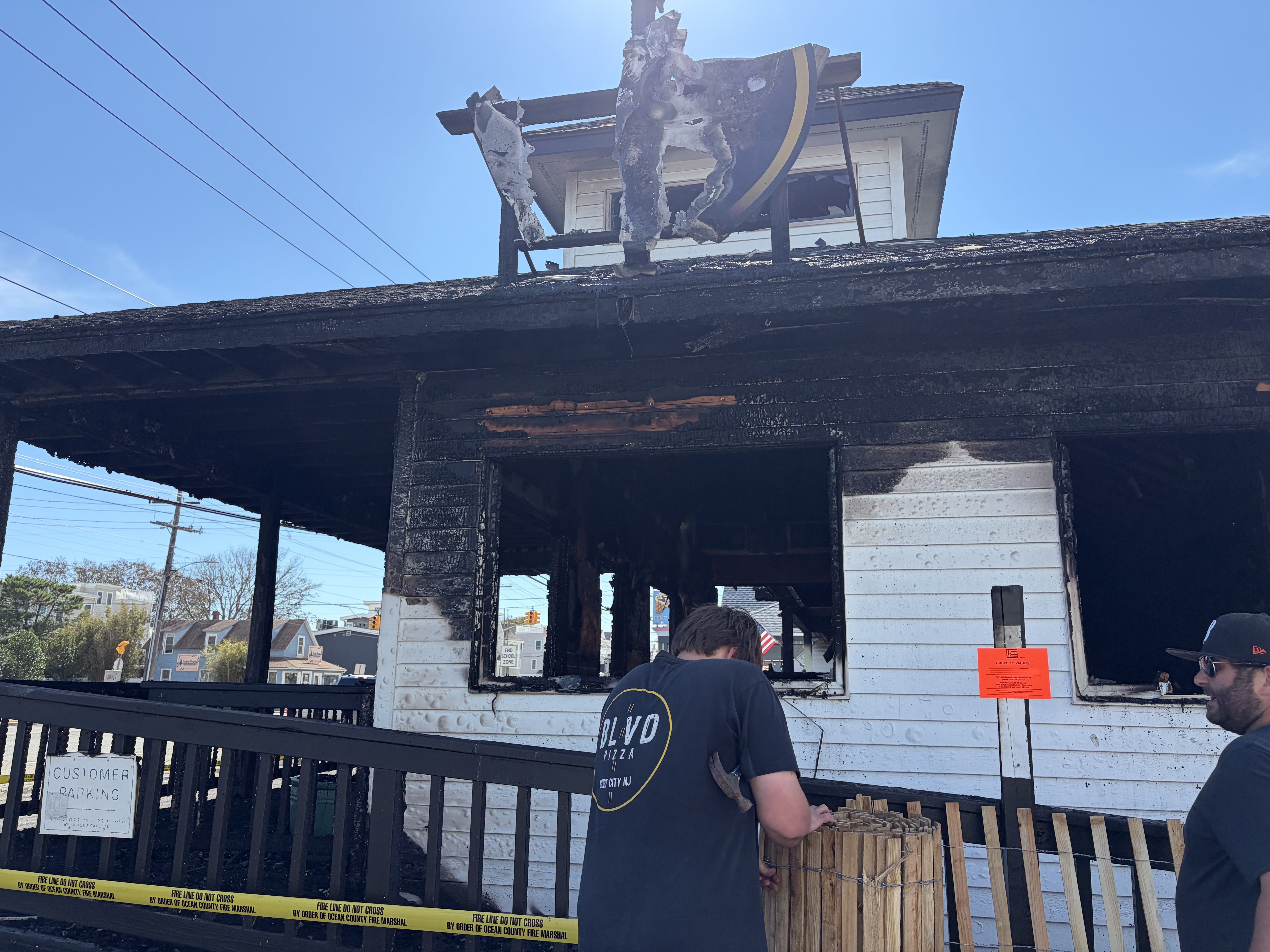
    Owner Mike Franzoni at what’s left of his BLVD Pizza in Beach Haven, which was flood damaged days before a fire broke out.Amy S. Rosenberg / staff

    On Long Beach Island and Atlantic City, numerous businesses were mopping up or closing early for the season after flood damage.

    “We are truly sick to our stomachs, and it hurts,” Moments at Scannicchios, a restaurant on Fairmount Avenue in Atlantic City, said in a Facebook post. “In the end we will reopen.” The restaurant asked people to help out a nearby corner bodega, El Rinconcito Grocery, it said lacked similar resources.

    On Long Beach Island, the ruined insides of the Dockside Diner were strewn across the front of the restaurant. “Our team, our family, is safe,” the owners wrote on Facebook. “But our old girl Dockside took a beating.”

    Nearby, Mike Franzoni looked at the charred remains of BLVD Pizza’s Beach Haven location, which suffered flood damage and had a fire a few days later. Another location, in Surf City, was undamaged.
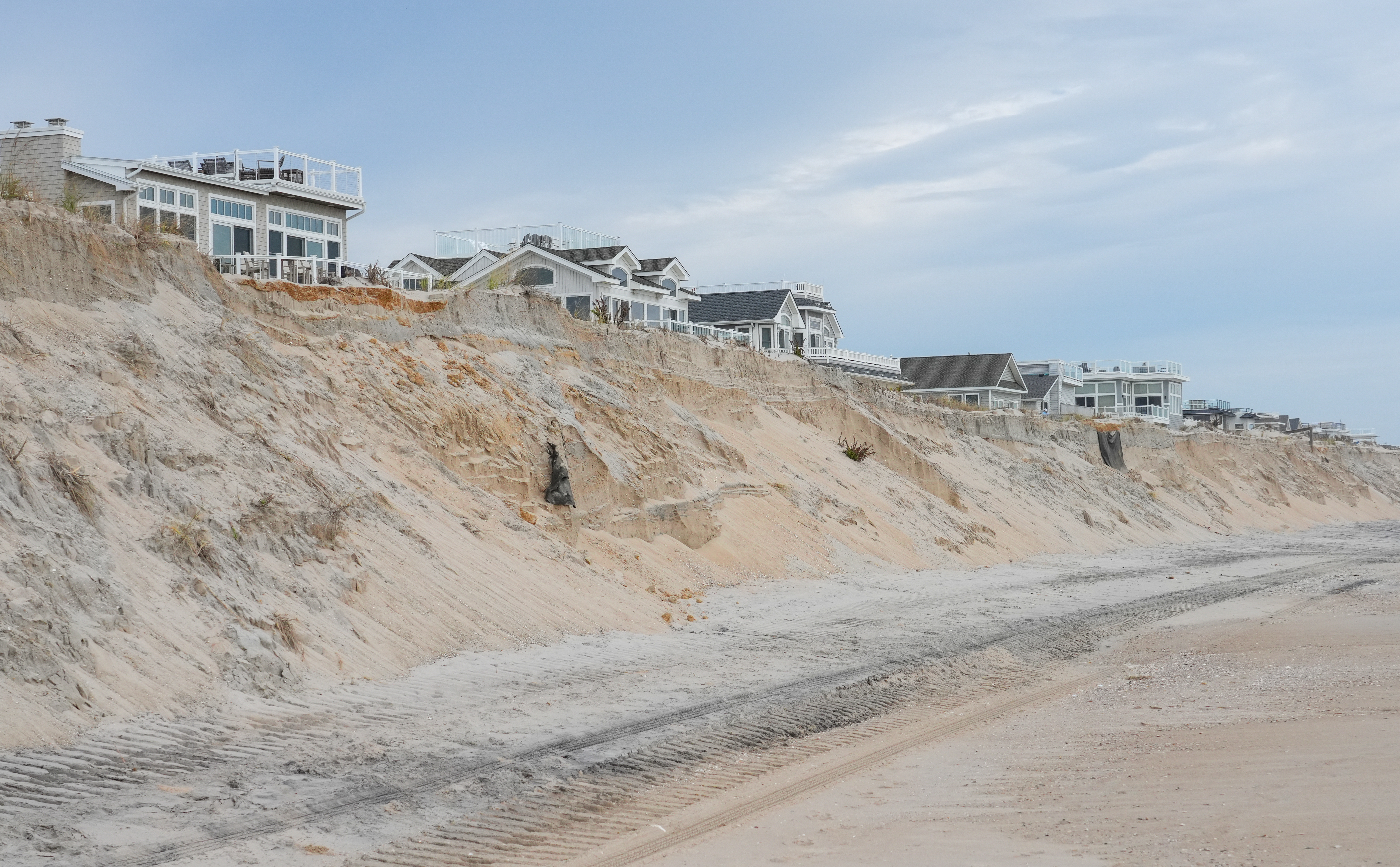
    Storm damage in Holgate on Thursday.Tim Hawk / For The Inquirer

    On Long Beach Island, the beloved “karaoke garage,” belonging to the family of Diane O’Donnell, 80, of Yardley, Pa., took on two feet of water, half of Sandy levels.

    Last week, an Indigo Girls song was playing out of the space where Kelly Kolbjornsen and her family would recruit people to stop and sing karaoke on their way down Long Beach Boulevard.

    “It’s part of having a beach house, but it’s a little overwhelming,” Kolbjornsen said.

    ‘A good gauge’

    New Jersey Gov. Mikie Sherrill and U.S. Rep. Jeff Van Drew brought representatives from FEMA and the Army Corps of Engineers to focus on severe damage to ramps from Brigantine’s concrete promenade in the north end and the near breaching of a private retaining wall that was the only line of defense after surging waves destroyed dunes at the promenade’s edge.

    But Mayor Vince Sera also pointed out that neighborhoods devastated during Sandy remained mostly damage-free.

    “We put floodgates in before the storm came into Brigantine,” he said. “They closed all of the floodgates and prevented a lot of water from coming in. On each low tide, they let the water out to drain, and closed them again for the next high tide.

    “Any water that comes into the streets, we have pumps around the island,” he said. “It pushes the water out over the bulkhead and back into the bay. It drains the island.”

    Residents near those points of vulnerability took note.

    “Without the pumps, it would have been horrible,” said Terri Cunnion, whose home sits on Bayshore Avenue across from the boat ramp, a major thoroughfare of flooding during Sandy (when the previous home on her lot was destroyed). “Without those gates, this block wouldn’t be.”

    Through multiple high tides, last weekend’s floodwaters never got past the lip of the garage in the Cunnion’s house, whose living spaces are built 14 feet to new elevation standards.

    Ocean City’s newly elevated Roosevelt Boulevard was also credited with mitigating damage from the nor’easter, staying above floodwaters and allowing an evacuation route, said Mayor Jay Gillian. The road was reconstructed so that portions were raised by 12 to 20 inches.

    During Hurricane Sandy, bay waters roared right up Brigantine’s municipal boat ramp and surged across Bayshore Road, totaling houses with four feet of water.

    Since the installation of eight permanent flood pumps and two portable flood buster pumps, vulnerable spots like Bayshore Drive and the neighborhood around the town’s golf course are newly fortified. In addition, bulkheads were raised.
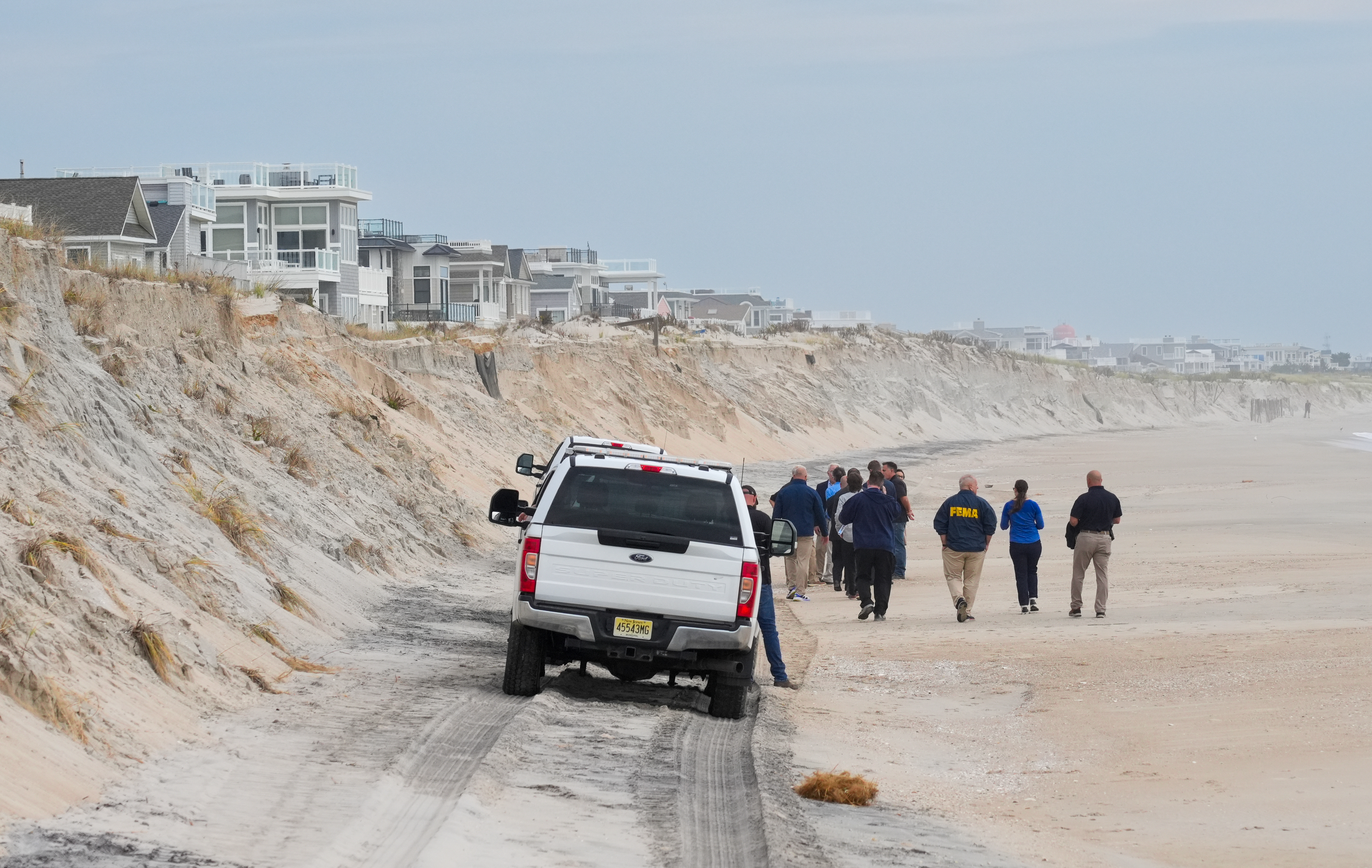
    U.S. Rep. Jeff Van Drew, together with federal, state, and local officials, tour storm damage in Holgate on Thursday.Tim Hawk / For The Inquirer

    Atlantic City, similarly, installed pumps at its Atlantis Avenue station and rebuilt bulkheads in Chelsea and Chelsea Heights. It has yet to complete similar projects in its Ducktown neighborhood, which saw major flooding last weekend, leaving some businesses with tens of thousands of dollars in equipment and merchandise loss.

    Van Drew pointed to other improvements since Sandy that protected utility infrastructure and homes. Homes that were elevated had ground levels that allow water to flow in and then out, he noted. He is advocating a permanent $1 billion “Coastal Trust Fund,” funded by revenue from federal offshore oil and gas leases to provide a stable source of funding for beach fills, dune restoration, and other coastal remediation.

    “The good news is we’ve done a lot of good work,” Van Drew said. “We’ve hardened a lot of structures. When you look at electrical substations, in many cases, they’ve been raised. When you look at transmission lines, rather than being on wooden poles, they are now on industrial grade steel lines that are actually put on much, much stronger holes.”
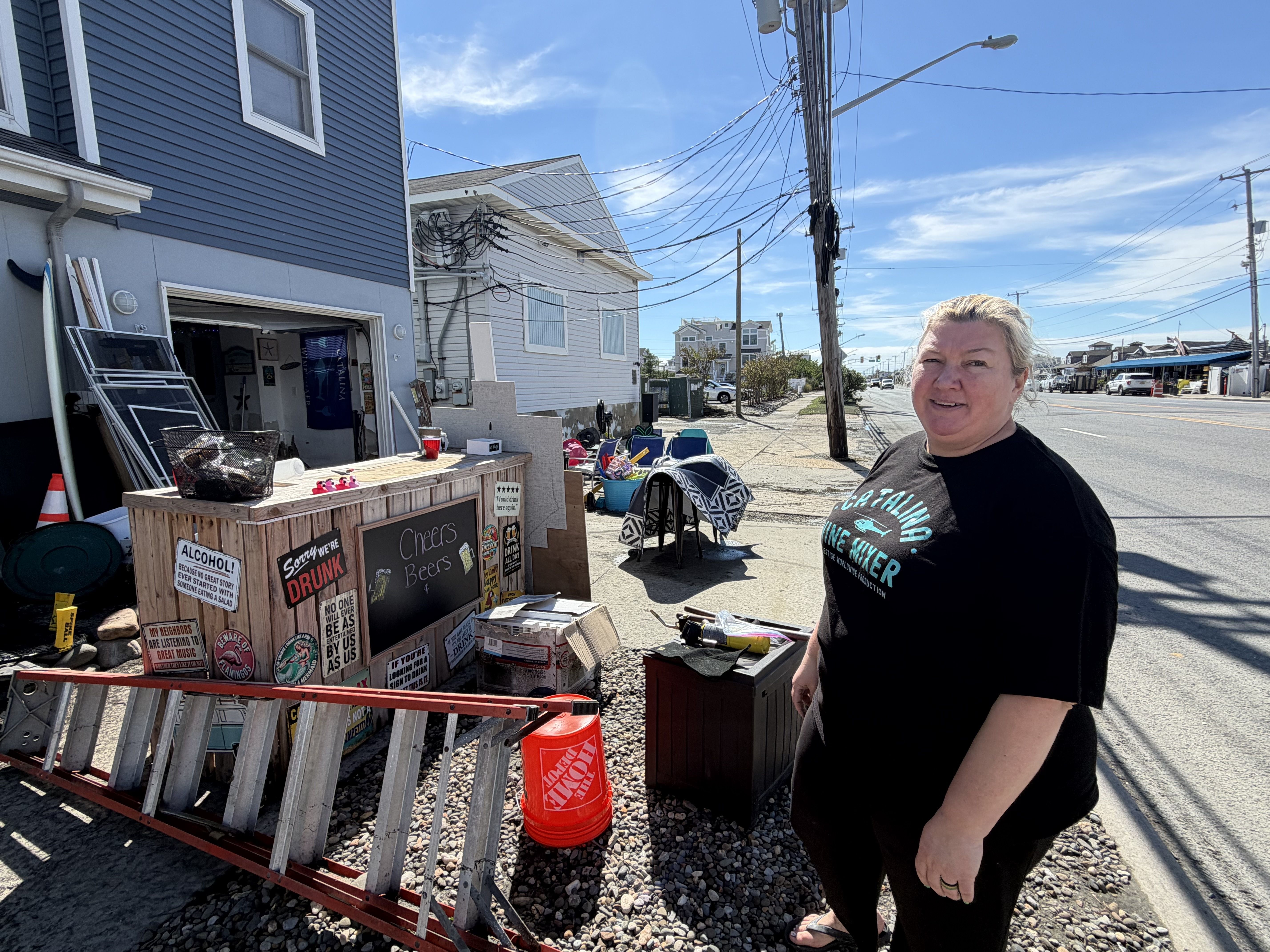
    Kelly Kolbjornsen looks at the damaged bar from her garage, where she and her family recuited passers by to sing karaoke, on Wednesday, days after the nor’easter.Amy S. Rosenberg / staff

    ‘Sacrificial sand projects’

    On an Oct. 1 tour from Long Beach Island to North Wildwood, Van Drew made the case for continued beach replenishment funding, despite the storm eating through a good chunk of the $99 million in recent beach replenishment, most recently in Sea Isle City, Strathmere, Ocean City, Avalon, and Stone Harbor.

    D. Lee Forsgren, the performing assistant secretary for the Army for Civil Works, who oversees the Army Corps, made a point of calling beach replenishment projects “sacrificial sand projects.” He compared the engineered beaches to your car’s “crumple zones” that are made to take the initial beating.
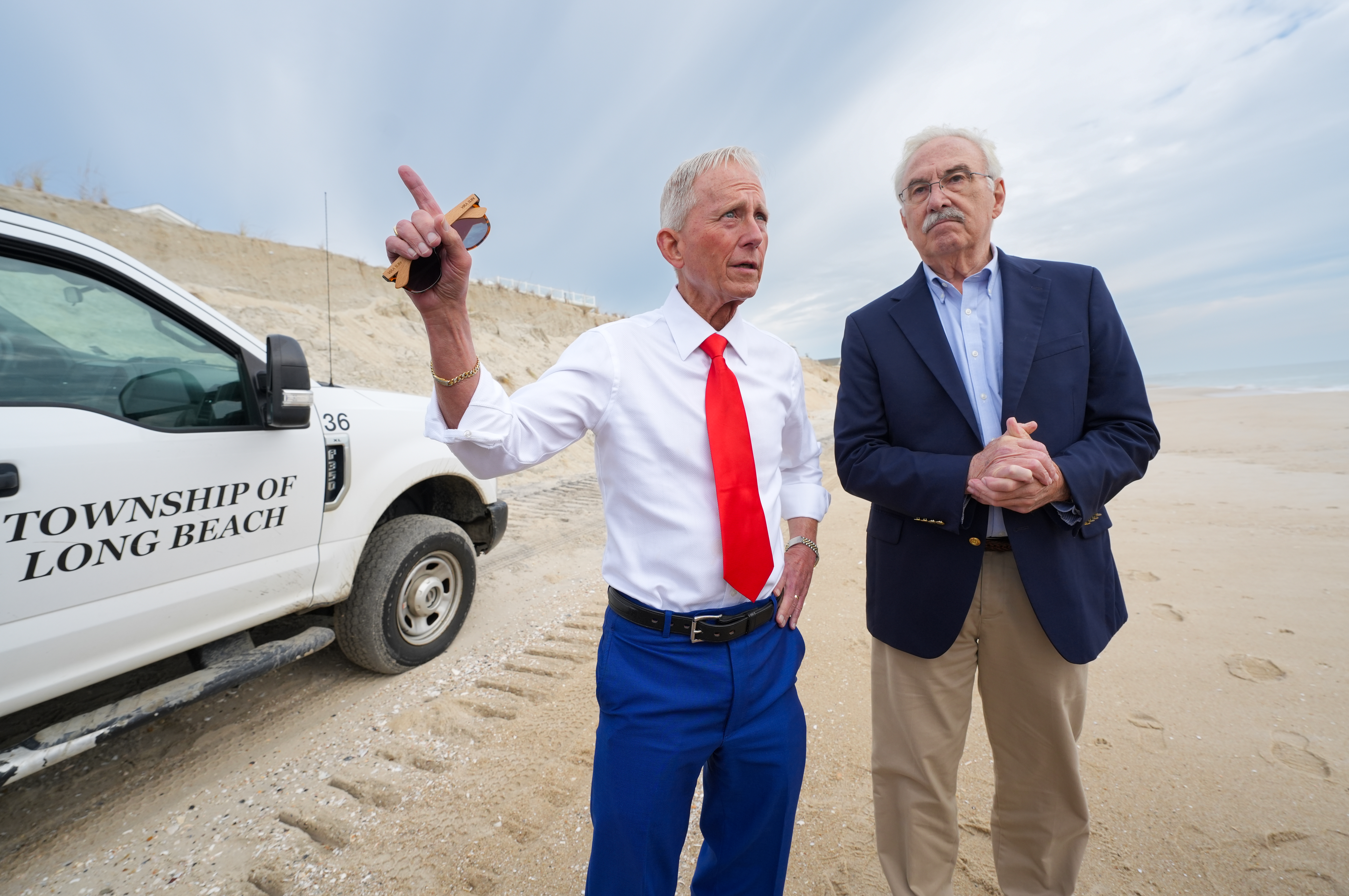
    U.S. Rep. Jeff Van Drew (left) talks with Holgate Mayor Joseph H. Mancini in front of beach erosion in Holgate on Thursday.Tim Hawk / For The Inquirer

    “We don’t put sand on these beaches to make them pretty beaches,” he said. “They are designed for storm damage reduction.”

    Still, he cautioned Van Drew that “the best opportunity to really make progress would be with a supplemental appropriation associated with the storm because there’s not a lot of pocket change sitting around in the core budget.”

    That will require a disaster declaration from Sherrill, who toured Brigantine on Tuesday.

    Aside from more sand, Van Drew said the towns, state, and Army Corps were looking at funding hard structures — like jetties, groins, and seawall extensions — as ways to keep the elevated tides that accompany storms from overwhelming beaches.
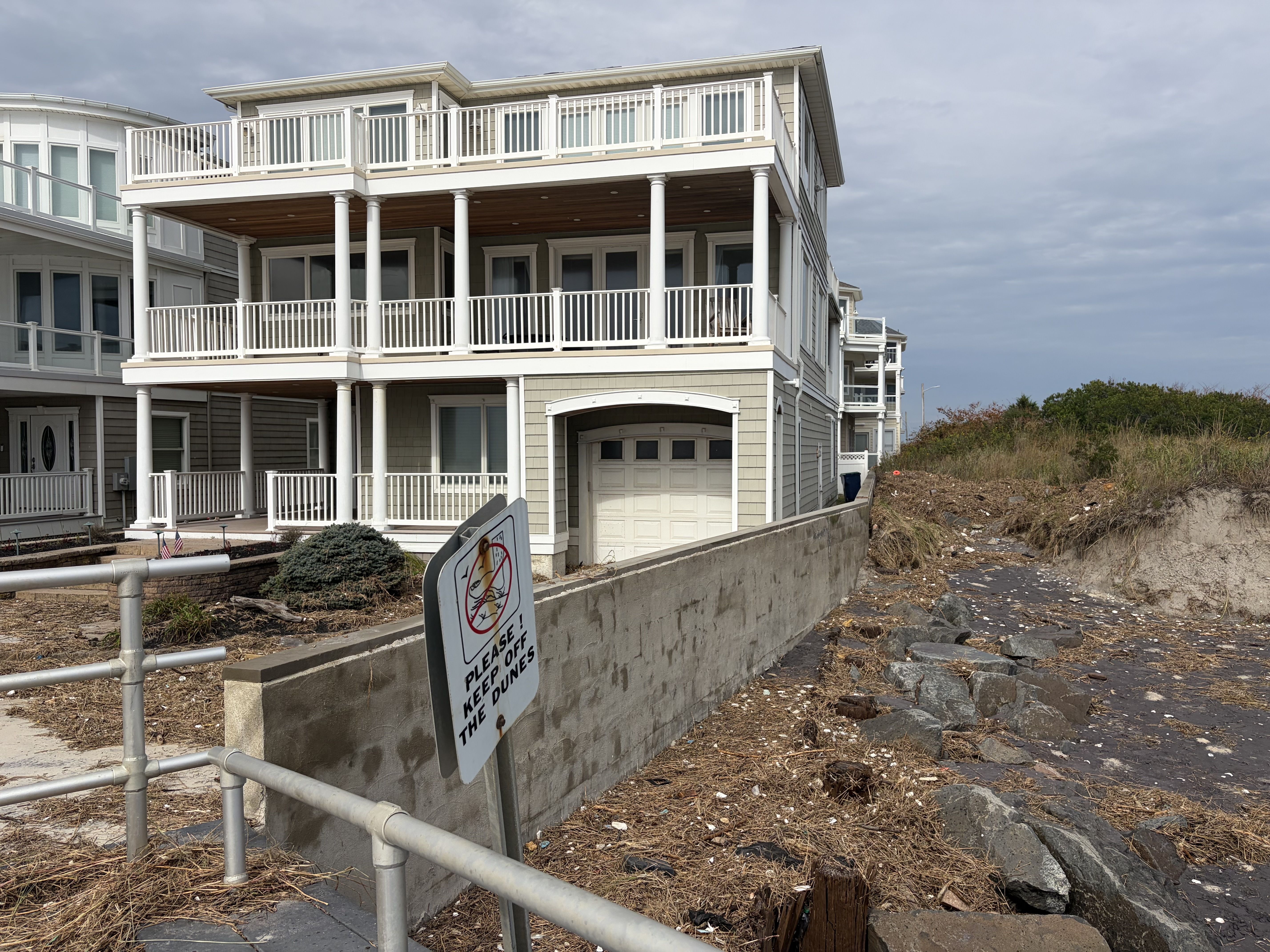
    A house on Brigantine’s north end belonging to Clay and Lori Goldsmid and other nearby homes were spared major damage during the recent nor’easter.Amy S. Rosenberg / staff

    In Brigantine, Mayor Sera rode out the storm at the tip of the promenade, watching railings get blown off, dunes disappear, and the nearby retaining wall nearly buckle. He said city officials had compiled a list of who was in nearby homes in case of an emergency evacuation.

    He is seeking to extend the promenade another 250 feet north, and says the state is studying whether adding hard structures to keep the sand in place will help a situation where a sandbar that has in recent years grown into what is now called Horseshoe Island is starving Brigantine of sand.

    The city’s flood mitigation efforts since Sandy have resulted in a 25% discount for residents on flood insurance, he said. And he wholeheartedly recommends flood pumps and gates to other municipalities, like Ventnor, whose Ventnor Heights section was cut off at both ends by flooding for hours during high tides.

    Sera and other knows the big storms will come again, probably this winter, with the El Niño warming in the equatorial Pacific.

    With sea levels rising, some residents who came out to see the federal officials in Brigantine wanted to know about timelines.

    “How fast is fast,” interrupted Louise Seitel, of nearby Absecon, as officials spoke of extending the seawall.

    “A study is probably going to be 18 months,” Nate Barcomb, an Army Corps deputy district engineer based in Philadelphia, acknowledged.

    “Government is tough,” Van Drew said.
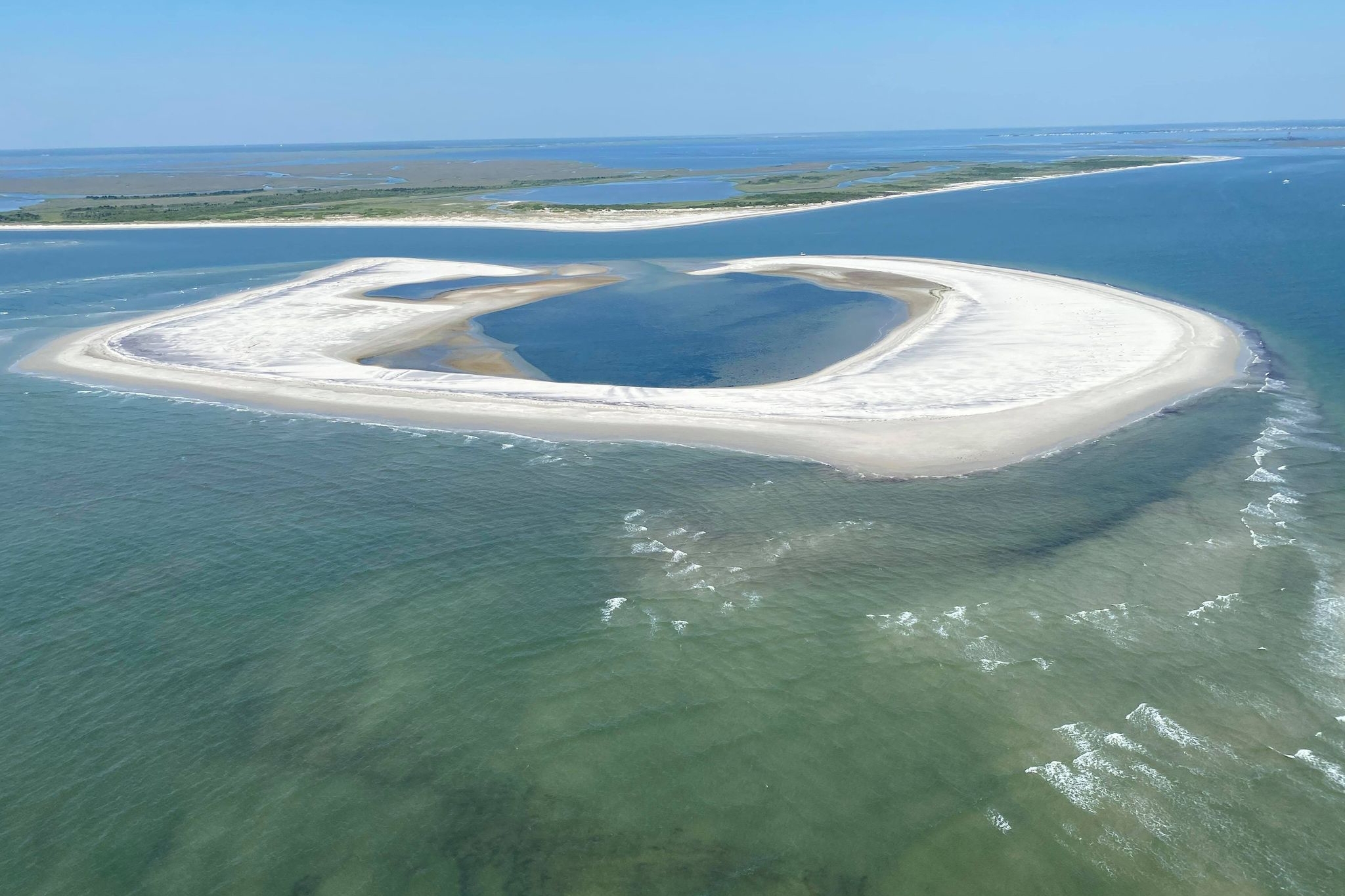
    Aerial photograph of New Jersey’s Horseshoe Island in June 2021.N.J. Department of Environmental Protection / U.S. Fish & Wildlife Service
  • Charles P. Baker III, celebrated cofounder of Baker Industries for the ‘least employable,’ has died at 101

    Charles P. Baker III, celebrated cofounder of Baker Industries for the ‘least employable,’ has died at 101

    Charles P. Baker III, 101, formerly of Radnor, celebrated cofounder of Baker Industries, longtime workplace for the “least employable,” former owner of the C.P. Baker & Co. chemical firm, Army veteran, national squash champion, mentor, and volunteer, died Wednesday, Sept. 16, of congestive heart failure at HarborChase assisted living community in Wilmington.

    Born in Philadelphia, Mr. Baker grew up in the old Colonial Hotel at 11th and Spruce Streets in Washington Square West. He and his wife, Louise, founded Baker Industries in 1980, and the workforce development nonprofit has hired, trained, and mentored more than 12,500 workers with physical and intellectual disabilities, substance use disorders, recent periods of incarceration, and housing insecurity who could not find jobs elsewhere.

    Their own son, Justin, lives with epilepsy and, when he could not find suitable employment years ago, Mr. Baker and his wife started their own two-person mail order packaging firm in their Strafford garage. Their son was their first hire.

    “We decided, if we’re going to start something like this, let’s go for the people who need it the most,” Mr. Baker told The Inquirer in 1998, “the ones who are least employable.”

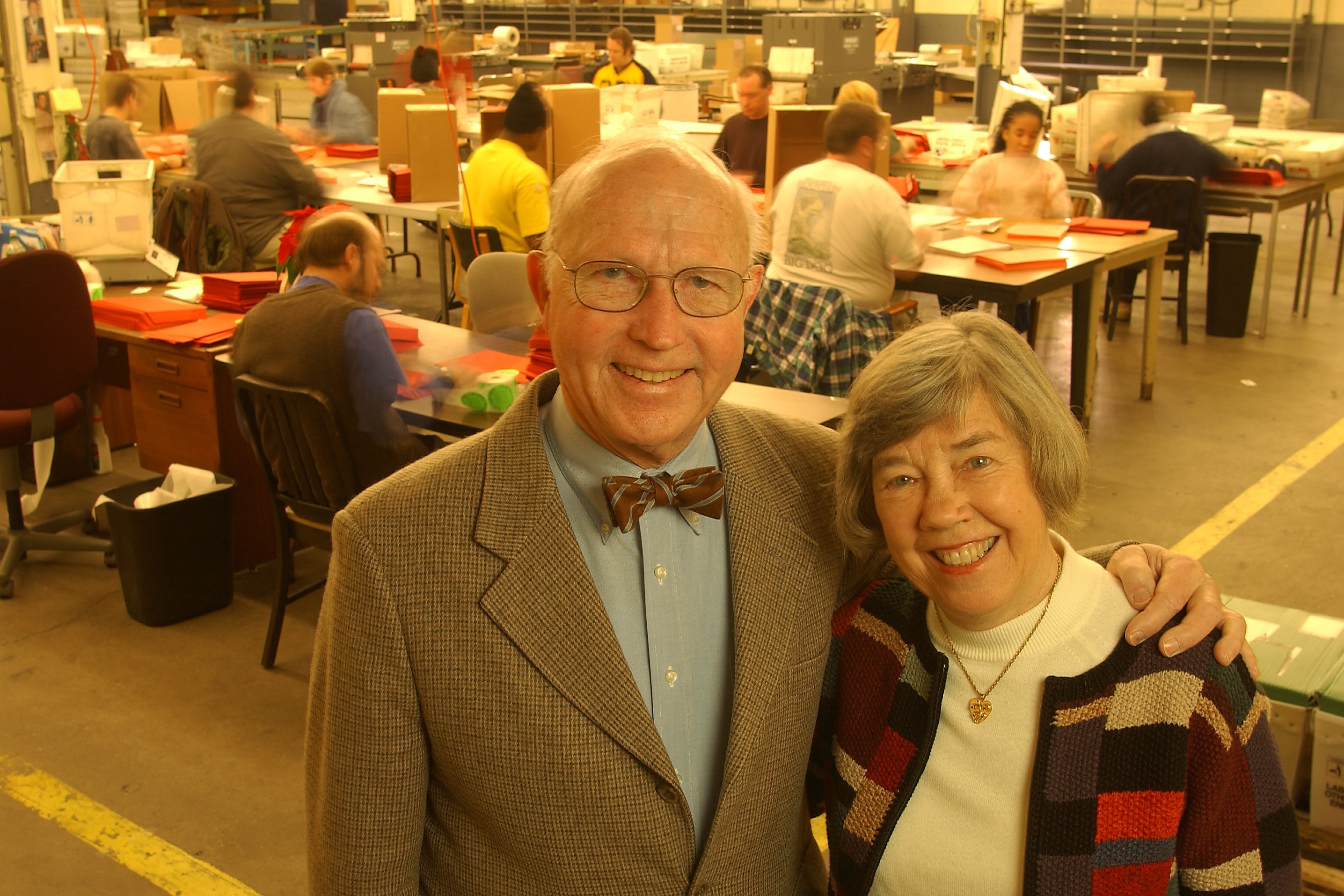
    Mr. Baker and his wife, Louise, stand inside their Baker Industries building in Malvern in 2003. Michael Bryant / Staff Photographer

    For nearly five decades, Baker Industries has contracted light industrial and office work from hundreds of businesses, and operated facilities in Philadelphia, Malvern, and elsewhere. Employees are paid an hourly wage, offered additional training, and encouraged to attend workshops, social events, and support group meetings.

    The company motto is “providing a steppingstone to regular employment,” and many workers have moved on to higher-paying jobs elsewhere. “We have a philosophy of work as rehabilitation,” Mr. Baker told the Daily News in 1988. “The goal is to show these people they can do a whale of a lot more than they think they can do.”

    Mr. Baker served as the unpaid president at Baker Industries until 2002 and then on the board of directors. In the 1950s, he assumed control of his family’s small chemical company, C.P. Baker & Co., and he expanded it before selling it in 1980.

    “Charlie and Weezie Baker believed there is healing in work,” colleagues at Baker Industries said in a Facebook tribute on his 101st birthday in June. “Not just jobs. Work. Showing up. Being part of something. Contributing alongside others.”

    Mr. Baker played many roles at Baker Industries.Baker Industries

    Turk Thacher, vice board chair at Baker Industries, said: “Charlie was beloved. He was kind to everybody.”

    Mr. Baker, his wife, and their company were featured often on TV shows, and in The Inquirer, the Daily News, and other publications. They won many awards for their community service and innovative business model.

    “I was grateful to have their guidance,” Nic Watson, president of Baker Industries, said, “and we will follow their example for years to come.”

    In 1991, the company was named an inspirational Point of Light by President George H.W. Bush. In 2004, Mr. Baker and his wife earned the legacy award for “community generosity” from the Chester County Community Foundation.

    “They went above and beyond their own self-interest,” a foundation official told The Inquirer then.

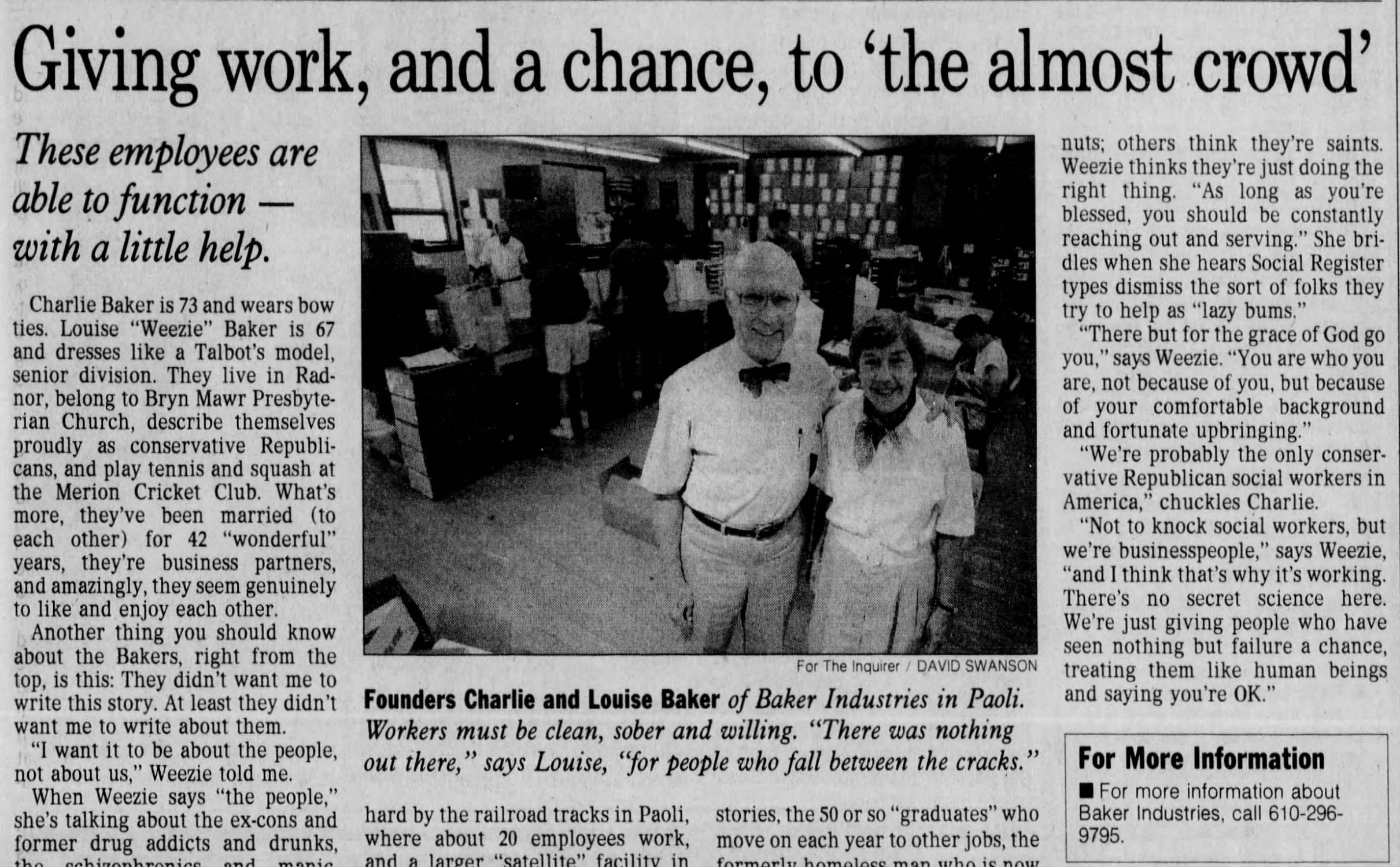
    This photo and article about Mr. Baker were published in The Inquirer in 1998.Newspapers.com

    Away from work, Mr. Baker was an avid squash player, skier, and sailor. He won the U.S. national hardball singles squash championship six times in the 80-and-older division from 2006 to 2016, skied into his 70s, sailed into his 80s, and played squash and tennis at the Merion Cricket Club until recently.

    He graduated from the U.S. Military Academy in 1946 and served more than seven years in the Army. He was stationed in Europe and rose to captain. His family called him a “relentlessly joyful spirit” in a tribute and said: “The world was a better place for his presence.”

    Charles Pitman Baker III was born June 24, 1925, in Philadelphia. His father, Charles Jr., was manager at the old Colonial Hotel, and Mr. Baker told stories of dropping water balloons on passing pedestrians from windows when he was very young and spending summers at the beach and on boats with the Ocean City Yacht Club.

    He was a star squash player at the Haverford School and known by classmates as “the Arm,” his 1943 senior yearbook said, “because of the vicious way he wields a racket.” His mother died when he was 11.

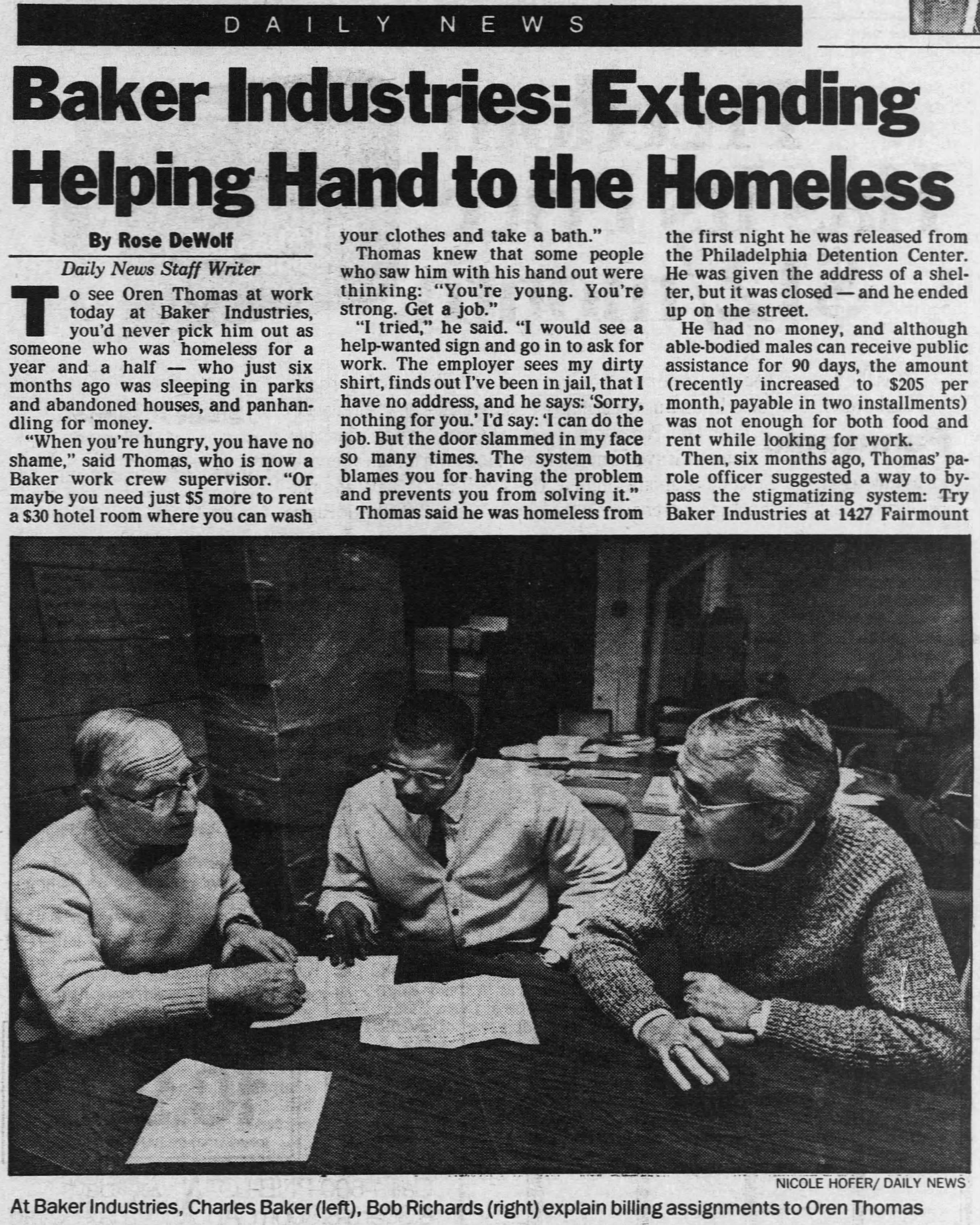
    This photo and article about Mr. Baker (left) appeared in the Daily News in 1990.Newspapers.,com

    He met Louise Wilhelm while water-skiing in Ocean City, and they married in 1955, and had sons Charles IV and Justin and a daughter, Sandra. His wife died in 2025.

    Mr. Baker and his wife attended Wayne Presbyterian Church, and he was known for his bow ties and wide smiles. He was funny, his daughter said, and liked to sing show tunes anytime anywhere, and write corny poems on birthday cards.

    “He was a wonderful dad who loved his family,” his daughter said. His family said in a tribute: “His legacy of service, humor, and kindness will live on for many generations to come.”
    His wife told The Inquirer in 2004: “Charlie has a kind heart.”

    Mr. Baker (front left) celebrated his 100st birthday in June 2025 with his family.Courtesy of the family

    In addition to his children, Mr. Baker is survived by four grandchildren, five great-grandchildren, and other relatives. Two sisters died earlier.

    Visitation with the family is to be from 10 to 11 a.m. Saturday, Oct. 17, at Wayne Presbyterian Church, 125 E. Lancaster Ave., Wayne, Pa. 19087. A celebration of his life is to follow. Bow ties are optional but encouraged, the family said.

    Donations in his name may be made to Baker Industries, 184 Pennsylvania Ave., Malvern, Pa. 19355.

    His wife told The Inquirer in 2004: “Charlie has a kind heart.”Baker Industries
  • We made 10 Shore predictions for 2026. Here’s how we did.

    We made 10 Shore predictions for 2026. Here’s how we did.

    Things not on my 2026 Jersey Shore predictions bingo card: a canceled luau, and a dispute over live outdoor music featuring audio of 911 complaints posted to Facebook.

    But, at the start of the season, I did make 10 predictions on how the Shore summer would go.

    Here’s how I did.

    Full speed ahead for Icona in Wonderland. ✅

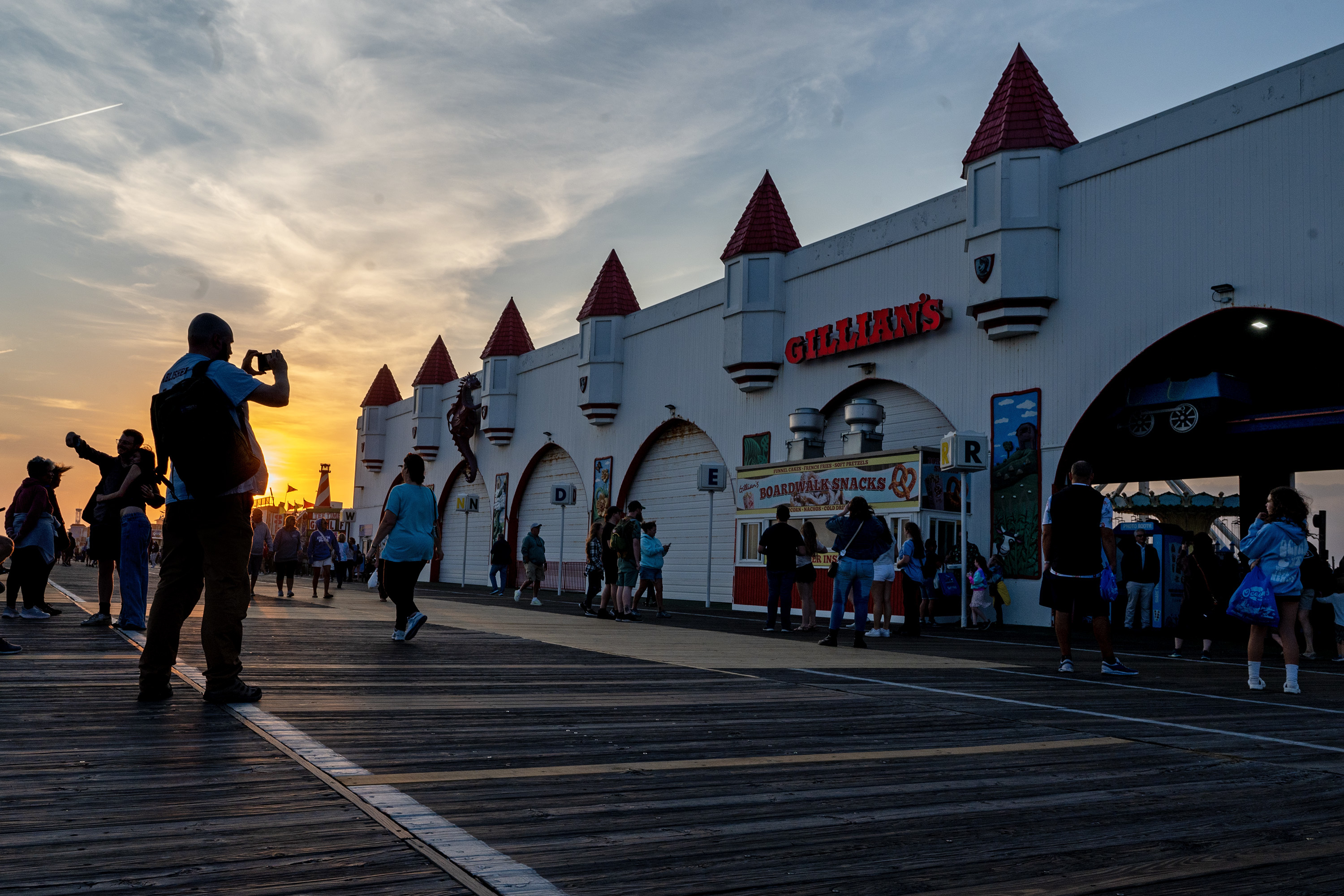
    I’m calling this a win (for my predictions score; people have very different views of the hotel). In June, Eustace Mita finally got his dream of a declaration that the old Wonderland Pier site at 600 Boardwalk in Ocean City is “in need of rehabilitation.”

    The Icona developer is now in negotiations with Ocean City about a hotel proposal, which he says will be a scaled-down version of his initial seven-story, 252-room plan that called for saving the Ferris wheel and historic carousel. City council is vowing to be guided by recommendations from a Boardwalk subcommittee. Meanwhile, council hired a lawyer to defend against a lawsuit by citizens’ groups.

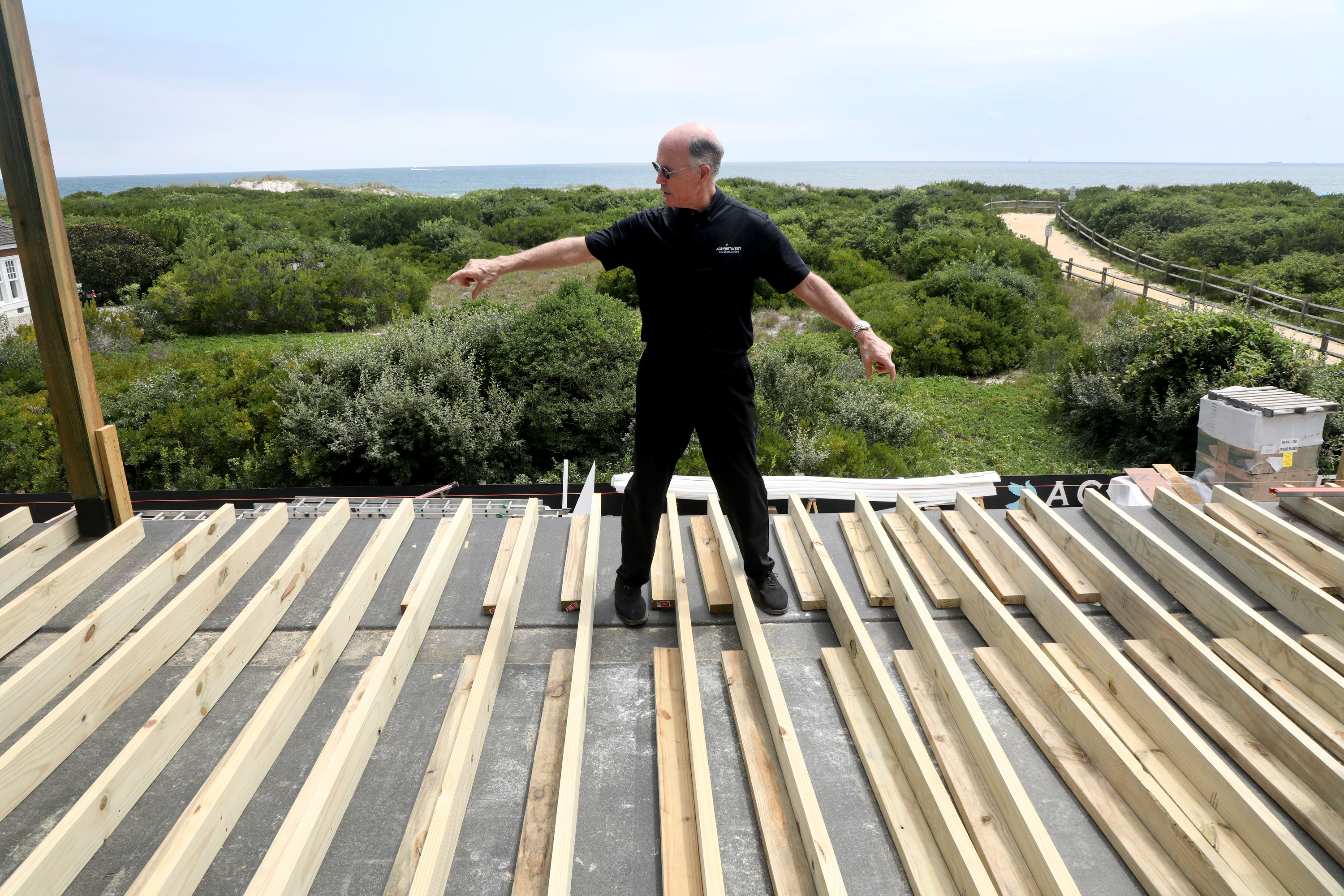
    Eustace Mita talks about the construction of this beachfront Achristavest home on 116th Street in Stone Harbor on Tuesday, August 18, 2026.Vernon Ogrodnek / For The Inquirer

    Atlantic City’s Irish Pub will rise again. ❌

    Alas, not even the sale of the Irish Pub in Philadelphia appeared to jump-start any renovations in Atlantic City, where owner Cathy Burke has been in a stalemate with state inspectors over whether the iconic, beloved pub on St. James Place should be considered a high-rise. The pub has been closed since January.

    Will locals have their fish and chips and Guinness on Christmas Eve as per usual? You never know. Burke did not answer a text message seeking an update. Asked about the Irish Pub’s status, Atlantic City spokesperson Andrew Kramer said he had “nothing new from my end on this one.”

    But, in an upset, the city has begun paving Atlantic and Pacific Avenues, in a development Mayor Marty Small Sr. called “massive,” and said would be completed by year’s end.

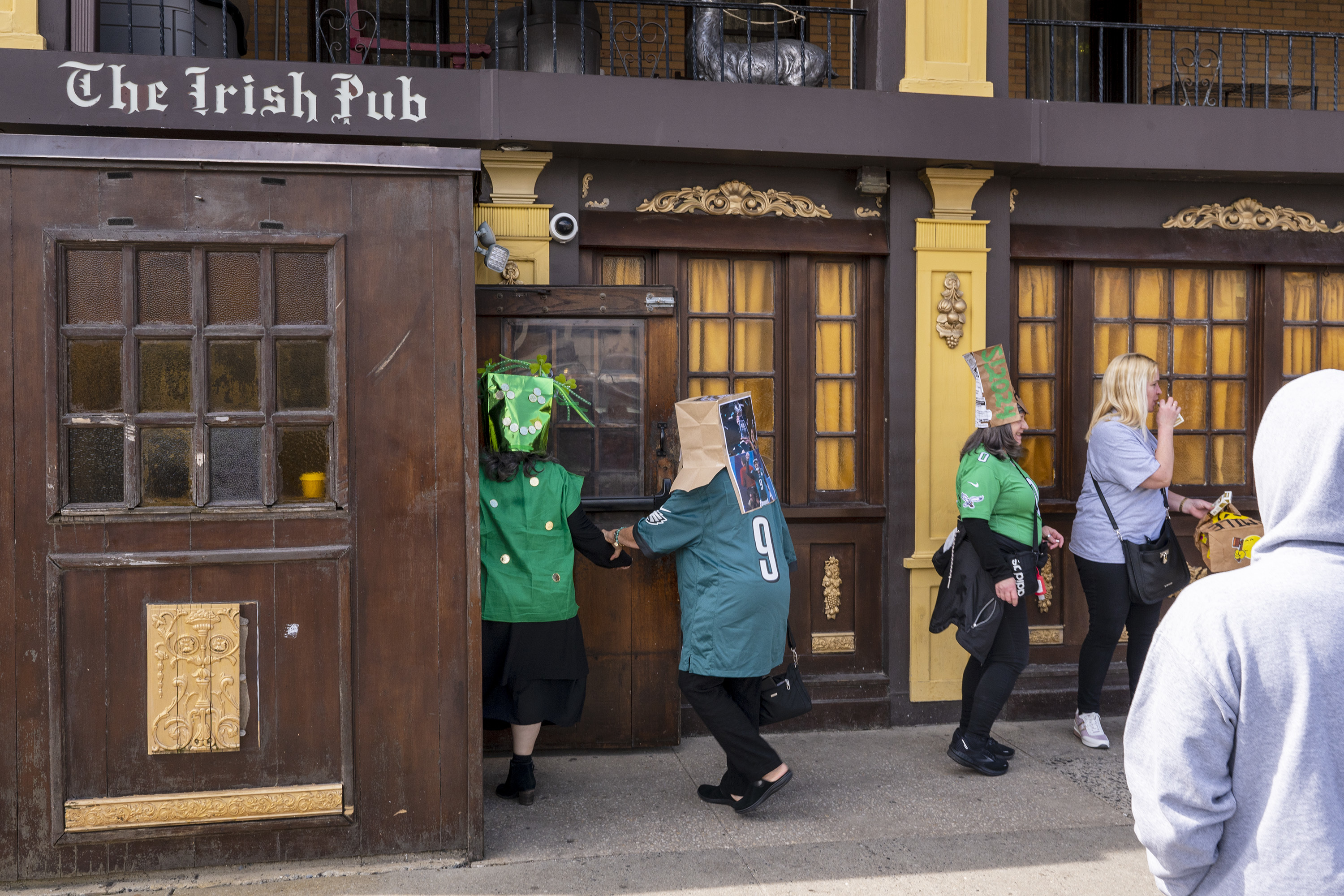
    Fran Cann (left) helps Debbie Stiles (#9, right) get through the door, since she can’t see as well wearing a “St. Nick” Foles bag over her head, as they celebrates Bag Day at the Irish Pub in Atlantic City Monday, Mar. 18, 2024. The friends, from Berlin, N.J.were attending their first Bag Day. The tradition got started when a late-to-the-party patron showed up to the 24-hour bar a day after St. Patrick’s, then put a bag on their head.Tom Gralish / Staff Photographer

    Shore restaurants will tough it out, but struggle. ✅

    Restaurants were stressed this summer. As is usual in late summer, many lost employees as the season wore on all the way to Sept. 7, and had to cut back seating or hours. Others pleaded with their clientele for patience. Still, there were lines down the block for coffee places, and booked up reservations for favorites like Steve & Cookie’s and Cafe 2825. New places were opening deep into summer, like Culina Mundi in Ventnor and Sabrina’s Kitchen in Atlantic City.

    Bakeria 1010 owner and pizza savant Mike Fitzick posted a mock obituary for himself at summer’s end: “Welp that’s all she wrote folks. … Right from start I knew this season was gonna be rough. All the staff I tried to hire fizzled out and the staff I had last year were mostly gone. This summer was pretty treacherous in every aspect … June was trash, July was ok and we finally hit our stride in August. Better late than never, I guess. Unfortunately I have passed away due to self-inflicted cortisol poisoning. In lieu of flowers please donate to the Bakeria 1010 all winter. Jokes aside we WILL be open for lunch today…”

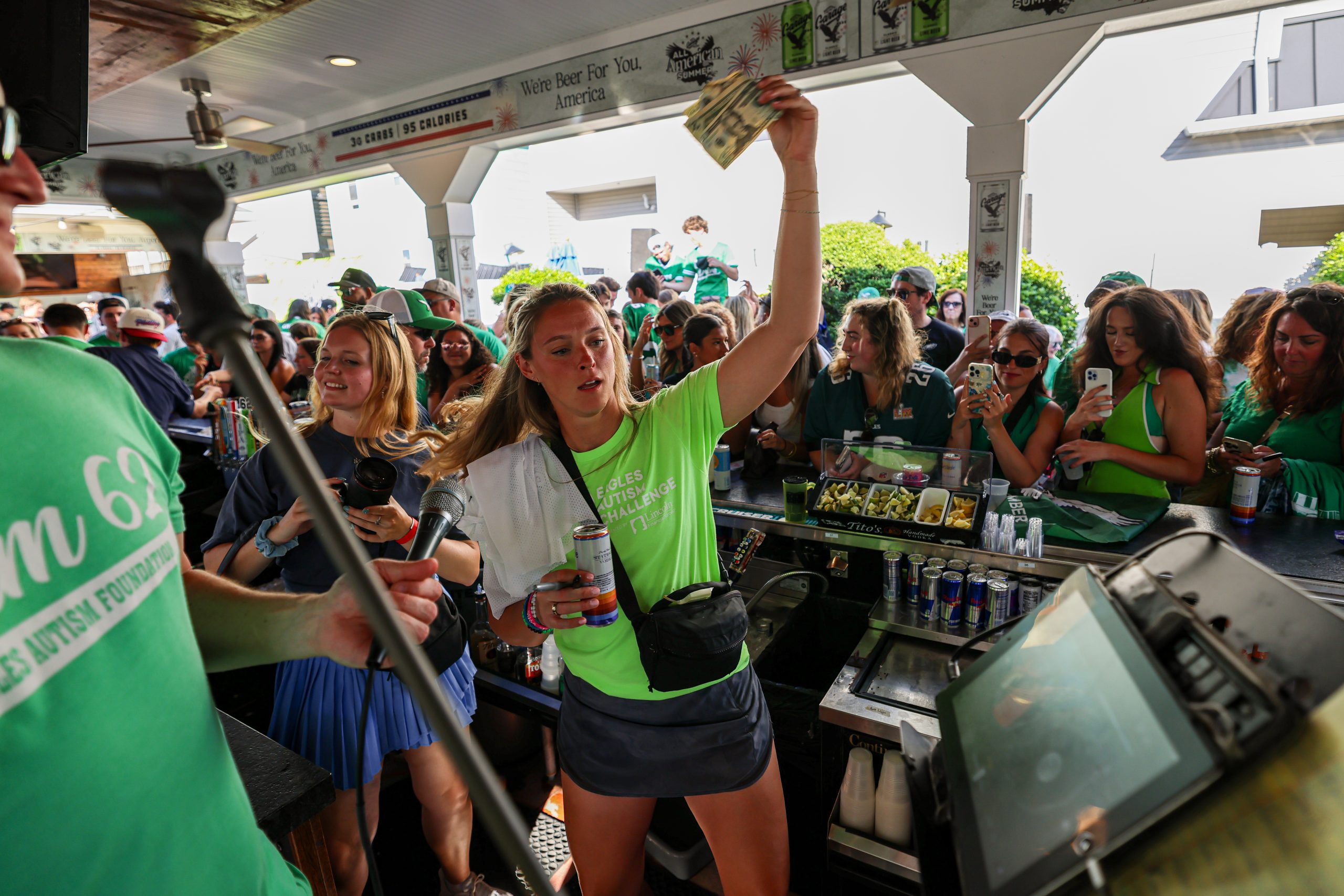
    Kylie Kelce adds some money to the cash register during the Shore Birds celebrity bartending event in Sea Isle.Courtesy of the Philadelphia Eagles

    Taylor and Travis will not honeymoon in Sea Isle, but…? ✅ ❌

    No, they did not honeymoon in Sea Isle, choosing instead Big Sky, Mont. (a lovely place), so that’s an easy one in my favor. But my leaving open the possibility that they would make an appearance in Sea Isle seems, on balance, ridiculous. Maybe they’re waiting for Jason and Kylie Kelce to finally make it off the waiting list for the Sea Isle Yacht Club. Maybe a celebrity bartending gig for Taylor at the Eagles Autism extravaganza next summer? Meanwhile, have fun in Ohio!

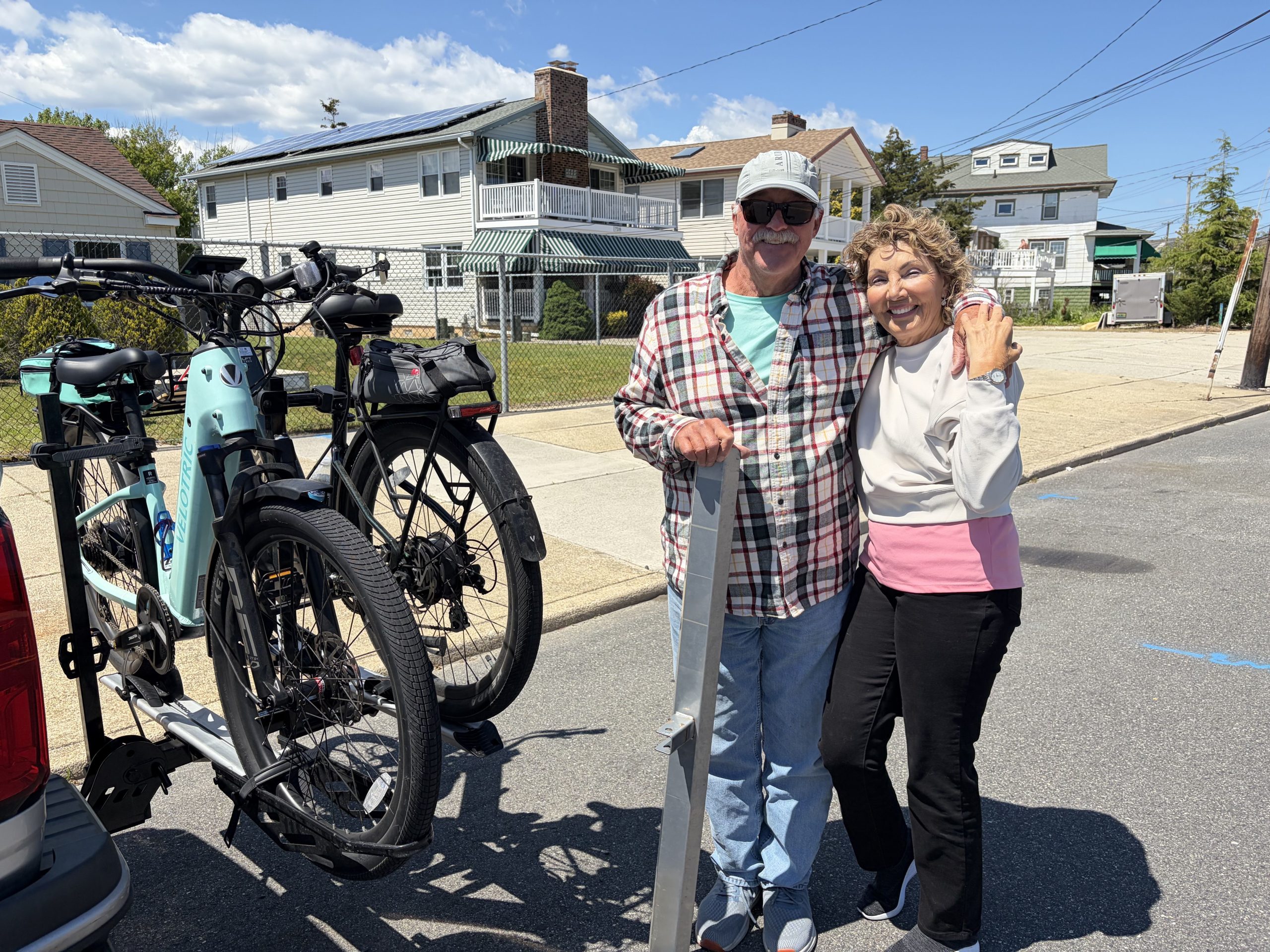
    Mike and Annamarie Carr of Ventnor, owners of Jagielky’s candy shops, with the e-bikes they love to ride. Ventnor won’t allow them on its own Boardwalk. The couple drove to Ocean City on June 2 and started and ended from there.Amy S. Rosenberg / staff

    E-bikers will be hauled off the boardwalks and fill municipal court Zoom hearings. ❌

    There was a lot of confusion over the new e-bike law in New Jersey.

    First the state Motor Vehicles Commission said Pennsylvania visitors shouldn’t sweat the new registration requirements, then they changed their mind and said visitors should start their week down the Shore with a trip to the DMV. Adding to the confusion, the MVC requirements explainer page that says out-of-staters should comply now also says, “This page is intended for New Jersey Residents.”

    In all, the MVC has issued a total of 13,850 e-bike registrations, according to commission statistics; 365 of those for out-of-state residents.

    But police were generally light-handed on enforcement measures for the new law, with departments focusing on safety issues, like helmets, and age restrictions, rather than registrations.

    Doug Bergen, a spokesperson for Ocean City, said no citations were issued there this summer under the new law.

    In Ventnor, Lt. Bryan Gaviria said between May 1 and Sept. 10, the department issued six curbside warnings to juveniles, 10 e-bikes on the boardwalk warnings, and one ticket for riding on the boardwalk.

    “We’re still in the education phase,” he said.

    Statewide, statistics show 628 total citations under the e-bike and motorized bicycle law for July and August, according to data supplied by the New Jersey Judiciary.

    Of those, just 77 were given for low-speed electric bicycles, 22 citations were for failing to have the registration required by the new law, and two were for drivers being under 15. The rest of the citations issued were for motorized bicycles, the higher speed classification.

    Retiring boomers will continue their takeover of Shore towns. ✅

    Yes, who else can afford to buy?

    Real estate prices remained mostly in rarified air, like this adorable yellow 760-square-foot North Wildwood cottage that sold for $1.7 million in mid-August. It’s a tear down, naturally.

    Or how about this 17,684-square-foot house in the Avalon dunes, built on spec by Eustace Mita (see above), with the distinction of being Avalon’s largest house and an expected price tag in the tens of millions.

    In related news, the home elevator, once considered a luxury, is now considered an essential amenity for new homes in Ocean City, N.J., among other towns.

    Rendering of a 17,684 square foot home being built as a spec house in the dunes in Avalon, at 5745 Dune Drive, by developer Eustace Mita. It will be the largest home in the borough.Courtesy Avalon Borough

    Wildwood boardwalk hours will again be expanded overnight, but all people will talk about are the electric Volvo SUVs driving the tram cars. ✅ ❌

    Wildwood spokesperson Alicia Deluca says the hours remained curtailed, with the boardwalk closing between 1 and 5 a.m.

    The grumbling over the new Volvo tram cars continued all summer, though. People do not like change. Meanwhile, though, Wildwood is preparing a 20-year redevelopment plan for its boardwalk that will see mixed-use projects, including hotels, apartments, condominiums, businesses, and centralized parking garages.

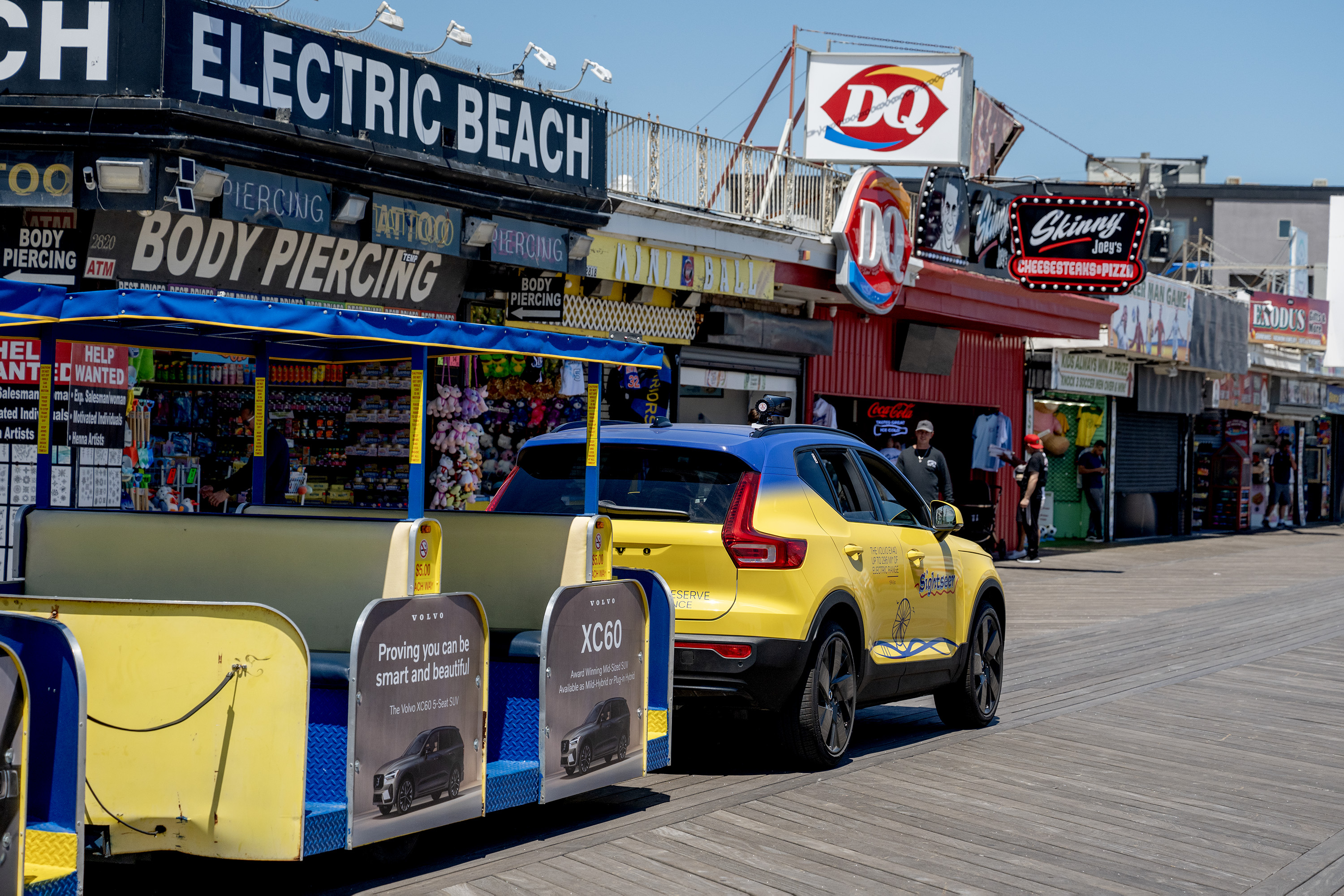
    A Sightseer tram car is pulled by a Volvo EX40 electric vehicle on the Boardwalk in Wildwood Tuesday, June 2, 2026. The Wildwoods Boardwalk Special Improvement District struck a deal with Volvo to provide three free electric vehicles in return for ads placed on the individual tram cars. Four of the older engines remain in use for now.Tom Gralish / Staff Photographer

    There will be a lot of complaining about changing parking regulations. ❌

    I didn’t hear much over the din of loud music from Gully’s, and Facebook groups seemed preoccupied with other things: flies, shaming noise complainers, and finding the best chicken Parm.

    The return of the day-tripper. ✅

    This prediction was a good one. Costs continued to rise, making shorter trips and day trips appealing. I predicted Atlantic City would get renewed attention, and it did, with groundbreakings for new housing developments, a container retail park close to opening, and the enduring appeal of a wide, free beach and a relatively inexpensive real estate picture.

    Obvious miss on the predictions front: Atlantic Avenue is finally being paved. The odds were very long on this one.

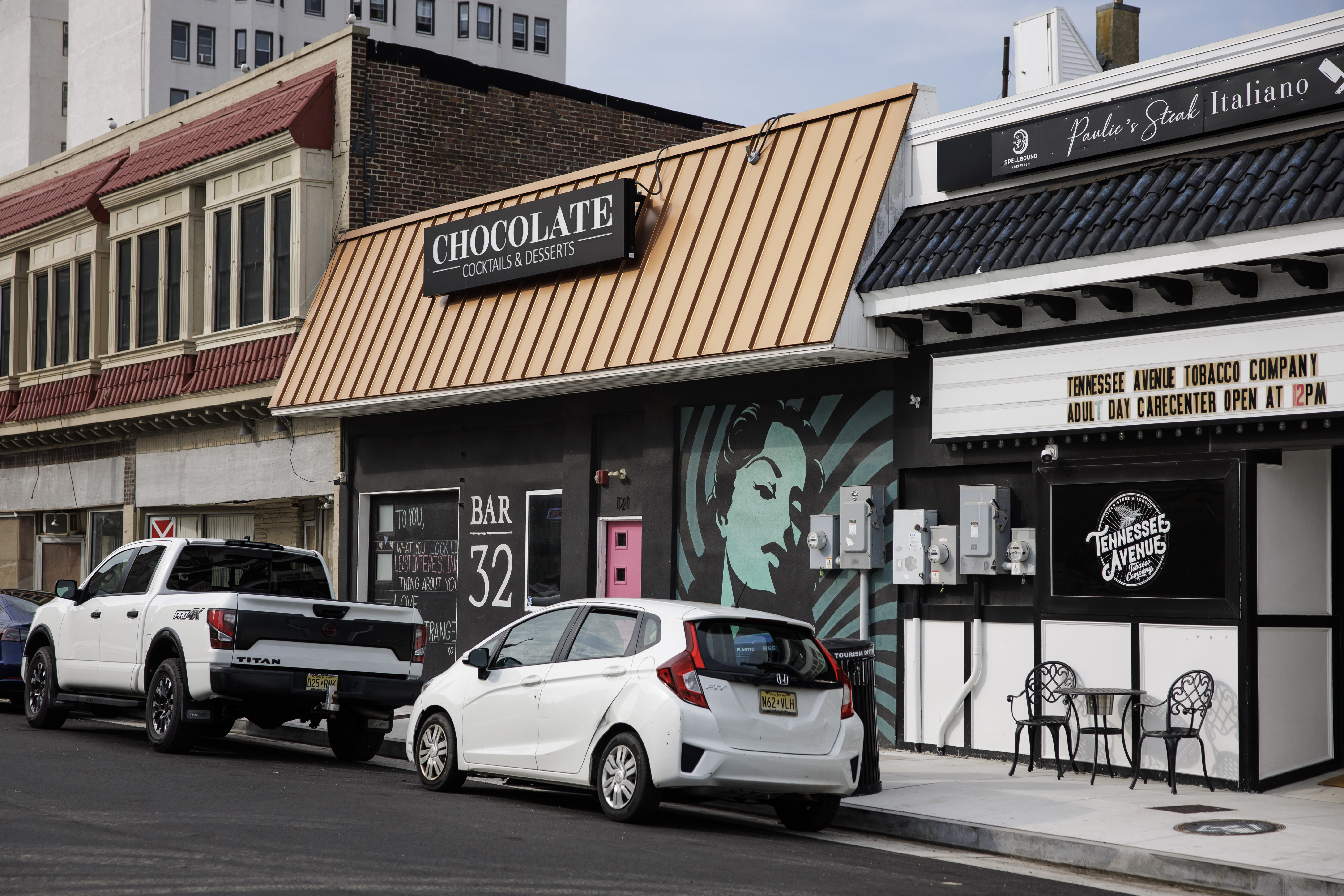
    The exterior of Bar 32 on Thursday, June 11, 2026 in Atlantic City, NJ. Bar 32 offers bean-to-bar chocolate, handmade desserts, and craft cocktails.Monica Herndon / Staff Photographer

    The summer will seem verrrrry long. ✅

    So long. How long? Basically an extra week until the Sept. 7 Labor Day. Which left beach patrols, restaurants, and other business strapped for employees, and rewarded marathon beach lovers with two days of atrocious flies on the beach Sept. 4 and 5, worse than anyone had ever experienced, like, really terrible! See ya next year!

    Total score: 6/10. We’ll get ‘em next summer, hopefully over a plate of lollipop meatballs at the Irish Pub.

  • Stanley M. Schwarz, community-minded trial lawyer and former assistant district attorney, has died at 95

    Stanley M. Schwarz, community-minded trial lawyer and former assistant district attorney, has died at 95

    Stanley M. Schwarz, 95, of Philadelphia, community-minded trial lawyer and founder of what is now the Schwarz & Schwarz law firm, former Philadelphia assistant district attorney, Army veteran, mentor, and golfer, died Friday, July 17, of heart failure at his home in Society Hill.

    Public-spirited throughout his life and adept at litigation regarding workplace accidents, medical negligence, reckless driving, careless manufacturers, and other personal injury issues, Mr. Schwarz founded what is now Schwarz & Schwarz PC in 1967. He represented all kinds of clients in all kinds of cases and appeared before the Pennsylvania Supreme, Superior, and Commonwealth Courts more than 20 times.

    He was featured in the Daily News in 1968 when, at no charge to his client, he won $150 from the city for a Philadelphia hairdresser whose car was mistakenly towed. “I was disturbed by her experience” with city officials, he told the Daily News.

    “To many,” his family said in a tribute, “he was more than an attorney. He was a source of guidance and hope.”

    Mr. Schwarz doted on his children.Courtesy of the family

    Mr. Schwarz lived for decades in Society Hill Towers at Second and Locust Streets near the Delaware River and represented its owners association in 1997 as it contested high-rise development along the nearby waterfront. “They’re trying to take away this little Garden of Eden,” he told the Daily News.

    He joined the district attorney’s office in 1960, worked as an assistant district attorney in the major trials unit, and handled hundreds of cases involving murder, assault, robbery, burglary, arson, and other crimes. In one notable case in 1966, he noticed that the photo of a man in the Daily News looked like the at-large suspect in a recent robbery. Detectives tracked the man down and made an arrest.

    He also served as a temporary judge and arbitrator for local, state, and federal courts. He belonged to several legal associations, won awards for his legal and community service, and was an honorary member of the Knights of Columbus.

    He joined the Army after high school, rose to first lieutenant, and served as an intelligence cryptographer during the Korean War. He was admitted to the Temple University School of Law after just a year in college, became editor-in-chief of its law review, and graduated in 1958.

    Mr. Schwarz and his wife, Kathy, married in 1991.Courtesy of the family

    He served two years as a law clerk in the Philadelphia Court of Common Pleas and then as assistant to three district attorneys over six years. “He mentored generations of young lawyers and quietly helped countless people through difficult times,” his family said.

    Born in Philadelphia during the Great Depression, Mr. Schwarz and his family moved often when he was a boy. He lived in New York when he was young and worked part-time as a stock boy and janitor when he was 10 to help pay the bills.

    He attended two dozen schools before moving to Philadelphia in middle school and graduated from Germantown High School in 1948. His family praised “the work ethic and compassion that guided him throughout his life.”

    They said: “Stan’s life was shaped by perseverance, resilience, and a deep commitment to helping others.”

    Mr. Schwarz graduated from Germantown High School in 1948.Courtesy of the family

    Stanley Morris Schwarz was born Jan. 22, 1931. He worked as a mail clerk and accountant after high school and joined the Army when he was 20.

    He married Lee Rosen in 1955, and they had a son, Daniel, and a daughter, Stacy. After a divorce, he married Kathy Campbell in 1991, and they danced and traveled the world together for years. He was especially good at the jitterbug.

    Mr. Schwarz played golf and socialized for more than 50 years at the Bensalem Township Country Club. He was a longtime member of the Society Hill Club. He took his family to boat shows and on memorable vacations to Ocean City, Puerto Rico, the Pocono Mountains, Disney World, and elsewhere.

    He self-published a breezy memoir called The Roller Coaster Life of Flappy in 2022 when he was 91, and said: “As a father, it gave me the greatest pleasure in playing with the kids, whether in our backyard, in the community pool, or in the nearby parks.”

    Mr. Schwarz enjoyed time with his family.Courtesy of the family

    Mr. Schwarz was fun and funny, his daughter said. He taught himself to play piano and saxophone, and they performed duets.


    He was an engaging storyteller. He made personal scrapbooks for his children. Friends called him “amazing” and “incredible” on Instagram.

    His family said: “He made people feel valued and left them better than he found them.” His daughter said: “He was down to earth and playful. He was great with kids. He loved everybody’s children, and the children loved him.”

    In addition to his wife and children, Mr. Schwarz is survived by four grandchildren, a sister, and other relatives. A sister and a brother died earlier.

    Services were held earlier.

    Donations in his name may be made to Congregation Beth El, 8000 Main St., Voorhees, N.J. 08043.

    Mr. Schwarz was close with his daughter, Stacy, above, and his son, Daniel, below. Courtesy of the family
  • Congestion pricing, dog beaches, eliminating beach tags: 11 ideas to improve the Shore

    Congestion pricing, dog beaches, eliminating beach tags: 11 ideas to improve the Shore

    The Jersey Shore is like the old joke: Nobody goes there anymore, and also, it’s more crowded than ever.

    It is true that many Shore stalwarts have been priced, or annoyed, off the beach. And that towns feel busier and sometimes tenser than ever: more cars, not enough parking, canopy-to-canopy beaches, prohibitive housing costs, that occasional rudeness.

    Not to mention rising sea levels, nuisance flooding, and seemingly regular tornado watches.

    To move from complaining to solutions, we racked our brains, asked experts, and solicited ideas from our readers for ways to improve the Shore experience for everyone.

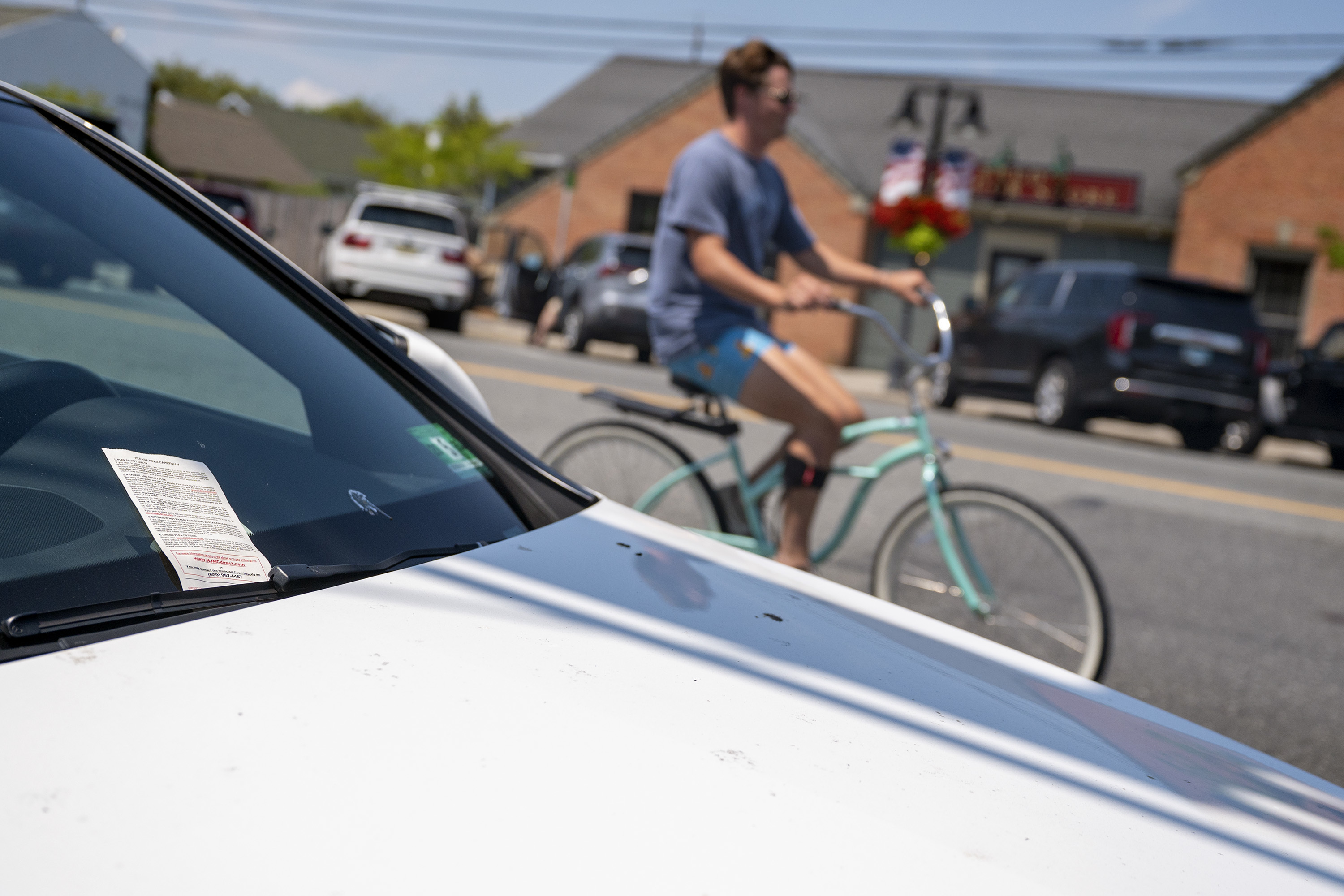
    A car with a parking ticket on 96th Street, the main shopping and dining street in downtown Stone Harbor on July 12, 2023.Tom Gralish / Staff Photographer

    Leave the cars off the island

    So many of the suggestions had to do with reducing traffic and the sheer number of cars in beach towns during the summer.

    Wrote one reader: “We need fewer cars on the island so bikers can safely travel — need to open lots on parkway and run shuttles.”

    This reader proposed giving every homeowner two parking passes. “I live in Sea Isle,” the reader said. “Too many cars.”

    Kara Cumiskey said that tenants brought seven cars to her four-bedroom rental in Ocean City.

    “I think that there should be a ‘beach tag’ for cars,“ Cumiskey wrote to us. “Or some type of ‘congestion pricing’ for bringing your car onto the island. Something that gives people some pause for bringing a car for every person.”

    While a mandatory ban or limit on cars seems unlikely, giving people the option of leaving their cars off the island and shuttling or Jitney Guy-ing into paradise seems like an interesting idea. The golf cart and e-bike rental business would definitely pick up. Fewer turtles would be squashed.

    A NJ Transit train en route to Atlantic City is shown at 30th Street Station in Philadelphia on May 12, 2019.JOSE F. MORENO / Staff Photograp

    We need more trains

    Relatedly, there were calls to increase and improve public transportation to the Shore. The current NJ Transit train is fantastic to take (and from the Shore end, NJ Transit riders can park their car for free at the A.C. Convention Center), but man, is it slow.

    An hour and 34 minutes at best between 30th Street Station and Atlantic City? Two hours between trains? Connections to the PATCO high-speed line only help a little. Still, I’ve noticed a lightness in the steps of the people who get off in Atlantic City with their suitcases and sunglasses. They’re onto something.

    Others noted that train service once ran down to various towns in Cape May County. Wouldn’t that be lovely.

    The Ocean Sands Motel at 3710 Ocean Ave. in Wildwood, N.J., on Tuesday, Jan. 24, 2023.Monica Herndon / Staff Photographer

    Convert old motels to affordable housing

    Ariela Rutbeck-Goldman, senior staff attorney at Fair Share Housing Center, says the Shore’s housing crisis is “increasingly a threat not just to affordability, but to the Shore economy itself.”

    “The Jersey Shore can’t remain a place where the people who work in restaurants, hotels, shops, and other local businesses can’t afford to live,” she said.

    Fair Share says more Shore towns are building affordable housing under the requirements of New Jersey’s affordable housing law.

    Belmar, for instance, is “repurposing dilapidated motels and other underutilized properties to increase their housing supply,” she said.

    “The goal shouldn’t simply be to create “employee housing,” so that workers can make it through the summer,” she said. “The Shore needs enough homes that teachers, nurses, service workers, young families, seniors, and other people who make these communities work can afford to live there year-round.”

    A shore home is under construction along the boardwalk by the Ventnor City Fishing Pier in the Jersey Shore town of Ventnor City, N.J., on Friday, Jan. 22, 2021.HEATHER KHALIFA / Staff Photographer

    ‘Stop the monster houses’

    As one reader wrote, “Stop the monster houses being built. The charm of the shore is getting bulldozed one lot at a time. These new builds are ugly!”

    Another noted the homogeneity of the new construction, in particular the white boxes with the black roofs and trim. In a lot of Shore towns, this ship has sailed. Sea Isle City, for example, is almost totally built out. But there is some hope for others, where the old Shore houses, whether they are the big turn-of-the-century Dutch colonials or the small ranchers of the Wildwoods, are hanging in there.

    Fair Share Housing is advocating for programs that help nonprofits acquire and preserve older homes to protect housing for year-round residents, as well as expanding tenant protections to prevent evictions.

    “Monmouth Beach, one of the Shore’s wealthiest communities, recently authorized the purchase of a two-bedroom condominium that will be deed-restricted and sold to an income-qualified household,” said Rutbeck-Goldman. “That’s a relatively small investment, but it demonstrates that municipalities don’t have to wait for a large development project to create affordable homes.”

    Shanna Killion, of Northeast Philly, works as a beach tag inspector in Avalon, N.J., on Sunday, Aug. 14, 2022. Killion said among the interesting items she has seen people carrying to the beach was an inflatable bed.DAVID MAIALETTI / Staff Photographer

    Eliminate beach tags (or at least make them reciprocal)

    Lots of people urged New Jersey beach towns to do away with beach tags. Dream on. Strathmere, one of the last three free beaches in the Philly area of the Jersey Shore, just voted to start charging $10 a day, $45 a season, or $30 if you buy a tag before Presidents’ Day. That leaves just Atlantic City and the Wildwoods beach-tag free.

    One interesting idea was to make the beach tags reciprocal to other towns. Some towns, like Ventnor and Margate, do have reciprocity, but readers imagined a Cape May County beach tag, for instance, that would encourage exploring.

    Related, a bill that would require towns to be transparent about where their beach tag revenue is actually going has stalled in the New Jersey legislature.

    Bike riders on the promenade boardwalk in Sea Isle City at the Jersey Shore on May 24, 2023.Tom Gralish / Staff Photographer

    Make the Shore better for bikers and pedestrians

    Many towns have expanded bike lanes and redesigned roads to calm traffic. More of this, please! No matter the pedestrian laws, the reality is, it’s still a miracle if the cars stop for you as you start to cross, or if the bike lane isn’t clogged with runners going in the opposite direction.

    Roads one block from the beach should be one lane in each direction, with traffic calming measures like flashing pedestrian lights and bright flags for the pedestrians to carry across. It will require a lot more patience than Jersey is known for. It’s OK! There should be a safe way to commute to jobs by bicycle and return home at night.

    A flight at Behr Brewing in Cape May in 2023.Jenn Ladd / Staff

    Let Ocean City BYOB already

    I know this is not going to happen. But what a wonderful restaurant renaissance might follow! A mini Cape May! As one reader wrote, “I have had a place in OC for 25 years and other than [Ocean City Yacht Club], have never eaten dinner in OC because can’t even have a glass of wine!”

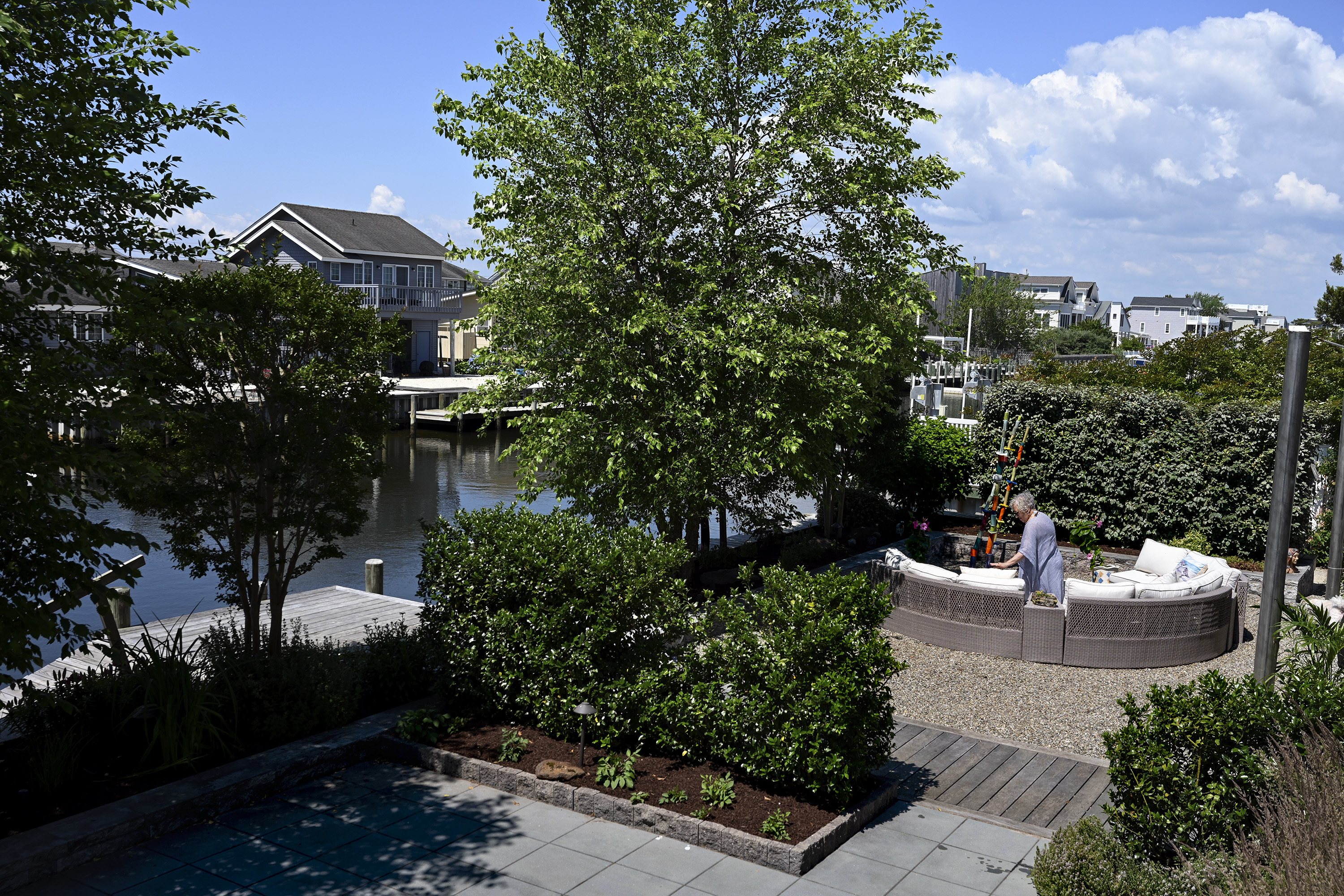
    A backyard with access to the bay, at a Beach Haven, Long Beach Island home on June 13, 2024.Tom Gralish / Staff Photographer

    Embrace ‘coastal naturalization’

    Cindy Zipf, executive director of Clean Ocean Action, worries that the entire Jersey Shore is becoming more high-end resort, less natural coastline.

    Zipf advocates a concept known as “coastal naturalization” and says residents and visitors must rally against the “overdevelopment and citification” of Shore towns. That includes expanding parks with native plants and trees, which Zipf says will increase both quality of life and resilience to storms.

    The Surfrider Foundation has an Ocean Friendly Garden program to help.

    Zipf advocates an end to “the unchecked paving and urbanization that erodes community character while contributing to increased flooding, polluted runoff, and litter.”

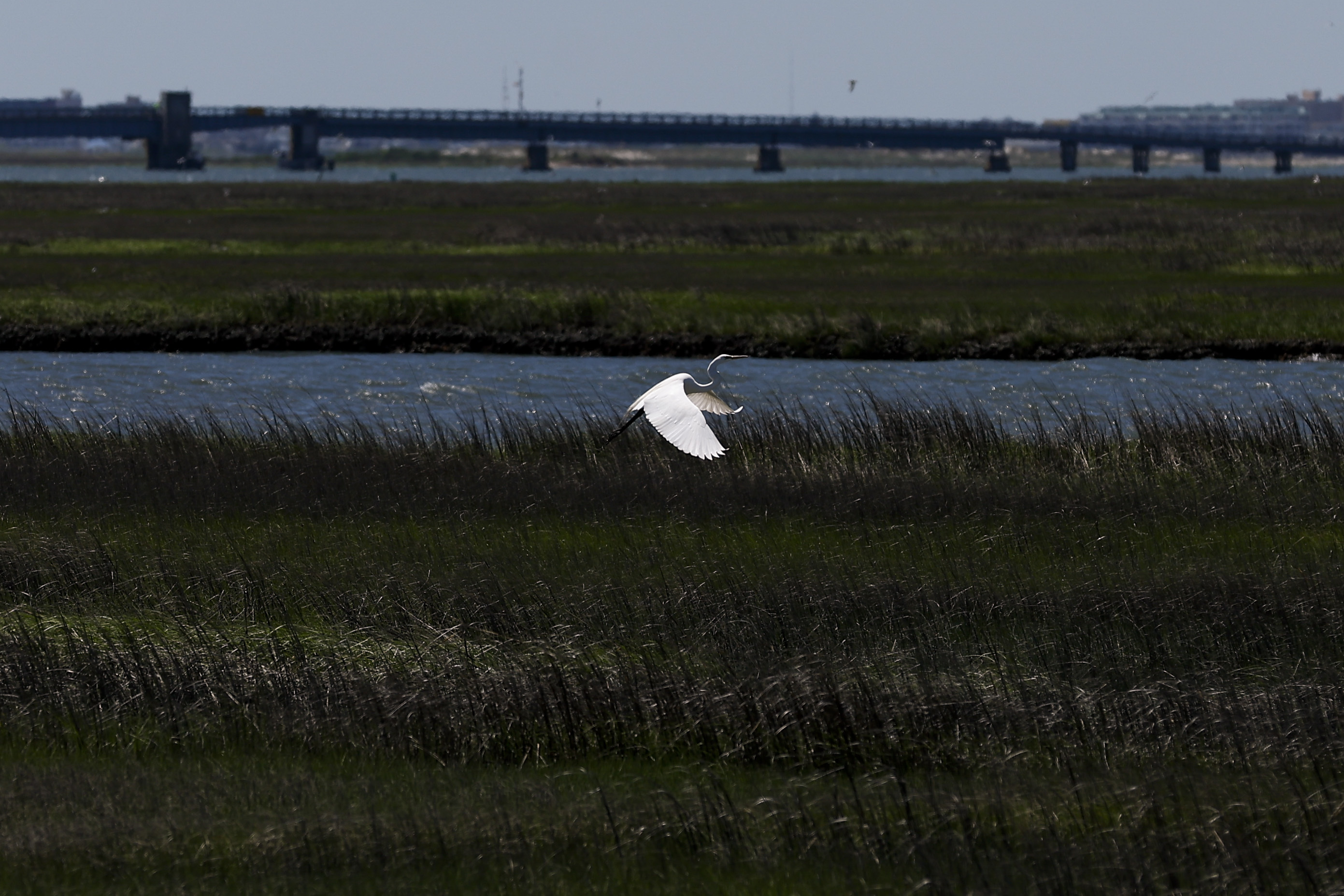
    A snowy egret flies over the salt marsh at the Wetlands Institute on May 19, 2025, in Stone Harbor, N.J. Dredged material was used to raise the height of the marsh in the Scotch Bonnet Island project.Monica Herndon / Staff Photographer

    Increased marsh restoration and flooding mitigation measures

    Speaking of increased flooding: The Wetlands Institute announced that it’s temporarily retreating from its half-century headquarters on the Stone Harbor Causeway to rebuild its trails and building because of increased flooding.

    The institute focuses on coastal resilience and marsh restoration, with nature-based solutions. It is elevating and widening its Salt Marsh Trail and creating a new high marsh designed for diamondback terrapin nesting and coastal birds.

    Lenore Tedesco, the institute’s executive director, says marsh rescue is critical for storm-risk reduction.

    “By elevating the Salt Marsh Trail, we are also creating a barrier to storm waves but unlike many coastal protection features that wall off people and wildlife, we are doing it in a way that benefits marshes and wildlife,” she said.

    The Wetlands Institute is hoping other coastal communities learn from the approach.

    Dogs and their owners enjoy the sand and water at the Malibu Beach Wildlife Management area in Egg Harbor Township at the Shore during the Memorial Day weekend, on May 28, 2023.Tom Gralish / Staff Photographer

    More dog beaches and dog hours

    Are dogs so bad? What if every town, or every island, had a beach dedicated to dogs and their owners? What if there were dog hours … on the boardwalks? What if all the towns allowed dogs to run free on the beach before, say, 8 a.m. in the summer? As Bob Dylan wrote, “In harmony with the cosmic sea / True love needs no company / It can cure the soul, it can make it whole / If dogs run free.”

    Fans pack the beach for blocks as Phish performs a beach concert in Atlantic City, Friday, Aug. 13, 2021.VERNON OGRODNEK / For The Inquirer

    Fully fund A.C. concerts

    There’s been a welcome uptick in big-name acts booked to A.C.’s estimable Boardwalk Hall, including Shakira, Phish, and Goose (also, Disney on Ice). Rüfüs du Sol performed on the beach this year. But the sophisticated and intimate Thursday night jazz concerts on the Atlantic City Boardwalk only started in August this year. In previous years, this popular tradition ran all summer long. There were a few A.C. beach concerts this summer and a couple jazz nights at Gardener’s Basin, but nothing like in past years.

    On the upside, there is a robust food truck scene at the A.C. Seawall and at O’Donnell Park, and new housing construction projects in places that have long been vacant. And no beach tags. But the city is under increased pressure from expected job losses due to New York casinos. Will Atlantic City put the pieces together?


    Have more ideas? Email us at downtheshore@inquirer.com!

  • The Jersey Shore bakery that helped Dominic Sessa transform into Anthony Bourdain

    The Jersey Shore bakery that helped Dominic Sessa transform into Anthony Bourdain

    Before he played Anthony Bourdain in the coming-of-age biopic Tony, Dominic Sessa’s first brush with fame was as an Ocean City, N.J., doughnut guy.

    Tony, which opened in theaters nationwide last Friday, is an origin story. It depicts Bourdain decades before he would become the executive chef of French brasserie Les Halles and eventually a prolific travel journalist, best known for shows like A Cook’s Tour, No Reservations, and Parts Unknown.

    Dominic Sessa (left) as Anthony Bourdain with Leo Woodall as a renegade cook in “Tony.”A24

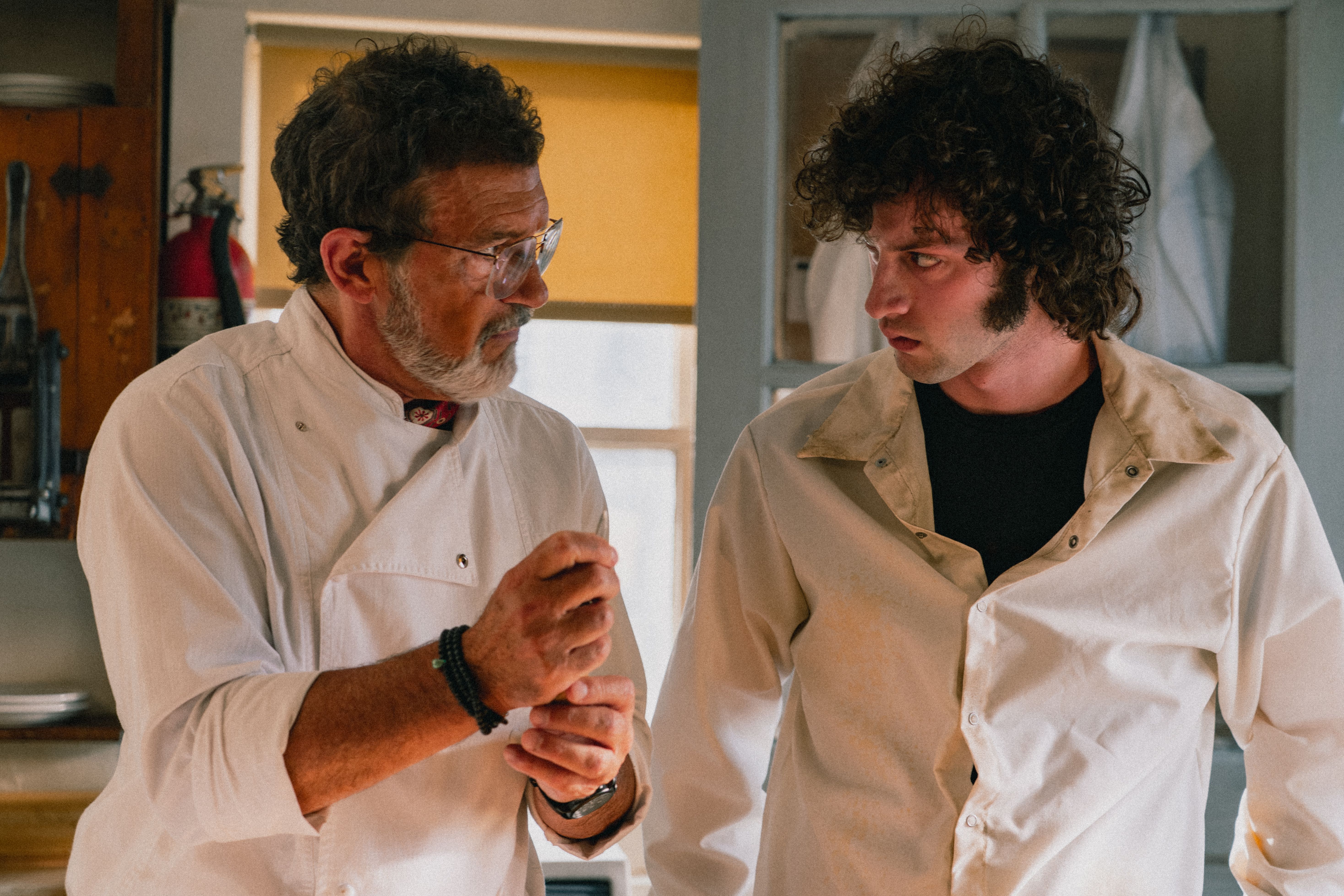
    In the film, Sessa portrays a 19-year-old Bourdain in the summer of 1973, when he found himself in Provincetown, Mass., desperate to get his would-be wife, Nancy Putkoski (Emilia Jones), to fall in love with him after losing out on a writing fellowship. A tough-yet-kind chef (Anthony Banderas) gives Bourdain a job as a dishwasher at the Flagship, a no-nonsense seafood shack where Bourdain grows from bumbling dishwasher into something resembling a cook.

    The film draws heavily on chapters of Bourdain’s best-selling memoir Kitchen Confidential, in which Bourdain romanticized a crew of talented, if aimless, line cooks and their exploits.

    “They drank everything in sight, stole whatever wasn’t nailed down, and screwed their way through floor staff, bar customers, and casual visitors like nothing I’d ever seen or imagined,” Bourdain wrote with palpable admiration.

    It’s a feeling that Sessa, 23, knows well.

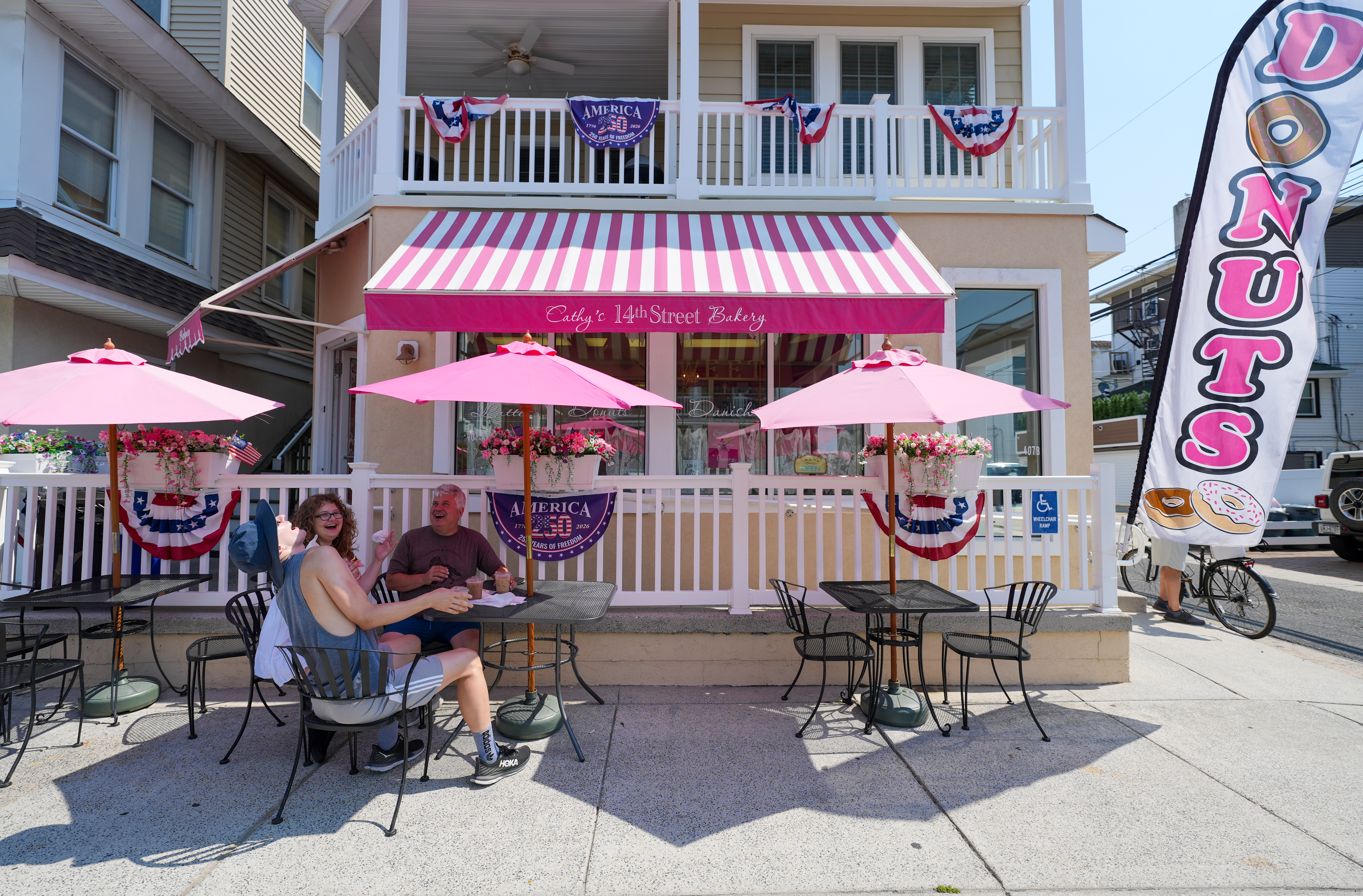
    Born in Cherry Hill, Sessa grew up in Egg Harbor Township and Ocean City, where he spent four summers working in the kitchen at Cathy’s 14th Street Bakery, a pink-and-white storefront that serves thousands of doughnuts a week.

    When Sessa started as a dishwasher there in 2016, he was 13. By the time he worked his last shift in 2019, he had worked his way up to full-fledged baker, responsible for opening the shop and preparing batches of Cathy’s famous powdered and cream-filled doughnuts from scratch.

    “I’ve hired a lot of great kids, but there are some who don’t get it,” said Cathy Greene, the bakery’s owner. Sessa “was really a natural.”

    Cathy Greene, owner of Cathy’s 14th Street Bakery in Ocean City, N.J., fills a box with doughnuts for a customer on Aug. 13, 2026. Former Cathy’s dishwasher and junior baker Dominic Sessa plays Anthony Bourdain in the new A24 biopic “Tony.”Tim Hawk / For The Inquirer

    Sessa doesn’t remember taking to it so easily. And yet, like Bourdain, he kept coming back.

    “When I first started there, it was miserable — especially at that age, waking up super-early and making batches of dough. I was just lazy and didn’t feel like finding another job,” Sessa told The Inquirer. “But every summer I’d come back and Cathy would teach me something new … The experience was one of the things that taught me how to work hard.”

    Tyler Greene, Cathy’s son, flips doughnuts in a deep fryer at Cathy’s 14th Street Bakery in Ocean City, N.J., on Aug. 13, 2026. Tim Hawk / For The Inquirer

    Doughnut summers

    Admittedly, frying doughnuts at a family-run bakery did not entirely prep Sessa for the fictional kitchen he’d step into as a teenage Bourdain. In Tony, the Flagship is full of cocaine, dirty jokes, and smashed dishes. Cathy’s, by contrast, was basically Disney World.

    Still, Sessa said the job helped him understand what motivates chefs to endure grueling hours and nonstop kitchen injuries. Like Bourdain, the actor was a self-styled troublemaker, nearly getting kicked out of his South Jersey high school before earning a hockey scholarship to Massachusetts’ prestigious Deerfield Academy, where he would eventually be discovered by director Alexander Payne and land his breakout role as a boarding school kid in 2023 Christmas comedy The Holdovers.

    Cathy’s kept him disciplined.

    Sessa used to clock in at the bakery at 4:30 a.m. to prep the day’s first doughnuts, rolling out and aerating one batch of dough while minding another batch as it proofed. In between, he’d fry up a third.

    Tyler Greene rolls out the dough for donuts at Cathy’s 14th Street Bakery in Ocean City, N.J., on Aug. 13, 2026. Former Cathy’s dishwasher and junior baker Dominic Sessa plays Anthony Bourdain in the new A24 biopic “Tony.”Tim Hawk / For The Inquirer
    A variety of doughnuts are for sale at Cathy’s 14th Street Bakery in Ocean City, N.J., on Aug. 13, 2026. Former Cathy’s dishwasher and junior baker Dominic Sessa plays Anthony Bourdain in the new A24 biopic “Tony.”Tim Hawk / For The Inquirer

    At its busiest, Greene said, Cathy’s sells between 1,200 and 1,400 doughnuts a day. Sessa drew on the rush — and the high stakes — while acting in Tony.

    “I related to the integrity working in a kitchen demands,” he said. “If I didn’t show up on time, everything would be messed up, and everyone would know it was [because of] me.” Plus, there was “something so gratifying” about placing doughnuts in the display case and watching customers snap them up.

    Antonio Banderas (left) as a chef-mentor with Dominic Sessa as Anthony Bourdain in “Tony.”A24

    Greene said Sessa shined when it came to the rhythm of baking and could manage the flow of the station about as well as she could. When they’d roll out dough side by side, Greene would quiz him on three-digit by three-digit multiplication. Sessa, she said, always answered correctly “off the top of his head.”

    “He was a real smart kid,” Greene said.

    Things didn’t always run smoothly. Once, Sessa recalled, he nearly ruined the bakery’s trash cans by throwing out a batch of dough with too much yeast in it. He had gotten away with the mistake — until the dough proceeded to nearly quintuple in size. “It was billowing out of the cans, on the ground, seeping into the kitchen,” said Greene. “It was pretty funny.”

    The stress of the job didn’t detract from Sessa’s favorite part: small-town notoriety.

    Passersby love to peer into Cathy’s kitchen from the street. “Kids were always interested in watching the guy who rolls the doughnuts out,” Sessa said. “It made me feel like a celebrity.”

    The outside of Cathy’s 14th Street Bakery in Ocean City, N.J., on Aug. 13, 2026. Former Cathy’s dishwasher and junior baker Dominic Sessa plays Anthony Bourdain in the new A24 biopic “Tony.”Tim Hawk / For The Inquirer

    Drinking on the beach and baking hungover

    As much as Tony spins a hero’s journey for a young Bourdain (who ends the movie — spoiler — by enrolling in culinary school), it also foreshadows his struggle with substance use.

    Dominic Sessa as Anthony Bourdain in “Tony.”A24

    Bourdain, who died from suicide in 2018 at 61, had spoken candidly about his addiction to heroin and cocaine before getting sober in the 1980s. In Tony, we see the fledging chef try cocaine for the first time at his dishwashing station at Flagship with Sal (Leo Woodhall), a hard-partying coworker who relishes in showing Bourdain his favorite vices.

    Sessa’s Ocean City summers followed a similar pattern. Before The Holdovers, the actor was crossing the causeway to buy booze at Circle Liquors in Somers Point.

    “All of my friends were doing the same thing” as Bourdain in Tony, Sessa said. “We would just work so we could get paid enough to buy alcohol, drink on the beach all night, go into work hungover, sleep it off after our shift, and do it all over again the next day.”

    “We were all under 18 so we felt invincible,” Sessa said. ”It was paradise.”

    Cathy Greene, owner of Cathy’s 14th Street Bakery in Ocean City, N.J., fills a box with donuts for a customer, on Aug. 13, 2026. Former Cathy’s dishwasher and junior baker Dominic Sessa plays Anthony Bourdain in the new A24 biopic “Tony.”Tim Hawk / For The Inquirer

    Antics aside, Greene is proud of the role her bakery played in helping Sessa get into character (even if she hasn’t seen Tony yet). She just isn’t sure about cashing in on his star power. “I don’t want to be the one who is like, ‘Oh, I had Dominic Sessa here,’” Greene said. “But it’s pretty cool.”

  • A Havertown couple’s Ocean City beach cottage was decades in the making

    A Havertown couple’s Ocean City beach cottage was decades in the making

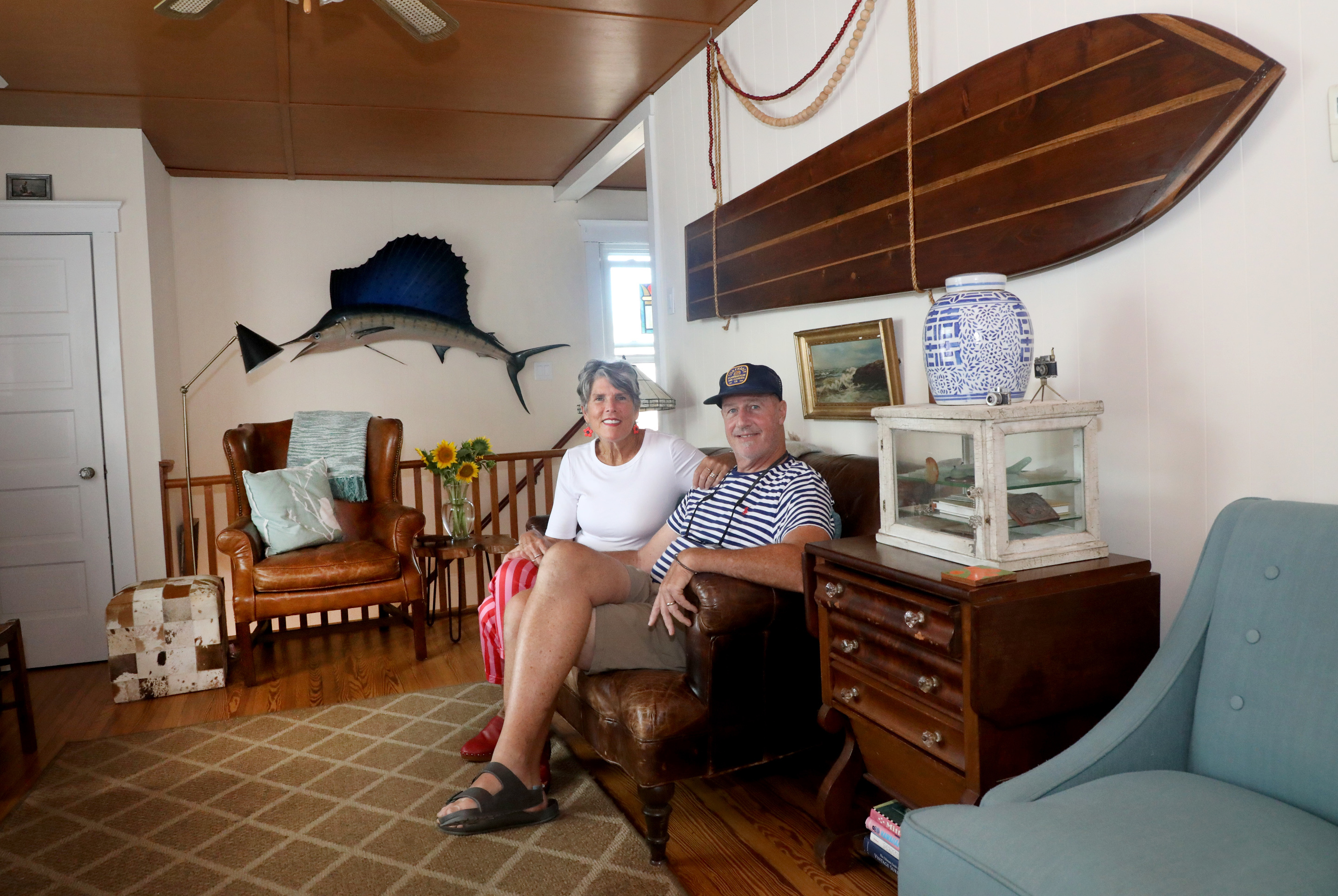
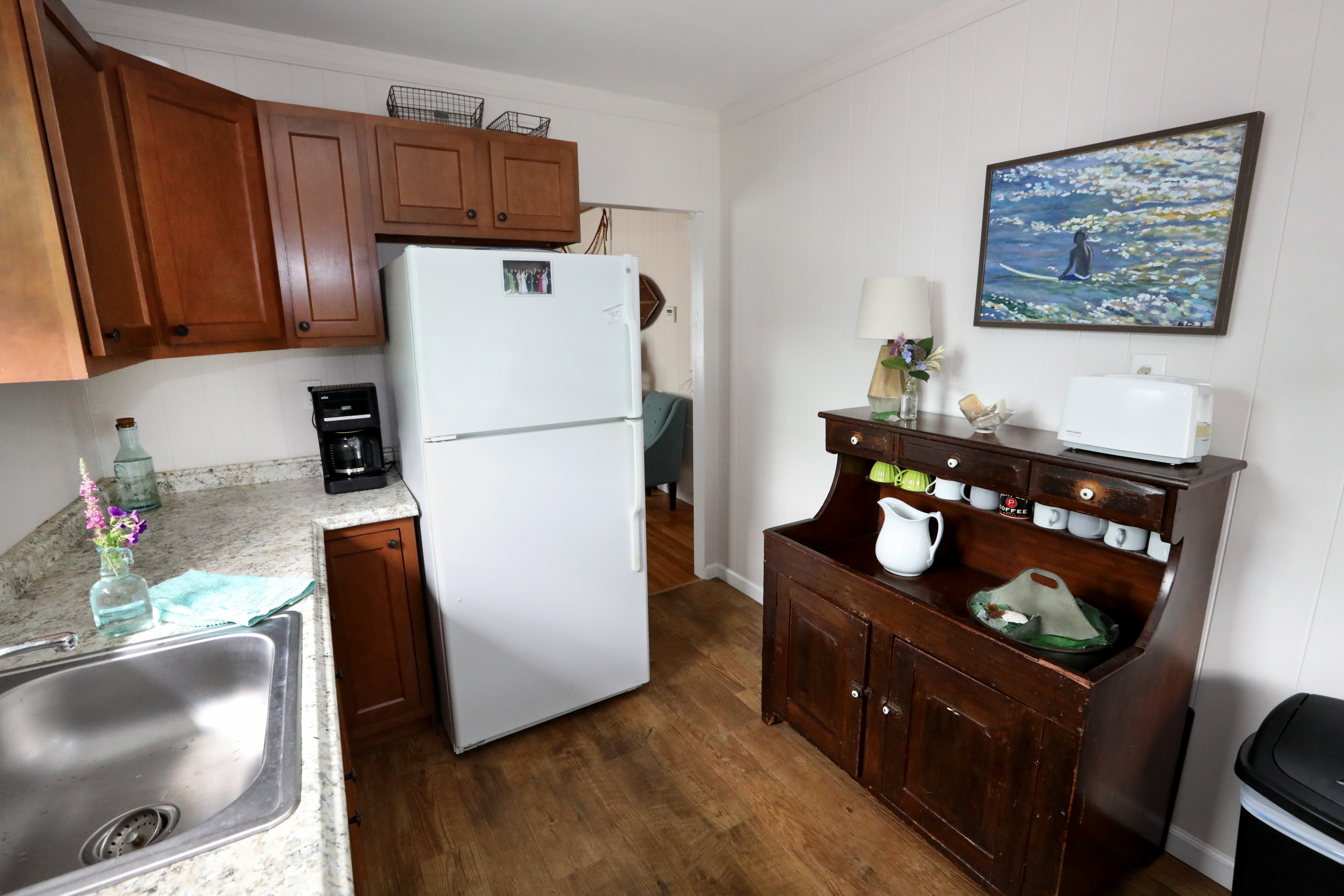
    Tucked away on an alley in the north end of Ocean City, Steve and Regina Pannepacker’s three-bedroom, one-bathroom cottage is their perfect peaceful haven.

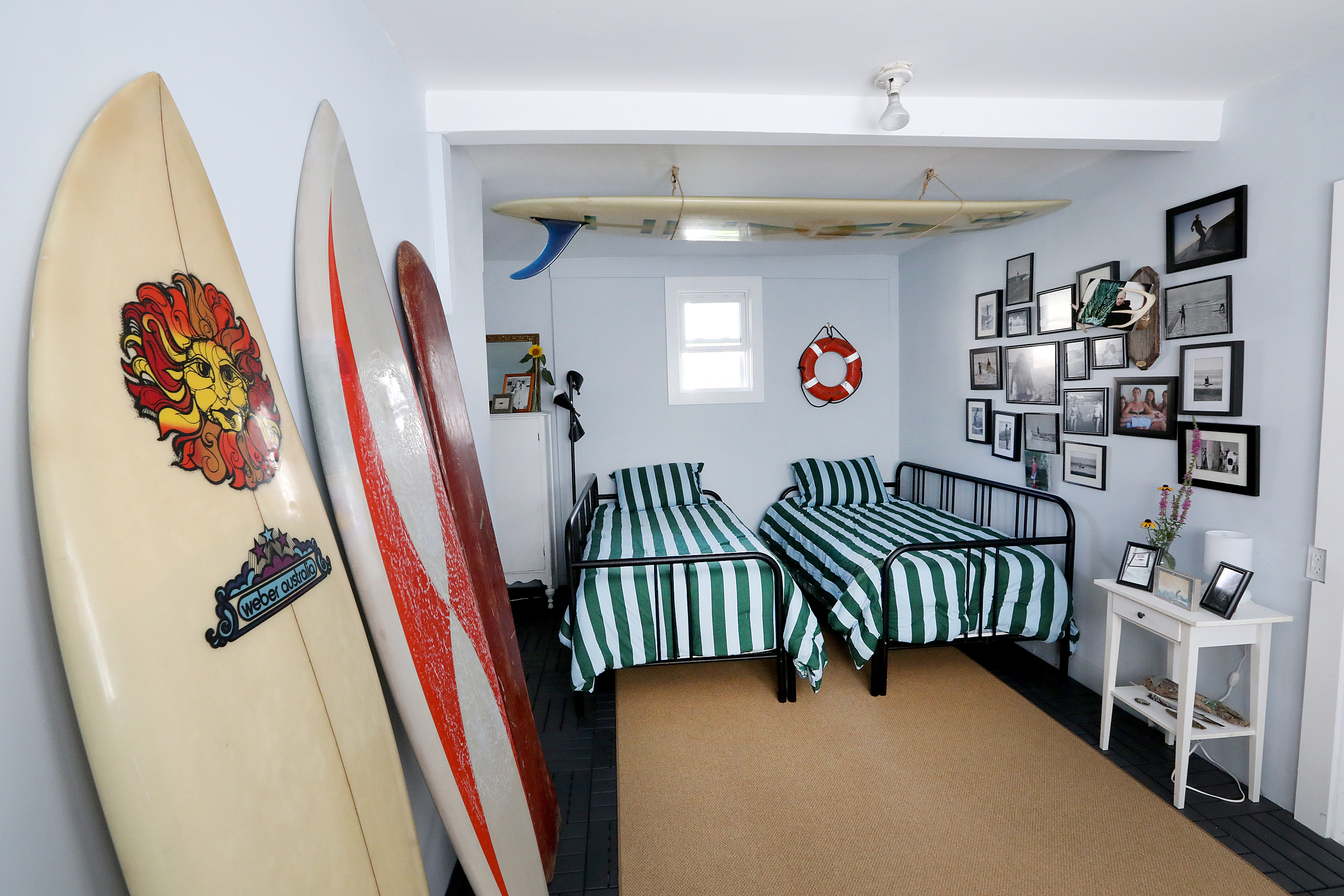
    The cozy home is filled with a dozen or so surfboards for Steve’s passion and shelves packed with books for Regina’s passion. Then there are the bowls and bowls of sea glass, which they both love collecting.

    Shortly after the pair married in 1986, Steve contacted several Ocean City Realtors, asking them to be on the lookout for a detached garage space they could convert into a small cottage. Finally, in 2015, one of them called.

    “He said I found your name in my Rolodex,” recalled Regina, a registered nurse. “I hadn’t heard that word in a really long time.”

    They loved the home’s location, the bright light that pours in from windows in all directions and the neighbors who ultimately became friends.

    Surfboards abound in the secondary bedroom.Vernon Ogrodnek / For The Inquirer
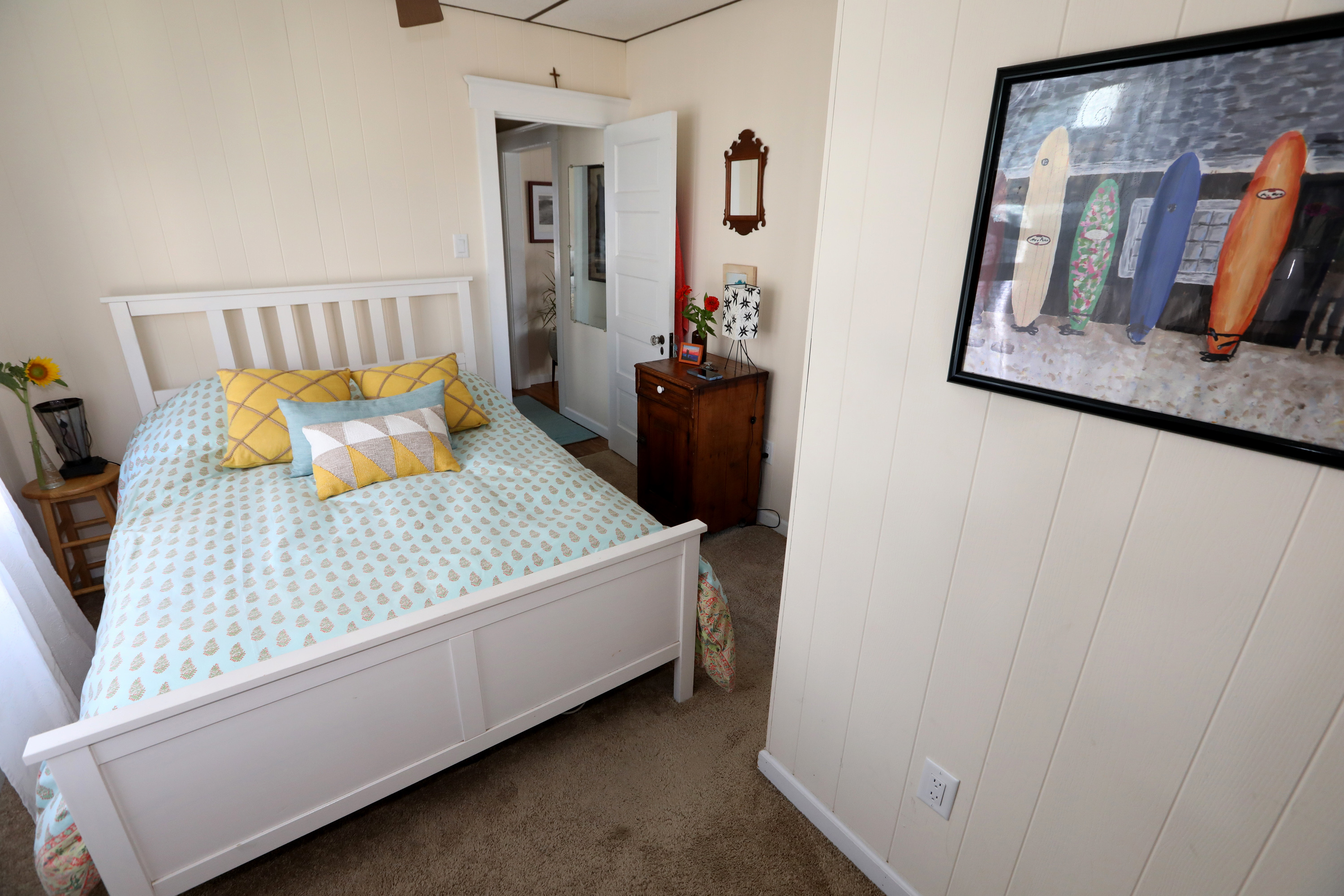
    The primary bedroom is small, decorated with light colors.Vernon Ogrodnek / For The Inquirer

    Built in the early 1900s, the home was originally a three-car garage for the main house that sits in front of it. It was later converted to include a two-bedroom property above the garage. It is believed the front property was owned and lived in by a seafaring ship’s captain, Steve said.

    Around 2013, the main house and garage were divided into separate properties.

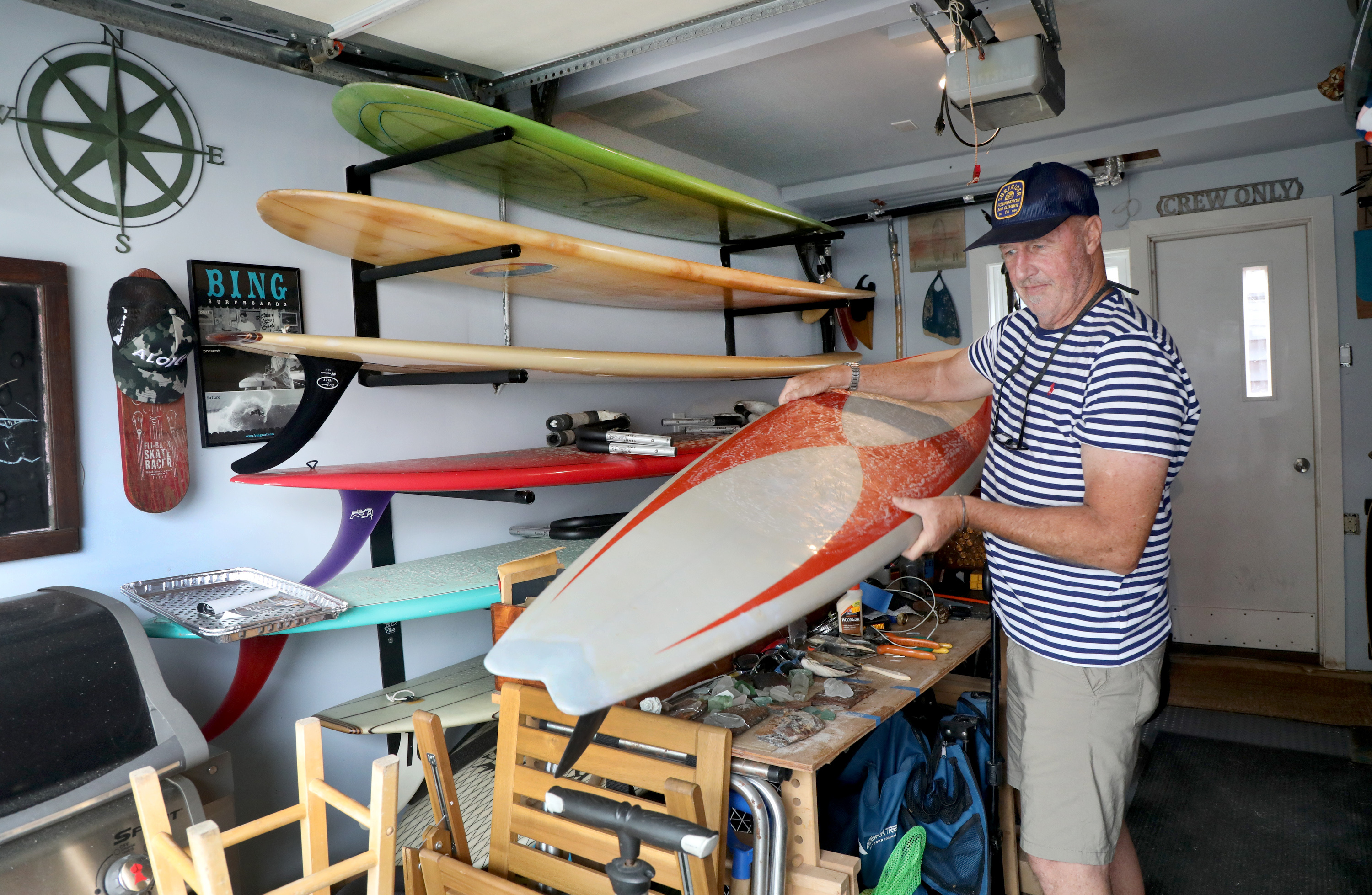
    The Pannepackers converted the garage space into three distinct rooms — a guest bedroom, a storage area with a washer and dryer, and a space for Steve’s workbench that also houses surfboards and bicycles.

    Steve Pannepacker is an avid collector of surfboards, like this Plastic Fantastic board. He keeps them in the garage.Vernon Ogrodnek / For The Inquirer

    With their five children, three grandchildren plus two more on the way, and lots of siblings, nieces, and nephews, the home is usually bustling with activity. Regina has eight brothers and sisters, and Steve has one sibling. The couple also invite friends and family to use the cottage when their jobs keep them at home in Havertown.

    Steve, who works in television and film as an art director and prop coordinator, did most of the decorating. His deep love for Hawaii, where he and Regina made a pilgrimage in 2008, was a huge influence on the home’s decor.

    “It’s a combination of Ralph Lauren and a Hawaiian style,” Steve said. “Ralph Lauren’s look included leather, which inspired the leather chairs, and that is also an older Hawaiian look.”

    The kitchen is small but workable for the couple, who like to cook. They eat at the drop table in the living room that has an extendable leaf. Closed, it’s large enough for Steve and Regina, but it can accommodate six when open. When a larger crowd is visiting, they set up a table in the front yard or alley.

    A wall of oceanscapes, some professionally done, some reproductions, and some by family members.Vernon Ogrodnek / For The Inquirer
    Below the oceanscapes is an old Bulletin newspaper bench, a nod to Regina’s family association delivering the now defunct Philadelphia paper.Vernon Ogrodnek / For The Inquirer

    The living room is also where they relax and entertain. When it’s just the two of them, they are often reading — Steve in his comfortable brown leather chair and Regina curled up on the nearby couch. When guests visit, the room is where they talk and laugh and share each other’s company.

    “This is our everything room,” Regina said. “We don’t have a TV or Wi-Fi so there’s lots of conversation.”

    Surfboards are a part of the decor in almost every room. The wooden board that hangs over the living room sofa was made by local surf historian Bill Simon about 30 years ago and is a reproduction of a 1930s surfboard by Pacific System Homes.

    A collection of old photos, postcards, and memorabilia in the living room.Vernon Ogrodnek / For The Inquirer
    A collection of Hawaiian memorabilia in the living room.Vernon Ogrodnek / For The Inquirer

    Hidden behind other houses off a main road, the home’s orange front and garage doors help friends and pizza delivery drivers find them.

    An avid surfer since high school, Steve spent summers working and surfing in Ocean City while Regina grew up day-tripping to the beach town with her family. It was an important part of both their childhoods.

    A painting by the couple’s daughter is hung in the home’s compact kitchen.Vernon Ogrodnek / For The Inquirer

    “My parents spent two summers as the house parents for the waitresses at the Flanders,” recalled Regina. “Having had nine kids of their own, they got the job pretty easily. Our family’s love for the beach is deep-rooted.”

    Regina’s parents’ love of sea glass trickled down to Regina and Steve. Most days, the couple take walks and usually find a sea glass treasure.

    The beach town is woven into the fabric of their lives. They spend time at both the beach and the bay, and often head to the Second Street pier to take in the sunset.

    “This home is a retreat where we decompress,” Regina said. “You come over that bridge and smell the air, and something comes over you.”

    Is your house a Haven? Nominate your home by email (and send some digital photographs) at properties@inquirer.com.

  • Ocean City community groups have filed a lawsuit challenging the Wonderland rehabilitation designation

    Ocean City community groups have filed a lawsuit challenging the Wonderland rehabilitation designation

    Four community groups in Ocean City filed a lawsuit Monday seeking to void City Council’s June 25 decision to designate the old Gillian’s Wonderland Pier as “in need of rehabilitation.”

    That vote started a negotiation with developer Eustace Mita, the owner of the property who has been seeking approval to build a seven-story, 242-room hotel on the site.

    Mita said earlier this month he is submitting a revised proposal for a hotel on the 2.42-acre property. His initial proposal called for a luxury hotel that preserved the Ferris wheel, carousel, and some kiddie rides.

    Hotels are not a permitted use under current zoning, requiring either variances or a negotiation under a rehabilitation designation. Mita sought the rehabilitation route.

    He said earlier this month that it was no longer viable to restore or replace the Ferris wheel.

    The lawsuit notes that Wonderland Pier served for generations as “a civic anchor for the northern end of the Boardwalk,” and that the pier “has been a focal point of the City’s identity as a low-rise family-friendly resort community.”

    The groups filing suit in Cape May County Superior Court were two neighborhood groups, Plaza Place Civic Association and Beach Watch Motel Condominium Association, the government watchdog group Fairness in Taxes, and Ocean City 2050, a group that has been advocating for an alternative to Mita’s luxury hotel proposal.

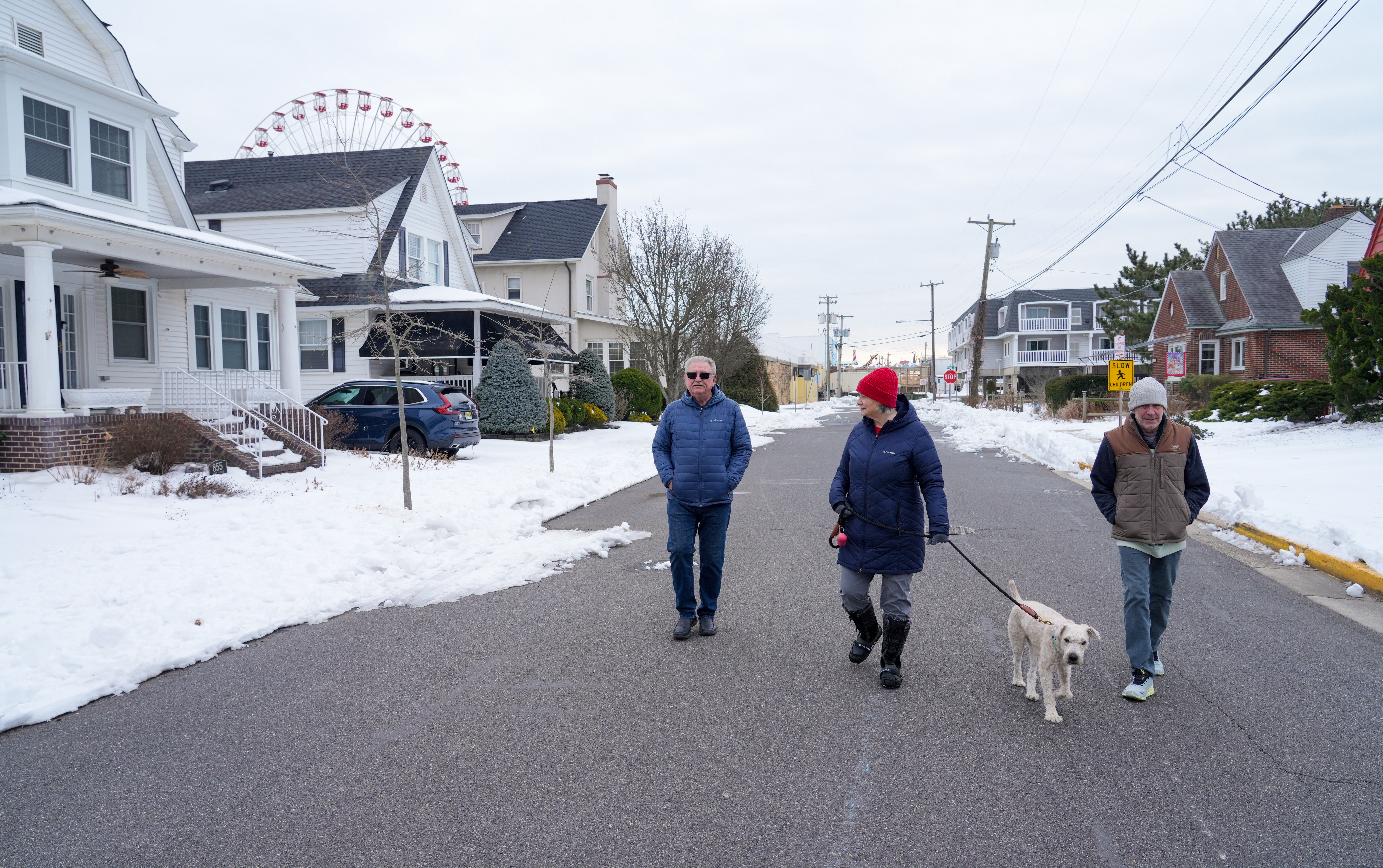
    Jack Gutenkunst (left), Marie Crawford, and her husband, Richard, with Shiloh, a 9-year-old soft-coated wheaten terrier, walk along Plaza Place, in Ocean City on Feb. 3, 2026. They live in the historic neighborhood right behind the site of the old Wonderland Pier and are fighting against the proposed development of a hotel on the boardwalk property.Tim Hawk / For The Inquirer

    Defendants are the City of Ocean City and the City Council.

    “This lawsuit was a difficult but necessary decision to make,” said Jack Gutenkunst of Plaza Place Civic Association, in a statement announcing the lawsuit. “Council’s Wonderland rehabilitation designation is deeply flawed and seeks to improperly strip away important planning protections that residents have long relied upon.”

    The lawsuit alleges that Mayor Jay Gillian’s failure to recuse himself from Council’s Wonderland discussions constituted “substantial financial and ethical conflicts of interest.”

    Gillian, whose family operated Wonderland for 65 years, sold the property to Mita in 2021 but continued to operate the amusement park under a lease arrangement. He made the decision to close Wonderland in 2024. The lawsuit notes financial entanglements that remain between the mayor and Mita.

    Reached by text message, Gillian declined to comment on the lawsuit.

    “The city cannot comment on pending litigation,” Doug Bergen, public information officer for Ocean City, said by email.

    The lawsuit also alleges that the designation failed to satisfy the state’s legal requirements under New Jersey’s Local Redevelopment and Housing law.

    “This lawsuit is not about stopping progress,” said Howie Atkinson of the Beach Watch group, in a statement announcing the lawsuit. “But no project is important enough to justify abandoning transparency, ignoring conflicts of interest, or shutting the public out of the progress.”

    The groups said the lawsuit should not stop the city from continuing to examine recommendations by its Boardwalk subcommittee. City Council tabled action related to the subcommittee at its last meeting due to the pending lawsuit.

  • Meet the South Jersey business making food carts for Jersey Shore vendors and Disney World

    Meet the South Jersey business making food carts for Jersey Shore vendors and Disney World

    In a country-industrial stretch of Hammonton halfway between Philadelphia and Atlantic City sits a concrete-block maze of machine shops, where workers have built thousands of stainless-steel hot-sandwich and coffee carts and catering trucks.

    This is the one-story home of Custom Mobile Food Equipment, which for 74 years has built these customized portable kitchen-storefronts of varying sizes, and kept them on the road with extra helpings of customer support. They roll onto Jersey Shore boardwalks and Center City street corners, at weeklong public festivals and private events across America, and in fancy resorts and on military bases abroad.

    It’s a South Jersey fixture, with Camden roots and deep Philly ties.

    “We started small,” with hot dog carts cut to fit, not block, city sidewalks, said Custom vice president David Kyle. He said his family helped Philadelphia officials write the city’s street vendor ordinances, and made sure the carts fit.

    Custom has outlasted food fashions and changes in the ways workers lunch. Kyle said he’s confident the enterprise will outlast recent inflation, global competition, and import tariffs: “A lot of our business is repeat business, and the big names we go after,” he said during a tour of the plant. “People rely on us to turn out a product that will last.”

    From pony-cart produce to theme-park fixture

    Lehigh Valley-based Wild Bill’s Craft Beverage Co. serves its old-fashioned sodas from kegs mounted in Custom vehicles of several sizes. They sell drinks at crowded motorcycle rallies in Gettysburg and Sturgis, S.D., the Ohio State Fair, the Great State of Maine Air Show in Brunswick, San Diego Comic-Con, and Schuylkill regattas.

    “These are high-end, unique stands. We have 60 of them. We add a couple a year,” said Wild Bill’s chief executive, Mike Quilty. “One of our franchisees in Utah just drove one of Custom’s self-propelled Ford barrel wagons to Vancouver.”

    To make trips like that, the equipment has to be built well, Quilty said, noting Custom’s “unlimited support” for when technical issues arise, which doesn’t require buying a service contract.

    Custom’s late founder, William Sikora, developed the catering truck in the early 1950s as a kitchen on wheels installed on a Detroit-made chassis. Sikora as a grade-school kid in Camden had sold vegetables from a pony-drawn cart, then opened a grocery. He bought apartment buildings and diners, and became a top officer of First Peoples Bank.

    Walking room to room past heavy presses and cutters on the Hammonton shop floor, Sikora’s grandson Kyle said 40 workers build more than 100 pieces of equipment a year — food trucks, trailers, catering wagons, specialty equipment with kitchen-sized stoves, refrigerators, freezers.

    “We’ve sold to Disney World and SeaWorld, Sesame Place, and U.S. bases in Japan,” Kyle said on a muggy midsummer morning as room fans, metal-forming machinery, and new-cart test motors whirred. “We have 18 projects going right now.”

    Custom built 32 commercial kitchens on caster wheels for Carnival Cruise Line’s Calypso Lagoon in the Bahamas, which opened last year, with rounded bull-nose counters instead of sharp industrial edges to accommodate peak work flow.

    Paul McIlvaine, an electrician, works on the interior of a Chickie & Pete’s food cart at Custom Mobile Food Equipment, in Hammonton, Tuesday, July 21, 2026.Vernon Ogrodnek / For The Inquirer

    How much does it cost to launch a kitchen cart?

    Today, Custom’s basic Model 525 carts retail for around $6,500. For that sum, plus storage, food, fuel, and licensing costs, “you’re in business serving food,” said Kyle.

    “It’s rewarding, you get to meet so many kinds of people,” he added.

    New catering trucks start at more than $125,000, like a high-end camper.

    All the carts and trucks are built from stainless steel sides, stamped with Custom’s distinctive elongated-diamond pattern over tubular steel framing. The company uses multiple steel suppliers, including Allegheny Ludlum Steel Corp. in Pittsburgh. It was harder to find domestic steel when the U.S. auto industry demand was stronger, Kyle said. But now materials costs are much higher, often in response to higher tariffs.

    “We try to use built-in-USA [materials], but some stuff you cannot get here,” Kyle said. Robertshaw Controls, for example, makes the only burner controls that fit Custom’s standards. They moved the operation to Mexico from Texas, so Custom now imports them.

    Cart metal is just one inflating cost vendors face, said Christian Subashi, second-generation owner of Loudogs hot-dog carts in Sea Isle City. Refrigerators were 50% cheaper before last year’s new tariffs, he said, and sausage prices have “gone through the roof.”

    Kyle said his company’s hot-dog cart price “has gone up $1,000 or $2,000 in 10 years,” lower than the general inflation rate. “We have to absorb some. It’s how you do business,” he said. He’s confident steel prices will stabilize eventually.

    The future of food carts

    The company has no plans to automate, Kyle said. “All our products are custom built — handmade and hand-fabricated. No two carts are exactly alike,” he said, noting that the company also retrofits and rehabs units as needed. “They can last forever.”

    “Our pricing is more, but it lasts longer than assembly-line stuff coming in from Mexico or China at low cost.”

    One once-robust market that has all but evaporated is carts for vendors who work construction sites. Custom employed over 100 during the building boom of the late 1990s. The company built a catering truck a day, on average, back then; now it’s closer to one a week.

    “Wawa and DoorDash are delivering deli trays to jobs sites now. And Wawa has built out so many stores in their area, guys can just leave the job and run to Wawa. So that business is down for us,” said Kyle.

    The focus now is on larger orders that can be built more efficiently. Plus it’s gotten harder, Kyle said, to hire skilled craftsmen.

    Local buyers of carts and trucks include Shore ice cream and water-ice vendors, as well as the food vendors that sell at breweries, thanks to the New Jersey’s restrictions on breweries serving food

    But Custom is also very much “a national brand,” said James Evans, who runs the food-truck division for Ocean City-based Manco & Manco Pizza, including eight Phillies stadium locations.

    Like Custom, Manco is a third-generation South Jersey business, and Evans said he wouldn’t have gone anywhere else to build stadium-ready trailers. The two firms cut a deal last February for Custom to build an initial “food truck you can drive, available for private parties, corporate functions, MLB events, anywhere we can take a truck.”

    The first was delivered in July, with four propane-fueled Baker’s Pride deck ovens “to cook our pizzas to Manco standards.”

    Custom faces a string of manufacturing challenges with any order, Kyle said.

    But from Manco’s perspective the passage of his project from plan to delivery “was seamless,” said Evans.

    “As we morph into their larger trucks, we will add wings and tenders,” he said. “If everything in business and life went that easy, it’d be great.”