Tag: no-latest

  • After decades of free spending, Washington is facing some unpalatable choices

    After decades of free spending, Washington is facing some unpalatable choices

    Year after year, the federal government has spent more than it collected in taxes. Each annual shortfall increased the national debt, slowly at first and then by leaps, defying warnings of an inevitable reckoning.

    Now, the reckoning may be at hand.

    This week’s bond market sell-off brought government borrowing costs to their highest level in almost two decades and prompted an extraordinary Treasury Department intervention.

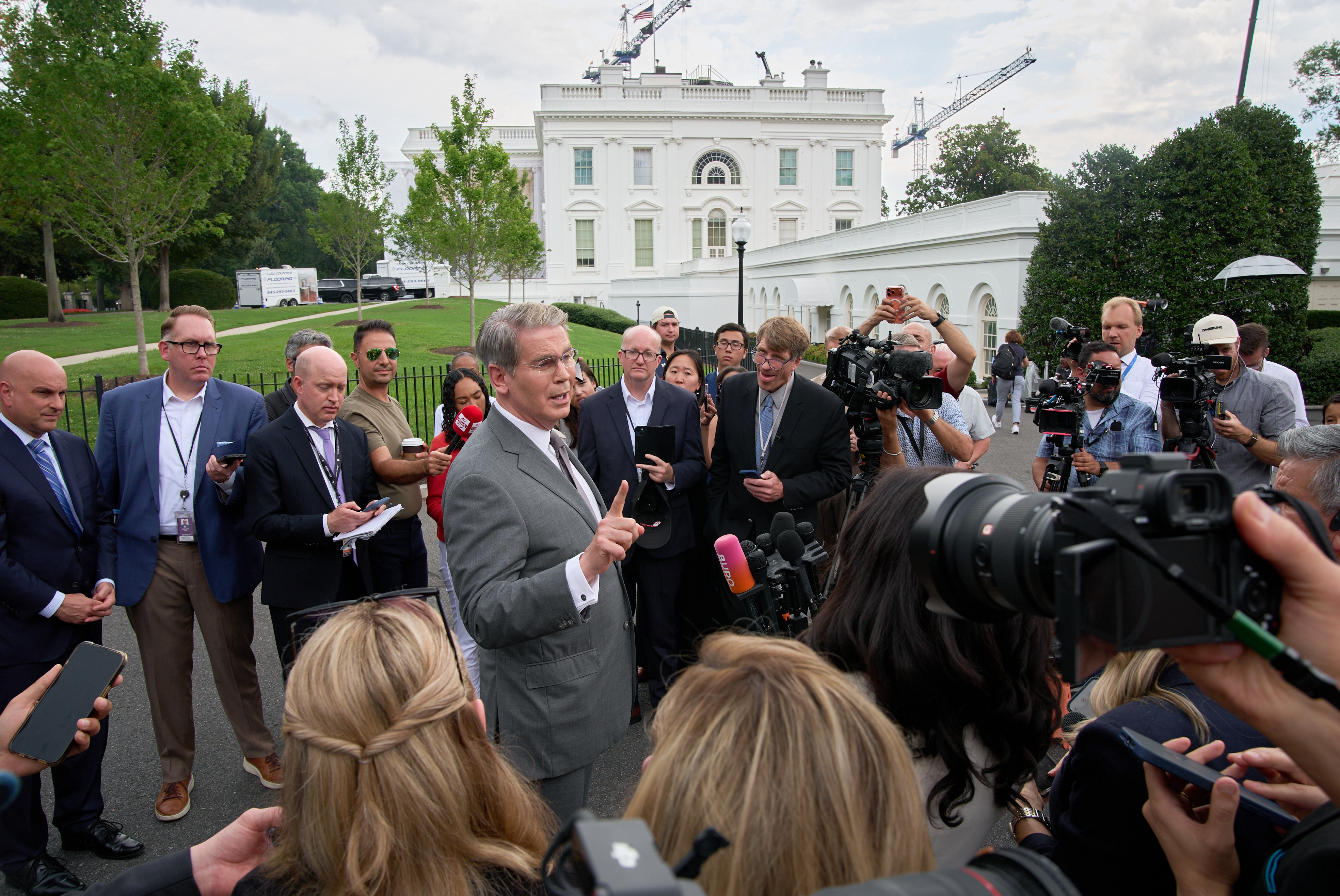
    On Friday, the yield on the 30-year Treasury bond topped 5.27%, up slightly from one day earlier, a sign that Treasury Secretary Scott Bessent’s plan to calm markets is not working. After decades of free spending, Washington may soon be compelled to make some long-deferred, and politically unpalatable, choices that will leave few Americans unscathed.

    “This is what the bond market is trying to signal: We’re going to have to make choices that hurt growth,” said Adam Abbas, who manages $4 billion in bonds for the Oakmark Funds. “We have two levers to do that: raise taxes or cut spending. Either option is not politically popular, and it will never be popular, but at some point we have to address the problem.”

    The problem is a $40 trillion national debt, along with crisis-level annual budget deficits that require significant new borrowing.

    When the Treasury Department woos investors for its bonds, it competes with other governments and corporations — notably the hyperscalers building the nation’s artificial intelligence infrastructure. All that competition for capital means investors can demand higher returns, or yields, from those that want their money.

    Fiscal watchdogs have warned for decades that rising U.S. debt will eventually trigger a crisis. As borrowing costs rise, debt becomes more expensive in what can become a vicious cycle, said Marc Goldwein, senior policy director for the nonpartisan Committee for a Responsible Federal Budget.

    “What I worry about is we’re on the verge of sort of a real debt spiral, which happens when your interest [bill] is growing faster than your economy,” Goldwein said.

    Fast-rising bond yields or interest rates often reverberate through the financial system in unexpected ways, exposing costly vulnerabilities. In 2023, for example, Silicon Valley Bank failed after rising bond yields blew a hole in its balance sheet.

    Today, potential weak spots in the financial system include some of the nation’s largest hedge funds, where borrowed money used for investments, or leverage, is “near all-time highs,” according to the minutes of the Fed’s July 28-29 meeting. Likewise, traditionally staid life insurers are holding riskier assets that would be difficult to unload quickly if they needed to raise cash during a crisis.

    Financial setbacks also could occur overseas in places like France or Japan, said Rebecca Patterson, former chief investment strategist for Bridgewater Associates and now a senior fellow at the Council on Foreign Relations.

    “When we’re thinking about what could cause a crisis in the U.S., don’t just think about what’s happening in the U.S. Think about other markets that could be vulnerable,” she said.

    Today’s fiscal pressures began building a quarter century ago after former President Bill Clinton and a Republican-controlled Congress balanced the budget four years in a row. The federal government actually began paying off its debt.

    That prompted Federal Reserve Chairman Alan Greenspan to give a speech in 2001 warning that eliminating the debt, and thus Treasury securities themselves, could disrupt financial markets. Even so, he expected it to happen.

    “Current forecasts suggest that under a reasonably wide variety of possible tax and spending policies, the resulting surpluses will allow the Treasury debt held by the public to be paid off,” Greenspan said.

    Instead, a series of policy choices and unforeseen crises swamped the nation’s fiscal progress beneath a tide of red ink.

    The problem has grown especially acute over the past decade. Between 1789 and 2016, the U.S. government borrowed a bit more than $19 trillion. Over the past 10 years, President Donald Trump and former president Joe Biden added an additional $20 trillion, doubling the national debt, and making debt service payments one of taxpayers’ largest annual burdens.

    The U.S. now spends more than $1 trillion each year paying interest on the national credit card, more than it devotes to Medicare, according to the nonpartisan Congressional Budget Office. As recently as 2010, the interest bill was less than one-fifth that amount.

    The rising U.S. debt load is part of a broader phenomenon. Global debt of all types hit a record $353 trillion earlier this year, more than three times the size of global output.

    Unlike the risky mortgage borrowing that triggered the 2008 financial crisis, recent years have featured governments as the biggest borrowers. Here and abroad, governments borrowed to repair their economies after the 2008 meltdown and borrowed again to get through the 2020 pandemic. Poorer nations in Africa and Asia have gone deeper into debt to finance higher energy and food bills following the wars in Ukraine and Iran.

    “The debt has transferred to governments. I don’t think this is only a U.S. story, by any means,” said Patterson.

    This week’s bond market drama returned long-term yields to the level they occupied for most of the 1990s. But there are important differences between that period and today. Debt was lower and growth was faster.

    In 1997, for example, when the yield on the 30-year bond was around 6%, the economy still managed to post growth that topped out at 6.8%, more than four times faster than the most recent quarter. Relative to the size of the economy, the national debt that year was less than half as big as today.

    “Demographics. Labor force growth is down because of aging, the recent departure of older workers, and diminished immigration. And Trump keeps throwing in supply-side shocks — tariffs, Iran wars. The supply-side is completely different now,” Douglas Holtz-Eakin, president of the conservative American Action Forum and a former director of the CBO, said via email.

    The only surefire way to restore order to bond markets would be credible action to reduce the nation’s yawning budget deficit, which the CBO estimates will hit a record $2.1 trillion this year.

    In a Thursday interview with CNBC, Bessent promised the Trump administration would soon announce “an increased” focus on the government’s finances, including an examination of potential changes on “both the revenue and the cost side.”

    But there is ample reason for skepticism. The administration’s initial attempt at overhauling government spending produced Elon Musk’s Department of Government Efficiency, which upended large swaths of the civil service while failing to back up exaggerated claims of savings.

    Despite that experience, Bessent said he expected “several hundred billion dollars” in savings from an anti-fraud task force led by Vice President JD Vance.

    The administration’s economic assumptions are also more optimistic than those of outside forecasters. Before the president’s signature tax legislation passed last year, the White House Council of Economic Advisers projected that this year’s deficit would be about $1.7 trillion.

    The CEA also assumes that the U.S. economy will grow at an average annual rate of 2.8%, notably faster than the CBO’s 2% forecast.

    Independent experts say some combination of higher taxes and cuts in popular entitlements such as Social Security and Medicare are unavoidable. But less than three months before November’s congressional elections, the administration’s promised fiscal consolidation “seems unlikely to be realized,” economists at Barclays told clients this week.

    Indeed, on Capitol Hill the debt issue so far has spurred little more than dutiful public statements.

    “Our reckless spending problem in Washington is immoral — it unfairly leaves our children and grandchildren to foot the bill — but it also is making our economic stability extremely fragile,” Sen. John Curtis (R., Utah) wrote Thursday on X. “The more we add to our debt, the greater the threat of disaster in the event of an economic shock.”

    Curtis is lead sponsor of a bipartisan bill to create a commission to propose ways to shrink the national debt to less than 100% of GDP by 2039. He also voted last year for the president’s tax legislation, which the CBO estimates will add $4.7 trillion to deficits over the next decade.

    Curtis’s office did not immediately respond to messages on Friday.

    Other lawmakers have proposed creating a commission to rescue Social Security, which is expected to run short of money to pay full benefits in 2032. If that happens, benefits are legally mandated to be slashed by 22%.

    Few expect early action. And Sen. Bill Cassidy (R., La.), a lead sponsor of one of the commission bills, said no one should expect such a commission to tackle problems beyond Social Security.

    “It’s easy to say, ‘fix everything at once,’ but we know that is not possible,” Cassidy said in an email. “Once we do this, it will prove that other areas of the debt can be addressed, but we should crawl before we walk.”

    As Congress tries to crawl and the Social Security trust fund’s depletion approaches, the bond market’s anxiety will grow, said Jason Fichtner, executive director of the LIMRA Retirement Income Institute and a former chief economist of the Social Security Administration.

    “I don’t see that meaning that the government defaults or goes bankrupt,” he said. “But I do think it means higher costs of living for everybody.”
  • U.S.-Canada breakdown shows limits of Trump’s aggressive trade strategy

    U.S.-Canada breakdown shows limits of Trump’s aggressive trade strategy

    The shocking collapse of U.S.-Canada trade talks is the latest sign that President Donald Trump’s bulldozer approach to remaking the nation’s trade relationships may be reaching its limits.

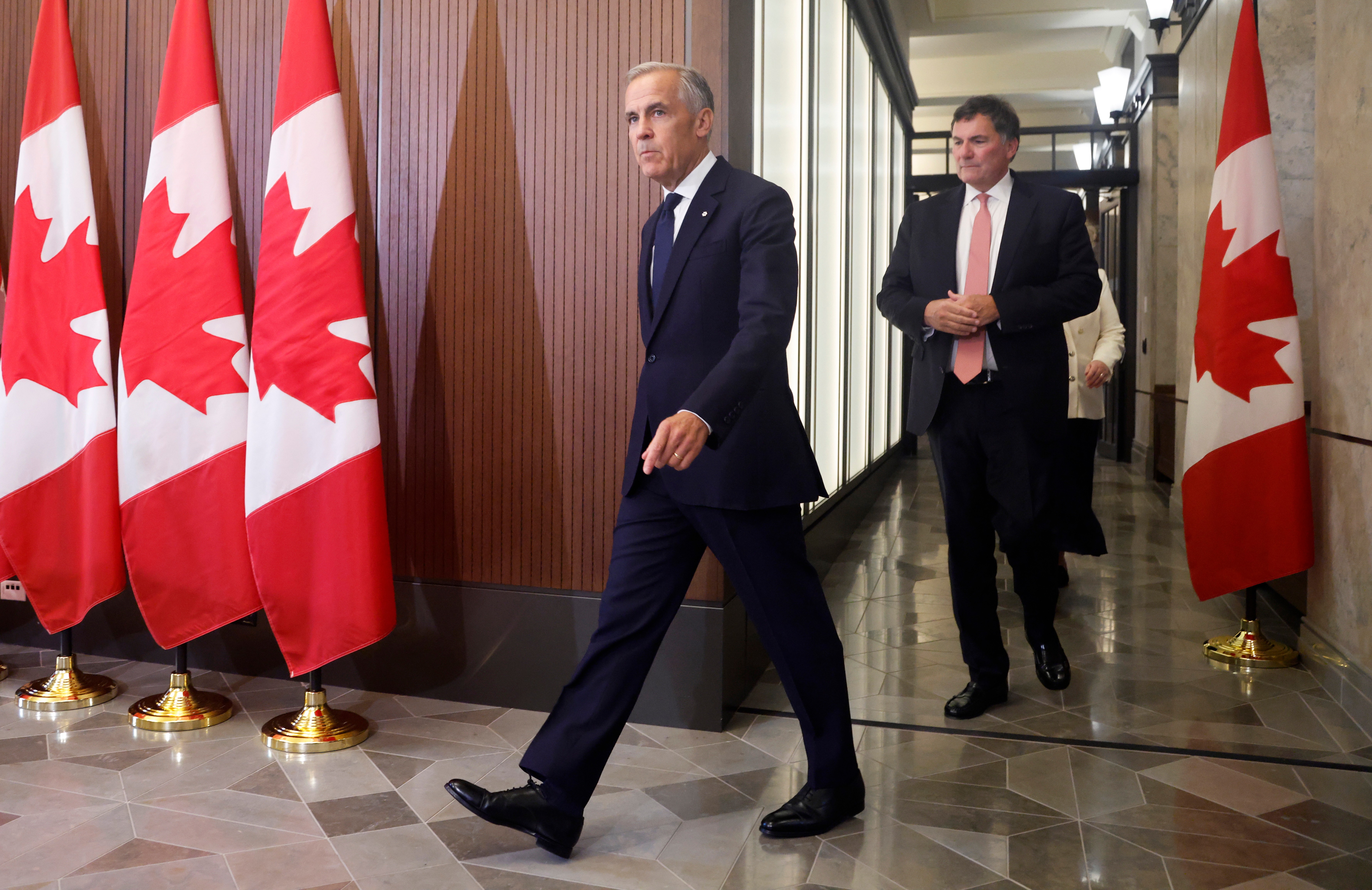
    The president tried in recent days to use an untested legal power to force Canada to swallow trade concessions. Instead, Canadian Prime Minister Mark Carney quit the negotiations rather than accept a lengthening list of U.S. demands.

    As a result, 50% U.S. tariffs took effect early Saturday on an array of Canadian products, including hockey sticks and Crown Royal whisky.

    As Carney prepared to walk away — a rare example of a foreign leader telling the president “enough” — Trump was retreating on another trade front. On Friday, after insisting for more than a year that tariffs do not affect consumer prices, he lifted tariffs on beef imports, saying the move would lead to lower grocery prices.

    The two developments, coupled with legal challenges to Trump’s tariffs, leave the president’s signature economic policy in a state of flux.

    “It’s a big setback for Trump’s trade policy. We’re at a juncture where other countries may be very closely watching how this plays out as they also are becoming increasingly frustrated with the demands the U.S. is placing on them in these largely one-sided trade agreements,” said Wendy Cutler, a former U.S. trade negotiator who is now senior vice president at the Asia Society Policy Institute.

    Indeed, the United States has negotiated 10 reciprocal trade agreements over the past year with nations such as Malaysia, Cambodia, and Argentina, along with other trade frameworks with the European Union, the United Kingdom, and Japan.

    Hearing of the concessions that the U.S. offered Canada, including reductions in tariffs on industrial metals, some trading partners may demand revisions to their deals, Cutler said.

    Administration officials have approached each bargaining round convinced of two things: Decades of U.S. trade policy hollowed out the nation’s manufacturing communities. And a muscular new approach, leveraging the appeal of the $32 trillion U.S. economy, can force other nations to give way and encourage the reindustrialization of the U.S.

    For the administration, trade negotiations are not a contest of equals. The talks start from the premise that U.S. negotiating partners must make concessions, opening their markets and in some cases promising to invest in the United States, simply to win a reprieve from unilateral U.S. trade barriers.

    Both Jamieson Greer, the president’s chief trade negotiator, and Treasury Secretary Scott Bessent have publicly complained that Canada and China are the only nations that retaliated for the tariffs that Trump imposed last year.

    The administration sees its actions as restoring fairness to an imbalanced global trade system, making such retaliation unjustified. But China’s tough stance last year, which included a temporary interruption of essential rare earth minerals, paid off. The president lowered his triple-digit tax on imports from China and reached a trade truce in an October meeting with Chinese leader Xi Jinping, who is due in Washington on Sept. 24 for more talks.

    The Canada negotiations were aimed at averting the new 50% tariffs, which Trump had threatened in July unless Carney dropped retaliatory measures imposed in response to earlier U.S. tariffs.

    On Tuesday, Trump delayed his initial deadline, posting on Truth Social that the two sides had reached “a DEAL” and needed three days to finalize the documents.

    The subsequent breakdown spotlighted tensions in the president’s strategy, including questions over the durability of any deal reached with the U.S. administration.

    After all, the U.S. and Canada, along with Mexico, already have a trade deal: the United States-Mexico-Canada Agreement (USMCA) of 2020, which Trump hailed at the time as “the largest, fairest, most balanced, and modern trade agreement ever achieved.”

    But this year, the president threatened to quit the deal and demanded sweeping changes to it, aimed at promoting more U.S. manufacturing. He also imposed tariffs on Canadian goods starting last year, a breach of the accord.

    On Saturday, speaking in Ottawa, Carney alluded to the difficulty of negotiating with a mercurial president.

    “We’ve recognized from the start that America has changed,” Carney said. “We recognize that sometimes, its signature is written in pencil.”

    Negotiating with the U.S. is also complicated by divisions within the administration. All top officials share Trump’s goal of spurring domestic manufacturing. But as Greer haggled with the Canadians this week, a split emerged over the U.S. trade representative’s willingness to reduce an existing 50% tariff on aluminum derivatives to 25% in return for Canadian concessions.

    At a White House meeting, White House trade adviser Peter Navarro and Commerce Secretary Howard Lutnick, whose department administers the national security tariffs, clashed with Greer, representing industry views that the higher aluminum tariffs were needed to encourage domestic manufacturing.

    “Navarro and Lutnick were both yelling at Greer saying: ‘What are you doing? This is stupid. You know, we’re not giving these things away,’” said one industry representative, who spoke on the condition of anonymity to describe the confidential talks.

    Late in the talks, the U.S. sought to exclude from tariff reductions heavy trucks produced in Ontario, such as the Ford F-350 and F-450, and the GM Silverado. Over time, that would have made it “more uneconomic” for the automakers to keep making the vehicles in Canada, Carney said. The administration also sought to restrict Canada’s right to sign trade deals with other countries, a key part of Carney’s strategy to reduce dependence on its increasingly unreliable southern neighbor.

    Trump’s undiplomatic style — including saying that Canada should surrender its sovereignty to become the 51st U.S. state — made it harder politically for the Canadian leader to accept a deal. Public opinion in Canada has turned fiercely anti-American.

    “A 160-year trading relationship has found its red line,” said Flavio Volpe, president of the Automotive Parts Manufacturers’ Association in Toronto. “Demanding that your closest trading partner mirror your trade policy with third countries is akin to asking them to surrender agency over foreign policy. This episode shows that doesn’t work, no matter the disproportionate market leverage of the USA.”

    Trump also has a general disregard for the $3.4 trillion worth of merchandise that the U.S. imports annually. Speaking in June about his North American neighbors, the president told reporters in the Oval Office: “We don’t need anything that Canada has, we don’t need anything that Mexico has, but they need everything that we have. … We don’t need their cars, we don’t need their lumber, we don’t need their energy, we don’t need anything that they have.”

    In fact, U.S. farmers rely on Canadian sources for nearly 80% of the potash fertilizer they use each year, according to the U.S. Geological Survey. Northern border states, including New York, Michigan, Vermont, Minnesota, and Maine, run on electricity produced by Canadian hydropower. And Midwestern refineries are optimized to process heavy sour crude oil from Canada, helping keep gas prices lower than they otherwise would be, according to the Federal Reserve Bank of Kansas City.

    Total U.S.-Canada trade each year exceeds $700 billion.

    The talks’ failure leaves businesses on both sides of the border burdened by a sudden jump in costs. Small businesses in the U.S. will face an especially sharp cash crunch, as they must pay tariffs before their customers pay them 30 or 60 days later, said Jason Miller, a professor of supply chain management at Michigan State University.

    “I expect a significant drop in a lot of these different import categories because importers simply can’t afford to bring them in. That may mean certain products not on the store shelves,” said Miller.

    In other cases, companies will struggle to find a domestic alternative to Canadian goods, especially for intermediate products such as packaging materials. So they will continue importing and pass along some of the 50% cost shock to their customers.

    On Saturday, Carney said Canada will retaliate on Sept. 8 for the new tariffs with its own trade measures. By delaying his response, he is leaving time for cooler heads to prevail, analysts said.

    “Then the parties come back to the table. North America is too integrated for it to unravel on the basis of a deal that was put together over 14 days,” said Dan Ujczo, a trade lawyer in Columbus, Ohio.

    If a deal had been reached this weekend, it would have paved the way for the official start of negotiations between the two nations over the proposed USMCA changes.

    Instead, the administration now must manage a cycle of retaliation and counterretaliation while perhaps facing a new courtroom fight over the legality of Trump’s 50% tariffs, which were imposed under a never-before-used 1930 trade law.

    Meanwhile, Trump’s 50% tariffs on goods ranging from hockey sticks to alcohol are expected to raise prices for American consumers less than three months before the Nov. 3 midterm elections, which have the potential to give Democrats control of Congress.

    Those elections, polls show, are expected to turn on voters’ frustration with the rising cost of living.

  • Jeffries and Kushner meet privately as midterm attacks fly

    Jeffries and Kushner meet privately as midterm attacks fly

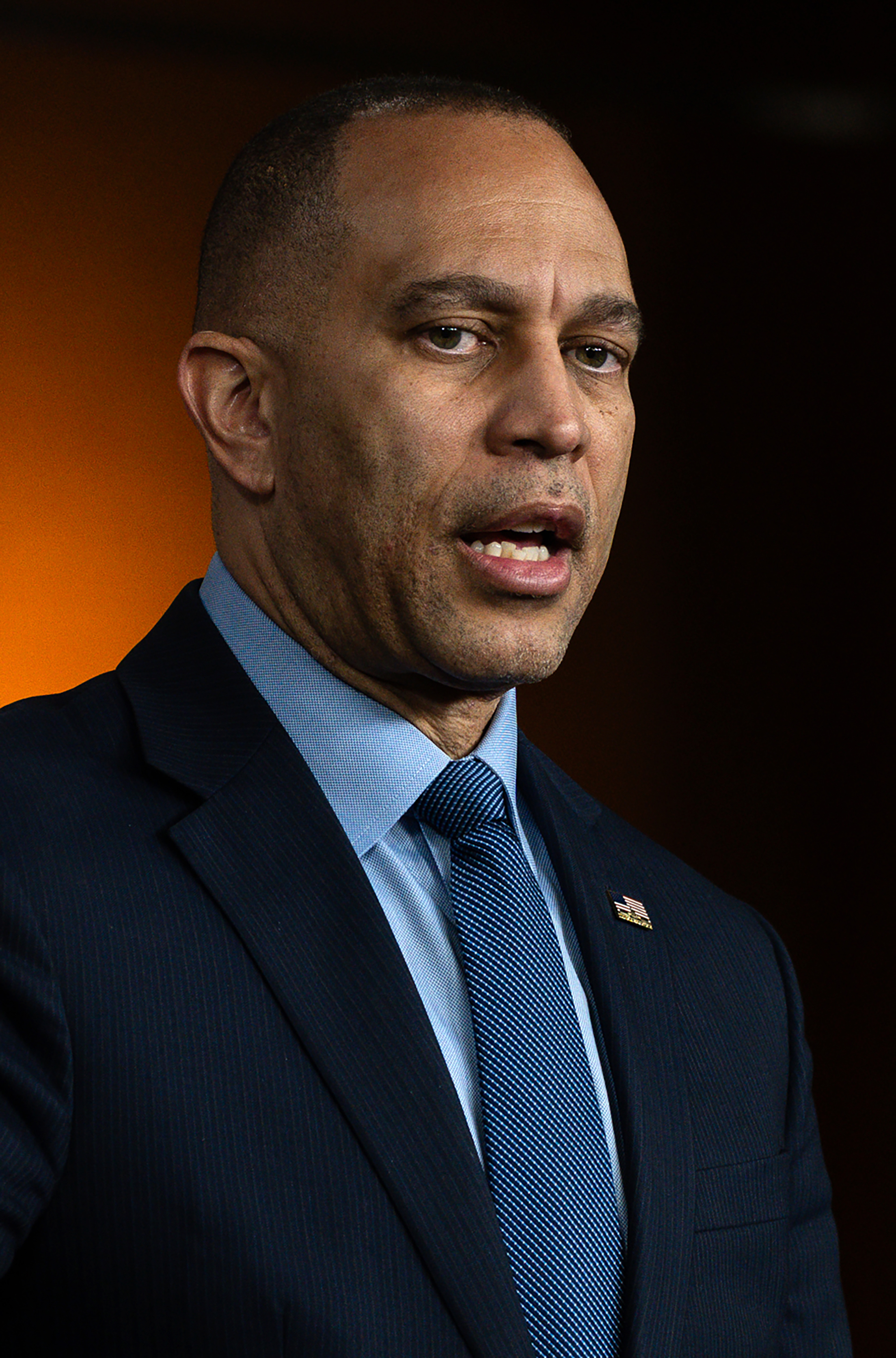
    Rep. Hakeem Jeffries (D., N.Y.), the House minority leader, met privately in recent weeks with Jared Kushner, President Donald Trump’s son-in-law and top outside adviser, and discussed potential areas of common ground, according to five people with knowledge of the meeting.

    The rare engagement was held in a private space in New York City, offered up by a mutual friend of the two men, according to two people with knowledge of the meeting and a third who was briefed on it. They and others were granted anonymity to discuss a meeting about which they were not authorized to speak publicly.

    Through aides, neither man would comment on the session, which was described by one person with knowledge of it as a broad conversation on a range of topics. Still, its timing underscored that those around Trump were well aware of the likelihood of a Democratic-led House, and trying to foster as much of a working relationship as possible before any change. Jeffries is in line to be the speaker, were Democrats to win the majority.

    Democrats and the president have been savaging each other on the campaign trail with increasing fury as the midterm elections approach, and as Republicans are fighting to retain their thin House and Senate majorities.

    Trump has called Jeffries a “thug,” and at a May campaign event referred to him as a “low IQ” person who had inspired him to deride Democrats as the “Dumocrats.” Jeffries routinely suggests that Trump is not only extreme but corrupt, vowing that Democrats would “hold the crooks accountable” if they won control.

    The private get-together was described by one of the people as a catch-up for Kushner and Jeffries. The two men have stayed in touch since they worked together on a criminal justice bill midway through Trump’s first term.

    During the recent meeting, the pair discussed housing, immigration, and the high cost of living as potential areas of common ground. Kushner suggested that Jeffries should meet with the White House chief of staff, Susie Wiles, two people with knowledge of the meeting said.

    The likelihood of any compromises between the White House and Democrats on those issues seems remote.

    Trump this year refused to sign a bipartisan housing bill in part because he said it was “Warren centric,” referring to Sen. Elizabeth Warren of Massachusetts, its top Democratic champion. And he has repeatedly expressed openness to a deal with Democrats on immigration, only to back away from any such agreement. He successfully lobbied Republicans to abandon a bipartisan border-security bill in 2024.

    White House officials and an aide to Kushner did not respond to messages seeking comment.

    In a statement, Jeffries did not acknowledge the meeting, but suggested that the only way Democrats would cut deals with the administration would be if Republicans were willing to come their way on cost-of-living issues, his party’s top priority.

    “Throughout this Congress, Republicans have adopted a my-way-or-the-highway approach to governing that has failed the American people,” he said.

    He added: “In every conversation that we have with the Trump administration, we will continue to make it explicitly clear that the affordability crisis is not a hoax, and nothing short of transformational policy change is acceptable. We are fighting for an affordable America. The question is whether Republicans will join us.”

    Kushner, who worked as a senior West Wing adviser in the president’s first term, is no longer formally part of Trump’s government. He has been deeply involved in the president’s efforts to resolve the war with Iran that Trump began, to enforce a ceasefire in the Gaza Strip, and to bring an end to the Russian invasion of Ukraine. He and Jeffries also met last year, according to two people with knowledge of that conversation.

    The meeting came as nearly all polls revealed Republicans to be at a disadvantage in the midterms, and showed how members of Trump’s inner circle were digesting what a Democratic majority next year could look like.

    Should that happen, Jeffries would be under intense pressure from progressives to use his power as a check on Trump, including through aggressive oversight.

    Kushner is frequently consulted by a number of Trump’s advisers, and he has told people that if anything bipartisan is to get done with Congress, Jeffries is the most serious person among Democratic leaders. Wiles, he has said, is the most serious inside the West Wing.

    But with Republicans in control of both chambers, Trump has mostly steered around Congress in his second term, trampling its powers and prerogatives. He has faced little pushback from Republican leaders.

    Should Democrats win the House, Jeffries would have to balance the need to keep the government funded with Democratic calls to defy Trump at every turn, and possible pleas to impeach him for a third time.

    Jeffries and Trump have danced around questions about what their relationship could look like next year should Democrats take control.

    “I think he’s a nice guy,” Trump told Punchbowl News in a recent interview, when asked about Jeffries. “I’d probably get along with him very well.”

    Trump pointed to a meeting with Jeffries in the Oval Office last fall — the only one they have had in his second term — and described it as a positive one.

    In fact, during that meeting, which was billed as a bid to avert a government shutdown, the president positioned hats with a “Trump 2028” logo directly in front of Jeffries and Senate Minority Leader Chuck Schumer of New York, trolling the Democrats with the suggestion that he would run for a third term in violation of the Constitution.

    Afterward, Trump posted an AI-generated meme of a mustachioed Jeffries wearing a sombrero, drawing an angry response from the House minority leader, who called the image racist and dared Trump to insult him next time “to my face.”

    Soon after the meeting, the government shutdown began.

    This year, Jeffries has remained noncommittal about any plans to pursue a third impeachment of the president, and has not discussed publicly what oversight could look like if his party were to win the majority.

    “We’ve not ruled anything in and not ruled anything out in terms of accountability,” he told the New York Times in an interview last month, noting that his focus would be on forcing out major Trump officials.

    “We’ve got to make sure we continue to get rid of toxic Trump Cabinet secretaries,” he said. “Pete Hegseth, in my view, should be next on the list.”

    This article originally appeared in the New York Times.

  • How ‘The Rest Is History’ podcast conquered the world

    How ‘The Rest Is History’ podcast conquered the world

    HAMPTON COURT PALACE, England — In a field on the outskirts of London, thousands of people settled onto picnic rugs and camping chairs, slathering on sunscreen for the unusually hot English summer. A few people had uncorked bottles of sparkling wine, though it was not quite 10 a.m. One woman knitted while a couple in Panama hats tiptoed to a spot with a prime view of the stage.

    Then a familiar song began playing, and a ripple of excitement ran through the crowd. The rock stars of the event had arrived: two middle-aged British historians.

    The Rest Is History is the most popular history podcast in the United States, Britain, and Australia, with some 30 million downloads and streams a month. This was its first live festival — a sort of mini-Lollapalooza, if Lollapalooza were a sedate, two-day event on the grounds of an English palace.

    The show’s almost 800 episodes span millenniums and continents, covering the fall of the Aztecs, the French Revolution, the assassination of Abraham Lincoln, and history’s greatest monkeys, among other things. Its fans include a current prime minister, Mark Carney of Canada, and a former one, Julia Gillard of Australia; actors Matthew McConaughey and Tom Hanks; and musician Nick Cave.

    In February, a hearing at England’s Supreme Court was interrupted when a judge’s phone played the introduction to an episode on Jimmy Carter. “The Rest Is History,” he acknowledged sheepishly. “It was switched to silent. Do carry on.”

    How did it become such a juggernaut? And what does it say about our tumultuous, accelerated present, a time of news fatigue and thrumming anxiety over the future, that so many of us are drawn to a show about the past? There is reassurance, of course, in reminding ourselves that humans have survived difficult times before. There is the pure escapism of immersing yourself in, say, six riveting episodes about Mary, Queen of Scots, as I did when I first latched on to the podcast. And then there are the podcast’s hosts, Tom Holland, 58, and Dominic Sandbrook, 51, who give the show a charm all of its own.

    Almost 5,000 people bought tickets to the festival, which was held at Hampton Court Palace, Henry VIII’s favorite retreat. Fans from Argentina, New Zealand, Europe, and the United States filed through courtyards, whose stone floors had been polished smooth by centuries of use, into acres of picturesque gardens for two days of an epic history chat.

    ‘An enormous cuckoo’

    Like several other disruptive cultural forces, The Rest Is History was born in the pandemic. Holland was, at the time, “kind of contemptuous and oblivious as to what podcasts were,” he said recently at his home in the south London neighborhood of Brixton. During a family holiday after England’s first lockdown, his brother James, who is also a historian, told him about a World War II podcast he was recording for a British company called Goalhanger.

    Holland, who had written several popular classical history books and made history documentaries with the BBC, was intrigued. He met with Tony Pastor and Jack Davenport, two former sports producers who created Goalhanger with former England soccer player Gary Lineker. The idea for a more general history podcast was born.

    “Who would you enjoy talking to, week in, week out?” he recalls being asked. It was an easy question. “Dominic was the most entertaining historian that I knew,” Holland said. They had met more than a decade before at a writers’ charity quiz.

    Sandbrook agreed to co-host, in part because of Holland’s exuberant, if hyperbolic, salesmanship. “I can hear him saying it now, he said: ‘It will be literally no work. It will be no work whatsoever,’” Sandbrook said over coffee at a tiny Gloucestershire cafe near his home. The idea was that “we’d choose random things that we knew a lot about, and just witter about them for half an hour.”

    That idea has, let’s say, evolved. They now produce three episodes a week, two of which are about an hour long, and a 30-minute bonus episode for paying subscribers. A ton of research goes into each. Their biggest audience is in the United States, which accounts for 34% of plays, according to Goalhanger, while 33% comes from Britain and Ireland, followed by Australia, Canada, and New Zealand. Listenership is surprisingly young, with 61% under 44, and it is 78% male.

    Holland described the podcast as an “enormous cuckoo that slowly elbowed out everything else.” He is currently very behind, he told me ruefully, on a book he is writing about the Beatles and “the new Reformation of the 1960s” that was due at Christmas.

    Sandbrook said his working life was “unrecognizable, compared to what it was before.”

    “I do spend a ridiculous amount of time now reading history books,” he added. “But there are worse things to do.”

    The spirit of a Viking and a cringing monk

    Holland arrived onstage at Hampton Court in a Henry VIII-style velveteen hat. Tall and energetic with a crop of white hair, he is a natural impresario who later took great pleasure in overseeing a bout of medieval combat, one of the diversions that punctuated the live talks with historians. Sandbrook is a more grounded figure, with twinkling eyes and a warm handshake. He is, by his own account, less inclined to cosplay as a historical character.

    The rapport between the two men is central to the podcast’s appeal. They have much in common. Both were privately educated, attended top universities (Holland at Cambridge and Sandbrook at Oxford), and radiate warmth and humor. Their expertise, however, is in different historic periods — “He’s ancient and I’m modern, basically,” Sandbrook said — and they play on their differences.

    There is a lot of banter. In an episode on the Battle of Stamford Bridge in 1066, Holland says that he did not quote from his book Millenium because there were so many epic contemporary accounts. “This speaks to your fundamental lack of self-confidence, I think, Tom,” says Sandbrook, who readily quoted from his own book.

    Holland mournfully agrees: “You have the spirit of a Viking. I have the spirit of a cringing monk.”

    “By the way, please clip that and use that for social media,” Sandbrook jokes, and the two dissolve into laughter.

    Holland tends to be more vocally empathetic toward historical figures, while Sandbrook is more merciless. In an episode on the First World War, Sandbrook quotes from Robert Graves’s memoir, Goodbye to All That, describing an unfortunate British sergeant who fired a bomb that bounced back into his face.

    “Noooo, that’s the kind of thing I’d do!” interjects Holland.

    Part of the delight of the podcast is in their mischievous, but fundamentally good-natured observations about life — its absurdities, contradictions, and continuities. For Holland, the show is popular because it reveals the strange ways of our predecessors while illuminating the common threads that bind us.

    “Without having consciously set out to do this,” he said, “I think it is a celebration of the inherent fascination of the past, as the best way to understand how infinite the ways are of being human.”

    Sandbrook framed it in slightly different terms. “I think there is an inexhaustible human appetite for stories,” he said.

    Both men also pointed to something else — a deliberate lack of moralizing, and, in a post-woke world, a curiosity about the past rather than a rush to judgment. “History is not a civics lesson,” Sandbrook said somewhat sternly, after I asked about what we could learn from the past. “History is the record of human behavior, often which is very bad. And the one thing that doesn’t change, I would say, is human nature.”

    ‘Outside of the swirl of chaos’

    In April, as Britain was edging toward its seventh prime minister in 10 years, The Rest Is History did a series on Britain in the 1970s. Almost 500 people were killed in Northern Ireland in 1972. In 1974, the government briefly introduced a three-day working week to cope with an energy crisis. The following year, inflation spiked to 25%.

    Sandbrook noticed listeners’ fascination, and, in some cases, relief, in their comments. “They were saying, ‘I thought things were awful now, but then I look back and I think, well, it’s not that bad,’” he said.

    Asked if we were living through a particularly turbulent era, both men referred to the pace of technological change as unprecedented, comparing it to the advent of the printing press in the 15th century. “Clearly what is happening now,” Holland said, “first with the internet, social media, and now with AI, is going to be convulsively transformative in a way that we cannot yet get a handle on.”

    “I think that’s why history is so valuable,” he added, “because it does kind of provide a rain check. It does enable you to get outside of the swirl of chaos.”

    Wandering the gardens of Hampton Court — where actors in period dress paraded under parasols — could feel a little like stepping back in time, albeit with stalls serving overpriced iced coffees and plant burgers. I wondered to what extent the show offered some listeners a similar retreat from the uncertain 21st century into stories where the endings, however good or bad, are no longer in doubt.

    Yet the past is also compelling as a means of understanding a confounding present. Onstage the first morning of the festival, Holland interviewed professor Ali Ansari, a historian specializing in Iran, in a conversation that jumped between ancient Persia and this year’s U.S.-Israeli war against Iran.

    In the afternoon, Sandbrook spoke to Paul Rouse, an Irish historian, who talked about the common market between Ireland and Britain in the 1800s, including up to 12 sailings a day from Dublin carrying cattle to England, and later spoke of the damage wrought by Brexit. On Sunday, historian Katja Hoyer discussed her new book on Weimar and the rise of Hitler.

    “History frames so much that is significant about our present politics,” said Christoph Pike, 31, a fan of the podcast who had flown in from Toronto with his wife, Claire Davis. At the same time, he noted, Holland and Sandbrook “don’t take themselves too seriously.”

    “They’re playful, they’re engaged, they both have a great sense of humor,” Pike said.

    As the sun set on Saturday, Holland and Sandbrook applied their considerable intellects to questions from audience members.

    “Top three mustaches of all time?” asked one.

    “Great question!” Holland said. “We do love facial hair.”

    Another historical debate had begun.

    This article originally appeared in the New York Times.

  • A mother has spent years caring for her special-needs child. The toll quietly grew.

    A mother has spent years caring for her special-needs child. The toll quietly grew.

    RANCHO CORDOVA, Calif. — Annie Morgan wrapped her arms around her eldest daughter’s waist and guided her toward the minivan, the two of them moving in a slow, sideways shuffle.

    At 13, Ava was nearly as big as Annie, who stands just 5 feet flat, 110 pounds.

    The morning in May had started well. Ava was cooperative and calm, and Annie, 34, smiled as her two other children bolted past them and into the car. Then something shifted. As Annie helped Ava into the vehicle, Ava wailed and slammed her body against the seat. The car rocked.

    “Gentle hands,” Annie said evenly. “We’re OK. We are still going to school.”

    The struggle lasted six minutes: long enough for Annie to tighten one belt, then another. Long enough to block a blow to the head, catch Ava’s hands and dodge them when she couldn’t. Long enough for sweat to gather across Annie’s forehead and beneath her shirt.

    When she finally settled into the driver’s seat, the clock read 7:49 a.m. Still on time for school (basically).

    In one form or another, scenes like this unfold every morning in millions of American homes. Sons and daughters lifting aging parents out of bed. Spouses managing medications. Parents helping adult children get dressed.

    Family caregivers — who provide ongoing support for children or adults with chronic, disabling, or serious health conditions — now number roughly 63 million Americans, up from 43.5 million a decade earlier. That’s based on a nationally representative survey conducted in 2025 by AARP and the National Alliance for Caregiving, and represents about 1 in 4 adults. Just over 60% are women. The Centers for Disease Control and Prevention has documented a similar burden through its own surveillance programs. Together they provide countless hours of unpaid or modestly reimbursed care each year, work that would cost hundreds of billions of dollars if replaced by paid labor.

    Health Secretary Robert F. Kennedy Jr. has called caregivers “the foundation of America’s healthcare system,” warning that without them hospitals and nursing homes would buckle under the demand.

    But decades of shifting norms around caregiving have given rise to millions of new caregivers who are suffering elevated rates of depression, anxiety, burnout, and suicidal ideation, as well as a range of physical conditions.

    Only recently has the toll of caregiving begun to register as a public health problem in its own right. The National Institute on Aging has backed new technologies aimed at easing caregiver burden, including AI tools, and in February a Department of Health and Human Services’s Administration for Community Living document framed the strain as a national infrastructure issue.

    That enormous, largely invisible workforce is in part due to an aging population, rising rates of chronic disease, and one of the most consequential shifts in U.S. social policy of the past half-century.

    The United States has steadily moved away from housing people with disabilities in large institutions and toward a model centered on families and community life. The shift, which accelerated in the 1980s and 1990s, represented a profound change that allowed people who once would have spent much of their lives segregated from society to be part of their communities.

    There was the promise of government support: respite care, behavioral services, trained aides, accessible schools, and robust community programs that would make family-based care sustainable. But today many of those systems remain fragmented, understaffed, or difficult to access. Families became the foundation of the new model, and things haven’t turned out well for many of them.

    Teenagers

    Ava is 14 now. With her long, light-brown hair braided in the latest styles and a wardrobe of T-shirts and lightly ripped jeans, Ava, who is starting ninth grade this fall, blends easily into a crowd of teens. She loves Costco muffins, squeeze yogurt, slime, and any music with a strong beat, from Aretha Franklin to Bollywood soundtracks and beyond. She loves Disney’s Zombies, the Gen Z/Alpha version of High School Musical.

    It’s only when she speaks — or rather, doesn’t — that the difference becomes clear.

    Ava communicates through points and sounds, due to a rare, genetic nervous system disorder that affects roughly 1 in 15,000 people.

    Angelman syndrome is caused by the loss of function of a gene known as UBE3A on Chromosome 15. Most cases occur randomly and are not inherited.

    The condition is often mistaken for autism, and from the outside the two can look similar. They are not. Autism encompasses a broad spectrum: Some people require lifelong support, while others build careers, marry, and live independently. Angelman syndrome follows a more predictable pattern, marked by severe developmental delays, intellectual disability, and lifelong difficulties with balance and movement.

    In the early years, Annie held on to the possibility that science might somehow alter Ava’s course. She followed promising research, sought out specialists across the country, and enrolled her daughter in a clinical trial involving gene therapy. Nothing changed.

    As Ava grew older, the distance between the life Annie once had imagined for her and the life they were living became harder to ignore.

    When puberty hit in Ava’s preteens, her sweetness was increasingly punctuated by moodiness, and she became more physical. Other girls her age were experimenting with makeup, talking about crushes, navigating the awkward rituals of adolescence. Ava had chew toys, cloth books, and diapers.

    Annie found herself looking back at those same years in her own life — a time defined, above all, by movement.

    Dance had been the organizing force of Annie’s childhood. Raised by her grandmother because illness had left her mother unable to care for her, she spent her afternoons moving from ballet to jazz to tap. By high school, she had made the dance team. Then, during her senior year, she showed up at an open audition for the Oakland Raiders cheerleading squad.

    She remembers stopping at a Safeway for false eyelashes and finding a dress at Forever 21, then walking into an audition room filled with women who seemed impossibly polished. Somehow, she made the team.

    Annie cheered for two seasons. Then she became pregnant with Ava, bringing her time with the Raiders to an abrupt end. Not long after, she and Ava’s father separated.

    One day, on the drive home from visiting a friend in the Bay Area, Annie glanced in the rearview mirror. Ava, who was about 18 months old at the time, was slumped in her car seat, frighteningly still. Annie pulled off the freeway and rushed her to an emergency room.

    Ava had had a seizure, the doctors told her. The harder news was why.

    Love

    Not long before Ava was diagnosed, Annie had ventured back into dating. At the urging of her co-workers at the restaurant where she was working as a waitress, she was scrolling through Tinder one day when a message popped up from a guy she thought was cute.

    His name was Daniel, he was working as a personal trainer, and like her he came from a mixed ethnic background. She was a mix of Italian, Puerto Rican, Mexican, and Native American; he, Spanish, Irish, Scottish, German, and Native American. Like Annie, he considered himself nondenominational but took his Christian faith seriously: Their second date was at church. What stood out most, though, was his kindness. He was patient with Ava. Thoughtful toward strangers.

    Four months later, Daniel proposed. Annie wanted to say yes but hesitated.

    She worried about future children. Angelman syndrome is almost always not inherited, but Annie wondered if something in her had led to Ava’s condition. Daniel told her it didn’t matter.

    Annie Trujillo and Daniel Morgan, then 24 and 25, were married on a sunny day in October 2016 at a winery to Celine Dion’s “The Power of Love.” Ava was 4 at the time, and the couple went on to have two more children, a son, Brody, now 7, and a daughter, Naomi, now 4.

    What no one saw

    When Ava was young, Annie and Daniel tried to keep a semblance of an ordinary life. There were playdates and birthday parties, afternoons at the pool, Sundays at church. They packed the walker and whatever else Ava needed and went.

    Daniel shared the work when he was home. But as his career working for the state of California’s housing department took off, he was increasingly on the road, sometimes for a week at a time. And taking Ava out was becoming more complicated. Leaving the house became a logistical operation, necessitating contingency upon contingency in case Ava swept food and plates off a restaurant table, bolted, or began screaming. Annie learned to keep one eye on her daughter and another on the room, gauging the expressions of strangers and deciding when an explanation — or an apology — was necessary.

    Gradually, it became easier to stay home.

    There, Annie’s days acquired their own relentless rhythm.

    She was often up before 5 a.m., preparing food and medications, dealing with paperwork, getting Ava ready for school. After drop-off came the calls: a prescription that needed filling, a therapy that needed scheduling, a specialist to chase down. When Ava got a new version of her communication device, Annie had to learn that, too. A broken wheelchair could mean an afternoon fighting with the insurance company. A problem at school could erase whatever Annie had planned to do that day.

    By 9 p.m., sometimes later, she would fall into bed.

    At night, practical worries would give way to larger ones.

    Annie worried about whether Ava was safe at school and whether she could keep her safe at home. She worried about the future. Ava was becoming a striking young woman without acquiring the ability to recognize all the dangers that came with being one. Annie had read stories about the sexual abuse of disabled women in institutions. Sometimes they kept her awake. What would happen to Ava when she and Daniel were gone?

    She would wake up a few hours later and start again.

    The family receives some caregiving support through Medi-Cal, California’s Medicaid program, and other state programs, including a few hours of weekend care and financial support for caregiving. But it hasn’t been enough, and recently Trump administration officials, including Mehmet Oz, who oversees the Centers for Medicare and Medicaid Services, have questioned Medicaid programs that pay relatives to provide care and have subjected in-home services to increased scrutiny over alleged fraud.

    Annie spent less time wondering what might become of her own life. Every so often, though, she tried.

    She trained to sell tiny homes as the market expanded across California, considered starting a consulting business, launched a podcast called “Blessed for This Mess,” enrolled in nursing classes, and brainstormed furniture designed for children with disabilities. Each new venture offered, briefly, a glimpse of a life that belonged to her as well as to everyone who depended on her. Then something would happen: a medical emergency like a seizure, a crisis at school, a bureaucratic fight that could not wait. Annie would turn her attention back to Ava.

    ‘Who takes care of the caretakers?’

    In the summer and fall of 2023, Annie’s already crowded world of caregiving had expanded again. Her mother was in the hospital with an infection; her uncle had suffered a heart attack. Alongside caring for her three children, Annie began running errands and tending to the small necessities that accumulate when someone else can no longer manage them alone.

    Daniel was accustomed to finding ways to make things work. But this was a time when even he ran out of answers. At Ava’s medical appointments, Daniel began asking what he could do to help Annie. The advice rarely went beyond the familiar: Make sure she rests, takes care of herself. He asked about classes, training, anything more concrete. “Who takes care of the caregivers?” he remembers asking. “There’s no one. How does that make sense?”

    When people ask how they are doing, Daniel, now 35, said, “We always say we are doing awesome, but it’s such a lie.”

    On the hardest nights, after their children were asleep, he and Annie would retreat to the bathroom at the far end of the house. They would slide onto the floor, hold each other and cry.

    Driving alone sometimes, Annie found herself having thoughts that frightened her.

    “I thought, what if I just hit the accelerator and turned the wheel a little …” she recalled.

    The thoughts were less about death than escape. She wanted to live but could no longer imagine how to keep living this way.

    One night in November of that year, she walked into the bathroom, grabbed Daniel’s clippers and shaved off her long brown locks. Looking back, she said she can see the panic on his face at that moment. But at the time he just offered to help, and she politely declined, saying it was something she needed to do on her own because it was “on my bucket list.” The gesture solved nothing. But for a few moments it gave her something she had not felt in a long time: control.

    That Christmas, she downed too much wine, which was very unlike her, and broke down in front of her extended family: “I can’t do this anymore.”

    Not long afterward, a cousin, who is a nurse, called to check on her. “Do you have hope for the future?” she asked, a question medical professionals often use to screen for thoughts of depression or worse.

    Annie didn’t answer.

    Instead, she began to sob.

    Dance parties

    Annie’s cousin helped her find a therapist. She went for about a month. She wasn’t opposed to therapy but left each session frustrated by explaining a world the therapist couldn’t quite see.

    She couldn’t change anything related to Ava’s care, but she could change other things.

    The way back was less a breakthrough than an accumulation of small decisions.

    Annie began dancing again. She signed up for poms, jazz, and funk classes in Sacramento and danced at home with the children, telling Alexa to play Meghan Trainor or Taylor Swift and spinning down the hallway.

    “It felt poetic,” she said. “When I dance even a little bit, I’m showing up for the younger version of me.”

    Other changes were almost comically small: She warmed her pillow with a heating pad before bed, made time for a skin care routine. She learned to let things go, pulling her younger children out of afternoon jujitsu classes and finding that they delighted in their unprogrammed ’90s-style afternoons even better.

    Because Ava’s condition made travel impossible, Daniel helped Annie build a life that asked less of the outside world. Their weekends filled with tending blueberry bushes and olive trees and decorating projects.

    Annie had also begun posting pieces of her life on Instagram and TikTok. Most attracted little notice.

    In April, one of them, about their school-morning routines, took off.

    The video begins with Annie braiding Ava’s hair. Without warning, Ava throws her head backward and strikes her mother in the face. Annie recoils, then keeps going.

    “You’re giving your best,” she tells the camera. “But some days it just gets you. And today was one of those days.”

    The video eventually drew 7.7 million views and more than 228,000 likes.

    Soon, Annie was hearing from parents, caregivers, and people with disabilities she had never met. “Feeling seen,” one person wrote. Another commented, “I’ve never seen another family actually show this side of it.”

    Some others criticized and judged. She tried not to be upset about those, she said, “For the communities that don’t live this life or have access to it … those communities were seeing a reality that they’ve never seen.”

    The platform did not solve Annie’s problems, but it eased her isolation.

    Annie kept posting.

    ‘Going to war’

    On a recent weekday morning, Annie set up her phone in the living room and hoisted a 25-pound bag of Costco’s Kirkland jasmine rice onto her back.

    She began squatting. The bag lurched slightly with each movement.

    “It’s better than weights,” she said, turning toward her phone, which was on a tripod. She explained that unlike a dumbbell, the rice shifted unpredictably, more like a squirmy teen.

    The clip would later end up on TikTok, where Annie now posts several times a week.

    “I look at it as I’m going to war with the syndrome that is trying to burn me out,” she said.

    Annie knows there are decades of caregiving ahead. Increasingly, she finds herself wondering where Ava’s siblings will fit into that future — whether Brody and Naomi will one day help care for their sister. For now, they are only beginning to understand that Ava’s life is different from theirs.

    Brody, a lighter-haired version of his father, is the chill, protective one.

    Naomi takes after Annie. Headstrong and constantly in motion, she is always asking questions. One recent weekend, Brody and Naomi were going to spend a few hours with Daniel’s parents. Ava wouldn’t be joining them. As Annie and Daniel explained the plans, Naomi asked, “Why does Ava have to go to daycare?”

    The evening routine is difficult with Ava even on good days.

    First comes the bath. Then clean clothes. Eventually, Ava is zipped into a specialized safety bed, an essential hand-me-down from another family because Ava tends to wander at night and is unsteady. In October, she sprained both ankles after sliding out of the bed.

    On a recent evening, the trouble started after the bath.

    As Annie tried to help Ava into her back brace — she has scoliosis — and pajamas, Ava became agitated. She screamed, pulled Annie’s hair, tried to bite. Daniel came running over. The two of them wrestled with Ava to keep her from injuring herself while they finished getting her dressed.

    When it was over, Ava began to cry. Annie did, too.

    She pulled her daughter close and closed her eyes. When she opened them again, Ava’s face was still wet with tears, but she was also smiling.

  • What’s behind the bond market roller coaster?

    What’s behind the bond market roller coaster?

    On Thursday, the bond market shrugged off Treasury Secretary Scott Bessent’s unusual effort to head off rising government borrowing costs. In early trading, the 30-year bond yield rose to 5.27% before settling back down to 5.24%, erasing more than half the drop in costs that had greeted Bessent’s market intervention.

    Bessent on Wednesday said that Treasury would at least double a planned buyback of long-term Treasury securities from $2 billion to $4 billion or more, a move that quickly lowered yields and eased pressure on borrowing costs for governments, businesses. and consumers. By repurchasing government debt from private investors, Treasury aims to reduce the supply of such securities and bring yields down.

    But yields rose again on Thursday, even as Bessent appeared on CNBC in a bid to further reassure bondholders, and on Friday.

    Why is the bond market so skittish? Part of the problem is the size of the national debt, which last week hit a new high of $40 trillion. The Trump administration not only has not put forward a plan for reducing borrowing, it has pushed through major economic policies that have helped make the situation worse.

    Here’s how the bond market got so trigger-happy.

    Why is the bond market important?

    Of the $40 trillion national debt, about $32 trillion is held by investors and the public in the form of Treasury securities. When yields go up, it means investors are demanding a greater return on their money and that borrowing will cost Washington more. In the worst-case scenario, it could also signal that investors are losing confidence in the United States and its ability to make good on its promises to pay off its debt, though recent demand for Treasurys suggests we are nowhere near that crisis point.

    Meanwhile, higher Treasury yields ripple into mortgage rates, corporate debt, and other borrowing, worsening affordability problems throughout the economy.

    What happened last week?

    Tuesday, the returns that investors demanded on 30-year U.S. Treasury bonds spiked to their highest level in nearly two decades — about 5.3%. In response, Bessent doubled the size of a planned buyback of public debt, hoping to head off a potentially destabilizing rise in government borrowing costs. His intervention sent bond yields down to 5.18% and boosted stock prices, but analysts warned those effects were likely to be short-lived.

    Lawrence Gillum, chief fixed income strategist for LPL Financial, called Bessent’s announcement “more about a strategic symboling than an actual fix.” The size of the buyback wasn’t meaningful in the $32 trillion Treasurys market, Gillum said in emailed commentary. “But it is a reminder that the Treasury Department is paying attention and will do whatever it can to keep yields from getting too high too quickly.”

    Has the Trump administration reduced borrowing?

    No. As a candidate, Donald Trump promised to eliminate the federal budget deficit — the annual gap between revenue and spending that necessitates borrowing — and even pay off the nation’s accumulated debt. In fact, the debt has doubled since he first took office. And his most recent policies have produced a deficit that is expected to exceed $2 trillion this year — more than 6% of the nation’s gross domestic product — according to the nonpartisan Congressional Budget Office.

    In the past, Washington has run such enormous deficits only during wartime or a financial crisis. Today, the economy is at or near full employment and growing.

    Recently, Bessent blamed the Biden administration for the government’s budget woes, but he acknowledged in an interview with Newsmax that Trump’s tariff policy — and his signature tax cut — had contributed to the problem. In fact, Trump’s tax-cut measure, the One Big Beautiful Bill, will add an estimated $4.7 trillion to the debt over the next decade, according to the CBO.

    Bessent told Newsmax that a provision of the law allowing companies to immediately deduct the expense of new factories is contributing to this year’s swollen deficit. “That is a hit now to the deficit, but we are creating productive assets for future growth, which will be paying taxes all the way down the line. So I think of that more as like pulling back a slingshot and creating a lot of potential energy that becomes kinetic,” he told the conservative cable channel.

    The CBO projects that the bill will add hundreds of billions of dollars to deficits every year over the next decade, though the negative impact does get somewhat smaller over time.

    Why is the bond market so nervous?

    The sell-off last week in U.S. Treasury securities — at $32 trillion the world’s largest financial market — came amid surging public debt in the United States, Europe, Japan, and Canada; renewed conflict in the Middle East; and uncertainty about the Federal Reserve’s intentions on interest rates.

    Much of the bond market’s unsettling tumult results from basic supply and demand. As governments and corporations jostle for the pool of available investment capital, they are driving the cost of borrowed money higher. Political leaders in the U.S., Europe, and Japan must fund ambitious public spending plans, while hyperscalers such as Alphabet and Microsoft need money to build their artificial intelligence networks.

    At the same time, the collapse of the fragile U.S.-Iran ceasefire has reignited fears that an interruption in Persian Gulf oil supplies will keep energy costs and inflation high. On Friday, Brent crude, the global oil benchmark, topped $92 per barrel, up from around $72 during the recent pause in hostilities.

    In this atmosphere of economic uncertainty, economists say it would be wise for the Trump administration to come up with a plan to restrain borrowing. Trump has never offered such a plan, however, and is pressing Congress to increase borrowing to pump hundreds of billions of additional dollars into the Pentagon and his war with Iran.

  • How much should retirees worry about inflation?

    How much should retirees worry about inflation?

    Inflation can be scary for retirees. True, Social Security provides inflation increases in line with the Consumer Price Index, or CPI. But any portfolio income, save allocations to inflation-protected bonds, isn’t inherently inflation-protected. And if inflation occurs early in your retirement, those higher prices will do more damage throughout retirement, potentially jeopardizing your portfolio’s ability to last.

    To gauge your inflation risk and how strenuously you need to defend against it, ask yourself three questions.

    Where are you spending?

    You may not have stopped to consider it before, but CPI is meant to capture the spending experiences of all consumers. Categories like housing receive the biggest weighting in the CPI calculation, while recreation and apparel get smaller weightings.

    But a retired older adult who no longer has a mortgage will likely have smaller housing-related outlays, as a percentage of household spending, than the general population, but healthcare expenditures may well be a bigger share of the budget.

    Given those variations, it can be helpful to use the CPI’s weightings as a starting point for understanding inflation’s impact on your household. But you can get closer to a personal inflation rate by looking at your actual spending in each of the major categories alongside the inflation we’re seeing in those areas.

    How much of your income is inflation-adjusted?

    Next look at how much of your cash flow needs are coming from income sources that have some inflation insulation.

    Social Security is an ideal income source because individuals receive income adjustments that track CPI. Some public-sector pensions also track CPI or offer inflation adjustments that are even more generous. If you have a fixed annuity with an inflation rider, you’ll also see your income adjusted by a fixed percentage per year, though it won’t perfectly track CPI. (You can’t buy an annuity whose payouts are linked to CPI today, unfortunately.)

    On the portfolio side, I bonds and Treasury Inflation-Protected Securities are the only investments that are specifically structured to protect against inflation. That’s why building a laddered portfolio of TIPS bonds, with one to mature in each year of retirement, can be a straightforward way to address inflation risk with your portfolio withdrawals. You could invest enough in the TIPS ladder to deliver inflation-adjusted income to cover any fixed living expenses, above and beyond what you can address with Social Security and/or a pension.

    Other portfolio constituents don’t offer as precise a structural defense against inflation, but some asset types do have a good track record of gaining during inflationary periods. Commodities-tracking investments, quite intuitively, top the list: As noted by Amy Arnott, portfolio strategist for Morningstar, they gained ground in all six of the inflationary periods she examined. Stock returns, meanwhile, have been inconsistent or poor in inflationary periods. However, they’ve done a phenomenal job of beating inflation over time. Inflation has run at about a 3% rate since the late 1920s, while equities have gained about 10% on a nominal basis. Thus, a way to think about stocks is that they’re a long-run defense against inflation but won’t necessarily protect your purchasing power year in and year out.

    At the other extreme, fixed-income sources that deliver income in nominal/noninflation-adjusted terms, whether cash or bonds, will tend to be vulnerable in inflationary periods; rising prices have the potential to gobble up all of your income. There are still good reasons to hold cash and bonds in your portfolio — ballast in recessionary environments, for one thing — but their vulnerability in inflationary environments is a major reason not to overdo them.

    Where are you in your retirement?

    Finally, consider where you are in your retirement. As Jamie Hopkins, CEO of Bryn Mawr Trust Advisors and chief wealth officer of Bryn Mawr Trust, and others have pointed out, high inflation early in retirement is just another form of sequence risk, like bad market returns early in retirement. The reason is that if inflation flares up early in someone’s retirement period, those higher costs will elevate costs through the whole retirement period; deflation is very rare.

    In our retirement spending research, we found that those who started retirement at the beginning of a period with unusually high inflation would have a more difficult time sustaining spending for a full 30-year period. To be clear, not every person who retires into a high-inflation environment will run out of money: There have been historical periods where market returns have been strong enough to offset the drag of higher costs. However, because you can’t know how the market will behave as retirement unfolds, it’s wise to curtail spending (to the extent that you can) if inflation happens to flare up early in your retirement.

    This article was provided to the Associated Press by Morningstar. For more retirement content, go to morningstar.com/retirement.

    Christine Benz is director of personal finance and retirement planning for Morningstar and co-host of “The Long View” podcast. Subscribe to her free newsletter, Improving Your Finances.

  • Horoscopes: Sunday, Aug. 23, 2026

    ARIES (March 21-April 19). Though you believe you still have much to learn, there are those who are impressed and moved by your generous spirit and novel way of seeing the world. They will seek your council and will your wise advice.

    TAURUS (April 20-May 20). Let playfulness and creativity run rampant in your mind and you’ll soon feel compelled to share what you come up with. Your best idea will be off the cuff, a sidenote or a joke that’s fun for everyone.

    GEMINI (May 21-June 21). Relationships get better because you make the effort to improve them. It’s the kind of work that feels pretty easy and yet also gets even easier and more pleasurable as you go.

    CANCER (June 22-July 22). What you most need today is the ability to focus, which is made easier when you think ahead to what might threaten your good attention and make some preemptive moves. With minimal disruptions, you’re unstoppable.

    LEO (July 23-Aug. 22). Things are ready when they are and not when we want them to be. This is made obvious today. It seems the more impatient you are, the longer you have to wait. But time speeds up when you distract yourself.

    VIRGO (Aug. 23-Sept. 22). It doesn’t matter where you are in the giving circle, helping and being helped are part of the same energy. Neither is better or worse. They really aren’t that different either, when you get equally comfortable with both roles.

    LIBRA (Sept. 23-Oct. 23). Nothing seems permanent. Doors open. Doors close. Doors open again and another hallway appears. In this situation, it’s a waste of time to fret because it’s very likely that every path leads to the same place. Keep walking.

    SCORPIO (Oct. 24-Nov. 21). Just because the way you approach the day’s tasks will defy conventional wisdom, that doesn’t mean it’s wrong. In fact, your novel approach will make more sense in some ways. At the very least, it works well for you!

    SAGITTARIUS (Nov. 22-Dec. 21). Cold water on your hands interrupts racing thoughts. Same with bare feet in the grass or the first bite of a peach. Sensory experiences leave so little room for thought, they bring you fully to the present, where joy lives.

    CAPRICORN (Dec. 22-Jan. 19). Boredom gets an unfair reputation. Today, it’s like an empty room that your imagination decorates, or a blank page your creativity writes a story on — epic, and filled with love and adventure and other events that are actually pretty likely to happen.

    AQUARIUS (Jan. 20-Feb. 18). For more excitement in a relationship, you take risks. But to feel good about taking risks, you need trust. Risk and trust seem like opposites. Then again, a trapeze artist flies through the air because someone is there to catch them.

    PISCES (Feb. 19-March 20). You enjoy helping people grow. Today, you’ll watch someone’s face change as they embrace a new idea. Few things satisfy you more than witnessing the moment things get figured out and knowing you played a part in it.

    TODAY’S BIRTHDAY (Aug. 23). Welcome to your Big Bouquet Year, when opportunities pop up like blossom varietals — fresh, inspiring and attracting just the kind of visitors you want: helping hands, friends, romance and dream customers. More highlights: Savvy political moves in every circle you enter, good communication and excellent follow-through land you in the money. Much more entertainment and travel than in year’s past. Gemini and Libra adore you. Your lucky numbers are: 5, 20, 50, 17 and 4.

  • Dear Abby | Friends’ mental states differ wildly after childbirth

    DEAR ABBY: My best friend and I got pregnant, each with our first child, with our due dates a week apart. We felt blessed to be going through this amazing experience at the same time. Our babies are now 2 months old. I am adjusting well to motherhood. I feel it’s coming naturally to me. My friend is having the opposite experience. Ever since the birth of her daughter, she has been distant, anxious and depressed. She’s a different person. I don’t know how to help her. I don’t know what she’s going through. To make matters worse, she told me that when I make comments about being super happy and loving breastfeeding (as she struggles with it), she thinks I am rubbing it in her face. I care about her dearly, but am I not allowed to speak my truth because she’s struggling? How do I support her and still be forthcoming about my own positive experience?

    — ONE OF TWO NEW MOMS

    DEAR ONE: There may be a physiological cause for your friend’s anxiety and depression. Childbirth can lead to a hormonal imbalance that can be corrected. It’s important that she talk to her obstetrician about the negative emotions she’s experiencing. Please don’t wait to urge her to do this, because the problem could worsen. Allow me to offer a final thought: You would be a more sensitive friend to her if you share your joy at being a new mother with friends other than this one — at least for a while. You don’t need to censor your social media, but please find other things to talk about when face to face with her.

    ** ** **

    DEAR ABBY: My husband and I have friends we consider our “BFF couple.” The husband, “Brian,” recently became unemployed, which has left him more time to travel. Brian and his wife fly to see his dad in Florida several times a year. Although they live an hour closer to the airport than we do, Brian asks every time for my husband to drive them to and from the airport. My husband is retired, so his schedule is a bit freer than most, but now he is driving much longer to drop off and pick up than it would take this couple to use Uber or, even better, park their car in remote parking. It’s not a financial issue for them because they fly on his dad’s points and Brian’s wife makes twice what I do.

    I have argued with my husband over this and told him he doesn’t need to be their cab driver simply because they feel entitled to his time and are too lazy to park their car at the airport. The wear and tear on our car and the promises of gas money that never appears exacerbate my frustration. Am I wrong to stand my ground on this issue with my husband?

    — NOT YOUR CABBIE

    DEAR NOT YOUR CABBIE: I agree that this couple could stand to be more self-sufficient and considerate, but your husband’s time is his to spend as he pleases. As long as he doesn’t break any engagements with you to help them out, why not just admire his generous spirit? That said, given recent gas prices, you might suggest that he collect the gas money up front moving forward.

  • A trade war between Canada and the US further ruptures a once-close and durable alliance

    A trade war between Canada and the US further ruptures a once-close and durable alliance

    TORONTO — For decades, Canada built much of its prosperity on privileged access to the United States. Now, after the collapse of trade talks, one of the world’s closest and most durable alliances has been fundamentally altered, with both countries facing the risk of a full-scale trade war.

    Prime Minister Mark Carney acknowledged the break after last-ditch negotiations failed Friday, saying Canada had recognized that “America has changed” and that the countries would “not return to our old relationship.”

    The United States imposed 50% tariffs on about $20 billion worth of Canadian goods early Saturday. Carney said Canada would retaliate dollar for dollar beginning Sept. 8, targeting sectors including steel, dairy, appliances, agricultural equipment, pulp and paper, and electronics.

    Carney foreshadowed the shift at the World Economic Forum in Davos in January, declaring that the world was experiencing “a rupture, not a transition” and urging countries such as Canada to reduce their vulnerability to economic coercion by strengthening their economies at home and diversifying abroad.

    He said in Ottawa on Saturday that warning had been borne out. He accused the U.S. of using “economic integration as a weapon” and said its “signature was written in pencil.”

    “The collapse of the tariff talks points to the fact that the old Canada-U.S. relationship is over and, for many Canadians, it also confirms the perception that Canada can’t trust the Trump administration,” said Daniel Béland, a political science professor at McGill University in Montreal.

    The pressure from Republican President Donald Trump has gone well beyond tariffs.

    He has questioned Canada’s economic viability, repeatedly talked about making it the 51st U.S. state, and used trade measures to encourage production to move from Canada to the United States. That has angered many Canadians and fueled a sense of betrayal in a country that had long regarded the U.S. as its closest ally.

    Canadian travel to the U.S. remains sharply lower than before the dispute, with July return trips down nearly 29% by car and 27% by air from July 2024, Statistics Canada said.

    The failed negotiations underscored how far the relationship had shifted. Canada had been prepared to accept some U.S. tariffs for market access and greater certainty — a break from decades of policy aimed at eliminating trade barriers.

    For Canadians accustomed to preferential access under the 1989 Canada-U.S. Free Trade Agreement, NAFTA, and its successor, even reduced tariffs would mark a retreat from the old relationship.

    The collapse also puts Carney’s approach to Trump to the test.

    The prime minister’s “elbows up” posture — hockey shorthand for playing aggressively and refusing to be pushed around — has helped keep him popular at home. His decision to resist U.S. pressure could also resonate abroad with those impressed by his Davos call for countries to resist economic coercion and reduce dependence on great powers.

    Provincial and conservative leaders broadly backed Carney. Saskatchewan Premier Scott Moe said, “The old status quo is not possible,” while Ontario Premier Doug Ford praised Carney for rejecting what he called a bad deal for the auto, steel, and manufacturing sectors.

    Ford said Trump “is not to be trusted whatsoever.”

    Former Alberta Premier Jason Kenney said Canada was “not cravenly surrendering in the face of constant economic and political aggression.”

    Lana Payne, national president of Unifor, Canada’s largest private-sector union, accused Trump of trying to weaken Canada’s industrial base.

    “What we have seen from the U.S. administration, or Donald Trump, is this consistent attempt to try and destroy the industrial economy of Canada with tariffs that have been strategically designed to attack us,” Payne said.

    Economic risks of fighting back and a shift seen as perhaps lasting

    Nearly three-quarters of Canada’s goods exports go to the United States. The U.S. economy is roughly 10 times larger than Canada’s, limiting Ottawa’s ability to retaliate dollar for dollar without inflicting disproportionate damage at home.

    Royal Bank of Canada economists estimate the tariffs directly affect about 0.4% of Canada’s GDP because they cover only about 5% of Canadian exports to the U.S. The damage could grow if retaliation broadens, more sectors are targeted, or the dispute curbs investment and disrupts supply chains.

    Carney himself acknowledged the cost of retaliation, saying the Canadian measures would “raise costs and reduce choice for Canadians.” He said his government would announce additional assistance for affected businesses and workers.

    Béland said the countries were witnessing “the beginning of a full-scale trade war,” though he cautioned that the situation could change rapidly.

    The dependence is not one-sided.

    Carney said Canada supplies 99% of U.S. natural gas imports, 85% of its electricity imports, and 60% of its crude oil imports. Trump has focused much of his pressure on autos, steel, and aluminum, fueling resentment among Canadians who see the push as an effort to hollow out key industries.

    Goldy Hyder, president and CEO of the Business Council of Canada, said businesses still view the U.S. as Canada’s most important trading partner but increasingly see the shift as lasting beyond Trump.

    “There is a new trade and investment model, one that could well be kept in place by future U.S. administrations whether Democrat or Republican,” Hyder said.

    Canada looks beyond U.S. because ‘things will never be the same’

    The breakdown adds urgency to Carney’s push to diversify beyond the United States. He has traveled abroad seeking investment and new trade ties, aiming to attract $1 trillion Canadian (US$730 billion) by 2030 and to double non-U.S. investment over the next decade. Canada has signed more than 20 trade and security agreements across five continents in the past year.

    That made Washington’s effort to restrict Canada’s ability to negotiate trade agreements with other countries particularly significant.

    In July, Ottawa and Alberta advanced plans for a new Pacific Coast oil pipeline to give Canadian crude greater access to Asian markets and reduce reliance on U.S. buyers.

    The immediate question is how long the latest tariff confrontation will last.

    Béland said the deeper change probably will, partly because U.S. protectionism is likely to remain influential under future administrations.

    “The idea that things will return to ‘normal’ once Donald Trump leaves the White House is probably just wishful thinking,” Béland said. “It doesn’t mean the relationship might not improve in the future but that things will never be the same.”