Tag: no-latest

  • Flu sickens some 160 troops at Lackland Air Force Base in Texas

    Flu sickens some 160 troops at Lackland Air Force Base in Texas

    More than 150 troops at Lackland Air Force Base in Texas have been infected with influenza over the past three weeks — a major outbreak less than two months after Defense Secretary Pete Hegseth said American troops would no longer be required to be vaccinated against the flu.

    The Air Force said in a statement Thursday that the 37th Training Wing, which is at Lackland, “has been managing a localized influenza outbreak among trainees at Basic Military Training.”

    About 160 people have become ill, according to two people familiar with the matter who spoke on the condition of anonymity because of the sensitivity of the issue. More than 36,000 military recruits come through the 37th Training Wing each year.

    The Air Force did not immediately respond to a question about whether the troops who contracted the flu had been vaccinated. The outbreak was first reported by the New York Times.

    People showing symptoms are being isolated and treated, and medical personnel are also monitoring those who were in close contact with sick individuals, according to the Air Force statement. Recruits will return to training once they’re cleared by medical staff.

    The Air Force also said in a news release earlier this week that Keon McDaniel, who was in his sixth week of basic military training, died after experiencing a medical emergency and being transported to nearby Brooke Army Medical Center. The Air Force is investigating whether his death is related to the outbreak, but that review is still underway, a U.S. official said, speaking on the condition of anonymity because of the sensitivity of the issue.

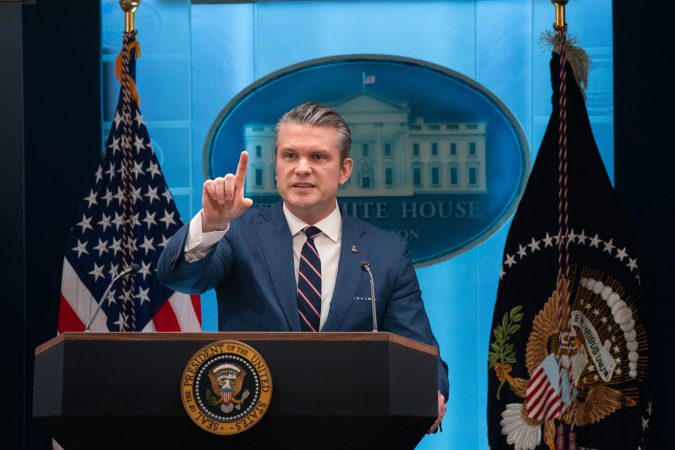
    In April, Hegseth announced he would be rolling back a decades-old mandate requiring U.S. troops to receive the annual flu vaccine. The defense secretary called the requirement “overly broad” and said that soldiers would be able to take the vaccine if they believed it was in their best interest, describing it as an effort to “restore freedom and strength to our joint force.”

    Chief Pentagon spokesperson Sean Parnell said Thursday in a statement that the Department of the Army, Department of the Navy, Department of the Air Force, National Security Agency, and Defense Health Agency had been granted permission to require the vaccines in certain circumstances.

    “The decisions were based upon thorough risk assessments and are designed to maximize operational readiness, lethality, and force generation, while safeguarding at-risk populations,” Parnell said, adding that the military components requesting the exceptions are responsible for their implementation.

    Undersecretary of Defense for Personnel and Readiness Anthony Tata told members of Congress last month that the Pentagon was reviewing exceptions for service members in environments such as basic training, submarines, ships, and Army Ranger School.

    The Times reported Thursday that in the midst of the recent outbreak, the Air Force was granted an exception to the new voluntary vaccine policy, requiring that recruits at Lackland get flu shots. The Air Force did not immediately respond to questions from the Washington Post about whether that exception had been put in place.

    Influenza rates are considered low right now nationally and in Texas, according to tracking by the Centers for Disease Control and Prevention and the Texas state health department. But living in close quarters could exacerbate an outbreak, as flu is spread mainly when people cough, sneeze, or talk.

    The flu vaccine is not a cure-all; it is much less effective in preventing infections than vaccines such as the one for measles, mumps, and rubella, which the CDC says prevents measles in about 97% of cases when patients have received two doses. But multiple studies have shown the flu vaccine reduces the disease’s severity and averts hospitalizations and deaths.

    However, Health Secretary Robert F. Kennedy Jr. has a long history of disparaging vaccines. As health secretary, he stopped a flu awareness campaign and downgraded the recommendation for childhood shots.

    The U.S. military first mandated the flu vaccine in 1945, at the end of World War II — in part to hedge against the threat of biological warfare and because the influenza pandemic of 1918 to 1920 had hindered American troop readiness during World War I, killing more than 26,000 American soldiers. The mandate was briefly withdrawn in 1949 but reinstated in the 1950s.

    Military vaccine mandates were a campaign issue for President Donald Trump, who promised during his 2024 campaign to rehire individuals who had lost their jobs over the military’s requirement that service members be vaccinated against the coronavirus.

    “I will rehire every patriot who was fired from the military with an apology and with backpay,” Trump said at the time, which he went on to do in an executive order in January last year.
  • The blue paint is peeling off the Reflecting Pool

    The blue paint is peeling off the Reflecting Pool

    For days, workers have been trying to rid the Reflecting Pool of algae after a more than $14 million renovation that President Donald Trump said was “done properly” and “could last for 100 years.”

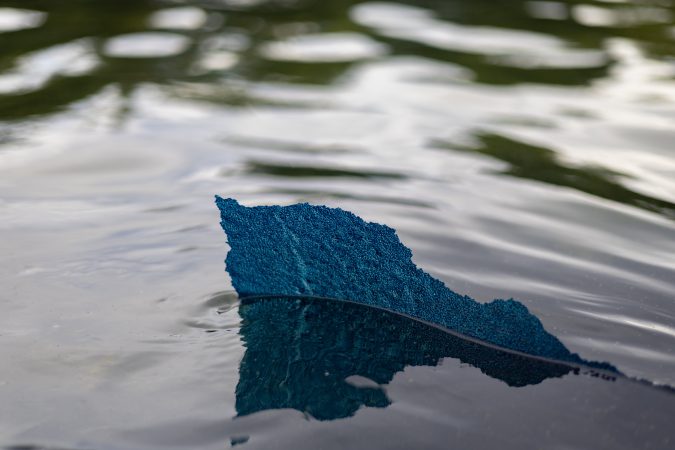
    But now workers have another problem to contend with: peeling paint. On Thursday, a sheet of the pool’s surface — painted in American Flag Blue, a color selected by the president — was seen floating on the north side of the pool. It undulated in the water as curious tourists gathered, some of whom had come to see the green algae.

    At 5:35 p.m. on Thursday, a worker came to remove the sheet of pool surface, telling a Washington Post photographer not to photograph it, despite being on public land.

    The Interior Department did not immediately respond to questions about the paint and why the pool surface is separating. The agency said in a statement on Wednesday that it is treating the pool with hydrogen peroxide and “high-tech nanobubble ozone technology” to effectively cut off the algae’s food supply.

    On Thursday, the Interior Department press office posted on X that “the Reflecting Pool water is crystal clear, and our National Park Service team is now vacuuming up the bottom of some parts of the Reflecting Pool — just like the destroyed Iranian Navy resting on the bottom of the Persian Gulf.”

    Indeed, some areas of the Reflecting Pool were looking cleaner compared with earlier in the week. Workers in chest-high waders stood in the middle of the pool and vacuumed the algae. The neon green-tinted water could be seen pouring out of tubes into nearby drainage grates. The center of the pool, though, was still neon green, and residual algae remained in the cleaned portions of the pool.

    Within days of the renovation’s completion, the Reflecting Pool had more algae in it than at any recorded point in the month of June for at least five years, according to a specialized analysis of satellite data.

    The Reflecting Pool renovation, Trump has said, was prompted by a friend visiting from Germany who called the water “filthy, dirty … disgusting looking.” Algae has been a consistent problem for the pool and quickly reappeared after a $34 million renovation that was completed in 2012.

    But this time would be different, the president promised. He touted his pool-building experience and praised the workmanship of his contractor, who got the job in a no-bid contract.

    “I’m very proud of it,” Trump said in the Oval Office on June 3, saying that his six-week project had finally solved the pool’s yearslong leaking issues. “I’m very good at building things and constructing things.”

    “This was not a paint job,” Trump wrote on Truth Social on June 5. “This was highly sophisticated material, industrial strength, that could last for 100 years, applied by very talented people.”

    On Friday morning, the president reposted an artificial intelligence-generated video showing him filling the Reflecting Pool with what appeared to be critics’ tears (and blue-tinted water) on Truth Social.

    The Cultural Landscape Foundation, a local advocacy organization, sued to stop Trump’s changes to the Reflecting Pool, but the work was completed before a judge could issue a ruling.

    One of the reasons TCLF filed its lawsuit is because the National Park Service did not perform a review as per the National Historic Preservation Act, said Charles A. Birnbaum, the organization’s president and CEO.

    Under that review, they would have been required to consult subject area experts who could “identify potential problems — like algae and exfoliating paint — and, perhaps, suggest solutions,” said Birnbaum in a statement to the Post. “Instead, the Park Service granted themselves a ‘streamlined review,’ which they admitted was done under pressure from ‘White House leadership’ even though the project was ineligible.”

    He concluded: “We can see the result.”

  • Meloni slams Trump’s claim she ‘begged’ for a photo with him as Italy’s top diplomat cancels U.S. trip

    ROME — The Italian government closed ranks on Friday to slam U.S. President Donald Trump over his claim that Premier Giorgia Meloni had “begged” for a photo with him during the recent G7 summit, a pushback that suggested America’s longtime European ally had had enough of Trump’s boasting and criticism.

    Italian Foreign Minister Antonio Tajani abruptly canceled a planned trip to the United States this weekend, calling Trump’s claims “serious and offensive” toward Meloni and all of Italy.

    Meloni for her part posted a video calling Trump’s claims “completely fabricated” and expressing astonishment that he would invent such things about an ally.

    “Italy and I do not beg,” she said pointedly.

    Trump had made the comments in an interview broadcast Friday on the La7 network. The La7 correspondent had asked Trump about Ukraine, but Trump raised Meloni and the conversation turned to their meeting during the just-concluded G7 meeting in Evian-les-Bains, France. Meloni and Trump were filmed speaking at several moments, including alone on a small sofa.

    According to La7, Trump said Meloni had “begged” him for a photo-op. Trump said he wasn’t obliged to do it but that he felt sorry for her and agreed, La7 said. The broadcaster put a dubbed version of the conversation online, not the original English audio.

    Meloni is astonished and defiant

    Trump’s posturing underscored how his alliance with Meloni — long seen as one of his closest friends in Europe — has frayed over his war in Iran, his tariffs against Europe, and his complaints when anyone disagrees with him.

    He turned on Meloni in April after she refused to support his war in Iran and stood up for Pope Leo XIV when Trump lashed out at the pontiff.

    But Meloni’s strong response on Friday suggested she no longer fears Trump’s verbal attacks — attacks that could actually play in her favor in a country where public opinion of the American president has chilled, said Lorenzo Castellani, a political scientist at Rome’s Luiss Guido Carli University.

    “In some ways this was a favor to Giorgia Meloni, in the sense that she was accused until a few months ago of being a sort of Trump’s vassal in Europe,” he said.

    In her video, Meloni said she was responding to Trump’s claims because “certain things deserve an immediate response.”

    “Donald Trump’s statements are completely fabricated. I am frankly stunned,” she said. “I don’t know why the president of the United States behaves this way toward his own allies. After all, this isn’t the first time this has happened.”

    It was an apparent reference to an interview Trump gave to Italian daily Corriere della Sera in April in which he criticized Meloni’s refusal to back the U.S.-Israel war in Iran. Meloni didn’t respond publicly at the time. By Friday, it appeared she had had enough of his boasts and broadsides.

    “I can only say that it’s a shame he doesn’t show the same resolve toward the enemies of the West, toward the enemies of the United States — toward leaders with whom he, on the other hand, is much more accommodating,” Meloni said Friday. “But there’s one thing he must remember: Italy and I do not beg.”

    The White House did not return an immediate request for comment on Meloni’s remarks.

    Meloni had initially sought to build on longstanding strong U.S.-Italian ties when Trump began his second term, and had positioned herself as a “bridge” between Washington and the European Union. She was the lone EU head of state to attend his inauguration.

    But relations have frayed over the U.S. war in Iran, which Meloni has said was illegal, and Trump’s position on Ukraine, which Italy strongly supports. Trump’s tariffs and strong U.S. support of Israel over its war in Gaza have been other points of contention.

    Italian officials close ranks around Meloni

    By Friday afternoon, solidarity for Meloni had poured in from across the government and political spectrum, and included a call from President Sergio Mattarella, Italy’s respected head of state.

    “Whoever attacks @GiorgiaMeloni attacks all of us,” posted Transport Minister Matteo Salvini.

    Justice Minister Carlo Nordio referenced the sacrifice of American troops in World War II in underlining the harm to U.S.-Italy relations caused by Trump.

    “The thousands of crosses marking the graves of American soldiers who died to free us from Nazi-Fascist dictatorship did not deserve such a painful blow to our fraternal ties,” Nordio said on X.

    Defense Minister Guido Crosetto said he didn’t believe Meloni would ever beg someone for a photo, “not even under threat.”

    Tajani had been due to travel to the U.S. on Sunday to take part in an Italy-U.S. business forum in Miami during which he was to have meet with U.S. Secretary of State Marco Rubio, according to a U.S. State Department announcement of the meeting.

    A ‘fantastic’ friendship frays

    Meloni and Trump had gotten off to a strong start, and the two leaders are ideologically aligned on many issues. As the head of a far-right party, Meloni backs curbing migration and promoting traditional values.

    Weeks before Trump’s 2025 inauguration, Meloni met Trump at his Mar-a-Lago retreat, a visit that she said went “beyond expectations.” It was, she said at the time, “an opportunity to confirm a relationship that promises to be very solid.’’

    In the months after, Trump had praised her repeatedly, as “fantastic,” “incredible,” beautiful, and a friend.

    But stark differences emerged over Ukraine. More recently, Meloni sharply warned against U.S. threats to take Greenland by force, saying she didn’t believe Washington would go so far and that regardless Italy would never support such a move.

    Meloni also received support from an unlikely ally in Europe: Spain’s Socialist Prime Minister Pedro Sánchez, who was on Friday asked about the back and forth on the sidelines of a European Council meeting.

    “About Meloni, first and foremost, all my solidarity,” he told reporters. “Secondly, I not only say this publicly in a response to your question, but also in private during the European Council meeting I offered her all my solidarity against this attack that is not political or personal … I really don´t know how to qualify it.”

  • Letters to the Editor | June 19, 2026

    Letters to the Editor | June 19, 2026

    Birthday spectacle

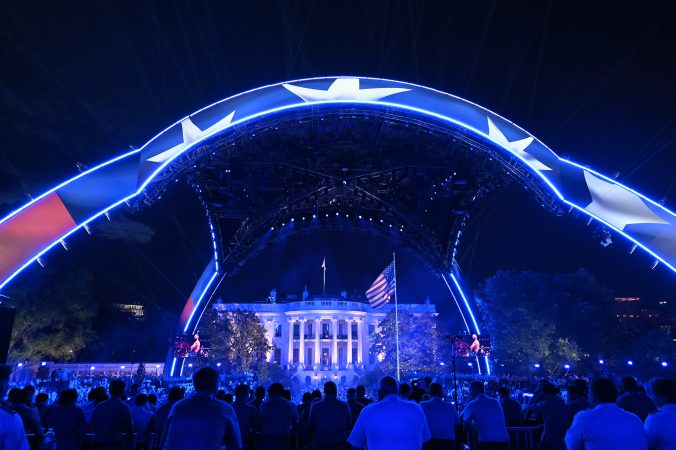
    Donald Trump built an arena at the White House to stage a UFC fight on his birthday. It is an abomination, which means it is loathsome and disgusting. Not only is it disgusting to look at but also detestable for the violence and greed it displays and promotes. The “fight scape” should be revolting to those who appreciate American constitutional values.

    I want to point out that the arena is an abomination in the matter of religious faith, too. Biblically speaking, an abomination was (and is) something ritually and ethically repugnant to God and to those who follow a religious path. Called “detestable things,” abominations were objects associated with idolatry and heathen deities, unclean or prohibited foods, and offensive violation of religious customs. A revolting example of this was the attempt by the Roman emperor Caligula, in 40 A.D., to have his statue erected in the temple in Jerusalem.

    The arena is another effort by President Trump to spread his name, image, and likeness in areas of American public life, so he can stand foremost in the eyes of our nation’s people. His face is on banners, and his name is on buildings. He has his (blessed) statue. He’s looking for approval and idolization, but these attempts strike me more like a meandering dog profanely marking his territory.

    His birthday festival usurped Flag Day. Trump appeared as the main attraction for his birthday — and he will also make July Fourth all about himself as well. His UFC fights happened. He hinted that the arena may stay up beyond that date. What for? Maybe he will try to establish new gladiatorial games holding matches between UFC champions and Mr. Trump’s “enemies.” What could be more detestable? That’s a big “thumbs down.” We already have enough bloodshed, corruption, and violence. One abomination at the White House is already too many.

    The Rev. Jack McAnlis, Langhorne

    Water weaponized

    A reported U.S. attack on two water reservoirs in southern Iran shortly before the ceasefire was announced left 20,000 people without access to drinking water, according to the Mizan news agency in Iran. In a statement, the local Iranian water utility company said the reservoirs were “targeted and completely destroyed” in the U.S. strikes in the Bemani area of Sirik in Iran. If true, it would be a crime against humanity, something no American would want our country to do.

    Andrew Mills, Lower Gwynedd

    Join the conversation: Send letters to letters@inquirer.com. Limit length to 150 words and include home address and day and evening phone number. Letters run in The Inquirer six days a week on the editorial pages and online.

  • Horoscopes: Friday, June 19, 2026

    ARIES (March 21-April 19). As schoolchildren released for recess know, it’s a pleasure to let off some uninhibited energy, especially when you’ve been cooped up in a highly structured environment. The cosmic school bell will ring for you today. Go claim your place on the playground.

    TAURUS (April 20-May 20). You deal with stress better when you can spot the absurdity in a situation instead of getting stuck in irritation. Humor helps you stay loose when life gets weird. When you can laugh at the chaos a little, the inconveniences bounce off you.

    GEMINI (May 21-June 21). There are some enchanted logistics in play today. The practical parts of life begin cooperating with your dreams instead of obstructing them. It’s not every day that schedules, money and timing align as well as this!

    CANCER (June 22-July 22). Anyone can feel good around “yes” people, but it takes a very evolved person to seek out the “no” people and hear what they have to add. The critics make you better, stronger, sharper and more impervious to pain.

    LEO (July 23-Aug. 22). Your understanding of love keeps changing. Sometimes affection is shown through gestures, touch and thoughtfulness. But often it’s the practical, repetitive and sacrificial behaviors you enact for your loved one that indicate the deepest devotion.

    VIRGO (Aug. 23-Sept. 22). The body, mind and spirit all work together. You think better when you eat better, and when your heart is filled with love, you feel like expressing yourself through movement. Anything you improve through joy will affect all parts of you.

    LIBRA (Sept. 23-Oct. 23). You’ll be accounting for tasks done and undone and reflecting on how it went down — the hits and misses, the expectations and surprises, the soft impressions plus some hard numbers. Your realism here will ultimately be your success ticket.

    SCORPIO (Oct. 24-Nov. 21). Have a little more faith. Even foolish faith will do. Today it’s better to be naive than to be jaded. The energy of happiness attracts more joy. The energy of cynicism fulfills its own prophecy.

    SAGITTARIUS (Nov. 22-Dec. 21). You constantly strive for a better understanding of the other person’s perspective. Empathy is the strength that doesn’t call attention to itself. Though relating to others is an act of kindness, it’s also a strategy that helps with today’s challenge.

    CAPRICORN (Dec. 22-Jan. 19). If you don’t make intentional choices about your priorities and limits, life makes them for you. It may work for a few hours or days, but eventually, attempting to handle too many different responsibilities at once becomes unsustainable.

    AQUARIUS (Jan. 20-Feb. 18). You want to succeed at work, maintain relationships and pursue creative goals. You’ll do it, just not all today. These feelings of overwhelm come from unnecessarily conflating the time frame. Avoid compressing too much into one imagined moment.

    PISCES (Feb. 19-March 20). You’ll think deeply and extend your insight into the past and future. Some call such vigilance “overthinking” because they can’t relate. It’s natural to assume that everyone is like you, but many aren’t paying close attention, so you need to.

    TODAY’S BIRTHDAY (June 19). It’s your Year of the Aegis, in which you are protected by a shield like Athena’s — forged from wisdom, preparation and strong boundaries. You handle intensity with composure, earning trust, authority and strategic advantage along the way. More highlights: Enriching friendships. Your work gains attention from stylish and influential people. You’ll solve a long-running problem with elegance and make money doing it. Aquarius and Leo adore you. Your lucky numbers are: 5, 11, 28, 32 and 13.

  • Dear Abby | Son of late friend brings feral kids along for visits

    DEAR ABBY: My husband’s best friend died when we were in our early 30s. His son, “Marty,” recently moved back to the area with his wife and three boys. We think of them as family.

    My husband often needs help with heavy handyman jobs. (I was diagnosed with cancer and am unable to help him.) He frequently recruits Marty for this kind of help, and Marty always brings along his wife and kids. They don’t watch or discipline the kids, and I’m exhausted. Is it really up to me to parent their kids while they are here giving us a hand?

    — BOTHERED IN UTAH

    DEAR BOTHERED: It certainly looks like it. Unless you find the courage to remind the wife that you are not in good health and need the children to “tone it down,” the situation isn’t going to change. If you cannot bring yourself to do that, then consider arranging to “visit a friend” when you know they are coming.

    ** ** **

    DEAR ABBY: My wife meets once a week with several other Christian women to discuss various topics. Everyone gets to the meeting on time except one woman, “Florence,” who typically arrives just a few minutes before the meeting is over. The others have tried ending the meeting just as she comes in to encourage her to come on time, but it has had no effect.

    Last week, they had a three-hour lunch party. In an attempt to get Florence there on time, the hostess had told her they were shutting down after three hours as she had other things to do afterward. However, Florence arrived 15 minutes after the party was over. My wife is at a loss about how to get the woman to arrive for the beginning. Should they just exclude her?

    — FRUSTRATED GROUP IN TEXAS

    DEAR FRUSTRATED: What Florence has been doing is consistent and insulting. If she were interested in doing anything more than making a “personal appearance,” she would arrive at the appointed time as the rest of the women do. Yes, because of her rude and inconsiderate behavior, they should scrub her from the invitation list.

    ** ** **

    DEAR ABBY: We are grandparents. When our son, daughter-in-law and grandchildren visit, we want to do a lot of things and take them places. But I often feel like I am pushing my daughter-in-law. She says her life is hectic with work and activities for the kids. She just wants to sit in my house. I want to get out.

    We are arguing because we can’t come up with a plan that everyone is agreeable with. Is it proper for me to ask her if we could take the kids while she rests at home? I’m not sure she would like that. How can we work this out so everyone is happy?

    — TRYING TO HELP IN THE EAST

    DEAR TRYING: Your daughter-in-law has already told you she would be happy sitting quietly in your home. Tell her this is her vacation as well as the kids’, and there is a way for everyone to be happy if she will allow you and your spouse to take the kids for outings. If you do, you might find that she is not only open to the idea, but also relieved.

  • Some GOP allies have harsh views of Trump’s Iran deal

    WASHINGTON — Republican leaders on Capitol Hill, including top national security figures, were voicing strong reservations Thursday — and some outright condemnation — of the Trump administration’s agreement to end the fighting in Iran.

    The memorandum of understanding signed by President Donald Trump started a 60-day negotiating clock to reach a final deal on the future of Iran’s nuclear program. While Trump allies noted the agreement is not final, the lifting of economic sanctions on Iran’s sale of oil and the plan for a $300 billion fund to rebuild Iran and its economy were met with criticism from Republican leaders and conservative influencers, including some close Trump supporters.

    “President Trump has pursued peace through strength. I hope the intermediaries working on this deal are not undermining that objective,” said Mississippi Sen. Roger Wicker, the chairperson of the Senate Armed Services Committee, who has urged Trump to keep up the pressure on Iran and last month warned against striking a bad deal.

    “The $300 billion fund for the reconstruction and economic development of Iran — though not funded by U.S. taxpayers — would make Iran’s payoff under President Obama’s 2015 deal look like a pittance by comparison,” Wicker said, referring to the Democratic administration’s Iran agreement that Trump withdrew from during his first term.

    The criticism from within Trump’s own party — though hardly unanimous — comes as he is trying to bring an end to the unpopular war fewer than five months from midterm elections, where Republicans are facing headwinds in their effort to hold their narrow majorities.

    Trump calls his critics “fools”

    Wicker’s points were backed by a number of his colleagues, many of whom supported the war when it began.

    “History demonstrates giving billions of dollars to the theocratic lunatics who want to kill you is an exceptionally bad idea,” said Texas Sen. Ted Cruz, a staunch supporter of the war. “And so I hope we don’t do that.”

    Trump on Truth Social called his critics “fools” and said the $300 billion payment to Iran by the United States is “fake news.” The interim pact promises a $300 billion fund for postwar reconstruction. It’s not clear where that money will come from — but Trump said, as Wicker noted, the U.S. would not contribute.

    “All there is for the U.S. is Success, Lower Oil Prices, and Victory,” he posted.

    Some senators question financial provisions

    As the memorandum was released to Congress on Thursday, several Republican senators said it left them with questions, many of them about its financial provisions.

    Majority Leader John Thune and fellow South Dakota Sen. Mike Rounds were seeking clarity on how financial incentives to Iran and conditions barring funding terrorism would be enforced, because “right now, a lot of money’s going to go to Iran,” Rounds said.

    To be sure, there were Republicans more closely aligned with Trump’s America First policies in the Senate and elsewhere who were giving him the benefit of the doubt.

    Sen. Roger Marshall stressed the point in the memorandum that supporters say gives the U.S. the upper hand. In a social media post, the Kansas Republican said one of the most important provisions “lays out a key commitment that strengthens regional security and ensures that Iran can never have a nuclear weapon.”

    Louisiana GOP Senate candidate John Fleming, who has focused on Trump’s most loyal supporters ahead of a June 27 Republican primary runoff, said that means Trump has suggested that the U.S. will strike Iran again if it does not live up to the agreement.

    “The criticism may be worthy if there isn’t follow-through,” Fleming said. “He’s using the speak-softly-and-carry-a-big-stick in offering them plenty of help, but at the same time he’s got that stick ready if they don’t live up to their agreements.”

    MAGA voices send a warning

    Still, some of Trump’s strongest supporters in conservative media have warned against the agreement.

    Conservative radio host Mark Levin suggested a strategic rethinking to hold off on an agreement with Iran until after the midterms.

    “We should consider slow-walking the enemy, building up our munitions, our oil reserves, get the price of gasoline down, get through the midterms, then knock them out,” he said in a social media post. Instead, the U.S. seemed to be “rushing to a deal, building up their oil industry” and agreeing to governments “transferring billions to them.”

    Right-wing social media influencer Laura Loomer, who has long supported Trump while also promoting conspiracy theories, was more pointed in her criticism.

    “Who is giving the President tainted, pro-Islamic intel?” she posted on X.

    What all the critics shared is an abiding distrust of the Iranian regime, no matter their relationship to Trump.

    “It does smack of the kind of appeasement,” said former Vice President Mike Pence, whose relationship with Trump was fractured after the Jan. 6, 2021, attack on the U.S. Capitol. “Bottom line. I don’t trust the Iranians.”

  • US Open starts on soft Shinnecock with strong wind. Sam Stevens takes the early lead

    SOUTHAMPTON, N.Y. — Shinnecock Hills has never looked like this for a U.S. Open, not with such receptive greens and putting surfaces slow enough to keep shots from rolling off the edges and down the slopes.

    About the only familiarity Thursday was the scoring, kept in check by a strong wind that finally shooed away the fog and gave Scottie Scheffler, Rory McIlroy and the rest all they could handle.

    Sam Stevens overcame a double bogey to start his round — a hole that took him over two hours to play because of the fog — and strung together six birdies that carried him to a 2-under 68, making him one of only six players from the early starters to beat par.

    McIlroy saved par on a wild ride along the fourth hole, hit a pitching wedge into 12 feet on the downwind par-5 fifth hole for eagle, closed with two bogeys and was more than happy with a 69, particularly considering it was 11 shots better than the start he had at Shinnecock in 2018.

    Also at 69 were Ludvig Aberg and 2023 British Open champion Brian Harman, Max Greyserman and Ben James, the college star in his second week as a pro.

    Scheffler, needing a U.S. Open title for the career Grand Slam, had to rely heavily on his short game to salvage a 72.

    “The greens haven’t been too firm, the fairways haven’t been too firm, so I’ve really felt like it’s pretty scorable,” said Stevens, who had only his second sub-70 round in his fourth U.S. Open. “Obviously, it’s difficult, but overall it’s an awesome place. I think the setup is great right now.”

    For one day — half of the opening round — the USGA might have been leader in the clubhouse.

    Coming off two Opens at Shinnecock when the course got out of control, the USGA planned to slow the greens to 10 1/2 on the Stimpmeter — rare for any major, much less the U.S. Open — and keep plenty of water on the putting surfaces.

    It was all due to the wind, which did not disappoint. The sustained wind approached 25 mph, and gusts were even stronger. And if that wasn’t enough, it shifted directions in the middle of the day.

    “It was tough around here without wind, and then it was blowing pretty hard — really hard,” Keegan Bradley said after a 70. “The USGA did a great job setting the course up because if the greens were any faster or firmer, we might not be playing right now.”

    McIlroy hit wedge to 3 feet on No. 3, his 12th of the day, not the play he envisioned. He was trying to land it four paces short of the pin. It went four paces long and spun back to set up an easy birdie.

    “The greens obviously are very receptive with them expecting this wind,” he said.

    For all the concern about wind and the course drying out, it turned out to be another weather that got in the way — fog. Thirty minutes after the U.S. Open began, play was stopped and led to a two-hour delay. It was particularly tough on Stevens.

    He laid back off the tee at No. 10 and was preparing for his approach when the horn sounded. When he returned, his 6-iron came up short and back down the hill, he chunked his wedge and his U.S. Open began with a double bogey.

    “Didn’t get to hit my second shot for 2 1/2 hours, or whatever it was,” Stevens said. “Got off to kind of a weird start, but made a birdie on the very next hole. It felt like I settled in after that … The greens were a bit softer. I felt like you could hit good shots close to the hole, and then made a few nice putts, so overall good.”

    McIlroy, whose lone U.S. Open title was 15 years ago on rain-softened Congressional, did some of his best work on the fourth hole. He pulled his tee shot into the knee-high, wispy hay on the left, and his next shot bounced off a cart path some 50 yards away. He hit wedge over where the gallery had been standing and holed an 18-foot putt. He followed that with his eagle — his first at the U.S. Open since 2017 at Erin Hills — until getting tripped up at the end.

    “The greens are pretty slow and quite receptive. I think they need to be at this point. It’s a challenging golf course already, and you put 30-mile-an-hour winds on top of it, it tests the best players in the world pretty well,” McIlroy said. “I think they were prudent with the course setup.”

    Scheffler fell to 3 over when he missed the fairway in high grass to the right on No. 8, did well to punch out into a bunker, blasted out to 18 feet and three-putted for double bogey. Then, his blind shot to the ninth green came back off the front of the green. He holed a 6-foot putt to save par, and that proved key as he limited the damage with a 34 on the back.

    “If you told me when I was staring at my par putt on 9 that I would post 2 over today, I would definitely have taken it at the time,” Scheffler said. “Overall, it was a good battle.”

  • U.S. lifts blockade of Iran and Iranian supreme leader endorses direct talks with American officials

    WASHINGTON — The U.S. on Thursday lifted its blockade of Iran, and oil tankers began freely moving through the Strait of Hormuz after months of being unable to use the critical channel, as the tentative agreement to end the war took effect.

    Meanwhile, Vice President JD Vance announced that he may postpone a trip to Switzerland that had been planned for Friday and included a ceremonial signing of the deal. The visit might have helped start talks on the next, potentially even more critical, round of negotiations between the two sides.

    Hours later, Iranian Supreme Leader Ayatollah Mojtaba Khamenei endorsed direct negotiations with the U.S. in a statement read by state media.

    “It is obvious that the face-to-face negotiations that will be held in the future will not mean accepting the enemy’s opinion,” he said.

    It was Khamenei’s first reaction to the agreement, and it indicated a shift in Iran’s approach. Hard-liners, especially Khamenei’s father, the previous supreme leader, have long opposed direct talks, especially after the U.S. pulled out of the 2015 nuclear deal between Iran and world powers.

    The supreme leader has not been seen in public since he was wounded in a strike at the start of the war.

    Trump envoy tells lawmakers Iran will invite U.N. inspectors to nuclear sites

    In other developments, Trump envoy Steve Witkoff told U.S. lawmakers Thursday in a private briefing that Iran will invite the U.N.’s nuclear watchdog agency to inspect its nuclear sites and begin work on identifying and uncovering the locations of Tehran’s enriched material.

    The briefing was described by two people familiar with the conversation who spoke to the Associated Press on condition of anonymity to share the closed-door details.

    Witkoff told congressional leadership and members of national security-related committees that the agreement that the U.S. struck with Iran did not include any side deals, but a side letter was drafted between Tehran and the International Atomic Energy Agency extending the invitation.

    Witkoff disclosed the existence of the letter and invitation in the briefing, according to the people.

    Witkoff said the letter to IAEA Director-General Rafael Mariano Grossi would enable him to bring U.S. nuclear inspectors to Tehran.

    Uncertain timeline could make it more difficult to promote deal

    Pakistani Prime Minister Shehbaz Sharif also postponed a planned visit to Switzerland, where Islamabad officials were to host the ceremony, because the agreement had already been signed, said two senior officials who spoke on condition of anonymity because of the sensitivity of the matter.

    The now uncertain timeline could raise new questions and make it even more difficult for the Trump administration to promote a deal that many in the U.S. — including some congressional Republicans — have criticized as too favorable to Tehran.

    “Our plan is to go to Switzerland. I don’t know exactly when,” Vance said during a briefing with reporters at the White House when asked about not flying, as planned, to the signing ceremony.

    “I suspect this weekend, but I’m not sure,” he added.

    That injected new doubt into an agreement that President Donald Trump said he signed to avoid “economic catastrophe” in the U.S.

    Vance’s announcement came a day after Trump signed the pact with Iran while dining with French President Emmanuel Macron at the Palace of Versailles. The deal is slated to take immediate effect and extends a ceasefire while giving each side 60 days to hammer out broader agreements on larger issues.

    Trump said the deal would avoid continued stress on the U.S. economy after the war caused oil prices to skyrocket, made financial markets skittish, and fueled inflation. He repeatedly said he did not want to be compared to Herbert Hoover, whose policies helped exacerbate the Great Depression of the 1930s.

    Vance defends U.S.-Iran deal

    The vice president, who was initially personally skeptical of the U.S. going to war with Iran, has increasingly become the administration’s face of the conflict and has been outspoken in defending the deal. Asked about concerns it concedes too much, the vice president said repeatedly that the accord would force Iran to “change their behavior.”

    Vance defended the agreement and shrugged off accusations that its rollout has been piecemeal and sometimes contradictory, saying, “I don’t think our public messaging has been chaotic.”

    He also offered a surprisingly blunt warning to Israel, which has pushed the U.S. to take a harder stance against Iran and launched attacks on the Iranian-backed Hezbollah militia in Lebanon throughout the war, including just before the deal extending the ceasefire was reached. Those attacks complicated the peace efforts with Iran.

    Trump “is the only head of state in the entire world who is sympathetic to the nation of Israel at this moment in time,” Vance said. “And he happens to be the head of state of the world’s superpower.”

    The vice president said more than 12.5 million barrels of oil went through the Strait of Hormuz on Wednesday night. That could further soothe oil prices that spiked during the war but have been falling since the U.S. and Iran announced a tentative deal to end the conflict.

    He said the U.S. easing its blockade of Iran means “honoring our end of the early part of the agreement on the military side.”

    U.S. Central Command said American warships “will remain in the general area to make sure that all aspects of the agreement are adhered to, obeyed, and in full force and effect.”

    Shipping starts to pick up

    At least two oil tankers left Iran and crossed the U.S. military blockade without being stopped. A merchant shipping tracking website said the ships were carrying a combined total of 3.8 million barrels of Iranian crude oil.

    Iranian state media said shipping had “normalized” at Iran’s southern ports but added that the strait remains supervised and under the control of the Iranian military, and transiting through the vital waterway still requires coordination.

    Major shipowners began moving vessels through the strait after the agreement was signed, according to maritime data company Lloyd’s List Intelligence, though Lloyd’s did not give data on how many ships have passed through the strait as of Thursday.

    In a media briefing, Richard Meade, editor-in-chief of Lloyd’s List, said for the first time in 110 days, ships owned by major companies are transiting the strait after effectively being marooned there since February.

    Tankers controlled by major ship owners Grimaldi Group, Cosco, Knutsen, and NYK have passed through the strait. And two Iranian-flagged, sanctioned crude oil tankers owned by the National Iranian Tanker Company have entered the strait, according to Lloyd’s List.

    Phillip Belcher, marine director of Intertanko, a trade group for global independent tanker owners, said the main central route of the strait is still closed and has an estimated 80 mines that need to be cleared.

    But ships have been passing through the smaller northern route, which goes through Iranian waters, and the southern route, which goes through Omani waters.

    Lloyd’s List estimated that 550 merchant ships will need to exit the Persian Gulf. It could take weeks or months to fully reopen the strait, and the two alternative routes do not have as much capacity as the strait’s central passage.

    Agreement calls for a lasting end to hostilities

    The U.S.-Iran deal calls for a permanent end to hostilities and starts a 60-day negotiating clock to reach a final deal on the future of Iran’s nuclear program, though Trump has left the door open to resume attacks. The agreement appears to offer Iran several benefits up front while extracting little in return.

    It states that Iran’s stockpile of highly enriched uranium, which is believed to be buried under rubble, must at minimum be diluted under international supervision. It also says that Iran shall not procure or develop nuclear weapons — a commitment it has made previously. But beyond stating that the U.S. and Iran will negotiate over Iran’s nuclear program, other commitments still need to be worked out.

    The deal also waives U.S.-backed sanctions on the country, immediately allowing Iran to sell its oil freely in a major concession from Washington.

    Still, Kaja Kallas, the European Union’s foreign policy chief, said Thursday that the 27-nation bloc would leave its sanctions on Iran in place for now. The bloc had slapped a series of separate sanctions on Iran over its nuclear program, human rights violations and the closing of the strait.

  • Hegseth attacks NATO allies and announces a review of U.S. forces in Europe

    BRUSSELS — U.S. Defense Secretary Pete Hegseth lashed out at NATO allies on Thursday as he announced a six-month Pentagon review of American forces in Europe whose outcome will depend on how fast the Europeans take responsibility for their own security.

    The review was yet another surprise for European allies and Canada as they learn to deal with an increasingly unpredictable ally. U.S. officials and senior military officers had promised to coordinate closely with the Europeans as America draws down.

    In recent months, U.S. President Donald Trump and the Pentagon have sent conflicting signals about whether America is reducing or increasing its military footprint in Europe, as well as threatening to annex Greenland, a semiautonomous island that is part of ally Denmark. Just weeks ago, the Trump administration said that it would no longer provide as much military support should any NATO member come under attack.

    “This will be a real review. It will be designed to ensure that NATO is moving fast and irreversibly toward Europe leading, stepping up to take primary responsibility for the defense of Europe,” Hegseth told his NATO counterparts. “It’s a review that some countries will fail and others will pass with flying colors.”

    German Chancellor Friedrich Merz later said the allies have long been aware of U.S. plans to pull troops from Europe at some point and that they must take care of their own security.

    “We know that we must do more and we are doing it,” Merz said.

    Public dressing down over bases, gender, and migration

    In a fiery speech at NATO headquarters in Brussels, Hegseth lambasted European allies for failing to provide U.S. forces access to bases in Europe to launch attacks on Iran, calling it “shameful.”

    “These allies, they put America’s sons and daughters, our sons and daughters, at risk by denying them the predictable access, basing, and overflight that never should have been in question at all,” he said. The review would also assess whether the U.S. has full access and overflight “when we need it.”

    While defense ministers and military officers sat in silence, Hegseth railed against migration and gender equality policies in Europe, in remarks reminiscent to those of Vice President JD Vance in February last year that angered many Europeans.

    “Instead of tanks and fighters and air defenses, the focus has been on gender equity and climate change and defense austerity. Europe’s borders flew wide open, welfare states expanded, defense budgets cratered, along with Europe’s belief in itself and its civilization,” Hegseth said.

    Hegseth’s comments largely mischaracterized European policies today. On defense, European allies and Canada have launched an unprecedented effort to boost defense spending and expand their armed forces. NATO Secretary-General Mark Rutte noted on Thursday that they spent $90 billion more on defense last year, a 20% increase over 2024. And while Europe accepted large numbers of migrants and asylum seekers more than a decade ago, most countries have tightened their borders since.

    It does not augur well for a summit of NATO leaders in Turkey on July 7-8.

    A rare and short visit to NATO

    It was a rare visit to NATO by Hegseth, his first this year after skipping a meeting in February. The Pentagon chief did not stay long, leaving well before the gathering was over and hours before Ukraine’s President Volodymyr Zelensky was due to press allies for more weapons for his country.

    Speaking to reporters at Brussels airport before flying home, Hegseth said, “It was great to hear country after country say, ‘We’re going to meet our target. We’re going to meet our target.’ There are still a few outliers, and we will be clear with them as we do this review.”

    NATO’s supreme allied commander, an American, is working on backup plans to defend Europe after the U.S. signaled on June 3 that it would no longer supply an aircraft carrier and support ships, aerial refueling planes, and dozens of fighter jets, among other military assets, in a crisis.

    The Trump administration insists that it needs to be able to plan for two simultaneous conflicts and wants more military resources at hand should it clash with China in the Indo-Pacific region.

    Under NATO’s collective security guarantee — Article 5 of its founding treaty — the 32 allies pledge that an attack on one of them will be considered an attack on all. It does not oblige them to provide military support, although many likely would.

    In essence, the United States is scaling back how it might help should an ally trigger Article 5.

    U.S. nuclear weapons will stay

    The U.S. has by far NATO’s biggest armed forces. It does not intend to withdraw its nuclear weapons in Europe, which are key to NATO’s deterrence. To underscore that point, NATO’s Nuclear Planning Group issued its first statement in 19 years after Thursday’s meeting.

    In the statement, it “recalled that the strategic nuclear forces of the Alliance remain the supreme guarantee of Allied security and underpin NATO’s extended deterrence architecture.”

    The ministers “agreed to continue enhancing NATO’s nuclear deterrence mission by modernizing NATO’s nuclear capabilities, strengthening its nuclear planning capacity, and adapting to achieve its security interests.”

    Rutte played down the impact of the U.S. decision, saying that the NATO Force Model — the system for organizing what forces member countries will provide commanders in times of peace, crisis, or conflict — is just “a planning tool,” and not a reflection of what would actually happen.

    “If war breaks out, we will all max out what we need to do to make sure we can fight the war,” Rutte told reporters. “In the planning phase, it is important to know what we can count on. What is in theory there.”