Tag: no-latest

  • U.K. Prime Minister Starmer to resign as Labour Party seeks reboot

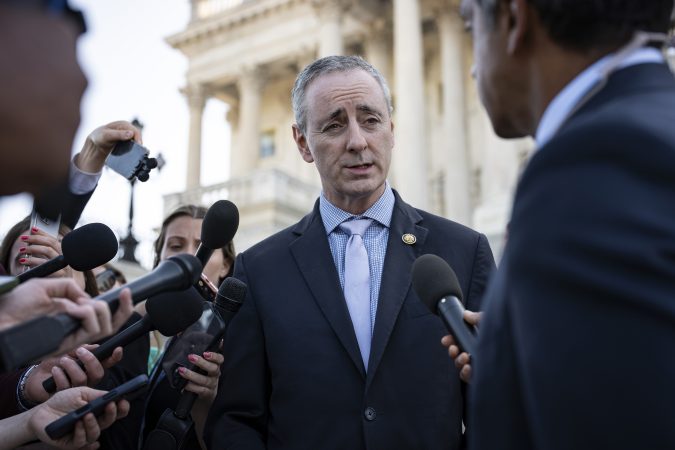
    LONDON — British Prime Minister Keir Starmer announced Monday that he will resign, succumbing to pressure from lawmakers within his own Labour Party, after crushing losses in nationwide local elections last month triggered a mutiny.

    An emotional Starmer said he would leave office after a new Labour leader — and therefore a new prime minister — is selected in a leadership election that will begin in July. Standing outside 10 Downing Street, Starmer recounted his government’s achievements during its two years in office and then grew tearful after saying that he had informed King Charles III of his decision Monday morning and would soon devote himself to his own family.

    “The question my party is asking now is whether I am best placed to lead us into the next general election,” Starmer said with his staff and some — but notably not all — of his cabinet looking on. “I have heard the answer of my parliamentary party to that question, and I accept that answer with good grace.”

    Starmer, 63, had struggled to define his agenda while contending with economic stagnation, fallout from the Epstein scandal, and turbulent relations with President Donald Trump.

    The discord with Trump was punctuated by a final jab on Sunday when the U.S. president proclaimed that Starmer would resign — shoving the British leader to the door before Starmer had made any announcement of his own.

    Starmer’s surrender came fast on the heels of a special parliamentary election in Makerfield on Thursday, in which Greater Manchester Mayor Andy Burnham won a decisive victory, returning him to the House of Commons and positioning him to mount a Labour Party leadership challenge that Starmer seemed all but certain to lose.

    Burnham’s victory gave him momentum in a challenge to Starmer that has been brewing for months. And his status as a front-runner neared shoo-in levels on Monday when another likely candidate for a leadership race, former Health Secretary Wes Streeting, pulled out of contention and threw his support to Burnham.

    To become the new Labour leader, any challenger must first secure the written backing of at least 81 of Labour’s 403 elected members of Parliament. Once that threshold is crossed, the contest goes to a broader vote of party members who rank candidates in order of preference until one of them clears 50%.

    Starmer could have effectively anointed Burnham as his replacement, avoiding what could be a bruising intraparty battle for the top job. But some have argued that Labour, and the country, would be better served by a leadership contest that demanded candidates defend their vision for leadership.

    Starmer opted for an open contest, saying he would instruct Labour’s executive committee to begin accepting nominations on July 9 with an eye to completing the election in time for a new prime minister to take office by the end of parliament’s summer recess in September.

    It was unclear if that schedule would hold given the accelerating support for Burnham among lawmakers.

    “He’s the next prime minister,” said Tim Bale, a professor of politics at Queen Mary University of London. “It’s going to be something like a coronation.”

    Starmer’s resignation extends a remarkable era of political turmoil in Britain and will usher in the country’s seventh prime minister in the past 10 years.

    Starmer spent less than two years at No. 10 Downing Street. His departure ends a troubled tenure marred by failures to deliver on campaign promises, ousters of senior advisers, criticism of his handling of the wars in Ukraine and Iran, and recriminations over his appointment as U.S. ambassador of former Labour power broker Peter Mandelson, whose entanglement with Jeffrey Epstein, the convicted sex offender, is now under investigation by the Metropolitan Police.

    These and other missteps contributed to the undoing of a staid politician who led Labour to a landslide victory in 2024, promising competence and centrist polices that he said would reinvigorate the British economy and shield the country from the polarizing forces tearing other democracies apart.

    After nearly 15 years of Conservative Party rule, Labour also benefited in that race from widespread unhappiness over the economic malaise that followed Brexit, the country’s Tory-led departure from the European Union.

    And yet Starmer soon became caught in the same currents of voter discontent that he had exploited. Starmer, a former prosecutor who lacked the flair of Britain’s most famous prime ministers, faced persistently abysmal approval ratings and barely concealed scheming in the upper ranks of his party.

    More broadly, Starmer’s resignation underscores the extent to which British politics is entering a turbulent new period in which insurgent parties — including Reform UK, whose anti-immigrant posture echoes the MAGA movement in the United States, and the populist Green Party — are gaining strength amid eroded support for the Conservative and Labour parties that have dominated U.K. politics for generations.

    The bloodbath in local elections suffered by Labour on May 7 — a loss of more than 1,500 of the approximately 2,600 seats it held on local councils and other bodies — was widely expected. And with national parliamentary elections not due until mid-2029, Labour retains a strong majority in the House of Commons. But rank-and-file MPs quickly called for Starmer’s head, fearing a potential wipeout if they did not replace him in time for a dramatic turnabout.

    On paper, at least, the looming leadership contest looked to be Burnham’s to lose even before Streeter pulled out Monday.

    Burnham’s decisive win last week in Makerfield, a working-class constituency Labour strategists feared it might lose outright to Reform UK, handed him a fresh mandate as the figure best positioned to blunt the new right-wing party’s advance in the postindustrial seats Labour needs to hold onto power.

    Burnham’s camp has said he has already secured the backing of more than 201 Labour MPs, half the 402-member parliamentary party. That tally, if it holds, would make him the prevailing favorite from the outset. Coming from local politics, he is seen as largely untainted by the compromises of Starmer’s government.

    Streeting, 43, who served as health secretary under Starmer, resigned his cabinet post last month to launch his own leadership bid. His quick endorsement suggested that Burnham was building perhaps insurmountable support.

    Streeting, who hails from the more centrist Labour wing identified with former prime minister Tony Blair, would have challenged Burnham from the right, and had built a profile as a sharp-elbowed media figure willing to break publicly with Starmer’s government. That’s a contrast to Burnham’s more staid, institutional brand of working-class populism, built over three terms as mayor of Greater Manchester and 16 years before that in the House of Commons.

    Streeting has stressed the need for Labour to win back swing voters defecting to Reform UK and had pointed to his record of NHS reform as proof of a pragmatic governing style. In withdrawing, he acknowledged that a divisive leadership contest could prove costly by stressing disagreements rather than unity.

    “We could spend the summer exaggerating small differences, or we can roll up our sleeves and help him to deliver the change our Party and our country needs,” Streeting said in a statement.

    Starmer’s struggles were compounded by strains in the “special relationship” between Britain and the United States.

    Starmer’s early attempts to appease Trump upon his return to the White House — including a trip to Washington in which he carried an invitation from King Charles III for an “unprecedented” second state visit to England — did not shield Britain from steep tariffs imposed by Trump or from a steady stream of insults.

    In recent weeks, Trump has lashed out at Starmer, saying he is “no Winston Churchill,” for his refusal to thrust Britain’s military more directly into the U.S.-Israeli war with Iran.

    Seeking to avoid the fate of Blair, whose support for the 2003 U.S. invasion of Iraq is still seen as a stain on his legacy, Starmer initially refused to allow U.S. forces to stage attacks on Iran from British bases. He later softened that position to allow “defensive” strikes meant to blunt Iran’s ability to retaliate on British territories or allies. Starmer’s shifting positions added to perceptions of him as indecisive.

    Still, it was another U.S. crisis — the Epstein scandal — that seemed most damaging. Starmer has no known direct ties to Epstein but was pilloried for the ambassadorial appointment of Mandelson, who maintained ties with the Epstein long after his 2008 conviction on solicitation of prostitution and shared with him sensitive U.K. government documents, according to U.S. Justice Department files.

    In February, police arrested Mandelson on suspicion of misconduct in public office, raising the pressure on Starmer over his judgment in appointing him. Weeks earlier, a government review had found evidence in the Epstein files that sensitive information about the 2008 financial crash appeared to have been shared with the financier by a government official. Mandelson was a government minister at the time.

    Starmer’s resignation is likely to add to a general sense that the political fallout related to Epstein has been far more severe in Britain and Europe than in the United States, where neither Trump nor other American politicians revealed to have had close ties with Epstein over the years have faced significant consequences.

    In Britain, Starmer faced calls for his resignation. And Andrew Mountbatten Windsor, a brother of King Charles, was stripped of his royal titles and forced to leave his longtime royal residence following new revelations about his own Epstein connection.

    Starmer weathered those initial calls to step down, but ultimately bowed to reality as the numbers among Labour’s rank-and-file turned against him. In his resignation speech on Monday, he claimed credit for bringing Labour back from the dead.

    “Six years ago, I inherited a Labour Party that was politically, financially, and morally bankrupt,” Starmer said. “I was told time and time again that my part was finished, that we were consigned to history, that a majority at the general election let alone a landslide majority was impossible. But we proved those people wrong.”
  • U.S. temporarily lifts sanctions on Iranian oil

    U.S. temporarily lifts sanctions on Iranian oil

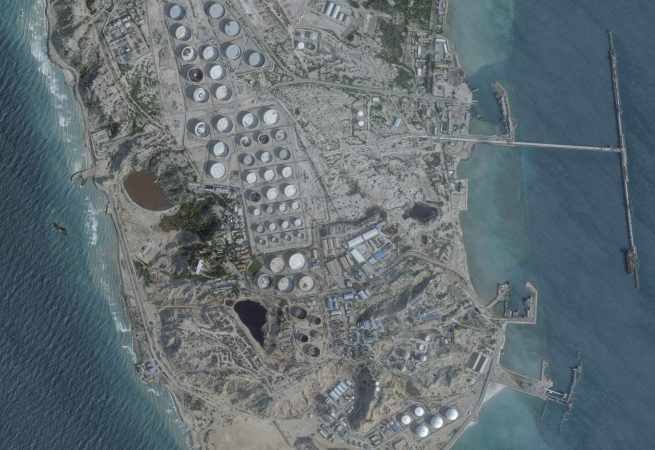
    The Treasury Department on Monday issued a 60-day license allowing the production, delivery, and sale of Iranian oil as part of the preliminary U.S.-Iran deal signed last week.

    Iran stands to reap significant financial rewards from the reprieve, which represents a sharp reversal of U.S. policy. Most importantly, it clears a path for the country to export its oil at market rates after many years of being forced to sell at a discount to find buyers willing to take the risk of running afoul of U.S. economic restrictions.

    But the Trump administration has signaled that it’s ready to provide Iran with financial rewards for opening the Strait of Hormuz and ending the war, which has destabilized the global economy.

    Treasury Secretary Scott Bessent said on social media that the sanctions exemption was the result of “ongoing productive” talks with Iran that are taking place in Switzerland.

    “Iran has committed to free and open transit in the Strait of Hormuz and to permit International Atomic Energy Agency (IAEA) inspectors into their country,” Bessent wrote in a post on social platform X.

    The Trump administration provided Iran with temporary sanctions relief earlier this year as it tried to curb oil prices by allowing more crude supplies to flow to global markets. The U.S. then ramped up sanctions and created a military blockade preventing the sale of Iranian oil as part of an effort to cripple its economy.

    The new license, which expires Aug. 21, gives Iran greater access to U.S. currency by allowing the country to conduct oil transactions using U.S. dollars. It also allows U.S. importers to buy Iranian crude oil, petrochemical products, and petroleum products.

    Iran produced less than 5% of the world’s oil before the war, with the vast majority of its exports going to China. But it was forced to sharply curtail production in recent months because of a U.S. blockade. Time will tell how quickly the country will be able to restart those wells, which can be a tricky process. Iran will also have to repair energy infrastructure damaged in the war.

    The Trump administration has faced criticism for striking an initial agreement with Iran that critics say is overly accommodating and more generous than the 2015 Joint Comprehensive Plan of Action that the Obama administration and other world powers reached with Iran to curb its nuclear program.

    “It’s also important to note that sanctions relief was not provided immediately when the JCPOA was enacted, it happened at ‘Implementation Day’ — six months after the IAEA verified the nuclear commitments were fulfilled,” said Daniel Tannebaum, a senior fellow at the Atlantic Council who previously served as the Office of Foreign Assets Control compliance coordinator for the Federal Reserve Bank of New York.

    This article originally appeared in the New York Times.

  • Federal judge halts Trump administration effort to subpoena Walz in immigration enforcement probe

    A federal judge has blocked an attempt by the Trump administration to subpoena Minnesota Gov. Tim Walz and other state officials, calling it an effort to “harass and retaliate against them.”

    In a ruling unsealed Monday, U.S. District Judge Patrick Schlitz found the “dominant purpose” of the subpoenas was to “coerce Minnesota officials into assisting the federal government with enforcing civil immigration law and to harass and retaliate against them for failing to do so.”

    The subpoenas seeking records were served in January as part of an investigation into whether Walz and other officials obstructed or impeded law enforcement during a sweeping immigration operation in the Minneapolis-St. Paul area. They were sent to the offices of Walz, Attorney General Keith Ellison, Minneapolis Mayor Jacob Frey, St. Paul Mayor Kaohly Her, and officials in Ramsey and Hennepin counties.

    The ruling is the latest rebuke by the federal judiciary of Justice Department efforts to aggressively implement the Trump administration agenda in courts and target the president’s political adversaries through subpoenas and similar demands.

    The judge ruled that there appeared to be “extremely weak to nonexistent” connections between the information sought in the subpoenas and any possible criminal violation. The subpoenas seek materials “that largely if not entirely relate to constitutionally protected conduct,” the judge wrote, noting that Minnesota has the legal right not to devote its resources to enforcing federal immigration law.

    The Justice Department “is not conducting a criminal investigation,” the judge wrote, “but is instead using the grand jury process for other (unlawful) purposes.”

    The evidence that the subpoenas were issued for unlawful reasons is overwhelming, the judge said, arguing that the Justice Department “has struggled — without success — to identify a single plausible investigatory justification” for them.

    The Justice Department didn’t immediately respond to an email seeking comment.

    Walz, in a statement, called the ruling “a victory for the rule of law and our democracy.”

    “The U.S. Justice Department is pursuing criminal investigations into the President’s political opponents,” said Walz, the 2024 Democratic nominee for vice president. “This case was just one example of that, but we are seeing daily reminders of this administration’s lawlessness — in Minnesota and around the country. We all must continue to seek justice and uphold the rule of law.”

    Ellison said “it should disturb every American that Donald Trump is weaponizing the criminal justice system against people he disagrees with.”

    The subpoenas were “a politically motivated retaliation against our city for lawfully standing up to ICE and fighting for our residents,” Her said in a statement, referring to U.S. Immigration and Customs Enforcement.

    Frey said the investigation was “never about justice, law, and order, but the absence of it.”

    “Subpoenaing political opponents because they spoke on behalf of their constituents violates the core tenets of our democracy and human decency,” he said.

    Frey also observed that criticizing government action is not a crime.

    “One of the defining strengths of our democracy is the ability to challenge those in power without fear of retribution. Elected officials have both the right and the responsibility to speak honestly about how government decisions affect the people they serve,” he said.

    Over the last year, judges have dismissed indictments against two prominent Trump foes, former FBI Director James Comey and New York Attorney General Letitia James, and grand juries have repeatedly refused to return indictments sought by the Justice Department.

    The moves reflect mounting public concerns that the Justice Department, an institution meant to make investigative and prosecution decisions independent of the White House, is being politicized under the current Trump administration.

    Vice President JD Vance has separately called on the Justice Department to investigate Walz and Ellison over allegations they failed to stop widespread social services fraud, though the department has not said whether it will open an investigation. Walz and Ellison have described those allegations as politically motivated and defended their efforts to combat fraud in Minnesota.

  • For heirs of Custer and Sitting Bull, a 150-year-old battle is personal

    For heirs of Custer and Sitting Bull, a 150-year-old battle is personal

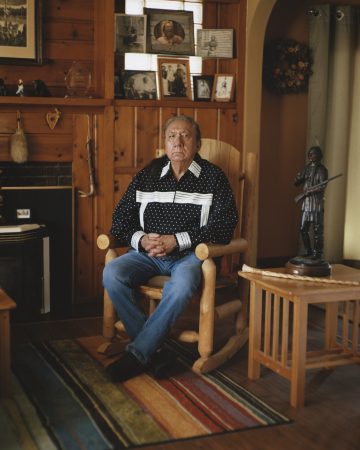
    CROW AGENCY, Mont. — As a child in South Dakota, Ernie LaPointe was told: Don’t tell anyone who your great-grandfather was.

    If his neighbors or friends knew he was descended from Sitting Bull, the storied Hunkpapa Lakota leader, he would never have a normal childhood, his mother told him.

    “‘There will be a time and place when you get the permission to do it,’” LaPointe, now 77, recalled his mother saying.

    LaPointe kept mum until the early 1990s, when, he said, an aunt told him it was time to “come out from the shadows.”

    Now he protects the legacy of Sitting Bull, who helped lead the resistance to the U.S. government’s seizure of the Great Plains and became perhaps even more famous in death than in life.

    Almost 150 years ago, Sitting Bull’s followers defeated Lt. Col. George Armstrong Custer and the 7th Cavalry Regiment of the U.S. Army in the Battle of the Little Bighorn, one of the most closely studied and hotly debated military clashes in American history. Sitting Bull is said to have had a vision that presaged a great victory, which came weeks later for warriors led by Crazy Horse.

    More than a thousand miles south, in Arizona, Chip Custer’s lineage was not something he could have hidden, even if he wanted to.

    He was born George Armstrong Custer IV, the great-great-grand-nephew of the famous lieutenant colonel. After his father (George Armstrong Custer III) died suddenly in 1991, Chip inherited the job of minding the legacy of a man who is among the most lionized, and vilified, figures in American history.

    Chip Custer, 70, has long been familiar with the criticism — of Custer’s devastating offensive against the Cheyenne, of his military tactics, of his ego. He hopes people will try to view his relative in his full complexity, in light of his successes and in the context of his time.

    “If someone wrote a thousand stories about me,” he added, “what would I end up looking like after all the time under the microscope?”

    Last week, crowds converged where the Little Bighorn River snakes through grassy hills in southeastern Montana and where Custer and all of his men died during an attack on a Native American encampment on June 25, 1876. There were reenactments, ceremonies, and talk of a new visitor center scheduled to be completed in the coming months.

    To the Lakota, Northern Cheyenne, and other tribes, the battlefield remains hallowed ground, a place of great triumph over a government that suppressed their way of life.

    To historians, it remains an inexhaustible source for debate. Had one cavalry major been drinking? Was Custer undone by recklessness or flawed intelligence?

    Chip Custer and Ernie LaPointe are students of the battle and fluent in its intricacies, but their interest is not simply in military history. It is based in a mission to preserve their family legacies.

    “The blood of my great-grandfather is in me,” LaPointe said. “He cared for the people; he cared for everything. He even cared for the people who tried to kill him.”

    Custer’s kin

    Chip Custer first visited the battlefield in 1976, for the 100th anniversary of the battle, as a 21-year-old hippie with no expressed interest in family history. He drove up from college to surprise his father, a retired Army officer who had fought in three wars.

    As they sat through a quiet ceremony near what is known as Last Stand Hill, the American Indian Movement leader Russell Means spoke out to celebrate the cavalry’s defeat.

    “My father, of course, was incensed over the way that whole event went,” Custer said. “So that was my introduction.”

    The national park was known as Custer Battlefield National Monument then, though Native American activists had begun to draw attention to the site’s narrow focus on the more than 260 U.S. deaths, part of a wider discussion of broken treaties and American expansionism.

    White marble headstones peeked out of the grass across the haunting prairie to mark where soldiers had fallen. The same was not true for the 60 to 100 Native Americans who the National Park Service has estimated died that day.

    “You’d see that powerful landscape out there and it was just the 7th Cavalry headstones,” said John Doerner, who was an historian at the battlefield for more than 20 years.

    Perspectives were evolving. Chip Custer said his father recognized that depictions of their relative — long embraced by many as a gallant, fearless commander carrying out Washington’s will to push Native Americans toward reservations — had grown more complicated.

    In 1970, the movie Little Big Man portrayed Custer as a vain commander who foolishly led his soldiers to slaughter. Chip Custer remembers watching it on an Arizona army base and that his red-faced father stormed out. His father was similarly upset in 1991 at a proposal to drop the family name from the site. He died of a heart attack just months before Congress rechristened it the Little Bighorn Battlefield National Monument.

    In the decades since, Chip has served as an occasional spokesperson for the Custer legacy, even as he ran a landscape design business and raised two daughters with his wife. Chip is descended from one of the famed soldier’s brothers, Nevin, whose health problems prevented him from joining the military. Two of George Armstrong Custer’s brothers died with him on the battlefield.

    Chip has written about Custer’s rowdy days at West Point and his celebrated successes as a Civil War “boy general,” which included commanding the Michigan Cavalry Brigade in the Battle of Gettysburg. He has spoken to groups of Custer buffs.

    In 2021, he opposed calls to remove a Custer statue in Monroe, Mich., the lieutenant colonel’s hometown. In a letter to the City Council, Chip argued that Custer, in his writings, had recognized why Native Americans resisted the confinement of reservations and that he had unfairly become the “poster boy for all wrongs committed against the American Indians during our roughly 250 years as a nation.”

    The council ultimately left the monument as is.

    When it comes to that final battle, Chip Custer believes his relative unquestionably shoulders some blame for the outcome, though some point fingers at subordinates.

    “I think he would, as any commander, accept full responsibility for how that all played out,” he said. “But I regret that we only remember him by the last day of his life.”

    Sitting with history

    For LaPointe, an Army veteran born on the Pine Ridge Indian Reservation in South Dakota, the challenge has been defending, not his relative’s legacy, but his own.

    After LaPointe publicly embraced his lineage, he began representing the family at events like the 1992 dedication of a bronze bust of his great-grandfather to the National Hall of Fame for Famous American Indians, in Oklahoma. But in the face of competing claims, his connection was still closely scrutinized by the Smithsonian in the mid-2000s as it worked to repatriate some of Sitting Bull’s belongings. Once satisfied, the museum gave LaPointe a braid of Sitting Bull’s hair and a pair of wool leggings obtained by a doctor who had custody of the Lakota leader’s body after his death.

    Sitting Bull was fatally shot in 1890 on the Standing Rock Indian Reservation during a botched arrest by Native American police officers following orders from U.S. officials. In the years after the Battle of the Little Bighorn, the U.S. government had responded to the loss by escalating its efforts to force Native Americans onto reservations.

    LaPointe’s ancestry was later scientifically confirmed by a Danish researcher, who did a DNA test on a small clipping of his great-grandfather’s hair. When the results were published, news of LaPointe’s lineage ricocheted across domestic and international media. It escalated the outreach he had long received from people who claim to be his long-lost kin.

    “They call, they email, they come to the house,” said Sonja LaPointe, his wife of more than 30 years. “One guy from Wisconsin brought his Winchester to the house because he wanted to take a picture with Ernie.”

    LaPointe was involved in the creation of an Indian memorial at the Little Bighorn battlefield, and in 2003 he attended the dedication of a sculpture by Colleen Cutschall, an Oglala-Sicangu Lakota artist. The bronze outline of warriors on horseback is level with the horizon, with the sky and grassy hills shining through the tableau.

    With permission from park rangers, LaPointe had a pipe ceremony at the memorial that night and said he noticed something special in the air. “You could hear the horse hooves all around us,” he said.

    LaPointe was also asked to share the oral histories he had heard as a child with Doerner, who worked to add red granite markers where Native American warriors fell.

    LaPointe and Custer have each been to multiple events at the battlefield, but neither planned to attend the anniversary this week. Sonja LaPointe said her husband and Custer briefly crossed paths at a battlefield event years ago, but the men do not remember meeting.

    Around 2007, LaPointe did speak with Chip’s uncle, Brice Custer, who called him after LaPointe gave a talk in George Armstrong Custer’s hometown.

    Brice, who named one of his sons Garry Owen after the 7th Cavalry marching song, told LaPointe he had not felt well enough to make the trip but wanted to express how much respect he had for Sitting Bull.

    “I said I appreciated his call,” LaPointe recalled, “and I don’t hold any animosities toward nobody.”

    “‘It happened many years ago,’ I said. ‘I think we have to heal from that.’ He agreed.”

    This article originally appeared in The New York Times.

  • US and Iran wrap high-level talks in Switzerland after making ‘encouraging progress,’ mediators say

    OBBUERGEN, Switzerland — U.S. Vice President JD Vance and Iran’s parliamentary speaker Mohammad Bagher Qalibaf on Monday wrapped up a lengthy round of initial talks aimed at solidifying a permanent end to the war between the countries.

    The mediation effort in Switzerland, which started Sunday and stretched into the early hours of Monday, had rocky moments. But the talks also led to some agreements between the two sides.

    In a joint statement, mediators Pakistan and Qatar said that while the high-level engagement had ended, technical negotiations would continue in Switzerland this week.

    Vance was expected to make remarks from the resort at 1 p.m. local time, his office said.

    The mediators hailed what they called “encouraging progress” made during the talks. A senior U.S. diplomat claimed progress on multiple fronts, including the establishment of “mechanisms” to ensure the Strait of Hormuz, a vital waterway for global energy shipments, remains open and that a ceasefire in the fighting between Israel and Iran-backed Hezbollah militants in southern Lebanon holds.

    Yet the talks between the United States and Iran were jolted by blistering statements from U.S. President Donald Trump, who, from thousands of miles away from the Swiss negotiating venue at a mountainside resort near Lake Lucerne, was firing off comments that offended the Iranians.

    Iranian state media said talks had paused after the “publication of an insulting message by the U.S. President,” according to Iranian state media.

    Ultimately, the Iranians remained on site and negotiations continued, according to the senior U.S. diplomat, who was not authorized to comment publicly and briefed reporters on the condition of anonymity.

    Iranian state television reported Monday that the Iranian delegation had left the summit site to head to the airport in Zurich to fly back to Tehran.

    Trump didn’t attend what was dubbed the “Lake Lucerne Summit,” but his presence certainly loomed large.

    Ahead of the talks, Iranian President Masoud Pezeshkian had vowed to “never back down from the right to enrich uranium,” according to state media.

    Trump on Sunday told Fox News in a phone interview that Pezeshkian should watch what he says and also threatened to take over Iran, according to one of the news channel’s correspondents.

    Trump also continued to issue warnings against Iran on social media, posting as negotiators worked: “Iran must immediately stop their highly paid PROXIES in Lebanon from causing trouble. If they don’t, we’ll hit Iran very hard again, just like we did last week, only harder!!!”

    It’s unclear when Vance will depart Switzerland. Trump envoys Jared Kushner and Steve Witkoff are handling many of the technical details on behalf of the U.S. delegation.

    Iranian Foreign Minister Abbas Araghchi wrote on X that Pakistani and Qatari mediators delivered “major progress to end the Lebanon War.” But, he added, the first “real test” of negotiations would be whether the mechanism succeeded in halting the fighting between Israel and Hezbollah.

    The senior U.S. diplomat said among the issues discussed was Iran’s messaging as it related to the Strait of Hormuz, which Iran’s military said it closed Saturday in response to continued fighting in Lebanon. U.S. Central Command has disputed that Iran closed the strait again.

    The interim deal to end the fighting in Iran, signed last week by the leaders of the U.S. and Iran, also sets a 60-day period for negotiators to settle the future of Tehran’s nuclear program amid concerns that it wants to use it for military purposes, a claim Iran denies. The fate of frozen Iranian assets, among other thorny issues, are also on the agenda.

    Though the talks will encompass a vast array of complex matters, Iran has insisted on first addressing the fighting in Lebanon.

    Saturday’s renewed ceasefire in Lebanon appeared to be holding, and Israel’s military said it would lift movement restrictions for residents near the Israel-Lebanon border on Monday morning. Neither Israel nor Hezbollah is a signatory to the U.S.-Iran deal.

    There was cautious calm Monday in Lebanon, with no Israeli strikes reported overnight after a quiet Sunday. Hezbollah likewise has not announced any attacks on Israeli forces since Saturday.

    The lull in fighting in Lebanon is the longest since the outbreak of the latest Israel-Hezbollah war on March 2.

  • Starmer announces he’ll resign as UK prime minister with Burnham confirming bid to succeed him

    LONDON — British Prime Minister Keir Starmer announced Monday that he will resign, forced out by his own party after missteps and mistakes soured voters’ goodwill for a prime minister who won a landslide election victory two years ago on a promise of steady leadership and economic growth.

    Starmer says he will remain caretaker prime minister until his Labour party chooses a new leader — with expectations growing that it will be former Greater Manchester Mayor Andy Burnham.

    Burnham confirmed in a social media post that “I will put myself forward as part of this process.” Former Health Secretary Wes Streeting, who was considered his main rival for the top job, said he will back Burnham.

    It was Burnham’s victory in a special parliamentary election last week that triggered Starmer’s decision to resign. After nearly a decade out of Parliament as the mayor of Greater Manchester, Burnham returns to Westminster and will be sworn in as a lawmaker later on Monday.

    Only members of Parliament can stand for the party leadership.

    Streeting’s statement makes it more likely that Burnham will be selected without a leadership contest.

    Starmer is the sixth prime minister in a decade to stand outside 10 Downing Street and announce a premature departure. His statement comes the day before Britain marks the 10th anniversary of its vote to leave the European Union, a decision that still roils the country’s economy and politics.

    After weeks of insisting he would fight to keep his job, Starmer conceded to growing pressure to hand over to a new leader who can try and revive the government’s flagging fortunes. He led Labour to a landslide election victory in July 2024, but since then his popularity and that of the party have plummeted.

    A new leader in place within weeks

    Starmer made the announcement outside his official 10 Downing St. residence, the spot where he delivered his first speech as prime minister two years ago.

    His voice choked with emotion near the end of the brief statement, which was watched by a group of staff, Cabinet ministers and scores of journalists.

    “The question my party is asking now is whether I am best placed to lead us into the next general election,” Starmer said. “I have heard the answer of my parliamentary party to that question, and I accept that answer with good grace.”

    He said he spoke to King Charles III, Britain’s constitutional monarch, to inform him of the decision.

    Starmer spent the weekend pondering his future following Burnham’s special election victory.

    It’s unclear whether Burnham, who is due to be sworn in as a member of Parliament on Monday, will now face a coronation or a challenge. Starmer said nominations for a leadership contest will open on July 9, and the new leader will be in place by the time Parliament returns from its summer break on Sept. 1.

    If Burnham is the only candidate, the change could come by mid-July.

    Starmer struggled to fulfill election pledges

    Starmer has struggled to deliver promised economic growth, repair tattered public services and ease the cost of living. He has been hamstrung by repeated missteps, including his decision to appoint Peter Mandelson, a scandal-tarnished friend of Jeffrey Epstein, as the U.K. ambassador to the United States.

    Labour is losing liberal voters to the growing Green Party and facing a rising Reform UK, the Nigel Farage -led anti-immigration party that consistently leads in nationwide opinion polls.

    U.S. President Donald Trump weighed in even before an announcement, linking Starmer’s potential exit to two of his recurring bugbears: immigration and renewable energy.

    “Keir Starmer will resign as Prime Minister of The United Kingdom. He failed badly on two very important subjects- IMMIGRATION AND ENERGY (OPEN NORTH SEA OIL!). I wish him well! President DJT,” Trump posted on his social media platform.

    Starmer’s initially warm relationship with the president has soured in recent months over issues including the Iran war, which the U.K. didn’t join.

    He won praise on the world stage

    In contrast to missteps on the domestic front, Starmer has won praise for his international role, notably in rallying European support for Ukraine in its fight against Russia’s invasion, and working to mitigate the economic and political turmoil unleashed by the Iran conflict.

    A NATO summit in Turkey next month may be his last foray on the world stage as Britain’s leader.

    European Commission President Ursula von der Leyen praised Starmer’s legacy.

    “It can take many leaders years to grow into the statesman you became in just two years,” she said on X. “European and Ukrainian security is stronger because of you. Thank you, dear Keir.”

    While many Labour lawmakers have rallied behind Burnham, some have said that Starmer had been treated unfairly. London legislator Neil Coyle railed on X against “the prospect of an utter stitch-up & the media circus being rewarded.

    “When the next leader cannot change Trump, Iran, Ukraine, Putin, Musk, broadcast editorial & algorithm bias overnight they’ll bay for his blood too. Better keep that guillotine sharp,” he wrote.

  • Letters to the Editor | June 22, 2026

    Letters to the Editor | June 22, 2026

    Protect democracy

    Your recent editorial on Donald Trump’s losses in the courts and elsewhere correctly described as historic the mounting damage caused by his corruption, incompetence, and cruelty. You also pointed out that Trump is never more dangerous than when he is losing. That said, I don’t think you went far enough by calling on readers to hold Trump and his GOP enablers accountable by voting in the midterms. What makes you think Trump will accept the November results if he is not completely successful in suppressing the vote? Here’s a more effective action plan: Impeach Trump for treason and remove him from office before he subverts the next election. Treason is specifically defined among the constitutional grounds for impeachment, and treason is what Trump has committed repeatedly. He instigated an attack on Congress on Jan. 6, 2021, and indiscriminately pardoned hundreds of the attackers. More recently he pardoned the former president of Honduras who was convicted by a jury of conspiring to smuggle hundreds of tons of cocaine into our country. These acts — giving aid comfort to the enemies of the United States — meet the definition of treason. Notably, Trump has ordered the summary execution of hundreds of noncombatants suspected of lesser crimes. If we follow the Constitution and hold the wrongdoer-in-chief accountable, we will be able to vote — and have our votes count.

    Peter Pinnola, Elkins Park

    No-fail consequences

    The recent article in which some teachers say that there is essentially a “no fail” policy in Philadelphia public schools should incite a community discussion about the consequences of such a policy. To this reader, the policy of passing students to the next grade even though they have not shown up for class — nor completed basic classroom assignments, nor mastered even minimal requirements — is teaching those young people that they can succeed without any effort on their part. Such a policy teaches children to be irresponsible. Why take any personal responsibility to earn your achievements when your success of being promoted is preordained?

    Students need to enter the school year knowing that they are responsible for attending class.

    They are responsible for completing assignments.

    They are responsible for achieving some mastery of the classroom curriculum.

    This is the way the world works. As they grow up, they need to realize that the world does not give them a free pass. They need to learn to be responsible individuals.

    William Cooney Jr., Philadelphia

    Mr. Trillionaire

    Now that Elon Musk has become the world’s first trillionaire, let’s help him figure out what to do with this unfathomable amount of money. Start with paying taxes. Roughly 20% of his worth would certainly help our Social Security fund. Then there is public education, the arts, healthcare, scientific studies — and all the other things that he and DOGE eviscerated. I don’t think he’d even miss a few billion here or there.

    Barbara Gold, Philadelphia

    …

    A year after Elon Musk all but wiped out U.S. aid to the poorest people on the planet, he has become the world’s first trillionaire.

    Because the U.S. Agency for International Development, where I served for 14 years, was eliminated, hundreds of thousands of people have died — including more than 500,000 children. The Lancet concluded that by 2030, aid cuts could lead to 9.4 million additional deaths; 2.5 million are projected deaths of young children. Ebola is one of many deadly diseases on the rise in USAID’s absence; others include bird flu, mpox, HIV/AIDS, diphtheria, polio, and measles. The economic fallout from the ruinous war with Iran is having catastrophic effects on the world’s most vulnerable people overseas, as well as on all of us here at home who are facing the highest inflation rates in years.

    Meanwhile, Musk’s graduation from unaccountable billionaire to unaccountable trillionaire is a galling example of the unprecedented amounts of wealth and power we’re currently witnessing elites accrue.

    We can change this reality only by fixing our broken politics: organizing, demanding more from our elected officials, and electing new leadership willing to actually fight corruption and the tech oligarchs threatening our air, water, privacy, and jobs. Our communities, livelihoods, and values are worth the fight.

    Maura O’Brien, Ardmore

    Keep fields natural

    It’s disheartening to see that Major League Baseball plans to install artificial turf at Richie Ashburn Fields in FDR Park, replacing natural grass that was beautifully maintained by the Phillies.

    That’s three more acres of turf that potentially exposes kids to cancer-causing forever chemicals, in addition to the 30 acres that the city and the Fairmount Park Conservancy plan to install in the FDR Meadows.

    All artificial turf contains PFAS, the “forever chemicals” linked to cancer, liver damage, thyroid disease, decreased fertility, and more. The city itself has sued PFAS makers over these risks, and The Inquirer has reported on them several time in recent years — including a gut-wrenching article on the Phillies players who died of brain cancer after exposure at the Vet.

    Aside from the PFAS, artificial turf has other serious liabilities — it becomes dangerously hot, increases injuries, sheds microplastics, and contributes to climate change, especially when it replaces grass fields, meadows, or woodlands.

    There’s no excuse for endangering our kids’ health and future. They deserve safe, healthy fields, and that means grass, not plastic.

    Rich Garella, Philadelphia

    Sports tix surcharge

    Why not try to add a “schoolkids surcharge” of $1 (yes, just $1) to all Philly sporting events tickets. Let the “team spirit” of the Phillies, Eagles, Flyers, Union, and any other willing teams spread to our very needy school kids and their respective classroom and building needs.

    That way all the fans can earn an easy A+.

    Lynn Taylor Morawski, Abington

    Fund solar

    Regarding your recent editorial on the budgeting process in City Hall and Harrisburg, while an on-time budget is important, a budget is also a chance to make Pennsylvania a better place to live. In an effort to help clean up our air, I advocated for a state budget that includes more renewable energy at PennEnvironment’s recent clean energy Lobby Day.

    Air quality here in Philly, and in many metropolitan areas in Pennsylvania, is so bad that it’s often unhealthy to breathe. Each day, it becomes more clear that we must move toward clean, renewable energy sources that don’t pollute our air and threaten our health. While Harrisburg works to meet this year’s June 30 budget deadline, I urged our legislators to fund the Solar for Schools program to ensure that clean, solar energy is what powers our schools.

    I believe that Pennsylvania communities deserve a healthy and livable future, and together we can make that happen.

    Kaovya Vel, Pennsylvania

    Moderate moniker

    The Inquirer’s fine writing and reporting notwithstanding, I do wish your paper and other media outlets would correctly refer to Rep. Brian Fitzpatrick as “so-called moderate” rather than anointing him as such without the qualifier, as in a recent article. Yes, he sometimes works with Democrats to vote against egregious GOP legislation, but that doesn’t make him a moderate. The late Sen. Edward Kennedy sometimes worked with and voted with arch-conservative Sen. Orrin Hatch, but no one called Sen. Kennedy a moderate. Some statistics show that Fitzpatrick is not in lockstep with the MAGA GOP majority, while a drill-down of his voting record shows that on substantive issues he consistently votes with his party.

    Therefore, the accurate way for the Fourth Estate to describe Fitzpatrick is “Republican Brian Fitzpatrick” or “U.S. Rep. Brian Fitzpatrick.” Leave it to the voters to determine if he’s a moderate or not.

    Scott Chelemer, Mount Laurel

    Join the conversation: Send letters to letters@inquirer.com. Limit length to 150 words and include home address and day and evening phone number. Letters run in The Inquirer six days a week on the editorial pages and online.

  • Horoscopes: Monday, June 22, 2026

    ARIES (March 21-April 19). If you’re feeling off-center or unsure of what to do next, today brings the beacon of an obvious purpose. This likely comes in the form of someone who needs you. The service you give will teach and enrich you.

    TAURUS (April 20-May 20). As the time travelers in movies always find out — try as you might, it’s impossible to have an impact that doesn’t alter the timeline. Today’s small and insignificant move will set off a chain of events, domino-style.

    GEMINI (May 21-June 21). You’ll deal with something complicated. Maybe you’re not naturally excited about it but you have the patience, focus and motivation to handle the complexity anyway. Even if the task is not enjoyable, you’re willing and able to work through it because it matters or needs attention.

    CANCER (June 22-July 22). In the same way that gold is a chemical element that scientists believe is the result of neutron star collisions, much of the gold in your soul also originated in impactful past moments that taught you to form in a way that is rare, beautiful and valuable.

    LEO (July 23-Aug. 22). You’re a magnet for good deals today, and you’ll get much more for your money than you were hoping for. It’s true whether you’re paying a little or a whole lot. It’s like the universe wants to reward your savvy.

    VIRGO (Aug. 23-Sept. 22). With new people, you may feel your way around a conversation with hints. But with people who love and know you well, direct communication is the way. It’s kinder and more effective than hoping they’ll pick up subtle signals.

    LIBRA (Sept. 23-Oct. 23). Forgiveness is not the same thing as surrendering your judgment or abandoning your boundaries. You can release bitterness while still protecting yourself from repeated harm. Peace comes from deciding the pain no longer gets to direct your life.

    SCORPIO (Oct. 24-Nov. 21). The default settings are often the most used, not because they are preferred but because changing them requires effort. Put thought into your routines, systems and surroundings up front, and life will become easier to navigate well.

    SAGITTARIUS (Nov. 22-Dec. 21). Your senses are your conduit to the world, but they get dulled or even blocked by familiarity. Today brings just the freshness you need — of faces, environments, methods and more. And when you return home, you’ll see things anew.

    CAPRICORN (Dec. 22-Jan. 19). You’re weighing a risk, and your concerns deserve consideration, but constant worry will not improve the outcome. Fear can distort decisions and drain your confidence. Put more energy into building what you want than rehearsing what you hope to avoid.

    AQUARIUS (Jan. 20-Feb. 18). You are drawn toward a promising and mysterious person. Unanswered questions are key to the magnetism. Don’t rush to solve every riddle or satisfy every curiosity because it robs the situation of a sense of discovery.

    PISCES (Feb. 19-March 20). Current systems and routines will eventually be outdated. Change is coming, and you already sense the future direction. But the present still deserves full participation while it remains the reality you’re living in. Don’t mentally abandon the current moment too early.

    TODAY’S BIRTHDAY (June 22). It’s your Year at the Wheel, when you are so often in the driver’s seat that outcomes generally reflect exactly what you were going for, and at the pacing that feels just right. You earned this power position. Dare to take things in a direction that’s unique to you. More highlights: You’ll explore new topics and activities that lead to fun connections. Long- and short-term investments both pay off. You’ll go on a dream excursion. Gemini and Sagittarius adore you. Your lucky numbers are: 7, 20, 14, 1 and 16.

  • Dear Abby | Once married, wife realizes her husband is someone else

    DEAR ABBY: I have experienced something that other women I know have said they have also experienced. I dated a man for a year. We became very close and fell in love. He was sweet, loving and kind in every way. Before I would commit to marriage, I made sure we had discussions about respect and what I expected from a life partner.

    The change in my (now) husband was instantaneous with our marriage and severe. He became someone I didn’t know and never would have married. He is argumentative, petty and a bully. I feel as if I’ve been lied to. What happened?

    — CONFOUNDED IN OREGON

    DEAR CONFOUNDED: What happened is while your husband was courting you, he put only his best foot forward, concealing who he really is. If the person he now shows himself to be isn’t someone you would have married, end the emotional abuse and the bullying by ensuring he can’t hide assets to which you may be entitled and talking to a lawyer about freeing yourself from this marriage to a stranger.

    ** ** **

    DEAR ABBY: I’m a divorced father of a 27-year-old daughter. I recently found out she is being married in four months. Of course, I couldn’t be happier.

    I told my daughter that although I am not rich by any means, I would be glad to chip in what I could for her wedding. When I asked if I could invite a few friends and their spouses, she said I could, but I would have to pay for their plates. I was shocked. What do I do or say?

    — DISAPPOINTED DAD IN NEW JERSEY

    DEAR DAD: Your daughter, the happy bride, is the person who gets to set the rules for her wedding. Because you learned about her wedding only after the plans were set, I sense there may have been some estrangement. You were generous to offer to help defray the expenses of the celebration, but if you want to include your friends, you will have to pay for the additional cost of feeding them. Perhaps some of your contribution could be earmarked to cover this expense.

    ** ** **

    DEAR ABBY: I have a co-worker who eats canned sardines on top of his salad every day. I know they are high in protein and could be considered healthy, but they stink. He already covers his salad with red onion and balsamic vinegar, and the smell almost takes me out. If that’s not bad enough, he literally slurps the remaining oil after he has finished the salad. How should I tell him it stinks, or at least ask him to stop drinking the oil like it’s water?

    — SMELLS FISHY IN IOWA

    DEAR SMELLS: You didn’t mention where this feast for the senses is taking place. Is there no way to distance yourself from the stench or stagger your lunch breaks so as to avoid the situation?

    If not, you may want to rally support from other co-workers who feel the same and approach your supervisor or human resources. Ask that a rule be enacted about strong-smelling foods in shared spaces. HR should be able to work out a compromise that allows everyone to enjoy their lunch in peace.

  • Patrols grow as paint peels at the  Reflecting Pool

    Patrols grow as paint peels at the Reflecting Pool

    WASHINGTON — National Guard service members and U.S. Park Police patrolled the deck around the Lincoln Memorial Reflecting Pool on Monday as President Donald Trump’s administration faces a self-imposed deadline to fix a botched renovation before the nation’s 250th anniversary celebration.

    The patrols came two days after Trump said authorities had made “multiple arrests” of people he insisted were responsible for damage to the peeling coating after an algae bloom occurred. The liner was installed as part of his $14 million-plus project.

    The president has confirmed the problems most likely require draining the pool again for liner repairs and he promised a quick fix. Without offering substantiation, he also said vandals dumped fertilizer in the pool and slashed the coating with a box cutter.

    But the timeline was not clear Monday, and the administration did not immediately respond to questions about a new round of work. Contractors and federal workers in recent days have been using chemicals and ozone nanobubbles to combat the algae.

    Trump pitched the original improvements as intended to clean, beautify and reinforce an iconic site that he said had become dilapidated and dirty because of previous presidents’ neglect. Algae has plagued the pool for a century, and Trump insisted that a newly installed “American flag blue” coating, which he selected himself, would turn the pool into a gleaming expanse along the National Mall.

    Yet within weeks of Trump declaring the rehabilitation completed in time for Independence Day, the water was plagued by a vivid green algae bloom that clouded the pool’s coating. A piece of liner, about 4 square feet, was observed Friday partially floating in the pool. The Associated Press saw additional pieces in the water Monday.

    Via social media, the president has blamed the problems on “SICK, DERANGED PEOPLE!” He asserted Monday on Truth Social that intentional damages include a “300 foot long gash” and that “chemicals have been illegally placed in the water.” A day earlier, Trump posted, “Work will begin immediately on fixing the seriously vandalized Reflecting Pool.”

    At an executive order signing on Monday, the president said five people had been arrested and five more were under suspicion, and he deflected blame for the pool’s maintenance issues: “I can’t help it if somebody goes in with a knife and starts hacking it up.” He has not backed up those claims, and even if anyone has deliberately peeled or cut the lining, that would not explain the algae bloom that appeared more intensely than what typically occurred before the renovation.

    Images showing that Trump’s project had apparently backfired boomeranged across social media last week, drawing crowds of onlookers eager to see the effects themselves. An unknown number ended up being detained by federal authorities.

    One man arrested was David Hearn, 67, of Bethesda, Md. A former Olympic canoe racer, Hearn told the Associated Press that he reached into the pool because he wanted to examine the peeling new coating. He said he briefly touched a chunk that was still attached to the side of the pool, then let go shortly after a park worker told him to. Hearn said he was then detained by National Guard troops and Park Police for five hours before being released Friday night.

    “I’m a curious citizen,” Hearn said in a telephone interview. “I reached down to see what it felt like. It was very rubbery.”

    The Park Police did not immediately respond Monday to AP’s questions about how many arrests were made and whether any charges had been filed. Washington’s Metropolitan Police Department said Monday that the agency is not involved.

    It was not immediately apparent what criminal or civil violation someone might commit reaching into the pool. Trump, in one of his Truth Social posts, cited laws against defacing monuments as grounds for imprisoning anyone harming the pool.