Tag: no-latest

  • Trump administration proposes a rule it says could save Medicare patients $1.1 billion on drugs

    WASHINGTON — The Trump administration proposed a new rule on Thursday to keep hospitals from charging markups on discounted drugs for Medicare patients and says that could save consumers $1.1 billion next year, according to estimates obtained by the Associated Press.

    The rule would apply to hospitals that serve low-income patients under what is known as the 340B program, which lets hospitals buy outpatient prescription drugs at discounted prices. But in many cases, hospitals can bill insurers at rates that exceed those costs, allowing hospitals to keep the difference and resulting in higher costs to patients.

    Under the proposed rule, the Centers for Medicare & Medicaid Services would change the formula for what hospitals participating in the program can get reimbursed, in an effort to cut costs for patients.

    The Republican administration has sought to show during an election year that it is tackling the challenges of affordability for U.S. families at a time when rising healthcare costs are driving financial strains for households and the government alike. While the administration has taken several steps it says will save money on medical treatment, it is unclear how much savings might ultimately materialize based on the complexity of the country’s healthcare system.

    The American Hospital Association said the proposed rule would compound the financial pressures its members face.

    “These proposals will undermine the ability of hospitals to maintain essential services and protect affordable access to care for those who depend on the 340B program,” said Ashley Thompson, the group’s senior vice president for public policy analysis and development.

    There is the risk that hospital systems could see their revenues decrease, which could have consequences in the communities they serve. The 340B program was initially designed as a way for healthcare providers to stretch scarce federal resources to better serve more patients. But it has long been at the center of a lobbying battle between hospitals and pharmaceutical companies, with each side attempting to enlist lawmakers in maintaining or changing the benefit.

    The agency estimates that the average older adult with Medicare Part B coverage who is administered one of these drugs would save $800 a year in co-payments. That would work out to a total savings of $1.1 billion for everyone with that coverage.

    The savings over 10 years could total about $20 billion, according to a White House official who requested anonymity to discuss the rule before the official announcement. The official said the proposed rule was not previewed for hospital groups before the release.

    In a policy draft of the rule, the administration gave a specific example of how the current system works for the prostate cancer drug Lupron Depot. Hospitals under the 340B program can acquire a dose for roughly $700, but they can receive about $4,000 in Medicare reimbursement for administering it and an additional $1,000 from the patient co-payment.

    The proposed rule would cut by roughly 40% that amount that hospitals in the discounted drug program could be paid through Medicare programs. If approved, the rule would go into effect at the start of next year.

    In 2018 during President Donald Trump’s first term, his administration tried to enact this same type of rule to reduce Medicare payments to hospitals. But the Supreme Court ruled in 2022 that the government could not provide a separate reimbursement plan for 340B hospitals.

    The president signed an executive order in April 2025 to survey how much hospitals spend to buy drugs. The result of that survey led to the proposed rule, which would cap Medicare reimbursement for participating hospitals at the average sales prices, minus 33.4%. The reason that the average reimbursement rate would be cut is because the hospitals acquired the drugs at discounted prices.

  • Trump and Republicans return to communist attacks against Democrats ahead of the midterm elections

    WASHINGTON — President Donald Trump and his fellow Republicans are reviving a line of attack against Democrats heading into the midterm elections: They’re communists.

    In just the past week, Trump has issued dark warnings that members of the Democratic Party’s ascendant left are communists who want to “completely destroy the traditional American way of life” and even engage in assassinations. Vice President JD Vance has similarly called out communism as a political shift that is “something we haven’t seen in the U.S.” House Speaker Mike Johnson has decried “radical candidates” who are “self-described, self-identifying Marxists.”

    The GOP’s ideological focus conflates democratic socialism, which often centers on securing universal healthcare, higher taxes on the wealthy, and stricter corporate regulation, with communism, under which private ownership is largely eliminated. It has been building since Zohran Mamdani, a democratic socialist, won the Democratic nomination for New York City mayor last year.

    But it’s kicked into a higher gear recently after democratic socialists won several New York City congressional primaries last week. The primary victory on Tuesday by another democratic socialist, Melat Kiros, for a Denver congressional seat suggested the trend may extend beyond Manhattan liberalism.

    “The Democrats are making this easy for us,” Rep. Richard Hudson, the North Carolina Republican who leads the House GOP’s strategy and fundraising arm, said in an interview. “They’re nominating extreme liberals, leftists who are out of touch even with mainstream Democrats.”

    Republicans are holding onto slim majorities

    The messaging effort comes as Republicans scramble to hold onto threadbare congressional majorities in the November midterms. It risks overlooking public frustration, particularly among younger voters, with unfettered capitalism at a time of growing income inequality and rising costs.

    But it also gives Republicans a much-needed opportunity to shift the conversation back to territory that is more comfortable for them after their party has spent much of the year on defense over the fallout from Trump’s decision to launch a war against Iran, which contributed to widespread price spikes.

    Ralph Reed, the longtime conservative activist who hosted Trump last week at a Faith and Freedom Coalition conference, acknowledged that Republicans are facing steep headwinds this year. But the recent string of wins by democratic socialists, he said, allows Republicans to present a contrast between “common sense and crazy.”

    Democrats uncertain over the party’s direction

    The renewed push could tug at tensions among Democrats who are largely united in their loathing of Trump but are divided over the party’s direction. This year’s primaries are shaping up as a referendum between centrists who are eager to course correct from what they see as progressive overreach earlier in the decade and a left wing pushing for even more sweeping change.

    “A lot of this anger has been boiling under the surface,” said Joseph Geevarghese, executive director of Our Revolution, which was founded by U.S. Sen. Bernie Sanders, a Vermont independent who caucuses with Democrats. “It’s coming to the fore in this moment in a very powerful way.”

    But Rep. Josh Gottheimer, a centrist New Jersey Democrat, called the victories in Colorado and New York “aberrations.”

    “We’ve got to fight like hell to keep our party from being hijacked by socialists,” he said. “Most of them are bomb throwers, not problem solvers.”

    Nevada Attorney General Aaron Ford easily dispatched a more progressive rival earlier this year in his Democratic bid for governor in a state Trump carried in 2024. As he eyes a general election challenge to Republican Gov. Joe Lombardo, he insisted candidates like those who won in New York don’t represent all Democrats.

    He said the Democratic Socialists of America “is not the face of our party.”

    Rep. Suzan DelBene, a Washington Democrat who chairs the House Democratic campaign committee, said in a statement that Republicans were “resorting to desperate attacks that aren’t actually about the pocketbook issues.”

    Trump risks overreaching with communism argument

    Trump and fellow Republicans risk missing the mark when the public’s embrace of capitalism might not be as strong as it was decades ago.

    About half of U.S. adults, 54%, have a positive view of capitalism, according to an August poll from Gallup, a slight decline from 61% in 2010. Democrats have driven some of the shift, but favorable opinions of capitalism have fallen among independents as well.

    Only 42% of Democrats viewed capitalism favorably, while 66% had a positive view of socialism. The poll found that both younger and older Democrats have warmed slightly on socialism since 2010, but Democrats under age 50 are much less likely to view capitalism favorably. Democrats age 50 or older didn’t shift meaningfully.

    “Young voters, who I would argue are driving a lot of the electoral energy that we’re seeing, came of age politically in a post-Soviet world,” Geevarghese said. “The attacks don’t land in the same way when Donald Trump was politically of age.”

    Hudson, who is running the House GOP campaign committee, acknowledged the communism line might not resonate in the same way with all voters, particularly younger people. That’s why, he said, it’s important for Republicans to tailor their message to the needs of individual districts.

    “I’ve never run cookie-cutter campaigns where we just say one thing over and over everywhere,” he said.

    Still, the argument was high on Trump’s mind again on Wednesday as he visited the newly built Theodore Roosevelt Presidential Library in North Dakota. He called the former president a “ferocious opponent of a thing called communism.”

    “It’s the biggest threat to our country, including World War I, World War II, Pearl Harbor, September 11,” he said. “It’s a bigger threat, potentially a bigger threat than that, because it’s like a cancer that spreads, and you better stop it fast.”

    Beverly Gage, a history professor at Yale University who has written on the rise and fall of Sen. Joe McCarthy, said earlier eras of anti-communism politics took hold because there was a large and active Communist Party in the U.S. and the Soviet Union was the country’s primary foe. But she said Trump’s focus on the issue is notable given his ties to Roy Cohn, a onetime confidant of Trump who earlier worked for McCarthy.

    “It’s not very many steps to get from McCarthy to Roy Cohn to Donald Trump,” she said.

    California Gov. Gavin Newsom, a potential Democratic presidential candidate, shrugged off Trump’s communism focus as “bunk.” In an interview, he said the direction of the party isn’t all that different from the dynamics he’s navigated for decades in California politics.

    “I governed in an environment where the DSA was otherwise known as progressives,” he said. “This dialectic is so deeply familiar to me, and I don’t over read any of it.”

  • Tucker Carlson, who broke with Trump, plans to ‘help build a third party’

    Tucker Carlson, the influential conservative media commentator, said in an interview that he planned to help start a new political party after leaving the Republican Party but that he had no interest in running for office.

    Carlson, a former close ally of President Donald Trump who has broken with the Republican Party over the war with Iran, told the Columbia Journalism Review that he was “going to help build a third party.”

    “There should be a good-faith effort to figure out what benefits the country,” Carlson said in an interview with the Columbia Journalism Review published Wednesday.

    He outlined his plans at a moment of upheaval for both parties: The insurgent left appears ascendant in the Democratic Party as the base has grown angry over the party leadership’s stance on Israel since the war in the Gaza Strip. The Republican Party has been fractured by Trump’s handling of the war with Iran.

    Carlson, a popular podcaster and former Fox News host, said last month that he was leaving the Republican Party. He described himself on a podcast episode as a “consistent defender” of the party for 35 years, but said that he believed the party had lost touch with “America First” principles under Trump.

    In the Columbia Journalism Review interview, he described some of the policies that might animate his new party, saying he supports “ending all immigration.” A longtime nativist and immigration hard-liner prone to conspiratorial views, Carlson said immigration drives unemployment. (Many economists say it does not.)

    He also argued that the two parties did not offer a sufficient contrast on “war and finance.”

    “That’s not a democracy,” Carlson told the Columbia Journalism Review. “That’s a one-party state posing as a democracy, and it needs to be broken, and there’s going to be a third party, and I’m going to do everything I can to bring that about.”

    Carlson was often at Trump’s side during his 2024 presidential campaign and pushed Trump to select JD Vance, then a senator from Ohio, as his running mate.

    But he broke sharply with the president after the United States started the war with Iran in late February, declaring Trump was violating a core campaign promise to avoid foreign conflicts. By April, Carlson said he was “tormented” by his past support for the president.

    He told the Columbia Journalism Review that he had not spoken to Trump since the start of the war, which has been largely paused by a fragile ceasefire.

    “I’m not interested in talking to him,” Carlson told the publication.

    In the past, Carlson’s relationship with Trump has been revived after rocky stretches. In a text surfaced by a defamation lawsuit filed by Dominion Voting Systems, Carlson wrote of Trump, “I hate him passionately.” (Carlson was fired by Fox News after it agreed to pay $787.5 million to resolve the case, which centered on the network’s promotion of 2020 election misinformation.)

    But Carlson’s frequent, forceful public criticism of Trump since the war began has led to some speculation that he might be angling for his own run for office.

    Carlson told the Columbia Journalism Review that he was not entertaining the idea, and he insisted he did not see himself as a competitor to Trump.

    “I’m not a politician, that’s for sure,” Carlson told the publication. “I’m not a rival to Trump for power. I have no power. I’m someone who knows Trump, and I know him well, and I’ve known him for a long time.”

    This article originally appeared in the New York Times.

  • Shark attack on Alabama teen inspires the start of a national alert system

    Lulu Gribbin was 15 when she survived a shark attack off the coast of Florida. She lost her left hand, part of her right leg and almost her life.

    What she didn’t know when she entered the water on that day in 2024 was that another woman had been bitten by a shark 90 minutes earlier and just 3 miles down the beach. Had she known about the earlier attack, there is no way she would have been swimming, she said.

    Gribbin’s story has inspired new federal legislation to authorize emergency alerts to mobile phones to warn beachgoers when a shark has bitten someone in the area.

    President Donald Trump last week signed Lulu’s Law, which requires the Federal Communications Commission to allow the emergency messages. The legislation, which Gribbin advocated for, authorizes the warnings by classifying a shark attack as an event for which an emergency alert can be issued. It is up to states to implement the warnings. Gribbin’s home state of Alabama approved such a warning system last year.

    “It’s really just common-sense legislation. It says that whenever there has been a shark attack in a certain area where you are near, it will send an alert to your phone, exactly like how an Amber Alert system works when a child is abducted,” she said.

    Gribbin said she hopes the alert system will help prevent attacks like hers. “I definitely see this law working in the future and I’m really excited to hopefully save lives,” she said.

    A fight to survive

    Gribbin was one of three people bitten by a shark on June 7, 2024, off the Florida Panhandle.

    She was on a mother-daughter trip to the Florida Panhandle. Gribbin said she and her friend had been diving for sand dollars.

    “All of the sudden my best friend yelled, ‘Shark!’ and so we all started swimming for our lives,” Gribbin recalled. She said she remembered that sharks are attracted to frantic splashing and yelled for everyone to be calm. Gribbin, who was closest to the shark, was bitten.

    “The shark bit off my hand first, and I raised my arm out of the water, and there was just flesh and bone there,” Gribbin said. The shark then latched onto her leg. A man punched the shark off her and strangers on the beach rushed to help. She was flown by helicopter to a nearby hospital.

    Doctors were able to save the teen’s life but had to amputate part of her right leg.

    Choosing positivity throughout her recovery

    In the hospital, Gribbin made a deliberate decision to choose joy and to never give up.

    She initially struggled, knowing “that I only have two regular limbs, and that my life would be completely different.”

    “I would cry, and I would ask my mom, ‘Why is it happening to me?’ And on that day, we put a Bible verse on my bedside table that said, ‘With God, all things are possible.’ And then she told me that what you look like doesn’t define you, it’s who you are on the inside. And so, I think that stuck with me throughout my whole recovery the past two years.

    “It doesn’t matter what I look like, as long as I’m spreading positivity and inspiring others to stay strong and to never give up,” she said.

    Gribbin was fitted with prosthetic limbs, quickly regained her ability to walk, returned to sports, and got her driver’s license. She has gone back in the water and learned to surf, meeting Bethany Hamilton, a professional surfer who lost her arm in a shark attack.

    U.S. Sen. Katie Britt, the Alabama Republican who sponsored the legislation, said the fact that Gribbin was bitten soon after an attack on another woman prompted discussions about what could have been done differently. That led to the idea of an alert. She contacted Gribbin’s parents who had thought about the same possibility.

    “If there had been any type of alert that was given, that there’s no way that Lulu would have been in the water. And so we talked about how a simple change could have made a huge impact,” Britt said.

    Shark bites remain rare

    While sharks are commonly found in the waters off the United States, shark bites are rare, said Gavin Naylor, director of the Florida Museum of Natural History’s shark research program.

    There are between 60 to 80 known unprovoked bites worldwide each year, he said. It’s extremely rare that two or more people are bitten in close proximity. He said in a database of known shark bites, called the International Shark Attack File, there have only been a few instances of multiple bites in a single day.

    “If somebody is bitten by a shark, and then an alert goes out, the probability that another person’s going to be bitten by a shark within, let’s say, two or three hours is incredibly small,” Naylor said.

    When that happens, he said it’s likely because of environmental conditions such as sharks following schools of bait fish closer to the shore. Murky water conditions can also be a factor because they increase the chance that a shark will mistake a person for a fish or seal.

    In the area where Gribbin was bitten, there are about 20 to 30 bull sharks 1,312 feet offshore at any time, Naylor said. Great white sharks have been spotted more frequently in the chilly waters of New England and Atlantic Canada, according to conservation groups. A smartphone app called Sharktivity also allows shark spotters to report their sightings.

    The sightings might unnerve people, but Naylor said it’s important to remember that shark attacks are rare.

    “If sharks wanted to eat people, we’d have about 10,000 bites a day. The fact that we have so few is basically testament to the fact that the sharks are doing their level best to avoid people, not to target them,” Naylor said.

    Britt said she believes parents and others on the beach will want the information. “I know as a parent, I want every tool in my toolbox to be able to keep my child safe,” Britt said.

    Another survivor praises the alert system

    Braxton Rocha, who was bitten by a large tiger shark off the north shore of the Big Island of Hawaii, said he liked the idea of an alert system. He thinks it is information that people, particularly tourists to the island, will want to know.

    Rocha was spearfishing in 2015 when he saw the large shark. “Looked like a bus or submarine. She was the biggest thing I’d seen in the ocean at that time,” Rocha said. He started making his way to shore. When he looked back to check where the shark was, the animal was right in front of him. He tried to push the shark away, but the animal was too big and powerful. It latched onto his leg. Rocha punched it in the nose and the shark let go and swam away.

    “Everything happened so fast. It was almost like being struck by lightning. I was still kind of out of it. I looked down and see giant clouds of blood just bursting out of my leg,” he said.

    It took nearly 100 staples to repair the gaping wound on his leg. But the experience did not dampen Rocha’s enthusiasm for the ocean and wildlife. “I’ve always loved sharks,” Rocha said.

  • After gutting foreign aid, Trump goes big on Venezuela earthquake relief

    The humanitarian crisis gripping Venezuela after last week’s earthquakes is testing President Donald Trump’s claim of American leadership in the Western Hemisphere, as officials tout their surge of U.S. money and personnel to the country after gutting America’s foreign assistance apparatus early in the administration.

    At first glance, the large-scale relief effort may be surprising as the Trump administration has championed a policy of “trade over aid” in its attempt to reimagine how Washington apportions the federal government’s largess.

    But the U.S. aid presence now in Venezuela — including search-and-rescue teams along with military and civilian logistical support — is an example of the big, brash displays of humanitarian assistance and disaster relief that the administration says it favors over slower-paced development work.

    “There is a definite ‘Team America’ element to a search-and-rescue deployment,” said Jeremy Konyndyk, former head of disaster assistance at the United States Agency for International Development (USAID), which the Trump administration dismantled and shuttered within months of the president taking office. “It makes for good TV.”

    Another twist is Washington’s newly close relationship with Venezuela, which has become tethered to the United States since a January military raid captured President Nicolás Maduro. The Trump administration has fostered ties with the country’s interim leader, Delcy Rodríguez, focusing on shared economic benefits, including the takeover of Venezuela’s oil industry, and sidelining its exiled opposition leader María Corina Machado.

    Trump emphasized this dynamic in the hours after the two quakes struck June 24, writing on social media that the U.S. would “be there for our new and great friends.”

    On Capitol Hill, some in the president’s own party have appeared more skeptical of this relationship, citing reports of Venezuelan officials stymieing the efforts of international rescue teams, including those from the U.S. Such accounts are “very troublesome for the White House,” Rep. María Elvira Salazar (R., Fla.) told reporters this week, adding that it raised questions about where Rodríguez’s “heart is.”

    Asked about the reports, John Barrett, chargé d’affaires of the U.S. Embassy in Caracas, told reporters Wednesday that “local authorities have fully complied with our requests and have accelerated this massive humanitarian response.”

    Since returning to office, Trump has advanced a more assertive U.S. leadership role in the Western Hemisphere in a bid to dilute the influence of China and Russia. His supporters call it the “Donroe Doctrine,” a play on the 19th-century pledge by President James Monroe to protect America’s neighboring nations from European colonial powers.

    At the same time, the Trump administration has radically overhauled the U.S. government’s decades-old approach to foreign aid, and what remains is sharply scaled back in key areas, including global health, food aid, and support for refugees around the world.

    Few have expressed doubt that the U.S. response to the Venezuelan earthquakes is substantial, though some experts question the metrics being used by the Trump administration to promote its claims that the relief effort is one of Washington’s fastest and most robust in decades.

    Jeremy Lewin, a senior official with the State Department’s foreign aid bureau, told reporters Monday that the $300 million the United States had pledged to spend on the relief effort was likely to grow significantly.

    “This is, by really any estimate, at this point the largest response to any natural disaster the United States has mounted in this century in terms of personnel on the ground, money out the door, [and] speed,” Lewin said.

    It is unclear how the State Department arrived at that assessment. One official, speaking on the condition of anonymity to describe internal discussions, pointed to the number of U.S. personnel “on the ground,” including military staff, urban search-and-rescue teams, and other U.S. government employees, as well as the initial pledge of monetary support.

    Gen. Francis Donovan, the commander of U.S. Southern Command, told reporters this week that there were “roughly 2,000 teammates” from the Defense Department in area to help with search and rescue. The U.S. military has used drones to aid those efforts and led the repair and reopening of an international airport in Caracas that had been inoperable due to damage.

    Sam Vigersky, a former USAID official now at the Council on Foreign Relations think tank, said that in 2010, when Haiti experienced a devastating earthquake, records show that the U.S. sent roughly 5,800 military personnel to help within five days — a figure significantly larger than those currently deployed to Venezuela.

    The Obama administration deployed six search-and-rescue teams to Haiti, compared to the four in Venezuela, Vigersky said.

    President Barack Obama also extended temporary protected status to Haitian nationals after the earthquake, allowing tens of thousands of people to continue living and working in the U.S. by shielding them from deportation.

    The Trump administration canceled TPS for Haitians and for Venezuelans, who were granted protected status by the Biden administration due to political and economic turmoil under Maduro. Deportation flights originating from the U.S. were arriving in the country right up until the day of last week’s earthquakes.

    Vigersky said that the different nature of the natural disasters in Haiti and Venezuela, as well as the political situations in the two nations, may explain disparate figures; the U.S. initially estimated more than 65,000 dead in Haiti, far more than the current toll of about 1,700 in Venezuela.

    Even still, Vigersky said, “Venezuela is a huge response by any measure.” And with the $300 million in aid announced by the State Department so far, the Trump administration may well surpass early U.S. spending after the Haiti earthquake.

    However, only a third of that money appeared to be new funding for partner organizations in Venezuela, with the rest made up of previously announced assistance for the United Nations Office for the Coordination of Humanitarian Affairs and other agencies.

    The State Department said this week it was directing funding to several large and well-established religious aid agencies, including the evangelical Samaritan’s Purse and Catholic Relief Services. Both organizations have been involved in relief efforts since the earthquakes hit, with CRS working through a local partner, Caritas Venezuela, and Samaritan’s Purse setting up a field hospital in the coastal city of La Guaira.

    Representatives of both organizations said Wednesday that they had not yet received funding from the State Department.

    Brittany Wichtendahl, a media relations contact for CRS, said that their “request is still in proposal form” and they did not have a dollar figure yet.

    Franklin Graham, president and CEO of Samaritan’s Purse, said his organization was in “final discussions” with the State Department for a $15 million funding agreement. “While that has not been finalized yet, these funds would certainly enable us to do more and to help more people,” Graham said in a statement.

    In response to a request for comment from the Washington Post, the State Department said that there were 1,900 personnel currently deployed to Venezuela and that the number of search-and-rescue teams sent to the region does not “signify any perceived level of support.”

    “In terms of personnel, financial support, and speed, the State Department’s response has been swift and comprehensive,” the State Department said in a statement.

    The Trump administration drew criticism last year for a slower and smaller response to an earthquake in Myanmar that occurred amid the dismantling of USAID. More than 5,000 were later estimated to have died in that disaster.

    Paul Spiegel, a professor at Johns Hopkins University who chaired a recent commission that proposed radical ways to overhaul the international humanitarian system, expressed concern with what he called the seemingly selective nature of the support for Venezuela.

    “A $300 million response to Venezuela, framed around its strategic importance and set beside roughly $9 million for a comparable earthquake in Myanmar last year, creates the appearance of aid being allocated by political interest rather than relative need,” Spiegel said.

    Speaking to reporters Monday, Lewin, the State Department official who oversaw much of USAID’s dismantling, said politics and geography would play a role in the Trump administration’s response to such disasters going forward.

    “Venezuela,” he told reporters, “has been part of our system and part of our hemisphere … it’s one of our neighbors.”

    Lewin pointed to efforts in the Caribbean last year, where the State Department led a smaller disaster-relief effort after Hurricane Melissa struck the region. The new model, he explained, is to support these nations as “quickly, efficiently, and accountably as possible, whenever these sudden onset disasters occur in friendly nations and our neighbors.”

    Konyndyk, who now leads the nongovernmental group Refugees International, said he supported the administration spending big on the disaster-relief efforts underway in Venezuela. “There’s a really powerful symbolism to it, in addition to being lifesaving,” he said.

    But in terms of dollars spent per life saved, the administration could do more if it also reinstated other forms of foreign assistance, Konyndyk added.

    “The administration has fully cut off food aid to Somalia ahead of what could turn into a famine there,” he said. “You could save exponentially more lives for dramatically less money in Somalia just by turning food aid back on there. They’re choosing not to do that.”
  • Immigrant arrests surge to 10,000 in 5 days as ICE clamps down

    Immigrant arrests surge to 10,000 in 5 days as ICE clamps down

    WASHINGTON — Federal immigration officials have detained more than 10,000 people in the five days ending Thursday, a major surge that has stemmed from a push within Immigration and Customs Enforcement to increase arrest rates.

    Agency leaders in recent days ordered top ICE officials to focus more of their officers’ efforts on picking up immigrants they want to deport, according to documents obtained by the New York Times and interviews with federal officials. ICE officers have arrested people at check-ins, with immigration authorities, during traffic stops, and on the street. The push has apparently yielded results, with recent arrest numbers roughly doubling from the 1,000 picked up each day earlier this year.

    ICE officials were told that the White House wanted an increase in arrests, according to three officials with knowledge of the conversations. One of the officials said that it was unclear how long the pace could continue, but that ICE officials had been told that 2,000 arrests a day was the new standard for enforcement.

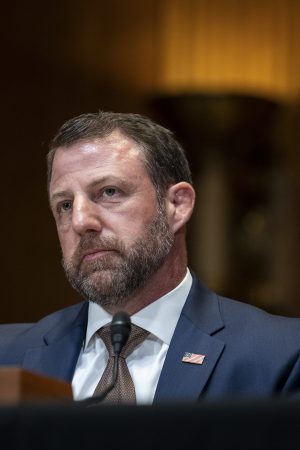
    The surge has occurred without the fanfare of highly visible operations last year, in which officials announced their intentions ahead of time to target cities, including Chicago and Los Angeles, and send officers pouring into the streets. Markwayne Mullin, the homeland security secretary, pledged to mount a quieter enforcement campaign following the chaos of a monthlong operation in Minnesota, where federal officers killed two U.S. citizens.

    The rise in arrests suggests that President Donald Trump is determined to meet his pledge of mass deportations, a goal that is popular among his conservative supporters but that has fueled a political backlash amid the administration’s heavy-handed tactics. The Trump administration has promised more aggressive actions, particularly after the Supreme Court in recent days expanded the president’s power to set federal immigration policy, but undercut his effort to eliminate birthright citizenship for the children of immigrants in the country illegally and visitors.

    “Our message is clear: If you come to our country illegally, we will find you, we will arrest you, and we will deport you,” Lauren Bis, a Department of Homeland Security spokesperson, said in a statement.

    Word of an uptick in arrests has started to trickle out, sowing fear in immigrant communities and among advocates already on edge after the Supreme Court ruled that Trump could end deportation protections for people from disaster- and war-torn countries under the Temporary Protected Status program.

    In recent days, ICE officers have launched an intense push to ramp up arrests. Arrests topped out Saturday when authorities detained more than 2,400 people, according to documents obtained by the Times. The detention population inside ICE facilities has jumped nearly 4,000, to more than 63,000 in the agency’s custody as of Tuesday, according to internal documents.

    In emails to ICE personnel, agency leaders applauded the latest numbers.

    “I want to personally thank each of you for your extraordinary efforts this past weekend,” Marcos Charles, the head of ICE’s deportation wing, wrote this week. “Through your dedication, professionalism, and unwavering commitment to our mission, enforcement and removal operations achieved remarkable operational results.”

    Top ICE officials were told to make sure that as many officers as possible were working seven days a week, and to put 80% of their officers on arrest operations, according to two U.S. officials who spoke on the condition of anonymity to discuss internal conversations. Top supervisors were expected to be working closely on the operations as well.

    Last year, Stephen Miller, Trump’s deputy chief of staff, set a goal of 3,000 arrests a day for the agency, a figure it was not able to hit. Since then, the agency has hired thousands of new officers and has had its budget increased by billions of dollars for the enforcement surge.

    Across the country, immigration lawyers and advocates have reported an uptick in enforcement.

    In South Texas, Sister Letty Ugboaja, a Nigerian nun, was arrested on her way to church on Sunday morning, according to Sister Norma Pimentel, her colleague. Ugboaja is a local nurse who also helps at a parish in the region. Pimentel called local leaders after learning of the arrest, and congressional officials soon got involved and pushed for her release.

    On Sunday, she was let go from ICE custody, and Pimentel was there to greet her.

    Pimentel said that Ugboaja was distraught upon her release.

    “It took her awhile to be able to talk — she was crying,” she said.

    In southern Florida, attorneys have been on alert. Cindy Blandon, an immigration attorney in Miami, said that one of her clients, a Nicaraguan father of two children, had an immigration court hearing set for 2027, but was arrested by ICE on Monday during a routine check-in.

    And in Utah, Ysabel Lonazco, an immigration attorney, has noticed an uptick as well. She has spoken to several clients, including a man who was driving when he was picked up by the agency for overstaying his visa this weekend.

    “It sets further fear in the community,” she said. “People don’t want to leave their houses. They are afraid to drive to do their grocery shopping. They are just terrified with these detentions.”

    One of her clients, Arturo, a 48-year-old Mexican man, was arrested in Salt Lake City on his way to a soccer game Sunday, according to his wife, Veronica. She said the arrest had shattered their family.

    “They’re getting people — be very careful,” her husband told her from ICE detention, she recalled through an interpreter. She said her 13-year-old son was traumatized by the arrest of his father, who had worked most days of the week building furniture before his arrest, she added.

    A Department of Homeland Security spokesperson said that Arturo had illegally reentered the United States and would be held in ICE custody as the agency sought to deport him.

    Veronica said the family had not expected to be caught up in Trump’s deportation sweep.

    “We were worried, but it wasn’t like we were extremely worried. We figured — we don’t have any criminal record, we pay taxes every year,” she said.

    This article originally appeared in the New York Times.

  • Donors were misled by Trump-backed Freedom 250, House Democrats allege

    Some donors who intended to give money to a bipartisan effort to celebrate the nation’s 250th anniversary were, instead, steered to a White House-backed initiative under false pretenses, House Democrats allege in a report released Thursday morning, citing whistleblower interviews and newly obtained documents.

    The donors meant to give money to America250, a congressionally chartered initiative to celebrate the nation’s semiquincentennial, according to Democrats on the House Natural Resources Committee. They instead were given routing and account numbers that directed their funds to Freedom 250, which President Donald Trump established last year to organize anniversary events, the report says.

    The report does not identify the donors. In interviews, Democrats said they needed to protect the identity of whistleblowers who worked with the panel. But they said their report — which includes other allegations of Freedom 250 officials and allies explicitly steering money away from America250 and toward projects shaped by Trump — shows how the president transformed a bipartisan celebration of the nation’s anniversary into an initiative that benefited him and his allies.

    “I’m a lawyer, and I know better than to pronounce that a crime has been committed,” said Rep. Jared Huffman (D., Calif.), who oversaw the report as the committee’s top Democrat. “But I do know the elements of fraud, and there is evidence of all those elements here.”

    The White House referred questions to Freedom 250, which denied that donors had been misled by its fundraising activities and criticized Democrats for the timing of their report.

    “This so-called ‘report’ is nothing more than a partisan smear from politicians who would rather manufacture division than celebrate America’s 250th birthday alongside the rest of the country,” Freedom 250 spokesperson Danielle Alvarez said in a statement.

    Alvarez also criticized America250, saying that the bipartisan organization — which Congress established in 2016 — “had nothing to show” for its 10 years of planning and spending.

    “Freedom 250 was created because the American people deserved better,” Alvarez said.

    America250 declined to comment on the specific allegations in Democrats’ report.

    “America250 will continue to focus on the values-based programming approved by our bipartisan Commission at the local, state, national and international levels, including once-in-a-lifetime celebratory moments during the 4th of July weekend,” Rosie Rios, who chairs America250, said in a statement. “We are supportive of the many other organizations planning events for the 250th at the federal, state and local level, so all Americans have ample opportunities to join in the celebration.”

    Trump has extolled Freedom 250 in public remarks, saying that the initiative has organized multiple special events. The public-private partnership, which the White House launched in December, has overseen a flurry of high-profile announcements, including some from the Oval Office.

    “We’ll have a Freedom 250 Grand Prix right here in Washington around the Capitol,” the president said last week in remarks kicking off the Great American State Fair on the National Mall — another Freedom 250-backed event.

    The Trump-backed initiative has overtaken some efforts led by America250, which is directed by a bipartisan board created by Congress a decade ago.

    America250 originally applied for and received a grant from the Institute of Museum and Library Services for so-called Freedom Trucks, mobile museums inspired by the American Freedom Train that crisscrossed the country from 1975-1976. The institute is a federal agency that provides financial support for museums and libraries.

    Officials have said the grant was later voluntarily transferred to Freedom 250, which is now operating Freedom Trucks that provide a sanitized version of the nation’s founding, according to administration critics.

    America250 officials have said they reoriented their initiative to organize events outside Washington, while Freedom 250 focuses on events in the nation’s capital. But the dueling organizations and approaches have confused some corporate leaders and lawmakers, and tensions between the groups have grown, the Washington Post reported earlier this year.

    The Democratic lawmakers’ report offers further examples of how the two groups have come into conflict.

    Some donors and sponsors interested in donating to America250 were told by the Trump administration that they lacked a “green light” to do so, according to the Democrats. The report also claims that administration officials pressured donors to redirect donations from the bipartisan effort to Freedom 250, with the Trump-backed group conducting outreach to America250 sponsors with donation requests.

    Some corporate executives did not understand the difference between the two organizations and were confused by this process, the report says.

    Freedom 250 officials also worked to deprive America250 of money, the Democrats charge, citing new examples of Trump allies pressuring donors to reallocate funds away from the bipartisan initiative. They also allege that Trump allies worked to shift public financial support away from America250, including $75 million of congressionally allocated funds that America250 leaders were expecting to receive. The remaining funds are likely to be kept by the White House, the report says.

    The reduced funding posed challenges for America250 to execute planned programming, according to the report, including grants, educational initiatives, and volunteer programs. Redirected federal funding created “significant headwinds” for this programming, the Democrats said, though the group still sought to execute all planned events through additional private fundraising.

    Though America250 is still organizing anniversary celebrations in large cities across the country, its programming has been overshadowed by that of Freedom 250. The Trump-backed group helped organize last month’s UFC fight on the White House lawn, this week’s opening of the Theodore Roosevelt Presidential Library in North Dakota, and a Trump rally and fireworks show scheduled for the evening of Independence Day.

    Freedom 250 also employs many former U.S. DOGE Service officials and harvested users’ data for political purposes, according to the report.

    Huffman said that if Democrats retake the House this fall — and obtain the power to issue subpoenas — they will open broader investigations into Freedom 250.

    “If and when we have more tools at our disposal to do investigation and oversight, perhaps in the next Congress you will see a lot more information on this, I’m sure,” he said.

  • Venezuelan security guard pulled alive from building basement 8 days after twin quakes

    CATIA LA MAR, Venezuela — Rescuers pulled a 43-year-old security guard alive from a collapsed basement early Thursday, ending a grueling dayslong operation that became a symbol of hope after the devastation of twin earthquakes that struck Venezuela eight days earlier.

    Hernán Alberto Gil Flores emerged to safety atop a stretcher surrounded by helmet-clad rescue workers after being trapped since June 24 under rubble in the basement of the Galerías Playa Grande shopping center in the coastal town in La Guaira.

    Rescuers, who initially made contact with him over the weekend, worked for more than 100 hours to free him — navigating a highly unstable structure, torrential rain, and persistent aftershocks to tunnel down to the survivor.

    Teams carrying flags from around the world cheered as rescuers carried Gil Flores, wearing an oxygen mask and covered in an orange tarp, through throngs of people to an ambulance.

    One Chilean rescuer carrying his stretcher pumped his fist in joy. A group of men in red Costa Rican Red Cross uniforms embraced and laughed in relief. Others broke out into applause.

    “When we found him, he asked us not to tell his wife that he was alive, just in case he wouldn’t make it,” Costa Rican Red Cross rescuer Minyar Collado told the Associated Press, but she added “We were never going to leave him here.”

    The rescue was considered a small miracle cutting through a week of tragedy. By supplying Gil Flores with food and water while they excavated the concrete, rescue teams were able to keep him alive far longer than the 48- to 72-hour threshold most operations give to find survivors in disasters.

    Gil Flores, who worked as a night-shift security guard at the complex, was inside his small security cabin when the first violent tremor struck. While the surrounding concrete structure collapsed around him, his cabin held ground, shielding him from crushing debris and creating a vital pocket of air.

    A specialized team from the Costa Rican Red Cross first detected signs of life and established contact with him Sunday.

    His wife, Gusbimar González, told the AP that she grappled with despair for days before hearing that rescuers made contact.

    “When I learned he was alive, I saw a ray of light in the darkness,” she said. The couple has two children, ages 8 and 10.

    The operation was coordinated by an urban search and rescue team of Chilean firefighters, who worked around the clock with specialized teams from the United States, Portugal, Mexico, Costa Rica, El Salvador, and Venezuela.

    Acting Venezuelan President Delcy Rodríguez celebrated the rescue on social media at a time that her government has come under fire for what many Venezuelans say has been an inadequate crisis response.

    “We celebrate the greatness of humanity, when it is united for a single purpose: to save another. Thank you to our rescuers and to the support of the international rescuers,” she wrote on a post on X.

    Teams used a telescopic camera to help maintain constant contact with Gil Flores, passing water and liquid nutrients through a narrow shaft to keep him hydrated during the final three days of the rescue.

    María Paz Campos, a veteran firefighter from Chile, talked him through the entire operation and kept him calm during the final excruciating hours Thursday.

    In a video published by Chilean firefighters in the hours before the rescue, Gil Flores is seen drawing, seemingly to pass the time. Campos then gently tells him to look at the camera and to wear protective goggles.

    “I need you to keep the goggles on, for the small particles that are falling, to avoid them getting into your eye,” Campos told the Venezuelan survivor.

    The collapse of the building was triggered by two back-to-back earthquakes on June 24 that registered magnitudes of 7.2 and 7.5, respectively. The shallow, violent tremors damaged or destroyed tens of thousands of buildings across northern Venezuela, killing more than 2,200 people, injuring over 11,000 and leaving La Guaira state as the hardest-hit region in the country.

  • Lightning injuries are rare, but an expert says the Parkway is an especially risky venue on July 4

    Lightning injuries are rare, but an expert says the Parkway is an especially risky venue on July 4

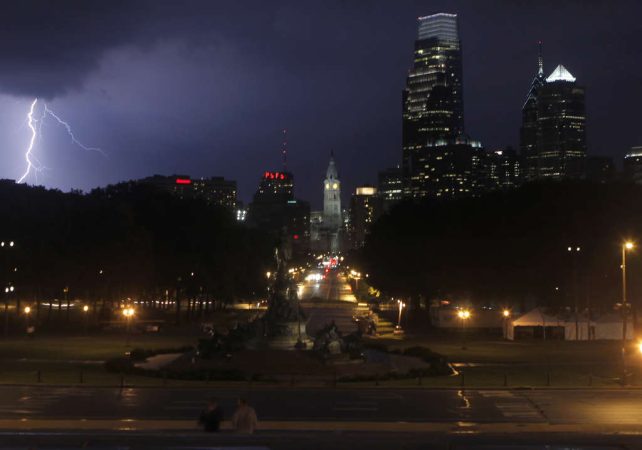
    In the grand casino of the atmosphere, scheduling outdoor events on July Fourth in the Philly region is almost always going to be a rolling of the bones.

    And on the day Philadelphia and the rest of the nation are holding a mass 250th birthday party, the odds may be dicier than usual, with thunderstorms and accompanying lightning possible Saturday afternoon and night, forecasters say.

    The National Weather Service on Thursday listed a 50-50 chance of storms Saturday night, and the federal Storm Prediction Center, in Norman, Okla., bumped up the probability of severe storms — those with winds up to 60 mph — to 15%.

    July happens to be the peak month for lightning-bearing thunderstorms in Philadelphia, occurring every five days on average, and who doesn’t want to be outside on the Fourth?

    As if record-challenging heat and an atmosphere that feels like syrup weren’t enough.

    Lightning injuries and fatalities are rare — on average in the last decade, 20 people have been killed annually by lightning in the United States, according to the National Weather Service. But among outdoor events with large crowds across the country, Philly’s July Fourth concert would be among the riskiest for lightning, according to Stephen Strader, disaster specialist at Villanova University.

    “It’s way up there, a lot higher than I thought it was,” he said.

    The city is well aware of the atmosphere’s capriciousness, the potential risks in July, and the potential effects on the Parkway celebration and the World Cup match in South Philly and has developed safety protocols, said Jeffery Kolakowski, communications director for the Office of Emergency Management.

    Unfortunately, for attendees and planners, predicting the when and where for thunderstorms remains elusive.

    “There’s uncertainty of the when and where of the storms,” said Rich Thompson, branch chief and lead forecaster at the federal Storm Prediction Center, in Norman, Okla., the source of those severe storm and tornado watches. “It’s still one of the great frontiers of meteorology. It’s incredibly difficult.”

    ‘Ring of Fire’ fireworks and the weekend forecasts

    Readings soared to 97 on Wednesday, and the heat index shot past 105 in Philly as the atmosphere thickened in a hurry.

    And it’s about to get thicker. The heat is forecast to peak Thursday and Friday with highs surpassing 100. It could cool down all the way to 99 on Saturday, said Matt Benz, senior meteorologist with AccuWeather Inc. Unfortunately that would indicate increasing volatility in the atmosphere.

    High pressure though the atmosphere, the so-called heat dome phenomenon, has put a lid on convective storms, “but that starts to come off Friday into Saturday,” he said. That could lead to “ring of fire” thunderstorms, so named because they form on heat-dome edges. They can be especially nasty.

    “We’re worried that something is going to be blowing up,” he said.

    The storms could come in one bunch in the early evening and yield to a peaceful night, but they also could come in waves over a period of hours.

    Even without strong storms — or storms not in the immediate vicinity of the festivities — lightning strikes are possible.

    “Unfortunately that could be the biggest concern that day you’ve got lighting and people outdoors,” said Benz.

    The lightning threat

    The chances of being struck by lightning are remote, about one in a million in a given year, according to the weather service.

    But they do happen: They’re what Strader calls “low probability events” with “high consequences.” In 2019, several people were injured when lightning struck at a PGA tournament in Georgia.

    In 2014, a severe thunderstorm forced thousands of concertgoers at Philadelphia’s Made in America Music Festival to evacuate the Parkway for a short time that Sunday evening.

    But for the most part, Fourth of July fireworks have been confined to the manmade kind.

    In his analysis, Strader looked at thousands of outdoor events attended by 10,000 or more people, what he called “large outdoor public gatherings,” to calculate which ones would expose the most people to cloud-to-ground lightning strikes, taking into account location and time of year.

    He found that both the Parkway and World Cup events in Philly this year would rank among the top 6%, using his criteria. The Parkway would be particularly problematic given the lack of shelter options.

    All during the events the City’s Emergency Operations Center will be operating with a “play by play” from a National Weather Service forecaster, said Kolakowski.

    In the event of lightning he said, “an evacuation of the area could be issued and people would be asked to leave the event ground in a safe manner and seek shelter.”

    He said weather messages would be broadcast on screens, loudspeakers, social media, and text alert.

    He added that people can get free event or safety alerts by texting CUPPHL or AMERICA to 888-777.

    May they be unnecessary.

  • Vatican excommunicates breakaway group, in first major crisis for Pope Leo

    VERBANIA, Italy — The Vatican on Thursday excommunicated all formal followers of a breakaway conservative faction of the Roman Catholic Church, a day after its leaders defied a personal plea from Pope Leo XIV and consecrated four new bishops without his permission.

    The Vatican announced in a decree that the group, the Society of St. Pius X, was in schism with the Church. In an explanatory note about the decree, it also said the society was barred from officiating marriages and hearing confessions, and it warned the society’s followers to stop attending its Masses and participating in its events.

    The Vatican’s note added that all formal followers of the society “are to be considered schismatics and excommunicated” after its leaders consecrated the bishops in a ceremony in Switzerland on Wednesday “against the will of the Holy Father and in open violation of canon law.”

    The society did not immediately comment on the excommunication.

    The schism is the biggest internal crisis of Leo’s young papacy, and a blow to his stated efforts to bridge divisions between Catholics who want to modernize the church, including by ordaining female priests, and conservatives, like followers of the Society of St. Pius X, who hold fast to tradition.

    The Vatican’s decision heightened a decades-long standoff between the Church’s leadership and the society, which is widely known by the acronym SSPX.

    The society was founded in 1970 by Archbishop Marcel Lefebvre in protest against the Church’s efforts to modernize after the Second Vatican Council, held in the 1960s, including by allowing priests to hold services in vernacular languages instead of only in Latin. The society also objects to the council’s efforts to soothe tensions between Catholicism and other Christian faiths, and to take part in interreligious dialogue. And it insists on the primacy of the Roman Catholic Church even as it accuses the modern leaders of heresy.

    Those tensions peaked in 1988, when the society first consecrated four bishops without the permission of Pope John Paul II, who swiftly excommunicated them and Lefebvre.

    Relations thawed somewhat in 2009, under Pope Benedict XVI, who lifted the excommunications of the surviving bishops in a gesture of outreach to all Catholics still attached to celebrating the traditional Latin Mass. But one bishop had provoked outrage by denying the Holocaust.

    That rapprochement ended on Wednesday, after the society defied Leo by proceeding with a consecration ceremony that the group said had brought some 17,000 worshipers to Écône, a small village in Switzerland where the society installed its first seminary in 1970.

    The Vatican’s sanctions on Thursday were even harsher than those imposed in 1988 under John Paul II, when the Vatican only excommunicated its five senior prelates.

    This time, the excommunication applies to all of the society’s priests and formal followers. The Vatican added that the sacraments administered by the society’s priests, including confession and matrimony, were invalid, reversing concessions that Pope Francis had made to the society in recent years.

    The Vatican’s decree left open the possibility of reconciliation for those who renounced the society, saying that “the Church, as a caring mother, will welcome with sincere affection and lively solicitude all those who wish to return to full communion.”

    The Rev. Ian Andrew Palko, an SSPX priest in Texas, said he did not expect the excommunication to lead to many defections. “There may be some who are uncomfortable with” excommunication, he said. But, he added, if the faithful “were worried, it would have already pushed them away.”

    And the Rev. Paul Robinson, the society’s prior in Denver, said he expected communication with Rome would continue, as it did after the 1988 excommunications. “There were plenty of conversations that took place” even after the fact, he said. “So I think there will still be contact with Rome.”

    This article originally appeared in the New York Times.