Tag: no-latest

  • Families grieve in the ruins of an Iranian school where a U.S. strike killed dozens of children

    Families grieve in the ruins of an Iranian school where a U.S. strike killed dozens of children

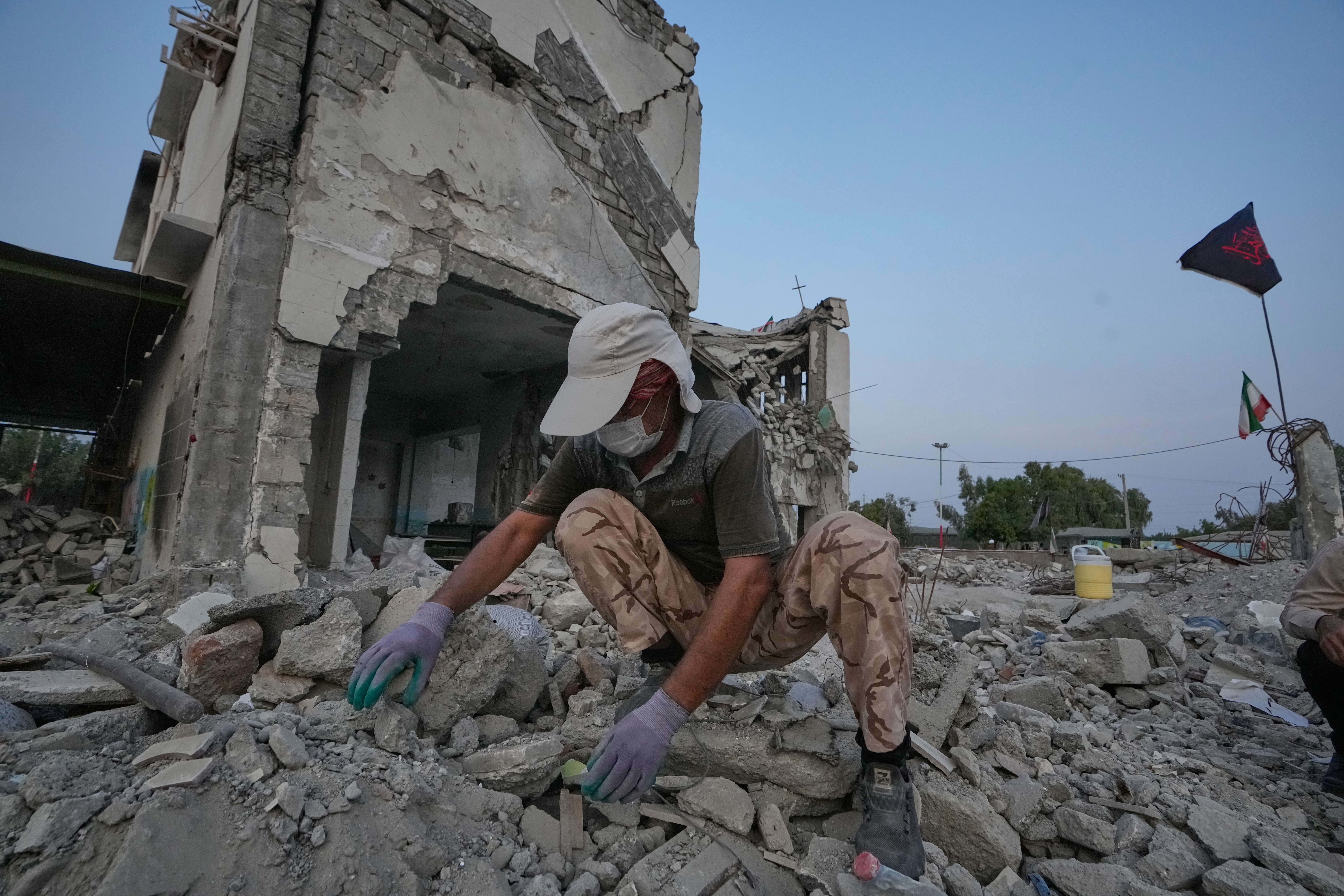
    MINAB, Iran — The sun set over this southern Iranian city, and Heydar Sadeghi was where he can be found almost every evening: on a bench next to the shattered remains of his grandson’s school. His face was soaked with tears.

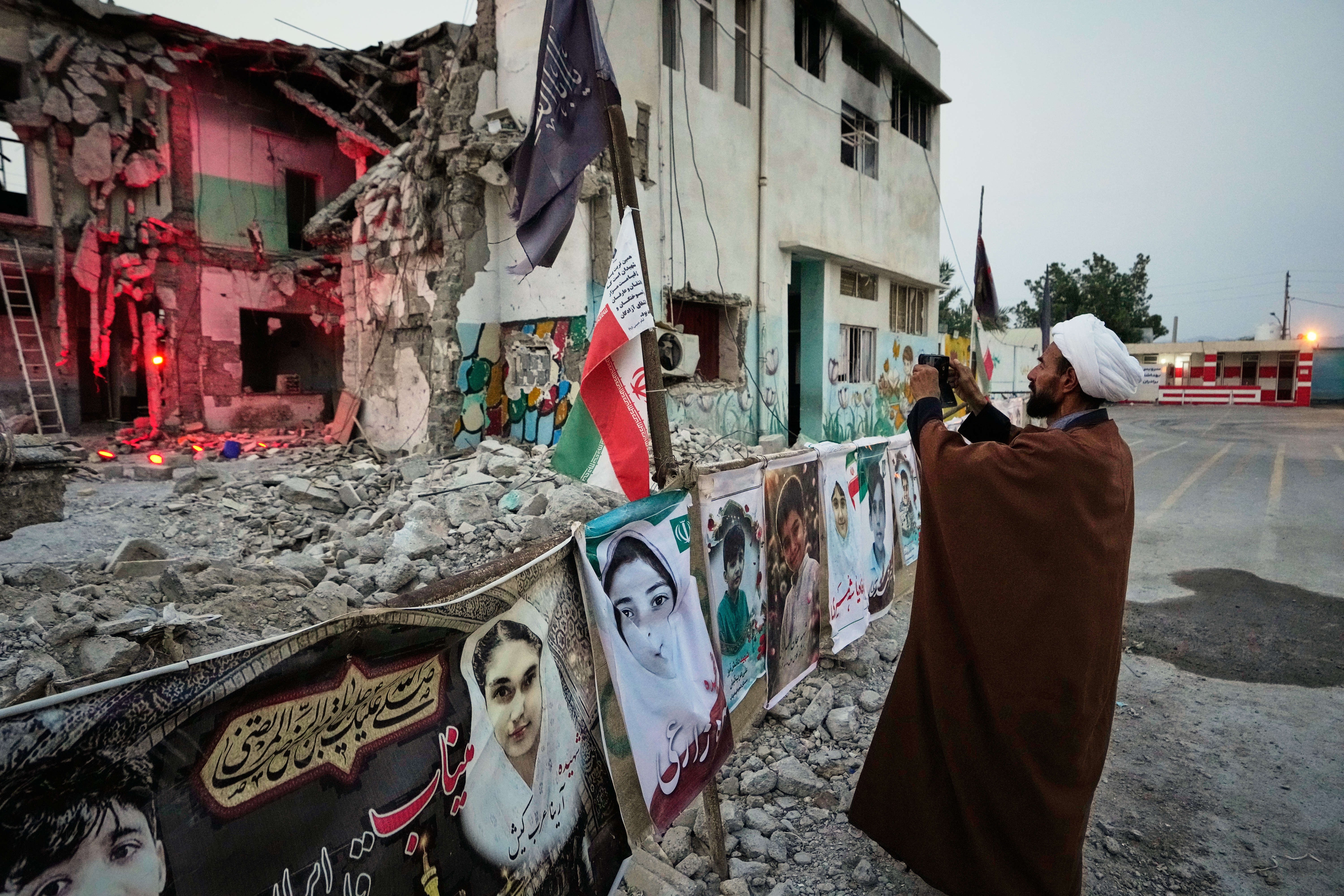
    A banner strung around the rubble showed the faces of children and teachers killed here by an American airstrike on Feb. 28, the first day of the war on Iran. Among them are Sadeghi’s 11-year-old grandson Hami and the boy’s mother, Neda Salehizadeh.

    “I searched the bodies for my kids, thinking maybe one would be among them,” Sadeghi said Monday evening as he recounted how he rushed to the school in the moments after the explosions. He called out their names, saying, “’Come with me! I’ve come to get you.’ They weren’t there,” he said, weeping.

    The Shajareh Tayyebeh school has become a place to wrestle with grief and preserve the memories of the dead. Here, relatives try to comprehend the incomprehensible — how around 120 of their children could be snuffed out, just after they’d been dropped off for a day of classes.

    At least one U.S. missile hit the school that morning in Minab, according to an Associated Press investigation, but there has been no final accounting of what happened. Iranian state media have said 168 people were killed in the strike, most of them children.

    The Trump administration has yet to directly accept the blame or release findings of a Pentagon investigation into the bombing.

    A grandfather grieves every day

    For Sadeghi, the day of the strike began as every school day did.

    He drove Hami and the boy’s 9-year-old sister Nila to school along with their mother, his daughter-in-law Salehizadeh, who was a teacher. As usual, he planned to pick them up at 1 p.m.

    “But the bell was rung early — by Trump,” he said.

    Hami was a fifth grader who loved soccer and riding his bicycle, Sadeghi said. His body was so mangled in the blast, they could only identify him from the clothes he was wearing, he said.

    Nila was pulled alive from the rubble.

    “Thank God, she is physically fine,” Sadeghi said. “But mentally, no.”

    The girl and her father have moved in with Sadeghi and his wife. The slightest, unexpected noise frightens her. She often goes to bed in her grandmother’s arms but lies awake for much of the night.

    Sadeghi said he often invites Nila’s friends to come spend the night, hoping their presence will distract her.

    He wants to see Nila smile. So he grieves here at the school away from her.

    “I come here and cry,” he said. “Then I go home and dance in front of the girl.”

    The site is becoming a memorial to the dead

    The school had a girls’ school upstairs and a boys’ school and preschool on the ground floor. Some of the students were children of officers at a Revolutionary Guard base located next to the school; many were local children from Minab, which is populated predominantly by members of Iran’s Baluch ethnic minority.

    The banner at the site listed 120 students killed — 47 girls and 73 boys — and 26 teachers and staff. Three more children are presumed dead but their bodies were never found.

    The governor of Hormozgan province, where Minab is located, has said the damaged building would be preserved to be turned into a memorial and war museum.

    Several dozen visitors there Monday evening included relatives of the dead but also out-of-towners who had come to see.

    In a government-sponsored mourning ceremony held every evening, men and women — including one in the Guards uniform — took turns at a microphone, telling wrenching stories about those who died and describing in graphic detail the day of the attack. Some visitors broke down weeping from their accounts.

    A separate section of Minab’s cemetery has also been set aside for those killed at the school. Every grave has a photo of the dead, with a shade overhead and artificial grass around so families can sit with their loved ones. Some lay flowers and prayer beads on the graves. Others bring dishes of “shuleh-zard,” a saffron rice pudding eaten at funerals.

    One teacher tried to protect her students

    At the cemetery, Fatemeh Barani sat by the grave of her daughter, Nasim Neyestani, a second-grade teacher at the school. Barani comes several times a week to be with her daughter.

    She thinks about her daughter’s last hours, which school staffers later described to her, and how everything could have turned out differently.

    At around 9 a.m. news came of the airstrikes in the capital Tehran that had hit the compound of Iran’s supreme leader. They didn’t know it at the time, but those initial Israeli strikes killed Ayatollah Ali Khamenei and much of the top military leadership.

    Neyestani was alarmed, fearing wider strikes, and urged the principal to cancel classes and call parents to come collect their children, Barani said, according to what she was told by other staffers. The principal didn’t think that was necessary. But Neyestani began calling the parents of her 22 students herself, urging them to come get their children, Barani said.

    Fourteen of Neyestani’s children were picked up before the strike, Barani said. The parents of eight others did not get there in time.

    Neyestani took the eight children into the schoolyard, her mother said. But the principal told her to take them into the school’s prayer room, thinking it would be safe.

    The prayer room was hit. Barani said her daughter and all eight children with her were killed.

    “My daughter’s classroom was mostly left intact,” she said. “Probably if she had been in that classroom, she would not have been killed.”

    Details of Barani’s account could not be independently verified, but it meshes with other accounts. The AP’s investigation of the strike found that several teachers called parents to pick up their children before Iran’s government ordered schools closed nationwide at 10:15 a.m. The first missile hit the school about an hour later. Accounts of the strikes posted on banners at the school say three missiles struck. The principals of both the boys and girls schools were among those killed.

    A teacher’s mother is overwhelmed with grief

    After the strikes, Barani’s husband and sons went to the school; later, they told her her daughter had been killed.

    They found Neyestani’s bag. But Barani said her sons have hidden it from her because they fear seeing it would only hurt her more.

    Parents of students who escaped the school because Neyestani had called them visited the family to pay their condolences, but Barani said she was so overwhelmed with grief that she doesn’t remember any of their visits.

    She said she still hasn’t been able to enter her daughter’s bedroom.

    She talked about how her daughter, who had not married, was rarely idle. She taught in the mornings and worked as a salesperson at a cosmetics store in the evenings. At home, she stayed busy with her hobby making handicrafts, particularly “minakari,” a traditional art of decorating objects with enamel. The enamel work relaxed her, Barani said.

    The enamels are still there around the house, a reminder of her daughter.

    “Every day, this grief feels fresh again,” Barani said.
  • Trump widens trade war with Canada beyond tariffs. Here’s what to know.

    Trump widens trade war with Canada beyond tariffs. Here’s what to know.

    TORONTO — The United States sharply escalated its trade war with Canada on Tuesday, banning some Canadian dairy products and motorcycles as well as most alcoholic beverages after retaliatory Canadian tariffs took effect on about $20 billion in U.S. goods.

    U.S. President Donald Trump also moved to shut Canadian products out of large, long-term U.S. government contracts, broadening the confrontation beyond tariffs as relations between the longtime allies deteriorate further.

    The outcome could resonate far beyond Canada, showing other governments whether a smaller U.S. ally can withstand Trump’s economic pressure.

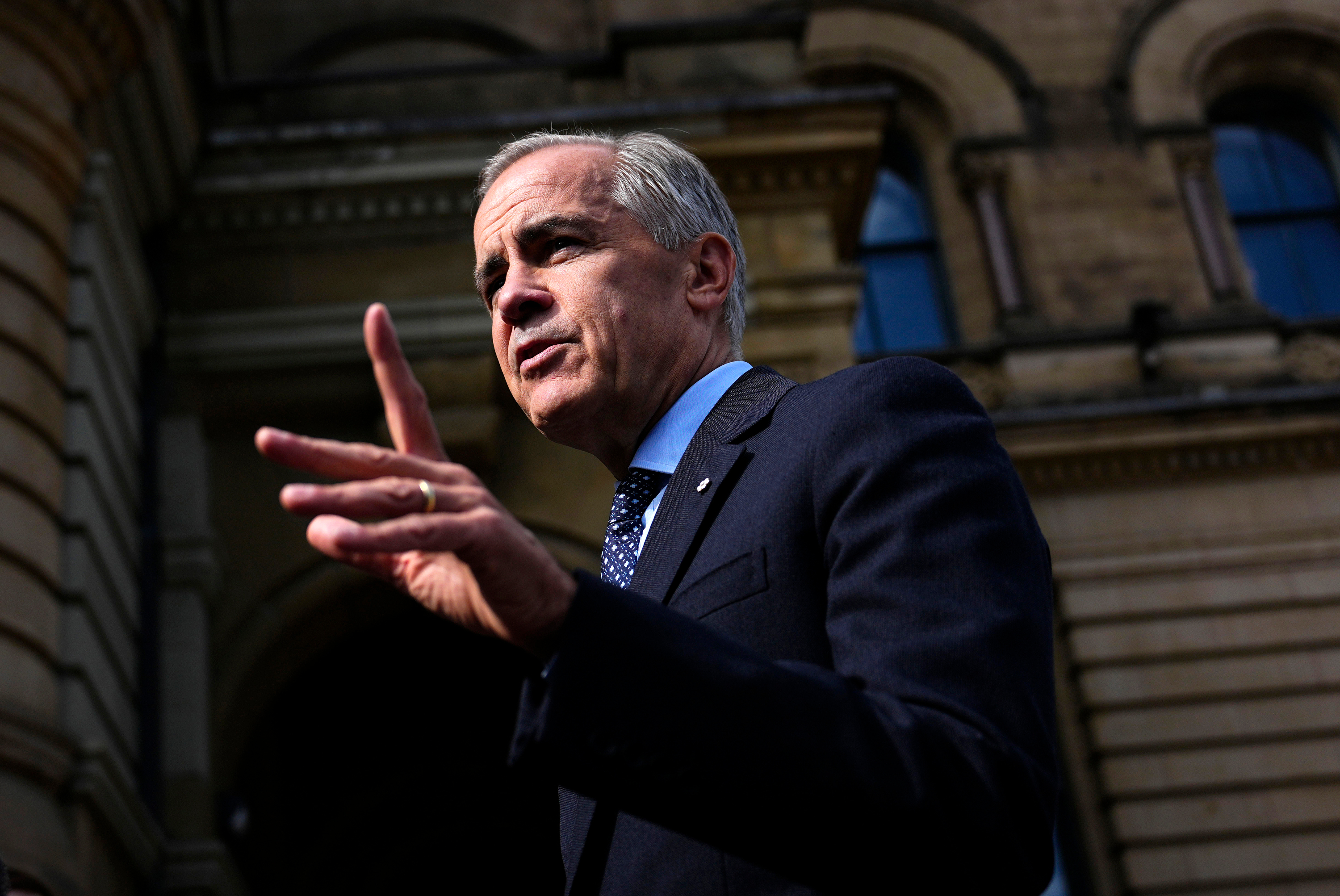
    Canadian Prime Minister Mark Carney says U.S. demands could hollow out key Canadian industries and limit the country’s independence, while Trump’s threats to Canadian sovereignty have rallied the public behind him.

    “Carney and Canada have become symbolic of resistance to him,” Canadian historian Robert Bothwell said. “And what he’ll want to do is make an example of Carney and Canada and theoretically terrify everybody else while in fact showing them that they need to remove themselves even further from the United States.”

    The latest U.S. bans take effect Sept. 29 and cover various Canadian wines and spirits, some motorcycles and mopeds, dairy products including whey, and some types of molasses.

    Here’s what to know.

    Canada retaliates with tariffs on hundreds of US products

    Canada says its tariffs match Washington’s dollar for dollar and rate for rate. They took effect at 12:01 a.m. Tuesday and cover about $20 billion in American goods, roughly 6% of the $333.6 billion the United States exported to Canada last year.

    The tariffs hit hundreds of American products, including steel, aluminum, cheese, appliances, clothing, cosmetics and farm equipment, at rates of 15%, 25% or 50%.

    Canada has already gone beyond tariffs in other ways. Eight of its 10 provinces continue to restrict or ban sales of U.S. alcohol. The Distilled Spirits Council says U.S. spirits exports to Canada fell more than 70% year over year after those restrictions took effect.

    Trump responds with import bans and government-contract restrictions

    The White House responded Tuesday by announcing outright bans on some Canadian products rather than simply imposing higher tariffs. The restrictions on Canadian alcohol, dairy products and motorcycles take effect Sept. 29.

    Some Canadian provinces’ restrictions on U.S. alcohol prompted the U.S. ban on various Canadian wines and spirits.

    Trump also directed the U.S. General Services Administration to declare Canadian products ineligible for large, long-term federal contracts until Canada allows what he called “full and fair reciprocity” for American products.

    Since Canada-U.S. trade talks collapsed Aug. 21, Trump and his administration have unleashed a barrage of tariffs, threats and personal attacks portraying Canada as weak and dependent.

    Trump previously warned that Canada’s economy could collapse if Carney continued treating him as “the enemy.”

    Trump even renamed Lake Ontario “Lake America,” a change ignored and ridiculed in Canada. Google and Apple bent to Trump’s pressure and changed their maps for U.S. users.

    “After renaming a gulf and a lake, maybe the next step for him is to rename a river?” said Daniel Béland, a political scientist at McGill University.

    Trump’s pressure is hardening resistance in Canada

    Trump’s trade war and repeated talk of making Canada the 51st state have fueled anger and rallied support for Carney. Canadians have sharply cut travel to the United States and boycotted U.S. goods.

    The current trade war began after Trump returned to office and imposed a series of tariffs on Canadian goods despite having negotiated and repeatedly praised the North American trade agreement during his first term. Many of those tariffs violate the pact.

    The rupture is especially striking because the countries have long shared one of the world’s closest relationships, with deeply integrated economies, close defense and security cooperation, vast cultural ties and, before relations deteriorated, about 400,000 people crossing the border each day.

    Carney said Tuesday that Canada’s response is increasingly about reducing its dependence on the United States rather than simply weathering the latest tariffs.

    “It’s about ensuring that no country can hold us hostage. And that we can live how we want to live,” he said.

    Carney has said talks can resume when the Americans “stop doing memes, stop throwing shade, stop trying to be tough” and become serious.

    So far, Trump’s pressure has backfired in Canada, strengthening support for Carney rather than forcing concessions.

    Carney is becoming a global voice for standing up to Trump

    At the World Economic Forum in Davos in January, Carney warned that great powers are using economic integration to coerce smaller countries. The speech helped establish him as the leading voice among countries looking for ways to resist Trump.

    Trump responded a day later by saying Canada “lives because of the United States” and warning: “Mark, remember that next time you make your statements.”

    Carney will address the European Parliament next week as Canada explores deeper ties with the European Union that could stop just short of membership.

    “The Canadian public is behind the Carney government and the world is watching what will happen next,” said Béland, the McGill political scientist. If Canada’s defiant approach succeeds, he said, it “could be used as a template” for resisting the Trump administration’s trade policies.

    The fight is also about whether Canada keeps its factories

    Trump has also threatened 50% tariffs on Canadian vehicles, auto parts and steel next year if Canada does not “fall in line,” a potentially devastating escalation for industries built around deeply integrated North American supply chains.

    A 50% auto tariff could hammer Canadian plants and raise vehicle prices across North America because parts and finished vehicles cross the border repeatedly during production.

    Carney says Washington’s terms could leave Canadian industries “gradually wound down in Canada and wiped out.”

    Could Canada actually win?

    Canada starts at a disadvantage: The U.S. economy is roughly 13 times larger, and Canada sends more than 70% of its exports south of the border.

    But Béland said this is not a normal trade fight. He pointed to Trump’s domestic unpopularity, the approaching midterms and court challenges that could undo more U.S. tariffs.

    “Under normal conditions, this would be a very long shot for Canada,” he said.

    But Washington has vulnerabilities too. U.S. refineries rely on 4 million barrels of oil a day from Canada, and American farmers depend heavily on Canadian potash fertilizer. So far, however, Canadian leaders have ruled out using some of that leverage by taxing or restricting critical exports.

    Canada entered this round with some economic momentum. Its economy grew at a 3.2% annualized rate in the second quarter, more than twice the 1.5% pace in the United States.

    Industry Minister Mélanie Joly put the government’s ambition plainly:

    “I’m convinced that we will be able to show the world that Canada will win this trade war.”

  • Three jurors in Clancy trial describe frustration with holdout

    Three jurors in Clancy trial describe frustration with holdout

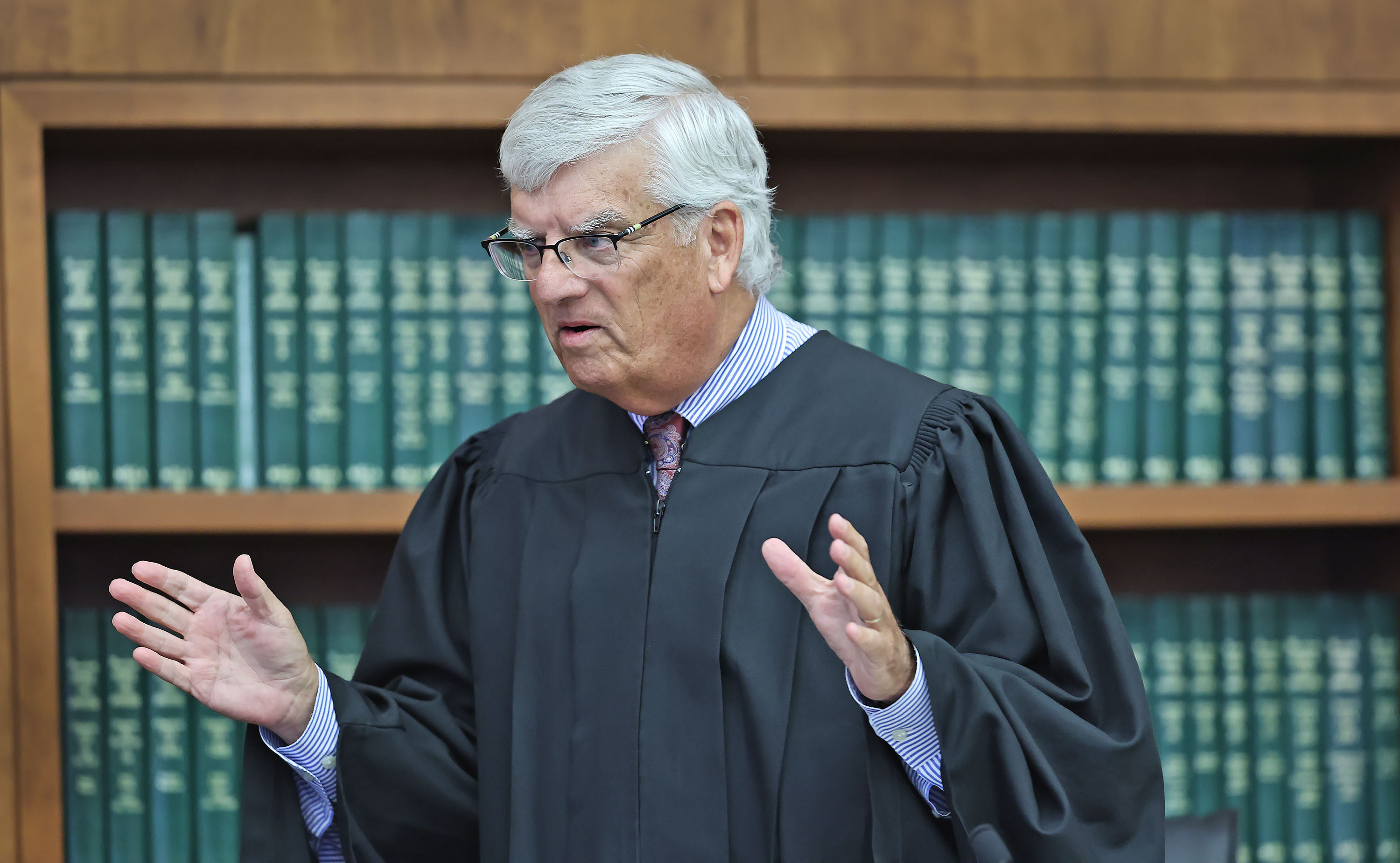
    It had looked like the end of deliberations in the murder trial of Lindsay Clancy.

    Eleven of 12 jurors had agreed not to convict Clancy. Then the one holdout “admitted he had reasonable doubt,” the jury’s foreperson, Roni Carlson, said in an interview with television station NBC10 in Boston on Tuesday.

    According to the judge’s instructions, if jurors had considered all the evidence but still had reasonable doubt about the charges against Clancy, they had to acquit her.

    So Carlson, a retired teacher, started to fill out the three verdict forms, she said in the interview. She got as far as writing her signature on each sheet. But then, Carlson recalled, the holdout juror said, “I’m still not going to say that she’s not guilty by reason of insanity.”

    In the first public statements by jurors since the monthlong trial, Carlson and two other jurors opened up about the grueling week of deliberations in which the jury of nine women and three men were deadlocked, prompting Judge William Sullivan to declare a mistrial.

    Clancy has not denied that she strangled her children — Cora, Dawson, and Callan — at their Massachusetts home in 2023. Instead, her trial in Plymouth, Mass., was over whether she should be held criminally responsible for their deaths.

    Her lawyer argued that she had suffered from postpartum psychosis when she strangled her children with exercise bands on Jan. 24, 2023. The prosecution disputed the severity of her condition and said Clancy had planned to kill her children before attempting to die by suicide.

    The three jurors said in a group interview with the station that they believed the evidence showed that Clancy clearly loved her children and repeatedly sought help for her mental health struggles.

    “Everything proved that she loved her children, so she had to have snapped,” Carlson said in the interview.

    The juror who disagreed with the other 11 does not yet appear to have been publicly identified or interviewed.

    One of the three jurors interviewed, Kellie Farina, a chef for a senior center, told NBC10 Boston that the holdout juror “had the hardest time getting off the fact that Lindsay viciously killed her children.”

    The third juror interviewed, Paula Devlin, who works for a defense contractor, said the holdout “completely disregarded” information that nurses on the jury provided to help interpret medical reports from the hospital where Clancy stayed after she killed her children.

    The jurors said that the testimony and evidence presented at the trial were brutal at times. Farina described the 911 call made by Patrick Clancy, Clancy’s then husband, the night the children were killed as “horrific.”

    “When we heard it again in the jury room, we were crying again,” she said.

    The jurors were critical of the prosecution, with Farina describing it as “harsh,” compared with the defense’s style, which she described as “compassionate.”

    Farina said the prosecution presented a lot of medical experts but no witnesses that said Clancy was a bad mother, a factor that weighed heavily with the three women.

    The jurors said that Clancy’s lawyer, Kevin Reddington, was arrogant, but they also found him compassionate and occasionally entertaining.

    The case has deeply divided Americans, with some supporting the prosecution and others — especially women who report negative experiences with the postpartum mental healthcare system — expressing sympathy for Clancy.

    Clancy, who was paralyzed from the waist down after her suicide attempt, is being held at Tewksbury Hospital, a state-run psychiatric facility.

    Prosecutors have not yet announced whether they will retry the case.

    This article originally appeared in The New York Times.

  • Oil surges above $100 a barrel as U.S. and Iran launch new attacks, while gasoline prices also jump

    Oil surges above $100 a barrel as U.S. and Iran launch new attacks, while gasoline prices also jump

    NEW YORK — Oil prices shot past $100 a barrel Wednesday as fighting between the U.S. and Iran escalated, threatening to increase costs for consumers and businesses worldwide.

    Brent crude, the international standard, climbed into triple digits after attacks on oil facilities and ships in the Middle East that could further debilitate an already weakened supply chain. It rose 3.4% to settle at $101.21 a barrel Wednesday. That last time prices were that high was in July.

    The latest developments in the war, both prospects of peace and renewed hostilities, have caused market whiplash before. Oil returning to the $100 mark raises concern because experts have warned that a prolonged period of steep prices would worsen the now over six-month-long conflict’s economic fallout. Crude is the main ingredient for everyday fuel like gasoline and diesel — which are also seeing a renewed spike in prices — and higher energy costs overall trickle down to just about every part of the supply chain, from groceries to clothing, cosmetics, and more.

    “Brent breaking above $100 is a major psychological milestone for markets, but the bigger concern is what this means for inflation,” Lukman Otunuga, market research head at global broker FXTM, said in Wednesday comments.

    Here’s what we know.

    What’s driving the latest surge in oil prices

    Crude oil prices shot up shortly after Israel and the U.S. launched their war with Iran in late February. Much of that is because the fighting halted most shipping through the Strait of Hormuz, a narrow waterway where roughly a fifth of the world’s oil supply passed before the conflict.

    Prices have fluctuated considerably over the last six months. Brent surged in the early days of the war — and at one point briefly reached nearly $120 a barrel. Volatility at times resulted in stark day-by-day price swings, but the benchmark settled above the $100 mark for a full month between late April and early May.

    Oil costs cooled in the early summer, plunging closer to prewar levels (roughly $70 a barrel) during hopes for peace and a plan to move oil safely out of the Persian Gulf. But new attacks soon piled up and talks crumbled, leading oil to renew its climb, albeit still with some volatility. The last time Brent settled above $100 was for a single day in late July. Prices have stayed above $90 since the end of August.

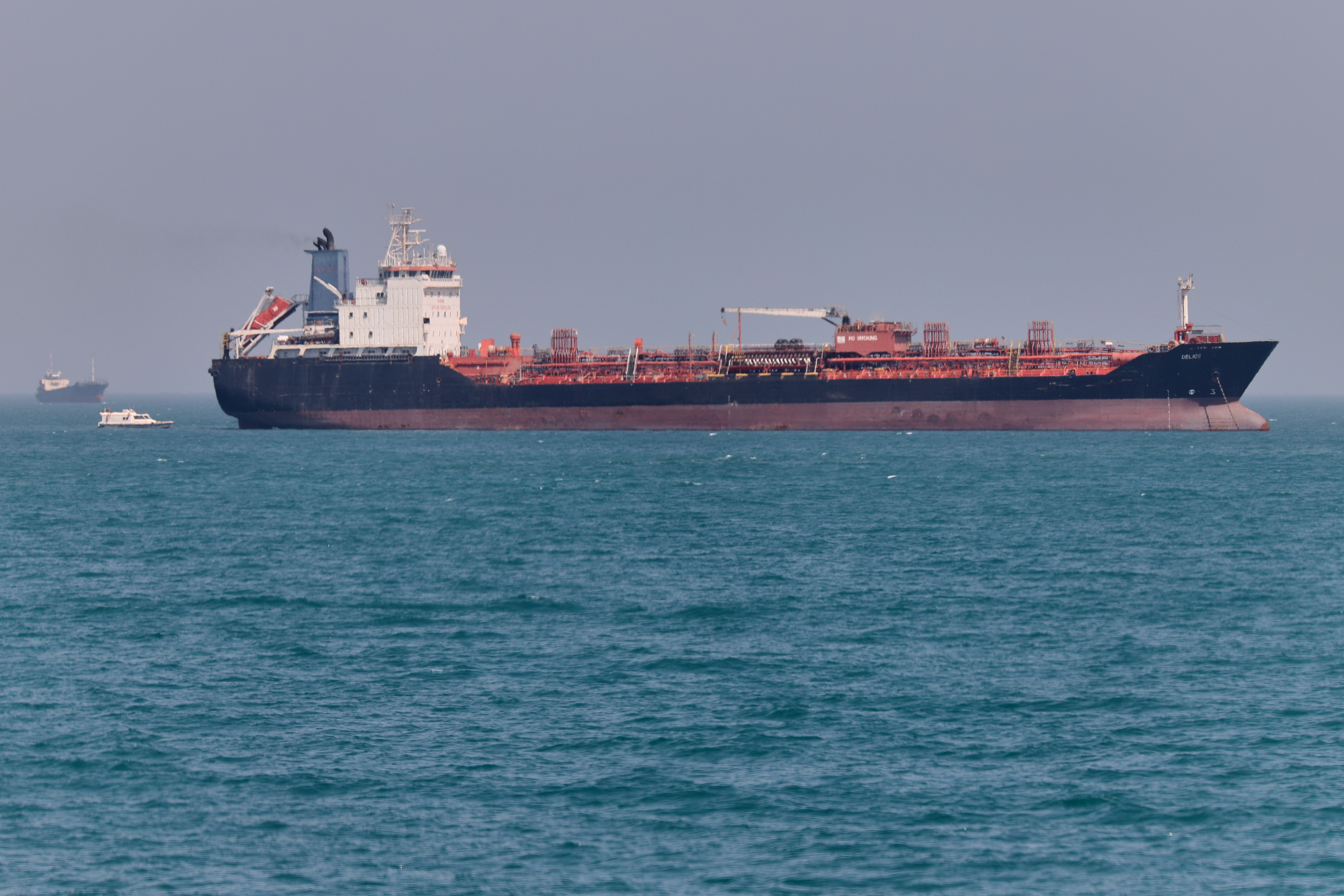
    This week’s jump follows the latest escalation: The U.S. military reported striking five Iranian tankers on Tuesday, in response to attempted missile attacks on a Navy warship and after attacks by an Iranian-backed Houthi rebel group ignited fires at oil facilities in Saudi Arabia.

    Recent stepped-up attacks by Yemen’s Houthis could constrain global oil supplies even more because they targeted an alternative shipping route that Saudi Arabia has relied on to transport oil during the war.

    Renewed pain at the pump and other costs for consumers

    Higher energy costs have already weighed on consumers, businesses, and national economies this year.

    Among some of the most immediate consequences of steeper oil prices is more expensive trips to the pump. Drivers are feeling the pain each time they fill up their tanks with gasoline. And rising diesel prices hike transportation costs for everyday goods hauled on trucks, trains, and boats.

    Countries in Asia and Africa — which rely more heavily on imports from the Middle East — have seen some of the starkest shocks over the course of the war.

    In Nigeria, diesel prices are up more than 90% and gasoline prices have jumped nearly 58% since late February, according to the latest data from energy tracker Global Petrol Prices. Countries including Indonesia (diesel up 87% and gas up 38%) and Lebanon (diesel up 80% and gas up 46%) have also seen steep spikes.

    In the U.S., the average price for a gallon of regular gasoline jumped to $4.22 Wednesday— up nearly 42% from the $2.98 seen before the war began, according to motor club AAA. Meanwhile, the price tag on American diesel keeps climbing to new records, setting yet another all-time high (without accounting for inflation) of $5.94 on average Wednesday per AAA, up nearly 58% from the start of the war.

    More expensive diesel can have an outsized impact on consumers because it is used in shipping and production. Some businesses have already passed on costs to consumers in the form of added fees on online orders and packages in the mail. And shoppers may see more and more sticker shock trickle down to store shelves — particularly for perishable groceries and produce, which need to be restocked frequently, or even harvested using diesel-powered farm equipment.

    Oil shocks don’t stop there. Jet fuel has become so expensive that many airlines have cut flights while raising fares and fees. And more expensive oil could drive up costs for a long list of petroleum-derived products, from clothes to crayons — as well as natural gas needed for making chemical fertilizer, which is facing an additional supply squeeze from the war.

    What $100 a barrel could mean for the road ahead

    It can take time for all energy shocks to trickle through the supply chain — meaning that squeezes even from earlier in the war could carry impacts that still haven’t been fully realized yet. And the return of $100 Brent may only add to those costs.

    Otunuga, of FXTM, noted Wednesday that a big question boils down to how long the spike lasts — pointing to July’s single day for Brent above the $100 mark, for example.

    “This time feels different,” Otunuga wrote, pointing to rising tensions. He added that a solid close above $100 “confirms this isn’t just a headline spike” and potentially opens the door toward $110 — although there’s still the possibility for momentum to fade.

    Analysts at Bank of America also said this week that additional refinery outages in Russia, reduced refining activity elsewhere, and sharply declining inventories have pushed diesel and gasoline prices sharply higher globally.

    They increased their oil price forecast for the second half of the year to $83 a barrel “in light of more persistent disruptions to Hormuz,” but said they still expected shipping through the strait to gradually pick up. If attacks keep a chokehold on traffic, prices could reach $95 to $120 a barrel, while damage to major energy infrastructure could produce spikes of up to $150 a barrel, the analysts wrote.

    The prospect of reaching a durable deal before the U.S. midterms looks “increasingly unlikely” and “could remain elusive even beyond that,” the analysts added. The upcoming elections are now just eight weeks away.

    Steep energy costs heading into November could prove particularly challenging for Trump’s Republican party, with many voters already sour on his management of the economy. Trump himself said Wednesday that he didn’t think oil prices would cool before the midterms — but would come down “right after.”

    Rio Yamat contributed to this article from Las Vegas. Grantham-Philips reported from Philadelphia.

  • Iran signals readiness to escalate fight in face of rising U.S. pressure

    Iran signals readiness to escalate fight in face of rising U.S. pressure

    Iran has signaled that it is willing to escalate its fight with the United States, with senior leaders issuing increasingly sharp warnings in recent days after attacking U.S. warships for the first time.

    The country’s leaders are taking a more aggressive approach as Iran faces mounting economic pressure and they worry that their grip on the Strait of Hormuz is slipping. The U.S. blockade is making it nearly impossible for Iran to ship oil, its main money source. And in effect, Iran sees escalation as the primary leverage it has against the United States.

    The situation, analysts say, raises the risk that a series of recent clashes could reignite a full-blown war.

    On Saturday, Iran said it had attacked two U.S. military vessels with ballistic missiles, prompting U.S. forces to respond by striking three Iranian oil tankers.

    A day later, Mohammad Bagher Qalibaf, Iran’s lead negotiator and the speaker of parliament, told lawmakers that the era of “proportionate responses” to U.S. attacks was over. “From now on, any aggression against Iran’s interests and security will be met with a response that is faster, heavier, and more painful,” he said.

    Soon after, Iran’s security chief, Mohsen Rezaei, announced plans to impose a “restricted zone” for shipping in the Persian Gulf that would go beyond the country’s efforts to control the Strait of Hormuz.

    Iran has largely withstood the heavy military campaign launched by the United States and Israel in February. But the war of attrition in recent months has created an economic threat that is now pushing the government to intensify its rhetoric and attacks.

    A U.S. naval blockade has prevented Tehran from exporting much of its oil, the country’s main source of revenue, making a long-standing economic crisis even worse. On Tuesday, the government raised some gasoline prices because of fuel shortages, a move that is expected to further roil a country already struggling with soaring inflation and unemployment, and a rapidly depreciating currency.

    At the same time, U.S. naval escorts have enabled a trickle of oil tankers to pass through the Strait of Hormuz, undercutting Iran’s closure of the waterway, which has caused global oil prices to rise sharply. The number of ships getting through is small, and the effort is extremely costly for the United States, but it has prevented oil prices from rising further and blunted Iran’s ability to impose economic pain on Washington.

    “How do you regain the momentum? You escalate,” said Farzan Sabet, an Iran analyst at the Geneva Graduate Institute, a research group. Iran will likely attempt to intensify the military confrontation, he said, while seeking to avoid a return to full-out war. “It’s highly damaging, but at the same time, they hope it raises global oil prices or fully recloses the Strait of Hormuz,” he said.

    ‘Make or break moment’

    Senior Iranian officials have said they are open to negotiating a return to the fragile Memorandum of Understanding that halted the war in April and was meant to lead to talks on an Iranian nuclear deal.

    But President Donald Trump has said he has no interest in negotiations, preferring to maintain his strategy of attrition and suffocating Iran economically.

    Iran’s leadership believes that now may be the best moment to raise the stakes, as the U.S. midterm elections in November approach and an unpopular war could hurt Trump and the Republican Party.

    “All signs point to a make or break moment,” said Mohammad Ali Shabani, an Iran analyst and editor of the regional news website Amwaj.media. “I’m not sure the Iranians are going to wait until after the elections to be attacked if diplomacy fails.”

    Iran’s move to strike two U.S. warships with ballistic missiles was a significant escalation, said Hamidreza Azizi, a senior Iran analyst at the International Crisis Group.

    Iranian forces had previously made no serious effort to target U.S. naval ships and seemed reluctant to conduct attacks that could cause heavy American casualties. “These calculations have obviously changed,” he said.

    The U.S. decision to retaliate by striking three Iranian oil tankers — and sinking one of them — was an indication of how seriously Washington took the Iranian attack.

    “Both sides are trying to dictate their red lines and trying to push the red lines of the other side as far back as they can,” Azizi said.

    It was also a recognition that Iran’s military capabilities have evolved. Before the war started, the United States did not think Iran could target U.S. military bases in the region with precision, he said. But in recent months, Iran has shown it can do so, including with a strike on a U.S. base in Jordan in July that killed two American soldiers.

    Iran could become similarly adept at targeting naval fleets, Azizi said.

    Iran has also been very public about its efforts to capture and learn from its enemy’s weapons. On Tuesday, Iran’s state news agency IRNA announced that naval forces of the powerful Revolutionary Guard had seized a U.S. submarine drone known as the Dive-LD. Iran has previously managed to reverse-engineer weapons offered to it by its allies or captured from its enemies.

    U.S. Central Command said the drone was an older model that had malfunctioned and “neither collected sensitive data nor carried any classified sonar or radar equipment.”

    Hours later, a U.S. official said American forces had struck multiple Iranian oil tankers in retaliation for Iranian attempts to strike a U.S. Navy warship for the second time in days. Iranian state media said tankers were hit off the coast of Kharg Island, the hub of the country’s oil industry, and Jask, a port city on Iran’s southern shore.

    Rezaei’s announcement of a new “prohibited zone” in the Persian Gulf was another attempt to ratchet up the confrontation.

    The security chief offered few details about the plan, but Mohamed Ghaderi, a Tehran-based foreign affairs expert, said it was designed to increase the cost for vessels passing through the strait with a U.S. naval escort and warn them they may not be safe even once they do.

    “Compliance with Iran’s new rules can be a condition for safe and consequence-free passage,” he said.

    These escalatory moves come amid fresh regional turmoil, with Iran’s Houthi militia allies in Yemen launching attacks that wounded dozens in the south of Saudi Arabia on Tuesday, and the kingdom vowing to retaliate. Whether coordinated with Tehran or not, renewed conflict in Yemen would help Iran in its goal of putting more pressure on global energy prices.

    Economic crisis

    For Iran’s leaders, what they have called a U.S. “economic war” has become a domestic security risk that has prompted them to take a more aggressive stance.

    A rising sense of economic despair among Iranians could spark a new wave of anti-government protests. Last December, a currency crisis triggered nationwide demonstrations, which security forces crushed with deadly force.

    Iranian officials are anxious that Israel may exploit any discontent to support dissidents or an insurgency, said Hadi Borhani, a professor of Israeli and Middle East studies at the University of Tehran.

    He pointed to recent statements by Israel’s defense minister, Israel Katz, and Prime Minister Benjamin Netanyahu, who said this week that “there is still more to complete. I mean, first and foremost, the toppling of the regime. This regime in Iran — its end is near.”

    The Iranian government does not want to wait for Israel to act.

    “They believe Iran should change the situation, possibly through a more damaging or aggressive move that can raise regional tension,” Borhani said.

    Some Iranian leaders also believe now is a good moment to act because Trump will return to war after the midterms anyway. The president will either feel vindicated by an unexpected electoral victory or feel that he has nothing more to lose by pursuing his own strategy, several of the analysts said.

    Sabet, however, expects that worsening global economic conditions will eventually push the Trump administration to ease tensions.

    Even though the U.S. naval escorts through the Strait of Hormuz have allowed some oil to move, he said, global crude stockpiles are not being replenished fast enough, and natural gas and other critical oil derivatives are not getting through. Those shortages are likely to inflict more pain on the global economy.

    “That is when I see them muddling their way toward some kind of limited or de facto deal,” he said. “Don’t think of it as an MOU plus — think MOU minus.”

    This article originally appeared in The New York Times.

  • Amazon cargo jet pilots appeared to try aborting landing, NTSB investigation indicates

    Amazon cargo jet pilots appeared to try aborting landing, NTSB investigation indicates

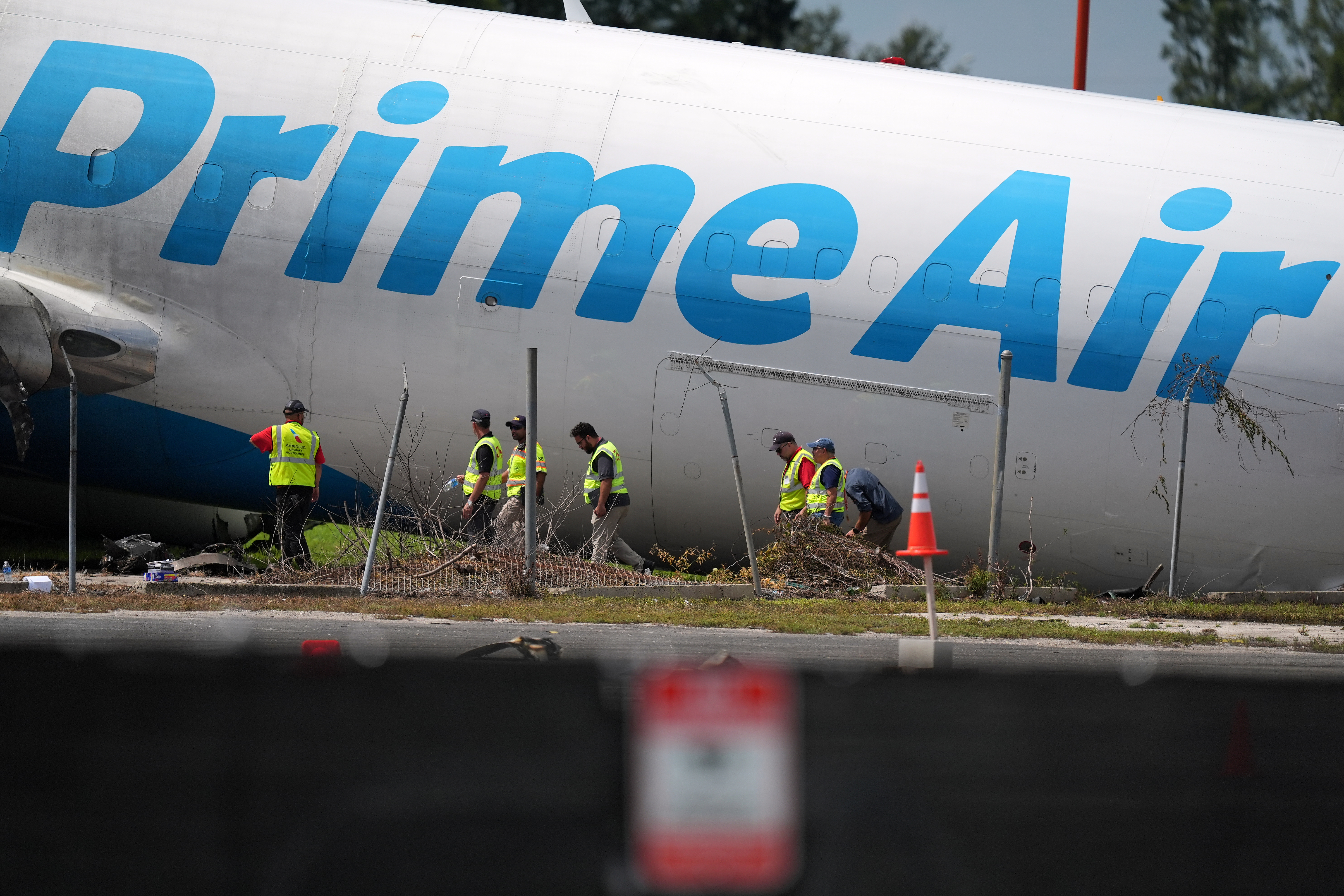
    The pilots of the Amazon cargo jet that overran a runway at Miami International Airport on Sunday were not fully in control of the aircraft as it touched down and appeared to have temporarily considered aborting the landing, according to a timeline of the final seconds before the deadly crash that federal investigators unveiled late Tuesday.

    The sequence of events detailed by National Transportation Safety Board investigators likely cost the pilots hundreds of feet of runway length and crucial seconds in the moments before the plane ran off the runway, striking two vehicles as it exited the airport grounds and crossed a public road, killing five before coming to a stop, according to aviation experts who reviewed the timeline.

    “You either land or you go around. You don’t land, attempt to go around, and then get back to landing again, unless there was some mechanical malfunction,” said Steven Arroyo, an aviation expert and retired United Airlines pilot.

    “I have never seen anything like this,” he added of the information that NTSB investigators detailed Tuesday night.

    The NTSB has yet to release a transcript from the cargo jet’s cockpit voice recorder, a readout of which they are expected to publicize Wednesday. Investigators are also expected to interview the aircraft pilots then, according to Jennifer Homendy, the board chair.

    During a news conference late Tuesday night, Chihoon Shin, the lead crash investigator, laid out a timeline of what happened during the last 30 seconds captured by the flight data recorder. Flight data recorders are designed to stop operating when the airplane’s electric power supply is cut off, as would happen during a crash.

    The problems with the landing were apparent from the start of that timeline.

    At 30 seconds out, according to Shin, the plane’s nose landing gear and its right-side main landing gear touched down. At that point, the plane was traveling at nearly 182 mph — faster than what is considered ideal for such planes, according to experts.

    It would take another seven seconds before the pilots applied the brakes, and another four seconds after that before the left-side main landing gear would make contact with the runway, Shin said.

    That touchdown sequence was “really bad,” said Michael O’Donnell, an aviation consultant who previously led the Federal Aviation Administration’s aviation and airport safety divisions.

    “The nose should not hit first,” he explained. “That is an unstable approach right there, and that really tells me that the go-around should have been executed a lot sooner and they weren’t in total control of the aircraft.”

    But perhaps more critical was what the pilots tried to do next. Fifteen seconds before the recording ended — or four seconds after all their landing gear was on the runway — the pilots released the brakes, and appeared to try to increase thrust, in what aviation experts said was a telltale sign of a “delayed decision” to abort the landing.

    The plane was moving at 138 mph when the brakes were released, and “throttles increased to values consistent with go-around thrust,” Shin told reporters.

    The pilots did not idle the throttles and reapply the brakes until 11 seconds before the recording ended, at which point the aircraft was moving at nearly 135 mph, according to Shin. While the brakes remained engaged for the rest of the recording, he added, the pilots never deployed the airplane’s speed brakes, which are flaps located on the wings, or its thrust reversers, both of which could have helped slow the aircraft further.

    “There’s all kinds of red flags with a go-around decision made that late,” O’Donnell said, adding, “If you do the math, that’s a lot of runway that went by while they were doing that.”

    Investigators did not detail how close to the end of the runway the plane was at the junctures they identified.

    “That’s something we still have to determine,” Homendy told reporters.

    But at the ground speeds that NTSB investigators specified, the plane would have been moving down the runway at a pace of about 200 feet per second during those four seconds when the brakes were released.

    It is not clear if those roughly 800 feet, and the lost seconds of deceleration, might have allowed the plane to come to a stop before it struck the vehicles, or have made the difference between life and death for the victims. When the recorder stopped, the plane was still moving at nearly 75 mph, according to Shin.

    But aviation experts said that the pilots’ apparently erratic and conflicting actions in the moments before the crash were perplexing.

    “If you’re going to do a go-around, you absolutely have to commit,” said Pablo Rojas, a lawyer for Podhurst Orseck, a Miami law firm that specializes in aviation accidents, noting that hesitation by the crew cost valuable seconds on the runway.

    This article originally appeared in The New York Times.

  • Letters to the Editor | Sept. 9, 2026

    Letters to the Editor | Sept. 9, 2026

    Pardons amiss

    Historically, the process of gaining a presidential pardon started with a formal application to the U.S. Department of Justice, which was then reviewed and presented to the president for consideration. And those who sought pardons typically had to wait until a president’s final year in office to receive one.

    Apparently, that process has been thrown out the window by the current administration, which started rolling out pardons the first day it took office and hasn’t stopped since.

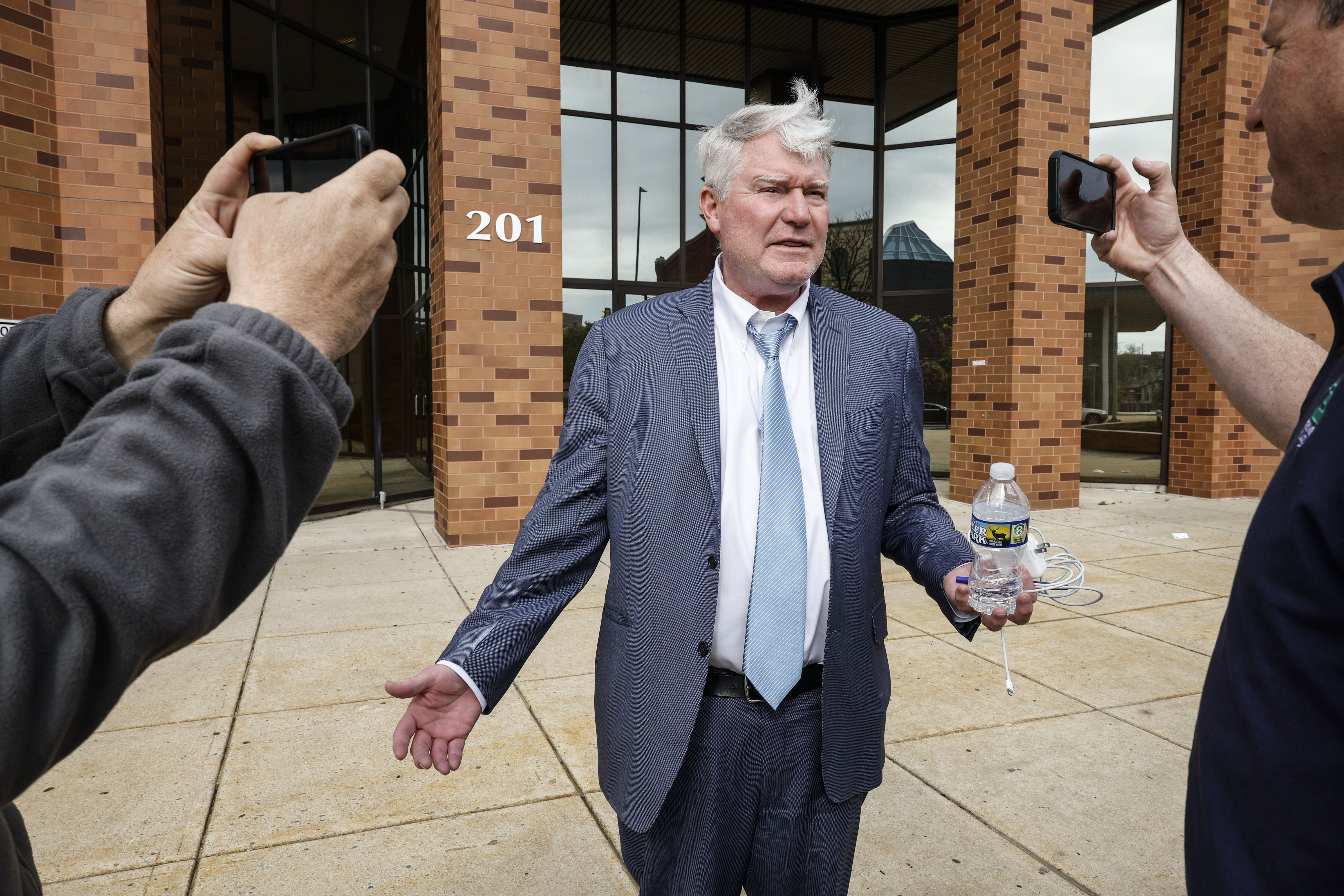
    Your recent article on Donald Trump’s decision to commute John “Johnny Doc” Dougherty’s six-year prison sentence is another example of a system gone wrong.

    The Justice Department — back when it was an agency that actually administered justice — thoroughly investigated Dougherty, presented its case in court, and won a conviction against him. Even after being found guilty by a jury of his peers — and admitting his guilt during sentencing — Dougherty tried just about everything he could to avoid going to jail and repaying his debt to society.

    Well, Dougherty found a sympathetic ear in the Trump administration and got the president to commute his sentence. For months now, Congress has been investigating whether “pay-to-play” has had a role in any of Trump’s pardon decisions, and I hope someone looks closely at this case, too.

    In any event, the presidential pardon process needs to be reformed, because there is no doubt it is being misused and abused.

    Susan Thompson, Media

    . . .

    Donald Trump commuted John “Johnny Doc” Dougherty’s sentence because he’s apparently the type of leader the president can truly respect: Dougherty was found guilty of bribing an elected official and embezzling a large sum of money from the labor union he led, Local 98 of the International Brotherhood of Electrical Workers (IBEW).

    Rather than a “magnificent gesture of compassion,” as Dougherty’s lawyers called it, Trump’s action was a slap in the face to the union Dougherty defrauded and which he will now not have to repay. Dougherty’s background as a political power broker likely entered into the commutation decision at least as much as the medical condition Dougherty says his wife has. Other federal inmates likely have ill family members, too, but they have to remain behind bars because they can’t afford a lawyer or don’t have political connections.

    When commuting the sentence, Trump could have left intact the $1.6 million Dougherty was ordered to pay as restitution. But he chose not to, likely as a form of respect from Mar-a-Lago Don to a Philly don.

    Trump treats commutations and pardons like party favors for the rich and powerful, the only Americans with whom he feels a kinship other than the seditionists who did his bidding on Jan. 6, 2021.

    Stewart Speck, Ardmore

    Choose peace

    As I watch the news each day, I find myself asking a painful question: When did human life become so easily sacrificed in the name of power, politics, territory, or revenge?

    From Gaza and Ukraine to Sudan, Yemen, and other places suffering from conflict, innocent people continue to pay the highest price for decisions made by those far removed from the battlefield. Families lose parents. Children lose their homes and schools. Communities are destroyed, and millions are forced to flee in search of safety.

    As an Ahmadi Muslim living in Philadelphia, I believe deeply that the sanctity of human life must come before political allegiance. My faith teaches me to reject hatred and to pray and work for peace. But peace cannot simply mean the absence of headlines about war. It must mean children can sleep safely, families can remain together, people can practice their faith without fear, and every human being is treated with dignity.

    We must also be careful not to become selective in our compassion. A Palestinian child matters. A Ukrainian child matters. A Sudanese child matters. An Israeli child matters. A Yemeni child matters. Every innocent life matters. We do not have to agree on politics to agree that innocent people should not be killed. We do not have to share the same religion to recognize another person’s humanity.

    Philadelphia has a proud history of religious freedom and diversity. From here, we should raise our voices — not for one people against another, but for justice, mercy, and peace for all people. Our politicians, our religious leaders, and our communities should demand diplomacy before destruction, humanitarian assistance before indifference, and accountability when civilians are harmed. The international community must not allow suffering to become something we simply scroll past on our phones.

    We cannot bring back those who have already died. But we can refuse to accept more bloodshed as inevitable. As Americans and as human beings, we should demand better.

    Madeel Abdullah, Garnet Valley

    Collective immunity

    As you point out in your article delineating the differences between the mandates for the COVID-19 vaccine during the pandemic and the guidelines for the measles vaccine being discussed now, the situations are very different.

    As a pediatrician for 40 years, and as someone old enough to remember the miserable 10 days I spent being sick with the measles, let me add that if some people are unable or unwilling to look past the anti-scientific jargon being pushed on the internet and by Robert F. Kennedy Jr. and others, then — for the sake of all the infants who are too young to be vaccinated and all of the children who can’t be vaccinated because of medical conditions — mandates need to be put in place to protect us all through a vaccine that has a 50-plus year safety record.

    Public health means just that — protecting you, me, our loved ones, and all people.

    Barbara Gold, Philadelphia

    Cultural crisis

    Philadelphia is forgetting itself, and the signs are plain. In 2018, the Philadelphia History Museum closed; now, the Academy of Natural Sciences is closing its museum. Our city is losing its great public spaces where history, culture, and science can be experienced. Soon, both collections will be in a location that is inconvenient to access.

    Are we to become a city that claims tradition and yet has no soul? Who is to blame? Ourselves. We decided to sit in, stay home, and opt for something flashier than dinosaur bones, butterfly gardens, and petrified insects.

    We need to prioritize our collective traditions and culture, our museums and artistic heritage, and the way we do professional sports, before it is too late. If we continue on this trajectory, we will lose our character and identity and become an amorphous blob adjacent to I-95, passing from New York City to Washington, D.C.

    How about, instead of desperately rallying to save a museum by appealing to billionaires and corporate bailouts, we rise and support them? Donate to them. Join them. Wake up, Philadelphia.

    Christopher Czyzewski, Philadelphia

    Museum memories

    My first job in Philadelphia to help pay for art school was working at the Academy of Natural Sciences. It turned out to be one of the great privileges of my life. As the lowest worker on the totem pole, I laid out its magazine, Frontiers. In the process, I had the privilege of meeting the scientists who were traipsing the world, studying the water, the land, the vegetation, and the animals that make planet Earth such a beautiful, complex place. They brought back artifacts and plant material that the museum’s energetic staff used to teach visiting Philly school kids who don’t get to see much green and hardly ever get to touch a dinosaur bone. In addition, their colleagues in the museum and in the astonishing, treasure-packed library worked hard to let the rest of us know how precious and miraculous our life on Earth is.

    With the Academy’s abrupt closing, Philadelphians and our children will be less educated about and inspired by our natural world. It breaks my heart.

    P.S. If they’re trying to unload things, I’ll gladly take the stuffed emu that used to stand tall next to my drawing board at the Academy.

    Signe Wilkinson, cartoonist, Philadelphia

    The writer, a winner of the Pulitzer Prize, spent 35 years as an editorial cartoonist at The Inquirer and the Daily News.

    Join the conversation: Send letters to letters@inquirer.com. Limit length to 150 words and include home address and day and evening phone number. Letters run in The Inquirer six days a week on the editorial pages and online.

  • Dear Abby | Senior woman’s admirer lacks courage to confess

    Dear Abby | Senior woman’s admirer lacks courage to confess

    DEAR ABBY: I’m in love with an older woman. I’m 41, and she is about 35 years older. I have known her since I was a kid. She’s the reason I always dated older women. I want to tell her how I feel, but I’m scared she’ll be shocked, and I wouldn’t want anyone else to find out my feelings, like her kids. I grew up with them.

    We always enjoy our conversations, and I often throw her little hints. When I do, she smiles and likes that I flirt with her, but I’ve never told her my real feelings. What should I do?

    — HIDING MY FEELINGS

    DEAR HIDING: You have nothing to lose by telling her your real feelings. If you do, at the very least she will feel complimented. If there is a possibility that your feelings are reciprocated — well, you are both adults now. If her kids don’t object (once they get over the shock), you could have a happy life together. I say this with confidence because years ago a distant cousin of mine married a contemporary of one of her sons.

    ** ** **

    DEAR ABBY: What is the proper etiquette when dining out and a hair is found in your meal? I informed the server, and she apologized and gave me credit for a free drink. Others say they wouldn’t have eaten the meal and would have requested a new entree. What would you have done?

    — HAIRY SITUATION

    DEAR SITUATION: A free drink is not adequate compensation for this unpleasant mistake. When you are presented with food that is inedible for any reason, the manager should be summoned immediately to comp the dish (or more), as well as to offer a sincere apology. When they offer to remake the food, you are within your rights to ask for a different entree. This should allay any suspicion that the kitchen staff might simply pluck out the hair and return the contaminated dish to you.

    ** ** **

    DEAR ABBY: I have a friend in her 80s who always needs to be the center of attention. When someone is talking, not only does she interrupt the speaker, but she also distracts the ones trying to listen by dragging out pictures of her grandchildren.

    She often makes inappropriate sexual comments. She even brought up the subject of sex with my husband! People don’t want to be around her. However, she will give the shirt off her back and go out of her way to help anyone. How can I tell her that her conversational style is off-putting without hurting her feelings?

    — SUFFERING IN SILENCE

    DEAR SUFFERING: This woman has several bad habits, so don’t expect her to correct them all at once. Privately and gently tell her you are not comfortable with her racy comments, nor is your husband. If she begins to show more restraint, be sure to express your sincere appreciation so she feels good about the effort she has made.

    If her bad behavior is a sudden change, it may be a sign of a medical issue. Tell her you have noticed that she hasn’t seemed like herself recently and ask if she is keeping up with her medical exams. If you are acquainted with her family, urge them to have her evaluated by her doctor.

  • Horoscopes: Wednesday, Sept. 9, 2026

    Horoscopes: Wednesday, Sept. 9, 2026

    ARIES (March 21-April 19). Creativity isn’t a category of work. It’s a way of thinking. Every problem has an obvious solution. Creativity asks whether there’s a better one. Don’t save your imagination for dreaming. Let it lead the day.

    TAURUS (April 20-May 20). There are so many fussy rules and tiny details attached to the work at hand that creating an enjoyable experience out of it seems farfetched. But your delight is actually more important (and more easily accomplished) than you realize. Prioritize it and you’ll see.

    GEMINI (May 21-June 21). The world hurls forward and you’re drawn back instead to something in the past that was simple, wholesome and cozy. Something warm and unrushed that you could hold a while in your hands.

    CANCER (June 22-July 22). It may seem that the more desirable a thing is, the less attainable it is, but it’s not really the case. It’s just that the methods for getting them are different. Chasing makes them run. Attraction is the way.

    LEO (July 23-Aug. 22). Though you don’t revel in the misfortune of others, you can’t help but notice that compared to many, you have it so good right now. However imperfect life seems, your blessings are too numerous to count. And if you don’t enjoy them, who will?

    VIRGO (Aug. 23-Sept. 22). It’s as though you belong in your own time zone. Sure, it matches up with that of others, but it also accommodates the pace that most suits you, no rushing necessary, and plenty of time to pursue whimsy and fully enjoy each moment.

    LIBRA (Sept. 23-Oct. 23). You have a growing respect for work done well, even if you’re the one doing it, and especially when nobody else notices. That private sense of craftsmanship and the satisfaction of doing great work lasts longer than applause.

    SCORPIO (Oct. 24-Nov. 21). You’d like to believe that everyone is doing their best with their current understanding, including you. And while you’ll know more later, this is good. One day you’ll look back in fondness. So love it while you’re here.

    SAGITTARIUS (Nov. 22-Dec. 21). When you step into a new environment, take a moment to orient yourself to your own North Star. Because knowing where you are in relation to your own goals is key to finding your way in the bigger picture.

    CAPRICORN (Dec. 22-Jan. 19). So few are truly patient and so many require it from others. You welcome the chance to exercise patience because, like all exercise, it makes you stronger and gets you ready for the time when you really need to be.

    AQUARIUS (Jan. 20-Feb. 18). Your creative whims seem frivolous because they are. You’re not the only one who needs the pointless things that surprise, delight and inspire. The extra touches will buoy the spirit in the moments between doing what is necessary.

    PISCES (Feb. 19-March 20). We are social creatures and can’t help but be influenced by those around us, especially the ones we admire. But today is about getting back to your original intent. What did you want before you heard what the other person wanted?

    TODAY’S BIRTHDAY (Sept. 9). It’s Your Fairytale Year in which you’re writing a modern version of your magical life, complete with loyal friends, battles won and wishes made very carefully because they will actually come true. More highlights: A guide helps you thrive inside new boundaries and routines. An investment in your education invigorates your social and financial world. You’ll participate in a change that’s bigger than any one person. Aries and Gemini adore you. Your lucky numbers are: 33, 1, 19, 45 and 14.

  • New grand jury subpoenas being sent in investigation targeting Trump-Russia probe, sources say

    New grand jury subpoenas being sent in investigation targeting Trump-Russia probe, sources say

    WASHINGTON — The Justice Department is demanding testimony before a Florida grand jury in an investigation aiming to establish an intelligence community conspiracy against President Donald Trump, according to multiple people familiar with the matter.

    New subpoenas being issued to former government officials represent an escalation in the yearlong investigation as the Justice Department pursues a loosely defined theory that members of the intelligence community who scrutinized Trump over the last decade, including over Russian interference in the 2016 election, conspired against him and violated his rights.

    Investigators in recent days contacted some defense lawyers for witnesses advising them of forthcoming grand jury subpoenas. It was not clear how many as of Tuesday had received a subpoena or were still waiting to receive one, and the identities of the witnesses receiving subpoenas were also not immediately clear. The people who confirmed the subpoenas spoke on condition of anonymity to discuss a secretive grand jury investigation.

    Investigation has focused on the Trump-Russia probe

    The contours of the conspiracy investigation aren’t fully known, but agents and prosecutors over the last several months have focused intensely on one of Trump’s chief grievances: the U.S. government response to Russian interference in 2016 and an intelligence community assessment that Moscow meddled on Trump’s behalf at the direction of Russian President Vladimir Putin.

    Trump, who spent much of his first term shadowed by an investigation into whether his campaign colluded with Russia to sway the outcome of the election, has for years lashed out at the intelligence community finding and cast it as a “deep state” conspiracy to undermine the legitimacy of his win.

    Investigators searching for potential crimes in connection with the intelligence community response have conducted numerous voluntary interviews, but the subpoenas prepared for witnesses in recent days represent an apparent effort to lock down sworn testimony before a grand jury.

    It remains unclear whether anyone will be charged or for what offense, though lawyers for former CIA Director John Brennan have said they have been informed that he is a target as investigators examine whether he falsely testified to Congress — something he and his attorneys have consistently denied. The Justice Department last spring subpoenaed witnesses before a Washington grand jury as part of an investigation into Brennan, but swiftly withdrew the subpoenas in favor of voluntary interviews.

    The investigation is being run out of Florida, with the Justice Department in April bringing back into government service a top prosecutor from the Reagan administration, Joe diGenova, to serve as a counselor to the attorney general and help lead a team of agents and prosecutors.

    DiGenova, who had previously asked then-Attorney General Pam Bondi to appoint him to the job and has openly and repeatedly claimed Trump was the victim of an intelligence community conspiracy, declined to comment Tuesday when reached by the Associated Press.

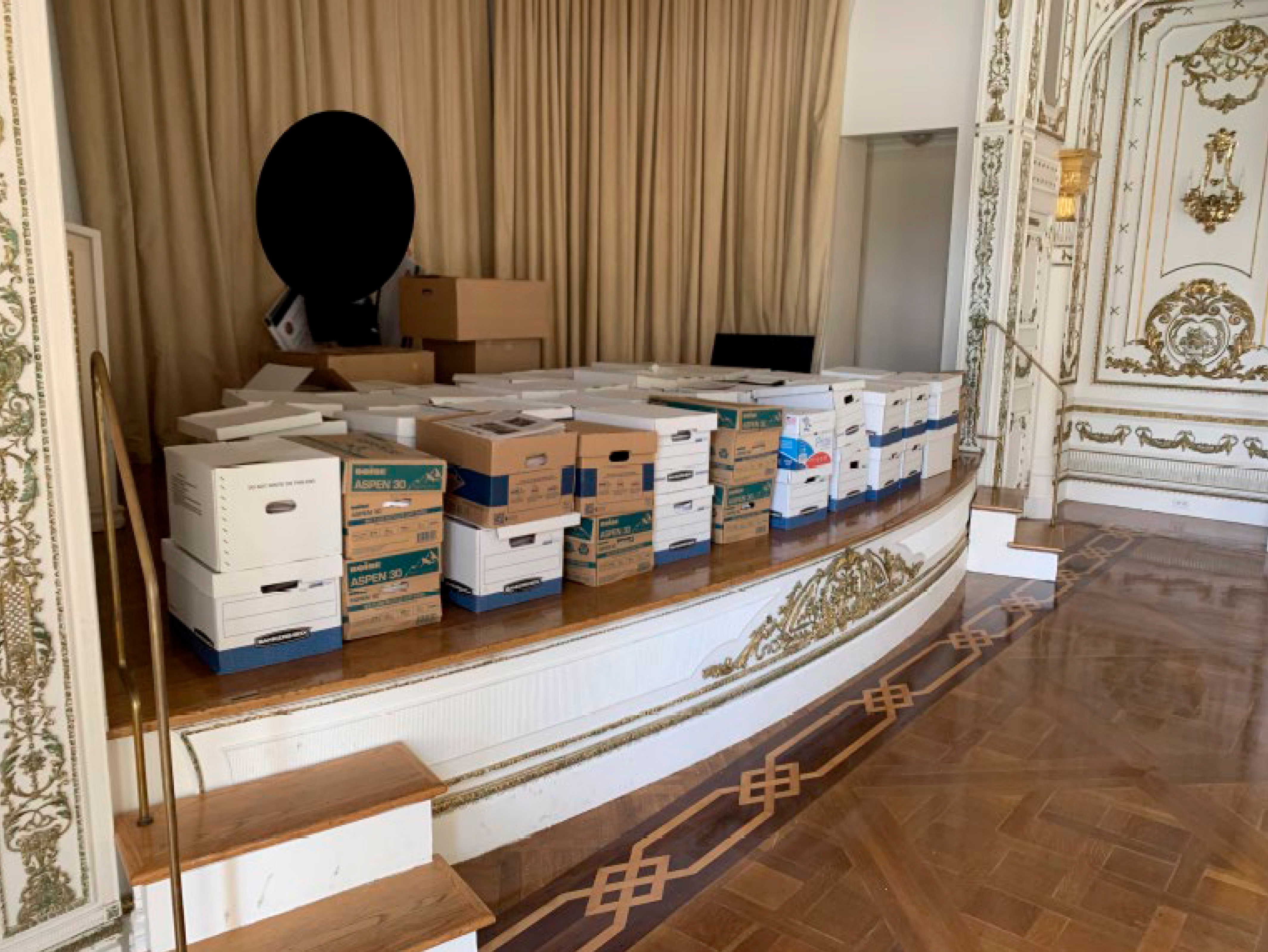
    In an indication of the wide-ranging nature of the investigation, the AP reported last month that diGenova’s team has sought interviews with law enforcement officials involved in the 2022 FBI search of Trump’s Mar-a-Lago property in Palm Beach, Fla. The search recovered a trove of classified documents that formed the basis of a since-abandoned Justice Department prosecution of Trump, who has long decried the FBI operation as an invasion of his privacy.

    Concerns from defense lawyers about a ‘favored’ judge

    Investigators have set up shop in Fort Pierce, Fla., the home court of U.S. District Judge Aileen Cannon, the Trump-appointed jurist who repeatedly appeared skeptical of the classified documents case against him and ultimately dismissed it after concluding that the prosecutor who filed the charges was illegally appointed.

    Lawyers for Brennan last year asked the chief judge of the federal court in Florida to prevent the investigation from being steered to Cannon, whom they described as a “favored” Trump judge. They have since sued the Trump administration, demanding a court order requiring prosecutors to preserve records from the investigation so that Brennan could challenge any eventual prosecution of him as vindictive and selective.

    Trump came to office in 2017 under scrutiny from the intelligence and law enforcement community about whether his successful campaign had conspired with Russia, which stole politically damaging Democratic emails and orchestrated their release through WikiLeaks as part of a wide-ranging interference scheme.

    A Justice Department special counsel, Robert Mueller, investigated but found insufficient evidence to prove a criminal conspiracy between Russia and the Trump campaign, though his team of investigators did find that Russia interfered in sweeping fashion in the election and that the campaign eagerly hoped to benefit from Moscow’s help.

    Subsequent investigations by an inspector general and Justice Department prosecutors identified numerous errors and omissions by agents who conducted the Russia probe but found no evidence of criminal wrongdoing by senior law enforcement officials nor proof of an anti-Trump conspiracy like what prosecutors are now hoping to prove.

    Deeply frustrated by those outcomes, Trump has amplified his demands for retribution, which his Justice Department has heeded. Last year, Bondi directed prosecutors to put evidence before a grand jury following the release of documents aimed at calling into question the legitimacy of the Trump-Russia inquiry.