Ever wonder who the region’s most searched for locally born celebrities are?
Kobe Bryant? Of course. Sabrina Carpenter? Obviously. But a fighter pilot born in the early 1900s? Not so much.
The Inquirer’s Lizzie Mulvey and Charmaine Runes recently dug into the 2025 most popular celebrities on Wikipedia who were born in the Philadelphia area. The results were a mix of obvious contenders and surprises.
We went even further, looking at the top five most-searched individuals born in Lower Merion or Narberth, with the tiny borough punching above its weight class.
Topping the list is Narberth native Kylie Kelce, who is also among the top 100 searched celebrities in the region, ranking No. 50 overall. Part of her online rise came about after her podcast “Not Gonna Lie” launched in late 2024.
She’s followed by fellow Narberth native James Julien “Pug” Southerland II, a Navy fighter pilot credited with a number of victories in World War II. He reportedly earned his nickname because he was a pugnacious boxer at the U.S. Naval Academy. Sutherland died in 1949 at the age of 37 during a flight training accident, according to his page.
Author Beck Dorey-Stein grew up in Narberth. Lawrence Jackson
Beck Dorey-Stein, another Narberth native, has the third-most page views among area residents. A Lower Merion High School alum, Dorey-Stein gained acclaim after penning her 2018 memoir From the Corner of the Ovalabout her time as a stenographer in the White House, predominantly under former President Barack Obama. Her most recent book, Spectacular Things, came out last year.
Former Phillies minor leaguer and Houston Astros player Taylor Buchholz and former Cleveland Browns president Alec Scheiner, both from Lower Merion, come in numbers four and five, respectively.
Kobe Bryant played for Lower Merion High School.Ron Cortes / Staff Photographer
While Kobe Bryant was born in Philadelphia, he famously attended Lower Merion High School. The 18-time NBA All-Star is the No. 2 most-viewed page among all locally born celebrities.
This suburban content is produced with support from the Leslie Miller and Richard Worley Foundation and The Lenfest Institute for Journalism. Editorial content is created independently of the project donors. Gifts to support The Inquirer’s high-impact journalism can be made at inquirer.com/donate. A list of Lenfest Institute donors can be found at lenfestinstitute.org/supporters.
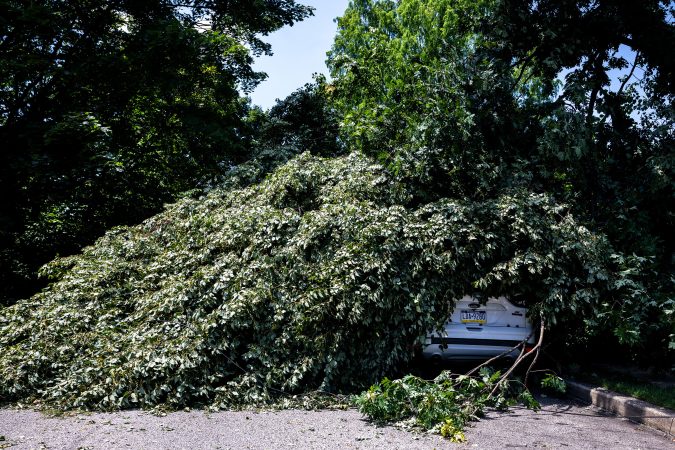
When a violent microburst storm slammed into Narberth on Saturday, it brought down a 120-year-old Sycamore tree onto a home in the historic Narbrook Park neighborhood.
The fire department in the surrounding Lower Merion Township responded to 98 incidents over the weekend, making numerous water rescues.
And residents are still grappling with the aftermath of a violent storm shaking their communities.
Communities in Montgomery County, along with other spots in the Philadelphia region, suffered vast amounts of damage Saturday afternoon as microburst storms ripped through the area.
A microburst is a highly-localized column of sinking air during a thunderstorm that can produce strong winds and extensive damage and, in some instances, can be life-threatening, according to the National Weather Service.
Peco has continued to restore power to affected households, as of roughly 5:30 p.m. Monday, with 119 outages affecting a little more than 1,500 customers.
Narberth Council Vice President Cyndi Rickards said the skies went from clear to stormy in just a matter of minutes Saturday before a microburst ripped through the Montgomery County community.
Then, just as quickly as it arrived, came the downed trees, power lines, flooding, and power outages.
It was something Rickards, a more than 20-year resident of the community, had never seen before.
“It became apparent that nearly every street in Narberth had a tree down, a substantial tree on a car,” Rickards said. “I believe we had two that fell on or near houses. Many that narrowly missed houses.”
One of those near misses happened at Hugh Parker’s residence while he was spending time with relatives down the Shore. Once he and his family heard about the 40-foot tree knocked down in their front yard — covering their driveway and the car of his wife, Grace, they rushed home.
Their basement had also been flooded and the family’s newly reconnected power lines started a fire, which eventually went out on its own.
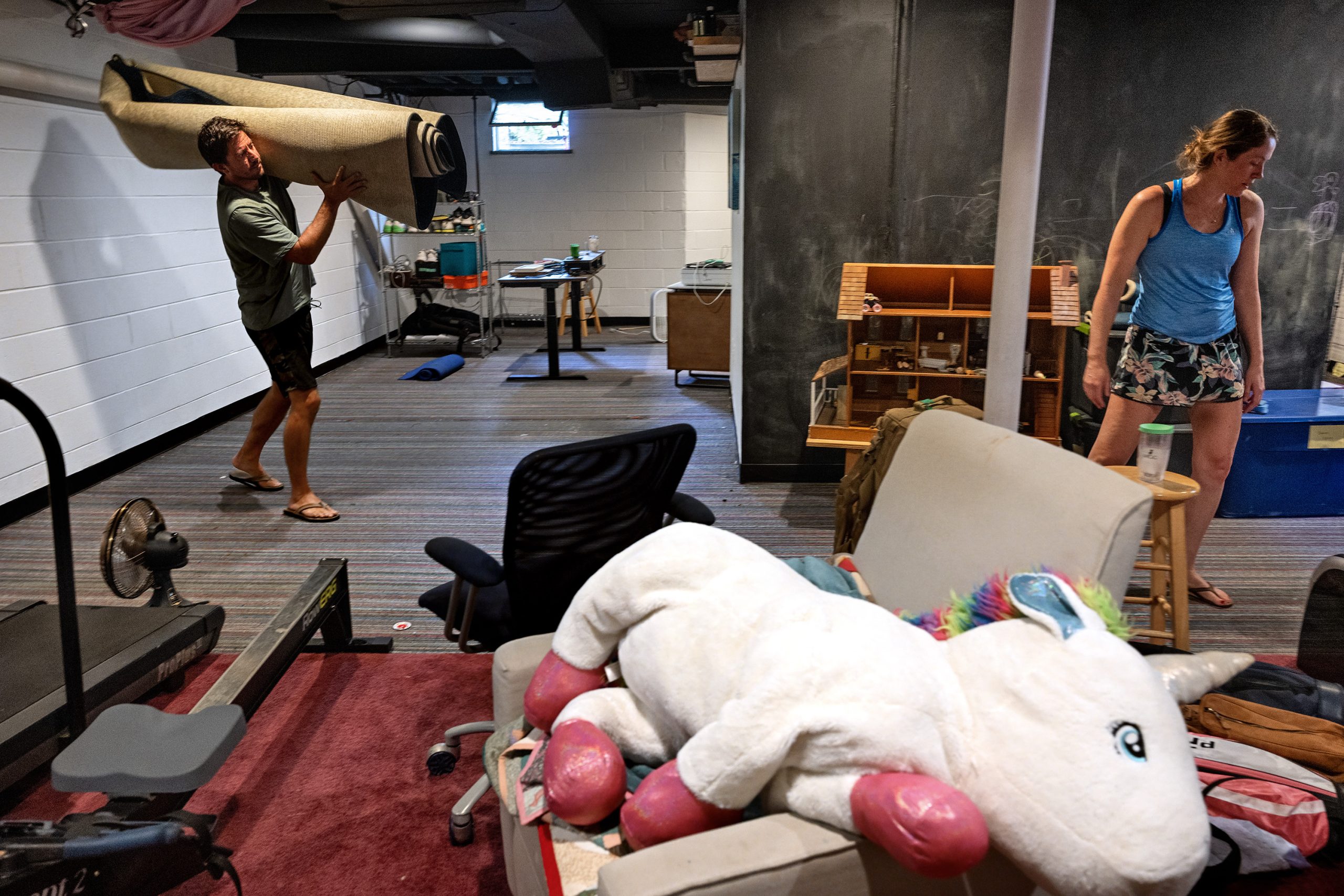
Hugh and Grace Parker continue the cleanup in the basement of their Narberth home Monday, July 13, 2026, following the weekend’s storm. They weren’t home so don’t know why it flooded, as the house had not had any water enter since it was built in the 1990s. They also had a tree fall in front, crushing one of their cars.Tom Gralish / Staff Photographer
Rickards described the local government’s response to the storm as “such a comprehensive disaster response for a small little borough,” adding that Jeff Eldon, the public works director, closed down any streets where he suspected downed wires or trees.
Narberth Mayor Dana Edwards also declared a state of emergency, which has since been lifted, and has facilitated a spot at the borough hall where residents can cool off and charge their devices. He also indicated that the borough had “great support” from Peco.
“It was really everything we could do just to keep everybody as comfortable as possible,” Edwards said.
In the surrounding Lower Merion Township, commissioner Ray Courtney reported similar issues as Narberth’s, especially when it came to old trees that were toppled by the storm.
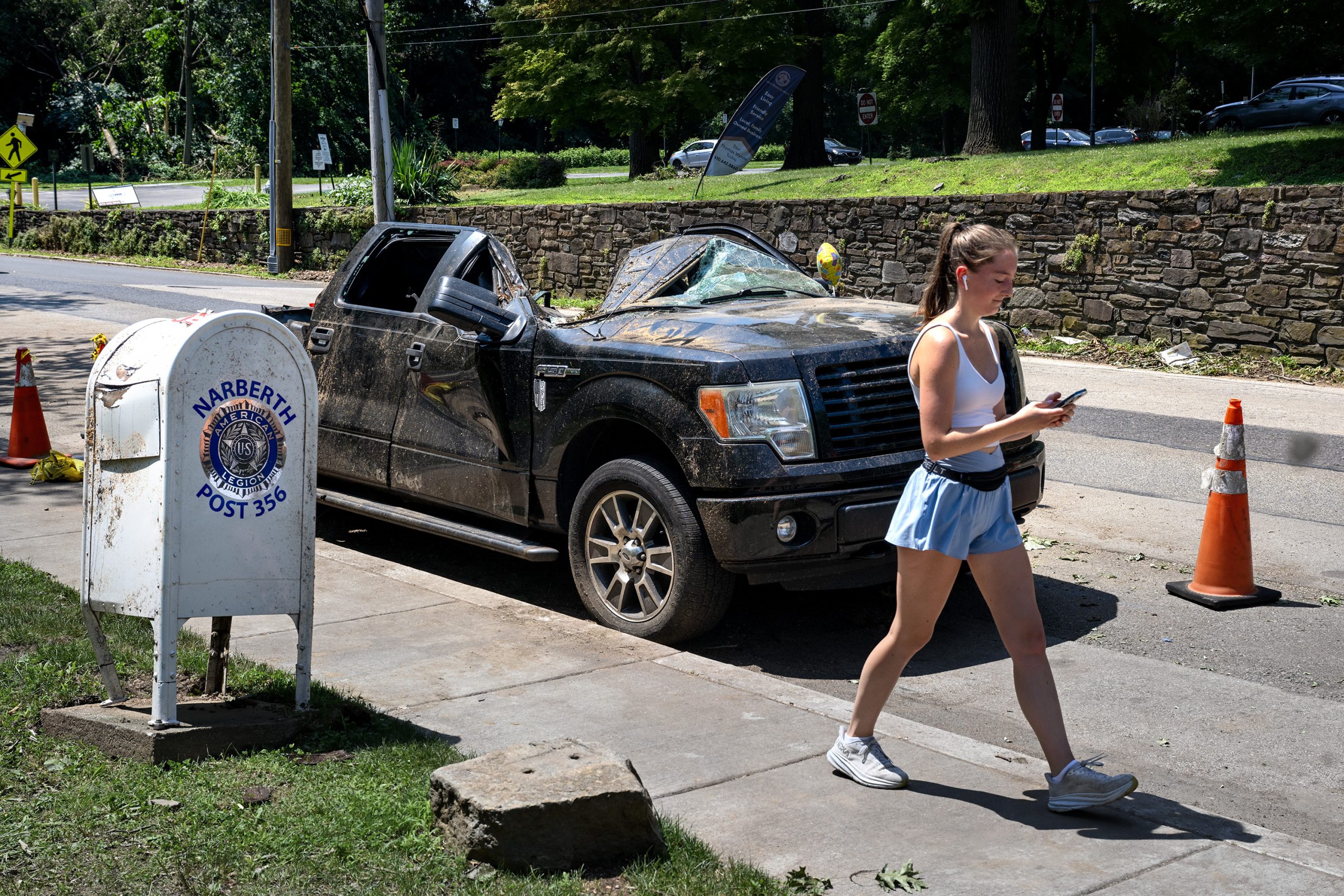
A pickup truck is left crushed Monday, July 13, 2026, after the tree that fell on it had been cleared as the cleanup continued following the weekend’s microbursts that ripped through parts of the city and Montgomery County, downing trees and power lines and causing outages and road closures. This was along Wynnewood Avenue by the baseball fields in Narberth.Tom Gralish / Staff Photographer
When the storm was over, the public works department closed the roads, some of which continued into Sunday morning, said Courtney, who represents parts of Ardmore and Wynnewood. As of Sunday night, crews had cleared 59 downed trees and there were 38 remaining.
For local officials, the episode also underscored a need for further discussions regarding improving local infrastructure and resources for extreme weather events.
Many communities, like Narberth and Ardmore, for instance, have historic infrastructure that cannot always handle aggressive storms.
“I think this is the reality of storms now,” Courtney said. “They are hard, they are intense, and they dump a lot of precipitation in a short period of time, and all local governments, and our state and federal government, need to be thinking about improvements to our infrastructure, and the resiliency against this kind of weather event.”
In the immediate aftermath of Saturday’s storm, residents — especially those whose property has been damaged — are hoping for incremental improvements.
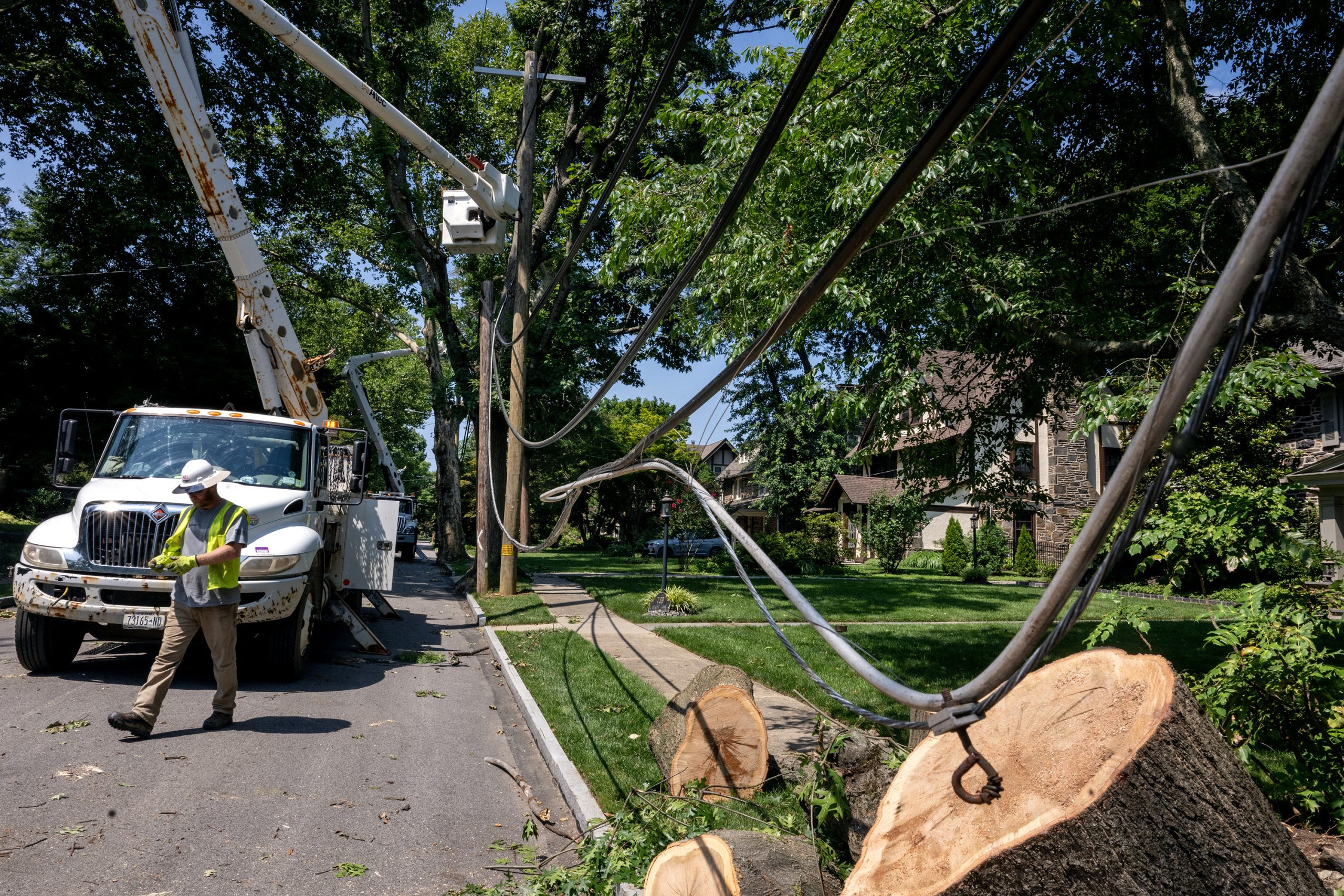
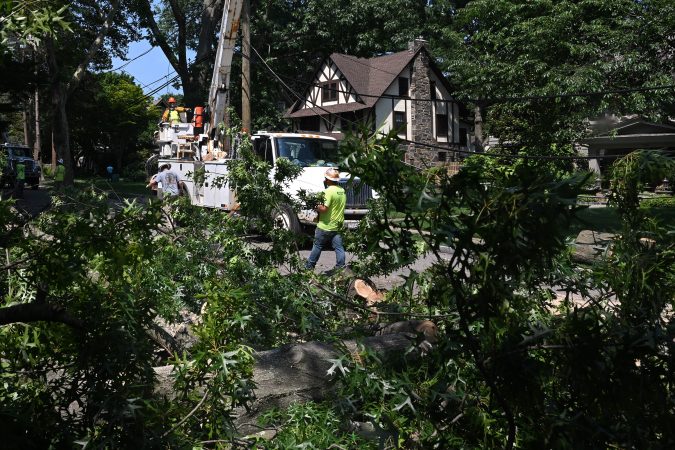
Utility workers restore power on Beacom Lane in Merion Station, Monday, July 13, 2026, as cleanup continues following the weekend’s microbursts that ripped through parts of the city and Montgomery County, downing trees and power lines and causing outages and road closures.Tom Gralish / Staff Photographer
A neighbor’s tree fell on the roof of Robert Hilton’s home on Merion Avenue. Water started dripping into his second-floor bedroom and the carpet remained soaked.
“I’ve lived here for 41 years, and I’ve never seen anything like this,” said Hilton.
The fallen tree, Hilton says, had been a concern for more than 20 years. It was old, unhealthy, and situated at the top of a bank, making it prone to structural instability. The microburst was the final piece of the puzzle, and the uprooted trunk now lays tangled with power lines in the middle of the street.
Hilton lost power during Saturday’s storm, but it was reconnected on Monday at 2:30 p.m. “It’s baby steps,” he said. “That’s all we can hope for.”
Hundreds of trees fell in Philadelphia within a matter of minutes during a weekend storm that left a narrow but destructive band of what one official called “unprecedented” damage in its wake in the region.
“We’ve never seen anything like this,” Parks and Recreation commissioner Susan Slawson said. “We’ve never seen a 15 and 20 minute storm come through an isolated area and take down that many trees.”
Those downed trees came following a series of four “microbursts,” which brought wind gusts traveling 60 to 70 mph. Those isolated instances of high winds primarily impacted parts of Philadelphia and Montgomery County.
Microbursts, the National Weather Service said, happen when a thunderstorm experiences a rapid increase in updraft. When that updraft stops, the mass of the storm system comes crashing back down, resulting in severe winds that sent trees tumbling into homes and vehicles, damaged public parks, and left neighborhoods grappling with cleanup efforts days later.
Slawson’s department, which handles downed trees in the city, had responded to at least 340 emergency requests as of Monday afternoon, and inspected about 220 trees. The hardest hit areas, she added, were in South Philadelphia, Wynnefield, and Southwest Philadelphia.
The harsh winter’s heavy caps of ice and snow that lasted for weeks likely left some trees weakened or damaged, Slawson said, making them more vulnerable to being toppled. Those that fell were being taken to the city’s Fairmount Park Organic Recycling Center in West Fairmount Park.
Evidence of the damage was apparent around the region Monday. In Malcolm X Park in West Philadelphia, piles of giant fallen trees, cut into large chunks, sat waiting for disposal. And nearby on Spruce Street, a downed tree blocked a busy two-way road between 53rd and 54th Streets, its corpse resting atop a crushed red pickup truck.
“They need to cut these trees down, they’re too tall,” said Schonder Pickney, 61, who lives across the street from the wreckage. She and her neighbors had asked the city to remove some of the old trees that appeared dangerous, but she said nothing came from it.
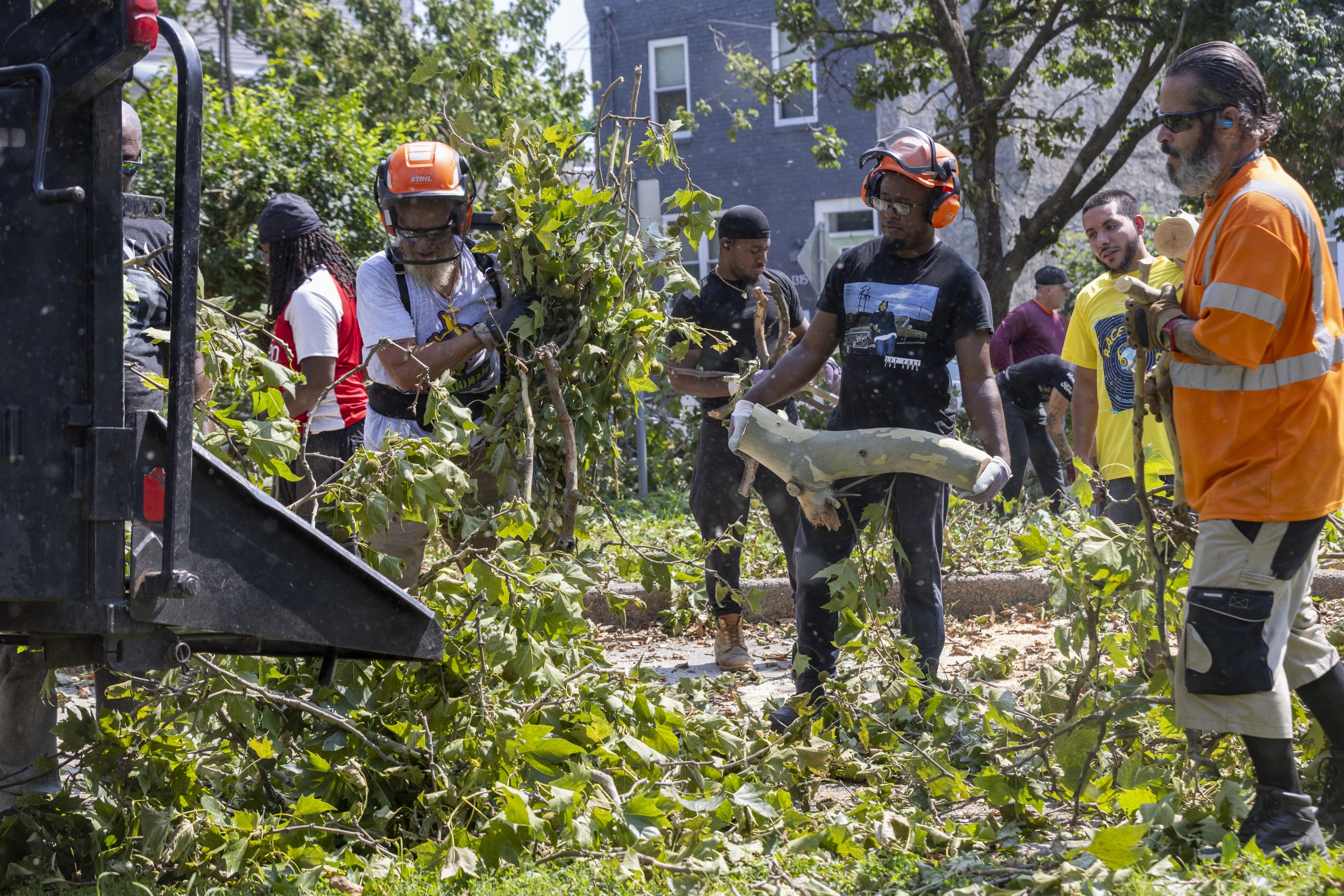
Philadelphia Parks and Recreation workers throw debris into an auxiliary chipper at Wharton Square Playground in Point Breeze, on
Monday.Aidan T. Gallo / Staff Photographer
Private tree management companies, like Rapid Tree Care in Grays Ferry, were inundated with service requests following the storm. Caleb Coome, the company’s founder, said that the storm’s intensity knocked down large trees across densely populated city blocks, and across multiple homes.
“It’s definitely unprecedented in terms of the amount of volume over a couple-day span,” said Coome, whose company has been in operations for three years.
Homeowners impacted by fallen trees, he said, were largely concentrated near FDR Park and the stadiums in South Philly, as well as the Cobbs Creek and Cedar Park neighborhoods in West Philly. Homeowners face logistical and financial hurdles for cleanup, as much of the damage occurred in areas with tight rowhouses.
In those tight quarters, a single fallen tree can span up to six properties, creating liability issues and disputes among neighbors over who is responsible for removal costs. A downed tree spanning multiple properties must be removed all at once, rather than limb-by-limb, for safety reasons, Coome said.
Some parts of the suburbs also saw shared tree damage. For example, in Narberth, Hugh Parker and his family hurried home from the Shore Saturday after they heard from neighbors that a 40-foot tree had been knocked down in their front yard.
Hugh and Grace Parker continue the cleanup in the basement of their Narberth home Monday. It flooded during weekend’s storm.Tom Gralish / Staff Photographer
Located on their neighbor’s property, the tree landed to cover their driveway, as well as a car belonging to Parker’s wife, Grace. As it came down, the tree’s canopy also took down power lines and blocked the street, and the damage it did to the vehicle remained unclear Monday.
A day later, Peco reconnected their power, which Parker said had been out for a little more than 24 hours. Then, he smelled smoke, thanks to a power line that started a fire after power had been restored. After about 30 minutes, the fire went out, but no one from the utility had come to check the power lines as of Monday morning.
“It was like something from a movie scene — there were sparks flying 10 to 15 feet in the air,” said Parker.
In Lower Merion Township, the local fire department responded to 98 incidents over the weekend, including numerous water rescues. Montgomery County communities were some of the hardest hit.
“It became apparent that nearly every street in Narberth had a tree down, a substantial tree on a car,” said Narberth Council Vice President Cyndi Rickards said.
The episode also highlights what many local officials have said is a need to further discuss improving local infrastructure and resources for extreme weather events.
“I think this is the reality of storms now,” said Lower Merion Commissioner Ray Courtney. “They are hard, they are intense, and they dump a lot of precipitation in a short period of time, and all local governments, and our state and federal government, need to be thinking about improvements to our infrastructure, and the resiliency against this kind of weather event.”
In addition to downed trees in the area, roughly 1,500 Peco customers remained without power across 119 reported outages as of late Monday afternoon. That number is down significantly from the height of the storm, when some 60,000 customers experienced extended outages. Overall, 105,000 Peco customers experienced some loss of power during the course of the storm, the company said.
Power for all customers in the region, Peco added, was expected to be restored by 11 p.m. Monday.
Among those impacted were West Philadelphia resident Lisa Phillips, who lives on the 5100 block of Hazel Avenue. A tree on her block went down Saturday, taking power lines with it. Electrical workers arrived Monday to take care of the downed lines, but she was still waiting for the city to clear the tree from her street.
“Never in my life have I experienced anything like this,” she said.
Staff writers Isabel Maney, Olivia Prusky, and Fallon Roth contributed to this article.
A couple of weeks ago, while staying with my father as he navigates the relentless progression of Alzheimer’s, I found myself thinking about something former Philadelphia Mayor Ed Rendell once said. I’m paraphrasing, but it went something like this: You could be waiting for your car outside the old Le Bec-Fin, standing next to the valet, and if a game was on, someone would inevitably ask, “What’s the score?” Just like that, two strangers from entirely different worlds had something to talk about.
That observation has stayed with me for years because Philadelphia sports have always been one of our city’s great equalizers. We may disagree about politics, science, climate, taxes — just about everything. But ask someone about the Phillies, the Eagles, the Sixers, or the Flyers, and for a few moments we’re on the same team.
But I realized there’s a footnote to Rendell’s point. Philadelphia sports don’t just connect strangers. They reconnect family members with Alzheimer’s.
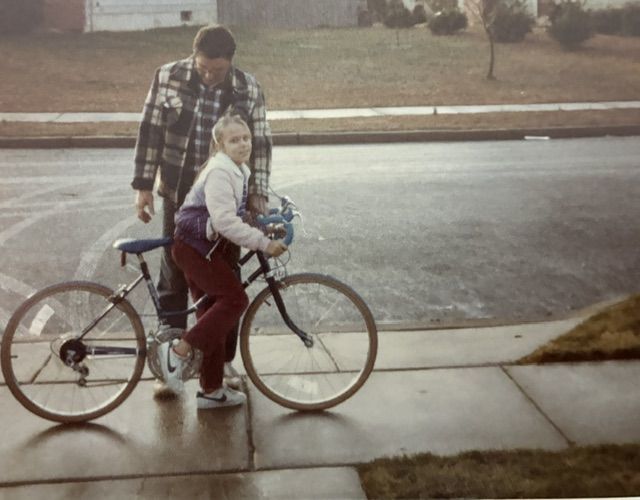
The author, 10, gets ready to hop on her bike as her father looks on in this photo from 1984.Courtesy of Cyndi Reed Rickards
My father’s ability to stay with a conversation now lasts only a few minutes before the disease pulls him somewhere else. Time together has become a matter of fleeting moments rather than long talks.
Then the Phillies came on with a Pittsburgh Pirates series.
Instead of trying to sustain one long conversation, we simply watched the game unfold. Every pitch offered a new beginning. Every at-bat was another opening. A strikeout. A stolen base. A diving play in the gap.
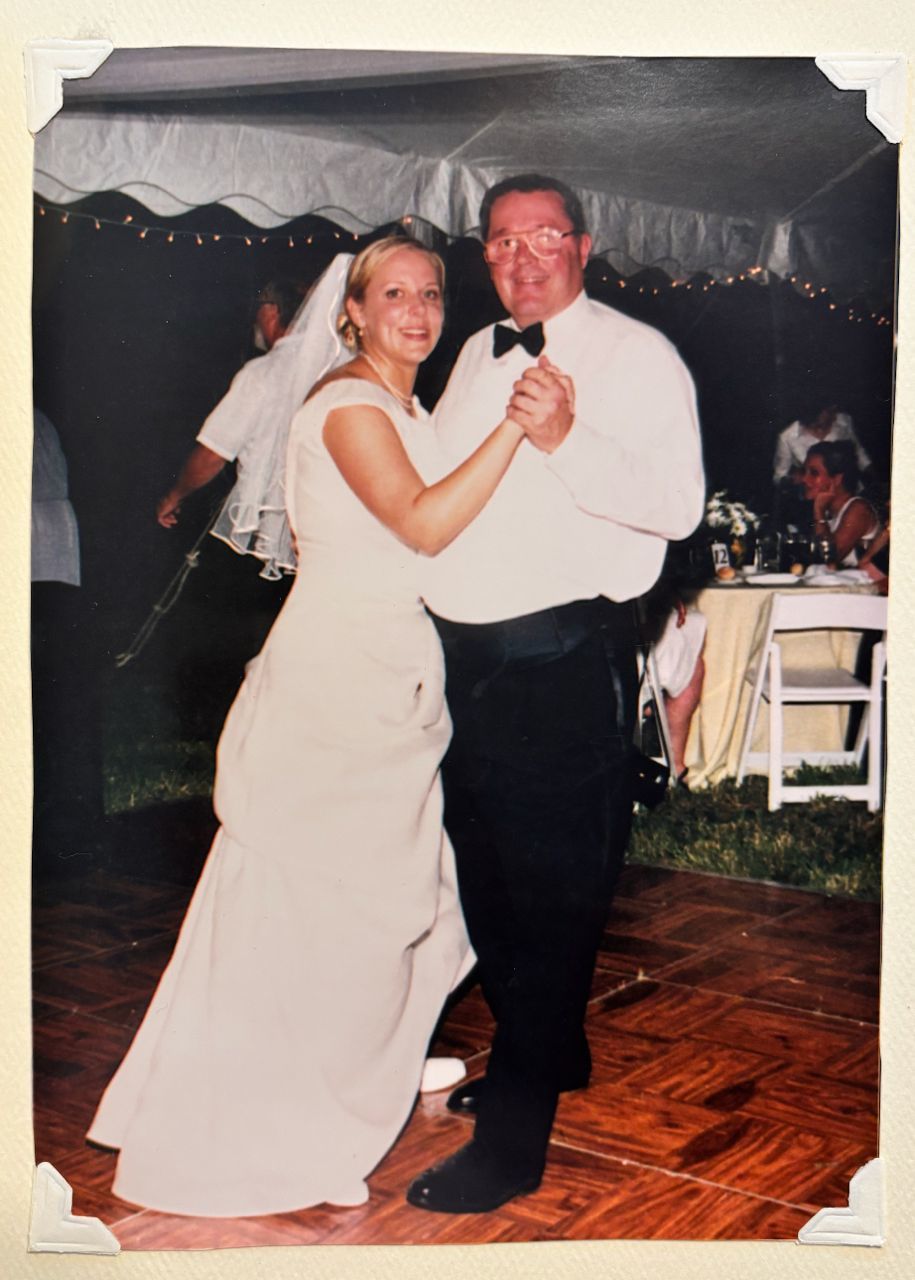
The author dancing with her father at her wedding.Courtesy of Cyndi Reed Rickards
“What do you think?”
“Can they get out of this inning?”
“Who’s up next?”
“How fast was that pitch?”
Unlike so much that depends on sustained attention or memory, baseball is wonderfully episodic. Each pitch stands on its own. Every inning is a reset. Even when memory fades, the present moment is enough.
Phillies designated hitter Kyle Schwarber at bat against the Pittsburgh Pirates at Citizens Bank Park on June 29.Yong Kim / Staff Photographer
The June 29 collapse against the Pirates, blowing a 5-0 lead, was painful for Phillies fans. But as much as that final score stung, it hardly mattered to me, because for nearly two hours, my father was engaged.
We talked. He reacted. He stayed with the game and, more importantly, with me in conversation. We weren’t talking about Alzheimer’s, or doctor’s appointments, or everything that’s been lost. We were just a father and daughter watching the Phillies, the way countless Philadelphia families have done for generations.
I left with a deeper appreciation for what sports can be. More than entertainment, they’re shared rituals. Conversation starters. Bridges across generations and time, they’re one of the few places where a disease that steals memory can’t quite steal the moment.
Sometimes the greatest gift a team gives its fans isn’t a win. It’s a reason to stay connected, one pitch at a time.
Go Phils.
Cyndi Reed Rickards is a former Jersey girl and proud Narberth resident who has remained a devoted Phillies and Eagles fan on both sides of the river. She learned from her dad at an early age that no one does heartbreak like a Philadelphia sports fan — and that Dallas will always suck.
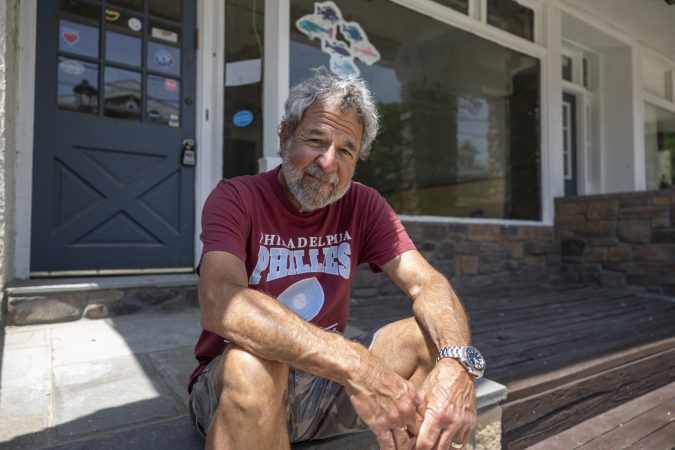
Danny’s Guitar Shop, an independent guitar store and lesson center run by musician Dan Gold, closed its doors after 17 years in downtown Narberth.
Over nearly two decades, Gold forged connections along the Main Line, sold guitars to celebrities, brought outdoor music to Narberth’s streets, and, briefly, starred in a TV show that drew on his talents as a self-proclaimed “kibitzer.”
Gold, 72, said retirement was already on his mind when his landlord raised the rent beyond what Gold could pay. Danny’s officially closed at the end of May. As Gold prepares for the next chapter, which will be filled with swimming, traveling, and playing bassin Broken Arrow, his Neil Young cover band, he said his time in Narberth was “just perfect.”
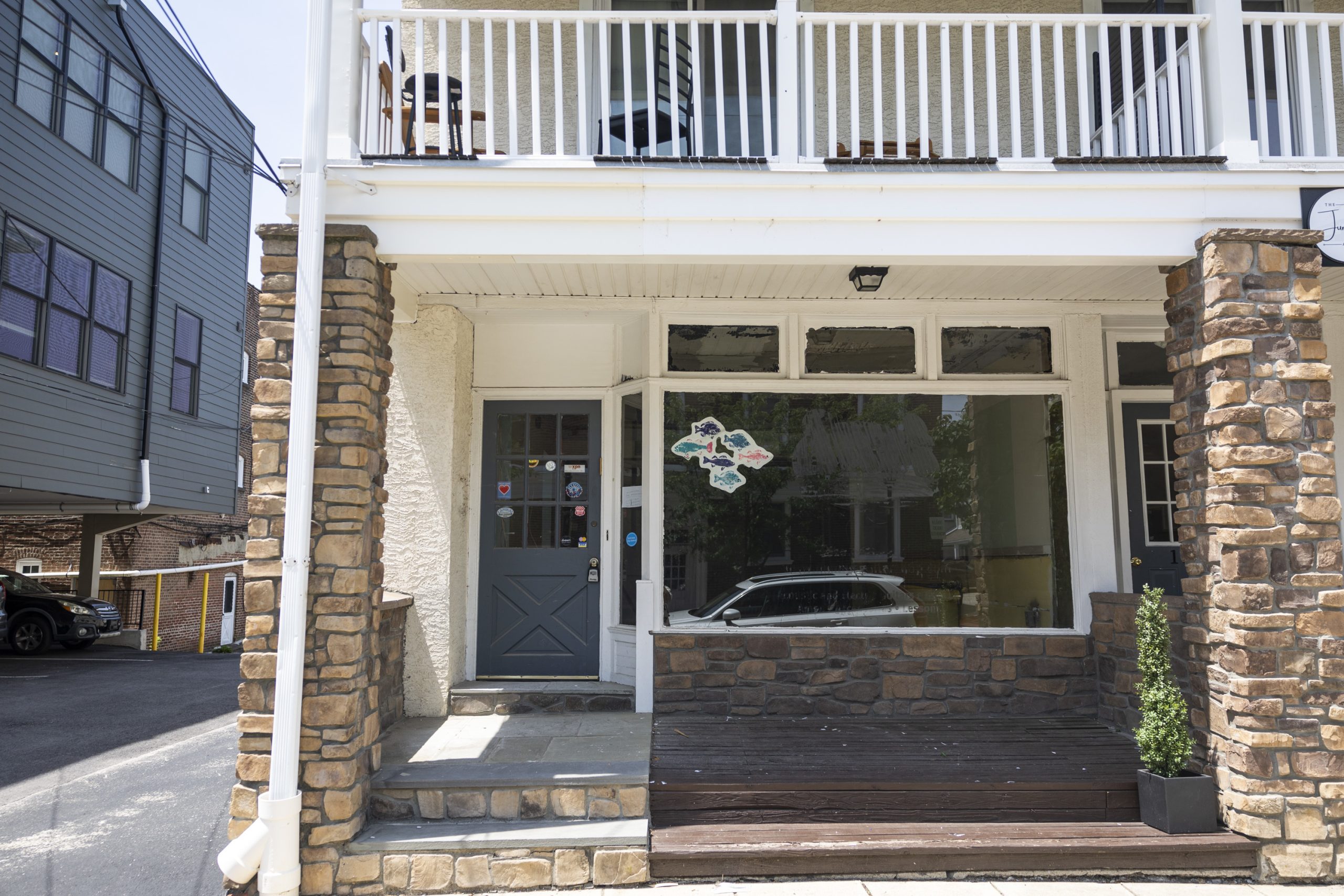
The former storefront of Danny’s Guitar Shop in Narberth. Tyger Williams / Staff Photographer
Gold opened Danny’s Guitar Shop in June 2009, right as the country had begun to dig itself out of the Great Recession. Guitar store Medley Music of Bryn Mawr had closed the year prior, and Center City’s 8th Street Music had moved across the bridge to New Jersey, leaving a vacuum for guitar lovers in Philly’s western suburbs.
Gold, a Newtown Square resident, grew up in Havertown and graduated from Haverford High School and Temple University. He started his career as a schoolteacher before taking a gig as a district sales manager for Fender Guitars, traveling across the region, from rural Pennsylvania to North Jersey, selling instruments and accoutrements.
Though it was risky to open a brick-and-mortar store at the heels of the financial crisis, Gold was bullish on the prospect. His mentors told him that as long as he ran guitar lessons, he’d be able to pay the rent. Gold had always loved Narberth’s “very distinct, charming personality” and was smitten with the Forrest Avenue storefront right away, with its ample natural light and welcoming front porch.
When Danny’s opened in 2009, the Main Line Times described it as having promptly “established itself as that rare kind of clubhouse — the kind where everybody’s allowed in.”
Over the years, the storefront’s shaded porch became the site of dozens of guitar recitals and summer evening jam sessions. Narberth residents gathered outside of Danny’s to talk about the news and the neighborhood gossip, and Gold always had treats for local dogs. Gold helped bring live music to Narberth during First Fridays and the annual July Fourth celebration. Ahead of a recital last fall, Gold posted on Facebook: “Students playin’ on the porch this Sunday 3:00! Bring a chair and come hang out!”
“Danny is loved around here and for good reason,” said Ed Ridgway, president of the Narberth Business Association, who took guitar lessons at Danny’s.
Ridgway described Danny’s as resembling an“old-timey barbershop.” If you asked Ridgway to make a list of 10 things that define Narberth’s downtown, he said Danny‘swould be on the list.
“He was just such a good presence in Narberth,” said Tracy Tumolo, owner of Narberth art and gift shop Sweet Mabel Store.
“This place,” Gold said. “It just fit me like a glove.”
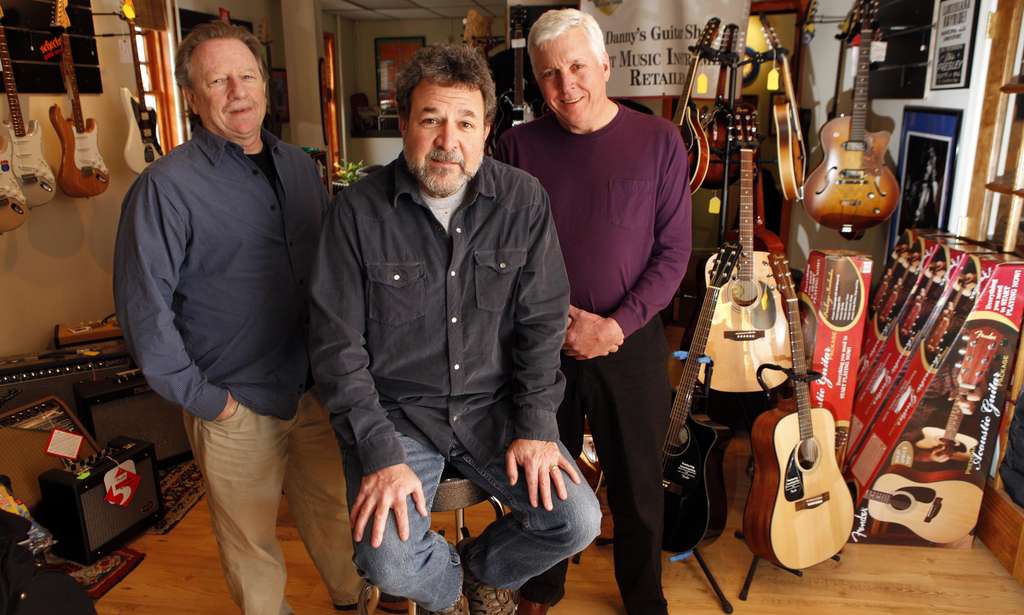
Danny Gold (center) pictured at Danny’s Guitar Shop in Narberth in 2018 with partners Larry Freedman (left) and Ron Stanford. LAURENCE KESTERSON / Staff Photographer
Every once in a while, a star or two would stop into Danny’s Guitar Shop while visiting the area or prepping for a show at Ardmore Music Hall. The Eagles’ Timothy B. Schmit bought a few guitars and gave Gold backstage passes when the band played Atlantic City. Wilco’s John Stirratt stopped by, as did Dweezil Zappa, Frank Zappa’s son. Tumolo said Gold always encouraged them to shop at Narberth’s other businesses.
In 2014, Gold starred in a 13-episode series on WHYY-TV’s YArts cable channel, which aimed “to do for guitars what Anthony Bourdain has done” for international cuisine or ”Mike Rowe for the art of cleaning septic tanks,” according to an Inquirer story from the time. In the series, Gold explored the origins of Klezmer music, interviewed the scholar who wrote the definitive book on the history of the accordion, and spent quality time with electric guitar giant Paul Reed Smith.
Lessons were the biggest part of Gold’s business model at Danny’s, as his mentors predicted. He did a large consignment and secondhand business, as well, as he was mostly selling to first-time and beginner players.
“The lessons made me a destination store. It’s never like I carried away wheelbarrows full of money, but we were able to make a modest living and enjoy doing what we were doing,” Gold said.
Like many brick-and-mortar merchants, Gold said it became more difficult over time to keep up with the ubiquitous online marketplace. Consumers can now buy any model of guitar, in any color, at any time. Music stores across the countryhave shuttered in recent years, pointing to online shopping as a factor in their decline.
On one hand, Gold feels somewhat liberated from the day-to-day responsibilities of running his namesake storefront. On the other hand, there’s a lot he’ll miss — the people, the borough, watching the neighborhood kids grow up.
At the end of the day, Gold said, “It’s been a great run.”
This suburban content is produced with support from the Leslie Miller and Richard Worley Foundation and The Lenfest Institute for Journalism. Editorial content is created independently of the project donors. Gifts to support The Inquirer’s high-impact journalism can be made at inquirer.com/donate. A list of Lenfest Institute donors can be found at lenfestinstitute.org/supporters.
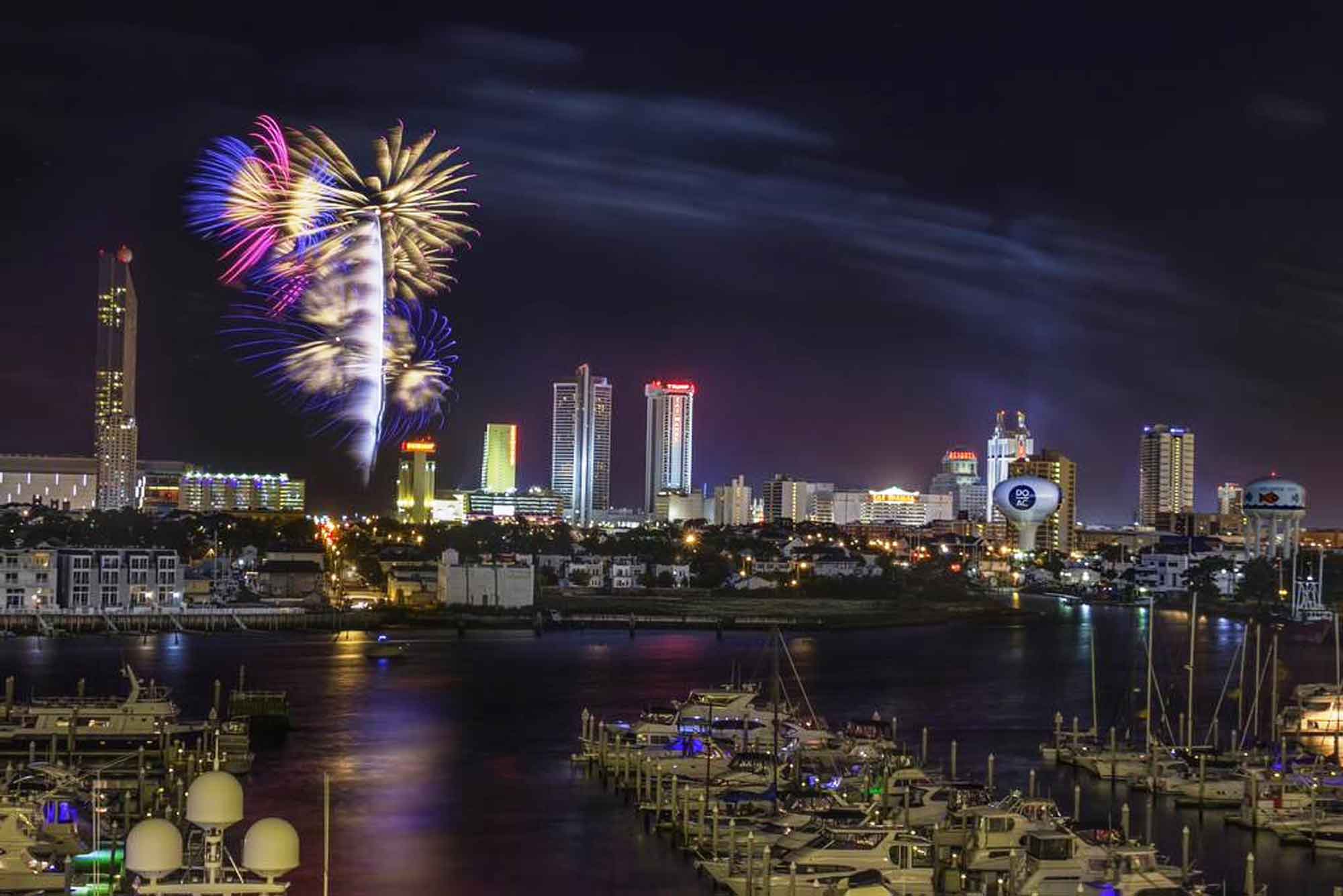
This Fourth of July will be unlike any in recent memory. As the nation marks its 250th anniversary, Philadelphia and the surrounding region are packed with celebrations — and fireworks displays. From the city and suburbs to South Jersey and the Shore, there are dozens of opportunities to catch a show.
Whether you’re staying in Philadelphia, heading to the suburbs, or spending the holiday down the Shore, here’s where to find Fourth of July fireworks across the region.
Wawa Welcome America: 🕙 July 4, 5 p.m. 📍Christina Aguilera and Philadelphia native Jill Scott headline a concert followed by fireworks, 2600 Benjamin Franklin Parkway, Philadelphia, Pa., 19130, 🌐 july4thphilly.com
Conshohocken Fireworks Display: 🕙 July 3, 9:15 p.m., 📍The fireworks will take place at Sutcliffe Park, but the borough is closing the park and surrounding areas to the public due to the size of the display. (They advise you to watch the show from another vantage point in town.), 🌐 conshohockenpa.gov
Narberth is in the middle of a debate over zoning that has raised questions over affordability, neighborhood character, and how far the small borough should go in trying to solve the country’s acute housing shortage. Monica Herndon / Staff Photographer
As housing costs continue to outpace affordability, a debate has sparked in Narberth about what, if anything, the borough should do to help combat the crisis.
Narberth has become increasingly expensive, recording the highest median housing sales price in Montgomery County in 2024.
Last year, borough council asked its planning commission to study possible zoning changes to increase affordable housing, and the commission came back with several suggestions. While nothing has been decided, and likely won’t be for months, residents have decidedly mixed feelings.
Some say increasing housing density and incentivizing developers to include affordable units would help ease the burden on those otherwise priced out. Others worry it’s a misguided effort that could exacerbate parking woes and reshape the community’s identity without really addressing the problem.
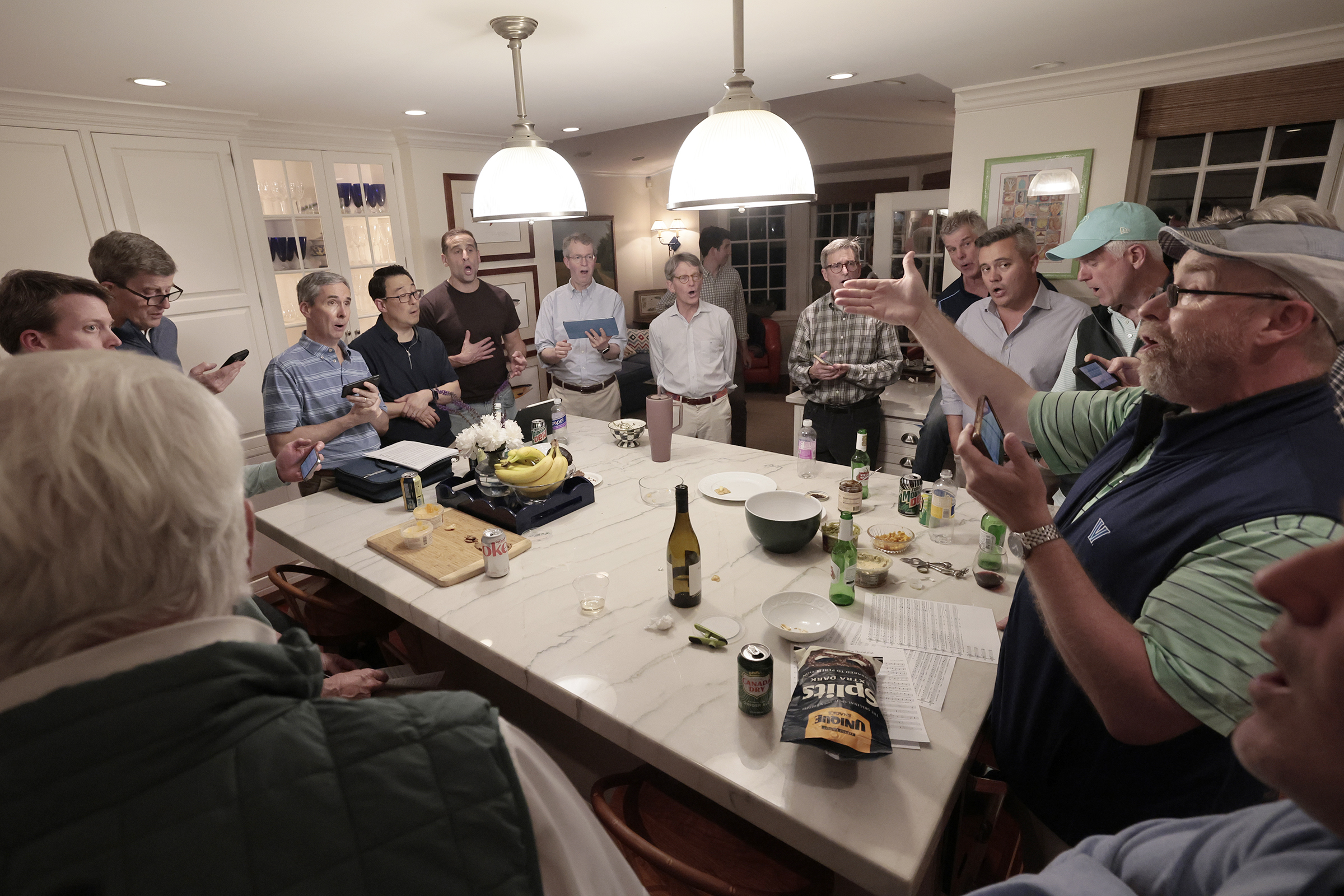
The Tonics, a Philly-area a capella group made up largely of middle-aged men, rehearse in a member’s kitchen in Haverford on Thursday, May 28, 2026.Elizabeth Robertson / Staff Photographer
A group of mostly middle-aged Main Line fathers and grandfathers are going viral for their harmonizing.
Known as the Tonics, the a capella group has gained a global audience thanks to videos of their riffs circulating online. The group has even caught the attention of some big names, including Gigi Hadid and Michael Bublé.
Most of the group’s 19 members hail from around the Main Line, including Bryn Mawr, Haverford, and Wayne.
Reminder for residents: There will be no trash or recycling pickup and the township offices will be closed tomorrow for Juneteenth. See how your pickup could be impacted here.
The township is hosting a capital improvement plan workshop Wednesday at 6 p.m. The meeting will also be streamed live and is accessible via Zoom.
The 13-acre Oakwell estate in Villanova is officially preserved after two nonprofits, Natural Lands and the Wyncote Foundation, purchased it in two parcels for a combined $13 million. Situated adjacent to Stoneleigh, the property will now be incorporated into the 42-acre public garden.
The average starter home in Villanova clocks in with a value of $1 million or more, according to new data from Zillow — about five times the national average. Villanova is the only community in the state to carry the distinction of having starter home pricing that high. The Inquirer’s Michaelle Bond explains the uptick.
The community is mourning the death of Bryn Mawr resident Bennett L. Aaron, who died earlier this month at the age of 92. Aaron was a longtime lawyer, honorary trustee of the Jewish Federation of Greater Philadelphia, and former president of the Federation of Jewish Agencies of Greater Philadelphia.
Gladwyne Fire Company is hosting a free car seat safety check event Tuesday from 9 a.m. to noon at the fire house. Advanced registration is required.
🏫 Schools Briefing
The district’s school board voted to repeal its existing technology policy earlier this week, to the frustration of parents who don’t want their kidson district-issued devices. The move could mean the district is no longer required to accommodate families who don’t sign electronic device use agreements as many are pushing to limit school-related screen time for their kids.
🍽️ On our Plate
Last week, The Inquirer dropped its list of the 76 most iconic dishes in the region and there’s a local tie among them. Ranking at No. 15 is La Colombe’s draft latte, a portable version of the “frothy, stylish cold coffee,” reporter Michael Klein says. You can get it in many area stores, as well as at La Colombe’s Bryn Mawr cafe.
After much anticipation, The Buttery is opening its newest outpost in Bryn Mawr this weekend. Located at 836 Lancaster Ave. in the former Kindred Collective space, The Buttery will host a grand opening Saturday complete with giveaways and a special pastry. The new location has seating for 82 people and will be open daily from 7 a.m. to 5 p.m.
🎳 Things to Do
🎶 Bryn Mawr Twilight Concerts: There are two shows this weekend, starting with indie pop singer/songwriter Marielle Kraft and songwriter Kevin Walkman on Friday. On Saturday, Livingston Taylor, who wrote Top-40 hits for his brother James Taylor, takes the stage. ⏰ Friday, June 19, 7 p.m., and Saturday, June 20, 7 p.m. 💵 $25.88, free for kids 12 and under 📍 Bryn Mawr Gazebo
🍦 Father’s Day Ice Cream Social: Celebrate dad at Harriton House’s annual event, which includes yard games, crafts, and, of course, ice cream. ⏰ Sunday, June 21, 1-4 p.m. 💵 $6.98-$12.16, free for dads 📍 Harriton House
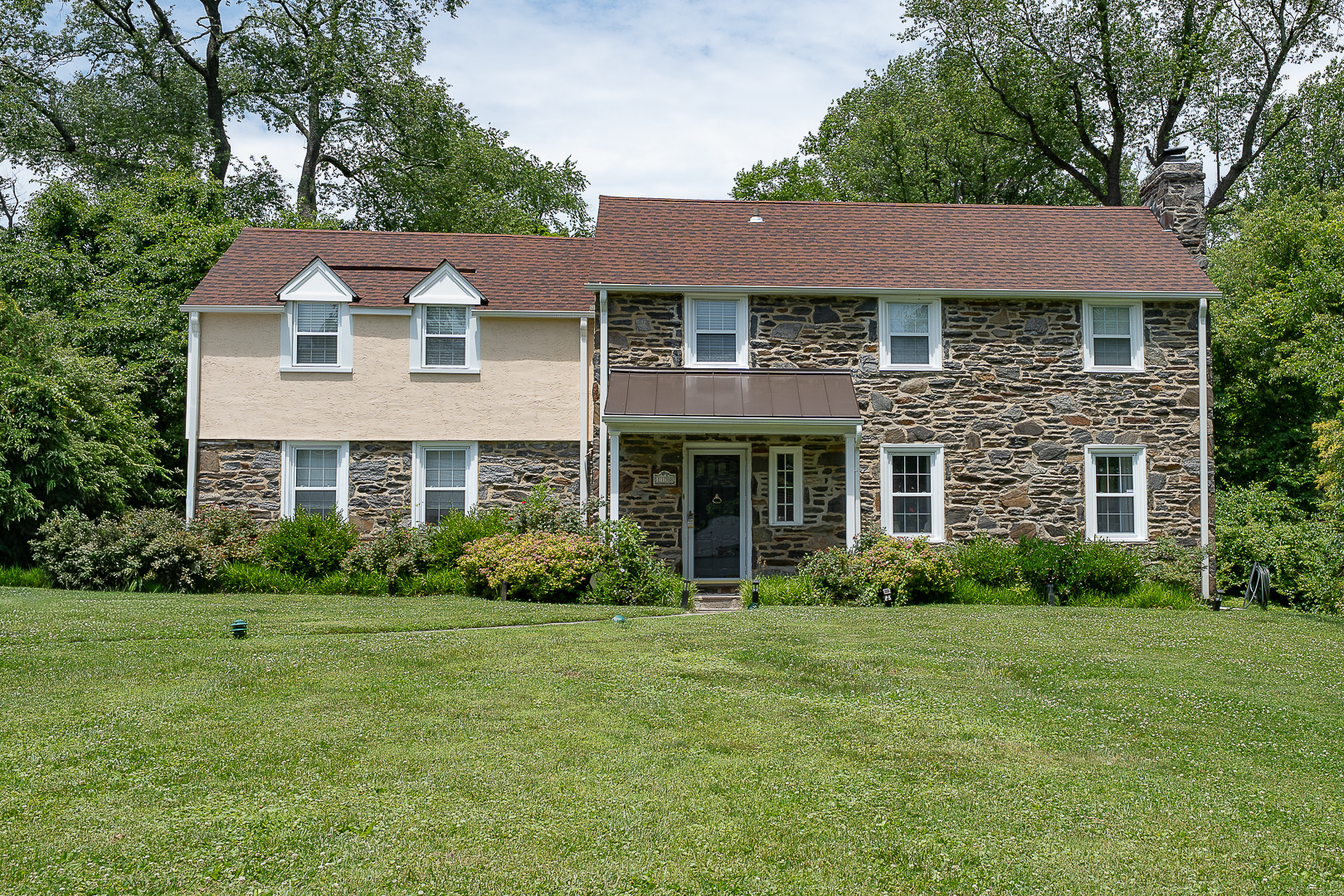
The home spans just over 3,000 square feet.Dave Ocenas | Courtesy of Damon Michels/Keller Williams
Built in 1948, this home gives a nod to the past thanks to its classic stone exterior, while the interior is contemporary. It has formal living and dining rooms, the latter with a cool chandelier, a den, a family room, a bonus room, and an eat-in kitchen. There are four bedrooms upstairs and additional living space in the finished basement. Outside, there’s a patio and a basketball hoop.
By submitting your written, visual, and/or audio contributions, you agree to The Inquirer’s Terms of Use, including the grant of rights in Section 10.
This suburban content is produced with support from the Leslie Miller and Richard Worley Foundation and The Lenfest Institute for Journalism. Editorial content is created independently of the project donors. Gifts to support The Inquirer’s high-impact journalism can be made at inquirer.com/donate. A list of Lenfest Institute donors can be found at lenfestinstitute.org/supporters.
Brenna Carswell has lived on the same street in Narberth for a decade.
Carswell moved to Narberth,a small Montgomery County borough encircled by Lower Merion, in 2011 from Upper Darby with her younger daughter after a divorce. She knew early on that her daughter would need more support than the Upper Darby schools could provide, so she scraped together the cash for a rental in the Lower Merion School District.
“It’s been a great place for my girls to grow up,” Carswell said of her Main Line community. “It’s given them a town that I didn’t have.”
After four years and threerentals, Carswell, 44, a small-business owner, bought a home in the borough.In early 2020,she sold her house with the intention of buying another place in Narberth, but the pandemic hit and Carswell was furloughed. She ended up in a rental across the street, where she still lives. By the time Carswell was ready to buy again, houses around her had exploded in price.
She and her family have outgrown their space, but in the current market, “there’s literally nowhere to go.”
Narberth’s borough council last August directed its planning commission to studyhow it could use zoning to increase affordable housing and support the local economy. Officials say living in the borough has become increasingly expensive, as experiences like Carswell’s become more and more common.
In February, the commission came back with a handful of recommendations in two zoning districts: the higher-density residential area that surrounds the Haverford Avenue downtown, and the commercial mixed-use corridor along Montgomery Avenue.
Recommendations included allowing apartments, cottages, and rowhouses by-right, in the ring around the downtown core, and permittingextra floors for apartment buildings that include affordable units in both zoning districts. The commission suggested reducing minimum parking requirements, allowing ground-floor apartments on Montgomery Avenue, and lettingdevelopers build off-site parking lots for apartment complexes.
Adam Krom, the planning commission’s chair, has said the changes would “provide flexibility” and incentivize developers to build both market-rate andaffordable housing units in areas where similardevelopments already exist.
But what began as a municipal land-use discussion has morphed into a monthslong debate in the borough over what, if anything, Narberth should do to fight America’s housing crisis. Proponents say changes would bring inmuch-needed tax revenue, create foot traffic for downtown businesses, and help preserve socioeconomic diversity. Others, however,feel that a small contingent on the borough council has charged ahead with proposals to increase density while ignoring growing concerns over traffic, neighborhood character, and the reality of supportingtransit-oriented development with a transit system marred by uncertainty.
Shops line North Narberth Avenue.Monica Herndon / Staff Photographer
Rising costs, shrinking options
In Narberth, and across the Philadelphia suburbs, the cost of housing is outpacing the ability of large segments of the population to afford it, said Scott France, executive director of the Montgomery County Planning Commission, which consults the borough on land-use issues.
Narberth had the highest median housing sales price of any municipality in Montgomery County in 2024, at $751,000, a 70% increase from 2014.
The average rent for a one-bedroom apartment in Narberth is $2,050 per month, according to Zillow rental data. As housing prices have risen, incomes have stayed largelystagnant. In2024, 46% of renters and 19% of homeowners in Montgomery County were spending more than 30% of their income on housing, according to a Housing Blueprint recently published by the county.
In Montgomery County, boroughs like Narberth were often the first point of entry for people looking to settle in the suburbs, France said, given their more urban-suburban feel and smaller lot sizes.
Yet the factors that once made places like Narberth starter-home magnets have now made them increasingly inaccessible. As millennialshave sought outpremiums like walkability and transit access, the cost of both renting and homeownership in places like Narberth, Conshohocken, and Ambler has risen, France said.
Montgomery County’s and Narberth’s housing woes are part of a well-documented housing shortage that has swept the United States, as a widening gulf between supply and demand has put homeownership further out of reach for many, especially for younger people.
Some communities facing housing shortages have loosened zoning restrictions in order to court developers who are willing to build housing and, in certain cases, set aside affordable units in exchange for height and other bonuses. On the Main Line, luxury apartmentshave cropped up in large numbers, especially in areas where officials have used zoning to increase density.
Fred Bush, president of Narberth’s borough council, said the county’s Housing Blueprint crystallizes why Narberth needs to ease its zoning regulations and incentivize development.
“It’s very difficult for people who come in here — who are renting or who are looking to move in, young families — to find a place to stay,” Bush said.
Narberth Borough Council President Fred Bush. Bush is part of a contingent of borough council members who see zoning changes as a key to increasing the availability of affordable housing in the borough. Monica Herndon / Staff Photographer
‘Is that what’s best for this area?’
Narberth residents like Margot and Jason Deitz describe the push to rezone as confusing and misguided. The couple, both 40, have lived together in Narberth since 2020. Their house is near the Montgomery Avenue corridor, where changes are being considered.
The Deitzes are among a large contingent who feel the proposals would complicate an already hairy parking situation, allow for buildings outside of Narberth’s quaint character, and tip the balance of the borough in favor of renter-occupied units. They feel the borough is putting the cart before the horse, trying to address national problems rather than the sidewalk repairs and parking shortages on their front steps.
For Margot Deitz, the idea of building fewer parking spaces and askingresidents to rely on SEPTA, a sometimes unreliable transit system, was confounding. Her questions to the borough council about parking went unanswered, she said. Both Margot and Jason Deitz wondered how, in a town with shuttered storefronts and parking problems, building new apartments became the council’s priority.
Homeowner Michelle Karten, 52, went to a public meeting to ask questions about the proposals but felt the changes were a “foregone conclusion.”
Karten said she hopes the borough can find a more “holistic” approach, rather than just allowing for the proliferation of luxury apartments. She believes the borough has already made a number of concessions to developers and does not need to offer density bonuses to get affordable housing.
“Do we really need to go up that extra level? Is that what’s best for this area? And what other solutions could there be?” Karten said.
Matt Patrick, 37, a homeowner in the borough since 2018, is “not against affordable units” but thinks the council is using the affordability crisis to push through incongruous density in spite of resident opposition.
“It seems like more of a developer bonus than something aimed at conquering affordability,” Patrick said.
Narberth’s SEPTA train station on the Paoli/Thorndale Line.Monica Herndon / Staff Photographer
Luxury apartments’ “two truths problem”
For others, the debates over parking requirements and maximum heights are a distraction from a looming reality: The national housing crisis has hit Narberth, and prices will only continue to rise without new inventory.
Blessing Osazuwa, 28, thinks the changes are a “great idea.” Osazuwagrew up in Lower Merion and moved to Narberth three years ago. Her roommate’s family owns the house they live in, giving her a break on the rentthat allows her to affordNarberth.
“I love Narberth,” Osazuwa said. “I would love to stay, but there’s no way that I’ll be able to afford that on my own, and it’s a shame, because I feel like I contribute to the community.”
Numerous residents said the conversation around zoning in Narberth has devolved into misconceptions and ad hominem attacks hurled from all sides, across public meeting forums and Facebook groups.
Carswell said there is amisconception that Narberth and surrounding communities alreadyhave plenty of affordable apartments.
Little existsin Carswell’s price range in or around Narberth. She has chased multiple “ghost” listings, reaching out to property managers only to find out listed units are occupied. She wants to stay in Narberth to provide consistency for her kids. When she explains her reality, she said, she is often told to just move somewhere else.
Osazuwa said the refrain that those who cannot afford Narberth should simply move ignores a souring economic reality.
“I tend to encounter that ‘pulling yourself up from the bootstraps’ mentality without regard to the times that we’re living in, without regard to inflation, without regard to the fact that jobs don’t pay as much,” shesaid.
Advocatesacknowledge thatfuture development will likely rely on luxury rentals, many ofwhich have popped up in neighboring communities like Ardmore andBala Cynwyd andwould be unaffordable to all but a wealthy set of renters. They believe, however,that any new housing units can help moderate the market, and even a few affordable units attached to the developments could provide housing for lower-income residents.
“I agree that struggling families are not going to be moving into luxury apartments, but it just puts an overall downward pressure on rental prices for the rest of the market,” Bush said.
Vincent Reina, a University of Pennsylvania professor and founder of the Housing Initiative at Penn, said there is “a two truths problem” when it comes to luxury apartments. High-end buildings do not fill the need for affordable housing. But, without new construction, existing prices can be pushed up even further as demand continues to outpace supply.
“What you aren’t going to see is the natural market production of [low-cost] units because the price is too high,” he said. Without government incentives for affordable units, “the numbers just don’t pencil out.”
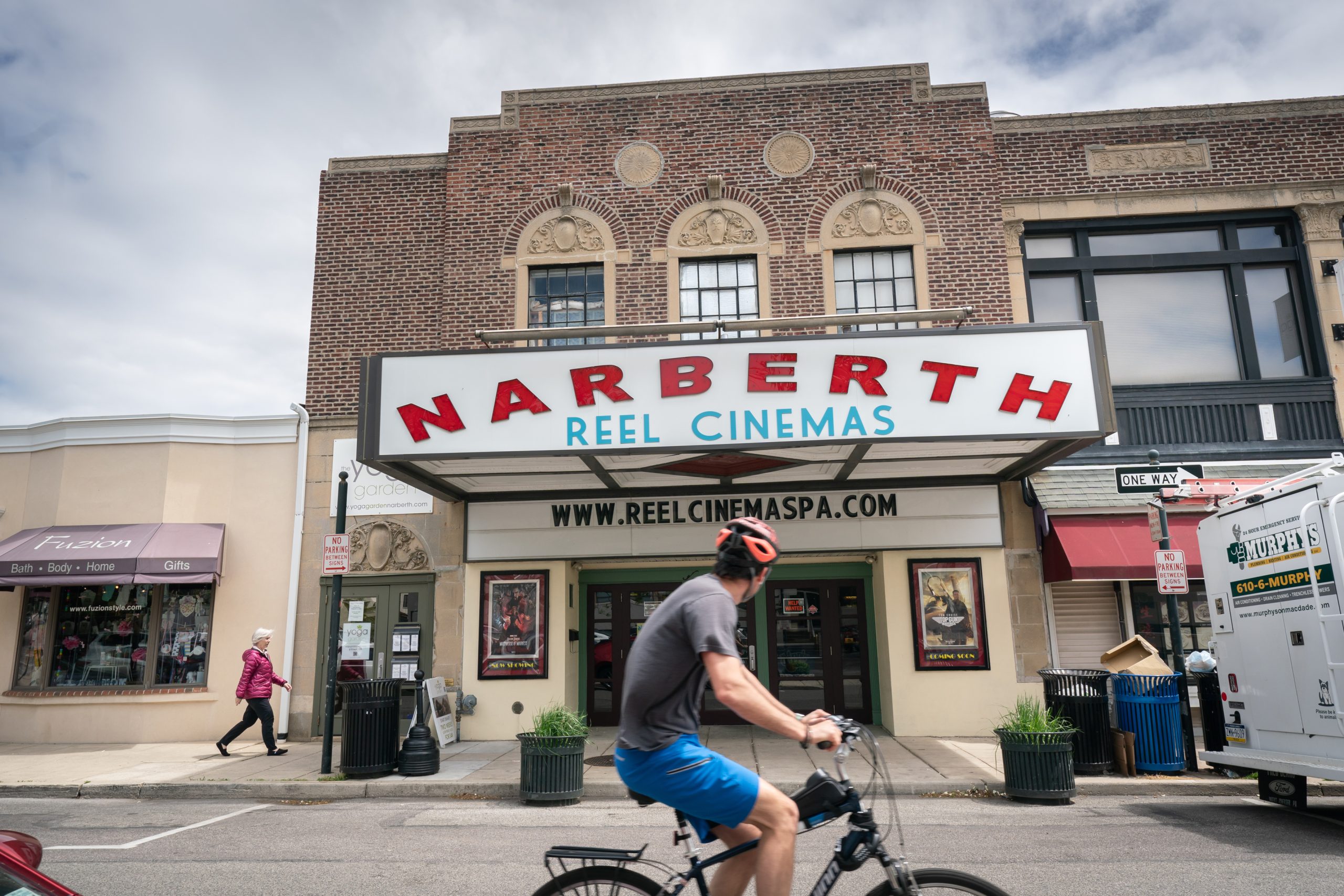
Narberth Reel Cinemas. The borough is considering zoning changes that would increase density around its downtown core. JESSICA GRIFFIN / Staff Photographer
Balancing ‘what should be complementary interests’
The borough council has drafted comments to send back to the planning commission for consideration. The draft splits the difference on some issues, dropping the parking reduction and someheight bonuses, but keeping other changes. It could be months before any changes are actually adopted.
Council member Mike Salmanson said Narberth is trying to balance “complementary interests” in keeping the borough’s character while ensuring fiscal stability. Salmanson said the borough has maxed out how much it can charge in earned income tax. Because Pennsylvania does not require regular property reassessments, it is difficult for municipalities to collect the revenue they need without just raising taxrates.
“Increased housing creates a broader tax base,” Salmanson said. “I see the advantages of that.”
But he also called zoning changes that cater to current market conditions, and not the long-term success of the borough, “short-sighted.”
Council member Cyndi Rickards believes the council has yet to meaningfully engage withincentivizing housing options beyond luxury apartments, such as reasonably priced ownership opportunities that would allow residentsto build equity.
“I really struggle to understand how those of us who own homes … [see] luxury apartments as a tool for justice,” Rickards said.
Carswell said she understands the concerns about zoning changes and was once opposed herself.
“There is a deep fear, that I understand, that the good old days are slipping away,” Carswell said. “The good old days are gone. … The changes that happened to our economy on a national scale absolutely impacted Narberth.”
This suburban content is produced with support from the Leslie Miller and Richard Worley Foundation and The Lenfest Institute for Journalism. Editorial content is created independently of the project donors. Gifts to support The Inquirer’s high-impact journalism can be made at inquirer.com/donate. A list of Lenfest Institute donors can be found at lenfestinstitute.org/supporters.
Angel Okeke, a junior at the Academy at Palumbo in Philadelphia, wanted to make sense of the loss of her best friend’s brother to a tragedy spurred by gang violence.
Isadora Pendygraft, an eighth grader at Welsh Valley Middle School in Narberth, felt pulled to explore how restorative justice could reshape the criminal court system.
Avigail Wus, a junior at Pennsbury High in Fairless Hills, hoped to examine how the public, the media, and courts interact with survivors of sexual assault.
They are among a group of students who spent nearly a year thinking, researching, and writing about changes they want to see in Philadelphia. This month, their work culminated in professional performances of their original plays.
“It’s freaking amazing,” Okeke said.
The possibility of performance
The student work is part of What Now: 2026, a new arts festival marking the country’s Semiquincentennial. When the festival was in the planning stages, Madeline Charne, director of education and programs for Philadelphia Young Playwrights, said sheknew youth voices ought to have a place.
That is how PYP’s Civic Theater Project was born.
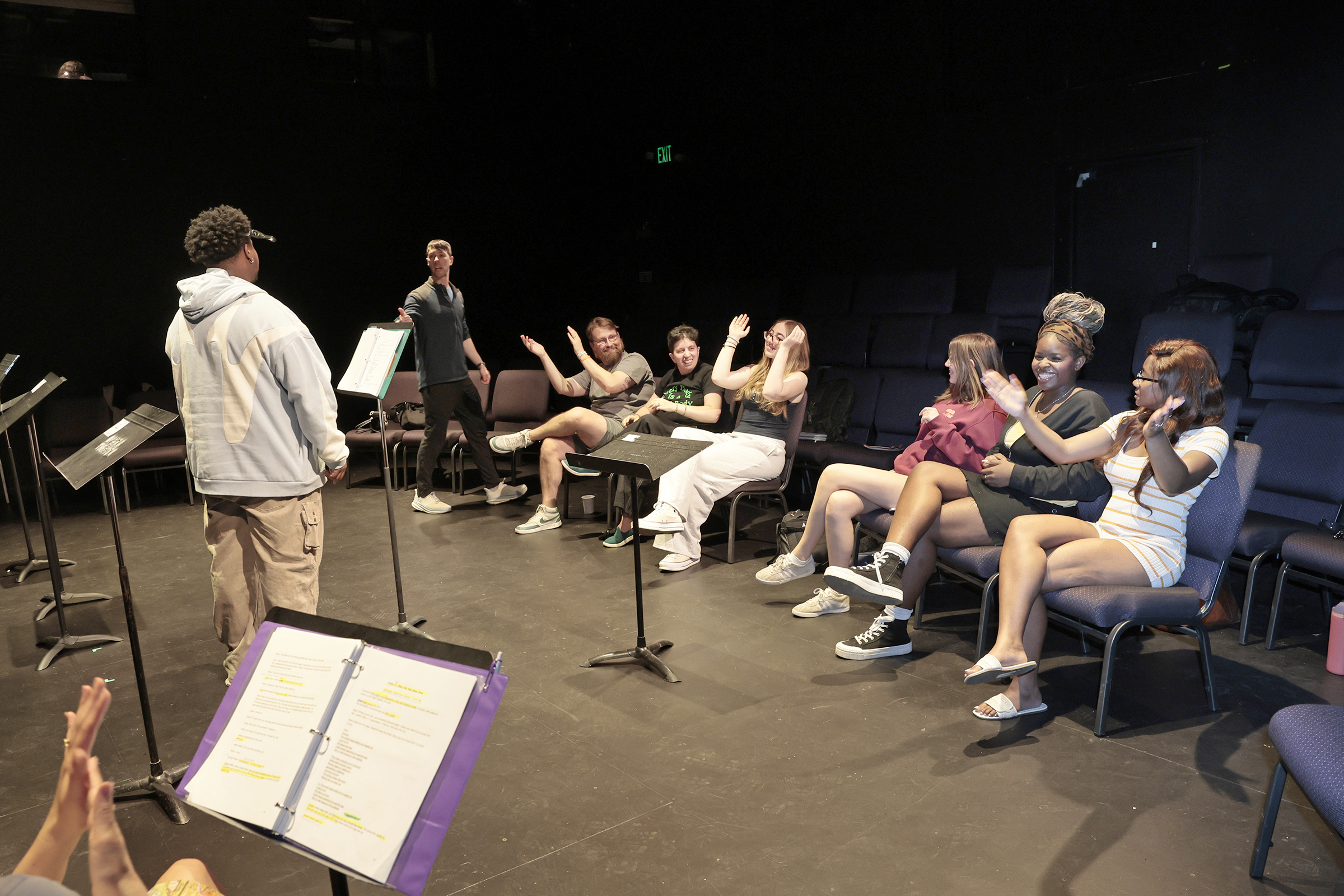
(L-R) Actor Raymond Ingram rehearses as (seated) Palumbo civics teacher Charlie McGeehan, Philly Young Playrights director of education and programs Madeline Charne, students Abigail Wus, Isadora Pendygraft, Angel Okeke, and Harmonee Summers look on during rehearsal at the Drake Theater in Philadelphia earlier this month.Elizabeth Robertson / Staff Photographer
Charne said she wanted students “thinking about how theater itself can create social change, not just be about social change.” She prompted students to imagine Philadelphia 25 years in the future, to dream about what should be changed, and to see their work as the beginning of that shift.
“Creativity and art and performance — that’s what has the possibility to make people actually listen,” said Charlie McGeehan, a Philadelphia School District civics teacher who worked as a PYP teaching artist.
Kids thought so, too. For every spot PYP had in the process, it received roughly five applicants. Eventually, five young people signed on: Okeke; Wus; Pendygraft; Harmonee’ Summers, who attends Springside Chestnut Hill Academy; and Maroua Benfadhla, a student at Science Leadership Academy.
The young playwrights had to commit one day a week to their work — researching and refining ideas, interviewing change makers around the city, committing to their eventual topic, writing, editing, critiquing one another’s work, andeven casting their plays.
The works the five eventually produced were a revelation, McGeehan said — powerful, smart, and character driven. They were presented in staged readings at the Louis Bluver Theatre in Center City.
The right rooms, the right resources
On a sweltering Wednesday this month just before the students’ work debuted, they gathered at the theater for a final run-through.
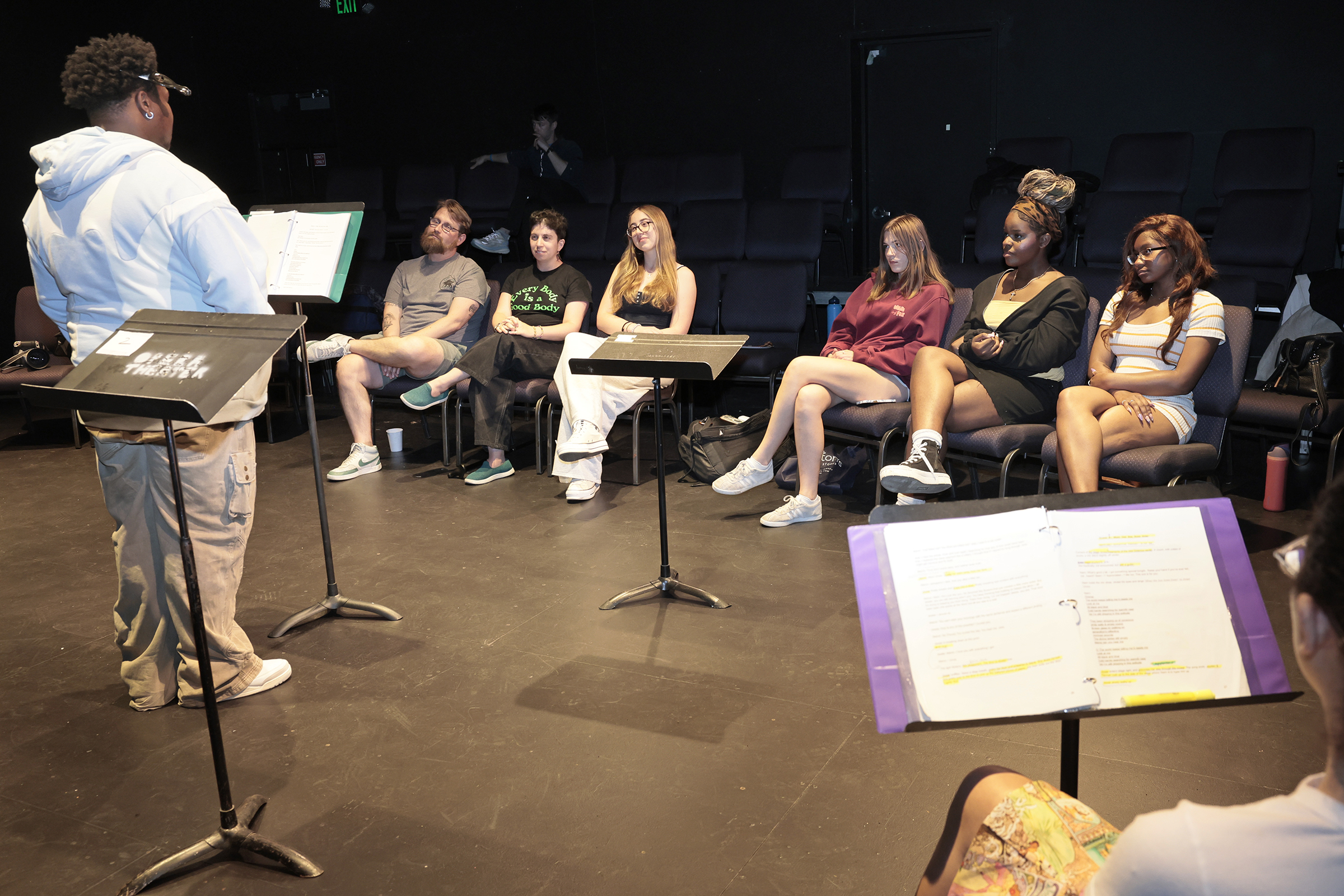
The playwrights sat in chairs, eyes fixed on the actors in front of them. The actors performed the plays without sets or costumes, just reading scripts on music stands and allowing the audience to take inthe power of the young people’s words.
The moment Summers first heard professional actors reading words she had written, it stopped her cold.
“It is so cliche to say it’s magical, but it feels different when your words are literally jumping off the page‚” said Summers, whose play is called The Double K Show. It chronicles two young women’s rise to stardom and the effect substance use has on their lives, and was shaped by events Summers observed growing up in North Philadelphia and attending an elite private school.
Part of the students’ process was finding resources that might help with the issues they tackled — from recovery and housing assistance organizations to groups that support survivors of sexual assault.
(L-R) Actor Raymond Ingram rehearses as Palumbo civics teacher Charlie McGeehan, Philly Young Playrights director of education and programs Madeline Charne, students Abigail Wus, Isadora Pendygraft, Angel Okeke and Harmonee’ Summers look on during rehearsal at the Drake Theater in Philadelphia earlier this month.Elizabeth Robertson / Staff Photographer
Pendygraft, whose mother, Letitia Stein, is an editor at The Inquirer, is a PYP veteran and the only middle schooler in the group. The playbill lists Pendygraft’s author name as Rut, a nickname. She said she was inspired by The 57 Bus, a book she had read about the ripple effects of a crime committed by one teenager against another.
“The criminal court has a long history of being complicated and a little corrupt and biased,” Pendygraft said, but restorative justice — the theme of her play — would go a long way toward repairing harm.
Wus said she used the motif of the Salem witch trials as “a critique about the way stories of sexual assault have been commodified into entertainment.” It wasa powerful exercise in using her voice, she said, made stronger by the magic of real performers.
“These actors, they’re the people you see on TV — they are so talented,” Wus said. “Hearing my words out loud has allowed me to make revisions to make my script feel more real. It’s probably one of the best writing experiences I’ve ever had.”
Okeke, who wrote Echoes Beyond Shut Doors about the loss of Naim Castleberry, her best friend’s brother, said she struggled for a time with the idea that her ideas would go nowhere.
“It felt very daunting to tackle such big issues. Often, I feel like I feel small as a young person in Philly. I have this doubt, ‘how much of an impact can I really make?’” Okeke said. But she powered through, with words — and the experience was transformative.
“Us youth really have good things to say if we’re put in the right rooms with the right resources,” she said.