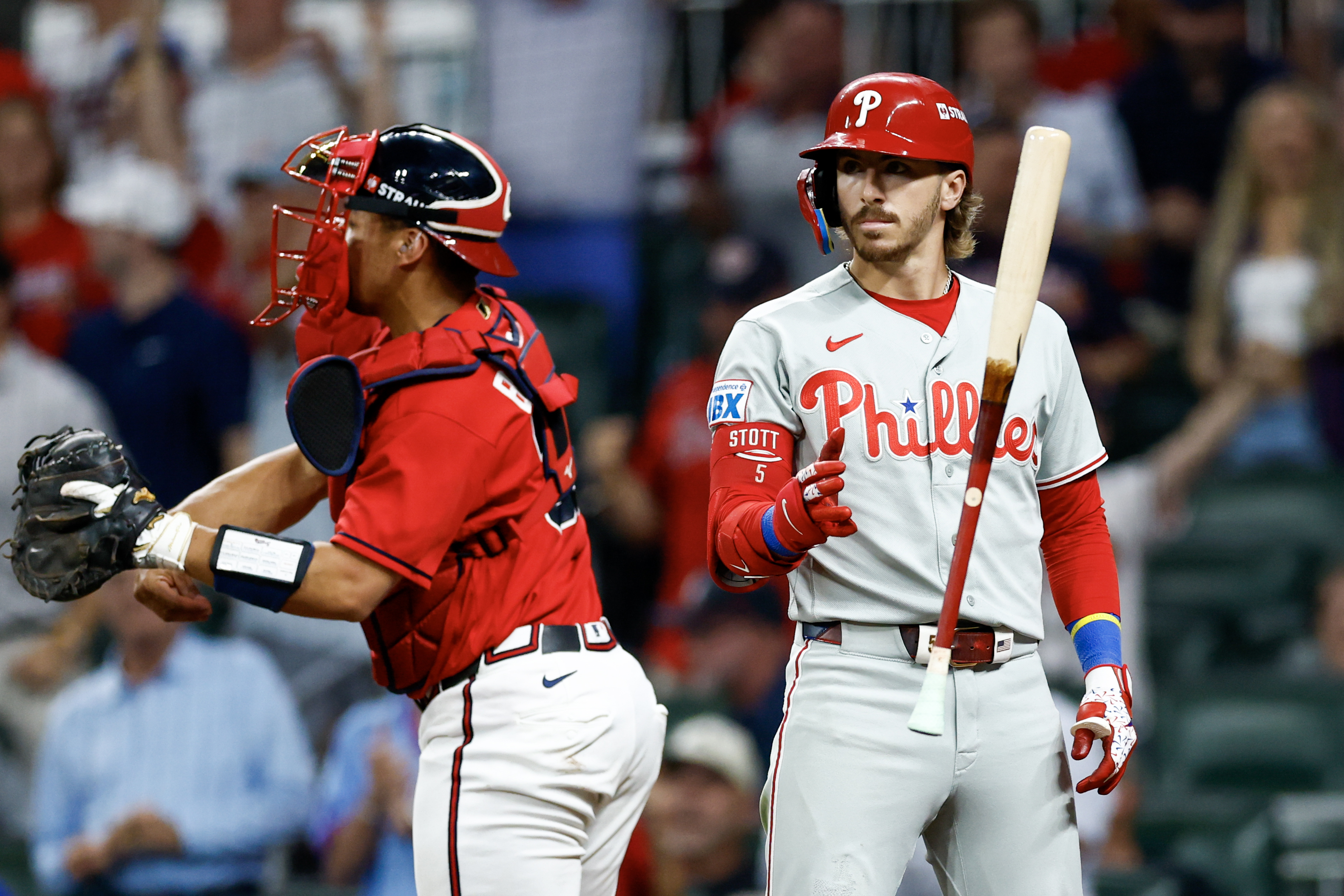
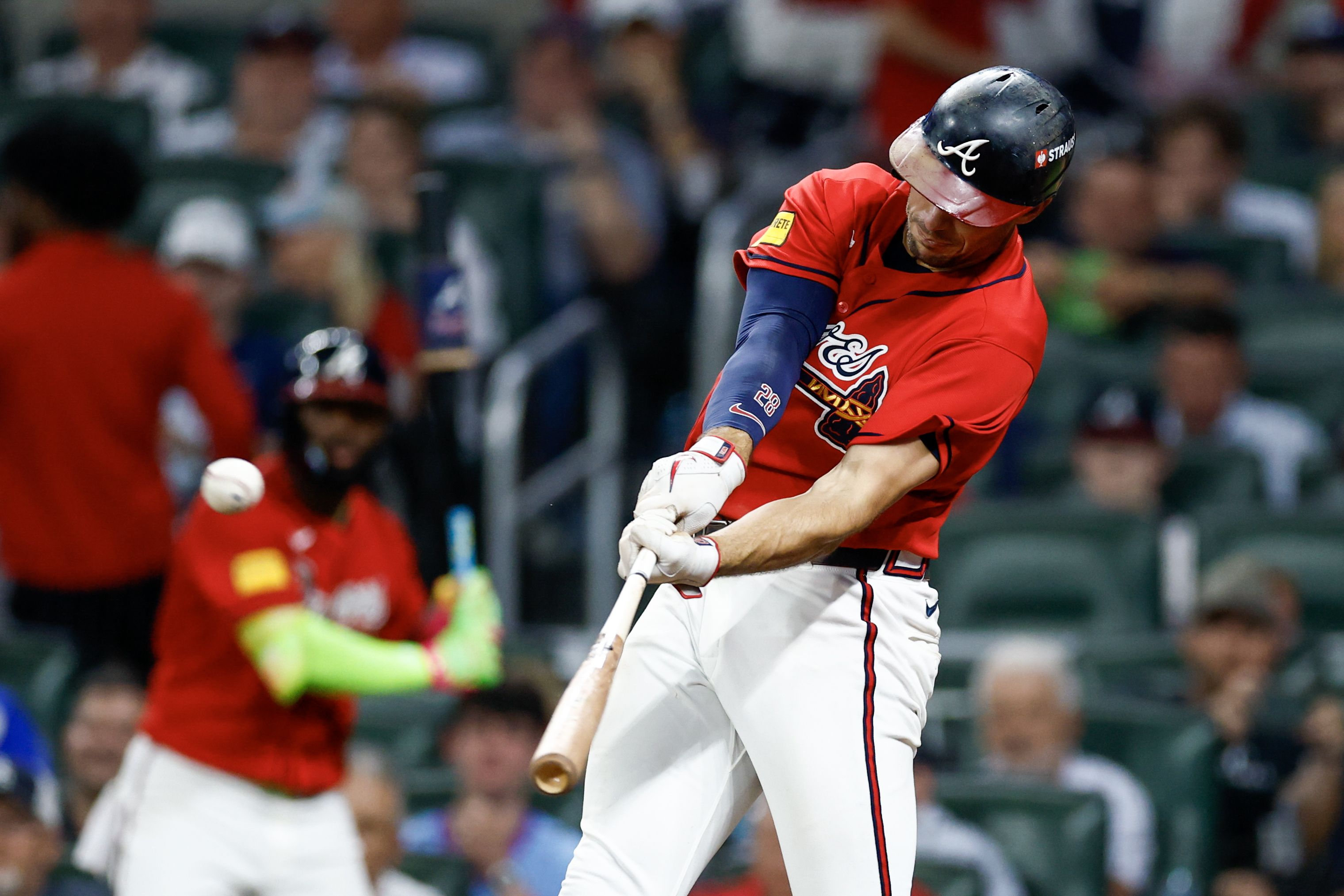
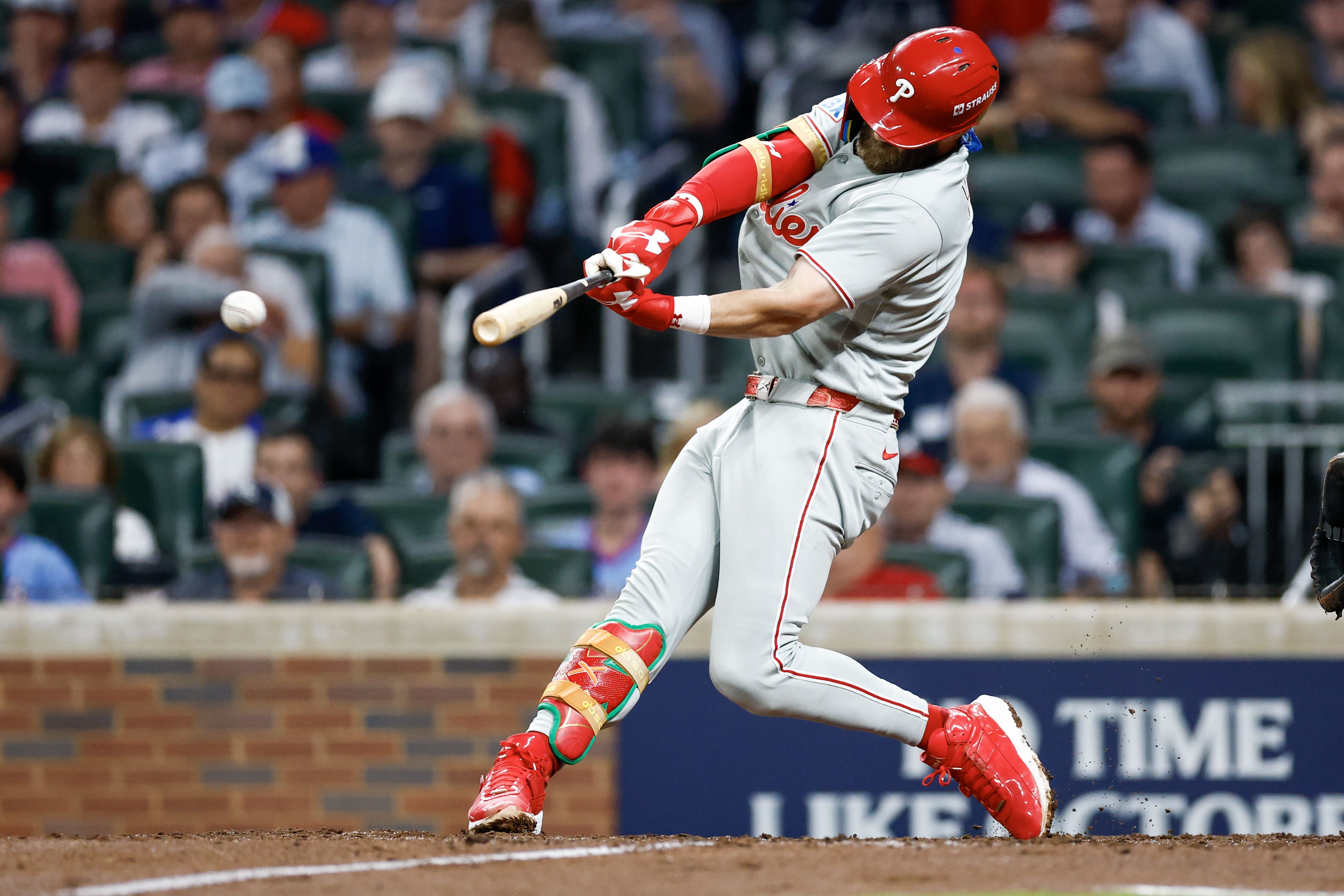
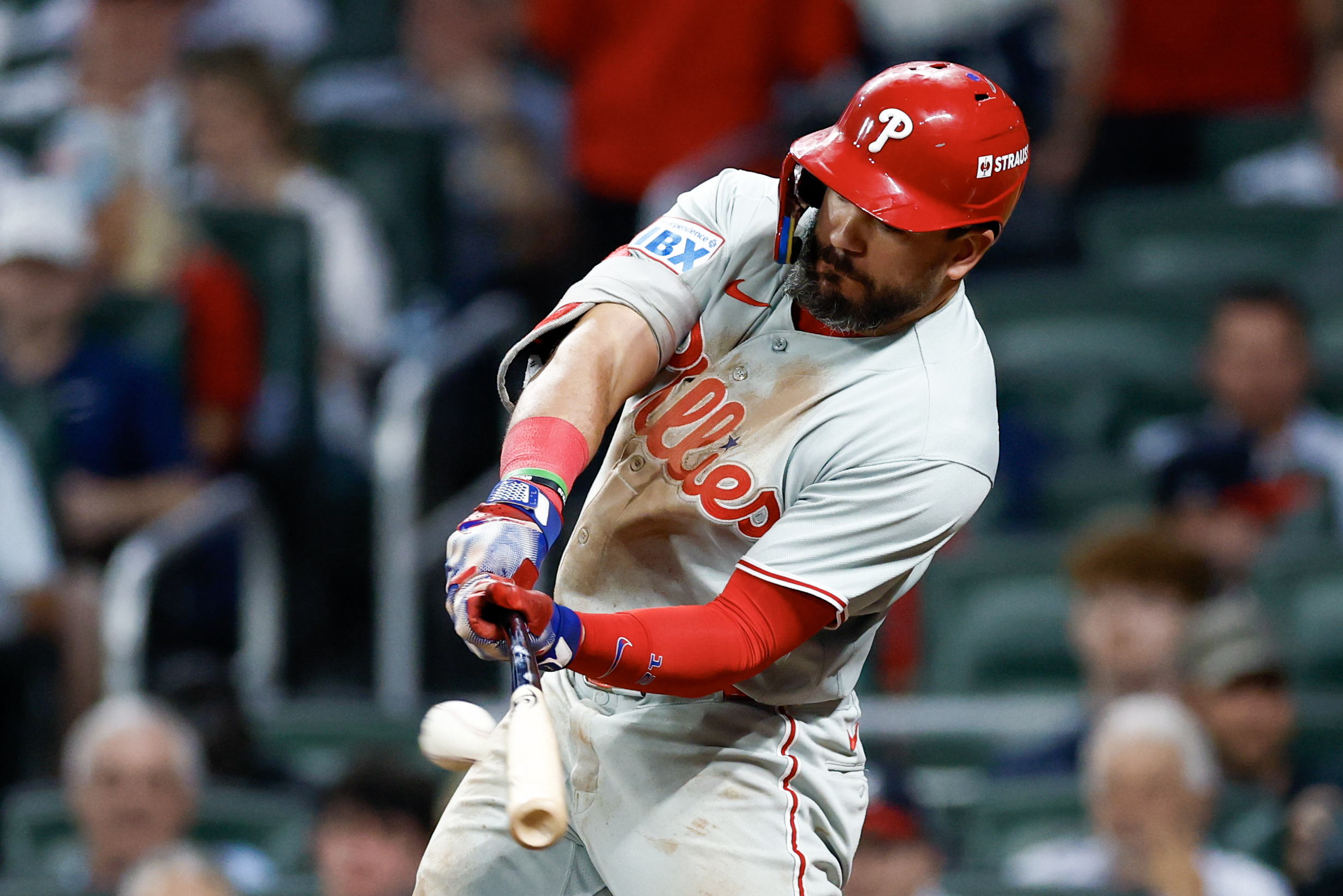
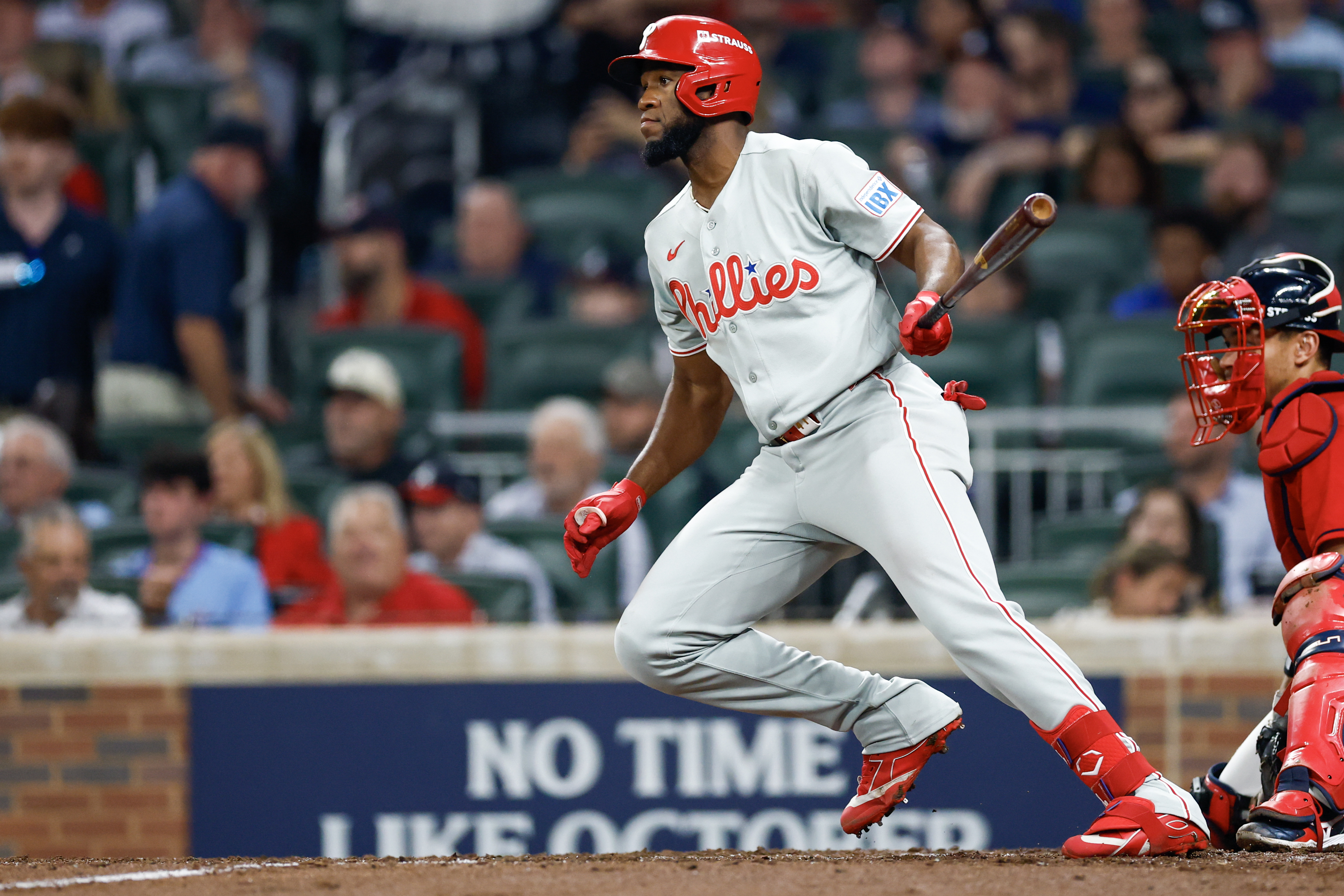
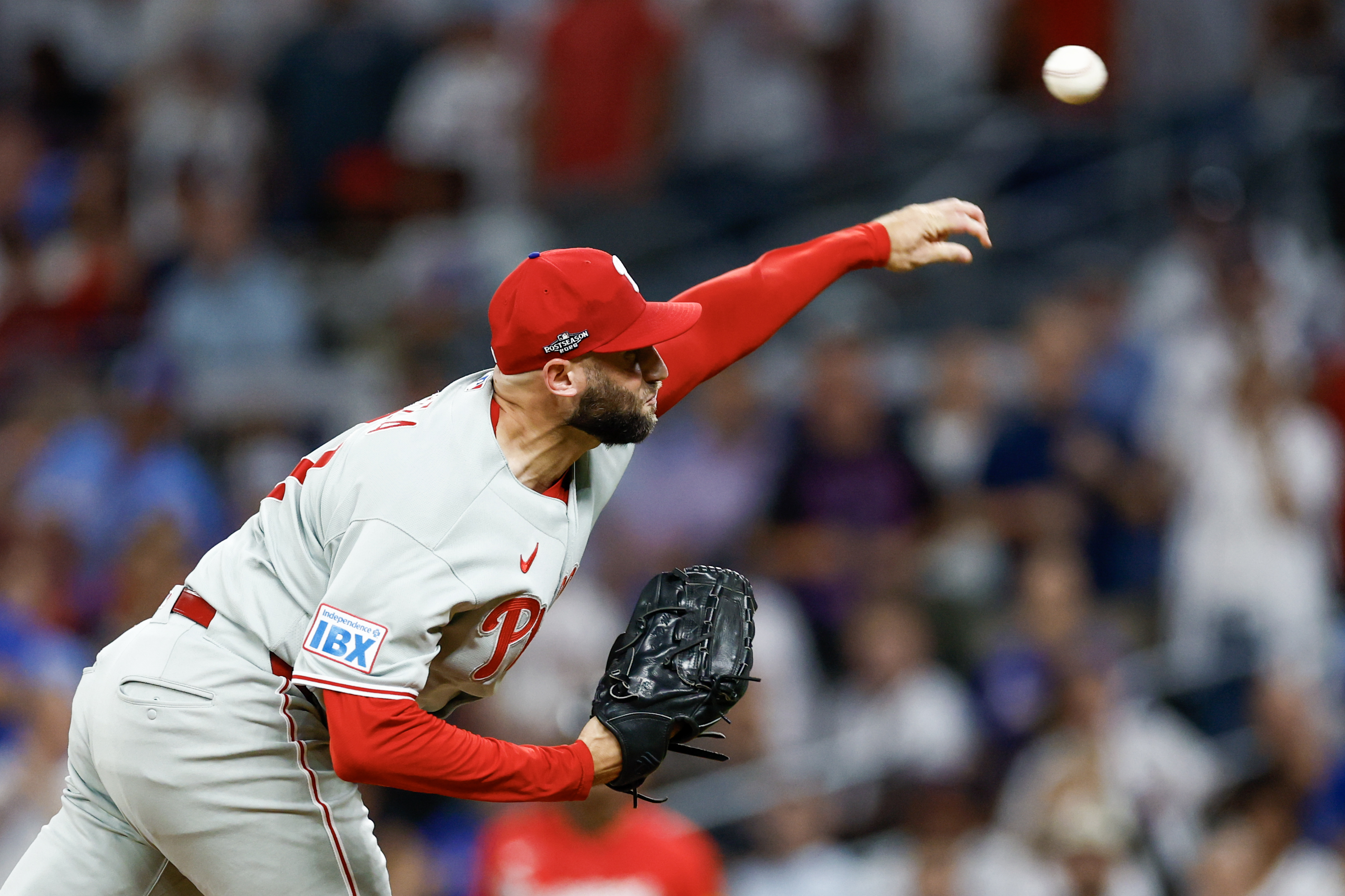
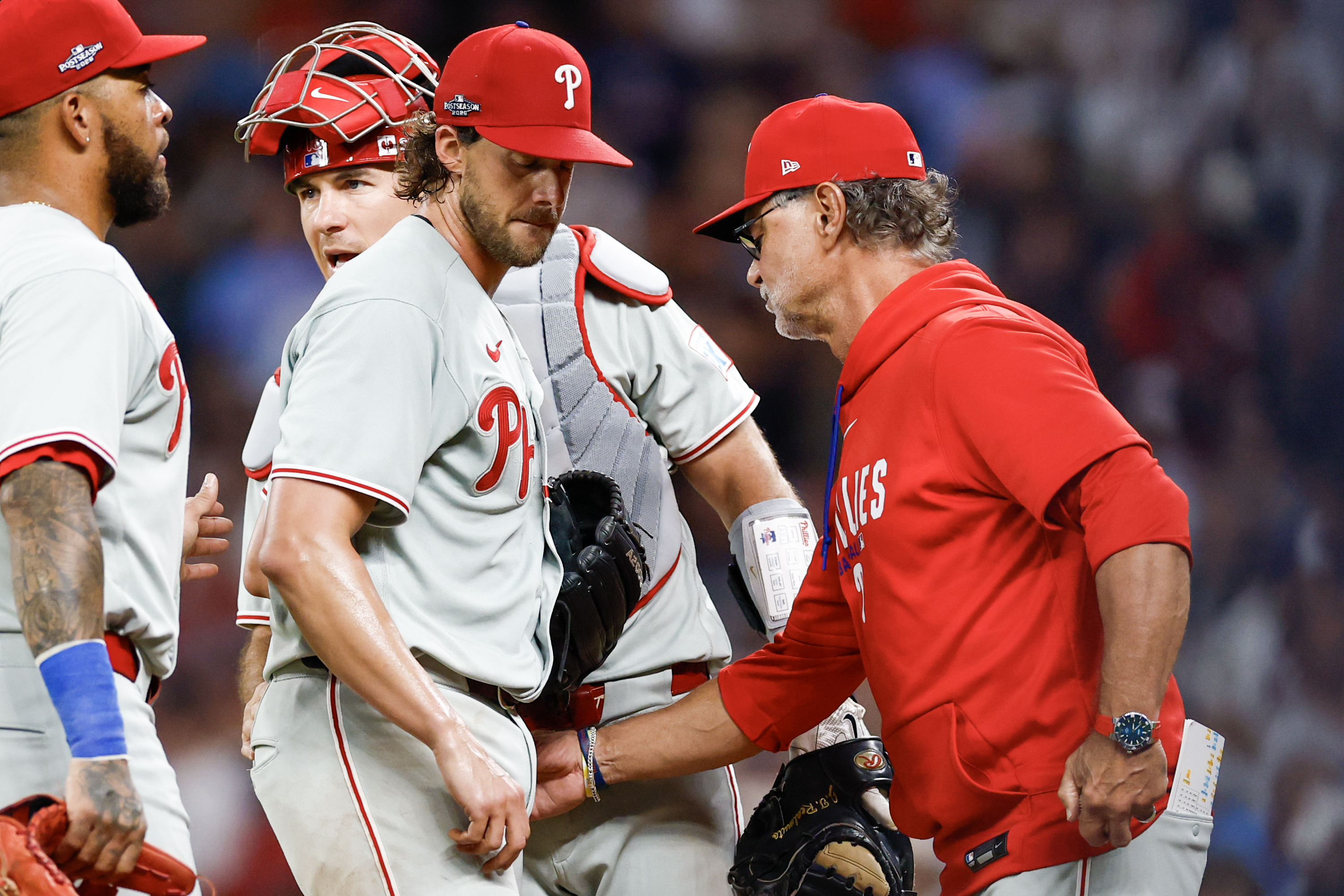
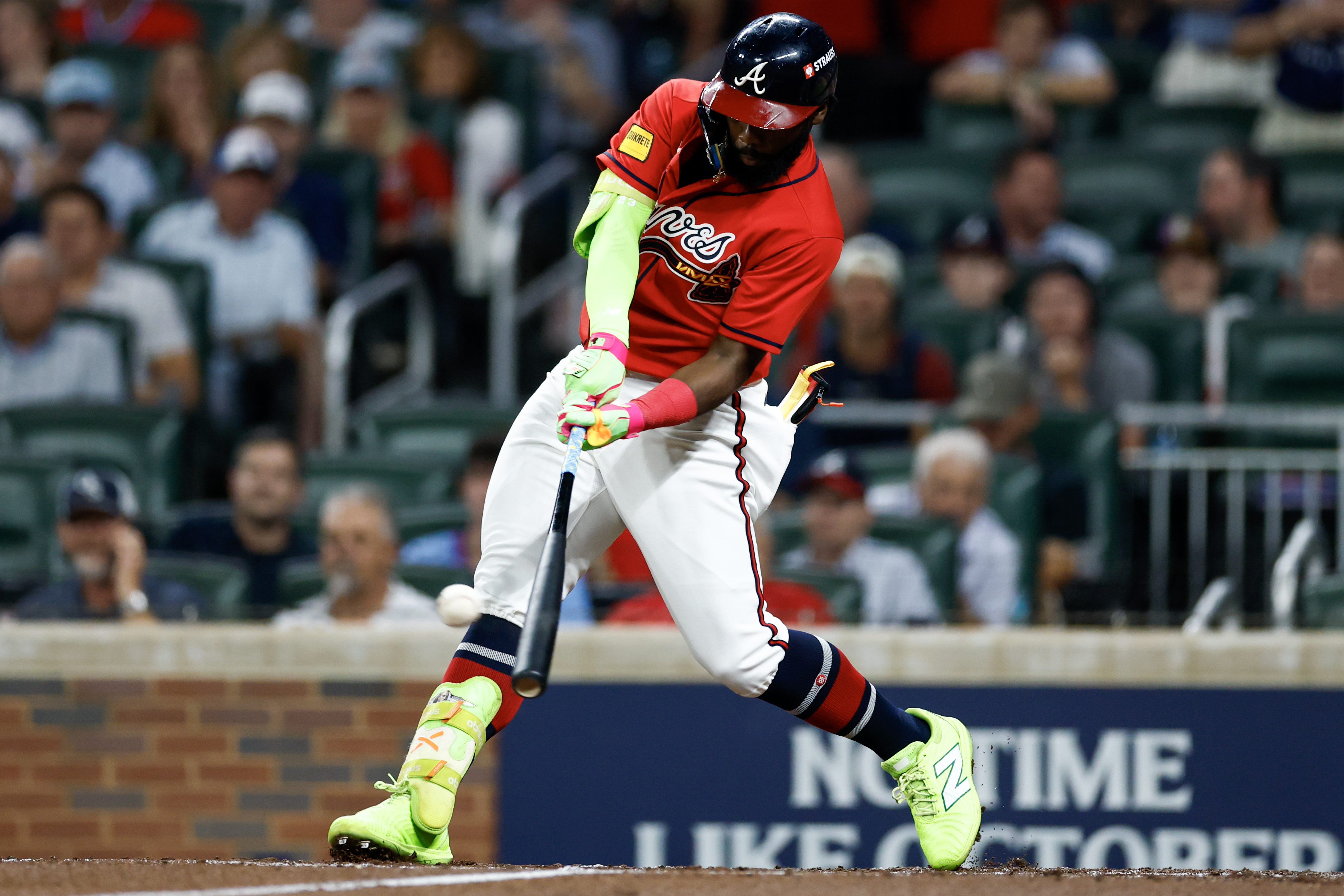
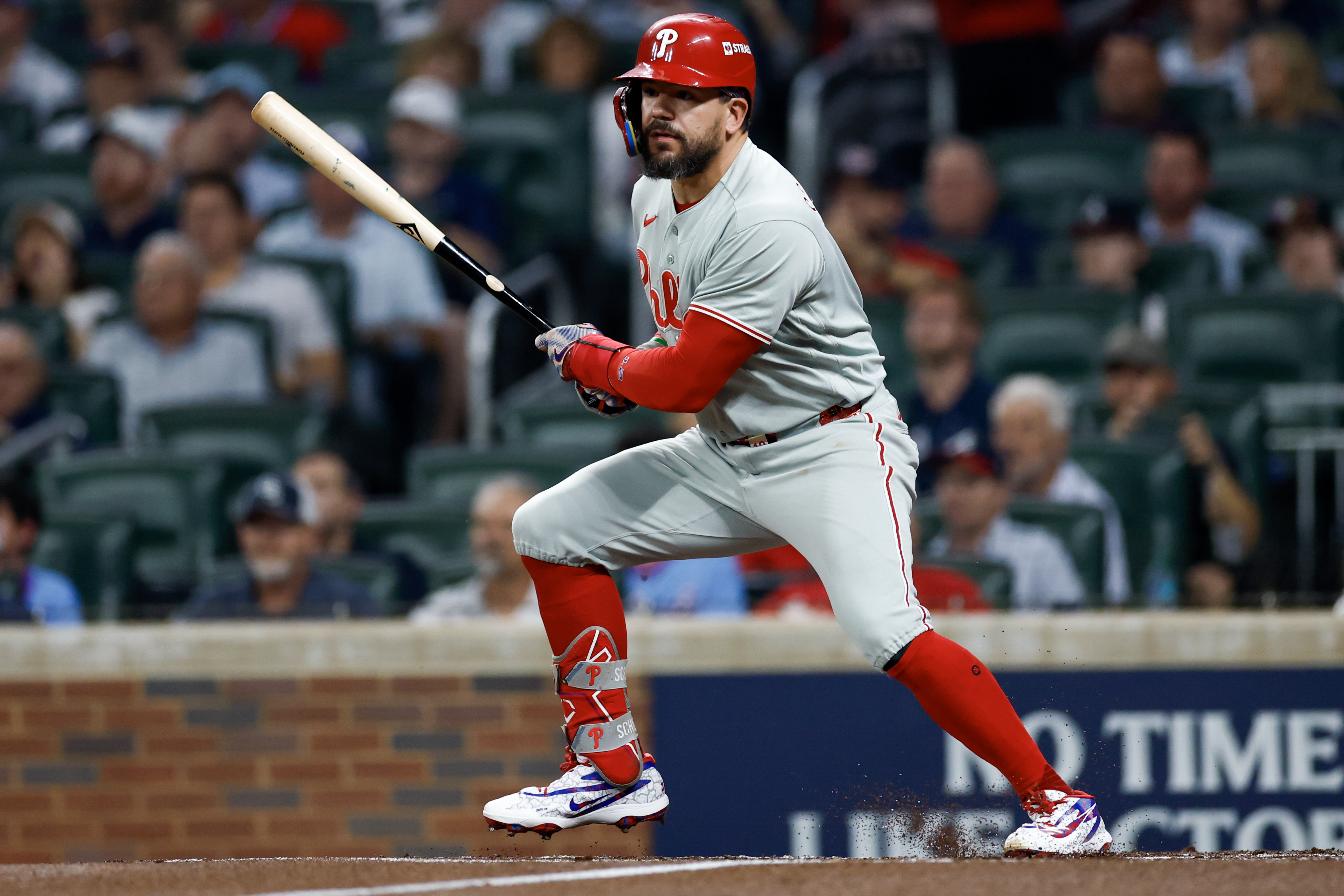
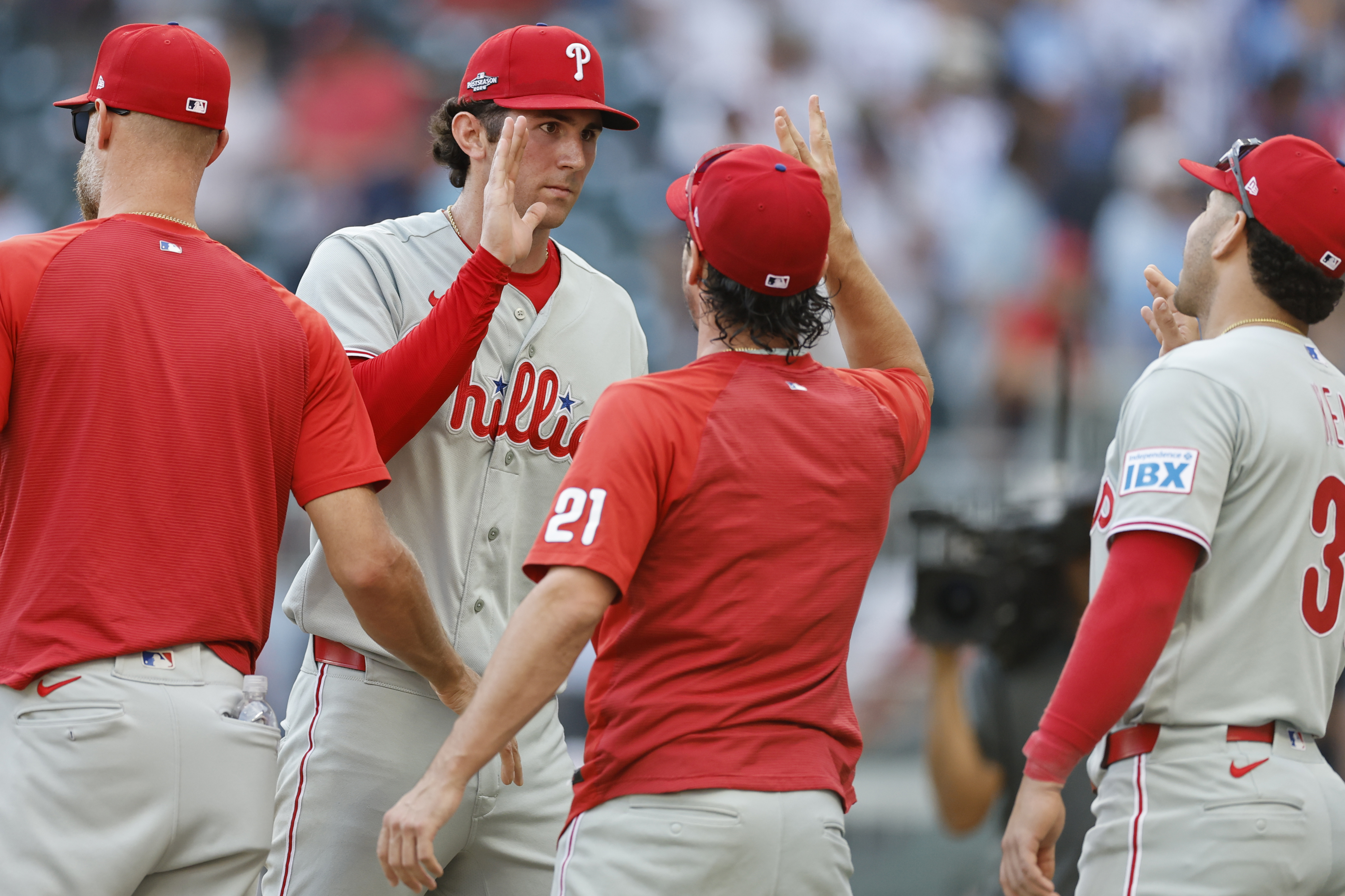
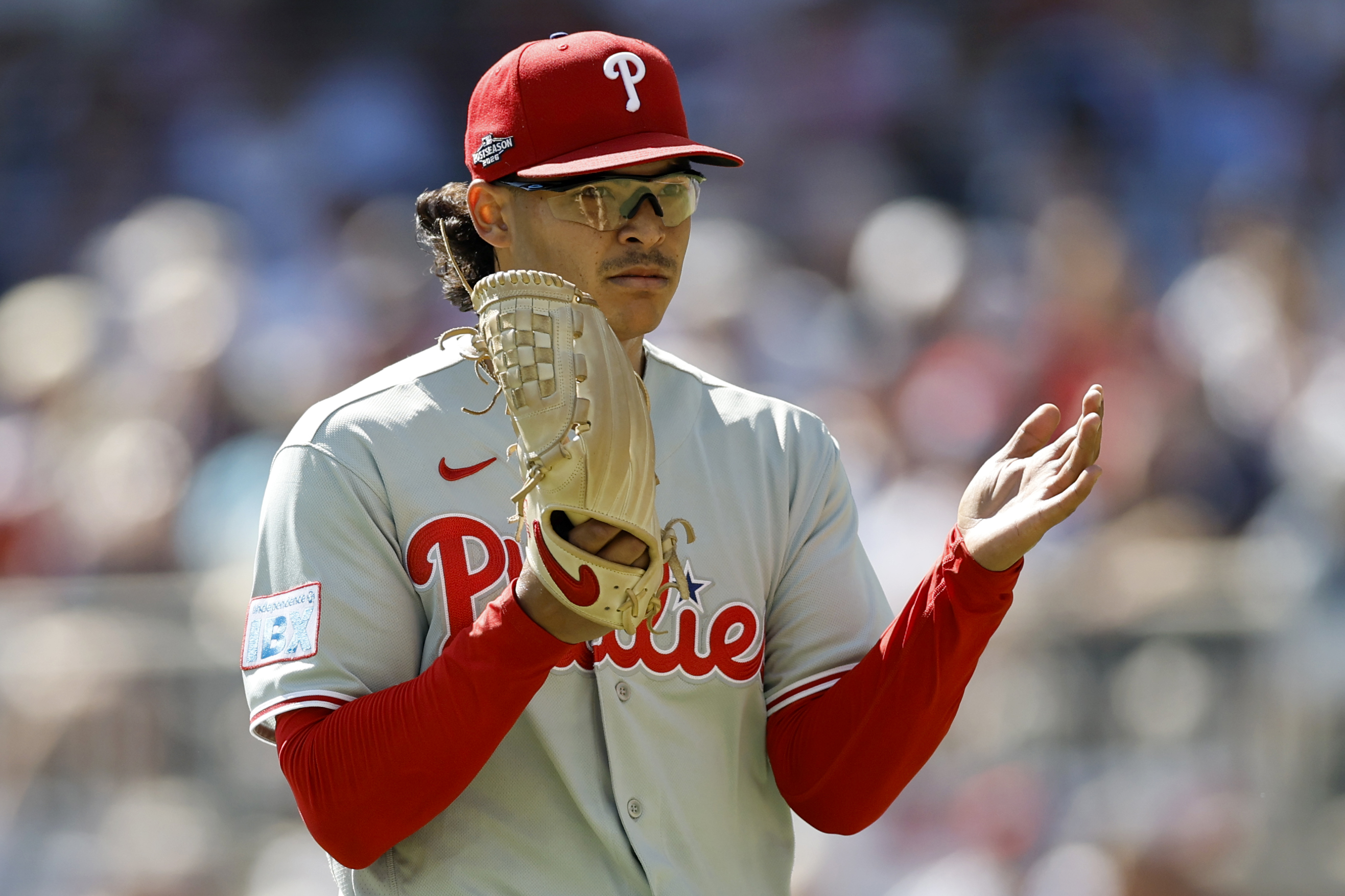
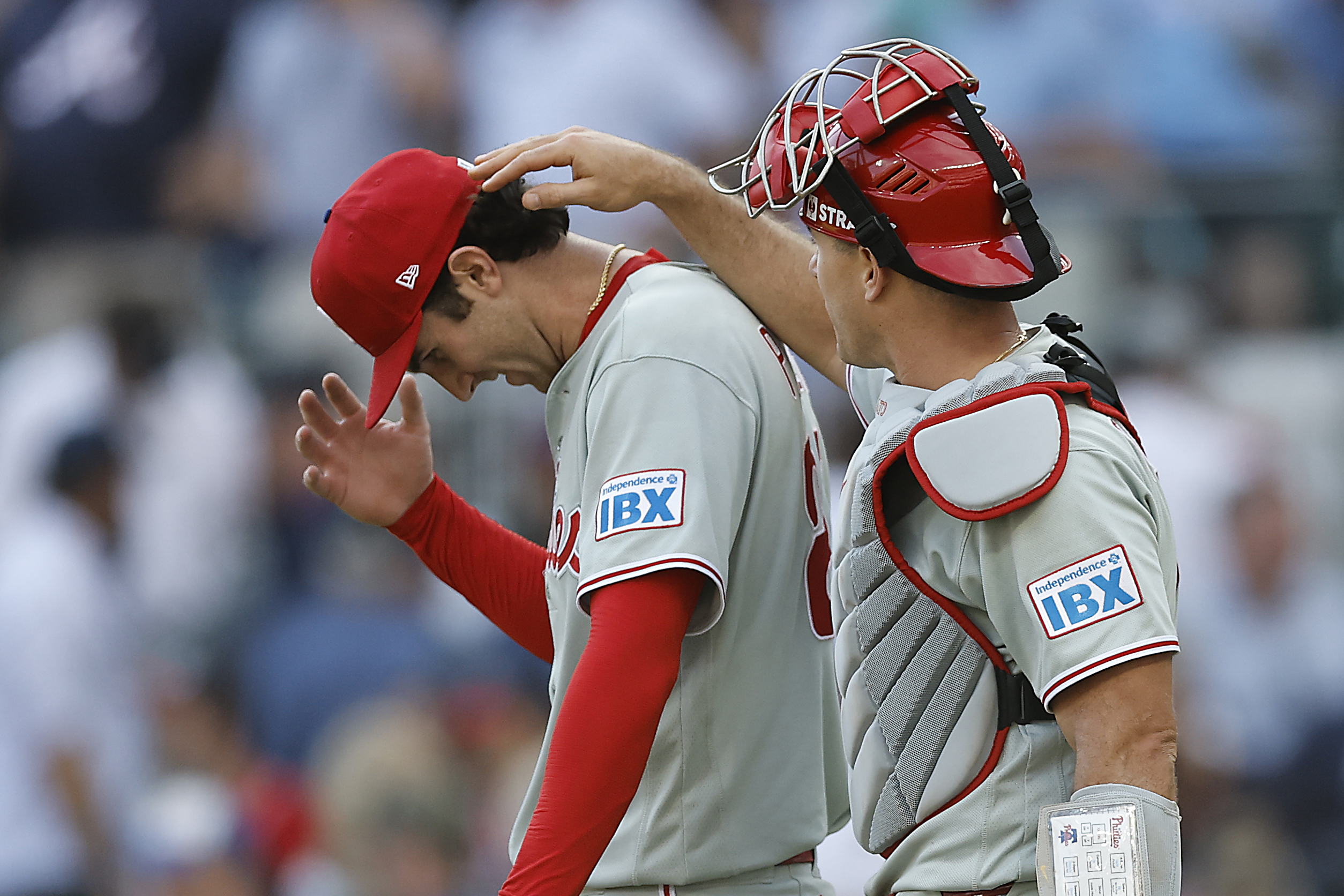
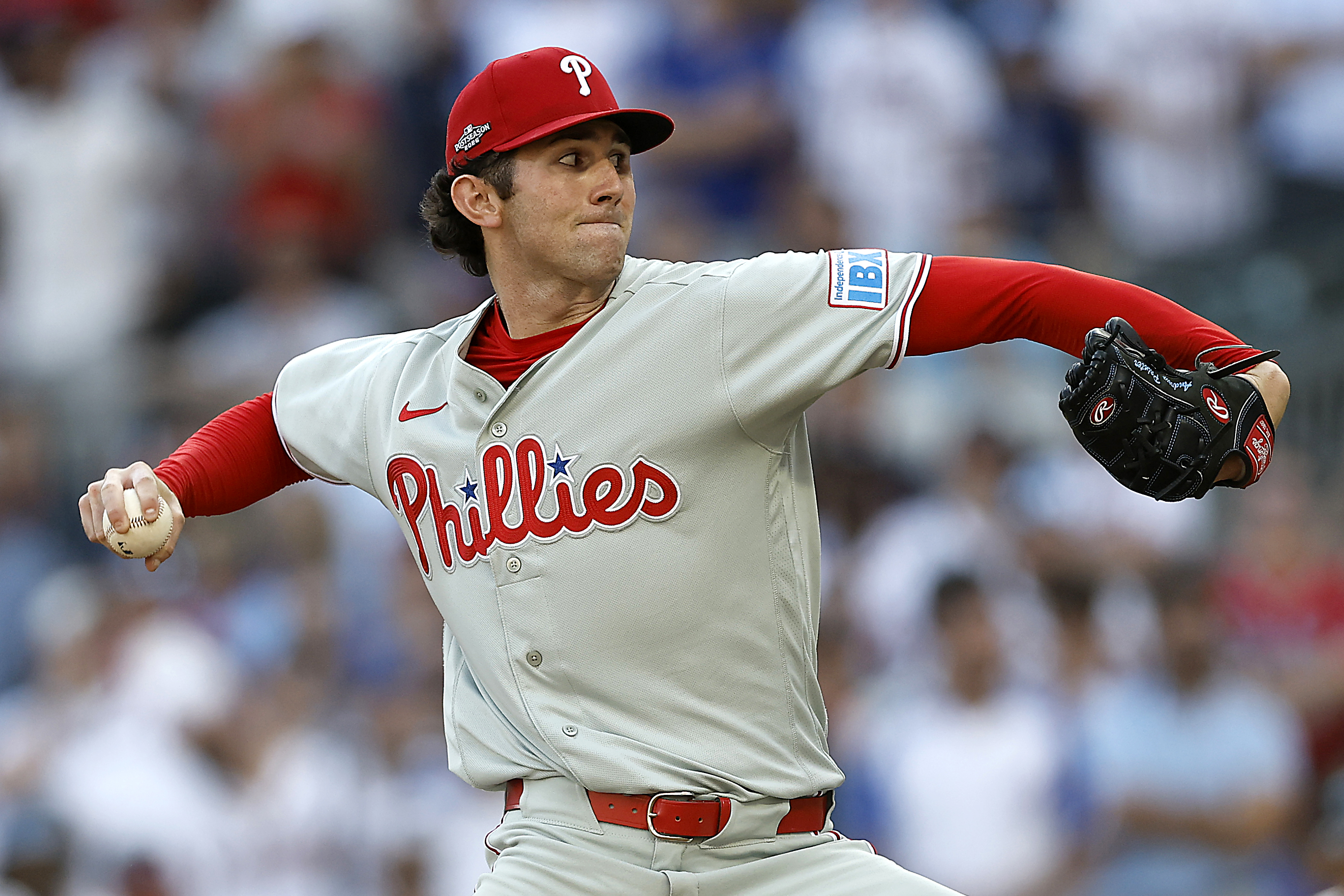
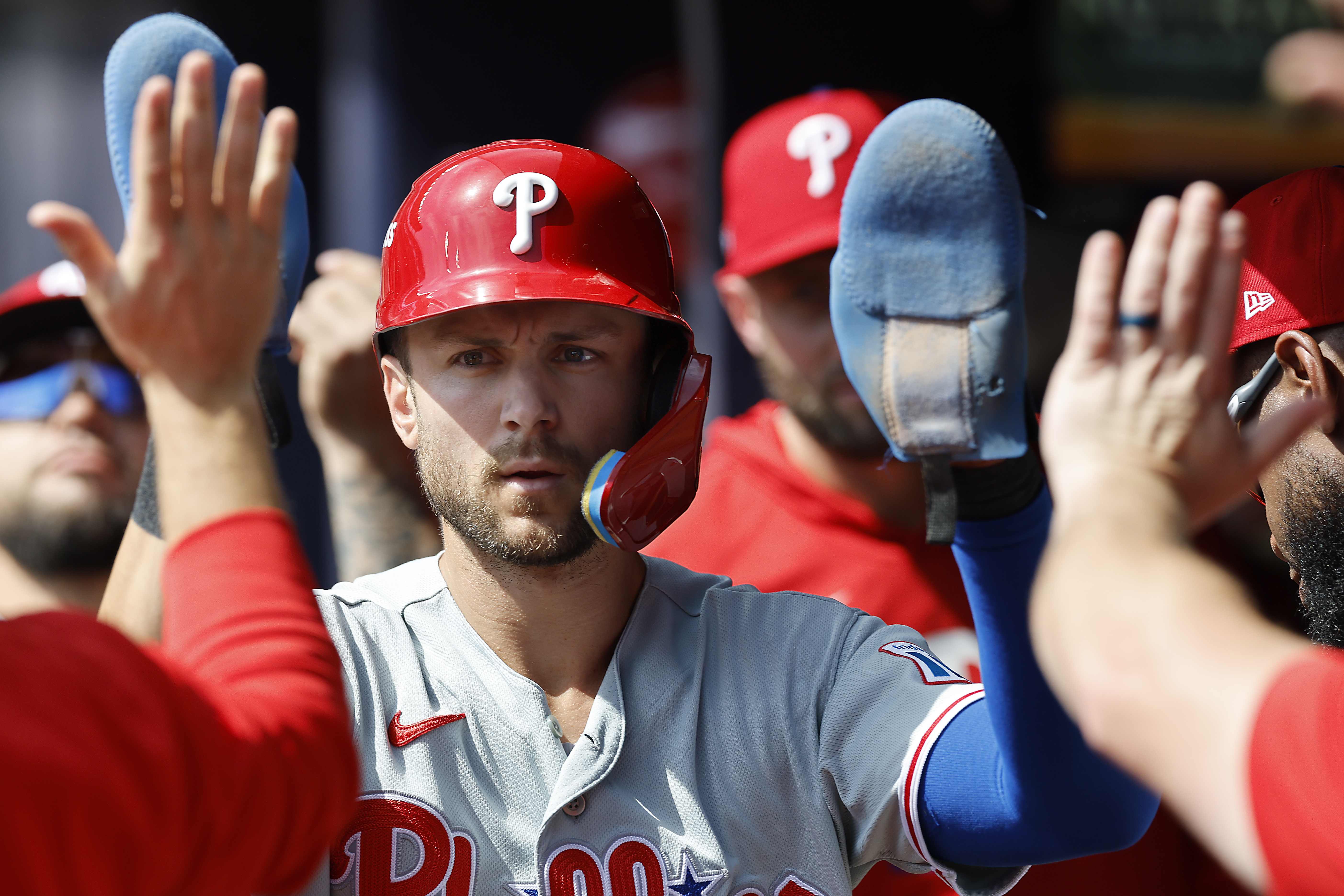
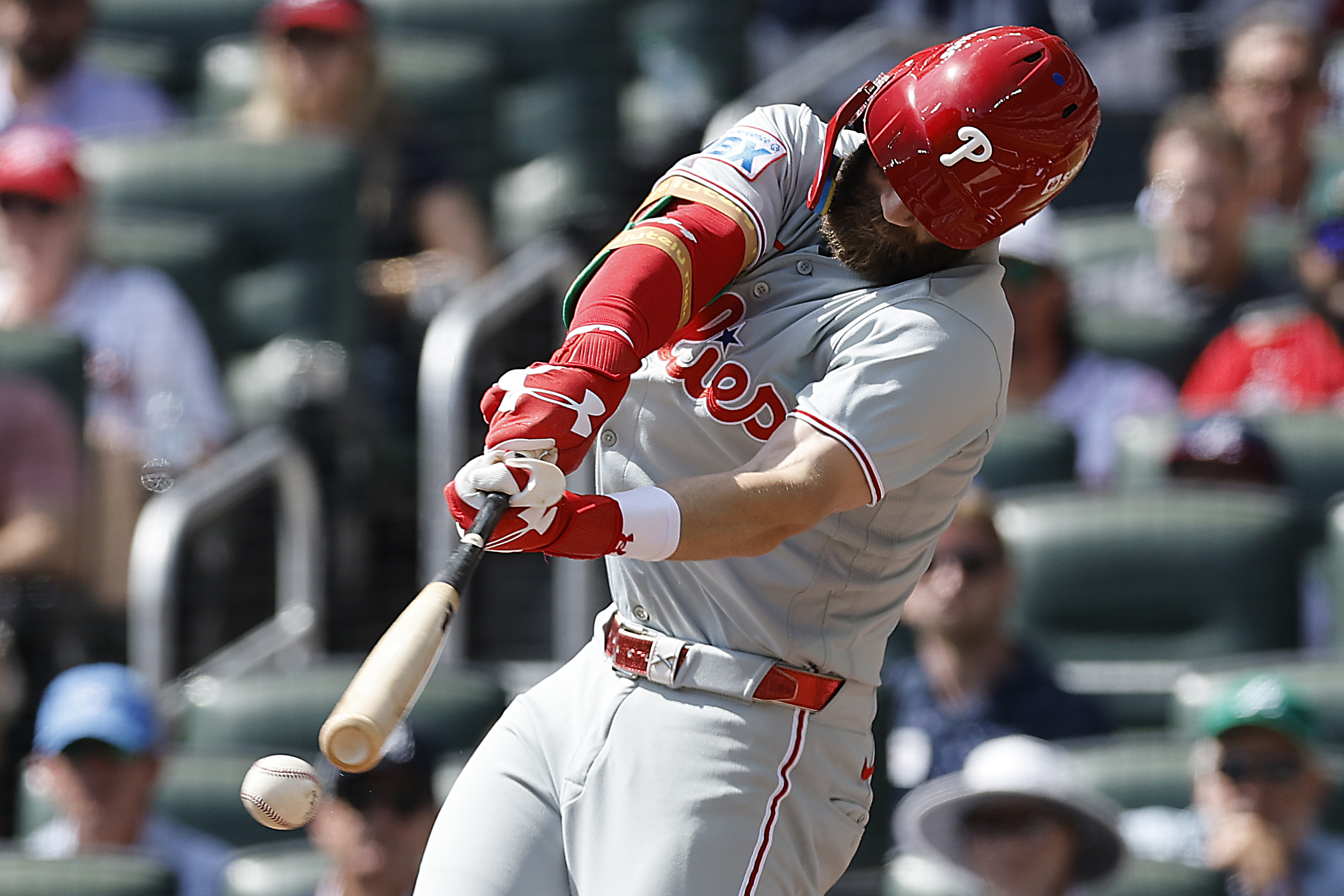
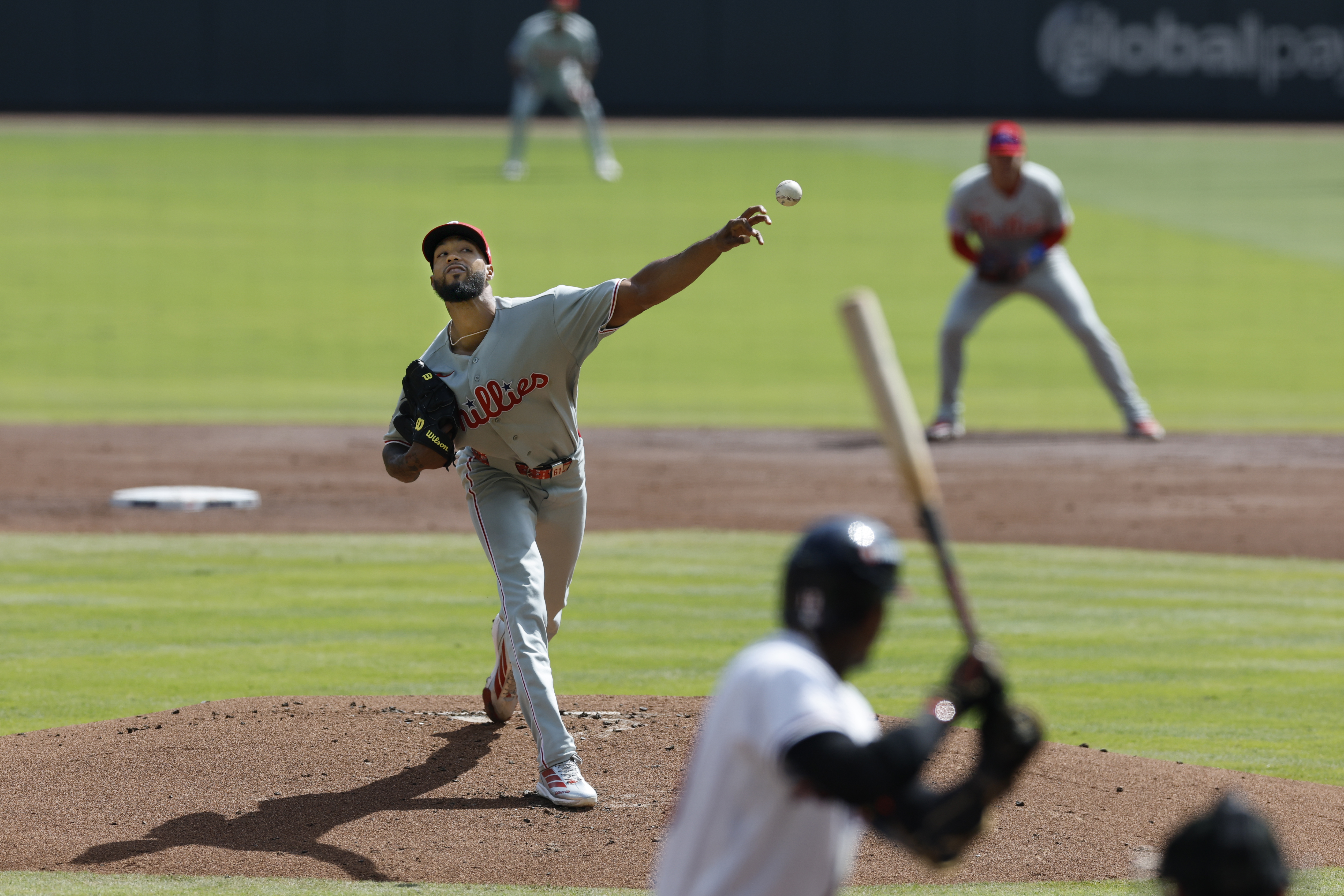
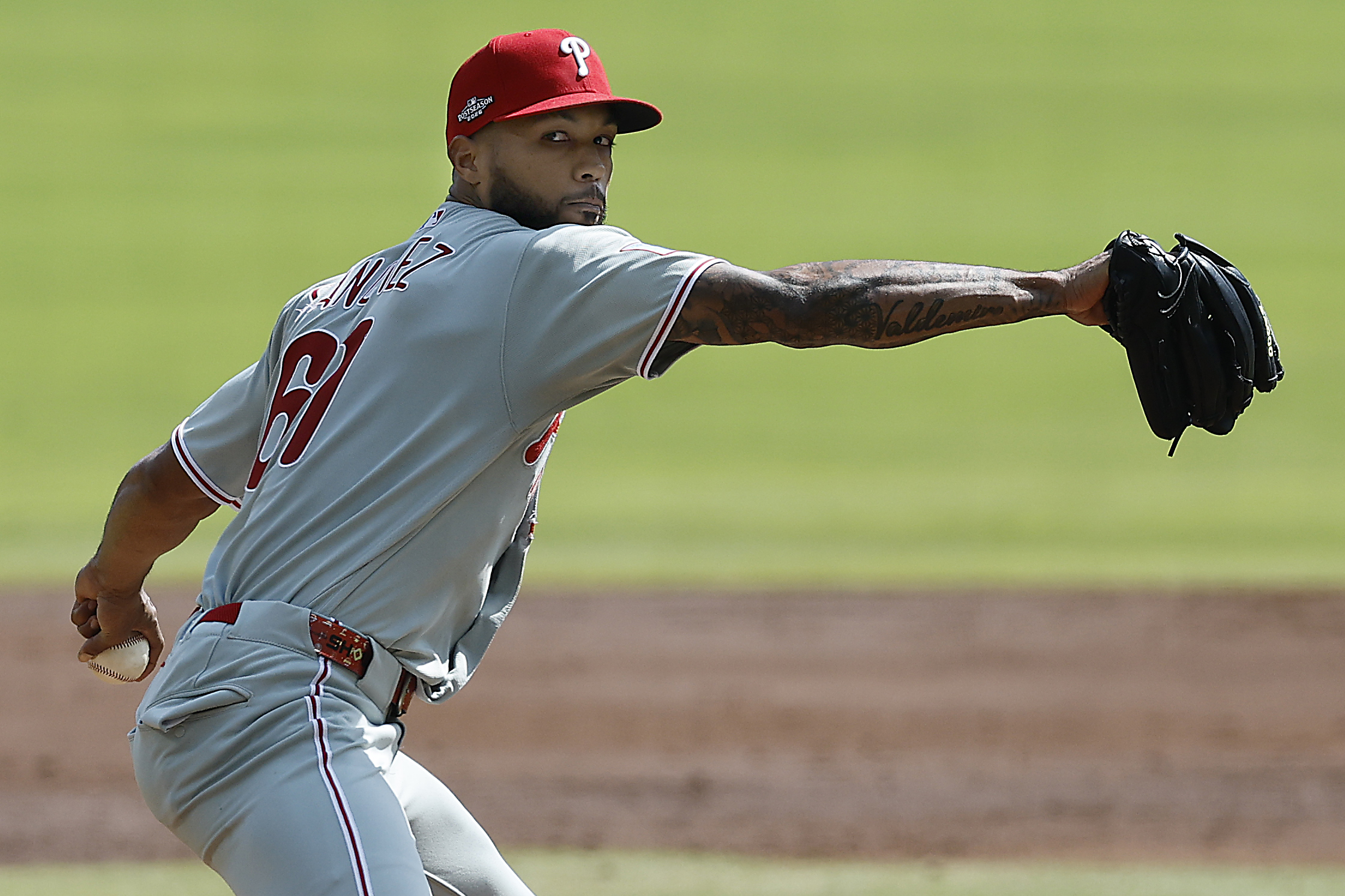
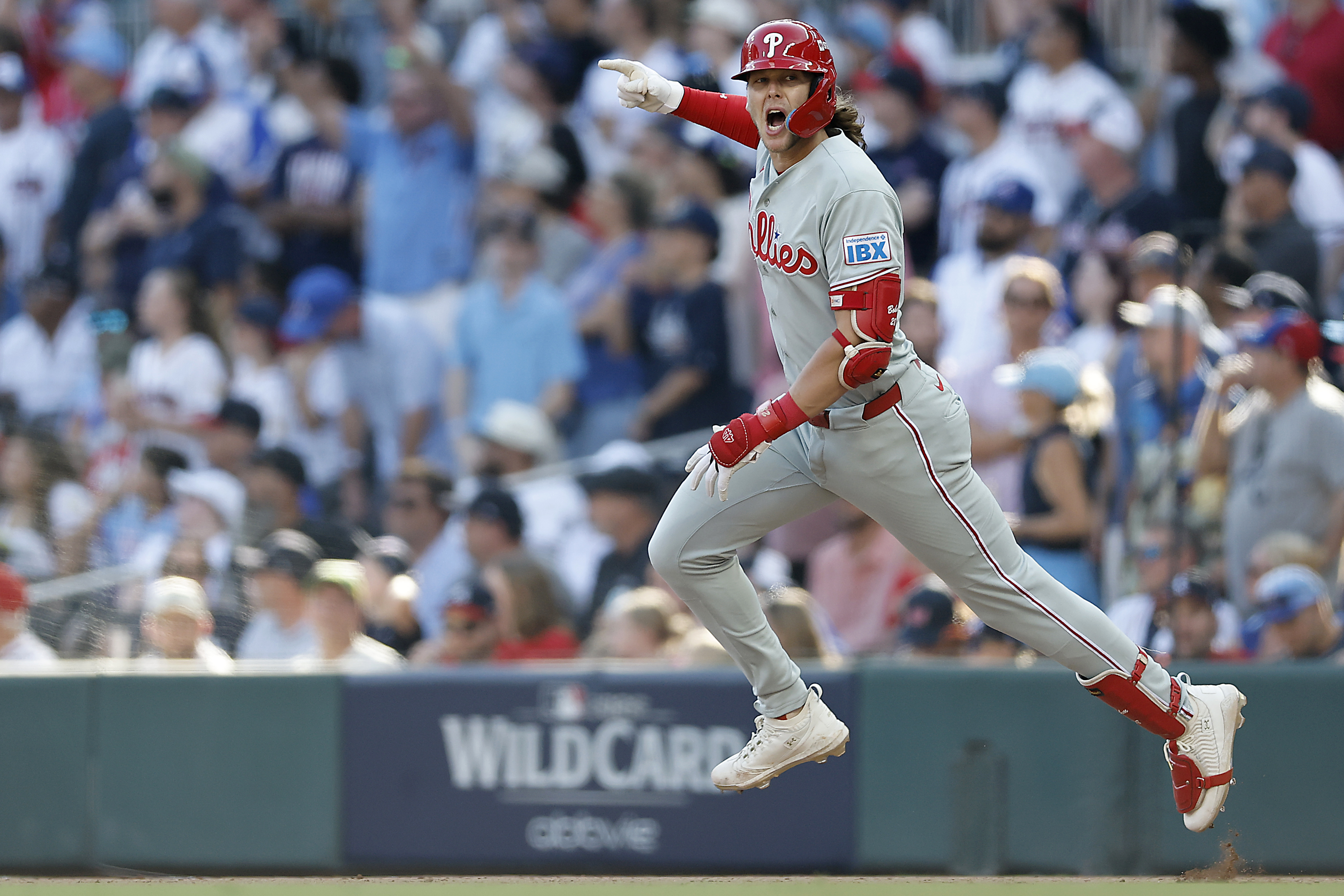
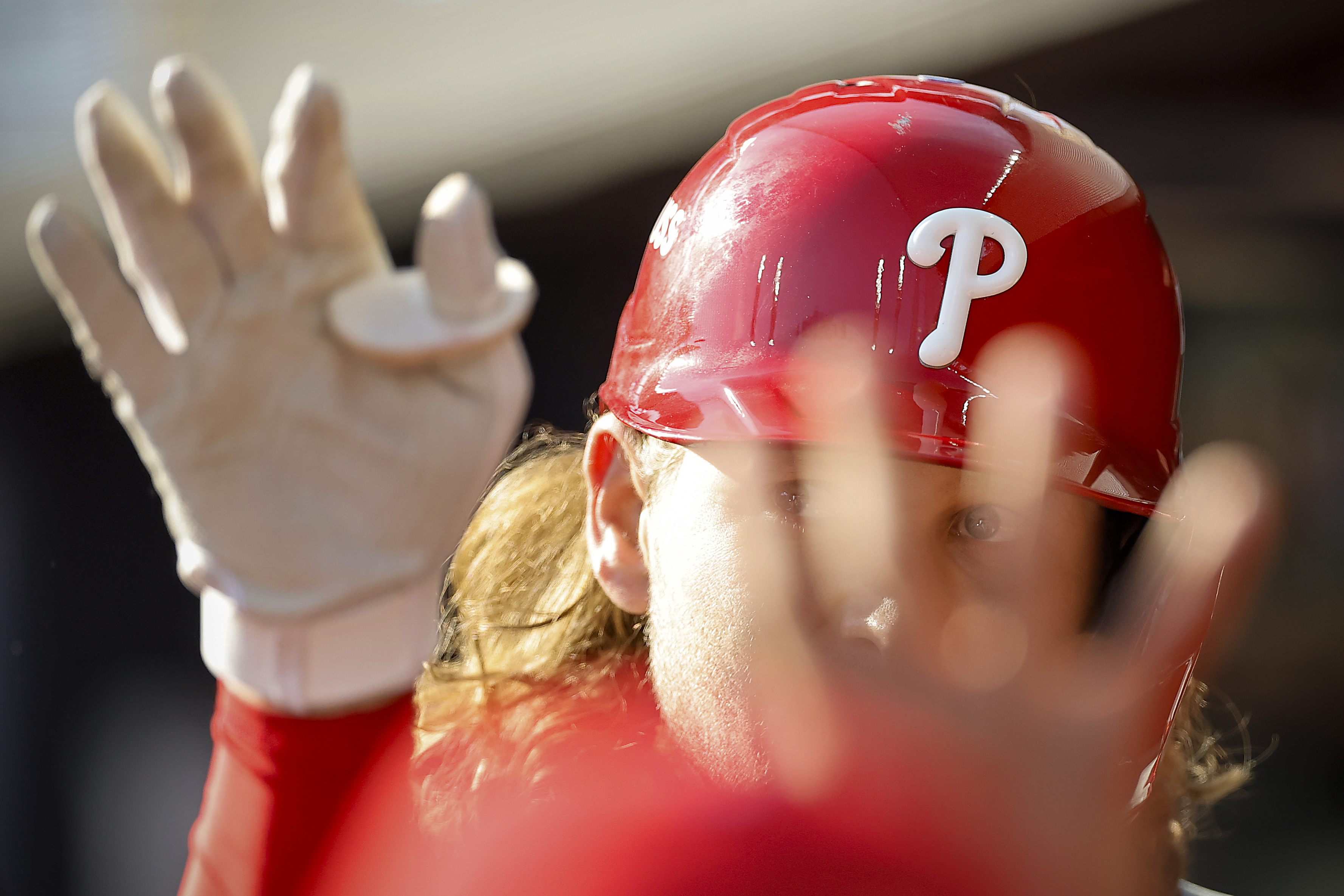
Considering the efficiency he has shown at second base, the brilliance he’s shown at third base, his capacity to play shortstop, his durability, his affability, and his age, Bryson Stott surely will be in somebody’s lineup for at least the next five years.
On Thursday, Stott was among the last of the Phillies to shower and dress after the Game 3 wild-card loss in Atlanta ended their season. But then, it’s always more of a challenge to get ready when you’re carrying the weight of personal failure on your shoulders with your future in doubt.
Stott, who will be 29 on Tuesday, is entering his final season of arbitration and will be a free agent in 2028 (all of this assumes, perhaps naively, that the 2027 season will not be affected by labor strife.)
He might not be expensive, but, if he continues to sputter, will Stott even be worth the roster spot for a Phillies team already heavily invested in contending for a title for the next five to seven years? As expensive, aging players like Trea Turner and J.T. Realmuto and their diminishing contributions are sure to occupy spots in the lineup, can the Phillies afford to carry even one player who isn’t dynamic at the plate?
Stott’s fun to watch. He is 100% baseball player. His aura is the closest thing the Phillies have had to Chase Utley’s since Ut was traded in 2015, all scruff and gristle muscle and bone and unsettling ferocity, possessed of baseball knowledge beyond his years and baseball instinct beyond his peers.
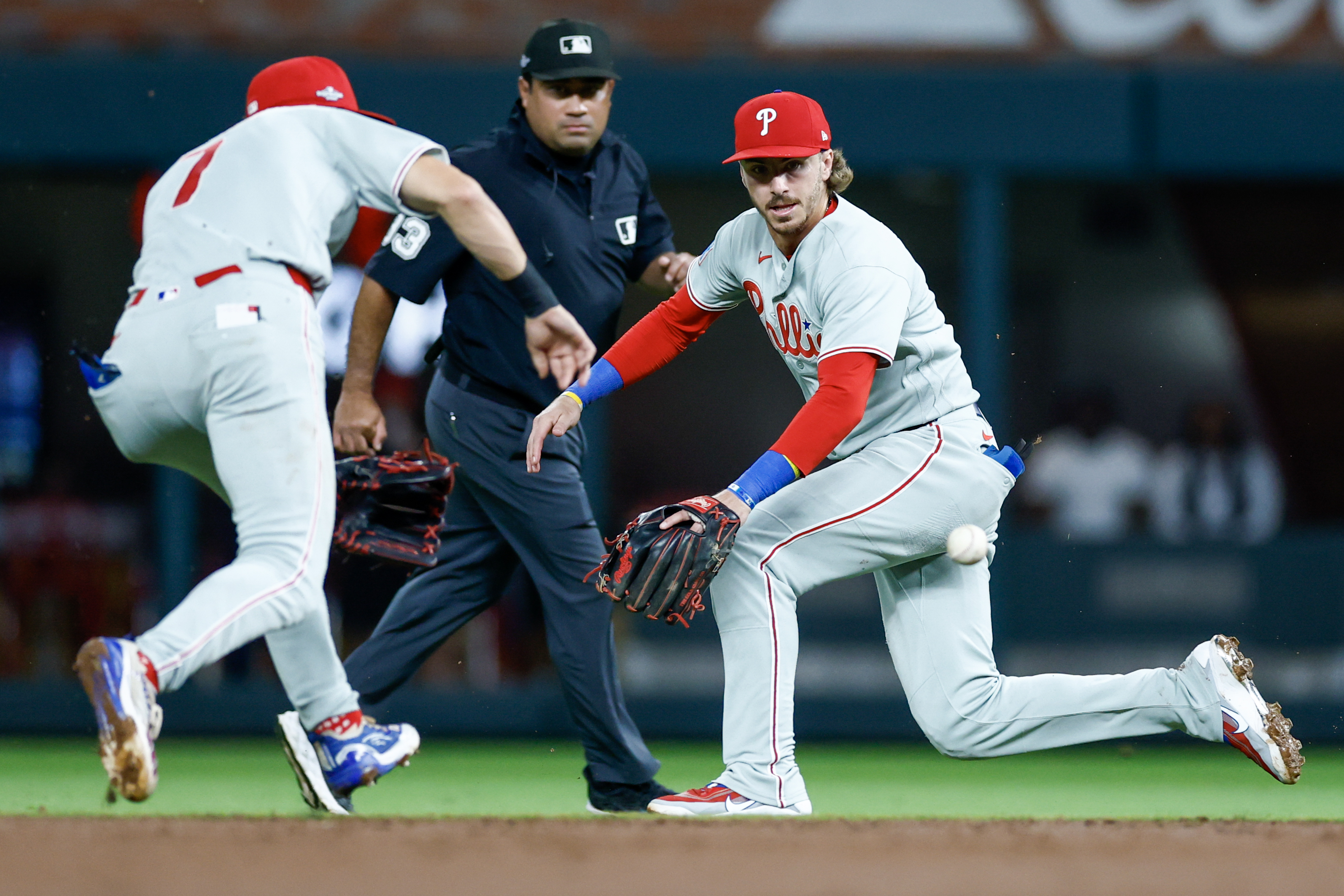
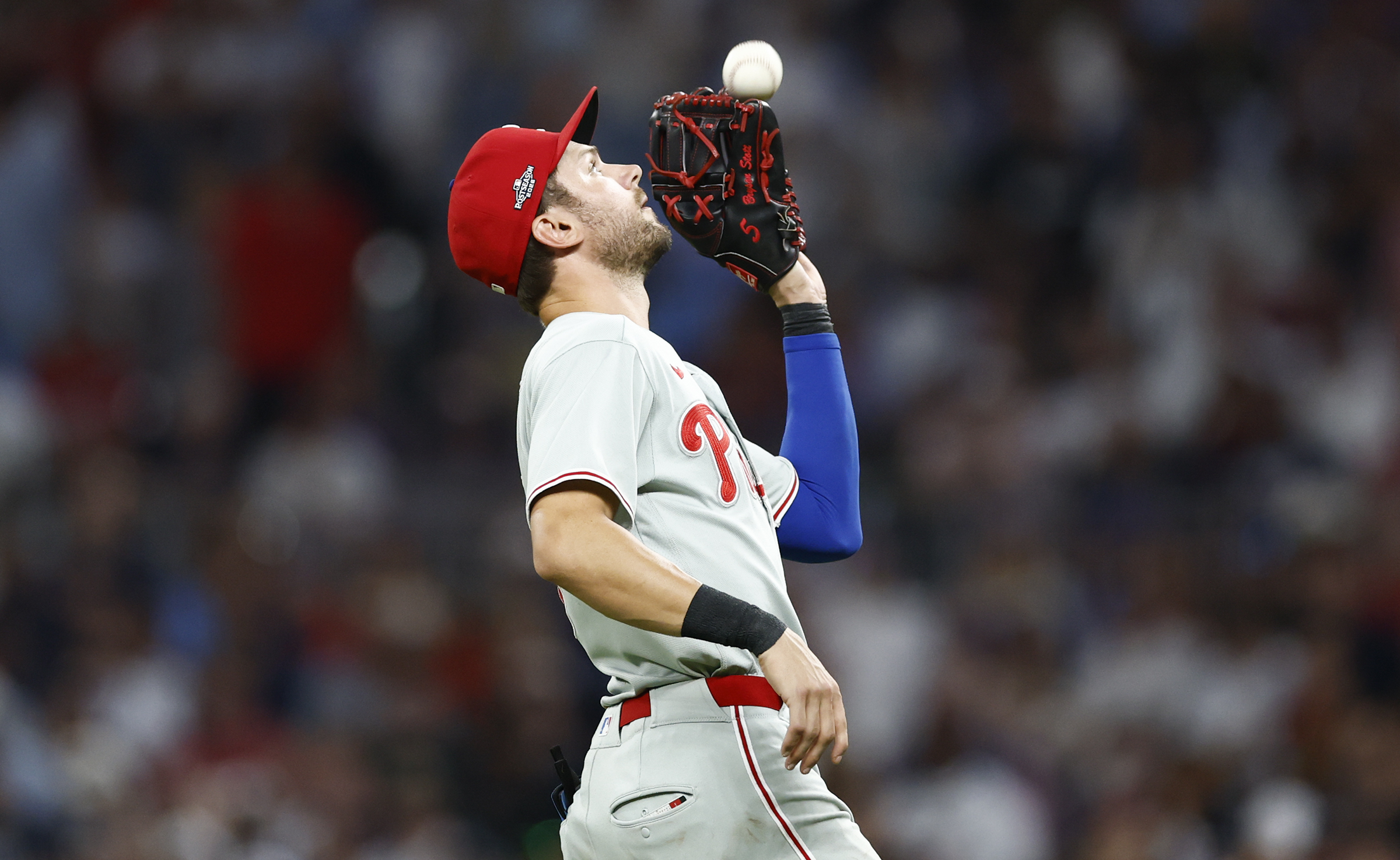
While his bat has been inconsistent, Bryson Stott’s defense at second and third base bring value to the Phillies.Yong Kim / Staff Photographer
Nevertheless, considering Stott’s pedestrian offensive production in the recent regular seasons and his disappearances in the recent playoffs, it’s fair to question whether a player like Stott should be in any lineup intent on winning in October, particularly considering Stott’s last three Octobers.
Stott is 6-for-37 in the Phillies’ losses in their first-round collapses of 2024, 2025, and 2026. That’s a .162 average, and it has been consistent: He managed just two hits in each of those series. He has no home runs. Two RBIs. Thirteen strikeouts.
He was a first-round pick in 2019 who, at one point, was considered an option to lead off a lineup ahead of a batting champion, an MVP, and a home run king. It’s his baseball DNA. Stott hit leadoff at both UNLV and in the minor leagues. In his second big-league season, 2023, Stott batted leadoff 39 times in a lineup that included monied, veteran leadoff hitters Turner, who’d won a batting title, and Kyle Schwarber, who’d led the National League in home runs.
Stott finished 2023 with a .280 average, 15 home runs, and a brilliant future.
His future now is clouded.
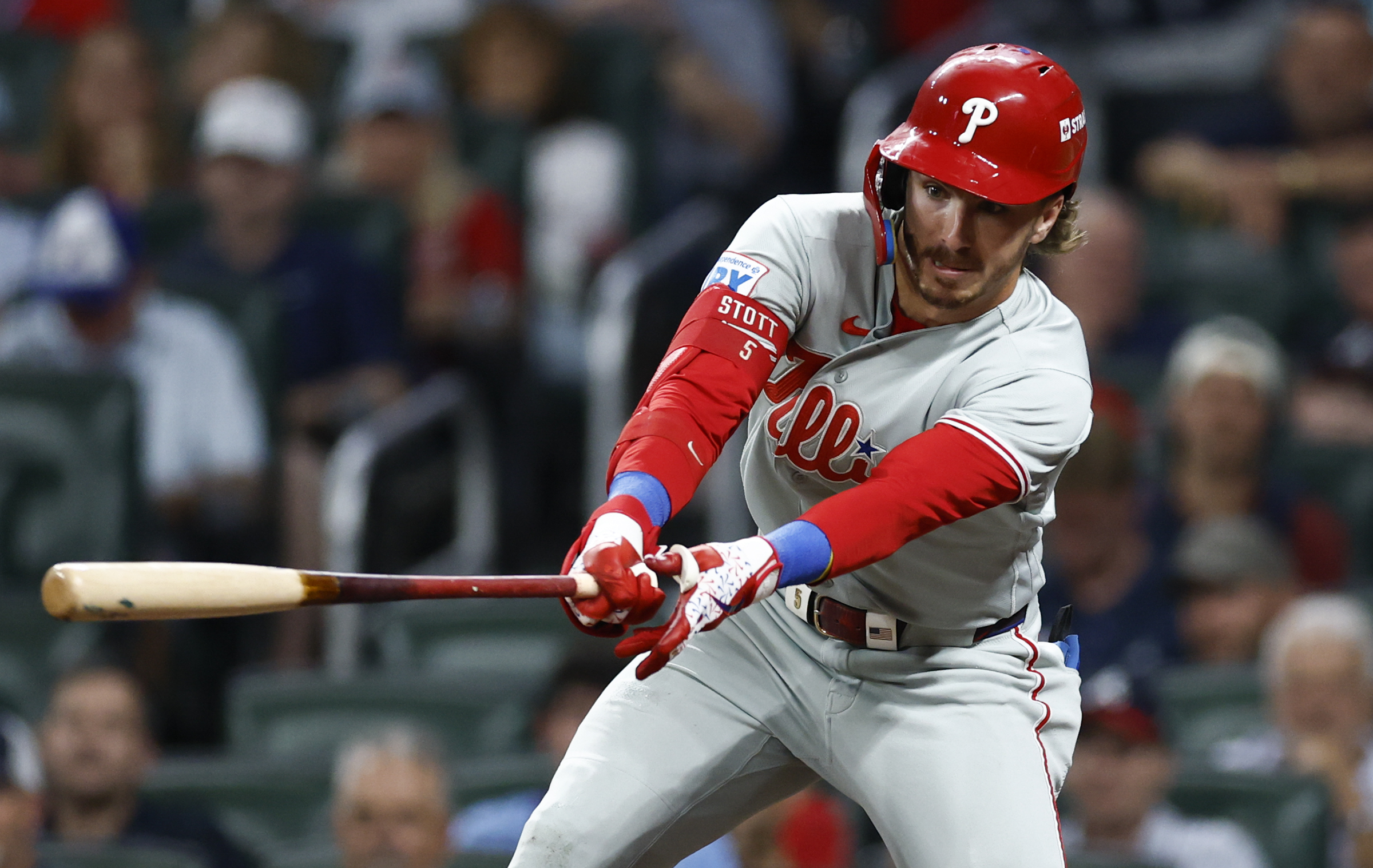
Bryson Stott has hit .252 averaged 11 homers and 63 RBIs over the past three seasons.Yong Kim / Staff Photographer
Since 2023, Stott’s batting average is .252, he has averaged 11.2 home runs, and he hasn’t moved the needle in eons. He has batted leadoff just 48 times.
He’s the poster child for long, freezing-cold streaks: He hit .216 with a .638 OPS through his first 58 games this season, hit .301 with an .832 OPS in his next 70 games, then reverted to early-season form for the remainder.
His defense is the only thing that keeps him in the lineup, because, as Donna Summer sang, when he’s bad, he’s so, so bad.
“I tell the hitting coaches, if I can just hit .230 in my bad months, my overall numbers will look a lot better,” Stott said. At issue: “Trying to find ways to get out of those ruts, those bad months, as fast as possible.”
That’s part of any hitter’s maturation. Pitchers find weaknesses and exploit them. The hitter must adjust in kind. Stott presents an intriguing history of weaknesses, though. In 2024, four-seam fastballs ate him up. Last year, sliders and curveballs. This season, curves and split-finger fastballs.
Stott studies. Maybe too much. That might be the issue with his postseason woes.
“You look at how a team pitches you all season and what they’re doing, and you plan going into a game,” Stott said. “Then you get to the playoffs and it could be a complete 180.”
And, after the first time not being served what you thought you’d be served …
“Your initial thought is, ‘That was one at-bat. They’re gonna go back to what they did for 12 or 13 games.’ But sometimes they don’t,” Stott said. “Then, you’ve got to adjust on the fly. It’s just a giant cat-and-mouse game.”
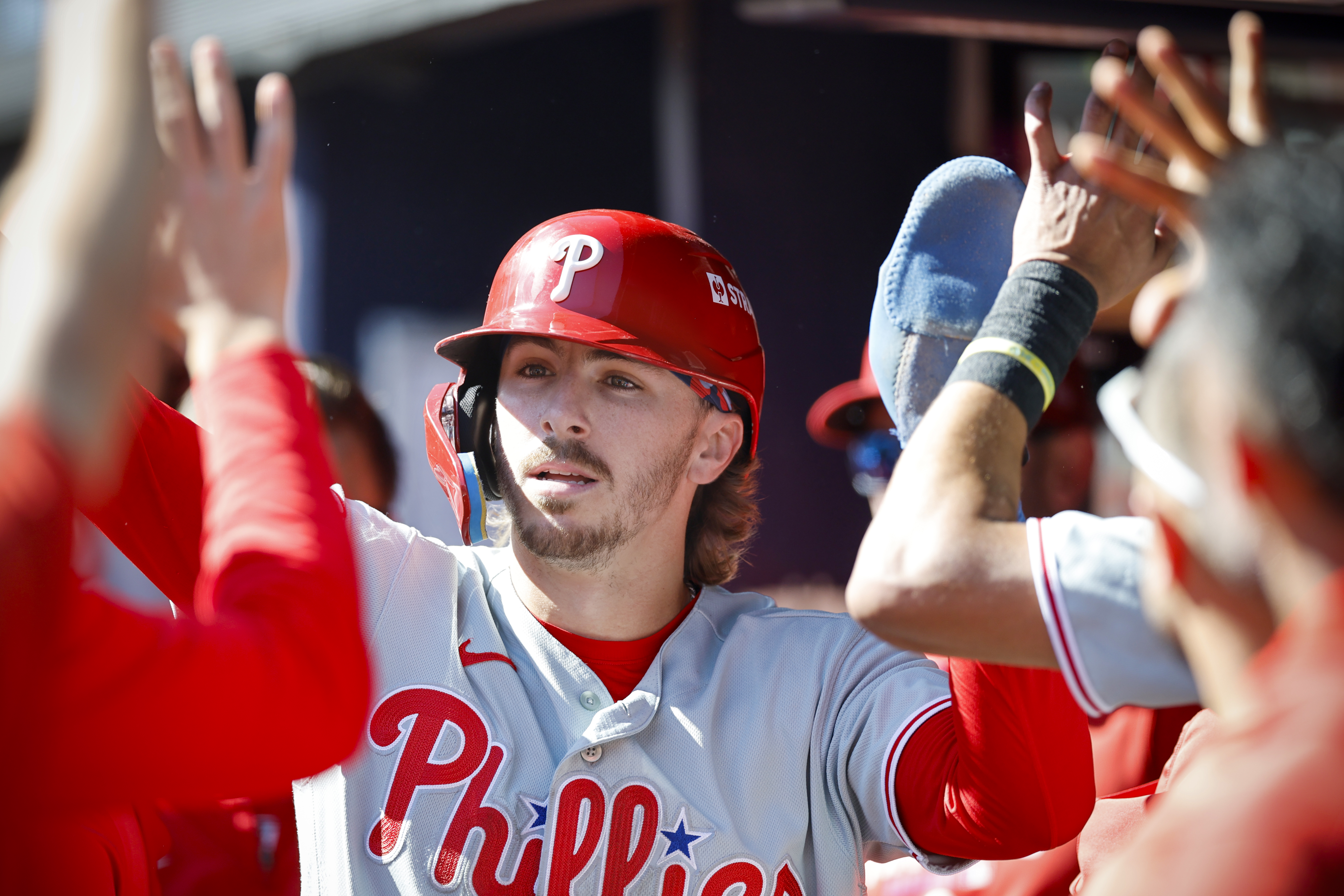
Bryson Stott, who will be 29 on Oct. 6, can be a free agent after the 2027 season.Yong Kim / Staff Photographer
In that metaphor, Stott mostly has been the mouse.
He pointed to his feeble plate appearance against Braves left-handed reliever Dylan Lee in Game 2. Moments before, Schwarber and Bryce Harper, the former MVP, had homered and tied the game. When Stott came to the plate, the afterglow of those heroics overshadowed how badly Stott was overmatched.
Lee threw Stott four fastballs that averaged about 94 mph. The first one was high, and he took it for ball one. The next three were in the top of the strike zone: take, foul, whiff, sit.
The cat ate the mouse.
“I’ve never faced Dylan Lee that I didn’t see a slider,” Stott said.
Entering that at-bat Stott was 2-for-4 against Lee, with a hit in each of his previous two plate appearances, but losing this sort of mind game has been typical for him in the last three playoff series.
“I see sinkers and splitters and changeups from some of these guys all season, then see cutters and four-seamers that I didn’t see in the regular season,” Stott said. “So you want to stick to your plan going up there for that specific event, but sometimes it’s the complete wrong one.”
Every hitter faces this issue. The hitters who adjust are hitters who keep their spots on competitive teams. Stott has at least one more chance to adjust as a Phillie.
The hitters who can’t adjust?
If they aren’t a good fielder, then they start selling real estate.
If, like Stott, they’re 100% ballplayers, then they become placeholders on noncontenders until there’s no longer a spot on the roster for a light-hitting, 30-something, hard-nosed defensive specialist.
The Phillies bristled last winter at the suggestion that they were running it back after another disappointing October. Rob Thomson — then still the manager — pointed in January to the team’s three new relievers, Adolis García in right field, Justin Crawford in center, Andrew Painter in the rotation, and Otto Kemp’s place on the roster.
But everyone knew enough to know they were indeed running it back. The main pieces were the same. So the final result — yet another disappointing October — wasn’t much of a surprise.
The three new relievers? Just one pitched in the postseason. García had a .599 OPS when his season ended with a shoulder injury. Crawford looked like a rookie, Painter was a mixed bag, and Kemp appeared in just 13 games before finding himself in the batter’s box for the final out of Thursday’s listless 6-2 loss to Atlanta in Game 3 of their wild-card series.
The Phils were flat in an elimination game, a fitting way to end a season that rarely gave you reason to believe that this October would be any different from last October. The front office didn’t act last winter with any urgency, doing little to upgrade a roster that needed improvement. And then the team started 9-19.
García? He had a .675 OPS over the last two seasons. An upswing would’ve been a bigger surprise than what the Phils got. The bullpen additions? They fizzled. Kemp? The Phils were so thin that they added him to their postseason roster even though he hadn’t been in the majors since May. The bullpen was a disaster, the lineup underperformed, and the trade deadline acquisitions fell short.
The Phils had a good run when Don Mattingly replaced Thomson in late April and they played well in August. But that soured in September when they nearly missed the postseason. The maddening season was extended by three games, just one of which was actually in October. Game 3 was lined up for them: Aaron Nola and Zack Wheeler vs. Ray Kerr and Grant Holmes. But this October was the same as last October. They indeed ran it back.
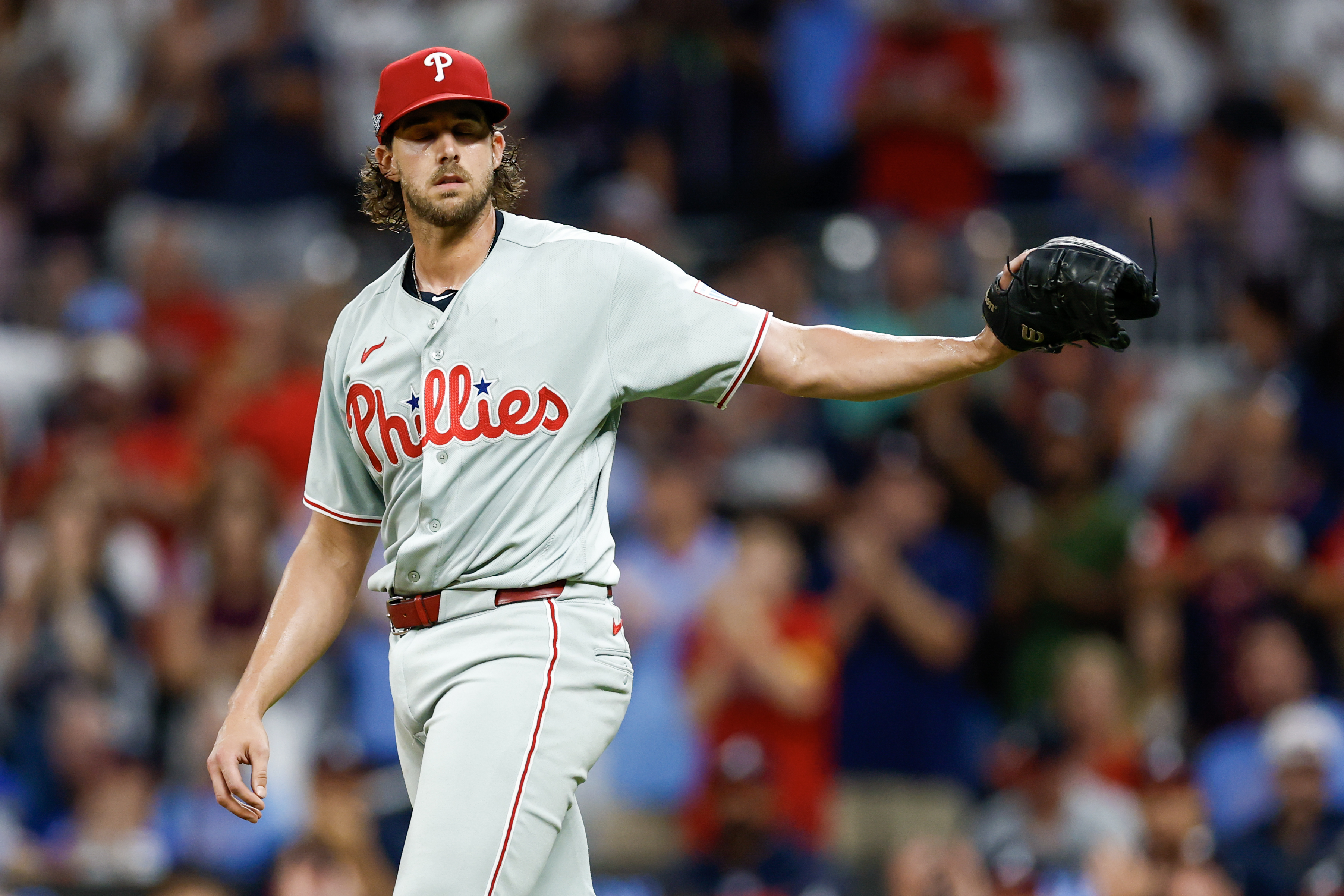
Aaron Nola started Game 3 and lasted 1 2/3 innings, giving up a three-run homer to Michael Harris II in the first. Yong Kim / Staff Photographer
I had no problem with …
… the plan to start Nola before going to Wheeler. The Phils needed Nola to go through the lineup at least once and then you’d be able to decide when to best deploy Wheeler. Nola couldn’t do it and that was the game. But the plan — which would have Nola to Wheeler to Duran — was sound. It didn’t work out.
Remember when …
… the Phillies beat the Diamondbacks by 10 runs in Game 2 of the 2023 NLCS and then flew to Arizona with visions of splashing in their pool? The Phils have since gone 4-12 in the postseason and have failed to win a playoff series. The Phils had a second-straight pennant in their grasp that night and felt like a budding dynasty. How was that just three years ago?
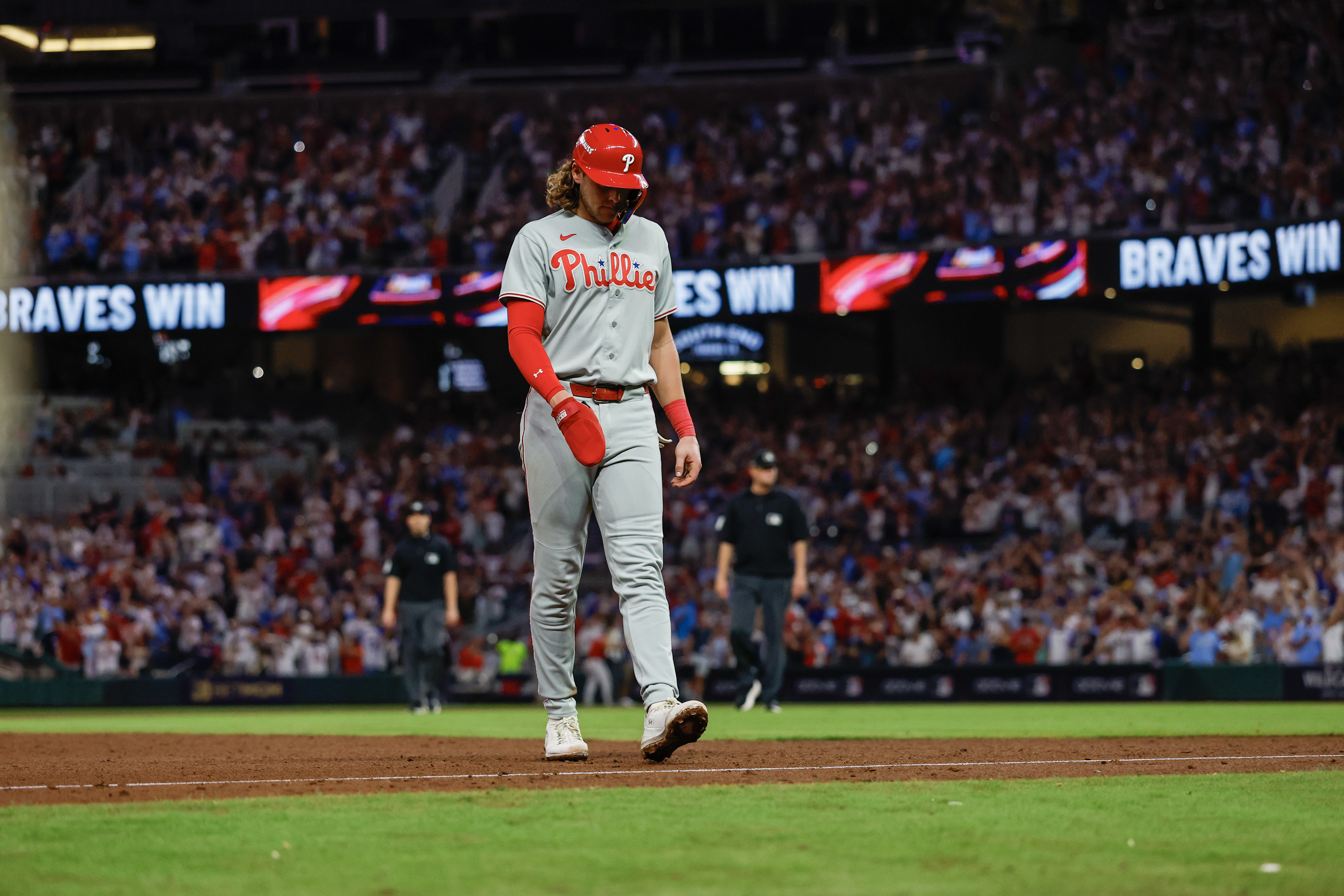
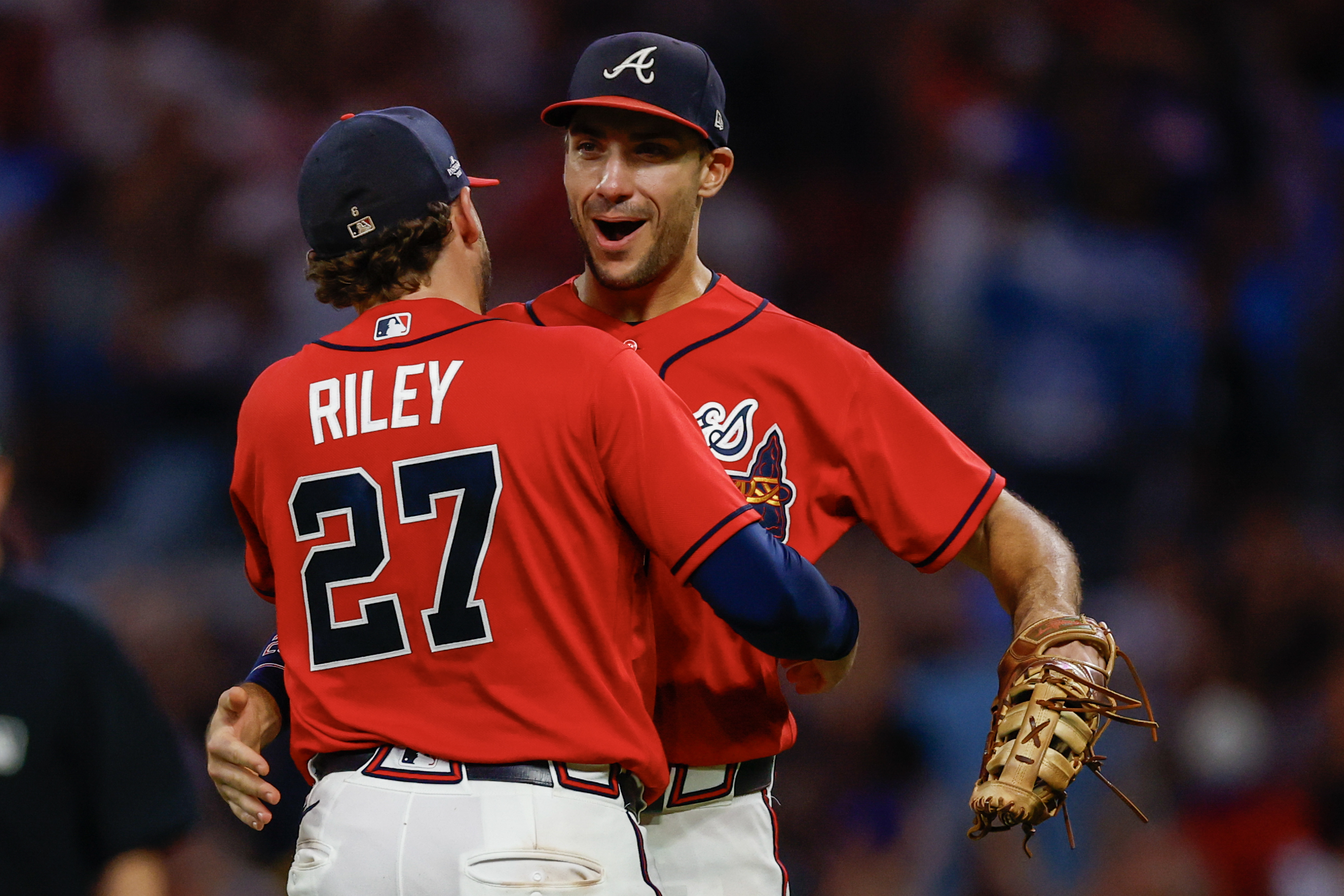
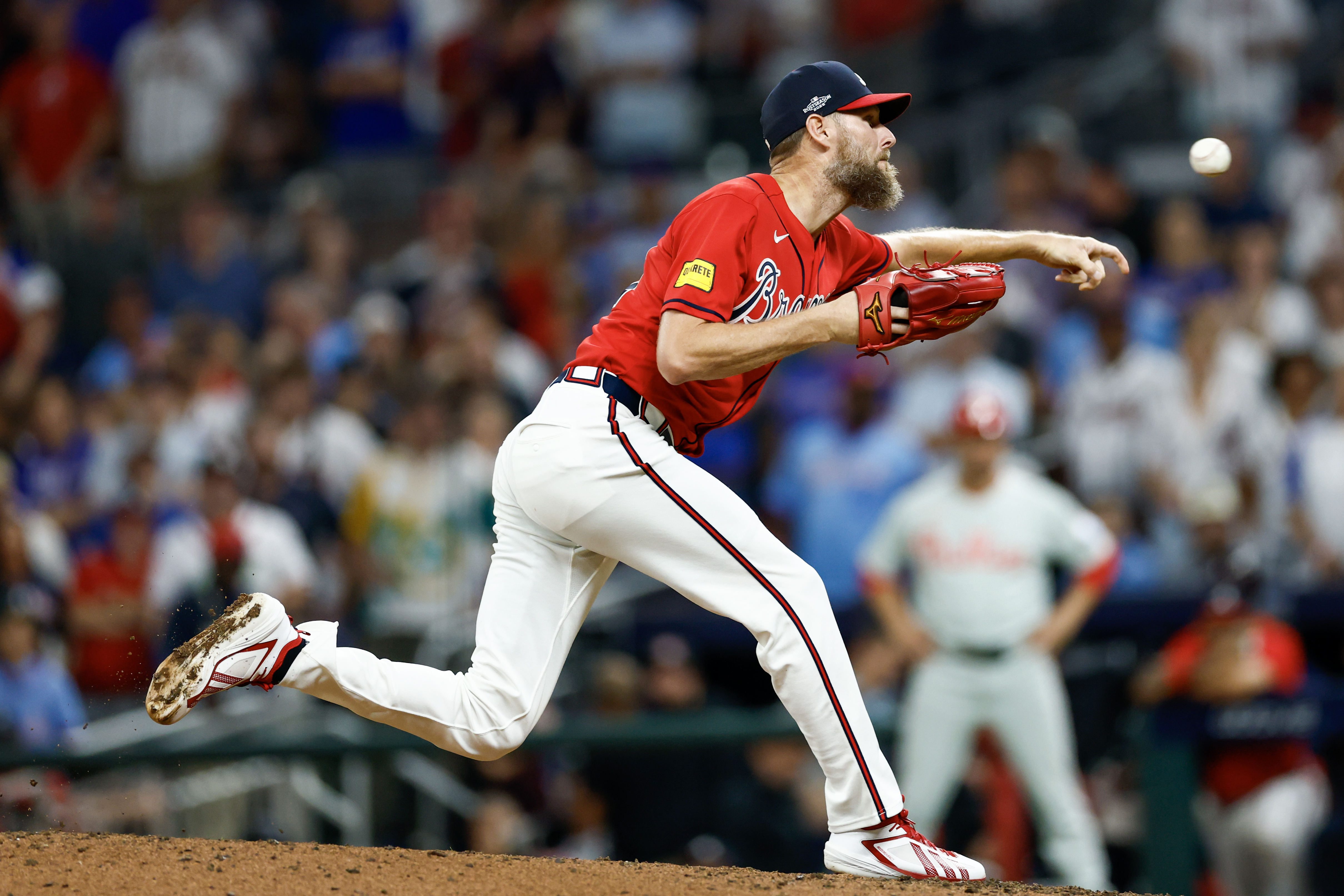
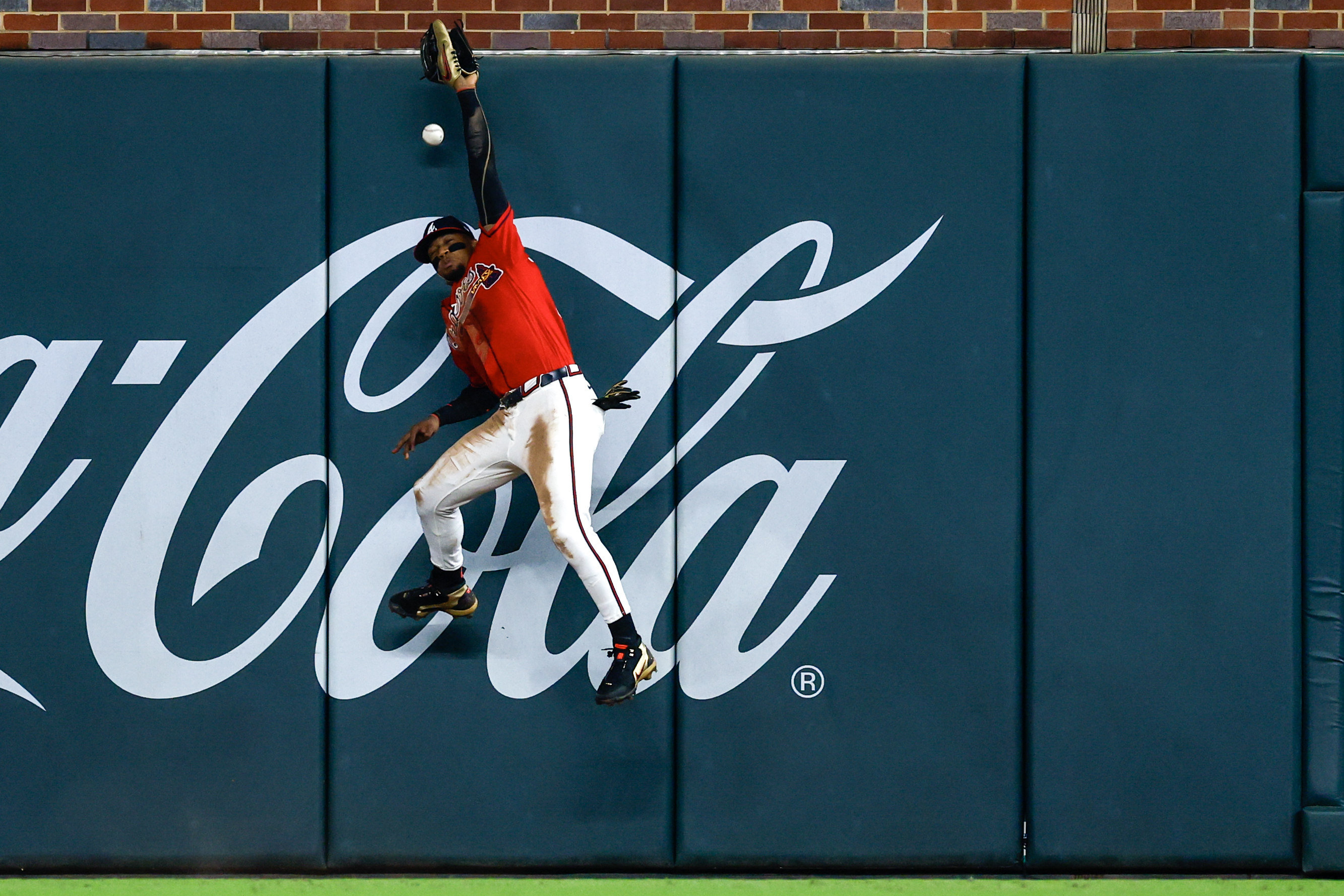
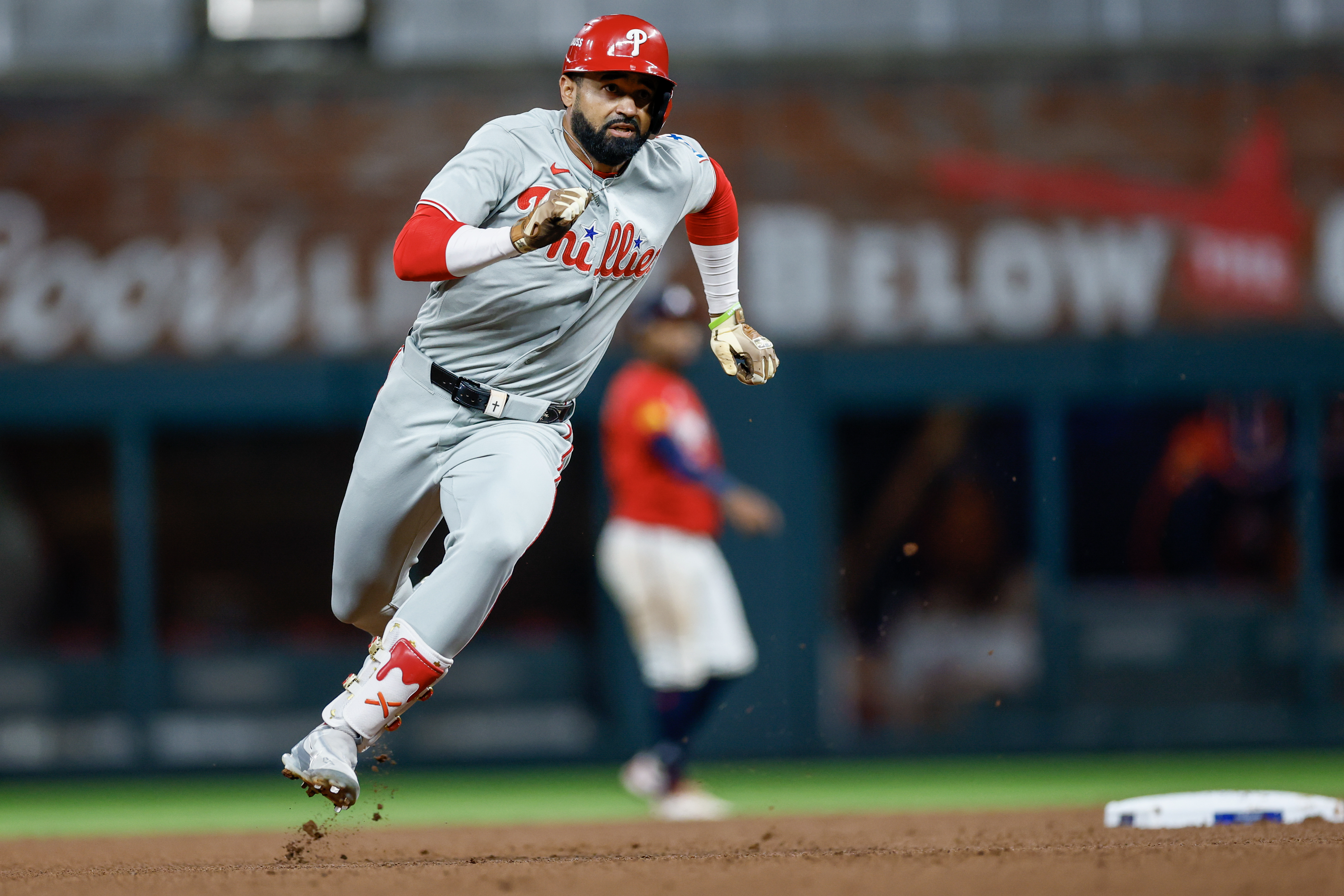
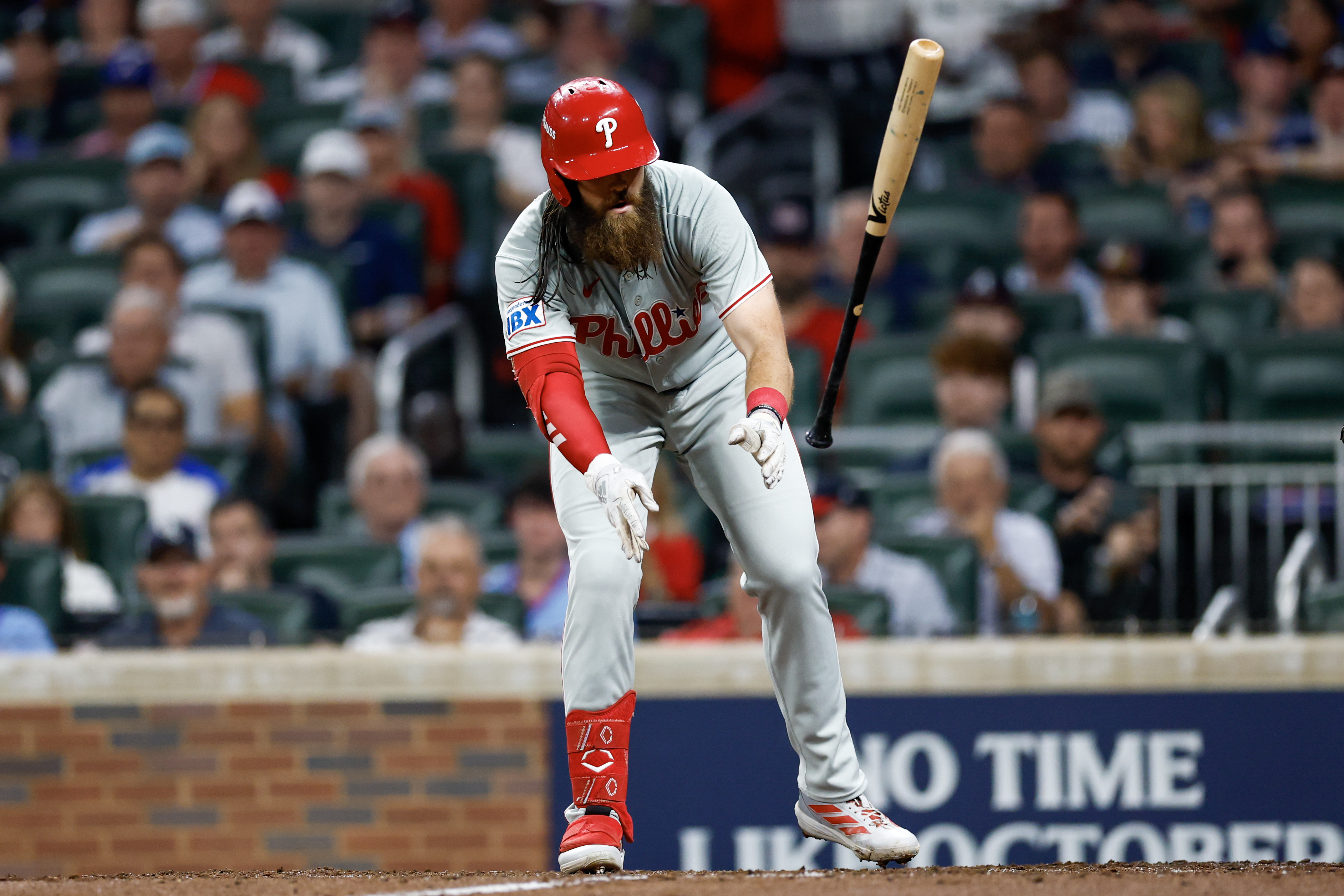
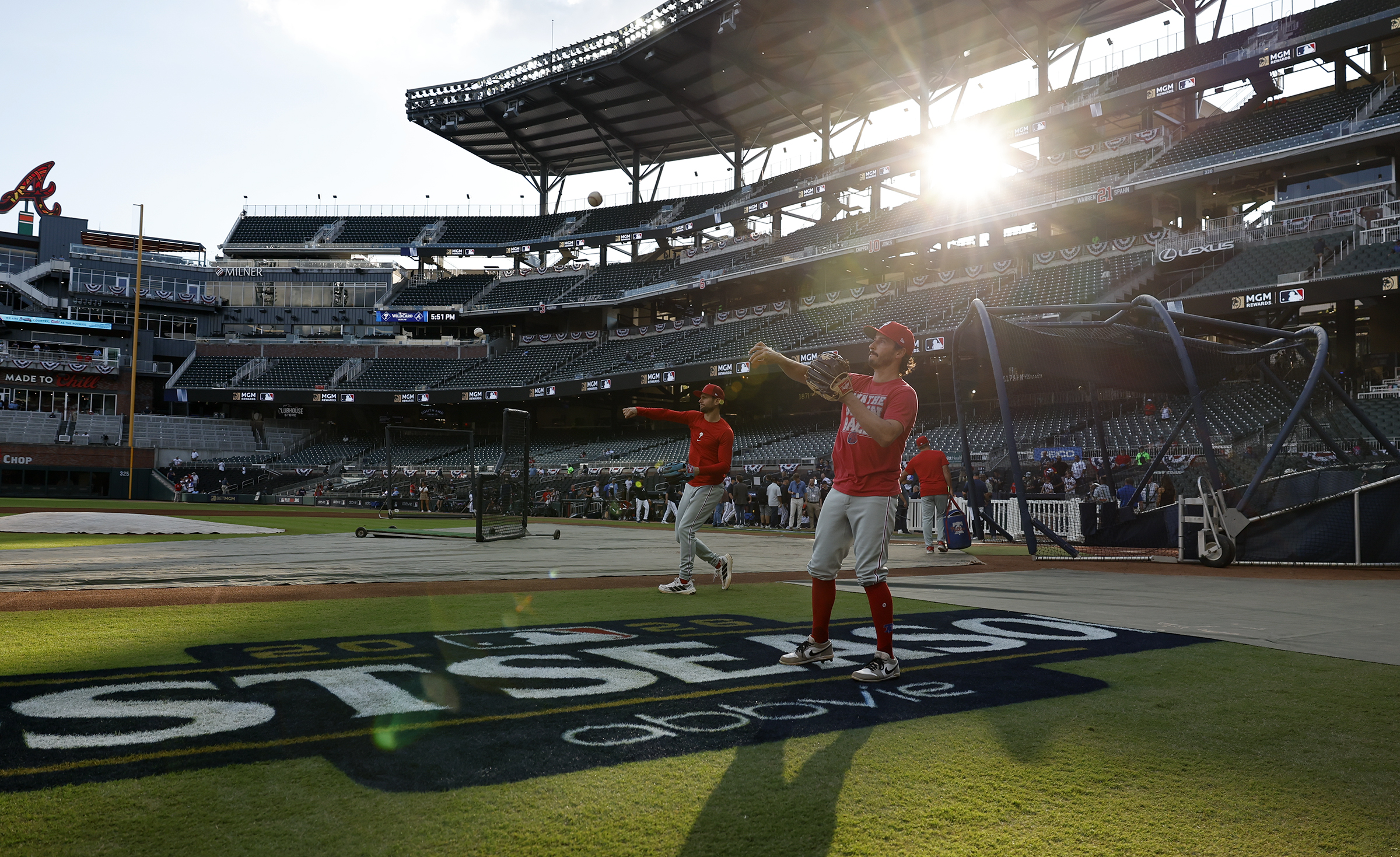
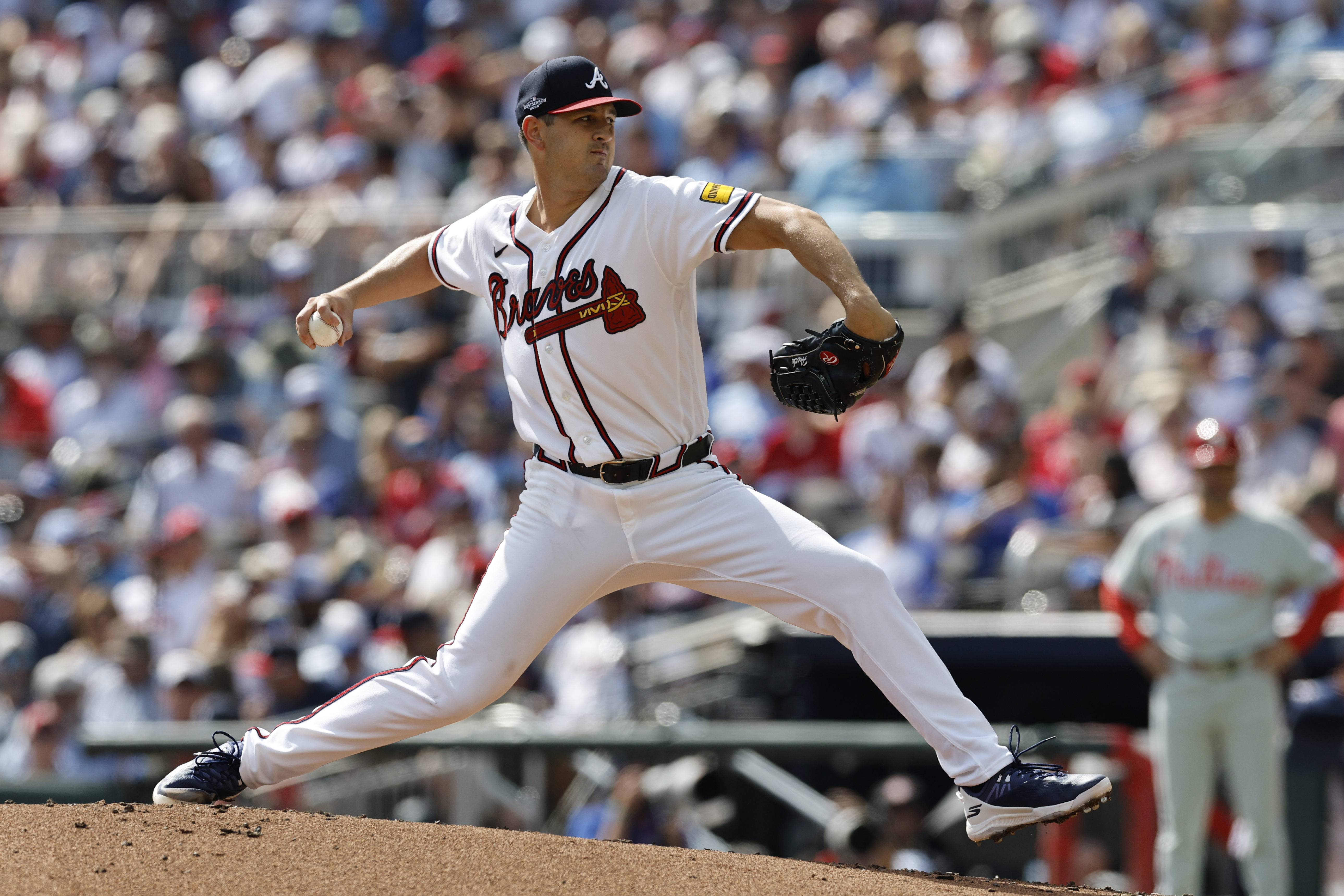
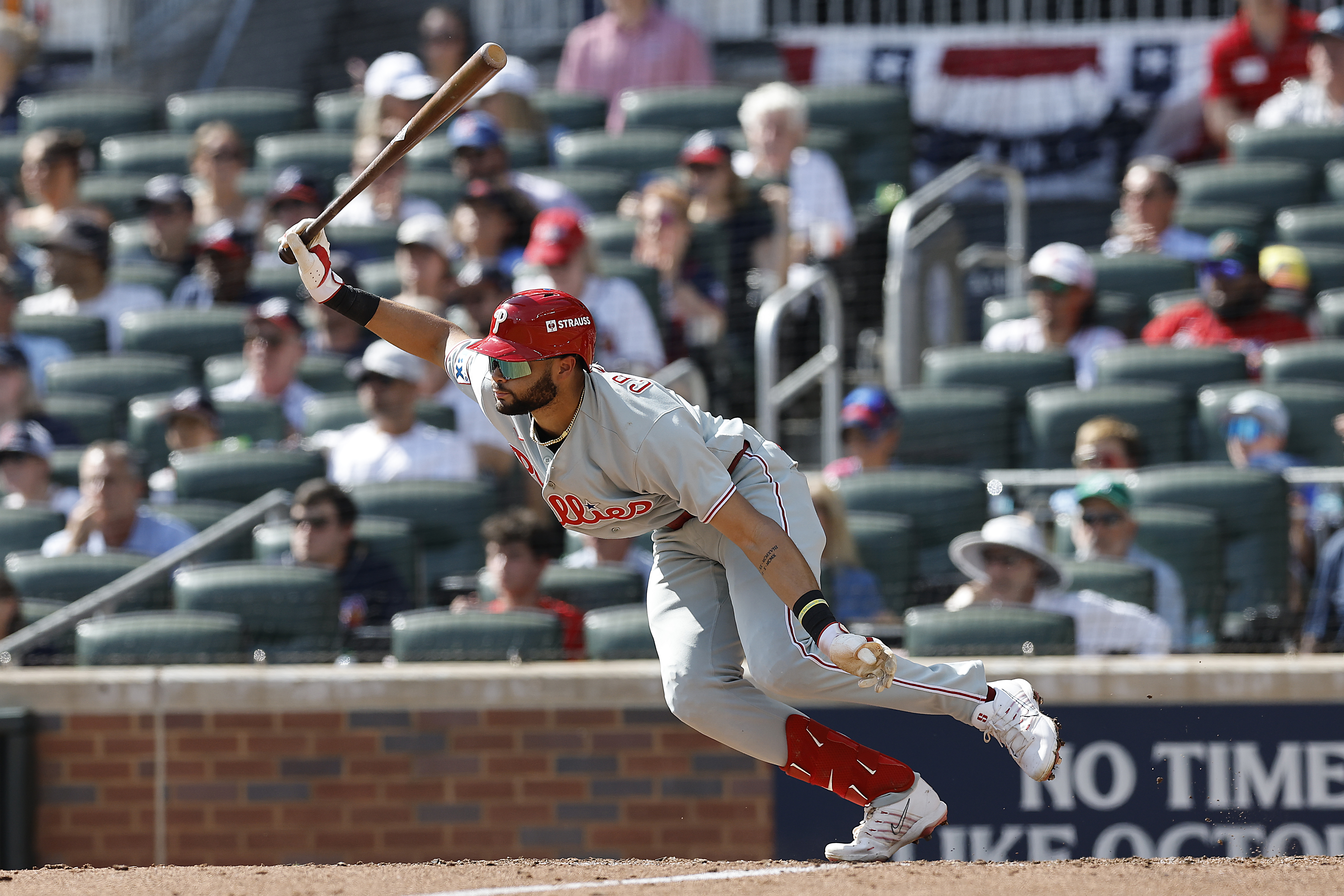
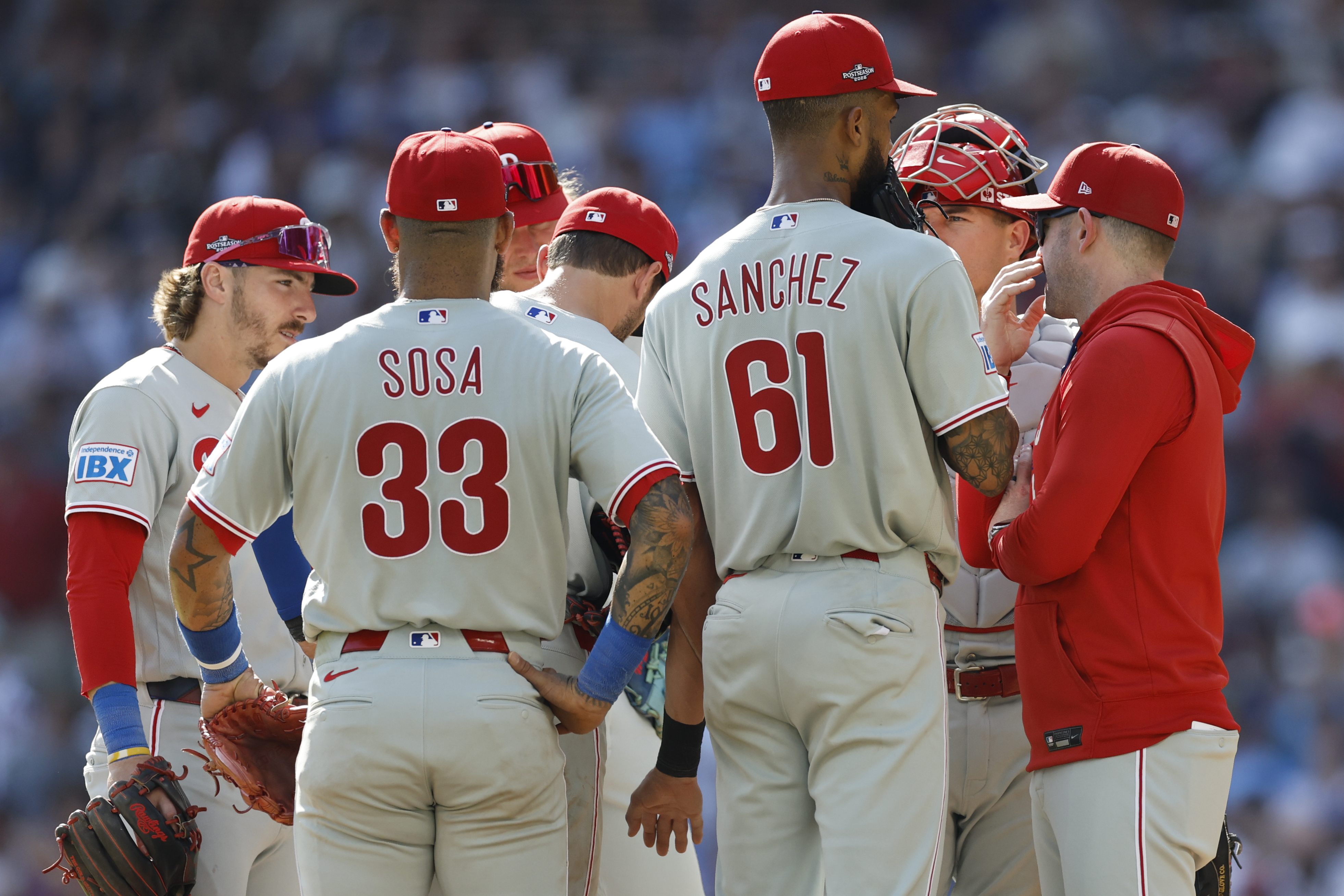
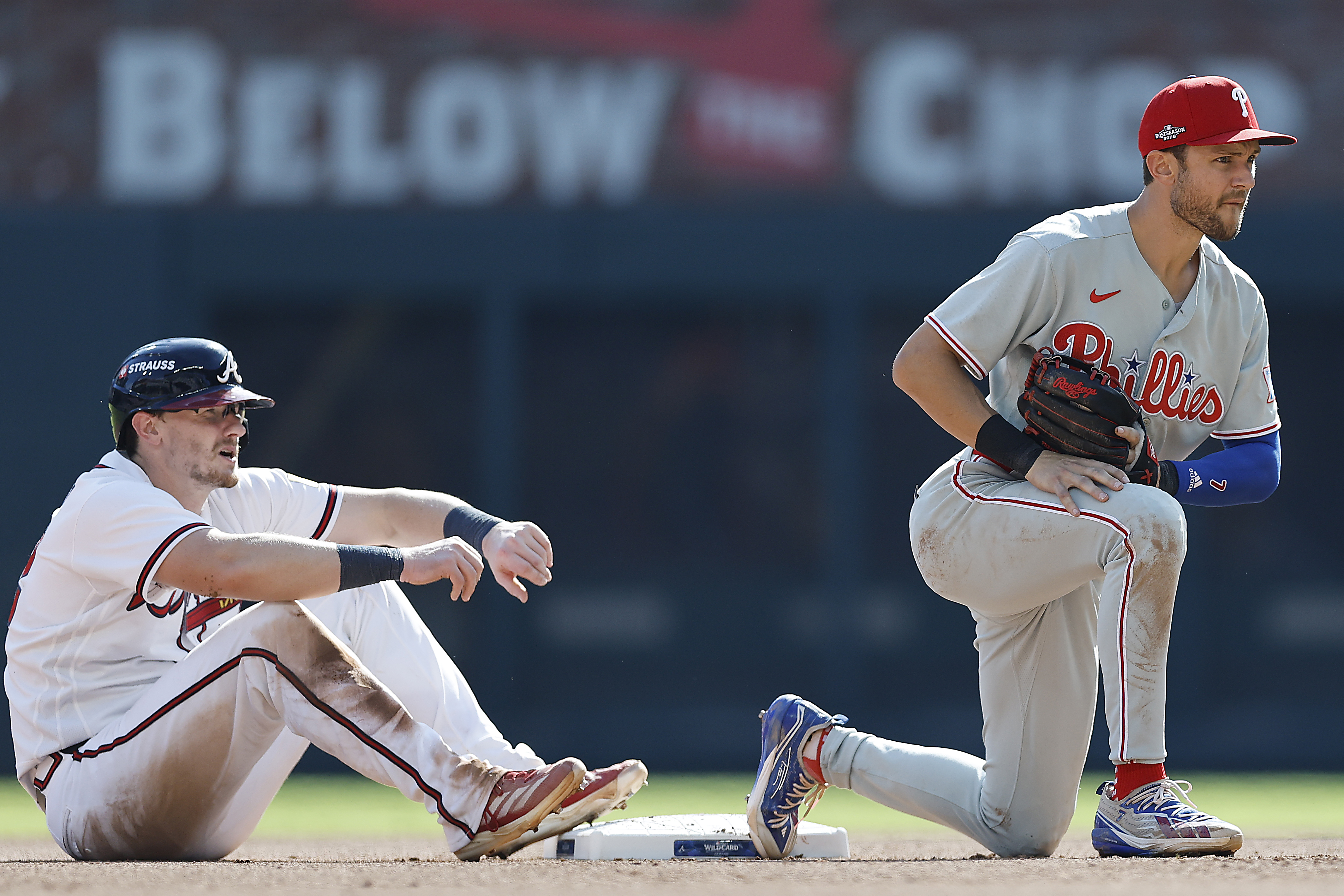
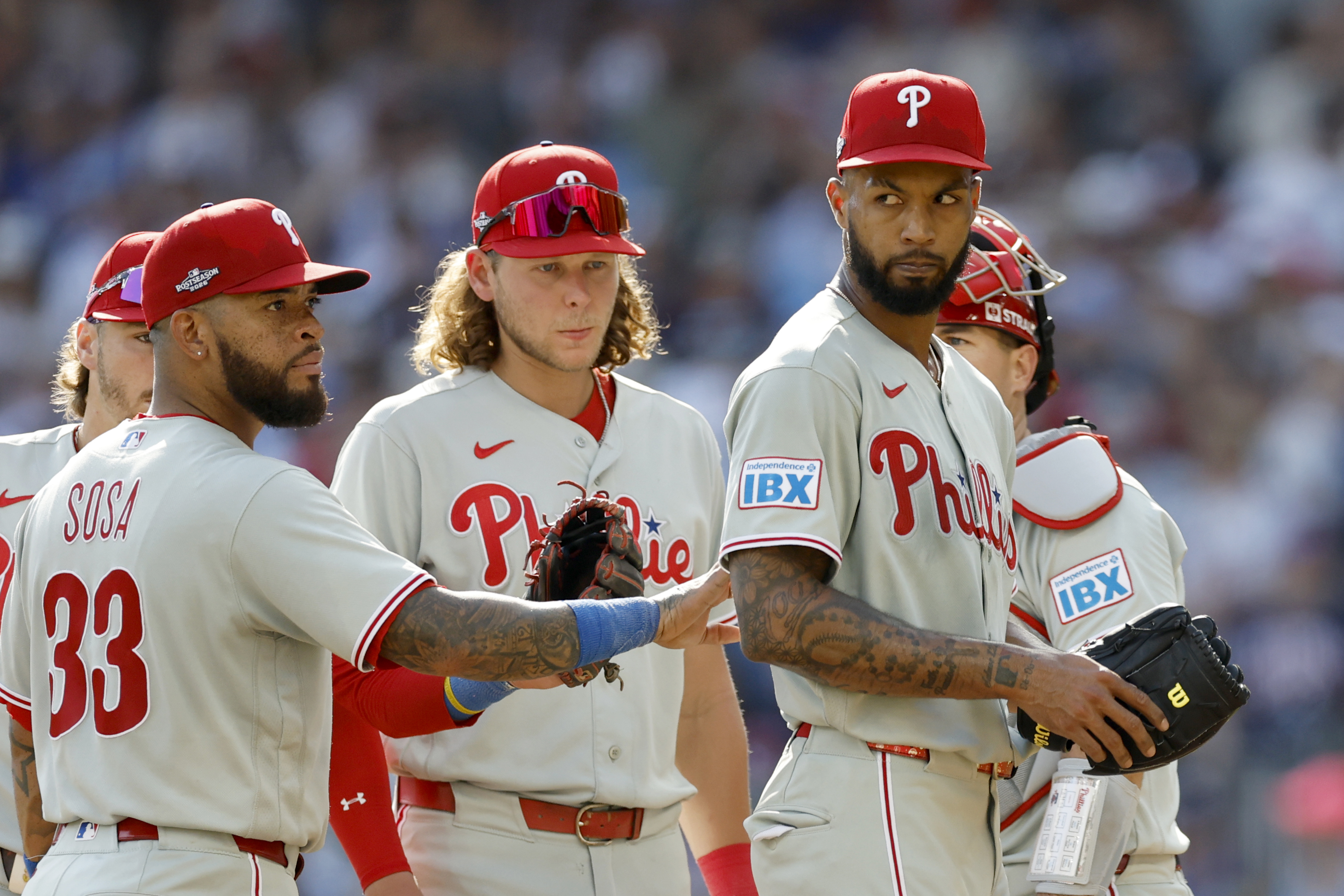
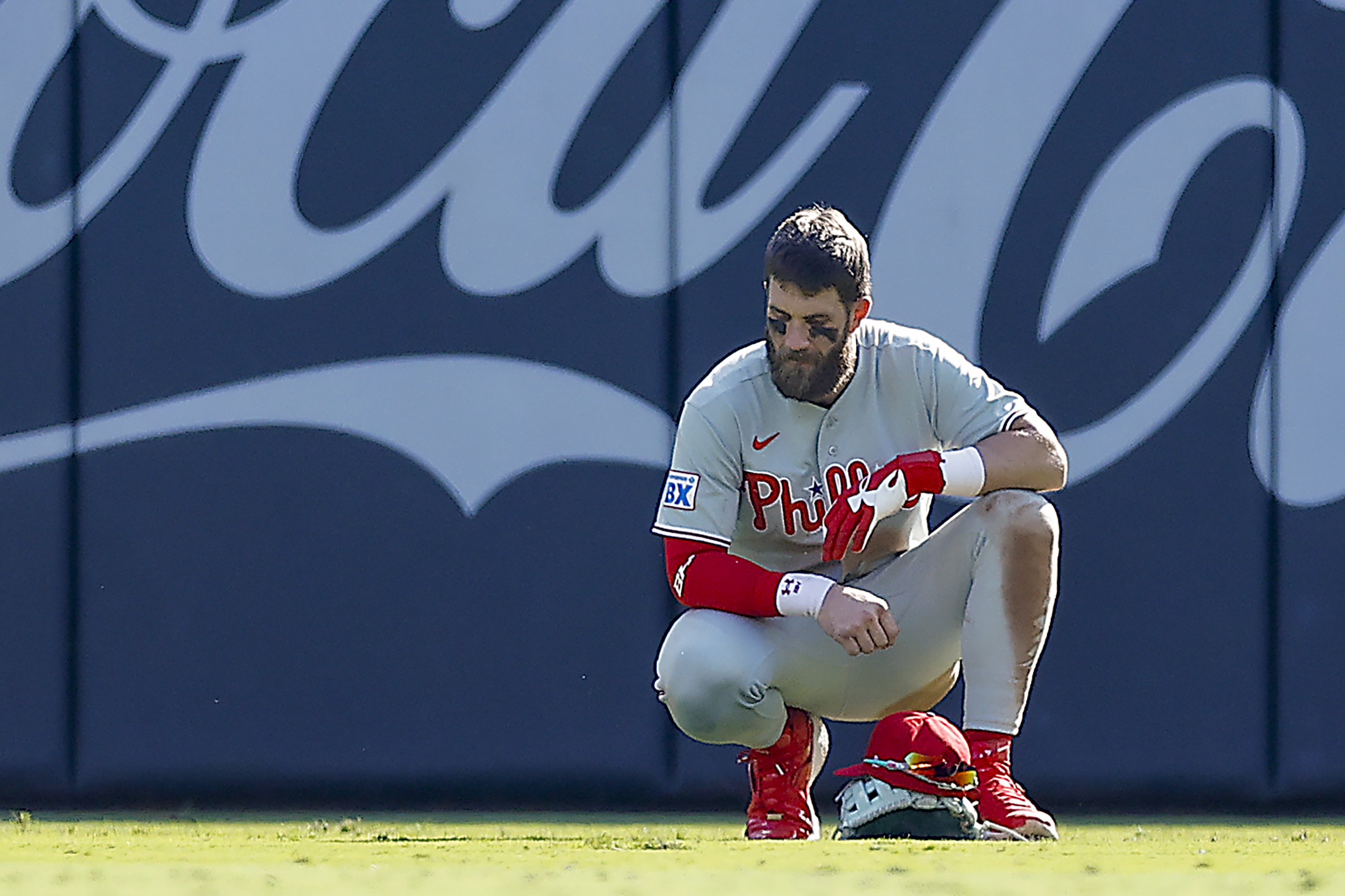
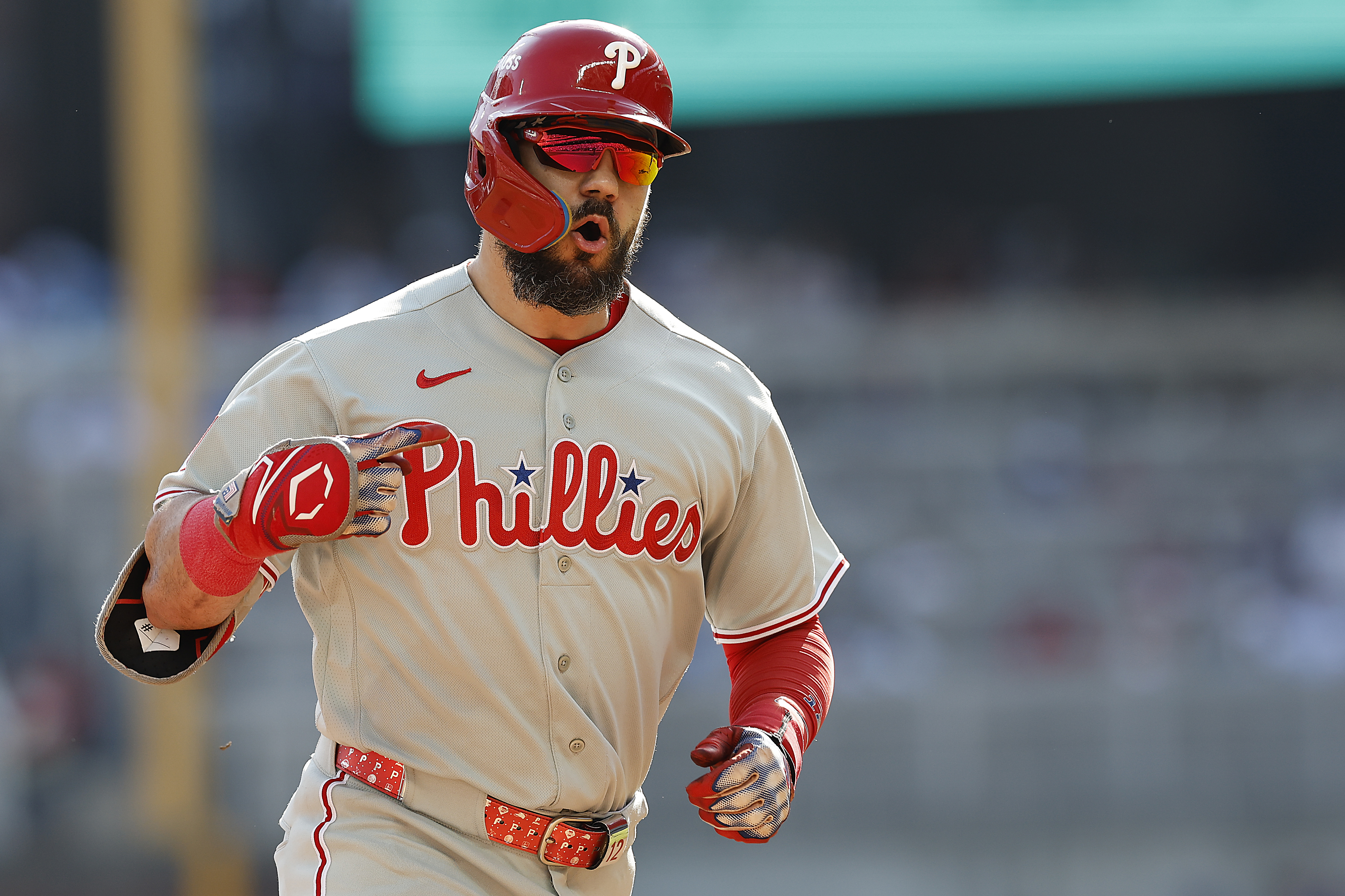
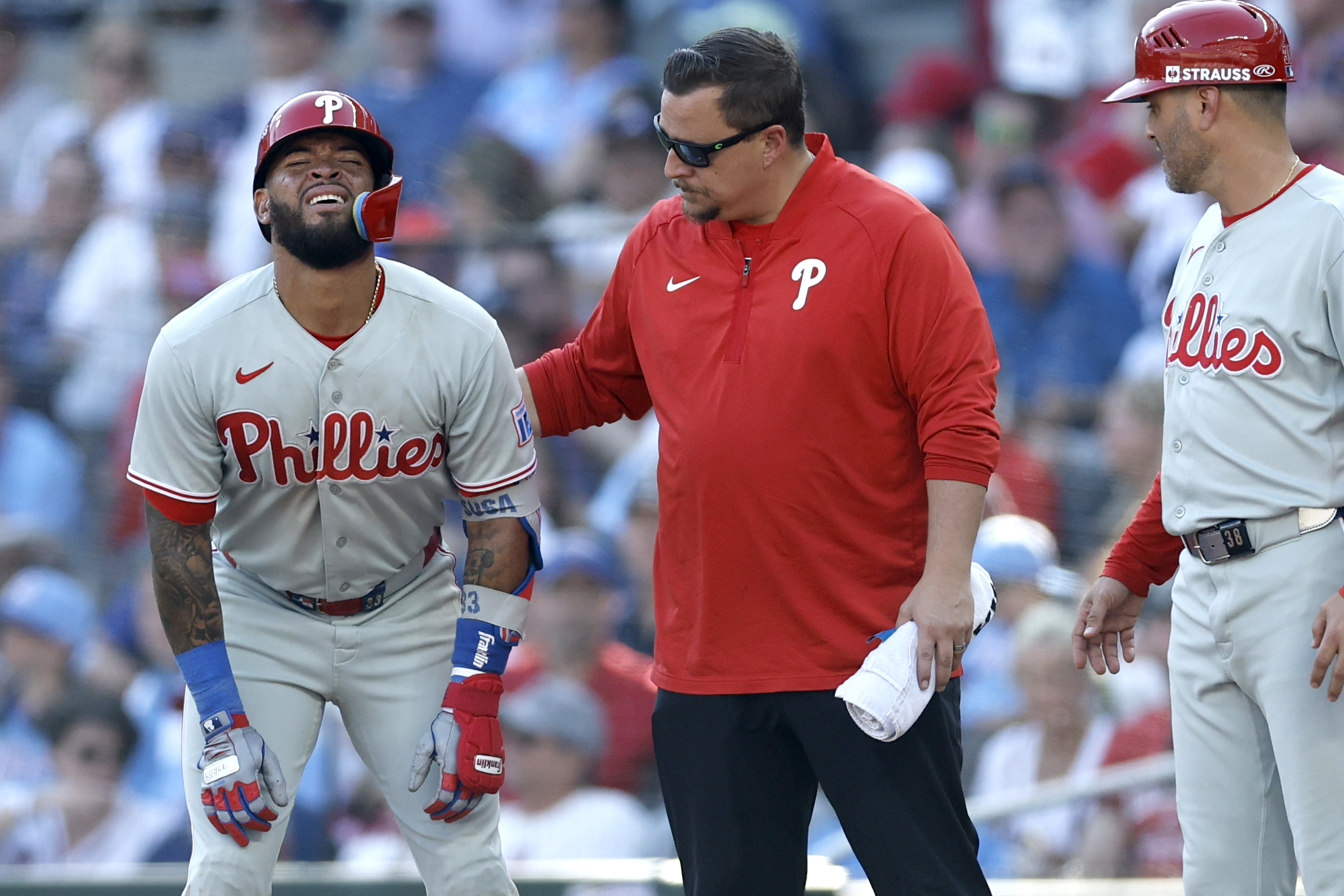
Phillies Alec Bohm walks off the field after the final out in Game 3 of the National League wild-card series against the Braves Thursday, Oct. 1, 2026, in Atlanta.Yong Kim / Staff PhotographerBraves Austin Riley (left) and Matt Olson celebrate their win in Game 3 of the National League wild-card series over the Phillies Thursday, Oct. 1, 2026, in Atlanta.Yong Kim / Staff PhotographerBraves starting pitcher Chris Sale closes the game during the ninth inning in Game 3 of the National League wild-card series against the Phillies Thursday, Oct. 1, 2026, in Atlanta.Yong Kim / Staff PhotographerBraves right fielder Ronald Acuña Jr. attempts to catch Phillies Derek Hill triple during the eighth inning in Game 3 of the National League wild-card series Thursday, Oct. 1, 2026, in Atlanta.Yong Kim / Staff PhotographerPhillies Derek Hill runs to third after hitting a triple during the eighth inning in Game 3 of the National League wild-card series against the Braves Thursday, Oct. 1, 2026, in Atlanta.Yong Kim / Staff PhotographerPhillies pitcher Jonathan Bowlan after Braves Matt Olson hits a solo home run during the seventh inning in Game 3 of the National League wild-card series Thursday, Oct. 1, 2026, in Atlanta.Yong Kim / Staff PhotographerBraves Matt Olson hits a solo home run during the seventh inning in Game 3 of the National League wild-card series Thursday, Oct. 1, 2026, in Atlanta.Yong Kim / Staff PhotographerPhillies first baseman Bryce Harper hits a double during the sixth inning in Game 3 of the National League wild-card series against the Braves Thursday, Oct. 1, 2026, in Atlanta.Yong Kim / Staff PhotographerPhillies designated hitter Kyle Schwarber hits a single during the sixth inning in Game 3 of the National League wild-card series against the Braves Thursday, Oct. 1, 2026, in Atlanta.Yong Kim / Staff PhotographerPhillies Bryan de la Cruz hits a single during the fifth inning in Game 3 of the National League wild-card series against the Braves Thursday, Oct. 1, 2026, in Atlanta.Yong Kim / Staff PhotographerPhillies Brandon Marsh tosses his bat after drawing a walk during the fifth inning in Game 3 of the National League wild-card series Thursday, Oct. 1, 2026, in Atlanta.Yong Kim / Staff PhotographerPhillies second baseman Bryson Stott after he strikes out looking to end the fourth inning in Game 3 of the National League wild-card series against the Braves Thursday, Oct. 1, 2026, in Atlanta.Yong Kim / Staff PhotographerPhillies pitcher Zack Wheeler after Braves Ozzie Albies hits a two-run homer during the fourth inning in Game 3 of the National League wild-card series Thursday, Oct. 1, 2026, in Atlanta.Yong Kim / Staff PhotographerPhillies pitcher Zack Wheeler after Braves Ozzie Albies hits a two-run homer during the fourth inning in Game 3 of the National League wild-card series Thursday, Oct. 1, 2026, in Atlanta.Yong Kim / Staff PhotographerPhillies pitcher Zack Wheeler throws a pitch during the third inning in Game 3 of the National League wild-card series against the Braves Thursday, Oct. 1, 2026, in Atlanta.Yong Kim / Staff PhotographerPhillies pitcher Tim Mayza throws a pitch during the second inning in Game 3 of the National League wild-card series against the Braves Thursday, Oct. 1, 2026, in Atlanta.Yong Kim / Staff PhotographerPhillies second baseman Bryson Stott (right) and shortstop Trea Turner (left) go after a single hit by Braves designated hitter Dominic Smith during the second inning in Game 3 of the National League wild-card series Thursday, Oct. 1, 2026, in Atlanta.Yong Kim / Staff PhotographerPhillies manager Don Mattingly takes out pitcher Aaron Nola during the second inning in Game 3 of the National League wild-card series against the Braves Thursday, Oct. 1, 2026, in Atlanta.Yong Kim / Staff PhotographerPhillies pitcher Aaron Nola after giving up a three-run home run to Braves Michael Harris II during the first inning in Game 3 of the National League wild-card series against the Braves Thursday, Oct. 1, 2026, in Atlanta.Yong Kim / Staff PhotographerBraves Michael Harris II hits a three-run home run during the first inning in Game 3 of the National League wild-card series against the Phillies Thursday, Oct. 1, 2026, in Atlanta.Yong Kim / Staff PhotographerPhillies designated hitter Kyle Schwarber hits a single during the first inning in Game 3 of the National League wild-card series against the Braves Thursday, Oct. 1, 2026, in Atlanta.Yong Kim / Staff PhotographerPhillies shortstop Trea Turner and back-up catcher Garrett Stubbs (right) throw the baseball during warm ups before the Phillies play on the Atlanta Braves in game 3 of the National League wild-card series on Thursday, Oct. 1, 2026 in Atlanta.Yong Kim / Staff Photographer
Please stop suggesting that …
… Garrett Stubbs should’ve started over J.T. Realmuto since Nola was pitching. Yes, Nola has better numbers this season with Stubbs behind the plate, but they’re practically equal (.703 OPS against with Realmuto compared to a .692 OPS against with Stubbs) across Nola’s career. Plus, Realmuto has caught more than 700 innings from Nola than Stubbs. Realmuto had a big triple in Game 1 and another hit in Game 2. Plus, his defense in Game 2 kept the Phils alive. There was no reason to swap Realmuto out in an elimination game and sacrifice an at-bat or two just so Stubbs could catch Nola.
… Aidan Miller to be an impact player. The Phils have produced just one homegrown impact bat — Rhys Hoskins — since the end of the last golden era. Bohm and Stott’s career production hovers around league average. Crawford looks like a fine player but not a star. Hoskins had a career OPS+ of 125 when he left the Phils. That kind of production would play. The lineup will be another year older in 2027 and it’s hard to imagine this run continuing without an infusion of young talent. There’s not much in the pipeline besides Miller.
… they already have their rotation set for 2027 and it’ll rival any team in baseball. You can put Zack Wheeler, Jesús Luzardo, and Cristopher Sánchez up against any other staff’s top three pitchers. Painter looked the part after returning from the minors and his performance in Game 2 makes you feel even better about next season. Nola threw a dud on Thursday, but he’s a luxury as your fifth starter.
Phillies shortstop Trea Turner, who will be 33 next season, has seven years left on his contract.Yong Kim / Staff Photographer
Worry about the Phils because …
… they’re getting older and there doesn’t seem to be much you can change about the lineup. Realmuto turns 36 in March and has two years left on his deal. Harper and Schwarber will both be 34 next season and Turner will be 33 with seven years left on his 11-year deal. The offense — besides Harper and Schwarber — underperformed in 2026 and it’s hard to believe they’re going to get better with a core that remains intact. They’ll acquire a right fielder (or a first baseman and have Harper stay in right) and maybe replace Brandon Marsh in left. They can swap out Bohm for Miller but there doesn’t seem to be room for the drastic upgrades they need as they already have $217 million committed for next season. Plus, they need to spend some money on the bullpen.
Every era eventually ends. Thursday night felt like an inflection point. The Phils won’t run it back again. Right?
ATLANTA — Like statues, there they stood, this Phillies team. Leaning against the dugout railing, chins resting on their crossed arms as they watched it all slip away once again.
This one was a slow death. But the end could have been discerned a mile away.
Even before Michael Harris II’s first-inning homer off Aaron Nola that gave Atlanta a lead it would not surrender. Even before Ozzie Albies’ fourth-inning homer off Zack Wheeler, which might have been the mortal blow.
It was the Phillies’ roster construction that led to this, a 6-2 loss to the Braves on Thursday night, the end of their season in Game 3 of the wild-card series. It was the lack of starting depth, the lack of a competent bullpen, the lack of reliable right-handed hitters. The weaknesses that at times the Phillies had been able to paper over were all amplified by the way their regular season ended, and directly led to their demise Thursday.
“It’s just as frustrating as last year, and the year before that,” said Kyle Schwarber.
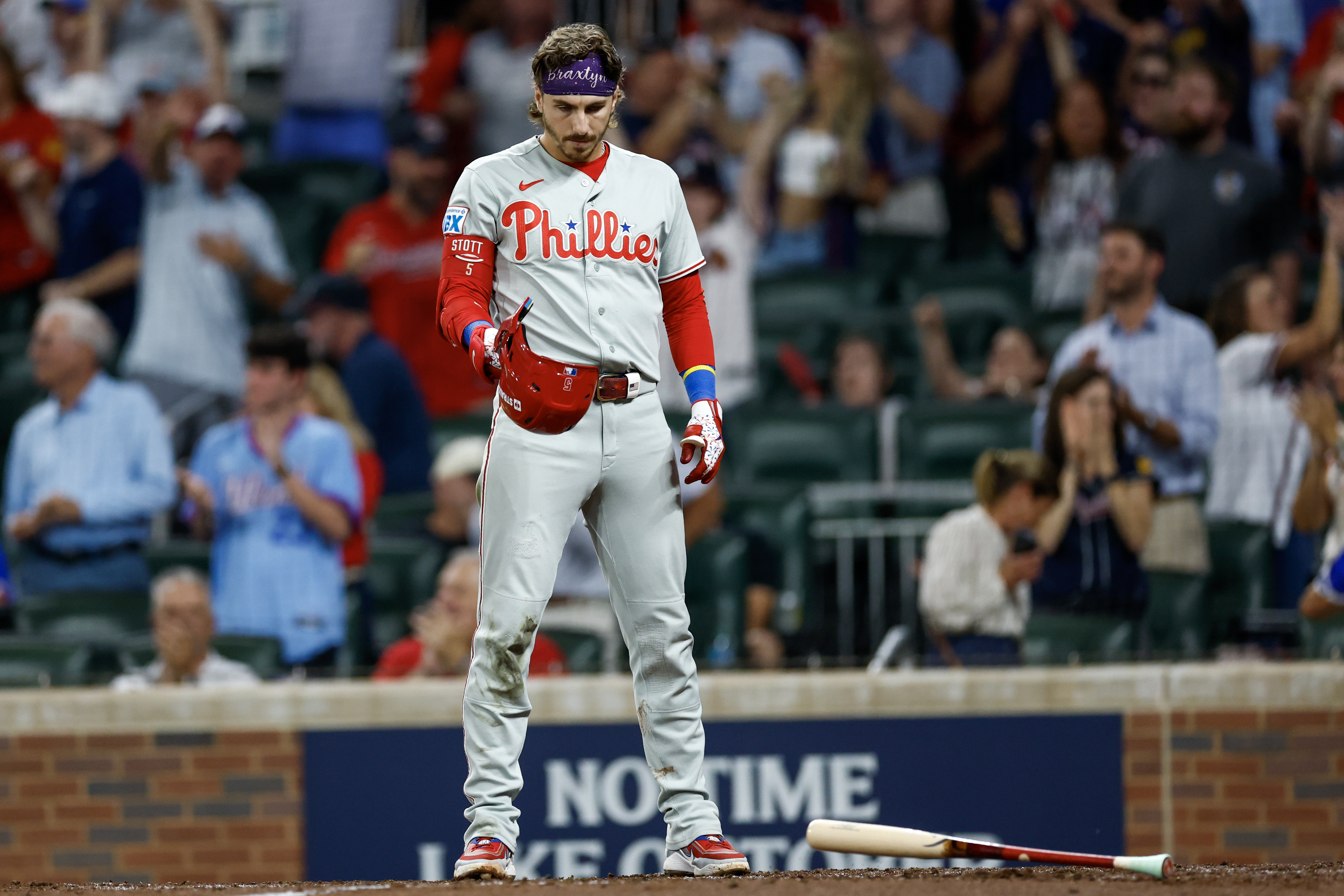
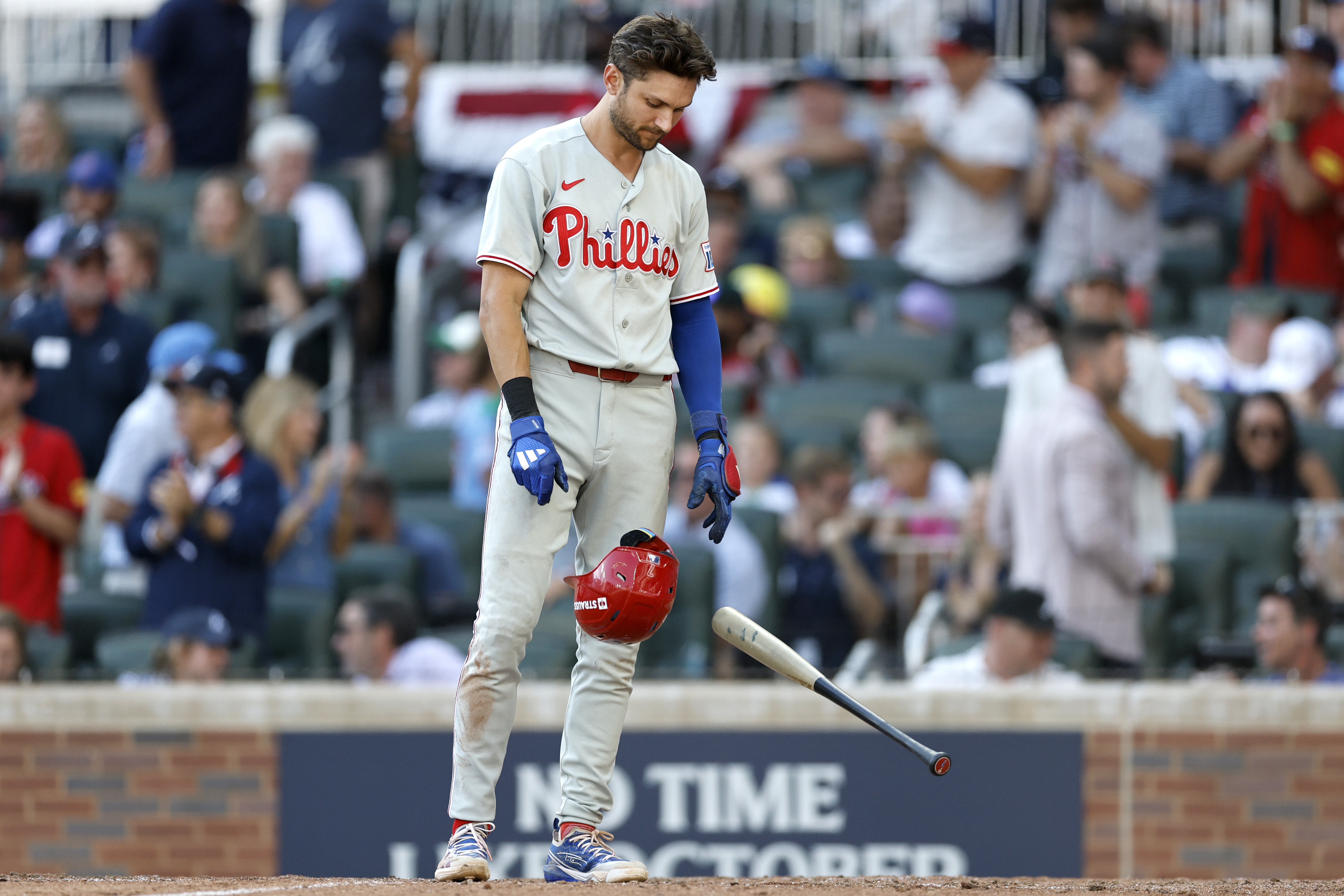
The Phillies’ Bryson Stott strikes out to end the fourth inning.Yong Kim / Staff Photographer
The four consecutive games lost in the final week, delaying a postseason clinch until the very last possible moment, loomed incredibly large. The Phillies used Nola on two days’ rest in Game 161 as a desperate attempt to secure a playoff berth — and it failed. They were then forced to use Wheeler in Game 162.
“Looking back, having your pitching set up is really important this time of year,” Trea Turner said. “We didn’t do a good job playing down the stretch to have that happen.”
Instead of being able to line up the top three arms in their formidable rotation for this three-game series, the Phillies had to cobble together a precarious plan. Jesús Luzardo, who returned from injury to also pitch in Game 162, could cover only five innings on Tuesday. Cristopher Sánchez started Wednesday, and the Phillies leaned on Andrew Painter in relief rather than their unstable bullpen.
That left Nola, who has struggled to keep the ball in the park all season, and Wheeler on short rest for Thursday’s elimination game.
None of president of baseball operations Dave Dombrowski’s trade deadline acquisitions — not Brooks Raley, nor the injured Luis Arraez and Caleb Kilian — were on the wild-card roster.
“We didn’t play as well as we wanted down the stretch, especially right there at the end, and we kind of had to piece it together,” Wheeler said. “This series, not ideal, but we’re all pros here, and when we get the ball, it’s time to compete, and it’s up to us at the end of the day.”
Aaron Nola started Game 3 and lasted 1⅔ innings, giving up a three-run homer to Michael Harris II in the first. Yong Kim / Staff Photographer
When both pitchers gave up blasts to the Braves over the right-center field wall on Thursday, there were endless “what ifs.” What if Wheeler wasn’t pitching on three days’ rest? What if he had started the game instead of Nola, who has historically been hit hard by the top of Atlanta’s order? What if the Phillies’ bats could have picked up their overworked pitchers?
Interim manager Don Mattingly said the Phillies decided to start Nola because he was more rested than Wheeler, and they hoped he would be able to keep them in the game for a few turns through Atlanta’s batting order. Nola had also authored a notable turnaround in his regular season, with a 2.77 ERA in his final 10 starts.
“He was one of our best guys down the stretch,” Mattingly said.
It was a nightmare scenario for the Phillies early, and a best-case scenario for the Braves. Less than two months ago, Atlanta opener Ray Kerr had been a minor leaguer. But he did his job by handling the Phillies’ lefties — excluding Schwarber, who singled and then drew a walk — while their righties failed to carry the load.
From the leadoff spot, Turner went hitless against the lefty Kerr. He finished the series 1-for-11 in three games.
Phillies Alec Bohm walks off the field after the final out in Game 3 of the National League wild-card series against the Braves Thursday, Oct. 1, 2026, in Atlanta.Yong Kim / Staff PhotographerBraves Austin Riley (left) and Matt Olson celebrate their win in Game 3 of the National League wild-card series over the Phillies Thursday, Oct. 1, 2026, in Atlanta.Yong Kim / Staff PhotographerBraves starting pitcher Chris Sale closes the game during the ninth inning in Game 3 of the National League wild-card series against the Phillies Thursday, Oct. 1, 2026, in Atlanta.Yong Kim / Staff PhotographerBraves right fielder Ronald Acuña Jr. attempts to catch Phillies Derek Hill triple during the eighth inning in Game 3 of the National League wild-card series Thursday, Oct. 1, 2026, in Atlanta.Yong Kim / Staff PhotographerPhillies Derek Hill runs to third after hitting a triple during the eighth inning in Game 3 of the National League wild-card series against the Braves Thursday, Oct. 1, 2026, in Atlanta.Yong Kim / Staff PhotographerPhillies pitcher Jonathan Bowlan after Braves Matt Olson hits a solo home run during the seventh inning in Game 3 of the National League wild-card series Thursday, Oct. 1, 2026, in Atlanta.Yong Kim / Staff PhotographerBraves Matt Olson hits a solo home run during the seventh inning in Game 3 of the National League wild-card series Thursday, Oct. 1, 2026, in Atlanta.Yong Kim / Staff PhotographerPhillies first baseman Bryce Harper hits a double during the sixth inning in Game 3 of the National League wild-card series against the Braves Thursday, Oct. 1, 2026, in Atlanta.Yong Kim / Staff PhotographerPhillies designated hitter Kyle Schwarber hits a single during the sixth inning in Game 3 of the National League wild-card series against the Braves Thursday, Oct. 1, 2026, in Atlanta.Yong Kim / Staff PhotographerPhillies Bryan de la Cruz hits a single during the fifth inning in Game 3 of the National League wild-card series against the Braves Thursday, Oct. 1, 2026, in Atlanta.Yong Kim / Staff PhotographerPhillies Brandon Marsh tosses his bat after drawing a walk during the fifth inning in Game 3 of the National League wild-card series Thursday, Oct. 1, 2026, in Atlanta.Yong Kim / Staff PhotographerPhillies second baseman Bryson Stott after he strikes out looking to end the fourth inning in Game 3 of the National League wild-card series against the Braves Thursday, Oct. 1, 2026, in Atlanta.Yong Kim / Staff PhotographerPhillies pitcher Zack Wheeler after Braves Ozzie Albies hits a two-run homer during the fourth inning in Game 3 of the National League wild-card series Thursday, Oct. 1, 2026, in Atlanta.Yong Kim / Staff PhotographerPhillies pitcher Zack Wheeler after Braves Ozzie Albies hits a two-run homer during the fourth inning in Game 3 of the National League wild-card series Thursday, Oct. 1, 2026, in Atlanta.Yong Kim / Staff PhotographerPhillies pitcher Zack Wheeler throws a pitch during the third inning in Game 3 of the National League wild-card series against the Braves Thursday, Oct. 1, 2026, in Atlanta.Yong Kim / Staff PhotographerPhillies pitcher Tim Mayza throws a pitch during the second inning in Game 3 of the National League wild-card series against the Braves Thursday, Oct. 1, 2026, in Atlanta.Yong Kim / Staff PhotographerPhillies second baseman Bryson Stott (right) and shortstop Trea Turner (left) go after a single hit by Braves designated hitter Dominic Smith during the second inning in Game 3 of the National League wild-card series Thursday, Oct. 1, 2026, in Atlanta.Yong Kim / Staff PhotographerPhillies manager Don Mattingly takes out pitcher Aaron Nola during the second inning in Game 3 of the National League wild-card series against the Braves Thursday, Oct. 1, 2026, in Atlanta.Yong Kim / Staff PhotographerPhillies pitcher Aaron Nola after giving up a three-run home run to Braves Michael Harris II during the first inning in Game 3 of the National League wild-card series against the Braves Thursday, Oct. 1, 2026, in Atlanta.Yong Kim / Staff PhotographerBraves Michael Harris II hits a three-run home run during the first inning in Game 3 of the National League wild-card series against the Phillies Thursday, Oct. 1, 2026, in Atlanta.Yong Kim / Staff PhotographerPhillies designated hitter Kyle Schwarber hits a single during the first inning in Game 3 of the National League wild-card series against the Braves Thursday, Oct. 1, 2026, in Atlanta.Yong Kim / Staff PhotographerPhillies shortstop Trea Turner and back-up catcher Garrett Stubbs (right) throw the baseball during warm ups before the Phillies play on the Atlanta Braves in game 3 of the National League wild-card series on Thursday, Oct. 1, 2026 in Atlanta.Yong Kim / Staff Photographer
“I think this year was the biggest question mark for me offensively in a long time, and I got to figure that out,” Turner said. “So definitely gonna have a lot of work to do there, and I’ll do it.”
Nola, on the other hand, only managed to secure five outs. The veteran right-hander did not have his command, and he sprayed the ball all over the place while Atlanta was content to take its bases. That is, until Harris went down to get a sinker below the zone in the first inning, powering it 387 feet for a 3-0 Atlanta lead in the blink of an eye.
“I just didn’t get ahead, they didn’t chase much,” Nola said.
Tim Mayza finished off the second inning before Nola could see the top of the Braves’ order again. And then it was Wheeler for the third, tasked with stopping the bleeding there. But a nine-pitch walk to Austin Riley, followed by a mistake pitch to Albies, resulted in yet another homer over that brick wall in right center.
Kyle Schwarber hits a single in the first inning. He reached base three times in Game 3. Yong Kim / Staff Photographer
A five-run deficit, especially in the fourth, has been surmountable for this club before. But with every groundout, with every lazy fly ball, it became apparent the Phillies had exhausted the last of their comeback magic. They managed a run in the sixth — on a Schwarber single, a Bryce Harper double, and an RBI groundout from Alec Bohm — and another in the seventh. Derek Hill tripled and scored on a sacrifice fly from Turner.
But the Phillies were unable to snatch momentum back with the long ball, as they had done on Wednesday. While the Braves went deep again in the seventh, this time Matt Olson against Jonathan Bowlan, the Phillies couldn’t find their power.
“It’s hard to score in the postseason. I know we got the lineup capable, but the best teams that get to the postseason have the best pitching, and it’s not like you’re going to put up 10 every night,” Turner said. “Can we play better? Can we do things better? For sure. We got to ask ourselves those questions and find answers.”
In the eighth, Atlanta brought in ace Chris Sale in relief, after the 37-year-old had thrown 95 pitches two days ago, to face Harper. He chased three pitches outside the zone to strike out in a non-competitive at-bat.
The third strike, a slider in the dirt, got past Atlanta catcher Drake Baldwin and skittered toward the backstop, but Harper didn’t notice right away. He leaned down to undo his leg guard before realizing and starting to run toward first. By then, Baldwin had recovered the ball and threw him out easily to officially end the inning.
“I don’t like the shoulda, woulda, coulda, if this ball would have dropped, or we would have put this guy in, or anything,” Harper said. “I don’t like that. You’re here to do business. You’re here to win games. We didn’t do that.”
Sale closed it out in the ninth. He gave up a leadoff single from Bohm, but rebounded to retire Bryson Stott and Bryan De La Cruz. As a final indictment of the Phillies’ roster and depth, the final out came down to pinch-hitting Otto Kemp, a utility player with an .080 average in 25 major league at-bats this year, the last of which was in May.
Braves ace Chris Sale closed out the Phillies in Game 3.Yong Kim / Staff Photographer
Kemp was outclassed by Sale, badly missing on a slider well inside to send the Braves to the Division Series against the Dodgers. Fireworks ignited the sky, as the Phillies leaned on the railing and watched.
“If you don’t win the last game, it’s a crash landing no matter what,” Mattingly said. “It doesn’t matter where it is. There’s going to be one team that doesn’t have it.”
There will be changes coming. Mattingly’s future as Phillies manager is in doubt. He declined to discuss his status postgame. Bohm, Arraez, Edmundo Sosa, José Alvarado, Tim Mayza, Brooks Raley, and injured Adolis García will all be free agents. The Phillies will no longer owe dead money to Nick Castellanos or Taijuan Walker.
Harper said he expects the team to look “a lot different” next year.
“It’s going to be a long offseason, obviously. I trust in the organization and people that are in charge,” he said. “See where we go.”
But the core, built around him, still left Truist Park late Thursday night another year older, and never further from that elusive goal.
ATLANTA — It turns out you can’t win a World Series — or even a wild-card series — with a roster that includes more catchers (three) than trustworthy relievers (two).
Oh, and the Phillies’ icy-cold bats turned the surname of a little-known lefty opener into a four-letter word ever more in the Delaware Valley: Kerr. Ray Kerr.
“It’s always frustrating,” Kyle Schwarber said after the Phillies lost their fourth consecutive postseason series dating to the 2023 NLCS. “From every postseason that I’ve been in, it’s always going to hurt when you’re not the last team holding it up, if you’re knocked out in the first round, DS, CS, World Series.”
We’ll spend the next few days picking apart these three games against the Braves because, well, it’s what we do. It usually starts with the manager. Go ahead, then, and second-guess Don Mattingly for bringing in Jhoan Duran too early in Game 1, or starting Nola over Wheeler in Game 3, or whatever other gripe you may have. Then, hang up and listen.
Or you can skip all that and cut to the real issue: Dave Dombrowski built a Jenga tower of a roster for $322 million (calculated for the luxury tax) and will have limited time to begin fixing it before a work stoppage shuts down the sport from the expiration of the collective bargaining agreement on Dec. 1 until who knows when.
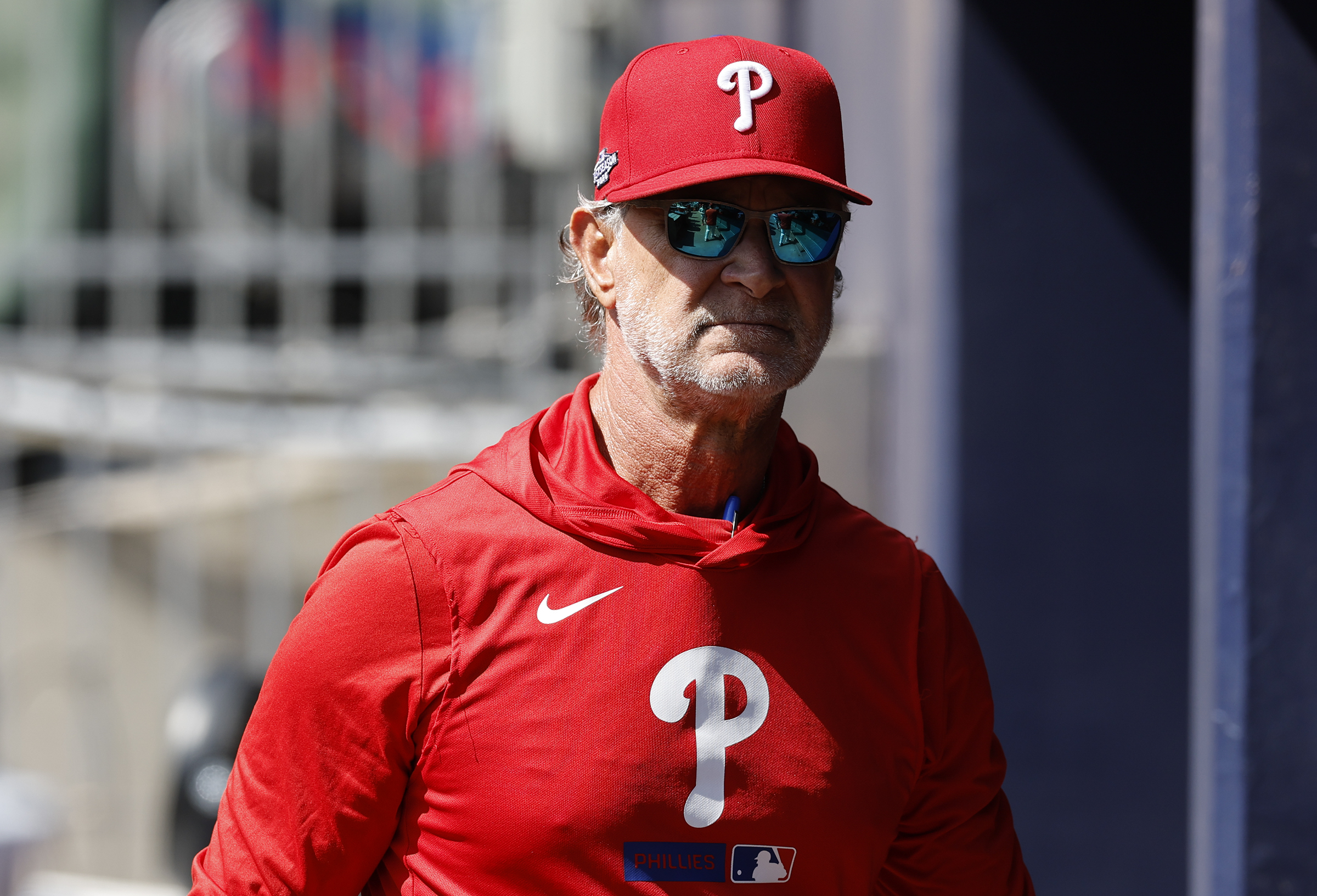
Phillies president of baseball operations Dave Dombrowski has a decision to make about the future of interim manager Don Mattingly.Yong Kim / Staff Photographer
First, though, there’s the question of whether Mattingly returns as the manager.
“It’s not the time to talk about anything like that,” Mattingly said. “I’m not concerned about myself in this situation. I want the Phillies to do what they need to do to set themselves up for success. Yeah, it’s like, my stuff doesn’t really matter.”
Mattingly, 65, is a baseball icon, not to mention the father of Phillies GM Preston Mattingly, who works under Dombrowski. But he also knows this: He was elevated from bench coach to the manager’s office after Rob Thomson was fired on April 28 only because Alex Cora turned down the job.
Dombrowski hired Cora with the Red Sox. They won a World Series together in 2018 and became close friends. When the Sox fired Cora on April 25, Dombrowski offered him the Phillies’ job — even though Thomson hadn’t been let go yet.
Under Mattingly, the Phillies went 79-55, and despite a costly 9-14 stumble down the stretch, captured the last National League wild-card spot. But Dombrowski didn’t remove the interim tag from Mattingly, saying he would wait until after the season to make a decision and fueling speculation across the sport that he will try again to lure Cora.
Last Sunday, amid the Phillies’ wild-card-clinching celebration, owner John Middleton said Mattingly did a “pretty damn good” job but didn’t weigh in on whether he wants him to stay on.
“That’s Dave’s decision,” Middleton said.
Mattingly, who only joined Thomson’s staff this season and signed a two-year contract, had instant respect with the players, even though none are old enough to remember his Hall of Fame-worthy career. He’s also an honest and direct communicator.
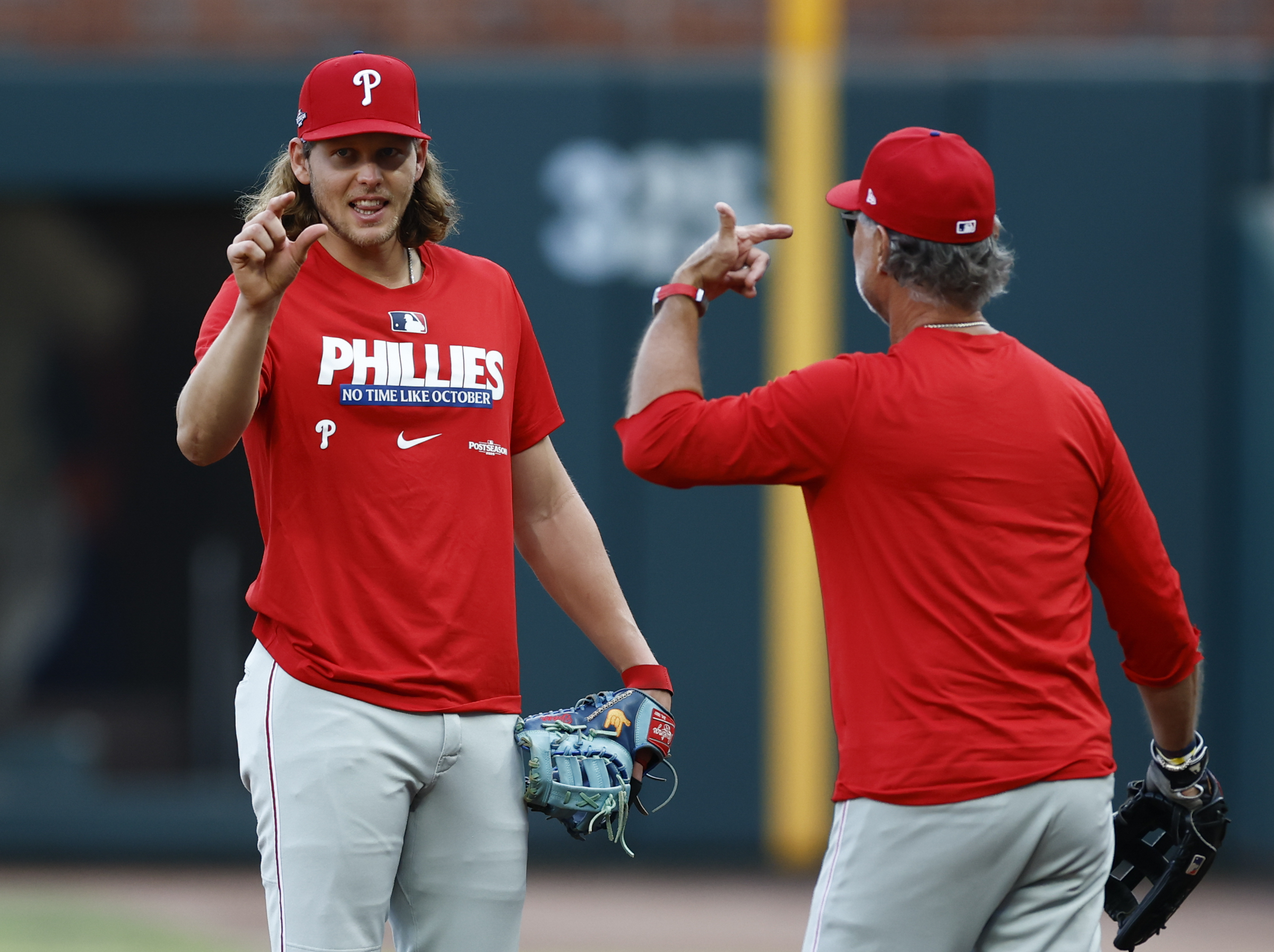
Alec Bohm works with interim manager Don Mattingly before Game 3 of the Phillies’ wild-card series in Atlanta.Yong Kim / Staff Photographer
“I just felt like he was just calm, man,” Trea Turner said. “He was easy to talk to. I could talk to him about anything hitting. He just seemed like a cool guy that wanted to be here, and then if he needed to let you know something was wrong, he’d let you know. I appreciate the honesty.”
Said J.T. Realmuto: “I like Donnie. Donnie’s great. He was a great for us.”
Surely, the Phillies have heard the Cora whispers.
“That’s not for me to speculate,” Realmuto said. “I have the utmost respect for Donnie, and I would love to have him back.”
Like any manager, especially Thomson before him, Mattingly’s pitching moves will be scrutinized in the aftermath of another early Phillies exit. Since the Phillies went to the World Series in 2022, they lost in Game 7 of the NLCS in 2023, the divisional round in 2024 and 2025, and now, the wild-card round.
But given the bullpen Dombrowski gave him, he was bringing a knife to a gunfight.
Phillies interim manager Don Mattingly takes starting pitcher Aaron Nola out of Game 3 during the second inning.Yong Kim / Staff Photographer
Consider this: In the three games, the Braves brought 114 batters to the plate. All but 12 faced a Phillies starting pitcher (Jesús Luzardo in Game 1, Cristopher Sánchez and Andrew Painter in Game 2, Nola and Wheeler in Game 3), or Duran. Five of those 12 batters faced Jonathan Bowlan in the eighth inning of out-of-reach Game 3.
Mattingly also had a postseason bench that included two backup catchers. The season ended with infielder Otto Kemp, who hadn’t taken a major league at-bat since May 20, flailing at a hellacious slider from Chris Sale, a future Hall of Fame lefty.
The questions will persist about whether this Phillies core, which has been together since 2022, can ever get over the top, especially because Harper (34 in two weeks), Turner (33), Realmuto (35), Schwarber (33), Wheeler (36), and Nola (33) aren’t getting any younger.
“I don’t know,” Harper said. “I can’t really answer that question. … I’d imagine this team is going to look a lot different next year with the [free agents] that are kind of leaving this clubhouse, so we’ll see.
“Yeah, I don’t know. It’s going to be a long offseason, obviously. I have trust in the organization and the people that are in charge. We’ll see where we go.”
ATLANTA — You can blame the manager for his handling of the pitching staff. You can blame the front office for forcing him to handle a grenade. I suppose you can blame the pitchers themselves: Jhoan Duran for giving up the decisive three-run home run in Game 1, Aaron Nola for doing the same in Game 3.
A baseball season is a maddening, fluky, grind of a thing. Qualifying for the playoffs in five straight seasons is an extraordinarily difficult task. The Phillies are one of only nine franchises in major league history who have ever done it. Their current streak is the second-longest active one in the majors, behind only the Dodgers (14). That’s not apologetics. It’s reality.
Just ask the Braves, who were down to their last four outs in Game 1 when Austin Riley homered off Duran. Or, heck, ask the Dodgers. Los Angeles made the playoffs seven straight times without winning a World Series before finally breaking through in 2020. That initial stretch included three National League Division Series losses. They’ll be favored against the Braves in this year’s NLDS, which starts Saturday. They know how little it means.
“It’s just as frustrating as last year, and the year before that,” said Kyle Schwarber, who had two of the Phillies’ six hits against a Braves team that used six pitchers, none for more than 10 outs. “We have to keep finding ourselves in position, first off, to be in this position. Because it’s never going to be a guarantee that you’re in a postseason. You have to keep fighting to be in those spots and when you are in the postseason, keep trying to find a way to win a game.”
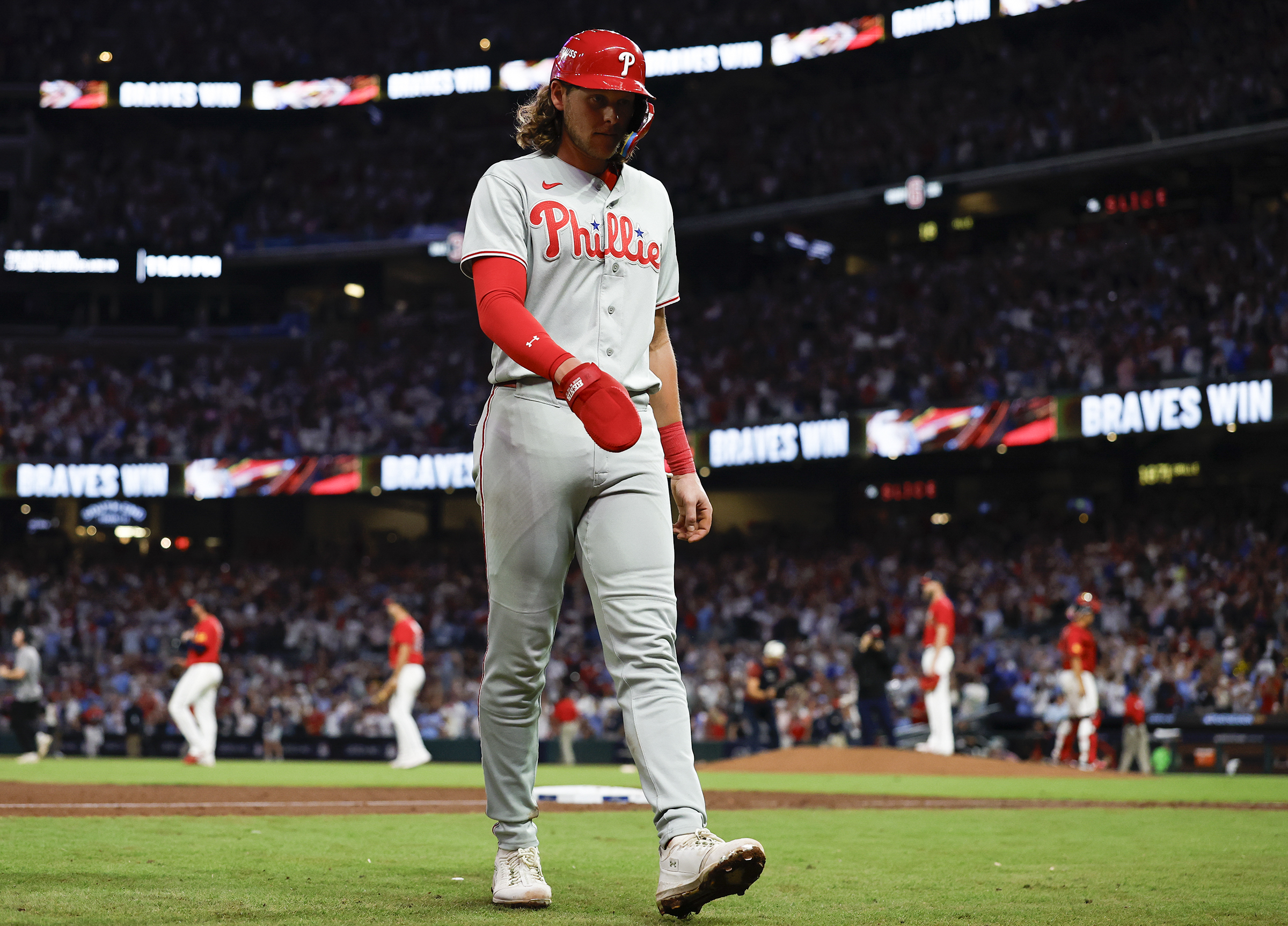
Alec Bohm walks off the field after the Phillies lost to the Braves in Game 3 on Thursday.Yong Kim / Staff Photographer
None of this is meant to serve as consolation. Nor does it nullify the litany of criticisms one can and should direct at these Phillies. As difficult as it is to make five straight postseasons, it is nearly as difficult to lose four straight postseason series on luck alone. There are clearly some structural issues here.
In their last nine postseason games, the Phillies have scored a total of 10 runs in the first six innings. About a third of those runs came in one inning, when they scored three off Shohei Ohtani in Game 1 of last year’s NLDS loss to the Dodgers.
In those same nine postseason games, the Phillies have allowed a remarkable 19 runs in the seventh inning or later.
Just as obvious as these KPIs are their underlying causes. The Phillies are a top-heavy team in both phases of the game. Dave Dombrowski’s biggest failure over the last three-plus years has been his inability to address either.
The last time the Phillies won a playoff game where neither Bryce Harper nor Kyle Schwarber homered was Game 4 of the 2023 NLDS. In fact, the duo has combined for at least two home runs in five of the six wins since. It is neither sustainable nor reasonable to place that much responsibility on two members of a nine-man lineup.
Same goes for the pitching staff, which has leaned so heavily on its key members that you can’t help but wonder about the cumulative effects.
In Game 3, 36-year-old Zack Wheeler was out there throwing 68 pitches on three days rest. This was two days after Jesús Luzardo threw 77 pitches in his first start off a three-week stint on the injured list. Which was the same day Duran threw 27 pitches in the seventh and eighth innings and wasn’t heard from again.
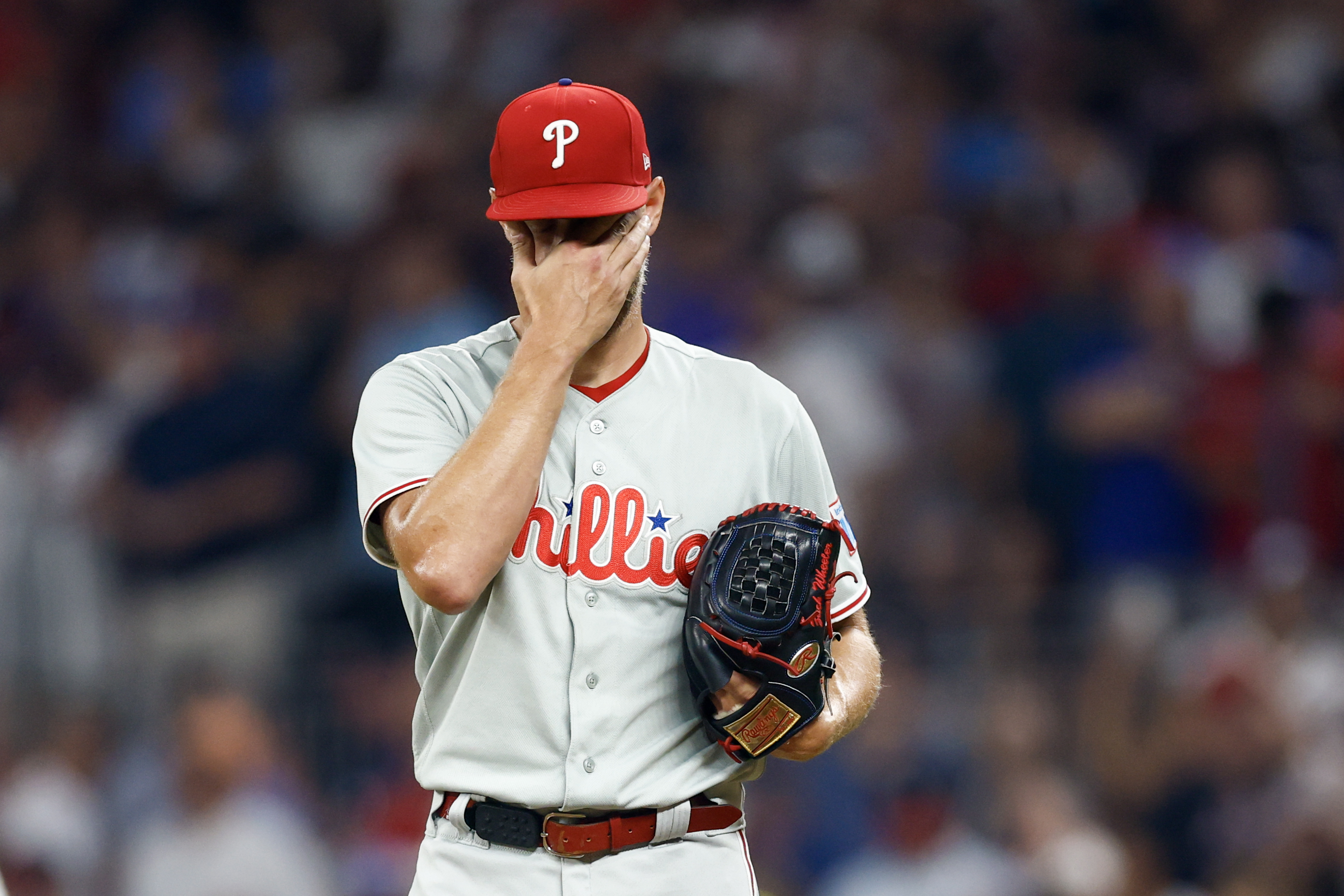
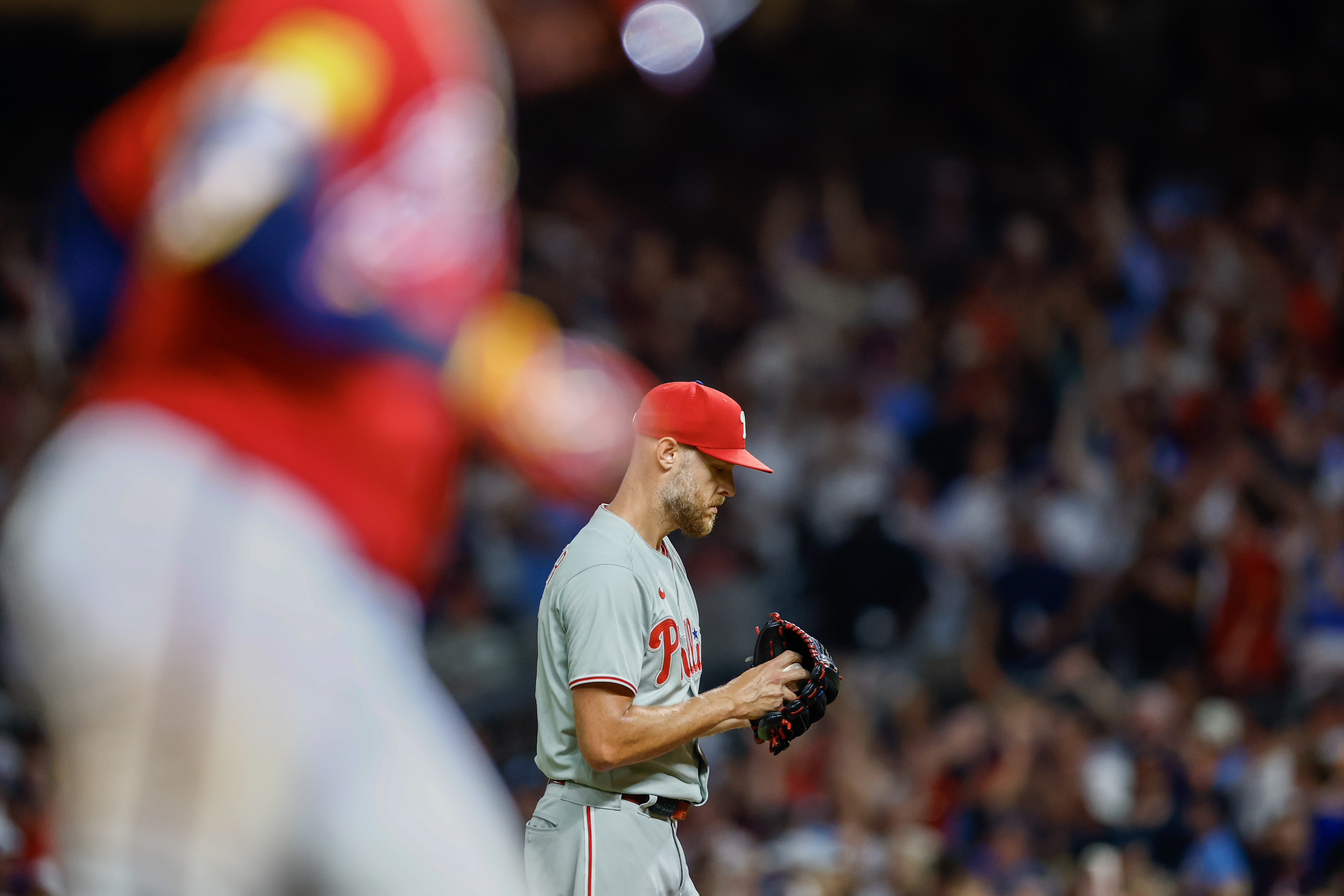
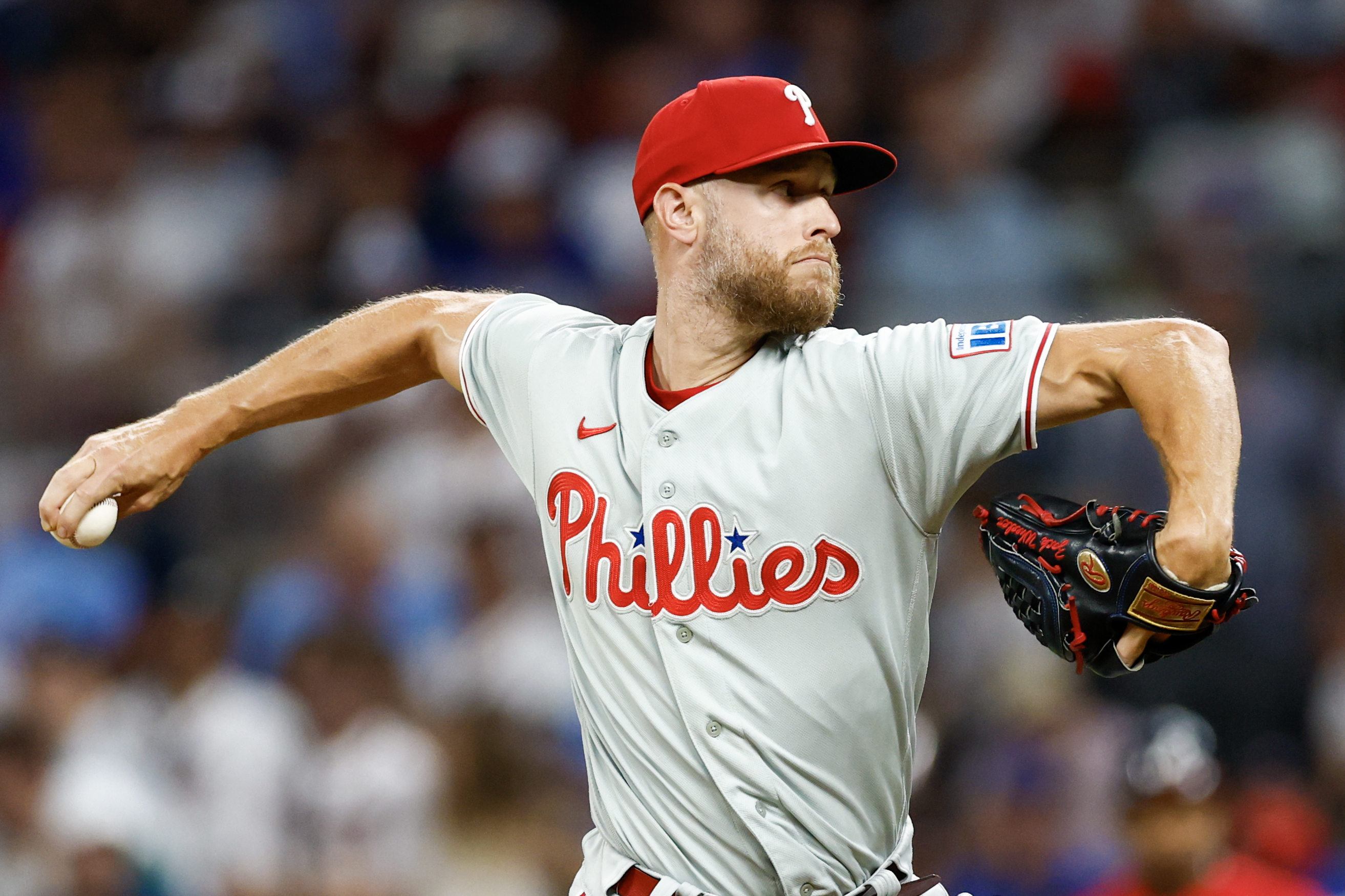
Zack Wheeler threw 68 pitches in Game 3 on three days’ rest.Yong Kim / Staff Photographer
You can second guess some of what interim manager Don Mattingly did with his pitching staff against the Braves. Bringing Duran into Game 1 when he did, allowing him to throw as many pitches as he did, starting Nola in Game 3. None of these decisions looked much different from the ones the previous guy would have made. This is how it looks when a manager feels like he does not have enough options.
“I don’t think it’s the time right now to try to evaluate why or whatever happened, what’s good, what’s bad,” Mattingly said after the loss. “It’s like any situation. You look at your club, you evaluate it, what went wrong, what went right, what’s the positive, what’s the negative, how do you move forward.
“But again, that’s not my place to talk about that. I think that’s the organization’s place. It’s Dave’s spot to — how they build the club. I’m sure those are things they’ll be thinking about over the winter.”
Mattingly is right to defer to his boss. The onus is clearly on Dombrowski, obviously. Credit him for drafting Alex McFarlane in the fourth round in 2022. The rookie setup man is the kind of arm the Phillies needed to find to have any hope at solving their longest running issue. Of course, we once said the same of Orion Kerkering.
You can’t fault Dombrowski’s effort. He’s taken plenty of swings. The whiff rate is the issue. Neither of the two relievers he acquired at the trade deadline was on the playoff roster: Caleb Kilian due to injury, Brooks Raley due to ineffectiveness. Same goes for Dombrowski’s biggest offseason acquisition. Setup man Brad Keller went down in early July with an elbow injury that will likely sideline him through next season. Kerkering finished the season in triple A, capping a steady downward slide from his promising debut in late 2023. Dombrowski’s best move of the year was acquiring righty Jonathan Bowlan from the Royals for lefty Matt Strahm. But Bowlan, too, spent most of the series on ice, appearing only after the Braves had taken a 5-0 lead in Game 3.
Phillies Alec Bohm walks off the field after the final out in Game 3 of the National League wild-card series against the Braves Thursday, Oct. 1, 2026, in Atlanta.Yong Kim / Staff PhotographerBraves Austin Riley (left) and Matt Olson celebrate their win in Game 3 of the National League wild-card series over the Phillies Thursday, Oct. 1, 2026, in Atlanta.Yong Kim / Staff PhotographerBraves starting pitcher Chris Sale closes the game during the ninth inning in Game 3 of the National League wild-card series against the Phillies Thursday, Oct. 1, 2026, in Atlanta.Yong Kim / Staff PhotographerBraves right fielder Ronald Acuña Jr. attempts to catch Phillies Derek Hill triple during the eighth inning in Game 3 of the National League wild-card series Thursday, Oct. 1, 2026, in Atlanta.Yong Kim / Staff PhotographerPhillies Derek Hill runs to third after hitting a triple during the eighth inning in Game 3 of the National League wild-card series against the Braves Thursday, Oct. 1, 2026, in Atlanta.Yong Kim / Staff PhotographerPhillies pitcher Jonathan Bowlan after Braves Matt Olson hits a solo home run during the seventh inning in Game 3 of the National League wild-card series Thursday, Oct. 1, 2026, in Atlanta.Yong Kim / Staff PhotographerBraves Matt Olson hits a solo home run during the seventh inning in Game 3 of the National League wild-card series Thursday, Oct. 1, 2026, in Atlanta.Yong Kim / Staff PhotographerPhillies first baseman Bryce Harper hits a double during the sixth inning in Game 3 of the National League wild-card series against the Braves Thursday, Oct. 1, 2026, in Atlanta.Yong Kim / Staff PhotographerPhillies designated hitter Kyle Schwarber hits a single during the sixth inning in Game 3 of the National League wild-card series against the Braves Thursday, Oct. 1, 2026, in Atlanta.Yong Kim / Staff PhotographerPhillies Bryan de la Cruz hits a single during the fifth inning in Game 3 of the National League wild-card series against the Braves Thursday, Oct. 1, 2026, in Atlanta.Yong Kim / Staff PhotographerPhillies Brandon Marsh tosses his bat after drawing a walk during the fifth inning in Game 3 of the National League wild-card series Thursday, Oct. 1, 2026, in Atlanta.Yong Kim / Staff PhotographerPhillies second baseman Bryson Stott after he strikes out looking to end the fourth inning in Game 3 of the National League wild-card series against the Braves Thursday, Oct. 1, 2026, in Atlanta.Yong Kim / Staff PhotographerPhillies pitcher Zack Wheeler after Braves Ozzie Albies hits a two-run homer during the fourth inning in Game 3 of the National League wild-card series Thursday, Oct. 1, 2026, in Atlanta.Yong Kim / Staff PhotographerPhillies pitcher Zack Wheeler after Braves Ozzie Albies hits a two-run homer during the fourth inning in Game 3 of the National League wild-card series Thursday, Oct. 1, 2026, in Atlanta.Yong Kim / Staff PhotographerPhillies pitcher Zack Wheeler throws a pitch during the third inning in Game 3 of the National League wild-card series against the Braves Thursday, Oct. 1, 2026, in Atlanta.Yong Kim / Staff PhotographerPhillies pitcher Tim Mayza throws a pitch during the second inning in Game 3 of the National League wild-card series against the Braves Thursday, Oct. 1, 2026, in Atlanta.Yong Kim / Staff PhotographerPhillies second baseman Bryson Stott (right) and shortstop Trea Turner (left) go after a single hit by Braves designated hitter Dominic Smith during the second inning in Game 3 of the National League wild-card series Thursday, Oct. 1, 2026, in Atlanta.Yong Kim / Staff PhotographerPhillies manager Don Mattingly takes out pitcher Aaron Nola during the second inning in Game 3 of the National League wild-card series against the Braves Thursday, Oct. 1, 2026, in Atlanta.Yong Kim / Staff PhotographerPhillies pitcher Aaron Nola after giving up a three-run home run to Braves Michael Harris II during the first inning in Game 3 of the National League wild-card series against the Braves Thursday, Oct. 1, 2026, in Atlanta.Yong Kim / Staff PhotographerBraves Michael Harris II hits a three-run home run during the first inning in Game 3 of the National League wild-card series against the Phillies Thursday, Oct. 1, 2026, in Atlanta.Yong Kim / Staff PhotographerPhillies designated hitter Kyle Schwarber hits a single during the first inning in Game 3 of the National League wild-card series against the Braves Thursday, Oct. 1, 2026, in Atlanta.Yong Kim / Staff PhotographerPhillies shortstop Trea Turner and back-up catcher Garrett Stubbs (right) throw the baseball during warm ups before the Phillies play on the Atlanta Braves in game 3 of the National League wild-card series on Thursday, Oct. 1, 2026 in Atlanta.Yong Kim / Staff Photographer
The issues with the lineup will be even more difficult to solve. The Phillies still haven’t found a replacement for Rhys Hoskins behind Schwarber and Harper. Whit Merrifield, Austin Hays, Adolis García, none even managed to offset the decline and fall of Nick Castellanos.
These aren’t just nitpicks. These are issues that will almost certainly need to be solved before the Phillies are capable of winning three or four straight playoff series, let alone one. And, really, they transcend whatever transaction-level pass-fail grades you assign to Dombrowski’s moves. The Phillies’ structural issues extend to their payroll. For the most part, their big-money guys performed about as well as can be expected, at least when grading against typical aging curves (i.e. in the case of J.T. Realmuto and Nola).
The one significant exception is shortstop Trea Turner, who has seven years and roughly $190 million remaining on his contract and is coming off a 33-year-old season in which he posted a career-low .675 OPS. He went 1-for-11 with no walks in three games against the Braves. Turner is 8-for-55 in his last 14 playoff games dating back to Game 5 of the 2023 NLCS.
“I think it starts with me,” Turner said of the offense’s struggles. “I take a lot of responsibility for it.”
Phillies shortstop Trea Turner has seven years left on his $300 million contract.Yong Kim / Staff Photographer
Even with some improvement from Turner, Dombrowski will need to take a careful look at every level of his organization and consider how to better balance this team beyond spinning the roulette-wheel of mid-level free agents and living trade deadline to trade deadline. He will need to explore the offseason trade market. He will need to come up with an accurate assessment of top hitting prospect Aidan Miller’s short- and long-term future after he missed most of the year with a back injury. He may need to consider whether Brandon Marsh can be swapped for a better lineup fit as the outfielder heads into his walk year.
These are difficult decisions. But they are the reason Dombrowski’s job exists.
The issue with the Phillies is not their heart, or their brains, and it certainly isn’t their grit. It isn’t their age, or their two best hitters. They came back from a disastrous start that earned their beloved manager a pink slip. They came back from a disastrous seventh inning in Game 2, one day after a victory slipped away from them late. Schwarber and Harper were as good a tandem as any in the league, all the way through this loss to the Braves.
The hardest general managin’ is taking a roster from good to great. Here we are, seeing it once again.
ATLANTA — If you weren’t careful you’d have gotten blood on your shoes when Trea Turner fell on his sword.
Turner knows exactly why the Phillies don’t score as much as they should. He looks that reason in the eye every morning.
“Me,” he said. “I mean, it’s pretty simple.”
Turner spoke in front of his locker in the visiting clubhouse at Truist Park after a Game 3 wild-card loss to the Braves crushed the Phillies’ playoff hopes, the fourth consecutive year in which a billion-dollar lineup produced dime-store offense and, as a result, for the third consecutive season, it exited the postseason in the first series in which it played.
Turner’s dead wood isn’t the only issue on this club. It lost crucial deadline addition Luis Arraez, a .300 hitter, to injury last week. Its bullpen, flawed even when whole, was ravaged by injury as well. It is a poor defensive team with subpar speed that often is amplified by bafflingly bad base-running.
Turner isn’t the only hole in the lineup, either. Bryson Stott has been just as bad at times, as has catcher J.T. Realmuto, who went hitless in the 2024 postseason and was 2-for-10 against the Braves.
But both Stott and Realmuto are defensive stars. Turner can be a defensive liability, even though he plays shortstop. But then, that’s a different conversation, and besides, it only reinforces this reality: No money is more poorly spent by the Phillies than the money they’ve spent on Turner. There is no simple solution. Turner is 33, he has an untradeable contract, and he’s locked in for seven more seasons. Hopefully, by the time he’s 40, he will have figured it out.
Trea Turner can be a defensive liability at shortstop.Yong Kim / Staff Photographer
Dave Dombrowski, the team’s president, gave Turner a $300 million contract in 2023 with a simple, specific job: Get on base in front of Kyle Schwarber and Bryce Harper so they could drive him in.
Sure, he might hit the odd home run, but Turner has two batting titles, and he’s got speed to burn.
All he’s been burning in the Phillies’ postseasons is John Middleton’s cash.
“You know, when you hit first or second, you get a lot of at-bats, and I kind of get things going,” he said.
He spoke of the design, not the execution.
Because he hasn’t gotten things going. Not in a long time. Not in the playoffs, especially.
After their 6-2 loss Thursday, the Phillies now have three runs or fewer in the first nine innings in 11 of their last 13 playoff games. That encompasses the last two games of the NLCS against the Diamondbacks in 2023, the four NLDS games against the Mets in 2024, the four NLDS games against the Dodgers in 2025, and the three against the Braves this year.
Not coincidentally, they now have lost 10 of those 13 games.
In those 13 games, Turner is 8-for-52. That’s a .154 average.
And that, folks, is the biggest reason why the Phillies can’t score.
Further, lack of scoring is the biggest reason why the Phillies can’t win. Not the bullpen. Not the defense.
Turner’s postseason struggles from last year bled into his regular-season efforts this year. His batting average fell from .304 in 2025, best in the National League, to .242, the worst of his 13 full seasons — the worst by 24 points. The Phillies’ team average dipped from No. 2 in the NL in 2025 to No. 12 in 2026. They also scored 65 fewer runs in 2026 than in 2025.
Some of those runs, had they been scored in late September, would have helped the Phillies earn home-field advantage in the wild-card round. The Phillies held the top wild-card spot, but, with five games to play, they hit a four-game slide. They scored one run in three of those games. They were shut out in the fourth.
As such, they needed to win Game 162 in order to ensure the third wild-card slot, and they burned ace Zack Wheeler in that game. That meant Wheeler was not available for Game 1 of the wild-card series against the Braves on Tuesday.
Phillies Alec Bohm walks off the field after the final out in Game 3 of the National League wild-card series against the Braves Thursday, Oct. 1, 2026, in Atlanta.Yong Kim / Staff PhotographerBraves Austin Riley (left) and Matt Olson celebrate their win in Game 3 of the National League wild-card series over the Phillies Thursday, Oct. 1, 2026, in Atlanta.Yong Kim / Staff PhotographerBraves starting pitcher Chris Sale closes the game during the ninth inning in Game 3 of the National League wild-card series against the Phillies Thursday, Oct. 1, 2026, in Atlanta.Yong Kim / Staff PhotographerBraves right fielder Ronald Acuña Jr. attempts to catch Phillies Derek Hill triple during the eighth inning in Game 3 of the National League wild-card series Thursday, Oct. 1, 2026, in Atlanta.Yong Kim / Staff PhotographerPhillies Derek Hill runs to third after hitting a triple during the eighth inning in Game 3 of the National League wild-card series against the Braves Thursday, Oct. 1, 2026, in Atlanta.Yong Kim / Staff PhotographerPhillies pitcher Jonathan Bowlan after Braves Matt Olson hits a solo home run during the seventh inning in Game 3 of the National League wild-card series Thursday, Oct. 1, 2026, in Atlanta.Yong Kim / Staff PhotographerBraves Matt Olson hits a solo home run during the seventh inning in Game 3 of the National League wild-card series Thursday, Oct. 1, 2026, in Atlanta.Yong Kim / Staff PhotographerPhillies first baseman Bryce Harper hits a double during the sixth inning in Game 3 of the National League wild-card series against the Braves Thursday, Oct. 1, 2026, in Atlanta.Yong Kim / Staff PhotographerPhillies designated hitter Kyle Schwarber hits a single during the sixth inning in Game 3 of the National League wild-card series against the Braves Thursday, Oct. 1, 2026, in Atlanta.Yong Kim / Staff PhotographerPhillies Bryan de la Cruz hits a single during the fifth inning in Game 3 of the National League wild-card series against the Braves Thursday, Oct. 1, 2026, in Atlanta.Yong Kim / Staff PhotographerPhillies Brandon Marsh tosses his bat after drawing a walk during the fifth inning in Game 3 of the National League wild-card series Thursday, Oct. 1, 2026, in Atlanta.Yong Kim / Staff PhotographerPhillies second baseman Bryson Stott after he strikes out looking to end the fourth inning in Game 3 of the National League wild-card series against the Braves Thursday, Oct. 1, 2026, in Atlanta.Yong Kim / Staff PhotographerPhillies pitcher Zack Wheeler after Braves Ozzie Albies hits a two-run homer during the fourth inning in Game 3 of the National League wild-card series Thursday, Oct. 1, 2026, in Atlanta.Yong Kim / Staff PhotographerPhillies pitcher Zack Wheeler after Braves Ozzie Albies hits a two-run homer during the fourth inning in Game 3 of the National League wild-card series Thursday, Oct. 1, 2026, in Atlanta.Yong Kim / Staff PhotographerPhillies pitcher Zack Wheeler throws a pitch during the third inning in Game 3 of the National League wild-card series against the Braves Thursday, Oct. 1, 2026, in Atlanta.Yong Kim / Staff PhotographerPhillies pitcher Tim Mayza throws a pitch during the second inning in Game 3 of the National League wild-card series against the Braves Thursday, Oct. 1, 2026, in Atlanta.Yong Kim / Staff PhotographerPhillies second baseman Bryson Stott (right) and shortstop Trea Turner (left) go after a single hit by Braves designated hitter Dominic Smith during the second inning in Game 3 of the National League wild-card series Thursday, Oct. 1, 2026, in Atlanta.Yong Kim / Staff PhotographerPhillies manager Don Mattingly takes out pitcher Aaron Nola during the second inning in Game 3 of the National League wild-card series against the Braves Thursday, Oct. 1, 2026, in Atlanta.Yong Kim / Staff PhotographerPhillies pitcher Aaron Nola after giving up a three-run home run to Braves Michael Harris II during the first inning in Game 3 of the National League wild-card series against the Braves Thursday, Oct. 1, 2026, in Atlanta.Yong Kim / Staff PhotographerBraves Michael Harris II hits a three-run home run during the first inning in Game 3 of the National League wild-card series against the Phillies Thursday, Oct. 1, 2026, in Atlanta.Yong Kim / Staff PhotographerPhillies designated hitter Kyle Schwarber hits a single during the first inning in Game 3 of the National League wild-card series against the Braves Thursday, Oct. 1, 2026, in Atlanta.Yong Kim / Staff PhotographerPhillies shortstop Trea Turner and back-up catcher Garrett Stubbs (right) throw the baseball during warm ups before the Phillies play on the Atlanta Braves in game 3 of the National League wild-card series on Thursday, Oct. 1, 2026 in Atlanta.Yong Kim / Staff Photographer
“Having your pitching set up is really important this time of year,” Turner said. “And we didn’t do a good job playing down the stretch to have that happen.”
The Phillies lost that game. They had to use closer Jhoan Duran early, and for too long, and he tired, and they lost.
Turner went 0-for-3 in Game 1. He got picked off, too.
It was a rough visit to Georgia.
Turner finished the wild-card round 1-for-11 despite having the two magnificent sluggers hitting behind him, as they did all season.
“A lot of that’s on me,” Turner said. “I think you know, Kyle and Bryce did a good job.”
Harper was 3-for-13 with a double, a homer, and two RBIs. Schwarber was 4-for-11 with a homer. Their overall postseason production, however, is Ruthian.
To be fair, in his 67 career playoff games, Turner has not been a total bust. He hit .270 in his first 54 playoff games, which included a World Series title run with the Nationals in 2019. In his first 11 playoff games with the Phillies, in 2023, he hit .415 with three homers, five doubles, and 1.224.
He has been a black hole since. Again, he is not alone.
Stott, since Game 6 of the 2023 NLCS against the Diamondbacks, is 8-for-45 (.178) with one extra-base hit and 14 strikeouts.
Bryson Stott strikes out looking to end the fourth inning in Game 3.Yong Kim / Staff Photographer
But then, Stott has made about $10 million since 2023.
Turner has made almost $110 million since 2023.
He makes more than $27.2 million per season. How will he better earn his money in 2027?
Turner has no idea.
“It’s a question. Got a lot of work to do. Go over everything and just figure out, as much as I can. Find answers. See what I did bad,” Turner said. “This year was the biggest question mark for me offensively in a long time. I’ve got to figure that out. So I’m definitely gonna have a lot of work to do there. And I’ll do it.”
John Kruk and C.J. Nitkowski balanced out the booth as the analysts for the Phillies and the Braves, respectively, while the rest of the crew continued its roles with Matt Vasgersian on play-by-play, Joey Votto as the “inside the pitch” analyst, and field reporter Ashley ShahAhmadi.
If the game was just too hard to watch, here’s what you missed on the Phillies broadcast:
Mattingly’s decision
Following a 1⅔-inning outing for Aaron Nola in which he gave up a three-run home run in the first to Michael Harris II, Votto asked the question most Phillies fans were thinking all day: Why did interim manager Don Mattingly choose to start Nola over Zack Wheeler?
Kruk revealed that Mattingly knew he’d need to use both Nola and Wheeler in the game but he “liked Zack better in a relief-type role” and thought he was better-suited to come out of the bullpen than Nola. Kruk said he would have gone with Wheeler from the start. He also said that in the pregame, but added that’s why he isn’t the manager.
Tim Mayza came on in relief for Nola in the second before Wheeler started the third and went four innings, giving up three hits, including a two-run home run, while recording three strikeouts.
Phillies Alec Bohm walks off the field after the final out in Game 3 of the National League wild-card series against the Braves Thursday, Oct. 1, 2026, in Atlanta.Yong Kim / Staff PhotographerBraves Austin Riley (left) and Matt Olson celebrate their win in Game 3 of the National League wild-card series over the Phillies Thursday, Oct. 1, 2026, in Atlanta.Yong Kim / Staff PhotographerBraves starting pitcher Chris Sale closes the game during the ninth inning in Game 3 of the National League wild-card series against the Phillies Thursday, Oct. 1, 2026, in Atlanta.Yong Kim / Staff PhotographerBraves right fielder Ronald Acuña Jr. attempts to catch Phillies Derek Hill triple during the eighth inning in Game 3 of the National League wild-card series Thursday, Oct. 1, 2026, in Atlanta.Yong Kim / Staff PhotographerPhillies Derek Hill runs to third after hitting a triple during the eighth inning in Game 3 of the National League wild-card series against the Braves Thursday, Oct. 1, 2026, in Atlanta.Yong Kim / Staff PhotographerPhillies pitcher Jonathan Bowlan after Braves Matt Olson hits a solo home run during the seventh inning in Game 3 of the National League wild-card series Thursday, Oct. 1, 2026, in Atlanta.Yong Kim / Staff PhotographerBraves Matt Olson hits a solo home run during the seventh inning in Game 3 of the National League wild-card series Thursday, Oct. 1, 2026, in Atlanta.Yong Kim / Staff PhotographerPhillies first baseman Bryce Harper hits a double during the sixth inning in Game 3 of the National League wild-card series against the Braves Thursday, Oct. 1, 2026, in Atlanta.Yong Kim / Staff PhotographerPhillies designated hitter Kyle Schwarber hits a single during the sixth inning in Game 3 of the National League wild-card series against the Braves Thursday, Oct. 1, 2026, in Atlanta.Yong Kim / Staff PhotographerPhillies Bryan de la Cruz hits a single during the fifth inning in Game 3 of the National League wild-card series against the Braves Thursday, Oct. 1, 2026, in Atlanta.Yong Kim / Staff PhotographerPhillies Brandon Marsh tosses his bat after drawing a walk during the fifth inning in Game 3 of the National League wild-card series Thursday, Oct. 1, 2026, in Atlanta.Yong Kim / Staff PhotographerPhillies second baseman Bryson Stott after he strikes out looking to end the fourth inning in Game 3 of the National League wild-card series against the Braves Thursday, Oct. 1, 2026, in Atlanta.Yong Kim / Staff PhotographerPhillies pitcher Zack Wheeler after Braves Ozzie Albies hits a two-run homer during the fourth inning in Game 3 of the National League wild-card series Thursday, Oct. 1, 2026, in Atlanta.Yong Kim / Staff PhotographerPhillies pitcher Zack Wheeler after Braves Ozzie Albies hits a two-run homer during the fourth inning in Game 3 of the National League wild-card series Thursday, Oct. 1, 2026, in Atlanta.Yong Kim / Staff PhotographerPhillies pitcher Zack Wheeler throws a pitch during the third inning in Game 3 of the National League wild-card series against the Braves Thursday, Oct. 1, 2026, in Atlanta.Yong Kim / Staff PhotographerPhillies pitcher Tim Mayza throws a pitch during the second inning in Game 3 of the National League wild-card series against the Braves Thursday, Oct. 1, 2026, in Atlanta.Yong Kim / Staff PhotographerPhillies second baseman Bryson Stott (right) and shortstop Trea Turner (left) go after a single hit by Braves designated hitter Dominic Smith during the second inning in Game 3 of the National League wild-card series Thursday, Oct. 1, 2026, in Atlanta.Yong Kim / Staff PhotographerPhillies manager Don Mattingly takes out pitcher Aaron Nola during the second inning in Game 3 of the National League wild-card series against the Braves Thursday, Oct. 1, 2026, in Atlanta.Yong Kim / Staff PhotographerPhillies pitcher Aaron Nola after giving up a three-run home run to Braves Michael Harris II during the first inning in Game 3 of the National League wild-card series against the Braves Thursday, Oct. 1, 2026, in Atlanta.Yong Kim / Staff PhotographerBraves Michael Harris II hits a three-run home run during the first inning in Game 3 of the National League wild-card series against the Phillies Thursday, Oct. 1, 2026, in Atlanta.Yong Kim / Staff PhotographerPhillies designated hitter Kyle Schwarber hits a single during the first inning in Game 3 of the National League wild-card series against the Braves Thursday, Oct. 1, 2026, in Atlanta.Yong Kim / Staff PhotographerPhillies shortstop Trea Turner and back-up catcher Garrett Stubbs (right) throw the baseball during warm ups before the Phillies play on the Atlanta Braves in game 3 of the National League wild-card series on Thursday, Oct. 1, 2026 in Atlanta.Yong Kim / Staff Photographer
Votto’s jinx
Maybe next time Votto should wait until after the game to offer any absolutes.
After being ridiculed on social media for asking “Did the Phillies just win the series?” after they scored their first run in the top of the first on Tuesday, he did something similar on Thursday.
In the bottom of the fourth with Wheeler on the mound, Votto said he didn’t “see the Braves scoring any more runs” in the game.
Four pitches later, Ozzie Albies hit his fourth career postseason home run, a two-run blast to make it 5-0. Three innings later, Matt Olson hit a solo shot off Jonathan Bowlan to put an exclamation point on the game.
Joey Votto learning about the Broadcaster Jinx in real time. 😂
There weren’t many lighthearted moments for Phillies fans after the Braves took their first-inning lead, but leave it to Kruk to lighten the mood.
While the Phillies trailed by four in the seventh, Nitkowski told his booth mates that they should toss Cracker Jacks out of the booth and into the crowd for the seventh-inning stretch.
Nitkowski said it was the first time in three days Kruk didn’t stand during the stretch, joking that his body was sore “from [his] big toe all the way up to [his] neck.”
And before things went from bad to worse, Kruk reminisced on some better days for the Phillies, including the 1993 pennant-winning team he was on.
Braves pitcher Grant Holmes was on the mound in the top of the fourth when Nitkowski observed that Holmes and his long, curly hair had the look to fit in with Kruk’s teams of the ’90s.
“Well, I don’t want to blow anyone’s cover, but does he like to party?” Kruk said.
"Tell me Grant Holmes would not fit in perfect to your Phillies teams in the '90s with his hair."
John Kruk: "Well, I don't want to blow anyone's cover, but does he like to party?" ⚾️🎙️
ATLANTA — For years, the Phillies applied a pitching formula to optimize success in short postseason series.
“Wheeler, Nola, and it’s all o-vah.”
It was their twist on “Spahn, Sain, and pray for rain,” and it worked, at least in best-of-three wild-card series in 2022 and 2023. Now, facing a third elimination game in less than a week Thursday night, they will lean on their two longtime horses again.
Aaron Nola will start Game 3 here against the Braves. Zack Wheeler is expected to be available to follow Nola.
Nola will be on full rest, four days after starting on only two days’ rest and lasting only one inning in a desperate gambit to clinch a playoff spot last Saturday night. But the Phillies will take an “all hands on deck” approach to their pitching plan, interim manager Don Mattingly said Wednesday.
Wheeler, who would be on three days’ rest after starting the regular-season finale, is almost certainly part of that plan. It’s possible the Phillies could take a similar approach to Game 3 of the division series last year in Los Angeles, when Nola faced eight batters in two innings before yielding to fellow starter Ranger Suárez.
Nola said Sunday that he felt “a little bit more [sore], for sure” after his first-ever start on short rest. But he threw a between-starts bullpen session Monday in Atlanta.
“I could throw 40 to 50 pitches in a bullpen, and it’s never going to be the game situation, the adrenaline rush,” Nola said. “But I feel good.”
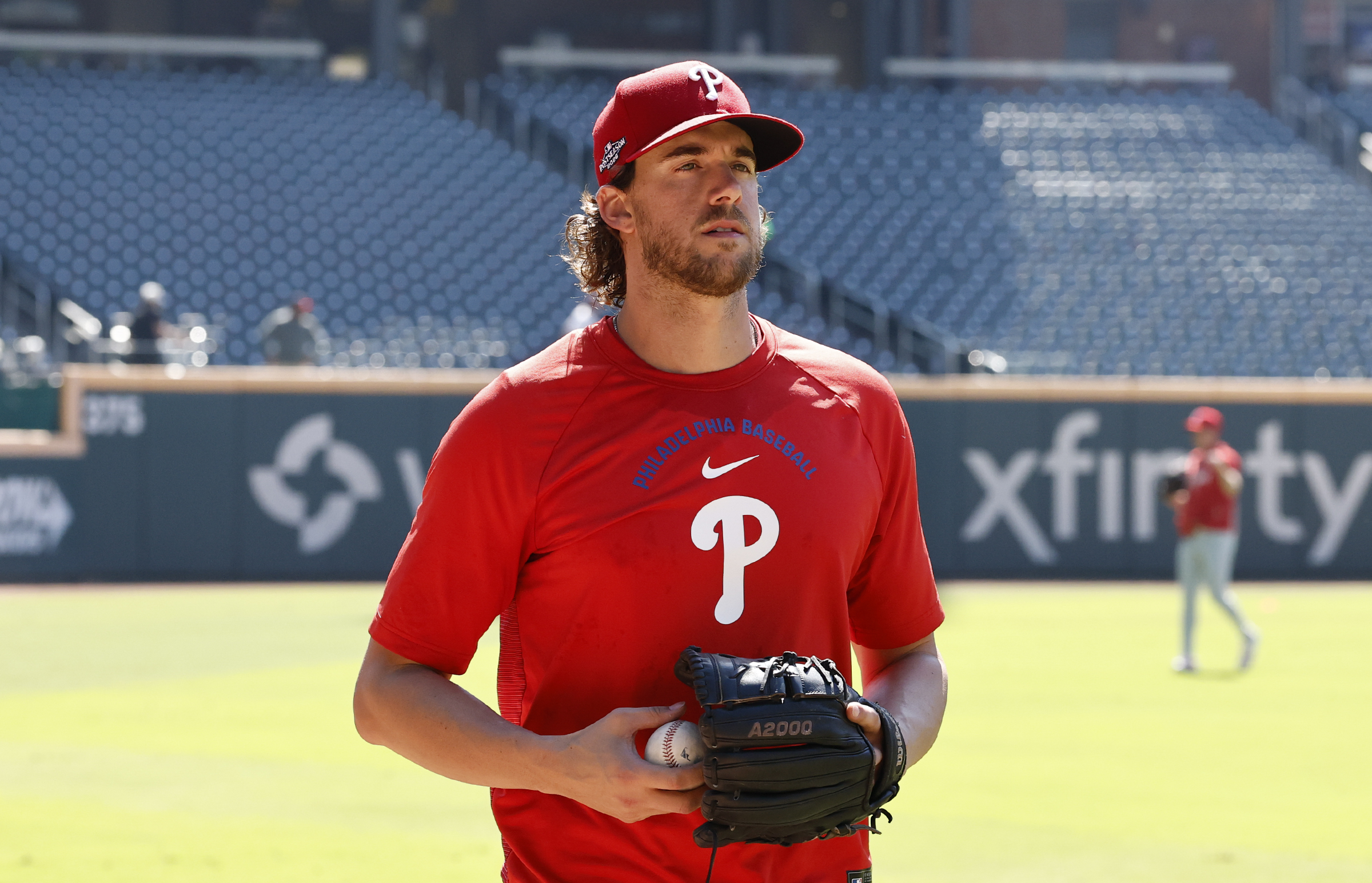
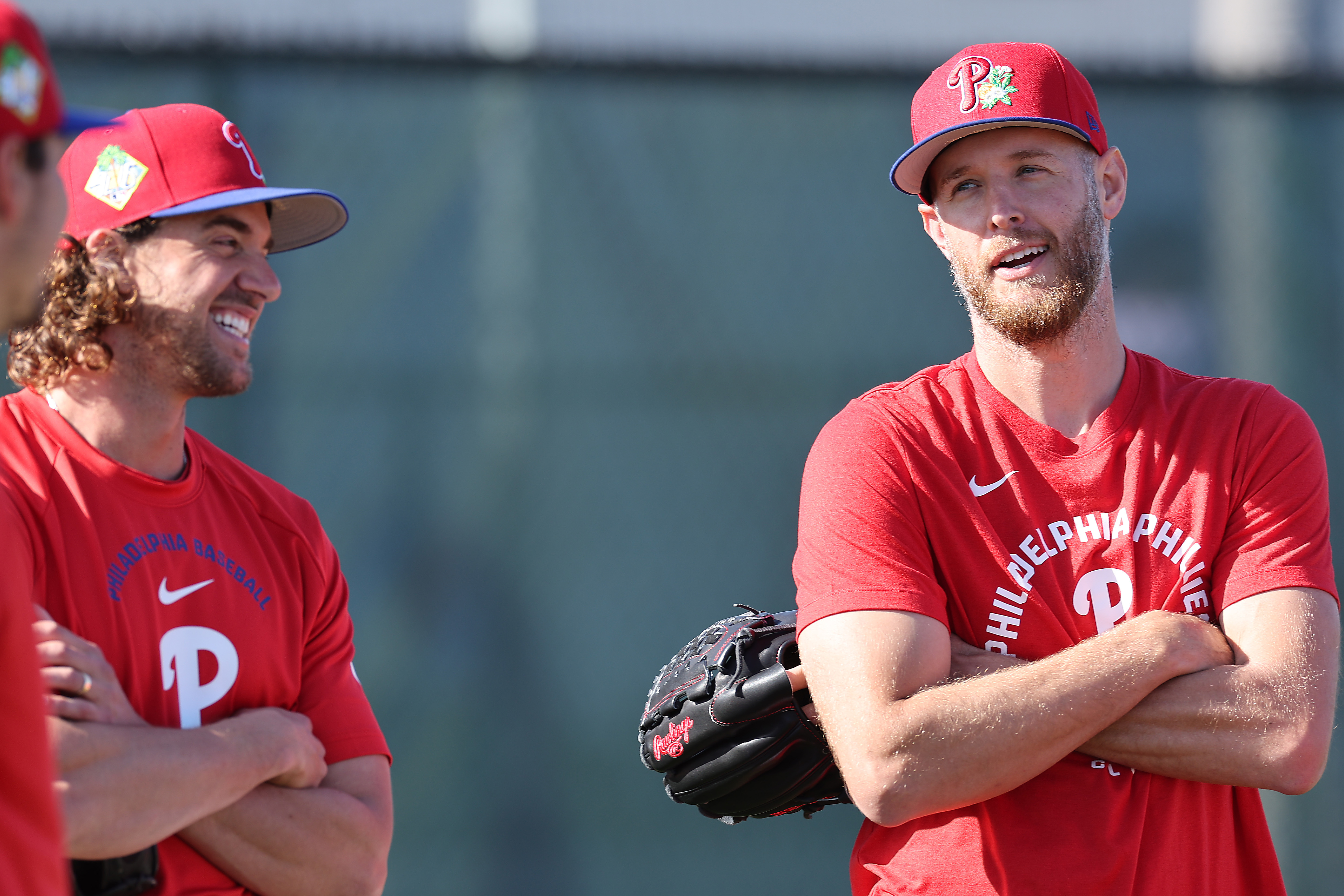
Aaron Nola (left) and Zack Wheeler, pictured in spring training, will factor into the Phillies’ Game 3 pitching plan, with Nola making the start.David Maialetti / Staff Photographer
Nola has made 41 career starts against the Braves, posting a 3.71 ERA in 252⅓ innings. In three starts this season, he has a 4.50 ERA, with the Braves batting .250 with a .500 slugging percentage.
In the postseason, Nola has twice faced the Braves in a series that was tied at one game apiece. He allowed one unearned run in six innings against the Braves in Game 3 of the 2022 NL division series and two runs in 5⅔ innings in Game 3 of the same round in 2023. The Phillies won both games — and both series.
Jesús Luzardo could possibly sit in the bullpen for Game 3, although it’s unclear if the Phillies would use him on two days’ rest after he missed three weeks in September with an inflamed left shoulder.
Rookie starter Andrew Painter saved the Phillies’ season in Game 2 against the Braves by making his postseason debut as a reliever and tossing three scoreless innings in a 4-3, 10-inning victory.
NBC Sports Philadelphia was first with the news that Nola would start Game 3.
The Phillies have Aaron Nola and Zack Wheeler lined up Thursday to face the Braves in Game 3, a game that seemed unlikely to be played when Bryce Harper lost that fly ball in the afternoon sun. But we know what happened next. Atta’ boy, Harper.
Now the Phils have every advantage to become just the fourth team in the new postseason format to win a wild-card series after dropping Game 1.
The key to winning this series was forcing a third game as Atlanta entered the playoffs unsure who would be its third starter. They’ll use Ray Kerr, a reliever who returned in August from Tommy John surgery, as an opener likely followed by Grant Holmes as a bulk reliever.
And we thought Don Mattingly’s options were limited this postseason.
Credit Cristopher Sánchez and Andrew Painter for the heavy lifting in Game 2 on Wednesday. They were excellent and allowed the Phils to enter Game 3 with Nola and Wheeler, two pitchers who have met the moment more often than not in this Phillies era.
Jhoan Duran didn’t pitch in Game 2 so he’ll be ready on Thursday. Mattingly said it’s “all hands on deck” but the Phillies would love to just use three.
After throwing 27 pitches in a two-inning appearance in Game 1, closer Jhoan Duran should be available for Game 3.Yong Kim / Staff Photographer
Earl Weaver famously said momentum in baseball is the next day’s starting pitcher. The Phillies left Game 2 with plenty of momentum after punching back with three homers and now they’ll enter Game 3 on the same ride as the Braves scramble to find a pitcher.
Kerr throws in the mid-90s and faced the Phillies twice in September, holding them scoreless over 6⅓ innings in relief in a pair of games the Phils won. Holmes is a middle-of-the rotation starter with a low-90s fastball who blanked the Phillies for six innings in a 1-0 Phils victory on Sept. 7. Kerr and Holmes handled the Phillies in September. But then again, who didn’t?
The toughest game of the series was always going to be Game 1 against Chris Sale, and the Phillies nearly won. The level of difficultly eased up in Game 2 against Tyler Mahle. The Phillies won that. The key to winning this series was always the Phils forcing a third game, knowing Atlanta could not match their starters. The Phillies got to Game 3. There’s no excuse not to finish the job.
Nola needs to …
Do what he did last year against the Dodgers in an elimination game. He pitched two innings, navigating one turn through the L.A. lineup in Game 3 of the National League Division Series before passing it to Ranger Suárez. Nola and Suárez combined for one run over seven innings. The plan was then to use Duran for six outs but that wasn’t necessary as the Phils took a seven-run lead in the eighth. The Phils will ask more from Nola than two innings but the task will be the same: Keep it close and get the ball to Wheeler.
Do what he always does. The Phillies looked ready to collapse last week until you saw that Wheeler was starting Game 162 and the Phillies just needed a win. Did anyone doubt Wheeler? He threw 97 pitches on Sunday so he’ll be pitching in Game 3 on three days’ rest. How many innings can the Phils expect from him? Two or three would be ideal. If Nola goes four or five and Wheeler gets you to the seventh, then Duran can take it from there.
Rookie Andrew Painter pitched three shutout innings to close out the Braves in Game 2.Yong Kim / Staff Photographer
I’m still thinking about …
… Painter starting his postseason debut by throwing six straight balls before pitching three scoreless innings for the win. The biggest positive to come out of this season has been Painter since he returned from triple A. He didn’t look ready for the moment in the first half of the season just like he didn’t look ready for it on Wednesday. But he finished the regular season with a 3.65 ERA in 11 starts. He recovered, just like he did on Wednesday. It’s too early to think about 2027 but at least the Phillies know they can factor Painter into their plans. That wasn’t a guarantee in June.
… how about the Braves not using Robert Suarez in Game 2? Suarez returned from the injured list in September and pitched twice in the season’s final week before being added to the postseason roster. He was lights out as Atlanta’s setup man before injuring his elbow in June and his velocity last week was about where it was preinjury. So how does Suarez — who the Braves signed before the season to a three-year contract worth $45 million — not get used in Game 2?
The Braves played matchups in the eighth and got burned by left-hander Dylan Lee giving up back-to-back left-on-left homers to Harper and Kyle Schwarber. Suarez, a right-hander, had better numbers this year against lefties than righties. That could’ve been his spot. In the 10th, Bohm homered against Didier Fuentes, who pitched for a second straight day after giving up a two-run triple in Game 1 to J.T. Realmuto. That could’ve been Suarez, too. The Phils will take it.
Jesús Luzardo gave the Phillies five strong innings in Game 1.Yong Kim / Staff Photographer
If the Phillies win …
Game 1 of the NLDS will be Saturday in Los Angeles against the Dodgers and the Phils would be happy to have to figure out their pitching plan. Jesús Luzardo would be on three days’ rest but would the Phils push him so soon after returning from the injured list? Painter would be on two days’ rest after throwing 37 pitches in relief. Can he go on Saturday?
It’ll be interesting to see how the Phils handle Game 1. One guess: They use Painter as an opener and hope he can give them three innings. Then they lean on the bullpen and try to steal a game. That allows Luzardo to be on regular rest in Sunday’s Game 2 and Wheeler to start Tuesday’s Game 3 on regular rest in Philly. First, they have to win Thursday.
ATLANTA — The first six pitches from Andrew Painter missed the zone.
They weren’t particularly close, either. The Braves hitters left their bats on their shoulders. The home fans at Truist Park could smell blood in the water.
Painter was nervous. He said as much afterward. Game 2 of the wild-card series Wednesday was deadlocked at 3 in the eighth inning, and one pitch could mean the difference between their season extending another day or the Phillies packing their bags that night. And it was entirely on the rookie’s shoulders, in his postseason debut, in his first career late-inning relief appearance.
After the sixth straight ball — a 99.5 mph fastball inside to Michael Harris II — J.T. Realmuto stood from his crouch. Pitching coach Caleb Cotham started toward the mound. They told Painter to trust himself. To attack.
“Just me and you,” Realmuto told him. “Let’s go get him.”
And that’s what Painter did, in the Phillies’ 4-3 win over Atlanta that forced a deciding Game 3 on Thursday. He attacked Harris with a fastball in the zone, and then got him to ground into a double play with a changeup.
From there, the 23-year-old pitched a scoreless eighth and ninth to force extra innings, and returned to close it out after the Phillies at last took the lead in the 10th on a go-ahead home run from Alec Bohm.
Andrew Painter had three strikeouts over three scoreless innings to earn the win in his first playoff appearance on Wednesday.Yong Kim / Staff Photographer
“I was trying to be super aggressive and go down with my best stuff,” Painter said. “Knowing the situation we were in there and backs against the wall a little bit, just stepping on the gas there and just giving it everything I had in that moment.”
Painter’s gutsy performance was one of several in the Phillies’ chaotic victory to stave off elimination. Cristopher Sánchez threw a career-high 116 pitches. The Braves made him work, drawing five walks (two intentional). But he limited the damage to one run over the first six innings, as he remained locked in a duel with Atlanta starter Tyler Mahle.
“A lot of adrenaline going out there,” Sánchez said through team interpreter Diego D’Aniello. “No tomorrow for us, today. … Just tried to give the best of myself out there on the mound, and a lot of energy.”
But it seemed like it wouldn’t be enough. After Sánchez returned for the seventh, he allowed a leadoff walk to Sean Murphy, and Bohm failed to get an out on a sacrifice bunt from nine-hole hitter Ha-Seong Kim.
Sánchez fought off one threat by striking out Atlanta star Ronald Acuña Jr. And then disaster struck in the outfield.
Bryce Harper had moved back to right field at the trade deadline in a switch he and the Phillies thought might give them the best chance to win in October. He did it to open a spot at second for new acquisition Luis Arraez, who is not even on the wild-card roster due to an ankle sprain. But Harper has remained out there anyway.
Cristopher Sánchez allowed three earned runs in 6 2/3 innings on a season-high 116 pitches against the Braves in Game 2. Yong Kim / Staff Photographer
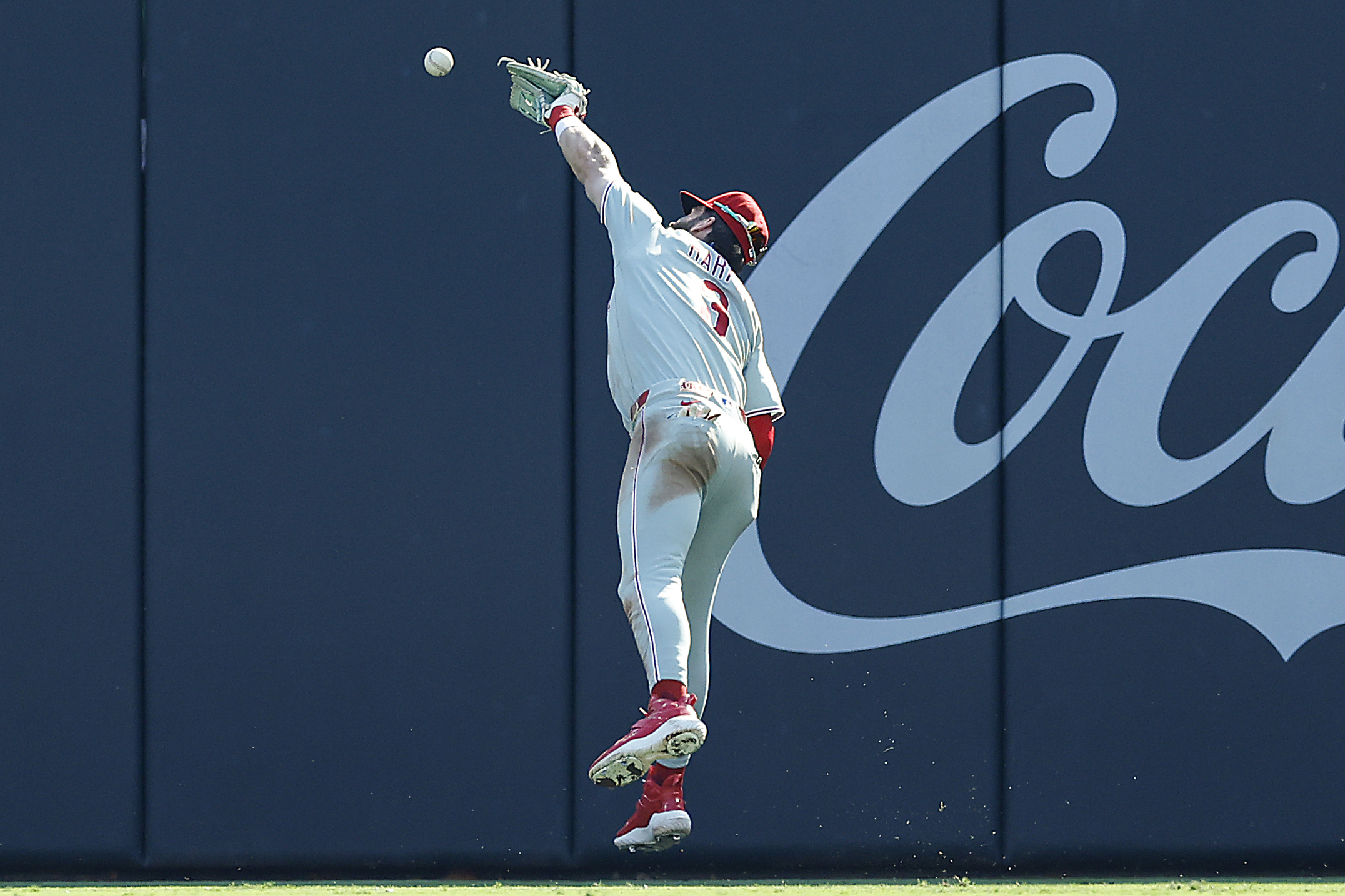
When he misread a fly ball from Drake Baldwin in the seventh, it appeared the Phillies’ season might end for the second straight year because of a defensive miscue. But instead of a young reliever who cratered under pressure on a soft grounder back to the mound, it was the Phillies’ biggest star.
Harper broke in at first, then drifted back, then tried to jump at the last moment. But the ball was over his head, and went toward the wall for a double. The inning suddenly spiraled into a 3-1 Atlanta lead. Sánchez was lifted with two outs for rookie Alex McFarlane, who came through to stop the bleeding with runners on the corners.
In the dugout afterward, Sánchez approached Harper.
“I told him he was bound to have a great moment,” Sánchez said.
Phillies right fielder Bryce Harper misplays a ball hit by the Braves’ Drake Baldwin that scored the go-ahead run for Atlanta in the seventh inning of Game 2 on Wednesday.Yong Kim / Staff Photographer
As both Phillies and Braves fans jeered at him for the mistake, Harper said he thought about what he might say to his 7-year-old son, Krew, if this had happened to him. Harper was due up in the top of the next inning after Kyle Schwarber, and from the on-deck circle, watched as Schwarber sent a slider from lefty Dylan Lee 447 feet.
And then Harper did the same.
“I wasn’t not trying to hit a homer, I can tell you that,” Harper said.
The Braves outfielders didn’t move a muscle either time; they didn’t even turn around to watch them go. Silence settled over the stadium, which had been raucous just moments before, as the Phillies’ biggest bats tied it 3-3 and resuscitated the season.
The Phillies’ Bryce Harper hits a solo homer in the eighth inning to tie the game at 3.Yong Kim / Staff Photographer
In the visitors’ clubhouse, Sánchez watched the homers on television and started slamming his hands on everything within reach in excitement.
“It’s easy to beat yourself up,” Schwarber said. “I’ve been there plenty of times. So to not beat yourself up, look forward to that next pitch on defense, and then get right back into the box and be in tune to your bat. That’s what it’s all about. He was able to do that.”
From there, it was all Painter’s game. Closer Jhoan Duran was unavailable. The Phillies were going to live or die with the rookie.
“I didn’t think I was going to be closing a game in the playoffs,” Painter said, “but I think I’m capable of a lot.”
In the ninth, Edmundo Sosa hit a leadoff single but was removed with a leg injury after running to first. Sosa said afterward he tweaked a muscle in his upper thigh, and that he was hopeful he would be available Thursday.
After Bohm’s go-ahead homer off Didier Fuentes in the 10th, the Braves advanced the winning run to first on a pair of singles in the 10th. But Painter took a breath. He went back to the rosin bag. And then he attacked again.
Philadelphia Phillies Trea Turner doubles against the Atlanta Braves in the first inning.Yong Kim / Staff PhotographerPhiladelphia Phillies Trea Turner celebrates in the dugout after scoring in the first inning.Yong Kim / Staff PhotographerPhiladelphia Phillies Bryce Harper hits a RBI single in the first inning.Yong Kim / Staff PhotographerPhiladelphia Phillies starting pitcher Cristopher Sanchez throws in the first inning.Yong Kim / Staff PhotographerPhiladelphia Phillies starting pitcher Cristopher Sanchez throws in the first inning.Yong Kim / Staff PhotographerAtlanta Braves pitcher Tyler Mahle throws against the Philadelphia Phillies in game 2.Yong Kim / Staff PhotographerPhiladelphia Phillies center fielder Justin Crawford singles in the fourth inning.Yong Kim / Staff PhotographerPhiladelphia Phillies pitching coach Caleb Cotham (right) talks with Cristopher Sanchez with the bases loaded for the Atlanta Braves in the sixth inning.Yong Kim / Staff PhotographerPhiladelphia Phillies starting pitcher Cristopher Sanchez reacts after getting out of a bases loaded jam in the sixth inning.Yong Kim / Staff PhotographerPhiladelphia Phillies shortstop Trea Turner (right) looks on as Atlanta Braves Sean Murphy was safe at second in the seventh inning.Yong Kim / Staff PhotographerPhiladelphia Phillies Bryce Harper couldn’t catch a ball off the bat of Atlanta Braves catcher Drake Baldwin in the seventh inning of game 2 of the National League Wild Card series in Atlanta, Ga. on Wednesday, Sept. 30, 2026.Yong Kim / Staff PhotographerPhiladelphia Phillies starting pitcher Cristopher Sanchez (right) prepares to exit the game after the Atlanta Braves scored two runs in the seventh inning.Yong Kim / Staff PhotographerPhiladelphia Phillies Bryce Harper pauses in right field during a pitching change in the seventh inning.Yong Kim / Staff PhotographerPhiladelphia Phillies designated hitter Kyle Schwarber hits a solo homer in the eighth inning.Yong Kim / Staff PhotographerPhiladelphia Phillies Bryce Harper hits a solo homer in the eighth inning.Yong Kim / Staff PhotographerPhiladelphia Phillies Edmundo Sosa leaves the game in the ninth inning.Yong Kim / Staff PhotographerPhiladelphia Phillies shortstop Trea Turner drops his bat and helmet after popping up for the third out in the ninth inning.Yong Kim / Staff PhotographerPhiladelphia Phillies third baseman Alec Bohm celebrates his solo homer in the tenth inning.Yong Kim / Staff PhotographerPhiladelphia Phillies Andrew Painter pitches against the Atlanta Braves in the tenth inning.Yong Kim / Staff PhotographerPhiladelphia Phillies catcher J.T. Realmuto celebrates their win.Yong Kim / Staff PhotographerPhiladelphia Phillies third baseman Alec Bohm celebrates his solo homer in the tenth inning against the Atlanta Braves in game 2 of the National League Wild Card series in Atlanta, Ga. on Wednesday, Sept. 30, 2026. Phillies win 4-3.Yong Kim / Staff Photographer
He went right after pinch-hitter Dominic Smith, getting two swings on his changeup. Smith watched the third pitch, a four-seam, go by for a ball, but Realmuto successfully challenged the call for a game-ending strikeout.
“That’s a career-altering performance, in my opinion,” said Realmuto.
Jesús Luzardo agrees. He entered in the 10th inning of Game 4 last season on short rest to try and extend the Phillies’ season another day against the Dodgers. But he wasn’t a rookie. He wasn’t making his postseason debut. And he didn’t have the year that Painter had.
“I always knew he had it in him,” Luzardo said. “But it was nice to see him flourish, and show everyone that he has that dog inside him.”
Phillies rookie pitcher Andrew Painter celebrates with his teammates after he pitched the final three innings to beat the Braves in Game 2 on Wednesday.Yong Kim / Staff Photographer
Luzardo said he reminded Painter to stay calm, not to get too worked up. But he didn’t want to overwhelm him with advice. He knew he didn’t really need it.
The two pitchers are both from South Florida and have been friends for years, even before the trade that brought Luzardo to the Phillies organization. They were in touch last season, as Painter languished in triple A, still searching for his command after Tommy John surgery.
With both starting the season in the Phillies’ starting rotation, Luzardo had a front-row seat to Painter’s early struggles and how he worked his way back. As the Phillies’ top prospect, Painter entered the year with sky-high expectations that he had trouble meeting at first. Painter was sent back to triple A for over a month to address his fastball command, and returned in July, armed with better stuff and more confidence.
“Just to see the development that he’s had over the year, it’s been awesome,” Luzardo said.
When he was demoted, the Phillies told Painter it was not a situation where he would go down for a start or two, take a breather, and come back. Returning to the majors at all wasn’t a guarantee.
He had to earn it. He did. And almost exactly two months later, he saved the Phillies’ season. For one more day, at least.
“I think it does speak to him and who he is,” said interim manager Don Mattingly. “Went down, went to work, came back. He’s been a different guy.”