Tag: Merion Station

  • Black and Jewish Philadelphians must rebuild an essential alliance

    Black and Jewish Philadelphians must rebuild an essential alliance

    Black and Jewish communities in America share a long history of supporting each other against hate and discrimination.

    Together, our people helped advance laws that challenged discrimination in housing, employment, and education. Together, we supported initiatives that helped move our country closer to its highest ideals.
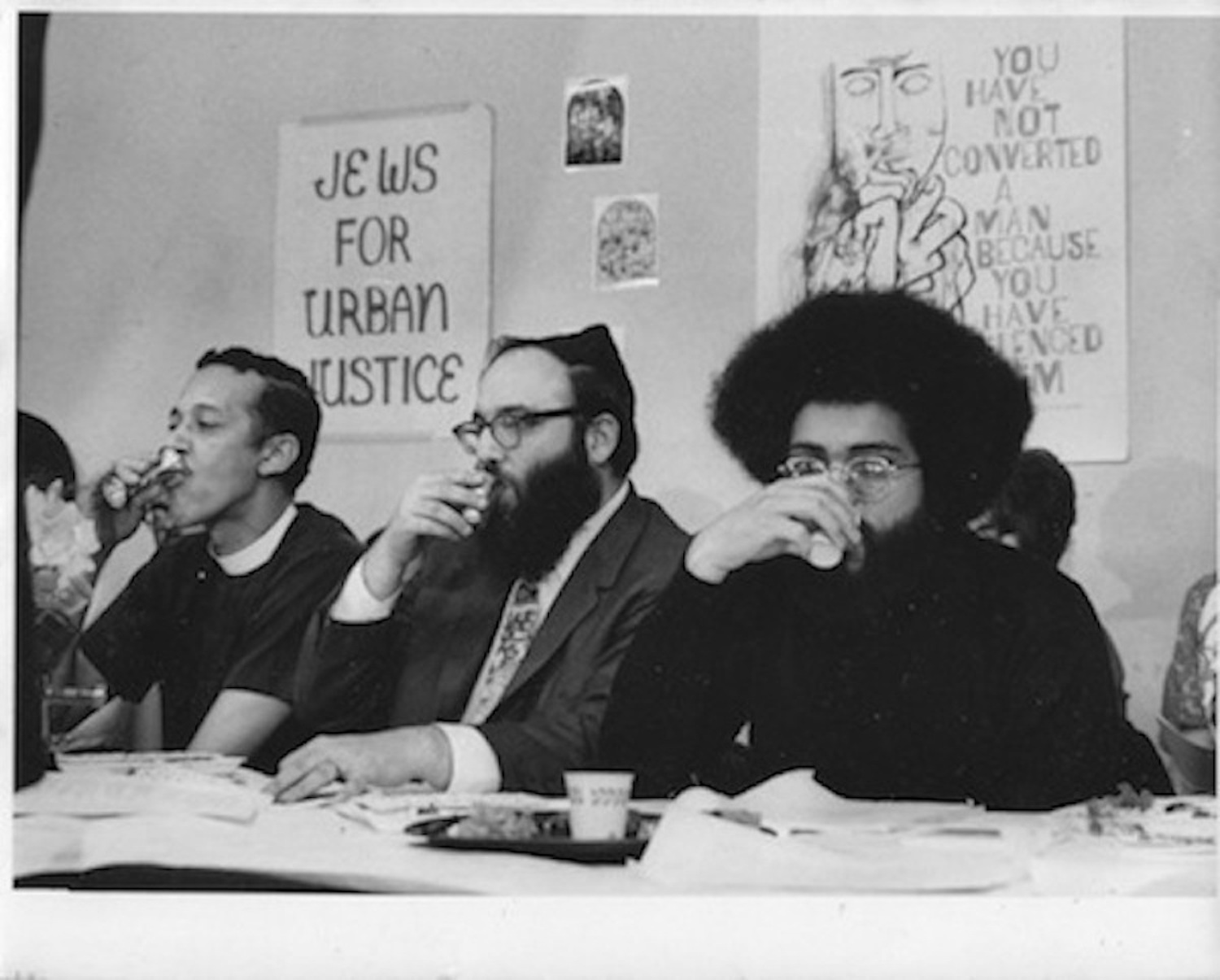
    Rabbi Arthur Waskow (center) with the Rev. Channing Phillips (left) and TV director Topper Carew (right) at the first Freedom Seder held in April 1969, at Lincoln Temple United Church of Christ in Washington, D.C.Courtesy of the family

    But in recent years, the relationship between the Black and Jewish communities has become strained, even as antisemitism and racism threaten us all.

    That is why the two of us — each a rabbi from the Main Line — recently went to Georgia, along with dozens of clergy from across the country, for the Atlanta Summit of Black Pastors and Rabbis. We gathered at the Temple, Ebenezer Baptist Church, and the King Center, locations that made us recall the accomplishments and the sacrifices of the Black-Jewish alliance. We came to explore what is required to rebuild the partnership now.
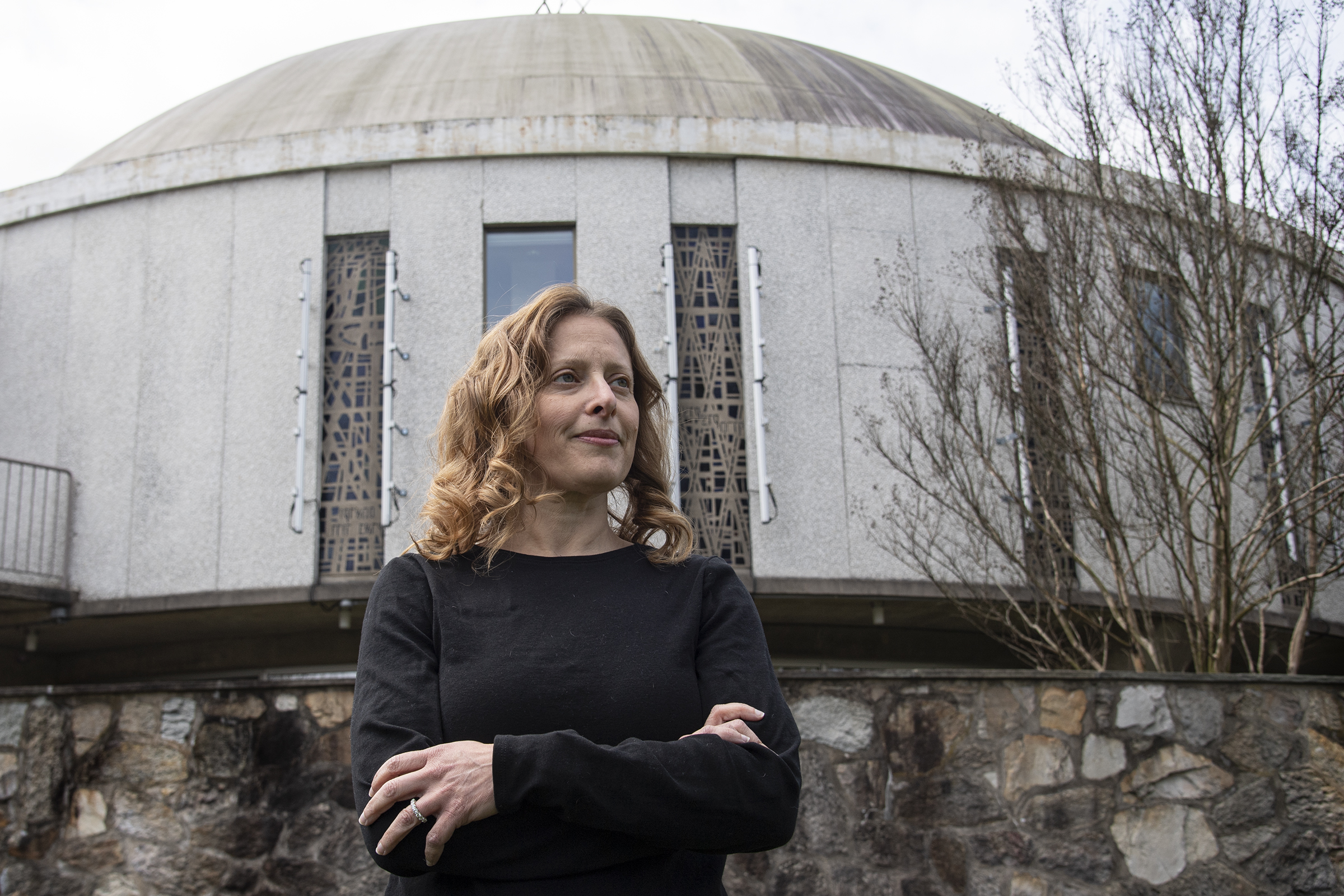
    Rabbi Geri Newburge stands outside The Main Line Reform Temple in Wynnewood in April 2020.JOSE F. MORENO / Staff Photographer

    As we experienced firsthand, the Black and Jewish communities do not always understand each other. Views on diversity, equity, and inclusion (DEI), Zionism, racial justice, power, and vulnerability can contrast sharply based on our personal experiences. But we were able to speak candidly about the times our communities had felt unseen or abandoned by each other.

    One exchange brought those differences into focus.

    Black participants described economic precarity following federal workforce cuts associated with the Department of Government Efficiency (DOGE) and attacks on DEI, particularly for Black women. Jewish participants spoke, in turn, of social precarity amid rising antisemitism. Hearing both made our shared responsibility clearer.

    Those conversations led to the understanding that Black and Jewish Americans need an agreement against abandonment. It is a simple but demanding idea: When your community is threatened, ours will not disappear. When disagreement becomes painful, we will not walk away. We will listen, speak honestly, and doggedly refuse to give up on our relationships.

    That does not mean we will see eye to eye on every issue. It means we will have the commitment to hear hard truths without turning disagreement into disdain.

    Speakers like civil rights organizer Eric Ward helped us to understand how the challenges are interconnected. As he explained, many people understand antisemitism to just be the hatred of Jews, but in reality, it is also a conspiracy theory about how society works. Because antisemitic conspiracy theories ignore the real roots of societal issues — such as socioeconomic inequality and structural oppression — and instead focus on tropes and pat narratives, they help sustain racism and authoritarianism as well, creating a toxic blend that threatens both Black and Jewish communities.

    The comments from Black Jews in attendance were, perhaps, most illuminating. Because they sometimes experience racism in Jewish spaces and antisemitism in Black spaces, their lives counter the perception of a neat division between “our community” and “theirs.” With their unique experiences, their voices must be central to the work ahead.
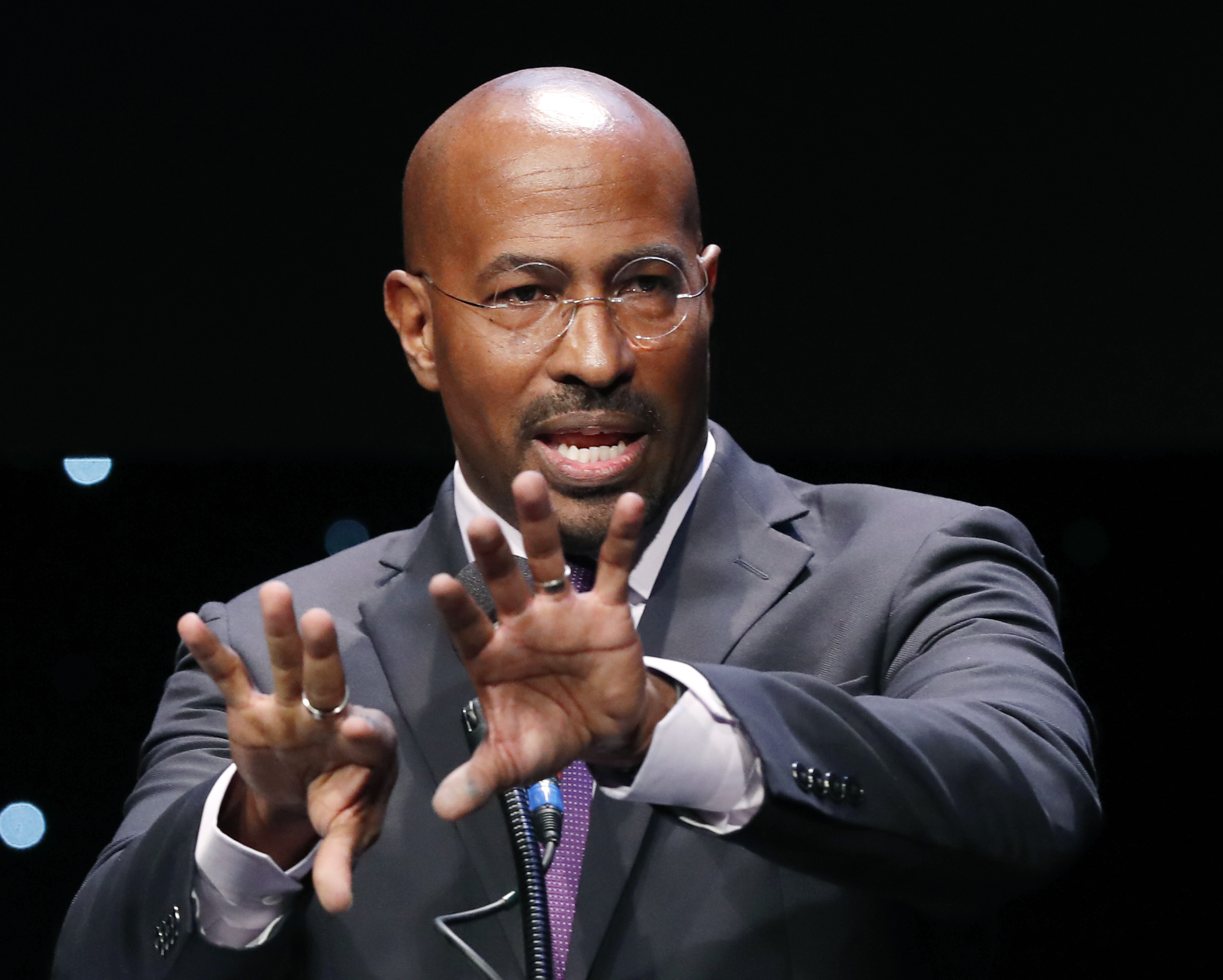
    Political commentator Van Jones told those gathered for the Atlanta Summit of Black Pastors and Rabbis that a Black and Jewish alliance today must harness the diverse strengths each community possesses.Kathy Willens

    Another speaker, political commentator Van Jones, cautioned that the alliance we are building cannot simply recreate the one from the 1960s. Back then, Jews were still reeling from the direct memory of the Holocaust, while Black Americans were still living under the restrictions of Jim Crow. That alliance grew from shared vulnerability, but the next iteration must harness the diverse strengths each community possesses today.

    Jones invoked the image of a relay runner receiving and passing a baton. Honoring the generation that came before, he said, means accepting responsibility for the next leg of the race.

    For us, that work begins right here in Greater Philadelphia.

    Rabbi Eric Yanoff serves Adath Israel on the Main Line in Merion Station.Courtesy of Eric Yanoff.

    We returned home committed to building and securing stronger relationships between the Black and Jewish communities before a crisis makes them necessary. We will come together with our colleagues in the Black Christian community and invite our congregations to learn from each other. We will create opportunities for shared study, worship, and community service. We will speak honestly about racism and antisemitism.

    Ultimately, we will build the trust that allows us to call on each other when our communities are hurting.

    Relationships require intention, humility, and time. They also require both communities to reject the idea that advocating for someone else diminishes our ability to defend our own people. We will not always see the world in the same way. But we can promise not to leave each other alone in it.

    Rabbi Geri Newburge serves Main Line Reform Temple-Beth Elohim in Wynnewood. Rabbi Eric Yanoff serves Adath Israel on the Main Line in Merion Station.
  • Their Merion Station yard didn’t have much life. Now it’s filled with flowers.

    Their Merion Station yard didn’t have much life. Now it’s filled with flowers.

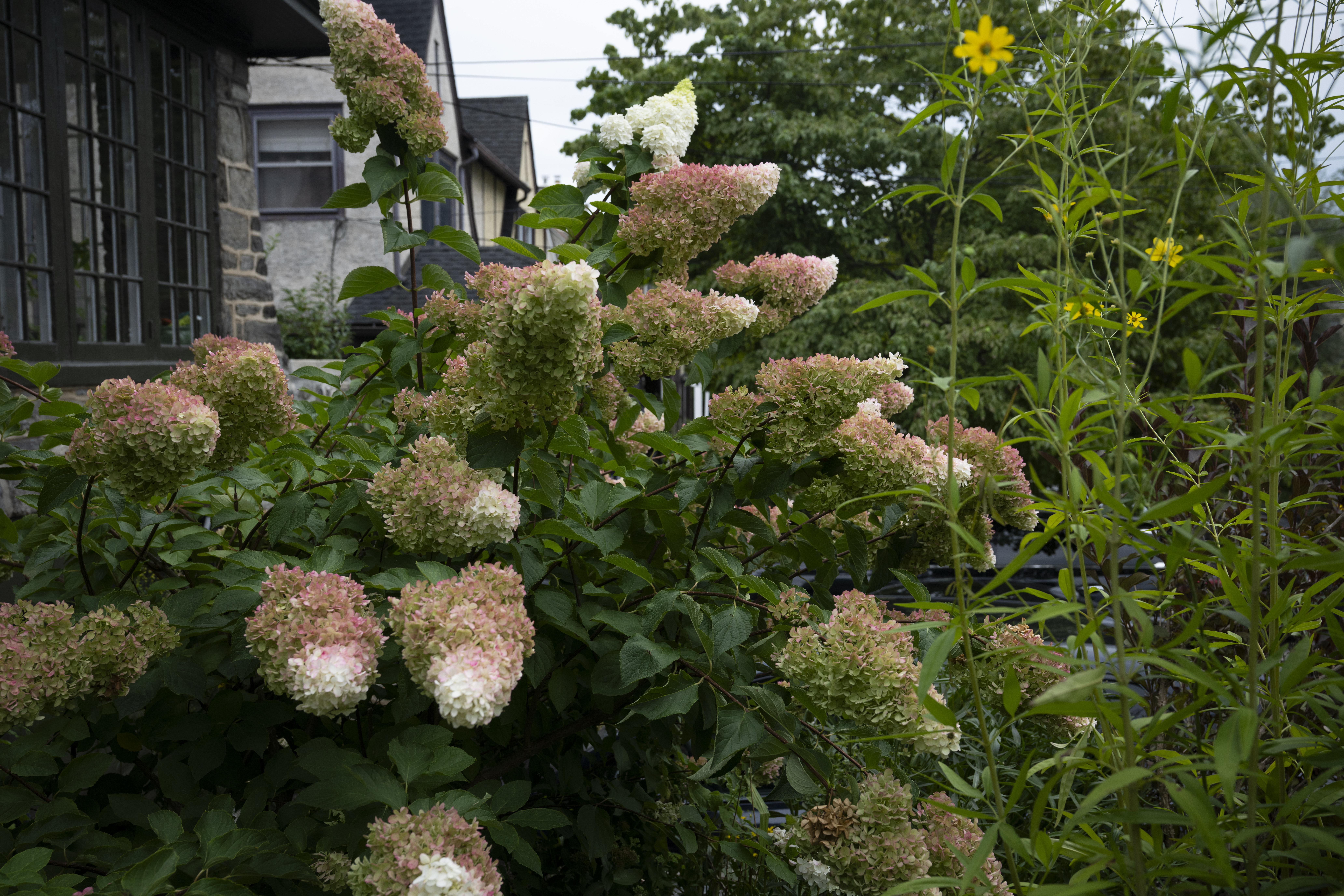
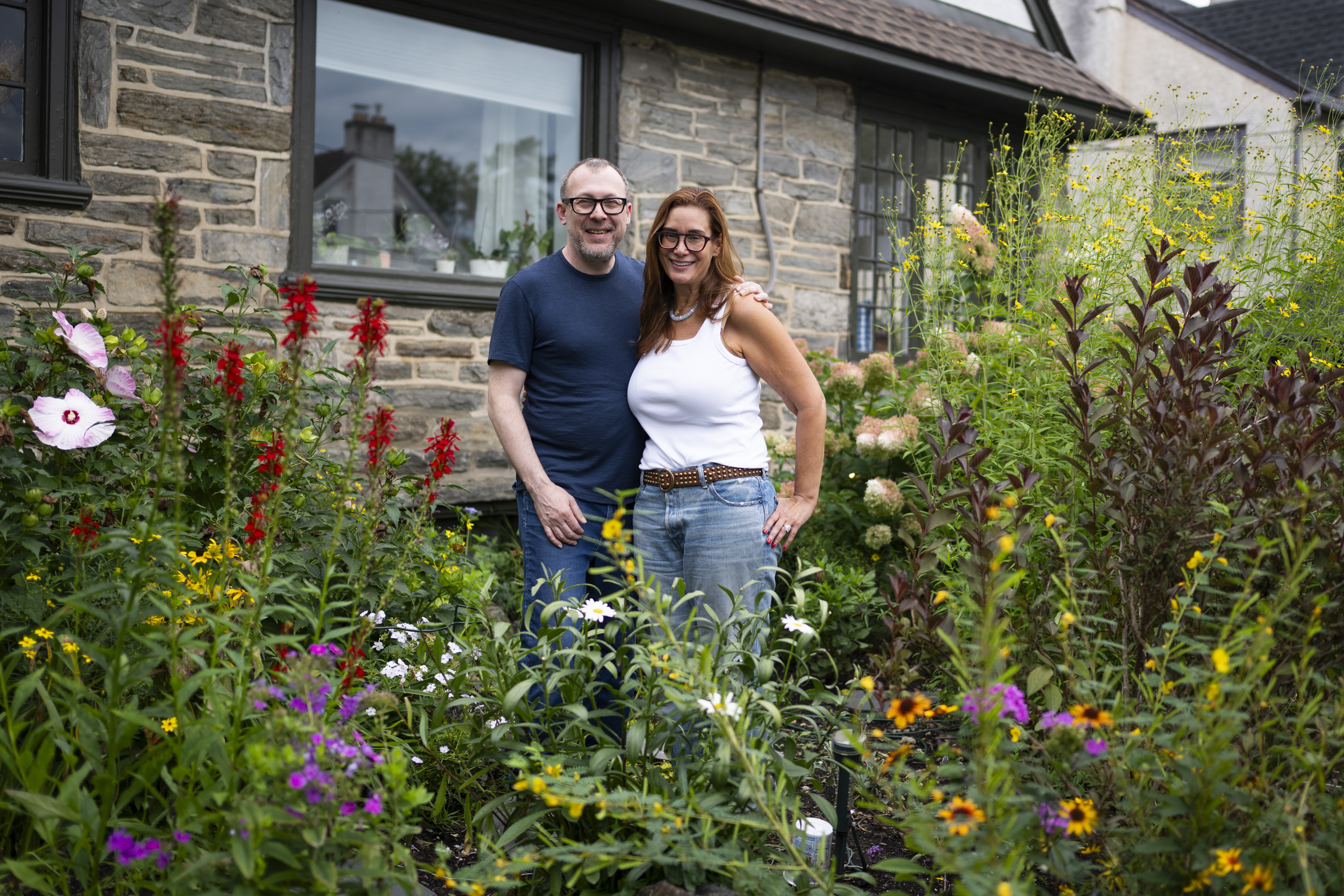
    Platter-sized hibiscus, hydrangea, cardinal flowers, small yellow blooms called partridge peas, chartreuse creeping Jenny, daisies, and lavender fill the front yard of the Merion Station home.

    The plantings extend from the porch to the curb, where parked cars push against tall stems of deep pink celosia. “It’s a hostile environment. You hope for the best,” said Boots Levinson.

    Levinson and his wife, Laura White, own the three-story Tudor surrounded by colorful vegetation.

    “Laura’s the gardener,” Levinson said. “I’m the waterer and manual laborer.”

    White and Levinson’s home is surrounded by flowering gardens.Joe Lamberti / For The Inquirer
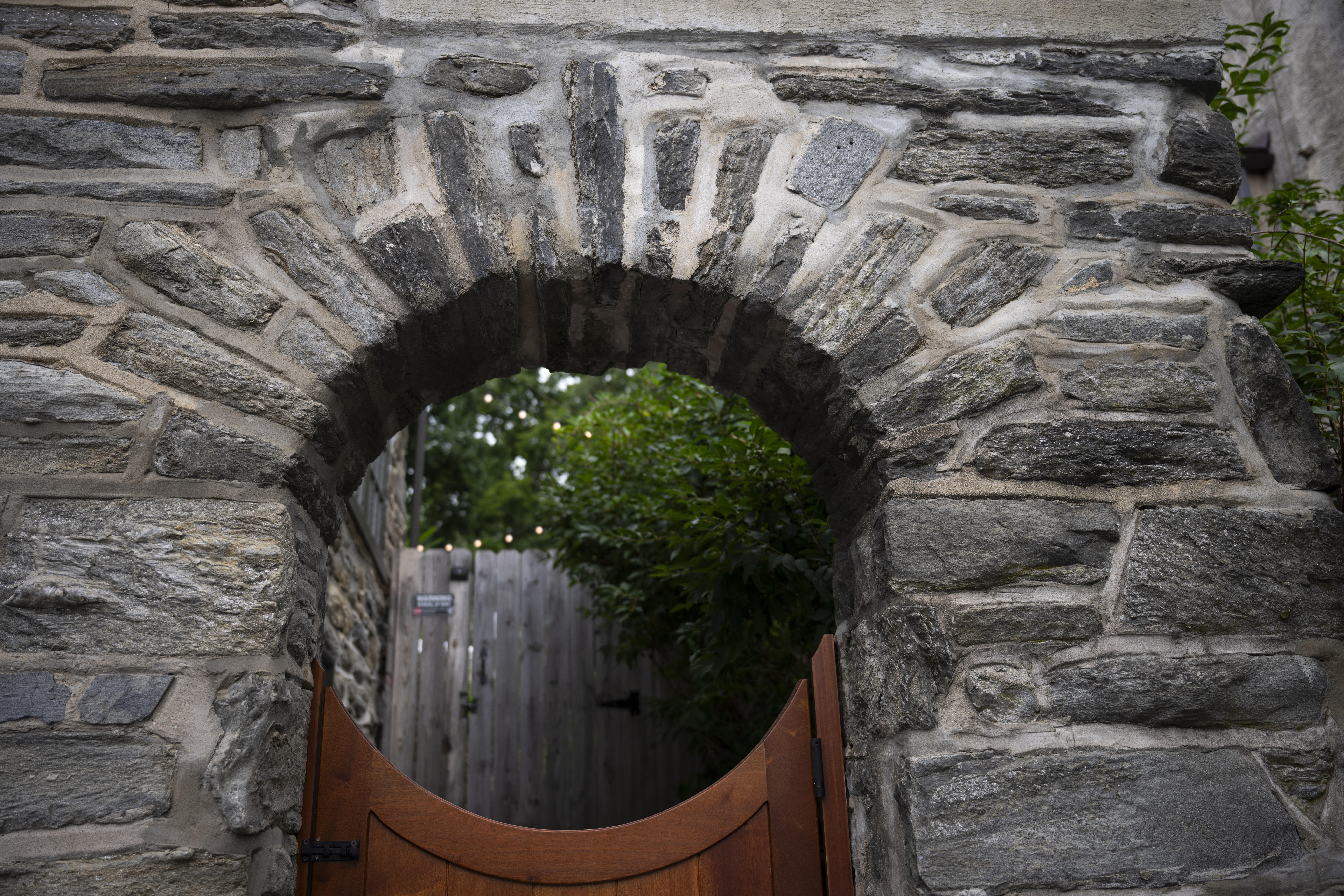
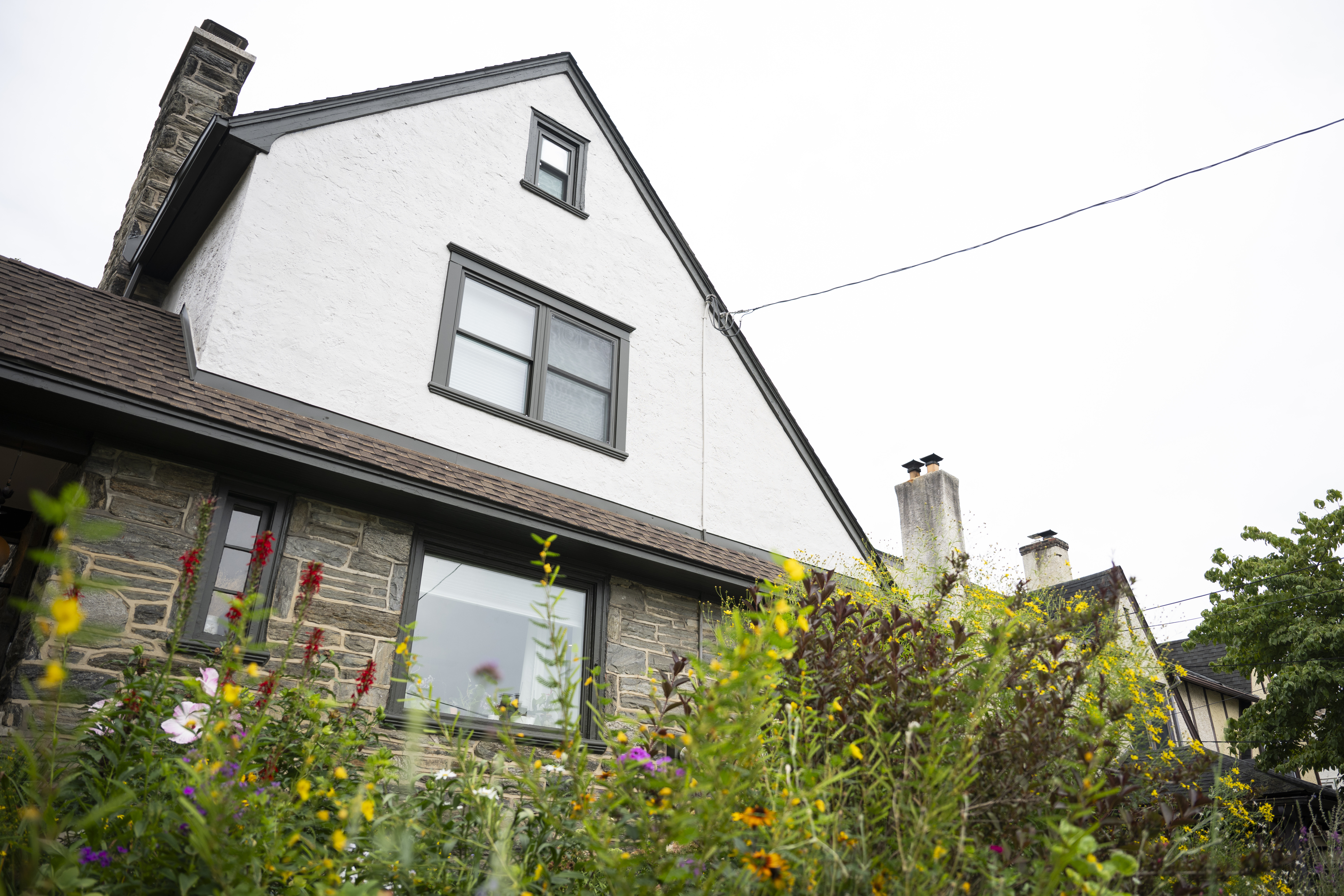
    The Tudor-style home has an arch that required repairs.Joe Lamberti / For The Inquirer

    The couple moved to the 3,000-square-foot property in 2021 from a one-bedroom condo in Center City. “We bought the first house we looked at,” White said, then conceded, “We had no idea what we were getting into.”

    The stucco-and-brick, four-bedroom, 2½-bath house had a new kitchen and bathroom. There was space to entertain and for corgis Archie and Ozzie to romp.

    Levinson and White met on Jdate, an online dating service for Jewish singles. They had in common a Midwest background. She grew up in Missouri, while he lived in Minnesota until moving to the Philadelphia area in the sixth grade. White came to Philadelphia for her medical training. The couple married in 2013.

    The house needed new air-conditioning and heating systems, and a basement leak exposed a drainage problem.

    Hibiscus flowers bloom in the front yard.Joe Lamberti / For The Inquirer
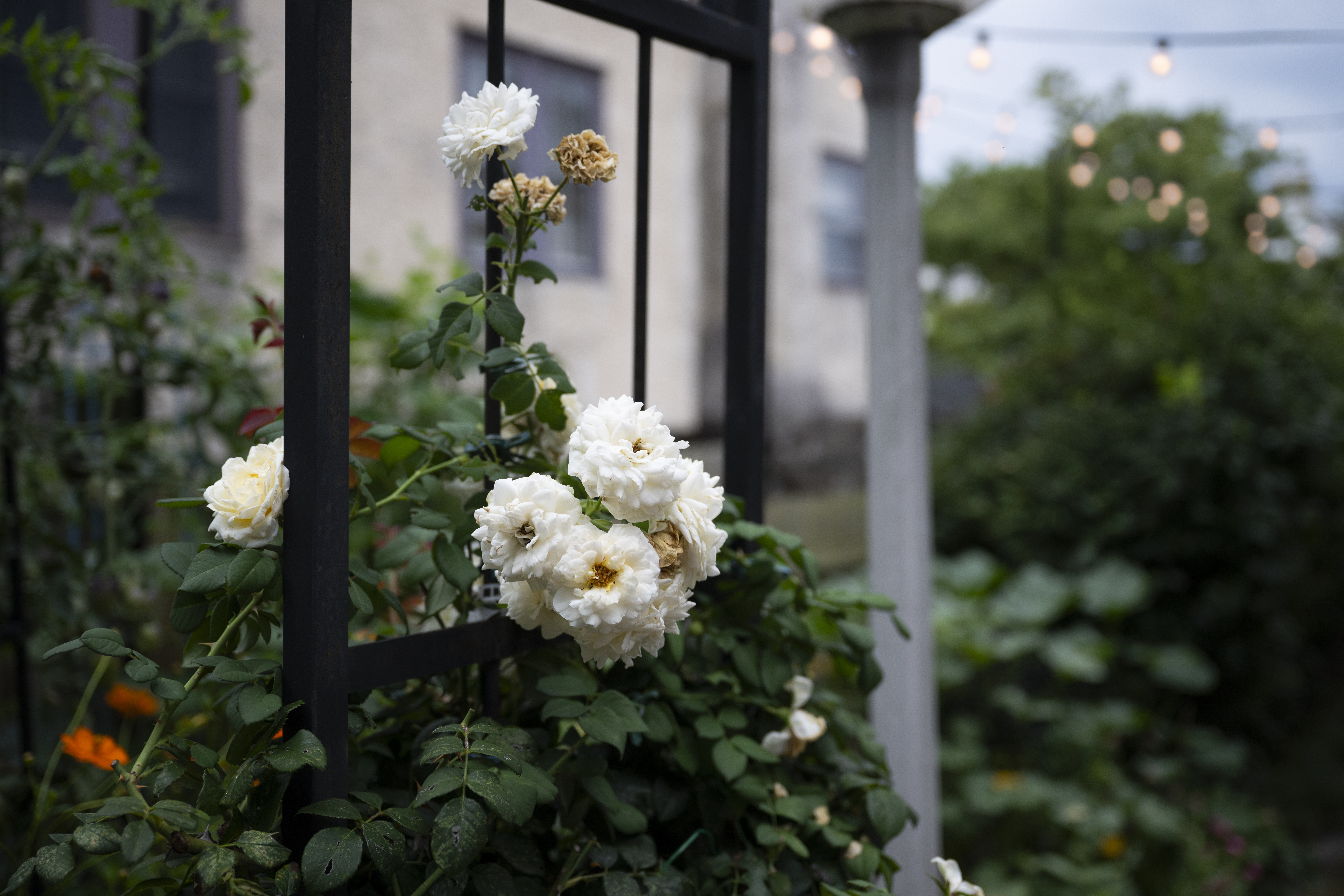
    White roses in the garden.Joe Lamberti / For The Inquirer

    Landscaping amounted to little more than a crab apple tree in the backyard, rocks and dirt, and a flower bed covering a parking space in front of the garage.

    White and Levinson hired mason Deen Vinci of Surrounded by Stone in Merion Station to repoint and repair the stone arch that leads to the backyard. Vinci also built the arch’s wood door and paved the front driveway. In the backyard he reset and repaired patio bricks.

    White furnished the patio with a wood table and chairs from Arhaus. The large umbrella from Wayfair is set in concrete so it won’t tumble over in a storm. Plants in the backyard include hydrangeas, zinnias, jasmine, dahlias, gardenia, a juniper and a pine tree.

    White, a psychiatrist, had no horticultural training. But she learned a bit from watching her father, Bruce, garden and is grateful to neighbors who share knowledge and plantings with her. Watching hummingbirds and bees flit about her flowers, she and her neighbors “have created a pollinator pathway.”

    A hummingbird enjoys cardinal flowers in White and Levinson’s garden.Joe Lamberti / For The Inquirer

    Neighbor Suzanne Kane, who tends a lush garden across the street, is a particularly helpful mentor, White said.

    Levinson, a Realtor, said his wife’s cultivating talents have been aided by her medical training. “She’s a scientist and is observant and nurturing.”

    White planted a kitchen garden on one side of the house with honeynut squash, Swiss chard, Thai and Shishito peppers, and varieties of plum tomatoes she will can. Cucumbers grow on a trellis. In late summer, Ozark strawberries are ripening. Alpine strawberries, which ripen in the front yard in late spring, are so sweet neighborhood children pilfer them.

    White stores garlic harvested from her garden in the basement.Joe Lamberti / For The Inquirer
    A squash growing in the garden.Joe Lamberti / For The Inquirer

    White has harvested garlic stored in trays in the basement where she starts seeds in the winter with hydroponic lamps. She likes to garden year-round. Soon she will move the Amaryllis plants from outside to the basement for eight weeks or so before placing them in a sunny spot indoors in time for them to bloom at Christmas.

    White grows straw flowers because they are easy to dry for year-round flower arrangements. And she chooses perennial plants that span the seasons, such as Muhly grass, which turns from green in the summer to fluffy pink in the fall. Amsonia grass has blue blossoms in the spring and turns from green to gold in the fall.

    White shops for plants at several locations, including Primex Garden Center in Glenside, Wynnewood Garden Center, and Lancaster Farmers Market.

    A hydrangea in the front yard.Joe Lamberti / For The Inquirer
    A dahlia in bloom in the garden.Joe Lamberti / For The Inquirer

    Caring for the property is work.

    “Sometimes,” Levinson admitted, “I miss just paying a monthly condo fee.”

    Still, he said having gardens on all sides of his home is “like having four extra rooms.”

    Is your house a Haven? Nominate your home by email (and send some digital photographs) at properties@inquirer.com.

  • Lower Merion is advancing a policy to eliminate iPads and laptops for K-2 students

    The Lower Merion school board plans to stop assigning personal laptops and iPads to kindergartners, first graders, and second graders after facing intense pushback from parents who say kids are getting too much screen time in school.

    Members of the school board’s policy committee announced the plan during a meeting Monday, along with other proposed limits on technology use. Under policy changes going before the full school board for review next week, third and fourth graders would use electronic devices stored on carts in classrooms, while fifth and sixth graders would be permitted, but not required, to bring devices home.

    “This is a huge movement forward,” said the board’s president, Kerry Sautner, describing revisions made to the proposed technology policy in response to community feedback.

    But parents who have accused the district of overusing educational technology said the proposed changes did not go far enough — leaving too much room for interpretation around when technology should be used, and failing to adequately restrict kids’ access to inappropriate websites.

    Some parents also expressed anger that the board is moving forward with repealing the current technology policy, which contains language accommodating families who opt out of district-issued devices.

    “You are removing the escape hatch,” said David Smyth, a parent from Merion Station, who said the district had produced no data supporting its use of technology. “You know that ed tech is failing, it’s suboptimal, and you don’t want to be embarrassed.”

    Here is what to know about the tech debate in Lower Merion, the board’s latest policy proposal, and what happens next:

    Lower Merion at the center of ed tech backlash

    As backlash to technology in schools has spread across the region and nationally, Lower Merion has become an epicenter of parental opposition.

    At meetings this spring, dozens of parents have voiced concerns about weakened attention spans and classroom distractions, and expressed fear that the quality of their kids’ education is declining as a result.

    More than 800 parents have signed a petition asking for the right to opt out of one-to-one devices, according to parent organizers in Pencils Over Pixels. The group, which started a GoFundMe campaign, has distributed lawn signs and enlisted a public relations firm as part of its advocacy efforts.

    But district officials have repeatedly said that the technology policy’s language is dated, stemming from when Lower Merion first introduced one-to-one devices, and that it is not possible for families to opt out.

    Instead, the board has been reworking the technology policy to address when and how devices should be used in classrooms.

    A revised policy after meetings with parents

    The latest policy proposal outlines guidelines for technology use at different grade levels, rolling back one-to-one devices for Lower Merion’s youngest students.

    “Technology shall not be used for routine classroom instruction in these grades,” the policy says. “Any use shall be minimal, highly structured, and limited to specific educational purposes such as diagnostic testing or for teacher-directed, whole-class demonstration, visual display, or state testing preparation.” (Pennsylvania’s standardized tests, which start in grade 3, are required to be administered on computers.)

    In grades 3-4, the policy says, students “shall have supervised, teacher-directed access to technology resources” that stay in classrooms, while in grades 5-6, students will be permitted to bring their devices home, but not allowed to use them between classes or at lunch.

    The policy describes students in grades 7-8 and 9-12 as having increased responsibility for independent technology use, but says devices should be used only for school-related work.

    The policy changes are “meaningful responses” to community feedback, said Anna Shurak, the chair of the board’s policy committee, who said board members had met with concerned families.

    But some parents said the policy — which says teachers should use technology “only when doing so serves a clear educational purpose” — would not adequately limit an overreliance on screens in classrooms.

    “The verbiage of this policy is very carefully crafted to say nothing,” said Eleanor Stanford, a parent and a writing professor at Bryn Mawr College, who also questioned why the district was still “dragging its feet” on imposing a bell-to-bell ban on cell phones in its high schools, even as legislation advances in Harrisburg to do so. (Shurak said the district would fully ban cell phones in 2027-28.)

    Parent Matthew Posey quoted the policy’s language that technology belongs in the classroom when it “genuinely amplifies human curiosity.”

    “Did Albert Einstein need Kahoot or iReady?” Posey said, referring to two educational technology programs. “Is this a public policy document, or a corporate marketing brochure?”

    Some parents also questioned proposed administrative regulations that include suggested time ranges for technology use by grade level. In grades K-4, the guidelines are less than 30 minutes a day; by high school, they increase to less than 120 minutes a day.

    Calculating the high school upper limit as about 40% of daily instructional time, “to me, that’s way, way too high,” said Sam Handlin, a parent and a professor at Swarthmore College. He said the only way teachers would approach that time limit was either by using technology “as a babysitting device” or letting students take notes on computers, “which is just a recipe for distraction.”

    Shurak did not comment on the time frames specifically but told Handlin the administrative regulations still need to be revised.

    When will changes take effect?

    The committee endorsed sending the revised technology policy to the full board for review next week, along with a recommendation to repeal the current technology policy.

    While the board may repeal the current policy at next week’s meeting, the new policy would need to be considered a second time to before it could go into effect.

    The goal is to have the new policy in place in August, Shurak said. She said the board would be directing administrators to implement changes in time for the coming school year.

    Board member Jason Herman, a member of the policy committee, said some of the new policy’s language should be revised to limit “ambiguity and subjectiveness.” He also questioned why the district could not move to a content filtering model where only certain websites were permitted for students to access, rather than restricting sites after problems are reported.

    Officials did not address questions around content filtering Monday, or calls from the Pencils Over Pixels group for the release of district contracts with educational technology companies and a technology advisory board that would include parents.

    Sautner said the board had more work to do, including around technology questions related to the district’s curriculum.

    But “we cannot micromanage” administrators through policy language, she said.

    Some expressed concern that the board could overreact in response to anti-tech opposition.

    “Banning technology isn’t going to be the way to ensure that our kids critically think,” said Emma Benn, who urged the board to “take a step back” before passing a new policy. “This world is a technology-driven world, and we need to make sure our children can function within it.”