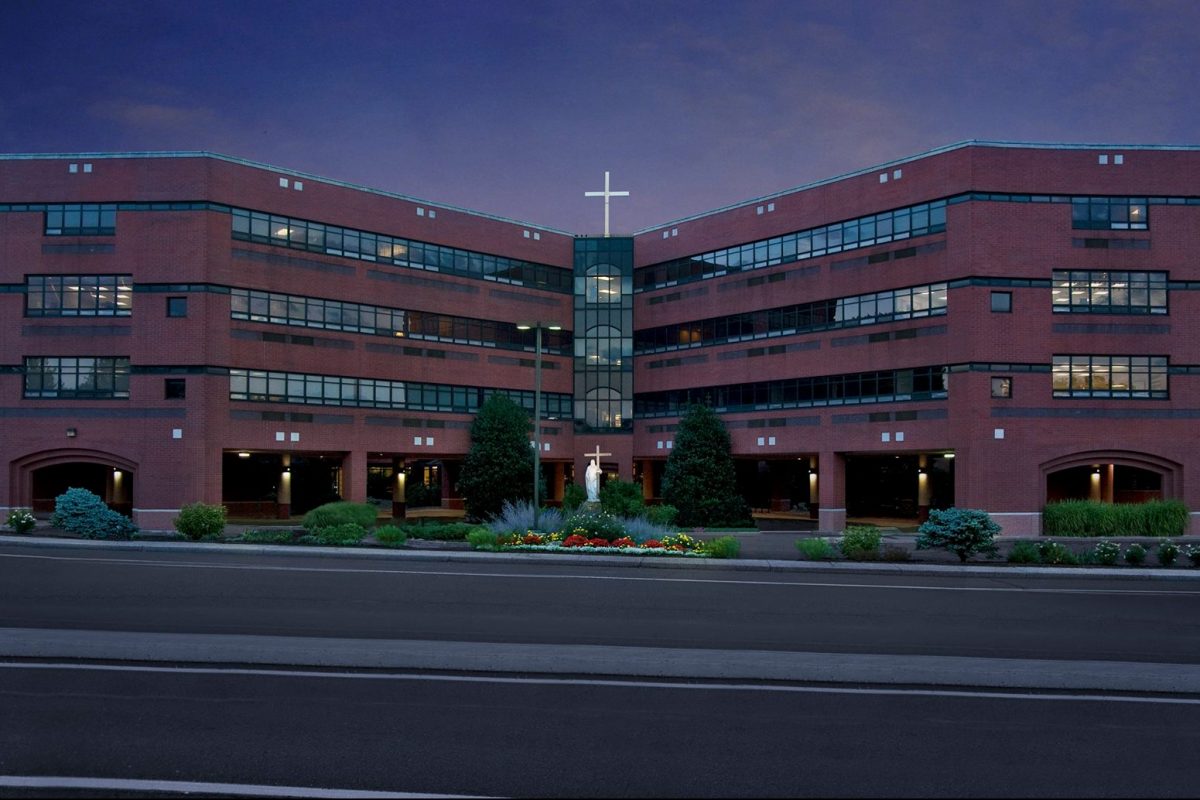
Redeemer Health CEO Greg Wozniak has resigned from the financially troubled nonprofit Montgomery County health system after a little more than two years, Redeemer announced Thursday.
Replacing Wozniak on an interim basis is chief transformation officer Jim Logue, who has held the role since early 2025.
Redeemer has posted operating losses every fiscal year from 2017 to 2025. It hasn’t yet posted financial results for the fiscal year that ended in June.
“Jim and his team will work with our financial advisors and counsel to implement a reorganization of the Redeemer system to assure its continued viability and a sustainable business model,” board chair William R. Sasso said in an internal communication obtained by The Inquirer.
“This reorganization is expected to involve some significant organizational changes which will be announced in the coming weeks as they are finalized,” the note said.
More than four years ago, Redeemer announced that it was seeking what it called a “strategic partner” for its 239-bed hospital in Meadowbrook, near Abington, but nothing came of that effort.
Redeemer also operates a home care business, nursing homes, senior apartments.
Redeemer announced additional personnel changes Thursday in its internal communication, including the departure at the end of this month of chief financial officer Kim Cummings. Former CFO Michael Keen is returning to that position.
Another returning executive is Donald Friel, a former executive vice president tapped to assist Logue.
Diane Derr, who has been at Redeemer for 44 years, is being promoted to chief administrative officer from chief nursing officer.
Editors note: This article has been updated to correct Derr’s history with Redeemer.
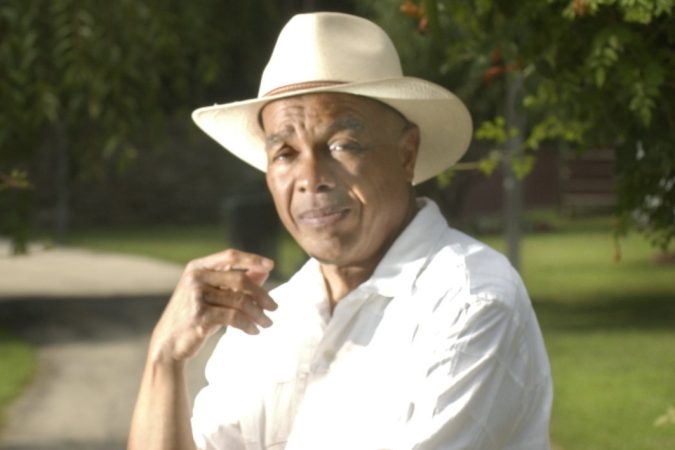
Keith A. Morrison, 84, of Meadowbrook, Montgomery County, celebrated artist, professor of painting emeritus and former dean at Temple University’s Tyler School of Art and Architecture, curator, critic, consultant, writer, and lecturer, died Monday, June 1, of cancer at Fox Chase Cancer Center.
Born in Jamaica, Dean Morrison left the Caribbean island for the School of the Art Institute of Chicago when he was 17 and earned bachelor’s and master’s degrees in fine arts and art education. He went on to teach college art classes in Nashville, Chicago, and College Park, Md., and, in addition to Temple, serve as dean at San Francisco State University, the University of Maryland, and the old San Francisco Art Institute.
He was the first Black academic dean of art in a predominantly white American school in 1993 at the San Francisco Art Institute and joined Temple as dean of its art school in 2005. He became a professor of painting at Temple in 2008 and retired in 2018 as professor emeritus.
As head of the Temple art school for three years, Dean Morrison hired staff, expanded degree programs, and coordinated popular activities with the school’s affiliated art programs in Europe and Japan. In an online tribute, former colleagues at Temple called him a “dedicated advocate for artists and arts organizations.”
Earlier, he was associate dean of architecture and art at the University of Illinois, art department chair at DePaul University in Chicago, and associate professor of art at Fisk University in Nashville. He lectured around the world and was a visiting scholar at Sichuan Fine Arts Institute in China and the University of Michigan.
“He was very serious, very thinking,” said his wife, Susan C. Alunan. “People said he was present and insightful, even life-changing.”
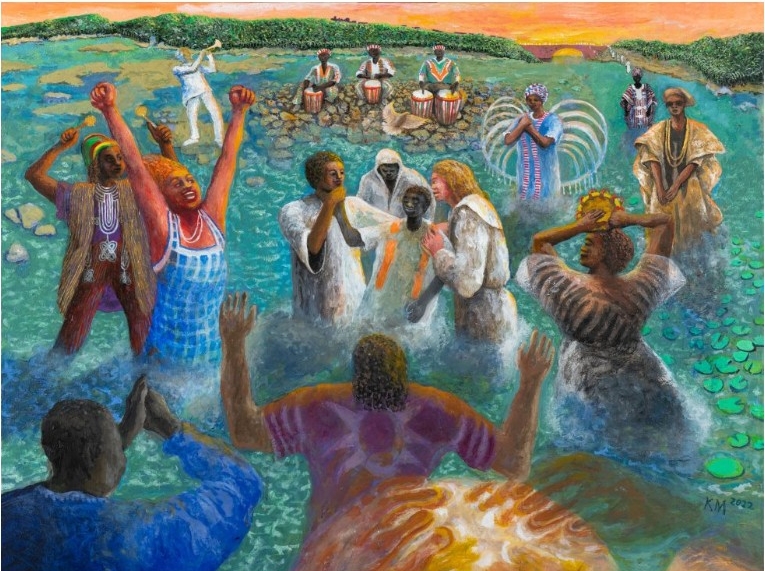
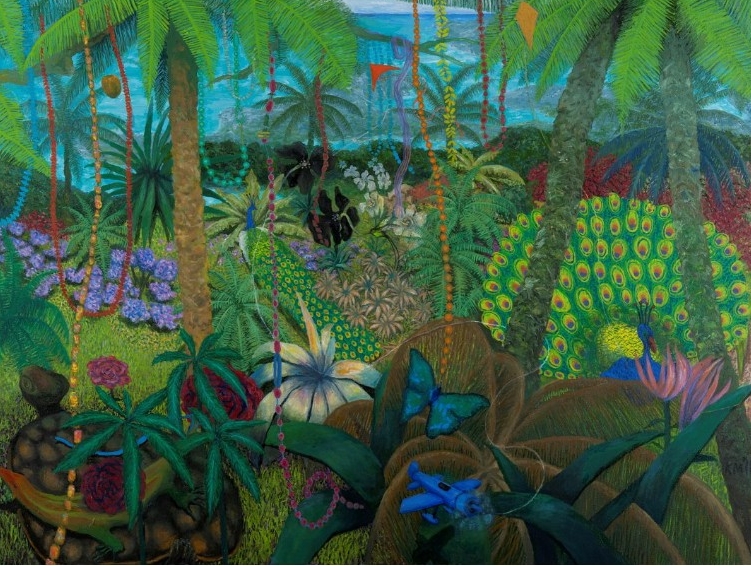
As an artist, Dean Morrison was inspired by his Afro-Caribbean heritage, his childhood memories of lush Jamaican landscapes, and his multicultural experiences in Europe, Cuba, Mexico, and elsewhere. He worked in watercolors, oils, acrylic, and prints, and created memorable abstract, figurative, and surreal images.
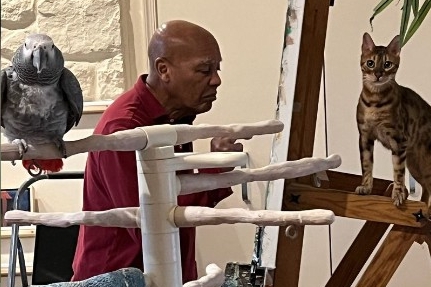
Many of his paintings feature landscapes, people, plants, and animals, often including Scout, his African gray parrot. His images, he told colleagues, were “more intuitive than intellectualized.”
Dean Morrison worked most often at his home studio in Meadowbrook. His parrot, Scout (left), sometimes appeared in his work. Susan C. Alunan
Dean Morrison’s work appears on the covers of books and magazines, and in hundreds of solo and group shows around the world. It resides in collections at the Philadelphia Museum of Art, the Pennsylvania Academy of the Fine Arts, the National Gallery of Art and the Smithsonian American Art Museum in Washington, and other galleries.
Colleagues at the David C. Driskell Center at the University of Maryland said in a tribute: “Morrison’s vivid, imaginative paintings — filled with brilliant color, history, mythology, and fantasy — speak to African diasporic experience as well as Morrison’s unique sense of humor and narrative composition.”
As a writer, he pioneered Pan-African art criticism and was, in his own words, a Black critic “interested in art from a Black person’s perspective.” He was a visiting editor at the New Art Examiner in Chicago, and his reviews, interviews, and general observations appeared in the Washington Post, museum catalogs, and other publications.
As a curator, Dean Morrison supervised exhibitions in the United States, Jamaica, and Cuba. He represented the United States and Jamaica at international art exhibitions, and was active with Brandywine Workshop and the Washington Project for the Arts.
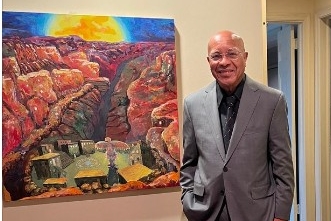
This is Dean Morrison’s “In the Rivers of Babylon.”Keith A. MorrisonThis is Dean Morrison’s “Scenes From Childhood.”Keith A. Morrison
Keith Anthony Morrison was born May 20, 1942, in Linstead, Jamaica. He ran track in high school and took drawing classes at the Jamaica School of Arts and Crafts.
He learned about the School of the Art Institute of Chicago after high school and worked as a disc jockey and sound effects man for a Jamaican radio station to earn money to travel to the United States. He earned his bachelor’s degree at the University of Chicago in 1963 and his master’s degree at the Art Institute of Chicago in 1965.
He had a son, Ron, a daughter, Melinda, and, after a divorce, married Alunan in 2003 and welcomed her children into his family. His daughter and former wife died earlier.
Dean Morrison studied Aristotle and earned a Fulbright Senior Scholar grant. He enjoyed classical music and jazz, and he and his wife traveled the world together.
Dean Morrison “had a great imagination and sense of humor,” his wife said.Susan C. Alunan
He played tennis and ran, and lived in Chicago, Washington, and San Francisco before settling in Meadowbrook. “He had a great imagination and sense of humor,” his wife said. “He was a fun guy.”
In addition to his wife and son, Dean Morrison is survived by a brother and other relatives.
A celebration of his life is to be held later. Brandywine Workshop and Archives has scheduled a showing of his work from 6 to 8 p.m. on Thursday, Aug. 6.