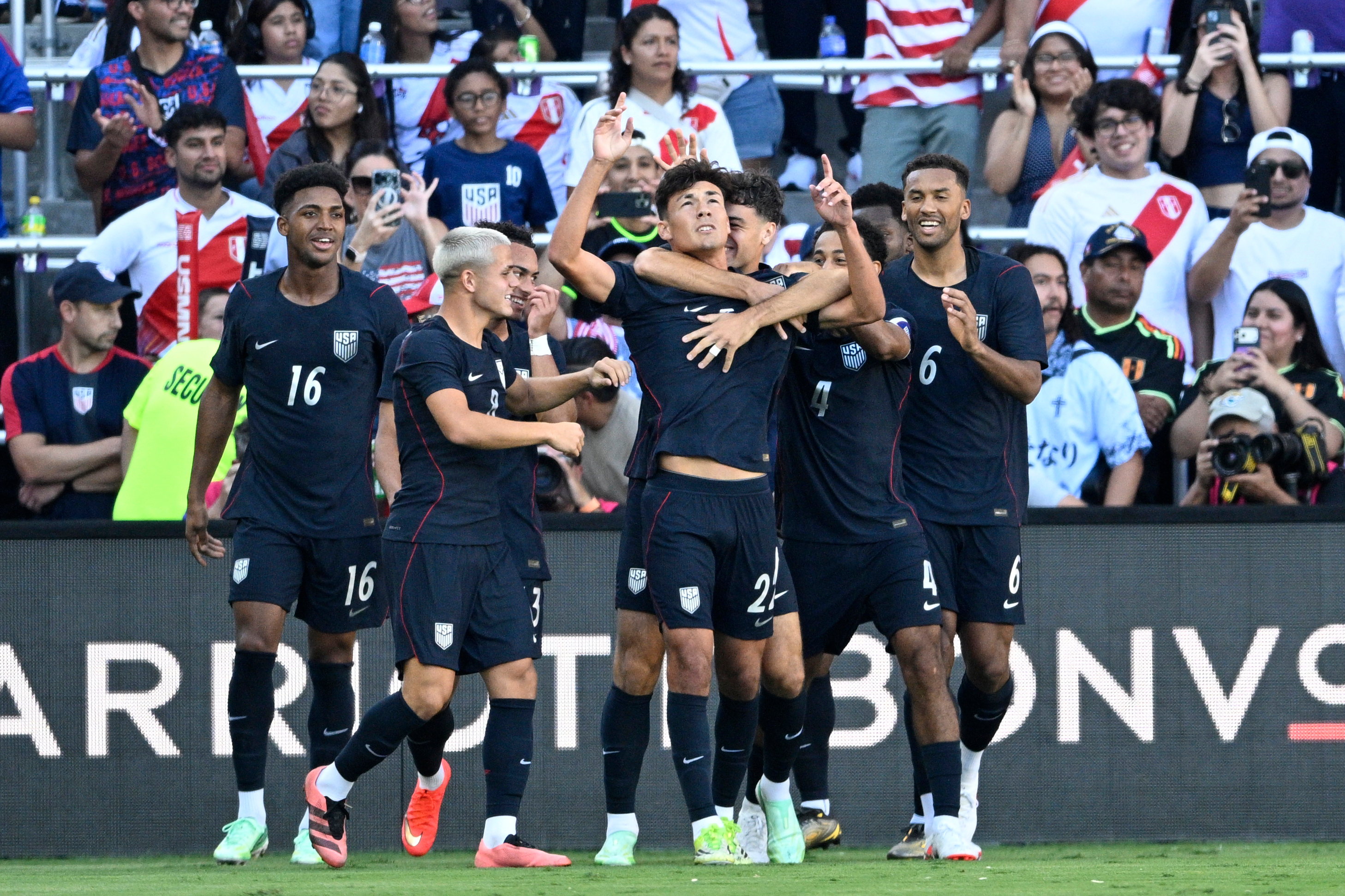
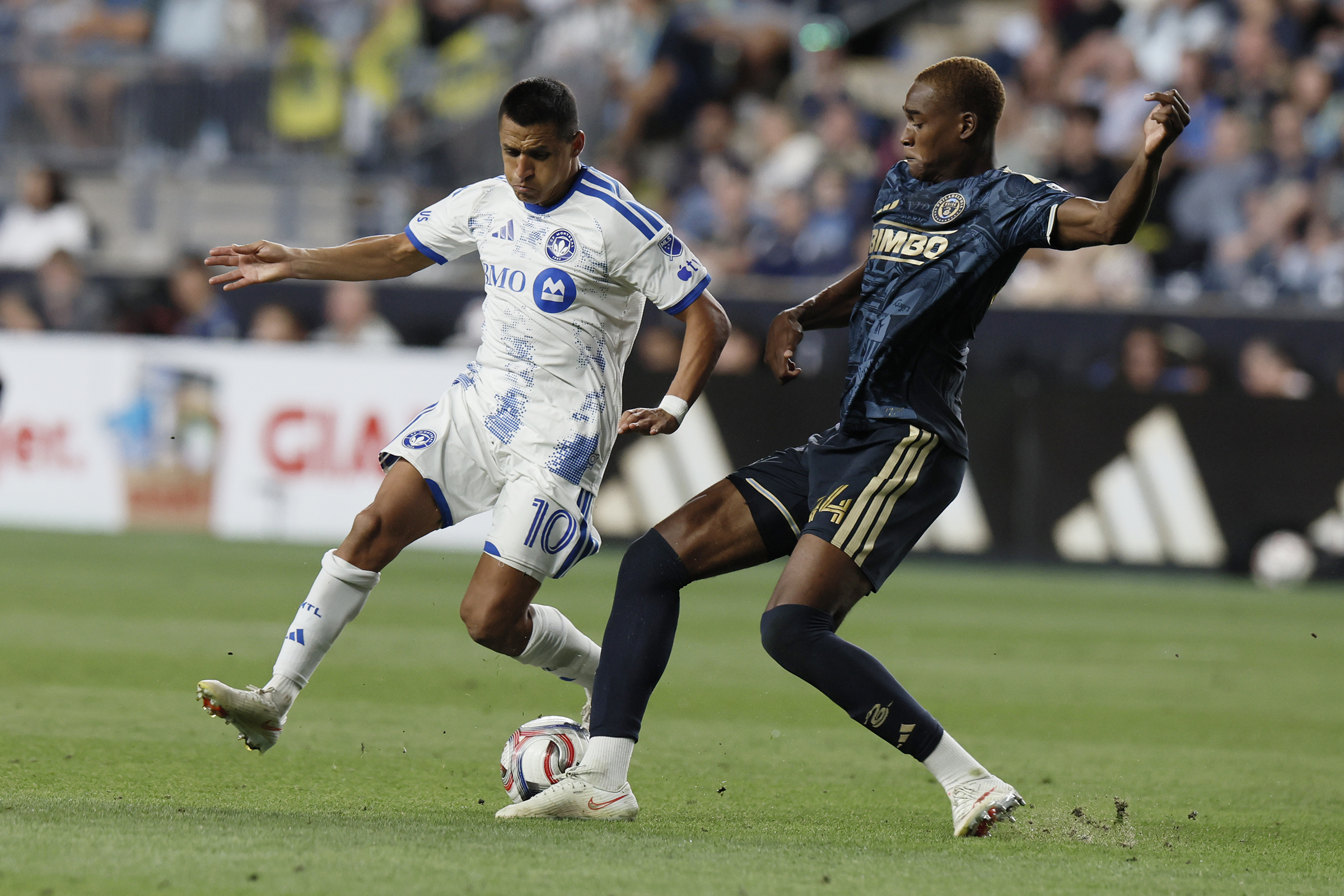
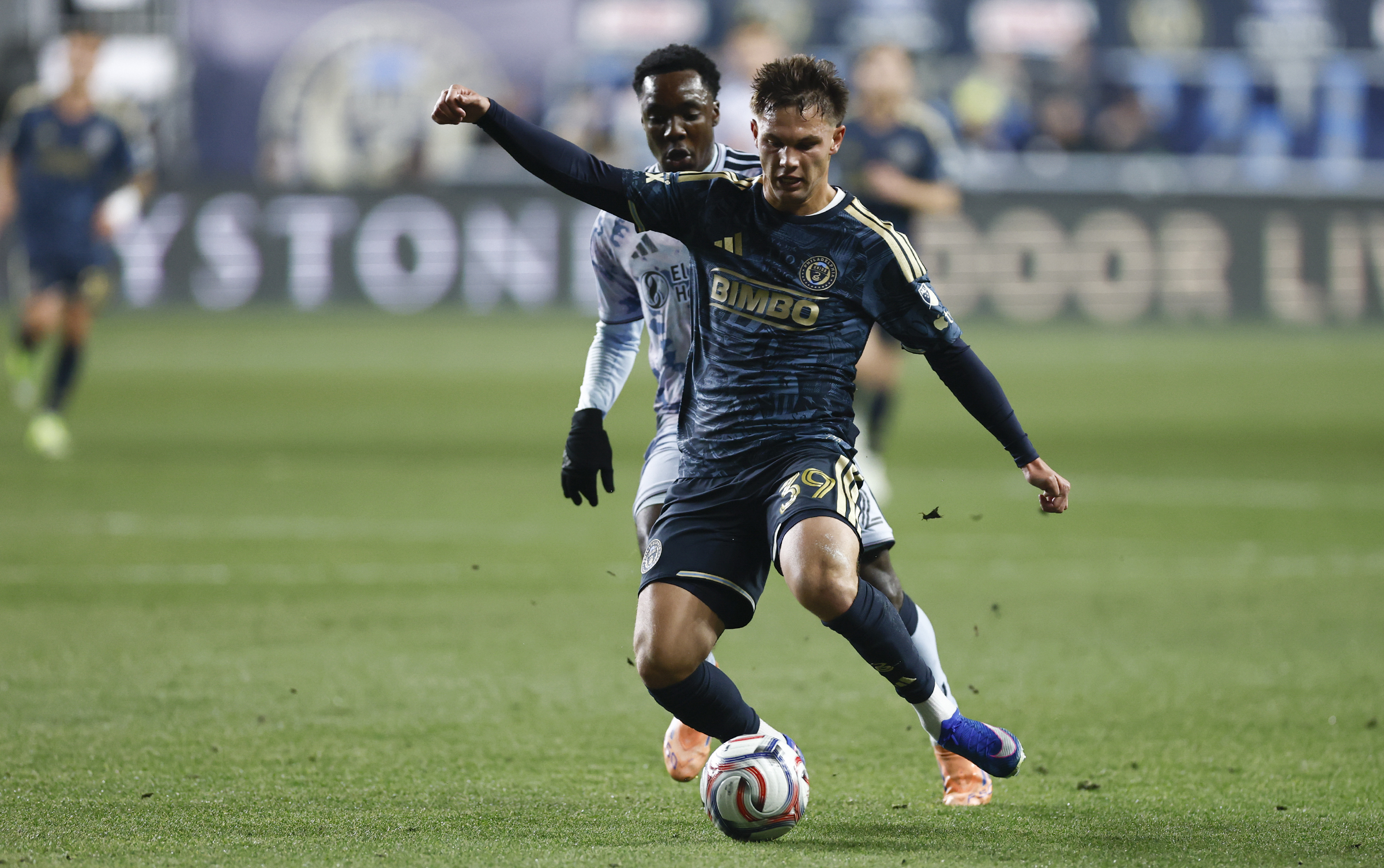
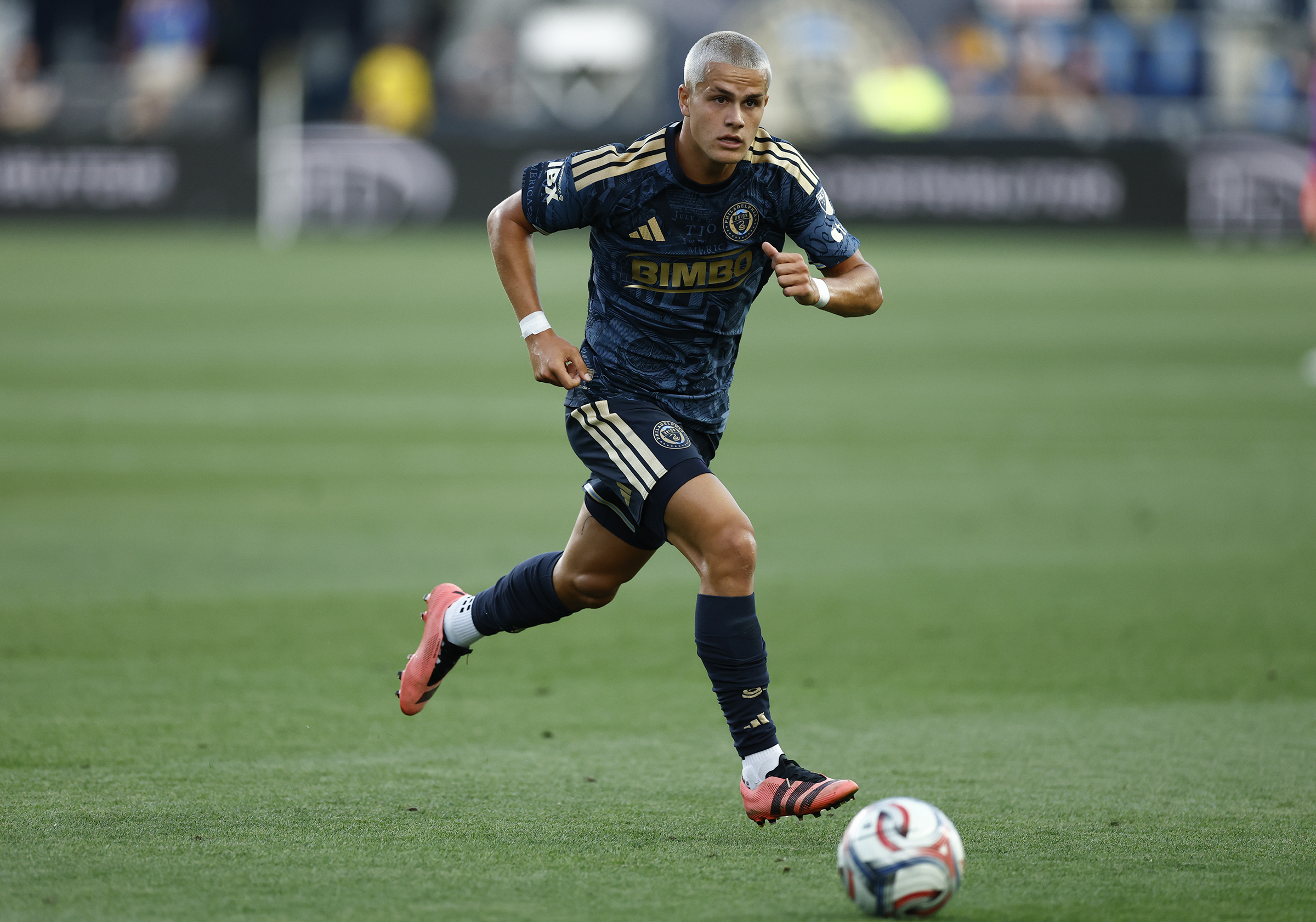
ORLANDO — Cavan Sullivan made his senior U.S. men’s soccer debut at the first available opportunity, as the 16-year-old was part of the starting lineup in Saturday’s 4-1 win over Peru.
Taking the field two days before his 17th birthday, Sullivan became the fourth-youngest player in senior men’s national team history and second-youngest starter.
He was a lively presence in a 61-minute run: 35 touches, including seven in the 18-yard box, 25 completed passes of 28 attempted, one shot, and one defensive recovery.
He even raised the Peruvians’ ire at one point midway through the first half. Chasing after a potential rebound, he was pushed from behind into goalkeeper Pedro Gallese and tumbled over him into the net. Referee Steffon Dewar of Jamaica quickly got in the middle of things to calm them down, and gave Sullivan a yellow card after Gallese was attended to by medical staff.
On two occasions later in the first half, Sullivan had opportunities to go for spectacular plays on the ball if he wanted to. But both times, he stayed restrained and made simpler moves to help teammates.
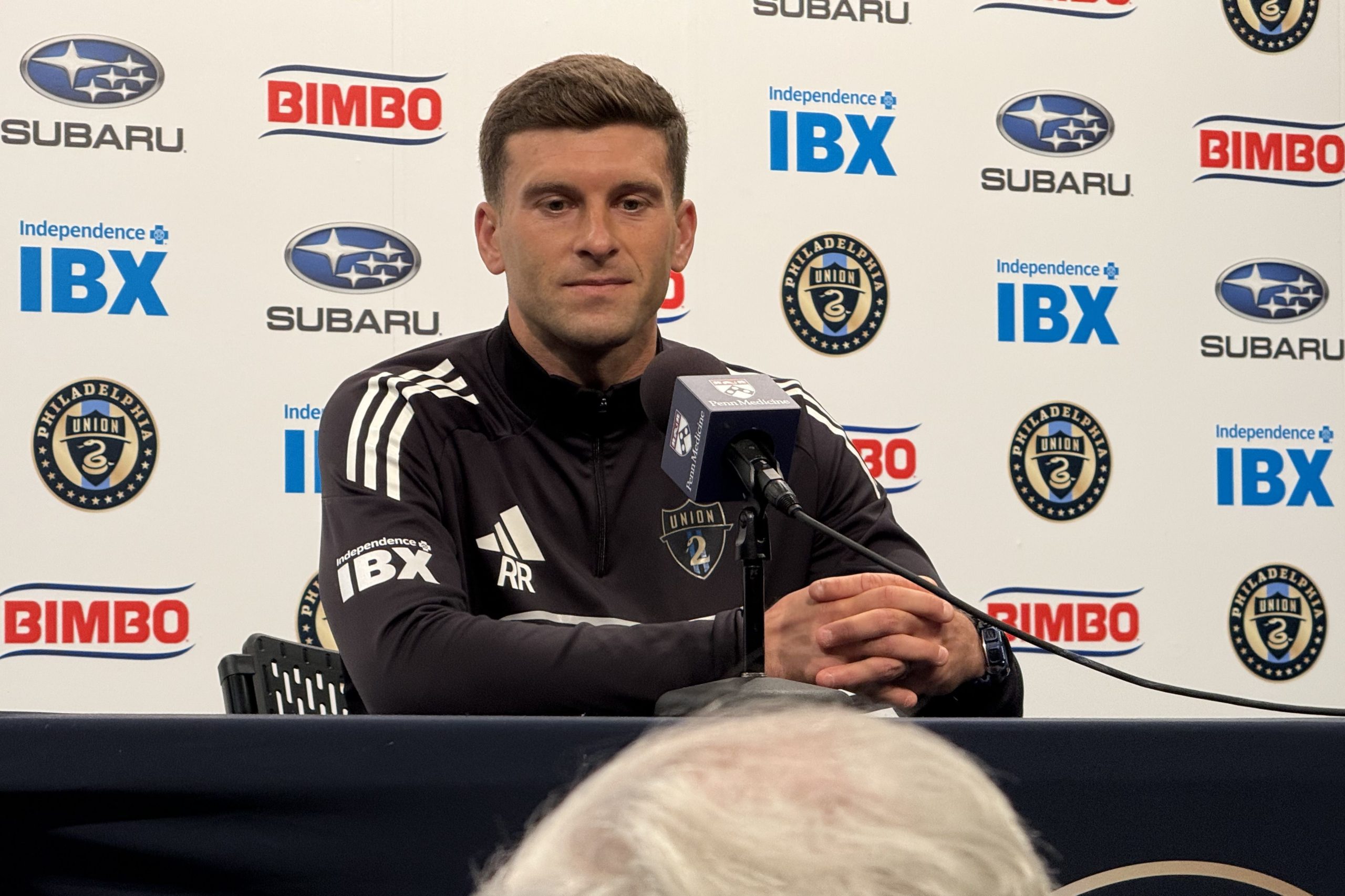
Tactically, he played in a right-sided attacking midfield role in a 4-2-3-1 formation. It’s the same area of the field he plays in with the Union, though in slightly different tactics under Ryan Richter’s 4-2-2-2 setup.
Sullivan was one of four players with Union or Philadelphia ties in Saturday’s starting lineup, along with Media’s Auston Trusty and Chester’s George Campbell at centerback, and Wayne’s Matt Freese at goalkeeper.
Trusty and Freese are former Union players, and Trusty and Campbell were youth soccer teammates at the former Nether United club in Delaware County.
Campbell tried out for the Union academy at one point and didn’t get in, though his brothers Will and Rob did. The family moved to Atlanta in 2013, so George grew up with Atlanta United. He played professionally there from 2020 to 2022, then moved to CF Montréal before the 2023 season, and joined English second-tier club West Bromwich Albion last year.
The U.S. opened the scoring in just four minutes, with forward Justin Ellis delivering in his club home stadium with Orlando City. But the good mood didn’t last, as a giveaway by Campbell led to Gianluca Lapadula’s equalizer in the 15th.
Each side was allowed 11 substitutions per game, far more than soccer’s usual five, and U.S. manager Mauricio Pochettino used all of his.
The first came at halftime, Freese departing for much-touted prospect Diego Kochen. The 20-year-old Miami native grew up at Spanish superpower Barcelona, and is currently at Denmark’s Lyngby — a club part-owned by the Union — on a loan for the season.
There was a wave of five subs just past the hour mark. Sullivan, Ellis, Gio Reyna (who assisted Ellis’ goal with a free kick), Yunus Musah, and Peyton Miller left, and Mathis Albert, Julian Hall, Zavier Gozo, Sebastian Berhalter, and Antonee Robinson entered.
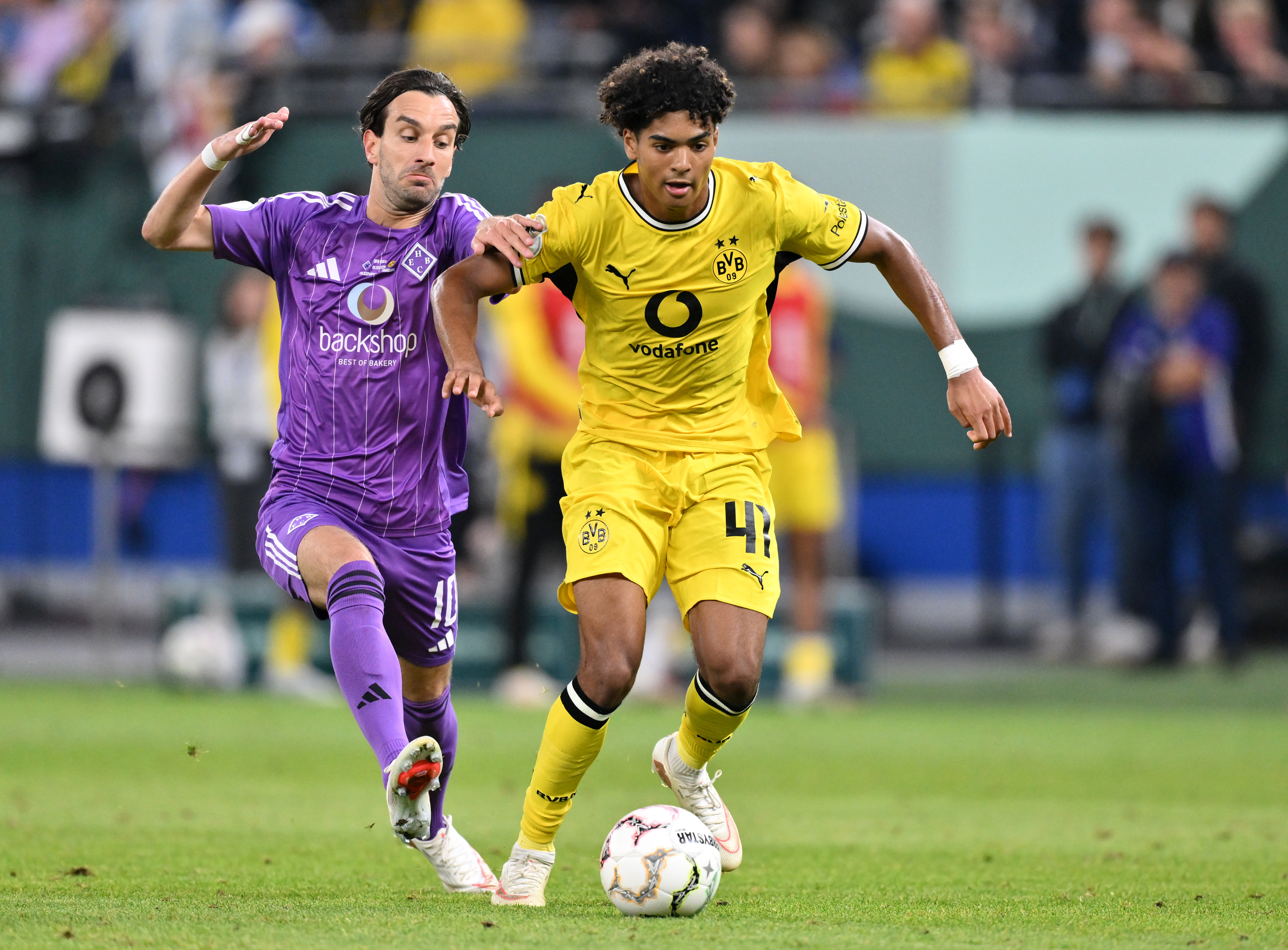
Albert made an instant impact, darting down the left flank and winning a penalty kick on a foul that replays showed started outside the 18-yard box. But with no video review in use, the call stood, and the play showed why the 17-year-old from Germany’s Borussia Dortmund is another big-time prospect.
Malik Tillman stepped up to the spot and calmly dispatched his shot.
Hall extended the lead in the 72nd, crashing the back post to finish Sebastian Berhalter’s cross. Robinson also got credit on the play, hitting a beautiful cross-field pass that Berhalter settled before his assist.
Five minutes later, Westfield subbed in, meaning he coincidentally made his senior U.S. debut on the same field where he made his Union first-team debut in last year’s season opener. Brooklyn Raines also entered, with Alex Freeman and Tillman departing.
18-year-old Julian Hall off the bench to score on his debut.
The last moves came in the 88th. Neil Pierre replaced Campbell — meaning all three Union players made their senior U.S debuts in this game — and Adri Mehmeti replaced Tyler Adams.
Berhalter capped off the scoring with a 25-yard thunderbolt in the 90th.
In all, 11 of the 12 newcomers on the U.S. squad got on the field, with Campbell earning his second career cap. Goalkeeper Brian Schwake was only one of the bunch who didn’t play.
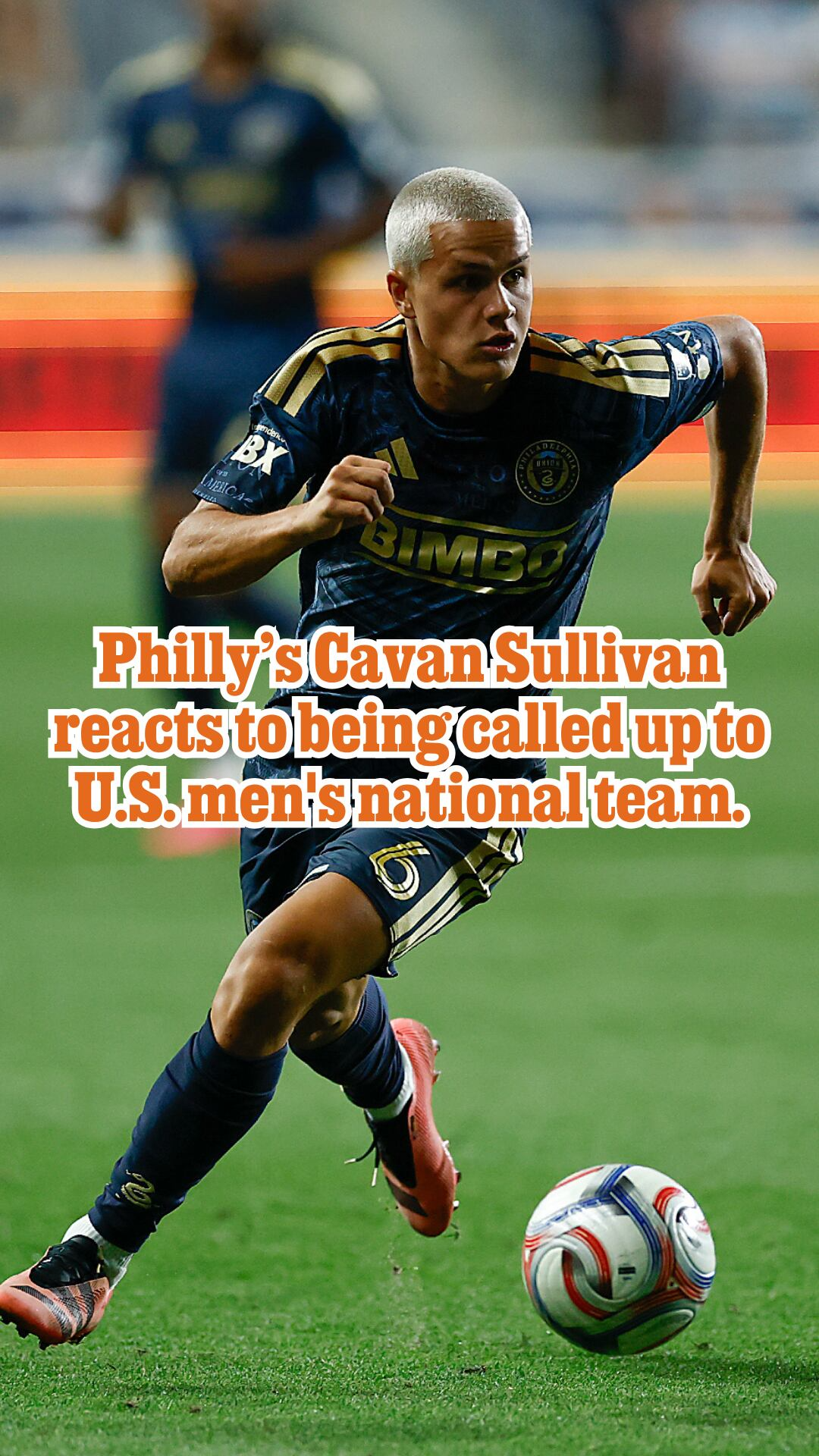
Union phenom Cavan Sullivan’s rapid rise in the soccer world reached a new milestone on Thursday, as the 16-year-old earned his first invitation to the senior U.S. men’s national team.
He is one of three Union players on the latest 28-man squad, along with defenders Neil Pierre and Frankie Westfield. They’re joined by three more with local roots: goalkeeper Matt Freese of Wayne, and centerbacks Auston Trusty of Media and George Campbell of Chester.
Video: Philly’s Cavan Sullivan reacts to being called up to U.S. men’s national team.
Since the Union resumed their season after the World Cup, Sullivan has scored six goals and added five assists in 12 appearances. They include highlight-reel moments that seized headlines across the globe: a dazzling trap and run for a goal at Red Bull New York on Aug. 29, and a backheeled finish in a 5-0 rout at San Diego FC on Sunday.
“I think he deserves all the praise that he’s getting,” U.S. manager Mauricio Pochettino said in a news conference Thursday morning. “Because he’s performing well, he’s playing well, he’s giving assists and scoring goals — and he’s 16.”
Attention isn’t just coming from within MLS. They’re watching on Europe’s big stage, too, since Sullivan is due to join English superpower Manchester City at the end of 2027.
The deal was agreed upon when he turned pro with his hometown club at 14 years old in 2024. While neither club can discuss it publicly because of British labor laws, everyone knows the clock is ticking.
Just before 2 a.m. in Manchester, and it might have woken some people over there up… pic.twitter.com/jI4u2a7pW5
Right now, Sullivan is enjoying the present, kept grounded by coaches, teammates, and family. Chief among them is his oldest brother, Quinn Sullivan, a stalwart of the Union in his own right who earned his senior national team debut last year.
“We need to have a clear idea how to — I don’t want to use the word ‘help,’ but just to be with him and try to provide the best platform for him to evolve,” Pochettino said of wanting to get to know Sullivan. “Every day, we need to be the people that go there to push, and to evolve, and to sometimes put limits, sometimes to encourage to keep going [and] doing what he’s doing. It’s a good challenge for us, and I think it’s exciting to have him.”
The plan to get Sullivan to begin his career in Chester, with the right mix of firmness and care, has worked perfectly so far. And it’s the latest endorsement of the Union’s youth academy, which has become a remarkable pipeline for U.S. national team talent.
Media’s Auston Trusty is one of the veterans on this U.S. squad.Jonathan Tannenawld
Pierre, Westfield also earn the call
Now a new era is arriving, and not just with Sullivan. He’s joined on this squad by two more of the Union’s leading youngsters: Pierre, an 18-year-old centerback, and Westfield, a 20-year-old outside back.
“You are happy for Philadelphia, no?” Pochettino said. “Plenty of players from Philadelphia.”
Both players are major candidates for the 2028 Olympic squad, which is a big part of why they were invited. The Olympics is an under-23 age-group event, and this window is one of the only chances for candidates to get senior national team experience before they go into their own training regimen.
Pierre was born in Lebanon, Pa., and his family moved to Blue Bell so his older brother, Nelson, could join the Union’s academy as a kid. In time, Neil made his own impression and now is the club’s top centerback prospect since McKenzie and Trusty.
Neil Pierre (right) has made his own rapid rise with the Union this summer.Elizabeth Robertson / Staff Photographer
He’s impossible to miss on the field, standing 6-foot-7. He’s scored four goals since joining the Union’s first team this summer. But he also has proven he has the defensive chops to mix it up with veterans and a terrific passing game.
“When you compare him with a 30-year-old, or 26- or 28-year-old centerback that maybe is playing in another country, or maybe in MLS, I don’t see the difference [just] because one has more experience than other,” Pochettino said. “Both can make a mistake; both can be good. That is why, [with] this type of potential, when players like this guy are playing in MLS, how we can contribute in their career, to evolve and be better and better, is this guy being with us.”
Westfield grew up at the other end of Northeast Philadelphia from the Sullivans, in Morrell Park. For a while, he might not have been the most famous athlete in his house, at least locally: his brother, Rocco, starred for the Father Judge boys’ basketball team that won the last two Catholic League championships.
Frankie made his pro debut the night before Rocco claimed the first of his titles. Now, he has made a name for himself.
Frankie Westfield has been impressive as the Union’s starting right back.Yong Kim / Staff Photographer
“I think that it’s normal that it’s a different process now to build the roster,” Pochettino said. “With the idea of not only to perform today, but also to help these young kids to become more mature, more experienced — and because the one of the biggest objectives of the [U.S. Soccer] Federation is the Olympic Games in two years. And I think giving the opportunity to be involved in this senior team is a thing that is going to pay and to be very helpful in two years for these kids.”
The Union trio is part of a fleet of fascinating youngsters on this latest U.S. squad. Others include wingers Mathis Albert of Germany’s Borussia Dortmund, Cole Campbell of Germany’s Elversberg, and Zavier Gozo of England’s Crystal Palace; forward Julian Hall and midfielder Adri Mehmeti of Red Bull New York; and goalkeeper Diego Kochen, who grew up at Spanish giant Barcelona and is now with Denmark’s Lyngby.
Eleven of the 26 players on the squad are newcomers, with 13 returnees from the World Cup. Among the latter are Freese, Trusty, and perennial locker room leaders Chris Richards and Tyler Adams.
The Americans will take the field starting Monday at the national training center in suburban Atlanta, then head off on a cross-country journey with four games: Peru on Sept. 26 in Orlando, Chile on Sept. 29 in St. Louis, then rivals Mexico on Oct. 3 in Glendale, Ariz., and Canada on Oct. 6 in St. Paul, Minn.
Mathis Albert of Germany’s Borussia Dortmund (right) is another of the intriguing young talents on this U.S. roster.Oliver Hardt
USMNT roster for autumn friendlies
Local products in bold
Goalkeepers (4): Chris Brady (Chicago Fire), Matt Freese (New York City FC), Diego Kochen (Lyngby, Denmark), Brian Schwake (Nashville SC)
Defenders (10): George Campbell (West Bromwich Albion, England), Sergiño Dest (PSV Eindhoven, Netherlands), Alex Freeman (Villarreal, Spain), Peyton Miller (New England Revolution), Neil Pierre (Union), Chris Richards (Crystal Palace, England), Antonee Robinson (Fulham, England), Miles Robinson (FC Cincinnati), Auston Trusty (Celtic, Scotland), Frankie Westfield (Union)
Midfielders (9): Tyler Adams (Bournemouth, England), Mathis Albert (Borussia Dortmund, Germany), Sebastian Berhalter (Middlesbrough, England), Zavier Gozo (Crystal Palace), Adri Mehmeti (Red Bull New York), Yunus Musah (AC Milan, Italy), Brooklyn Raines (New England Revolution), Gio Reyna (Strasbourg, France), Malik Tillman (Bayer Leverkusen, Germany)
Forwards (5): Cole Campbell (Elversberg, Germany); Justin Ellis (Orlando City), Julian Hall (Red Bull New York), Ricardo Pepi (PSV Eindhoven, Netherlands), Cavan Sullivan (Union)
"You are happy for Philadelphia, no? Plenty of players from Philadelphia."
Yes, it is an enjoyable part of my job as a professional cynic. But he can rest assured that lots of people around town are happy today:
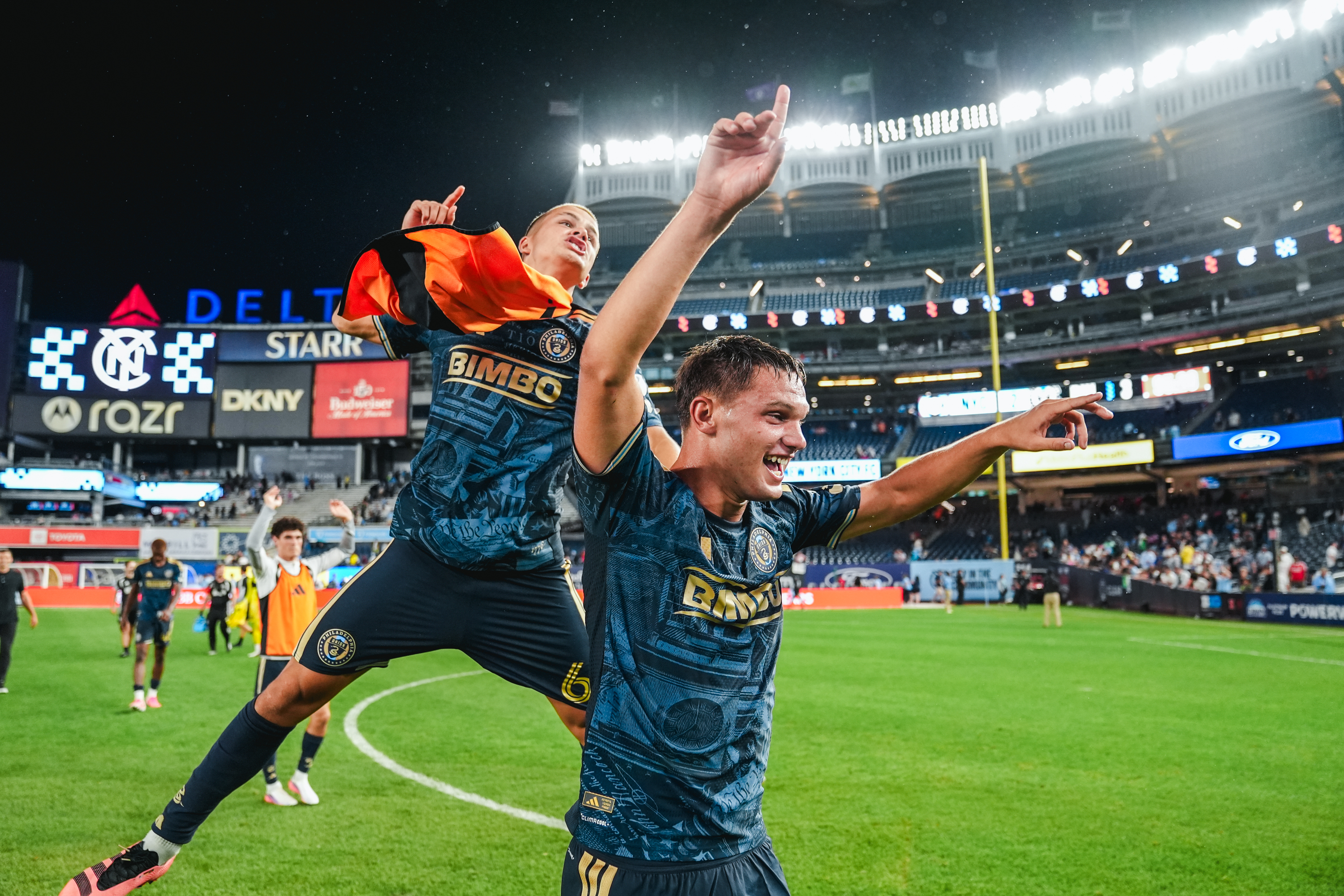
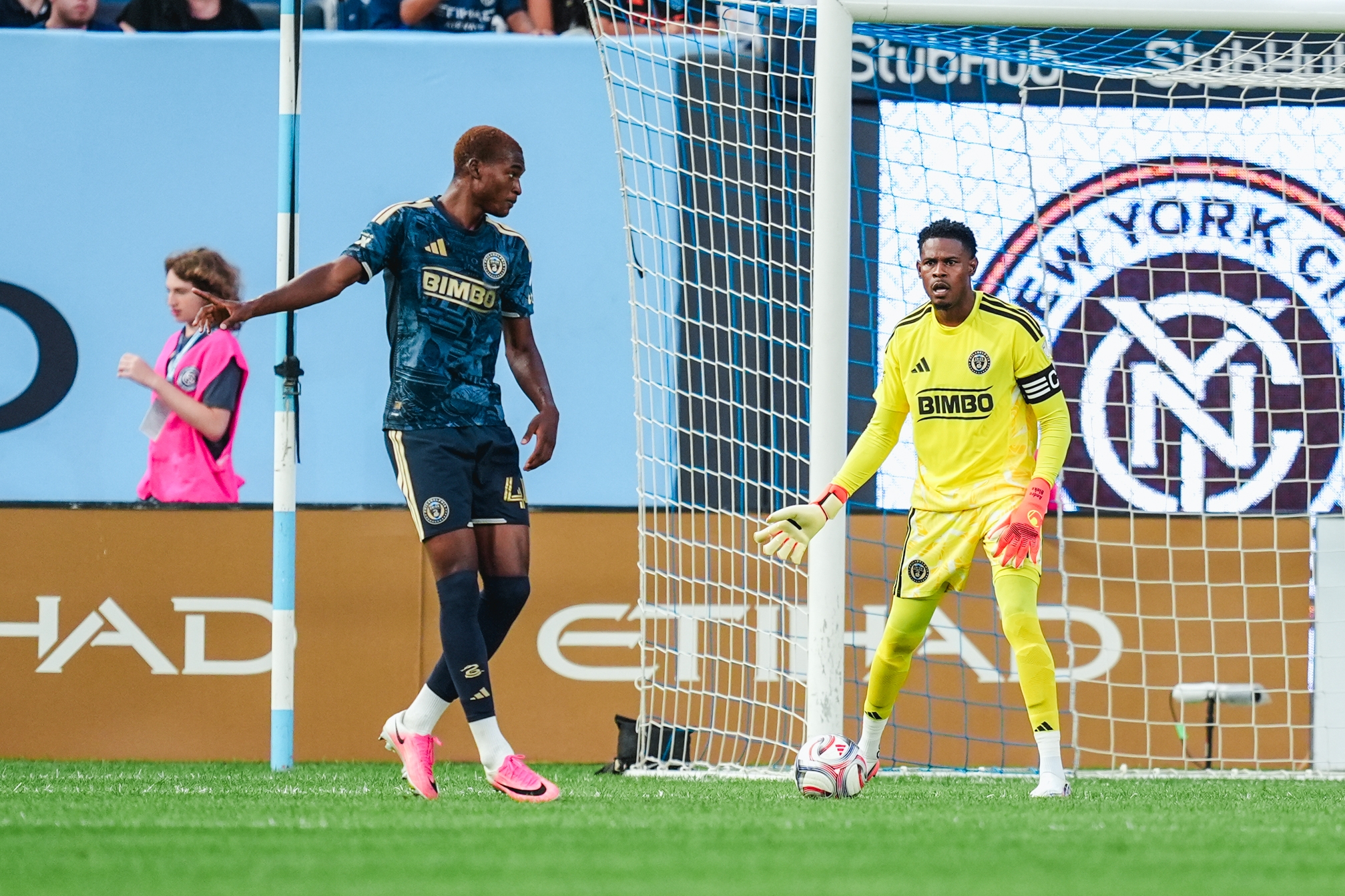
NEW YORK — The Union came from behind in stunning fashion to beat New York City FC, 3-2, at Yankee Stadium on Sunday night.
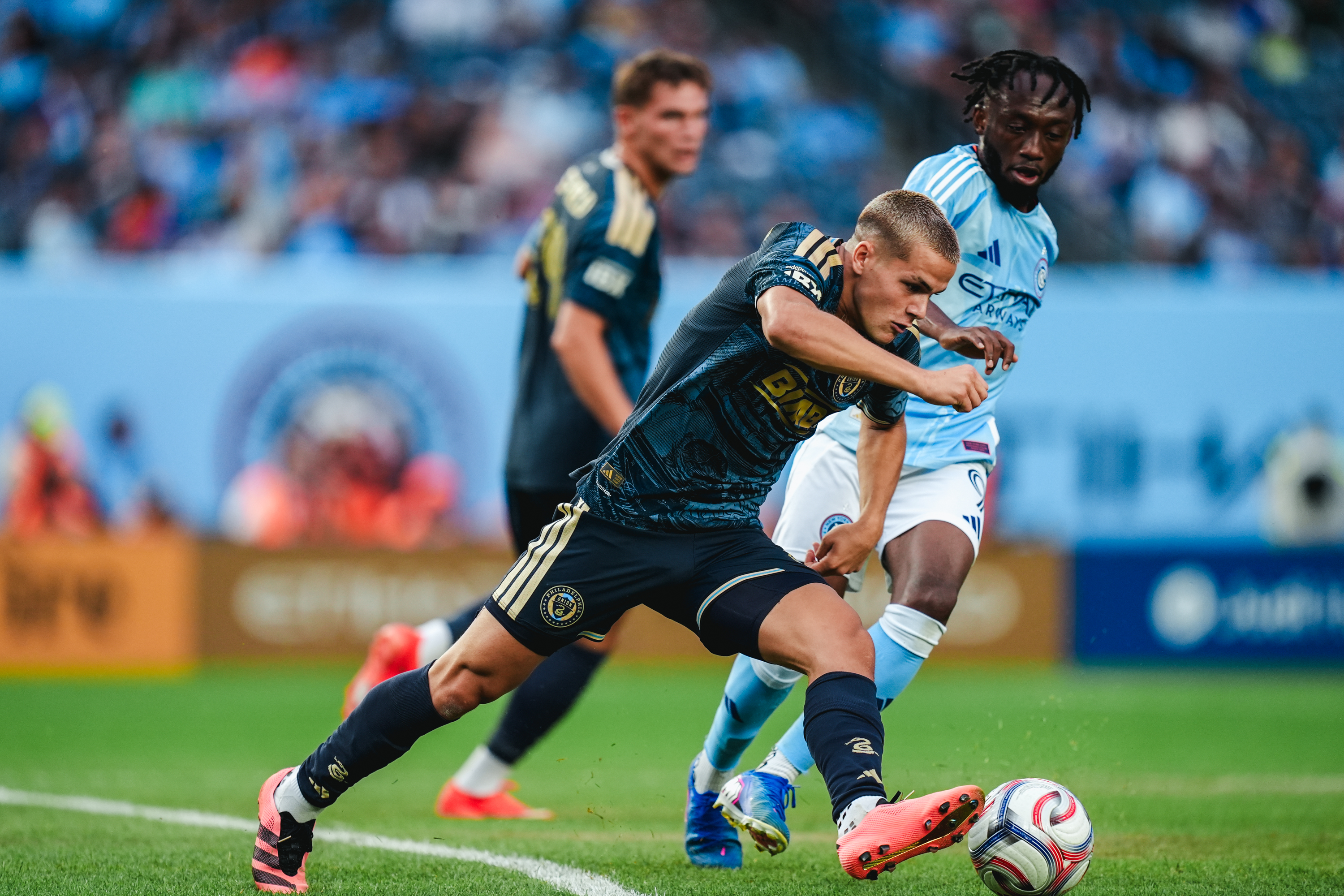
Cavan Sullivan and Bruno Damiani were the stars of the show, with Sullivan notching two assists and Damiani scoring the last two goals after Danley Jean Jacques struck the first.
Here are our takeaways on the wild game.
A foul first half
It’s always been hard enough for the Union at Yankee Stadium: they had just two wins in nine all-time trips to the Bronx entering this game. But they put themselves in a hole within three minutes, thanks to Neil Pierre’s takedown in the box of New York (and former Union) midfielder Andrés Perea.
Bénie Traoré, an Ivorian winger whom City signed for a club record $10.1 million this summer, duly stepped up and converted from the spot.
Stutter step, post and Bénie Traoré has his first MLS goal! ☝️
Money isn’t everything in MLS, but it’s a lot. That fee is more than twice what the Union have ever paid for a player, and it’s just $1.5 million than the club’s entire roster payroll — salaries, though not including transfer fees — this season.
It’s worth knowing that for as well as Traoré and fellow newcomer Luighi (on loan from Brazil’s Palmeiras with a $6 million purchase option) played, New York entered this game with nine players absent due to injury or suspension. They included key attackers Nicolás Fernández Mercau, Alonso Martínez, and Thiago Martins.
The Union, meanwhile, had their first-choice starting squad available after interim manager Ryan Richter’s lineup rotation in the Leagues Cup group finale. They were still overrun far too often, and referee Sergii Demianchuk had a quick whistle for their fouls.
Neil Pierre (left) talks with Andre Blake during the first half, when the Union fell behind 2-0.Philadelphia Union
In the 44th minute, that led to a yellow card for Jovan Lukić which earned a suspension from Wednesday’s home game vs. Lionel Messi’s Inter Miami (7:30 p.m., Apple TV) for card accumulation. And just seconds later, Indiana Vassilev was whistled for a handball in the box, with Demianchuk not interested in claims it hit his shoulder.
Luighi converted this one, with Andre Blake barely moving on his line for the second straight time.
Though the Union played well at times in between New York’s goals, the hole felt awfully big at halftime. Yet they dug out of it, with Cavan Sullivan leading the way.
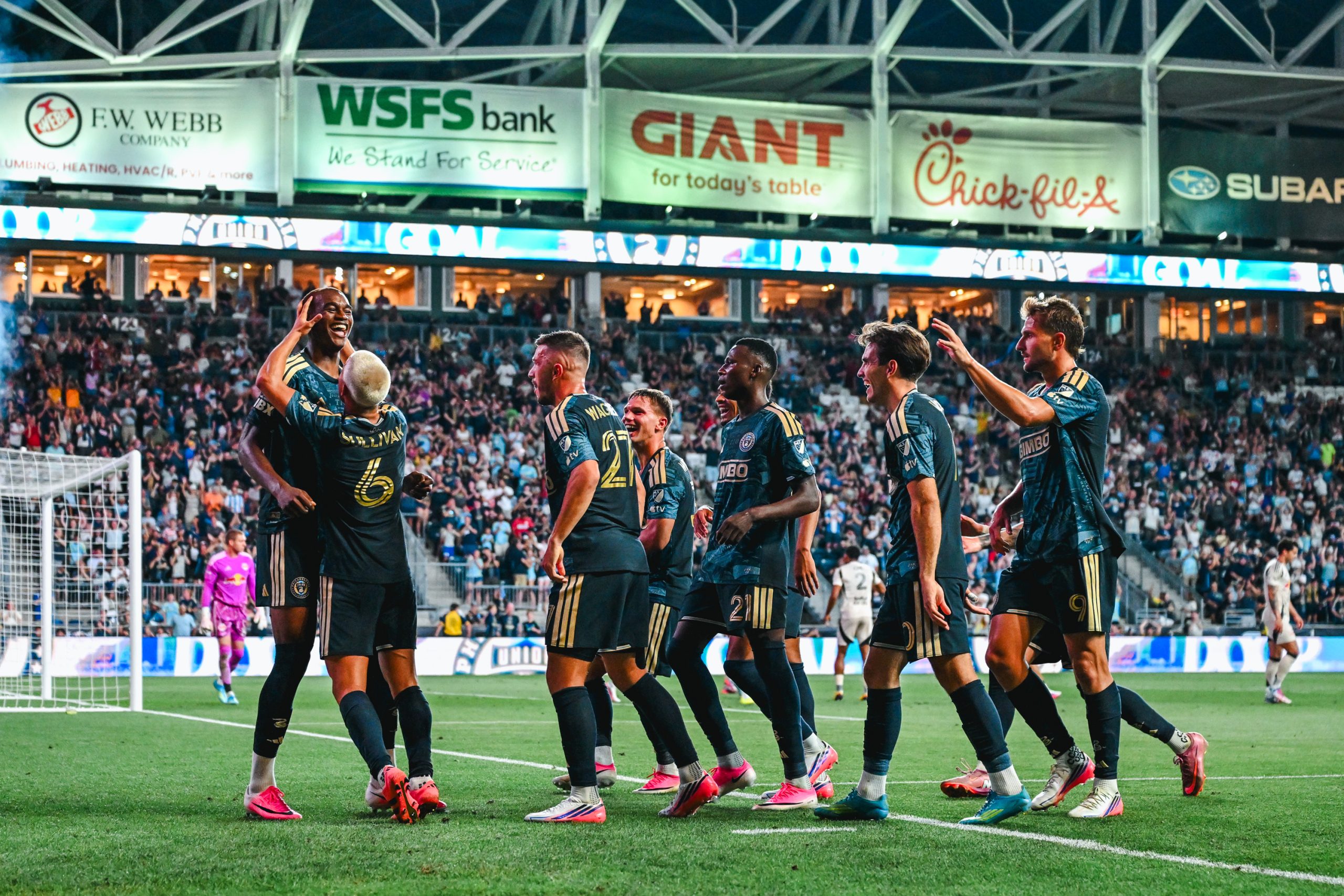
The first goal of the comeback came just three minutes into the frame. Kai Wagner served a free kick from the left wing, Sullivan flicked the ball on in the box, and Danley Jean Jacques controlled an awkward bounce before slotting past Matt Freese from close range.
Danley Jean Jacques comes through for Philadelphia to cut the New York City lead in half! 💪 pic.twitter.com/fwraurT9p0
Sullivan did even more on the equalizer. Milan Iloski set him free on the right wing after a drive up the middle, and Damiani was wide open to receive Sullivan’s pass.
No doubt some Union fans held their breath when Damiani got the ball, for how many easy chances he has missed this year. But he calmly stuck this one home.
The third goal was Quinn Sullivan’s creation. Five minutes after entering as a substitute, he dashed down the left wing, doing well to evade James Sands’ tackle along the way. Sullivan had a decent look to shoot, but he squared for Damiani instead and the striker struck a nice first-time hit.
This can’t fully excuse how badly the Union (5-10-4, 19 points) played in the first half, but it bears saying anyway. The grass covering the infield dirt was in poor shape, clearly worse than it has traditionally been for soccer games here.
There was also a big diagonal seam through the six-yard box along the first base line, and a shorter seam by the sideline nearer to home plate at that end.
Is it a coincidence that the first five goals of the night were all scored at the other end, left and center field in baseball games, where the grass was cleaner?
Fortunately, this won’t matter for too much longer. NYCFC (7-7-5, 26 points) will open its own soccer stadium next summer in Queens, across the street from the Mets’ Citi Field.
Etihad Park will have a capacity of 25,000 seats, and its construction cost is expected to total $780 million — all privately financed, though with a 49-year lease on the land instead of it being bought. That means the team won’t pay property taxes, which New York’s municipal budget office said is worth $516 million over the lease term.
With the new venue coming, Sunday’s game might have been the Union’s last at Yankee Stadium. Next year will start with a “sprint season,” in which each team in the Eastern Conference will play each other just once.
As the schedule isn’t out yet, we don’t know if the Union’s matchup with NYCFC will be at home or away; and if it’s away, whether it will be in the Bronx or at Citi Field, where the Pigeons have also played home games in recent years.
Cavan Sullivan leads the Union over to the away fans’ section to celebrate the win:
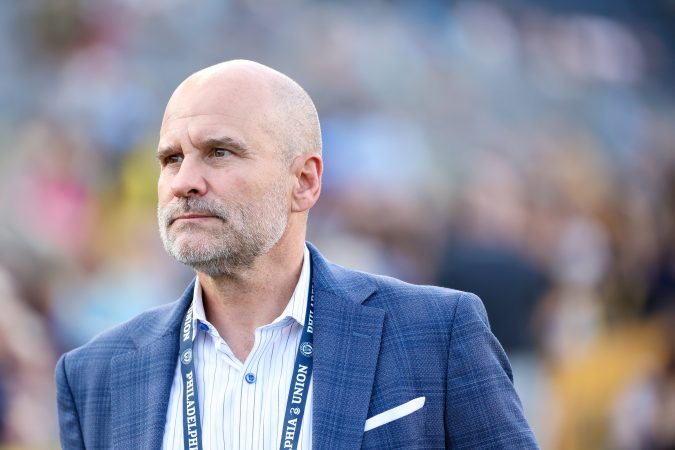
Union president Tim McDermott wants to clear a few things up.
McDermott, 51, who has hit multiple stops along the Philly professional sports highway as a former executive with both the Eagles and Sixers, is in his 11th year with the Union.
He’s been able to do a lot with what some might view as a little by resource standards when it comes to the first team — though he readily contends the money is there from ownership “should the right situation present itself.”
But in a town like Philadelphia, he’s well aware that success, when it comes to sports teams, is a year-over-year proposition. From an optics standpoint, after finishing off another successful season last year, winning their second Supporters’ Shield under a first-year head coach, depending on who you ask, the team has temporarily fallen off the precipice of relevancy — at the worst possible time.
With the eyes of the world on soccer courtesy of this summer’s FIFA World Cup, this was supposed to be the Union’s moment, showcasing itself as a powerhouse club in America’s domestic league situated in a city fortunate enough to be one of 16 that hosted FIFA’s grand event.
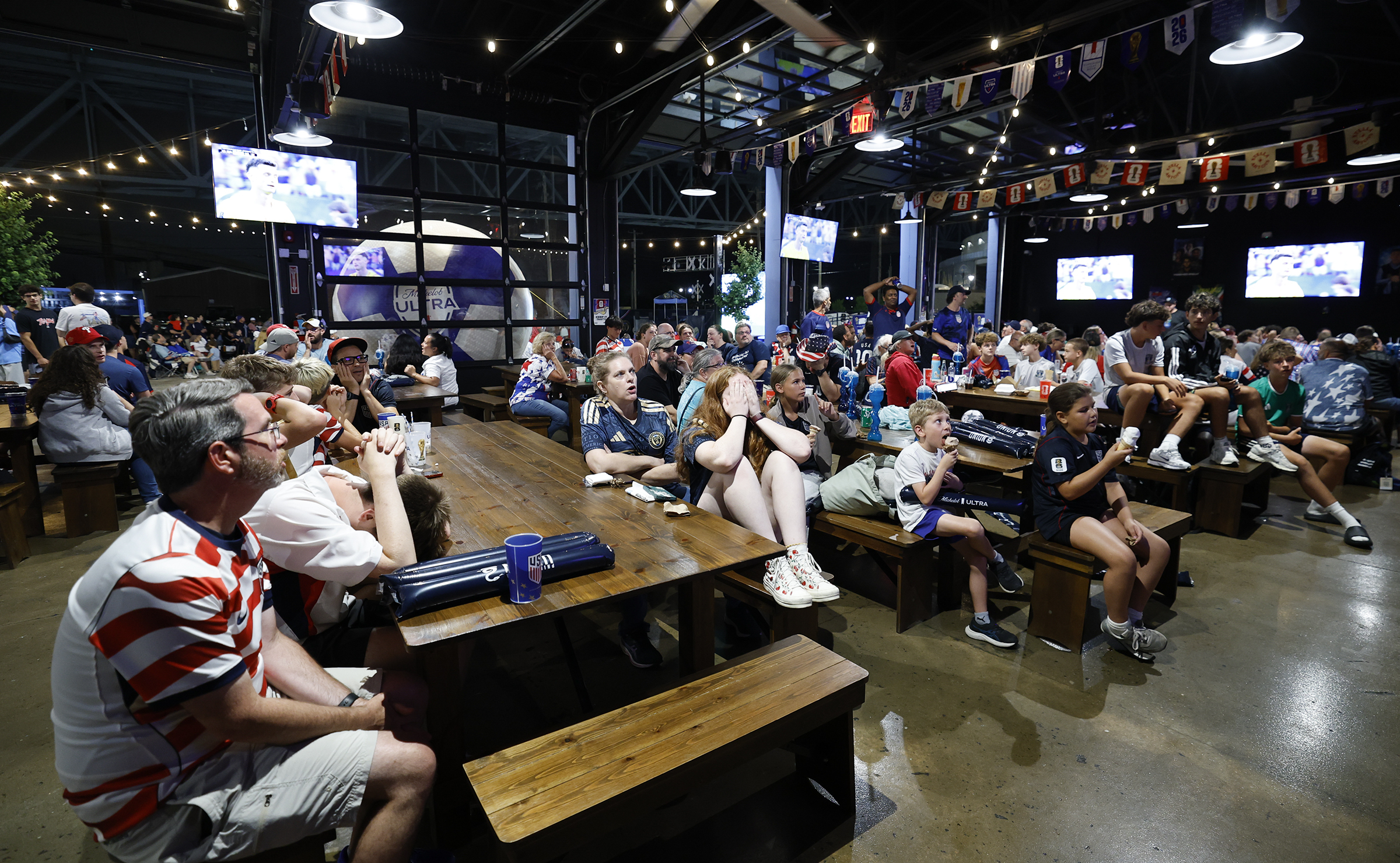
The Union hosted a series of jam-packed watch parties for the World Cup at Union Yards in Chester. However, it went into the World Cup break with just one win and was forced to take a hard look at where the club was going. Yong Kim / Staff Photographer
Instead, the Union limped into MLS’ World Cup break with issues both on and off the field, winning just one game and mired in the drama of its head coach losing a locker room and its sporting director undergoing league-mandated sensitivity training after allegations of misconduct were substantiated.
It forced a reset of almost everything. Ownership let both the coach and sporting director go, ushering in a fresh start in the player personnel department for a team that desperately needed it.
That lack of success has also ushered in reflection, as McDermott explained during a recent interview with The Inquirer. A reset that forced everyone from ownership on down to take a look at the club, not just in its current state, but visualize what the future looks like with the sport getting fresh eyes, courtesy of the World Cup.
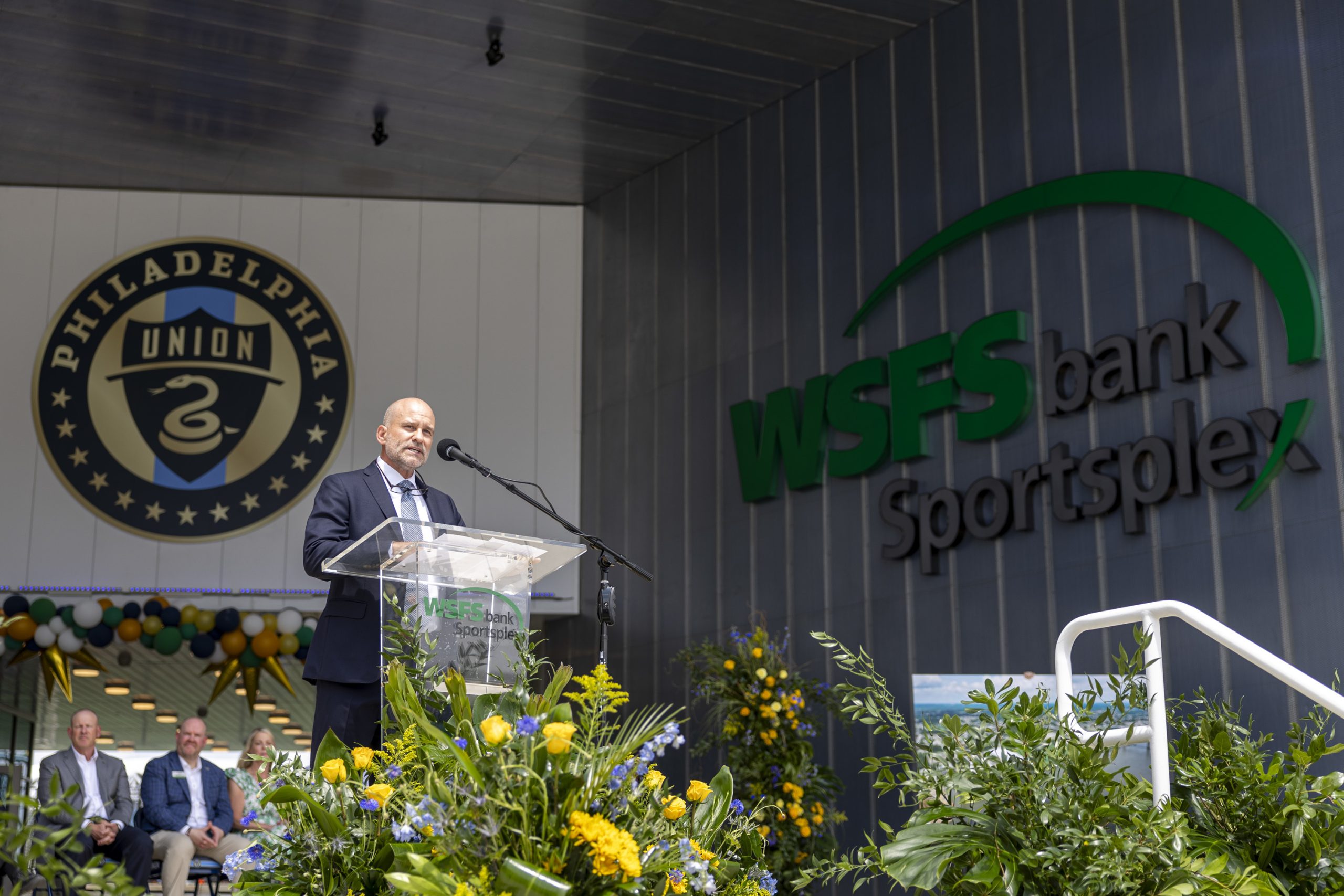
Tim McDermott spearheaded the launch of the WSFS Bank Sportsplex in Chester, a 170,000-square-foot indoor facility complete with a series of outdoor fields, which opened last July. Tyger Williams / Staff Photographer
It’s a wide-ranging analysis, and it comes in two tiers. On one hand, you have devout ticket-paying supporters of the club, who contend that the Union doesn’t spend enough, that they rely on youth over experienced, world-renowned talent to win games.
Some say that among a hodgepodge of players, where is the one that you can build a team around? They’ll point to teams like defending champions Inter Miami, whose budget and star power dwarfs that of the Union.
Or Los Angeles FC, or Orlando City, or Vancouver, or…
McDermott will stop you right there. While he admits that those teams have readily found success with bringing in European stars to build a roster around, their model is very different. McDermott told The Inquirer that an annual investment of $10 million is spent on developing within the Union’s academy system, fostering the growth in everything from its school, YSC Academy, to coaching staffs, to maintaining the sprawling WSFS SportsPlex, basecamp for the Union’s youth movement.
“If you look at the entirety of how we do things, it does rely heavily on youth development,” said McDermott. “We’ve been very good at that, and we’ve been recognized as being the best at that.
“If you look at our [first team] payroll, we’re toward the bottom, and that’s what I think people get upset about, and it’s a fair statement. But what I would say is there’s lots of ways to bring players in, right? You can go free agency, you can go to transfers, you can transfer in the market, or you can bring people in from the league, outside the league, etc. There’s lots of different ways to do it. And we’ve chosen many of those methods, but we’ve [also] chosen heavily in youth development.”
But that’s the other issue. Retention of those young players. Over the last few years, the Union has brokered many of those it groomed within its system for substantial transfer fees to and from other clubs.
Perhaps its biggest young star at the moment, midfielder Cavan Sullivan, is set to move to Manchester City upon turning 18, and U.S. men’s national team standouts like Brendan Aaronson, Mark McKenzie, and Matt Freese were all shipped elsewhere. All of this has prompted the Union to be labeled as a “selling club” by many who say that comes first and that the franchise and ownership are content with just getting into the postseason but not doing anything more to lift a trophy.
Union midfielder Cavan Sullivan, a rising American star who hailed from the Union’s youth academy, is set to head to Manchester City as part of a $5 million transfer fee to the English club. Yong Kim / Staff Photographer
“I totally agree. I don’t think they’re wrong; I don’t think they’re wrong at all, but I think that’s more of a big picture problem that’s out of our immediate control,” McDermott said. “I want this not just for the Philadelphia Union, but for the MLS to grow. There needs to be a point in time where the players that are coming through our youth academies are starting to say, ‘No, I don’t want to leave. I want to do it here in my hometown.
“I think it has to also be on the players themselves [who] are not always looking overseas. We’re developing players, and we’re transacting in MLS, but keeping them in the lab right here is what’s going to elevate MLS to a higher profile.”
‘Our goal is to win’
As McDermott tells it, new sporting director Jon Scheer has been “working the phones heavily.” He says the club knows it needs to bring in new players, and added that there’s a board with “bigger name players” that they’re “actively working” to bring in. However, he contends it has to be a player that fits the club’s current methodology, a high-pressing team that will attack opponents from the outside, and frustrate defenders with dizzying diagonal runs wherever space allows.
The World Cup has offered a great look into some potential names, but at the time of this report, it seemed like it was only a discussion.
“I’ll just tell you right now, we’ve fielded calls for potential players over the last two weeks,” said McDermott. “We have a weekly call with ownership, myself, and Jon Scheer, and these names come up. But the question is always what does that do for our team?
“On the other side, we field calls about our own players and we may or may not transact on a player because we want to make sure that our focus is winning, right? What’s the point of the transaction if it’s going to make us less competitive? Maybe now’s not the time to do it. But you’re always balancing that.
“If somebody makes you an offer, you don’t know if that offer will be there a year from now, right? So you’re always trying to balance that. Our focus is we must win. The goal is not just to develop players to sell them. Our goal is to win.”
Bringing back players like Union left back Kai Wagner (27) cements that the team is looking to align itself with players that want to play in Philadelphia. Isaiah Vazquez / For The Inquirer
A place in Philly
McDermott inherited a hurdle when he joined the Union in 2016. How do you maintain relevancy as Philadelphia’s Major League Soccer representative from 18 miles away in Chester?
He knows that while the team’s marketing efforts aim to keep a grip on the collective consciousness of a city, as it’s stood since its inception, the Union’s success of filling up a stadium each game day heavily relies on people getting in their vehicles and navigating the I-95 corridor. But there begs a question. How many more fans could the club have with a stadium or a facility in Philly proper, situated somewhere fans can access the team by SEPTA, their bike, or even walk?
When asked the question, McDermott noted that the Union isn’t unique in being the only MLS franchise with a stadium outside city limits, and he’s right. Several clubs represent cities with stadiums outside their city limits, but many have begun to realize that there’s a real need to inhabit the city that emblazons your crest.
One of the more recent examples is the Chicago Fire, which last year announced plans for a $750 million, 22,000-seat stadium to be constructed downtown, financed entirely by team ownership.
It’s the type of move that inherently brings interest, and aligns the team more with being a part of the city. McDermott recognizes that too, and didn’t disagree that there is a connection lost by way of the Union’s footprint in Chester. However, in the same breath, he acknowledges just how good Chester has been for the growth of the club.
For the last 16 years, the Union have enjoyed an immense amount of success at Subaru Park, which opened as PPL Park in 2010. Philadelphia Union
But, according to McDermott, that doesn’t mean that the Union isn’t “actively studying” how to replicate what Chicago did.
“We have a great relationship with Delaware County and with Chester; that’s been phenomenal, and they’re incredible supporters of ours,” McDermott said. “But I would say at a more macro level, if you look at all of the teams that have come into the MLS in the last decade, where are they located? A lot of them, not all, but a lot of them are in a downtown location. That fact is not lost on us. I think it’s fair to say we’re proactively studying is that something we need to look at in the future? And is our future in an environment that looks like that?”
The exterior of WSFS bank Sportsplex in Chester.Alejandro A. Alvarez / Staff Photographer
As it stands, the Union sits on infrastructure, to the tune of over $300 million, when you consider the cost to build the stadium in 2010 for a reported $122 million, the newly designed WSFS SportsPlex, which came in at a $100 million price tag just last year, in addition to its annex for the first team, offices, and school in the adjacent Wharf Building.
“We are very comfortable where we are right now,” McDermott said. “It’s been a fantastic relationship. I think we’ve done a lot in terms of the development that we’ve done in Chester. But thinking about what a move downtown or some other place [within the city] would look like, I think it’s fair to say we have to be aware of it, studying it and being thoughtful to see if our future would be brighter if we were in a situation like that. So, I can say that yes, we’re actively studying that process and what that would look like.”
‘Still have our homework to do’
Perhaps the portion of the sitdown with McDermott where his eyes lit up was the notion that growth and expansion of the club comes from getting people out to matches. It’s a fair point, considering the Union’s gameday experience has been repeatedly lauded as one of the best in MLS, winning a J.D. Power Award for best fan experience just a year after McDermott joined the club in 2017.
Amanda Young Curtis, the club’s vice president of communications, told the Inquirer that fans who attend just three matches are significantly more likely to lock in as season ticket holders.
She said that it comes down to a few facets beyond just increasing brand awareness, but it’s everything from capturing new fan data to wooing potential first-time attendees with discounted tickets to, and perhaps most importantly, “converting attendees into repeat visitors.”
The Sons of Ben have been a devout supporters group for the club. To McDermott, a goal of ushering in more fans to the Union brand has to be the ultimate goal. Isaiah Vazquez / For The Inquirer
McDermott agreed, and added:
“We need to make sure that not only do they come and have a good time, but we’re actively always thinking about how do we get them back two more times. The likelihood of locking them in jumps pretty significantly. It’s why we’ve initiated this whole concept around trial and retention, and I believe that the momentum from the World Cup offers a major strategic opportunity for us to do that.”
But an area where McDermott says the Union still has their work cut out for them is cultivating stronger partnerships with youth clubs from an awareness standpoint so young players and their parents gravitate to the Union as supporters.
And for the youth coaches clutching pearls thinking that the Union is trying to woo a player away from their club, McDermott says it’s not about that. In fact, this notion transcends recruiting. Kind of…
“I think there’s two parts,” McDermott said. “There is the fan development part, and there’s the kind of talent identification part, and they somewhat link together. I’ll go back again to when my kids were 6, 7, 8 years old, and I was on the sideline of my daughter’s games. I looked down the sideline, and I saw all these parents wearing Eagles green.
Union president Tim McDermott contends that while the team has celebrated an immense amount of success, more is yet to come through the planning being done behind the scenes. Isaiah Vazquez / For The Inquirer
“I know we’ll be successful when I look down the sideline at a kid’s game and they are wearing blue and gold. I had many different instances like that where I felt like parents and the kids that were in the youth soccer ecosystem weren’t necessarily matriculating to being a Philadelphia Union fan, and we still have our homework to do to change that.”
McDermott knows the Union has work to do across the board from a grassroots perspective on up. In the immediate, righting the ship in an forgiving league like MLS is the goal, and the club is off to a strong start coming out of the World Cup break, winning two consecutive matches for the first time this season following wins against Red Bull New York and an impressive Saturday win over Seattle, two teams that if the season ended today would be playoff-bound.
It’s a great start in the eyes of a guy like McDermott, who contends his approach has always been to win. And listening to him speak now, it appears that talks are happening between ownership and team leadership about doing so — at all costs.
“As president, my job is solely focused on how can we win, across the board,” McDermott said. “I want to win; everyone in this organization wants that, but the culture is always and has to be first and foremost. You gotta have guys that want to play for each other, that believe in the system, that care for each other, that love one another and that are good quality character people.
“I think on the whole, we’ve really been doing a great job with that over the years. I’m not just talking about where we’re at today, but I’m talking about the last six, seven, eight years; we’ve been building towards having success, and we’ve had success. We’ve won a lot over the last five, six years, so our design works. I think [this reset] provides a real look at what we need to do to get back to that, and in the conversations we’re collectively having daily, I have no doubt that we’ll get there. None.”
Purchase the front page reprint of The Philadelphia Inquirer from Saturday, July 25, 2026, featuring LeBron James following the news that he was joining the 76ers.
SEATTLE — The hype around this World Cup didn’t just start when the last one ended four years ago. It took off as soon as the U.S. was picked as host, on the eve of the 2018 edition for which they failed to qualify.
By the time this summer arrived, there was enough evidence to believe these players could make the history they dreamed of, wanting to do things no U.S. men’s team had done before on soccer’s biggest stage.
So a bar was set for them. The program had just one knockout game win in its history. Winning two would mean a quarterfinal berth. It also presumably would mean toppling a giant somewhere along the way.
Once the draw was made last fall, the name of that giant was Belgium, the nation that sent the U.S. home in 2014. That made an easy measuring stick for this generation. If they were that much better, they’d do what their predecessors hadn’t.
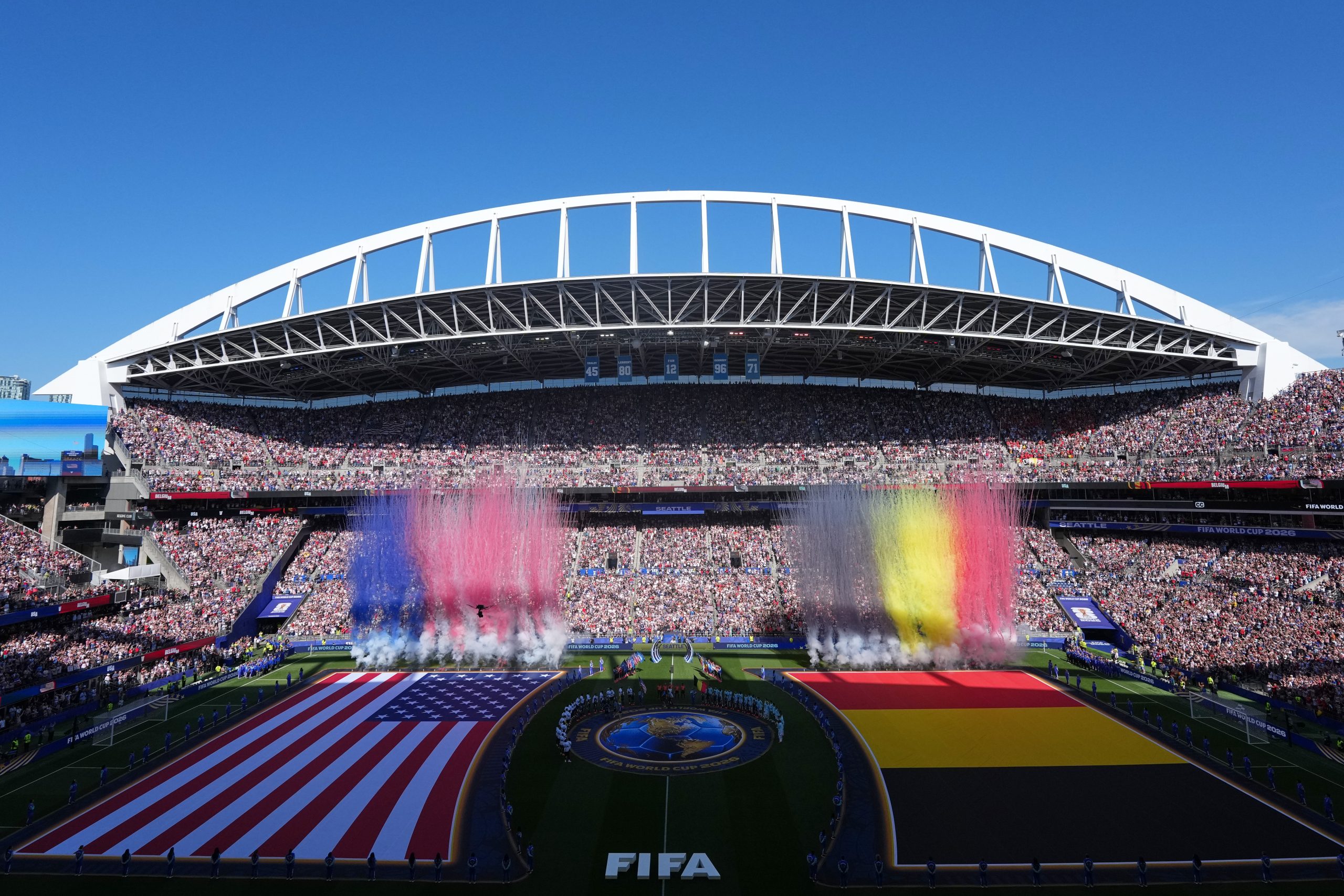
The scene just after the national anthems in Seattle, when the packed crowd of U.S. fans hoped for a historic win.Nick Didlick
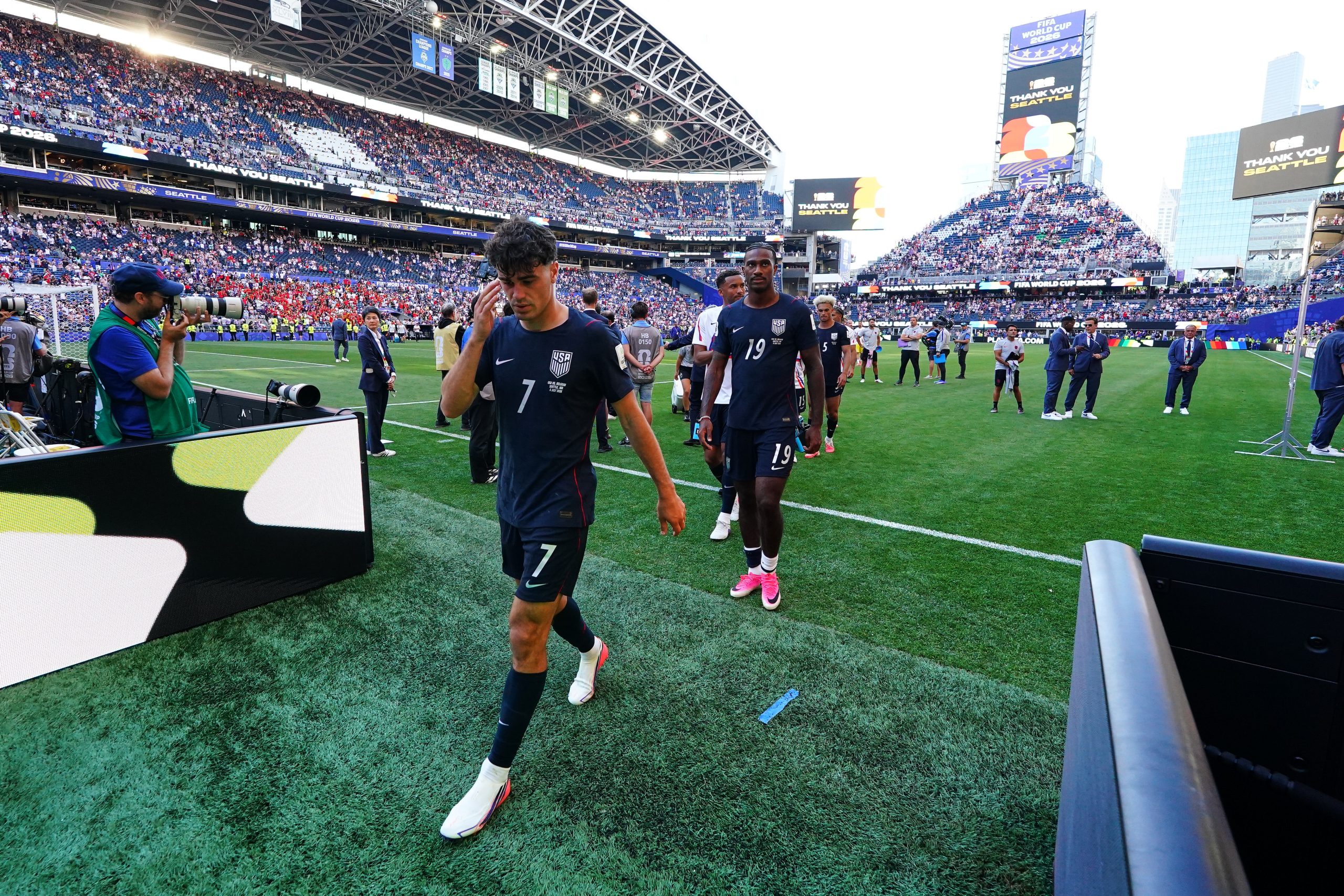
For this game turned out to not be just about Balogun on the American side. The whole squad blew it on the biggest stage, and they knew it.
“This moment hurts more, stings more, than probably any other moment in my life,” Wayne-born goalkeeper Matt Freese said after a horror game, especially on Belgium’s third goal that blew the game open, when he was stripped of the ball after straying out of his 18-yard box.
“Yes, it stings,” midfielder Tyler Adams said. “This was a moment to have the opportunity to advance and really try and do something special, and we fell short.”
Asked why the team was so flat, he answered: “It’s a great question. I wish I had the answer right now. I don’t know.”
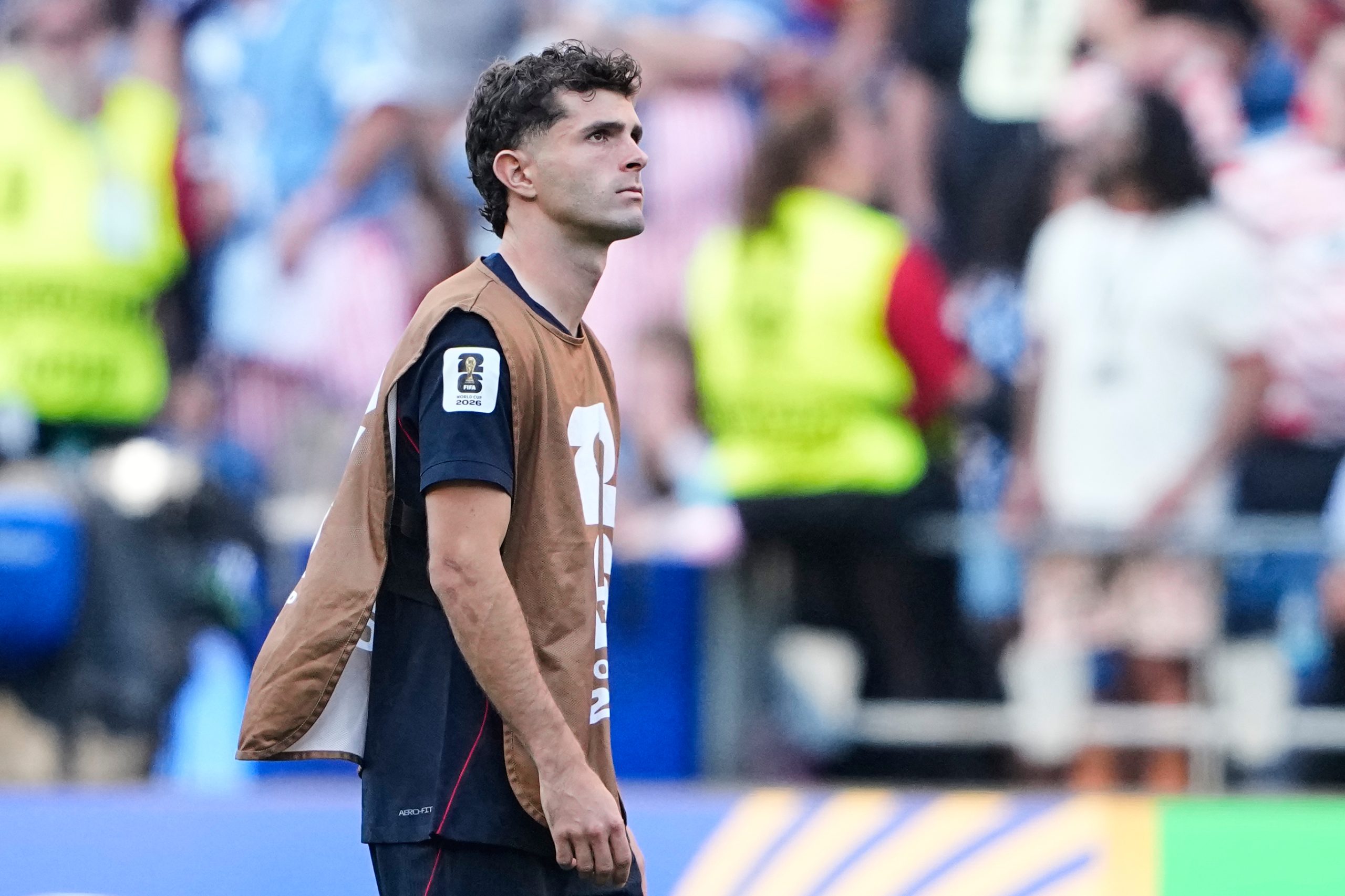
Christian Pulisic tried to lift the mood, but he took some tough questions after leaving a game injured for the second time in this tournament. Along with that, the team’s most important attacker didn’t play the entirety of any game, though at least in the Bosnia win he played 88 minutes.
Christian Pulisic played 224 minutes across four games in this World Cup.Lindsey Wasson
“I didn’t quite have the moments I was hoping to, to try to help us to really push and get over this next step of beating a really good team,” he said. “So I’m disappointed with myself, of course, but I’m going to try to stay positive. I did a lot of good things, and the team did as well.”
Gio Reyna also was underwhelming. After earning enough of Pochettino’s affection to make the World Cup team, he played just 131 minutes over the five games, took two shots, created one chance, and scored a goal that was beautiful, but in a game that already was won.
“If we lose to Bosnia, it’s obviously a big disappointment, and then if we win today, it’s probably a very big achievement for the group,” he said. “So it felt like we kind of just almost did what was expected. … It’s hard to say, I guess, what’s needed to make the next steps to really push through.”
One thing would be the biggest stars delivering in the biggest moments. That has happened for Kylian Mbappé’s France, Lionel Messi’s Argentina, Jude Bellingham’s England, and Erling Haaland’s Norway.
But it did not happen for the United States.
Gio Reyna (left) walks off the field after the loss to Belgium.Ted S. Warren
Will it be worth splashing cash on another big name? Or, since he wasn’t clearly better in the biggest moments than his American predecessors, should there be a serious conversation about whether it’s necessary?
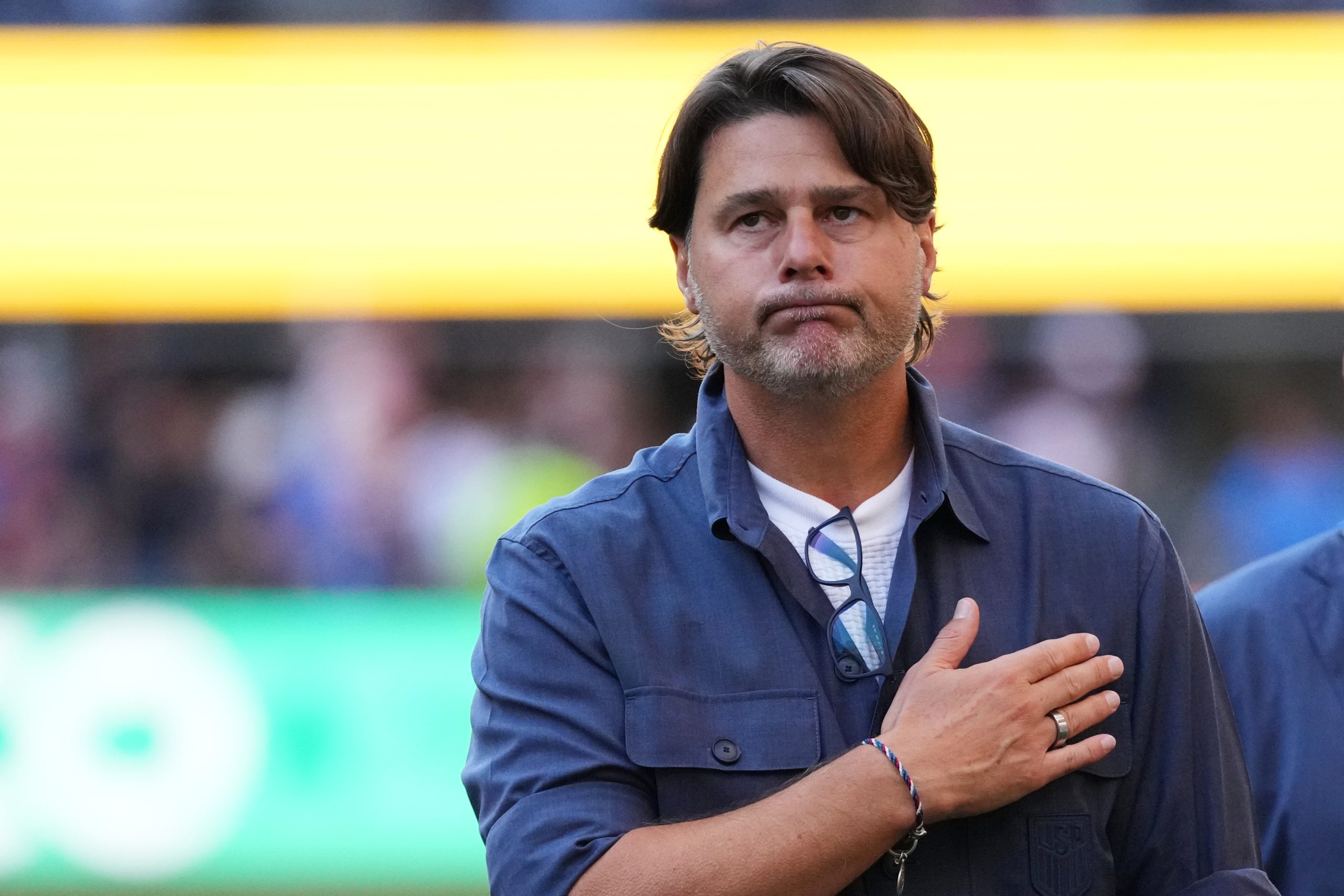
Mauricio Pochettino’s gesture of thanks to U.S. fans after the final whistle.Ted S. Warren
Former Los Angeles FC manager (and longtime stalwart U.S. player) Steve Cherundolo also is on the list. New Jersey native Pellegrino Matarazzo, who has made his coaching name at European clubs, is too, though he might want more time overseas before coming home. Former Union coach Jim Curtin would be on the list if he hadn’t just been hired by Austin FC.
But will the donors lean on U.S. Soccer to go for another famous name?
One of those donors, Scott Goodwin, has quite a few friends in the soccer world — and some at the White House, too: The New York Times reported that he called them to complain about Balogun’s red card.
B.J. Callaghan talking with the media when Nashville SC visited the Union earlier this year.Jonathan Tannenwald / Staff
Two years ago, Goodwin called his soccer friends to complain about the U.S. team’s flop at the Copa América. They included two former U.S. players who remain well-known in soccer circles, MLS executive Alecko Eskandarian and broadcaster-turned-investor Kyle Martino.
Goodwin was so angry at the U.S. team’s performance that he said, as he recalled to the New York Post last month: “This is a chance to get an amazing coach.”
Then, as The Athletic put it just before the World Cup started, “To Goodwin, there were three names that fit the bill: Klopp, Pochettino and Manchester City’s Pep Guardiola.”
None of them were American. None had ever coached in the United States. Was there an implicit view there that no American could be good enough for the job?
Good questions for U.S. Soccer CEO JT Batson and chief operating officer Dan Helfrich: Do they think the difference between a big-name foreigner and a qualified American is worth another $6 million bet? And how much sway will the donors hold this time?
U.S. Soccer declined to make leadership available to the media on Tuesday. A spokesperson told The Inquirer that there might be an availability in the coming days.
And what about a second term for Pochettino, who’s now out of contract? The players grew attached to him, but that happens with almost any manager. He has talked with U.S. Soccer about another term, but there also have been plenty of hints that he’d like to go back to Europe.
“I think now, because we were talking with the federation, it’s about to rest a little bit, to think, to have conversation, and then see what the decision is from the federation and from us,” Pochettino said Monday night. “I think we’ve built a very good relationship, but now is not a moment to talk about that. … For sure, in the next weeks, we can start to talk — if the federation wants to talk.”
Late Tuesday morning, U.S. Soccer issued a statement about its side of those talks.
“We had positive conversations with Mauricio before the World Cup about the future,” the federation said. “We agreed we would continue those conversations following a chance to rest and reflect post-World Cup.”
It hinted at the future, but only barely.
“We have a great deal of respect and gratitude for Mauricio, his staff and everyone part of the program,” it said. “We have shared excitement about our potential and also shared clarity about the amount of work at all levels still required to achieve our ambition.”
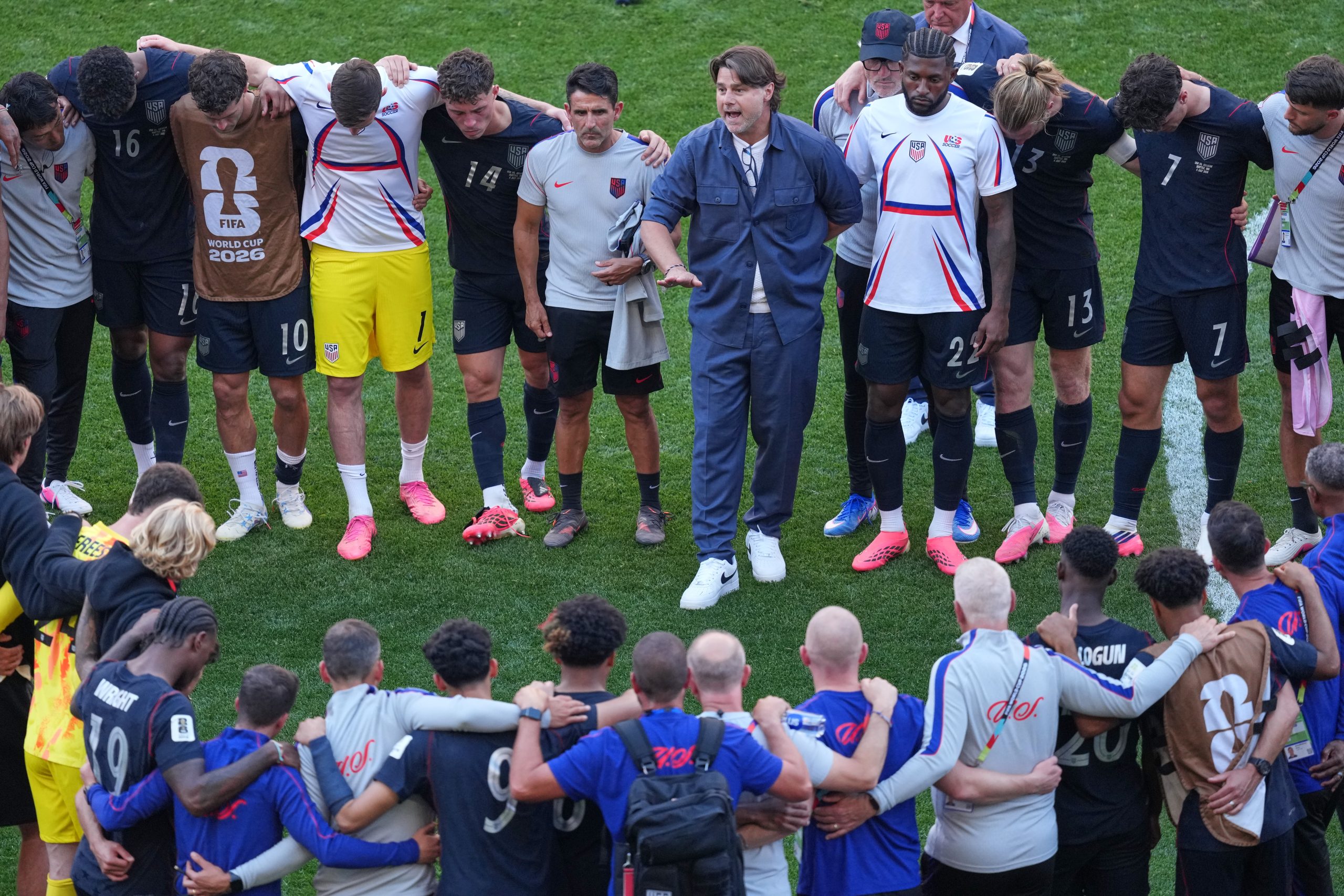
Mauricio Pochettino (center) addressing players and staff after the loss.Nick Didlick
SANTA CLARA, Calif. — The U.S. men’s soccer team finally ended its 24-year wait to win a World Cup knockout game, though it came at a cost.
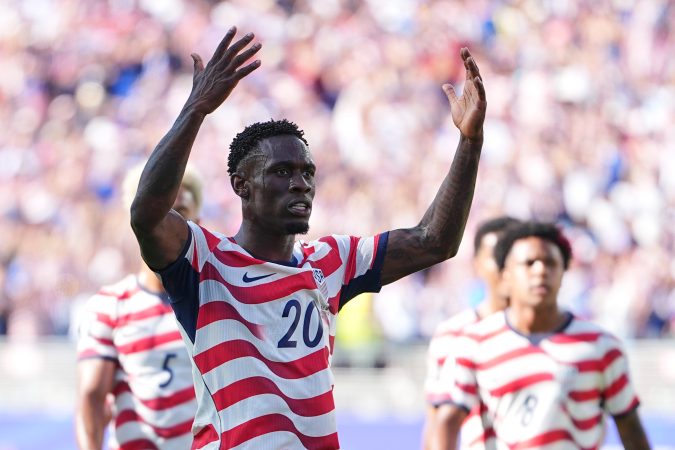
Wednesday’s 2-0 win over Bosnia and Herzegovina featured goals by Folarin Balogun and Malik Tillman, but also a red card to Balogun that means he’ll miss the round of 16 matchup against Belgium in Seattle on Monday (8 p.m., Fox29, Telemundo 62).
When the 11th minute passed, the U.S. had gone the longest it had in any game of this World Cup without scoring a goal. That was a low bar to clear in the big picture, but there also definitely were nerves on both sides of the field. Matt Freese had to make two big stops early, but it took until the 18th minute for the Americans to really test Bosnian goalkeeper Nikola Vasilj.
Balogun was the first player to find the back of the net, in the 31st minute, and not long after he’d gone down inside Bosnia’s 18-yard box, though without enough contact to earn a penalty kick. He was then frustrated a second time by the offside flag, and that call was also correct.
The breakthrough finally came in the 45th minute. Tim Ream intercepted a Vasilj clearance and knocked the ball forward to Tyler Adams, who made a backheel flick into space. The ball rolled to Tillman, who turned and played the ball forward toward Balogun. He had some work to do, but a misplay by Bosnian centerback Tarik Muharemović gave the striker room to collect the ball and slot it home.
As the crowd of 68,827 roared, Balogun celebrated with LeBron James’ “Silencer” dance move. The basketball star — quite a soccer fan himself — returned the compliment on social media right away.
LFG!!!!!! THE 🤫 HAS 🛬 at the World Cup! Helluva goal there Young 🤴🏾! 🫡. GO 🇺🇸 https://t.co/8wb2t2F6oq
Balogun then came inches from doubling the lead in first-half stoppage time, at the end of a lovely teamwide sequence. Alas, his close-range flick hit the crossbar and flew out of bounds.
The U.S. held a 5-1 advantage in shots halftime, a sign of how they’d come into the game but also how many nerves there were.
The game’s first substitutions came in the 51st minute, in a triple-move from Bosnia manager Sergej Barbarez, one of which was star striker Edin Džeko, after pulling up lame. The other moves were tactical, including the much-anticipated arrival of winger Esmir Bajraktarević — a 21-year-old winger who grew up in Wisconsin to parents who fled the Bosnian war of the 1990s.
Balogun’s ejection came in the 64th, after the video review officials watched him rake the studs of his right cleat down the back of Muharemović’s right calf in a tussle. It looked like a 50/50 challenge at first, but the replays clearly showed a cardinal sin for a soccer player — even if he didn’t intend it. By the time Raphael Claus left the monitor, it wasn’t too surprising that he pulled the red card out.
The ejection meant Balogun would miss not just the rest of this game, but will miss the U.S.’s round-of-16 showdown with the Belgians.
Now, it was about playing defense, and every U.S. player did his part. Even Tillman, usually much more of an attacking player, got stuck into a loose ball in the 77th.
Soon after that, the U.S. broke free on a counterattack and Christian Pulisic forced the ball in, but he was clearly offside when Tillman passed to him.
The biggest break finally came in the 82nd. Stjepan Radeljić held back Sergiño Dest, Claus booked the Bosnian defender, and the U.S. had a free kick on the edge of the 18. Tillman spun it right past Bosnia’s defense and into the net, unleashing a huge celebration from U.S. players and fans alike.
MALIK TILLMAN FREE KICK GOLAZO AND THE @USMNT IS UP 2-0 🇺🇸
U.S. manager Mauricio Pochettino finally made his first substitutions in the 88th minute, sending in Ricardo Pepi and Sebastian Berhalter for Pulisic and Dest. In stoppage time, Gio Reyna replaced Weston McKennie.
There were still plenty of nerves from there, including 10 minutes of stoppage time. But the Americans held on, with the crowd cheering every save, block, and sequence of passes — and exhaling as two Bosnian shots in the final moments went inches wide of Freese’s net.
Then, at the final whistle, there was the biggest unleashing of all. Thirty-two years after the U.S. men played the first World Cup knockout game of their modern era in the Bay Area, they finally delivered the sight that everyone here had waited so long for.
This generation of American players finally has its biggest World Cup win.
IRVINE, Calif. — It was the day after Andrew Rick played in the one MLS game he had featured in for the Union this year, and it had not gone well. The 20-year-old was in net for a 4-3 loss at Orlando City, with the decisive goal landing in the 90th minute after the Union had rallied from 3-1 down to tie the score.
Rick was still in a bad mood when he got home, so he decided to distract himself by playing video games.
Then the phone rang.
“It wasn’t a saved contact, and I just saw that it was U.S. Soccer,” he said.
He picked up, of course, and found veteran U.S. men’s national team staffer Sam Zapatka on the line. The program wanted to have some extra goalkeepers on hand for practices, and wanted Rick to be one of them.
Andrew Rick (second from left) watching a shot come his way in the Union’s Concacaf Champions Cup home game against Mexico’s Club América in March.Elizabeth Robertson / Staff Photographer
“It was not a great day for me up until that call,” Rick said. “He let me know the news, and I changed my mood immediately, to say the least.”
Two weeks later, he set off for the journey of — well, maybe not a lifetime, since the point is he might play in a World Cup some day. But certainly his lifetime to date.
“It’s a dream,” Rick said. “I wouldn’t think that at this stage of my career, I would be in the place that I am in now, and to have the ability to train with all these [players] — and a lot of them I’ve watched play when I was pretty young — to now get this experience to train with them and be a part of the group, it’s unbelievable to say the least.”
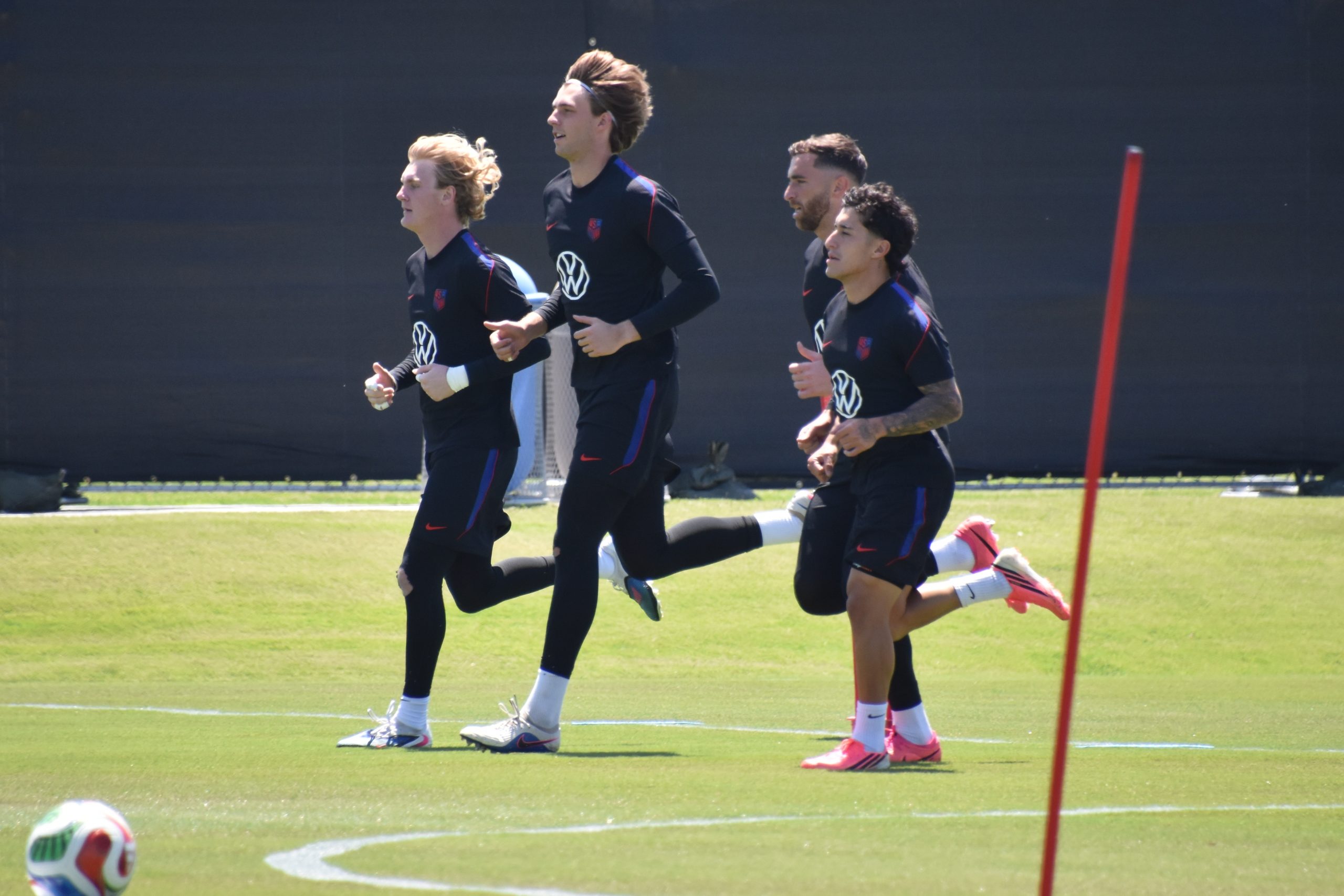
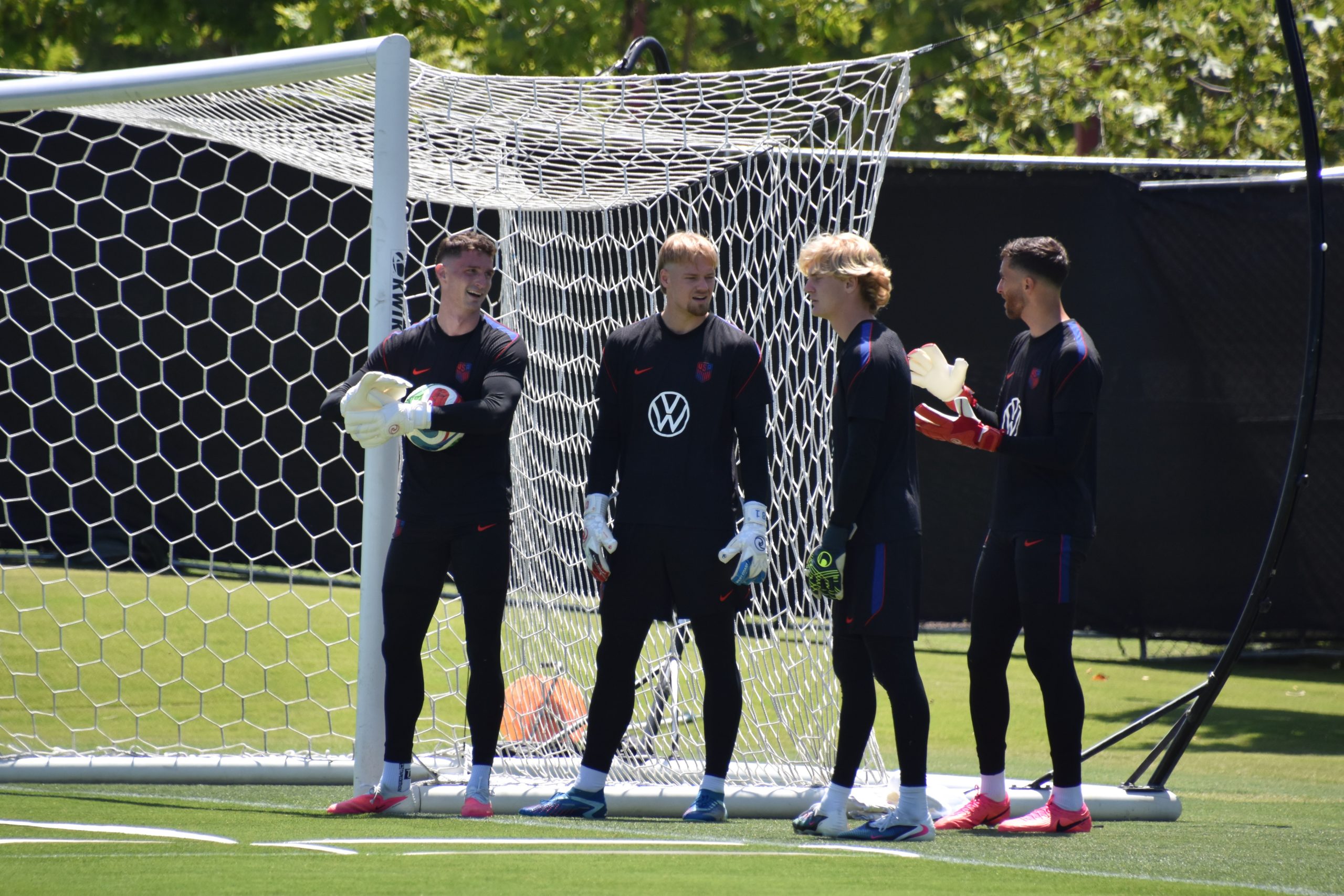
Rick is one of three goalkeeper prospects, all the same age, who have been with the U.S. team this summer. At first, it was him and Diego Kochen of Spanish superpower FC Barcelona, a highly-touted player who has been to a few senior camps already. Kochen left in the first week of the tournament, amid news of a potential loan move for next season, and Julian Eyestone of English Premier League club Brentford came in.
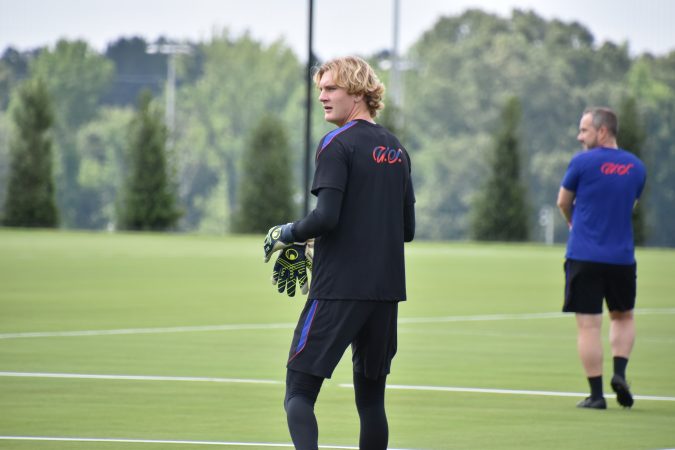
Andrew Rick (left), Julian Eyestone (second from left), and other players jogging at a recent U.S. practice.Jonathan Tannenwald
So not only has Rick gotten to hang with the stars, but he’s the only one of the trio who will have been there the whole time.
New and old friends
“Me and Julian are super-close,” he said, noting they were roommates on a U.S. under-20 squad that went to Argentina in March. He had not met Kochen until now, but they got along well too.
“We have a lot in common just from age alone, and there’s not a lot of other guys here that are our age,” Rick said. “So just being able to be around those guys and have someone closer to my age is nice, just because we can talk a bit more and fit in together. And Diego, he’s been in this environment before, so he also kind of helped me fit in with the other guys and reach out and talk to them a bit.”
Among the senior players, none means more to Rick than Matt Freese. They’ve known each other for around eight years, and Rick watched Freese on a similar journey to his: from the Union’s youth academy to becoming Andre Blake’s backup on the first team.
Andrew Rick (second from right) with the three U.S. goalkeepers on the World Cup team: from left, Matt Freese, Chris Brady, and Matt Turner.Jonathan Tannenwald
“Freese has been there for my first Union II training, my first [Union] first team training, and my first men’s national team training,” Rick said. “I’ve known of him for probably, I don’t know, since I’ve been a Union fan. When he was joining was kind of when I started to really get into it, and when I was joining the academy … And obviously he’s a great role model, amazing person.”
Freese returned the favor, joking that Rick “might have been, like, two when I met him.” But the praise that ensued was sincere.
“He’s doing a great job,” Freese said. “I think for [all of] them, it’s such a unique experience to be able to be within the group in an environment like this, training every day but also getting to know us off the field. Certainly on the field as well, and being tested and seeing what the future may hold for them.”
Manager Mauricio Pochettino has been paying attention too. There’s certainly a practical side to having extra bodies on hand, but Pochettino is also happy to do something for the bigger picture.
Mauricio Pochettino (right) with goalkeeper coach Toni Jiménez.Jonathan Tannenwald
“I think, always, we’re thinking to try to help develop young players, even if we don’t know if we’re going to be here or not in the future,” Pochettino said, referring to his contract expiring after the World Cup. “But I think we need to work like we are going to be forever here, on a long-term process. That is why one thing is to get the result today, and provide everything to the federation and the team [for] the possibility to perform now, today or yesterday; but at the same time, to help, in parallel, the evolution and development of the young kids that are going to be the important players for the future of this country.”
Rick confessed to being an extra level of thrilled because he’s a fan of English club Tottenham Hotspur, perhaps the best-known former home for Pochettino.
“My first day he welcomed me. We just a quick conversation about just where I’m at and all that,” Rick said. “I was a huge ‘Poch’ fan as a kid, now I get to to be coached by him. So it’s an honor.”
A day in the life
On most practice days — and there have been more than usual, with a week between games so far in the first 48-team World Cup — Rick has been amid the first team’s action. Other days, the prospects work separately with assistant goalkeeper coach Jack Robinson.
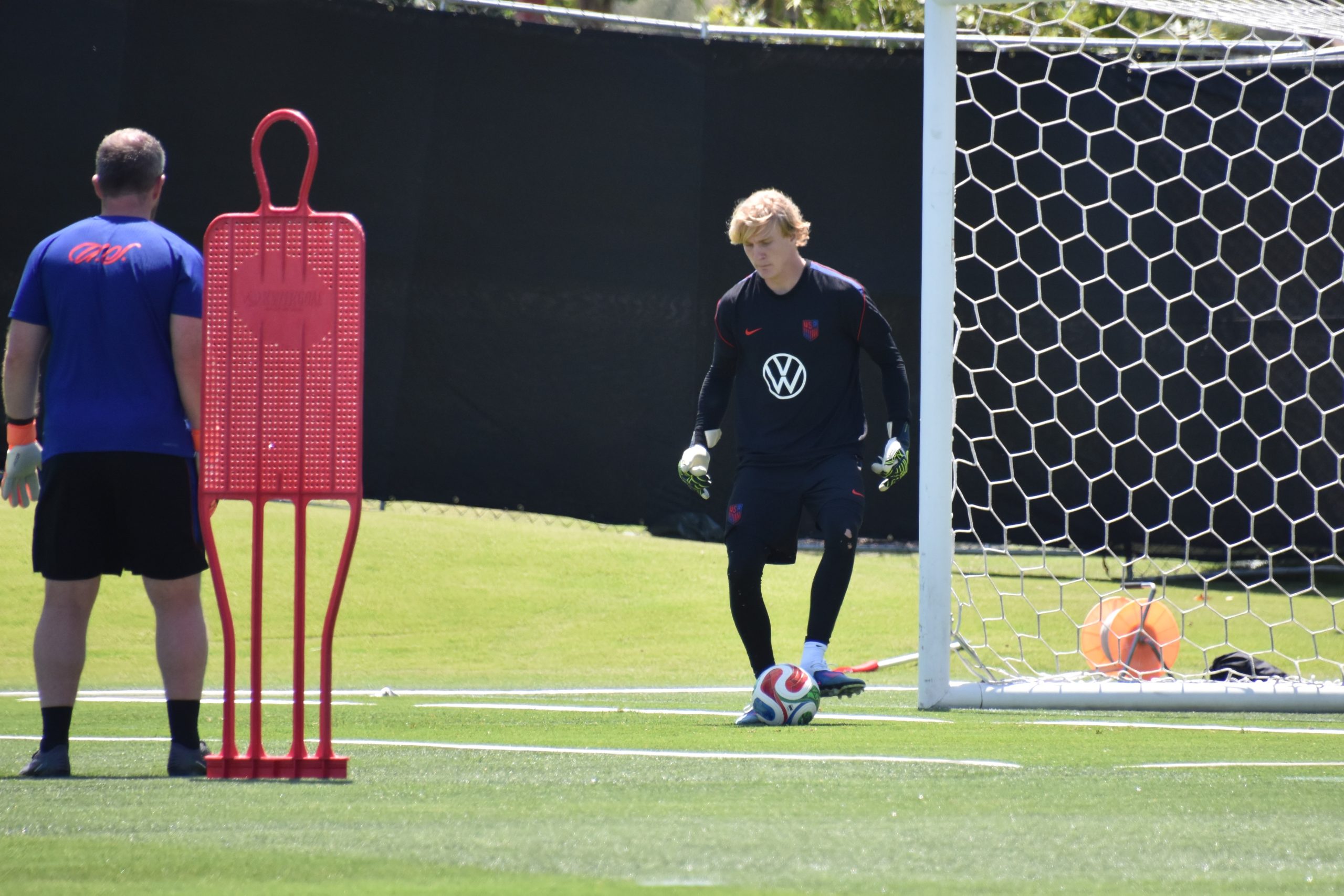
Andrew Rick getting some work in with the ball at his feet.Jonathan Tannenwald
“I think this World Cup’s a bit different to the last, at least talking to some of the other guys, and just seeing it in general,” he said. “But I think the main thing is just being exposed to the environment. If I ever want to get back to this level — and hopefully when I do get back to this level — just knowing what it’s like, and knowing some of these guys and building that relationship with them now while I’m here, is going to be so important down the road for me.”
When game day arrives, Rick and Eyestone get to spend most of it with the first team.
“We’re basically with the team until they walk out, and then we go into these seats that are right behind the bench,” Rick said. “So we’ll walk in with the team, we’ll watch warm-ups from the pitch. We’ll be in there for the team talk before the game, and then once they walk out, we’ll go to a separate section that’s right behind the bench and watch from there.”
At halftime, it’s back to the locker room, then back to the stands, then on to the field to join what have so far been celebrations and applause for the big crowds.
He’s well aware that his up-close perch would cost a fan thousands of dollars.
“The ticket prices are crazy, but the good thing is it’s not affecting attendance,” Rick said. “I’m not going to lie, I was a little surprised — I was expecting a lot of people to be scared of $3,000 tickets for one [person], but it seems thankfully I’m wrong. Because, I mean, Seattle was amazing. Best experience I’ve ever had with a crowd, there.”
He has talked with colleagues back in Chester, naming goalkeeper coach Phil Wheddon (who worked with U.S. national teams in the past), Nathan Harriel, and fellow goalkeeper George Marks. Rick also was well aware that he’ll come home to a new manager, as Bradley Carnell was fired a few days after he left town.
Rick knows interim manager Ryan Richter well, since Richter was promoted from coaching the Union’s reserve squad. But it turns out their relationship goes back much farther.
After the Union fired manager Bradley Carnell, Union II head coach Ryan Richter was promoted to the top job for the time being.Jonathan Tannenwald / Staff
“He was my Union Juniors coach when I first started, he was my u-12, coach. He was my u-15 coach, he was my union first team assistant coach, then he was Union II coach, and now he’s the first team head coach,” Rick said. “So I feel like I’ve kind of been there every step of the way through the pathway with him. He’s a great guy, and I know how he wants to play and all that super-well just. … I’m proud of him.”
That moment of reflection led to Rick looking back at his own growth along the way.
“If I’m being honest, coaching u-12 Andrew is very frustrating, and then coaching u-15 Andrew is also very frustrating,” he said. “But I give him credit, because he’s been dedicated through it all, and now he’s got the ultimate goal which is being the first team head coach.”
At a moment like this, Rick can dream of his ultimate goal, too. However long it takes him to get there, at least this summer has given him a special way to see the path.
IRVINE, Calif. — Trying to guess what’s on U.S. men’s soccer team manager Mauricio Pochettino’s mind when it comes to starting lineups is usually a fruitless endeavor. He likes to keep his cards close to the chest, and doesn’t reveal them until he has to on game day.
But all of his players, not just outsiders, know the four players sitting on a yellow card suspension threat heading into Thursday’s group stage finale against Turkey (10 p.m., Fox29, Telemundo 62): Tyler Adams, Folarin Balogun, Chris Richards, and Antonee Robinson. And they know the risk of playing Christian Pulisic as he finishes recovering from a calf injury.
That opens the door for backups who haven’t featured much yet to get a shot. Two of them have talked with the media so far this week, left wingback Max Arfsten and attacking midfielder Alejandro Zendejas. They both said they’re ready to jump in if called.
“Training hard, been waiting for the opportunity, but I’m sure it’ll come,” Zendejas said. “That’s obviously a coach’s decision, and something I’ve got to respect, but I’ve always said it all depends how I’m on the field. I’m working hard, having fun, really enjoying this dream that I’m living right now, so I couldn’t ask for more.”
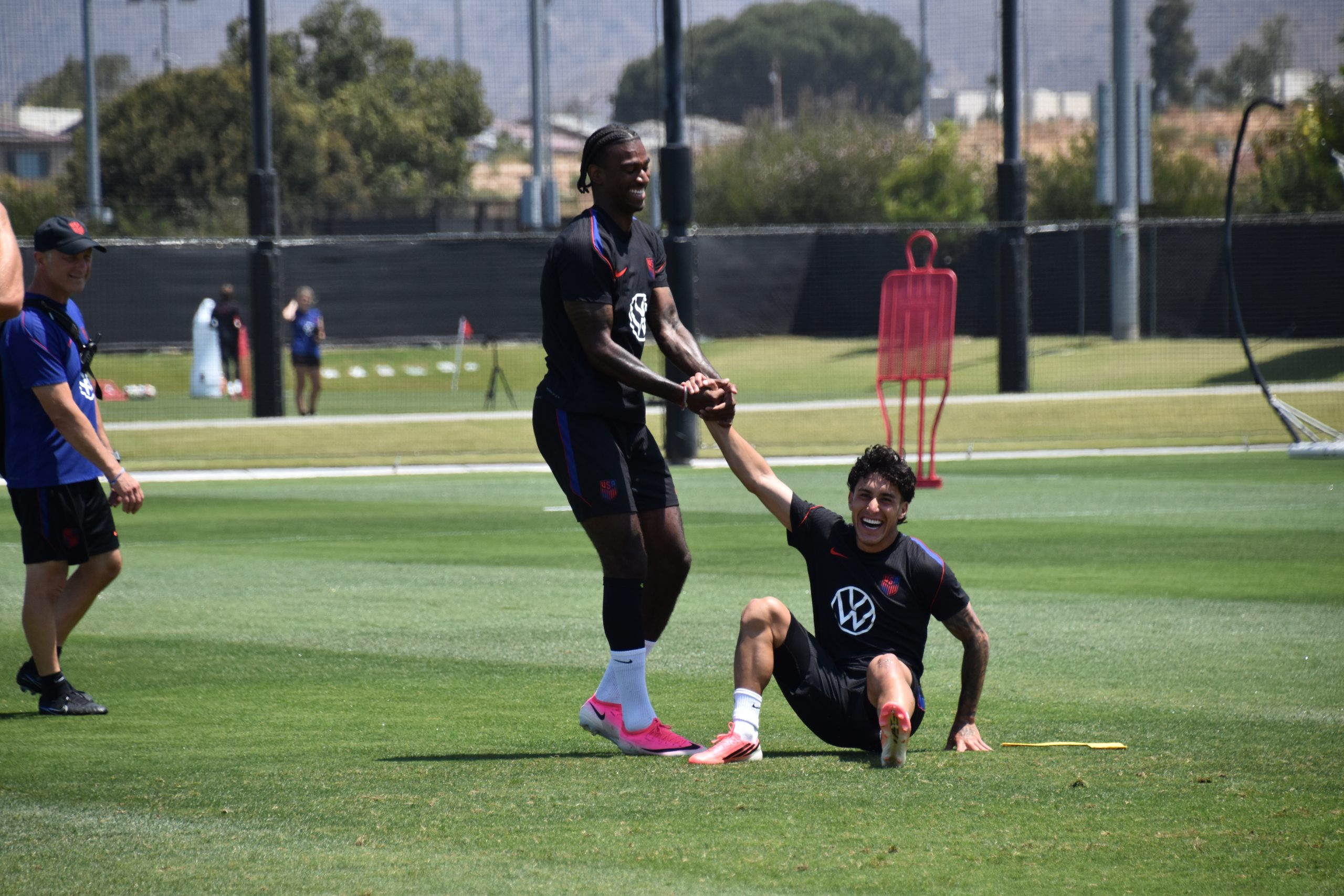
Alejandro Zendejas (right) shares a laugh with Haji Wright after hitting the deck during a drill.Jonathan Tannenwald
Arfsten said before Tuesday’s practice that as of then, the players “haven’t heard anything about” who will start Thursday.
“That’s obviously the coach’s decision and whatever he decides, obviously we’re going to be on the same page with that,” he added.
As Arfsten continued at the mic, he left no doubt that all 26 players are well-trained at handling pesky inquiries from the media.
“It’s a tough question — good thing I’m not a coach,” he said at one point. “But honestly, I think the most important thing is, no matter who’s playing, to go out and try and get three points. Just because I think the momentum of the two wins is what’s keeping the energy high right now, and three would be even more.”
Max Arfsten jogging during Tuesday’s practice.Jonathan Tannenwald
He at least signaled that the tone of training sessions hasn’t changed with first place in the group sealed.
“Obviously everyone’s happy that we’ve already advanced, but at the same time, regardless of if we’ve advanced or not, training is still very competitive, it’s very intense,” Arfsten said. “And I think that’s the culture that the coach has created: no matter what, that everyone’s still trying to prove something.”
One starter likely to keep his place is goalkeeper Matt Freese. The Wayne native showed in the first two games why he earned Pochettino’s trust as the No. 1 in net.
He is also perhaps the team’s most steadfast player when it comes to a one-day-at-a-time mentality. So when he was asked about potential lineup rotations in front of him, he barely flinched.
“It’s a coach’s decision, obviously, and we’ve got 26 guys here who all want to play, and who all are ready to play, and are working hard every day in training,” Freese said. “And we as a group have full confidence in all 26 of us. So really, we’re focused on continuing to prepare and work hard in training, and be ready for whatever.”
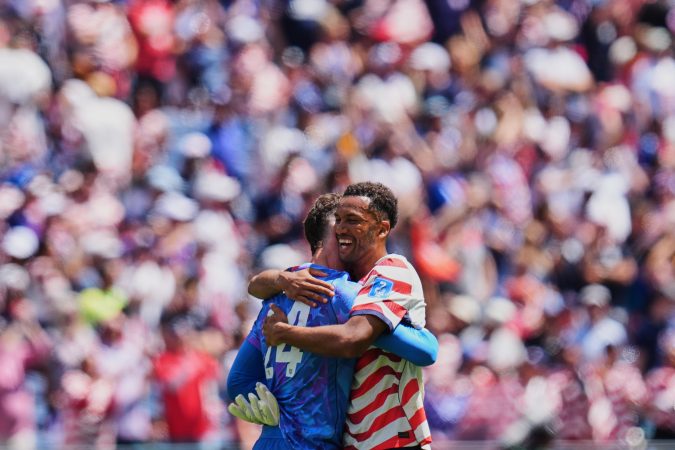
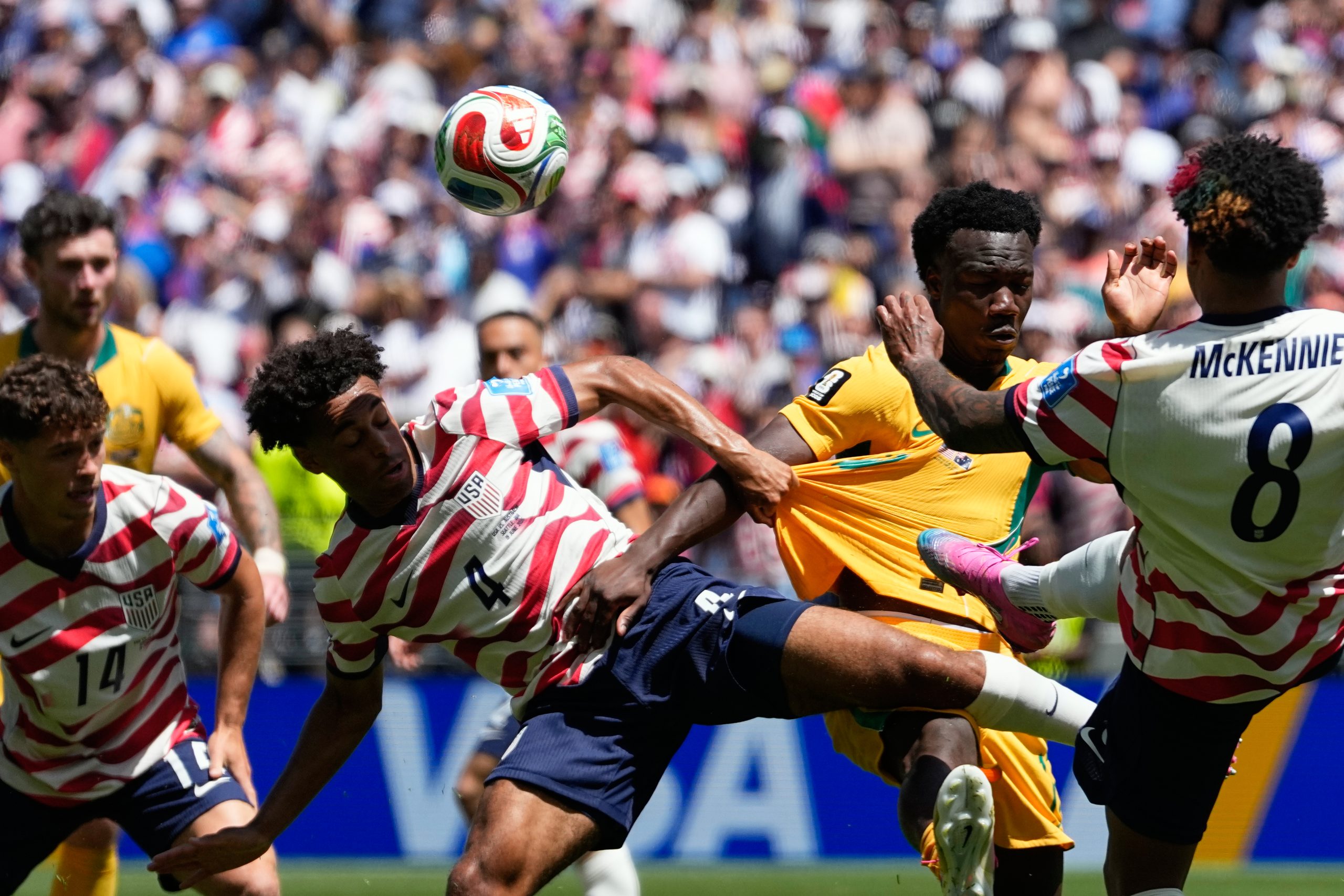
SEATTLE — At the final whistle of the U.S. men’s soccer team’s 2-0 win over Australia on Friday, Auston Trusty walked over to Matt Freese to offer a big hug.
They didn’t know that a photographer from the Associated Press was standing nearby to capture the moment. But soon enough, everyone found out.
“He came over to me and said, ‘Two Delco-heads just had a shutout in the World Cup together. That’s fate,’” the Wayne-born Freese said after his shutout in net. “And I laughed and I said, ‘Yeah, who would have thought?’”
Perhaps Jim Curtin, or other coaches across the Union ranks who worked with the duo over the years. But not too many people beyond Chester, or Wayne in those days, since that was YSC Academy’s first home.
“It’s obviously such a cool thing to have known him for so long, and I knew him outside of the soccer world too,” Freese said of Trusty. “We were just friends. So it’s incredible.”
That wasn’t the only karmic coincidence of the day. Trusty made his World Cup debut in front of not just his wife, daughter, in-laws and cousins, but also two of his first youth soccer coaches with the old Nether United club in Nether Providence, Delaware County: Tor Hotham and John Waraksa.
Like so many people around American soccer, they circled this day in this soccer-mad city and decided they had to be there. The reward was beyond measure.
“To have them fly here, not knowing if I’m going to play or not, to come here and be here for this game where I actually make my World Cup debut, it’s just all meant to be,” Trusty said.
The Media native beamed with pride again when he reflected on finally reaching this moment at age 27, 11 years after going to an under-17 World Cup with Christian Pulisic, Tyler Adams, Alejandro Zendejas, and Haji Wright.
“When you’re a little kid, dreaming about the stadiums you play in and the atmospheres and everything involved, to play in a home turf World Cup, get minutes, it’s a dream come true,” Trusty said.
Freese had his family in attendance too, plus his girlfriend’s family, and old friends from high school at Episcopal Academy. He shouted out one of the closest, Michael Hinkley, a soccer teammate back then who went on to play basketball at Dickinson.
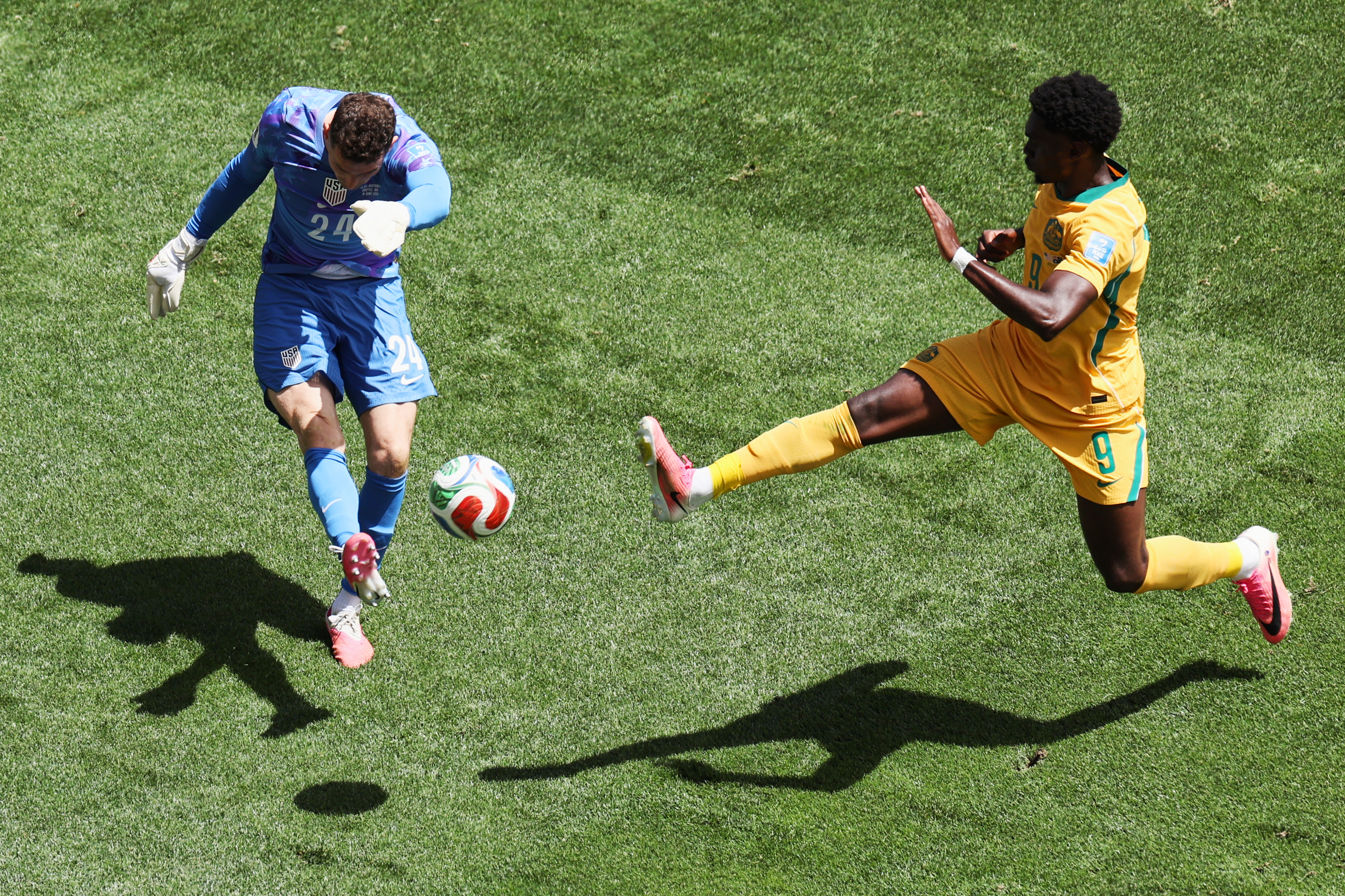
Matt Freese (left) clearing the ball in front ofAustralia’s Mo Touré during the first half.Maddy Grassy
“Obviously incredible support,” Freese said. “It means a lot to play in front of them, and play in front of everyone in this country.”
That support fueled the U.S. team all day, with the stands full and roaring well before kickoff. Trusty said the atmosphere “gives you chills,” especially when the crowd sang The Star-Spangled Banner over the orchestral rendition on the speakers.
“The atmosphere is one of those things you dream of,” Freese said. “I’ve heard ‘the 12th man’ is what they call the crowd here. It was definitely a 12th man for us — I think it was a 12th, 13th, 14th, 15th man for us today.”
But things were getting dicey when Trusty and Joe Scally entered the game in the 80th minute as defensive reinforcements. Australia was gaining momentum even though it hadn’t scored, and an already physical game was getting even more fractious.
Auston Trusty (left) tussling with Australia’s Cristian Volpato.Lindsey Wasson
It got especially chippy in the last few minutes, but those two and the rest of the Americans kept their heads and finished the job. They did so at both ends, ensuring Australia didn’t score while also keeping a foot on the gas pedal in attack.
“Just keep the pressure up,” Trusty said. “They weren’t really pressing too much, they kind of had like a halfway-block [formation], and obviously in a back five [defensively], they want pressure on them. So just continue the press that we had and the movement we had, and really just keep momentum.”
Mission accomplished on all counts. Not only did the U.S. men qualify for the knockout rounds before the group stage finale against Turkey, but the program has two wins in one World Cup group stage for the first time since the inaugural tournament in 1930. And thanks to Turkey’s loss at the end of the night, the U.S. clinched first place with a game to spare.
“We came into the tournament wanting to make a statement,” Freese said. “The first part of that’s done, but, you know, there’s a lot more statements we want to make.”
SEATTLE — It turned out that the U.S. men’s soccer team didn’t need Christian Pulisic to beat Australia, and make history in doing so.
With the star playmaker unable to shake off a calf injury, the Americans used two first-half tallies and a raucous atmosphere in Seattle to earn a 2-0 win, before a packed-to-the-roof crowd of 66,925.
The win clinched qualification for the knockout rounds, and marked the first time since 1930 that the U.S. men’s program has won two games in a World Cup group stage.
U.S. manager Mauricio Pochettino started Ricardo Pepi in the open lineup spot, leading to a tactical change. The Americans rolled out a 3-5-2 formation, with Pepi and Folarin Balogun paired up top.
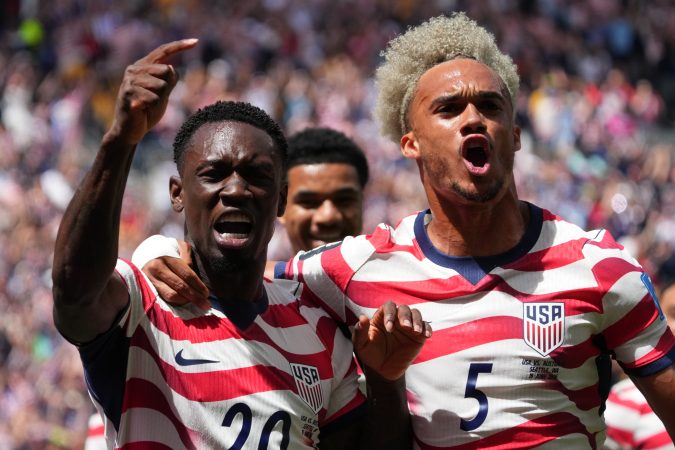
It didn’t take long for that to pay off. In the 11th minute, Antonee Robinson sprung Balogun down the left flank. He ran almost to the end line, then laid a pass into an onrushing crowd that included Pepi, Sergiño Dest, and three Australian defenders. The ball hit one of them, Cameron Burgess, and pinged into the net.
The statisticians at TruMedia noted this marked the first time in World Cup history that one team benefited from own goals in consecutive games, following the opening tally of the U.S.’ win over Paraguay.
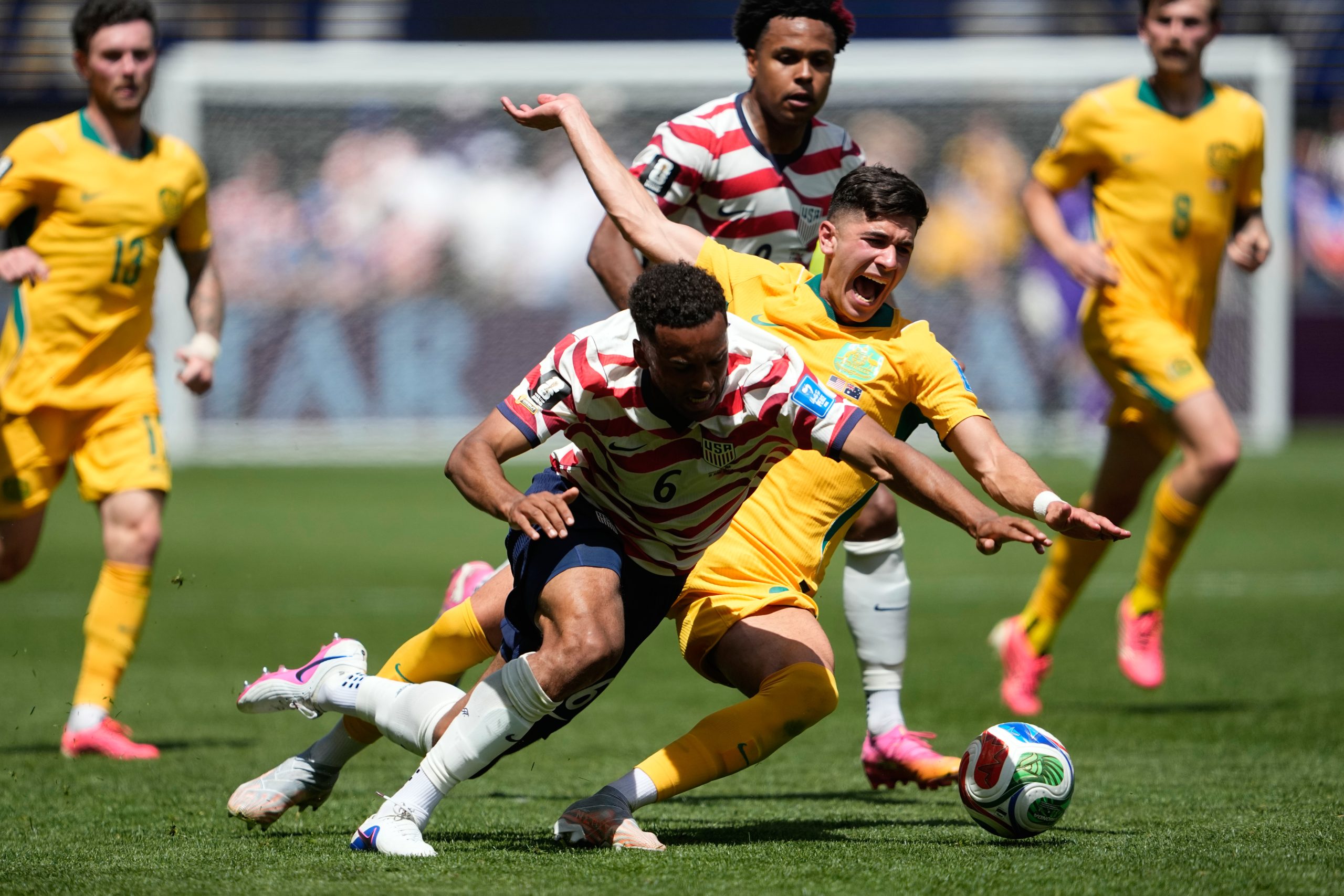
During the rest of the first half, the action was as physical as expected. Each team committed eight fouls in the period, and German referee Felix Zwayer left more potential ones uncalled. There were two yellow cards, for Jordan Bos’ tackle on Tyler Adams in the 16th minute, and Alessandro Circati’s hard hit on Malik Tillman in the 32nd.
The mood came to a boil in the 38th when Alex Freeman collided head-to-head with Paul Okon-Engstler, and both players stayed down for a while. Fortunately, neither had to leave the game.
The Americans got their second in the 43rd, and in controversial fashion. After Dest and Tillman combined to draw a foul on the right wing, Robinson served the free kick wide to Dest at the top of the 18-yard box. He ripped a shot that hit the crowd, flew up in the air, and Freeman jumped to head it past Matt Beach.
The controversy was that the flag was up for offside, and it sure looked at first like there was good reason. Balogun and Weston McKennie were indeed off when Dest shot. But Freeman wasn’t, and since Balogun didn’t touch the ball, the video review officials called it a good goal.
Australia manager Tony Popovic admitted how deep a hole his team was in by making three substitutions at halftime, including taking out Burgess. Another, replacing striker Mohamed Touré with Nestory Irankunda, raised the question of why Irankunda surprisingly hadn’t started.
Popovic had another complaint in the 63rd when Adams, who was risking a suspension for yellow card accumulation, knocked Connor Metcalfe over in the box off the ball and it went uncalled.
This was the start of the Socceroos gaining momentum, and Wayne’s Matt Freese was forced into his first proper save of the day in the 65th. A few seconds later, Chris Richards shoved Irankunda outside the box as Freese was charging off his line toward them, Zwayer didn’t blow his whistle, and Popovic was angry again.
Pochettino finally made his first substitution in the 74th, sending in Sebastian Berhalter for Pepi and taking the U.S. back to a one-striker setup.
Tyler Adams (left) and Weston McKennie (right) battling with Australia’s Nestory Irankunda during the second half.Lindsey Wasson
The crowd might have preferred hometown hero Cristian Roldan, and a lot of people wanted to see Adams taken off before picking up that feared second booking.
Instead, there were two other defensive substitutions in the 80th: Joe Scally for Dest and Media’s Auston Trusty for Robinson.
Tempers flared again in the 88th when Australia’s 6-foot-6 centerback Harry Souttar and Balogun got each other in mutual headlocks. There was a brief coming together of the teams, and both players were booked. Australia’s Jacob Italiano was also booked amid the scuffling.
As six minutes of stoppage time began, the crowd gave another hearty “USA!” chant. Then they had a brief laugh in the 93rd when Zwayer cramped up on the field, and needed some medical assistance. Players from both teams came over to lend a hand.
Pochettino then made two last substitutions, withdrawing Balogun for Haji Wright and McKennie for Gio Reyna.