Tag: Mark Squilla

  • Philly City Council returns with dueling plans for the city’s trash | Council roundup

    Philly City Council returns with dueling plans for the city’s trash | Council roundup

    Philadelphia City Council members are considering dueling proposals over how the city eliminates its garbage, with one lawmaker leading an effort to immediately block the city from shipping its garbage to a trash incinerator and another taking a longer-term approach.

    Councilmember Mark Squilla on Thursday introduced legislation authorizing Mayor Cherelle L. Parker’s administration to, within three years, develop a plan to dramatically reduce the city’s reliance on both trash incineration and landfills over the next 20 years.

    Squilla’s proposal, which he drafted with input from Parker’s administration, is something of an alternative for lawmakers to consider as Councilmember Jamie Gauthier has for months pushed for a more aggressive approach to stop the city from incinerating trash this year.

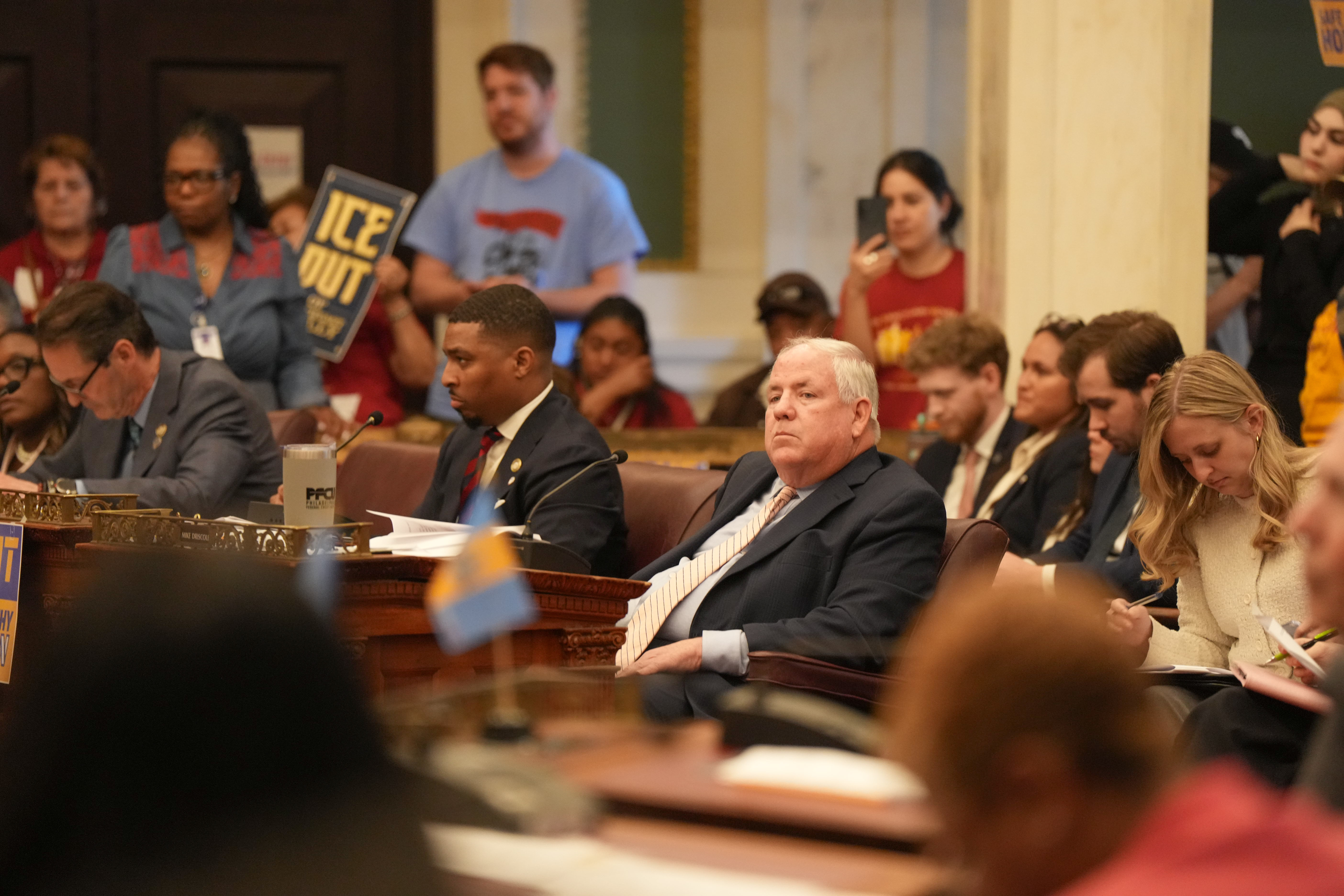
    Both lawmakers hosted news conferences this week alongside their allies to rally support for their cause, part of a long list of events Council members hosted as the legislative body returned Thursday for its first meeting of the fall session.
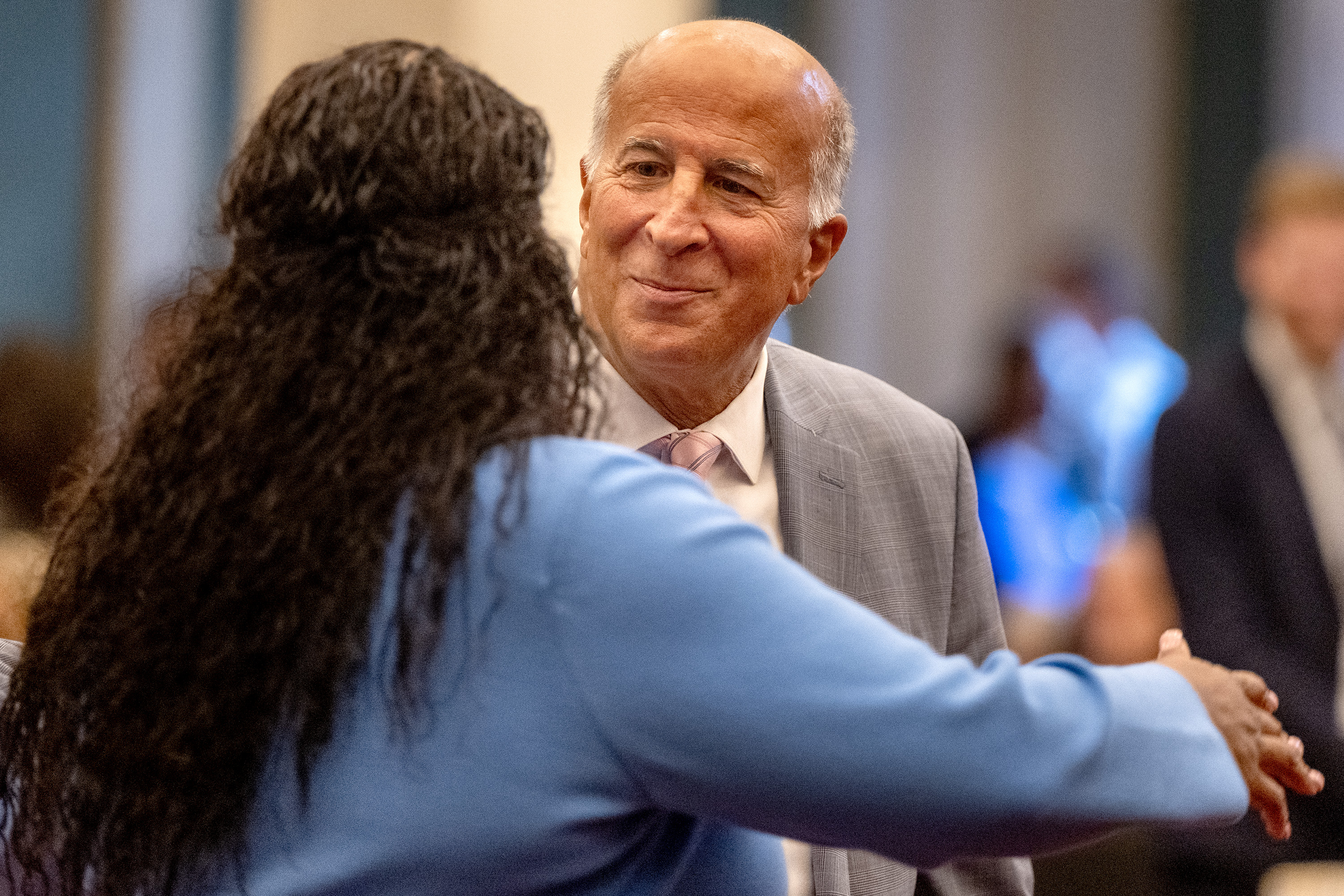
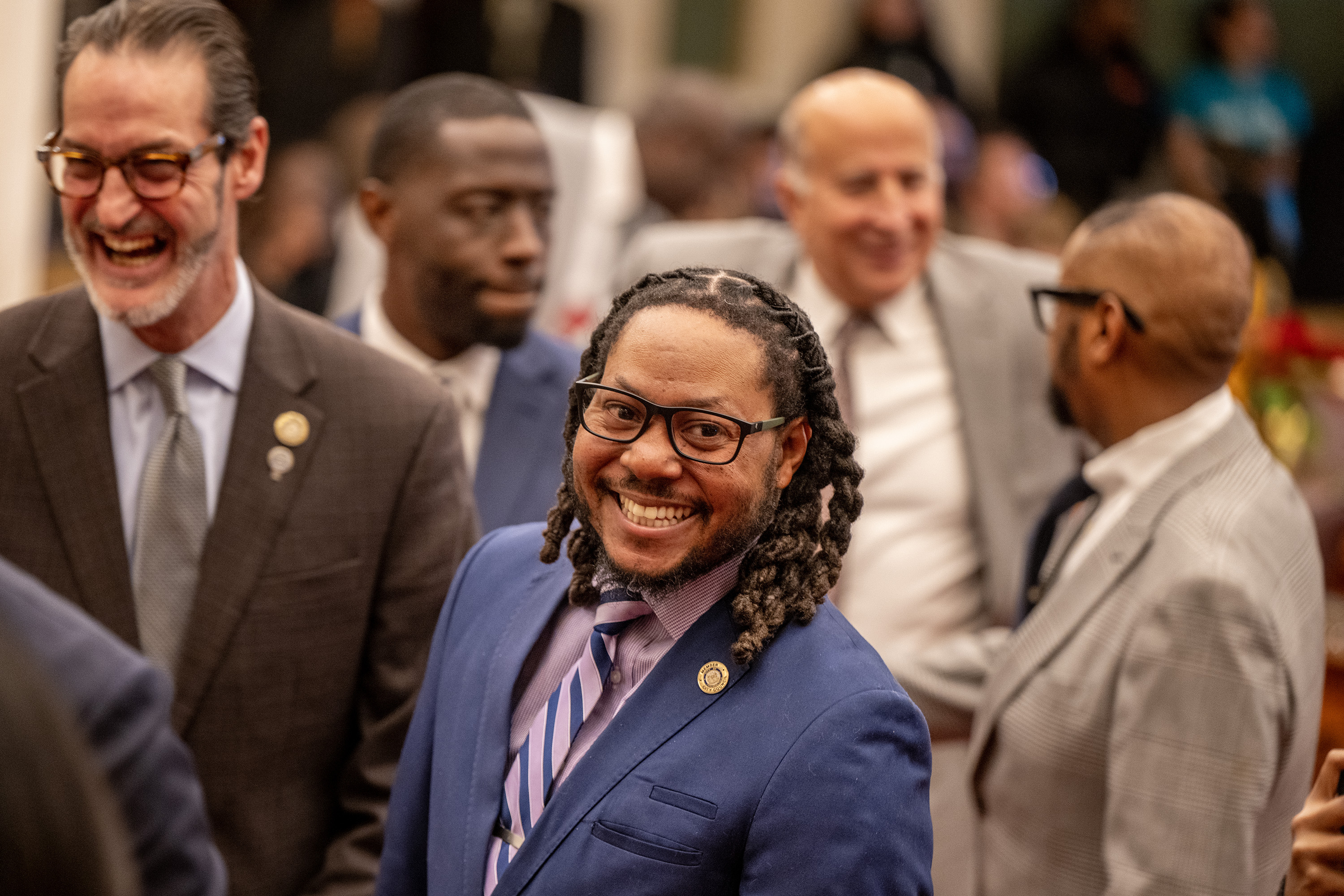
    Councilmembers Mark Squilla and Katherine Gilmore Richardson (back to camera) greet each other as City Council convenes for its fall session Thursday, Sept. 17, 2026.Tom Gralish / Staff Photographer

    The first meeting after the summer break typically has a jovial, first-day-of-school feel. But the mood briefly shifted Thursday when City Hall was evacuated and Council abruptly adjourned after a suspicious package was found on the floor where Council was meeting.

    Police cleared the package, and Council resumed its business Thursday afternoon.

    Here’s what else happened this week:

    What was this week’s highlight?

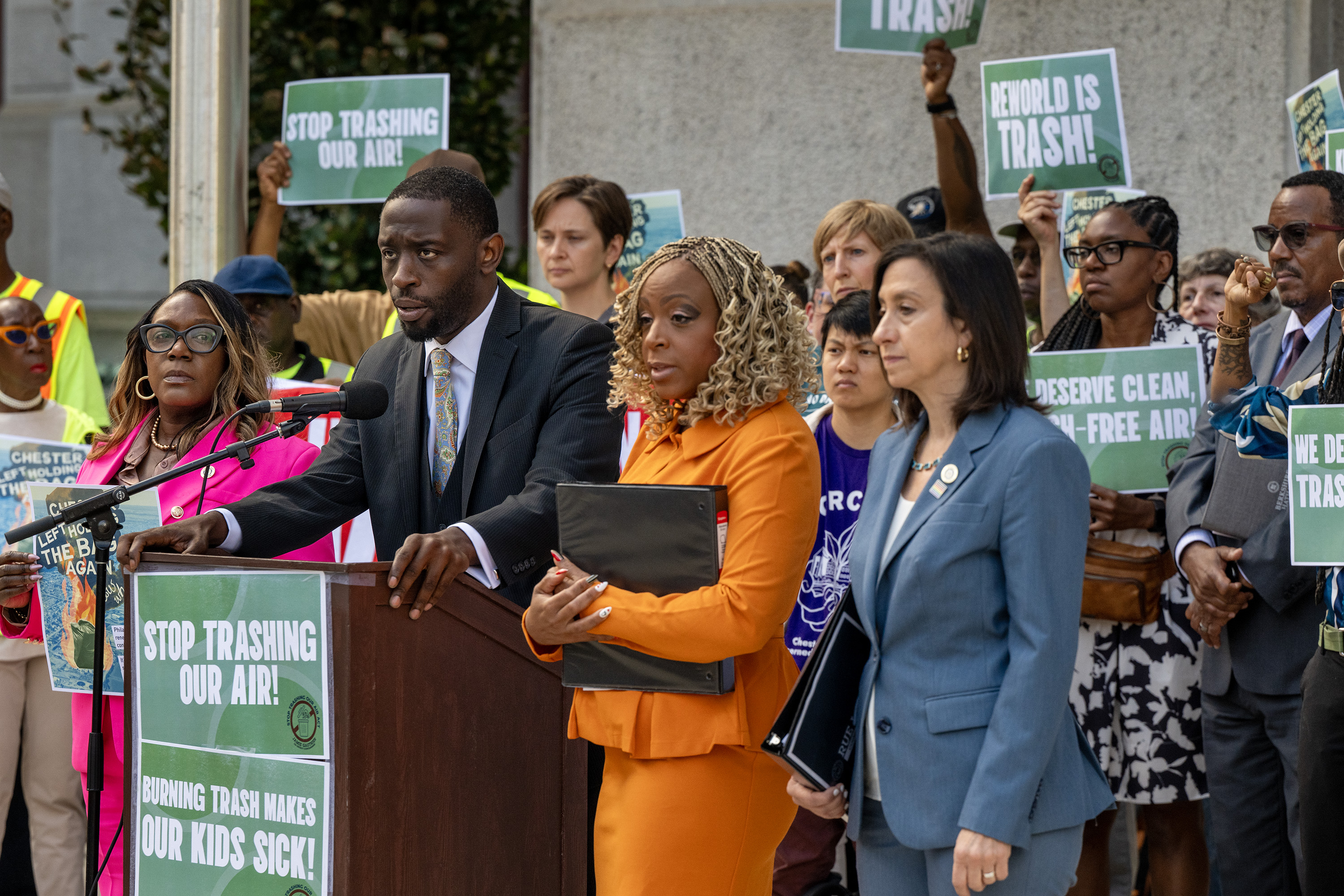
    Incinerator issue heats up: Gauthier has for months sought to pass legislation that would ban the city from continuing its long-term practice of sending about a third of its garbage to a trash incinerator in Chester, about 15 miles south of the city. She argues that incineration is bad for the environment and harms Chester residents’ health.

    Parker’s administration opposed the legislation, called the Stop Trashing Our Air Act, and Gauthier in the spring failed to gain enough support for it in Council.

    Now, Gauthier is trying to block the Parker administration from renewing its contract with Reworld, the incineration facility. The administration needs Council approval to enter into a new four-year contract with the firm.

    Gauthier has several members on her side, including three fellow progressive lawmakers, as well as Councilmember Isaiah Thomas, who is the Democratic majority whip.
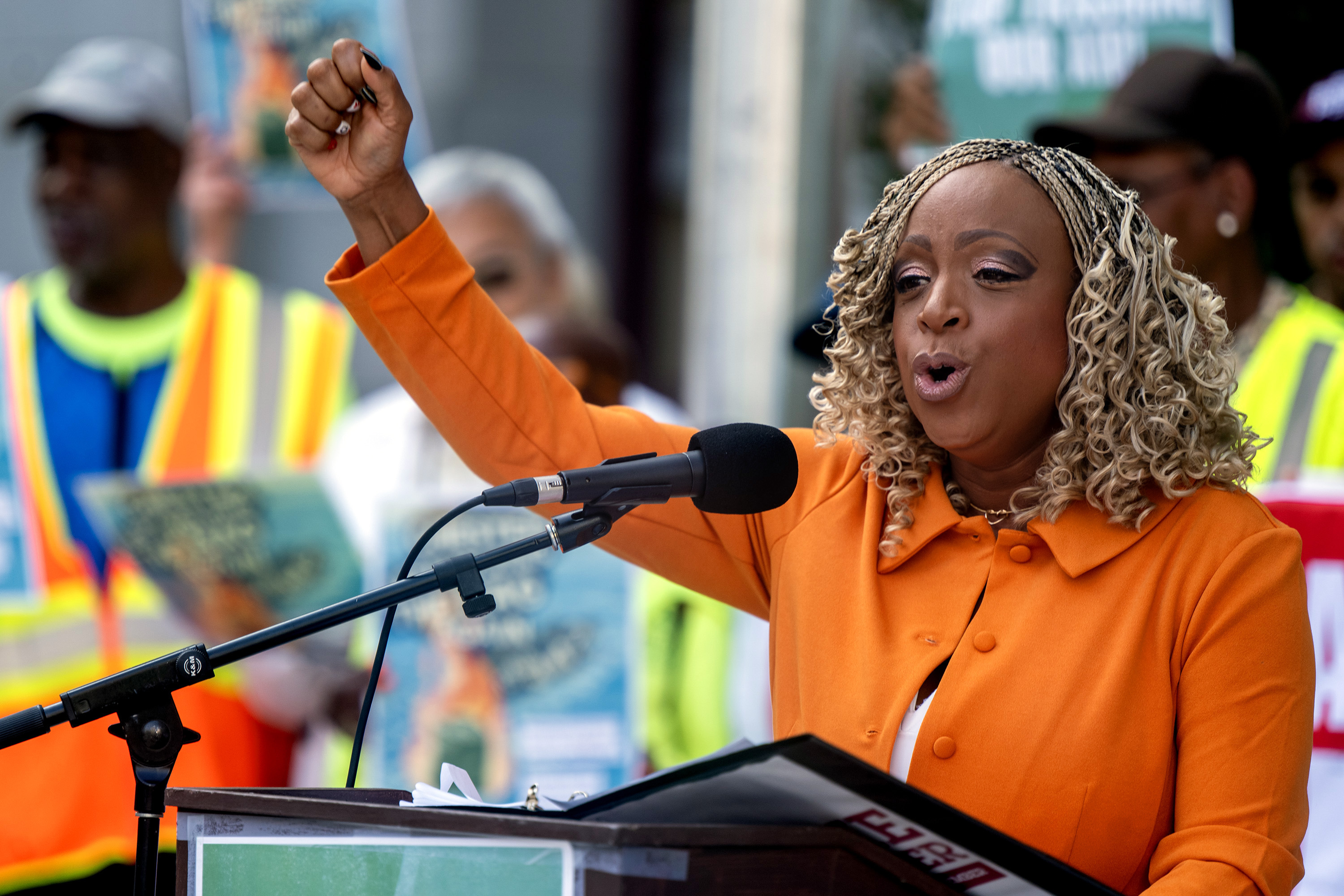
    City Councilmember Jamie Gauthier speaks at a rally outside City Hall early Thursday morning Sept. 17, 2026 where protesters called on Council to reject Mayor Cherelle L. Parker’s waste disposal contracts. A coalition of elected officials, health and climate experts, and advocates from Philadelphia and Chester gathered to oppose the city’s sending its trash to an incinerator in Chester.Tom Gralish / Staff Photographer

    Squilla’s proposal in some ways offers members an off-ramp. His bill calls for a “circular waste” system that includes new techniques for waste disposal, such as composting and “anaerobic digestion,” a process that breaks down organic waste.

    Managing Director Carlton Williams said Wednesday during a news conference with Squilla that the city is looking to build out an anaerobic digestion system within four years.

    Squilla said that while the administration is already working toward a more modern waste disposal system, passing a law would “codify what we had as plans and resolutions before.”

    Gauthier said that she supports Squilla’s goal of moving toward a more sustainable system, but that his legislation “is a plan to create a longer-range plan.”

    “It in no way changes the decision in front of Council,” she said. “We can move away from this practice right now.”

    What else happened this week?

    Severing the law department: The city law department serves as legal counsel for both the mayor’s administration and Council, a dynamic that can sometimes cause friction when the city’s elected officials disagree.

    Council on Thursday approved a resolution by Thomas to hold a hearing “to consider the separation of the [law] department’s functions between the administration and City Council.”

    The department is led by City Solicitor Monique Galloway, whom Parker appointed to the role in July.

    Thomas has clashed with Parker’s administration, and he said he became interested in looking at the department’s structure due to concerns that Council was not receiving independent legal advice on some issues.
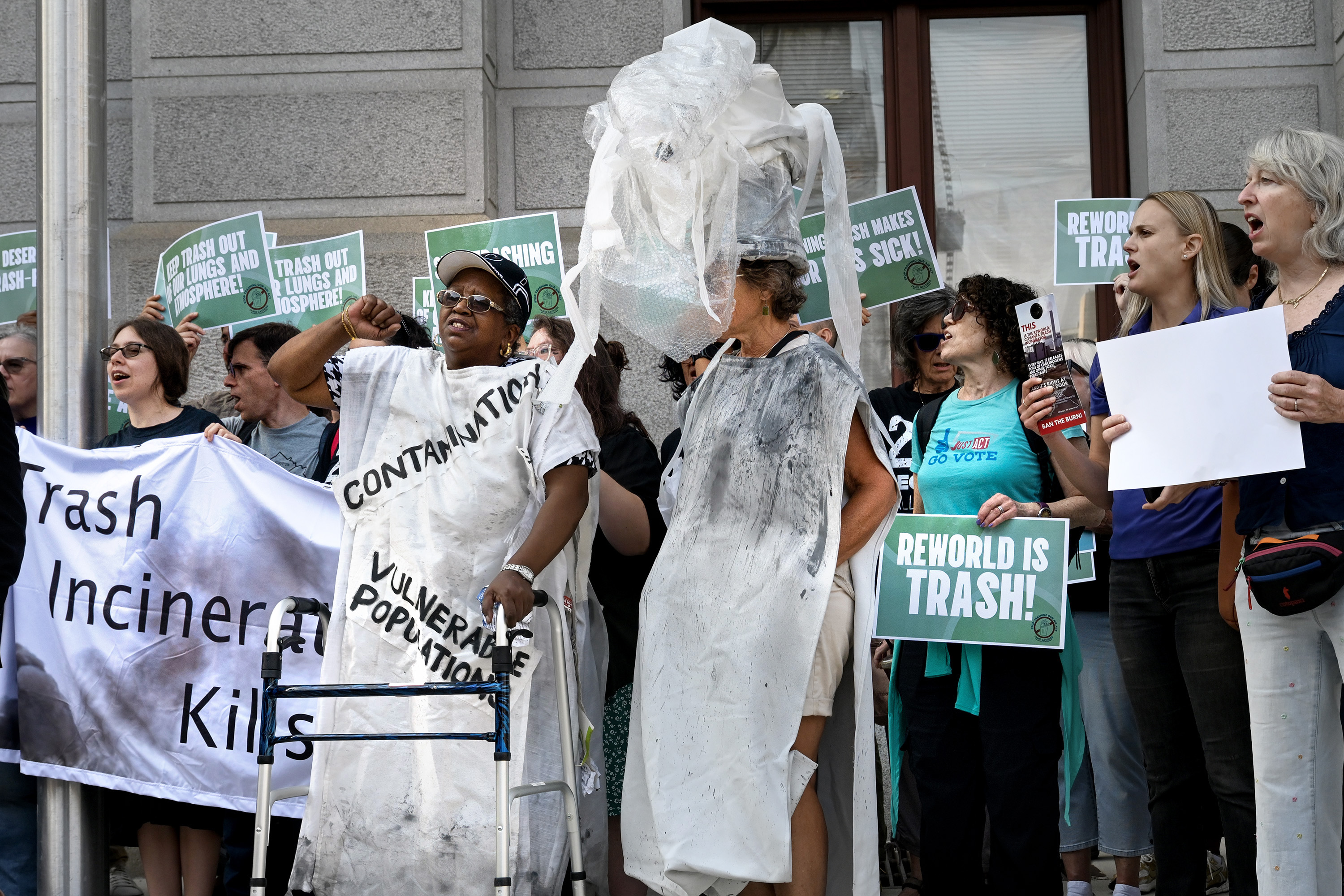
    Lois Williams (left), dressed as a “sick person,” and Shari Hersh (right) in costume as a “smokestack,” join a rally outside City Hall early Thursday to call on City Council to reject Mayor Cherelle L. Parker’s waste disposal contracts.Tom Gralish / Staff Photographer

    He pointed to the Philadelphia School District’s controversial facilities plan, which involves the closure of 17 school buildings and was adopted by the school board in April over the objections of many Council members.

    And he said recent legal proceedings around the city’s business income and receipts tax were “part of the motivation” to hold a hearing on the law department.

    In 2025, after a Massachusetts company sued the city seeking to overturn a popular tax break program that primarily helped small businesses, the law department said it had determined the lawsuit was likely to succeed. The Parker administration eventually settled the case and persuaded Council to eliminate the tax break. Some Council members at the time complained that the city did not defend the tax break more vigorously.

    The department already silos off some of the work it does on behalf of Council from the rest of the administration, such as when it drafts bills proposed by lawmakers. Council also may hire outside legal counsel, but must pay for those services out of its own budget.

    A law department spokesperson did not immediately respond to a request for comment.

    Storage wars: Councilmember Mike Driscoll introduced legislation on Thursday that would ban new self-storage facilities from his district in lower Northeast Philadelphia.

    The storage industry boomed during the COVID-19 pandemic, as consumer spending shifted from services to goods, many families struggled to afford larger homes, and low interest rates juiced development.

    Northeast Philadelphia saw a particularly large boom in self-storage buildings because of its rich supply of properties zoned for industrial development. Driscoll said that advocates in the Tacony neighborhood felt their community had become oversaturated.

    “They want more affordable housing and [self-storage units] are taking valuable sites for that,” Driscoll said.
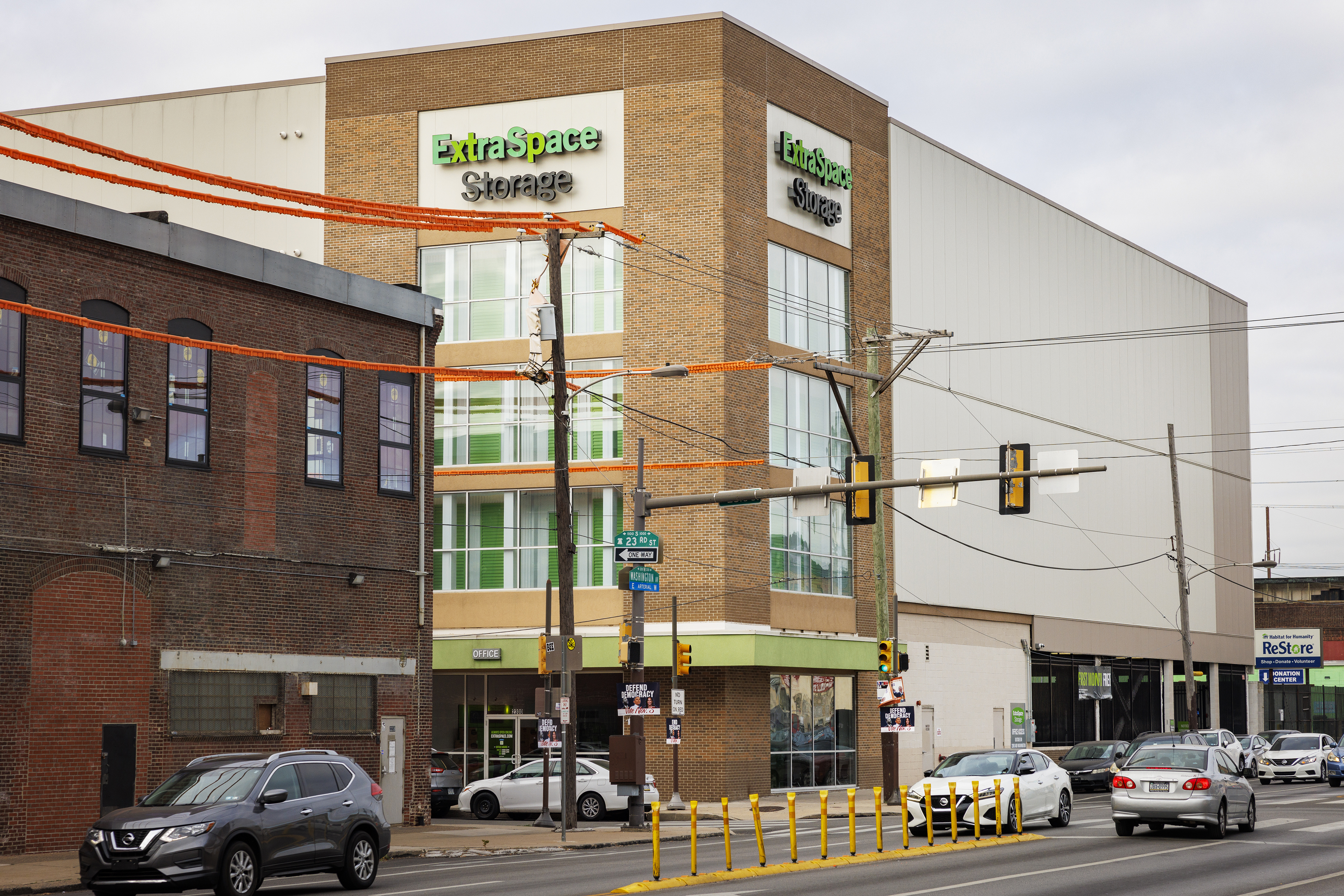
    ExtraSpace self-storage at Washington Avenue and S. 23rd Street, Philadelphia, Monday, November 4, 2024.Alejandro A. Alvarez / Staff Photographer

    Self-storage facilities are gold mines for developers. They suffer little wear and tear, they have few utility costs, and labor costs are low after construction.

    According to online industry search portal StorageCafe, Philadelphia has 89 self-storage sites containing more than seven million square feet of space. About a third of that has been built since 2019.

    Other municipalities have moved to limit the spread of self-storage facilities in recent years. New York City banned them from industrial areas to preserve jobs, and Denver blocked them from properties close to light rail lines. Providence, R.I., in 2023 banned new facilities from the city altogether.

    Driscoll said that he may further limit his legislation to the Tacony neighborhood.

    “I don’t want to hurt another part of my district that maybe wants these things,” he said.

    Embracing affordability: Multiple members of City Council said this week that tackling affordability is their primary objective this fall, including Councilmember Nicolas O’Rourke, whose office published a lengthy report outlining dozens of proposals aimed at reducing costs.

    Some may be more realistic short-term goals than others.

    The report, which was drafted by a Cost of Living Task Force made up of community advocates and industry leaders, recommended the city explore everything from opening municipal grocery stores to creating a local Medicaid supplement program.
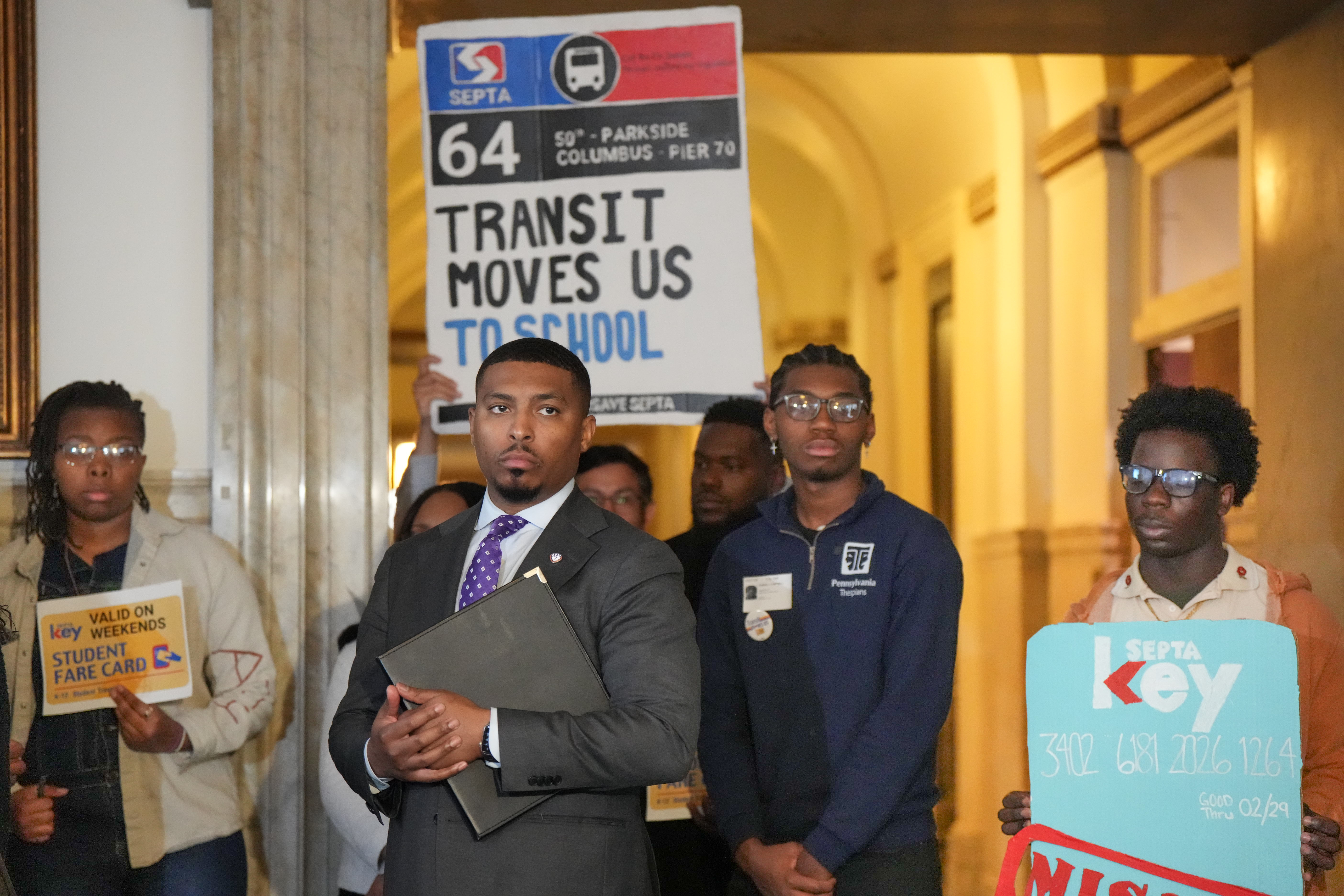
    Councilmember Nicholas O’Rourke with students and activists during a press conference about SEPTA in April.Jessica Griffin / Staff Photographer

    It also recommends restructuring existing housing programs to more aggressively target the poorest residents, and establishing a Transit Access Fund that would fund free or reduced-fare transit passes for low-income households.

    O’Rourke, a member of the progressive Working Families Party, plans to hold a committee hearing on the task force report this fall.

    Council President Kenyatta Johnson will also introduce an affordability measure this fall. He plans to bring forward legislation that would establish a permanent Food and Nutrition Security Coordination Office, he said in a statement.

    Quote of the week
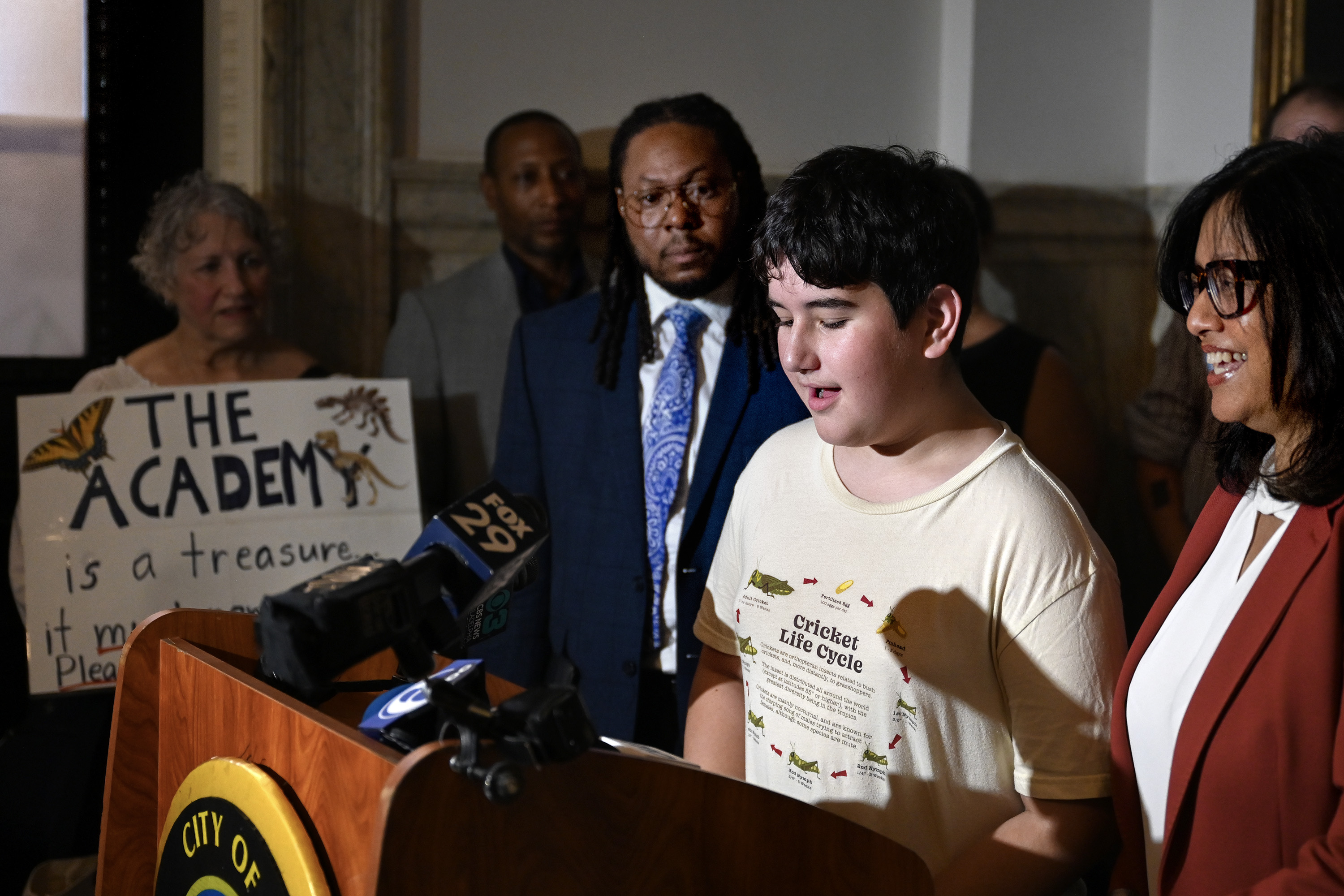
    Jeffery Young, Jr. (left) with twelve year-old Jack Erfer of Wynnewood and councilmembers and Nina Ahmad (right) in supporting the Academy of Natural Sciences of Drexel University before City Council resumes for its fall session Thursday.Tom Gralish / Staff Photographer

    No bones about it: That was Councilmember Jeffery Young Jr., who called for hearings on the planned closure of the Academy of Natural Sciences.
  • After a messy budget fight, Philly City Council turns to its unfinished business: Trash, taxes, and a new arena

    One evening last week, City Council President Kenyatta Johnson stood on South Broad Street and greeted his fellow lawmakers as they arrived at Steak 48.

    Johnson had invited them to the swanky Center City steakhouse to “reconnect, share conversation, and enjoy each other’s company outside of City Hall,” according to an invitation for the Sept. 9 “members only” event obtained by The Inquirer.

    Council resumes for its fall session Thursday — and after the way things ended in the spring, the city’s legislators may have needed the opportunity to break bread together.

    When lawmakers last met in June, they approved a $7.1 billion city budget that left all sides feeling dejected. Council turned away a series of tax proposals from Mayor Cherelle L. Parker, including a $1-per-ride levy on rideshare companies like Uber and Lyft, and ended up passing a budget that omitted a number of members’ own priorities and left unanswered how the city will help the Philadelphia School District navigate its funding crisis in the long run.

    In addition to representing a new low in Parker’s relationship with the legislative body of which she was once a member, some Council members also questioned their own negotiating team’s handling of the ordeal.

    Councilmember Mike Driscoll noted last week that while he was not “pointing fingers,” Council could have added more money in the budget for line items requested by lawmakers, such as funding for community groups.

    “I’m disappointed and pissed off at the way it played out,” Driscoll, who represents parts of Northeast Philadelphia, said in an interview. “Our priorities weren’t analyzed in a more thoughtful [way]. … We do the amendments. [Parker] doesn’t. We could have put money in.”

    Councilmember Michael Driscoll in Philadelphia on April 23, 2026.Jessica Griffin / Staff Photographer

    In addition to dealing with the aftermath of the budget, Council this fall is expected to revisit a tense debate over how the city disposes of its trash and a proposal by Driscoll to provide business tax relief to sole proprietors. It may also begin to consider legislation related to the proposed 76ers and Flyers arena in the South Philadelphia sports complex.

    An Inquirer reporter saw at least 11 of Council’s 17 members at the Steak 48 event, meaning a majority, or quorum, of Council was present. The Pennsylvania Open Meetings Act, or Sunshine Act, requires legislative bodies to notify the public if a quorum is present for a meeting at which official business is discussed.

    But Johnson said at the beginning of the dinner that would not be happening.

    “Tonight we do no official business,” Johnson said in an interview. “Just social. Welcome back to City Council. Eat and drink and be merry. No policy on the table. No legislation on the table. Just having a good time.”

    Johnson’s invite directed members to RSVP to a Council staffer’s city email address. Johnson said his campaign picked up the tab.

    Parker and all 17 Council members will be on the ballot in next year’s municipal elections.

    “Everyone facing reelection next spring knows they have to be able to point to real accomplishments on the important issues voters care about,” City Hall lobbyist John C. Hawkins said. “And this fall is their last opportunity for them to address the most pressing issues that were not fully resolved in the spring budget process.”

    Budget fight hangover

    When Council and the mayor in the spring failed to reach a deal over new tax revenue to plug a $48 million hole in the school district’s budget, Johnson said Council had helped identify one-time savings in the city budget to fill the gap for a year while vowing to explore new recurring revenue streams for the district.

    Johnson has not yet scheduled a hearing on schools funding, and Council’s dissatisfaction with the district appears to have been mounting.

    Mayor Cherelle L. Parker, Council President Kenyatta Johnson, and Superintendent Tony B. Watlington Sr. arrive for an announcement at the School District of Philadelphia Headquarters on Wednesday, June 10, 2026 in Philadelphia.

    He said in a statement this week that Council will honor its commitment, but also alluded to finding that money in the district’s own budget, despite school officials saying they are navigating a $300 million structural deficit.

    Johnson said Council is awaiting the results of a performance audit of the school district that is being conducted by City Controller Christy Brady. He said that report “will help Council identify any available funds to support recurring funding.”

    New arena, who dis?

    In the fall of 2024, Council was consumed by the debate over the 76ers’ proposal to build an arena in Center City.

    Lawmakers spent much of the session debating the economic benefit of the project, while opponents cried out that it would displace businesses and residents in nearby Chinatown.

    Despite Council approving it, that project was scuttled by the Sixers, who instead teamed up with Comcast, which owns the Flyers, to plot a different project: a joint venture that would bring a new arena to the South Philly sports complex. Earlier this month, they released the first renderings of what the Spectrum-inspired arena could look like.

    There will likely be spirited discussions about it all in Council — at some point. But don’t expect a redux this fall of the all-out brawl that was 2024.

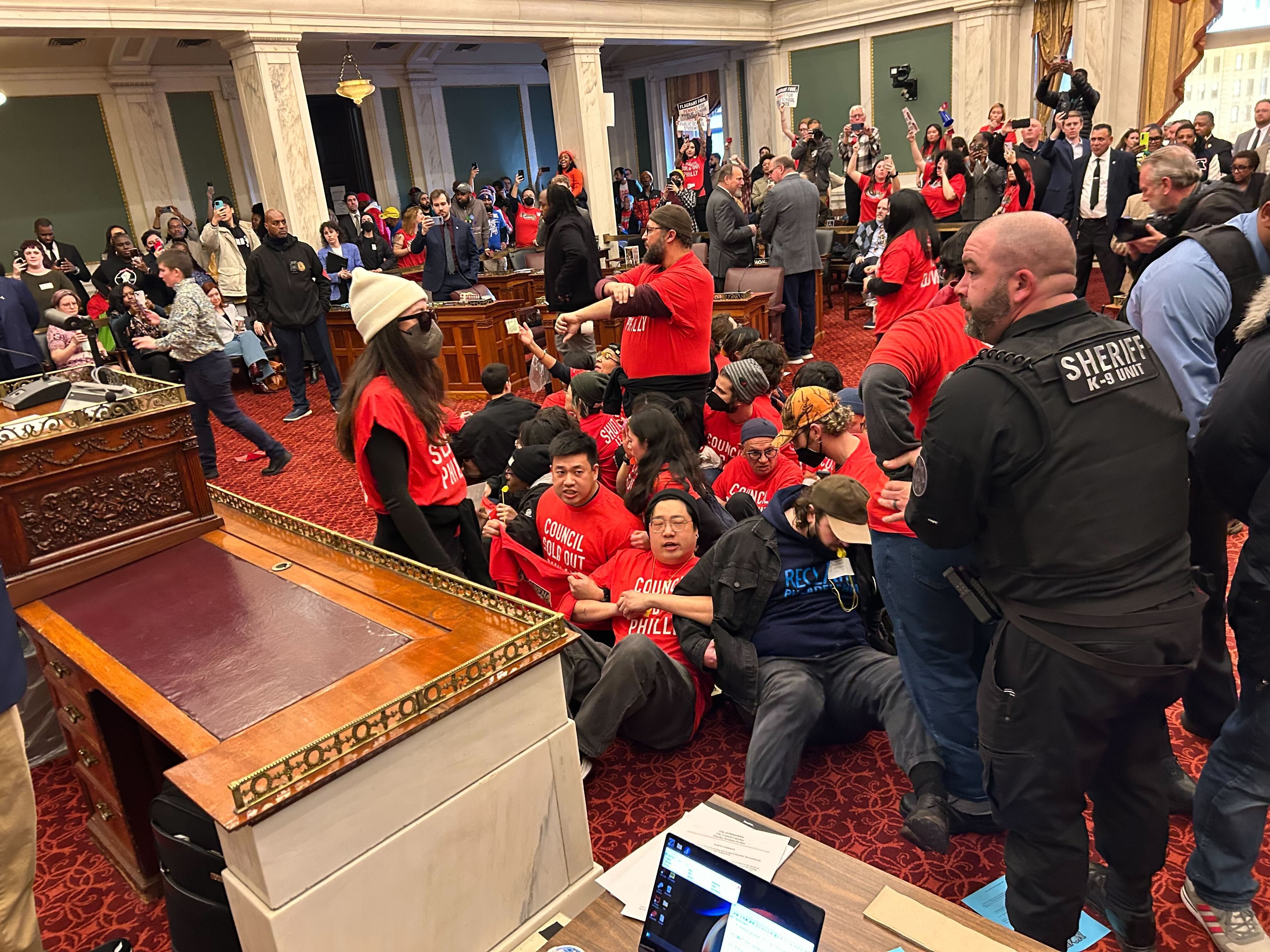
    Protesters link arms as sheriff’s deputies attempt to remove them from Philadelphia City Council chambers as the council is scheduled to vote on final approval for the Sixers’ proposed Center City arena on Thursday, Dec. 19, 2024.Sean Collins Walsh / Staff

    The stadium district falls in Johnson’s 2nd District, meaning it will be on him to introduce legislation that would green-light the project. And he has not been in a hurry to accommodate the Sixers’ timeline, which would be to approve the project as soon as possible so the venue can open by 2030.

    Johnson said in a statement that “no zoning legislation is scheduled for introduction,” and that he is working to find consensus with the Parker administration and other Council members before introducing any legislation.

    “I am focused on ensuring that any future legislation concerning the new arena addresses the interests and concerns of the community around the Stadium District and in Philadelphia,” he said.

    When that legislation is brought forth, it is unlikely to be anywhere near as controversial as the 76ers’ Center City proposal, which drew opposition due to its proximity to Chinatown, so long as the teams uphold their promise to not seek public subsidies.

    The Asian Pacific Islander Political Alliance, which led opposition to the Center City arena, released a statement earlier this month that signaled openness to the South Philly project.

    “The people of South Philly should have a meaningful voice in whether and how this project moves forward,” said Will Gross, an API PA member who is rumored to be considering a run for Council. “And if it does, it should mean good union jobs, a strong community benefits agreement, and real benefits for the people who live and work in the neighborhood.”

    Trash issue continues to burn

    Councilmember Jamie Gauthier has spent the better part of the last year trying to whip up support for a bill that would ban the city from shipping off its trash to be burned at an incinerator in Chester, a longtime practice she and others say is poisoning residents of the city to Philadelphia’s south.

    The Parker administration opposed the measure, saying it would limit the government’s ability to carry out its normal competitive bidding process and select the best-value contractor. Gauthier failed to get a majority of Council on her side, and she never called up the Stop Trashing Our Air Act for a vote.

    This fall, she will try a new tactic.

    Gauthier and her allies are attempting to kill the Parker administration’s effort to approve a new contract with Reworld, which operates the Chester waste-to-energy facility where the city sends about a third of its garbage. (The remainder is hauled off to landfills.)

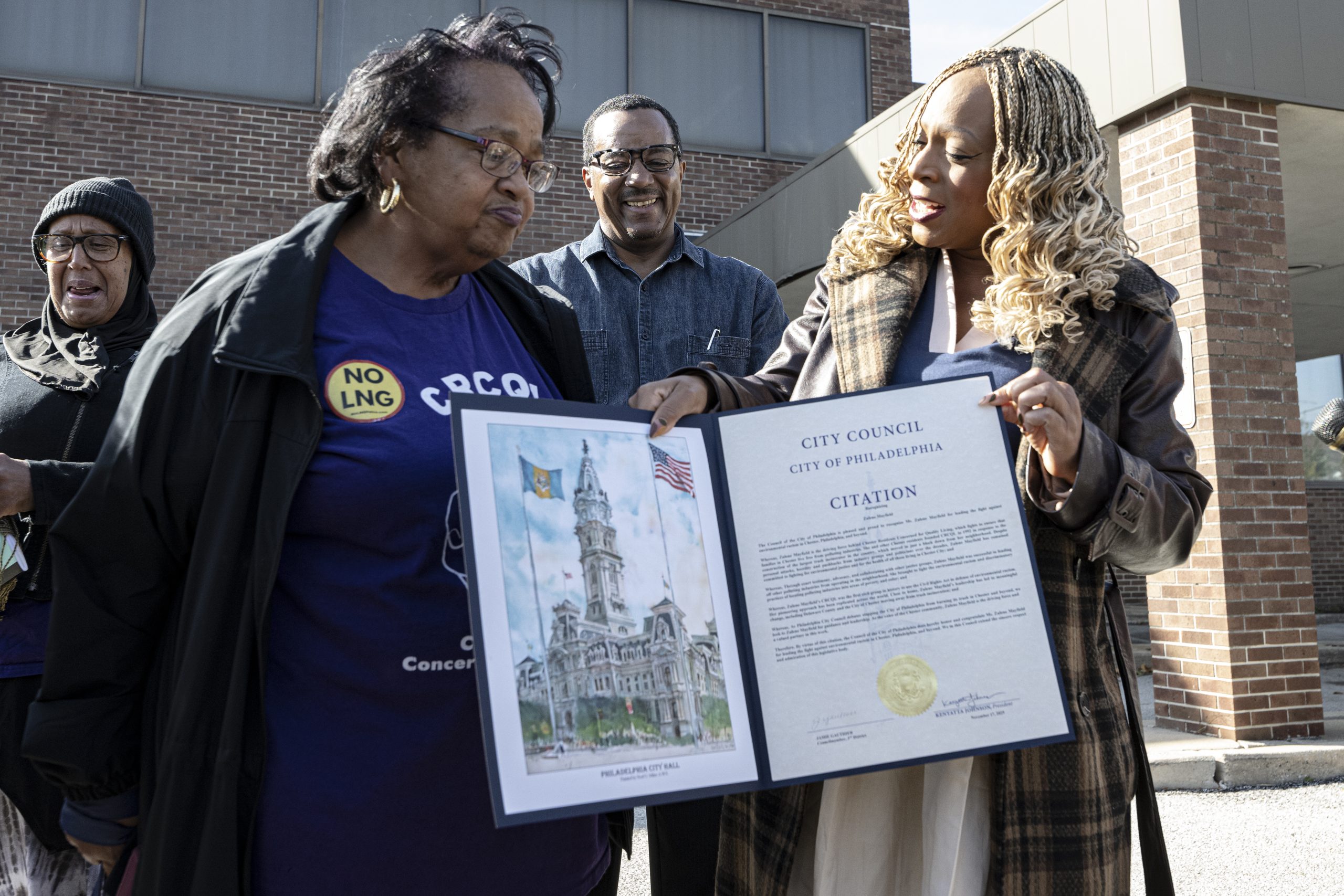
    Chester resident Zulene Mayfield, left, Philadelphia Councilmember Jamie Gauthier, right, and Chester Mayor Stefan Roots meet to discuss Gauthier’s “Stop Trashing Our Air Act,” which would ban the city from incinerating waste, during a visit with lawmakers and staff in Chester, Pa., on Friday, Nov. 7, 2025.Jose F. Moreno / Staff Photographer

    In July, the Parker administration announced that it intends to enter into a new four-year contract for waste processing and disposal with Reworld, as well as two landfill operators, Republic Services and Waste Management. The terms of those contracts have not yet been made public.

    Council must approve multiyear contracts, and Gauthier, who represents parts of West and Southwest Philadelphia, said she is planning a full-court press to get her colleagues to “block Mayor Parker’s dirty deal with trash incinerators.”

    The question is whether she can get eight other members on her side to reach a majority of Council. She is likely to find support from three fellow progressives, and she is expected to be joined by Councilmember Isaiah Thomas, the Democratic majority whip, at a Thursday news conference calling on the city to end its contract.

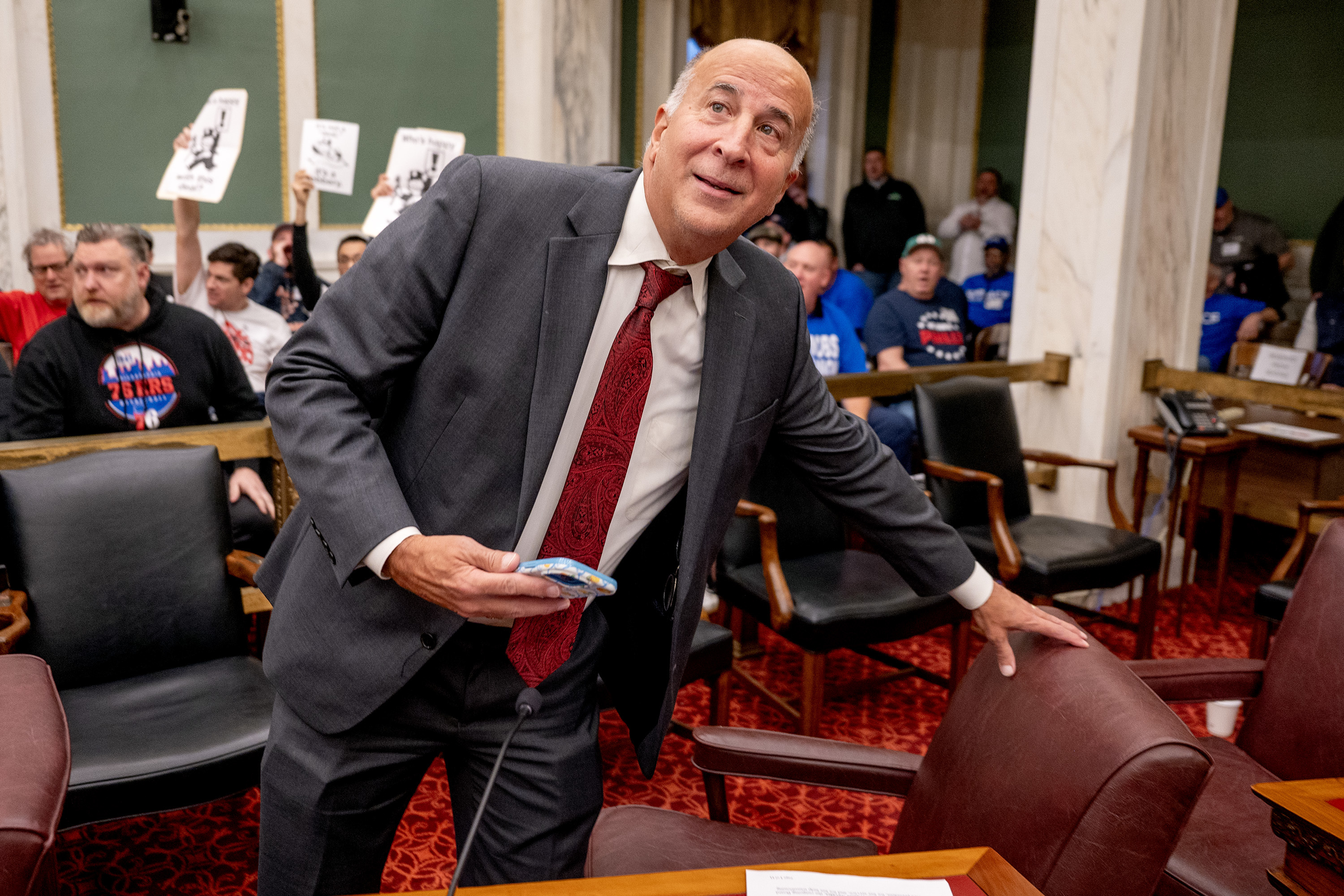
    Councilmember Mark Squilla takes his seat in chambers Wednesday, Dec. 11, 2024, before a scheduled committee vote on Sixers arena related legislation was postponed,Tom Gralish / Staff Photographer

    Meanwhile, Councilmember Mark Squilla said he has been working with the administration on a plan to build out a “circular waste” system that would replace incineration and landfilling over time with composting and waste “digestion.”

    “The incinerator bill …. doesn’t solve a problem we have: to reduce our waste,” Squilla, whose district includes parts of Center City, South Philadelphia, and the river wards, said in an interview. “If we can reduce our waste by going to composting and digestion and other forms, we then eliminate all of our trash. Therefore end up with the result of what the goal should be, [which] is to get as close as possible to zero waste.”

    Squilla’s proposal, which would involve “a long-term contract to attract providers to be able to build out a possible digester to decrease the amount of food waste,” could make it easier for Council members sympathetic to Gauthier’s goals but skeptical of her incinerator bill to approve the administration’s contract with Reworld while committing to a long-term solution.

    The business tax, revisited

    Separate from the school district revenue, some Council members are hoping to advance measures that would provide tax relief to businesses.

    Council two years ago approved a 13-year schedule of rate cuts that would dramatically reduce the business income and receipts tax. But at the same time, Parker moved to eliminate a tax break that primarily helped small businesses after its legality under the Pennsylvania Constitution was challenged in court.

    The elimination of the tax break — which excluded from taxation companies’ first $100,000 in revenue — has forced thousands of small firms and sole proprietors that make less than that threshold to begin paying a tax from which they had been effectively exempted.

    Driscoll worked with tax experts to find a workaround that could pass legal muster — exempting certain types of businesses, such as sole proprietors, from the tax entirely — and he is planning to call up for a vote his bill this fall.

    Thomas, meanwhile, said he will introduce a resolution Thursday to hold hearings this fall on the feasibility of reducing the net income portion of the business tax “much sooner” and more “aggressively,” meaning an acceleration of the tax cuts already scheduled.

    The measures are likely to spark opposition from more progressive members of Council and could be tricky to navigate for Parker, who wants to make Philly more business-friendly but may not want to forgo additional revenue.

    Members eye priorities as election looms

    With next year’s election looming — and all 17 members indicating they intend to seek new four-year terms — the fall session is also likely to see movement on a myriad of issues championed by individual legislators.

    Majority Leader Katherine Gilmore Richardson said she will propose bills to “protect communities from harmful nuisance businesses and improve processes around code violations,” continuing her efforts to crack down on businesses that neighbors say attract crime.

    Councilmember Rue Landau, who represents the city at-large, said she is “tackling the impact of emerging technologies, making Philadelphia more affordable for working people, and ensuring equity remains at the center of how we serve our LGBTQ+ communities.”

    Landau said she also plans to introduce a resolution calling on the state to ban automated license plate readers like Flock cameras.

    The Philadelphia Council members inside the caucus inside City Hall in Philadelphia, Pa on Thursday, June 11, 2026.

    And Councilmember Kendra Brooks will propose new protections for temporary workers and tenants facing eviction, according to her spokesperson, Kathleen Melville.

    Brooks, a progressive who represents the city at-large, will also fight for additional funding for reproductive healthcare providers, a priority of hers that was left out of the budget following Council’s impasse with Parker, Melville said.

    “That was her biggest focus going into the budget,” Melville said. “She had the same experience as every other Council member in that none of her budget priorities made it into the budget.”

    Several members have also said that they want to bolster the city’s property tax relief offerings after the administration this summer released its citywide assessments that will mean higher taxes for thousands of homeowners.

    The most likely move would be for Council to amend the city’s tax code to increase the popular homestead exemption, which currently exempts the first $100,000 from a home’s taxable value if the owner lives in the dwelling as their primary residence.

    Johnson said Council “will review all tax-relief options” this fall.

  • Philly developers are planning a $1.5M campaign to protect City Council from progressive challengers

    Philly developers are planning a $1.5M campaign to protect City Council from progressive challengers

    Philadelphia real estate developers see the writing on the wall.

    As progressives have toppled centrist Democrats in nationally watched races, some local development interests are wary that the same trend could reshape Philadelphia City Council this spring, when every member is up for reelection. They see a growing progressive faction as a threat to business.

    Enter the incumbent protection plan.

    Nearly a dozen local developers are already pouring hundreds of thousands of dollars into Philly For Growth, a group that in the past two Council election cycles spent millions on advertising campaigns to back business-friendly Democrats, according to a source familiar with the planning.

    Philly For Growth is an independent expenditure group, also known as a super PAC. It can raise and spend unlimited amounts of money to influence an election, but there are rules barring super PACs from most forms of coordination with the candidates they support.

    In 2023, the group was the biggest special interest group involved in that year’s Council races, and it provided a substantial boost to its chosen candidates by outspending individual campaigns.

    Ahead of the May primary election, Philly For Growth plans to spend $1.5 million to support pro-business Democrats, most of whom are sitting Council members, according to the source, who spoke on the condition of anonymity because they were not authorized to discuss the plans. The group will not fund negative advertising about Council’s four incumbent progressives, the source added.

    Councilmember Kendra Brooks, of the progressive Working Families Party, speaks during a rally outside of the School District of Philadelphia headquarters in May. At left is Councilmember Rue Landau and at right is Councilmember Jamie Gauthier. All three are members of Council’s progressive faction.Monica Herndon / Staff Photographer

    The idea is to keep progressives from growing their power on Council instead of spending money to knock off the leftists who are already there. There are currently four reliably progressive votes out of the total 17 on Council, but some members may be more likely to vote with that faction as Democratic voters nationally revolt against incumbents.

    That’s a different strategy than in 2023, when Philly For Growth backed a slate of five candidates — two incumbents and three challengers. Both incumbents won, but all three challengers lost.

    Philly For Growth has previously been affiliated with the Building Industry Association of Philadelphia, an advocacy group for development interests. Mo Rushdy, the BIA’s former president who leads the organization’s political activity, declined to comment.

    The source said that Philly For Growth will fund advertising to support Council members Mark Squilla, whose 1st District includes parts of South Philly, Center City, and Fishtown; Cindy Bass, whose 8th District is based in North and Northwest Philadelphia; and Quetcy Lozada, whose 7th District includes much of North Philadelphia and Kensington.

    All three are seen as more centrist members and have said they intend to run for reelection. No challenger has officially launched a campaign against any of them, but candidates who are aligned with the city’s left-leaning political organizations are expected to emerge as the primary — still eight months away — draws nearer.

    The super PAC is making one exception when it comes to supporting incumbent district Council members, the source said. In the 5th District, currently represented by Councilmember Jeffrey Young Jr., the group will support a to-be-decided challenger.

    Councilmember Jeffery Young Jr. speaks to other members of Council during a 2025 session.Tom Gralish / Staff Photographer

    At least five people have said they are interested in running for the North Philly-based 5th District seat, and Young has drawn opposition from development interests for pushing proposals that would slow or halt some projects in his district.

    Young said in a statement that building “sensible, affordable housing” is one of his top priorities and that he has supported city programs like Turn the Key, which provides mortgage support to first-time homebuyers.

    “People are free to back those who share their values. These are my values,” Young said. “I am leaving it to the residents of the 5th to determine whose values best reflect them.”

    The super PAC will also fund advertising backing four incumbent members who represent the city at-large: Isaiah Thomas, Katherine Gilmore Richardson, Jim Harrity, and Nina Ahmad. That group doesn’t include progressive at-large Councilmember Rue Landau, but Philly For Growth doesn’t plan to oppose her, the source said.

    Council President Kenyatta Johnson laughs inside the caucus inside City Hall on June 11.Aidan T. Gallo / Staff Photographer

    A spokesperson for Landau’s campaign arm said in a statement that the Council member “stands by her accomplishments for working people, small businesses and vulnerable communities in Philadelphia and looks forward to voters having the opportunity to make up their own minds next year.”

    It’s unclear just how competitive the at-large race will be, and candidates have until the spring to decide — nomination paperwork is typically due in March. Seven of Council’s members represent the entire city at-large, and two of those seats are effectively reserved for members of minority parties under the city’s Home Rule Charter.

    That has traditionally meant that five seats are held by Democrats, given the party’s massive voter registration advantage in the city. In recent years, Republicans and the progressive Working Families Party have battled for the remaining two seats during the fall general election, and the WFP currently holds both.

    Mayor Cherelle L. Parker, who is also up for reelection, and Council President Kenyatta Johnson, who insiders do not expect will see a serious challenger, will likely be on Philly For Growth’s slate, too, the source said.

  • Welcome America Inc.’s new interim CEO is local PR executive Nicole Cashman

    Welcome America Inc.’s new interim CEO is local PR executive Nicole Cashman

    Welcome America Inc., the nonprofit behind Philly’s Wawa Welcome America festival, has named Philly public relations executive Nicole Cashman as its interim CEO.

    The founder and CEO of communications firm Cashman & Associates, Cashman will follow Michael DelBene, who served as CEO since 2019 and grew the July Fourth festival and other large-scale events to new heights and a wider audience. DelBene left the organization earlier this year.

    Cashman & Associates has worked with Welcome America Inc. for 25 years as its marketing and communications arm. This long-standing relationship and intimate knowledge of the organization led to the decision to name Cashman as the new CEO, officials said.

    “Nicole has spent her career helping tell Philadelphia’s story and bringing people together around the experiences that make our city extraordinary,” said Mayor Cherelle L. Parker, who chairs the Welcome America board of directors. “Nicole understands the important role Welcome America plays in our city, creating moments that bring together our communities, welcome visitors, and showcase Philadelphia on a national and international stage.”

    Fireworks over the Philadelphia Museum of Art and the statue of George Washington at Eakins Oval during the Wawa Welcome America Festival on July 4, 2023 following a free concert featuring Demi Lovato and Ludacris on the Benjamin Franklin Parkway.

    Cashman founded her agency in 2001 and has accumulated a portfolio of some of the city’s high-profile agencies and events, including Comcast, Adventure Aquarium, and Philabundance. She has also served in leadership roles at Atlantic City Alliance and Visit Philadelphia.

    The PR exec will join Welcome America as it transitions between CEOs and prepares for the coming year’s slate of celebrated civic events and cultural experiences. Welcome America is a public-private partnership that receives city and state funding as well as corporate sponsorships. Parker and City Councilmember Mark Squilla are board members.

    “I have had the privilege of working alongside Welcome America for 25 years and have seen firsthand the extraordinary impact this organization has on Philadelphia and the region,” Cashman said. “… Welcome America means a great deal to me, and I’m excited to help guide it through this next chapter as we reimagine the organization for 2027 and beyond.”

    Welcome America will look for a permanent CEO, Cashman said, as she will not fill the position long term, just during the period between DelBene and the nonprofit’s next executive leader.

    “Michael set the bar high. He was great to work with and I have enormous respect for what he accomplished — I want to build on that success,” Cashman said.

    She will enter the role on the heels of the city’s decision this year to take over Philly’s Fourth of July concert and fireworks from Welcome America for the first time since 1993. The Parker administration ended up paying around $12 million more for its July Fourth concert than Welcome America’s $3 million budget of years past. Parker’s “One Philly: Unity Concert for America,” a reference to her “One Philly: A United City” slogan, was slated to go much later into the night than previous years — a move some residents criticized as “not a family-friendly decision.”

    Despite storm delays pushing the celebration into the early hours of July 5, ending around 2:50 a.m., the crowds that stayed experienced Will Smith, the Roots, Meek Mill, and an extravagant fireworks display.

    Cashman could not say who would run 2027’s Fourth of July concert but did say Welcome America would surely be a part of the 16-day festival thrown each year.

    Besides the Fourth of July festival, Welcome America also oversees the city’s official holiday tree in Dilworth Plaza. The 55-foot concolor firs, planted decades ago and brought into Philly each December, serve as a meeting place for holiday shopping and traditions, amid the Christmas Village and other attractions scattered around City Hall.

    This holiday celebration is what Cashman and Welcome America are moving full steam ahead on, with planning already underway, she said.

    “We know how important this level of programming around the holidays is to the city, our partners, the public, and visitors,” Cashman said. “So I’m really focusing on finalizing those plans, and that is our primary focus for the remainder of 2026.”

  • A newly formed nonprofit is trying to shut down a Gayborhood bar, claiming it’s a ‘public nuisance’

    A newly formed nonprofit is trying to shut down a Gayborhood bar, claiming it’s a ‘public nuisance’

    Editor’s note: This story was updated to include information from an interview conducted with Michael van der Veen and William Brennan after the story was published. van der Veen, Brennan, and their attorney, George Bochetto, did not responded to multiple interview requests in the days leading up to publication.

    A newly formed local group sued the Gayborhood’s Bar X this month, alleging it is a public nuisance. The group wants to shutter the decade-old business, whose clientele is largely Black.

    The lawsuit asks a Philadelphia Common Pleas Court judge to order the Camac Street bar to cease operations. It arrives at a time of increased police presence on the nightlife strip and heightened tension between the city’s Black LGBTQ+ community and police.

    Bar X has “repeatedly generated excessive noise, disorderly conduct, disturbances, violence, public intoxication” and requires a constant police presence, the complaint says. It also claimed neighbors have observed “public displays of drunkenness and sexual activity” outside the bar.

    The city failed by maintaining the establishment’s business license, the suit says, urging a judge to revoke it.

    Behind the lawsuit is Michael van der Veen, a 62-year-old high-profile Center City lawyer whose office is in the building across from Bar X on Camac Street.

    The bar has been using the office’s parking spot for years, van der Veen said, despite repeated requests to remain off the lawyer’s private property.

    But things escalated in July when, according to van der Veen, he was assaulted while leaving his office around 9 p.m. at night.

    “When I got jumped from behind and got coldcocked, I was done,” he said.

    Days later, veteran criminal defense lawyer William Brennan incorporated Save Our Neighborhood for Tomorrow Inc., the group that filed the lawsuit against “the dive bar of the Gayborhood,” as Bar X pitches itself.

    “This changed when passive-aggressive behavior became assaultive-aggressive behavior,” Brennan said. “It can’t be tolerated.”

    Brennan and van der Veen have previously worked on high-profile cases together, including on President Donald Trump’s defense team during his second impeachment in 2021.

    The duo also represented the Trump Organization in a 2022 tax-fraud trial in New York City.

    Save Our Neighborhood for Tomorrow does not appear to have a website or social media presence.

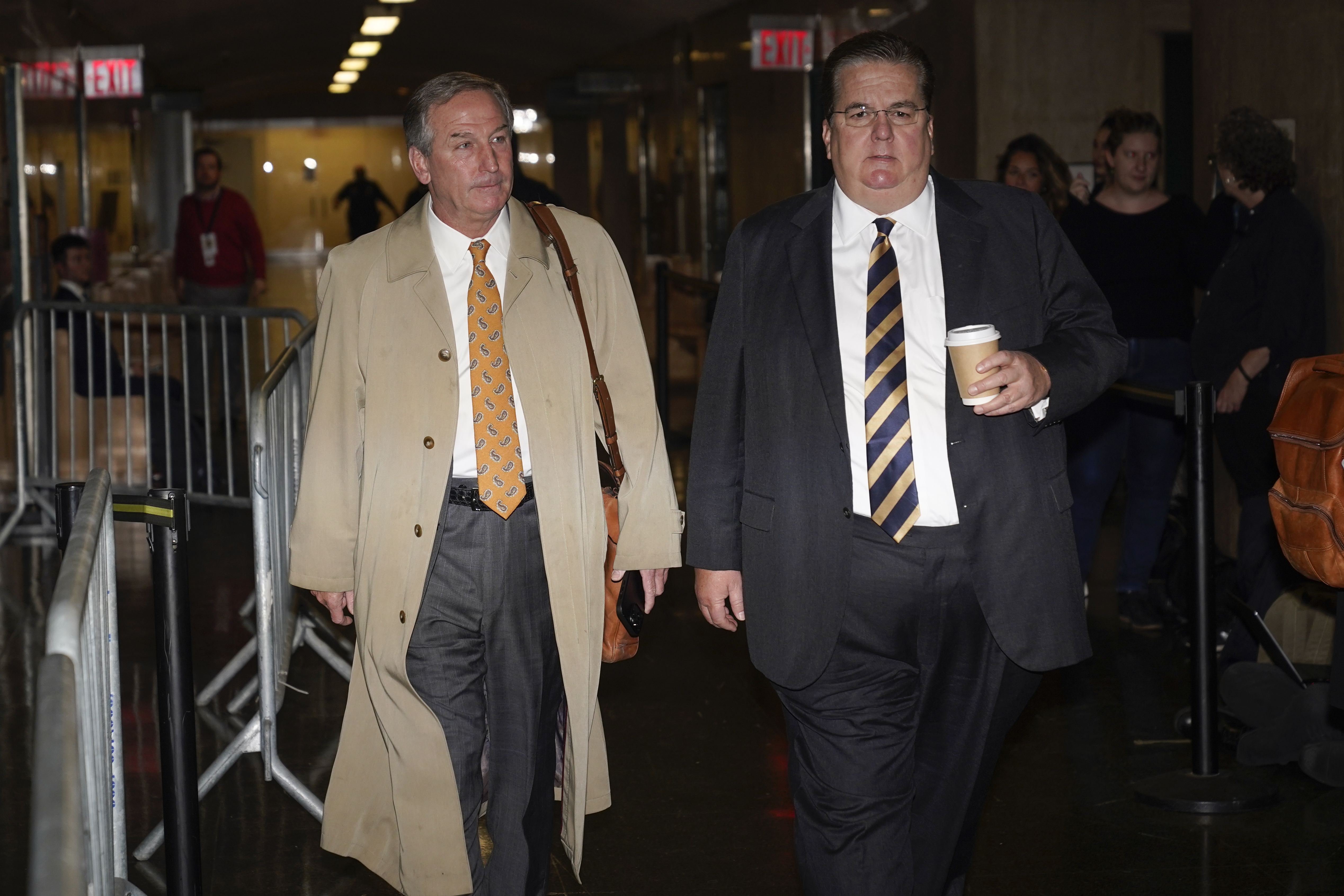
    Defense attorneys Michael van der Veen, left, and William Brennan arrive to criminal court in New York in 2022 for Trump’s tax fraud case. Seth Wenig

    George Bochetto, the attorney who filed the lawsuit on behalf of the newly formed group, did not respond to repeated requests for an interview. Bochetto is also representing a different group of Pine Street and Spruce Street residents who won an injunction to pause safety upgrades to bike lanes.

    The lawsuit against Bar X names owner Tony Tsang, business entities associated with the bar, the city, and the commissioner of the Philadelphia Department of Licenses and Inspections, Bridget Collins-Greenwald. The city did not respond to requests for comment.

    Tsang disputed the allegations of public drunkenness and sexual activity and said the bar is a longtime fixture of the block.

    “You don’t like it, you like it quieter, how come you don’t move out of the city?” Tsang, 59, said in a recent interview at the bar. “One block, three bars, how come they’re only complaining about us?”

    A ‘very homey’ gay bar

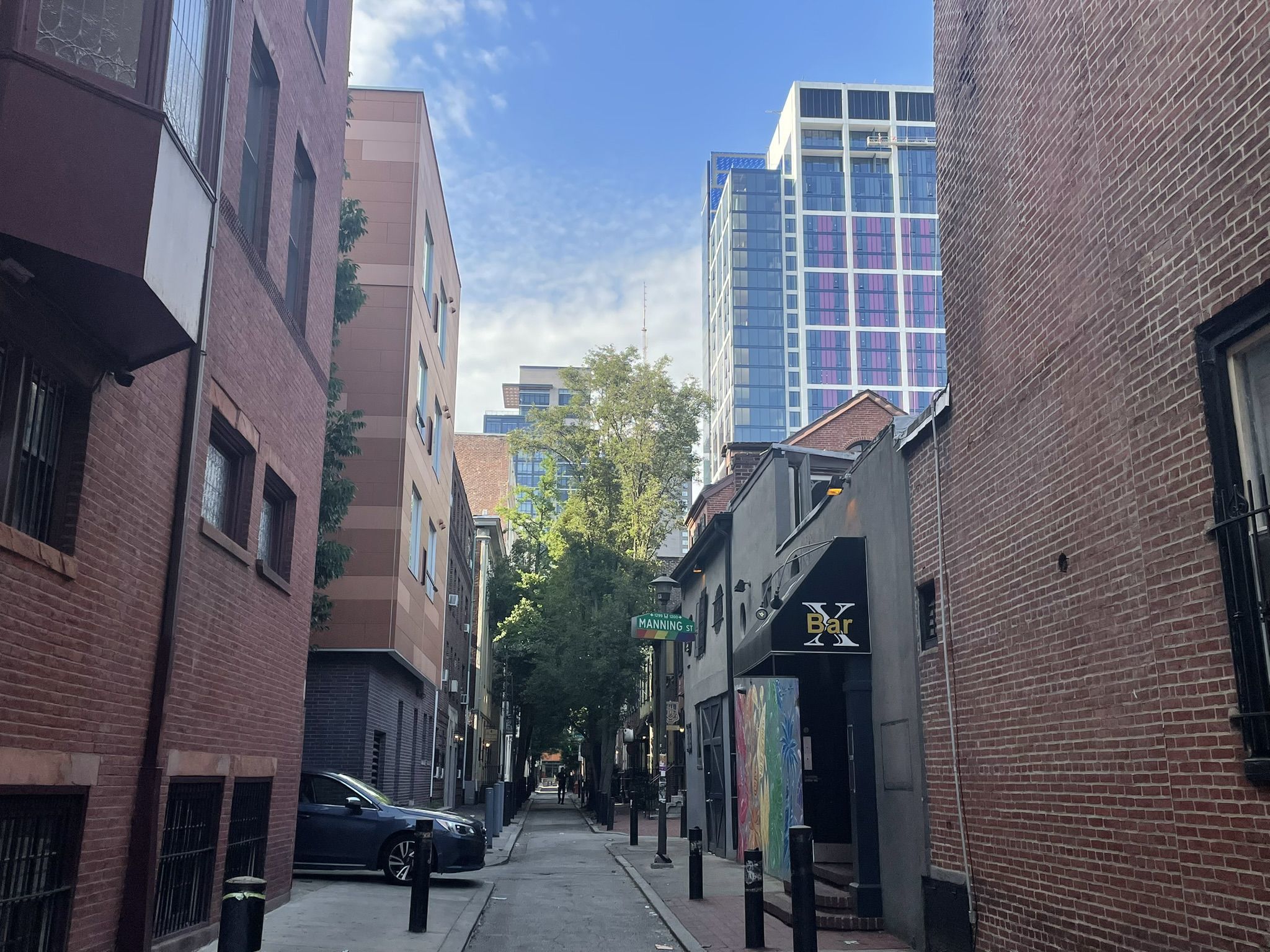
    Bar X sits between Locust and Spruce on Camac, a narrow, 200-year-old street that is home to two other gay bars, Tavern on Camac and UBar. It is also around the corner from the bar 254, which replaced Tabu. Those three bars are all owned by the Tavern Group.

    Tsang said the majority of his clientele is Black and suggested that the lawsuit had more to do with his identity and that of his patrons than the noise or disturbance allegations.

    “To me, it’s the color. I’m Asian. My English isn’t too good. They want to play a game with me,” Tsang said.

    Tsang opened his bar in 2016, naming it Bar X so it would be easy for people to remember. The bar’s exterior features a rainbow mural of tropical leaves; inside Tsang hung Ikea posters of Audrey Hepburn and James Dean. He said he stocks the bar himself, buying whatever club soda is on sale at the supermarket.

    The bar has a large dance floor and a DJ booth that abuts the alley.

    Bar X occupies the former location of the Venture Inn, a landmark institution that opened in the 1930s and transformed over the decades from a gay-friendly bar to a gay bar in the 1970s. The property was sold in late 2015 and the Venture Inn closed.

    Joseph Ward, a part-time bartender at Bar X who also runs its social media and marketing, said the bar stands out because it’s “very homey,” with Taco Tuesdays and twice-weekly karaoke. (There’s also a male revue every Thursday night.)

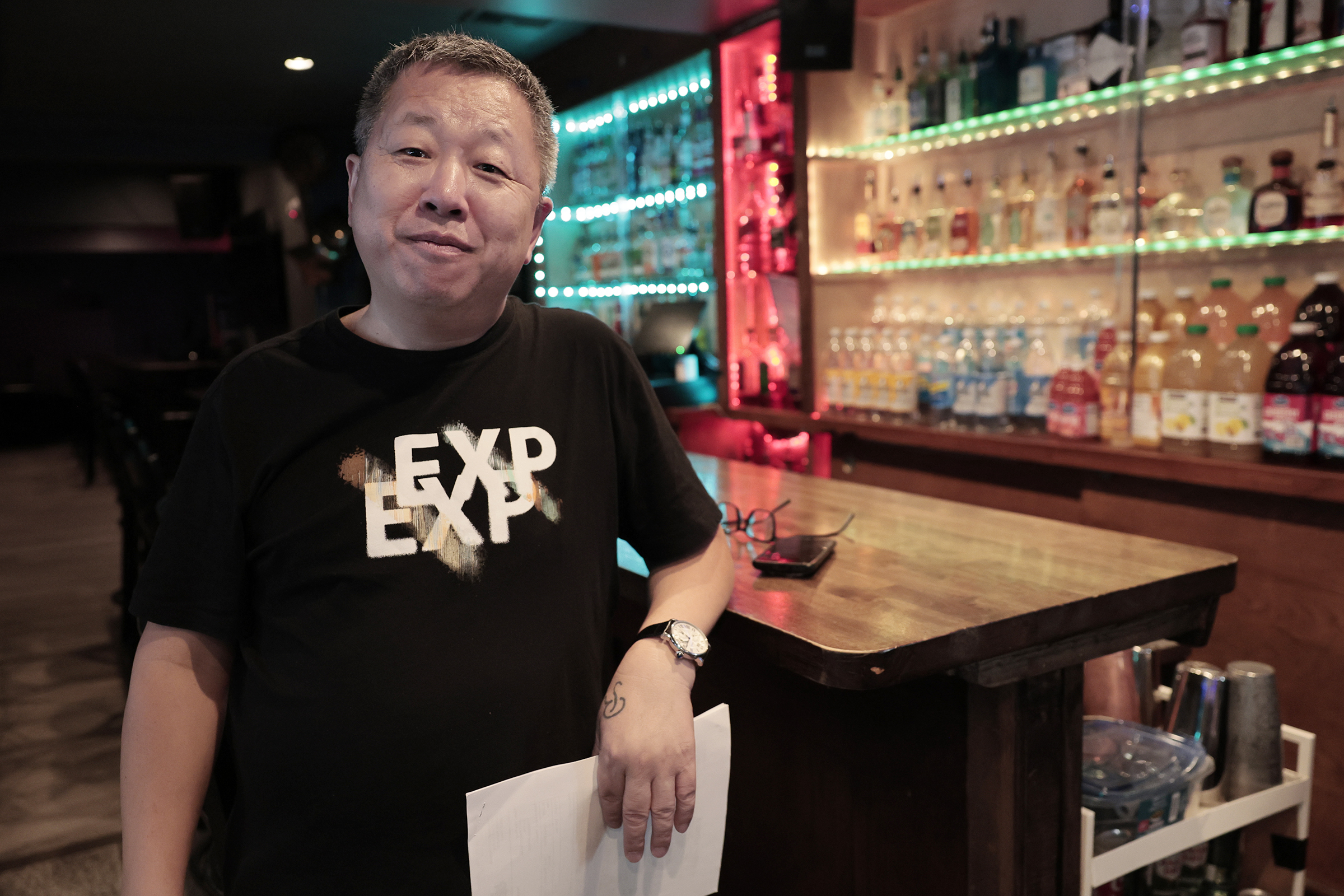
    Bar X owner Tony Tsang said he stocks the bar himself with whatever club soda is on sale at the supermarket.Elizabeth Robertson / Staff Photographer

    “You [can] just chill and not have to worry about the hustle and bustle of a nightclub,” Ward, 36, said. He said the bar is one of the last minority-owned clubs in the Gayborhood and hosts a largely nonwhite crowd.

    The lawsuit cites negative Google reviews from people purporting to be Bar X customers, including accounts of stolen phones and allegations that a bartender gave patrons drinks containing sedatives.

    The remedy to the situation, the suit says, is for the city to shut down the bar.

    Ward said that rumors of drugged drinks at the bar had gained traction online earlier this year, but that staff had not been able to verify any crimes, despite reaching out to those making the accusations. In response, the bar ordered covers for customers’ drinks.

    “We take pride in it being a safe place in the Gayborhood,” Ward said, “so we obviously want to keep it that way.”

    A new police deployment

    Bar X’s block has seen an increase in crime incidents this year, according to Philadelphia Police Department public data.

    The lawsuit claims that since last summer there have been nearly 70 crime incidents at the property, including “multiple reports of a person with weapons, assaults, robbery, and disorderly conduct.”

    <iframe title="Crime Incidents On Bar X's Block" aria-label="Column Chart" id="datawrapper-chart-LCiYX" src="https://datawrapper.dwcdn.net/LCiYX/1/" scrolling="no" frameborder="0" style="width: 0; min-width: 100% !important; border: none;" height="477" data-external="1"></iframe><script type="text/javascript">(function(){function e(){window.addEventListener(`message`,function(e){if(e.data[`datawrapper-height`]!==void 0){var t=document.querySelectorAll(`iframe`);for(var n in e.data[`datawrapper-height`])for(var r=0,i;i=t[r];r++)if(i.contentWindow===e.source){var a=e.data[`datawrapper-height`][n]+`px`;i.style.height=a}}})}e()})();</script>

    In April, the Washington Square West Civic Association hosted a meeting with residents, city officials, and Tsang in an attempt to address neighborhood complaints. Councilmember Mark Squilla, who represents the area and attended the meeting, estimated that more than 40 people attended.

    In response, the city experimented with one-off street cleanings of Camac to address litter, Squilla said. Police also began clearing the street of people on weekend nights after 2 a.m., when the bar closes.

    “We’ll continue to work on compliance and whatever else is needed there,” Squilla said.

    A Philadelphia Police Department spokesperson confirmed there is currently a “bar/nightclub” deployment in the bar’s general area. The department has used similar deployments throughout the city for decades to respond to community concerns and public safety needs, Sgt. Eric Gripp said in a statement.

    Allegations of aggressive crowd control

    The enhanced law enforcement presence there comes at a time of high tension between the city’s LGBTQ+ community and police. Earlier this month, City Council members grilled Police Commissioner Kevin Bethel over the department’s response during Pride festivities in June. Pride attendees testified at the hearing that the most aggressive crowd-control tactics were used on crowds of Black celebrators.

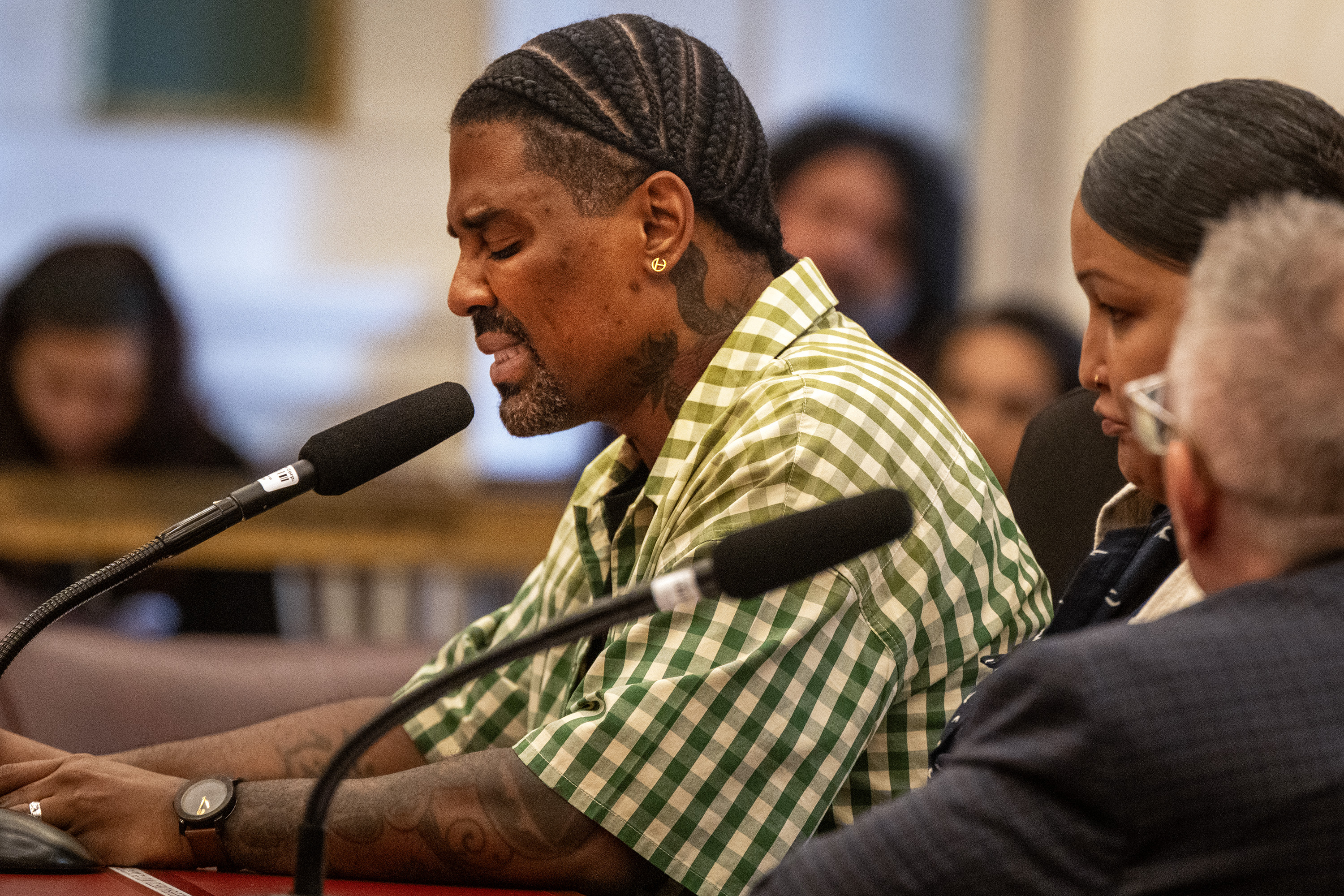
    Jacen Bowman, president of Philly Black Pride, testified earlier this month at a City Council Committee on Legislative Oversight hearing into the Philadelphia Police tactics used during Pride celebrations in June.Tom Gralish / Staff Photographer

    “Black and brown LGBTQ+ people are watched differently. We are approached differently. We are policed differently,” Jacen Bowman of Philly Black Pride said at the hearing. “Too often we are made to feel like visitors in a neighborhood that is promoted as the heart of Philadelphia’s LGBTQ+ community.”