Tag: Marcellus Shale

  • Why do Pennsylvania elected officials want to take my family’s mineral rights from us?

    Why do Pennsylvania elected officials want to take my family’s mineral rights from us?

    Twenty-five years ago, my father handed me an envelope filled with documents. As he passed it to me, he said, “Now you’re in charge of the mineral rights.”

    Before my father, the envelope had been entrusted to my Uncle Peter, who, in turn, had received it from my grandmother. The contents represented everything our branch of the family possessed relating to mineral rights bequeathed by my grandmother’s great-grandfather, Jonathan Thorne.

    Jonathan’s estate plan reflected remarkable foresight. He instructed his executor to sell his land at a discount so he could retain the ownership of the oil, gas, and minerals beneath it for future generations. Each deed that went to the buyers of these properties included a clause showing they were purchasing only the surface property, and not the mineral rights.

    My father handed me that envelope in 2001, seven years before the Marcellus Shale boom. This is not a story with a happy ending about families passing down a legacy from hardworking forebears. Instead, it is something every Pennsylvanian should be shocked by and want to stop.

    We discovered that an out-of-state entity was making claims to our rights. It claimed to have purchased tens of thousands of acres of Pennsylvania mineral rights in 2000 for a total of $1. Their unwarranted claim was based on a distorted interpretation of a legal theory called “title washing.”

    Others, including the Proctor family, faced a strikingly similar predicament: They had retained their valuable mineral rights and followed the law, only to find that other groups were now claiming them.

    Like my family, the Proctors traced their ownership back generations. After preserving their mineral rights, most of their surface property ended up with the Pennsylvania Game Commission. The Game Commission knew through its own deeds and title research that it was buying only the surface. The mineral rights remained separate. Yet, 100 years after the fact, they sued the Proctors to try to take those rights — twice.
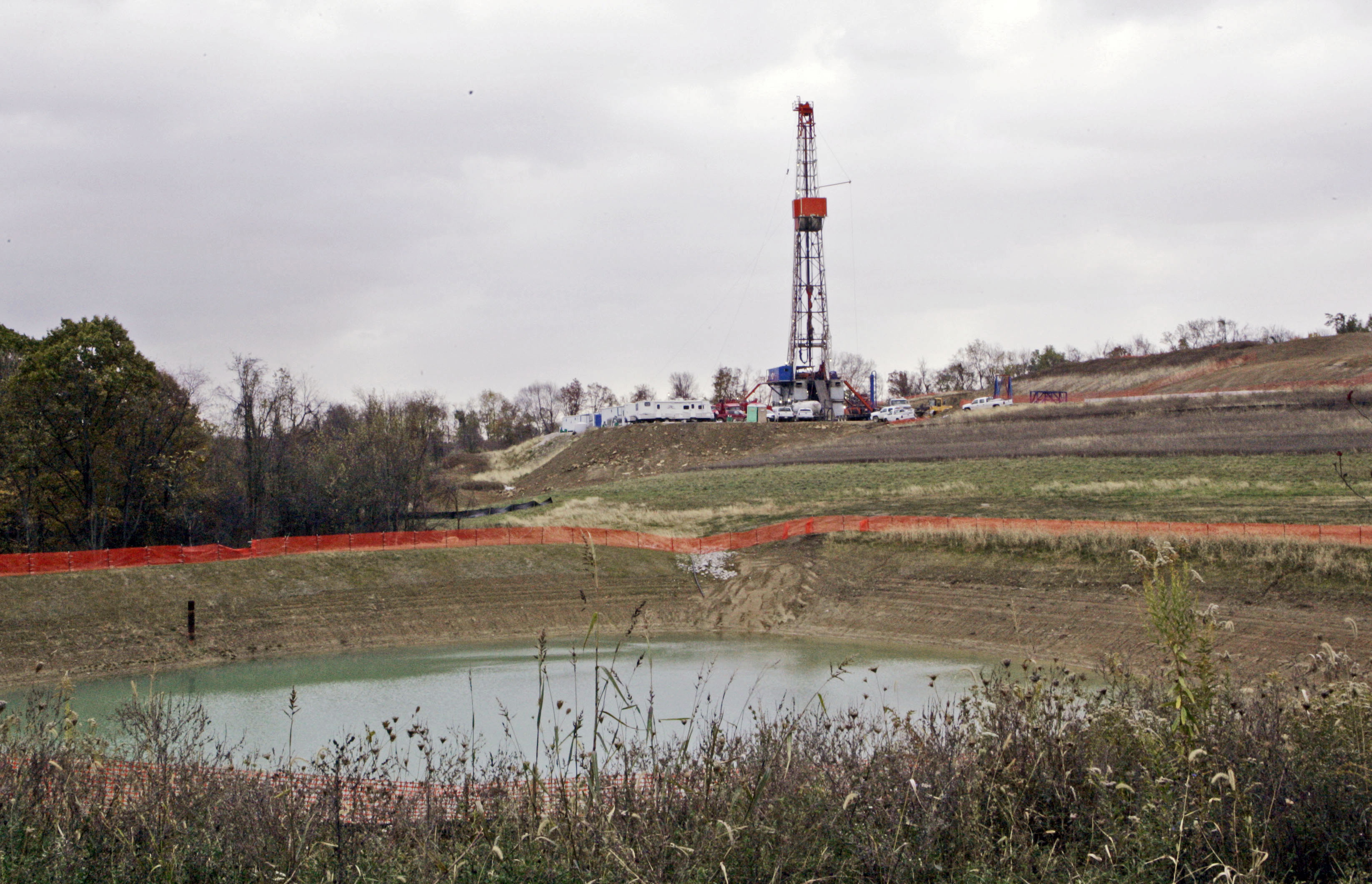
    In this 2008 photo, a drilling rig used to extract natural gas from the Marcellus Shale, located in the Washington County borough of Houston, Pa.Keith Srakocic

    The Game Commission, coincidentally, from rights it does own, is already one of the largest developers of shale gas in the state. It has a reserve balance of $500 million from drilling revenue. That is quite a war chest to sue families for the rights it doesn’t own.

    Last year, however, the Pennsylvania Supreme Court unanimously ruled in the Proctor family’s favor, confirming that they continued to own their mineral rights, even noting that the scheme “if not positively fraudulent, is at any rate an attempt to evade the law, to which the courts will lend no countenance.”

    That should have been the end of the story for all our families.

    Instead, Pennsylvania lawmakers quietly inserted a provision into an unrelated property tax bill that retroactively changed the law and effectively overturned the court’s decision. Late in the evening of Saturday, July 11, an amendment changing pre-1947 tax laws was introduced in the Senate. It passed the legislature and was quickly signed into law by Gov. Josh Shapiro the very next day.

    Stunningly, there were no hearings or opportunities for affected families to speak out. Pennsylvania taxpayers (and much of the legislature) had little opportunity to understand what the amendment even meant and what was at stake.

    Now the only way to assure rightful ownership is to go back to court and fight again, not only over property rights that were already settled, but also over whether a government can retroactively change laws to benefit certain parties and take property the Supreme Court had already ruled belongs to families like mine.

    That is deeply troubling.

    The Proctor family spent more than 10 years in litigation and won. Yet, lawmakers, the governor, and certain oil and gas interests decided that wasn’t the outcome they wanted. The Game Commission, in close coordination with those energy firms, started this fight. It lost. Families like ours should not have to spend the next 10 years relitigating.

    The General Assembly can undo this harm. It can reverse this retroactive change to tax laws and ensure these properties are not taken from families who have owned them for generations. If not, we are all targets of this wrongheaded move. If they are willing to rewrite property laws to effect transfers to the state, no one’s property is safe.

    What happened to my family is, I believe, unconstitutional. The litigation created by this secretive 24-hour rapid legislation approval process could end up costing Pennsylvania more than $1 billion if it is forced to reimburse families for property taken from them. That’s also not fair to state taxpayers.

    Pennsylvania can do better. We can protect resources, support responsible energy development, and safeguard public lands without sacrificing the basic principle that private property rights mean something.

    Jeff Sloan is a member of the Thorne family and lives in Berwyn.
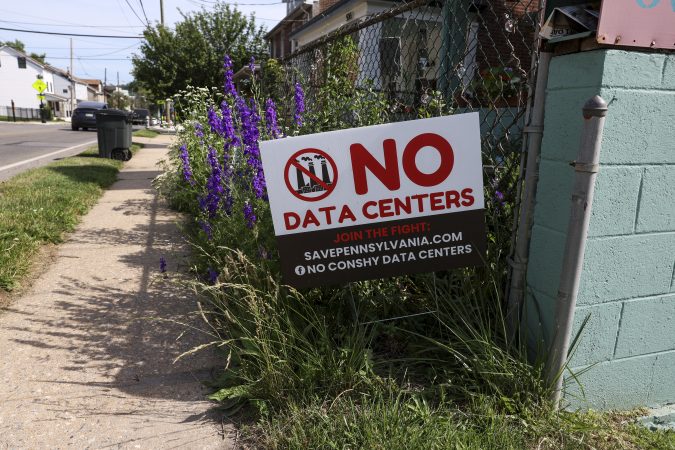
  • A new federal ‘Data Center Bill of Rights’ took lessons from Philly suburbs and Western Pa. fracking country

    A new federal ‘Data Center Bill of Rights’ took lessons from Philly suburbs and Western Pa. fracking country

    WASHINGTON — A new federal proposal to enact protections for communities opposed to the proliferation of data centers has drawn inspiration from both the Philadelphia suburbs and Western Pennsylvania fracking country.

    The Data Center Bill of Rights is one of several national efforts to address a growing dissatisfaction with data centers, which have so far faced few restrictions at either the federal or state level in Pennsylvania.

    U.S. Rep. Ro Khanna, a California Democrat and Bucks County native considering running for president in 2028, said his home state should be doing more.

    He introduced the federal legislation after a recent tour across Pennsylvania that he said was designed to hear from communities that have lost manufacturing jobs and other economic opportunities.

    Data center concerns came up more than any other issue, he said — leading him to incorporate new ideas into the bill he already had in the works, and to call for a pause on data center development in Pennsylvania until further protections and local controls are enacted.

    A statewide pause would be more than what Gov. Josh Shapiro — another potential 2028 Democratic contender — has proposed as he seeks to enact data center guidelines. It would also be less than other Democrats, both in Pennsylvania and nationally, who have called for more robust moratoriums. Shapiro’s Republican challenger this year, Treasurer Stacy Garrity, has also called for a pause but not for an extended moratorium.

    “I was surprised by the anger about it in Pennsylvania,” Khanna said in an interview after his 15-county tour. “In other states, people are sometimes opposed in local communities, local pockets. But not this widespread anger.”

    Khanna, a Council Rock High School graduate who has represented Silicon Valley in Congress since 2017, spoke about the Data Center Bill of Rights during his tour but said afterward that it was “partly inspired” by the concerns he heard in the communities similar to the ones where he grew up.

    He said he was alarmed by the complaints he heard outside Philadelphia, where five data centers have been proposed in close proximity to each other in King of Prussia and another 2-million-square-foot data center is proposed in Conshohocken.

    “As a kid, I used to go to Conshohocken and the King of Prussia Mall. I’m familiar with that area,” Khanna said. “You can’t ride roughshod over what Delaware County wants or when Montgomery County wants.”

    The legislation would declare that communities have the right to reject data centers through a “transparent community process” or allow them with specific protections. That includes demanding that data centers don’t lead to higher electricity rates, that they use renewable energy sources and disclose their water consumption, and “pay their fair share of state and local taxes.”

    State Rep. Chris Rabb (right) joins U.S. Rep. Ro Khanna (left) Tuesday, July 28, 2026, as he stops on his “Made in PA: New Economic Patriotism Tour” at the City Institute Library on Rittenhouse Square.Tom Gralish / Staff Photographer

    One specific provision, Khanna said, was informed by his visit in Washington County with individuals who are paid to host natural gas wells on their properties. It was there that he said he learned of community demands for oil and gas well sites to be at least 2,500 feet from residences. That buffer was a recommendation from a 2020 grand jury report released by Shapiro when he was serving as attorney general and that outlined health and safety issues caused by fracking in the Marcellus Shale region.

    The recommendation was not followed, and advocates are continuing to push for extending the buffer from the current distance of 500 feet, according to Inside Climate News.

    Khanna’s bill of rights would call for data centers to be built no closer than 2,500 feet from residences, schools, childcare facilities, hospitals or nursing homes. He said the environmental and health hazards for data centers aren’t the same as fracking but they should be kept at a distance from communities that don’t want to live directly next to them.

    “At least they were offering royalty checks in the cases of fracking,” Khanna said. “[Data center developers are] not even giving the communities checks. It’s just kind of like, ‘OK, we’re going to build.’ What does the community get out of it? I literally don’t understand it.”

    Data center advocates have argued their development is critical in winning an artificial intelligence war with China, and that they will bring construction and some skilled jobs to communities that need them.

    Even the staunchest advocates, though, have acknowledged the public blowback.

    “I do think that data centers in Pennsylvania have raised legitimate concerns,” U.S. Sen. Dave McCormick (R., Pa.) said during a recent telephone town hall as he continued to promote them in the competition with China and their creation of “thousands of jobs.”

    When developers are making their pitch, McCormick said they should come with commitments to protect energy costs and overuse of water, use local labor, invest in the community and pay taxes.

    “That should be part of the deal up front,” McCormick said during the telephone town hall in late July. “With all those facts, then the local community can decide whether they want the data center or not. And if they choose not to, that’s their choice.”

    Khanna said he’s hoping for bipartisan support as he introduces the bill of rights idea. He’ll also be competing with other proposals — like one from fellow progressives U.S. Rep. Alexandria Ocasio-Cortez (D., N.Y.) and U.S. Sen. Bernie Sanders (I., Vt.) called the AI Data Center Moratorium Act. The bill would enact an immediate federal moratorium on data center construction until other safeguards are passed into law, including some of the ideas Khanna and McCormick have proposed, like around utility costs.

    Several Pennsylvania state-level laws have been proposed, though the legislature did not address them during its busy budget season earlier this spring and summer. Lawmakers also left Harrisburg without ending tax breaks aimed at incentivizing data center construction even though the idea had garnered widespread support.

    “They shouldn’t be getting these tax breaks to build,” Khanna said. “That’s absurd when you’ve got hyperscalers that are making trillions of dollars.”

    The fact that many of those ultra-wealthy corporations are based in his district made the issue a politically dicey situation for him, but also one that the possible presidential hopeful said he was willing to take on.

    “We’ve got to pause it in states like Pennsylvania,” Khanna said. “Some of my own constituents aren’t going to like that.”

  • Liquid natural gas export facility planned for Eddystone provokes an environmental fight

    Liquid natural gas export facility planned for Eddystone provokes an environmental fight

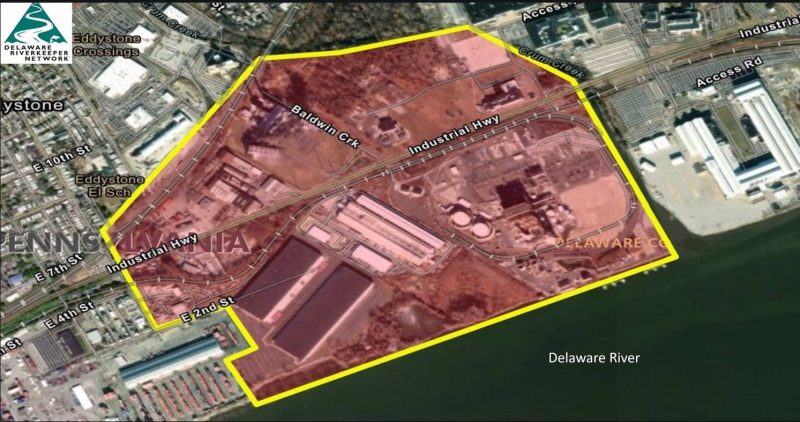
    Two environmental activist groups say they plan to organize resistance against a plan to build a liquefied natural gas (LNG) export facility in Eddystone, a small borough in Delaware County.

    They say the facility would threaten not only the environment, but also public safety.

    The Delaware Riverkeeper Network and Chester Residents Concerned for Quality Living (CRQL) said during an online meeting Wednesday that documents show negotiations have been happening behind closed doors for more than a year.

    They cited a newly released tranche of documents that show the plan has progressed with nondisclosure agreements (NDAs) with state officials.

    More than a year ago, U.S. Sen. David McCormick (R., Pa.) wrote an opinion piece in the Washington Times publicly announcing the $7 billion project by Penn America Energy to build the terminal along the Delaware River in Eddystone.

    Details have been scant, but nearby communities such as Media have stated opposition to the terminal.

    Tracy Carluccio, deputy director of the nonprofit Delaware Riverkeeper Network, said the documents show that the administration of Pennsylvania Gov. Josh Shapiro and Eddystone officials have been talking to, or in negotiations with, a developer for at least a year.

    (function(){function e(){window.addEventListener(`message`,function(e){if(e.data[`datawrapper-height`]!==void 0){var t=document.querySelectorAll(`iframe`);for(var n in e.data[`datawrapper-height`])for(var r=0,i;i=t[r];r++)if(i.contentWindow===e.source){var a=e.data[`datawrapper-height`][n]+`px`;i.style.height=a}}})}e()})();

    The environmental groups say Eddystone Borough officials initially denied open records requests about those negotiations, prompting a yearlong legal mediation.

    The planned facility aims to produce 7.2 million tons of LNG per year from Pennsylvania’s rich Marcellus Shale deposits, Carluccio said, based on a presentation by Penn America to Eddystone Borough on March 7 that was obtained through a records request.

    “There have been no public meetings or public disclosure about the proposed project,“ she said, adding that “the public knows nothing about this, and Eddystone Borough knows all about it.”

    Carluccio said nondisclosure agreements (NDAs) and confidential meetings involving high-level state and local officials have helped shield the project from public scrutiny.

    The Pennsylvania Department of Environmental protection said it had not had any pre-application meetings regarding a proposed LNG export facility and no permits for such a facility are under review.

    In a statement from Eddystone Borough, officials said they are aware of the “public discussion” regarding a potential LNG facility. The statement said that members of Borough Council met with representatives of the project last year “for informational” purposes.

    “Those meetings did not constitute approval or endorsement of any future development,” the statement said. “No approval action is currently before Borough Council.”

    If an application is submitted, the statement said, the borough would conduct a “thorough review” and that the process would be open to the public.

    Pa.’s drive toward LNG

    State, public utility, and elected officials, as well as unions, have been working toward locating an LNG facility in Southeastern Pennsylvania, although no site has been formally proposed.

    The Philadelphia LNG Task Force was created from legislation introduced in 2022 by State Rep. Martina White (R., Philadelphia) to explore the possibility of the first liquefied natural gas export facility along the Delaware River. Former Gov. Tom Wolf, a Democrat, signed the legislation to form the task force.

    Previously, state officials have hosted multiple public sessions on a potential facility, saying it would tap a European market hungry for energy.

    Eddystone deal

    Although McCormick noted Eddystone as a location, no official planning documents have been submitted to Eddystone or the Federal Energy Regulatory Commission (FERC).

    According to records obtained through Pennsylvania’s Right to Know Act, the Pennsylvania Department of Community and Economic Development (DCED) entered into a formalized nondisclosure agreement with Eddystone Energy LLC in October 2025.

    The DCED issued a statement to The Inquirer saying that it “routinely discusses potential projects with companies seeking to do business in the Commonwealth.”

    The agency said the discussions are confidential because they involve proprietary information from companies.

    “Maintaining confidentiality in such discussions is common practice in the business development industry across the country,” the statement said.

    A draft NDA was additionally distributed between Eddystone Borough Council and Penn America Energy Holdings, though it appears it was never officially finalized, Carlucci said.

    Advocates say that Franc James, CEO of the now-dissolved Penn America Holdings LLC, has been the primary figure driving the LNG project forward, alongside an array of state politicians.

    On Wednesday, Carluccio asserted James is behind Eddystone Energy LLC, a Delaware corporation formed in May 2025.

    Internal records reveal that meetings have involved representatives from the offices of Shapiro, State Sen. John Kane, McCormick, and State Rep. Dave Delloso, as well as Eddystone Borough officials.

    For example, a document from Shapiro’s office shows there was an hourlong meeting in February with Eddystone Mayor Ronald Hughes, Borough President William Stewart, Kane, James, multiple union representatives, and Technip Energies, an international energy infrastructure developer with a specialty in LNG.

    And James wrote an email dated July 11 to Samuel Robinson, Shapiro’s deputy chief of staff, stating that the “LNG Eddystone team” would attend the Pennsylvania Energy and Innovation Summit that same month in Pittsburgh. The summit was organized by McCormick.

    Community reaction

    An LNG facility along the Delaware River waterfront in Southeastern Pennsylvania has been discussed for years with James’ Penn America Energy Holdings, also referred to as Penn LNG.

    Though no location had been firmly named, it was initially believed Chester would be the host. However, that location received massive pushback from residents led by Zulene Mayfield, founder of the CRQL advocacy group, and resulted in a political turnover in the city. No project was ever formally proposed for Chester.

    The environmental advocates say the plan for Eddystone is well underway despite the lack of public input. Mayfield said she plans to organize Eddystone residents to oppose it.

    “This project is already rolling, that’s what we’re telling you,“ Mayfield said Wednesday in the webinar she hosted with Carluccio. ”The attempt is already being made to put it right in Eddystone.”

    Mayfield and Carluccio said the borough is too small to host a large LNG export facility, which typically span 1,000 acres. The borough is one-square mile.

    They also fear that an explosion or fire could not only reach neighboring towns but also stretch across the river to New Jersey.

  • Pa.’s ‘explosive’ data center growth is driving this Philly company’s investments in Appalachian natural gas

    Pa.’s ‘explosive’ data center growth is driving this Philly company’s investments in Appalachian natural gas

    The U.S. runs on natural gas. As power demand surges, gas supplies more than 40% of the nation’s electricity, more than any other source.

    Gas is piped from U.S. wells and storage by big drillers such as Pittsburgh-based EQT and energy giants like ExxonMobil to power plants in Eddystone, Fairless Hills, Grays Ferry, Marcus Hook, West Deptford and more than 1,000 other U.S. communities. More are planned to supply AI data centers and other big industries.

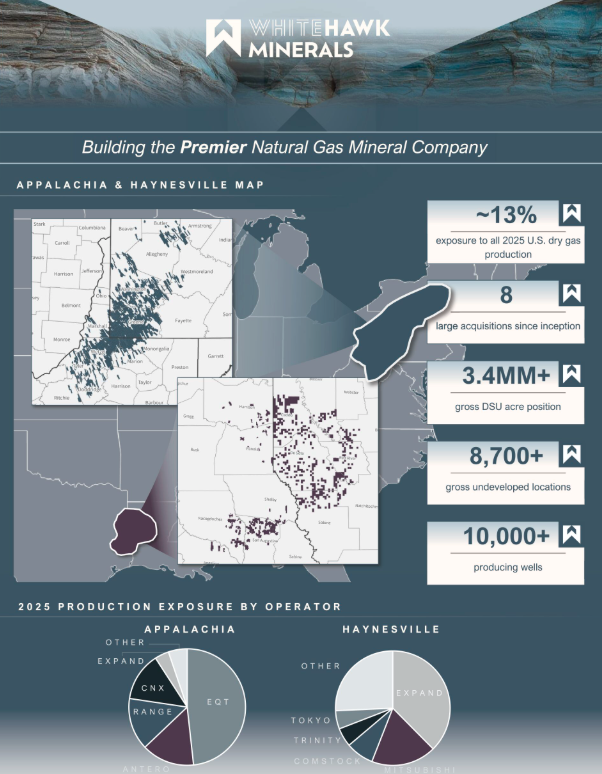
    Mineral rights to the gas they drill are owned by investors. Among the biggest gas field investors is Philadelphia-based WhiteHawk Minerals, which raised $200 million Tuesday in its initial public stock offering (IPO), valuing the company at around $700 million and making it the most valuable stock of its kind.

    CEO Daniel Herz, a former investment banker who has built WhiteHawk with a string of acquisitions, says WhiteHawk will use proceeds to buy more gas mineral rights on properties in Western Pennsylvania, West Virginia, Texas, and other states.

    WhiteHawk is based at 2000 Market St. in Philadelphia. That’s two blocks from a former headquarters of the Pew brothers’ Sunoco Inc., which drilled in Canada, North Africa, and Latin America and refined fuels in Marcus Hook, West Deptford, South Philly, and the Midwest before exiting key businesses and selling the remains to Texas-based Energy Transfer in 2012.

    WhiteHawk, by contrast, is a virtual company, with just a dozen employees scouting and closing deals and working through contractors. Herz worked for Philadelphia-based fracking investment pioneer Edward D. Cohen’s Atlas gas drilling and transport companies and helped set up, run, and sell the Cohen family-backed Falcon Energy oil-and-gas business, before setting up WhiteHawk just three years ago.

    Hours after a ceremonial bell-ringing to mark the first day’s trading in WhiteHawk shares (trading symbol: WHK), Herz took questions from The Inquirer.

    Questions and answers have been edited for length and clarity.

    With gas demand spiking, will companies try to ship more liquefied natural gas (LNG) from the Philadelphia area, despite local opposition that stalled past attempts?

    Our properties in Texas and Louisiana serve LNG ports in that area.

    But it’s not my expectation that will happen here because of a huge development: the tremendous construction of AI and high-speed data centers. EQT last week said they are seeing 20% growth in demand in the Marcellus basin just for data centers.

    Data centers are another phenomenal opportunity for the state of Pennsylvania, if handled properly.

    So I don’t expect our gas will be exported. The AI boom has come to Pennsylvania, Ohio, and Virginia because gas from the Marcellus Shale is the most economic [energy] source in the U.S.

    What did you learn working for pioneer investor Ed Cohen as fracking took off in Pennsylvania?

    Ed Cohen’s been a mentor, boss, and partner for me. Those experiences taught me to appreciate that [investing in] minerals and royalties is the best way to be involved in the gas business.

    The operators, companies like EQT and Range Resources, spend all the capital and send us payments [averaging 17 cents for every dollar’s worth of gas]. We have 11,000 producing wells and 9,500 identified sites for future wells. Our operators are drilling every day. We track them. And we hedge [with futures contracts that limit the impact of sudden price moves].

    Then all we have to do is sit back and collect the royalty checks.

    It’s a business where, heads you win, tails you win. We like higher gas prices. But we also root for prices to go down, then we have the opportunity to buy more.

    WhiteHawk Minerals chief Dan Herz and his Philadelphia-based team team have acquired natural gas fields in Pennsylvania, West Virginia, Louisiana, and Texas.Securities and Exchange Commission
    If it’s that simple, why aren’t bigger investors buying these gas assets?

    Four or five years ago, when we started WhiteHawk, a lot of private-equity firms had the good instinct to be buying up mineral rights. But they have found it harder to sell; private equity has been slowing down. The sellers have been offering generous terms. It shows how little competition there is.

    Our first acquisition was in February 2022. The seller gave us an eight-month option to buy an interest in their gas properties. Two weeks after, Russia invaded Ukraine. We immediately exercised the option at a locked-in price [and profited as gas prices rose]. Then another large private equity firm came to us with a six-month option.

    More of these private equity funds are nearing the end of their lives, they have to repay investors, but there aren’t a lot of new funds for them to sell to. This business takes specialized knowledge. It seemed to me we could be a natural buyer and build the premier gas royalty business.

    In all, 13% of U.S. natural gas production now pays us substantial royalties; 49% of EQT’s production pays us royalties. Antero Resources, one-third. Range Resources, 49%.

    We are primarily focused in the Marcellus [Western Pennsylvania, West Virginia] and Haynesville [east Texas, north Louisiana] Shales, which together produce half of U.S. natural gas. And there are many, many more rights owners adjacent to our properties [who can be bought out].

    Why are you based in Philadelphia?

    There is a longstanding tradition [of energy companies] in Philadelphia, and we have a great finance and accounting team and partners here. Myself, I am based in New York.

    Wasn’t it your mentor Cohen who convinced his classmate Pennsylvania Gov. Ed Rendell not to tax natural gas extracted from the Marcellus Shale?

    Yes. Ed Rendell should get the credit for manufacturing coming back to Appalachia because now we have natural gas, ethane, propane, butane, while in some other states [such as New York] you can’t do this.

    How much time do you spend lobbying for more fossil fuel extraction?

    I’ve spent 5% to 7% of my time in the political sphere for 15 years.

    There’s moments when politicians will posture. But we need energy. People should recognize that natural gas has driven the U.S. to lower carbon emissions. We can do all that and put money in Pennsylvanians’ pockets.

    Does your company have debt?

    We’ve been working with EIG [a Washington-based energy lender] for years, and we have a credit facility we haven’t drawn on with a number of banks. But we’re not looking to borrow. We keep leverage low.

    You had to restate 2024 earnings and changed accountants. What happened?

    We hired Baker Tilly, a national firm, to be public company ready. They said we had to restate [the 2024 earnings report certified by a Texas accountant]. I would call it growing pains. We had a great acquisition last year, the effective date was to be Jan. 1, 2025, but we didn’t close the deal until March 31. We counted that income from the effective date, and it should not have been counted until later.

    Why go public?

    This is what we did with Atlas Energy, Atlas Pipeline, Falcon Minerals. We’re back with our institutional and individual investors who want to participate in our growth, our cash flow, and our dividends per share.

    We are growing through acquisitions. Our playbook is to go out and buy another $150 million or $200 million this year building the premier natural gas mineral and royalty business. There is so much more to buy.

  • ‘We’ve moved on’: Chester mayor and environmentalists object to LNG terminal proposal

    ‘We’ve moved on’: Chester mayor and environmentalists object to LNG terminal proposal

    Chester Mayor Stefan Roots came up with an idea as he waited to testify Wednesday during a Pennsylvania legislative committee hearing on a proposed gas export terminal.

    “I’m introducing a new initiative,” he said, “WMO — we’ve moved on .… This dangerous facility does not belong in a densely populated urban area like Chester. I’m calling on this committee to do the right thing: Protect some of the most vulnerable people in this commonwealth and say no to an LNG terminal in this region.”

    Roots spoke in response to a yearslong plan by Penn LNG to build a liquefied natural gas (LNG) export terminal in Chester or nearby in southeastern Pennsylvania along the Delaware River. The terminal would tap in to an existing pipeline to carry gas from the Marcellus and Utica formations to a site on the river. There, it would be compressed into liquid gas for export and capitalize on soaring global demand for LNG after Russian’s invasion of Ukraine.

    The hearing, held by the Pennsylvania House Environmental & Natural Resource Protection Committee, was stacked with opponents of the plan, saying it would create pollution and be highly dangerous to surrounding communities. Democratic State Rep. Greg Vitale, the committee chair from Delaware County, said proponents, including Franc James, CEO of Penn LNG, and union leaders were invited but declined.

    Penn LNG has not specified a location but has said it plans to develop a new plant to export 1 billion cubic feet per day of gas from the Marcellus Shale to Europe.

    At previous hearings held by Republican State Rep. Martina White, chair of the Philadelphia LNG Export Task Force, proponents spoke of the economic change the facility would bring, including jobs.

    Vitale said he convened Wednesday’s hearing because he feared the project would “proceed under the radar without sufficient public scrutiny.”

    Indeed, the mood Wednesday was strikingly different from past hearings as opponents told legislators an LNG facility would pose serious health, safety, and environmental justice issues.

    What are the plans for the LNG facility?

    In 2024, former President Joe Biden put a pause on LNG export approvals in 2024 to further study the issue. This year President Donald Trump has made reviving fossil fuel energy projects a priority.

    Reuters reported in June that James, the Penn LNG CEO, had met with officials at the White House over the project.

    Penn LNG wants to export 7.2 million tons a year of LNG from a site near Philadelphia to markets in Europe and Asia and is considering several locations other than Chester, such as in Trainer, Marcus Hook, and Eddystone, the news service reported.

    What are the issues regarding an LNG facility?

    Opponents believe such a facility would pose a major threat if there is an explosion or fire in an area already densely populated with people and polluting industrial sites. They noted that Delaware County’s Crozer-Chester Medical Center and Springfield Hospital were closed this year amid a bankruptcy auction.

    If there is a catastrophic explosion, they said, the nearest hospital would be 30 minutes away.

    Tracy Carluccio, an advocate with the nonprofit Delaware Riverkeeper Network, said the area is too densely populated for the facility, emphasizing that a major concern is the lack of a sufficient safety buffer, which the federal government advises for LNG terminals.

    She noted that similar facilities in the South are situated in areas with thousands of acres of buffer. She said a new site in the area would likely be around 100 acres.

    “There is no location within the Delaware River watershed, including the bay all the way down to the ocean, for any LNG facility to be located,” Carluccio said.

    Lauren Minsky, a visiting professor of health studies at Haverford College, said an LNG facility would exacerbate existing public health issues in the region.

    She said southeastern Delaware County has already been given a grade of “F” for particle pollution and a grade of “D” for ozone levels by the American Lung Association.

    She cited 2025 research by Johns Hopkins University showing that high levels of volatile organic compounds have been measured in communities near the fence lines of LNG facilities. She also said there are elevated cancer rates in adults living in the area’s riverfront communities, citing the People’s Cancer Incidence Screening Tool, which calculates average annual cancer incidence rates in Pennsylvania.

    “If we value the health of our families, our friends and neighbors, and throughout the commonwealth, we need to build a different future, one in which we can all thrive,” she said.

    Already industrialized

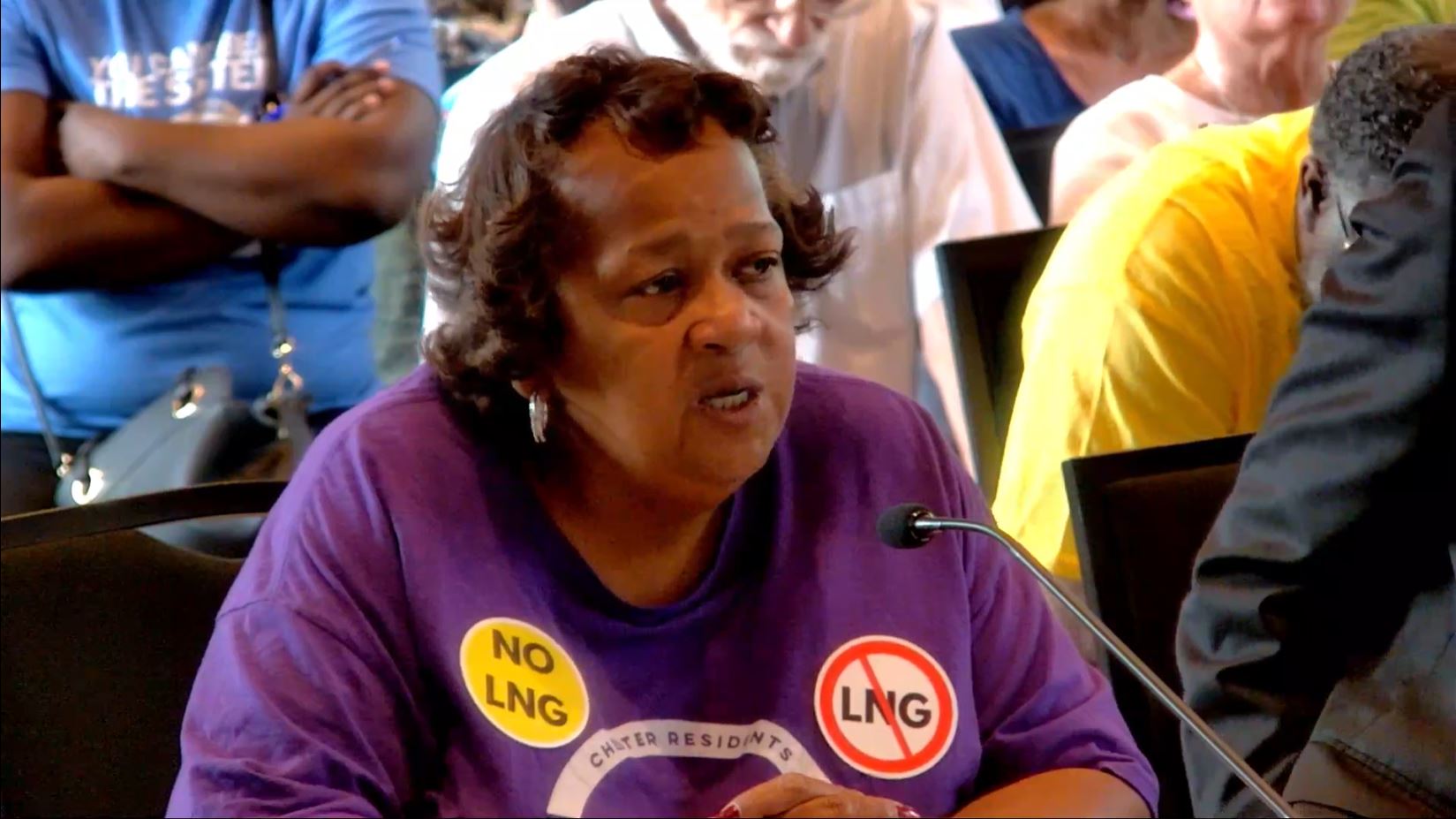
    Zulene Mayfield, an activist with Chester Residents Concerned for Quality Living, said older residents she knows have suffered heart conditions and cancers that she links to living in an already heavily industrialized area.

    Mayfield is a longtime opponent of the Delaware Valley Resource Recovery Facility owned by Reworld, formerly Covanta. The facility burns trash and converts it to energy.

    She said Chester, rimmed by heavy industry, lacks many things other communities take for granted, such as primary-care physicians or entertainment for children.

    “We are being told that we have to accept other industries” that no other communities want, Mayfield said.

    “I’m sitting here right now trying to contain my rage,” she said. “The jobs are temporary, but death is forever.”