Tag: Lincoln University

  • Lincoln University just sued Lower Oxford Township in federal court over event rules it says are unconstitutional and racially discriminatory

    Lincoln University just sued Lower Oxford Township in federal court over event rules it says are unconstitutional and racially discriminatory

    An event ordinance passed earlier this month by Lower Oxford Township unfairly targets Lincoln University and is unconstitutional and racially discriminatory, the historically Black school said in a federal lawsuit filed Tuesday.

    “The ordinance’s disparate negative impact on the Lincoln University community is the result of deliberate racial gerrymandering — or other illicit gerrymandering — by the Defendants,” the school’s lawyers argued in the complaint, filed in the U.S. District Court for the Eastern District.

    The suit notes that the township’s three supervisors are white and that the population of the township nestled in farm fields with about 5,000 residents is “overwhelmingly white” except for Lincoln’s community.

    The ordinance seeks to regulate events with more than 500 people, requires a permitting process, allows the township to revoke permits without a hearing for a violation, and threatens to prohibit an entity from applying for another permit for two years if a violation occurs. In the permit request, applicants will be asked to address security, parking and traffic impact, number of attendees, planned activities, and other elements. Violations will result in fines of up to $1,000, the ordinance states.
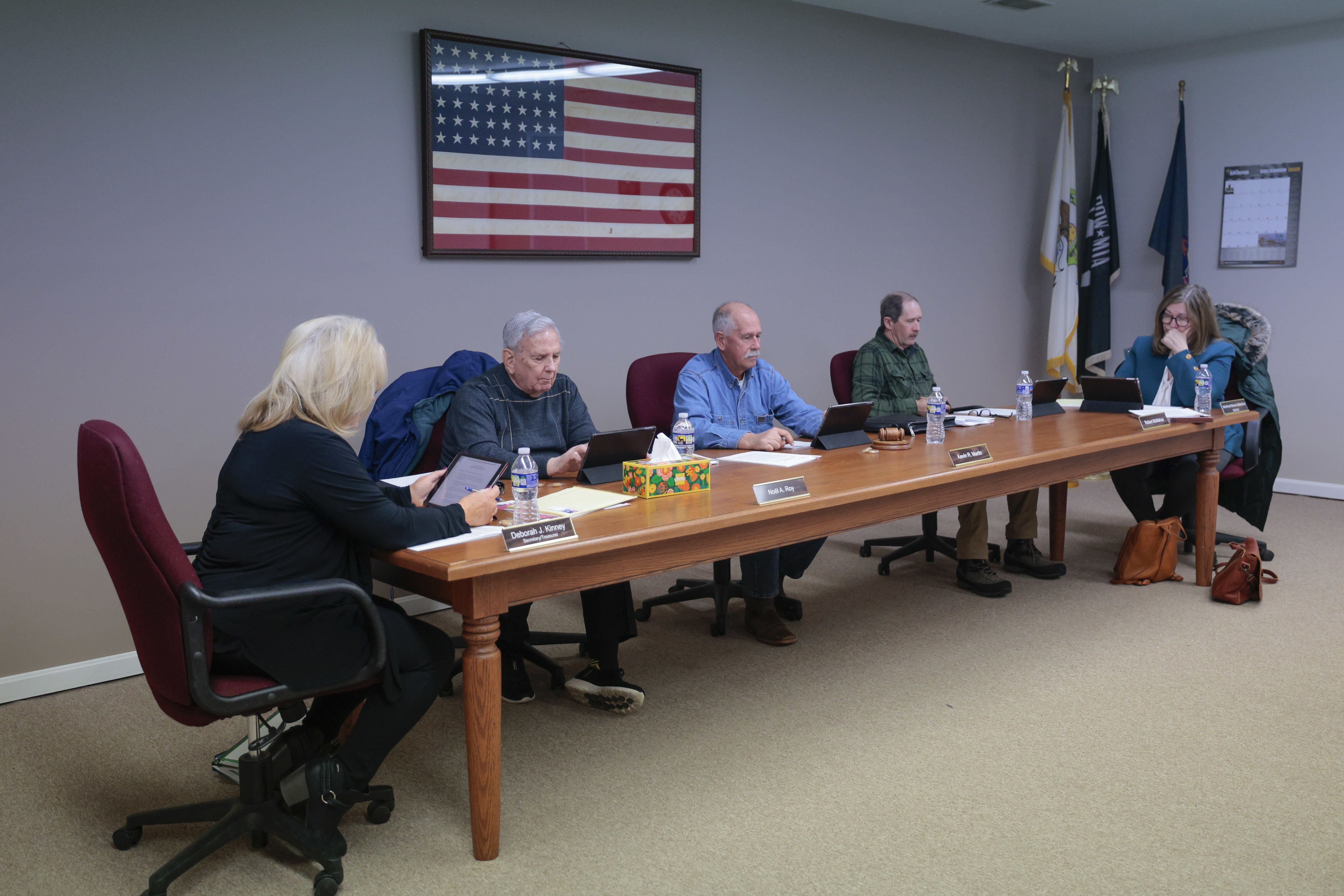
    Lower Oxford Township supervisors meet and discuss a potential event ordinance to address problems with large events held on Lincoln University’s campus, Monday, Dec. 8, 2025.Steven M. Falk / For The Inquirer

    The rural Chester County township began looking at enacting the ordinance following the shooting last October of seven people, one of whom died, on Lincoln’s campus during homecoming festivities. Township officials also had cited ongoing concerns about traffic, trash on neighbors’ lawns, and other disturbances, including crimes, during large events on the 422-acre campus, where 1,650 students are enrolled. The township previously had passed a parking ordinance in response to access issues created during large events at Lincoln.

    Deborah Kinney, township secretary/treasurer and codes enforcement officer, said Tuesday she had not been aware of the lawsuit until The Inquirer called. She declined immediate comment.

    Lincoln president Brenda A. Allen said the university is seeking to stop the township from depriving members of its community of their First Amendment rights to free speech, freedom of assembly, and freedom of religion. The ordinance, she said, is attempting to restrict the university from events that are essential to its academic mission.

    “Lower Oxford Township’s ordinance is a targeted, unconstitutional overreach that threatens the hallowed traditions ingrained in the university’s foundation,” Allen said in a statement Tuesday. “Lincoln University will remain on the front lines of protecting, defending, and advancing our community as we take this matter seriously.”

    In its ordinance, the township states that “activities associated with special events can constitute a hazard to the public’s health, safety and welfare and that these activities can also create a public nuisance when unregulated.”
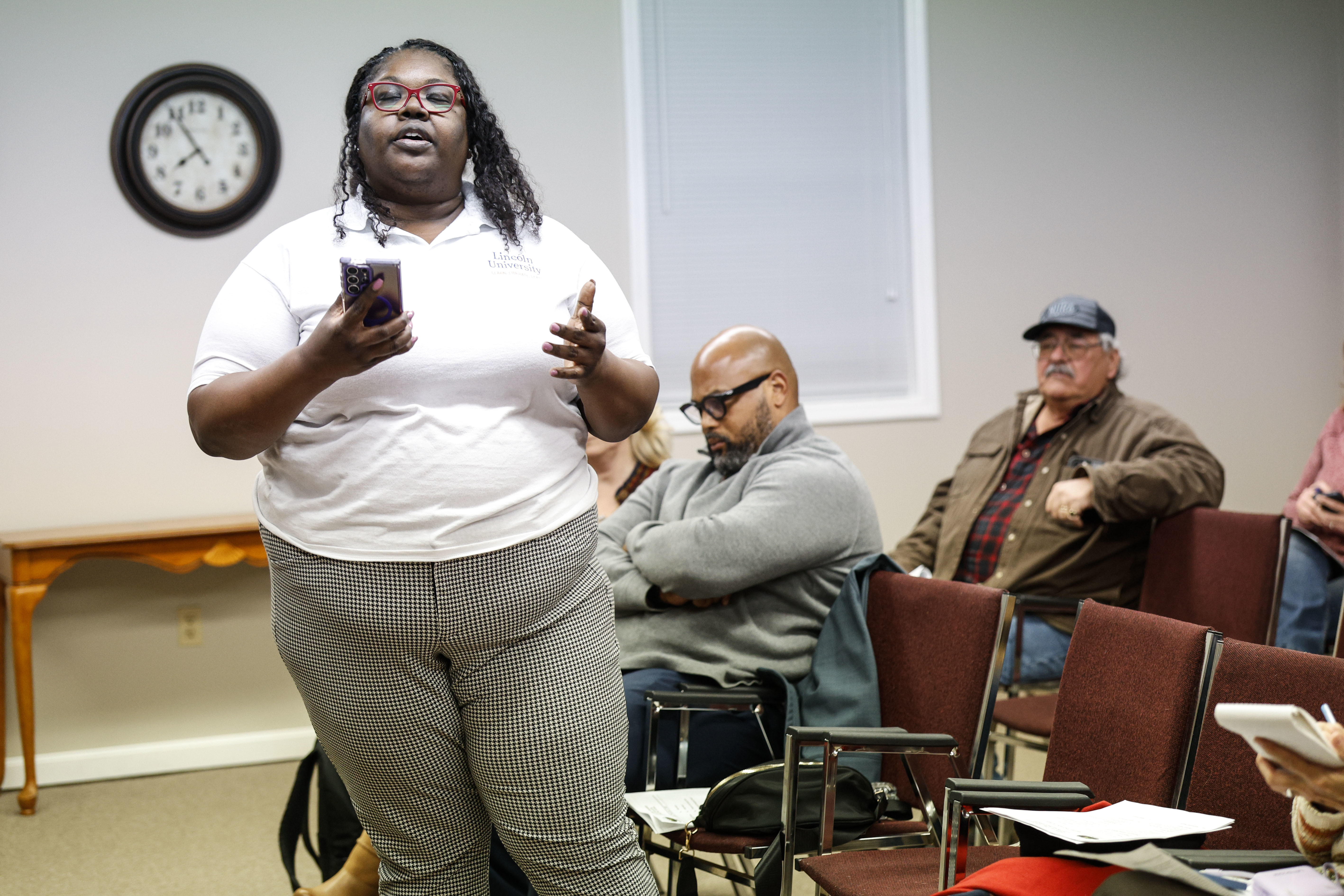
    Venus Boston, Lincoln general counsel, speaks to the Lower Oxford Township supervisors in December 2025 as they discuss a potential event ordinance to address issues with large events held on Lincoln University’s campus, Monday, Dec. 8, 2025.Steven M. Falk / For The Inquirer

    The township’s supervisors, the ordinance states, have “determined that the impact of special events that involve large numbers of attendees on roads and other infrastructure within the Township represents both a traffic hazard and an impediment to the delivery of emergency services to residents of the Township and therefore constitutes a nuisance.”

    The shootings that spurred the township to begin considering an ordinance occurred Oct. 25, when thousands gathered on campus for Lincoln’s homecoming. Emergency personnel had to use all-terrain vehicles to transport patients on stretchers because ambulances could not access the campus, given how many cars were parked around the venue, township officials said at the time.
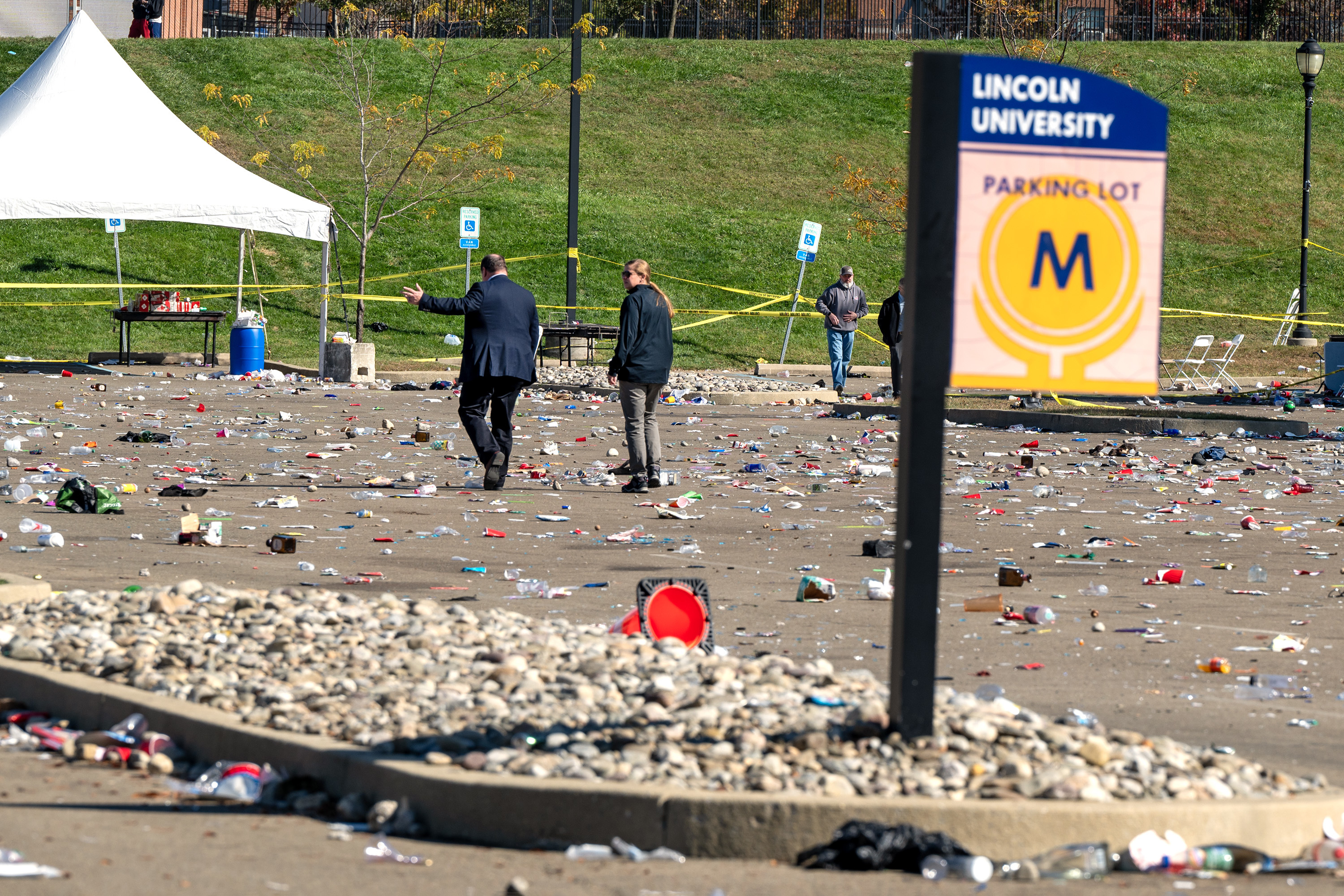
    Investigators are on the scene outside Lincoln University’s International Cultural Center Sunday, Oct. 26, 2025, where one person was killed and several others were shot the night before during homecoming weekend celebrations.Tom Gralish / Staff Photographer

    While the ordinance applies to other township events, the school’s lawyers argue that it targets Lincoln and specifically names examples of special events subject to regulation as “College homecoming or other similar events, college, university or school commencement, graduation or baccalaureate.”

    “It was enacted by the township with the deliberate purpose and with the calculated effect of targeting Lincoln,” the school’s lawyers argued. “Specifically, the ordinance was enacted to interfere with Lincoln’s academic mission and with the speech and other academic activities of the Individual Plaintiffs and their academic colleagues.”

    The ordinance targets events with over 500 people “with the knowledge that the Lincoln University community is at all times several times in excess of that threshold” and “with the knowledge that very few — if any — of the events outside of Lincoln would exceed that threshold,” the lawyers said.

    The ordinance, the school’s lawyers argued, violates Lincoln’s constitutional rights by imposing restrictions on its speech and “its ability to serve as a marketplace of ideas.” The ordinance also violates the First Amendment right to assembly because it treats events of more than 500 people as a nuisance, the lawyers said. And the lawyers said it infringes on religious freedom by naming baccalaureates, which they said “in general — and baccalaureates at Lincoln in particular — are religious services.”

    They objected, too, that the township has sole discretion over whether an event is subject to the ordinance and over whether it should be permitted, and that no objective standards exist. And they disputed the township’s intention to require event holders to have liability insurance subject to approval by the township solicitor.

    “The ordinance also makes the sponsor of a special event liable for actions of people over whom it has no control,” the school’s lawyers argued.

    The ordinance states that the sponsor “shall be responsible to the township for damages sustained to township property caused by participants in the special event.”

    Founded in 1854, Lincoln is known as the first degree-granting historically Black university in the nation. The first presidents of both Nigeria and Ghana are Lincoln graduates, as are Philadelphia Mayor Cherelle L. Parker, former U.S. Supreme Court Justice Thurgood Marshall, and poet Langston Hughes.

    The school has received $45 million in gifts from philanthropist MacKenzie Scott, the ex-wife of Jeff Bezos. Allen, Lincoln’s president, who in 2020 had survived an internal battle to oust her and had her contract extended to 2030, was named a top leader of a historically Black college by a national nonprofit in 2021.

    Township officials had been expressing concerns about events at Lincoln for a while before the homecoming shootings brought renewed attention.

    In spring 2023, two women were shot and injured on Lincoln’s campus during its annual Spring Fling event. In 2022, a student was fatally stabbed by the sister of a student during a fight inside a dorm. During an on-campus dance in 2018, 15 students were taken to the hospital following a brawl in which a security officer was assaulted. In 2016, there was a robbery and shooting on Lincoln’s campus following homecoming. And in 2015, Lincoln tightened security after shots were fired in a dorm.

    At the homecoming last October, Ju’Juan Jeffers, 20, of Wilmington, was killed, and six others, ages 20 to 25, including a student, were also shot. Jeffers’ mother subsequently filed a lawsuit against the school, and three Wilmington men — William Sells, 20; Makaveli Valera, 19; and Karon Rollins, 17 — were charged with second-degree murder, conspiracy, and related crimes in connection with the shootings.

    “We have had meetings with people at Lincoln,” Township Supervisor Noel Roy said last December. “They’ve been somewhat reluctant to do what needs to be done to try and control the situation.”

    Allen at that time acknowledged that changes were needed around large events as well as better collaboration with the township.

    “We want to come together because we are a part of this community as well,” Venus Boston, Lincoln’s general counsel, said during a supervisors meeting last December.

    Before its Spring Fling in April, the university announced new safety plans for large events, including no outdoor events after dusk, screening guests, and allowing only one registered guest per student.
  • Michelle Widgins-Lewis, singer-songwriter and founder and CEO of Northwest Counseling Service, has died at 69

    Michelle Widgins-Lewis, singer-songwriter and founder and CEO of Northwest Counseling Service, has died at 69

    Michelle Widgins-Lewis, 69, of Philadelphia, singer-songwriter, founder, president, and executive director of Northwest Counseling Service Inc., longtime community housing and education advocate, lecturer, and mentor, died Monday, June 29, of endometrial cancer at Jefferson Abington Hospital.

    Inspired to educate and counsel underserved potential homebuyers about predatory mortgage lending, foreclosure, and other important real estate and housing issues, Ms. Widgins-Lewis founded Northwest Counseling Service on North Broad Street in 1982. For the next 44 years, until recently, she interviewed nearly 5,000 people each year seeking mortgage prequalification and, funded by the Philadelphia Division of Housing and Community Development, advised them about insurance, eviction, credit rating, grants, conflict mediation, and inspections.

    “She helped transform homeownership in Philadelphia,” her family said in a tribute.

    Ms. Widgins-Lewis was appointed to the Pennsylvania Housing Advisory Committee in the 1990s by then-Gov. Ed Rendell and served as a technical adviser on real estate matters for the Philadelphia Division of Housing and Community Development. She worked closely with the Pennsylvania Housing Finance Agency and continually lobbied local, state, and federal government officials for better borrowing and foreclosure laws.

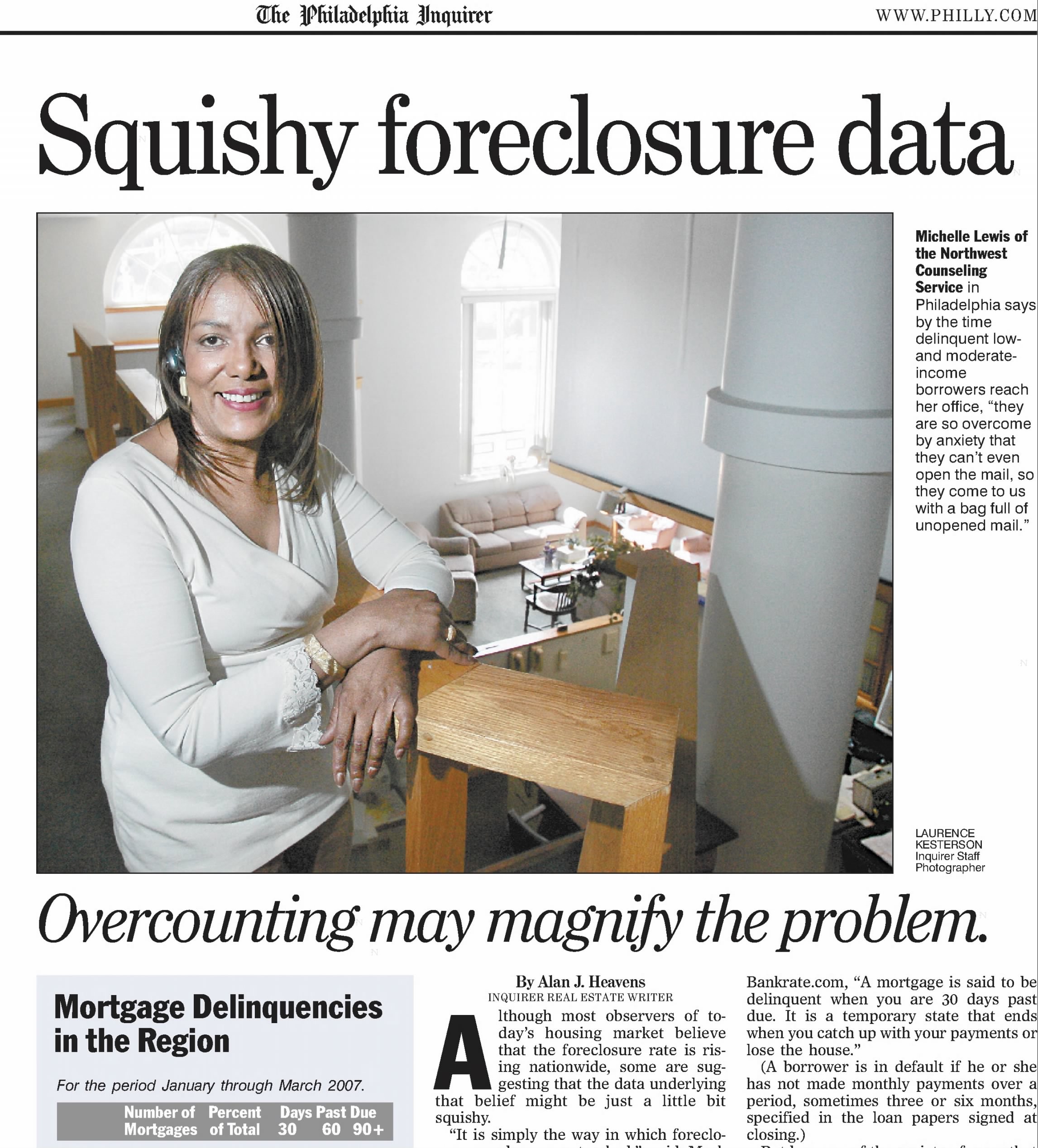
    This photo and article about Ms. Widgins-Lewis appeared in The Inquirer in 2007.Newpapers.com

    She examined property disputes as a forensic real estate specialist, scrutinized scams as a fraud examiner, testified in federal court as a qualified expert, and was licensed as a real estate broker and appraiser. She monitored local landlord-tenant mediation cases closely and told The Inquirer in 1996 that many tenants “end up with an agreement they can’t live up to.”

    People, she said often, are rarely ready to buy their first house. “Instead of considering whether they are prepared to buy a home, people are being propelled into the market by economic pressure that says they should buy because it’s cheaper than renting,” she told The Inquirer in 1995. “That’s not always true.”

    She also founded and chaired the Philadelphia Predatory Lending Task Force, which collected and publicized data about unfair lending practices. “This gives us a picture of the type of problems going on in our neighborhoods,” she told the Daily News in 2001.

    Ms. Widgins-Lewis was an instructor for the National Real Estate Institute and a leader for the American Society of Certified Housing Executives, the Real Estate Educators Association, and other groups. She wrote articles for journals and forged educational partnerships with colleges and universities.

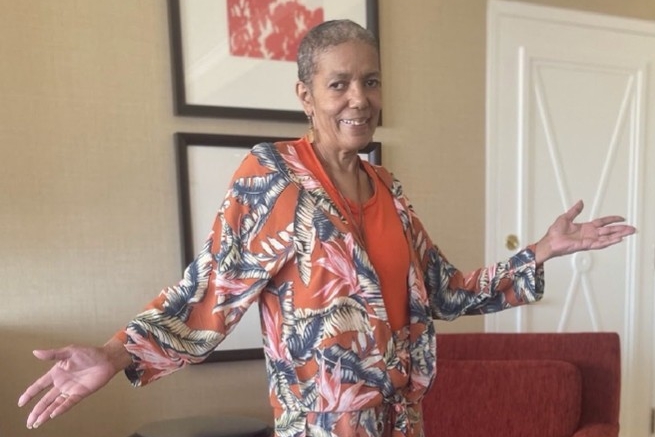
    Ms. Widgins-Lewis performed in several bands and with her sister Dionne.Courtesy of the family

    She spoke on panels and at conferences and workshops about homeownership, and was quoted often in The Inquirer and Daily News. Friends called her “truly inspiring” and “a true champion in the mortgage industry” in online tributes. One friend said: “She was a beast in the housing world.”

    Ms. Widgins-Lewis sang often as a young girl, got rave reviews on karaoke night when she was older, and went on to perform in several bands and with her sister Dionne at local clubs and festivals. She sang rhythm and blues, pop, standards, and jazz, and wrote at least one song that was recorded and released.

    Daily News columnist Stu Bykofsky wrote about her dual career as a singer-songwriter and executive in 1995 and said: “She still has trouble calling herself an artist but feels, at the very least, she’ll always be able to get up and sing at fundraisers for her agency.”

    Her family said: “From childhood, Michelle drew people in with her light and her voice.” Her daughter Tracey Thomas said: “She would light up the room.” Her son Mike said: “Everybody loved her.”

    Her family said Ms. Widgins-Lewis had “an unwavering commitment to education, integrity, and service.”Courtesy of the family

    Michelle Widgins was born May 29, 1957, in Philadelphia. She graduated from Martin Luther King High School and earned a bachelor’s degree at La Salle University and a master’s degree in human services at Lincoln University.

    She married Michael Brown, and they had a daughter, Anji, and a son, Mike. After a divorce, she married Tyrone Lewis, and they had a daughter, Tracey, and a son, Richard. They divorced later.

    Ms. Widgins-Lewis enjoyed reading and writing. She belonged to the Pi Gamma Mu international honor society, was close with Mayor Cherelle L. Parker and former Mayor Wilson Goode, and was guided, her family said, by “an unwavering commitment to education, integrity, and service.”

    Her family is hoping to rename a Northwest Philadelphia street in her honor.

    Ms. Widgins-Lewis lived with cancer for 10 years.Courtesy of the family

    “She was humble but had drive and determination,” her son Mike said. Her daughter Tracey said: “The world was her stage. I can only imagine how her light will shine in heaven.”

    In addition to her children and former husbands, Ms. Widgins-Lewis is survived by eight grandchildren, a sister, two brothers, and other relatives. A sister and a brother died earlier.

    Services are to be at 11 a.m. Thursday, July 16, at Verity Church, 2017 W. Diamond St., Philadelphia, Pa. 19121.

    Donations in her name may be made to Northwest Counseling Service Inc., 6521 N. Broad St., Philadelphia, Pa. 19126.

    Ms. Widgins-Lewis “was humble but had drive and determination,” her son Mike said. Courtesy of the Family
  • Penn State, Temple to receive first installment in performance-based funding under state new budget

    Penn State, Temple to receive first installment in performance-based funding under state new budget

    Pennsylvania State University, Temple and the University of Pittsburgh will split $10 million in the state’s first allotment toward performance-based funding under the new budget.

    It’s the first time since the legislature passed the new performance-based formula last November that the three so-called state-related universities are receiving the funding in addition to the general appropriation they received last year. The formula considers overall enrollment, graduation rates, number of lower-income students as measured by those receiving federal Pell grants, students receiving degrees in high demand areas, and other factors.

    For Penn State, the new funding will amount to a little over $4 million, raising its general education subsidy to $246.1 million, the school said in a news release. The school said it was its first increase in state education funding since 2019.

    “This initial investment is an important first step that recognizes the essential role higher education plays in strengthening our commonwealth,” Penn State president Neeli Bendapudi said. “The metrics at the heart of this model align closely with Penn State’s mission and values.”

    Temple said it would receive a little over $2 million in performance-based funding, in addition to its $158.2 million general appropriation. The North Philadelphia-based university also is set to receive $500,000 for its “University College,” which helps adult and non-traditional students and lifelong learners pursue degrees. A university spokesperson said the money is for the school’s bachelor of general studies program.

    The performance-based funding grew out of a longstanding battle between the legislature and state-affiliated universities over transparency and accountability. State-related universities received hundreds of millions in state funding, yet have a quasi-public status exempting them from much of the state’s open records laws, a fact that has long been criticized by some legislators.

    Gov. Josh Shapiro, a Democrat, signed the $50.8 billion budget deal Sunday, applauding leaders from both parties for their work on the issue. He specifically highlighted House Minority Leader Jesse Topper (R., Bedford), who has led the charge to create the new performance-based funding model.

    “That’s something that leaders in Harrisburg have talked about for years and years and years, but we came together and we got it done,” Shapiro said during a news conference before signing the budget deal into law.

    Meanwhile, the system that oversees Pennsylvania’s 10 universities including West Chester and Cheyney will receive $626.1 million, up about $5 million over last year. The Pennsylvania State System of Higher Education had been seeking a $31 million or a 5% boost in order to roll back a 4.3% tuition increase its board approved last week.

    System spokesperson Kevin Hensil said Monday that the tuition increase would stay in place.

    In-state students, who make up the vast majority of the system, will pay $8,338 annually, up $344 from $7,994.

    The extra $5 million from the legislature, Hensil said, was “due to the expiration of funds related to a transfer workforce development partnership initiative” and would not impact the tuition increase.

    The budget also included $78 million for debt relief in the system, but Hensil said that also would not impact the tuition increase.

    “We are determining how it will be used, as we have in the past when such money was provided,” he said. “That analysis is underway.”

    By the state covering the PASSHE debt, Shapiro said it would enable the state’s 10 state-owned universities to “shift those dollars into more funding for our faculty, more funding for our students, and more funding for our academic programs.”

    In addition to West Chester and Cheyney, the other universities in the 83,005-student system include: Commonwealth, East Stroudsburg, Indiana, Kutztown, Lock Haven, Millersville, Penn West, and Shippensburg.

    Lincoln University, which also is a state-related school, is not included in the performance-based funding plan, but it received a $1.1 million boost.

    Funding for the state’s community colleges was held flat.

  • Many Pa. colleges aren’t properly training future teachers how to teach reading, a report finds

    Many Pa. colleges aren’t properly training future teachers how to teach reading, a report finds

    Nearly half of educator preparation programs are failing to adequately train future teachers in how to teach reading, according to a new report, even as states across the country have passed laws to overhaul reading instruction.

    And in Pennsylvania, even more teacher preparation programs may be falling short, according to the National Council on Teacher Quality, which released a report this week reviewing whether colleges and universities had aligned their instruction for future teachers with the so-called science of reading.

    Of 23 graduate and undergraduate programs evaluated in Pennsylvania, five received A’s, according to the report. Just as many received F’s.

    Pennsylvania is “among the lowest-performing states in this analysis,” said Ron Noble, NCTQ’s director of teacher preparation.

    Most of the state’s programs declined to participate in the review — including some, like the University of Pennsylvania, that were ranked poorly when the group last released a report in 2023.

    Some colleges have criticized the group’s methodology, and literacy advocates had mixed reactions to the findings.

    Still, progress has been made since 2023, Noble said, as more states have made changes to how reading is taught amid fierce debate over best practices and deepening concern about poor reading scores. Here is what the group found, and how Pennsylvania universities and colleges fared:

    How reading instruction is evaluated

    For decades, the predominant approach to reading in many schools, balanced literacy, sought to foster a love of reading in children by focusing on stories and de-emphasizing skills-based instruction.

    But literacy experts say most kids need explicit instruction in connecting sounds to letters to learn how to read. In recent years, a growing movement has successfully pushed states, including Pennsylvania, to require schools to adopt structured literacy, which aims to teach kids to read with evidence-based practices.

    The National Council on Teacher Quality scored education programs on how well they prepare teachers in the “five core components” of scientifically based reading instruction: phonics, fluency, vocabulary, comprehension, and phonemic awareness — the ability to identify units of sounds in spoken words.

    The group, which evaluated course syllabi, curricula, and lecture schedules, also considered whether programs taught debunked practices, including “three-cuing” — prompting students to guess words based on context clues — and running records, an assessment that involves listening to a child read aloud to determine what level of book is appropriate.

    Programs that earned A’s are adequately covering all five core components, Noble said, while not teaching more than three practices “that run counter to the science of reading.” Those that received F’s, meanwhile, are not adequately covering more than one of the core components, or teaching enough contrary practices that their letter grades were reduced, Noble said.

    How Pa. colleges scored

    Nationally, the percentage of programs receiving A’s more than doubled from 2023, from 26% to 53%.

    In Pennsylvania, the number of programs receiving A’s grew from two in 2023 to five.

    (function(){function e(){window.addEventListener(`message`,function(e){if(e.data[`datawrapper-height`]!==void 0){var t=document.querySelectorAll(`iframe`);for(var n in e.data[`datawrapper-height`])for(var r=0,i;i=t[r];r++)if(i.contentWindow===e.source){var a=e.data[`datawrapper-height`][n]+`px`;i.style.height=a}}})}e()})();

    Among them was East Stroudsburg University. Brooke Langan, dean of the university’s College of Education, said the school had produced more records in this review.

    East Stroudsburg also reviewed its coursework after Pennsylvania required structured literacy competencies to be embedded in teacher preparation programs in 2022, Langan said.

    “It really made us take a moment and think about: Did we structure those correctly? Are they scaffolded well for our students developmentally?” Langan said.

    Other schools getting top grades were Carlow University, Millersville University, Pennsylvania Western University, and Shippensburg University.

    At the other end, Cheyney University, the Commonwealth University of Pennsylvania, Lincoln University, West Chester University, and Widener University’s graduate education program received F’s.

    Julie Stellfox, a spokesperson for Commonwealth University, said the school “does not subscribe” to NCTQ’s research methodology. She noted a statement about the report from the American Association of Colleges for Teacher Education, which voiced concern about relying “primarily on document review as a proxy for the quality of educator preparation.”

    Nancy Gainer, a spokesperson for West Chester, said that school also disagrees with NCTQ’s methods. She noted that West Chester complied with an “open source request” from the group in 2023 and received a B in its report then; this time, the school did not receive such a request, and West Chester did not supply information, she said.

    An NCTQ spokesperson said the group submitted a formal records request to West Chester.

    Mary Allen, a Widener spokesperson, said the university had asked NCTQ to reassess the graduate education program “and include additional courses that focus on reading instruction, which were not included in their review.”

    “Academic rigor and student success are our top priorities, and we have aligned our teacher education programs to all the required competencies related to structured literacy and the science of reading outlined in Pennsylvania Department of Education guidelines,” Allen said.

    Noble acknowledged the criticism of a review process limited to records. But, he said, NCTQ is evaluating whether colleges adequately cover foundational reading skills, and it was “highly unlikely that something that doesn’t appear in course materials” is being taught.

    Fewer Pennsylvania programs agreed to be evaluated by NCTQ this year — the program reviewed 33 in 2023, compared with 23 in the latest report. Overall, 63% of Pennsylvania teacher preparation programs did not participate.

    Of schools nationally that declined to be reviewed after participating in 2023, NCTQ said, more than 60% had received F’s previously.

    It also said that it identified textbook requirements for more than 80% of nonparticipating programs, and found they used textbooks misaligned with the science of reading at the same rates as programs receiving D’s and F’s.

    Noble noted that the four largest teacher preparation programs in Pennsylvania either did not participate in this year’s review — Pennsylvania State and Temple Universities — or received F’s, in the case of West Chester and Commonwealth.

    “It’s even more concerning: The places producing many of Pennsylvania’s newest teachers are either a black box for us or did not perform well,” Noble said.

    Calls for more state oversight

    Rachael Garnick, Pennsylvania Literacy Coalition manager with the Teach Plus group, which advocates for structured literacy implementation, said there was value in the report’s effort to evaluate how well colleges are preparing future teachers.

    But “I don’t think it’s a conclusive verdict,” including about schools that did not participate, Garnick said, noting that one university she had spoken with said NCTQ had sent its request for information to the incorrect administrator.

    Pennsylvania itself needs to do more to hold teacher preparation programs accountable for reading instruction, Garnick said. While the state now requires structured literacy in teacher preparation programs, it does not set requirements for the number of courses or hours of instruction.

    And the state’s certification exam for new teachers has not been aligned with the science of reading. For instance, it still includes questions on three-cueing, Garnick said — even though Pennsylvania has banned that practice. The coalition is pushing the state to adopt a standalone exam to test teaching candidates on reading.

    The failure of teacher preparation programs to adopt the science of reading has ripple effects, said Kate Mayer, a consultant with Keystone Structured Literacy Partners. Mayer, who has advocated for many Philadelphia-area families whose children are struggling with reading, said she sees area school districts working with universities to make changes to their reading instruction that still are not best practices.

    “In my experience, the bar is even lower than it should be for what we’re looking at,” said Mayer, who served on a committee that worked with NCTQ on its scoring rubric in 2019. She said “there should be no excuses” for universities that are not adequately covering the five reading components.

    Some states, including Ohio and Indiana, have significantly improved teacher preparation programs through new accountability measures, including audits and the prospect of revoking accreditation, Noble said.

    “When you’re providing teacher preparation programs with really clear standards” and consequences for not meeting them, “that’s a recipe for pretty dramatic” changes, Noble said.