Tag: Life Partners

  • To get closer to God, these six women moved into a ‘house of discipleship’

    To get closer to God, these six women moved into a ‘house of discipleship’

    Peace Ike was raised Christian, but in 2017 she found herself in a “low-faith place,” as she describes it. Demoralized and uncertain of what to do next, she traveled to Greece with three close friends.

    During hours of conversation and reflection there, she had a revelation: God wanted her to open a communal space. So upon returning to Philadelphia, she purchased a six-bedroom house in Germantown. She was single, without roommates, or a plan for how to pay the mortgage.

    “When I hear things clearly, I go for it,” Ike, now 41, said.

    Within two months, the rooms were filled, she said.

    Originally, the house didn’t have a spiritual focus, though Ike, who works as a strategist on workplace culture and conflict, would sometimes host worship nights. She hadn’t selected for religious roommates, but she saw her role as helping people to “live well” and grow spiritually. She began her own mornings with devotional time; she would invite people to stay who had nowhere else to go, and pray with strangers who were suffering.

    By its second year, the house had become an intentional “Christ-centered” place. As Ike described it in a recent post for a new roommate, “We range in ages from 29-47 and we truly love the Lord and each other … The greatest thing that bonds us is our passion for Christ.”
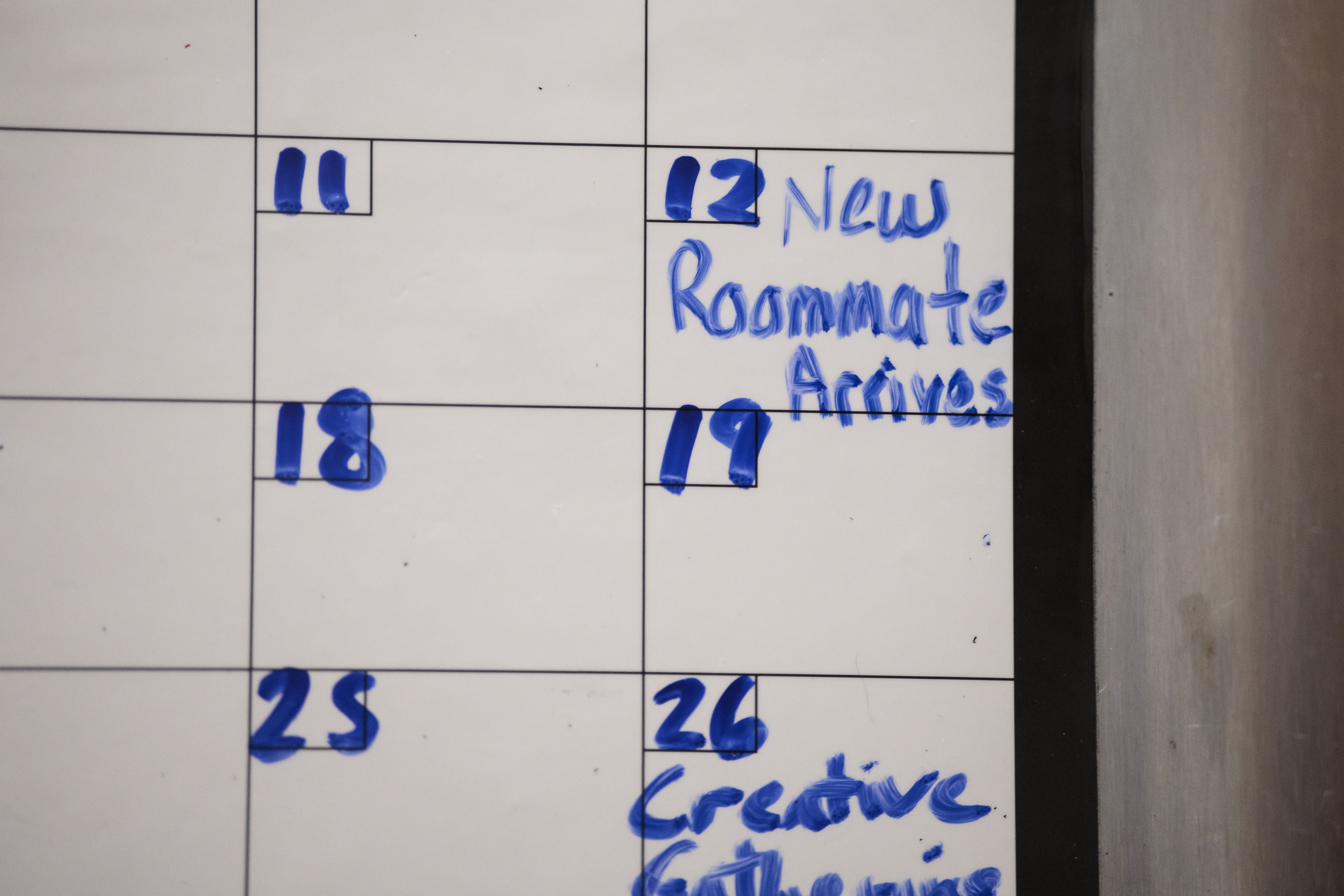
    When a new roommate moves in, the women have a long hangout where they ask about pet peeves and personality types. Monica Herndon / Staff Photographer

    The house is now in its ninth year and is home to six women.

    Christina Levy, 31, has lived in the home for almost six years. Levy was born into a Christian Apostolic home in Jamaica; her father was a minister and her mother did missionary work. When she enrolled in Penn’s Graduate School of Education, she moved directly from her family’s home in New Jersey into Ike’s house.

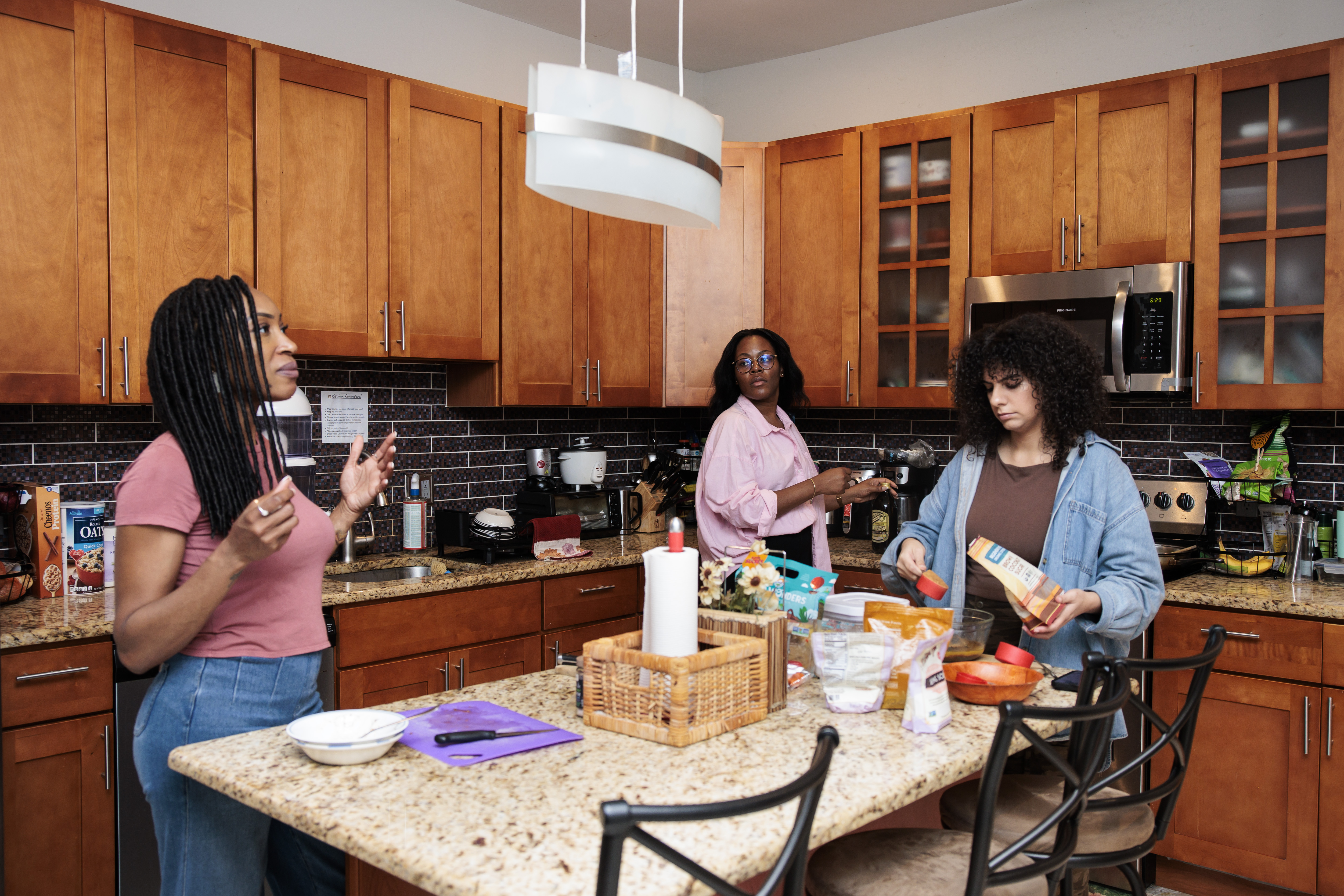
    The women are all independent, with different schedules, but with a common vision for how they want to live. They joke that their kitchen island, where they bring their complaints and longings, is like church. Three of them also attend the same church in Bristol on Sundays.

    “It really feels like we’re sisters and we’re all connected by the same Father, and that’s God,” Levy said.

    The following, as told to Zoe Greenberg in separate interviews, has been edited for length and clarity and combined.

    On deciding to move in

    Levy: I tend to be the kind of person who looks for signs. Like, “Should I do this?” I felt like the Lord was really leading me toward this house.
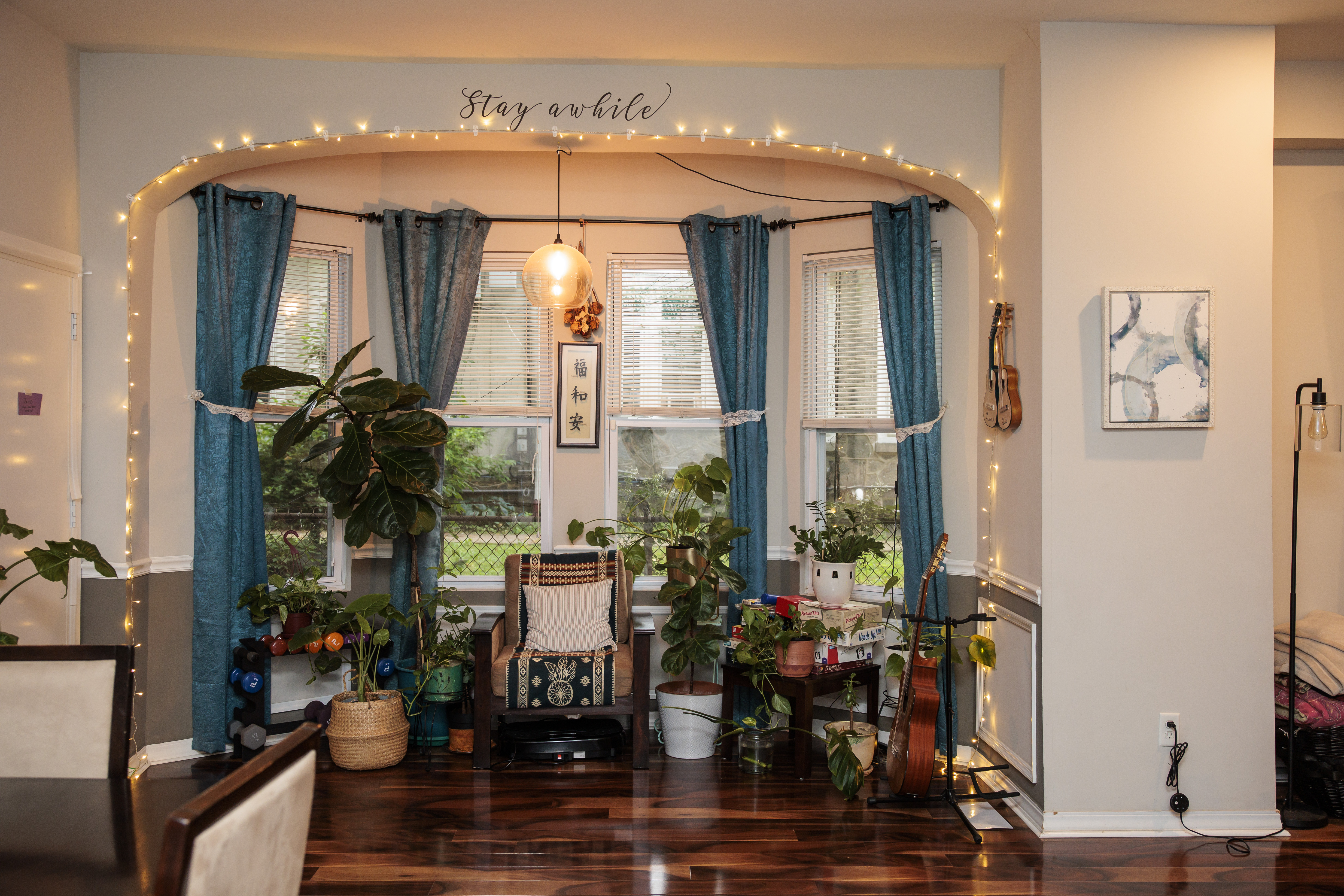
    Even before the house was intentionally Christian, Ike hosted worship nights for neighbors and friends. Monica Herndon / Staff Photographer

    On welcoming new housemates

    Ike: Any time a woman moves into the house, we have a long hangout, and we get to know her. We go over personality types. We go over pet peeves. Are you a night owl or a morning person? How do you prefer to handle conflict? All of the things that you would want to know about someone that you’re going to be spending your life with.

    On becoming a ‘house of discipleship’

    Levy: No one’s trying to be Christian here. It’s not a rigid thing. All the girls that come in, it’s like they carry something that someone else in the house is going to need.

    Ike: There’s a term called ‘disciple’ in Scripture. Jesus had 12 disciples. He taught them everything he knew, and he always directed people back to God. Oftentimes, I’ll talk about this as a discipleship house. When it started, I was certainly discipling a lot of young women who needed direction in life. Now it’s like we are discipling each other.

    On whether non-believers can live there

    Ike: I always tell people, you don’t have to share our faith to be a part of this home, but I want them to know that it is the central thing that glues us. It’s in all of our conversations. When someone comes home and they’re having a hard day, we sit and we listen and we pray with them.

    On being a landlord among peers

    Ike: I have been very adamant about that — don’t treat me like a landlord. I am just one of y’all, but when something needs to be done, come and call me, and I’ll get it done right away. It allows me to feel like I’m at home with my sisters and not on the job all the time.

    On house rules

    Ike: With six women, we do not have men overnight. My experience has taught me that it’s really easy to get into conflict when we don’t know your boyfriend as well as you know your boyfriend. If you want to go spend time at his house, that’s fine. We also don’t do drug use.
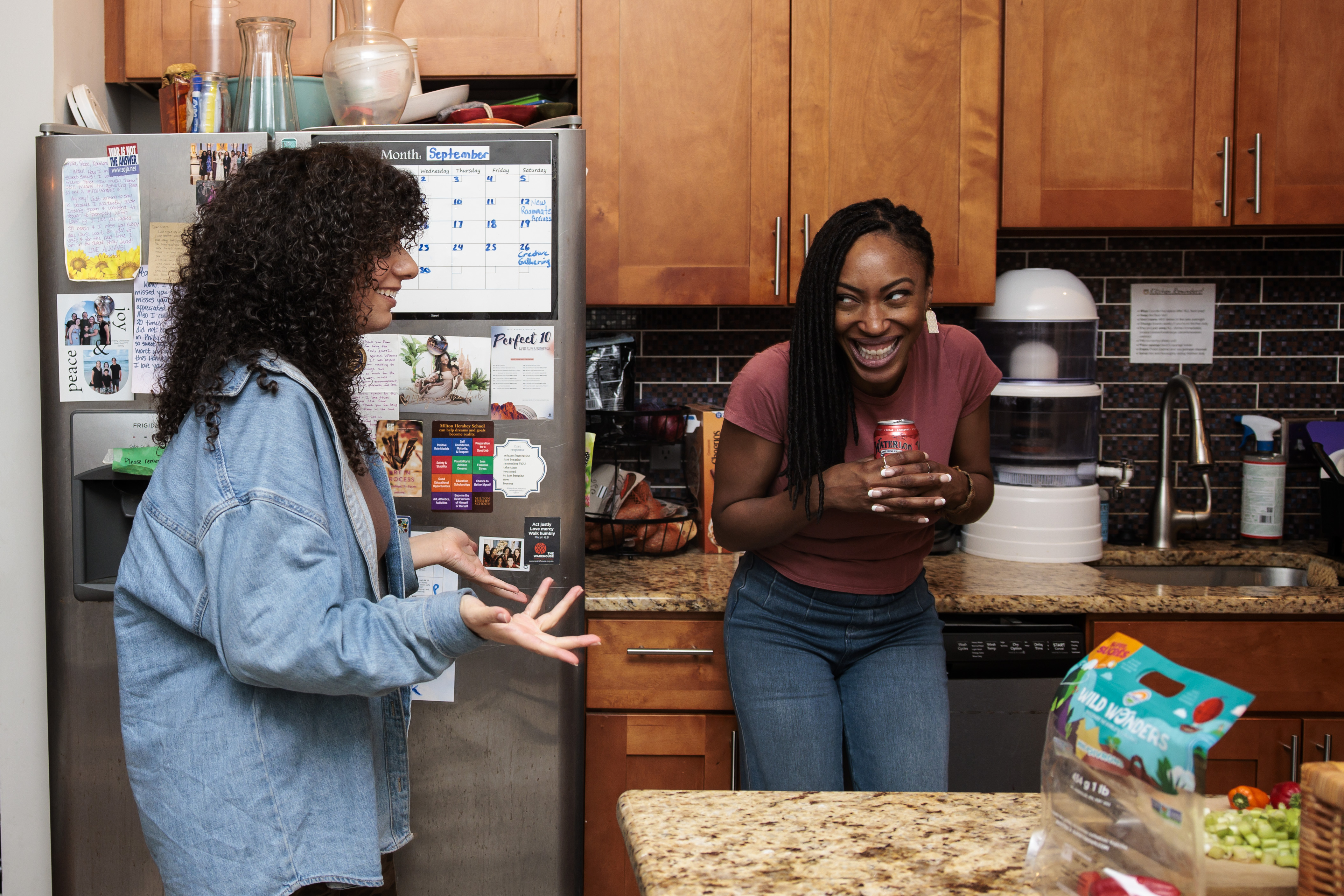
    Peace Ike, right, bought the Germantown house after she had a revelation to do so. She lives there with five other women, including Kallie Jalal, left. Monica Herndon / Staff Photographer

    On kicking people out of the house

    Ike: It hasn’t always been roses. There have been girls who’ve just been dishonest, wanting to do those things that we agreed we would not do as a home. Part of the contract is when you do that, then we ask you to leave.

    On what comes next

    Levy: If anything would make me leave my sisters here, I feel like it would be a door opening for me to get my PhD or career elsewhere. And of course a man.

    Ike: When I pursue a relationship, I’m not going to live in the home with five other women with my spouse. The house can continue as a community house if there are women here who are invested in that. Anything is possible. I think that I am going to enter a season where I will enjoy some privacy with my spouse. I would love that for a short period. But then I know myself: Two years in, I’m like, “Oh, we should really rent out that spare room.”


    This story is part of a series about life partners across the Philadelphia area.

    If you want to share your story about who you’re navigating life with, romantically or otherwise, write to lifepartners@inquirer.com. We won’t publish anything without speaking to you first.
  • A hit-and-run left a woman unable to live alone. So her niece bought her house and moved in.

    A hit-and-run left a woman unable to live alone. So her niece bought her house and moved in.

    Lynsey Lehr grew up knowing that her beloved Aunt Donna survived a near-deadly hit-and-run as a teenager.

    The details of the tragedy were part of the tight-knit family’s history.

    Donna Eiser had just finished her freshman year at East Stroudsburg University and aimed to become a physical education teacher. Then one night in August 1974, she was hit by a car a few blocks from her Bensalem home. She spent the next six months in the hospital, relearning how to speak and move. The crash left her permanently disabled, unable to return to school or work, and in need of long-term care.

    Lehr’s large family, most of whom lived nearby, rallied. Lehr and her two siblings grew up next door.

    “We grew up knowing that there are people who need to be looked out for,” Lehr, 35, said. “She was always one of our pals.”

    Her grandmother lived with Eiser and acted as her primary caregiver for the next 43 years, until the grandmother’s death in 2018.

    Then the family needed to come up with a plan for Eiser’s future. The Bensalem house was left in a trust to Eiser, and the family wanted to sell it so she could profit from the sale, but Eiser could not live on her own or afford rent elsewhere.

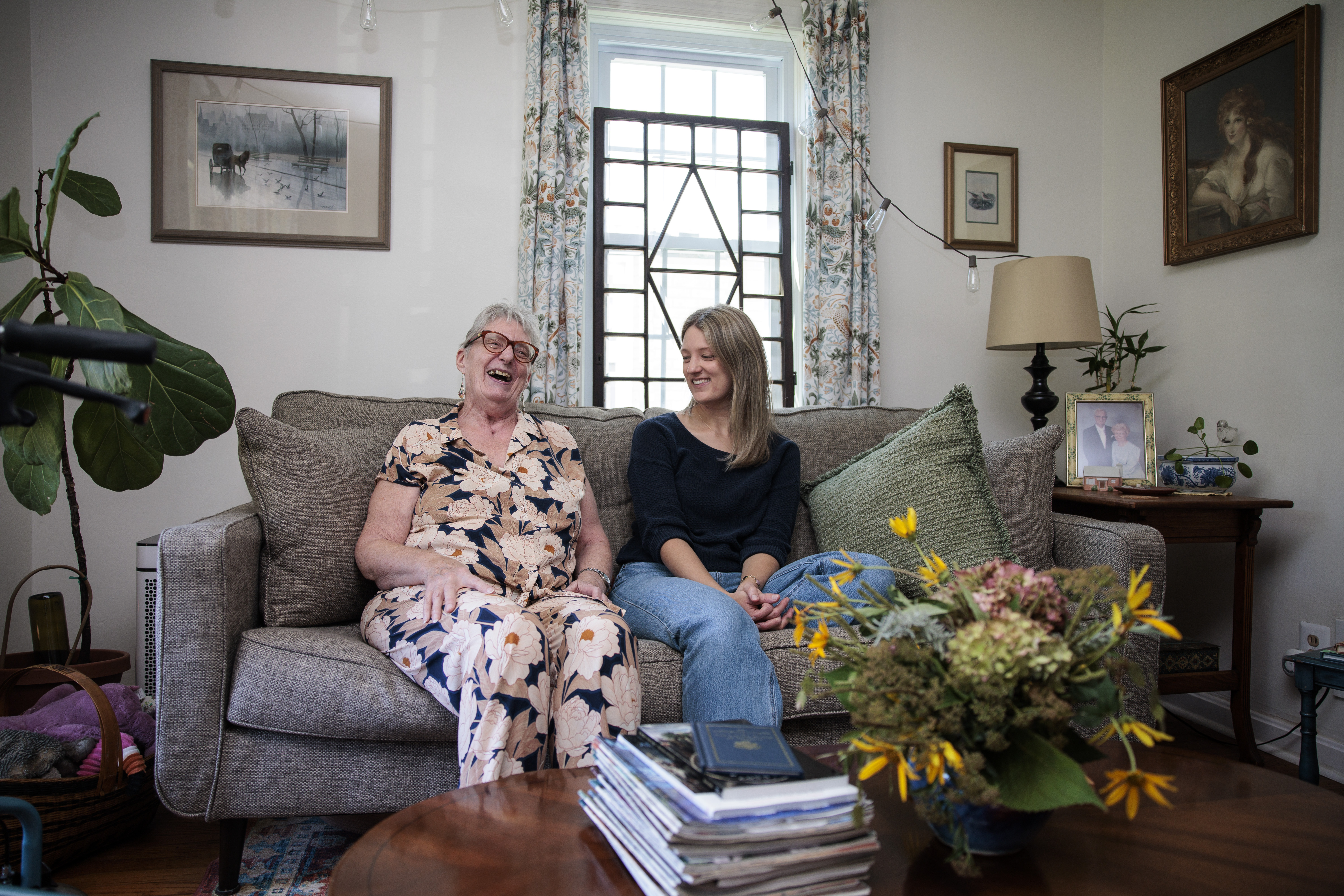
    Lehr, a graphic designer at Dietz & Watson in Philadelphia who was still living with her family next door, decided to buy the house and move in with her 71-year-old aunt. She became the 24/7 on-call person; Lehr’s mother shares the rest of the caregiving with her.

    These days, Lehr and Eiser can often be found at home together, sewing, playing Yahtzee, and listening to the Beatles.

    “My life definitely looks different than some of the people around me,” Lehr said. “While it’s a responsibility, it’s a joy.”

    The following, as told to Zoe Greenberg, has been edited for length and clarity.

    On deciding to buy the house

    Lehr: I couldn’t bear the thought of my aunt losing her mother and then losing her home. The emotional toll just would have been too much. Consistency and routine in her life are important. I was also ready to spread my wings a little bit, even though I was buying right next door.

    Eiser: My mother passed away, my father passed away, and I’m disabled. I need someone to help me. So since Lynsey lives right next door, and I’m her godmother and her aunt, she decided to come over and live with me. That helps me out a whole lot.

    On becoming a full-time caregiver at 30

    Lehr: I didn’t consider not doing it, just because she was my priority. She still is. I don’t know that we’ll stay in the house forever, but I know she’ll be with me forever. She’ll be with one of us forever. At the time it felt like a big responsibility, but it didn’t feel like the alternative was an option I wanted to consider.

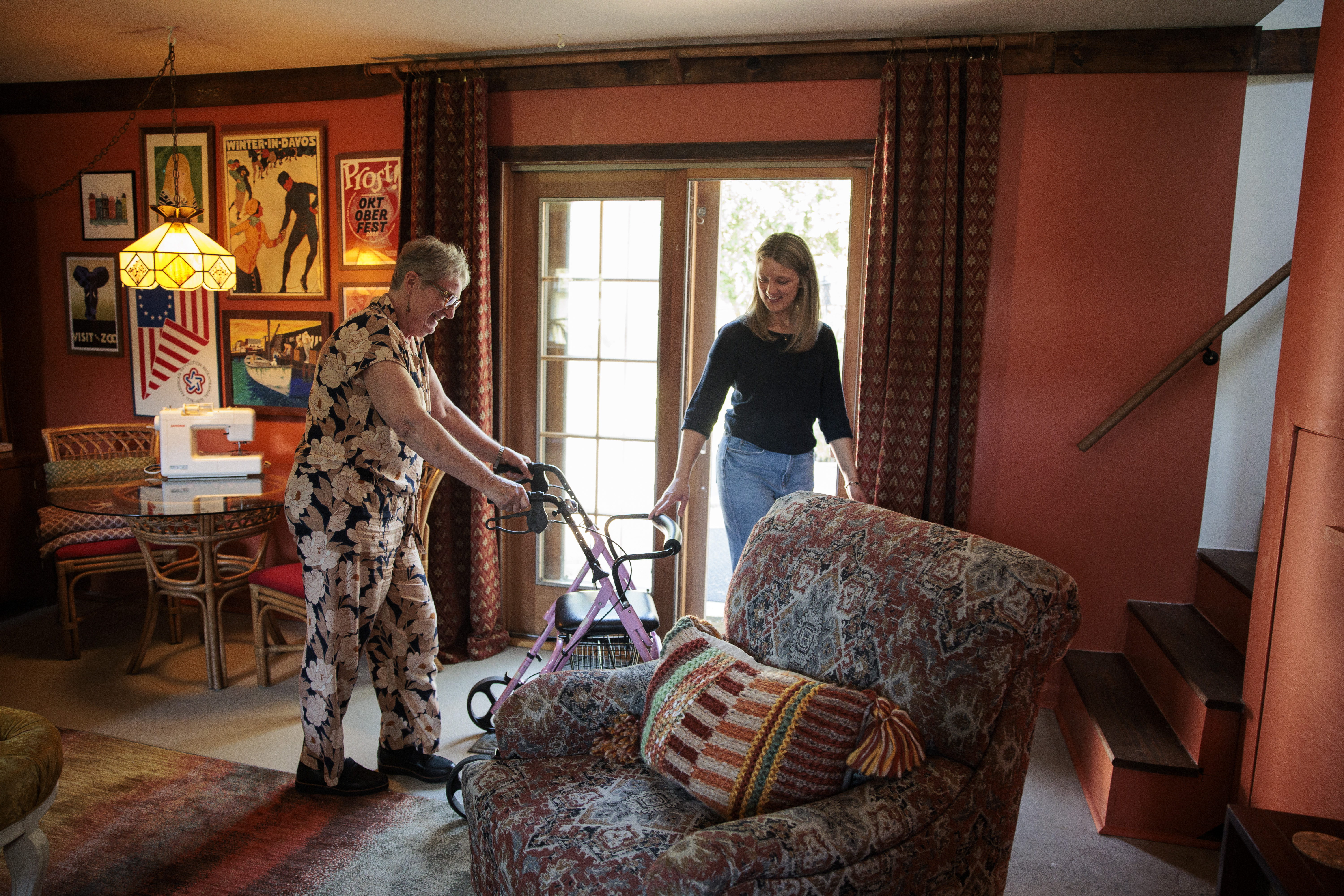
    Donna Eiser was left permanently disabled by a hit-and-run when she was 19. Here she uses her mobility device in the home she shares with her niece. Monica Herndon / Staff Photographer

    On being both niece and caregiver

    Lehr: It’s a hard balance sometimes. I don’t want her to feel that I’m treating her like a child, because she’s not. But there are definitely times when I have to ask her to do the dishes or pick up laundry. I still find her playing a mother role to me, and she always did. As my godmother, she took it very seriously to be a spiritual guide and an emotional guide. I think ultimately we’re friends. I don’t know that there’s any kind of hierarchy.

    On forgoing a romantic partner

    Lehr: I am not in a romantic relationship, and a part of me feels like this may occupy a lot of my time that I would have normally dedicated to finding myself a romantic partnership. My pursuit of that is secondary to this.

    Eiser: I always thought maybe I could, but I can’t handle that. It’d be nice to go out every now and then, but when you find someone who wants to be controlling or wants to have their own way, I say no.

    On making it work financially

    Lehr: I could not do any of this without my family support. I have an income and I pay my bills, and then my aunt fortunately gets help from Social Security, so she contributes a bit of that for her room and board. Because of her disability benefits, she’s not allowed to accumulate any kind of savings. We make it work.

    On comparing her life to her peers

    Lehr: I have a lot of friends who have young kids, and I think that the caregiving responsibility is similar. There’s a part of me that mourns living alone because I have friends who have their own apartments, or fewer responsibilities. In a way, that life does sound desirable.

    It’s kind of a slow life, especially with her mobility issues. We have to consider what is within her comfort level and we do spend a lot of time at home. But we’re content with that.

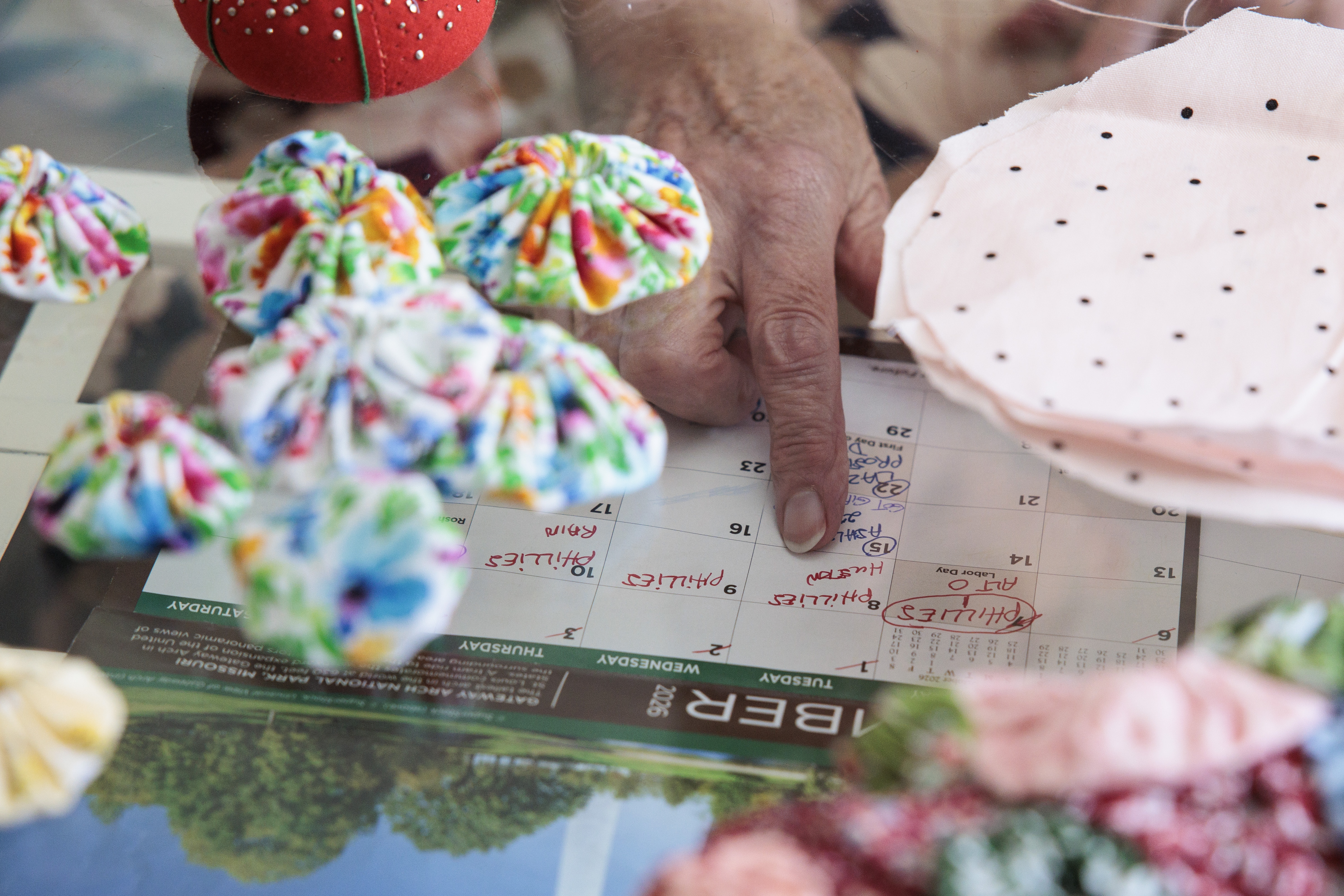
    Donna Eiser points to the calendar that she uses to help her remember appointments and plans. She’s a major Phillies fan. Monica Herndon / Staff Photographer

    On their 36-year age difference

    Eiser: It’s OK to have a young roommate. Sometimes I think, “How come I can’t do what she’s doing?” The older you get, the harder it is.

    Lehr: Honestly, I think Aunt Donna’s younger at heart than I am. She’s so creative, she’ll come up with these outlandish projects. Yesterday, she mentioned out of nowhere that she wanted to be a corn on the cob for Halloween. Now we’re planning logistically how that’s going to work.


    This story is part of a series about life partners across the Philadelphia area.

    If you want to share your story about who you’re navigating life with, romantically or otherwise, write to lifepartners@inquirer.com. We won’t publish anything without speaking to you first.

  • They used to date. Now they’re best friends raising her child together.

    They used to date. Now they’re best friends raising her child together.

    Elysia Baskins and Christopher Johnson did not intend to raise a child together.

    They instantly got along when they met on Bumble in 2022; they both loved anime and eating Japanese food. But after their first date, Baskins didn’t feel a romantic chemistry, so they became best friends instead.

    In 2025, Baskins got pregnant with her partner and asked Johnson to be the godfather.

    She and her partner planned to live together with the baby. They signed a new lease on her West Philadelphia apartment and he packed a U-Haul. But he died by suicide on the day he was set to move in.

    Baskins was left reeling, four months pregnant with barely enough money to cover rent.

    Johnson, who lived in Fishtown, kept showing up. He drove her to prenatal appointments and watched episodes of Better Call Saul with her. Sometimes he stayed the night in her guest room when she didn’t want to face it alone.

    In January, he was the one who drove her to the Hospital of the University of Pennsylvania to give birth. In the months that followed, he visited every week. He folded laundry; he built the crib. He told Baskins the baby could call him “DD,” short for “Deity-ous Dad,” a joking play on “godfather.” He calls her “Baba.”

    The baby’s father was Black, and to Johnson, who is also Black, it felt especially important that the baby grow up with another Black parent.

    “I never thought about it in a casual way, or a lackadaisical way,” Johnson, 31, said. “I fully planned to be the next parent, the third.”

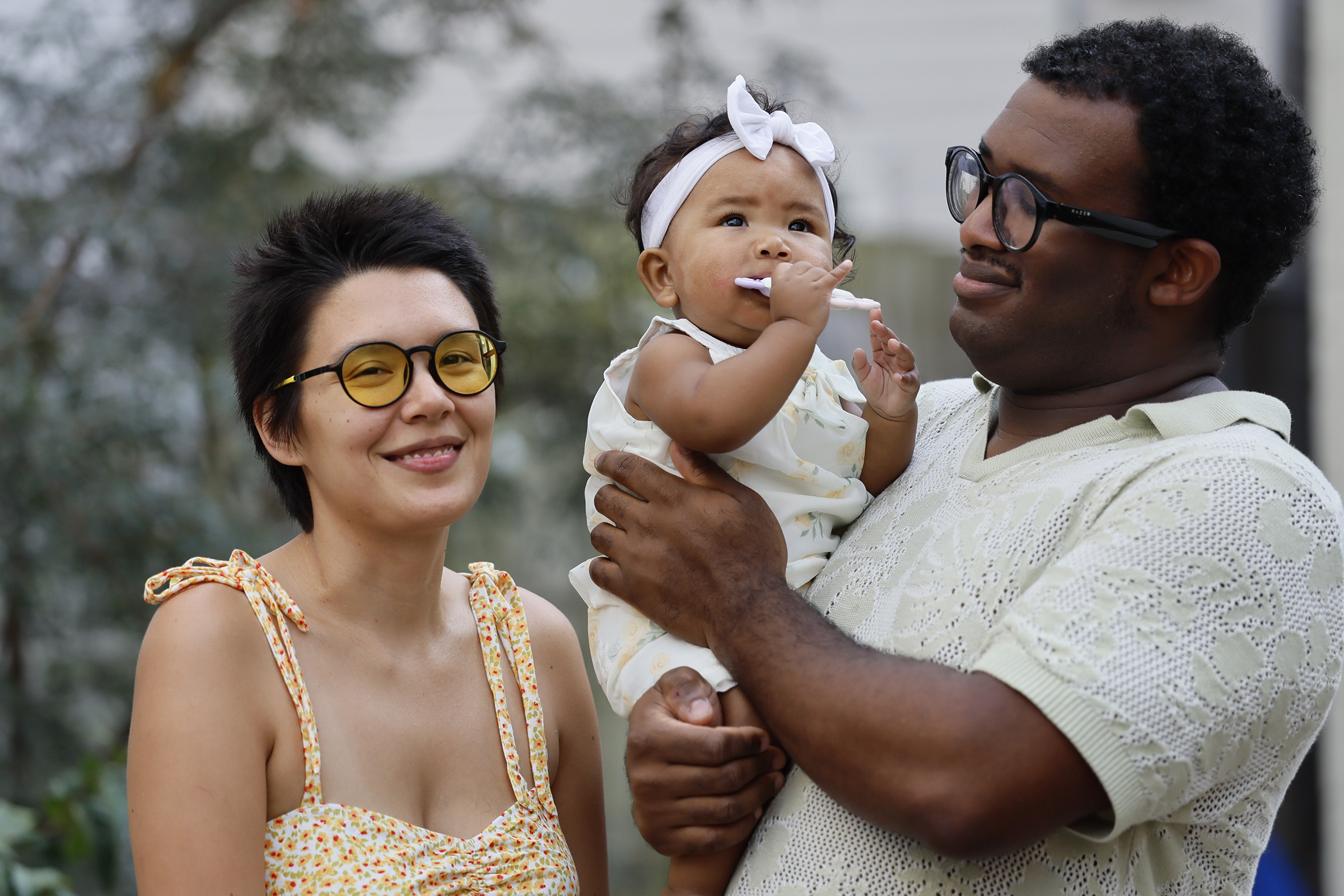
    Christopher Johnson with Elysia Baskins’ daughter, Thursday, Sept. 3, 2026 in Philadelphia.Elizabeth Robertson / Staff Photographer

    In July, Baskins, 33, and her daughter, who is 8 months, moved in to Johnson’s home in Fishtown.

    Baskins now works from that home, as a text counselor for the 988 Suicide & Crisis Lifeline. Johnson works as an inventory coordinator at a Kensington hardware store and as a home health aide for his mother. Though they are not romantically involved, neither are dating other people right now. They are raising her daughter together.

    “With him not being her biological father, I wouldn’t necessarily feel like I need to consult him on all the parenting decisions,” Baskins said. “But I would want to anyway. So it almost doesn’t matter.”

    The following, as told to Zoe Greenberg in separate interviews, has been edited for length and clarity and combined.

    On telling Johnson she was pregnant

    Baskins: I was very nervous because things weren’t ideal, but I had been really wanting a baby for a long time. I knew he would potentially be worried about me. It was planned, but maybe not entirely well-thought-out.

    Johnson: I was a bit apprehensive. I cannot make that choice for anyone else, obviously. But I thought circumstantially, they weren’t ready. In terms of mental health, finances. My apprehension was known before the pregnancy — there are no real secrets between us.

    On asking Johnson to be the godfather

    Baskins: As soon as I knew I was pregnant, I wanted him to be her godfather. I knew I was going to need to rely on a community of people to raise this child. It wasn’t going to just be me and my partner. If anything happened to both of us, he would literally step up and take care of her.

    Johnson: They asked me together. I said yes, I’d love to. I knew I was going to be present.

    On deciding to move in together

    Baskins: It wasn’t something I jumped on. I really thought it over for weeks, maybe even months. I asked everyone in my support system, “Do you think I should do this?” I didn’t want to put a big strain on our friendship.

    Johnson: We talked about it when she was pregnant. At least I threw it out there as a thought. But it was just too hard of a time to try to make that kind of decision.

    On committing to each other

    Baskins: I said, “If we move in together, I’m going to be here for at least five years probably before I can be fully independent. … I worry about when that time comes. She’s gonna be attached to you like you’re her parent.”

    Johnson: I tried to be properly responsible and consider all the factors. For myself, my answer was: at worst, everything will be OK.

    On sharing the parenting

    Baskins: He does a little bit of everything. He’s fed her. He puts her to bed. He changes her. He takes her out. He gives her baths. I just do that stuff more.

    I think of myself as the primary parent, but I also refer to him as a co-parent. I don’t have the exact same expectations as I might have had of my partner, but somewhere in the middle — not just a regular friendship either.

    Johnson: I think of myself both as godfather and as Dad. I’m proud to be the person that’s here, day in and day out, in this paternal role. But in no way will I not also honor her true father. Her father was a great dude. We’ll be as close as parent and child can be, but we’ll have to navigate that as she gets older.

    On dating other people

    Baskins: I’m not really interested in dating, but a time could come when that might be different.

    Johnson: I’d rather have stability and everything settled for a bit before I go back into dating. We’re two grown adults who aren’t partners, living with each other and co-parenting. If one of us wants to date and have someone that we’re dating over, there’s a lot to explain ahead of time.

    On what the future might look like

    Baskins: I would love to still be living in really close quarters. We have talked about what if we want to get a house around the same time? Could we get a house together?

    Johnson: I think we’ll probably still be living together. Or living in such close vicinity it’s practically like we’re living together.


    This story is part of a series about life partners across the Philadelphia area.

    If you want to share your story about who you’re navigating life with, romantically or otherwise, write to lifepartners@inquirer.com. We won’t publish anything without speaking to you first.


  • He lives with his wife — and his husband, and his partner, in a 6-person polycule

    He lives with his wife — and his husband, and his partner, in a 6-person polycule

    Linden Curhart describes his home as a “spider web of connections.”

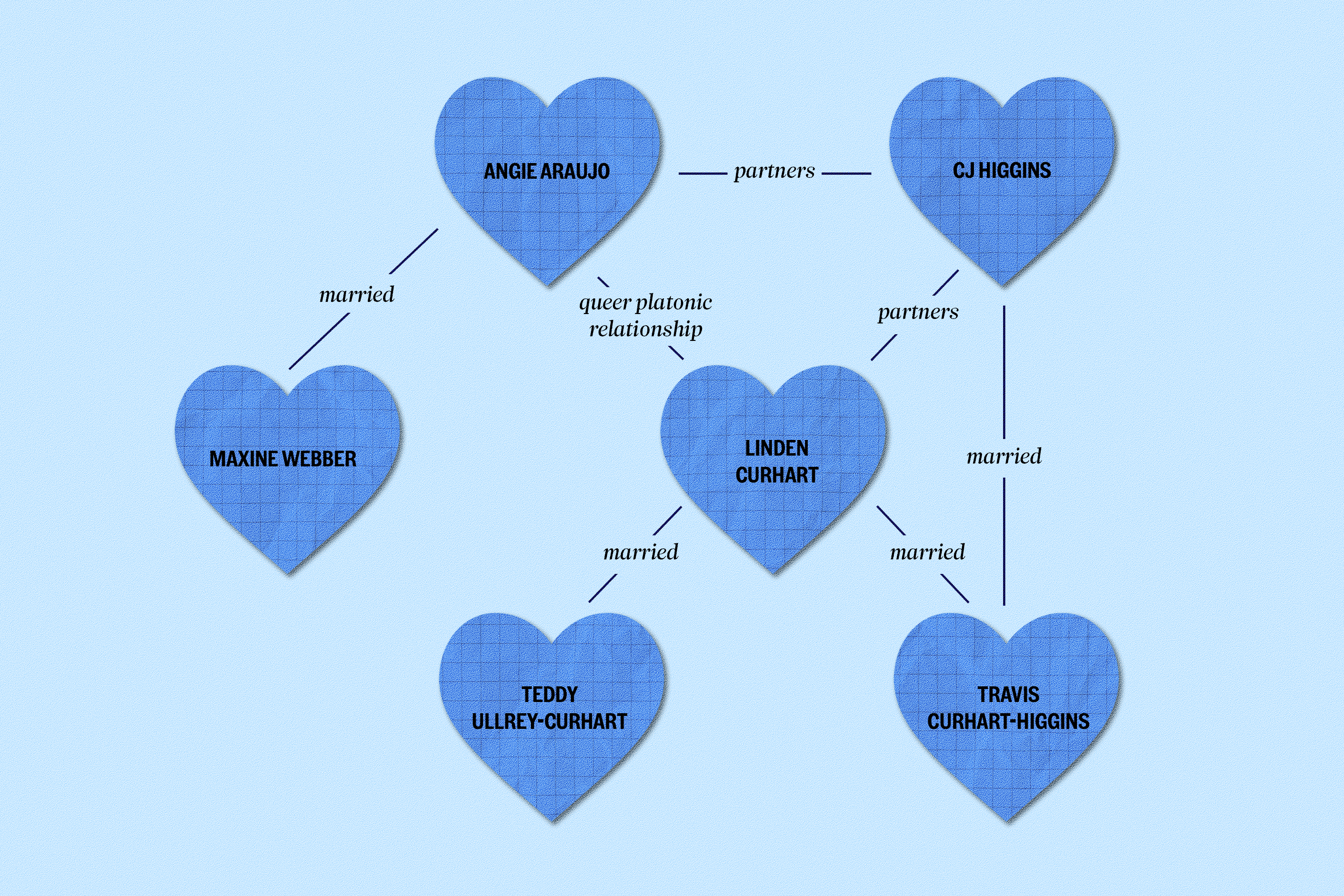
    There’s his husband, Teddy Ullrey-Curhart, whom Curhart met when he was an isolated teenager growing up in a conservative town in Virginia. The two always dreamed of getting married, and in June they celebrated their 13-year commitment in a big pink ceremony at Pastorius Park in Northwest Philadelphia.

    There’s Curhart’s wife, Travis Rosemarie Curhart-Higgins. They bonded as the two most sober people at a friend’s birthday bar crawl in 2019, and got married in 2023. (Curhart wears two stacked wedding rings on his left hand, one for each spouse.)

    Then there’s Curhart’s partner, CJ Higgins, who asked prospective dates to fill out a short Google Form expressing their interest, which Curhart did. Rounding out the group is Curhart’s best friend and “queer platonic partner,” Angie Araujo, who is married to Maxine Webber, and dating CJ. Travis and CJ are also married.

    “It’s a whole constellation,” Curhart, 28, said. Ullrey-Curhart is also in his late 20s; the rest of the crew are in their early 30s.

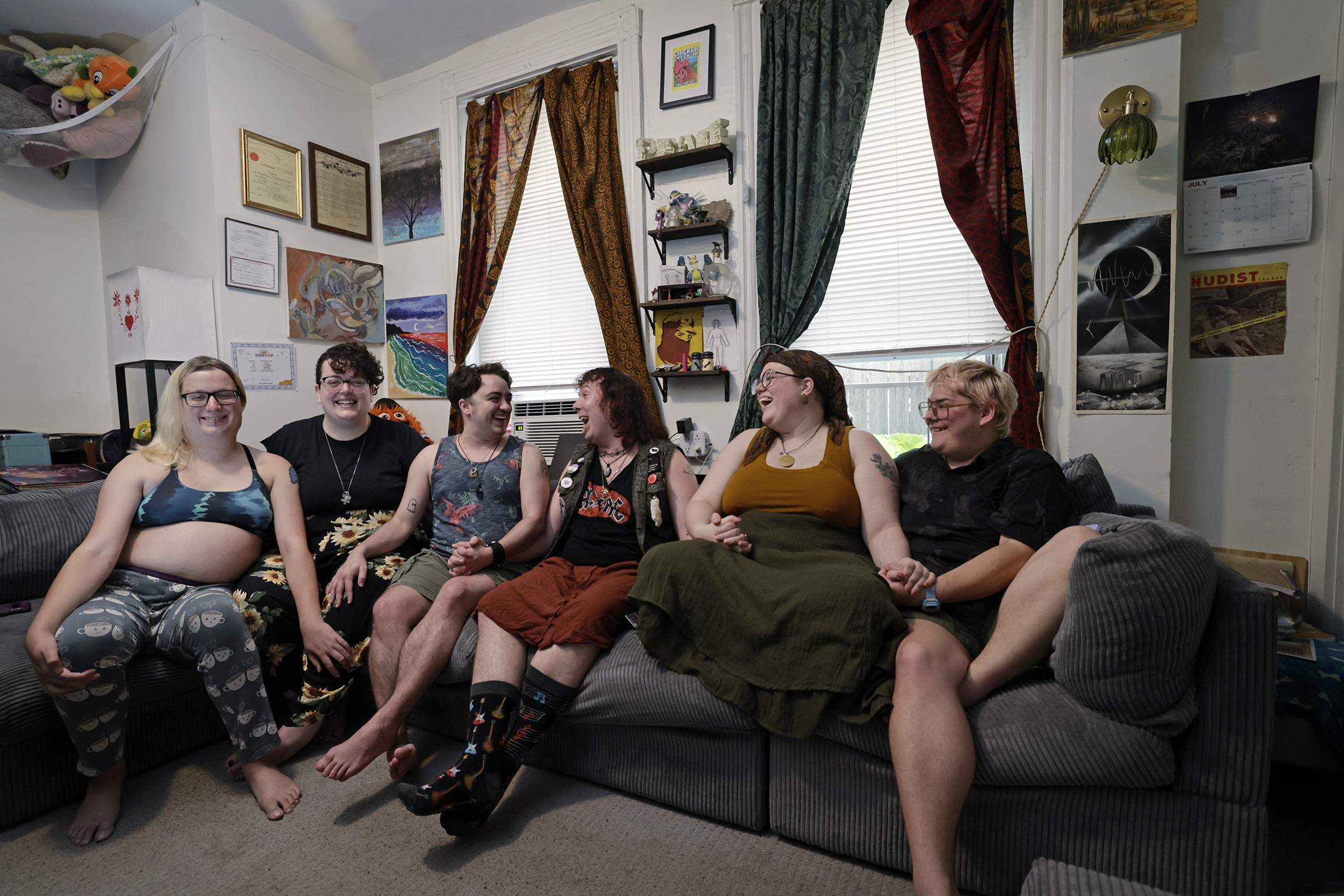
    The six live together as one family in a narrow, rented rowhouse near Drexel. They each have their own room.

    The polyculeJulia Duarte / Staff Illustration

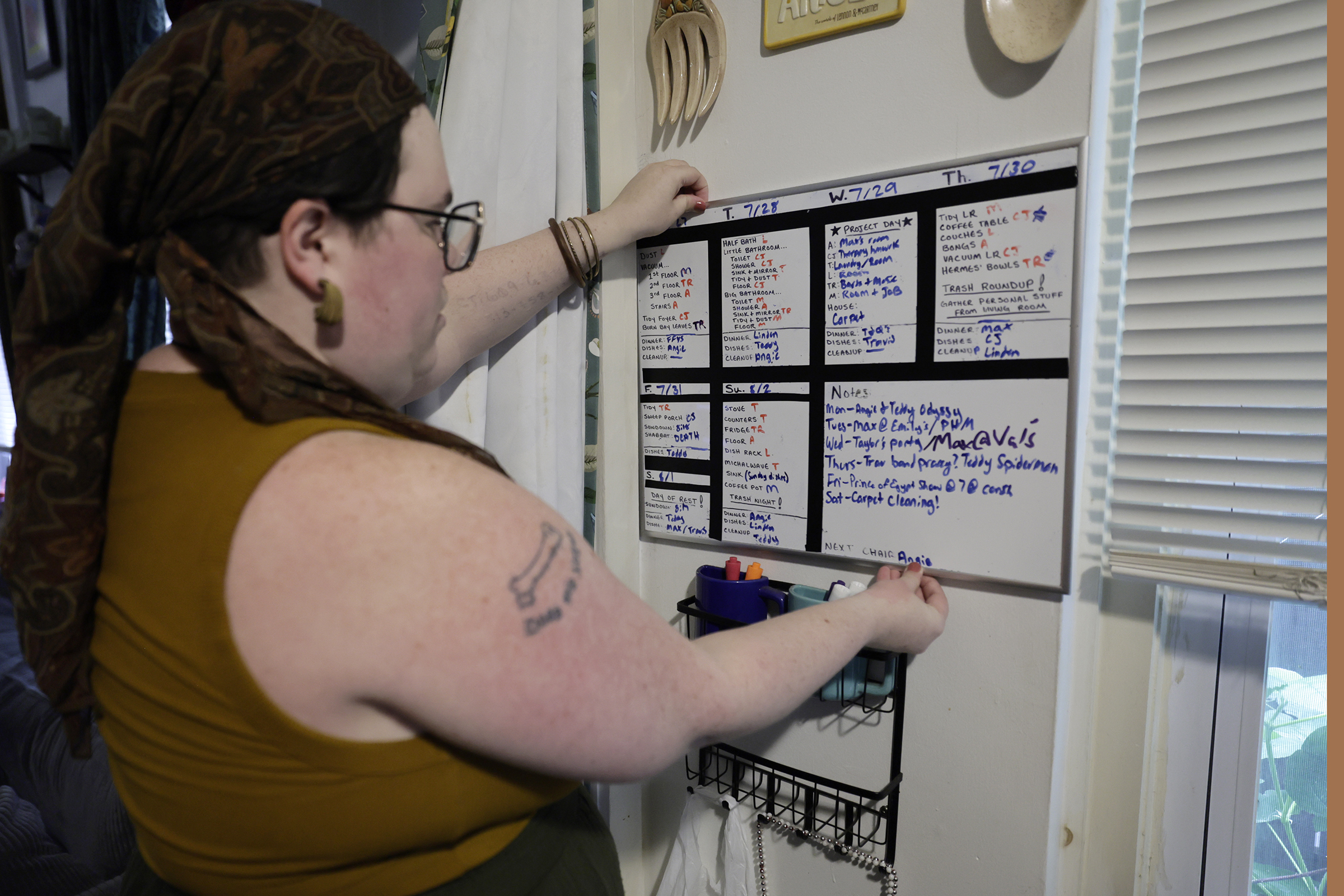
    The polycule — the textbook term for a group involved in polyamory together — shares costs, and meets weekly to discuss chores and meals (usually each person cooks one night a week). They also collectively care for three cats and a hermit crab named Linda.

    “Honestly, the biggest daily challenges that we deal with are just things like, ‘please rinse your mug before you put it in the sink,’” said Curhart.

    The household is Jewish and everyone is an anarchist, Curhart said. They keep the closets stacked with street medic supplies to bring to protests and homeless encampments.

    Some of the members work in theater and some in tech; some don’t work. (Curhart is disabled and relies on the polycule to support him; Ullrey-Curhart is looking for work.) They’ve lived collectively for two years.

    “As a species, humans are pack animals,” said Curhart. “That isn’t to say that everybody should be polyamorous, but I think everybody should live in community.”

    The following, as told to Zoe Greenberg by Linden Curhart, has been edited for length and clarity.

    On proposing marriage

    I had planned a big romantic public proposal for Travis, and then COVID lockdown hit. So instead I got flowers and made dinner at home. I set it up really romantically, with candles, and proposed. We both cried.

    Teddy proposed to me while the whole polycule was apple picking. He got down on one knee and did that dramatic thing where he said my whole name in front of everybody. He talked about how long we’ve been together and how much change we’ve been through.

    Travis and I got married on the winter solstice, so Teddy and I got married on the summer solstice.

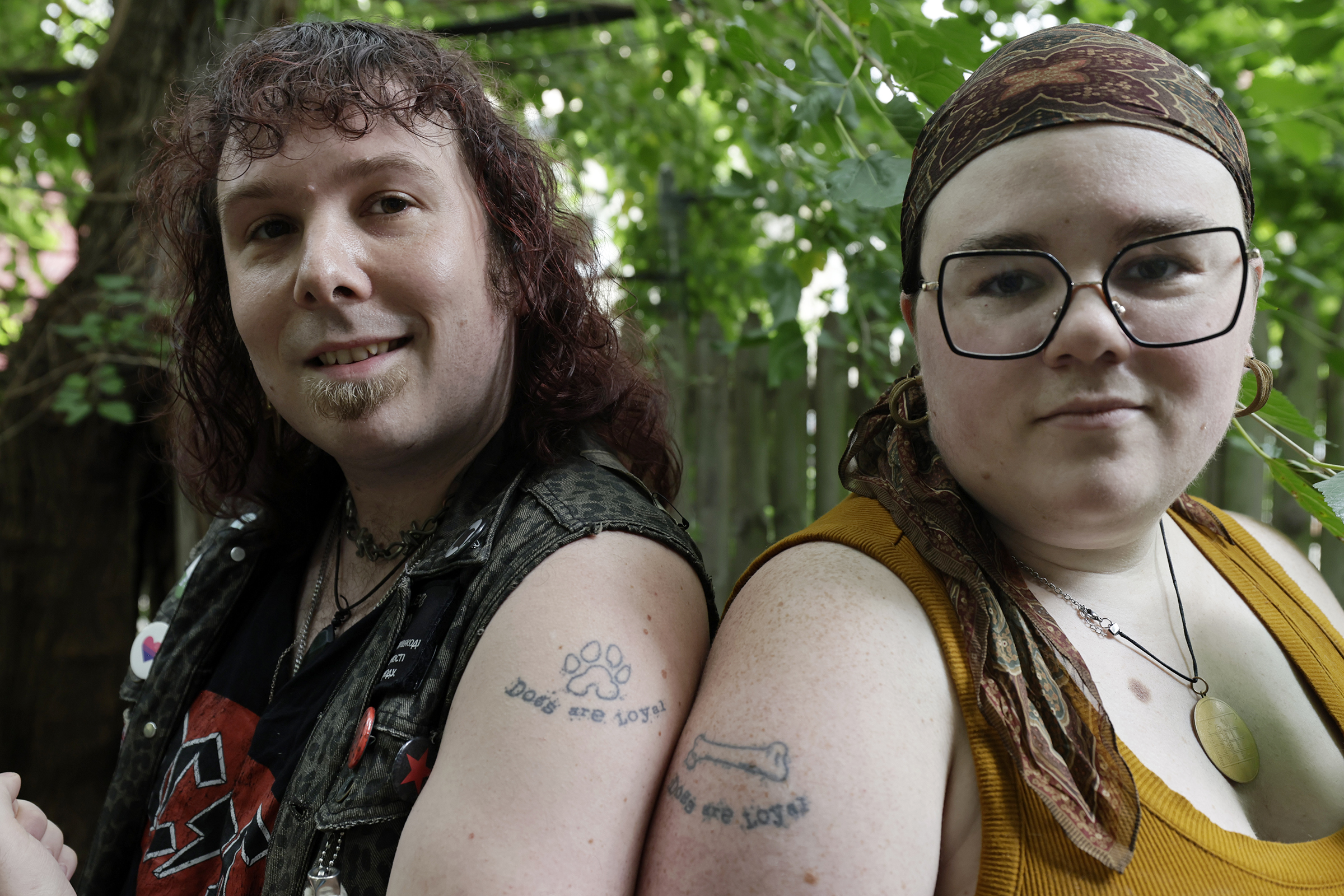
    Travis Curhart-Higgins (left) and Linden Curhart show the tattoos they got after their wedding in 2023.Elizabeth Robertson / Staff Photographer

    On what marriage means

    When I’m talking to people who are not in the polyamorous world, I’ll describe it as a “commitment ceremony.” Because I’m not legally married to anybody. But within our own communities, we just say that we’re married.

    There’s this sense of security that comes with making that decision and having it witnessed by all of the people that you love.

    On leaving the state out of the polycule

    The way that I see it is that our personal relationship, who we share our lives with, who we have sex with, who we choose to raise our kids with, that’s not the government’s business.

    But even if you’re not getting the state involved, it’s a big decision to permanently entangle your life with another person. It’s not something that I am actively seeking to do again.

    On moving in together

    All of us were living in various apartments that we hated, scattered around West Philly. We all had landlords that were crappy.

    The pitch was: all of us are broke and we all love each other, and we’re already making dinner together three times a week. We might as well just all do that in the same place. So we came together and pooled our resources and found the rowhouse.

    All of us understood that this is a family commitment. I really want to have kids someday, and these are the people who will help me raise my kids.

    Linden Curhart kisses his husband, Teddy Ullrey-Curhart, while his wife, Travis Curhart-Higgins (right) looks on. Elizabeth Robertson / Staff Photographer

    On sharing money

    We haven’t officially pooled our finances because it’s important for all of us to have financial independence and some financial privacy.

    Somebody will go grocery shopping for the whole house and then calculate an even split. If somebody can’t contribute that amount, they’ll just say, “Hey, I can’t cover mine this week,” and that’s not usually a big deal. Somebody else will step up.

    Generally speaking, we try not to give each other loans. You don’t give somebody money unless that is money that you can afford to lose.

    On distributing labor

    We try to split the work: the financial labor, the actual physical labor, and the emotional labor, so that everybody’s contributing whatever they have the most of.

    Because I contribute less money, I try to make sure that I’m doing things like making big lunches that people can have during the week. I run a garden so we can grow some of our own food.

    The polycule meets on Sundays to discuss tasks for the week. Elizabeth Robertson / Staff Photographer

    On potential breakups

    Because we’ve been together for so long, we don’t really worry about that. We don’t have concrete contingency plans, but our overarching philosophy of how we treat each other doesn’t stop if we break up.

    Fun fact: Travis and Angie are exes. They broke up before we chose to live in a house together. They had dated for a few months and then decided they didn’t have romantic feelings for each other.

    On the most important house rules

    I was worried about us getting on each other’s nerves in close quarters.

    We have a rule that we don’t have serious emotional conversations in the living room. That’s a bedroom conversation. If a conversation starts in the living room and gets tense, one of us will be like, “Oh, I don’t think this is a living room conversation.”

    Don’t gossip. If somebody tells you something emotional, you assume that it’s for your ears only.

    You try not to drag everybody in the polycule into conflicts that are just between two people.

    On a future spare bedroom

    My 10-year vision is a house with a big vegetable garden and kids and maybe a dog. And hopefully a spare bedroom where we can host people who need a place to crash.


    This story is part of a new series about life partners across the Philadelphia area.

    If you want to share your story about who you’re navigating life with, romantically or otherwise, write to lifepartners@inquirer.com. We won’t publish anything without speaking to you first.