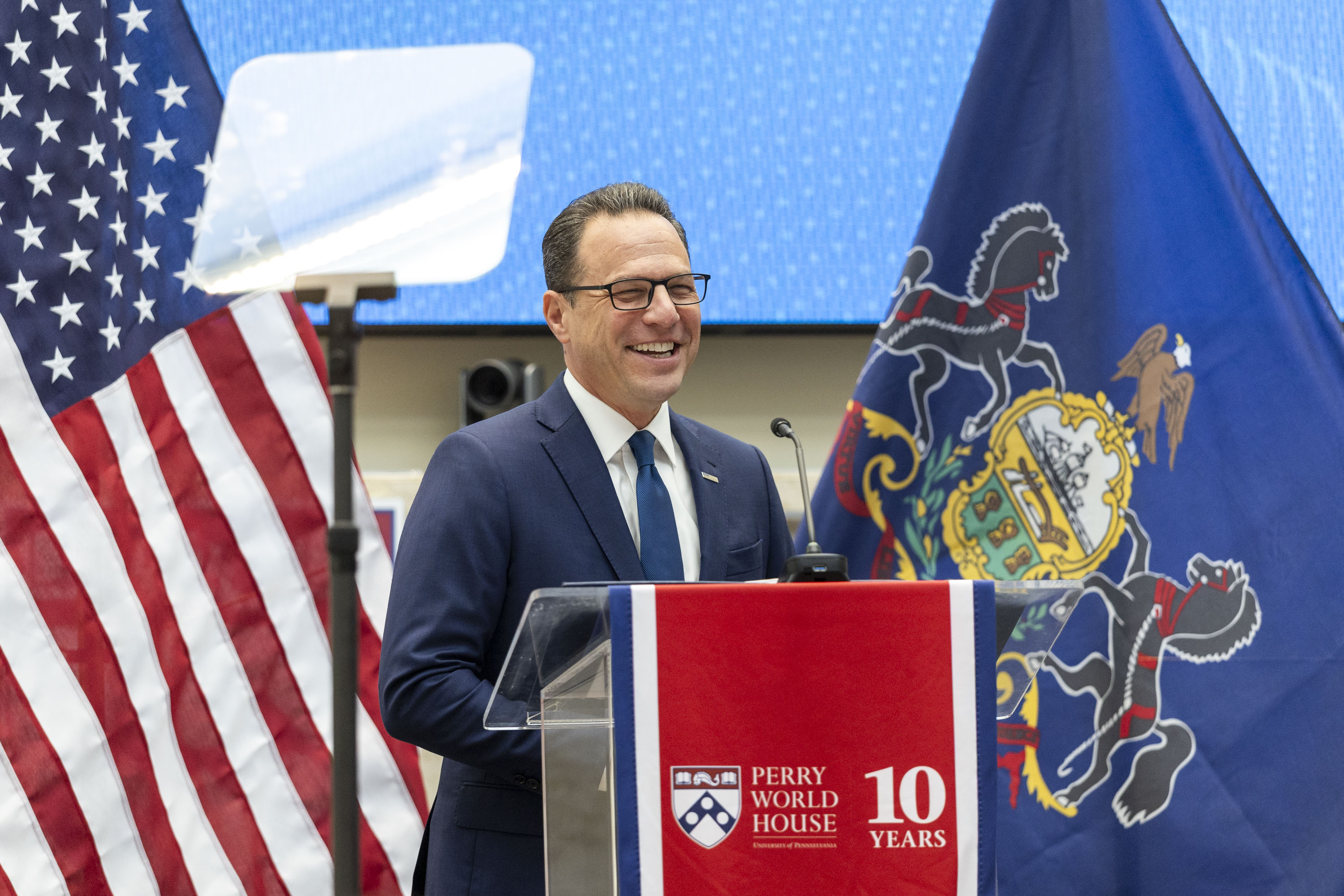
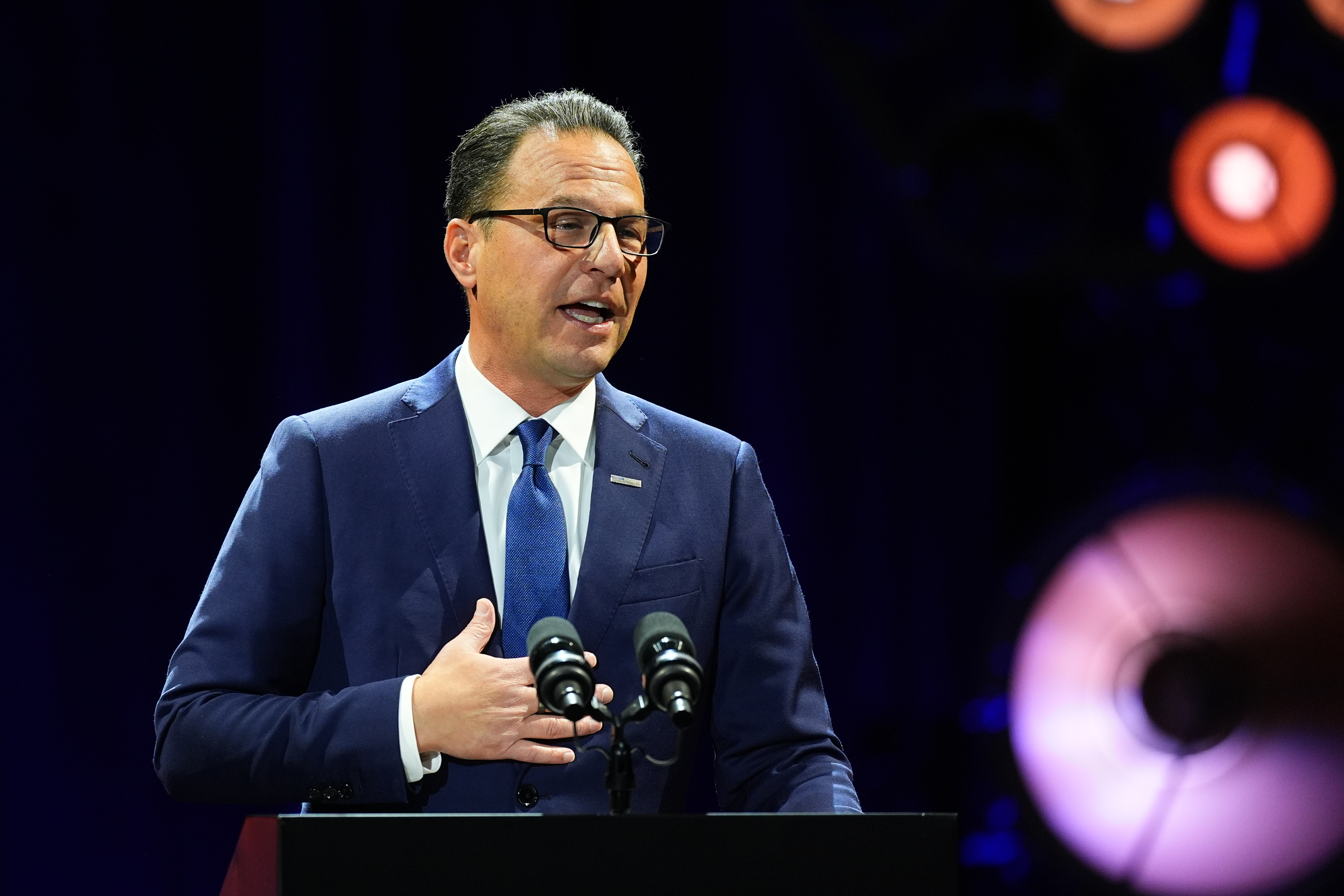
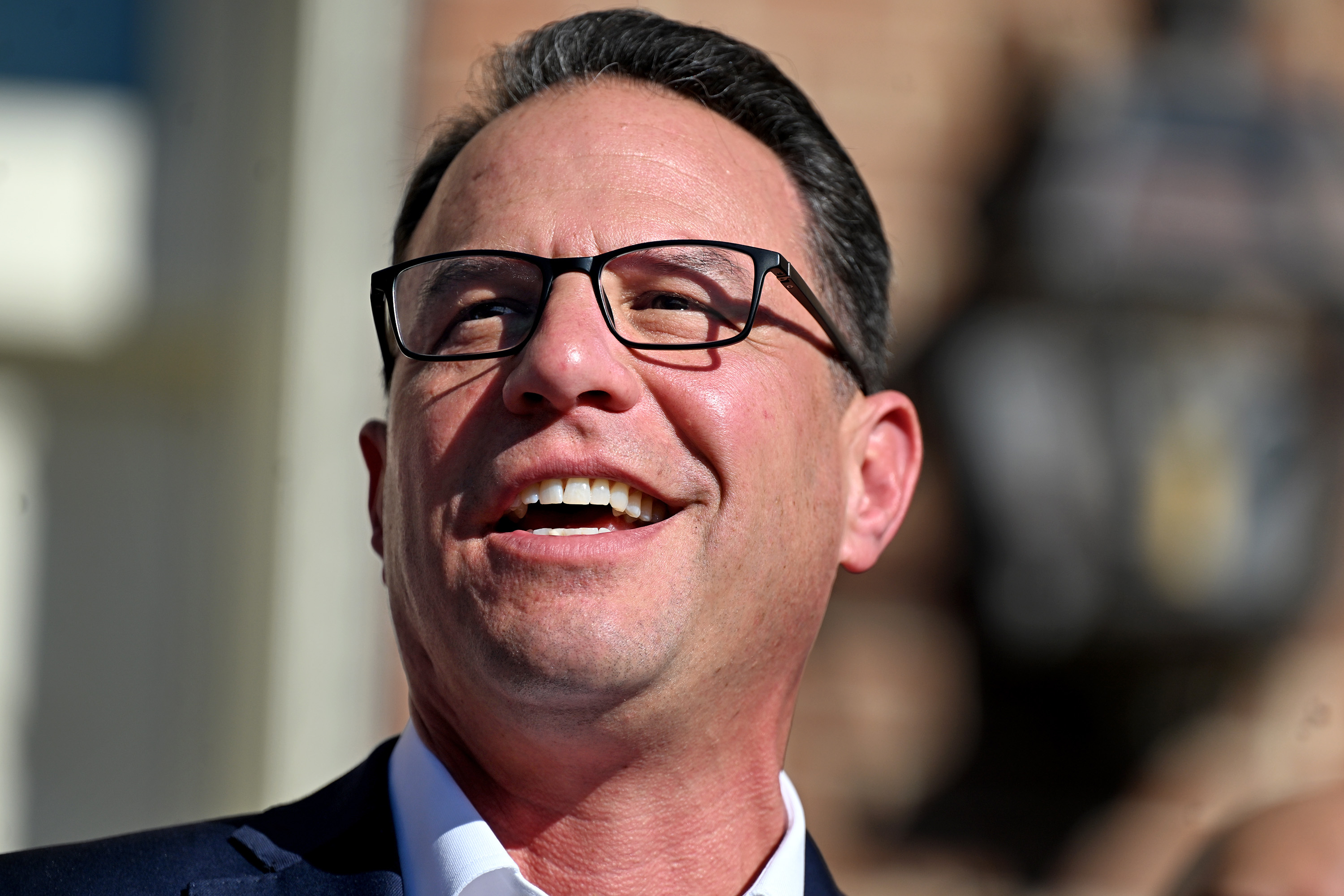
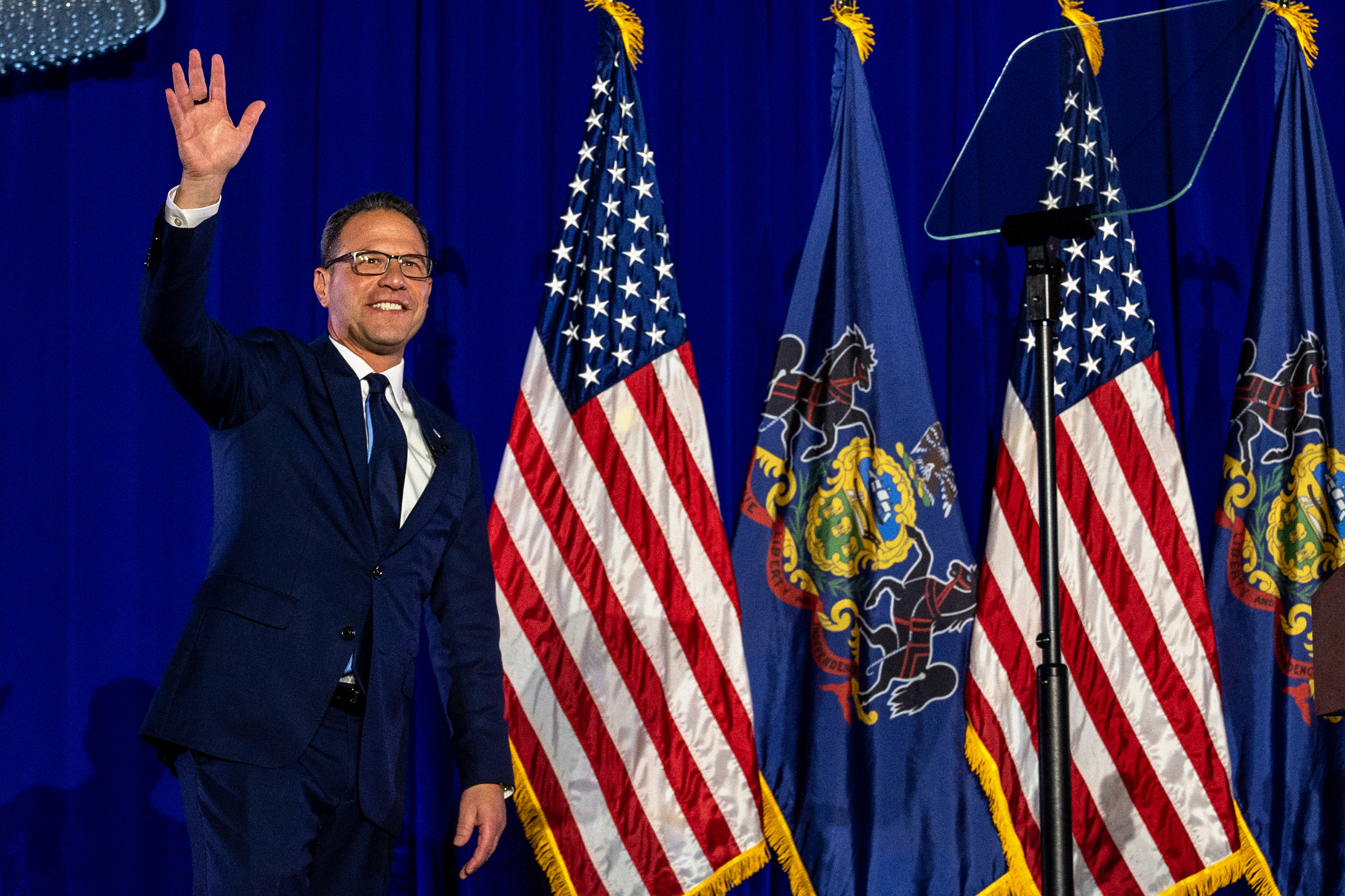
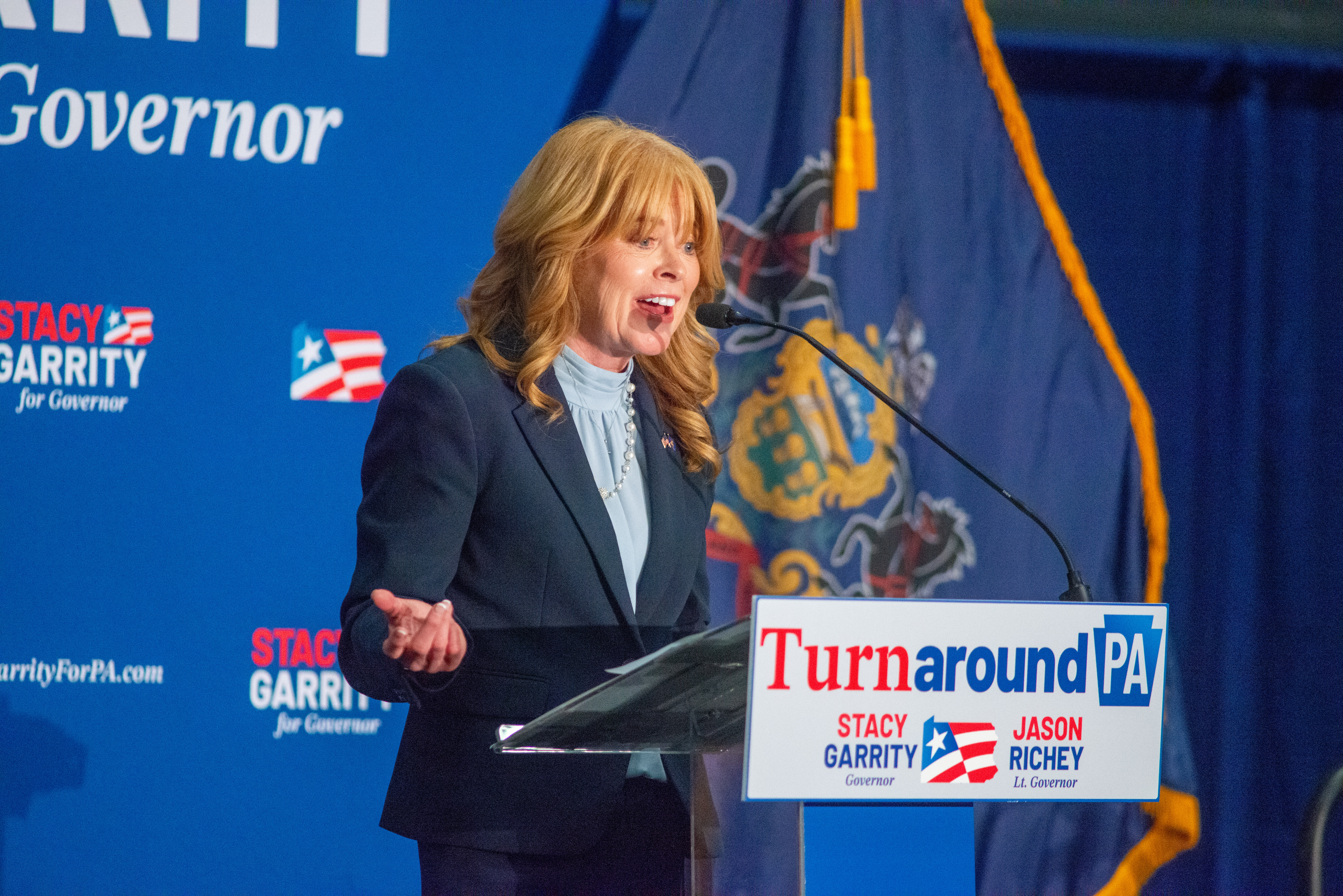
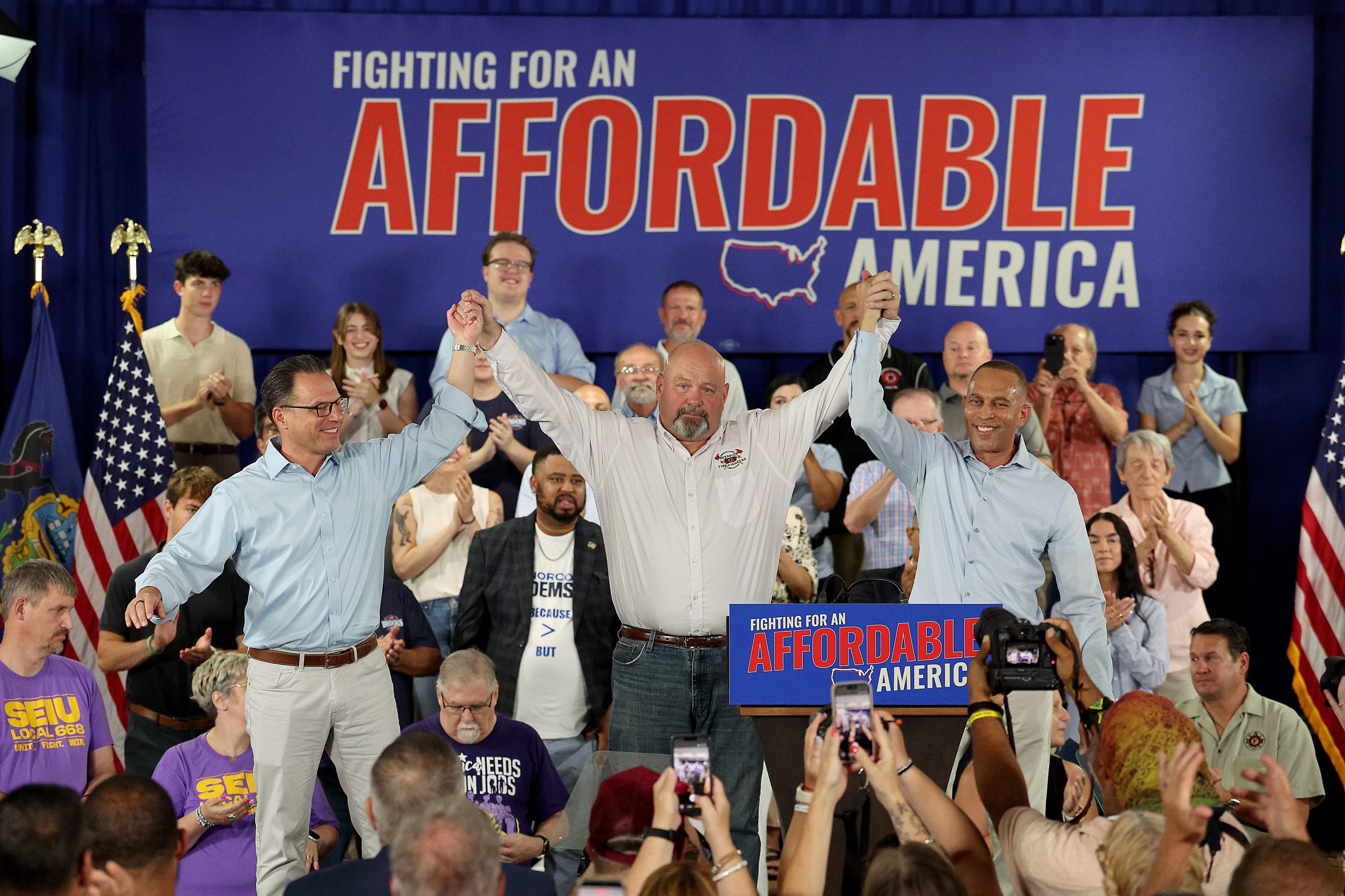
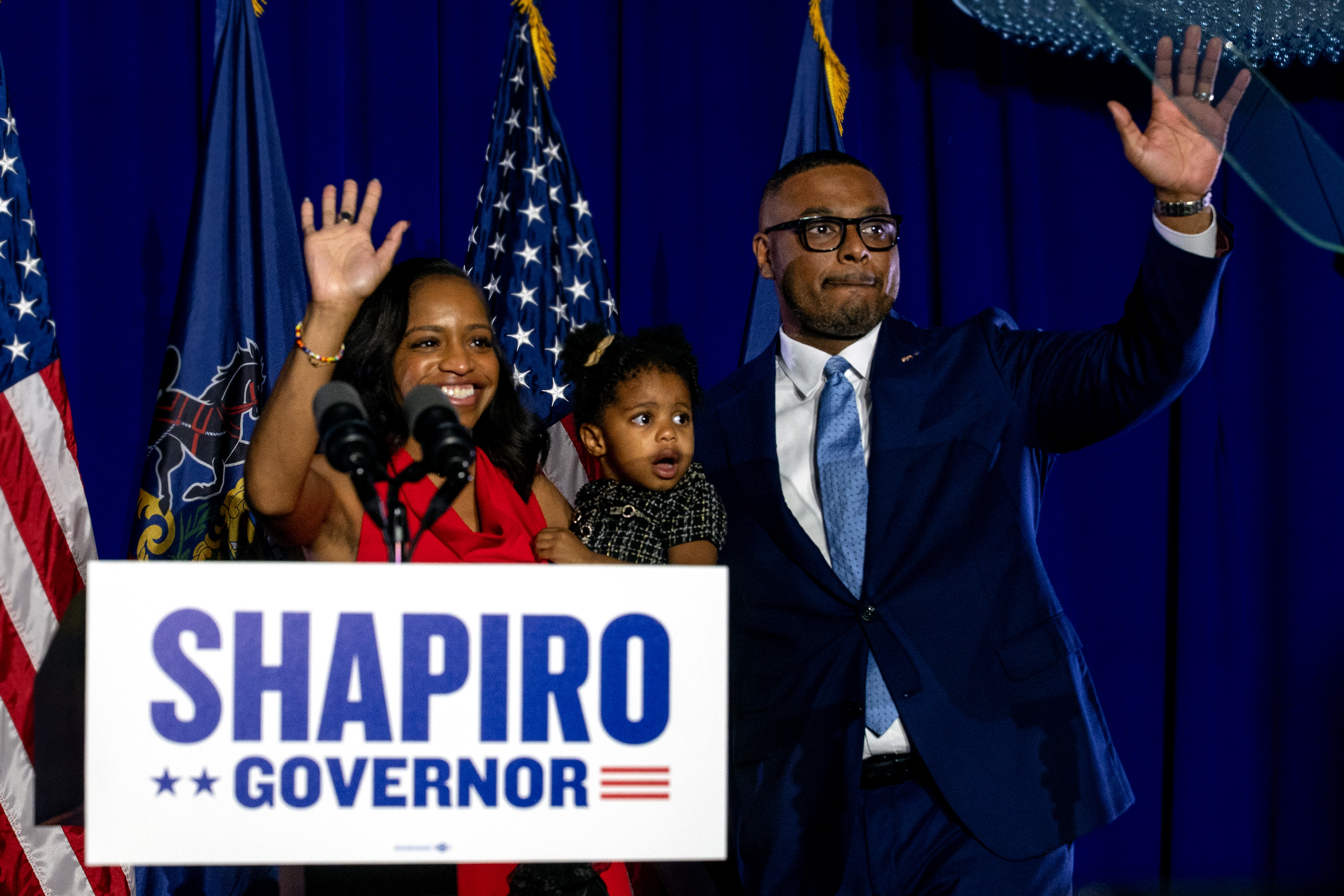
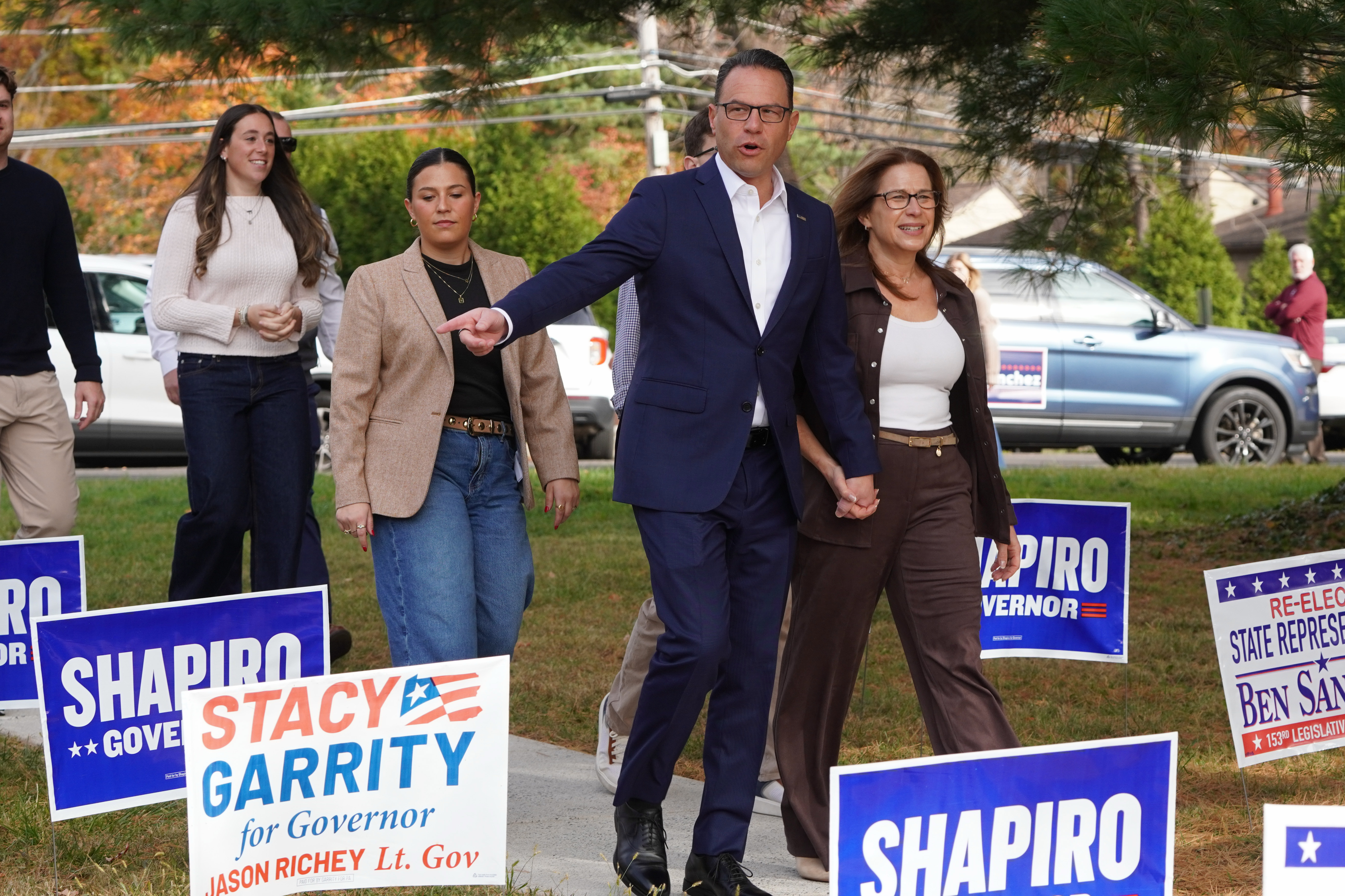
If Gov. Josh Shapiro wants to be on stage for the Democratic Party’sfirst presidential primary debate, he’ll need to launch a campaign by June.
Under a new timetable announced by the Democratic National Committee Monday, contenders for the 2028 Democratic presidential nomination could face their rivals in 12 debates over the course of the cycle with five coming next year.
Shapiro’s case for a presidential run was strengthened after he defeated his GOP challenger by more than 20 points in a swing state and helped usher in a string of downballot Democratic victories. He has begun to publicly acknowledge his interest in a possible White House run, telling reporters at a post-election gathering of Democrats in Denver that he and his family will be making a “personal decision.”
But with the DNC’s new schedule, that decision could come ashe’s still trying to achieve the legislative goals he laid out for his second term.
During his reelection campaign, Shapiro said his agenda for the first 100 days of his second term — a period which lasts from Jan. 17 to April 29— includes an ambitious list: increasing funding for mass transit, protecting abortion rights, supporting housing development and, most urgently, raising the state’s minimum wage. These wins under his belt could show Shapiro’s ability to pass meaningful legislation but may take some time to come to fruition, even under a new Democratic trifecta in Harrisburg.
To participate in the debate, Shapiro would also have to agree to the DNC’s new parameters, which include denouncing spending by “dark money” groups, which do not disclose their donors, and super PACs, which can raise raise unlimited contributions as long as they don’t coordinate directly with a campaign.
Manuel Bonder, a spokesperson for Shapiro, declined to comment on a timeline for the governor’s decision or his thoughts on the new rules.
TheDNC also said in its announcement Monday that it would involve content creators and influencers in the debate process but did not elaborate on how that would work.
Shapirohas frequently relied on influencers to help spread his message and has given them access on both the campaign trail and at the statehouse, where he gave a tour to Kylie Kelce earlier this year.
Shapiro has been seen as a top contender for 2028 after being considered but passed over as former Vice President Kamala Harris’ running mate two years ago. His multi-city book tour and frequent appearances in national media have only increased speculation that he’ll be part of what promises to be a crowded Democratic field.
Other likely entrants with ties to the region, include U.S. Sen. Cory Booker of New Jersey and U.S. Rep. Ro Khanna, a progressive who represents California who grew up in Bucks County.
Booker, who mounted a 2020 primary run but dropped out before voting began, is already making trips to South Carolina, the first state in the 2028 primary schedule.
The field could also include Harris and former Transportation Secretary Pete Buttigieg — who like Booker sought the 2020 nomination — along with Illinois Gov. J.B. Pritzker, California Gov. Gavin Newsom, U.S. Sen. Mark Kelly of Arizona, U.S. Rep. Alexandria Ocasio-Cortez of New York and both of Georgia’s senators, Raphael Warnock and Jon Ossoff.
The DNC did not lay out the polling threshold candidates would have to meet to participate in the debates but said the stage would be capped at 20 participants. Given the potentially large field of candidates, the debates may take place over two nights, with the lineup determined at random.
In 2020, multiple debate organizers required Democrats to poll at least 1% or have a certain number of donors to qualify.
When asked about his plans Fridayduring a foreign policy summit in in Philadelphia, Shapiro gave a subtle nod to his interest by specifically suggesting a governor would be best-suited for the role.
“I’m going to do everything in my power to ensure that we have not just a new foreign policy… but a Democratic governor defeating (Vice President) JD Vance or whoever they put up on the other side,” he said.
How and where Americans could wager their money was forever changed in 2018. That spring, the U.S. Supreme Court overturned a federal law that had long limited legal sports betting to four states, and the sports gambling industry subsequently ballooned into a $166 billion behemoth. And 450 miles from Washington, D.C., the seeds of another seismic shift were quietly planted at the Massachusetts Institute of Technology, where Luana Lopes Lara met a fellow student, Tarek Mansour.
Lopes Lara and Mansour had each worked for Wall Street financial firms. The duo discussed creating something new — a platform where investors could trade on the predicted outcomes of specific events.
In 2020, the federal Commodity Futures Trading Commission approved their application to operate the prediction market Kalshi, and Lara and Mansour recruited investors to their fledgling enterprise.
“We took four years working with the federal government and figuring out how to launch this legally and in a regulated way,” Lopes Lara, a 30-year-old native of Brazil who holds the distinction of reportedly being the world’s youngest female self-made billionaire, said in a recent interview with The Inquirer.
In 2023, Kalshi sought permission from the CFTC to offer contracts on which political party would control Congress. The agency denied the request, arguing such wagering would be “contrary to the public interest.”
Kalshi cofounder Luana Lopes Lara said election markets are the “holy grail” for prediction markets. Olga Fedorova
Kalshi sued the CFTC and prevailed, clearing a path for the company to accept wagers on political elections. Its customers went on to spend $1.3 billion trying to predict election outcomes in 2024, including the presidential contest between Donald Trump and Kamala Harris. (The recent midterms attracted $3 billion worth of wagers on the prediction market.)
Beyond elections, Kalshi offers a dizzying array of potential outcomes that anyone over 18 can stake their money upon: cryptocurrency values, oil futures, Rotten Tomatoes scores of new movies, words an Airbnb executive might mention during an earnings call, the weather in Philadelphia.
Sports contracts, though, have lifted the company into another stratosphere. During the 2026 FIFA World Cup, Kalshi collected about $27 billion in wagers. The company’s value subsequently soared from $22 billion to $40 billion, CNBC reported.
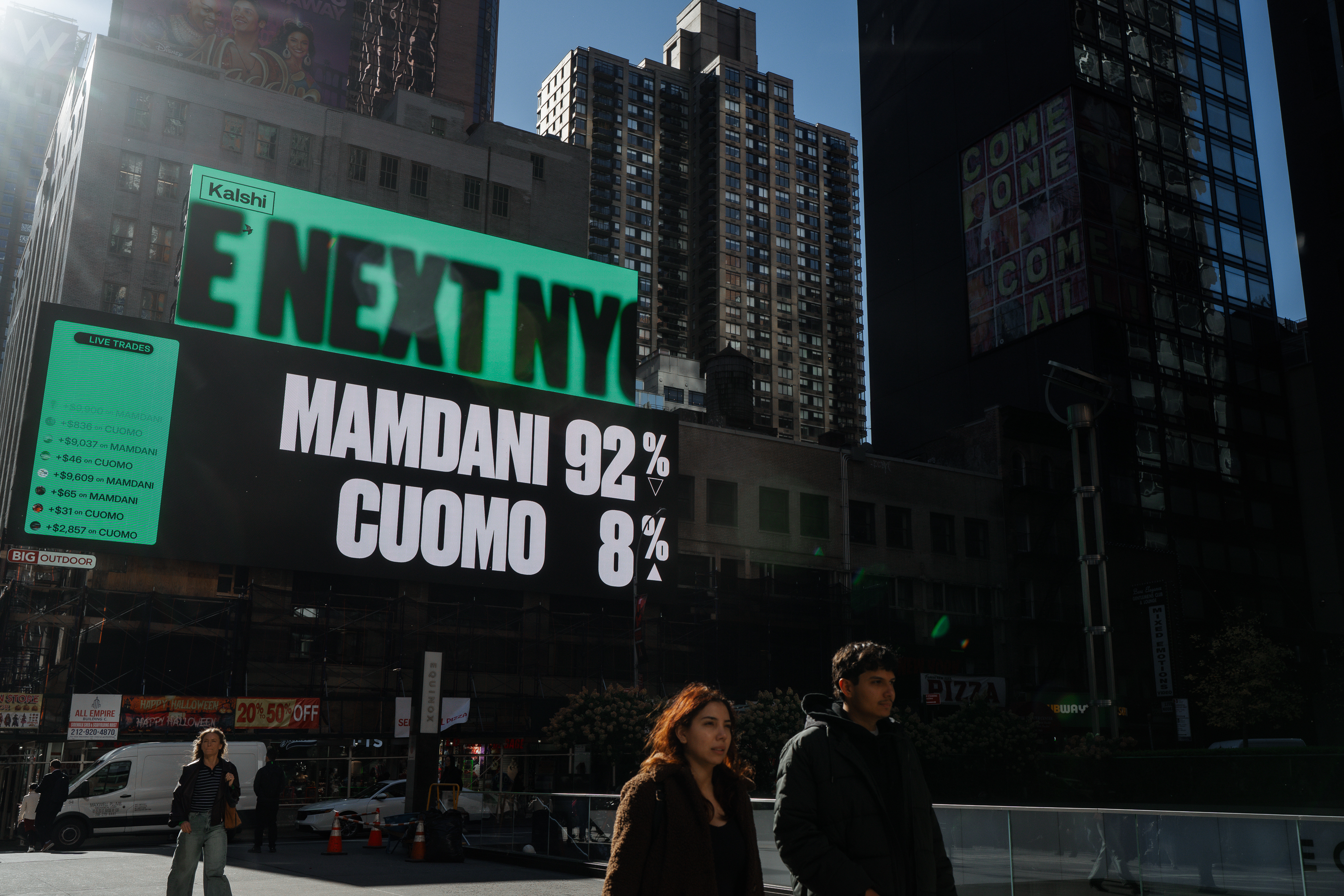
The NBA recently named Kalshi and its competitor, Polymarket, its preferred prediction markets. And the Philadelphia 76ers in late October became the first NBA team to enter into a separate multiyear partnership deal with Kalshi. The prediction market covered the cost of postgame rides on SEPTA’s Broad Street Subway line for fans who attended an Oct. 30 matchup between the Sixers and New York Knicks at Xfinity Mobile Arena.
Kalshi’s leaders insist that prediction market trading is different than gambling with a sportsbook operator. For example, Kalshi recently contacted Philadelphia restaurant and bakery owners to see if they’d wager on a Nov. 8 Eagles game against the New York Giants to cover the cost of giveaways, like free meals for customers.
Yet there is a growing backlash to each industry’s growing omnipresence in daily life.
In March, Arizona’s attorney general filed criminal charges against the New York-based prediction market, accusing it of running an unlicensed online gambling operation. A federal judge later blocked the case from proceeding, ruling that prediction markets are solely regulated by the CFTC, News From The States reported.
That didn’t deter Utah’s attorney general in October from filing felony charges against Kalshi, Lopes Lara, and Mansour for allegedly violating the state’s gambling prohibition.
The company accused the state of “playing politics” and said it would put “a stop to this in court, just like we did in Arizona.”
Kalshi is also facing litigation in New York and other states over whether its business practices violate local gambling laws. Prediction markets are available in 50 states, but not taxed as steeply as sportsbooks, which have been legalized in 39 states and Washington, D.C. “We comply with all corporate tax laws and believe in responsible state taxation, even as a federally regulated derivatives exchange,” Lopes Lara said.
This interview has been edited and condensed for clarity.
Tell me about Kalshi’s early days.
Tarek and I both worked on Wall Street. We realized that most trading happens when people have some view about the future, some thesis about what’s going to happen.
And what we wanted to do is [create] a financial exchange, where instead of trading all these other assets, you just trade contracts, and buy and sell. Contracts are what’s going to happen in the future. Prediction markets are so much better at forecasting the future because of the wisdom of the crowds, and people putting their money where their mouth is.
When do you feel that this idea was actually viable?
After we won the lawsuit against the CFTC [which allowed Kalshi to offer contracts on the 2024 election], we realized how big it was going to be. Election markets are the holy grail of prediction markets. At the end of the day, it’s the thing that proves to people how important these markets are. You can see our data for 2028 [elections] are being used already on TV.
Luana Lopes Lara said prediction markets Kalshi and Polymarket caught the attention of the Trump family during the 2024 presidential election. While many traditional polls showed that the race between Trump and Democrat Kamala Harris was close, Lopes Lara said, Kalshi and Polymarket showed that a majority of investors believed Trump would prevail.KARSTEN MORAN
Former New Jersey Gov. Chris Christie and other critics have said that prediction markets are just another version of sports betting. Christie also said that companies like Kalshi market themselves to teens.
Chris Christie — who is paying him at the end of the day? He’s doing the work for the casino [industry], so obviously he’s going to say that, because they want to protect their monopolies.
With a sportsbook, the house always wins. The house will give you odds that they want to give you. There’s no transparency, no competition on whatever that odd is. And they make money when people lose. The more they get users to lose money, that’s exactly the amount of money they start making. And also, if you start winning, they cut you off.
Exchanges like Kalshi, we function like the New York Stock Exchange. What we do is we match buyers and sellers of contracts of what’s going to happen in the future.
In terms of advertising to minors, that’s completely false.
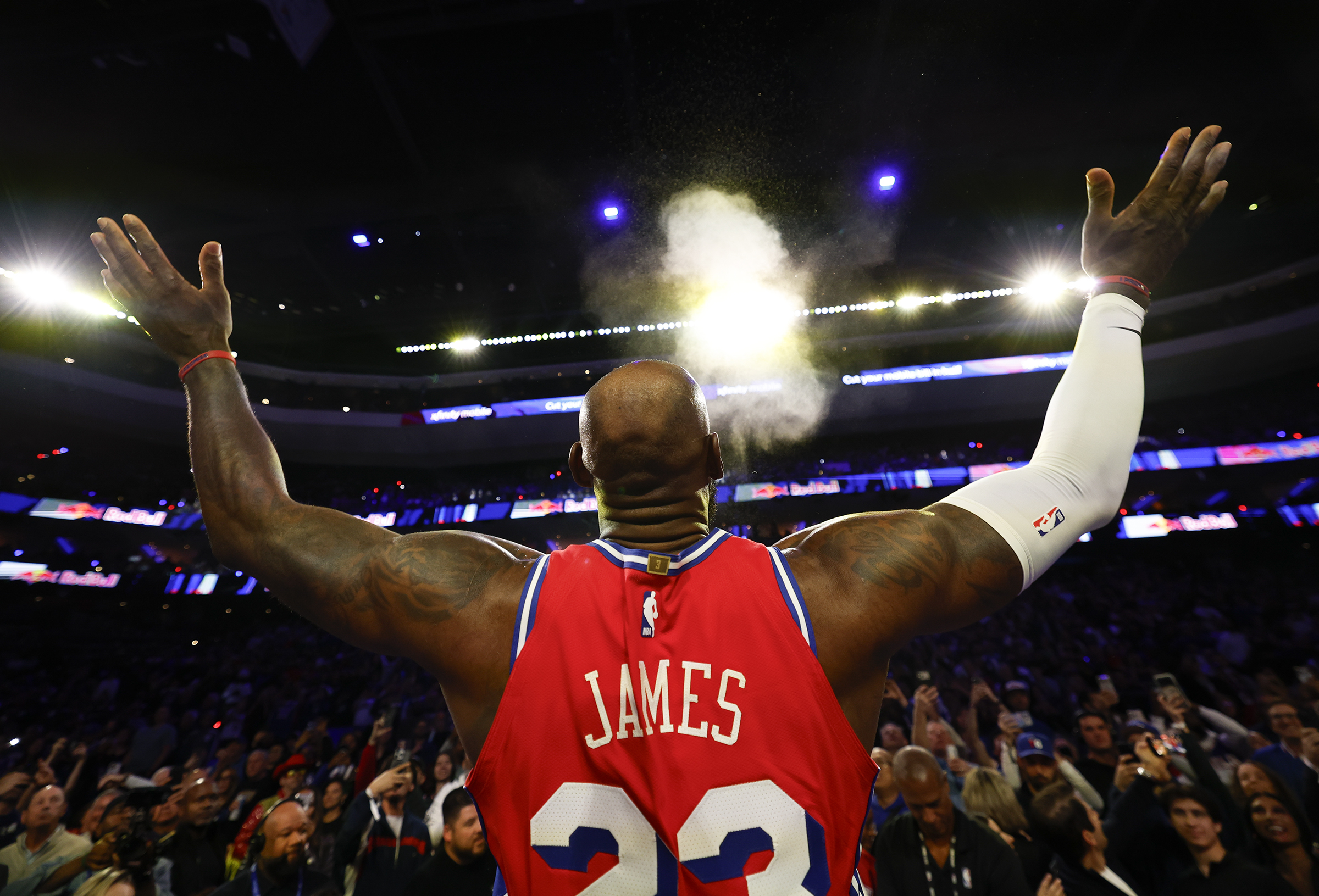
Sixers star LeBron James recently entered into a partnership with the prediction market Polymarket, which will reportedly pay him $15 million a year. Yong Kim / Staff Photographer
Advertising for sportsbooks and prediction markets have become inescapable at professional sports stadiums and during broadcasts of games. Leagues, franchises, and stars like LeBron James have entered into lucrative partnerships with those industries. But many fans — and even some athletes — are unhappy about this overlap. What’s your message to them?
People are entitled to their opinions. We think prediction markets are another way fans can engage with their teams.
(In a follow-up email, Kalshi declined to specify the value of its deal with the Sixers. A Sixers spokesperson also declined to provide those details.)
Donald Trump Jr. is a Kalshi adviser. What is his role?
(Note: Kalshi and Trump Jr. ended their affiliation on Thursday, with Kalshi citing his extensive investments in their rival, Polymarket.)
During the 2024 election [between Trump and Harris], all the polls were saying it was 50/50, who was going to win. Kalshi and Polymarket were saying that there was around a 65% chance that Trump was going to win. And I think with that, Don Jr., and the [Trump] family, and a lot of Republican leadership started seeing the value of these markets. [Trump Jr.] was such a big believer in the industry, and he wanted to get involved.
We always believed we wanted to be a bipartisan kind of company. We didn’t see it as any issue at the time — we’re just getting his help on marketing and all that. We never ask for anything, any favor, regulatory-wise. Nothing like that, whatsoever.
Donald Trump Jr. is an adviser to Kalshi and has shares of the company, and his venture capital firm has invested in Polymarket.Mandel Ngan
A White House teleprompter operator was caught earlier this year wagering about words that President Trump might mention in speeches, and a U.S. soldier was arrested for betting on military action in Venezuela.How do you address insider trading, or people trying to deliberately affect outcomes on prediction markets?
The second example you gave actually did not happen on Kalshi [it took place on Polymarket]. Because we’re federally regulated, we’re also prohibited from offering markets on war, terrorism, or assassination. So that specific incident was on an offshore platform that offer those.
Insider trading is prohibited on Kalshi, the same way that the New York Stock Exchange prohibits insider trading. It’s a hard problem to surveil for. We’re not claiming that this will never happen. What we’re claiming is that we have very, very good systems to detect and deter this.
Congress members have accused sportsbook companies of using VIP rewards — like personalized video greetings from athletes — to encourage customers to continue gambling. What customer loyalty rewards does Kalshi offer, and are they any different from the VIP benefits that sportsbooks offer?
Our VIP benefits are not based in any way on wins or losses. Kalshi has never sent videos from players [to customers].
While sportsbook companies like FanDuel have faced Congressional scrutiny for sending personalized videos of professional athletes to VIP bettors, Lopes Lara said that Kalshi does not send videos to its VIP members.Jeff Chiu
We’ve done extensive reporting this year about sportsbook users who have developed gambling addictions. Don’t prediction markets have the same potential to be addictive or harmful?
I totally hear your concern. It’s something we take very seriously. I think there are a lot of customer protection rules, in the CFTC and SEC, that we apply to us. And we do all of the customer protection mechanisms that the traditional sportsbooks or casinos do, including self-exclusion, even mental health support, deposit limits, screen time limits. We’re actually pro-more regulation.
I think the biggest difference is our incentives are aligned with our users. For us, someone coming and losing — we don’t make more money if people lose more. I think that we as a company don’t have an incentive to have people addicted to Kalshi, where sportsbooks and casinos, they have that incentive.
The Inquirer will continue to report on issues related to the growth of gambling addiction — among teens and adults — across Pennsylvania. If you or someone you know wants to speak with a reporter, please contact David Gambacorta or William Bender at dgambacorta@inquirer.com and wbender@inquirer.com
DENVER — For months leading up to last week’s election, Gov. Josh Shapiro waved off the speculation.
He was focused on his reelection as others prepared to run for president in 2028, he said, while also forecasting a fierce debate over what the Democratic Party stands for — a national conversation he expected to be a part of in some way.
That conversation, at last, has begun.
Shapiro, reelected in a blowout and taking credit for expanding the blue tsunami’s reach in Pennsylvania, acknowledged at a gathering of Democratic Party heavy hitters in Denver on Friday that he will decide whether to jump into the 2028 presidential race.
“That’ll be a personal decision my wife and my kids and I make, and when we’re ready to say something, we’ll let you know,” he told reporters when asked about his prospects of running.
Shapiro’s comments followed a speech at Majority Democrats’ “What’s Next” conference, a first-of-its-kind event designed to build on Democrats’ success in the midterm elections and look ahead to 2028.
Surrounded by others who could be on a presidential primary debate stage with him within the next year, Shapiro made his pitch.
“Leadership today has to be about how big we can think together, how tough we can fight, and whether Democrats have the discipline and know-how to actually deliver for the American people,” he told a crowd of several hundred. “That’s what we’ve done in Pennsylvania.”
It was the second time in the last week that Shapiro, whose rumored presidential ambitions go back decades, appeared at a high-profile gathering of Democratic Party faithful. Over the weekend, he sat down with former Barack Obama speechwriter Jon Favreau at “Crooked Con” in Washington. He also appeared on NBC’s Meet the Press, weighing in on national issues including the attempted impeachment of Defense Secretary Pete Hegseth.
Shapiro has not said that he’s actively planning a national campaign. But his increased involvement on the national stage and his resounding performance in a key swing state have further fueled the expectations.
Shapiro’s 12-point increase over Kamala Harris’ performance in Pennsylvania in 2024 was the largest improvement over the last presidential nominee among six other prospective 2028 candidates who ran in statewide elections this year, an Inquirer analysis found. In October, he launched a federal political action committee to help Pennsylvania’s federal candidates and those around the country, a key signal for those looking to raise the massive amount of money needed for a presidential bid.
A poster showcasing Gov. Josh Shapiro hangs at the Majority Democrats’ “What’s Next” conference in Denver on Friday on the day Shapiro spoke at the gathering of national Democrats.Sam Janesch / Staff
The conference in Denver was unmistakably angled toward the 2028 presidential contest in addition to the more pressing agenda in Congress when Democrats take control in January.
Beyond Shapiro, other potential candidates who attended included U.S. Sens. Cory Booker, Ruben Gallego, Elissa Slotkin, Raphael Warnock, and Chris Van Hollen; U.S. Rep. Ro Khanna; and former Transportation Secretary Pete Buttigieg. Other current and potential future party leaders — like expected House Speaker Hakeem Jeffries and Govs. Mikie Sherrill and Abigail Spanberger — were also there.
Booker, a New Jersey Democrat who ran for president in 2020 and is already making visits to the first-primary state of South Carolina, did not address the 2028 question directly in a rousing speech that called for “bold doers” rather than “small thinkers.”
“This is not a moment. It has to be the beginning of a movement,” Booker said, pleading for the small army of Democratic officials and staff in attendance to capitalize on the blue wave and “moral outrage” during the current administration.
Sherrill, the state’s first-term governor, also spoke on a panel Friday, and U.S. Sen. Andy Kim (D., N.J.) used his own appearance to push for Democrats to focus on healthcare when they regain the majorities on Capitol Hill in January.
In a personal and emotional speech, Kim spoke of his family’s increasing struggles to take care of his father with Alzheimer’s, and about his MediKids bill for universal healthcare for kids (Jeffries endorsed the legislation in a separate panel).
U.S. Rep. Jake Auchincloss, a Massachusetts Democrat who chairs the group that hosted the conference, was explicit about the ongoing shadow of the presidential primary and how the nominee should embrace a new track for the party.
“My challenge to everyone running in 2028, which might also be every person in this room, is, tell us, which ideas you will stop giving permission to, the ones that defy common sense or don’t work,” Auchincloss said. “Tell us which privileges you’ll confront, even if your donors or allies object. Tell us which opportunities you’ll promote so every child can share in the American promise. Voters did not tell Democrats, we get it. They told us we get a chance.”
Shapiro — in a segment titled, “The Next Era of the Democratic Party” — laid out a broad vision similar to his stump speeches in his latest run for governor. And like others, he challenged his party to think big as it gains back control at different levels of government.
“The question is, what kind of force are we going to be?” he said.
Peppered with questions about 2028 by reporters later, Shapiro said he’s only “decided to be a loud voice in this process that we’re going through right now as a party to put ourselves in the best position to compete, and most importantly, put ourselves in the best position to be able to do good things for the American people.”
Asked specifically about California Gov. Gavin Newsom saying he will decide whether to run in January, Shapiro said “no one’s decision has any bearing” on him.
“I wish Gavin and everyone else the very best as they go through the process,” he said.
Other potential candidates for the Democratic nomination also stressed the need for the party to deliver, embrace a new generation of leaders, not get caught up in liberal ideological battles, and not fall prey to learning the wrong lessons from the midterms.
“This isn’t a blank check. If anything, it’s a short-term loan,” Gallego, a first-term senator from Arizona, said while talking about Latino voters who helped Trump win in 2024 but swung back to Democrats this year.
Slotkin, a freshman senator from Michigan, stressed voters’ desire for younger leaders and avoiding Democratic infighting before ending with a line that could’ve fit into the closing pitch on a presidential debate stage.
“I will do everything in my power to be the principled leader that you all deserve,” she said.
Pennsylvania Gov. Josh Shapiro speaks during a Democratic conference Friday, Nov. 13, 2026, in Denver. (AP Photo/David Zalubowski)AP Photo/David Zalubowski
Shapiro also made a reference to the 2028 race — opening his short speech by saying Pennsylvania suddenly has some competition in its role as the nation’s largest swing state. With Democratic wins across Texas, Georgia, Ohio, South Carolina, and more, there are other states “looking pretty swingy right now.”
“Our party is ready to take on some big swings, too — not just going out and scrapping for 270 he said, referencing the Electoral College votes needed to win the White House, ”But fighting hard to swing for 370.”
The Souderton Area School District must create an area for demonstrators and livestream school board meetings under a settlement reached in a lawsuit brought two years ago by residents who accused the district of illegally banning them, the American Civil Liberties Union of Pennsylvania said Thursday.
“Members of the public have a First Amendment right to attend and participate in school board meetings,” Sara Rose, the ACLU of Pennsylvania’s deputy legal director, said in a statement. “School boards should take a lesson from this case: you can’t silence critics by banning them from meetings.”
Souderton’s superintendent, Christopher Hey, said in an email Friday that the district “continues to welcome and value respectful community participation at school board meetings” and was “moving forward collaboratively.”
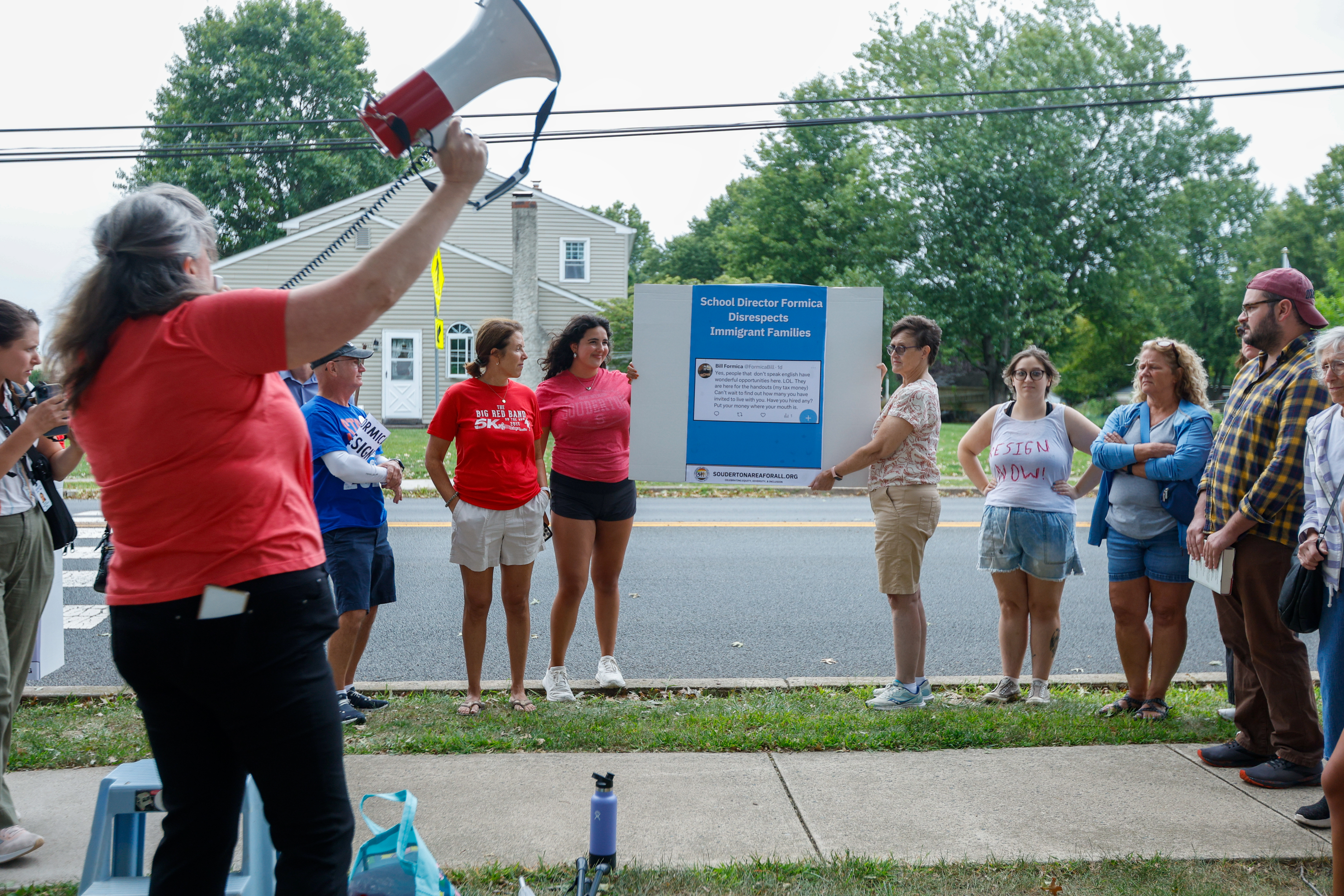
The residents, who were protesting lewd social media posts by Formica about then-vice president Kamala Harris, were accused by the district of threatening another school board member and her teenage daughter in a parking lot after a September 2024 board meeting.
District officials said the residents had mistakenly believed the girl was Formica’s daughter. The district’s solicitor, Jeffrey Sultanik, wrote in an Oct. 10 2024 letter to Kitt, “You screamed ‘Tell your father he’s an {expletive} ,’ and ‘Tell her dad he’s a fascist and needs to resign.’”
The ACLU said the district had falsely accused the residents — Patrick Kitt and Christopher Spigel, along with Spigel’s teenage daughter — of yelling at the school board member, Kim Wheeler, and blocking her from leaving the lot.
The district lifted the ban on the residents in March 2025.
As part of a tentative settlement agreement in early 2025, the residents agreed to provide a “confidential apology” to Wheeler’s daughter, according to the ACLU, “if the district agreed to livestream and archive its school board meetings, create an area for individuals to demonstrate outside school board meetings, pay plaintiffs’ attorneys’ fees, and issue a joint press release about the settlement.”
But that April, the school board refused to approve the joint press release “and instead asked the plaintiffs to agree not to discuss the settlement publicly” — a demand they rejected, the ACLU said.
It said the district’s lawyer then asked the court to bar the residents from discussing the case and demanded that the residents agree to not bring criminal complaints against any board member based on the 2024 incident.
The residents then withdrew their offer to apologize. Kitt, in a statement, said he “lost all trust that the school board was operating in good faith.”
“When the district tried to silence us — again — I lost all trust that the school board was operating in good faith,” Kitt said. “It became clear that the board wanted the apology to weaponize it against us, and it had nothing to do with Wheeler’s daughter.”
The district then asked the court to force the residents to abide by the settlement agreement, according to the ACLU. While the court found the district had failed to prove the settlement was binding, because it hadn’t been approved by the school board, it still ordered the parties to follow it, the ACLU said.
The residents, however, asked the court to reconsider the portion of the agreement involving an apology to Wheeler’s daughter.
In a Sept. 28 decision, Judge Mia Roberts Perez said that “it is not controversial to acknowledge that the ethical thing to do when an adult harms a child is to apologize to that child, even if the harm was inadvertent.”
“The First Amendment, however, limits the Court’s ability to compel an apology,” Perez said. She struck the portion of the settlement agreement that required the apology.
The district had 30 days to appeal Perez’s order, but did not, Rose said.
Hey said Friday that “we respect the court’s opinion, including its views expressed in the September 28, 2026 decision.”
The settlement requires the district to livestream and archive recordings of its school board meetings — something the district wasn’t doing while residents were protesting Formica, Rose said. The district began streaming and archiving meetings in December 2024.
It also requires the district to create a “designated outdoor gathering/demonstration area adjacent to (or in the immediate vicinity of) the district’s administrative offices building.”
The district also has to pay $63,000 in attorney’s fees for the residents, under the settlement.
If the 2026 midterm showings were a competition between Democrats with ambitions to run for president in two years, Gov. Josh Shapiro would have come out on top.
Shapiro flexed his political strength, but other potential presidential contenders, namely U.S. Sen. Jon Ossoff of Georgia, saw their stock rise, too, after similarly strong performances in swing states. Will the downballot victories be enough to help Shapiro stand out in a likely crowded field?
“Democratic Party voters are very focused on winning. Putting Pennsylvania essentially in your column right away is something no one else can do,” said Adam Carlson, a New-York based pollster who runs Zenith Research, which gathers data for Democratic candidates nationwide.
In a state that went for President Donald Trump just two years ago by just under a 2-percentage-point margin, the Pennsylvania map now looks almost unrecognizable. Shapiro flipped five more counties than in his 2022 gubernatorial run and became the first Democrat to win Lancaster County in 36 years. He also ran up the score even higher in already-blue counties,including the vote-rich Philly suburbs.
(function(){function e(){window.addEventListener(`message`,function(e){if(e.data[`datawrapper-height`]!==void 0){var t=document.querySelectorAll(`iframe`);for(var n in e.data[`datawrapper-height`])for(var r=0,i;i=t[r];r++)if(i.contentWindow===e.source){var a=e.data[`datawrapper-height`][n]+`px`;i.style.height=a}}})}e()})();
A presidential run, however, is an entirely different ball of wax.
“I think there’s lots to be learned and I’m not sure how it will translate on a national stage for him, but in terms of how to win Pennsylvania, I think he’s laid a pretty good groundwork,” Carlson said.
Behind Shapiro’s win
Last week, Shapiro defeated Republican State Treasurer Stacy Garrity by a whopping 22 percentage points, a 1.1 million-vote margin of victory.
“This is a good night for our commonwealth. It’s looking like it could be a pretty good night for our country, too,” Shapiro told supporters at his victory party.
He outpaced his already impressive 15-percentage-point margin in his 2022 gubernatorial race and outperformed former Govs. Ed Rendell in 2006 and Tom Wolf in 2018,both Democrats who won reelection in the middle of a Republican president’s term.
Shapiro also had a nearly 12-percentage-point increase on Harris’ showing in Pennsylvania two years ago, the highest improvement over the 2024 Democratic nominee among sixprospective 2028 Democrats who faced statewide elections this year, according to an Inquirer analysis.
“Demonstrating the capacity to win the biggest state on the map, I think, puts you in the category on your own,” said Tré Easton, vice president of the Searchlight Institute, a Democratic-leaning think tank, who previously worked for U.S. Sen. John Fetterman (D., Pa.). “I think he’s going to have a very compelling case to make if he, as we all expect him to do, pulls a trigger on a presidential campaign.”
(function(){function e(){window.addEventListener(`message`,function(e){if(e.data[`datawrapper-height`]!==void 0){var t=document.querySelectorAll(`iframe`);for(var n in e.data[`datawrapper-height`])for(var r=0,i;i=t[r];r++)if(i.contentWindow===e.source){var a=e.data[`datawrapper-height`][n]+`px`;i.style.height=a}}})}e()})();
Former North Carolina Gov. Roy Cooper won a key U.S. Senate race, posting an 11-point improvementover Harris, and U.S. Sen. Cory Booker of New Jersey brought about a 10.4-point increase.
But perhaps the most direct point of comparison to Shapiro is Ossoff, who was elected to a second term in Georgia, a state with a nearly identical split for Trump and Harris in 2024 as Pennsylvania.
He defeated Republican challengerMike Collins, a U.S. House member, by over 18 percentage points, and he improved over Harris by about 10½ percentage points.
Ossoff has insisted he has “zero interest” in running for president, but several straw polls and prediction markets have him at the top of the list if he changes his mind.
Shapiro, similarly, has said his focus is on governing the state with the new Democratic trifecta, which could enable him to increase the minimum wage, among other long-stalled priorities.
But he has also taken several concrete steps toward a presidential campaign this year, including publishing a memoir and launchinga federal political action committee.
Since Election Day, he has spoken with former President Joe Biden, South Carolina’s Democratic kingmaker, U.S. Rep.Jim Clyburn, and former President Barack Obama’s 2012 campaign manager, Jim Messina, according to reports. (Shapiro’s spokesperson declined to comment further.)
He will also speak Friday at the Majority Democrats’ What’s Next summit in Denver, an event focused on shaping the party’s 2028 platform.
Shapiro’s 22-point win falls in the middle of the pack among potential contenders on statewide ballots this year,but that is largely due to the battleground nature of Pennsylvania in contrast to the deep-blue states of his possible competitors.
Maryland Gov. Wes Moore had the highest win margin, with a more than 33-point difference over his competitor, but was only slightly more than Harris’ win over Trump in the solidly Democratic state.
Booker beat his longshot challenger, South Jersey attorney Justin Murphy, by 27 points. And Illinois Gov. JB Pritzker won reelection by nearly 24 points in another deep-blue state.
Midterm positioning
Shapiro built up a historic $60 million war chest for his reelection contest while GOP donors all but abandoned his Republican opponent, with polls showing a rout.
With his reelection effectively secured months before Election Day, Shapiro focused his attention during the fall campaign on the Pennsylvania Democratic Party, coordinating across campaigns to boost candidates over the line. He devoted the key final weeks of his run to campaigning for congressional and state legislative candidates, to strong success.
(function(){function e(){window.addEventListener(`message`,function(e){if(e.data[`datawrapper-height`]!==void 0){var t=document.querySelectorAll(`iframe`);for(var n in e.data[`datawrapper-height`])for(var r=0,i;i=t[r];r++)if(i.contentWindow===e.source){var a=e.data[`datawrapper-height`][n]+`px`;i.style.height=a}}})}e()})();
“I really do think the governor’s overperformance, his popularity, and the way in which he leveraged it really made a huge difference, and it’s hard to imagine that it would be as decisive of a win and as widespread if it wasn’t for that,” said J.J. Abbott, a Democratic consultant who advised several of the party’s state legislativecandidates.
He credited Shapiro for his recruitment efforts to find and run top candidates for Congress and the legislature as well as raising money for them, going on TV to advocate for them, and visiting almost every battleground candidate’s district.
Being in Pennsylvania also helped bat away repeated accusations from Garrity’s campaign that he was more focused more on Pennsylvania Avenue than the needs of working Pennsylvania families, he said.
But Shapiro’s focus in Pennsylvania kept him away from early-primary states, like Nevada and New Mexico, where voters will be key to deciding the party’s eventual nominee.
His potential competitors, meanwhile,were making moves to build allies across the country.
On top of campaigning in New Jersey swing districts, Booker spent time campaigning for Sen.-elect Annie Andrews in South Carolina, the first state to conduct a Democratic primary for the 2028 election.
And while he was not on the ballot, Kentucky Gov. Andy Beshear chaired the Democratic Governors Association, where he oversaw strategy for gubernatorial races across the country. This year, Democrats won seats in Iowa, Ohio, Wisconsin, and Texas — though Beshear faced criticism for not sending resources to Texas Gov.-elect Gina Hinojosa’s campaign until late in the race.
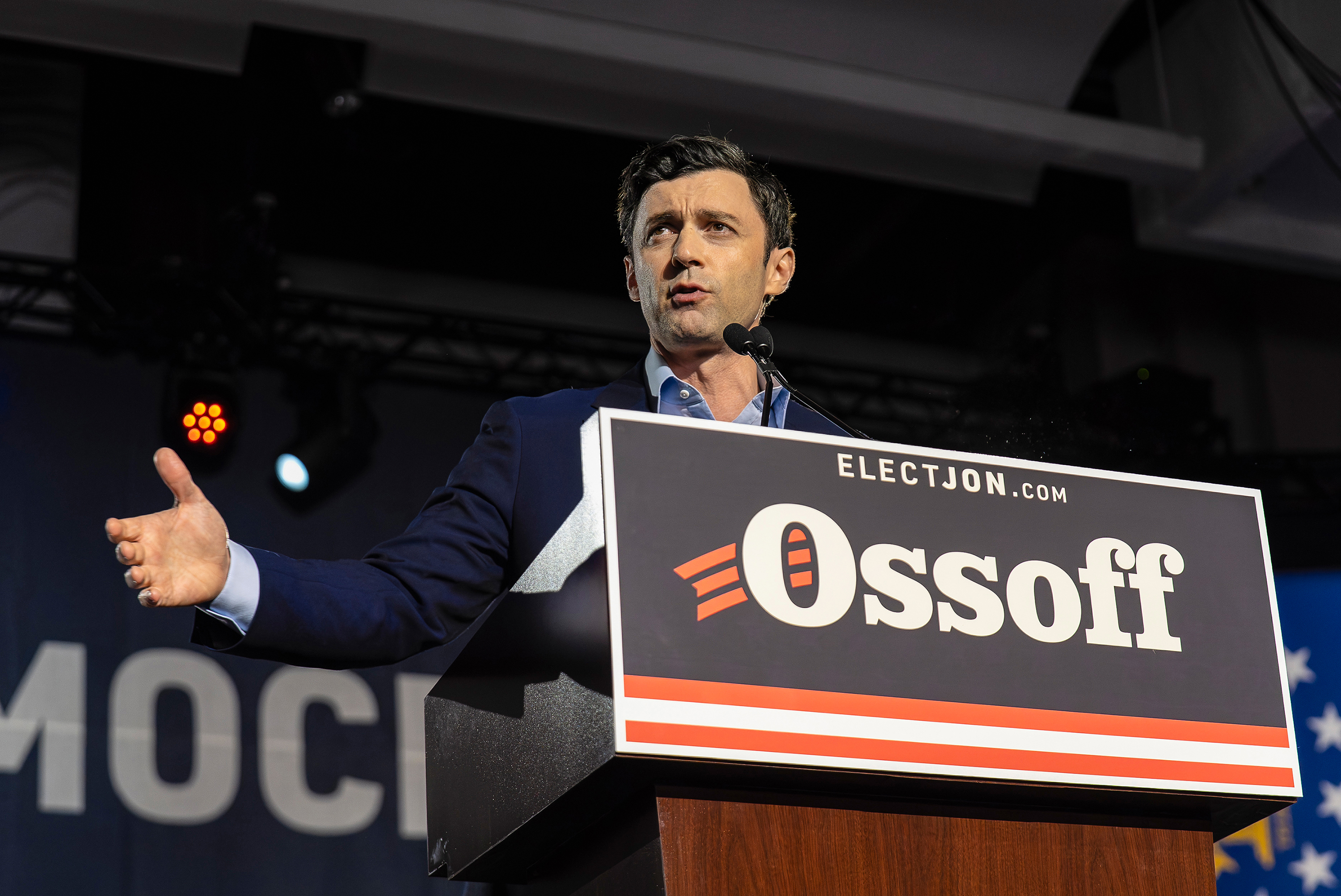
U.S. Sen. Jon Ossoff (D-Ga.) speaks at an election night watch party after winning reelection, at the Hyatt Regency in Atlanta, Nov. 3, 2026. Ossify called out “the titans of Silicon Valley,” who “dig bunkers for themselves and warn that the artificial intelligence they’re creating risks human extinction.” (Nicole Craine/The New York Times)NICOLE CRAINE
Ossoff, like Shapiro, also spent the midterm cycle focused on his home state. He tied himself to Georgia Gov.-elect Keisha Lance Bottoms, who will become the first Black woman governor in U.S. history, standing alongside her at several rallies and mentioning her in debates and interviews. With his coattails, Democrats, almost all of whom were Black women, won key state-level races, including attorney general and secretary of state, and flipped the Georgia House for the first time since 2005.
Ideological split
As Democrats look ahead to 2028, a division among voters about the best kind of candidate to nominate has begun to emerge. Should they support a leader of the progressive flank who will usher in new, bold ideas? Or should they get behind a pragmatic centrist with a proven record, who can be viewed as electable by independent and Republican voters?
Shapiro, a moderate, falls more toward the latter camp, Carlson said.
“He comes across as a grown-up, and he comes across as somebody who’s not particularly interested in settling scores or issuing vendettas or alienating Republicans. He’s just focused on the job, and he’s not a partisan warrior,” he said.
And while the left wing of the Democratic Party is celebrating victories, like Abdul El-Sayed’s U.S. Senate win in Michigan, election results showed progressive candidates, including El-Sayed and three other Senate nominees backed by democratic socialist Vermont Sen. Bernie Sanders, were among Democrats’ worst performances in this year’s midterms, according to a CNN review.
Those figures could sway to see Shapiro as a safer bet, Easton argued.
“As much as Democrats are going to want to be aspirational, especially after the decade of Trump, they’re also going to want to win, and if he comes on every big stage and says, ‘I take Pennsylvania off the map,’ that’s a hard thing to counter, especially from people who haven’t either won statewide or who maybe could not perform as well in some of these rural areas,” he said.
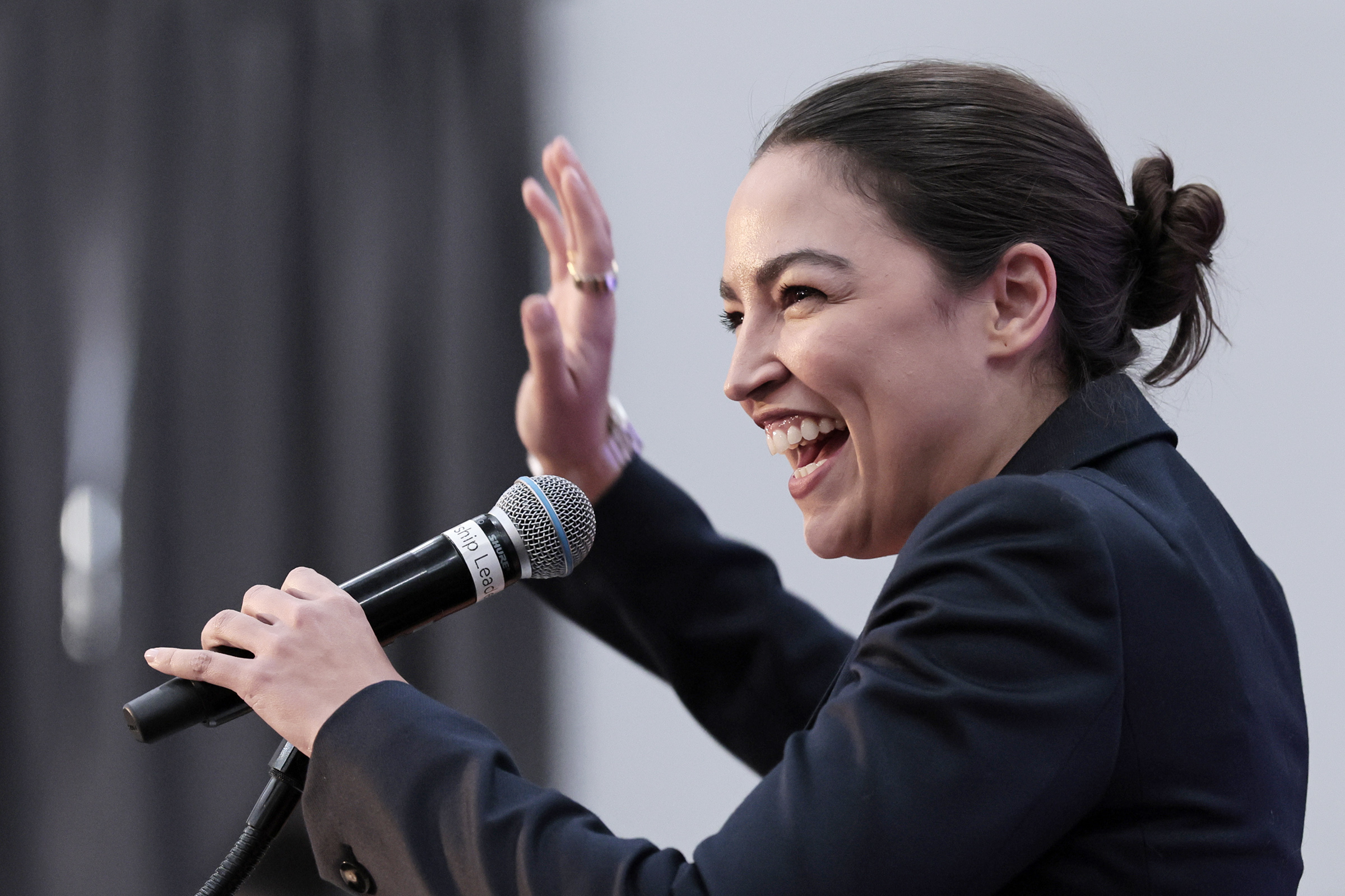
Rep. Alexandria Ocasio-Cortez greets the crowd during a rally, in support of Chris Rabb’s progressive campaign for Pennsylvania’s 3rd Congressional District, at the Garden of Prayer church in Philadelphia on Friday, May 15, 2026.Elizabeth Robertson / Staff Photographer
U.S. Rep. Ro Khanna, a California Democrat who grew up in Bucks County, has signaled keen interest in running for president on a progressive platform but improved only 5 percentage points over Harris this year in his Bay Area district.
Centrist candidates had the biggest margins in statewide races and pulled off wins in deep-red territory like Kansas. That could help the case for Shapiro’s candidacy.
“When you win in a swing state and you come from a swing state, that brings a different heft,” Abbott said.
“Pennsylvania, North Carolina, and Georgia are all really important swing states, and so I think for those candidates, if any of them were to run [for president], that does add credibility, making a case for electability,” he said.
Still, some progressives did remarkably well.U.S. Rep. Alexandria Ocasio-Cortez took an 11-percentage-point leap over Harris’ performance in her district in 2024 as she won a fifth term in her sapphire-blue district in the Bronx and Queens by almost 55 points. The lawmaker said it will be a while before she decides whether she plans to run for president.
As Shapiro potentially jockeys with Ocasio-Cortez and others for the Democratic nomination next year, the most effective way Carlson said he can demonstrate his value to voters is by demonstrating his ability to get material wins. Throughout his reelection campaign, Shapiro repeatedly emphasized that his first commitment would be increasing the state’s minimum wage to $15 per hour, followed by providing more funding for transit services.
“No matter what you’ve done in the past, it’s like a very much a what-have-you-done-for-me-lately kind of thing,” Carlson said.
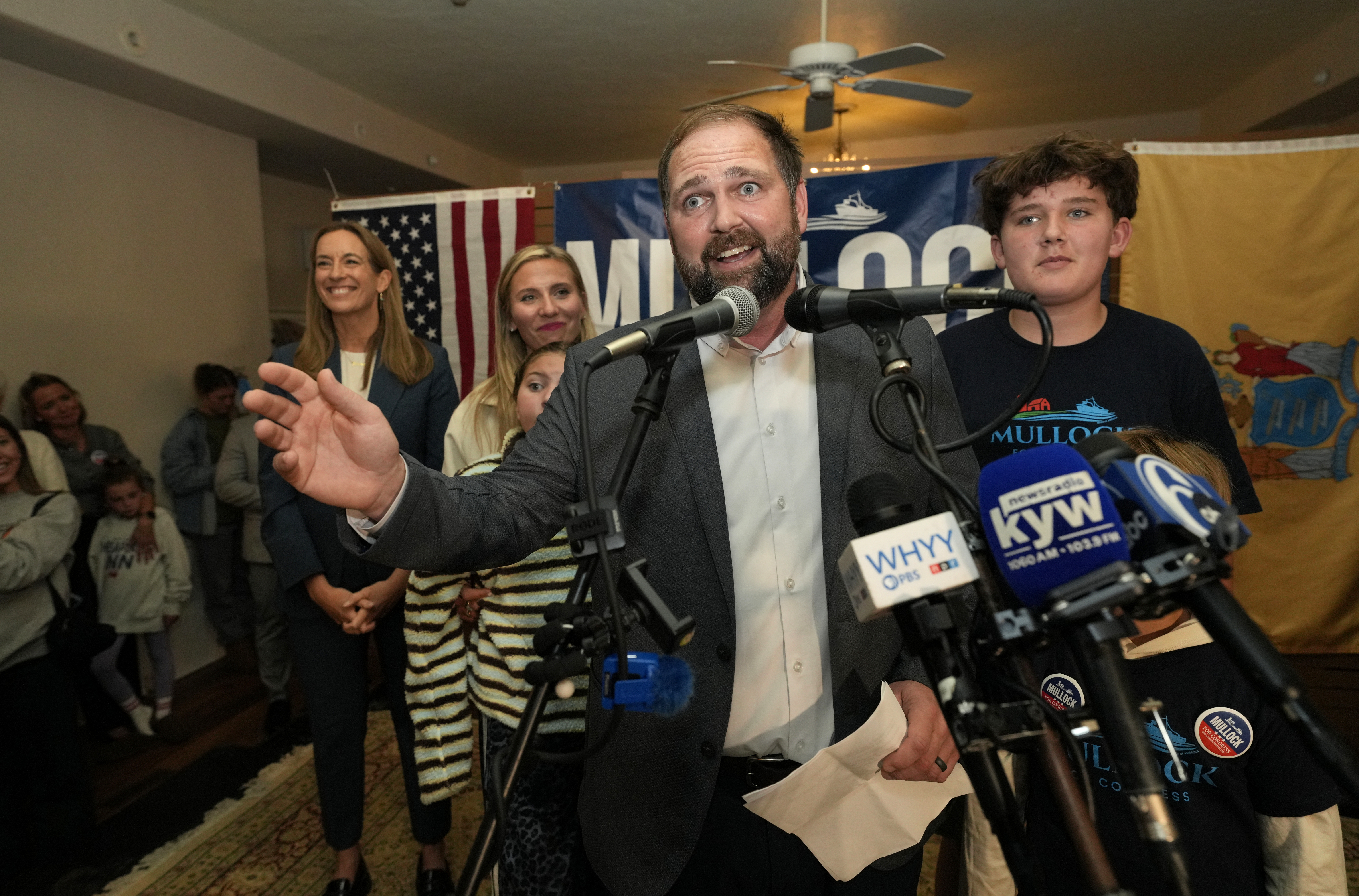
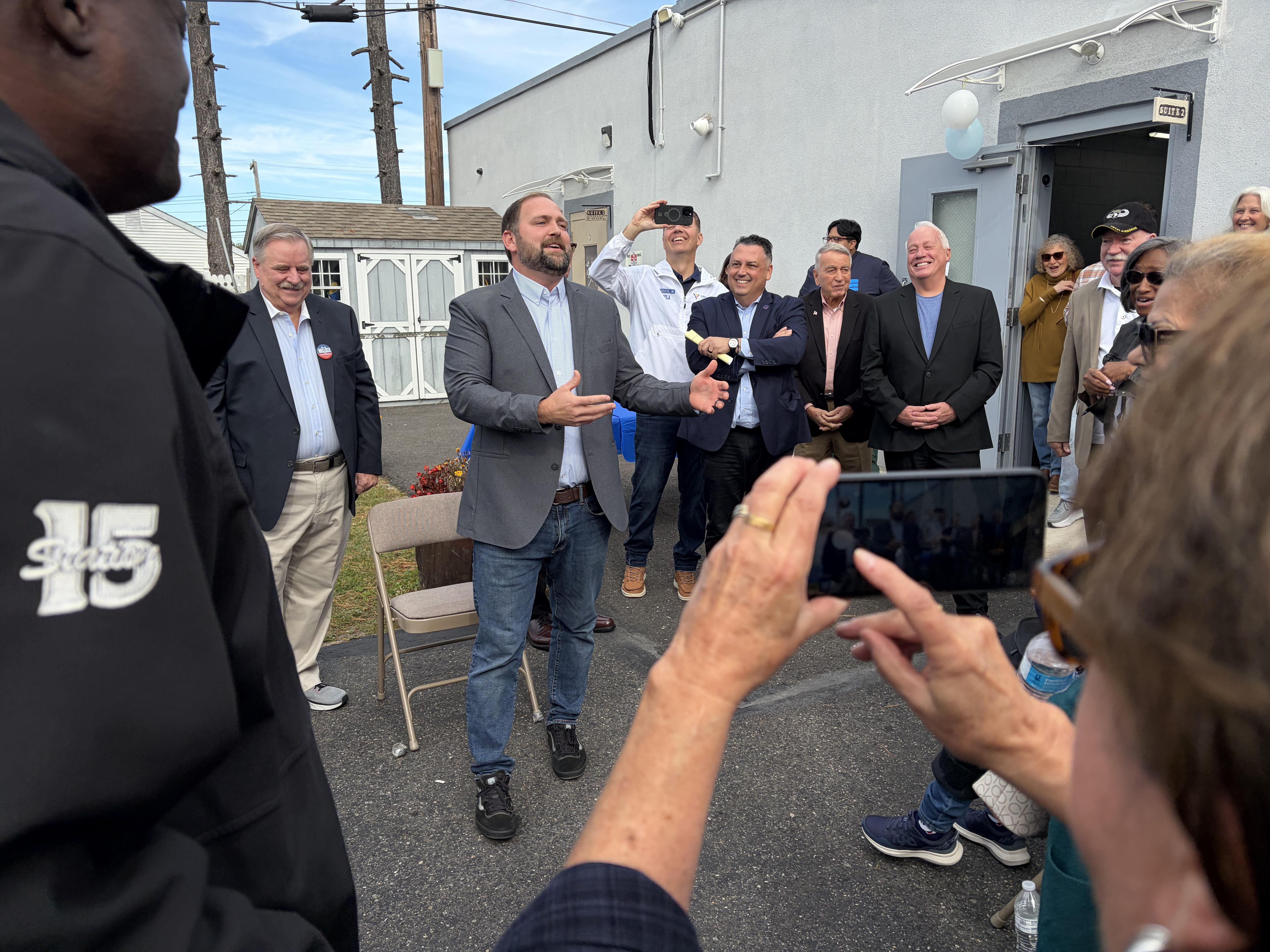
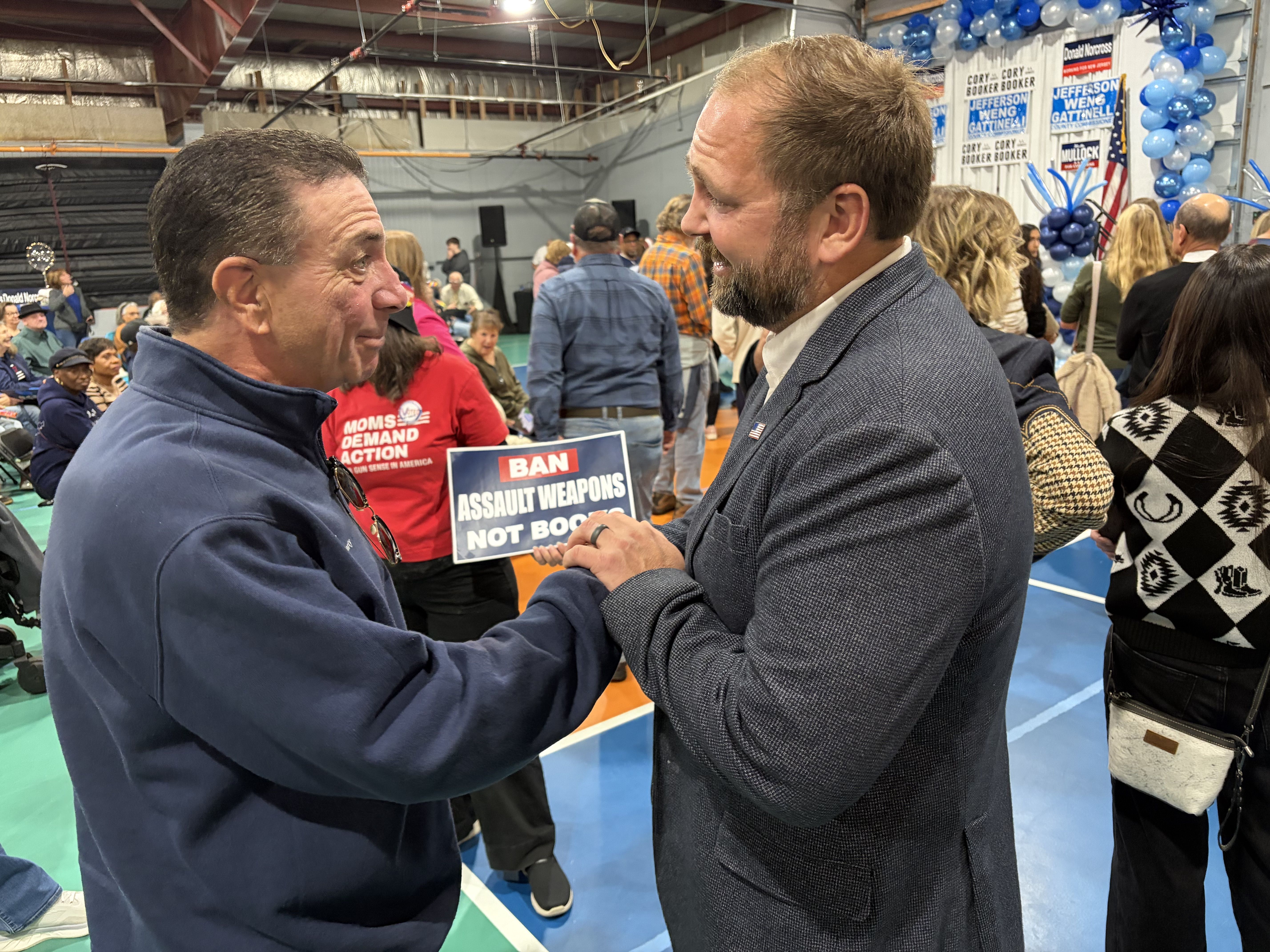
The day after the midterm election, U.S. Rep.-elect Zack Mullock simultaneously fielded calls from members of Congress and hugs from Cape May residents on the street. One person slowed down his car and shouted congratulations out his window. Others stopped their bicycles to express their well wishes.
A coffee shop customer said it was pretty cool thatMullock won. “But who’s gonna be mayor?”
The Jersey Shore mayor’s congressional race was not even on the map for national Democrats until just over a month ago. But after Mullock’s improbable win over a Republican four-term incumbent in a district President Donald Trump won by nearly 13 percentage points in 2024, his phone has not stopped ringing.
“I missed a call from Kamala Harris last night,” Mullock, 41, said Wednesday, sitting on a stool at his friend’s coffee shop, less than a 10-minute walk from the home he bought with his wife, Justine, in 2013, the front yard littered with their three kids’ sporting equipment. “So, yeah, I have a long list of people to call.”
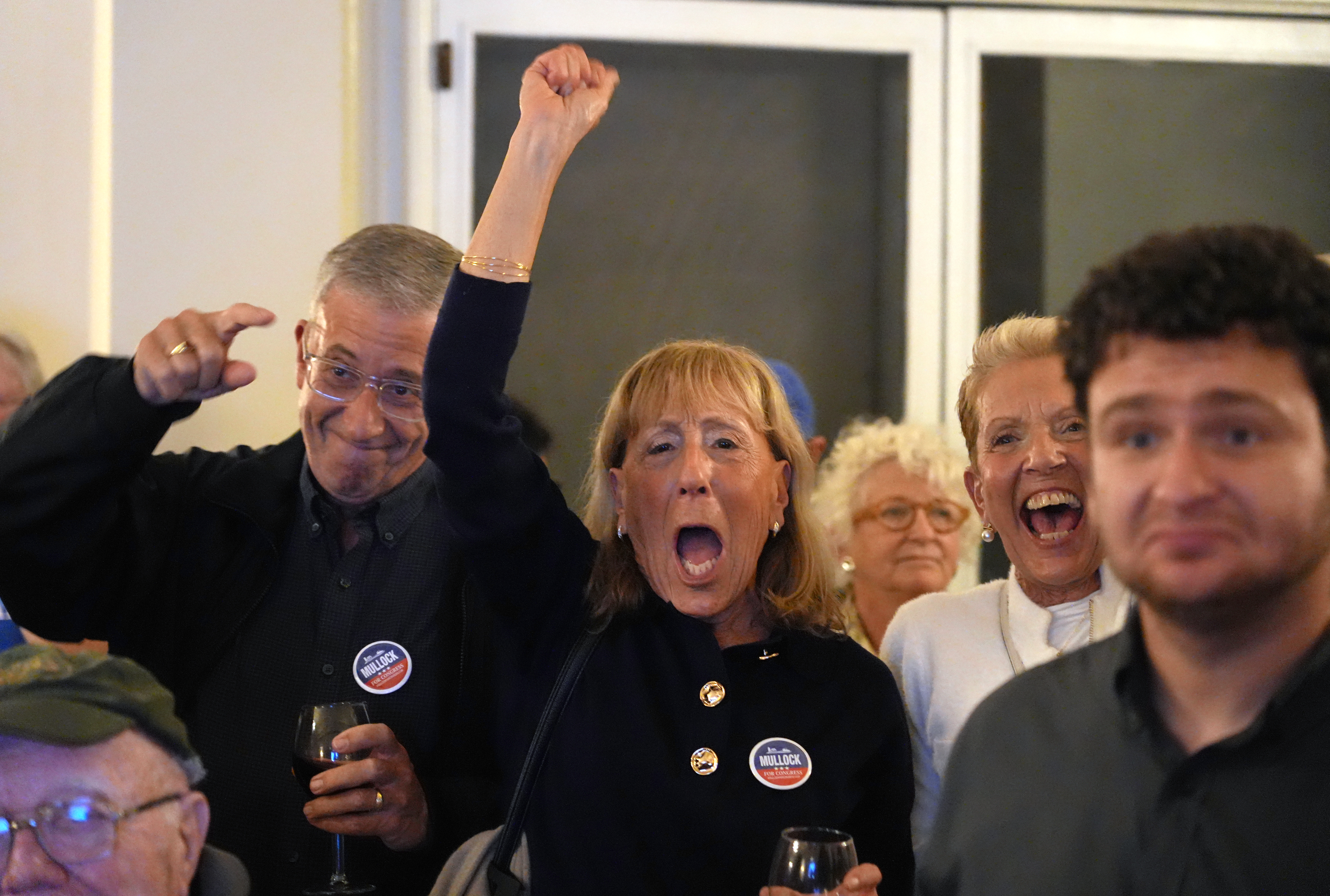
Lee Zektzer of Cape May cheers as she watches returns come in during a party for Democrat Zack Mullock, at the Chalfonte Hotel in Cape May on Tuesday, Nov. 3, 2026.Tim Hawk / For The Inquirer
Locals in Cape May were giddy with excitement that their mayor beat Van Drew, who had won reelection by close to 20 percentage points the last two cycles. If anyone saw it coming, it was local organizers who watched Mullock meticulously build a winning operation over several months as he flew under the radar.
But many people were in utter shock, including Mullock, who said that when he first jumped in the race earlier this year, he didn’t think he would win.
“I really did it out of principle,” he said.
The last Democrat to win the seat was actually Van Drew in the 2018 anti-Trump wave. But the lawmaker switched parties a year later and declared his “undying support” for the president.
After winning a crowded primary in June, Mullock hit the pavement across the six counties in the district, and he kept hearing Republicans and independents say they would vote for him. Come September, he started to feel like, “OK, we have a shot here.”
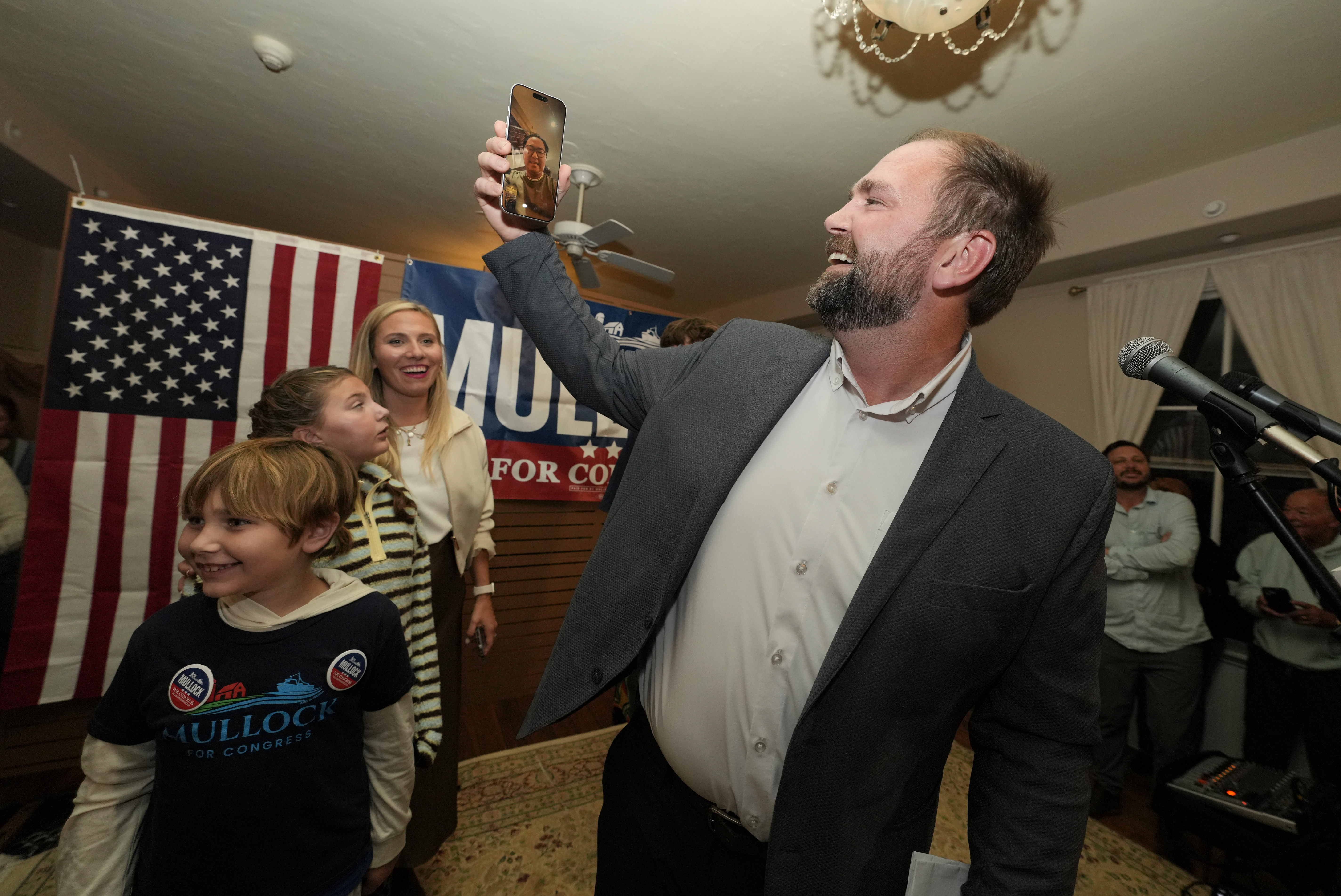
Cape May Mayor Zack Mullock holds his phone to show Sen. Andy Kim the crowd during his election party at the Chalfonte Hotel after incumbent Jeff Van Drew conceded on Tuesday.Tim Hawk / For The Inquirer
As national forecasters predicted Van Drew’s reelection, Mullock felt a tighter race on the ground as he spoke with thousands of South Jerseyans in the sprawling district, which spans from Gloucester County in the Philly suburbs to Ocean County and the Jersey Shore.
“I just felt like there are too many people telling me they want change,” he said.
Video: Zack Mullock talks about pulling off N.J.’s most improbable victory of election night
How Zack Mullock did it
Mullock swung the district by about 20 points, one of the biggest shifts in the national blue wave.
And he did it largely without help from the national party other than a last-minute batch of outside spending and campaign trail appearances by a handful of prominent Democrats, including New Jersey U.S. Sens. Andy Kim and Cory Booker, in the final weeks of the race.
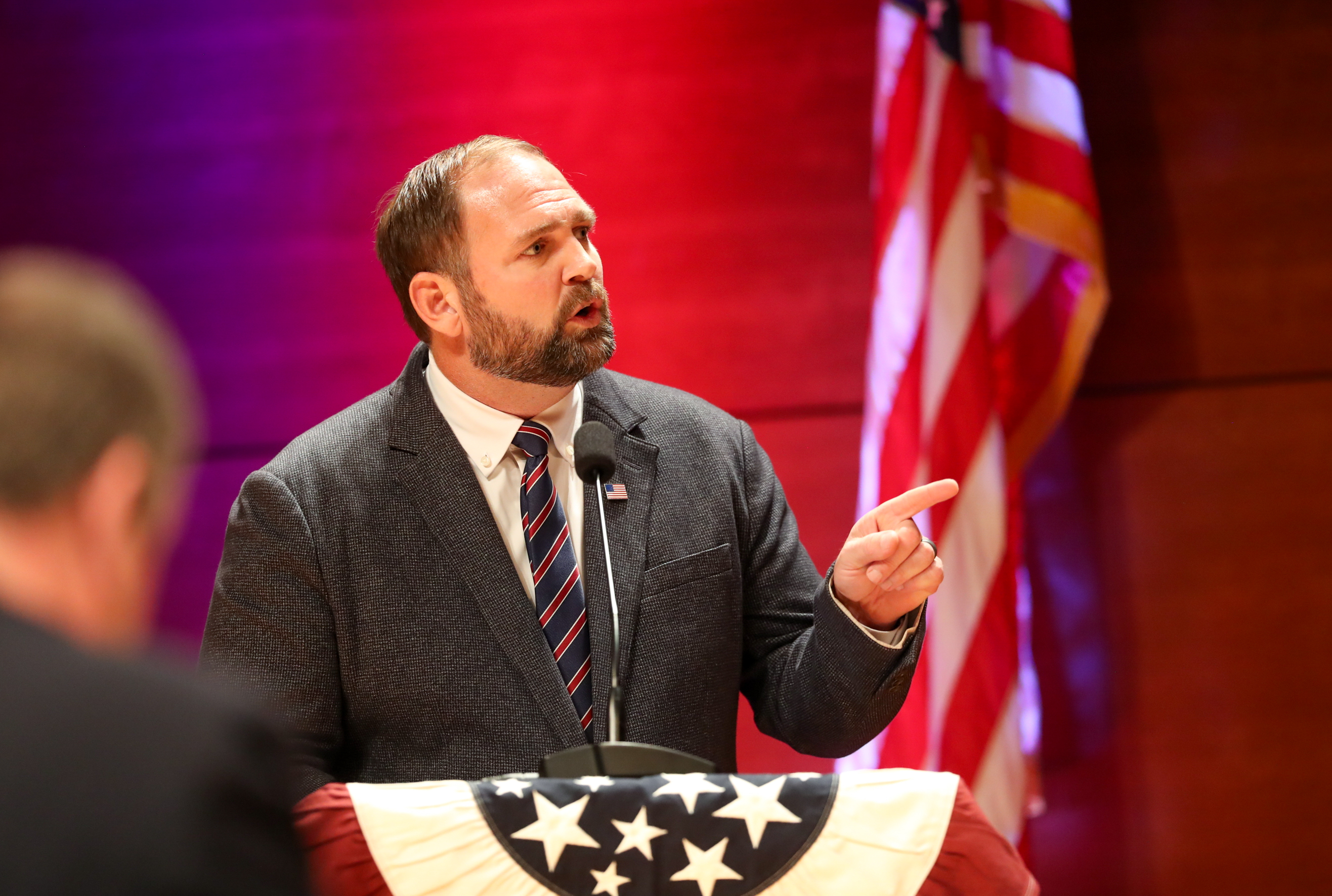
He ran as an everyday guy. His first campaign video featured him watching an Eagles game with his family. And he showed throughout his campaign that he could relate to other South Jerseyans. He was humble, saying he did not have a sales pitch when recording a video for social media with the governor just days before the election. But he also showed a fiery side on the debate stage with Van Drew, unabashedly cutting in to correct the incumbent.
Democrat Zack Mullock points to U.S. Rep. Jeff Van Drew during a debate in the Campus Center Theatre at Stockton University, Thursday, Oct. 22, 2026.Tim Hawk / For The Inquirer
“The way he did that really caught my attention,” said Jacovi Lindsey, a Vineland Democrat who leads Project Inspiration,alocal organization that provides programming for underserved families.
Lindsey was one of many, many district residents who saw Mullock speak on the campaign trail. That was part of his winning strategy, said Mullock’s campaign manager, Chris Carroll.
“We would schedule stops everywhere every day, and we hit all six counties multiple, multiple, multiple times a week,” Carroll, 35, said in an interview Wednesday.
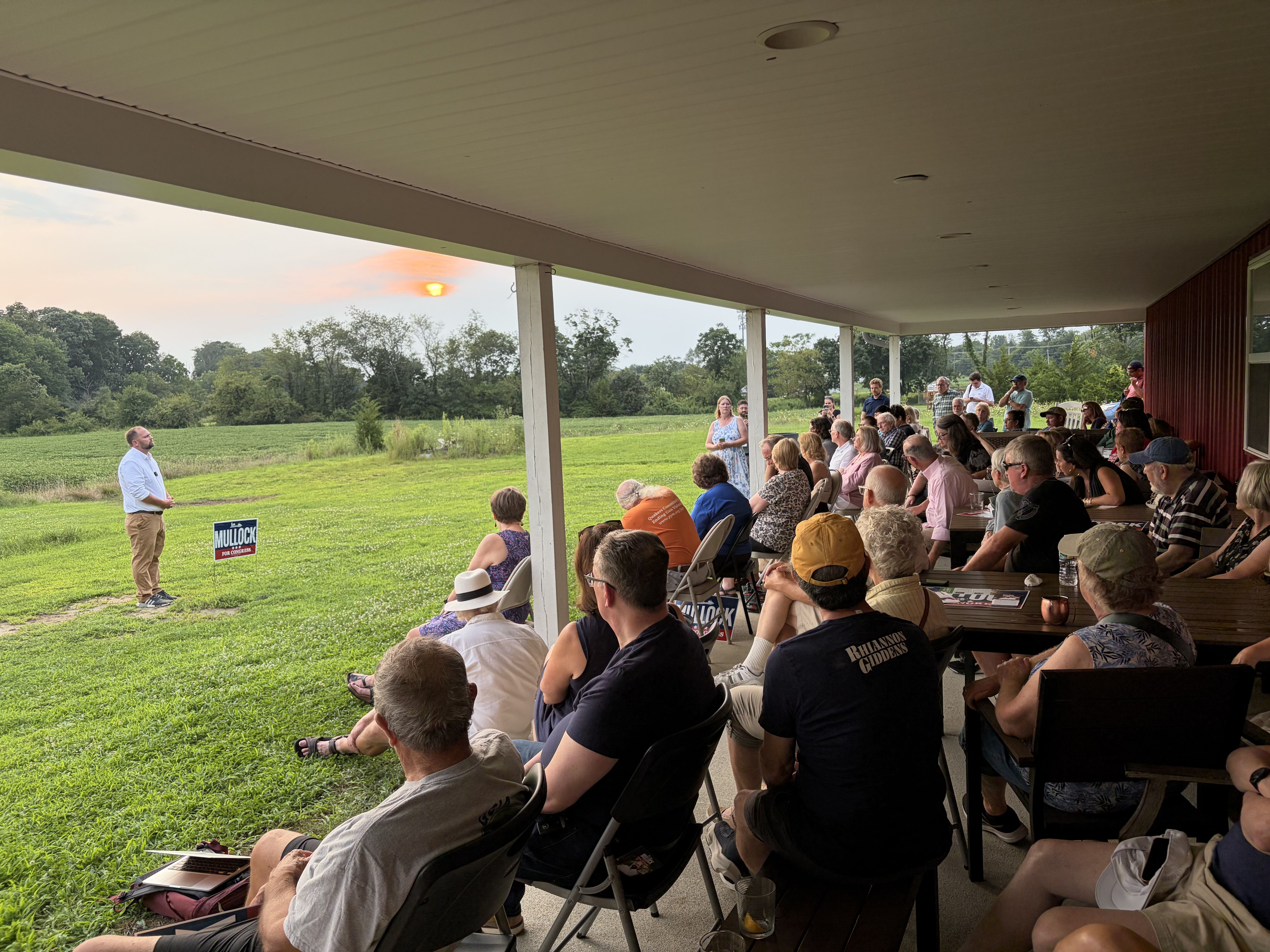
So many people had packed into the back of Independent Spirits Distillery in Gloucester County’s Woolwich to hear Mullock speak in August, they had to move outside.
Zack Mullock held a campaign event at Independent Spirits Distillery in Gloucester County’s Woolwich on Aug. 11.Aliya Schneider / StaffZack Mullock speaking to Democrats in Vineland on Monday, the day before Election Day.Aliya Schneider / Staff
Mullock told the crowd that he had asked Amy Kennedy — Van Drew’s 2020 challenger, who had come the closest before Mullock — if she was planning to run again. She was not, but she encouraged him to go for it. (Mullock ended up hiring Carroll, Kennedy’s former scheduler).
Two weeks later, he was sitting in a room with JFK’s bomber jacket behind him in the home Kennedy shares with her husband, the late president’s nephew, former U.S. Rep. Patrick Kennedy.
“The first thing I said is, ‘I’m Zack Mullock, I’m a proud husband and a father of two,’ and my wife looks at me and I said, ‘Oh, I have three kids.’ So that was the start of the campaign,” he told the crowd to laughter.
He also recounted recently going on the national news to talk about Cape May’s water department being hit by an Iranian cyberattack, which he said was “a major reminder of just how important this election is.”
Nearly three months later, supporters had to once again move outside because so many people showed up at a get-out-the-vote event for Mullock with Gov. Mikie Sherrill in Vineland. Angela Bardoe, 55, chair of the Vineland Democratic Committee, said she had not seen that much energy in the decade she has been organizing in Cumberland County.
“We were always pulling teeth trying to get people to volunteer, and we’re not pulling teeth anymore,” she said the day before Election Day.
Mullock, who hasworked as both a local contractor and a businessperson, was able to energize people across thediverse district, which includes multimillion-dollar homes along the Shore, immigrant communities, farmland, and Phillysuburbs.
Carroll described Mullock as “the Mr. Rogers of Cape May” but also “a fighter for the people.”
“You feel at ease and at home with him,” Carroll said, noting voters’ exhaustion with the “messy” politics of the Trump era. “They just want a return of normalcy and decency, and that’s what Zack brought.”
State Sen. Paul Moriarty, a Gloucester County Democrat, speaks with Zack Mullock at a Gloucester County Democratic Committee rally on Oct. 24.Aliya Schneider / Staff
He said the campaign had a big focus on unaffiliated voters,who make up 35% of the district’s electorate, more than either party.
Carroll said he knows the election was a referendum on Trump’s policies. But local issues like concerns about a large data center in Vinelandalso helped Mullock’s bid.
Mullock focused a lot on Van Drew’s support for Trump’s tariffs, his vote for a bill that cut Medicaid, and his votes against resolutions to end the Iran war. The cost of living, homeownership, and flooding concerns were also big issues, he said.
Van Drew’s campaign frequently posted about Mullock online, deriding him as a liar. The lawmaker told The Inquirer ahead of the election thatbacklash to Trump could shed a few points from his total, but he felt confident he would prevail.
As of Oct. 14, Van Drew’s campaign spent nearly $2.3 million during the 2026 cycle while Mullock’s campaign spent just upward of $855,000. Van Drew still had almost $900,000 left in his coffers at that point while Mullock had just over $100,000.
And while it was easy to find a public meet-and-greet with Mullock over the course of the summer and fall, the same could not be said for Van Drew, who largely attended community events without advertising his schedule.
Mullock knows Republicans, who make up 34% of the district’s electorate, crossed the aisle to support him.
“Just walking around town today, people were giving me the thumbs-up … and by the way, a lot of those people are Republicans,” he said Wednesday.
A Republicans for Mullock sign on Almond Road in Pittsgrove on Oct. 12.Aliya Schneider / Staff
Republican Anne Nelson said in a phone interview Wednesday that Mullock was the best vote she has ever cast. Nelson, 56, had voted against Van Drew in the past but said attending a meet-and-greet with Mullock drove her to volunteer with his campaign.
“I’ve never been a huge political person. I paid attention, but not the way I paid attention this time,” said Nelson, a public school speech therapist who lives in Mays Landing.
Over the objections of some of her Trump-supporting family members, she decorated her lawn with “Republicans for Mullock” signs, along with a sign for a local Republican candidate.
“I feel like I can think independently about topics that matter, and I’m not going to just vote straight party lines when so much is on the line,” she said.
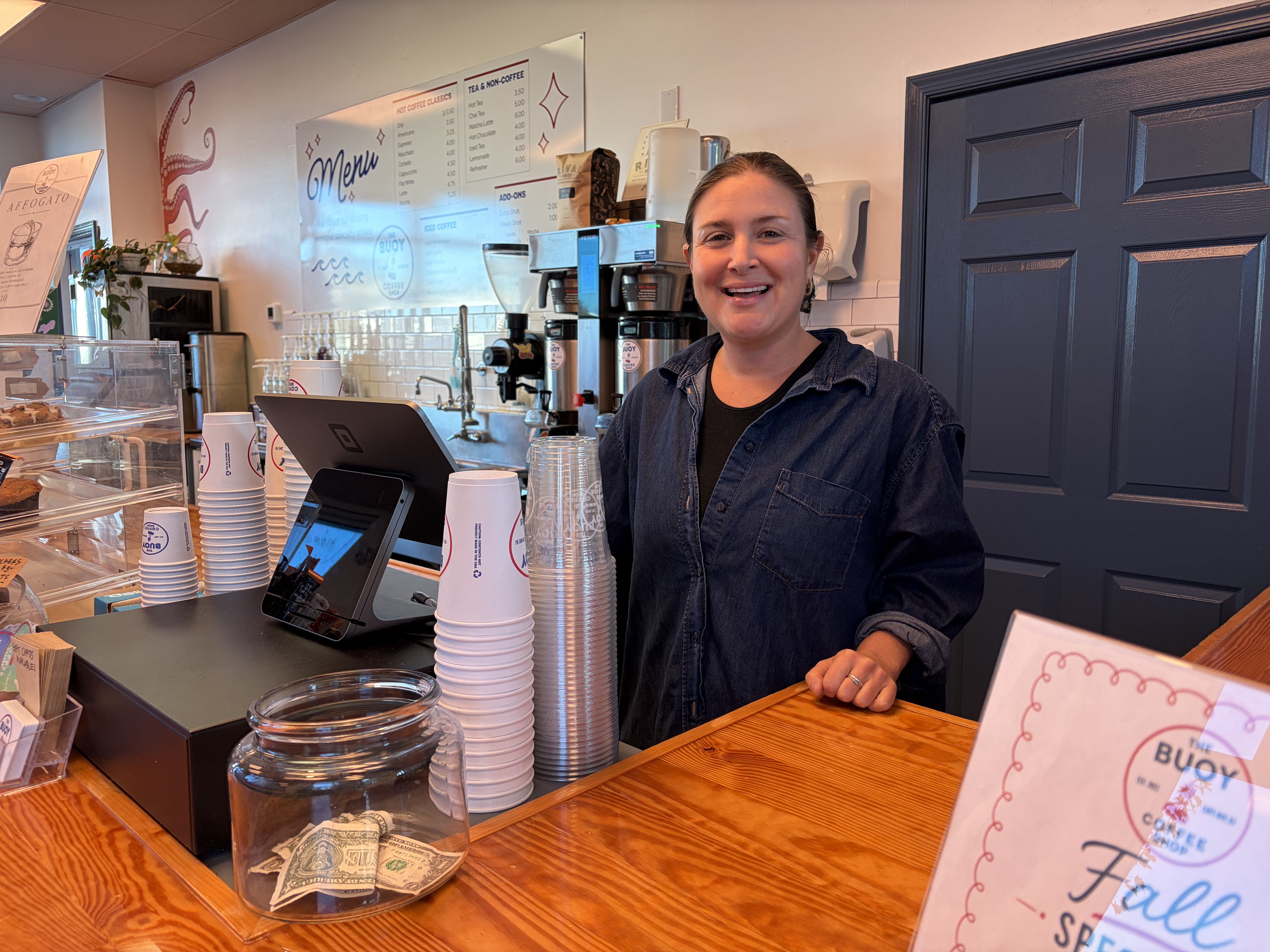
Meghan Protassi, Mullock’s childhood friend and owner of Buoy Coffee Shop, said in an interview Wednesday that as she phone-banked for Mullock, people told her that their significant other who historically voted for Van Drew planned to support Mullock.
“They’re just ready for something a little bit different,” said Protassi, 40, a Democrat.
Meghan Protassi, Zack Mullock’s childhood friend and owner of Buoy Coffee Shop, in Cape May on Wednesday.Aliya Schneider / Staff
A Shore mayor headed to Congress
A restaurant on Cape May’s beachside promenade was closing up shop for the season on Wednesday afternoon. But Mullock was quick to say that there is no off season as the small city’s mayor.
In a campaign video on Facebook that garnered more than 6,000 views, Mullock walked through Cape May to show some of his accomplishments in office: a new firehouse, a library, a theater, and a police station in the works. He squeezes down a blue slide, touting an ADA-accessible playground.
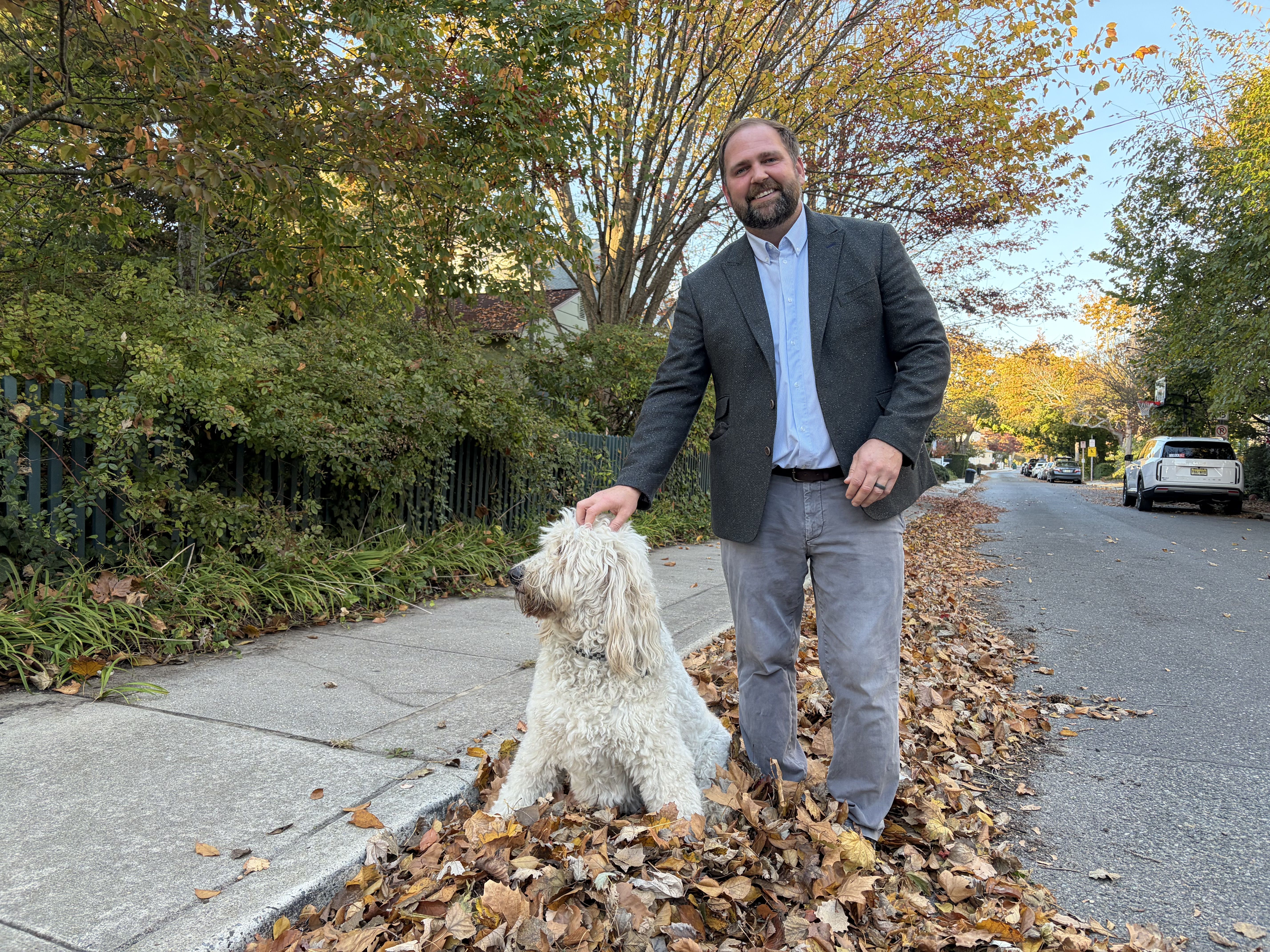
Cape May Mayor Zack Mullock, the representative-elect for New Jersey’s 2nd Congressional District, in Cape May with his dog on Wednesday, the day after the election.Aliya Schneider / Staff
“We’ve done this all the same way: Democrats, Republicans, independents, moderates all working together — and even surfers,” he said, a young surfer making a cameo with a big smile. “That’s what I’ve done here in Cape May, and that’s what we’ll do in Congress.”
Mullock ran for Cape May City Council 10 years ago and lost. He won two years later, unseated the mayor two years after that in 2020, and was reelected without opposition.
It doesn’t hurt that people in Cape May and Cape May Point know the Mullock family well. With the candidate’s father, Bob Mullock, at the helm, family members have taken on projects to save historic landmarks, including the Sisters of St. Joseph’s beachfront retreat they turned into the Cape May Arts and Science Center.
His family also founded the Harriet Tubman Museum in Cape May, where Mullock worked as the volunteer general contractor for the project.
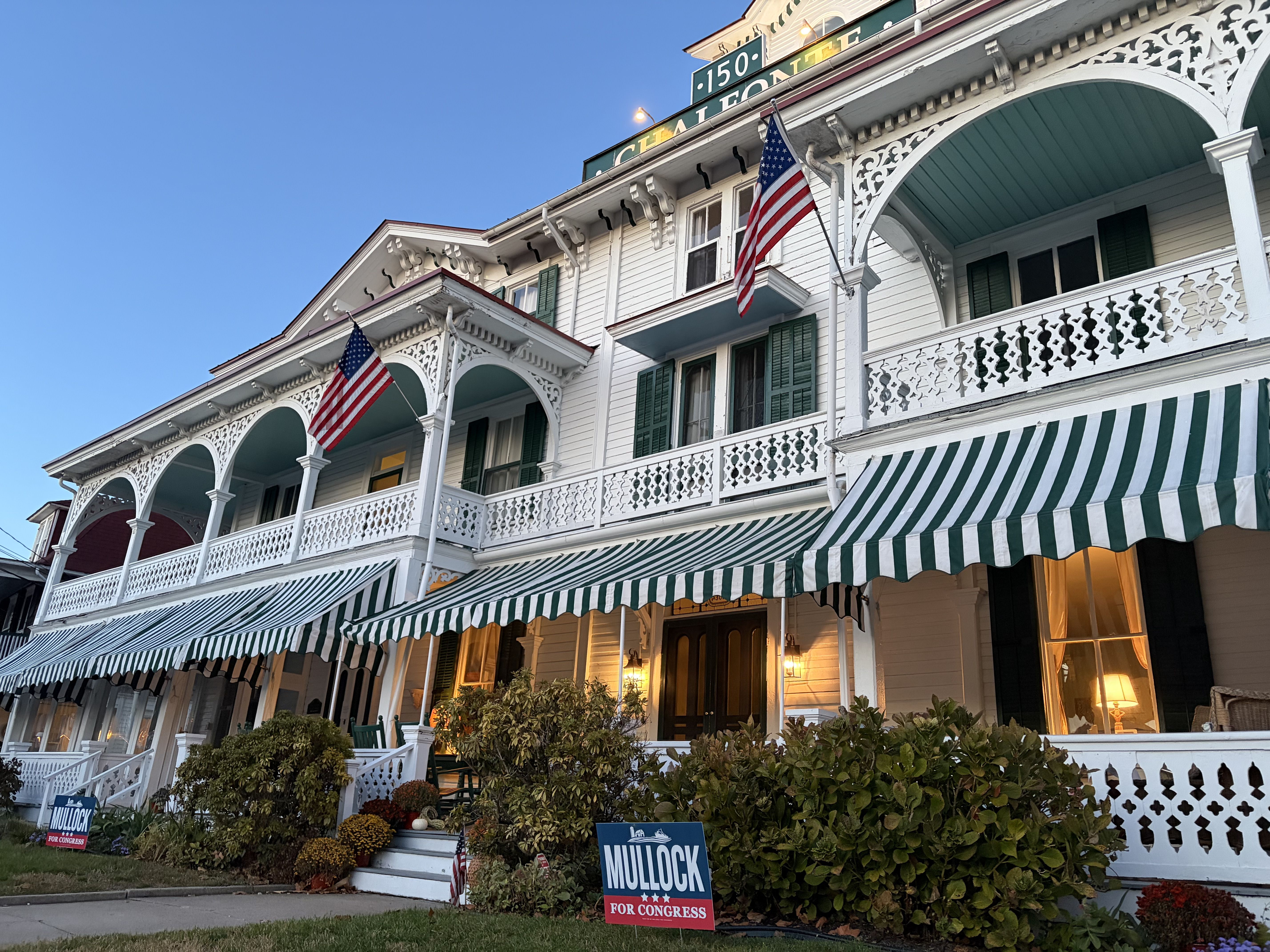
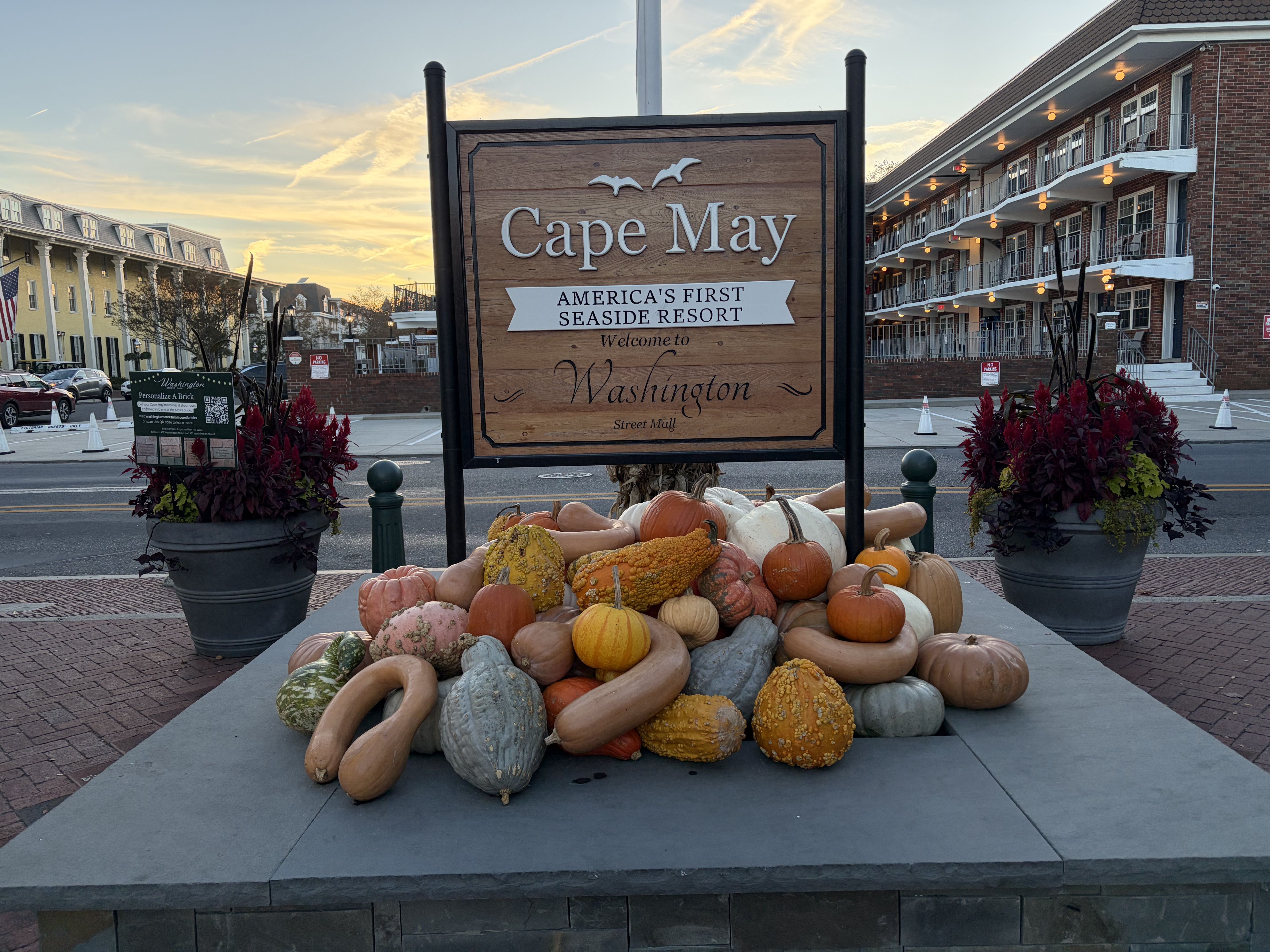
The Chalfonte Hotel in Cape May on Wednesday.Aliya Schneider / StaffThe city of Cape May on Wednesday.Aliya Schneider / Staff
Members of Mullock’s family own the Chalfonte Hotel and the Cape May National Golf Club. Born and raised in Cape May Point, Mullock grew up working in hospitality, plumbing one minute and greeting customers the next, which he said was good training for elected office. He also served on the Atlantic Cape Community College Foundation Board for a decade.
Protassi said she is excited to see Mullock implement changes nationally that she has seen in Cape May.
“I do really think he has the ability to unite people. I think he can speak to people, and they really are receptive, and you know they’re interested in what he has to say.”
James Rosin, 71, who said he leans libertarian, said that he supported Trump’s promises to stay out of wars and the ideas behind the Department of Government Efficiency (DOGE), but that the president has gone “off the rails.”
A retired psychiatric intensive care unit nurse who has lived in Cape May for 10 years, Rosin said independent-minded voters had “a change in tenor” that helped Democrats.
“He’s a very effective mayor,” Rosin said, walking from Acme to his bus stop on Wednesday. “He’s very personable. You know, everybody in town knows him.”
James Rosin, 71, in Cape May on Wednesday.Aliya Schneider / Staff
On Wednesday, Mullock ran into his old friend Rick Rutherford at the coffee shop. The two men were in a basement punk rock band together as young teens — Mullockplayed guitar and sang vocals, and played on a golf team with Rutherford’s brother. Rutherford was shocked and impressed when Mullock was even elected mayor.
Rutherford, 42, said he normally does not vote because he does not like the partisan political system. But the local chef-restaurant owner cast his vote for Mullock — and wrote in his wife for sheriff as a joke.
“I know him from, like, the roots of childhood and that he actually, like, just worked from the grassroots, ground up, all the way to where he is,” said Rutherford, who is registered as a Republican but does not identify with either party.
A political staffer for Gov. Mikie Sherrill takes a video of her with Zack Mullock on the Saturday before the election in Whitesboro.Aliya Schneider / Staff
The final day
Mullock spent the morning of Election Day in a very Jersey fashion: visiting 12 diners across six counties. He went home for a lunch break and started feeling antsy that he was not working, so he began phone-banking, then went to hand out campaign literature in front of three different Wawas.
“I needed something to do,” he said.
Democrats had an enthusiastic showing in early voting, but as more votes came in on Election Day he thought he probably lost.
However, as the votes were tallied, he realized Republicans and unaffiliated voters must have really cast ballots for him. He had a chance.
And all of a sudden, at 10 p.m., Van Drew’s name came up on his phone — he knew thanks to caller ID, because he did not have his contact saved — and the lawmaker congratulated him.
“Honestly I started tearing up, because I just didn’t expect it,” Mullock said. “It was very emotional in that moment. My wife was next to me, so I gave her a big hug, and everyone cheered.”
Protassi was also caught off guard. She said she thought he might not win the seat on his first try and she might be making phone calls for him again in two years. “Then when I heard that he got the call, I was like, ‘Is this? Are we sure?’”
They were celebrating at his family’s hotel. His sister Cindy Mullock noted they hosted fundraisers for Van Drew in the same ballroom back when he was a Democrat.
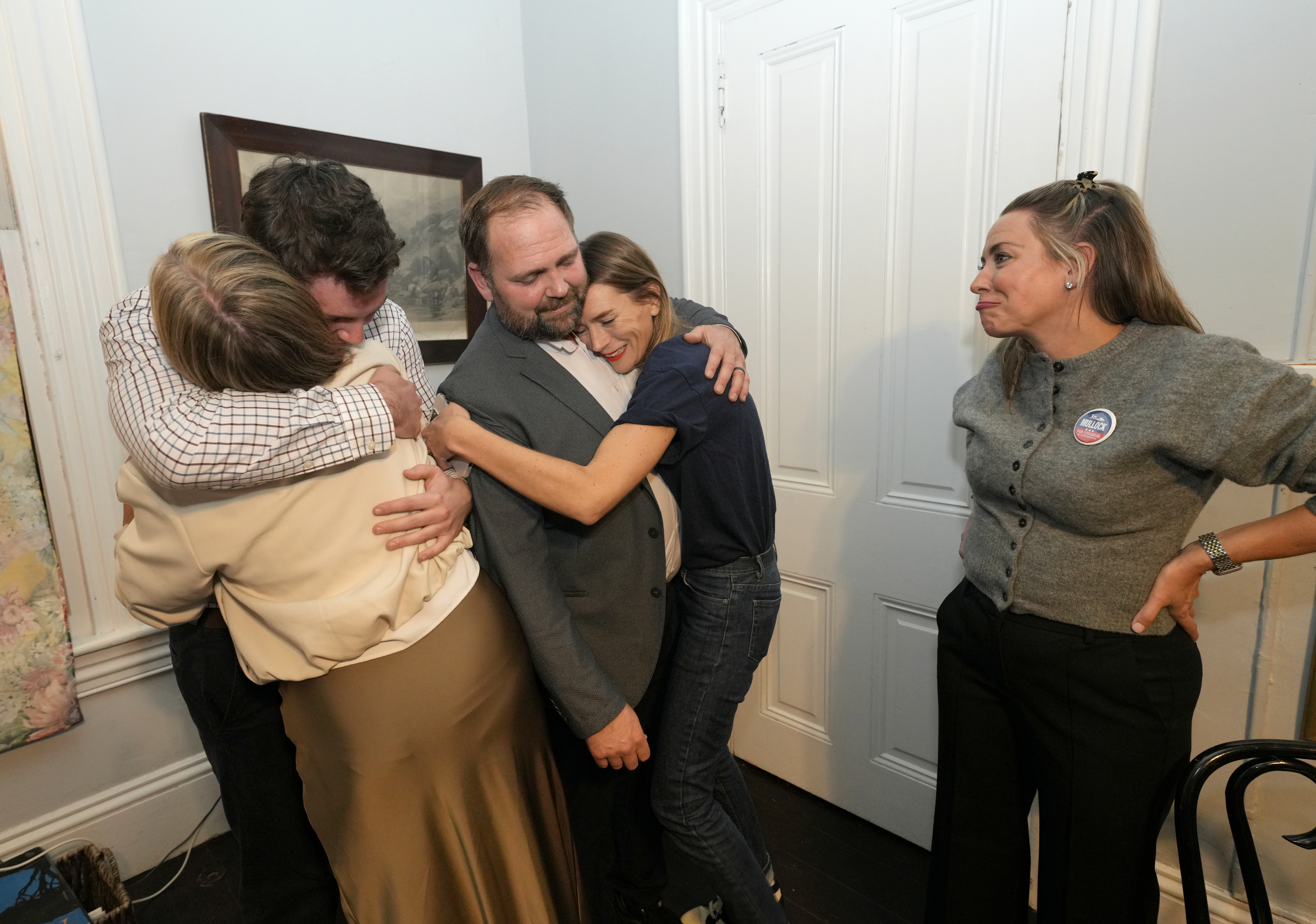
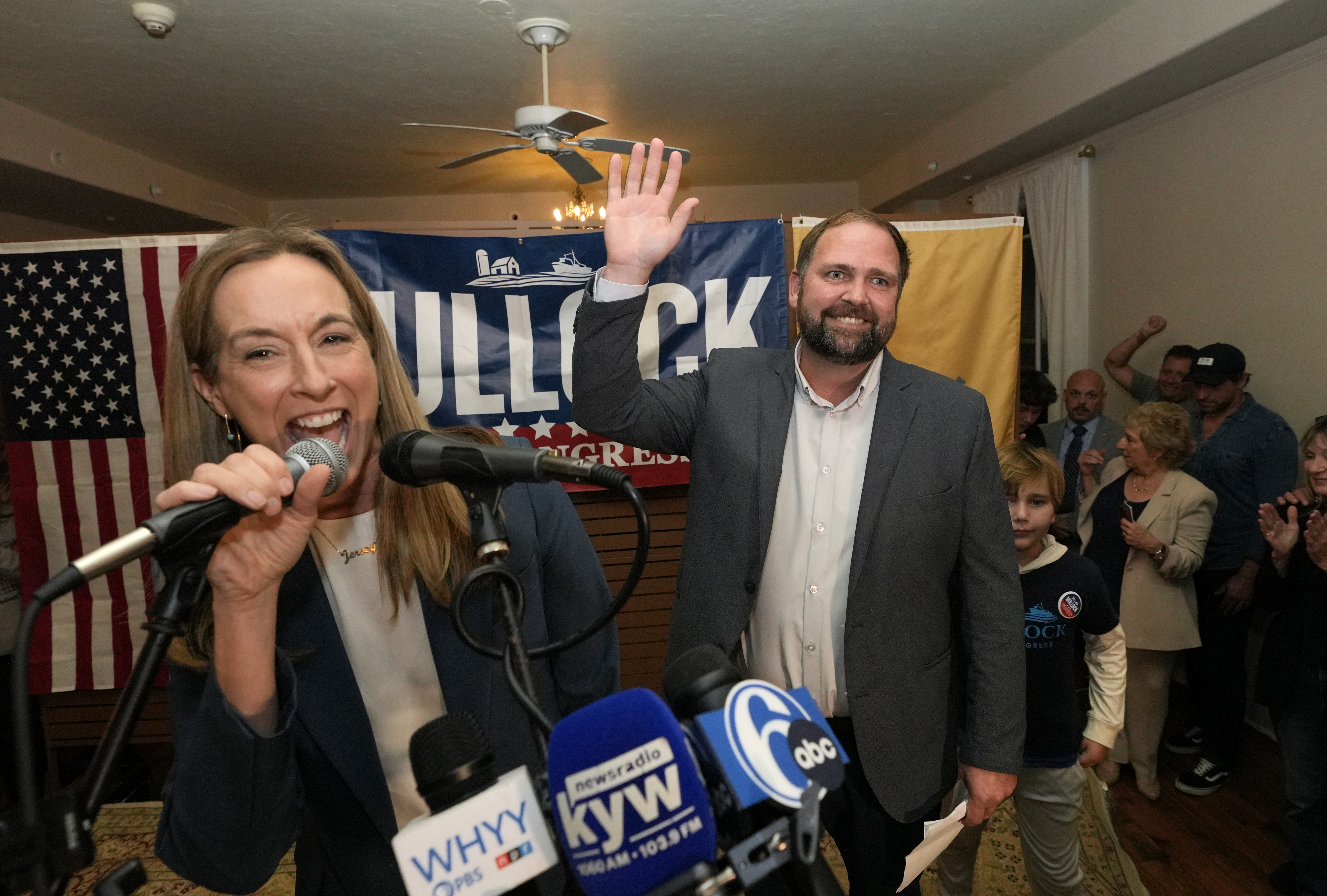
From left, Justine Mullock hugs campaign staffer Aidan Kilgannon and Zack Mullock hugs volunteer campaign advisor Justine Magariel after he received a concession call from U.S. Rep. Jeff Van Drew.Tim Hawk / For The InquirerGov. Mikie Sherrill introduces U.S. Rep.-elect Zack Mullock, during an election party at the Chalfonte Hotel, Tuesday, Nov. 3, 2026. Mullock defeated incumbent Jeff Van Drew.Tim Hawk / For The Inquirer
Mullock got emotional when asked about how his family feels about him going to Washington.
“They’re so proud, my mom and dad,” he said, needing to step aside for a minute. “I just haven’t, I haven’t had a moment to process this yet,” Mullock said Wednesday, running on three hours of sleep, adrenaline, and coffee.
Trying to answer the question again, he said he was grateful for his wife, Justine, for her support, his kids, whose ballgames he had to miss, and his parents.
Mullock said he would not have launched his campaign if not for Trump, who he often says has been a negative role model for his 12-year-old son. But frankly, he acknowledged, he doesn’t feel ready for Congress.
“It is going to be a learning curve,” he said. “But I do remember the day I got elected as the youngest mayor in Cape May, and realizing that I don’t know everything that I’m doing, but I know my guiding principles, and I know my moral compass of right and wrong, and working to help others, and I think ultimately those are the decisions that you’re going to make in Congress.”
After Van Drew’s call came in Tuesday night, the governor flew down by helicopter from fellow New Jersey DemocratRebecca Bennett’s victory party to celebrate. Mullock’s phone began buzzing with calls and texts that never really stopped. He went to bed at 3 a.m. and woke up at 6 a.m., and heard his phone buzzing throughout those three hours as well. He got up feeling full of love and graciousness.
“I mean, I just, I am — I’m a small-town mayor,” he said. “So to feel like people have the faith in you to represent them, … it’s a beautiful thing.”
Staff writer Amy Rosenberg contributed to this article.
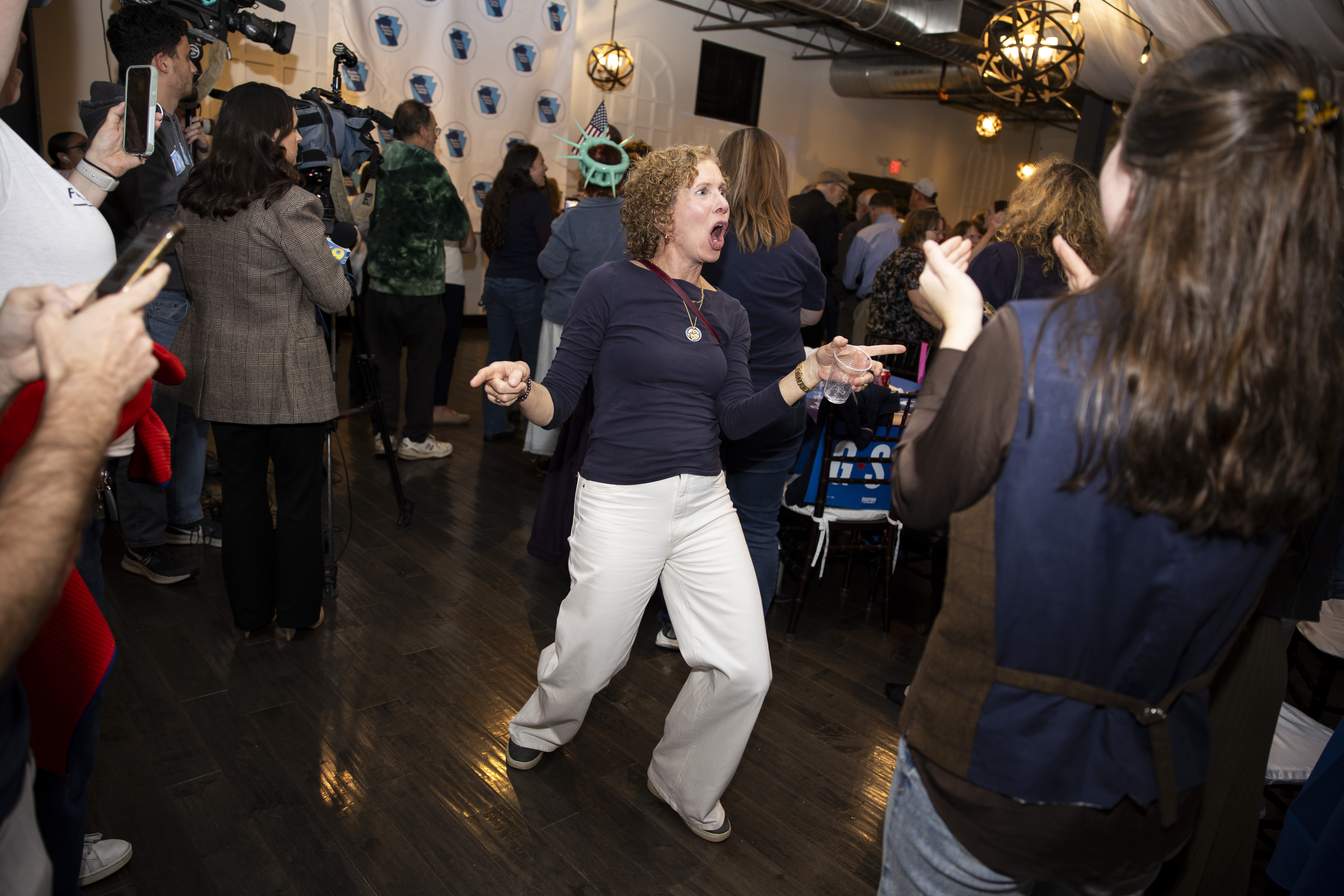
A crowd of boisterous Democrats in a Newtown event hall screamed with joy on Tuesday night when the blue wave washed over races in South Carolina, Georgia, and Texas.
Those states are hundreds of miles away.
So can you imagine how loud supporters — full of adrenaline and pizza — roared when their homegrown Bucks County Democrat, Bob Harvie, walked in and declared victory over Republican incumbent Rep. Brian Fitzpatrick in one of the toughest races this cycle?
🎤 I’m Fallon Roth, The Inquirer’s suburban politics reporter, bringing you our final PA 2026 newsletter, and I can personally tell you the answer to that question is: very loud.
I’ve spent the better part of the past year covering the 1st Congressional District race in Bucks County, and on Tuesday night, Harvie achieved something no one else has — defeating Fitzpatrick, a five-term incumbent.
But that’s hardly the only win Democrats notched in Tuesday’s “blue tsunami.” Key seat flips in Bucks County helped expand Democrats’ majority in the state House and won the party’s control of the state Senate, delivering a Democratic trifecta for Gov. Josh Shapiro (who coasted to reelection) for the first time since 1993.
In this edition:
🗳️ Complete control: Democrats score a trifecta in Harrisburg for the first time since 1993, giving Shapiro a lot more power.
🗳️ Staying put: Philly’s Rep. Brendan Boyle won’t seek Sen. John Fetterman’s seat in 2028 as he prepares to take a House chairmanship instead.
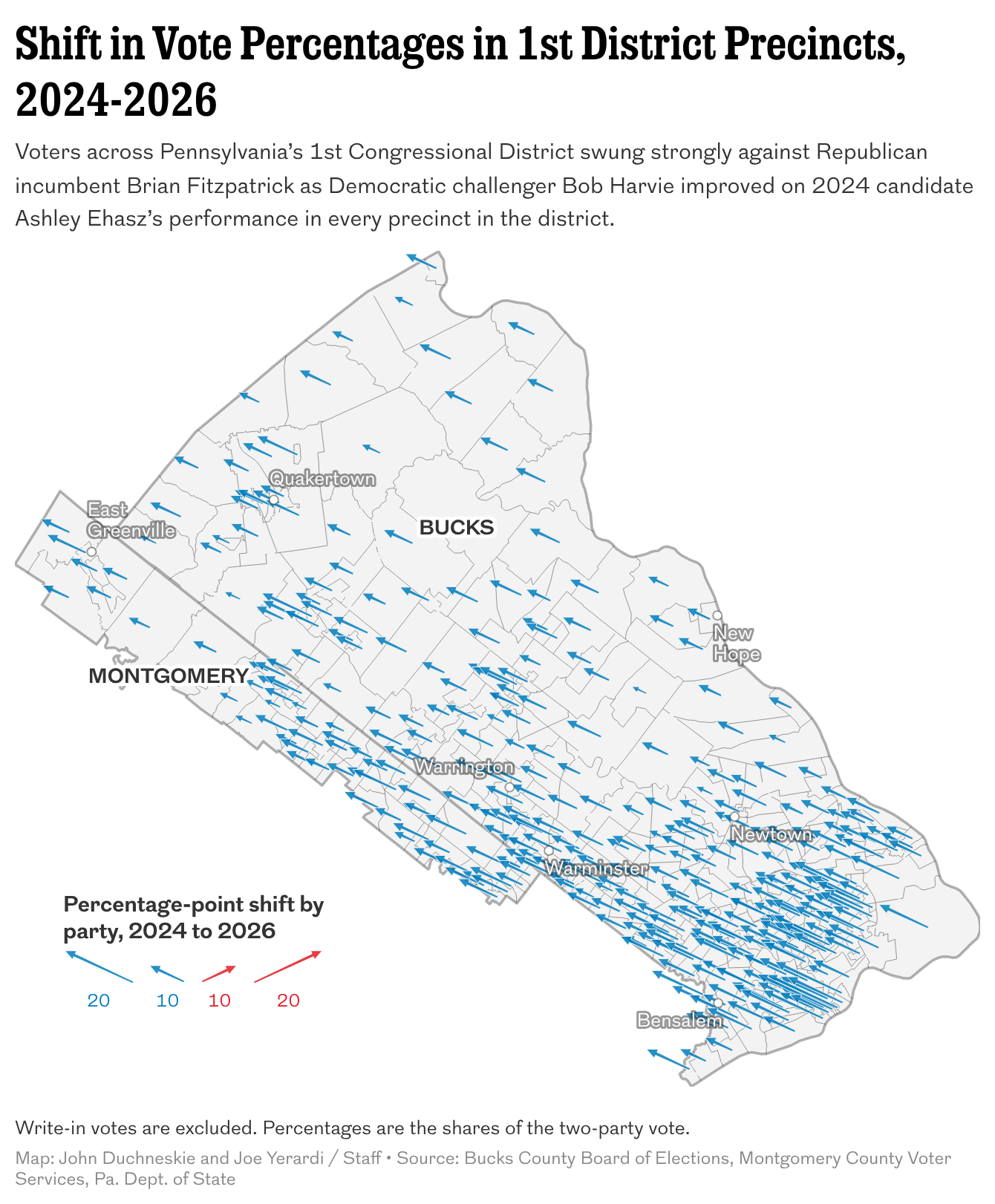
Shift in vote percentages in 1st district precincts 2024-2026.John Duchneskie
Harvie significantly improved on the performance of Ashley Ehasz, the party’s 2024 nominee, in a year when Fitzpatrick comfortably won reelection by 10 points even as the district went for Democrat Kamala Harris in the presidential race.
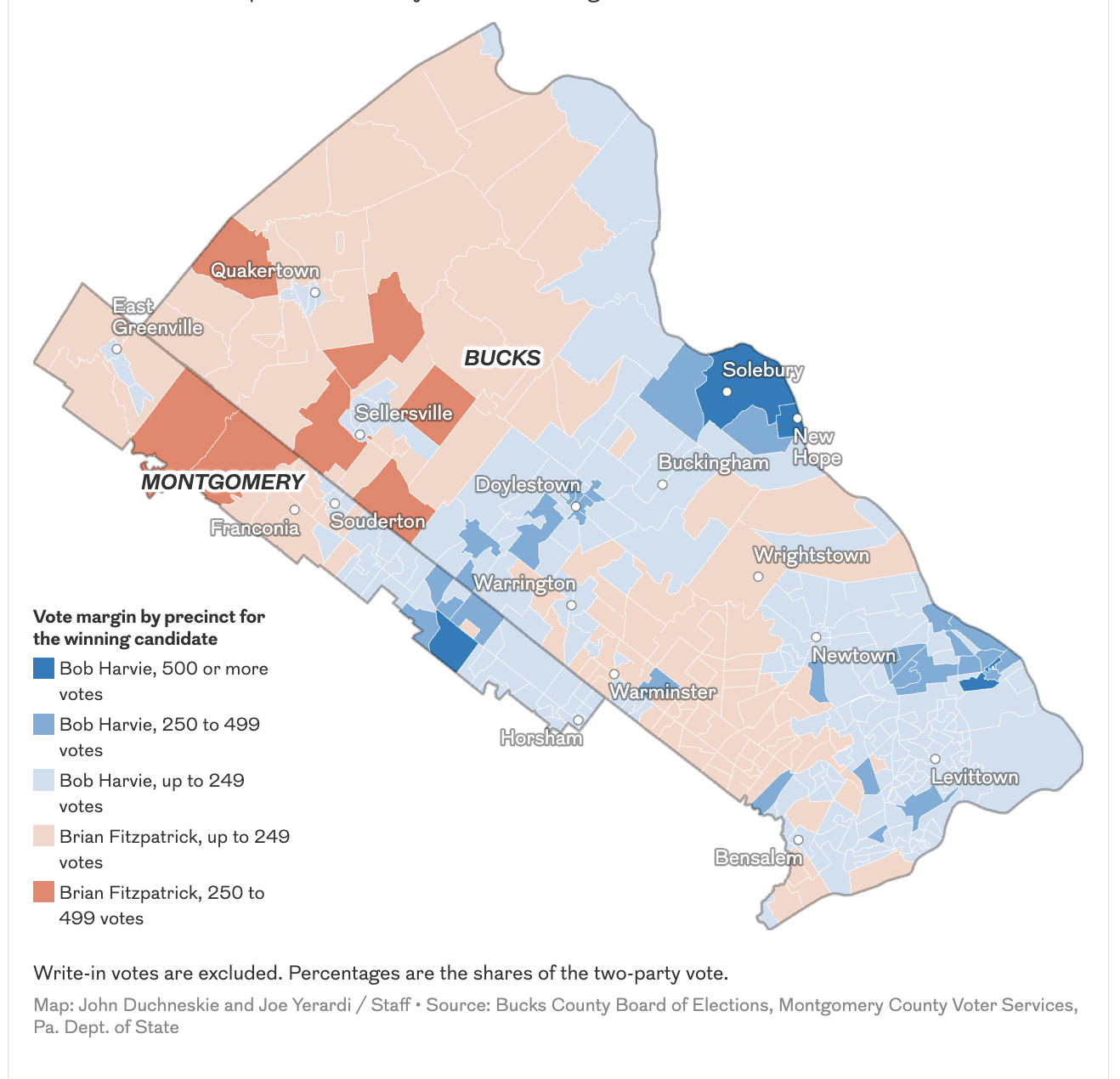
The district covers all of Bucks County and a portion of Montgomery County. Harvie saw his highest vote margins in a precinct in Solebury Township, New Hope Borough, a precinct slightly north of Horsham in Montco, and in a precinct in Falls Township, Harvie’s stomping grounds.
Bob Harvie received about 52.7% of the two-party vote in his 2026 election victory over Republican incumbent Brian Fitzpatrick in Pennsylvania’s 1st Congressional District.John Duchneskie
Most of Lower Bucks — a populous part of the county where both candidates are from — went blue, as did most of Central Bucks and the district’s portion of Montgomery County.
Upper Bucks, a more rural part of the county, leaned red and Fitzpatrick had his largest precinct win margin in a part of Hilltown Township.
Campaign Scrapple
Culture clash: Our colleague Al Lubrano caught an exchange between two voters in Carlisle in the 10th District. Republican Robert House, 57, a beekeeper who said he owns 175 firearms, said he voted for Republican Rep. Scott Perry because he “agrees with the Bible” and opposes abortion. That prompted Adrienne Cedro, a 21-year-old college student, to say she voted to oust Perry and anyone “who’s against the rights of women, LGBTQ, and trans people.”
Name that tune: After Republican gubernatorial nominee Stacy Garrity concluded her concession speech Tuesday, she walked off to Fleetwood Mac’s “Don’t Stop” — a song famously associated with Democrat Bill Clinton’s 1992 presidential campaign. Shapiro, for his part, walked off the stage from his reelection victory speech to Tom Petty’s “I Won’t Back Down,” previously associated with George W. Bush’s 2000 presidential campaign until Petty’s team demanded Bush stop using it.
📸 Behind the scenes snapshot
Gov. Josh Shapiro greets supporters after making his victory speech at his Election Night party in Camp Hill, Tuesday Nov. 3, 2026.Tom Gralish / Staff Photographer
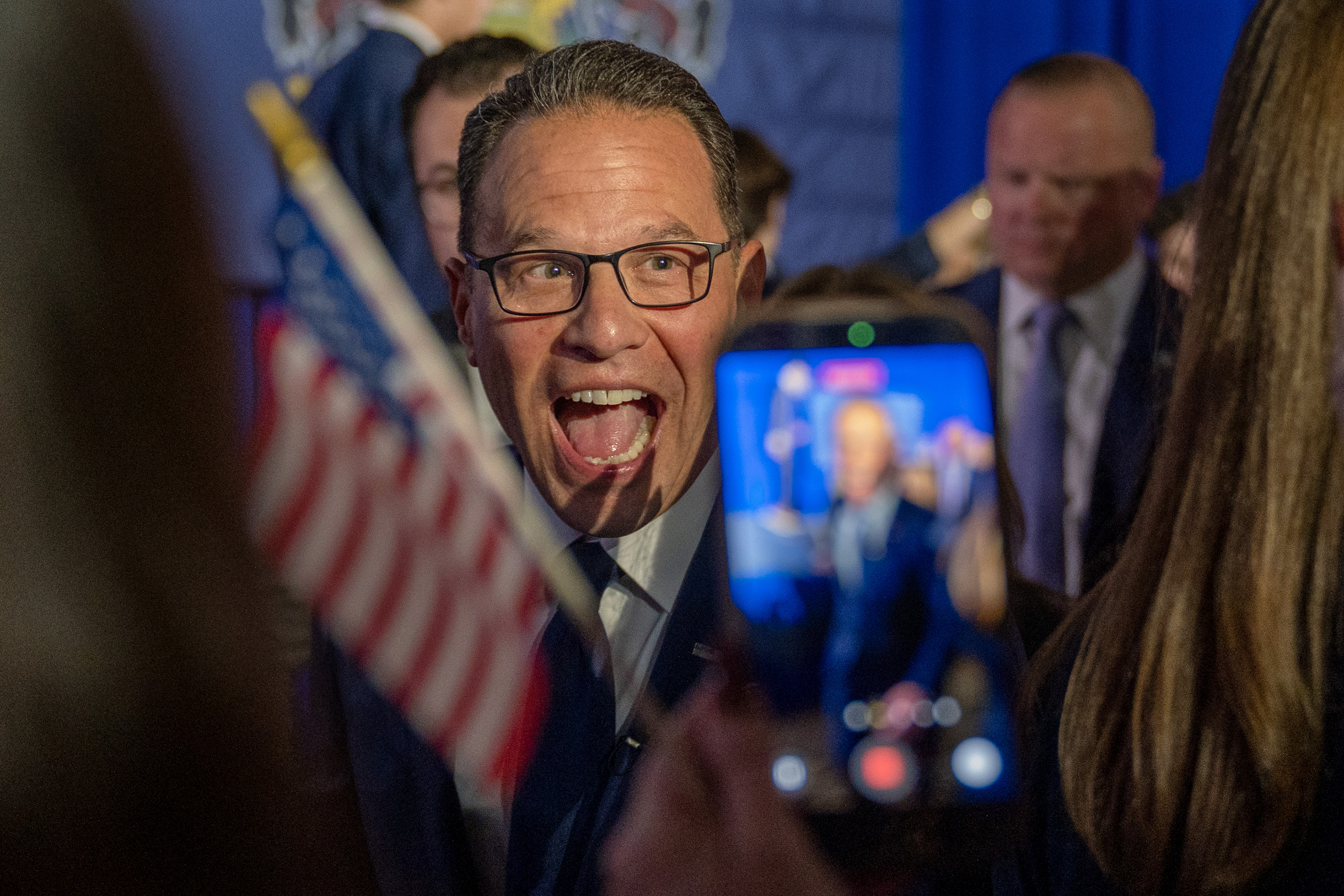
Rarely do we get to see Shapiro giddy or animated, but our photographer Tom Gralish was able to capture him authentically gleeful on Tuesday evening at his reelection party in Camp Hill. Shapiro went on to bring a similar excitement about Pennsylvania Democrats’ major wins to national network news, as he boasted about his own role in Tuesday’s “bluenami.”
👀 What we’re watching
The historic midterm results didn’t just answer massive lingering questions about the limits of Trump’s enduring stranglehold on American politics. It raised countless others — transforming the range of possibilities for the rest of Trump’s time in the White House and far beyond it.
How will Democrats unite — or butt heads — as they wield their new majorities in Congress amid their own ideological battles? How will Republicans, both in Pennsylvania and Washington, handle the repudiation of a president who’s molded their party in his image over a decade?
By mid-2027, we’ll also likely — finally — get answers to critical questions about 2028.
Will Josh Shapiro launch a long-rumored campaign? And, if so, how will his record in the nation’s largest swing state match up against what’s almost certainly going to be a huge field of other Democratic governors, senators and outsiders?
The other big prize on the 2028 ballot for both parties will be John Fetterman’s seat in the U.S. Senate. Fetterman’s decisions about his own future are a mystery that may not be answered any time soon.
The contrast in mood between the two parties was stark.
Harvie held his election night party at a massive wedding venue while Fitzpatrick watched in private and Bucks County Republicans kept a small watch party closed to the media. And up in Wyoming County, the AP called Garrity’s loss a minute after polls closed, as people were still filtering into her party.
👋 Thank you for following along on our journey through the homestretch of this chaotic, exciting, and unpredictable midterm cycle. This may be our last PA 2026 newsletter, but you can always find our in-depth reporting here.
And see you in 2028? 😎
By submitting your written, visual, and/or audio contributions, you agree to The Inquirer’s Terms of Use, including the grant of rights in Section 10.
I woke up after the midterm elections feeling a little like I did the morning after President Barack Obama won his first term in office.
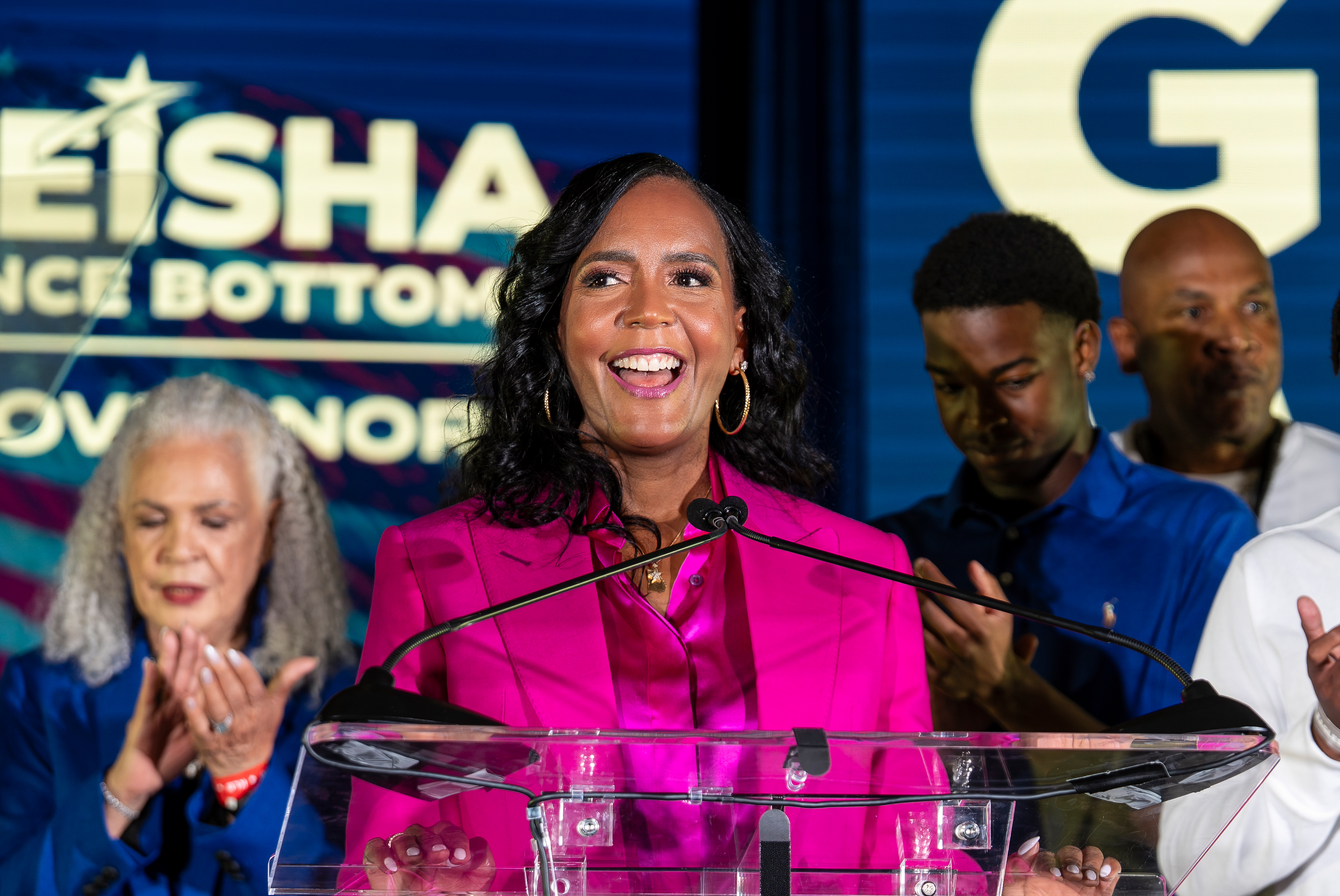
America has finally elected its first Black female governor, and her name is Keisha. That’s Keisha as in Keisha Lance Bottoms from the state of Georgia.
The last time I’d actually laid eyes on her before election night, Bottoms was being interviewed in her kitchen earlier this yearby ABC News anchor Linsey Davis. The former mayor of Atlanta was discussing her gubernatorial campaign and family history while demonstrating how she makes her family’s sweet potato pie recipe.
As she talked, I watched as she added ingredients. Black folks don’t play when it comes to our sweet potato pies. They have roots in West Africa and a special place on tables in Black Southern households. If you see an orange pie on our table at Thanksgiving, you can almost bet it’s sweet potato instead of pumpkin.
And Black folks can be downright picky about how to make it. During her TV interview, Bottoms looked a bit too manicured and well dressed — or bougie — to be cracking eggs.
I was giving her a bit of a side-eye before I realized she prepared her pie the same way my grandmothers and great-grandmothers made theirs. It made me smile. She is one of us.
Our shared history as Black women makes her election night victory even sweeter.
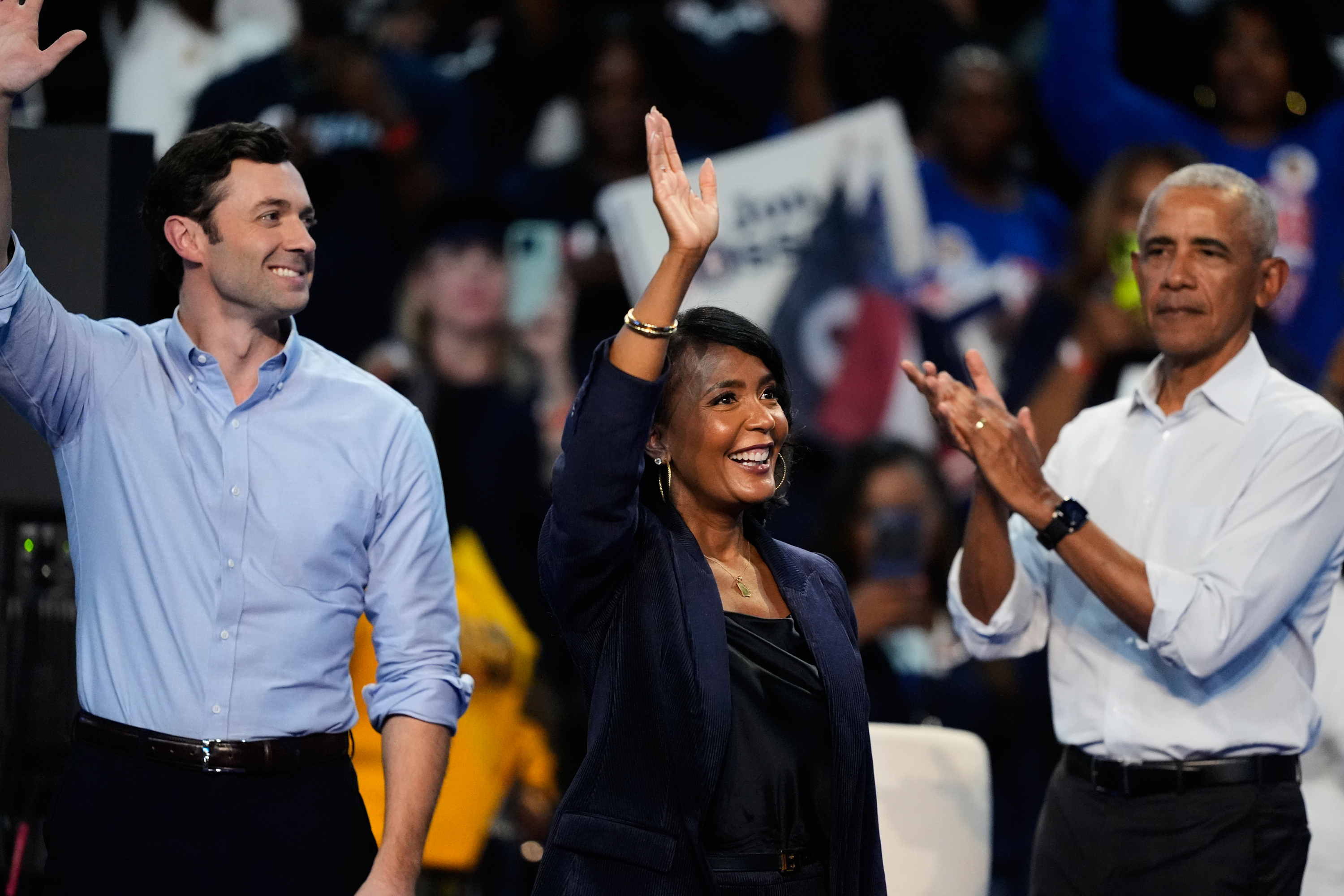
Democratic gubernatorial candidate Keisha Lance Bottoms (center) waves to supporters, joined by former President Barack Obama and Democratic candidate Sen. Jon Ossoff, after a rally ahead of the Georgia primary election on Oct. 28, in Morrow, Ga.Brynn Anderson
It’s the morale boost that so many of our sisters needed, and it’s right on time.
It’s estimated that as many as 100,000 Black female federal workers have lost their so-called good government jobs. That’s huge, especially considering many are the breadwinners of their families.
This — on top of Vice President Kamala Harris’ heartbreaking loss in the presidential race two years ago — has been a lot to endure. On Tuesday night,MSNOW political commentator Symone Sanders Townsendsummed that election up best when she said, “After the 2024 election, to Black women all over this country it felt like a repudiation of us.”
As one of the 92% of Black women who ran to the polls to vote for Harris, I agreed with Townsend that her loss felt like a sign that “America just does not want us.”
Townsend referenced seeing Bottoms out on the campaign trail with her hair in box braids (which date back to ancient Africa) and being uncertain how that might impact the former mayor’s candidacy. Bottoms’ willingness to not shy away from her racial identity paid off.
“She won by going out there and being herself and talking about the issue, connecting with the people and for the 92% out there that was feeling like, ugh, maybe the country just doesn’t want us,” Townsend said. “Georgia wanted Keisha.”
Townsend choked up as she spoke. Watching from home, I teared up a bit, too. A friend of mine called and told me she also felt emotional.
Bottoms’ win was for every girl who was told her name was too ethnic to open the right doors.
Bottoms’ win was for every woman who felt she had no choice but to remove her braids before an important job interview.
Bottoms’ win was for every woman who dared to try and break through a glass ceiling.
And the fact that Bottoms’ historic victory took place in the heart of the Confederacy is the dollop of whipped cream on top of our slice of sweet potato pie. It didn’t come easy.
The Republican nominee for governor in Georgia, billionaire Rick Jackson, poured more than $200 million of his own fortune into his campaign. But it turned out that this was one election even all that money couldn’t buy.
Years from now, schoolchildren in the Peach State will learn about how Bottoms’ beloved late father had to enter through the literal back doors of some of Georgia’s oldest institutions during segregation. Years later, she walked through those same doors first as mayor of Atlanta, and soon as the state’s first Black governor.
During her victory speech, Bottoms talked about visiting the tiny town of Crawfordville, Ga., which has ties to both Alexander Stephens, a founder of the Confederacy, and five generations of her ancestors.
“I visited the grave of Betsy Peek, my great-great-grandmother, who was born in 1845, 20 years before emancipation,” she told the crowd. “In a cemetery filled with unmarked graves, I found hers.”
“I don’t know what dreams Betsy Peek had for her children or her grandchildren or the generations that she would never meet,” Bottoms continued, “but I know I am standing on shoulders made of steel.”
She is — and for so many Black women, her rise called to mind the words of another pioneering politician who gave his own speech on a brisk election night in Chicago 18 years ago: Yes, we can.
CAMP HILL, Pa. — Gov. Josh Shapiro cruised to reelection on Tuesday, trouncing his Republican opponent, Stacy Garrity, in a decisive victory that strengthens the Democrat’s prospects for a 2028 presidential run.
The Associated Press called the race for Shapiro a minuteafter polls closed across the state. The resounding win for Shapiro, 53, of Abington Township, cements his dominance in the critical battleground state that voted for President Donald Trump just two years ago.
“Thank you, from the bottom of my heart, for the trust and the confidence,” Shapiro said, addressing supporters in Camp Hill. “This is a good night for our commonwealth. It’s looking like it could be a pretty good night for our country, too.”
A poll conducted by The Inquirer, New York Times, and Siena University found a quarter of GOP voters in the final weeks of the campaign still did not know enough about Garrity or her platform to form an opinion of her. For months, she was unable to purchase TV ads, while Shapiro was spending millions defining her as data centers’ “No. 1 fan.” An eleventh-hour push by skill games industry backers allowed Garrity to gain some advertising momentum in the final days of the campaign, but it was not enough to change Tuesday’s result.
In an election night speech in Tunkhannock, Garrity congratulated Shapiro, adding that “his success is our success.”
“It is my hope that the campaign we’ve run, the issues we’ve addressed, and the solutions we’ve presented are a reminder to them that Pennsylvania just doesn’t deserve but needs a full-time chief executive,” Garrity said.
Stacy Garrity, Republican candidate for Pennsylvania governor, makes remarks at her final rally before Election Day Monday, Nov. 2, 2026 at Newtown Athletic Club in Newtown, Pa.William Thomas Cain / For The Inquirer
Beyond the governor’s race
For months, public opinion polls showed Shapiro holding a double-digit lead over Garrity with strong backing from his Democratic base, solid favorability from independent voters, and even a notable sliver of support from voters who backed Trump two years ago. He also maintained record-high job approval ratings among modern Pennsylvania governors at the same time Trump’s approval ratings hit new lows.
Shapiro’s strong polling lead allowed him to focus his attention on rebuilding and securing his grip on the Pennsylvania Democratic Party, coordinating across state and congressional campaigns for a unified strategy in an election year that was already likely to benefit Democrats as the party out of power in Washington.
Governor Josh Shapiro (left) and Minority Leader Hakeem Jeffries (right) pose after rally for Congressional candidate Bob Brooks (center) at the United Steelworkers Union Hall in Bethlehem, Pa. on Sunday, July 26, 2026.David Maialetti / Staff Photographer
Shapiro over the last year has more clearly signaled his intentions to enter the 2028 presidential race. In his second four-year term as Pennsylvania governor, he may need to navigate a delicate balancing act in his job leading the nation’s fifth-most-populous state while campaigning nationally. Pennsylvania voters are split over whether they want to see him run for the nation’s highest office, an Inquirer/New York Times/Siena poll found. (He would not have to resign to campaign for president, but would be required to resign if he was elected.)
Shapiro has been an elected official for two decades, previously serving as Pennsylvania’s attorney general, a Montgomery County commissioner, and a state representative. In 2024, he was on the short list to become Vice President Kamala Harris’ running mate, boosting his name recognition on the national stage. Since then, he has continued to elevate his profile and lay the groundwork for a White House run, including publishing a memoir, sitting for national network TV interviews, and creating a federal political action committee that he can use to fundraise nationally and more easily fund a presidential bid.
Lt. Gov. Austin Davis is joined by his wife Blayre Holmes Davis and daughter Harper at the Shapiro-Davis Election Night party in Camp Hill, Tuesday Nov. 3, 2026.Tom Gralish / Staff Photographer
Shapiro on Tuesday ran alongside Lt. Gov. Austin Davis, a former Democratic state lawmaker from outside Pittsburgh, and the first Black person ever elected to Pennsylvania’s executive branch. Davis, 37, will return to his position as the presiding officer of the state Senate — a role that could take on new importance, depending on how far Shapiro makes it in a presidential campaign.
(function () {window.addEventListener(‘message’, function (e) { var message = e.data; var els = document.querySelectorAll(‘iframe[src*=”‘ + message.id + ‘”]’); els.forEach(function(el) { el.style.height = message.height + ‘px’; }); }, false); })();
He pitched himself and other Democrats on the ballot as a backstop to Trump’s “chaos, cruelty, and corruption” — an appeal that broke through to multiple voters Tuesday. Some said they want to see him run for higher office soon.
In East Bradford Township, Doug Swartz said he cast a vote for “future President Shapiro.”
Swartz, 66, said he has been impressed with the governor’s political career, starting when he was a state representative.
“I think he’s the kind of guy who can be a consensus builder, and shown that he can reach across the aisle and play well with everyone,” Swartz said. “He’s got a great record on taxes, and, obviously the cost of living is out of his control.”
(function(){function e(){window.addEventListener(`message`,function(e){if(e.data[`datawrapper-height`]!==void 0){var t=document.querySelectorAll(`iframe`);for(var n in e.data[`datawrapper-height`])for(var r=0,i;i=t[r];r++)if(i.contentWindow===e.source){var a=e.data[`datawrapper-height`][n]+`px`;i.style.height=a}}})}e()})();
Shapiro also staked his political capital into flipping the state Senate to Democratic control, in efforts to bring a Democratic trifecta to Harrisburg. The governor has set an aspirational agenda to pass a number of top Democratic policy priorities that have been on the back burner for decades, including increasing the state’s minimum wage to $15 per hour, codifying abortion and LGBTQ+ rights, and allocating a new funding stream for mass transit. Clearing the way to pass those policies notches another win for Shapiro and strengthens his list of achievements headed into a 2028 Democratic primary.
The Pennsylvania Senate Democratic Campaign Committee noted that while Democrats held a trifecta in 1993 after a member changed party registration, it had been more than 50 years since voters elected a Democratic state Senate.
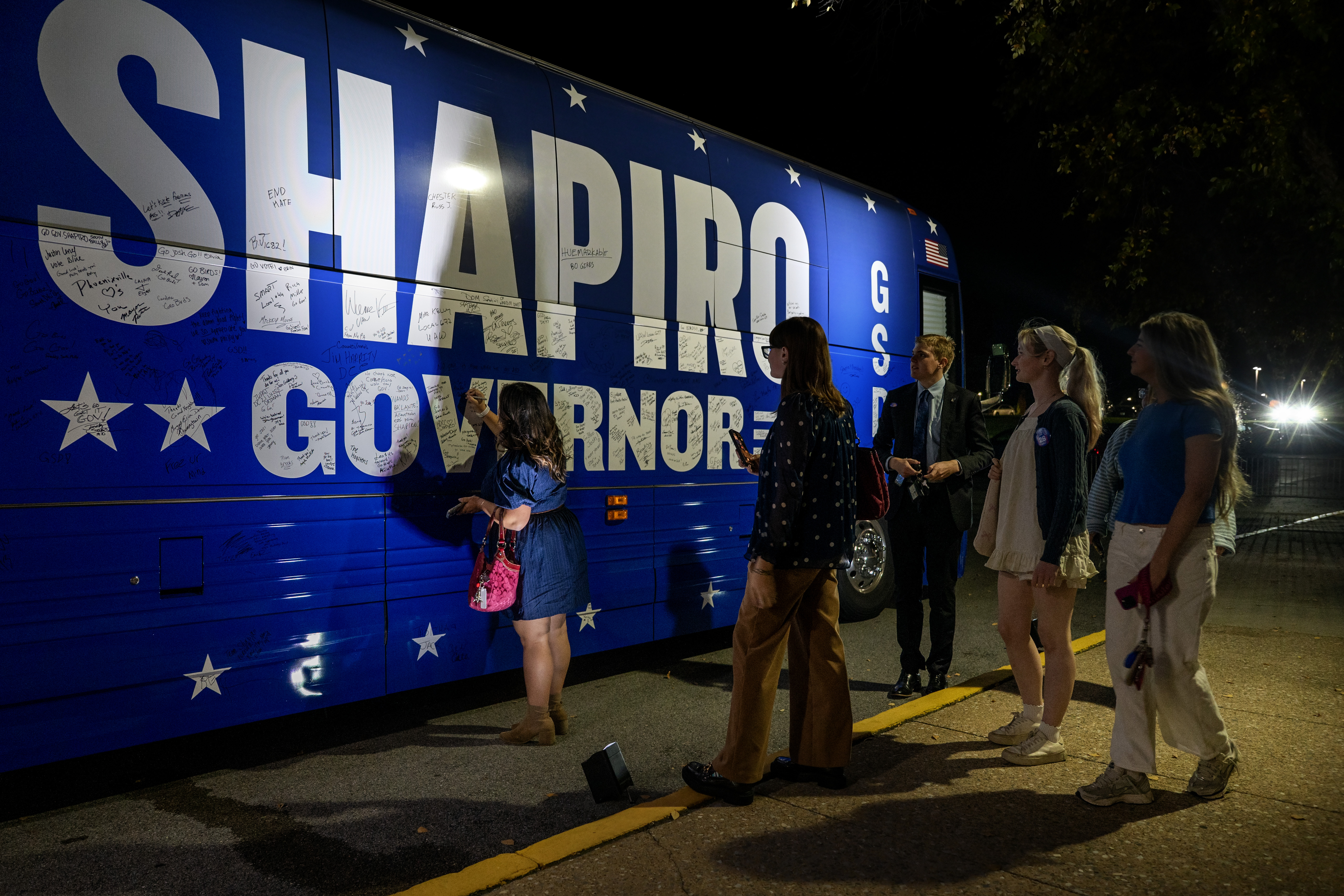
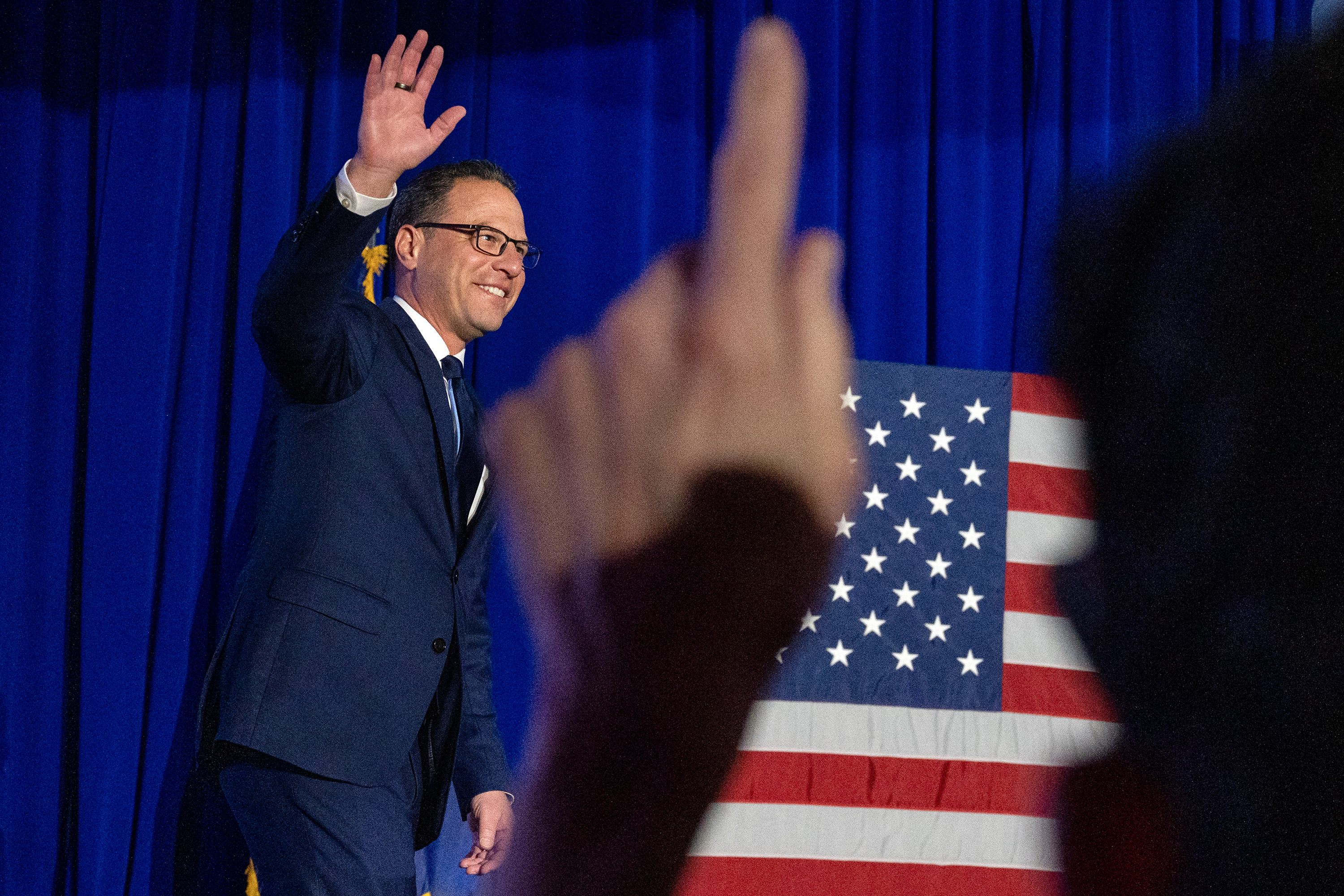
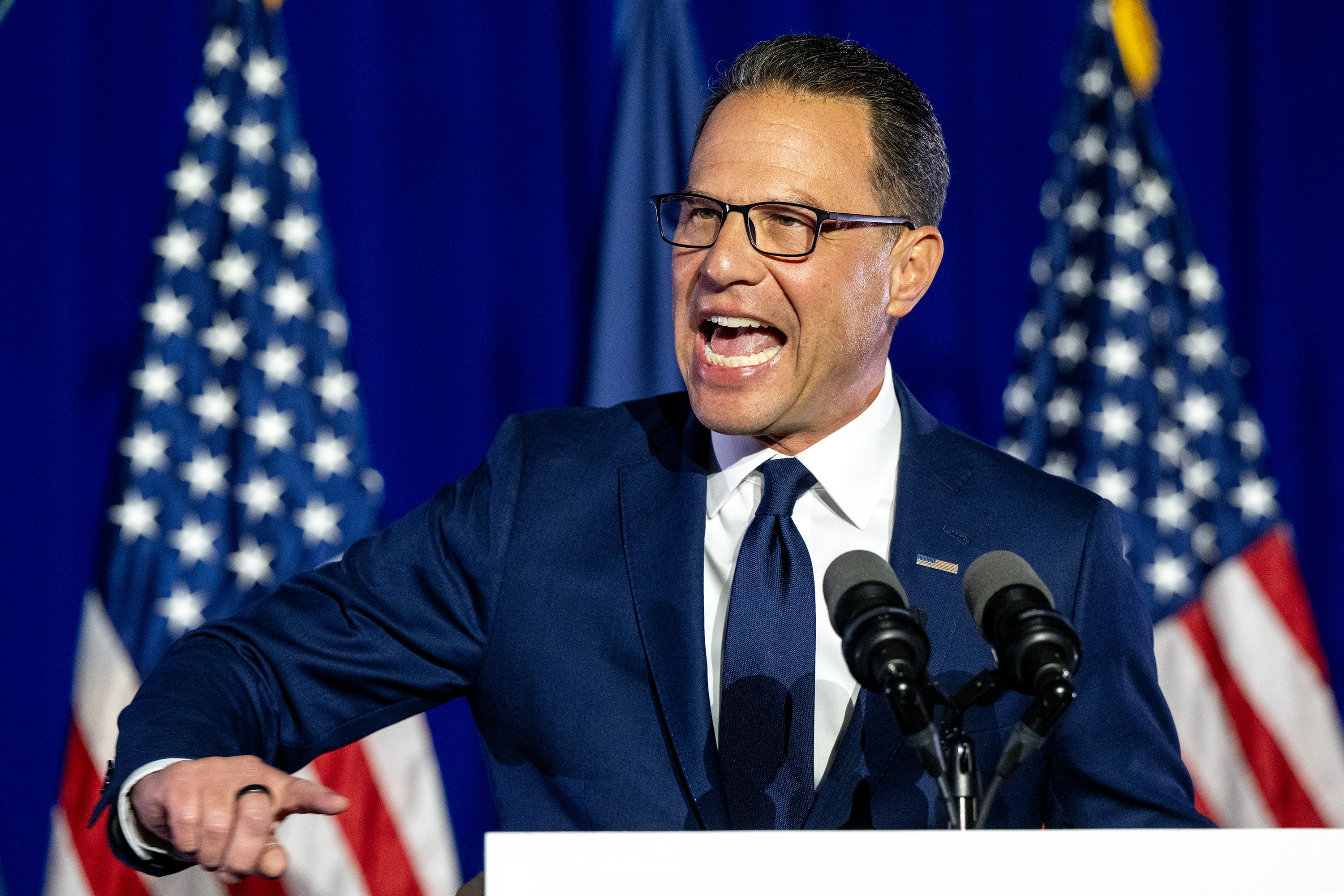
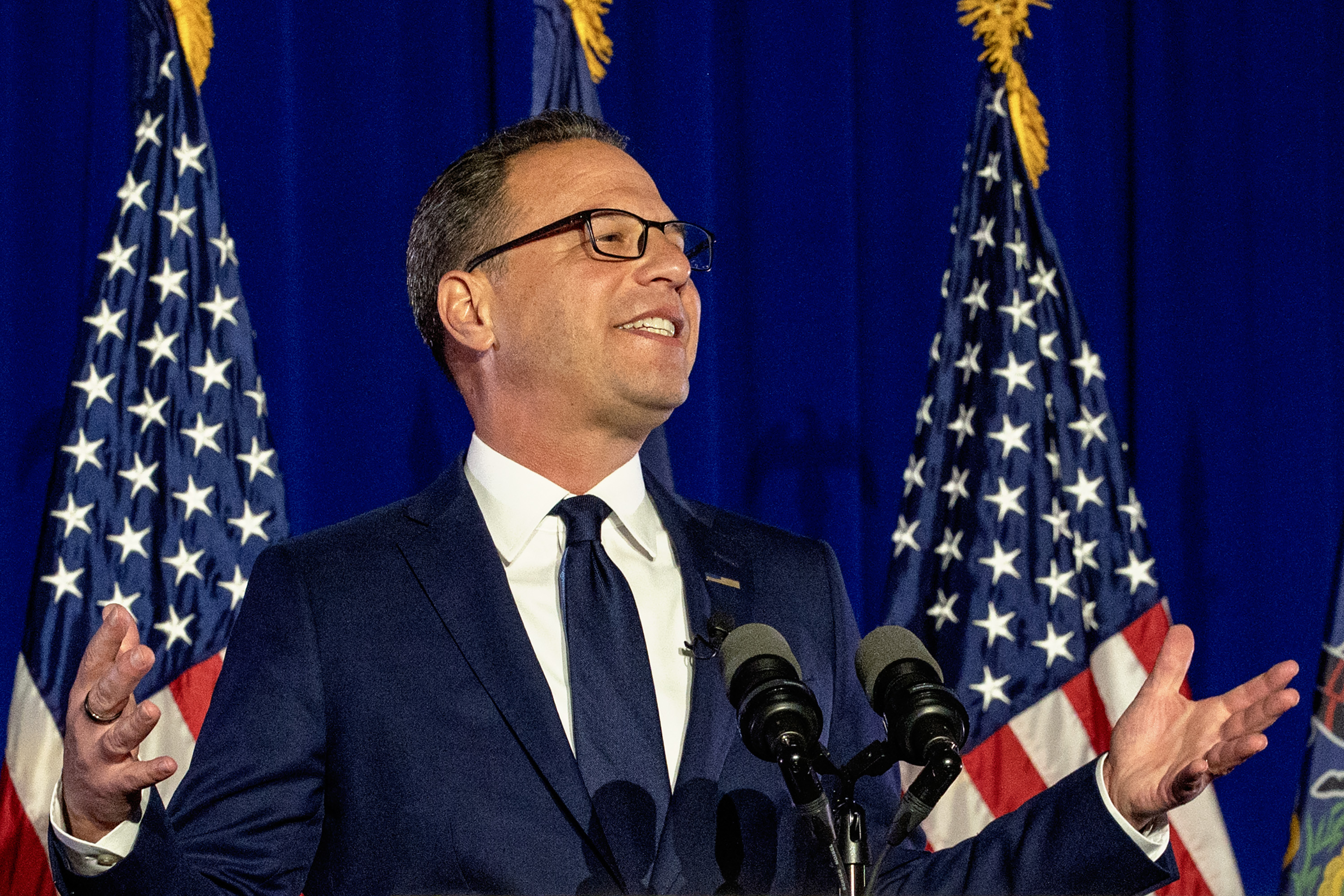
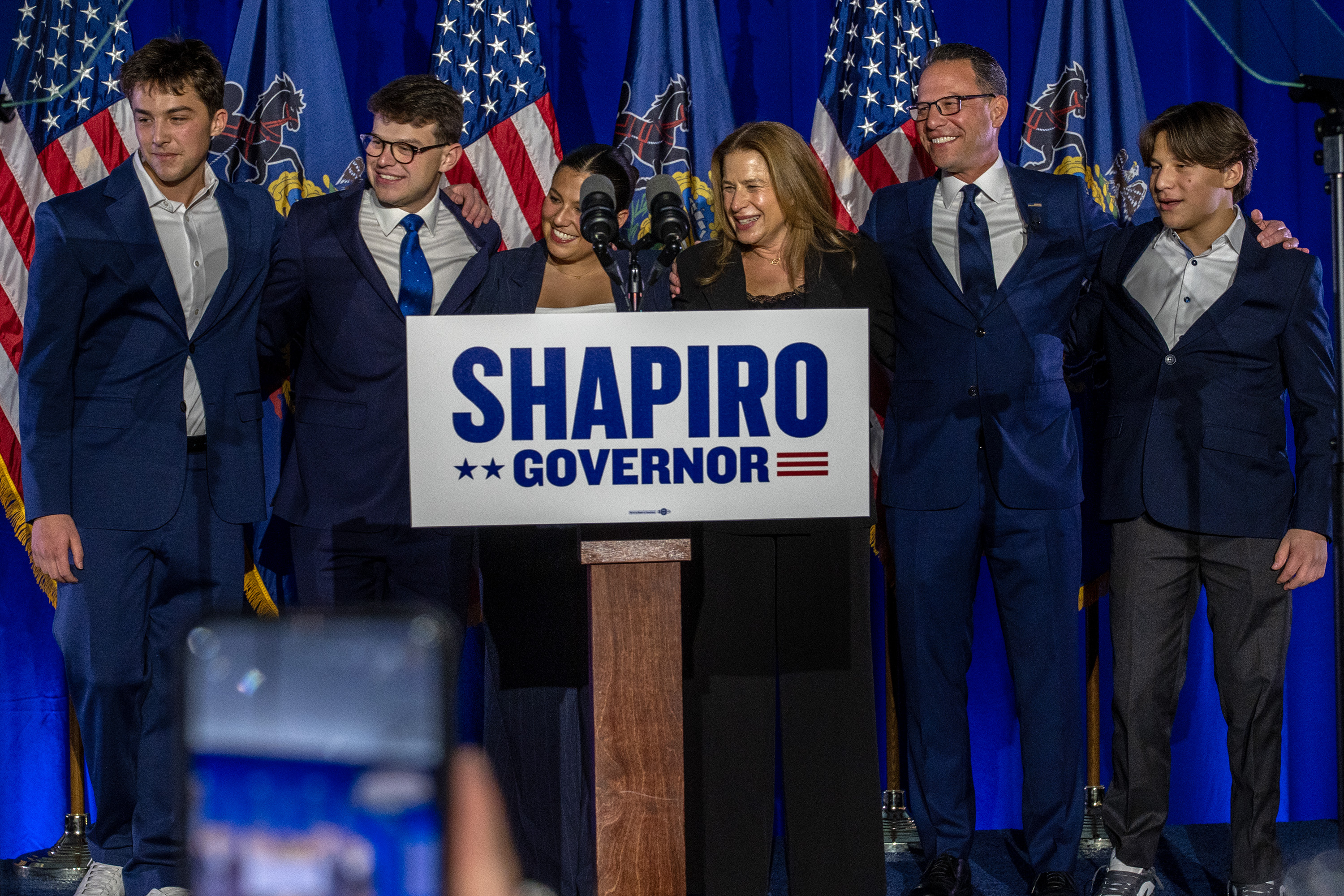
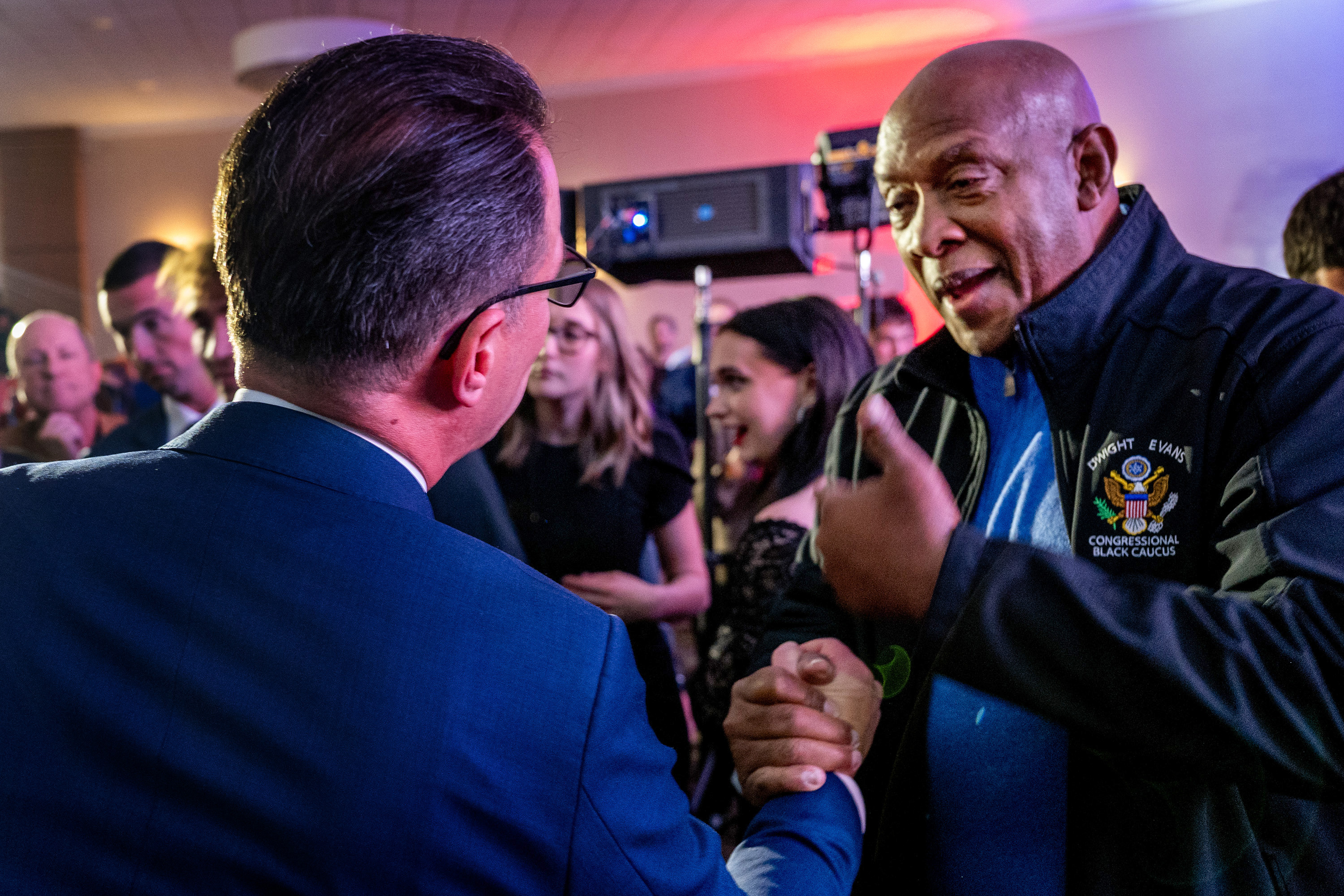
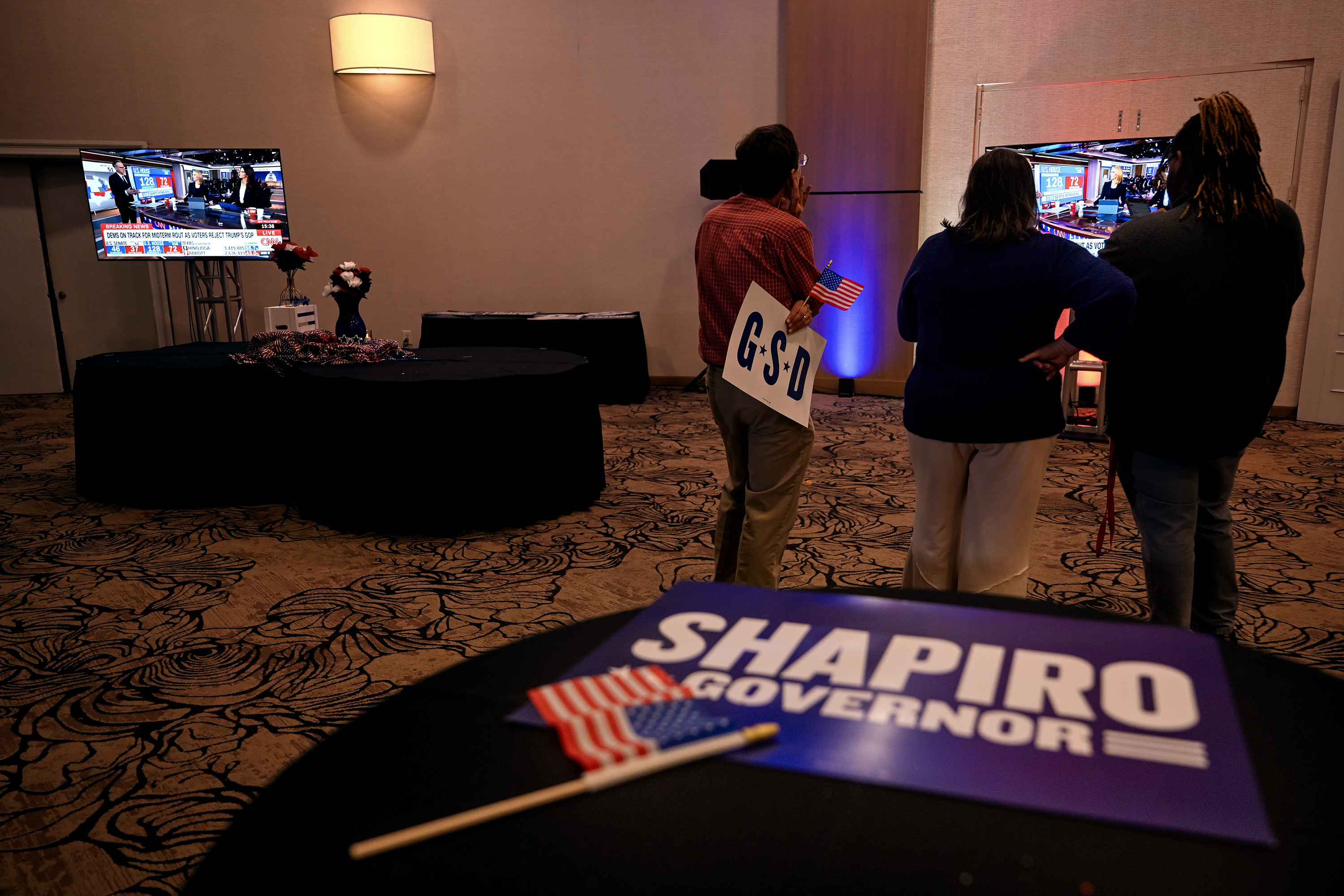
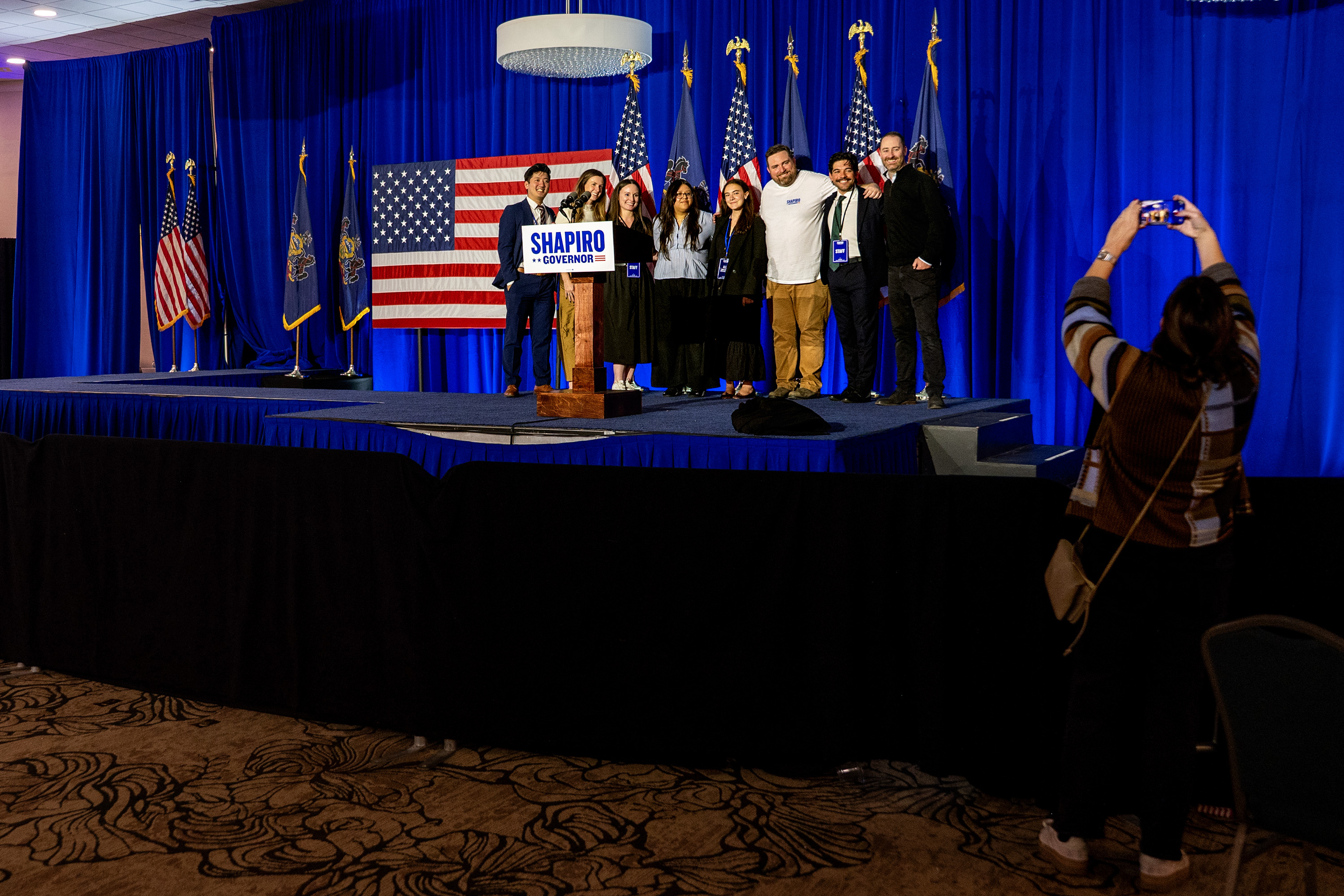
Supporters sign the Shapiro statewide campaign tour bus as they arrive at the Election Night party for Gov. Josh Shapiro and Lt. Gov. Austin Davis in Camp Hill.Tom Gralish / Staff PhotographerGov. Josh Shapiro arrives onstage.Tom Gralish / Staff Photographer“This is a good night for our commonwealth. It’s looking like it could be a pretty good night for our country, too.”Tom Gralish / Staff PhotographerGov. Josh Shapiro delivers his victory speech at his Election Night party in Camp Hill, Tuesday Nov. 3, 2026.Tom Gralish / Staff Photographer“Thank you from the bottom of my heart, for the trust and the confidence,” Shapiro says, addressing supporters in Camp Hill. Tom Gralish / Staff PhotographerGov. Josh Shapiro is joined by First Lady Lori Shapiro and their family onstage.Tom Gralish / Staff PhotographerLt. Gov. Austin Davis is joined by his wife Blayre Holmes Davis and daughter Harper.Tom Gralish / Staff PhotographerGov. Josh Shapiro and Lt. Gov. Austin Davis.Tom Gralish / Staff PhotographerGov. Shapiro greets supporters after making his victory speech.Tom Gralish / Staff PhotographerGov. Shapiro greets supporters.Tom Gralish / Staff PhotographerGov. Josh Shapiro and retiring U.S. Rep. Dwight Evans.Tom Gralish / Staff PhotographerSupporters remain in the ballroom after the Election Night party for Gov. Josh Shapiro ends, watching CNN coverage of wins for Democrats across the country.Tom Gralish / Staff PhotographerSupporters watch election results come in, after most others have left the party.Tom Gralish / Staff PhotographerCampaign volunteers pose for a group photo onstage following the Election Night party.Tom Gralish / Staff PhotographerSupporters pass the statewide campaign tour bus as they leave the Election Night party for Gov. Josh Shapiro in Camp Hill, late Tuesday night, Nov. 3, 2026,Tom Gralish / Staff Photographer
If Republicans had maintained control of the state Senate, Shapiro — who has long branded himself a bipartisan dealmaker — risked again leading a split legislature that had become known for its dysfunction and gridlock.
Garrity, for her part, ran her campaign on a message that under Shapiro’s leadership, Pennsylvania is lagging other states in national rankings in its economic growth, education, and more. But that message hardly reached voters until the final days, when she received more than $6 million from skill games industry backers after she voiced her support for the industry during the race’s lone debate on Oct. 7.
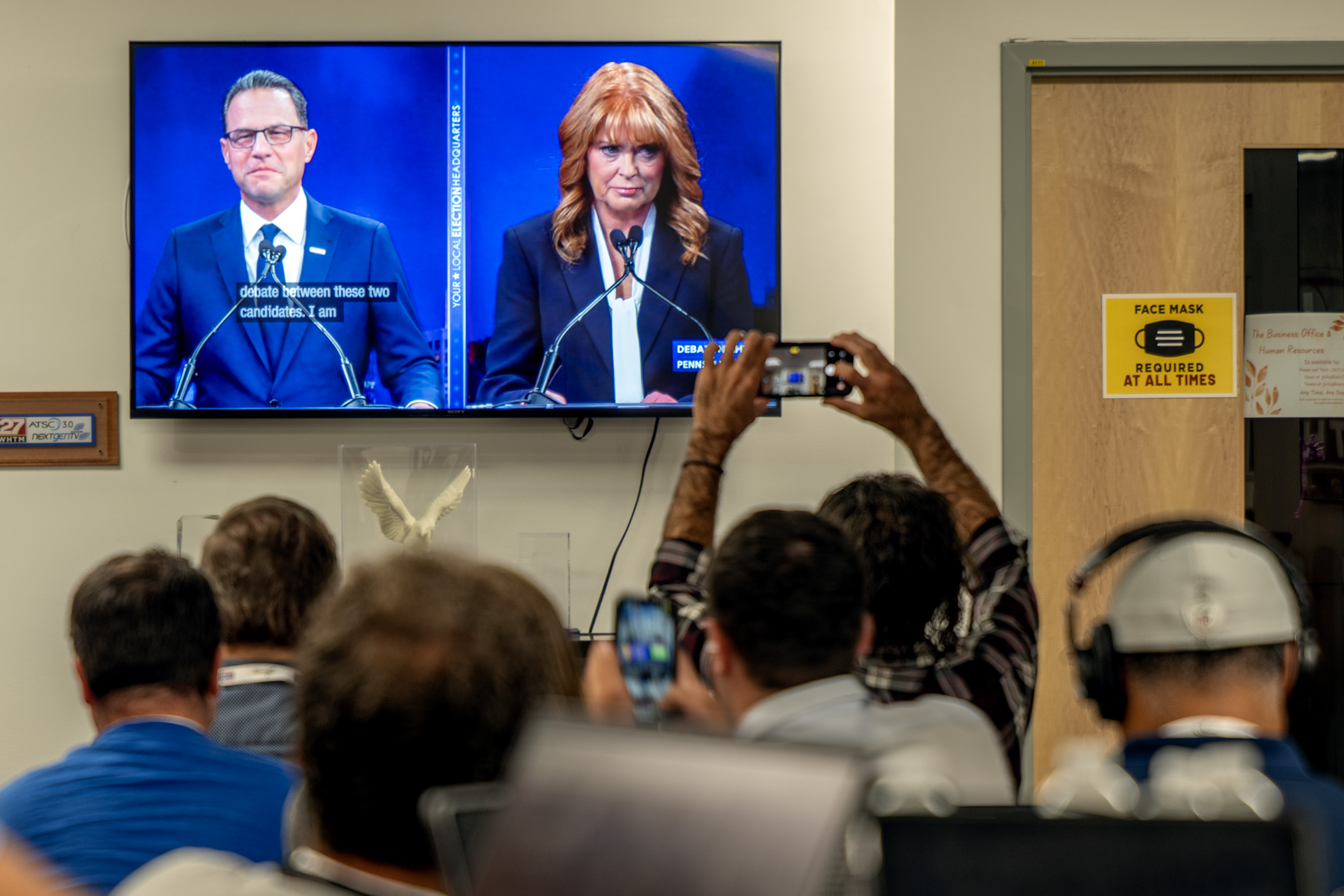
Monitor at the WHTM-TV studios in Harrisburg Wednesday evening Oct. 7, 2026, during the lone debate between Gov. Josh Shapiro and Republican challenger Stacy Garrity.Tom Gralish / Staff Photographer
Initially, Garrity was poised to be a more formidable candidate against Shapiro, after Republicans coalesced around her early in an effort to avoid suffering another double-digit defeat, as in Shapiro’s race in 2022 against far-right State Sen. Doug Mastriano (R., Franklin). Republicans at the time blamed Mastriano for downballot losses and vowed not to repeat their mistakes. (On Tuesday, Shapiro spoke from the same stage at the Penn Harris Hotel where Mastriano held his election night party in 2022, though the Republican took days to concede.)
In the end, Garrity was unable to raise the millions of dollars necessary to rival Shapiro’s campaign hauls, and saw little national support as national Republicans focused elsewhere. Top Republican groups stayed out of the race, instead opting to invest in contests they saw as more winnable in a particularly challenging midterm year for the GOP.
“In politics, you learn very quickly that not everyone follows through on their promises,” Garrity told the crowd gathered for her election night watch party.
Caria Knight of Mount Airy changed her party affiliation from Democratic to Republican specifically because of Garrity. She was impressed by her military experience as a retired U.S. Army colonel, as well as her tenure as treasurer.
Knight recognized that Garrity’s chance of winning the governorship was “slim” but said she was happy to support her anyway because of her values.
People watch the evening election returns on television Tuesday, Nov. 3, 2026 at Bucks County Republican Committee Headquarters in Doylestown, Pennsylvania. The Bucks County Republican Committee Headquarters was closed to the public and media Tuesday night for a private event.William Thomas Cain / For The Inquirer
But his term was also marked by a number of challenges, particularly in navigating the split legislature. He struggled as a dealmaker after a 2023 misstep in state budget negotiations over a deal on a school voucher program led to tarnished relationships with top Senate Republicans.
Some voters on Tuesday said they still had not forgotten his backtrack on school choice.
“He ran last time on education and kids and having vouchers,” said Lisa Mallon, 62, a Republican committeewoman in Abington. “As soon as he got in office, he pulled back on it.”
Around the same time in 2023, a longtime top aide, former State Rep. Mike Vereb (R., Montgomery), abruptly resigned after he was accused of sexual harassment by a female staffer in the governor’s office, resulting in the state paying the accuser a $295,000 settlement. His resignation came just before news of the allegations were reported by The Inquirer, and Shapiro has repeatedly said he had no knowledge of the investigation into Vereb.
More recently, Shapiro has attempted to lead the state through its worst measles outbreak in more than three decades, which has seen the deaths of at least six Pennsylvania residents. The deaths led to a public clash between Shapiro and U.S. Health and Human Services Secretary Robert F. Kennedy Jr., an anti-vaccine activist, whose agencies have refused to classify three of the state’s six deaths as caused by measles.
Shapiro also grappled with an increasingly dangerous job as a public figure, causing him to consider whether he should continue in elected office moving forward. He has been outspoken against political violence for years, but in April 2025, that violence came to his front door: A Harrisburg man firebombed the state-owned governor’s residence on the first night of Passover while Shapiro and his family slept inside.
The man, Cody Balmer, whose family said he was having a mental health crisis, later told police he wanted to kill Shapiro because of his perceived support for the war in Gaza. (Shapiro has called for a two-state solution in the Mideast and has called for more U.S. aid to be sent to people living in Gaza.) Balmer later pleaded guilty to arson and attempted murder of Shapiro.
Gov. Josh Shapiro is joined by his family on stage at his election night party in Camp Hill, Tuesday Nov. 3, 2026.Tom Gralish / Staff Photographer
Shapiro on Tuesday recognized the sacrifices his wife, Lori, and their four children have made for his successful career in public service.
“You have all been through so much,” Shapiro said. “It’s been hard. Frankly, sometimes it’s been terrifying.”
Shapiro concluded his 20-minute remarks with a message to his supporters: ”I love this commonwealth, and I love you.” He walked off the stage to Tom Petty’s “I Won’t Back Down.”
While Democrats celebrated successes nationally, Shapiro’s success was pretty simple for voters like Jay Zide.
Zide, 61, of West Chester, said he believes Shapiro is a competent governor who “seems to work well with both sides,” and who would do a much better job in the White House than the current presidential administration.
“Shapiro is well-spoken,” he added, “and he seems like a nice fella, for being a politician.”
Staff writers Vinny Vella and Zoe Greenberg contributed to this article.
Gov. Josh Shapiro voted with his wife, Lori, and son, Jonah, at his Abington Township polling place Tuesday morning.
By the time the Shapiros arrived around 10 a.m., the early rush at the Rydal Elementary West polling station had subsided, but the governor received a warm welcome from neighbors in the Abington ward, about two-thirds of whom voted for Kamala Harris in 2024.
After casting his ballot, Shapiro said at a news conference that in his next term he plans to cut both taxes and costs while boosting investments in mass transit, healthcare, and affordable housing.
“She spoke her mind,” Shapiro said at the Abington news conference. “I support all the Democrats running across the country.”
That has not been true of the governor in previous cycles, according to a story Lehigh Valley candidate for U.S. House Bob Brooks told about Shapiro on a hot mic. Brooks said earlier this year that Shapiro had asked the union he headedto endorse Stacy Garrity, then a Republican state treasurer candidate, in the 2024 cycle after her Democratic opponent, Erin McClelland, wrote an online post that was viewed as a criticism of Shapiro as he vied for the vice presidential spot on Kamala Harris’ campaign.
Brooks and Shapiro both later disavowed Brooks’ recorded remarks. Garrity, now Shapiro’s rival for governor, was expected to lose to the incumbent. Stevens, for her part, was kicked out of the Michigan Democratic Party on Sunday.
Meanwhile, some voters on Tuesday said Shapiro’s views on foreign affairs, including Israel and Iran, may deter their vote if he runs for president in 2028.
Shapiro spoke Tuesday about another one of the election season’s hot-button issues: data centers.
If Democrats win a trifecta, the governor also expects to sign legislation enshrining data center regulations that he passed via executive order in August after a bill to do that stalled in the GOP-controlled state Senate earlier this year.
This suburban content is produced with support from the Leslie Miller and Richard Worley Foundation and The Lenfest Institute for Journalism. Editorial content is created independently of the project donors. Gifts to support The Inquirer’s high-impact journalism can be made at inquirer.com/donate. A list of Lenfest Institute donors can be found at lenfestinstitute.org/supporters.