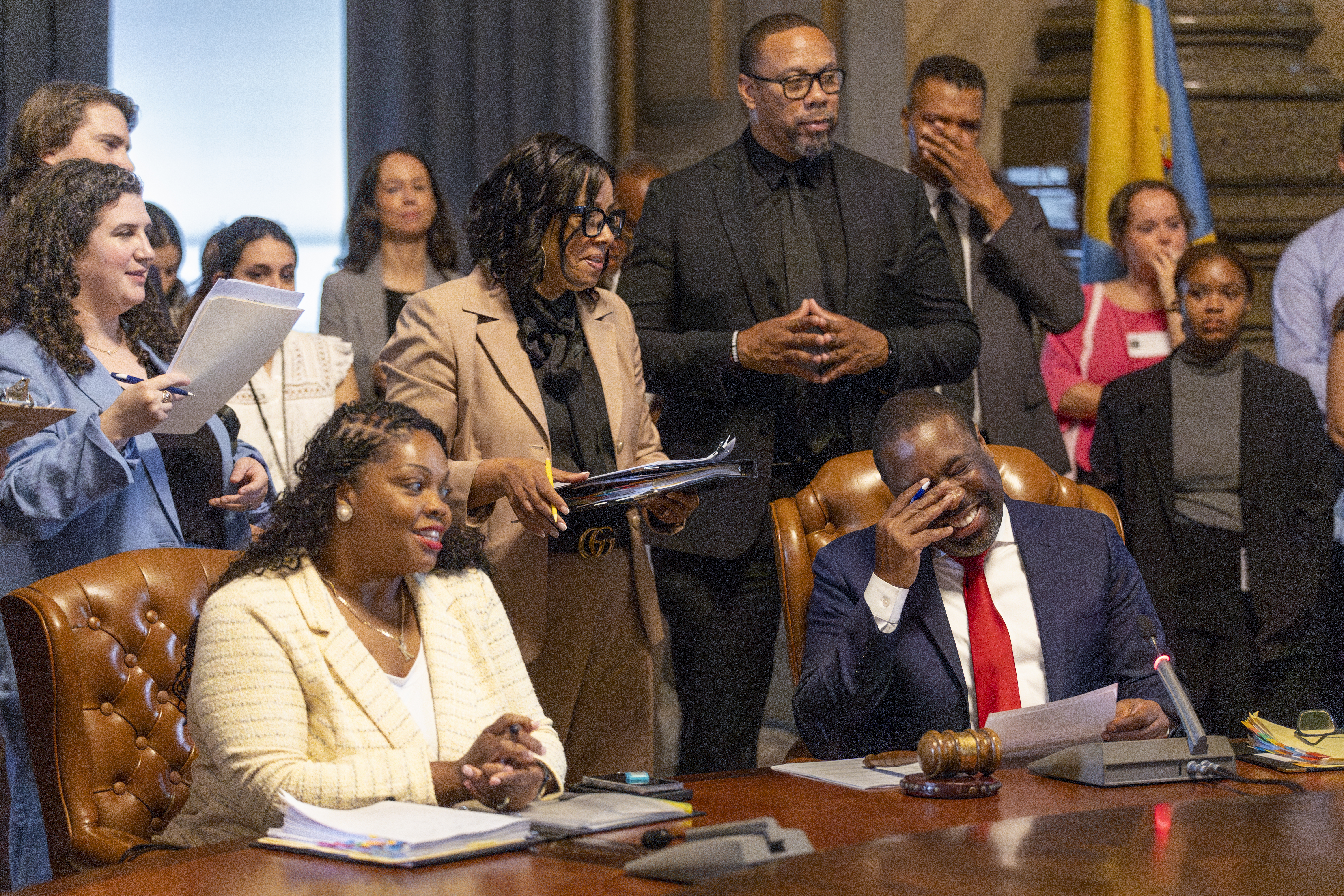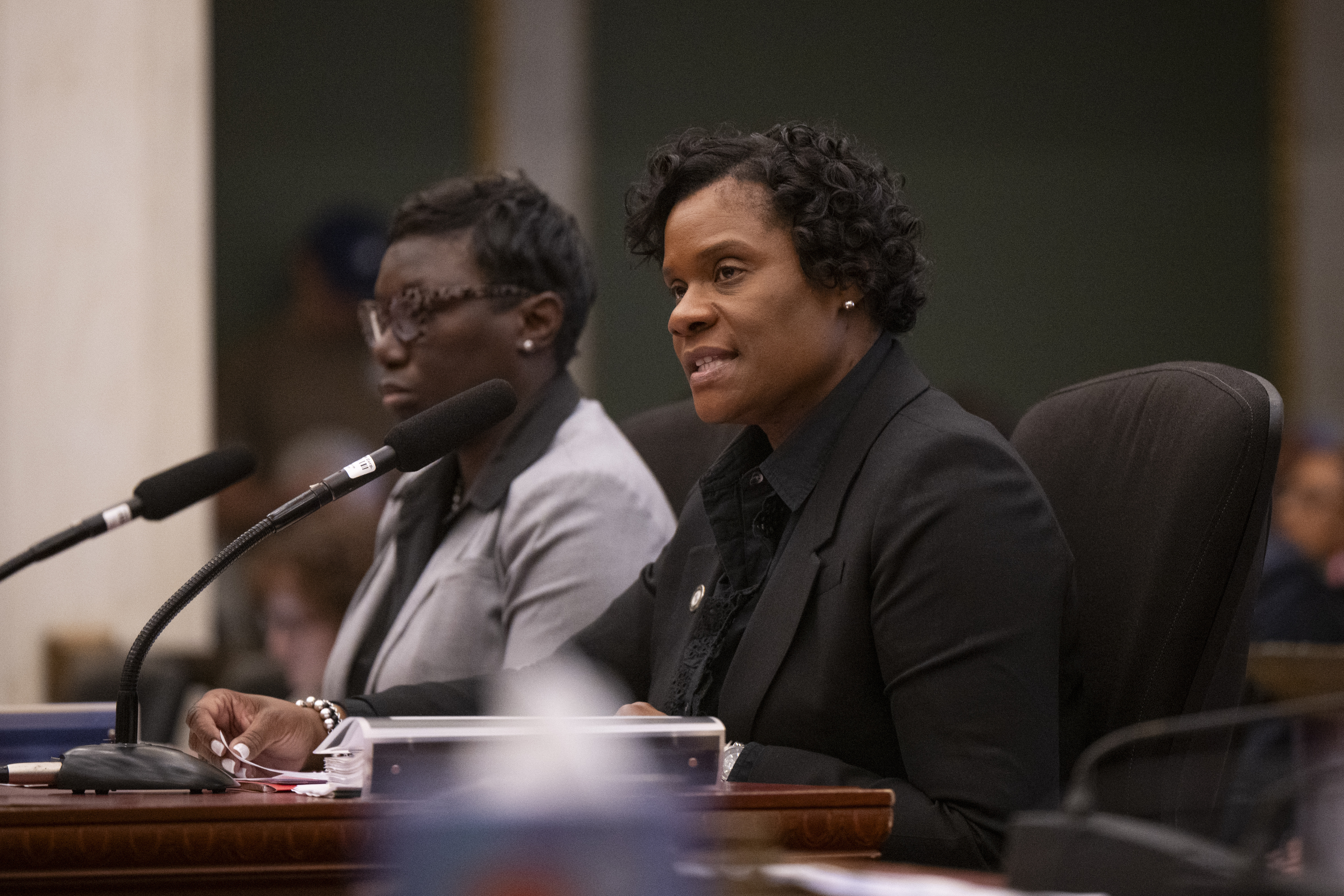
Tag: Jim Harrity

  • A state database may have raised red flags about Malayshia Allford’s foster mother. Philly couldn’t access it.

    A state database may have raised red flags about Malayshia Allford’s foster mother. Philly couldn’t access it.

    Philadelphia’s child welfare chief said Friday that the city does not have access to a state database that could have helped alert officials to a previous abuse allegation against the foster mother accused of killing 10-year-old Malayshia Allford.

    Kimberly Ali, the commissioner of the city’s Department of Human Services, said Friday during a City Council hearing that it can’t access Pennsylvania’s Resource Family Registry, which includes information about potential foster parents.

    City officials identified the gap after reviewing Malayshia’s case, Ali said.

    In 2022, a state review found that the girl’s foster mother, Carprice Williams, had abused a 4-year-old foster child in her care in 2021, and it was recommended that she never be allowed to foster again. Williams, a former Philadelphia public schoolteacher, appealed, and the state expunged its abuse finding from her record. Years later, she took Malayshia in.

    The state registry, Ali said, tracks the history of foster homes — including past closures and why the homes were closed.

    A closure can serve as a warning sign prompting further investigation, which can uncover abuse allegations that are not in the registry itself, Ali said.

    State law allows officials or private agencies responsible for approving foster homes to have access to information in the registry. In Philadelphia, the city’s DHS has delegated that duty to about two dozen private agencies, including Pennsylvania Mentor, which certified Williams’ home before Malayshia’s placement.

    Ali said the city is exploring potential ways to obtain information from the database.

    State officials pushed back on Ali’s description. Brandon Cwalina, press secretary for the Pennsylvania Department of Human Services, clarified that no agency has unfettered access to the entire registry. Instead, agencies can request information about specific foster families or homes that they are vetting or have approved. Cwalina added that state DHS officials were not invited to Council’s hearing.

    Council members, who convened the hearing Friday to review the city’s foster system in the wake of Malayshia’s death, told Ali that the city should do everything in its power to obtain access to the database.
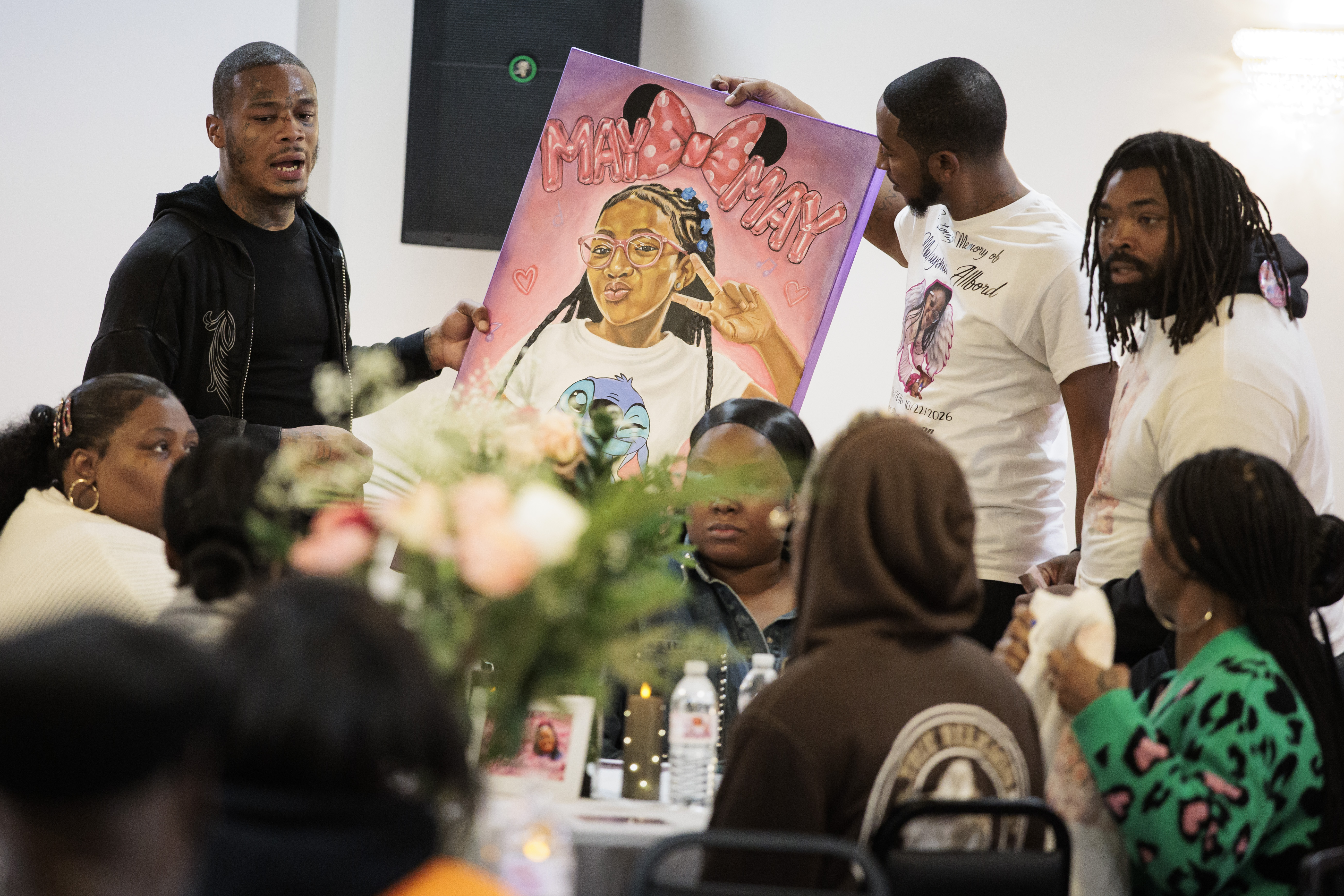
    Family members hold a painting of Malayshia Allford, 10, during a Celebration of Life in her honor at Compassion Connect Venue on Wednesday, Nov. 18, 2026 in West Philadelphia. Carprice Williams, foster mother of Malayshia Allford, was charged with her murder.Monica Herndon / Staff Photographer

    Councilmember Anthony Phillips, a Democrat who represents parts of Northwest and Northeast Philadelphia, told Ali to do “whatever it takes to figure this out.

    “This is a huge opportunity for you to make sure our children are safe, and you can’t miss it again,” he said.

    Friday’s hearing was held by the Committee of the Whole, which is composed of all 17 Council members.

    Council called the hearing following reports that witnesses who had visited Williams’ West Philadelphia home told police that Malayshia was subjected to horrific abuse, including withholding food, beating her with a phone cord, and throwing her down the stairs. The girl’s body was found in the trunk of a car parked at a Camden County apartment complex this month. A medical examiner determined she had died of blunt force trauma. Williams has been charged with murder.

    Several members were deeply critical of DHS and of Ali, who has led the agency for six years and has worked in the department for 26 years. Councilmember Nina Ahmad, a Democrat who represents the city at-large, said Ali’s points about access to the state database were “moot” for Malayshia.

    “Malayshia is not with us,” Ahmad said. “She has been sacrificed to this system, and this is abominable and intolerable. And we will not put up with this.”
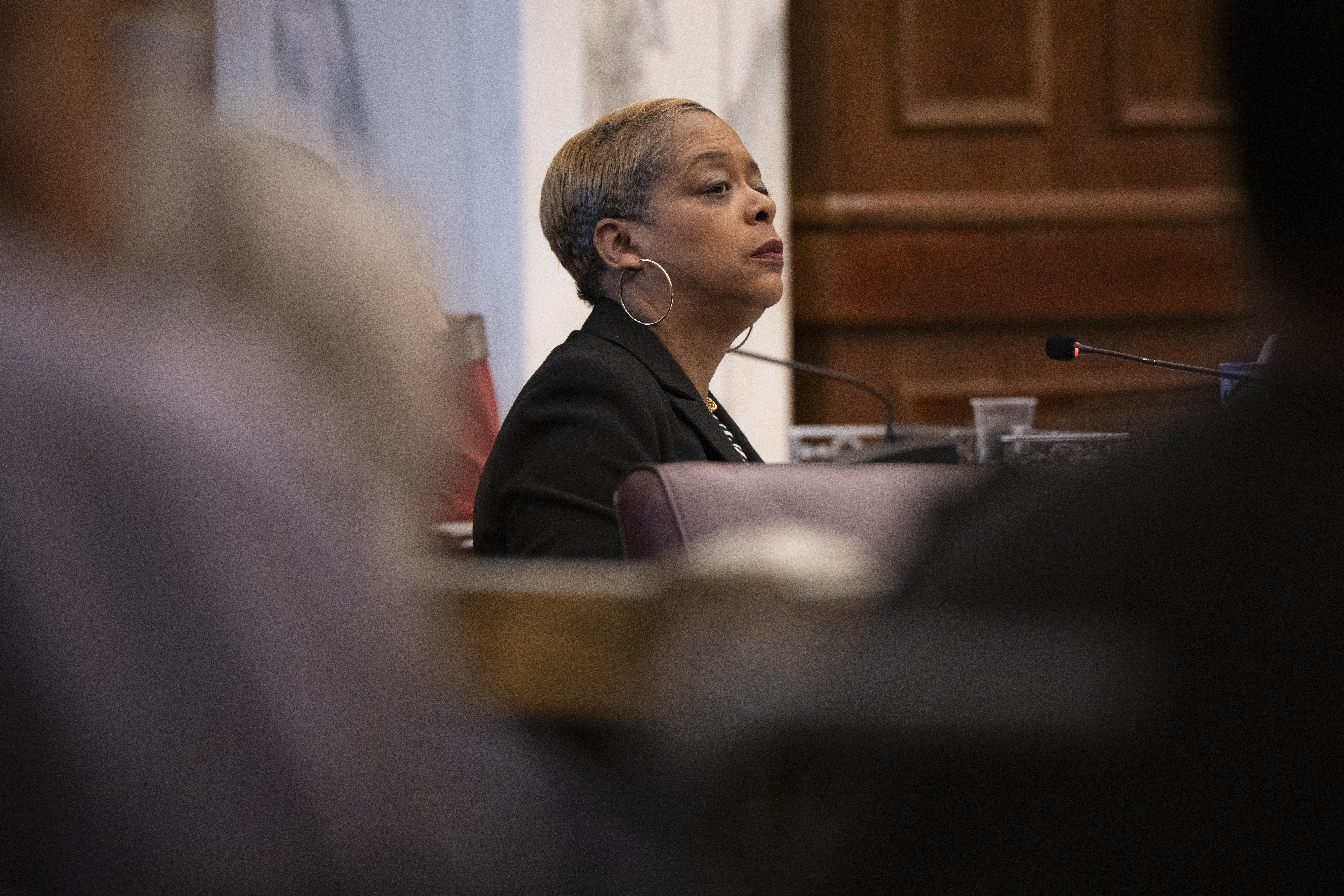
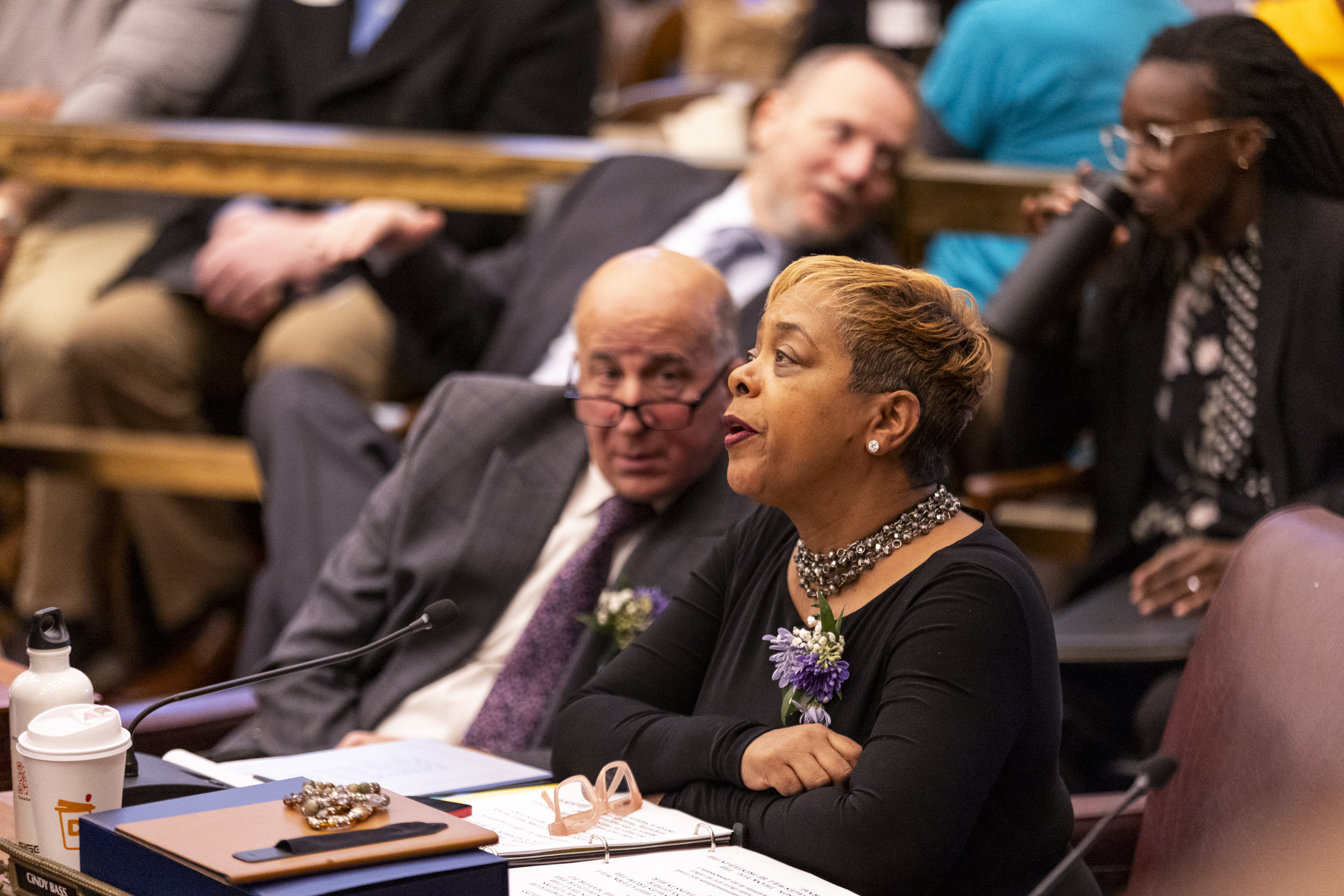
    Councilmember Cindy Bass addresses Kimberly Ali, Commissioner of the Philadelphia Department of Human Services, during a hearing regarding the city’s foster care system following the murder of Malayshia Allford, Friday, Nov. 20, 2026 at City Hall.Joe Lamberti / For The Inquirer

    Councilmember Cindy Bass, a North Philadelphia Democrat who has for years been critical of DHS, said the city needs to entirely overhaul its child welfare system.

    On Thursday, she introduced legislation to move away from outsourcing child welfare case management to privately contracted agencies and for the city to control the foster system itself.

    “This death was preventable. There were so many red flags all over the place that it was really a failure on a colossal scale,” Bass said. “Everything failed for this child. Everything. Every system that was in place.”

    In 2013, the city revamped its child welfare system to rely on outside nonprofits called community umbrella agencies, which provide case management to children and families in 10 geographic service areas throughout Philadelphia.

    The idea was to localize services and engender trust in the system through neighborhood-based relationships.

    However, CUAs have faced a number of documented problems, including backlogged caseworkers and little progress on the number of near-fatalities and deaths of children. A 2025 Inquirer/Resolve Philly investigation found that CUAs have faced dozens of lawsuits alleging abuse in foster care.

    Malayshia was receiving case management services from Catholic Community Services, also known as Community Umbrella Agency No. 4. Pennsylvania Mentor was the certifying foster care agency in her case.

    Unlike DHS, Pennsylvania Mentor was among the private agencies authorized to access the Resource Family Registry. It’s unclear whether the agency did so, however.

    In a written statement sent to The Inquirer, a spokesperson for Sevita — the national company that operates Pennsylvania Mentor — said that the company is cooperating with law enforcement agencies. Because of the ongoing investigation, the spokesperson said, “we cannot offer further comment.”

    Councilmember Jim Harrity, a Democrat who represents the city at-large, said he was frustrated with Ali and the “blame get[ting] passed around.”

    “You know, state DHS, no access to this, no access to that, CUAs, yada yada yada,” Harrity said. “But I want you to tell me, realistically, how do we fix this system? What are you going to do to make sure that no more of our children end up in the grave?”
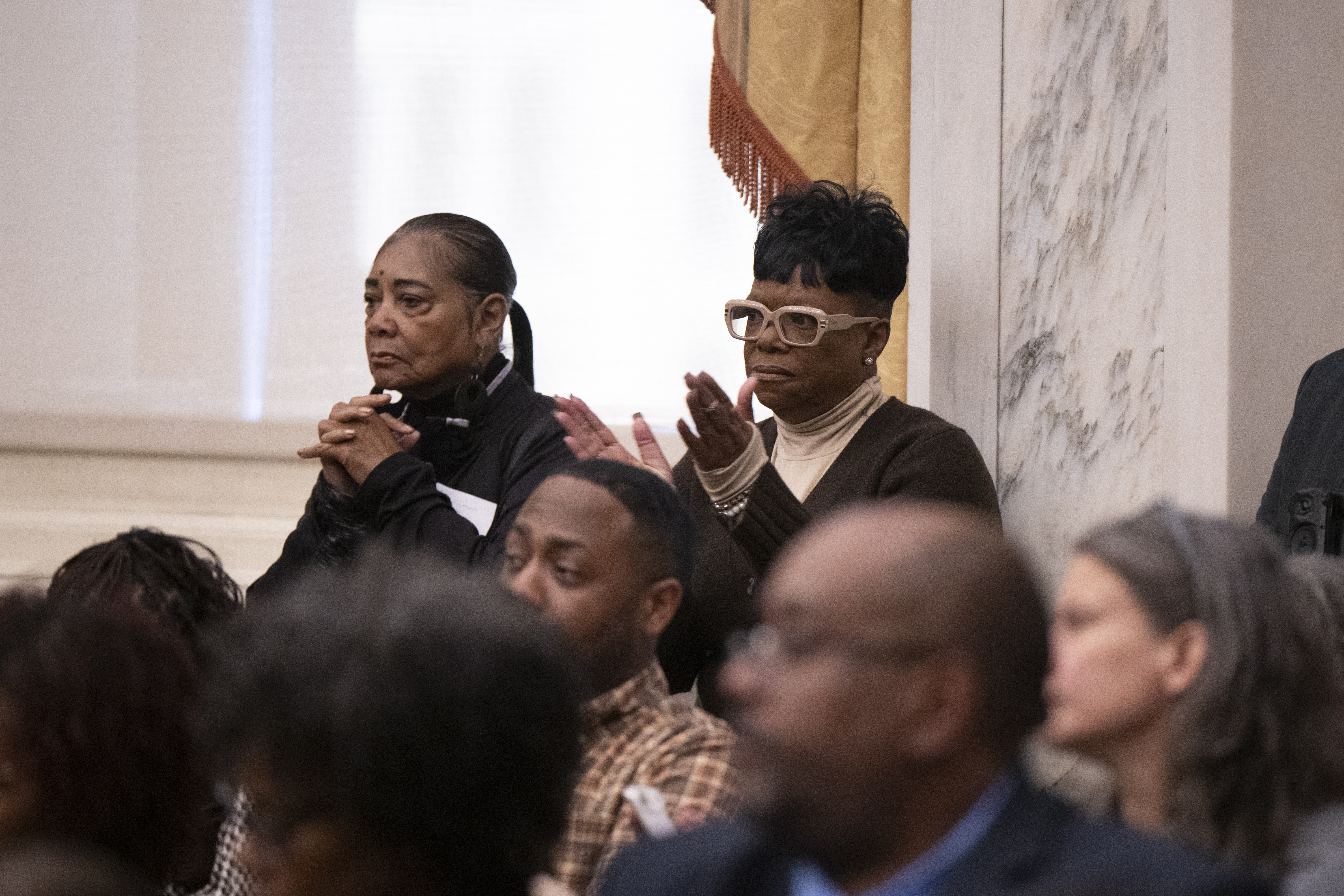
    An attendee reacts during a City Council hearing regarding the city’s foster care system following the murder of Malayshia Allford, Friday, Nov. 20, 2026 at City Hall.Joe Lamberti / For The Inquirer

    Ali testified that DHS does regular but random quality checks of foster homes and placements, including speaking directly with children. But she also acknowledged that the department may not speak with every child in foster care — and that some kids may not know they have a right to speak with DHS staff.

    She told Council that Malayshia’s killing has “rocked us to our core.”

    Ali said her “No. 1” priority is getting access to the state registry and get a more thorough background of potential foster parents. Until then, she said, the department needs to ensure its own “do-not-use list” of unsafe foster homes is “accurate, it’s current, and it reflects the voices of young people.”

    But the problems exposed by Malayshia’s death extend beyond access to a state registry, child welfare experts told The Inquirer.

    Philadelphia’s foster care system relies on about two dozen private agencies under contract with the city to certify foster parents and identify homes for potential placements. Those agencies operate largely in a silo, and that fragmentation can limit the options available when a child needs a home.

    An agency typically looks to the foster parents it has licensed, rather than considering all available homes across Philadelphia — potentially making it harder to find the best fit for a child, said Sarah Wasch, associate director of the University of Pennsylvania’s Field Center for Children’s Policy, Practice and Research.

    “The best available fit is likely going to be easier to find when you’re looking among 2,000 possibilities instead of 200 possibilities,” Wasch said.

    Stefanie Arbutina, vulnerable youth policy director for Children First, a child advocacy group in Philadelphia, said in an interview that every agency involved in licensing, investigating, and monitoring foster homes needs a “pretty tight communication loop” to find and close gaps that can lead to tragedies.

    Children First is one of several advocacy groups that plan to make recommendations to Mayor Cherelle L. Parker’s administration on changes needed to the city’s foster care operations. Parker ordered the creation of a special committee to review the city’s foster care system.

    One recommendation, Arbutina said, will be to establish a system for city officials to see and track foster parents who have been found to be unfit to care for children — but for whom no official report is available.

    “The best thing we could possibly do is not worry about kids going into foster care in the first place,” she said.

    ‘We failed her’

    A Philadelphia School District official was also called to answer for Malayshia’s death.

    Kristi Murphy Baldwin, the system’s human resources chief, said she could not address specifics of Williams’ employment, but noted that all district employees must undergo three separate background checks: a Pennsylvania State Police criminal history, a DHS child abuse history clearance, and an FBI criminal history report.

    Those must be renewed every five years. Williams presumably passed all the checks when she was hired by the district, first as a substitute teacher in 2015, then as a full-time teacher in 2017.

    Baldwin indicated that in the wake of Malayshia’s death, changes may be coming.

    “The law requires every five years, but that is something we are actually looking at now to do more frequently. That is under conversation now as we look at our practices,” Baldwin said.

    Multiple systems, Ahmad said, failed Malayshia.

    “We are living in silos that are literally killing our children, because Malayshia was going to school. Malaysia had adults in her life, as she was being tortured by this horrible person, who was her foster mother, and who was a teacher — all of this was happening under your eyes in the school district,” Ahmad said. “So we failed, you failed her, we failed her.”

    Harrity said he knew Baldwin couldn’t answer the main question on his mind: “How was this woman still a teacher to begin with?… I’m trying to see how somebody like this fell through the cracks, especially when she had a case of abuse that was fairly heinous.”

  • Philadelphia City Council blocks Parker administration from contracting with Chester trash incinerator

    Philadelphia City Council blocks Parker administration from contracting with Chester trash incinerator

    Philadelphia City Council members on Wednesday blocked Mayor Cherelle L. Parker’s administration from entering into a new, four-year contract with a controversial trash incinerator in Chester, a move that injects uncertainty into the city’s vast and complex trash disposal system.

    The administration sought Council approval to ink a new deal with Reworld, the waste-to-energy facility where the city has for years sent about a third of its trash to be burned while the rest is sent to landfills.

    However, Council’s Committee on the Environment on Wednesday voted unanimously to amend the Parker-backed legislation to remove Reworld from the proposed city contract. The legislation the committee advanced only allows for the city to contract with landfills, effectively blocking the city from using incineration to dispose of its trash.

    “We have ended our practice of burning trash in Chester,” Councilmember Jamie Gauthier declared after the vote.

    The amended legislation now advances to the full Council, where it could be voted on in the coming weeks.

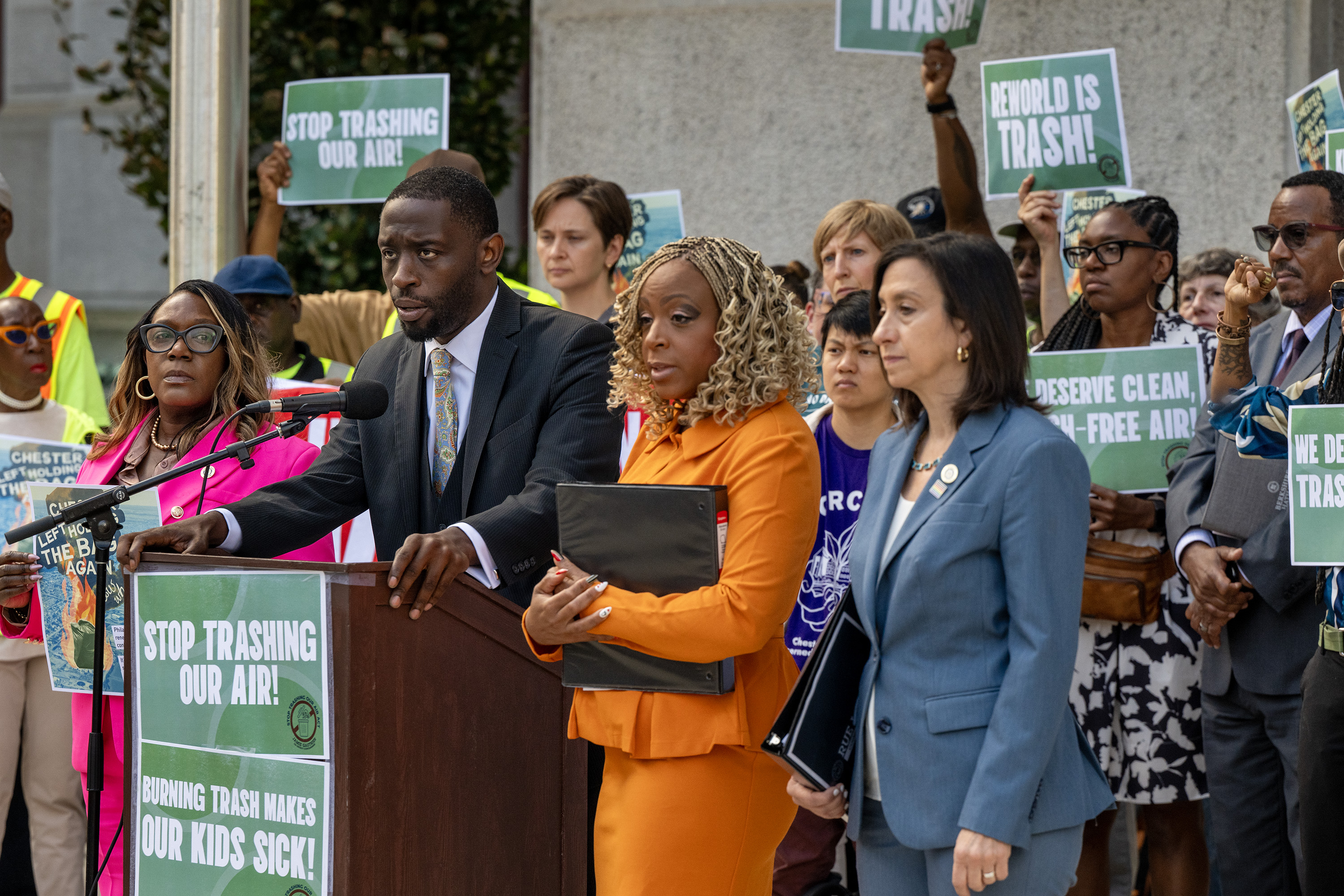
    The vote was the culmination of a yearslong effort by environmental and racial justice advocates who teamed up with Chester Mayor Stefan Roots and Gauthier to press the city to end its relationship with Reworld.

    “It is our constitutional obligation to reject a deal that is bad for this city,” Gauthier said Wednesday during a hearing on the legislation that lasted more than five hours. “We’ve been clear for over a year now that we are not OK with the same toxic choices.”

    Philadelphia Councilmember Jamie Gauthier meets with Chester Mayor Stefan Roots to discuss Gauthier’s “Stop Trashing Our Air Act,” which would ban the city from incinerating waste, during a visit with lawmakers and staff in Chester, Pa., on Friday, Nov. 7, 2025.Jose F. Moreno / Staff Photographer

    Gauthier, Roots, and others have cited pollution that can cause adverse health effects for residents in the city to Philadelphia’s south. Last year, Gauthier authored legislation to ban the city from incinerating trash entirely, but she failed to garner support from a majority of Council members, and the bill was never called up for a vote.

    Parker’s administration has advocated for the city to continue its existing contract with Reworld while it develops a long-term plan to move away from both incineration and landfills by reducing waste entirely.

    “It is not a real solution to move it from an incinerator in Chester to landfills,” Managing Director Carlton Williams said Wednesday. “The real solution is … waste reduction, increased recycling, and better composting.”

    And Reworld officials said that the pollutants emitted by the facility are below national quality thresholds, and that refusing to contract with the company would threaten jobs in the region.

    “Today is about more than political differences,“ said John Scott, Reworld’s director of government relations. ”It’s about the hardworking men and women who provide essential services, the families who depend on those jobs, and Philadelphia’s long-term future.“

    Williams said that moving away from incineration would cost taxpayers $15 million over the life of the contract.

    The city’s current contract with Reworld runs out at the end of this year. It was unclear Wednesday if the Parker administration could continue to send trash to Reworld’s facility next year by using another contracting mechanism, such as extending its current contract without Council’s approval.

    Joe Grace, a spokesperson for the mayor’s office, said only that the administration would “consider all options.”

    Council members on Wednesday heard testimony from a variety of Philadelphia and Chester officials, as well as health experts, environmental advocates, and dozens of members of the public.

    New Philadelphia Managing Director, Carlton Williams speaks at the podium after being announced by Philadelphia Mayor Cherelle L. Parker, left, during a news conference at City Hall in Philadelphia on Tuesday, July 28, 2026.Jose F. Moreno / Staff Photographer

    They also heard from Eric Bazis, a former Reworld employee who sued the company in 2024, saying that he was improperly fired after raising concerns about environmental compliance. That lawsuit is pending.

    Council subpoenaed Bazis for testimony, and Reworld attorneys this week asked a city judge to nullify the subpoena, writing in court papers that it would be inappropriate for Bazis to testify given his ongoing litigation.

    But a Common Pleas Court judge on Tuesday upheld Council’s subpoena, clearing the way for Bazis to testify, court records show.

    Bazis told Council members on Wednesday that he learned during a 2023 meeting that higher-ups at Reworld were “gaming the system” by burning clean material during regulatory testing. He said that he raised concerns and that, shortly thereafter, he was suspended from his job and ultimately fired.

    Attorneys for Reworld have previously said in filings that Bazis is a disgruntled former employee who was terminated for faking time sheets.

    Councilmember Jim Harrity, a Democrat who represents the city at-large, said he was taken aback by Bazis’ testimony, saying during the hearing that what Bazis described “doesn’t even sound legal.”

    Several other members of the committee signaled at the beginning of the hearing that they were leaning toward blocking the Parker administration from entering into a new contract with Reworld.

    “There was never a convincing argument that took my attention off the health impacts,” said Councilmember Nicolas O’Rourke, a member of the progressive Working Families Party who represents the city at-large. “The administration will need some deeply, deeply compelling new information to convince me that trash incineration is remotely close to the right move.”

    And Councilmember Nina Ahmad, a Democrat who also represents the city at-large, said at the start of the hearing that her goal was not merely to reduce the amount of trash that the city burns.

    “I want that number to go to zero,” she said.

  • What actions have City Council and Mayor Parker proposed following Malayshia Allford’s death?

    What actions have City Council and Mayor Parker proposed following Malayshia Allford’s death?

    The death of 10-year-old Malayshia Allford in the care of her foster mother — a West Philadelphia woman who has been charged with murder and was previously accused of abusing another child — has rocked the city and spurred calls for changes to the foster care system.

    On Tuesday, city leaders began officially responding to those demands.

    Mayor Cherelle L. Parker, who called 36-year-old Carprice Williams’ alleged treatment of Allford a “crisis of unimaginable proportions,” issued an executive order that calls for child welfare experts to convene and deliver a report on how the city can improve its handling of the thousands of foster cases overseen by the Philadelphia Department of Human Services and managed by a network of contractors and nonprofits.

    Meanwhile, City Council members announced they had taken their own interest in investigating the circumstances that led to Allford’s death and making changes to Philadelphia’s child welfare system.

    A resolution calling for hearings on the matter, introduced by Councilmember Anthony Phillips and cosponsored by Councilmember Curtis Jones Jr., calls for hearings to probe the workings of DHS and foster care contractors, particularly when it comes to accessing records that detail prior abuse allegations leveled against foster parents. That is a reference to the fact that Williams was able to foster Allford after having a 2021 abuse allegation expunged from her record.

    The goal, the resolution says, is to propose safeguards that may prevent another tragedy. Read on for a summary of the mayor’s executive order and the City Council resolution.

    What actions were proposed?

    Mayor’s executive order: Establishes a Child Welfare Review Committee, which will be tasked with reviewing the way DHS interacts with community umbrella agencies (CUAs) — the nonprofits that contract with the city to manage foster care cases — as well as local foster care agencies.

    Committee members will be asked to conduct a “comprehensive review” of issues affecting the city’s child welfare system, according to the order.

    Members will review the process for placing children in foster care homes, for example, and probe how the city and state monitor such cases, the order says.

    They will also examine how foster homes are licensed and consider how to best manage visitations from a child’s biological family members. And they will review the city’s criteria for contracting with certain foster care providers.

    City Council resolution: Authorizes Council’s Committee on Children and Youth to hold hearings that will examine how the city keeps children in its child welfare system safe.

    The hearings will explore what safeguards exist to support children placed outside the care of their biological families and how the city can engage with the concerns of a foster child’s family members during placement, according to the resolution.

    They are also expected to delve into how city agencies can better coordinate with foster care providers and how to prevent abuse, neglect, and fatalities within the system.

    The hearings will probe how contractors select homes for foster placement, for example, or how they assess whether a child’s relatives are eligible for possible placement within the family.

    Additionally, the discussions will examine the training foster care providers receive, exploring whether they are prepared to meet the needs of children in their care. That includes training received by staff with the CUAs responsible for managing many of the city’s foster care cases.

    The hearings will also focus on DHS — specifically how the city agency records and responds to instances when a foster care provider has been accused of prior abuse or neglect.

    That includes examining what types of records and prior investigations providers may “lawfully access and consider during interviews, home studies, and approval decisions, including when a former [caregiver] applies to foster another child through a different provider,” the resolution says.

    Who’s involved in the plans?

    Mayor’s executive order: The Child Welfare Review Committee will be composed of up to 15 members who are “experts and leaders in the field of child welfare and foster care,” according to the order.

    Members will be selected by the mayor from a variety of professional fields, such as childcare advocacy groups, social workers, medical and behavioral health professionals, and legal experts who specialize in child welfare and the foster care system.

    Two committee chairs will be appointed by the mayor.

    City Council resolution: Council’s Committee on Children and Youth will oversee the hearings. The committee is chaired by Phillips, with Councilmember Isaiah Thomas as vice chair.

    The committee includes Councilmembers Kendra Brooks, Jamie Gauthier, Jim Harrity, and Rue Landau.

    What are the possible outcomes?

    Mayor’s executive order: The committee’s goal is to “work toward the elimination of child abuse-related fatalities, near fatalities, and injuries,” the order says.

    It also aims to improve how DHS coordinates with CUAs, nonprofits, and local foster care agencies.

    City Council resolution: The hearings could change how the city’s child welfare system operates.

    For example, the resolution says the discussions will explore whether additional training is needed for DHS employees to assess whether a foster placement is safe, and to learn how to escalate their concerns about possible abuse to superiors.

    The talks could lead to changes in how foster care providers access information about potential caregivers, how caseworkers verify that a child is safe in a foster home, and how attorneys and family members advocate on behalf of a child in a potentially dangerous situation.

    And the hearings could change how agencies determine when it is safe for children to return to their original home, among other possible outcomes.

    Participating Council members are also expected to consider how to publicly release information regarding these potential changes, whether they are working, and whether additional safety measures may be required.

    What are the timelines?

    Mayor’s executive order: Mandates that committee members submit a report on their findings to the mayor within 120 days of convening.

    City Council resolution: There is no date set for hearings to begin.

    After the first hearing, the resolution requires DHS to provide the Committee on Children and Youth a monthly report for a period of two years.

    That document is expected to include tallies of children who are placed in kinship and foster care, reunited with a parent or guardian, or subject to a court order terminating parental rights, according to the resolution.

  • Carolyn Marvin blocked a food delivery robot. It was a stand for humanity.

    Carolyn Marvin blocked a food delivery robot. It was a stand for humanity.

    It’s ironic that a fight over our future recently came down to a standoff between a college professor and some takeout food.

    But that’s what happened last month after Carolyn Marvin deliberately stood in front of a food delivery robot on a sidewalk in Center City, blocking its path. She didn’t leave until law enforcement put her in handcuffs and took her away.

    The fact that a respected University of Pennsylvania professor emerita wound up in police custody after squaring off against a plastic cooler on wheels is a fitting metaphor for us and the looming artificial intelligence tsunami.

    Marvin’s story has since gone viral and turned her into a bit of a folk hero, simply because she placed her rights above those of a robot and refused to back down. When I talked to her about what happened, she was defiant, saying, “Do we really want to surrender the sidewalks to the robots instead of human beings?”

    Oh, hell no.

    Center City sidewalks are crowded enough without our having to jostle for space with 150-pound refrigerators on wheels.

    Food delivery robots began operating in Philadelphia in March. More are on the way. If you’re not concerned, you may want to rethink that. They may be cute, but they can cause mayhem.

    Video taken in May shows one entering a crosswalk in Center City as a truck makes a turn and hits it. That same month, a 32-year-old fell off his bicycle after one got in his way in Jersey City, N.J.

    Pedestrians are the most vulnerable. An Uber autonomous delivery bot bumped into a pedestrian from behind as she stood at 15th and Locust Streets. Li Gordon-Washington, 25, wasn’t seriously injured. But what if it had been someone with a physical disability? People using walkers and canes have a hard enough time navigating tight, uneven pathways without also having to dodge delivery pods on wheels.

    That’s why Marvin’s small but mighty act of defiance resonates. The stand she took on a public sidewalk on Oct. 14 wasn’t just against personal delivery devices, but also for all of us.

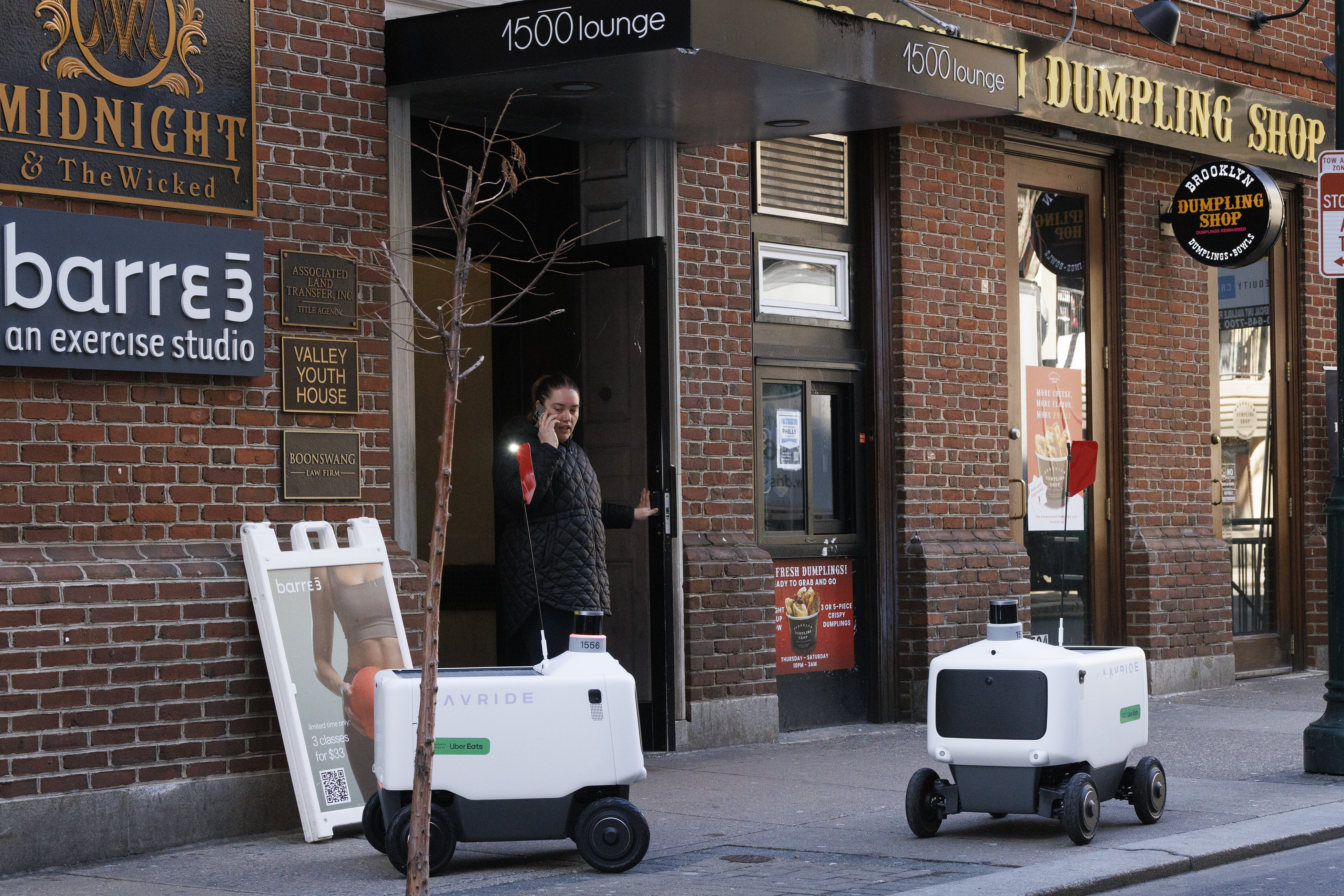
    Uber Eats robot food delivery pods on the sidewalk along 1500 Sansom Street on Tuesday morning, March 17. One robot was present (right) when a second arrived.Alejandro A. Alvarez / Staff Photographer

    It happened on Filbert Street near 12th Street, across from Reading Terminal Market. As Marvin refused to let the delivery pod pass, passersby gathered to watch.

    Some didn’t approve.

    Before long, several members of the Philadelphia police showed up and asked her what she was doing. “I explained that I was exercising my First Amendment right to protest corporate abuses in the same public space that the robots were occupying,” Marvin recalled. “They asked me to move. I said, ‘No, why?’”

    Marvin had gotten a flu shot that day. She had in her hands a jar of enchilada sauce and some chicken biryani. Never in her wildest dreams did Marvin think she’d wind up in handcuffs and in the back of a police cruiser. But that’s what happened.

    People should always come first. Pedestrians before robots. Human rights before those of automation. Besides, autonomous food delivery robots take jobs from poor people.

    What’s next — robots babysitting our kids? Serving tables in restaurants? I’m not for just letting life as we know it disappear as AI takes over. That doesn’t sit right with me.

    Same with Marvin, who had this to say about food delivery bots: “I’d like to see them banned.”

    That’s what some cities have already done — including Jackson, Wyo., and Toronto. San Francisco has put restrictions on them.

    Closer to home, Councilmember Jeffery Young Jr. has introduced a series of regulations on food delivery companies that include a proposed $1,000 surcharge on each delivery by autonomous delivery robots. Councilmember Jim Harrity wants to tax them; State Rep. Ben Waxman would like to limit where they can operate.

    As government officials grapple with how best to regulate them, we can push back by ordering takeout from businesses that still employ human beings as delivery people. Or — gasp — we can even go out and pick up our own food and forego the convenience of having it brought to our front door.

    Marvin wants the 2020 designation of so-called personal delivery devices in Pennsylvania as “pedestrians” repealed. That means they would have to yield to us.

    After all, technology is supposed to make our lives easier — not edge us out of the way.

  • Philly politicos predict City Council shake-ups, Fetterman’s downfall, and Shapiro’s 2028 slogan

    Philly politicos predict City Council shake-ups, Fetterman’s downfall, and Shapiro’s 2028 slogan

    With their plates overflowing with fried chicken and pastrami sandwiches, Philadelphia Democrats on Tuesday gabbed at their biannual Election Day lunch events, which are hot spots for candidate appearances and gossip trading.

    Inquirer reporters were there, too, chatting with politicos at South Restaurant & Jazz Club on North Broad Street and Famous 4th Street Deli in Queen Village. We continued our tradition of asking attendees three questions about the state of politics.

    This time, we asked:

    • Of 17 City Council incumbents, how many will win reelection next year?
    • Who will be the top two finishers in the 2028 Democratic primary for U.S. Senate?
    • What should be Gov. Josh Shapiro’s presidential campaign slogan?

    Here’s what Philly’s politicos had to say.

    Predictions on which Council incumbents survive 2027

    Every City Council seat will be on the ballot next year, and all 17 members have said that they are running for reelection. We’ll see how many of them end up on the ballot — we have reported that one member is up for a different job.

    So on Tuesday, we asked: Give us a number. How many survive?

    The incumbents themselves mostly said 17. That includes Council President Kenyatta Johnson, who confidently predicted “all of us,” and Councilmembers Jim Harrity and Jeffery Young Jr., who each said they are hoping for 17. Even Jamie Gauthier, a progressive Council member who may be asked by left-leaning challengers to support their bids against her colleagues, said 17.

    Mayor Cherelle L. Parker, a former Council member herself, said that every incumbent will win reelection.

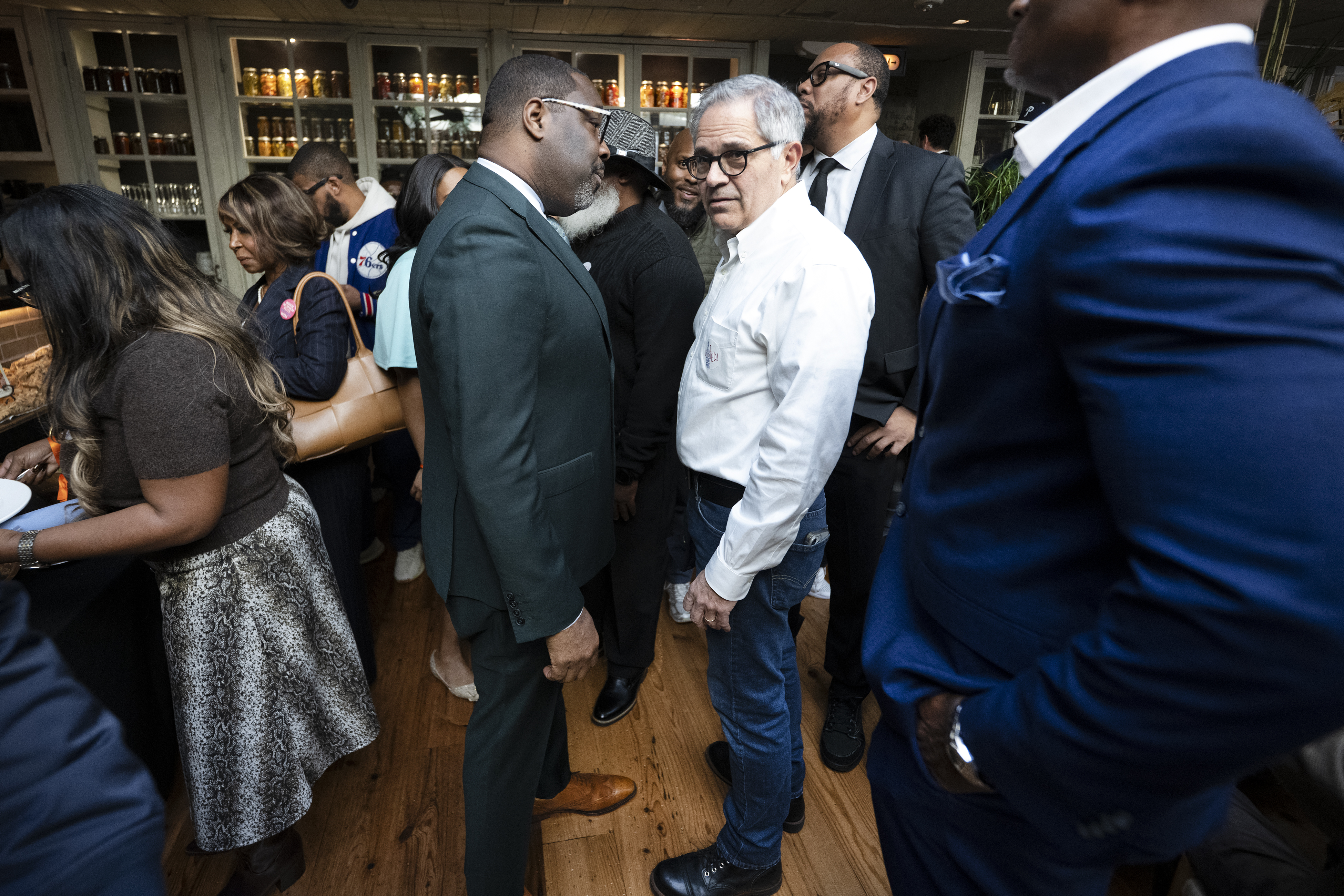
    Philadelphia City Council President Kenyatta Johnson speaks with District Attorney Larry Krasner during an Election Day political luncheon in Philadelphia on Tuesday, Nov. 3, 2026.Jose F. Moreno / Staff Photographer

    Notably, State Rep. Morgan Cephas also said she sees all 17 Council members being reelected. She has been floated as a potential successor to Councilmember Curtis Jones Jr., a longtime member who has been encouraged by some in the party to consider stepping aside.

    Kellan White, a Democratic operative rumored to be considering a run for Council’s 5th District, said “no more than 16.” How coy.

    Ryan Boyer, the head of the Philadelphia Building and Construction Trades Council, predicted two members will be ousted, but when pressed, he wouldn’t name them. “I’m a pro,” he said. And T.J. Lepera, the political director for the powerful electricians union, said 16 members.

    Leftists were more bullish about seeing new faces on Council as their allies plot a takeover.

    State Sen. Nikil Saval, who has long been aligned with the city’s progressive faction, predicted only 12 or 13 Council incumbents will be reelected. And State Rep. Ben Waxman, who has been aligned with both progressives and establishment Democrats, said 13.

    Perhaps the boldest prediction for the next City Council came from longtime strategist Neil Oxman. He predicted only 11 incumbents would win next year.

    Dems say Fetterman won’t win his own seat

    We also asked Democrats to tell us which two members of their party would finish at the top of the primary for U.S. Senate in 2028 when incumbent U.S. Sen. John Fetterman is up for reelection.

    Fetterman has not yet said whether he intends to seek another term, but he has angered members of his own party and been not-so-secretly courted by the GOP. That means there is likely to be a competitive primary for Fetterman’s seat.

    We thought the answers to our question would be revealing, because it would show us who the party’s power brokers think will run in addition to Fetterman. But few of the Democrats we talked to on Tuesday named Fetterman at all.

    “Anybody but Fetterman,” Boyer said.

    “Fetterman won’t be one of the two,” added State Rep. Malcolm Kenyatta, of North Philadelphia.

    “Oh, my God, goodbye,” Gauthier said. “We need somebody who stands for everything that Fetterman doesn’t.”

    Ryan Boyer, Business Manager for the Philadelphia Building and Construction Trades Council, chats with Senator Anthony H. Williams at the lunch event at South Restaurant & Jazz Club on Election Day in Philadelphia, Pa., on Tuesday, Nov. 3, 2026.Tyger Williams / Staff Photographer

    The most common answer we heard was U.S. Rep. Chris Deluzio, of Western Pennsylvania, who has been positioning himself for a run and told The Inquirer that he is considering a bid for Fetterman’s seat.

    White said he sees the top two finishers in a primary race being Deluzio and U.S. Rep. Madeleine Dean. Oxman said Dean and former U.S. Rep. Conor Lamb, who lost to Fetterman in the 2022 primary.

    Cephas said Kenyatta, who also lost to Fetterman in the primary, and U.S. Rep. Summer Lee, a progressive favorite from Pittsburgh.

    And State Sen. Anthony Williams, who was reelected Tuesday for what he has said is his last term, floated his longtime ally Speaker Joanna McClinton for the job, saying she “certainly would be a viable candidate.”

    Both Waxman and State Sen. Sharif Street, of North Philadelphia, said the top two finishers would include one candidate from Western Pennsylvania and one from the eastern part of the state.

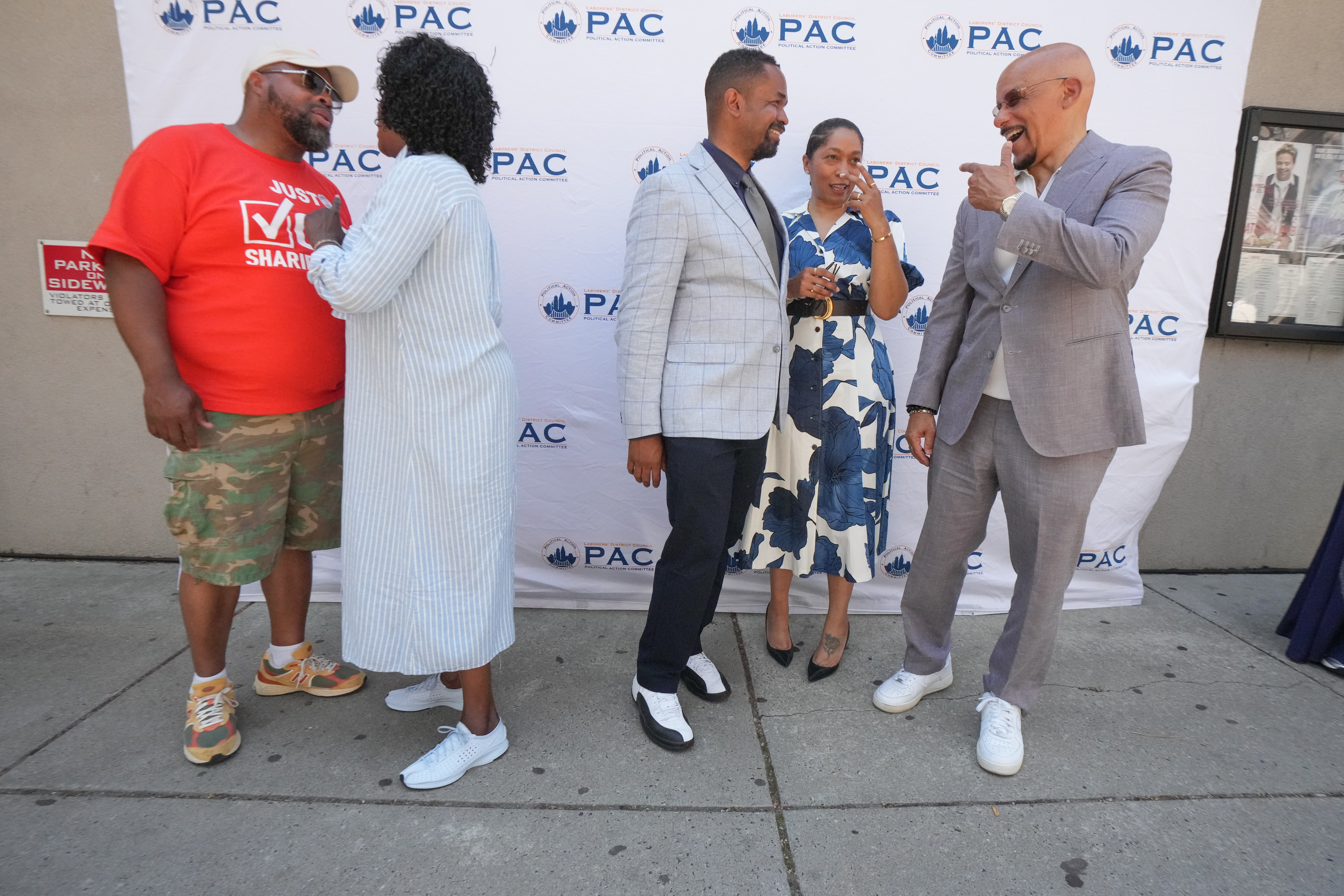
    (Left to Right) Ryan Boyer, Mayor Cherelle L. Parker, State Sen. Sharif Street, April Scott-Street, and State Senator Vincent Hughes, outside South Restaurant & Jazz Club, in Philadelphia, May 19, 2026.Jessica Griffin / Staff Photographer

    State Sen. Vincent Hughes predicted “the field will be broad,” which he said could benefit Fetterman if he decides to run again.

    Several of the elected officials said they would like to see U.S. Rep. Brendan Boyle, who represents a large swath of Philadelphia in Congress, run for the seat. However, Boyle told The Inquirer on Wednesday he won’t seek it and will instead stay in the House, where he is in line to chair the powerful Budget Committee.

    Coming up with a slogan on the fly

    We wanted the politicos to tap into their creative side and tell us what they think Shapiro’s presidential campaign slogan would be. The governor has, of course, not said he is running for president. But most insiders see him as a strong prospect.

    We had one rule on the slogans: You can’t pick Shapiro’s oft-used mantra, “Get s— done,” or the version he uses in family settings, “Get stuff done.” Too predictable!

    Of course, there were variations. White said: “Get more s— done.” Lepera offered: “Got s— done.” Cephas said: “I did s—.” We’ll allow it.

    Some played on the idea that it is time to move on from President Donald Trump. “Make America America Again,” Gauthier said. Boyer likes: “Bringing sanity back.” Harrity went with a simple: “I’m not Trump.”

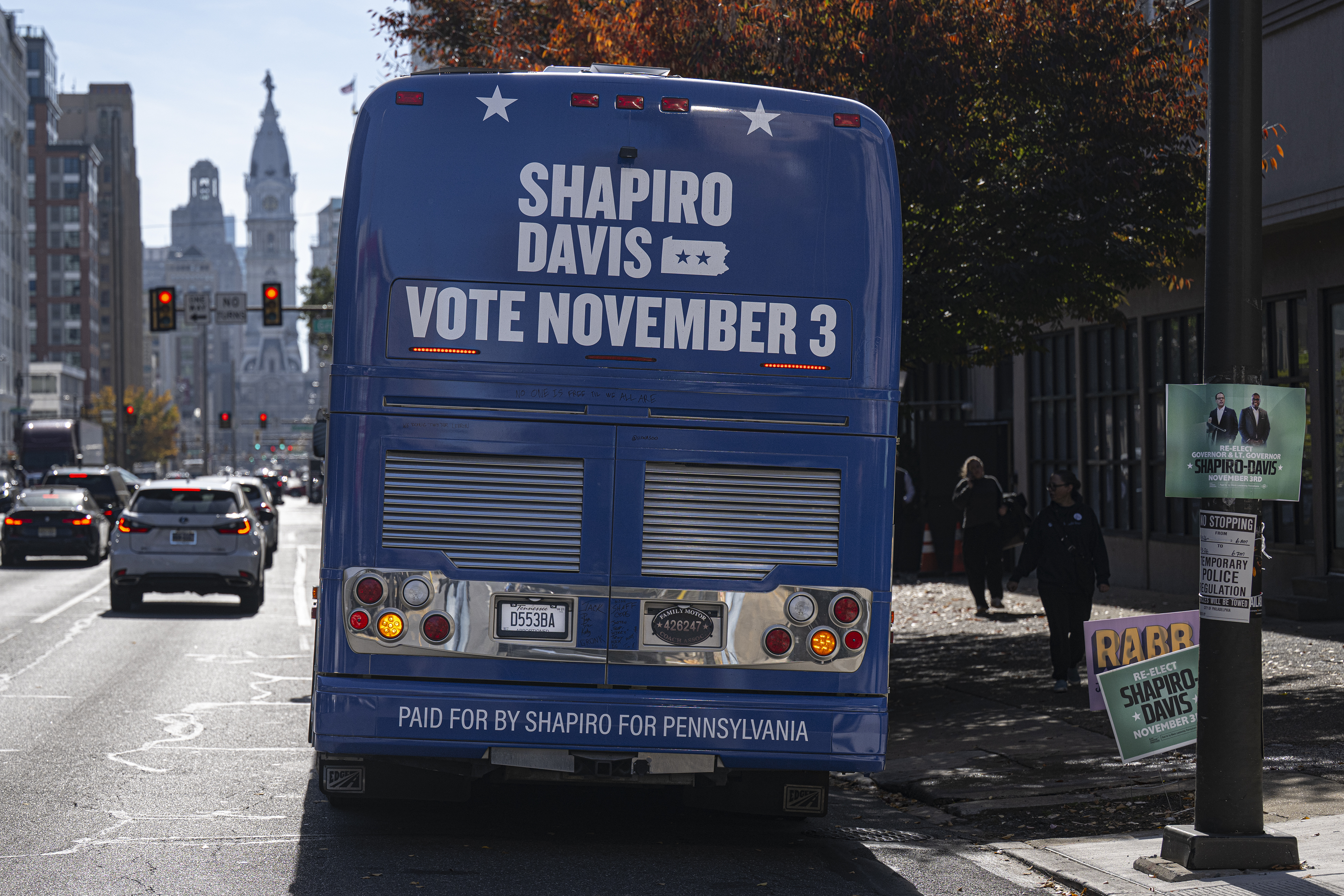
    A campaign bus for Pennsylvania Gov. Josh Shapiro is parked outside South Restaurant, 600 N. Broad St., in Philadelphia as he campaigns on Election Day, Tuesday, Nov. 3, 2026.Jose F. Moreno / Staff Photographer

    Others were a little more esoteric.

    “A democracy, renewed,” said State Rep.-elect Chris Johnson. Vik Patel, a City Council candidate, suggested “Building a better America.” Saval’s idea — “Fight the power” — sounds a bit more like his own slogan than Shapiro’s.

    And some just dodged. “I don’t have a creative bone in my body,” Parker said. (So much for “One America, a united country.”)

    Of course, District Attorney Larry Krasner, a progressive who has clashed with Shapiro in the past, seized on the opportunity to needle the governor. He said Shapiro should consider “Beige is beautiful,” essentially calling him boring.

    Or, Krasner suggested, simply: “More of the same.”

  • Philly is once again looking at a $1-per-ride tax. But this time, it’s on the robots. | Council roundup

    Just last spring, Philadelphia City Council members rejected a controversial proposal by Mayor Cherelle L. Parker to tax rideshare in the city at $1 per ride, saying it would increase daily costs on residents.

    But the same lawmakers who batted down that plan are now poised to consider another $1-per-ride tax. This time, it would be only for rides in cars without human drivers.

    Councilmember Jim Harrity, a Democrat who represents the city at-large and opposed the rideshare tax in the spring, on Thursday introduced legislation in Council to tax services performed by autonomous vehicles, such as driverless rideshare cars and sidewalk delivery robots.

    The proceeds from the tax would fund the city’s Zero Fare program, which provides free public transit passes to low-income residents.

    Harrity, an ally of organized labor, said that the measure is aimed at protecting jobs, and that he hopes it will deter Philadelphians from relying on autonomous vehicles entirely.

    “Now my neighbors are going to lose their second jobs to robots,” Harrity said Thursday. “It’s not fair.”

    Also on Thursday, Council members expressed public skepticism about one of Parker’s signature initiatives. Lawmakers approved legislation authorizing the body to investigate whether the administration has delayed spending money that Council authorized to fund the mayor’s massive Housing Opportunities Made Easy, or H.O.M.E., program.

    What was today’s highlight?

    Tax the robots?: Harrity framed his proposal as something of an opening salvo in what he hopes becomes a broader fight against the proliferation of autonomous vehicles in the city.

    He said that he is open to other solutions to preserve jobs as members consider his legislation, and that he could not estimate how much revenue his tax proposal would generate.

    “In a perfect world,” he said, “no one will pay the tax because they’ll just ban the robots.”

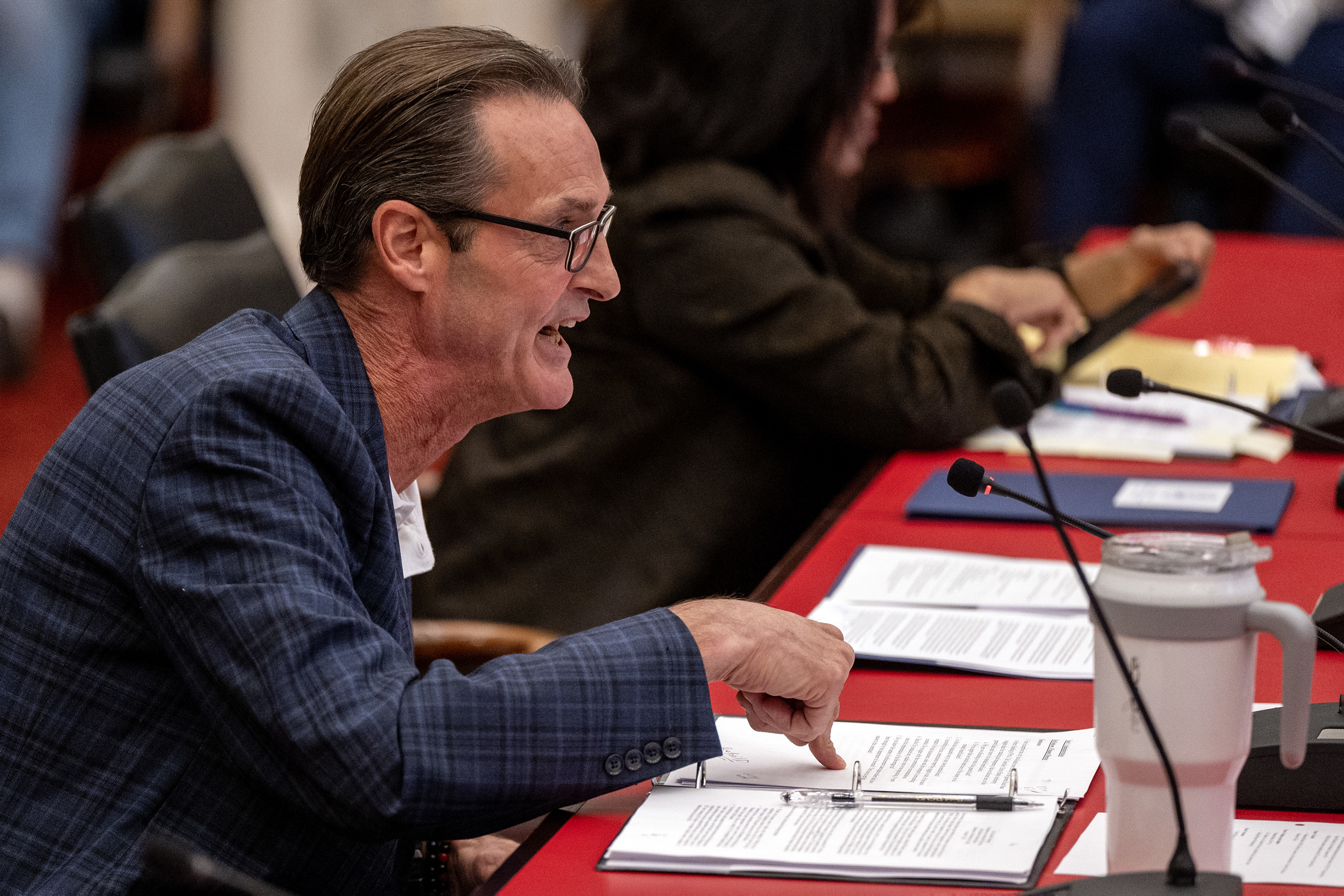
    Councilmember Jim Harrity questions a Parker administration official about the city budget in October 2025.Tom Gralish / Staff Photographer

    Harrity’s legislation would levy a $1-per-ride fee — or 5% of the cost of the trip, whichever sum is greater — on companies that operate driverless taxi services. The most prominent is Waymo, which is currently testing driverless cars in Philadelphia.

    The bill would also impose a fee of either 50 cents per delivery or 5% of the total cost on deliveries done by sidewalk robots, as well as a 3% tax on driverless freight vehicles that drive on city streets.

    The tax would also apply to orders of food and other goods that are delivered by robots. Customers who order deliveries through platforms such as Uber Eats may have at times received their food from a sidewalk robot; however, those machines are operated by the third-party company Avride, not Uber itself.

    Uber Eats robot food delivery pods on sidewalk along 1500 Sansom Street on Tuesday morning March 17, 2026. One robot was present (right) when a second arrived.Alejandro A. Alvarez / Staff Photographer

    Under the proposed legislation, which would take effect in January 2028, companies that operate autonomous vehicles in Philadelphia would be required to register with the city and file quarterly reports on services performed.

    The tax would not apply to businesses that use automation for internal purposes.

    Waymo did not respond to a request for comment. An Uber representative declined to comment.

    What else happened this week?

    Investigating H.O.M.E. finances: City Councilmember Kendra Brooks, a member of the progressive Working Families Party who has not been quiet about her policy differences with Parker, introduced the legislation Thursday to probe the mayor’s massive housing plan.

    But she did so with the support of several more establishment-aligned members. And the hearing will be held in Council’s powerful Finance Committee, which is led by Democratic Majority Leader Katherine Gilmore Richardson.

    That suggests that Council’s leadership is aligned with Brooks. She said Thursday that she was dismayed by a report released this week by the city’s fiscal watchdog, which said that the Parker administration had spent only $38 million of the $278 million it was budgeted for the first phase of the H.O.M.E. initiative.

    Brooks’ resolution cites “delays in spending [that] impact Philadelphians who would benefit from housing programs and support, as well as erode the value of money authorized by City Council.”

    “We’re talking about getting the program right that will spend nearly a billion dollars, and that all of the Council was told was urgent to approve,” Brooks said in remarks during Thursday’s meeting.

    City Councilmember Kendra Brooks in City Council chambers on Thursday, Sept. 17, 2026.Tom Gralish / Staff Photographer

    A Parker administration official said Monday that the H.O.M.E. programs are on pace to use their full budgets.

    A hearing has not yet been scheduled.

    Putting a stop to automatic renewals: Council will consider legislation that would make it illegal for any company doing business in Philadelphia from automatically renewing subscription services and memberships without the customer’s explicit OK.

    The bill, introduced Thursday by Councilmember Rue Landau, is part of the Democratic at-large member’s broader agenda to crack down on so-called junk fees and implement new consumer protection measures. This effort would aim to prevent businesses from charging customers for services they don’t want simply because they did not take action to cancel.

    City Council member Rue Landau, speaks at a rally outside the Academy of Natural Sciences of Drexel University on Tuesday, Sept. 8, 2026, in Philadelphia, Pa.Tyger Williams / Staff Photographer

    Under the ordinance, known as the “Click-to-Cancel” legislation, businesses would be required to remind customers who are enrolled in services that automatically renew, and they would have to give notice if a free trial converts to a paid plan.

    “At a time when so many Philadelphia families are watching every dollar, we should be protecting people’s hard-earned money,” Landau said, “not allowing bad actors to take advantage of them.”

    Quote of the week

    Councilmember Nicolas O’Rourke, speaks during a City Council hearing on Wednesday, Oct. 28, 2026.Jose F. Moreno / Staff Photographer

    That was Councilmember Nicolas O’Rourke, who delivered remarks in support of Harrity’s legislation to tax services that rely on autonomous vehicles.

    Next on Council’s agenda: subsidizing the milkman?

  • Philly City Council is reluctant to abolish the sheriff’s office, even after a $20 million scandal

    Philly City Council is reluctant to abolish the sheriff’s office, even after a $20 million scandal

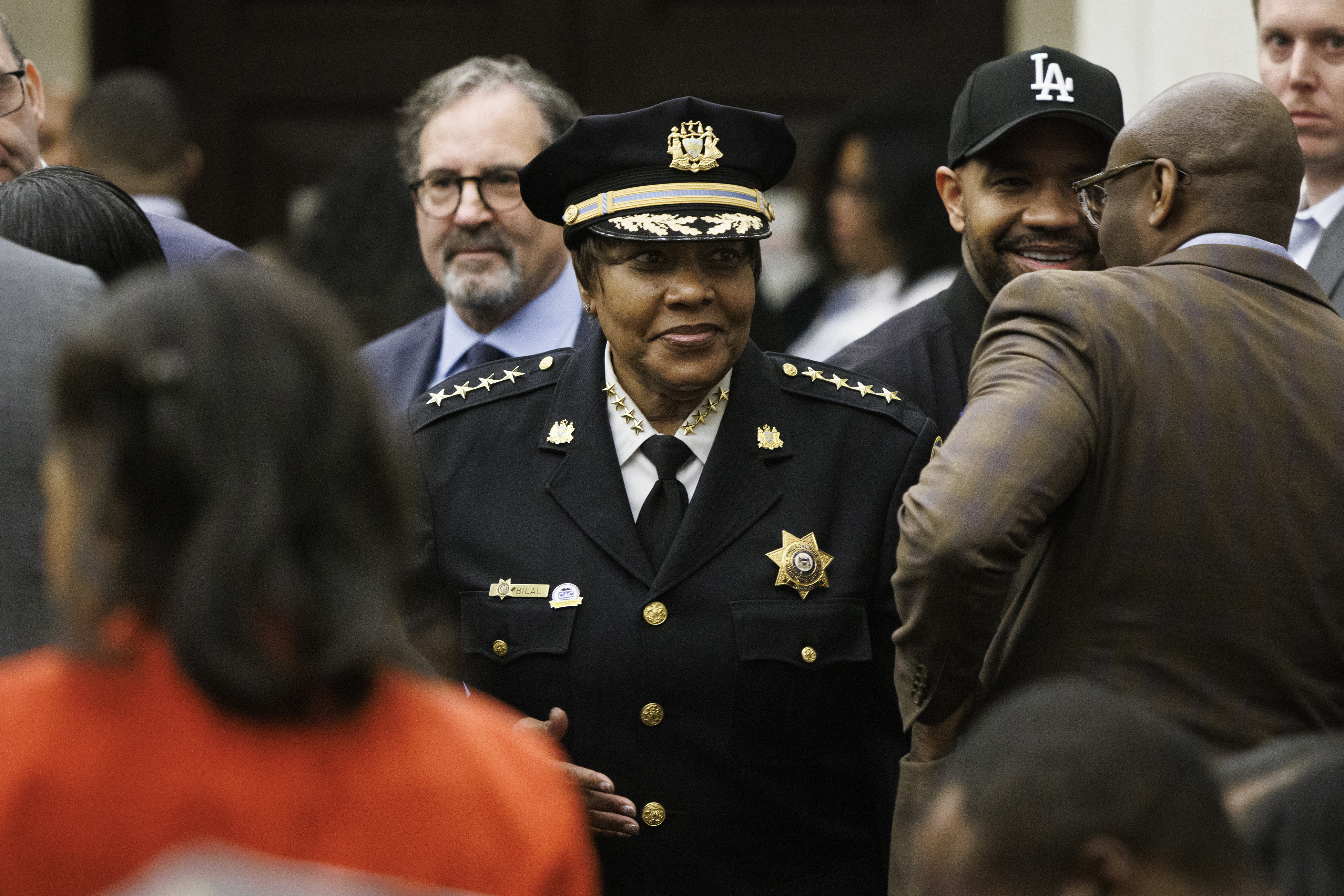
    After a top aide to Philadelphia Sheriff Rochelle Bilal confirmed in court last month that her scandal-plagued office had been sitting on nearly $20 million meant for public coffers, reformers renewed calls to abolish her position.

    But for City Council, which has the power to initiate such a change, eliminating the antiquated sheriff’s office is not on the agenda.

    The Inquirer attempted to contact all 17 Council members last week, and five said they opposed or were skeptical of proposals to eliminate the sheriff’s office — a long-troubled holdover from before Philadelphia’s city and county governments merged in 1854. The modern iteration of the office has limited law enforcement powers but controls the flow of vast sums of city money.

    Six Council members acknowledged they may be open to a conversation about abolishing the office at some point — and some said that the missing money was a sign the office’s internal changes are not working. Six declined to comment or did not respond to inquiries.

    And though all the Council members who responded to The Inquirer expressed dismay over the recently located $20 million, as the city’s schools and other agencies are in desperate need of funds, none clearly stated they were in favor of eliminating the sheriff’s office.

    Most important, Council President Kenyatta Johnson — a staunch supporter of Bilal and who controls the flow of city legislation — objected to the notion that the sheriff’s office should be abolished with its tasks folded into other branches of government, as has been proposed by the good-government group Committee of Seventy and a state oversight board, the Pennsylvania Intergovernmental Cooperation Authority.

    “It’s an independent body, and so right off the top, I know I don’t support abolishing it,” Johnson told reporters last week. “But it probably is due for some reforms to make sure that particular office operates in a more efficient and transparent manner.”

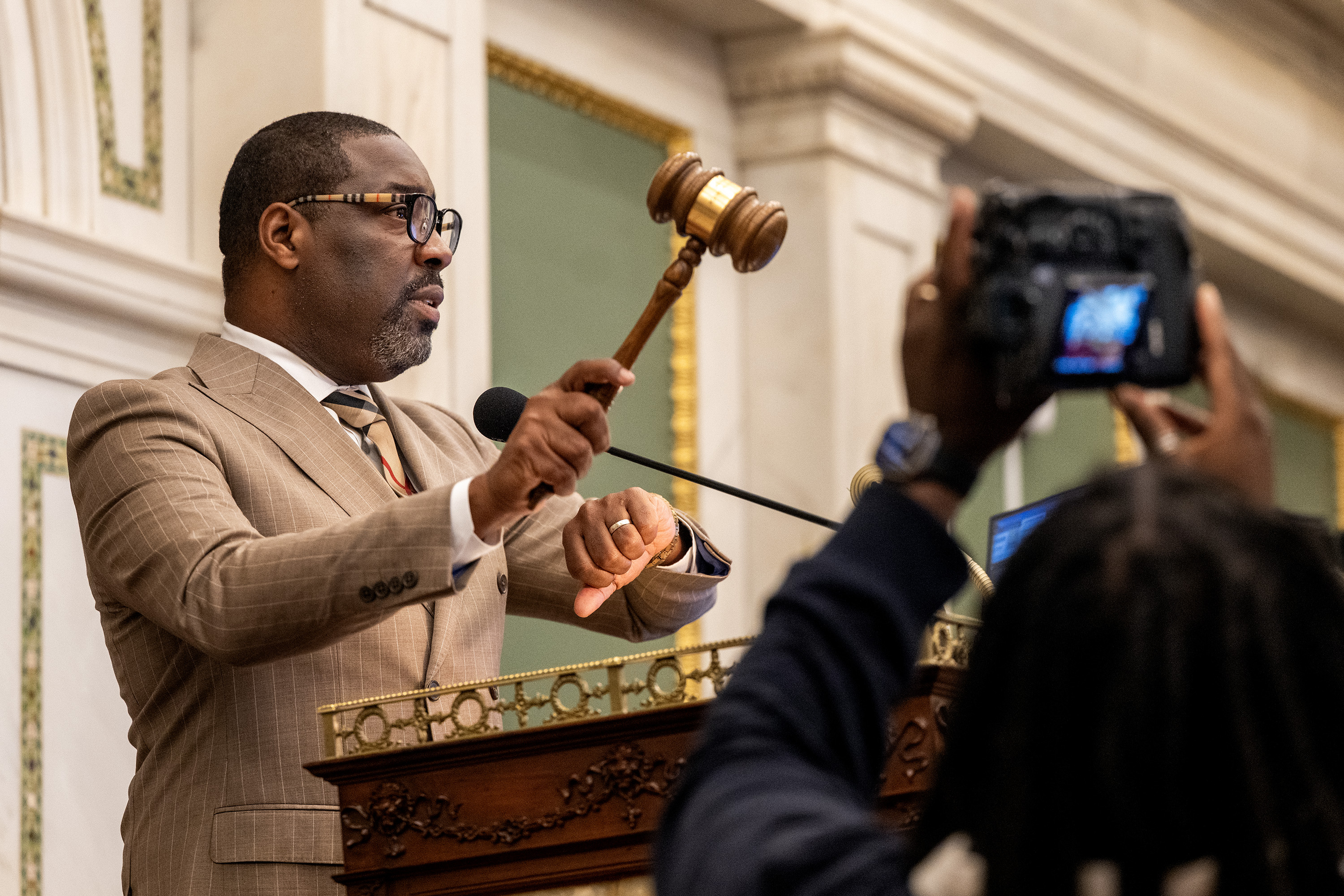
    President Kenyatta Johnson checks his watch and gavels City Council into session Thursday, Sept. 17, 2026.Tom Gralish / Staff Photographer

    Anti-corruption advocates have for generations called for the elimination of independently elected “row offices” like the sheriff and register of wills. Led by officials elected in races often determined by party politics, the offices tend to operate with less oversight over hiring and awarding contracts than regular city agencies. The city’s previous five sheriffs have seen corruption or sexual harassment scandals unfold during their tenures.

    “We should get rid of it, and turn [the office’s tasks] over to a highly competent technocrat working with the mayor and Council,” State Rep. Jared Solomon (D., Philadelphia) said in an interview. “The office has been plagued with corruption and incompetence and mismanagement for all of modern history.”

    The discovery that the sheriff’s office had failed to transfer $20 million — mostly proceeds from delinquent property auctions owed to the city to cover unpaid taxes and other costs — should be a wake-up call, he said.

    “At a moment in time when my constituents can’t afford their prescription drugs or figure out how to put food on the table or pay their gas bill, she lost $20 million,” said Solomon, who represents parts of Northeast Philadelphia.

    Johnson said Council would examine what happened with the missing money, which came to light as the result of judicial hearings into the office’s operations.

    “We will be taking a close look at that $20 million and why it wasn’t distributed to Philadelphia,” Johnson said, “and so our team would take a deeper dive to get answers regarding that particular issue, and then go from there.”

    But he declined to commit to holding a public hearing on it, a common mechanism for Council members to demand accountability.

    Council has squabbled with the mayor’s administration over much smaller sums. Lawmakers have recently bemoaned a $1.4 million cut to the Mural Arts Philadelphia program, and they are currently locked in a tense behind-the-scenes battle with Parker over $2 million in funding for the Philadelphia Activities Fund, which Council members dole out to community groups.

    For Lauren Cristella, president of watchdog group Committee of Seventy, Council’s response to the multimillion-dollar discovery in the sheriff’s office falls short.

    “Council is the only group that can provide a long-term solution for these issues, and we welcome their efforts to solve this problem for the people of Philadelphia,” she said. “This office has been in dire need of reform for over 40 years. From failing to perform the most basic duties to misplacing millions of dollars, self-dealing, and secret slush funds, the same problems repeat regardless of who is elected.”

    Bilal and her spokesperson, Teresa Lundy, did not respond to questions about the missing money and Council’s response.

    Shortly after she won the Democratic primary in 2019, Bilal told The Inquirer she was open to the possibility of eventually abolishing her own office. But Lundy, Bilal’s campaign manager at the time, interrupted the interview to say that was not on the table.

    “No, right now,” Bilal said then, “but if there’s a situation where we need to evaluate that in order to save the city money … then we will have that conversation.”

    ‘Every decision is political’

    The sheriff’s office is responsible for serving warrants, transporting prisoners, providing courthouse security, and auctioning off tax-delinquent or foreclosed real estate. Critics assert most of these functions could be handled by the city’s police force or court administrators, without an elected leader.

    To eliminate the sheriff’s office, Council would have to approve an amendment to the Philadelphia Home Rule Charter that would go before voters in a ballot question.

    The Inquirer’s survey of Council members revealed that is not likely to happen any time soon.

    Vehicle of the Office of the Sheriff for the City and County of Philadelphia April 28, 2026.Tom Gralish / Staff Photographer

    Four members — Johnson, Mark Squilla, Cindy Bass, and Jim Harrity — clearly stated they opposed doing away with the office.

    A fifth, progressive Councilmember Kendra Brooks, said that without “clear answers” on how the city could carry out the office’s functions, she is “not sure the calls for abolition are the right move.”

    “Philadelphians should make decisions about the office and will get to weigh in next year,” when Bilal is up for reelection, she said. (Bilal will face a challenge from corporate security consultant Jennifer Vrana in the Democratic primary in May. Other candidates may join the race.)

    Four Council members — Nicolas O’Rourke, Jamie Gauthier, Nina Ahmad, and Isaiah Thomas — said they were open to discussing the possibility of eliminating the office. Thomas said the discussion would have to be about eliminating all the city’s row offices, not just the sheriff. Ahmad said: “Everything’s on the table.”

    Two other members — Rue Landau and Mike Driscoll — did not rule out the possibility, but said they need more information. Landau wants Council to examine the office’s structure and functions in the next city budget cycle, if not sooner, a staffer said. And Driscoll said he first wants to see what happens in the court case, which stems from a lawsuit over the office’s alleged failure to transfer deeds following sheriff’s sales.

    “Depending on how that plays out, perhaps City Council needs to get involved,” he said.

    The other six members gave noncommittal answers or did not comment.

    Councilmember Quetcy Lozada said she was not prepared to discuss the possibility of abolishing the office. Majority Leader Katherine Gilmore Richardson said she hopes intervention by the courts would result in a “better management process.” (Bilal this summer agreed to independent oversight of her real estate division, but is now seeking to block any outside supervision.)

    Councilmember Anthony Phillips declined to comment. Councilmembers Brian O’Neill and Curtis Jones Jr. did not respond to requests for comment. An attempt to reach Councilmember Jeffery Young Jr. was unsuccessful.

    The Philadelphia Council members inside the caucus inside City Hall in Philadelphia, Pa. on Thursday, June 11, 2026.Aidan T. Gallo / Staff Photographer

    Former Councilmember William J. Green IV said he is not surprised the current Council remains uninterested in eliminating the office.

    When he introduced a bill in 2010 to eliminate the sheriff’s office, Green said, he was inundated with calls from Democratic ward leaders who told him the issue was a nonstarter due to an unwritten agreement in local politics.

    To appease the city’s various political factions, the local Democratic Party often employs blunt racial math, such as setting aside slots for white and Black candidates when deciding judicial election nominations.

    Green said he learned a similar logic applied to row offices, explaining why some politicians are protective of the current arrangement. Black officials, he says he was told, controlled the sheriff’s office, while white officials ruled the register of wills office, another relic of the city’s now-defunct county government that lives on as a pool of patronage jobs.

    “There was definite racial politics involved in each office and who was expected to be the nominee,” Green, who is white, said in an interview. “The bill went absolutely nowhere.”

    Green said he is not surprised little has changed since.

    “I think you can find among most elected leaders in Philadelphia a lack of core convictions or guiding principles, and so every decision is political,” Green said.

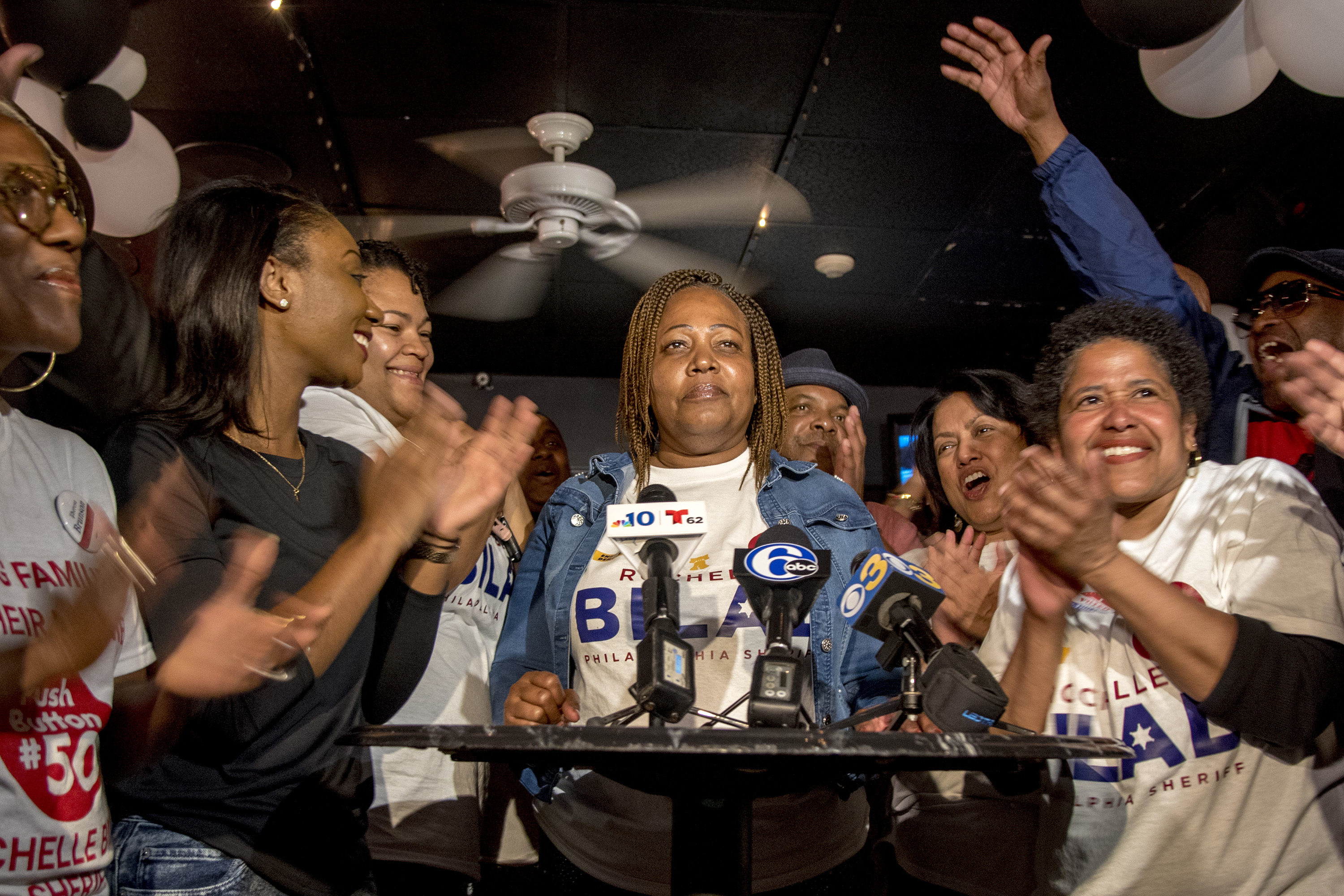
    Rochelle Bilal is surrounded by supporters as she wins the Democratic primary for sheriff May 21, 2019.TOM GRALISH / Staff Photographer

    Bilal, the city’s first Black female sheriff, burst onto the political scene in 2019, when she shockingly dethroned Sheriff Jewell Williams, whom multiple women had accused of sexual harassment, and two other candidates in a crowded Democratic primary.

    She ran that year without the Democratic City Committee’s blessing and with endorsements from anti-establishment progressives, including the activist group Reclaim Philadelphia and District Attorney Larry Krasner.

    Most ward leaders stood by Williams in the 2019 election, party chair Bob Brady said at the time. But in 2023, when Bilal was already facing accusations of mismanagement, the party endorsed Bilal for reelection.

    Before running for office, Bilal was a 27-year veteran of the Philadelphia Police Department and a former leader of the Guardian Civic League, an organization for Black officers.

    Nearly two centuries of reform

    The dispute over the sheriff and Philadelphia’s other elected row offices stems from a 172-year-old effort to fully combine the city and county of Philadelphia.

    Prior to 1854, the City of Philadelphia, which then was composed only of modern-day Center City, was one of dozens of local governments with separate jurisdictions across the county. The fragmented townships and boroughs lacked a unified police force, driving public safety concerns after a series of riots erupted targeting Black people and Catholic immigrants.

    That year, Harrisburg approved the Act of Consolidation for Philadelphia, merging the city, county, and other local governments into a single entity. But the sheriff and a string of other county row officers were carved out of the merger.

    The debate over Philly’s parallel governments raged for decades, with the focus shifting to corruption. Party-backed candidates for these obscure offices typically cruised to victory, often doling out jobs in return for political endorsements.

    The enactment of Philadelphia’s 1952 Home Rule Charter and state legislation in the 1950s and ’60s brought a new wave of reform, legally placing most elected row offices under city control, and transforming several more — including the coroner and prothonotary — into appointed positions. The city now had the power to abolish most of the remaining row offices via referendum and fold their duties and staff into other departments.

    But Council has never voted to initiate such a referendum for the sheriff and register of wills.

    In 2008, Mayor Michael A. Nutter proposed eliminating the sheriff’s office, the register of wills, and the clerk of quarter sessions, another row office relic that auditors found had lost track of millions in mishandled bail, fines, and court fees.

    (Mayors can propose legislation and use their bully pulpit to encourage Council to adopt it. Ultimately, Council has the power to approve a Home Rule Charter amendment eliminating the sheriff’s office and send it to the voters. Mayor Cherelle L. Parker has not proposed eliminating any row offices.)

    Nutter succeeded in doing away with only the clerk of quarter sessions.

    In 2025, the Pennsylvania Intergovernmental Cooperation Authority, the state-appointed board that oversees the city’s finances, called for both Philadelphia’s sheriff’s office and register of wills to be axed.

    There are procedural differences between the two. Under state law, Philadelphia cannot unilaterally dissolve the register of wills office without state authorizing legislation, while the city has final say over the sheriff’s office.

    ‘We’re looking into it’

    The revelations about missing money and records have spilled out of Common Pleas Court hearings over the last six weeks.

    Real estate investors who bought foreclosed or tax-delinquent properties at sheriff sale — but never received a deed — filed suit, leading Judge Paula Patrick to issue a May order demanding Bilal explain the chronic delays.

    After a tense first hearing in August, Bilal agreed to allow independent oversight of her real estate division, but reneged on the deal weeks later.

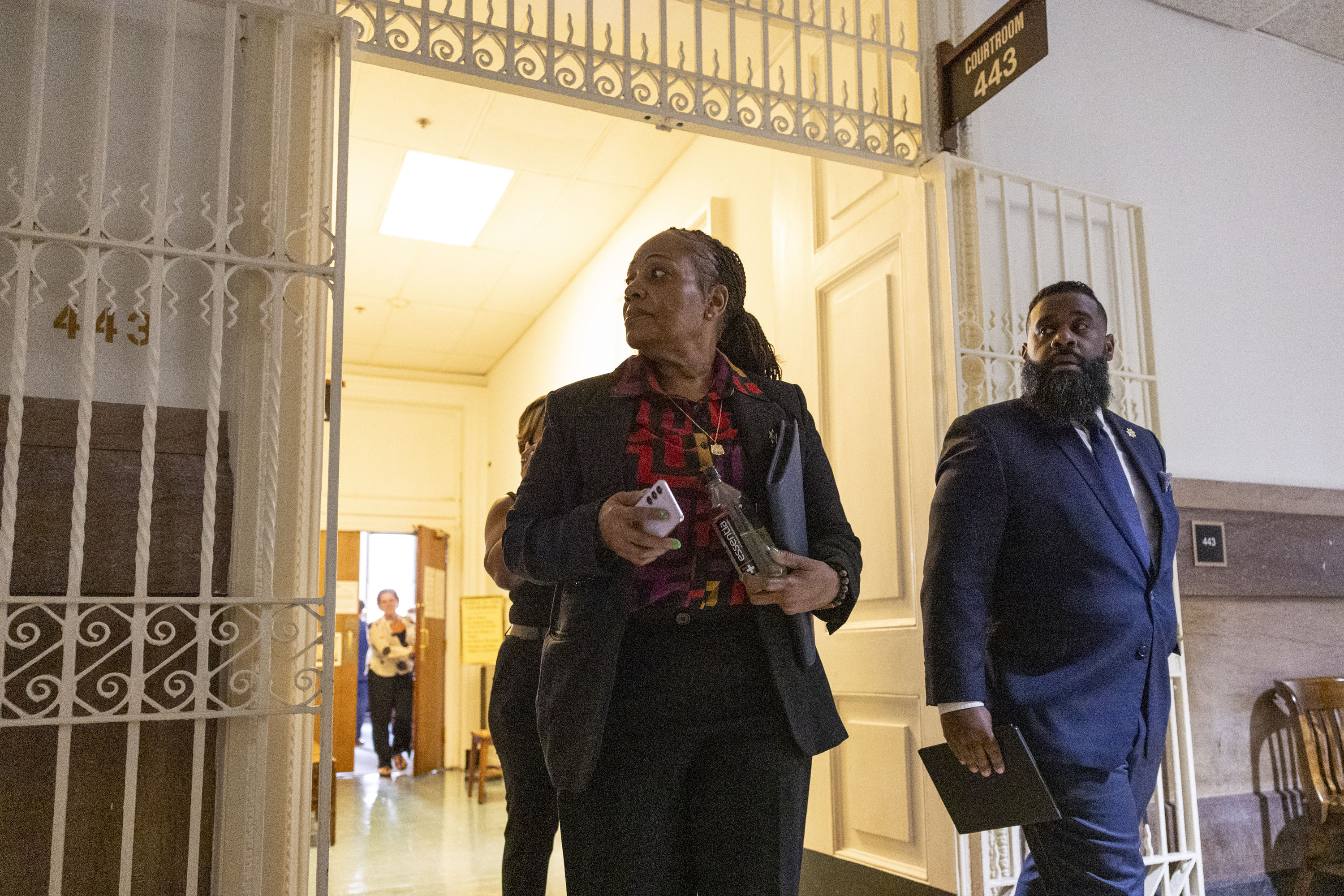
    Sheriff Rochelle Bilal is seen exiting the courtroom at City Hall during a break on Wednesday, Aug. 26, 2026, in Philadelphia.Tyger Williams / Staff Photographer

    In September, a deputy undersheriff testified that the backlog had been cleared and that Bilal’s office was auditing revenues linked to the stalled sales for any lingering discrepancies. Under questioning from the judge, the deputy revealed that the audit had already uncovered $20 million from sales in just the last year that should have gone to the city.

    Instead, the money had been stuck in limbo in several sheriff’s office bank accounts. The deputy said that it was disbursed to the city after this discovery, and that the office was reviewing earlier years for other unclaimed funds.

    Parker told NBC10 that week that she had not been briefed on the millions owed to the city. Asked last week about the money, the mayor’s spokesperson, Joe Grace, said: “We’re looking into it.” He declined to answer questions or make anyone available in the treasurer’s office for an interview.

    Some Council members have questioned Bilal’s management in the past, including her office’s handling of millions more in fee revenue that the city controller in 2022 said was meant to flow into city coffers. The Inquirer reported Bilal had instead diverted the money into an off-budget bank account ex-staffers called a “slush fund” that paid for mascot costumes, DJs, and a $600,000 ad campaign, among other discretionary expenses. Bilal has also drawn two prior court orders linked to chronic understaffing and security lapses in the court facilities her office patrols.

    Additionally, Bilal’s office delayed the collection of an estimated $35 million in tax revenue because it failed to auction off tax-delinquent properties between 2021 and 2024 as a result of a contract dispute involving an online auction company.

    Parker, during her first budget address in March 2024, described that money as “dollars that could have been invested in classrooms and in rec centers or on building affordable homes.”

    This year, Bilal returned to Council, seeking to increase her office’s budget by more than 50%. (Ultimately, Council approved only a fraction of that, a $146,000 funding increase, bringing her office’s budget to $35.8 million.) She was greeted with enthusiasm by several lawmakers, who thanked her for her work.

    Sheriff Rochelle Bilal during the mayor’s budget address, Philadelphia City Hall, March 12, 2026.Alejandro A. Alvarez / Staff Photographer

    ‘We’ve seen all the criticism’

    The sheriff enjoys close political relationships with many of the Democrats on Council, and some have fiercely defended her.

    In March, during Women’s History Month, Council members heralded Bilal for her leadership, and she accepted an honorary resolution on behalf of the women in her office.

    “We’ve seen all the criticism,” Bass, a longtime ally of Bilal’s, said as she presented the citation. “And let’s be clear, accountability is essential, but the challenges facing the sheriff’s office did not begin with Sheriff Bilal.”

    But the $20 million revelation seems to have altered the conversation. Over the last two weeks, a handful of members pointed to the news as a sign that the sheriff’s internal reforms had not taken hold.

    “That’s money that was supposed to go to the city, and we’re in a financial bind right now,” Harrity said. “They need to get their act together.”

    Brooks said it is clear that the office’s revenue collection and distribution issues are “systemic,” and she encouraged Bilal to work with the courts to establish independent oversight — a move that Bilal now publicly opposes.

    And Gauthier said that she was particularly “surprised” by the finding given that Bilal has repeatedly asked Council to increase her office’s yearly budget.

    “We need to understand why that happened, how that happened, and we need to understand that before we’re in another conversation about millions of dollars being needed,” Gauthier said.

    But it is largely up to Johnson whether that understanding happens in public or behind closed doors.

    Gilmore Richardson — the Democratic majority leader who has in the past sharply criticized city departments that have misspent or lost track of taxpayer dollars — said that she called Johnson shortly after learning of the undisbursed money. She said she trusts that “he’ll be working to ensure that we can adequately address this.”

    Solomon, who has been a rare vocal supporter of abolishing the office, said that despite the reform’s lack of popularity on Council, he is heartened that some members said they are open to the conversation.

    “You seem to be seeing a growing number of folks — and maybe it’s after the $20 million marker — who seem to be saying, ‘Let’s figure out a path forward,’” Solomon said. “Other municipalities do this. They function with efficiency, and the sheriff is effective, and they’re not losing $20 million.”

  • Philly developers are planning a $1.5M campaign to protect City Council from progressive challengers

    Philly developers are planning a $1.5M campaign to protect City Council from progressive challengers

    Philadelphia real estate developers see the writing on the wall.

    As progressives have toppled centrist Democrats in nationally watched races, some local development interests are wary that the same trend could reshape Philadelphia City Council this spring, when every member is up for reelection. They see a growing progressive faction as a threat to business.

    Enter the incumbent protection plan.

    Nearly a dozen local developers are already pouring hundreds of thousands of dollars into Philly For Growth, a group that in the past two Council election cycles spent millions on advertising campaigns to back business-friendly Democrats, according to a source familiar with the planning.

    Philly For Growth is an independent expenditure group, also known as a super PAC. It can raise and spend unlimited amounts of money to influence an election, but there are rules barring super PACs from most forms of coordination with the candidates they support.

    In 2023, the group was the biggest special interest group involved in that year’s Council races, and it provided a substantial boost to its chosen candidates by outspending individual campaigns.

    Ahead of the May primary election, Philly For Growth plans to spend $1.5 million to support pro-business Democrats, most of whom are sitting Council members, according to the source, who spoke on the condition of anonymity because they were not authorized to discuss the plans. The group will not fund negative advertising about Council’s four incumbent progressives, the source added.

    Councilmember Kendra Brooks, of the progressive Working Families Party, speaks during a rally outside of the School District of Philadelphia headquarters in May. At left is Councilmember Rue Landau and at right is Councilmember Jamie Gauthier. All three are members of Council’s progressive faction.Monica Herndon / Staff Photographer

    The idea is to keep progressives from growing their power on Council instead of spending money to knock off the leftists who are already there. There are currently four reliably progressive votes out of the total 17 on Council, but some members may be more likely to vote with that faction as Democratic voters nationally revolt against incumbents.

    That’s a different strategy than in 2023, when Philly For Growth backed a slate of five candidates — two incumbents and three challengers. Both incumbents won, but all three challengers lost.

    Philly For Growth has previously been affiliated with the Building Industry Association of Philadelphia, an advocacy group for development interests. Mo Rushdy, the BIA’s former president who leads the organization’s political activity, declined to comment.

    The source said that Philly For Growth will fund advertising to support Council members Mark Squilla, whose 1st District includes parts of South Philly, Center City, and Fishtown; Cindy Bass, whose 8th District is based in North and Northwest Philadelphia; and Quetcy Lozada, whose 7th District includes much of North Philadelphia and Kensington.

    All three are seen as more centrist members and have said they intend to run for reelection. No challenger has officially launched a campaign against any of them, but candidates who are aligned with the city’s left-leaning political organizations are expected to emerge as the primary — still eight months away — draws nearer.

    The super PAC is making one exception when it comes to supporting incumbent district Council members, the source said. In the 5th District, currently represented by Councilmember Jeffrey Young Jr., the group will support a to-be-decided challenger.

    Councilmember Jeffery Young Jr. speaks to other members of Council during a 2025 session.Tom Gralish / Staff Photographer

    At least five people have said they are interested in running for the North Philly-based 5th District seat, and Young has drawn opposition from development interests for pushing proposals that would slow or halt some projects in his district.

    Young said in a statement that building “sensible, affordable housing” is one of his top priorities and that he has supported city programs like Turn the Key, which provides mortgage support to first-time homebuyers.

    “People are free to back those who share their values. These are my values,” Young said. “I am leaving it to the residents of the 5th to determine whose values best reflect them.”

    The super PAC will also fund advertising backing four incumbent members who represent the city at-large: Isaiah Thomas, Katherine Gilmore Richardson, Jim Harrity, and Nina Ahmad. That group doesn’t include progressive at-large Councilmember Rue Landau, but Philly For Growth doesn’t plan to oppose her, the source said.

    Council President Kenyatta Johnson laughs inside the caucus inside City Hall on June 11.Aidan T. Gallo / Staff Photographer

    A spokesperson for Landau’s campaign arm said in a statement that the Council member “stands by her accomplishments for working people, small businesses and vulnerable communities in Philadelphia and looks forward to voters having the opportunity to make up their own minds next year.”

    It’s unclear just how competitive the at-large race will be, and candidates have until the spring to decide — nomination paperwork is typically due in March. Seven of Council’s members represent the entire city at-large, and two of those seats are effectively reserved for members of minority parties under the city’s Home Rule Charter.

    That has traditionally meant that five seats are held by Democrats, given the party’s massive voter registration advantage in the city. In recent years, Republicans and the progressive Working Families Party have battled for the remaining two seats during the fall general election, and the WFP currently holds both.

    Mayor Cherelle L. Parker, who is also up for reelection, and Council President Kenyatta Johnson, who insiders do not expect will see a serious challenger, will likely be on Philly For Growth’s slate, too, the source said.