Just two years after the borough nearly closed its police department over rising costs and budgetary disarray, Jenkintown is set to hit a 13-year low on police spending for 2026.
As of mid-November, the 4,700-person borough’s projected spend on the police department is about $1.36 million for 2026, manager George Locke said — about $180,000 less than had been budgeted for the year. The figure isdown more than 25% from 2023, and it’s the lowest since 2013, when the town spent $1.25 million on police.
“The borough has struggled financially for many years,” police Chief Thomas Scott said. “We’re on the right track.”
The savings are largely due to personnel cuts, after two reports suggested that Jenkintown’s police department was too big. In the past year, two officers left the department, and another was furloughed, Scott said.
In 2024, a state cost-benefit analysis led by two retired police chiefs found Jenkintown’s force may be too big for its needs, and that the borough was spending more on police per resident than the Greater Philadelphia average for similarly sized towns. That report followed a 2020 assessment by an independent police consultant recommending that Jenkintown consider reducing its force and improve its police budget practices.
Jenkintown aims to keep its force at eight officers, Locke said, and therefore expects a slimmer budget for years to come.
The department is currently at seven officers, with one opening, Scott said.
The borough is also working to implement the dozens of other recommendations the reports made, including sending officers to more frequent trainings beyond the minimum requirements.
“Close to 200 policies have been revamped,” said Scott, who credited his officers for their openness to change.
“We’ve made great progress,” said Mayor Gabe Lerman, who oversees the department. “There are always going to be things to improve upon in an environment where continuous improvement is crucial.”
Next steps include pursuing accreditation, Scott said, which the department stopped applying for under his tenure.That decision was partly due to a lapse in standards and training that had built up over years and needed to be corrected before seeking accreditation again, he said.
The state report had come amid controversy in the department. Jenkintown appointedScott,the current chief, in 2022, and discussions about dismantling the police department and contracting services from a nearby municipality like Abington or Cheltenham reached a fever pitch less than two years into his tenure.
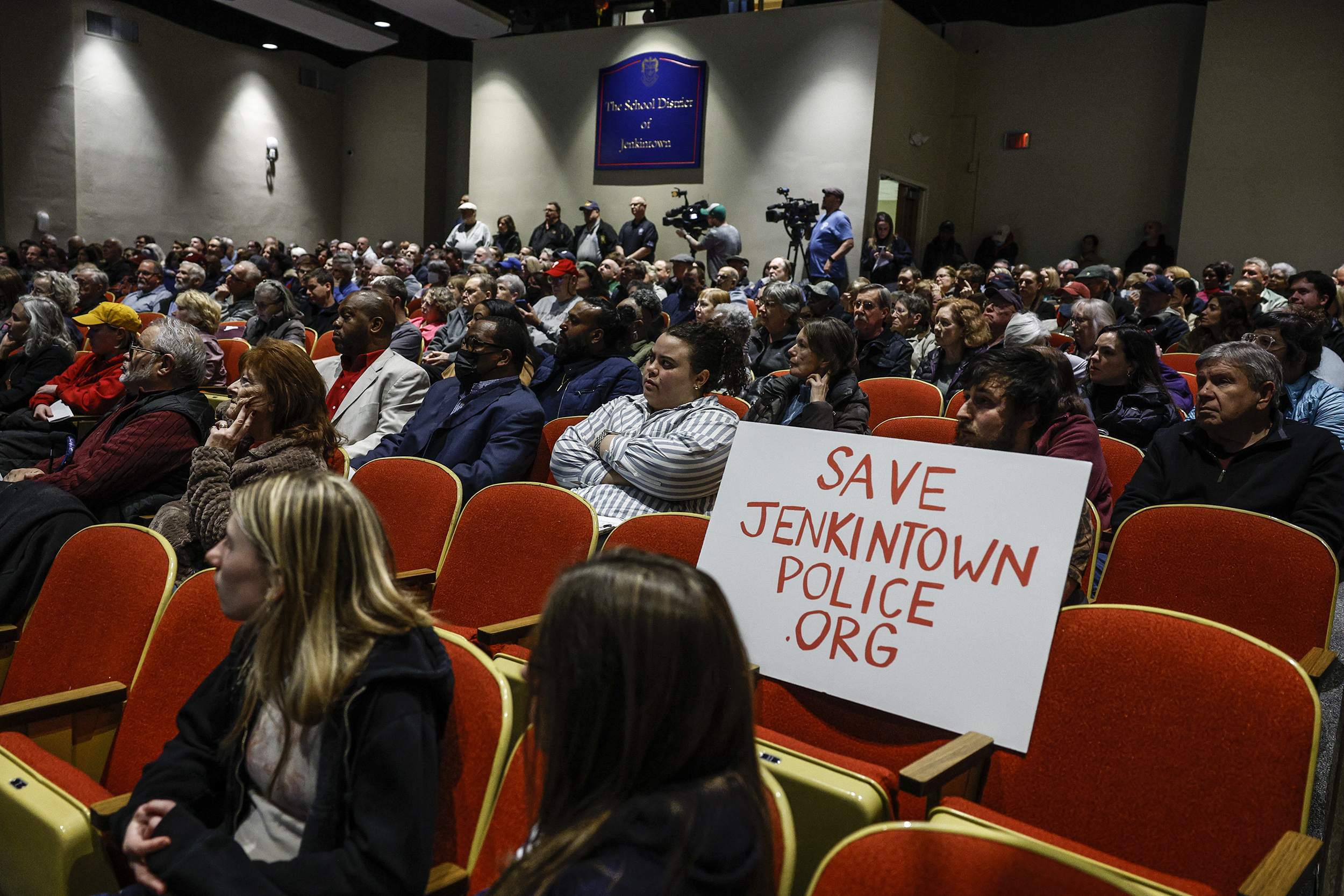
Residents pack the high school auditorium during a public meeting for community members to voice their thoughts on whether the Jenkintown Borough should disband its police department. Monday, February 26, 2024.Steven M. Falk / Staff Photographer
In September 2024, the police union claimed their members had voted no confidence in Scott over alleged misconduct.
The employment law firm that the borough hired to investigate the situation concluded that the misconduct claims were unfounded and stemmed from disagreement with Scott’s leadership decisions and opposition to the potential closure of the department. The firm also found that a formal vote of no confidence was not taken.
The current police union contract expires at the end of next year, but Jenkintown hopes to start negotiations at the beginning of 2027 and has already met with officers to prepare for bargaining.
A draft budget for 2027 would raise the police allocation by about $36,000 to $1,576,613.
Borough council is set to vote on the draft budget at the Nov. 23 meeting, which would then be made available for public viewing before it is finalized at a December meeting.
There are no longer plans to dismantle the department, Lerman said.
But it wasn’t easy to reach this point, Scott said: “You have to have hard conversations.”
This suburban content is produced with support from the Leslie Miller and Richard Worley Foundation and The Lenfest Institute for Journalism. Editorial content is created independently of the project donors. Gifts to support The Inquirer’s high-impact journalism can be made at inquirer.com/donate. A list of Lenfest Institute donors can be found at lenfestinstitute.org/supporters.
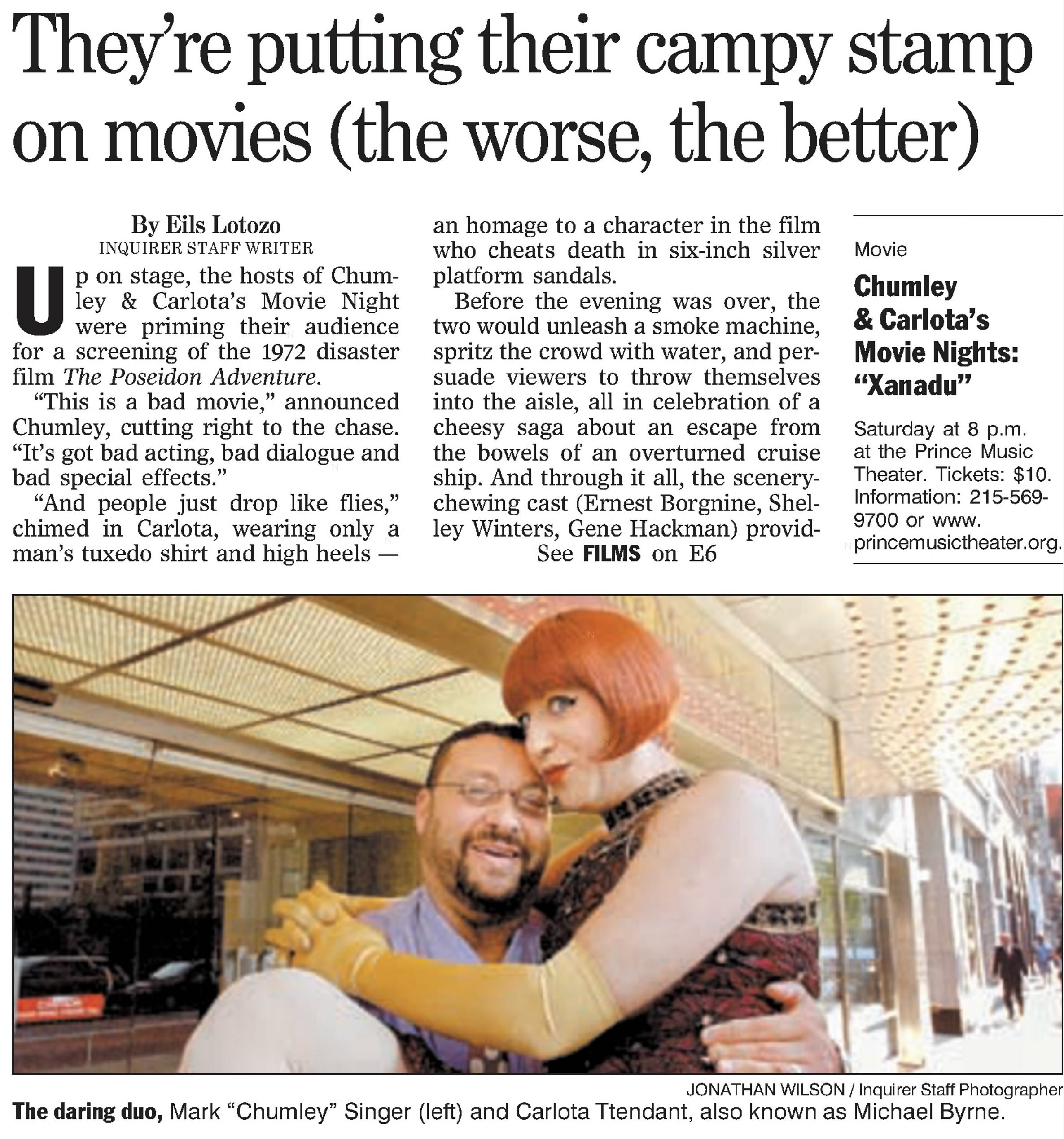
Mark “Chumley” Singer, 65, of Philadelphia, eclectic events producer, graphic designer, entrepreneur, adjunct professor of visual merchandising at Drexel University, and community, charity, and gay rights activist, died Monday, Oct. 26, of pancreatic cancer at his sister’s home in Cherry Hill.
Nicknamed after the lovable walrus sidekick to the 1960s penguin cartoon character Tennessee Tuxedo, Mr. Singer was what the Daily News in 2002 called “a local man-about-town.” He was onetime creative director for Welcome America Inc., events and marketing manager for the Eagles Youth Partnership, and a founding committee member of the Lights for the Cure breast cancer awareness project.
He helped develop the city’s skyline lighting initiative in the early 2000s and coordinated marketing and community events affiliated with the city’s millennium celebration, the Liberty Bell Pavilion, the National Constitution Center, the Philadelphia Museum of Art, and the Mummers, Thanksgiving Day, and Independence Day parades. He was also a founding board member of the Philadelphia Gay Tourism Caucus.
“The Philadelphia of today,” a longtime friend and colleague said on Instagram, “was formed by Chumley’s creative mind.”
In 1999, Mr. Singer told The Inquirer: “My goal is to get the travel industry to think of Philadelphia and the Fourth of July as a package just as we link New Orleans and Mardi Gras. If that’s my legacy, I’d be proud.”
He became a serious fundraiser after his best friend died of AIDS, and he organized popular gay bingo nights and other events to benefit HIV/AIDS services. He designed the rainbow street signs in Philadelphia’s Gayborhood and collaborated with fellow performer Michael Byrne to cohost gay bingo, movie night at the Prince Music Theater, and other community get-togethers.
“He leaves behind a legacy of memorable celebrations, meaningful philanthropy, and lasting connections,” Byrne said. “He developed a reputation for transforming an idea into an experience that people would remember long after the lights came up.”
Mr. Singer earned a bachelor’s degree in graphic design at Temple University’s Tyler School of Art and Architecture in 1984 and worked at first as a visual merchandiser at Gimbels, Macy’s, Urban Outfitters, and other retailers. In the 1990s, he painted frescoes for homeowners and opened a store that sold unique home furnishings.
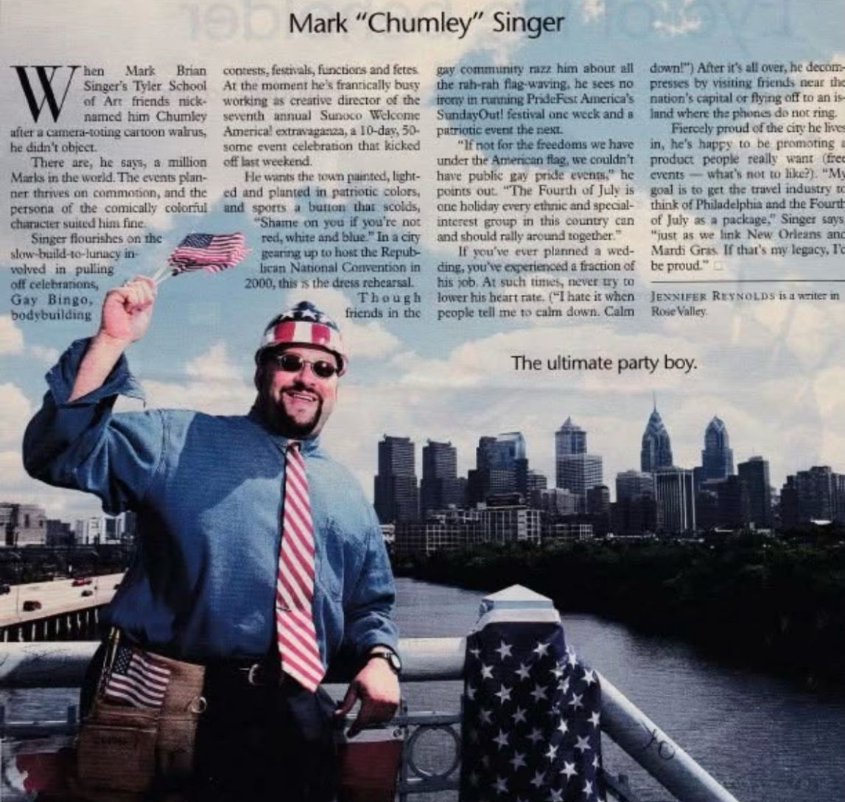
Mr. Singer appeared in The Inquirer in 1999, above, and 2002, below. Newspapers.com
In 2003, to celebrate the gay community’s “hairy/beefy/burly/gay ‘bears,’” he established Chumley’s Bear Cruises, a group tour company that books cruises to Alaska, Aruba, and elsewhere around the world.
Byrne said: “He helped create spaces where people could gather, celebrate, and feel connected. If Chumley said, ‘I can do it,’ he could.”
Mark Brian Singer was born April 18, 1961, in Philadelphia. His father died when he was 9, and he graduated from the Milton Hershey School in Hershey, Pa.
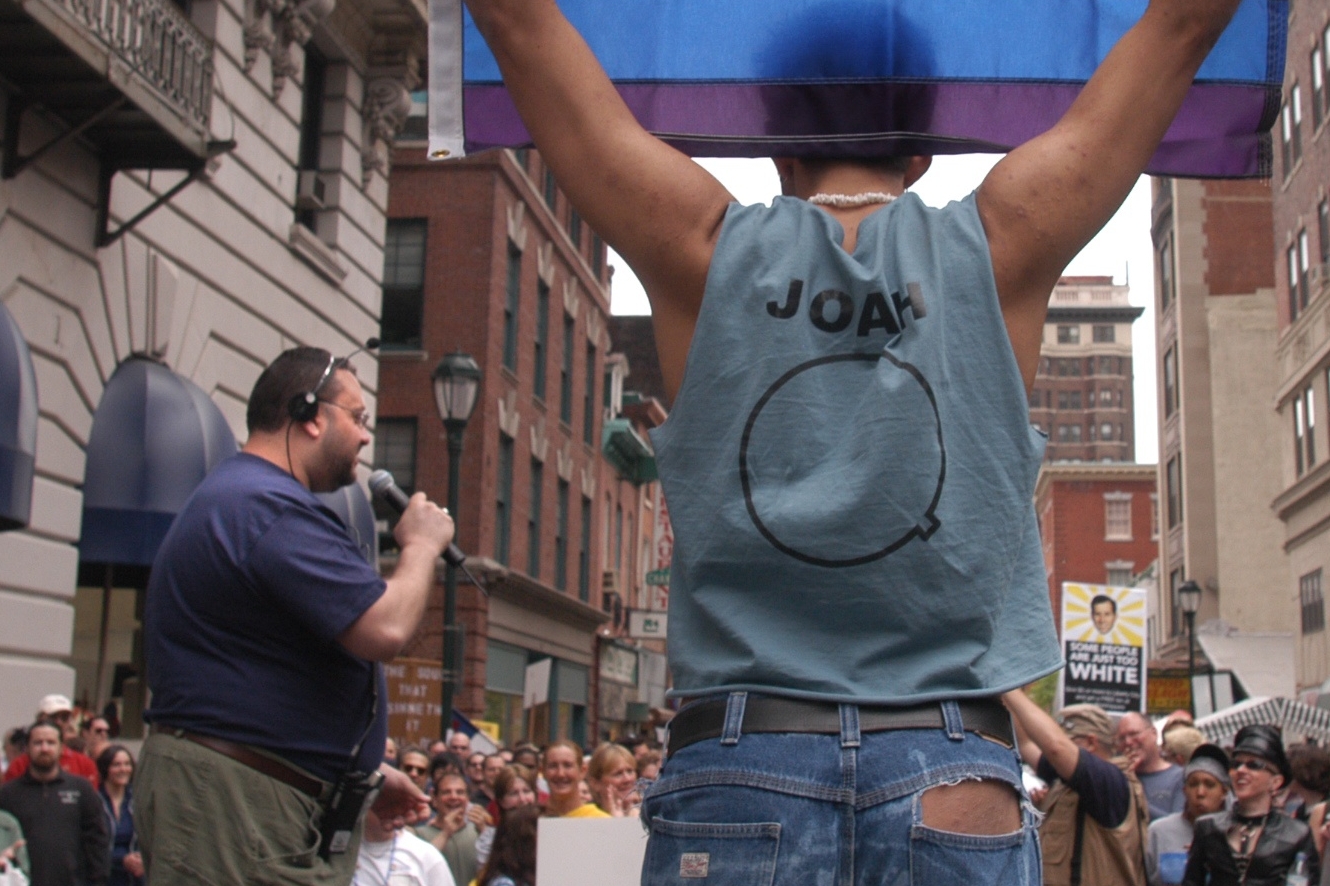
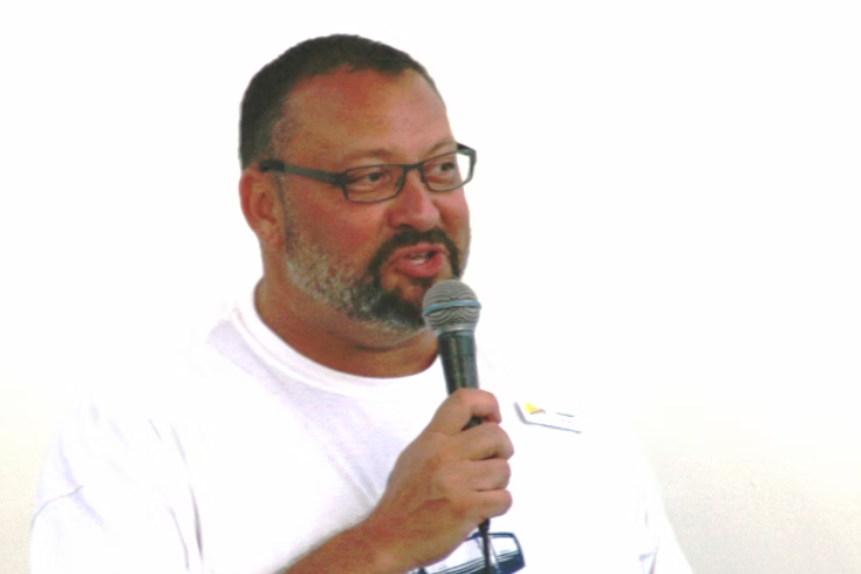
Mr. Singer, left above, was a dynamic speaker and organizer. Rebecca Barger / Staff Photographer
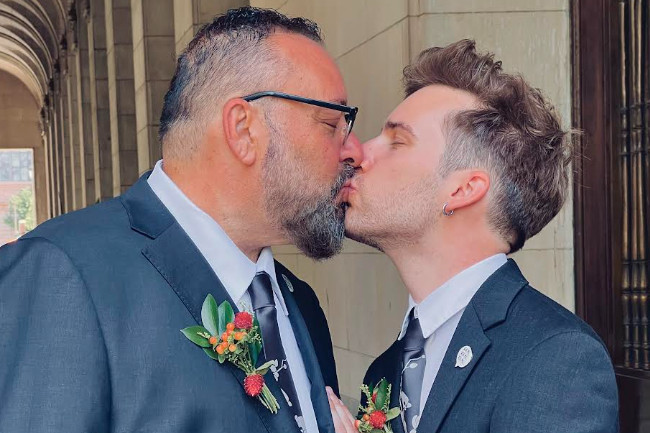
He met fellow artist and actor Ven Schmidt in 2017, and they married in 2022 and lived in South Philadelphia.
Mr. Singer enjoyed camping and traveling. He listened to the Smiths and followed the Eagles closely.
He liked to watch movies and take weekend getaways to Atlantic City and New Hope with his husband. He was habitually punctual.
“He not only advocated for the gay community as a whole, he made individual people feel uplifted and welcome,” his husband said. “He inspired me and truly changed my life. He had a heart of gold, and I wanted to be just like him.”
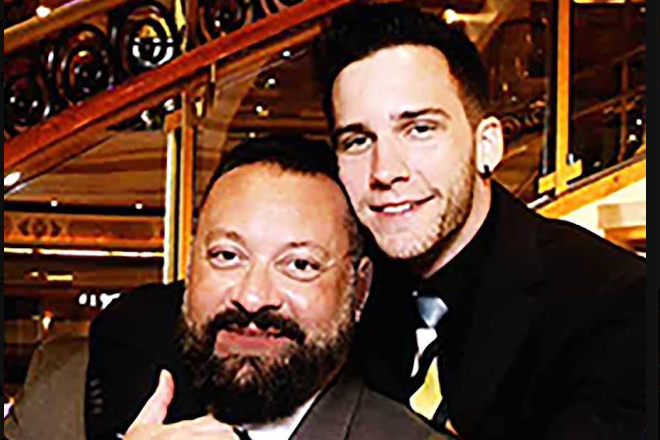
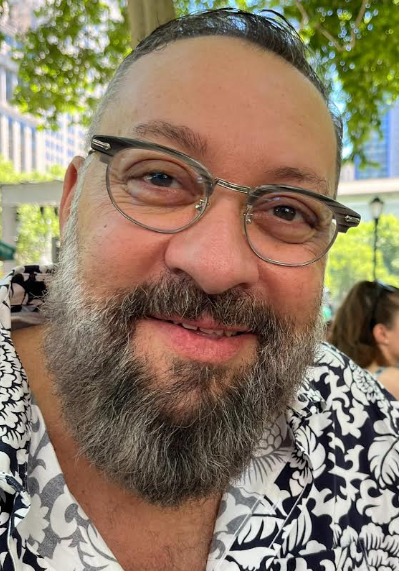
Mr. Singer, left above and below, and his husband, Ven Schmidt, married in 2022.Courtesy of the family
In addition to his husband, Mr. Singer is survived by a sister, Aline Zaslow, and other relatives.
Services were held earlier. A celebration of his life is to be held later.
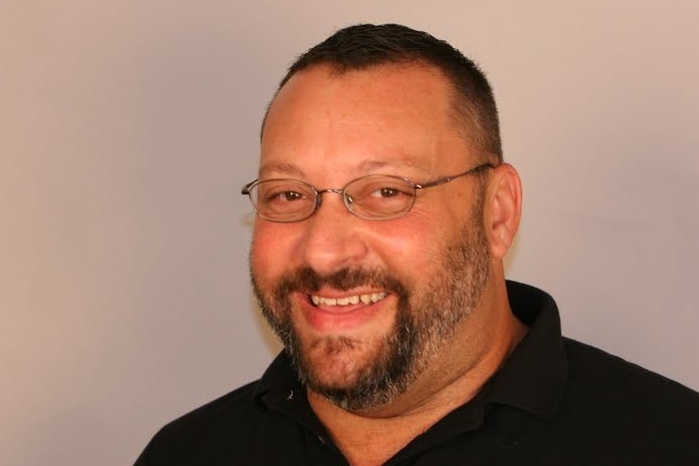
Mr. Singer “not only advocated for the gay community as a whole, he made individual people feel uplifted and welcome,” his husband said.Courtesy of the family
With the Eagles’ season reeling, the most interesting matchup Monday night was in ESPN’s booth.
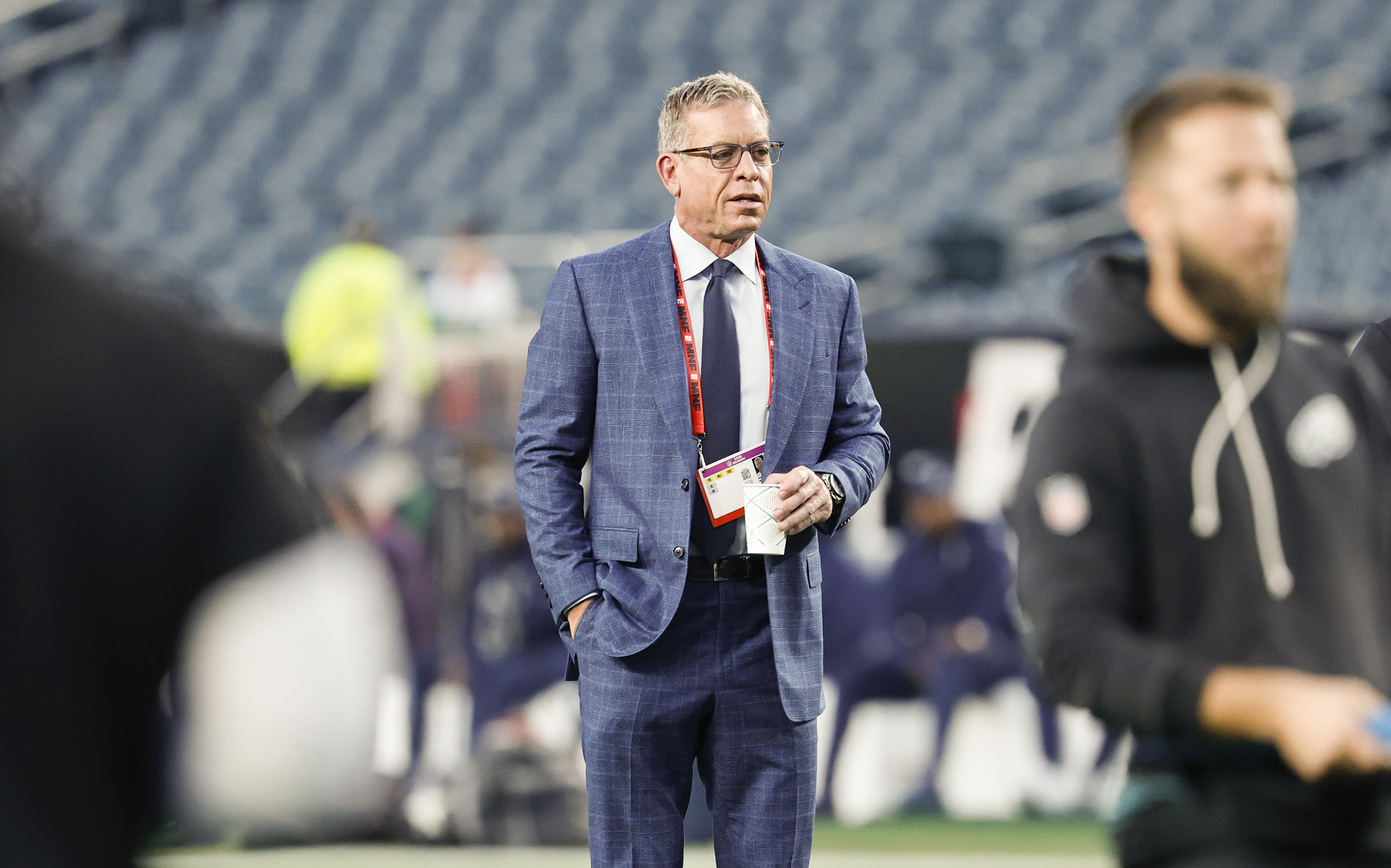
Monday Night Football announcers Joe Buck and Troy Aikman are careening toward a breakup after having called NFL games together for 25years. Buck signed an extension with ESPN through the 2032 season, while Aikman has said he expects to be a free agent after the network declined to negotiate a new deal.
“As I’m into my last year at ESPN, I’m realizing that this is something that could very well be taken away from me,” Aikman said of calling NFL games during an interview with Cowboys insider Mike Fisher. “It’s been a great ride for me, and I hope it’s not over. Time will tell.”
“Troy and I have always kept that stuff separate,” Buck told The Inquirer last month. “I love him literally like a brother … I followed him to ESPN, all that stuff, but we’re two grown men with careers.”
ESPN declined to comment.
The two announcers reportedly got into a heated argument before calling a game two weeks ago. According to Puck’s Dylan Byers, their relationship “has been deteriorating for some time” and Aikman felt betrayed Buck would sign a deal knowing it was possible he could have a new partner, presumably current Fox color analyst Greg Olsen.
But none of that drama was on display Monday during the Eagles’ loss to the Dallas Cowboys. The two seemed as comfortable together in the booth as they’ve ever been. Buck even got Aikman to chuckle at a joke made about his former teammate, Hall of Famer Michael Irvin, whom ESPN’s cameras showed multiple times celebrating alongside Cowboys owner Jerry Jones.
“Maybe there’s two of them,” Buck said of Irvin’s ubiquity.
“God I hope not,” Aikman joked.
During the fourth quarter, Buck said highlights of Aikman’s performance during the Cowboys’ Super Bowl victory over the Buffalo Bills in 1993 “brings a smile to my face,” and the two couldn’t have been more normal during a postgame appearance on SportsCenter.
About the only time Aikman appeared upset was when the pair mourned the loss of longtime spotter David Moulton, who died following a six-year battle with cancer. An emotional Aikman could barely speak remembering his friend and former colleague.
“He left a hole in a lot of people’s hearts,” Aikman said.
Aikman was also on point with his analysis, pointing out Eagles running back Saquon Barkley might have issues making it through the game after pulling up lame on his hamstring injury early in the first quarter.
The former Cowboys quarterback also didn’t seem too impressed with the win, despite Dallas dismantling the Eagles’ defense.
“This is a beat-up Philadelphia team,” Aikman said following the game. “To come in here and win tonight, I mean, let’s not get carried away.”
Jerry Jones, a priest, and Philly fans
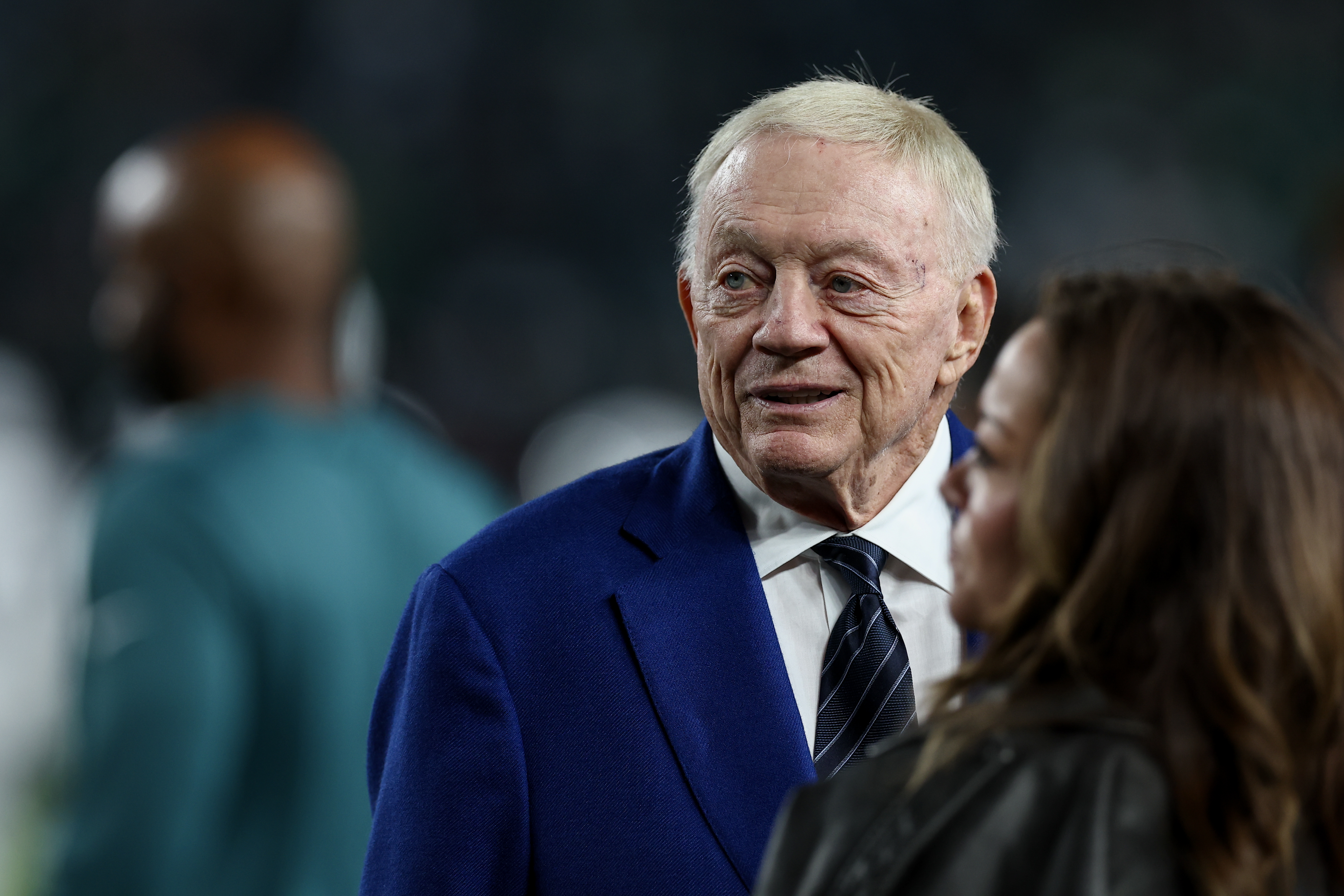
Cowboys owner Jerry Jones on the sideline before Monday night’s game. Monica Herndon / Staff Photographer
Before the game, Cowboys owner Jerry Jones revealed a secret weapon that protected him from Eagles fans in Philly throughout the years.
“I used to bring Father Tribou,” Jones said during an interview on Monday Night Countdown. He was referring to the late Msgr. George Tribou, a Jenkintown native who served as the principal and rector of the Catholic school Jones’ children attended.
“I’d walk through the stands with the protection of the father,” Jones said. “That still didn’t deter the reaction” of Eagles fans.
Despite the bad blood between the Eagles and Cowboys over the years, Jones had a twinkle in his eye describing how vocal and belligerent Birds fans can get, anger that was on display Monday.
“This place has got a neat way to support sports,” Jones said. “I kind of like it.”
Jones also spent a lot of time before the game speaking to Aikman just a few days after the announcer expressed being open to a reunion in Dallas in a potential front office role.
“Our relationship is complicated. I think he would agree with that,” Aikman told Fisher. “But it is one that’s built, I believe, on respect. This week, he said some really kind things, which meant a lot to me, quite honestly. So, yeah, I would welcome any conversation with Jerry.
“And quite honestly, I don’t know if there would be, or if there ever would be an opportunity,” Aikman added. “But if Jerry came to me and felt that, in his heart, I could lend some services that would help make them better, I’d have a hard time not taking a good look at that.”
Quick hits
In the third quarter, Buck and Aikman gave a shoutout to Tony Granieri, a longtime Monday Night Football spotter in the booth who also happens to be a Linwood, N.J., native and lifelong Eagles fan. It’s a Birds-heavy booth that also features stat guy Ed Sfida, a Villanova grad who’s worked with Buck and Aikman since 2003,
Jason Kelce flew home from Paris to cover Monday night’s game for ESPN and got interrupted while doing a live segment during Monday Night Countdown.
Tom Brady continued his growth as an announcer Sunday by showing a willingness to criticize the officials, something color analysts often opt to avoid in today’s NFL. Brady’s ref call out is more notable because of his other job as minority owner of the Las Vegas Raiders. Brady and partner Kevin Burkhardt have one more Eagles game on their schedule this season — Thanksgiving day against the Cowboys.
Tom Brady has had it with the NFL officiating. 🏈🦓🎙️
Game 6 of the WNBA Finals will take place Thursday at 12:30 p.m. on USA Network (with Sixers announcer Kate Scott on the call), not ideal for a league on the upswing. Fans of the Golden State Valkyries could watch their team be crowed WNBA champs during breakfast. As longtime sports media writer Richard Deitsch wrote, “This is a terrible look for the WNBA — and there is no way spin it.”
Surrounded by houses, the Jenkintown School District has little space to expand beyond its plot at the center of town, which hosts the administration, sports fields, a playground, and all K-12 classrooms.
One solution officials are discussing, for the third year in a row, involves buying an affordable housing complex next to the baseball and softball field. School leaders will present the idea at a school board meeting on Monday, Superintendent Brea D’Angelo said.
The district authorized a feasibility study in September from architecture firm Schrader Group to create a master plan for Jenkintown’s facilities, which includes assessing the possibility of buying the one-acre Salba Apartments parcel. The final study is expected to be ready by February, according to the architectural firm’s presentation.
Jenkintown talked about expansion last year
The district previously considered buying the apartment property in 2024 under then-Superintendent Jill Takacs.
Salem Baptist Church built the complex in the early 1970s, and the apartments, nearly at full capacity in 2024, were becoming too old to use, Salem Baptist’s pastor, the Rev. Marshall Mitchell, said at the time.
The church offered to sell the property to the school district, which had added nearly 100 students over the previous decade, Takacs said at a December 2024 meeting — a roughly 15% increase in Montgomery County’s smallest district. Though the school had a larger student population at other points in history, a growing special education footprint and preference for smaller classes required more space, she said.
Under the 2024 proposal, the 17 apartments would likely have been demolished, Takacs and Mitchell said at the time. Possibilities for the land included relocating the school’s tennis courts and creating space for a preschool center, a mental health space, and other facilities.
The church planned to build more affordable housing elsewhere for Salba residents, Mitchell said at the 2024 meeting. The district would have allowed Jenkintown students living in the apartments to stay enrolled, even if the new complex were located outside the borough, Takacs said.
In May 2025, Takacs announced that an anonymous donor had offered to contribute “millions” of dollars to the property purchase.
D’Angelo, who took over as superintendent in July,said Friday she would recommend the school board proceed without the donor, although officials “appreciate his continued interest in supporting the district” and will consider future opportunities for his support.
Too early to say if apartment purchase will happen, new superintendent says
But it is unclear whether any of the ideas presented two years ago will carry forward into the new discussion. “We don’t have any plans for the building yet, including demolition or a new school facility,” D’Angelo wrote in an email earlier this month.
“We would want to gather input and explore our options before deciding how the property might fit into our broader campus plan.”
Salem Baptist Church and Salba’s property manager, HumanGood, did not return requests for comment.
The plan will be presented at the Mondayboard meeting, set for 7 p.m. in the high school auditorium.
This suburban content is produced with support from the Leslie Miller and Richard Worley Foundation and The Lenfest Institute for Journalism. Editorial content is created independently of the project donors. Gifts to support The Inquirer’s high-impact journalism can be made at inquirer.com/donate. A list of Lenfest Institute donors can be found at lenfestinstitute.org/supporters.
More than 350,000 people spend time in Center City Philadelphia on an average day. That’s because it is a lot of things to a lot of people: the largest employment hub in our 11-county region, the densest and fastest-growing residential area, the highest concentration of restaurants, shops, museums, and theaters, and the primary destination for millions of conventioneers and tourists annually.
Even if you don’t live or work here, chances are you spend time here, or know people who do.
This is largely possible because we are the beneficiaries of decades of investment in transit, including a Regional Rail network that connects more than 150 stations in neighborhoods across Philadelphia and towns across our suburbs to the urban core. This puts us billions of dollars of investment ahead of many cities and regions around the U.S. that came of age after the advent of the automobile.
The bad news is that we’ve never been able to use this irreplaceable infrastructure to its full potential. We’ve made some transformative moves, such as combining disparate and struggling transit agencies to create SEPTA in the first place.
Most notably, just over 40 years ago we did something no other U.S. city has done: We built the Center City Commuter Connection that combined the legacy lines of the Reading and Pennsylvania Railroads into one integrated system. This was done, in part, because planners at the time understood the potential to run Regional Rail less like a commuter rail and more like a high-frequency metro service.
Because we’ve never made the necessary investments in vehicles, signals, and station platforms to bring this idea to life, we live with an enviable set of “good bones” that stop short of offering real choice or convenience.
It doesn’t have to be that way. Accelerate, SEPTA’s vision for best-in-class transit, would transform quality of life for millions of people across our region. In so doing, it would completely redefine our relationship with Center City.
We’ve all been there: You miss a big meeting because your usual train was canceled and the next one skipped your station due to overcrowding. The comedy show runs long, you reach the platform two minutes after the last train home pulls out, and now you’re paying $50 (or more?) for an Uber.
Date night ends early because it’s either the 9:16 or the 11:16, and the sitter can’t stay that late. Or maybe you miss half the game because you can’t risk an ill-timed transfer.
Picture knowing the next train downtown (or back home) is never more than 15 minutes away, at any hour, on any day of the week. Neighborhoods such as Fox Chase, Eastwick, Germantown, Mount Airy, and Manayunk would connect to Center City often enough that you’d never think about a schedule again. So would suburbs like Media, the Main Line, Jenkintown, and Conshohocken. If you live in these places, commutes and nights out alike just became painless.
Picture knowing the next train downtown (or back home) is never more than 15 minutes away, at any hour, on any day of the week, writes Clint Randall.Jasmine Goldband / Staff
Service at that scale makes room for life’s surprises: a high-stakes deadline at work, spontaneous dinner plans, last-minute concert tickets from a friend, staying at the bar through the end of the playoff game; all of these scenarios and countless others become painless adjustments rather than costly complications. Trips that now feel like carefully calculated events, such as bringing grandma in for the Flower Show, taking the kids to The Nutcracker, or showing out-of-town friends around for the weekend, become simple outings that need little advance planning. Miss a train? Another one is coming in 15 minutes or less.
And that’s just Regional Rail. Under Accelerate, the El (Market-Frankford Line) would run every three minutes. Modern light-rail vehicles, the kind many riders have only seen in Europe, would replace today’s trolleys. Buses would come more often, including nights and weekends. New vehicles and major investments in maintenance, cleaning, and security would mean fewer breakdowns and cleaner rides.
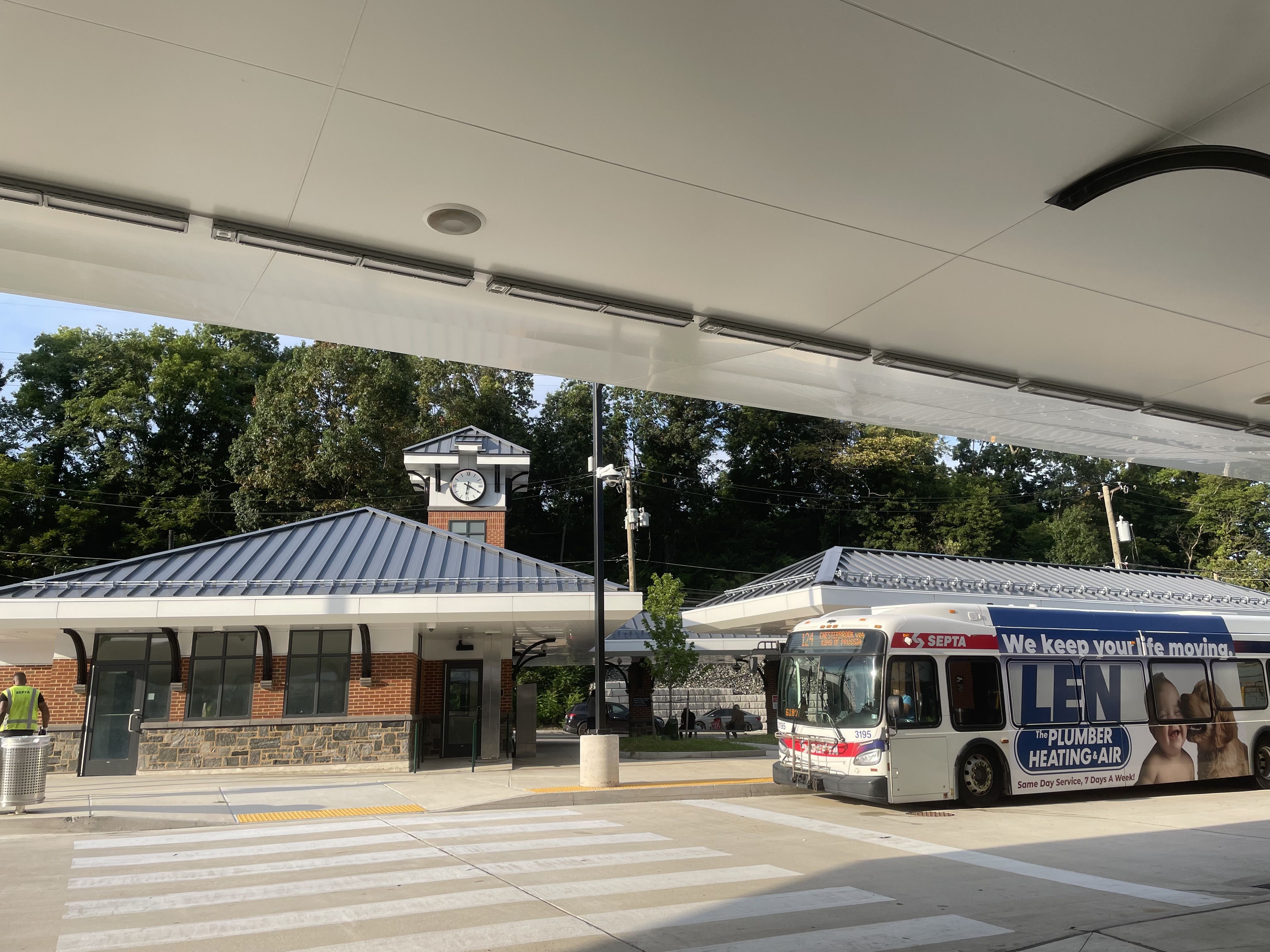
SEPTA’s new Wissahickon Transportation Center on Ridge Avenue in Manayunk is a major upgrade for the city’s bus riders. The sprawling, $50 million station opened in January 2026 and allows 5,000 passengers a day to switch between 11 bus lines.Inga Saffron / For The Inquirer
The immediate and widespread impacts of such investments are real: fewer reasons to get in the car, less time circling for parking, and less money at the pump. Fewer meals cut short, encores missed, meetings adjourned early, mad dashes to the platform. More spontaneity, more time spent where it matters, more saying yes to the events and occasions that make Philadelphia such a special place to live.
All it takes is money. Not subsistence money. Not barely-keeping-up money. Money that places like Seattle, Boston, and Washington, D.C., have managed to identify, each of them spending more than double what we spend in a year on capital projects alone. SEPTA Accelerate has the potential to meaningfully improve quality of life across our region while making Center City Philadelphia one of the most appealing places in the country to live, do business, and visit.
Clint Randall is vice president of economic development at the Center City District.
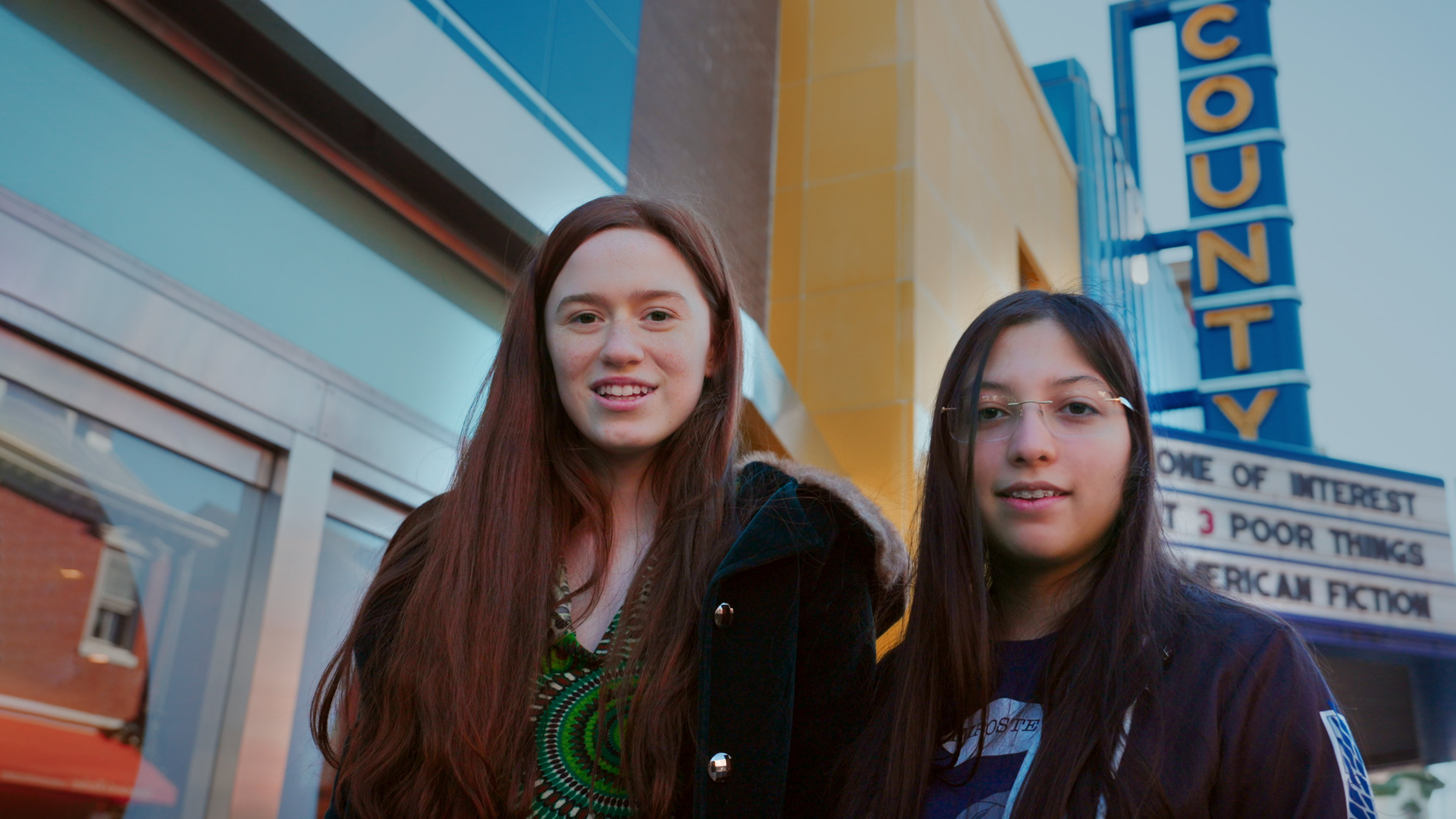
Starting in 2022, for more than three years, a group of filmmakers chronicled much of it, mostly in Doylestown and the Central Bucks School District, and some in the Pennridge School District. At the heart of the story are two teenage girls who maintain their close friendship, even as their parents took opposite political sides.
The result is a five-part documentary called Bucks County, USA. Its first two parts debuted at the Sundance Film Festival in January 2025, when the series was far from complete; even those first two episodes have been revised.
A still from the docuseries “Bucks County, USA” that premiered at the Sundance Film Festival in 2025 and is now streaming on PBS. Using Bucks County as a focal point, the series examines political polarization and culture wars in America.Courtesy of SenArt Films & Baltimore Pictures
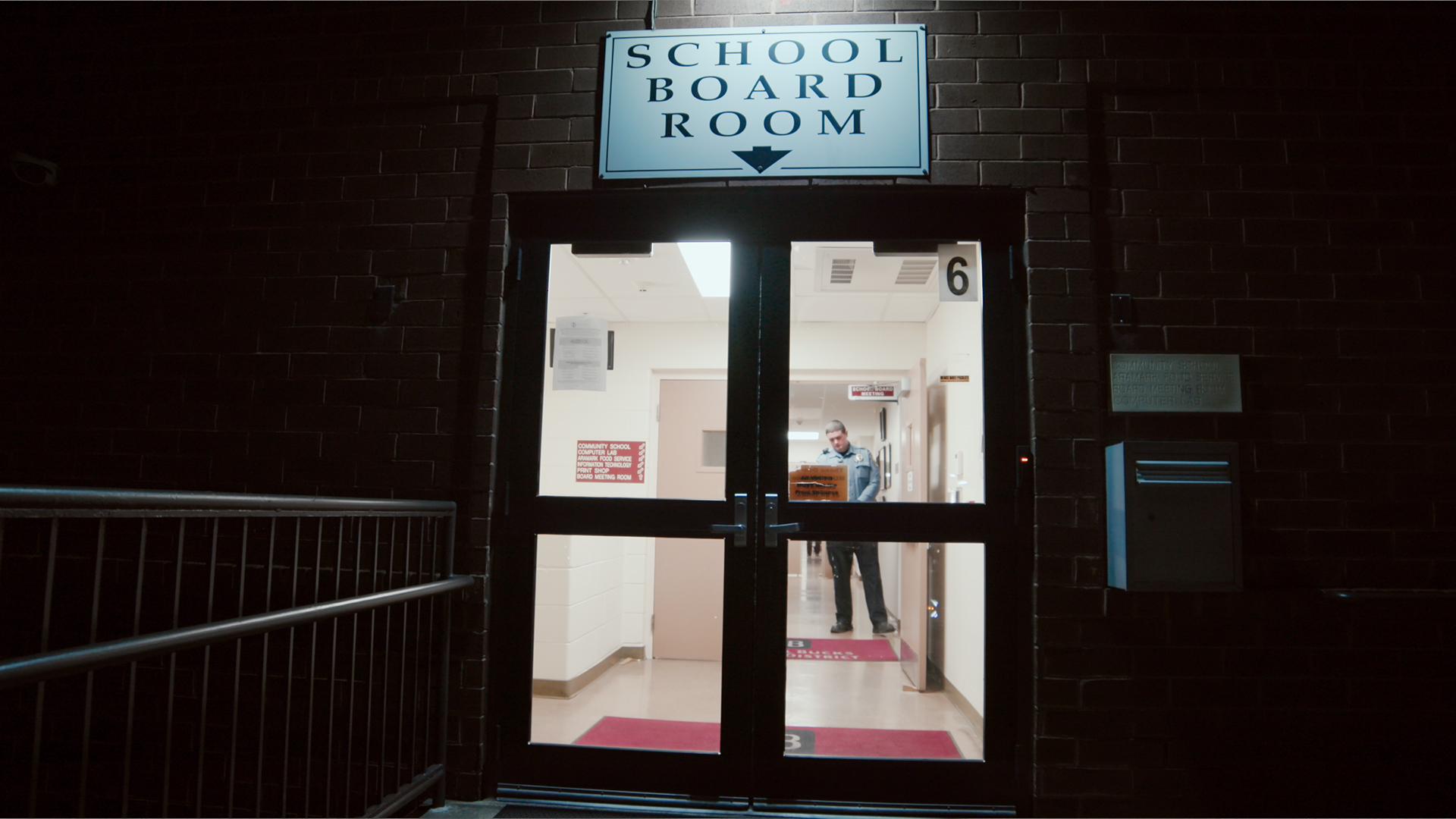
The series includes footage from contentious public meetings and talking-head interviews with a range of participants — from school board members to families with queer children, who all feel they have been adversely affected by the district’s policy decisions. It also includes scenes in which residents on opposite political sides discuss their differences.
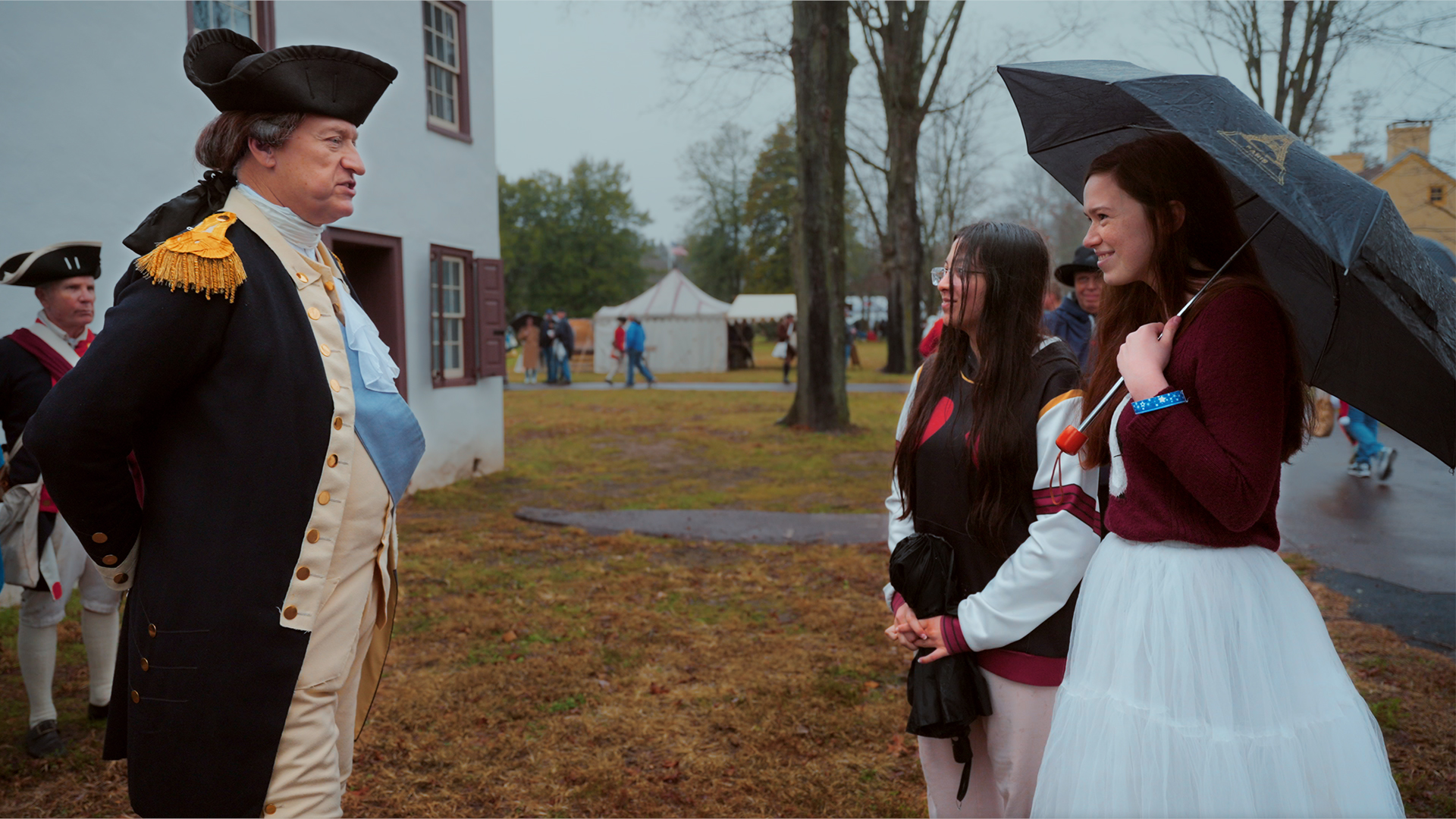
Bucks County, USA, features plenty of Bucks County color, from a visit to an annual re-enactment of Washington’s crossing of the Delaware to Doylestown’s Oscar Hammerstein Museum, which, during the period of filming, was the subject of a fundraising campaign. We hear “You’ve Got to Be Carefully Taught,” a Hammerstein composition from the musical South Pacific, about the scourge of racial prejudice.
Filmmaker Robert May, who codirected the first episode and directed the other four, is a Pennsylvania native who now lives in the Poconos. The other codirector of the first episode is filmmaker Barry Levinson, whose work includes best picture Oscar winner Rain Man.
Both May and Levinson have previously made films about Pennsylvania scandals: May directed Kids for Cash, the 2014 documentary about a Pennsylvania judicial corruption scandal of the same name. Levinson directed Paterno, the 2018 HBO drama about the Penn State abuse scandal.
Jason Sosnoff, who has long worked with Levinson, is Bucks County, USA’s producer.
A still from the docuseries “Bucks County, USA” that premiered at the 2025 Sundance Film Festival and is now streaming on PBS. Using Bucks County as a focal point, the series examines political polarization and culture wars in America.Courtesy of SenArt Films & Baltimore Pictures
Sosnoff said the seeds of the docuseries were planted when he was invited to a focus group with Trump supporters on Jan. 7, 2021, the day after the Capitol riot. The focus group was led by pollster and Penn alum Frank Luntz.
The producer came to the focus group with skepticism, but, he said, “I would say, about an hour into it, I started really hearing the people … I began to actually just hear and listen to them and see them as humans who have a point of view, rather than names and labels we give to them.”
He went to Levinson, his business partner, proposing that they start a project that would “humanize the right to the left and the left to the right.”
The next step was to find a community that could serve as a microcosm of that story and to ask, “Why is there such opposition now between the left and the right, Democrat or Republican, whatever you want to call it? Why is there such animosity in the air?” Levinson said.
The answer lay in “The School Board Wars,” a 2021 two-part episode of the New York Times podcast The Daily.The podcast examined the bitter political fights that had come to school boards nationwide, with the Central Bucks School District featured as an example.
“In that podcast, you hear people from the town screaming at each other, yelling at each other, death threats,” said Sosnoff, who thought, “Wow, this is a community that’s in trauma. And I think there’s a story there.”
A still from the docu-series “Bucks County, USA” that premiered at the 2025 Sundance Film Festival and is now streaming on PBS. Using Bucks County as a focal point, the series examines political polarization and culture wars in America.Courtesy of SenArt Films & Baltimore Pictures
“What we saw in Bucks County was the possibility of using the school board wars and the school board campaign … as a narrative drive for the series,” May said. “These parents are all going to school board meetings, and they’re firing shots at both sides for the sake of their children.”
They started filming in April 2022 and continued through the end of 2025. Over that time, the filmmakers documented many school board meetings in which community members yelled at each other, wrote hundreds of angry social media posts, and battled over a 2023 school board election in which control of the Central Bucks School Board hung in the balance.
“They’re all protecting their kids, but they’re all fighting in front of their kids, too,” said May.
Two of those kids are Evi and Vanessa, who were 14 when the series started filming and remained best friends, even as their parents battled over political considerations. Vanessa’s father, Paul Martino, is a businessman who funded the conservative Back to School political action committee. His wife, Aarati, ran for the school board. Evi’s mother, Lela Casey, is a contributing writer to the local, progressive-leaning publication, the Bucks County Beacon.
The film team shifted its focus, in part, to Evi and Vanessa. The two teenagers were initially reluctant to speak on camera for fear of jeopardizing their friendship, but they ultimately did and remained friends.
It’s part of a repeating theme, May said. “The kids were a lot more civil with each other, and had a great deal of respect for each other, much more than a lot of the adults did.”
The filmmakers wanted to apply fairness to all sides and give everyone a say on camera. Winning the trust of some participants was hard.
A still from the docuseries “Bucks County, USA,” now streaming on PBS. Using Bucks County as a focal point, the series examines political polarization and culture wars in America.Courtesy of SenArt Films & Baltimore Pictures
“The conservative folks that we talked with viewed us as the media. ‘You’re making a movie, so you’re gonna bash us. We don’t want to be part of that.’ So it took a while to really convince them,” said May, who believes the team has been able to create a “nonbiased portrayal.”
The rancor has continued, nonetheless.
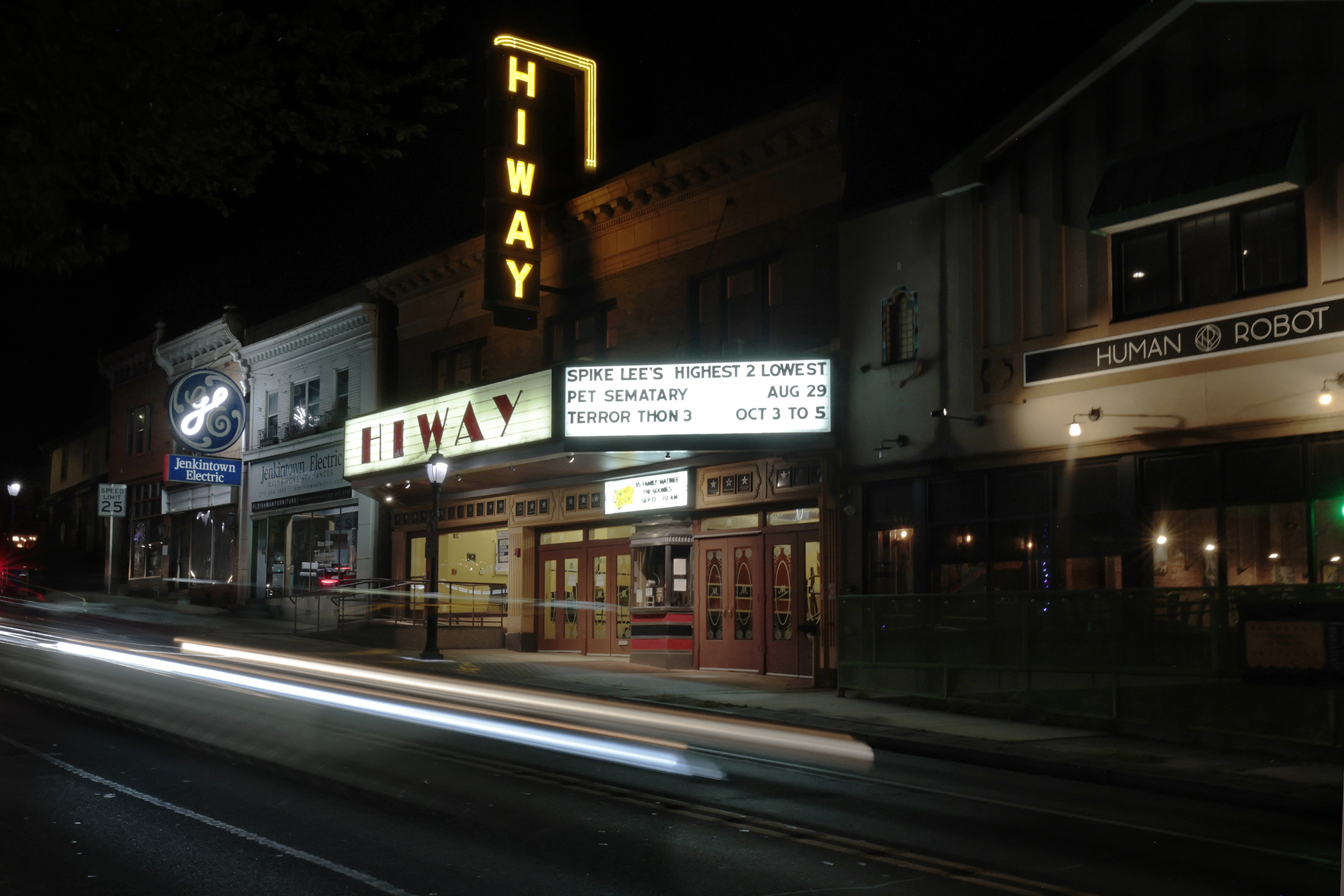
Bucks County Community College was set to host a local premiere screening of the documentary Sept. 15 but canceled it two days earlier. The screening instead took place that same night at a different venue: the Hiway Theater in Montgomery County’s Jenkintown, a Democratic stronghold.
In a statement provided to the media, the BCCC said the screening was canceled after “after we received information that raised concerns about our ability to provide a safe environment for campus visitors.”
“With the docuseries premiering locally on WHYY in less than one week,” the statement read, “and erring on the side of caution, the decision was made to cancel the event.”
“It is obviously unfortunate,” May and Sosnoff said in an email. “We had taken months to plan a great event at this location.” The entire point of the special screening was, they said, “to thank the community for their hospitality over the past four years, and in particular, thank all those who participated in our project.”
”Unfortunately, we live in fearful times, and while the school was not acting with ill intentions, they took something away from the community they are supposed to serve. Our series is all about community — how it can be built and how it can be destroyed,” they said. “Our goal is to foster more trust going forward.”
“Bucks County, USA” is available to stream via the PBS app, as well as The World Channel.
You probablyknow Abigail Covington, my colleague who regularly helms the How I Bought This House column. In the year since she joined the team, she’s become one of The Inquirer’s home-buying experts.
So I couldn’t believe it when she told me that she’d opted for an information-only inspection when she bought her first home a few weeks ago.
I wanted to shake her by the shoulders and say: Haven’t you learned anything from all the real estate stories you’ve written?!
But in a new essay, Abigail explains why. Keep scrolling for that story and more in this week’s edition:
Buying a home is a huge financial decision — and an emotional one. Balancing the two can be tricky when your head knows what to do but your heart is pulling you in the opposite direction.
After a year writing about real estate, my colleague Abigail Covington felt prepared to stand up to sellers and get a great deal. But when her dream house came along, she ditched her careful plans to make sure she got it.
In Jenkintown, neighbors are disagreeing over Airbnbs. The town’s zoning board denied its first short-term rental request last week after residents complained about noise and unexpected visitors.
It made me wonder how I’d feel if my next-door neighbor was a rotating cast of visitors. On the one hand, I’ve stayed in dozens of Airbnbs and had memorable, comfortable travel experiences. On the other, I understand being worried about safety.
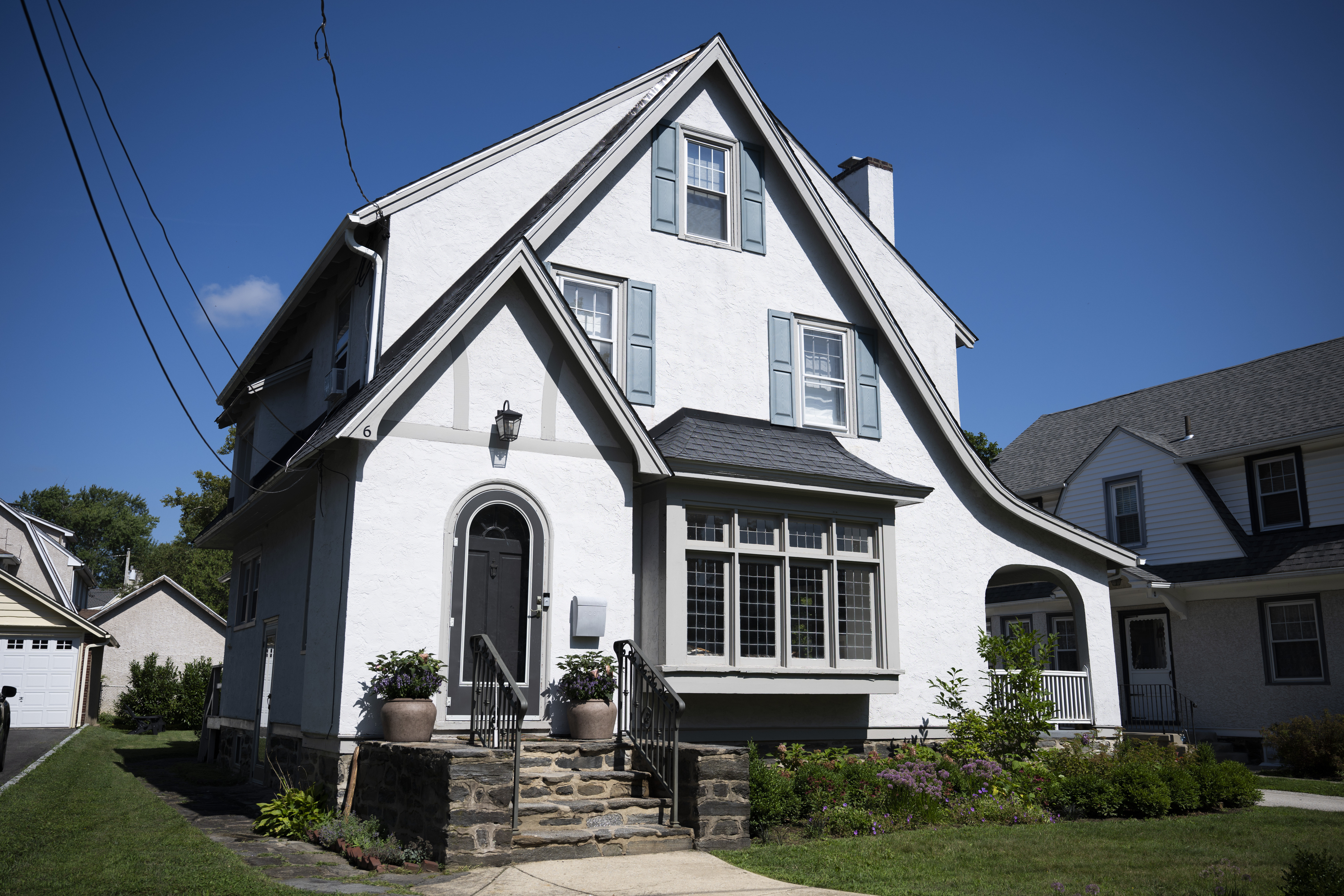
There is just something about a Tudor-style home that feels so cozy — the steeply pitched roofs, the storybook arches, the tall windows. Talk about curb appeal.
The interior of this Havertown home is just as warm and comfy with unexpected color combinations, a grandfather clock, and a lot of floral wall paper.
The Finnegan family moved in five years ago and have spent that time redesigning their home to be a haven. Take a peek inside.
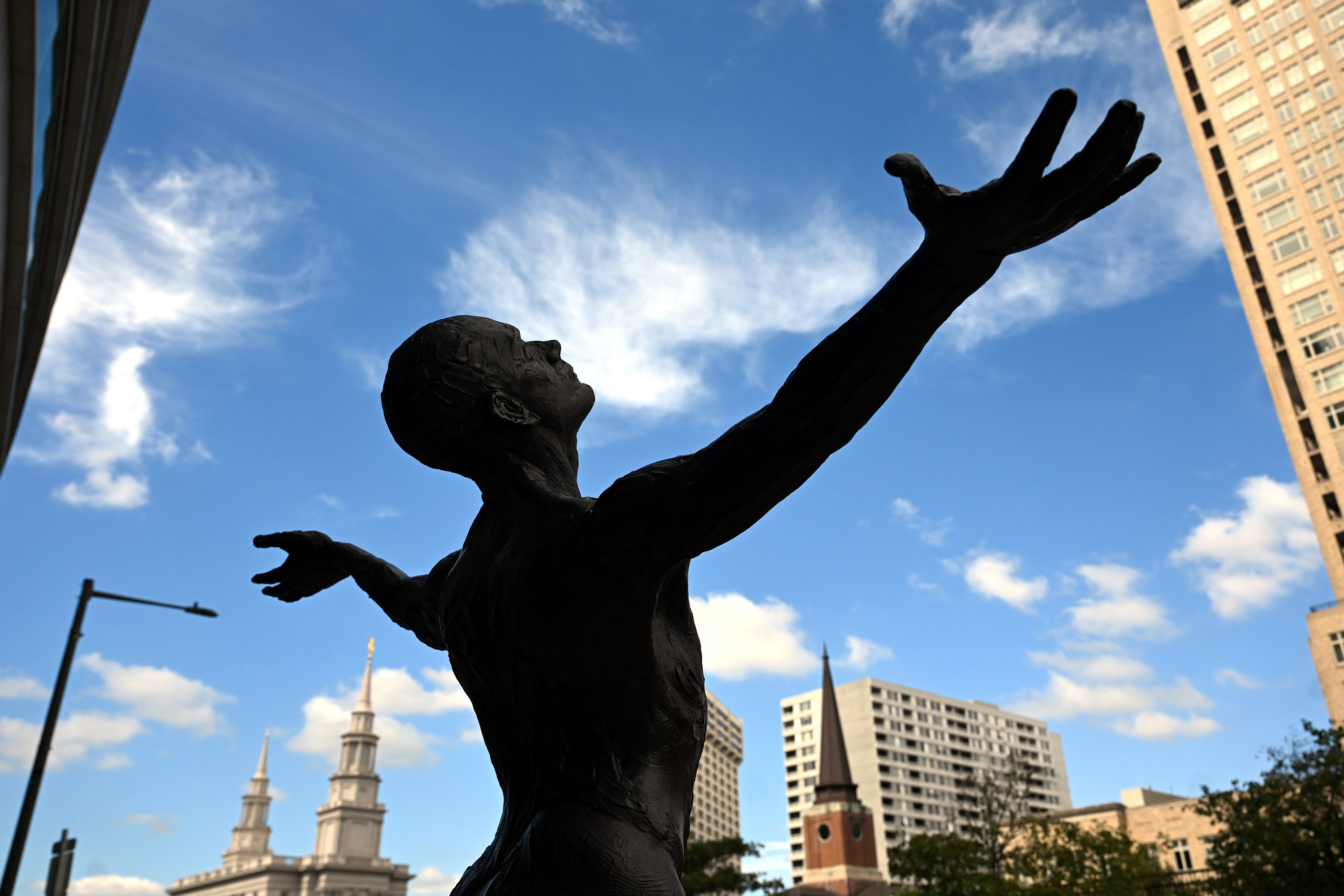
📷 Photo quiz
Do you know the location this photo shows?
📮 If you do, email me back. You and your memories of visiting this spot might be featured next week.
Shout out toDon L. who correctly guessed that last week’s image depicted workers cleaning the glass pavilions over the subway stairs at Dilworth Park.
++
Have a great week. Michaelle will be back next Thursday.
By submitting your written, visual, and/or audio contributions, you agree to The Inquirer’s Terms of Use, including the grant of rights in Section 10.
Jenkintown’s zoning board denied its first short-term rental request on Thursday after residents complained about noise and visitors.
Resident Elvira Lindgren and her husband bought and renovated a twin in hopes of renting out rooms, she said in an interviewFriday. The couple began hosting almost a year ago, according to their Airbnb.com listing. But the business has led to tension with some neighbors, who urged the board to deny the request for an official rental license.
The tiny Montgomery County town’s code did not permit short-term rentals until spring 2025, when the borough created an ordinance that allows property owners to open the small businesses with permission from the zoning hearing board, which typically only meets once per year.
Jenkintown now requires a rental license under the new ordinance, which lays out policies on location, parking, safety, and fines, among other things.
Lindgren said she didn’t know about the licensing process when she first started, but when a neighbor reported her, the borough said she could continue operating until Thursday’s hearing.
First Airbnb request draws neighbor dispute
Lauren Davis, whose family shares a wall with the Lindgrens, said Friday that the twins aren’t suited to Airbnb rentals — partly because they share attic access — and that she and other parents are upset to see older men walking on the property, rather than medical students as Lindgren had told her to expect.
“The level of activity they have going on there is better suited to a standalone home,” Davis said.
The borough was mindful of Jenkintown’s already-dense residential development while working on the new short-term rental rules with the county planning office, borough manager George Locke said Wednesday, before the hearing.
“We wanted to have it, but we wanted it in certain locations,” Locke said, “and to make sure it was safe for everybody and didn’t become a nuisance.”
Reached by phone Friday, board solicitor Noah Marlier wouldn’t comment on why the board denied the license.
Lindgren said she was “shocked” by the pushback at Thursday’s meeting from Davis and two other neighbors, adding that seven neighbors had signed a document before the meeting attesting they had no problems with her business.
Davis argued at the hearing that problems during renovation, including a gas leak that forced her family to evacuate, showed the short-term rental would not follow rules.
But accidents can happen during any renovation, Lindgren said Friday, so it’s unfair to count the incident against the business itself.
Lindgren also defended her guests, who she said have included medical students, World Cup visitors, and an out-of-state dad who stays monthly to visit his daughter. While she understands their concern for their children’s safety, complaints are one-off incidents that the neighbors falsely portray as a pattern, she said, and she doesn’t hesitate to remove the rare guest who causes problems.
“I’ve met so many people from abroad, so many countries,” Lindgren said. “Quite a few people became friends.”
She’s disappointed that the board’s decision means visitors coming to Jenkintown to see loved ones or work at Jefferson Abington Hospital will lose a housing option in the area, Lindgren said.
Some Jenkintown Airbnbs may run without approval
But Jenkintown does have a few other short-term rentals, according to postings on Airbnb — including two that appear to have operated for several years.
Locke wouldn’t say whether he’s aware of any unlicensed short-term rentals, but he encouraged any property ownersoperating one to seek approval.
The borough’s solicitor is expected to write a written opinion on Lindgren’s case within 45 days, and she could appeal after that.
But Lindgren plans to consider options for longer-term renters instead, like traveling nurses. The short-term ordinance only applies to properties that offer stays of fewer than 30 days and accept guests for fewer than 120 days total in the year. Properties that book more than 120 days a year are considered hotels in Jenkintown.
“I just feel bad for those who won’t get to stay with me,” she said.
This suburban content is produced with support from the Leslie Miller and Richard Worley Foundation and The Lenfest Institute for Journalism. Editorial content is created independently of the project donors. Gifts to support The Inquirer’s high-impact journalism can be made at inquirer.com/donate. A list of Lenfest Institute donors can be found at lenfestinstitute.org/supporters.
Jenkintown School District will hold homecoming festivities around a coed varsity soccer team game next week after ending the football season early over low participation.
School leaders announced a new homecoming schedule on Friday, days after the football season cancellation.
The homecoming soccer game will start at 11 a.m. on Oct. 3 at the Jenkintown stadium, and homecoming court celebrations will be at halftime. Snack shack proceeds will benefit the senior class.
This coming week will be spirit week for Jenkintown’s upper grades, principal Tom Roller wrote in the announcement to families, ending in a pep rally on Friday.
The teams postponed the match originally planned for Tuesday, according to the charter school’s soccer schedule.
“We appreciate [MaST] Community Charter agreeing to change our game with them so that we could play a Homecoming match,” Roller wrote. “We hope that our community comes out to support our Homecoming court and our Varsity Soccer squad.”
This suburban content is produced with support from the Leslie Miller and Richard Worley Foundation and The Lenfest Institute for Journalism. Editorial content is created independently of the project donors. Gifts to support The Inquirer’s high-impact journalism can be made at inquirer.com/donate. A list of Lenfest Institute donors can be found at lenfestinstitute.org/supporters.
The Jenkintown School District is cancelingthe rest ofits varsity football season over safety concerns from low participation, officials announced this week.
The high school team in Montgomery County’s smallest school district had played two games so far this season and was set to play Lower Moreland on Friday.
There were not enough players on the team, nor enough active participation, to safely play a whole season, high school principal Thomas Roller and athletic director Aubrie Breisblatt wrote in a letter to the school community Tuesday, and the team had already been forced to forfeit games.
“Continuing to compete under these circumstances would place significant physical demands on a limited number of players,” the school leaders wrote, adding that the decision had come at the head coach’s recommendation.
While the team will not play any more games this year, the program will continue to hold practices, and officials hope to rebuild the program in the future.
“Sports participation, especially at a school as small as Jenkintown, ebbs and flows over time depending on students’ interests,” school board president Carolyn Riley wrote in a text Wednesday.
”We remain very supportive of our students committed to playing football.”