Tag: JD Vance

  • JD Vance is right about one thing: Caring for children has value. His plan gets the rest wrong.

    JD Vance is right about one thing: Caring for children has value. His plan gets the rest wrong.

    This week, the Trump administration floated an idea that has managed to irritate almost everyone: Allow some parents who stay home with their children to receive federal childcare subsidies.

    The proposal, championed by Vice President JD Vance, would allow some low-income married couples to use money from the federal Child Care and Development Fund to support a parent caring for a child at home. The fund currently helps families pay for childcare so parents can work, study, or get job training.

    Vance is right about the premise. Caring for your own child is work; our economy depends on enormous amounts of it, and public policy does remarkably little to recognize its value.

    But the administration’s proposed solution would draw from a childcare fund already nowhere close to meeting demand. The federal government’s latest estimate found that only about one in six eligible children receive subsidies, and eligible families across the country are already sitting on waiting lists.

    The proposal has become yet another argument about whether or not mothers should work. Conservatives praise it as overdue support for stay-at-home parents; critics see it as another attempt to push women out of the labor force. Both framings make family life sound much tidier than it is.

    I have spent my career working with childcare providers and parents, and the arrangements they cobble together rarely fit clean categories. A mother may stay home with an infant, return to work later, rely on a grandmother some days and use a childcare center on others. A parent who considers herself “stay-at-home” may still want childcare for part of the week. No single work or care arrangement comes close to satisfying everyone, and preferences shift as children grow.

    Using the same federal pot for both obscures an important difference.

    Money paid directly to a parent may make staying home possible when it otherwise would not be. A childcare subsidy, however, does more than help one family purchase care. It also helps sustain the supply of care itself: the teacher’s salary, the home-based provider’s income, the classroom that needs enough children enrolled to remain open.

    If these dollars move elsewhere, the effect does not stop with the family receiving them. A provider may need to close its doors, leaving fewer options for everyone else.

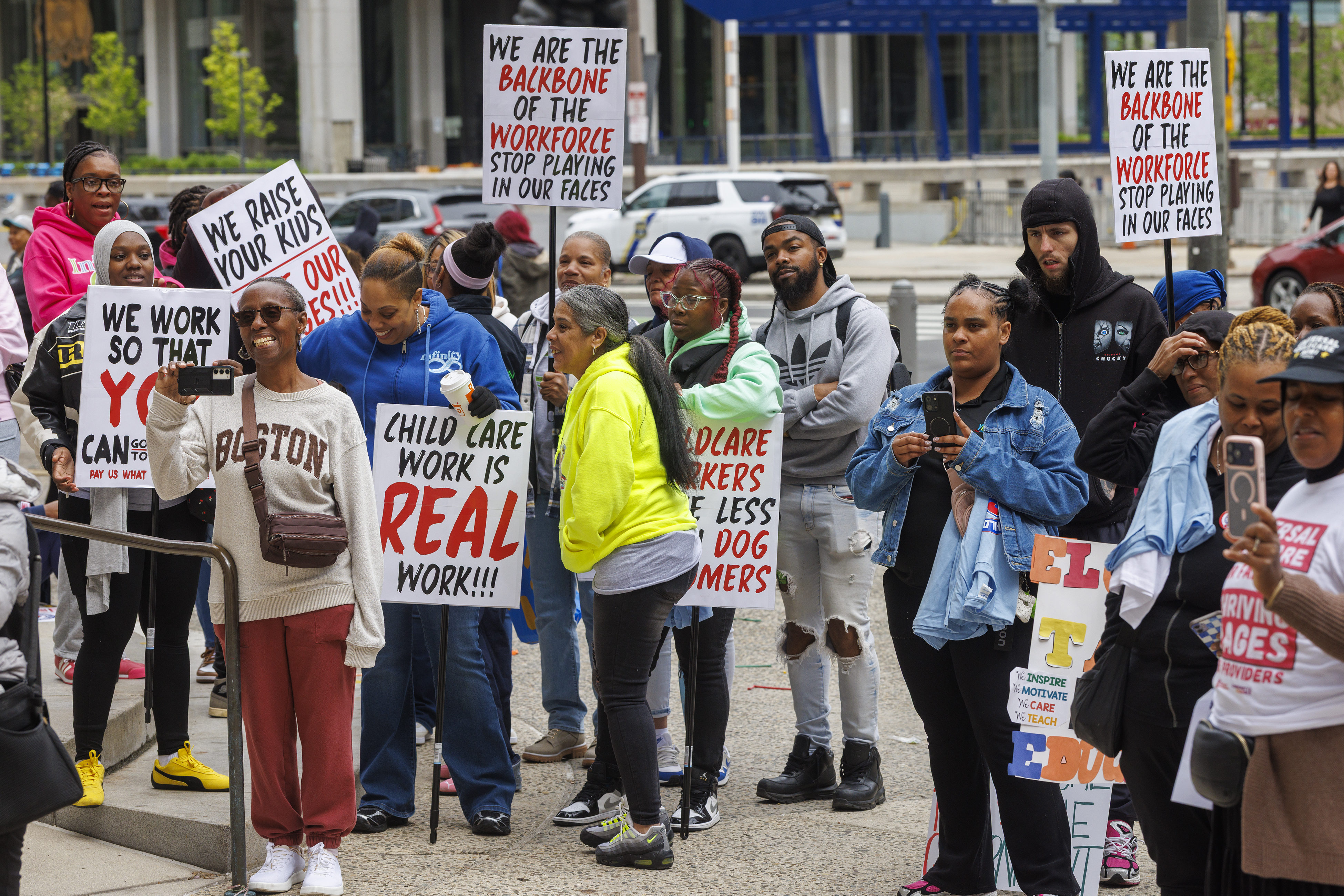
    Childcare educators gather on the north side of Philadelphia City Hall in May. About 98% of center-based early childhood teaching staff are female, writes Sabrina Habib.Alejandro A. Alvarez / Staff Photographer

    The debate usually stops with two mothers: the one who wants to stay at home and the one who needs childcare in order to work. It overlooks a third woman whose livelihood depends on those same dollars: the childcare worker.

    About 98% of center-based early childhood teaching staff are female, earning a median of less than $17 an hour. For self-employed childcare workers — including those running care from their own homes — the latest estimate is even lower, at $9 an hour, or about $18,500 a year, barely above the U.S. federal poverty level. Many of these childcare providers are mothers themselves.

    Seen this way, the proposal exposes a much bigger problem than a fight over who should receive a childcare subsidy. A woman caring for her own child often cannot afford to stay home, while a woman caring for someone else’s child often cannot afford to live on what she earns. Now we are considering asking those women to compete for the same scarce public dollars. Taking money from one underfunded form of care and giving it to another is a peculiar way to show that America values caregiving.

    There are better ways to give parents more room to stay home when that is what they want, such as through paid family leave or a more generous child tax credit. If Washington wants to recognize the economic value of parental care, it should fund that goal directly rather than weakening the childcare system other parents need in order to work.

    While the proposal may have been intended to signal that the administration values caregiving, instead it reveals how little public money America is willing to put behind care in any form.

    Parents at home are undersupported. Childcare workers are underpaid. Families who need care and qualify are stuck on waiting lists. And rather than fixing any of those shortages, the administration is proposing to make them compete against one another.

    America can do better than deciding which woman’s care counts.

    Sabrina Habib is the cofounder of Kidogo, Kenya’s largest childcare network, and leads the Zera Fund, spurring new investments into childcare globally as part of Melinda French Gates’ Global Leaders Initiative. She is also a Public Voices fellow tackling poverty, a partnership between the Op-Ed Project and Acumen.

  • Trump’s Ukraine negotiators are too chicken to visit Kyiv and support its independence

    Trump’s Ukraine negotiators are too chicken to visit Kyiv and support its independence

    There were two noticeable no-shows as Western leaders gathered Monday to mark the 35th anniversary of Ukraine’s independence — and its five years of resistance to Vladimir Putin’s effort to re-subjugate the country to Russian rule.

    There were multiple news reports that President Donald Trump’s clueless peace envoys — son-in-law Jared Kushner and real estate magnate Steve Witkoff — might finally join European allies at anniversary ceremonies.

    I say “finally” because neither of these supposed peacemakers has ever deigned to visit Ukraine. Not once. Meantime, Witkoff has visited Moscow eight times, and gushed over Putin as he and Kushner (also a repeat visitor) discussed business deals with Russia.

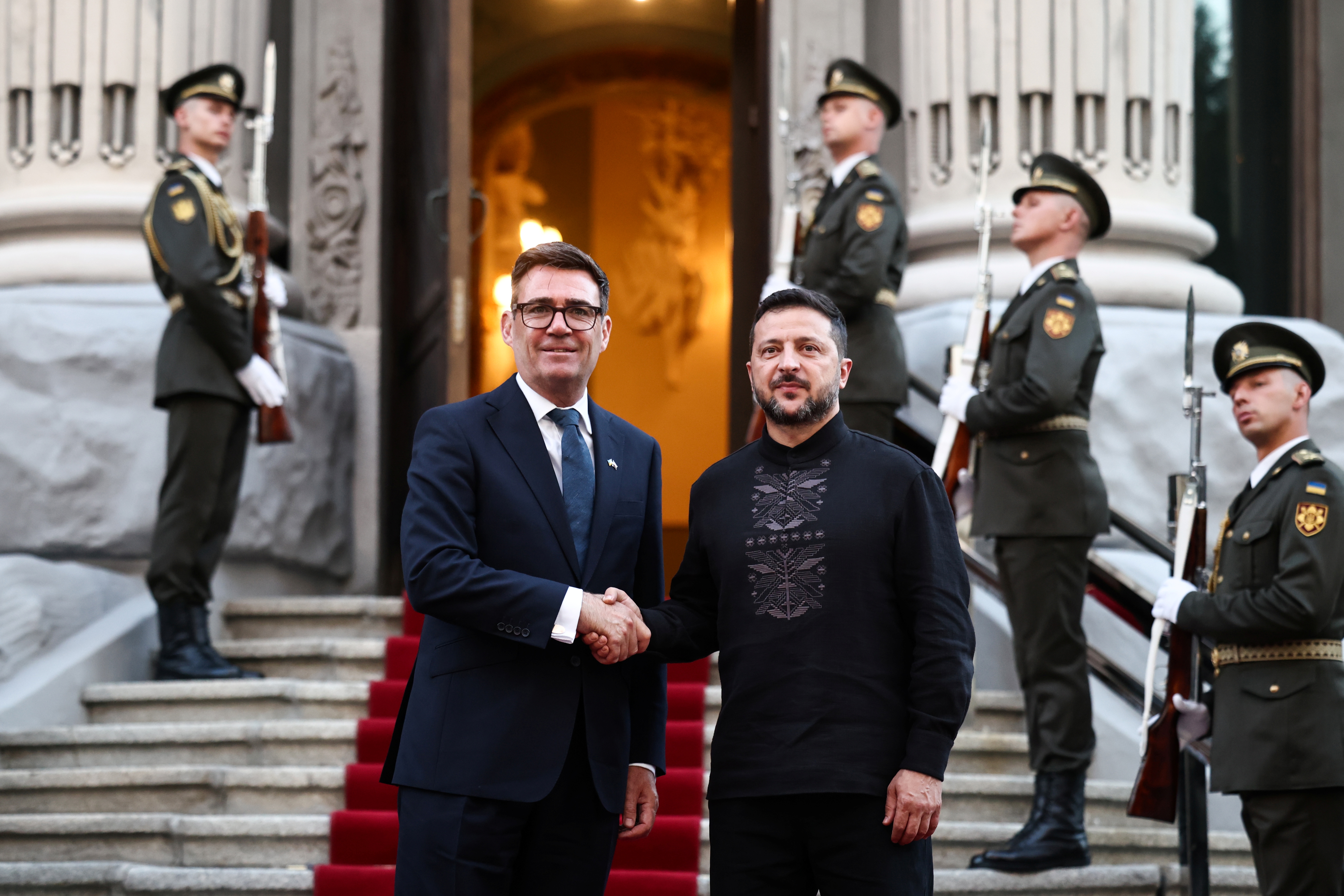
    It is no surprise, then, that Trump’s blinkered envoys postponed their trip, reportedly blaming their absence on intensified Russian missile and drone strikes. Never mind that former Vice President Mike Pence, British Prime Minister Andy Burnham, and other European leaders showed up.

    They recognized — as Trump and his envoys still do not — that Ukraine is fighting not just for its own freedom, but for the security of Europe and the United States.

    Burnham, who came to Kyiv on his first foreign trip as prime minister, understands the significance of Ukraine’s brave stand against the world’s second-largest army. A Russian military that is heavily aided by the dictators of China, North Korea, and Iran, all eager to undermine America and the democracies of the West.

    The U.K. leader rightly compared Ukraine’s resistance against Russian imperialism to Britain’s fight against Nazi Germany in the 1940s, telling Ukrainians, “My nation kept the flame of European freedom alive in the 20th century; you hold that flame in the 21st.”

    Burnham is right on the mark.

    Ukraine’s President Volodymyr Zelensky hands over the flag of a military unit during the ceremony to mark Ukraine Independence Day in Kyiv, Ukraine, Monday.Efrem Lukatsky

    The image of London firefighters bravely battling the blazes caused by the German Blitz, which rained rockets down on civilians in order to break their morale, comes right to mind when watching video of Ukrainian rescue workers pulling women and children out of the rubble of collapsed apartment towers that have been hit with Russian missiles or drones.

    Then-Prime Minister Winston Churchill understood that if Britain fell, the Nazis would take over Europe. The Battle of Britain in the summer and fall of 1940, in which incredibly courageous Royal Air Force pilots pushed back the Luftwaffe, forced Adolf Hitler to abandon his planned invasion of England. The courage and spirit of Britons under bombing gave the RAF the time to regroup and attack the Nazis in Europe. It gave President Franklin D. Roosevelt time to act on sending Lend-Lease war supplies to Britain.

    Burnham grasps that Putin is a stalking horse for an axis of adversaries – namely China, North Korea and Iran – that backs and finances Russia’s crimes.

    Ukraine’s battle of the skies is effectively the first round of World War III. And only one weapon can take down the ballistic missiles Russia is pouring down on Ukraine’s civilian infrastructure: U.S.-made Patriot interceptors.

    Yet, Trump has wasted much of America’s Patriot missile stock chasing cheap Iranian drones, and refuses to sell Kyiv a small percentage of what the U.S. retains. And after proposing joint production of Patriots with Ukrainian President Volodymyr Zelensky, the U.S. president immediately backed off.

    That is why Burnham announced Monday that the U.K. (along with France) will help Ukraine make its own version of a Anglo/French long-range cruise missile by sharing classified technical information. That will help Ukraine preempt Russian missiles by eliminating the firing sites.

    But setting up that production line will take months or years, and Ukraine desperately needs Patriots now.

    Ukraine’s President Volodymyr Zelensky (left) hands over the Ukraine state award to European Council President António Costa during a commemorative ceremony in Kyiv, Ukraine, Monday, marking Ukraine’s 35th Independence Day.Efrem Lukatsky

    It is hard for many Americans to grasp how important Ukraine’s survival is to our future security. Few U.S. politicians consider Ukraine to be a critical campaign issue. Trump has communicated his disdain for Kyiv to his MAGA followers, and Vice President JD Vance boasts that his proudest moment was helping cut off aid to Ukraine. As for Democrats, they’d rather focus on cost of living and the endless Iran war.

    But Gen. Ben Hodges, former commander of U.S. Army Europe, nailed it when he told me recently that what’s been missing from the lack of U.S. attention “is the recognition that it’s in the U.S. interest for Ukraine to be successful.” President Joe Biden was too timid, he noted, and Trump is worse.

    America’s enemies are taking full notice.

    China is watching and learning from the drone, robot, and electronic warfare being fought in Ukraine, while sharing dual-use weapon parts and technology with Moscow. Every lesson is being fed into the hopper of Xi Jinping’s massive agglomeration of data used for prep to take back Taiwan and dominate South and East Asian neighbors and territorial waters.

    North Korea is earning hard currency by sending troops and missiles to aid Russia’s war on Ukraine. In return, it is accessing Russian technology to build up its nuclear arsenal. Iran sends Shahed drones to Russia and learns from Russian upgrades of those drones, which helps Tehran attack U.S. bases and threaten Gulf Arab states in the Middle East.

    Meantime, Trump is focused on his White House ballroom, car races, and starting a trade war with Canada, while Kushner and Witkoff chicken out of visiting Kyiv. They have no clue that the fate of the Ukraine war will overshadow everything they now think is important.

    Their trips to Moscow are feckless unless they recognize that Putin has no interest in peace. Any “peace process” is dead (irrespective of CIA Director John Radcliffe’s secret visit to Moscow last weekend) until the United States recognizes reality and joins Europeans in squeezing Putin until he fears the war is endangering his survival.

    I believe Ukraine will hold out via its tech brilliance and innovation, and its people’s determination not to surrender to the brutal domination of Russia. But the United States will pay a dear price for failing to step up when it could have blocked Putin and his allies — before their war on the West got much, much worse.

  • Shapiro, Democrats blasted Trump’s ‘conspiracy theories.’ That message has not changed after New Jersey’s noncitizen voting revelation.

    Shapiro, Democrats blasted Trump’s ‘conspiracy theories.’ That message has not changed after New Jersey’s noncitizen voting revelation.

    The day after President Donald Trump delivered a prime-time speech contending, among other claims, that 250,000 noncitizens were registered to vote in just four states, Pennsylvania Gov. Josh Shapiro derided it as “a whole bunch of conspiracy theories that are just simply not connected to reality.”

    A week later, when New Jersey revealed that 6,600 noncitizens were improperly registered to vote in the state and nearly 400 cast a ballot due to a glitch, Shapiro’s message was nearly identical — that Trump is pushing “baseless conspiracy theories” as he seeks more power over state-run elections.

    Pennsylvania and New Jersey were both on the list of Democratic-led states that Trump claimed had thousands of noncitizens on their voter rolls. The methodology of how the Trump administration arrived at that figure remained unclear, but his administration has sought to leverage the New Jersey disclosure as evidence of a larger problem.

    But Shapiro and other national Democrats have not shifted their messaging on the issue ahead of the high-stakes midterm elections. They are refusing to cede to the GOP any suggestion that New Jersey’s voter rolls are evidence of widespread voter fraud and are warning that the changes Republicans seek would make it tougher for many Americans to vote.

    Shapiro, a likely presidential contender in 2028, joined 25 other Democratic officials from across the nation in a lawsuit last Thursday challenging the administration’s ramped-up attempts to coerce states to share their raw voter data by threatening to withhold money for homeland security and disaster preparedness.

    “Withholding this funding will make our communities less safe and would be dangerous under any circumstance, but doing this in an attempt to undermine states’ authority over elections is reckless and unconstitutional,” Shapiro said.

    Kentucky Gov. Andy Beshear, another potential 2028 candidate, also joined the suit. (Both Shapiro and Beshear lead states with Republican attorneys general.)

    The day after Trump’s speech, Shapiro challenged the administration to present “real evidence” of noncitizen voting, which Pennsylvania election officials say is extremely rare.

    In addition to Pennsylvania and New Jersey, the White House also targeted Nevada and California for additional scrutiny over their voter rolls, according to a document posted to the White House website last week shortly after Trump’s speech.

    California Gov. Gavin Newsom, one of Trump’s most vocal critics in the Democrats’ potential 2028 field, said the president’s speech was fueled by debunked lies.

    “It was unhinged. Unfounded allegations of election fraud — it’s madness. But he’s setting it up. He’s setting you all up. You know what he’s doing. He’s doing it in plain sight. He’s socializing all of this to normalize all of this,” Newsom said last week, during a news conference that took place the same day as New Jersey’s announcement.

    Trump has repeatedly promoted conspiracy theories about California elections in recent weeks — including in two Pennsylvania speeches — despite no evidence that fraud occurred.

    For U.S. Sen. Cory Booker (D., N.J.), pushing back against Trump presents a tougher challenge.

    Booker, also a likely 2028 aspirant, must balance the governing changes he sees as needed in New Jersey with the larger politics of the moment. He said the failure of the software was “not acceptable” but rejected Trump’s efforts to portray the entire election system as faulty.

    “There are those who will choose to weaponize this issue to undermine confidence in our elections,” Booker said in a statement. “We cannot allow that.”

    But Republicans have pointed to New Jersey as proof that a sweeping overhaul is needed for November’s results to be trusted.

    Trump’s allies are pushing the SAVE America Act, which would require voters to provide proof of citizenship when registering to vote and to show photo ID at the polls. The effort has stalled in Congress amid concern, even among Republicans, that the bill’s restrictions on mail voting could make it harder to cast a ballot and that many citizens could wrongly be blocked from voting if they do not have access to required paperwork.

    Vice President JD Vance, widely viewed as a 2028 Republican candidate and a potential political heir to Trump, seized on New Jersey’s revelations as a renewed opportunity for the legislation’s relevance.

    “If only there was a way to stop this type of ‘software error’ that allowed non citizens to vote in our elections,” he wrote in a post on X that targeted Booker and Sen. Andy Kim (D., N.J.), both of whom are unlikely to support the Republican-led bill.

    But the registration glitch happened despite these individuals answering “no” when asked on a keypad whether they were U.S. citizens. They were added to the system “through no fault of their own,” New Jersey Gov. Mikie Sherrill said last week, so it is not clear that showing additional documentation would have prevented the error.

    Sherrill ordered her chief counsel to investigate the issue, which occurred under her predecessor, former Democratic Gov. Phil Murphy, and promised to hold those responsible for the error accountable.

    Talking about this issue can pose an obstacle for both parties now that New Jersey’s glitch has been identified, said Sam Chen, a Pennsylvania strategist who has worked for former Gov. Tom Corbett and other Republicans.

    Republicans have overplayed their hand and are not seen as an authoritative voice on voter fraud, but Democrats have spent the same amount of time dismissing all of Republicans’ concerns, including some that are legitimate, Chen said.

    “When you’ve got an entire party saying, ‘No, this is never happening,’ and now you see what you see in New Jersey, it is going to leave a serious credibility issue for them,” Chen said.

    Democrats, like Shapiro, could build more credibility if they acknowledged the positive parts of the SAVE Act, he contended.

    “Grab what’s good, vehemently oppose what’s bad, and states can blaze their own path,” he said.

    But J.J. Balaban, a Philly-based Democratic ad maker, said it does not make sense for Democrats to go along with the SAVE Act because the charges are being made in bad faith.

    While many Democrats would support efforts to make election systems more secure, Balaban said, that is not what the Trump administration is trying to do — and New Jersey does not change that.

    “Voter fraud was shockingly rare a month ago. It remains shockingly rare today,” he said.

  • The America-turns-250 column Donald Trump doesn’t want me to write

    The America-turns-250 column Donald Trump doesn’t want me to write

    It was right after birthright citizen Folarin Balogun tapped in another game-winning goal for U.S. men’s soccer in the World Cup Wednesday night that I had a moment of clarity about where things are in America as our nation turns 250.

    I’d gone to Union Yards, the outdoorsy beer hall adjacent to Chester’s soccer palace, Subaru Park, not only to catch the game but also a vibe that I’d wanted to turn into this column.

    The euphoria after Balogun’s goal — a red-bearded man in a colonial tri-corner hat and the two older veterans who’ve saluted through all of the prematch “Star-Spangled Banner” jumping to their feet, as a little girl in cornrows danced on a table — was the bucket-list moment I’d come there for.

    I saw a beer-recipe melting pot of Americans cheering the immigrant-heavy rainbow coalition of U.S. soccer, showing yet again — just as we did in 1976, when I was 17 — that the people instinctively know how to celebrate what’s actually great about our country no matter how much our leaders try to muck it up.

    I’d joked with my editors earlier in the week that I might lose my columnist license (not an actual thing, although maybe it should be) if my piece that runs on the weekend of the United States Semiquincentennial wasn’t a Big Think essay on what the American Experiment all means — to the extent that anyone can actually think through the fireworks, traffic jams, and 100-degree temperatures.

    That’s when it hit me. That was exactly the column Donald Trump was counting on from me and every other opinion writer in America ahead of Independence Day. The 47th president needed a week when the pundits put on their wide-angle lenses and put away the magnifying glasses, while his “forgotten Americans” headed off to the beach or the fireworks show, or gorged themselves on six hours of World Cup soccer every day, and stopped watching the news.

    An international jewel thief needs to create a distraction. Because if you’d been paying attention during the nation’s summer vacation week, you’d have seen that Trump is robbing us blind.

    The July Fourth holiday gave the Trump regime an opportunity for the ultimate Friday news dump, the now time-honored tradition of releasing the worst stuff when people will be unplugged for a few days. In this case, the dump was a federally mandated financial disclosure form that revealed the stunning extent to which Trump has cashed in on his power and influence as president since taking office in January 2025.

    The top-line numbers defy belief. Trump, who reported earning at least $622 million in 2024, his last year as an out-of-power businessman, revealed that he made at least $2.2 billion in 2025, and it’s hard not to see a lot of this as coming from turning the institution of the American presidency into a cash cow.

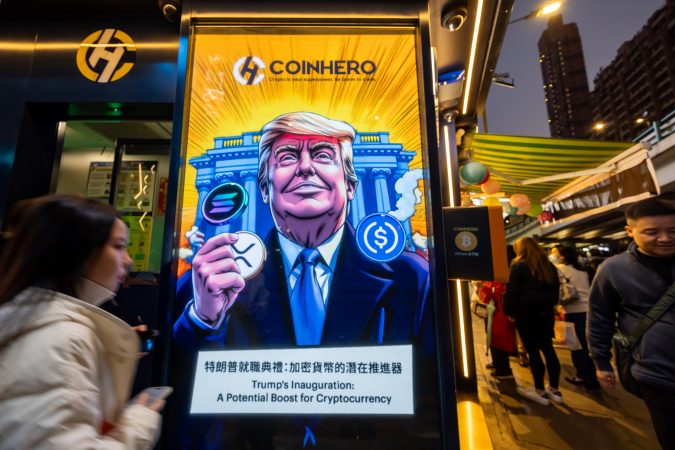
    Consider the $636 million Trump made by releasing a so-called meme coin — an asset whose value is tied to nothing beyond its own hype — that depicted his fist-pumping reaction to the 2024 assassination attempt in Butler, Pa., and which was released literally hours before he took the oath of office again. Not only is this a staggering amount, but Trump pocketed this cash by fleecing thousands of middle-class folks who voted for him.

    Publicly available information from last year showed that some 764,000 individuals who bought the Trump meme coin after its launch lost money. How many investors profited from the $TRUMP coin? Just 58 — and no one got nearly as rich as the man pictured on the coin.

    Yet, Trump’s other sources of wealth are almost as troubling — especially the real estate and crypto deals with foreign nations that have an enormous stake in the president’s policy decisions. That’s especially true when the investment arm of the United Arab Emirates bought nearly half of the Trump family’s main crypto venture, World Liberty Financial, contributing to his at least $1.4 billion in crypto-related earnings. The U.S. and the UAE are (or were) key allies in the war-torn Persian Gulf.

    But the important thing to understand about Trump’s money: It’s not a case in which the issue is that these deals are a lot shadier than the financial profiteering by, say, Jimmy Carter or Warren G. Harding or whomever. None of Trump’s 44 White House predecessors seriously profited from the presidency while they were still in office.

    Carter put his peanut farm in a blind trust. On the flip side, Spiro Agnew pleaded no contest to a felony charge for accepting just a few thousand dollars in the White House — not billions. There is absolutely no precedent for Trump’s naked greed and for how he trades on his office for personal profit.

    Yet, the president thinks that by declaring his crimes on a public document, voters will think it isn’t a crime — even if he releases that form over July Fourth to hedge his bets.

    Indeed, the scale and scope of the president’s grift is vast and overwhelming, which is the point. I’m just now getting to a different Trump family scandal, in which the president approved a lucrative tungsten mining deal with Kazakhstan whereby his sons are key investors, propped up with up to $1.6 billion in loans from Trump’s Pentagon.

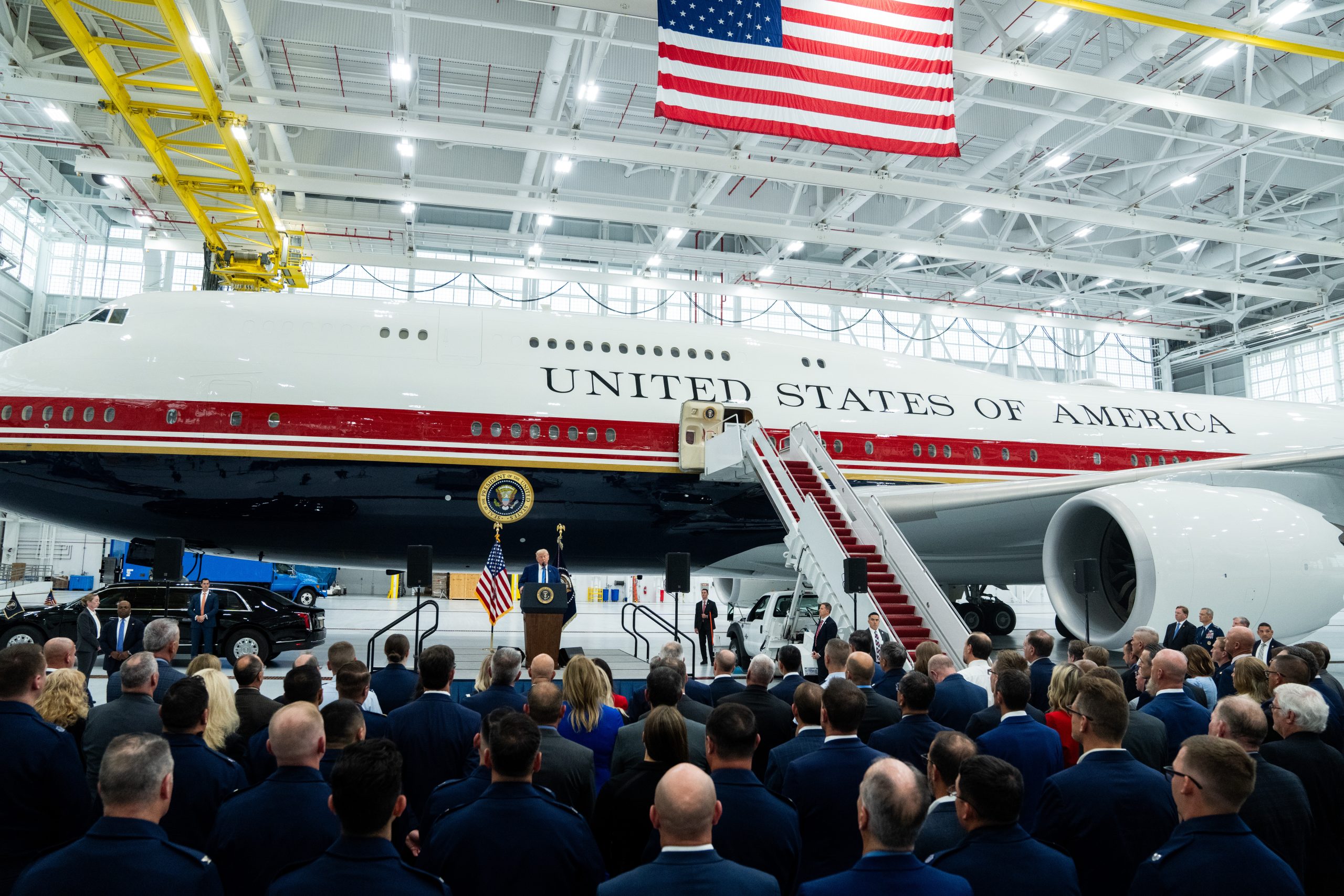
    Trump took questions about his family’s 2025 cash bonanza as — and you can’t make this up — he prepared to fly for the first time in the $400 million luxury jet that was gifted by Qatar and which, after a brief stint as Air Force One, is slated to go to Trump’s presidential library (a.k.a. Trump) in 2029.

    President Donald Trump delivers remarks next to the new red, white, and blue Boeing 747 jetliner donated by the government of Qatar that will be used as Air Force One, at Joint Base Andrews, Md., in June.ALLISON ROBBERT

    Still, the national media — and a lot of social media, as well — gave more attention to the Trump disasters that are easier to visualize, including troops guarding his green algae swamp at the Lincoln Memorial Reflecting Pool and empty fields at his Freedom 250’s disastrous Great American State Fair, which sits nearly empty while thousands pack bars for the international joy of the World Cup, or line the rainbow-colored routes of Pride Month parades.

    One of the many ironies here is that Trump is inadvertently doing America a July Fourth favor by highlighting a key part of the flawed wisdom of the nation’s founders. In declaring independence in 1776 and creating a government that aimed for people-powered democracy with checks and balances on unbridled autocracy, the mad scientists of the American Experiment also expressed their fears for our future.

    “The only path to a subversion of the republican system of the Country is, by flattering the prejudices of the people, and exciting their jealousies and apprehensions, to throw affairs into confusion, and bring on civil commotion,” Alexander Hamilton wrote in 1790. “When a man unprincipled in private life, desperate in his fortune, bold in his temper … is seen to mount the hobby horse of popularity, he may ‘ride the storm and direct the whirlwind.’”

    This Fourth of July week, I’ve been thinking a lot about the 1770s, but also the 1970s. For the second-half baby boomers like myself, it’s impossible not to experience the nation’s 250th anniversary without sepia-toned memories of July 4, 1976 — the U.S. Bicentennial.

    Things were both so similar and so different.

    Just as democracy stares into the abyss now, the assassinations, riots, and bombings of the late 1960s and early ’70s felt like the apocalypse to those who lived through it. But the Watergate scandal — yes, the very thing JD Vance and others on the far-right are dismissive of now — and the way courts and newsrooms and members of Congress responded had created a new hopeful yearning in the summer of 1976.

    That feeling is what made the day I enjoyed with my family as a 17-year-old a half-century ago — watching those glorious tall ships glide down the Hudson River from my dad’s high-rise office on 10th Avenue, then cramming into a subway to get to the fireworks over the Statue of Liberty — still bring back chills today. There was an unexpected sense of togetherness — and, naively in hindsight, that a storm had passed.

    It’s different in 2026. The whirlwind that Hamilton warned us about is directly overhead, and the man is still riding, however clumsily, the hobby horse. The institutions that saved us ahead of 1976 are shells of their former selves, as if a neutron bomb had struck.

    And yet, the fundamental essence of what can make America actually great someday remains intact: its people. This summer, millions of us are showing that Americans want things that can bring us together, and also to celebrate what makes us all different and all special, whether on a soccer pitch or a parade route laced with pink.

    The question is, how do we take this positive energy and stop the whirlwind? How do we celebrate a 250-year slow-bending of the arc of the moral universe without losing our focus on the ongoing crime scene at 1600 Pennsylvania Avenue?

    When the president’s Freedom 250 sets off 850,000 fireworks over Washington on Saturday, think of every single blast as about $2,000 that Trump pocketed for himself, and then it might be possible to comprehend the scope of his crime against our citizenry.

    Don’t let the president hijack the Fourth of July to rob the focus from what matters most, the things we need to write and discuss and march against every week: his unprecedented criminality. The bombs are bursting in air, but only when we unleash our people power and seek justice will we see the dawn’s early light of a new nation again.

    Happy birthday, America.

  • The ‘Minneapolis 15’ ICE-protester indictments are meant to shut you up

    In the tumultuous five-plus months since masked federal immigration agents descended on her hometown, the Rev. Jen Crow of the First Universalist Church of Minneapolis has already been arrested at an airport sit-in, organized a vigil after the murder of her neighbor Alex Pretti, and held trainings at her church for volunteer observers.

    So when Crow learned on Tuesday that 15 local activists had been indicted by federal prosecutors on felony conspiracy charges for monitoring and allegedly at times impeding U.S. Immigration and Customs Enforcement and Border Patrol officers, she did the one thing the Donald Trump regime does not want anyone to do.

    She went down to the St. Paul federal courthouse to protest, again. Crow told me by phone Wednesday that everyday Americans who oppose immigration raids can’t surrender to the fear that the Justice Department wants to create by threatening long prison terms.

    “When you see the federal government turning on its own people, the thing is we have to act anyway and just trust in the purpose and trust in what we’re doing and our care for each other, and just really lean into that,” Crow said. “To let the fear wash through, but not get stuck in it.”

    Crow and as many as 200 other Minnesotans chanting “Free them all!” outside the 15 activists’ arraignment on Tuesday were rewarded for their ongoing courage with a blast of chemical irritants from U.S. Marshals, which, according to videos, started with little or no provocation by the outside protesters.

    “Witnesses tell me that what was going on at the time is that they were holding the doors open, so that you could hear the chants inside the building, when suddenly somebody saw folks putting on gas masks inside the courthouse,” local journalist Pilar Pedraza of KSTP-TV reported. “And all of a sudden they came out and started spraying a chemical irritant at them.” Videos showed other protesters hit with pepper spray, with one violently thrown to the ground.

    The indictment of the Minneapolis 15 — a so-called “conspiracy” that included innocuous acts of dissent like discussing ICE activities on the Signal app or publishing an article on a pro-anarchist website — and the chemical assault against citizens exercising their free-speech rights are all the same instinct from a violently repressive government.

    They want you to shut up. They want you to stay in your home. And they want to make you very afraid — five months before an election that they are practically screaming they plan to do everything in their dictatorial powers to steal.

    The good news is that the government’s intimidation campaign is being met with renewed resistance in the Twin Cities — the place where regular folks with whistles and cell phones eventually drove away most of the immigration raiders, albeit at the horrible cost of more than 4,000 immigrant arrests and two citizens gunned down in the street.

    “The only thing I did was care about this, my community and my neighbors,” Natasha Rakotz — one of the Minneapolis 15, a caretaker whom prosecutors accused of sideswiping an immigration agent’s vehicle — told reporters after her arraignment.

    The charges against the Minneapolis 15 — tied to a protest group known as Direct Action Minnesota, or DAMN — is arguably the most aggressive in a flurry of actions by Trump’s Justice Department aimed at convincing the public that the ideology of aggressively fighting fascism, known as “antifa,” is some kind of highly organized terrorist cell along the lines of ISIS or al-Qaeda.

    It’s one more over-the-top lie from a regime that swims in a stinky green algae pool of falsehoods.

    Federal prosecutors have been racing to crayon in the blanks since Trump’s September 2025 executive order that declared “antifa” — again, not an actual group — as a “domestic terrorist organization.” The Minnesota indictments are the most dramatic of a myriad of federal cases from New Jersey to Oregon.

    These prosecutions have run the gamut. In Texas, an actual criminal act that warranted charges — when a protester at an ICE detention site fired a gun — became the impetus for a sweeping dragnet that led to convictions against nine activists. In Spokane, Wash., prosecutors recently gained convictions against three protesters who tried to stop ICE agents from transporting two Venezuelan immigrants, even after an acting U.S. attorney resigned because he believed the charges were unwarranted.

    But other Trump efforts to criminalize dissent have collapsed, almost farcically so — from a jury’s speedy acquittal of the Washington, D.C. man who threw a salami sandwich at an agent, to the implosion of a case against Chicago ICE-detention-center protesters, including congressional candidate Kat Abughazaleh, known as “the Broadview Six.” The former defendants and some members of Congress are calling for an investigation of alleged grand jury misconduct by Chicago U.S. Attorney Andrew Boutros and his underlings to obtain their indictment.

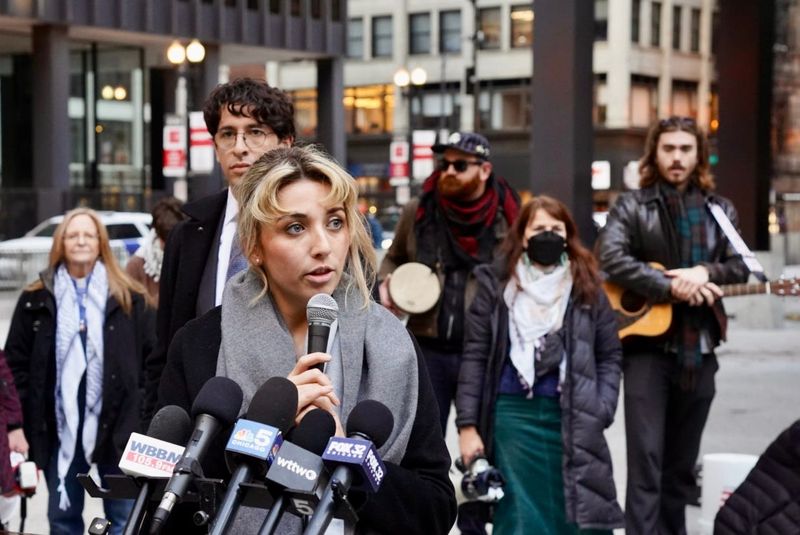
    Democratic Congressional candidate Kat Abughazaleh addresses supporters in downtown Chicago outside the federal courthouse where she pleaded not guilty to charges filed in connection with a protest against the Trump administration’s mass deportation campaign.Michael Loria, USA TODAY

    In Minnesota, U.S. Attorney Daniel Rosen strived on Tuesday to defend the new prosecution as skeptical reporters asked him why felony charges were lodged when not a single agent was hurt, why the urgency of this case when there’s been no prosecution of the agents who shot and killed Pretti or the unarmed motorist Renee Good, and whether the case amounted to what writer George Orwell famously called “thoughtcrime.”

    Rosen insisted that “whether or not they actually, at the end of the day, caused bodily harm is not the measure of whether or not they committed a serious federal crime.”

    Still, the federal case against the Minneapolis 15 contained just a couple of instances of alleged property violence ― the sideswipe and the kicking out of a vehicle’s tail light. Mostly, the indictment describes a lot of activities —like Signal chats, monitoring the movement of immigration agents on public streets, discussing the use of protective gear like shields, or an anarchist’s speaking tour about the protests — that would seem to be constitutionally protected free speech.

    With the enactment of the First Amendment in 1791, America’s founders vowed to protect “the right of the people peaceably to assemble, and to petition the Government for a redress of grievances.” Just days before the nation’s 250th birthday, an authoritarian regime in Washington wants to make this a crime for which you could spend a large chunk of your life in prison.

    “It does look like the government is throwing the book, maybe even over-charging some of the protesters,” Roy Gutterman, director of the Tully Center for Free Speech at Syracuse University, told me yesterday, noting that any act of actual violence wouldn’t be protected by the First Amendment. But he added that “even if some of the charges end up being thrown out, the breadth of the government’s arguments and the weight of the charges certainly send a message to protestors.”

    Exactly. Although the indictments are a living hell for the Minneapolis 15, the real target here is regular American folks like you — citizens who aren’t normally inclined to protest the government, but are starting to wonder what to do as the regime and its 80-year-old and increasingly out-of-touch leader spiral out of control.

    Before you even dare venture out to a church meeting where they pass out whistles and teach you how to warn your neighbors that masked ICE agents are snatching people off the streets, they want to plant seeds of doubt. Am I risking my freedom, and my family, just for posting something in a Signal or WhatsApp chat?

    They want you to be terrified, and on some level you should be afraid, not just of what the government is doing but why they are doing this now. Trump was already nearing record-low approval numbers before this week’s humiliating surrender deal aimed at ending the president’s foolhardy war of choice with Iran. The near inevitability of a Democratic House in 2027 all but guarantees Trump’s next impeachment and two years of political hell to end his 47th presidency.

    Thus, Trump’s desperate determination to interfere in the November election is becoming increasingly clear, with everything from unwarranted meddling by the U.S. Post Office to his insistence that grossly unqualified loyalist Bill Pulte serve as his director of national intelligence, in order to invent foreign election plots.

    Criminalizing dissent isn’t a sideshow. It’s central to the plan. They want to stop you from taking to the streets in massive numbers if and when they take illegal actions to keep the Republican Party in power. They are using these bogus indictments to lay the foundation for the solution that Vice President JD Vance proposed for Minneapolis back in January — to invoke the Insurrection Act and send in tanks.

    The case against the Minneapolis 15 reminds me of the remarkable novel Every Man Dies Alone by the German novelist Hans Fallada, based on the true World War II era heroism of Otto and Elise Hampel, who placed postcards around Berlin criticizing Adolf Hitler and the Nazis for two years before they were arrested and executed by guillotine. Are we now becoming such a totalitarian society?

    Hopefully not, if American citizens like the Rev. Jen Crow continue to speak out.

    “We’re not going anywhere,” she said after the feds’ courthouse chemical attack. “Those of us who care about each other and care about the rule of law and care about following the rules we’ve set out as a society that protect basic human rights, we’re not going anywhere.”

  • JD Vance can never become president | Will Bunch Newsletter

    One of my many New Year’s resolutions back in January was never to write what I call “Captain Obvious columns” about the Donald Trump scandal du jour that’s all over your social media feed. So you’ll have to imagine the column I didn’t write about Trump’s tacky UFC cage match that desecrated the White House, and the role of bread and circuses (or just circuses…where’s the bread?) in the inevitable decline and fall of decrepit empires.

    If someone forwarded you this email, sign up for free here.

    A ‘President JD Vance’ would be a different kind of dictator. The scary kind.

    They say you never get a second chance to make a first impression — unless your name is JD Vance, or it becomes JD Vance after a few false starts. In 2016, a then utterly unknown Yale Law grad introduced himself to America with a No. 1 bestseller, Hillbilly Elegy, that used his (sort-of) Appalachian family’s hardscrabble story to come off as an empathetic horse whisperer for the white working class.

    He cemented that first impression when we learned he’d privately described Trump as a kind of a demagogue feeding off the pathologies he’d written about in Elegy — someone he feared might become “America’s Hitler.”

    But Trump’s victory coupled with some exposure to the ketamine-fueled paranoia of Silicon Valley’s billionaires gave the former James Donald Bowman yet another shot at reinvention — now embracing extreme right-wingers and crackpot conspiracy theories all the way to his election, at age 40, as the 50th vice president of the United States.

    Today, less than two weeks before the 10th anniversary of Hillbilly Elegy’s publication, Trump has become America’s…Mussolini, a strutting yet sometimes buffoonish strongman and a hopelessly corrupt invader of faraway lands.

    It’s Vance who could actually become America’s Hitler, if he gets that chance…a very real possibility.

    That’s a strong statement, but it’s also perhaps the most powerful takeaway from the heavily promoted, about-to-be-published book from all-access New York Times reporters Maggie Haberman and Jonathan Swan, Regime Change. It portrays the vice president as eager to go much further than Trump in crushing domestic dissent.

    In book excerpts published Monday, Haberman and Swan depicted Vance — in a tag-team alliance with Trump’s ruthless mass-deportation guru Stephen Miller — as calling for the radical step of invoking the Insurrection Act to send in troops to put down protests by everyday Americans in Minnesota who were enraged by masked goon squads snatching their immigrant neighbors and the killing of two U.S. citizens.

    Describing a White House meeting of senior aides — but not Trump — in late January after Renee Good and Alex Pretti were gunned down, the Times reported that “Vance got to the point. They needed to invoke the Insurrection Act, swiftly, to crush the unrest in Minnesota. It would be painful in the short term, he said, but the message it would send — that paid agitators could not get away with disrupting ICE operations — would make sure no one tried it again.”

    There are many problems with Vance’s anti-democratic impulses. As Haberman and Swan reported, even most of the Trump aides in the room agreed that invoking the 1807 law in this circumstance would be both a significant expansion of presidential power and a public-relations nightmare. Even worse, the nation’s No. 2 official was urging this would-be abuse of power based on a right-wing internet lie — the falsehood that Minnesota’s angry neighbors were “paid protesters.”

    The deeply reported episode isn’t the only disturbing glimpse of Vance’s governing philosophy in recent months, but it’s the most revealing, and most damning: a true believer in the worst conspiracy theories about the left, with the inclination to wield dictatorial powers against them.

    Earlier this month, Vance — arguably the regime’s top cheerleader for Europe’s extreme far-right political parties — stunned the United Kingdom’s center-left government by weighing in on growing unrest over the stabbing death of an 18-year-old English college student by a Sikh migrant. He sounded more like a wannabe X influencer than a top official of the U.K.’s historic American ally. As racist hate mobs prowled streets in England and Northern Ireland, Vance said the murder of Henry Nowak proved that “European elites” had failed to oppose the “politics of self-hatred and the mass invasion of migrants.”

    One thing is clear: Vance is not on the side of calm, which is problematic when what the world needs now is love, sweet love.

    Increasingly, Vance seems to disappear for longer stretches of time, and when he reemerges he is bathed in the stench of the social media sewers where he seems to spend much of his time.

    That’s certainly appears to be the case with his main mission in 2026; rooting out fraud, which isn’t targeted at the nation’s biggest scam — the multi-dollar enrichment of the president’s family — but at alleged schemes by Somali immigrants and other heirs to Ronald Reagan’s racially coded “welfare queen.” A recent Washington Post report found many claims by a Vance-led task force are misleading or overhyped, and that legitimate business have been swept up in its wide net.

    Ten years ago, Vance wrote a book seeking your empathy because that served his true purpose: ruthless ambition. In that context, it was no moral conflict at all to pull a 180 and support a victorious Trump, or to leverage his rising fame into a hookup with Silicon Valley types like his billionaire patron Peter Thiel — people who believe in building private cities to protect them from the masses and the government, and who are more prone to conspiracy theories than your 79-year-old uncle on Facebook.

    Thiel and the other tech billionaires have programmed Vance into a true believer of whatever nonsense they believe, and lined him up next in the queue for power. That makes him even more dangerous than Trump, who believes in nothing beyond himself.

    Ever since Trump first claimed victory on Nov. 8, 2016, I’ve worried that the next guy would be even worse — chasing American autocracy with a real plan, not clown-car narcissism. Vance is the one I was worried about, and he is only an 80-year-old, Big Mac-infused heartbeat away from the presidency for the next 31 months.

    I’ve made clear my disgust at political violence, and the possibility of a Vance succession is another reason why I shudder to think what would happen if an attack killed or disabled the 47th president someday. If Vance was willing to send troops to Minneapolis to stomp down soccer moms and baristas with whistles, his militaristic power grab against the left after an assassination would end any last hope for our bedridden democracy.

    It’s one more item on the pro-democracy checklist. It may be the proverbial lost cause worth fighting for, but we should try to ensure that JD Vance does not become the 48th president of the United States.

    If Democrats stay on track to retake the House and possibly the Senate, they should hold hearings not only on Trump’s high crimes and misdemeanors but on the vice president’s involvement — and, based on that evidence, his possible impeachment. It may prove impossible to remove Vance from office, but hearings will help to establish a record that will end his dreams — and those of his billionaire buddies — about 2028.

    It’s past time for the next transition for this American chameleon who calls himself JD Vance: back to private citizen.

    Yo, do this!

    • The World Cup’s return to North America has gone much as I expected it would: Marred by its runaway commercialism and the U.S. immigration hassles that kept too many fans and a world-class referee from Somalia at home, but with a focus on joy on the pitch and in the stands now that the games have begun. Here in Philadelphia, the essence of everything good about the World Cup has been the FIFA Fan Festival at Lemon Hill, the city greenspace on the hill behind the Art Museum on the Schuylkill. It’s been a daily gathering post for thousands of fans to watch the matches on a 60-foot screen, imbibe from a beer garden, and load up on official merch. It’s free but ticketed; learn how to gain access and how to get there here.
    • Some 51 years after Jaws, filmmaker Steven Spielberg is still finding ways to get us out to the multiplex for a summer blockbuster. His new the-aliens-are-here epic, Disclosure Day, merges nostalgia for his greatest hits like E.T. with our 21st century anxieties about artificial intelligence, outsiders, space, and what it means to be human in our modern world. It’s getting excellent, but not perfect, reviews, and I’m looking forward to seeing it for myself.

    Ask me anything

    Question: What is your favorite fast food joint? — @funkndonuts.bsky.social via Bluesky

    Answer: Most of this week’s questions were in this lighthearted mode; it feels like the good sports excitement of the World Cup and the NBA finals has provided us a calm eye in the hurricane. Anyway, as an apparent donut lover you’ll be glad to know that my modern family runs on Dunkin coffee. As a kid, my barely-evolved-from-hillbillies family had low-brow tastes that I now appreciate in hindsight, and on our yearly road trips to the ancestral home of Peoria, I fell in love with the greasy pizza — later augmented by greasy fried chicken — at Shakey’s. The chain has shrunk to a few West Coast outlets and I haven’t been in decades. Probably for the best.

    What you’re saying about…

    Last week’s question about what the next, hopefully normal U.S. president should do about the ballroom monstrosity rising on the east side of Donald Trump’s White House drew a good array of responses. Although a couple of you wanted to see the project repurposed for community gardens or housing for D.C.’s homeless, others believe any Trump creation must be expunged in dramatic fashion. “Provide Pulaskis (fire axes) and sledgehammers and a good crew of competent supervisors and let we the people come and pay five bucks for the privilege of fifteen minutes of smashing it up,” wrote Linda Nafziger-Meiser. “Hell, I’ll bring my own Pulaski.” But architect Larry Weintraub thinks the White House needs a ballroom, as long as it meets historical and architectural standards. “Hopefully, the new design will be understated but appropriate and subordinate to the majesty of the White House,” he wrote.

    📮 This week’s question: In a recent column, I announced that I’ve deleted Elon Musk’s social-media app X, which once thrived as Twitter. I saw that as a way to protest Musk’s racism, and his obscene wealth. Should governments and corporations continue to use X for communications? Are you still on X or have you left, and why? Please email me your answer and please put the exact phrase “Deleting X” in the subject line.

    Backstory on the birthright citizen who’s a U.S. hero

    Folarin Balogun, now 24, grew up in London, which is where one of the world’s top clubs, Arsenal, spotted him as a potential soccer star at age 8. His parents are Nigerian. He currently plays club soccer in Monaco. So how was it that Balogun found himself last Friday wearing the red, white, and blue jersey of the United States in front of 70,000 delirious Americans on the pitch near Los Angeles, mixing skillful footwork with an aura of glee as he scored two goals in a 4-1 World Cup opener win over Paraguay?

    Credit the 14th Amendment — or maybe blame it, if you’re one of the reactionaries who believe that people like Balogun should not be U.S. citizens, soccer gods be damned.

    Even if for some weird reason you’re not yet a soccer fan, you’ve probably followed the heated debate over birthright citizenship. The notion that anyone born on U.S. soil is automatically an American citizen — an idea enshrined after the Civil War to remove any potential doubts about the citizenship of formerly enslaved African Americans — is disputed by the Donald Trump regime. The president’s executive order seeking to undo the longstanding interpretation of the 1868 14th Amendment, and strip citizenship from millions of people born here to immigrant, non-citizen parents, is currently before the U.S. Supreme Court. Trump’s xenophobic MAGA supporters have long slurred children of undocumented migrants with the epithet, “anchor babies.”

    It turns out that Balogun, when he’s not lighting up the back of the net, is a law-school case study of the immigration debate roiling his accidental country. In the summer of 2001, Balogun’s future mom, who was seven months pregnant, and dad decided to vacation in the United States. When the couple attempted to fly home to London, an unnamed airline worker who would change the course of soccer history told Florence Balogun she was too pregnant to safely fly. So she stayed in Brooklyn, gave birth to her son, and the family left America after two months.

    As he developed into a world-class striker on European soil, Balogun came to understand that his U.S. citizenship offered a much better shot at competing in the World Cup than the other two nations where he was also eligible, England or Nigeria. For his mom, Balogun’s fate was sealed in the summer of 2001. “Even when he wasn’t even thinking of making an international decision, I’d already made up my mind that he is going to play for America,” Florence Balogun said.

    They say that the Supreme Court, despite all the blather about “calling balls and strikes,” is in reality always aware of the political zeitgeist. Even a right-wing justice who happens to also be a long-suffering Phillies fan in Samuel Alito probably sees on some level that stripping citizenship from the breakout star of U.S. men’s soccer would be highly unpopular. The World Cup — the idea, and not its capitalist corruption by FIFA — imagines a society that abhors exclusion, where it takes every kind of people to make what life’s about. I dream of an America that can run with France and Argentina on the pitch, and that welcomes human beings like Balogun, even ones who’ve never kicked a soccer ball in their lives.

    What I wrote on this date in 2019

    This newsletter goes out Tuesday on the 11th anniversary of the day that changed America forever: Donald Trump’s gilded Trump Tower journey down an escalator to join the 2016 presidential race, as Neil Young’s “Rockin’ in the Free World” blared behind him. In 2019, I used that date to reflect how much we’d fallen in just four years since June 16, 2015. I wrote: “The president’s “shocking” tweet or statement of the day still sparked hours and hours of cable TV blather, including a parade of congressional Democrats who were concerned or saddened or what not. They called Trump’s worst acts impeachable offenses, but then nobody impeached him. They said Trump was unpresidential, but the next day he was still president.” Read the rest: “4 years since Trump came down that escalator and the cycle of empty outrage has become unbearable.”

    Recommended Inquirer reading

    • Last week I focused on the little people who’ve been crushed by the return of Donald Trump, and the big guys getting obscenely rich. In my Sunday column, I looked at the agonizing fate of Tuan Van Bui, an Amerasian born in Saigon at the height of the Vietnam War who was welcomed to Philadelphia in 1990 under a government-approved visa. Why was he violently arrested by U.S. Immigration and Customs Enforcement, and what is the truth about his April death behind bars in Indiana, at age 55? Over the weekend, I voiced my outrage over Elon Musk, who in just one week used his massive platform on X to whip up race riots in Belfast, and was rewarded by Wall Street as the world’s first trillionaire. I looked at how we enable this situation, and announced my small step in fighting back by deleting the X app.
    • One depressingly constant story in the 21st century is the way that supposedly liberal blue states and big cities still fall back on oppressive, militarized policing to crack down on protesters. Progressive activists in New Jersey took to The Inquirer this week to express their lingering disappointment in first-year Gov. Mikie Sherrill — a Democrat that many of them had worked to elect in 2025 — and her state police’s aggressive handling of demonstrations outside the ICE detention center in Newark, Delaney Hall. They would have found an amen chorus here in Philadelphia’s LGBTQ+ community, where city cops showed up at the annual Gayborhood Pride festival in riot gear and arrested 15 of the revelers. The backlash against the police actions has already triggered a City Council investigation. Journalists are typically society’s first line of defense against police misconduct. You support that mission when you subscribe to The Inquirer.

    By submitting your written, visual, and/or audio contributions, you agree to The Inquirer’s Terms of Use, including the grant of rights in Section 10.