A Philadelphia police officer was killed and another was critically wounded after authorities said a man ambushed them with a shotgun early Saturday outside his West Philadelphia home. The suspect, who continued to shoot at responding officers before being arrested, is a city employee.
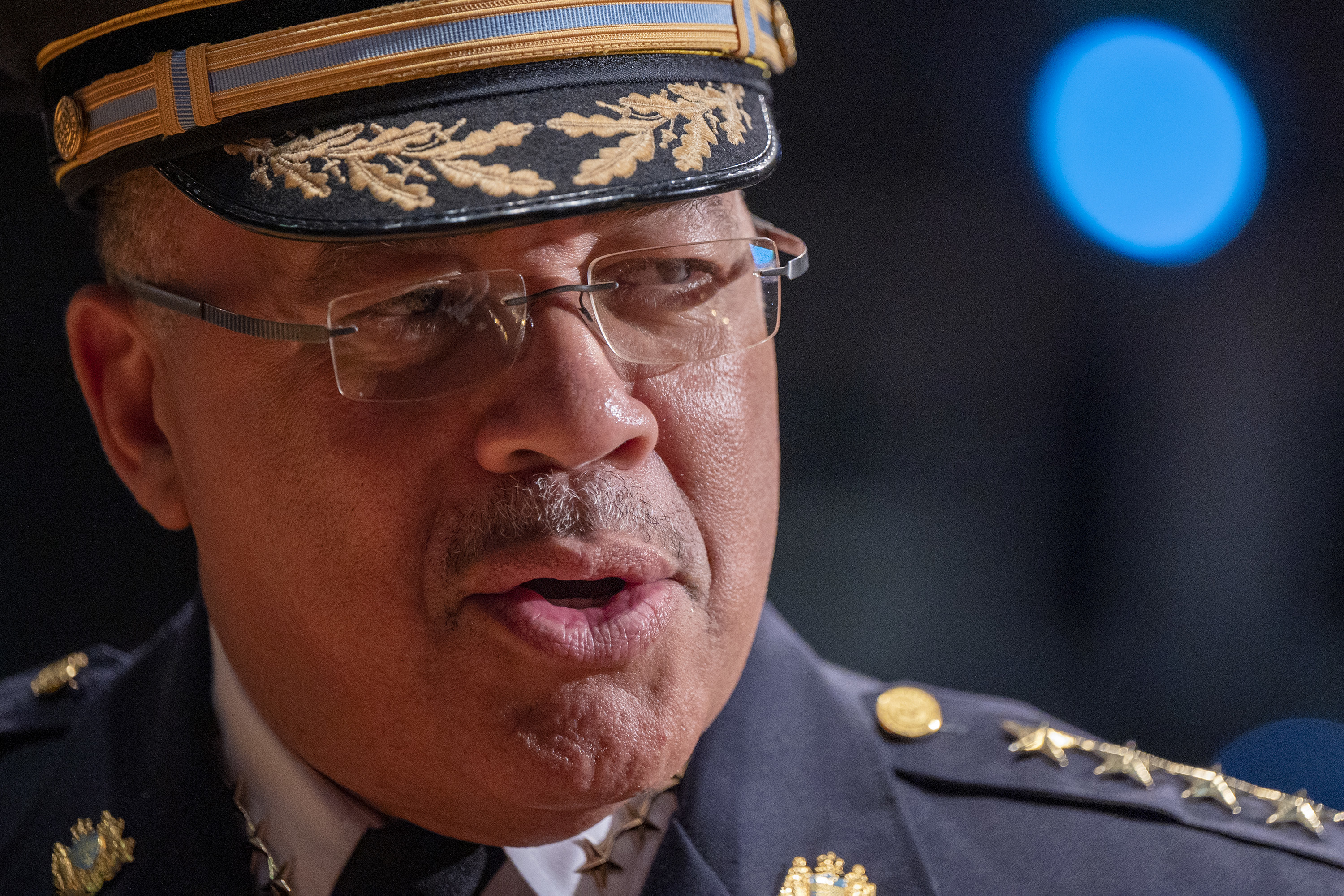
Shane Seiber, a 40-year-old father of two, died from several gunshot wounds, and his colleague, a 33-year-old man with nine years on the force, is fighting for his life, Police Commissioner Kevin Bethel said.
Bethel said Seiber, a 10-year veteran of the department, was struck three times and died at Penn Presbyterian Medical Center shortly after 9 a.m. His colleague, who was shot 12 times, remained hospitalized at Penn Presbyterian in stable condition but was “not out of the woods yet,” the commissioner said.
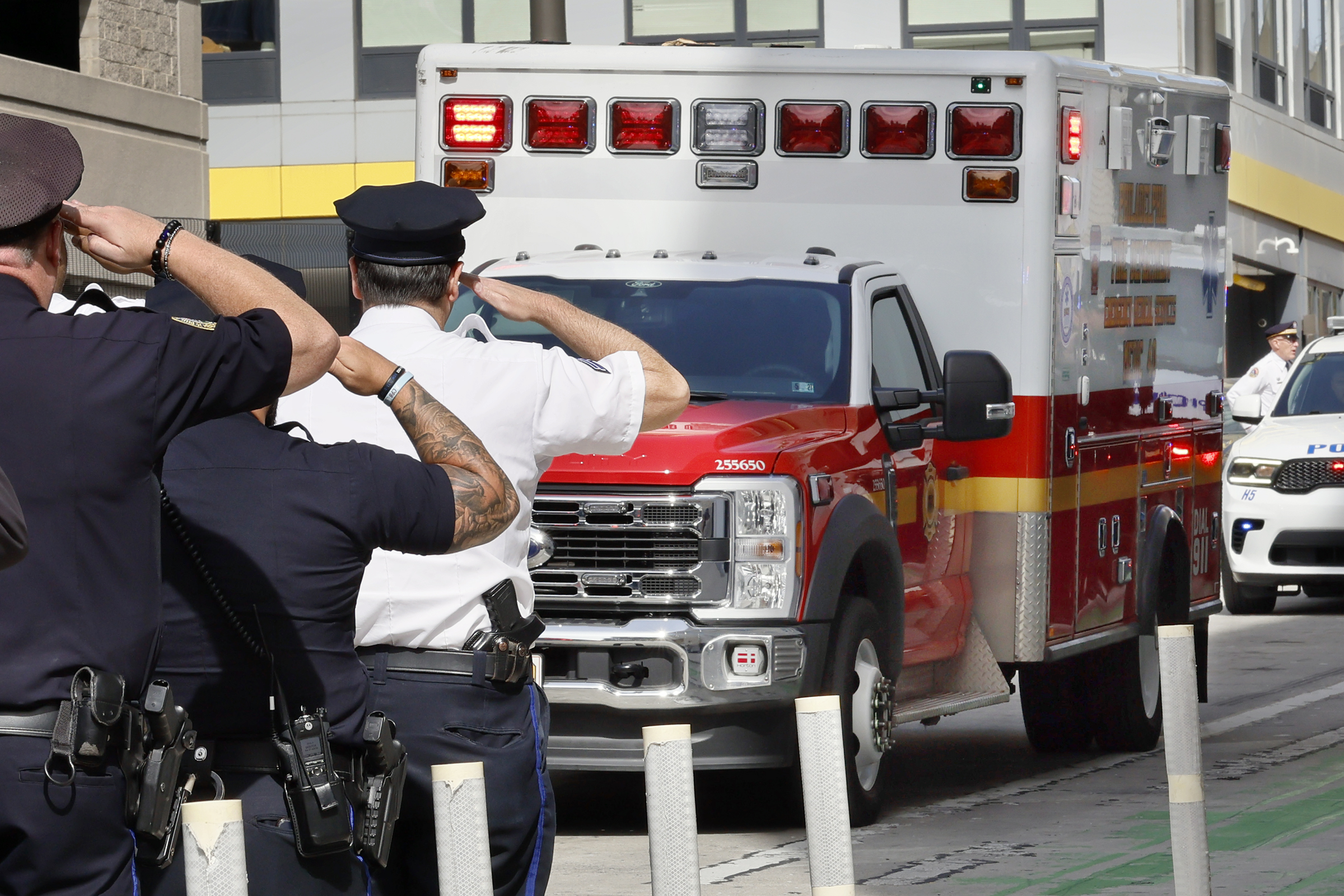
Philadelphia police salute as the medic unit carrying the body of the slain police officer pulls up to the medical examiners office in Philadelphia on Saturday. Two police officers were shot overnight, and one died.Elizabeth Robertson / Staff Photographer
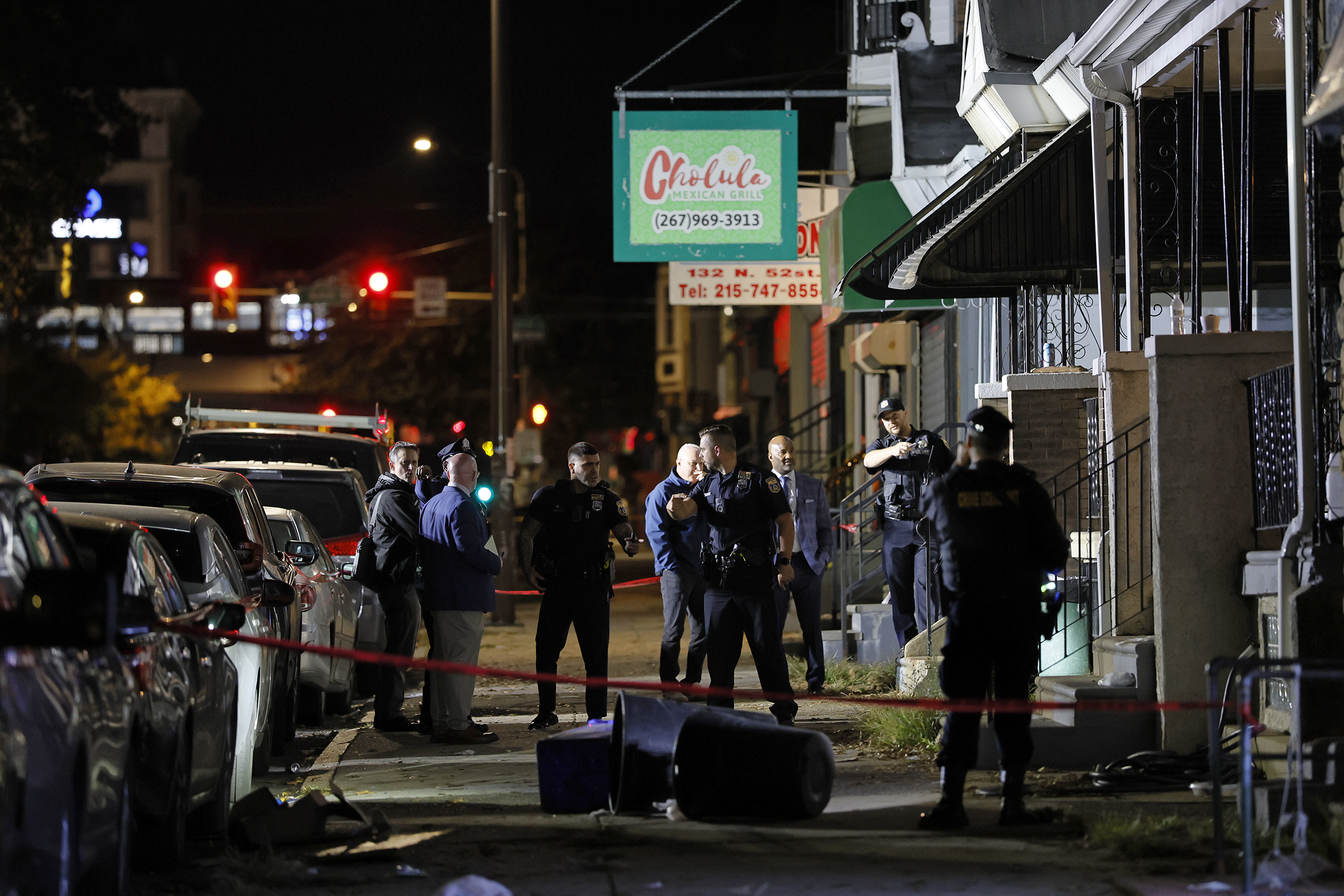
The officers responded to the 100 block of North 52nd Street shortly after midnight Saturday following reports of a man with a gun on his porch. As the officers approached the house, a man later identified as Eric Lewis began shooting at them, striking each officer multiple times, Bethel said.
In the moments after shooting the officers, the gunman took one of their weapons, Bethel said. And when additional officers rushed in, he fired at them, though no one else was struck, Bethel said.
The SWAT team responded and secured the area, and the gunman was later located in a tree, armed with the shotgun, a handgun, and the stolen police Glock, Bethel said. He was taken into custody.
Philadelphia District Attorney Larry Krasner said at a news conference Saturday afternoon that Lewis shot at nine other officers. Krasner called the shooting a “brutal, senseless, horrific killing.”
Lewis faces charges of murder, attempted murder, disarming a law enforcement officer, and related crimes, Krasner said. He will appear in court for a preliminary arraignment in the coming days and will be held in jail without bail, the district attorney said. It was not immediately clear if Lewis had an attorney.
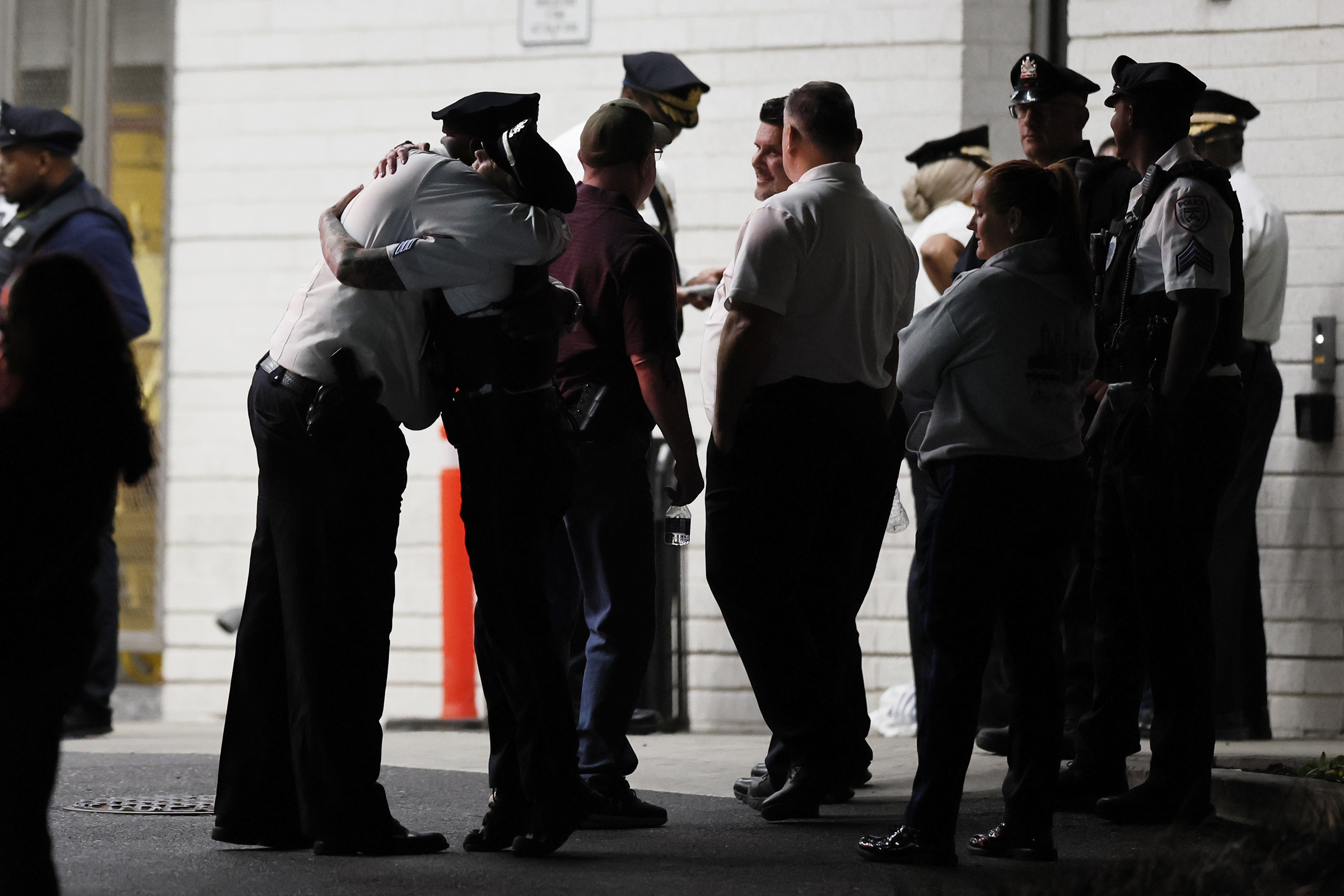
Philadelphia police hug each other outside of Penn Presbyterian Medical Center in Philadelphia on Saturday. Two Philadelphia police officers were shot and seriously wounded overnight.Elizabeth Robertson / Staff Photographer
A community in mourning
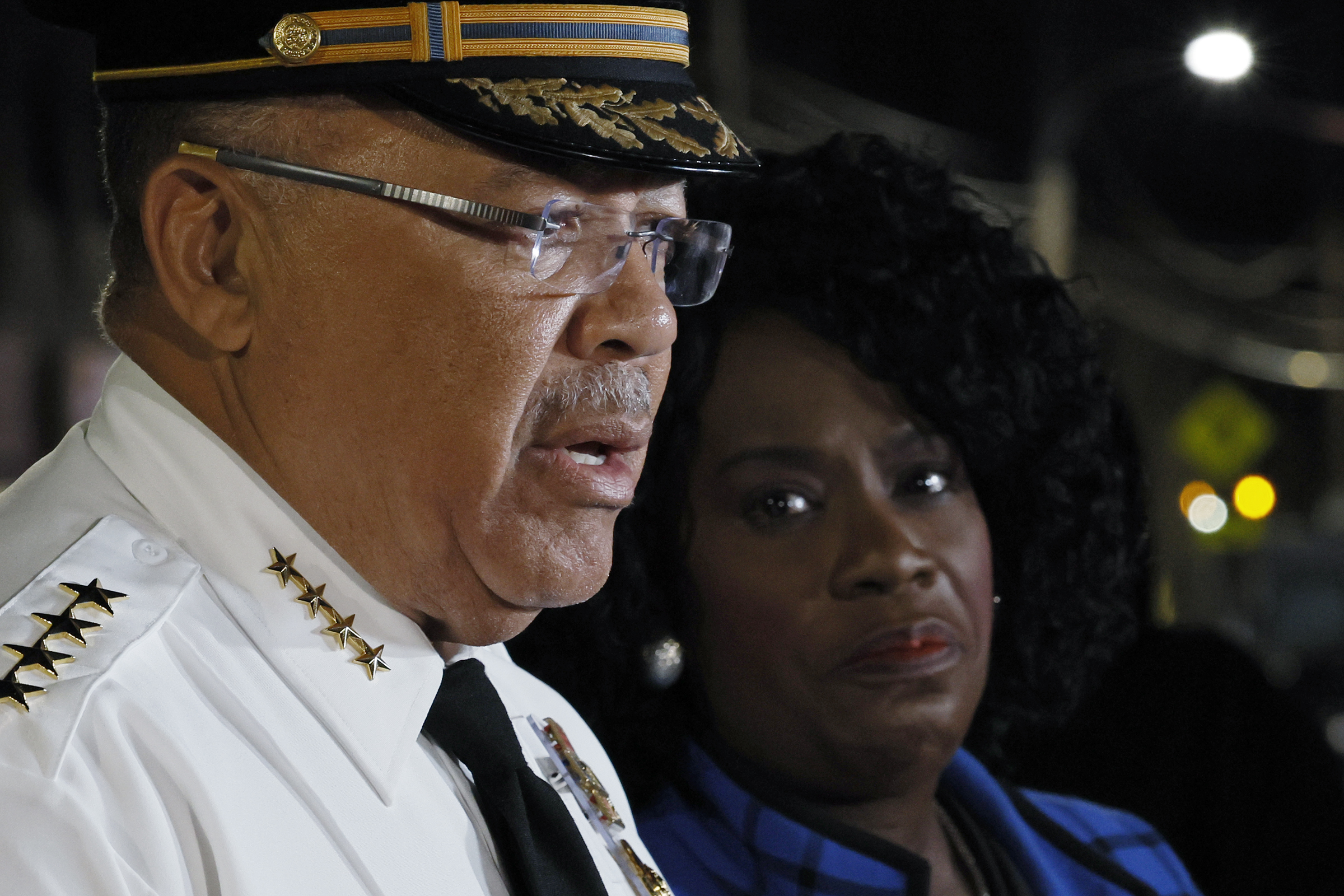
Dozens of members of the police department and city leadership gathered outside Penn Presbyterian Medical Center on Saturday morning and into the afternoon, mourning and comforting one another under brisk, blue skies. Standing alongside Mayor Cherelle L. Parker, Bethel appeared shaken as he asked for the city’s prayers and announced the death of one of his officers.
Seiber, he said, was a married father of a 7-year-old son and a 3-year-old daughter. His wife and other loved ones were at his side before he died.
“He fought valiantly, but he lost his life today,” Bethel said.
“I continue to ask the community to keep him and his family in their prayers,” he said. “This will be a period of mourning for us, but we will stand tall as a department. We can get through this together.”
“Our law enforcement officers are the very best of us,” he said. “They put their lives on the line every day … not knowing if they will return home. We owe them our deepest gratitude.”
Parker said Seiber sacrificed his life to “protect and serve our city,” calling his decision to become a police officer “noble and courageous.”
Philadelphia Police Commissioner Kevin Bethel and Mayor Cherelle L. Parker speak during an emotional press conference in front of Penn Presbyterian Medical Center in Philadelphia on Saturday. Two Philadelphia police officers were shot and seriously wounded overnight.Elizabeth Robertson / Staff Photographer
“A wife is now without her husband [and] two babies are without their father,” she said. “Family, friends, and colleagues … are feeling a deep-rooted sense of loss that words are … inadequate to explain.”
The mayor vowed to work to prevent such a tragedy from happening again, saying her administration will seek to expand “involuntary commitment laws” to cover severe mental health crises and substance use disorders that could “interfere with Philadelphia’s ability to keep itself safe.”
It was not immediately clear if the alleged shooter had exhibited signs of mental illness or substance use, and Krasner declined to answer when asked about that.
Lewis has a criminal history dating back more than a decade, court records show. Krasner said he had no felony convictions that would have prevented him from owning a firearm.
In 2012, he was charged with theft and receiving stolen property. He was later convicted and sentenced to two years’ probation. Common Pleas Court Judge Sean Kennedy also ordered Lewis to undergo substance abuse treatment.
He was arrested again the following year and charged with carrying firearms in public and simple assault, both misdemeanors. He was convicted in 2015 and was sentenced to five years’ probation. A judge ordered Lewis to receive a drug and alcohol assessment and a mental health evaluation.
Toward the end of his supervision, in 2018, he was convicted of disorderly conduct for fighting and was sentenced to a year’s probation, as well as an additional three years of court supervision in the firearms case.
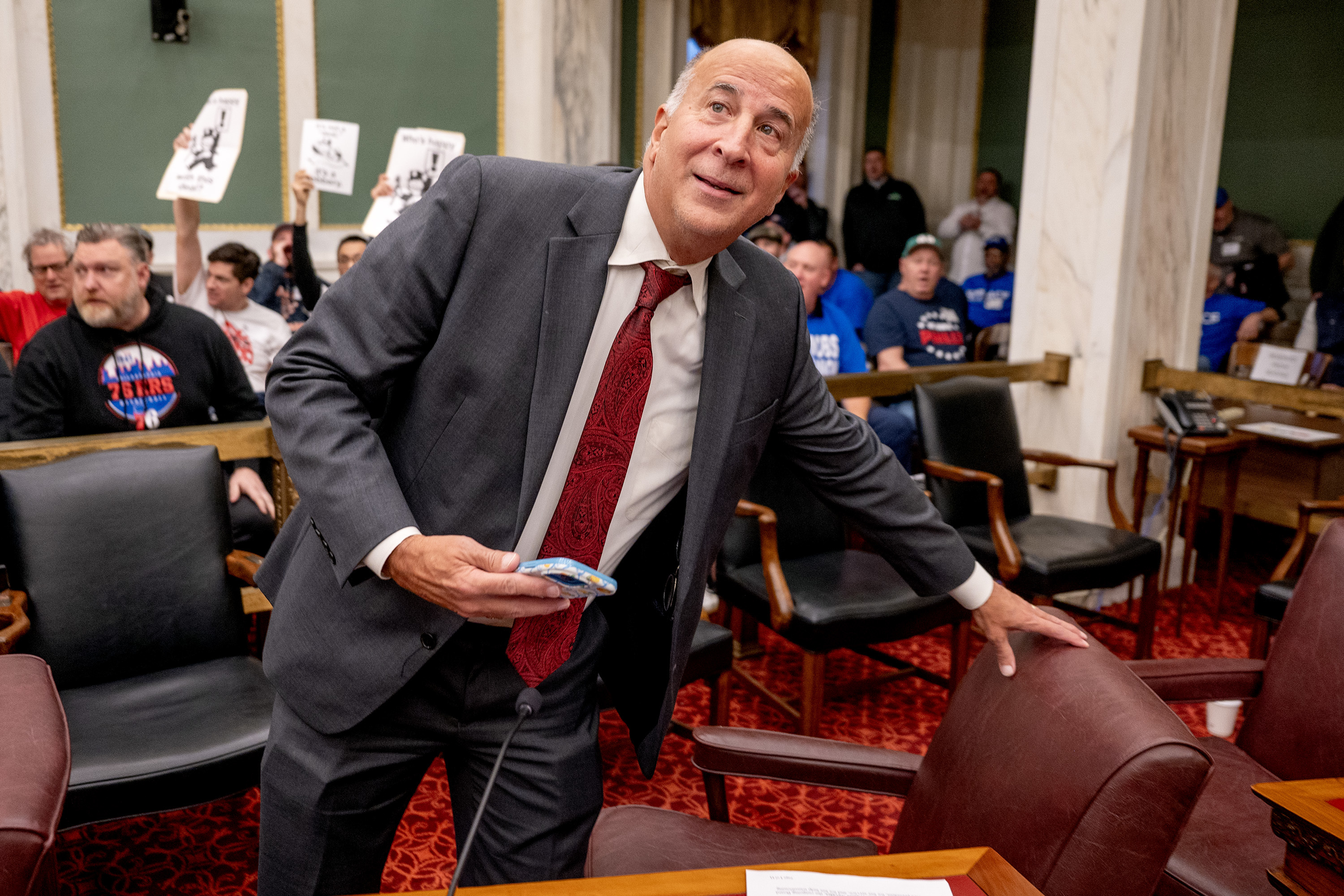
Lewis, 35, is a trades helper for the city water department. City payroll records show that Lewis has worked for the department since 2024 and is paid $47,746 annually.
District Council 33 of the American Federation of State, County and Municipal Employees, which represents city workers, said in a statement Saturday that the crimes Lewis is charged with do not represent the union’s standards.
“District Council 33 does not condone violence in any form, under any circumstances,” union president Greg Boulware said. “This act of violence is not reflective of our values, our mission, or the conduct we expect from our members.”
‘This is a nice block’
City Councilmember Jamie Gauthier, who represents West Philadelphia, called the shooting “incredibly tragic” at the afternoon news conference and underscored the need for more mental health services.
“I don’t know what in particular was going on with the suspect, but I think we all can agree that this is not normal or acceptable behavior,” she said. “Just a tragedy all around for our city.”
Anaya Brewer, 23, said she has lived her entire life on the block of North 52nd Street and had never seen a police presence like this.
Brewer said she was awakened by the sound of gunshots.
“There was shouting and yelling,” she said.
Another resident, Leannett Hill, said she had not heard the shooting and was stunned to see a video of her block on the news.
“This is a nice block,” said Hill, who has lived in the neighborhood since 2024. “Pretty much everyone gets along on this block.”
Her daughter, Camilla Vanessa Stephenson, was fatally shot in 2011, and Hill said she empathized with the officers’ families.
“It’s a hurtful feeling, knowing your family members are shot and might die,” Hill said.
Staff writer Anna Orso contributed to this article.
Correction: This story has been updated to correctly reflect Lewis’ history of convictions.
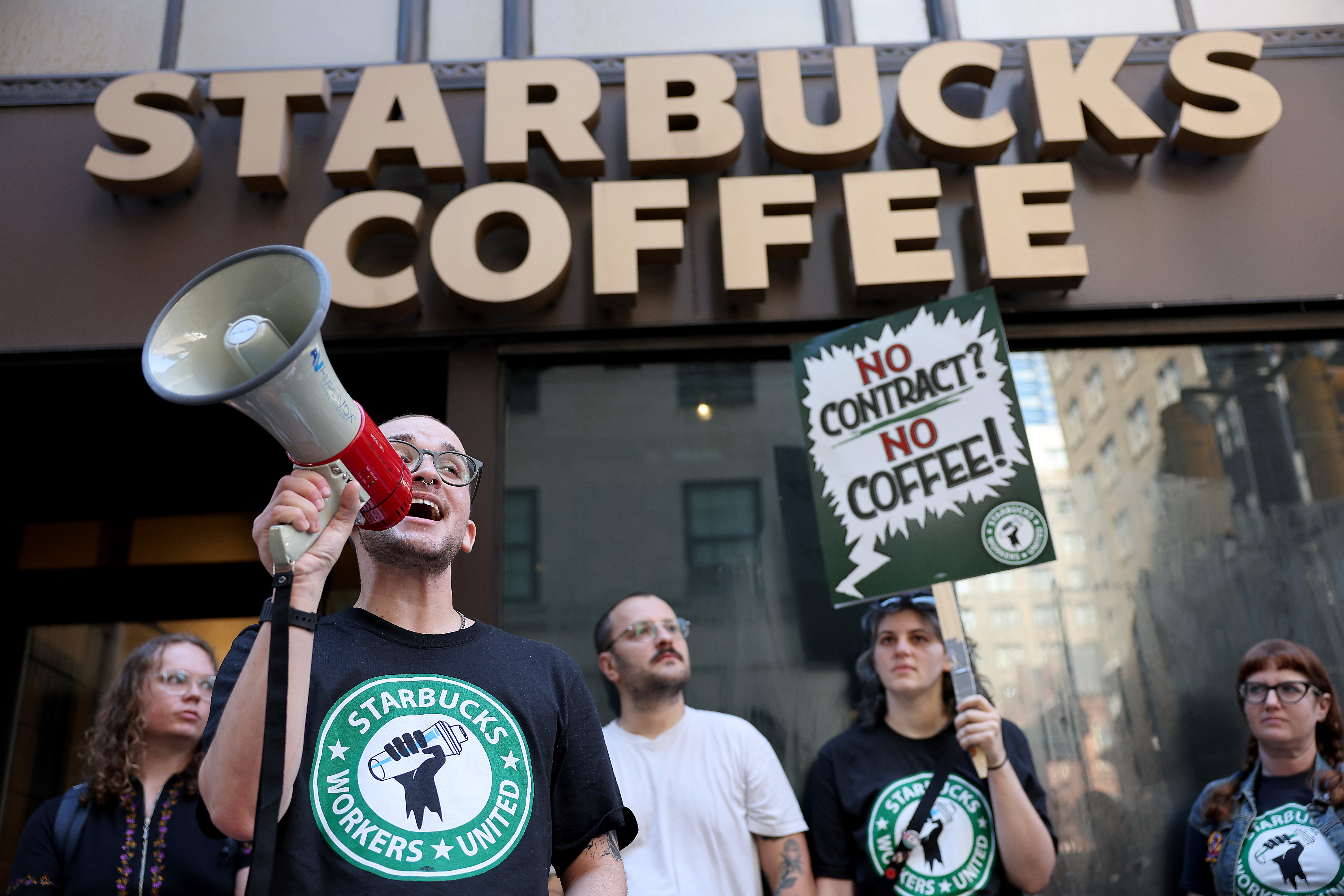
Just in time for pumpkin spice latte season, Philadelphia City Council members are giving up Starbucks — and they want you to do the same.
Council voted unanimously on Thursday to make Philadelphia one of the first cities in the country to explicitly endorse a nationwide boycott of Starbucks amid a unionization drive, and to pledge not to use city funds at the coffee chain until it reaches a contract agreement with its workers.
Also during Council’s session on Thursday: Councilmember Jamie Gauthier introduced controversial legislation to approve a contract with a trash incinerator that she doesn’t support. We’ll explain.
What was this week’s highlight?
Council puts Starbucks on ice: The expression of solidarity with Starbucks workers is a ceremonial resolution that does not carry the weight of law and does not require approval from Mayor Cherelle L. Parker.
Still, Council’s vote was a formal endorsement of the boycott orchestrated by Starbucks Workers United and targeting the world’s largest coffee chain, which is already reducing its footprint in the city. Starbucks closed six Philadelphia locations last year, and two additional branches — one at 2201 South St. in Southwest Center City and the other at 1018 N. Second St. in Northern Liberties — closed on Sunday.
The only other city to formally support the unionization effort is St. Louis, where last week the city’s board of aldermen approved a resolution to “express solidarity with Starbucks Workers United as they call for a boycott of Starbucks.”
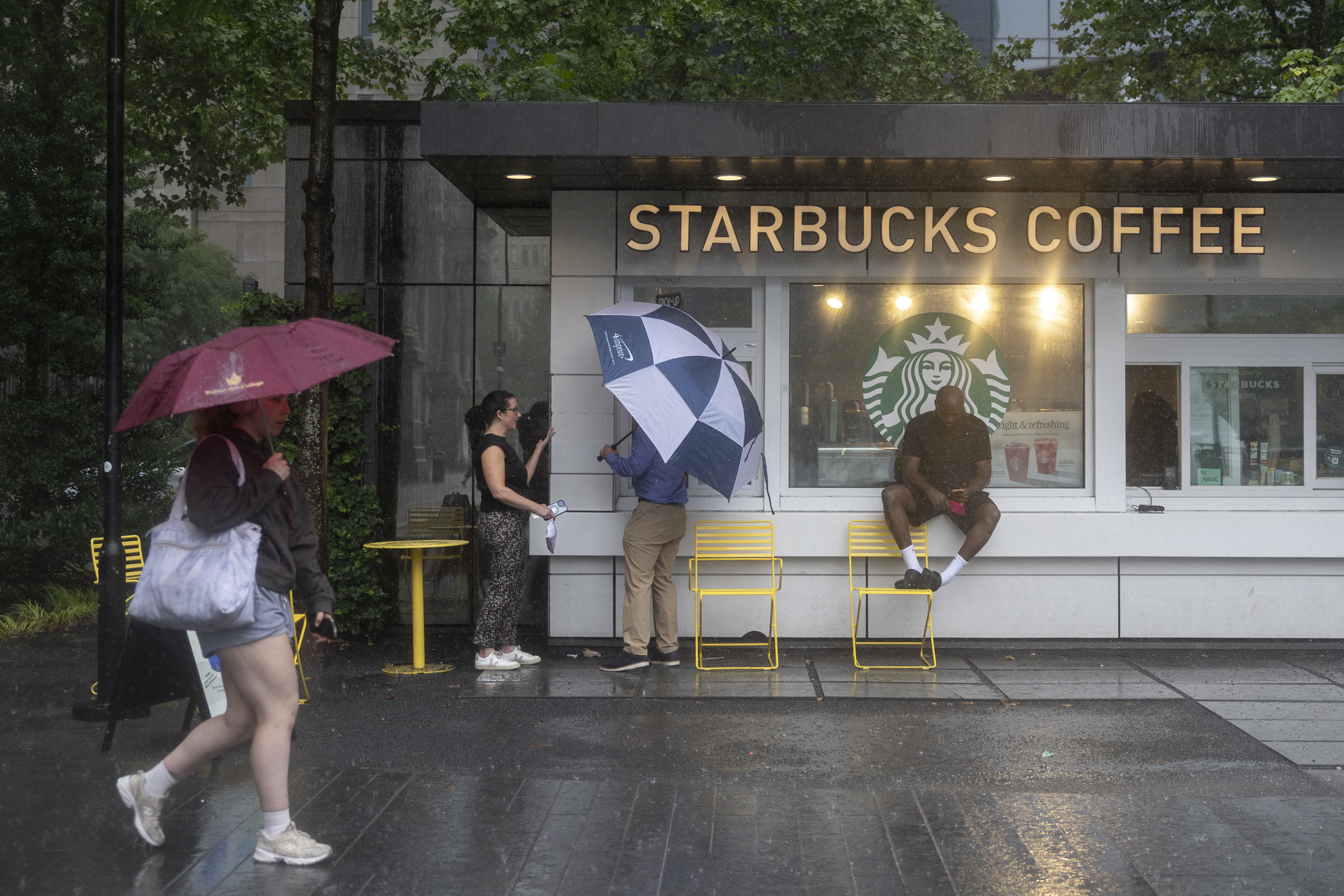
People staying dry at the Starbucks Coffee at Dilworth Park near City Hall in Philadelphia, Pa., on Thursday, July 9, 2026.Tyger Williams / Staff Photographer
Over the last five years, baristas have unionized at hundreds of individual Starbucks locations, but the company has not agreed to a nationwide contract that the union has sought. The union in August called for a nationwide boycott to last until an agreement is reached.
Councilmember Nicolas O’Rourke, a member of the progressive Working Families Party who represents the city at-large, authored the legislation and said its passage is “another affirmation of Philadelphia being a union town.”
“I am always interested in making sure that businesses in the city of Philadelphia and people are thriving,” O’Rourke said. “But my first priority is always to make sure that workers and workers’ conditions are right and that they are respected.”
Council is controlled by a supermajority of Democrats, and the body is largely supportive of organized labor.
Council President Kenyatta Johnson said he backs the Starbucks boycott, even though he is generally not a big coffee drinker.
“Unfortunately, they do have a vegan breakfast sandwich,” said Johnson, who follows a plant-based diet. “But I won’t be having those any time soon.”
A spokesperson for Starbucks said in a statement Thursday that the company is “committed to engaging in productive bargaining.”
What else happened today?
Introducing legislation she doesn’t support: Thursday’s meeting featured another twist in the long-running debate over a Chester trash incinerator and how Philadelphia gets rids of its garbage. Gauthier, a progressive Democrat who has advocated for the city to stop burning its trash, introduced legislation that would allow the city to continue doing so.
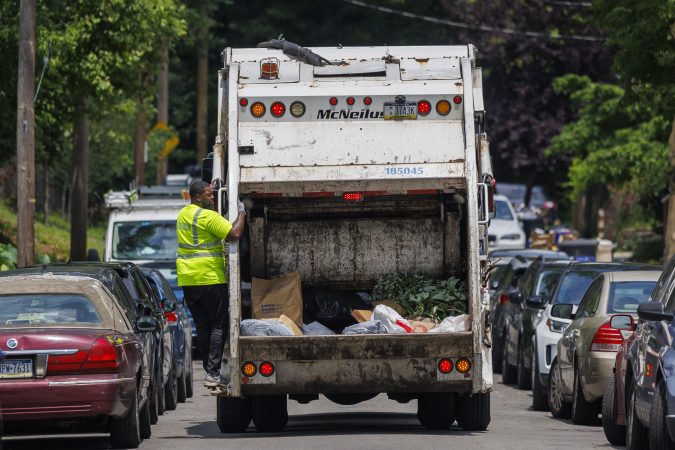
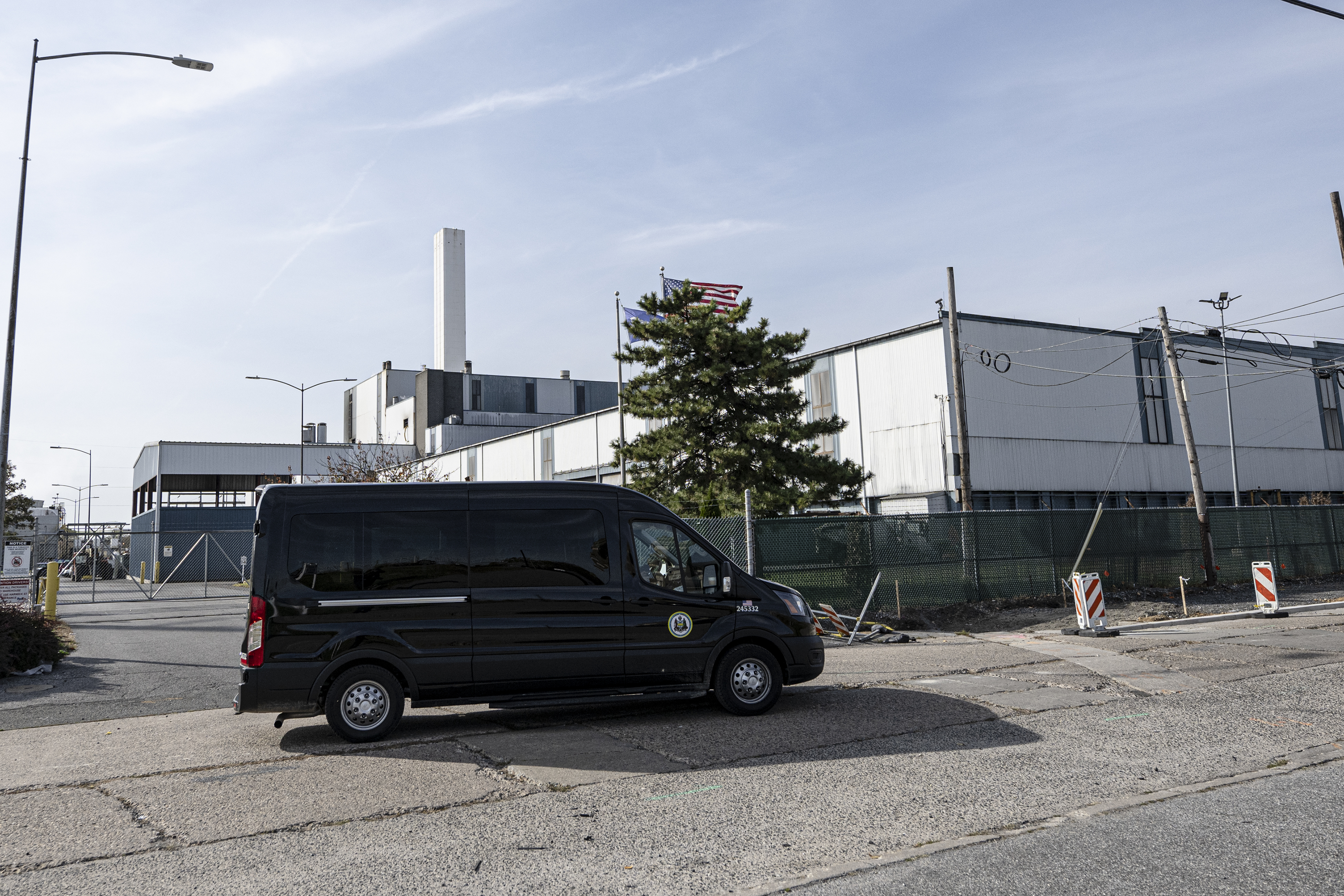
Here’s why: The Parker administration is looking to renew its long-held contract with Reworld, the Chester waste-to-energy facility where the city ships about one-third of its trash to be burned. (The rest of the trash is sent to landfills.)
In order to renew the multiyear contract, Council must approve authorizing legislation. Gauthier, who previously floated a bill to ban the city from incinerating trash but did not garner enough support to pass it, is asking her fellow lawmakers to vote against the contract renewal.
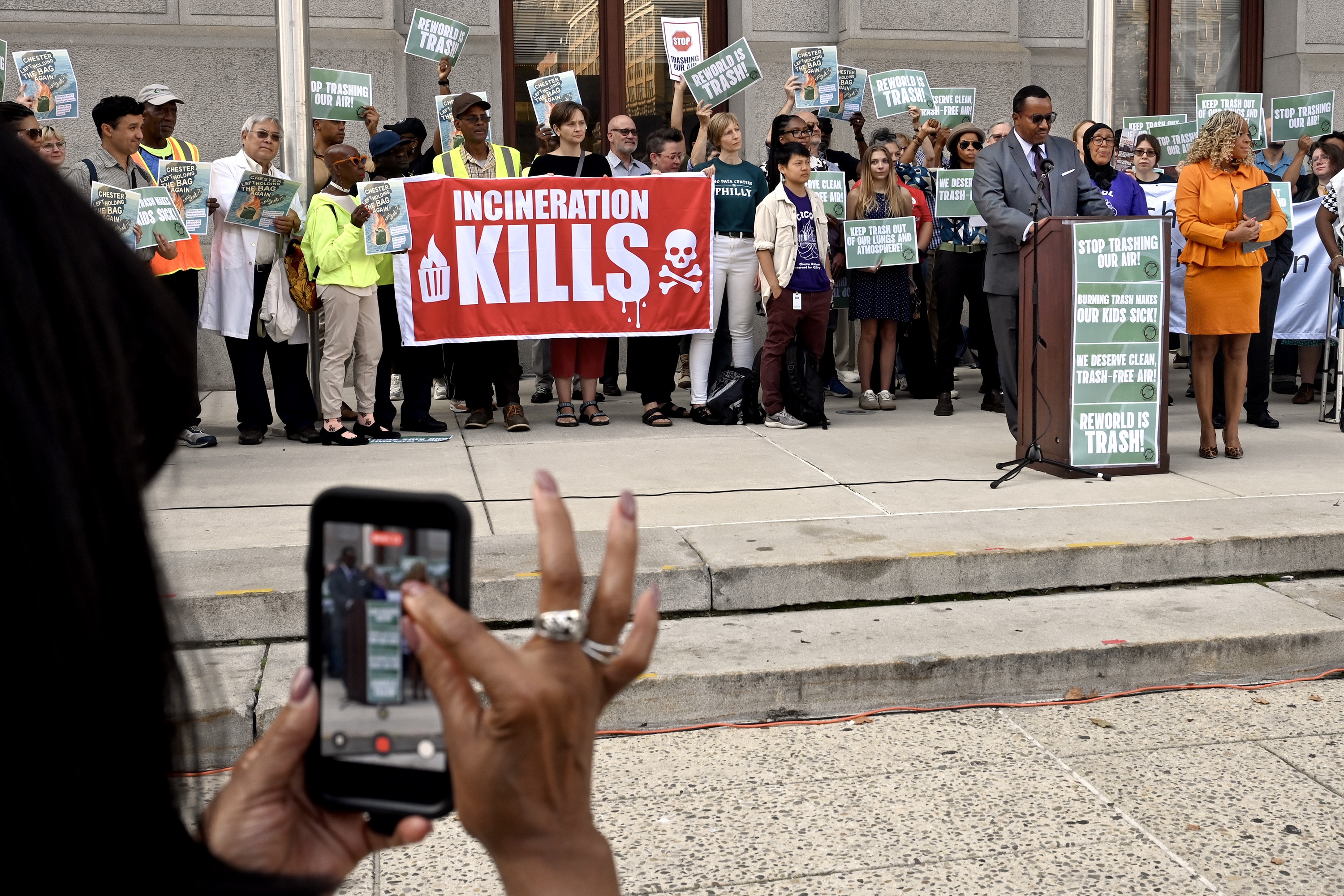
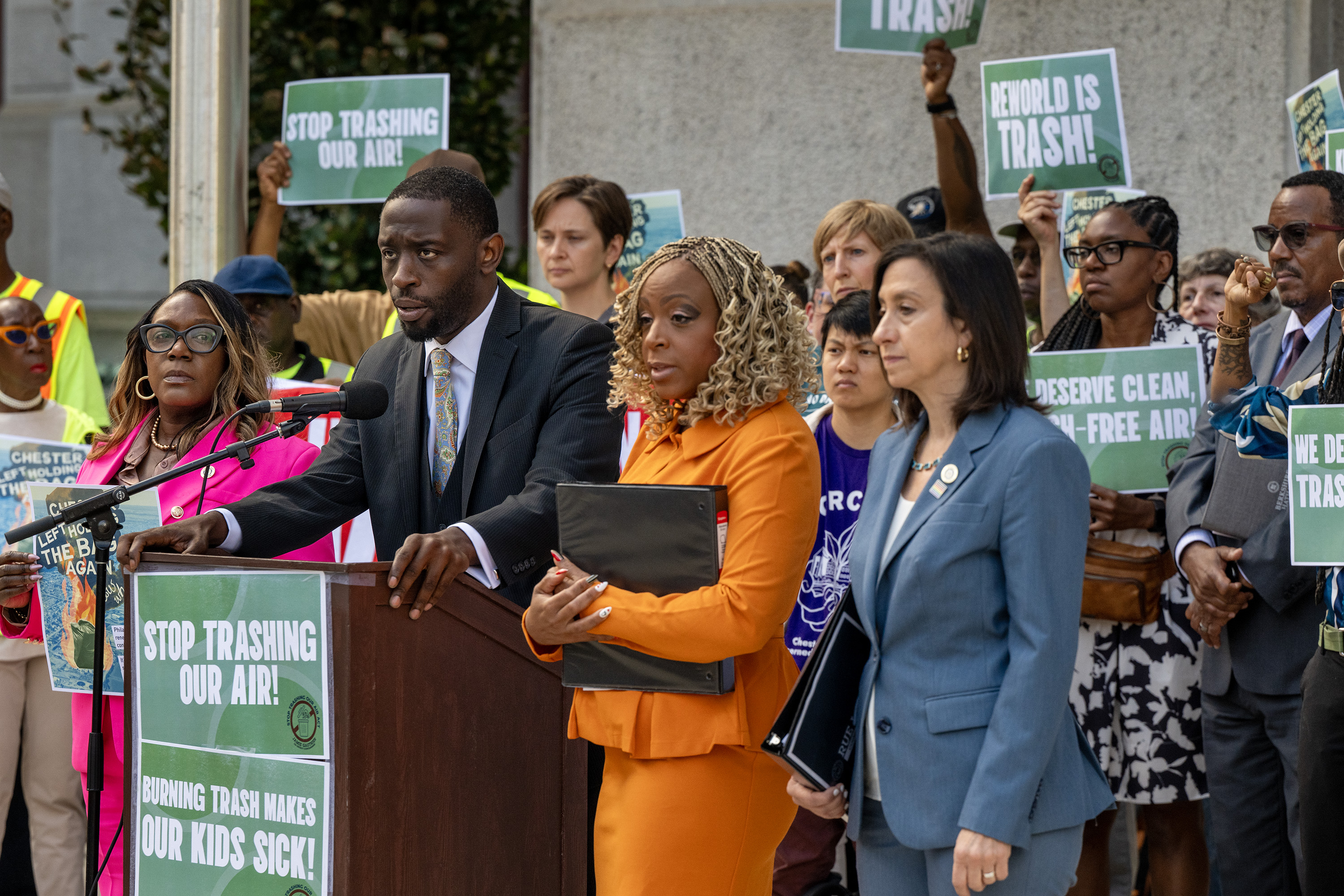
Chester Mayor Stefan Roots (at lectern) is joined by Philadelphia City Councilmember Jamie Gauthier (right) at a rally outside City Hall early Thursday morning Sept. 17, 2026.Tom Gralish / Staff Photographer
Although it may seem like a reversal of her position, Gauthier introducing the legislation herself — even when she does not support it — will allow her to have some say when a committee holds a hearing on the legislation. She hopes to amend it to strike Reworld from the deal so that the city processes all trash and recycling through landfills.
“It gives me and my coalition an opportunity to be at the table on something that we fought really hard on for more than a year now,” she said in an interview. “We’ve been working really hard to make sure that we’re protecting the health of folks in Chester and in Philadelphia, and protecting our environment.”
Johnson will decide which committee will hear the bill. He said Thursday that he is still reviewing the legislation.
Mamdani-fication: Create a Philly Medicaid Supplement Program. Expand access to programs that provide transit subsidies to low-income Philadelphians. Use city money to buy properties with expiring federal affordable housing subsidies.
These were some of the recommendations included in the Affordable Philly Now report, which was recently released by the Cost of Living Task Force.
O’Rourke, who convened the task force, held a committee hearing Wednesday examining the report’s findings, and he was not shy about noting that it was partly inspired by another progressive a few miles up I-95.
“You cannot deny the profound impact that … Mayor Zohran Mamdani has had,” O’Rourke said, praising the New Yorker for “mixing moonshot municipal goals with sewer socialism” and working to build a “protective hedge” of social safety net programs.
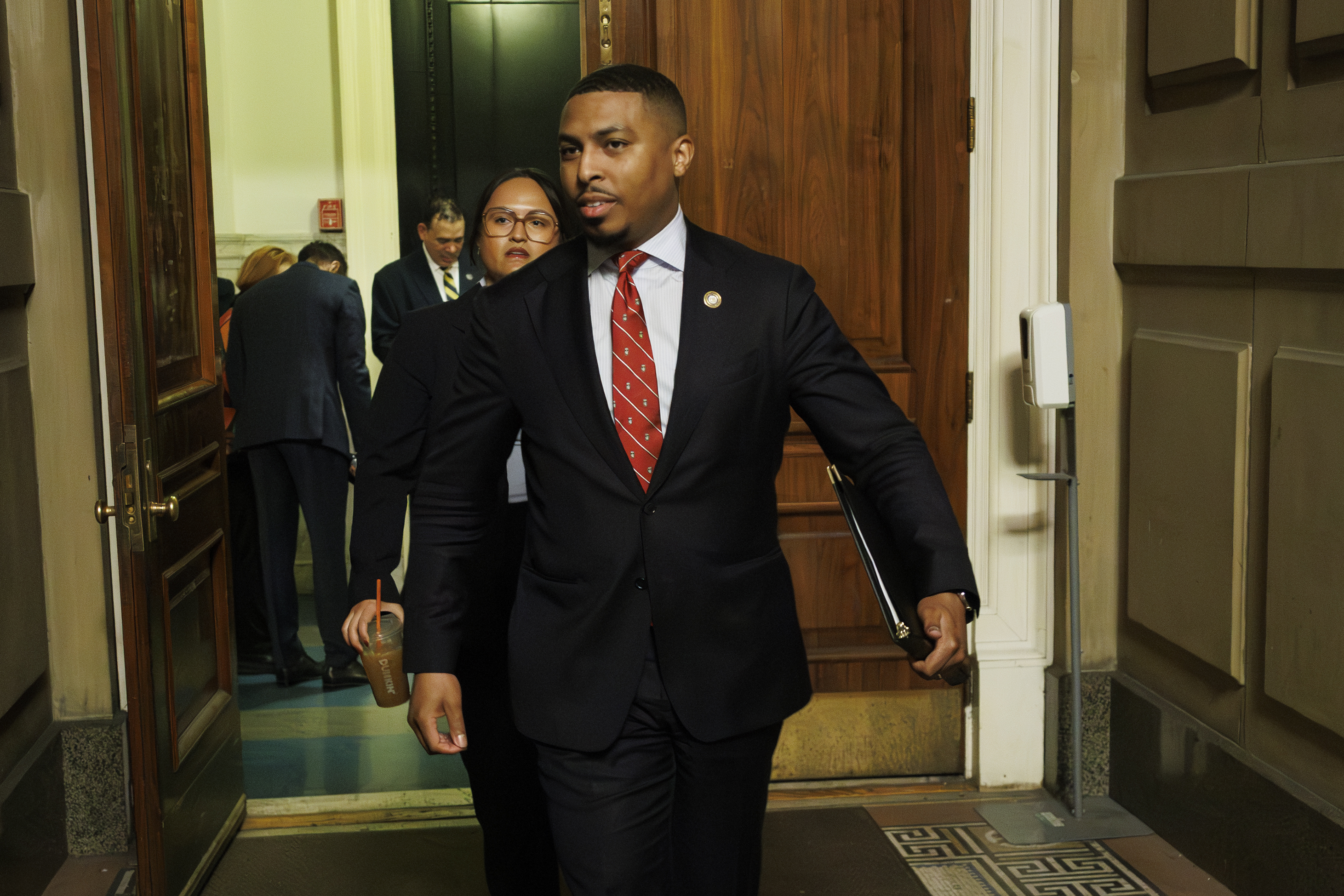
Nicolas O’Rourke, Philadelphia City Council member, during the mayor’s budget address on March 12.Alejandro A. Alvarez / Staff Photographer
Wednesday’s hearing was a meeting of the Committee on Global Opportunities and the Creative/Innovative Economy, which O’Rourke chairs. As a freshman and a member of a minority party, O’Rourke does not have a high-profile committee leadership post like some of the more senior Democratic lawmakers on Council. His committee was previously led by former GOP Councilmember David Oh and does not naturally align with O’Rourke’s progressive politics.
O’Rourke said at the committee hearing Wednesday — the first time he chaired a Council hearing — that he was shifting the panel’s work.
“The prior version of this committee revolved around corporate investment fitting into global value chains and making Philadelphia an international destination,” O’Rourke said. “In my reflection on the meaning of the committee, I have spent more time focusing on a part of the committee’s mandate that actually seems more in its merit — that is, to consider all matters related to making Philadelphia a world-class city. … And in some seasons, world-class cities show themselves by being bold in providing a protective hedge for its people.”
Quote of the week
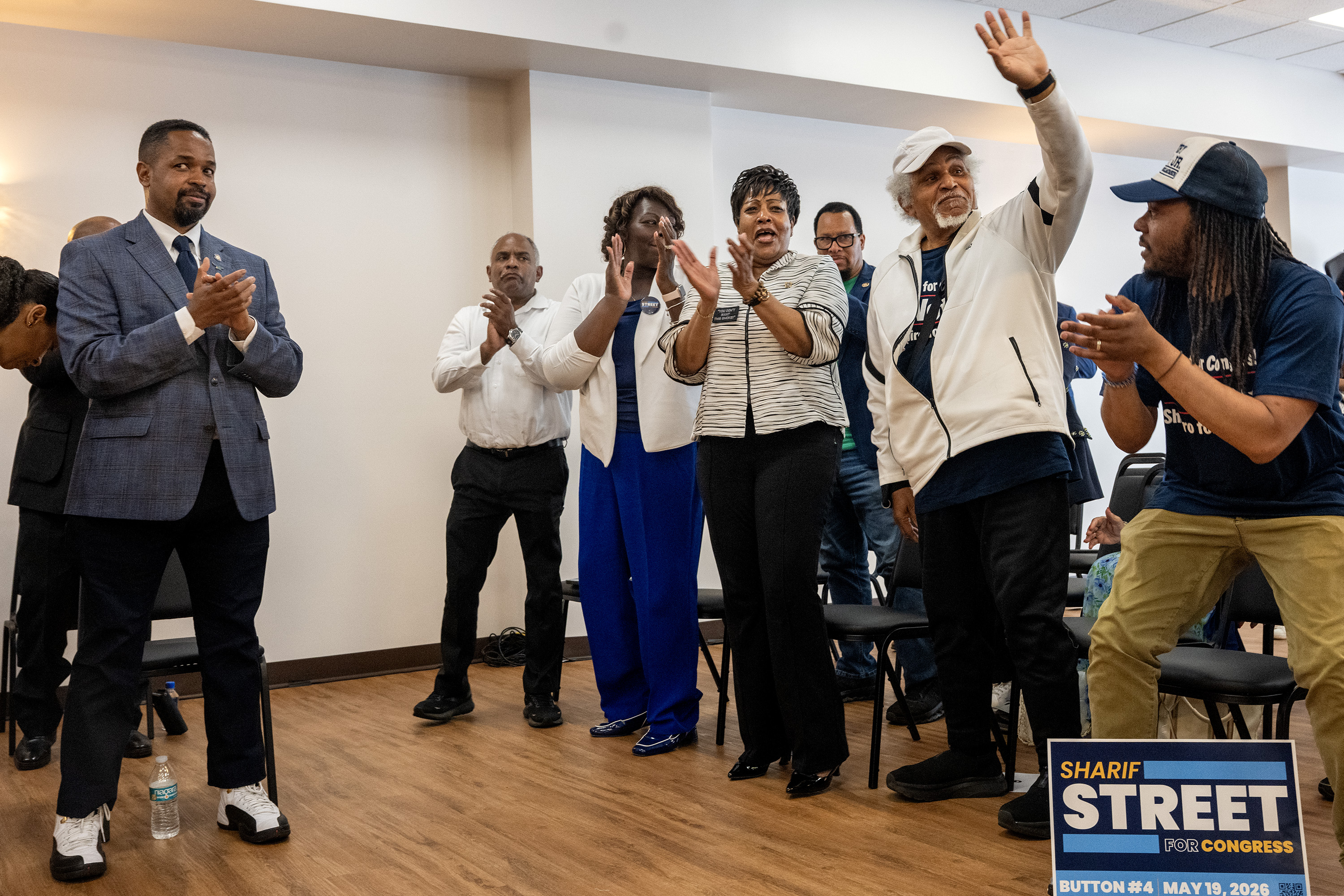
Former Mayor John F. Street (right) is acknowledged by supporters of his son, State Sen. Sharif Street (left), in West Philadelphia Monday, May 18, 2026.Tom Gralish / Staff Photographer
That was former Mayor John F. Street, the erstwhile City Council president, who returned to his old workplace Thursday to speak during public comment. He was testifying in support of a resolution to honor Philadelphia Police Lt. Greg Brown, who was, among other assignments, a member of Street’s security detail and is now retiring.
Street said Brown was one of the few people he never got to humiliate, because Brown “always got it right.”
“I never had a chance to put him on any list,” Street said.
Nearly a decade ago, seniors asked the pastor of their West Philadelphia church for help.
They were getting older and so weretheir houses, and they needed safe, affordable homes that weren’t such a burden to keep up with. They wanted to stay in their community, too.
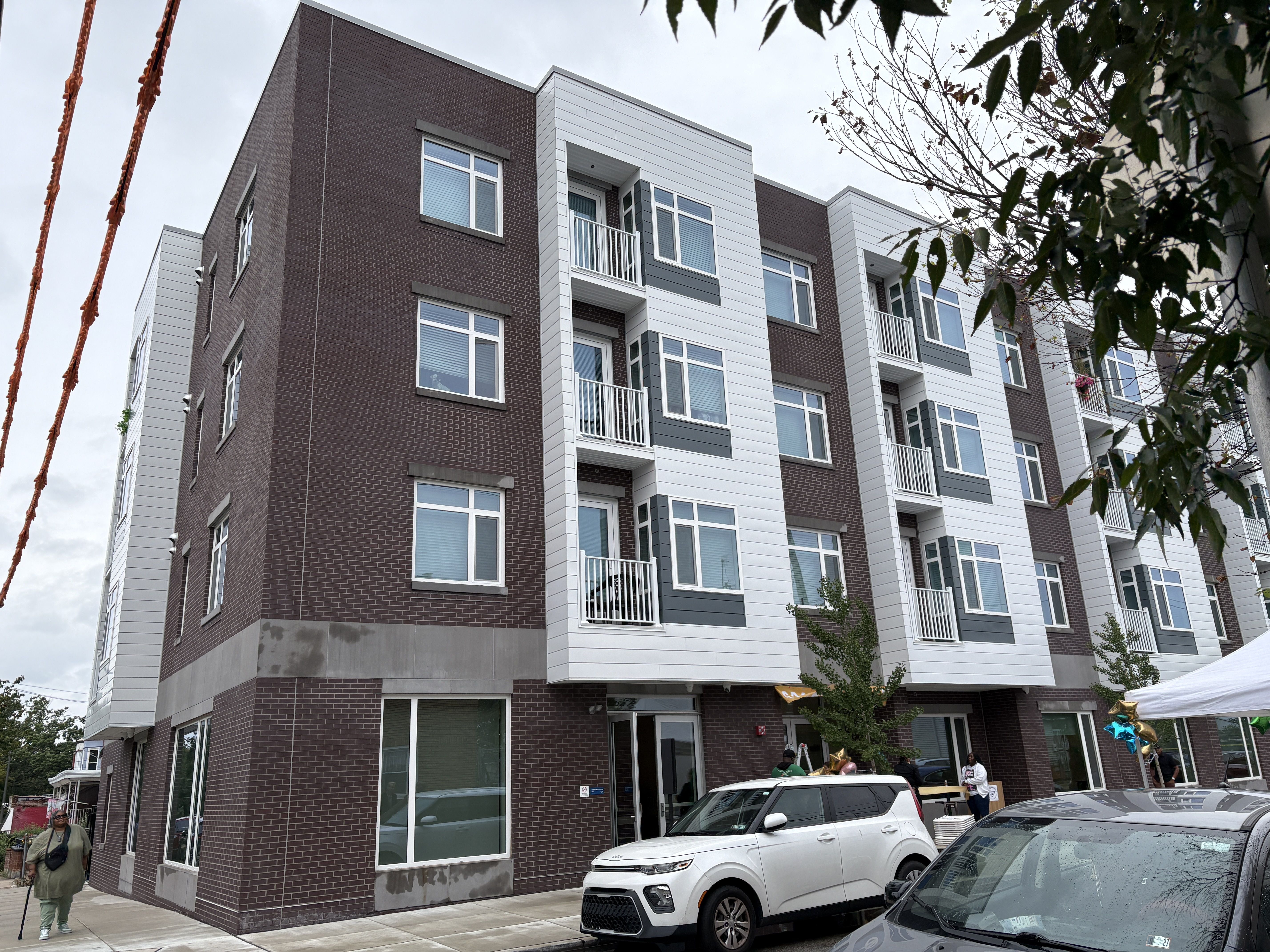
In the beginning of this year, on the site of what was once a dilapidated house and vacant lots filled with trash and rodents, the Church of Christian Compassion opened Compassion Senior Living, a new 38-unit subsidized apartment building in Cobbs Creek.
W. Lonnie Herndon, the church’s senior pastor, said the congregation “believe[s] ministry must extend beyond the walls of the church.”
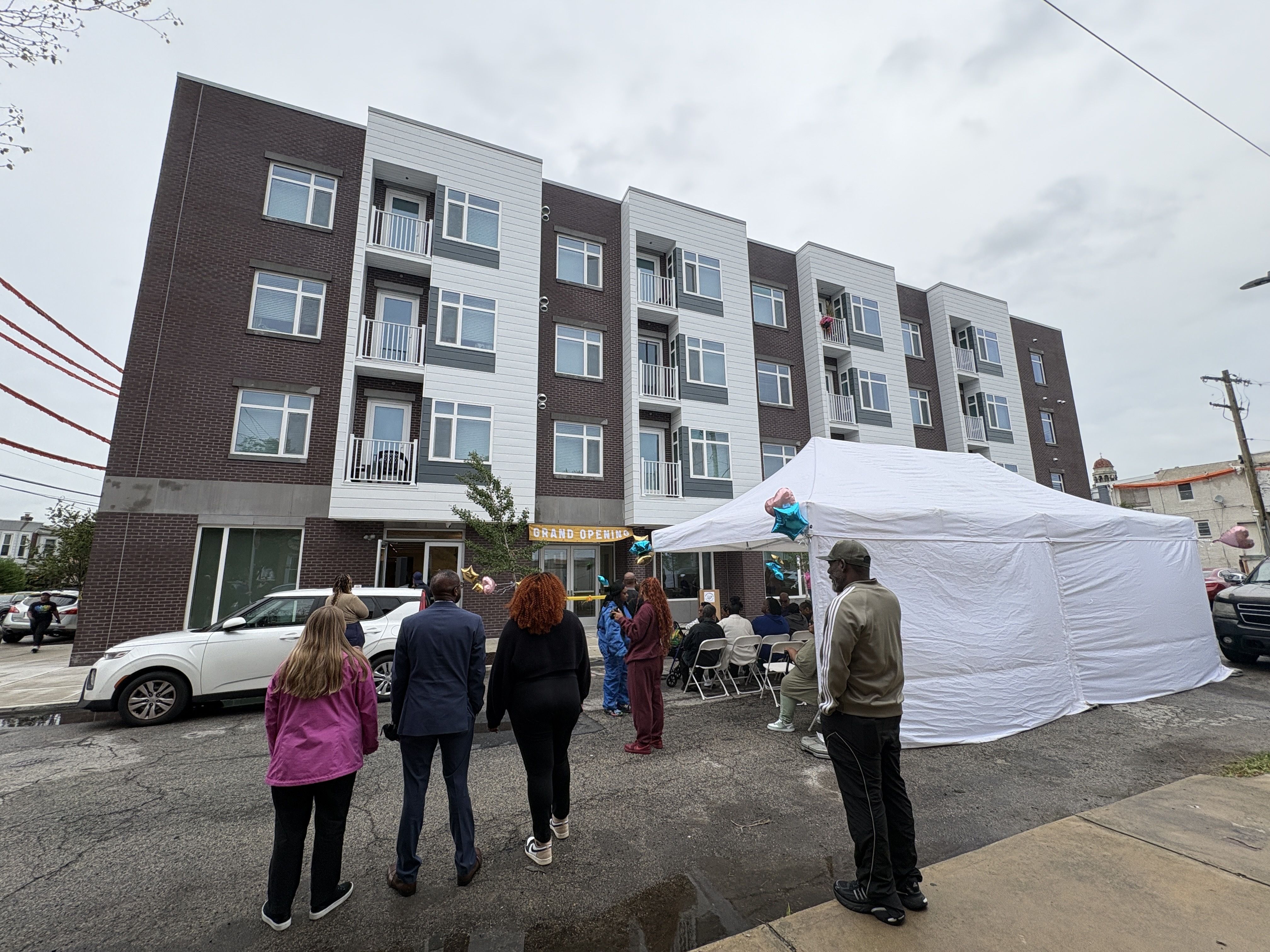
“We’re called not only to preach about love and compassion but to demonstrate it in practical ways that strengthen people’s lives,” he said Tuesday during an event celebrating the building filling with residents.
People gather Tuesday for a grand opening ceremony at the Compassion Senior Living apartment building in Cobbs Creek.Michaelle Bond / Staff
Philadelphia’s 65-and-olderpopulation is growing, and more than a third live below or near the poverty line, according to a 2025 Pew Charitable Trusts report. As housing costs rise, finding an affordable apartment as a senior can be difficult.
Since 2001, the Church of Christian Compassion has owned a 10-unit, market-rate apartment building across from the new development. But the new apartments fill a specific need.
Compassion Senior Living accepts people 62 and older who make between 20% and 60% of the area median income. That’s roughly $17,200 to $51,540 for a single-person household, which most of the building’s residents are. Four apartments are reserved for people who were formerly homeless.
Rents for the complex’s one-bedroom apartments are based on tenants’ income and range from $900 to $1,300.
This is the kitchen in a model unit in the Compassion Senior Living apartment building.Michaelle Bond / Staff
Evelyn Norris, who declined to give her age but said she is older than she looks, moved into her apartment in early August from another West Philadelphia building. She is a member of the Church of Christian Compassion and called the pastor “a jewel” who “looks out for everybody.”
Norris is thrilled to live in a newly constructed buildingwhere residents have formed a tight-knit community. She said everyone’s friendly and keeps an eye on each other.
“This place is wonderful,” she said. “God is all in this.”
More than three in five tenants were already residents of West or Southwest Philadelphia.
That includes Angela Cook-Boyd, also a member of the Church of Christian Compassion, who turns 70 on Sunday. She was tired of climbing the steps at the West Philadelphia house she had been renting and said her legs told her it was time to move to a building for seniors.
She had told the church she was interested in living at the property about five years ago when it was still in the works.
“It was truly worth waiting for,” she said. “It just has been a blessing.”
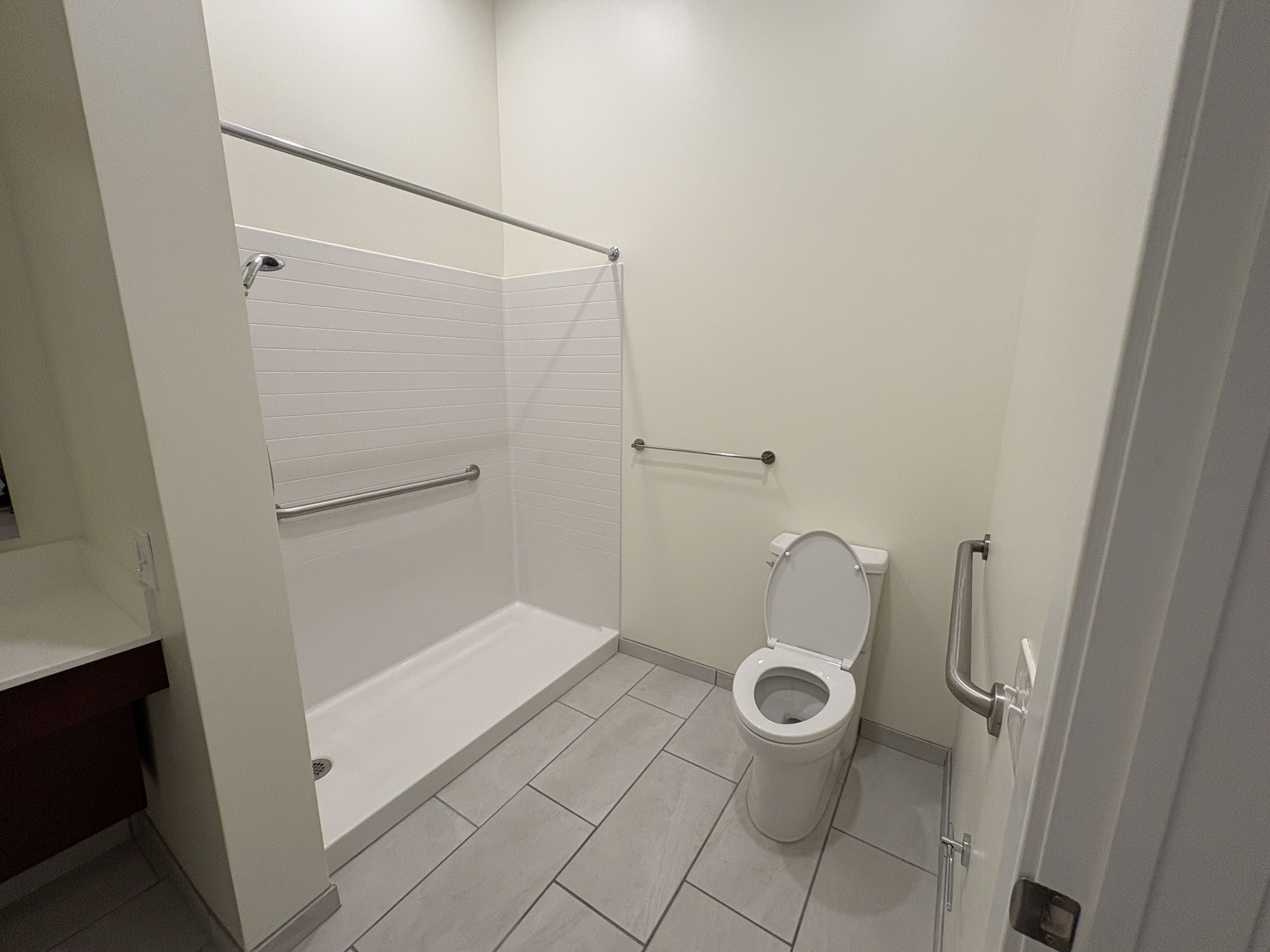
This is the bathroom in a model unit in the Compassion Senior Living apartment building.Michaelle Bond / Staff
The independent living community cost about $20 million, with millions coming from city, state, and federal funding.
City Councilmember Jamie Gauthier, whose 3rd District includes the apartment building, said one of her first meetings after she was elected in 2020 was with the church’s pastors and now-Pennsylvania House Speaker Joanna McClinton (D., Philadelphia). They talked about the importance of finding funding for the project.
“It is no secret that Cobbs Creek, like many of our neighborhoods, is being gentrified, and our wisest neighbors are the ones being hit the hardest,” Gauthier said. “Our seniors deserve to stay in the communities they’ve called home for decades, the communities that they’ve built into the desirable places that they are today.”
Compassion Senior Living offers on-site social services and plans to partner with a healthcare provider in the future. The building includes a laundromat, a library, a multipurpose room, and a community center. It has a green roof, low-flow faucets, and energy-efficient heating, cooling, and ventilation systems.
Pastor Terrilynn Donnell, who is also the executive director of the church’s community development corporation, the Community of Compassion CDC, called the completion of the senior apartments “a relief” after so many years. She said the church wants to build more homes.
This week’s edition of Shackamaxon looks at a crackdown on “smoke shops,” the Philadelphia police’s handling of traffic citations, how Harrisburg deadlines can be leveraged to fund transit, and what City Council forgot to talk about in its first session after returning from summer break.
Up in smoke?
An increasingly common frustration has been expressed across Philadelphia over the rise of what are known as “smoke shops,” which have proliferated in the city’s commercial corridors. Ostensibly operating as grocery stores, they are often locations where illegal drugs and drug paraphernalia are sold. They tend to operate late into the night and attract the ire of both residents and other business owners.
That’s why it was refreshing to see someone make a substantive move to shut them down. State Rep. Amen Brown, whose district includes parts of West Philadelphia and Logan Square, has put together an initiative he’s called Operation Breezy. Working with both city and state law enforcement, and relying on the support of members of the community, Brown’s efforts have already shuttered 13 of the establishments.
Brown’s approach uses confidential informants, many of whom come from the community itself. He told me that one of the now-closed shops had roughly 40 pounds of marijuana on thepremises, the outlets routinely sell out-of-state cigarettes, and that firearms have been seized as part of the efforts. Residents who would like to help can send an email to OperationBreezy@gmail.com or a message to the effort’s Instagram page, @operationbreezy.
Brown said he’d like to do more to stop the smoke shops, but that the best option requires action at the local level. Rather than enacting a broad-based curfew for all businesses, he’d prefer to target just the smoke shops. He says that might be possible by imposing restrictions on the operating hours of grocery stores that are smaller than 300 square feet. That’s a size below which, officials say, legitimate uses for a storefront become impractical.
Still, I couldn’t help wondering whether this incident is a natural outgrowth of the department’s policies. The Philadelphia police simply do not seem to take enforcing traffic laws seriously enough. Traffic citations have plunged over the last few decades. In the 1990s, officers regularly issued roughly half a million tickets per year. In 2023, about 45,000 tickets were handed out. These days, we celebrate an increase of a few thousand citations, even as overall stops remain at a fraction of the total pedestrian safety experts say is needed. Commissioner Bethel has said that enforcing traffic violations is a lesser priority.
While many officers blame the city’s Driving Equality Law for this decline, that measure does not prevent officers from enforcing moving violations, which are the most dangerous offenses. Failing to do so is a choice the department has made on itsown. The result of this lack of enforcement, traffic safety experts say, has been an increase in reckless and aggressive driving.
Given thata city controller report called Philadelphia’s streets the most dangerous of any major U.S. city, this lack of prioritization must change. While speed cameras and other forms of automated enforcement have made a difference along high-traffic corridors like Roosevelt Boulevard and Broad Street, they can only enforce certain offenses in certain locations. Reckless driving is an issue almost everywhere.
It is impossible to know what went through the mind of the officer who left Eugene Beauford in the street. The department has declined to publish his name, let alone make him available for an interview. But perhaps this horrific incident will prompt police brass to rethink the department’s strategy for enforcing traffic laws.
Skill game shutdown
Next month, Pennsylvania’s so-called games of skill will need to be unplugged. Oct. 13 marks the last day of the grace period the state Supreme Court gave the General Assembly to devise a taxation and regulatory scheme for the machines, devices that resemble slot machines and which are currently banned under state law. For years, legislators have debated where the machines can operate, and whether they should pay the same tax rate as existing slot machines.
By pure coincidence, there’s another big deadline approaching: the authorization period for the state-appointed SEPTA prosecutor. I’d like to propose a potential compromise for both issues. Harrisburg should extend the SEPTA prosecutor’s authority by three years, agree to Gov. Josh Shapiro’s proposed shift in sales tax revenue to support public transit, and pay for it by legalizing skill games and taxing them at the same rate as slot machines. They should also pass regulations limiting the placement of the machines and creating penalties for owners who allow children to use them.
Given District Attorney Larry Krasner’s recent struggles, extending the SEPTA prosecutor should be less politically contentious now than it was in years past. Lawmakers can also point to the significant decline in fare evasion and violent crime on the transit system over the last few years as justification.
For Philadelphia lawmakers who may be reluctant to place limits on the authority of Krasner, who has been overwhelmingly elected by their constituents three times, that kind of middle ground can provide fiscal peace of mind for SEPTA, which has been subject to financial uncertainty for three years. While Democrats seem to be pinning their hopes for approving more state funding for SEPTA on winning control of the state Senate during this fall’s elections, that is hardly guaranteed. If a deal can be reached ahead of time, it reduces the risk of a collapse. It also does not preclude additional action next year.
Finally, the need to act on skill games is clear. As it stands, it will be difficult for the commonwealth to shut down every location that houses the machines. We don’t even know how many exist. I am not a fan of these devices, which have a negative impact on the communities that host them. Regulation will make it easier to mitigate that damage and ensure Pennsylvanians see some benefit from the funds that flow through them.
Council comeback
After its three-month summer hiatus, City Council is back in session. All eyes on the second floor of City Hall will be trained on how Mayor Cherelle L. Parker will respond to a series of potentially contentious legislative proposals — from Councilmember Jamie Gauthier’s bill to stop burning trash to Councilmember Isaiah Thomas’efforts to stop at least part of the school closure plan.
City Council should hold investigatory hearings into both officials. Residents deserve better from their leaders than what both Krasner and Bilal have shown.
Philadelphia City Council members are considering dueling proposals over how the city eliminates its garbage, with one lawmaker leading an effort to immediately block the city from shipping its garbage to a trash incinerator and another taking a longer-term approach.
Councilmember Mark Squilla on Thursday introduced legislation authorizing Mayor Cherelle L. Parker’s administration to, within three years, develop a plan to dramatically reduce the city’s reliance on both trash incineration and landfills over the next 20 years.
Squilla’s proposal, which he drafted with input from Parker’s administration, is something of an alternative for lawmakers to consider as Councilmember Jamie Gauthier has for months pushed for a more aggressive approach to stop the city from incinerating trash this year.
Both lawmakers hosted news conferences this week alongside their allies to rally support for their cause, part of a long list of events Council members hosted as the legislative body returned Thursday for its first meeting of the fall session.
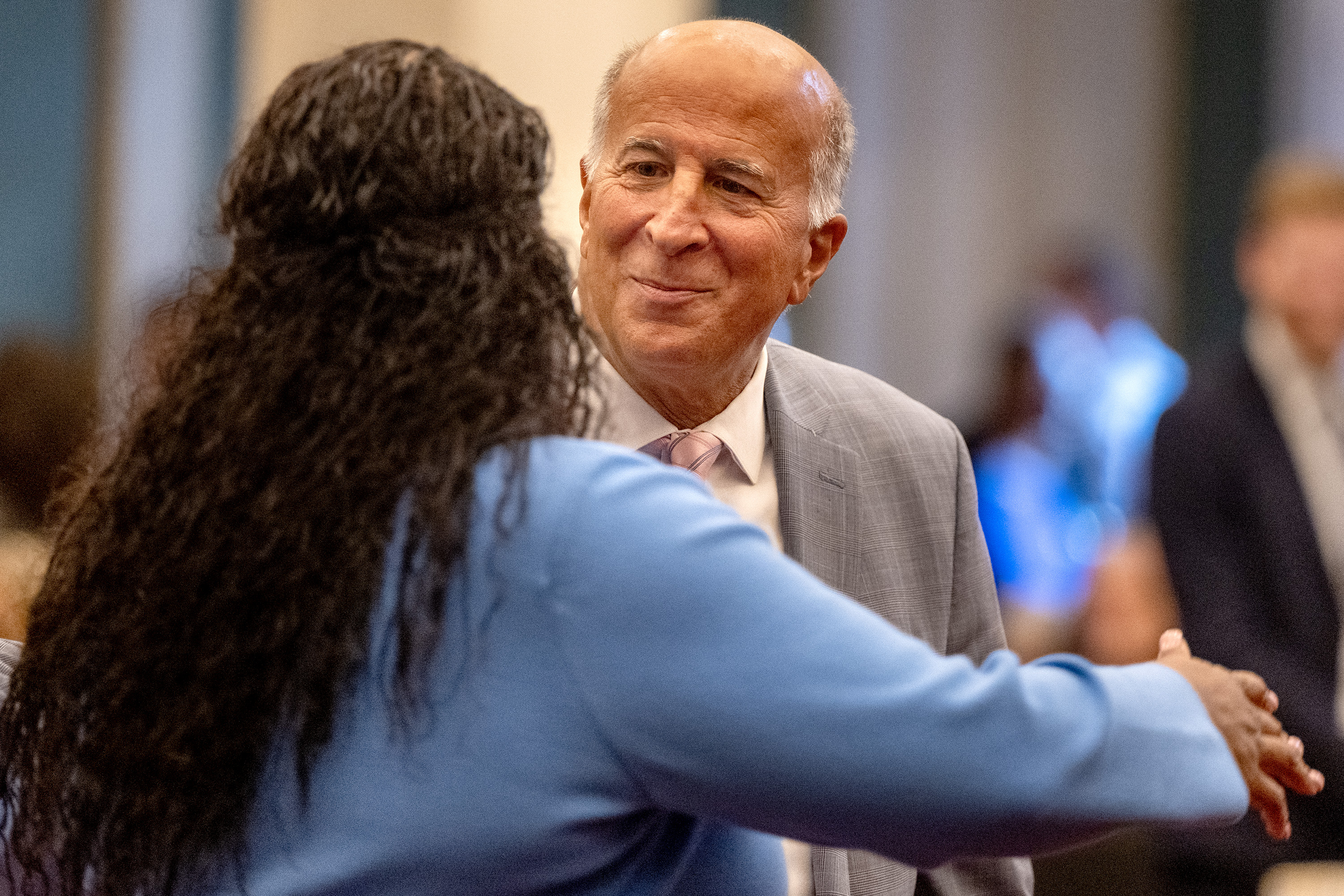
Councilmembers Mark Squilla and Katherine Gilmore Richardson (back to camera) greet each other as City Council convenes for its fall session Thursday, Sept. 17, 2026.Tom Gralish / Staff Photographer
The first meeting after the summer break typically has a jovial, first-day-of-school feel. But the mood briefly shifted Thursday when City Hall was evacuated and Council abruptly adjourned after a suspicious package was found on the floor where Council was meeting.
Police cleared the package, and Council resumed its business Thursday afternoon.
Here’s what else happened this week:
What was this week’s highlight?
Incinerator issue heats up: Gauthier has for months sought to pass legislation that would ban the city from continuing its long-term practice of sending about a third of its garbage to a trash incinerator in Chester, about 15 miles south of the city. She argues that incineration is bad for the environment and harms Chester residents’ health.
Parker’s administration opposed the legislation, called the Stop Trashing Our Air Act, and Gauthier in the spring failed to gain enough support for it in Council.
Now, Gauthier is trying to block the Parker administration from renewing its contract with Reworld, the incineration facility. The administration needs Council approval to enter into a new four-year contract with the firm.
Gauthier has several members on her side, including three fellow progressive lawmakers, as well as Councilmember Isaiah Thomas, who is the Democratic majority whip.
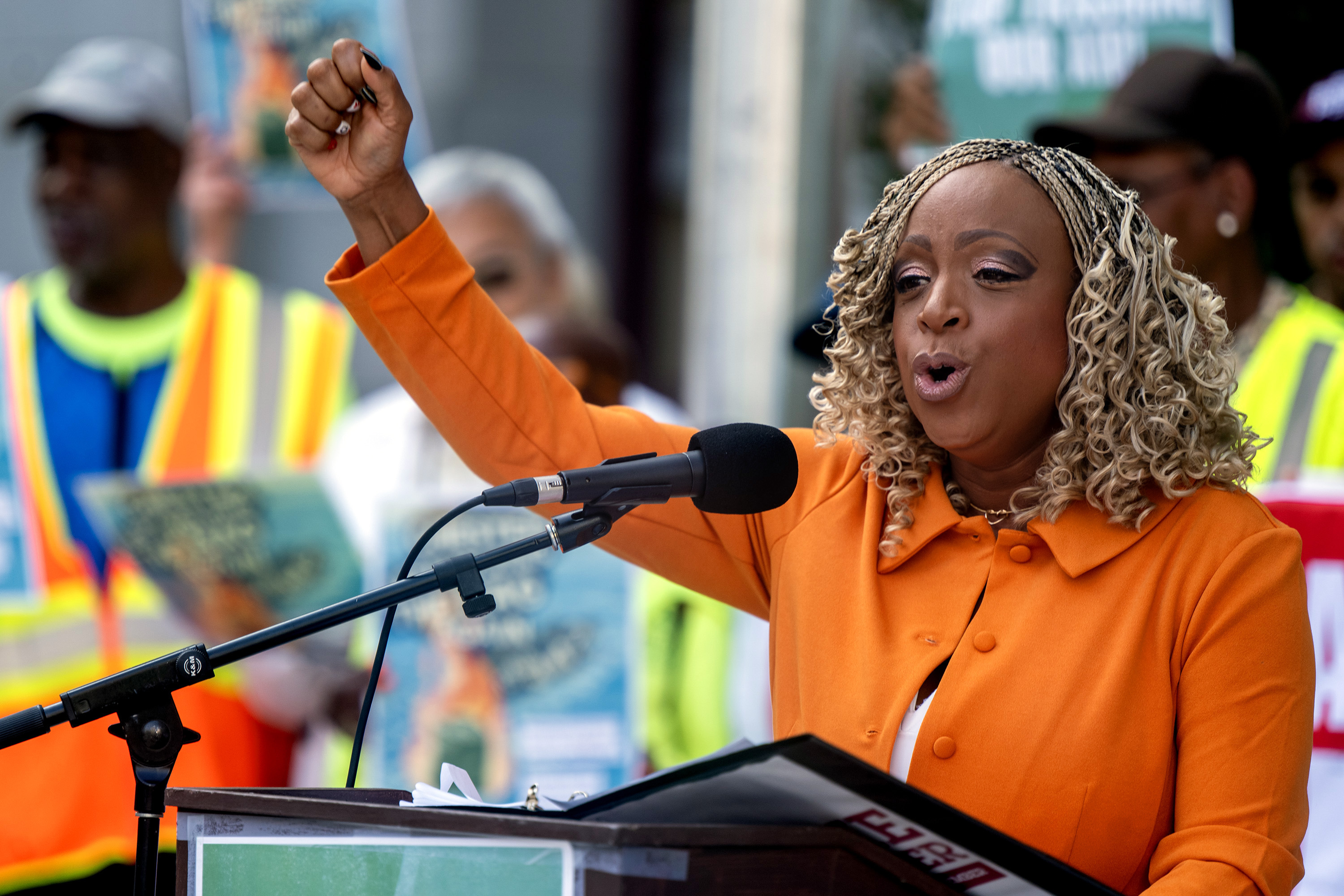
City Councilmember Jamie Gauthier speaks at a rally outside City Hall early Thursday morning Sept. 17, 2026 where protesters called on Council to reject Mayor Cherelle L. Parker’s waste disposal contracts. A coalition of elected officials, health and climate experts, and advocates from Philadelphia and Chester gathered to oppose the city’s sending its trash to an incinerator in Chester.Tom Gralish / Staff Photographer
Squilla’s proposal in some ways offers members an off-ramp. His bill calls for a “circular waste” system that includes new techniques for waste disposal, such as composting and “anaerobic digestion,” a process that breaks down organic waste.
Managing Director Carlton Williams said Wednesday during a news conference with Squilla that the city is looking to build out an anaerobic digestion system within four years.
Squilla said that while the administration is already working toward a more modern waste disposal system, passing a law would “codify what we had as plans and resolutions before.”
Gauthier said that she supports Squilla’s goal of moving toward a more sustainable system, but that his legislation “is a plan to create a longer-range plan.”
“It in no way changes the decision in front of Council,” she said. “We can move away from this practice right now.”
What else happened this week?
Severing the law department: The city law department serves as legal counsel for both the mayor’s administration and Council, a dynamic that can sometimes cause friction when the city’s elected officials disagree.
Council on Thursday approved a resolution by Thomas to hold a hearing “to consider the separation of the [law] department’s functions between the administration and City Council.”
Thomas has clashed with Parker’s administration, and he said he became interested in looking at the department’s structure due to concerns that Council was not receiving independent legal advice on some issues.
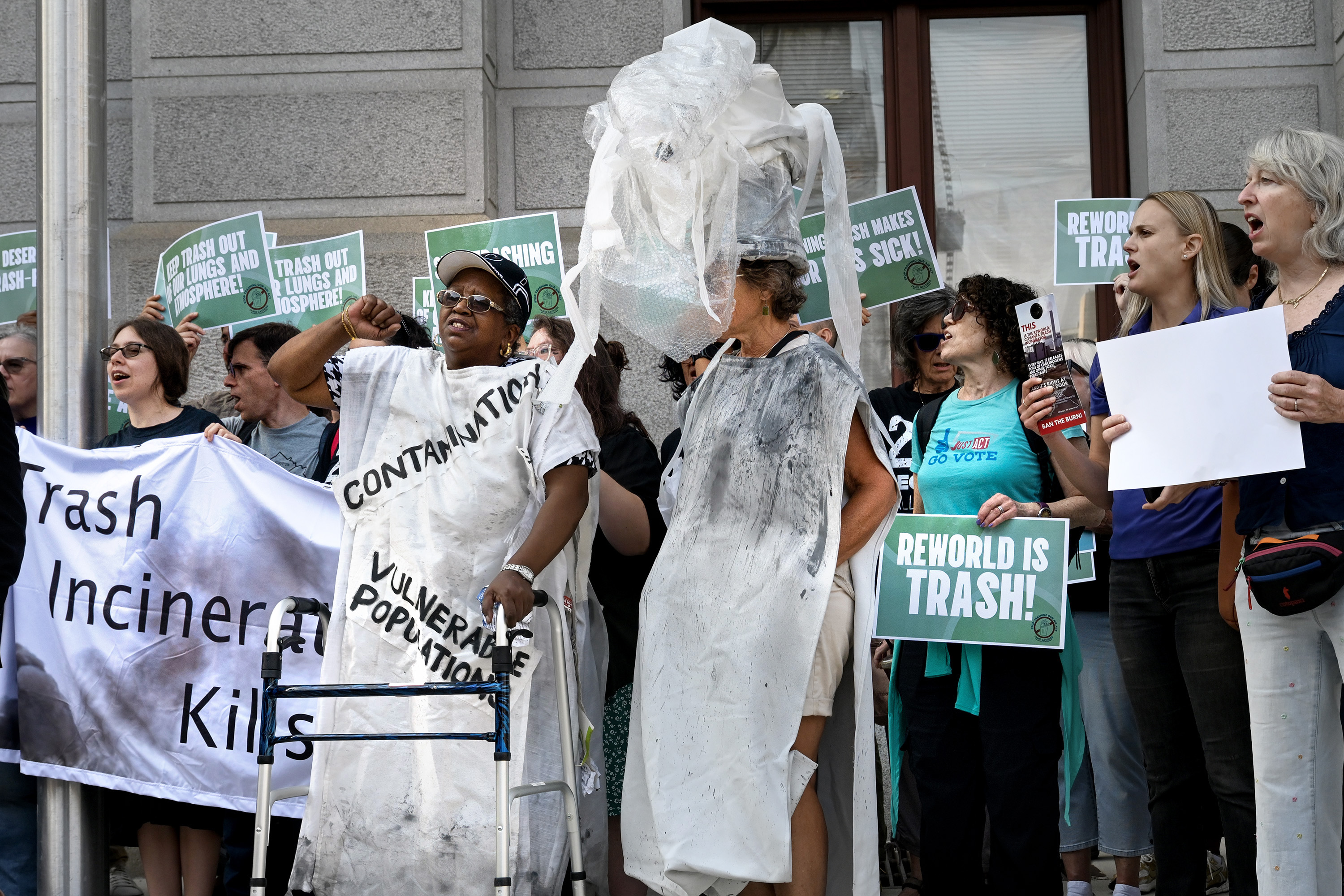
Lois Williams (left), dressed as a “sick person,” and Shari Hersh (right) in costume as a “smokestack,” join a rally outside City Hall early Thursday to call on City Council to reject Mayor Cherelle L. Parker’s waste disposal contracts.Tom Gralish / Staff Photographer
He pointed to the Philadelphia School District’s controversial facilities plan, which involves the closure of 17 school buildings and was adopted by the school board in April over the objections of many Council members.
And he said recent legal proceedings around the city’s business income and receipts tax were “part of the motivation” to hold a hearing on the law department.
In 2025, after a Massachusetts company sued the city seeking to overturn a popular tax break program that primarily helped small businesses, the law department said it had determined the lawsuit was likely to succeed. The Parker administration eventually settled the case and persuaded Council to eliminate the tax break. Some Council members at the time complained that the city did not defend the tax break more vigorously.
The department already silos off some of the work it does on behalf of Council from the rest of the administration, such as when it drafts bills proposed by lawmakers. Council also may hire outside legal counsel, but must pay for those services out of its own budget.
A law department spokesperson did not immediately respond to a request for comment.
Storage wars: Councilmember Mike Driscoll introduced legislation on Thursday that would ban new self-storage facilities from his district in lower Northeast Philadelphia.
The storage industry boomed during the COVID-19 pandemic, as consumer spending shifted from services to goods, many families struggled to afford larger homes, and low interest rates juiced development.
Northeast Philadelphia saw a particularly large boom in self-storage buildings because of its rich supply of properties zoned for industrial development. Driscoll said that advocates in the Tacony neighborhood felt their community had become oversaturated.
“They want more affordable housing and [self-storage units] are taking valuable sites for that,” Driscoll said.
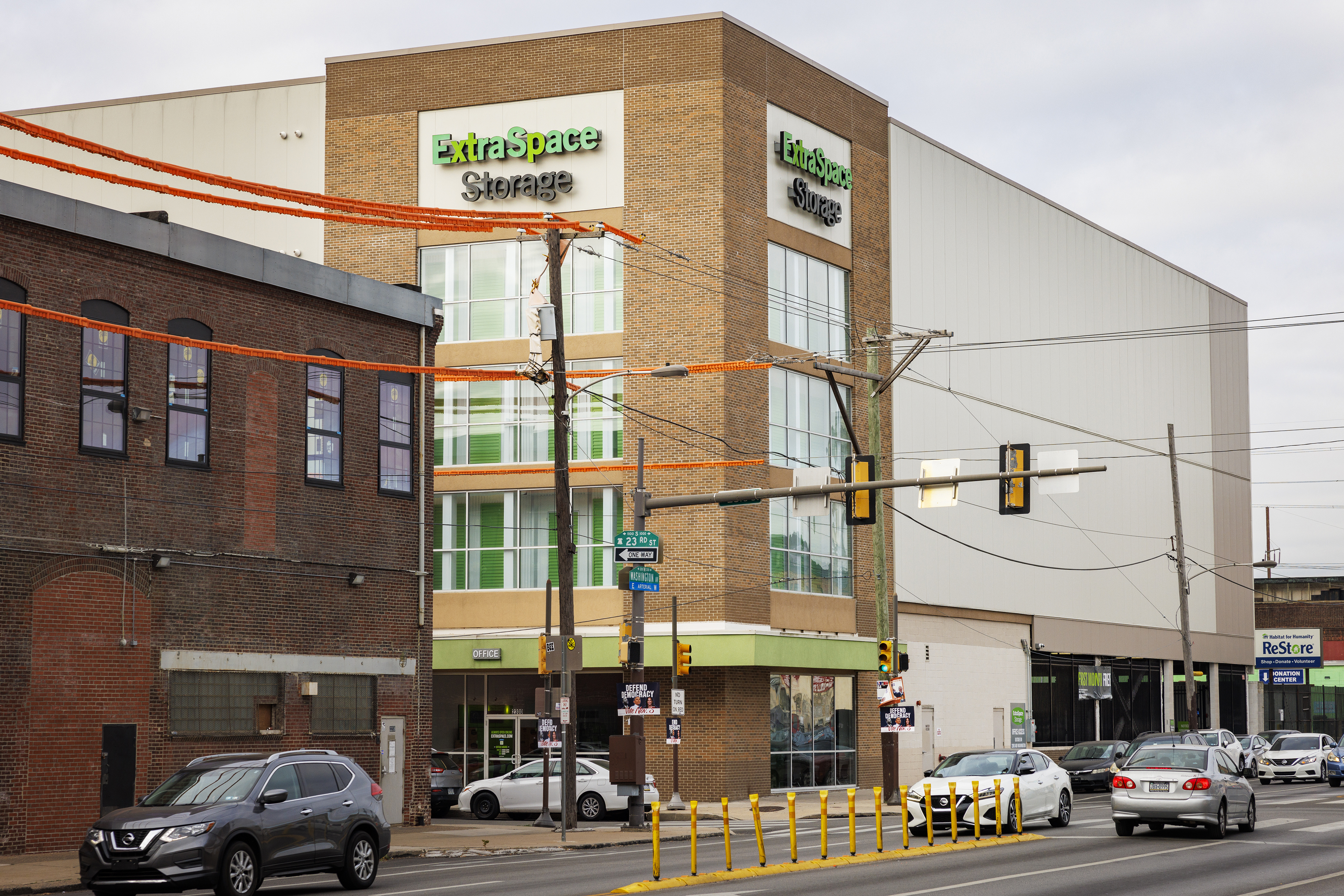
ExtraSpace self-storage at Washington Avenue and S. 23rd Street, Philadelphia, Monday, November 4, 2024.Alejandro A. Alvarez / Staff Photographer
Self-storage facilities are gold mines for developers. They suffer little wear and tear, they have few utility costs, and labor costs are low after construction.
According to online industry search portal StorageCafe, Philadelphia has 89 self-storage sites containing more than seven million square feet of space. About a third of that has been built since 2019.
Other municipalities have moved to limit the spread of self-storage facilities in recent years. New York City banned them from industrial areas to preserve jobs, and Denver blocked them from properties close to light rail lines. Providence, R.I., in 2023 banned new facilities from the city altogether.
Driscoll said that he may further limit his legislation to the Tacony neighborhood.
“I don’t want to hurt another part of my district that maybe wants these things,” he said.
Embracing affordability: Multiple members of City Council said this week that tackling affordability is their primary objective this fall, including Councilmember Nicolas O’Rourke, whose office published a lengthy report outlining dozens of proposals aimed at reducing costs.
Some may be more realistic short-term goals than others.
The report, which was drafted by a Cost of Living Task Force made up of community advocates and industry leaders, recommended the city explore everything from opening municipal grocery stores to creating a local Medicaid supplement program.
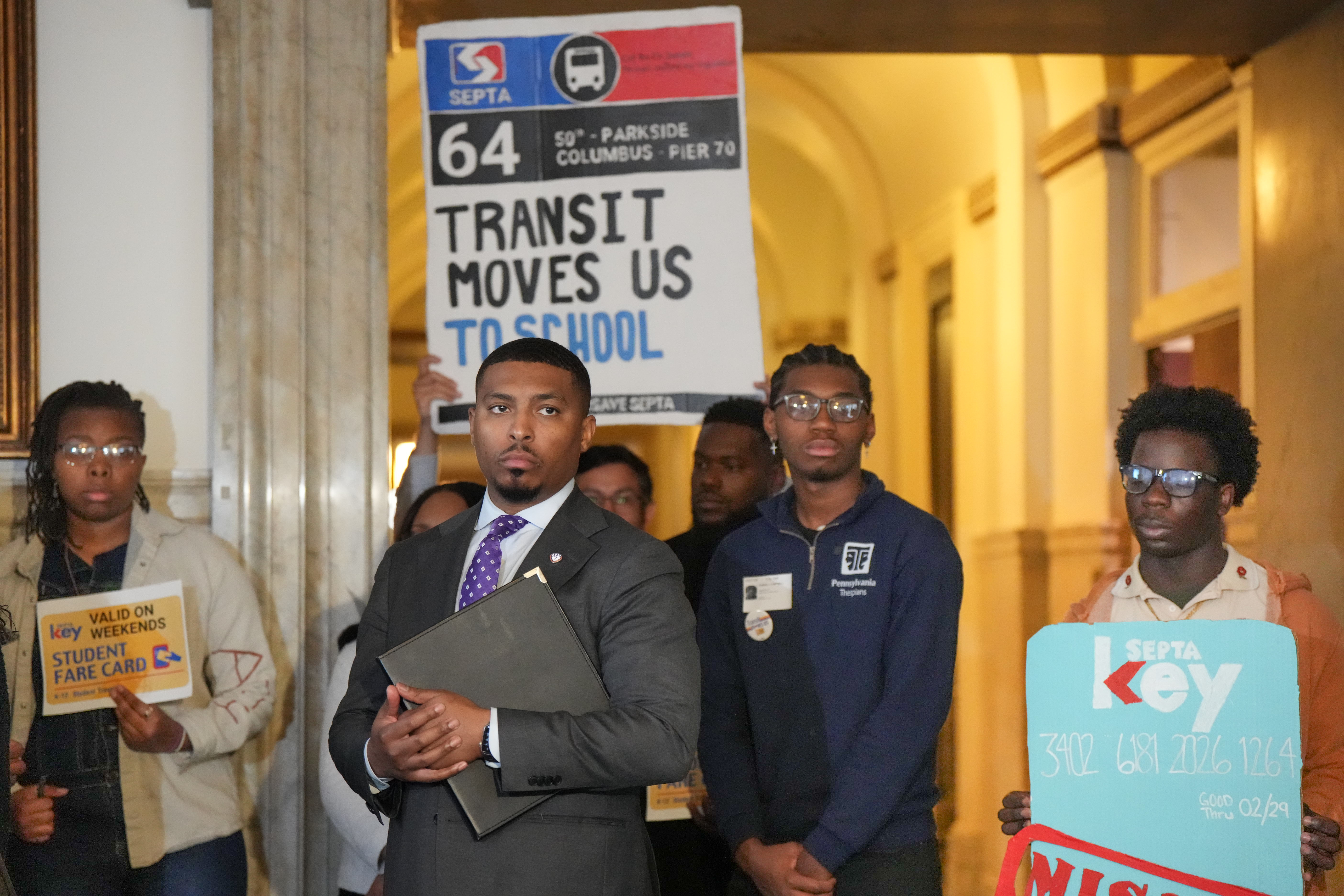
Councilmember Nicholas O’Rourke with students and activists during a press conference about SEPTA in April.Jessica Griffin / Staff Photographer
It also recommends restructuring existing housing programs to more aggressively target the poorest residents, and establishing a Transit Access Fund that would fund free or reduced-fare transit passes for low-income households.
O’Rourke, a member of the progressive Working Families Party, plans to hold a committee hearing on the task force report this fall.
Council President Kenyatta Johnson will also introduce an affordability measure this fall. He plans to bring forward legislation that would establish a permanent Food and Nutrition Security Coordination Office, he said in a statement.
Quote of the week
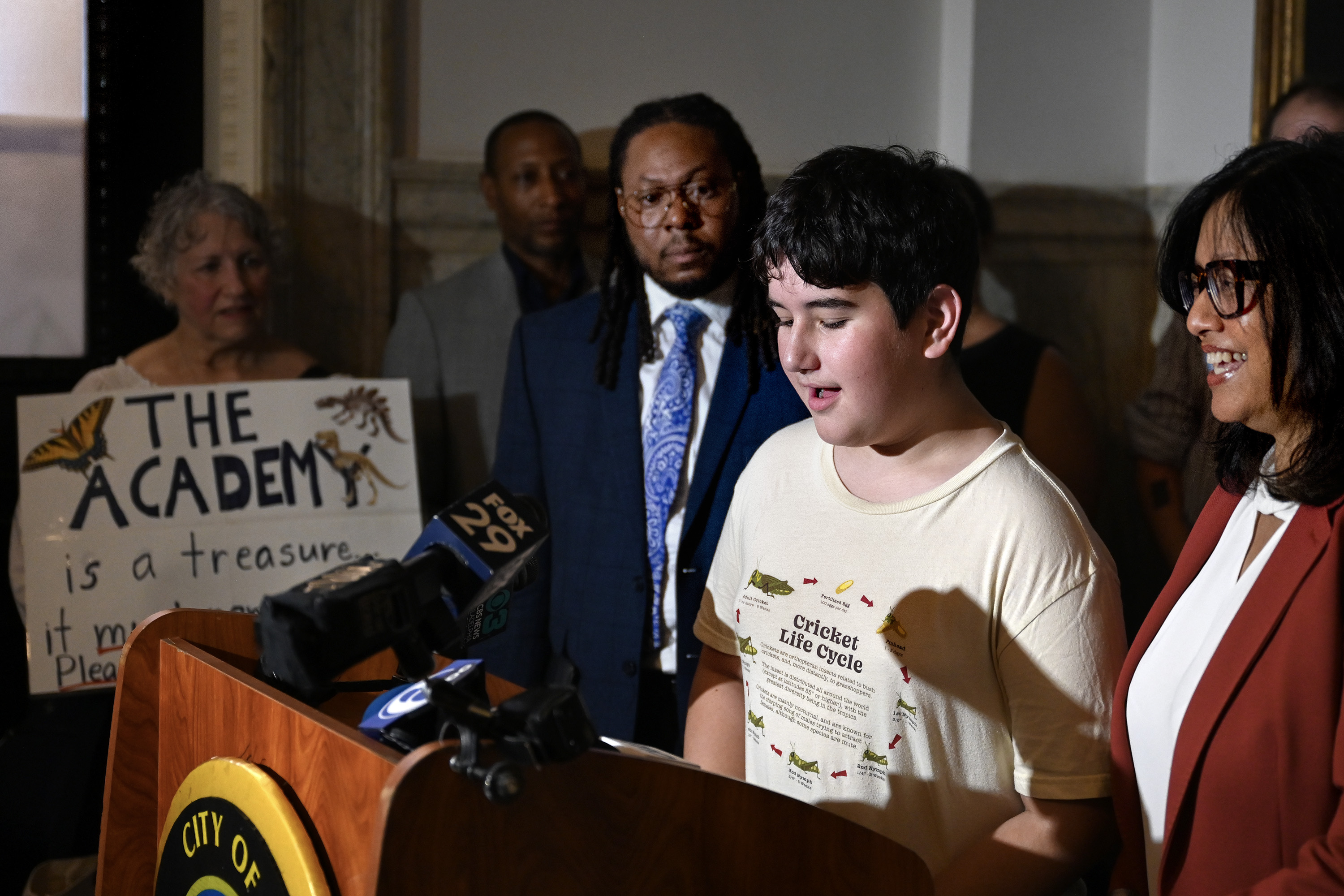
Jeffery Young, Jr. (left) with twelve year-old Jack Erfer of Wynnewood and councilmembers and Nina Ahmad (right) in supporting the Academy of Natural Sciences of Drexel University before City Council resumes for its fall session Thursday.Tom Gralish / Staff Photographer
No bones about it: That was Councilmember Jeffery Young Jr., who called for hearings on the planned closure of the Academy of Natural Sciences.
One evening last week, City Council President Kenyatta Johnson stood on South Broad Street and greeted his fellow lawmakers as they arrived at Steak 48.
Johnson had invited them to the swanky Center City steakhouse to “reconnect, share conversation, and enjoy each other’s company outside of City Hall,” according to an invitation for the Sept. 9 “members only” event obtained by The Inquirer.
Council resumes for its fall session Thursday — and after the way things ended in the spring, the city’s legislators may have needed the opportunity to break bread together.
When lawmakers last met in June, they approved a $7.1 billion city budget that left all sides feeling dejected. Council turned away a series of tax proposals from Mayor Cherelle L. Parker, including a $1-per-ride levy on rideshare companies like Uber and Lyft, and ended up passing a budget that omitted a number of members’ own priorities and left unanswered how the city will help the Philadelphia School District navigate its funding crisis in the long run.
In addition to representing a new low in Parker’s relationship with the legislative body of which she was once a member, some Council members also questioned their own negotiating team’s handling of the ordeal.
Councilmember Mike Driscoll noted last week that while he was not “pointing fingers,” Council could have added more money in the budget for line items requested by lawmakers, such as funding for community groups.
“I’m disappointed and pissed off at the way it played out,” Driscoll, who represents parts of Northeast Philadelphia, said in an interview. “Our priorities weren’t analyzed in a more thoughtful [way]. … We do the amendments. [Parker] doesn’t. We could have put money in.”
Councilmember Michael Driscoll in Philadelphia on April 23, 2026.Jessica Griffin / Staff Photographer
An Inquirer reporter saw at least 11 of Council’s 17 members at the Steak 48 event, meaning a majority, or quorum, of Council was present. The Pennsylvania Open Meetings Act, or Sunshine Act, requires legislative bodies to notify the public if a quorum is present for a meeting at which official business is discussed.
But Johnson said at the beginning of the dinner that would not be happening.
“Tonight we do no official business,” Johnson said in an interview. “Just social. Welcome back to City Council. Eat and drink and be merry. No policy on the table. No legislation on the table. Just having a good time.”
Johnson’s invite directed members to RSVP to a Council staffer’s city email address. Johnson said his campaign picked up the tab.
“Everyone facing reelection next spring knows they have to be able to point to real accomplishments on the important issues voters care about,” City Hall lobbyist John C. Hawkins said. “And this fall is their last opportunity for them to address the most pressing issues that were not fully resolved in the spring budget process.”
Budget fight hangover
When Council and the mayor in the spring failed to reach a deal over new tax revenue to plug a $48 million hole in the school district’s budget, Johnson said Council had helped identify one-time savings in the city budget to fill the gap for a year while vowing to explore new recurring revenue streams for the district.
Johnson has not yet scheduled a hearing on schools funding, and Council’s dissatisfaction with the district appears to have been mounting.
Mayor Cherelle L. Parker, Council President Kenyatta Johnson, and Superintendent Tony B. Watlington Sr. arrive for an announcement at the School District of Philadelphia Headquarters on Wednesday, June 10, 2026 in Philadelphia.
He said in a statement this week that Council will honor its commitment, but also alluded to finding that money in the district’s own budget, despite school officials saying they are navigating a $300 million structural deficit.
Johnson said Council is awaiting the results of a performance audit of the school district that is being conducted by City Controller Christy Brady. He said that report “will help Council identify any available funds to support recurring funding.”
New arena, who dis?
In the fall of 2024, Council wasconsumed by the debate over the 76ers’ proposal to build an arena in Center City.
Lawmakers spent much of the session debating the economic benefit of the project, while opponents cried out that it would displace businesses and residents in nearby Chinatown.
Despite Council approving it, that project was scuttled by the Sixers, who instead teamed up with Comcast, which owns the Flyers, to plot a different project: a joint venture that would bring a new arena to the South Philly sports complex. Earlier this month, they released the first renderings of what the Spectrum-inspired arena could look like.
There will likely be spirited discussions about it all in Council — at some point. But don’t expect a redux this fall of the all-out brawl that was 2024.
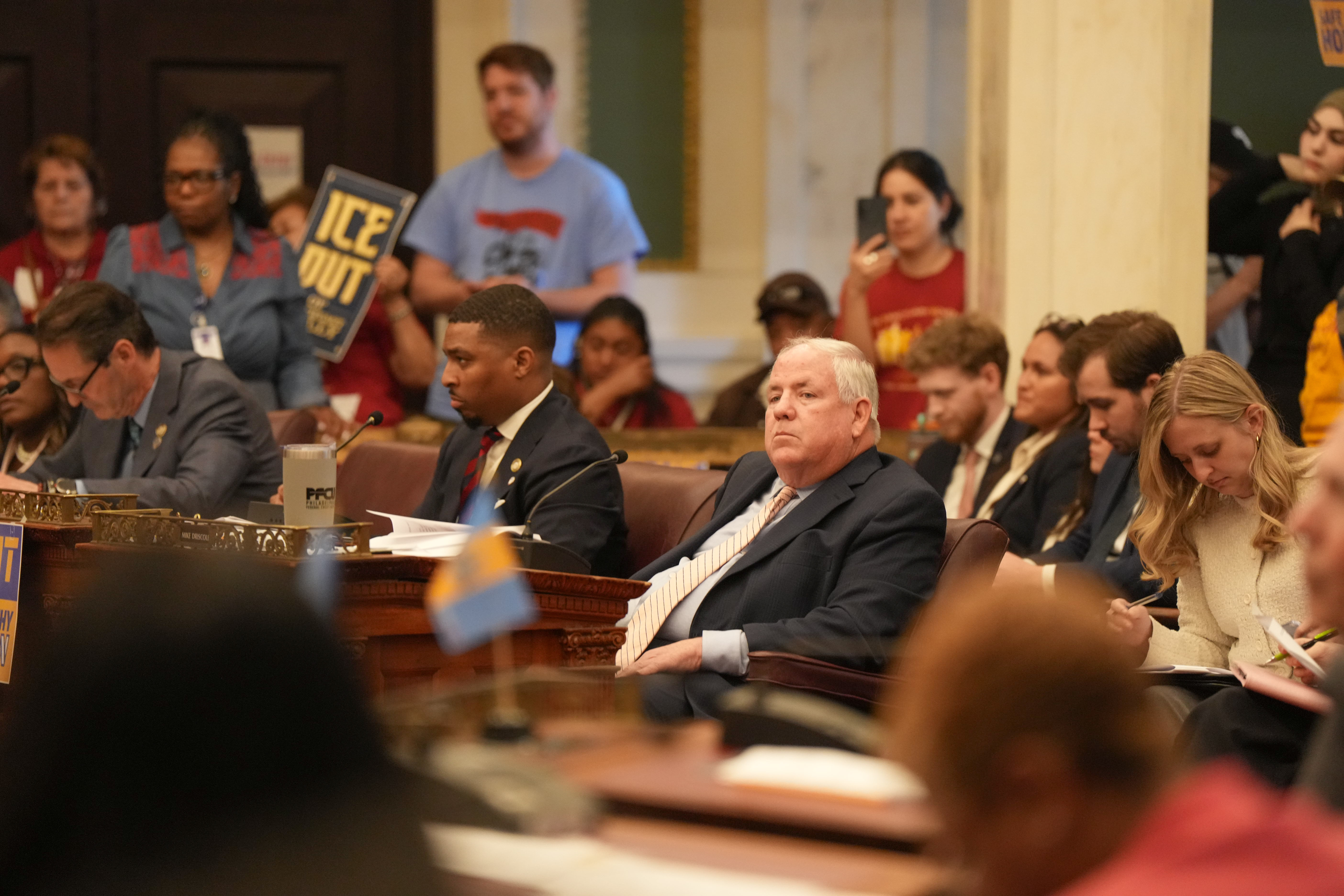
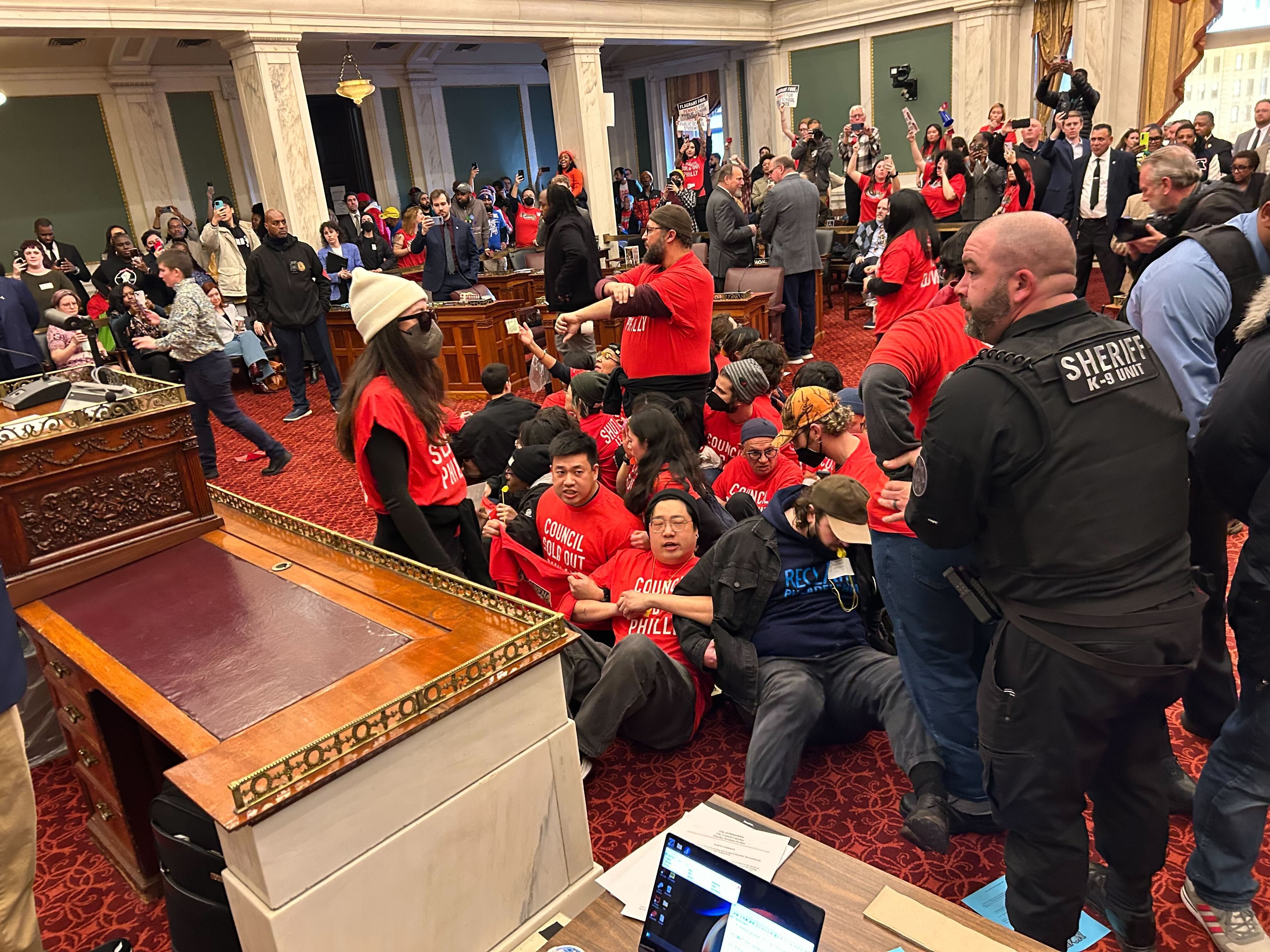
Protesters link arms as sheriff’s deputies attempt to remove them from Philadelphia City Council chambers as the council is scheduled to vote on final approval for the Sixers’ proposed Center City arena on Thursday, Dec. 19, 2024.Sean Collins Walsh / Staff
The stadium district falls in Johnson’s 2nd District, meaning it will be on him to introduce legislation that would green-light the project. And he has not been in a hurry to accommodate the Sixers’ timeline, which would be to approve the project as soon as possible so the venue can open by 2030.
Johnson said in a statement that “no zoning legislation is scheduled for introduction,” and that he is working to find consensus with the Parker administration and other Council members before introducing any legislation.
“I am focused on ensuring that any future legislation concerning the new arena addresses the interests and concerns of the community around the Stadium District and in Philadelphia,” he said.
When that legislation is brought forth, it is unlikely to be anywhere near as controversial as the 76ers’ Center City proposal, which drew opposition due to its proximity to Chinatown, so long as the teams uphold their promise to not seek public subsidies.
The Asian Pacific Islander Political Alliance, which led opposition to the Center City arena, released a statement earlier this month that signaled openness to the South Philly project.
“The people of South Philly should have a meaningful voice in whether and how this project moves forward,” said Will Gross, an API PA member who is rumored to be considering a run for Council. “And if it does, it should mean good union jobs, a strong community benefits agreement, and real benefits for the people who live and work in the neighborhood.”
Trash issue continues to burn
Councilmember Jamie Gauthier has spent the better part of the last year trying to whip up support for a bill that would ban the city from shipping off its trash to be burned at an incinerator in Chester, a longtime practice she and others say is poisoning residents of the city to Philadelphia’s south.
The Parker administration opposed the measure, saying it would limit the government’s ability to carry out its normal competitive bidding process and select the best-value contractor. Gauthier failed to get a majority of Council on her side, and she never called up the Stop Trashing Our Air Act for a vote.
This fall, she will try a new tactic.
Gauthier and her allies are attempting to kill the Parker administration’s effort to approve a new contract with Reworld, which operates the Chester waste-to-energy facility where the city sends about a third of its garbage. (The remainder is hauled off to landfills.)
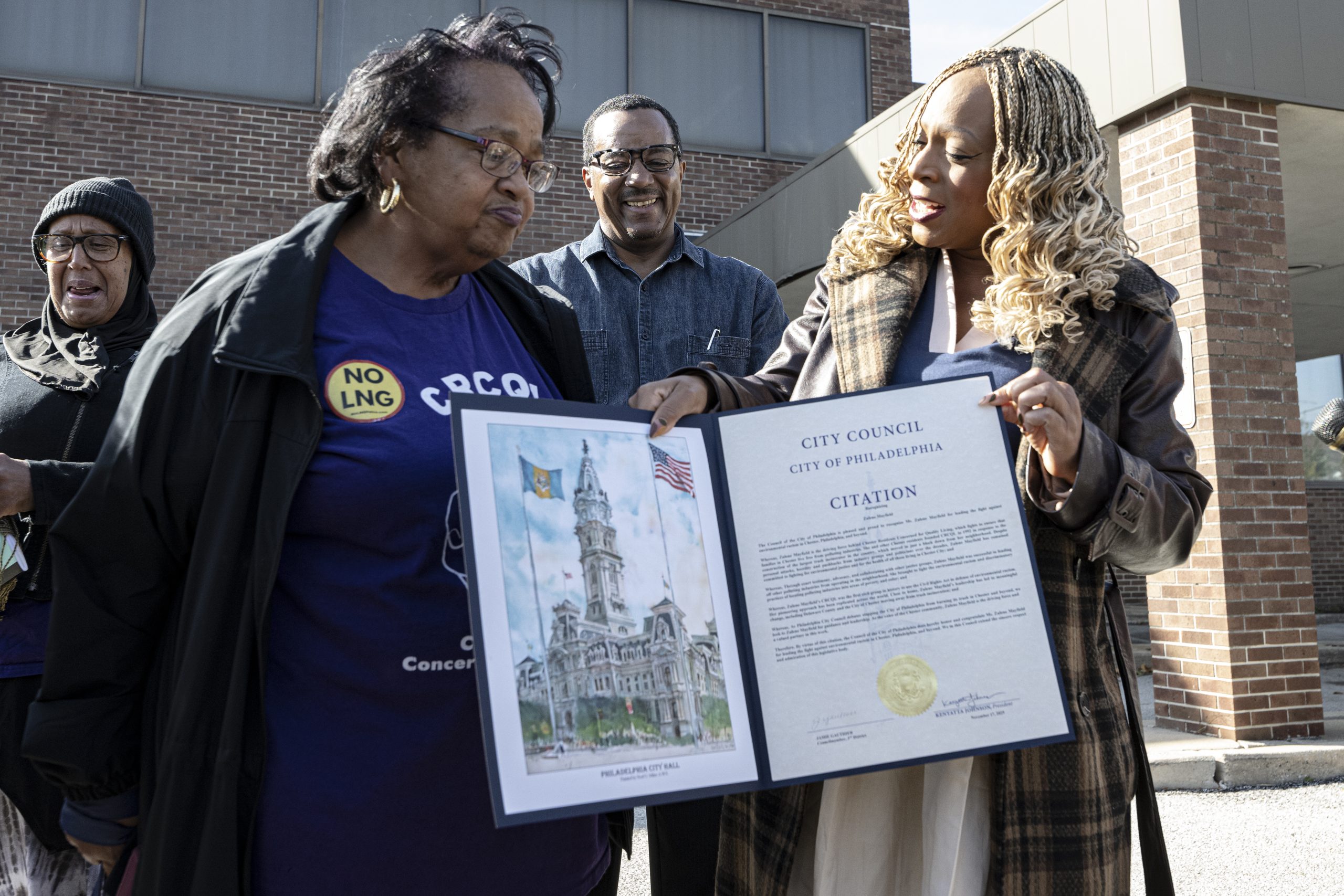
Chester resident Zulene Mayfield, left, Philadelphia Councilmember Jamie Gauthier, right, and Chester Mayor Stefan Roots meet to discuss Gauthier’s “Stop Trashing Our Air Act,” which would ban the city from incinerating waste, during a visit with lawmakers and staff in Chester, Pa., on Friday, Nov. 7, 2025.Jose F. Moreno / Staff Photographer
In July, the Parker administration announced that it intends to enter into a new four-year contract for waste processing and disposal with Reworld, as well as two landfill operators, Republic Services and Waste Management. The terms of those contracts have not yet been made public.
Council must approve multiyear contracts, and Gauthier, who represents parts of West and Southwest Philadelphia, said she is planning a full-court press to get her colleagues to “block Mayor Parker’s dirty deal with trash incinerators.”
The question is whether she can get eight other members on her side to reach a majority of Council. She is likely to find support from three fellow progressives, and she is expected to be joined by Councilmember Isaiah Thomas, the Democratic majority whip, at a Thursday news conference calling on the city to end its contract.
Councilmember Mark Squilla takes his seat in chambers Wednesday, Dec. 11, 2024, before a scheduled committee vote on Sixers arena related legislation was postponed,Tom Gralish / Staff Photographer
Meanwhile, Councilmember Mark Squilla said he has been working with the administration on a plan to build out a “circular waste” system that would replace incineration and landfilling over time with composting and waste “digestion.”
“The incinerator bill …. doesn’t solve a problem we have: to reduce our waste,” Squilla, whose district includes parts of Center City, South Philadelphia, and the river wards, said in an interview. “If we can reduce our waste by going to composting and digestion and other forms, we then eliminate all of our trash. Therefore end up with the result of what the goal should be, [which] is to get as close as possible to zero waste.”
Squilla’s proposal, which would involve “a long-term contract to attract providers to be able to build out a possible digester to decrease the amount of food waste,” could make it easier for Council members sympathetic to Gauthier’s goals but skeptical of her incinerator bill to approve the administration’s contract with Reworld while committing to a long-term solution.
The business tax, revisited
Separate from the school district revenue, some Council members are hoping to advance measures that would provide tax relief to businesses.
Council two years ago approved a 13-year schedule of rate cuts that would dramatically reduce the business income and receipts tax. But at the same time, Parker moved to eliminate a tax break that primarily helped small businesses after its legality under the Pennsylvania Constitution was challenged in court.
The elimination of the tax break — which excluded from taxation companies’ first $100,000 in revenue — has forced thousands of small firms and sole proprietors that make less than that threshold to begin paying a tax from which they had been effectively exempted.
Driscoll worked with tax experts to find a workaround that could pass legal muster — exempting certain types of businesses, such as sole proprietors, from the tax entirely — and he is planning to call up for a vote his bill this fall.
Thomas, meanwhile, said he will introduce a resolution Thursday to hold hearings this fall on the feasibility of reducing the net income portion of the business tax “much sooner” and more “aggressively,” meaning an acceleration of the tax cuts already scheduled.
The measures are likely to spark opposition from more progressive members of Council and could be tricky to navigate for Parker, who wants to make Philly more business-friendly but may not want to forgo additional revenue.
Members eye priorities as election looms
With next year’s election looming — and all 17 members indicating they intend to seek new four-year terms — the fall session is also likely to see movement on a myriad of issues championed by individual legislators.
Majority Leader Katherine Gilmore Richardson said she will propose bills to “protect communities from harmful nuisance businesses and improve processes around code violations,” continuing her efforts to crack down on businesses that neighbors say attract crime.
Councilmember Rue Landau, who represents the city at-large, said she is “tackling the impact of emerging technologies, making Philadelphia more affordable for working people, and ensuring equity remains at the center of how we serve our LGBTQ+ communities.”
Landau said she also plans to introduce a resolution calling on the state to ban automated license plate readers like Flock cameras.
The Philadelphia Council members inside the caucus inside City Hall in Philadelphia, Pa on Thursday, June 11, 2026.
And Councilmember Kendra Brooks will propose new protections for temporary workers and tenants facing eviction, according to her spokesperson, Kathleen Melville.
Brooks, a progressive who represents the city at-large, will also fight for additional funding for reproductive healthcare providers, a priority of hers that was left out of the budget following Council’s impasse with Parker, Melville said.
“That was her biggest focus going into the budget,” Melville said. “She had the same experience as every other Council member in that none of her budget priorities made it into the budget.”
Several members have also said that they want to bolster the city’s property tax relief offerings after the administration this summer released its citywide assessments that will mean higher taxes for thousands of homeowners.
The most likely move would be for Council to amend the city’s tax code to increase the popular homestead exemption, which currently exempts the first $100,000 from a home’s taxable value if the owner lives in the dwelling as their primary residence.
Johnson said Council “will review all tax-relief options” this fall.
Philadelphia last week took a step toward renewing its contract with a controversial Chester trash incinerator after a high-profile bill to ban the city from doing so failed to garner enough support in City Council.
Mayor Cherelle L. Parker’s administrationissued a notice on Friday that it intends to enter into a new four-year contract for waste processing and disposal with Reworld, which operates a waste-to-energy facility in Chester. The city sends about a third of its garbage to the incinerator, the Delaware Valley Resource Recovery Facility.
Carlton Williams, who leads Parker’s Office of Clean and Green Initiatives, said in a statement that the city’s contracting process resulted in a deal that is “financially sound, environmentally safe, and includes the best option for the city to explore alternative methods for disposal.”
But advocates, local officials in Chester, and some City Council members have accused the company of severe pollution and environmental racism, saying it releases toxic chemicals into the air that cause adverse health effects in the majority-Black city that’s about 15 miles south of Philadelphia.
The amount of money the city intends to pay Reworld was not immediately clear on Monday. Parker administration officials issued a notice that they intend to renew the city’s existing contract with the company, but did not publish the contract itself.
Reworld was one of three companies selected to process and dispose of the city’s waste. The other two, Republic Services and Waste Management, operate landfills.
Council will need to approve legislation to greenlight the new contract with Reworld. The next scheduled meeting is in September.
It’s unclear what fate the bill might meet in Council. Last year, Councilmember Jamie Gauthier, a Democrat who represents parts of West Philadelphia, introduced the Stop Trashing Our Air act, which would have banned the city from entering into contracts with companies that burn trash or recyclables.
Chester resident Zulene Mayfield (left), Philadelphia Councilmember Jamie Gauthier (right), and Chester Mayor Stefan Roots meet to discuss Gauthier’s “Stop Trashing Our Air Act,” which would ban the city from incinerating waste, during a visit with lawmakers and staff in Chester on Nov. 7, 2025.Jose F. Moreno / Staff Photographer
But she never called the bill up for a vote, and ultimately put it on hold after it failed to garner support from a majority of the 17-member body.
Gauthier said in a statement Monday that dirty air causes asthma and cancer, and that Parker’s administration is “condemning Philly and Chester to at least four more years of toxic air and ash.”
“This is a choice. A choice that breaks Mayor Parker’s own campaign promise,” Gauthier said. “A choice that disproportionately harms Black and brown communities. A choice that makes every Philadelphian and Chester resident sicker.”
Parker, who ran on a platform of making the city “safer, cleaner, and greener” seized on it and told Brown: “That response is the same way you treat the Black and brown community.”
But Parker’s administration opposed Gauthier’s legislation, saying it would hamstring the city from being able to choose the best value waste disposal contractor through its typical competitive bidding process.
That process, city officials said in a news release Friday, included considerations of cost, as well as impacts on transportation in the region and the environment. The administration hired two independent firms to conduct environmental impact analyses.
The city previously held a seven-year contract with Reworld, which expired in June. Parker’s administration extended it for six months, ahead of selecting the company for a four-year renewal with the potential for three additional one-year extensions.
CHESTER — Like a Ben Franklin impersonator waving at Independence Hall and the Liberty Bell, tour guide B. Preston Lyles directed the tour group’s attention to various landmarks as they passed by.
But instead of highlighting monuments that made locals swell with pride, Lyles was pointing to sites he said made thepeople of Chester get sick and die younger: power plants, an oil refinery, a sewage sludge-burning facility, and — most relevantly for Friday’s group — the Reworld trash incinerator, the destination for about a third of the rubbish collected by Philadelphia’s city government.
“Chester City is known as one of the nation’s worst cases of environmental racism,” Lyles, an organizer for Delco Environmental Justice, told the group, referring to the concentration of polluting industries in Black and brown communities. “It is not just because the city holds the nation’s largest waste incinerator, but due to an extreme concentration of toxic industries in and adjacent to such a small city.”
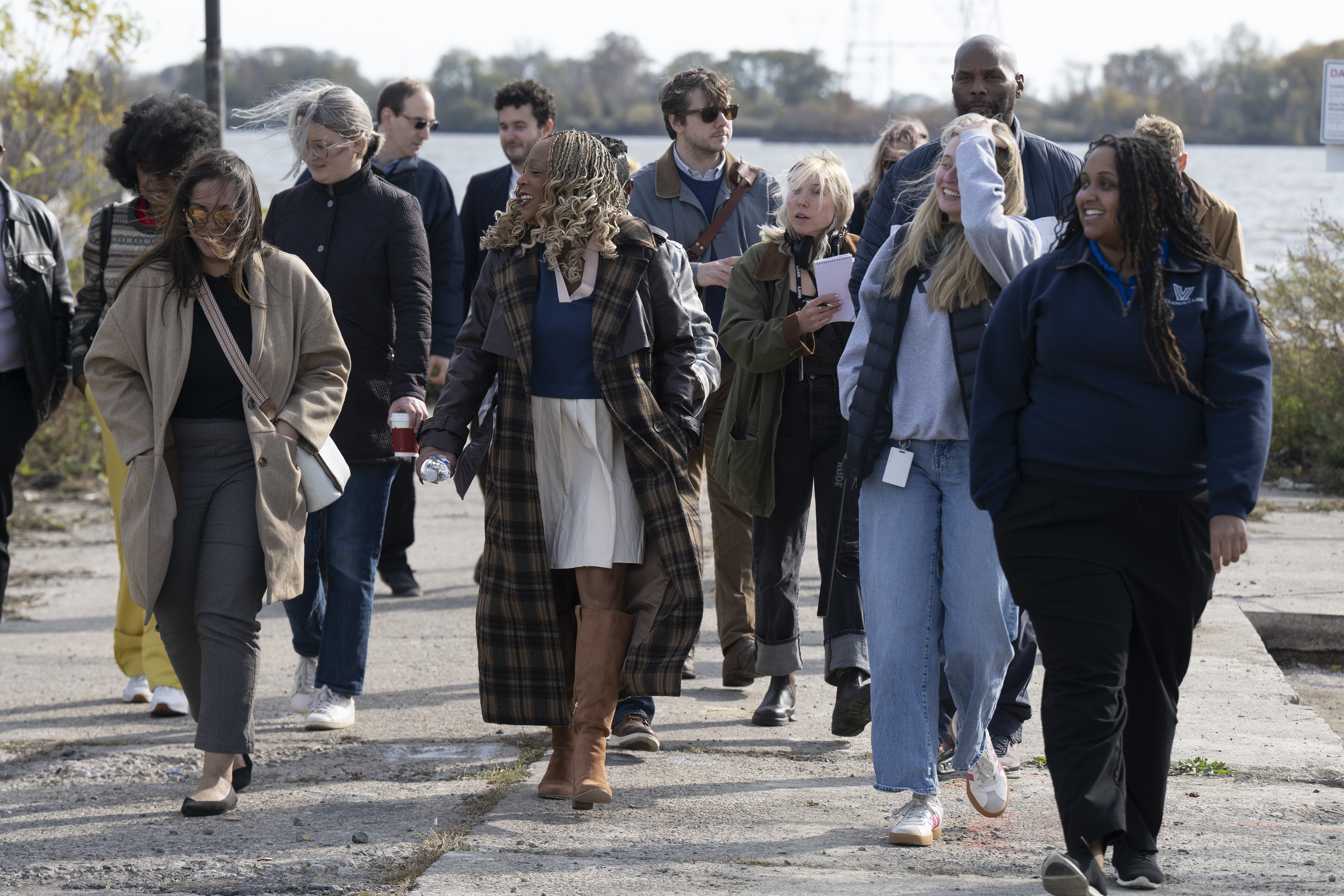
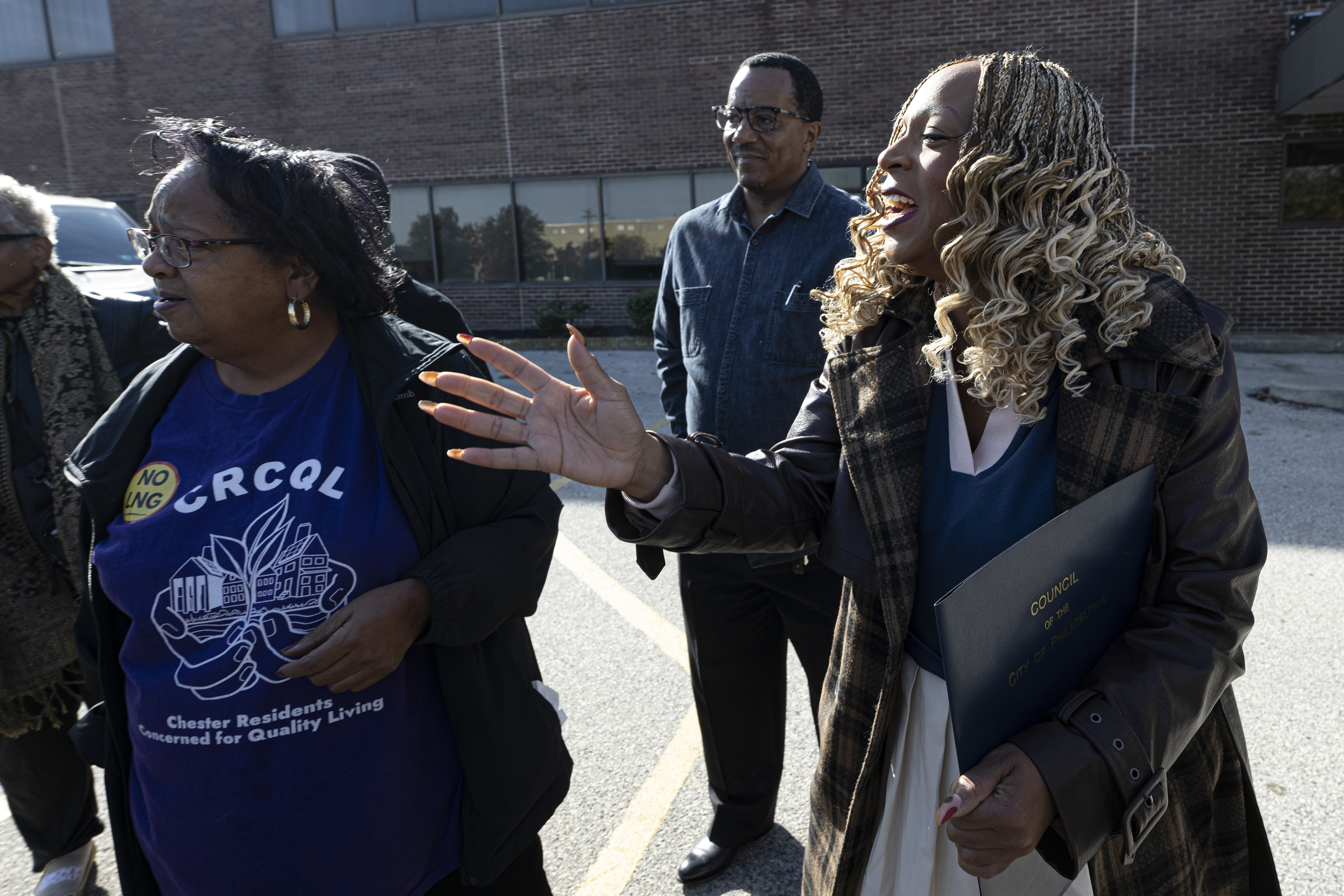
Philadelphia Councilmember Jamie Gauthier tours Chester to discuss her “Stop Trashing Our Air Act,” which would ban the city from incinerating waste, during a visit with lawmakers and staff in Chester, Pa., on Friday, Nov. 7, 2025.Jose F. Moreno / Staff Photographer
“From a justice and fairness perspective, it just seems so wrong to me and so obvious,” said Gauthier, who was joined on the tour by Councilmember Kendra Brooks and staffers for other lawmakers. “Seeing the incinerator on the waterfront and all of these other dirty uses and the abandoned homes, that made me want to do this more, because it’s wrong. It’s wrong that people should be loaded down with all these toxic uses.”
Reworld in 2024 burned more than 355,000 tons of trash collected by the city. Its contract with Philadelphia ends in June 2026.
Gauthier has introduced a bill, the Stop Trashing Our Air Act, that would prohibit the city from incinerating trash, and Council’s Committee on the Environment, which she chairs, will likely hold a hearing on it this fall.
Reworld spokesperson Linda Ribakusky said the company is a “leading sustainable waste solutions provider.” The Chester facility, she said, offers “a more sustainable alternative to landfilling by converting waste into renewable energy and recovering valuable metals that would otherwise be lost.”
“The Reworld Delaware Valley facility helps reduce greenhouse gases by avoiding landfill methane and generates enough clean electricity to power more than 50,000 local homes each year,” Ribakusky said in a statement. “We are proud to be an active part of the Chester community. Working alongside local schools, nonprofits, neighbors, and community organizations, we support initiatives that create real impact.”
‘Now is the time’
The Philadelphia Sanitation Department collects and disposes of about half of the city’s waste, said Michael Ewall, founder of the Philly-based Energy Justice Network. The other half is handled by private haulers hired by businesses and owners of larger residential properties.
Under its contract, Reworld takes one-third of the municipally collected trash to the Chester incinerator, which the company says produces about 87 megawatts of electricity, enough to power 52,000 homes, while burning the waste. WM, which operates a major landfill in Bucks County’s Falls Township, takes the other two-thirds.
When the most recent contracts were signed in 2019, the city agreed to pay roughly $65 per ton of trash to both Reworld, which was then known as Covanta, and WM, formerly Waste Management.
Gauthier said she has had constructive conversations with Mayor Cherelle L. Parker’s administration about eliminating incineration from the city’s waste management operations, and is hopeful the city will include environmental justice concerns in its request for proposals for the new contracts.
Parker’s office did not respond to a request for comment.
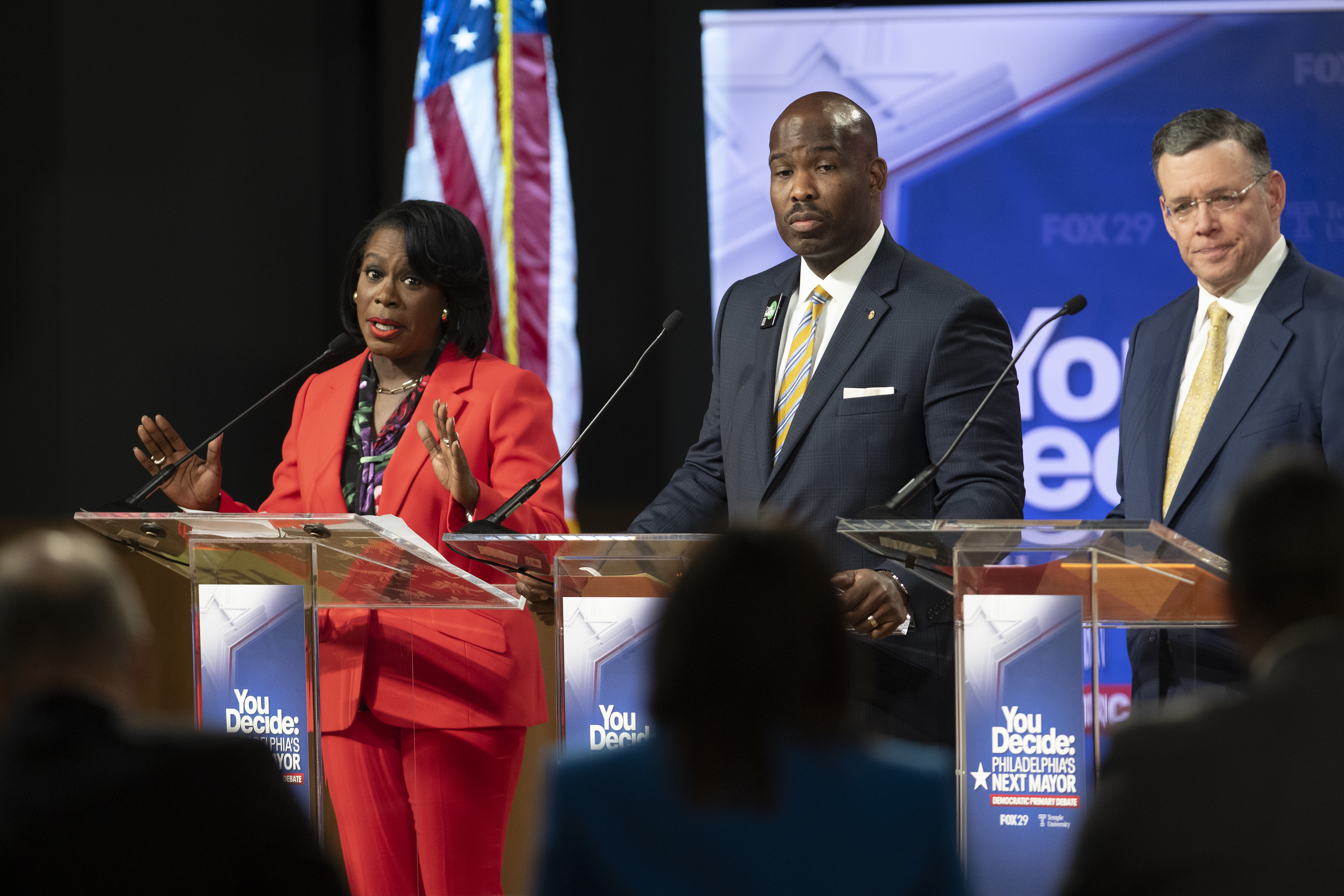
The Chester incinerator provided a flashpoint in the 2023 mayoral election, which Parker won. During a debate, a moderator asked candidate Jeff Brown about the incinerator, prompting Brown to say, in part, “The trash has to go somewhere.”
In a debate performance that was key to her rise and Brown’s downfall in the race, Parker was among the candidates who pounced on the soon-to-be-infamous comment.
Top candidates for the Philadelphia mayor seat former City Council Member Cherelle Parker, left, Former City Council Member Derek Green, and businessman Jeff Brown, during a televised debate at the Temple performing arts center in Philadelphia, Pa. Tuesday, April 11, 2023.Jose F. Moreno / Staff Photographer
During the debate, however, Parker was not asked directly if she would commit to ending the city’s contract with Reworld.
“I was enthused to hear our mayor speak about this on the campaign trail,” Gauthier said. “I hope we all want to do the right thing. Now is the time to show that.”
Environmental advocates contend that neither landfills nor incinerators are good for the environment and urge municipalities to focus on reducing waste in the first place. For instance, Ewall, who developed a policy platform called the Zero Waste Hierarchy, pointed out that thousands of communities now charge residents for each bag of trash just as utilities charge for each gallon of water or kilowatt of electricity.
But for the “residuals” that do need to be collected, advocates have generally coalesced around the conclusion that incineration is more harmful than landfilling, Ewall said.
Delaware County, which adopted a Zero Waste Plan in September, commissioned a 2021 study that found incineration was the costliest of its waste-disposal options, from both a health perspective and a financial one.
The county determined that each ton of trash burned at the incinerator produced $234 to $337 in health and environmental costs. The impact from landfilling, meanwhile, was $144 per ton.
‘Reverse the environmental tragedy’
Founded by William Penn, Chester is the oldest city in Pennsylvania. But over the last century, it has become a hub for some of the region’s least-wanted uses, including polluting manufacturers, fossil fuel facilities, a state prison, and, since the early 1990s, the incinerator. About 69% of Chester’s 33,000 residents are Black, and 31% live below the federal poverty line.
“We hope that Philadelphia is listening in a strong way … as we attempt to reverse the environmental tragedy that has occurred here in the last 3½ decades due to the incineration of trash,” Chester Mayor Stefan Roots said Friday. “It’s an old technology, and it’s time for it to go. Especially in a community like Chester that’s looking to develop, it’s one of our biggest impediments.”
Chester resident Zulene Mayfield, left, Philadelphia Councilmember Jamie Gauthier, right, and Chester Mayor Stefan Roots meet to discuss Gauthier’s “Stop Trashing Our Air Act,” which would ban the city from incinerating waste, during a visit with lawmakers and staff in Chester, Pa., on Friday, Nov. 7, 2025.Jose F. Moreno / Staff Photographer
About 31% of the trash the incinerator burned in 2024 comes from Philly, with Delaware County accounting for 28% and New York City 26%.
During the tour, Lyles explained how environmental racism can occur even if decision-makers are not consciously prejudiced against certain communities, because wealthier areas often organize to prevent polluting industries in their backyards.
“In the late 1990s, there were about 60 proposals for new gas-fired power plants in PA. Only 16 of them were built,” he said. “Most of them faced a stiff opposition from community groups in suburban and rural areas, but those on either side of Chester went in with no organized opposition.”
The final stop on the tour was a row of boarded-up and dilapidated homes along a railroad used for industrial purposes near the edge of the incinerator property. The homes started emptying out in the early 2000s, Ewall said, and the last was abandoned a few years ago.
He recalled meeting one of the last residents to leave.
“She had six grandchildren. She lived with her granddaughter, around 14, and one of the times I met her, had an oxygen tank that she would carry around with her just to be able to breathe,” Ewall said. “They just kind of disappeared one day, and I saw a boarded house.”