Tag: Iraq

  • I spent the night at ground zero on 9/11. I’ve lived the trauma ever since.

    I spent the night at ground zero on 9/11. I’ve lived the trauma ever since.

    I have been faking it for 25 years. Not about the people and issues that matter to me. Not my work or anything like that.

    But in the way everyone tells you to “fake it till you make it.” Get up. Go to work. Act like you’re doing fine when you’re not, hope nobody notices, and hope you’ll eventually get better.

    When I got to ground zero late on Sept. 11, 2001, nothing felt real. Therapists have since explained that I may have slipped into what they call a dissociative state, and it was frightening.

    I hadn’t exactly lost my grip on reality, but I felt detached, like I was living in a movie, feeling uncertain about what was real and what wasn’t.
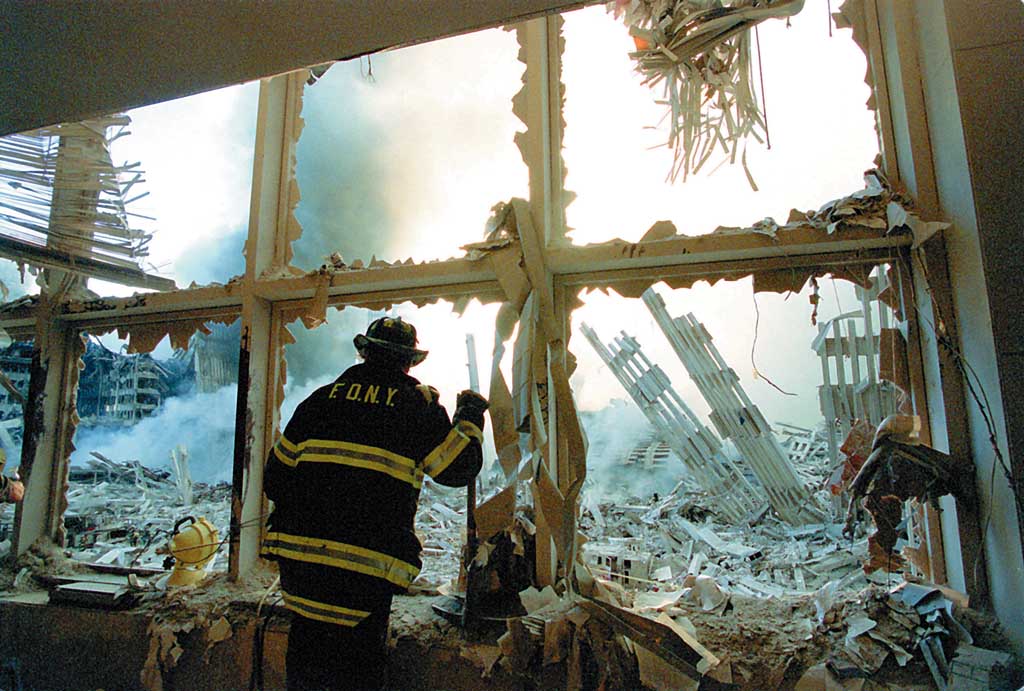
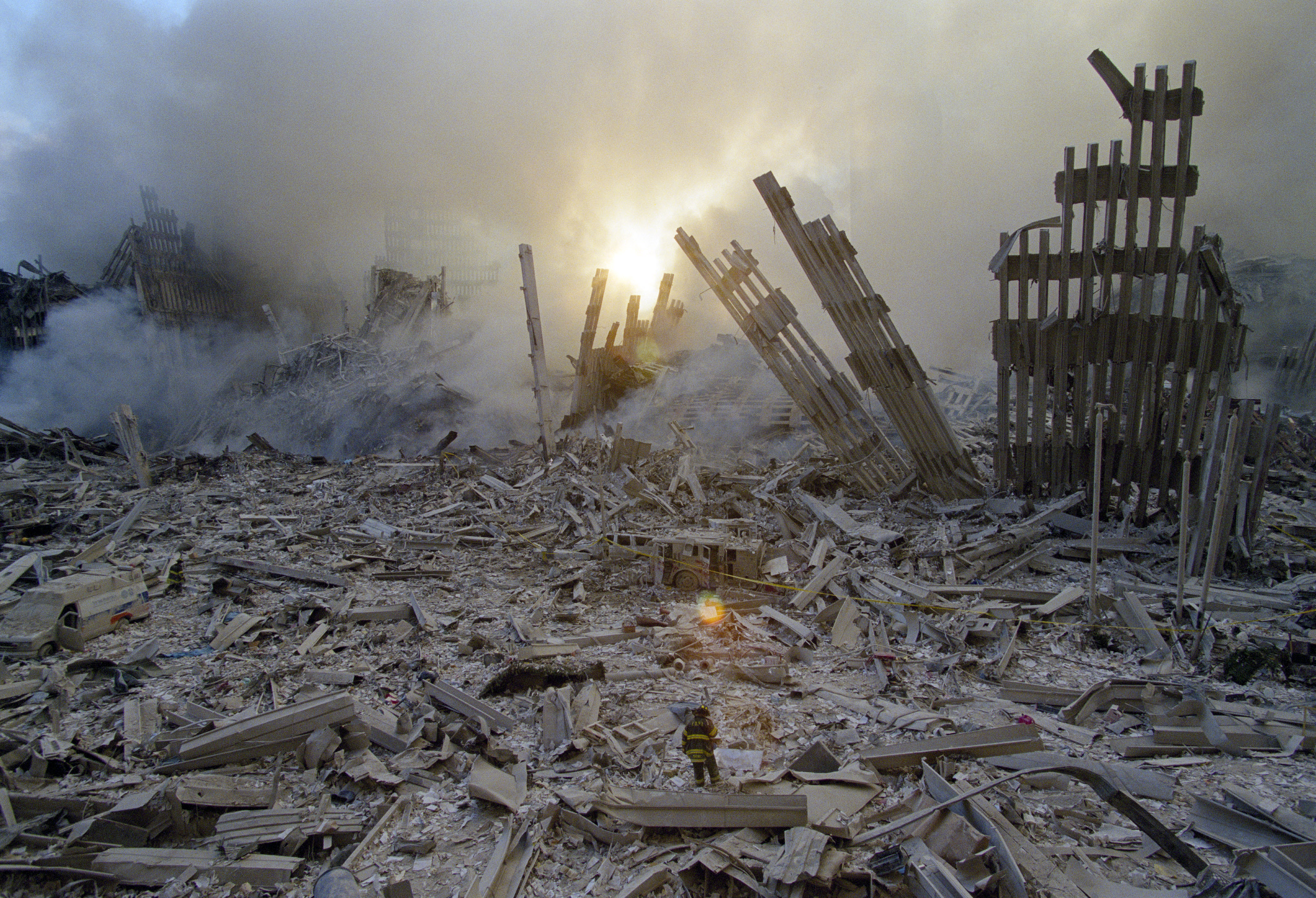
    A New York City firefighter looks out onto the collapsed World Trade Center on the morning after the attack of Sept. 11, 2001. Chronicling the devastation there has haunted the author over the years.

    I managed to keep taking pictures, leaning into the parts of myself that were still working, as I have in some ways every day since.

    My friend and colleague Chris Brennan, the reporter with whom I had gone to the scene for the Daily News, later wrote about our journey together and the early aftermath.

    A harrowing aftermath

    The next 18 months were the worst for me, filled with flashbacks, nightmares, extreme insomnia, memory blackouts, mood swings, and broken relationships.

    Serendipitously, a psychiatrist wrote to me in early 2003 about acquiring some of my photographs for instructional use. She also sensed what I was going through, and provided the treatment I needed to get the most crippling symptoms under control.

    But that wasn’t the end of the story. Far from it.
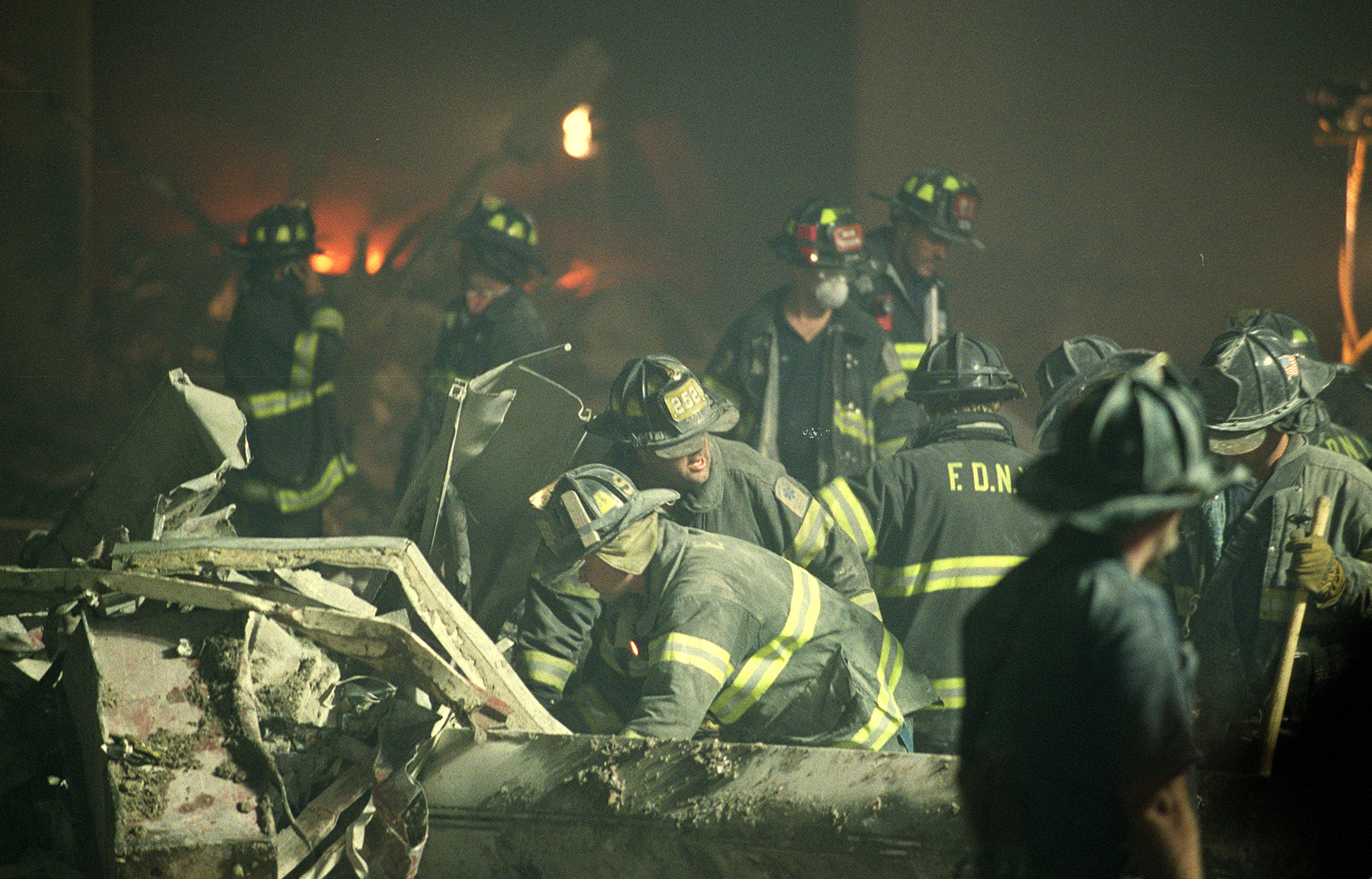
    New York City firefighters sift through the rubble of the World Trade Center on the evening of Sept. 11, 2001.Jim MacMillan

    From the outside, what followed looks almost ridiculously good: a career filled with fellowships, faculty appointments, and even a Pulitzer Prize in 2005 for my photographs from the war in Iraq.

    I had accompanied U.S. troops on hundreds of combat missions over the course of a year, feeling indestructible following my initial recovery, but then some new and old symptoms emerged, and I needed more care when I got back. I got better again, although I still overreact when startled.

    One of my pictures from 9/11 went on to have a remarkable life of its own. The New York Times wrote about the time it toured alongside some of the great artworks of the 20th century. My alma mater, Tufts University, hung it in a gallery next to a Picasso.

    Looking back now, it feels painfully obvious that I have also spent the past 25 years stockpiling accomplishments as if to prove I was OK, probably to myself as much as anyone else.

    We talk a lot in the news about surviving terrible events and their immediate aftermaths. And we love stories of recovery. But we don’t talk much about the long tail of trauma.

    Our traumatic pasts aren’t so easily fooled. There is no unseeing what we have seen.
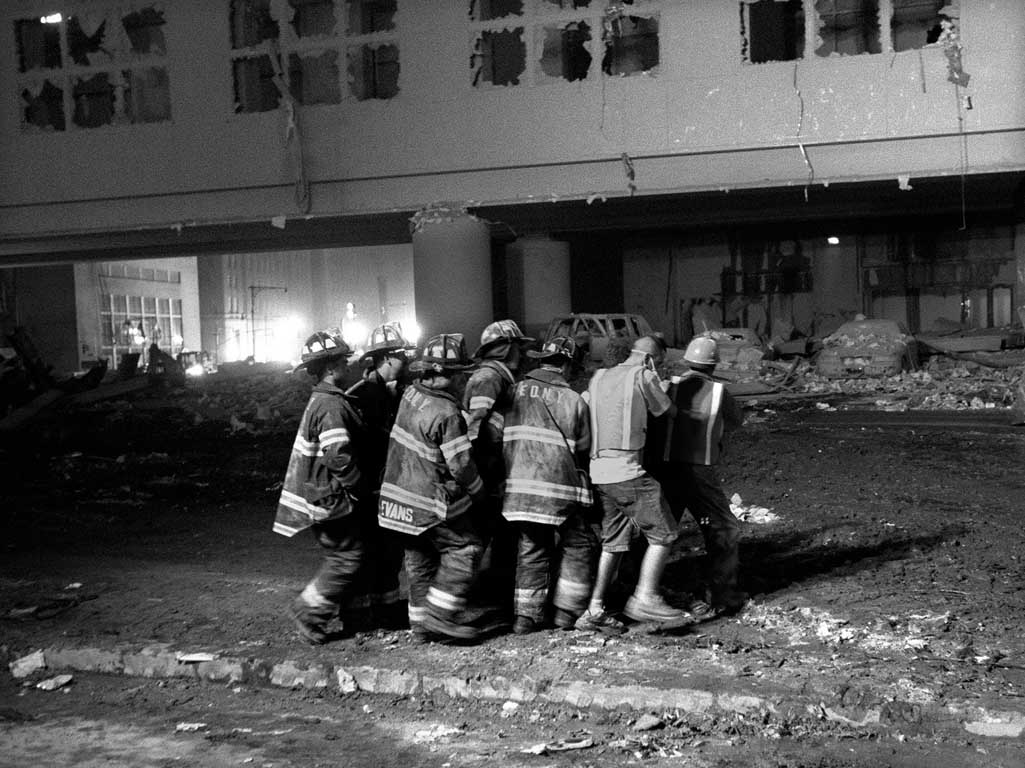
    Rescue workers carry a body from the ruins of the World Trade Center to a temporary morgue at the heavily damaged Dow Jones Building in the early morning after the Sept. 11 attack.

    I still have occasional nightmares and persistent phobias that seem obviously related to things I saw at ground zero.

    And random reminders can bring me back there in every sense. The smoke and rubble appear behind my eyelids in an instant. I can hear the sounds and taste the dust. My breath deepens, and my skin crawls again.

    Giving back

    Most of the time I am completely fine. Sometimes I get triggered, and I’ve got my hands full again for a couple of days or a couple of weeks. I had a bad year not so long ago.

    Living my best life takes maintenance, just as I imagine countless people quietly manage other long-term health challenges.

    Since 2006, I have also spent a lot of time studying and teaching students and journalists about trauma. Giving back has felt both cathartic and critical to maintaining my well-being.
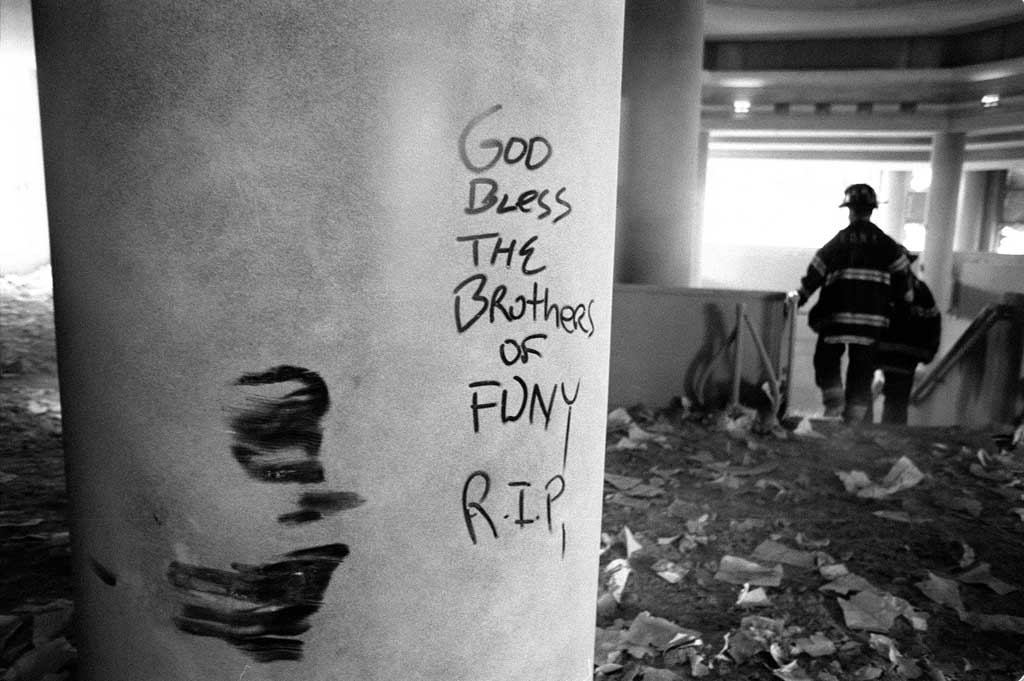
    A message is scrawled in ash on a column inside One Financial Center, adjacent to the World Trade Center ruins at ground zero.Jim MacMillan / Staff Photographer

    I have spoken previously about covering the Oklahoma City bombing, Hurricane Katrina survivors, violent demonstrations in American cities, and endless gun violence in Philadelphia.

    But while journalists and other first responders are frequently invited onto stages for these conversations, most people carrying trauma will never get the spotlight.

    Domestic violence and other crimes can alter lives without ever making the news. Trauma can accumulate alongside structural violence, from racism and concentrated poverty to overpolicing and mass incarceration.
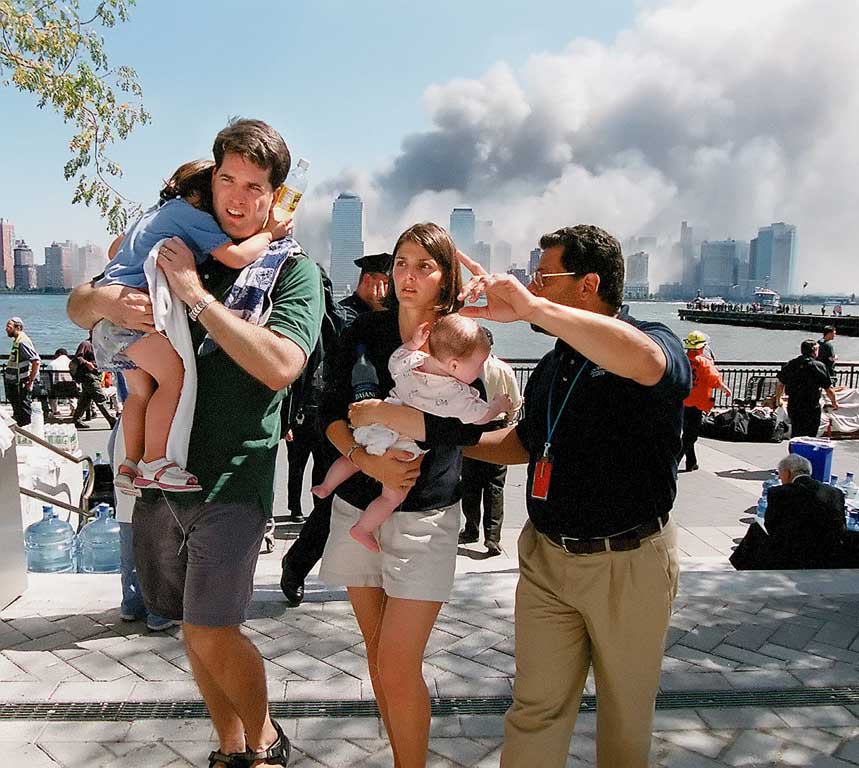
    Rescued from Lower Manhattan, a family lands in Liberty State Park in New Jersey hours after the attack on the World Trade Center. The trauma from that day lives on for survivors and witnesses.

    Communities most vulnerable to trauma are often the least likely to have access to the kind of care that helped me endure.

    Too many are left to carry their burden alone, while resources seem perpetually overstretched, and horrifying headlines keep coming at us with relentless frequency.

    If nobody is coming to save us, we’ll need to get better at taking care of one another, now more than ever.

    I’m no clinician, but I can tell you what I needed: Listen when people tell you about their struggles. Don’t turn up the heat or ask when they’re going to get over it. Ask what they need, ask how you can help, and help them find more support.
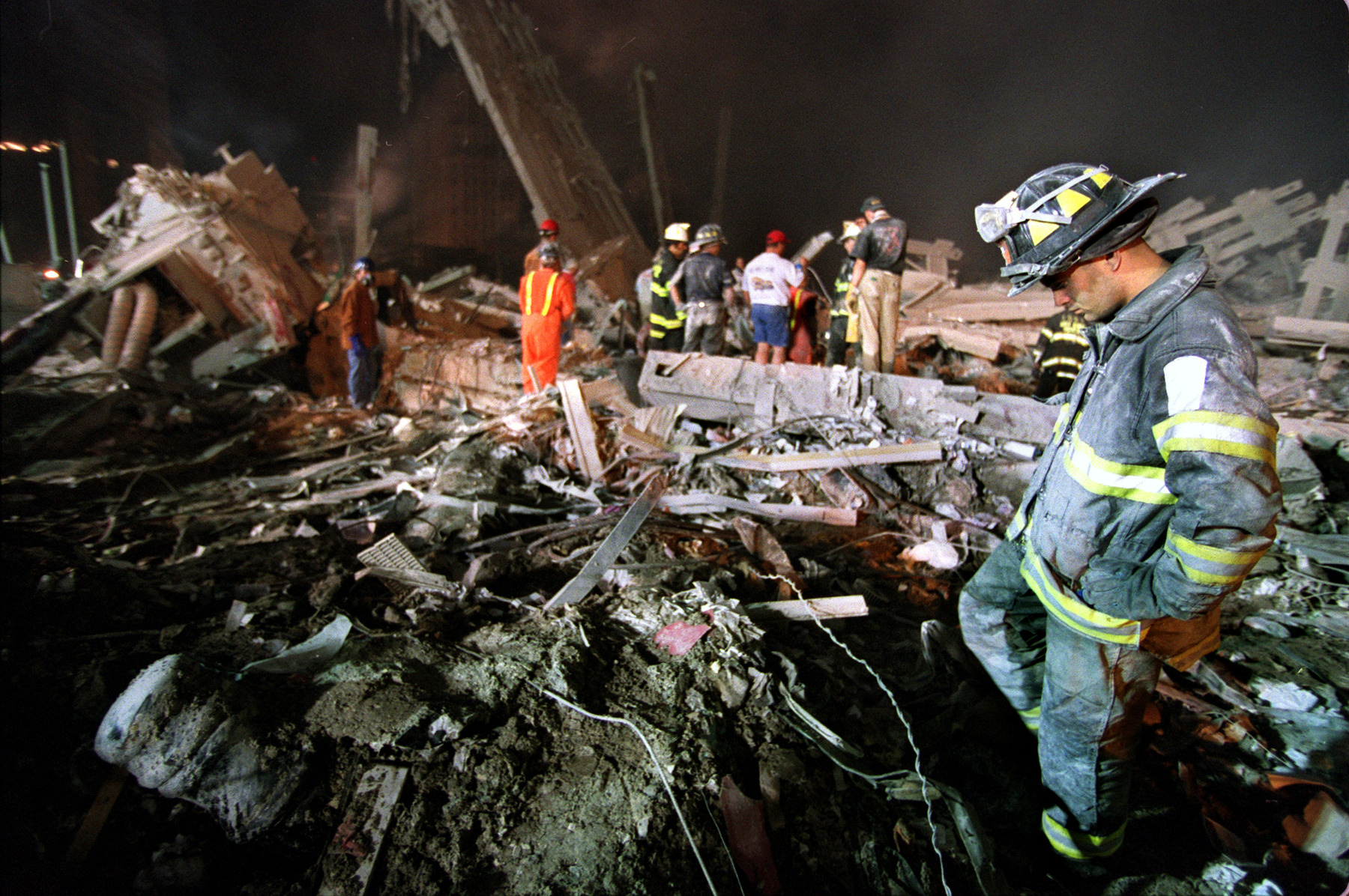
    A New York City firefighter surveys the wreckage of the collapsed World Trade Center on the evening of Sept. 11, 2001.Jim MacMillan

    I recently moved to Ireland, where my grandparents were born, thinking I might have one more chapter to write in my career and that, for once, I might step away from all the trauma.

    Instead, every new relationship and opportunity seems to be leading me back to the same work: helping journalists stay safe and healthy while reporting responsibly on survivors.

    The distance has also helped me see more clearly what I’ve carried all these years, and what we can’t fake.

    Jim MacMillan spent 17 years as a photojournalist at the Daily News. His photographs from ground zero now reside in the Special Collections Research Center at the Charles Library at Temple University, and one was acquired last year by the National September 11 Memorial and Museum. He founded the Philadelphia Center for Gun Violence Reporting in 2019 and served as its director until June.
  • Semiquincentennial freedoms are upheld daily by citizen airmen in N.J.

    Semiquincentennial freedoms are upheld daily by citizen airmen in N.J.

    Two hundred and fifty years ago, a group of ordinary men walked into a brick building in Philadelphia and signed their names to the most consequential document in American history, the Declaration of Independence. Throughout this year, and all across the nation, Americans are gathering to celebrate those first steps toward freedom.

    Last month, while I listened to the concerts on the Parkway and watched the fireworks over the Art Museum, I found myself thinking about the people who have kept it going ever since.

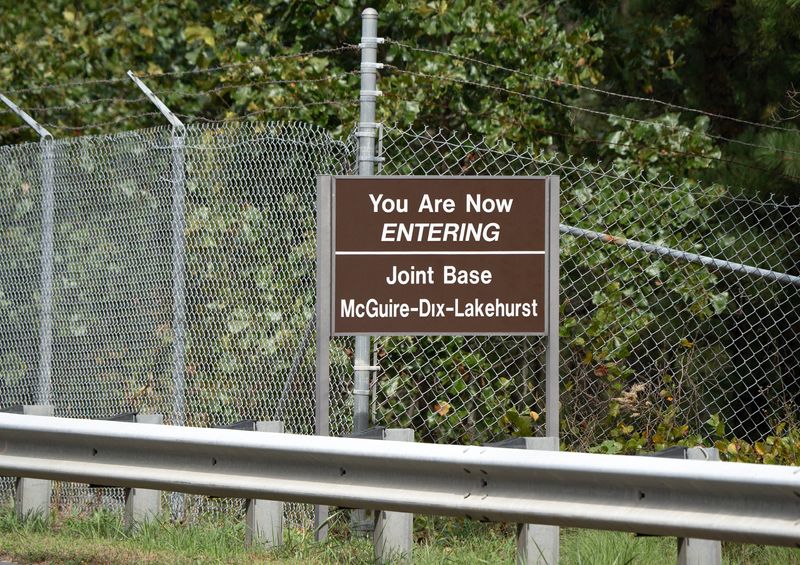
    Joint Base McGuire-Dix-Lakehurst is shown along Route 539, Whiting-New Egypt Road, Manchester Township, N.J. The author has served nearly all of his 26-year Air Force career at the 514th Airlift Wing at Joint Base McGuire-Dix-Lakehurst.Doug Hood/Asbury Park Press

    I have spent nearly my entire 26-year Air Force career right here, at the 514th Airlift Wing at Joint Base McGuire-Dix-Lakehurst in South Jersey, affectionately known as the Freedom Wing. That name has always meant something to me, but this anniversary year, it carries a particular weight.

    Freedom is not a monument or a date on a calendar. Freedom is a daily act of service, renewed by ordinary people who choose to do an extraordinary thing: raise their right hand and pledge to lay it all on the line for their fellow citizens.

    The members of the Freedom Wing are your neighbors. Truly and literally. They teach your children in Philadelphia classrooms. They run toward the smoke when your house is on fire. They wear a SEPTA uniform in the morning and a flight suit in the evening. They are nurses, corporate executives, police officers, and small-business owners. They coach Little League in the summer and strut down Broad Street on New Year’s Day.

    And then, when the nation calls or the mission demands, they put on the uniform and get to work. They leave their families, their jobs, and their routines, and they go where they’re needed. No questions asked.

    In the Air Force Reserve, we call them citizen airmen. I call them my chosen family and the best people I have ever known.

    Since this wing was originally designated in 1949, our citizen airmen have answered the call in every major conflict our country has faced — Korea, Vietnam, Iraq, Afghanistan — and in humanitarian missions across the globe. The Freedom Wing has never sat on the sidelines of history.

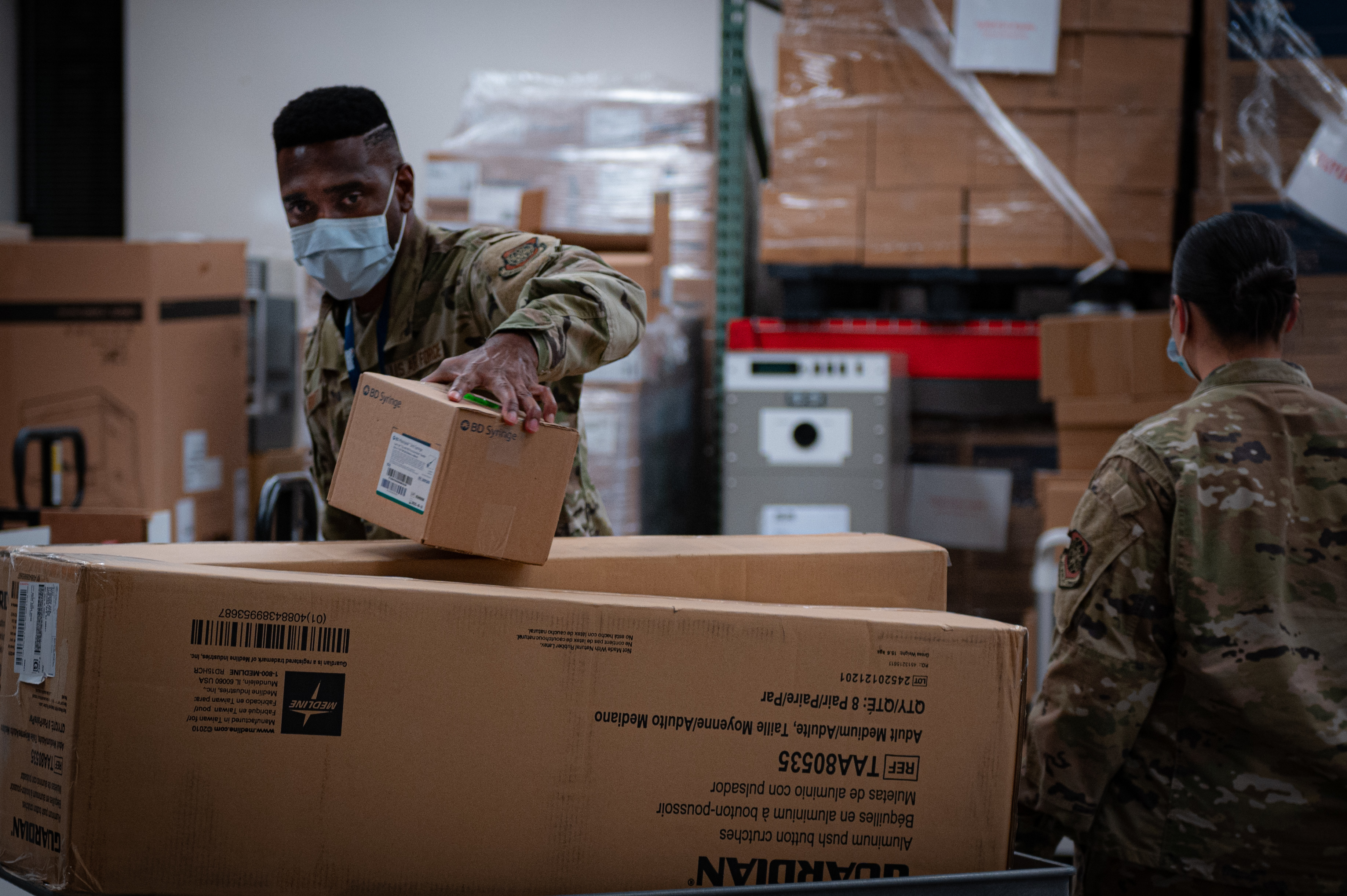
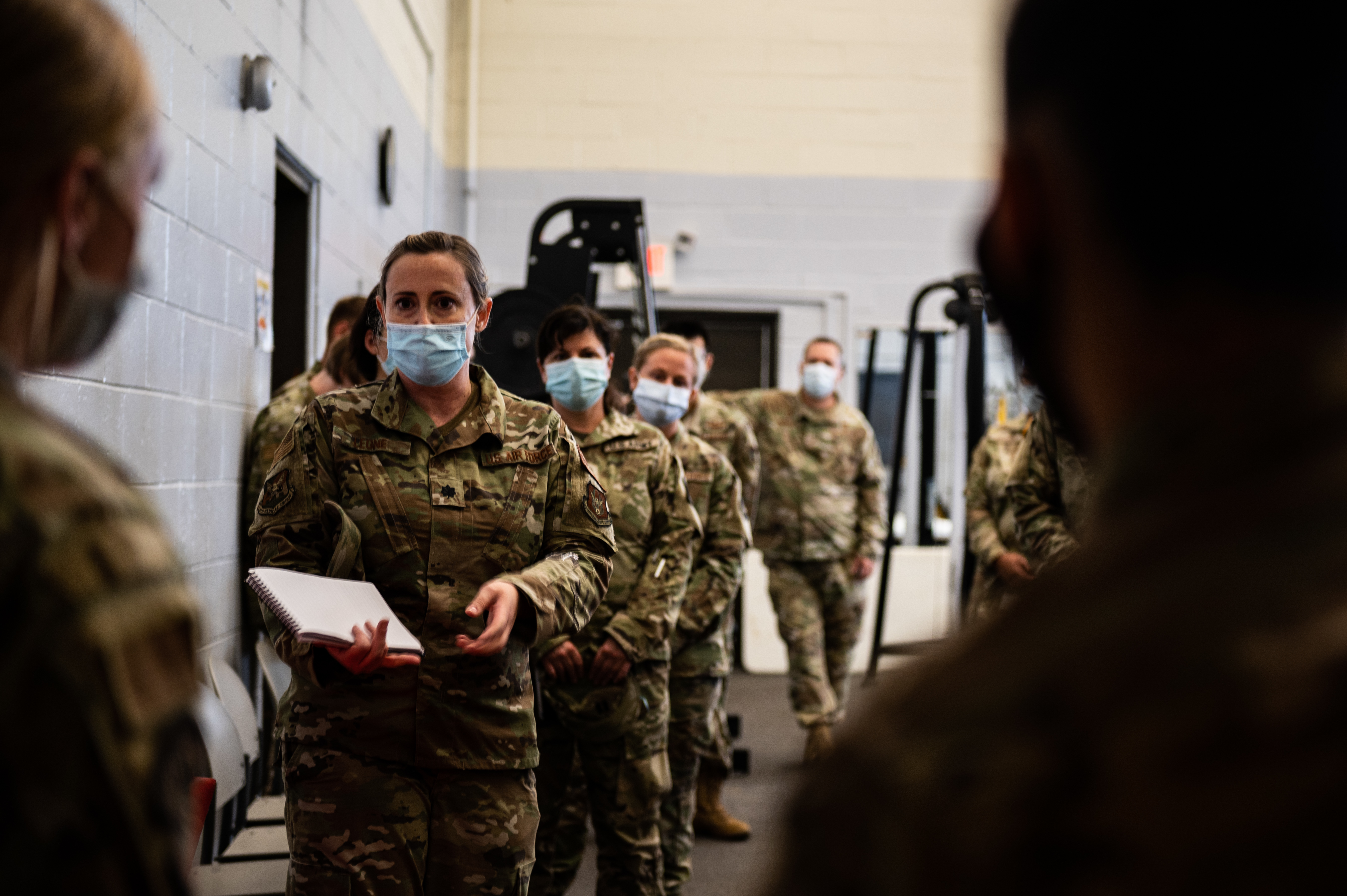
    Task Force McGuire-Dix Airmen prepare personal protective equipment to aid in the arrival of Afghans in support of the U.S. Department of State-led Operation Allies Refuge at Joint Base McGuire-Dix-Lakehurst in New Jersey in 2021.U.S. Air Force photo by Airman 1st Class Joseph Morales

    After more than a quarter century standing alongside these individuals, what strikes me most is not the mission accomplishments, though they have been extraordinary — it’s the sacrifice that surrounds each one.

    It’s the spouse who holds the household together for a sixth month of deployment. It’s the firefighter who tells his crew he has to leave again, and the crew that jumps to cover his shifts. It’s the teacher who builds training plans instead of lesson plans in the back of an aircraft at 30,000 feet, and the students who send hand-drawn cards and care packages.

    The uniform isn’t what makes these people and their loved ones remarkable. Their character does. Their grit does. This city is known for it, and so are our citizen airmen.

    As Philadelphia continues to celebrate 250 years of this improbable, magnificent country, take a moment to consider how we got here.

    Look around for the people who have dedicated their lives to preserving our freedom — they are already among you. Tell them you see them. That recognition costs nothing, and to a citizen airman who has given up more than most will ever know, it means everything.

    The truest way I know to celebrate Freedom 250 is not just to enjoy the freedoms we have inherited, but to honor the people who are still out there, right now, making sure we keep it.

    Col. Thad Amundson is the deputy wing commander of the 514th Airlift Wing, the “Freedom Wing,” at Joint Base McGuire-Dix-Lakehurst in New Jersey. The Philadelphia resident has flown combat sorties in Operations Enduring Freedom, Iraqi Freedom, New Dawn, and Inherent Resolve. He is a command pilot with over 4,000 flying hours, 800 hours flown in combat, and more than 5,000 flying hours as a civilian airline pilot.

  • Lindsey Graham chose Trump. History will choose his legacy.

    Lindsey Graham chose Trump. History will choose his legacy.

    When Herman Welker came to Washington in 1951, he had what seemed to be the ideal résumé to become a man of influence.

    The Republican senator from Idaho was an unwavering conservative — a former prosecutor and World War II veteran — whose opinion counted on matters including war, national security, and U.S. Supreme Court seats.

    But Welker’s path to power and prominence — serving as a close ally and faithful wingman to Republican Sen. Joe McCarthy in his abusive, power-hungry, and attention-seeking campaign to root out American communists — undid him in a single term. Welker, known in the Senate as “Little Joe from Idaho,” was implicated in another senator’s blackmail-driven suicide. When McCarthy faced censure in the Senate, Welker tried to delay, dissuade, and, according to accounts at the time, bully others out of officially expressing their disgust.

    Welker lost his seat in the next election, then, after a brief illness, died.

    That’s the thing about influence attained through a grand bargain with those who wield power in ways that defy the law, norms, and anything approaching restraint: It requires a grasp of time and mortality few humans can reliably claim. Which is precisely the risk Sen. Lindsey Graham, a lawyer and a veteran of the wars in Iraq and Afghanistan, ran until his sudden death this month.

    Unlike Welker, Graham transformed in full public view from a man who was once one of Donald Trump’s most strident and vociferous critics into a dependable MAGA workhorse in Congress.

    Now, Graham’s legacy will be forever bound up with that of the 47th president, who took pains to tell NBC News that his faithful wingman’s death would be a “big blow” to the passage of the SAVE America Act.

    In 2015, Sen. Lindsey Graham described Donald Trump as a bigot. Much changed over the next decade, Janell Ross writes.Jacquelyn Martin

    In 2015, Graham was a third-term senator from South Carolina vying for the Republican presidential nomination — a field that included more than a dozen others — en route to being crushed by Trump.

    Trump had such particular disregard for Graham that in a July debate, Trump announced every digit of Graham’s personal cell phone number on national TV.

    Graham, for his part, described Trump as a bigot, interested in anti-American policy, and a malignancy that, if nominated, would destroy the GOP.

    Given that, when Graham offered his pithy prescription for America in a December 2015 appearance on CNN, I wasn’t exactly surprised.

    “You know how you make America great again?” he said. “Tell Donald Trump to go to hell.”

    It was a riff on the recycled bit of American political sloganeering that Trump had pushed into the zeitgeist, again. Trump’s vision was to make America more like it was in the past: less diverse, more exclusionary, with group suspicion as public policy, and strict racial and gender hierarchies governing national life.

    In 2015, Graham’s position on Trump seemed clear and immutable. He told reporters he did not vote for Trump in 2016. Then, Trump won the election, and Graham spent most of the decade since transforming into one of the president’s most steadfast defenders.

    There was a brief interregnum, a wobble of sorts on Jan. 6, 2021. After Trump supporters invaded the U.S. Capitol, Graham gave a speech. On the Senate floor, Graham seemed to point the finger of responsibility directly at Trump.

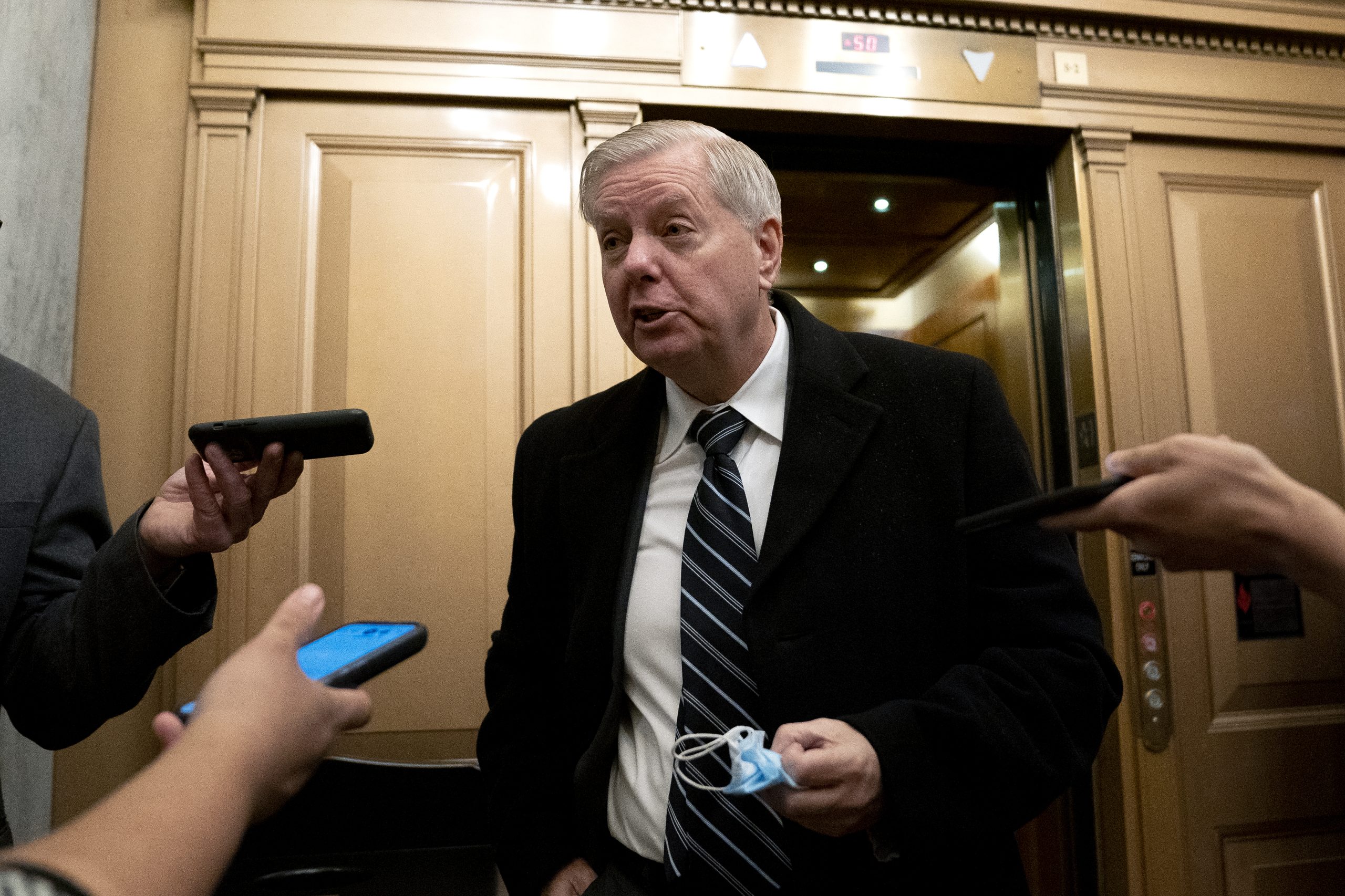
    Sen. Lindsey Graham (R., S.C.) speaks with reporters during the second impeachment trial of former President Donald Trump in February 2021 at the U.S. Capitol Building.Stefani Reynolds

    “Trump and I, we’ve had a hell of a journey,” Graham said. “I hate it to end this way. Oh my God, I hate it. From my point of view, he’s been a consequential president. All I can say is count me out. Enough is enough.”

    But Graham, converted MAGA bannerman and, his critics say, Trump-era opportunist, soon returned.

    Graham’s devotion to Trump was so sweeping and so sudden that the more conspiracy-minded have embraced the idea that Graham was the victim of blackmail or controlled by some sort of kompromat.

    His indignation over Democratic objections to Brett Kavanaugh’s Supreme Court nomination, his introduction of a national bill banning abortion after 15 weeks of pregnancy, and his support for providing $400 million in taxpayer money for the new White House ballroom planted him firmly inside the MAGA movement.

    In death, Graham’s defenders — a group that, in these contentious times, notably includes Republicans and Democrats — have described his Trump transition as pragmatic, even admirable; what a skilled legislator must do.

    Graham, they say, managed, in the final days of his life, three substantive foreign policy victories. He hammered out the details of a Russian economic sanctions bill Trump has said he will sign. He secured U.S. approval for Ukrainian strikes in Russia. And with these agreements, Graham effectively shored up NATO and its fundamental goal of staving off world war. Of course, all of that is contingent upon a mercurial president remaining uncharacteristically disciplined and consistent.

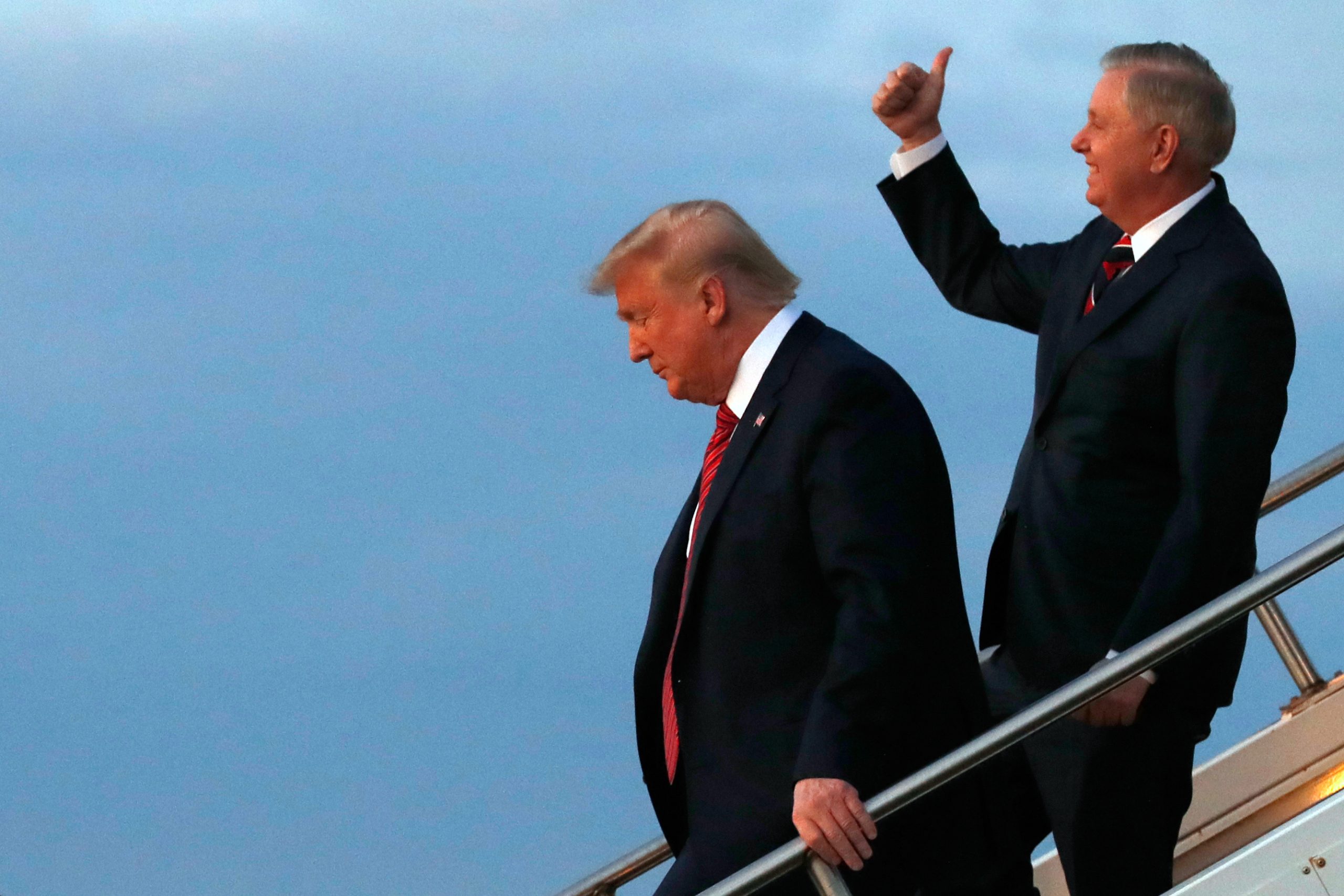
    Sen. Lindsey Graham (R., S.C.) with President Donald Trump at a rally in Charlotte, N.C., in March 2020.DOUG MILLS

    And therein lies the public lesson for us all. Time can and will run out. Redemption arcs, periods of public reconsideration, and book-tour explanations are not guaranteed.

    Entirely honest assessments of the dead are rare. Many will offer familiar strings of superlatives, words of admiration, mutual respect, and sympathy — perhaps in the hope that those sentiments will be reciprocated when their time comes.

    Others might just say our passing was a “big blow” to one of their pet projects.

    Ultimately, though, our actions and associations will speak unvarnished truths about us long after we are gone.

    Visit the block where Welker lived in Washington, D.C. Today there is not so much as a plaque. There’s just a Marriott.

    Janell Ross is a former senior correspondent at Time magazine who frequently writes about race, politics, and identity.