Tag: I-95

  • All the new restaurants for fall | Let’s Eat

    All the new restaurants for fall | Let’s Eat

    About 60 restaurants are opening in the next hundred days or so. Surely there’s something for you.

    Also in this edition:

    — Mike Klein

    If someone forwarded you this email, sign up for free here.

    Your guide to the new restaurants opening this fall
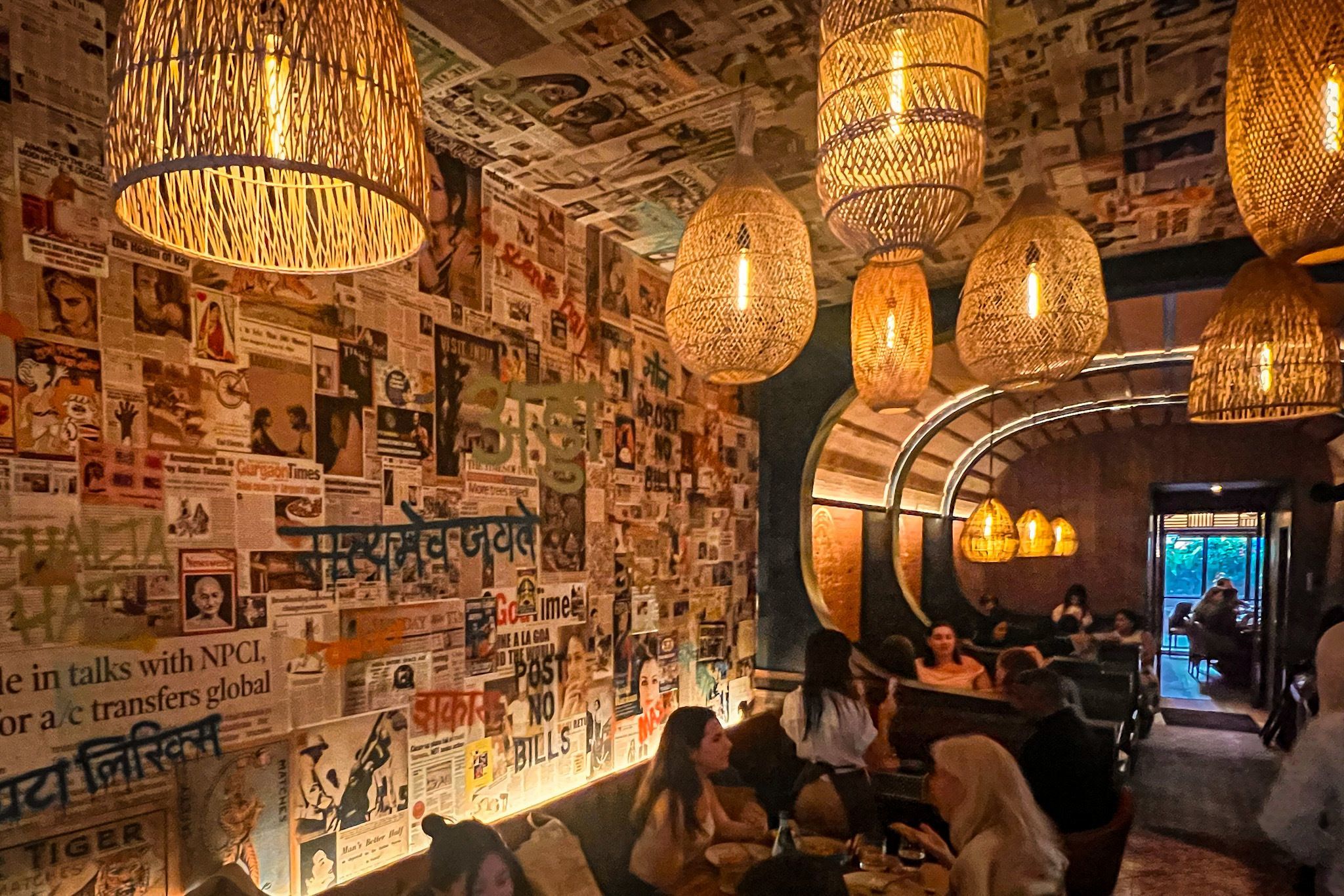
    Sixty restaurants are on the slate for this fall in Philadelphia and its suburbs on both sides of the river, with cuisines that span the map: Vietnamese, Lebanese, Greek, Caribbean, Cajun-Creole, Palestinian, Mediterranean, and contemporary American cooking, along with bagel shops, bakeries, breakfast concepts, wine bars, and cocktail rooms.

    🍴Opening today: Join us for a first look inside Carolyn’s Modern Vietnamese.

    A trattoria is ordered to shut down
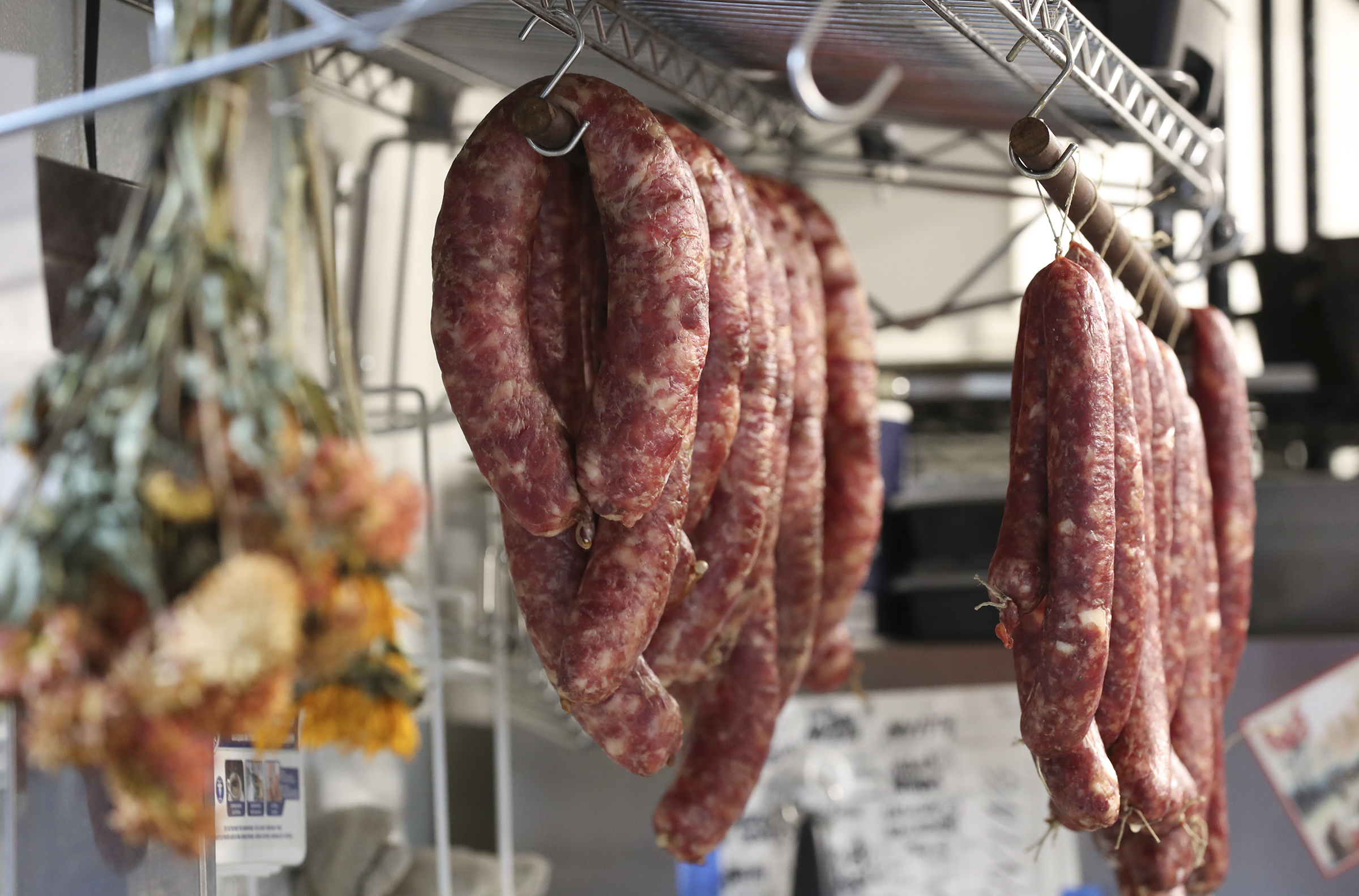
    Heavy Metal Sausage was ordered to stop serving dinner. Beatrice Forman says this may spell doom for the acclaimed South Philly butcher shop/restaurant.

    A state grant for a restaurant gets mixed reviews
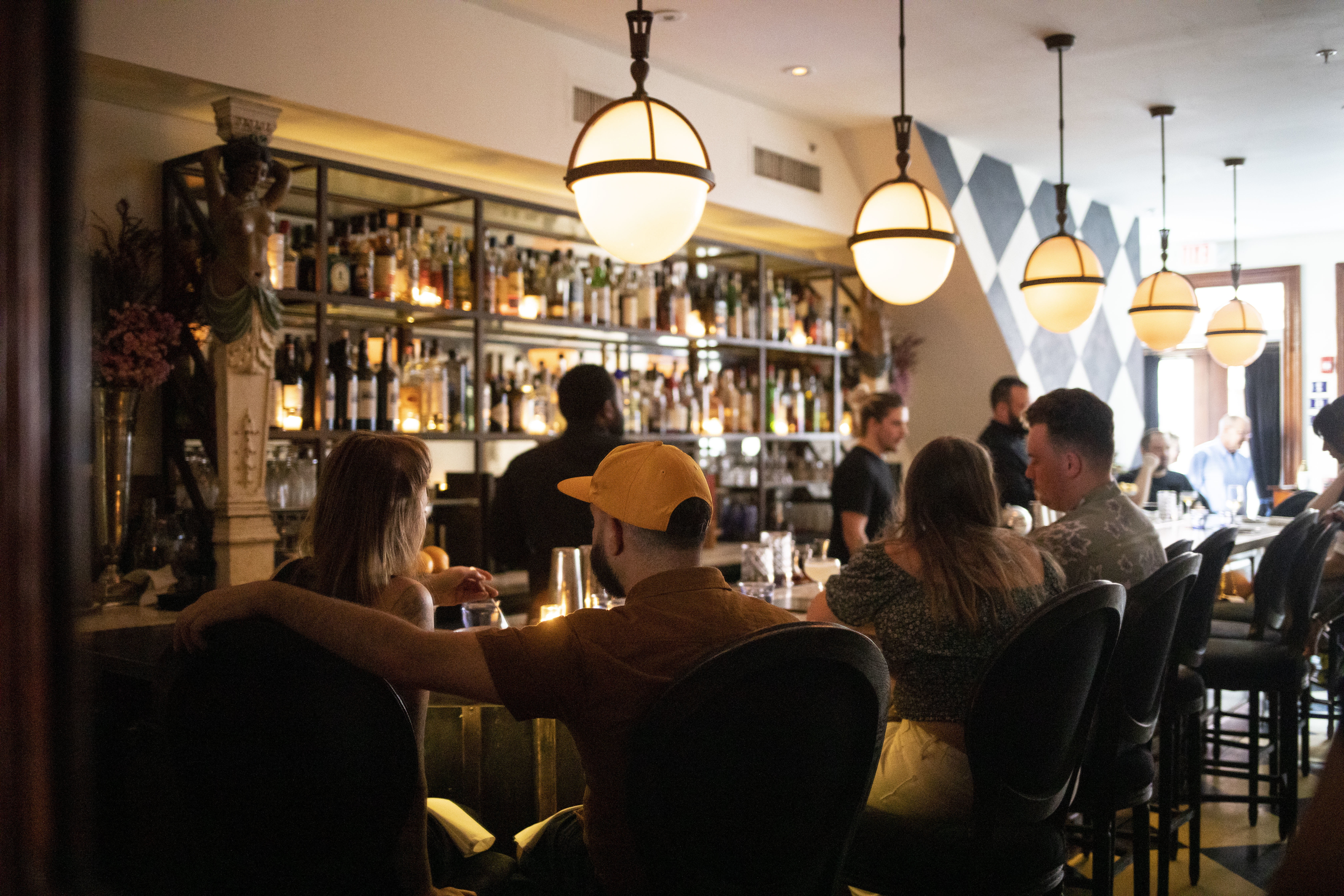
    The Michelin-starred Friday Saturday Sunday secured a $1.5 million state grant to expand into the rowhouse next door. Beatrice unpacked the process — and the reaction.

    Move over, boba
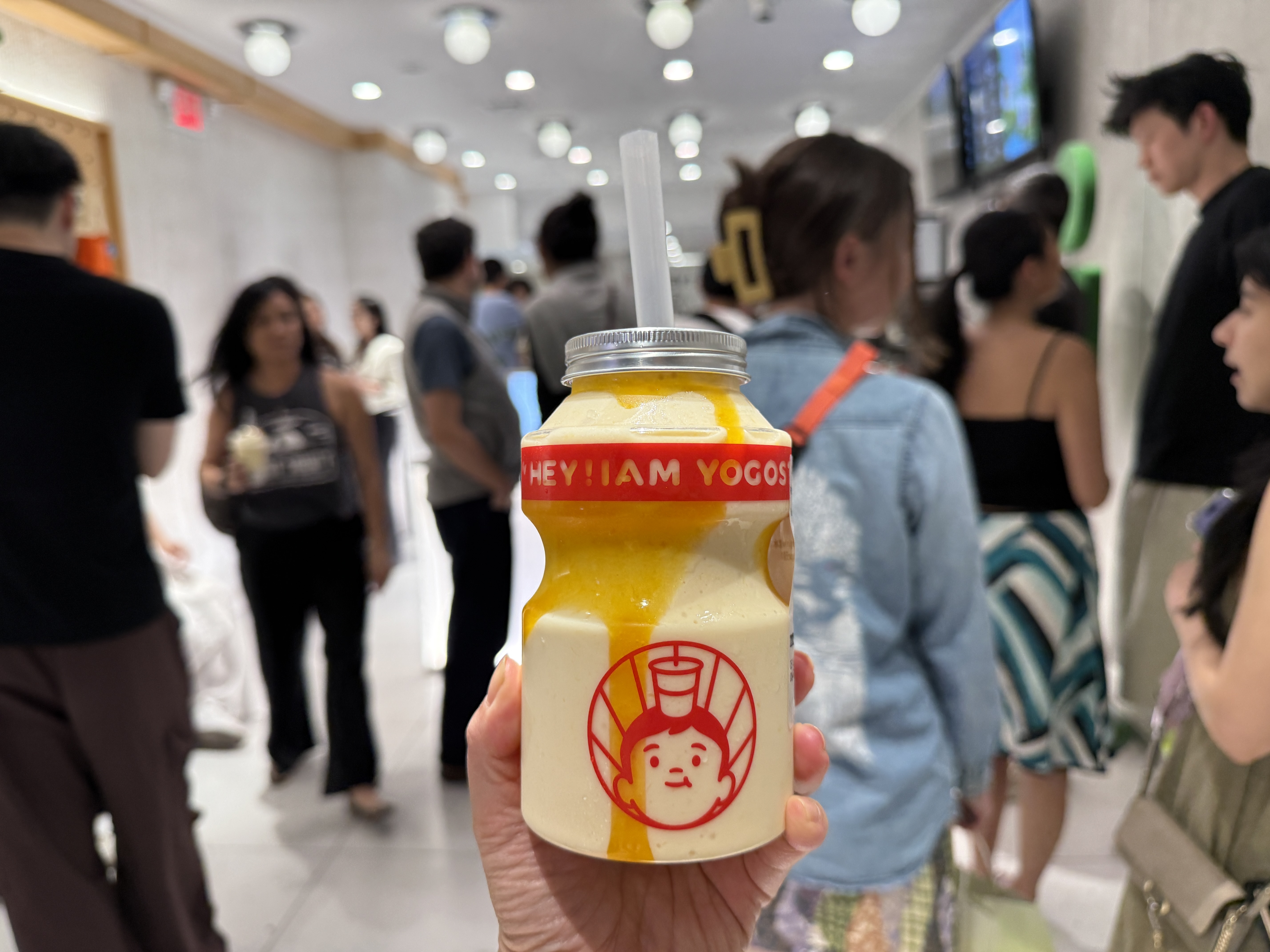
    When does a tea shop require security guards? When it’s heytea — just one of a slew of hyped Chinese beverage chains hitting Philly. Kiki Aranita reports on the hottest thing going in Chinatown.

    The best thing Craig ate last week
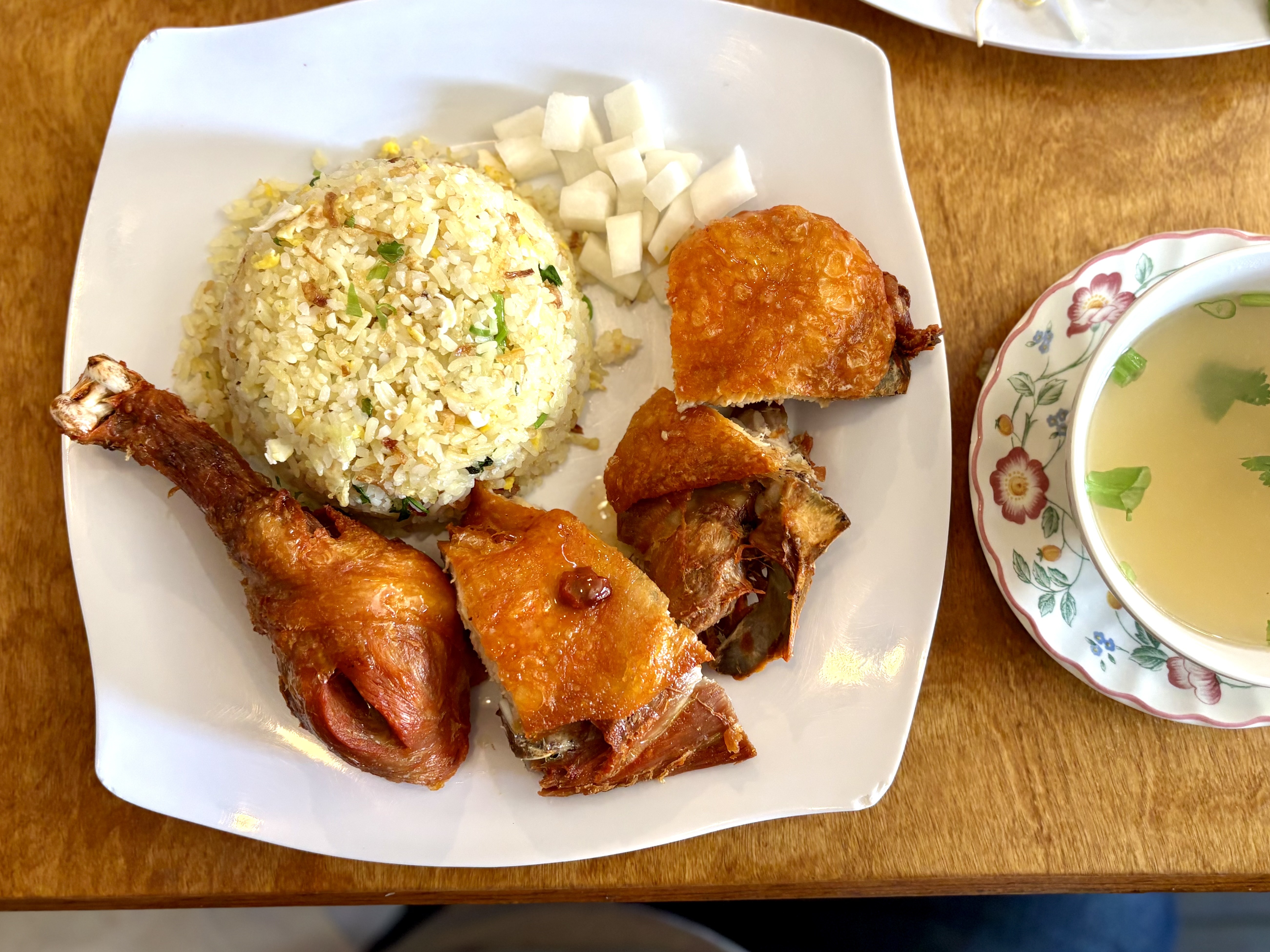
    There was a lot of crunching going on as critic Craig LaBan tucked into the Vietnamese fried chicken platter at South Philly’s Phở Duyên — which he dubs “my No. 1 food deal for $15 in Philadelphia right now.”

    Scoops

    Edd’s & Flo’s Artisan Bakery Cafe plans to close its Lancaster operation on Sept. 20 in advance of a relocation to Fishtown next year. Meghan Young and Sebastian Schuck are still working on a lease, so the location is under wraps. Edd’s & Flo’s, which started in their hometown as Wish You Well Bakery in 2021, found its niche in croissants, savory pastries, and weekend brunch. This move will be a Philly comeback for Young, a Restaurant School at Walnut Hill College graduate who worked at Darling’s Cheesecake Cafe, Green Line Cafe, Barbuzzo, Suraya, John & Kira’s Chocolates, and One Shot Coffee. Young and Schuck rebranded in 2024 with a name that’s both a nod to life’s ebbs and flows and a tribute to Young’s childhood cats, named for the musical duo Flo & Eddie. Stay tuned.
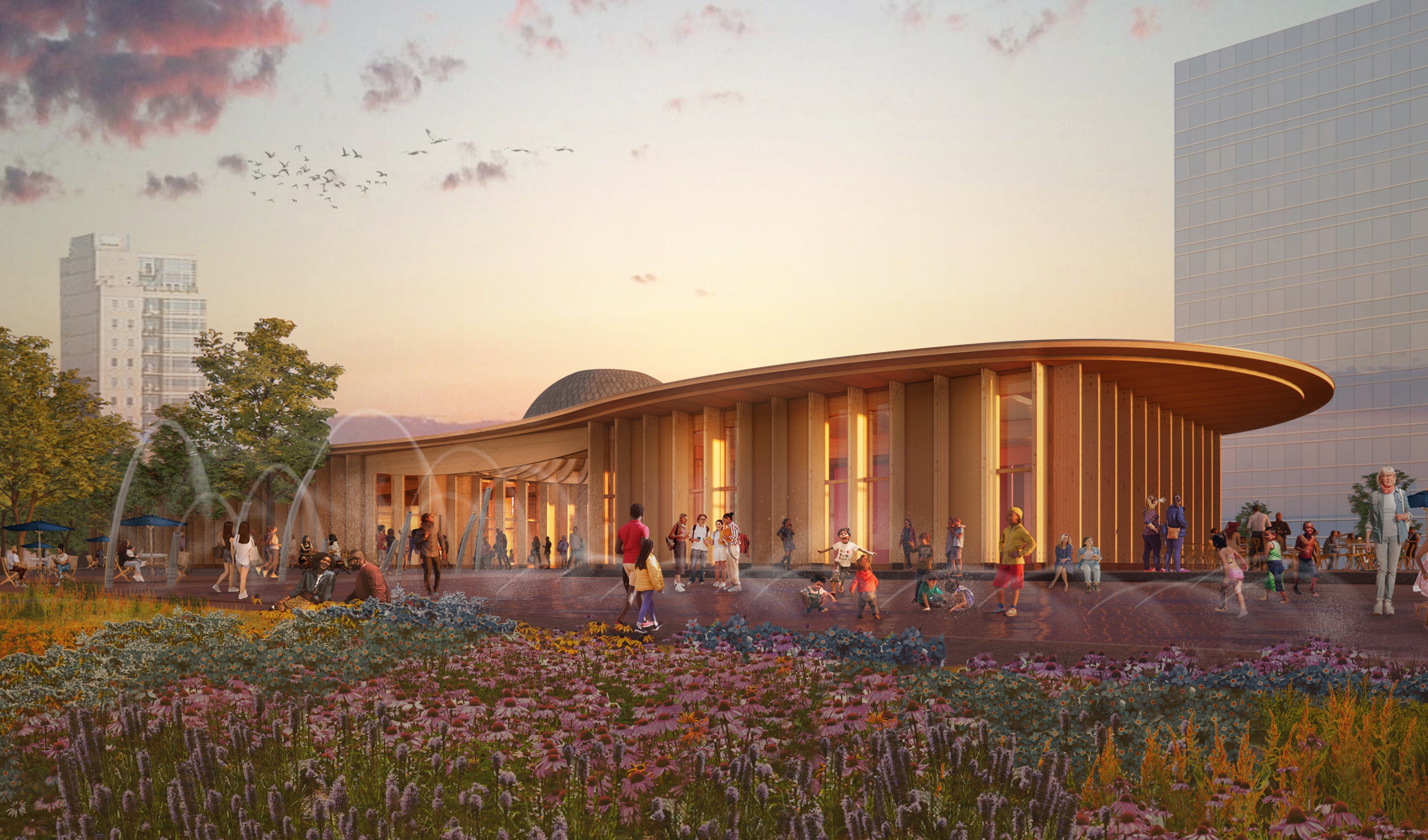
    You’ve seen the months of construction along Columbus Boulevard at Penn’s Landing for the park that will cap I-95 and link Old City to the Delaware River. The Delaware River Waterfront Corp. just applied for building permits for the Pavilion and Café (rendering above), which will be part of Penn’s Landing Park when it opens in 2029-2030 at Market Street. The project’s operator has not yet been identified.

    Restaurant report
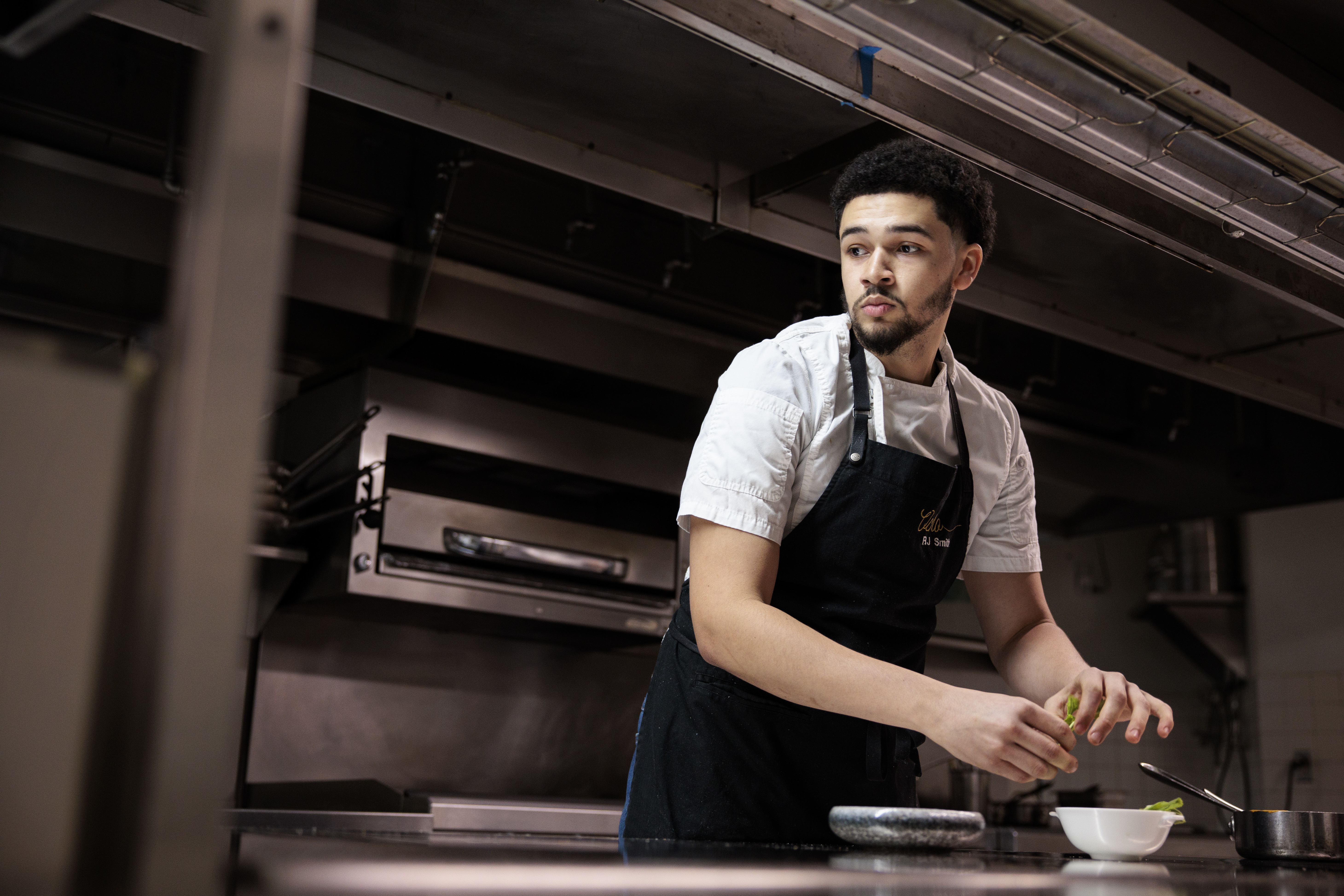
    While chef-owner Liz Grothe of Scampi in Queen Village travels in Italy, chef RJ Smith of Ocho Supper Club will take over the restaurant for a five-course Afro-Caribbean tasting menu Sept. 18-21. The $130 menu includes curried oxtail, madai aguachile, plantain coco bread with crab, berbere-spiced duck breast, and turmeric tart. An optional Pennsylvania wine pairing is $50. Seatings are at 5 and 8 p.m., and à la carte dishes will be available on the patio. Reservations are on Resy and OpenTable. Smith is still leading his residency at the Rittenhouse Hotel; the space, which was Scarpetta, will become a steakhouse called Ruxton by next summer.

    Old Original Nick’s Roast Beef sets up starting Thursday at Live! Casino & Hotel’s 10th Street Market, where it will follow South Philly Barbacoa’s residency. Besides roast beef, Nick’s will deal in roast turkey, roast pork, baked ham, broccoli rabe sandwiches, and long hot peppers. The pop-up will be open from 5 p.m. to midnight (or sellout) Thursday and Friday, noon to midnight Saturday, and noon to 9 p.m. Sunday, through the fall.

    Briefly noted

    The Big Dill will mark National Pickle Day with a nine-hour pickle festival Nov. 14 at Stateside Live! in South Philadelphia, closing its 2026 national tour there. More than 50 vendors will offer pickle-themed food and drinks, while 20 pickle brands serve unlimited samples of more than 100 varieties. Entertainment includes the World Pickle Eating Championship, brine-chugging, live music, DJs, games, and mechanical pickle rides. Organizers also hope to break a record by gathering more than 888 people dressed as pickles; the first 1,200 ticket buyers receive numbered costumes. The event runs from 1 to 9 p.m., with early entry at noon. Tickets go on sale Sept. 15 at bigdill.com/tour.

    Mish Mish is launching Daydreamers, a quarterly series that will turn the East Passyunk restaurant over to chefs, makers, and other hospitality pros for one-night interpretations of their dream concepts. The first installment, with seatings at 5:30 and 8 p.m. Sunday, features sous chef Koby Epstein serving a six-course, late-summer tasting menu paired with Pray Tell Wines. Seatings, at 5:30 and 8 p.m., are $120 plus tax, tip, and drinks.

    Kennett Square’s annual Mushroom Festival is set for Saturday and Sunday with foods and goods from 220-plus vendors, including Aimee Olexy’s Talula’s Table. Signature bite: The restaurant’s so-called “World Famous Riz-Mac,” which places mushroom risotto and mushroom mac and cheese side by side. Festival details are here.

    Les Dames d’Escoffier Philadelphia’s Heritage Dinner is 4-7 p.m. Sunday at Glen Foerd, 5001 Grant Ave. More than two dozen chefs will participate, serving Sweet Amalia oysters, chicken mole, seared salmon, Vietnamese vegetable curry, beef tenderloin, and desserts honoring The Cake Bible author Rose Levy Beranbaum. Also honored are Canal House’s Christopher Hirsheimer and Melissa Hamilton and caterer Michele Leff. Tickets start at $200; a $300 ticket includes preferred seating and Beranbaum’s new memoir. Proceeds fund scholarships for women entering culinary and hospitality fields.

    Bite for the Fight Food Festival returns for a seventh year from noon to 4 p.m. Sept. 19 at the Greater Philadelphia Expo Center in Oaks with tastings, cooking demos, and a silent auction benefiting the Fight On Makenna Foundation, which supports pediatric cancer patients and their families at Children’s Hospital of Philadelphia. Featured chefs are Brian Duffy, Ariane Duarte, Kenneth McDuffie, and David Schorn. Tickets start at $120.

    Top Chef winner Nick Elmi will prepare smoked ribs, whole chicken wings, pork shoulder, brisket, cornbread, baked beans, mac and cheese, apple crisp, and soft-serve for the KB Foundation’s fifth annual BBQ Experience, Sept. 24 at the Pump House in Bala Cynwyd. VIP service begins at 6 p.m. with lobster pies, fried chicken with caviar and white barbecue sauce, smoked foie gras mousse, and oyster fritters; general admission starts at 7:30 p.m. Tickets: $175, or $250 for VIP. Proceeds support youth-mentoring programs.

    Uchi in Rittenhouse will launch a fall collaboration series Sept. 24 with Kevin Yanaga of Yanaga Kappo Izakaya. He, Uchi head sushi chef Josephine Fry, and chef de cuisine Ford Sonnenberg will serve 10 courses starting at 6 and 8:30 p.m. Tickets: $175 at the sushi bar, $150 at tables, plus tax/tip; an optional sake pairing will be available. Additional dinners will follow in October and November.

    Staff and friends of the recently shuttered Jose Pistola’s have organized a GoFundMe campaign for support (separate from an earlier one created by management).

    ❓Pop quiz

    Name the $88 dish that Kiki Aranita checked out recently at a Philadelphia restaurant.

    A) a tasting of New York strip steaks from Urban Farmer

    B) the caviar-topped baked potato from Mr. Edison

    C) the lobster terrine at Jean-Georges

    D) 3 ounces of Japanese A5 beef from Del Frisco’s

    Find out if you know the answer.

    Ask Mike anything

    Is ReAnimator Coffee really opening in Manayunk? — Jennie O.

    ReAnimator, the Philly-bred coffee brand founded in 2010 by Mark Capriotti and Mark Corpus, has indeed committed to a Manayunk location at 4226 Main St., which was last an art gallery. Capriotti optimistically thinks opening is six months away. “We just opened in Mount Airy and it took us a year,” he said. “But we’re hoping we can learn from our experience.”

    📮 Have a question about food in Philly? Email your questions to me at mklein@inquirer.com for a chance to be featured in my newsletter.

    By submitting your written, visual, and/or audio contributions, you agree to The Inquirer’s Terms of Use, including the grant of rights in Section 10.
  • Man and woman charged with murder in shooting on I-95 that killed a 21-year-old bystander

    Man and woman charged with murder in shooting on I-95 that killed a 21-year-old bystander

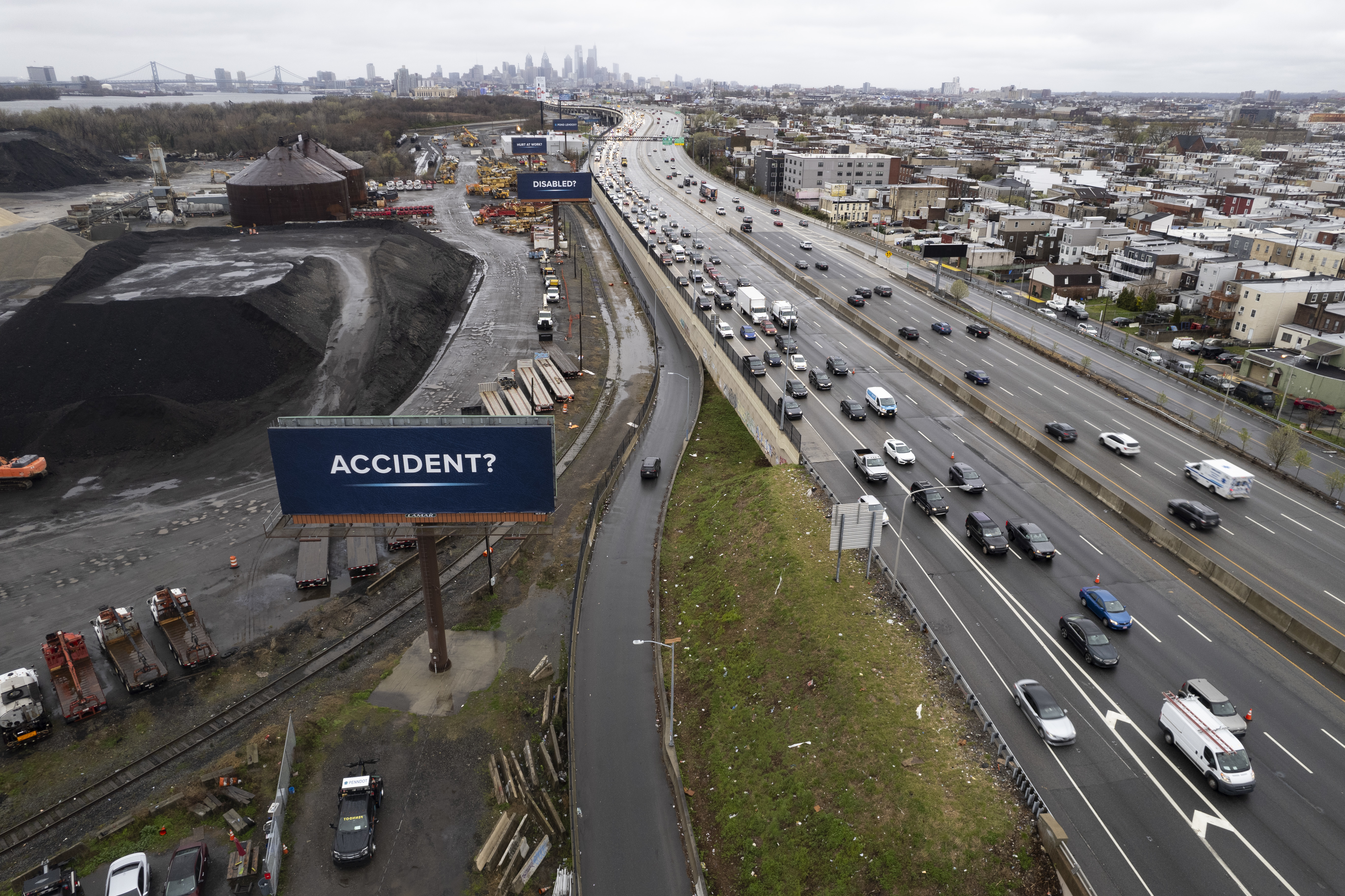
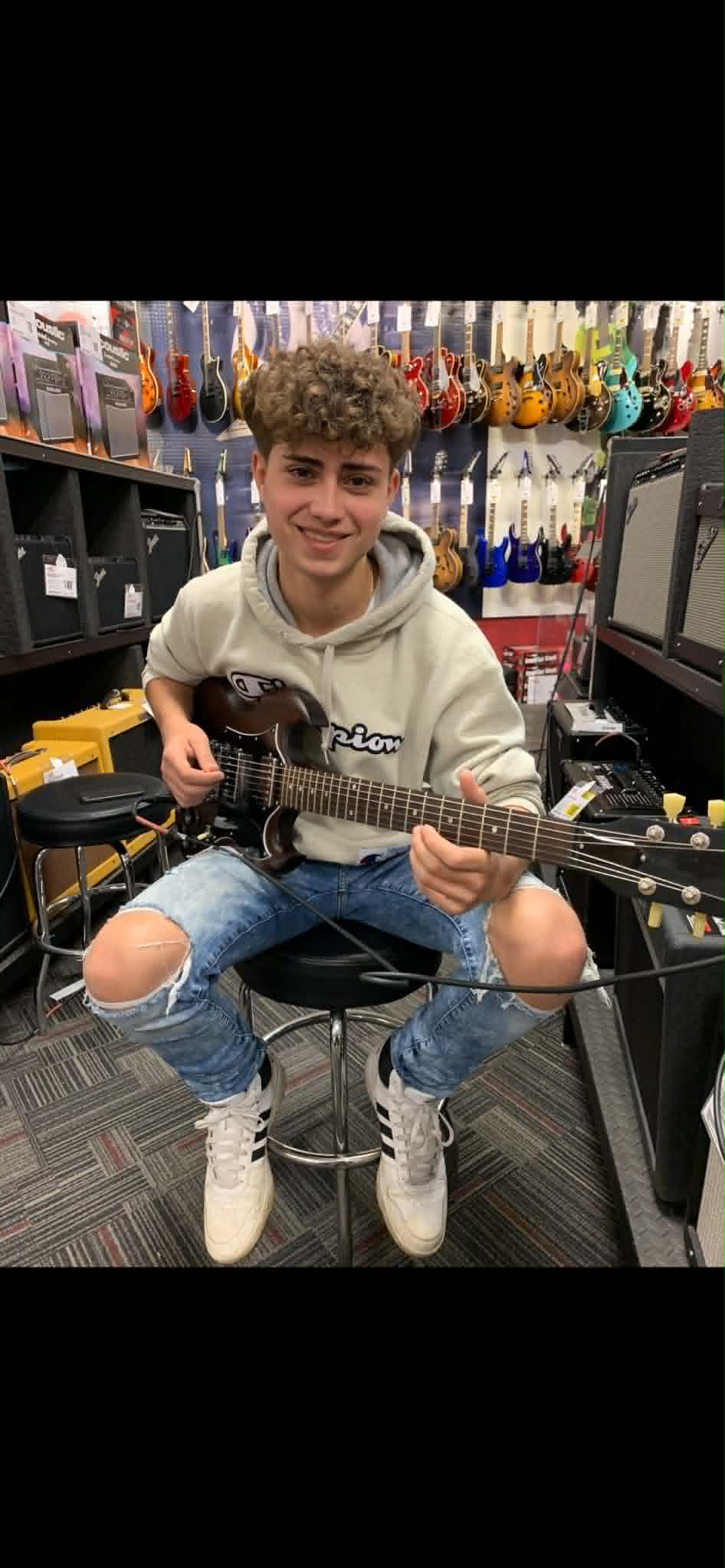
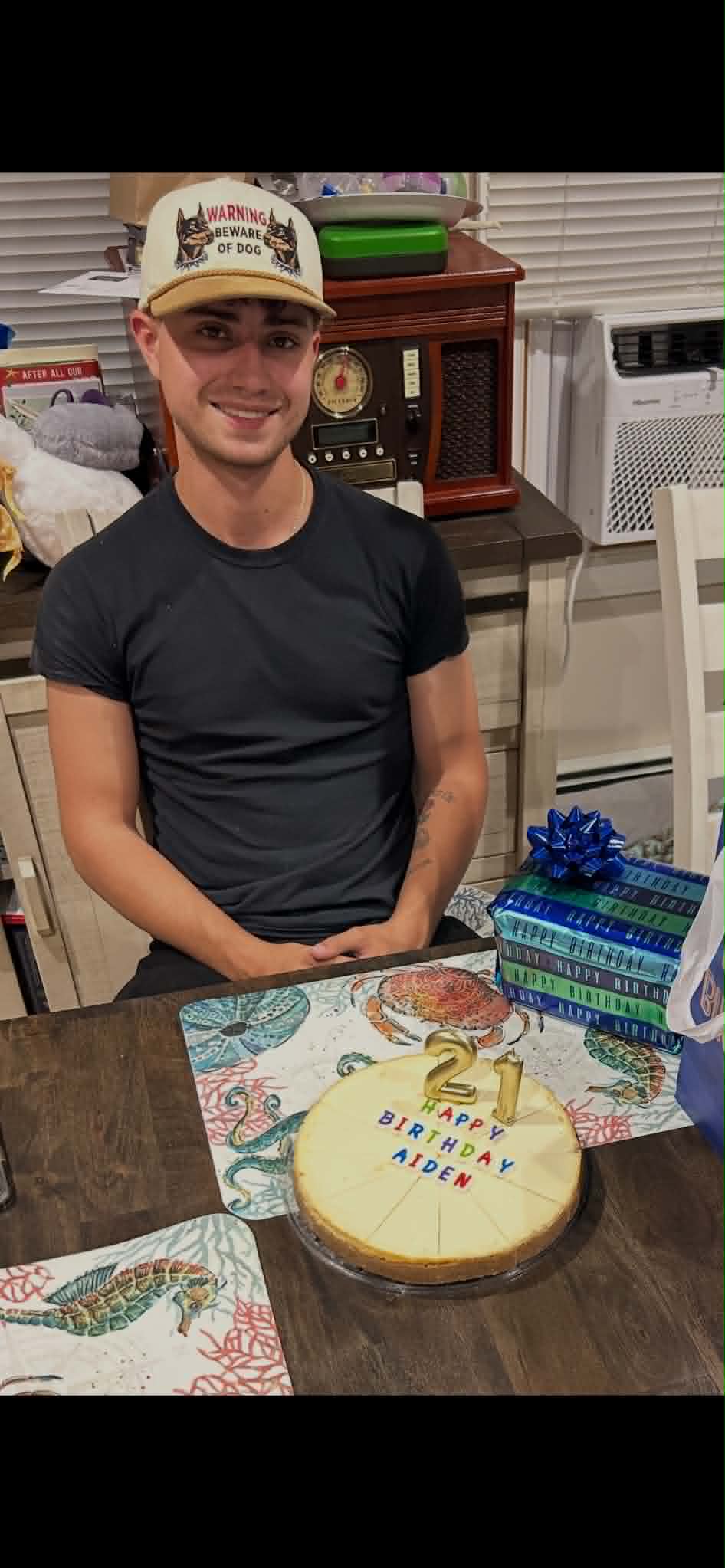
    Aiden Zeallor was only trying to get home the night he was struck and killed by gunfire while driving on I-95 near Port Richmond last year.

    Zeallor, 21, was a bystander, in the wrong place at the wrong time when at least 50 rounds were fired at a nearby vehicle in what investigators said was an attempted targeted killing of another person.

    Now, nearly 18 months after the Levittown native’s death, police have arrested a man and woman they say are responsible.

    Alondra M. Lopez, 28, and Joseph G. Toledo-Gonzalez, 27, face charges of murder, attempted murder, and related crimes in connection with the 2025 shooting.

    Lopez is being held in the Philadelphia Industrial Correctional Center and Toledo-Gonzalez is being held in the Curran-Fromhold Correctional Facility. Both were denied bail.

    Zeallor’s mother, Denise Donahue, said the arrests have given her some semblance of closure, even if no development in the case will bring back her son.

    “He was a loving boy that should still be here,” Donahue said. “His life was stolen from him.”

    The curly-haired young man was an avid fisherman and outdoor enthusiast who worked as a technician for his family’s HVAC company and was always surrounded by friends, Donahue said.

    He was also devoted to his family, she said. Not long before Zeallor’s death, he had moved into his grandmother’s house in Northeast Philadelphia to take care of her and so she did not have to live alone.

    Donahue, meanwhile, continues to grieve the loss of her son. She had already experienced the death of Zeallor’s father, in 2009.

    Her life was again forever altered the evening of March 29, 2025, when she learned her son had been shot in the head and torso and was put on life support.

    A photo of Aiden Zeallor.Denise Donahue

    She rushed to the hospital from her home in Wildwood. Zeallor was declared brain-dead and died later that morning.

    Donahue said her son had been out dancing with a friend that evening at a nightclub in Philadelphia.

    The two were heading back to Zeallor’s grandmother’s house and were in the northbound lane of I-95 around 2:30 a.m. in Zeallor’s Ford Mustang when bullets fired from a semiautomatic rifle riddled a nearby Acura, the intended target of the shooting.

    Two stray bullets pierced Zeallor’s windshield as he drove, striking his right eye and under his right arm.

    The driver of the Acura was shot in the leg and was treated at a nearby hospital.

    Court documents offered few details about Lopez and Toledo-Gonzalez’s role in the shooting and do not describe the motive.

    A spokesperson for the Pennsylvania State Police, which is handling the investigation, did not immediately return a request for comment.

    A preliminary hearing for both defendants is scheduled for Sept. 14 in Municipal Court.

    Donahue said she and relatives plan to attend every court proceeding as they seek justice for Zeallor.

    They are also urging lawmakers to pass “Aiden’s Law,” which would require the installation of surveillance cameras on certain Pennsylvania highways to help investigators identify suspects in violent crimes.

    Meanwhile, the family is comforted knowing that Zeallor helped save four lives through organ donation.

    “We changed other people’s lives that day,” Donahue said. “That makes me proud, as Aiden’s mom.”

  • In an old Fishtown factory, a new club for city-dwelling car enthusiasts

    In an old Fishtown factory, a new club for city-dwelling car enthusiasts

    Old cars are breathing new life into an empty Fishtown factory.

    But saying vehicles will be stored there is like saying Fairmount Park has a lot of trees — technically correct but missing the point.

    Passersby on Frankford Avenue, between Delaware and Girard Avenues, will see inside what was a long-derelict factory revealing a café that’s open to the public, and further inside, through the glass walls, multiple levels of unusual vehicles.

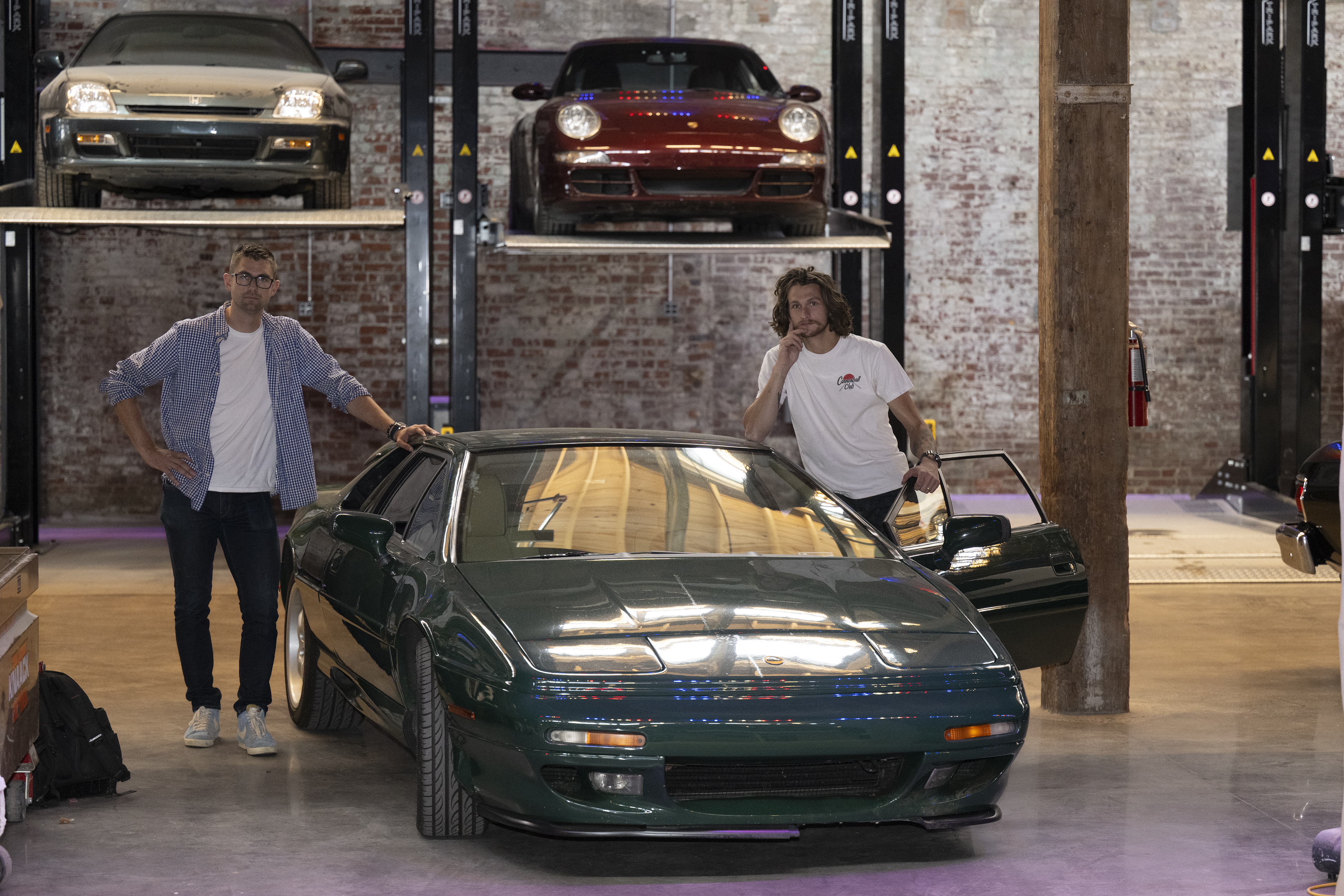
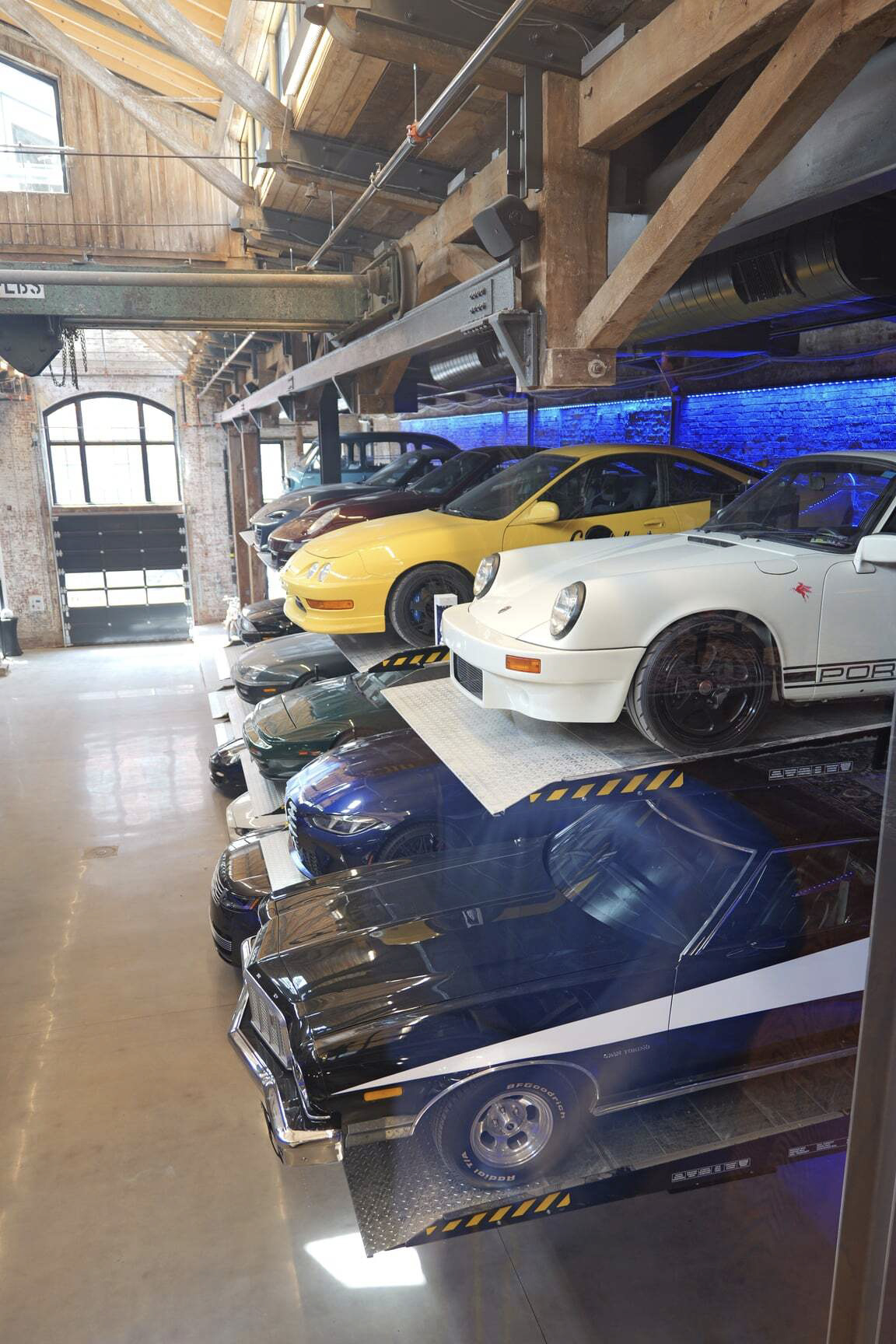
    A black 1976 Ford Gran Torino owned by Tim Bryan of Fishtown sitting beneath a white Porsche 911 underneath the soaring architecture of the old factory at the Cannonball Club in Fishtown. The vehicles were set in place during a special event prior to opening. SITHA PUTH

    The backdrop of the new Cannonball Club will comprise a rotating crop of cars; such rare specimens as a Citroen XM or Lotus Esprit will join more well-known offerings like a 1976 Ford Gran Torino. Beyond that glass wall, members can enjoy a multilevel workspace, café, and bar. Memberships are available for car owners and car lovers alike.

    It’s the brainchild of Chris Allen, 32, who runs a similar operation in Huntingdon Valley, though that’s less a daily hangout and more a car-storage facility that also hosts special events. The Fishtown club is set to open for business Sept. 10, and the public-facing café opened last week.

    In Fishtown, “I wanted people to be able to walk by off the street and see the wall of crazy cars,” Allen said as he walked through the unfinished facility in late May, amid the clang of metal and screech of power tools.

    Envisioning a ‘car museum’

    The architecture alone can certainly draw some eyeballs. The 15,000-square-foot facility began as the Morse Elevator Works in the late 1800s. The building more recently housed antique shops, a lighting store, and a bicycle shop.

    The 75 vehicles that will fill the space will be hoisted on elevators and stacked around the building, underneath the rebuilt and refinished clerestory and exposed trusses rising far overhead.

    “I don’t want this to be a high-density parking garage,” Allen said. “This is more like a car museum.”

    And a club. The public cafe serves coffee and pastries, and the bar serves drinks and pub food. The facility’s website says it will be open 8 a.m. to 10 p.m. every day.

    It’s not for car enthusiasts who want the freedom of hopping in their vehicles on short notice. Members need to schedule pickup and drop-off when staff are there to operate the vehicle elevators.

    Allen thinks that will work fine for collectors from the neighborhood and beyond, noting the club’s proximity to I-95.

    “Any collector car owner wants to get the hell out of the city immediately once they get it,” he said.

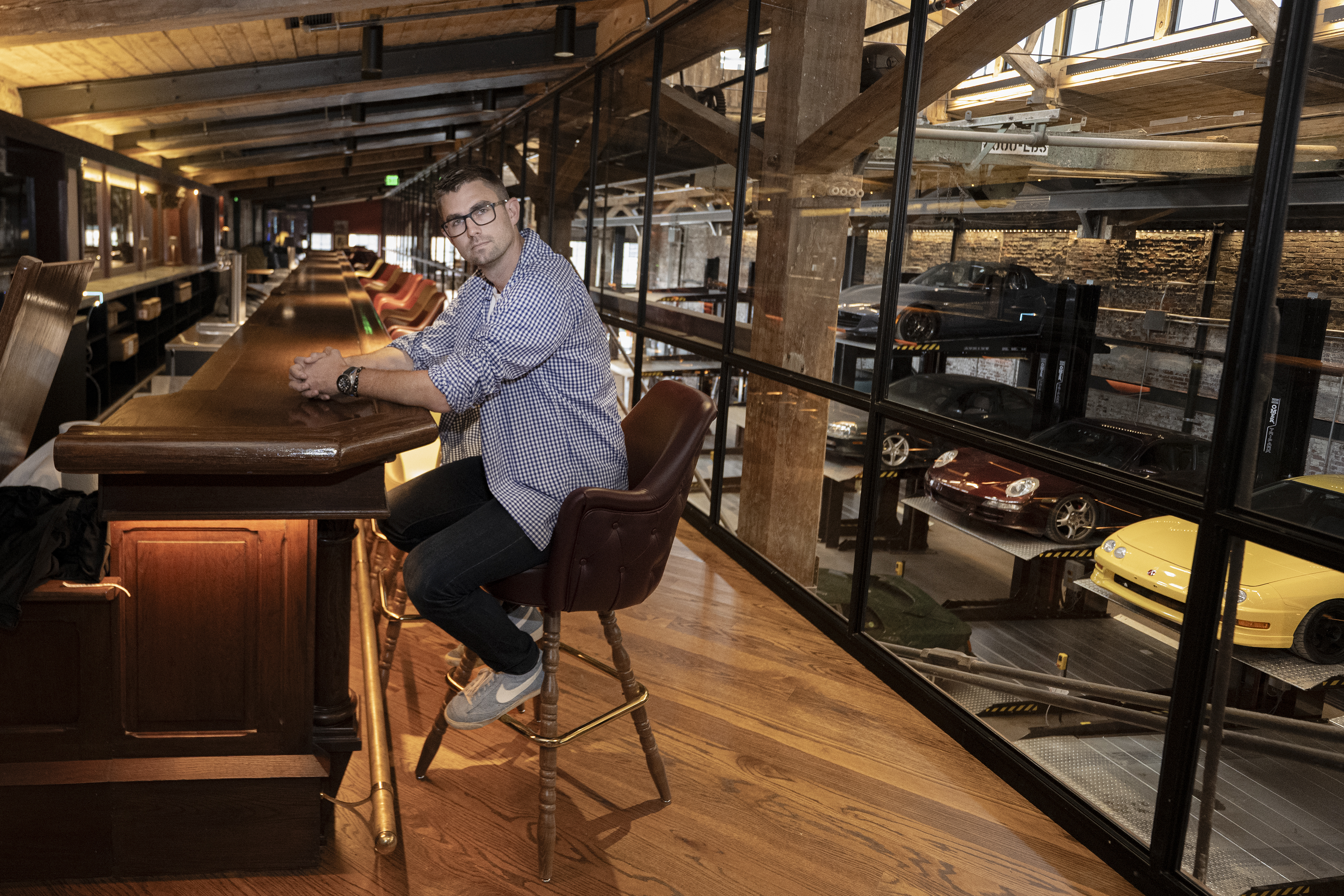
    Owner Chris Allen sits at the 50-foot-long bar overlooking the vehicles on display inside the Cannonball Club, set to open in September.Jose F. Moreno / Staff Photographer

    What Fishtown neighbors think

    It appeals to Tim Bryan, who’s lived in Fishtown for the past six years.

    Bryan will store his 1976 Ford Gran Torino — “think Starsky & Hutch, but black,” he said — at the facility. It currently is stored miles away from him at Allen’s Huntingdon Valley unit.

    Bryan attended the Fishtown Neighbors Association meeting when Cannonball was still somewhere between a plan and a dream. There, residents had a chance to voice support or concerns and vote to support or oppose the zoning variance Cannonball needed to open as an entertainment center. Neighborhood support was strong, Bryan said, and only a handful of people voiced concerns, which he saw as misplaced.

    “I thought they sort of thought this was going to be Lamborghinis and Porsches and elite cars and all that kind of stuff, but my Gran Torino is not a luxury car,” Bryan said.

    Bryan was also pleased to see the building put to use; it’s been empty since he moved to the area six years ago.

    Fishtown Neighbors Association president John Scott said the group doesn’t usually get too involved in individual projects; they’re more about addressing more general concerns, like pedestrian safety, parking, and other issues.

    But Scott said the association took the opportunity during the zoning board variance meeting to make one unusual request: using the facility as a polling place. Finding appropriate, accessible locations for voters can be difficult in a city of old buildings.

    “They said absolutely, they would love to, so it sounds like they’re going to be good neighbors,” Scott said.

    Even beyond Election Day, Scott sees the facility as a bonus.

    “It’s different and for that alone we’re really looking forward to seeing it,” Scott said.

    Scott, for example, says he loves old cars but doesn’t really want the hassle as a city dweller. Someone in his position can join for $250 a month. Members who want to store cars there pay an extra $550 a month.

    ‘Next level’ for car clubs

    Cannonball owner Allen is a racer and a car collector himself. In early July, his team won in its class at the Historic Sportscar Racing NASCAR Classic to Le Mans Classic Circuit in France. He bought the Huntingdon Valley building just as the pandemic started as a place to store his own vehicles, plus those of family and friends, and then grew from there. He has a team of four working with him on the project and a small group of investors.

    He wants to welcome an involved membership.

    “I don’t want some guy to come in here and just forget about it and not actually interact with the club. In my mind, it’s a waste of one of our spots,” Allen said.

    The idea for the more ambitious Fishtown venue arose from clubs like the Classic Car Club in Manhattan and the Motoring Club in Los Angeles.

    Allen shopped around restaurants for food service but decided it would be easier to run the kitchen in-house. He plans to serve pub food and beer, wine, and cocktails.

    A 52-foot bar on the second floor overlooks the main floor and an exposed-brick wall of cars rising in four levels. Rather than the car paraphernalia and gas pumps typical of this kind of project, Cannonball’s decor is something Allen calls colorful and “maximalist,” with Oriental rugs, plenty of seating options winding around the cars, big leather couches, and orange-velvet wingback chairs.

    “I probably would have advised him not to spend as much money as he spent in renovating and building out this space,” said business consultant Robert Mau of Richmond, Va., who knows Allen from the endurance racing circuit, but isn’t involved in the new Fishtown business.

    “What he’s doing in Fishtown takes [the car club scene] to the next level,” Mau said. “So now it’s like, ‘Let’s have a lifestyle or a culture of cars where people hang out — and, oh, if they store their car here, well, that’s great.’”

    Other than the sibling facility in Huntingdon Valley, two clubs in the Philly suburbs offer a similar experience.

    At CarVault Main Line in Berwyn, members must sponsor new applicants, and the setting is more storage building than historical loft. It advertises a self-serve bar and a place to watch the latest race.

    Pottstown’s Red Horse Motoring Club touts its historic location in a 1922 Chrysler and Dodge dealership, with a members club and the option to rent the venue.

    But nothing seems to exactly match what’s happening in Fishtown.

    Club member and New Jersey resident Mike Kovac will park his 1989 Alfa Romeo Milano Verde at the facility. He was among the first 10 people to sign up. The Alfa is shaped like a 1980s Saab with a distinctly Italian front end, and it’s one of just 75 in the world, Kovac said.

    Kovac knows not everyone is a car person, and that’s what he thinks will make the club work. He describes the challenge of gathering his car friends and non-car friends together.

    “Now with Cannonball launching,” he said, “we have a place where it’s welcoming for both non-car people and car people, and you have that awesome backdrop of classic cars and exotic machinery.”

  • Following Tun Tavern drama, Old City’s Lucha Cartel building finally has a fate

    Following Tun Tavern drama, Old City’s Lucha Cartel building finally has a fate

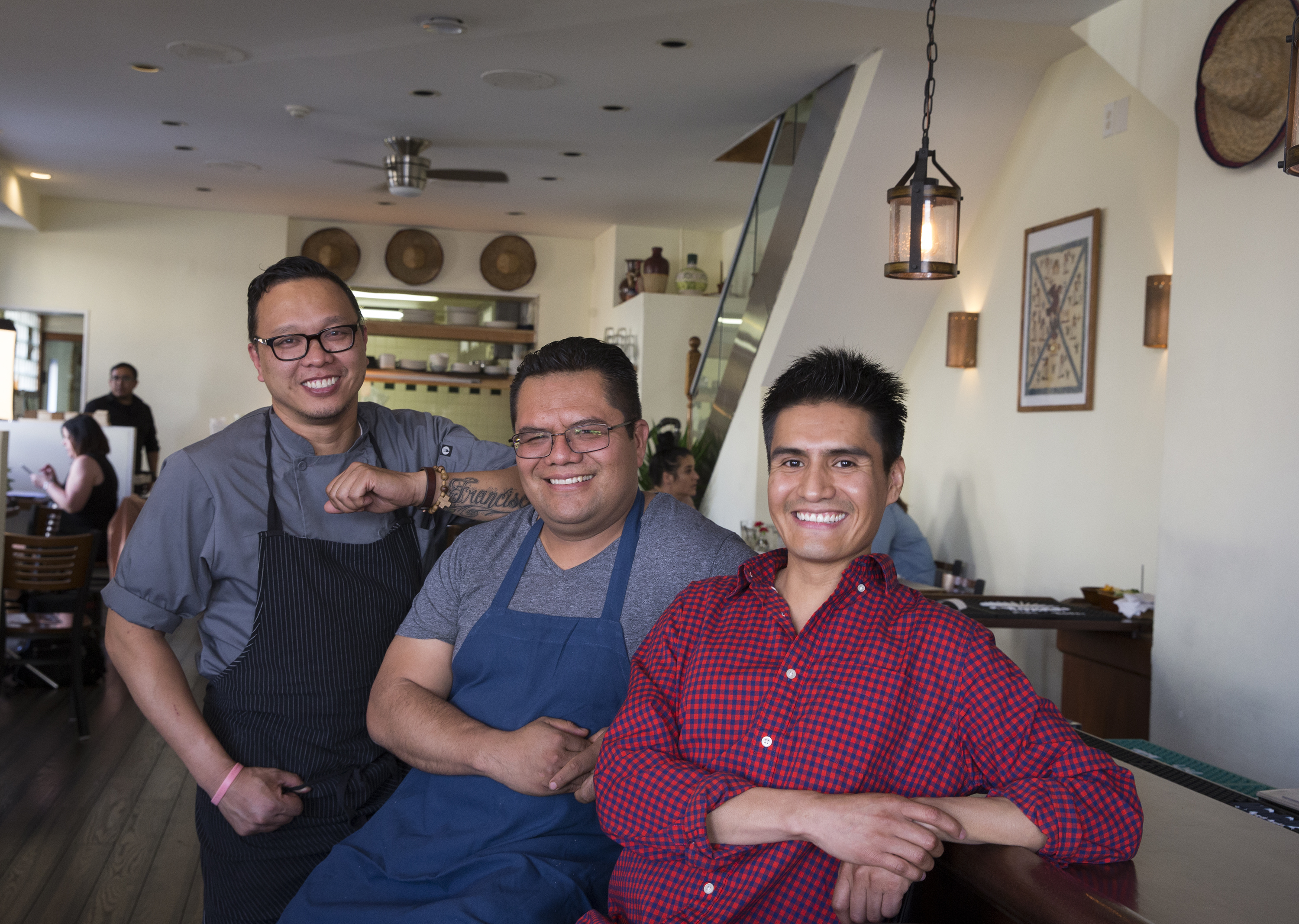
    The owners of two Port Richmond restaurants plan to open a moderately upscale Mexican restaurant in Old City, banking in part on the impact of the forthcoming Park at Penn’s Landing, which will cap I-95 and — they hope — send crowds to their doorstep.

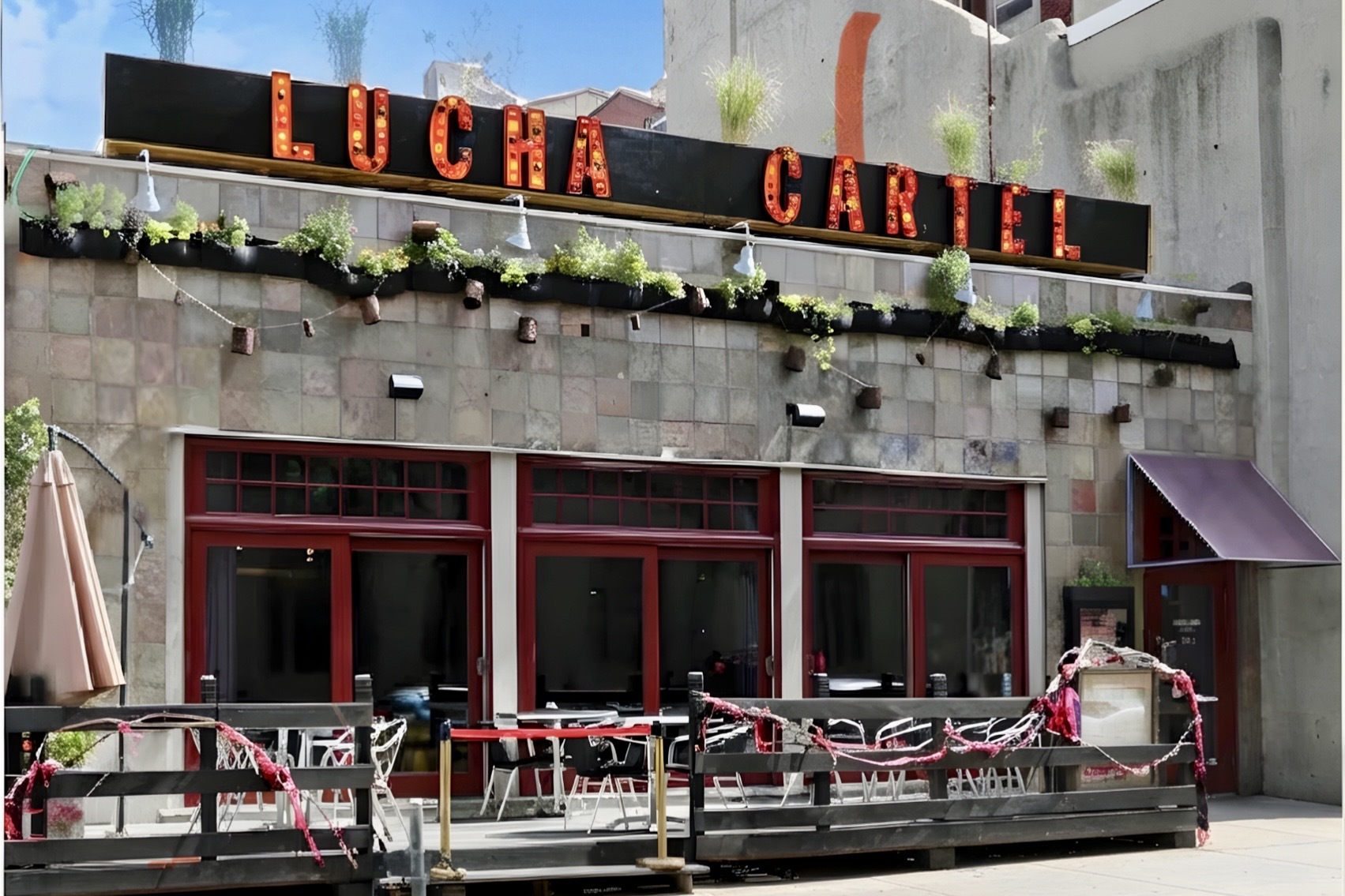
    “It was an opportunity, and we decided to take a chance,” said chef Jesus García, a former executive chef at Lucha Cartel, which occupied the building at 207 Chestnut St. from 2013 until it closed last year. It was Philadelphia Fish & Co. from 1983 to 2009.

    Chef Jesus Garcia (center) and Alejandro Fuentes (right) with Jasper Alivia at their restaurant Nemi in 2019. Charles Fox / Staff Photographer

    García and Alejandro Fuentes, his partner in the Mexican restaurant Nemi and the cross-cultural La Roma, bought the property this week and plan to open a yet-to-be-named Mexican restaurant similar to Nemi, which Inquirer critic Craig LaBan has praised, particularly for its creative tacos.

    Fuentes and García opened Nemi at Ann and Thompson Streets in 2018, and followed in 2022 with La Roma at Allegheny Avenue and Mercer Street, where the menu crosses Mexican, Italian, and other influences.

    Their new restaurant will enter a pocket of Old City that already has several Mexican restaurants. La Catrachita Taqueria opened next door in May. Across Second Street, Buena Vista Mexican Restaurant & Bar opened last summer at 123 Chestnut St., while South Street’s Las Bugambilias moved to 15 S. Third St. in 2021.

    Fuentes and García’s purchase of 207 Chestnut marks the end of a saga that had entangled the property in competing efforts to resurrect the name of Tun Tavern, considered the birthplace of the U.S. Marine Corps.

    Montgomery Dahm, the Marine veteran who has operated a Tun Tavern in Atlantic City since 1998 and owns the trademark to the name, moved into Old City amid a trademark fight with the nonprofit Tun Legacy Foundation, which was planning its own historically accurate re-creation of Tun Tavern nearby.

    In September, Dahm announced an agreement to take over Lucha Cartel at 207 Chestnut, about 400 feet from the foundation’s proposed site around the corner on Second Street. He told The Inquirer that he intended to spend $2.5 million to $3 million to turn the property into a Tun Tavern.

    In November, Dahm added bunting and lightly renovated the restaurant for a party commemorating the Marine Corps’ 250th anniversary. Less than three months later, in February, Dahm and the foundation settled their trademark dispute. Dahm subsequently decided not to proceed with the Tun Tavern at 207 Chestnut, leaving the property available.

    Billy Creagh of National Realty Commercial brokered the sale, whose terms were not immediately disclosed.

    Fuentes and García’s timing coincides with one of the largest public-space projects in the city’s recent history. The Park at Penn’s Landing, being built over I-95 and Columbus Boulevard between Chestnut and Walnut Streets, will reconnect portions of Old City and Society Hill with the Delaware River waterfront for the first time since the 1970s. The project, anticipated to be completed in 2029, is expected to create nearly 12 acres of parkland and dramatically change the pedestrian approach to the waterfront.

    For 207 Chestnut, the significance is geographic: The restaurant will sit only a few blocks from the new park, along one of the principal east-west streets connecting Center City and Old City with Penn’s Landing.

    The Old City project will put Fuentes and García in a considerably different restaurant market from Port Richmond, with heavier tourist traffic, historic attractions, nightlife, and increasing competition for Mexican food.

    “I think it’s a great neighborhood, even if sometimes it has some ups and downs,” Fuentes said. “But there are a lot of local customers, and there are also a lot of tourists who visit Old City.”

  • I-95 on-ramp in Northeast Philly is closing for good next week

    I-95 on-ramp in Northeast Philly is closing for good next week

    An I-95 ramp in Northeast Philly is set to close for good next week.

    The ramp from Bridge Street to I-95 North is slated to shut down at 8 p.m. on Friday, Aug. 21, the Pennsylvania Department of Transportation announced Monday.

    The closure will make way for construction of a new I-95 entrance from Tacony Street and the Delaware Avenue extension, which the agency expects to open in late 2027.

    Until then, drivers will be detoured to Tacony Street and State Road/New State Road, where they can get on I-95 North via the Milnor Street ramp.

    The rerouting is part of a larger I-95 rehabilitation, which includes nearly $268 million of Northeast Philly improvements, including the reconstruction of the viaduct over Bridge and Tacony Streets.

    In addition to the ramp closure, I-95 North drivers will experience a traffic shift from 8 p.m. Aug. 21 to 5 a.m. Aug 22. They will be temporarily rerouted to southbound lanes as northbound reconstruction begins at the Bridge Street Interchange. PennDot expects to complete that project in 2028.

    The agency advises drivers in the area to allow for extra time, as backups and delays are expected due to the ramp closure.

  • House of the week: A Queen Village trinity for $349,000

    House of the week: A Queen Village trinity for $349,000

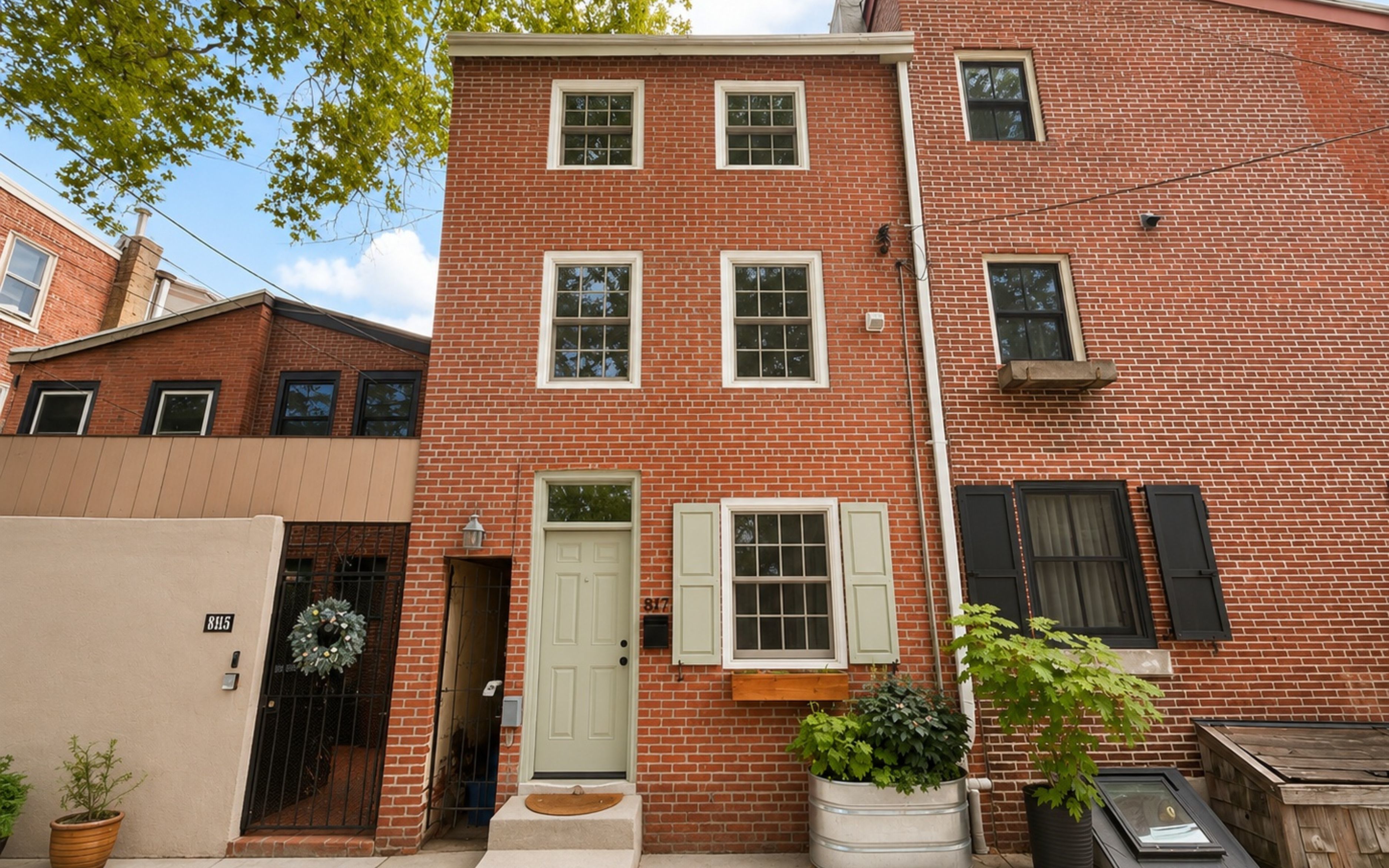
    When Hunter Wages and his wife, Lauren Nalley, bought their Queen Village trinity in 2023 after renting nearby for two years, they especially liked having the Weccacoe Playground across the street.

    They liked the constant activity there, such as park cleanup days, and, “It’s hard to beat having a tennis court in your front yard,” said Wages.

    For Nalley, an environmental engineer in water resources, and Wages, who does software testing for a veterinarian agency, the two-bedroom, 1½-bathroom house was the first they had owned together.

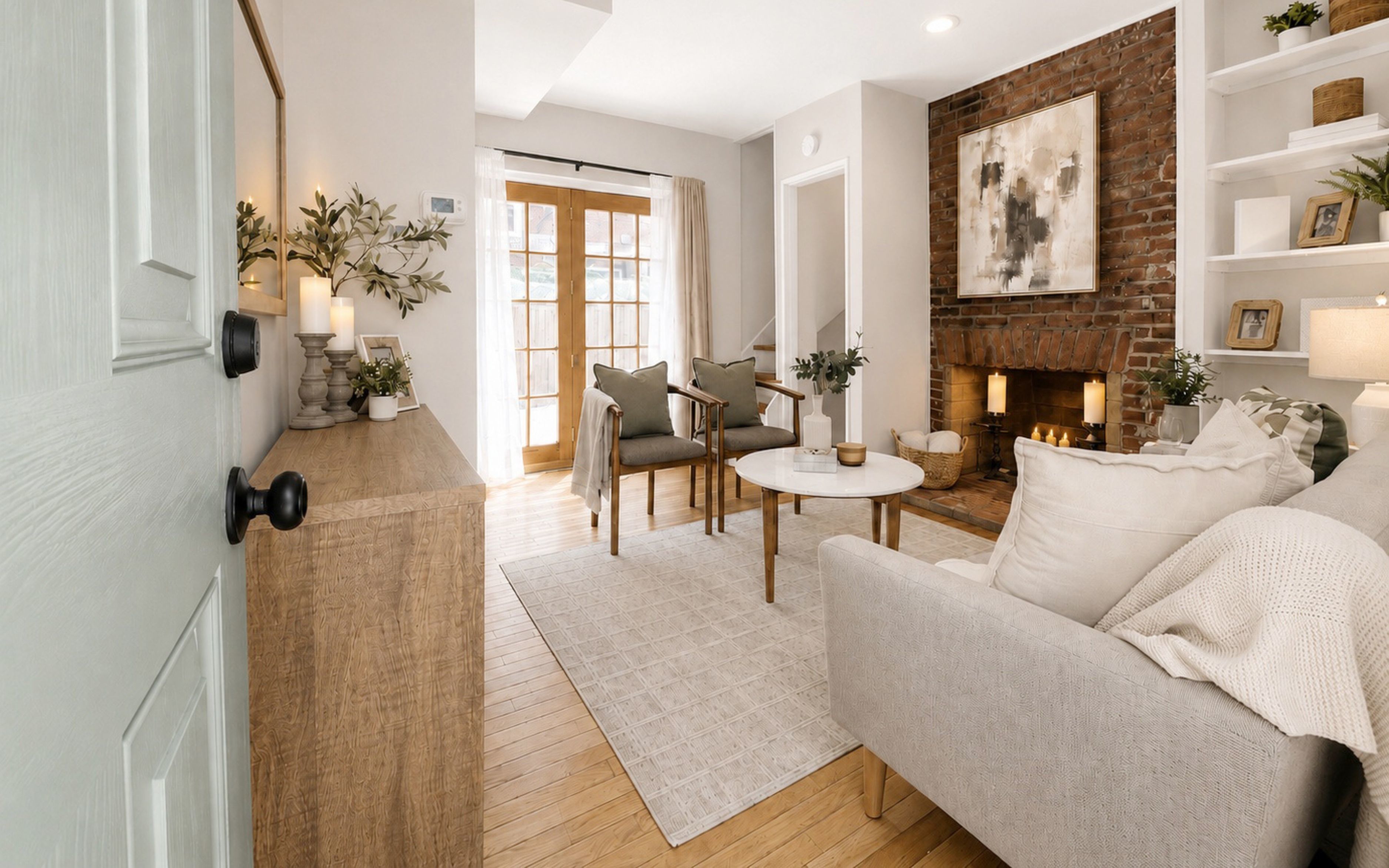
    Living roomJim Armstrong

    Noting the home’s “historic charm,” Wages said, “trinities are unique.” And he found the exposed brick sections of the interior attractive. But they are moving to Colorado to be with friends and family.

    The 710-square-foot house on a tree-lined street has replacement windows and central air-conditioning.

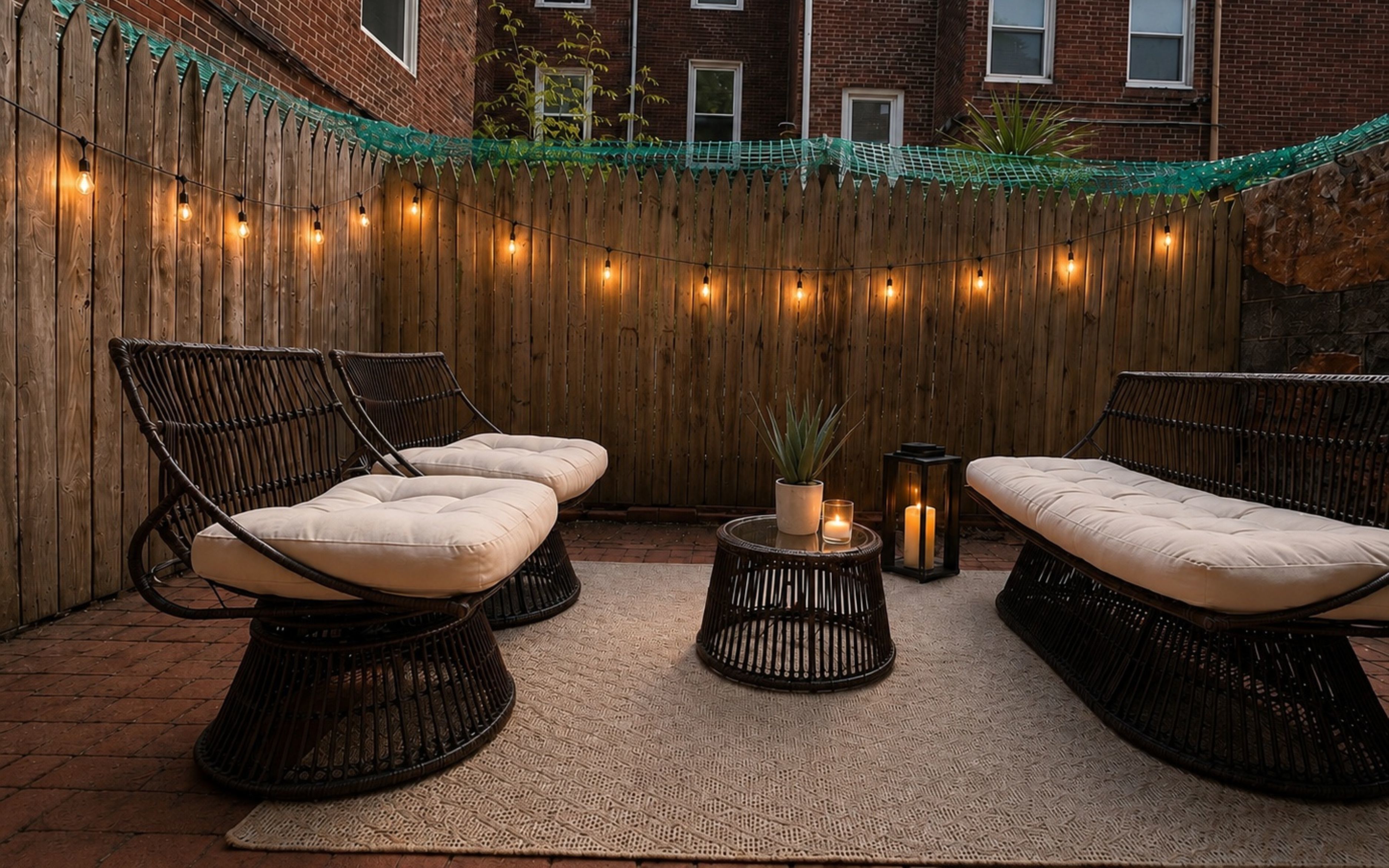
    The private fenced patioJim Armstrong

    The living room has hardwood floors, built-in custom cabinetry, and French doors opening to a private fenced patio.

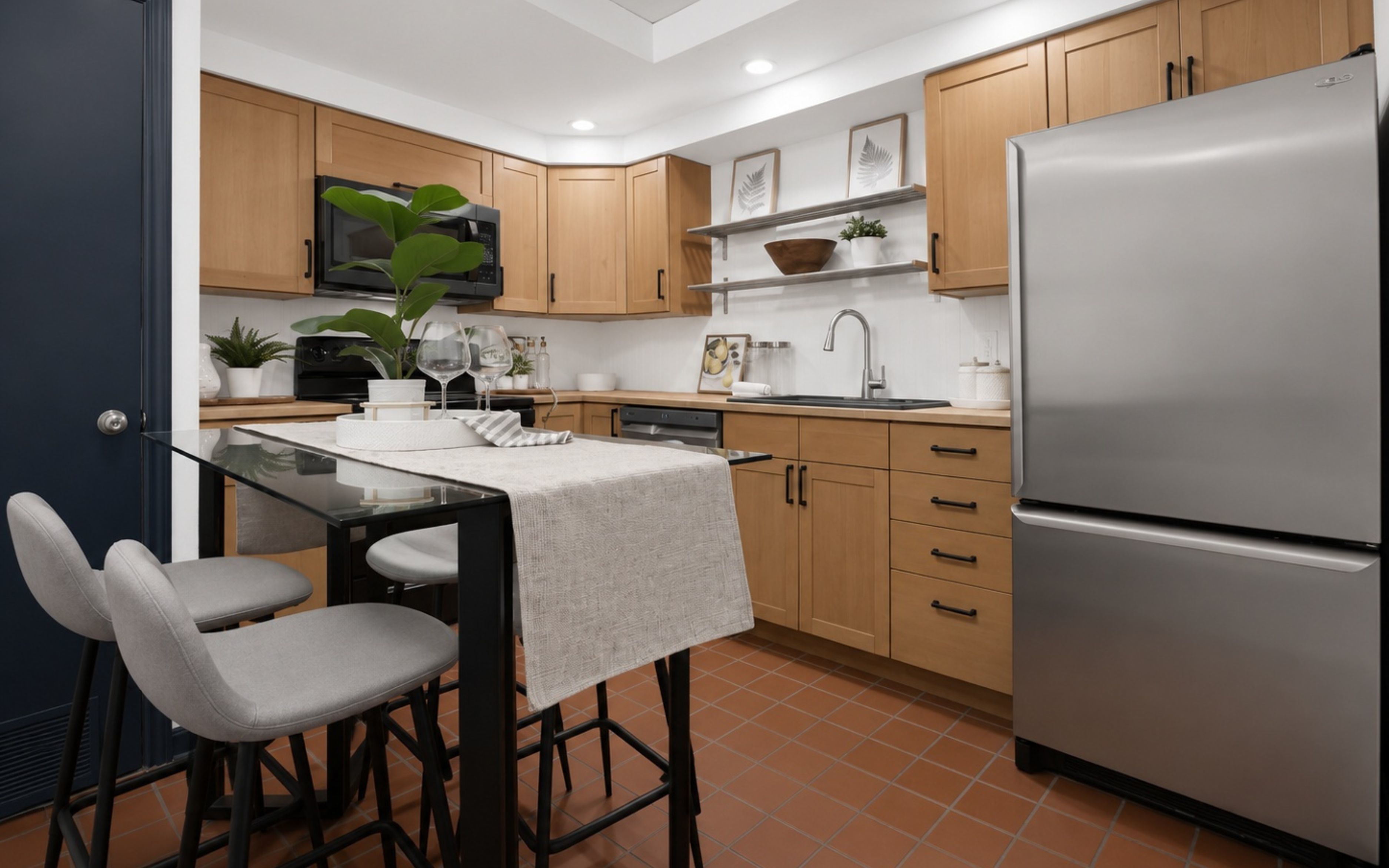
    The lower level also has a modern kitchen.

    KitchenJim Armstrong

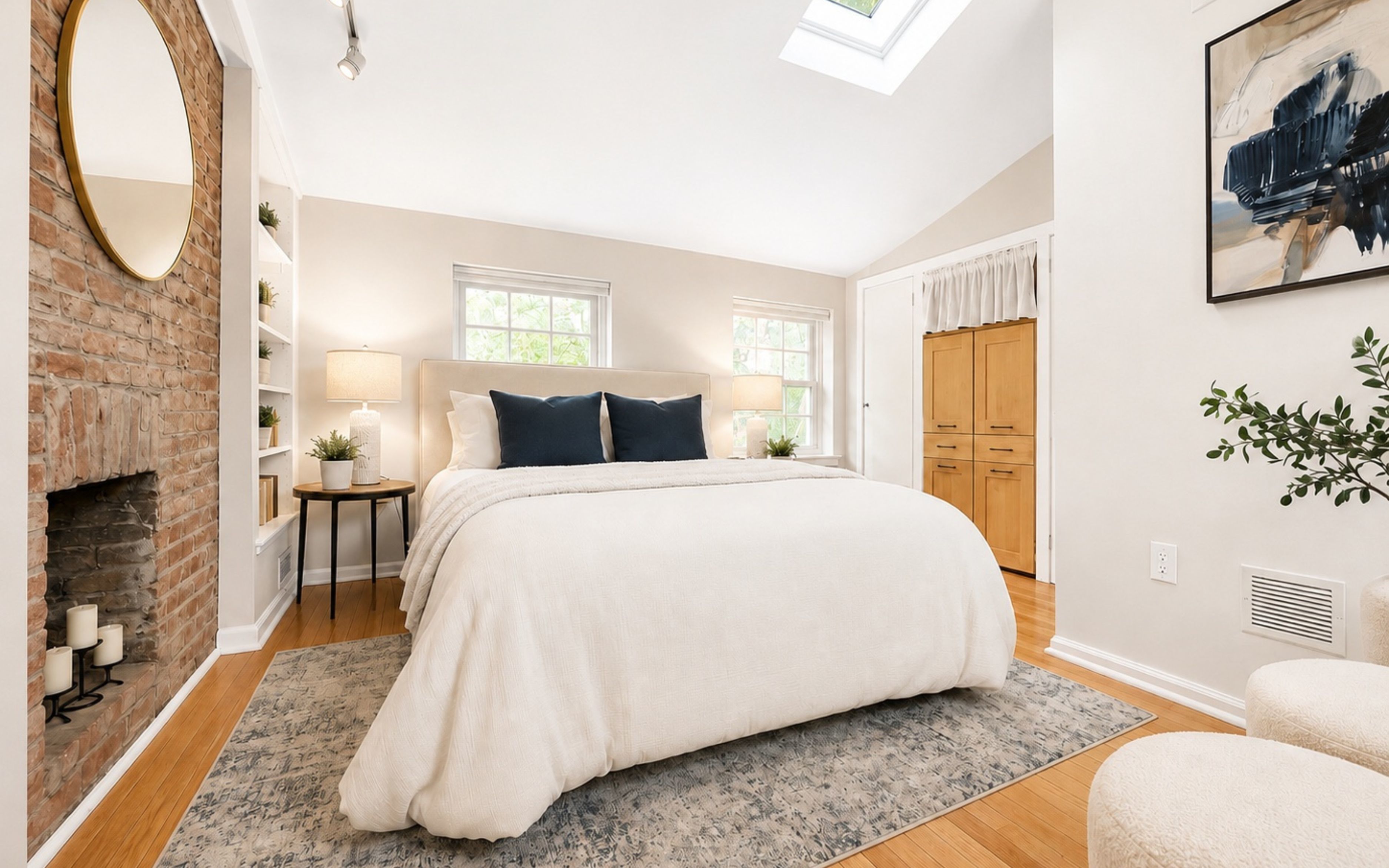
    The second floor has a bedroom, the full bathroom, and multiple closets. The primary bedroom is on the third floor, with built-in shelves, vaulted ceilings, and an updated half-bathroom.

    There are also decorative fireplaces on the first and third floors.

    The primary bedroom has built-in shelves and a decorative fireplace.Jim Armstrong

    The house is steps away from neighborhood restaurants such as Southwark and Ambra, as well as the Famous 4th Street Delicatessen and the Delaware River Trail.

    It has easy access to I-95 and several bus routes.

    It is in the William M. Meredith School catchment area.

    It is listed by Jim Armstrong of JG Real Estate for $349,000.

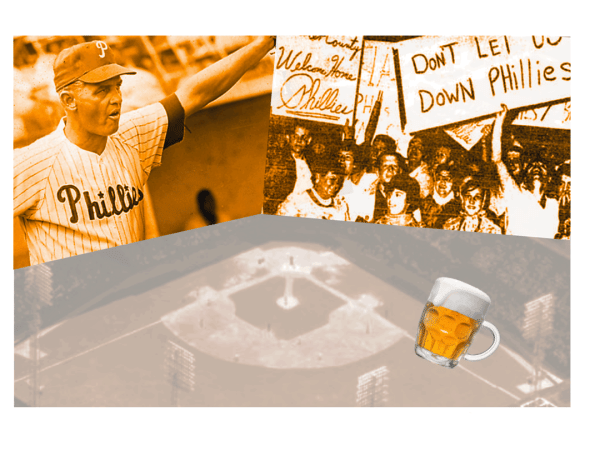
  • Before the Phillies could sell you a beer, fans were throwing them at the umpires

    Before the Phillies could sell you a beer, fans were throwing them at the umpires

    The Phillies tell me they sell more than 40 brands of beer, priced from $6.99 for a 12-ounce can of nonalcoholic beer to $17.69 for a 24-ounce premium can. Beer is everywhere at Citizens Bank Park, including at a humongous walk-through cooler on the main level.

    I recently strolled into that cooler and found a lager — at $38.48 for two 19-ounce cans — that paired nicely with chicken fingers and the Fightin’ Phils. OK, so 64 ounces of the exact same beer costs $11.99 at Acme, but you can’t watch the Phils live from Acme, can you?

    “Sometimes, things become clichés because they’re true: A cool beer on a warm summer day at the ballpark is among the great joys of fandom,” says the avuncular Glen Macnow, the former Inquirer reporter (and colleague) and sports talk-show host whose What’s Brewing PA beer show appears on the NBC Sports Philadelphia networks.

    Macnow — who is, full disclosure, also the part-owner of Conshohocken Brewing Co., which vends two of its brands at the ballpark — adds: “I’ve spent many an afternoon (or evening) with a beer in one hand, a hot dog in the other, juggling both so I can fill out the scorecard balanced on my knees.

    “Those are simple and eternal pleasures. Baseball isn’t designed for trendy cocktails in a can; it’s designed for the tradition of leisurely enjoying a cold brew over several innings as you try to convince the guy in the next seat that the manager (whoever he is) is the dumbest one in Phillies history.”

    OK, but just in case you don’t care for a brewski, the Phillies also sell about a dozen different trendy cocktails in cans, with prices running from $14.55 to $23.99. These are no bargains, either, but consider the alternative: The Phillies used to not sell booze at all.

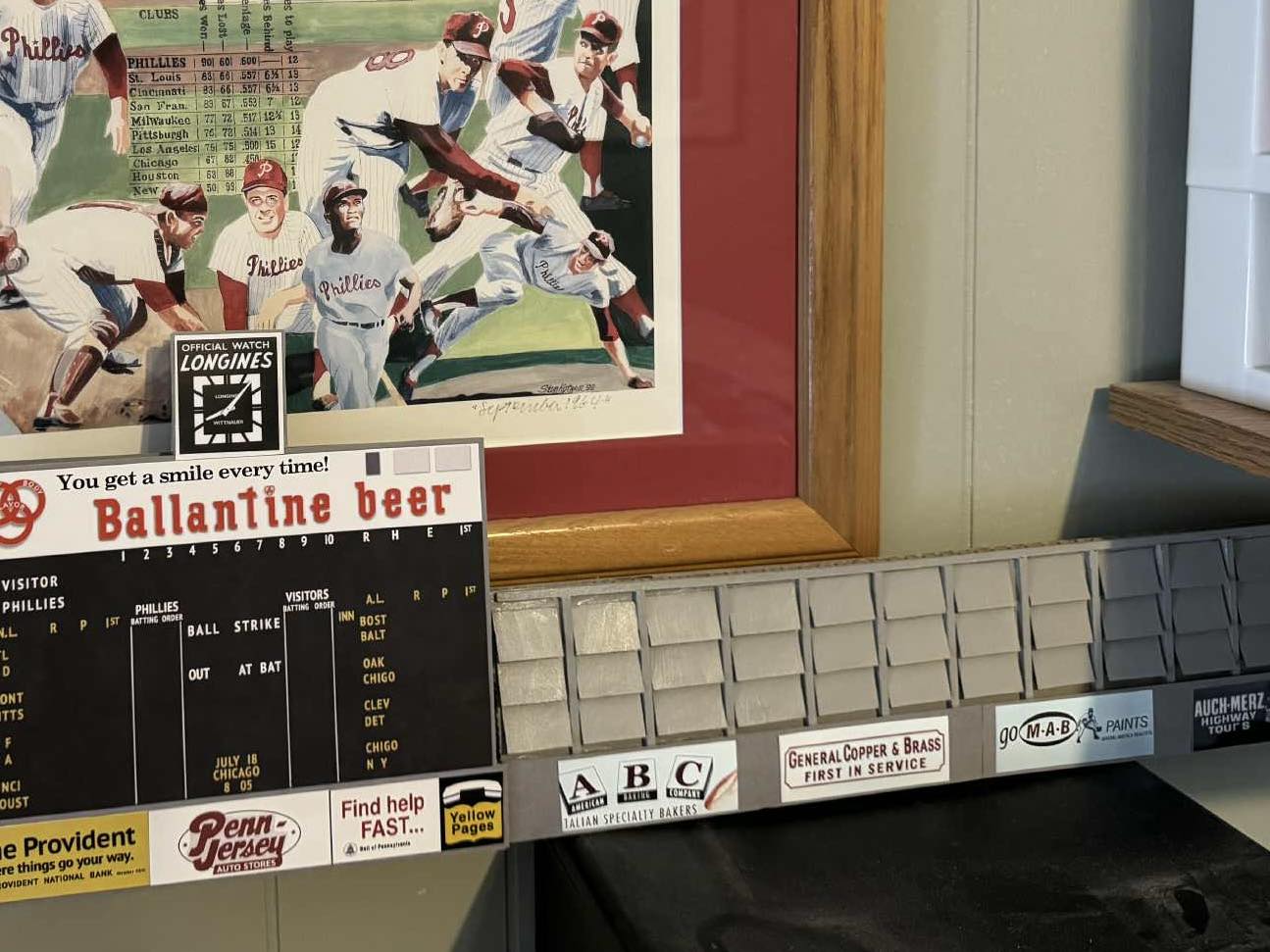
    Baby boomers like me vividly remember the towering, then-state-of-the-art right field scoreboard at Connie Mack Stadium, topped by a gigantic advertisement for Ballantine Beer (and its three-ring logo, for Purity, Body, and Flavor).

    A handmade model of the iconic Ballantine Beer scoreboard at Connie Mack Stadium by Phillies fan Bernie Valente.Courtesy of Bernie Valente

    Well, that scoreboard was erected in 1956, five years before beer was sold there.

    The Phillies first legally sold beer inside Connie Mack Stadium, their musty old park in North Philadelphia, on Aug. 7, 1961, when they put seven local brands of bottled beer on sale for 35 cents, first poured into a paper cup by eight vendors working the aisles.

    The paper cup was a vital part of the transaction, because, prior to legal sales, Phillies fans used to sneak in cans of beer, often sold in “cold packs” at nearby bars like Charlie Quinn’s Deep Right Field Cafe at 20th and Lehigh.

    Beer cans were heavier in those days, so they tended to become missiles when the umpires missed a call, or if the Phillies stank, which was quite often.

    The low point probably came on June 12, 1959, when a twi-night doubleheader against San Francisco was halted after five innings because of rain. The Phillies were no-hit — but even worse, fans were denied rain checks to both games because the first game was official.

    As Frank Fitzpatrick, the now-retired Inquirer reporter who attended the game as a 9-year-old, recalled in the paper in 2016: “Suddenly, one empty can fluttered toward the field. A second followed quickly. Soon, it was a dangerous deluge. So many were tossed that cans obscured the tarp, from the mound to the batter’s box.”

    That was not good news for Robert R.M. Carpenter, the Phillies owner, who dearly wanted a new ballpark for his team. Plans had been drafted for a 45,000-seat, $8 million stadium in the Torresdale section of Philadelphia, with an adjoining theme park, yacht basin, and bird refuge park adjacent to I-95. Beer sales would bring in some cash for that amazing project.

    On June 20, 1961, the Pennsylvania Senate passed a previously approved bill by the state House that would permit the sale of beer every day but Sunday at sporting events at stadiums in the state that seated more than 25,000. (The Pittsburgh Pirates also happened to be looking for a new ballpark.)

    But they faced stout foes. After voting against the bill earlier in 1961 that would have enabled the Phillies to sell beer, a Democratic state assemblyman from Philadelphia, Charles Heavey, predicted that the sale of beer would actually “contaminate” youngsters.

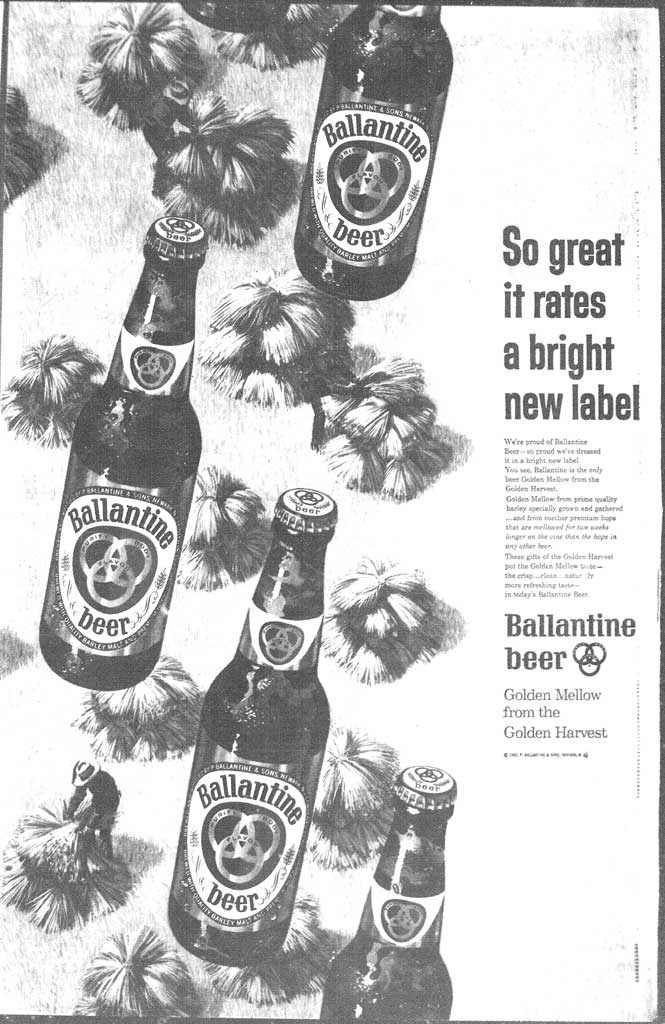
    So … first the beer had to be poured into a paper cup before drinking, preventing another beer can pileup on the field like the one in 1959. And there would be more than one starting pitcher: Schmidt’s, Esslinger, Old Dutch, Horlacher, Neuwiler and, yep, Ballantine were all included in the original sudsy rotation.

    A 1962 newspaper advertisement for Ballantine beer.

    Larry Merchant provided statistics in his Daily News column the next day: A total of 3,739 beers were served to 5,586 who attended that Aug. 7 game, a 3-1 Pittsburgh victory on a Monday, which was also the Phillies’ 10th straight loss. No bottles or cans were thrown on the field, he reported, but fans did pop the cups and try to throw those onto the field — often in vain.

    “For serious drinkers, it was about a four-beer game, just two and a half hours long,” Merchant joked. “For serious Phillies fans, it was a six-beer job. They look better that way.”

    Merchant made note of signs at the entrances that read, “Bringing in of canned beer or bottled beverages will be a cause for ejection from the park.” Nonetheless, he reported, seven would-be beer smugglers were caught at the gate, their brews returned when they left the park.

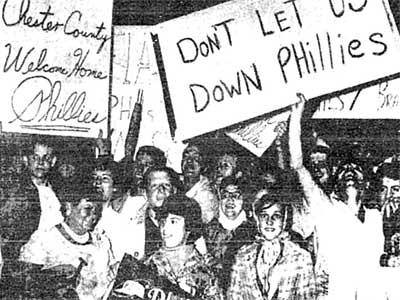
    Those 1961 Phillies were so lousy that their losing streak grew to 23 games, still a modern record. After the Phillies beat Milwaukee, 7-4, on Aug. 20 in the second game of a doubleheader, their flight home was welcomed by 500 fans at 1 a.m. the next day at the airport.

    About 500 Phillies fans welcomed the team home at the airport like conquering heroes after the club broke a 23-game losing streak in August 1961.

    “They are selling rocks at $1.50 a pail,” Phillies pitcher Frank Sullivan, looking out of the plane, joked to his teammates.

    He then wisecracked: “Leave the plane at five-minute intervals. That way, they can’t get us all with one burst.”

    In truth, the beer ploy sales did not seem to provide much of a boost to the 1961 Phillies, who lost 107 games and finished last in the National League in home attendance in 1961, averaging only about 7,600 per home game. But a door, or many brewskis, had been cracked.

    Beer would not be sold at Sunday home Phillies games until 1972, after the Phillies moved to Veterans Stadium, following the amendment of the ancient Pennsylvania Blue Laws, intended to curtail activities on Sundays (including Phillies and A’s home games until 1934).

    “My parents didn’t drink, so I always associated the public consumption of alcohol as something dark and troubling,” Fitzpatrick told me recently. “That feeling was confirmed in spades at that 1959 game.

    “By 1966, the summer I worked at the ballpark, I felt differently. I was a soda vendor, and beer suddenly was a precious commodity. Now I envied the beer sellers, because they made the most money and had the least amount of walking. Occasionally, rowdy fans would harass young vendors like me, hurling popcorn containers or wadded-up cups at us, [but] it definitely was comforting to know you wouldn’t have to dodge metal cans. On the other hand, in ’66 the smell of spilled beer now permeated the place. I don’t remember that same aroma when fans brought their own.”

    Carpenter never did get his Torresdale stadium. After a one-year delay because of construction, however, the Vet opened in 1971 in South Philadelphia. A few fans grumbled about paying 75 cents for a 12-ounce beer served there by a vendor, perhaps because those same items were 40 cents and 60 cents, respectively, at Yankee and Shea Stadiums in New York.

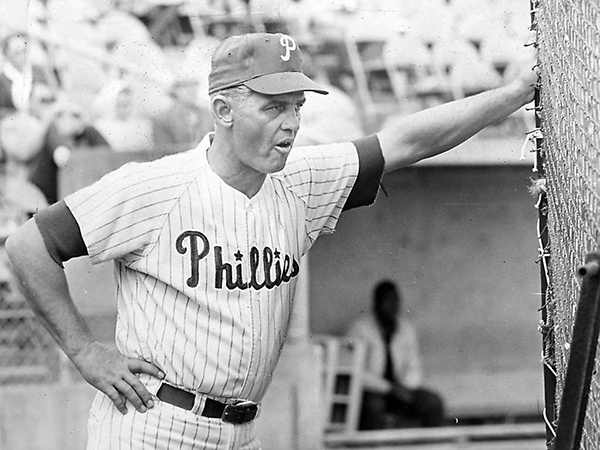
    Gene Mauch managed the Phillies during their historic 107-loss season in 1961. That team dropped 23 straight contests.

    The pricing was actually meant to be sort of a deterrent. Bud Vye, the Connie Mack stadium manager, told The Inquirer, “At these prices, they’ve got to bring a bankroll just to get bombed out.”

    But beer stuck around. A 1998 Daily News exposé into how Ogden Entertainment, then the vendor at the Vet, was caught skimming a half million dollars in annual beer sales led to a price reduction. Local brands, kicked to the side by the national brews, were sold again when the Phillies moved to Citizens Bank Park in 2004. (Large premium drafts then sold for $6.)

    Cups were eventually discontinued, and most beer at the ballpark is sold in much lighter cans (which, it should be noted, are opened by the cashier, lest someone try to hurl a full can on the field). Dozens of different brands of beer can be spotted at any Phillies game.

    “A big part of this is marketing,” Macnow tells me. “Beer at the ballpark is no longer poured into paper cups, so there’s a long-term benefit to seeing people walking around the park holding cans of your beer. Labeling becomes important. Naming beers becomes important.”

    And so is the vessel itself. The Phillies continue to sell “beverage bats,” large hollow plastic souvenir baseball bats that can be filled with any beverage. Those are not cheap, either. Phillies fans may be held captive by the prices, but beer and baseball are inseparable.

    Dave Caldwell lives in Manayunk and covered sports for The Inquirer from 1986 to 1995.

  • Tornado confirmed in Cape May County as storms swept through New Jersey

    Tornado confirmed in Cape May County as storms swept through New Jersey

    The National Weather Service in Mount Holly on Wednesday confirmed a tornado briefly touched land in Cape May County during powerful thunderstorms that swept through the region Tuesday evening.

    The agency said a waterspout was witnessed going ashore at Cape May Point around 6:15 p.m. Tuesday and causing minor tree damage for about a minute. The tornado was classified as EF-0, with estimated peak winds between 60 and 70 mph, the agency said.

    The National Weather Service also confirmed North Jersey tornadoes in the Stanhope and Mount Olive area, and in the Lower Berkshire Valley. An investigation was still ongoing in the Parsippany and Troy Hills area in North Jersey, the agency said.

    The waterspout that became the tornado on the southwestern tip of Cape May County could be viewed as far south as Rehoboth Beach, Del.

    The high winds tore down some trees and a few power lines in Cape May Point, said Bill Gibson, the borough’s emergency management coordinator.

    “We commonly get waterspouts in the bay and harbor, but this was a big one, and when it hit land it was able to continue on for a little bit,” Gibson said Wednesday morning. “But it’s already all cleaned up.”

    National Weather Service surveyors were investigating the remaining North Jersey areas with tornadic damage Wednesday. Findings were expected Wednesday evening. The agency conducted a virtual survey for Cape May Point since the damage was minimal.

  • Code Red: City and state officials must act now on multiple fronts to protect air quality

    Code Red: City and state officials must act now on multiple fronts to protect air quality

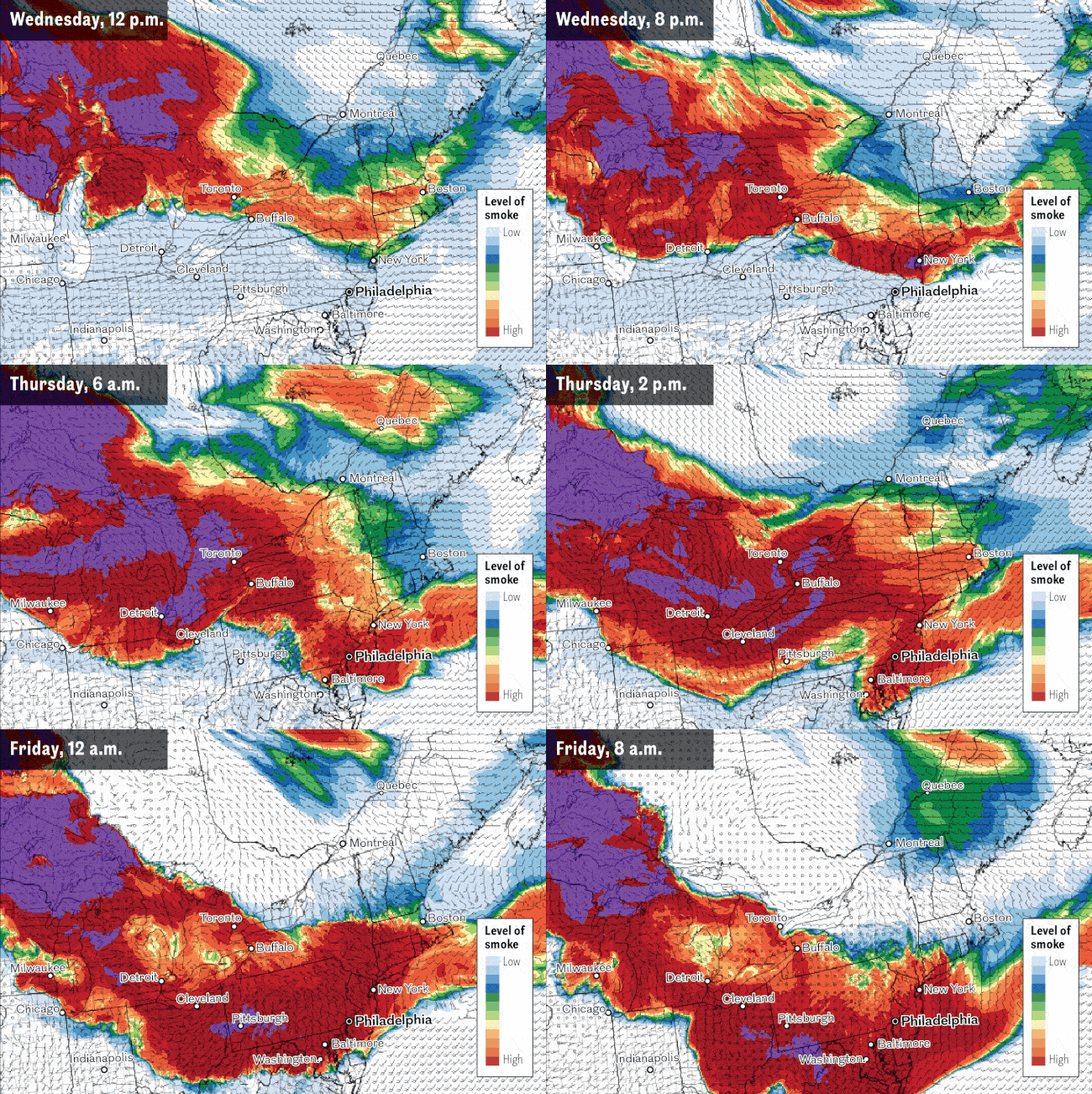
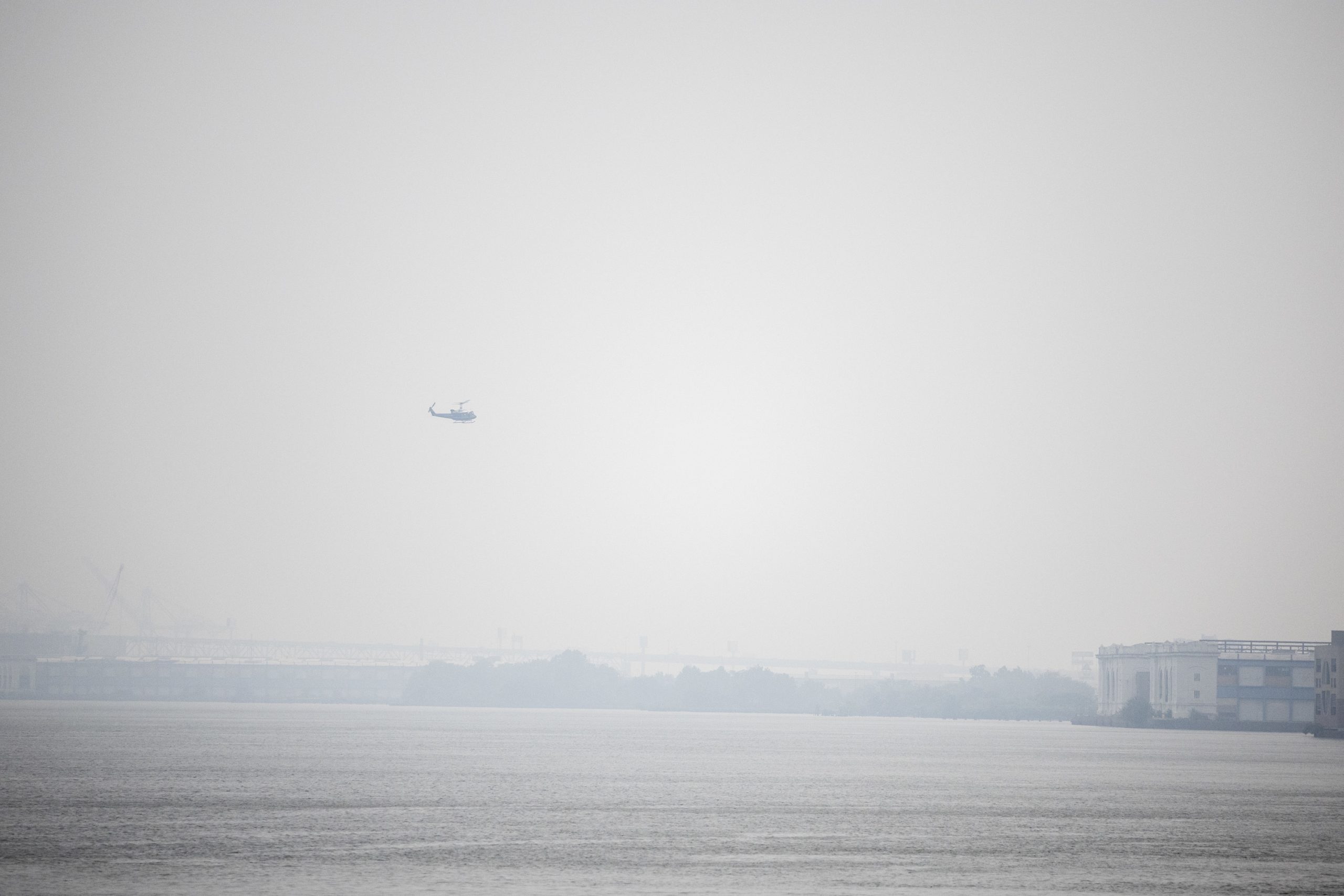
    From I-95 in South Philly, the skyline was barely visible as we drove past empty stadiums and parking lots. The low visibility is due to a blanket of smoke from trees burning across Canada, a thousand miles away, a new — and deeply unwelcome — annual tradition here in the Northeast thanks to our rapidly changing climate.

    We were on the highway because we happened to be driving our 2-year-old son to my parents’ home outside of Boston, and I felt deep relief to be taking his young lungs from an Air Quality Index (AQI) of 182 (“Unhealthy”) to merely 94 (“Moderate”).

    As a pediatrician and parent who thinks a lot about the impacts of air pollution on children’s ability to breathe, it is an especially frightening moment.

    Near-surface smoke forecast in the Philadelphia area from noon Wednesday through Friday morning.John Duchneskie

    It is also a maddening one for those who care about health or justice.

    Air pollution causes enormous harm to human health. And yet, the Trump administration has made a concerted push to worsen American air quality by attacking antipollution policies and slashing funding for the agencies responsible for their enforcement.

    Under direction from industry lobbyists, the administration — assisted by the conservative majority on the U.S. Supreme Court — is pushing aggressively to weaken the Clean Air Act, which is often identified as the piece of U.S. legislation that has saved the most lives.

    At the same time, the administration is demanding a 50% cut in funding for the Environmental Protection Agency, which maintains airnow.gov, after dramatically cutting funding for weather and climate research at the National Oceanic and Atmospheric Administration last year.

    These actions serve only political donors and wealthy shareholders, at the expense of communities and the environment.

    A helicopter is barely visible over the Delaware River blanketed with the wildfire smoke from Canada in Philadelphia on Thursday.Tyger Williams / Staff Photographer

    In spite of the layers of smoke blocking out the sun, the injustices of the current moment are easy to see. I am lucky to be headed to clearer skies this weekend, but this is only one example of good fortune that is unavailable to many.

    As temperatures climb above 90 degrees Fahrenheit for the fourth day in a row, after two other record-breaking heat waves this year, those without air-conditioning are forced to choose between sweltering with the windows closed and a house filled with smoke from faraway wildfires.

    Communities with lower levels of air-conditioning are also more likely to be Black and Latino communities that have a higher heat burden from a lack of neighborhood trees and greenery and an excess of paved surfaces.

    Add to this the ongoing burdens of polluting industrial infrastructure in these same areas — thrown into sharp relief by the scrapyard fire Wednesday within the environmental justice communities of Darby and Southwest Philadelphia — and it is an overwhelming assault focused on the health of our most vulnerable populations.

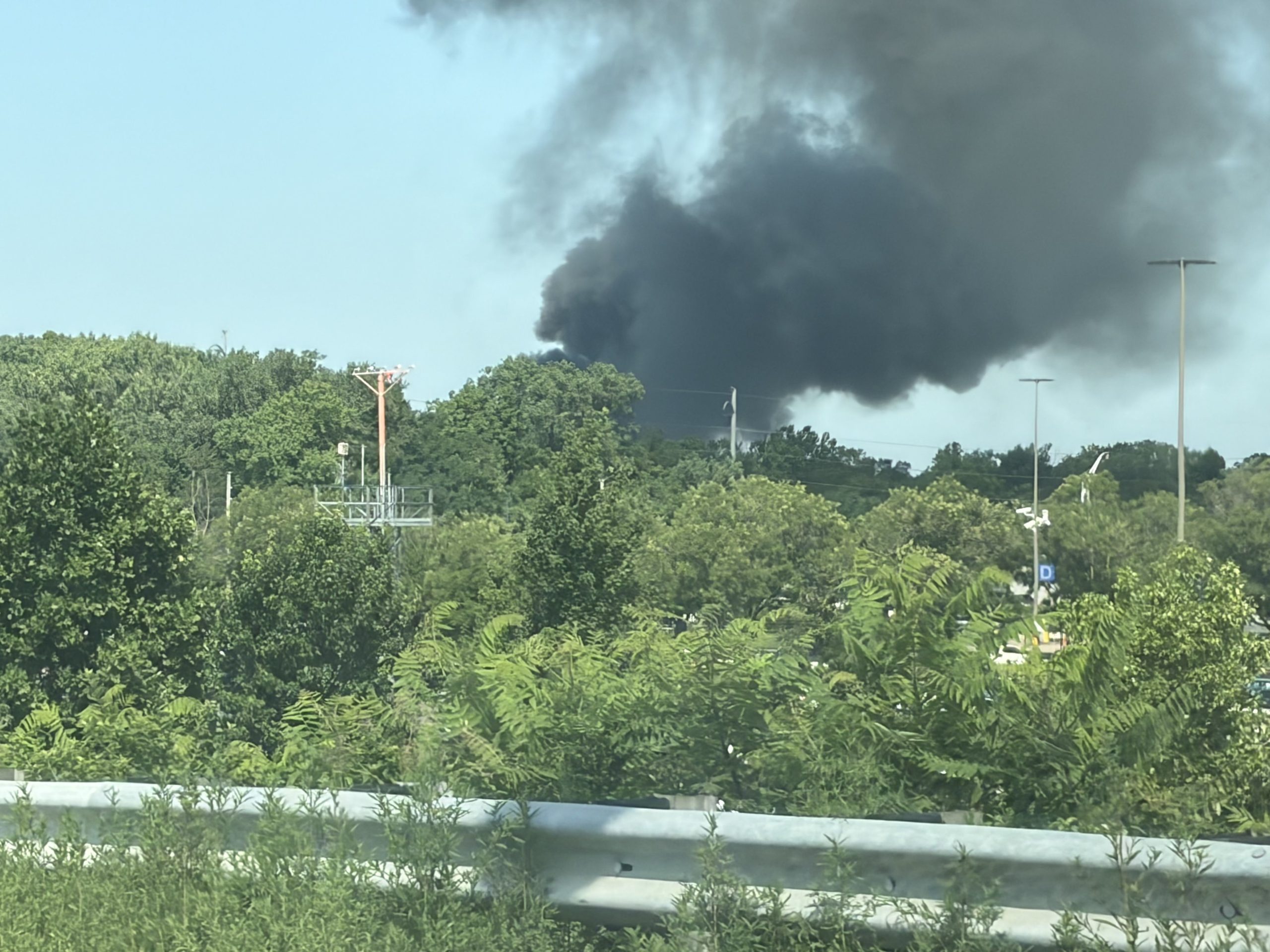
    A view July 15 from I-95 of a large scrapyard fire in Darby Township, just outside of Philadelphia.Joseph DiStefano

    It is past time to demand more of the elected officials who serve us. While the federal government and GOP majority in the state Senate have abandoned even performative interest in protecting the environment and its inhabitants, our city agencies must act.

    Right now, Philadelphians can provide support for cleaner air in our region on several fronts.

    Philadelphia Gas Works, our city-owned utility, is pushing to build an even larger liquefied natural gas plant in the Port Richmond neighborhood, where cancer rates are already among the highest in the city.

    The City Planning Commission is discussing possible locations for new data centers, strongly considering Grays Ferry’s Bellwether District, in spite of the decades of pollution and associated diseases from the Philadelphia Energy Solutions gas plant.

    And the city has just moved a step closer to renewing its contracts to incinerate its trash just a few miles down the highway from the scrapyard fire that poured smoke across the region this week.

    All of these actions prioritize short-term costs over long-term benefits to citizens, neighborhoods, and the planet.

    Whether you contact your mayor or City Council member, submit remarks online, or testify at a hearing, let our decision-makers know that this literal Code Red demands big ideas, difficult decisions, and dramatic action — before the city’s commitments to health and justice are as hard to make out as its skyline views.

    Paul Devine Bottone is a pediatrician and father in Philadelphia.

  • Pennsylvania and N.J. Turnpikes choose a design for a new $1.6 billion Delaware River bridge

    Pennsylvania and N.J. Turnpikes choose a design for a new $1.6 billion Delaware River bridge

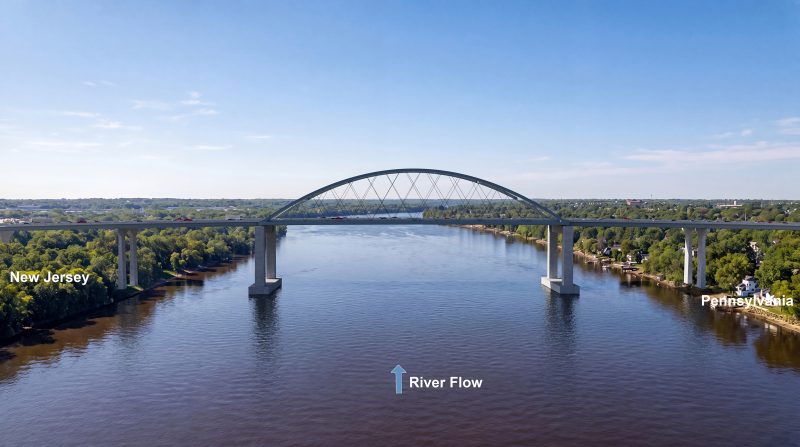
    Officials of the Pennsylvania and New Jersey Turnpikes have chosen a design to replace the 70-year-old bridge over the Delaware River linking the toll roads: a six-lane span that would be built about 195 feet north of the existing one.

    Called a ”tied-arch” bridge, the $1.6 billion replacement would be cheaper than other styles considered and can be built fastest, said John Boyer, senior engineer for the Pennsylvania Turnpike Commission.

    “Shorter time frames mean less disruption to local businesses and daily life for the communities in this area,” said Boyer, the manager of the joint project.

    Because the new bridge would be farther from the existing Delaware River Bridge than alternatives, traffic can keep flowing as it’s built, he said.

    Planners for years have known that the region would need a new turnpike bridge because of exponential growth in traffic volume, especially trucks.

    Freight volumes nationally are projected to grow by 73% by 2050, with warehouses on both sides of the river relying on crossing.

    Before the nearby I-95/Pennsylvania Turnpike interchange opened in 2018, an average of 42,000 vehicles a day crossed the four-lane Delaware River Bridge. Now, that’s up to around 70,000. By 2050, projections say an average 93,000 vehicles will need to traverse the replacement.

    The surface of a tied-arch bridge provides tension to resist the horizontal forces pressing on either end of the arch, like the taut string that connects a bow. It requires less sturdy foundations than a bridge supported by cables.

    “You can be build those river piers while you’re building the arch structure off-site,” Boyer said. When the piers are ready, the arch can be brought in by barge and “you can essentially jack it and elevate it up into place,” he said.

    Federal authorities approved a new span in 2003, but the project was put on hold because of problems paying for it.

    In 2017, a crack was discovered in a truss supporting the existing bridge’s roadway, and it was closed for about two months.

    As congestion increased on the repaired bridge, more traffic capacity became imperative, officials said.

    Because the earlier federal approval was so old, officials had to start again with a new environmental impact statement and design studies. Last year, turnpike officials settled on two options.

    Now, they’re finishing up the environmental impact statement, with formal public hearings scheduled for the winter.

    Turnpike officials expect the Federal Highway Administration to make a decision on the project around April 2028.

    In March, Pennsylvania’s U.S. senators announced a $600 million federal grant for construction of the new bridge connecting Bristol, Pa., and Florence, N.J. New Jersey’s congressional delegation also worked on getting the grant.

    The two states’ turnpike agencies will finance the balance. Borrowing would be backed by toll revenue, but both say the bridge project won’t increase tolls for drivers.