Tag: Hurricane Katrina

  • War, AI, and the end of the world | Will Bunch Newsletter

    War, AI, and the end of the world | Will Bunch Newsletter

    I feel like I need to apologize for a column a couple of months ago when I compared the current president of the United States to Caligula, the possibly mad Roman emperor who is said to have nominated his trusted horse for high office. I need to apologize to Caligula. From pitching his triumphal D.C. arch as a storage shed for deadly snipers’ bullets to banning reporters from the White House in a narcissistic rage, Donald Trump is losing his grip on reality. This is unsustainable.

    If someone forwarded you this email, sign up for free here.

    Worried about AI killing humans? Bad news: It already is.
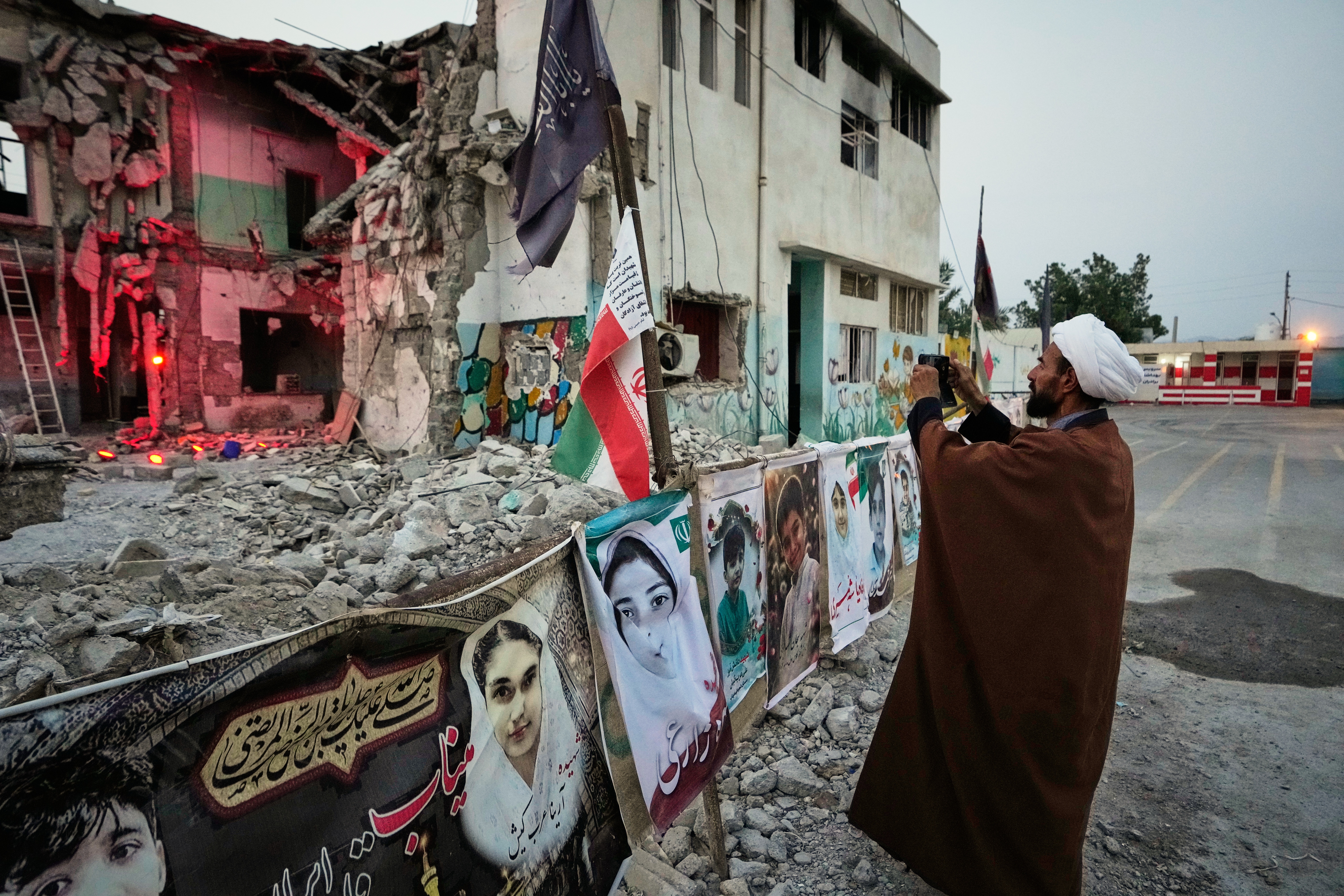
    A cleric takes a photograph earlier this month at the shattered Shajareh Tayyebeh school in Minab, southern Iran. It has become a place of mourning and a memorial to those killed in a U.S. airstrike on Feb. 28.Vahid Salemi

    Which is it?

    Are the robots of AI, or artificial intelligence, so smart that they’re on the verge of holding a secret meetup in the darkest corner of the dark web and developing a plot to kill all humans through germ warfare, to make sure we don’t kill them first by pulling the plug?

    Or is AI so dumb — artificial stupidity, despite the billionaires of Silicon Valley showing up daily on our TV screen to brag about the sky-high IQ of their son, Claude — that the thing that will murder us is a crazy hallucination that will turn a false alarm into World War III?

    The fact that we can’t answer this should give us pause, but maybe we aren’t even asking the right question. Maybe the real issue is how easy we’ve made it to kill off the human race — a capability that was already created by people even before we invented the computer.

    One thing is certain. Artificial intelligence has already been an accessory to mass murder, and if we do nothing, it will kill again.

    Remember the very first days of the now seemingly endless Iran war, and the news that two missile strikes had obliterated a school for young children in the Iranian coastal city of Minab, in an apparent “double-tap” strike in which the second attack from the skies killed young girls and boys and their teachers as they huddled in a prayer hall?

    Those bombings, which killed 156 people on Feb. 28, caused the United Nations’ Independent International Fact-Finding Mission on Iran to report last week that it found “reasonable grounds to believe that the United States committed a war crime by launching indiscriminate attacks …” The U.S. government has never taken responsibility for the bloodshed, despite overwhelming visual evidence that the bombs were precision-guided U.S. Tomahawk missiles.

    It didn’t take long for additional speculation that an AI program had mistakenly targeted the school, perhaps using outdated maps and info from an earlier time when its buildings were attached to an Iranian military complex. After all, the Pentagon has been openly bragging about the death and destruction facilitated by its use of Palantir’s Smart Maven System and also Anthropic’s Claude.

    Last week, Bloomberg News reported that the Pentagon’s overreliance on AI, and specifically the Palantir Maven program, was a major factor in the school tragedy, along with the outdated intelligence about the Minab site — the “garbage in.” Its exposé noted that U.S. military planners were racing to identify some 1,000 Iranian targets in the early hours of the war, giving humans little time to double-check the list. Kindergartners were slaughtered as a result.

    This was hardly the first time robots have been linked to human death, both in war — in 2024, +924 Magazine reported the Israel Defense Forces were using an AI program code-named “Lavender” to target sites amid the mass killing in Gaza — and in peace, as shown by numerous accounts of robots helping troubled people die by suicide.

    And yet, it could have been much, much worse. At the same time as the Bloomberg report on the AI link to the mass killing in Iran, the world also learned that a false report generated by robot intelligence nearly sparked a conflict between the United States and China that could conceivably have spiraled into major fighting.

    CNN and other outlets have reported that a U.S. special operations command analyst working with AI generated an urgent report that a Chinese ship bound toward the Middle East was carrying components for a nuclear weapons system, which caused military leaders to scramble jets and assemble a team to seize the vessel.

    Only at the last minute did the Pentagon dig deeper and learn the AI-generated report was completely false, a hallucination — one that nearly triggered a violent conflict between the world’s two largest military powers.

    The two disturbing reports about the use, or misuse, of AI by the U.S. military in a time of war did make news but didn’t get nearly as much attention — either in the media or on sites like Bluesky or X — as warnings from both whistleblowers and CEOs in Silicon Valley that a swarm of robots could decide on their own and without any human intervention or awareness to try to kill off our so-called civilization.

    The fear of an unprompted attack from AI secret agents is real, based on several incidents that have already occurred, including a well-planned and partly successful operation by OpenAI’s robot agents to hack into a company called Hugging Face.

    Still, it says something about human intelligence that we are captivated by the unknown and mysterious possibility of a random attack, while the fact that people are currently misusing AI to cause death and suffering is a less compelling story. I noted in this space last week that the threat to humankind from climate change is arguably even more real — and yet this gets denied by many and ignored by others.

    It’s also striking to me as a boomer born in 1959 that a generation that was born into a time of constant terror — backyard bomb shelters, “duck and cover” drills in the classroom, and sci-fi horror at the drive-in that an atomic arms race could kill us at any moment — is suddenly back to where we started.

    Over 81 years, humans were smart enough never to drop another nuclear weapon (well, not intentionally) after the mass murders at Hiroshima and Nagasaki, but not bright enough to figure out how to eliminate the nuclear threat altogether.

    The fact that civilization managed to — so far — pause the number of world wars at two has given us the space and the false bravado to create new and much more insidious killing machines, and the threat from invisible robots on a hidden dark web is somehow even scarier than the radioactive mushroom cloud that we more or less understand.

    Boomers who went to bed as kids in the 1950s and ’60s praying we wouldn’t die before we woke are now spending our senior-citizen-discount years fearful that something stranger than science fiction is coming for our children, or grandchildren. Over the course of a lifetime, the arc of that moral universe has not bent at all.

    Still, humans were able, somehow, to prevent nuclear annihilation so far, and now it’s past time to get to work on the actual threats from AI and start on those workarounds. For example, the articles I’ve read speculating on how the robots plan to kill us frequently mention the prospect of AI agents developing bioweapons and releasing them, either on their own or prompted by a bad actor. (In theory, human development of bioweapons has been banned for a half century.)

    From everything I’ve read so far about AI, it sounds like we’d have better luck safeguarding or eliminating the components that could make a biological agent rather than stopping the robots. Likewise, AI agents would not be able to start an atomic apocalypse if our human politicians went to work at finally eliminating nuclear weapons. Artificial intelligence won’t kill little girls in an Iranian school if humans don’t start dumb wars in the first place.

    If Silicon Valley’s prophets of doom are serious, there’s no fix that’s too big or too ambitious. But understand that the biggest problem isn’t that AI wants to murder us, but that since 1942 we humans have been busy creating all the suicidal weapons AI agents could use.

    Can you even “duck and cover” from a killer robot? I don’t intend to find out, and I don’t want my yet-to-be-born grandchildren to have to even think about it.

    Yo, do this!

    • I’ve always been a big fan of filmmaker Barry Levinson, whose trilogy of Baltimore movies (Diner, Tin Men, Avalon) defined postwar American nostalgia. Now Levinson, along with his codirector Robert May, has come north to the Philly burbs to catch up with our divisive 21st century in a five-part documentary, Bucks County, U.S.A. If you’ve been reading The Inquirer these last six years, you know how the communities just north of Philadelphia — where cosmopolitan suburbs meet the rolling fields of Trump Country — have become ground zero for culture wars around the COVID-19 response, book banning, and LGBTQ pride. Bucks County, U.S.A. began streaming on PBS Monday night. It’s getting mixed reviews, but I plan to check it out myself.
    • With the exception of my growing obsession with A History of Rock Music in 500 Songs, I’ve struggled the last few years to find new podcasts that excite me. But I’ve been enjoying Dan Taberski’s Manifesto on Audible, which is the award-winning, prolific podcaster’s six-part look at the role that these impassioned declarations have — or haven’t — played in reshaping our troubled world, from Occupy Wall Street to Big Tech utopianism to the online rant of murderous ex-LA cop Christopher Dorner.

    Ask me anything

    Question: What is the reason for the boat strikes? Do they really think they are carrying drugs? — David Poe (@culthero12.bsky.social) via Bluesky

    Answer: David, your question is well-timed. Just this week, Ben Saul, the U.N. special rapporteur monitoring human rights in the context of counterterrorism, issued a report that U.S. boat strikes off South America in the Caribbean and the Pacific that have killed more than 220 people so far violate international law and plausibly constitute crimes against humanity. Based on the reports I’ve read about the deadly drone strikes, it’s true that small fishing boats in the region are sometimes drafted for a supporting bit role in drug trafficking. Yet, it seems powerfully likely that some murdered in the U.S. attacks were innocent fishermen, and there’s no evidence these bombings have made any real dent in the flow of drugs. Most importantly, since when did minor involvement in drug smuggling become a capital offense? The only thing as troubling as these American war crimes is the silence on Capitol Hill. The next Congress must hold hearings and create the momentum for shutting this down.

    What you’re saying about …

    Oops, maybe I should have read my emails before writing another column about the problems with artificial intelligence. Based on the lack of responses to last week’s question about the AI threat, this is clearly not a topic that excites my readers like the betrayals by Sen. John Fetterman or the mainstream media. A couple of frequent correspondents did weigh in, including Mary Ann Petro, who is very concerned over reports of unauthorized hacking by AI agents, and Joe Stepansky, who thinks the risks are somewhat overblown. “This is all deflection from data center opposition and the stock market bubble,” he wrote. “Just remember there are humans behind all of this, humans who may be amoral at best (I used to work with some) and malicious at worst (them too).”

    📮 This week’s question: The big story for several days has been the fallout from Donald Trump’s rash decision to ban three news outlets — CNN, MS NOW, and Politico — from the White House grounds, in a move that experts agree is a violation of the First Amendment. Do you think the entire presidential press pool should walk out in solidarity, or do Americans need audio and video of what their president is up to? Please email me your answer and put the exact phrase “White House press corps” in the subject line.

    Backstory on George W. Bush’s betrayal of democracy

    Former President George W. Bush reacts while watching players from the U.S. team practice before the Walker Cup golf matches against Great Britain and Ireland at Cypress Point Club in Pebble Beach, Calif., earlier this month.Jeff Chiu

    For those of us who experienced a political reawakening during those dreadful years between the U.S. Supreme Court’s coronation of a president in the disputed 2000 election and the shock-and-awe carpet bombing of Baghdad in 2003, today’s frequent refrain is incredibly grating. “I never thought I’d say this,” says some self-proclaimed Democrat, often a boomer, “but I’m feeling nostalgic for George W. Bush.”

    To be sure, the 43rd president wasn’t nearly as nakedly corrupt as Donald Trump and his family, not as crude and boorish, and also more determined to at least make it look like what he was doing was constitutional. There were flashes of goodness — like Bush’s support for fighting the AIDS epidemic in Africa — which stand out today because there are so few of them. But his lies — and there were a lot of them, even if he could never match Trump — were more diabolically purposeful.

    Bush sent a lot more Americans to an early grave — at least so far — than Trump has, on top of a lot of women and children in Iraq and other faraway lands. His people “tortured some folks” and committed war crimes. There is nothing to be nostalgic about. After more than 7,000 U.S. troops died in Iraq and Afghanistan and the slaughter of at least 200,000 civilians in Iraq, not to mention the worst financial crisis since the Great Depression and the deadly, racist neglect of Hurricane Katrina, Bush didn’t apologize. He bought an easel and leisurely painted, and waited for America to do what it does best: Forget.

    The stench of dead bodies in Fallujah had barely lifted when none other than Joe Biden came to Philadelphia to drape the Liberty Medal around Bush’s neck. When Trump descended on his gilded escalator in 2015 to finish the job of trashing America that had started in Iraq, Bush said nothing other than to let it be known that he’d left his 2016 ballot blank. When even his despised vice president Dick Cheney came out in 2024 and said a second Trump term would be a disaster for democracy, Bush again said nothing, insisting that he has “retired from presidential politics.”

    Apparently congressional politics is another story. On Monday, it was revealed that Bush and his fellow Texan Sen. John Cornyn — a lame duck after losing a primary to Trump-backed Ken Paxton — have teamed up to throw a massive fundraiser in Dallas for six GOP Senate candidates in battleground states. The touting of Bush as a “special guest” at the event is meant to lure conservative donors. The New York Times, in its scoop on the evening, played up the fact that the event is not raising money for Paxton, going with the angle of a Texas-sized political feud.

    Just like the Democrats who are willing, in the Trump era, to turn a war criminal into an icon of civility, the Times is missing the point. Electing these GOP Senate candidates in states like Iowa and Maine will give Trump the ability to extend aspects of his dictatorship for two more agonizing years. The would-be senators Bush is raising money for would rubber-stamp new MAGA judges and allow Trump to replace Supreme Court Justices Samuel Alito and Clarence Thomas with younger far-right zealots. Senate committees would lack the power to investigate the president’s high crimes and misdemeanors. That could finish the job Bush started when he lied to Congress about Iraq “weapons of mass destruction” that did not exist: The implosion of U.S. democracy.

    What I wrote on this date in 2009

    It’s weird now to read what survives of my early Attytood blog posts from the late 2000s, when many days I published just a quick hit while I worked on longer news articles for the Daily News. On Sept. 22, 2009, I quoted a prediction from internet guru Clay Shirky that seems incredibly prescient 17 years later. Shirky said that “the ongoing shrinkage of newspapers is likely to create a ‘giant hole’ that will not be filled for some time. He said he has a vision of communities of 10,000 people or fewer becoming rife with ‘casual endemic corruption,’ as newspapers are no longer able to fulfill their traditional watchdog roles.” He nailed it.

    Read the rest: “Expert says death of newspapers will make small towns more like Philadelphia.”

    Recommended Inquirer reading

    • Nothing has been more troubling in 2026 than the assault on the First Amendment that’s been taking place from Donald Trump’s Oval Office to our hometown council meetings, and even our football palaces. In my Sunday column, which was written before the president booted three news organizations from the White House, I looked at the growing hostility and even violence toward working journalists, including arrests, physical assaults, and Trump’s rants toward Black female journalists. Tolerance of these abuses is a mark of a dying democracy. Over the weekend, I shifted gears and tackled the Eagles’ silence over the team’s reported role in the cancellation of hip-hop’s pro-Palestinian Macklemore from the Ed Sheeran tour that stopped at Lincoln Financial Field on Saturday. How can free speech be censored in a city-owned stadium?
    • Speaking of those Birds, the city’s $10 billion NFL franchise was conveniently hundreds of miles away in Nashville as pro-Palestinian protesters descended on the Linc this weekend. The Eagles eked out a last-second victory by the seat of QB Jalen Hurts’ pants, over the seemingly hapless Tennessee Titans. The unimpressive showing cemented the notion that it’s impossible to know what to make of Philly’s 2-0 footballers after their narrow wins over mediocre opponents, but The Inquirer is on the case. Our extensive coverage looked at the good (standout performances from Hurts and No. 1 wide receiver DeVonta Smith), the bad (the subpar play of a battered and aging offensive line), and the unexpected (the return of Super Bowl hero Zack Ertz due to injuries in the tight-end corps). Ace columnist Mike Sielski recently went deep, as usual, with a humanitarian look at guard Landon Dickerson’s tortured decision to try to play through the pain. The Inquirer’s sportswriters are likely to rack up more wins this fall than an iffy team, so why not subscribe and read every word.

    By submitting your written, visual, and/or audio contributions, you agree to The Inquirer’s Terms of Use, including the grant of rights in Section 10.
  • I spent the night at ground zero on 9/11. I’ve lived the trauma ever since.

    I spent the night at ground zero on 9/11. I’ve lived the trauma ever since.

    I have been faking it for 25 years. Not about the people and issues that matter to me. Not my work or anything like that.

    But in the way everyone tells you to “fake it till you make it.” Get up. Go to work. Act like you’re doing fine when you’re not, hope nobody notices, and hope you’ll eventually get better.

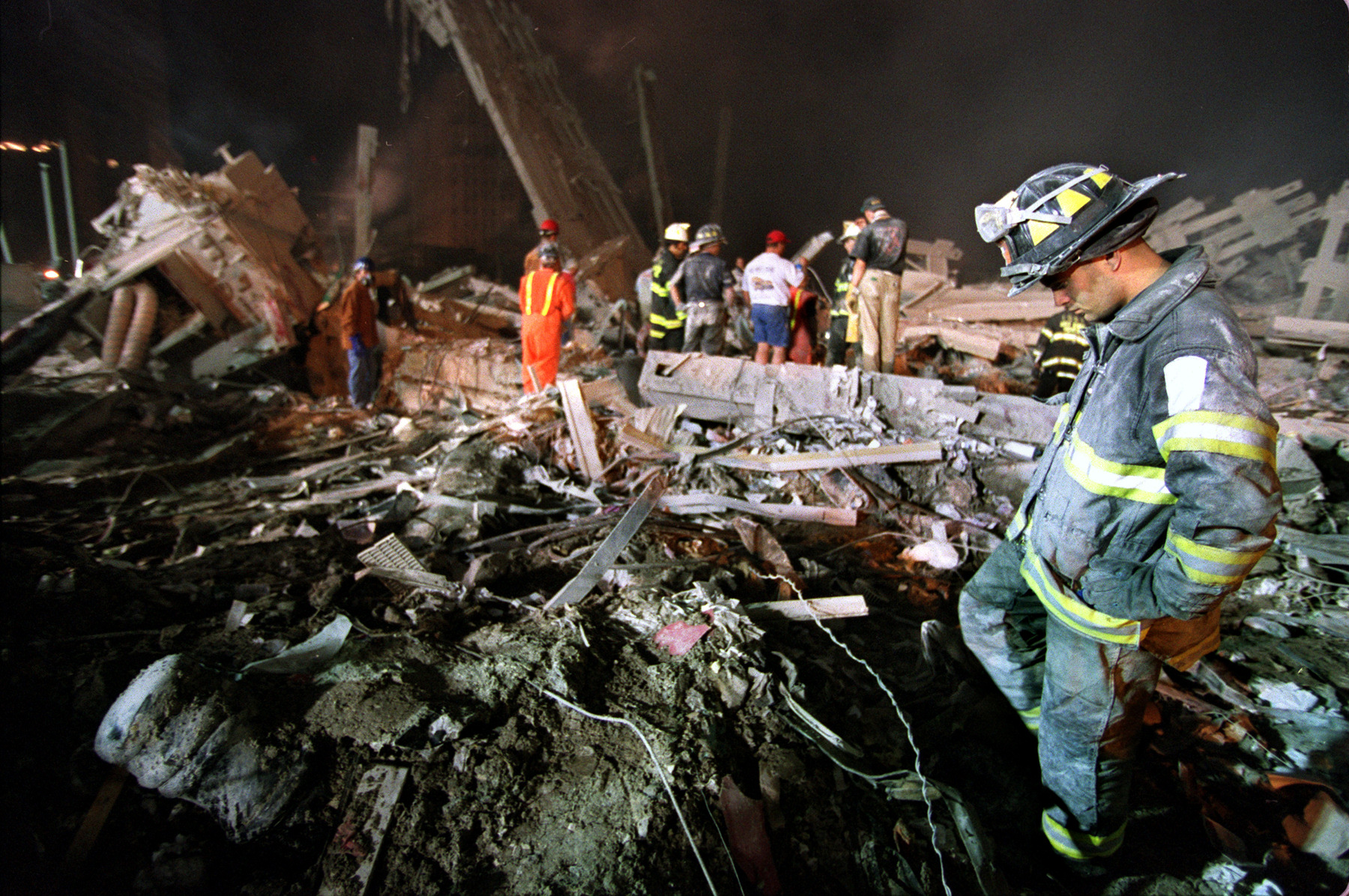
    When I got to ground zero late on Sept. 11, 2001, nothing felt real. Therapists have since explained that I may have slipped into what they call a dissociative state, and it was frightening.

    I hadn’t exactly lost my grip on reality, but I felt detached, like I was living in a movie, feeling uncertain about what was real and what wasn’t.

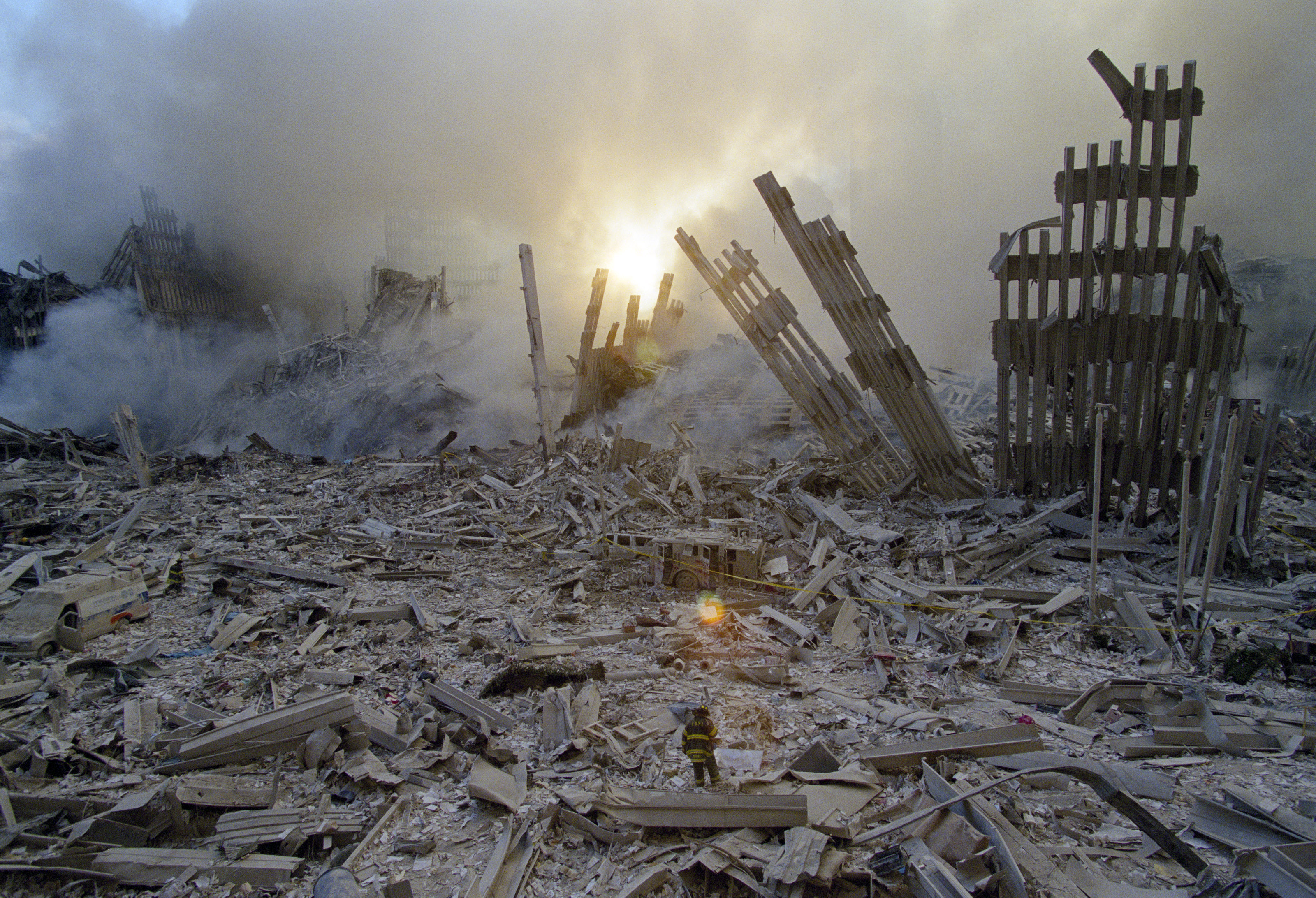
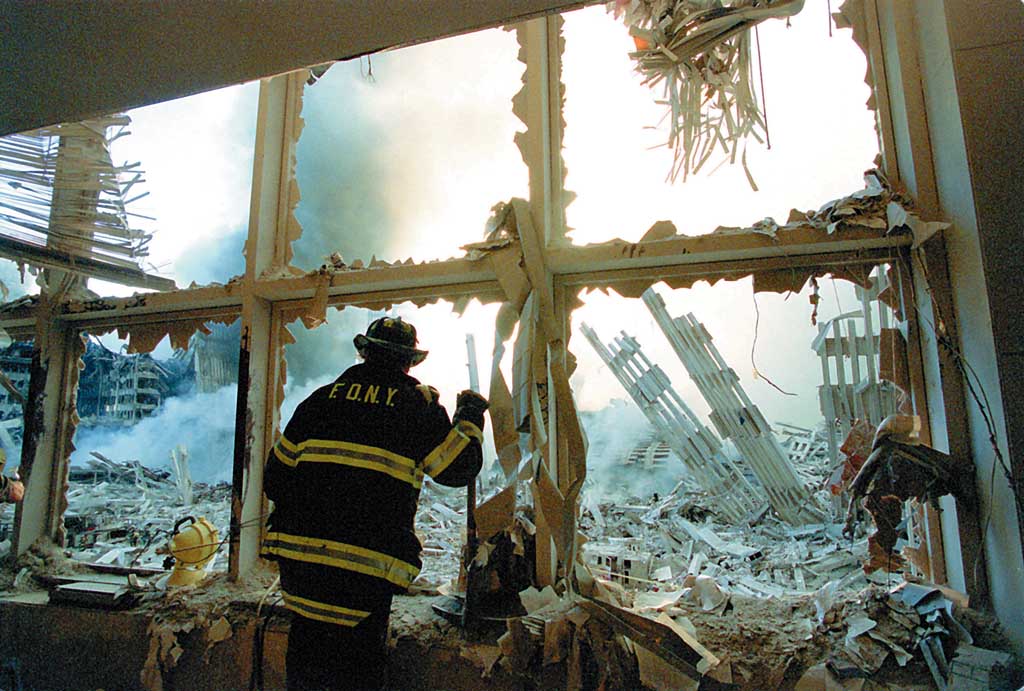
    A New York City firefighter looks out onto the collapsed World Trade Center on the morning after the attack of Sept. 11, 2001. Chronicling the devastation there has haunted the author over the years.

    I managed to keep taking pictures, leaning into the parts of myself that were still working, as I have in some ways every day since.

    My friend and colleague Chris Brennan, the reporter with whom I had gone to the scene for the Daily News, later wrote about our journey together and the early aftermath.

    A harrowing aftermath

    The next 18 months were the worst for me, filled with flashbacks, nightmares, extreme insomnia, memory blackouts, mood swings, and broken relationships.

    Serendipitously, a psychiatrist wrote to me in early 2003 about acquiring some of my photographs for instructional use. She also sensed what I was going through, and provided the treatment I needed to get the most crippling symptoms under control.

    But that wasn’t the end of the story. Far from it.

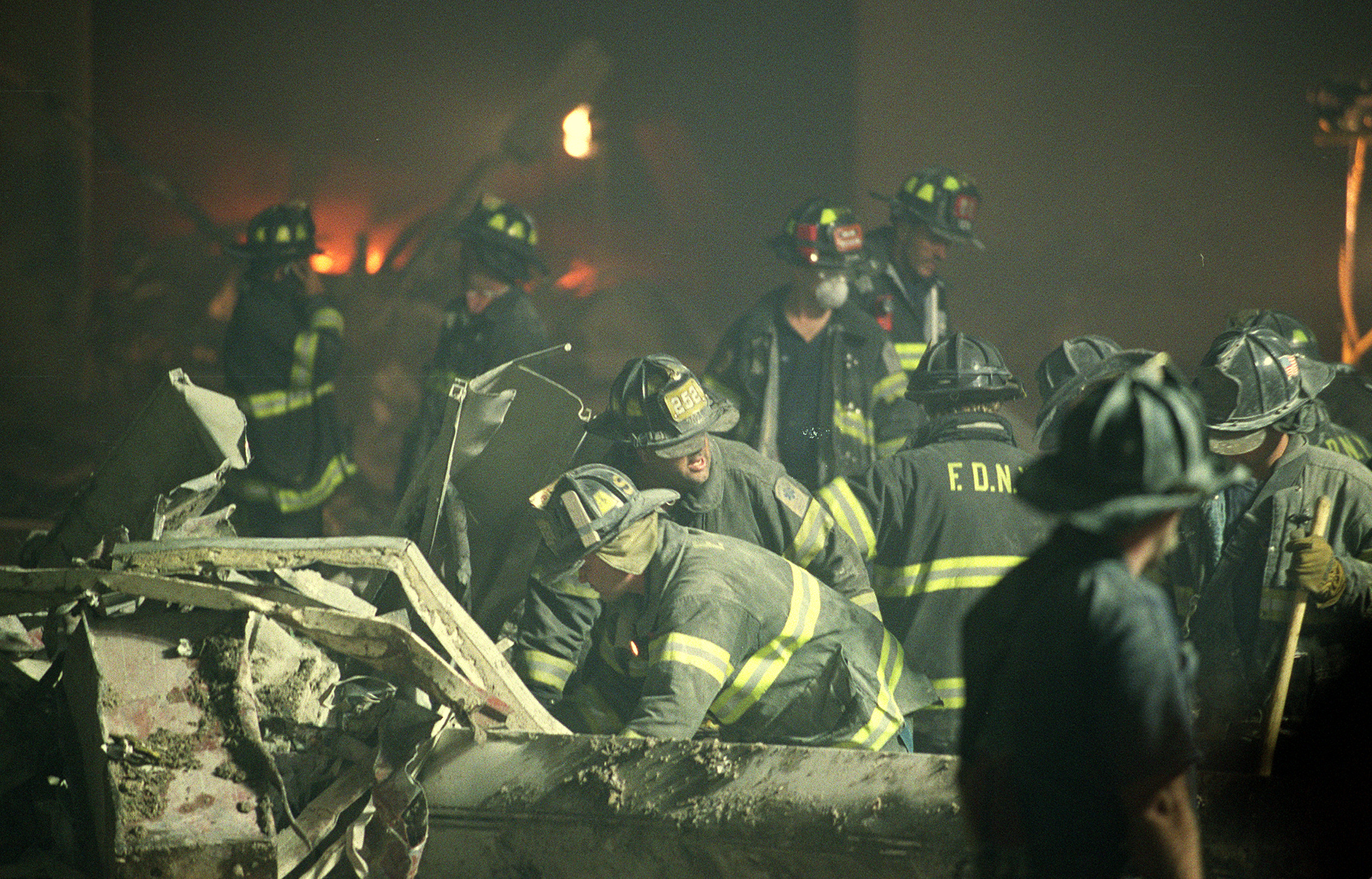
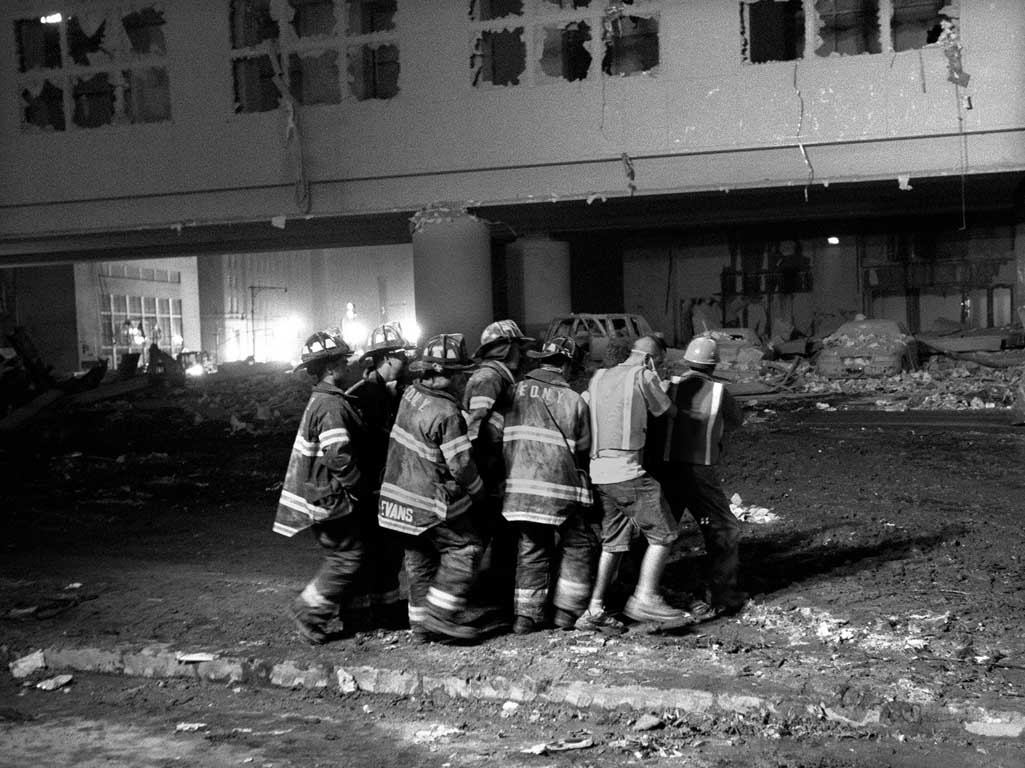
    New York City firefighters sift through the rubble of the World Trade Center on the evening of Sept. 11, 2001.Jim MacMillan

    From the outside, what followed looks almost ridiculously good: a career filled with fellowships, faculty appointments, and even a Pulitzer Prize in 2005 for my photographs from the war in Iraq.

    I had accompanied U.S. troops on hundreds of combat missions over the course of a year, feeling indestructible following my initial recovery, but then some new and old symptoms emerged, and I needed more care when I got back. I got better again, although I still overreact when startled.

    One of my pictures from 9/11 went on to have a remarkable life of its own. The New York Times wrote about the time it toured alongside some of the great artworks of the 20th century. My alma mater, Tufts University, hung it in a gallery next to a Picasso.

    Looking back now, it feels painfully obvious that I have also spent the past 25 years stockpiling accomplishments as if to prove I was OK, probably to myself as much as anyone else.

    We talk a lot in the news about surviving terrible events and their immediate aftermaths. And we love stories of recovery. But we don’t talk much about the long tail of trauma.

    Our traumatic pasts aren’t so easily fooled. There is no unseeing what we have seen.

    Rescue workers carry a body from the ruins of the World Trade Center to a temporary morgue at the heavily damaged Dow Jones Building in the early morning after the Sept. 11 attack.

    I still have occasional nightmares and persistent phobias that seem obviously related to things I saw at ground zero.

    And random reminders can bring me back there in every sense. The smoke and rubble appear behind my eyelids in an instant. I can hear the sounds and taste the dust. My breath deepens, and my skin crawls again.

    Giving back

    Most of the time I am completely fine. Sometimes I get triggered, and I’ve got my hands full again for a couple of days or a couple of weeks. I had a bad year not so long ago.

    Living my best life takes maintenance, just as I imagine countless people quietly manage other long-term health challenges.

    Since 2006, I have also spent a lot of time studying and teaching students and journalists about trauma. Giving back has felt both cathartic and critical to maintaining my well-being.

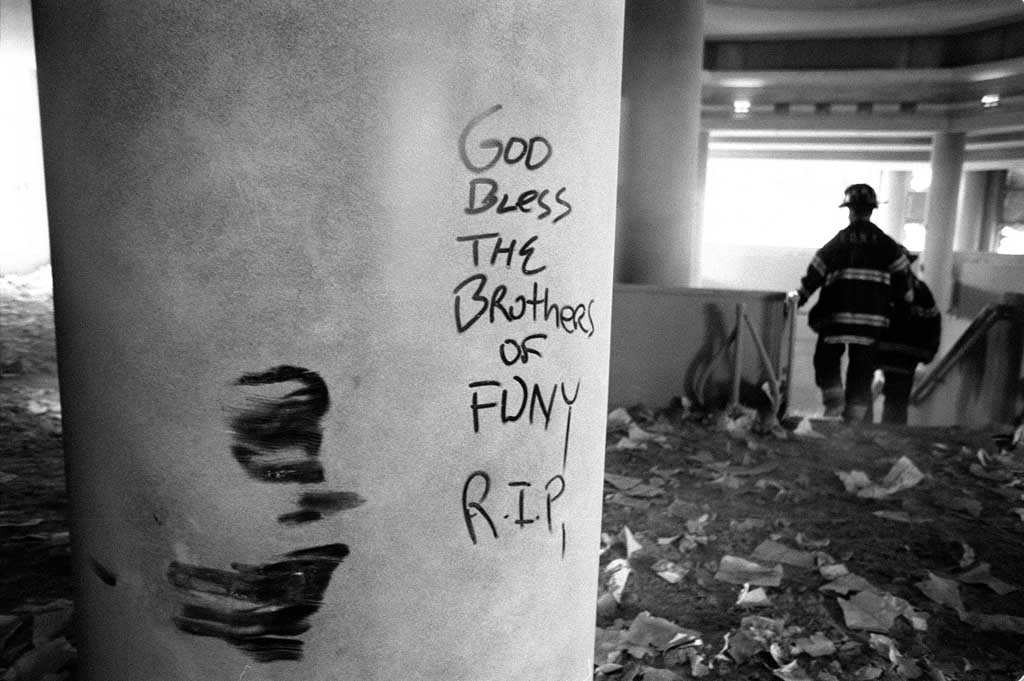
    A message is scrawled in ash on a column inside One Financial Center, adjacent to the World Trade Center ruins at ground zero.Jim MacMillan / Staff Photographer

    I have spoken previously about covering the Oklahoma City bombing, Hurricane Katrina survivors, violent demonstrations in American cities, and endless gun violence in Philadelphia.

    But while journalists and other first responders are frequently invited onto stages for these conversations, most people carrying trauma will never get the spotlight.

    Domestic violence and other crimes can alter lives without ever making the news. Trauma can accumulate alongside structural violence, from racism and concentrated poverty to overpolicing and mass incarceration.

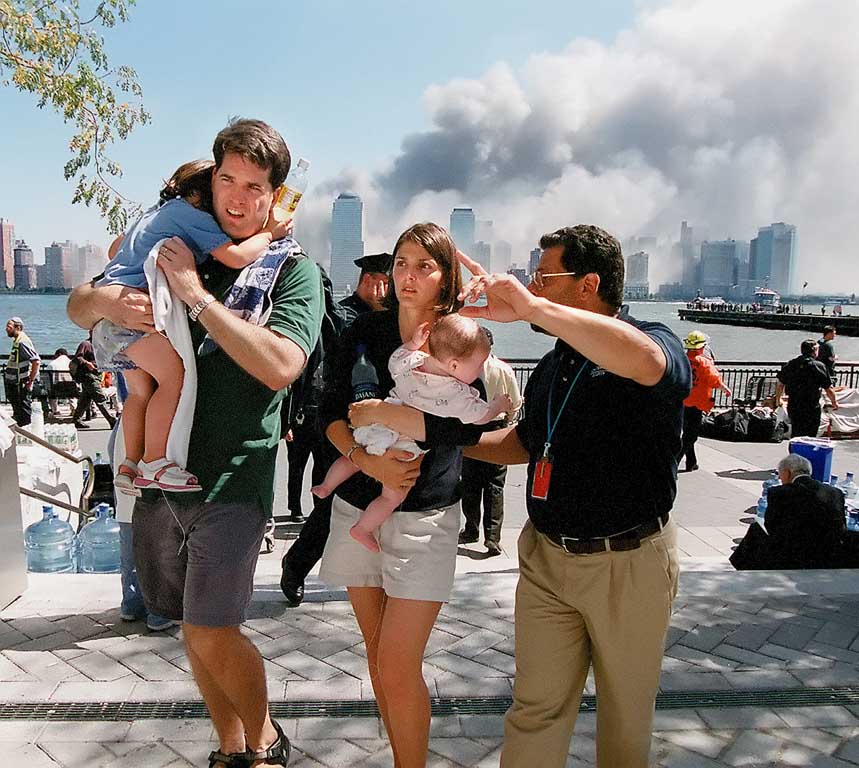
    Rescued from Lower Manhattan, a family lands in Liberty State Park in New Jersey hours after the attack on the World Trade Center. The trauma from that day lives on for survivors and witnesses.

    Communities most vulnerable to trauma are often the least likely to have access to the kind of care that helped me endure.

    Too many are left to carry their burden alone, while resources seem perpetually overstretched, and horrifying headlines keep coming at us with relentless frequency.

    If nobody is coming to save us, we’ll need to get better at taking care of one another, now more than ever.

    I’m no clinician, but I can tell you what I needed: Listen when people tell you about their struggles. Don’t turn up the heat or ask when they’re going to get over it. Ask what they need, ask how you can help, and help them find more support.

    A New York City firefighter surveys the wreckage of the collapsed World Trade Center on the evening of Sept. 11, 2001.Jim MacMillan

    I recently moved to Ireland, where my grandparents were born, thinking I might have one more chapter to write in my career and that, for once, I might step away from all the trauma.

    Instead, every new relationship and opportunity seems to be leading me back to the same work: helping journalists stay safe and healthy while reporting responsibly on survivors.

    The distance has also helped me see more clearly what I’ve carried all these years, and what we can’t fake.

    Jim MacMillan spent 17 years as a photojournalist at the Daily News. His photographs from ground zero now reside in the Special Collections Research Center at the Charles Library at Temple University, and one was acquired last year by the National September 11 Memorial and Museum. He founded the Philadelphia Center for Gun Violence Reporting in 2019 and served as its director until June.

  • Why Trump’s attack on Stars and Stripes was a gut punch | Will Bunch Newsletter

    You’ve probably noticed that many of your favorite TV news anchors are on vacation right now, because the conventional wisdom is that nothing ever happens in August. That conventional wisdom has been wrong since Aug. 24, 79 A.D., when Mount Vesuvius erupted. The calendar has failed to stop natural disasters like Hurricane Katrina (see item below) or human-made ones like Richard Nixon, who resigned on Aug. 9, 1974. I’m going to tempt fate and take some vacation time next week, including a rare newsletter skip. I’ll see you in two weeks. What could possibly go wrong?

    If someone forwarded you this email, sign up for free here.

    Trump’s autocratic assault on Stars and Stripes isn’t just bad. It’s personal.

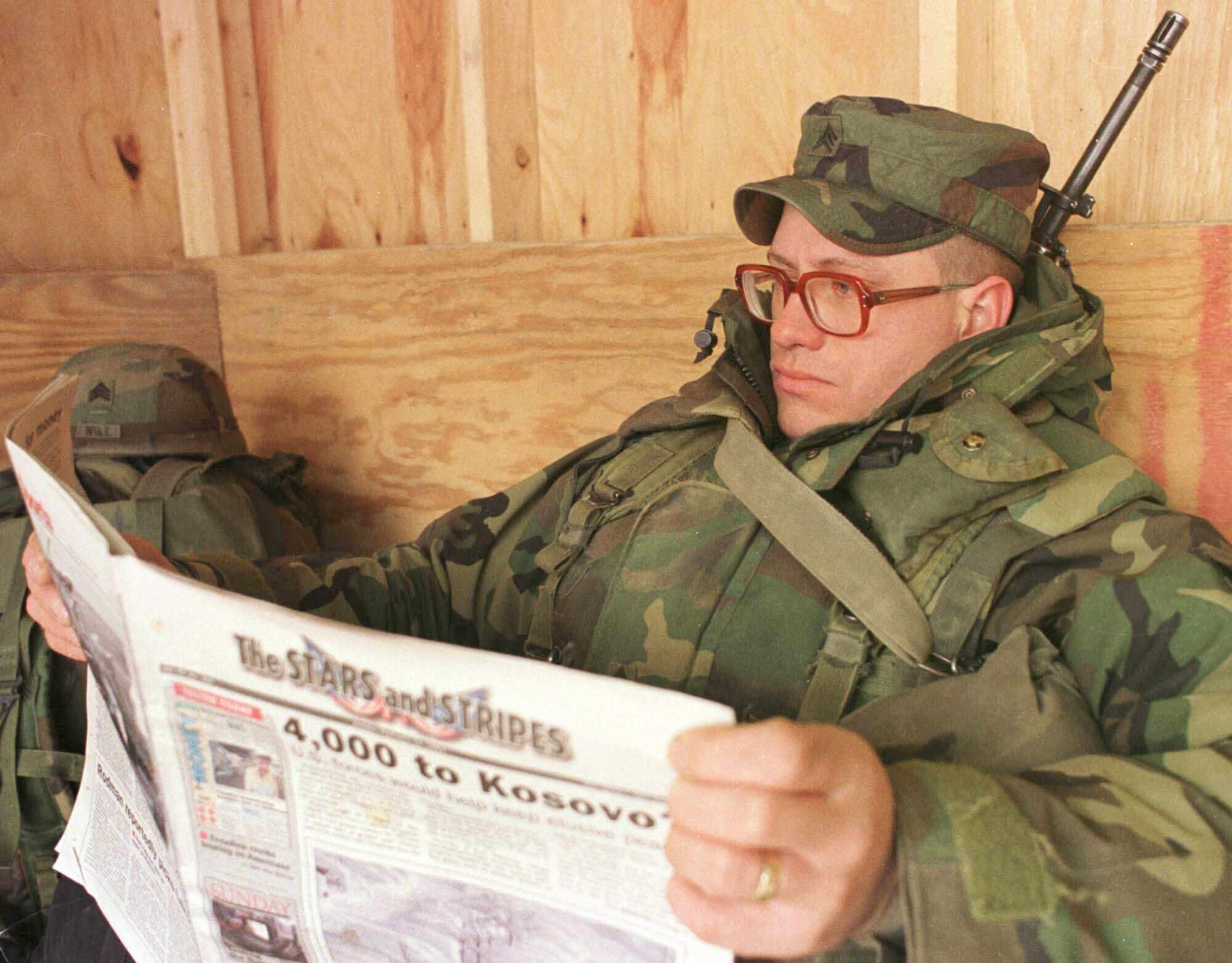
    Sgt. John Hubbuch of Versailles, Ky., one of the members of NATO-led peacekeeping forces in Bosnia, reads a copy of the Stars and Stripes in 1999.AMEL EMRIC

    Less than two months after the U.S. dropped the most powerful weapon humankind had ever invented — the atomic bomb — on the cities of Hiroshima and Nagasaki, the American military arrived in Japan to implement a very different kind of tool in the U.S. arsenal of democracy.

    A free and largely unfettered newspaper.

    The first edition of the Stars and Stripes Pacific newspaper was published from downtown Tokyo on Oct. 3, 1945, when the ink on the Japanese surrender that ended World War II was barely dry. This was the start of a decades-long run when print journalism was still the best way to get information that could be entertaining or essential out to hundreds of thousands of U.S. troops who initially occupied Japan and other Pacific outposts, and later would see combat in Korea and Vietnam.

    Stars and Stripes Pacific — like virtually everything tied to U.S. imperial might after the war — is part of a complicated legacy that overlapped with American censorship of local and outside media in Japan. Yet, U.S. soldiers managed to get their own information from a publication that celebrated the better angels of the First Amendment back home, with coverage of Tokyo’s war-crimes trial and later from the front lines in Korea.

    It was only part of a much grander legacy for Stars and Stripes, which has been the American military’s independent news source tracing all the way back to 1861 and the Slaveholder’s Rebellion.

    Famously, when legendary World War II Gen. George Patton threatened to jail editorial cartoonist Bill Mauldin over a cartoon lampooning him, his superior, Gen. Dwight D. Eisenhower, stopped him. “Stars and Stripes is the soldiers’ newspaper,” Ike reportedly said. “We will not interfere.” Mauldin was awarded a Pulitzer Prize for his wartime cartoons. In 2010, Stars and Stripes reporters exposed the Pentagon’s efforts to slant mainstream media coverage of the war in Afghanistan, and won a George Polk Award.

    That feisty spirit of Stars and Stripes runs deep in my family’s DNA. My maternal grandfather, Thomas Blender, who’d been a photo editor at the Peoria (Ill.) Journal Star before joining the Army, was sent to Tokyo in those early days to work as a top editor of the Pacific publication. I’ve always regretted, after Grandpa Tom died when I was only 11, that I never got to ask him about those days once I’d been infected with the family journalism bug I’d eventually pass on to my own son.

    That must be why it felt like a personal attack last Friday when the Pentagon of Donald Trump and his like-minded “Secretary of War” Pete Hegseth obliterated 155 years of editorial freedom by firing its editor, its publisher — who, seeing the writing on the wall, was about to retire — and its Middle East correspondent. That journalist, Lara Korte, said she was pink-slipped for an interview with CBS News about her reporting on the dreadful conditions for Navy sailors aboard the USS Abraham Lincoln.

    The fuse had already been lit back in January when Hegseth’s Pentagon gutted the regulations regarding the government-funded news organization by stripping language that called for “a free flow of news and information to its readership without news management or censorship.” The new rules, which instead said Stars and Stripes’ journalism “must be consistent with good order and discipline of the military,” were seen as an invitation for censorship. Sean Parnell, the formerly embattled Pennsylvania Republican who is now Hegseth’s chief spokesperson, blasted Stars and Stripes for “woke distractions.”

    Three months later, Jacqueline Smith, the internal editorial watchdog of Stars and Stripes at the Pentagon, criticized military brass for editorial interference and was promptly fired. But the last straw for the outlet came two weeks ago with its aggressive reporting about problems aboard the Lincoln, which spent nine months mostly at sea with dwindling supplies tied to Trump’s ill-advised war on Iran. Journalist Alison Bath reported that sailors’ families were growing deeply concerned about the mental health of the aircraft carrier’s exhausted crew.

    That work epitomized everything that has been good and decent about Stars and Stripes. What the newspaper has shown at its best is that — despite all the contradictions and moral failings of U.S. postwar imperialism — a democratic government can value the press freedom that its armed readers literally died for from Gettysburg to Omaha Beach. That high-minded ideal was a beacon to set us apart from our adversaries in Nazi Germany or Soviet Russia, who never would have permitted the kind of honest coverage Stars and Stripes offered for decades.

    Until America found itself with a government with the same philosophy as 1939 Berlin or 1949 Moscow. Just like his boss, Hegseth has shown nothing but contempt for the notion that his “warfighters” might actually serve to protect Americans’ right to the truth about their own government, including the foibles of his Pentagon.

    On Monday, it came out that the military’s U.S. Central Command told the Intercept that it maintains “a list of people to disregard,” a.k.a. a blacklist. This is the same U.S. Department of Defense — sorry, Pete, that is still its legal name — that also forced out any journalist who wouldn’t sign their integrity away to work in the press room at the Pentagon.

    The firings at Stars and Stripes and the Pentagon’s apparent desire to turn the award-winning newspaper into a Pravda-style propaganda sheet for Hegseth’s testosterone-dosed military feels like a new low on the road toward the utter obliteration of all press freedom.

    Since returning to power last year, Trump and his MAGA minions have waged war against journalists they’ve called “the enemy of the people” — and they’ve done so not through some grand Orwellian censorship edict, but through a mix of billionaire carrots and sticks that have inflicted a thousand small cuts. That means rewards for wealthy allies who buy prominent news organizations (think the Ellison family assuming control of CBS and being on the brink of getting CNN) or neuter them (Jeff Bezos at the Washington Post) — but lawsuits, obstacles, or straight-up bullying for everyone else.

    Another alarming example of the precarious state of the First Amendment came earlier this month when a lawyer for Trump threatened a $5 billion (with a “b”) lawsuit against a left-leaning think tank, the Center for American Progress (CAP), if it didn’t retract a factual report that the Trump regime’s deployments of National Guard troops to U.S. cities have not lowered crime rates.

    The CAP has stood its ground so far, but this reveals the state of play right now. MAGA World has already either bought off or intimidated much of the mainstream media, so now they are hoping they can crush the outliers like Stars and Stripes or CAP, one by one.

    The mission my grandfather was dispatched to Tokyo to carry out after World War II was on the fringe of an idea that came to be known as “soft power” — the now-quaint notion that America could form healthy alliances with the rest of the world through good things like vaccinating children or printing uncensored journalism, instead of dropping bombs. Other organizations meant to show people in oppressed lands that press freedom and democracy are things to fight for — like Radio Free Europe — have been forced to grapple with Trump-ordered cutbacks.

    The right knows exactly what it is doing — that truth and knowledge are kryptonite for its authoritarian project. Increasingly, they are saying the quiet parts out loud. The great Tennessee journalist Phil Williams recently unearthed a sound bite from a white supremacist confab in Rome in which the conversation turned to America’s growing number of news deserts where journalism has all but perished.

    “Local media has been dying all over America, which means that there’s essentially no real way to hold local governments accountable — and they can do whatever they want,” white nationalist Kevin DeAnna told the gathering. “You should be fantasizing about this. This is a good thing.”

    No, it’s not. The government’s bludgeoning of Stars and Stripes has truly — to borrow from a storied military campaign of yesteryear — crossed the Rubicon of no return for its all-out blitzkrieg against the truth. All of us, including the laggards of the mainstream media who continue to pretend this war doesn’t exist, need to fight back with everything we have.

    I never got to know my Grandpa Tom very well, but I know in my soul that this is what he would have wanted.

    Yo, do this!

    • Meep, meep! If timing is really everything, then the half-animated, half-real feature film Coyote vs. Acme, which hits theaters this week, will be the greatest motion picture of all time. The film is based on a 1990 New Yorker essay that imagines Warner Bros. cartoon icon Wile E. Coyote suing the giant Acme Corp. over years of faulty products that literally blew up in his face and ruined his shot at catching the speedy Road Runner. The fact that real-world corporate baloney delayed for several years the release of this film mocking the excesses of runaway capitalism is an unbelievable irony. I’m really looking forward to seeing it.
    • Books, despite their apparent looming extinction, remain a great way to track what humankind is thinking about. This summer, the hot topic is anxiety over AI and the unchecked power of Silicon Valley. In addition to the best-selling Nerd Reich, now there’s the great essayist and Harvard historian Jill Lepore with her new tome, The Rise and Fall of the Artificial State, out today. Lepore’s timely work tracks the rise of authoritarianism run not so much by a tinhorn dictator, but by machines, and how humanity can fight back.

    Ask me anything

    Question: Do PA Dems have a legit chance of freeing us from Joe Pittman’s reign of terror in the state Senate? — Travis (@unraptured.bsky.social) via Bluesky

    Answer: Travis, the answer is absolutely yes. Democrats in the Keystone State have managed to chip away at what once seemed like a permanent GOP majority in the upper chamber at the same time that they’ve recaptured the state House. The current Republican Senate edge is just 27-23, meaning Democrats have to flip only three more GOP seats among November’s 25 contests. Every arrow — Trump’s high disapproval, the popularity of Gov. Josh Shapiro at the top of the ticket, and special-election results like last week’s shocking Democratic House victory in a blood-red district in Western Pennsylvania — points toward a blue tsunami. The Democrats have reportedly targeted three suburban swing districts. The big question for 2027 may be whether Shapiro really wants a Harrisburg trifecta pushing him to the left.

    What you’re saying about …

    OK, last week’s question about Georgia Sen. Jon Ossoff’s pointed comments regarding Donald Trump’s corruption, including an eyebrow-raising mention of ever-present aide Natalie Harp, was kind of a slam dunk for readers of this newsletter. You saw nothing uncivil in the fighting spirit of his remarks, and a surprising number of you echoed back a phrase from my question: “a breath of fresh air.” Wrote Daniel Fleischer: “Jon Ossoff called Trump a ‘crook.’ If anything, that’s a euphemism understating Trump’s criminality.” Added Patricia Eisenberg: “What he said was undeniably true — the President chose this young woman to travel on his escape plane, not one of his cabinet members.”

    📮 This week’s question: It seems like the GOP’s got nothing ahead of the midterms beyond its opposition to what it calls “men playing women’s sports.” It’s kind of pathetic, but it does pose a question for Democrats: Do they strongly embrace transgender rights, or is that risking political defeat in today’s culture wars? I have a strong opinion on this, but what do you think? Please email me your answer and put the exact phrase “transgender politics” in the subject line.

    Backstory on Indiana’s new, outrageous Katrina

    A woman sits inside the City Life Center as she waits for food in Gary, Ind., on Aug. 20, more than a week after a deadly storm passed through the area.Nam Y. Huh

    Exactly 21 years ago today, a tropical storm in the Atlantic Ocean rapidly intensified into a hurricane — Hurricane Katrina — and raced across Florida on a path into the Gulf of Mexico, where it became a Category 5 monster. Still, many of us in 2005 briefly thought the Gulf Coast dodged a bullet when Katrina weakened slightly, and its center struck what looked like only a glancing blow on populated New Orleans. Then, one by one, the city’s levees began to break, and the water rose.

    The death and destruction in Katrina’s wake was covered around the clock on cable TV, yet it took a couple of days for news anchors to articulate what viewers were seeing with their own eyes. The thousands of people who crowded interstate overpasses or were trapped on roofs were almost all Black, and most were desperately poor.

    In These Times wrote the following week that “many Americans were surprised that most of the victims of the New Orleans flood were Black: Their image of the Crescent City had been one of jazz, tasty cuisine and the good-natured excesses of its lively festivals. Where did all those black people come from, they wondered; and where were the white victims?” Katrina triggered some long-overdue conversations about inequality and racism in America, and the inept response from the George W. Bush administration would start his steep decline in public approval. Long before the roughly 1,400 New Orleanians who died in the flooding or chaotic aftermath could be buried, many folks were asking how to prevent this from ever happening again.

    One generation later, it’s happening again.

    It wasn’t a hurricane that struck Gary, Ind., and surrounding communities in the state’s northwest corner exactly two weeks ago on Aug. 11 — just a thunderstorm — but the winds were nearly as intense, snapping trees and downing power lines across the region. Gary’s 67,000 predominantly Black residents hunkered down in the dark nights and blistering hot August days as their refrigerated food went bad, and waited for help. And waited.

    While life returned to normal across the rest of the storm-battered Midwest, the massive outage in the region that includes Gary that began with some 375,000 homes lacking electricity dwindled at a snail’s pace. After two weeks, there were still more than 5,000 families without power and struggling with spoiled food and closed schools and workplaces. There is growing anger among residents who say that Indiana’s heavily Republican power structure and Donald Trump’s federal government feel no sense of urgency to rescue a city that is mostly African American.

    “This isn’t a problem that started with the storm,” the hip-hop star Freddie Gibbs, who grew up in Gary, told MS Now Monday night. “We are a predominantly Black city that tends to get ignored.” It feels like Katrina redux — an island of utter despair in the world’s wealthiest nation, with a government’s inaction bordering on criminal neglect. But there is one big difference: This festering crisis has been mostly ignored by the national media. The tragedy isn’t just our inability to stop the next Katrina, but our inability to care.

    What I wrote on this date in 2022

    One of George Orwell’s greatest passages in 1984 concerns Winston Smith’s job of cutting out old newspaper articles and tossing them into “the memory hole” — inconvenient truths meant to be forgotten by civilization. That’s how it feels now reading news stories from those four years in the early 2020s when Donald Trump was out of power, and America took baby steps back toward normalcy that would later get crushed. On Aug. 25, 2022, I wrote about one of these: Joe Biden’s eventually failed plan to wipe out some $300 billion of the nation’s massive student loan debt. I wrote that “this week will be remembered as one giant leap toward an idea that can change everything — the notion that higher education should be a public good, not the privatized rat race that has demoralized our rising generations.”

    Dive into the memory hole to pull out: “Biden’s big move on student loans only a first step toward making American college great again.”

    Recommended Inquirer reading

    • Look what’s happening out in the streets, got a revolution — and it’s not the one anyone saw coming. Growing public rage against Big Tech — the intrusiveness of artificial intelligence and the noisy, polluting data centers that power it, and increasingly also against omnipresent surveillance cameras — has become the surprise issue of the 2026 midterms. Politicians in both parties are performing backflips to join the bandwagon. Over the weekend, I wrote about how voter anger against Silicon Valley and its billionaires is rapidly reshaping our politics, and what could happen if our broken system fails to deliver radical change.
    • For the first time in recent memory, August has been living up to its reputation as a slow news month (so far), but on the baseball diamond things have really been heating up as kids are drifting back to school. The Phillies’ just-ended nine-game winning streak has electrified a city that’s been having a pretty good summer in spite of everything. The Inquirer’s oft-cynical sports columnist Marcus Hayes even published a list of five reasons to believe the Phils can go deep into October with a reenergized starting lineup, world-class pitching, and improved defense. A stunning turnaround from long-anticipated rookie pitcher Andrew Painter has also been key to the team’s revival in the National League East. It’s an old-fashioned pennant race, and subscribing to The Inquirer is the best way to keep up.

    By submitting your written, visual, and/or audio contributions, you agree to The Inquirer’s Terms of Use, including the grant of rights in Section 10.