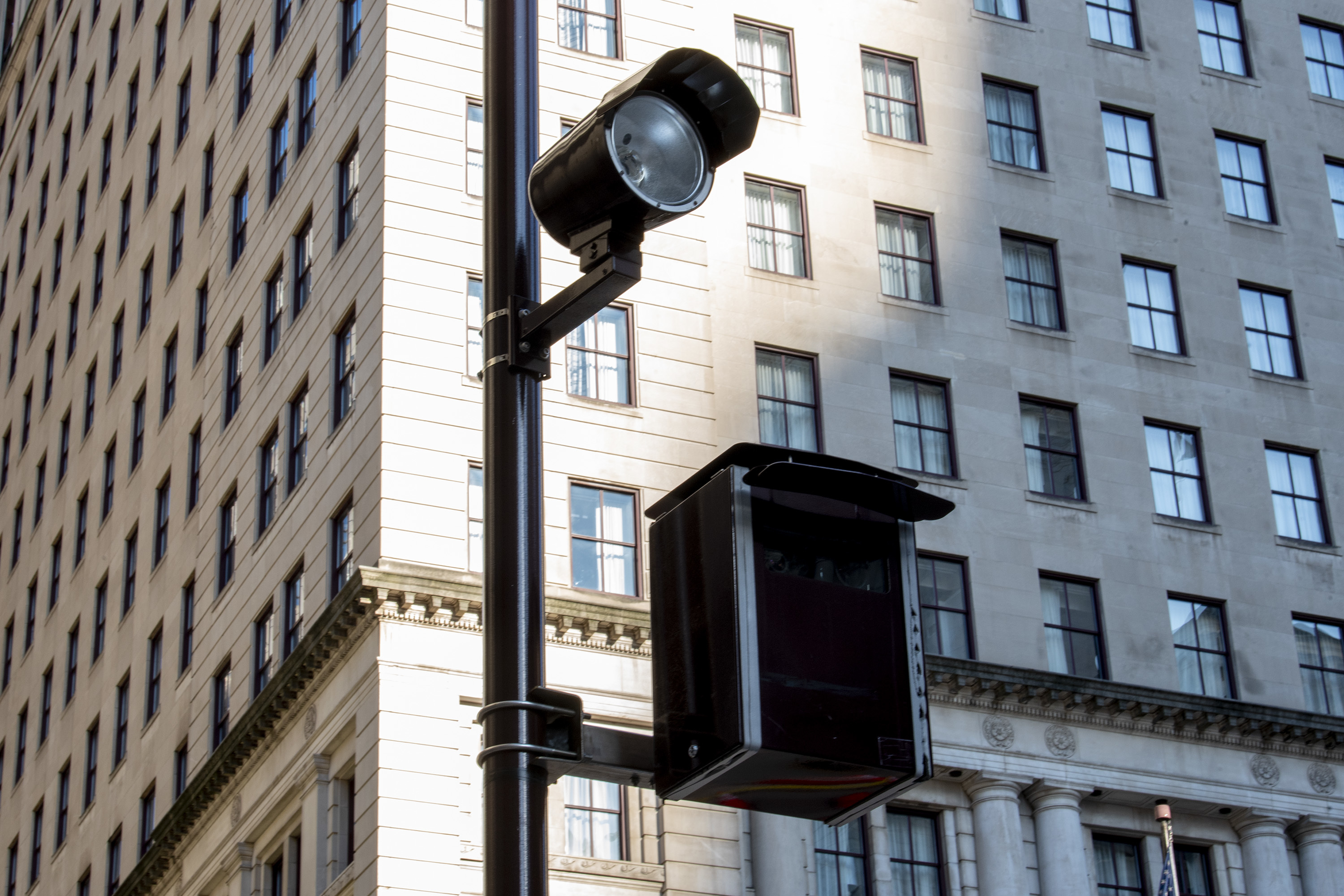
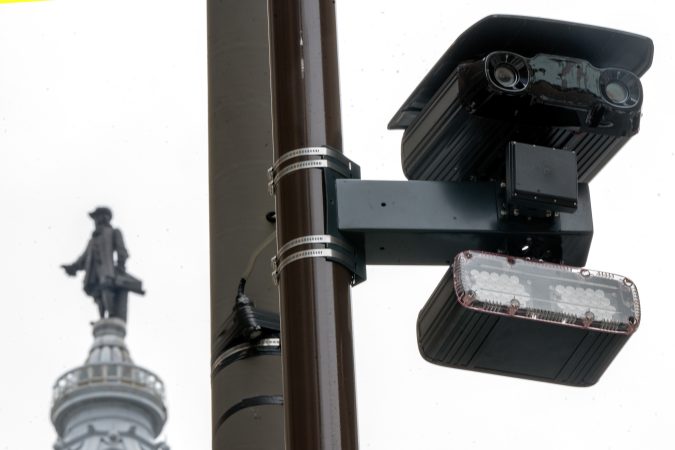
Automated red-light enforcement cameras caught up to 17.4% fewer violations this year than in 2025, according to the Philadelphia Parking Authority’s annual report to the state legislature.
Those cameras have been on guard in the city since 2005, but the program will expire next July, unless legislators renew the law that authorized them.
“The numbers speak for themselves, and our hope is that they see the benefit of it,” said Gabe Roberts, interim executive director of the PPA.
Recorded violations citywide declined from 340,931 in fiscal year 2025 to 338,979 in fiscal year 2026 — a decrease of 0.58%
However, four new intersections were added at different points during this fiscal year. For the PPA, the fiscal year runs from April 1 through March 31.
Excluding those four intersections, violations at existing program locations declined by 17.4%. Compared with 2024, they dropped 10.4%.
“The way we measure success is through consistent enforcement, demonstrated changes in behavior, fewer people running red lights, and safer streets,” Roberts said.
The red-light program has proved its worth, he said.
New locations
Over the 21 years of red-light cameras in the city, violations have trended down overall, Roberts said, though when a new location is added, tickets spike at first before leveling off and declining.
As of March 31, PPA was operating 160 cameras at 38 locations.
The newest locations are: 20th Street and John F. Kennedy Boulevard; Front Street and Hunting Park Avenue; Kelly Drive and Eakins Oval; and 58th Street and Baltimore Avenue.
Cameras there led to 50,589 warning notices and violations.
When a red-light camera is installed, there is a 45-day grace period when violators get a warning before tickets start. The fine is $100 per offense, but no points are assessed to a driver’s license.
There has been continued demand for red-light cameras in the city. PPA received requests for coverage of 19 intersections from the Philadelphia Office of Transportation and Infrastructure and City Council members through March 31.
Intersections are evaluated on the basis of crash statistics and a fresh traffic study that includes observations of violation levels there.
Also considered: sight lines, driveways, trees, wires, crosswalk visibility, and the condition of the surrounding infrastructure.
Usually an intersection gets some upgrades when red-light cameras are installed — new sidewalk accessibility ramps, new signal boxes, better lighting, more visible crosswalks, or the like, said deputy PPA director Corrine O’Connor.
“You’re not going to put cameras in and have old infrastructure out there,” said O’Connor, who is in charge of automated enforcement programs. “It’s an opportunity to make it better and safer.”
PPA says it typically takes one to two years to complete an intersection.
Speed cameras
In addition to the red-light program, PPA operates automated speed enforcement cameras.
Broad Street, also designated State Route 611, has 31 speed cameras spread over 13 miles between Philadelphia’s northern and southern city limits. They began operating last September.
Since then, PPA has issued warnings or violations to nearly 800,000 speeders.
In October 2025, the Broad Street cameras issued 213,057 formal warnings to people who drove 11 or more miles per hour above the 25 mph limit.
Fines began the next month. In March, 70,498 fines were handed out based on speed-camera readings.
(function(){function e(){window.addEventListener(`message`,function(e){if(e.data[`datawrapper-height`]!==void 0){var t=document.querySelectorAll(`iframe`);for(var n in e.data[`datawrapper-height`])for(var r=0,i;i=t[r];r++)if(i.contentWindow===e.source){var a=e.data[`datawrapper-height`][n]+`px`;i.style.height=a}}})}e()})();
“Fewer people are speeding, and that means fewer people seriously injured or killed on Philadelphia roadways,” Gabe Roberts, interim executive director of the PPA, said in an interview.
“That’s the goal and it’s how we measure the program’s success. We feel very good about where it stands today,“ Roberts said.
Drivers who travel more than 11 mph over the posted speed limit will eventually be ticketed, with fines starting at $100 and rising to $150 for those driving more than 30 mph over.
(function() {
var l2 = function() {
new pym.Parent(‘speed-camera-map2’,
‘https://media.inquirer.com/storage/inquirer/projects/innovation/arcgis_iframe/speed-camera-map2.html’);
};
if (typeof(pym) === ‘undefined’) {
var h = document.getElementsByTagName(‘head’)[0],
s = document.createElement(‘script’);
s.type = ‘text/javascript’;
s.src = ‘https://pym.nprapps.org/pym.v1.min.js’;
s.onload = l2;
h.appendChild(s);
} else {
l2();
}
})();
When speed cameras were placed on Broad Street, some suburban commuters had concerns they were being targeted. PPA’s numbers found 59% of speeders lived in Philadelphia zip codes.
Speeding has dropped 95% on the roadway, based on the declining number of violations issued since the first month cameras were operating there, PPA said.
The Route 13 corridor — identified by the city as a particularly dangerous stretch of road — spans Baltimore Avenue in West Philadelphia, Hunting Park Avenue in North Philadelphia, and Roosevelt Boulevard in the Northeast before leaving the city by way of Frankford Avenue.
The first set of cameras along Route 13, in the Northeast, began issuing warnings in June, and there are not enough data to report from the corridor, officials said.
PPA also operates cameras to enforce school-zone speed limits at five elementary schools in the city. Those were installed in the spring and by law had to be shut down in the summer when school was not in session. Roberts said that the school zones will be assessed more fully in next year’s annual report.
A longtime fugitive charged in the rape and murder of a 5-year-old girl in North Philadelphia more than two decades ago has been extradited to the city from Central America, authorities said Monday.
Alexis Flores, 51, was arrested earlier this year in Lapaera, Honduras, in connection with the death of Iriana DeJesus in 2000.
He is now in Philadelphia and has been charged with murder, rape, kidnapping, and related crimes, according to law enforcement officials.
“The return of Alexis Flores to Philadelphia demonstrates our unwavering commitment to pursuing fugitives wherever they may run, no matter how much time has passed,” said Wayne A. Jacobs, special agent in charge of the FBI’s Philadelphia office.
Iriana’s killing rocked the city’s Hunting Park neighborhood, and in 2007 — when federal investigators identified Flores as the suspect — he was placed an the FBI’s Top 10 Most Wanted list.
The child was reported missing near her home on the 3900 block of North Fairhill Street on July 29, 2000. She was last seen walking with a stranger around 9 p.m., witnesses told police.
Within days, a store owner found the girl’s body in a vacant second-floor apartment above a nearby small business at West Pike and North Sixth Streets.
She had been raped and strangled. Her body, left in a corner facing the wall, was decomposing and had been partially concealed by a trash bag.
Investigators soon suspected the attacker was a “drifter” in his 20s who had been doing handyman work on the property. They said the man mistakenly ended up panhandlingin Philadelphia after traveling from Arizona on a boxcar that he thought was headed to Chicago.
Iyanna Vazques (right) records a balloon release in memory of her sister Iriana DeJesus on Feb. 15. Five year-old Iriana was kidnapped and killed in 2000. Alexis Flores was arrested after two decades on the FBI’s most-wanted list.Tom Gralish / Staff Photographer
A breakthrough in the case came in 2007 when Flores’ DNA — collected during an arrest on unrelated forgery charges in Arizona several years earlier — came up in a database as a match for genetic material taken from the scene of Iriana’s slaying.
But law enforcement officials could not find him for years.
Flores had entered the U.S. without official permission and was deported to his homeland of Honduras in 2005 after his Arizona arrest.
It took until February of this year for federal law enforcement to track him down and arrest him in connection with the Philadelphia case. When word of his arrest reached Iriana’s family, her mother and around 100 neighbors in Hunting Park gathered on the block to release balloons in memory of the child, affectionately known as “Nena.”
The effort to bring Flores to the U.S. to face charges of murder and related crimes was led by the FBI’s Transnational Anti-Gang Task Force and aided by Honduran authorities, officials said.
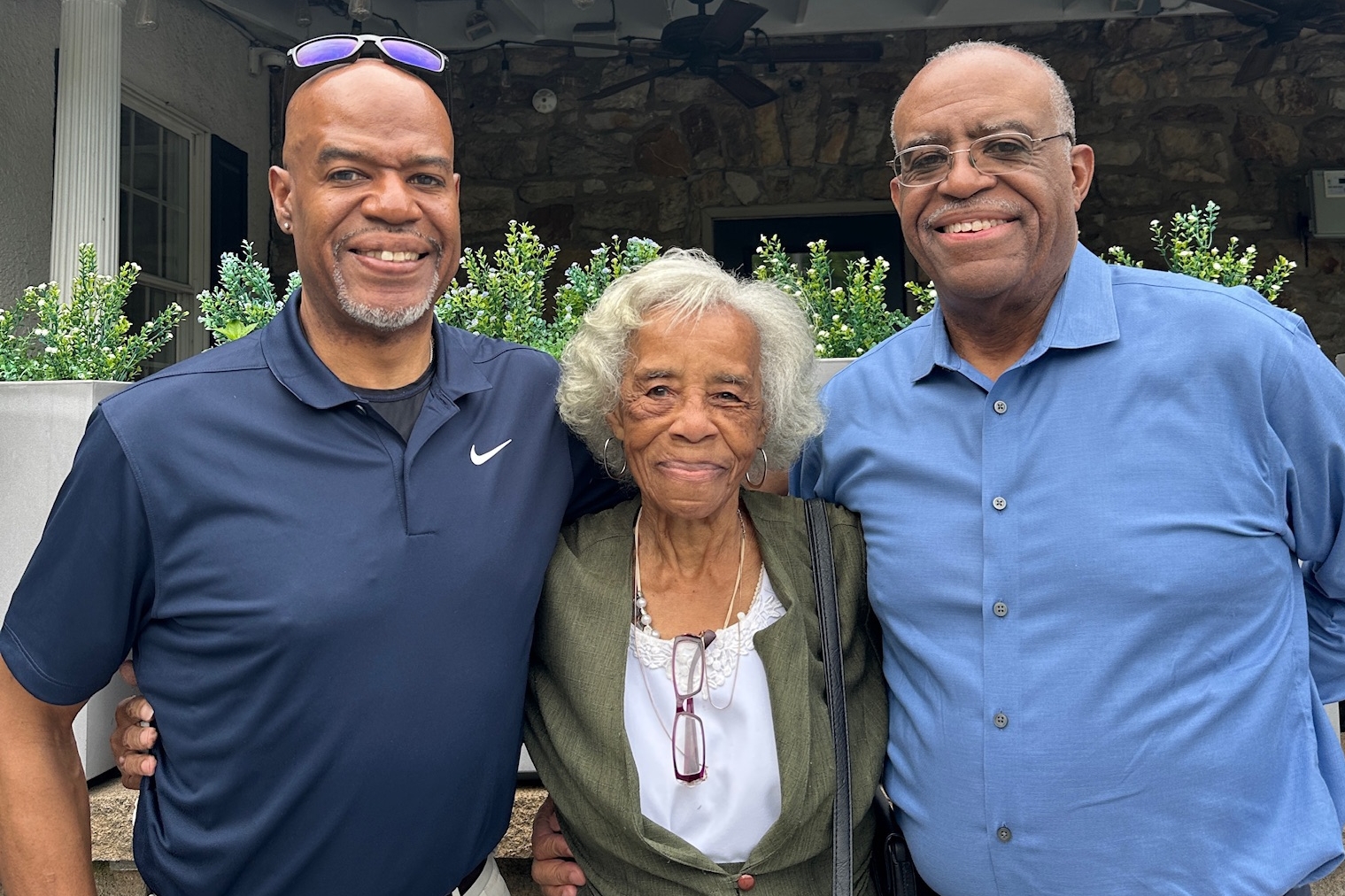
Joan M. Satterthwaite, 92, of Philadelphia, talented tailor and seamstress, longtime office administrator for the Mayor’s Commission on Aging, volunteer, and community caretaker, died Tuesday, Aug. 4, of sepsis at Jefferson Washington Township Hospital in Gloucester County.
Adept at designing, constructing, fitting, and altering garments of all kinds, Ms. Satterthwaite worked at the Botany 500 factory at Broad Street and Lehigh Avenue, and for other clothing manufacturers in Philadelphia, for more than 20 years. She could do every job on the intricate clothing assembly line, her son Kevin said, and she did them fast and well.
She joined the International Ladies’ Garment Workers’ Union in the 1950s and supplemented her weekday work by producing gowns, dresses, suits, and other clothing for family, friends, church choirs, wedding parties, and local businesses.
She made Halloween costumes for her two sons when they were young and tailored suits when they were older. She designed a wedding dress for her daughter-in-law.
She could duplicate many patterns by looking at them just once. Over the years, she collected eight sewing machines. “Her craftsmanship and attention to detail earned her the admiration and loyalty of countless clients,” her family said in a tribute.
Her son Kevin said: “We would call her an entrepreneur today.”
In the mid-1980s, Ms. Satterthwaite left garments and became certified in office administration and computer technology at the old Philadelphia School of Office Technologies. For a decade, she worked for the Joseph Shein Law Firm.
She tried to retire in the mid-1990s. But she impressed officials at the Mayor’s Commission on Aging so much as a client that they recruited her as a receptionist and administrative assistant. Sheleft that job in 2018, at 85.
Ms. Satterthwaite reared her sons in Philadelphia. Courtesy of the family
After that, she volunteered with veterans groups, was active in the community, and opened her home to anyone in need. “If someone asked for help,” her son Kevin said, “she was there.”
Her family said: “Joan’s life was a testament to perseverance, faith, compassion, and determination. Her kindness, generosity, and genuine concern for others became hallmarks of a life well lived.”
A friend said online: “Ms. Joan was the nicest person ever. … Her kind spirit reminded me of my grandmother.”
Joan Marie Watts was born Dec. 28, 1933, in North Philadelphia. Her mother died when she was 2, and she was reared by her grandfather and his wife.
Ms. Satterthwaite doted on her grandchildren.Courtesy of the family
She studied tailoring and sewing at William Penn High School and graduated in 1952. She married Charles Satterthwaite in 1953, and they had sons Kevin and Eric. Her husband died earlier.
Ms. Satterthwaite was a member of Triumph Baptist Church for more than 35 years, and she went to breakfast with others often after Sunday service. She had breakfast with her sons on Saturdays, bowled every week for 30 years, hosted memorable family gatherings on holidays, and pored over puzzle books when she was older to stay sharp.
Her family noted her “warm heart, generous spirit, and love of people” in a tribute and said: “Her kindness, patience, and genuine concern for others left a lasting impression on all who knew her.”
She doted on her family and told them often that education was a key to success. She lived in Nicetown and Logan, and most recently in Washington Township.
Ms. Satterthwaite graduated from William Penn High School. Courtesy of the family
Her son Eric praised her “unwavering belief that nothing in life was more important than family.” Her son Kevin said: “She was welcoming and warm. She liked being around people. Her life force kept her going.”
In addition to her sons, Ms. Satterthwaite is survived by four grandchildren, two sisters, a brother, and other relatives. Two brothers died earlier.
Services were held earlier.
Donations in her name may be made to Triumph Baptist Church, 1648 W. Hunting Park Ave., Philadelphia, Pa. 19140.
Ms. Satterthwaite bowled every week for decades. Courtesy of the family
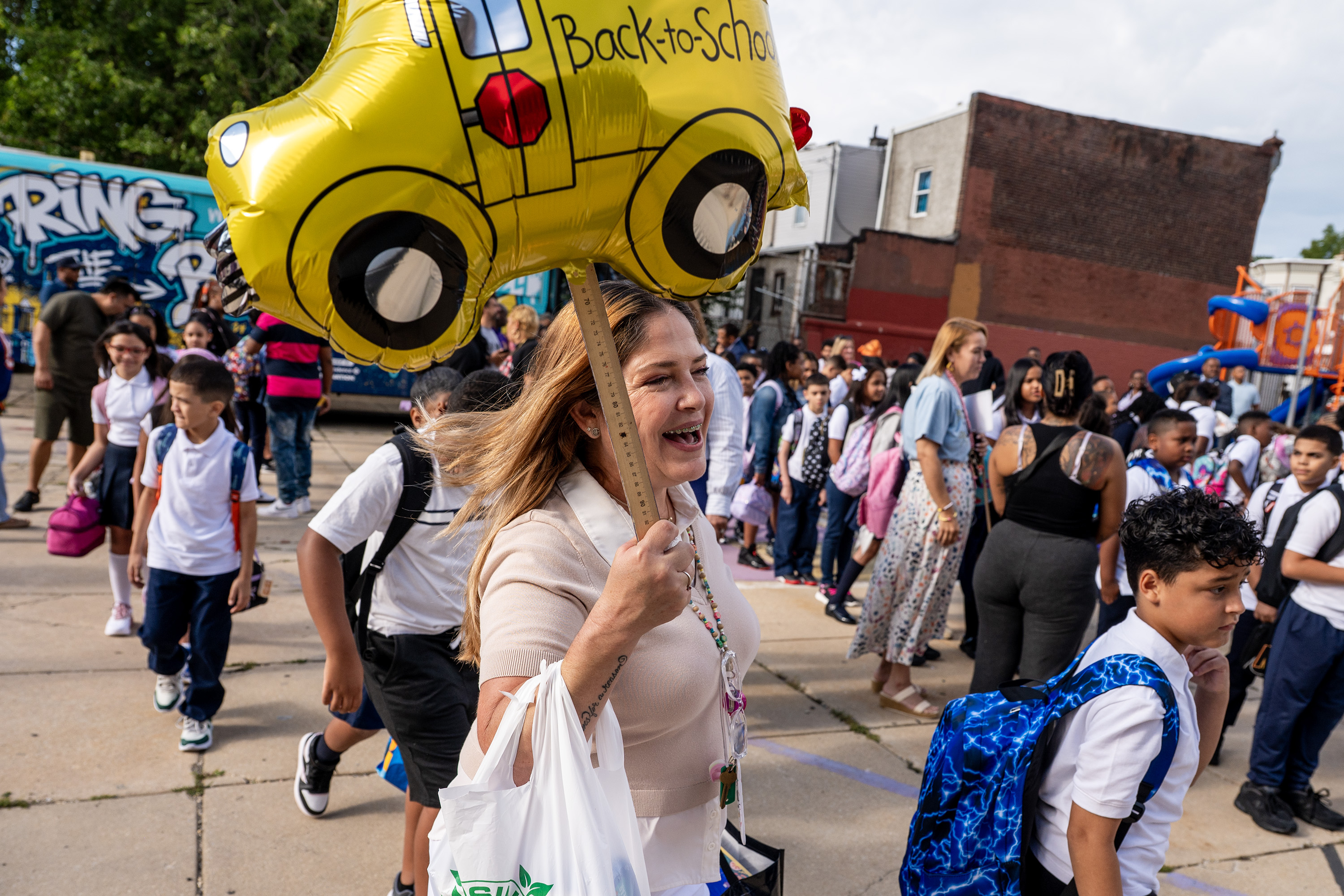
Eighth graders tossed a football across the concrete schoolyard. A fourth grader broke into a dead run, intent on catching up with friends she hadn’t seen all summer. A teacher hugged a first grader with a shy smile and a giant pink backpack crammed with school supplies.
The scene at Overbrook Elementary played out across the city Monday morning as most of the Philadelphia School District’s 113,000 students returned to class for the start of the 2026-27 school year. Kindergartners are due to begin classes Thursday.
At McClure Elementary in Hunting Park, Superintendent Tony B. Watlington Sr. repeated at a news conference his overarching goal: for Philadelphia to become the fastest-improving big-city school district in the U.S.
McClure Elementary principal Luis Garcia greets students Monday, Aug. 24, 2026 before they head into class on the first day of school in the Philadelphia School District.Tom Gralish / Staff Photographer
The district will “double down this year to continue to drive this fast improvement, and we won’t rest until all of our children are at grade level in reading and math,” Watlington said. According to 2024-25 state data, 34% of district students meet state standards in reading, and 23% in math. (More recent PSSAs, typically available to teachers and principals by now, have not been shared by Philadelphia leaders.)
Reginald Streater, the school board president, said improving educational outcomes is also about creating generational value.
“A student can walk through the doors, irrespective of their race, creed, class, gender, or shared ancestry, in our schools with a world of possibilities in front of them and leave those same doors with the knowledge, confidence, and opportunity to pursue the future they envision for themselves,” said Streater, father of two children in district schools, “armed with the tools to break the bonds of generational curses and barriers designed to keep them and their ancestors and their progeny in a perpetual state of servitude and second-class citizens.”
Mayor Cherelle L. Parker was not present at the district’s first-day festivities, a rarity, but Debora Carrera, her chief education officer, touted Parker’s $48 million agreement that restored some of the 340 positions that otherwise would have been axed because of budget cuts.
That was good newsfor Johnny Beauchamp, a single father and truck driver, who was dropping off his son for his first day at McClure.
While Beauchamp said he is confident the city has addressed its budgetary concerns regarding staffing and school openings, he hopes to see some initiatives on school safety.
“I’m actually more excited than he is. It’s his first day … and his bright future starts today,” Beauchamp said. “But my main concern nowadays is the safety, especially with guns and stuff like that. Also, making sure our schools are clean and sidewalks are clear of glass and other dangerous stuff where our kids are playing.”
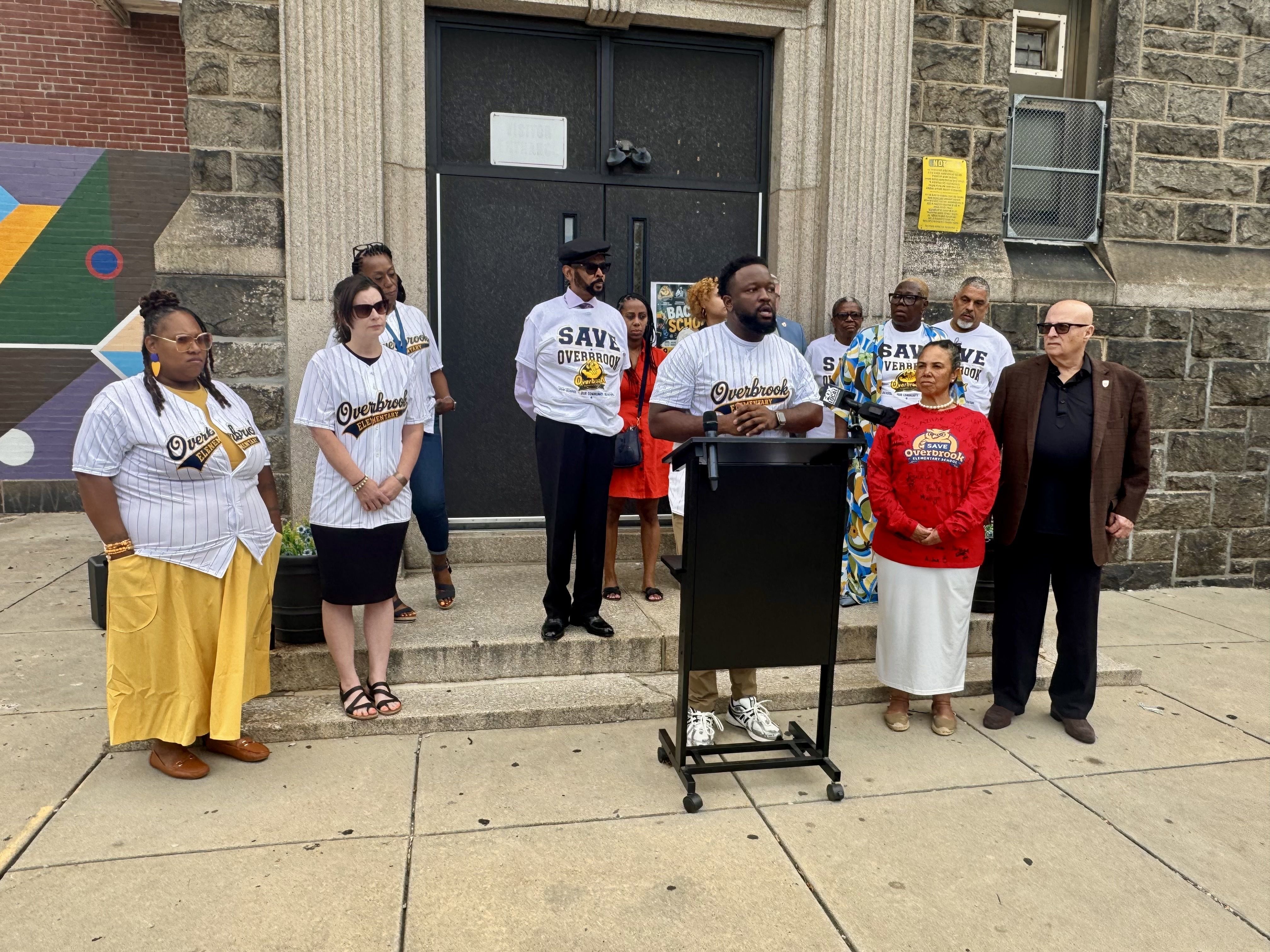
Overbrook is a small, high-performing school in a very old building: The school is celebrating its 120th anniversary this year. Its tight-knit community wraps its arms around Overbrook and has mounted a fierce fight to keep it open.
“Leave Overbrook alone,” said Fahmee Shabazz, dad of an Overbrook fourth grader. “Please, somebody help us.”
Teachers union and elected officials were on hand at Overbrook for a news conference to pledge continuing efforts to try. Multiple politicians have said they will keep the pressure up to remove Overbrook Elementary, Robeson High, and Lankenau High from the district’s closing list.
Teachers, politicians and Philadelphia Federation of Teachers officials listen to Kenneth Glover, principal of Overbrook Elementary School, speak on the first day of the 2026-27 school year. Glover said the school, which is one of 17 Philadelphia schools slated to close, will focus on academics this year and let adults fight a battle to stave off closure.Kristen A. Graham / Staff
“We cannot disrupt the good things that are happening here,” said State Sen. Vincent Hughes (D., Philadelphia), chair of the Senate Appropriations Committee.
Hughes said action needs to happen in Harrisburg to help better fund schools. But he added: “We’re still going to fight for Overbrook Elementary and the schools like it, [which] deserve to stay open.”
Last year, many Overbrook Elementary teachers used news of the school’s closing as an object lesson — in civics and the world around them — said Kenneth Glover, the school’s principal.
“I’m so happy that it’s day one,” he said. “Like I tell my students all the time, each day is a fresh start, and this year is a fresh start. Last year, a lot of the focus was on adult issues, right, fighting to keep the school open. This year, I really want students to focus on academics … for us to just have a beautiful school year.”
Overbrook Elementary School students get ready to enter the building for the first day of the 2026-27 school year. It could be the 120-year-old school’s last first day, as it’s one of 17 schools the Philadelphia School District has slated to close.Kristen A. Graham / Staff
While Glover said he still hoped the school could be kept open, he has begun to work with the district’s newly created transition office to plan for what comes next.
Still, said Kathryn McQuade, Overbrook Elementary’s art teacher, the closure and the fight to prevent it are overshadowing the year for many.
“Seven million could easily go towards … modernizing this building for the future,” McQuade said. “And that wouldn’t be a lease, that would be a one-time price tag.”
Arthur Steinberg, president of the Philadelphia Federation of Teachers, said he “was hoping that when I came here today I’d be able to say, ‘Well, we saved Overbrook from the chopping block.’ Unfortunately, that is not the case. However, we have not given up the fight to keep Overbrook and every other school in the city open.”
Steinberg said the PFT would release a plan this week that would give the district a path to keep all 17 schools open.
Robin P. Cooper (upper right) watches as school and city official gather for a group photo outside the district bus. Cooper is president of Commonwealth Association of School Administrators (CASA). At far left is Superintendent Tony B. Watlington Sr. The bus, part of Mayor Cherelle L. Parker’s Neighborhood Community Action Centers, was to visit and rally at schools in every city council district.Tom Gralish / Staff Photographer
You say you want a revolution? That’s not quite what SEPTA’s proposing. This weekend, the region’s transit agency will roll out the first phase of its New Bus Network, the bus system’s first significant update since the agency was formed in the 1960s.
Sound familiar? Once dubbed Bus Revolution, the project began in 2021 after transit agencies around the country saw massive declines in ridership. SEPTA’s Bus Revolution was set to launch in 2025 but faced significant community pushback and coincided with the state funding crisis that halted many planned transit initiatives. It was officially shelved in November 2024.
Later phases of the plan, which will roll out in 2027, will impact other neighborhoods. The number of bus routes in SEPTA’s system will drop from the current 124 to 106 when all four phases are complete.
SEPTA says the changes are needed to modernize the system and make it easier to use.
To help you navigate the changes that will impact how you navigate the city, we’re here to breakdown down all 30 impacted routes.
This route remains the same but with reduced service.
Days
Times
Previous
Now
Weekdays
6 a.m. to 9 p.m.
Every 16-25 minutes
Every 30 minutes
Saturdays
8 a.m. to 9 p.m.
Every 22-25 minutes
Every 30 minutes
6
Cheltenham-Ogontz to Olney Transportation Center
On weekdays, route 6 will have increased service during peak hours, but a reduced service otherwise.
Days
Times
Previous
Now
Weekdays
6 a.m. to 9 p.m.
Every 11-13 minutes
Every 10 minutes
Weekdays
9 p.m. to midnight
Every 20 minutes
Every 30 minutes
Weekdays
midnight to 4 a.m.
Every 30-40 minutes
Every 60 minutes
SEPTA also rolled out new signage that identifies certain routes as “frequent red”, indicating a bus is scheduled to arrive within 15 minutes or less on weekdays from 6 a.m. to 9 p.m.
17
Front-Market to 20th-Johnston
Route 17 will be shortened and no longer operate on its old route from 20th Street and Johnston Street down to the stadium complex or the Navy Yard. SEPTA recommends Navy Yard commuters take route 45 instead.
This route will also operate with reduced service overnight.
Days
Times
Previous
Now
Weekdays
midnight to 5 a.m.
Every 30 minutes
Every 60 minutes
SEPTA also rolled out new signage that identifies certain routes as “frequent red”, indicating a bus is scheduled to arrive within 15 minutes or less on weekdays from 6 a.m. to 9 p.m.
25
Frankford Transportation Center to Front-Spring Garden
Route 25 is essentially being cut in half. The old route ran down Delaware Avenue to Columbus Commons. The new route will terminate at the Spring Garden Market-Frankford Line station. The old route from Spring Garden to Columbus Commons will be serviced by the new route 76.
Route 25 will now operate for 24 hours a day, as part of SEPTA’s late-night OWL network.
This route will also have increased service.
Days
Times
Previous
Now
Weekdays
6 a.m. to 9 p.m.
Every 20-30 minutes
Every 15 minutes
Weekends
6 a.m. to 9 p.m.
Every 30 minutes
Every 20 minutes
SEPTA also rolled out new signage that identifies certain routes as “frequent red”, indicating a bus is scheduled to arrive within 15 minutes or less on weekdays from 6 a.m. to 9 p.m.
32
Broad-Carpenter to Ridge-Lyceum
Route 32 will have slightly reduced service with fewer buses overall. All route 32 buses will terminate at Manayunk, as opposed to the previous schedule where half would terminate at 33rd Street and Cecil B. Moore Avenue. There’s also a slight route extension into Roxborough for school service.
35
Manayunk Roxborough Loop
Route 35 will be discontinued on Aug. 23. SEPTA recommends riders take route 61.
According to SEPTA’s operation statistics, route 35 is the seventh most expensive bus based on the average cost per passenger.
39
Richmond-Cumberland to 33rd-Dauphin
Route 39 will remain the same but with reduced service on weekdays and slightly increased service on Saturday evenings..
Days
Times
Previous
Now
Weekdays
6 a.m. to 9 p.m.
Every 20-30 minutes
Every 30 minutes
Saturday
5 p.m. to 9 p.m.
Every 40-60 minutes
Every 30 minutes
44
Front-Market to Ardmore
Route 44 will no longer run along its old route that would sometimes terminate at Gladwyne. Beginning Aug. 23, all 44 buses will run to Ardmore, with select trips stopping at Narberth.
This route will also have reduced service.
Days
Times
Previous
Now
Weekdays
9 a.m. to 3 p.m.
Every 15-30 minutes
Every 60 minutes
Weekends
6 a.m. to midnight
Every 30 minutes
Every 60 minutes
45
Navy Yard/Broad-Oregon to 12th-Noble
Route 45 will be extended to the Navy Yard to cover for the changes to route 17.
After 9 p.m. the route will have reduced service on weekdays.
Days
Times
Previous
Now
Weekdays
9 p.m. to midnight
Every 20 minutes
Every 30 minutes
46
58th-Baltimore to 63rd-Malvern
Route 46 will have increased service on weekdays.
Days
Times
Previous
Now
Saturdays
9 a.m. to 6 p.m.
Every 20 minutes
Every 15 minutes
Sundays
9 a.m. to 7 p.m.
Every 30 minutes
Every 20 minutes
SEPTA also rolled out new signage that identifies certain routes as “frequent red”, indicating a bus is scheduled to arrive within 15 minutes or less on weekdays from 6 a.m. to 9 p.m.
47
Whitman Plaza to 5th-Godfrey
Route 47 will merge with route 47M and have increased service.
Days
Times
Previous
Now
Weekdays
6 a.m. to 9 p.m.
Every 8-9 minutes
Every 7-8 minutes
All days
Midnight. to 5 a.m.
Every 45 minutes
Every 30 minutes
SEPTA also rolled out new signage that identifies certain routes as “frequent red”, indicating a bus is scheduled to arrive within 15 minutes or less on weekdays from 6 a.m. to 9 p.m.
47M
Whitman Plaza to 7th-Spring Garden via 9th
Route 47M has been discontinued and will now be served by a more frequent route 47.
The merger of these two routes includes a realignment so that the northbound 47 runs on Seventh Street, as opposed to Ninth Street. Southbound buses will still run on Eighth Street.
49
33rd-Dauphin to 40th-Baltimore
Route 49 will look very different from its old route. It will no longer serve Gray’s Ferry. SEPTA recommends riders take route 79 instead.
Route 49 will also operate on many different roads. The most notable change is taking 33rd Street instead of 29th Street. in Strawberry Mansion and Brewerytown.
These changes are paired with generally reduced service.
Days
Times
Previous
Now
Weekdays
8 a.m. to 3 p.m.
Every 18-22 minutes
Every 30 minutes
Saturdays
8 a.m. to 9 p.m.
Every 22 minutes
Every 30 minutes
Sundays
9 a.m. to 7 p.m.
Every 22 minutes
Every 30 minutes
52
49th-Woodland to Wissahickon Transportation Center/50th-Parkside
Route 52 will no longer follow its old route to Gladwyne. SEPTA cites low ridership and doesn’t offer an alternative route.
SEPTA also rolled out new signage that identifies certain routes as “frequent red”, indicating a bus is scheduled to arrive within 15 minutes or less on weekdays from 6 a.m. to 9 p.m.
53
Carpenter Station to Richmond-Westmoreland
Buses on route 53 will no longer follow the old route that terminated at Sedgwick Street and Wayne Avenue. Instead, service will end at Carpenter Regional Rail station. There are additionally a bunch of small differences across the route. For example, route 53 will now serve Roosevelt Boulevard. on the western side of Hunting Park.
The 53 will also continue past G Street and extend into Port Richmond.
54
Richmond-Cambria to 33rd-Dauphin
Buses on route 54 will have reduced service during weekdays and increased service during evenings.
Days
Times
Previous
Now
Weekdays
9 a.m. to 3 p.m.
Every 15-18 minutes
Every 20 minutes
All days
9 p.m. to midnight
Every 45 minutes
Every 30 minutes
57
Whitman Plaza to Fern Rock Transportation Center
The old route 57 occasionally would terminate at Packer Marine Terminal, that service will be discontinued.
During weekends the route 57 will run at a reduced service.
Days
Times
Previous
Now
Weekends
All day
Every 10-12 minutes
Every 15 minutes
Service along Crescentville and Cheltenham Avenues will be reduced to every hour.
SEPTA also rolled out new signage that identifies certain routes as “frequent red”, indicating a bus is scheduled to arrive within 15 minutes or less on weekdays from 6 a.m. to 9 p.m.
60
Wissahickon Transportation Center/35th-Allegheny to Richmond-Westmoreland
Most of route 60 will continue to go down Allegheny Avenue, but it will not follow its old route where some buses stopped on Delaware Avenue and Lewis Street.
The 60 will occasionally take an extended route and continue to the Wissahickon Transportation Center. The schedule is roughly split 50:50 whether a bus will continue to this new terminus or stop early at 35th Street and Allegheny Avenue.
Route 60 will also see increased service.
Days
Times
Previous
Now
Weekdays
6 a.m. to 6 p.m.
Every 10-15 minutes
Every 10 minutes
SEPTA also rolled out new signage that identifies certain routes as “frequent red”, indicating a bus is scheduled to arrive within 15 minutes or less on weekdays from 6 a.m. to 9 p.m.
61
9th-Market to Ridge-Summit
Route 61 will be extended to Upper Roxborough. This is primarily to cover for the discontinued route 35.
62
9th-Market to Andorra
Route 62 will be discontinued. SEPTA recommends riders take routes 9, 27, or 61 as an alternative. According to SEPTA, route 62 was the fourth most expensive route to operate, costing an average of $45 per passenger.
64
50th-Parkside to Pier 70
Previously, route 64 would occasionally terminate at 49th Street and Woodland Avenue. Under the new network, all trips will terminate at Parkside Loop. The 64 will also no longer take the old route’s detour into Grays Ferry.
Route 64 will operate at a increased service.
Days
Times
Previous
Now
All days
6 a.m. to 9 a.m.
Every 12-18 minutes
Every 12 minutes
All days
9 a.m. to 9 p.m.
Every 20 minutes
Every 15 minutes
SEPTA also rolled out new signage that identifies certain routes as “frequent red”, indicating a bus is scheduled to arrive within 15 minutes or less on weekdays from 6 a.m. to 9 p.m.
72
Cedarbrook Plaza to Frankford Transportation Center
72 is a brand new route that mostly operates on Cheltenham Avenue and will run every 30 minutes.
73
Frankford Transportation Center to Richmond-Westmoreland
Route 73 will now run at a reduced service from every 20-25 minutes to every 30 minutes.
Additionally the route 73 will no longer be part of the OWL network, ending 24-hour service on the line. SEPTA recommends riders take route 25 for overnight buses.
76
Rising Sun-Olney to Columbus Commons
Route 76 is a brand new route that will mostly run along Delaware and Frankford Avenues every 30 minutes. This route replaces service removed from the newly aligned route 25.
78
Express from Cornwells Heights to Center City
Route 78 will be discontinued due to lower ridership. SEPTA does not recommend an alternative bus.
According to SEPTA figures, the 78 was the most expensive bus to operate in their network. It has an average of 2.4 passengers per hour, costing the agency $394 per rider.
79
Columbus Commons to 29th-Snyder/40th-Market
Route 79 will occasionally be extended into West Philadelphia. Roughly every other bus will continue to 40th and Market Streets, instead of the current terminus of 29th Street and Synder Avenue.
SEPTA also rolled out new signage that identifies certain routes as “frequent red”, indicating a bus is scheduled to arrive within 15 minutes or less on weekdays from 6 a.m. to 9 p.m.
80
Express from Horsham to Olney Transit Center
Route 80 will be discontinued. SEPTA stated that “ridership has declined significantly since 2019 and the same connection can be made with a transfer on local routes 22, 51, and 310.”
According to SEPTA data, route 80 was the third most expensive route to run, costing the agency $50 per passenger.
89
Front-Dauphin to Arrott Transit Center
Route 89 will be discontinued. SEPTA says route 89 is “duplicative of other routes,” and offers “routes 3, 5, 25, 39, 41, 43, 53, 56, 75, 76, and K as alternatives.”
105
Paoli/Rosemont to 69th Street Transit Center
Route 105 will extend to Paoli for roughly every other bus, essentially merging with the now discontinued route 106.
The old route that serviced Suburban Square will no longer operate. There are also minor alignment changes in Overbrook.
Route 105 will operate at a increased service.
Days
Times
Previous
Now
Weekdays
All day
Every 30-60 minutes
Every 30 minutes
Weekends
All day
Every 60 minutes
Every 30 minutes
These changes will take effect on Aug. 24.
106
Paoli to 69th Street Transit Center
Route 106 will be discontinued on Aug. 24.
Do you still have questions about the changes to SEPTA’s bus network? Read our Q&A guide for details on how to contact SEPTA, information about future alterations in 2027, and much more.
Methodology
The animating buses on the diagram are an approximation of the number of buses active at 9 a.m. on a weekday schedule.
Old routes are accurate to SEPTA’s bus network on Aug. 4.
For simplicity, if a route can have different terminuses, we show all possible paths the bus operates on.
story continues after advertisement
Staff Contributors
Design, Development, and Data: Sam Morris
Reporting: Sam Morris and Erica Palan
Editing: Cynthia Henry
Subscribe to The Philadelphia Inquirer
Our reporting is directly supported by reader subscriptions. If you want more journalism like this story, please subscribe today
Six people were killed in Philadelphia between Friday morning and Sunday night — five shot and one stabbed — in a wave of violence across the city, according to police.
At least two others were wounded in the spate of attacks, a jarring stretch of violence in a year that has otherwise been among the least deadly Philadelphia has recorded in decades.
At a news conference on Monday, District Attorney Larry Krasner acknowledged the weekend’s toll but pointed to the city’s steep drop in killings, arguing that a brutal few days had not erased months of historic progress.
“We had a bad weekend,” Krasner said. “We’re not having a bad year.”
As of Monday, Krasner said, there had been 108 homicides so far this year in the city — 29 fewer than at the same time last year.
Even so, the six deaths amounted to more than 5% of the city’s homicides this year, a striking toll for a single weekend. The victims ranged in age from 26 to 70.
The bloodshed began shortly after 9 a.m. Friday, when officers responded to a report of a gunman on the 2100 block of North 20th Street in North Philadelphia West and found Savion Young, 31, shot in the chest and arm. He was pronounced dead at Temple University Hospital about 20 minutes later, police said.
That same evening, Felix Serrano, 70, was found shot inside a BMW on the 4300 block of North Seventh Street in Hunting Park, according to police. Investigators believe Serrano’s vehicle may have traveled a short distance after he was shot before his car struck a parked vehicle. He was also pronounced dead at Temple University Hospital.
The killings resumed before dawn Sunday. At about 3:20 a.m., police who were called to the 800 block of West Oxford Street in Ludlow found Rafi Colón-White, 30, shot in the head inside a Subaru Outback.
Colón-White was pronounced dead at Temple University Hospital. A 34-year-old man who arrived separately at the hospital with gunshot wounds to his legs was in critical condition, police said. That man, whom police have not identified, was also a victim in the shooting, said police spokesperson Cpl. Jasmine Colón-Reilly.
Sunday evening brought three more killings in as many hours. About 8:20 p.m., a man was fatally stabbed on the 500 block of West Courtland Street in Logan, and pronounced dead at Einstein Medical Center, police said. He has not been publicly identified.
Less than an hour later, DaJuan Coffee, 26, was shot multiple times on the 2000 block of East Lehigh Avenue in East Kensington and pronounced dead at Temple University Hospital, police said.
The weekend’s final killing came at about 11:49 p.m. Sunday. Officers sent to the 2800 block of North 24th Street in Strawberry Mansion for a report of a person with a gun found Michelle Wilson, 61, on a porch, shot in the neck and back, police said. She was pronounced dead moments later.
Wilson’s husband was also on the porch and was shot, but survived, police said. They did not share the man’s condition, but said he was stable.
Loved ones lingered on the sidewalk in front of the North 24th Street house Monday afternoon, hugging, trying to find comfort in one another amid their grief. They declined to be interviewed.
A 71-year-old neighbor said the family has lived on the block for decades.
“They were quiet people,” said the woman, who asked not to be identified for fear of reprisal. On Sunday afternoon, she said, Wilson’s family had a barbecue, with children and extended family playing on the porch.
Surveillance video from a business on the block, reviewed by The Inquirer, showed a man wearing a hat and surgical face mask walking down the street when he appeared to take a black handgun from his bag and slip it into his jacket. The video showed him then calmly walk up to the porch and open fire.
Police have not shared the video with the public, nor identified the man captured in it as a suspect.
Nearby, on North 20th Street, an array of candles, stuffed teddy bears, and handwritten posters lay Monday across the sidewalk where Young was killed Friday morning.
Police said Young and his girlfriend were arguing outside the apartment around 9:10 a.m. when the woman’s 16-year-old brother pulled a gun and shot Young multiple times, police said. He died at the hospital.
The teen is wanted for murder.
Tributes for Young, also known as Apex, poured across social media over the weekend, and hundreds gathered in North Philadelphia for a balloon release.
Young had a daughter and large family scattered across the city, friends said. He had just started a clothing brand called Bad English, and neighbors said he was frequently seen lifting weights and working out outside his rowhouse.
“This was his Planet Fitness,” a man who trained with him said Monday on the block. The man, who declined to give his name for privacy reasons, looked down at the dozens of candles melting into the sidewalk beneath a collection of silver balloons. “He will be truly missed,” he said.
William Fritze, chief of the district attorney’s office Gun Violence Task Force, declined to provide additional information on the incidents, citing ongoing investigations.
No arrests have been made in any of the cases, said Colón-Reilly. Police are asking anyone with information to contact the department’s homicide unit at 215-686-3334, or its tip line at 215-686-TIPS.
Last year marked Philadelphia’s fewest homicides in nearly six decades, with 222 people killed. The last time the city’s homicide numbers fell below that mark was in 1966, when there were 178 murders.
During Monday’s news conference, called to announce grants awarded to more than 20 anti-violence organizations in the city, Krasner called the weekend’s violence a tragedy that “no one would ever celebrate,” even as he stressed that the city remained far safer than in years past.
“The facts are clear: Homicides are way down,” he said. “In almost every category, crime is down.”
A 61-year-old woman was shot and killed in North Philadelphia after a shooting Sunday night.
Philadelphia Police Department officers responded to the 2800 block of N. 24th Street around 11:49 p.m. for a report of a person with a gun. Officers found Michelle Wilson, 61, on a porch suffering from gunshot wounds to the neck and back. Wilson was transported to Temple University Hospital, where she was pronounced dead at 12:04 a.m. on Monday.
A second person, a 67-year-old man, was found on the same porch suffering from gunshot wounds to his backside. Police transported the man to Temple University Hospital and was placed in stable condition.
Anyone with information is urged to contact the Homicide Unit at 215-686-3334 or call the PPD tip line at 215-686-8477. As with all homicides in the city of Philadelphia, there is a $20,000 reward for information that leads to an arrest and conviction.
This section of North Philadelphia has already experienced two fatal shootings this summer in June, according to the most recent data supplied by the City Controller, and in that same month, a 16-year-old was shot and injured one block from where Sunday night’s shooting occurred.
According to police, at least seven shootings occurred this past weekend, including the fatal shooting of 70-year-old Felix Serrano, who was found shot in the chest while sitting in his car near Hunting Park.
The father of a Philadelphia man who was killed in an ATV crash this spring said police officers pursued his son moments before he drove the wrong way down a one-way street, ran a red light, and collided with a sedan.
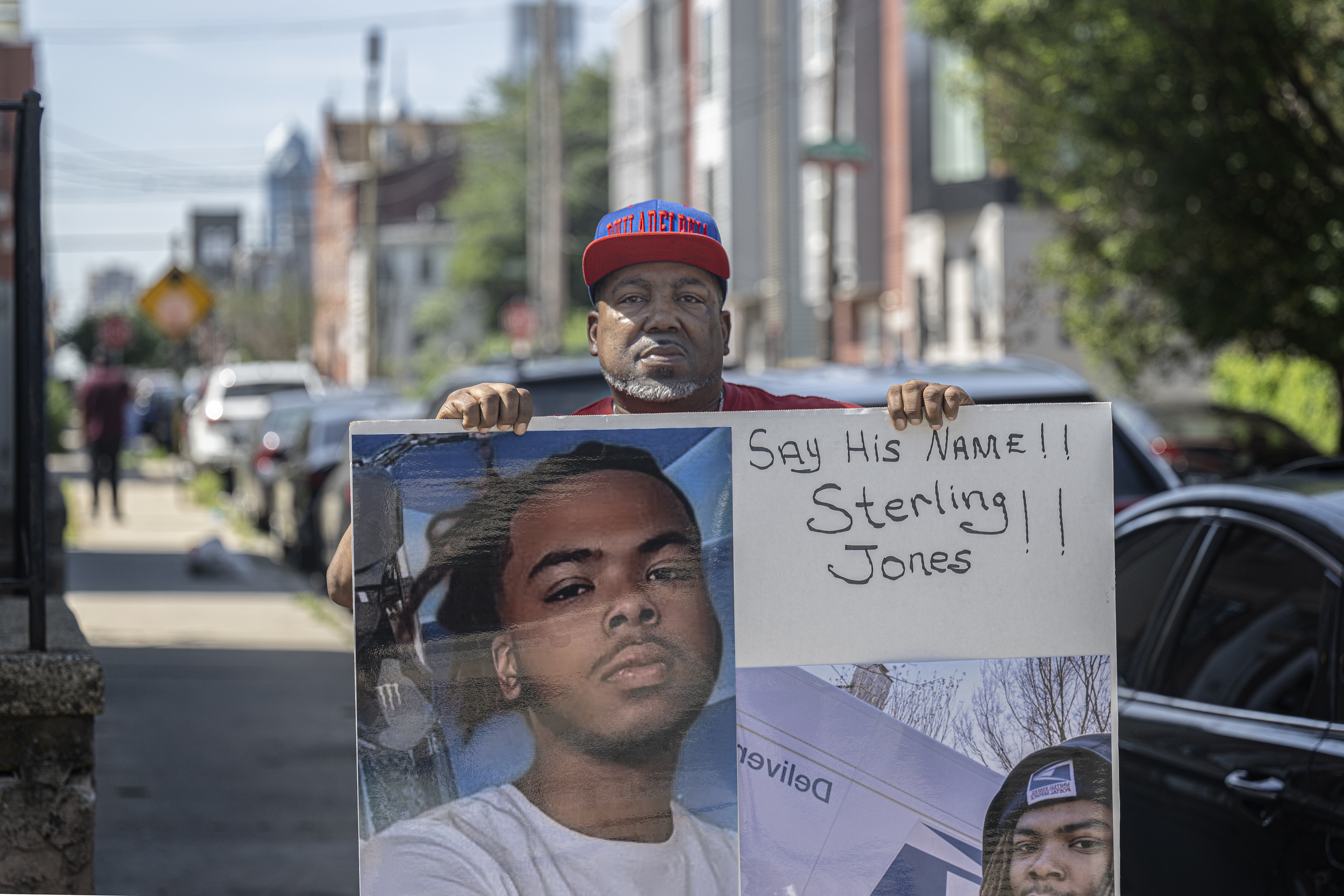
Sterling Jones, 22, was killed on May 9 after the crash in North Philadelphia, according to police.
Lawyers for Jones’ father, Sterling Lamont Jones Sr., said his son and a group of friends had been riding off-road vehicles near Broad Street and Fairmount Avenue when officers from the police ATV and dirt bike detail spotted the young men popping wheelies and began a pursuit.
They followed Jones up Broad Street to West Thompson Street, the attorneys said. There he briefly sped in the wrong direction down the one-way street and ran a red light before striking an Uber driver’s Toyota sedan at the intersection as it turned onto 15th Street.
He was taken to Temple University Hospital and pronounced dead shortly after his arrival.
Sterling Jones Sr., 57, has since hired a team of attorneys to investigate the incident. Late last month, they filed a notice of intent to sue the city, alleging that the officers and the department violated Jones’ constitutional rights when they chased him and caused his fatal injuries.
Sterling Jones, a 22-year-old who lawyers say was killed in an ATV crash after being chased by police officers.Courtesy of Sterling Lamont Jones Sr.
Riding ATVs and dirt bikes on public streets in Philadelphia is against the law, and police have increased efforts to crack down on that behavior in recent years.
But the incident raises questions about whether the officers followed a department directive barring vehicular pursuits for all but the most serious offenses — a policy enacted because of the public safety risks posed by such chases, particularly in densely populated areas.
The initial police account of the incident did not mention that officers had been pursuing Jones before the crash. It could not be learned whether the department had since concluded that officers were engaged in a pursuit and whether it was conducted a high rate of speed, as the lawyers contend.
Sgt. Eric Gripp, a police spokesperson, said the incident is under investigation by the department’s internal affairs bureau. He declined to comment further, referring questions to the city’s law department.
A spokesperson for the law department said the city does not comment on pending litigation.
Surveillance footage gathered by lawyers for Jones’ father and viewed by The Inquirer showed at least eight police officers on dirt bikes, a squad car, and a tow vehicle tailing Jones that evening.
Around 9:23 p.m., Jones was seen cutting through a Sunoco gas station and speeding down West Thompson Street with dirt bike officers close behind. Within seconds, his ATV careened into the driver’s side of the sedan.
Under police department policy, vehicular chases are allowed only in situations in which officers believe they can prevent imminent danger to others, or if a suspect is either fleeing after committing a violent felony or in possession of a deadly weapon used in a crime.
And while riding off-road vehicles violates city code, attorneys for Sterling Jones Sr. say that type of infraction still should not trigger a police chase.
“The police department’s policy is, in our view, clearly violated,” said Thomas Kline of Kline & Specter, which is handling the case alongside the firm Hill & Associates.
A 2025 Inquirer investigation found police in Philadelphia and across Pennsylvania were conducting hazardous and unnecessary chases, disproportionately endangering young people. Roughly half of all reported pursuits conducted by city police were not justified under department policy, the investigation found.
A police department spokesperson attributed the increase in chases to the COVID-era surge in violent crime, and said the department investigates every crash for policy violations.
Between 2020 and last year, records show, the city had paid out $20 million in crash- or chase-related settlements as a result of such chases.
In 2017, a 6-year-old girl and her great-aunt were seriously injured when they were struck by a dirt bike rider who was being chased by Philadelphia police into Upper Darby Township. The city settled a lawsuit with their attorneys for nearly $3 million last year.
Sterling Jones Sr. said that while he was planning to sue, no amount of money could make up for the loss of his son.
The young man was a graduate of Hunting Park Christian Academy and had been working for two years as a delivery driver for the U.S. Postal Service before his death. He had bought the ATV with money from that job, his father said.
“He wasn’t a criminal. He had a license,” he said.
Jones Sr. learned of the crash in the early morning of Mother’s Day, when his son’s mother came to his house to tell him Jones was dead.
He said he hired lawyers with the aim of ensuring that the officers who pursued his son would be reprimanded and removed from the beat.
“They killed my only son,” he said. “I just want justice.”
The phone rang at lunchtime, the way it did every day. Carisia Magobet answered within seconds.
An automated voice spoke first: This call is from a Pennsylvania state correctional institution.
Then his.
“May the peace, mercy, and blessings of Allah be with you, my love,” Matthew Garcia said in Arabic.
They had only 15 minutes, and for once, Magobet did not spend the first of them on small talk. There was no good way to tell him what she knew: State lawmakers had gone home the night before without taking the vote that the couple had hoped would bring him home.
Garcia was 18 in 1998 when he and four friends set out to rob a Hunting Park bar. He said he was the lookout and did not have a gun.
One of the teens pointed a sawed-off shotgun at a bartender and demanded cash. A retired Philadelphia police officer, Frank King, was inside the bar and grabbed for the gun. Another teen shot him with a pistol. King died on the floor.
By that time, Garcia said, he had already run.
It didn’t matter.
All five were convicted of second-degree murder — a killing committed during a felony, no matter who pulled the trigger — and sentenced to the only punishment Pennsylvania law allowed: life without the possibility of parole.
Magobet, who had known Garcia since they were kids in Hunting Park, was in the courtroom on June 21, 2000, the day he was sentenced. For decades, they did not see each other again.
Then, about two years ago, she found Garcia’s Facebook account, where he shared his writing and his work inside State Correctional Institution-Chester, the prison he called home. She reached out.
Garcia told her about a case before the Pennsylvania Supreme Court that could mean freedom for people serving life sentences in cases like his.
Derek Lee, a Pittsburgh man sentenced to life in prison for his role in a fatal robbery in which a coconspirator fired the fatal shot, had challenged the mandatory punishment as unconstitutional, saying it failed to account for individual culpability.
In March — six months after Magobet and Garcia wed in a prison visiting room — the high court struck down mandatory life sentences for second-degree murder.
It gave lawmakers until July 24 to write new sentencing guidelines for future cases and determine how, or whether, the ruling would apply to the roughly 1,100 Pennsylvanians already serving that sentence.
The stalemate places in limbo everything Magobet, 40, and Garcia, 45, have spent the last two years assembling in anticipation of a freedom both yearn for but neither can control.
Building together
She loved him first.
Magobet was 13 when Garcia’s sister got married and they were both in the wedding party. He was supposed to walk her down the aisle. But at the last minute, the pairs were swapped, and she walked with his brother instead. Magobet decided, quietly, that she was owed that walk one day.
She never told him. Not before his arrest, not for years after he went to prison. She found his social media accounts and saw what his life had become in prison.
He had earned college credits, started programs for young people, and launched a podcast to share his story.
In a prison foster-cat program, Garcia adopted a calico, named her Lil Mama, and fed her until the name stopped fitting. “It’s not Lil Mama now,” he said in a recent interview. “It’s Fat Mama.”
Prison reform advocate Carisia Magobet shows photos of her husband, Matthew Garcia, who is serving a life sentence for second-degree murder, at her home in Northeast Philadelphia.Sarah Silbiger / For The Inquirer
The orange-and-black foster fail appeared often in Instagram photos. In one, a full-bearded Garcia wrote: “Me and Lil Mama, patiently waiting on our moment.”
By then, Magobet had four children, a house, a dental office she managed by day, and a commercial cleaning business she ran at night. Yet she found herself thinking often about Garcia. Seeing him there — older, broader, smiling beside a chubby cat — made him less a memory and more real. She emailed him.
Not long after, she took over his social media accounts.
Together, they began building a growing audience for Garcia’s work, a network of supporters, and, eventually, a life that felt shared despite the prison walls that separated them.
She posted his poetry. She built a website explaining the Lee case and a guide to contacting lawmakers about sentencing reform. He wrote children’s books, including one about Lil Mama that Magobet’s 21-year-old daughter, a digital arts student, illustrated.
A chance for ‘FREEDOM’
Garcia proposed on Aug. 1, three months after they reconnected. But it didn’t feel fast to Magobet. She had been carrying that moment since the wedding party.
They wed on Aug. 23. She is still waiting on prison paperwork to make it legal. But to them, Magobet said, it’s official.
Matthew Garcia and Lil Mama.Courtesy of Carisia Magobet.
He calls at least four times each day — when his cell door opens at 7 a.m., at lunch, after his work shift at the prison’s reentry program, at night. Each call lasts 15 minutes, the maximum allowed under prison policy, plus six video calls and four in-person visits a month.
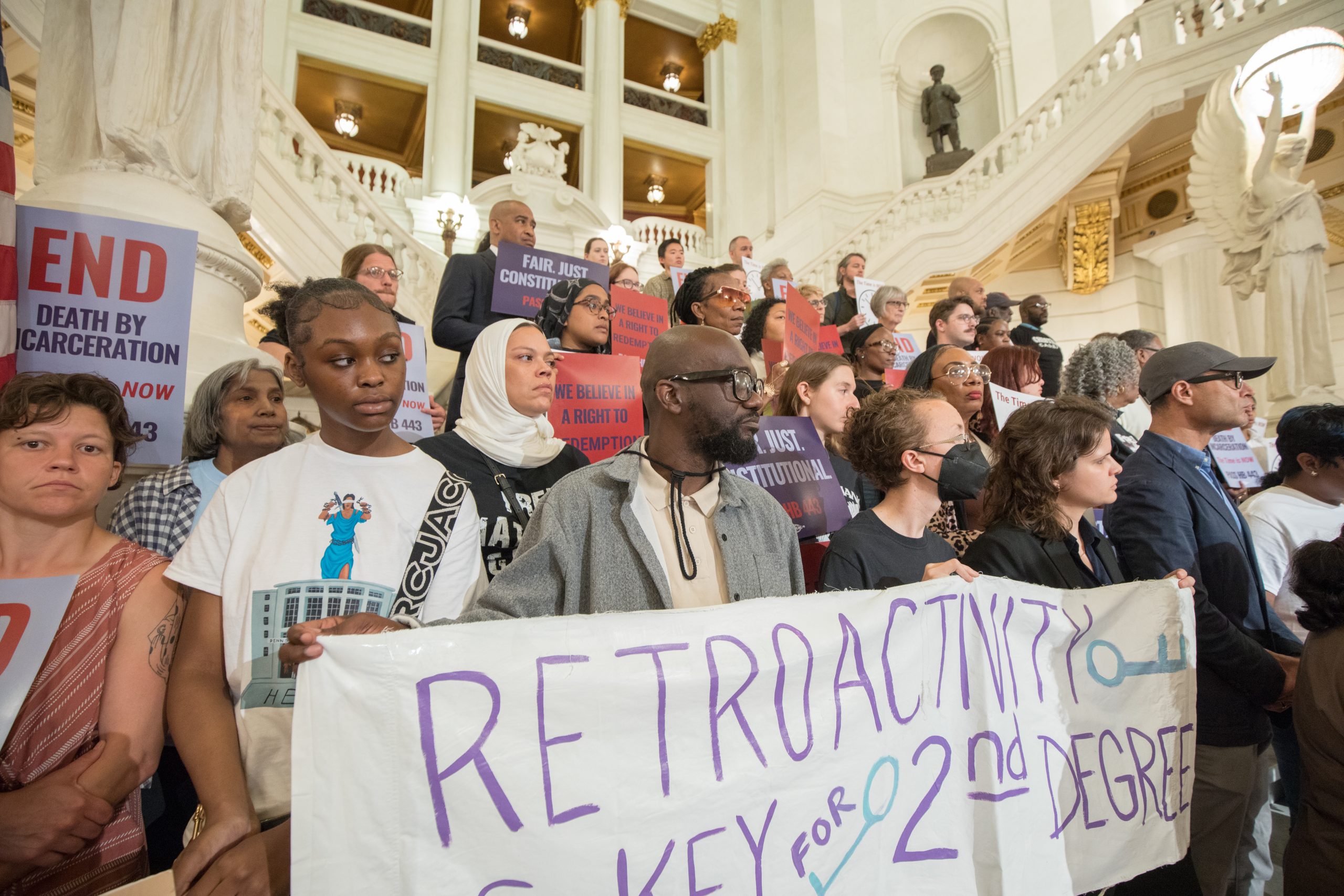
On a video call last month, the couple discussed Magobet’s plan to join other families, formerly incarcerated people, and advocates in Harrisburg to support legislation in response to the high court’s decision that would allow people like Garcia to seek parole after serving at least 25 years. Not guaranteed release, but a chance to make their case.
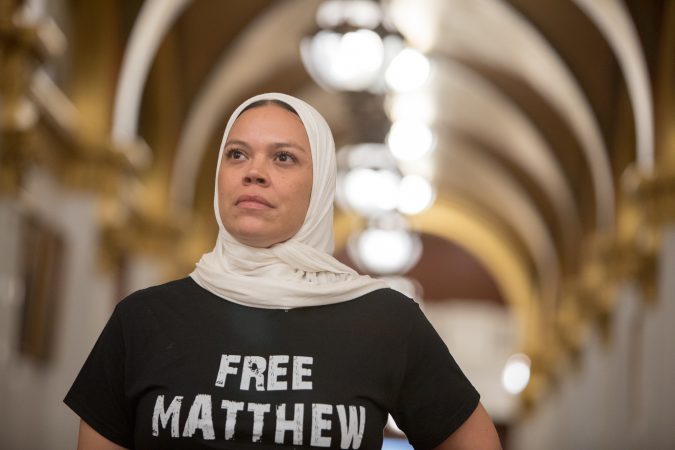
She told him about a poster she had printed to bring, with a photo of him holding Lil Mama and “FREEDOM” written in all capital letters. She had ordered a custom T-shirt, too, but it had not arrived yet.
“Will it come in time for Monday” for the trip to the Capitol? Garcia asked.
The call cut out before she could answer.
‘Do your job and legislate’
Carisia Magobet participates in a rally at the state Capitol in Harrisburg.Kalim A. Bhatti / For The Inquirer
Magobet wore the T-shirt to Harrisburg two days later.
Beneath the Capitol rotunda, Magobet met Saleem Holbrook, the executive director of the Abolitionist Law Center, which represented Lee before the Supreme Court. He told Magobet he knew Garcia from their years in prison together.
“If there’s a person who’s earned being able to come home,” he said, “it’s Matt.”
In State Rep. Nikki Rivera’s office, Magobet read a speech from her phone. Her voice broke only once, when she told Rivera (D., Lancaster) that Garcia was her husband.
In the lobby of House Majority Leader Matt Bradford’s office, Magobet joined several others in a chant — “the time is getting late, do your job and legislate!” — that prompted the Montgomery County Democrat’s chief of staff to take Magobet and another person back to her office. The staffer had listened, Magobet said, promised nothing, and blamed the other side.
But Lil Mama made her laugh.
“The cat gets everyone,” Magobet said afterward. “We gotta get Lil Mama T-shirts for next time.”
Holding onto hope
Five weeks later, there was no next time to plan for.
Magobet learned that lawmakers adjourned July 12 without voting on the Democratic-sponsored measure she had supported, or the stricter Republican proposal.
She told Garcia on a phone call, and before the 15 minutes were up, he told her he couldn’t keep talking. It was the first time he had ever done that, she said.
A new measure, introduced by Democrats in an emergency session last week, did not earn a vote in the Senate.
The Supreme Court’s 120-day stay on new sentencings in second-degree murder cases expired on Friday, and judges can again hand out life sentences to people convicted of second-degree murder, but only in limited circumstances. But without a new law, there are no mandatory minimums or clear guidelines.
In the meantime, the next chapter will likely unfold in the courts for the more than 1,000 people already serving mandatory life sentences.
Bret Grote, an attorney with the Abolitionist Law Center who represented Lee in the Supreme Court case, said the high court has been asked in a separate case to determine whether the ruling applies retroactively.
He called the situation “a constitutional crisis.” But even under the most optimistic timeline, he said, a resolution could take years.
In the meantime, attorneys expect a wave of challenges from incarcerated people seeking relief. More than half of those serving the sentences are from Philadelphia.
Garcia said he will meet with his attorney to determine his next steps.
Prison reform advocate Carisia Magobet poses for a portrait at her home in Northeast Philadelphia.Sarah Silbiger / For The Inquirer
Magobet said she is holding on to hope — for the smaller things.
Walks together.
Coffee he brewed waiting for her in the morning.
Afternoons at a pool. (Garcia has not been in water deeper than a shower in nearly three decades.)
For months they talked about those plans as though they were approaching.