Federal prosecutors on Thursday formally indicted Eugene Albert Horsch, the Olney man at the center of a widening investigation into the disappearance of at least two women, on charges that he illegally possessed firearms and fake federal law enforcement credentials.
The two-count indictment accuses Horsch, 44, of possessing two loaded firearms despite having been convicted of a prior felony, which bars him from having guns. It also alleges that he had “fraudulent identification documents” that appeared to have been issued by the Drug Enforcement Administration and the Federal Bureau of Investigation, but that neither agency had produced.
The indictment stems from Horsch’s arrest on June 19. On that day, U.S. Park Police officers recovered two loaded firearms — a .38 Special revolver with an obliterated serial number and a Taurus .40-caliber semiautomatic pistol — from beneath a front seat of his black BMW, which was parked in a restricted area near Independence Hall in Center City, according to court records.
Officers said they also recovered counterfeit DEA credentials from the vehicle. And later, during a search of Horsch’s home in the 400 block of West Chew Avenue, federal and local authorities uncovered fraudulent FBI credentials and a desktop computer that may have been “used to facilitate” the fake documents, according to the indictment.
Horsch has remained in federal custody since his initial appearance in U.S. District Court last month, after a magistrate judge ordered him detained pending a trial.
Horsch’s attorney, Jerome Brown, said this week: “We believe Mr Horsch is innocent.”
The federal case has unfolded alongside a broader investigation that began after Horsch’s arrest. Authorities searching his deteriorating twin home found another firearm, equipment used to grow marijuana, barrels of chemicals, ashes of least one relative, documents connected to two women who have been missing for years, and an unsigned, handwritten letter describing violence and referencing serial killer Ted Bundy, officials have said.
Investigators have said they have not found human remains at the property, but found a “significant” amount of blood. They have continued examining evidence recovered from the home as they search for any possible links between Horsch and the disappearances of Blair Tonzelli, who was reported missing in 2023, and Amy McHale, his father’s former wife, who was last heard from at the Olney property in 2016.
Brown previously said he did not believe his client had harmed either woman.
“I’d be shocked if [police] found any harm related to those missing persons at that location,” Brown said after Horsch’s detention hearing.
Staff writer Ryan W. Briggs contributed to this article.
About a year before police raided a crumbling Olney twin in connection to a missing woman last month, Philadelphia narcotics officers scoured Eugene Horsch’s basement and found telltale signs of a drug dealer.
Firefighters had responded to a small blaze on the second floor of the property on May 18, 2025, alerting police to what they said was a sprawling marijuana grow operation. And when narcotics cops searched the home later that morning, court records show they recovered a modified fully automatic assault rifle with an obliterated serial number, a sawed-off shotgun, a pistol, and ammunition.
The top floor was filled with cannabis plants, tents, and UV lights, with exposed wires running between the floors and into the basement, where vats of chemicals were stored, apparently to “cultivate marijuana,” the records said.
The police report detailing the drug bust at the Olney house made no mention of missing women, despite the fact that concerned relatives and friends had told police years earlier that at least two women who stayed at the house had vanished.
Now, the disappearance of one of those women, Blair Tonzelli, is central to an ongoing search at the property, where police found fake IDs and bank cards in her name, among other disturbing evidence.
That law enforcement did not appear to connect the missing women to the search for drugs at the same address raises questions about whether the officers who searched the property last summer were aware of the two missing persons cases. The Philadelphia Police Department declined to comment, citing the ongoing investigation.
Police began reexamining Tonzelli’s disappearance on June 19 after arresting Horsch, whose companion had a fake ID in her name. Investigators reinterviewed witnesses and viewed footage of a statement given in February 2023 by Tonzelli’s friend, who told officers Tonzelli was last seen at 417 W. Chew Ave. Police have also revisited the 2016 disappearance of Amy McHale — the ex-wife of Horsch’s father, erotic filmmaker Raymond C. Horsch — whose mother said she vanished from the Olney home.
Gloria McHale, Amy’s mother, said she was surprised to learn that police had searched the property for drugs in 2025.
“I wish they would have looked deeper,” she said.
Police have not charged Horsch with any crimes linked to missing women. He has been jailed since his arrest last month on $500,000 bail for gun and drug charges, as federal and local police prepare to excavate the property in search of more evidence.
His attorney, Jerome Brown, declined comment. Brown has previously said police had interviewed Raymond Horsch several times over the years about McHale’s disappearance.
When local and federal law enforcement officers searched Horsch’s home last month in connection to the missing women, police said they again found guns, ammo, and drugs. More troubling, according to police records, is that they also found a “significant amount” of blood, a handwritten letter referencing serial killer Ted Bundy, and fake IDs and bank cards in Tonzelli’s name.
The latest search began after police arrested Horsch in his black BMW with an array of weapons, drugs, and a woman donning a fake ID in Tonzelli’s name. A sworn affidavit to initiate the search includes witness testimony that suggested Horsch was a “sociopath” who knew how to dispose of human remains.
But it was a fire that brought police to Horsch’s property one morning in May 2025.
Eugene had been living in the twin with two other women, including his father’s longtime companion, Krista M. Killen. City firefighters said the small blaze was started by “careless smoking” on the second floor, according to Horsch’s arrest report. While extinguishing the fire, a fire marshal and police patrolman on the scene discovered a “marijuana grow operation” on the home’s third floor and basement.
Officers with the PPD Narcotics Strike Force later searched the home and seized 26 pounds of marijuana, 131 grams of dried mushrooms, $1,200 worth of methamphetamine, $800 cash, and “numerous gold colored and silver” coins in a safe, records show.
Police also recovered a BCI Defense AR-15 style rifle modified to be fully automatic, a 12-gauge Stevens Model 67 pump-action shotgun with a sawed-off barrel, a 9mm Girsan MC28 pistol and more than a hundred rounds of ammunition. The serial numbers had been destroyed on all three firearms, according to records.
Horsch had previous felony convictions for drug manufacturing charges and was not legally allowed to own firearms. He was arrested and held on $750,000 bail for manufacturing drugs, illegal gun possession, and related crimes.
Brown, the family attorney, told a judge that the weapons belonged to Horsch’s father, who had died just three days before the drug raid. Brown said Eugene Horsch was planning to properly dispose of the firearms, according to a spokesperson for District Attorney Larry Krasner.
His health became a factor in determining an appropriate resolution to the case. Sources familiar with the case, who were granted anonymity because they are not authorized to discuss the details publicly, said Horsch appeared frail at the time of his 2025 arrest and could barely walk into court.
Horsch pled guilty to manufacturing drugs, and prosecutors withdrew the additional gun charges. He received three years probation.
Within months of his release from jail, Horsch would be locked up again.
In March, police arrested Horsch and charged him with stabbing a man at Eighth and Market Streets. Prosecutors dropped the charges after a witness failed to appear in court, records show, and he was released from lockup in May.
Three weeks later, U.S. Park Police stopped him in his car near Independence Mall, where they recovered a fake ID in Tonzelli’s name.
The search of the Olney property continued Wednesday.
The Olney man at the center of a sprawling investigation into the disappearance of at least two women in recent years was taken into federal custody Tuesday and will be detained until trial.
Eugene Albert Horsch, 44, was arraigned Tuesday on a federal firearms charge — a case that relates to his alleged actions on June 19, when a U.S. Park Police officer near Independence Hall reported seeing a black BMW parked in a restricted zone and next to a fire hydrant.
The officer reported hearing a woman in the vehicle express fear of being injured and then seeing pairs of scissors in the front seat area. A search of the vehicle, in part based on Horsch’s actions, led to the discovery of a switchblade and a glass pipe in Horsch’s pants and two firearms under the car’s front seat.
Horsch — who was not allowed to possess guns because of felony convictions — had been charged for that same conduct last week by the Philadelphia District Attorney’s Office and he was being held in a city jail on $500,000 bail. City prosecutors also charged him with having cocaine, heroin, and marijuana in his car.
But the federal gun charge — and the decision by U.S. Magistrate Judge Pamela A. Carlos to detain him until trial — effectively ensures that Horsch will not be able to post bail or secure his release as his case proceeds. And that will give authorities time to continue investigating him in connection with questions potentially far more serious than illegally possessing guns.
In the days after Horsch was arrested with the firearms in Center City, investigators who searched his decrepit rowhouse in Olney found another gun and materials to grow marijuana.
But more concerning, they also discovered a variety of more unusual materials — including barrels of chemicals in the basement, urns holding the cremated remains of at least one of his relatives, documents tied to at least two women who have been missing for years, and a handwritten letter that described hurting people and mentioned the serial killer Ted Bundy.
Officials have said police have not discovered any human remains in the house. But investigators did find a significant amount of blood inside, sources told The Inquirer this week, although it was not clear whether it was human blood. And authorities have been testing a variety of materials they’ve recovered from the house, such as the chemicals in vats stored in his basement.
The probe is also seeking to learn more about potential connections between Horsch and at least two missing women with ties to his home.
One is Blair Tonzelli, who might have worked there as a home health aide and who was reported missing in Kensington in 2023. Some of Tonzelli’s friends told police after she disappeared that they worried that something bad had happened to her and that they had told police that Horsch was a “sociopath,” according to police documents obtained by The Inquirer.
In addition, when Horsch was arrested in Center City earlier this month, a woman who was with him falsely identified herself as Tonzelli and later told police that she did so because Horsch had given her a fake identification with Tonzelli’s name.
The other missing woman is Amy McHale, the ex-wife of Horsch’s father, who was last heard from at the Olney property in 2016. Horsch’s father, Raymond “R.C.” Horsch — now deceased — was an erotic photographer and drug manufacturer who had published several works of fiction, including one described as an “autobiographical memoir of a caring, empathetic serial killer.”
Eugene Horsch, during his brief appearance in federal court Tuesday, said little beyond responding to routine legal questions. He will likely be held at Philadelphia’s Federal Detention Center as his case proceeds toward trial.
His attorney, Jerome Brown, said afterward that he didn’t believe Horsch had harmed any of the women at the center of the investigation.
“As far as I know, I’d be shocked if [police] found any harm related to those missing persons at that location,” Brown said.
Philadelphia police found a “significant amount” of blood inside the decrepit Olney house linked to the investigation of at least two missing women, multiple law enforcement sources said.
The sources, who spoke on the condition of anonymity to discuss an ongoing investigation, said forensic testing has not yet determined whose blood it is or whether it’s even human — a process that could take several weeks to complete. But, the sources said, police are prepared to excavate the front and backyards of the West Chew Avenue home in the coming weeks in search of potential human remains.
Deputy Police Commissioner Frank Vanore declined to confirm or comment on the discovery Monday afternoon, citing the ongoing investigation. Vanore said Friday that police had not recovered any human remains from the home and were awaiting testing of the tubs of chemicals and other materials found in the basement.
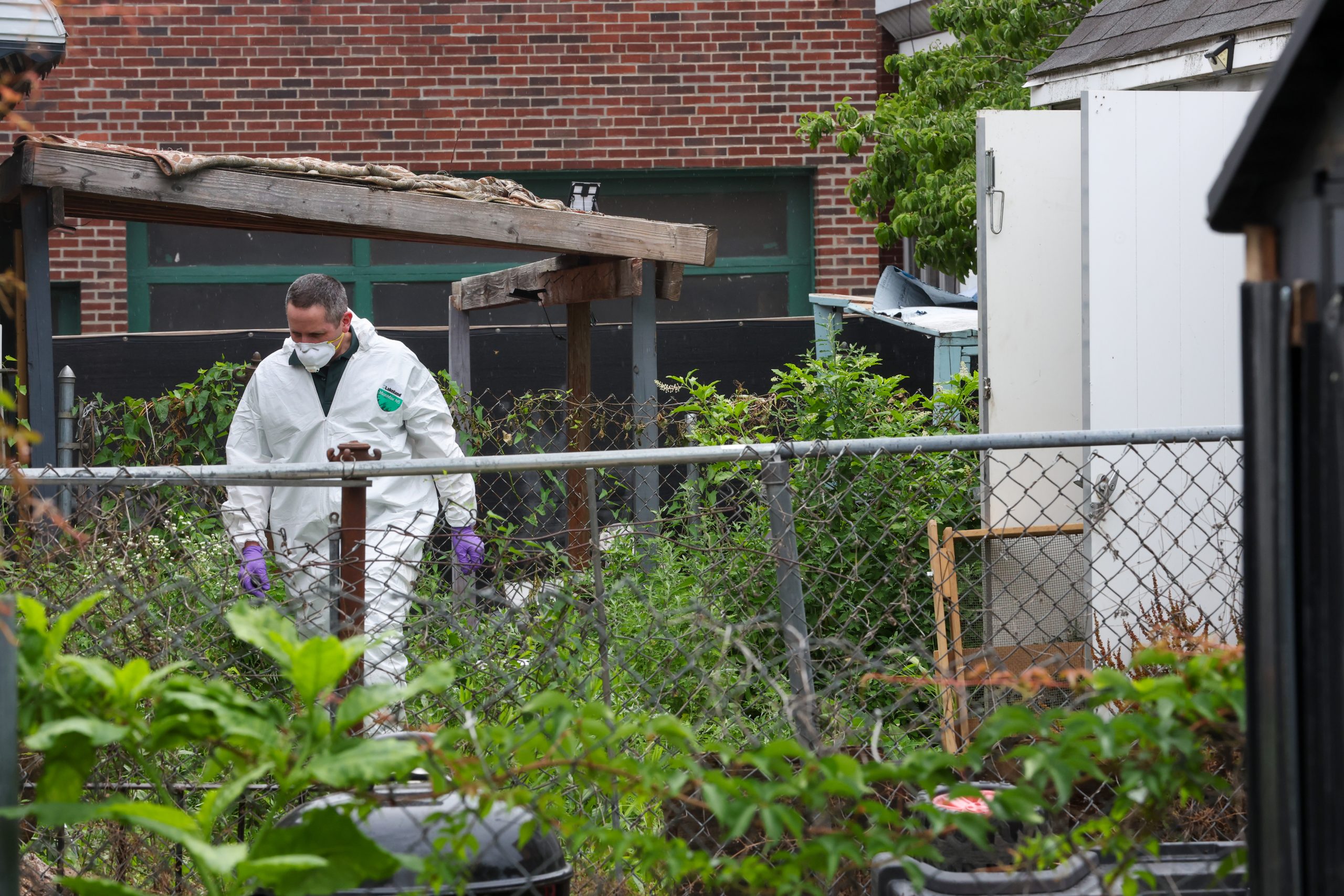
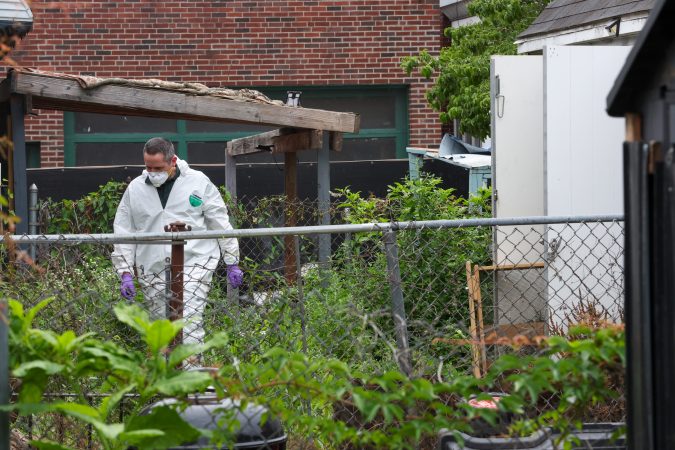
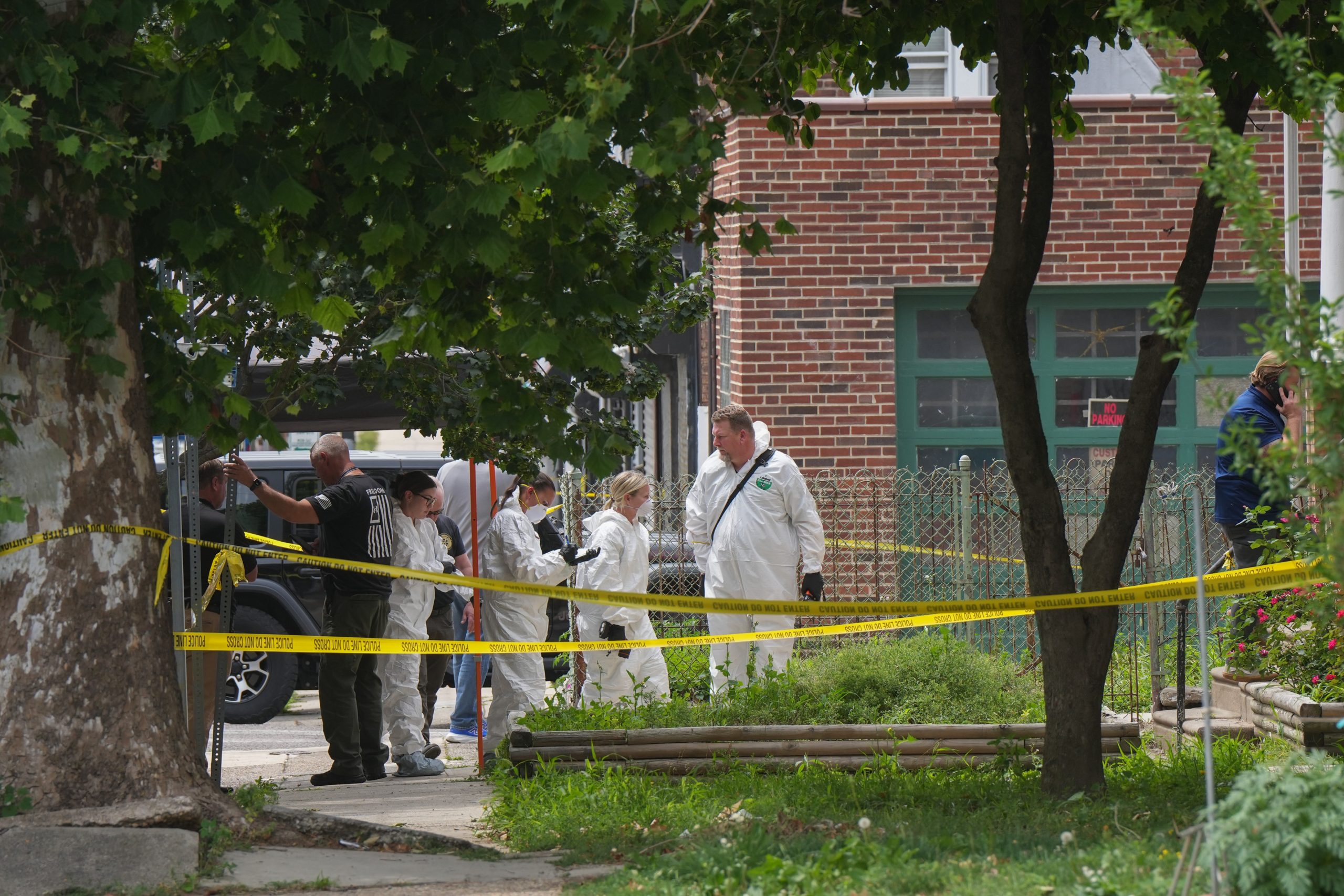
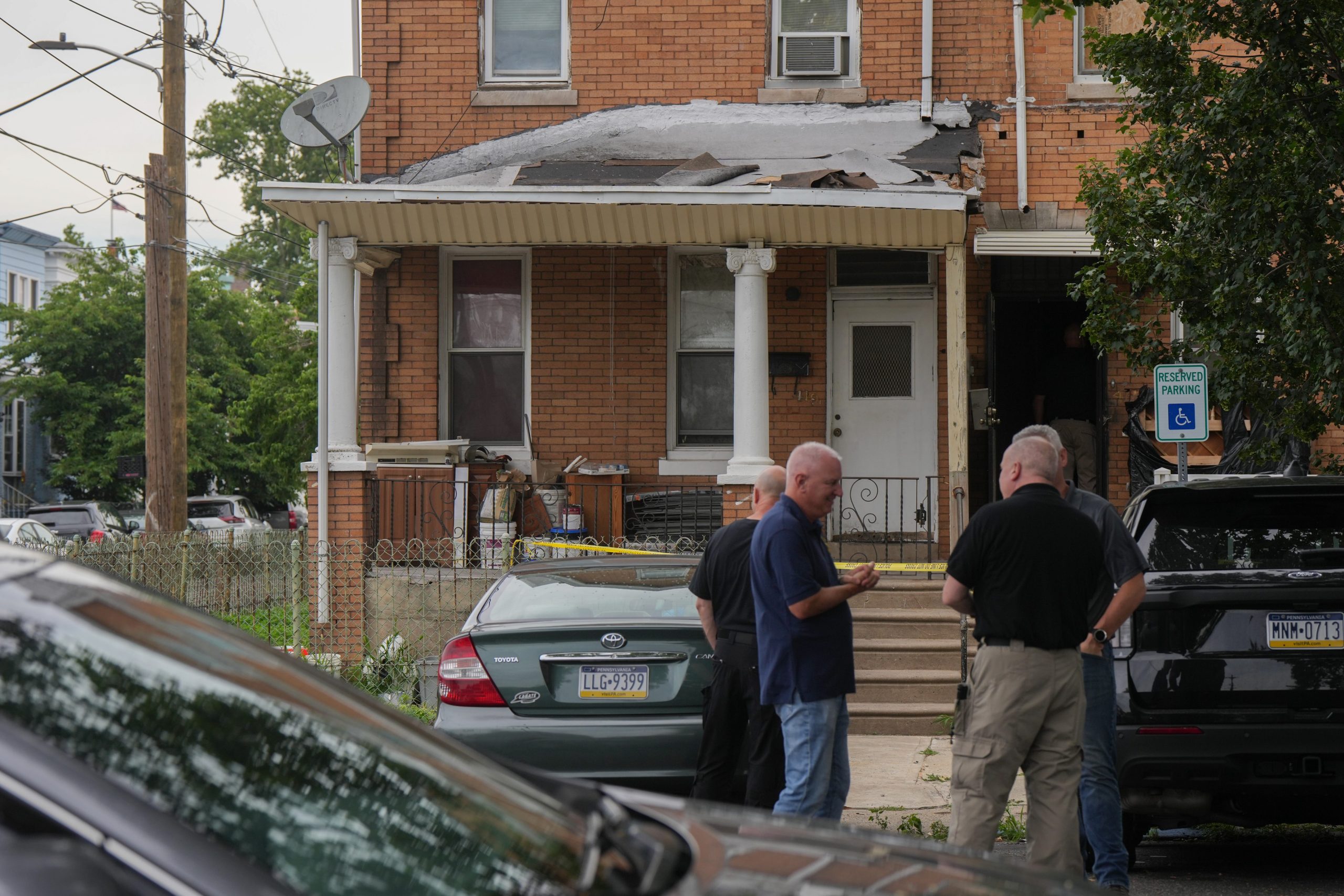
Forensic investigators search the backyard of 417 W. Chew Ave. on June 27.Aidan T. Gallo / Staff Photographer
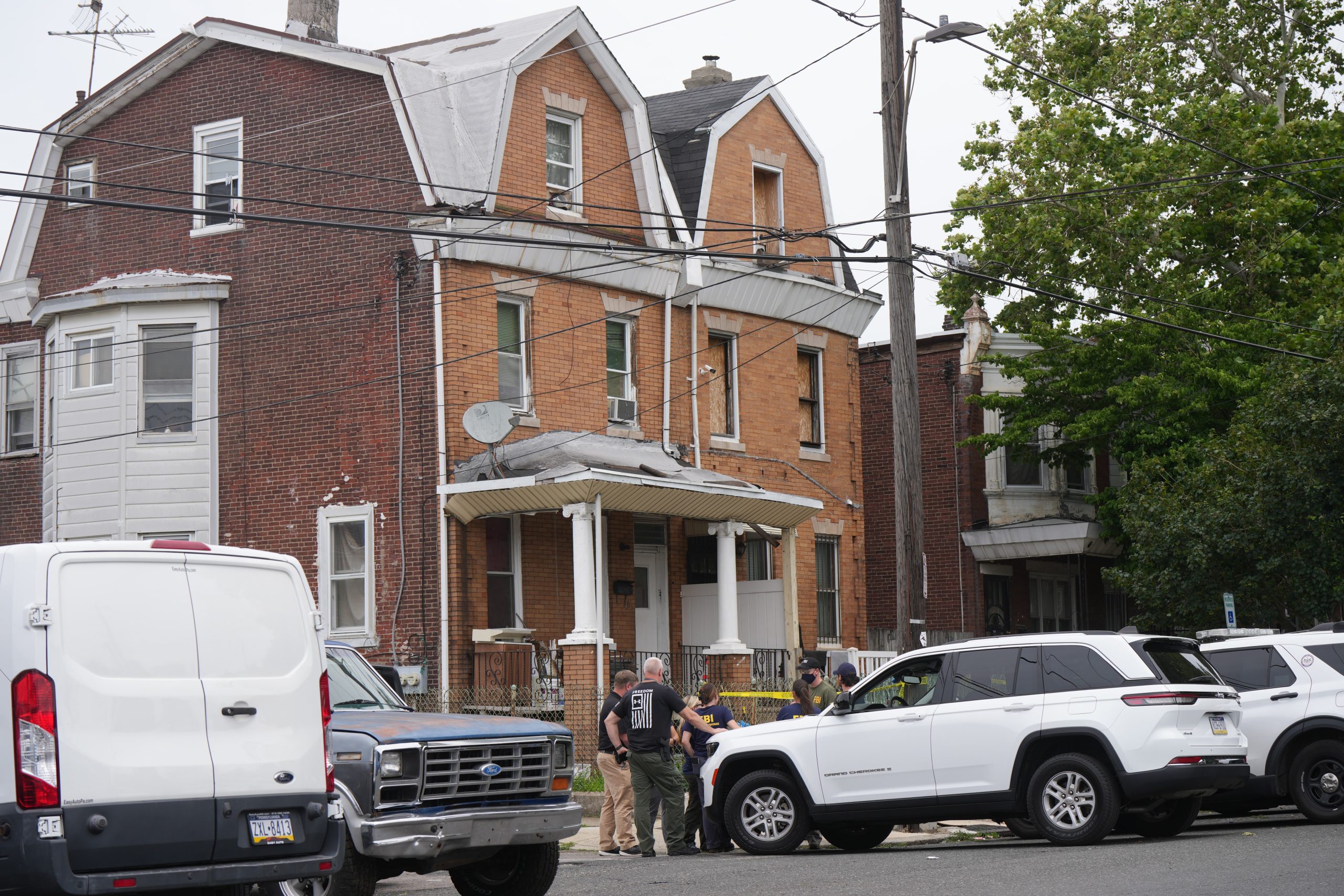
The finding marks the latest development in an unusual saga that began after the arrest of Eugene Albert Horsch, 44, the owner of the Olney home now being searched by law enforcement for a second week in connection with the disappearance of at least two women who have been missing for years.
Horsch was arrested June 19 after U.S. Park Police saw him parked in his black BMW near Sixth and Market Streets, acting suspiciously. When a ranger approached the car, police said, he heard a woman in the back seat say, “You’re going to hurt me” and saw drug paraphernalia.
Police searched the car and reported recovering two guns with obliterated serial numbers, as well as cocaine, fentanyl, and marijuana, a cattle prod, switchblade knives, handcuffs, and a fake U.S. Drug Enforcement badge featuring Horsch’s photo.
The woman with Horsch falsely identified herself to the officers as Blair Tonzelli, a 38-year-old woman who had been reported missing in Kensington in 2023, police said.
The woman, 39, later told investigators that she gave Tonzelli’s name because she had open warrants for her arrest in ongoing drug cases and that Horsch had made her fake identification cards in that name and said she could use it if she was ever stopped and questioned by police, sources said.
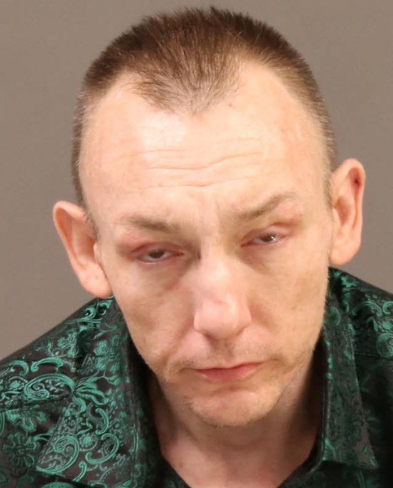
Eugene Albert Horsch, 44, was arrested June 19 for illegal gun possession and drug crimes. Courtesy of Philadelphia police
The woman said she did not know Tonzelli or even that she was missing — but the way Horsch spoke about her and other women made her feel like something bad had happened to her, the sources said.
Philadelphia homicide detectives then began reviewing that missing woman’s case, and, alongside federal law enforcement, searched Horsch’s home at 417 W. Chew Ave. last week.
That search produced a trove of bizarre discoveries: a basement with drums filled with chemicals, bottles of unknown substances, Tonzelli’s bank card, the death certificate of another woman, and what appeared to be urns holding at least one of Horsch’s relatives’ cremated remains.
Investigators also found another handgun, materials used to grow marijuana, and a 55-gallon drum with connections to waterlines leading into a hole in the ground.
Federal investigators also discovered a multipage, unsigned, handwritten letter that appeared to describe hurting people and referenced the serial killer Ted Bundy, according to the affidavit of probable cause to search the home that was obtained by The Inquirer.
Eugene Horsch lived at 417 W. Chew Ave. with his father until he died last year. Jessica Griffin / Staff Photographer
Law enforcement sources said police were working to determine whether the writings were part of a novel or screenplay. Horsch’s late father, Raymond “R.C.” Horsch was a known drug manufacturer and erotic filmmaker who had published several works of fiction with violent, masochistic themes, including one described as an “autobiographical memoir of a caring, empathetic serial killer.”
The probe into the younger Horsch took another twist when investigators learned that Raymond Horsch’s ex-wife Amy McHale was last seen at the Olney property in 2016 and has not since be located. A lawyer for Eugene Horsch and his father said the two men had nothing to do with McHale’s disappearance and said she struggled with substance abuse and mental illness.
Horsch has been charged with illegal gun possession and drug crimes by Philadelphia authorities.
He is also facing a federal gun possession charge, court records show. The U.S. Attorney’s Office filed a complaint against Horsch on Friday, charging him with possession of a firearm by a felon and centering their allegations on the guns that park rangers found in his car during an encounter in Center City earlier this month.
Horsch has not yet been arraigned in that matter, and he remained in a city jail, held on $500,000 bail as of Monday afternoon. But the case could give federal prosecutors an opportunity to argue to a judge that he remain in federal custody until trial.
This is a developing story and will be updated.
Staff writers Jesse Bunch, Max Marin, Barbara Laker, and Chris Palmer contributed to this article.
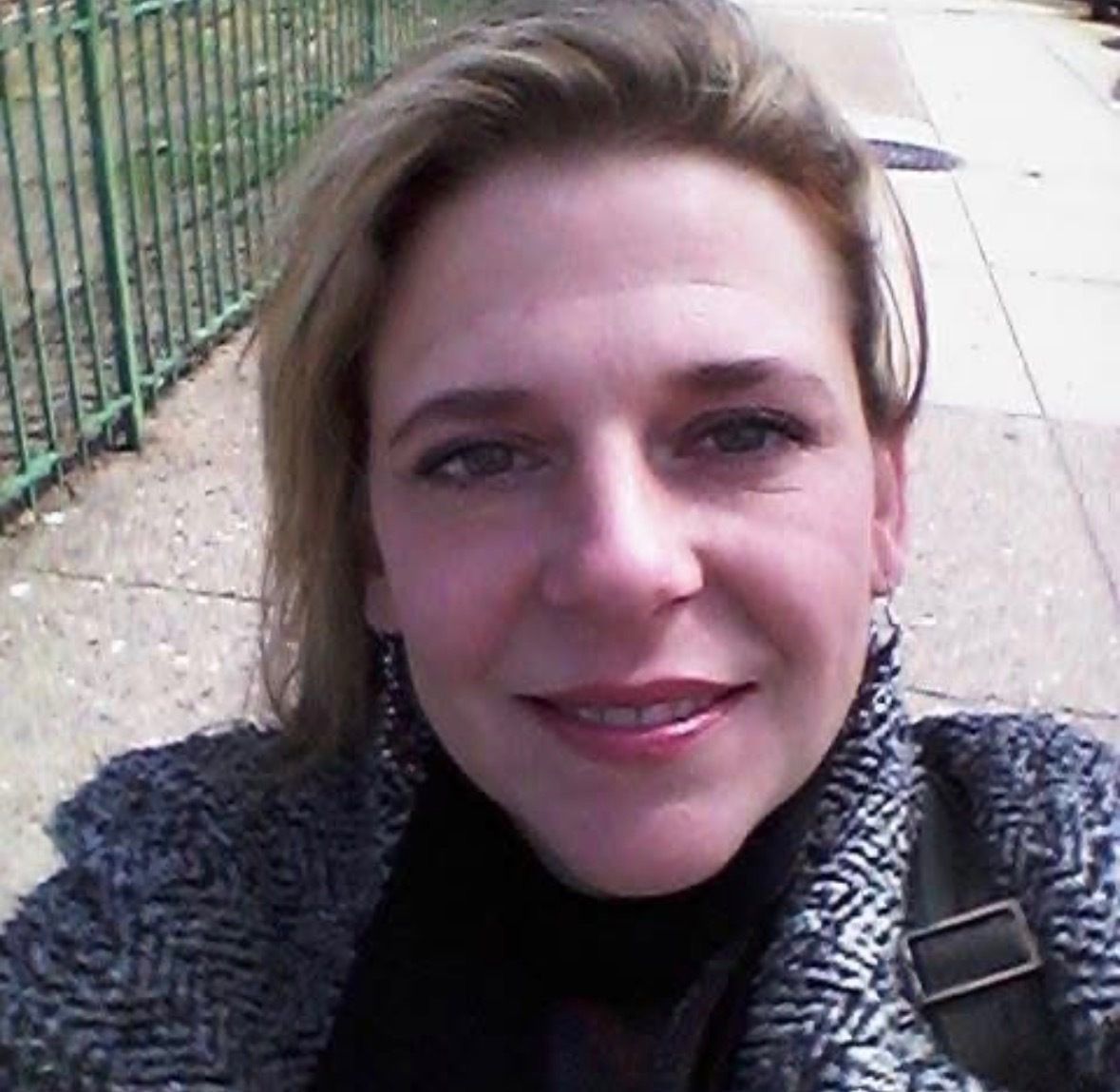
Amy McHale and Raymond “R.C.” Horsch met on the streets when she was battling pneumonia and needed medical care.
She had long struggled with mental health issues and drug and alcohol addiction. She saw Horsch, an erotic photographer and filmmaker 30 years her senior, as her rock, said her mother, Gloria McHale.
“He was like her savior.”
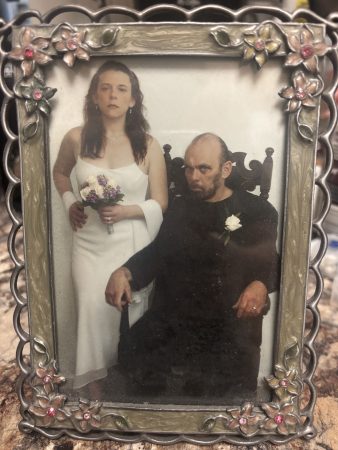
They held their wedding reception beside a greenhouse in the sprawling, serene backyard of his Chalfont home in September 2004. The marriage lasted only a few years, but Amy McHale kept going back to Horsch after he moved to a house on West Chew Avenue in the Olney section of Philadelphia with his son, Eugene Albert Horsch.
She was staying there on June 14, 2016, when she left a voicemail message for her daughter, Amanda Stofer, saying all was OK. At the time, Amy McHale was a 44-year-old mom and grandmother of three.
She has been missing ever since.
“She would never leave her daughter and grandchildren,” Gloria McHale, 79, said by phone after news broke this week that authorities had been combing through that house for days. “She loved them, adored them.”
For more than a week, Philadelphia police and federal authorities have been searching the crumbling Horsch twin home to determine if there is any connection to the disappearance of Amy McHale and one other woman.
R.C. Horsch was a controversial figure who had been convicted of forgery and drug manufacturing when he died in May 2025 of chronic obstructive pulmonary disease at age 82. Police have not named him as a person of interest in a missing-person investigation.
His son, Eugene Albert Horsch, is being held on $500,000 bail at Curran-Fromhold Correctional Facility on charges of illegal gun possession and drug crimes. He had a criminal history that included at least 10 other arrests for drug possession, dealing, assault, and drunken driving when he was arrested earlier this month near Independence Hall after his actions drew the attention of U.S. Park Police.
“This is much ado about nothing,” said Eugene Horsch’s attorney, Jerome Brown, of his client’s connection to any missing-person investigation. “They’re barking up the wrong tree.”
When the news broke, McHale’s mother and daughter thought they might finally discover what happened.
“But I don’t feel much closure, and today is an emotional low,” McHale’s daughter, Amanda Stofer, said Saturday. “I was hoping for some answers about my mother from the home, but I’m doubtful that will happen.
“It just feels heavy and sad.”
The case came to light under bizarre circumstances. U.S. Park Police stopped Horsch, 44, near Sixth and Market streets on June 19. In his black BMW, officers recovered two firearms with obliterated serial numbers and a phony drug enforcement badge with Horsch’s photograph under the name “Eugene Frederick Steiner.” He also had large amounts of cocaine, fentanyl, and marijuana, according to an affidavit of probable cause for his arrest.
A woman with Horsch gave officers a false name, one that belonged to a 38-year-old woman who had been reported missing in Kensington in February 2023. Horsch’s passenger told investigators that he had made her fake ID cards with that name before and advised that if she was ever stopped by police, she could use them.
Law enforcement wearing FBI clothing at the scene of an ongoing investigation in the 400 block of West Chew Avenue, searching a home in Olney.Jessica Griffin / Staff Photographer
In Horsch’s dilapidated home, investigators found another handgun, hidden compartments, a 55-gallon drum with connections to water lines leading to a hole in the ground, and chemicals and bottles of liquid that forensics investigators are working to identify. There were also what appeared to be urns holding remains, one set of which was apparently his father’s. The basement resembled some sort of chemical lab.
Federal investigators also found a unsigned and handwritten letter that referenced hurting unspecified people and the serial killer Ted Bundy, according to an affidavit of probable cause obtained by The Inquirer.
Investigators are working to verify the authenticity of the letter, and whether it was meant to serve as a portion of a novel or screenplay.
Under a gloomy sky Saturday, about 15 FBI agents, some wearing hazmat suits, streamed in and out of the boarded-up twin home. “They’ve begun processing the scene,” Philadelphia Deputy Police Commissioner Frank Vanore said. Forensic experts were determining what evidence had to be sent away for scientific analysis, he said. “It’s going to take some time.”
Art and weed
R.C. Horsch, who was born in East Stroudsburg, Monroe County, in 1943, is described in an author’s biography as “an artist, filmmaker, composer, writer, porn performer, drug smuggler, sometime political activist, art forger, counterfeiter, pot grower, air show pilot, army deserter, fugitive, sociopath, ex-convict and all-out villain.”
Throughout his life, R.C. Horsch worked on avant-garde artwork and erotica, often focused on scantily clad women in sadomasochistic settings, including a book described as an “autobiographical memoir of a caring, empathetic serial killer.” He directed his first film, The Erotic Memoirs of a Male Chauvinist Pig, in 1973.
A 1968 news report identified Horsch, then in his mid-20s, as the operator of a theater on the 2000 block of Sansom Street known as “Underground Cinema 16” — later the Roxy — which screened avant-garde films, including his own, but was shut down for operating without a license.
Horsch was married at least three times. He married Anna Ferkuniak, a native of Nant-y-moel, Wales, who was Eugene Horsch’s mother. She died in 1989 at age 39 after a lengthy illness, according to her obituary.
R.C. Horsch also had an extensive criminal history.
He pleaded guilty to passing bad checks in North Carolina in 1973, and the following year the Secret Service charged him and another man in Doylestown with passing nearly $180,000 in fake 10-dollar bills and possessing phony driver’s licenses.
In 1977, federal authorities raided what was described as his home laboratory, seizing equipment they alleged was meant to make methamphetamine. But Horsch left for New Zealand, later returning to California, according to court records, and operating under the alias “Richard Harris.”
Eugene Horsch was born in 1981, while his father was still a fugitive.
Authorities captured R.C. Horsch in Florida in 1985. A psychologist hired by his defense attorney claimed Horsch had a 140 IQ, according to court records, but had “deep rooted emotional problems.”
He was sentenced to three years’ imprisonment, plus probation. He later settled in Chalfont but acquired the Chew Avenue house after his aunt died in 2004. In 2007, he used power of attorney to legally transfer ownership to his son for $1.
In 2009, R.C. Horsch was indicted in Chalfont for growing “455 marijuana plants.” Investigators also confiscated two shotguns. The feds seized his suburban home and he was sentenced to 54 months in prison.
Federal inmate records show he was released from prison in 2013, and later moved into the Chew Avenue property, where he would reside until his death. He authored several erotic novels in the 2010s, often focused on women battling substance abuse or mental health issues.
Krista Marie Killen is credited as appearing in multiple erotic films that he directed, including one released as recently as 2021, and at times listed the Chew Avenue house as her residence.
In 2025, a motorist sued R.C. Horsch, Killen, and an unidentified man, claiming the trio crashed their Chrysler 300 into her SUV near Adams Avenue and Montour Street in 2023. Court papers list Killen’s occupation as “caregiver” and the “adult in charge of residence.”
She died the next month, according to an obituary, three months after Horsch.
In searching the home recently, investigators found a death certificate for Killen. According to the affidavit of probable cause, the cause of death was drug intoxication.
‘People don’t vanish’
R.C. Horsch and Amy McHale had become a couple in the 1990s.
“I was a young kid when they started dating, and I want to say he had been around for at least 10 years by the time they got married,” Stofer recalled.
They divorced after a few years and McHale moved in with her mother on South Hutchinson Street in Philadelphia. She went to Peirce College, became a paralegal, and was trying to get her life back on track, said Gloria McHale, 79.
But she could not kick her drug and alcohol addiction, she said. She would periodically return to Horsch’s home on Chew Avenue.
“They stayed friendly with each other,” Stofer said. “I’m sure it had something to do with the drugs and alcohol. I think he enabled her with things that weren’t really permitted in my grandmother’s house.”
On June 13, 2016, she went to Horsch’s. She called her mom that night to tell her she was on her way home. “She was obviously very drunk and I told her to stay where she was, because to get home she would have to take the subway, and she was in no shape to take the subway.”
The next day, she called Stofer and left a message. “She told me she was at Ray’s house and she was OK.”
That’s the last they heard from her.
Amy McHale would sometimes be gone for a couple of days, but never for much longer, they said. Stofer had three children, and her mother doted on them. Stofer was planning her September wedding.
“My mom had her struggles with addiction,” said Stofer, 38. “But my mom would not want to disappear in my life. She would never do that. She always came back around. She never missed big things like my kid’s kindergarten graduation.”
Gloria McHale searched all over for her daughter. “I put signs up all over Kensington,” she said.
Detectives interviewed Horsch. He told police and the McHale family that she was drinking vodka and he went to bed. “He said when he woke up, she was gone,” McHale said.
And Horsch stopped reaching out to her family.
“When she would disappear before, Raymond would always keep calling me. ‘Did you hear from her?’ And after this I never heard from him.”
McHale is hoping someone will come forward now with new information.
“Somebody has to know something,” she said.
“People don’t vanish into thin air.”
Amy McHale.Courtesy of the family of Amy McHale
Staff writers Brett Sholtis, Michelle Myers, and Isabel Maney contributed to this article.
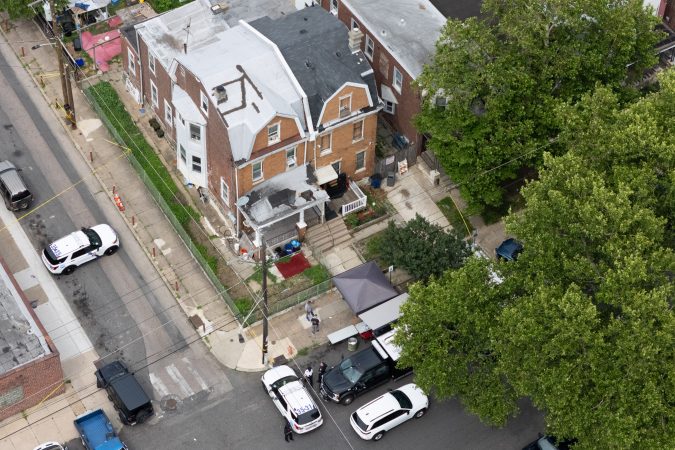
A law enforcement search continued Saturday at a dilapidated three-story brick twin in Olney, where police are investigating the homeowner’s connection with at least two missing women.
The house belongs to Eugene Albert Horsch, 44, who was arrested June 19 and charged with illegal gun possession and drug-related crimes.
Horsch’s initial arrest sparked questions: Why did he have a fake ID showing himself to be a DEA agent? Why did a woman with Horsch identify herself as someone else who was reported missing in 2023?
More questions unspooled as city police investigators and federal agents looked inside Horsch’s house, where they found hidden compartments, a 55-gallon drum, chemicals, unknown liquids, a woman’s death certificate, and a handwritten letter that seemed to describe hurting people.
On Saturday, Philadelphia police closed off the block and FBI forensic experts entered the property in hazmat suits.
In addition to these questions, there’s an older mystery — the June 2016 disappearance of Amy McHale.
Here’s what we know so far.
What prompted the investigation?
The morning of Friday, June 19, a U.S. park ranger near Independence Hall in Old City heard “a disturbance” coming from a black BMW, Philadelphia Police Department Deputy Commissioner Frank Vanore said Friday.
The ranger heard a woman say she was concerned that Horsch was going to hurt her, Vanore said.
The woman gave the ranger an identification card bearing her photo but the name of another woman who had been reported missing, Vanore said.
“And the park ranger felt that there was illegal drug activity going on inside the vehicle,” Vanore said.
Other law enforcement officers in the area were called to the scene, he said. In the car, police found cocaine, fentanyl, marijuana, two firearms with serial numbers removed, a collapsible baton, a cattle prod, and switchblade knives, sources told The Inquirer Friday.
Eugene Albert Horsch, 44, of Philadelphia.Courtesy of Philadelphia police
Why did Horsch have fake DEA credentials?
Law enforcement also found a fake U.S. Drug Enforcement Agency badge with Horsch’s photograph under the name “Eugene Frederick Steiner” in the car, sources told The Inquirer.
Police haven’t spoken publicly about why they believe Horsch had the fake ID. However, they soon brought real DEA agents to the scene, Vanore noted.
Soon, those agents were among those searching his Olney home.
What did police find inside the Chew Avenue house?
Police searched Horsch’s home on the 400 block of West Chew Avenue, where they found a 9mm firearm, ammunition, and a marijuana grow operation on one of the floors, Vanore said.
“The further search of this property produced some other things that we have a lot of questions about,” Vanore said.
Police brought in homicide investigators — who are now leading the investigation with FBI assistance — due to their experience and because several urns, possibly from deceased family members, were found, Vanore said.
Investigators found at least one more fake ID presenting someone as federal law enforcement, Vanore said, as well as “computer evidence” that the DEA took for analysis.
They also found bank cards in the name of the woman who went missing in 2023, and recovered what appeared to be a death certificate for another woman who died last year, The Inquirer reported Friday.
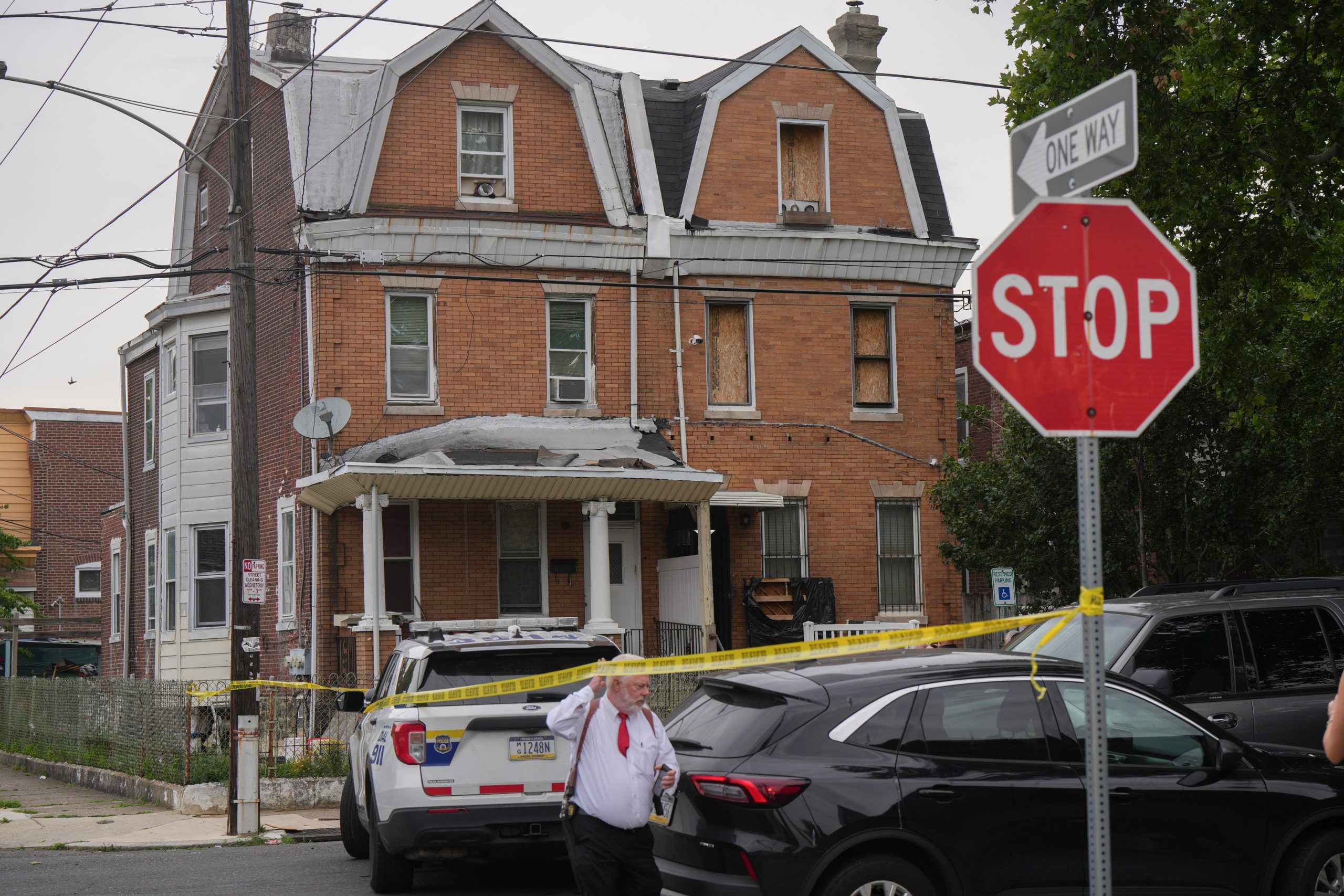
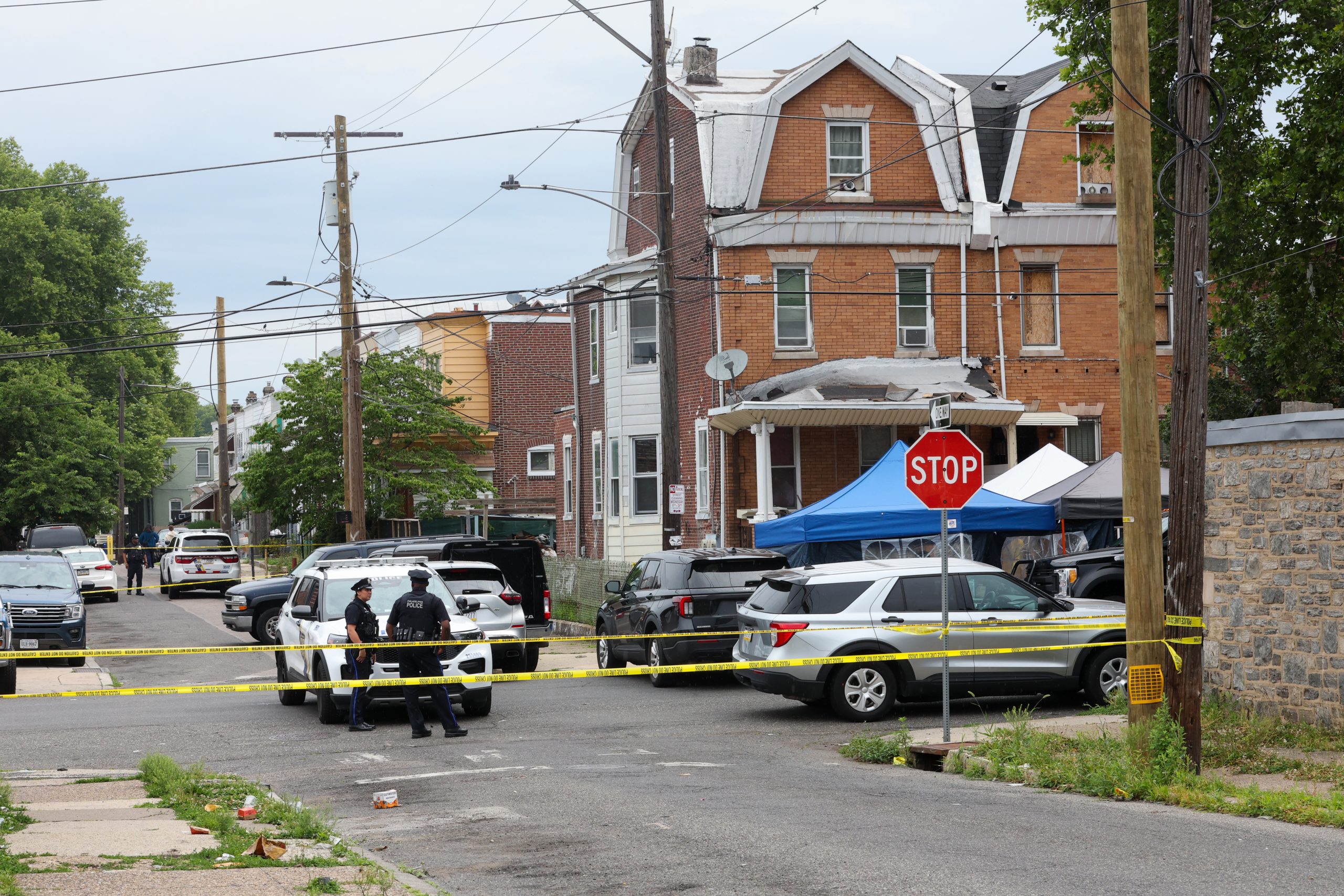
Police have officially blocked off access to the street at 417 W Chew, in Olney home in Philadelphia, June 27, 2026. Residents in the area are unable to access the street since Saturday morning.Aidan T. Gallo / Staff Photographer
Why is the FBI involved?
Investigators also found hidden compartments, “hoses coming from barrels,” and bottles containing chemicals and unknown liquids, Vanore said.
Some of the chemicals, if combined and ignited, could pose hazards, he said. The chemicals are what led investigators to ask for help from FBI experts, Vanore said.
“There’s chemical work being done, but we just don’t know if he was trying to produce narcotics, or some other work,” Vanore said.
What is the handwritten letter investigators found?
Federal investigators also found an unsigned handwritten letter that described references to hurting unspecified people, and references to the serial killer Ted Bundy, The Inquirer reported Friday.
“Acting on emotion is where problems occur. What I don’t think I told you was that the first time it was planned ahead of time. The threat was made before you know who came over and I already had a 2ft zip tie in my pocket and a drum set up,” the letter said.
“I had been ready and waiting and I damn sure showed no hesitation. And it was fun,” the letter said, according to an affidavit of probable cause for a search of the home obtained by The Inquirer.
Law enforcement sources said investigators were working to learn who wrote the letter and whether it may be part of a work of fiction.
Have police found bodies at the house?
Rumors spread quickly online Friday, with one of the most widespread ones being that human bodies or remains had been found at the house.
Speaking to reporters, Vanore dismissed these rumors.
“There’s no apparent bodies inside the house,” Vanore said. “Now, we’re going to further search. There’s a sump pump that looks like a hole in the ground, but there’s no bodies.”
Who are the missing women?
Police have not released the names of any missing women connected to Horsch.
The woman whose name was on the fake ID went missing in February 2023 from the Kensington area, sources told The Inquirer Friday. The woman who was with Horsch when he was arrested told police she used the fake ID because she had outstanding arrest warrants. She didn’t know the missing woman, but feared that something bad happened to her.
Vanore said he didn’t know if the missing woman had known Horsch.
“I have nothing to say she was ever inside the house, but of course, that’s why we’re still holding it and we’re still going to look,” Vanore said.
Vanore noted that Horsch had enough information about the missing woman to create a convincing fake ID.
Another woman who disappeared was Amy McHale, of South Philadelphia, who went missing in June 2016. McHale was the ex-wife of Horsch’s father, R.C. Horsch. Police questioned R.C. Horsch about the disappearance at the time.
Who is Eugene Albert Horsch?
Horsch has a long criminal record including a May 2025 arrest for possession of marijuana and amphetamines, which got him three years’ probation.
In March, he was charged with aggravated assault after police said he stabbed a man in the stomach at Eighth and Market Streets. Prosecutors withdrew the charges in May after a witness failed to appear in court, court records show.
Horsch had at least 10 previous arrests for drug possession, dealing, assaults, and drunken driving. He was sentenced to four to eight years in prison after police discovered $1.9 million worth of cannabis inside the Chew Avenue home in 2013, court records show.
Horsch appeared to be living at his house on Chew Avenue, despite its boarded-up windows and rundown look. Vanore said Friday that the woman who had the fake ID also was believed to have been staying there.
What do we know about R.C. Horsch, Eugene Horsch’s father?
R.C. Horsch, born Raymond C. Hoersch, was an erotic photographer and filmmaker who was convicted of forgery and drug manufacturing. R.C. Horsch changed the spelling of his last name.
R.C. Horsch pleaded guilty to passing bad checks in South Carolina in 1973 and the following year was charged in Doylestown by the Secret Service with passing nearly $180,000 in fake 10-dollar bills and possessing phony drivers’ licenses.
In 1977, federal agents raided what was described as R.C. Horsch’s home laboratory, seizing equipment they alleged was meant to manufacture and distribute methamphetamine. But R.C. Horsch absconded to New Zealand, later returning to California, and operating under the alias “Richard Harris.”
Eugene Horsch was born in 1981, while his father was still a fugitive.
R.C. Horsch was captured by authorities in Florida 1985. A psychologist hired by his defense attorney said he had an 140 IQ but had “deep rooted emotional problems.”
He was sentenced to three years imprisonment, plus probation, and settled into a home in Chalfont, Bucks County.
What was R.C. Horsch’s connection to the Chew Avenue house?
R.C. Horsch acquired the Chew Avenue house after the death of his sister, Helen M. Hoersch, in 2004. In 2007, R.C. Horsch used power of attorney to legally transfer ownership of the property to his son for $1.
In 2009, R.C Horsch was indicted in Chalfont for growing 455 marijuana plants. Investigators also seized two shotguns. The feds seized his suburban home and he was sentenced to 54 months in prison.
Federal inmate records show he was released from prison in 2013.
Are investigators examining R.C. Horsch’s role?
R.C. Horsch died in 2025, and Vanore told reporters Friday that investigators were looking at a lot of different angles. Vanore declined to go into specifics about R.C. Horsch, and said he wasn’t going to name “other missing people” potentially connected to the house.
“We’re certainly looking into the activities that went on at the house, even before he was there,” he said, referring to Eugene Horsch.
Police have officially blocked off access to the street at 417 W Chew, in Olney home in Philadelphia, June 27, 2026. Residents in the area are unable to access the street since Saturday morning.Aidan T. Gallo / Staff Photographer
What’s the latest from the investigation?
Under a gloomy sky Saturday, about 15 FBI agents went in and out of the boarded-up home, some wearing protective suits.
Next to the tent installed Friday outside Horsch’s home were four portable fabric shelters, with all sides shielded from public view.
Neighbors walked around the sealed perimeter asking for information, while men in protective suits came and went from Horsch’s backyard shed.
“They’ve begun processing the scene,” Vanore said Saturday. Forensic experts now are determining what evidence had to be sent away for scientific analysis, he said. “It’s going to take some time.”
Inquirer staff writers Max Marin, Ellie Rushing, Barbara Laker, Michelle Myers, Chris Palmer, and Isabel Maney contributed to this article. For more details, read this story.
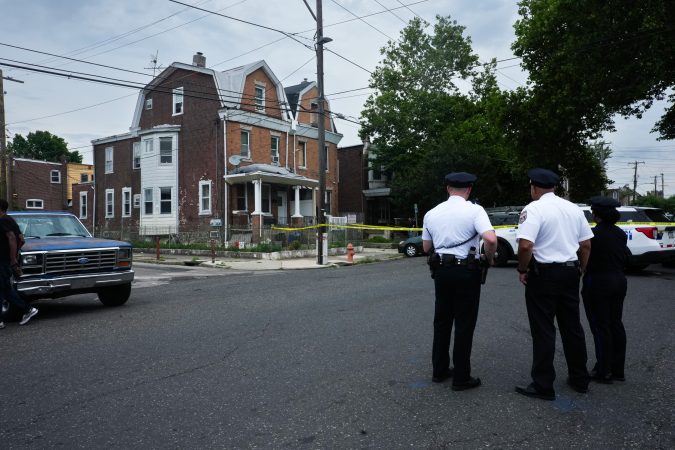
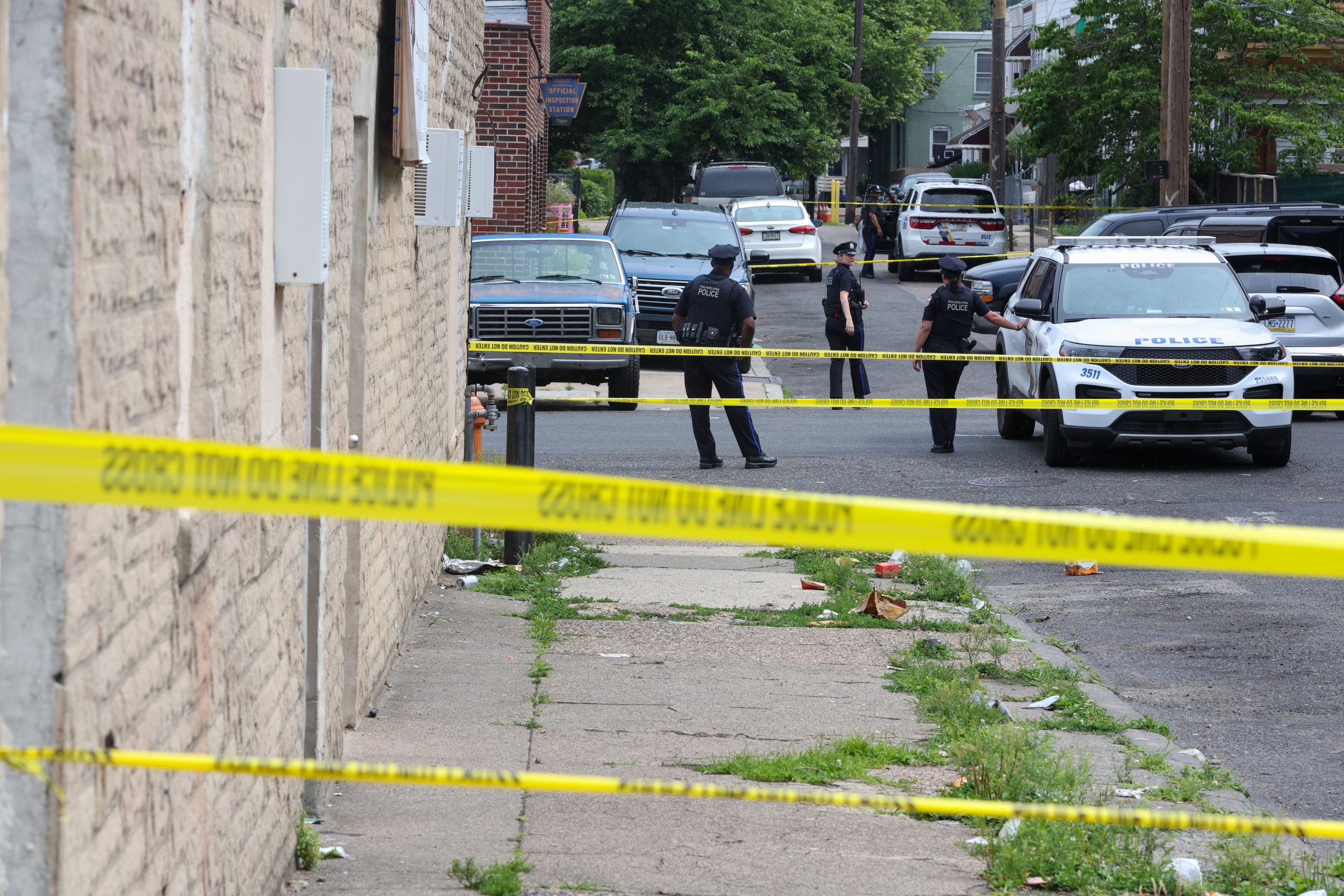
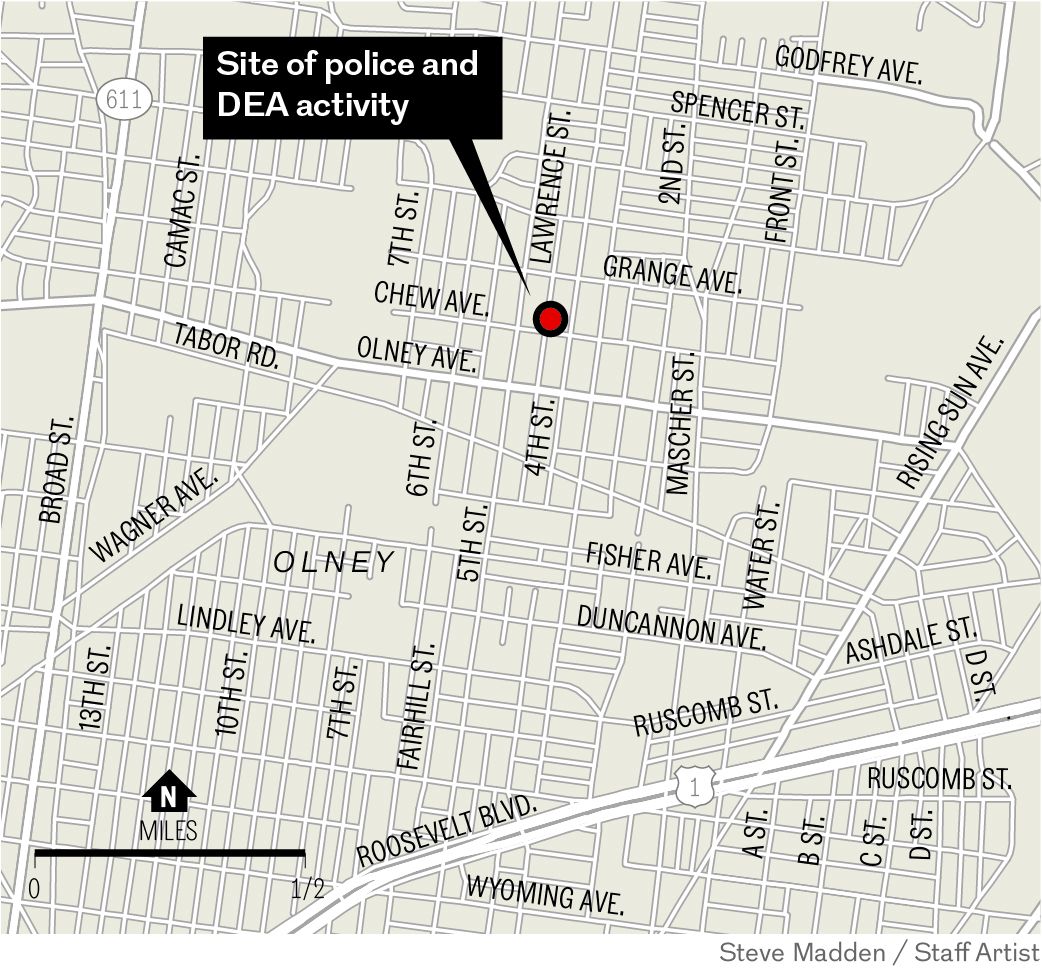
The 400 block of West Chew Avenue in Olney was largely shut down Friday afternoon as Philadelphia and federal law enforcement officials searched a home on the block to determine if its owner had connections to at least two missing women.
Residents of the block had effectively been sealed in as caution tape and Philadelphia Police Department vehicles cordoned off the street. Some residents gathered on their porches or sidewalks as federal officials produced equipment from the back of a black, unmarked utility truck.
“I have been living here all my life,” Larry Alosi, 56, said. “It used to be a safe place, but it changed with time.”
Consisting largely of rowhouses and small businesses, the North Philadelphia neighborhood of Olney is among the city’s most diverse, with large Korean American and Latin American populations calling the area home.
The search had been ongoing for nearly a week, and came after U.S. Park Police encountered Eugene Albert Horsch, 44, acting suspiciously in a black BMW near Sixth and Market Streets on June 19, police said. Investigators recovered two firearms with obliterated serial numbers from Horsch’s vehicle, as well as cocaine, fentanyl, and marijuana — along with a baton, a cattle prod device, a switchblade, and a falsified U.S. Drug Enforcement Administration badge with Horsch’s photograph depicting a falsified name.
Officials took Horsch into custody following the stop, and charged him with illegal gun possession and drug crimes. Searches of his home began last week.
Horsch was being held Friday at Curran-Fromhold Correctional Facility with bail set at $500,000.
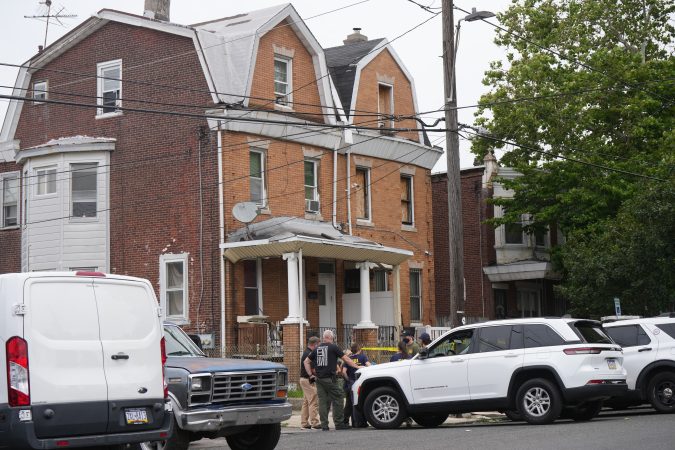
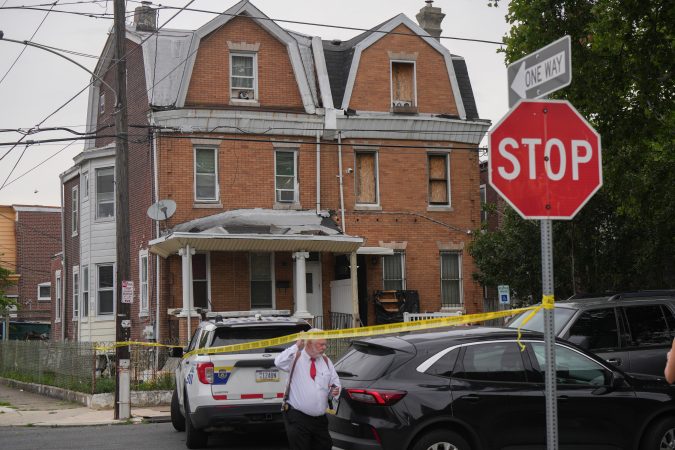
A passerby called the West Chew Avenue residence “a house from a scary movie,” with boarded-up windows on its second and third floors. A camera on the exterior points to the street. The windows on the first floor have bars from top to bottom. Pink flowers remain on the lawn, decorated with pieces of broken glass from the door.
Neighbors on Horsch’s block said the area is a quiet one, though it occasionally has its issues. Fabin Ingram, an area resident, said he never saw anyone coming or going at the corner of West Chew near Horsch’s home, and he largely worked to avoid the intersection.
“I’m big on energy and feelings,” Ingram said. “If I get an eerie feeling, I act on it.”
Investigators at 417 W Chew, searching a home in Olney neighborhood in Philadelphia, June 26, 2026.Jessica Griffin / Staff Photographer
One neighbor, Sid Brunson, who used to cut Horsch’s grass, described Horsch as a quiet, jittery man who “had a lot on his mind.” Brunson said that Horsch’s father, R.C. Horsch, a convicted drug manufacturer and erotic filmmaker, died in 2025, leaving a pall over the home.
“You will never see a man other than him coming or leaving the house after that,” Brunson said. “If there was visitors at the home, it was always a female, never a male.”
Another neighbor, who asked not to be identified for fear of reprisal, said Horsch was someone who got into disagreements with neighbors over parking and trash. He had long driven an impeccably maintained gold 1980s Lexus, and in recent years had started driving a new black BMW — and was often seen bringing women home with him, the neighbor said.
The ongoing search of Horsch’s home this week was the latest in a series of odd developments at the property, with investigators saying that several urns had been found inside the home, including one that was labeled with the name of a deceased relative. Officials also discovered a 55-gallon drum with connections to water lines leading into a hole in the ground, as well as materials to grow marijuana, though it was not immediately clear if the items in the home were connected to drug manufacturing or more violent purposes.
On Friday, law enforcement officials wearing hazmat suits were seen entering and exiting the property.
During Horsch’s arrest last week, a woman falsely identified herself using the name of a 38-year-old woman who had been reported missing in Kensington in February 2023, sources told The Inquirer. Deputy Police Commissioner Frank Vanore declined to identify the woman who had been reported missing, but reports indicate that Horsch’s father had been questioned in the 2016 disappearance of his ex-wife, Amy McHale, of South Philadelphia.
By late Friday afternoon, the investigation into Horsch’s home had not ceased, but a large FBI truck was spotted leaving the scene. Late in the day, the area had been largely left quiet, with the crime-scene tape on the home’s door serving as conspicuous evidence of the day’s events.
Staff writer Andrea Padilla contributed to this article.
During a weeklong search of a crumbling Olney twin, federal agents and Philadelphia police found guns and drugs, tubs of chemicals, a curious unsigned letter, and fake law enforcement badges as they were investigating the homeowner’s connection to at least two women who have been missing for years.
The unusual investigation began under similarly bizarre circumstances: U.S. Park Police encountered Eugene Albert Horsch, 44, acting suspiciously in his black BMW parked near Sixth and Market Streets on the morning of June 19, Deputy Police Commissioner Frank Vanore said.
As the ranger approached the car, Vanore said, he heard a woman in the backseat say, “You’re going to hurt me.” The woman then falsely identified herself to the officers using the name of a 38-year-old woman who had been reported missing in Kensington in February 2023, said the sources, who spoke on the condition of anonymity to discuss an ongoing investigation.
The woman, 39, later told investigators that she’d given the alias because she had open warrants for her arrest in ongoing drug cases, and that Horsch had previously made her fake identification cards in that name, telling her she could use it if she was ever stopped and questioned by police, the sources said.
And later, the sources said, she told officials that she did not know that missing woman — but feared something bad may have happened to her.
Eugene Albert Horsch, 44, of Philadelphia.Courtesy of Philadelphia police
When police searched Horsch’s car outside Independence Hall, they recovered two firearms with obliterated serial numbers, as well as cocaine, fentanyl, and marijuana, according to an affidavit of probable cause for his arrest. What’s more, a source said, the car also contained a collapsible baton, a cattle prod, switchblade knives, and a fake U.S. Drug Enforcement badge with Horsch’s photograph under the name “Eugene Frederick Steiner.”
Horsch was taken into custody and charged with illegal gun possession and drug crimes. He’s currently being held on $500,000 bail at Curran-Fromhold Correctional Facility.
Officials with federal drug enforcement began searching Horsch’s home on the 400 block of West Chew Avenue alongside Philadelphia police on June 19.
The house at the 400 block of W. Chew Avenue in Olney being investigated.Steve Madden
Vanore, in a news conference Friday, said the conditions of the boarded-up twin and materials recovered inside of it — including hidden compartments, drums filled with chemicals, and what appeared to be urns holding at least one of Horsch’s relatives’ cremated remains — only deepened the mysteries of the case.
And investigators soon found themselves confronting a second concerning thread: Horsch’s late father, R.C. Horsch, a convicted drug manufacturer and erotic filmmaker, had an ex-wife who was last seen at the Olney property in 2016 and has never been found.
Horsch’s attorney, Jerome Brown, said he did not have details about the ongoing police investigation.
Brown said R.C Horsch, who died in 2025, had been questioned in the June 2016 disappearance of his ex-wife Amy McHale, of South Philadelphia. She suffered from mental health and substance abuse issues, he said.
“This is much ado about nothing,” Brown said of the missing persons investigation. “They’re barking up the wrong tree.”
Inside Horsch’s home, investigators found another handgun, chemicals and bottles of liquid that forensics investigators in white hazmat suits were still working to identify on Friday, Vanore said. There was also a 55-gallon drum with connections to waterlines leading into a hole in the ground, he said, and materials to grow marijuana upstairs.
Federal investigators also found a multipage and unsigned handwritten letter that described references to hurting unspecified people, and references to the serial killer Ted Bundy, according to an affidavit of probable cause to search the home that was obtained by The Inquirer.
“Acting on emotion is where problems occur. What I don’t think I told you was that the first time it was planned ahead of time. The threat was made before you know who came over and I already had a 2ft zip tie in my pocket and a drum set up,” the letter said, according to the affidavit.
According to the warrant, it went on: “I had been ready and waiting and I damn sure showed no hesitation. And it was fun.”
Law enforcement sources said investigators were working to verify the authenticity of the letter, who wrote it, and whether it was meant to serve as a portion of a novel or screenplay. Horsch’s father published several works of fiction with masochistic themes, including one described as an “autobiographical memoir of a caring, empathetic serial killer.”
Police also found bank cards in the name of the woman who went missing in 2023, and also recovered what appeared to be a death certificate for another woman who died last year, the document stated.
Vanore said no human remains were found inside the home.
Forensic experts from the FBI are now analyzing the liquids and materials recovered in the home, he said.
Vanore said it wasn’t clear whether the chemicals were intended for a drug manufacturing operation or another purpose.
“We just don’t know what he’s doing, if he’s producing something, if he’s making something, if he’s irrigating something, we don’t know,” Vanore said. “I’m not a chemist, but from what I’ve been told … they could have been explosives.“
And, he said, it was too early to say whether the evidence would speak to any of the missing person cases tied to the property. He declined to identify the woman who had been reported missing in 2023 and did not answer questions related to the ongoing investigation into McHale’s disappearance.
“We’re certainly going to look into the activities that went on at that house,” he said.
Investigators on W. Chew Avenue.Jessica Griffin / Staff Photographer
News reports of the search of the Horsch home reopened wounds for McHale’s family. Gloria McHale said her daughter struggled with mental health issues and a drug addiction, and was married to R.C. Horsch for several years before disappearing June 14, 2016.
In an interview Friday, she said when police questioned R.C. Horsch at the time of her daughter’s disappearance, he said he last saw McHale drinking vodka before he went to bed, and that when he woke up, she was gone.
“I knew that wasn’t right,” McHale’s mother said. “She wouldn’t disappear. She had a daughter and grandkids. Her daughter was about to get married.”
Prior to his arrest last week, Eugene Horsch had a criminal history that included at least 10 other arrests for drug possession, dealing, assaults and drunk driving. He was sentenced to four to eight years in prison after police discovered $1.9 million worth of cannabis inside the Chew Avenue home in 2013, court records show.
He was arrested again in May 2025 for possession of marijuana and amphetamines and handed three years’ probation.
Then, in March, he was charged with aggravated assault after police said he stabbed a man in the stomach at Eighth and Market Streets. Prosecutors withdrew the charges in May after a witness failed to appear in court, court records show.
Since his release from jail, he appeared to be living back at his rundown home on Chew Avenue, a property that city inspectors cited as vacant and unsafe in recent years and that neighbors described as an increasingly off-putting presence on the block.
On Friday morning, anxiety swirled along the typically quiet residential neighborhood, about a mile from the Montgomery County border.
A security camera mounted on Horsch’s home between the boarded-up windows on the upper floors looked out over an overgrown yard where at least a dozen local and federal agents collected and tested evidence into the late afternoon.
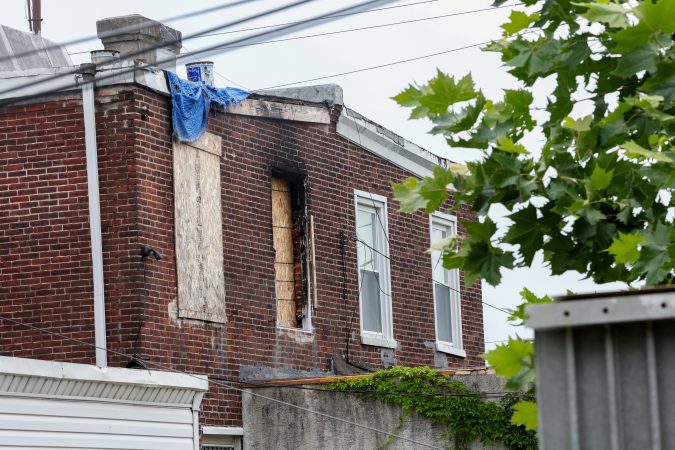
Sid Brunson, a construction worker who lives nearby and occasionally cut the grass in front of Horsch’s house, said Horsch often had women who appeared to use drugs at his property. A fire broke out on the upper floors of the property several months ago, he said, which led to plywood covering the windows.
He described his neighbor as a “quiet” and “real jittery” man who kept to himself.
“He always had a nice shirt on like he was going to the office,” Brunson said, “but he never gave you enough time to talk because he was always rushing.”
Staff Writers Ryan W. Briggs, Samantha Melamed, Brett Sholtis, Michelle Myers, Isabel Maney, Andrea Padilla, and Jesse Bunch contributed to this article.
A U.S. park ranger last week conducted what seemed like a routine traffic stop near Independence National Historical Park, approaching a black BMW that was parked in front of a fire hydrant and asking to speak with the driver.
But just moments into the encounter, the ranger discovered a series of alarming pieces of evidence inside the car, according to a police report obtained exclusively by The Inquirer: switchblade knives, drug materials, a cattle prod and, eventually, two loaded guns.
The car’s occupants, too, were displaying troubling behavior, the report said — a woman inside said the driver was going to hurt her. And she then produced a fake identification that included her photo, but had the name of another woman who had been missing for three years.
The episode kicked off what has since become a weeklong investigation into the car’s owner and a variety of unsettling materials police have since found in the man’s Olney rowhouse.
And the probe has only intensified in recent days, growing to include Philadelphia homicide detectives, FBI agents specializing in chemical analysis, and unsubstantiated rumors spilling across social media about corpses being found in a basement.
Officials said Friday that they had no indication that Eugene Albert Horsch, 44 — the man who owns the BMW and the home in Olney — had actually stored human remains in his house on the 400 block of West Chew Avenue. But Deputy Commissioner Frank Vanore cautioned that the investigation remained ongoing, and that law enforcement agents were examining a host of unusual evidence connected to Horsch and his home.
Horsch, in the meantime, remains jailed on gun and weapons charges that were filed after his initial encounter with the park ranger last Friday.
The police report obtained by the Inquirer, as well as the affidavit of probable cause for Horsch’s arrest, gave this account of how that episode unfolded:
Around 8 a.m. on June 19, a park ranger patrolling the area noticed Horsch’s BMW stopped on Sixth Street in a restricted area, and the ranger walked up to the car to speak with the driver.
When Horsch rolled down his window, the ranger heard a woman inside the car yell out that the man inside was going to hurt her. The ranger also noticed signs of potential drug use by the occupants of the car, including a butane lighter and tweezers, and he asked both people in the vehicle for identification.
The woman then provided an ID that had her photo but the name and other details of a woman who had been reported missing several years ago.
And when the ranger asked Horsch to step out of the car, he noticed Horsch had scissors, a switchblade knife, and a glass drug pipe. The ranger’s partner then searched the car and found more troubling signs under the floorboards: two loaded firearms.
The rangers then handcuffed Horsch and the woman, but Horsch told police the guns were not hers. He also then said he had crack cocaine in a compartment near his steering wheel.
Both Horsch and the woman — whom The Inquirer is not identifying because she has not been charged with a crime — then began hyperventilating, and were taken in separate vehicles to Jefferson Hospital.
Officers continued searching Horsch’s car and found more apparent drug materials, a baton, a cattle prod, another knife, and fake credentials that purported to identify Horsch as an agent with the Drug Enforcement Administration.
After being released from the hospital, Horsch and the woman were taken to DEA headquarters. Horsch declined to speak with investigators.
The woman, however, said she’d met Horsch a few months ago, and provided enough details about their interactions at his house that investigators applied for a search warrant.
Vanore, of the police department, said investigators were continuing to sort through a mix of guns, drugs, chemicals, and even urns they’d found inside — including during searches Friday.
The possibilities of why such materials could have been on hand include drug manufacturing, explosive production, or other activities, he said, adding: “We’re certainly going to look into the activities that went on at that house.”