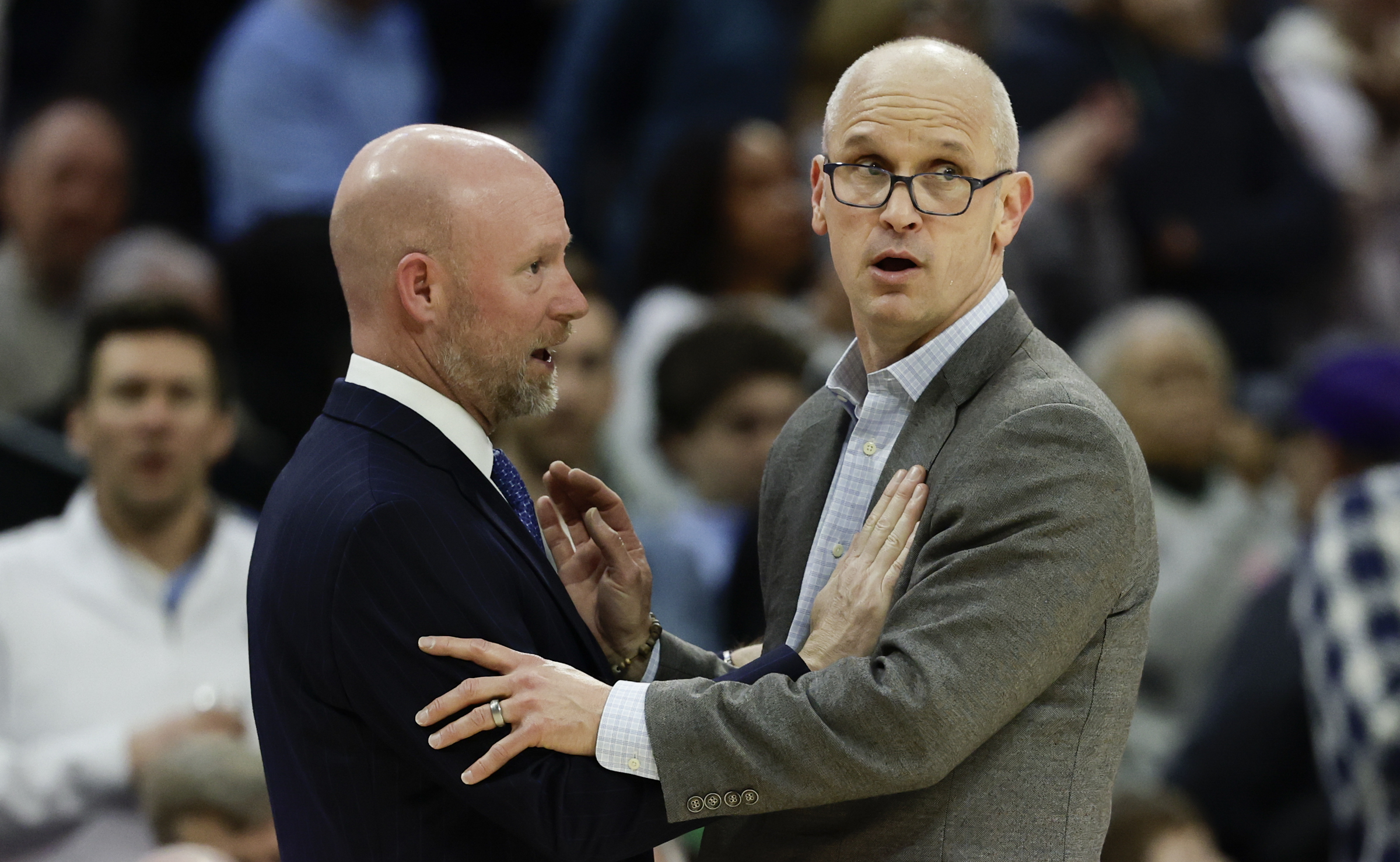
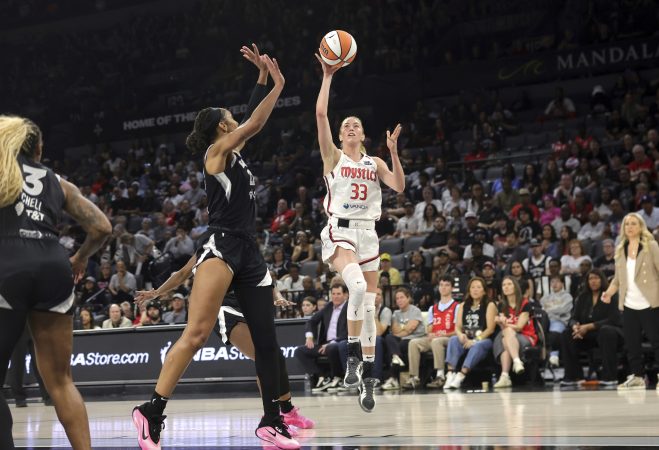
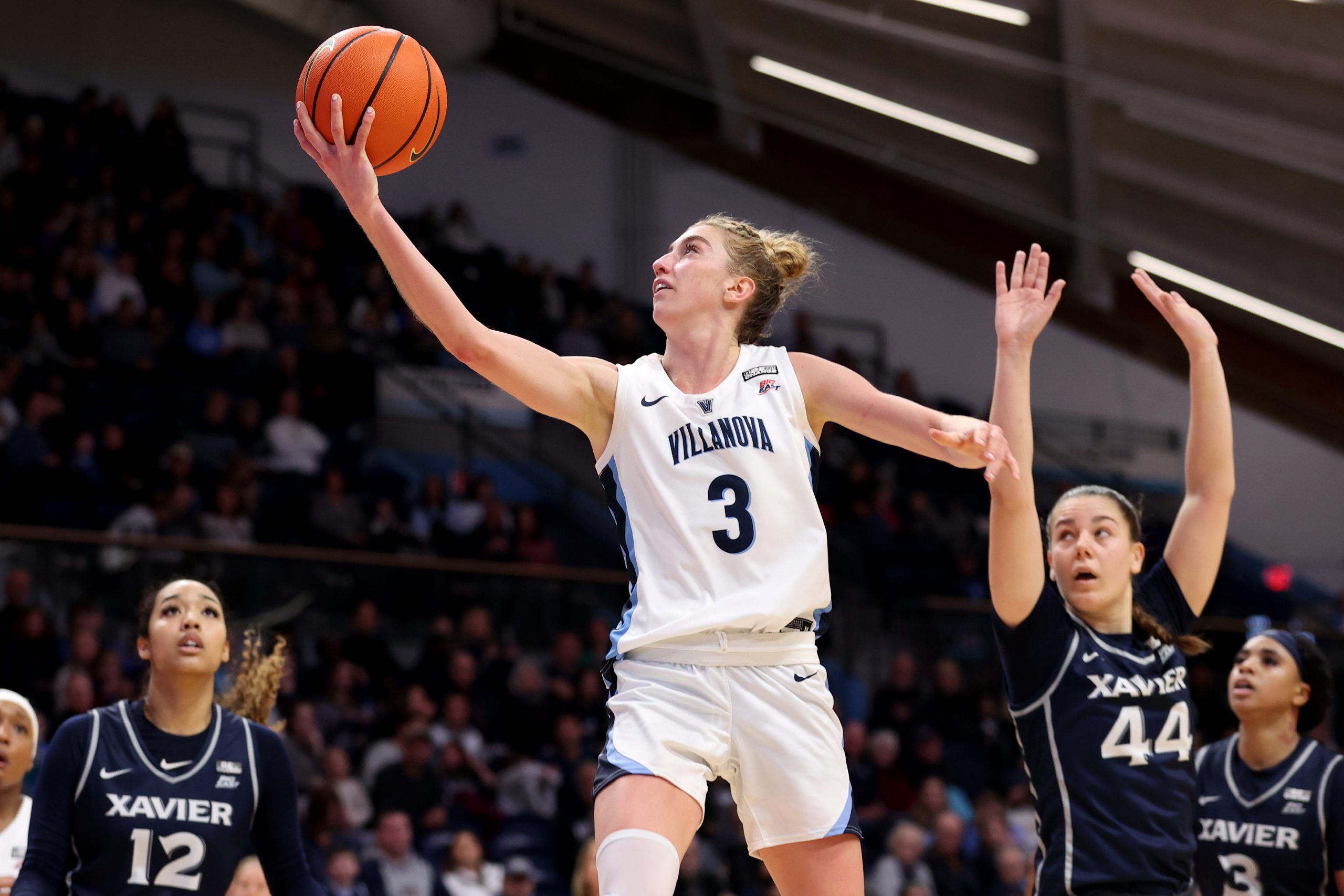
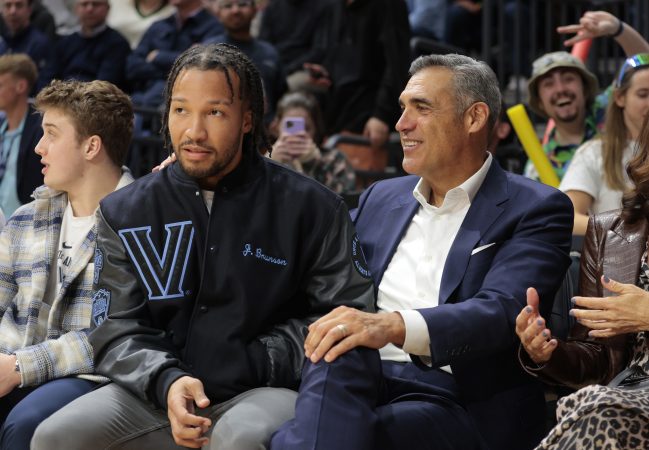
The college basketball season is officially over, which means it’s time for the transactional period to begin. Welcome to the 2026 transfer portal.
More than 1,500 men’s basketball players were in the portal in the first 24 hours after it officially opened on April 7. The portal is open for two weeks, but players do not need to make their commitment to a new school during that window. The next few weeks will be filled with salary negotiations during the yearly NCAA free agency process.
We’ll be tracking it all here, from players moving in and out of — or around — the Big 5 to keeping tabs on Philly-area players at other schools. We’ll also take a look at where some of the top local high school recruits from the Class of 2026 will be playing in the fall.
Big 5 portal entries
Here are the players who were at Big 5 schools during the 2025-26 season but have entered the transfer portal.
Villanova
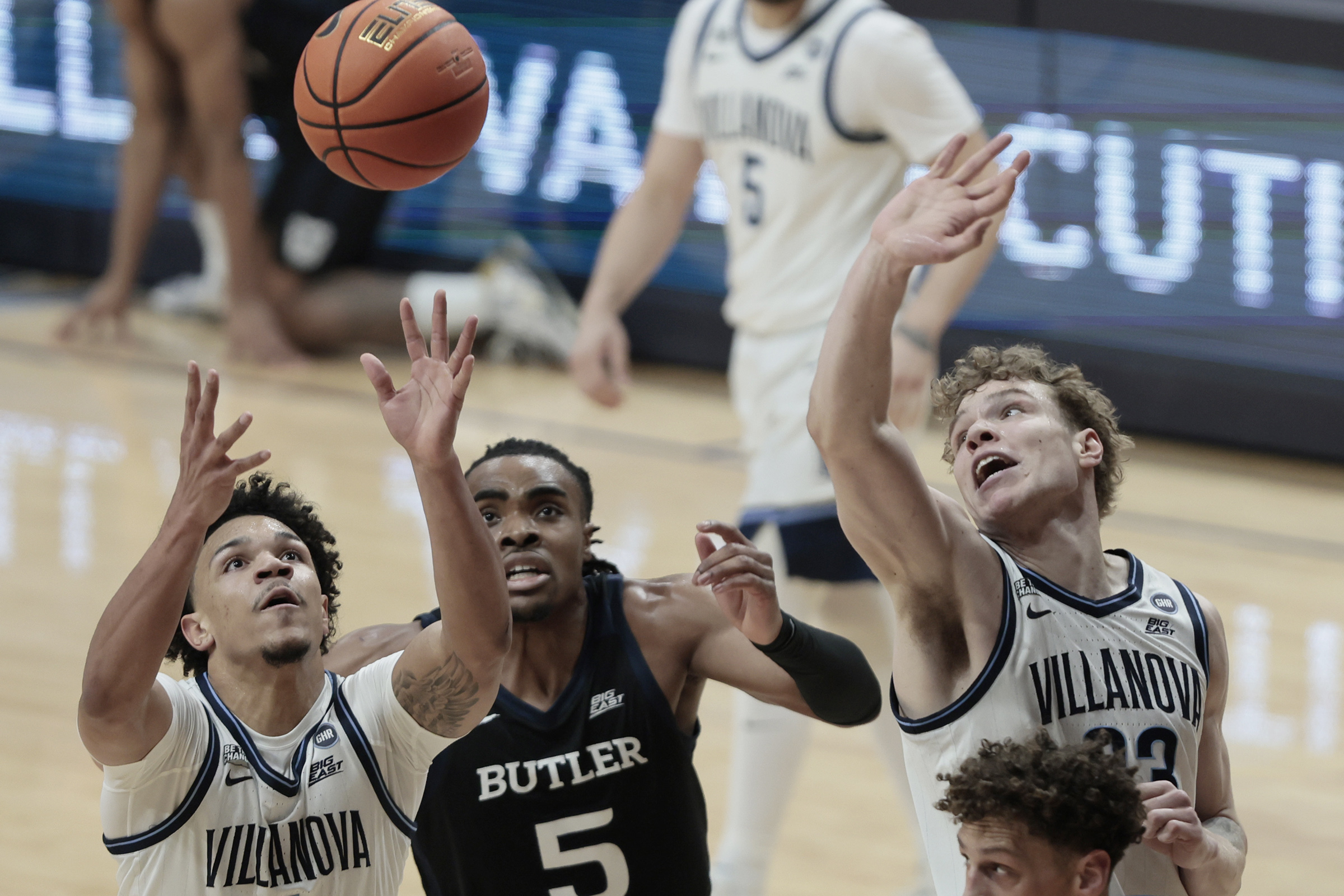
Acaden Lewis (point guard) started for the Wildcats during his freshman year and averaged 12.2 points, 5.3 assists, and 3 rebounds. (Transferring to Miami.)
Bryce Lindsay (guard) was a redshirt sophomore and Villanova’s best scorer during its nonconference schedule. (Transferring to Indiana.)
Malachi Palmer (forward) was a solid contributor off the bench who started down the stretch after Matt Hodge went down. But Villanova recruited multiple forwards out of the portal. (Transferring to Minnesota.)
Chris Jeffrey (guard), a freshman backup point guard who missed time after knee surgery but had promising moments.
Braden Pierce (center), a redshirt freshman reserve who followed coach Kevin Willard from Maryland, played 6.5 minutes per game and averaged 1.2 points. (Transferring to College of Charleston.)
Zion Stanford (forward/West Catholic graduate) transferred to Villanova from Temple, left the team in March after playing in 10 games. (Transferring to Towson.)
Tafara Gapare (forward), a senior, left the program at midseason after playing in just nine games.
Aiden Tobiason (guard) averaged 15.3 points, second on the team, and led the Owls with 39 steals. He’ll have two years of eligibility left. (Transferring to Syracuse.)
Babatunde Durodola (forward), a sophomore, started as a freshman and was a key rotational player this season. (Transferring to Ball State.)
Jamai Felt (forward) started in 23 games and averaged 4.1 rebounds. (Transferring to Arkansas-Little Rock.)
AJ Smith (guard) averaged 7.8 points in eight games and had his season cut short by a shoulder injury.
Spencer Mahoney (forward) made 13 appearances as a redshirt sophomore. (Transferring to Denver.)
Ayuba Bryant Jr. (forward) appeared in 27 games, averaging 8.1 minutes.
Connor Gal (guard/Great Valley High graduate) played 12 minutes across five games and will have one year of eligibility left.
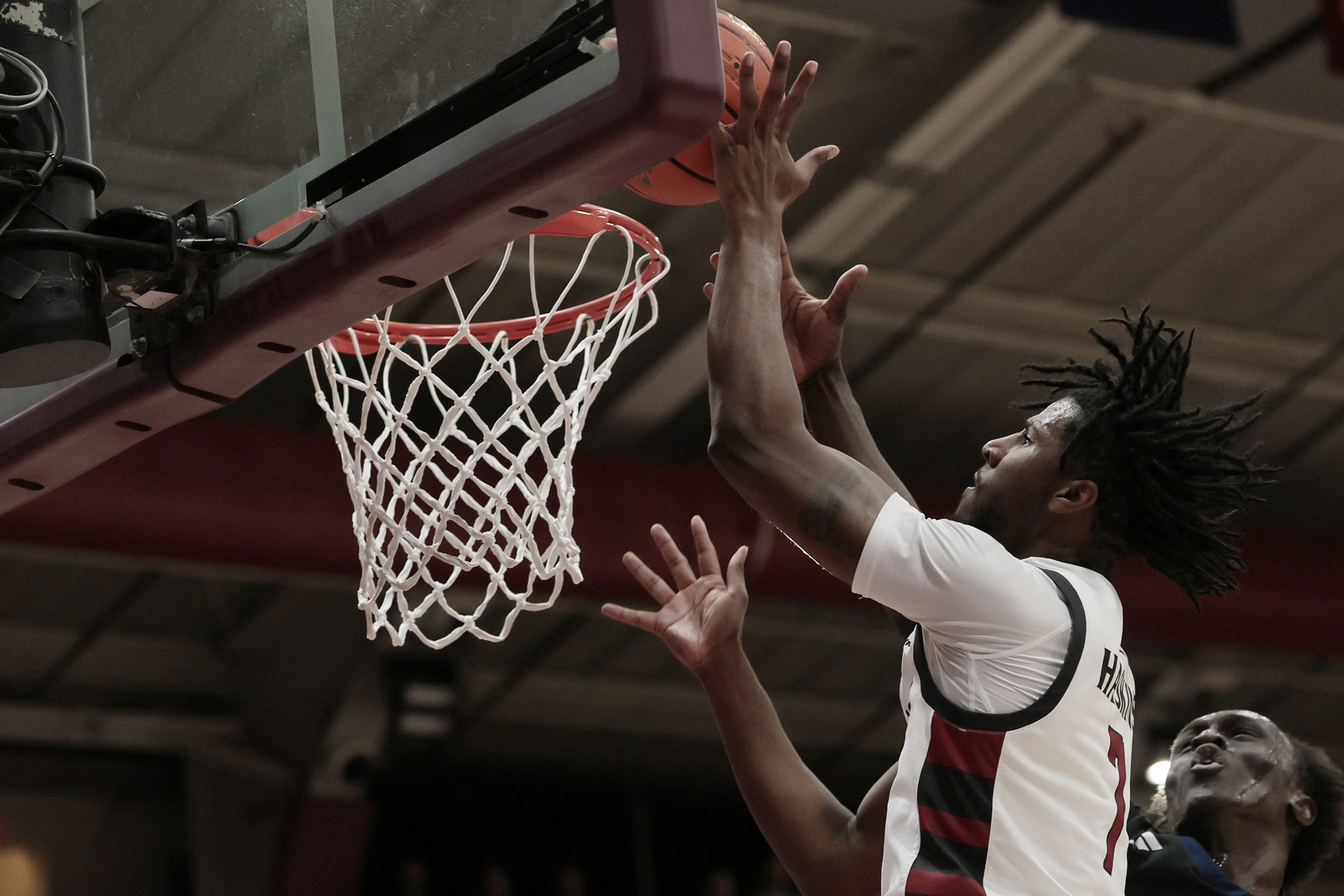
Dasear Haskins was a key starter for the Hawks this season.Elizabeth Robertson / Staff Photographer
St. Joseph’s
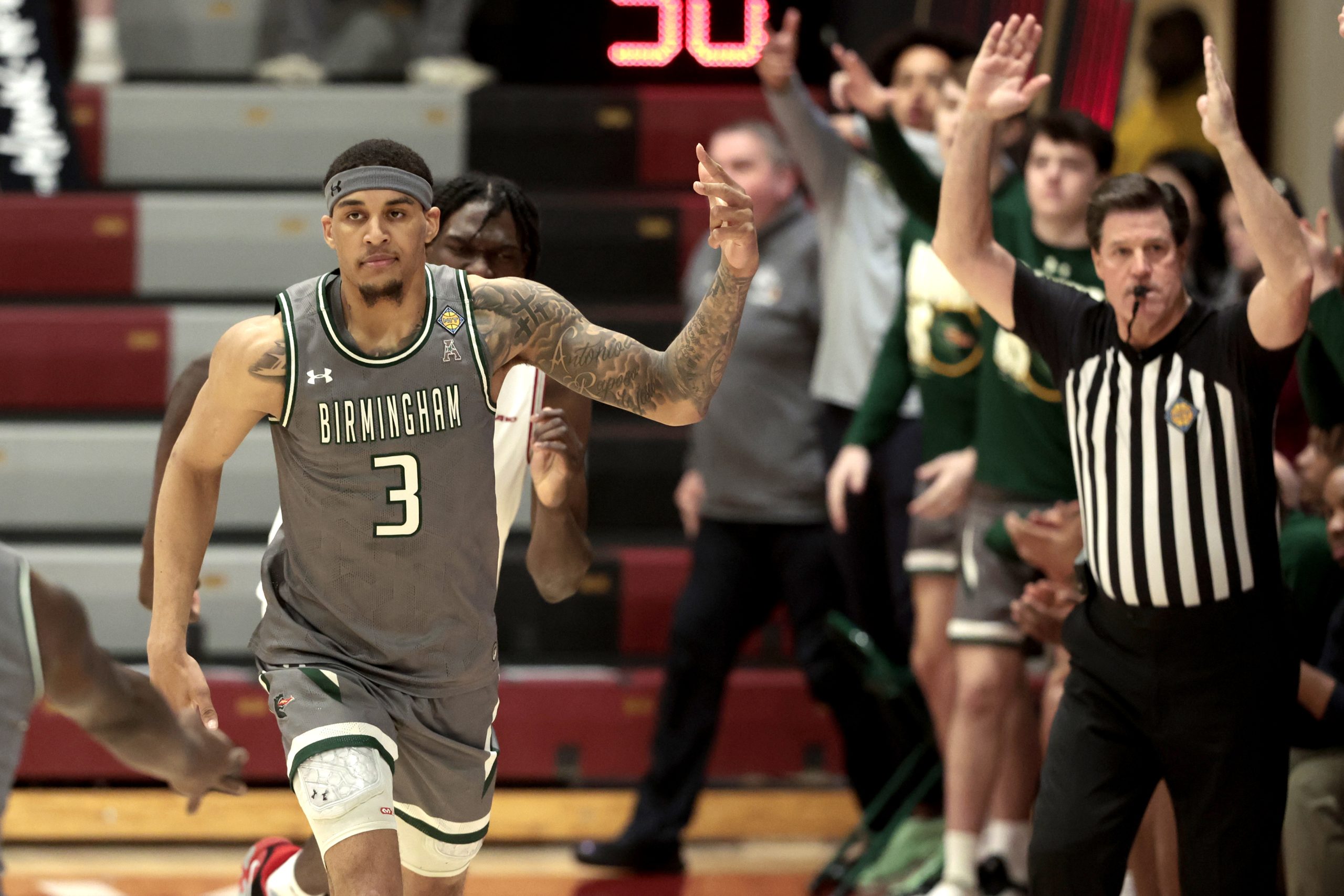
Deuce Jones (guard/La Salle), who led the Hawks in scoring during the first two months of the season, was dismissed from the team in December. (Transferring to Alabama-Birmingham.)
Dasear Haskins (guard/Camden High graduate) averaged 11.1 points and started for the Hawks as a redshirt sophomore. (Transferring to Ole Miss.)
Anthony Finkley (forward/Roman Catholic graduate), a junior, averaged 19 minutes in 35 games. (Transferring to La Salle.)
Kevin Kearney (forward) appeared in 14 games as a redshirt freshman. (Transferring to Manhattan.)
Jaden Smith (center) averaged 2.8 points and 1.8 rebounds in 9.1 minutes after transferring from Fordham. (Transferring to Ball State.)
Steven Solano (center), a redshirt freshman, played in eight games. (Transferring to Delaware.)
Al Amadou (center/Springside Chestnut Hill Academy graduate) transferred from Marquette and appeared in 11 games. (Transferring to Wisconsin-Milwaukee.)
Penn
Ethan Roberts (forward) has one year of eligibility remaining — the Ivy League prohibits graduate students from playing intercollegiate athletics — and was the Quakers’ leading scorer (16.9 points per game). (Transferring to Notre Dame.)
Cam Thrower (guard), a senior who spent four years at Penn, averaged 17 minutes in 27 games. (Transferring to Elon.)
Dylan Williams (guard) played in seven of Penn’s first 10 games before the senior missed the rest of the season with an injury. (Transferring to Northwestern)
Michelangelo Oberti (center) appeared in 12 games. (Transferring to Boston University)
Alex Massung (guard), who averaged 5.6 minutes in 10 games played. (Transferring to Saint Anselm.)
Bradyn Foster (forward) saw action in Penn’s season opener.
Drexel
Shane Blakeney (guard) was Drexel’s leading scorer, averaging 14.2 points in 33 games as a junior. (Transferring to South Carolina.)
Kevon Vanderhorst (guard) averaged 9.3 points and 2.9 assists while starting all 33 games for the Dragons. (Transferring to Iona.)
Villiam Garcia Adsten (guard), a junior, averaged 17.5 minutes in 32 games. (Transferring to Maine.)
Horace Simmons Jr. (forward/La Salle College High School graduate) appeared in 13 games.
La Salle
Ashton Walker (guard) started 21 games and averaged 8.2 points as a freshman. (Transferring to Monmouth.)
Eric Acker (guard), a junior, appeared in 26 games, starting 10, and averaged 18.9 minutes. (Transferring to Northern Kentucky.)
Nas Hart (forward) played in 20 games as a freshman. (Transferring to Quinnipiac.)
Edwin Daniel (forward) played 31 games (14.5 minutes) and averaged nearly four points and 3.5 rebounds. (Transferring to Stephen F. Austin.)
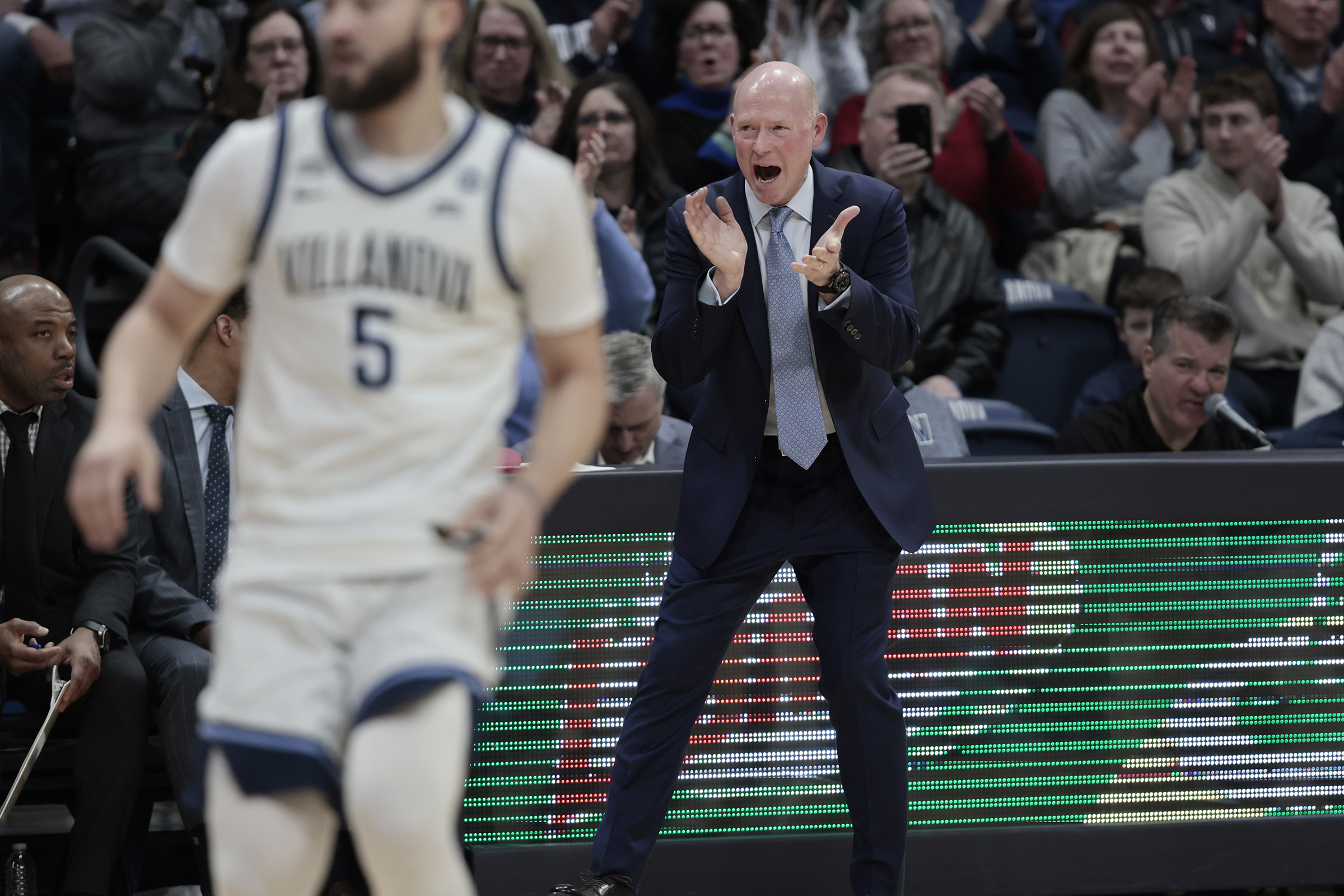
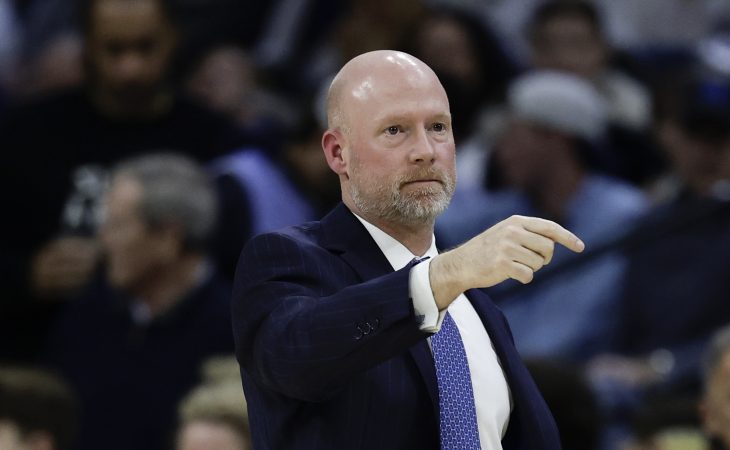
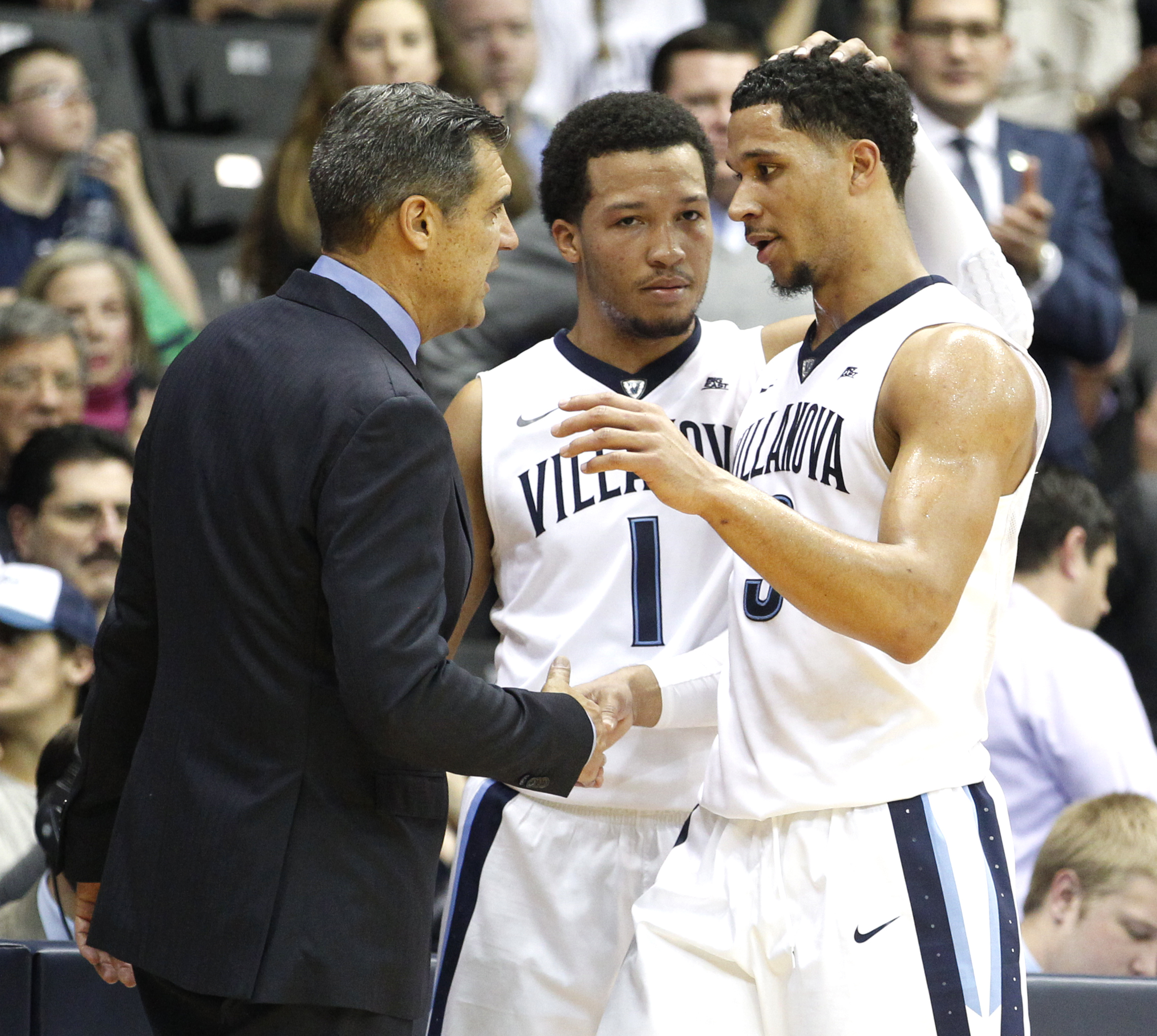
Villanova coach Kevin Willard directs his team against Butler on Feb. 25. Elizabeth Robertson / Staff Photographer
Big 5 portal additions
These are the players who are transferring to Big 5 schools.
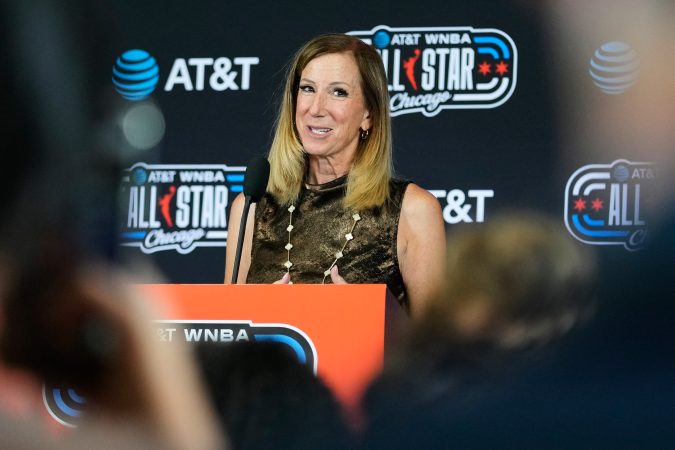
The last time the WNBA All-Star Weekend was in Chicago, four years ago, commissioner Cathy Engelbert remembered the event being smaller.
Back in Chicago this weekend for the All-Star festivities, the league is celebrating its 30th season, and Engelbert said the weekend has been the “largest, most immersive, and most accessible,” in its history.
The rapid growth of the league was among several topics Engelbert discussed in a news conference before Saturday night’s WNBA All-Star Game. Notably, Engelbert announced that in the 2027 season, the WNBA will be launching a full centralized replay center.
“This is one of the most significant investments we’ve ever made in our basketball operations,” said Engelbert, a Collingswood native. “This investment of tens of millions of dollars will help bring greater consistency, efficiency, and transparency to our officiating process while continuing to improve the quality of the game.”
While the league is finalizing details, Engelbert said it will leverage some of the NBA’s replay center capabilities while adding its own innovations.
The WNBA has received a constant stream of backlash for its officiating. Other significant current issues include cybersecurity and player harassment, which Engelbert also addressed on Saturday.
On Tuesday, Engelbert met with players to address all three of these issues and said she collected feedback and ideas from the players. She emphasized that player safety will always be the league’s top priority, on and off the court.
“The racism, the misogyny, the homophobia, the harassment, and threats directed to our players has no place in sport or anywhere else,” Engelbert said. “This is their workplace. … The WNBA is built on inclusion and respect, and those values have defined this league for 30 years, and it will continue to define us for the next 30.”
Player experience was one of the pillars Engelbert mentioned the league investing in. Fan experience was the other.
The plan, Engelbert said, is to continue to build on the current momentum the league is experiencing.
“We have big plans, and if the first half of the season has shown us anything, it is that the future of the W has never been brighter,” Engelbert added.
Engelbert shared that this has already been the most-watched WNBA season — and it’s at its halfway point. There have also been 29 games that have averaged over 1,000,000 viewers, the most ever at this point in the season. Last season had 11 games reach that milestone.
In addition to the streaming numbers, attendance has increased 16% from this point last year, said Engelbert, with more than 2.2 million fans attending games.
“When we entered this season, we did so in the strongest position in league history, coming off a historic CBA, starting a new era of media partnerships, record franchise valuations, two new expansion teams coming in this year, and excitement around the league at an all-time high,” Engelbert said. “Those milestones are marking the beginning of the next chapter of WNBA growth. And since opening night, we’ve been building on that momentum on the court.”
Those new expansion teams are the Toronto Tempo and the Portland Fire, which joined the league this season. In 2028, Cleveland will become the newest expansion team in the league, followed by Detroit in 2029, and Philadelphia in 2030.
Will Engelbert be around as commissioner to see these plans come to fruition?
Questions about Engelbert’s future with the league have been raised with her contract expiring at the end of the season. When asked about it Saturday, the commissioner did not offer a direct response.
“I’m so blessed to be at the helm of this league during this incredible hypergrowth period, so blessed that these players are putting the product on the court they are every night, that they stand for the values that the W has long sought for,” Engelbert said. “So I will just continue to do my job, execute the strategy, because it has been working, make sure we listen to the players, communicate with the players. And so [I] absolutely just love this league and [am] blessed to have had the career I had before and the career I have now.”
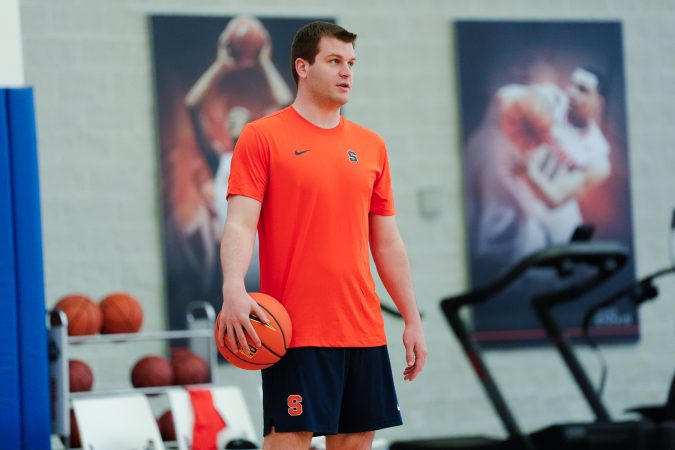
A sign hangs in Ryan Daly’s office at the John A. Lally Athletics Complex in Syracuse, N.Y., with the total number of fans that can pack the JMA Wireless Dome — 35,446.
In November, Syracuse fans will fill the historic college sports venue, hoping one of college basketball’s most prominent programs returns to success.
For Daly, who was hired in April as an assistant under new head coach Gerry McNamara, the number is a reminder of the work that lies ahead.
The Havertown native has climbed the coaching ranks at 28 years old, arriving at Syracuse after serving as an assistant at Albany, Bryant, and Virginia Commonwealth. Daly said none of that would be possible without his Philadelphia basketball roots and the people he met along the way.
“A lot of these opportunities that have come my way have been a result of a lot of people pouring into me,” he said.
A family affair
Growing up in a family of “basketball junkies” sparked a fire in Daly.
His grandfather, Jim Boyle, was the longtime coach of St. Joseph’s before coaching in the NBA and overseas. His father, Brian, played at Hawk Hill under Boyle, then coached at Penn State.
“We are a Philadelphia basketball family,” said his mother, Tracie Daly. “We weren’t on the outside looking in, we were on the inside.”
Ryan’s earliest basketball memory was at 5 years old, shooting on a Fisher-Price hoop at his grandparents’ house in Overbrook.
“I don’t remember a time when basketball wasn’t the only thing I thought about or talked about every day,” he said.
Ryan went to St. Denis School until the seventh grade. Prior to that school year, his family moved to Boston, then State College, Pa., after his dad took a coaching job at Boston University and Penn State, respectively.
Three years later, Ryan and his younger brother Colin approached their parents with a request.
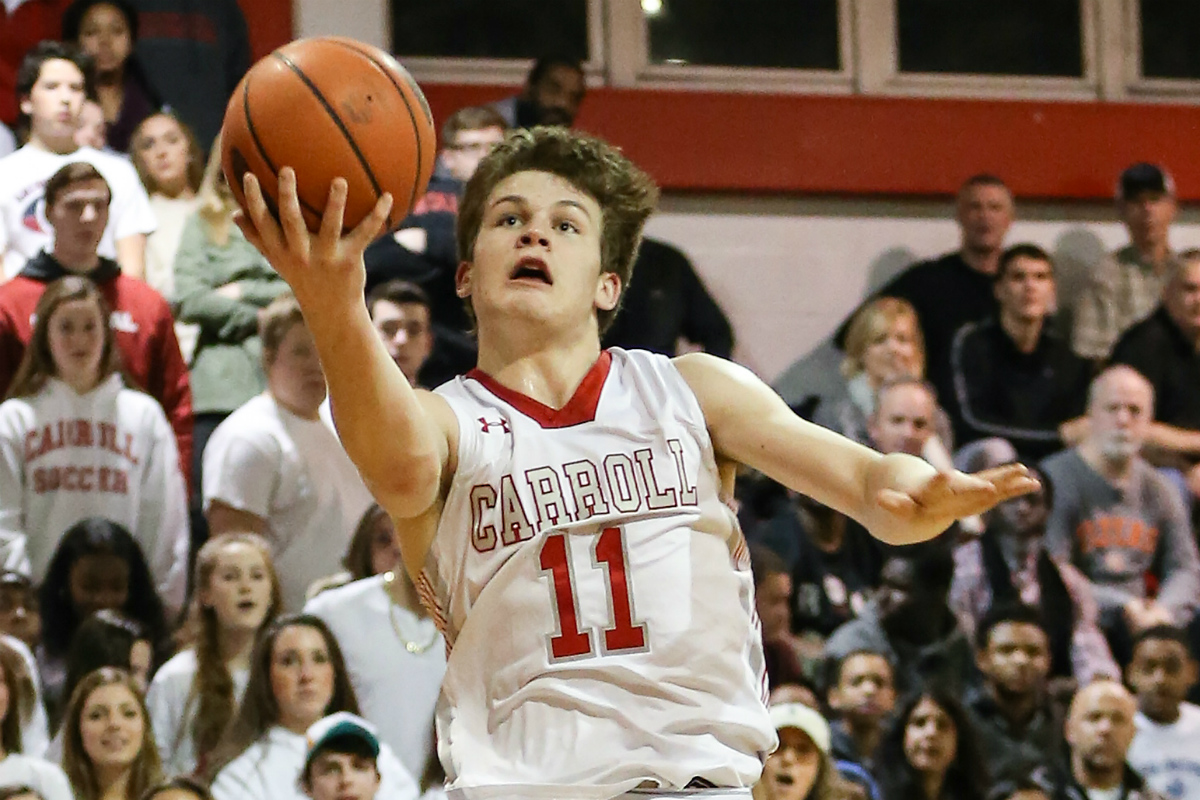
Ryan Daly joined Archbishop Carroll as sophomore and won Catholic League MVP in 2016.STEVEN M. FALK / Staff Photographer
“They came up to us and said, ‘We want to play basketball in the Catholic League,’” Tracie said.
The Philadelphia Catholic League is one of the top high school basketball conferences in the country, and there is a certain type of DNA that those players possess, Ryan said.
Tracie, Ryan, Colin, and their sister, Keri, moved back to the area before Ryan’s sophomore year, while Brian stayed at Penn State to continue coaching. Ryan and Colin both played for Archbishop Carroll.
“Neither of my boys would’ve been able to develop to the basketball players they were if we hadn’t moved back,” Brian said.
‘Tight-knit community’
Philadelphia basketball became Ryan Daly’s classroom.
Daly grew up hearing stories about Sonny Hill, Speedy Morris, John Chaney, Phil Martelli Sr., and Jay Wright — legends of Philadelphia basketball. Jim Lynam — also known as pop — was another mentor. Those relationships gave him an appreciation for the city’s basketball culture.
“Philadelphia is a special basketball community,” he said. “ … To see so many people coaching and involved with it, it’s one big circle, and it feels like it’s a very small tight-knit community.”
However, his own college recruiting process wasn’t easy.
Daly was a star on his nationallyranked AAU team, the Jersey Shore Warriors, and at Carroll — he won PCL MVP in 2016 — but didn’t receive many scholarship offers. It was a stressful time, he said, but his own experience became one of the biggest lessons in his coaching career.
“It taught me patience with evaluating players,” he said. “You might see them on a really good day, and that’s not really who they are or you might see them on a bad day and they are a lot better than that.”
He committed to the University of Delaware two days before graduating from high school without visiting the campus.
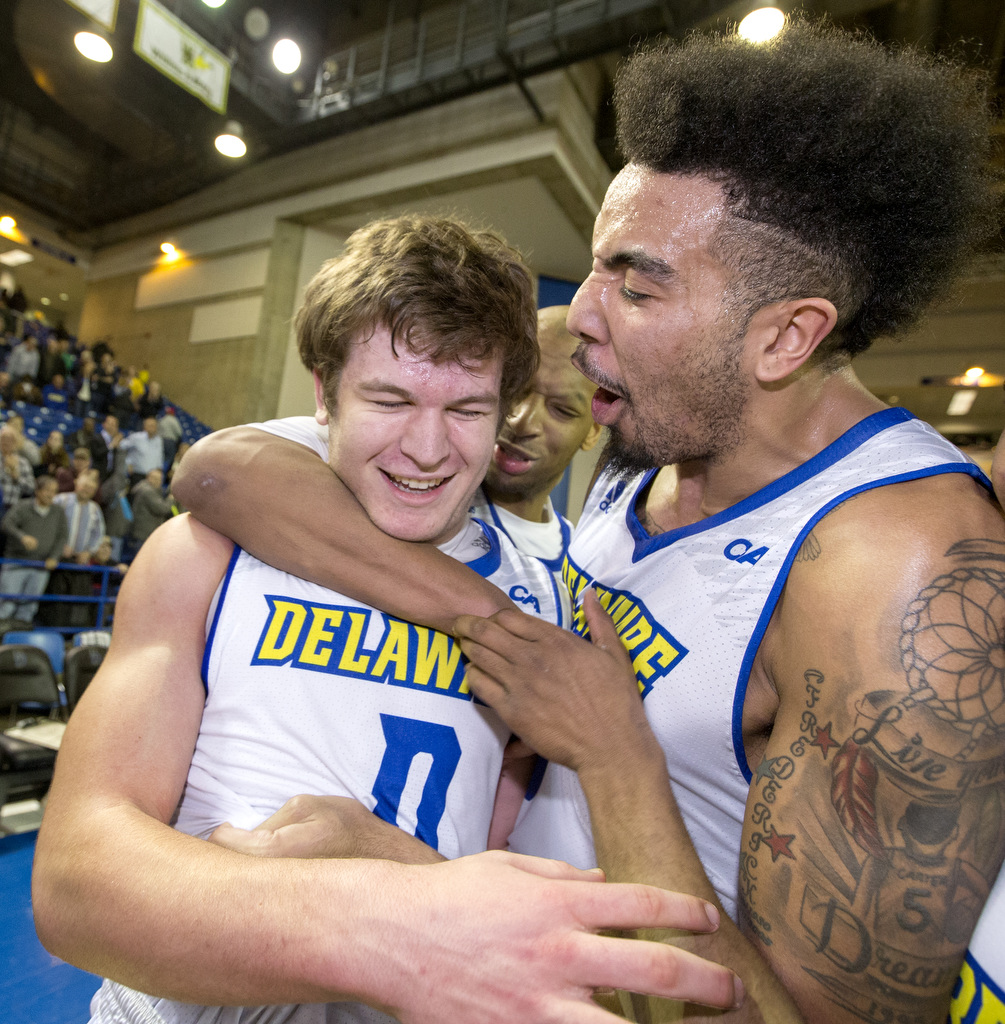
Ryan Daly spent two seasons at Delaware, where he surpassed 1,000 career points.
Daly had two standout seasons at Delaware, surpassing 1,000 career points. He then transferred to St. Joe’s and led the Atlantic-10 and Big 5 in scoring from 2019 to 2021.
Daly briefly pursued a career in the NBA G League, but living out of hotels and being away from his family was not for him. He quickly realized coaching was where he belonged and accepted his first coaching position at Albany when he was 24.
Soaking it in
At Albany, Bryant, and VCU, Daly immersed himself in the coaching profession, working early mornings and late nights and soaking up every piece of information from those he worked with.
He credits Albany head coach Dwayne Killings for teaching him creativity and VCU head coach Phil Martelli Jr., whom Daly followed from Bryant to the Rams, on how to recruit.
Each of those schools helped him develop his coaching philosophy.
One mantra in particular has stayed with him. Martelli Jr. often reminded Daly to “believe further than you can see.”
“When he said that line to me a year and a half ago, it really stuck out to me,” Daly said. “You never know when opportunities are going to come, you just have to be ready for it.”
That philosophy carried Daly to two conference championships and two NCAA Tournament appearances in consecutive seasons at Bryant and VCU.
Relationship-driven sport
Daly’s relationship with McNamara began long before he got the call to join the Syracuse coaching staff.
When Daly was a sophomore at Carroll, McNamara was recruiting his teammate, Derrick Jones Jr. McNamara attended open practices twice a week and often spoke to Daly after practice.
“He took me aside a lot and was like, ‘I don’t understand why coaches aren’t recruiting you; you should have a lot of interest and offers right now,’” Daly said.
Years later, when Ryan was a coach at Albany, they reconnected at a Coaches vs. Cancer event.
“I walked up to him and said, ‘I don’t know if you remember me,’” he said.
McNamara’s response was immediate: “‘Of course I remember you,’” Daly recalled.
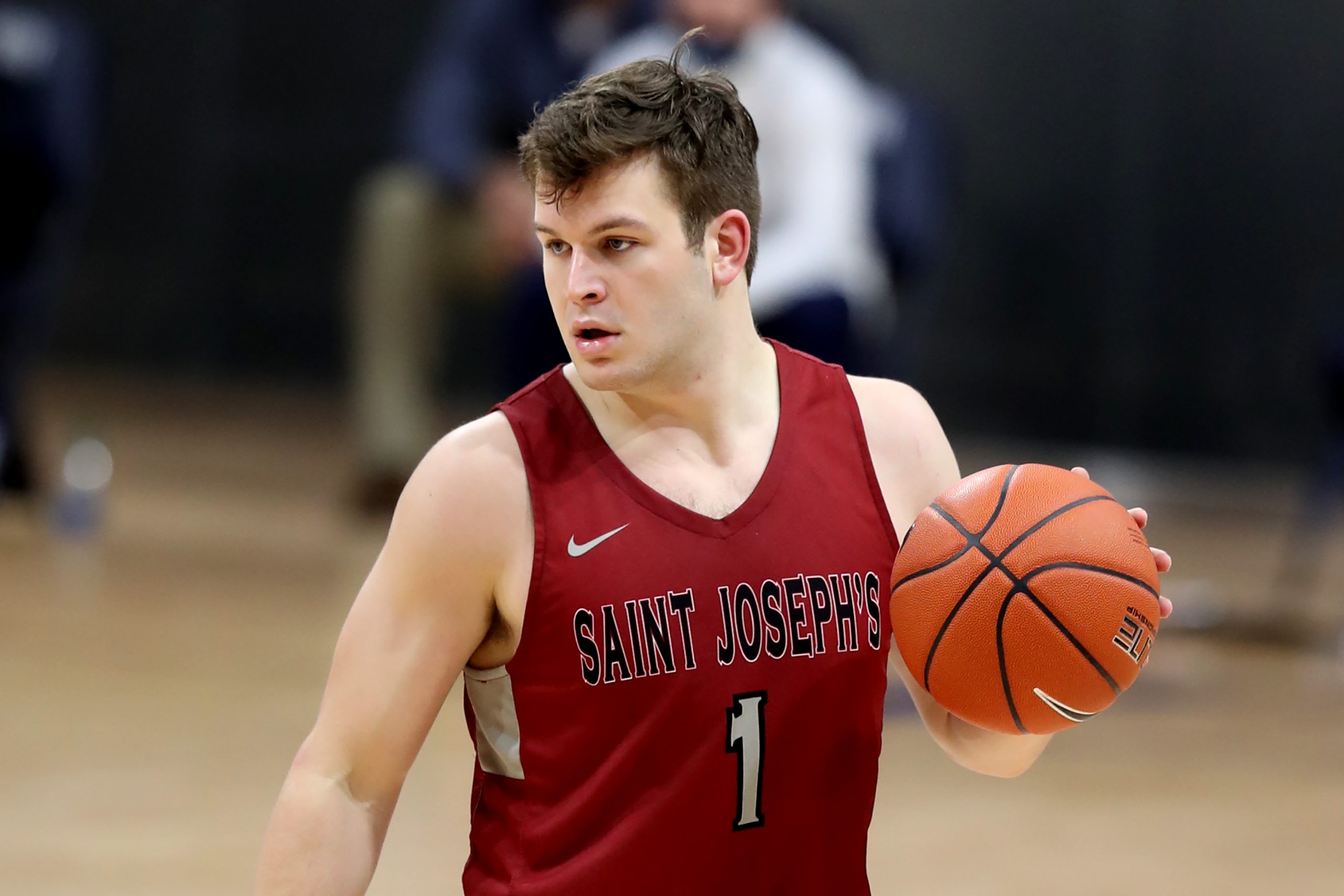
While playing for St. Joe’s, Ryan Daly led the Atlantic 10 and Big 5 in scoring from 2019 to 2021.CHARLES FOX / Staff Photographer
Since then, Ryan and McNamara have kept in touch, texting each other about wins or recruits, while also seeing each other frequently on the road. When McNamara was announced as Syracuse’s new head coach, Daly texted him, saying congratulations. Two days later, Daly received the call from McNamara asking to join his staff.
But leaving VCU was not an easy decision.
“In some sense it was the hardest thing I ever did,” he said. “In some sense, it was a no-brainer.
“The part that was exciting for me was that growing up I remember seeing Syracuse in the Final Four and Sweet Sixteen. The Orange is synonymous with March, and the challenge of bringing them back to that was exciting.”
Brian Daly emphasized to Ryan while growing up that building connections was an important part of life, but also in the sports community. And those relationships are exactly how he has advanced in the profession and ended up at Syracuse.
The last time Syracuse made an NCAA Tournament appearance was in 2021, and it advanced to the Sweet Sixteen. The program won its first and only national championship in 2003, when McNamara was a player on the team.
Soon, 35,446 fans will be able to fill the Dome to see what McNamara and Daly are building in Syracuse.
“I know the fans are diehard supporters, and experiencing people who live, eat, sleep, and breathe Syracuse men’s basketball in the Dome every night, you really can’t ask for anything more as a coach and a player,” Ryan said. “It’s a real home court advantage, and we want to bring that back.”
Before games, Michael Pereira needs some time alone to visualize the moment.
“I’m thinking about what I’m going to do and also trying to feel the emotion that would come with doing that thing,” Pereira said. “I’ll think of me dunking, and then feel the jolt of energy you get after you dunk it.”
It’s a practice he learned from his mother, and being a visionary through his four years at Plymouth Whitemarsh High School has taken the 6-foot-10 center pretty far. After starring for the Colonials, Pereira has been playing internationally for Brazil, where his father was born.
In June, he missed his senior prom to help the country’s under-18 national team place third in the FIBA AmeriCup in Mexico. Come fall, Pereira will join Penn, where he’s a member of Fran McCaffery’s first recruiting class.
Pereira is hoping to bring what he learned from international play to Penn.
“[The AmeriCup] was a great learning opportunity, definitely,” Pereira said. “The pace of play, the physicality of the game was faster because everyone was higher level there compared to what I’m used to.”
After falling to the United States, 102-56, in the semifinals, Brazil faced Puerto Rico in the third-place game on June 7. At halftime, Puerto Rico led by 19. It seemed as if Brazil would end AmeriCup play with back-to-back blowout losses. Then, Brazil came storming back and took the lead in the closing minutes of the fourth quarter. From there, it was able to hold on to claim an 83-77 victory. Pereira notched 4 points, 11 rebounds, and 2 blocks.
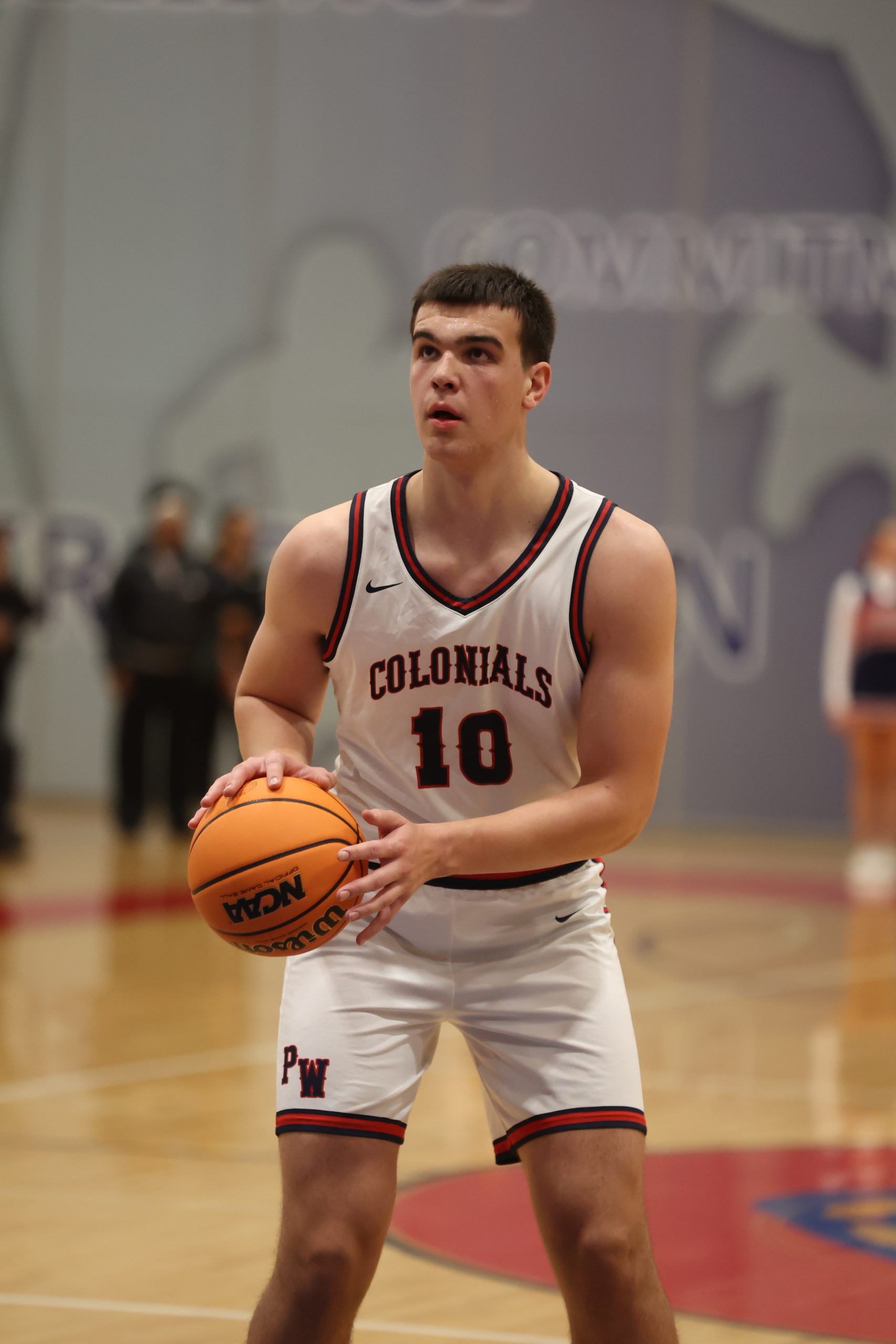
Michael Pereira averaged 14.1 points, 7.6 rebounds, and 1.3 blocks this season with Plymouth Whitemarsh. Plymouth Whitemarch Athletics
Three days later, he was back at Plymouth Whitemarsh for his graduation.
“He’s a serious student-athlete,” said Plymouth Whitemarsh coach Jim Donofrio. “Anyone that can get accepted into Wharton early admissions obviously has a good resumé academically. Michael is a very curious guy when it comes to learning; he is open-minded to learning anything, he has high standards to want to excel in anything he takes on.”
‘Something special’
Pereira’s curiosity drove him into his coach’s Honors Philosophy & Ethics course. In class, Pereira did not shy away from offering his thoughts on whatever topic Donofrio covered that day. But before interjecting, Pereira would always stop and take in the concept.
Donofrio said this quality has become rare in today’s “hyper impatient society.”
However, it did not surprise the longtime coach that his player was a diligent and thoughtful student. Pereira showed the same characteristics in practice.
“One thing in the coaching world that we should emphasize constantly is when I’m talking to you, I want pure eye contact,” Donofrio said. “Michael gives you nothing but eye contact, he almost looks through you. He takes the message and he absorbs it, and that’s mind training — for a young guy to have that kind of discipline to want to listen.”
Pereira picked up the sport relatively late, in sixth grade. His parents had Chuck and Ronald Moore, two former Plymouth Whitemarsh players who went on to play collegiate basketball, train Pereira and his older brother Will. When Pereira entered eighth grade, Ronald was his coach.
Then, in high school, Chuck oversaw Pereira’s development as Donofrio’s assistant.
After McCaffery was hired by Penn, he brought in three assistants. One of them was Ronald Moore, who played under him at Siena. It was Ronald who put Pereira on his former coach’s radar.
“Tons of respect for Jimmy [Donofrio] and the job that he’s done for so many years there,” McCaffery said. “Also aware of the quality of play in that conference, the teams they played against, and I felt very strongly that Mike would be ready when he got here.
“When I saw him his junior year, I thought he had a chance. When I saw him his senior year, I knew he was going to be something special.”
Pereira received offers to play at various high-level prep schools for his senior season, but he wanted to stay at Plymouth Whitemarsh. His decision paid off. Pereira averaged 14.1 points, 7.6 rebounds, and 1.3 blocks, while leading the Colonials to a PIAA District 1 Class 6A championship.
“Something I liked about Plymouth Whitemarsh was that I could do more stuff, I could try stuff that was out of my comfort zone,” Pereira said. “Since it wasn’t like insanely good competition, I would get away with some stuff.
“I’ve tried different footwork. I would shoot a three or two in a high school game. But just considering my role in international play, I wasn’t really doing any of that, I was more so just doing what got me on the team in the first place.”
Improving as a Quaker
The Colonials’ 2026 campaign ended with a loss to Father Judge in the PIAA Class 6A quarterfinals. Pereira, who logged a double-double, wanted to get his mind off the defeat.
Coincidentally, Penn was playing in the Ivy League championship against Yale the next day.
“I don’t want to be depressed after this loss. Let’s just drive up,” Pereira said.
The game, played at Cornell, offered much more than a distraction. Penn junior forward TJ Power poured in 44 points to lead the Quakers to an 88-84 overtime victory and a ticket to the NCAA Tournament.
“I still think it’s one of the best games I’ve ever watched in person,” Pereira said.
Penn is expecting eight newcomers on the roster next season. Going into his second season at the helm, McCaffery has valued acquiring size and flexibility.
In order to take advantage of his frame, Pereira will need to continue his rapid progression as a player. McCaffery does not believe this will be an issue, noting he expects his new center to develop a “year-round obsession” with improvement under his watch.
Meanwhile, Donofrio believes that Pereira’s game will translate to the next level if he can better balance his intellectual side.
“He has to use his humble ability to listen like crazy and his curiosity,” Donofrio said. “All that stuff is really important, but he’s then going to have to learn how to be as aggressive as he can with that body without fouling out, but I almost want him to foul out a few times.”
“I always said, ‘Mike, you’re like in professor mode, then there’s the Hulk mode, where you turn into the Hulk.’ If we can just get the professor and the Hulk merged together, you got a guy that might be making money at the game someday.”
Serving the community is an important mission for Philadelphia native Novar Gadson. After 14 years of playing professional basketball overseas, he is back home to bring his mission to life through the Invitational Clash Movement.
The invitational is a five-day initiative at Drexel from Thursday to Monday in which pro-am men’s and women’s basketball teams from as far away as London will compete in a bracket-style tournament.
The event will also feature other activities, including a youth basketball clinic and mental health workshops.
“The basketball is obviously at the centerpiece of it, but the vision behind it is community wellness, mental health, and youth development,” said Gadson, 36.
Eight men’s teams and four women’s teams will battle it out to decide the best pro-am leagues.
The men’s teams represent Philly’s Brotherly Love League; Drew League from Los Angeles, Rucker Park Streetball from New York; Ball Don’t Stop from Toronto; the Smith League from Cincinnati; Queen City from Charlotte, N.C.; Denard Brothers from Chicago; and Great Britain Select from London.
The four women’s teams represent Brotherly Love, Rucker Park, Queen City, and Swin City League from Dallas.
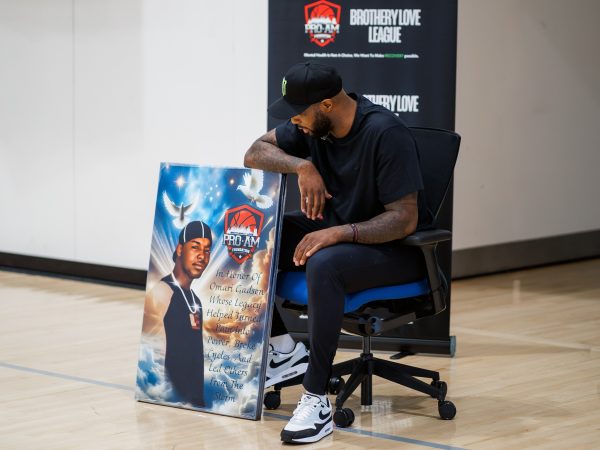
For Gadson, growing up in the city was not easy. His brother, Omari, was a victim of gun violence. He was 18 when he died in 2001.
“My family has still not recovered from my brother’s murder,” he said.
To stay out of trouble, Gadson said, he started playing basketball.
He attended John Bartram High School, where he broke Kobe Bryant’s father Joe’s scoring record. He played at Rider University before playing professionally in Europe, Asia, and South America.
“Basketball is what saved me from homelessness and sexual assault to everything that I was dealing with as a child,” he said. “I feel like it’s in my heart from Christ to serve people.”
In 2021, he began developing the vision for a Philadelphia-based event that would engage the community with sports and mental health advocacy.
Gadson is the chief executive officer of the Brotherly Love League Pro-Am Foundation, a nonprofit committed to increasing access to mental health resources for underserved communities in the area.
The invitational is an extension of the foundation, he said.
How the tournament works
The competition begins on Friday and follows a bracket-style format with the winning teams advancing to the next round.
The four women’s teams will open play on Saturday.
Attendees will have a wide variety of community-focused activities that are designed to engage and connect community members with mental health resources.
The event will also feature food trucks, gaming trucks where children can play in Madden 2K tournaments, hair-cut stations for children, face painting, crowd giveaways, and youth basketball clinics. The boys’ clinic is on Saturday and the girls’ is on Sunday. Participants in the clinics will receive meals and have access to mental health workshops.
More than 30 resource tables will be available throughout the event with panel discussions focused on mental health in partnership with the National Alliance on Mental Illness Philadelphia. Attendees will have the opportunity to connect with professionals and sign up for licensed therapy sessions after the tournament.
“People need help,” Gadson said. “I dealt with a lot of PTSD and anxiety from my experiences growing up, so I want to extend help and opportunities for therapy outside the event.”
He noted that increasing access to resources can create change in the city beyond the basketball court.
“If we give a lot of resources and access to kids outside of the basketball event, it will help the city as a whole and the violence go down,” he said.
, Gadson has struggled to revisit the trauma around Omari’s death. He said he has never celebrated his brother’s birthday. But on Monday, Omari’s birthday and the last day of the invitational, Gadson plans to honor his legacy. The foundation will recognize two families who have lost their loved ones to suicide or gun violence.
“The idea for me is to continue to bring light to his name,” Gadson said.
On Tuesday night, Yaxel Lendeborg will likely be a first-round pick in the NBA draft.
But the Pennsauken High graduate’s basketball career nearly ended after playing just 11 varsity games. If not for his mom, Yissel, Lendeborg might not ever have played Division I basketball, much less become a lottery pick.
“Seeing him, and seeing his mother, and how much she has [meant] to him, and how much work she’s done to be able to help guide him mentally, and obviously on the court, it’s been the honor of my coaching career,” Pennsauken coach Harrison Carsillo said.
Lendeborg wasn’t academically eligible to play basketball for a large portion of high school. He played on Pennsauken’s freshman team, but was held out for his sophomore and junior seasons, and most of senior year. He trained in the summer with coaches and friends from Pennsauken, but watched from the sidelines during the school year.
In a Players’ Tribune article, Lendeborg said that the turning point for him was during his senior year. One night, after staying out late with his friends playing video games, his mom confronted him and told him that he needed to focus to even graduate from Pennsauken, much less play basketball.
“This is no joke right now,” Lendeborg said in the article. “Nobody is smiling here. You have your mom up in this minivan crying her eyes out because you don’t know how to be a good son. Your own mom! Who does everything for you. Works two jobs. Shows you love no matter what. And this is how you’re being?!?!?!”
Yaxel Lendeborg averaged 15.1 points and 6.8 rebounds in 40 games for Michigan last season.Lon Horwedel
During that final year, Lendeborg improved his grades enough to play the final 11 games of the high school season, even competing in the NJSIAA playoffs. But he thought his basketball career was over, until his mom set him up to attend junior college at Arizona Western College. Lendeborg wrote that she planned the going-away party without even telling him he was going, because she knew he needed that push.
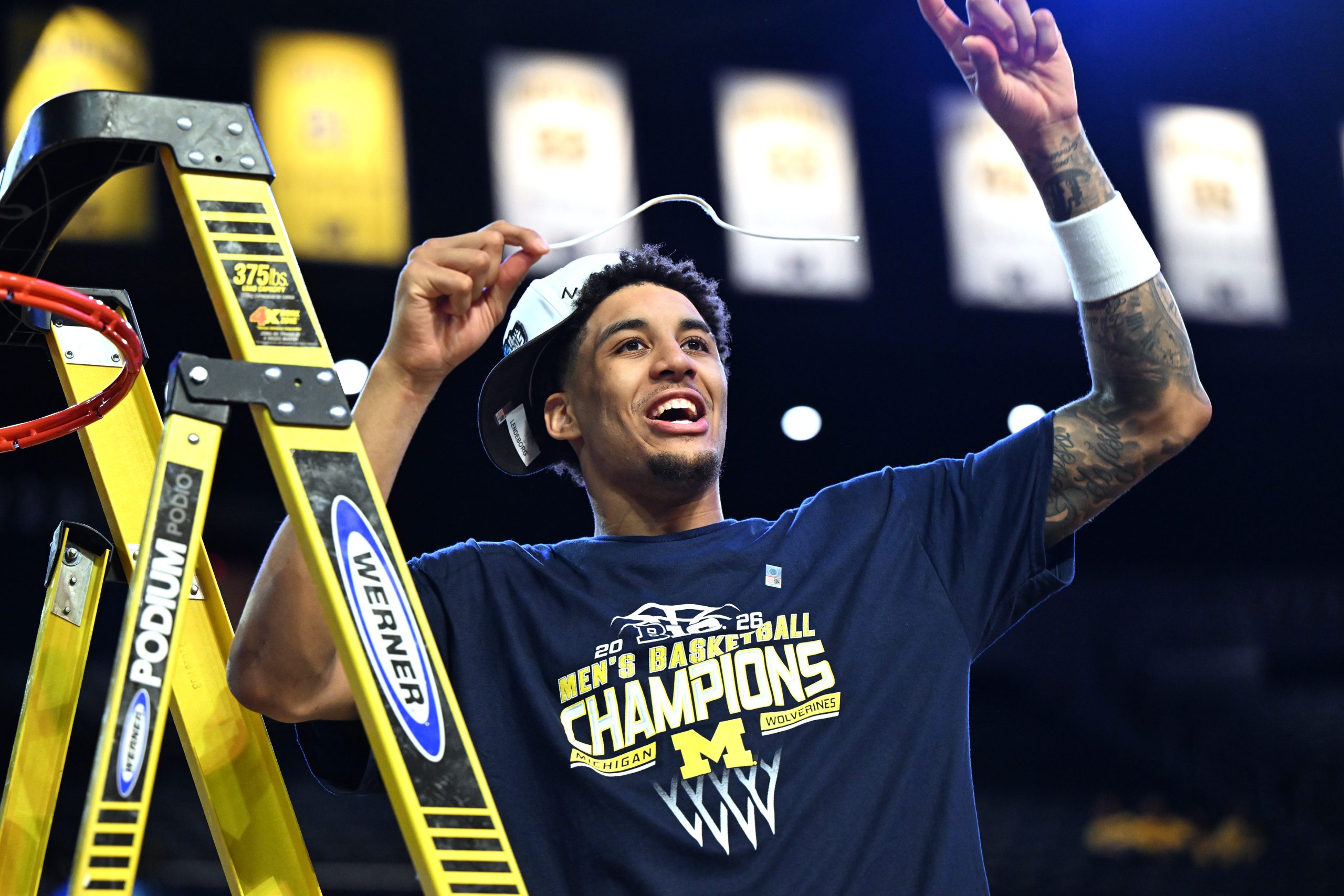
From there, Lendeborg had one of the most improbable rises to the draft, transferring to Alabama-Birmingham in 2023 and then Michigan before last season, where he won Big Ten Player of the Year and an NCAA title. Lendeborg, a 6-foot-9 forward, averaged 15.1 points and 6.8 rebounds in 40 games for the Wolverines.
Lendeborg was always talented, Carsillo said. His biggest problem was not believing in himself. Carsillo and Lendeborg’s mom forced him to pick up the phone after Division I schools started calling him about transferring, because he wasn’t sure if that was the right fit for him.
“He didn’t answer the phone, and I said to him, ‘If you don’t answer that phone call, I’m going to take your phone, and I’m going to smash it, or rip your sneakers.’ I [was] going to be so upset, because he didn’t believe in himself that he could actually do what we knew he could do, if he put his mind to it,” Carsillo said.
“It was a really funny moment. I obviously wasn’t going to rip his sneakers or smash his phone, but I was very upset, because it was almost just a mental thing going into it, because he had so much potential that he didn’t even see himself.”
After two years at UAB, Lendeborg was a fringe first-round prospect. He could have ended his college career there, but instead spent another year in college to develop further, and prove to himself and to NBA draft scouts that he could succeed at that highest level. Carsillo said that Lendeborg’s year at Michigan has him more confident and aware of his sky-high potential.
But what’s stood out the most to Carsillo over the years is Lendeborg’s selflessness, on and off the court. In the Final Four, Lendeborg suffered an MCL and ankle sprain. Some advised him not to play to protect his draft stock, but Lendeborg insisted on helping his teammates see it through and vowed, “I’m playing no matter what.”
At halftime of the national championship game on April 6, he said he felt “awful,” but still gritted out a 13-point, 36-minute performance in the 69-63 win over UConn.
Yaxel Lendeborg spent two seasons at UAB after attending Arizona Western College.Charles Fox / Staff Photographer
“That’s him,” Carsillo said. “He could have easily just said, ‘No, I’m good.’ He knows he’s going to get drafted. He knows he’s changed his family’s life. It’s amazing. That’s exactly who he is, 100%, and he was like that at Pennsauken, just much lower stakes.”
Lendeborg even has a chance to reunite with his college coach, Dusty May, who reportedly accepted the Dallas Mavericks’ head coaching job on Monday. The Mavericks hold the No. 9 pick in the draft, slightly above where Lendeborg has been projected, but Lendeborg joked Monday that he’s “going to tell him he better pick me up. If he doesn’t, I’m going to be mad. I might block him.”
The forward has grown up a lot since high school. He’s one of the oldest prospects in the draft, but he’s played only about six seasons of organized basketball. He grew up playing baseball, and told ESPN that he first learned how to play basketball through the NBA 2K video game.
“He still has so much room to grow, and he’s still learning how to become a better basketball player; it’s remarkable,” Carsillo said. “He has a little bit of self doubt, but not much anymore. This whole process with the NBA and Michigan turned his eye and turned his mindset around to be able to prove to himself, like, ‘I can do what my mother has always told me I could do.’”
Lendeborg’s mom can’t attend as many games as she used to. She’s currently nearing the end of her treatment cycle for appendix cancer, which she initially kept hidden from Lendeborg to keep him focused on his season at Michigan. But planned to be in Brooklyn on Tuesday to watch her son’s NBA journey begin — a journey he’d never have come close to if not for her pushing him every step of the way.
Rumors of Villanova’s interest in 7-foot-3 Italian center Luigi Suigo already were swirling when assistant coach Ricky Harris posted a photo last month on his Instagram page from Milan, not far from Suigo’s hometown of Tradate. Villanova was trying to keep its pursuit of Suigo under the radar, but Harris’s post only fueled the speculation.
Villanova is visiting Suigo in Milan! The staff is all-in on adding the future NBA center! Kevin Willard really wants the cherry on top for this roster rebuild!
Let’s play a little game of Two Truths and a Lie.
No, Villanova didn’t send Harris to Milan to visit its next center. The other things are true, though. And the lie is only a partial one. It wasn’t Harris visiting Suigo, it was Willard. Harris was just in Italy enjoying an offseason vacation, with the bulk of the roster overhaul already done. But it wasn’t Milan where Willard went, it was Belgrade, Serbia, where Suigo played this past season with Mega Basket of the Adriatic League.
“Belgrade was beautiful,” Willard said Monday, nine days after Suigo announced he was leaving the NBA draft and signing with Villanova. “Food was great, people were awesome.”
It was a short business trip, less than 48 hours. Willard had spent the past month reassembling the Wildcats’ roster. Only two players who dressed in a game from last season’s team, Tyler Perkins and Matt Hodge, returned. The staff surrounded them with plenty of talent, but still needed a true center to round out the roster. Any starting-caliber center would have been fine. The offseason had largely been a success even after losing a few top players like Acaden Lewis and Bryce Lindsay to the transfer portal.
“We could have gone in a couple directions,” Willard said of the center spot. “For us, it was like, all right, how are we trying to win a championship here?”
On film, Suigo looked the part of a player who could take the roster to the next level. The size component is obvious. But Suigo is a “really skilled center that can shoot it, that can pass at a high level,” Willard said. “I think one of his best attributes is that he’s extremely unselfish. He’s a great passer.”
Willard wanted more than film studying, though, so he got on a plane and flew halfway across the world to watch Suigo practice in person, to meet with his coaches, to sit down with him for dinner.
“Sometimes you can watch clips and you can get fooled,” Willard said. “When I went over there and talked to him in person, met him in person, and saw him play, it was like, yeah, this kid is the real deal.
“He’s very professional. He knows what he wants. He knows how he wants to play. He knows where he needs to get better at.”
In 26 games with Mega Basket, Suigo, 19, posted averages of 7.9 points, 5.1 rebounds, and 1 block in 18.8 minutes. He shot 64.9% on his 111 two-point shots, 27.1% on 48 three-point attempts, and 64.7% on 34 free throws.
Draft evaluators had Suigo projected near the end of the first round or early in the second round. Luring a player out of that range surely was costly for Villanova. Willard declined to discuss financials with The Inquirer. But the region’s rich Italian-American culture and the timing of watching the Knicks on their championship run with Jalen Brunson, Mikal Bridges, and Josh Hart were added bonuses.
Plus, Suigo was open about wanting to be a top-20 pick throughout the draft process.
“I think he maybe would have gotten drafted late in the first round, but he doesn’t want that,” Willard said. “He wants to make sure when he gets drafted he’s going to play. The big thing is I think he needs to get Americanized a little bit, to American basketball. I think that’s why college will be really good for him. Get in shape a little bit, just kind of get used to American basketball. I think once he does, the sky is the limit for him.”
“We wanted to make sure that we just didn’t get manhandled the way we got manhandled last year against the top teams,” Willard said.
He was talking about national champion Michigan and the two top Big East teams, Connecticut and St. John’s. Willard’s first season at Villanova was a success. A streak of three consecutive missed NCAA Tournaments was stopped, though Villanova lost as a No. 8 seed in the first round because it lacked experience and physicality against a veteran Utah State team.
Tyler Perkins (left) and Matt Hodge (right) will be key contributors again for the Wildcats in 2026-27.Elizabeth Robertson / Staff Photographer
The first additions of the offseason aimed to address that. Villanova signed Oregon’s Kwame Evans Jr. and Ohio State’s Devin Royal. Both players are incoming seniors who averaged more than 13 points in the Big Ten last season. Evans is 6-10 and Royal is 6-6 but is a physical player who averaged seven rebounds in 2024-25 and nearly six last season.
With those two and Perkins and Hodge in the fold, the attention turned to the backcourt, specifically to the point guard spot. Willard said he watched more film to fill this spot than any other position during the offseason. Perhaps, then, he could ace a quiz on Illinois-Chicago hoops. Elijah Crawford scored 14 points and dished out five assists in 26 minutes per game last season. More importantly, his decision-making out of pick-and-roll stood out, as did his 75.3% rate from the free-throw line.
Crawford is the likely starting point guard next to Perkins, with Royal, Evans, and Suigo rounding out the starting five.
Backcourt depth was a problem at times last season. On paper, it won’t be in 2026-27. The Wildcats added Cornell shooting guard Jake Fiegen, who Willard said “analytically, was probably one of the highest-rated guys.” Fiegen shot 41.4% from three-point range on 5.5 attempts per game. He thrived in catch-and-shoot situations, of which he will have plenty with this Villanova roster.
Then there’s St. Bonaventure transfer Buddy Simmons. Willard said the staff was actually watching another Atlantic 10 player when they became enamored with Simmons, a 5-11 guard who scored 16.4 points per game and shot 42.5% from deep. While Fiegen is more of a standstill shooter, Simmons produces off the dribble.
Incoming freshman guard Adam Oumiddoch also is expected to contribute right away. He’ll add to a versatile bench that also includes Hodge, who Willard said is tracking toward being ready for the beginning of the season after undergoing surgery to repair a torn ACL in March.
Evans could play some minutes at center, as could returning redshirt freshman Nico Onyekwere.
Villanova hit the offseason trying to build a roster to compete with Dan Hurley’s UConn program.Yong Kim / Staff Photographer
“We can play small or we can play really big,” Willard said. “That was my goal. Last year we were kind of hampered in how we could play. This year I think we have so much more flexibility.”
Signing a 7-3 center helps.
But Suigo’s signing should have done more than raise the expectations for the 2026-27 season. Sure, the Wildcats may get some preseason top 25 love. But they also showed they can compete financially with other programs.
“From Father Peter to the board to our alumni and our donors, everyone understands how important Villanova basketball is,” Willard said. “We will never be the highest spender. That’s not in our DNA and it’s not what it is. But I will say that the university understands and financially has been extremely supportive of this program and the women’s program.”
About those expectations …
“I’m the head coach at Villanova,” Willard said. “The expectations are huge every year. I knew that when I took this job. I knew that when I took the Maryland job. It’s just part of the job. It’s what makes this job so great. You want those expectations.”
Former Villanova star and current Washington Mystics guard Lucy Olsen has picked up a lot of experience with different teams.
Moving around so much means she’s learned numerous systems during her years in college and the pros, which is keeping her adaptable as her role shifts in the WNBA.
“Going from Villanova to Iowa, that was a big jump, system-wise, trying to learn how to fit the system, but also keep your own game,” Olsen said. “That was pretty hard, and then I got another chance at it, coming to the Mystics. Then I feel like just going to another team, you just learn how to adapt faster.”
In college, Olsen was the primary ballhandler at point guard and took on most of the scoring responsibility. But in the pros, she often has come off the bench and plays as an off-ball guard, shifting her focus away from scoring to the other things she can do on the floor.
“Run the play, but also keep looking for the different avenues so that you can be aggressive and then dish it off to someone else,” Olsen said. “I’m reading the defense a little more, and I think [playing in] Australia [in 2025-26] helped with that, being able to see different types of defenses and work on just getting more reps of pick-and-rolls, and how the pros play.”
Lucy Olsen (center) averaged 23.3 points per game in her final season at Villanova before transferring to Iowa in 2024-25.Charles Fox / Staff Photographer
After three years at Villanova, the Collegeville native and Spring-Ford alumna transferred to Iowa for her final season. Shortly after her lone season with the Hawkeyes, Olsen was drafted in the second round by the Mystics.
After her rookie season in Washington, she moved to Australia to play in the Women’s National Basketball League, where she won Sixth Woman of the Year and a WNBL championship with the Townsville Fire.
Now, she’s back with the Mystics for her sophomore season, and even with just one year of experience, she’s something of a grizzled vet on a roster with eight rookies.
“Everyone’s so young and eager, and they want to learn,” Olsen said. “I think that helps with the environment and getting better.”
Olsen is working to find her role in Washington and mostly comes off the bench in late-game situations.
But there’s never been a better time for development in the WNBA. Previously, players had to come to the league fully formed. With extremely limited roster space — entering this season, the maximum number of players hadn’t been higher than 12 per team since 2008 — only a few draft picks each year would make a WNBA roster. Second-round picks like Olsen rarely got a chance.
Between 2009 and 2024, when the Golden State Valkyries tipped off, there were 12 teams in the WNBA. The league then added the Portland Fire and Toronto Tempo this year. With three more teams entering the WNBA in the next four years — including the Philadelphia team set to begin play in 2030 — that’s six more full teams’ worth of roster spots as compared to the league in 2024. The roster maximum remains at 12 players, but the new collective bargaining agreement created two optional “developmental” roster spots per team.
“How young our team is, I feel like that doesn’t happen a lot,” Olsen said. “There is so much opportunity, and there’s so much room for growth. There are more roster spots, so you can learn and actually build your game around the team.”
Jay and Patty Wright attended a wedding Saturday night in Red Bank, N.J., and Game 5 of the NBA Finals was at halftime when it was time for them to head home.
Watching Jalen Brunson, Mikal Bridges, and Josh Hart is like watching his own children, Wright said, and he wasn’t going to miss this. Patty took the wheel, Jay put the game on his phone in the passenger seat. The game was nearing its end when it was time to exit the Blue Route.
They weren’t going to make it home in time, so the Wrights pulled off the main road and onto a side street. They watched the ‘Nova Knicks win their first NBA title and end a 53-year New York Knicks championship drought in a Radnor cul-de-sac.
Wright intentionally stayed out of the spotlight during the playoff run. He did a spot on ESPN’s Inside the NBA because the guy who asked him to come on was his old producer at Turner Sports and Wright wanted to do him a solid. He reluctantly attended Game 4 because Rick Brunson, Jalen’s father and a Knicks assistant, asked him to. He sat near the court with Patty on one side and Billy Lange — the former St. Joe’s head coach, and former Villanova assistant who is now in the Knicks’ front office — on the other. The epic comeback was followed by singing Frank Sinatra and Jay-Z, hugs with his former players and celebrities like Stephon Marbury and Spike Lee. It was, Wright said, “one of my favorite sports moments of all time.”
Josh Hart shares a moment with his @NovaMBB coach Jay Wright!
But it was maybe fitting that he watched the series end in the car with Patty, just the two of them, proud “parents” watching the guys who played a huge part in delivering the family and the school two NCAA national championships.
“What I enjoy about coaching is just sitting back and watching them all grow and then being a small part of their lives when they make a change or are accomplishing something and they call me or text me to ask me advice or share something with me,” Wright said Monday. “That’s what you love. It just happens to be that these three are doing it on the world stage and you’re watching them handle it with such maturity.
“It’s really heartwarming, like if you watch your own kids do it.”
Wright, 64, is a sort of basketball dad to Brunson, Bridges, and Hart. You don’t need to squint to see the style of play Wright and his coaching staff instilled in the trio during their time at Villanova. The staff would tell them that they would teach the “Villanova way” during their time playing college basketball, and it was up to them to take that to the next level and put their own spin on it.
Jay Wright, Jalen Brunson, and Josh Hart during a 2016 Villanova win over Temple.Charles Fox / Staff Photographer
“You see things that they specifically took from our program,” Wright said. “You see the mentality that they took from our program. You also see what they added themselves to that, their own individualism, their own level of maturity, their own level of knowledge of the NBA game that I don’t have. It was fascinating for me to watch that.”
There was no doubt this trio would end up contributing in the NBA in some capacity. Hart, who graduated from Villanova in 2017, was a first-team All-American. Bridges and Brunson left a year later after another title. Brunson was the player of the year.
Wright talked to scouts both years. Hart, he told them, would be one of the greatest competitors a team could find. They didn’t need to worry about what position to play him at. Bridges, he said, would be the type of player who was capable of being a leading scorer but had the IQ to understand winning was more important than anything.
He was right about those two evaluations. But Brunson? Wright thought he could be a point guard on a championship team. And that would be fine if he left the evaluation there. He’s right about that. But Wright thought he would need a leading scorer next to him. Dallas, where Brunson played before New York, was the perfect setup, Wright thought. Brunson could be the lead guard, but Luka Dončić was there to provide the bulk of the scoring.
“I didn’t think he would be the guy that would score 45,” Wright said.
Brunson, the Finals MVP, joined Michael Jordan as the only players in NBA history to score 45 in a road clincher. He averaged 11.2 points in the fourth quarters of the five Finals games. He is now in a new stratosphere of fame and is on a Hall of Fame type of path.
All of this has been a unifying moment for the university and for the former teammates of the trio. It was alumni weekend and the school held a watch party on campus Saturday night. Later that night, after the Wrights pulled away from that cul-de-sac and returned to their home, Wright got a text message with a picture. On the court with Bridges was Phil Booth, a former teammate who now works with the Minnesota Timberwolves, and former Villanova walk-ons Matt Kennedy and Tom Leibig.
“Personally, it has been a thrill for me,” Wright said. “I’m proud of all of them.”
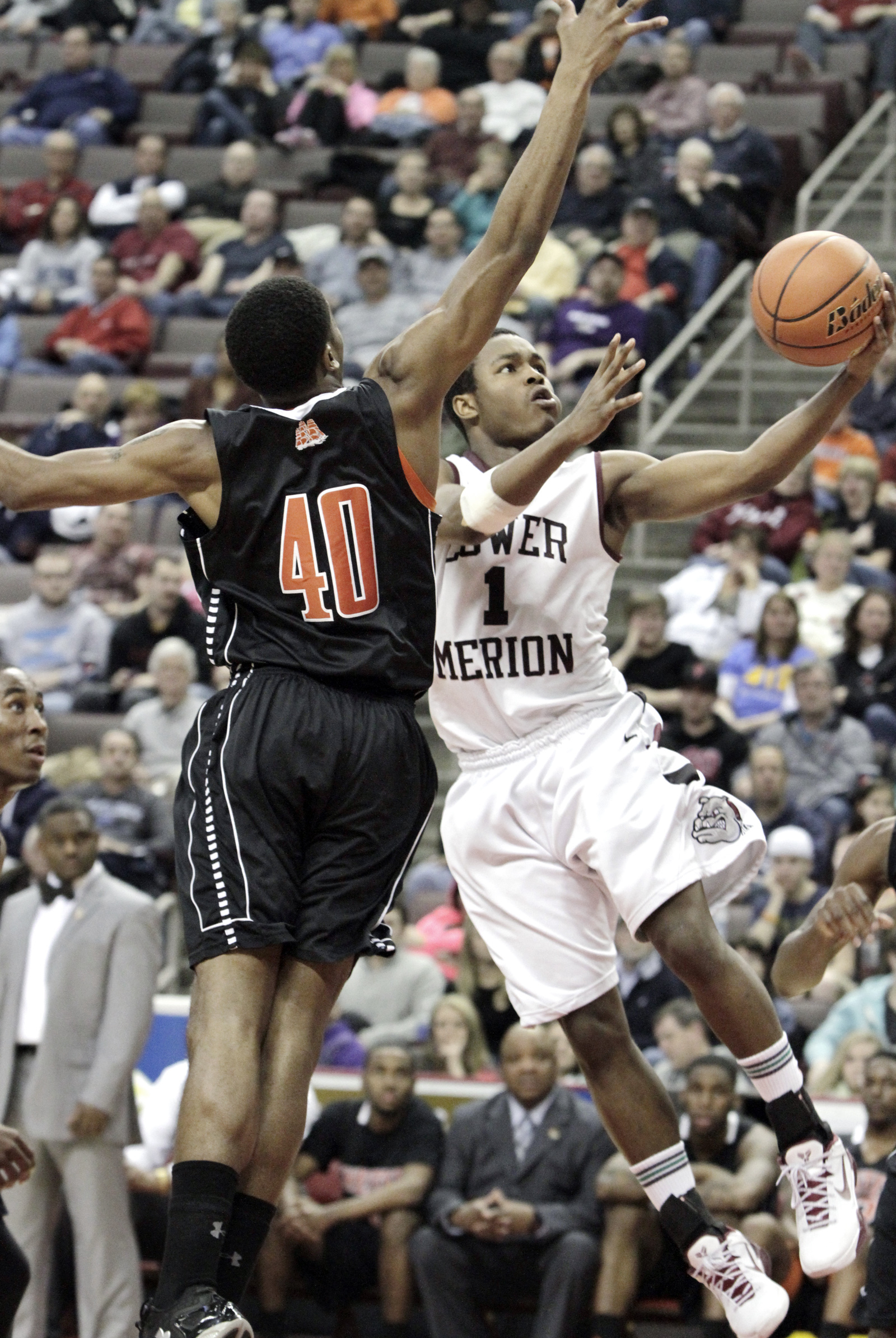
John Linehan and Kobe Bryant used to talk. A lot. This would not have been unusual for other AAU teammates, but these two were fierce high school rivals.
Linehan was a scrappy point guard for Chester. Bryant was a relentless shooting guard for Lower Merion. Both were competitive, almost to a fault, and in the days leading up to big games, they’d get chippy.
The week before the 1996 PIAA Class AAAA District 1 title game, for example, the players talked every day on bulky landline phones, with Bryant often calling Linehan at his home in Chester.
“I just said, ‘You know, John, I haven’t won a championship yet, and you have,’” Bryant told The Inquirer in 1996.
Linehan knew what his friend was doing. The future NBA star did the same thing a few weeks later, on March 19, a day before the teams met again in the state semifinal.
“He was trying to get me to trash talk,” Linehan said. “I think he needed a little edge. I didn’t want to give him too much. I was like, ‘Man, you crazy.’”
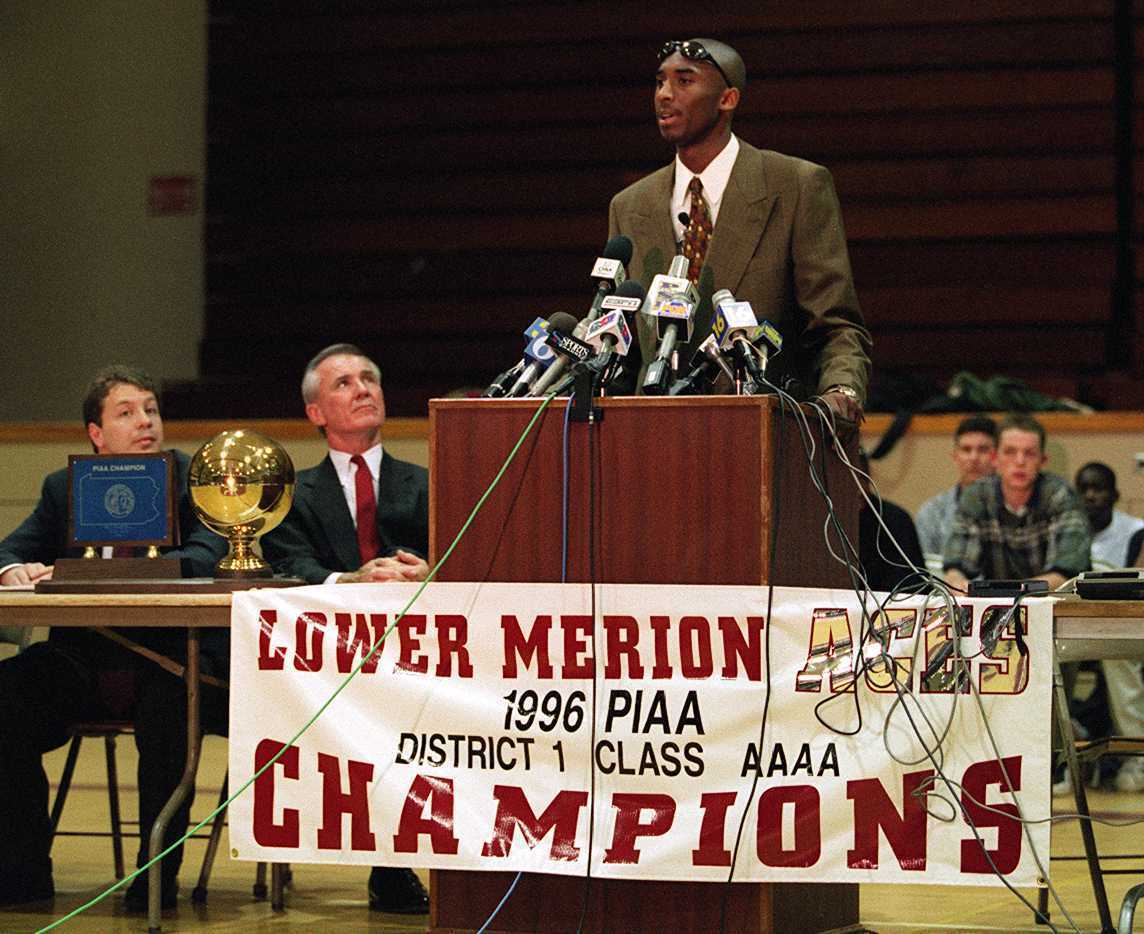
The late Kobe Bryant, a former Lower Merion basketball star, announcing he will go directly into the NBA draft out of high school.ALEJANDRO A. ALVAREZ / Staff Photographer
Lower Merion wasn’t a basketball school when Bryant arrived in the fallof 1992. It paled in comparison to the local powerhouses like Simon Gratz, Coatesville, and Chester.
But Bryant changed that. Even in his freshman year, a season in which the Aces went 4-20, he brought a new standard, working out before class and introducing a level of toughness that was foreign to his teammates.
Bythe mid-1990s, Lower Merion was among the best high school teams in the Philadelphia area. Its players were more confident, celebrating after big shots, and talking loud on the court.
The Aces didn’t play as many games against Coatesville, a rising power led by Rip Hamilton. They couldn’t consistently measure themselves against Gratz, which didn’t participate in the PIAA playoffs untilthe 2004-05 season.
But they could against Chester. And so, a decades-long rivalry was born.
From 1996 through the mid-2010s, Chester and Lower Merion put on some of the greatest high school basketball games in the area. They’d often sell out venues like the Palestra and Villanova’s Pavilion. Some fans would even scalp tickets.
Their communities were almost diametrically opposed. Chester was predominantly Black; Lower Merion was predominantly white. Chester was plaguedby poverty; Lower Merion was considered affluent.
Chester, with its Biddy League, had a legacy of basketball greatness, and a steady pipeline of talent. Lower Merion had nothing comparable. But these differences melted away on the court.
And while the rivalry is not what it once was, it lives on today.
“The pride and the intensity and the history will never fade,” said Lower Merion coach Gregg Downer. “I mean, if we played them tomorrow night, that would be an intense game.”
The Bryant-Linehan era
When Downer was named head coach in 1990, he already was well-aware of Chester’s tradition. He’d played youth basketball growing up in Media and had heard about the stars who’d come out of the Biddy League.
It was obvious that his team would have to go through the Clippers to win any sort of accolade. But it wasn’t until Bryant’s arrival that Downer’s aspirations became a real possibility.
The shooting guard, who was the son of former 76er Joe “Jelly Bean” Bryant, was mature for his age. He’d demand more, mentally and physically, of older teammates. Doug Young, a former Lower Merion forward, remembered seeing Bryant leaving the locker room at 7 o’clock one September morning in 1993.
He’d been at the high school gym since 5 a.m., working out by himself. To the Lower Merion basketball team, this was a “crazy” concept, so Young and his cohorts decided to join him.
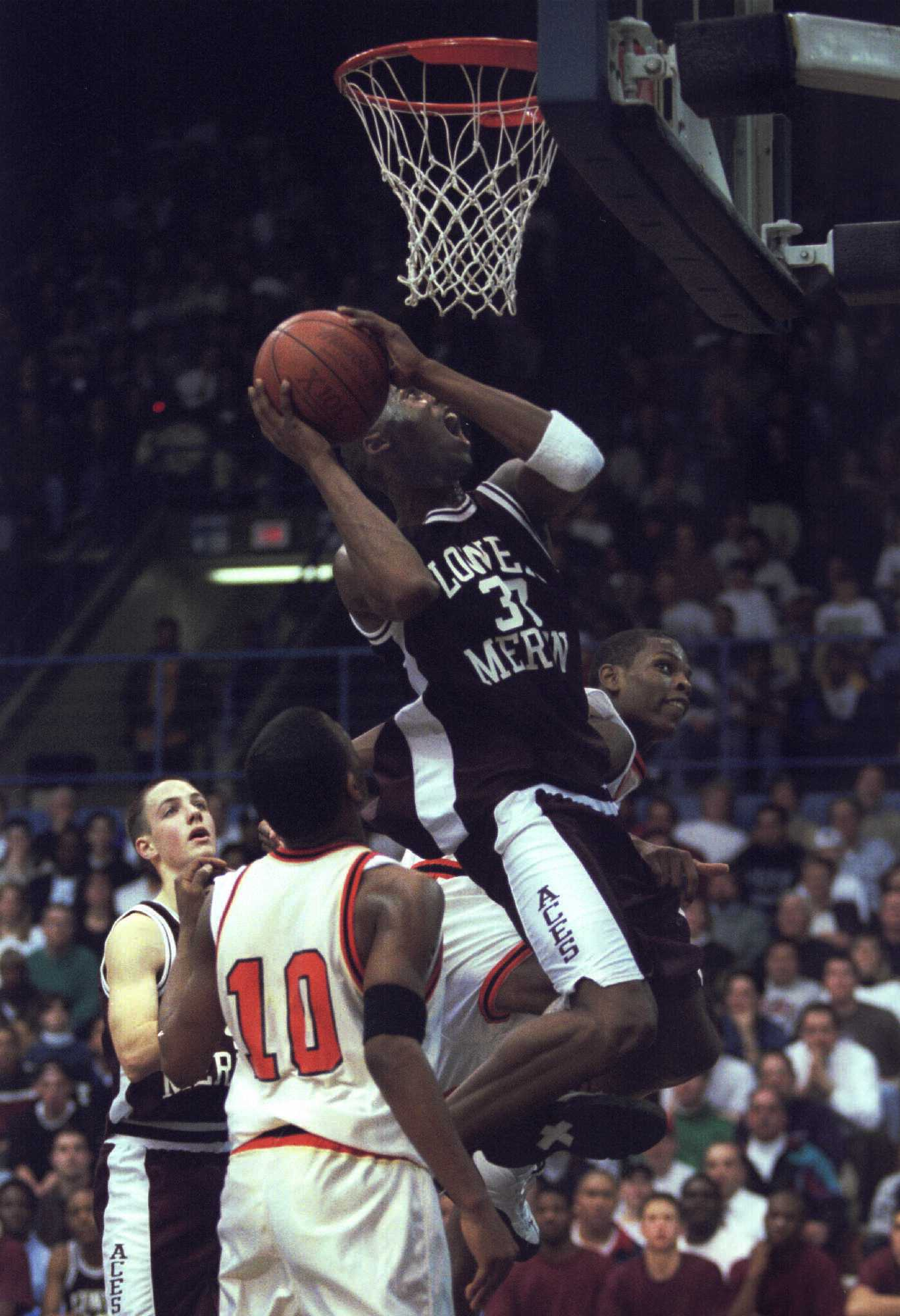
In the District 1 championship game against Chester, Kobe Bryant goes to the hoop over the Clippers’ John Linehan.Jay Gorodetzer / Staff Photographer
They arrived the next day at 5:06 a.m. The players knocked on the door. Bryant didn’t answer.
“He wouldn’t open it,” said Young, who graduated in 1995. “You’re either there or you’re not. We were six minutes late.”
His teammates waited outside until 6:30 a.m., when the school opened. They made sure to show up before 5 a.m. from that day on.
Downer was wired the same way. The coach — and his NBA-bound pupil — would push the team in practice. Losses were particularly tough. The players would go through endless sprints and rebounding drills that sent them running to the trash can.
It wasn’t fun. But over time, the method created a newfound tenacity.
“No one walked into high school saying, ‘Oh, yeah, I want to win a state championship,’” Young said. “But [Kobe] knew what that was. He was like, ‘I don’t know any other way. If we’re not going to win a championship, what the heck are we playing for?’”
Chester was always going to be an obstacle, so Downer tried to play into the battle. He’d use analogies for the tough, hard-nosed team, comparing it to an animal stalking its prey.
The coach began to screen movies to underscore this point. Together, in a Lower Merion classroom, Downer’s players watched Jaws and other tales of survival, like The Edge, a 1997 thriller about a plane that crashes in the Alaskan wilderness.
“This bear is stalking them, and the couple is saying, ’What are we going to do about this bear?’” Downer said. “And one of them says, ‘The only thing we can do is kill the bear.’
“And I remember being like, ‘We can do this.’ But the only solution is to — not to be overly graphic — but to kill them.”
(The bear in this analogy was Chester.)
He added: “We tried everything humanly possible to get through to this team.”
The first few games were ugly. In 1995, Lower Merion met the Clippers in the District 1 championship, only to lose by 27 points. But they came back with a renewed focus the following year, in 1995-96, going 25-3 in the regular season to earn a district final rematch against Chester.
The Aces showed up at the arena with “27″ printed on their warmup shirts. Bryant, armed with fresh bulletin board material from Linehan, dropped 34 points against the Clippers en route to a 60-53 Aces win.
The shooting guard scored 39 points later that month — with a broken nose — in a 77-69 state semifinal win over Chester. Lower Merion went on to beat Erie Cathedral Prep, 48-43, to win its first state championship since 1943.
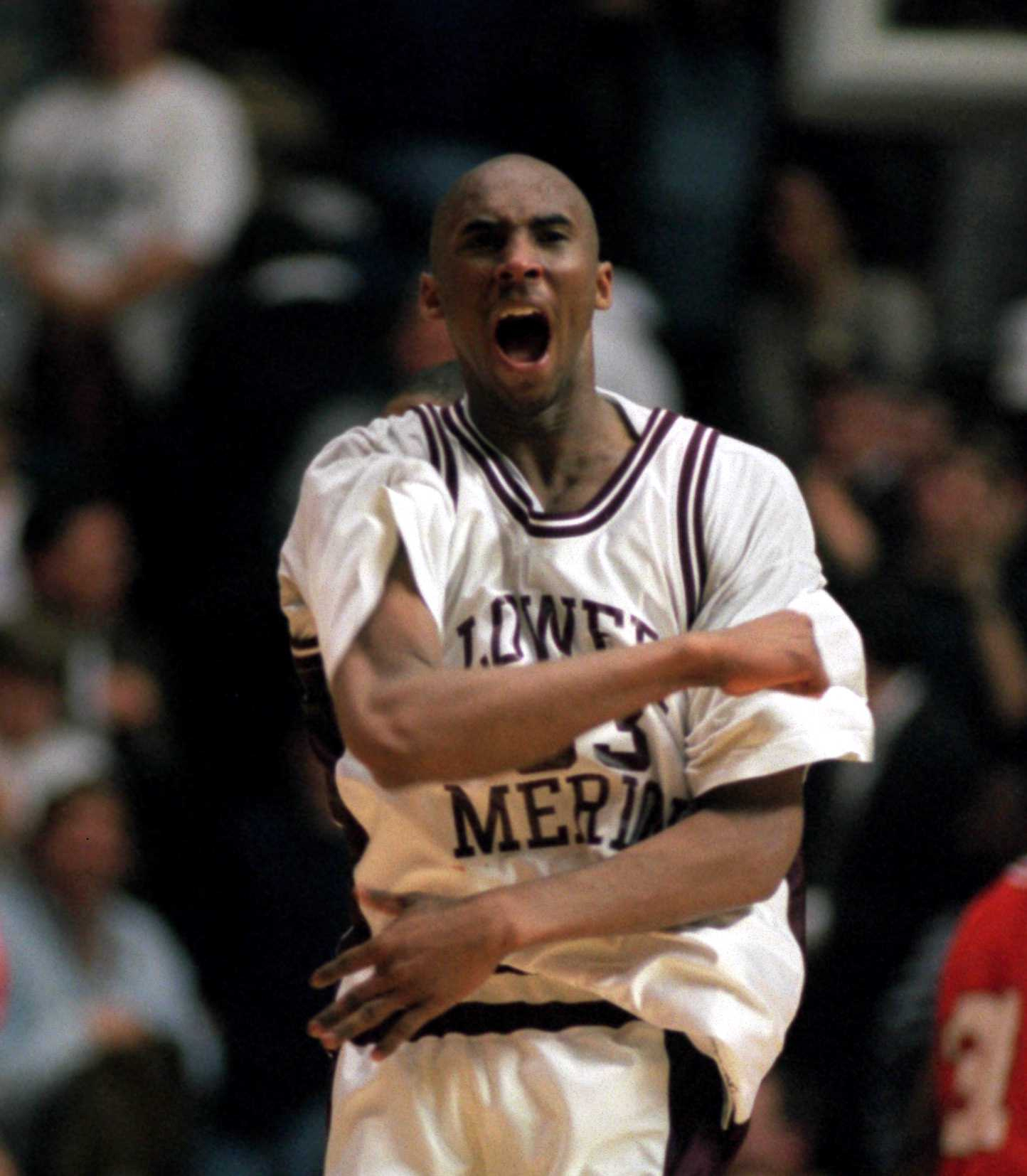
Kobe Bryant celebrates after defeating Chester at the Palestra in 1996 to advance to the state final.Ron Cortes / Staff Photographer
To Linehan, the difference Bryant made was obvious. He joked that he’d “never heard of Lower Merion” before his friend arrived. But once he did, Chester realized it would have to go to great lengths to prepare for the phenom.
Ahead of a big game against Lower Merion in the mid-1990s, the coaching staff reached out to Clippers alumnus Zain Shaw. He played at West Virginia and in Europe and possessed some of the same characteristics as Bryant — a tall frame and an athletic build with strong ballhandling skills.
The Clippers invited Shaw to practice, where he played the role of Bryant (to the best of his ability).
“Kobe was so special, we had to bring in a pro to help us prepare,” said Linehan, who later starred at Providence.
But there was another impact the future Lakers star had, one that had nothing to do with his own prowess. Linehan noticed that Bryant’s Lower Merion teammates started to take on some of his qualities. Suddenly, they were playing brash, confident basketball.
“We didn’t have reason to believe, until Kobe got there, that we belonged on the court with Chester,” Young said. “The fear was real. Teams were afraid of Chester because they’d run you out of the building.
“The idea of Lower Merion being on the court in a meaningful game against [them] was such a crazy thought. But then, you started to believe.”
The buzzer-beater heard ’round Chester
Bryant never got over the rivalry, even after he embarked on his Hall of Fame NBA career in 1996. Sometimes, he’d call the coaching staff before big games against Chester, leaving expletive-laden voicemails to use as motivation.
The Lakers shooting guard also created an incentive structure for his former team.
“You couldn’t get a pair of Nike sneakers unless you qualified for the playoffs,” Young said. “If you don’t earn it, you don’t get it.”
He became especially involved in 2005-06. After a lull in the early 2000s, Chester and Lower Merion found themselves neck-and-neck again. The Aces were led by the duo of Ryan Brooks and Garrett Williamson, and the Clippers boasted a deep roster, headlined by Darrin Govens. All of them eventually played in the Big 5.
(Chester was so stacked that it brought a 1,000-point scorer off the bench in Noel Wilmore.)
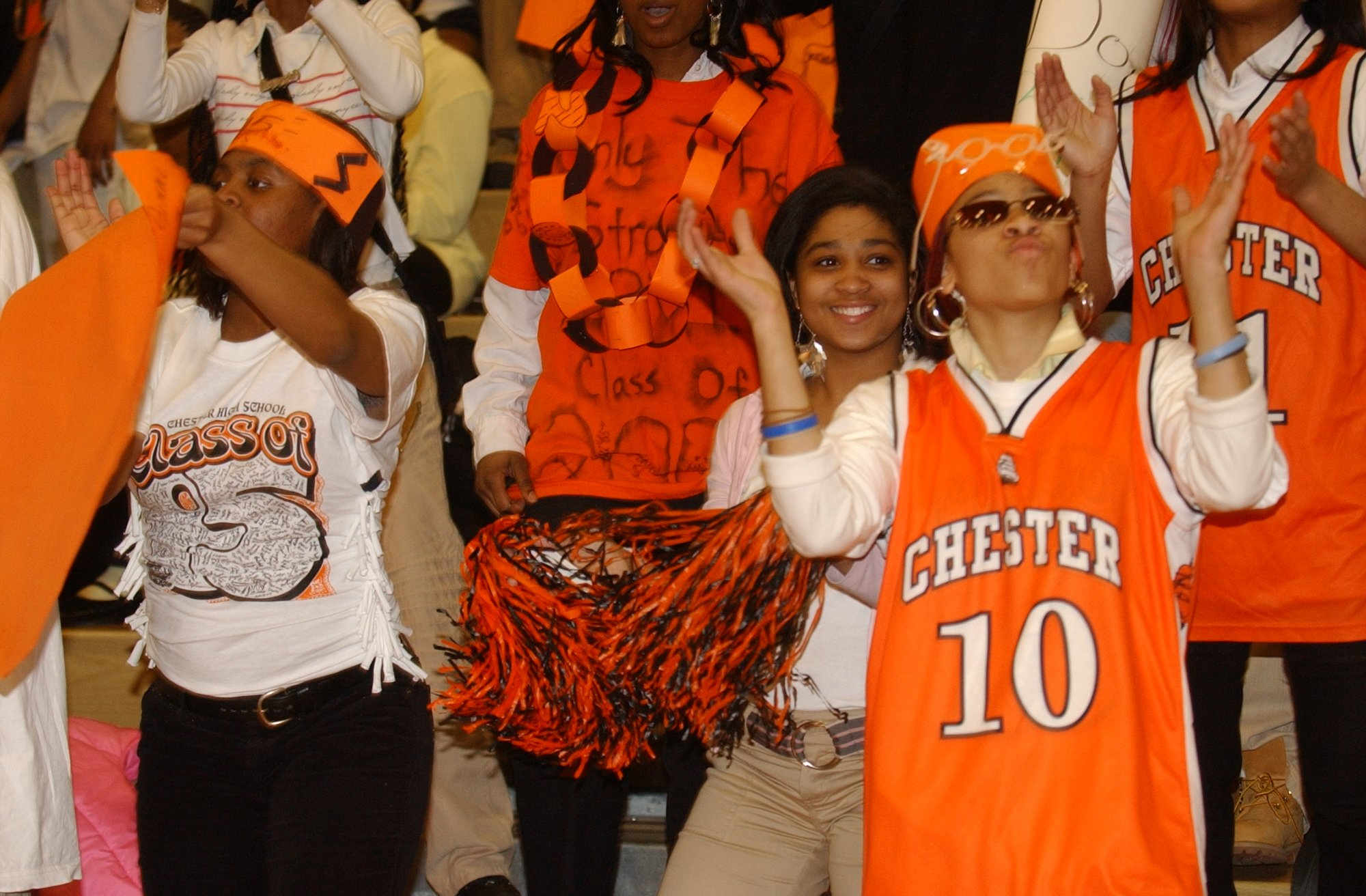
Students from the class of 2005 show their support as Chester and Lower Merion play in the state final. Hinda Schuman / Staff Photographer
The rivals met in the state championship on March 19, 2005. Despite strong performances from Williamson and Brooks, the Clippers pulled away in the second half thanks to a dominant third quarter from Govens. Chester won, 74-61.
The teams reconvened the following season with their competitive spark fully reignited. They faced each other three times that year. Chester took Round 1, a one-point regular-season victory on Dec. 27.
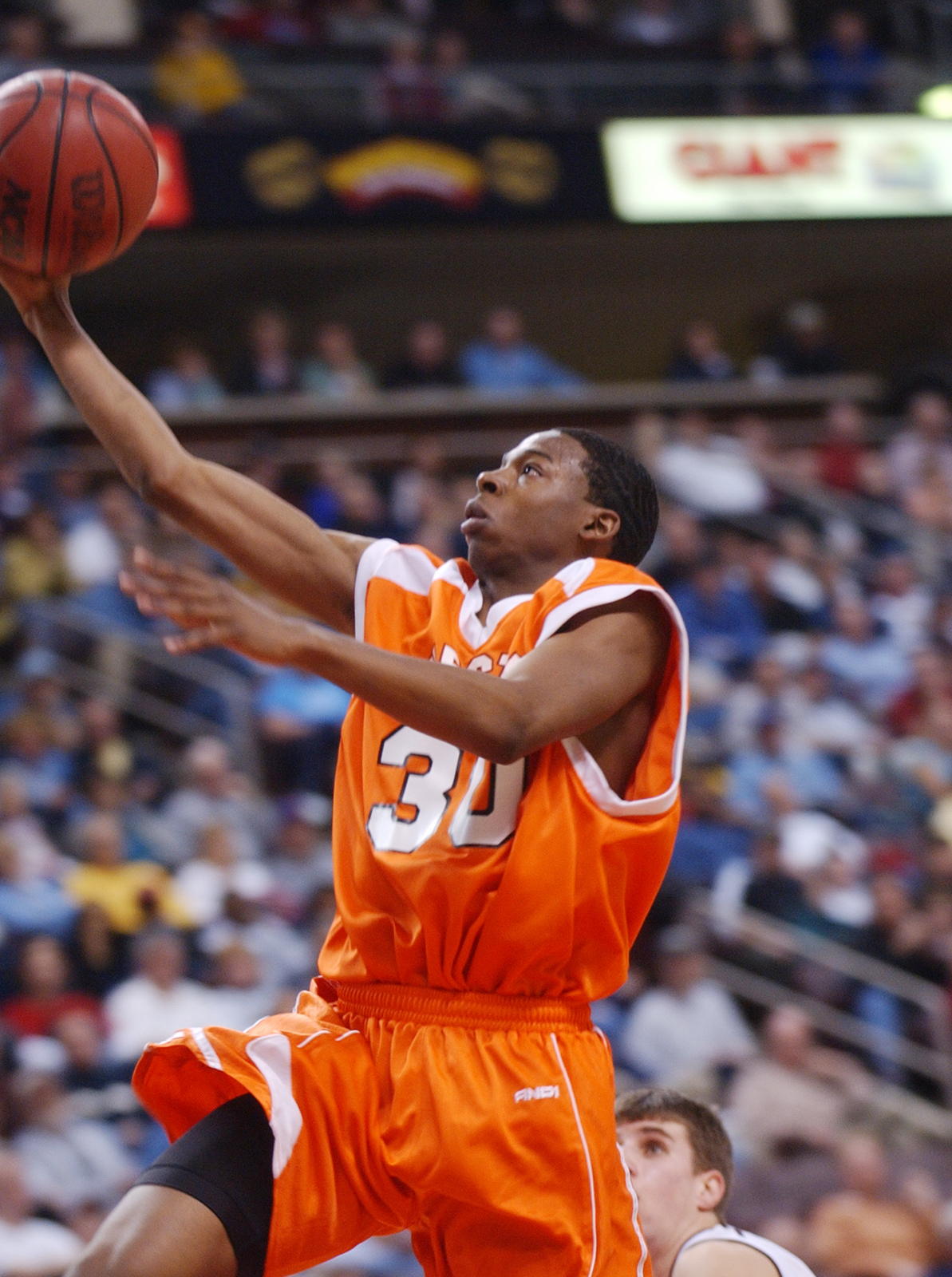
Round 2 was in the district final on March 3. Before the game, in front of a packed crowd at the Pavilion, Chester sophomore Karon Burton walked up to the layup line.
Lower Merion’s student section caught his ear with a chant about coach Fred Pickett’s stout stature.
The dig didn’t intimidate Burton. If anything, it fueled him. He grew up playing street ball in Chester and always loved trash talk.
Instead of cowering, like the crowd hoped, the sophomore delivered an unforgettable outing. The game went into overtime, and was tied at 80 with only a few seconds remaining.During a timeout, assistant coach Keith Taylor pulled Burton aside.
“He was like, ‘Hey, listen,’” Burton said. “They’re going to double Darrin. If you get that ball, do your thing.’”
Taylor’s words proved prescient. As Lower Merion’s defenders swarmed Govens, the Clippers inbounded the ball to Burton.
He took a pull-up jumper from beyond the arc and drilled it for an 83-80 win. The Chester fans stormed the court. Burton, who later joined Wilmore in the 1,000-point club, said he felt like a celebrity in his hometown.
“It was like watching a buzzer-beater in the NBA,” he said. “I just ran to my teammates, they picked me up. It was a crazy feeling.
“I’m a big Kobe fan, too. Kobe’s my favorite player ever. So when I came and I hit the game-winner on that team …”
Round 3 took place a few weeks later, in a state semifinal rematch at the Palestra on March 22. Bryant called Lower Merion’s coaches before the game.
“I don’t remember specifically what he said, but I’m sure there were a lot of [expletives] dropped,” said Young. “Like, ‘Don’t call me back if you don’t beat those [expletives].’ That was a line we heard from him a couple times.”
This one didn’t go Chester’s way. After trailing the Clippers, 47-37, at the end of the third quarter, the Aces came roaring back in the fourth and put up 33 points to eke out a 70-65 win.
The celebration in the locker room was cathartic. Water sprayed into the air. Players sat atop each other’s shoulders and turned the showers into a slip ‘n slide. Bryant called in, again, as other members of the 1996 team filtered through.
Darrin Govens scored his 1,000th point for Chester against Lower Merion in the state championship in 2005.Hinda Schuman / Staff Photographer
This was not how Govens wanted to end his high school career. And a few months later, when he arrived at St. Joseph’s on a basketball scholarship, he saw a familiar foe.
It was Williamson, his new Hawks teammate.
“We were sitting on the opposite side of the bench,” Govens said. “I didn’t want to sit next to him; he didn’t want to sit next to me. We’d kind of avoid each other and just head nod.
“Even in running drills, it was a competition. He looked to the left. I looked to the right. We tried to beat each other in sprints. But then we realized, ‘All right bro, we’re teammates now.’”
‘Hero status’
Chester had always rallied around its high school basketball team. Linehan said it was akin to playing for the Sixers. The teenagers were treated like professional athletes — especially those who had been a part of big wins.
The Clippers’ public address announcer, James Howard, called this “hero status.”
“All of a sudden, your money’s no good,” he said. “Barbers take care of you, make sure your hair looks nice before games. Free food. Little kids look up to you and ask for your autograph. That’s how it is.”
In Chester, there were plenty of heroes to draw from. There was Linehan, but also Jameer Nelson, who met a young Burton in the late 1990s. Nelson, a friend of Burton’s cousin, gave the aspiring basketball player a gift before he left for St. Joe’s: his MVP medal from the Chester summer league.
“He was one of the biggest guys in our city,” Burton said, “so it’s definitely something that I’ll always remember.”
By the early 2010s, when the rivalry was reignited for a third time, Lower Merion had built more of a basketball tradition. Aces guard Justin McFadden said he’d get stopped in Wawa before big games against the Clippers.
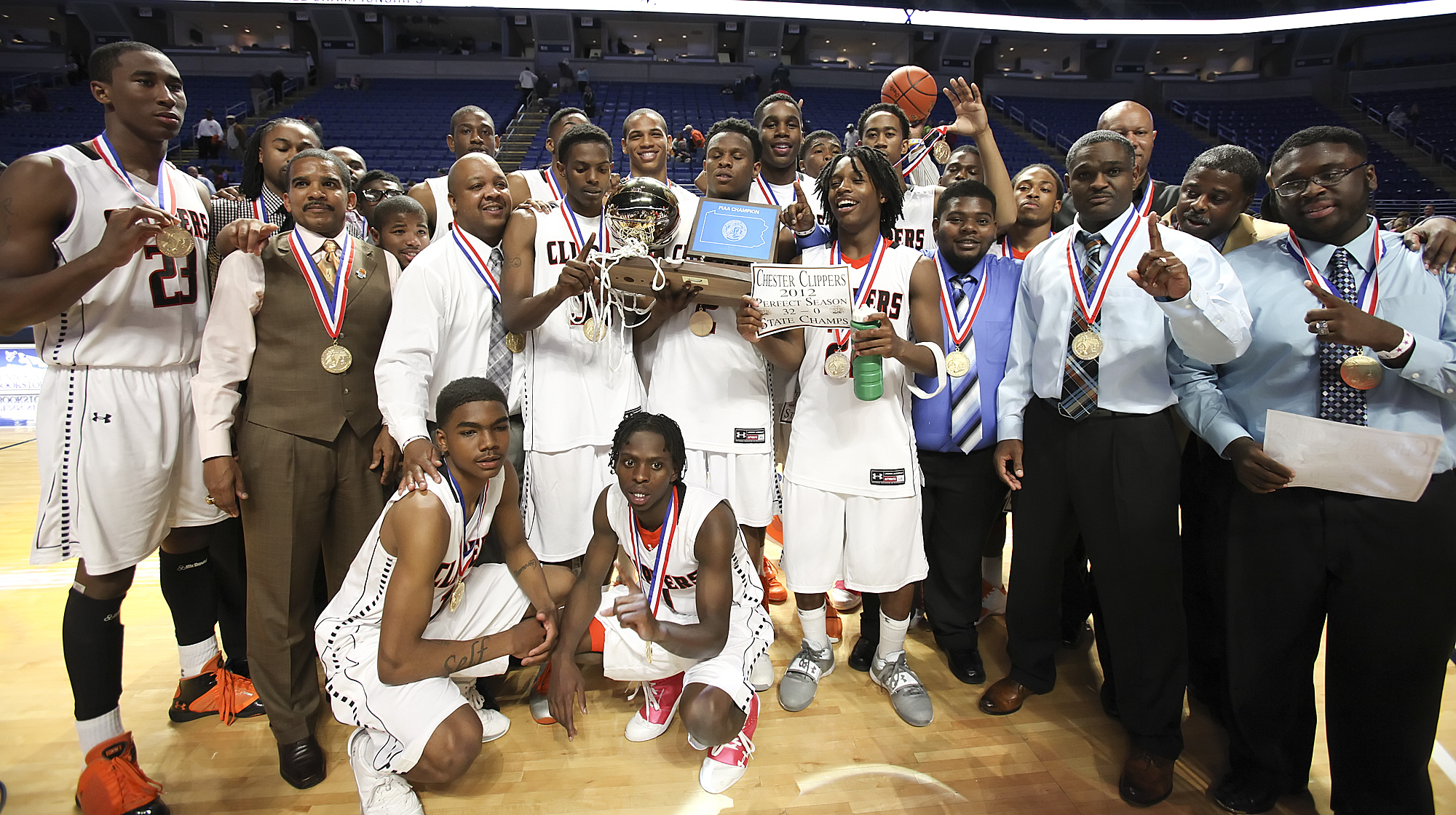
Chester celebrates its win over Lower Merion for the state championship in 2012. Steven M. Falk / Staff Photographer
“It became a community thing,” he said. “People would be asking, ‘What do you guys think about Chester? Do you think we can get it done?’”
In 2012, the schools met in the state championship for the first time since 2005. Junior forward and future NBA starter Rondae Hollis-Jefferson put up a double-double to lead the Clippers to a resounding 59-33 win over the Aces. It was their second straight title and their 58th straight victory.
A year later, after going 17-0 in the Central League, the Aces met the Clippers in the state final again. Chester had won 78 straight games against in-state opponents. Snapping that streak would be daunting, but Downer had a plethora of motivational tactics at his disposal.
Just as they had in the 1990s, The Aces again spent pockets of the season watching Jaws, The Edge, as well as an addition: Al Pacino’s “Inch by Inch” speech in Any Given Sunday.
“He would have that fired up on YouTube, ready to go,” McFadden said. “Looking back, [your reaction] is a chuckle, but in the moment, it worked. We knew that this was the hill that needed to be climbed.
“And every time they played that speech, we got goose bumps. We were ready to fire.”
Chester got out to an early lead, but Lower Merion rallied behind a 22-point, 11-rebound performance from B.J. Johnson, who later starred at La Salle. The Aces snapped the streak and won their seventh state title with a 63-47 victory.
Lower Merion’s Jaquan Johnson goes to the net as Diamonte Reason guards him in the Chester-Lower Merion state championship game in 2013.Elizabeth Robertson / Staff Photographer
The Clippers then were coached by Larry Yarbray. Pickett, who was diagnosed with cancer in2010, was in declining health. Just before he died in 2014, Downer decided to say goodbye.
He and his former assistant coach Jeremy Treatman drove out to Pickett’s home in Chester. They went to his bedside.
“And we talked,” Downer said. “And we held hands. It was a really touching moment for me. This is a man that carried Chester on his back. That tried to carry Lower Merion on his back. And I knew it was the last time I was going to see Fred.
“We walked out the door, and we told each other that we loved each other. And I never thought he would say that to me, or vice versa. But it was just kind of like, ‘You know what? We’ve had some amazing battles, and there’s a lot of respect there.’”
Keeping the tradition alive
In recent years, the Chester-Lower Merion rivalry has diminished.
There was a brief period when the teams were in different classifications. Both programs have lost players to private schools that can recruit, and the addition of the Philadelphia Catholic League to the PIAA has made the state playoffs more competitive.
One place the Aces and Clippers could meet is in the district tournament, where they reunited in 2024. But they haven’t played each other since. And Howard says the contests don’t have the same feel.
“Both teams have lost D-I talent,” he said. “It’s not as high-flying, above the rim, as it was in the past. But still a great game. Sold out at Lower Merion, and at Chester, same thing.”
The history will always be there, though, and Burton is doing his best to keep it alive. His 8-year-old son, Karon Burton Jr., is playing in the Biddy League. His father is his coach.
Sometimes, they go on YouTube and watch old Clippers games. Junior’s favorite, of course, is the 2006 district final.
Burton believes that his son has a promising future, but isn’t sure of where he’ll go to high school yet. He doesn’t want Karon Jr. to feel obligated to follow his father’s path.
But if it worked out that way, what a story that would be.
“I’d love to be the first father and son to have 1,000 points,” Burton said. “With the same name? That would be crazy.”