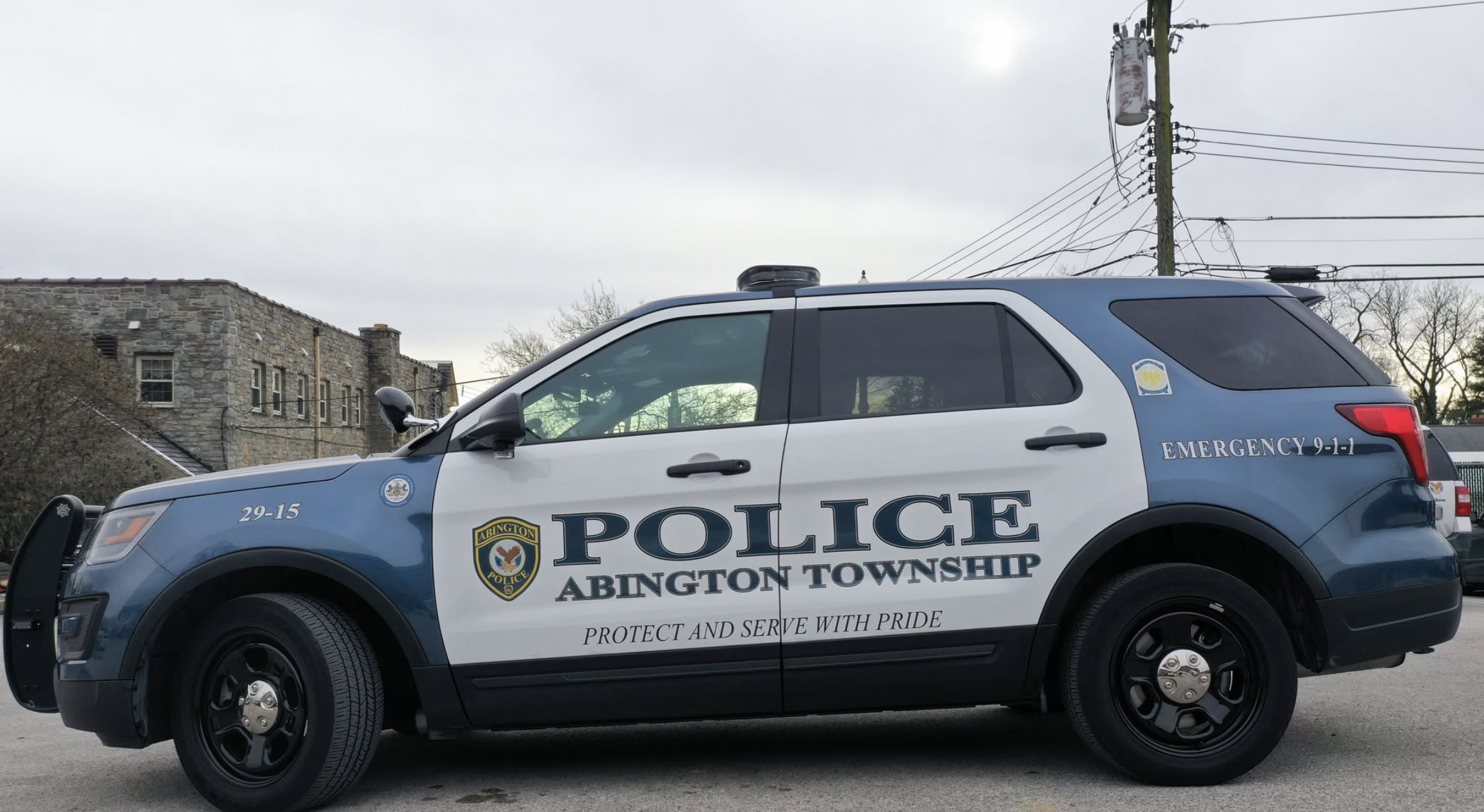
The Abington Township Police Department launched an investigation after antisemitic and racist graffiti was found spray-painted throughout the Weldon playgroundin Glenside.
“There is no place for hate in our community,” the statement said. “We stand united with our Jewish and Black communities, who were targeted by these acts.”
It’s unclear when the park was defaced, and no additional information about the incident was immediately available.
In a Facebook post, Abington School Board President Melissa Mowry called the act “craven, cowardly, and despicable.”
According to Mowry, the school district owns the playground and partners with civic groups to maintain it as “a public resource where everyone is welcome to smile and laugh together.”
“There is ‘No place for Hate’ of any kind in this community, but especially where all children are invited to play,” she wrote.
Dozens of community members on Saturday worked to remove the hateful messages, NBC10 reported.
Police are asking anyone with information to contact the department at 267-536-1100.
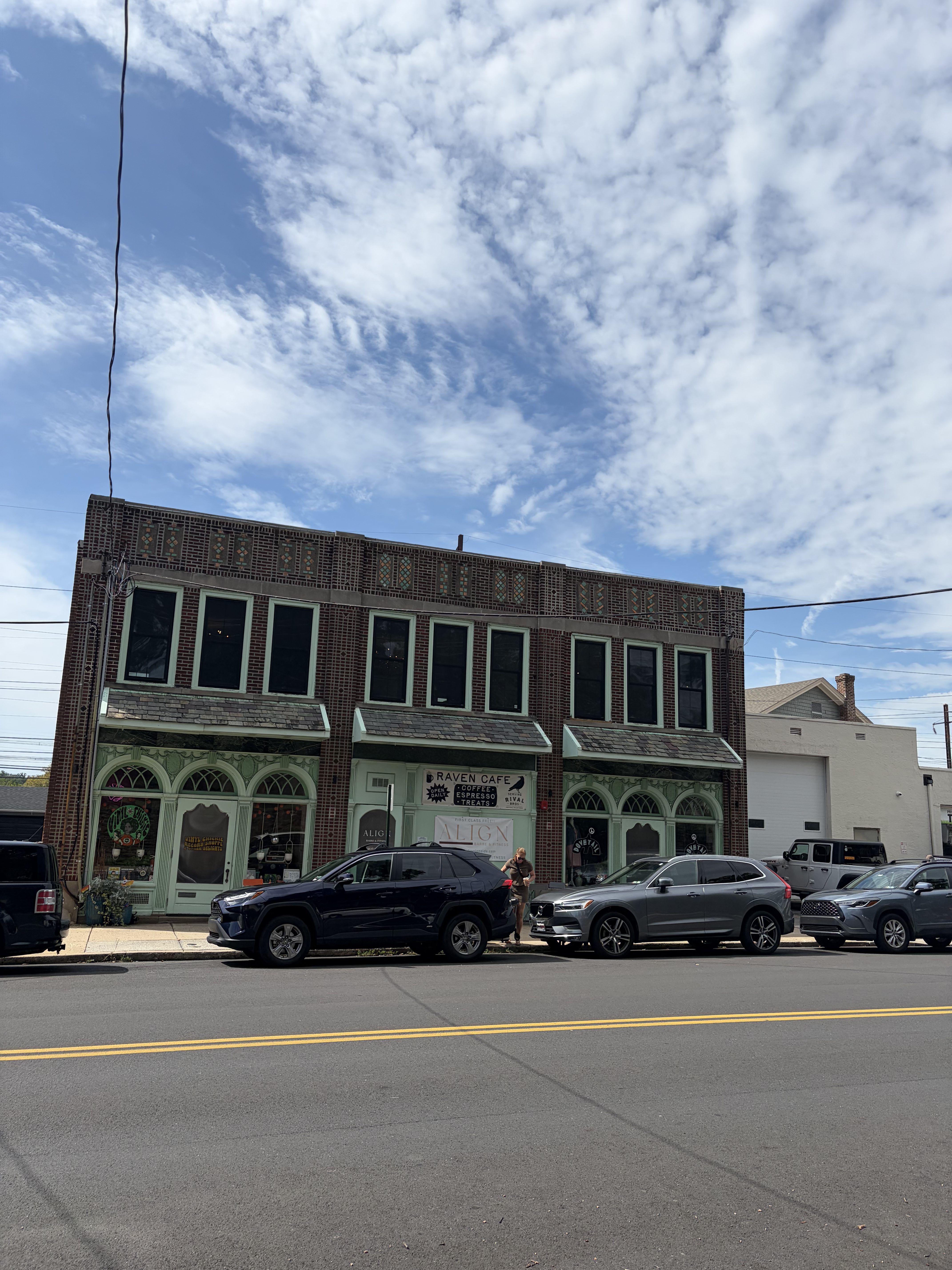
A sprawling brick Glenside building that last held an optometrist’s office is returning to its roots as developer Kevin Burke looks to build community hubs around his native Glenside.
The building at 2256 Mt. Carmel Ave. was once home to a bowling alley and billiards hall. The alley closed in 1971, and a family of eye specialists ran a glasses store there for decades.
Burke bought the 1920s structure, dubbed Glenside Lanes, in 2024. The micro-mall, which officially opened in May 2025, is now home to a barre and yoga studio, a coffee shop, a record store, and a gift shop, with plans for a music venue in the back.
Like the newly bustling Yorkway Place in Jenkintown, Glenside Lanes balances traditional retail with experiential businesses. The Montgomery County venues are part of a nationaltrend, as investors look to fill commercial space hollowed out by online shopping and post-pandemic consumer shifts.
“I think it’s the way to keep a brick-and-mortar going,” said Rhiannon Punzo, a Glenside Lanes tenant. “It’s like your community mall where you’re coming to one building that you can walk to, that isn’t corporate.”
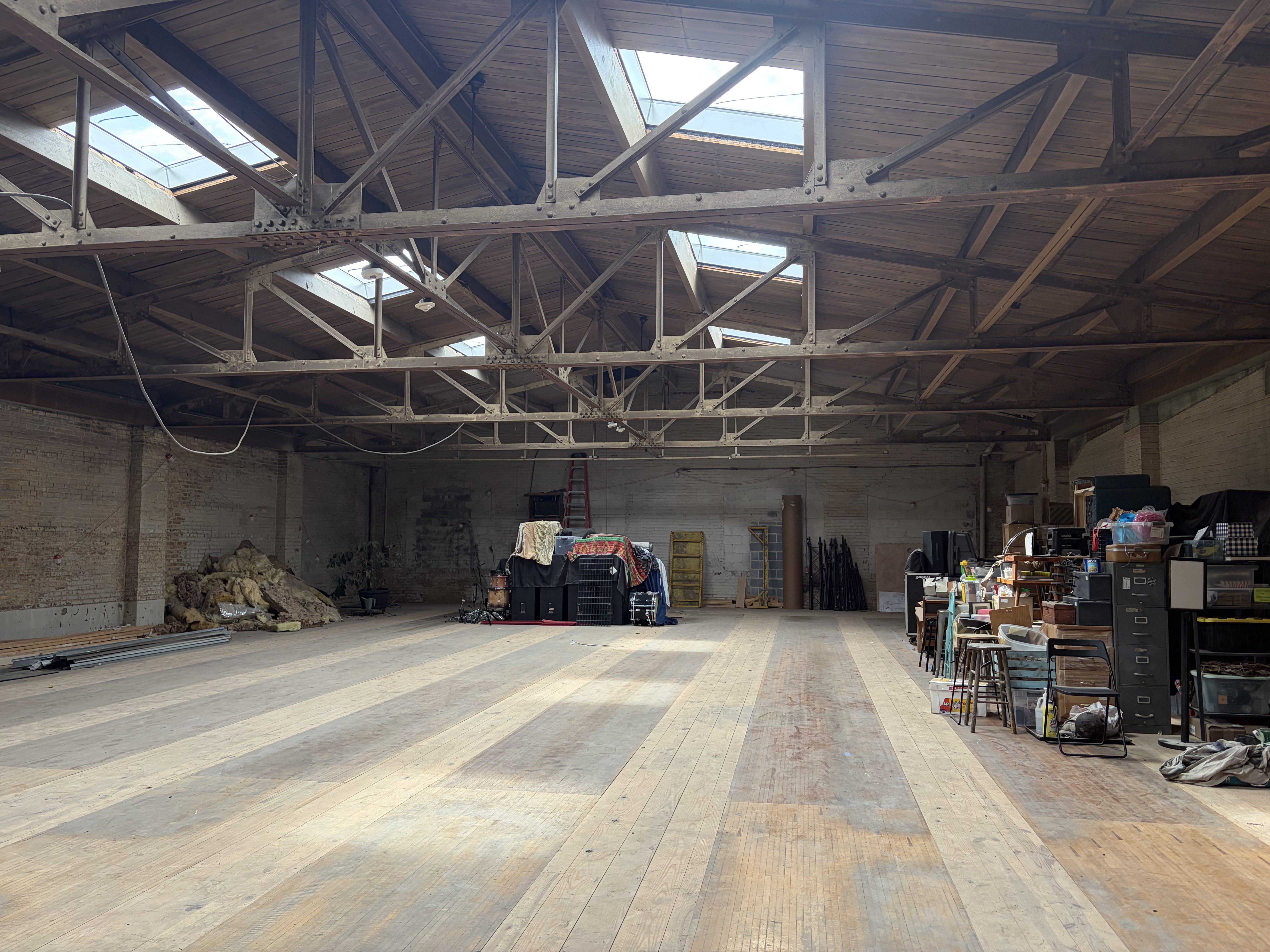
Burke is preserving most of the bowling lane flooring — including lane guides and the alternating wooden plank style demarcating the gutters — in the back of the building, which will serve as a concert and event space as early as November. He plans to develop a similar multiuse site in Wyndmoor.
The lanes from a former bowling alley are still visible in a section of Glenside Lanes under construction on Sept. 3, 2026.Jess Rohan
But to make Glenside Lanes a success, Burke needed the right business partners.
First, he found Punzo, who runs the Dovetail shop of local artist-made gifts, and cofounded the art events company CO Lab.
Punzo connected with longtime music photographer Lisa Schaffer, who had planned to open a record store in about five years. Within months, Schaffer was opening Vinyl Chickie at Glenside Lanes.
“I want you to speed up your retirement plan,” Punzo recalls telling Schaffer.
Former professional ballet dancer Alyson Pray Ward used to park outside the building and walk down the street to her barre and yoga business, Align Studio.
“I would always look up to the second floor and think, ‘That would make a gorgeous ballet studio,’” Pray Ward said. She moved Align into Glenside Lanes last year.
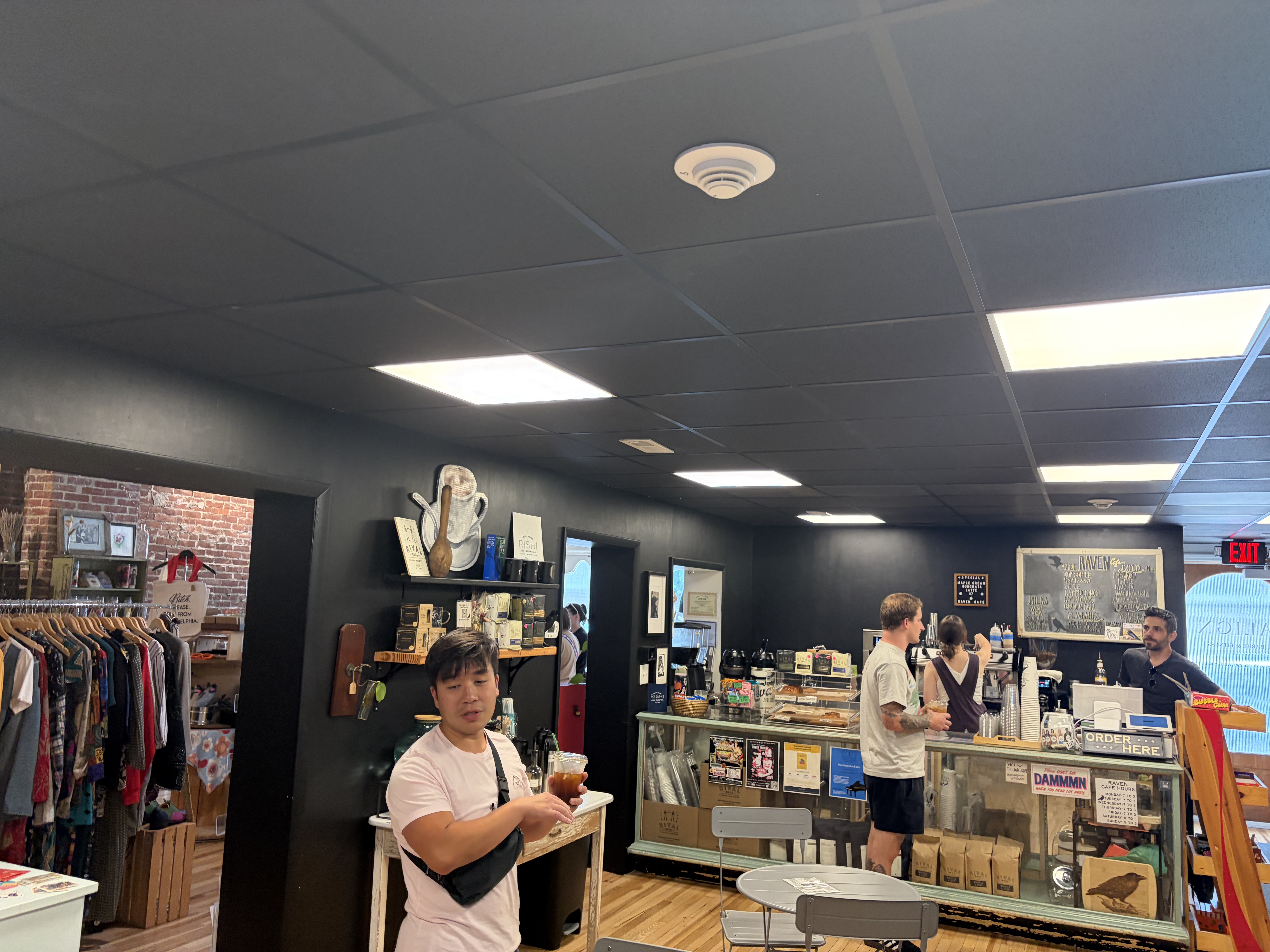
This summer, Raven Cafe began serving Rival Bros. Coffee on the ground floor between Punzo and Schaffer’s stores. The stores flow into one another, making it easier to linger, owners and workers said: Yogis might pick up a teacher gift downstairs at the Dovetail after class, and music lovers grab coffee at Raven before browsing vinyl.
Raven Cafe opens into the Dovetail gift shop at Glenside Lanes. The stores flow into one another, making it easier for customers to linger, owners and workers said.Jess Rohan
“People can honestly show up and see familiar faces,” said Christine Collins, who teaches at Align. “I’m meeting adult friends there.”
The clutch of complementary businesses is exactly what Burke had hoped for.
The goal “was definitely to bring in different businesses that would help the community,” Burke said. “I always thought the bowling alley would be a perfect spot for that, and now we’re almost there.”
The final business partner Glenside Lanes needed, Punzo said, was Glenside itself.
“The community said, ‘We want this, if you build more we’ll come,’” Punzo said. “They could’ve been just talking, but everyone who said it showed up.”
Correction: This story has been updated to reflect where developer Kevin Burke may plan a future micro-mall.
This suburban content is produced with support from the Leslie Miller and Richard Worley Foundation and The Lenfest Institute for Journalism. Editorial content is created independently of the project donors. Gifts to support The Inquirer’s high-impact journalism can be made at inquirer.com/donate. A list of Lenfest Institute donors can be found at lenfestinstitute.org/supporters.
Books are back, in Greater Philadelphia and around the country.
The industry saw modest revenue growth the last four years in a row, an Association of American Publishers report found. Brick-and-mortars saw more than twice the growth of online retail in 2025, and hardcovers outpaced ebooks.
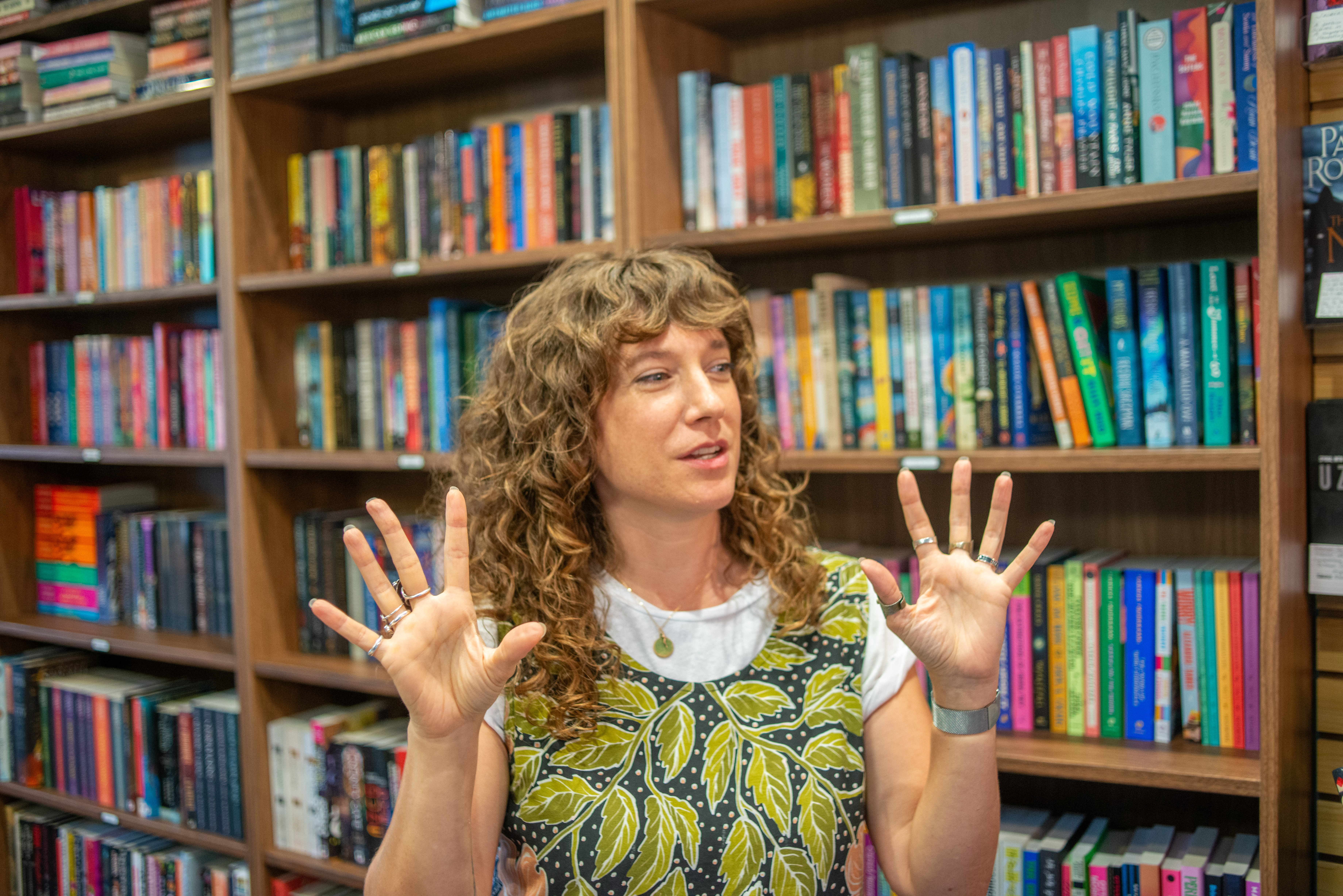
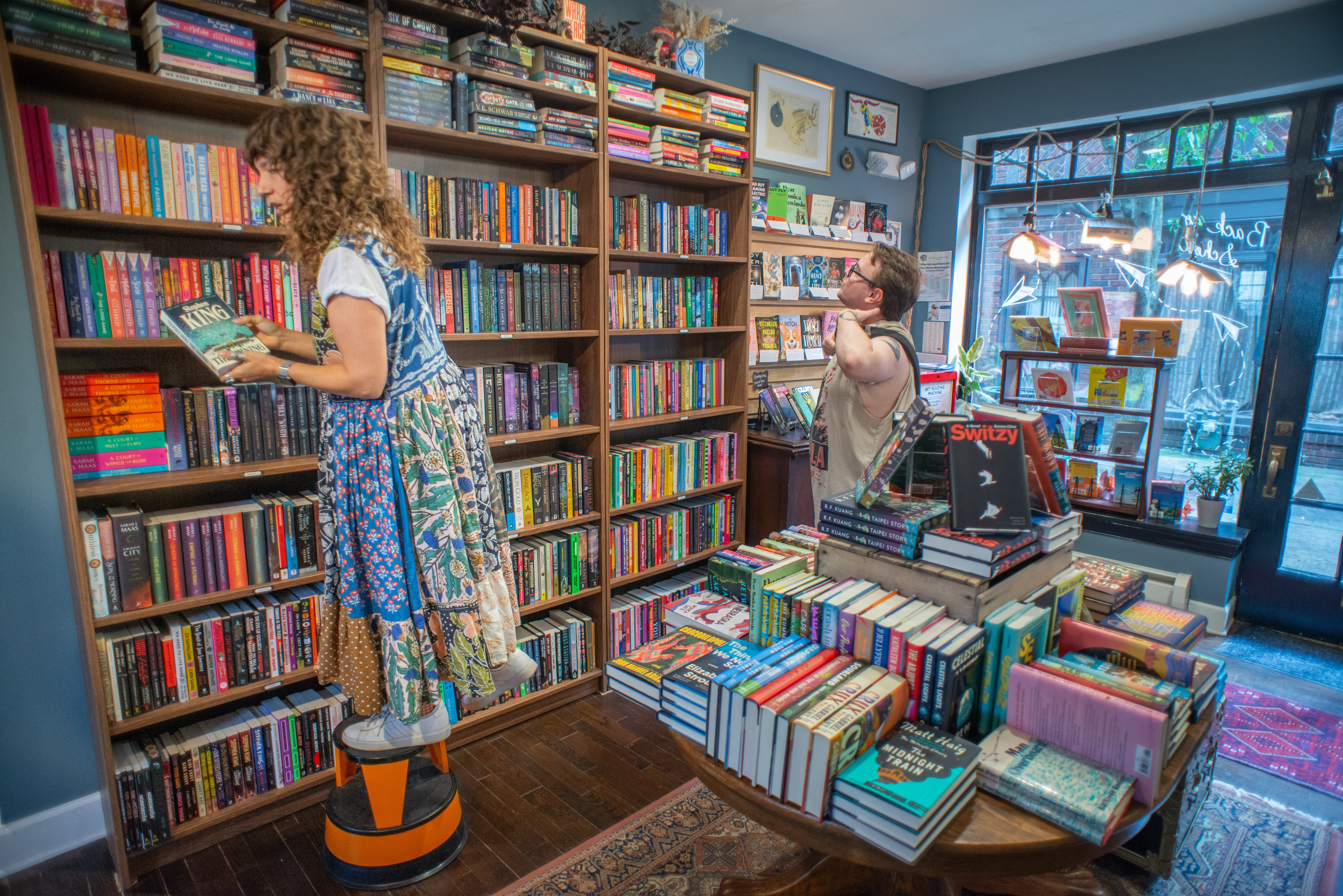
Jackie Botto looks for a book on the shelves while chatting with a customer at Capricorn Books in Jenkintown.William Thomas Cain / For The Inquirer
Many Philly-area booksellers said they’re feeling the surge.
But what are they reading? Sixteen booksellers told us their favorites of 2026 so far.
Angel by Elizabeth Taylor and The Princess of 72nd Street by Elaine Kraf — Ariel Censor, Little Yenta Books in South Philly
Back for Blood: Never Whistle at Night Part II edited by Shane Hawk and Theodore C. Van Alst Jr.— Alex Schneider, A Novel Idea in East Passyunk
Discipline by Larissa Pham — Richard De Wyngaert, Head House Books in Queen Village
Exit Party by Emily St. John Mandel — Jackie Botto, Capricorn Books in Jenkintown
Message to the Blackman in America by Elijah Muhammad — Shaykh Anwar Muhammad, The Black Reserve Bookstore in Lansdale
Most Ardently Yours by Freya Sampson — Charity Herndon, Austen’s Shelf in Bordentown
Partita by Barbara Kingsolver — Elizabeth Young, Commonplace Reader in Yardley
This suburban content is produced with support from the Leslie Miller and Richard Worley Foundation and The Lenfest Institute for Journalism. Editorial content is created independently of the project donors. Gifts to support The Inquirer’s high-impact journalism can be made at inquirer.com/donate. A list of Lenfest Institute donors can be found at lenfestinstitute.org/supporters.
HARRISBURG — For more than two decades, Gov. Josh Shapiro has worn it almost every day.
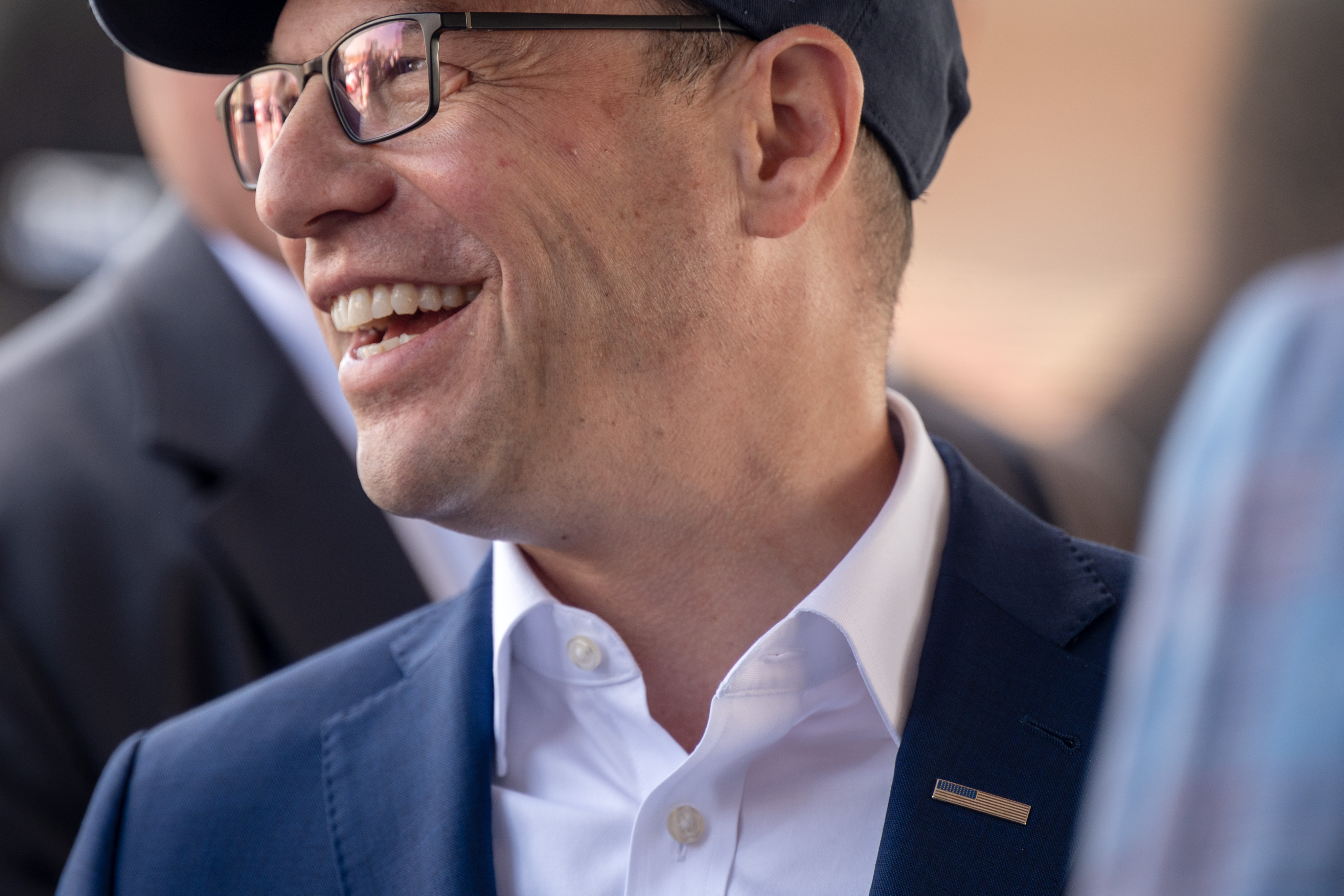
The small, thin accessory affixed to his lapel — a compressed version of the 50 stars and 13 stripes — may require one to squint to see. But it carries significant meaning to the Democratic governor, with an origin story that began on Sept. 11, 2001, when Shapiro was a young staffer on Capitol Hill.
Shapiro was working in Washington when he experienced the pain and confusion of the deadliest terrorist attack in the nation’s history, he said in a June interview.
He was just steps away from the U.S. Capitol building in then-U.S. Rep. Joe Hoeffel’s office, where he served as chief of staff, when he watched as the Today show anchors announced a plane had hit the World Trade Center. And then another.
He realized, like thousands of Americans, that the nation was under attack — with Washington as a potential target. Less than an hour later, Shapiro said, he saw the smoke coming from the Pentagon. Staff were given mixed signals on whether to evacuate before ultimately being told to hunker down in legislative buildings until the situation was clear, he said.
When Shapiro arrived on Capitol Hill the next day, a woman who worked in the Capitol gift shop was giving out American flag pins to anyone who passed by — the “typical gift shop” pin depicting a waving flag that President George W. Bush and other politicians began to wear in the aftermath of the 9/11 attacks, he said.
The pin became a part of Shapiro’s daily business uniform. He wore it every day, even after he left D.C. and began working at a law firm in Montgomery County while preparing to run for state representative — his first foray into elected office and the start of a decades-long career.
When Shapiro was knocking on doors for his 2004 run for the state House, a veteran in Glenside told him his gift shop pin wasn’t cutting it. The veteran gave Shapiro a nicer one: an image of the American flag in a thin, metal bar.
“And I’ve worn it basically every day since,” Shapiro said in June ahead of his appearance at a special session of the U.S. House at Independence Hall to commemorate America’s founding 250 years ago. Widely rumored to be a future presidential contender, Shapiro often talks about his pride in America and its ideals, and his fears that the country is becoming too divided and straying from the founders’ aspirations.
“I am a proud, patriotic American,” he said, referencing his pin. “I don’t think patriotism belongs to one party. I don’t think it should ever be partisan.”
Over the years, Shapiro has made slight changes to the flag accessory; he shaved down the pin stem and made it into a magnet.
“It was destroying my suits,” he added.
He said he once lost the pin when it fell off a jacket that he had hung up on a plane.
“I freaked out. I literally freaked out,” he said.
He said he and the flight attendant were on their hands and knees trying to find it in the plane’s closet. They found the pin, but never found the backing, which was replaced much more easily.
“I found the most important thing, and I just got another magnet,” he said.
Shapiro will appear at the Flight 93 Memorial near Shanksville, Pa., alongside members of President Donald Trump’s administration, includingU.S. Interior Secretary Doug Burgum, for a service on Friday to commemorate the 25th anniversary of the attacks, in which more than 2,900 people were killed.
United Airlines Flight 93, a San Francisco-bound passenger plane flying out of Newark, was hijacked on Sept. 11, 2001. It was believed to be headed to the White House or U.S. Capitol, near where Shapiro was working at the time — before its 40 passengers attempted to retake control and crashed the aircraft in a field near Shanksville.
This fall’s restaurant openings reflect an industry hedging its bets: established operators expanding into the suburbs and repurposing familiar spaces, and newcomers pursuing narrowly drawn concepts built around omakase, caviar, Korean barbecue, cocktails, and live-fire cooking.
I count about five dozen restaurants in the region’s pipeline, with Italian concepts (no surprise), all-day service, and experience-driven dining recurring throughout the list. In addition to 60 restaurants opening between now and late December, two other restaurants are expanding: Lovat Square in Chestnut Hill is adding dinners and Palm Vintage across from City Hall is adding nighttime sushi service.
By comparison, last year’s fall roundup covered 53 restaurants. All of those opened except for three that are now a full year behind schedule: Adda in Fishtown is shooting for October, Ayat near Rittenhouse Square is aiming for November, and Brunch Bulls in Point Breeze is targeted for December. (Although this year has seen its share of closings, especially among longstanding restaurants, each of last fall’s restaurants is still open.)
Brand new and notable
Aogami (4343 Main St.): Underground sushi is coming to Manayunk as chef Tom LoMonte joins chef Moon Krapukthong to offer a 16-course omakase in a 20-seat BYOB setting beneath Krapukthong’s Yanako and neighboring Chabaa Thai Bistro, starting Sept. 25. LoMonte — a veteran of Zama, Izakaya by Yanaga, Pod, and Yanaga Kappo Izakaya — will lead the omakases at 6 p.m. Fridays and Saturdays; reserved sushi-bar seatings will run Wednesdays, Thursdays, and Sundays alongside hand rolls and à la carte service. LoMonte describes the atmosphere as energetic and less formal than typical omakase counters. Upstairs, Yanako will continue serving rolls, sushi platters, udon, tempura, and yakitori.
The Buttery (1099 Germantown Ave.): Malvern-based bakery and cafe the Buttery is preparing a Philadelphia location at Piazza Alta in Northern Liberties, near Scusi and Terra Grill. It recently opened a Bryn Mawr location and expanded its original Malvern operation into dinner service with Neapolitan pizza and shareable plates. An opening date has not yet been shared.
Nick & Nora’s Oyster Dive (560 Stokes Rd., Medford): Michael and Jeniphur Pasquarello (La Chinesca, Piccolina) are bringing a raw bar and American kitchen to a corner space with a large deck at Ironstone Village. The broader menu will include steak frites, burgers, fish, vegetables, and small plates, says Michael Pasquarello, who hopes to open in 60 to 90 days.
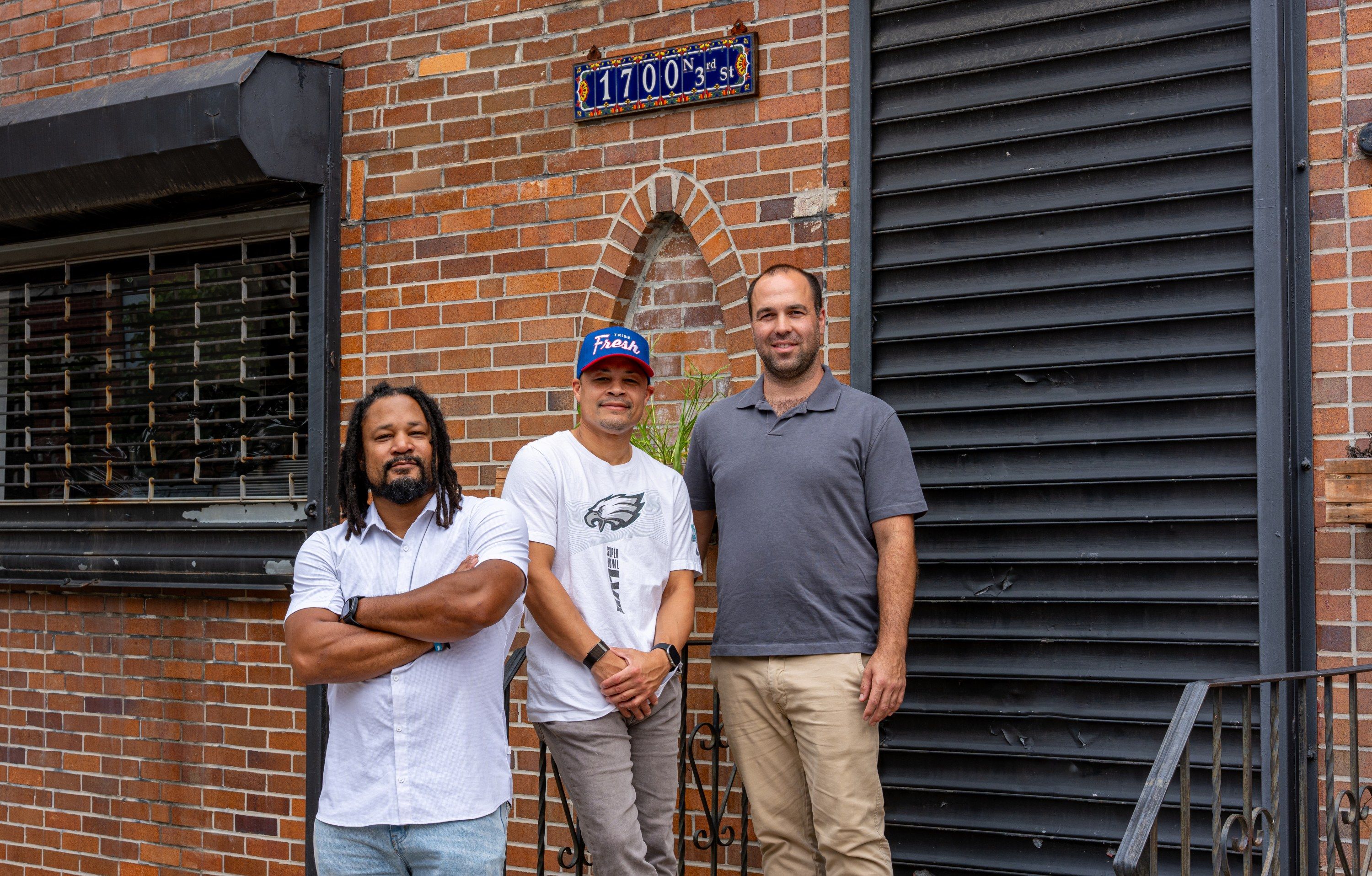
Chef Chaz Brown (left) is partnered with his brother Clifford Brown (center) and John Skeele in Rumblefish, 1700 N. Third St.Mike Prince
Rumblefish(1700 N. Third St.): Chef Chaz Brown is targeting November for this 900-square-foot, fast-casual Caribbean fish-fry restaurant at Third Street and Cecil B. Moore Avenue. Brown — a Trinidadian American chef whose resumé includes Nobu, Le Bec-Fin, Fatty Crab, and television’s Top Chef — will focus on invasive species such as lionfish, snakehead, green crab, and Chesapeake Bay blue catfish when available. (The catfish turned heads at the recent Oxtail Exchange at Forman Arts Initiative.) Brown uses gluten-free corn flour with Trinidadian spice blends and serves the fish on po’boy-style rolls baked by Angelo’s Bakery in Conshohocken. The mostly takeout operation will have counter seating, a 25-seat covered patio, slaws, fries, sea-moss drinks, and Solo Kola Champagne.
Pennsylvania suburbs
Alessandro’s Enoteca (915 W. Lancaster Ave., Bryn Mawr): Alex Fiorello’s third restaurant will bring a bar-focused Italian concept to the former Enoteca Tredici space in Bryn Mawr Village in mid-to-late October. Fiorello and culinary director Matt Arcomone, whose resumé includes Osteria, Vetri, and Palladino’s, are planning house-made pastas, wood-fired pizzas, live-fire cooking, and dry-aged meats. It’s intended to have a stronger evening and bar scene than Fiorello’s Wayne restaurants.
Bruzi (281 Montgomery Ave., Bala Cynwyd): Two couples with Calabrian roots plan to open this Southern Italian restaurant in the former Aldar Bistro in late fall. Expect house-made pastas and Calabrian dishes such as fusilli with slow-cooked meat sauce, baked lamb, and grilled tuna, plus cocktails and an opening list of about 100 Italian wines.
Capperini (137 S. Easton Rd., Glenside): Eastern Montco will get an upscale Italian-Mediterranean destination with a liquor license from Ilya Vorobey and partners including members of the team behind Capri in Queen Village. Vorobey is aiming for October or November.
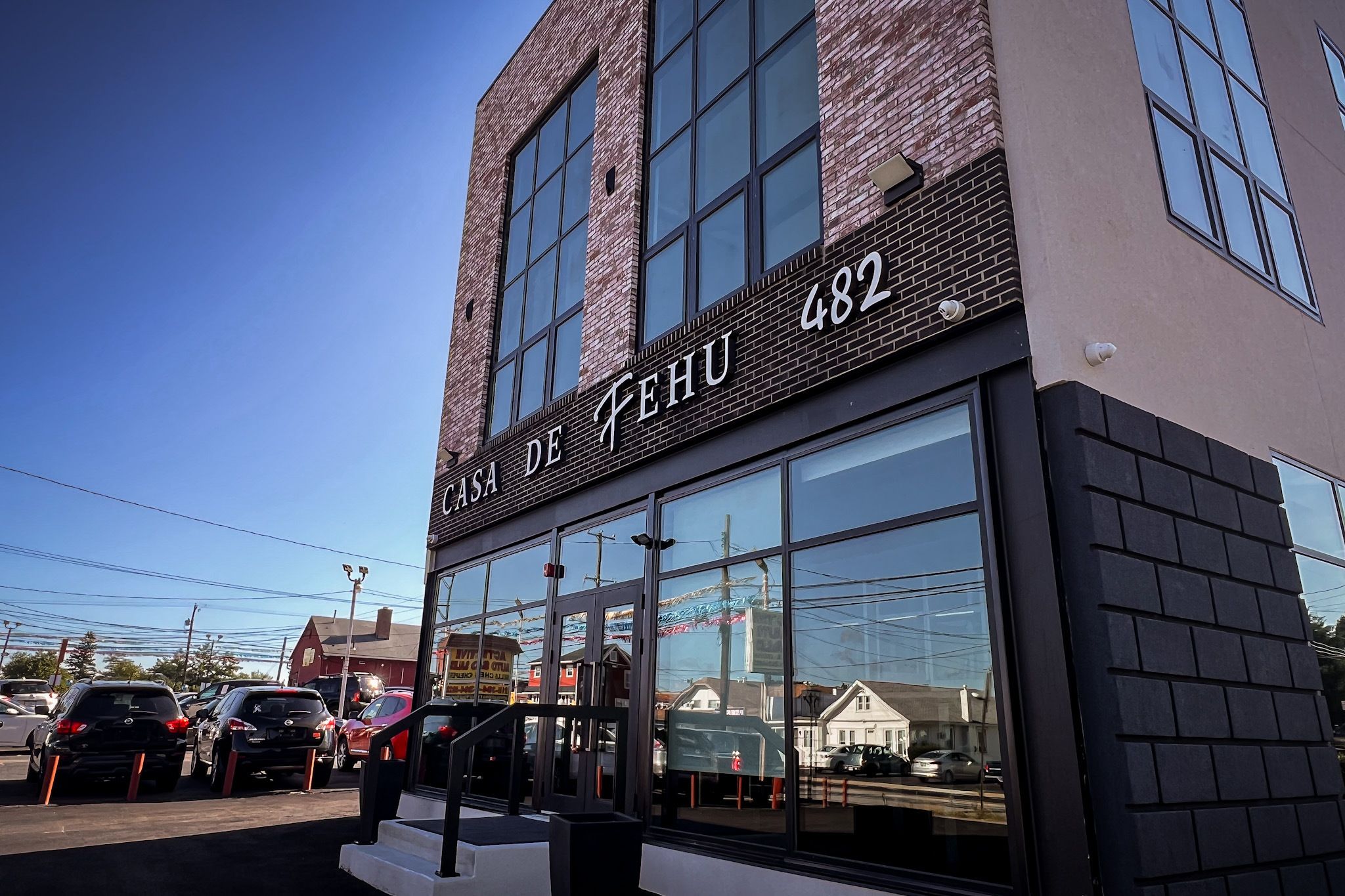
Casa de Fehu, 482 Jacksonville Rd., Hatboro.Michael Klein / Staff
Casa de Fehu (482 Jacksonville Rd., Hatboro): Hatboro couple Anthony Shalamov and Anastasia De Roy are developing this polished restaurant with European-inspired cooking and an upscale atmosphere, possibly with a tie-in to a local brewery that would allow alcoholic drinks. Shalamov is targeting an October soft opening.
Cecilia (266 E. Fourth St., Bridgeport): The team behind Blue Bell Inn and the Copper Crow is just about ready to open this contemporary American bar-restaurant in the extensively renovated former Taphouse 23. The roomy property includes a large patio and a wood-burning oven. The menu emphasizes familiar American dishes, positioning this as an all-purpose neighborhood destination.
Donatelli’s (1 Washington Ave., Newtown): Restaurateur Habib Troudi, who owns Panache and Ristorante Castelloin Blue Bell, is behind a top-to-bottom overhaul of the former Rocco’s at the Brick in downtown Newtown. He said he is hoping to open the Italian steakhouse in October.
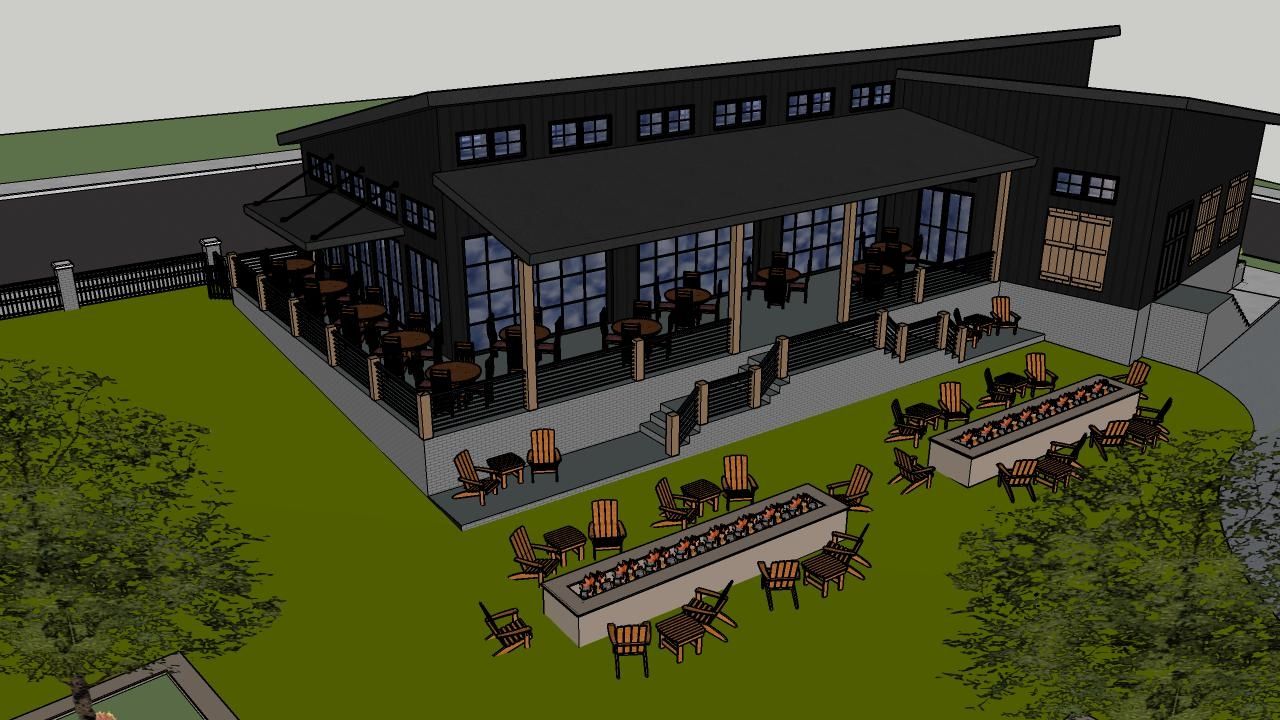
Rendering of the Garden by Pieri Winery, 127 E. Elm St., in Conshohocken.Courtesy of Christina Pieri
The Garden by Pieri Winery (127 E. Elm St., Conshohocken): Winery owner Christina Pieri and restaurateur Brian Pieri (StoneRose, Bar Lucca, Cerdo) are targeting a mid-October opening of their year-round indoor-outdoor restaurant beside the Schuylkill River Trail, an offshoot of Christina’s Coopersburg winery. A wood-fired kitchen will serve seasonal American food, including brick-oven pizzas, focaccia sandwiches, salads, steaks, and fish, at lunch and dinner Tuesday through Sunday. The property will include a covered patio, fire tables, a turf area, and pickleball and bocce courts.
The Hungry Hub (11 S. Orange St., Media): Media native Cassidy Moretti and her mother, Glenda, are taking over the former Rivalry Cafe with a family-run breakfast and lunch operation. The Hungry Hub also plans later hours and a late-night menu, broadening its role beyond that of a conventional daytime cafe. An Oct. 1 opening has been announced.
The Iron Oven (58 S. York Rd., Hatboro): Alex Nalbandian’s Southampton bar-restaurant — known for an expansive American menu, cocktails, craft beer, brunch, and dishes ranging from wings and burgers to flatbreads and entrees — is adding a second location in eastern Montco: the former Ross & Co. He’s aiming at November.
Lazy Dog(160 N. Gulph Rd., King of Prussia): The California-based bar, known for Rocky Mountain lodge imagery and a broad American menu, is targeting late 2026 at the King of Prussia Mall.
Luna (129 E. Butler Ave., Ambler): FineLine Hospitality, which recently opened Academy Grill in Fort Washington, is behind a stylish revamp of Dettera in downtown Ambler. Chef Marie Lavizzo-Mourey will base her menu on the 20-plus countries bordering the Mediterranean. The project is on track for fall.
Martini & Roz(523 W. Lancaster Ave., Wayne): Fearless Restaurants is turning Wayne’s former Bertucci’s into an ambitious, 300-seat Southern Italian restaurant named for founder Marty Grims’ parents, Martin and Roslyn. Menu will include crudo, oysters, steaks and chops, wood-fired pizzas, house-made pastas, and charcuterie. It will feature two open kitchens, a cheese cave, a tasting counter, and extensive outdoor seating.
Maru (2922 Conestoga Rd., Glenmoore): David Backhus and the team behind the former Oori restaurants are in the early days of a fast-casual Korean-inspired restaurant at their former Collective Coffee & Bakery. Think Korean fried chicken sandwiches, wings, and tenders, supplemented by mochi doughnuts and specialty Collective coffee.
Nudy’s Cafe (122 Park Ave., Willow Grove): Prolific suburban breakfast-and-lunch operator Ray Nudy hopes for late September for his latest diner, across from Marshalls in Willow Grove.
Old Friend (166 E. Lancaster Ave., Wayne): Childhood friends Larry Kagan and Chas McFeely are behind this contemporary American grill, with former Fork executive chef Sam Henzy leading the kitchen. The 86-seat restaurant will center on live-fire cooking in a Josper oven, with dry-aged fish, poultry, and larger proteins intended for sharing. Its compact wine list will be closely tied to the food. A late-fall opening is planned in the Apartments at Wayne Station.
Opus (201 Birch St., Kennett Square): Square Roots Collective will open this 125-seat New American restaurant Sept. 11 in the former temporary home of Hank’s Place, next to the Artelo hotel. Executive chef Matthew Anderson, formerly of Longwood Gardens and Winterthur, plans seasonal dishes, such as Kennett Square mushroom bisque, butternut squash agnolotti, herb gnocchi, and dayboat scallops. The two-story space includes a cocktail lounge, terraces, and work by local artists. Profits will support community projects and nonprofits.
Salt (840 W. Lancaster Ave., Devon): Rich Kim of North Wales’ acclaimed Salt predicts late December for his redevelopment of Devon’s former La Jonquille and Shiraz property into a second Korean barbecue concept, followed in 2027 by Yugo, a carousel sushi restaurant, upstairs.
The Still on State (18 W. State St., Doylestown): Only days open at the Doylestown Inn, this Irish pub-inspired bar/restaurant fills the former Hattery Stove & Still space; it’s paired with an on-site microdistillery called the Tilted Brim.
Taco Heart (120 Coulter Ave., Ardmore): Nano Wheedan is bringing his South Philadelphia breakfast-taco shop to the Ardmore Farmers Market, its first expansion beyond its East Passyunk-area home. Expect Austin-style flour tortillas and breakfast tacos built around eggs, potatoes, beans, bacon, brisket, and house salsas. Opening is set for Oct. 5.
Top Dog Cocktails (110 E. State St., Kennett Square, and 2012 Frankford Ave., Fishtown): Ken Smuckler’s cocktail company plans two vinyl listening rooms this fall inspired by Japanese jazz kissas. Kennett Square’s 750-square-foot space partners with local music venue Kennett Flash, while Fishtown’s 350-square-foot flagship — arguably the neighborhood’s smallest bar — will feature a 15-seat bar, two-turntable DJ station, and retail.
Tusk (50 N. Main St., Doylestown): Mike and Joy Grafenstine, owners of Roberts Block in Glenside and Bonnet Lane Family Restaurant in Abington, are taking over the former Water’s Edge wine bar, combining the martini-and-wine-bar airs of Roberts Block with approachable upscale American comfort food. Target is October.
Vintner’s Table (24 Cricket Ave., Ardmore): Andrea and Marco Folino, behind Kutztown’s Folino Estate Winery, are opening a third location of their Italian-inspired wine bar, salumeria, and lifestyle boutique in downtown Ardmore in October.
New Jersey suburbs
Akira 70 Omakase (249 Marlton Pike, Cherry Hill): Ming “Frank” Zheng is expanding his Japanese holdings — he owns Akira Sushi in Voorhees and Moorestown — with an omakase experience in a former fur salon.
Banjara Indian Bistro (687-689 Berlin-Cross Keys Rd., Sicklerville): Vaneet Chopra, whose family operates Cross Culture in Haddonfield and previously ran Banjara in Chestnut Hill, is bringing the Banjara name to Sicklerville; its dine-in starts Thursday.
Freckled Jawn Brewing(1003 N. Evergreen Ave., Woodbury): Woodbury residents John Wagner and Colleen Gibson are taking over the former Eight & Sand Beer Co., which closed in June after 10 years. Targeting the first week of October, the brewery will introduce new branding and a fresh lineup of approachable beers, emphasizing natural and locally sourced ingredients when possible.
Irishtown Steaks (155 S. Burlington St., Gloucester City): Donkey’s Placealumnus Dave Murphy is targeting Halloween for his steak shop, joining recent Gloucester City entries Lillo’s and Pudge’s Pub. Murphy will use rolls from Boaggio’s, which has a bakery in town.
Penny’s Bagels (212 Kings Highway East, Haddonfield): Chris Fetfatzes and the Happy Monday Hospitality Group (Wine Dive, Grace & Proper) are developing this long-delayed bagel shop in downtown Haddonfield, now with an October target.
Pizzeria Cusumano (872 Haddon Ave., Collingswood): Announced back in September 2021, this passion project from South Jersey’s Sal Cusumano is finally about to start offering his Roman-inspired squares and neo-New York rounds, but “I don’t want to box myself into a certain style.” Cusumano, a third-generation pizzaiolo, is planning a small shop with limited seating. This week, he said it will open in October for sure.
Philadelphia
Adda (1700 Frankford Ave.): New York’s Unapologetic Foods — behind Dhamaka, Semma, and the original Adda — is bringing its energetic Indian cooking to Fishtown, across from the 19125 post office. Expect regional dishes in an informal setting, continuing the restaurant group’s practice of pushing beyond familiar Indian American standards. Originally expected in fall 2025, the Philadelphia location is now targeting an October opening.
Ayat (2021 Sansom St.): Abdul Elenani’s New York-based Palestinian restaurant — first announced in spring 2024 — is looking at a November opening in the former Roxy Theater near Rittenhouse Square. Ayat is known for generous portions of mansaf, maklouba, mezze, grilled meats, and other homestyle Palestinian dishes.
The bar at Bar Caviar, 256 S. 16th St.Kenneth Schutz
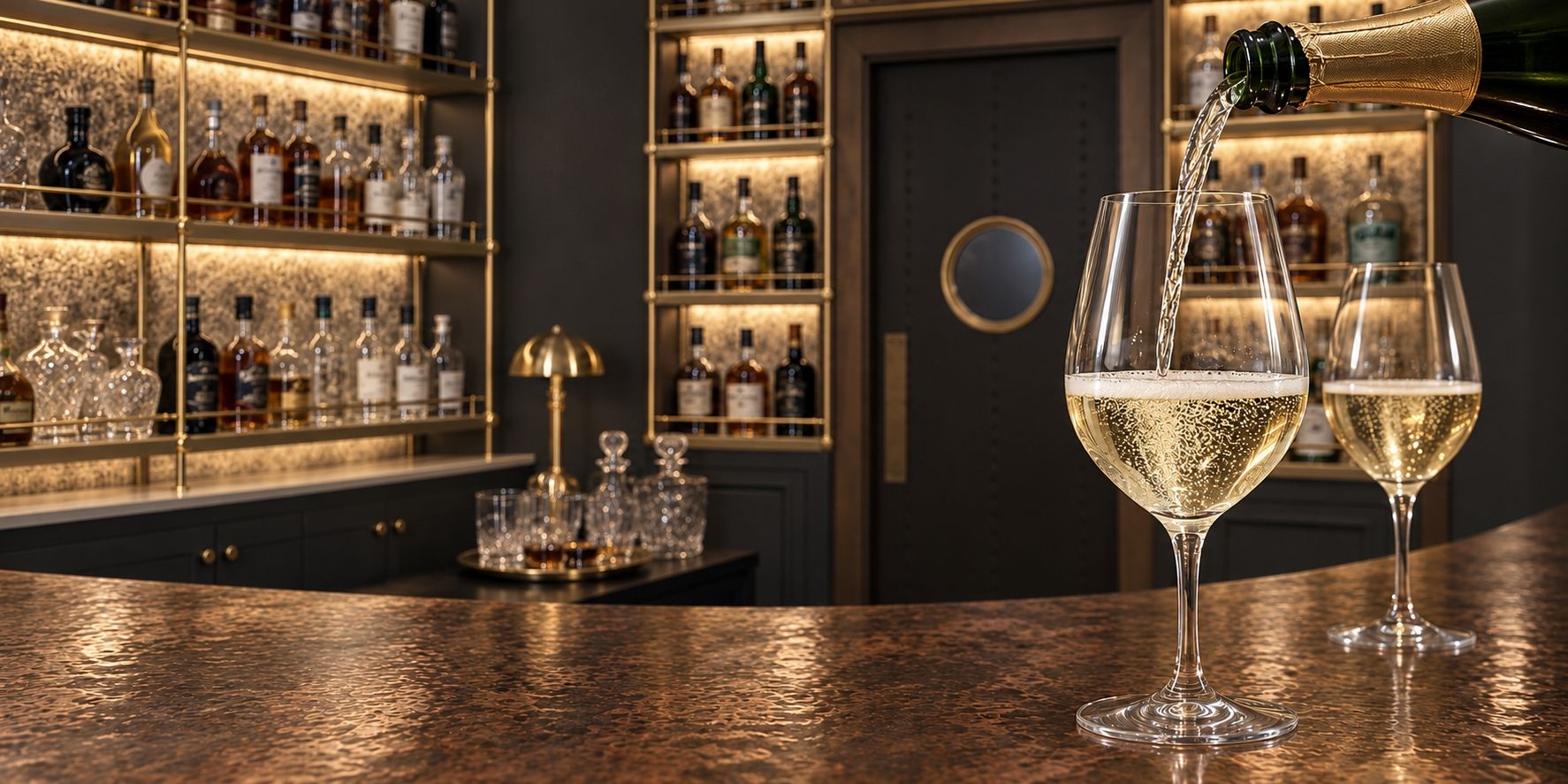
Bar Caviar (256 S. 16th St.): Opening in early October in the Dwight D Hotel in Rittenhouse, this bar will pair caviar and seafood with 50 varieties of Champagne and a full wine program in a setting that’s more neighborhood than hushed luxury lounge. Executive chef Greg Vassos’ contemporary American menu, informed by classical French technique and Japanese precision, will feature raw-bar selections, caviar-focused dishes, and seasonal small plates. The restaurant also will operate Parallel, a caviar program emphasizing careful sourcing and extended maturation. In 2027, Vassos plans to follow with Fall Line, a Mid-Atlantic-focused tasting-menu restaurant.
Brunch Bulls (1638 W. Passyunk Ave.): Brothers Derrick “Dee” Long and Jarrick “Jakk” Long are behind this all-day brunch/dinner/dessert restaurant in Point Breeze. They say they’ll be open by December.
Call Your Mother (262 S. 19th St., 1500 Frankford Ave., 12th and Sansom Streets): The lively, Washington-based “Jew-ish” bagel chain is making a three-location push into Philadelphia, starting this week with its Fishtown debut. Menu includes bagel sandwiches, schmears, latkes, coffee, and deli-inspired specials.
Carolyn’s Modern Vietnamese (2015 Walnut St.): This week, chef Carolyn Nguyen opens her deeply personal successor to Revolution Taco, which she co-owned in the space for a decade. Her menu brings together her family’s Vietnamese cooking, the seafood boils and Southern food of her Louisiana childhood, French culinary technique, and the freewheeling flavor combinations that defined her earlier ventures. The 33-seat restaurant serves dinner, and alcohol, in a spare, contemporary dining room.
Corte (1175 Ludlow St.):Corio partners Ryan Mulholland, chef David Feola, and James Smith are taking over the former Mulherin’s Pizzeria at East Market, between Iron Hill Brewery and Mi Vida. Feola will lead a menu built around house-made pastas plus proteins, vegetables, and small plates cooked in the large Mugnaini wood-burning oven. Mulholland will oversee daily operations and oversee an Old World-leaning wine list and cocktails inspired partly by forgotten recipes from century-old books. The dark-wood, earth-toned restaurant is targeting a fall opening.
DiDi (3748 Lancaster Ave.): DanDan owners Kevin and Catherina “Cat” Huang say they are “within a month or two” of opening their fast-casual pan-Asian concept at the Triad apartment building in Powelton Village. DiDi will join Kabobeesh, Karak Cha House, Shibam Coffee, Two Locals Brewing, and other businesses in the growing complex at 38th and Lancaster.
Divers Club (733 S. Fourth St.): Queen Village is in line to get a neighborhood wine bar from Susan Freeman, Chris Fetfatzes, and Heather Annechiarico (Grace & Proper, Wine Dive) in a former hair salon that sits on the same stretch as Famous 4th Street, Southwark, Ambra, and Fitz on 4th. Fetfatzes describes the mood as “dark, scrappy, and European — somewhere between a Paris backstreet wine bar and a graffitied Berlin hangout.”
Eggcetera Haus (625 S. Sixth St.): Husband-and-wife team Rey Tamaka and Vina Kencana soon will turn the former Redcrest Kitchen into an all-day bar-restaurant. Tamaka, previously the chef at an Old City brunch restaurant, plans breakfast, lunch, and dinner, moving from specialty coffee and morning dishes into pastas, steaks, cocktails, and comfort food at night. The couple expects daily service, giving the Queen Village-Bella Vista border another full-day neighborhood option.
Field Day (923 N. Second St.): James Beard Award-winning bartender and author Danny Childs and his wife, Katie, have a fall opening targeted for their casual regional cocktail bar in Northern Liberties, next to Cescaphe Ballroom. Childs’ drinks will use locally farmed, foraged, and fermented ingredients. Executive chef Melissa McGrath, known for her work at the idled Sweet Amalia Market & Kitchen, will offer Pennsylvania Dutch-inspired snacks, sandwiches, and tomato pies. Highballs, house-made sodas, boozy gelati, and walk-in seating will help keep the mood informal.
Habibi Supper Club (1515 E. Passyunk Ave.): Miled Finianos is giving his itinerant Lebanese dinner series a permanent home on East Passyunk — possibly by the end of year — serving late breakfast and lunch before he offers ticketed, multicourse suppers.
HYO (1222 Walnut St.): Nightlife veteran Justin Jordan plans an October opening for this Korean tabletop barbecue restaurant behind Hearsay, his indoor-outdoor sidewalk bar and listening lounge. Guests will enter HYO through a phone booth inside Hearsay. The restaurant is part of Jordan’s multilevel entertainment complex, which also includes Celine and the forthcoming Chancellor Room event space and karaoke lounge.
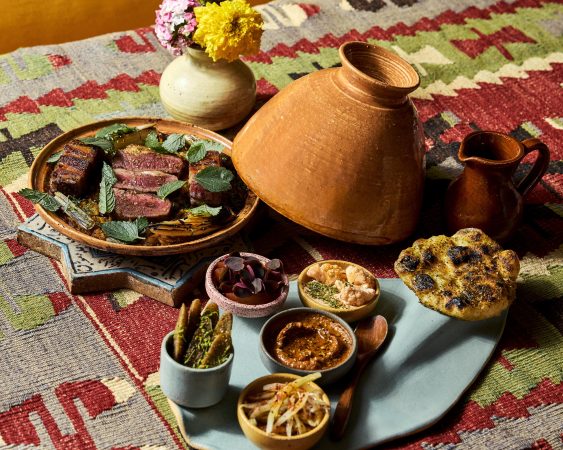
Jean (161 W. Girard Ave.): Emmett chef Evan Snyder and partner Julian van der Tak are going upstairs with a 15-seat tasting menu restaurant opening this fall. Snyder and chef de cuisine Antonio Pizzo will prepare a 12-course menu centered on a 7-foot wood-burning hearth, drawing on Algeria, Tunisia, coastal Morocco, and the southern Mediterranean for culinary influences. A tagine will roast throughout dinner before being served family-style.
Kato (1832 Frankford Ave.): Mei Meichef-owner Jay Ho is taking over the former Izakaya Fishtown space for a restaurant inspired by his Taiwanese father and the food Ho grew up eating. Influences from Korean, Thai, and Vietnamese cooking will broaden the menu. Ho, who hopes to open in late fall, plans to retain the front bar while replacing the rear sushi counter with additional seating that can double as a private dining area.
Lovat Square(184 E. Evergreen Ave.): Former Four Seasons sommelier Damien Graef and journalist Robyn Semien opened this Chestnut Hill wine shop and tasting room in February, offering small-production bottles, wines by the glass, and light fare. The couple, who also own Brooklyn’s Bibber & Bell wine shop, will debut a full dinner menu by the end of September.
Macaluso’s (3101 S. 13th St.): Realtor Joel Gruenke and restaurateur Mark D’Andrea, long-ago roommates at Valley Forge Military Academy, are looking at an early October opening of this white-tablecloth Italian restaurant at 13th Street and Packer Avenue, near the sports complex. D’Andrea’s family owns RoadHouse in Staten Island, N.Y. Gruenke says the moderately priced menu will stick to traditional Italian cooking and offer a full bar. Parking will be available across the street.
Mylar Bar (1636-38 S. Ninth St.): Hospitality veterans Liv Arterbridge and Gina Piccari are turning the former Dino’s Party Center into a festive neighborhood bar inspired by the building’s history. They promise something nostalgic, playful, and deliberately unserious. Drinks will include martinis, punches, classics, and draft beer. Chef Colin White, formerly of Sally and Emmett, will oversee shareable “party snacks,” larger plates, and desserts available late.
Nippy’s on South (1312 South St.): Nurse and first-time restaurateur Nikia Peterson has purchased the former Ms. Tootsie’s building for an ambitious restaurant and bar. Peterson plans a polished setting with seafood towers, steaks, Asian and Caribbean influences, a substantial happy hour, and weekend brunch. The project will revive a prominent South Street property that had remained closed since restaurateur KeVen Parker’s death in 2021.
O’Morrey’s (1720 Sansom St.): Chefs Biff Gottehrer and Kenjiro Omori are developing a cocktail bar on the former site of Genji, the Japanese restaurant created by Omori’s father. The name is a cheeky rendering of the Omori family name. Plans call for a comfortable neighborhood bar in the spirit of the Ripplewood, where both chefs work, with cocktails and a serious food component. Their second joint project, Tako Taco, is months away at the former Bing Bing Dim Sum in South Philadelphia.
Palm Vintage (1414 S. Penn Square): Houston Yang and Mike Beja, who opened this day-to-night cafe and cocktail bar across from City Hall in the Residences at the Ritz-Carlton, are close to expanding into a nighttime scene with cocktails, sushi, oysters, caviar, and light food in a lush, tropical-inspired room meant to offer an escape from Center City.
Panco (2300 S. Croskey St.): Chef Ryo Igarashi, whose background includes Tokio Global and Maru Global (noted for its takoyaki balls), is behind a corner shop in West Passyunk whose menu will focus on Japanese cutlets. He says it’s opening soon.
Philly Curio (2240 Frankford Ave.): Tattoo Arts Convention founder Troy Timpel is creating an intimate Kensington restaurant-bar around his private collection of curiosities (think tribal masks, skeletal displays, taxidermy, and glass-topped tables containing preserved animals). Inspired partly by Savannah’s Alligator Soul, Timpel has discussed a Cajun-Creole menu with small plates and unconventional proteins such as rattlesnake. Drinks are expected to include cocktails, wine, bottled beer, and limited drafts. Target is November.
Philly Po’Boy (102 W. Berks St.): Brothers Chris and Greg Lynch are bringing a taste of New Orleans to the storefront beneath the Berks station of the Market-Frankford Line. Chris spent years cooking in New Orleans, while Greg’s Philadelphia background includes Starr Restaurants and LMNO. Plans call for classic powdered-sugar-dusted beignets, gumbo, and a mix of classic and specialty po’boys like fried shrimp, oysters and roast beef “debris,” plus fries, Creole potato salad, and café au lait from coffee roasted by Applied Arts in New Orleans.
Santé Social(1546 E. Passyunk Ave.): Sommelier Daniel Solway is giving his roving dinner series a permanent home across from the Singing Fountain. The approximately 30-seat space will function less like a conventional restaurant than a flexible hospitality venue, hosting wine dinners, tastings, classes, collaborations, private events, and some walk-in service. Cocktails are being developed with Danny Childs of Slow Drinks and Field Day, while changing chefs and collaborators may shape the food programming.
Somedays Bakery (1601 Walnut St.): Hand-laminated croissants are the foundation of this Queens-rooted bakery, which deals in sandwiches, salads, soft serve, and coffee. It’s targeting the end of the month.
Thalassa (918 N. 28th St.): Matt Maltepes is looking at late October or early November for his Greek-inspired cafe in Fairmount that will serve baklava, croissants, and house-made ice cream in flavors that change weekly. Savory offerings will include small plates such as feta grilled cheese with honey, avocado toast, and bagels with cream cheese. The drinks menu will feature European-style coffee preparations, including frappes and Freddo espresso.
Looking ahead
Two major projects are now on the docket for January, as the owners don’t want to compete with the holiday-season madness:the Pelican Club, Stephen Starr’s flashy Greek-themed restaurant taking shape in the former Devon Seafood Grill on Rittenhouse Square, and the yet-to-be-named “punk French” restaurantthat chefs Justin Bogle and Arthur Cavaliere are creating at the former Winnie’s Manayunk.
The long-closed Mermaid Bar in Mount Airy will retain its name under the new ownership of pizzaiolo Dan Gutter and business partner Alex Carbonell of Circles & Squares and Pizza Plus. The project, announced earlier this year, is aiming at a summer 2027 rollout.
Before you can understand Abington Township’s historically African American unincorporated community of Crestmont, you have to understand Willow Grove Park.
Not the mall with that name, but the Willow Grove Park that predates it: One of the largest and most famous amusement parks on the East Coast.
It opened in 1896, built by the Philadelphia Rapid Transit Co. It had roller coasters, a lake, restaurants, concerts, a massive music pavilion, and crowds pouring in.
It shaped the entire local economy and brought thousands of people out to the suburbs every week. A place like that needed labor. Real labor. Constant labor. And that’s where Crestmont’s story begins.
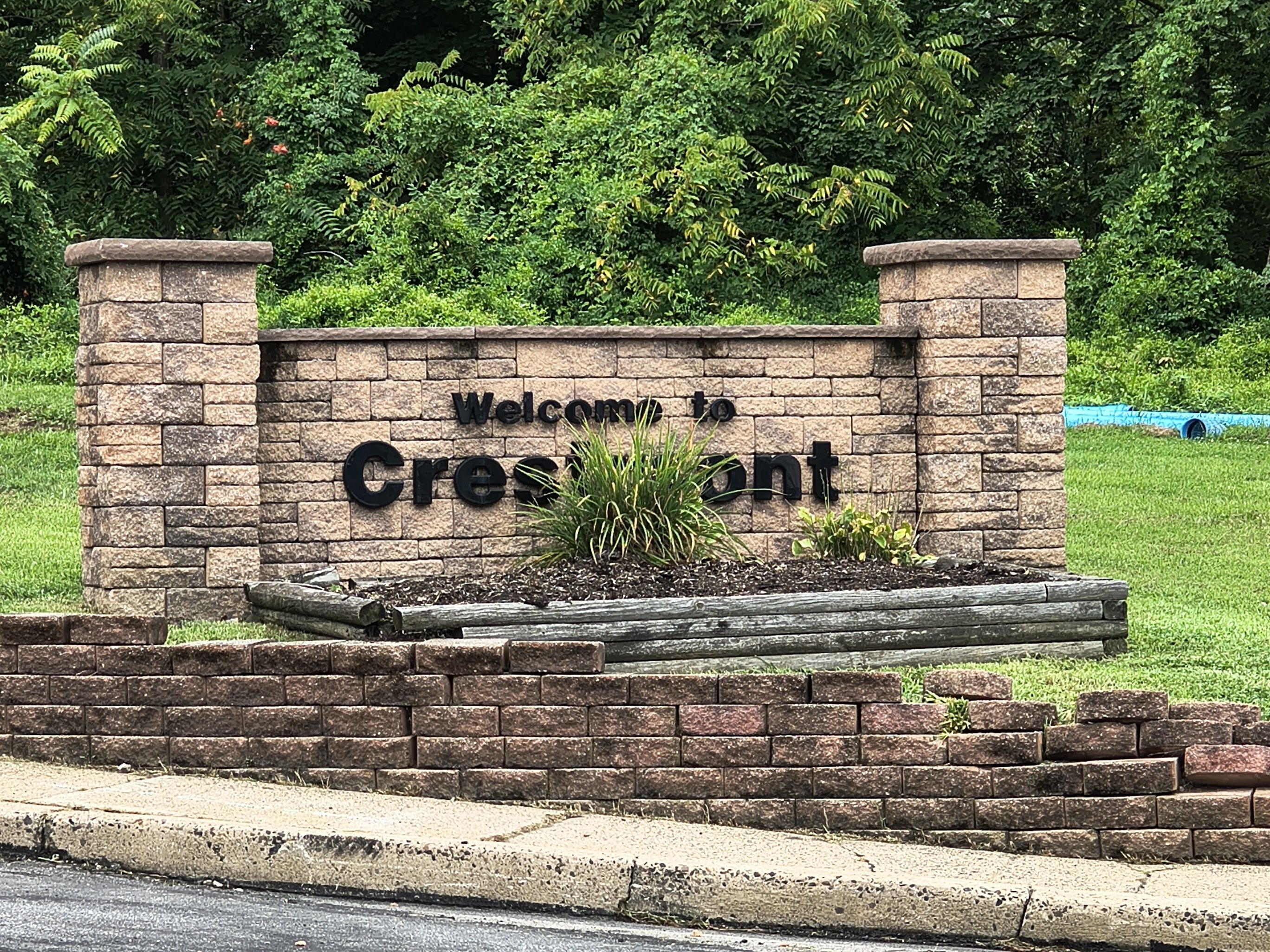
The “Welcome to Crestmont” sign sits directly across from the Willow Grove Mall.DJ Atkins
I didn’t grow up in Glenside or Willow Grove. I came out here for work, almost 15 years ago, and eventually I moved here. Eight years living in these suburbs gives you time to notice things, to ask questions, to wonder about the layout of the place. And one question kept coming back to me: Why is Crestmont, a mostly Black community, sitting right in the middle of overwhelmingly white suburbs?
If you know the area, you know exactly what I mean. Roslyn, Glenside, Willow Grove, Abington … they’re all majority white, and have been that way for generations.
Then suddenly, right next to the Willow Grove Mall parking lot, there’s Crestmont.
Houses closer together. A different feel. A different history. A different story.
Crestmont’s density, the layout, the architecture, the vibe, the community identity — all of it comes from early working‑class development, limited access to loans, limited access to improvements, township decisions, generational continuity, racial boundaries, economic exclusion, and the strength of the people who lived there, writes DJ Atkins.DJ Atkins
I started talking about Crestmont to people who grew up here. I started learning about Willow Grove Park, looking at the geography, thinking about the era, and the truth became impossible to ignore.
It’s a truth all of us need to hear, because it shows exactly how racism shapes the places we live.
Willow Grove Park opened only 31 years after slavery ended. That was the same year Plessy v. Ferguson legalized segregation. Old newspaper coverage, township references, and public history written about the park all describe a large-scale operation with ties to the trolley company, township officials, police, contractors, and local business owners.
A machine like that needed workers who could show up every day, early, late, and in all seasons. Black workers came to fill Willow Grove Park jobs and stayed because the work kept coming. In line with what the public record shows, people with long family histories in Crestmont talked to me about how common it was for their relatives and neighbors to all work at the park.
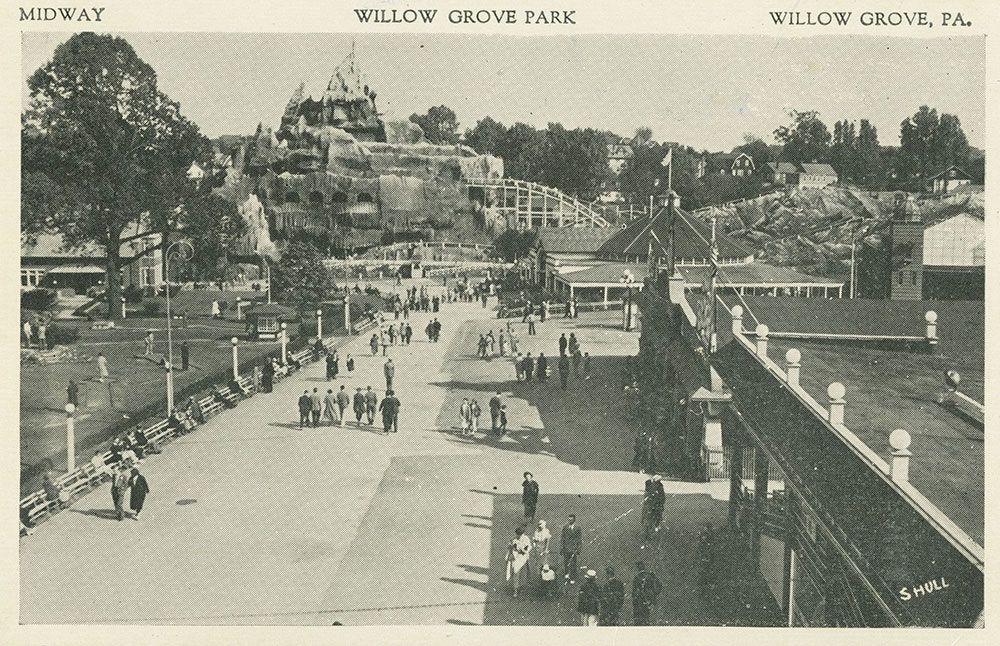
A vintage postcard showing the Willow Grove Park midway. Willow Grove Park opened in 1896; it was closed in 1975 and demolished a year later.Courtesy of D.J. Atkins
But many of those workers didn’t have cars, and walking through certain neighborhoods wasn’t safe. Black people weren’t welcome. Renting was restricted, and loans for home purchases were denied. Still, the workers needed to live close. Close to the park, close to the trolley line, close to the commercial strip that fed the park.
Exactly where Crestmont is.
Once a few Black families moved in, the neighborhood took shape. Word spread. More families followed. White buyers stayed away. Black buyers were directed toward the same area. The lots stayed small. The houses stayed close. The community grew through necessity, connection, and resilience.
People who grew up here remember the tensions between high schoolers. They remember buying packaged goods in Crestmont because they couldn’t get them elsewhere. They remember the social boundaries. They remember how Crestmont stood out from the surrounding suburbs. None of that is random. It’s the long-term result of how the neighborhood began.
Crestmont exists because Willow Grove Park existed. Segregation created the boundary. The park created the need. Together, they created the neighborhood.
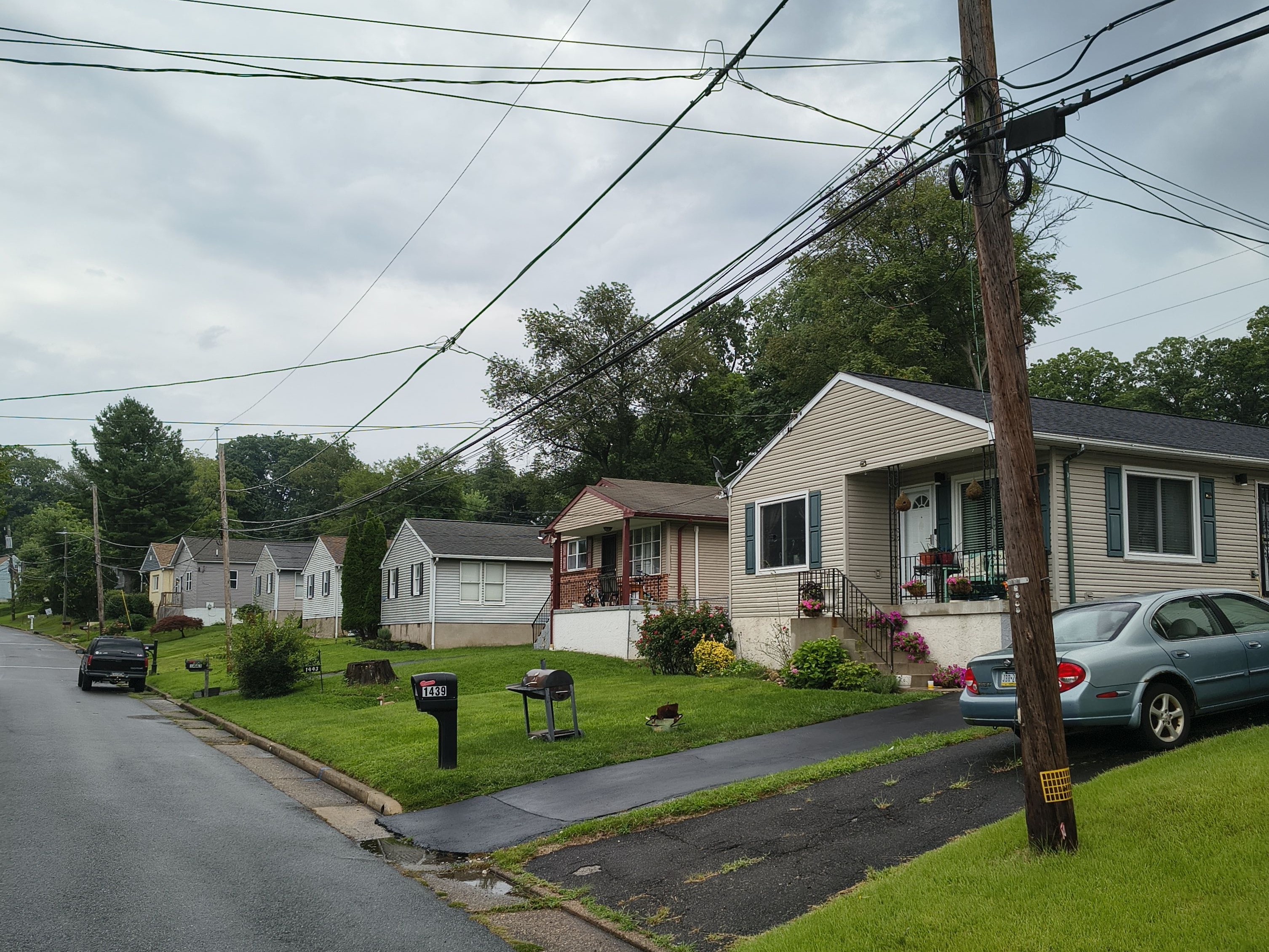
One of the homes in Crestmont, photographed in 2026.DJ Atkins
Crestmont isn’t unique.
Across the country, Black neighborhoods formed near major employers because segregation blocked housing everywhere else.
In Ardmore, Black families lived near the railroad and the estates they worked in. In Bryn Mawr, the Black neighborhood grew beside the service corridors of the Main Line mansions. In Atlantic City, Black workers lived near the Boardwalk hotels they kept running. In Pittsburgh’s Hill District, Black families settled near the steel mills and rail yards. In Baltimore, Black neighborhoods formed beside the shipyards and factories.
Wherever a big employer needed labor, and wherever white neighborhoods refused to open their doors, a Black community formed in the one pocket where the pressure made it possible — and they look the way they do today because of their origins.
One of the homes in Crestmont, an unincorporated community in Abington Township that owes its existence to Willow Grove Park and to housing segregation in the surrounding communities.DJ Atkins
Crestmont’s density, the layout, the architecture, the vibe, the community identity — all of it comes from early working‑class development, limited access to loans, limited access to improvements, township decisions, generational continuity, racial boundaries, economic exclusion, and the strength of the people who lived there.
It’s not a mystery. It’s not random. It’s not accidental. It’s a product of American racism and Black survival.
People around here know Crestmont. But they don’t necessarily know its origin or see in it an example of how racism shapes geography and how Black communities build life anyway.
Once you see that, you can’t unsee it.
DJ Atkins is a Philly‑area DJ, radio host, and cultural writer. He also works in poetry, blending storytelling, music, and community history in his creative work.
The unofficial last weekend of Philly’s summer pop music schedule keeps the heat on. There’s Don Toliver and Kacey Musgraves in South Philly, Kehlani in Camden, Lily Allen in Fairmount Park, Los Lobos in King of Prussia, and the Delaware Valley Bluegrass Festival in South Jersey.
Thursday Sept. 3
Los Lobos
The great Chicano band Los Lobos is the focus of Native Sons, a documentary that is now making the film festival rounds. It shares a name with the band’s 2021 album of songs of Los Angeles. That album was produced by the band’s one non-Los Angeleno: Cheltenham-native sax and keyboard player Steve Berlin. So this Montgomery County gig is a hometown show of sorts for the band that — if justice is ever served — will one day wind up in the Rock & Roll Hall of Fame. 7 p.m., Concerts Under the Stars, 175 W. Valley Forge Road, King of Prussia, concertsunderthestarskop.com.
Don Toliver performs during the BET Awards on Sunday, June 28, 2026, at the Peacock Theater in Los Angeles. (AP Photo/John Locher)John Locher
Don Toliver
The Houston rapper born Caleb Zackery Toliver brought his “Octane Tour” to South Philly in May and already, he’s back. It’s the second “Nitrous” leg of the trek for Toliver’s Octane album, which features Teezo Touchdown and The Odyssey actor Travis Scott. Chase B. is also on the bill. 8 p.m., XfinityMobile Arena, 3601 S. Broad St., xfinitymobilearena.com
Friday Sept. 4
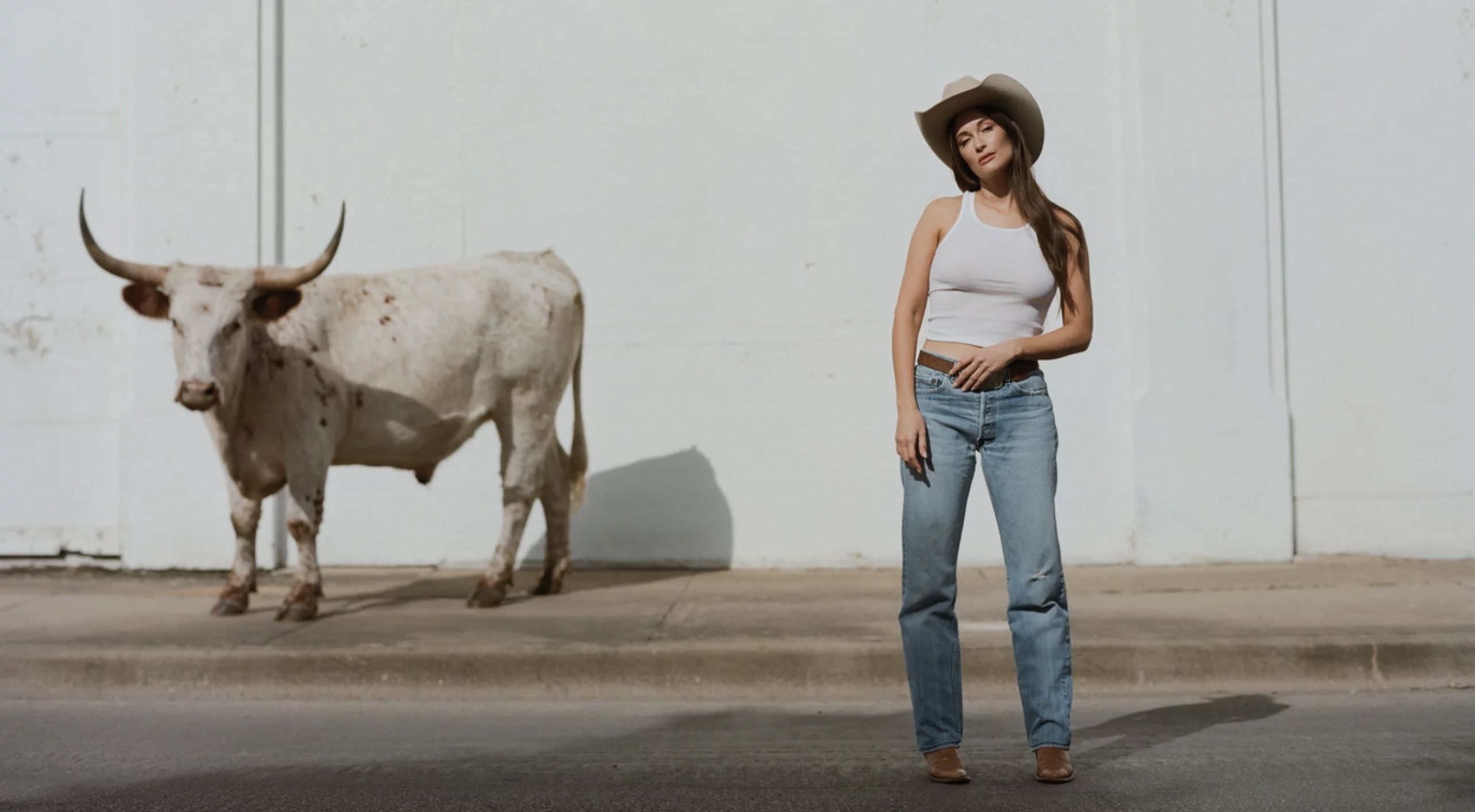
Kacey Musgraves
Kacey Musgraves comes back to country on Middle of Nowhere, the Grammy-winning Texas songwriter’s excellent seventh album. Willie Nelson, Billy Strings, and Philly Music Fest headliner Gregory Alan Isakov drop in. Musgraves also finds common ground with fellow Lone Star State singer Miranda Lambert, with whom she had a longstanding beef, on “Horses and Divorces.” Expect this show to turn into a Dolly Parton celebration. Flatland Cavalry opens. 8 p.m., Xfinity Mobile Arena, 3601 S. Broad St., xfinitymobilearena.com
Dan Tyminski headlines the Delaware Valley Bluegrass Festival in Pilesgove, N.J., on Saturday, Sept. 5.Courtesy of the Artist
Friday Sept. 4 to Sunday Sept. 6
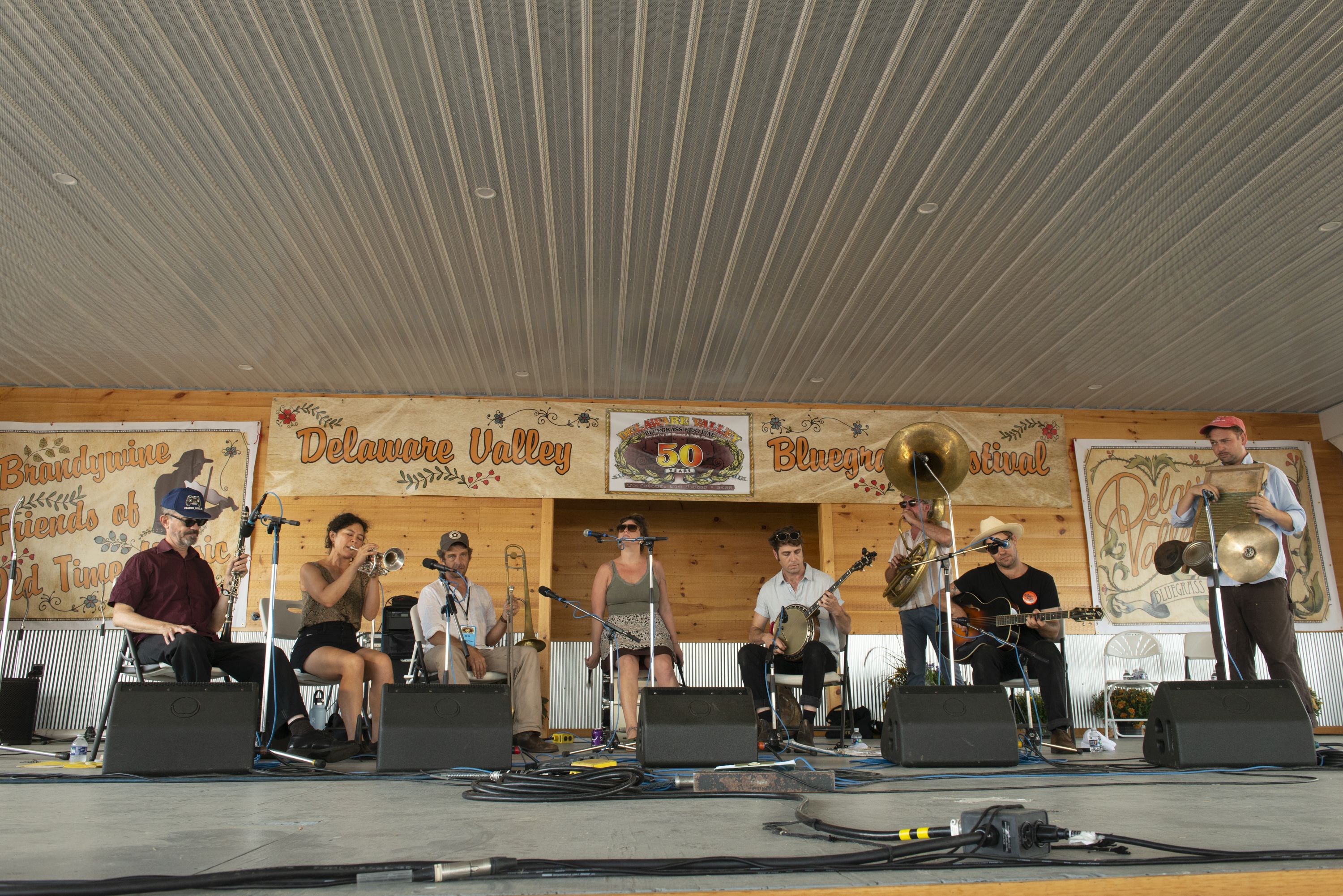
Delaware Valley Bluegrass Festival
Founded at the urging of bluegrass titans Bill Monroe and Ralph Stanley in 1972, the Delaware Valley Bluegrass Festival is a Labor Day weekend tradition that endures.
This year’s three days of music kicks off Friday in Salem County in South Jersey with Kathy Mattea, the country-bluegrass singer who hosts public radio’s Mountain Stage, as headliner. Friday’s lineup also includes the Price Sisters — singing Ohio siblings Lauren and Leanna Price — as well as Virginia guitarist Junior Sisk and the Travelin’ McCourys, sons of bluegrass legend and frequent DVBF headliner Del McCoury.
On Saturday, Dan Tyminski gets top billing. The former member of Alison Krauss’ Union Station has had two moments of extraordinary popularity for a bluegrass musician: 2000’s O Brother, Where Art Thou? soundtrack, on which he sang “I Am a Man of Constant Sorrow,” and “Hey Brother,” an unlikely 2013 hit with Swedish dance music producer Avicii.
New Orleans street band Tuba Skinny at the Delaware Valley Bluegrass Festival in 2022. The band will return to play the Pilesgrove, N.J., fest on Saturday.Delaware Valley Bluegrass Festival
New Orleans ragtime street band Tuba Skinny also plays Saturday, as do Critten Hollow, Danny Paisley & Southern Grass, and the Gibson Brothers. The festival winds down Sunday with Black Eyed Suzies — self-described as “the Bluegrass Ladies of Maryland” — as well as Tennessee quintet Blue Highway, Chicago duo Special Consensus, Boone, N.C., roots band Burnett Sisters, and Nashville quintet Appalachian Road Show. Gates open at 8 a.m. each day. Salem County Fairgrounds, 735 Route 40, Pilesgrove, N.J., delawarevalleybluegrass.org.
Kehlani performing during the second day of The Roots Picnic at the Belmont Plateau on May 31, 2026, in Philadelphia.Monica Herndon / Staff Photographer
Saturday Sept. 5
Kehlani
Kehlani had the biggest hit of their career last year with “Folded,” which was co-written with Philly producer Andre Harris and won two Grammys. The R&B vocalist celebrated with a performance at The Roots Picnic, and now they’re back for a headlining show in Camden on a tour that includes Durand Bernard, TheArti$t, Wahseel, and Dixson. 7 p.m., Freedom Mortgage Pavilion, 1 Harbour Blvd, Camden, freedommortgagepavilion.com.
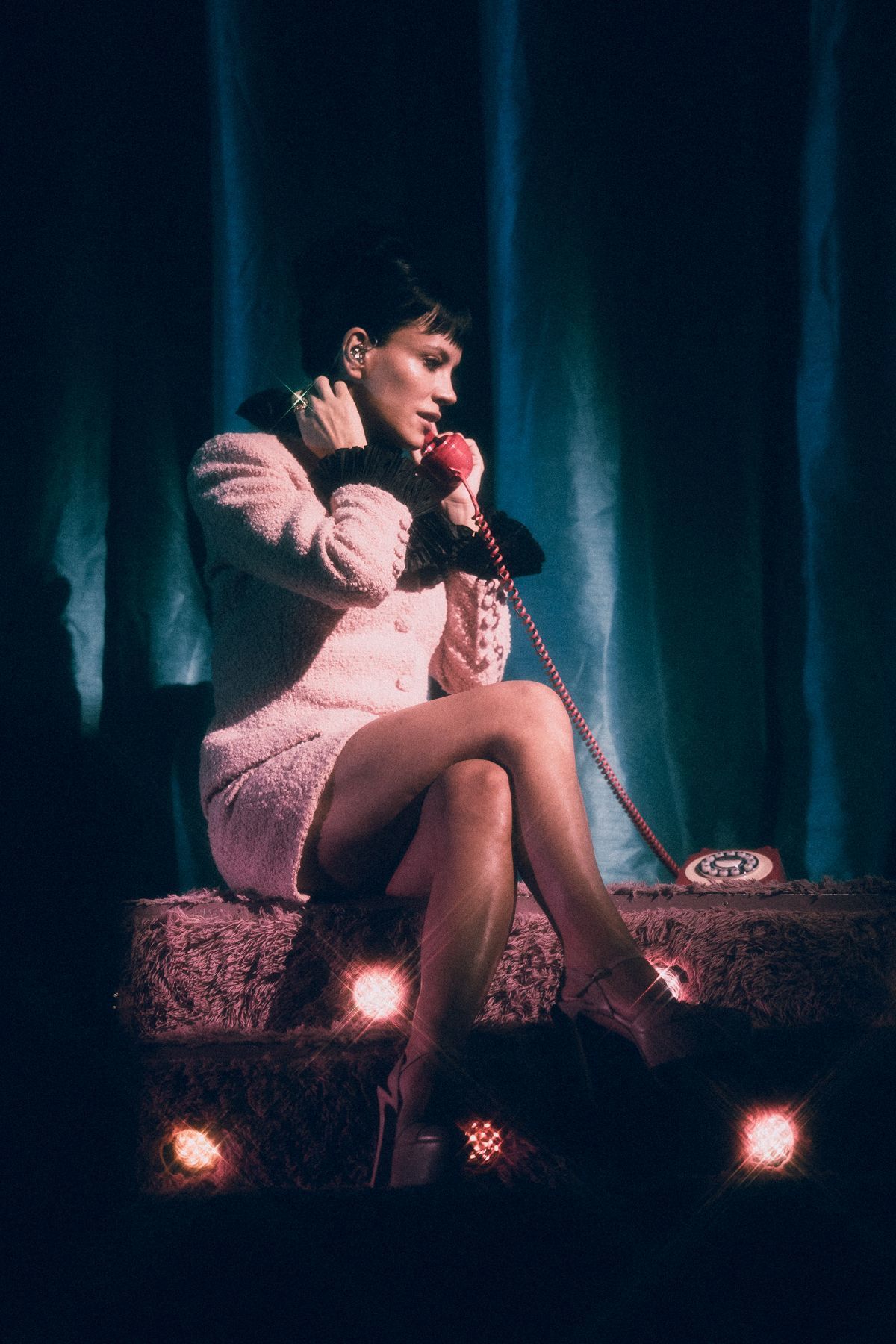
Lily Allen at the Met Philly in April during her show “Lily Allen performs West End Girl.” She returns to play the Highmark Mann on Sunday.Christina Bryson
Sunday Sept. 6
Lily Allen performs ‘West End Girl’
Lily Allen struck a nerve with last year’s West End Girl, a song suite inspired by the dissolution of her marriage to actor David Barbour, that resonated big time with an audience all too familiar with shady doings by unfaithful partners. Earlier this year, the British songwriter, who has displayed a winningly wicked wit going back to her 2006 Alright, Still?, performed West End Girl album in order in a terrific, if brief, show at the Met. Sunday’s show was scheduled for the Xfinity Mobile Arena but moved to the Mann. 8 p.m., TC Pavilion at the Highmark Mann, 52901 Parkside Ave., highmarkmann.com.
Philly tribute to the Clash
Many, including me, have argued that the four sides of London Calling, the 1979 double album by the British punk band the Clash, add up to the greatest album of all time. One side each goes to a Philly band: Citizens Riot, No Good Crowd, the Big Trip, and 2 Tones Clash. Guests on this tribute show include Hannah Taylor, Spoon Ferguson, John Faye, Cowmuddy, Phil Dunn, and Adam Weiner of Low Cut Connie (also playing a Free at Noon in Ardmore on Friday.) 6 p.m., Ardmore Music Hall, 23 E. Lancaster Ave., ardmoremusichall.com
Slowey and the Boats
Fab Philly instrumental quintet Slowey and the Boats’ breezy, light-on-its-feet sound is built around steel guitarist Isaac Stanford. The band’s delightful Slowey After Dark swings sweetly, using the Hawaiian origins of Stanford’s instrument as a starting point. 2 p.m. Wissahickon Brewing Company, 3705 W. School House Lane, sloweyandtheboats.com.
Peter Hook & the Light play Union Transfer on Monday.Adam Kennedy
Monday Sept. 7
Peter Hook & the Light
Bassist Peter Hook was a key player in Manchester, England, in the late 1970s and 1980s as cofounder of Joy Division, New Order, and Durutti Column. Since 2020, he’s played the music of Joy Division and New Order, with his bassist son Jack, who frees him up to sing. He’ll perform New Order’s 2001 album Get Ready, plus pull from the JD and NO catalogs. 8 p.m., Union Transfer, 1026 Spring Garden St., utphilly.com
Tuesday Sept. 8
Social Distortion
Longtime Southern California punk band Social Distortion is in fine form on Born to Kill, its first album in 15 years. Leader Mike Ness sounds refreshed after a battle with tonsil cancer, and the band is pushed hard by drummer David Hidalgo Jr., son of the coleader of Los Lobos. Social D’s fellow SoCal punks the Descendents and young Australian punks the Chats also perform. 8 p.m., themetphilly.com
Gary Clark Jr.
At Bruce Springsteen’s Music of America concerts in the spring, Gary Clark Jr. covered “Power of Soul” by Jimi Hendrix’s Band of Gypsys and Bobby “Blue” Bland’s Texas shuffle “Further on up the Road.” Those two songs hint at the range of the Austin-based Clark Jr., who has been Texas’ leading guitar hero since he gained nationwide renown with Blak & Blu in 2012. Dumpstaphunk and DJ Kurupt open. 8 p.m. Keswick Theatre, 291 N. Keswick Ave., Glenside, Keswicktheatre.com
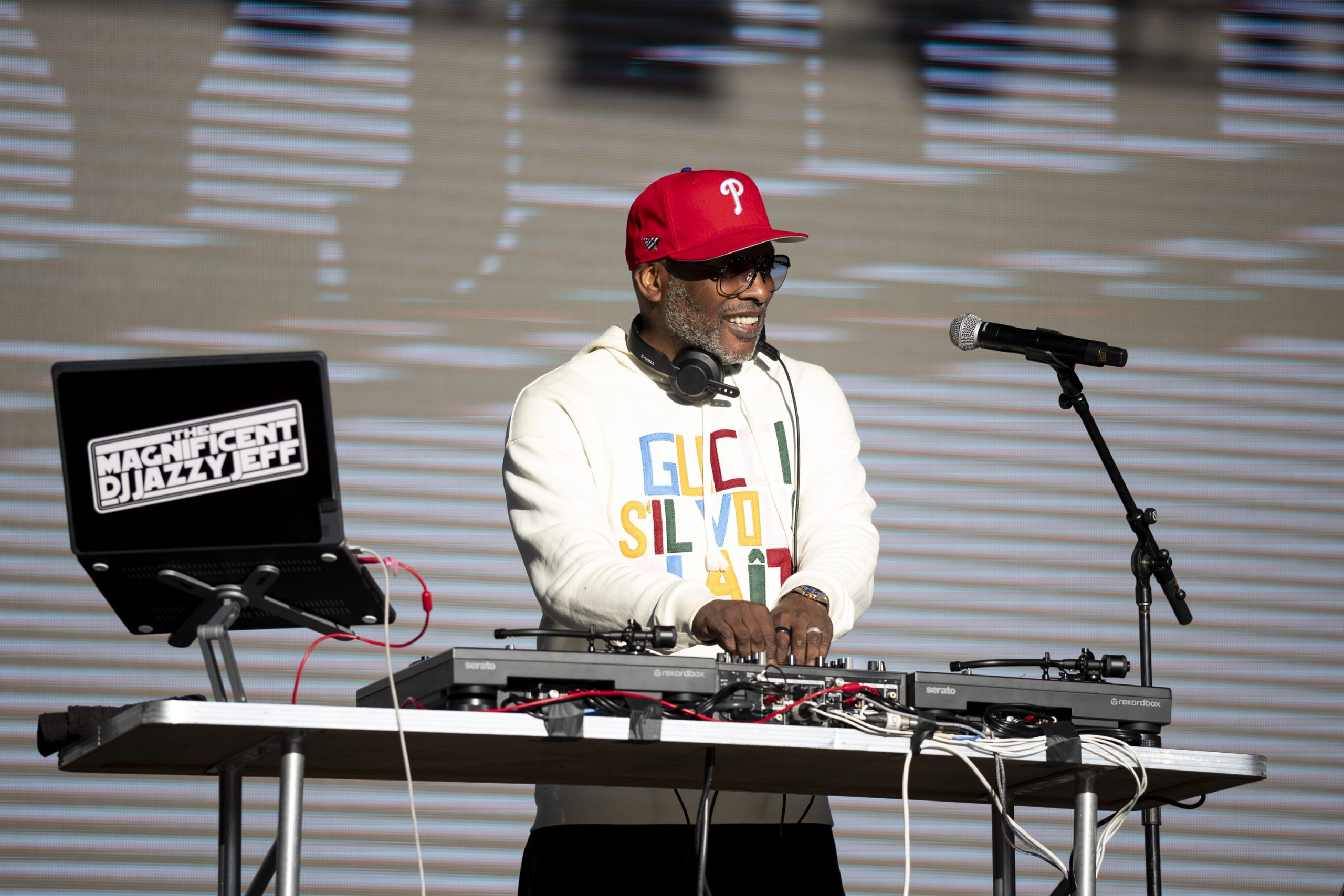
DJ Jazzy Jeff performing at The Roots Picnic in Philadelphia, on May 30, 2026.Tyger Williams
Wednesday Sept. 9
DJ Jazzy Jeff
Jeff Townes has had himself a Semiquincentennial summer. At The Roots Picnic, the West Philly-born and -raised DJ put on a turntablism clinic on Belmont Plateau. Then Townes teamed with Will Smith and The Roots to shut down the Philly 250th celebration on the Ben Franklin Parkway in the wee hours of the morning. Now he’ll display his musical mastery at a Longwood Gardens illuminated Fountain Party. 8 p.m.,1001 Longwood Road, Kennett Square, longwoodgardens.org.
New Zealand singer Aldous Harding plays Underground Arts on Wednesday.Emma Wallbanks
Aldous Harding
New Zealand songwriter Aldous Harding is touring behind Train on the Island, the fourth album she’s recorded with PJ Harvey collaborator John Parish producing. The songs are in keeping with Harding’s reputation as an inscrutable, willfully strange songwriter but are also rock solid psychedelic folk tunes. Sam Burton opens. 8 p.m., Underground Arts, 1200 Callowhill St., undergroundarts.org.
Cheltenham Township is buying a pool complex from a private developer for up to $4.5 million, which a resident’s lawsuit alleges violates public bidding rules.
The township commissioners approved a contract last month to lease 2.7 acres by Ashmead Road and Front Street to Melrose Pool LLC for $10 per year. Cheltenham agreed to pay up to $4.5 million for three public pools and a 5,000-square-foot building that Melrose Pool will build under the lease agreement.
Matthew Areman, president of the seven-member Cheltenham commissioner board, vowed this week that the township would share additional details in the “coming weeks and months,” but a lawsuit filed July 22 in Montgomery County Court by Cheltenham resident Sam Thacker alleges the agreement is illegal. Heclaimsit bypasses competitive public bidding laws that would normally apply to a town’s public pool, and wants a county judge to void the contract and issue an injunction to halt the project.
A Montgomery County judge has given Cheltenham and Thacker until Aug. 21 to file their legal arguments,but time is short: Under the lease, the township has to decide on a final pool plan by the end of August.
What the suit alleges
Areman said last year the pool parcel is worth several million dollars, according to the commissioner board’s meeting minutes.
If the township is leasing that land to the developer for just $10 per year, Thacker said, he believes the lease agreement also violates Cheltenham’s township code, which requires the use of “a system for obtaining independent appraisals … to assure that the township is obtaining adequate compensation” when skipping bidding on real estate leases. Thacker told The Inquirer he was unable to find a fiscal assessment for the pool project through Right-to-Know requests or a town spokesperson.
Township officials declined to explain the legal reasoning behind the leaseback agreement with Melrose Pool.
But in an FAQ posted this week, officials wrote Cheltenham had “received estimates from multiple pool consultants indicating that constructing a comparable standalone replacement pool would cost approximately $6-8 million.”
Holly Fishel, the policy and research director for the Pennsylvania State Association of Township Supervisors, who did not comment on Cheltenham specifically, said she had heard of leaseback agreements with townships before but was not sure of the legal mechanisms. In situations where a township is doing construction work on land it owns, “you would need to be doing the bid,” Fishel said.
But in this case, a private company is doing the work on land it has leased.
“That can’t be right that you can just evade public bidding requirements by saying something is a lease when it’s clearly a public construction project,” Thacker said.
Cheltenham is paying up to $4.5 million for three pools
A preliminary plan for the Melrose plot includes three pools of different sizes, but the July 15 lease notes that the developer is to provide a final plan by this week.
The township will then have two weeks to approve or deny the final pool plan.
Upon completion of the work, Cheltenham would pay up to $4.5 million for the new pools, or pay an additional rent up to $382,500 per year until the township comes up with the $4.5 million.
The two-week timeline for the township to approval a final pool plan is what led Thacker to file his lawsuit.
“The contract is structured essentially to rush this forward as quickly as possible,” Thacker said. “We have no idea if $4.5 million is a good price.”
The figure is cheaper than the $6.1 million estimated in 2023 to redo the Conklin Pool, which the Melrose pools would replace in 2027. The township has one other public pool, in Glenside.
But other residents have questioned whether it is even possible to build three public pools for $4.5 million, given the Conklin pool estimate.
Private development planned beside pool
The pool is part of a larger redevelopment of the former Melrose Country Club — at 116 acres, one of the largest properties in Cheltenham — that includes new townhouses and commercial space.
The lower price tag for the new Melrose pool comes in part from construction efficiencies, Cheltenham wrote this week, since the property will already require site preparation, grading, and utilities for the new buildings.
The property’s developer, an LLC associated with BG Capital, gave the township the 2.7 acres for free last December to advance public welfare and for an unspecified “advantage” to the developer.
BG Capital and the LLC’s attorney did not respond to a request for comment, but court filings Tuesday for Melrose Pool LLC argued that the bidding process Thacker cited under the state’s procurement code does not apply “to the landlord/tenant relationship” between Cheltenham and the LLC because the code applies only to state agencies.
Melrose Country Club project changed
Some residents, including Carl Freedman, have raised concerns at public meetings about the larger project. An earlier plan included both a pool and a community center, Freedman said, and would have allowed more much-needed commercial space.
Cheltenham’s recently approved long-term township plan calls for bringing in more business to bolster the struggling tax base.
Freedman, an architect who sits on the Cheltenham Planning Commission, said the panel no longer supports the project and is sending the township a letter to that effect.
“The loss of the community center is what is making the retail unmanageable,” Freedman said, because the center would have drawn potential shoppers to the site. “This project has taken a left turn.”
Chloe Mohr of the Montgomery County Planning Commission, which reviews local development projects and offers recommendations, said the county commission plans to release a new review of the revised plans late next week.
This suburban content is produced with support from the Leslie Miller and Richard Worley Foundation and The Lenfest Institute for Journalism. Editorial content is created independently of the project donors. Gifts to support The Inquirer’s high-impact journalism can be made at inquirer.com/donate. A list of Lenfest Institute donors can be found at lenfestinstitute.org/supporters.
Unlike Philadelphia — a city, county, and school district all in one — the collar counties are a mesh of townships, boroughs, and informal neighborhoods.
That geographical maze, along with the centuries-long evolution of the U.S. Postal Service, means some suburbanites are not even sure what town they live in.
He is from Abington Township and, like many Abingtonians, he has been living a lie.
Where is Bradley Cooper from?
Cooper grew up not in Jenkintown, but a mile away in the unincorporated Abington community of Rydal, in a house his parents bought before he was born, property records show.
In the 1980s, he attended Rydal Elementary, where he played a mime, according to a playbill shared on social media.
The Oscar-nominated actor later enrolled at Germantown Academy, a private school in Whitemarsh Township whose reunions he still attends.
Cooper is known to call nearby Jenkintown his hometown from time to time — maybe because the borough is more well-known, and because that is what his childhood mailing address was. His reps did not return a request for comment this week.
Some Abingtonians don’t know where they live
But unlike people who grew up in the tiny enclave, Cooper could not have attended Jenkintown School District or participated in its National Geographic-famous Color Day.
“As someone who grew up in Jenkintown and loved cute boys and is about the same age as Bradley Cooper, I can tell you he is not from the Borough of Jenkintown,” writer Lauren McCutcheon said.
Many Abingtonians think they live in J-town, borough manager George Locke has said — so much so that his staff starts resident service calls by asking for an address. Otherwise they could spend 45 minutes on the phone, Locke said, before realizing the caller is in Abington.
Residents of unofficial neighborhoods like Glenside, or towns that span counties like Telford, may be more aware of their official designation. Some Glensiders attend school in Cheltenham, while others attend Abington School District.
For people without a kid in public school, an invisible municipal boundary may not matter much day to day. But it matters for local elections and during tax season.
Nye Stevens, a longtime Postal Service expert for the U.S. Government Accountability Office and the Congressional Research Service, said mailing addresses can also affect people’s insurance rates, which are often based on zip code instead of municipality.
And a zip code across two towns is nothing, Stevens added — some people get their mail from another state.
Bob O’Brien of Wyncote used to think his practice, Relief Counseling & Art Therapy, was located in Jenkintown — until the tax bill from Abington arrived.
“It was confusing,” O’Brien said — especially since there is a Jenkintown post office in the same building.
“How it got this way, I’m not sure,” he added.
The demands of mail delivery
U.S. post offices began primarily as a pickup service in cities until the agency introduced home delivery in the late 1800s.
Then cars expanded the suburbs, townships shifted, and assigned post office locations grew increasingly messy.
“As townships grow, post offices seem farther away,” a New York Times headline about South Jersey observed in 1997.
The U.S. has also closed tens of thousands of post offices in the last several decades, Stevens said, which may mean losing a mailing city that reflects where people actually live.
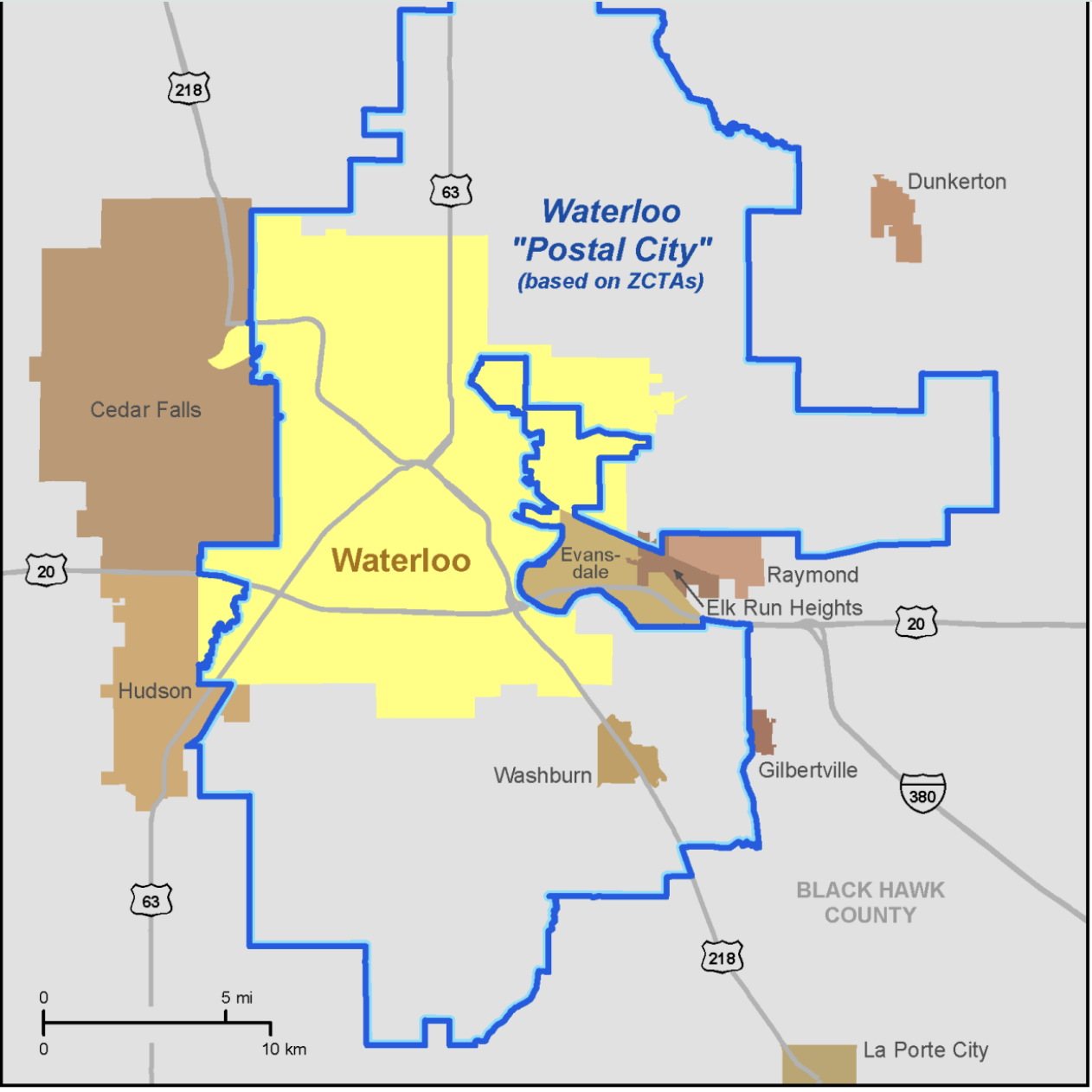
A map shows the city limits of Waterloo, Iowa, in yellow, while a blue line shows the boundaries of the “Waterloo” zip code.U.S. Census Bureau
Around 1990, some in Congress tried to fix the issue with a bill requiring the Postal Service make zip codes match municipal boundaries if towns request it.
But such a change would “absolutely ruin the postal system,” Stevens said. “You can’t have a post office for every little borough.”
The bill failed, and years later, the Postal Service was routinely rejecting zip code change requests, Stevens wrote in a 2006 Congressional Research Service report.
“Some communities that lack delivery post offices complain that the need to use mailing addresses of adjacent areas robs them of a community identity,” he noted in the report.
But at the end of the day, “zip codes are basically a delivery system. They’re not a neighborhood recognition system,” Stevens said this week.
As for Bradley Cooper, the confusion around his addresses in the Philly suburbs has not ended.
He supposedlyowns an estate in New Hope. But he really lives in Solebury Township.
This suburban content is produced with support from the Leslie Miller and Richard Worley Foundation and The Lenfest Institute for Journalism. Editorial content is created independently of the project donors. Gifts to support The Inquirer’s high-impact journalism can be made at inquirer.com/donate. A list of Lenfest Institute donors can be found at lenfestinstitute.org/supporters.
Emil DeJohn, 88, of Ambler, celebrated clothing designer, longtime college department chair and professor of fashion, lecturer, volunteer, and mentor to generations of designers, tailors, dressers, models, and students, died Wednesday, June 24, of a heart attack at his home.
Born in Philadelphia, Professor DeJohn worked for 37 years with Bill Blass and other notable clothing designers on Seventh Avenue in New York, and for 21 years as chair of the fashion department at Moore College of Art and Design, director of fashion career development at Drexel University, and professor of fashion at the now-closed Art Institute of Philadelphia.
He designed clothing of all kinds for men, women, and children for Jones New York, OshKosh B’Gosh, and other international labels from 1960 to 1997. He established his own label, Alex DeJohn by Emil, in the 1980s, and his creations appeared on the covers of Vogue, Harper’s Bazaar, and other magazines.
Several of his gowns were offered to singer Barbra Streisand in the 1960s, and he received design compliments from, among others, film star Elizabeth Taylor and Andre Leon Talley, former editor-at-large at Vogue. In the 1980s, he was chosen by then-first lady Nancy Reagan to design a colorful clothing collection promoting her “Just Say No” antidrug campaign.
In New York, Professor DeJohn showed designs at Bergdorf Goodman, Saks Fifth Avenue, Neiman Marcus, and Macy’s. In Philadelphia, he showed at Bonwit Teller and other top shops.
He also showed in London, Paris, Milan, Hong Kong, and elsewhere around the world. He lectured about fashion at other universities, represented the industry at high school career fairs, and mentored many young designers.
At fashion shows, they always gave him a front-row seat. “It’s an incredible profession,” he told The Inquirer in 2001. “Lots of ups and just as many downs. I wouldn’t trade one day.”
In 1997, looking to engage less with consumers and more with emerging designers, Professor DeJohn left the workshops and showrooms in New York for classrooms in Philadelphia. He spent six years as chair of the fashion design department at Moore, several years as director of fashion career development at Drexel, and finally retired in 2018 as a professor of fashion at the Art Institute.
At Moore, Professor DeJohn recruited Bob Mackie, Betsey Johnson, and other renowned designers to meet his students and provide internships and jobs. At Drexel, he oversaw the Crystal Star Award for design program and taught a class called Aspects of Fashion and Merchandising.
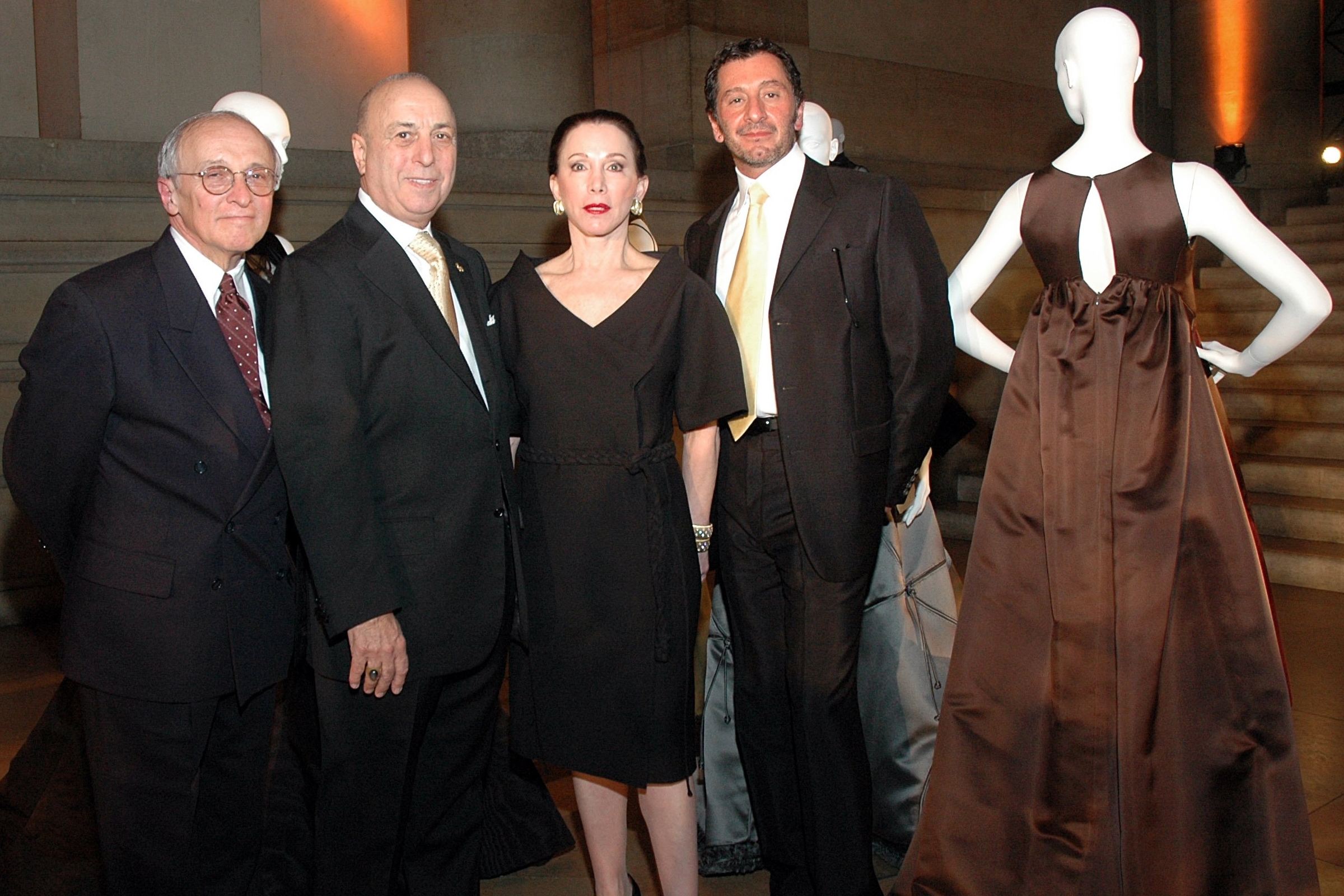
Professor DeJohn (left) attended many galas as director of the Crystal Award for design at Drexel. Emil DeJohn
He hosted a fashion club at the Art Institute and was named the school’s 2017 Teacher of the Year. “He was always happy to answer our questions and tell us about the industry,” a former student said in a tribute. Another said: “He inspired all of us to dream big.”
Professor DeJohn won the city’s Phashion Phest Philadelphia Award for design in 2001 and told The Inquirer: “Teaching the students has been a gift to me. I never envisioned anything I could enjoy more than designing. But this has become an amazing part of my life. I actually love coming to work.”
He earned other awards for design and his volunteer work at the Rowan House, the Ronald McDonald House, and other nonprofits. “He stood as a beacon of hope,” said his granddaughter Alexandra, “always making everyone feel like he believed in them, always bringing out what made them special.”
His granddaughter Isabella said: “His legacy continues to inspire me every day.”
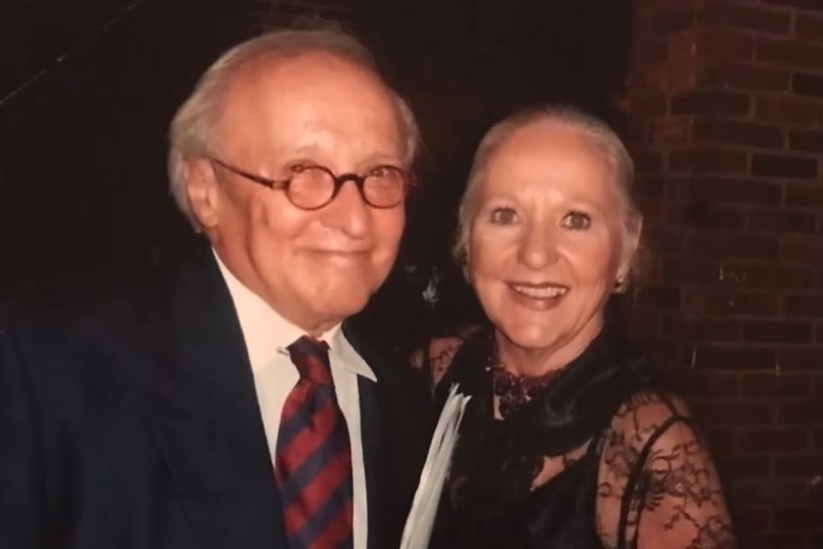
Professor DeJohn met Bette Anne DeChiaro at a dance at the Shore when he was 17, and they married in 1963. Courtesy of the family
Emil Joseph DeJohn was born Dec. 20, 1937, in his mother’s bedroom in South Philadelphia. The youngest of three children, he discovered art in grade school, took art classes at Fleisher Art Memorial, and graduated from John Bartram High School.
He earned a bachelor’s degree in fine arts at the old Pennsylvania Museum and School of Industrial Art in 1959. He won the school’s design citation as a senior and worked at first as an illustrator for the Bulletin’s fashion pages.
He met Bette Anne DeChiaro at a dance at the Shore when he was 17, and they married in 1963. They had a daughter, Leisa, and a son, Christian, and lived in Center City, Wyncote, and Ambler.
Professor DeJohn liked antiques, flowers, and anything blue and white. He supported the old Carmelites monastery in Philadelphia and belonged to St. Luke the Evangelist Church in Glenside.
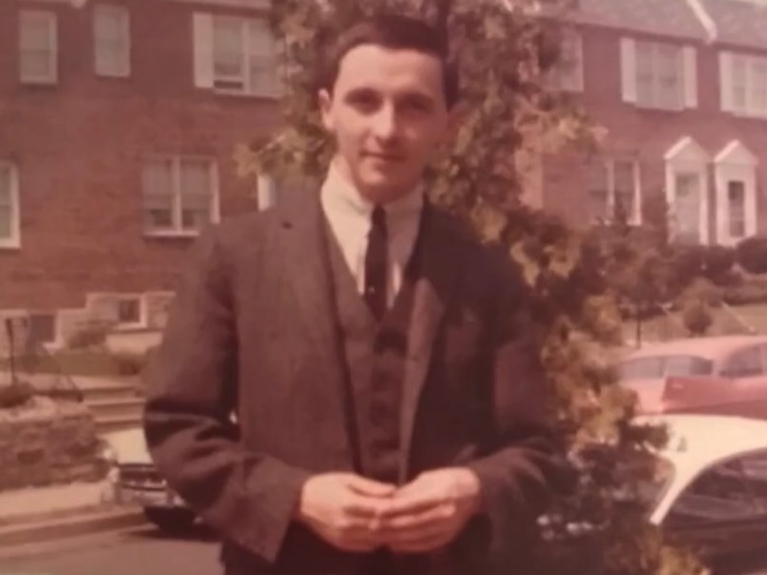
Professor DeJohn first became interested in art and fashion in grade school. Courtesy of the family
He made friends on his daily two-hour train rides to New York and said he never considered leaving Wyncote. “I loved leaving all that and coming home to cut the grass,” he told The Inquirer in 2001. “My neighbors didn’t even know what I did for a living.”
He designed his daughter’s wedding dress, took his granddaughters to mesmerizing fashion events, and made memorable trips to Ocean City, N.J., Longwood Gardens, New Hope, New Mexico, and Florida. He especially enjoyed decorating his home and Christmas tree with ornaments and live flowers.
“He made us all feel seen and special,” his daughter said. “He did that for everyone he met.”
In addition to his wife and children, Professor DeJohn is survived by four grandchildren, one great-granddaughter, and other relatives. A sister, a brother, and a son-in-law died earlier.
Professor DeJohn (right) said he would never leave Wyncote for New York. Courtesy of the family
Services were held earlier.
Donations in his name may be made to the Carmel of Jesus Crucified Monastery, Attn: Mother Pia, Box 308, Muenster, Texas 76252.
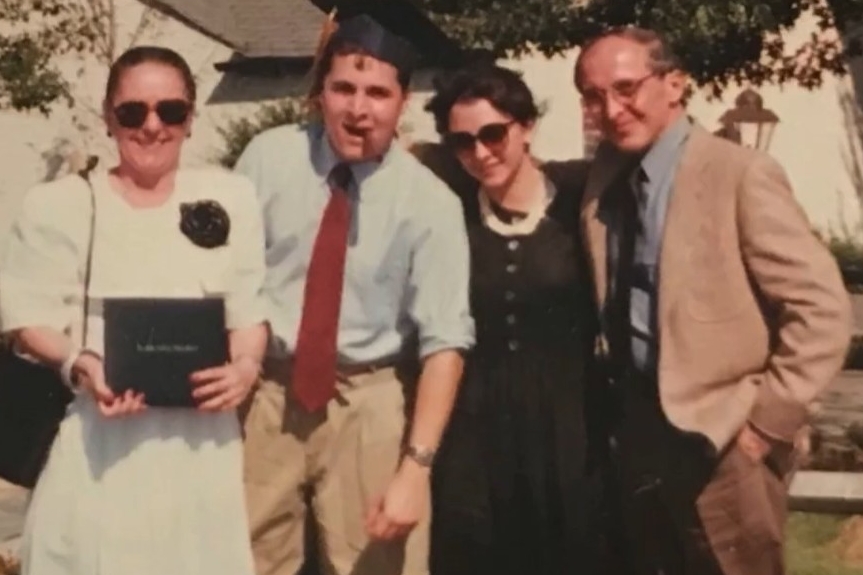
Professor DeJohn (second from right) enjoyed time with his family.Courtesy of the family