Tag: gentrification

  • A political scientist studied the rise of grassroots activism in local government. Philly was his case study.

    A political scientist studied the rise of grassroots activism in local government. Philly was his case study.

    In the five years he spent researching his book Mobilization Politics, Haverford College political scientist Stephen J. McGovern interviewed former Mayor Jim Kenney and other Philadelphia elected officials, political activists, campaign consultants, labor leaders, and protesters.

    The book, which covers events from the 2010s through Mayor Cherelle L. Parker’s victory in the 2023 election, uses Philly as a case study to examine the national rise of grassroots progressive politics over the last two decades. McGovern details how local activists employed bottom-up tactics to win major policy victories in areas like criminal justice reform, helping to decrease the jail population, and immigration, leading to Philly becoming a so-called sanctuary city.

    The activists often used an inside/outside strategy, McGovern wrote, of leaning on officials they helped elect, like District Attorney Larry Krasner, and publicly pressuring more moderate ones, like Kenney.
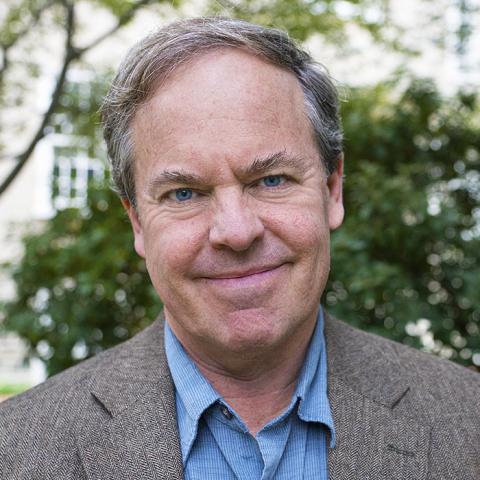
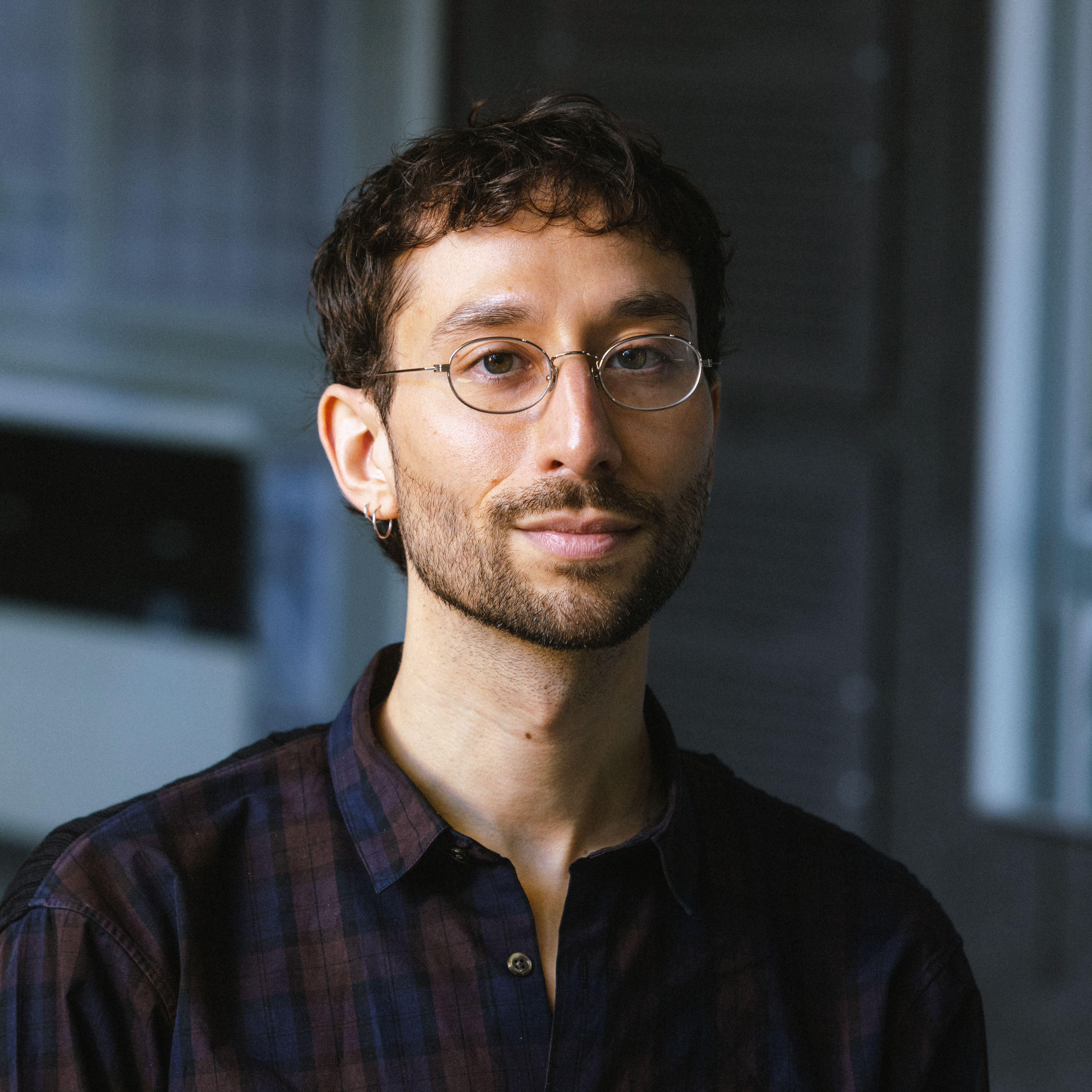
    Haverford College political scientist Stephen J. McGovern authored the 2025 book “Mobilization Politics,” on grassroots activism in Philadelphia.Sean Walsh

    McGovern also explores areas where progressives have fallen short of their goals, and the problems associated with a brand of politics driven by groups that tend to be more affluent and white than the city as a whole. Much of the new type of political organization has been driven by millennials born outside the city, McGovern found, leading to tensions over gentrification.

    McGovern recently spoke with The Inquirer about his 2025 book, the rise of the local progressive movement, and what it all means during Parker’s administration. The interview has been lightly edited and condensed for clarity.

    Your book describes how grassroots activists are really driving the agenda in Philadelphia City Hall, and, as you say, across the nation in local government. Is that an accurate summation of your thesis statement?

    I think that’s fair, and what I want to call attention to is how significant that change is. There may be a lot of people today who assume, “Well, hasn’t that always been the case in city politics?” But no, for much of the mid- to late 20th century, city politics operated in a very different way. It was much more of a top-down phenomenon, and the shift towards more bottom-up politics has been a relatively recent one. And increasingly it’s pretty widespread throughout the United States. So as a scholar of urban politics, I was interested in trying to explain how and why that happened.

    In the book, you describe various political science theories that have sought to explain urban politics in the past. Can you explain how your thesis is different from those previous schools of thought, such as “regime theory”?

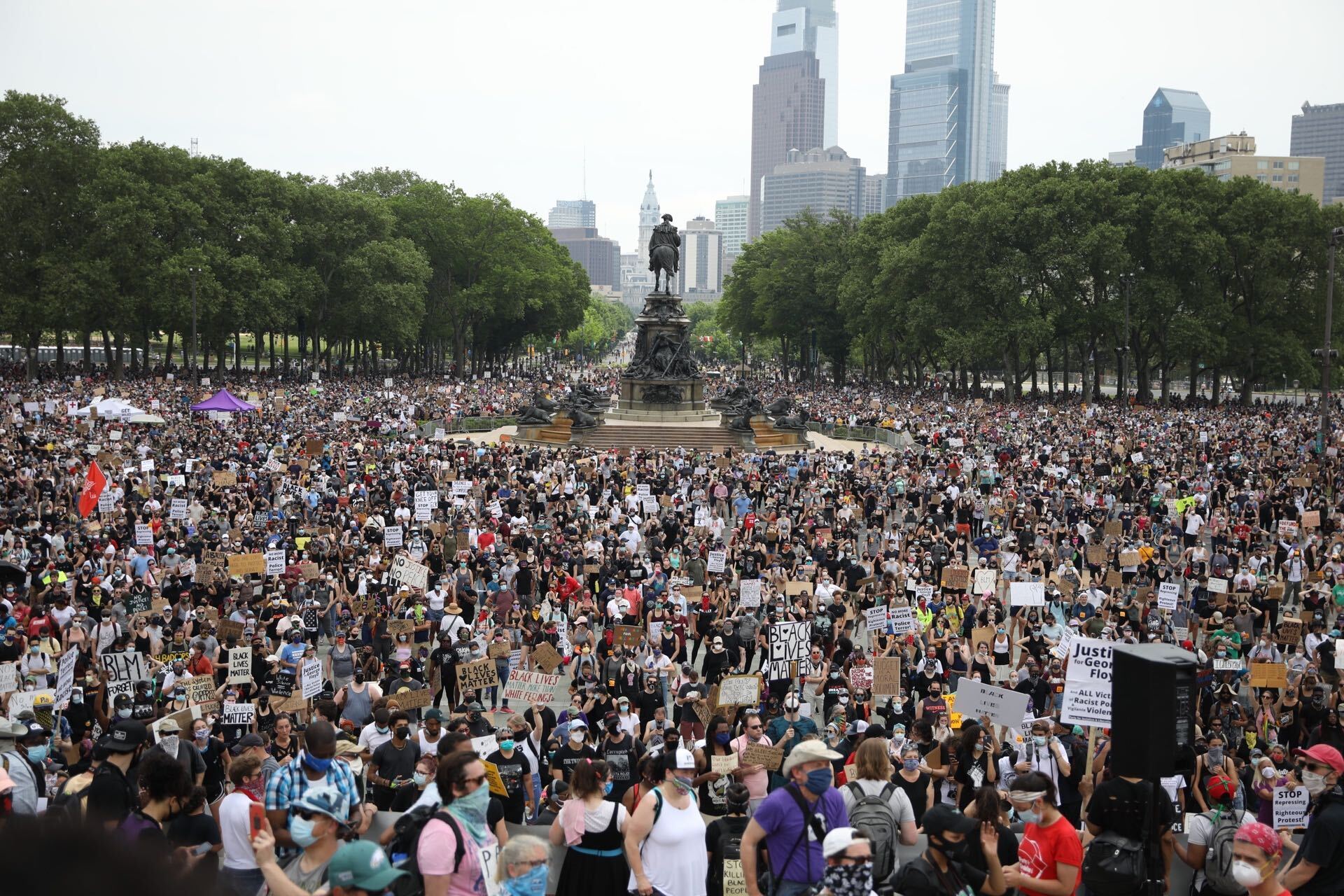
    Many scholars have argued that downtown-led regimes wielded a great deal of power over urban policymaking. Regimes were led by business leaders and their allies — law firms, accounting firms, mass media relations firms, and interest groups that had an interest in promoting growth, especially pro-growth labor unions, and, of course, public officials. Basically from 1970 on, every Philadelphia mayor headed a downtown-led regime in a relatively top-down fashion, in terms of governing style. So that’s the backdrop. My book is all about how that pattern began to change around the turn of the century, and then picked up in the 2010s with a burst of social movement activity. Occupy Wall Street really started things off, but then it picked up, especially with Black Lives Matter, the immigrant rights movement, and all of that social movement protest had a catalytic effect on grassroots organizing in cities with respect to a whole host of public policy issues.

    As your book points out, much of the activism has been driven by millennial transplants who have moved into the city. Is it fair to say that trend is the main driver of this change, or one of several factors?

    That is one of the main factors in explaining why there is this big shift. But there are also some underlying changes in the local political environment, what social movement scholars sometimes call the “political opportunity structure.” One of those changes is a decline in the organizing capacity of the downtown business community, which had been so dominant. It started to create a vacuum. Into that vacuum steps young people. Populations had been steadily declining in virtually all big American cities. They started to stabilize around 2000, and you see an influx of young people who are relatively well educated, more likely to be professional, more likely to be progressive, more likely to get involved in local politics. Some people call it the “back to the cities” movement.

    What’s different about these newcomers compared with other left-leaning groups that have sought to impact city politics in the past?

    In the past, a lot of young people tended to get involved in protest politics. People on the left were very wary about engaging in electoral politics. The folks who are moving into Philadelphia after 2000 increasingly are participating in more conventional politics, including electoral politics, and that’s a big change. That escalates when Bernie Sanders runs for president in 2016. One of the lessons learned for lots of people who volunteered for him is: This is something we can do at the local level.

    As you note, the groups driving this style of politics tend to be more affluent, more educated, and more white than Philadelphia as a whole. That’s created a lot of friction. There’s a debate over whether this is a phenomenon that will be limited to gentrified areas, or whether it will grow into a cross-racial or cross-class coalition. Is it fair to say that’s the central question going forward?

    Absolutely. So much of this is turf-oriented. The millennials and Gen Zers moving into Philadelphia tended to congregate in neighborhoods that attract a lot of white, middle-class people who were relatively well educated, and so those became significant bases of progressive politics. The challenge then becomes organizing in other neighborhoods. Some of the grassroots groups made impressive inroads. I’m thinking about campaigns for Larry Krasner, in particular, in lower-income, predominantly Black and brown neighborhoods, where a group like Reclaim Philadelphia or the 215 People’s Alliance were pretty effective. But in many cases, it was fairly difficult for a group like Reclaim Philadelphia to venture into neighborhoods beyond their comfort zones, if you will. They were mindful of some of the skepticism that residents of those neighborhoods felt towards the millennials and Gen Zers flocking into the city and contributing to gentrification. Somebody from Reclaim Philadelphia might be knocking on the door talking about the affordable housing crisis, and people answering the door might look at them and say, “You’re actually a big part of the problem here.” This tension between so-called new Philadelphians and old Philadelphians became more pronounced, and navigating those tensions becomes a real challenge.

    Your book finishes with the 2023 mayor’s race, when Cherelle L. Parker defeated more progressive candidates and won the election with a “law and order” platform. So perhaps that was a surprising twist on your thesis at the end of your research.

    She’s obviously fascinating. She’s a shrewd operator. In the primary election, two progressives split the vote. And being the only prominent Black candidate worked to her advantage. But since she’s been elected, she’s been very skillful about maneuvering in ways that have brought back a return of the traditional kind of urban politics — a top-down governing coalition led by a somewhat resurgent business community and pro-growth unions, the building trades unions, and a somewhat resurgent establishment-oriented Democratic Party, all of which is led by Parker. This is very reminiscent of standard politics of the mid- to late 20th century. So in some ways, Philadelphia is a bit of an aberration in that it’s moved backwards, if you will, recently. But I still see lots of evidence that bottom-up grassroots activism remains a force, and will become much more impactful in the next four years.
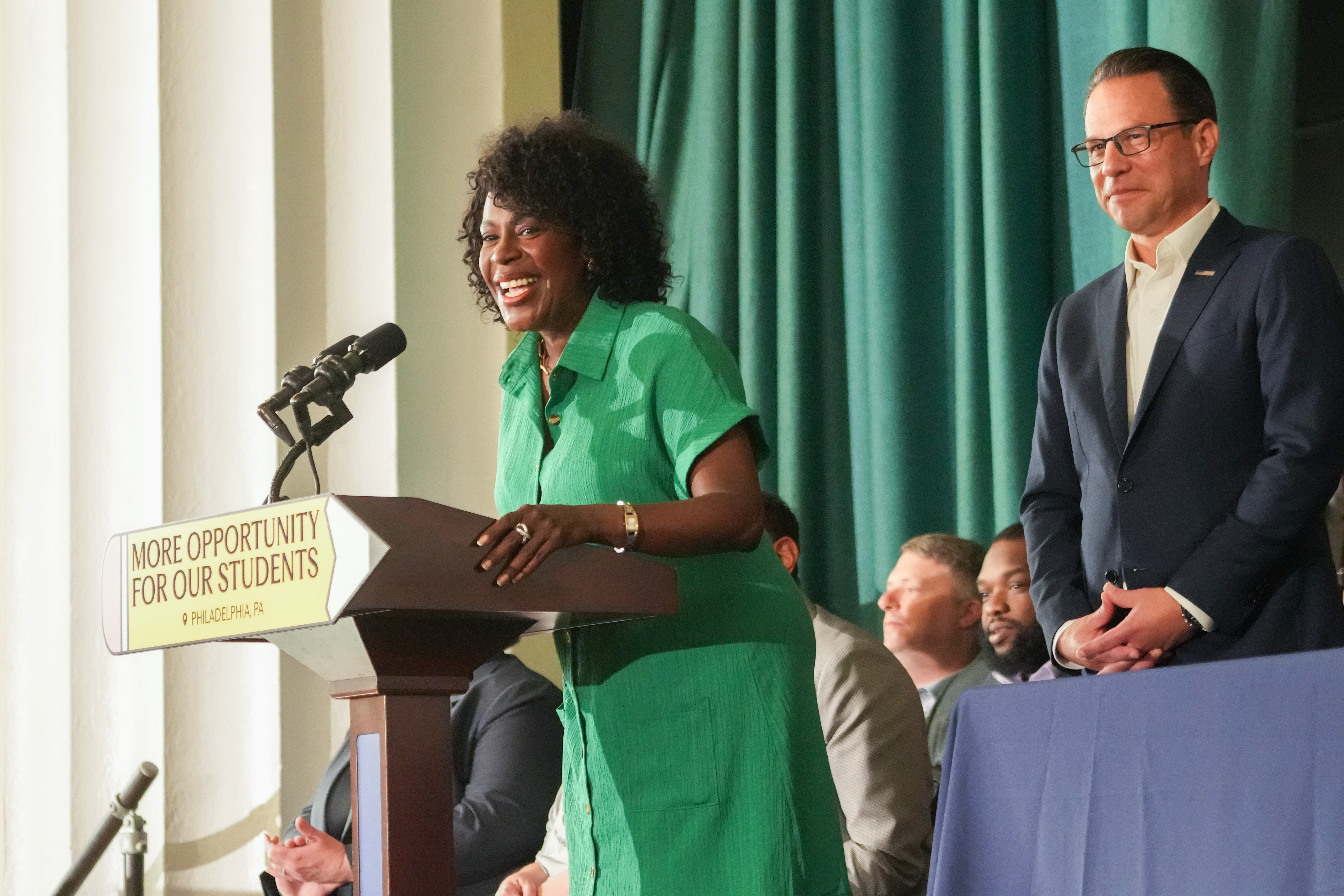
    Mayor Cherelle L. Parker speaks at Vare-Washington Elementary School to highlight the historic education investments included in the 2026-27 state budget, in Philadelphia, July 14, 2026.Jessica Griffin / Staff Photographer
    For what it’s worth, Parker herself seems to be mindful that grassroots politics are still relevant. We reported last year that she ordered a bunch of copies of a book called Performative Outrage: How Manufactured Fury Undermines Local Government and Public Service, and was handing it out to people. So I think it’s safe to say she isn’t a fan of the trends you described. You alluded to Parker returning to a “regime theory” style of politics. What’s an example of that?

    The 76ers’ arena, for example. She was siding with the Sixers and other downtown-oriented interests that wanted to see the arena in Center City on East Market Street, and discounting the views of community groups, most prominently Chinatown. There’s a general mode of governance style associated with Parker that’s very uncomfortable with dealing with grassroots-oriented groups. That’s just not her style. She’s much more comfortable dealing with downtown business elites and people in the building trades unions. Her whole mindset is much more comfortable with the old ways of governing cities.

    Parker won in 2023, when Joe Biden was president. Progressives in Philly and elsewhere seem to do better when Trump is in office. This spring Democrats just elected Chris Rabb, a progressive firebrand, in a high-profile primary for a Philly congressional seat.

    Politics is cyclical. Donald Trump has had that effect of reinvigorating lots of activists. So there was a lull in progressive activism in the city for a while, but it’s on the rise again. But it takes time to regroup, especially on the activist side. Some groups last for a long time, but the norm is for groups to be quite ephemeral. New groups have to pop up, often involving activists who had been involved in the old groups. The transition costs are pretty steep. Somebody like Chris Rabb winning doesn’t surprise me at all. There will probably be more successes in the next two or three years. That said, progressive activists have lots of challenges. They’re in a holding pattern right now.

    Thanks for your time. That’s all I’ve got. Is there anything I didn’t touch on that you want to include?

    I’m an urban politics specialist. I wrote this book. I devoted five years of my life to it. But in the last year or two, I’ve been so fixated on what’s going on in national politics and Donald Trump and the threat that he and his administration pose to democracy. With that in mind, I just want to say that urban politics in general offers some hope for people who are increasingly demoralized. At the local government level, partisan polarization isn’t nearly as intense. We’ve got divisions between progressives and moderates, but that’s nothing like what we’re seeing in national politics. There’s real hope for city governments to address big problems and offer real solutions. There’s a path forward. One can make a case that right now, democracy in American cities is actually thriving.
  • Keith Haring’s famed Point Breeze mural moves one step closer to historic designation

    Keith Haring’s famed Point Breeze mural moves one step closer to historic designation

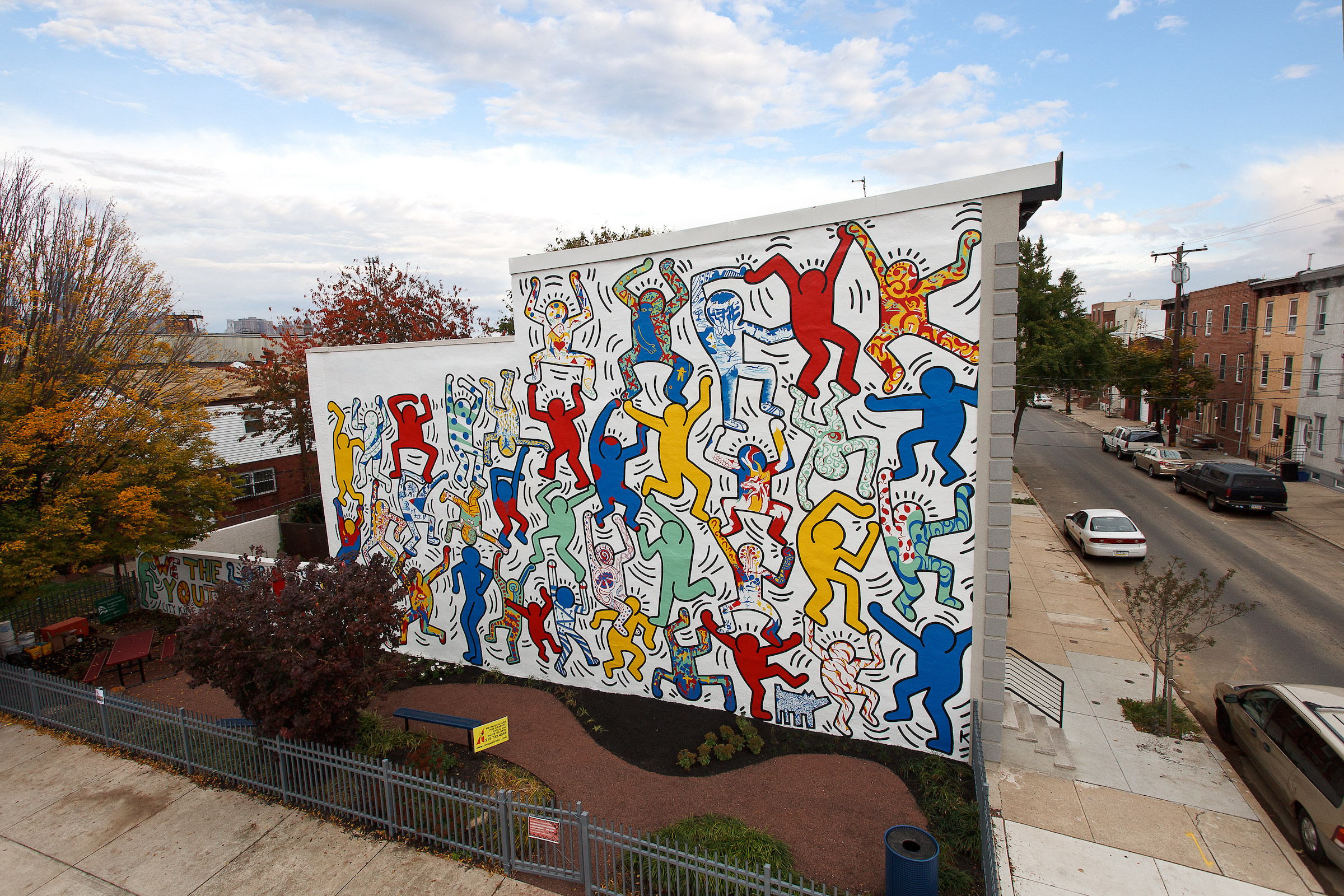
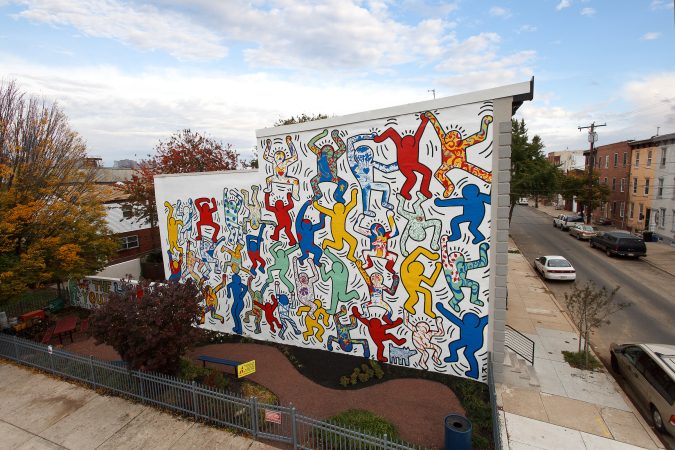
    For nearly 40 years, Keith Haring’s We the Youth has been a highlight in Philadelphia’s Point Breeze neighborhood.

    The vibrant figures dancing across the facade of a three-bedroom rowhouse at 22nd and Ellsworth Streets is the only collaborative Haring mural that remains intact in its original location.

    Now it’s one step closer to being added to the city’s Register of Historic Places. On Wednesday, an advisory group of the Philadelphia Historical Commission unanimously approved its nomination to be included.

    If approved at next month’s Philadelphia Historical Commission meeting, the mural will be added to the Philadelphia Register of Historic Places. That would make it the first outdoor mural to be an officially designated and protected landmark in the city’s history. It’ll be only the fifth mural to be designated as such, after The Dream Garden inside the Curtis Center, the New Deal-era murals inside the Family Court building, the frescoed ceiling at Old City’s St. Augustine’s Roman Catholic Church, and Iron Plantation Near Southwark inside the Southwark Station Post Office in South Philly.

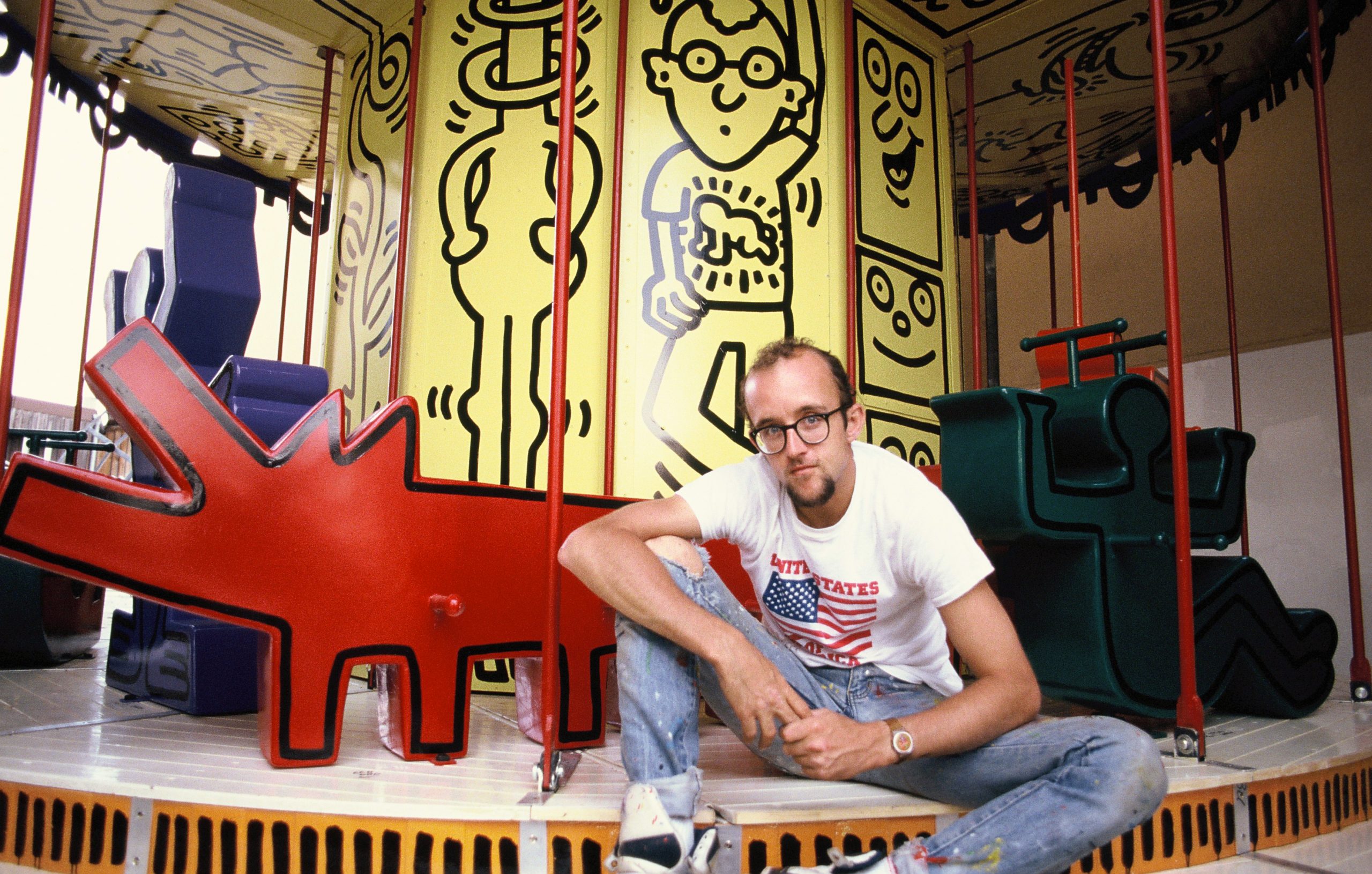
    Keith Haring, who died in 1990, with his painted carousel. MUST CREDIT: Sabina Sarnitz/Luna Luna/Keith Haring Foundation/Artestar

    Haring, the Reading, Pa., native, whose bold drawings and vivacious paintings meld the worlds of graffiti and contemporary art, became one of the defining artists of his generation. He died in 1990, at age 31, due to AIDS-related complications.

    In 1987, Haring and a group of 14 Philly and New York students collaborated on We the Youth to commemorate the bicentennial of the U.S. Constitution.

    In 2013, Mural Arts Philadelphia undertook a massive restoration of the Haring mural, located on a shared party wall at 2147 and 2149 Ellsworth Streets. In recent months, organizations have advocated for the designation of the pop artist’s mural.

    During Wednesday’s meeting, the nomination was presented by Alex Till, a historic preservation planner for the City of Philadelphia, who referenced designation criteria A and E because of the mural’s artistic and cultural significance.

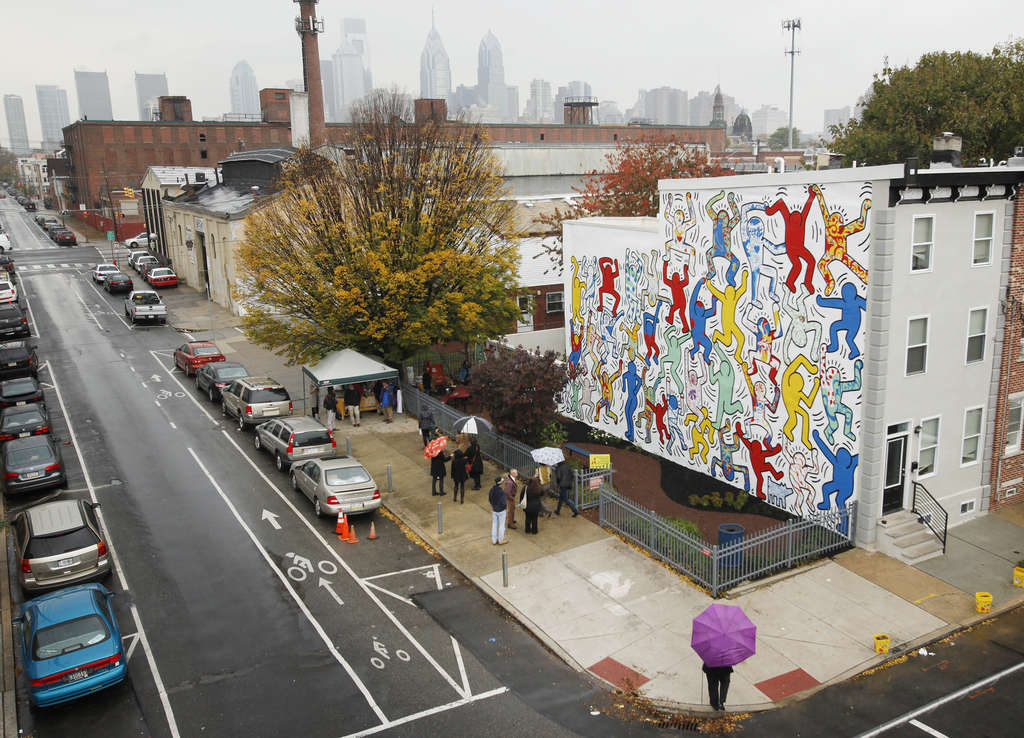
    “We the Youth” sits at 22nd and Ellsworth Streets, with a small park next to it. Photo from 2013.Steve Weinik / Mural Arts Philadelphia

    According to the City of Philadelphia website, criteria A is considered for “significant character, interest, or value as part of the development, heritage, or cultural characteristics of the City, Commonwealth, or Nation or be associated with the life of a person significant in the past.” Criteria E is for the work of a “designer, architect, landscape architect or designer, or engineer whose work has significantly influenced the historical, architectural, economic, social, or cultural development of the City, Commonwealth, or Nation,” according to the website.

    Till was joined by Mural Arts Philadelphia founder and former leader Jane Golden; Jenny Greenberg, executive director of the Neighborhood Gardens Trust; and Simon Castets, executive director of the Keith Haring Foundation.

    Golden said the mural is a part of the “unique fabric of Philadelphia.”

    “There are few opportunities to preserve history while it is still physically present and still connected to our city and our community. This is the moment,” Golden said.

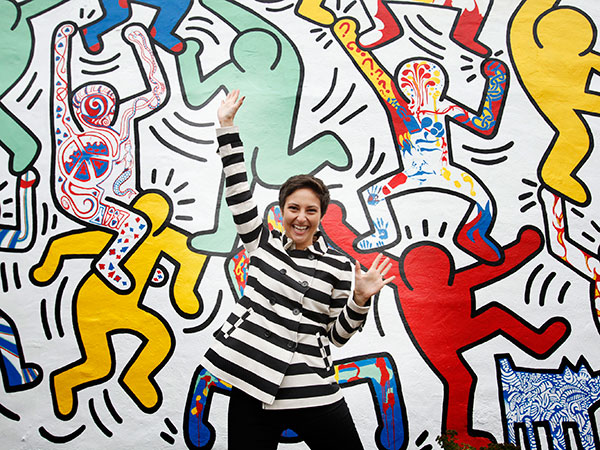
    Erica Bryant mimics a Keith Haring figure. “We the Youth,” a Keith Haring mural created in 1987 at 22nd and Ellsworth Streets, has been restored by artists from the Mural Arts Program. Photo from 2013. ( MICHAEL S. WIRTZ / Staff Photographer )Michael S. Wirtz / Staff Photographer

    Greenberg said amid the ongoing threat of development and gentrification in this city, it is almost rare to find a mural that has been at the same site for 40 years. And this is why historical designation is necessary.

    “The mural’s location reflects Haring’s commitment to making art accessible to the public, regardless of socioeconomic status, and to engaging young people as creative partners,” she said.

    The advisory group, comprising architects, historians, and preservation experts, agreed that the mural meets the criteria. After nearly an hour of deliberation, including comments from Philadelphia residents who tuned into the Zoom meeting, the group approved the nomination and recommended it to the commission for next month’s meeting.
    The commission will vote Oct. 9. If approved, We the Youth would be the city’s first designated mural in over four years.

    A potential historic designation will not affect the larger property and will be restricted to the mural and the wall it is painted on. The building’s owner will be required to maintain the structural integrity of the wall and commit to set obligations, with Mural Arts making any necessary restorations to the mural itself.

    If the mural is designated, the building’s owner, listed as “2147 Ellsworth LLC” in city records, will not be allowed to remove or alter the appearance of the mural without the Historic Commission’s review.

    While speakers were impassioned by the possibility of historical designation, 2147 Ellsworth LLC manager Ori Feibush, serving as a representative at Wednesday’s committee meeting, opposed the nomination.

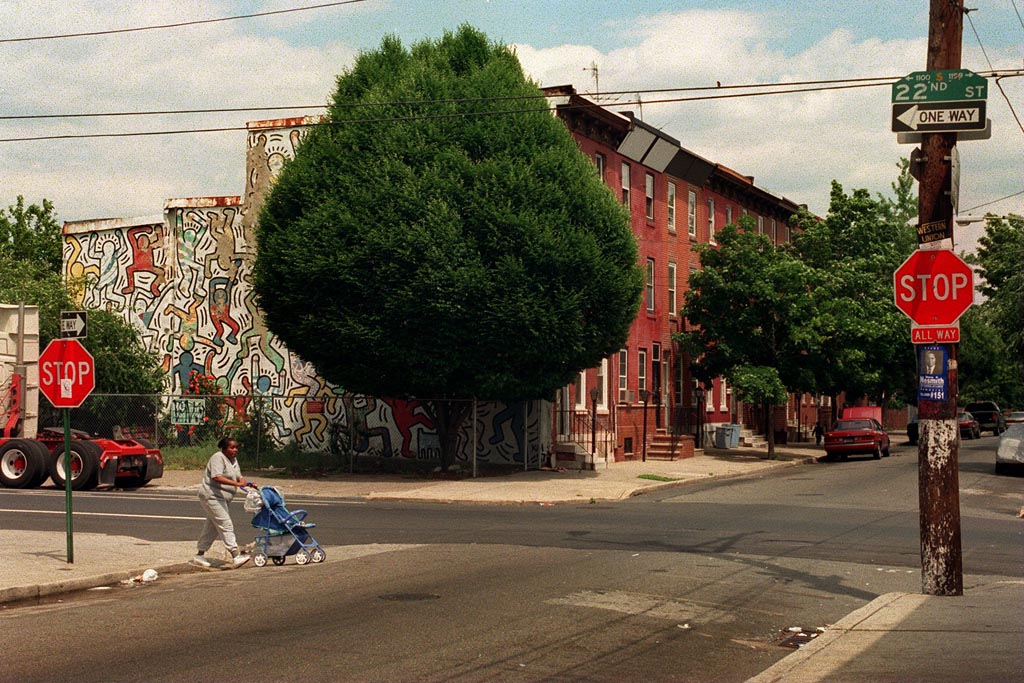
    Kutztown, Pa., native Keith Haring came back to Philadelphia at the height of his worldwide popularity in 1987 and painted a mural at 22nd & Ellsworth Streets with the help of neighborhood kids from the Brandywine Workshop. This photo, from May 27, 1999, shows the mural before restoration. (Tom Gralish/Staff photographer)

    Feibush warned that the designation would impede the building’s renovation efforts, which may require the demolition of the rowhouse’s interior, based on analysis from engineers. Since purchasing the property eight years ago, Feibush said his company has worked diligently to reduce water infiltration and minimize movement to “preserve the mural.”

    Despite years of efforts, he said, the mural has delaminated from the underlying salmon brick and is in a fragile condition.

    “The removal and, ultimately, reinstallation of the mural here is the only path to create something that can be here long term,” Feibush said.

    By gaining historical designation, he said, there will be temporary plans made to preserve the site, rather than long-term fixes that will ensure the mural lasts “another 100 years,” rather than the five to seven he projects.

    “We the Youth,” a Keith Haring mural painted in 1987 at 22nd and Ellsworth Streets, was restored to its original vibrancy in 2013 by the Philadelphia Mural Arts Program. [File Photo]Michael S. Wirtz / Staff Photographer

    “This mural we hope will forever be at this location, but the only way this location could have a mural is without a designation,” he said.

    Committee member Jeff Cohen was one of several who questioned whether historical designation and preservation could happen simultaneously. He and his fellow member Elizabeth Milroy agreed that both methods should be carefully studied and explored before next month’s commission meeting, ensuring that all scenarios are properly vetted and that all attendees’ views are considered.

    The committee then opened the meeting to the public. Several Point Breeze residents, many of whom live within walking distance of the mural, supported the historical designation.

    An earlier version of the article misstated the murals included in the Philadelphia Register of Historic Places. It has been updated to include the frescoed ceiling at St. Augustine’s Roman Catholic Church in Old City.

  • Businesses are eyeing Germantown opportunities. The neighborhood is proceeding with caution.

    Businesses are eyeing Germantown opportunities. The neighborhood is proceeding with caution.

    The story that’s told about Germantown’s downtown is often one of disinvestment, but a small contingent of community stakeholders and business owners are hoping to spin a new yarn.

    The northwest Philadelphia neighborhood that centers around Germantown Avenue from West Johnson to Berkley Streets has seen controversies in the past decade, from the dismantling of the Germantown Special Services District, to the changing stewardship of Germantown Settlement’s residential properties. Some residents say disengagement from elected officials hasn’t helped.

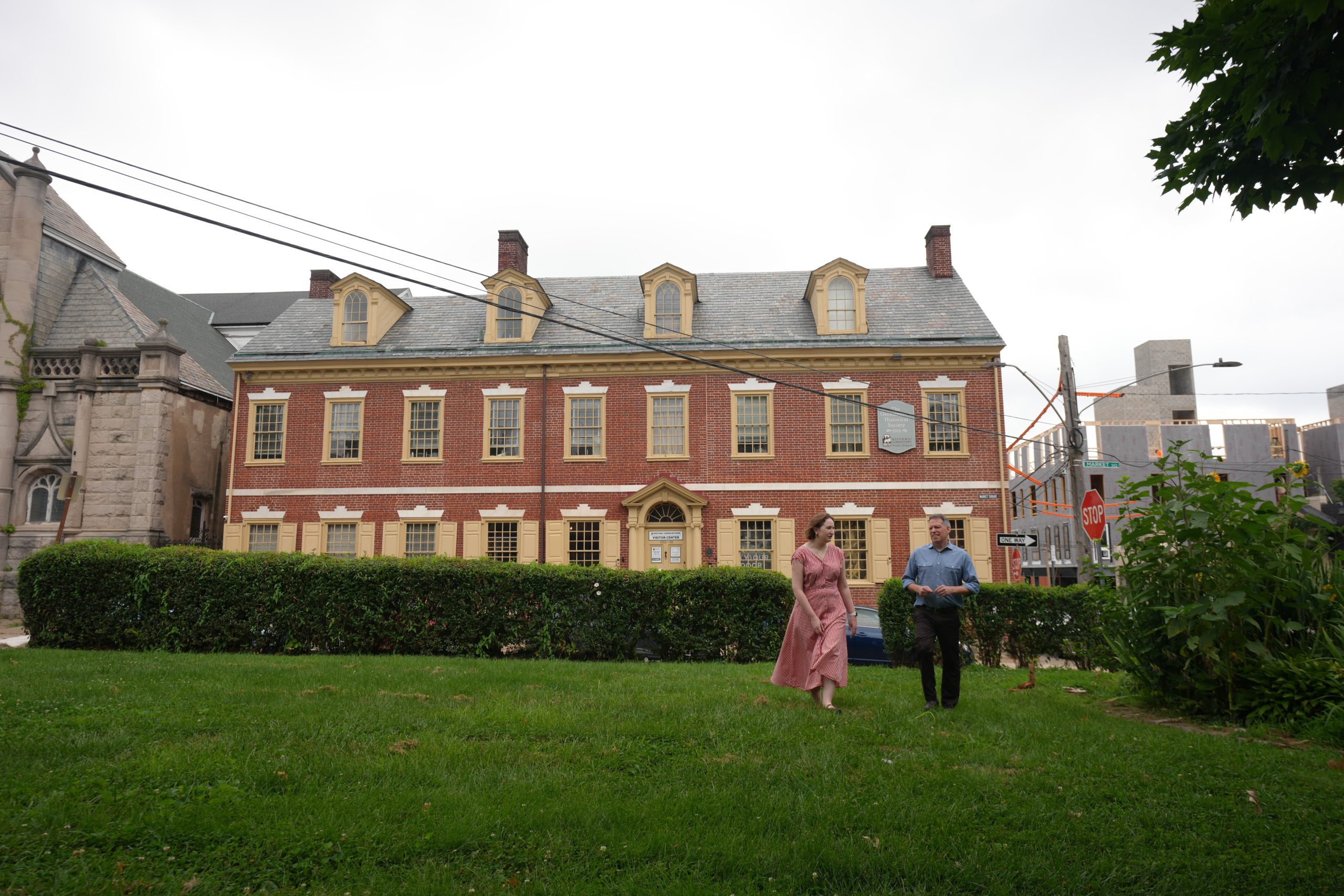
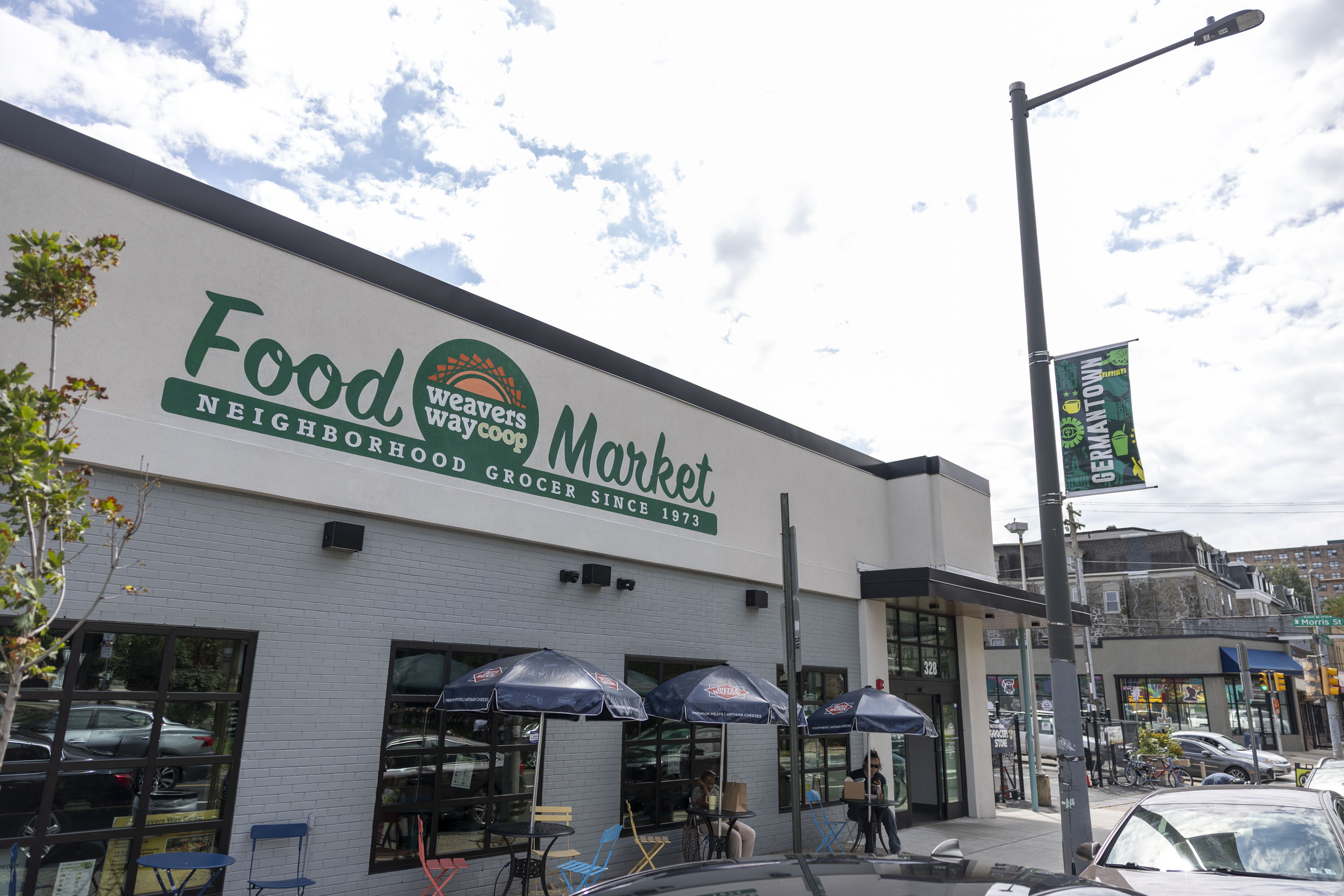
    But forces big and small are working to revitalize the community: Germantown United, the neighborhood’s community development corporation (CDC), recently completed a plan to make Germantown’s business district more walkable. Historic Germantown, the neighborhood’s historical society, in July unveiled its new visitors center that aims to connect Philadelphians and visitors to the area’s deep history. And buzzy storefronts including Uncle Bobbie’s Coffee & Books, Salam Cafe, Weavers Way Co-op, Cupbearer Coffee, and Attic Brewing bring much-needed services and third spaces to the neighborhood.

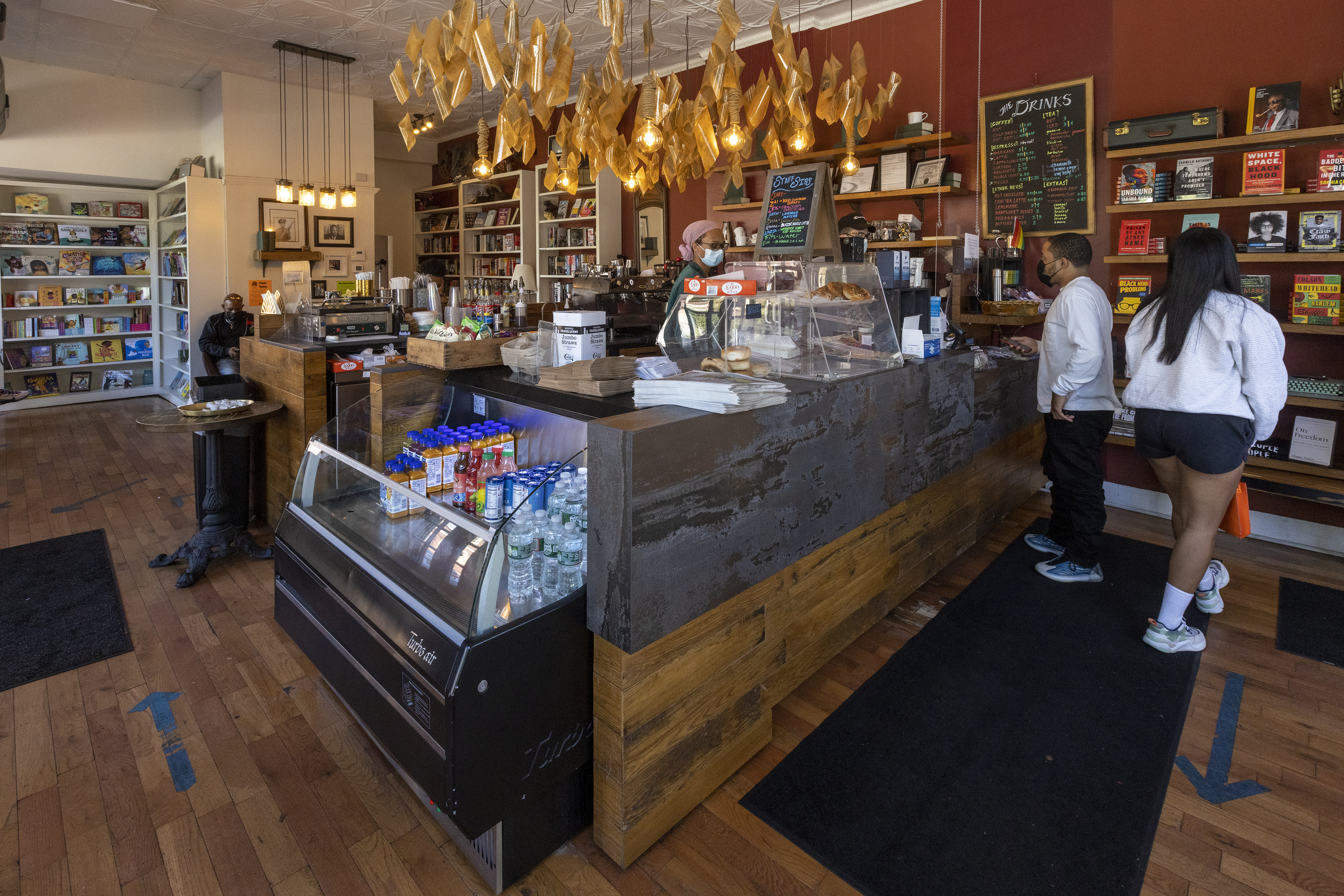
    Interior of Uncle Bobbie’s Coffee & Books, 5445 Germantown Ave. Alejandro A. Alvarez / Staff Photographer

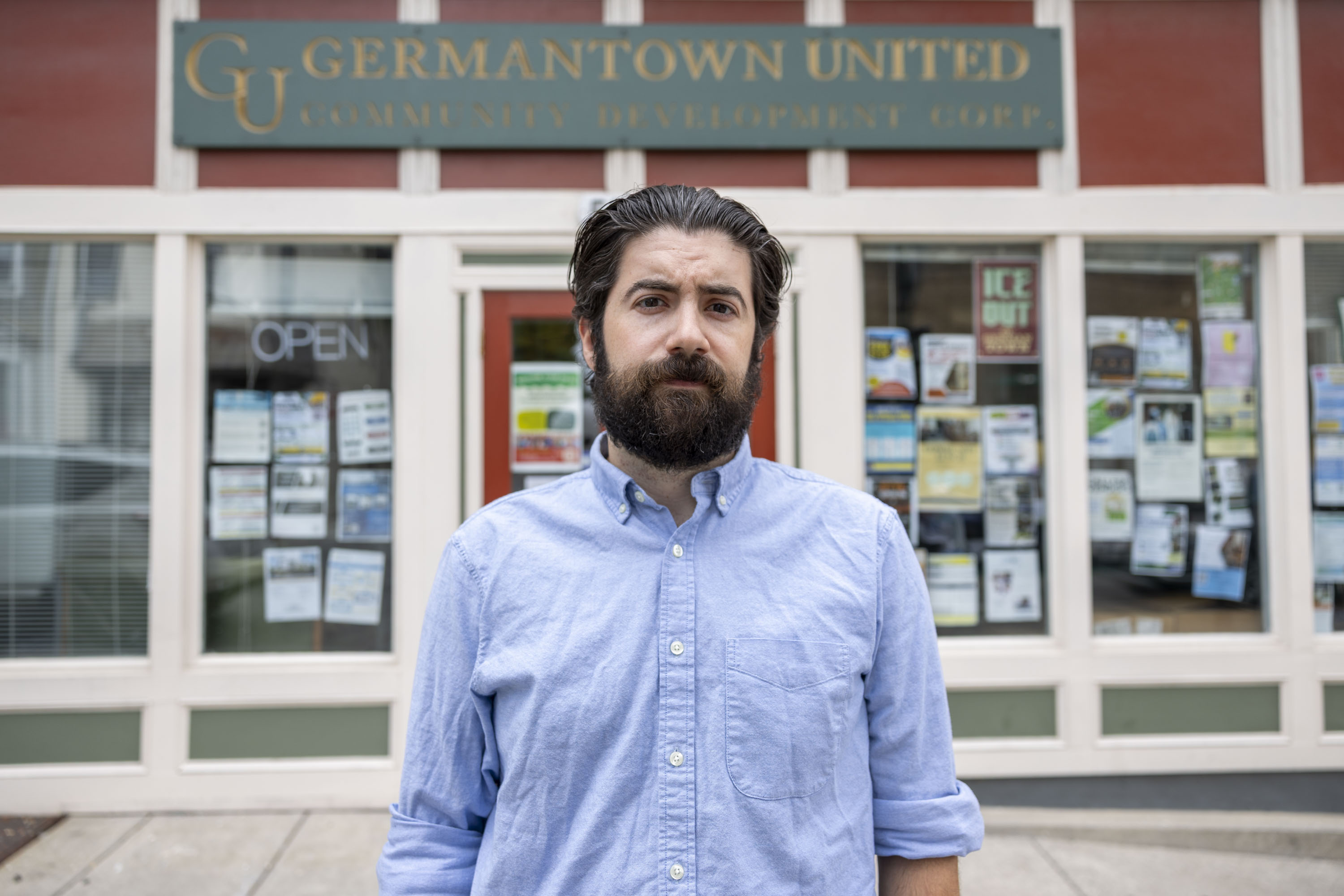
    Leo Dillinger IV, the executive director of Germantown United, said new businesses have been reaching out to the CDC, the first step to lifting the business district up, “but with everything, it takes time.”

    “We don’t want the corridor to change like a light switch and all of a sudden it’s actively populated with a bunch of businesses that aren’t offering affordable goods and services,” Dillinger said. “That leads into the fears of gentrification and displacement that are a major concern for the Germantown community.”

    Connecting corridors in Germantown

    While it has the CDC, Germantown lacks a business improvement district to fund and oversee improvements to the area. And with the 2019 disbanding of the Germantown Special Services District, after accusations of mismanagement and misappropriation of funds, the neighborhood lost a body tasked with keeping its main business corridors clean.

    “We lack structure in order to have a commercial district that is thriving,” said Patrick Jones, a Germantown resident who has organized community members around efforts to redevelop its public spaces and city-owned large vacant properties. “A lot of us feel as though Germantown is a forgotten community in the 8th Council District.”

    Jones said residents would like to see Germantown bring in a selection of sit-down restaurants and middle-class big box stores like Target or Giant. Dillinger said the CDC gets similar feedback.

    “Right now if you want to sit down and have a nice meal, you have to go outside of Germantown to do that,” Jones said. The addition of Uncle Bobbie’s and its cafe in 2017 “started moving us in the right direction, but we want to see an actual restaurant in Germantown, and it’s just difficult to do that with the way things are right now.”

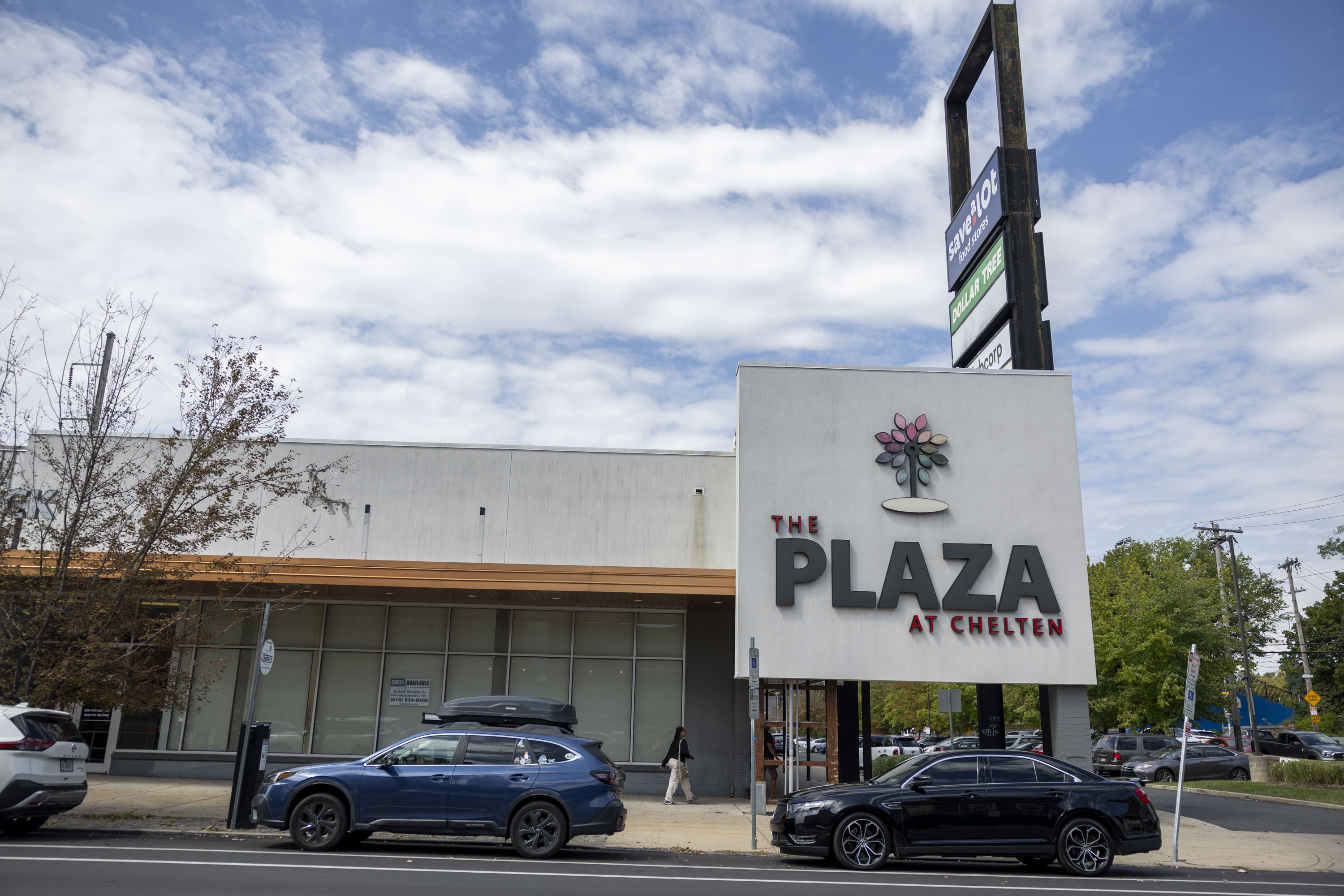
    The outside of the Plaza at Chelten in Germantown.Tyger Williams / Staff Photographer

    Having more organizational support beyond the CDC might allow that, he says.

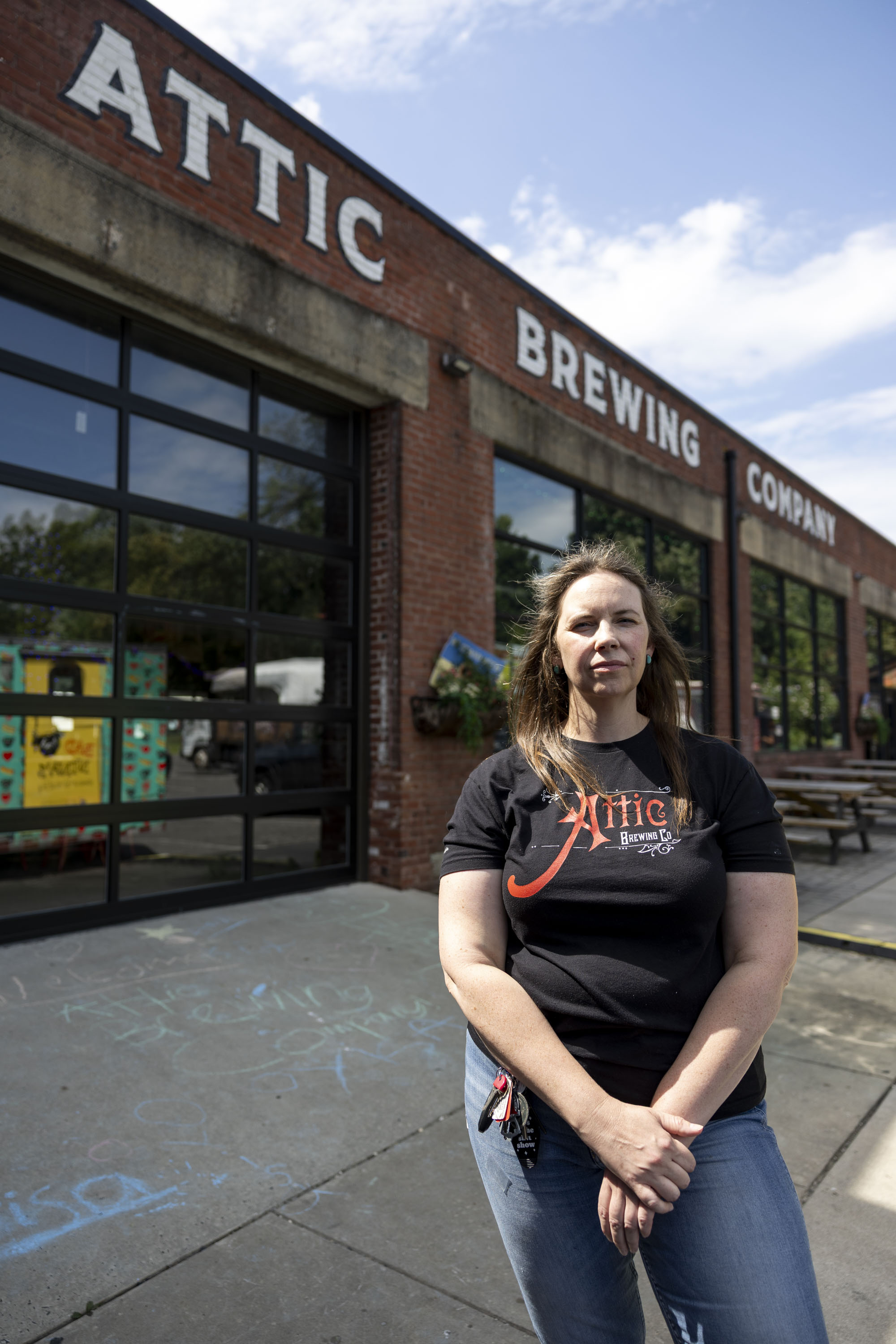
    “We’re lacking the resources to put attention towards advocating for ourselves,” said Laura Lacy, co-owner of Attic Brewing Co., near Wayne Junction. “You can immediately see the change when you’re driving [out of Germantown]. As you get into Mount Airy, you start to see hanging flower baskets and landscaping on corners and trash cans.”

    The neighborhood’s existing business hubs also feel disconnected. That’s an issue that Germantown United is addressing with a five-year plan to better connect West Chelten Avenue, Maplewood Mall, and Market Square for pedestrians. They’re pushing for better overhead lighting, connecting business owners with the Department of Commerce’s business security camera program, and addressing cleanliness and improving greenery.

    The plan also includes connecting with absentee landlords to discuss how their properties can better serve the community, Dillinger said. These landlords are at the heart of the problem, locals say.

    “There’s just a lot of commercial property owners who don’t care,” Dillinger said. “There are some who do and are invested in their properties and making sure that their tenants succeed. There are also commercial properties that are sitting in a portfolio of developers’ and, as a result, they just start to deteriorate.”

    Laura Lacy, co-owner of Attic Brewing Co., outside the business in September.Tyger Williams / Staff Photographer

    Street safety is also a major community concern after a spate of hit-and-run fatalities. This is a significant challenge for Attic Brewing, Lacy said.

    Its location near Wayne Junction removes it from the commercial heart of the neighborhood, and her landlord’s promises to develop surrounding lots into complementary businesses never panned out. It all amounts to less visibility and awareness of pedestrians in the area.

    “We’re talking about the safety of our team members. … We’re talking about the safety of our customers,” Lacy said.

    Also of concern are the two vacant lots near Attic, which were part of a development plan years ago, Lacy said. “At what point does the city take it back? At what point does it become like you can’t just let this sit abandoned like this?”

    Councilmember Cindy Bass, who represents the area, declined to comment for this story.

    Signs of new life

    Still, business activity is underway in Germantown.

    Indego, Philadelphia’s bike share program, will enter Germantown this fall with 10 to 12 stations.

    Kaila Temple, curator of collections at Historic Germantown, and Tuomi Forrest, executive director. The new Historic Germantown Visitor Center opened in July.Jessica Griffin / Staff Photographer

    Historic Germantown’s Visitor Center opened in July. It’s a jumping-off point to access the neighborhood’s vast cache of historic cultural sites, which drive about 125,000 visits from the public and 25,000 from staff and volunteers annually who spend about $10 million in and around Germantown, according to Tuomi Forrest, Historic Germantown’s executive director.

    “Our goal is that people get so interested and excited that they want to come back or expand their visits here,” Forrest said.

    A few new businesses on West Chelten Avenue are invigorating the area. Weavers Way Co-op’s Germantown store, which opened in May 2024, has “exceeded projections since day one, and our membership in Germantown has continued to grow,” said general manager Jon Roesser. The co-op is open to the public, but its roughly 2,400 Germantown members get discounts and other benefits.

    The outside of Weavers Way Co-op.Tyger Williams / Staff Photographer

    “We bring a lot of foot traffic to the avenue; we have about 1,000 transactions a day,” Roesser said. “That’s 1,000 people a day coming to the corner of Chelten and Morris that previously was exactly zero because the building was abandoned.”

    Complementary businesses have popped up nearby, including Cupbearer Coffee, Das Good Cafe, and Nutrition & Herbs Center.

    Uncle Bobbie’s Cafe & Books is expanding its neighborhood footprint this fall and moving up Germantown Avenue from its current location at Church Lane into a 3,000-square-foot spot at the intersection of Washington Lane.

    “We are excited to be in a position to grow, bring people together, and read great books,” Justin Moore, the bookstore’s general manager, told The Inquirer in April. “Most importantly, we are excited to further and deepen our ties in Germantown as a community hub.”

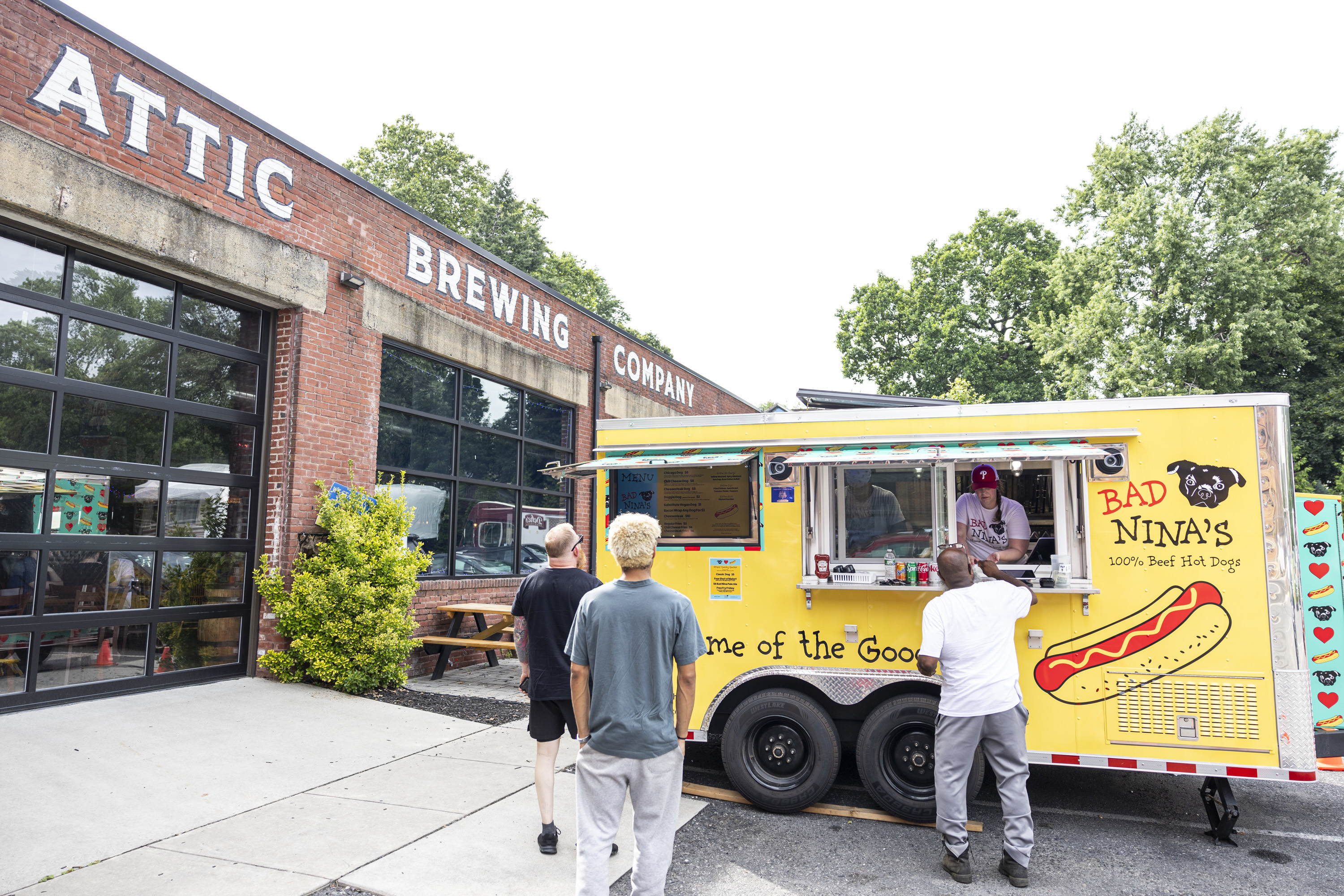
    Customers line up to order hot dogs at the grand opening of Bad Nina’s outside Attic Brewing. Lacy said the hot dog stand opened because other companies did not want to bring their food trucks to the brewery.Tyger Williams / Staff Photographer

    And Attic Brewing Co. took gold at the World Beer Cup in May for its international dark lager, Common Nightjar.

    “One of the best beers in the world is brewed here in Germantown,” Lacy said. At the same time, from a financial standpoint “our business is in the worst spot it’s ever been in in six-and-a-half years.”

    Attic needs to “exponentially increase the number of people” coming into the tap room to be viable, Lacy said. Getting other restaurants into the area could help. Lacy said Attic started Bad Nina’s gourmet hot dog cart because food trucks wouldn’t come to the neighborhood and the area lacks sit-down restaurant options for their patrons.

    “We know that our product, our service, our space is one of the best in the city,” she said, so as the business struggles, “we start to wonder if maybe we picked the wrong location.”

  • Move over, boba. A new wave of Chinese beverage brands is taking over Philly’s Chinatown.

    Move over, boba. A new wave of Chinese beverage brands is taking over Philly’s Chinatown.

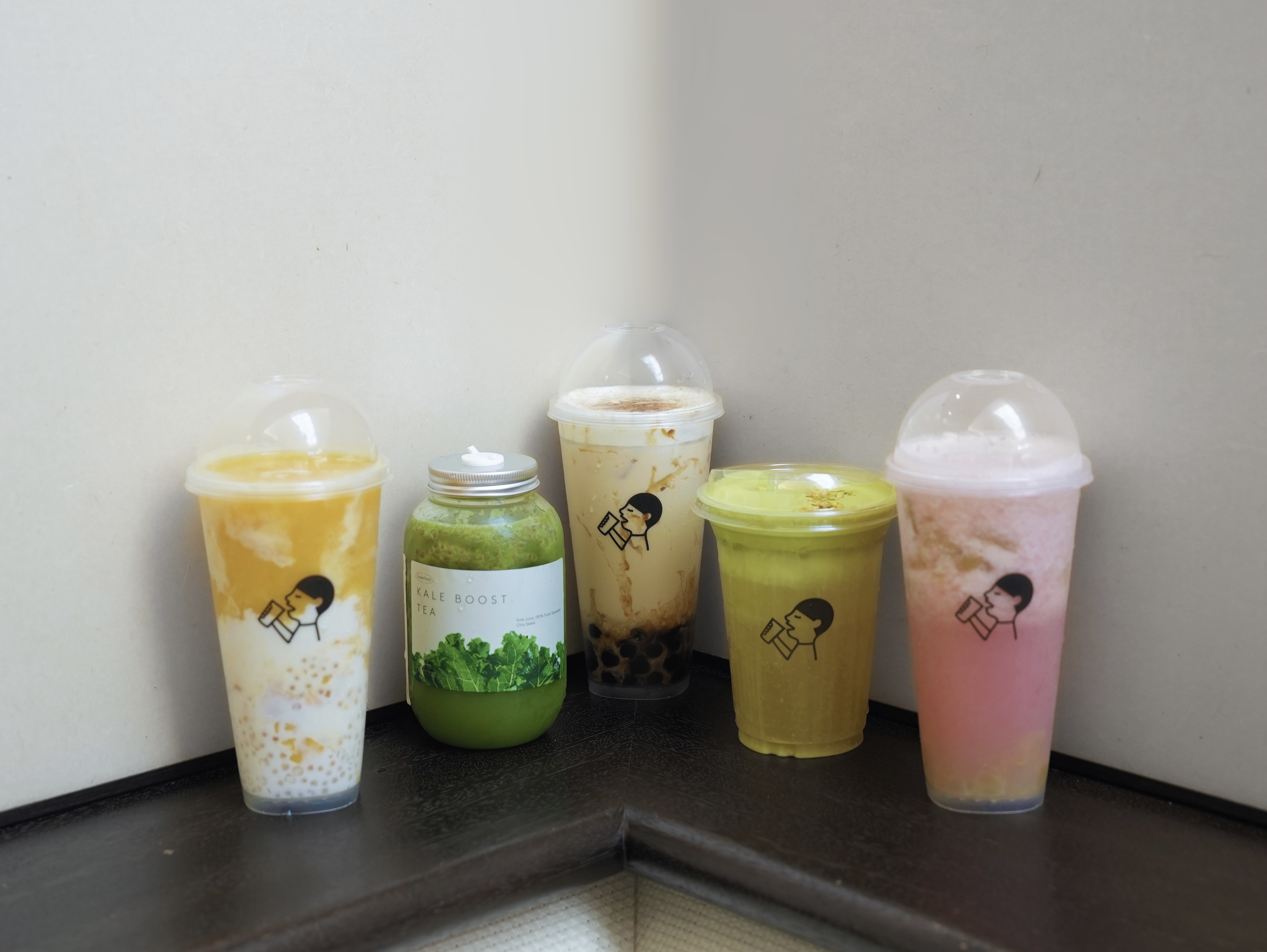
    You may not have noticed it, unless you’re a teenager, a college student from China, or a Chinatown resident, but a slow wave has been sweeping through the storefronts of Philly’s Chinatown. There have been many openings in the past year that tap into both global food trends and scarcities in our local food scene that are changing the fabric of Chinatown.

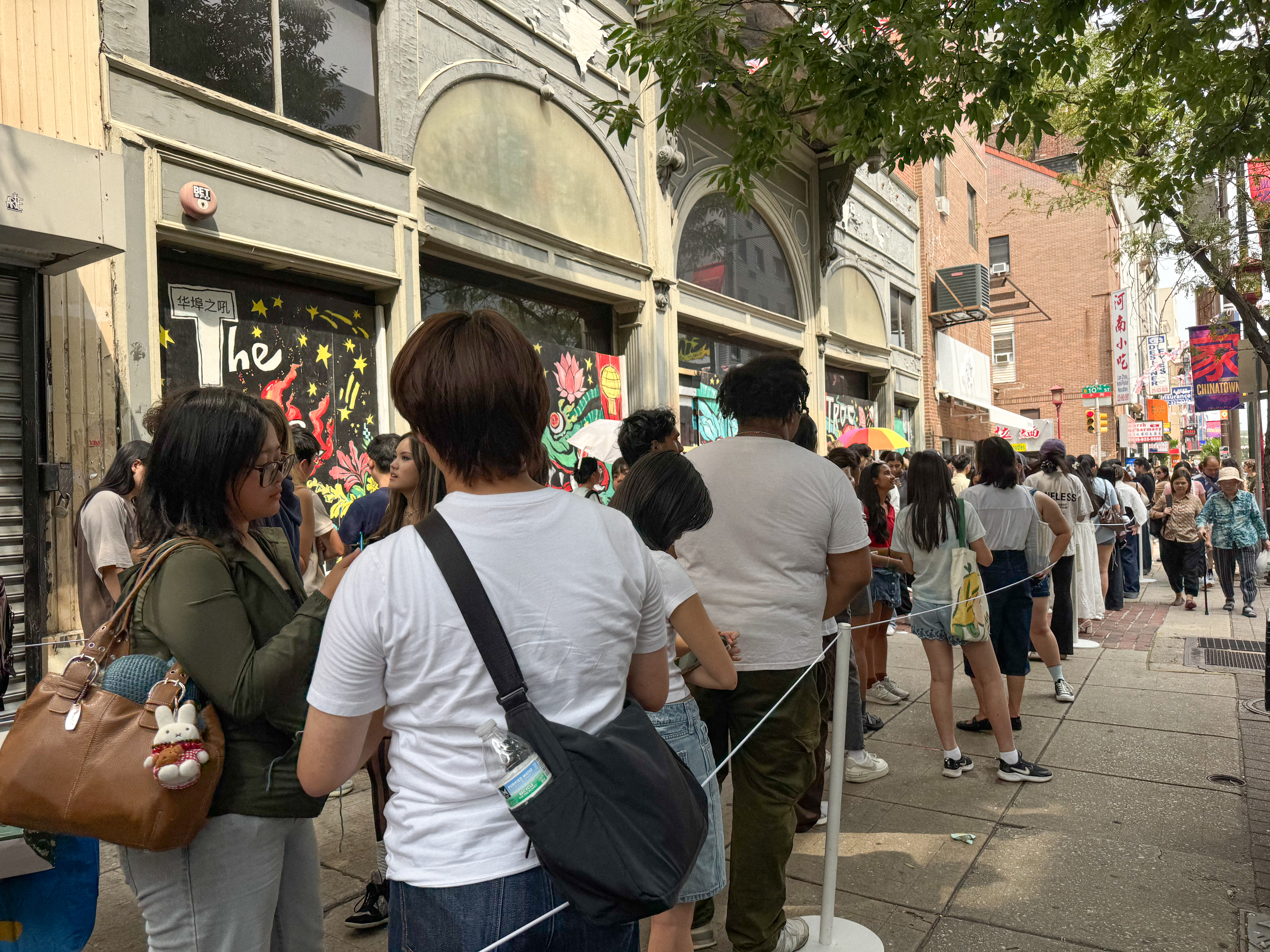
    The splashiest opening has been at the corner of 10th and Arch Streets, adjacent to the Chinatown Friendship Arch, where heytea opened its first Philly store. They’ve had to assign bouncers to monitor the line that has snaked back and forth down the block. Heytea, which was founded in Guangdong in 2012 and is headquartered in Shenzhen, China, operates more than 4,000 stores worldwide.

    It took 90 minutes to obtain one of its King Jasmine Guava tea beverages ($7.99) last month, during a thunderstorm that did not deter people from waiting in long lines to order. This is not unusual for the brand. According to heytea’s press representative, Yinnan Shen, when the chain opened its Upper West Side store in New York, a few weeks prior to Philly’s location opening, “more than 600 people were in line, stretching nearly three city blocks.”

    Heytea thus comes with its own built-in tailgate, populated in recent weeks by the tea company’s super fans (many of them teenagers), curious onlookers, and those lured by buy-one-get-one-free opening bargains. It seems to have found a sizable market for what it calls “new-style” tea, most of which pairs brewed, chilled Chinese tea (like oolong), mixed with fresh fruit.

    Opening day (and subsequent days) have drawn long lines outside of heytea in Philly’s Chinatown.heytea

    Heytea is just one of a slew of new Chinese beverage chains hitting Philly. Other markets have been whipped into a frenzy by these exports. But this wave has been relatively slow to reach Philly. For years, shops selling boba, or bubble tea, many of them franchises originating in Taiwan, have been plugging along in a relatively stagnant scene. But boba is waning. Chinese coffee, brewed iced tea, and yogurt drinks — all served cold — are on the rise.
    Taiwanese chain Vivi Bubble Tea (100 stores in 13 countries) opened in Philly’s Chinatown in 2015. The first Philly Chinatown Kung Fu Tea opened in 2016, and the first Mr. Wish franchise opened in 2017. And the first Teazzi Tea Shop, a few steps away from heytea on Arch Street, opened in 2023.

    Chinatown is home to many other now-familiar outposts of relatively smaller tea-focused chains, like the Chinese Tsaocaa and the Taiwanese Gong Cha, Chi Cha San Chen, and Tiger Sugar. Each of these brands have between 80 and 300 stores worldwide. In contrast with heytea, these chains are minuscule.

    Non-Asian cafes may have just discovered matcha and ube (Filipino purple yam) to the point where both are now constantly seeing global shortages, but these flavors are generally a footnote on the new beverage shops’ menus.

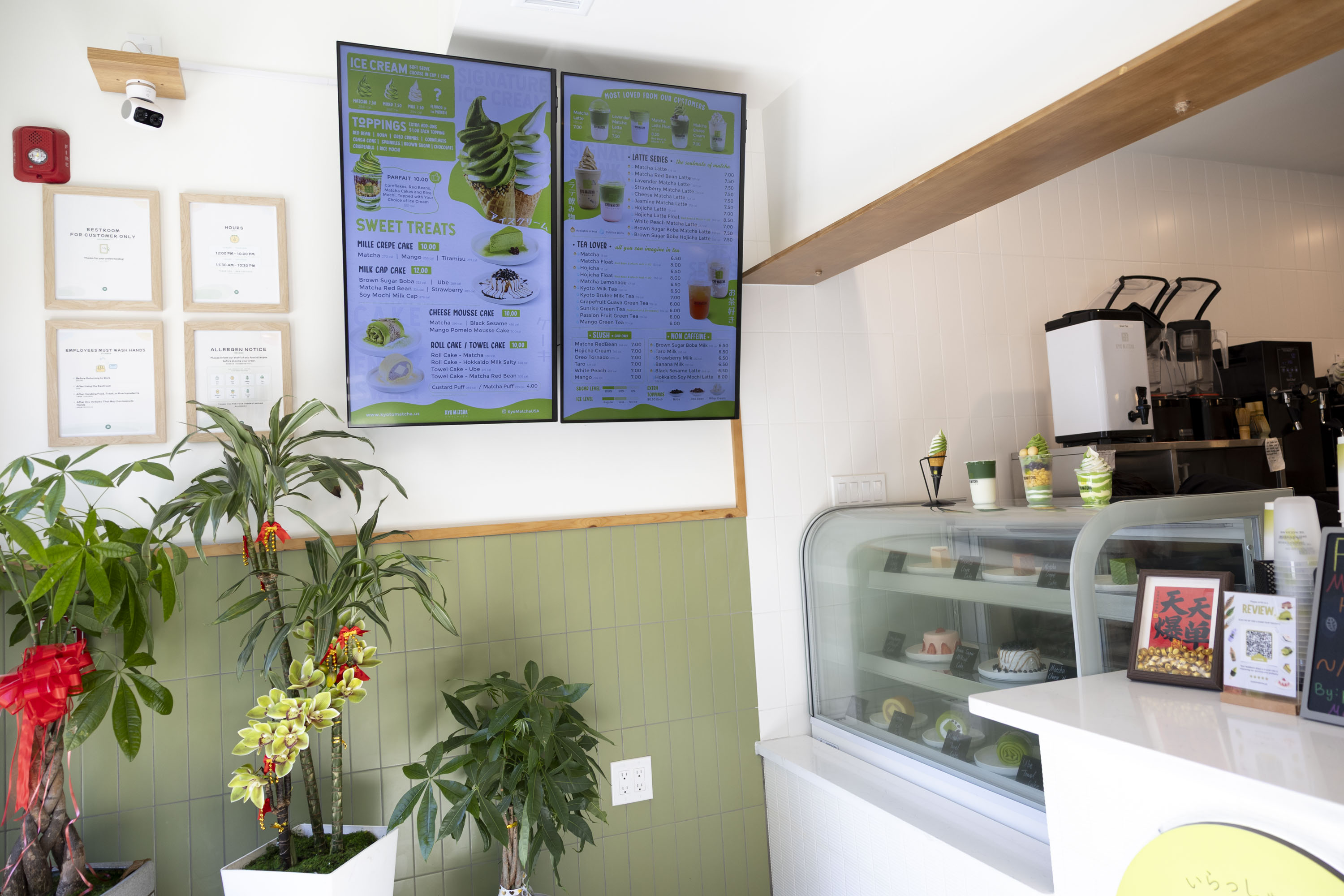
    The inside of Kyo Matcha on Wednesday, Aug. 26, 2026, in Philadelphia.Tyger Williams / Staff Photographer

    An exception to this is Kyo Matcha, which opened last month, also to dizzyingly long lines. At Kyo Matcha, matcha is, of course, the star, and ube plays second fiddle, appearing in both the shop’s desserts and beverages. It’s owned and operated by two young couples, originally from mainland China. When asked why they didn’t open their own, unique concept, one of the owners, Danya Li, said, “Starting a brand from scratch is so hard.”

    People aren’t really opening independent, uniquely branded shops in Chinatown these days, with the exception of Super Bao & Cake Girl, which took over KC’s Pastries, and Hen Ji Hou Wei Xuan Cheung Fun, which serves gossamer rice paper rolls and hearty bowls of congee.

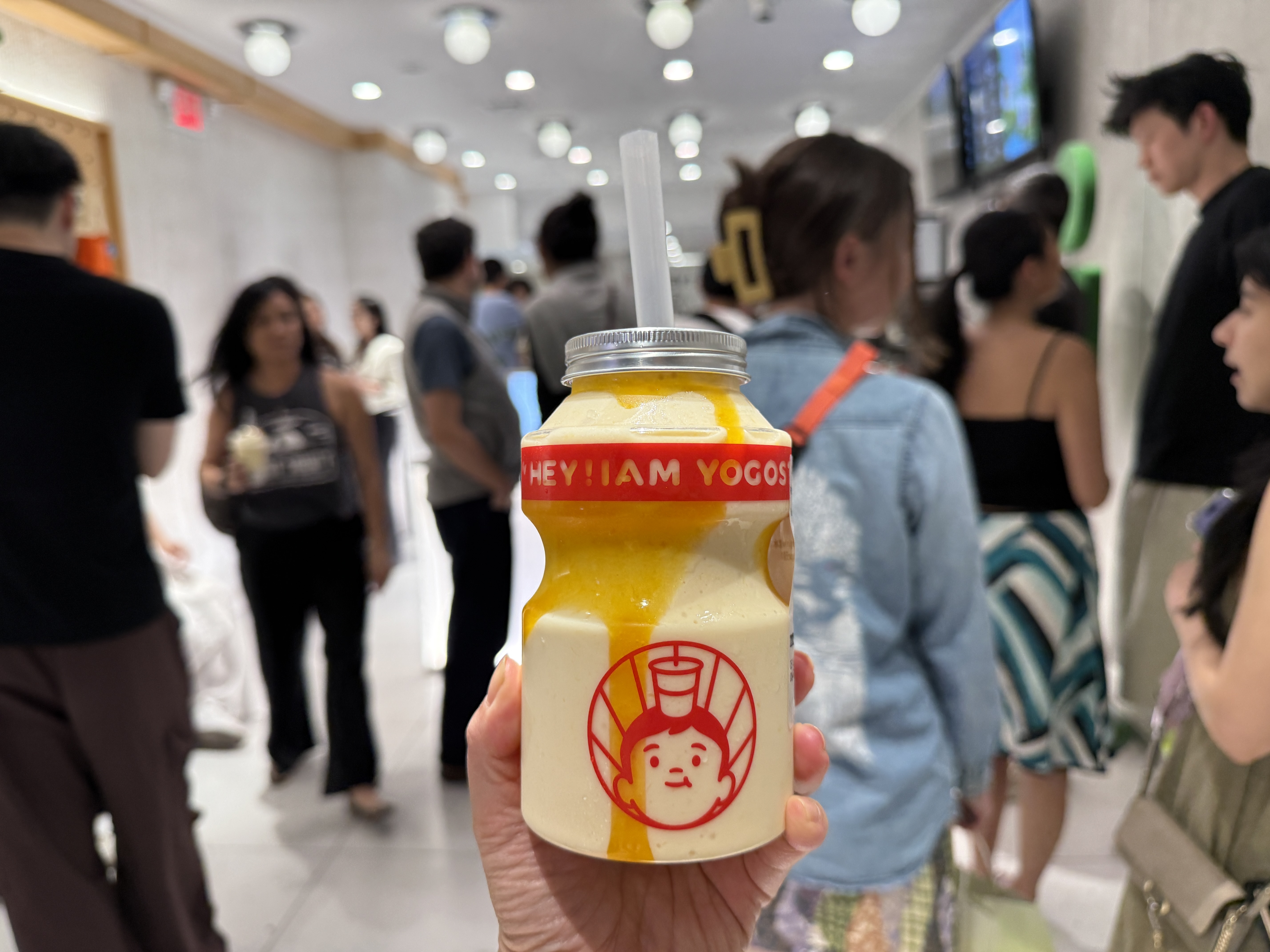
    The rest of the significant openings in Chinatown in the last year have all been franchises, from Yin Ji Rice Roll to Beard Papa’s to Hey I Am Yogost.

    The Mango Yakult yogurt drink at Hey I Am Yogost, 124 N. 10th St.Kiki Aranita / Staff

    And we’re probably going to see a lot more of them, especially as they spread through other Chinatowns in the tristate area.

    Luckin Coffee, China’s largest coffee brand, debuted in Manhattan just over a year ago. It now has 25 locations in New York City alone and 36,310 stores worldwide. The brand is so huge that earlier this year, it acquired pioneering coffee roaster Blue Bottle. There isn’t a Luckin location in Philly yet, but it’s only a matter of time.

    Luckin, along with fellow massive Chinese coffee chains Cotti (over 18,000 locations worldwide) and Mixue (almost 60,000 locations worldwide) have ingrained themselves into all of New York’s Chinatowns. All of them opened in New York in 2025. They are different in concept from quick service Taiwanese boba chains and cafes that promote lingering (like Starbucks). They prioritize scale, reaching as many people as possible.

    Having chains move into Chinatown is a double-edged sword. It is invigorating a neighborhood barely saved from arena-related destruction and now teems with young people lining up for wholesome beverages.

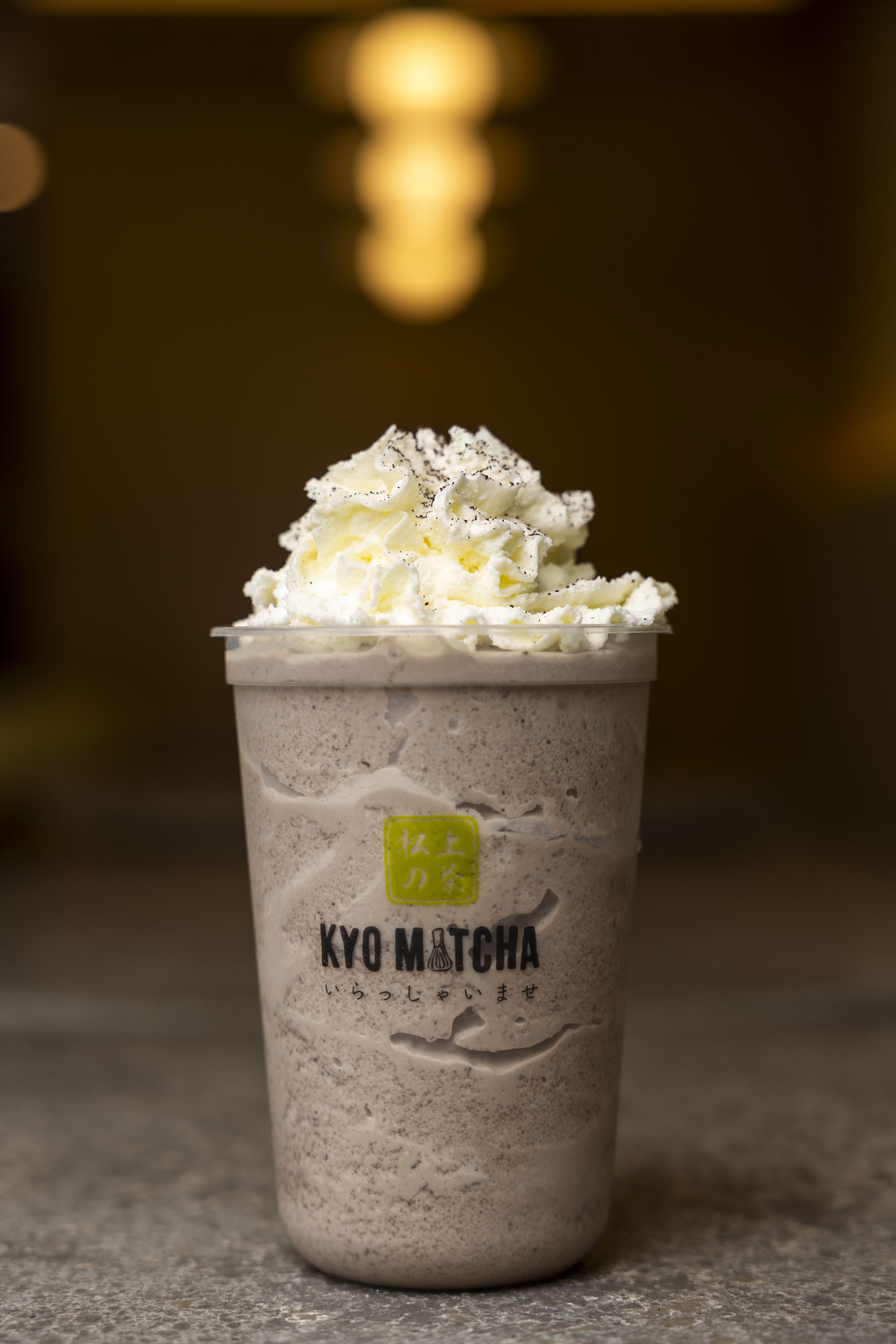
    A Oreo Tornado at Kyo Matcha on Wednesday, Aug. 26, 2026, in Philadelphia.Tyger Williams / Staff Photographer

    But in Manhattan, these chains have also been pricing out other businesses. It started years ago with boba chains — it has even been referred to as the “bobafication of Chinatown.” Boba chains were the first to supplant not only immigrant-owned restaurants, but housewares shops, pharmacies, salons, and other businesses.

    Grace Young, an advocate for Chinatowns nationwide, asked on Instagram, “At this rate, will Chinatown become Bubble Tea Town?” In the last year, “Bubble Tea Town” has evolved into “Chinese coffee and tea town.”

    Philly’s Chinatown has also experienced this form of gentrification; it has just, until now, been slower.

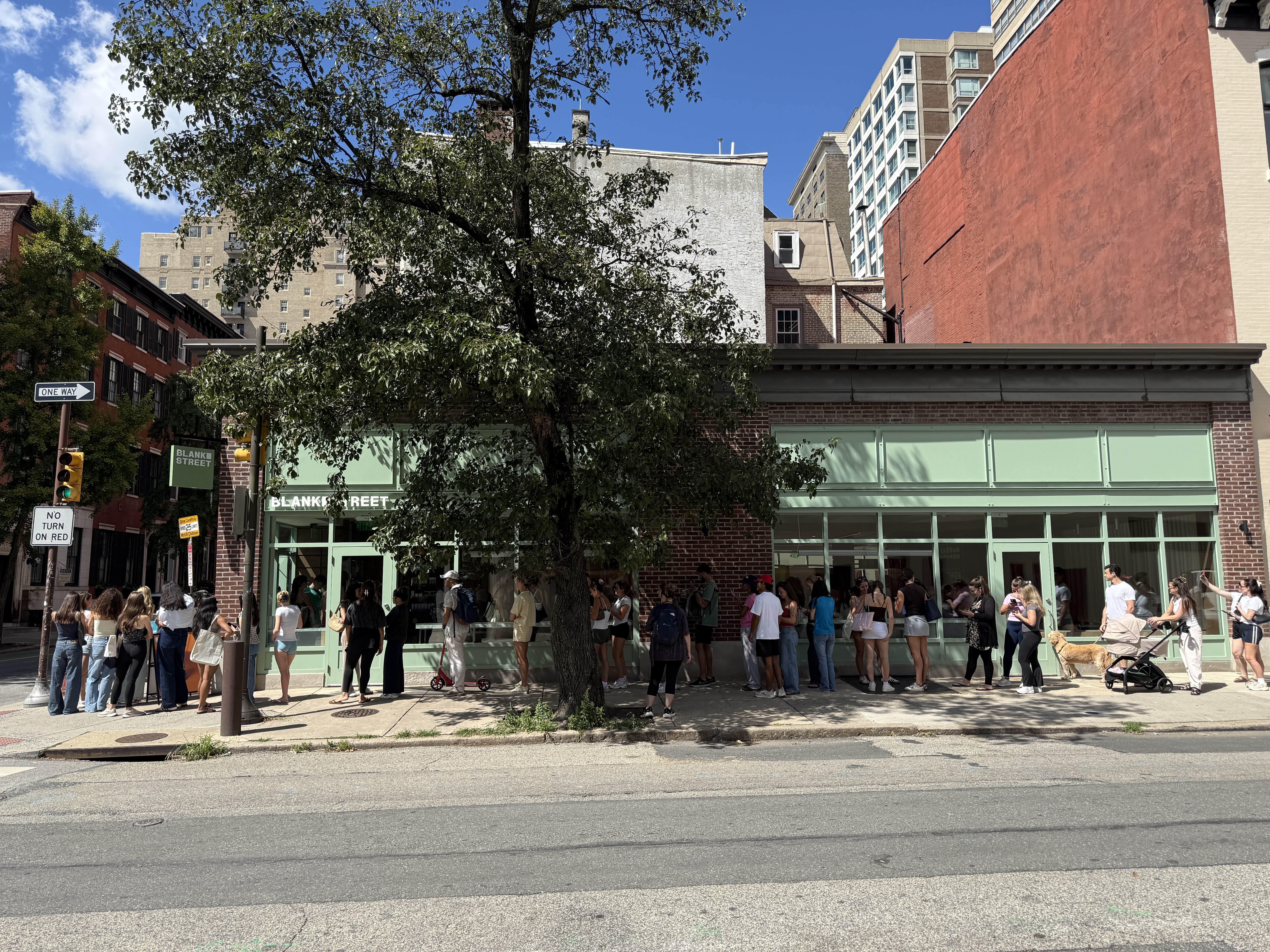
    All over Philly, the cafe scene is going through seismic shifts, largely bolstered by chains. Rittenhouse’s location of Blank Street, the New York-based chain that sells coffee and matcha, opened Monday, to lines as long as heytea’s.

    Blank Street’s first Philly location, at 1801 Spruce St., draws lines around the block on its opening day, Sept. 7, 2026.Kiki Aranita / Staff /

    Haraz Coffee Shop is soon to open its third location in Philly, adding to the wave of Yemeni coffee shops sweeping through Philly.

    We’re seeing more international outposts devoted to coffee in Philly neighborhoods, so that now Philadelphians have more options than ever, whether we’re looking for a Korean cafe or new wave Vietnamese coffee.

    But no neighborhood other than Chinatown has been subject, at the hands of cafe chains, to such a condensed, rapid rate of change. Their influx means Chinatown will see fewer independent businesses and consume more from multinational conglomerates.

    But it does make a younger generation, attuned to tea trends, happy. Like all forms of gentrification, it serves some communities while displacing other ones.

  • Four Philadelphia artists are a part of this year’s Whitney Biennial

    Four Philadelphia artists are a part of this year’s Whitney Biennial

    Whitney Biennial curators travel the length and breadth of the country, paying visits to artists in their studios, surveying their work, and picking creators whose work they think represents the present climate of art making in the country. Together, they bring a once-every-two-years expansive exhibition to New York’s Whitney Museum of American Art, often regarded as the most prestigious and faithful register of American art.

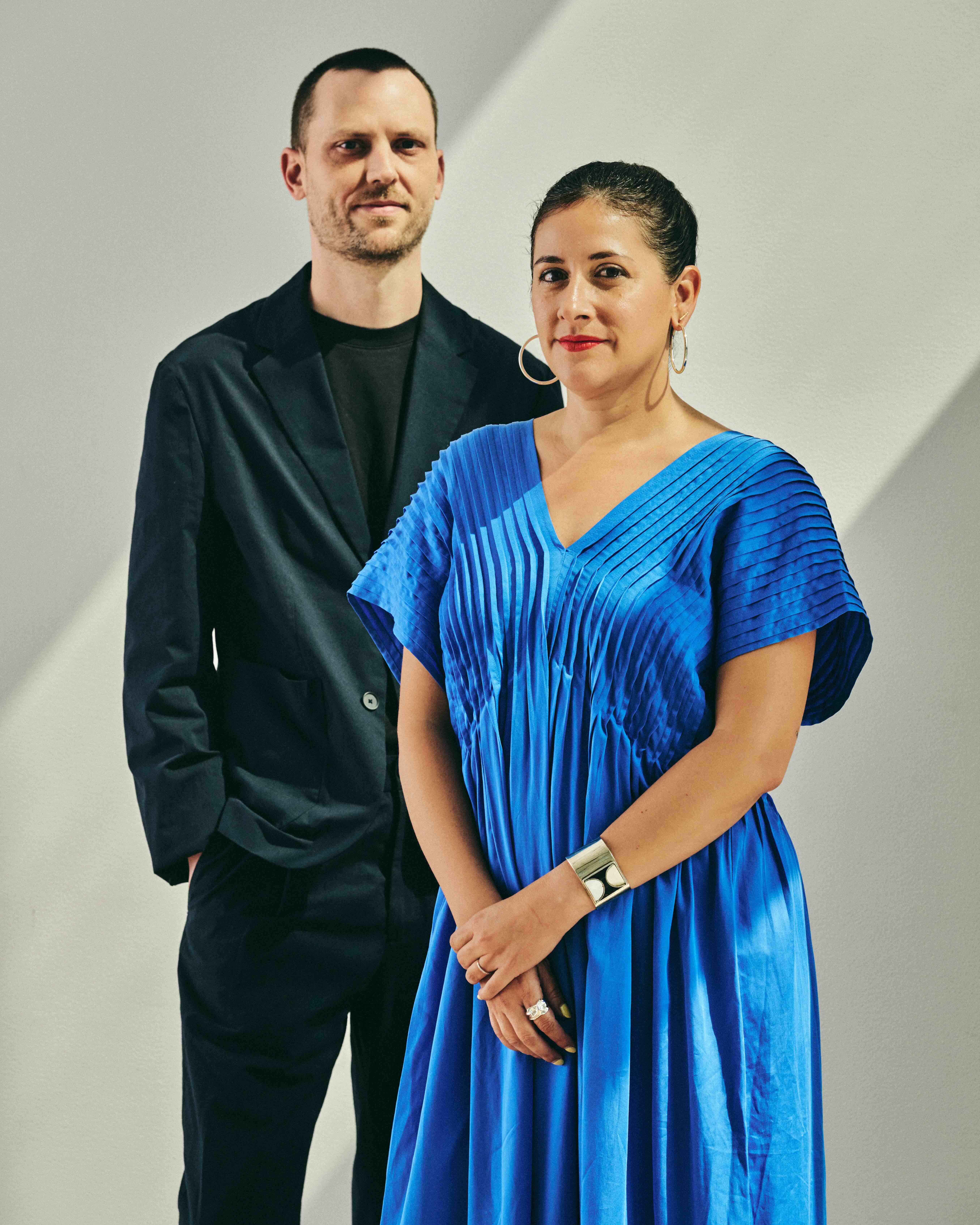
    Past biennial curators — the 2024 edition was curated by the Institute of Contemporary Art’s former associate curator, Meg Onli — have embarked on these travels separately, but for the country’s 250th year and the biennial’s 82nd, Whitney curators Marcela Guerrero and Drew Sawyer traveled together.

    Whitney Museum of American Art’s Biennial 2026 curators Drew Sawyer, Marcela GuerreroBryan Derballa

    “We wanted to just listen to artists and see where they were at, see what they were thinking about, how they were processing recent events,” said Guerrero. They traveled for a bit over a year, nationally and internationally, and visited more than 300 artists.

    “The idea of relationality and how do we relate in different ways” at political and interpersonal levels, is a theme that eventually emerged from their survey, Guerrero said.

    While in the past some curators have traveled as far as Hawaii, Guerrero and Sawyer’s short travel to Philadelphia in the winter of 2024 proved equally fruitful.

    “Philly was such a productive trip and very coherent in terms of what we were hearing from artists on gentrification, displacement, and the cost of living,” Guerrero said.

    Artists in Philadelphia, Sawyer noticed, “seem to be particularly preoccupied with ideas of infrastructure” and there exists a strong sense of connection among them. Several of the city’s artist are graduates of the MFA programs at the University of Pennsylvania and University of the Arts, taught by the same professors like Michelle Lopez (whose work is included in this year’s biennial) and Sharon Hayes (whose work was a part of the 2024 biennial).

    Maia Chao, “Being Moved,” 2026. Performance, Whitney Museum of American Art, New York, May 14–17, 2026. Commissioned by the Whitney Museum of American Art.Julieta Cervantes

    Performance artists Maia Chao and Jonathan González, both of whose works are part of the biennial, live in West Philadelphia and are friends and collaborators. Emilio Martínez Poppe attended Penn and studied with Lopez, and was particularly interested in the idea of infrastructure from the perspective of the labor of public sector employees to help build and maintain our social and civic architectures.

    “A kind of certain institutional critique, I would say, was common” among Philadelphia artists, said Sawyer.

    “One of my biggest takeaways is the real vibrancy of the artistic scene in Philadelphia,” he said.

    Here are the Philadelphia artists whose works appear in the Whitney Biennial.

    West Philadelphia-based artist Maia Chao’s performance pieces “Being Moved’ and “Scores for the Museum Visitor” are part of the 2026 Whitney Biennial.Amelia Golden

    Maia Chao

    “Scores for the Museum Visitor,” “Being Moved”

    Maia Chao’s performance art emerges from studying social behavior. Where some might see the mundane walk from home to work, she sees choreography, a rhythm, and an interaction of the body with its surroundings.

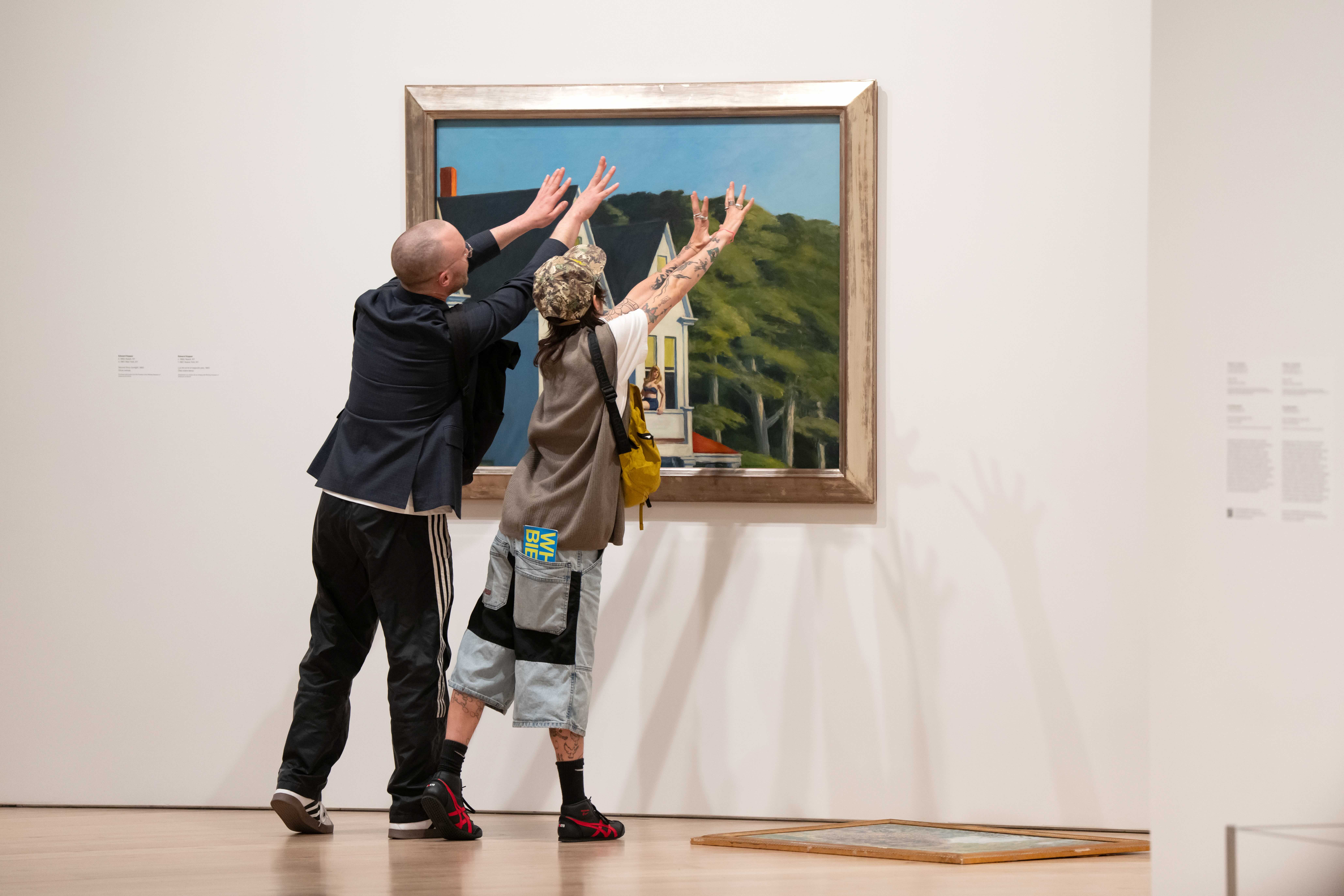
    Her biennial performance piece Being Moved, choreographed by Lena Engelstein, takes inspiration from how museum visitors interact with the art. “It reframes the focus from the art itself to the visitors’ experience,” she said. The title refers to both “this potential to be moved by an artwork,” but also “of the ways that the institution makes us move, makes us move our bodies, and makes us behave in the presence of extremely valuable assets.”

    That tension of the push and pull of a museum — where its mission might seem inviting and welcoming but once inside, rules around how to behave, what to touch abound — is at the center of Chao’s piece.

    Maia Chao, “Being Moved,” 2026. Performance, Whitney Museum of American Art, New York, May 14–17, 2026. Commissioned by the Whitney Museum of American Art.Julieta Cervantes

    When visiting the biennial beyond Chao’s performance schedule, visitors view Scores for the Museum Visitor as a set of prompts, an invitation to create “micro performances” of their own.

    Among the scores are: “Identify another museum visitor. From afar, copy their movements as closely as possible.” “While holding a museum brochure, clasp your hands behind your back. Drop the brochure.” “Find a bench. Take a seat. Imagine the artworks slowly falling to the floor.”

    “These are invitations to kind of transgress the rules, [for] engaging with the artwork, or interpreting and encountering an artwork,” the artist said.

    Maia Chao, “Being Moved,” 2026. Performance, Whitney Museum of American Art, New York, May 14–17, 2026. Commissioned by the Whitney Museum of American Art.Julieta Cervantes

    Chao first caught the curators’ attention with Agents of Deterioration (2024), made in collaboration with Ethan Philbrick, a performance piece commissioned by the Hirshhorn Museum and Sculpture Garden. Sawyer was drawn in by Chao’s “legacy of institutional critique through affective registers.”

    “There’s a real kind of commitment to the institution, even as Maia is critiquing it, which we felt was important in this moment where there’s, from many different directions, an eroding of faith in institutions. We were really interested in the way she both critiques and pushes institutions to do better,” he said.

    Artist and Penn professor Michelle Lopez whose “Pandemonium” is part of the 2026 Whitney BiennialKelsey Valencia, Denniston Hill Residency

    Michelle Lopez

    “Pandemonium”

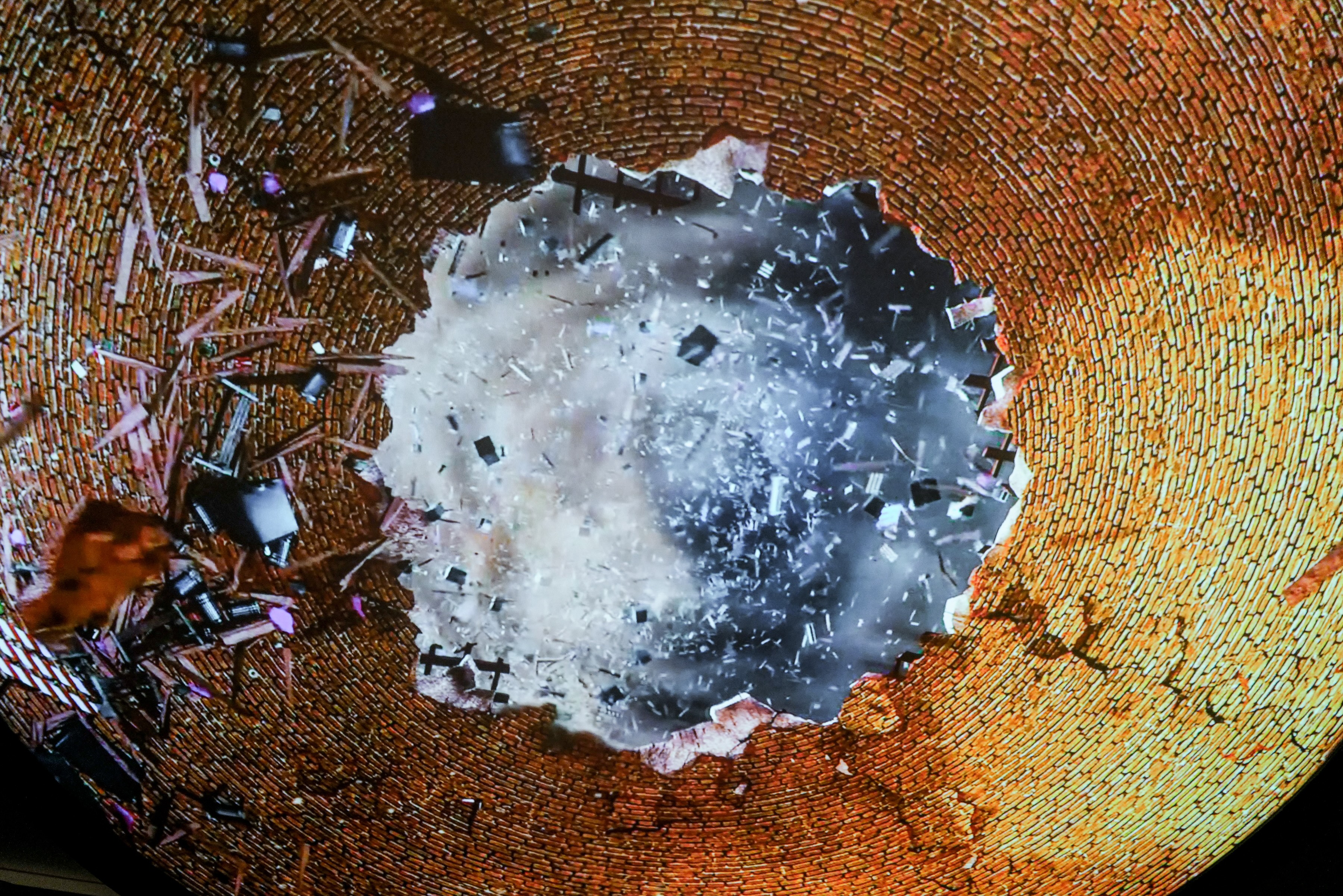
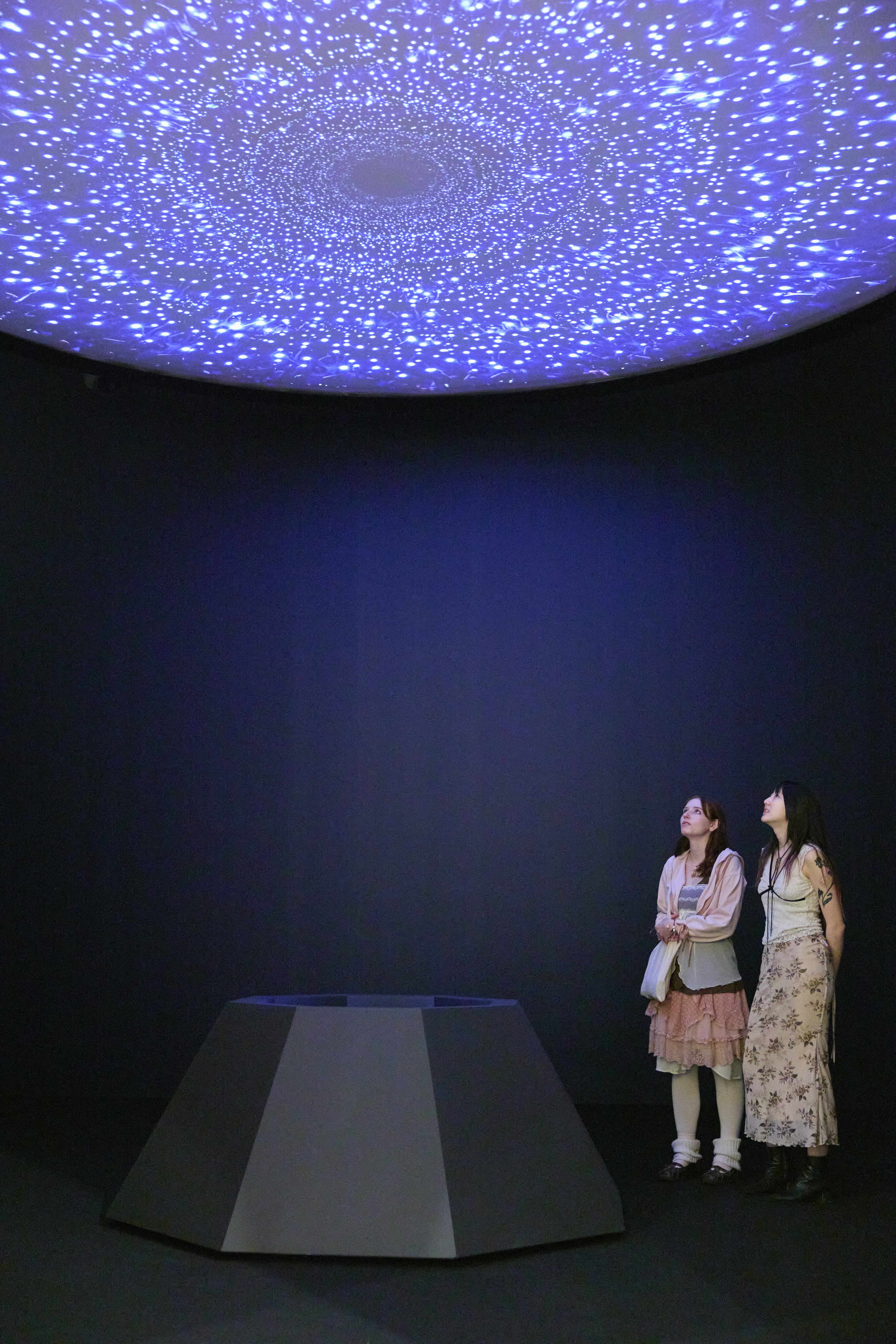
    Pandemonium is a fully Philadelphia piece of art. It was made in collaboration with the Moore College of Art and Design and the Franklin Institute, supported by the Pew Center for Arts & Heritage and the University of Pennsylvania, filmed at Northeast Philadelphia’s RAIR (Recycled Artist in Residency), premiered at the Fels Planetarium and the Galleries at Moore, and inspired by artist Michelle Lopez’s earlier work exhibited at the ICA.

    Installation view of Whitney Biennial 2026. Michelle Lopez, “Pandemonium,” 2025.Jason Lowrie/BFA.com

    “Philadelphia is just a really supportive environment for artists,” said Lopez, who is an associate professor of fine arts at Penn’s Stuart Weitzman School of Design, where she leads the sculpture program. “I could not have made that work in New York.”

    The video project, as Lopez says, came from a desire to “situate the viewer in the eye of a storm so that they could feel, on a somatic level, what it was like to have their environment really collapse around them.”

    Installation view of Whitney Biennial 2026. Michelle Lopez, “Pandemonium,” 2025.Gus Powell

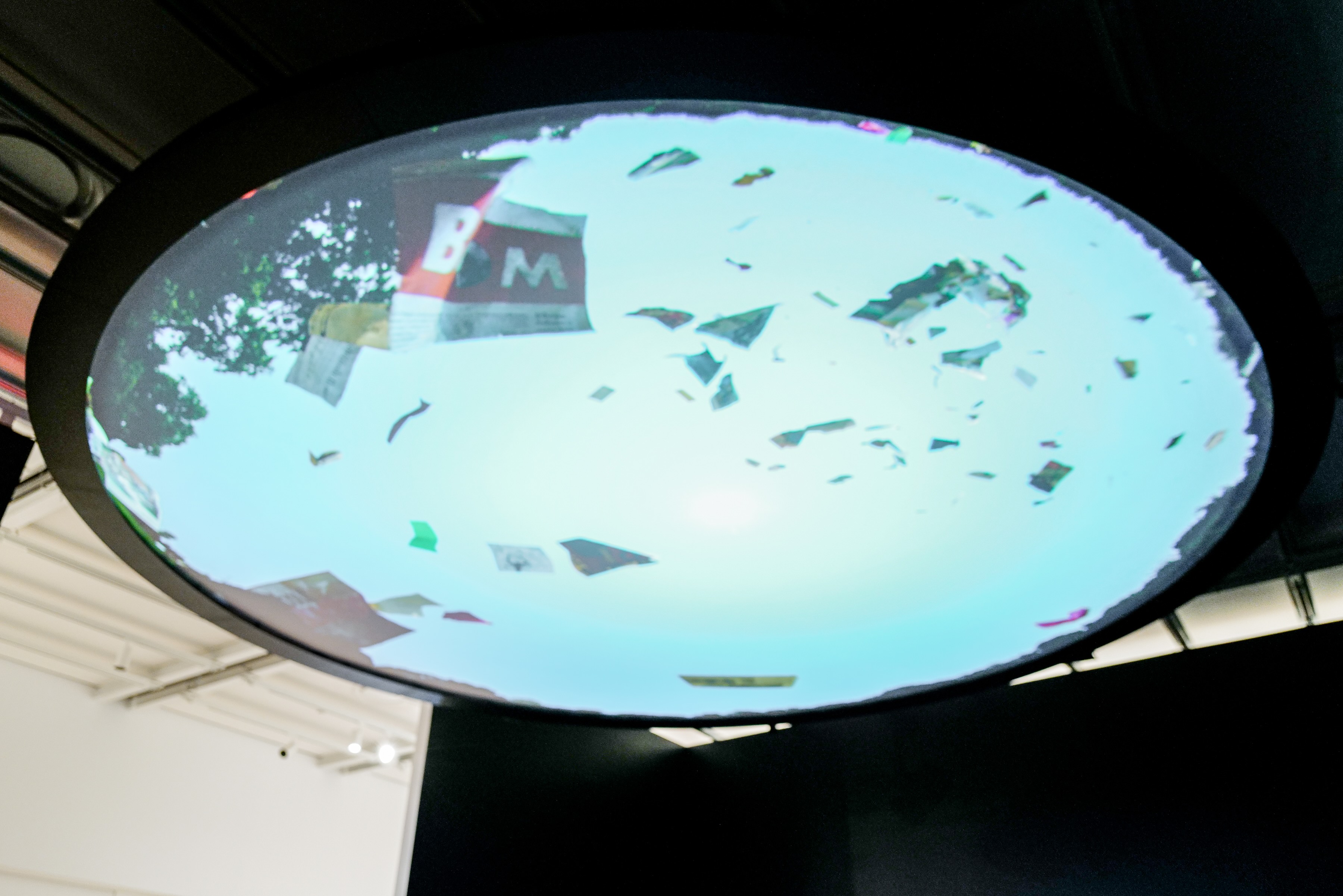
    At the Whitney Museum, Pandemonium plays on a domed screen on the ceiling of the gallery and demands that the viewer sit below it and look up. What they witness is things moving around with a violent force against the sky — debris, newspapers, packaging, clothing (including Lopez’s own and her son’s old underwear), and other markers of extreme human consumption.

    In order to make this mayhem happen, Lopez, who is trained in sculpture, built a tornado machine using a robotic contraption, industrial fans, and leaf blowers. Together they created a simulation of a tornado at RAIR which was then filmed and eventually screened in the Fels Planetarium.

    “A lot of the work imagistically, came from seeing images of tornadoes and hurricanes wiping out towns. I was really interested in the way nature could collapse culture,” said Lopez, who lives in South Philadelphia.

    Installation view of Whitney Biennial 2026 (Whitney Museum of American Art, March 8–August 2026). Michelle Lopez, “Pandemonium,” 2025.Jason Lowrie/BFA.com

    While a Whitney gallery is nowhere close to the grandeur and wonder of the Fels Planetarium, the 360-format video manages to suck in a viewer who feels almost weightless as the feeling of being thrown around by the forces of nature is simulated.

    When the curators visited Philadelphia for studio visits, “top on our list was Michelle Lopez,” said Sawyer. “We were aware that she had been working on this major moving image project that departed from what she’s most well known for, which is sculpture. So we were really excited to meet with her, especially because her work had not been a part of the biennial before.”

    Artist Emilio Martínez Poppe, whose work “Civic Views” was on display in the City Hall courtyard last year. This year, it’s a part of the Whitney Biennial.Neal Santos

    Emilio Martínez Poppe

    “Civic Views”

    Like Lopez’s Pandemonium, artist Emilio Martínez Poppe’s Civic Views is an artwork that is only possible because the city of Philadelphia exists. Several Philadelphians have already seen Martínez Poppe’s work when it was on view last year in the City Hall courtyard.

    Martínez Poppe was then studying city planning and working toward an MFA in visual art from Penn when he was mulling over the future of city planning graduate students who’d go on to join the public service workforce.

    It was in conversation with professors that he found out that the oldest surviving daguerreotype in the country, which is stored at the Historical Society of Pennsylvania, was taken by Joseph Saxon, who was a public sector employee working for the U.S. Mint.

    “That was shot out of the U.S. Mint, where the Widener Building is today. He’s following Daguerre’s technological recipe, he uses it to photograph what he sees through the window. Unlike Daguerre, who was a theater entrepreneur, Saxton was a public sector employee who was doing something he was not hired to do,” said Martínez Poppe. “He was hired to work on the newly nationalized currency and he was tinkering with this invention in his office, and that view is one of the only real entry points that we have into his position at his job there, which is interesting.”

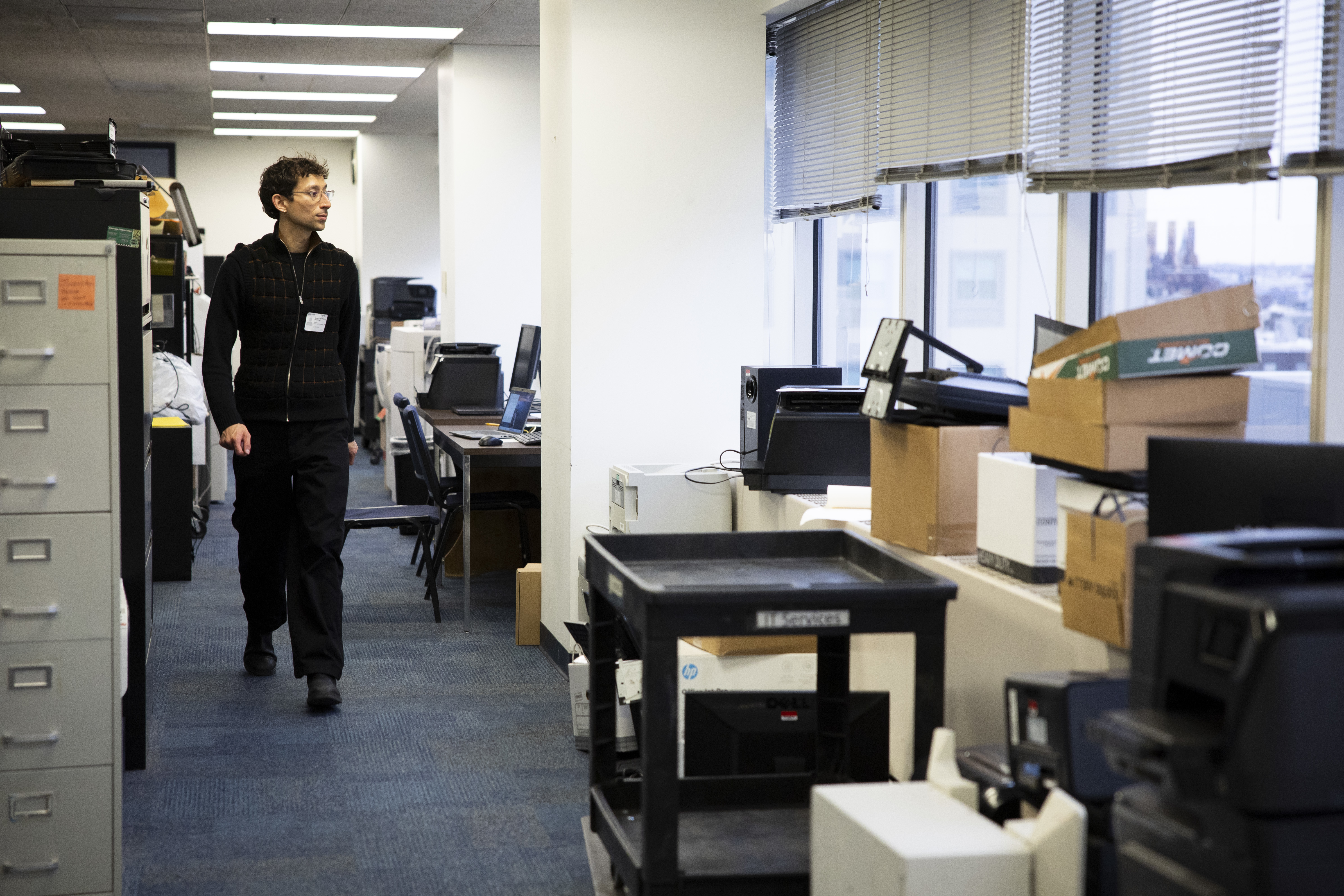
    Emilio Martínez Poppe looks out the windows at the Department of Behavioral Health and Intellectual disAbility Services office on Tuesday, Feb. 11, 2025 in Philadelphia. Emilio Martínez Poppe is working on a project curated by Jameson Paige that documents the views from municipal service buildings. The project also includes interviews with city workers.Monica Herndon / Staff Photographer

    Inspired, Martínez Poppe visited municipal buildings all across Philadelphia and photographed views from the inside out so he could document what city workers see from their windows. Alongside, he conducted “dozens of long form, anonymized interviews” with city workers from more than 20 agencies.

    “I would ask them, what was your perspective of city government before working here, who taught you about the value of public sector work? Often, so many people would tell me it was their mothers.”

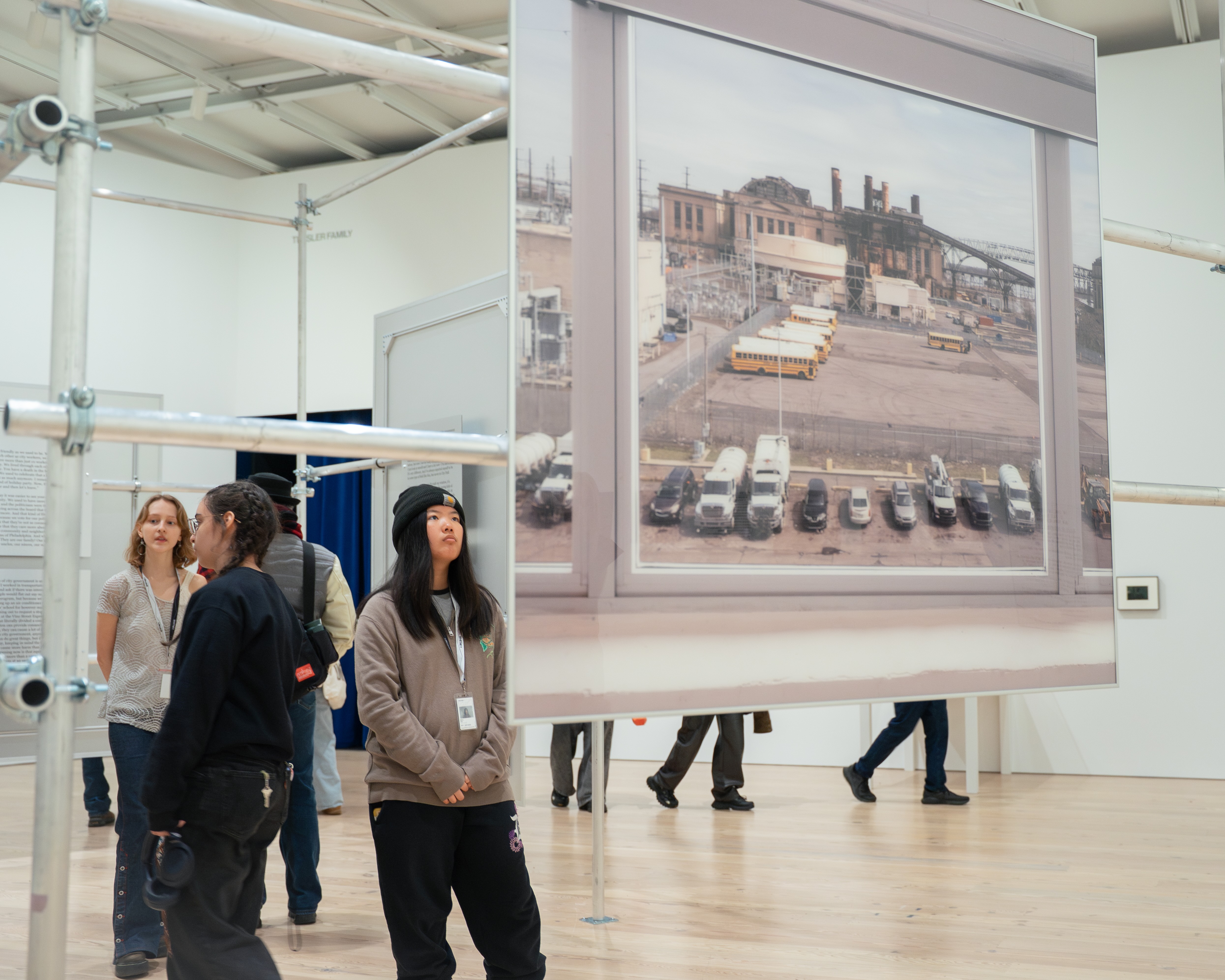
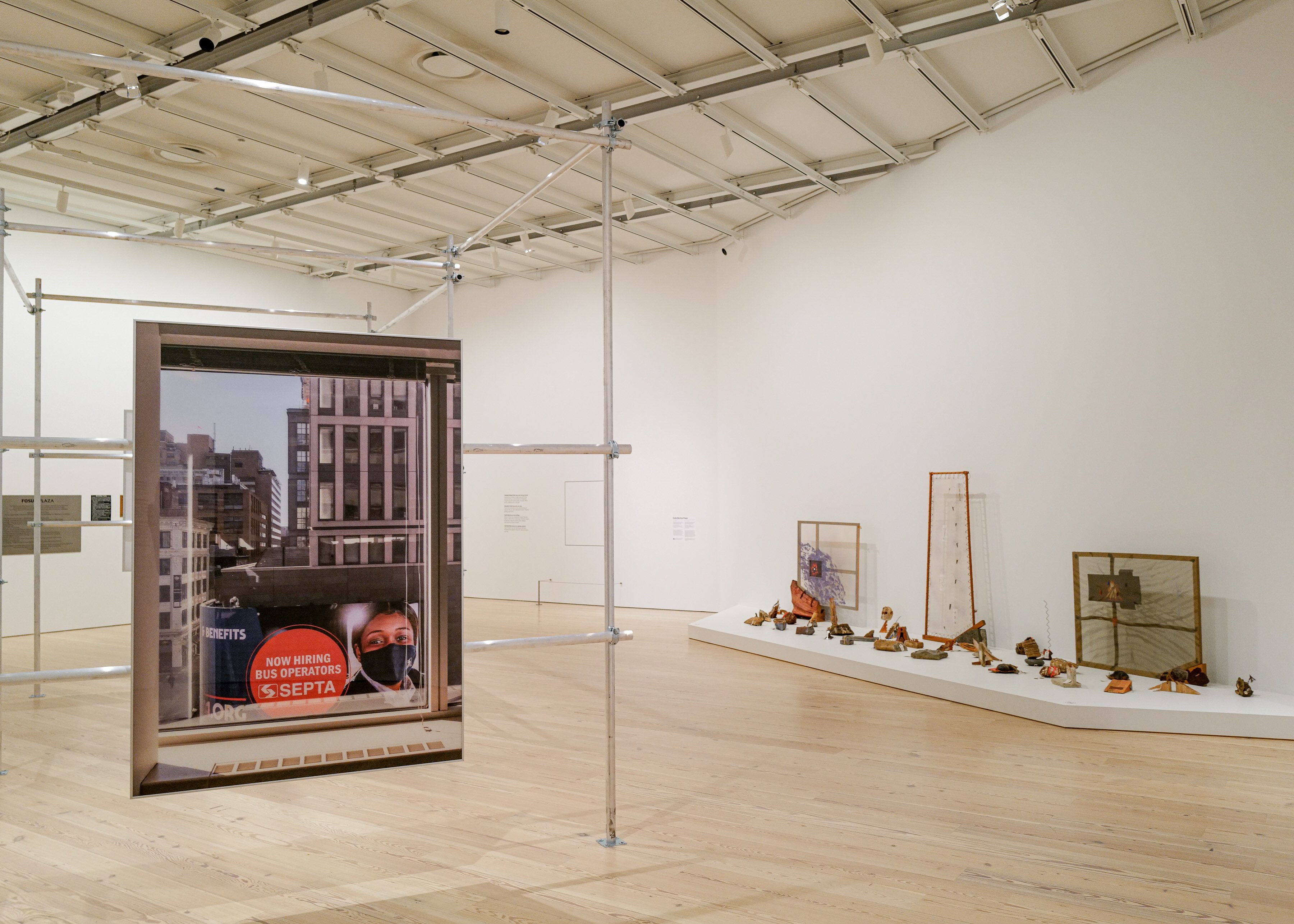
    Civic Views is a result of those conversations — a coming together of anonymized interview snippets and photographs displayed in a scaffolding-like structure in the middle of a Whitney gallery. “It’s the scaffolding that dissolves the authoritative center, even in the Whitney Biennial,” said Martínez Poppe.

    Since his exhibition in Philadelphia, there has been a municipal workers strike and threats of a SEPTA strike, and President Donald Trump’s DOGE cuts have resulted in thousands of public sector employees being laid off in the city.

    An installation view of Emilio Martínez Poppe’s “Civic Views.”Summer Surgent-Gough

    “The public sector is vulnerable to radical change, for better or worse. With my work, I want to say that it’s time to seize the means, seize our technology to create the world that belongs to us,” the artist, who now works for the New York City Mayor’s Office as a civic arts programs coordinator, said.

    “We need to assume that responsibility. That’s why the project centers the voices of workers and how their positions shape their views. But also how their views shape the structures that we are living in and living through.”

    On the curators’ Philadelphia visit, Guerrero recalled seeing Civic Views and people of the city interacting with it. “It was very touching,” she said. Her favorite part about the work is that it uses “the tropes of the camera, of the interview, of bureaucracy, but then upends it completely.”

    Installation view of Whitney Biennial 2026 (Whitney Museum of American Art, March 8–August 2026). “Civic Views” (2024) by Emilio Martínez Poppe, “Philadelphia Housing Authority, South,” 2024; Emilio Martínez Poppe, “Philadelphia Department of Sanitation, North,” 2024; Emilio Martínez Poppe along with works of Kainoa GruspeJason Lowrie/BFA.com

    “You see how important the job of a public servant is,” she said, “and how you know they’re in kind of a double bind because they’re the face of the government and also they receive the same services they provide … their kids are in the public school system, they depend on the Department of Sanitation.”

    She finds this complexity “beautifully translated” in Civic Views. “You can really put yourself in the shoes of the person who’s speaking and feel the care that really goes into this type of work that should not be overlooked.”

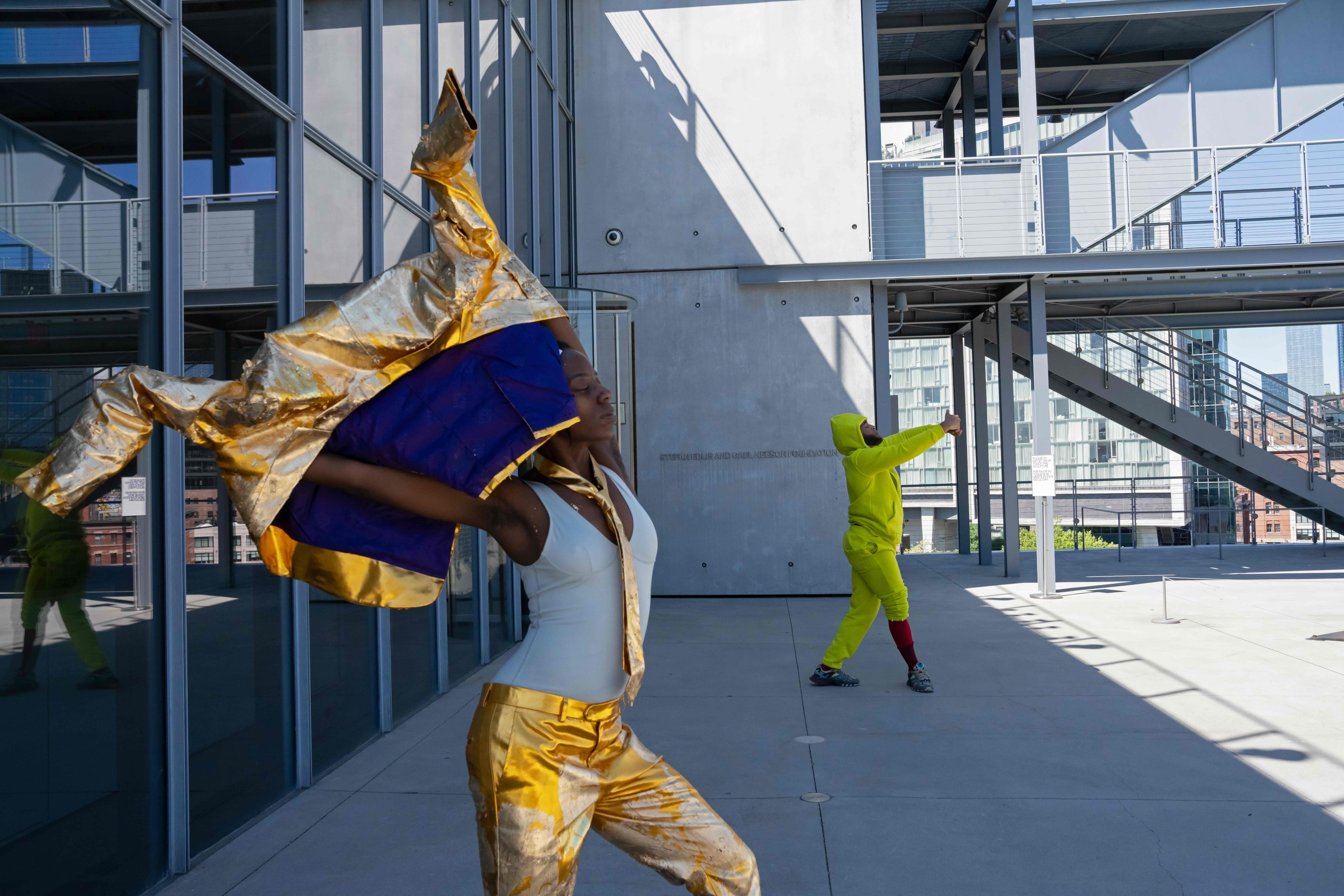
    Artist Jonathan González whose performance piece ‘magic hour — golden time’ is part of the 2026 Whitney BienialRudy Gerson

    Jonathan González

    “magic hour — golden time”

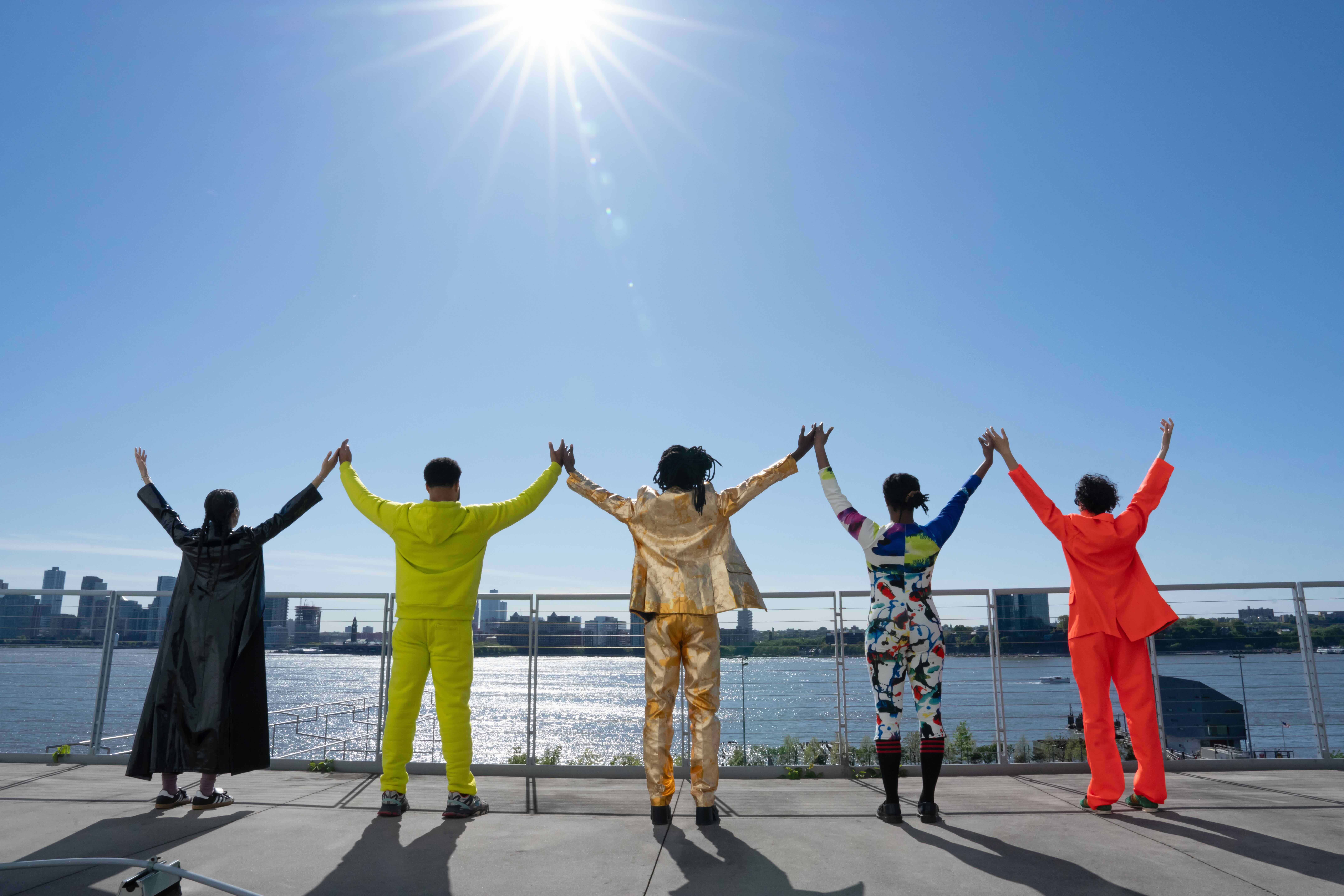
    Like Chao, Jonathan González’s work also sees a two-pronged approach with performance and photography. Three Super 8 photographs, A, B, and C, mark the locations, across the museum, of the three-hour long performance piece presented by González and their co-artists.

    “Each photograph shares with the performers how to perform the work,” said González, who also lives in West Philadelphia. Magic hour-golden time, they said, “is a double leaning. Magic hour comes from the usage in broadcast television when you have the highest viewership. And golden hour is that moment of the sunset. And so the piece is merging this experience of looking out and also being seen over three hours.”

    Jonathan González, “magic hour–golden time,” 2026. Rehearsal performance, Whitney Museum of American Art, New York, May 12, 2026. Commissioned by the Whitney Museum of American Art.Julieta Cervantes

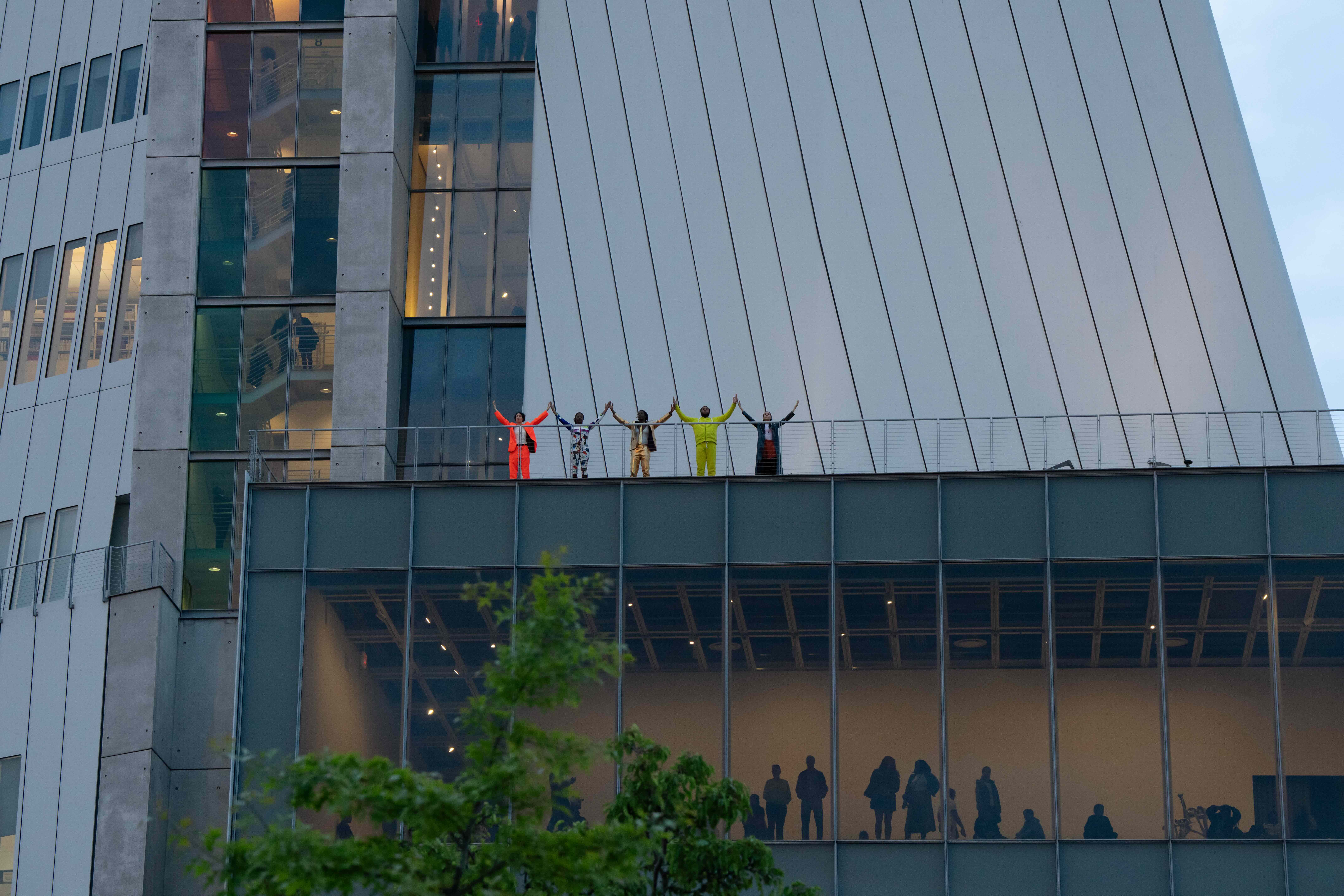
    From three terraces around the museum, the performers follow the sun’s movement for three hours. In the first hour, the performers “embody the architecture that surrounds the museum” and makes up the city’s skyline. The second hour, they said, “is a procedure of call and response … the dancers dance with every dance you’ve ever danced, and take information from one another as dancers, as well as from the pedestrians.”

    The final hour, González said, is performed on an inaccessible terrace. “It can only be viewed from across the street, you cannot see it from the museum. It’s called the ‘Endless Bow,’ and it’s 60 minutes of bowing to the sun and bowing to the world and bowing to the performance.”

    Philadelphia, the former University of the Arts professor said, gives them “the capacity to slow down to hear these voices, and have dreams, visions come to you.” The city allows them the time to spend time in the studio with friends like Chao and inspires them to “collaborating not toward a particular product or aim, but much of the time experimentation.”

    Jonathan González, “magic hour–golden time,” 2026. Performance, Whitney Museum of American Art, New York, May 12, 2026. Commissioned by the Whitney Museum of American Art.Julieta Cervantes

    “Just the fertile nature of Philly as a historical Black geography has been really important for me to really situate the questions of time and what happens to a city at the late stage of industrialization, and to really think critically about what a group can do, what mutuality is,” they said.

    “Certain artists just stay in your mind, and you want to come back and see what they are working on,” said Guerrero recalling her first tryst with González’s work. “The work felt so mature. There’s this notion of how, through improvisation, you can be attuned to your surroundings. In the case of their performance, they make these other effective strategies [for attunement] that don’t always rely on the senses, and that is something that is very present in the show.”


    The Whitney Biennial 2026 is on view through Aug. 23 and on partial view, which will include all of the Philadelphia artists’ static works, through Oct. 12. The Whitney Museum of American Art, 99 Gansevoort St., New York. whitney.org

  • New openings fuel a little treat boom in Graduate Hospital

    New openings fuel a little treat boom in Graduate Hospital

    For years, Graduate Hospital — the Center City neighborhood roughly bounded by South Street and Washington Avenue, and Broad Street and the Schuylkill — has been sorely lacking in places to stop in for a snack, pastry, or ice cream cone.

    It didn’t seem to matter: Rittenhouse was so close that residents’ desires for little treats were generally met by walking a couple blocks north, where “little treats,” the culture of which has been surging worldwide, abound. On the 200 block of 20th Street alone, between Walnut and Spruce, you’ll find 1-900-Ice-Cream, which opened in 2022 and sees relentless lines down the block; All Aboard Candy, which opened last year and is one of two places you can buy adorable gummy candies; and Biederman’s, a seafood-centric “appetizing” shop that opened earlier this year.

    Now, Grad Hospital is seeing its own treat boom. In recent months, the neighborhood has seen an influx of treat sellers that shows no sign of stopping.

    The openings have been concentrated on South Street between 15th and 17th Streets, but other parts of the neighborhood are changing as well.

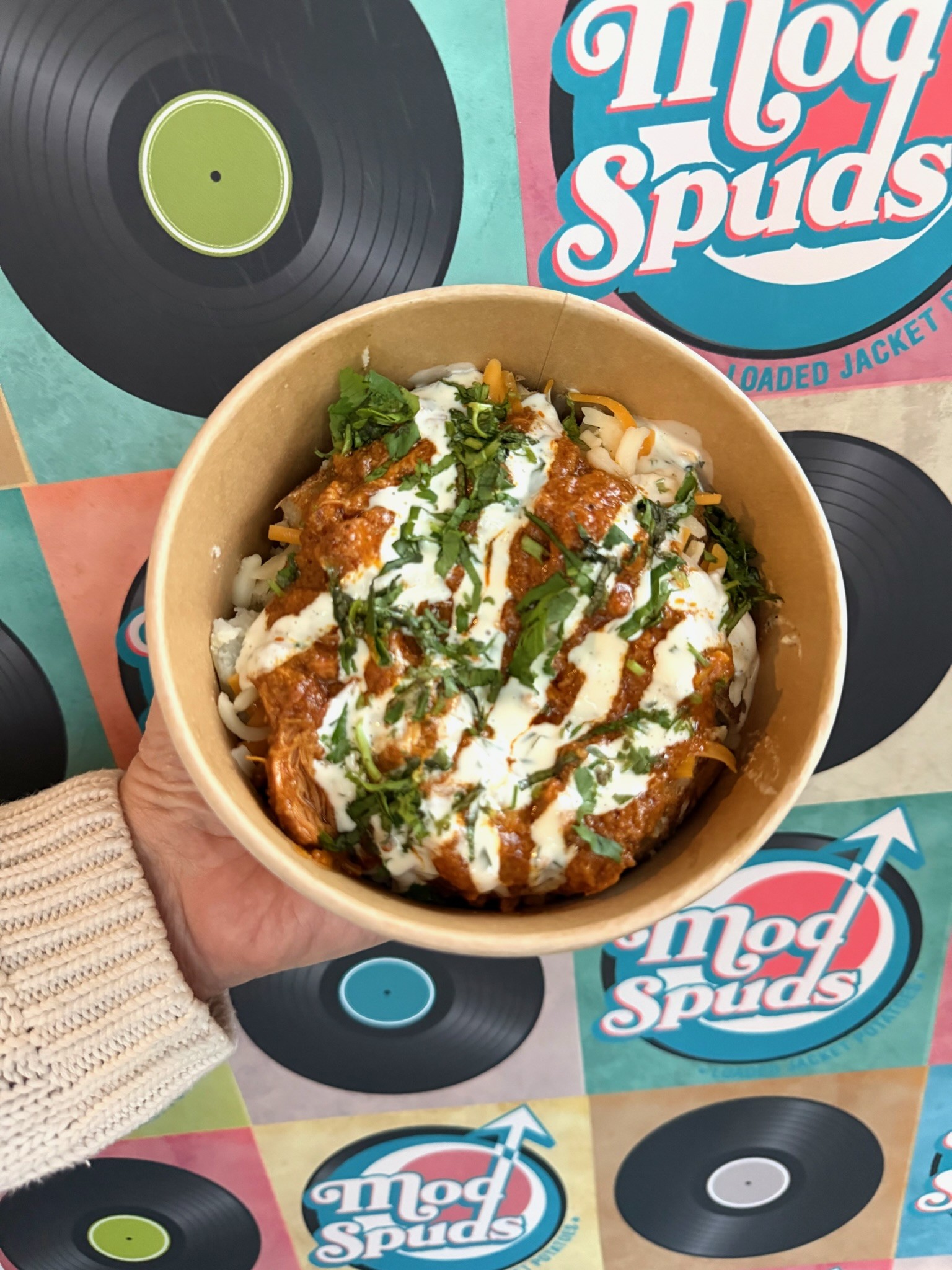
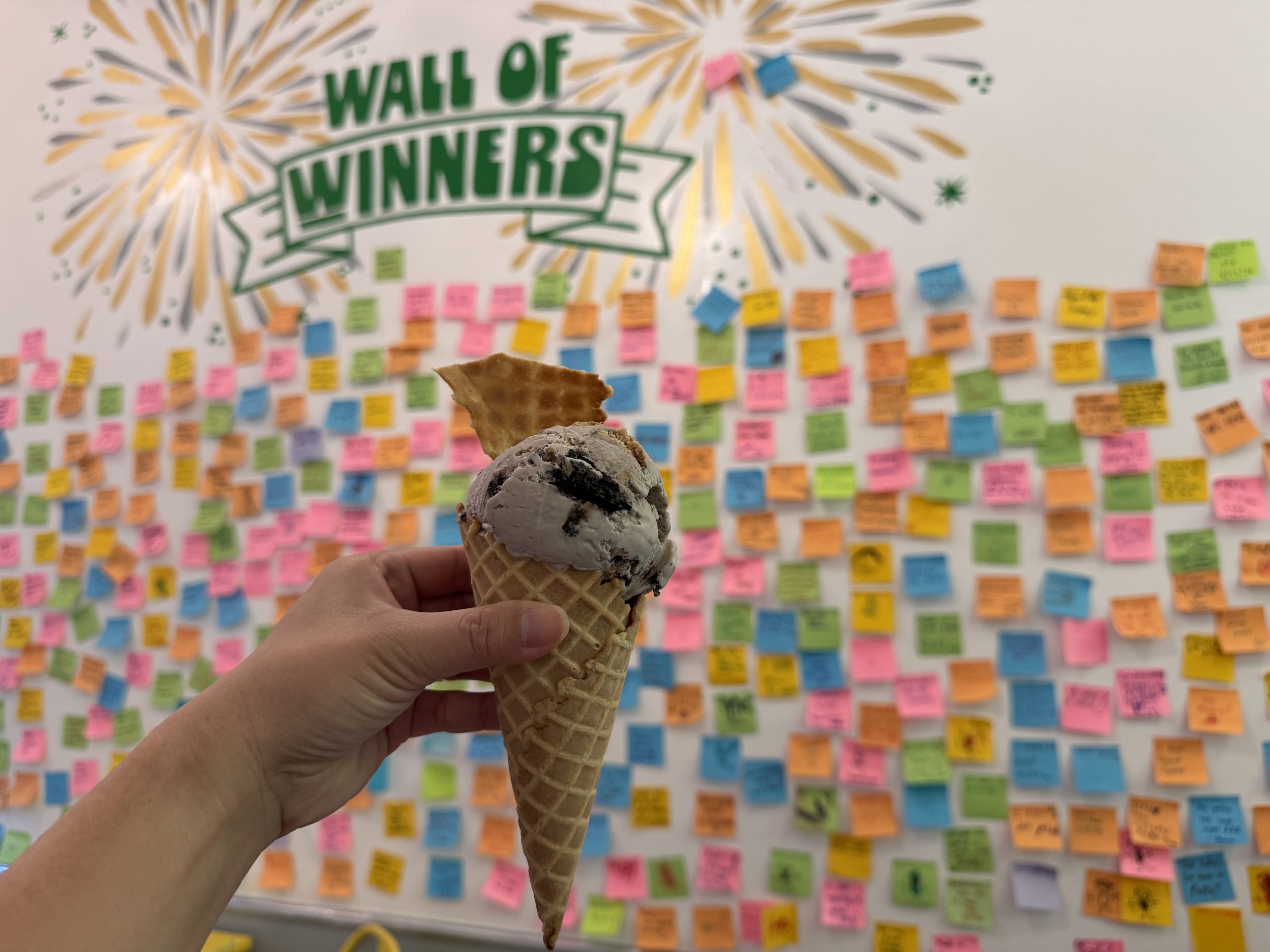
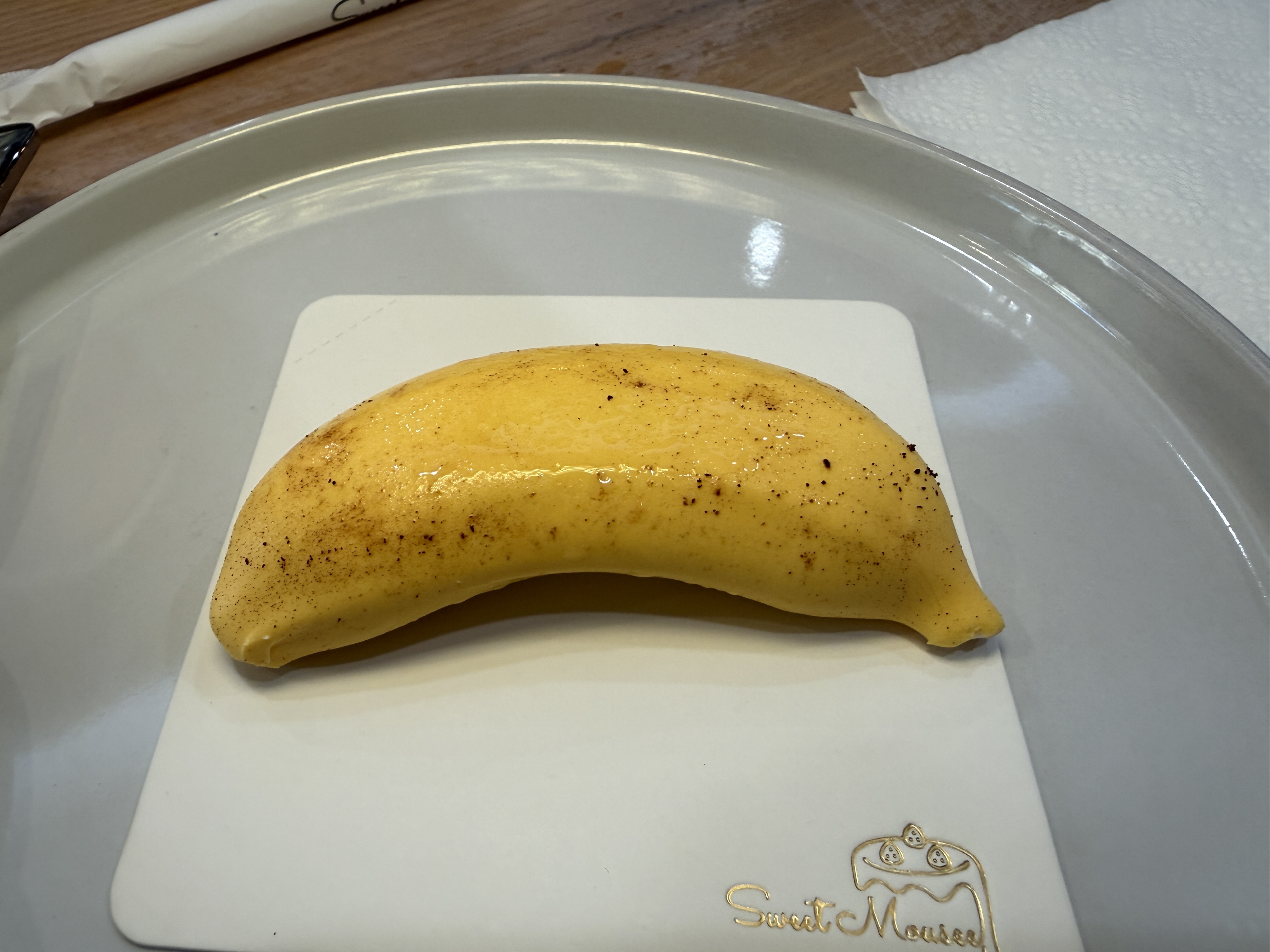
    Winners Ice Cream, Ange Branca’s jacket potato and creamsicle-driven operation Mod Spuds, Sandpiper Cafe (where you can get trendy matcha lattes), and Sweet Mousse (which sells even fancier beverages and mousse cakes) all opened within two blocks of one another on South Street between May and July this year. They are all Asian-owned — a notable aspect of little treat culture, as Asian flavors like matcha and ube have been extremely popular at little treat retailers. (Demand for both ingredients has been so high, both have seen global supply chain shortages.)

    The market for little treats, also known as treatonomics, is propelled by Gen Z but not at all restricted to that generation, as spending on “pick-me-ups” generally increases in recessions and in uncertain economic conditions, economists have found.

    Cookies and cream dream in a waffle cone at Winners Ice Cream in Graduate Hospital.Kiki Aranita

    The Grad Hospital boom is powered by nimble operators with no need for the ventilation systems required at most full-service restaurants. Thus, they are able to launch after footing comparatively light construction costs.

    “We’re two months in and it’s been awesome,” said Anh Nguyen, the owner of Winners. “Many are saying Grad Hospital needed an ice cream shop, so I’m happy we opened here.”

    Nguyen’s clientele consists mostly of neighborhood residents and families. He hopes to attract more customers from outside the area. “My aim is to win the block, then win the city. I love being the neighborhood ice cream parlor — somewhere for families to go celebrate and make memories.”

    Though Nguyen currently lives in Roxborough, he hopes to move. “I’ve fallen in love with Grad Hospital since being here and everyone I’ve met has been so welcoming and encouraging.”

    The dark chocolate banana mousse cake from Sweet Mousse in Graduate Hospital.Kiki Aranita / Staff /

    Little treats are massively impacting a neighborhood that, until this year, was stalled in gentrification. Once primarily home to working-class Black residents, Grad Hospital fell into disrepair when the manufacturing industry declined in Philadelphia. The neighborhood gentrified rapidly between the late 1990s and early 2010s due to city tax abatements and proximity to University City and Center City. According to a study by Pew Charitable Trusts, Graduate Hospital experienced the most dramatic changes in racial composition in Philadelphia in the early aughts: “[Graduate Hospital’s] total Black population fell from 7,793 in 2000 to 3,450 in 2014. During the same period, the number of white residents more than tripled in the neighborhood.”

    The wave of redevelopment, new construction, and gentrification brought comparatively few small businesses and restaurants. Unlike South Philly and Fishtown, Grad Hospital has no established restaurant corridor.

    A Malaysian spud from Mod Spuds.Courtesy of Mod Spuds

    “Mod Spuds [on the 1400 block of South Street] needed a place that is a fine balance between good traffic, neighborhood-y, and affordable,” said Branca, who said that the location was perfect despite (or even because of) being a “less desirable block.” Its limited kitchen space, which does not allow for an exhaust hood, kept her rent down. It was only after Mod Spuds opened that Branca realized she was right on Grad Hospital residents’ commute home from jobs in Center City.

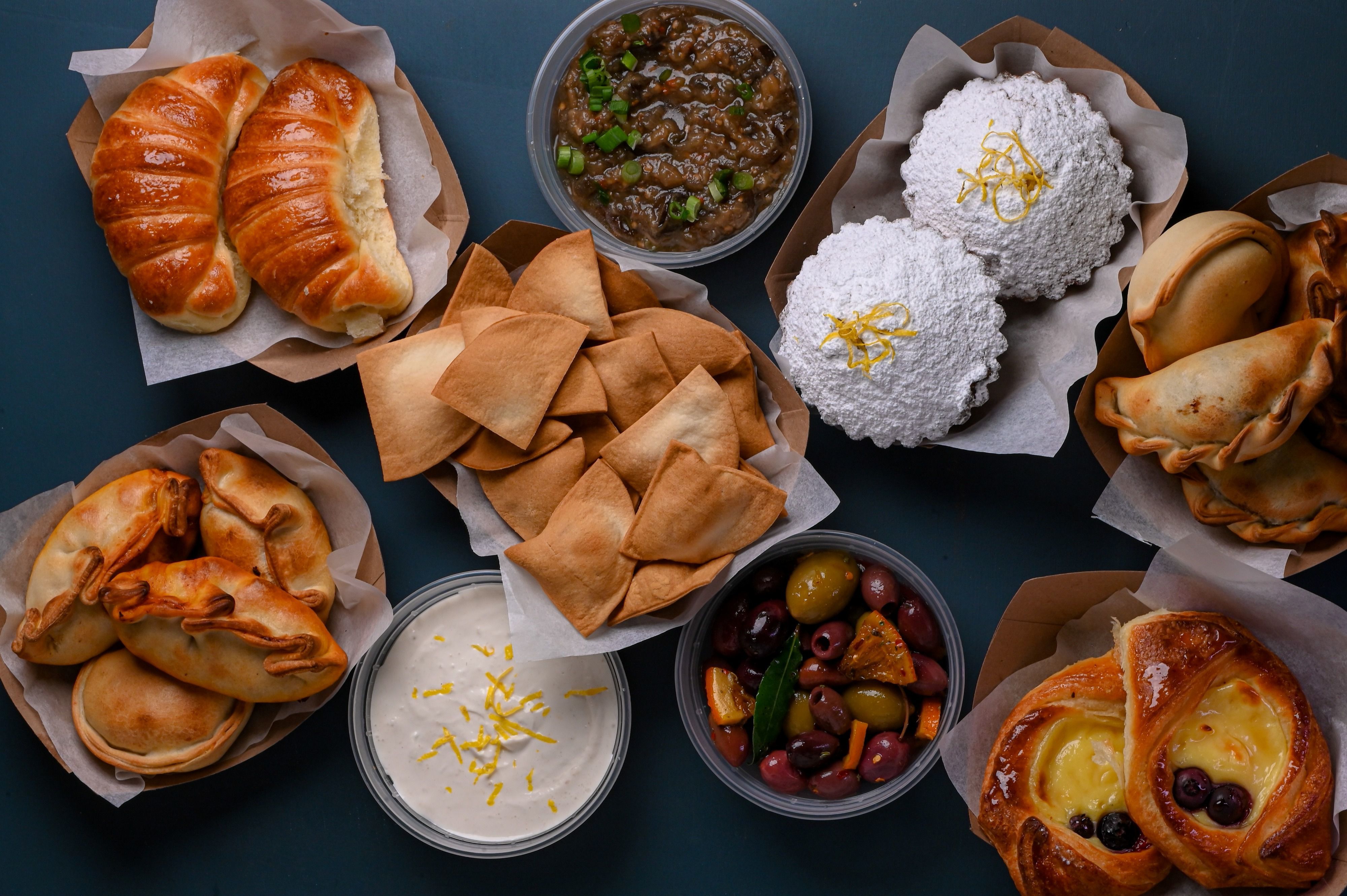
    The neighborhood has also beckoned “empanada queen” Jezabel Careaga, who had left as a business owner, but not as a resident, in 2018. Technically, Careaga’s original Argentine bakery, Jezabel’s, was in Fitler Square, but now she is reopening it at 617 S. 24th St., right on the cusp of Grad Hospital. Careaga’s empanadas and alfajores helped define Philly’s little treat scene long before the culture acquired its tagline.

    “Graduate Hospital has changed so much since I first came to this neighborhood, but what is really special to me is seeing the generations grow up here,” said Careaga, who has lived in the neighborhood since 2010. “It feels like I’m creating a little piece of the memory I had with my grandmother, right here in my own neighborhood.”

    Assorted dishes from Jezabel Careaga, including empanadas, medialunas, escabeche, ricotta cake, facturas, olive oil crackers and preserved lemon labneh.Lucas Careaga / Innprodev Agency

    The same children who would stop at her bakery after school are now grown up — some have even asked her for jobs. “And now I’m seeing them with children of their own, stopping by our bake sales with their little ones,” said Careaga. “It makes me so happy to think that the traditions we started years ago can continue with another generation.”

  • Northern Liberties’ new steakhouse is solid, but in need of a soul

    Northern Liberties’ new steakhouse is solid, but in need of a soul

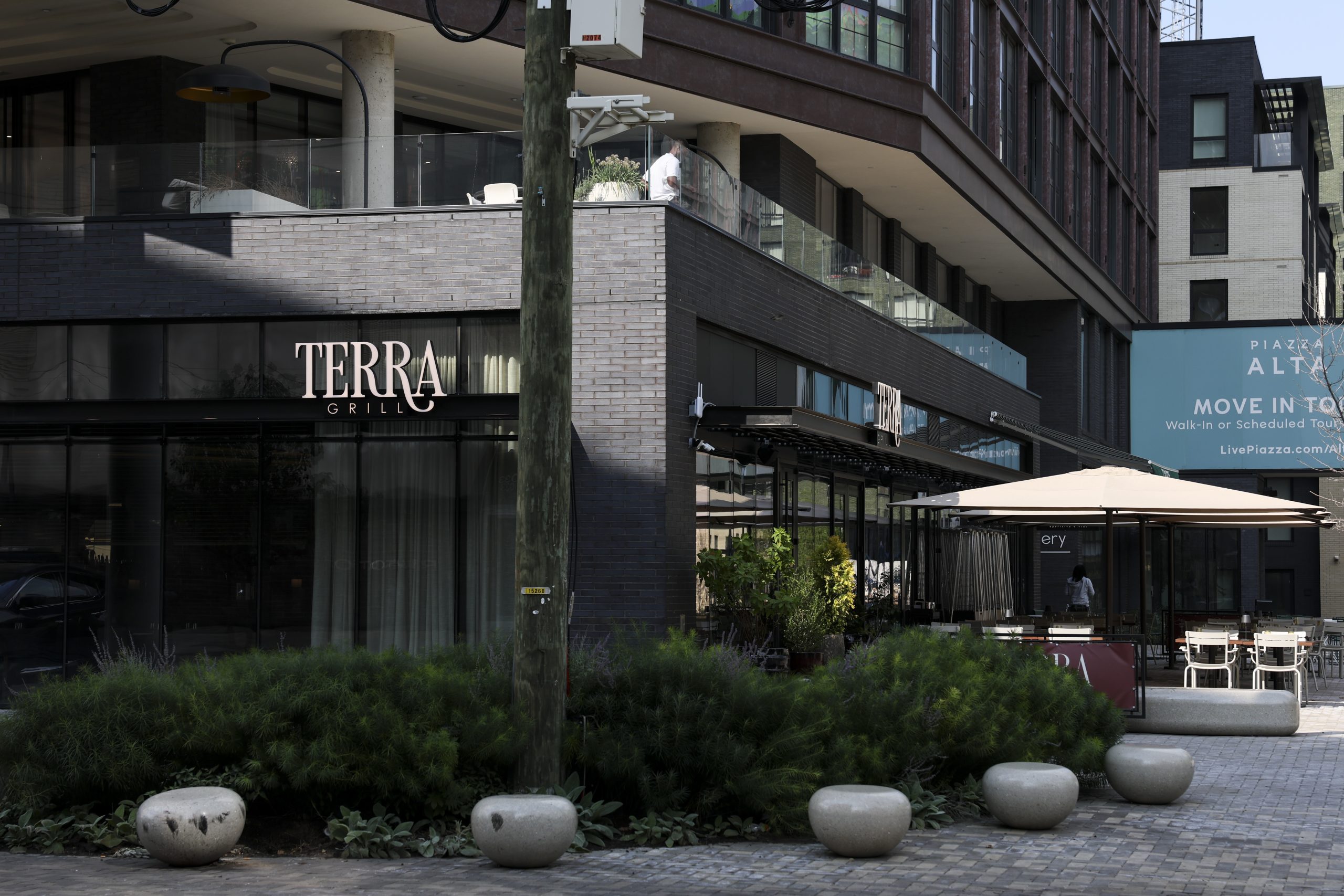
    My Uber driver could be forgiven for becoming a tad disoriented as we gingerly approached Terra Grill. After all, this newly cobbled stretch of Germantown Avenue in Northern Liberties has not appeared on a Philadelphia map since the 19th century, when the massive Schmidt’s Brewery rose here in 1860 on 14-plus acres east of North Second Street.

    The legendary brewery is long gone, closed in 1987, demolished in 2000, and replaced in 2007 by developer Bart Blatstein’s original Piazza project, which supercharged gentrification of this once-industrial neighborhood. The mixed-use development quickly sputtered after an ownership change in 2013, just as nearby Fishtown and Kensington began to thrive.

    Can Terra Grill help revive the Piazza dream? I’m not convinced a steakhouse alone will do the trick, even if it’s something different for Northern Liberties. (Remember the short-lived “vibe dining” of meat-forward SIN?)

    But the development’s current owners, Post Brothers, clearly hope this modern American grill will help restore at least some of the neighborhood’s shine. It’s a $6 million anchor for the Piazza Alta, a new 1,100-unit high-rise complex targeted to families, not just the “frat boys in backwards trucker hats” that Post CEO Michael Pestronk said occupied the Piazza during its decline under their predecessor, Kushner Cos., whose tenure saw falling rents and shuttered retail storefronts.

    The exterior of Terra Grill on July 9 in Philadelphia.Monica Herndon / Staff Photographer

    The fact that there are people blithely wandering across our car’s path as we approach Terra Grill’s landscaped facade is both confusing and deliberate. Post Brothers has resisted adding road striping to the avenue (a technically private stretch now open to the public) to “prevent it from becoming a speedway.” The unmarked stones are meant to foster a street-facing, Euro-style pedestrian plaza.

    Recruiting a nationally known chef for this project in Laurent Tourondel is also part of the strategy to give the neighborhood an upscale, Center City-esque aura — signaling that this once-edgy neighborhood has a new polish on top of its existing gastropubs (Standard Tap, North Third), cutting-edge vegan cooking (Pietramala), brunch spots (Honey’s Sit ‘N Eat, Cafe La Maude) and standout BYOBs (Pera, Apricot Stone). With an apartment boom bringing thousands of new residents and median incomes skyrocketing over the last decade, the affluence and density is suddenly there to potentially support something fancy like Terra Grill, whose entrees hover in the mid-$30s before you even touch the $50-plus prime steaks.

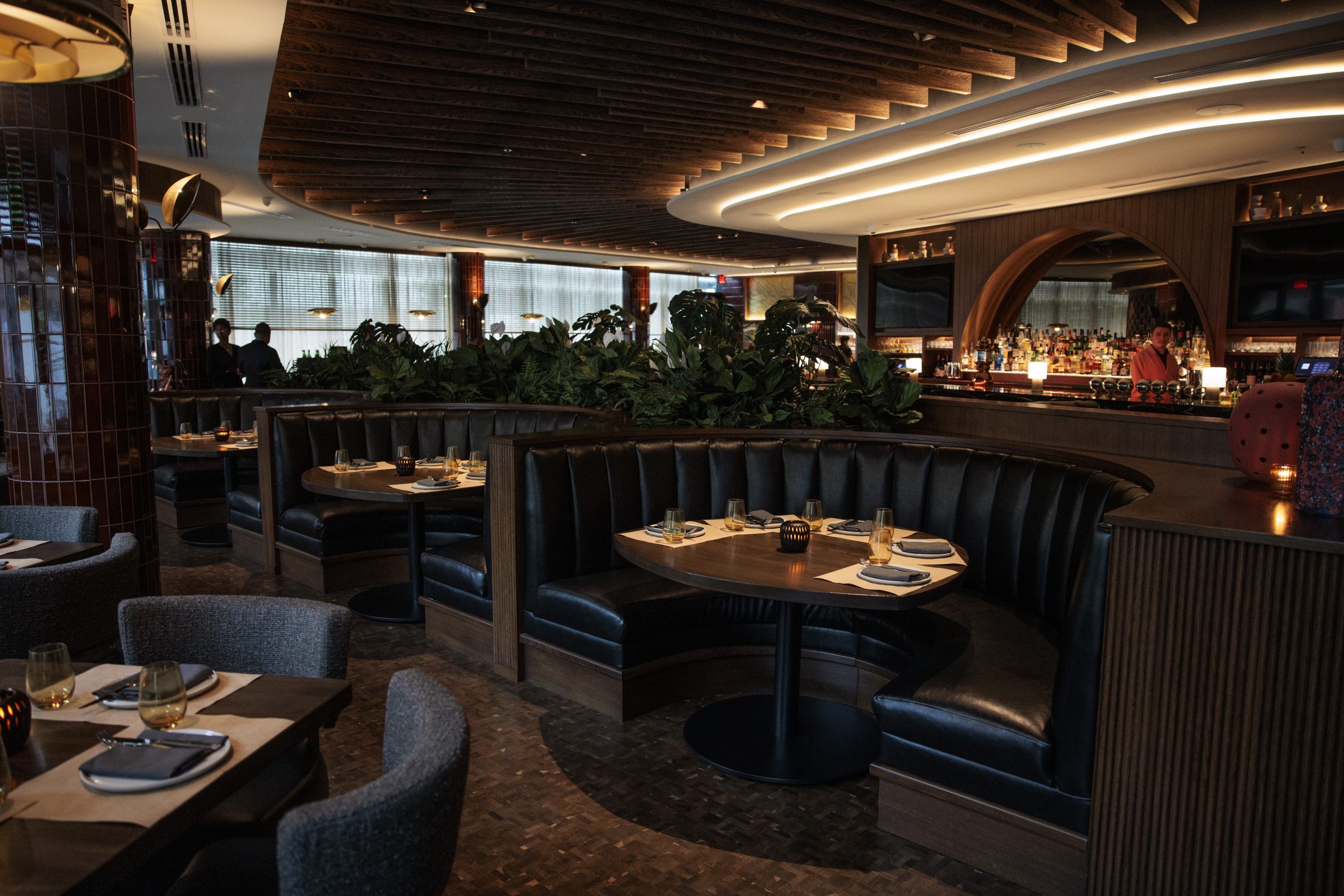
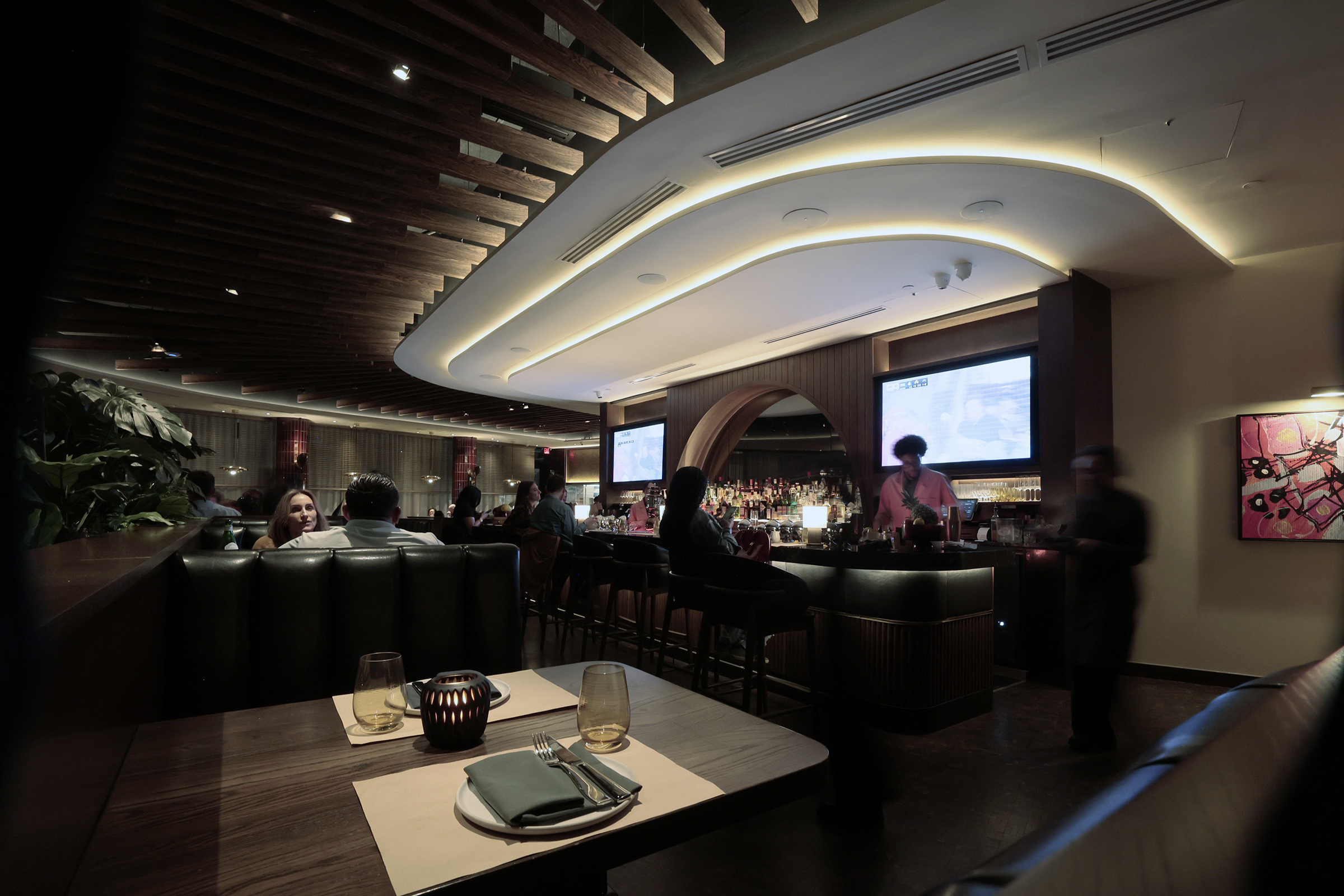
    The interior of Terra Grill on July 9 in Philadelphia.Monica Herndon / Staff Photographer

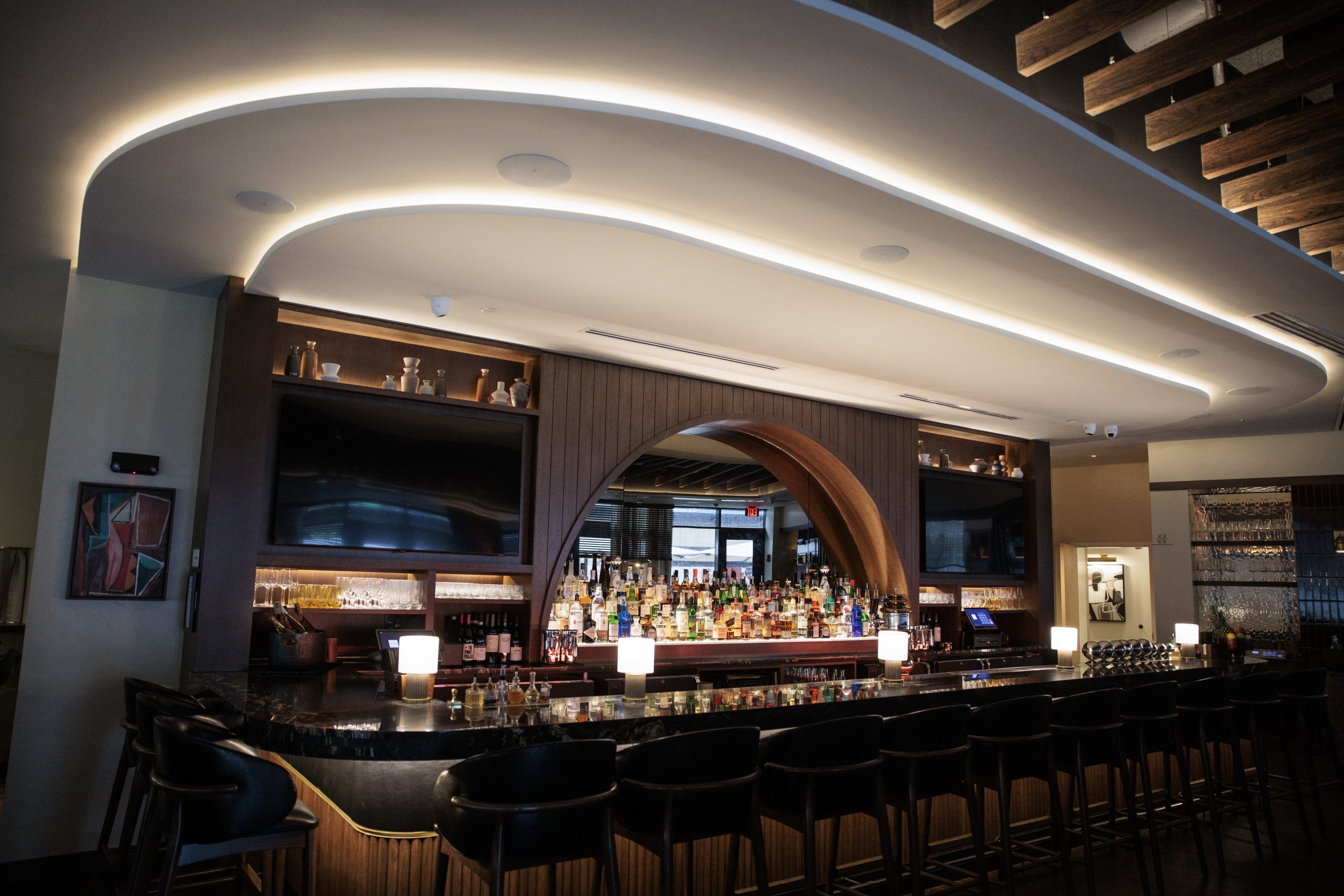
    Is it a particularly adventurous place to dine? Not especially. But that may not matter. The restaurant exudes a textbook chophouse vibe, with circular booths clad in cushy black leather, a marble-topped bar, dark wood accents, walls of wine bottles, and hot pans of fresh, salt-speckled Parker House rolls served with little crocks of whipped miso-garlic butter.

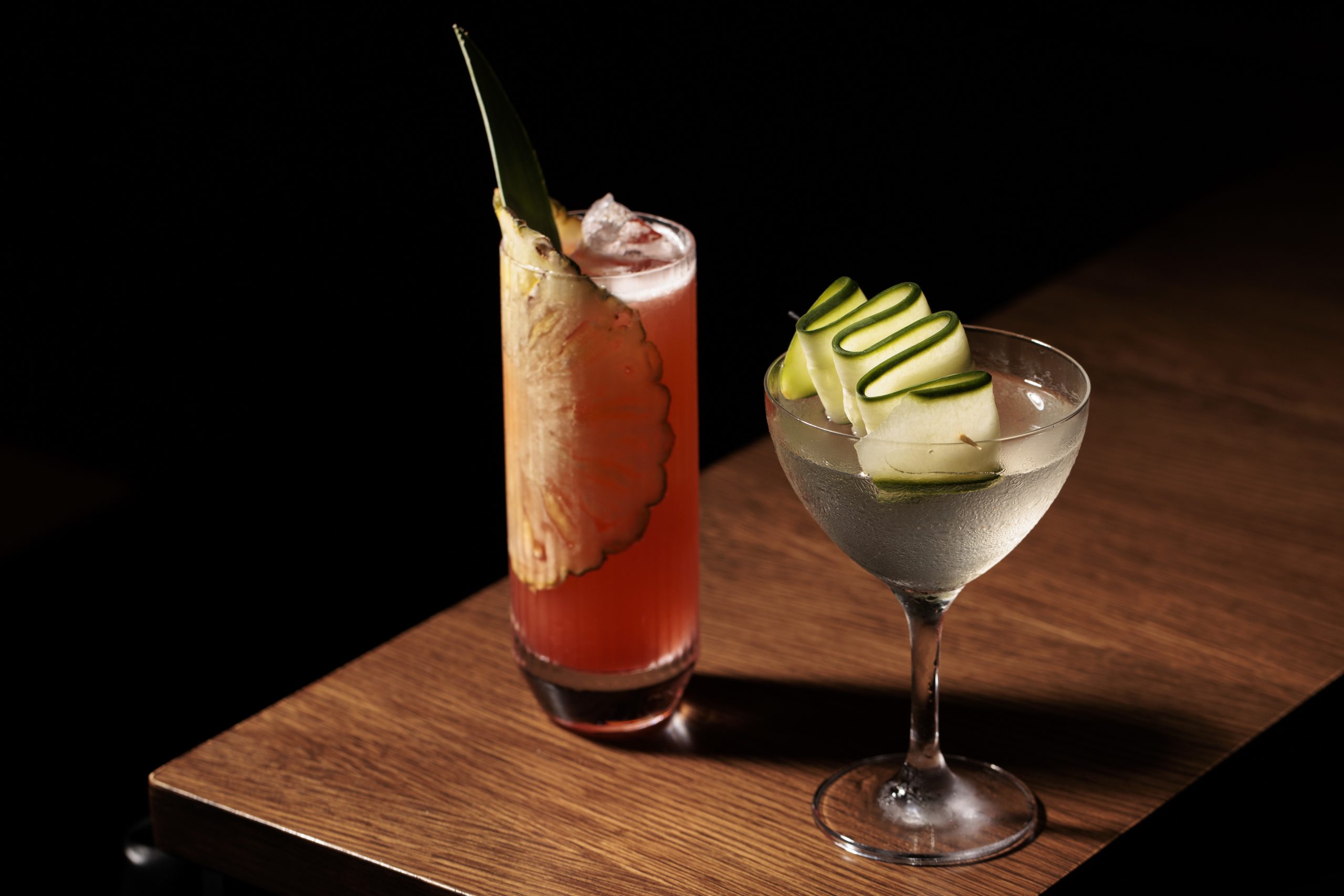
    There are culinary twists on classic cocktails to spark the meal, like the Quick & Dirty, an entry-level dirty martini washed with tzatziki yogurt and piqued with giardiniera brine, or the Golden Hour white Negroni, infused with red and golden raspberries as a nod to Philly’s Clover Club.

    The Crazy Bird and Quick & Dirty cocktails at Terra Grill on July 9.Monica Herndon / Staff Photographer

    It’s the bar program’s nod to the kitchen ethos of the French-born Tourondel, a respected chef based out of New York best known for BLT Steak (which he no longer owns) and BLT Fish, which briefly held one Michelin star and is now closed. Tourondel has since evolved into a management chef for hire, having opened 58 restaurants, from Kazakhstan to Panama, over the course of his career. He now operates 12 locations under his company, from Manhattan (L’Amico) to South Beach, where we recently dined on a delicious and stylish rendition of steak and eggs for brunch at LT Steak & Seafood.

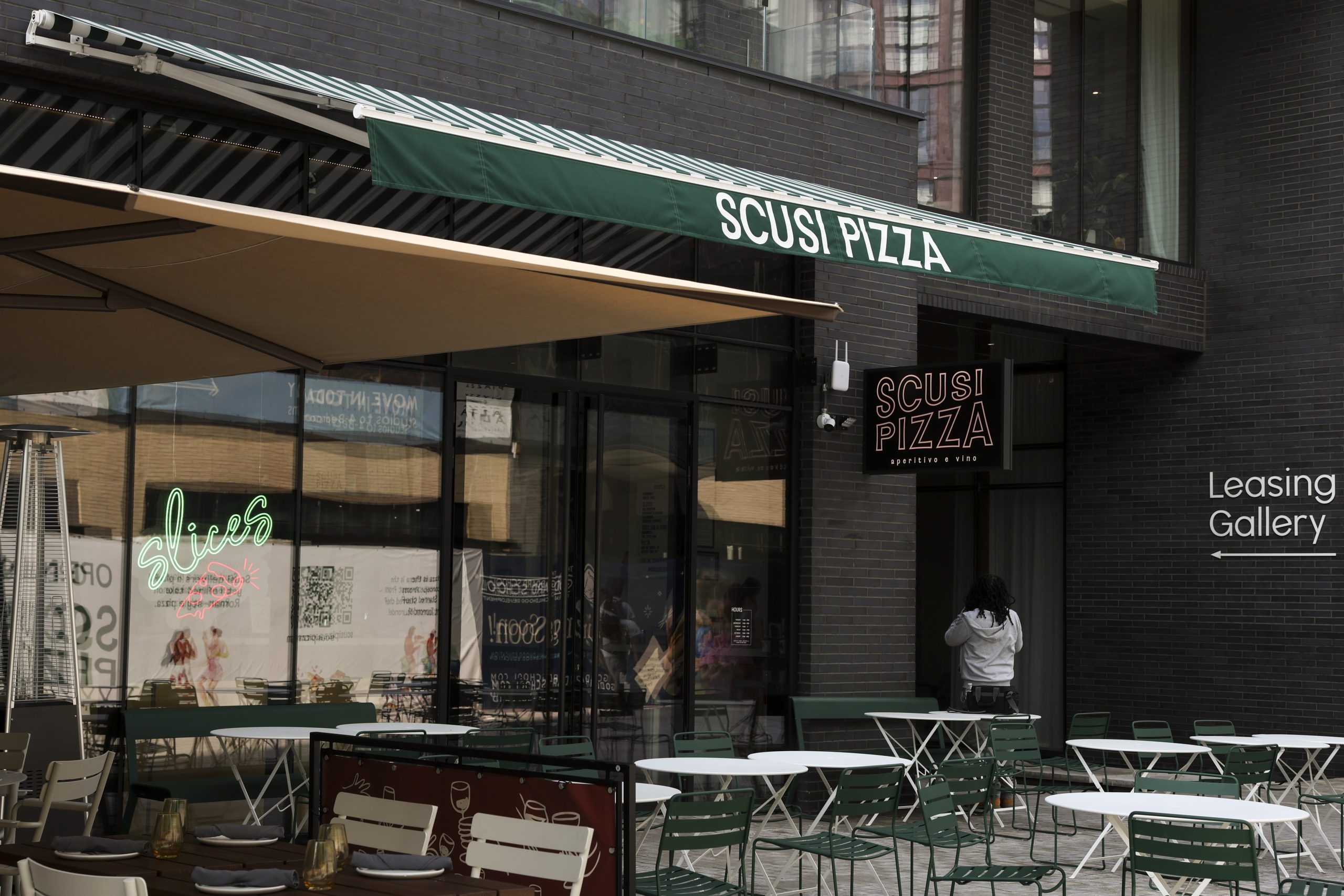
    Terra Grill is large, with 139 seats inside and 50 on the patio, alongside the chef’s cozier and more casual Roman-inspired Scusi Pizza. But the menu is essentially straight off the Tourondel rack: quality ingredients in familiar dishes treated with a thoughtful flourish or a seasonal touch. In other words, something for everyone.

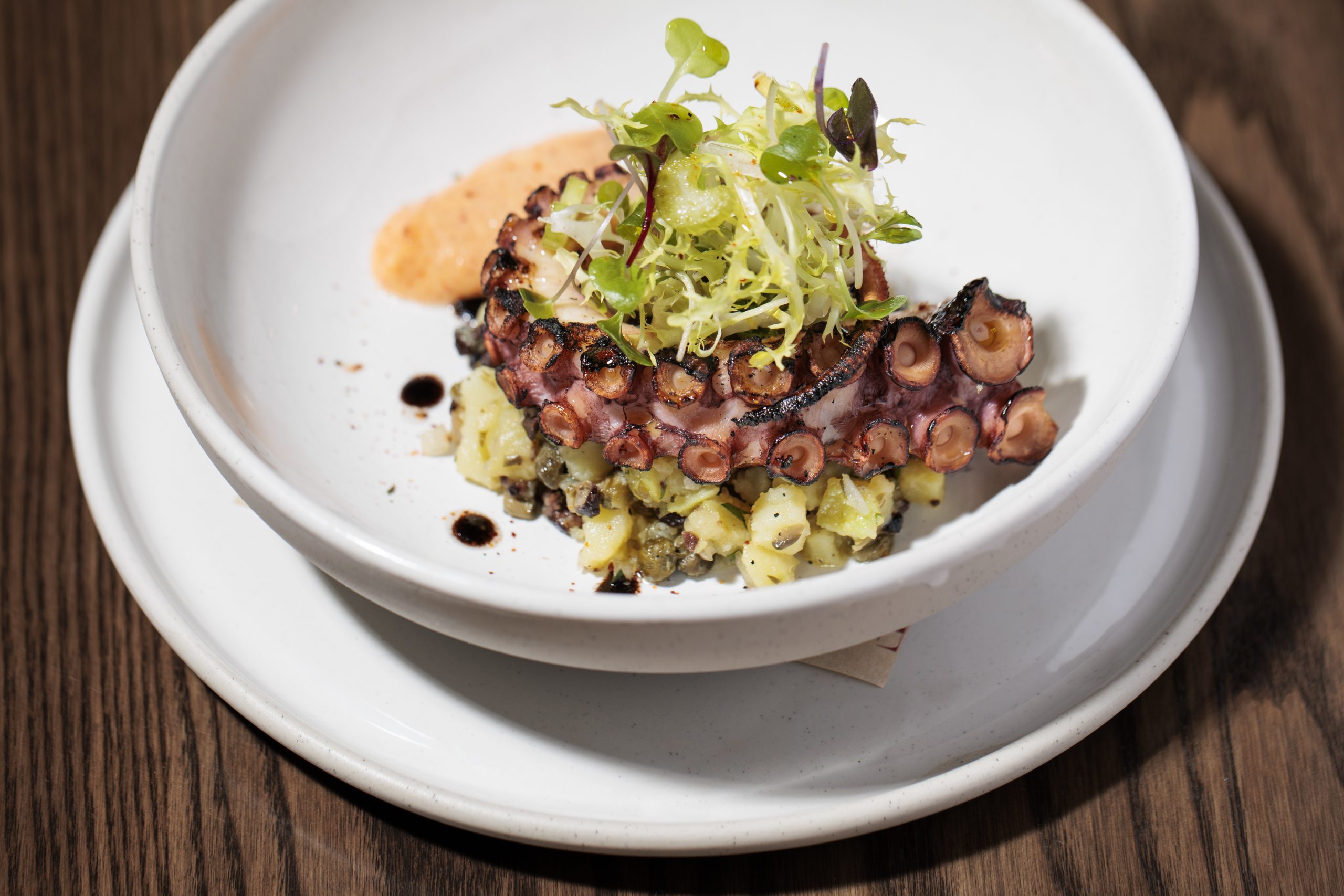
    The grilled octopus at Terra Grill.Monica Herndon / Staff Photographer

    I especially enjoyed Tourondel’s octopus starter, coiled into a thick ring with its tentacles pointing out over a hash of crushed fingerling potatoes bright with lemon, olive oil, espelette aioli, and black dots of cured-olive purée. A baked crab cake is meaty and fresh, and fun to eat from the shell that it’s been stuffed back into.

    Beside such successes, though, there are some fusion dishes that felt off-key, like the fried calamari with sweet chili dip, or the chimichurri-dabbed short ribs wrapped in bao buns whose puffy hinges had gone stale. A luxe hot dog encased in puff pastry with Gruyère and sauerkraut would have been delicious had its Wagyu dog not been so dense and rubbery. (Just as with burgers, a Wagyu pedigree does not make a hot dog better.) A tuna tartare stuffed into a flower-like bloom of shaved watermelon radishes beneath an avocado dome was flavorful and satisfying. But a mizuna salad draped with yuzu-dipped slices of yellowtail was awkward to eat and a waste of good fish.

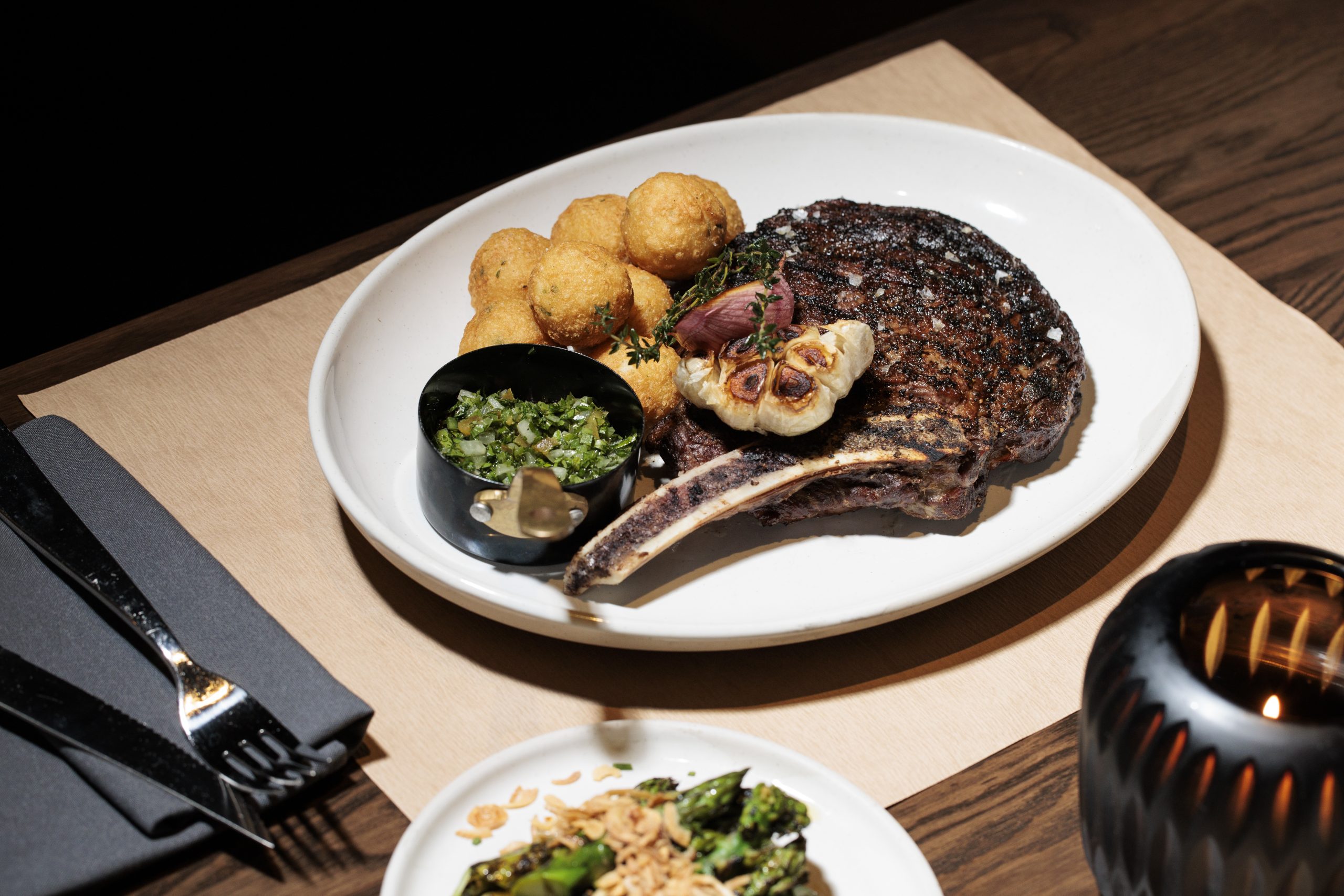
    The prime rib eye with dauphine potato puffs and grilled asparagus at Terra Grill.Monica Herndon / Staff Photographer

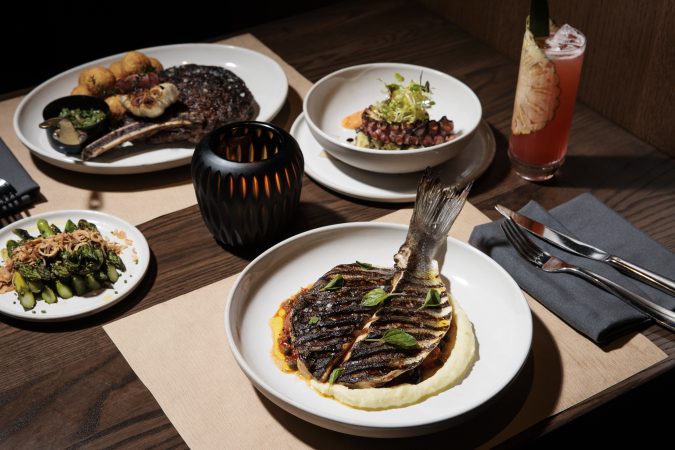
    The entrees are naturally headlined by the steaks — all high-quality prime grade (except for the Angus filet mignon) and properly cooked over the live flames of a hardwood grill, served simply with the sauce and side of your choice. The 22-ounce rib eye was the ultimate beefy cut of the four options, and also the most expensive at $98. The entry-level skirt steak wasn’t huge for $52 (and oddly, more expensive than the signature dish at Tourondel’s Skirt Steak in Midtown Manhattan), but the 10-ounce flap of black garlic-marinated beef glazed in hoisin was delicious, especially with crispy croquettes of dauphine potato puffs on the side.

    The bar at Terra Grill restaurant, 1099 Germantown Ave.Elizabeth Robertson / Staff Photographer

    Considering designer Olya Volkova’s attention to fostering the clubby comforts of a swank dining room, it’s a shame the mood is so often squashed by the glaring flash of big TVs behind the central bar. It speaks to a personality conflict this fledgling restaurant is still trying to resolve: Is Terra Grill a special-occasion destination, or a chic weekly hangout for neighbors to watch the Phillies over a $28 burger?

    I’d actually come back for that prime beef burger encrusted with seven different kinds of peppercorns and topped with molten raclette cheese — if only they manage not to overcook it next time.

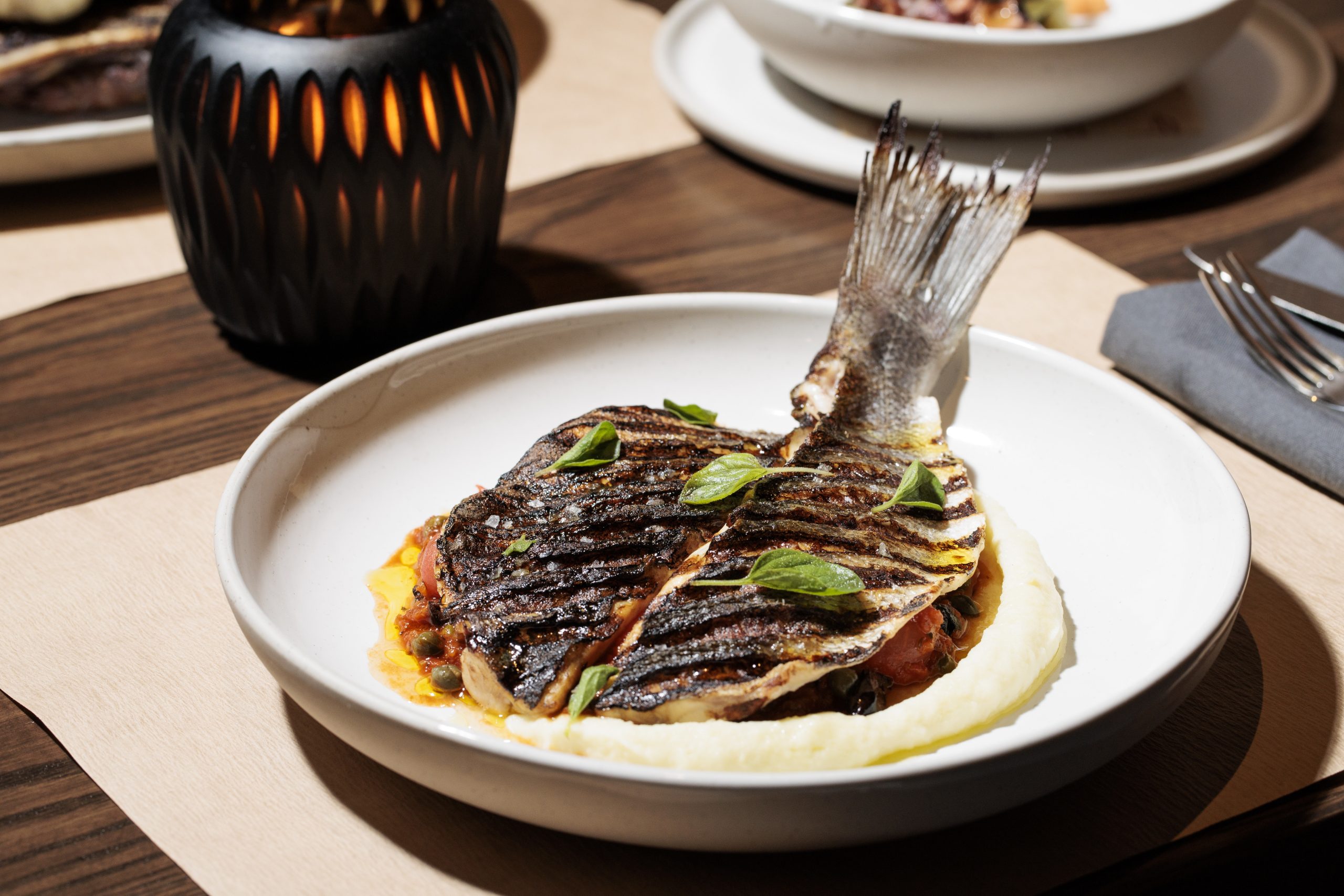
    I can also see returning for the excellent branzino, which gets butterflied and crisped skin-side down over the wood fire and served with a seasonal garnish — a lemon-soy salsa verde in spring, and now a summery puttanesca of blistered tomatoes with capers and olives. That fish is a fair deal at $36. However, even the chef conceded the entree of head-on red shrimp was “a little small” when I sent him a picture of my plate with three crustaceans for $36.

    The grilled branzino puttanesca at Terra Grill.Monica Herndon / Staff Photographer

    The rigatoni in lamb Bolognese is understandably popular with Terra’s regulars, both hearty and flavorful for $28. But it also feels random on a menu that has few other Italian flourishes — even if Tourondel’s adjacent pizzeria, Scusi, is right next door.

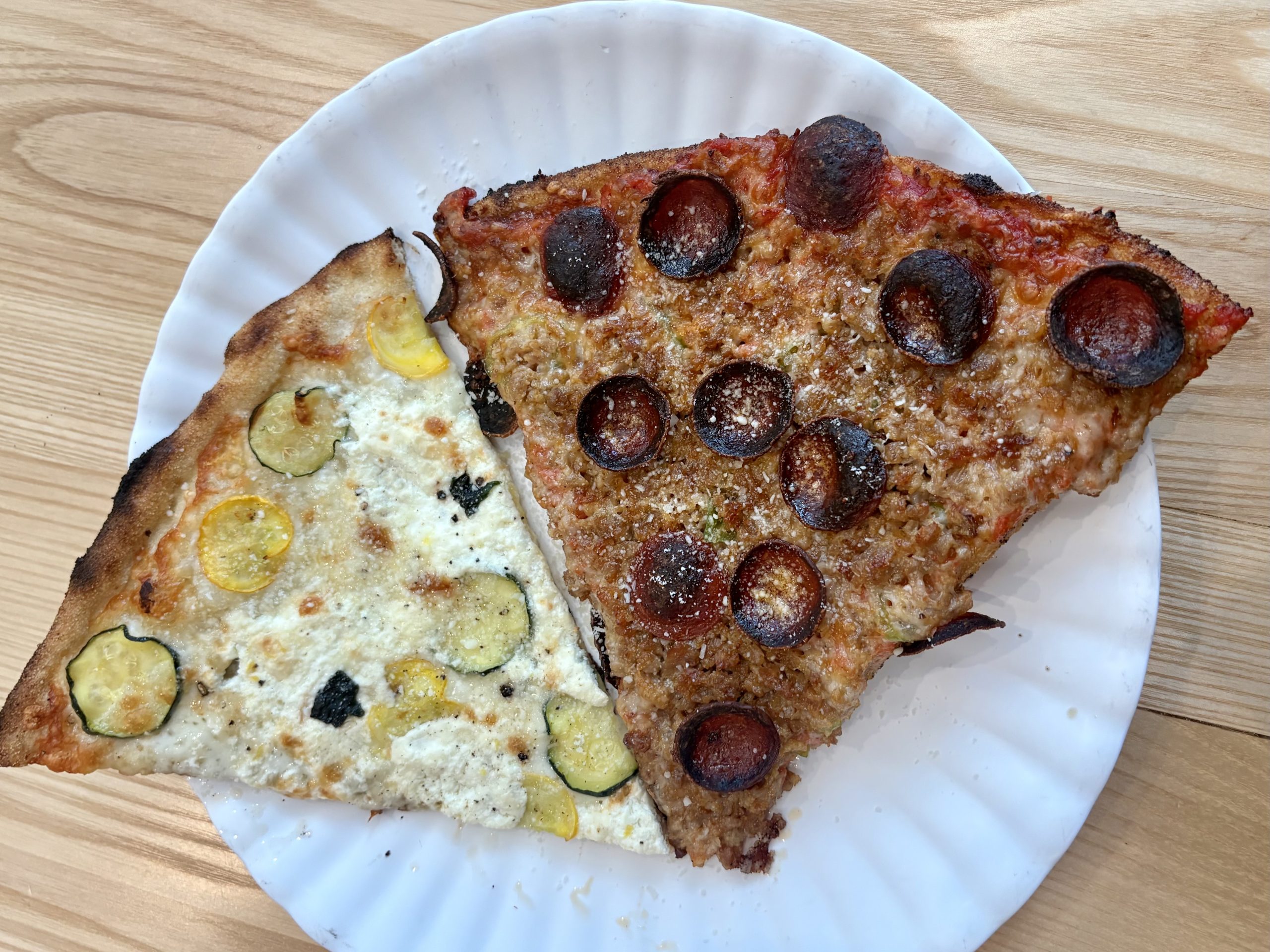
    With its blond wood, aperitivo hour, and appealing menu of salads and pies (many available by the slice), Scusi could very well be just the affordable counterpart Terra needs. But its thin-crusted Roman pies were so strangely heavy from a blend of grains, including bran, that the dough was leaden and tough. My weighty slice of sausage and pepperoni was also incinerated.

    Two slices of pizza at Scusi, located in the Piazza Alta in Northern Liberties.Craig LaBan / Staff
    Scusi Pizza next door to Terra Grill.Monica Herndon / Staff Photographer

    Having previously enjoyed Tourondel’s Neapolitan-style Sag Pizza in the Hamptons, I know he’s capable of good pies. But Scusi’s troubled crusts reflect one of the perils of having a remote-control chef conducting from out of state.

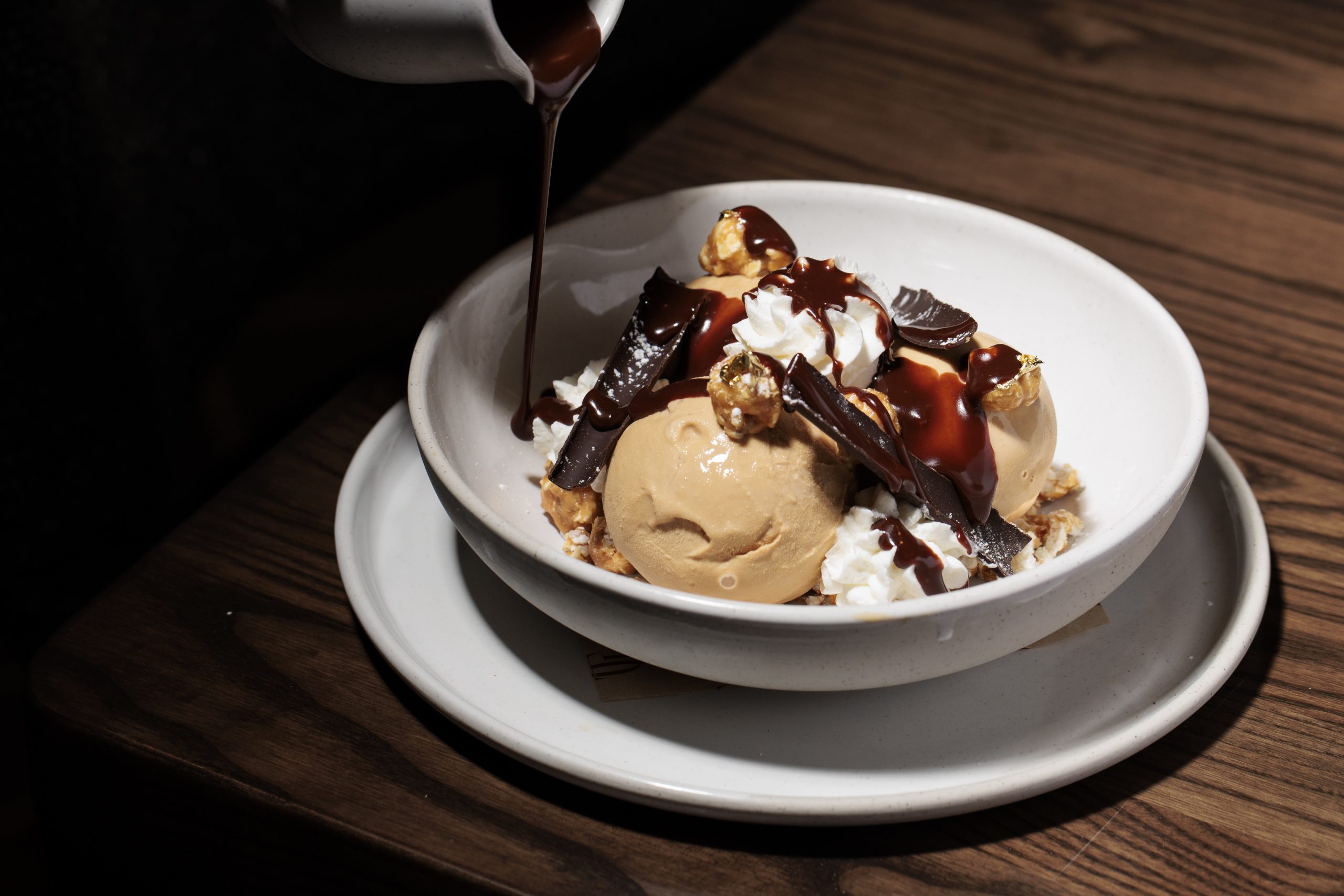
    Even more difficult than executing recipes, though, is finding the soul of a cookie-cutter concept, such that it feels like it fits the fabric of a place. Of course, in a literal blank slate like the Piazza Alta, the right restaurant can help set that tone. I did enjoy much of my food here, including the whimsical finale of a caramel popcorn sundae with a tableside chocolate sauce drizzle.

    There are good ingredients in place. And the service is friendly enough (despite some rushed pacing with the starters). But there is still a paint-by-numbers corporate energy to Terra Grill.

    The caramel popcorn sundae at Terra Grill.Monica Herndon / Staff Photographer

    Maybe its stride will come with more customers: The restaurant was less than half full during my visits. Perhaps they will materialize if the neighborhood gains the kind of momentum its developers hope to conjure — including the promise of an undisclosed local star chef slated to take a prime space across from Terra. Tourondel’s restaurants alone do not carry the gravity to fully animate this recently revived stretch of Germantown Avenue, but Terra could complement a broader scene. Just like the chaotic, slow-motion traffic patterns outside the restaurant’s doors, it feels like a work in progress.


    Terra Grill

    1099 Germantown Ave., 267-962-0011, terragrillrestaurant.com

    Dinner 5 to 9 p.m. Sunday, Wednesday, and Thursday; until 10 p.m. Friday and Saturday. Brunch 11 a.m. to 3 p.m Saturday and Sunday.

    Entrees, $28-$98.

    Wheelchair accessible.

    A little over half the menu items are gluten-free, with several others being easily modified with care to avoid cross contamination. Fried items are not available.

    Menu Highlights: Parker House rolls; fried calamari; lemon chicken parm sandos; grilled octopus; stuffed crab cake; grilled branzino; Terra burger; prime steaks (skirt; strip, rib eye); potato puff dauphine; caramel popcorn sundae.

    Drinks: Creative takes on classic cocktails with culinary twists are front and center, including a tzatziki-washed riff on a dirty martini and the rummy Crazy Bird tinged with bitter Campari. The sub-50 label wine list covers multiple styles with a balance of big names (Whispering Angel, Jordan) and lesser-known options (Decibel, Txakoli rosé). There are solid choices by the glass at $20 and under.

    The interior of Terra Grill on Thursday, July 9, 2026 in Philadelphia.Monica Herndon / Staff Photographer
  • Property values in Kensington went up more than any other Philly neighborhood this year

    Property values in Kensington went up more than any other Philly neighborhood this year

    The biggest jump in Philadelphia’s property assessments this year occurred in Kensington, a measure that means many homeowners in the long-struggling neighborhood are likely to see higher taxes amid a concerted effort by the city to clean up the area.

    That is according to an Inquirer analysis of recently released property assessments of single-family homes, which found that, citywide, there was a 3% median change in valuations from the 2025 tax year, the last time there was a mass reassessment.

    That increase is far more modest than the widespread jump in valuations that homeowners saw two years ago, which captured multiple years of real estate growth and the volatile post-pandemic market.

    What remains the same: who will be most affected.

    The Inquirer’s analysis of this year’s property assessment data shows that low-income neighborhoods near gentrifying areas saw the sharpest jumps in valuations compared with the rest of the city.

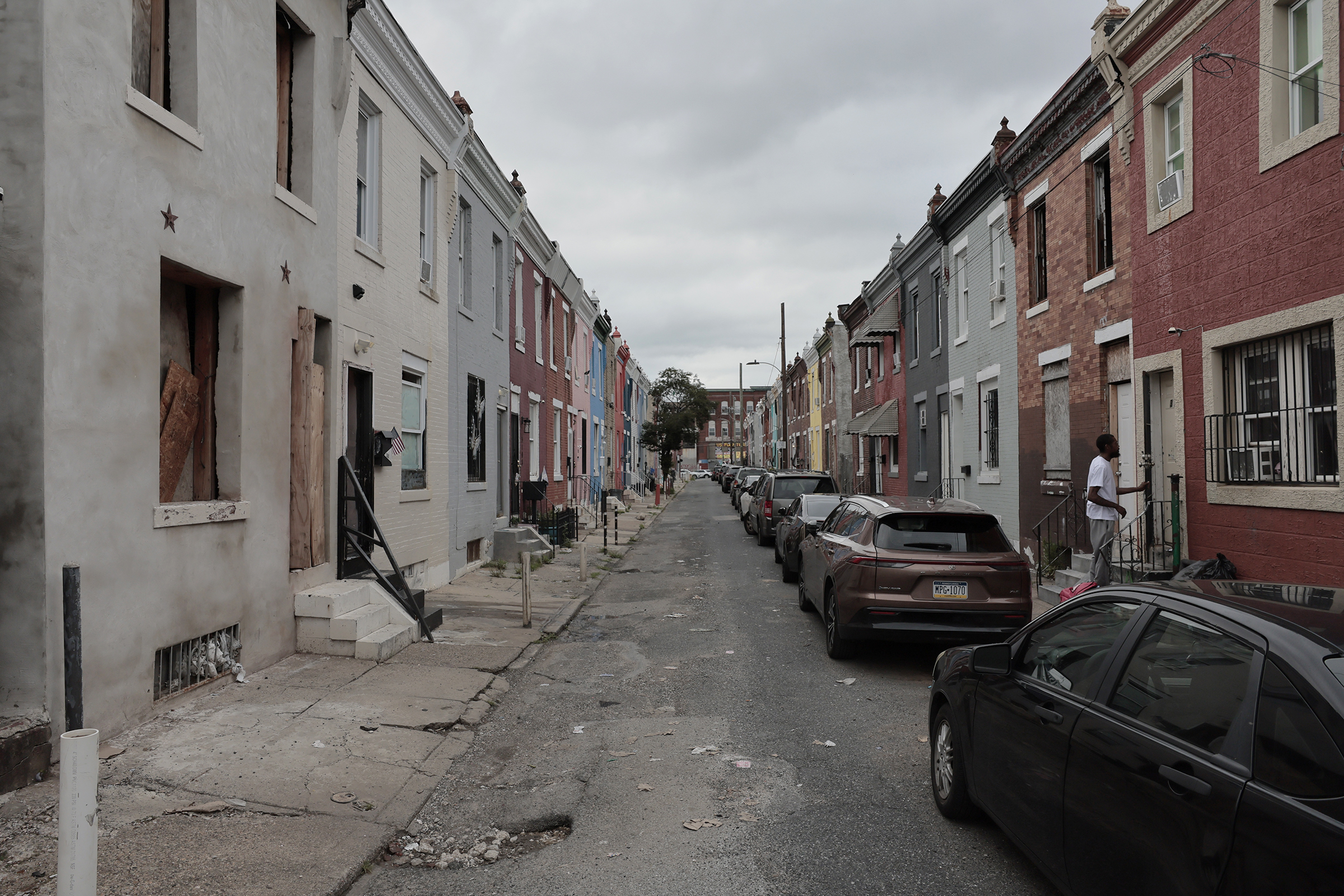
    The four areas that saw the largest percentage increases in median assessments — Kensington, Mantua, Grays Ferry, and Kingsessing — all border more gentrified neighborhoods like Fishtown, University City, and Point Breeze. The results of the analysis are a further sign that market pressures in higher-income areas are pushing into pockets of the city that have long been primarily home to Black and brown working-class residents.

    Of the eight neighborhoods that saw the largest increases between the 2025 and 2027 tax years, five have median annual household incomes around $40,000 or less, according to an analysis of U.S. Census data. The federal poverty level is $33,000 for a family of four.

    (function(){function e(){window.addEventListener(`message`,function(e){if(e.data[`datawrapper-height`]!==void 0){var t=document.querySelectorAll(`iframe`);for(var n in e.data[`datawrapper-height`])for(var r=0,i;i=t[r];r++)if(i.contentWindow===e.source){var a=e.data[`datawrapper-height`][n]+`px`;i.style.height=a}}})}e()})();

    In a statement, officials with Mayor Cherelle L. Parker’s administration noted that many homeowners in those five neighborhoods are benefiting from a popular city tax break. The city said that the median 2027 value in those five neighborhoods is $123,600, so for many homeowners in those areas, the median taxable assessed value is just $23,600.

    That is because of the homestead exemption, a tax break for homeowners who live in their house as their primary residence that exempts the first $100,000 in home value from property taxes. Homeowners must sign up to be included in the free program.

    At least 60% of homeowners in those neighborhoods have signed up for property tax relief programs, according to the city.

    James Aros Jr., the chief assessor of the Philadelphia Office of Property Assessment, and Revenue Commissioner Kathleen McColgan said enrollment rates in property tax relief, including the homestead exemption and multiple tax freeze programs, are “encouraging.”

    They said the city will “build on this progress through extensive targeted outreach, community partnerships, and efforts to make enrollment as simple and accessible as possible.”

    The current property tax rate is 1.3998% of assessed value, which has not changed for nearly a decade. The revenue is split between the city and the Philadelphia School District.

    Rising home values in Kensington

    Citywide, the steepest increase in valuations was in Kensington, where the median property value jumped 15.3%, from $115,700 in the 2025 tax year to $133,400 now. That median increase would translate to a roughly $250 annual property tax hike.

    That comes after Parker’s administration in 2024 launched a multipronged effort to address the long-entrenched open-air drug market in Kensington, which is the epicenter of the city’s opioid crisis and a site of sprawling homelessness.

    While the administration has increased law enforcement’s staffing in the neighborhood and scaled up programs for people who are in addiction, Kensington has also for years seen creeping gentrification from Fishtown to its southeast.

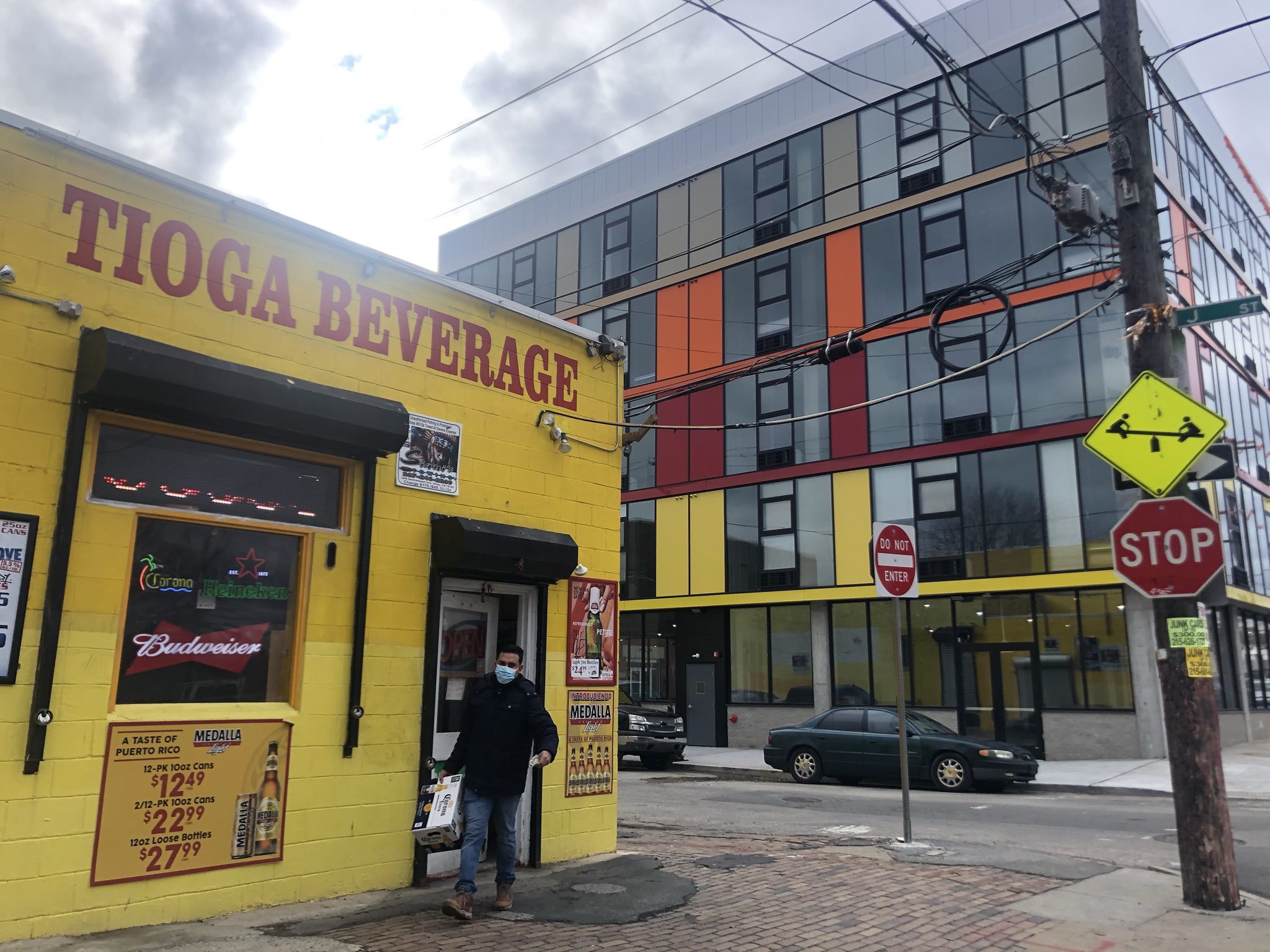
    In this 2021 file photo, a glass building at J and Tioga sits near a beer store in Kensington.Inga Saffron

    Some neighborhood leaders have watched with anxiety as luxury housing developers and out-of-town investors gobbled up properties in the neighborhood, fearing that poorer residents and middle-class homebuyers may be priced out.

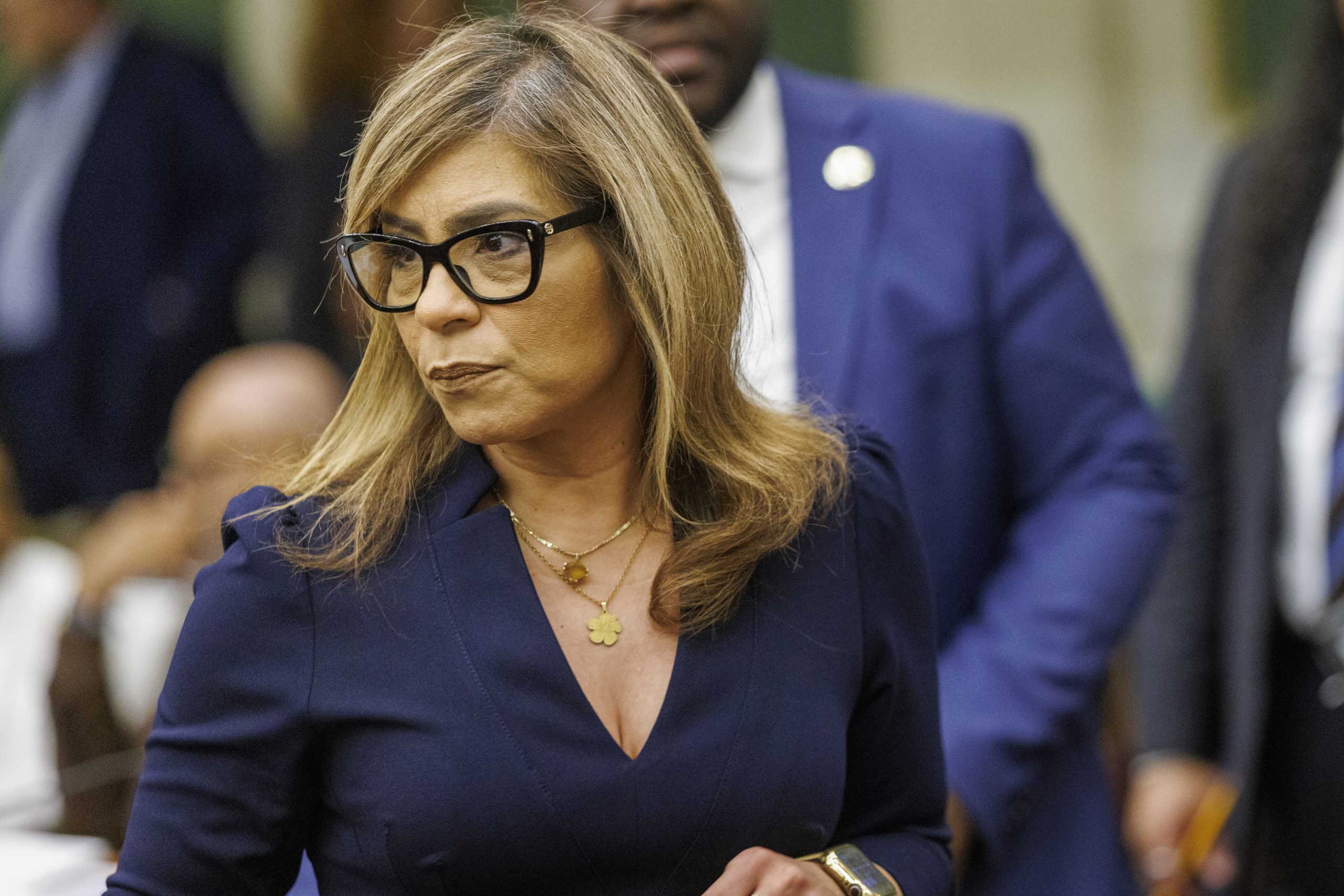
    City Councilmember Quetcy Lozada, a Democrat who represents the 7th Council District, which includes parts of Kensington, said she knew speculators from outside the area would want to make it “the next gentrified neighborhood” once the city changed its strategy to more aggressively clean up trash and improve public safety.

    But Lozada said there are not enough programs specific to Kensington aimed at preventing displacement as a result of rising property values, especially as the city is investing millions of dollars a year to improve the neighborhood. She said her office is exploring additional tax relief measures.

    “I’m going to do whatever I have to do to make sure that residents who have lived in that community can stay there, can raise their families there,” Lozada said. “We have witnessed what has happened on the southern end of the district, where there has been rapid gentrification.”

    In this March file photo, City Councilmember Quetcy Lozada stands in Council chambers during Mayor Cherelle L. Parker’s budget address.Alejandro A. Alvarez / Staff Photographer

    Lozada also said rising property values in Kensington are part of why she has been “so careful with projects presented to me” and has prioritized what she sees as equitable development in the neighborhood — at times to the chagrin of developers who think she has been too restrictive.

    “I’m all about people making a return,” she said, “but you can’t continue to do it on the backs of poor people.”

    The 3100 block of Arbor Street in Philadelphia on Tuesday, July 7, 2026.Elizabeth Robertson / Staff Photographer

    Continuing change in pockets of West Philly

    There were also significant property value increases in parts of West Philadelphia.

    The median increase in Mantua, the neighborhood north of University City, was the second highest in the city, at 15%, according to The Inquirer’s analysis. The median increase was 12% in Kingsessing, the neighborhood south of University City that in 2025 saw the largest jump of any neighborhood in Philadelphia.

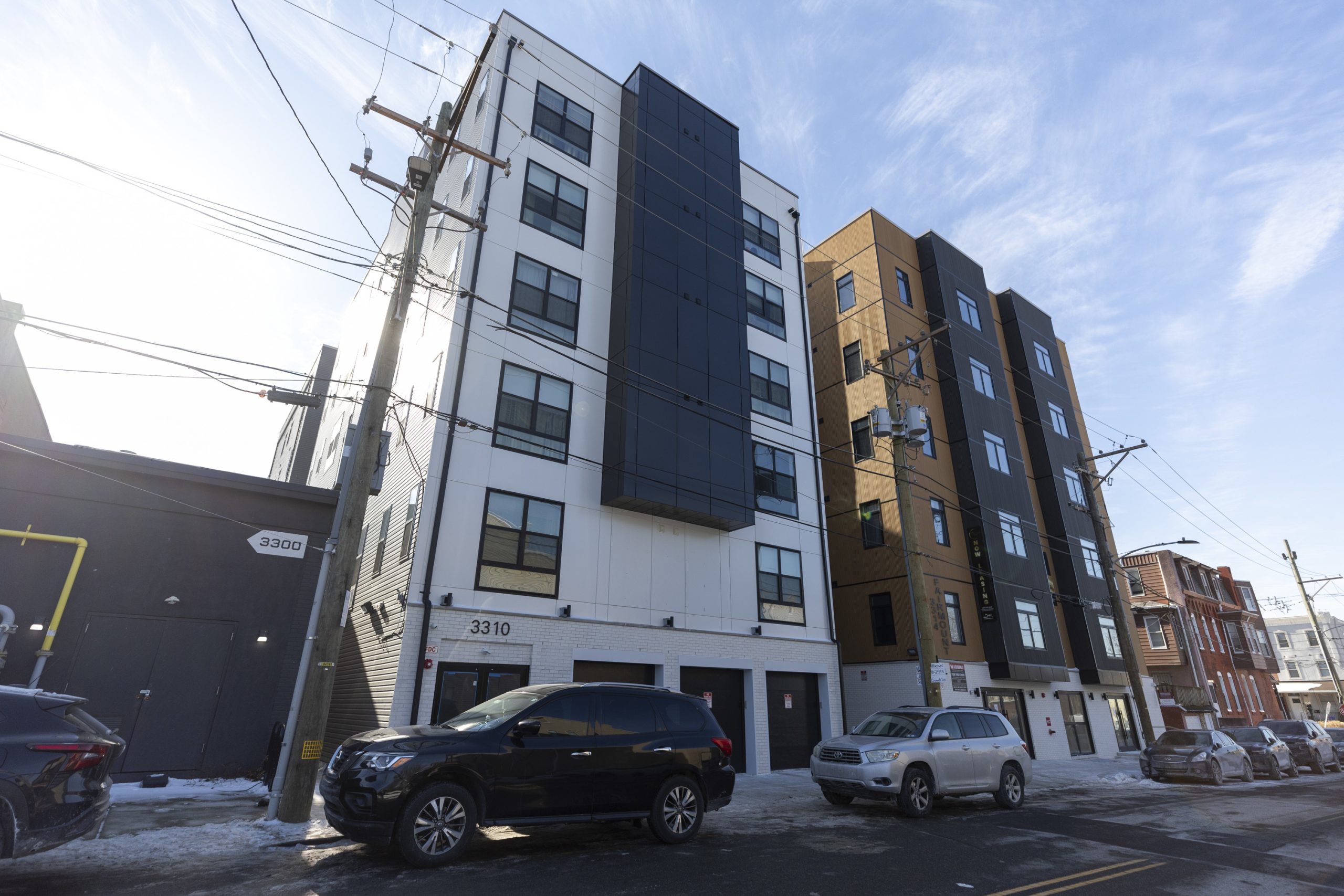
    Newly developed buildings along Fairmount Avenue in the neighborhood of Mantua in Philadelphia, Pa., on Thursday, Jan. 23, 2025.Tyger Williams / Staff Photographer

    Councilmember Jamie Gauthier, a Democrat who represents West Philadelphia and has made preventing displacement a key initiative, said that there has long been racial bias in the city’s property assessments and that the city must “get serious” about protecting low-income homeowners by revamping its system.

    “There has to be a higher level of urgency in making sure that the city doesn’t have a hand in pushing out all of these homeowners that make Philadelphia what it is,” Gauthier said. “It’s unconscionable for us to destabilize our neighborhoods and the longtime homeowners who live there because we didn’t take enough care to make sure that our process was fair and equitable.”

    For too long, she said, city officials have said they intended to examine the property assessment practices and identify improvements. In 2024, Parker convened a task force to study the process.

    Aros told Council in April that the task force’s report was “being finalized.” He said OPA would look to implement recommendations from the report, including conducting more regular reassessments and improving property-level data such as property condition.

    The city is also planning to hire an outside consultant to examine its mass appraisal practices, according to city records. The analyst will be responsible for drafting a report by the end of this year.

    Deputy creative director John Duchneskie contributed to this article.