With temperatures expected to get close to 90 degrees later this week, some Philadelphia schools will dismiss early Tuesday.
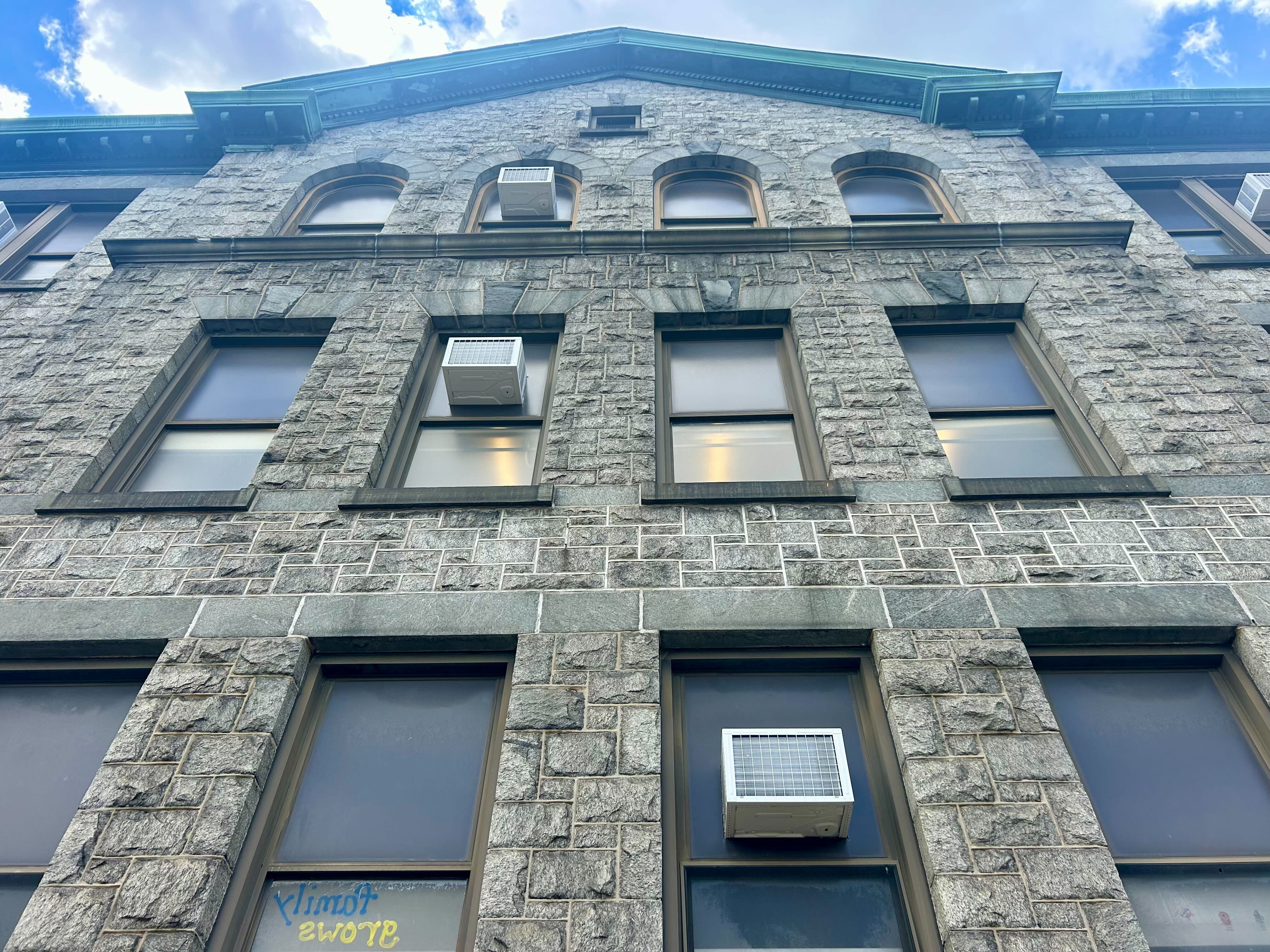
Fifty-two schools still lack air-conditioning.
“The Philadelphia region is experiencing higher-than-normal temperatures, and while the district has made significant progress toward ensuring our schools are adequately cooled to provide safe and comfortable learning environments, some schools still have inadequate cooling systems,” Oz Hill, the deputy superintendent of operations, wrote in a letter sent to families Monday.
The Philadelphia School District’s extreme-weather protocol means that if temperatures are forecast to reach or exceed 85 degrees by noon, those schools dismiss early; if it hits 85 degrees by 9 a.m., the call is for remote learning.
That means an unequal experience for students across the system, with students in some schools not missing any instructional time when it’s hot, and those in a quarter of schools subject to interrupted schedules.
“While we know that in-person learning is the best environment for students, the safety and well-being of our students, staff, and families remains our top priority,” Hill wrote. “Thank you for your flexibility and partnership. Please take care, stay cool, and stay safe.”
The holdup in air-conditioning all district schools is not related to the cost of air-conditioning units, but rather upgrading old electrical systems in the 52 schools.
Such upgrades are tricky. An HVAC project at Kensington High went awry this summer, triggering asbestos issues that forced students and staff to relocate for the rest of the calendar year.
School officials said in 2022 they aimed to have all district schools fully air-conditioned by 2027. But on the cusp of that cutoff, that goal seems unlikely.
Which schools will dismiss early?
The 52 schools that will have a half day Tuesday are:
Northeast Philadelphia’s last traditional Jewish delicatessen will close this weekend, ending a chapter in a food culture that for decades seemed inseparable from the area itself.
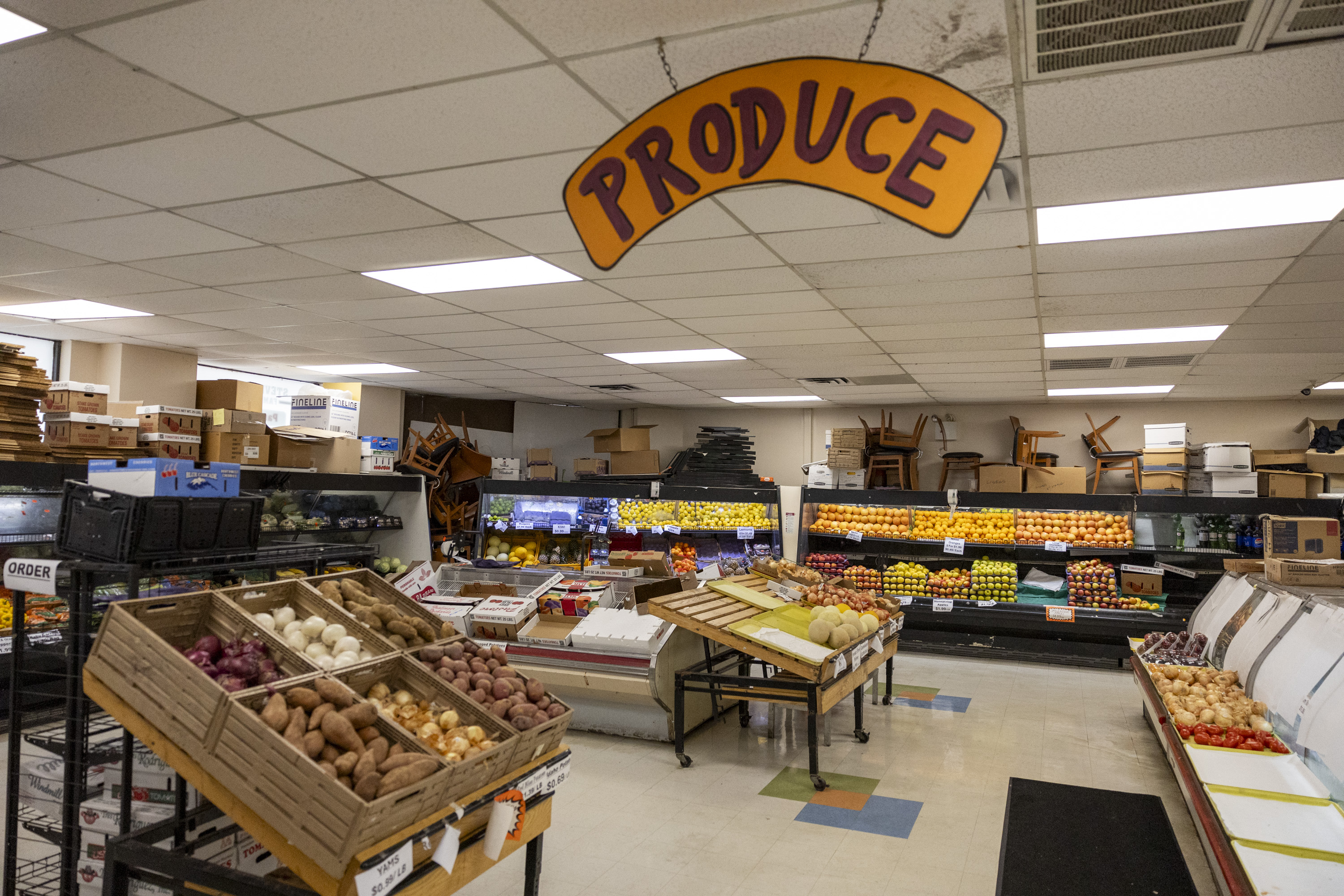
Steve Stein’s Famous Deli, in Bustleton’s Grant Plaza, outlasted a food landscape once crowded with Jewish delis, bakeries, butchers, and other specialty shops. Its closing Sunday comes more than nine years after the finale of Jack’s Deli in Bell’s Corner, the Northeast’s penultimate deli. Like Stein’s, Jack’s combined a retail counter with a restaurant.
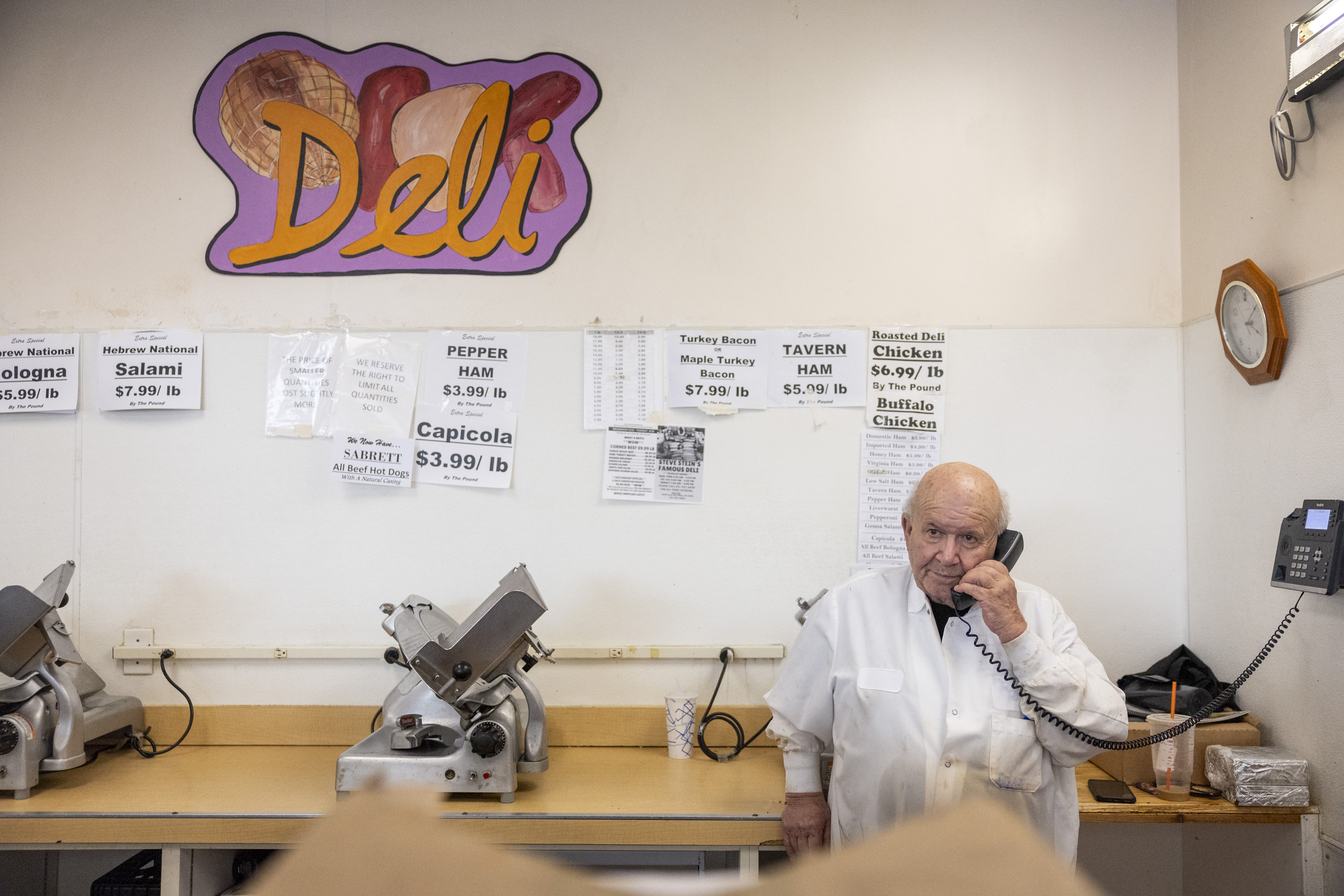
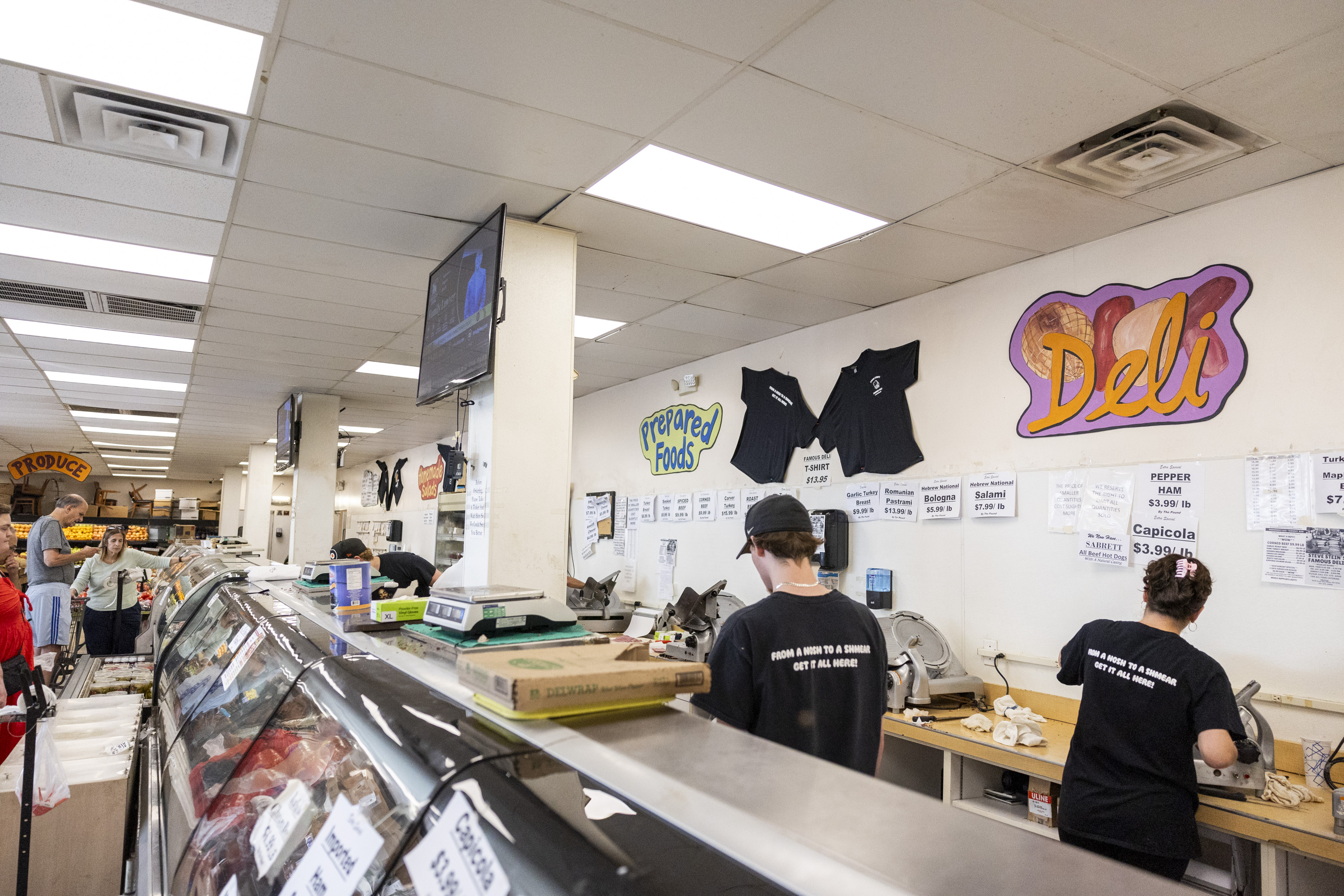
The deli counter at Steve Stein’s Famous Deli on Aug. 14, 2026.Tyger Williams / Staff Photographer
For Steve Stein, 83, the closing will end a family business whose roots stretch back to the late 1950s, when his family became involved with the Famous Deli location at 6826 Bustleton Ave. in Castor Gardens.
Famous was part of an older Philadelphia deli dynasty. Beginning in the 1920s, the Auspitz brothers launched a string of delis around the city, including the flagship at Fourth and Bainbridge Streets in Queen Village, now owned by Al Gamble.
Around 1960, Stein said, the Auspitzes sold the Bustleton Avenue Famous to Stein’s father, Mike, his brother Arnold, and his cousin Jack. The boys had run the produce concession there. Steve and Arnie, who died in 2010, later ran it side by side. Steve now runs the place with his son, Lee, now 57.
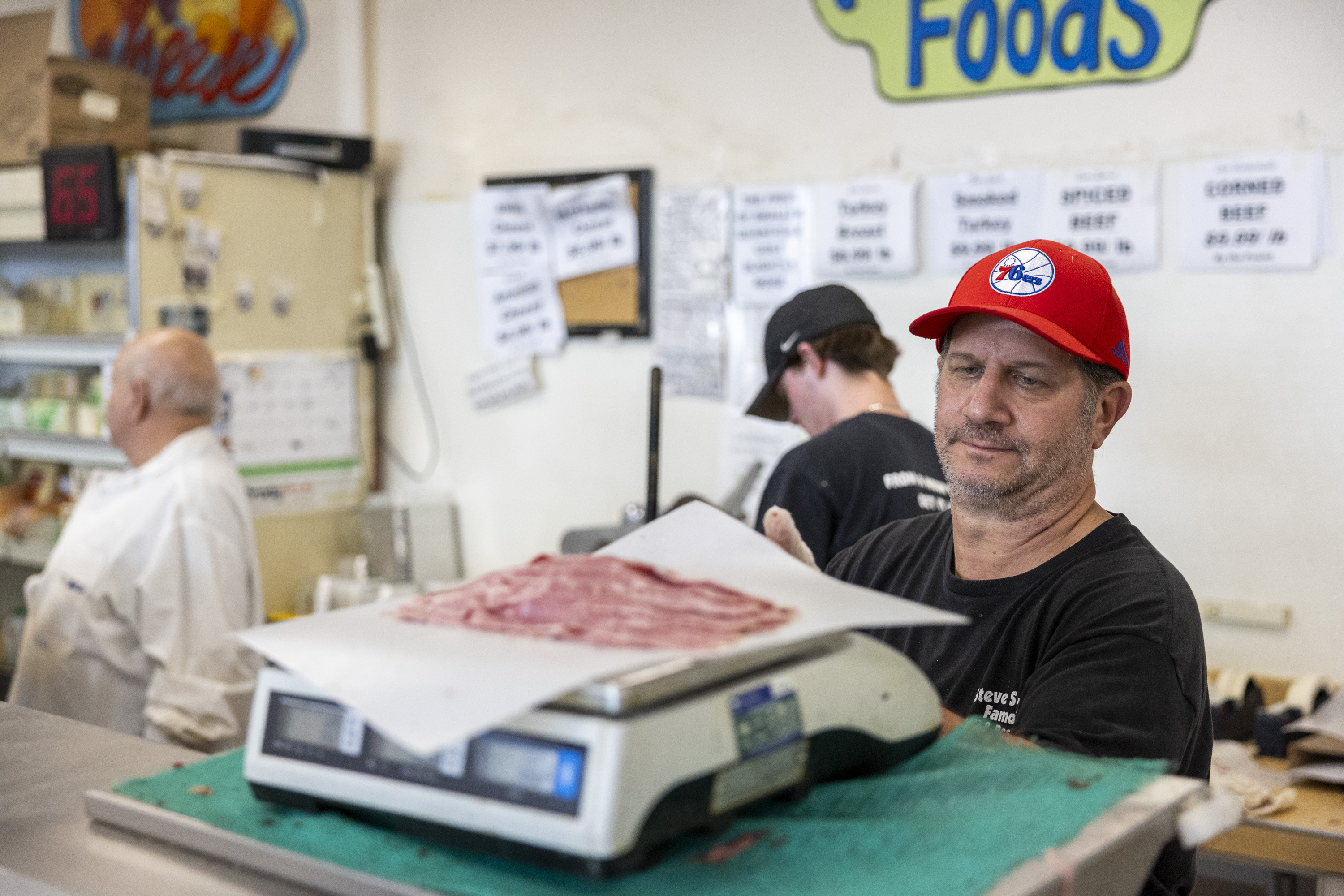
Lee Stein weighs corned beef at his father’s deli on Aug. 14, 2026.Tyger Williams / Staff Photographer
Since Stein announced the closing, customers have been stocking up on corned beef, smoked fish, rye bread, and other foods they fear they will not easily replace. Stein has cut prices as he tries to move inventory.
“Nobody’s charging $9.99 a pound for house-cured corned beef,” Lee Stein said.
On Friday, Tracey Lynn of Fox Chase ordered two pounds of corned beef while plucking garlic-perfumed sour tomatoes from a barrel, telling Stein that she planned to freeze some of the meat.
Lynn said she and her husband have been customers since 1993. She is not sure where she will shop next. “I don’t want whitefish salad from BJ’s or from Costco,” she said.
The closing is partly a retirement story. Stein said problems with his legs have made it increasingly difficult to work.
But it is also about labor costs, food prices, succession, and a neighborhood whose demographics have changed dramatically over the life of the business.
As Jewish families moved farther into the Northeast, Famous followed: first, in the mid-1970s, to Krewstown Road (where it had two locations) and, 14 years ago, to Grant Avenue. Stein, who later also had a short-lived store in Holland, Bucks County, sold the Bustleton Avenue store in the mid-1970s.
In that sense, the history of Famous tracks the movement of Jewish Philadelphia itself.
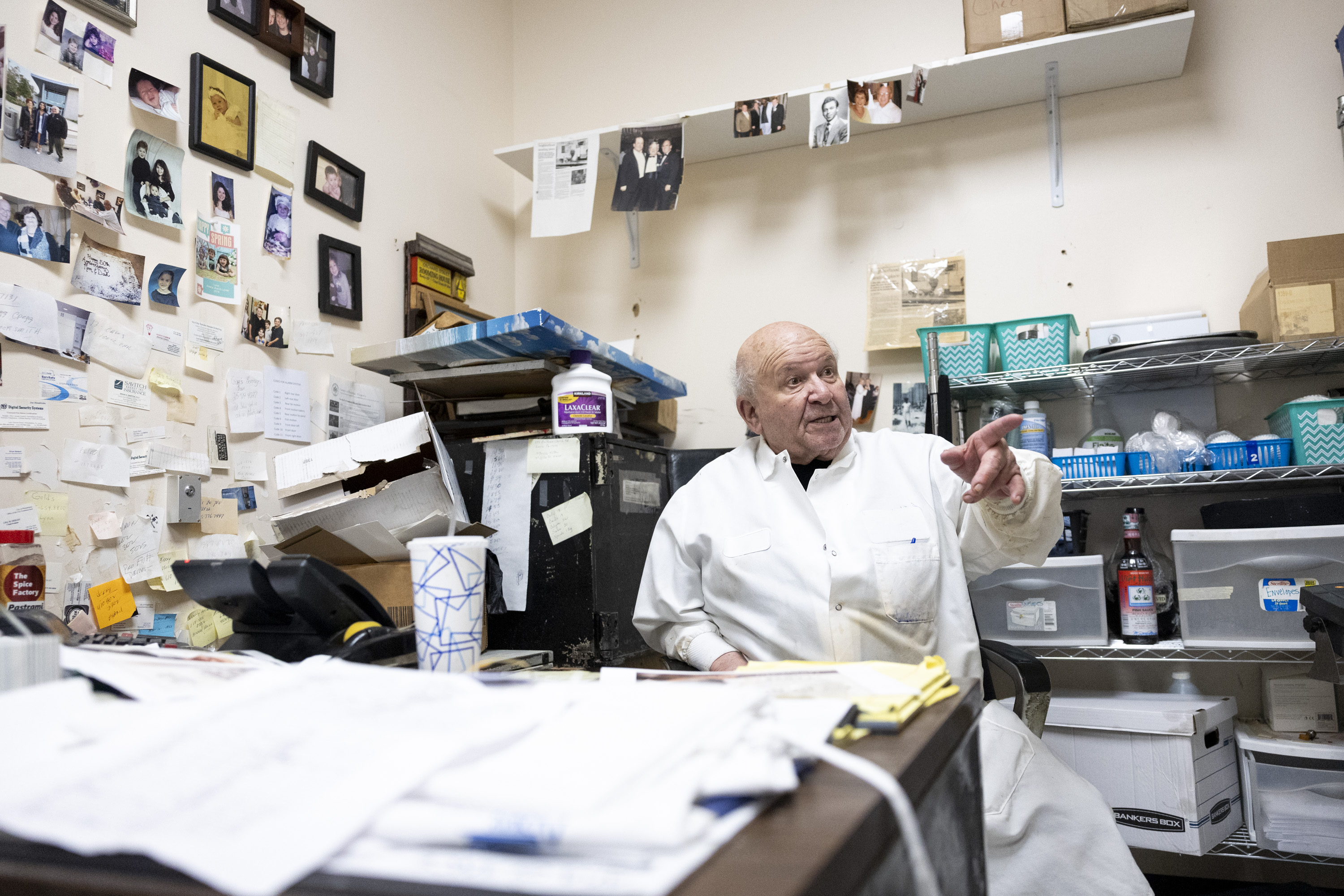
Steve Stein, owner of Steve Stein’s Famous Deli, takes a break in his office.Tyger Williams / Staff Photographer
A suburban diaspora
After World War II, thousands of Jewish families left older Philadelphia neighborhoods such as Strawberry Mansion, Queen Village, and Wynnefield for Oxford Circle, Castor Gardens, Rhawnhurst, and Bustleton in the rapidly developing Northeast. Others moved to Lower Merion and Cherry Hill, which developed large Jewish communities and deli cultures of their own that remain.
By 1970, demographer Ira Rosenwaike estimated, using Census data on Yiddish as a mother tongue, that more than 68,000 Jewish adults 25 and older lived in the Near and Far Northeast.
That population supported an extraordinary density of Jewish food businesses: Abe’s Appetizers, Castor Deli, R&W, Stern’s, Paul’s, Four Lads, Dave’s, Casino, the Nasherei, four Barson-Overbrook locations.
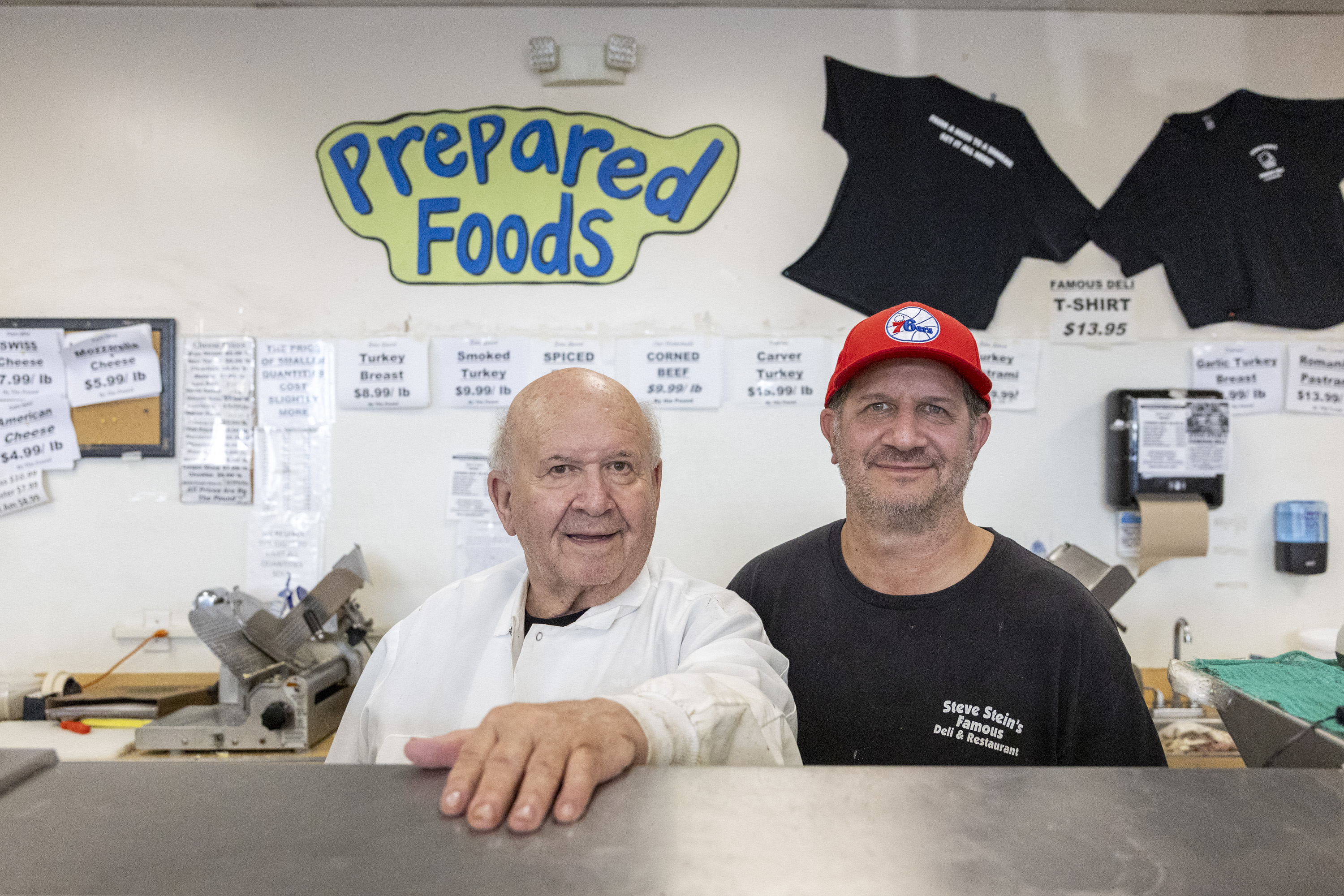
Steve Stein (left), owner of Steve Stein’s Famous Deli, behind the counter with his son, Lee.Tyger Williams / Staff Photographer
To Hasia Diner, a historian and New York University professor who specializes in American Jewish history, the significance of delis was precisely their ordinariness. They were not institutions created to preserve Jewish culture. They were where neighborhood life happened.
“On the one hand, [delis] seem so everyday,” Diner said in an interview. “They’re not great synagogues where religion was expounded, or places where great ideas were pronounced. But they were places where life was lived.”
Some were kosher and others were not. What mattered, Diner said, was that the deli offered a secular Jewish space, rooted as much in neighborhood and food as in religious observance.
By the 1980s, however, those neighborhoods were changing. In a 1987 Inquirer article, Bruce Isakoff of Paul’s Deli, on Castor Avenue near Brighton Street, said his business was doing more lunchtime trade as Jews left the neighborhood and it became a more generic deli. By then, Four Lads, on Castor Avenue at Creston Street in Oxford Circle, had stopped carrying smoked fish and pastrami. Both are long gone.
A ‘kind of shrine’
Many Jewish households moved farther north and into Bucks and Montgomery Counties. A 1996-97 Jewish Federation study found that Philadelphia accounted for 41% of the region’s population living in Jewish households, down from 54% in 1984, while Bucks County’s share had nearly doubled.
The studies used different definitions and geographic boundaries, but the direction was unmistakable: The dense Jewish population that once sustained neighborhood delis had dispersed.
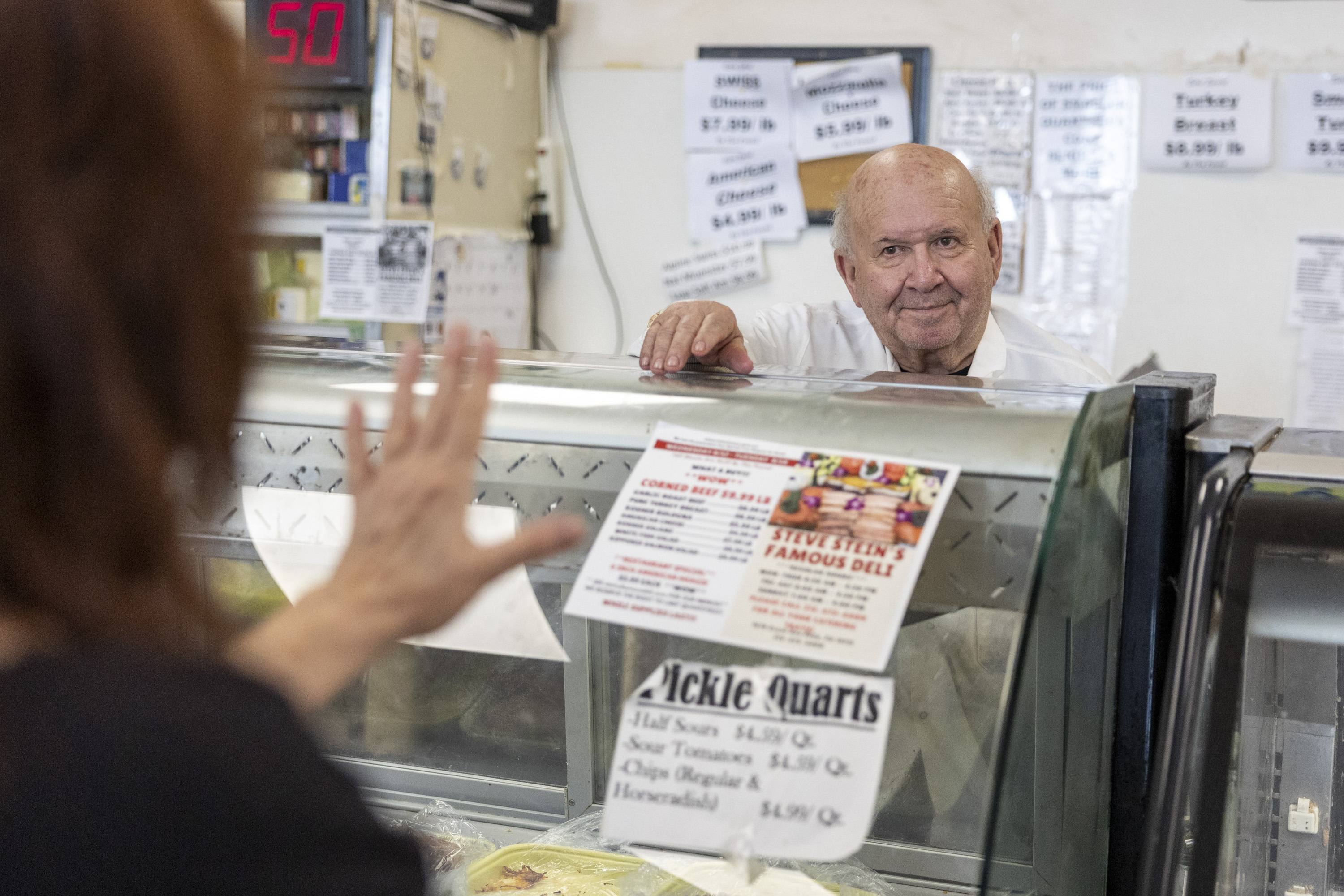
Steve Stein, owner of Steve Stein’s Famous Deli, taking a deli order on Aug. 14, 2026.Tyger Williams / Staff Photographer
The movement itself was nothing new, Diner said. American Jewish communities repeatedly established themselves in neighborhoods and moved elsewhere. What changed was the role of the old neighborhood — and of the deli within it.
“The deli was often the kind of shrine to which they went back,” she said.
The old delis offered something beyond nostalgia. In their heyday, Diner said, they were overwhelmingly Jewish spaces where customers did not have to explain themselves or worry about how they appeared to outsiders.
“These places were so rich with a kind of embeddedness, of comfort and security and, again, letting your hair down,” she said.
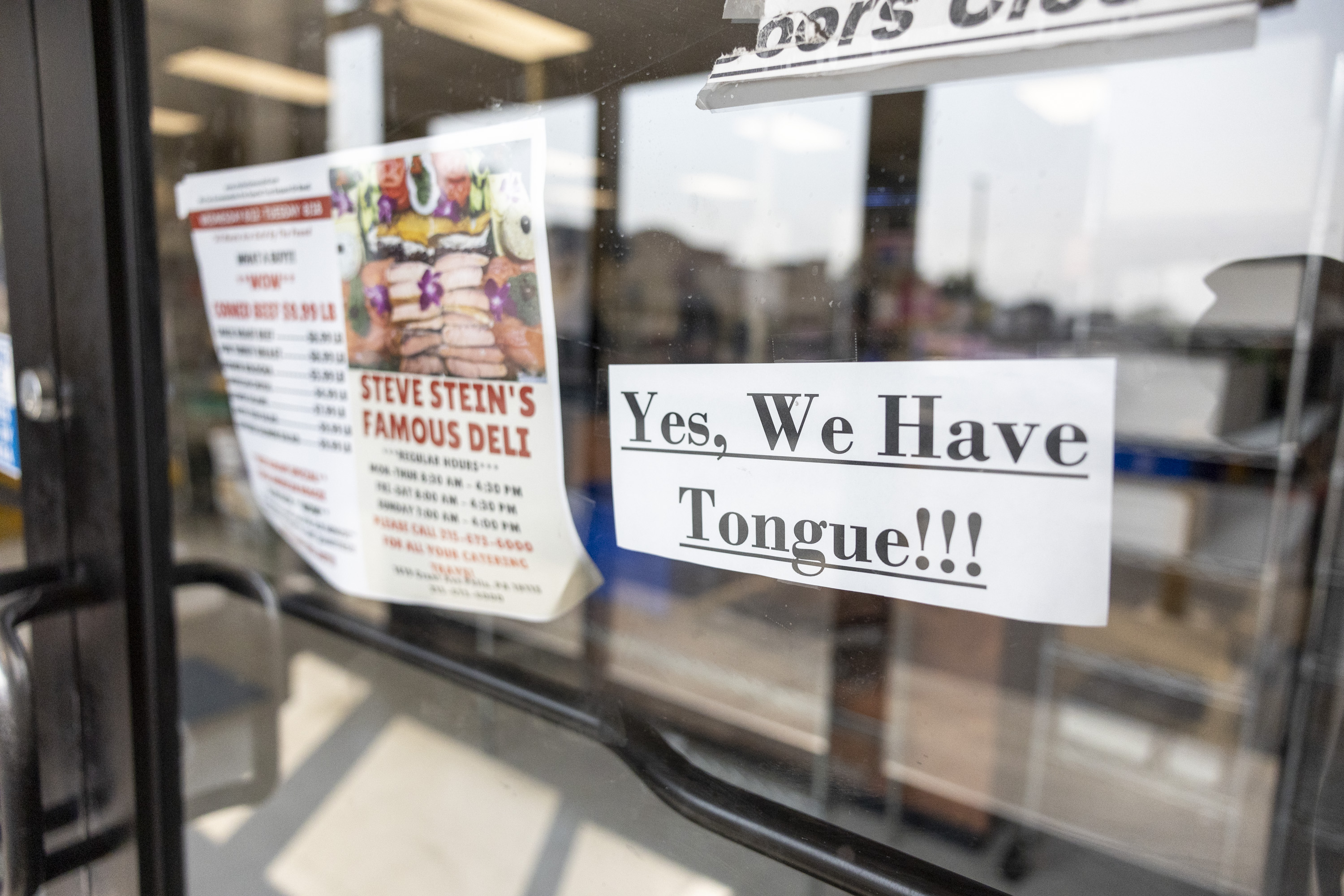
A sign proclaiming, “Yes, We Have Tongue!!!” at the entrance at Steve Stein’s Famous Deli.Tyger Williams / Staff Photographer
Population was only part of the story. Supermarkets increasingly stock foods that once sent customers to specialty counters: corned beef, pastrami, smoked fish, whitefish salad, herring, rye bread, bagels, pickles, and knishes. But not everything. Signs at Famous proclaim, “Yes, We Have Tongue!!!” Not many others do.
More important, Diner said, is what cannot be sold at a supermarket: the deli as a secular gathering place, where being Jewish required neither religious observance nor agreement about politics. “A pastrami sandwich is a pastrami sandwich,” she said.
Costly ingredients
The traditional deli model itself is expensive and labor-intensive, built around extensive preparation and a sprawling inventory. Famous still cures its corned beef and makes its own turkey, pastrami, whitefish salad, and spice beef.
Steve Stein’s Famous Deli is equal parts market, deli counter, and restaurant.Tyger Williams / Staff Photographer
Steve Stein said finding employees has become increasingly difficult. Lee Stein said prospective workers have easier options, such as driving for Uber or making deliveries for Grubhub.
The deli has about 35 employees, many part-time. Some are placed through SPIN, the Philadelphia nonprofit that supports people with intellectual, developmental, and autism spectrum disabilities.
Survival has also required adapting to the customer base, increasingly non-Jewish. Lee said he remembers when Famous carried a single canned ham, hidden behind the counter. Though few Jewish delis are kosher, pork traditionally has been another matter.
“Nobody was allowed to say the word ham,” he said.
Today, their case holds about a dozen varieties.
Rob Woloshin, 40, owner of Manny’s Deli Stop in Willow Grove, grew up going to Stein’s Famous with his father. His deli represents a leaner version of the old model: counter service, a few tables, online ordering, and delivery, with traditional deli sandwiches alongside chicken cutlets, wraps, and other contemporary offerings.
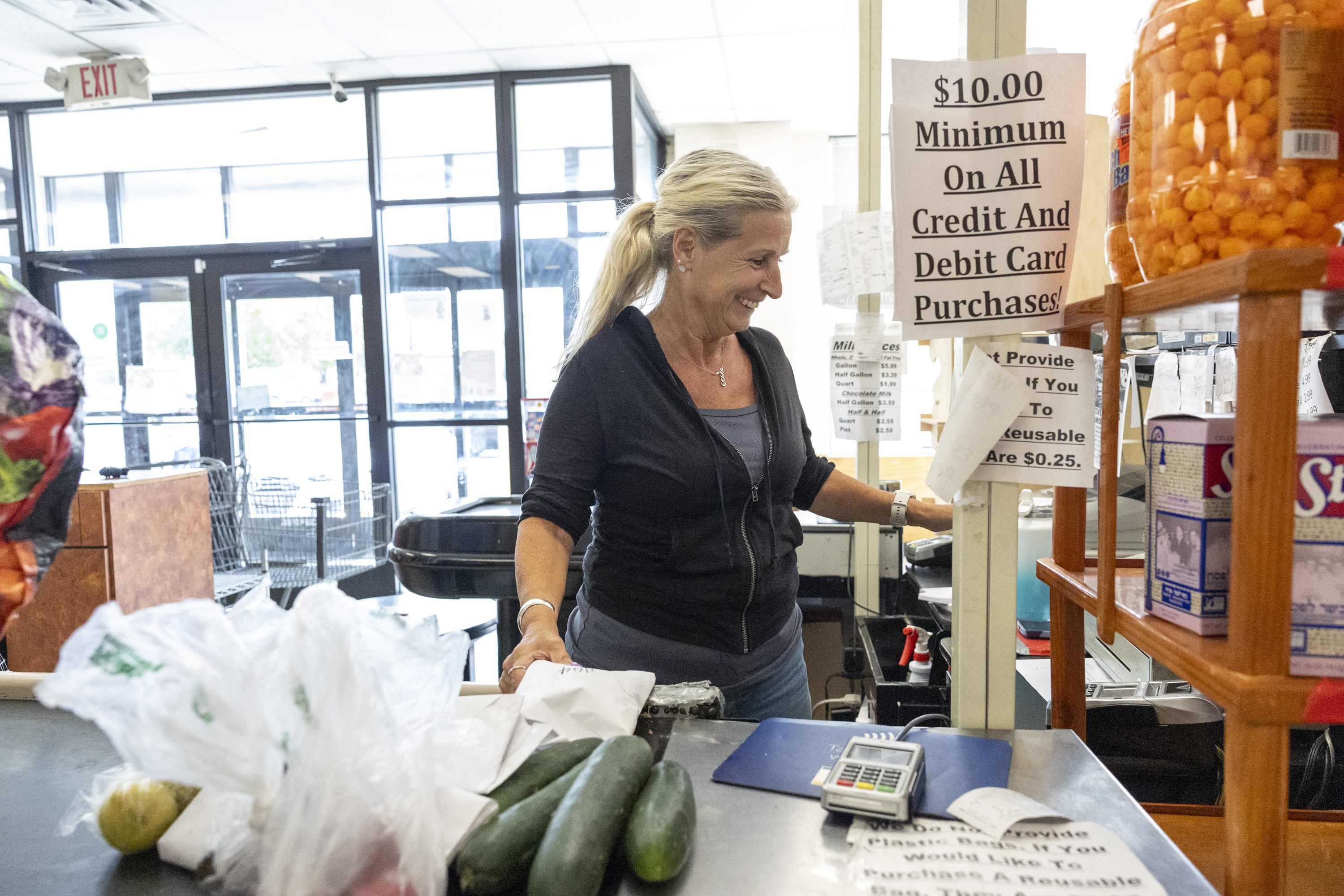
Cashier Linda DiNenno, who has worked at Steve Stein’s Famous for about 13 years, checks out a customer.Tyger Williams / Staff Photographer
“We’ve kind of modernized, I guess, as much as the Jewish deli can be modernized,” Woloshin said.
Famous may yet have an afterlife. Lee Stein said he is talking with the landlord about a deal that could keep him in the space, under another name, in time for the Jewish High Holy Days, which begin Sept. 11. If not, he might offer catering from a synagogue kitchen.
For longtime cashier Linda DiNenno, the closing is less about corned beef than the people around the counter. She said she will miss the family atmosphere among employees and customers who have been calling to say goodbye.
“I’ve got customers calling on the phone, like, ‘Oh my God, I’m gonna miss you, Linda,’” she said.
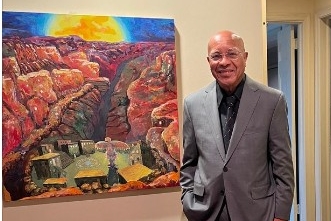
Keith A. Morrison, 84, of Meadowbrook, Montgomery County, celebrated artist, professor of painting emeritus and former dean at Temple University’s Tyler School of Art and Architecture, curator, critic, consultant, writer, and lecturer, died Monday, June 1, of cancer at Fox Chase Cancer Center.
Born in Jamaica, Dean Morrison left the Caribbean island for the School of the Art Institute of Chicago when he was 17 and earned bachelor’s and master’s degrees in fine arts and art education. He went on to teach college art classes in Nashville, Chicago, and College Park, Md., and, in addition to Temple, serve as dean at San Francisco State University, the University of Maryland, and the old San Francisco Art Institute.
He was the first Black academic dean of art in a predominantly white American school in 1993 at the San Francisco Art Institute and joined Temple as dean of its art school in 2005. He became a professor of painting at Temple in 2008 and retired in 2018 as professor emeritus.
As head of the Temple art school for three years, Dean Morrison hired staff, expanded degree programs, and coordinated popular activities with the school’s affiliated art programs in Europe and Japan. In an online tribute, former colleagues at Temple called him a “dedicated advocate for artists and arts organizations.”
Earlier, he was associate dean of architecture and art at the University of Illinois, art department chair at DePaul University in Chicago, and associate professor of art at Fisk University in Nashville. He lectured around the world and was a visiting scholar at Sichuan Fine Arts Institute in China and the University of Michigan.
“He was very serious, very thinking,” said his wife, Susan C. Alunan. “People said he was present and insightful, even life-changing.”
As an artist, Dean Morrison was inspired by his Afro-Caribbean heritage, his childhood memories of lush Jamaican landscapes, and his multicultural experiences in Europe, Cuba, Mexico, and elsewhere. He worked in watercolors, oils, acrylic, and prints, and created memorable abstract, figurative, and surreal images.
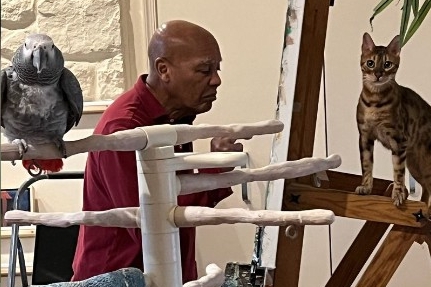
Many of his paintings feature landscapes, people, plants, and animals, often including Scout, his African gray parrot. His images, he told colleagues, were “more intuitive than intellectualized.”
Dean Morrison worked most often at his home studio in Meadowbrook. His parrot, Scout (left), sometimes appeared in his work. Susan C. Alunan
Dean Morrison’s work appears on the covers of books and magazines, and in hundreds of solo and group shows around the world. It resides in collections at the Philadelphia Museum of Art, the Pennsylvania Academy of the Fine Arts, the National Gallery of Art and the Smithsonian American Art Museum in Washington, and other galleries.
Colleagues at the David C. Driskell Center at the University of Maryland said in a tribute: “Morrison’s vivid, imaginative paintings — filled with brilliant color, history, mythology, and fantasy — speak to African diasporic experience as well as Morrison’s unique sense of humor and narrative composition.”
As a writer, he pioneered Pan-African art criticism and was, in his own words, a Black critic “interested in art from a Black person’s perspective.” He was a visiting editor at the New Art Examiner in Chicago, and his reviews, interviews, and general observations appeared in the Washington Post, museum catalogs, and other publications.
As a curator, Dean Morrison supervised exhibitions in the United States, Jamaica, and Cuba. He represented the United States and Jamaica at international art exhibitions, and was active with Brandywine Workshop and the Washington Project for the Arts.
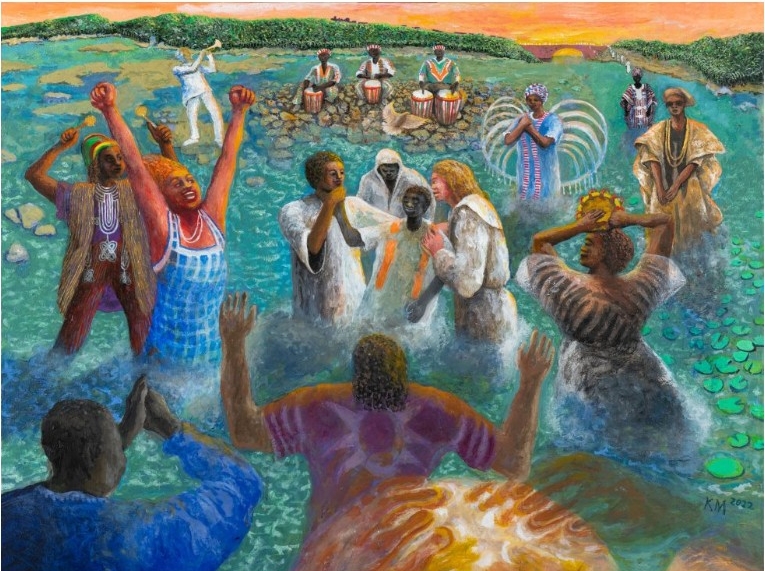
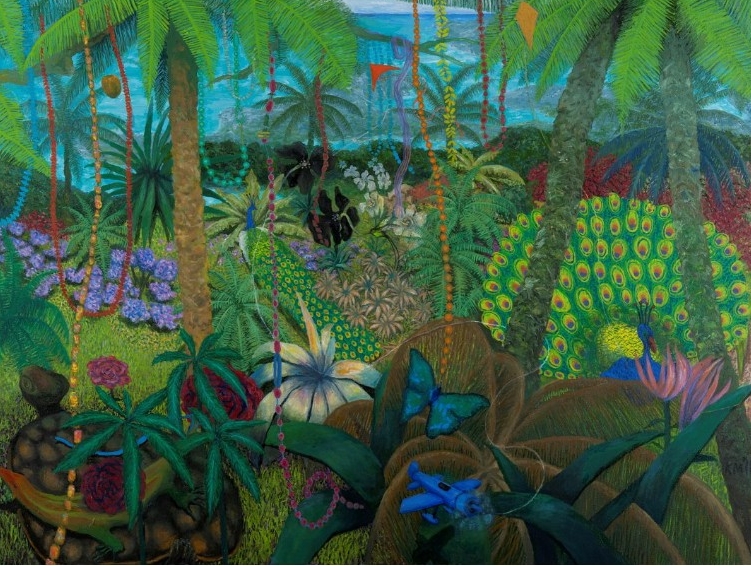
This is Dean Morrison’s “In the Rivers of Babylon.”Keith A. MorrisonThis is Dean Morrison’s “Scenes From Childhood.”Keith A. Morrison
Keith Anthony Morrison was born May 20, 1942, in Linstead, Jamaica. He ran track in high school and took drawing classes at the Jamaica School of Arts and Crafts.
He learned about the School of the Art Institute of Chicago after high school and worked as a disc jockey and sound effects man for a Jamaican radio station to earn money to travel to the United States. He earned his bachelor’s degree at the University of Chicago in 1963 and his master’s degree at the Art Institute of Chicago in 1965.
He had a son, Ron, a daughter, Melinda, and, after a divorce, married Alunan in 2003 and welcomed her children into his family. His daughter and former wife died earlier.
Dean Morrison studied Aristotle and earned a Fulbright Senior Scholar grant. He enjoyed classical music and jazz, and he and his wife traveled the world together.
Dean Morrison “had a great imagination and sense of humor,” his wife said.Susan C. Alunan
He played tennis and ran, and lived in Chicago, Washington, and San Francisco before settling in Meadowbrook. “He had a great imagination and sense of humor,” his wife said. “He was a fun guy.”
In addition to his wife and son, Dean Morrison is survived by a brother and other relatives.
A celebration of his life is to be held later. Brandywine Workshop and Archives has scheduled a showing of his work from 6 to 8 p.m. on Thursday, Aug. 6.
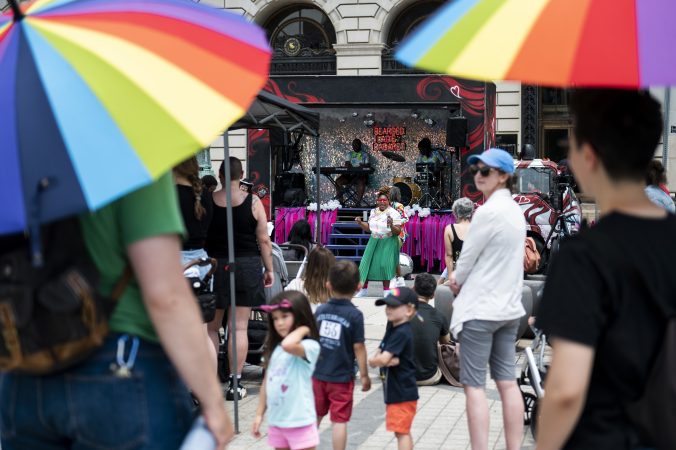
Even as it grapples with having less money to award next year, the Philadelphia Cultural Fund on Wednesday announced this year’s grants to arts and culture groups across the city. The fund is dispersing $5.6 million to 322 organizations representing arts and culture of all types, said Cultural Fund executive director Gabriela Sanchez.
“We have theater, we have dance, we have visual arts, poetry open mics, historic sites, sculpture gardens — it truly ranges across all genres,” Sanchez said.
The 2026 grants also reach beyond Philadelphia’s downtown marquee groups into all sections of the city.
“We are funding Districts 1 through 10, and that is exciting,” she said, referring to the city council districts into which the city is divided.
The Philadelphia Cultural Fund is an important source of money for arts groups, but especially for smaller ones. It is drawing more attention this year after the city’s budget process for fiscal year 2027 left the agency with a cut in funding. Instead of the $5 million it received from the city in FY26, it will now see only $3.5 million.
As a result, it will have to cut the number of grants it gives out in 2027. Although there is currently no specific target for how large that reduction will be, it could mean grants going to 100 fewer groups.
“When you look at 100 organizations that could be funded, that’s terrible, a painful thing to navigate,” said Sanchez. “We have to get creative to find other pathways to meet the need.”
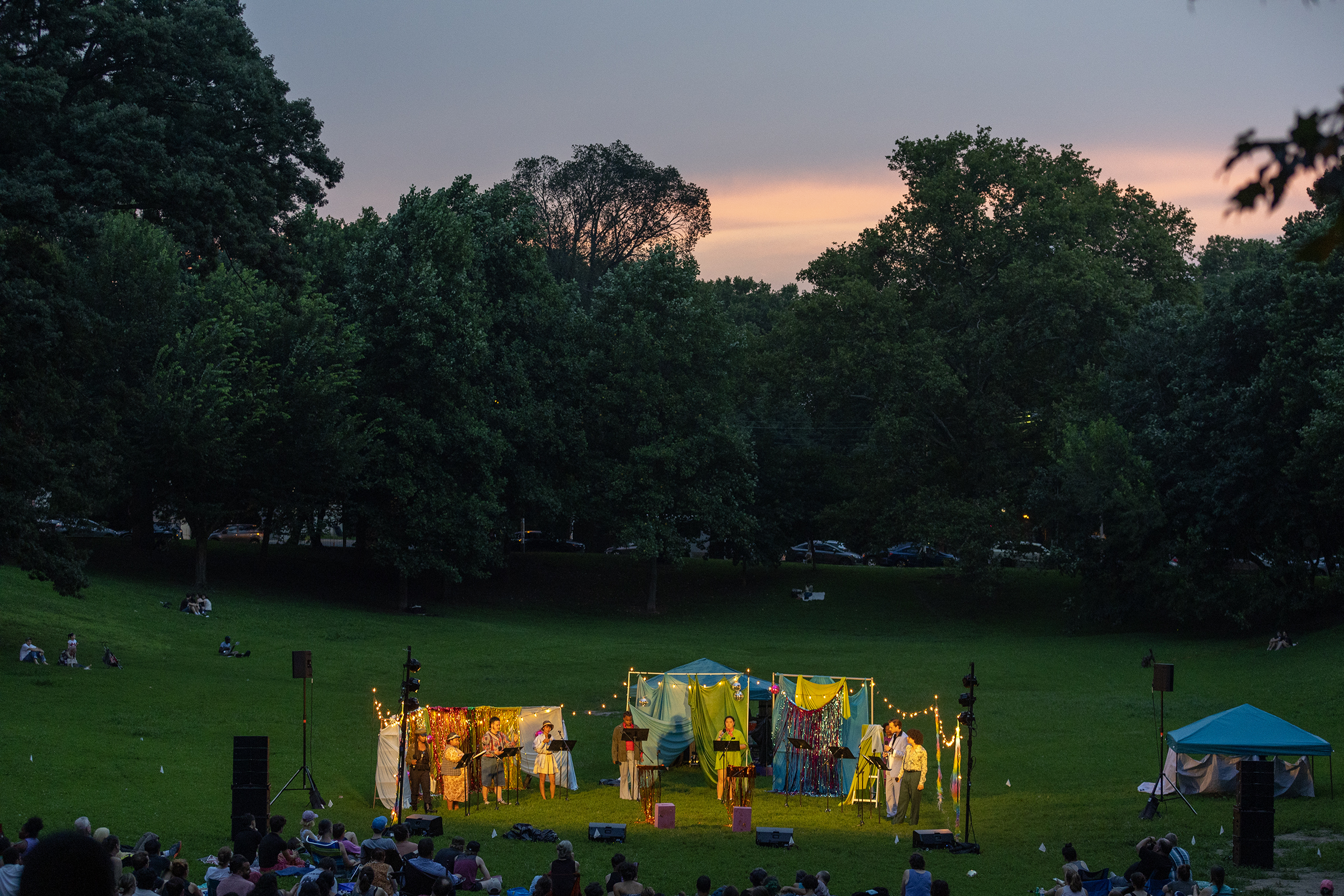
Shakespeare in Clark Park in 2023 performing “Two Gentlemen of Verona” in its rock musical adaptation by composer Galt MacDermot and lyricist John Guare.Charles Fox / Staff Photographer
In the wider world of arts funding, the grant amounts are relatively modest — either $12,875 or $23,375 — but they are critical to many groups, and the funding can have a compound effect.
Artcinia, for instance, is a small nonprofit with a Center City business address, but the organization brings concerts into a wide swath of neighborhoods — 200 performances in a five-year period, reaching 9,000 audience members in Fox Chase, Nicetown, Hunting Park, Manayunk, and elsewhere, according to a recent summary prepared by the group.
Its largest chunk of revenue comes from foundations, of which the money from the Cultural Fund is a part.
That grant is “significant, about 12% to 15% of our operating budget this year,” said Jake Kelberman, Artcinia’s artistic co-director and director of operations. The group presents music in various genres and has engaged hundreds of professional musicians, and, if the funding disappears, “it’s sad that it’s going to affect the volume of programming we can do,” he said.
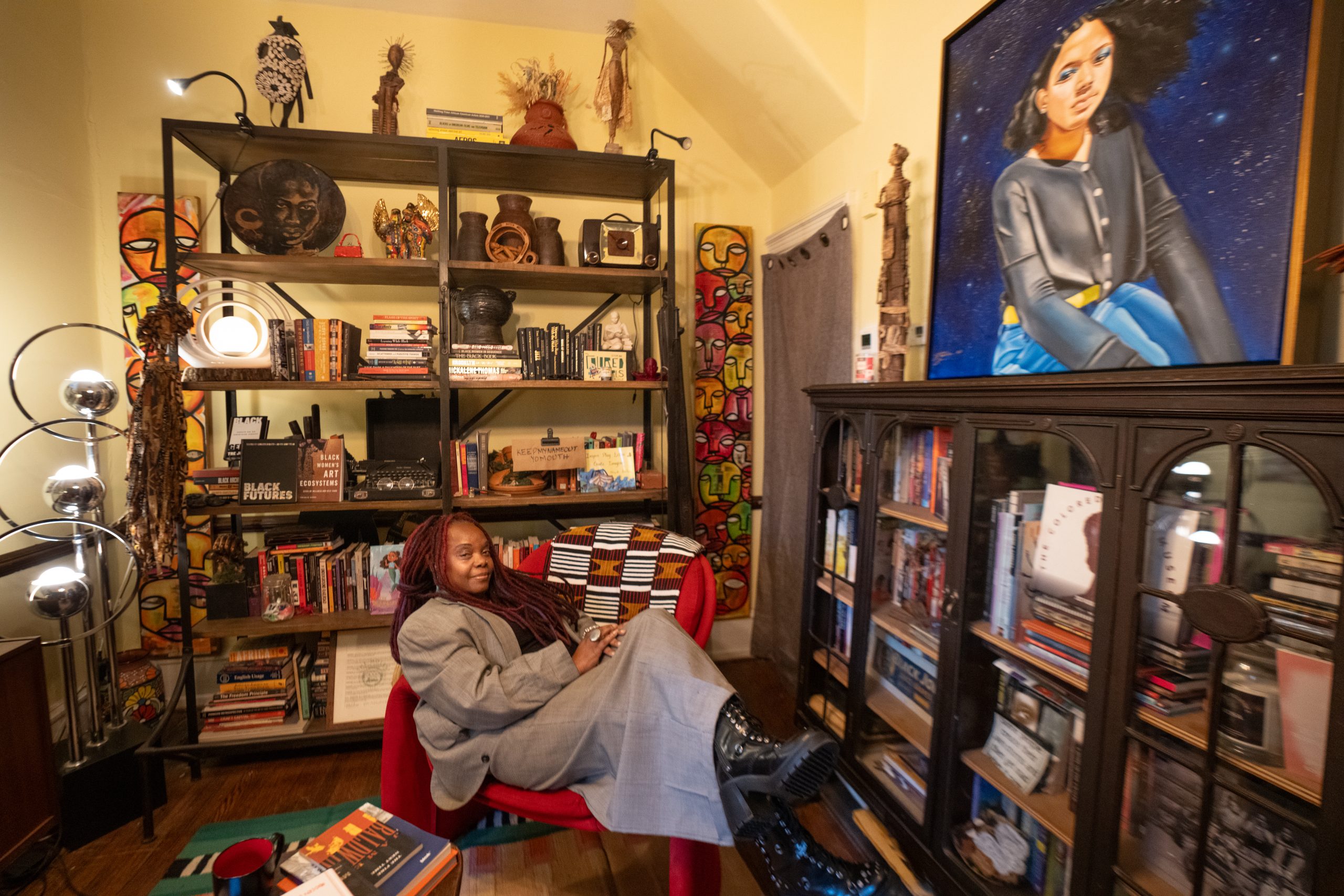
Colored Girls Museum founder and executive director Vashti DuBois at the museum in Germantown.Jessica Griffin / Staff Photographer
Two notable aspects of the Philadelphia Cultural Fund are the fact that it’s money that can be used for general operations (as opposed to being restricted to a specific project, which often requires raising additional money); and that there is no requirement that the money be matched with money from other sources.
These factors makes the kind of funding available from the fund increasingly rare, says Eric César Morales, development director of Movimiento Administradores de Arte en Pensilvania.
“This money from the Cultural Fund is what stabilizes the sector as a whole, because it allows grassroots organizations to become competitive and grow,” said Morales.
Movement of Arts Administrators in Pennsylvania, or MAAP, has often received money from the fund since its inception during the pandemic, Morales said, including $23,375 in this latest round. The money has a salutary effect on the local arts ecosystem; MAAP aims to increase arts access for BIPOC individuals and communities in Pennsylvania by giving Spanish-speaking artists training and resources in navigating the often tricky process of applying for funding.
Morales says that the $1.5 million reduction to the Cultural Fund may not sound like a lot, but with other sources of funding decreasing or threatened, “it’s evidence of a shrinking sector.”
Of the impending city cuts to the fund for FY27, Sanchez said:
“It’s obviously the worst-case scenario that we have to plan for, and I think that it’s also the reality. I hope that people take note of this change and become engaged in the way that they see fit — to talk to their council members around the importance of arts and culture in their neighborhood. That is a form of resilience and also action.”
Forecasters predict it could feel like 100 degrees on Thursday.
“While the district has made significant progress toward ensuring our schools are adequately cooled in order to provide safe and comfortable learning environments, there are still a number of schools with inadequate cooling systems,“ Deputy Superintendent Oz Hill said in a letter to families and staff.
The 52 schools, and early childhood programs located inside them, will all close early, and any after-school activities at those schools are canceled.
Schools’ dismissal times vary based on their start times.
While Thursday is district students’ last day of classes for the 2025-26 school year, staff are expected to report to work Friday.