Tag: Fairmount

  • Economic stagnation means Philadelphia is America’s poorest big city, again | Shackamaxon

    Economic stagnation means Philadelphia is America’s poorest big city, again | Shackamaxon

    This week’s edition of Shackamaxon covers a short-lived reprieve, the future of Market East, and a welcome flood of candidates for city jobs.
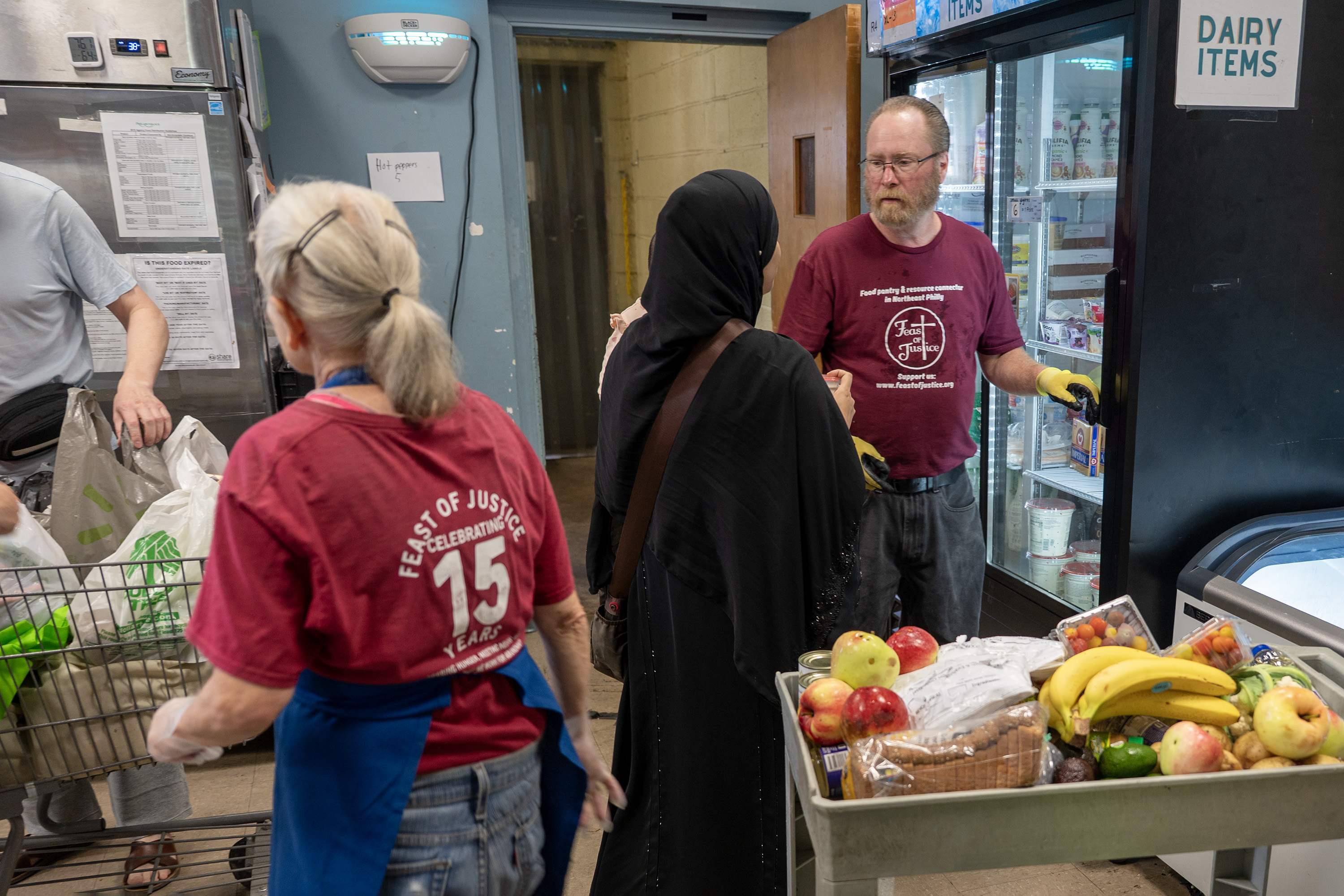
    Volunteers help clients load groceries into their shopping carts at the Feast of Justice Food Pantry in August.Tom Gralish / Staff Photographer

    Poorest, again

    It was nice while it lasted. Last fall, Philadelphia shed a title we’d held for too long: America’s “poorest big city.” One year later, we’re back.

    Unfortunately, this should not be a surprise. While poverty in Philadelphia has slowly receded from 2011’s high of 28%, the city and the region simply do not have enough jobs or economic opportunities to lift up the roughly one in five residents who live in poverty. In fact, research suggests the stagnation has led to Philadelphians of all income levels being less likely to earn more than their parents. Out of the 50 cities economist Raj Chetty looked at for economic mobility, Philadelphia was 50th.

    There are some who’d like to spend their way out of this situation. This would be ill-advised.

    Chicago, a city that shares many of Philadelphia’s positive and negative attributes, has tried that strategy. While Philadelphia’s leaders have spent decades being prudent with money, Chicago’s have repeatedly chosen the easy and popular route. The result is $55 billion in debt, a number that threatens the Windy City’s ability to perform basic services. Philadelphia, on the other hand, has the highest bond rating in city history.

    Still, Philadelphia’s stagnant economy and low wages limit our ability to raise revenue. Despite seeing regular tax increases, Philadelphia spends less than $4,500 per resident. Chicago spends more than $6,000 per resident, and Baltimore spends nearly $9,000.

    Because of Pennsylvania’s uniformity clause, any new taxes would fall on all, including the poorest. They also wouldn’t raise enough money to make a serious difference. Mayor Cherelle L. Parker’s rideshare tax would have raised $50 million. That’s enough to save important jobs in the school district, but it doesn’t come close to covering the billions of dollars’ worth of maintenance our schools need, let alone a sum that could substantively change the lives of the 300,000 residents who live below the poverty line.

    If Philadelphia wants to permanently stop being called America’s poorest big city and supply economic mobility to all our residents, we’re going to need to embrace commerce and growth.
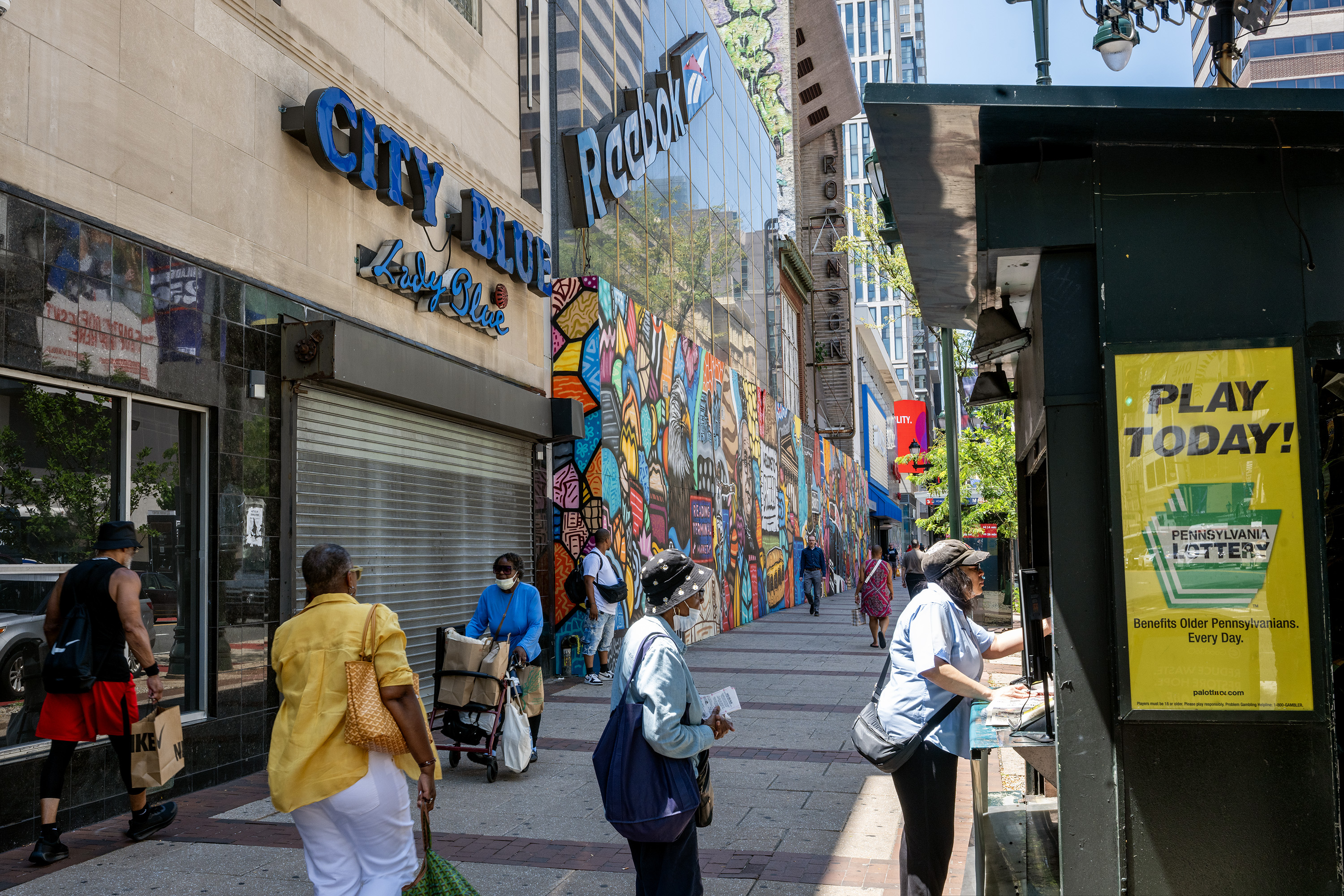
    People walk on the south side of the 1000 block of Market Street in July.Tom Gralish / Staff Photographer

    Market East muddle

    After a year of conversation, Mayor Parker’s Market East Advisory Group has finally issued its recommendations for the long-underutilized corridor. They want to add thousands of homes to the area. Of course, new housing is positive for the city and the region, but the plan is frustratingly unambitious — and poorly timed.

    After all, housing construction is a struggling industry these days. One of Philadelphia’s largest multifamily apartment building contractors, Clemens Construction, is literally closing its doors. Higher interest rates, tariffs on building materials, and other factors have raised costs, and existing residential buildings have struggled to attract tenants, leading their owners to sell to the Philadelphia Housing Authority.

    Market East’s struggles are downstream of the city’s economic stagnation. In a Philadelphia that grows jobs at the same pace as the median American city, Market East would have long ago been filled with office towers and hotels.

    Beyond supplying residents with opportunity, these buildings would make use of the billions of dollars’ worth of infrastructure that already exists in the area, including access to 13 Regional Rail lines, five trolleys, two highways, and both of Philadelphia’s subways. Ideally, this corridor would serve as a regional destination, rather than simply an urban bedroom community.

    Of course, a plan to do just that was attempted … and abandoned. While the Sixers did not do the best job selling the public on their proposed Center City arena, the concept represented a more ambitious alternative than simply building more apartments. It would have made Market East a place the entire Delaware Valley visited again.

    The 60-member committee that drafted the plan has no shortage of brainpower or economic intuition. I know and respect many of its members. But meetings cannot overcome the corridor’s underlying problems.

    There’s no amount of collaboration or tinkering with zoning that can substitute for a cultural shift toward embracing growth and opportunity.
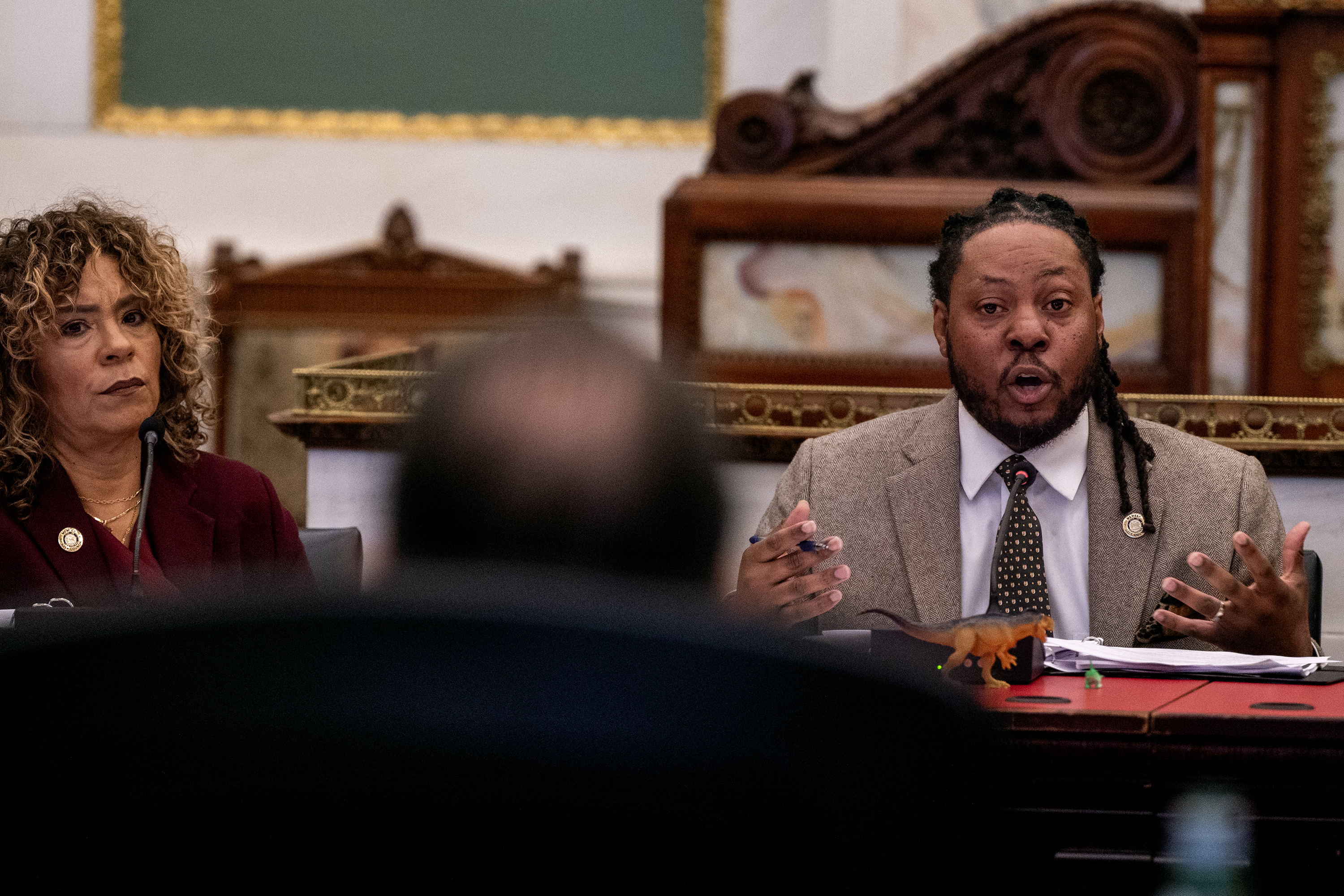
    Councilmember Jeffery Young Jr. questions Drexel president Antonio Merlo during a hearing by City Council’s Committee on Legislative Oversight. Young has the most declared challengers looking to unseat the incumbent.Tom Gralish / Staff Photographer

    Full field

    For years, I have wanted Philadelphia to have more competition for its 10 district Council seats. Often, these legislators see few, if any, challengers once they take office, and even fewer of them actually lose after completing a full four-year term. The fact that district councilmembers have near total control over planning and development within their districts has been cited as an obstacle to fundraising and coalition building by past competitors. Simply put, it is hard to write a check or issue an endorsement if it could have a negative impact on your business or the community groups that you support.

    Next year, however, promises to be different.

    Even if Councilmember Mark Squilla takes a job at the Philadelphia Parking Authority, I expect fierce competition for his 1st District seat. Challengers are also circling around Curtis Jones Jr. in the 4th District, thanks to a series of gaffes as varied as asking transportation officials to delay a bridge reconstruction process and taking a payment from the notorious retirement program known as the Deferred Retirement Option Plan, or DROP.

    The 8th District’s Cindy Bass, who narrowly defeated Seth Anderson-Oberman in 2023, looks set to face him once again. The self-proclaimed former member of the communist party came close to defeating her last time, dominating the decidedly non-proletarian Chestnut Hill in the process.

    But it is the 5th District, represented by Jeffery “Jay” Young Jr., that has brought out the biggest field. While local attorney Jalon Alexander has been openly seeking the seat for some time, he’s been joined by at least four others: Kellan White, a former first deputy city controller, Dustin Dove, a Fairmount resident and lawyer, and Curtis Wilkerson, formerly chief of staff to Darrell L. Clarke, Young’s predecessor. Aissia Richardson, a staffer for State Sen. Sharif Street, told me she’s also planning to run, and local philanthropist Max Tuttleman gave me a statement that suggested that while he’s likely not going to run, he hasn’t totally ruled it out.

    The surge of challengers exists, in part, because Young is seen as the weakest incumbent district councilmember in decades. At the same time, it could also help him survive. The more divided the field is, the fewer votes are needed to win.

    While fundraising and petition gathering could trim the field, it would be against the city’s and the district’s interests for a winner to emerge with a mere 25% of the vote. Especially if their support is concentrated in just one neighborhood or community in what is an extremely racially and economically diverse district.
  • The best spots to cheer on runners at the 2026 Philadelphia Marathon

    The best spots to cheer on runners at the 2026 Philadelphia Marathon

    Philadelphians, prepare to take your mark. You’re in for one of the city’s biggest racing events this weekend.

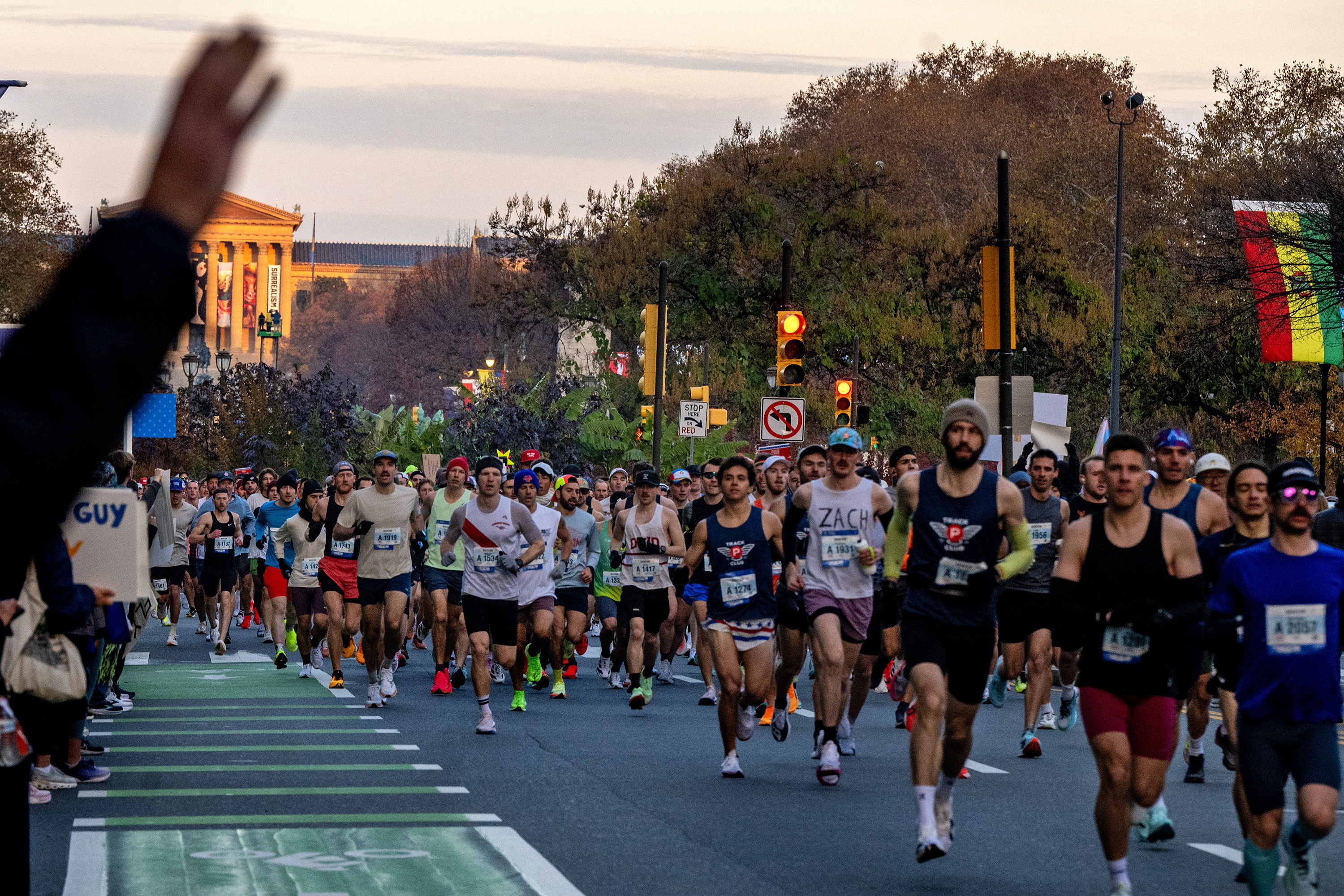
    The 2026 Philadelphia Marathon begins at 7 a.m. on Sunday, Nov. 22. Thousands of runners from around the world will reach the start line at 22nd Street and the Benjamin Franklin Parkway.

    The weekend, which includes an expo, kids’ run, 8K, half-marathon, and full marathon, is expected to draw 40,000 runners across its races, along with thousands of spectators cheering them on.

    Read below to find the best places to celebrate your favorite runner, cheer on your local run club, or high-five strangers along the route.

    This guide will also help you figure out what to pack, what to wear, and even fun sign suggestions.

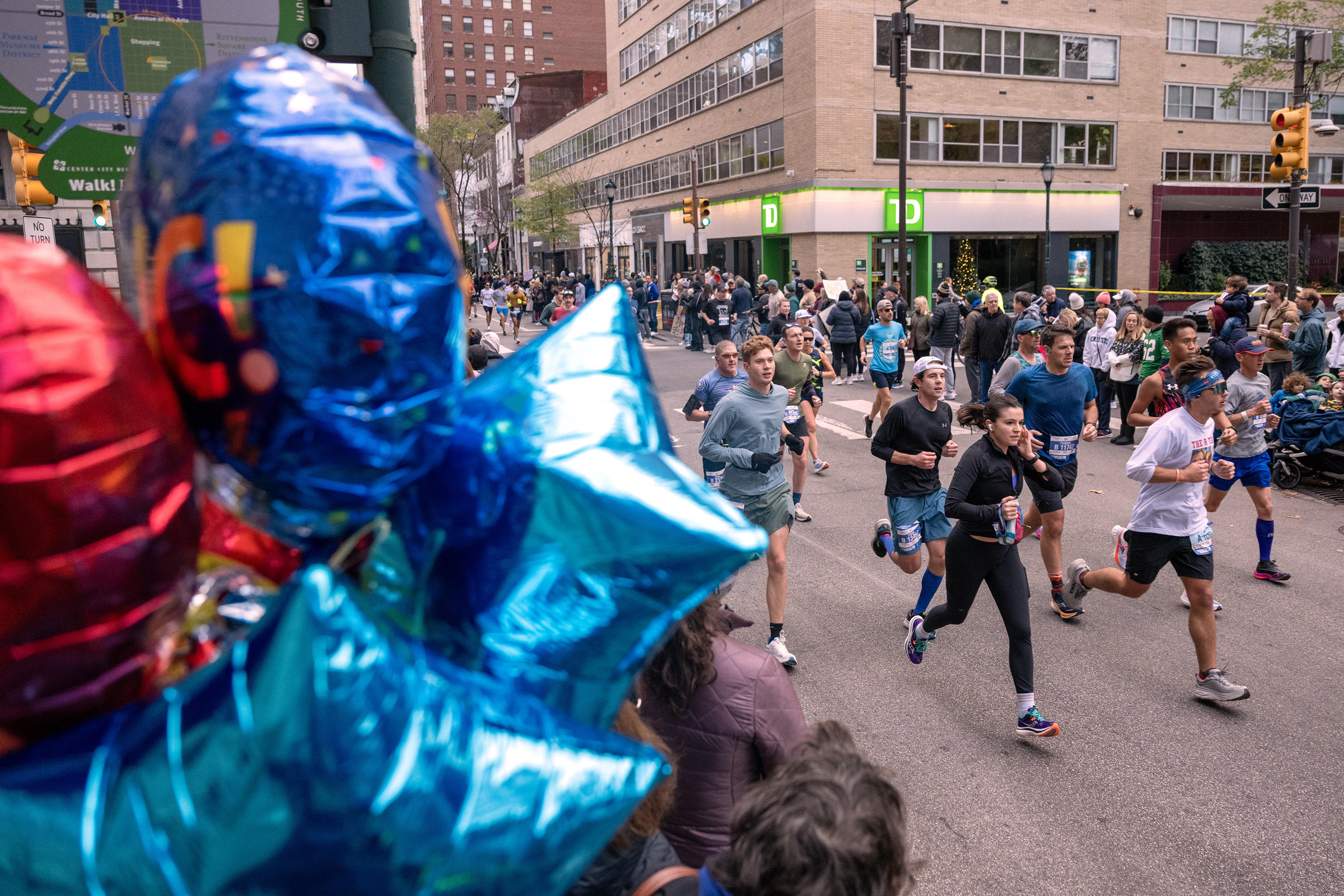
    Runners approach Rittenhouse Square on Walnut Street during the 2024 Philadelphia Marathon.Tom Gralish / Staff Photographer

    Center City

    Start line

    The start line will no doubt be the most jam-packed spectator location, but the energy will be at its peak when the racers line up at their corrals. To soak up the energy, find a spot and pull up a chair amid the crowd at 22nd Street and the Benjamin Franklin Parkway.

    12th and Race Streets

    Avoid the thick crowds and security checkpoints at the start line, and walk down to where the crowds thin out at N. 12th and Race Streets for a view of the first mile.

    Old City

    Second and Race Streets

    Arrive in Old City at Second and Race Streets for mile two of the race. The Benjamin Franklin Bridge and Delaware River waterfront provide a scenic backdrop.

    Columbus Boulevard and Spruce Street

    At mile three, enjoy the views of the race and the Delaware River waterfront at this spacious location on Columbus Boulevard.

    Sixth and Walnut Streets

    Hit the brick roads in Society Hill, near Washington Square, for mile five of the race. While parking might be a barrier, seeing runners pick up steam between these historic rowhouses at mile five is worth the hassle.

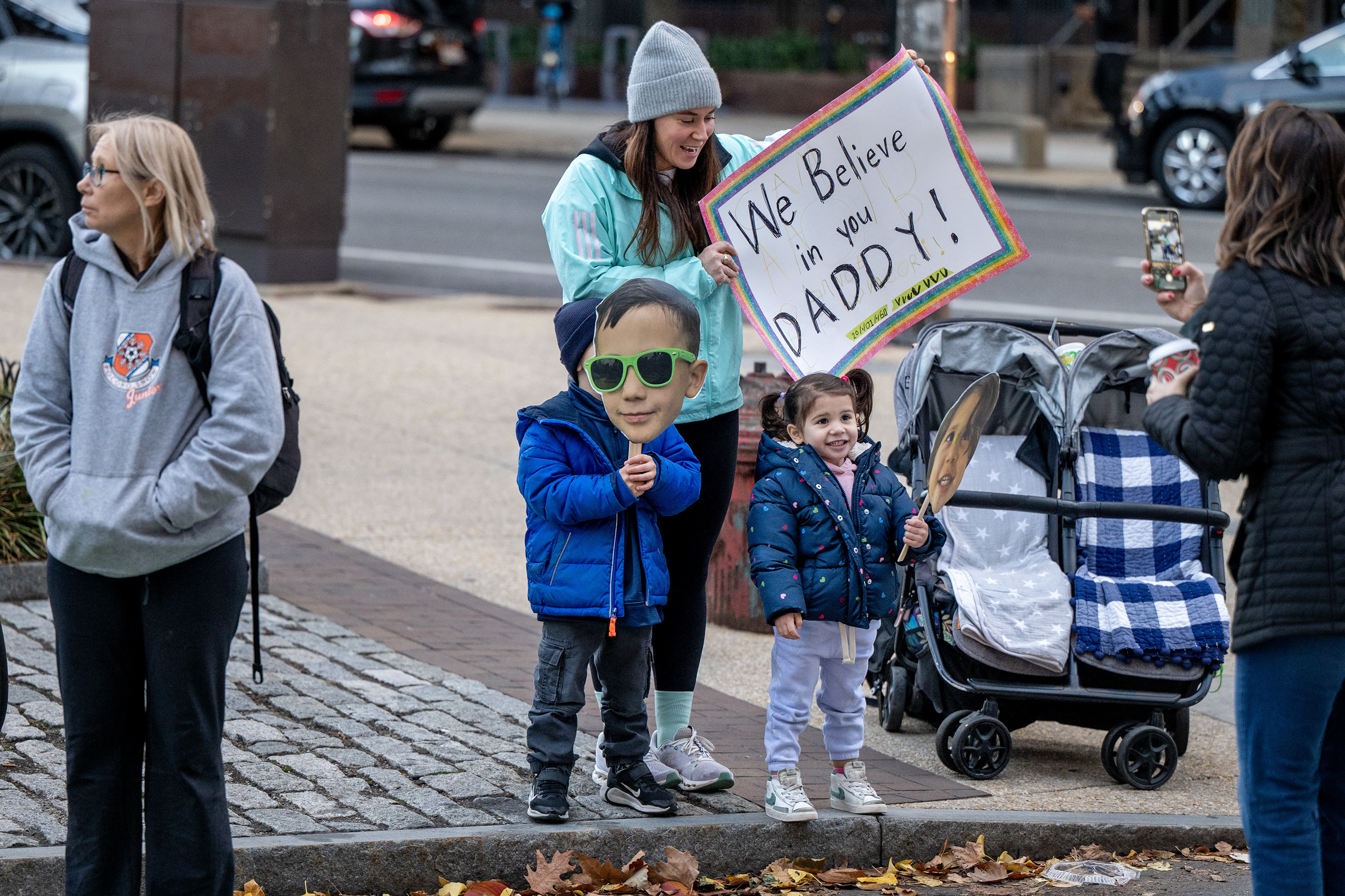
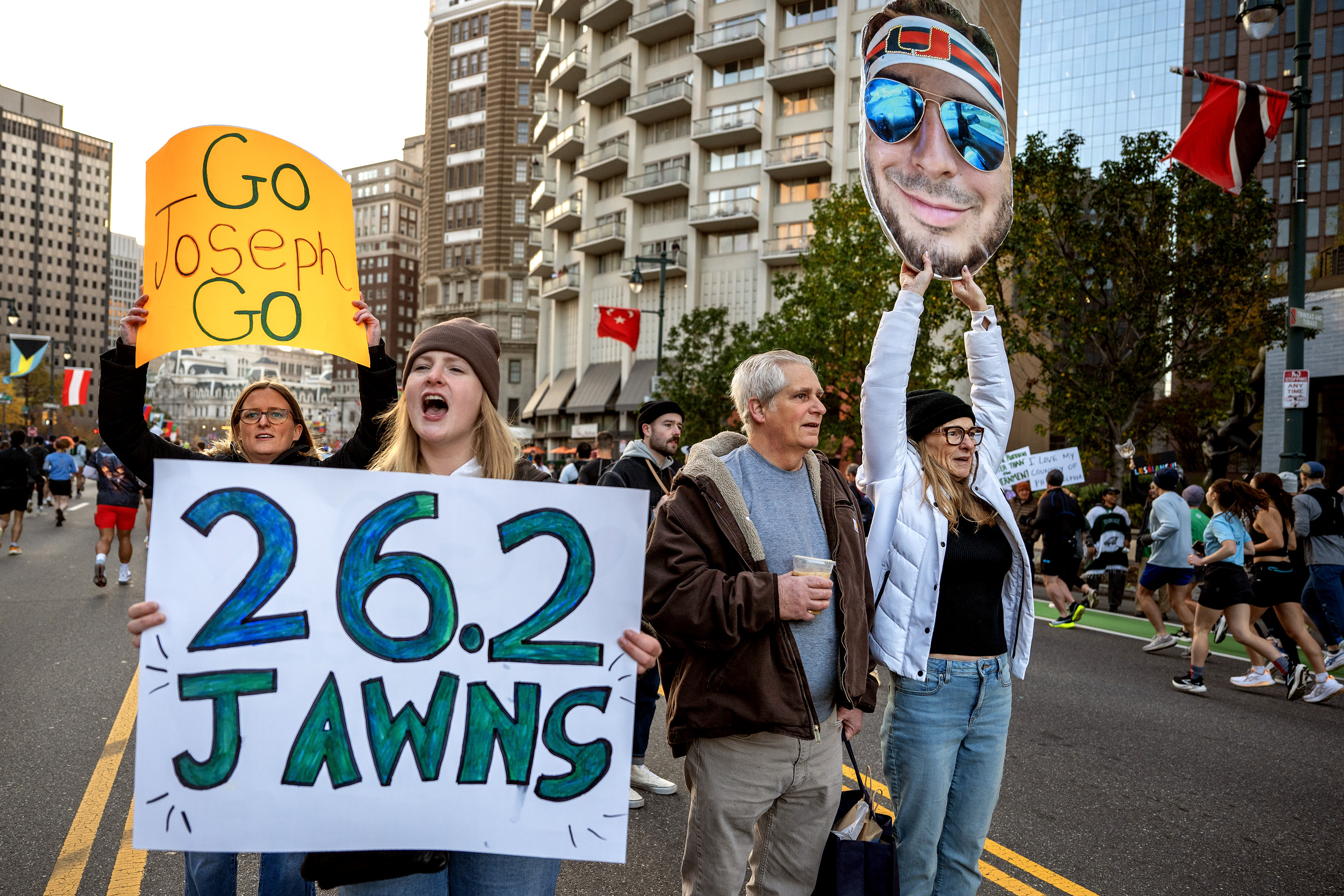
    Amanda Carter and her children, Quinn, 3, and Cameron, 5, pose for a photo at 16th and Arch Streets at the start of the 2024 Philadelphia Marathon Sunday, Nov. 24, 2024. The kids had masks with dad Ron Carter’s face. They’re from New York City and this is Ron’s first marathon. Amanda who had done three, says “’m usually the one running.”Tom Gralish / Staff Photographer

    South Philly

    South Front and Pemberton Street

    The runners will blaze through Queen Village near mile four before heading northwest toward Center City and eventually West Philly.

    West Philly

    South 30th and Walnut Street

    Head to University City to watch runners cross the Walnut Street Bridge, which draws the marathoners to West Philly before their northern climb toward the Philadelphia Zoo.

    34th Street and Mantua Avenue

    Head to Mantua at mile eight for a view of the race, where you might be able to snag a parking spot if you arrive early enough.

    Girard and Parkside Avenues

    Spectators can park their cars near the intersection of Parkside and Girard to cheer their favorite runner on at mile nine and at mile 12 across the Girard Avenue Bridge.

    East Fairmount Park

    Fountain Green and Reservoir Drive

    Head to East Fairmount Park for two opportunities to see runners along the course. Spectators can wave their signs and snap pictures of their favorite runner at mile 14 and 15.

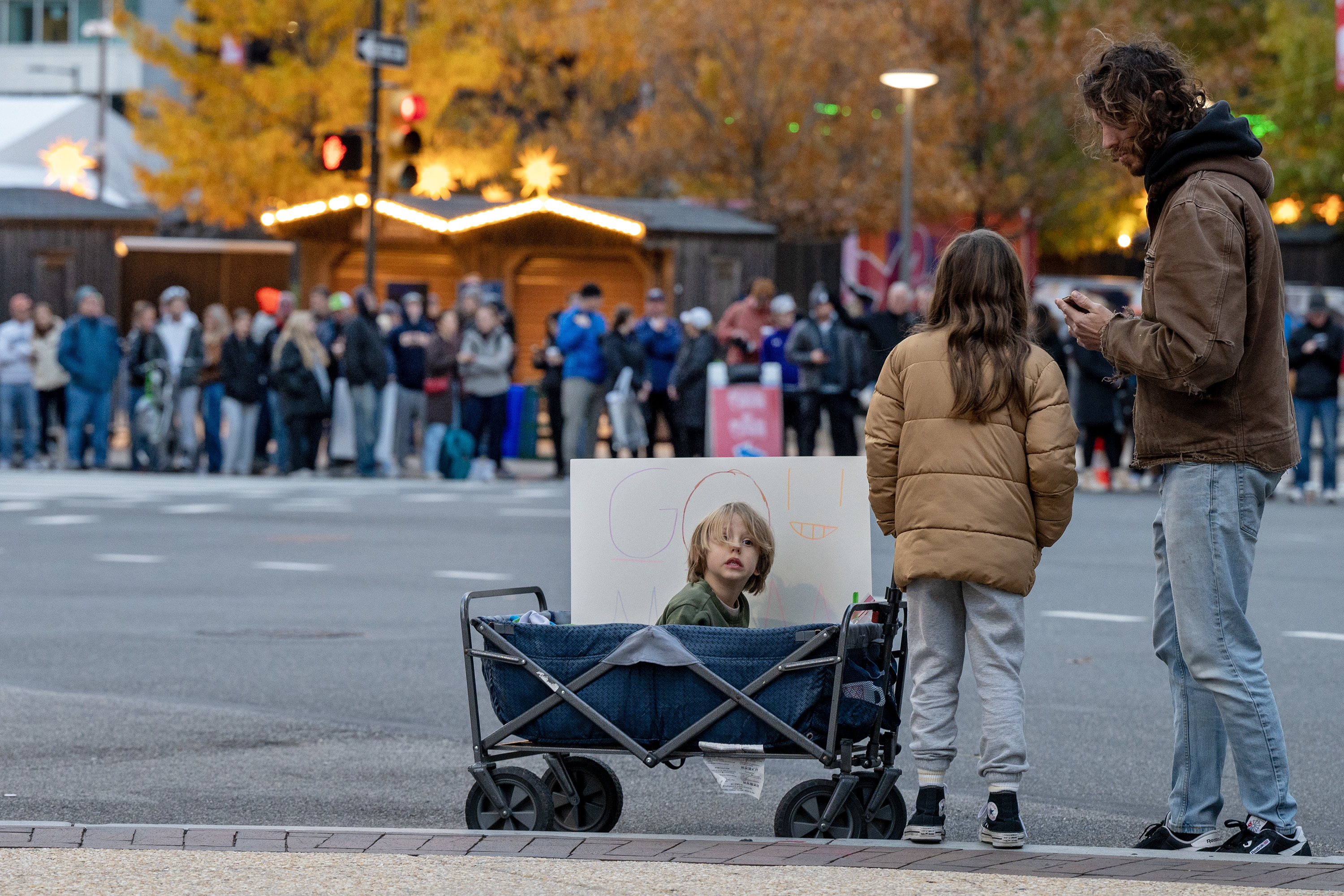
    Caleb Kauffman tracks his wife Sarah on his phone as he waits with their children, Penny and Everett, across from LOVE Park at the start of the 2024 Philadelphia Marathon.Tom Gralish / Staff Photographer

    East Falls

    Kelly Drive and South Ferry Road

    In East Falls, enjoy the vibrant view of the back end of the race, with runners passing at miles 18 and 22 along the Schuylkill.

    Manayunk

    4266 Main St.

    Cheer on runners as they reach the turnaround point on Main Street in Manayunk, around mile 20. They’ll need the encouragement as they head into the final six miles of the race.

    Kelly Drive — South of Fountain Green Drive

    Post up at the Schuylkill River Trail, south of Fountain Green Drive, for the final two miles in the route toward the Art Museum.

    Finish Area

    • The finish area, located at the North viewing entrance on Kelly Drive at 25th Street, will be another jam-packed viewing area. The crowds will be worth it when runners cross the finish line.
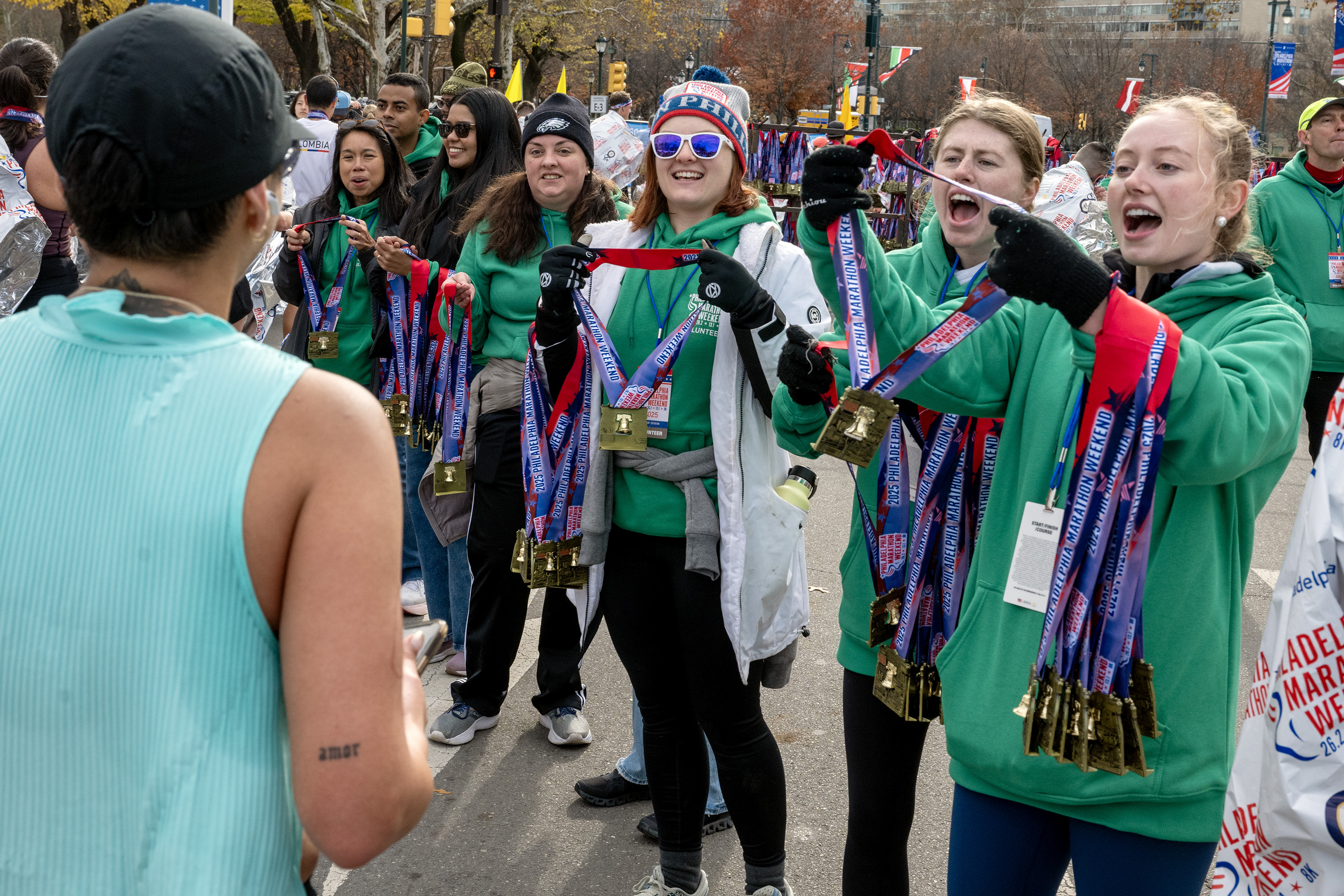
    A line of race volunteers with medals greet runners finishing the 2025 Philadelphia Marathon.Tom Gralish / Staff Photographer

    Things to bring

    • Good shoes: While you won’t be running the marathon, chances are you will be on your feet for a bit. Whether you stand in one place or walk from one mile marker to the next, give your lower extremities some comfort during the hours-long race.
    • Gloves, jackets, and blankets: Bundle up with added layers and an umbrella this weekend. Temperatures will flirt between 45 and 50 degrees early Sunday, with a high chance of rain throughout the day.
    • Easily recognizable outfit: Don’t be afraid to stand out on race day. Pull out your brightest hoodie or revisit your Halloween costume so the person running the race can spot you among the thousands in attendance.
    • Water bottle and thermos: It’s unlikely you will break a sweat, but have water on standby to quench your thirst amid the screams and cheers. A hot beverage will also keep you warm amid the cold, rainy weather. But keep in mind that glass bottles other than baby bottles are not allowed past the secured race entrances by the start and finish lines.
    • Snacks: Don’t spectate on an empty stomach. While you might have postrace meal plans, bring snacks for yourself and for the runners extending their hands for a treat or two.
    • Portable phone charger: Trying to navigate through the marathon crowd with a dead phone could be a nightmare. Bring a portable charger for yourself, and offer to have one for someone you’re supporting.
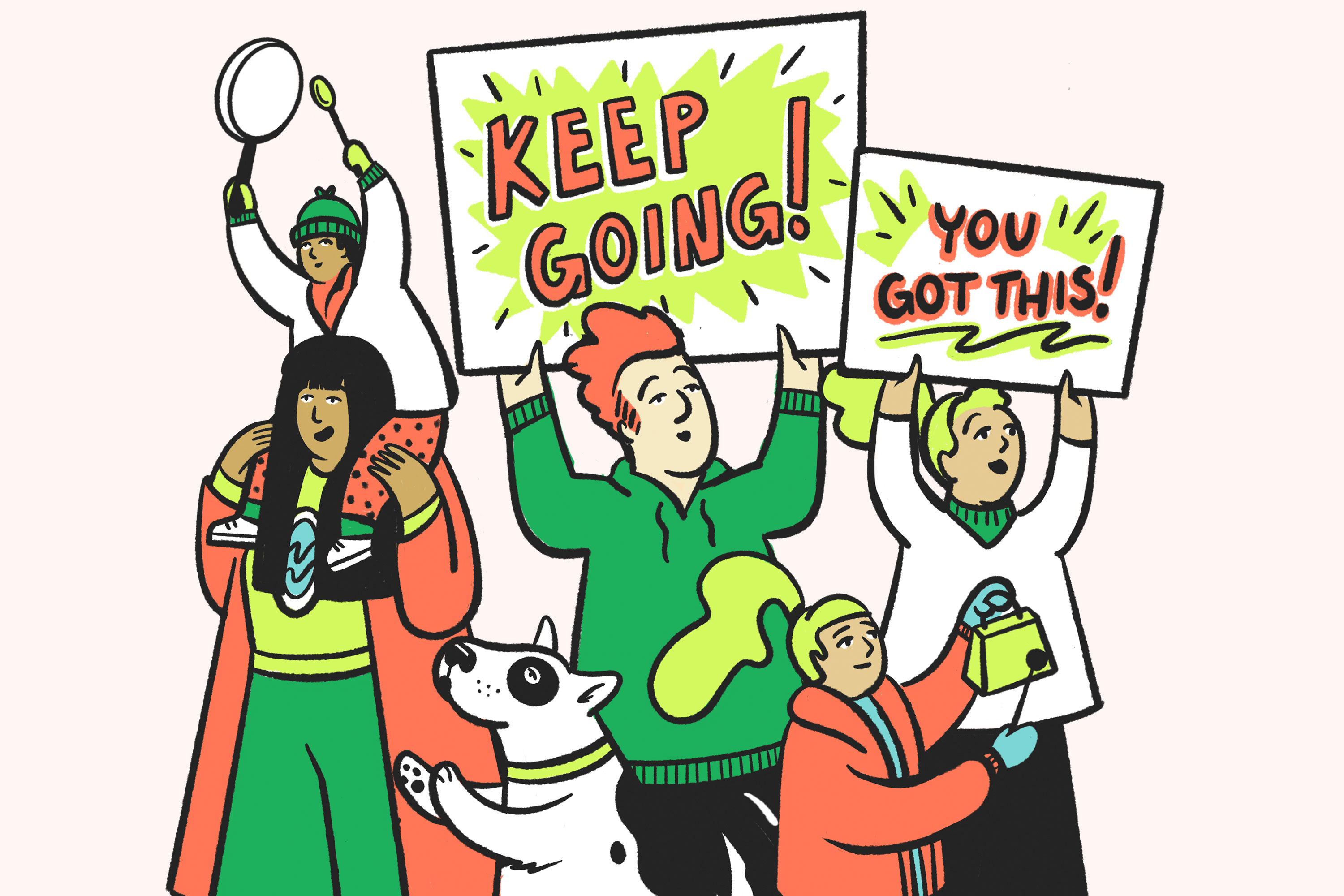
    • Speaker, cowbells, and signs: Give your vocal cords a break, and blast tunes from a portable speaker, dangle a cowbell, or raise a sign to give runners a boost of encouragement along the grueling route.
    Your guide to the 2025 Philadelphia MarathonTara Jacoby / For the Inquirer

    Fun sign ideas

    If you’re the encouraging type or prefer something a bit tongue-in-cheek, there are several fun, Philly-coded signs that bring a smile to a runner’s sweat-covered face.

    • You run better than SEPTA
    • Become one with the wind
    • Proud of you, perfect stranger
    • Run hard, stay gritty
    • Thoughts and prayers for your knees
    • I also trained to hold this sign up
    • Remember: You paid to do this
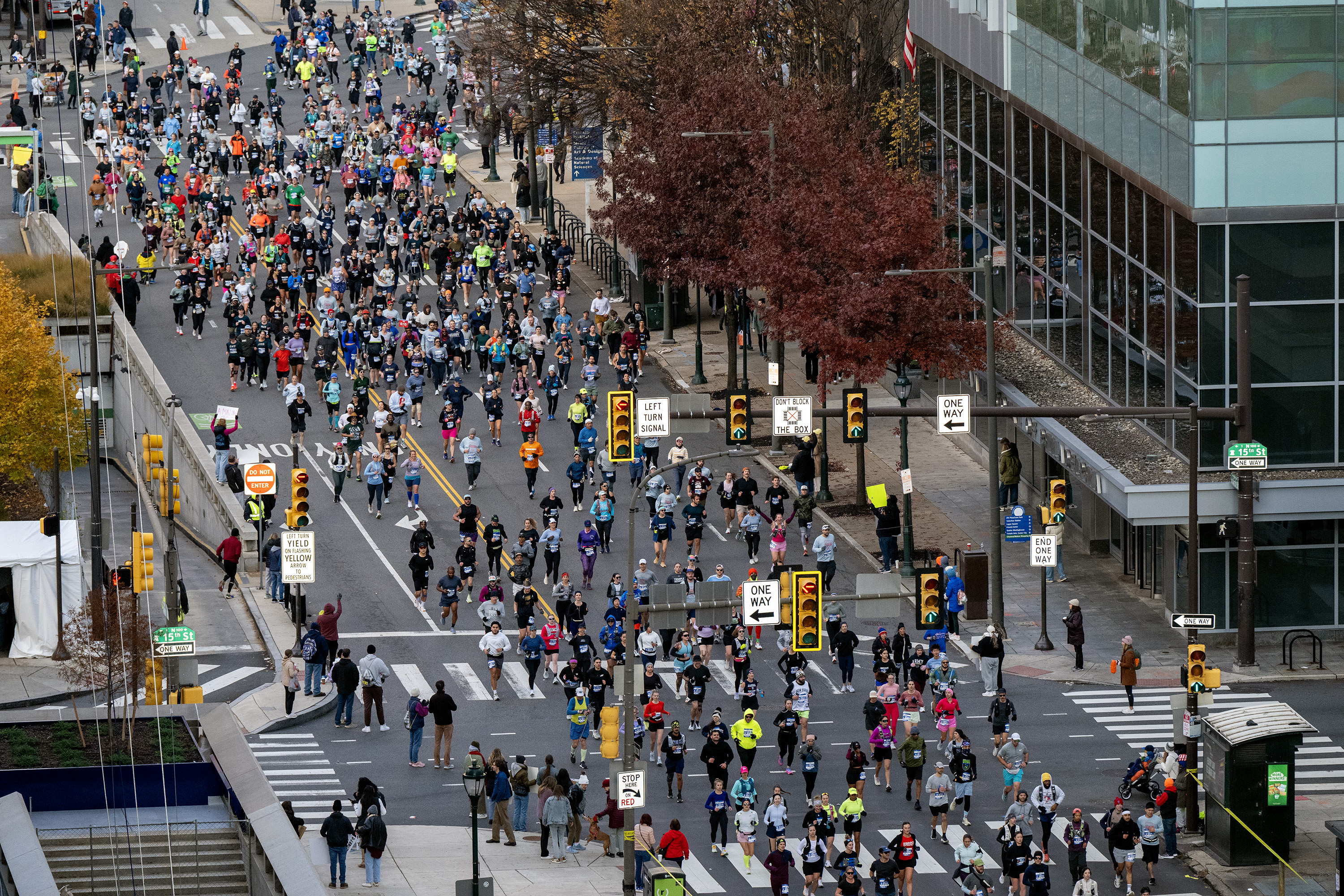
    Runners turn from the Benjamin Franklin Parkway (upper right) onto Arch Street heading to 15th Street (bottom) in the first mile of the 2025 Philadelphia Marathon.Tom Gralish / Staff Photographer

    Public bathrooms

    For runners, there will be portable toilets at the start and finish area, and at every hydration station.

    Public restrooms will be available at various locations along the route for spectators. Locations include Lloyd Hall on Boathouse Row, the East Park Canoe House at 2400 Kelly Drive, and several bars and restaurants on Main Street in Manayunk.

    Download the Scuci app for a full, comprehensive list of restroom stops along the course.

    Food and drink specials

    Eggcellent

    After conquering the miles, head to Eggcellent in Old City with your finisher medal for 10% off all food purchases

    Recipe Philly

    Recipe Philly is offering carb specials all weekend, and a free cannoli to all runners with a bib or medal. The specialty menu includes chicken Parmesan, penne alla vodka, and a linguine with clams and shrimp.

    Hard Rock Cafe

    Load up on carbs before the big race at Hard Rock Cafe from 4-8 p.m. on Friday. For $27, guests can enjoy unlimited access to the restaurant’s build-your-own pasta buffet and unlimited soft drinks throughout the meal.

    Bayou Bar & Grill

    The Manayunk restaurant is offering $5 espresso martinis and bacon, egg, and cheese sandwiches.

    Blondie

    Blondie is offering a special Marathon Cocktail in celebration of the annual race.

    Platform Z

    All runners with their race bib or finishing medal will receive $1 off every sushi taco, and $1 off every ramen bowl in store at Platform Z.

    La Roca

    La Roca is selling $5 Marathon Margaritas on race day.

    SOMO Manayunk

    SOMO Manayunk will offer $5 mimosas on Sunday.

    Taqueria Amor

    The Mexican restaurant is offering Marathon brunch specials, along with holiday food and drink options.

    The Brass Tap

    The Manayunk bar is giving away free beer to patrons with a race bib.

    Love City Manayunk

    All runners receive $2 off any draft beer at Love City Manayunk.

  • One of Philly’s favorite pop-up bakers is going brick-and-mortar in Point Breeze

    One of Philly’s favorite pop-up bakers is going brick-and-mortar in Point Breeze

    Northeast Philly native Zach Posnan was teaching middle-school math and science in Kensington when the pandemic hit. Along with everyone else, Posnan got swept up in the sourdough craze.

    Unlike everyone else, he never let go.

    “Since I was using ratios in my baking and also teaching ratios to sixth graders, I’d bring my computer to where I was rolling out dough and putting all the ingredients together and use baking in my examples,” he said.

    When restrictions lifted and in-person classes resumed, he started bringing his loaves to school and serving breakfast in class.

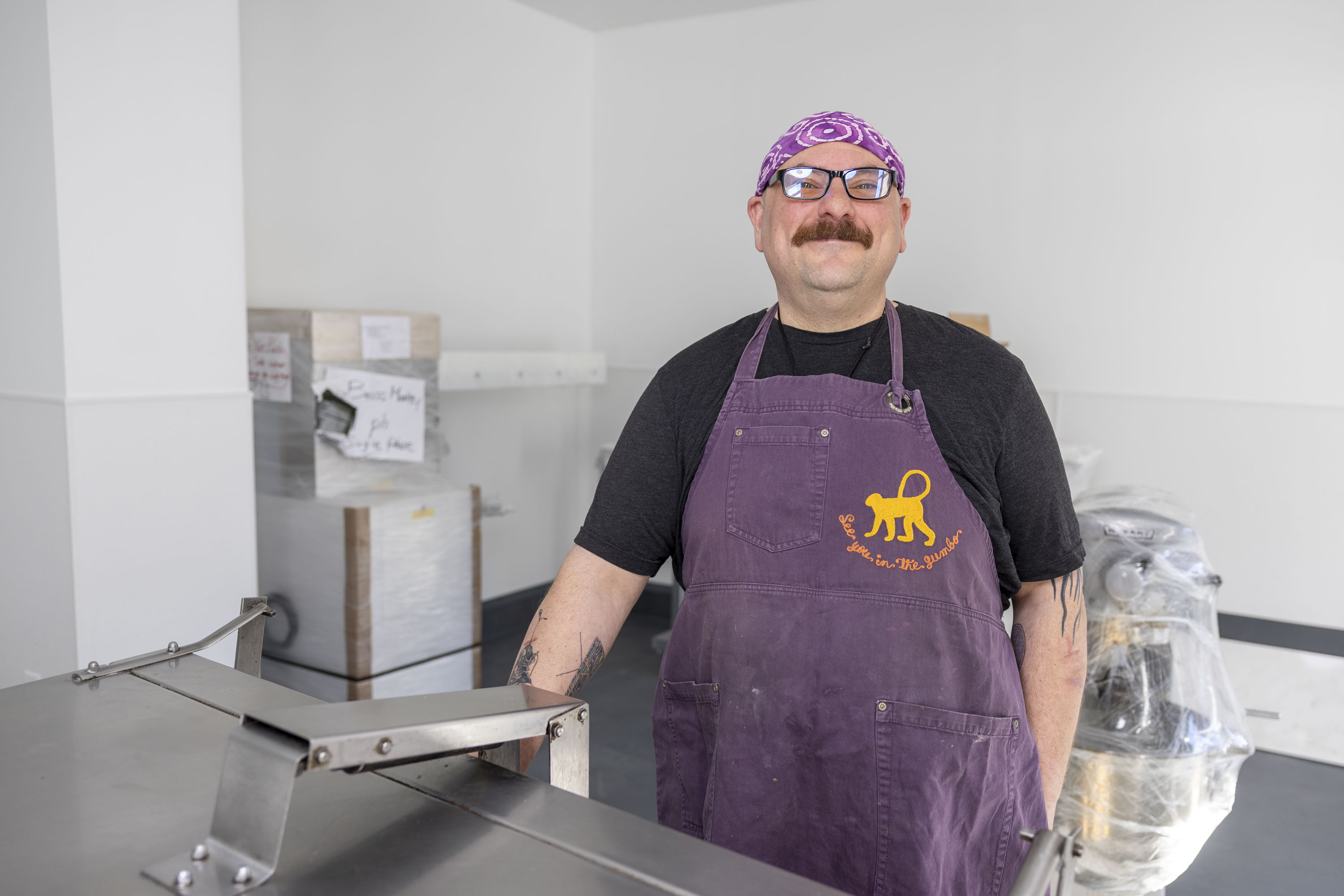
    Zach Posnan, Owner of Brass Monkey Bread, poses for a portrait in his new space where he will setup his bakery on Tuesday, Nov. 17, 2026, in Philadelphia, Pa.Tyger Williams / Staff Photographer

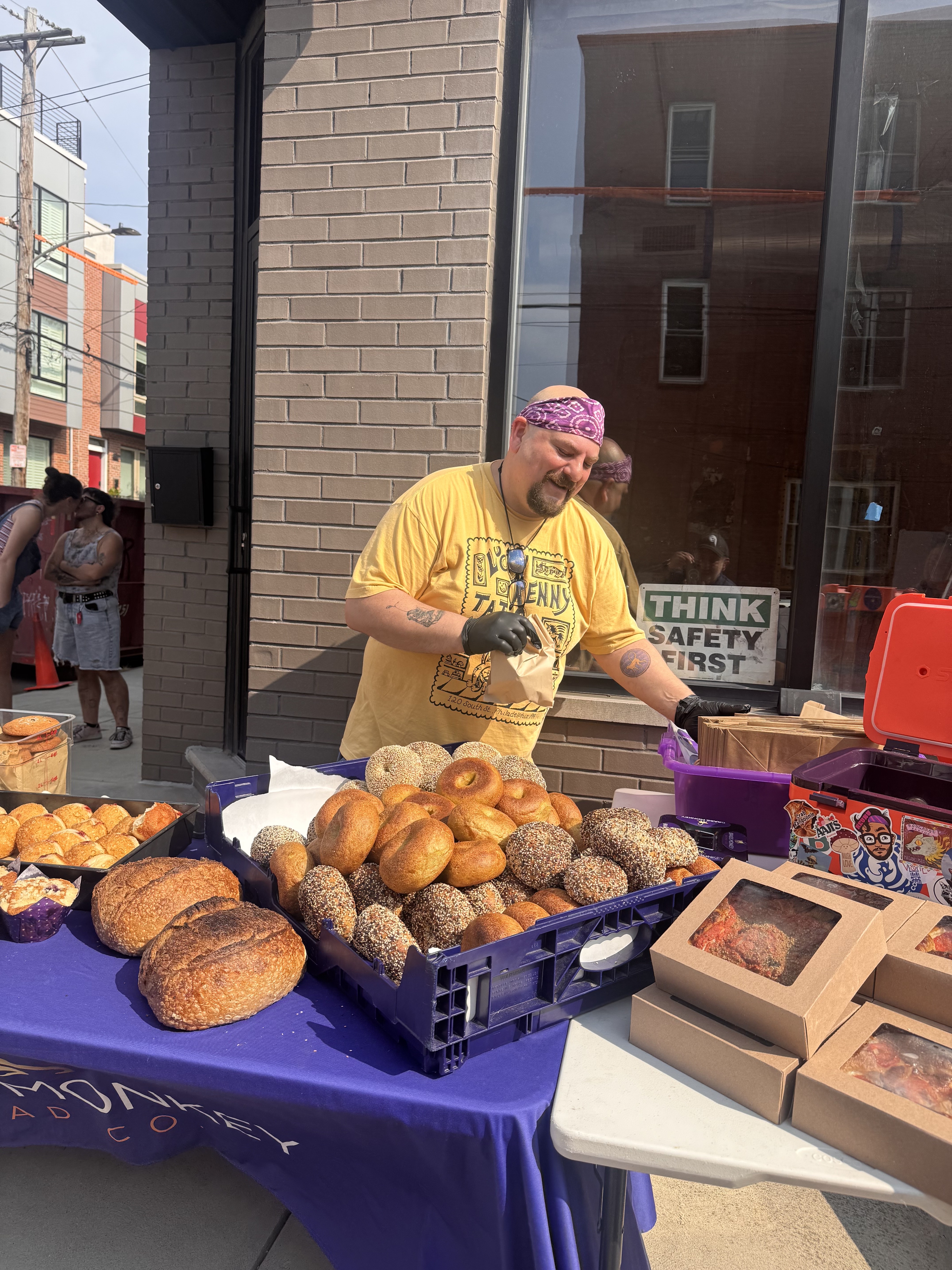
    This hobby eventually turned into a business: Brass Monkey Bread. For the last four years, Posnan, 45, has been one of Philly’s hardest-working pop-up bakers, setting up his bright purple-clothed table several days a week at cafes and markets all across town, including Breezy’s Deli and Market on Washington Avenue, Ellie and Bird Coffee in Port Richmond, Riverwards in Fishtown, Bodie in Fairmount, and several others. Posnan’s bagels, sourdough loaves, and tomato pies (easily some of the best in the city) sell out practically instantly.

    At last, that table is heading into retirement. Posnan has the keys to a brick-and-mortar bakery at 1439 S. 20th St. in Point Breeze, at 20th and Dickinson.

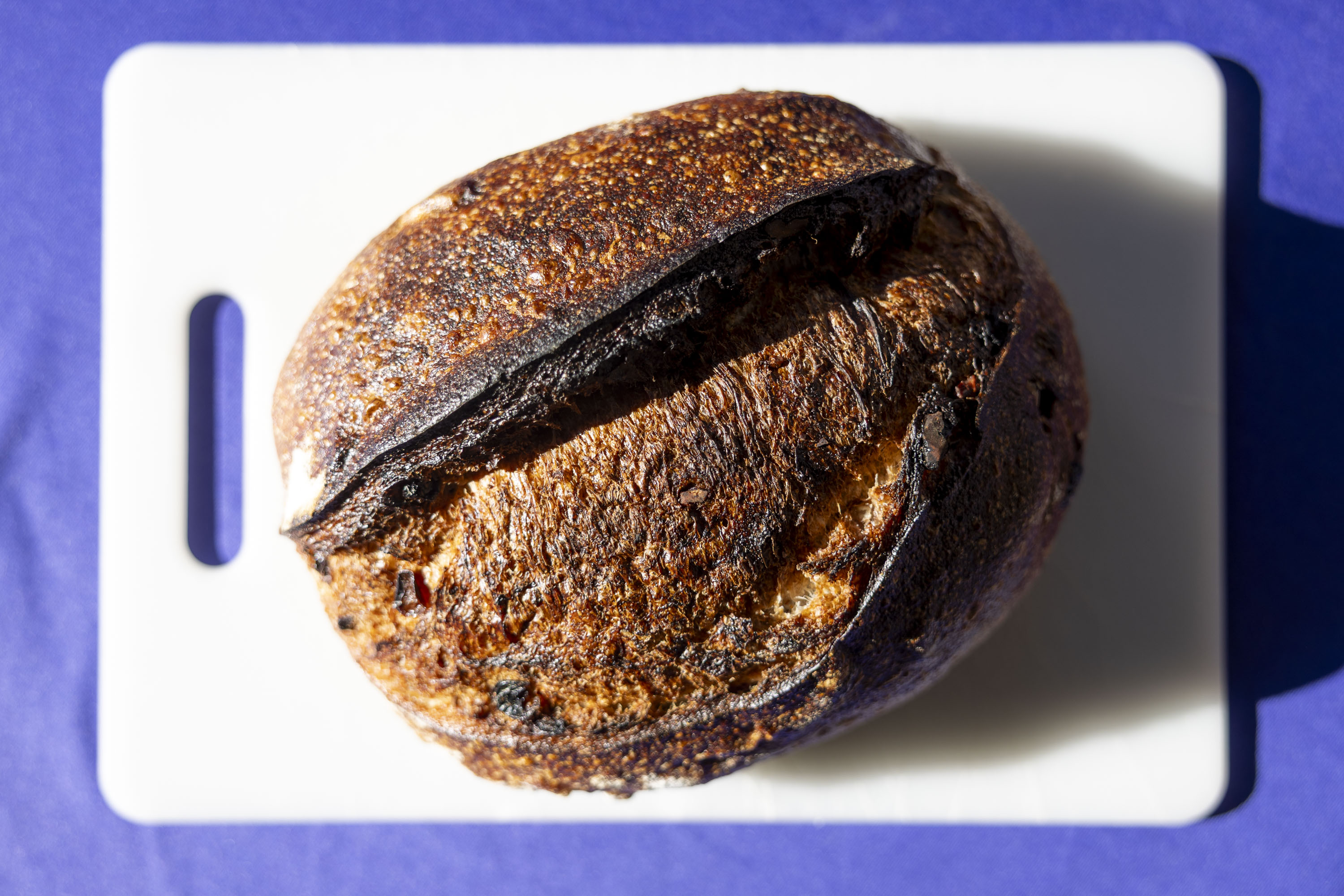
    The Cranberry and Walnut Sourdough made by Zach Psnan from Brass Monkey Bread on Tuesday, Nov. 17, 2026, in Philadelphia, Pa.Tyger Williams / Staff Photographer

    Posnan, who grew up in Elkins Park from age 7, moved to South Philly in 2009. Until recently, he was an award-winning teacher — he received a Lindback award for distinguished teachers in 2023 for his work at Conwell Middle School in Kensington.

    “I miss working with the kids, but I don’t miss all the other stuff,” he said, referencing bureaucratic challenges. “At some point, I will start doing classes at the bakery for both adults and kids.”

    Posnan signed the lease on Brass Monkey’s 1,400-square-foot space in March, but gutting the long-empty storefront — a former hoagie shop — was a long process. He received the keys last week and projects it will take six months to fully outfit the space.

    Baker Zach Posnan at one of his pop ups.courtesy of Brass Monkey Bread

    Funding for the brick-and-mortar has come from two sources so far: a GoFundMe, and a Kickstarter-esque fundraiser that Posnan calls “100 Little Monkeys” for individuals who invest $1,000 to receive perks like merchandise and free breakfast for a year.

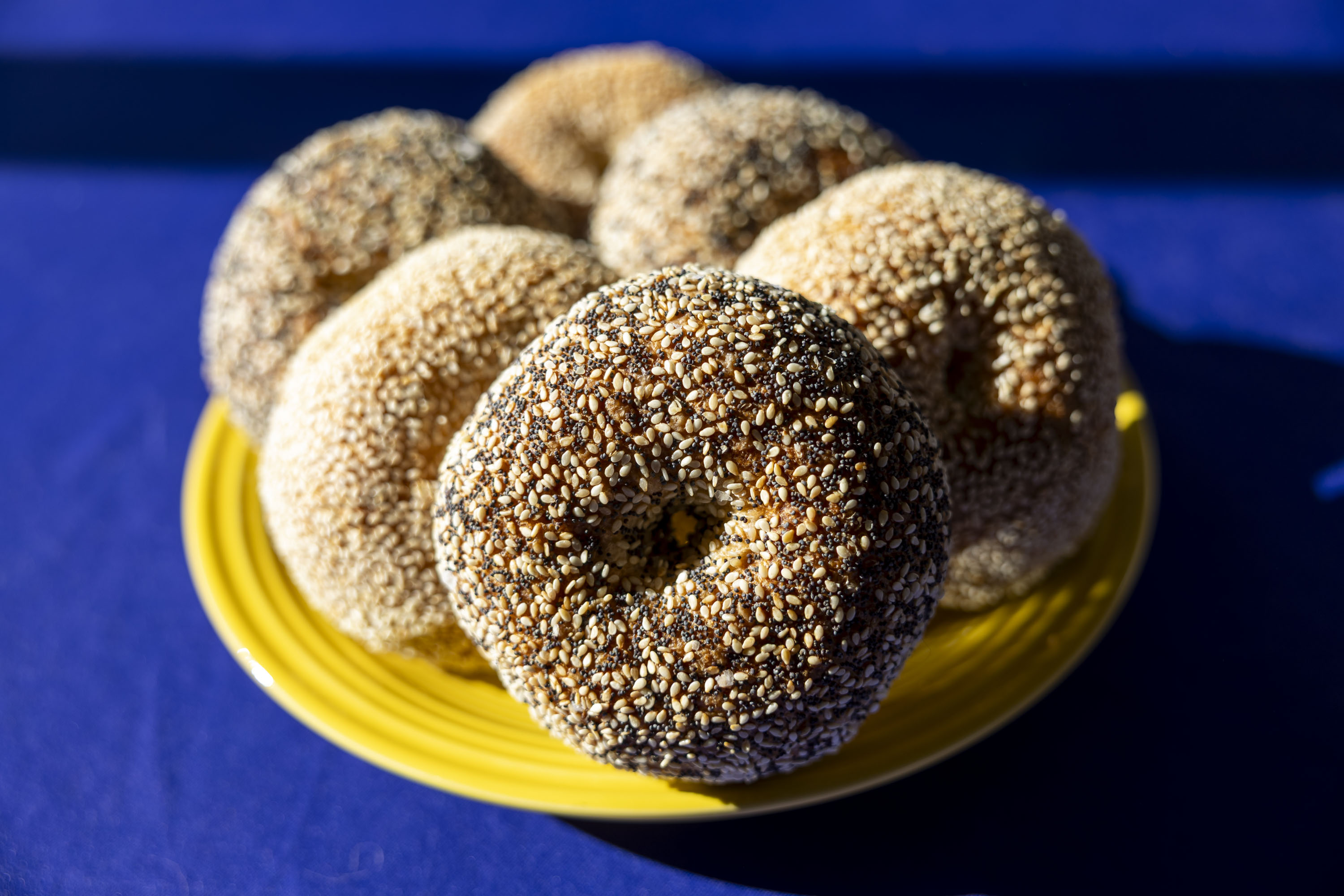
    He anticipates the future menu will include his tomato pie, sourdough loaves, soft pretzels, babka, muffins, and his distinct bagels, in flavors like curry and “something” — coated in sesame, poppy, and flaky salt. (“It’s not quite everything but it’s definitely not nothing,” he said.) There will also be a coffee program, sandwiches, and wholesale bread for restaurants.

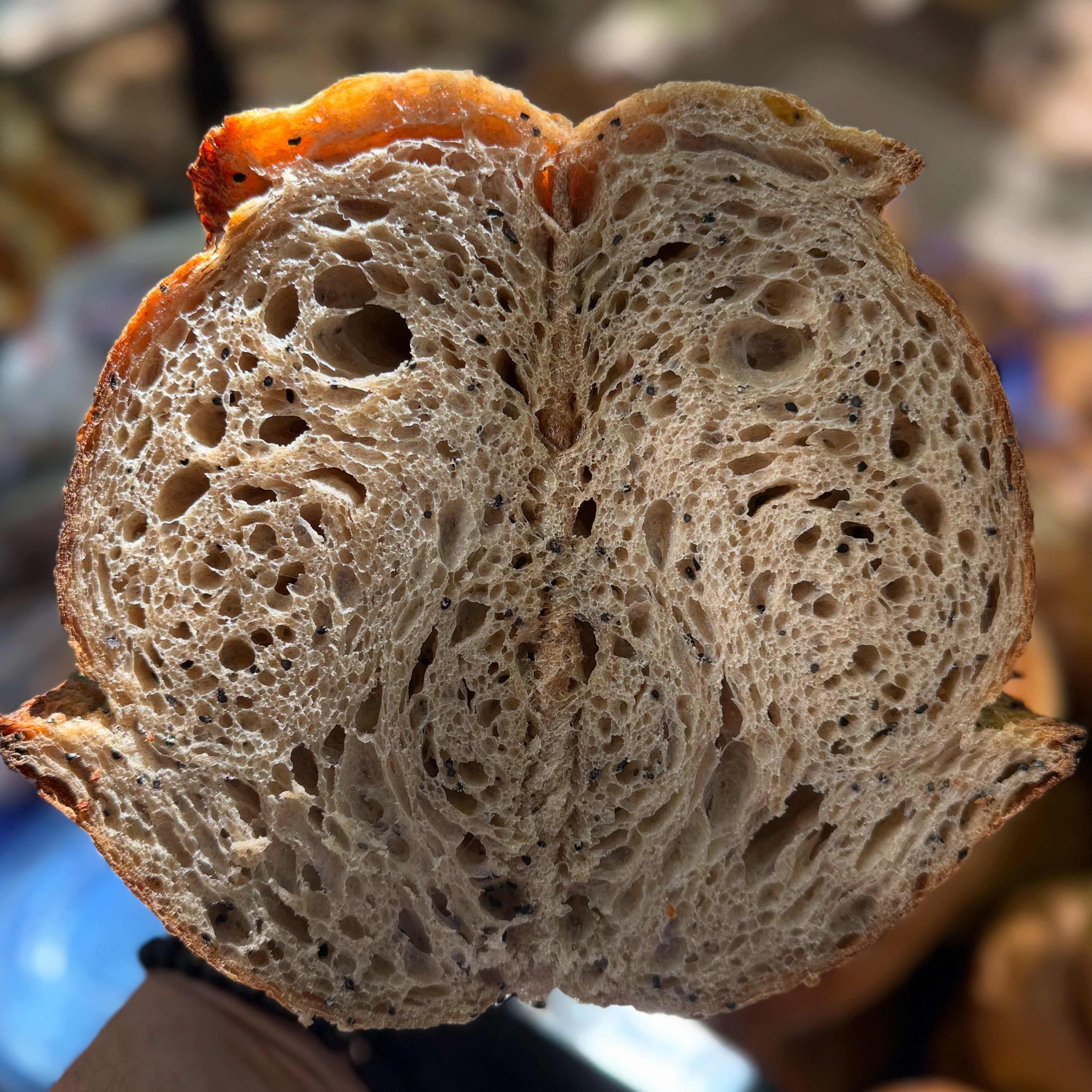
    The interior of a loaf of sourdough from Brass Monkey Bread.courtesy of Brass Monkey Bread

    Posnan hopes the bakery will become a community space. “I worked with the underserved in Philadelphia for eight years, and I’m going to do a lot of things there that I’m going to transfer here.”

    One such thing will be the hygiene closet he kept in his former classroom that was filled with “tampons, pads, deodorant, toothbrushes, toothpaste, cologne, and anything the kids might want or need for personal hygiene. It was there for the whole school,” he said. “They could just come in, take what they needed, and my only rule was that they could not disturb my class.”

    The bakery’s name comes from the expression, “cold enough to freeze the balls off a brass monkey” — something of an occupational hazard for Posnan, given he has spent most of the last few years vending outside.

    He will soon wind down his pop-up schedule to once a week as he works on the bakery. Which means, for a time, those crusty breads and airy, focaccia-like tomato pies will become even more rare.

  • He couldn’t get his City Council member to fix a dangerous intersection. Now he wants Jeffery Young Jr.’s job.

    He couldn’t get his City Council member to fix a dangerous intersection. Now he wants Jeffery Young Jr.’s job.

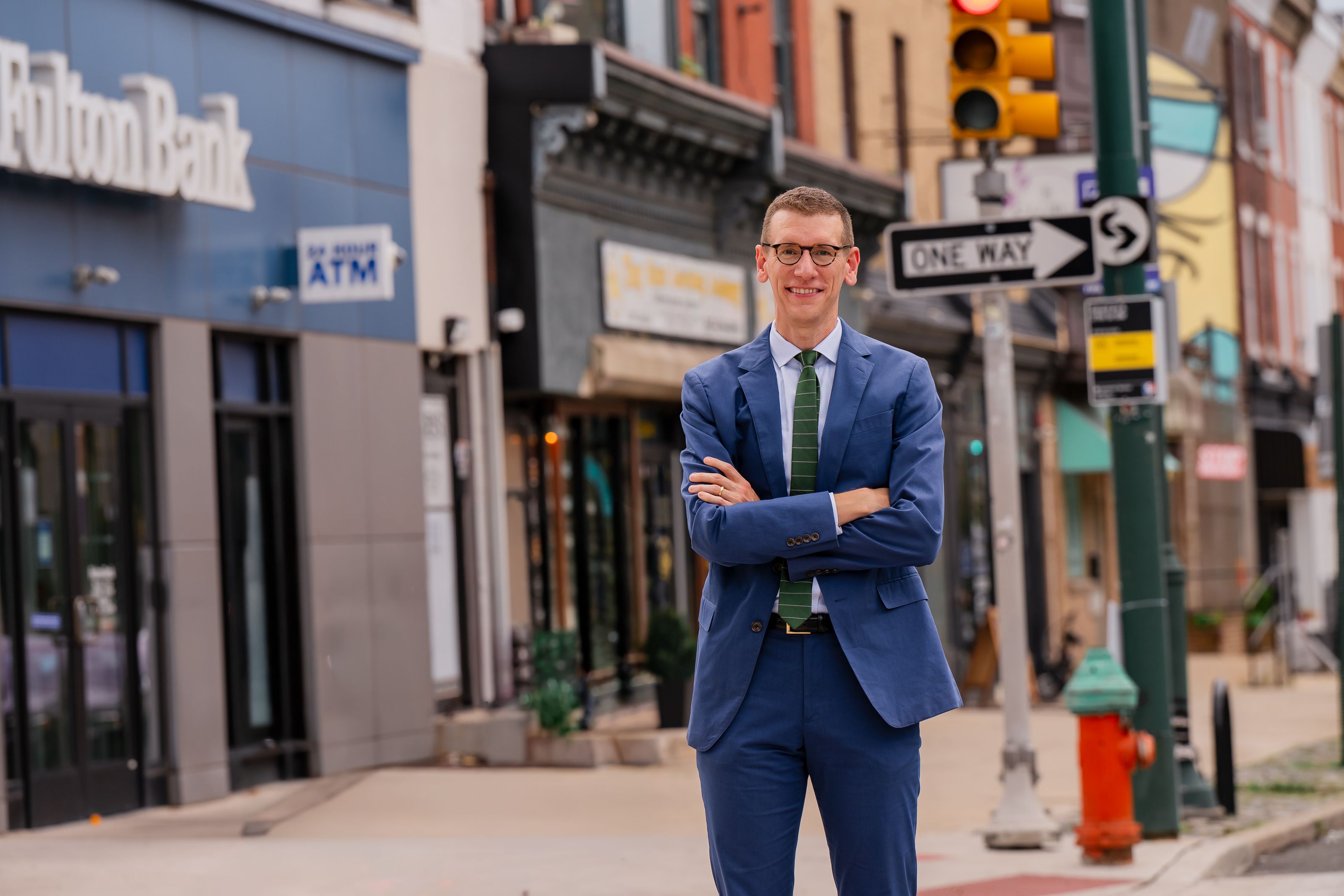
    Dustin Dove spent the better part of the last two years advocating for the city to change the odd, five-way intersection at 27th Street and Pennsylvania Avenue in Fairmount, where drivers tend to blow through stop signs and where one of his neighbors was almost hit by a car.

    Through months of meetings with bureaucrats about a potential speed bump and new pedestrian crossings, Dove, the president of the Fairmount Civic Association, could not get help from his City Council member, Jeffery Young Jr., he said.

    Now, Dove wants to take Young’s job.

    On Saturday, Dove, 38, told dozens of supporters that he is running for City Council to represent the North Philadelphia-based 5th District, becoming the third person to formally launch a campaign for the seat currently held by Young, who is running for reelection.

    Dove, a first-time candidate, is pitching himself as a progressive Democrat and an urbanist who wants to improve how the city delivers basic services and to lead a Council office that is ultra-responsive to constituent needs. He said residents have felt neglected — or even antagonized — by Young, who has frequently found himself at odds with constituent groups.

    “There are many people in the city who have grand visions, and I love those, and I appreciate the optimism,” Dove said in an interview. “But I think in order to do big things, we have to prove to people that we can do the small things. And our Council member is not doing that.”

    If elected, Dove would be the second openly LGBTQ+ member to ever serve on City Council and the first to represent a district. The first openly LGBTQ+ member was Councilmember Rue Landau, who represents the city at-large and was first elected in 2023.

    Young’s campaign said in a statement that constituents have brought close to 7,000 issues to the office since he was sworn in and that the office resolves 88% of cases.

    “Improving quality of life for residents of the 5th District, and Philadelphia as a whole, is a pillar at the heart of the Councilmember’s work,” the campaign said. “A clean lot, a fixed street, a safer block, these are real-world issues facing families and individuals everyday, and what their elected representatives are put in place to help address.”

    Dove’s entrée ahead of the May Democratic primary, when all 17 Council seats will be on the ballot, is the latest development in the campaign for Young’s seat, which is shaping up to be the most competitive district race. Challengers have emerged across the city, but nowhere more than in the 5th, which includes parts of Center City, North Philadelphia, and Fishtown.

    Councilmember Jeffery Young, Jr. (right) questions Drexel President Antonio Merlo (foreground) during a hearing by City Council’s Committee on Legislative Oversight Monday, Nov. 16, 2026 into the closing of the museum at the Academy of Natural Sciences of Drexel University. Councilmember Quetcy Lozada is at left.Tom Gralish / Staff Photographer

    Young, a first-term Democrat who is also an attorney, is seen as electorally vulnerable. He won the 2023 Democratic primary by default after every other candidate was knocked off the ballot due to deficiencies with nominating petitions or other paperwork. Given the heavily Democratic makeup of the district, the primary election is typically decisive.

    Through his term, Young has drawn vocal criticism from constituent groups over his handling of plans for a popular North Philly library. And pro-development interests have been peeved by Young’s at-times obstructionist tactics, including his efforts to slow or halt housing construction in parts of the district.
    Two other candidates have formally launched campaigns challenging Young: cybersecurity attorney Jalon Alexander and Democratic strategist Kellan White. Another candidate, Curtis Wilkerson — who was an aide to former City Council President Darrell L. Clarke — formed an exploratory committee this fall.

    Dove, a former deputy city solicitor who has lived in the city for about a decade, is framing himself as a government outsider compared with his opponents, each of whom has ties to the city’s political landscape. Young worked in City Hall before becoming a Council member, White’s family has a long history in city politics, and Alexander is the grandson of a prominent consultant and former city commissioner.

    Residents in the district, Dove said, are “hungry for something different.”

    “We just sort of came to the conclusion that it’s time to at least try this out and use the tools I’ve developed from doing this work to make our city better,” he said. “And I think it’s the moment to do that.”

  • How bluefin got back on the menu, in Philly and beyond

    How bluefin got back on the menu, in Philly and beyond

    It takes four people to carry a whole bluefin tuna into Da-Wa in Fishtown. It happens in summer and fall, when chef-owner Joseph Kim orders the fish directly from Spain. In winter, Kim sources smaller Hokkaido bluefin straight from Japan. Kim breaks them down solo, into pieces suitable for service. The whole process takes him hours, and on tuna delivery days, he doesn’t make it home until 3 a.m. or later if he’s working on a 300-pound fish.

    Kim’s palate is so attuned to the nuances between bluefin that he can taste them blind and tell you their provenance. Spanish bluefin is particularly soft and fatty. Hokkaido bluefin is less fatty and much smaller, at around 150 pounds vs. the 300 pounds that Spanish tunas average. Compared to more common, smaller varieties of tuna, like skipjack or albacore, bluefins are exceptionally buttery. In terms of fattiness and richness, Kim compared bluefin to wagyu.

    No other varietal of the tuna passes through the door. But for Kim, the effort is worth it. “Bluefin has richness throughout the entire fish.” said Kim. “It is the heart of the sushi restaurant.”

    It’s not just Da-Wa. Bluefin, once a controversial menu addition, is back in a big way. And the surge isn’t just restricted to high-end omakases, even though bluefin is some of the most expensive fish available. Bluefin is now at many of Philly’s newer midrange sushi restaurants like Palm Vintage, Javelin, and Oroshi, as well as restaurants that straddle the line between fine dining and neighborhood-driven, like Little Water and Alice. Bluefin is everywhere.

    Bluefin tuna was, for years, an illicit luxury, though it never fully left menus. A decade ago, conservation groups were staging boycotts against consuming the fish, chefs were swearing off serving it, and demand for the increasingly rare fish was so high, it was fetching eye-watering prices. But now the coveted ultrasoft and fatty fish is back on the menu all over Philadelphia and far beyond.

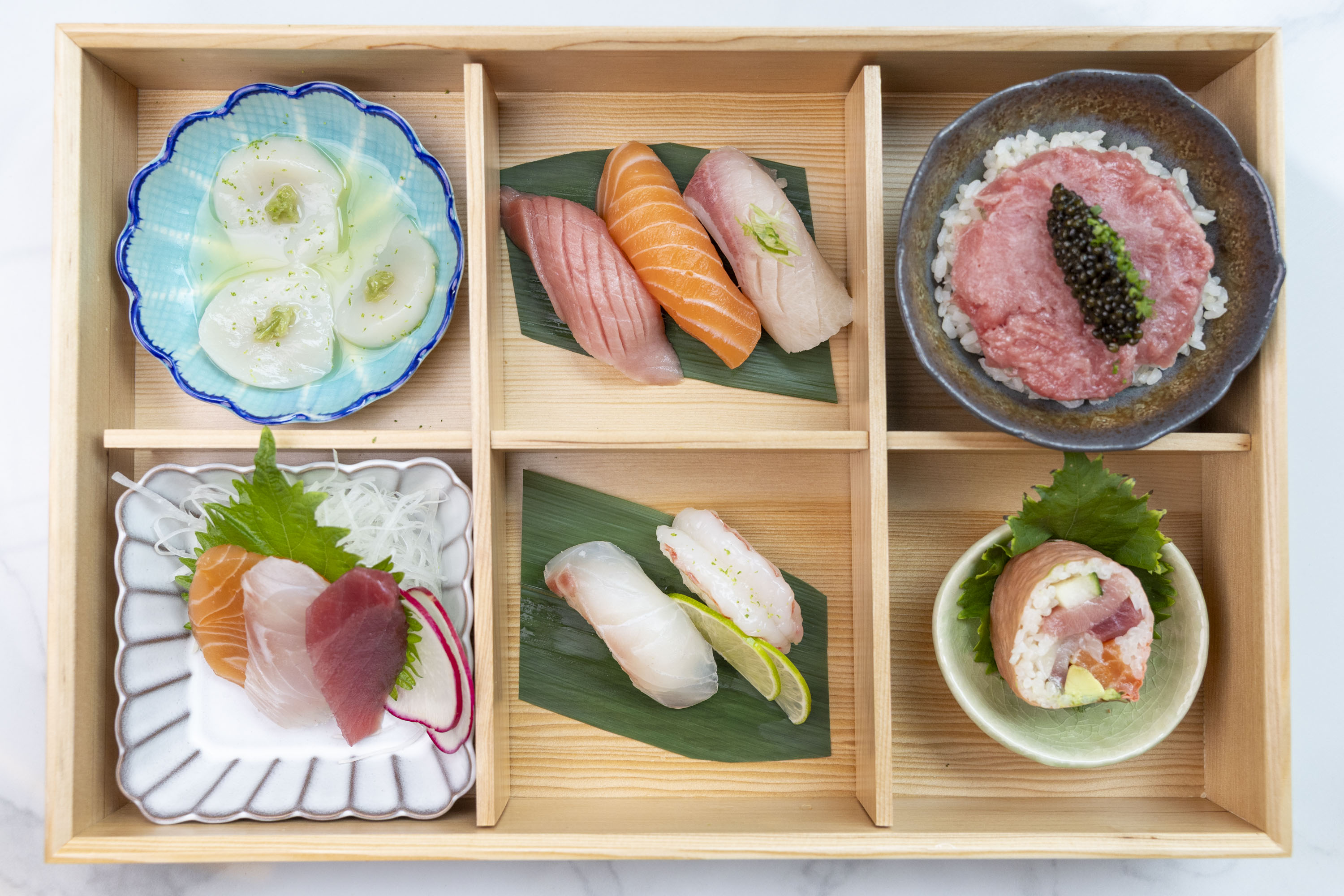
    The Palm V. Mini Omakase bento box at Palm Vintage.Tyger Williams / Staff Photographer

    Off the menu

    The return of bluefin tuna to restaurant menus was a long process. In the 1980s, sushi started trending stateside and eating tuna surged in popularity, which led to severe overfishing. In 2006, the International Commission for the Conservation of Atlantic Tunas (ICCAT) implemented a 15-year recovery plan to prevent the tuna population from collapse. This plan limited fishing seasons and raised the minimum allowable size of tuna for fishing.

    Those measures worked, and the population bounced back. In 2021, the International Union for Conservation of Nature (IUCN) moved Atlantic bluefin tuna from the list of endangered species to those of least concern.

    But it hasn’t just been Atlantic tuna returning in droves. Pacific bluefin, once restricted from fishing for environmental reasons, is now fair game again. To the delight of chefs in San Diego and Baja California, fishermen are catching bluefin tunas of record weight — nearly 500 pounds — in their waters. Giant bluefins have also returned to British waters (and even in the Baltic Sea), which have been mostly absent of the species since the 1960s.

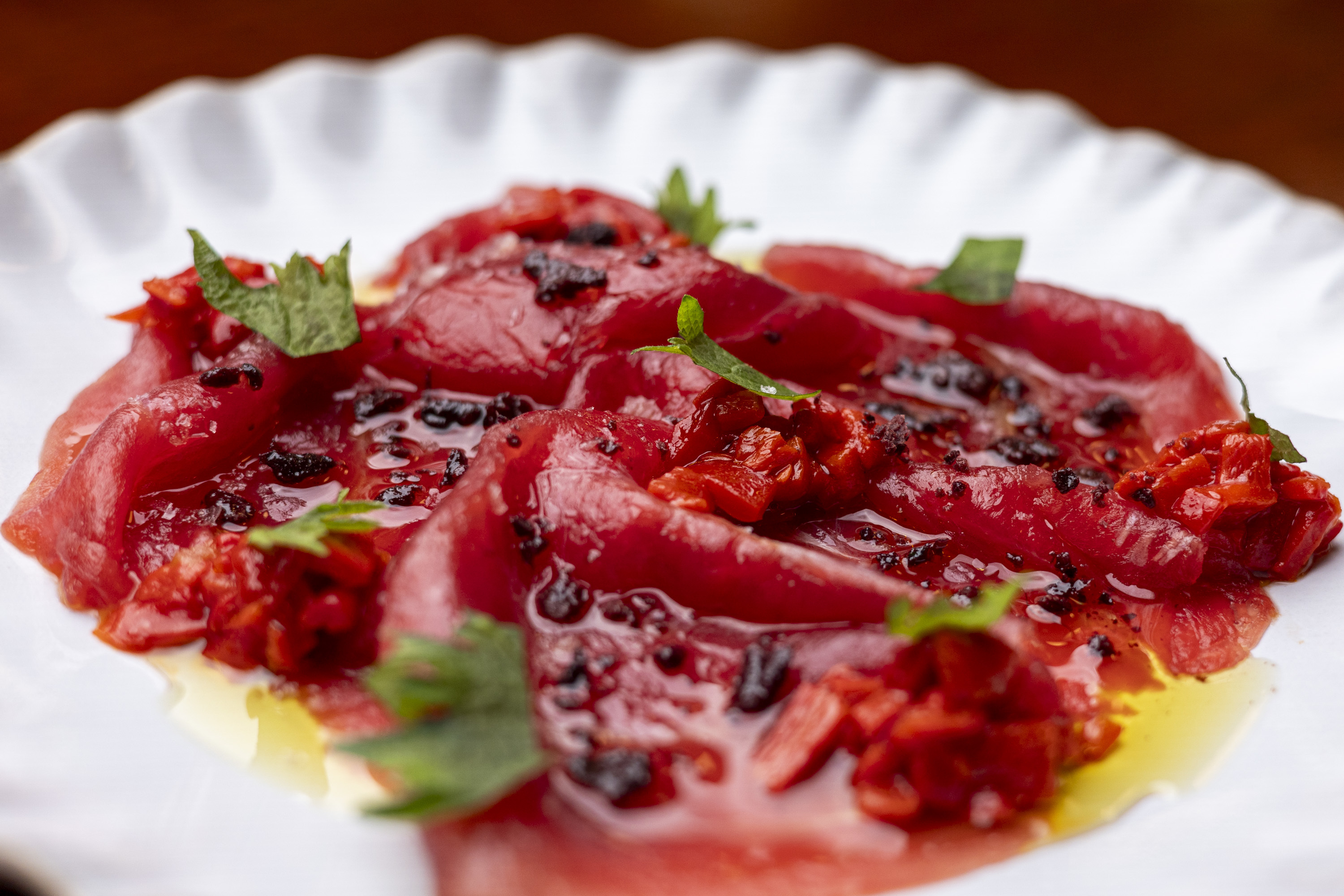
    Raw bluefin tuna at Little Water.Tyger Williams / Staff Photographer
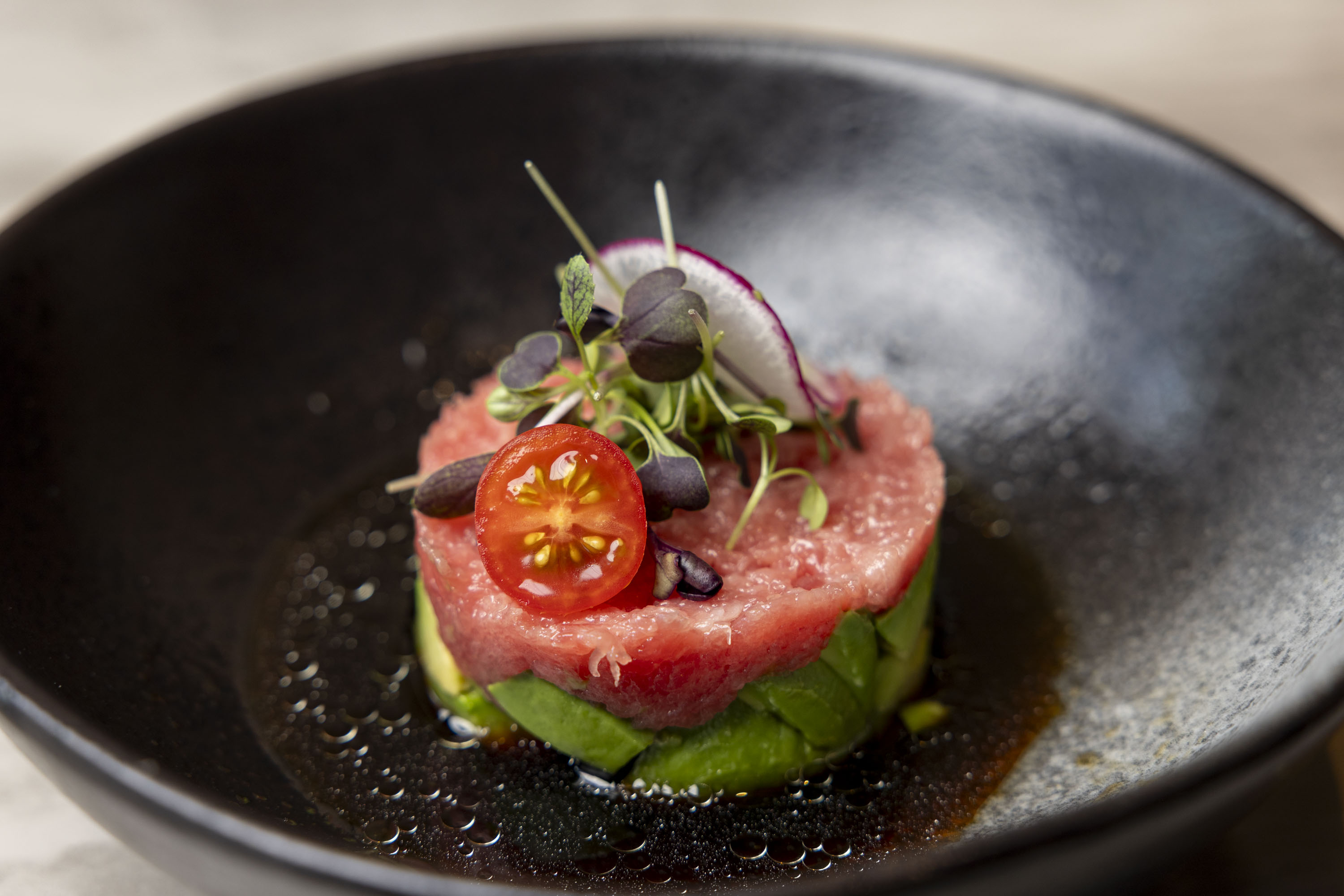
    Bluefin tartare at Ogyu.Tyger Williams / Staff Photographer

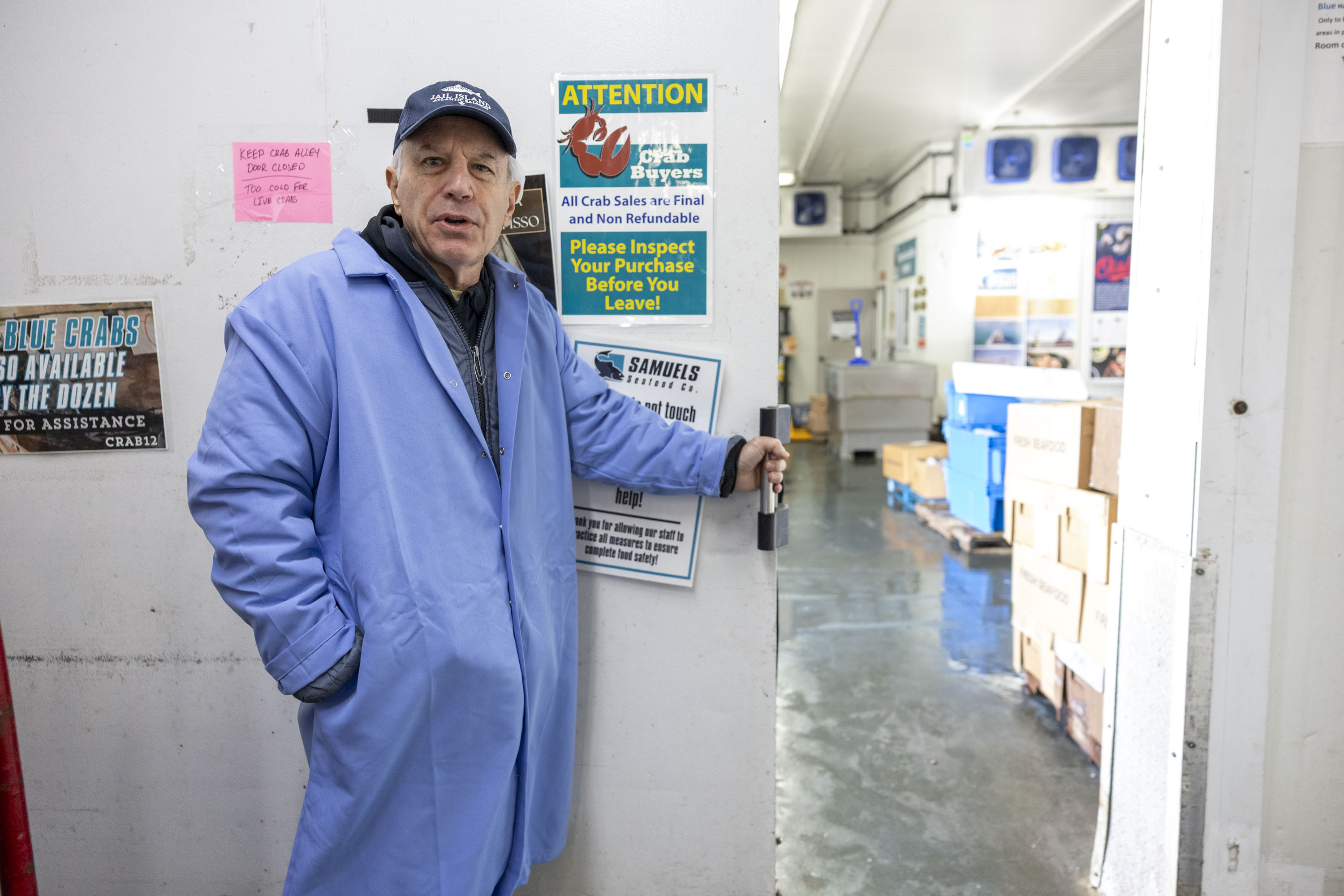
    At South Philadelphia-based seafood distributor Samuels Seafood Co., the tunas come in from all over the world — in the summer months from along the East Coast and currently, from the Mediterranean, though also from the Carolinas and some from South Africa. They’re sold to customers along the East Coast, as far down as South Florida, and in some parts of the Midwest and Las Vegas.

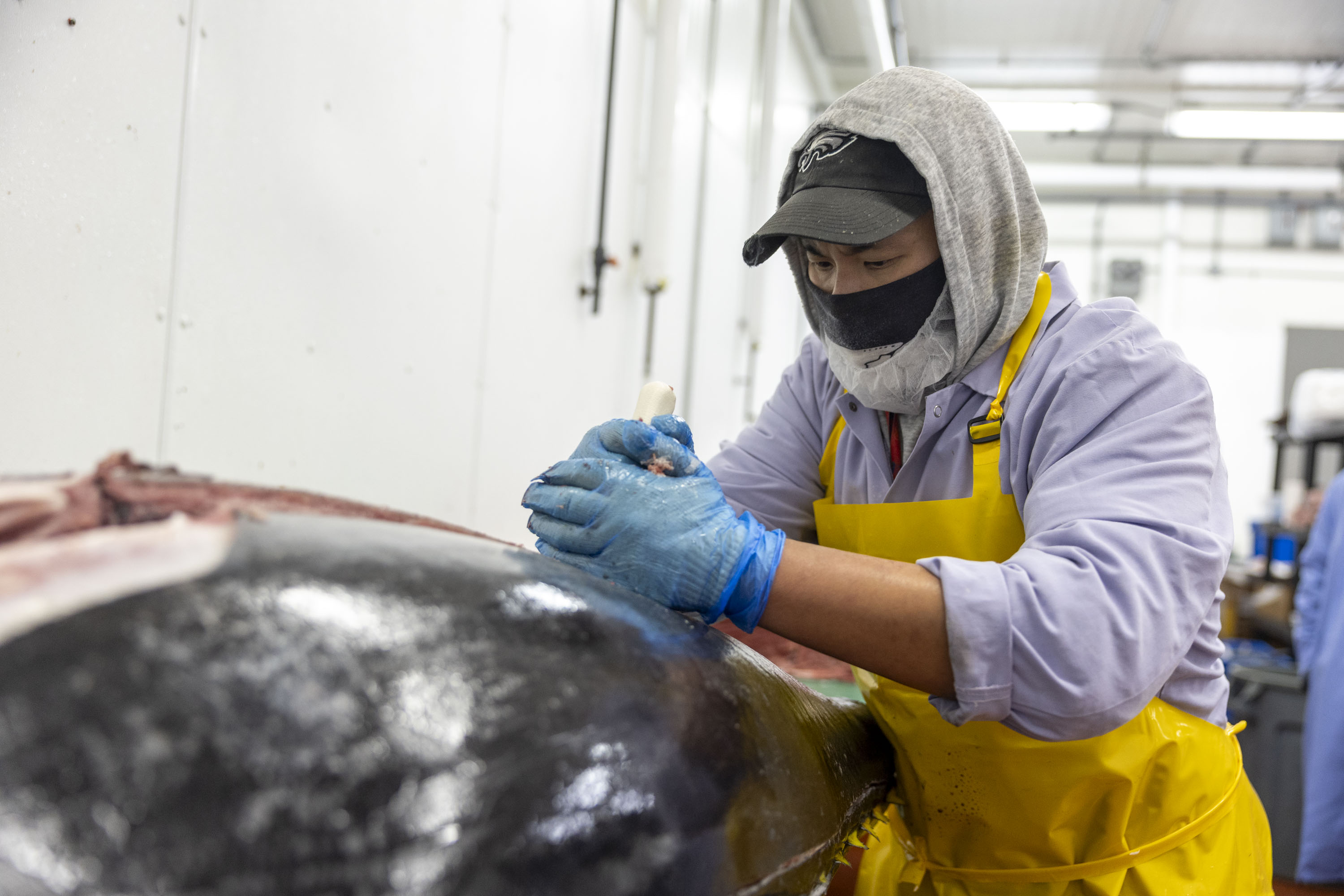
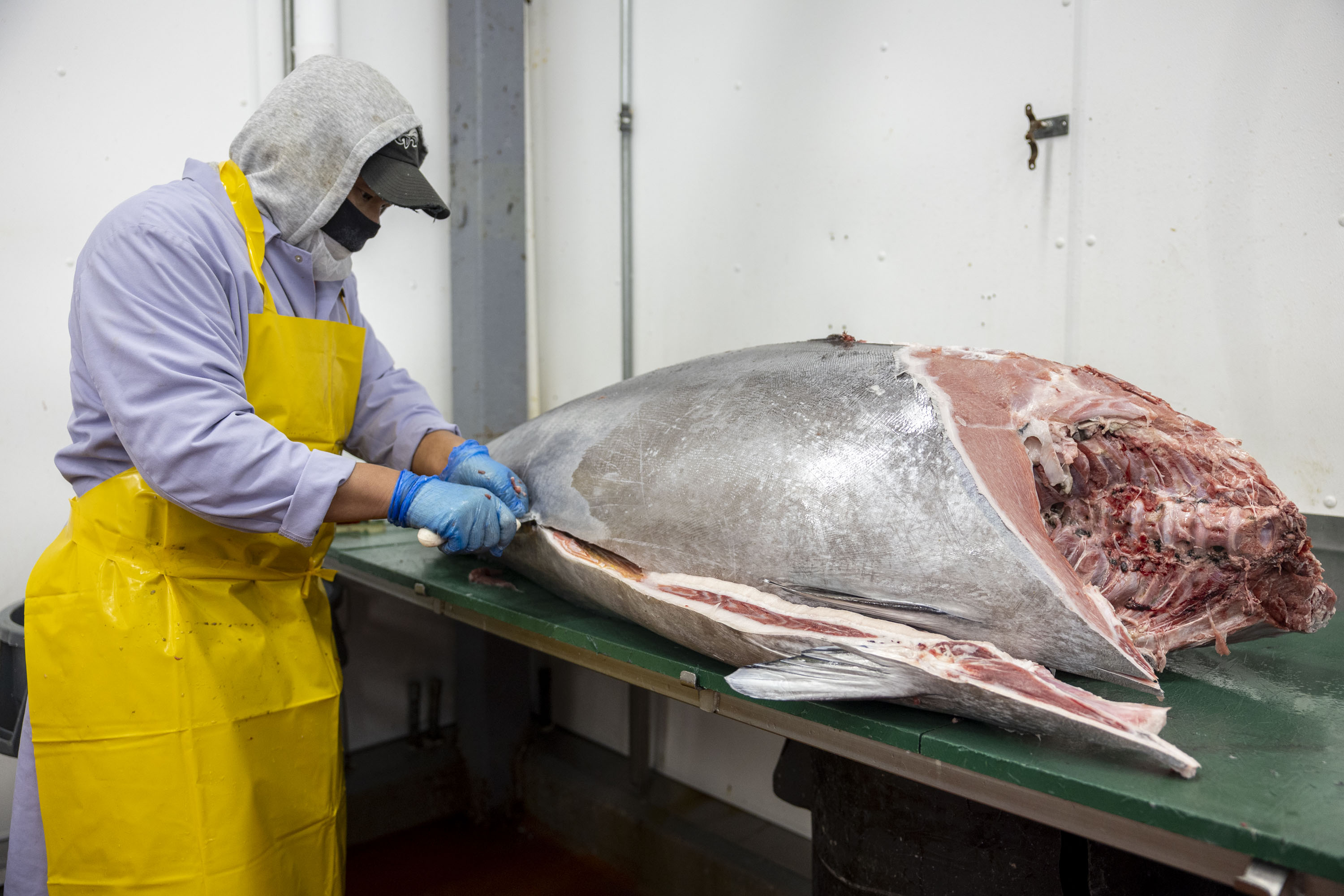
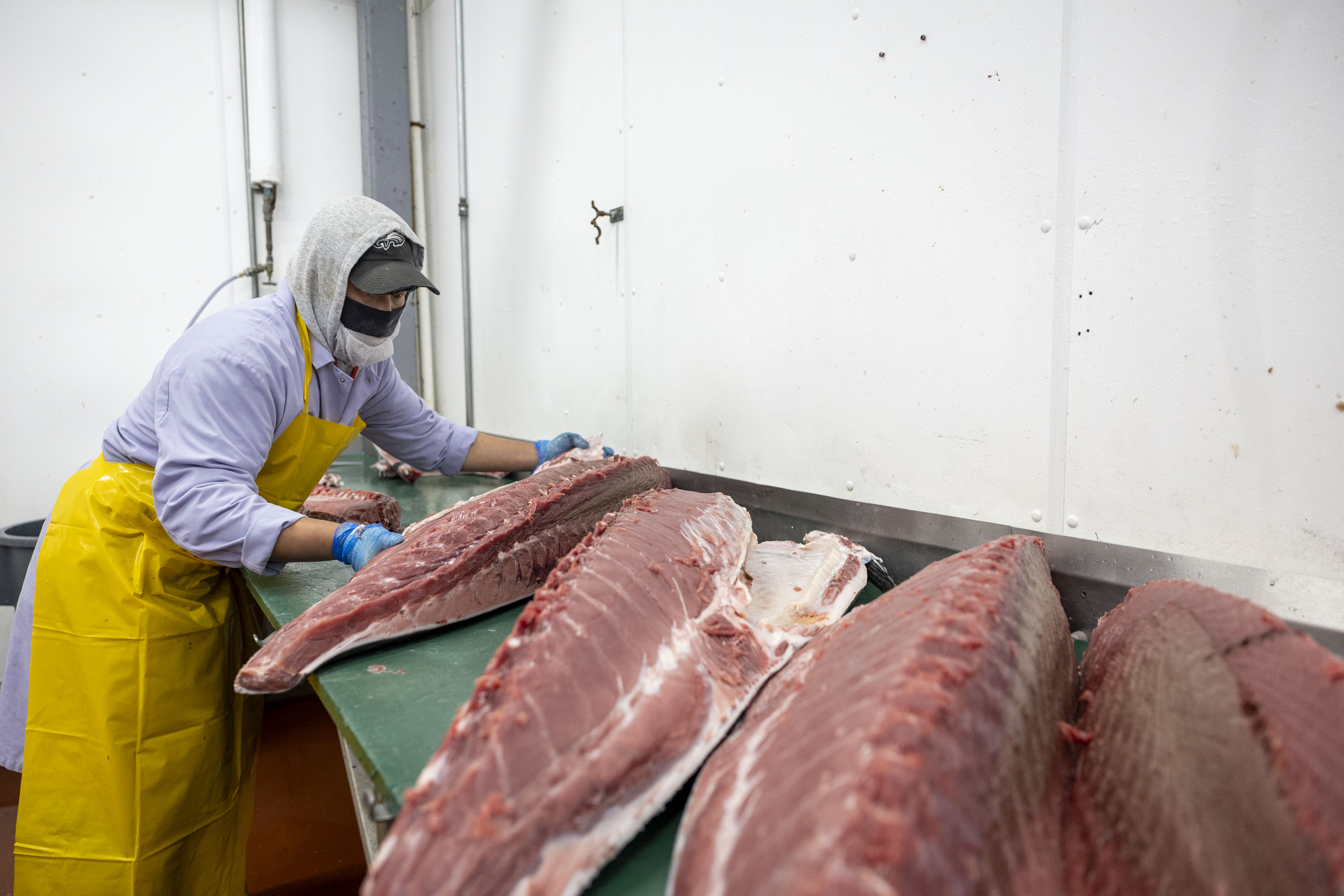
    Joe Lasprogata, the company’s senior vice president of product development (who also trained as a marine biologist), oversees tuna shipments and their breakdown into loins for customers. At Samuels, it takes tuna cutter David Lam about 15 minutes to cut a whole 350-pound bluefin into loins and collars, to be further broken down by chefs and at sushi restaurants. The record weight for a bluefin brought into Samuels is 820 pounds.

    Joe Lasprogata, vice president of product development at Samuels Seafood, gives a tour.Tyger Williams / Staff Photographer

    The bluefins — or as Lasprogata calls them, “apex predators of the ocean” — that Samuels brings in twice a week are both wild and ranch-raised.

    David Lam breaks down a bluefin tuna at Samuels Seafood.Tyger Williams / Staff Photographer
    David Lam shows different cuts of a bluefin tuna at Samuels Seafood.Tyger Williams / Staff Photographer

    “People are all excited about [bluefins coming back] but I think it’s a little premature,” said Lasprogata. “It’s great that the bluefin are coming back, but we’re also seeing other stocks lessening. So there’s still something out of balance.”

    “Everything is cyclical,” he said.

    Size does matter

    Chefs like Kim of Da-Wa in Fishtown and seafood purveyors like Lasprogata of Samuels Seafood will tell you that bluefin has a sweet spot in terms of weight for prime deliciousness, and that’s around 300 pounds.

    And they can get far larger, which means they have incredibly long lifespans and long gestation periods, according to Jackie Marks, the senior PR manager of the Marine Stewardship Council (MSC), which certifies marine fisheries, as opposed to the Aquaculture Stewardship Council (ASC), which sets responsible practices for farmed fish. “And that means they reach sexual maturity later in their lives and when you think about how that affects fishing, which often targets younger fish — they’re not able to reproduce yet,” said Marks. From her perspective — a biological one — the larger the tuna, the better.

    If we overconsume bluefin, we’ll know by their size. “If the tuna that are being brought in are smaller and smaller, then we have a reason to be concerned [again],” said Marks. And keeping watch will take a coordinated effort among countries and governing councils.

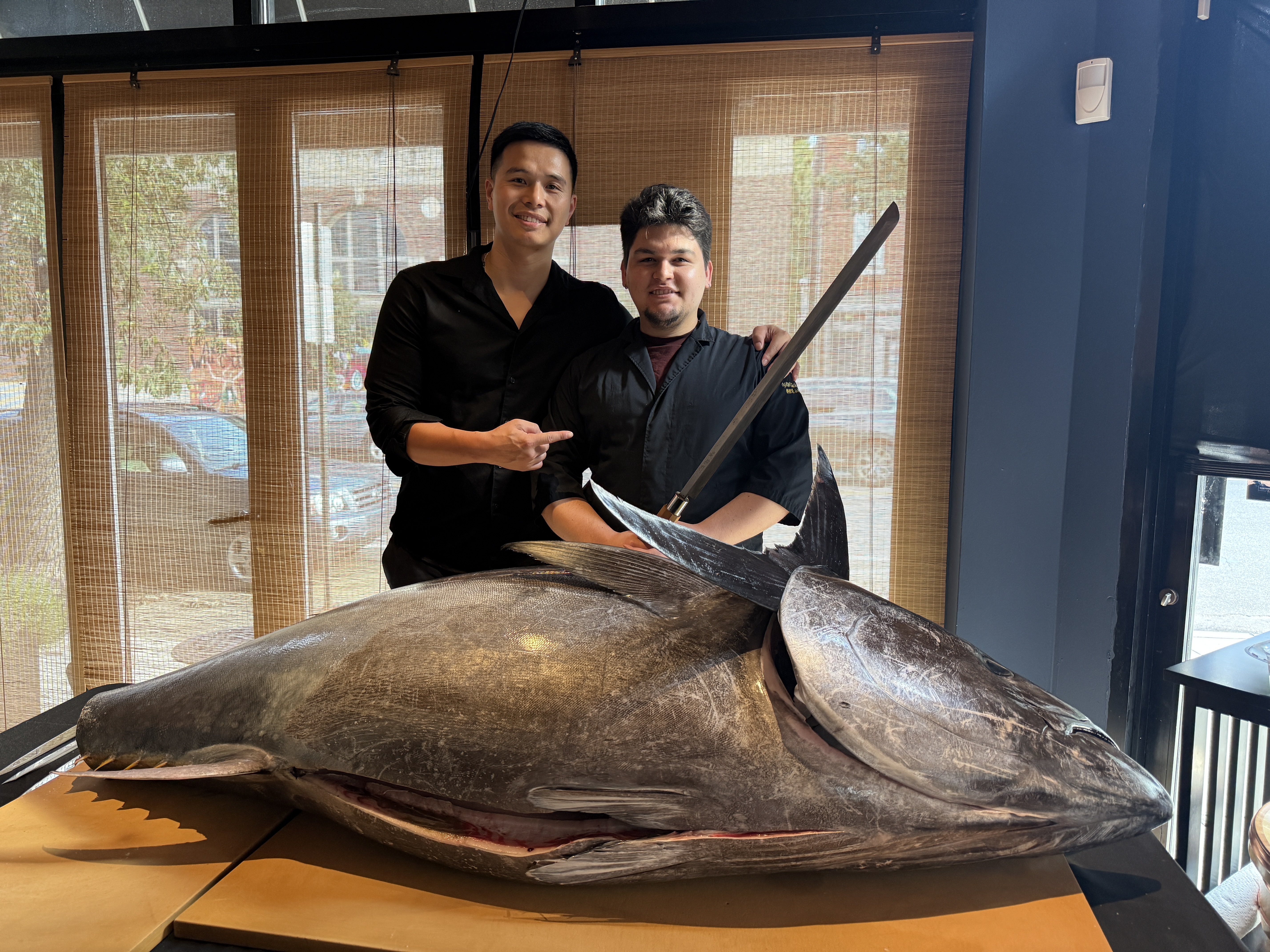
    Sushi chefs Albert Zheng and Carlos Wills in front of a 281-pound Spanish bluefin tuna at Javelin in Fairmount.Kiki Aranita / Staff /

    Wild caught, if possible

    Not just any bluefin is migrating back to Philadelphia sushi restaurants. Much of it, like the 300-pound bluefins regularly broken down at Samuels, is ranch-raised. This is a controversial practice that sits in between aquaculture (or seafood farming) and wild fishing, due to high FIFO or fish-in-fish-out ratios. The average ratio is 15:1, meaning that for every ton of ranch-raised tuna, 15 tons of feed is required. As a point of comparison, the FIFO ratio of farmed salmon is 0.82:1.

    “It’s like Hansel and Gretel-ish,” explained Lasprogata. “You put them in a pen, feed them, fatten them up, and then harvest them.”

    The benefit, he says, is that they can be harvested larger and more mature, after they’ve had the opportunity to procreate. The fish, so long as they’re dispatched properly, are also extremely high quality, with rich and oily, well-marbled flesh. Tuna ranches also operate year-round.

    But chefs who are fanatical about bluefin tend to seek out wild bluefin, which can only be caught seasonally (and given that they’re a migratory species, the seasons change around the world), which is why Kim has to store his fish after breaking it down in three super freezers, set to between -64 and -110 degrees Celsius, which cost him $100,000. They keep his costly tuna fresh as he uses it over the course of three months.

    “I don’t make money on tuna, but I am a chef, not a businessperson,” said Kim.

    At Little Water and River Twice, Randy Rucker gets his tuna from the East Coast. “Wild bluefin tuna has a depth of flavor that is hard to compare to,” said Rucker, who works with his sous chef, Jeff McConnell, to use every part of the fish, incorporating the bloodline in their house-made XO sauce and meat scraped from bones in their seafood charcuterie program.

    “We choose wild-caught bluefin tuna because of its incredible flavor, texture, and richness. But not all bluefin is the same. We pay close attention to the fat, color, texture, and how the fish is handled,” said Carlos Wills, the executive chef at Ogawa in Old City, which uses bluefin tuna on its omakase menu. Wills has also performed annual bluefin tuna breakdowns at Ogawa and Javelin in Fairmount, sourcing the massive fish from Spain, just as Kim from Da-Wa does.

    And of all the fish in the sea, “There’s nothing else — no texture like bluefin. It’s so fatty and marbled, but also it can be intense and irony,” said Kim. With a close eye on bluefin stocks worldwide, right now, we can indulge in this wagyu of the sea.

  • The Catto Baseball League has found success. Now, it wants to spark even more opportunities

    The Catto Baseball League has found success. Now, it wants to spark even more opportunities

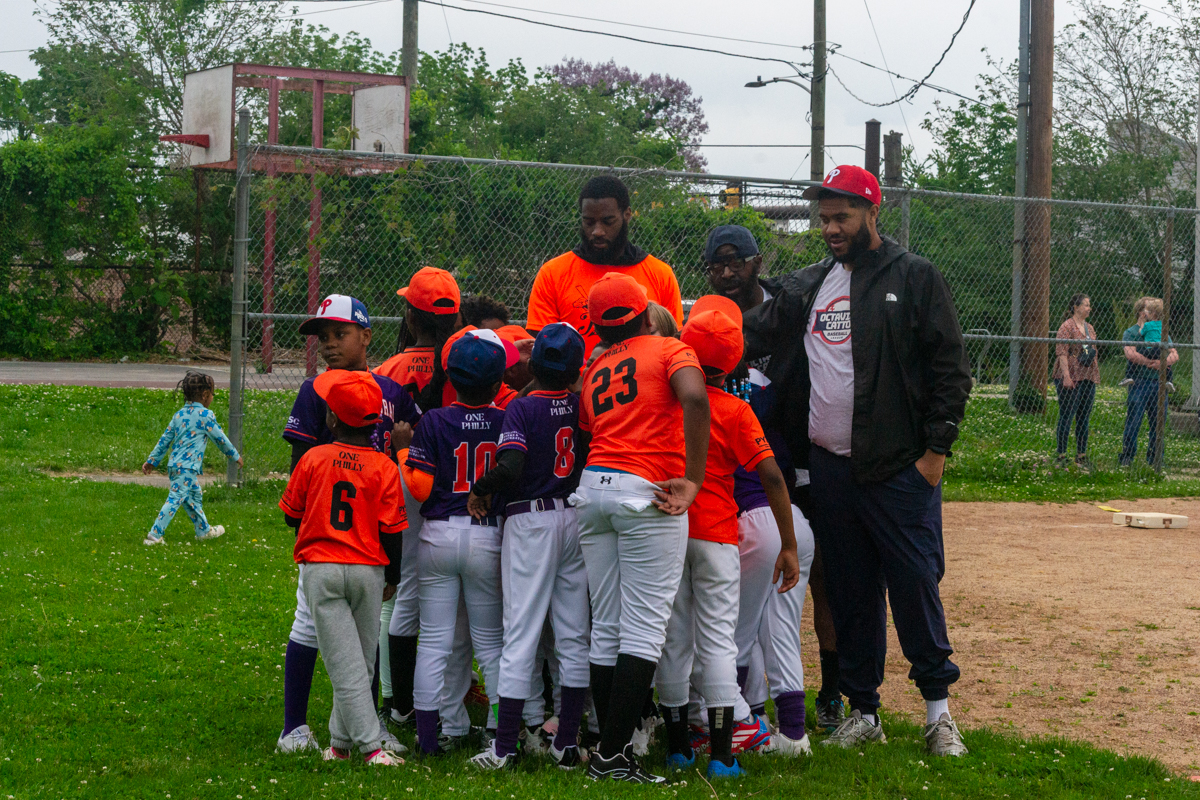
    Julian Montgomery corralled his rowdy players into a circle by the dugout at the end of a youth baseball game at Lee Cultural Center in West Philadelphia.

    “You guys started off a little bit slow, right, that’s just fine, but you guys turned it around, you guys finished strong,” Montgomery told his players. “Ultimately everybody’s a winner today, but I think you guys might’ve won that game.”

    On the field, Montgomery looked like a natural, pitching the ball to his young players, but less than two months earlier, he hadn’t so much as even played baseball, let alone coached.

    Montgomery and 19 other coaches took part in an entry-level, city-funded baseball league focused on introducing the sport to areas in North and West Philadelphia.

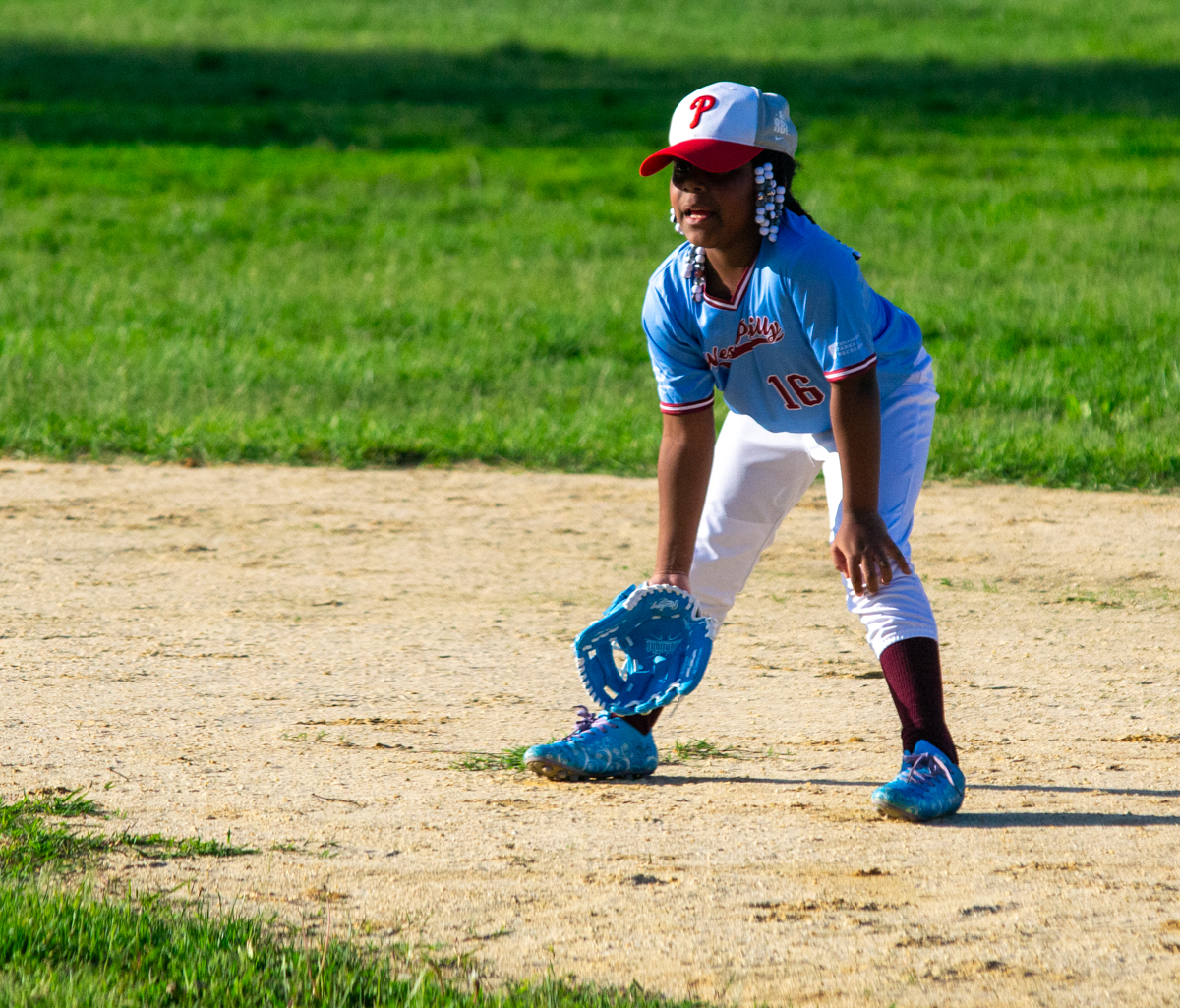
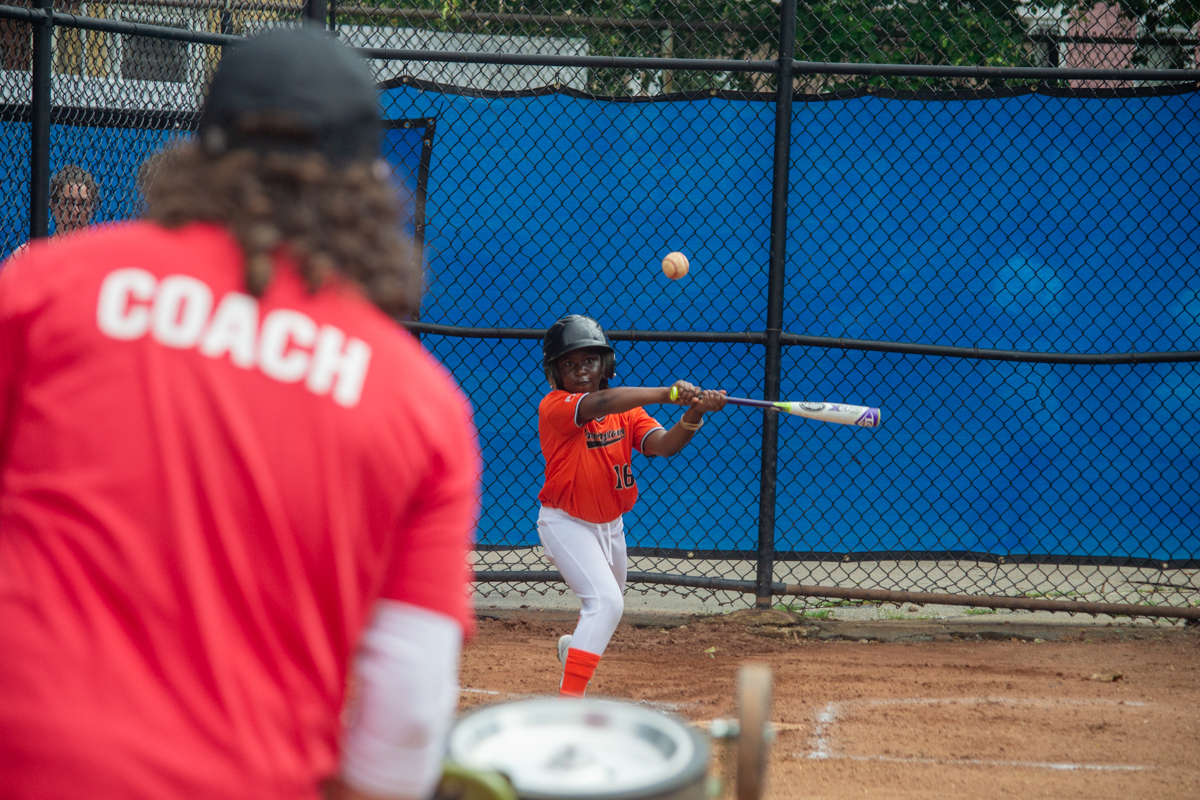
    The Octavius Catto League, named for the 19th-century civil rights leader and baseball player, taught more than 150 young kids to play quickball, a variant of baseball, and has since served as the model for how other upstart sports leagues can operate through the Department of Parks and Recreation.

    Parks and Recreation has provided the league with not only training, but also equipment and infrastructure provided by nonprofit and private partners.

    The city partnered with the Philadelphia Youth Sports Collaborative (PYSC), a nonprofit consortium of youth sports organizations, other nonprofits, and the Philadelphia Phillies to expand the league to ten sites in its second year. The league’s model — which relies on training rec leaders to coach new sports — has already been replicated in tennis in partnership with the U.S. Tennis Association and soccer with the U.S. Soccer Foundation.

    “We’re trying to support [Parks and Recreation] in building a sustainable model for safe, entry-level user programming at rec centers across the city,” said Josh Throckmorton, the program development director at PYSC. “We’re targeting these pockets of the city where there just hasn’t been a ton of programming for use at their local rec center.”

    Philadelphia’s youth sports landscape reflects the same racial and economic inequalities that define the city’s geography. A 2025 PYSC and Temple University study of public sports facilities found neighborhoods with more white residents had more fields, amenities that were in better shape, and more youth sports programs than other areas.

    The disparities are especially pronounced in baseball. The Phillies’ RBI program, among the area’s largest, mostly serves Philadelphia’s predominantly white, middle-class neighborhoods in the Northeast. From 2012 to 2025, Parks and Recreation saw 31 of 51 community baseball teams in its league cease to exist or provide baseball at the same level they once did, said Mike Barsotti, the director of youth sports for Parks and Recreation.

    Kids aged 7 to 12 played in the inaugural season of the Catto Youth Baseball League, an offshoot of Phillies RBI aimed at bringing baseball to youth in North and West Philadelphia in 2025.Courtesy of Josh Throckmorton

    The Catto League, in contrast, operates in areas that don’t have much robust programming already. Three of the sites are in Fairmount, Francisville and Brewerytown; four in West Philadelphia; and one each in Yorktown, Germantown and Oxford Circle. The league operates on a pay-what-you-can model with an encouraged donation of $40 per family — though two rec centers found local sponsors to cover the entire cost, Throckmorton said — whereas other youth baseball programs can often cost hundreds of dollars.

    The league intentionally focused on young kids. Research shows early childhood is an optimal starting age to keep children playing sports into their teens.

    “Our goal here is to catch those 6- to 9-year-olds, those kids before they’re ready for Little League, give them those core skills in an accessible way, in their neighborhood, focused on their development, and have them be ready to take that next step,” Barsotti said.

    The Octavius Catto Baseball League was founded in 2025 to provide entry-level baseball opportunities for youth ages 6-12.Courtesy/PYSC

    Expanding access to youth baseball could have effects reaching beyond the sport. Community coaches who work in poorer areas of the city say their work has the potential to save lives by keeping kids out of trouble. The 2025 study of sports facilities and youth programs found lower crime rates in the blocks surrounding them. The city, for its part, has invested dollars in youth sports programs as violence prevention measures through the mayor and district attorney’s offices.

    “I think sports is one of the main things that used to keep our streets safe and we just got away from it for a long time,” said Louis McCrea, a dad watching his son practice in Brewerytown. “Kids go to school for eight hours a day, the teachers tell them to sit down all day, and these kids have nowhere to express their energy.”

    But among the challenges facing community teams are lack of quality coaches and the difficulty of reaching kids who have never played an organized sport. Those two issues are what the Catto League, and its spinoffs, are trying to solve.

    “We need people who are willing to take the time to ensure that kids have a great experience playing this game,” Barsotti said.

    Teaching the teachers

    The whirring of loud fans consumed the basketball gym at Gustine Recreation Center on an unusually warm March day as rec leaders gathered to learn baseball for the first time.

    Sitting on red bleachers, the adults listened attentively to Throckmorton, who stood by an illustrated flipchart as he gave a brief lecture on the development of children’s brains as they age.

    “We’re setting expectations for what the kids will be able to do,” Throckmorton said to the group.

    Throckmorton asked the coaches, armed with pens and sticky notes, to write down ways that they might act differently toward the kids they coach based on the information they were learning. He said young children look to adults for cues on how to interpret the world around them. In response, a coach wrote on their sticky note that they would try to be more patient with their players.

    The Catto League was purposely placed in sections of North and West Philly where opportunities are scarce. Courtesy / PYSC

    The Catto League faced the challenge of training 20 rec leaders, the vast majority of whom never played or coached baseball, to be able to teach it at their rec centers.

    Community baseball coaches in North Philadelphia have cited a lack of quality coaches as one of the main challenges in running their programs. The path toward becoming one is not easy: On top of the time commitment, coaches may need to secure background checks, buy insurance, market their programs, and manage registration, among other administrative tasks.

    By training existing rec staff in new sports, the Catto League represents one part of the city’s approach in bolstering the pipeline of future coaches. Parks and Recreation is also training youth to become coaches through its summer and after-school career readiness program in the hopes they pursue careers with the department, and PYSC partnered with the city and AmeriCorps’ Coach Across America to teach a cohort of a dozen coaches trauma-informed youth development practices through working at recreation centers last year.

    The Catto League’s coach training was modeled to teach the adults in the same way they would teach the kids. Coaches were given kid-friendly analogies — to field a ground ball, extend the hand like Spiderman — played through drills and scrimmages, and received positive reinforcement, including prize stickers when they did something right.

    “It was awesome to see because many of them became kids,” said Shannon Gunby, the executive director and founder of the On Deck Circle, which partnered with the Catto League. “One of the coaches said, ‘This was fun.’ And he walked out of here with a big smile on his face.”

    In an effort to keep the love of baseball among kids in sections of North and West Philly, the Catto League has plans to return next spring. Courtesy / PYSC

    The future of the league

    The Catto League will be back next year, though its structure will look different.

    Parks and Recreation will run the league as PYSC’s contract with the city has ended, Throckmorton said. The department will try to support the Tustin and Athletic recreational centers — which had comparatively larger participation this year — in developing their own in-house recreational leagues. The cost of this year’s program to the city was just shy of $37,000, Throckmorton said.

    As far as the Catto League’s offshoots, the city has received more than 300 signups for One Philly Soccer Club, which has brought entry-level programming to more than 20 rec centers this fall, Throckmorton said.

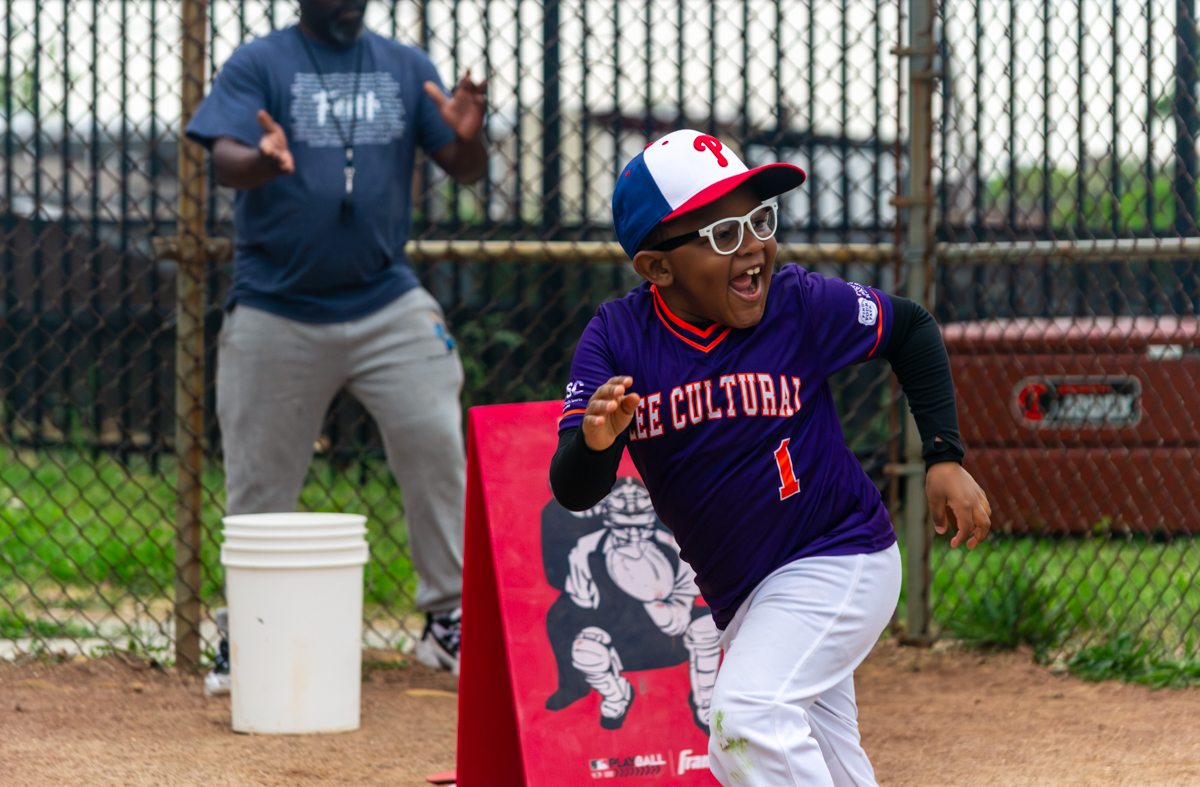
    Back at Lee Cultural Center, Dominique Sampson watched her son Dallas step up to the plate. She said playing in the Catto League has been life-changing for the 6-year-old, as he’s made friends and learned to be comfortable and trusting with his teammates.

    “He’s psyched up and ready to play baseball,” Sampson said. “So now I have to find something else for him to do after this.”

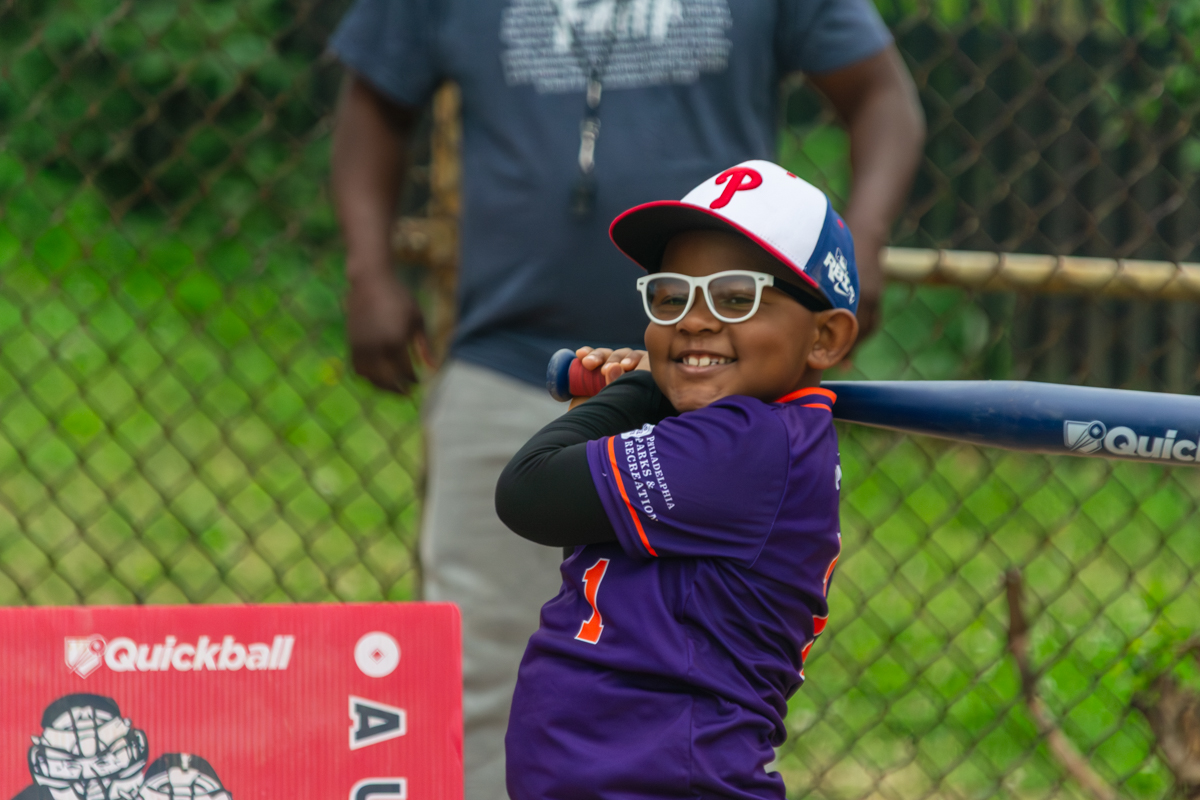
    With his eyes on the ball, in his signature white sports glasses, Dallas sent a grounder to third base and made his way safely to first, earning thunderous applause from parents in both dugouts.

  • The 22 must-see pieces at ‘Nation of Artists’ if you only have a few hours

    The 22 must-see pieces at ‘Nation of Artists’ if you only have a few hours

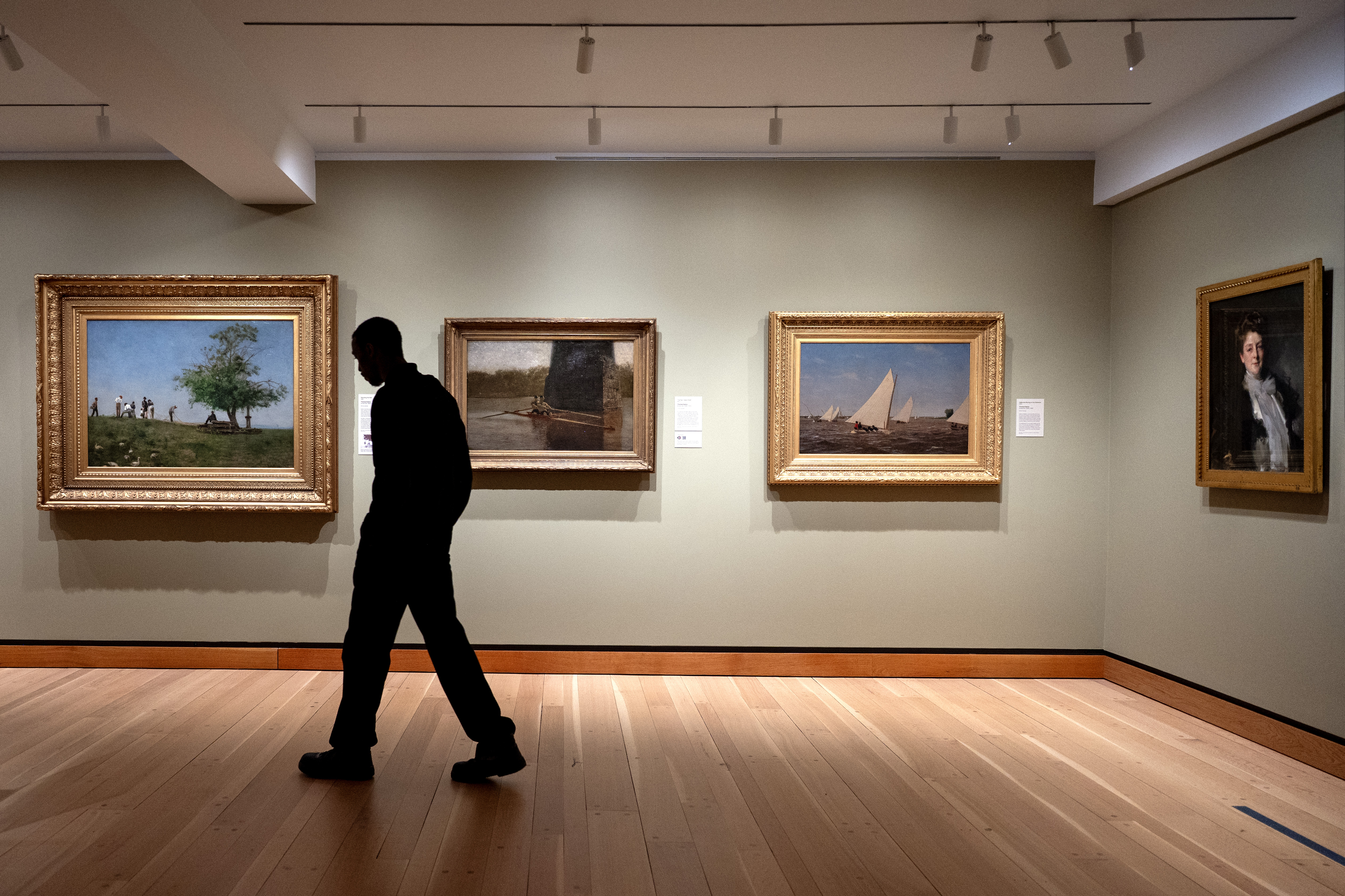
    One of the most unusual offerings in the cornucopia of events occasioned by our country’s 250th birthday is “A Nation of Artists,” an extraordinary exhibition that takes a fresh look at the history of American art. Spread over two museums, the show implicates nearly 1,000 artworks gathered from three collections that span four centuries.

    The whole is indeed greater than the sum of its parts.

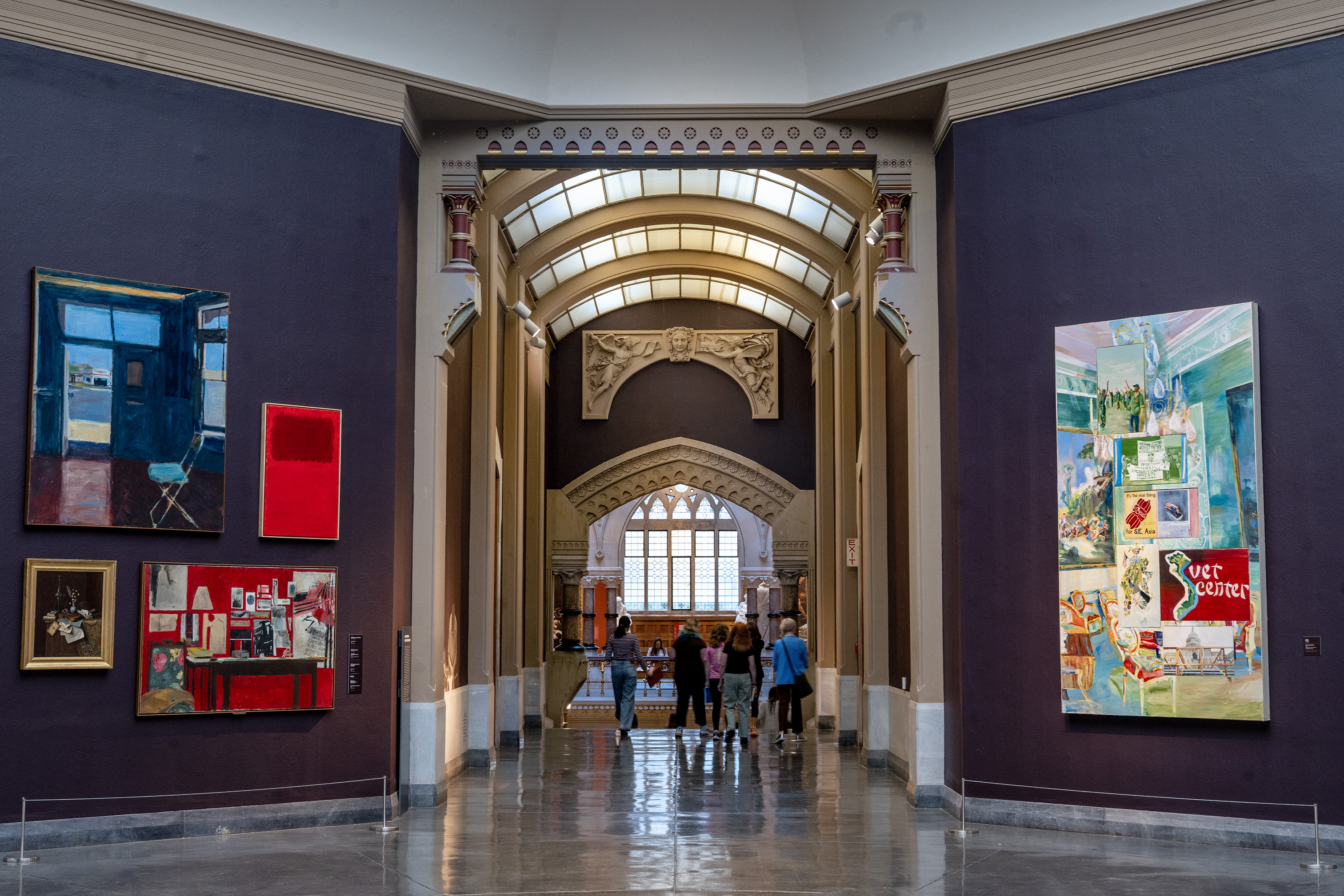
    “A Nation of Artists” occupies 19 galleries at the Philadelphia Museum of Art (PMA) and nearly all available space at the Pennsylvania Academy of the Fine Arts’ Historic Landmark Building (PAFA). Intermixed with the museums’ permanent collections are about 100 masterworks from the Middleton Family Collection of American Art, on public view for the first time.

    “The beauty of ‘A Nation of Artists,’” says PMA curator Kathleen Foster, “is that the two grandpas collaborated with the Middleton Collection to enhance their ability to tell the story of American art history.” To Foster, “There is no single story of American art — it’s a patchwork of different ideas, an amalgam.”

    Skylights in the newly renovated Furness and Hewitt building at the Pennsylvania Academy of the Fine Arts Wednesday, May 6, 2026,“A Nation of Artists”Tom Gralish / Staff Photographer

    The dual installations, like nonidentical twins, were simultaneously conceived yet endowed with distinct mien and appearance. To identify art that best exemplified history’s blended narratives, each curatorial team scrutinized the galleries and storage vaults of their respective collections. Burrowed within the origin story of each institution are clues to why and how the halves differ.

    PAFA opened in 1805 as a museum and school with a curriculum modeled on traditional European academies. Not long after, it began to collect “the art of our time.” PAFA’s enduring identity as the nation’s first art museum and school reflects the founders’ intention to “promote the cultivation of the Fine Arts in the United States of America.” It helps explain why, in their portion of “A Nation of Artists” galleries, work by recent graduates hangs near legendary elders who studied at the school a century or two earlier.

    The PMA, 75 years PAFA’s junior, was likewise established to teach and to present art. Then called the Pennsylvania Museum and School of Industrial Art, it started in Memorial Hall, the art gallery of the 1876 Centennial Exhibition in Fairmount Park.

    The institution uniquely made space for “applied arts” such as furniture, jewelry, and clothing, a clear sign of the modernity of their interests. Their purview widened in the 1890s when they began to buy and collect contemporary painting and sculpture.

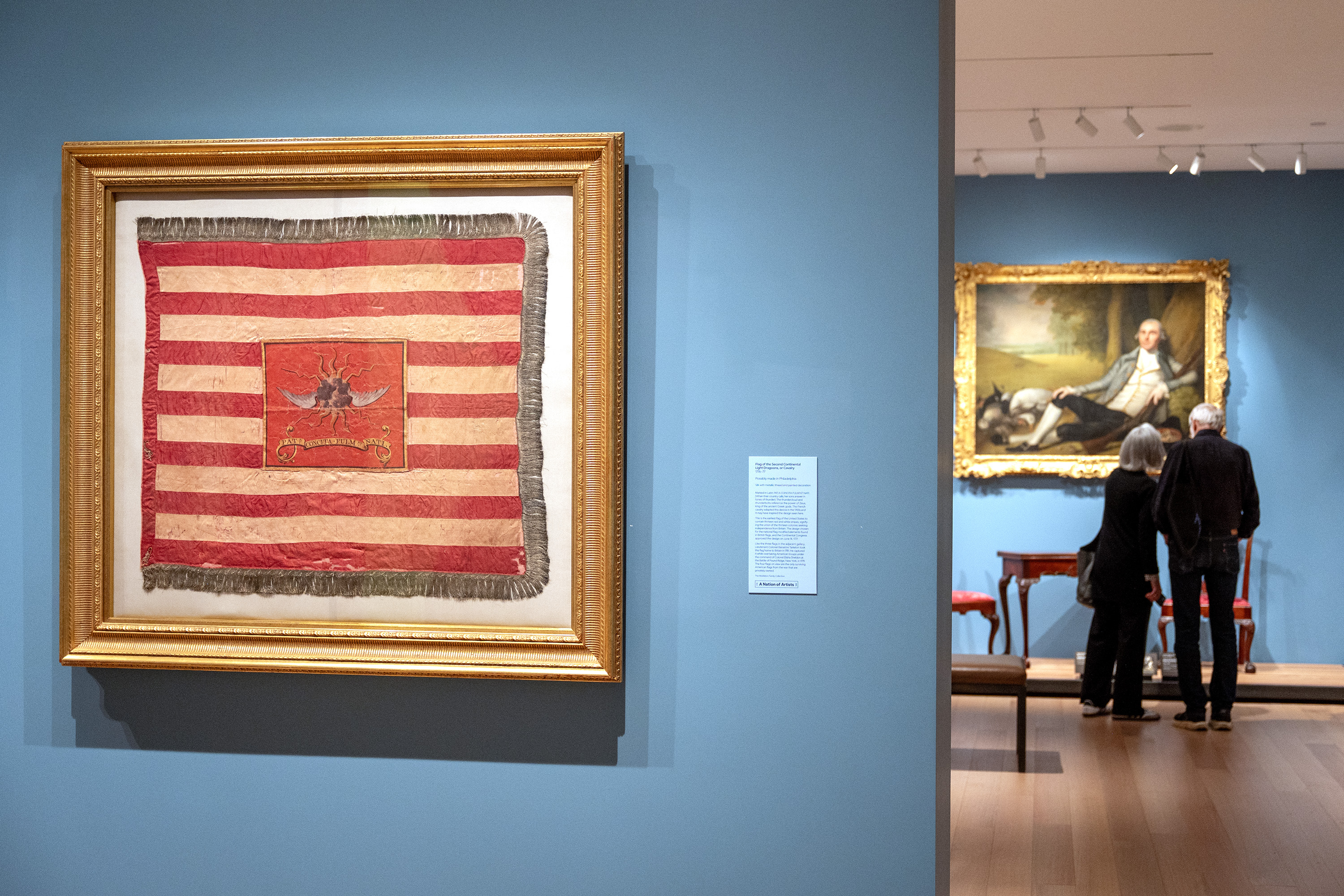
    “The Flag of the Second Continental Light Dragoons,” possibly made in Philadelphia, is displayed at the Art Museum. It is the earliest flag of the United States to contain 13 red and white stripes.Tom Gralish / Staff Photographer

    Gems at PMA

    From the vantage of the PMA’s Grand Stair Hall on the second floor, a supersized trailhead marks the route to “A Nation of Artists.” The way forward leads through a corridor with a small selection of American watercolors and drawings made in response to the terrain of the New World. The section’s title, “New Eyes,” is a fitting note to self for what’s ahead.

    The PMA galleries designated for “A Nation of Artists” bracket the years from the 1680s to the 1950s. The newly renovated galleries on the second floor tackle the 19th and 20th centuries, while art from the first 200 years is on the first floor, in the museum’s splendidly reinstalled galleries of early American art, which opened in 2021. Seventeen works from the Middleton Collection are there, in companionable proximity to charismatic old-timers.

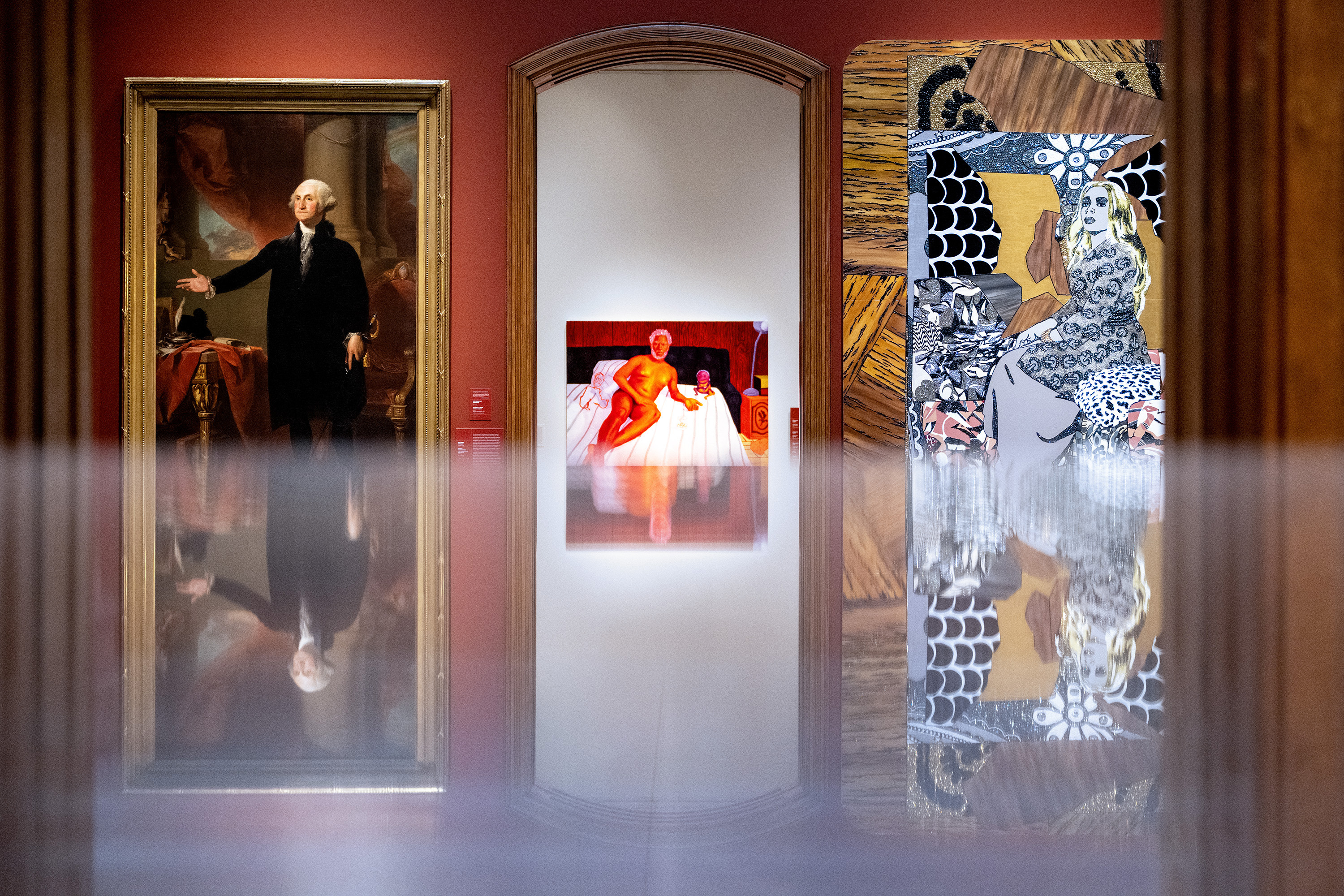
    The earliest United States flag to contain 13 red and white stripes, The Flag of the Second Continental Light Dragoons, (1776-77) is a Middleton loan, as is Charles Willson Peale’s monumental George Washington at Princeton (1779), painted a decade before the subject became president.

    “Staircase Group” by Charles Willson Peale. Jason Wierzbicki

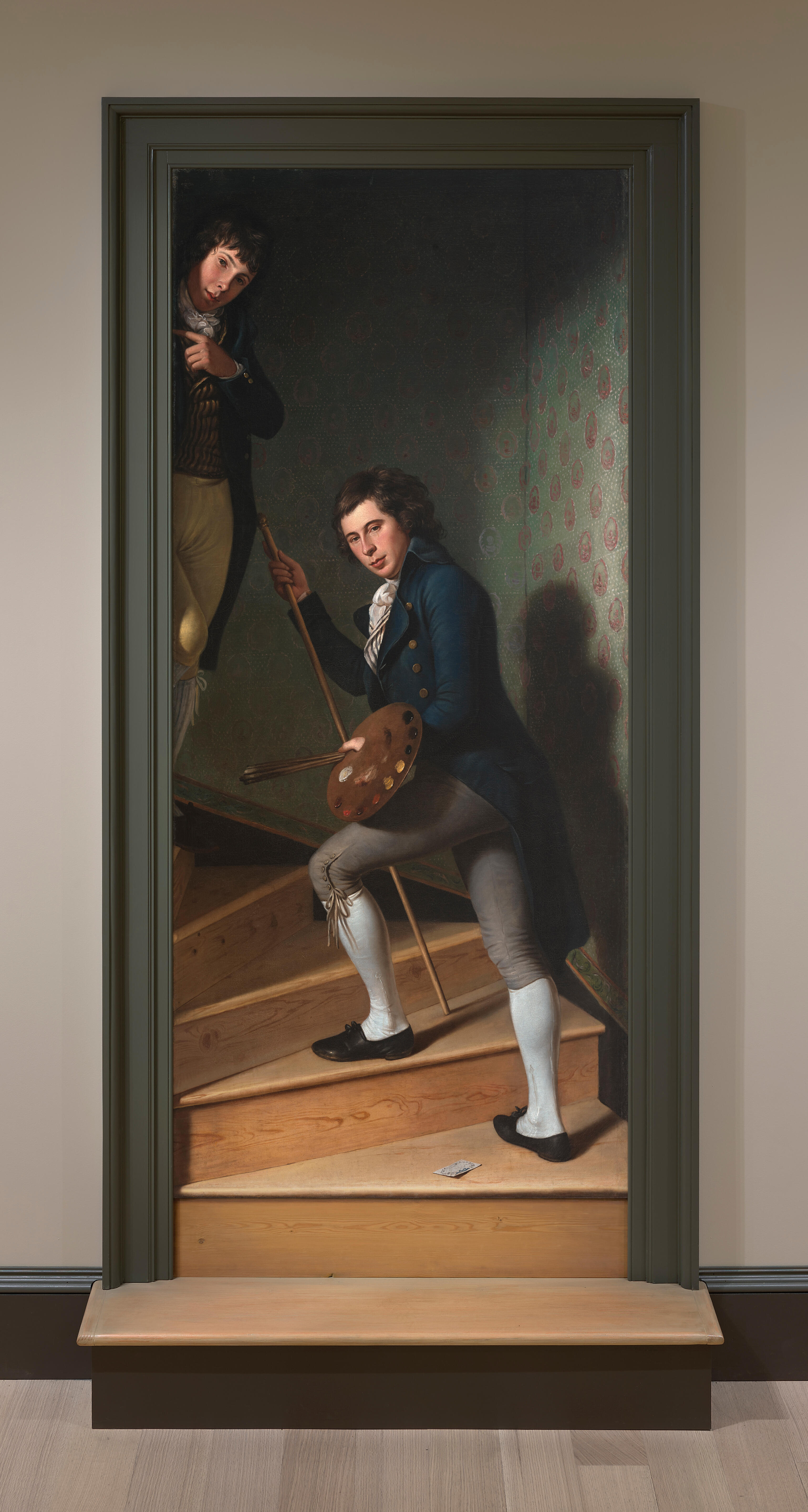
    A few steps away is PMA’s Staircase Group (1795), Peale’s startlingly illusionistic portrait of his sons paused in mid-ascent. It was so realistic that, reportedly, a distracted Washington once nodded at it in passing. The entire first-floor area constitutes an “unadvertised special” of the upstairs galleries. Explore it the day of your visit or save it for another day — it’s that worthwhile.

    Works in the newly renovated Furness and Hewitt building at the Pennsylvania Academy of the Fine Arts.Tom Gralish / Staff Photographer

    Head over to PAFA

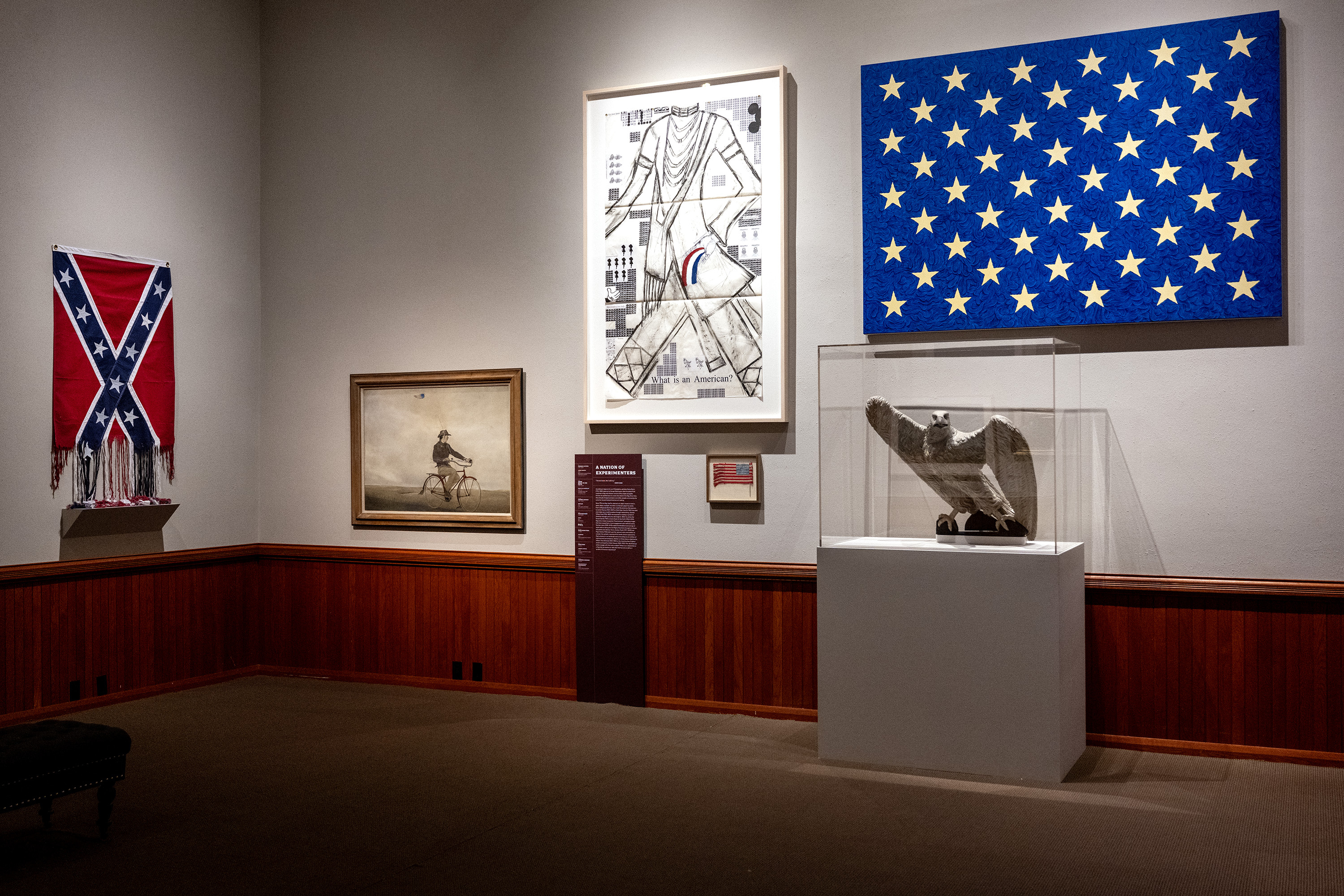
    At PAFA, “A Nation of Artists” begins a few steps from the front desk, in a section entitled “A Nation of Experimenters.” Relinquish expectations that art history here unfolds in chronological sequence, as it does at PMA. Throughout PAFA, intergenerational clusters of provocatively unalike art shelter under thematic umbrellas.

    Every work in this introductory gallery references the American flag or issues of national identity. Standouts include Sonya Clark’s ongoing performance work, Unraveling (2015 to present), made with a Confederate battle flag that she partially deconstructed, thread by thread. In Andrew Wyeth’s Young America (1950), a rider isn’t looking where he’s going as he pedals across a desolate landscape. Both Norman Lewis’ painting Redneck Birth (1961) and William Rush’s emblematic sculpture Eagle (ca. 1810) voice the unspoken query of Jaune Quick-to-See Smith’s large lithograph (2001-03) What is an American?

    Norman Lewis’ “Redneck Birth.” Courtesy of the Pennsylvania Academy of Fine Arts

    Midway upstairs, there’s an independent, outwardly unrelated display of Fred Wilson’s MASTER PLAN (2004-2009), a suite of delicate photogravures commissioned by PAFA’s Brodsky Center. An intriguing, conceptual inquiry into the subtle ways museum floor plans affect visitors, it prompted me to draft another “note to self.”

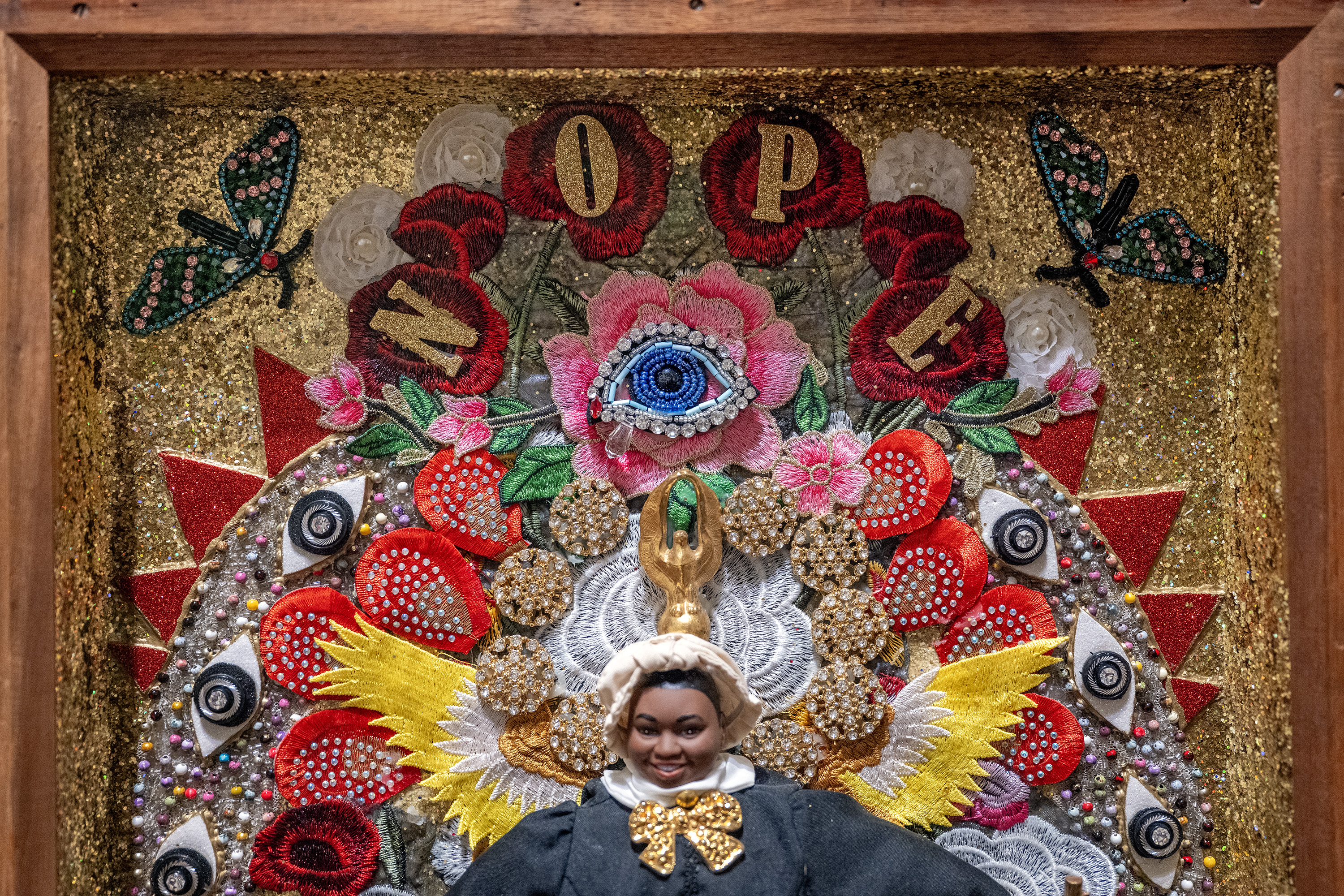
    Detail of “Declaration of Independence” by Vanessa German.Tom Gralish / Staff Photographer

    A diverse nation

    “A Nation of Artists” offers rich, tangible proof of the creative complexity of American art. The curators’ strategic arrangements stimulate many educational takeaways. Equally potent provocateurs are the juxtapositions and connections we notice on our own. Here are some of mine.

    African Americans are integral to the narrative weave of the show. “Prosperity, Abundance, Inequity,” the overarching theme of a PMA gallery of mid-19th century art, includes one less obvious thread.

    Amid the eye-catching trappings of wealth is a utilitarian stoneware vessel by Dave, an enslaved potter. Although literacy was illegal for enslaved people in South Carolina, Dave inscribed the jar with his name, a rhymed verse combining a biblical reference with the jar’s use, and the date, 1859.

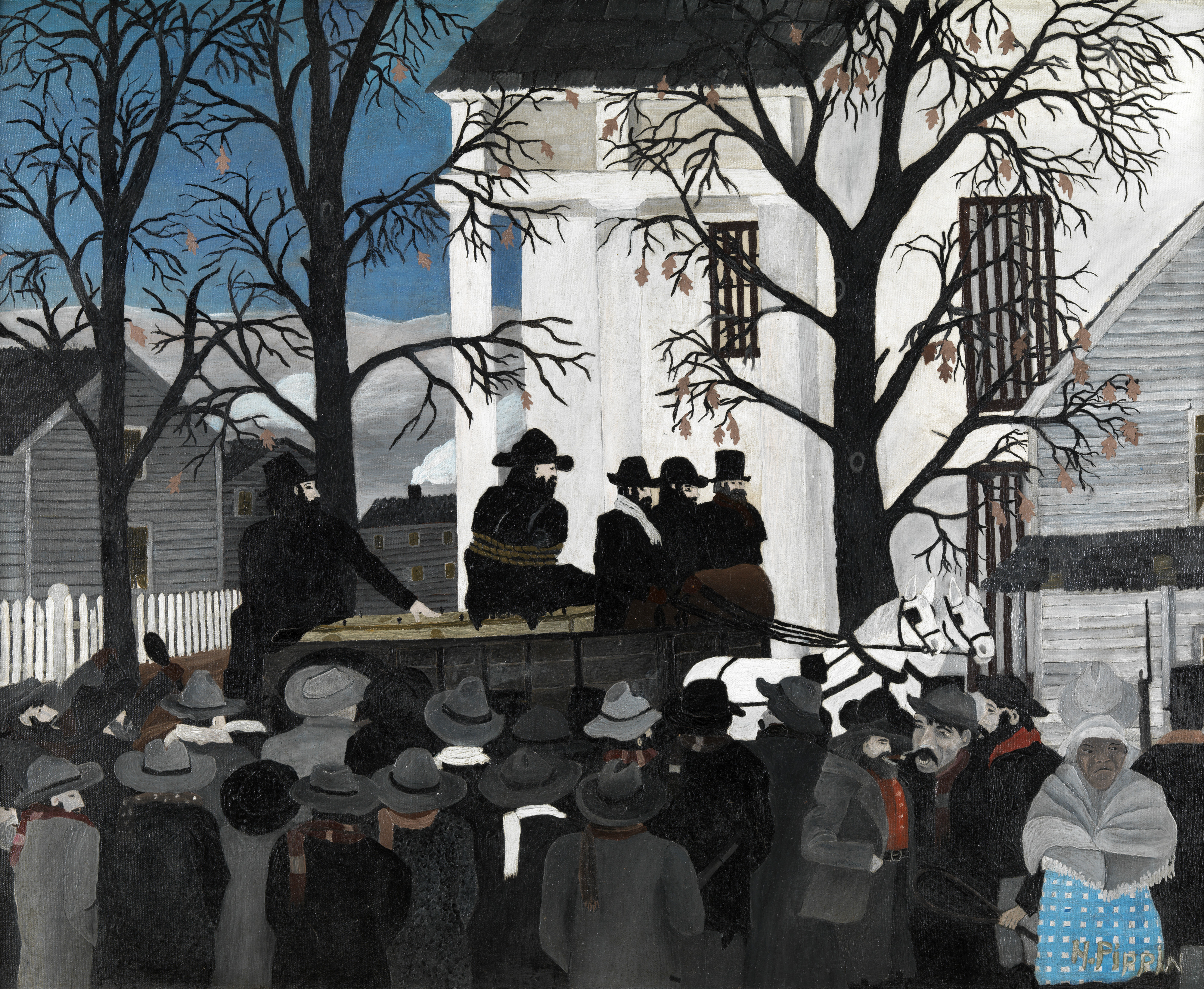
    That same year in West Virginia, an ardent abolitionist received a death sentence for raiding the federal armory at Harpers Ferry.

    In PAFA’s John Brown Going to His Hanging (1942), Horace Pippin visualized a crowd of male onlookers facing the gallows-bound wagon in which Brown sits on his own coffin. The one Black woman may be his grandmother, who, while not an eyewitness, was the likely source of his information. Unforgettably, she’s the only person turned to meet our gaze.

    “John Brown Going to His Hanging” by Horace Pippin.Barbara Katus
    Florine Stettheimer’s “Picnic at Bedford Hills.” Courtesy of the Pennsylvania Academy of Fine Arts

    The city of Philadelphia links two works painted 200 years apart at PAFA. John L. Krimmel’s Fourth of July in Centre Square (1811) is a delightfully detailed survey of a broad range of the population. It wasn’t people but the record of their actions that snared my attention a few galleries away. In Alex Lukas’ lengthy horizontal painting Untitled (2012), the stigmata of old tires, vandalized walls, and posters ornament an unidentified Philly riverbank.

    Although I was acquainted with the modernist Florine Stettheimer’s whimsical paintings, it was a treat to find two of them. In PAFA’s Picnic at Bedford Hills (1918), the artist taps her memory of the languorous luncheon she enjoyed with a small group of friends, Marcel Duchamp among them. In PMA’s Spring Sale at Bendel’s (1923), a melee of bargain-crazed ladies behaves in amusingly unladylike ways.

    Florine Stettheimer, “Spring Sale at Bendel’s.” Courtesy of the Philadelphia Museum of Art

    Benjamin West’s familiarity with the customs and attire of Indigenous Americans is evident in his iconic, grandly scaled Penn’s Treaty with the Indians (1771—72) at PAFA. To paint it, he tapped firsthand knowledge, having grown up near Indigenous communities in what is Swarthmore today.

    In West’s painting, authentically garbed players enact an imaginary account of the founding of Pennsylvania a hundred years earlier, an ostensibly beneficent goods-for-land exchange between Penn and representatives of the Lenape. West’s prominent placement of a bare-breasted Native mother nursing her cradleboard-bound infant is less a compositional device than it is a nod to Eurocentric interest in exotic details.

    Benjamin West’s “Penn’s Treaty with the Indians.”Courtesy of the Pennsylvania Academy of Fine Arts
    Sanford Gifford, “A Coming Storm.”Courtesy of the Philadelphia Museum of Art

    Several works at PAFA catapult us forward by hundreds of years. Skywalker/Skyscraper (Allegory) (2012), a knockout, mural-size rainbow made with reclaimed wool blankets, is by Marie Watt, a member of the Seneca Nation of Indians. She chose blankets as her material because, like all everyday objects, they can carry “extraordinary histories of use.”

    Dyani White Hawk, an artist of Sičáŋǧu Lakota ancestry, painted PAFA’s stunning She Gives (Quiet Strength VII) (2020). This monumental, abstract composition of marks in layered patterns alludes to the rhythms of traditional beadwork and porcupine quillwork.

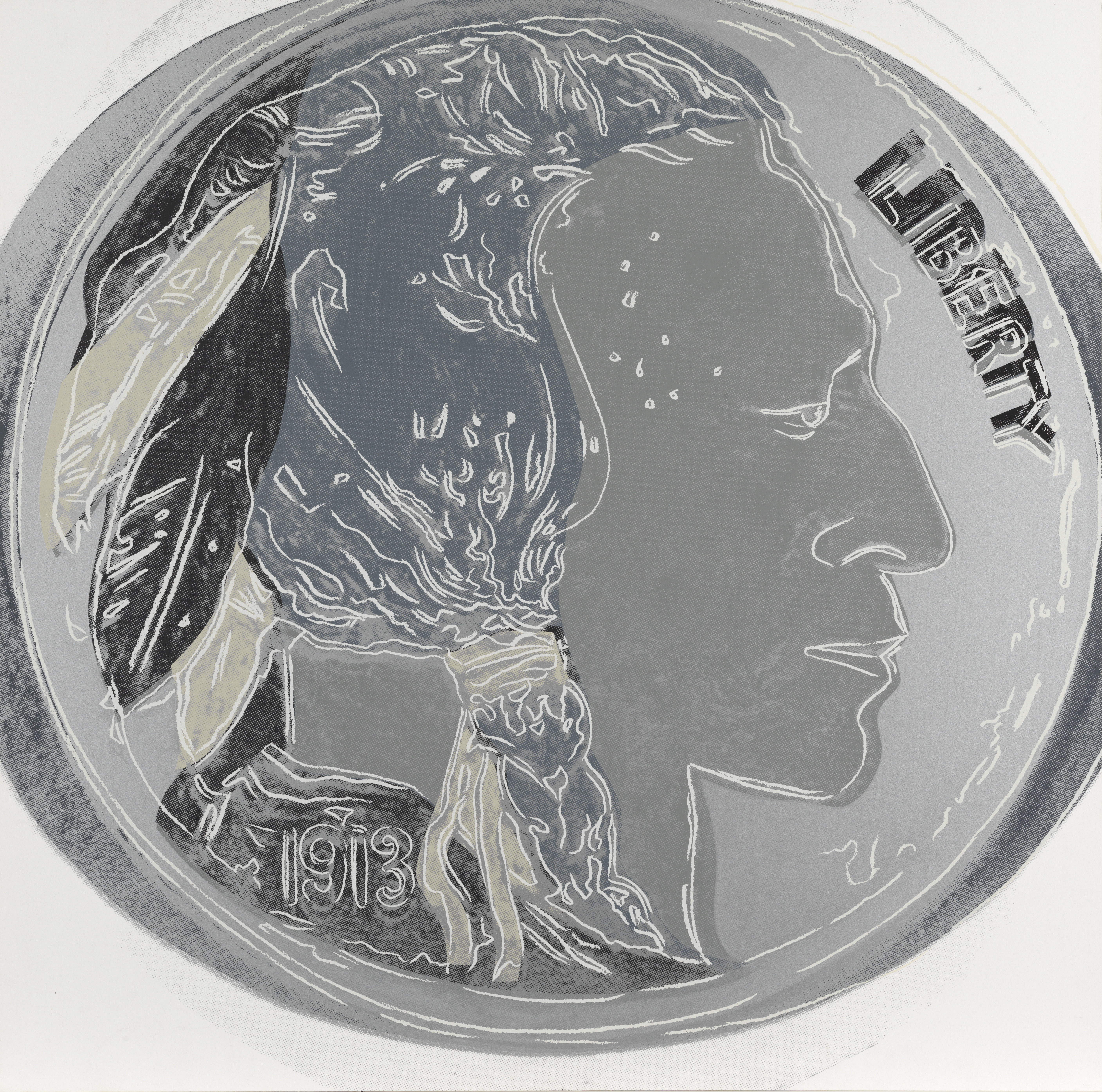
    Two hundred years after West, the Indigenous man in Andy Warhol’s screen print Cowboys and Indians (1986) at PAFA, was a person Warhol had never seen. As had other Pop artists, Warhol had only represented a representation. In this case, it was the U.S. coin known as the Indian Head Nickel.

    Andy Warhol’s “Cowboys and Indians (Indian Head Nickle).” Courtesy of the Pennsylvania Academy of Fine Arts

    At PMA, I connected paintings with works from their hitherto unexhibited collection of native artifacts. Dogfish Pile Driver (before 1893), is a masterfully carved tool by the Northwest Coast craftsman identified as a “Nuxalk Artist Once Known.” An invited advisory committee of Indigenous curators, scholars, and culture bearers selected the work on view. Many object labels include their commentary.

    It takes a minute to spot the Native Americans in Sanford Gifford’s A Coming Storm (1863), a showstopper of a painting. A demon cloud commandeers attention as it approaches the banks of Lake George in Upstate New York. Then we notice a small, marginalized group of Native people on the shoreline, a literal and metaphorical indication that the area was within the homelands of the Iroquois Confederacy.

    Works in the newly renovated Furness and Hewitt building at the Pennsylvania Academy of the Fine Arts Wednesday, May 6, 2026. “A Nation of Artists”Tom Gralish / Staff Photographer

    Visitors find more than one important work by Pippin in each venue, as is true of other celebrated artists such as Thomas Eakins, Violet Oakley, Winslow Homer, Henry Tanner, and Cecilia Beaux. “A Nation of Artists” runs into 2027, encouraging multiple visits to both museums.

    Of course, Hippocrates didn’t have the show in mind when he noted “ars longa, vita brevis.” Although his insight that “art is long and life is short” refers to the time required for proficiency, it’s another useful “note to self” when attempting to predict just how much time it might take to reap all the exhibition has to offer.

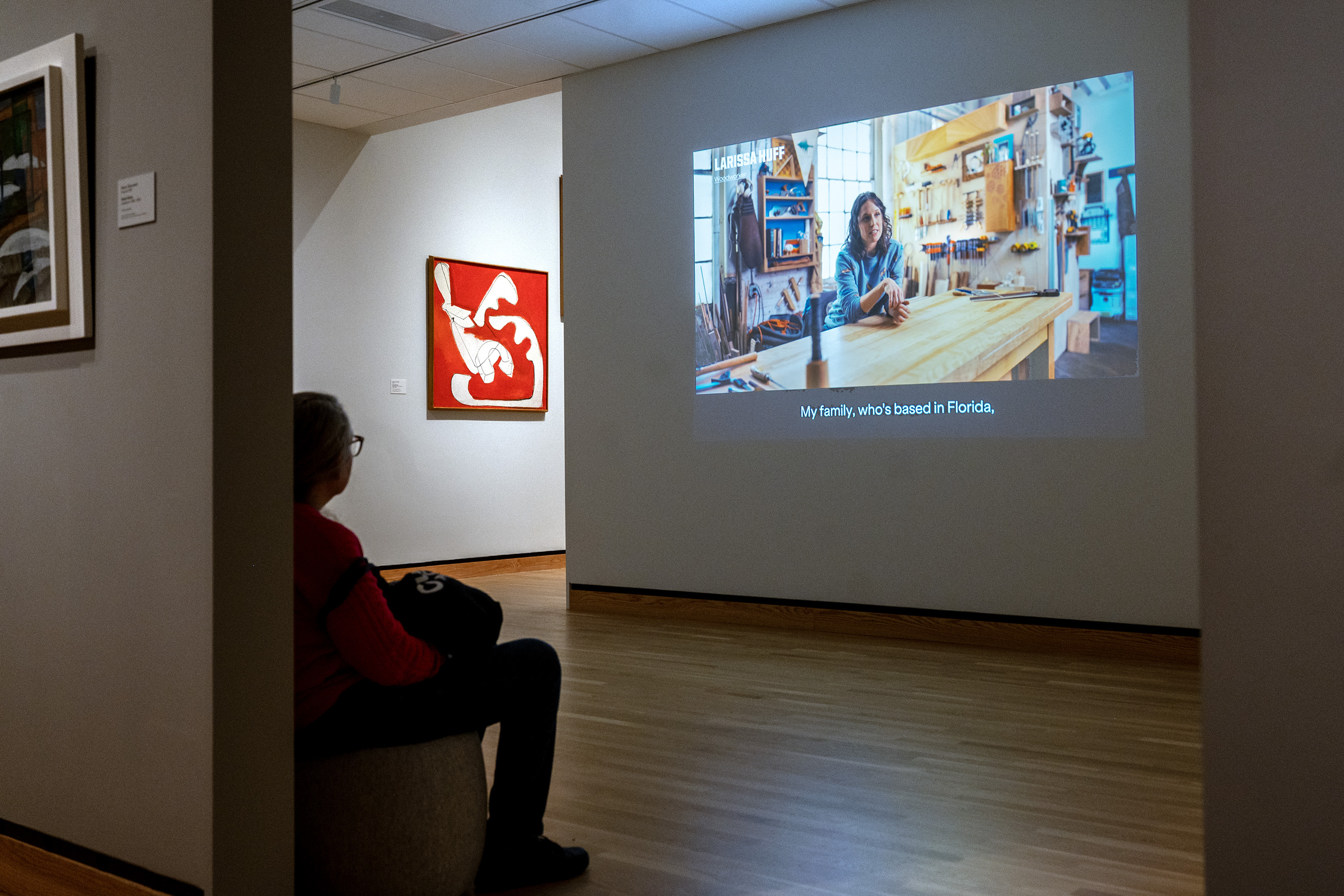
    Philadelphia-based woodworker and artist Larissa Huff is featured in a video in the “A Nation of Artists” show at the Philadelphia Museum of Art Monday, May 4, 2026, in the newly renovated American galleries which were closed for several years.Tom Gralish / Staff Photographer
  • Philly has planted nearly 19,000 trees and counting as part of an ambitious plan

    Philly has planted nearly 19,000 trees and counting as part of an ambitious plan

    Over the last three years, Philadelphia has planted 18,581 trees on streets and in yards, parks, and schoolyards, according to an update on the ambitious Philly Tree Plan released Thursday.

    The ultimate goal of the 10-year urban forestry plan is to increase the city’s tree canopy from about 20% to 30% over three decades, with planners noting it takes time for trees to grow.

    The plan hit a snag in 2025 when the Trump administration temporarily froze a $12 million federal grant from the Inflation Reduction Act to kick-start the program. But the money has since been released.

    “We saw a lot of achievement in these past three years despite the funding delay,” said Kiasha Huling, director of the Philly Tree Coalition, a group of collaborators assembled to carry out the plan.

    The annual Philly Tree Plan progress report, which spans 2023 to 2025, said the coalition has made significant headway in street tree planting and coordination with city departments since the plan’s 2023 rollout.

    The Philly Tree Plan calls for tree canopy improvements in areas of disinvestment, industrialization, and racial and economic inequalities.

    Why is a tree plan needed?

    Citywide tree canopy averaged 20% in 2018 when officials first took stock, but that varied. Officials noted that the tree canopy had decreased by 6% between 2008 and 2018 — the equivalent in size to 1,000 football fields.

    But, even more stark, some neighborhoods had as little as 5% average coverage, while others had 45%.

    The Philly Tree Plan notes that the city faces hurdles in growing that diminished canopy, such as dense streets, underground utilities and infrastructure, and lower-income households unable to afford tree maintenance.

    So it focuses on helping residents with pruning, watering, mulching, dead tree removal, and other maintenance.

    “We are on pace to be able to implement the tree plan in full within the next seven years,” Huling said.

    The coalition works with the Public Health Management Corp. to pull together city agencies, regional nonprofits, and community advocates to carry out the plan.

    How many trees and where are they planted?

    The report, which includes data from Philadelphia Parks and Recreation, the Pennsylvania Horticultural Society, Fairmount Park Conservancy, and community-led Tree Tenders, a Pennsylvania Horticultural Society program, shows the number and type of plantings:

    • 6,832 street trees
    • 5,681 park trees
    • 5,200 yard trees
    • 441 school trees
    • 427 trees along waterways

    Huling said the strategy calls for moving toward urban-tolerant, infrastructure-friendly trees with greater genetic diversity.

    Historically, Philadelphia planted trees primarily for aesthetics, selecting species that competed with their urban environment. Roots destroyed sidewalks.

    Huling noted that the city now picks species with root systems that can thrive within city blocks rather than tearing them apart. It has moved away from planting single species of trees, such as London planes. Now, it uses modern hybridized versions more adapted to urban environments.

    The city now looks to combine existing large canopy trees with smaller understory trees on neighborhood blocks. For example, large existing oak trees can be paired with smaller eastern redbuds. The species have different root depths and demands that will not compete above or underground.

    Huling said street trees offer the greatest environmental return on investment.

    Roughly 70% of Philadelphia’s housing stock consists of dense rowhouses without yards. So getting tough, appropriate street trees planted directly along residential sidewalks is a challenge but is important to help reduce heat in shadeless communities.

    Storms also present a challenge. A microburst in July downed about 500 mature trees in West, South, and Southwest Philadelphia. The coalition has distributed more than $750,000 in grassroots grants and funded disaster recovery following the storm.

    The plan also has a workforce development component. The Philly Tree Coalition taps programs like PowerCorpsPHL, Future Track, and PHS Tree Tenders, all of which train residents — and in many cases provide stipends or paid positions — in pruning, heavy equipment operation, and urban forestry care.

    The report notes the importance of tree preservation and maintenance as indispensable.

    City Forester Erica Smith Fichman and city teams logged 44,773 hours on urban forest maintenance over the three-year evaluation cycle.

    Meanwhile, city crews and neighborhood stewards have watered, mulched, and pruned trees.

    Other highlights from the progress report:

    • Tree preservation and maintenance: Partners provided care to 14,044 young trees and maintenance to 18,829 mature trees.
    • Workforce development: The coalition helped train 537 workers in tree stewardship: 433 graduates from the PHS Tree Tenders program, 60 participants trained through the Philadelphia Department of Commerce, and 44 participants through PowerCorpsPHL.
    • Community investment: $765,000 in tree-related grants was distributed across 10 grassroots community organizations working in historically disinvested, low-canopy priority areas.
    • Policy: The city enacted legislative and zoning reforms including a bill that increased on-site planting requirements for commercial parking lots and open spaces and established mandatory “fee-in-lieu” contributions from developers into an expanded municipal Tree Fund.

    Huling said she is now looking forward, beyond the three-year assessment.

    “Are we doing the things that are genuinely going to allow us to take on more trees and be able to care for them as well as the established canopy that we have?” Huling asked. “We’re making really great strides. We’re doing it.”

  • Philadelphia Marathon 2026: What to know about road closures, parking, and race times

    Philadelphia Marathon 2026: What to know about road closures, parking, and race times

    The Philadelphia Marathon returns Nov. 20-22 for what organizers expect to be the largest race weekend in event history.

    Runners from around the world will compete in the 8K, half-marathon, and 26.2-mile marathon, which stretches from Manayunk to the Delaware River waterfront.

    The first Philadelphia Marathon was held in 1994 with just 1,500 participants. This year, organizers expect nearly 40,000 runners across four races.

    With that many runners hitting the streets, Philadelphians can expect road closures, parking restrictions, and traffic detours throughout the weekend.

    Here’s what to know before the 2026 Philadelphia Marathon Weekend.

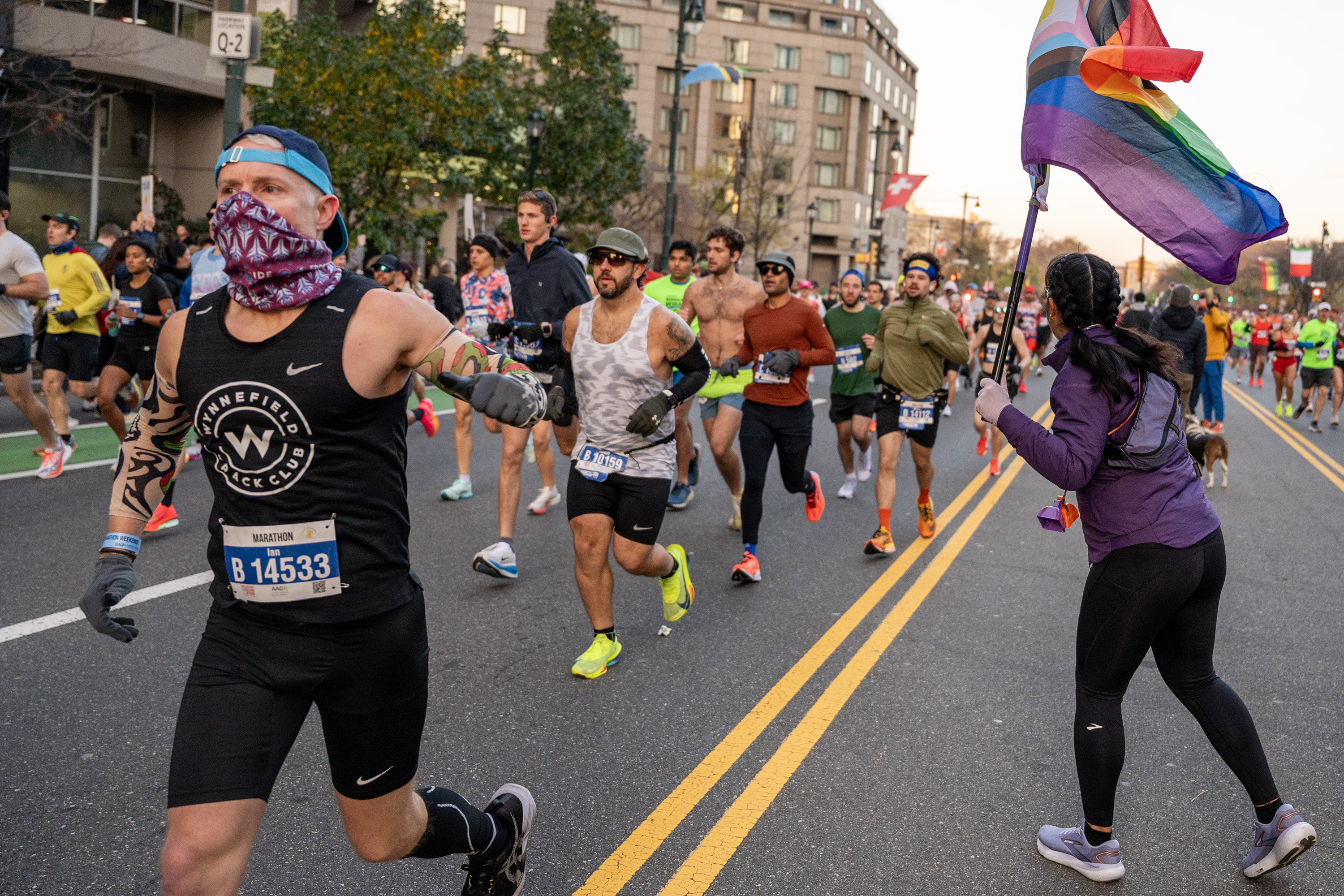
    Sharon Tejada (right), a coleader of Queer Run, encourages runners heading out on the Benjamin Franklin Parkway at the start of the annual Philadelphia Marathon on Nov. 23, 2025.Tom Gralish / Staff Photographer

    Race start times and locations for the Philadelphia Marathon

    All four races start near the Philadelphia Museum of Art. The marathon, half-marathon, and Children’s Run begin at 22nd Street and Benjamin Franklin Parkway, while the Rothman Orthopaedics 8K starts at 25th Street and Kelly Drive.

    • Dietz & Watson Philadelphia Half-Marathon: Saturday, Nov. 21, 6:55 a.m. (wheelchair participants); 7 a.m. (runners and walkers)
    • Rothman Orthopaedics 8K: Saturday, Nov. 21, 10:55 a.m. (wheelchair participants); 11 a.m. (runners and walkers)
    • TIAA Philadelphia Marathon: Sunday, Nov. 22, 6:55 a.m. (wheelchair participants); 7 a.m. (runners and walkers)
    • Philadelphia Children’s Run: Sunday, Nov. 22, 11 a.m.

    Race routes for the Philadelphia Marathon

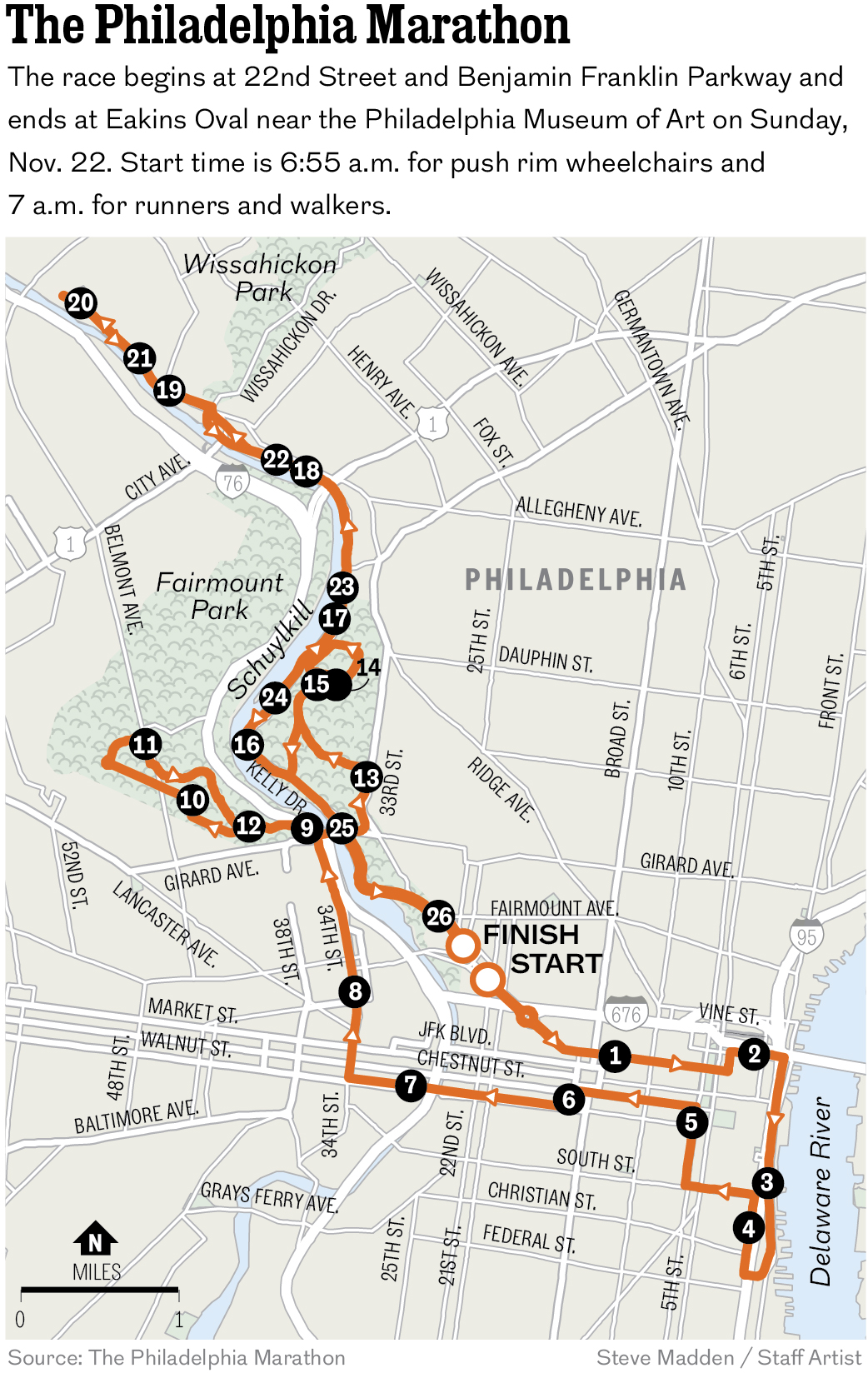
    Each race follows a unique route. The marathon and half-marathon wind through Center City, Chinatown, Old City, Queen Village, Rittenhouse, and University City, with portions of the courses passing through Fairmount Park and along Kelly Drive and the Benjamin Franklin Parkway.

    Course map for the Philadelphia MarathonSteve Madden

    Health & Fitness Expo

    The Philadelphia Marathon Weekend Expo returns to Hall F of the Pennsylvania Convention Center, at 12th and Arch Streets.

    • Friday, Nov. 20: 8 a.m. to 9 p.m.
    • Saturday, Nov. 21: 8 a.m. to 5 p.m.

    The expo features vendors showcasing apparel, shoes, and running gear, along with free product samples and educational booths focused on health and fitness. Both days will also feature a speaker series and meet-and-greets with some of the country’s top runners.

    For spectators of the Philadelphia Marathon

    Spectators are welcome to line the race routes to cheer on runners but will be restricted from the starting lines and in secure running areas until after 8 a.m. on Saturday and Sunday to ensure smooth race starts.

    The Philadelphia Marathon has a list of prohibited and discouraged items for spectators, available in full on its website.

    • Large umbrellas, coolers, alcohol, bicycles, scooters, and animals (except service animals) are prohibited. Organizers also discourage spectators from bringing large blankets, backpacks, handbags, and cameras.
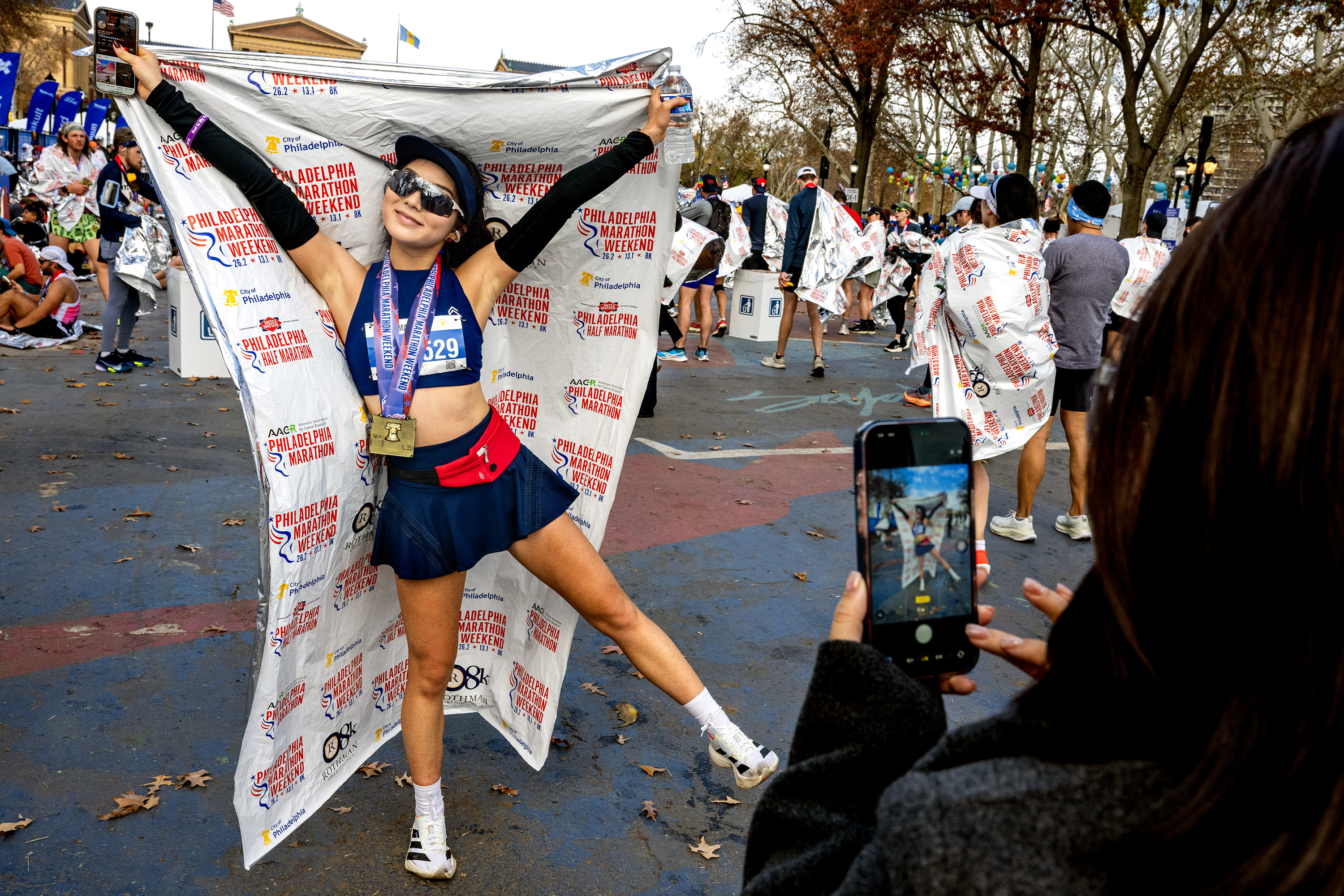
    Lilian Yao, 20, poses for her mother, Leslie Liu, after completing the Philadelphia Marathon on Nov. 23, 2025. This was her first marathon. Her mom arrived from Hong Kong just hours before the start of the race.Tom Gralish / Staff Photographer

    Road closures

    All-weekend closures

    Friday, Nov. 20, through 5 p.m. Sunday, Nov. 22

    • Benjamin Franklin Parkway (all lanes) between 22nd Street and Eakins Oval
    • Kelly Drive (inbound) closed at 25th Street, with local traffic permitted to Anne d’Harnoncourt Drive
    • Spring Garden Street Bridge and MLK Drive (inbound) traffic detoured onto 24th Street
    • Spring Garden Street closed between Benjamin Franklin Parkway and Pennsylvania Avenue

    Saturday, Nov. 21

    2 a.m. closures

    • 2000-2400 Benjamin Franklin Parkway
    • Spring Garden Street, from Pennsylvania Avenue to Benjamin Franklin Parkway
    • 23rd Street, from Pennsylvania Avenue to Benjamin Franklin Parkway
    • 22nd Street, from Winter Street to Park Towne Place (local access to Park Towne Place maintained)
    • 21st Street, from Pennsylvania Avenue to Winter Street

    4 a.m. closures

    • I-676 off-ramp at 22nd Street (westbound)
    • I-76 off-ramp at Spring Garden Street (eastbound)

    6 a.m. closures

    • 17th Street, from Arch Street to Vine Street
    • 18th Street, from Arch Street to Callowhill Street
    • 19th Street, from Arch Street to Callowhill Street
    • 20th Street, from Arch Street to Callowhill Street
    • 21st Street, from Arch Street to Spring Garden Street
    • 22nd Street, from Arch Street to Spring Garden Street
    • Benjamin Franklin Parkway, from 16th Street to 20th Street
    • Market Street, from Sixth Street to 16th Street
    • Chestnut Street, from Fifth Street to Eighth Street
    • Sixth Street, from Market Street to Chestnut Street
    • Fifth Street, from Chestnut Street to Race Street
    • South Penn Square
    • Juniper Street, from Chestnut Street to Market Street
    • John F. Kennedy Boulevard, from Juniper Street to 17th Street
    • 15th Street, from Race Street to Chestnut Street
    • 16th Street, from Chestnut Street to Race Street
    • Race Street, from Sixth Street to Columbus Boulevard
    • Columbus Boulevard (southbound lanes), from Vine Street to Washington Avenue
    • I-95 southbound off-ramp at Washington Avenue
    • Washington Avenue, from Columbus Boulevard to Front Street
    • Front Street, from Washington Avenue to South Street
    • South Street, from Front Street to Seventh Street
    • Sixth Street, from Bainbridge Street to Locust Street
    • Lombard Street, from Fifth Street to Broad Street
    • 13th Street, from Bainbridge Street to Chestnut Street
    • Walnut Street, from 12th Street to 34th Street
    • 34th Street, from Chestnut Street to Girard Avenue
    • Spring Garden Street, from 32nd Street to 34th Street
    • Girard Avenue, from 33rd Street to 38th Street
    • 33rd Street, from Girard Avenue to Cecil B. Moore Avenue
    • Reservoir Drive, from 33rd Street to Diamond Drive
    • Mount Pleasant Drive
    • Fountain Green Drive
    • Kelly Drive

    Access and reopening

    • Local access for residents and businesses will be maintained at police-controlled points.
    • Access to the Philadelphia Museum of Art will be available via Spring Garden Street (Bridge and Tunnel) to Anne d’Harnoncourt Drive.
    • Motorists and pedestrians can expect delays when trying to cross roads or streets along the racecourse.
    • Police will allow traffic through intersections when possible, depending on runner flow.
    • All streets (except Eakins Oval and the Parkway) are scheduled to reopen by 2 p.m. Saturday. Many Center City roads will reopen earlier as they are cleared and serviced.

    Sunday, Nov. 22

    As part of enhanced security for the TIAA Philadelphia Marathon, “No Parking” regulations will be strictly enforced. Vehicles on the race route will be relocated beginning at 1 a.m. Sunday.

    2 a.m. closures

    • 2000-2400 Benjamin Franklin Parkway
    • Spring Garden Street, from Pennsylvania Avenue to Benjamin Franklin Parkway
    • 23rd Street, from Pennsylvania Avenue to Benjamin Franklin Parkway
    • 22nd Street, from Winter Street to Park Towne Place (local access maintained)
    • 21st Street, from Pennsylvania Avenue to Winter Street

    4 a.m. closures

    • I-676 off-ramp at 22nd Street (westbound)
    • I-76 off-ramp at Spring Garden Street (eastbound)

    6 a.m. closures

    • 17th Street, from Arch Street to Vine Street
    • 18th Street, from Arch Street to Callowhill Street
    • 19th Street, from Arch Street to Callowhill Street
    • 20th Street, from Arch Street to Callowhill Street
    • 21st Street, from Arch Street to Spring Garden Street
    • 22nd Street, from Arch Street to Spring Garden Street
    • Benjamin Franklin Parkway, from 16th Street to 20th Street
    • Arch Street, from Third Street to 16th Street
    • Fourth Street, from Arch Street to Vine Street
    • Race Street, from Sixth Street to Columbus Boulevard
    • Columbus Boulevard (southbound lanes), from Vine Street to Washington Avenue
    • Columbus Boulevard (northbound lanes), from Washington Avenue to Callowhill Street
    • I-95 southbound off-ramp at Washington Avenue
    • Washington Avenue, from Columbus Boulevard to Front Street
    • Front Street, from Washington Avenue to South Street
    • South Street, from Front Street to Seventh Street
    • Sixth Street, from Bainbridge Street to Market Street
    • Chestnut Street, from Sixth Street to 15th Street
    • 15th Street, from Chestnut Street to Walnut Street
    • Walnut Street, from Broad Street to 34th Street
    • 34th Street, from Chestnut Street to Girard Avenue
    • Lansdowne Drive, from Girard Avenue to South Concourse Drive
    • South Concourse Drive, from Lansdowne Drive to West Memorial Hall Drive
    • East Memorial Hall Drive, from South Concourse Drive to Avenue of the Republic
    • Avenue of the Republic, from East Memorial Hall Drive to Catholic Fountain
    • Belmont Avenue, from Montgomery Drive to Parkside Avenue
    • States Drive, from Lansdowne Drive to Girard Avenue
    • Girard Avenue Bridge, from Lansdowne Drive to 33rd Street
    • 33rd Street, from Girard Avenue to Reservoir Drive
    • Reservoir Drive, from 33rd Street to Edgley Drive
    • Edgley Drive, from Reservoir Drive to Fountain Green Drive
    • Fountain Green Drive, from Edgley Drive to Kelly Drive
    • Kelly Drive
    • Falls Bridge
    • Ridge Avenue, from Schoolhouse Lane to Manayunk Avenue
    • Main Street (Manayunk), from Ridge Avenue to Conarroe Street

    Access and reopening

    • Local access for residents and businesses will be maintained at police-controlled points.
    • Access to the Philadelphia Museum of Art will be available via Spring Garden Street (Bridge and Tunnel) to Anne d’Harnoncourt Drive.
    • Expect delays at crossings along the course; police will allow traffic through when possible.
    • All streets (except Eakins Oval and the Parkway) are scheduled to reopen by 3 p.m. Sunday; many Center City roads will reopen earlier as they are cleared and serviced.
    • The outer lanes of Benjamin Franklin Parkway, Eakins Oval and Kelly Drive will be reopened to vehicular traffic by 5 p.m. on Sunday. All affected roads will be reopened by 8 a.m. on Monday, Nov. 23.

    Transportation to the races

    🚌 Bus

    Lines 7, 32, 38, 43, 48, and 49 normally stop within a short walk of the Philadelphia Museum of Art. However, race-related detours are expected throughout the weekend.

    Check SEPTA’s system status for the latest route changes and schedules.

    🚄 Trains

    Athletes and spectators can take the Market-Frankford Line to 15th Street at City Hall or Drexel Station at 30th Street, then connect to nearby routes 7, 32, 38, 43, 48, and others to reach the museum area.

    Visitors can also board the Broad Street Line to Fairmount and Broad-Spring Garden stations, and transfer to connecting routes 7, 32, 48, 49, or others serving stops near or at the museum.

    🚆 Regional Rail

    Visitors can take SEPTA Regional Rail to Suburban Station or 30th Street Station to reach the start and finish areas. Check SEPTA’s website for schedules and service updates.

    🚴‍♀️ Bicycle

    The race’s starting line is within a 10-minute ride from the City Hall area and subway stop and other locations. Check the map of Indego bike share stations to rent bikes and return them at a station near the Art Museum.

    Runners turn from the Benjamin Franklin Parkway (upper right) onto Arch Street heading to 15th Street (bottom) in the first mile of the annual Philadelphia Marathon on Nov. 23, 2025.Tom Gralish / Staff Photographer

    Where does the money go?

    Proceeds from the Philadelphia Marathon support several charities and nonprofits, including local organizations such as B Inspired Philadelphia and the Mazzoni Center.

    See a full list of partnering nonprofits on the Philadelphia Marathon website.

    Awards & prize money

    Cash prizes range from $1,000 to $10,000, depending on the race, with the Philadelphia Marathon’s professional division offering the largest awards.

    See a full list of awards and prize money on the Philadelphia Marathon website.

  • House of the Week: A two-bedroom condo in Spring Garden for $550,000

    House of the Week: A two-bedroom condo in Spring Garden for $550,000

    After 20 years in Philadelphia, about half of them in Fairmount, Marie Lostocco finally decided it was time to own her first home.

    “It’s the historical charm and the large backyard,” which are rare for the neighborhood, said Lostocco, an accountant. “It’s the woodwork, the moldings, the baseboards.”

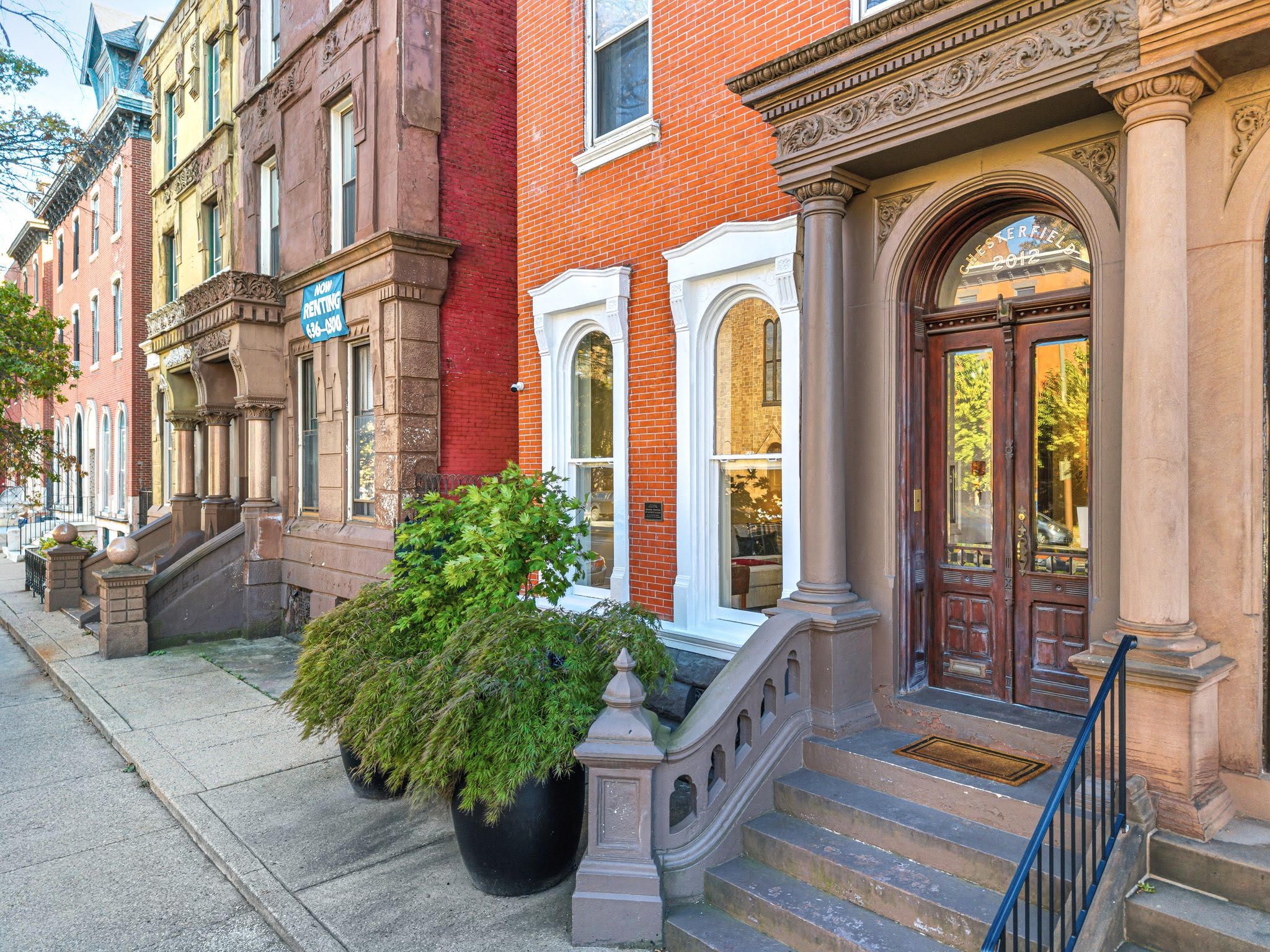
    So in 2024, she bought a 1,270-square-foot condominium with two bedrooms and two bathrooms in a Spring Garden historic district.
    But now she’s ready for a new experiment: Traveling the country while she works remotely, not having a permanent residence.

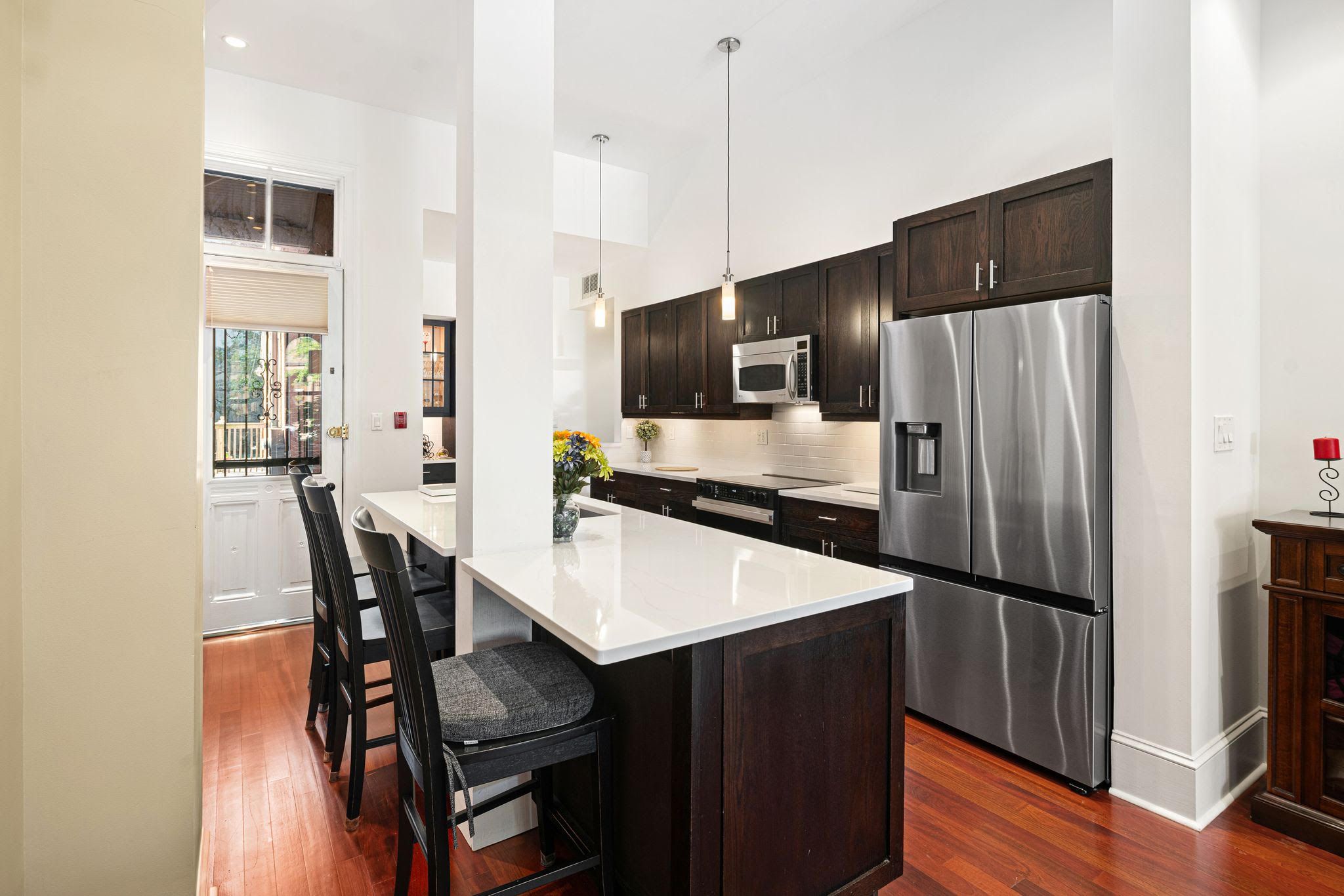
    The kitchen has wood cabinetry, Samsung stainless steel appliances, a subway-tile backsplash, and an island seating four.Plush Media

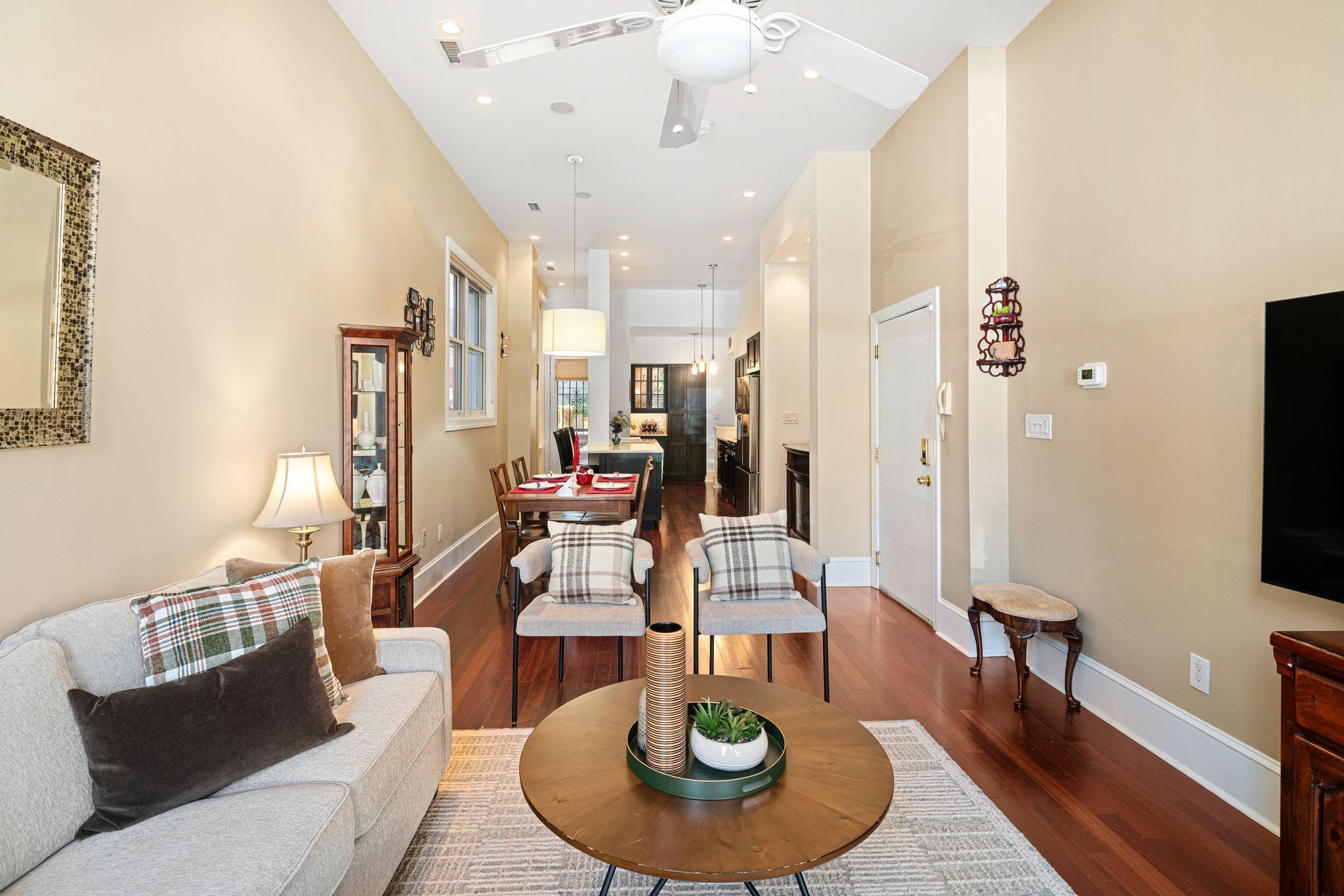
    The unit she’s selling has high ceilings, hardwood floors, floor-to-ceiling windows, and recessed lighting on the first floor. The kitchen has wood cabinetry, Samsung stainless steel appliances, a subway-tile backsplash, and an island seating four.

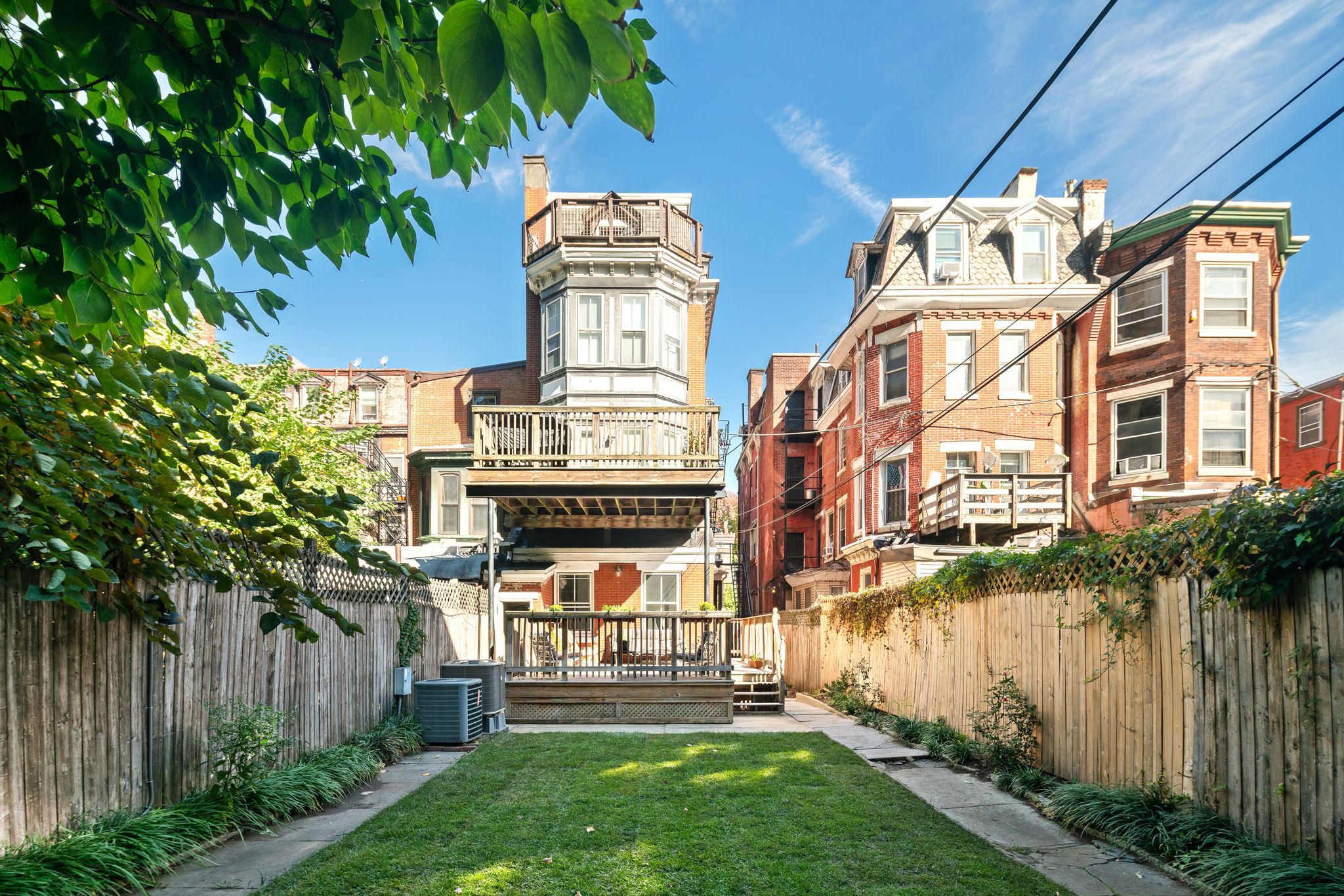
    The private backyard is surrounded by trees and fencing. The deck has room for multiple seating and dining areas. The lawn, exclusive to the residence, offers space for gardening or pets.

    The living room, which has high ceilings and hardwood floors.Plush Media

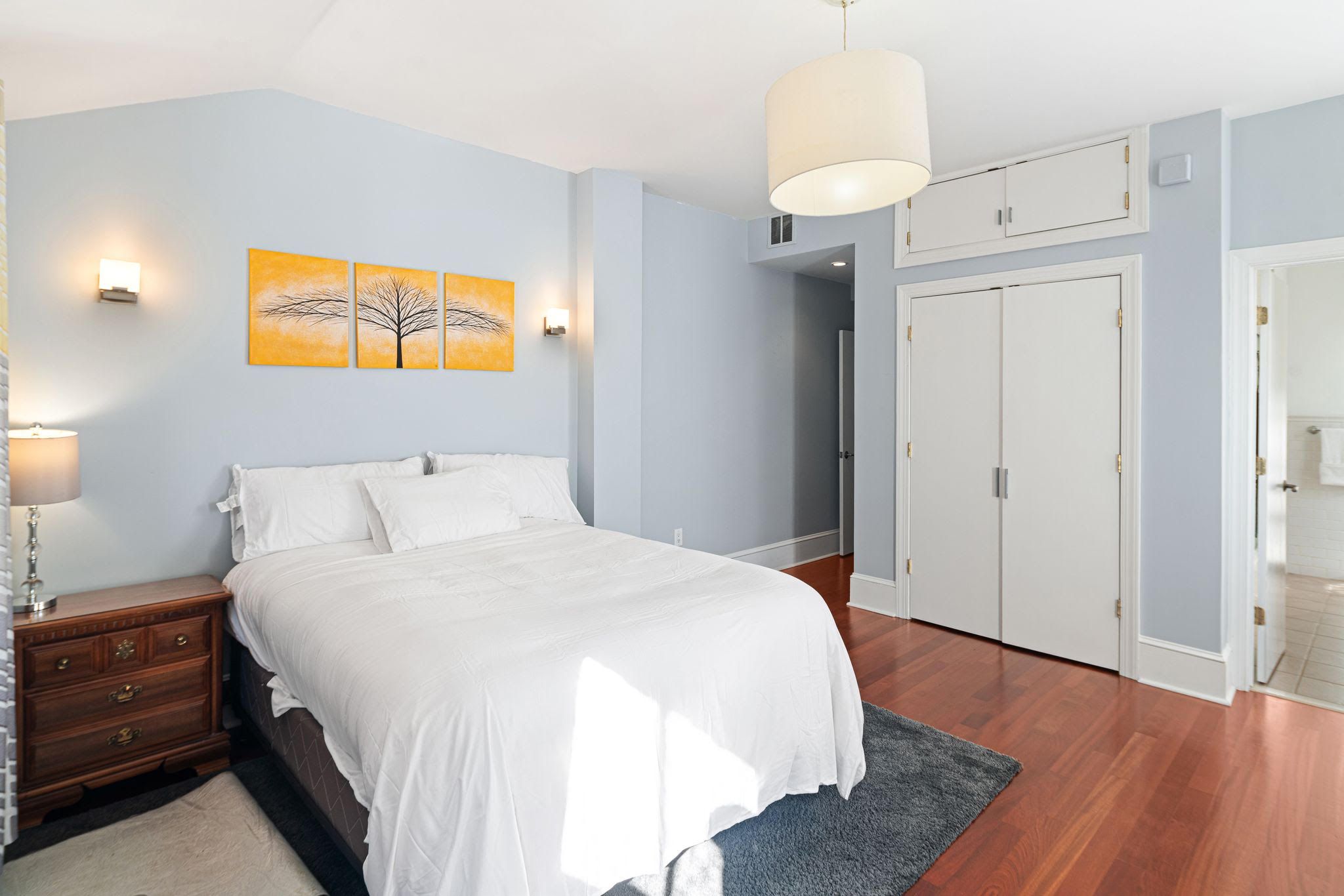
    The primary suite has two walls of windows, a vaulted ceiling, an en suite bathroom, and direct access to the backyard. The second bedroom has two custom-fitted closets and access to a full hall bathroom.

    A laundry closet has a new stackable LG washer and dryer. The condo has dedicated storage units in the basement.
    A bedroom in the condo.Plush Media

    The building, built around 1900, is convenient to the Art Museum, Kelly Drive, and restaurants.
    Lostocco has no doubts about what she’ll do if her traveling experiment gets old.

    “I’ll come back here” to the neighborhood, she says.

    The unit is listed by Andrew Kratz of BHHS Fox & Roach Art Museum for $550,000.

    The private backyard is surrounded by trees and fencing.Plush Media