For three years, Tony Ren worked to turn a former traditional Chinese-medicine pharmacy in Chinatown into an enormous restaurant, with three floors of dining, banquet, and private karaoke rooms.
He named it Mei Mei, after his wife.
He never got to see it open. Ren, a construction company owner who suffered a debilitating stroke in August 2024, died June 14. His wife, Mei, and their son, Atom, finally opened Mei Mei at 926 Arch St. last week.
Without realizing it, they walked into a restaurant-name dispute.
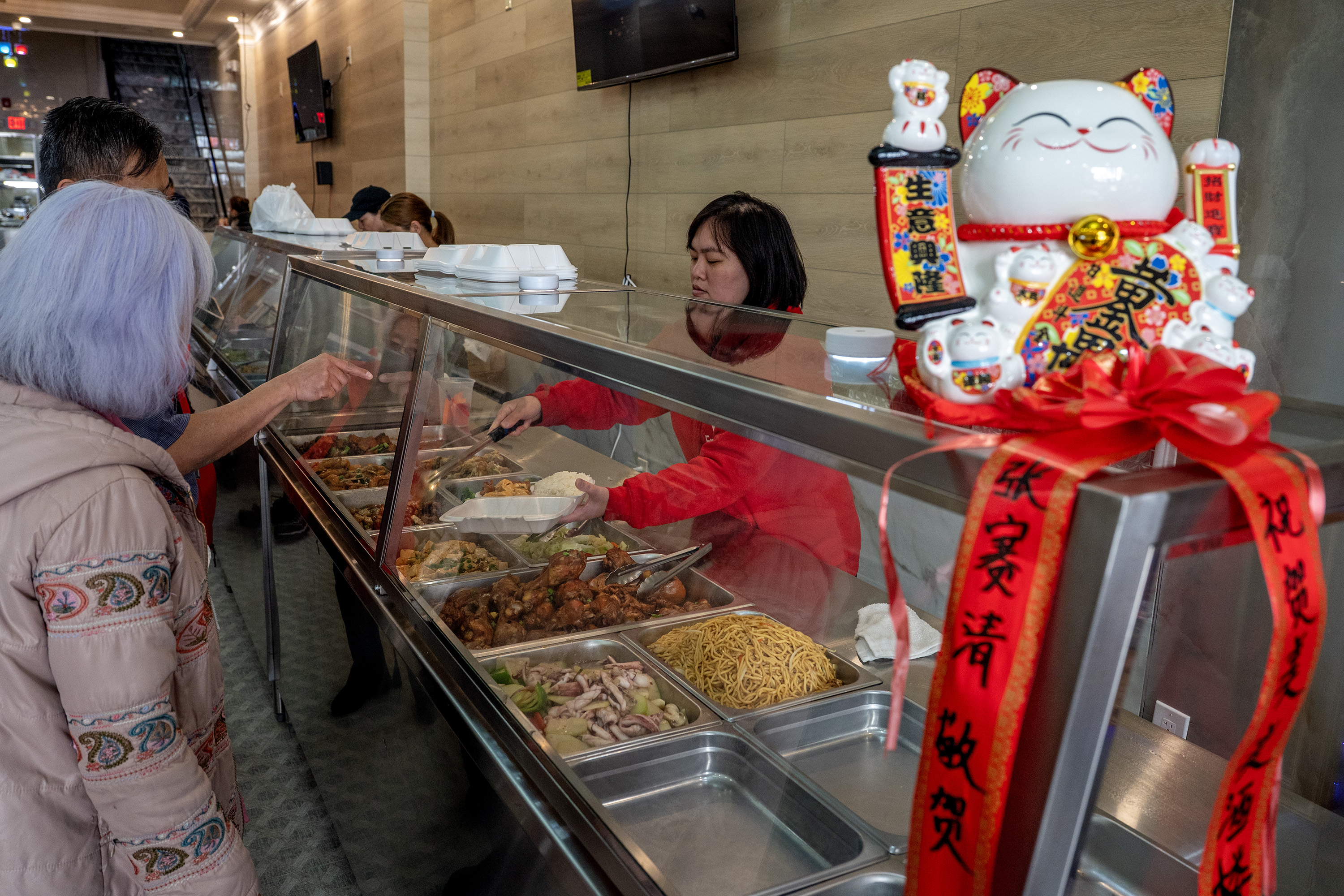
Customers line up for the $8.50 lunchtime buffet at Mei Mei, 926 Arch St. Tom Gralish / Staff Photographer
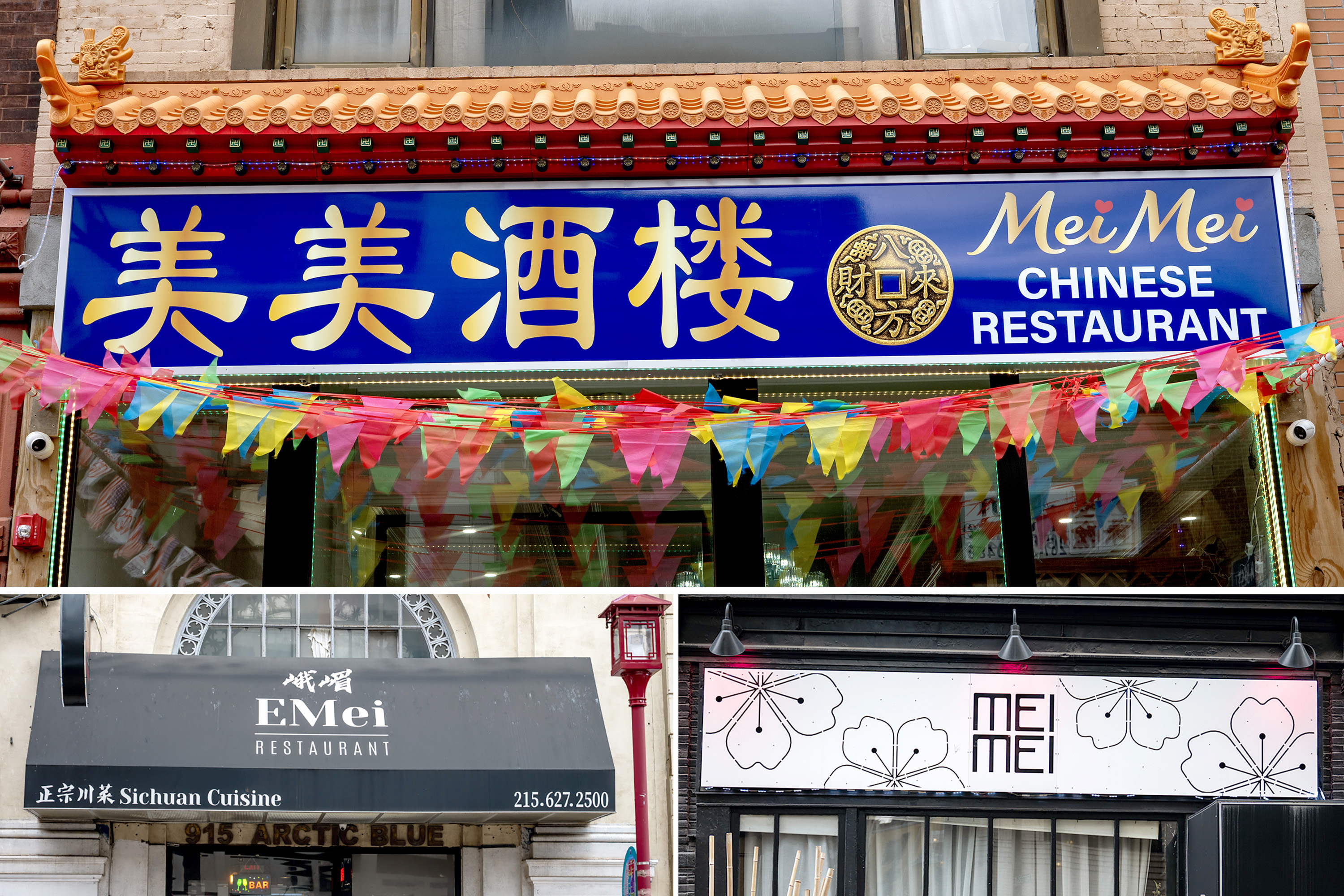
Philadelphia now has two Mei Meis in Center City. To complicate matters, a third restaurant with a similar name, the popular EMei, is directly across the street from the newcomer.
EMei owner Dan Tsao said he has seen confusion with the Old City Mei Mei, especially in online reviews. “When Mei Mei was closed after a flood [in February 2025], we got a few phone calls from their customers trying to book parties,” Tsao said. “Since their profile was not active for several months, EMei would pop up directly on the top when someone searched for Mei Mei.”
The first Mei Mei, a stylish modern Asian restaurant and lounge at 33 S. Second St. in Old City, opened in March 2020 under Jay Ho. EMei — which opened at 915 Arch St. in 2011 and appeared in The Inquirer’s 2024 edition of The 76 — specializes in Sichuan cooking.
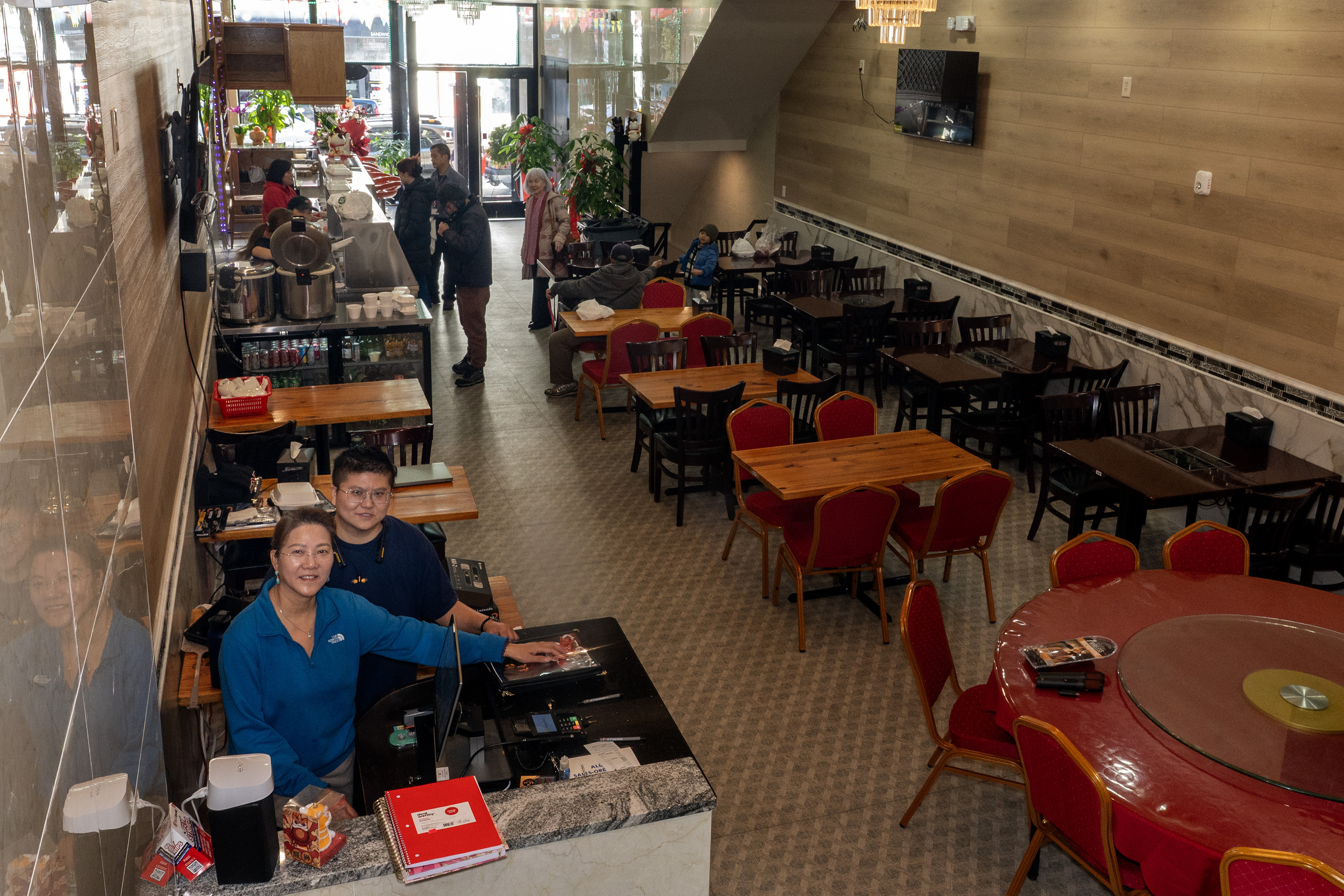
Mei Ren and her son Atom at Mei Mei, 926 Arch St.Tom Gralish / Staff Photographer
The similarities haven’t escaped Google Maps. Search for Mei Mei, and the Chinatown restaurant appears as “Mei Mei Restaurant.” Last week, Google added “Philadelphia” to the Old City restaurant’s name.
For the owners of the two Mei Meis, the names are more than branding.
“Mei Mei isn’t just a name to us, it’s our family’s legacy, dedicated to my own sisters,” Ho said of his Old City restaurant.
Ho has contacted the Rens through an intermediary and hopes to meet them in person. He is not seeking immediate legal action.
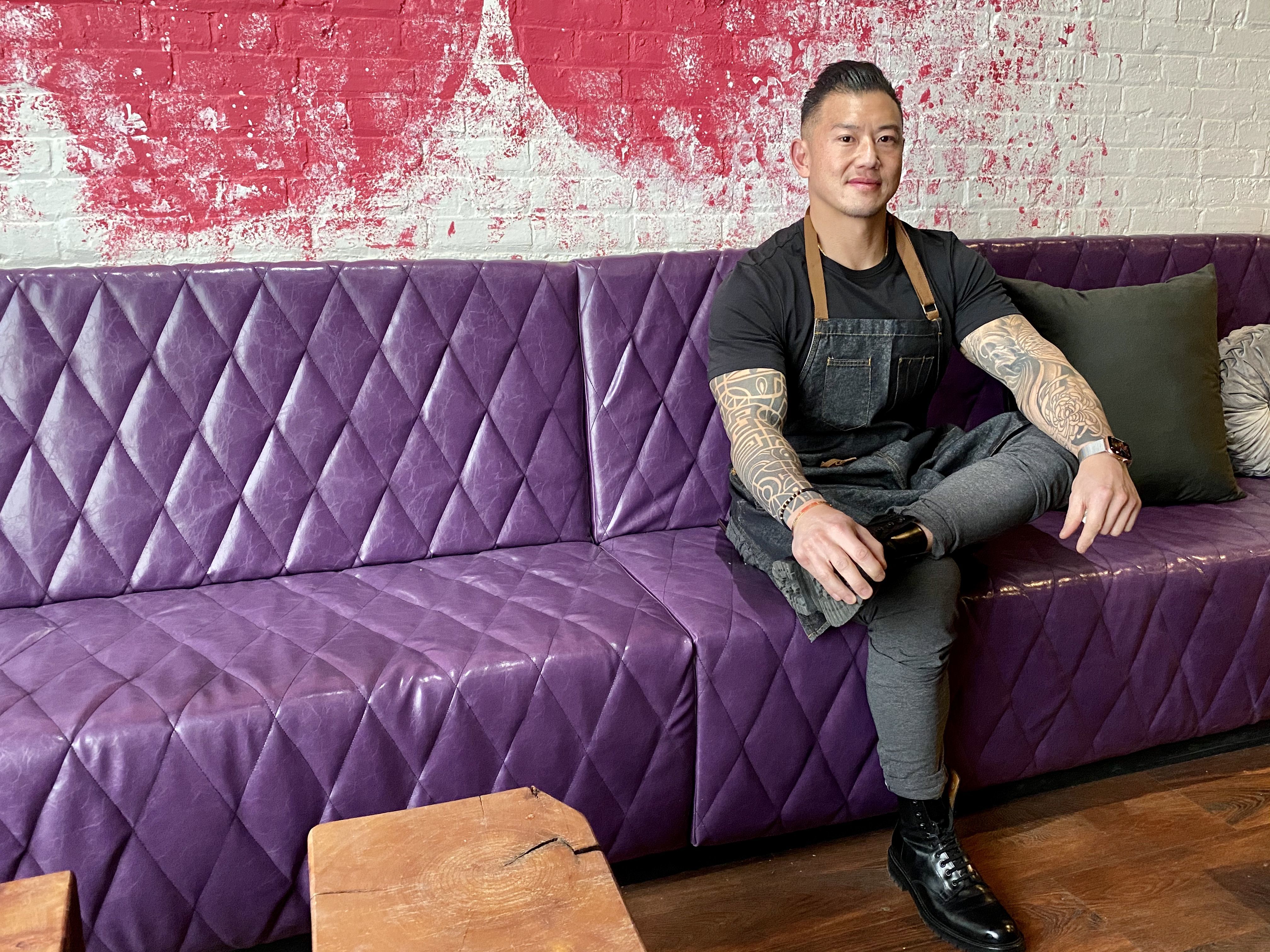
Jay Ho, owner of Mei Mei restaurant in Old City, shortly before its opening in 2020.Michael Klein / Staff
“We truly want every new restaurant in Philadelphia to succeed,” Ho said. “Yet we owe it to our family, our team, and our guests to make sure no one is ever confused about whose table they’re sitting down at and that they’re getting the Mei Mei experience in Philadelphia. I very much want to come to a friendly resolution.”
Tsao noticed the new restaurant’s sign going up across Arch Street before its opening.
“We’ve had customers confuse EMei with Mei Mei in Old City [with online reviews], so naturally, I was concerned about another Mei Mei opening directly across the street,” he said.
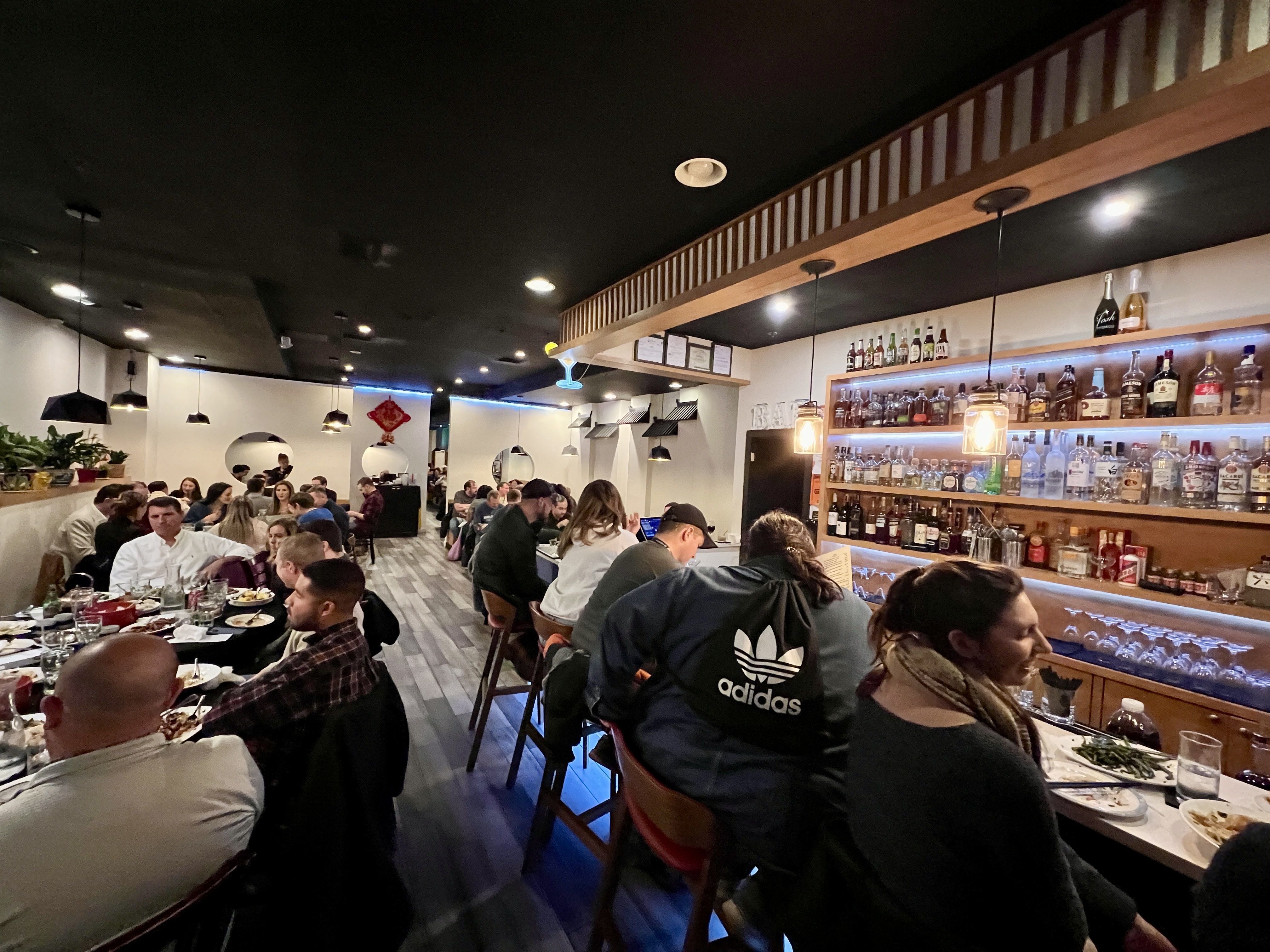
EMei at 915 Arch St. during a dinner rush in November 2025.Courtesy of EMei
“I’ve known the Ren family for years, so I called Atom directly to share my concerns,” Tsao said. “Personally, I would have avoided choosing a name so similar to an existing restaurant, but I recognize they may have the legal right to use it.”
Tsao said Atom Ren told him the restaurant’s signage and other materials were already finished, making a change difficult.
Ren, who operates the Chinatown restaurant with his mother, said they did not know about the Old City Mei Mei before opening and were unconcerned about the similarities.
His mother’s given name is Mei-qing, and she has gone by the nickname Yi-mei, also rendered as Mei, for more than 60 years.
Degrees of difference
Atom Ren pointed out that the three restaurants’ names, despite their similar English spellings, have distinct meanings in Chinese. His family’s Mei Mei uses characters associated with beauty. Ho’s uses characters meaning younger sister. EMei refers to Mount Emei, a mountain in China’s Sichuan province. The names also are pronounced differently in Chinese.
(function() { var l = function() { new pym.Parent( ‘mei-mei__graphic’, ‘https://media.inquirer.com/storage/inquirer/ai2html/mei-mei/index.html’); }; if(typeof(pym) === ‘undefined’) { var h = document.getElementsByTagName(‘head’)[0], s = document.createElement(‘script’); s.type = ‘text/javascript’; s.src = ‘https://pym.nprapps.org/pym.v1.min.js’; s.onload = l; h.appendChild(s); } else { l(); } })();
“They merely share similar Romanized spellings,” Ren said in an email. “In English, it is very common to have brands or names with similar spellings.”
The restaurants themselves could hardly be more different.
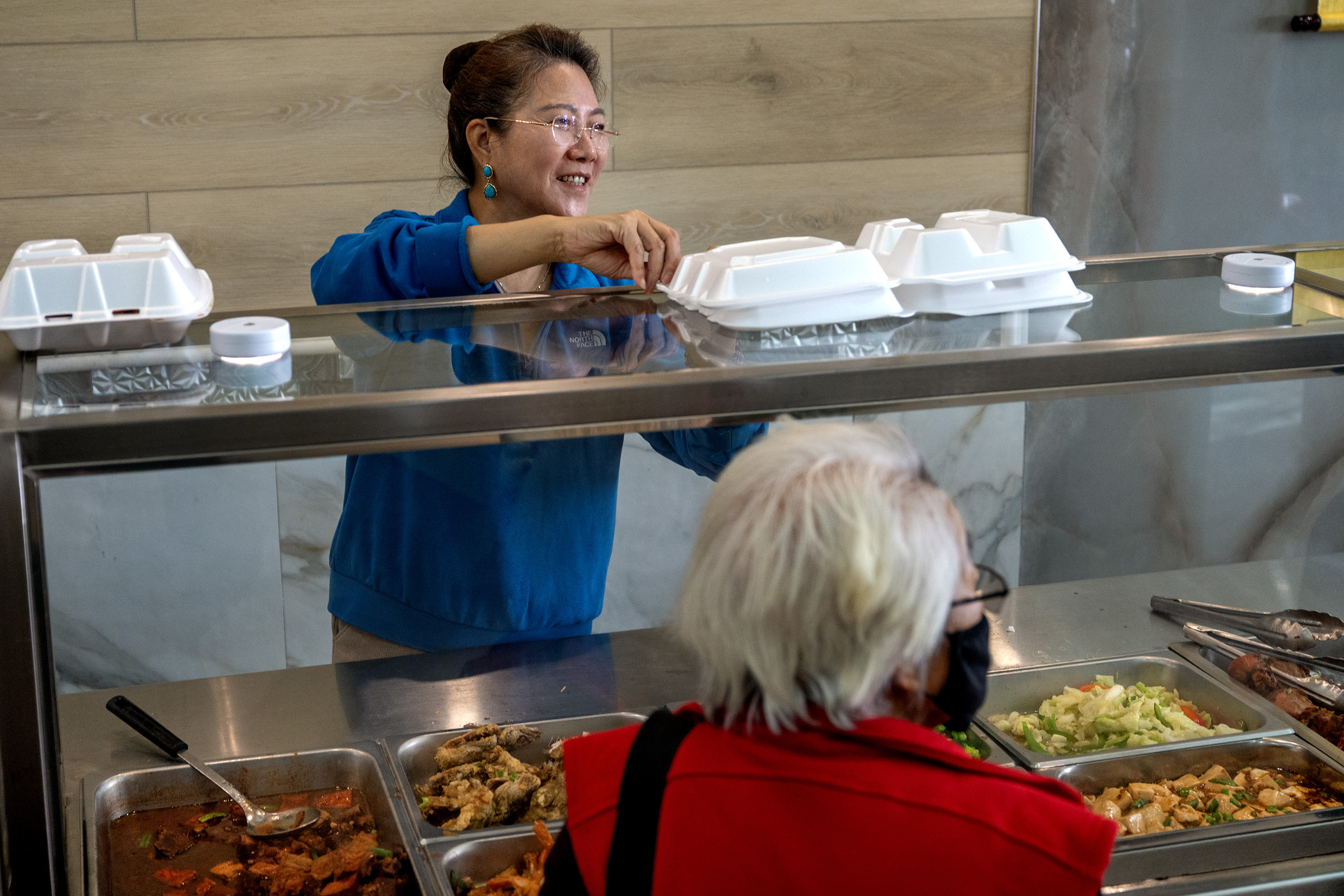
Mei Ren serves diners during the lunchtime buffet at Mei Mei, 926 Arch St.Tom Gralish / Staff Photographer
Ho’s Mei Mei is a high-energy dinner destination with contemporary Asian cooking, cocktails, dramatic lighting, and a basement lounge.
The new Chinatown Mei Mei is a sprawling, 300-seat operation whose ground-floor dining room serves a budget-friendly $8.50 lunch buffet combo of four dishes and soup. Selections include braised pork belly, mapo tofu, Chinese broccoli, and salt-and-pepper shrimp.
Dinner emphasizes Cantonese dishes. Upstairs are banquet rooms; downstairs are karaoke rooms. The extensive renovation included transforming former apartments into restaurant space and installing an elaborate chandelier imported from China.
The Rens are also partners in Grand Palace, the block-long restaurant and catering hall at Sixth Street and Washington Avenue in South Philadelphia.
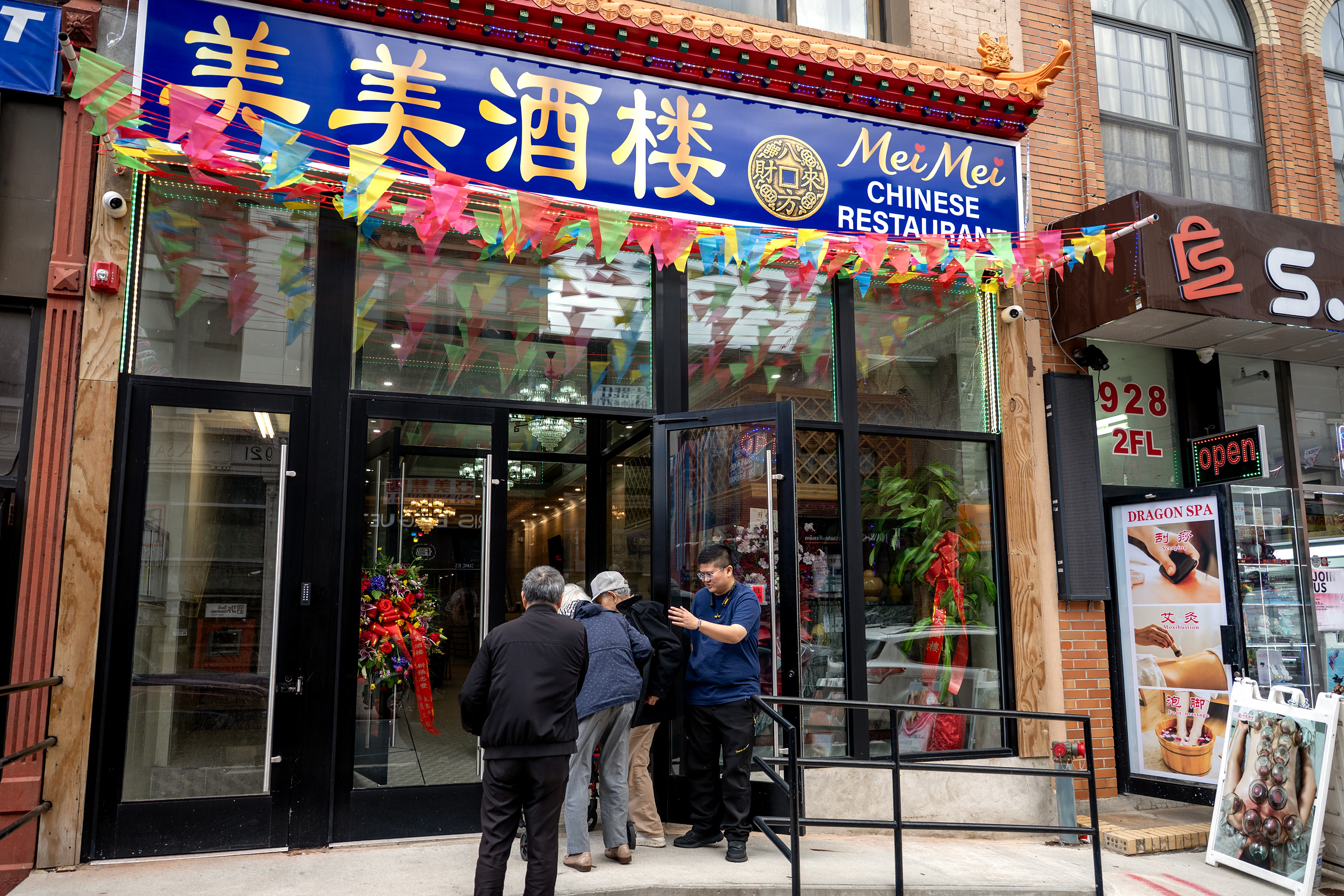
Atom Ren (right) holds the door for diners entering Mei Mei, which is decked out for its opening.Tom Gralish / Staff Photographer
“The culinary concepts and target demographics of these three restaurants are completely different,” Ren said. “We do not overlap or directly compete with the other two. Diners come for a specific taste and experience, not just a phonetic name.”
Familiar territory
Chinatown has been through this before — and the Rens have a connection to one of its more tangled restaurant-name disputes.
Mei and Atom Ren were among the partners in the original Dim Sum Garden, which opened on 11th Street near Arch in 2008. After restaurateur Shizhou Da and her daughter, Sally Song, opened another Dim Sum Garden at 1020 Race St. in 2013, a legal fight erupted over the name. The 11th Street restaurant eventually became Tom’s Dim Sum. The Rens are no longer involved.
The Tom’s name figured in another legal dispute in 2019, when competing restaurants called Tom’s Dim Sum Media and Tom’s Dim Sum Mania operated within feet of each other in Media.
Other Philadelphia restaurant-name disputes have involved Middle Child and Garage/Garage Sale Vintage. At other times, similar names have coexisted without litigation, such as the myriad restaurants with “Fiore” in their names.
For now, the owners of the two Mei Meis remain at odds, though the public disagreement could not be more civil.
Shortly after Mei Mei’s grand opening, Tsao walked across the street and bought a $500 gift card from the Rens. “I understand their position, respect the challenges of opening a new business, and wish them all the best,” Tsao said.
Philly’s a small town, and that’s true of its chef community, too.
We invited a number of the city’s top chefs to Bridesburg’s BLDG39, where The Inquirer’s Ariane Datil did some light matchmaking, pairing up Philly chefs and tasking them with whipping up something that marries two culinary perspectives into one creative, collaborative dish. Below, read about the dishes they created for The Inquirer Food Festival, scheduled for Nov. 14 at the Fillmore. (Watch their meet-cutes in Datil’s reality TV-inspired series, Love at First Bite.)
If you’re tempted to try the fruits of their labor in person, get a ticket soon: The event is nearing sellout.
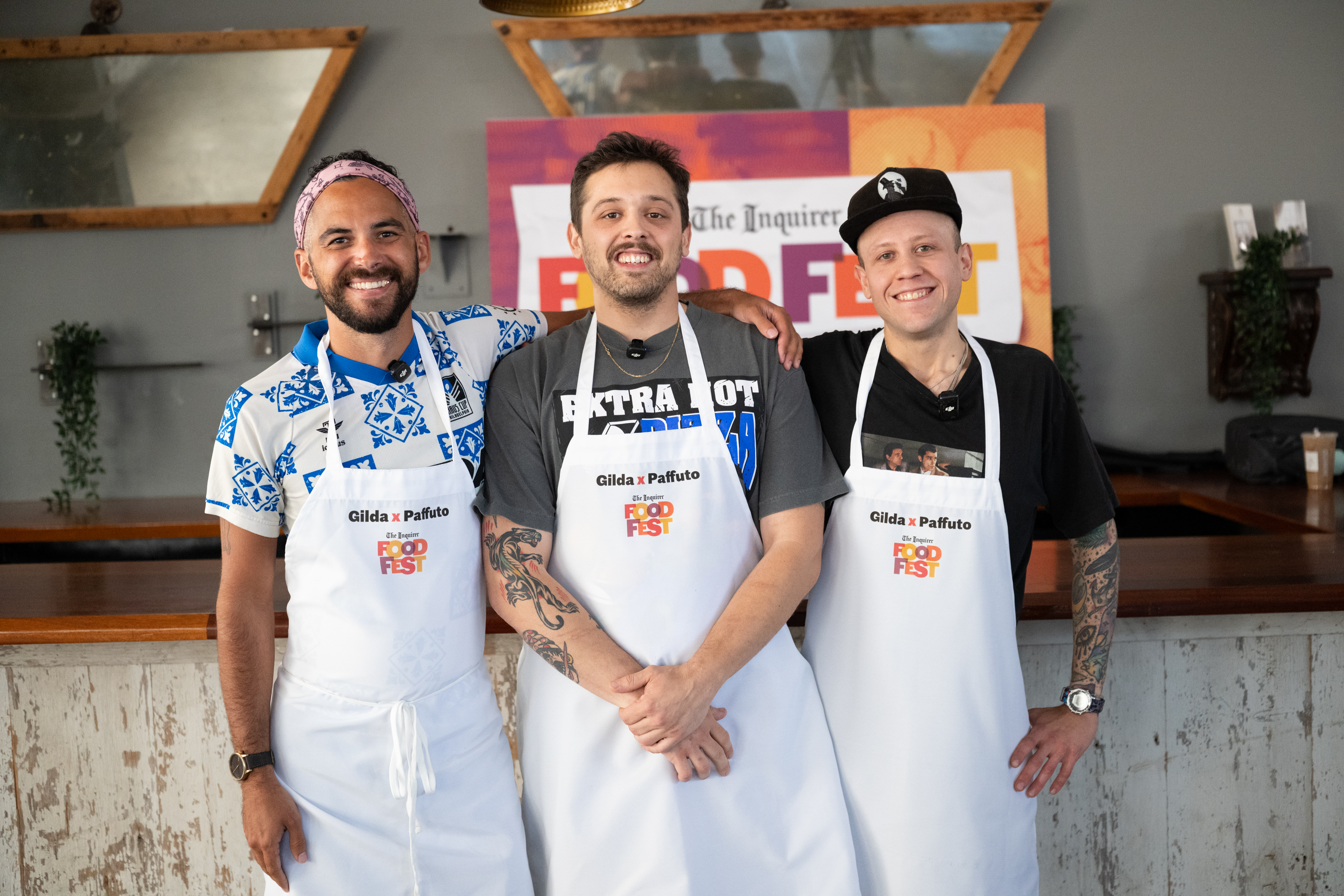
Brian Mattera, chef and owner of Gilda (left), and Paffuto chefs and owners Jake Loeffler and Daniel Griffiths.Erin Blewett / For The Inquirer
Paffuto x Gilda
“Too many cooks in the kitchen spoil the broth,” or so the old saying goes. At The Inquirer Food Festival, they’re actually planning to make a delicious stew.
Gildachef Brian Mattera is teaming up with Jake Loeffler, Sam Kalkut, and Danny Griffiths — the trio behind panzerotti specialist Paffuto — to make a Portuguese-inspired (but mostly Italian) beef stew served with chorizo and crispy mushrooms over polenta.
The stew is “something warm, comforting, [and] familiar,” Griffiths said. “Grandma’s bite.”
The collaboration is kismet. Both restaurants are inspired by no-nonsense, East Coast grandparents. They also happen to share the same interior designer. “Our places are also designed to feel like grandma’s kitchen,” Mattera joked. “Well, a cool grandma.”
Paffuto, which opened in 2023 in Bella Vista, draws inspiration from Griffiths’ and Loeffler’s Italian American upbringings in North Jersey and New York. As such, the menu’s centerpiece is panzerotti, a fried treat that is basically a hybrid of a calzone and a Totino’s pizza roll. Paffuto’s get stuffed with combos of the good stuff — like bacon, eggs, and Cooper Sharp, or sliced rib eye, caramelized onions, and more Cooper Sharp — and they’re delightfully crisp.
The Gilda and Paffuto crews collaborated earlier this year on a knockout panzerotti stuffed with crispy suckling-pig skin. The partnership, Loeffler said, resulted in Mattera giving the Paffuto dudes a sterling piece of advice: “Read the good reviews once, the bad reviews twice, and then never again,” Loeffler recited. “Think about them, learn from them, but never dwell on them.”
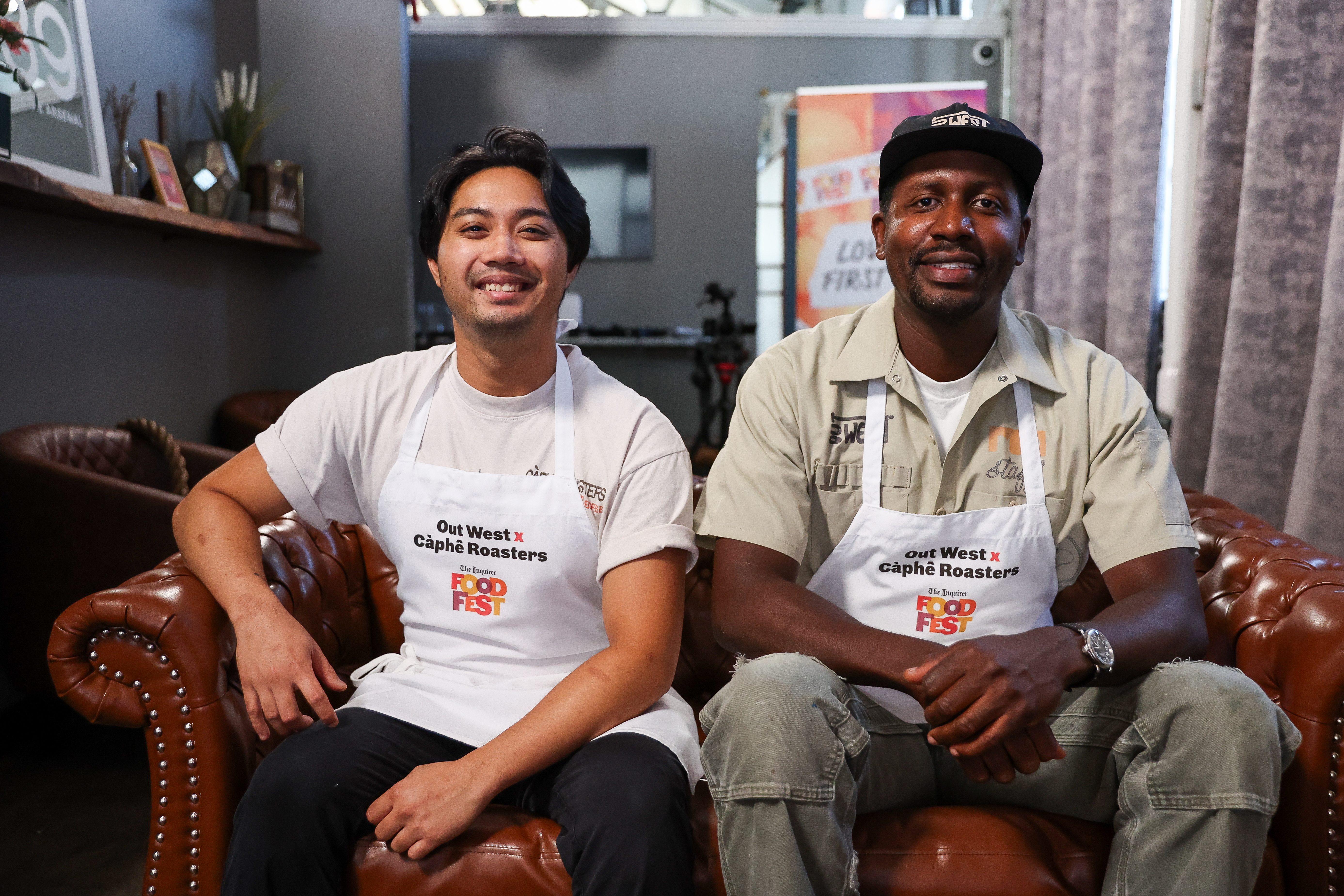
Càphê Roaster’s chef Luigi Datu (left) and Out West’s co-owner Muhammad Abdul-Hadi. Isaiah Vazquez / For The Inquirer
Càphê Roasters x Out West
When Càphê Roasters and Out West come together, it gives a whole new meaning to the term “Philly Special.”
Kensington’s modern Vietnamese café and new-school West Philly coffee shop are mashing up their cultures with a take on the hoagie at The Inquirer Food Festival. A baguette from South Philly’s Ba Le Bakery, the city’s banh mi standard-bearer,will be the vehicle fora lamb-belly terrine banh mi that getssmeared with a pork-free version of Càphê Roasters’ signature pâté and finished with a hearty dose of aromatic Thai basil.
“I don’t think you can have a good sandwich without the right bread,” saidMuhammad Abdul-Hadi, Out West’sowner.
The dish was a fun thought exercise for Càphê Roaster’s chef Luigi Datu, who recommends customers thereadd chả lụa, a steamed pork sausage from Vietnam, to the café’s classic banh mi or staple breakfast sandwich. Out West, meanwhile, is halal, so the coffee shop regularly subs in lamb for pork in its own scrapple and sausage, egg, and cheese options.
Located on opposite ends of the city, the two cafés have mutual respect for each other. Datu admires Out West because the coffee shop “feels pretty Philly” while Abdul-Hadi was quick to start calling Datu “cousin Luigi.”
“Kitchens are like family,” Abdul-Hadi said while bumping shoulders with Datu.
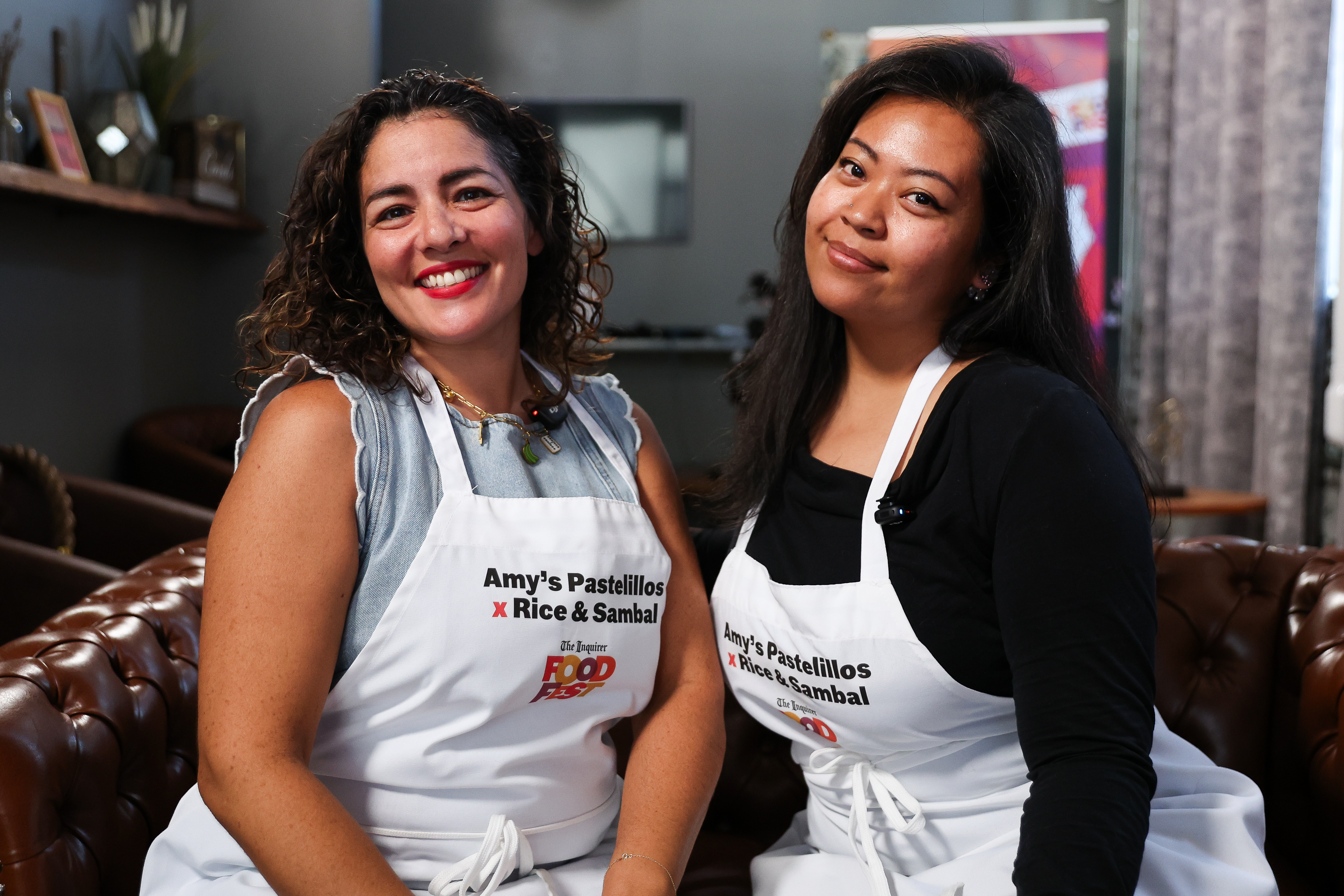
Amy’s Pastelillos owner Amy Rivera-Nassar (left) and Rice & Sambal’s Diana Widjojo partner together during an Inquirer Food Fest “Love at First Bite” production at BLDG 39 on Monday, Sept. 14, 2026, in Philadelphia.Isaiah Vazquez / For The Inquirer
Amy’s Pastelillos x Rice & Sambal
Where else besides The Inquirer Food Festival can you get a single bite that blends flavors from Puerto Rico, Indonesia, and India?
That’s what you can expect from Amy’s Pastellilos’ Amy Rivera-Nassar and Rice & Sambal’s Diana Widjojo, who are collaborating on what they described as a “deconstructed pastelillo,” aka thimble-size servings of slow-cooked ropa vieja and rice served insidehollow spheres of fried Indian panipuri.It all gets topped with lemongrass and Widjojo’s sambal aioli.
“It’s more interesting than mayo-ketchup,” Widjojo said playfully, comparing her signature chile-spiced sauceto the classic Latin American condiment combo that Rivera-Nassar offers with pretty much her entire menu. (Rivera-Nassar immediately told her to cool it with the trash talk.)
Dip dispute aside, it’s all love between Rivera-Nassar and Widjojo in the kitchen. The pair have long admired each other’s tenacity and joyful cooking as members of Sisterly Love Collective, a mentorship community for women entrepreneurs in hospitality. Widjojo, for her part, is an Amy’s Pastellilos regular.
Rivera-Nassar’s stews (often offered as specials), remind Widjojo of growing up in Queens, where Puerto Rican and Southeast Asian communities commingle. They taste like “having my friends around,” Widjojo said.
Rivera-Nassar beamed. The chef converted her neighborhood pop-ups into a brick-and-mortar in Kensington in 2024, cementing locals’ love of the traditional Puerto Rican turnovers.
Widjojo, meanwhile, got her start at Hardena, the James Beard-nominated Indonesian restaurant that she ran with her mom and sister in South Philly. She struck out on her own in 2025 with Rice & Sambal, a cozy East Passyunk BYOB where her skills shine best in the Liwetan platter, a stunning arrangement of 24 Indonesian staples.
“We kept going back and forth on what our cultures look like together,” Widjojo said. The result, Rivera-Nassar bragged, is “memories in a pot” and a whole lot of crunch.
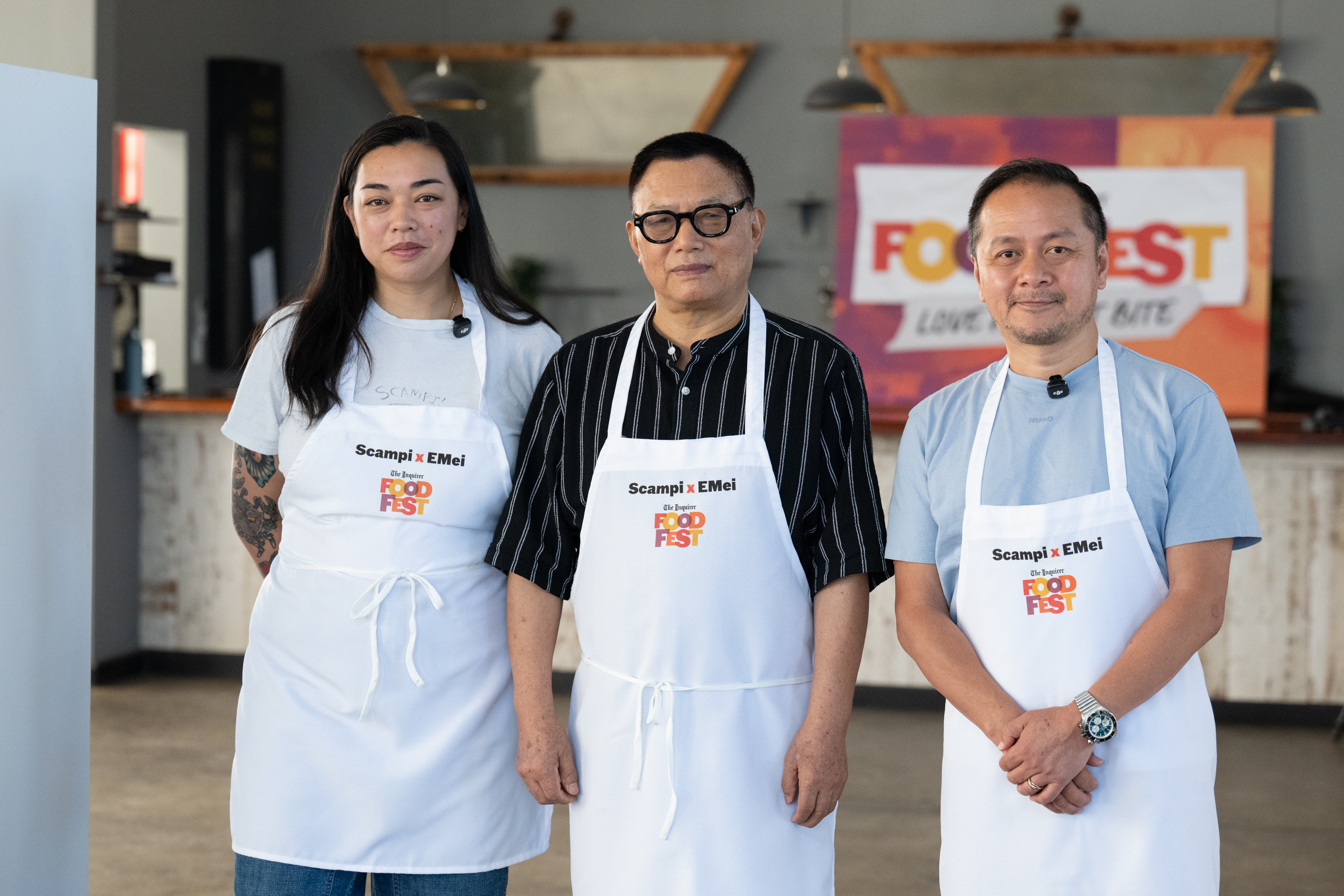
Scampi chef and owner Liz Grothe (from left), EMei chef Yongcheng Zhao, and EMei co-owner Dan Tsao pose for a portrait.Erin Blewett / For The Inquirer
EMei x Scampi
What happens when one of Philadelphia’s most accomplished Sichuan chefs pairs up with a young gun who prefers to keep things “middle-class fancy?” Shockingly, a twist on Irish street food.
Scampi’s Liz Grothe will partner with EMei’s owner and chef, Dan Tsao and Yongcheng Zhao, at The Inquirer Food Festival. They’ll repurpose the Chinatownrestaurant’s best-selling Chongquing chicken as the base for a spice bag — the compulsively snackable Chinese Irish combo of spicy fried chicken and curry on fries. Zhao will bring the heat and Grothe will bring the potato and curry (which will be pumpkin-based, for fall).
For Grothe, cooking alongside Zhao is akin to meeting an idol. She can rattle off a list of favorites from EMei’s extensive menu: mapo tofu, the white fish and green peppercorn pot, and (gluten-free) dan dan noodles. When she was a sous chef at Fiorella, Grothe used to order from EMei every Saturday to cap off a long work week.
“I feel like I’m a kid again trying to soak up everything I can,” she said while firing up the burners next to Zhao. He’s “one of the masters of Chinese cuisine.”
Zhao has been a fixture at EMei since its 2011 opening in Chinatown, where it has endured as one of the neighborhood’s best restaurants, according to food critic Craig LaBan, thanks to its uncompromisingly authentic menu, adaptability, and Zhao’s more than half-century of experience working with Sichuan spice.
Zhao and Tsao are already fans of Grothe’s determination. “There’s a lot we can learn from the younger generation,” Tsao said.
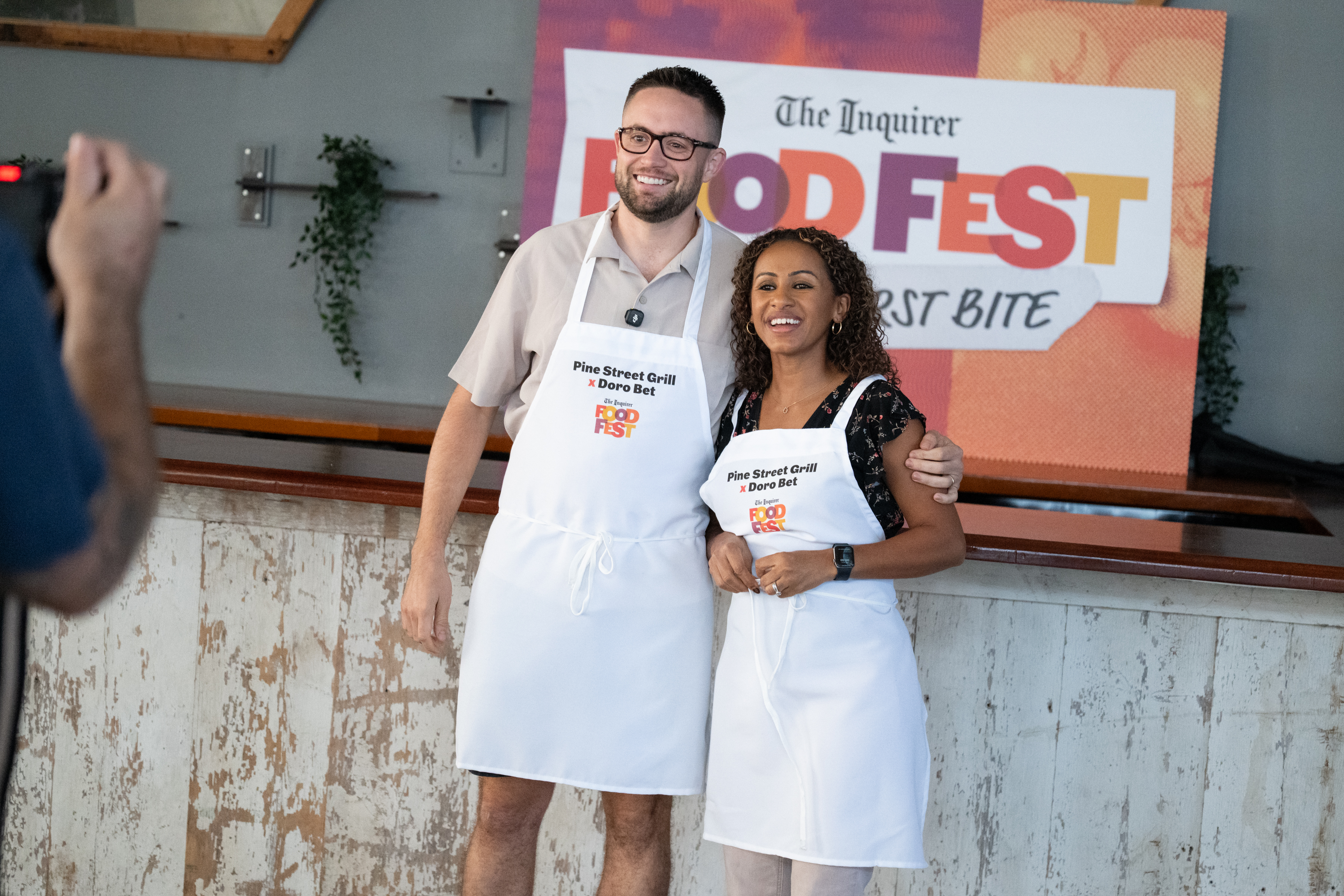
Co-owner and chef at Pine Street Grill Alex Kemp and chef and co-owner Mebruka Kane of Doro Bet pose for a portrait.Erin Blewett / For The Inquirer
Pine Street Grill x Doro Bet
Doro Bet is known for berbere and turmeric-spiced fried chicken. Pine Street Grill is known for brown butter Buffalo wings. But don’t expect them to serve either at The Inquirer Food Festival.
Instead, Alex Kemp, of Pine Street, and Mebruka Kane, of Doro Bet, will collaborate on a classic Canadian smoked trout dip paired withcrispstrips of injera, the spongy Ethiopian flatbread that tastes like pumpernickel when fried.
Both elements are labors of love: Kemp’s trout must smoke for 24 hours before getting the dip treatment, while the injera’s sourdough ferments for four days before baking atop a mitad, a skillet-size griddle designed just for injera. The berbere, Kane said, ties it all together, seasoning both the chips and the dip. (She uses her mom’s recipe, whose secret ingredient is a touch of fenugreek for nuttiness.)
“Trout dip is a little boring [to me] because I grew up eating it,” said Kemp, who is from Quebec. Kane’s additions “are the most interesting. Growing up in Canada, I never saw anything like [her] technique.”
Kemp is also one part of a heavy-hitting Philadelphia family business. Together with his wife, chef Amanda Shulman, the chef co-owns Pine Street Grill, My Loup, and Her Place Supper Club (which was among the first restaurants to earn a coveted Michelin star last year). Kemp takes the reins at My Loup, the James Beard-nominated French bistro where the “Esca-roll” — a giant, garlicky escargot roll with cinnamon bun-esque structure — has become the signature hit.
Pine Street Grill, which opened in Fitler Square in 2025, is where Kemp gets to kick back. It’s a neighborhood restaurant with highlights that include fat eggplant Parmesan, matzo ball soup, a burger, and those Buffalo wings.
Kemp and Kane move about the kitchen as if they’ve known each other for ages, casually swapping spices and stories about what it’s like to scale family businesses. “We might get a cooking show after this,” Kemp joked.
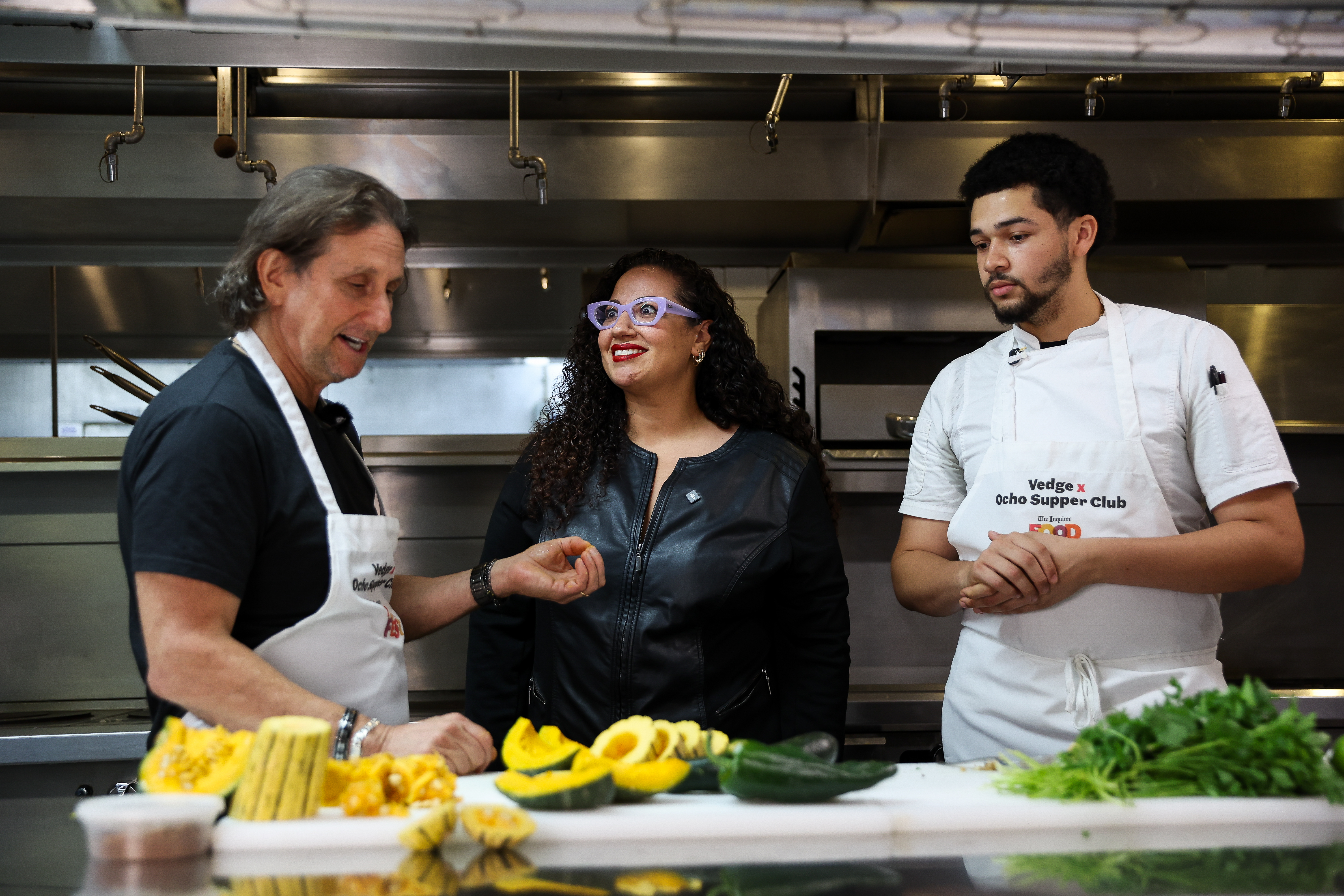
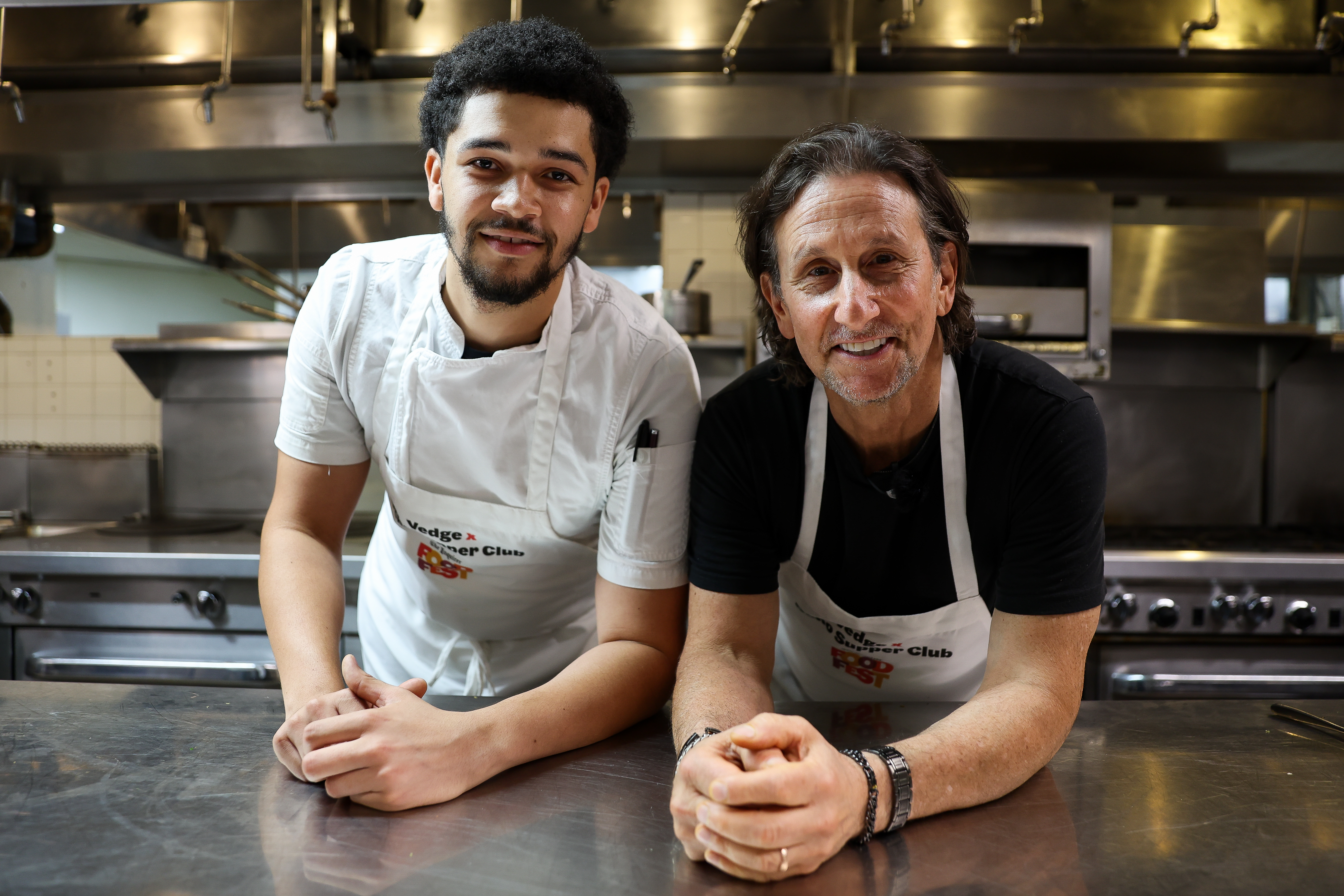
Ocho Supper Club chef RJ Smith and Vedge owner and chef Rich Landau pose for a portrait during an Inquirer’s Food Fest 2026 production shoot.Isaiah Vazquez / For The Inquirer
Vedge x Ocho Supper Club
When a fine-dining legend partners with one of the city’s most exciting young chefs, it’s all about eating your vegetables.
At The Inquirer Food Festival, Vedge and Ocho Supper Club will team up on an autumnal dish: jerk squash smoked over pimento wood, topped with a green jerk sauce and crumble made from the squash skin and seeds.
Husband-and-wife chefs Rich Landau and Kate Jacoby sit at the vanguard of Philadelphia’s vegan dining scene. Their long-closed Bella Vista restaurant Horizons was Philly’s first true experiment in vegetable-focused fine dining. Its sequel, Vedge, has endured for 15 years on Locust Street, with a menu of all-vegan greatest hits, ranging from silky rutabaga fondue to spicy dan dan noodles flecked with oyster mushrooms, that still feels timeless. Now the restaurant is honing its approach to sustainability, turning its food scraps into compost that eventually fertilizes the soil at Linvilla Orchards, the popular Delaware County farm and apple orchard.
While Landau and Jacoby are focused on fine-tuning their business, Ocho Supper Club chef RJ Smith is still looking for a permanent home for his. Smith, 21, grew his supper club from just a few seats in his Drexel University dorm room to the Rittenhouse Hotel, where his elaborate tasting menus scored an indefinite residency.
With Ocho, Smith draws on Afro-Caribbean recipes and fine-dining techniques honed in the kitchen at hot spots such as Provence and Royal Izakaya. He creates dishes that pulse with flavor and originality, like jerk duck and king crab served in a yellow curry laced with roasted garlic.