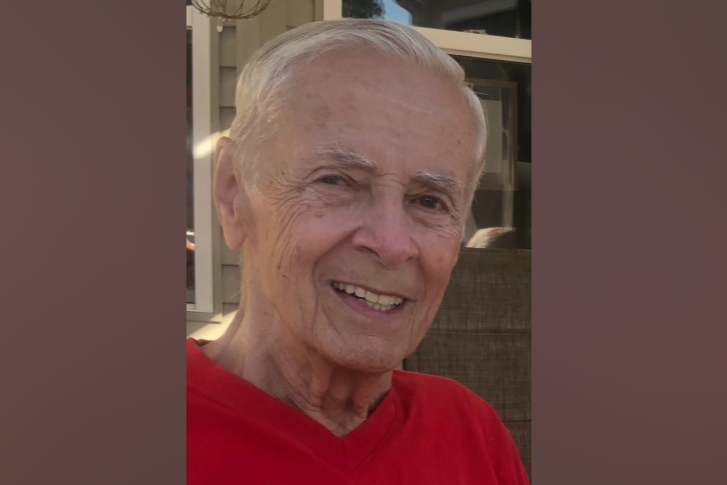
Jim Purcell, 92, formerly of Glenolden, Delaware County, retired teacher, high school principal, star basketball player, and Hall of Fame boys’ basketball coach at Cardinal O’Hara and St. Thomas More High Schools, died Sunday, Nov. 15, of age-associated decline at the Bellingham at West Chester senior living community.
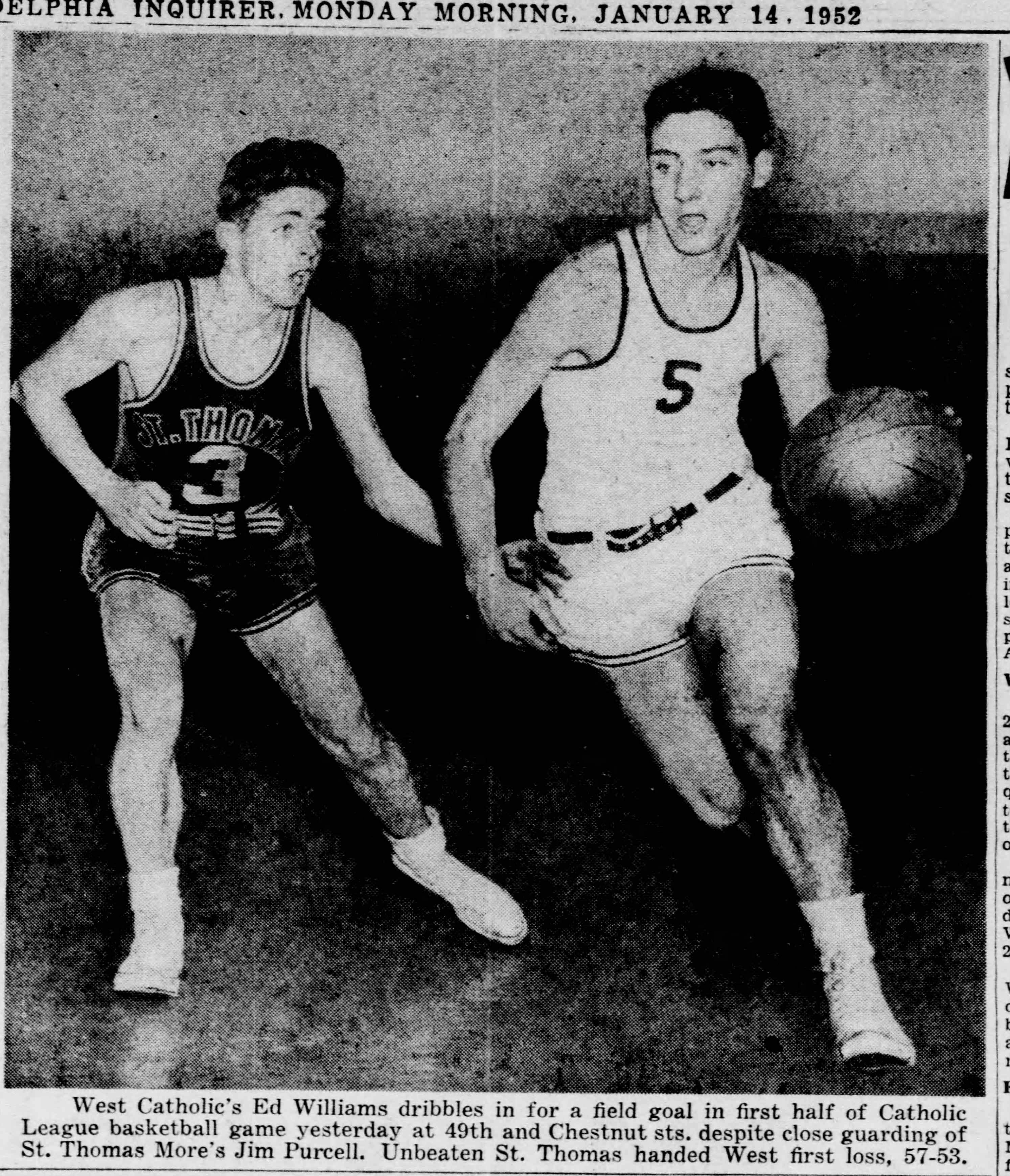
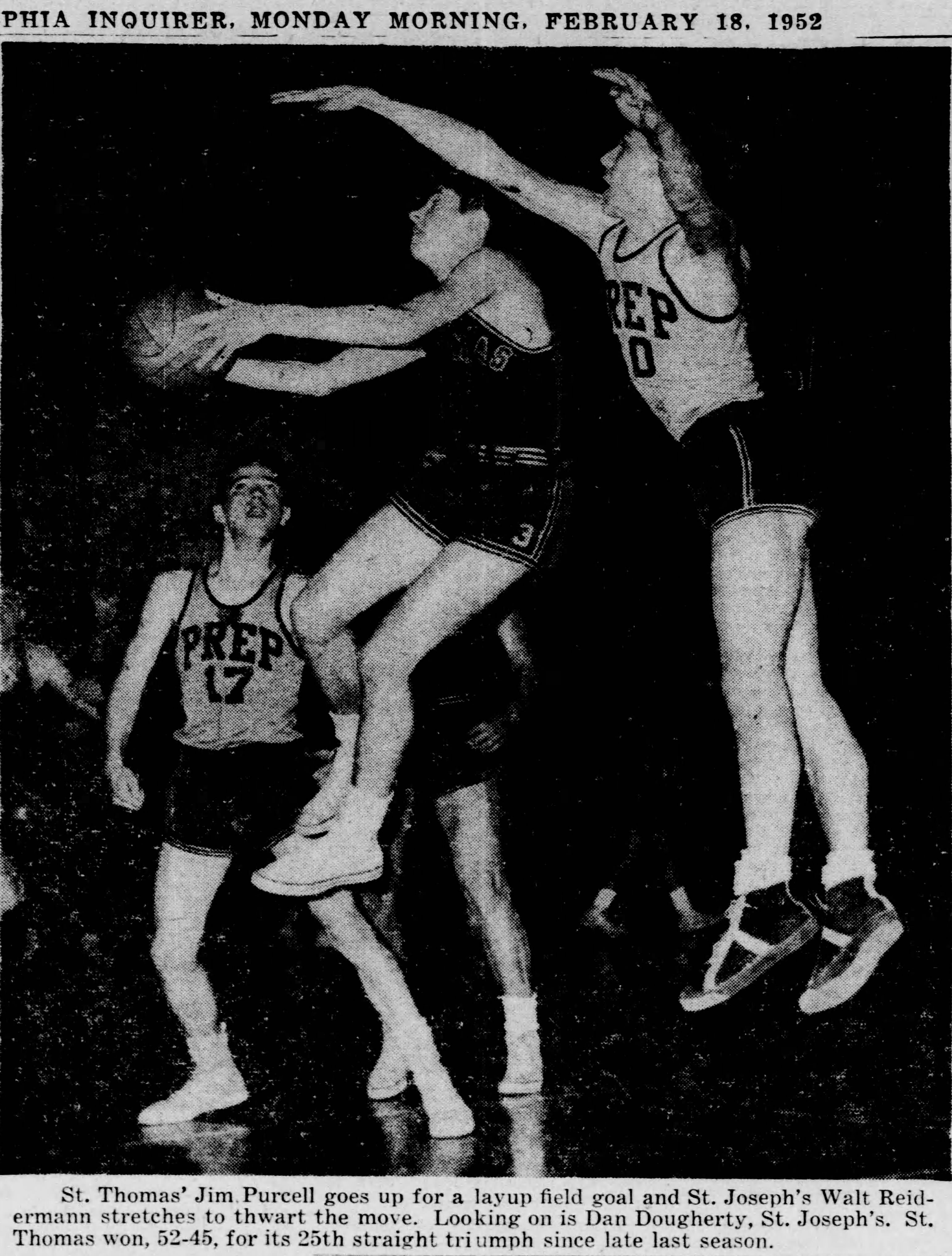
Known as “Coach” and “Delaware County royalty” to many former players, colleagues, and basketball fans in and around Philadelphia, Mr. Purcell was a star basketball player at the old St. Thomas More High School and what is now St. Joseph’s University. Inquirer sportswriter Hal Freeman called him “an efficient, swift, and heady playmaker” in a 1952 article, and Mr. Purcell helped St. Thomas More win its first Philadelphia Catholic League boys’ basketball championship in 1951.
He graduated in 1952, returned to the high school in 1958 as a teacher and basketball coach, and, in 1961, became the first person to win the Catholic League boys’ basketball championship as a player and a coach. He left More in 1963 to teach and coach basketball at Cardinal O’Hara, won the Catholic League championship there in 1968, and became the first coach to win Catholic League titles at two schools.
His teams at O’Hara made the Catholic League playoffs in seven of his eight seasons, and he finished, according to the Daily News, with a career record of 126-68 at O’Hara and 82-51 in six seasons at More. He was inducted into both the Cardinal O’Hara Hall of Fame and the St. Thomas More Hall of Fame.
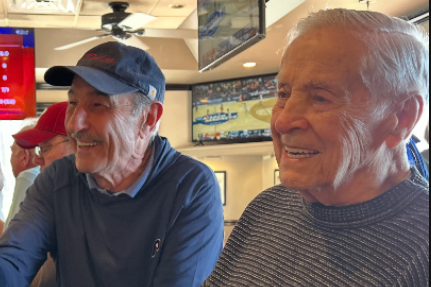
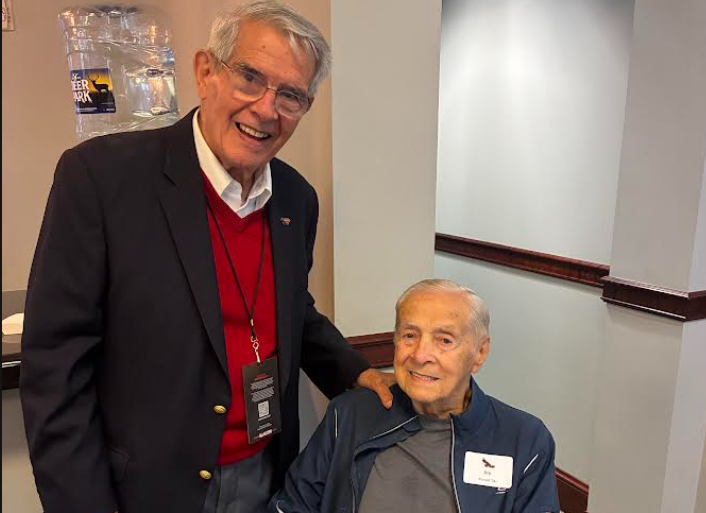
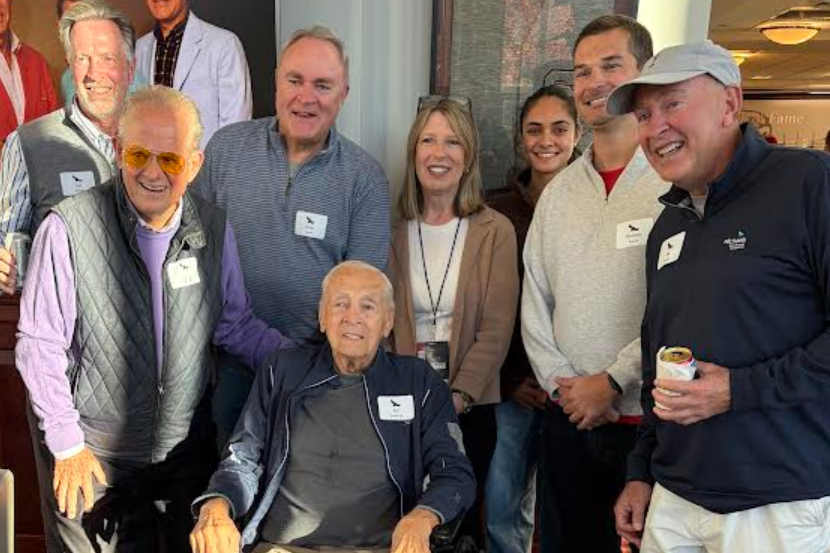
Above, Mr. Purcell (right) was close with his former Cardinal O’Hara player Tom Ingelsby. Below, he (right) poses with St. Joseph’s longtime administrator Don DiJulia. Courtesy of the family
Mr. Purcell’s 1967-68 championship team at O’Hara featured star players Tom Ingelsby and Joe Hazinsky, and finished 13-1 in the Catholic League. His 1971-72 team featured Mike Arizin, finished 13-3 in the league, and lost a heartbreaker to More in the division semifinals.
“The team I coached in 1968 was one of the best,” Mr. Purcell told The Inquirer in January 1972. “But this [1971-72] team is potentially one of the greatest.”
Ingelsby said: “Coach Purcell insisted his players to be fundamentally sound, very team-oriented, and very competitive.” Arizin said: “He was the best coach I ever had. He quietly but firmly taught us all how to play and that basketball was a team sport. I respected him immensely and listened to him. He made me better.”
At St. Joseph’s, he played in 64 games over three seasons, averaged 5.1 points per game, and helped the Hawks win the inaugural Big Five college men’s basketball championship in 1956. “Jim was an outstanding player and a loyal teammate,” former St. Joe’s player Ray Radziszewski said in an online tribute, “soft-spoken, quiet leader both on and off the court.”
Mr. Purcell taught Spanish and business math at More and O’Hara. He served as dean of students and vice principal at O’Hara for six years, and, in 1977, was named principal at Archbishop Kennedy High School. He retired from Kennedy in 1983 and worked for years as a construction contractor.
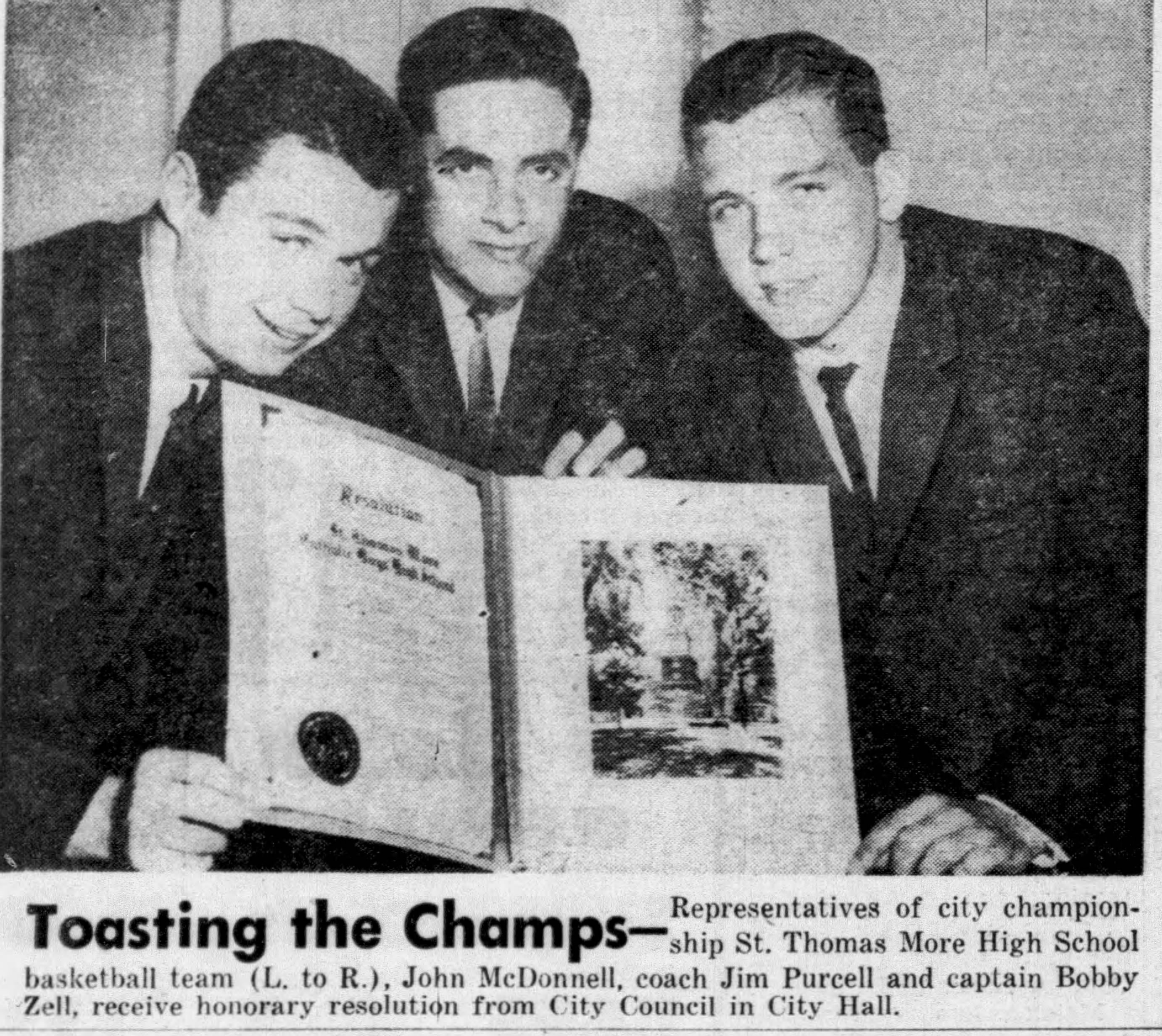
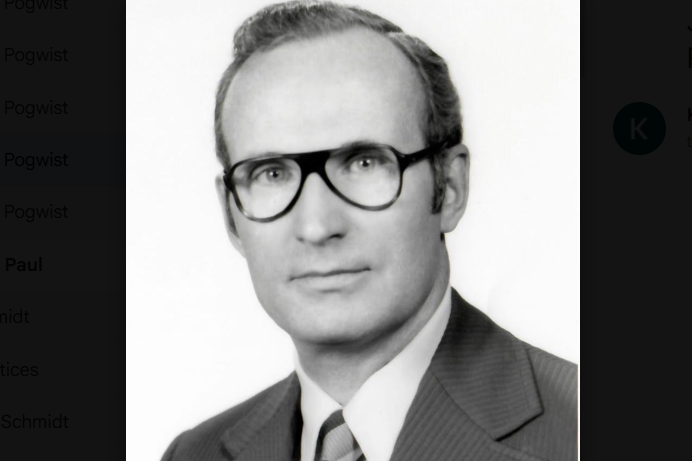
These photos of Mr. Purcell, left above and center below, appeared in The Inquirer in 1952. Newspapers.com
In a tribute, his family said: “Jim’s passion for basketball and his former students and players lasted a lifetime.”
James A. Purcell was born April 1, 1934, in Philadelphia. The youngest of six children, his mother died when he was young, and his older sister became his primary caretaker.
He played basketball all the time as a boy.Mr. Purcell earned a bachelor’s degree in political science in 1956 and a master’s degree in education in 1963 at St. Joseph’s. He married Dolores Doheny, and they had a son James, and lived in Aldan, Delaware County. They divorced later, and he lived in Glenolden, Collingdale, and Upper Darby.
“He was humble and low-key,” his nephew Steve Purcell said. “He was a bright guy who would talk to both the janitor and the CEO. We knew him as Delaware County royalty.”
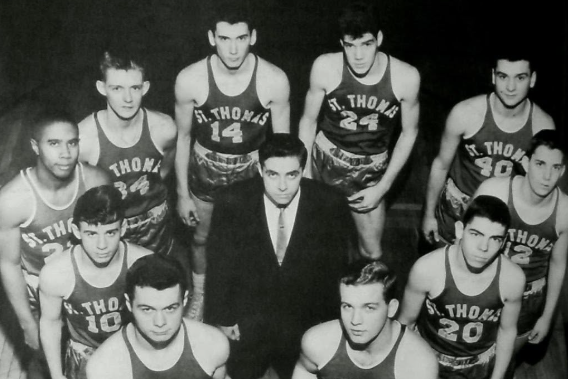
Mr. Purcell, center above and below, coached his St. Thomas More basketball team to the 1961 Philadelphia Catholic League championship.St. Thomas More High School
In addition to his son, former wife, and nephew, Mr. Purcell is survived by three grandchildren and other relatives. Four brothers and his sister died earlier.
Visitation with the family is to be from 9 to 10:15 a.m. Tuesday, Nov. 24, at St. Dorothy Catholic Church, 4910 Township Line Rd., Drexel Hill, Pa. 19026. A service is to follow at 10:30.
Donations in his name may be made to Cardinal O’Hara High School, 1701 S. Sproul Rd., Springfield, Pa. 19064.
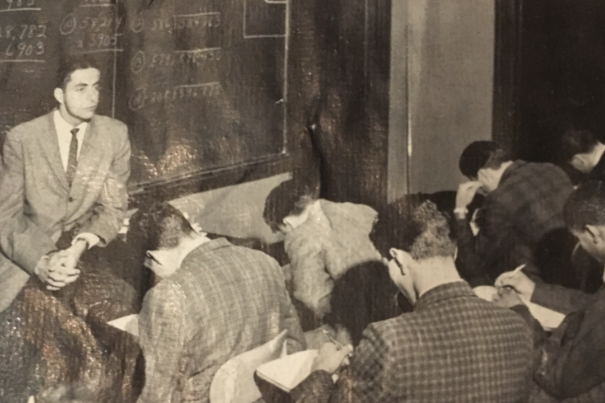
Above, Mr. Purcell (left) in class. Below, he is surrounded by friends and colleagues at St. Joseph’s University. Courtesy of the family
“His love for life was so honest and pure, I don’t believe he ever had a bad day,” Garr said. “He always had a smile on his face and would tell me, ‘It’s OK, Mom. It’ll be OK.”
Garr’s killer, Marson Weh, 26, was sentenced Tuesday to life in prison without parole, a mandatory sentence after a jury found him guilty of first-degree murder in September.
Delaware County Court Judge G. Michael Green sentenced Weh to a consecutive nine to 60 months in state prison for possession of an instrument of a crime.
District Attorney Tanner Rouse did not mince words Tuesday in describing the person behind what he has described as a random, unprovoked, and senseless killing.
“This man is the most evil person I have ever encountered,” Rouse said of Weh. “I truly believe this was a serial killer in bloom, and he was still growing into his role when the Upper Darby police saved lives by working their asses off to piece this together and bring him to justice.”
Weh, for his part, said nothing throughout the sentencing hearing until the very end, when he interrupted Green and spoke over his attorney, Ian McGurdy, with a string of gibberish phrases as they explained his post-sentencing rights.
Michael Garr was killed in April 2023 as he walked to his home in Upper Darby.Handout
When Weh was arrested, he was still wearing parts of his “kill suit,” nondescript clothing that included thermal underwear stained with Garr’s blood, Rouse said during the trial this summer. And he was carrying the murder weapon, a folding knife that matched the dimensions of Garr’s fatal wounds and still had his dried blood caked in its handle.
After the killing, investigators quickly identified Weh through surveillance footage, which recorded him following Garr for more than a mile as he walked with his girlfriend. Gradually, prosecutors said, he closed the distance between them, and attacked Garr as they approached Brunswick Avenue near Bridge Street in Drexel Hill.
A passerby found Garr moments after the stabbing, but was unable to help him, according to evidence presented at trial. His wounds were too severe.
Garr’s grandfather, Martin Peabody, found the crime scene while out searching for him, concerned that he was taking so long to come home, his family said Tuesday. He died in February 2025, from what his son, Anthony Peabody, described as a broken heart.
Peabody, in addressing the judge Tuesday, described a coincidence that can only occur in a tight-knit community such as Delaware County: Members of Garr’s extended family coached Weh in football during his teenage years.
“Marson Weh had over a mile to change his mind, but he did not,” Peabody said. “And I don’t know what punishment can be handed down.
“‘In God We Trust’ is something we see everywhere,” Peabody said. “That’s all we have left.”
Peabody and other members of Garr’s family described him Tuesday as a fun-loving, bright teen who loved sports, chess, and fishing. He was robbed, they said, of a lifetime of memories and the potential to create a family of his own.
“The animal who killed my son deserves 100 life sentences,” Donna Garr said. “He is a coward who preyed on a child. Your Honor will give him one. God will give him the rest.”
Weh has a trial scheduled in February in another, unrelated attack, in which he is charged with attempted murder for allegedly slashing the throat of a pregnant woman.
And despite Weh’s initial attempts at claiming to be incompetent to stand trial, Rouse, the prosecutor, is adamant that countless medical evaluations have proved otherwise.
“This is all an act,” he said of Weh’s incoherent ramblings in court. “And it always has been.”
John J. Sweeney Jr., 99, of Haverford, former Pennsylvaniastate senator, longtime official with the federal Small Business Administration, veteran, and volunteer, died Friday, Oct. 2, of age-associated decline at his home.
Sen. Sweeney served in the state Senate from 1975 through 1978 as the first Democrat elected to represent the 26th District in Delaware County. The Inquirer covered his 600-vote election victory over Republican F. Joseph Loeper in 1974 and said he had been “given little if any chance even by members of his own party” to win in a district “that includes some of the strongest Republican areas in the county.”
A month before his victory, Sen. Sweeney told The Inquirer: “I find that my biggest asset is that I’ve never been in politics.” His daughter Kathy said: “He loved election night. That was his Super Bowl.”
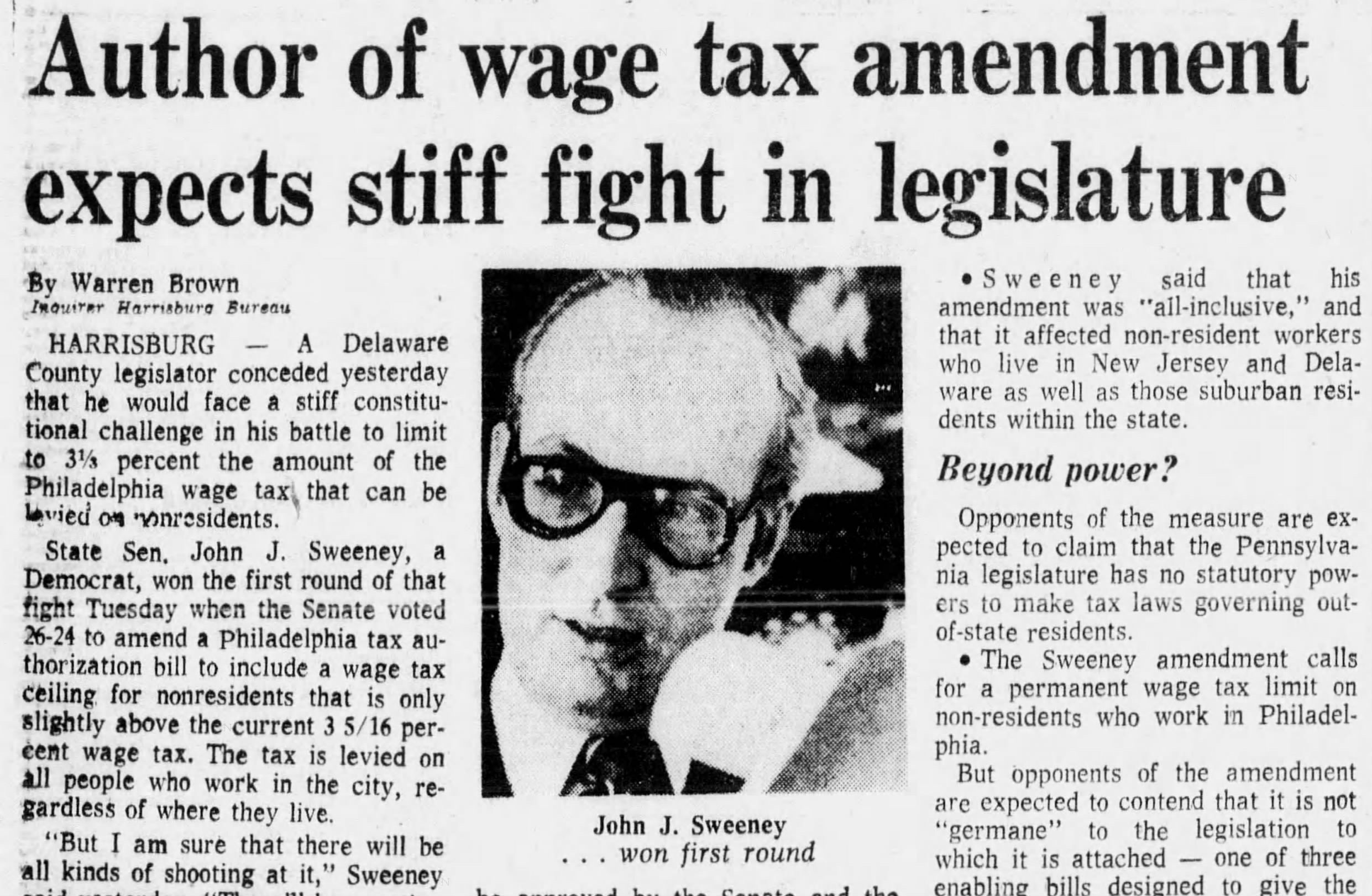
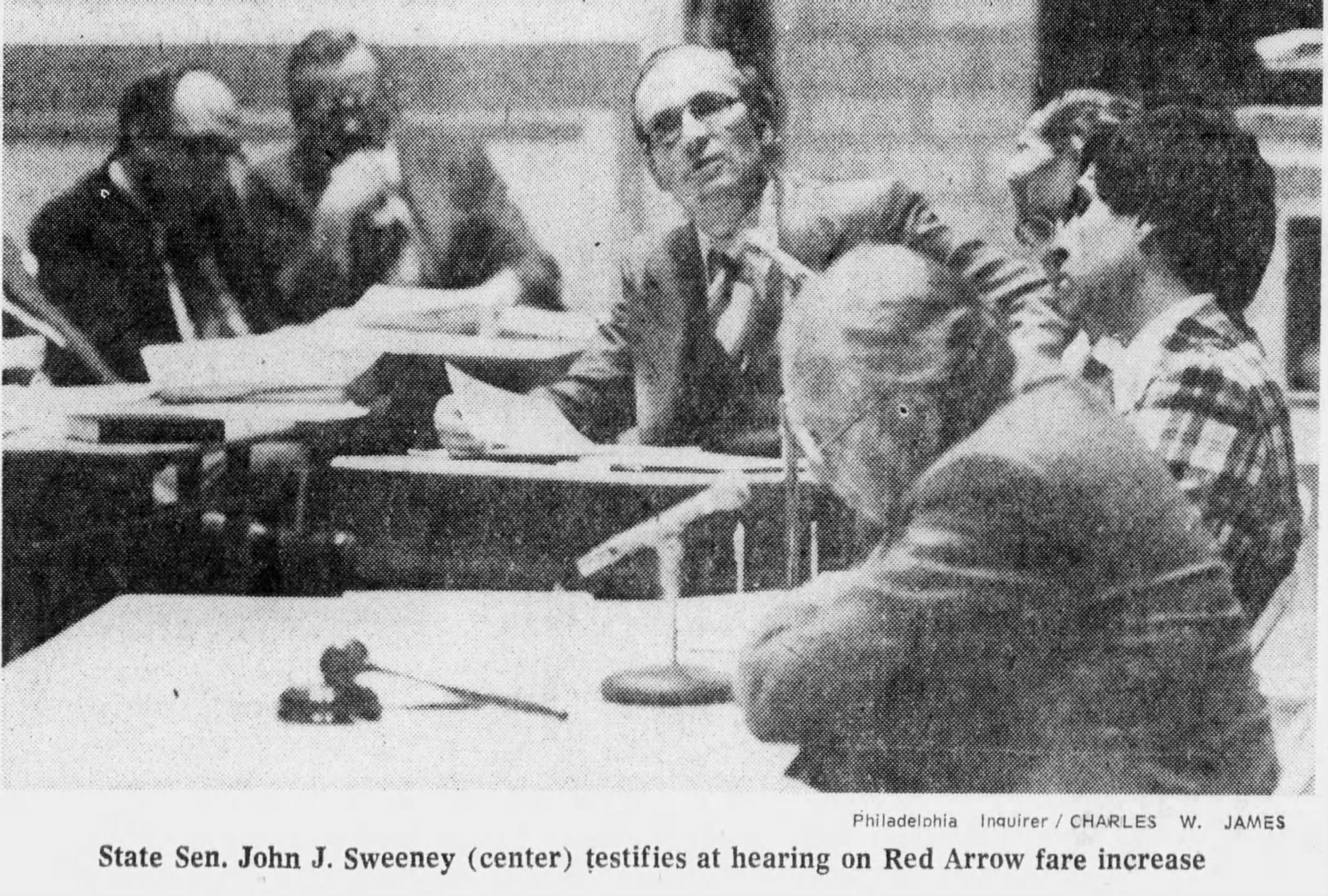
He went on to become chair of the Senate’s old Military Affairs and Aeronautics Committee, vice chair of the Consumer Affairs Committee, and member of the Health and Welfare Committee and the Pennsylvania Public Television Commission. In 1976, he championed legislation that provided a permanent wage tax limit on nonresidents who work in Philadelphia and urged SEPTA to voluntarily place itself under the supervision of the state’s Public Utility Commission due to fare increase issues.
Sen. Sweeney appeared many times in The Inquirer in 1976.Newspapers.com
He also opened the first local state senator’s office in Delaware County. According to his online Senate Library biography, he did not seek reelection “as the $18,720 salary couldn’t support his [growing] family.”
On Oct. 21, the state Senate recognized Sen. Sweeney with a moment of silence on the floor and a resolution of condolence. “He modernized Senate procedures, most notably with Senate confirmation hearings for cabinet appointments, and championed other important reforms for the commonwealth,” Sen. Tim Kearney, a Delaware County Democrat, said in a tribute. “It was an honor to celebrate his life of service.”
After his Senate term, Sen. Sweeney spent 30 years as an award-winning administrator with the federal Small Business Administration in Philadelphia and Washington. In retirement, he mentored juveniles for the Upper Darby Youth Aid Panel and seniors for the Delaware County Office of Services for the Aging.
He also represented Irish Americans for the old Pennsylvania Heritage Affairs Commission. One of his favorite sayings was: “A Sweeney never quits.”
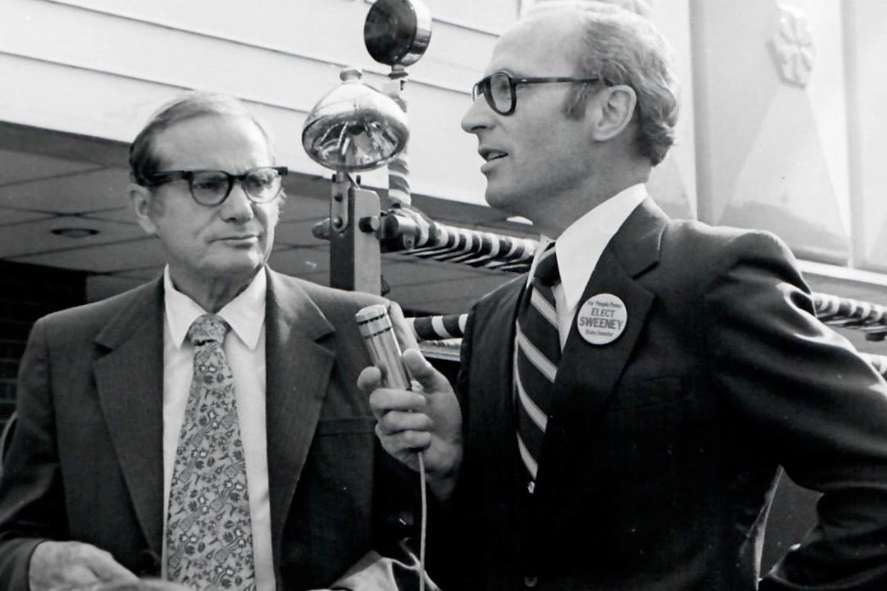
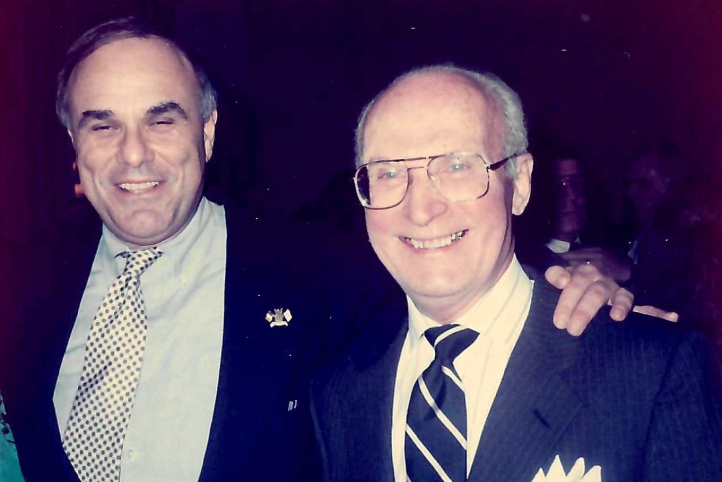
Sen. Sweeney, right in both photos, worked with Gov. Milton Shapp (above) and Gov. Ed Rendell (below). Courtesy of the family
Sen. Sweeney enlisted in the Army in 1946, was stationed in Japan after World War II, and rose to the rank of staff sergeant. He attended classes at St. Joseph’s, Temple, and Pennsylvania State Universities, earned a real estate broker license, and was vice president at Mortgage Corp. of America before joining the Senate.
His father died when he was 9, and he worked jobs at a pharmacy, a butcher’s shop, and elsewhere to help support his mother and two sisters. He graduated from the old St. Thomas More High School in 1945.
“The challenges he faced as he grew up laid the foundation for his future success,” his family said in a tribute. “He believed the dinner table was the foundation of a loving family, a time to gather, listen, learn, support, and advise those we loved.”
John James Sweeney Jr. was born June 1, 1927, in Philadelphia. A first-generation Irish American, he married Dolores Grzymala in 1954, and they had sons John III, Gerard, Dennis, Joseph, and Kevin and daughters Grace Ann and Kathleen.
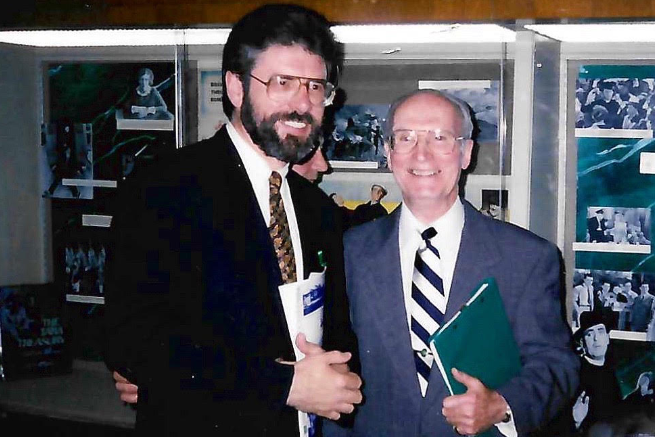
Sen. Sweeney (right) stands with Irish politician Gerry Adams.Courtesy of the family
They lived in Springfield, Delaware County, Drexel Hill, and Haverford. His wife and son Kevin died earlier.
A devout Catholic, Sen. Sweeney was a Communion minister and youth religion teacher at St. Andrew the Apostle Church in Drexel Hill. He was active with the Knights of Columbus and received an honorary title of Kentucky Colonel by the governor of Kentucky for his work in the state with the Small Business Administration.
He was an avid reader and do-it-yourself plumber, carpenter, and electrician. He was active with many Irish American cultural activities and spent memorable vacations with his family in Avalon, N.J.
His son John said: “We learned kindness and compassion for others through his example. Charity was a consistent theme.”
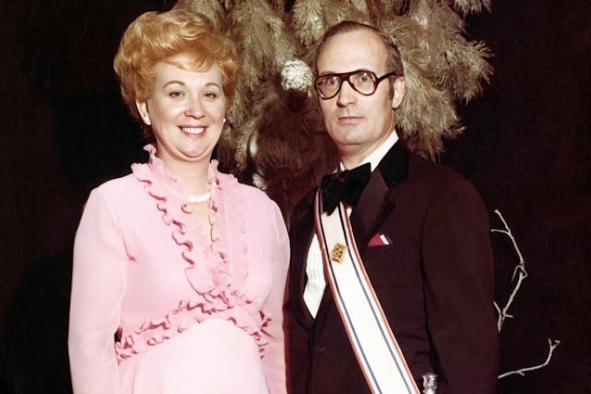
Sen. Sweeney and his wife, Dolores, married in 1954.Courtesy of the family
His daughter Grace Ann said: “He was devoted to helping people. His door was always open.”
His family said: “He was always ready to lend a hand, give a hug, wipe a tear, or just listen. He was a rich man not defined by wealth but by love of his family.”
In addition to his children, Sen. Sweeney is survived by many grandchildren and great-grandchildren, a sister, and other relatives. A sister died earlier.
ROME — The scene could not have been more picturesque as Villanova University awarded its inaugural sustainability medal to a cardinal at the papal retreat in Italy on Tuesday evening.
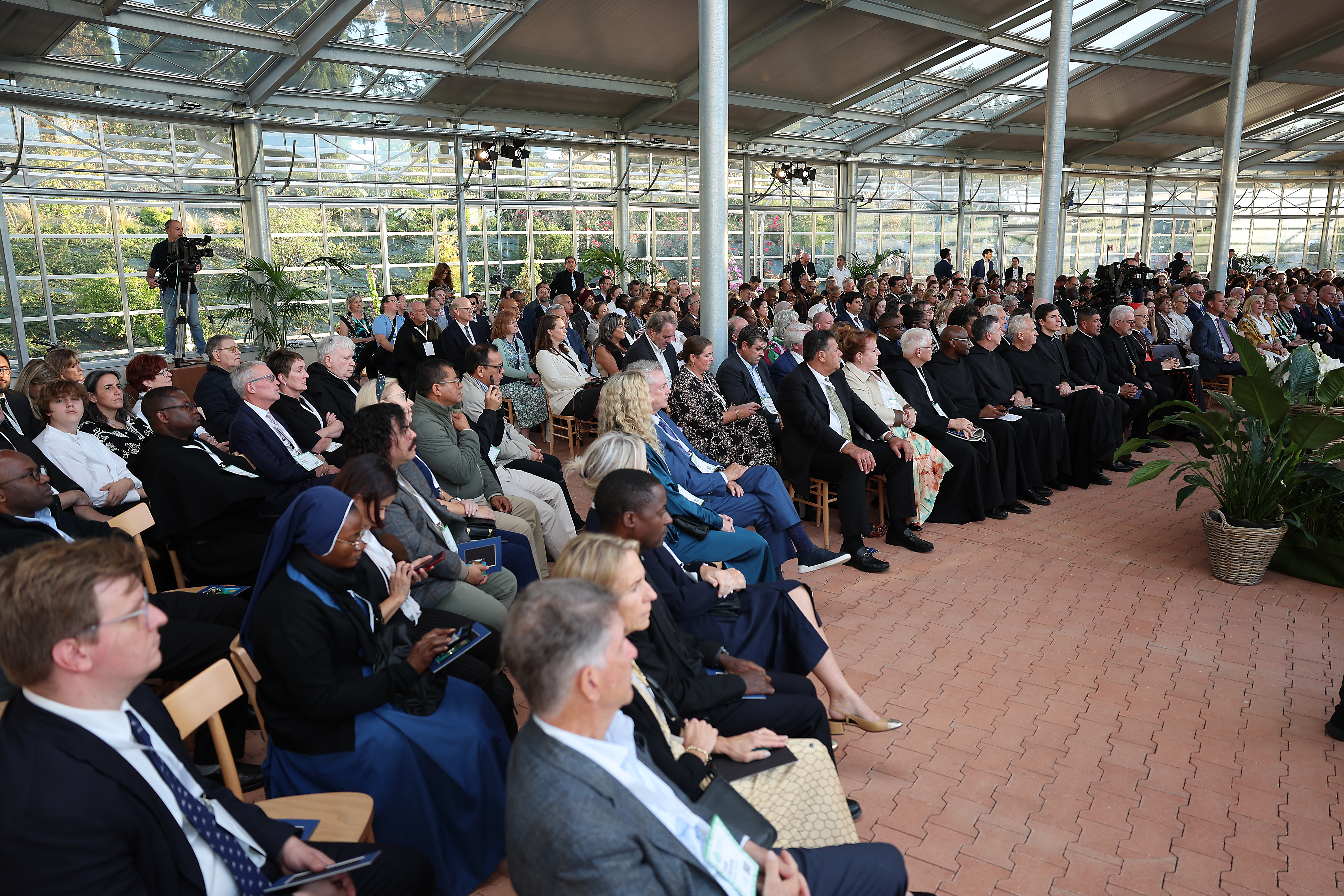
Several hundred attendees, many of them from Villanova, filled the cavernous glass-enclosed greenhouse with rows of Italian stone pine trees and lush lawns as a backdrop, the early evening sunlight softly streaming in.
But the absence of Pope Leo XIV was palpable. He was supposed to be at the ceremony and confer the medal Villanova named for him, but instead was undergoing surgery to remove a nodule from his lung, which only after the ceremony was over would be revealed by the Vatican as lung cancer.
Attendees of Pope Leo XIV Sustainability Medal Ceremony, established by Villanova University, gather in the greenhouse at Borgo Laudato Si at the Papal Villas in Castel Gandolfo, Italy on Tuesday.David Maialetti / Staff Photographer
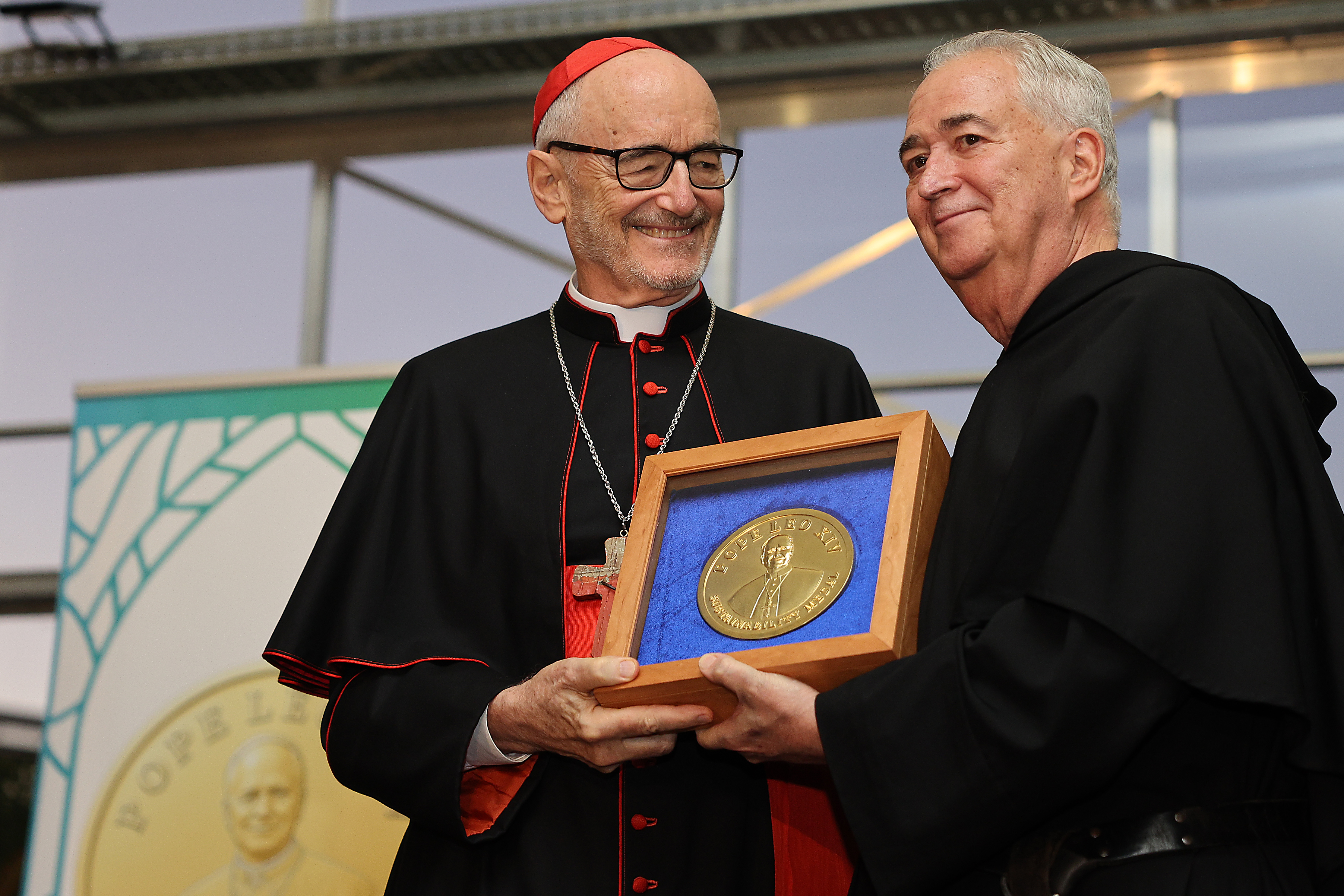
“I hope as you receive this award, you imagine somebody in white giving it to you,” said the Rev. Peter M. Donohue, Villanova’s president, who presented the medal to Cardinal Michael Czerny.
Czerny joked with the few reporters who attended the event — many of whom had been scheduled to come and instead were covering the pope’s surgery — “You know you can’t get the headline.”
“Like everybody else on the planet, we’re watching and waiting and praying,” Czerny said.
The awarding of the medal took place at Borgo Laudato Si’, an educational ecology center on the grounds of the papal residence in the scenic hillside town of Castel Gondolfo.
Buses transported about 350 conference attendees representing 30 countries — about 90 of them from Villanova — to the event.
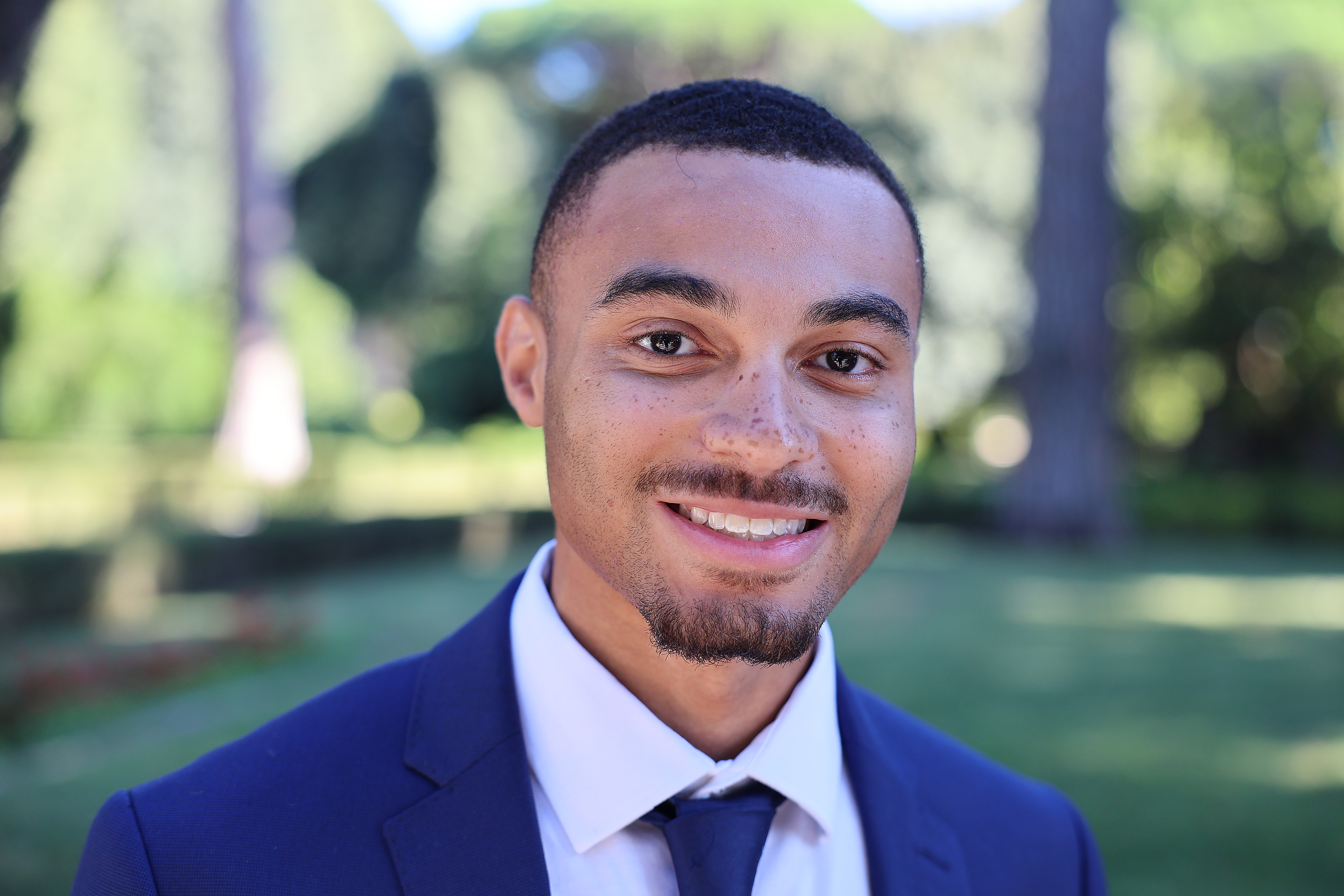
“It’s been very amazing and eye-opening,” Jaelan Howell, 20, a junior computer engineering major from Columbus, Ohio, said of the conference as he rode the bus to the medal ceremony. “I feel looking at the different backgrounds and the different research and programs that everyone’s involved in kind of gives me the inspiration to continue what I’m doing.”
Dozens of other Villanova students and professors are among those presenting their research, on topics such as illegal trash dumping and its impact on Philadelphia, health-related problems associated with air pollution and soil contamination in the Philadelphia region, and challenges and opportunities that artificial intelligence presents in relation to sustainability.
The grounds around Borgo Laudato Si’ at the Papal Villas in Castel Gandolfo, Italy. David Maialetti / Staff Photographer
“It’s really, really neat that they are having it in Rome because, particularly for me, it gave me the opportunity to bring our partners that we work with from around the world to attend,” said Jordan Ermilio, director of Villanova’s Center for Humanitarian Engineering and International Development. “That would have been really difficult to do if it was at Villanova.”
Dozens of Villanova students are currently working on a renewable energy project in Peru, a water infrastructure project in Panama, a water sanitation project at schools in Kenya, and other sustainability efforts in Ghana, he said. Howell, the computer engineering major, has already worked on projects in Peru, Cambodia, and Sri Lanka during breaks from school.
Jaelan Howell, a sophomore at Villanova University, was excited to participate in Villanova’s international sustainability conference and attend the medal ceremony on grounds of the Papal Villas in Castel Gandolfo, Italy. David Maialetti / Staff Photographer
Among the conference attendees was Joshua Poole, a country representative for Catholic Relief Services, who has worked in Laos and Myanmar. He had some of Ermilio’s students on site working on challenges in countries with water infrastructure projects.
“Not only did they infuse the project with energy, but they were able to use their skills to tackle those challenges,” he said.
Poole is at the conference to talk about how to develop a successful partnership.
‘A question of justice’
Peleg Kremer, an associate professor in Villanova’s Department of Geography and the Environment, is presenting her work on documenting and protecting community gardens in the Philadelphia region, which face threats from gentrification and development.
“I cannot express how exciting it is to have the pope so deeply invested in issues of sustainability and to make it such a priority,” she said.
The pope has repeatedly called for preventive action in responding to environmental concerns.
“The climate question is not merely an environmental challenge, it is fundamentally a question of justice, human dignity, and solidarity between peoples and generations,” he said during a speech last month.
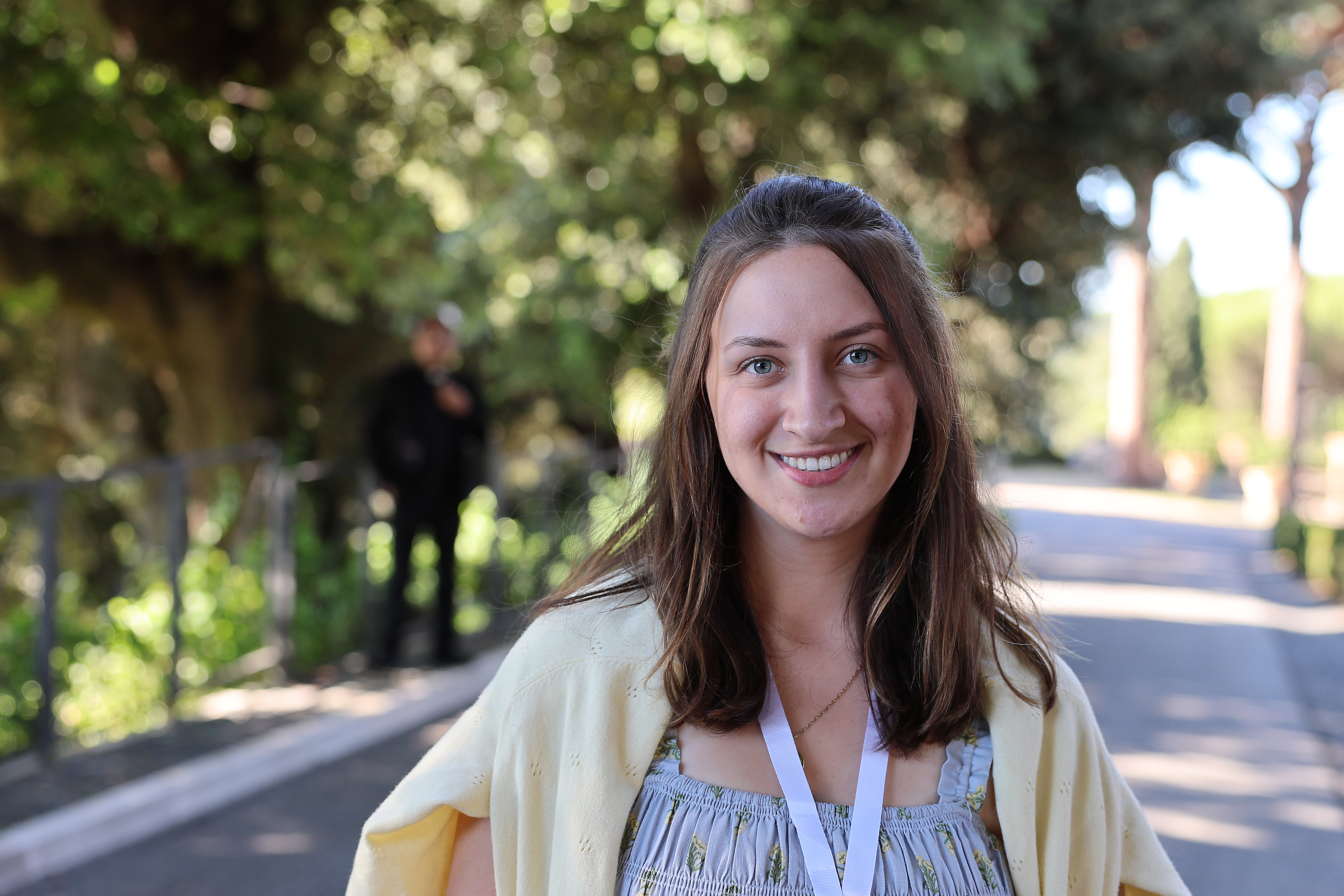
Finley Gust, a sophomore at Villanova University, is presenting her research at the school’s international sustainability conference. Here, she is at Borgo Laudato Si’ on the papal retreat grounds, awaiting the start of the sustainability medal ceremony. David Maialetti / Staff Photographer
On Wednesday, leadership from the Laudato Si’ Higher Education Center and Villanova signed a new memorandum of understanding, which will lead to more research opportunities in Italy for Villanova faculty and students and further collaboration.
For Finley Gust, 20, a sophomore environmental science major from Drexel Hill, attending the conference marked her first time out of the country.
“There’s people from all over the world who are going to present their research, so I am honored to have gotten selected for this opportunity,” she said.
On Tuesday night at the medal ceremony, Czerny, the Czechoslovakian-born cardinal who was the recipient, was recognized for his work helping vulnerable people worldwide, including the founding of the African Jesuit AIDS Network in Kenya.
“I’m so very happy for it,” Czerny said.
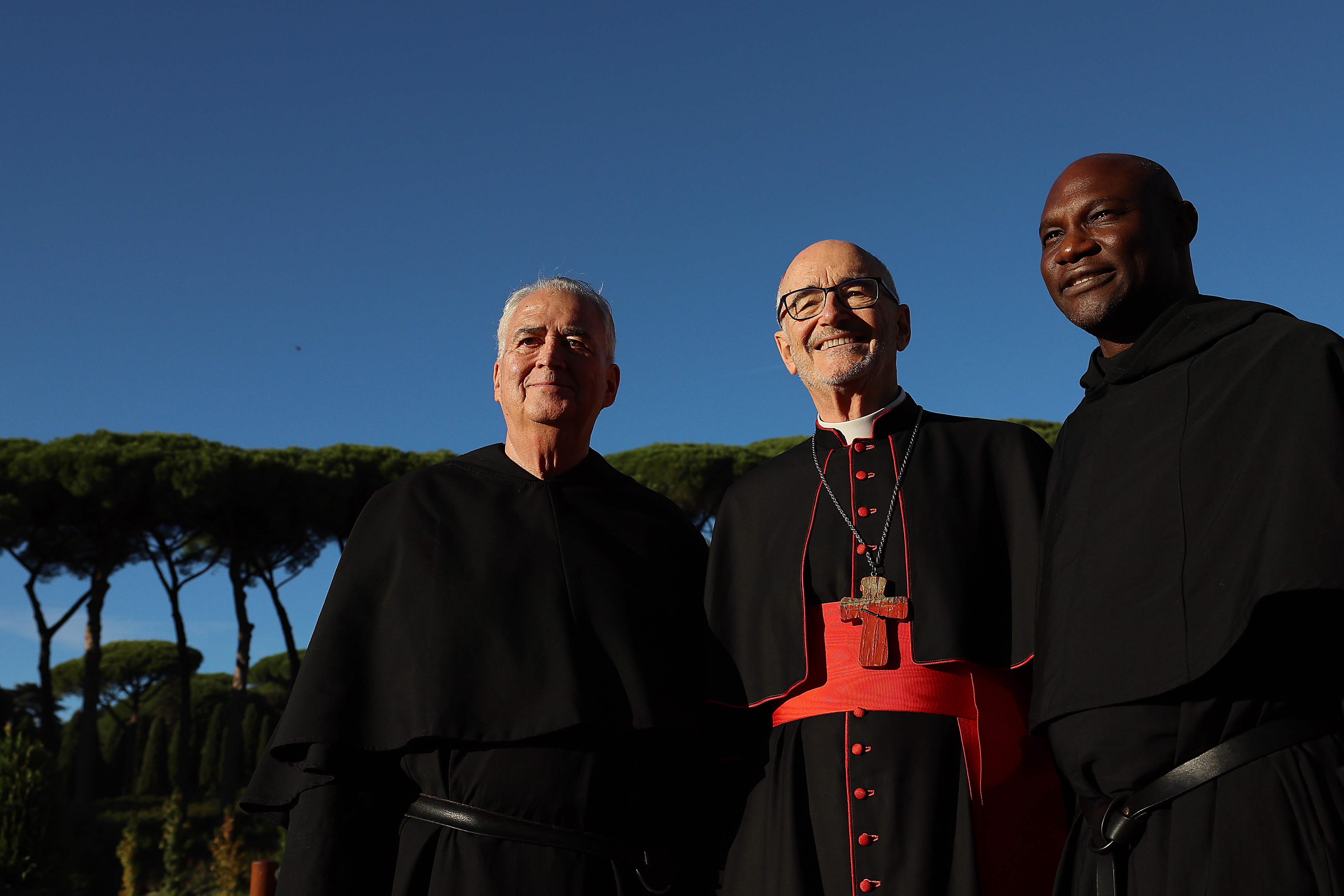
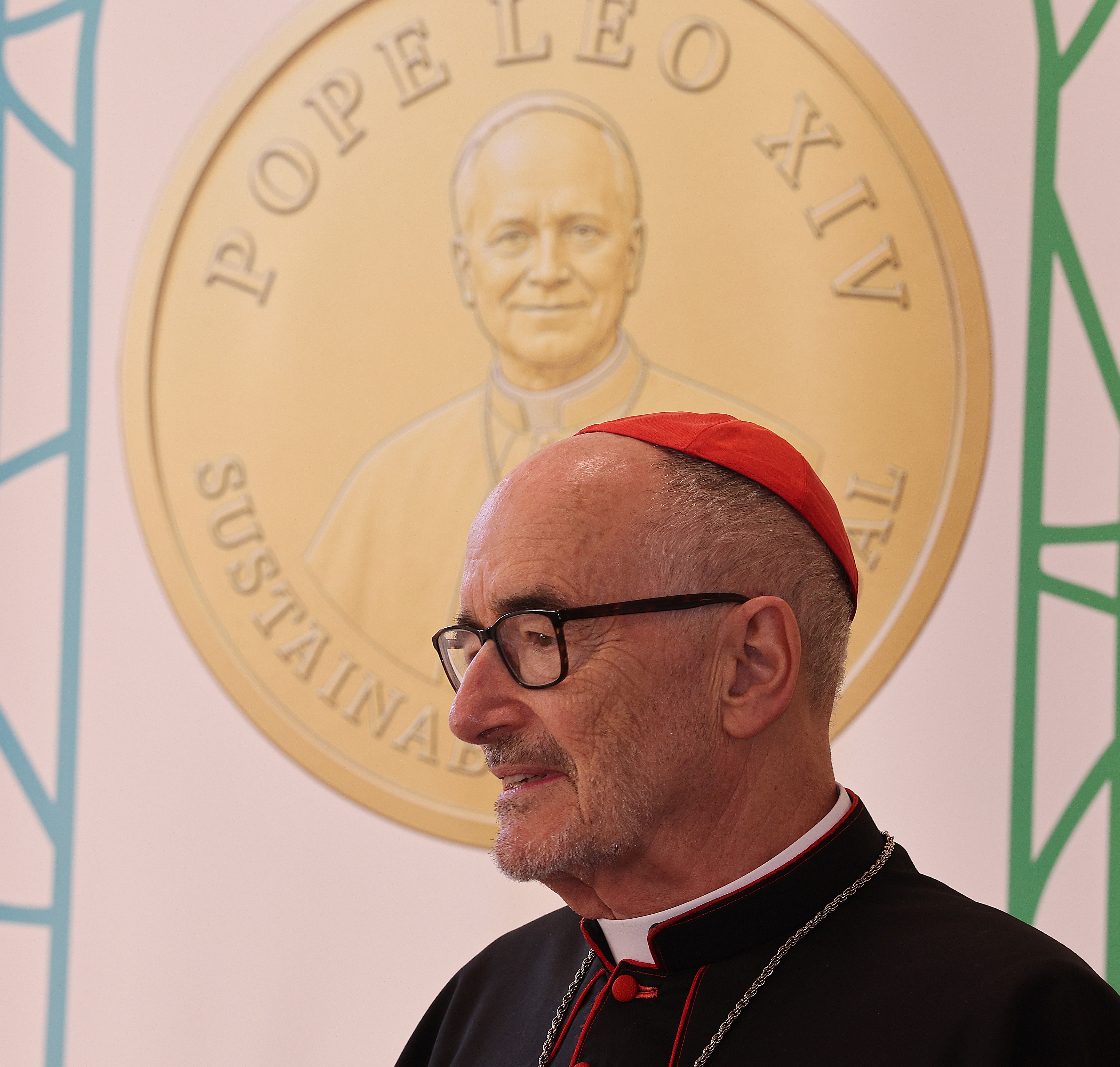
Cardinal Michael Czerny, S.J. (center) stands with Villanova University president Rev. Peter M. Donohue (left) and the Rev. John Abubakar (right), Villanova University’s chief sustainability officer, at Borgo Laudato Si at the Papal Villas in Castel Gandolfo, Italy. Czerny received Villanova’s sustainability medal. David Maialetti / Staff Photographer
Villanova established the award earlier this year to honor someone whose work shows “exceptional commitment to advancing sustainability,” including “care for the environment, social justice, concern for vulnerable populations and responsible stewardship of economic and natural resources.”
The medal, which carries a $25,000 award to be used toward sustainability, is in part inspired by Pope Leo’s call to serve the poor and marginalized, Donohue said.
“In establishing this medal, we are uplifting the moral ethical dimension of sustainability,” the Rev. John Abubakar, Villanova’s chief sustainability officer, told the audience.
Cardinal Michael Czerny, S.J. talks to reporters at Borgo Laudato Si at the Papal Villas in Castel Gandolfo, Italy. David Maialetti / Staff Photographer
The medal features Pope Leo on one side and Villanova’s name on the other and is meant to highlight the pope’s commitment to sustainability.
‘We’re all praying for you’
Donohue acknowledged the pope’s health challenge early in his ceremony remarks.
“While we feel his absence deeply, deeply, our first concern is for his well-being,” he said. “On behalf of the entire Villanova community, I offer prayers for a swift and full recovery.”
After the buses departed the medal venue, word began to spread that Pope Leo’s operation had been successful. Cheers erupted on one of the buses.
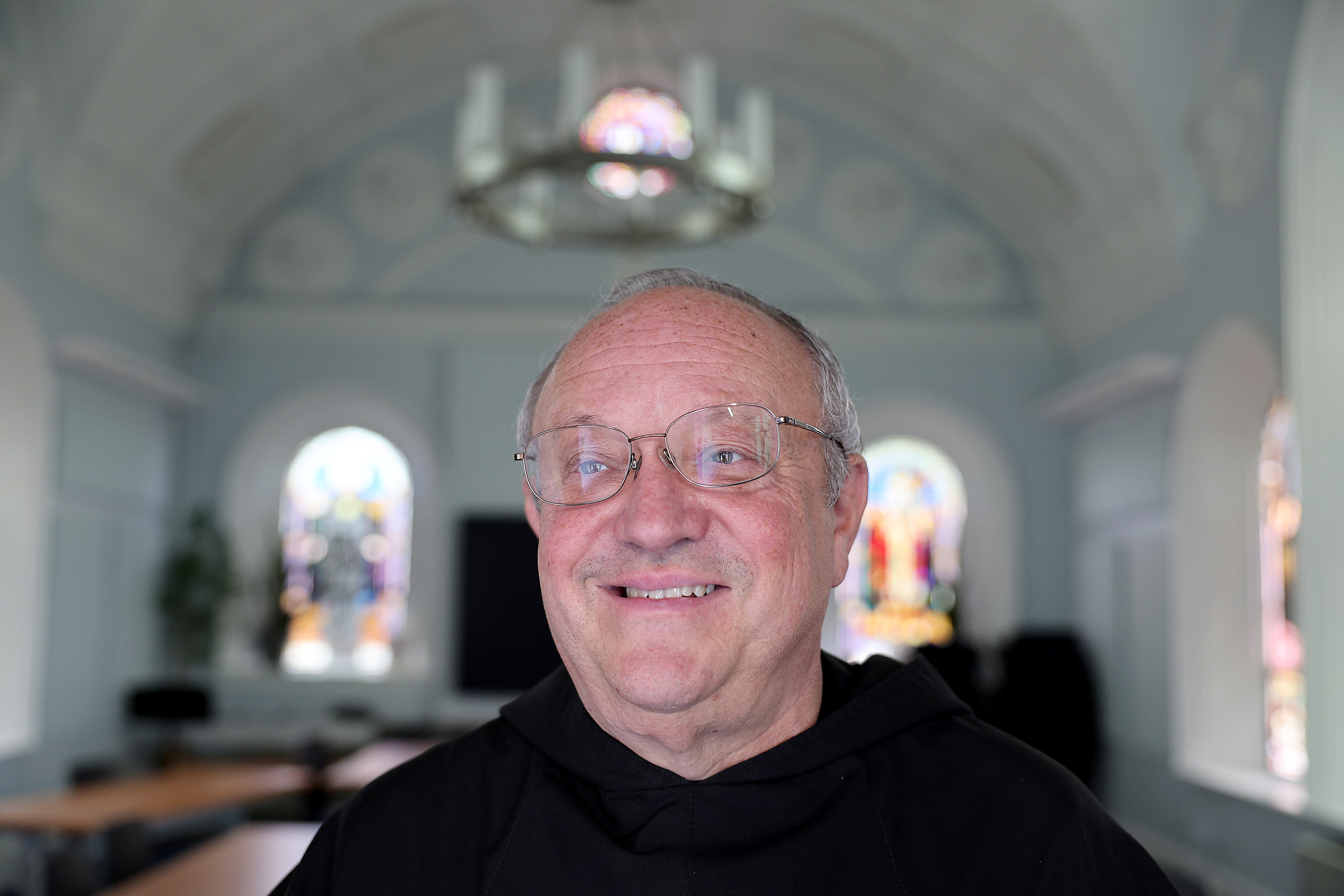
The Rev. Bernie Scianna, Villanova’s vice president for mission and ministryDavid Maialetti / Staff Photographer
“Relieved and hopeful,” the Rev. Bernie Scianna, a longtime friend of the pope and Villanova’s vice president for mission and ministry, said.
It was not until later in the evening that the cancer diagnosis was announced.
“We all knew it was a possibility,” Scianna said Wednesday morning. “We were hoping against hope that it wasn’t.”
He said he texted the pope: “We’re all praying for you.”
Joseph Lennon, Ph.D (right), Associate Dean, International and Interdisciplinary Initiatives at Villanova University, talks to an former graduate as the sun sets over Borgo Laudato Si at the Papal Villas in Castel Gandolfo, Italy on Tuesday. David Maialetti / Staff Photographer
As a technology consultant, I’ve had a growing number of clients ask me how they can start using AI in their businesses. Generally, I recommend four options, which can be used independently or together.
For starters, if you’re like most businesses, you use either Microsoft Office or Google Workspace as your office platform. But you’re probably underusing the AI capabilities of Microsoft Copilot and Google Gemini to do tasks like creating presentations, revising emails, managing files, updating calendars, translating conversations, and analyzing spreadsheets.
Consider training your employees to better leverage these features.
Many of my clients are starting to connect their AI chatbot — Claude, ChatGPT, etc. — to their data. They are either applying the out-of-the-box integrations that come with these platforms or using Model Context Protocol (MCP), which can connect these platforms to most data models, databases, and files.
Of course, it’s important to establish safeguards and policies around which applications are approved and what data can be used. Once connected, your employees can start prompting for analysis and assistance using your company’s actual data.
Chop Dawg founder and CEO Joshua Davidson uses his AI chatbot to help manage the day-to-day operations of the business, and he uses it to help clients do the same. Philadelphia-based Chop Dawg builds custom web, mobile, and AI-powered applications, and helps business use AI to improve operations.
“We connect AI to our accounting, project management, calendar, email, and website, and every morning, I get a briefing on where the money is and what needs attention,” he said. “None of it is compiled by a person.”
Many popular software applications and platforms — from Salesforce to QuickBooks to Paychex — are rolling out new customer relationship management, accounting, and human resources AI features that can be used to increase productivity. It’s important to reach out to your software vendors to better understand the ways you can use these new tools.
And then you can build your own AI application.
Figure out what you need
The key is defining an actual business problem that AI can address or solve, says Rick Tashman, managing partner of Tashman Tech in Drexel Hill. His company consults businesses on how to use AI to improve workflows and access company information.
“The biggest factor is having very clear intent and a very clear expected outcome,” Tashman said. “Projects often get into trouble when AI becomes a solution looking for a problem.”
Tashman recommends thinking backward: “Start with the problem and ask yourself what takes too long? What frustrates customers or employees? Where are people repeatedly searching for information? Then determine whether AI is an appropriate part of the solution.”
I’m seeing a growing number of use cases in the business world.
An AI application can, for example, listen in on conversations, transcribe what it hears, and automatically create quotes or proposals. Or, after being connected to multiple internal data sources, it can generate a weekly “CEO Report” of activities in your company. Or it can access your repository of manuals, technical documents, spec sheets, and other knowledge material about your products so employees and customers can prompt for answers, generate a service ticket, or create step-by-step instructions for fixing a problem.
After defining a problem, it’s important to address management’s commitment and the skills of the employees involved, said Brian Dainis, CEO of Philadelphia-based Curotec. His company builds AI-powered applications, automates business workflows, and modernizes existing software for midsized companies.
Dainis recommends establishing clear deliverables and making sure your company’s data is usable and built around a secure architecture.
“The biggest factors are: being aligned on expectations, staffing the team correctly, how bought-in the client is internally, how involved the customer is with our team, and whether the client has experience buying services from a technology firm,” he said.
“Technical feasibility is rarely the risk,” Dainis said. “The biggest risks are always the human factors.”
How much will it cost?
The cost of an AI project is always a major consideration.
Larger companies complain of the spiraling cost of their AI applications, according to media reports. These applications can eat up countless tokens — basic units of data, such as words, parts of words, syllables, or punctuation, that an AI model uses to read, process, and generate text — each time employees prompt their systems.
Most small businesses don’t have that kind of volume and haven’t seen these high costs … at least not yet. But, in my experience, the cost is not insignificant.
Up front, a 10-50 employee company can expect to pay thousands annually in subscription fees, $10,000 to $50,000 for a firm or developer to implement a solution, and then ongoing costs for maintenance and support.
Large modernization projects can take multiple years, Dainis said.
Davidson recommends an annual upkeep allowance of roughly 10%–15% of the build cost.
Tashman advised budgeting for increased usage, hosting, storage, and data-processing expenses.
“There are also ongoing costs that get overlooked — if the application runs through services such as Microsoft Azure or AWS, there may be charges based on computing, AI usage, storage, and the amount of data being processed,” Tashman said. “Businesses should evaluate the total cost over time, not simply what it costs to get started.”
Going forward, AI applications will likely be more tailored to individual businesses. Davidson expects these applications to take a more active role in identifying problems and preparing actions, while retaining an approval step. The agents are coming.
“The apps that win will act, not just display,” he said. “Today most software shows you information and waits. The next generation reads your business, flags what needs attention, drafts the follow-up, and asks you to approve it.”
My advice: Choose one process, establish its current cost or time requirement, and measure whether the application improves it.
Upper Darby will consider buying a 15-acre forested property at the heart of a conservation fight after dozens of residents packed a public meeting and demanded the township look into purchasing options before rezoning the parcel for mixed-use development.
The Upper Darby Township Council on Wednesday considered moving forward an ordinance to create a mixed-use zoning district on a tract of land between State and Township Line Roads. The tract, known by residents as the Mozino Forest, contains unmaintained forest. Though the land is private property — owned by Peter Mozino and under contract to be sold to the Rockwell Development Group — residents have long utilized it as a place to walk, hike, and commune with nature.
Rockwell Development Group has proposed developing the property with a blend of single-family homes, townhouses, apartments, and ground-floor commercial spaces, as well as dedicated community and recreation spots and pedestrian walkways.
Rita LaRue, Upper Darby’s director of community and economic development, said Rockwell originally came to the township with a plan to build 56 single-family homes on the site, a proposal that would be allowed under the site’s existing zoning and would not require special zoning approvals. The township then asked Rockwell to consider an alternative, higher-density plan that would combine diverse housing types, retail, and community amenities, LaRue said. Over several months, Rockwell worked with the township’s solicitor, engineer, and planning staff to bring the mixed-use zoning ordinance.
Upper Darby officials have said putting a denser, mixed-use development on the tract, rather than the 56 single-family homes, would help fulfill core township goals by bringing in more tax revenue and adding diverse housing options.
“We are very committed to having a mixed-use space that is not simply, you know, brick and mortar. We want it to be a place that adds to community life for everybody in Upper Darby,” LaRue said.
At the meeting, Rockwell president Greg Lingo touted his Upper Darby bona fides, telling the crowd he was not the ill-intentioned, outside developer he had been portrayed as. The developer said he graduated from Upper Darby High School, is a taxpayer in the township, and has invested significantly in the Drexel Hill neighborhood over the years.
Lingo said that while he understands residents’ concerns about preserving green space, the land is private property and could be developed into a residential neighborhood regardless of whether the zoning amendment is passed.
“This isn’t necessarily a decision between open space and a future mixed-use development,” Lingo said. “This property is not open space. I’m pleased to hear that people have just been using it as open space over the years. It’s private property. It’s property that’s been neglected for as long as I can remember.”
Lingo said he would be willing to sell the property if the township wanted to purchase it, but added that as a taxpayer, he does not “think that that’s a great use.” Lingo approximated the cost of the land at $8 million.
There were 15 proposals to purchase the property, none of which involved maintaining it as open, green space, planning commission member Debbie Nifong said at a June 8 meeting.
The planning commission voted 3-2 to recommend approval of the zoning changein June.
At the Wednesday night council meeting, residents packed the council chambers, donning green shirts and spilling out into the hallway in protest of the proposed zoning change. They described tranquil walks through the Mozino Forest and warned of environmental consequences if the land were to be developed.
“I believe that having some open space, it’s future gold in terms of urban planning,” said Dolores Lombardi, a resident and former chair of the township’s shade tree commission. “Many cities are preserving open space, and creating more. An overdeveloped heat zone is not an attractive place to live in.”
“The whole forest is a natural sponge for our area. There will be severe downstream flooding,” said resident Gail Grant, who warned of increased stormwater runoff should the green parcel be paved.
Residents questioned why the forested tract should be developed when the township has numerous vacant storefronts and existing corridors in need of redevelopment.
Members of the township’s environmental advisory committee urged the council to strike down or table the zoning ordinance and said that, if given more time, they could put together a proposal for the township to purchase the land with supporting funds from local conservancies or state or federal bodies.
They cited the $13 million purchase of the Oakwell estate in Villanova by the conservation nonprofit Natural Lands and the Wyncote Foundation. The lush estate was once slated to become athletic fields for the Lower Merion School District but was sold to the nonprofits after significant community pushback.
The council voted unanimously to table the ordinance, citing a need for more information from both Lingo and the environmental advocates.
“I know the administration wants to look into seeing what sources we have available to see if we can come to some type of agreement,” council member Kyle McIntyre said.
McIntyre said he did not want to “get everyone’s hopes up” and described “two trains running parallel to each other.” While the township will “do everything in our power to possibly strike a deal” to buy the land, McIntyre said, he expressed a desire to work with Lingo to “make sure that what we’re building for this community actually does benefit it” if a sale does not happen.
“We did learn a lot of things tonight, and I’m eager to have those conversations with the township and see where we fit in and what we can do, so that we can make a decision that’s good for everybody,” Upper Darby Mayor Ed Brown said.
This suburban content is produced with support from the Leslie Miller and Richard Worley Foundation and The Lenfest Institute for Journalism. Editorial content is created independently of the project donors. Gifts to support The Inquirer’s high-impact journalism can be made at inquirer.com/donate. A list of Lenfest Institute donors can be found at lenfestinstitute.org/supporters.
On a mild April day, 12-year-old Sam Okyere reviewed his wish list with his mom during their drive to the Make-A-Wish Foundation’s Bala Cynwyd office.
First choice: Legoland andDisney World.
Second choice: meeting Eagles Jalen Hurts and Saquon Barkley.
Third choice: hanging out with Philly rapper Lil Uzi Vert.
But when Sam, his mom, and two members of the Make-A-Wish crew squeezed into the office’s tiny Lego-themed room for the official discussion, something different flashed to mind.
“I want to help the homeless,” Sam told them.
Sam has sickle cell disease.He’s endured a lifetime in and out of hematologists’ offices, white-knuckling through blood transfusions and bursting into hospitals when “pain crises,” agonizing sensations caused by disruption in the blood flow, tore through his body. This was his chance to do one completely selfish thing, and he chose to be selfless.
“Are you sure this is what you want to do?” Maude Gambrah, Sam’s mom, asked as she started the car to drive them home to Drexel Hill. She knew Sam had a soft spot for homeless people. He was always encouraging her to give money to panhandlers around Philly. But this was his only wish.
“Yeah, Mommy,” he responded. “This is what I want to do.”
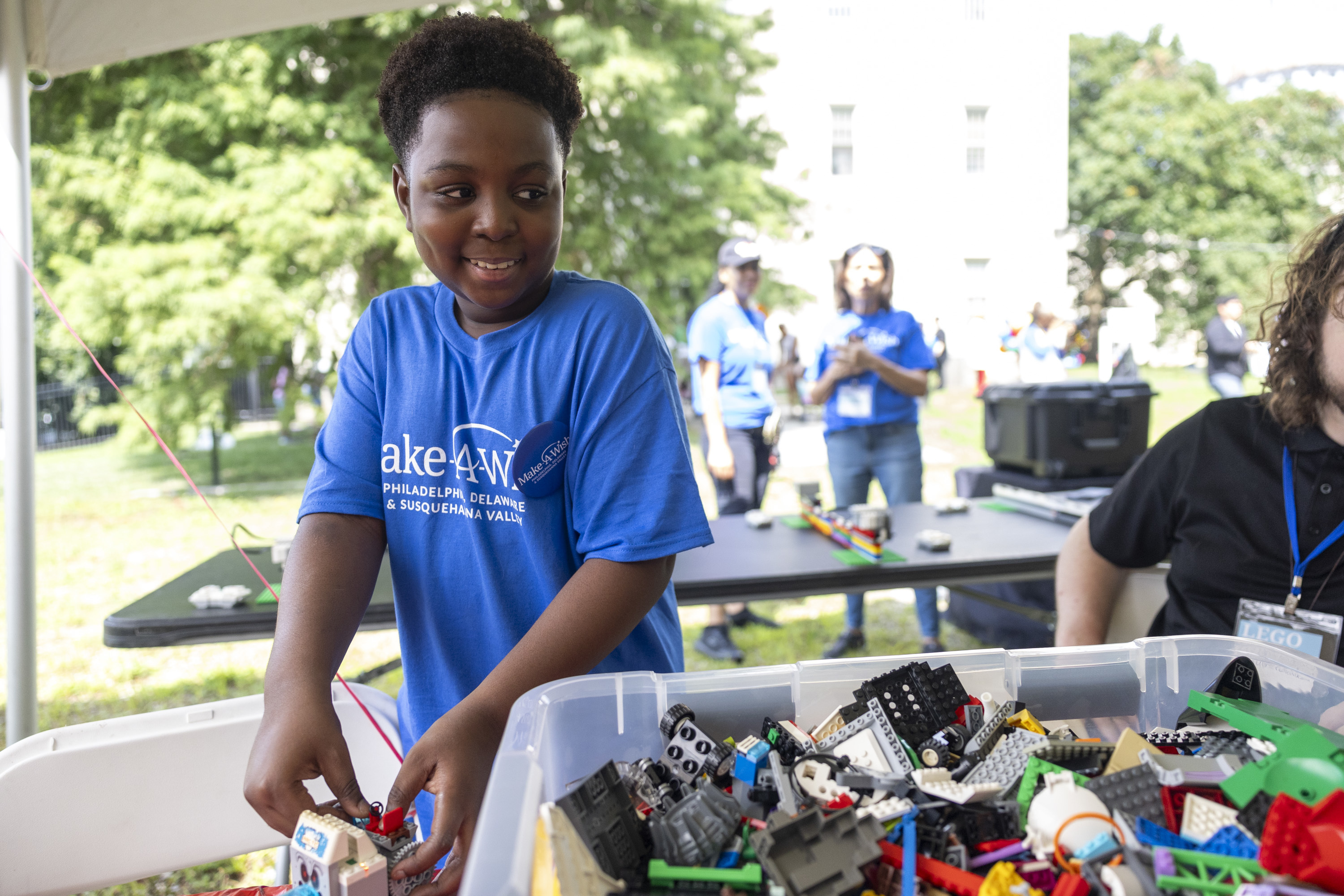
Make-A-Wish settled on Families Forward Philadelphia, a homeless shelter in West Philly, as the recipient of Sam’s wish and hosted a monthlong donation drive for the facility leading up to “Sam’s Perfect Day” last month. The carnival-style extravaganza on the shelter’s front lawn, attended by dozens of families experiencing homelessness as well as Sam and his family, featured Lego displays, a petting zoo, a Lego-inspired bounce castle, and water ice provided by Sam’s family’s Southwest Philly water ice business, Willkay’s.
Making a wish a reality
Word of the wish quickly spread around the office of Make-A-Wish Philadelphia, Delaware, & Susquehanna Valley following the April meeting. Anika Goyal, one of the staffersresponsible for carrying out wishes, knew this one had to be hers.
The chapter, which grants about 335 wishes a year, regularly fulfills shopping sprees, vacations to Disney World, and room makeovers, but it rarely gets one like Sam’s, Goyal said.
So Goyal got to work. Sam emphasized that helping homeless children, specifically, was important to him, so Goyal selected Families Forward as the beneficiary shelter because it emphasizes keeping families intact during their stays.
She reached out to small businesses and nonprofits — as many as she could find that also had Make-A-Wish connections. Oshun Family Center, which Goyal asked to host a table on Black maternal health and to distribute childcare kits, was founded by a mom of a Make-A-Wish recipient. Jam-Rock Kitchen, a local Jamaican restaurant owned by another Make-A-Wish family, slathered up their jerk chicken and spiced up their rice and peas for the big day.
Goyal also looped in staff at the King of Prussia Lego store, a former contestant on the reality TV competition series LEGO Masters, and Swoop, the Philadelphia Eagles mascot, to make the event quintessentially Sam.
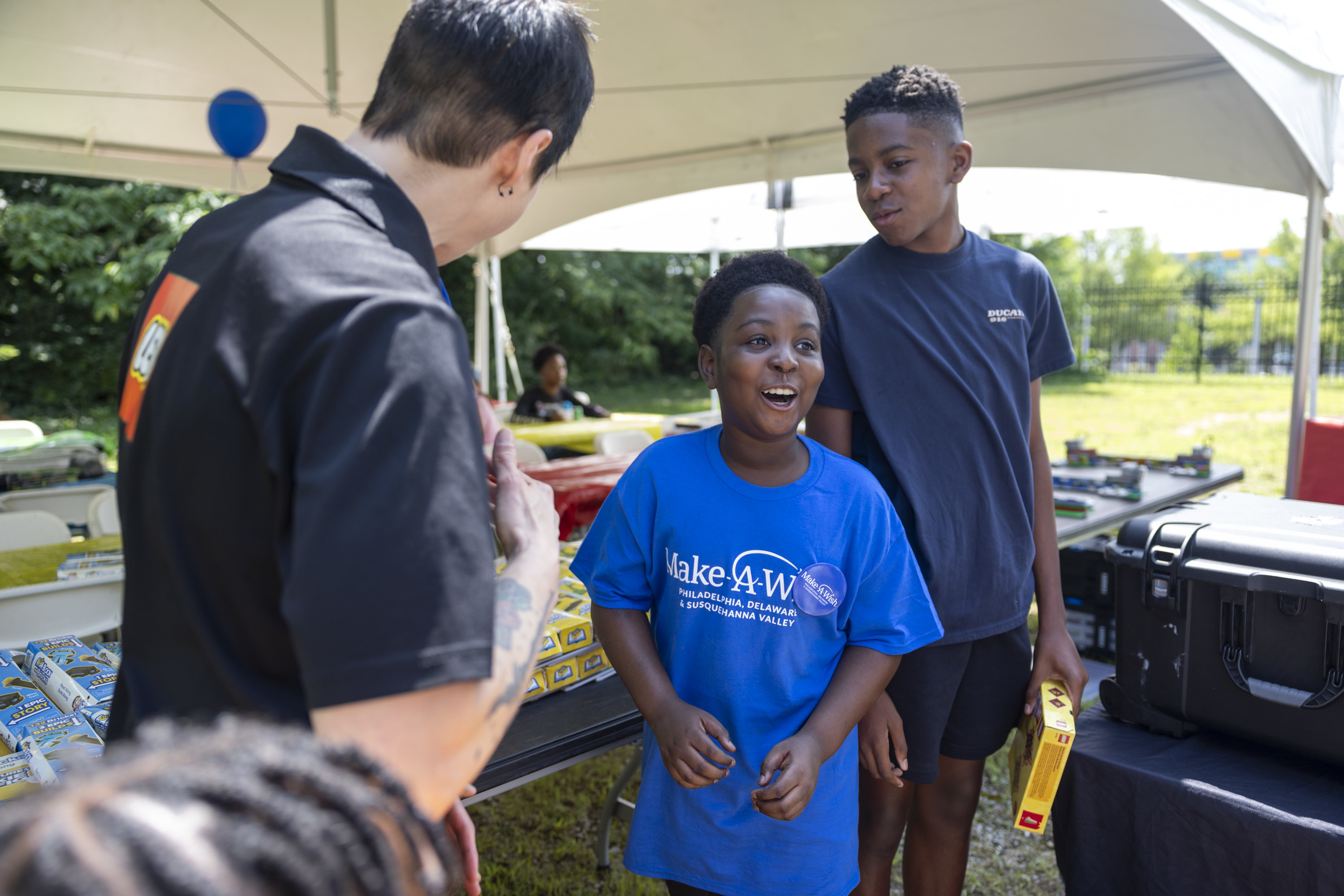
Alana Deluca, manager at King of Prussia’s Lego store, talks to Sam Okyere, 12, during his Make-A-Wish donation drive and block party.Tyger Williams / Staff Photographer
“It’s not about him,” Goyal said. “But it is about him.”
As Goyal and the Make-A-Wish team prepared the logistics, Sam contended with a life-altering decision. Sickle cell can be treated through a bone marrow transplant. The ideal donor is a sibling who is a match. Will Okyere, Sam’s 25-year-old brother, was. So Sam and his family scheduled a transplant for the end of August. The process starts with chemotherapy and ends with in-home isolation for several months, requiring Sam to miss most of his seventh-grade year with his friends.
“It’s a bummer,” Sam said. “But, it’s like, anything to get me better.”
“I just want to get sickle cell over and done with,” he added.
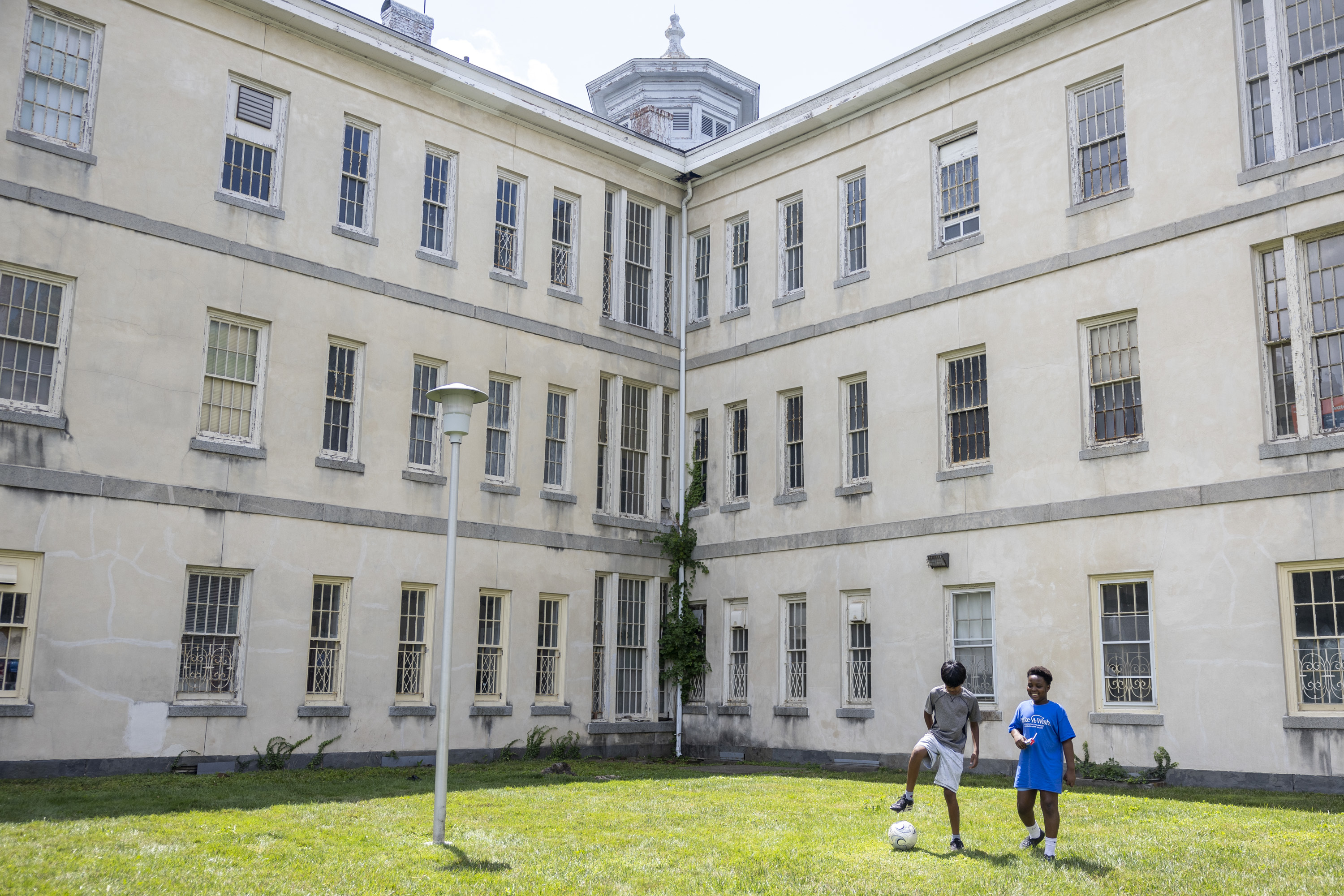
Sam Okyere, 12, hanging out with his friend Mosiah Saddick, 12, during Sam’s Perfect Day at Families Forward Philadelphia homeless shelter.Tyger Williams / Staff Photographer
While sickle cell disease is not inherently fatal, it can increase the risk of life-threatening infections, acute chest syndrome, stroke, and chronic organ damage, particularly without medications or interventions such as a bone marrow transplant or gene therapy.
Cynthia Norris, Sam’s attending hematologist at Children’s Hospital of Philadelphia, who referred Sam for the wish, said he stood out among all her eligible patients because he has the most severe variation of the disease and has had a number of complications. His grace and thoughtfulness, she said, also set him apart.
“He’s just a very special young man,” Norris said. “He has so much empathy.”
Sam Okyere, 12, with his dad Akwasi Okyere, Delaware Blue Coats mascot Coaty, and Philadelphia Eagles mascot Swoop during Sam’s Perfect Day Make-A-Wish donation drive and block party at Families Forward Philadelphia homeless shelter.Tyger Williams / Staff Photographer
Living out a perfect day
After months of waiting and preparation, Sam’s Perfect Day finally arrived.
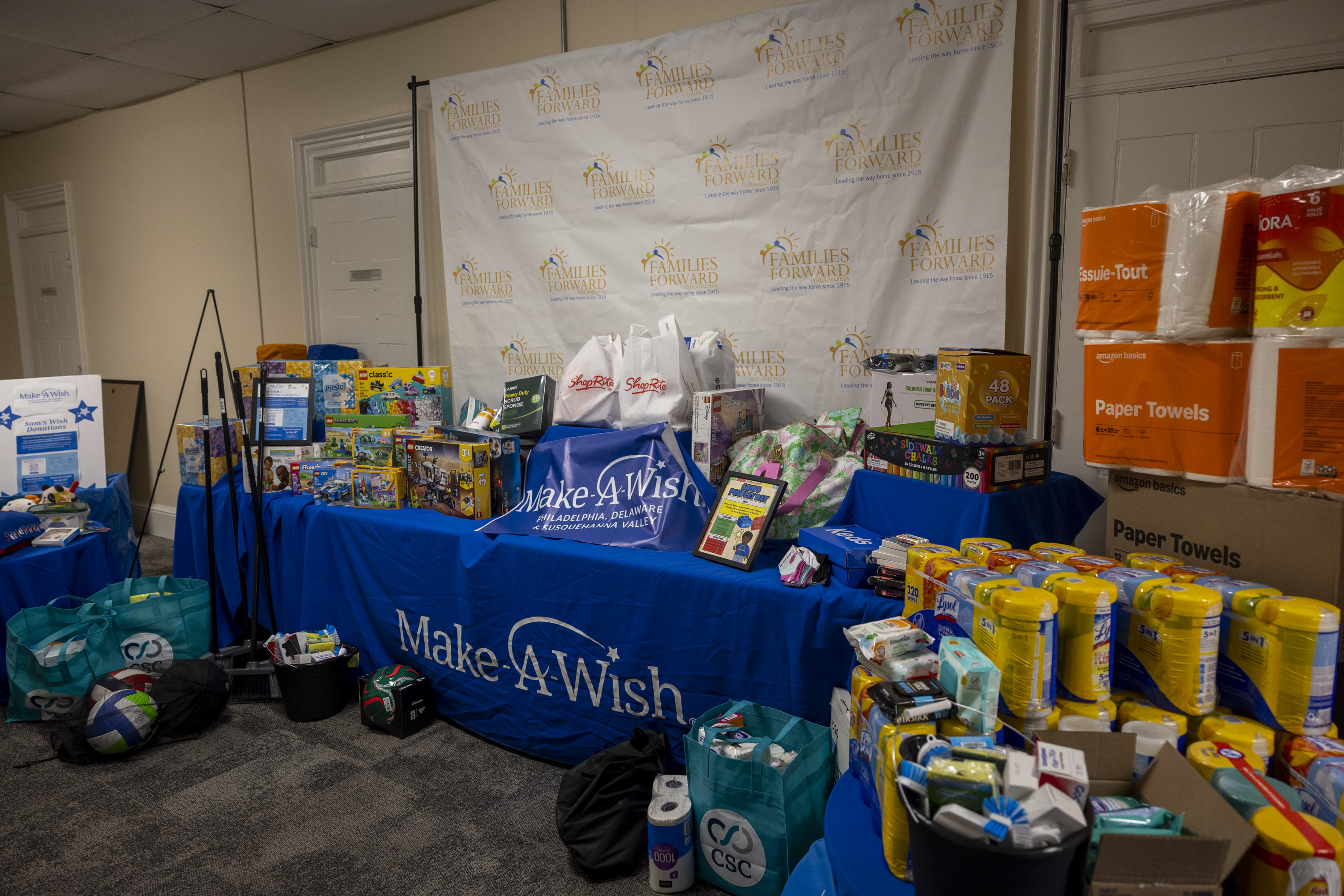
Shiny new yellow, red, and blue soccer balls and Hula-Hoops lined the main hall of the Families Forward office building. Tubs along the mirroring wall brimmed with sunscreen bottles, toothbrushes, and soap. A giant poster sandwiched in the middle bore Sam’s likeness in Lego form — tiny Afro and all.
Some of the donations for Sam Okyere’s Perfect Day Make-A-Wish donation drive and block party.Tyger Williams / Staff Photographer
Families Forward could never have afforded this bounty on its own, said Jessica Main, the nonprofit’s chief development officer. Grant money the shelter receives is often tied to specific types of services like mental health and education. Its budget for toys and recreational materials is around $3,000 annually, Main estimated. That would probably barely cover the glimmering new basketball hoop and sports equipment Sam’s donation drive brought in.
Sam Okyere, 12, with his sister, Kayla, at the petting zoo during his Make-A-Wish donation drive and block party at Families Forward Philadelphia homeless shelter.Tyger Williams / Staff Photographer
Sam nestled into a blue canvas chair in the petting zoo as two goats nibbled food out of Dixie cups he held in each hand.
“I’m naming this one Ashton,” Sam announced to no one in particular, looking at a brown and white goat.
“Food! Anybody want food,” he shouted to the tiny goats (one wearing a feathered bowler hat), bunnies, and one black pig that dragged its rotund paunch on the ground wherever it went.
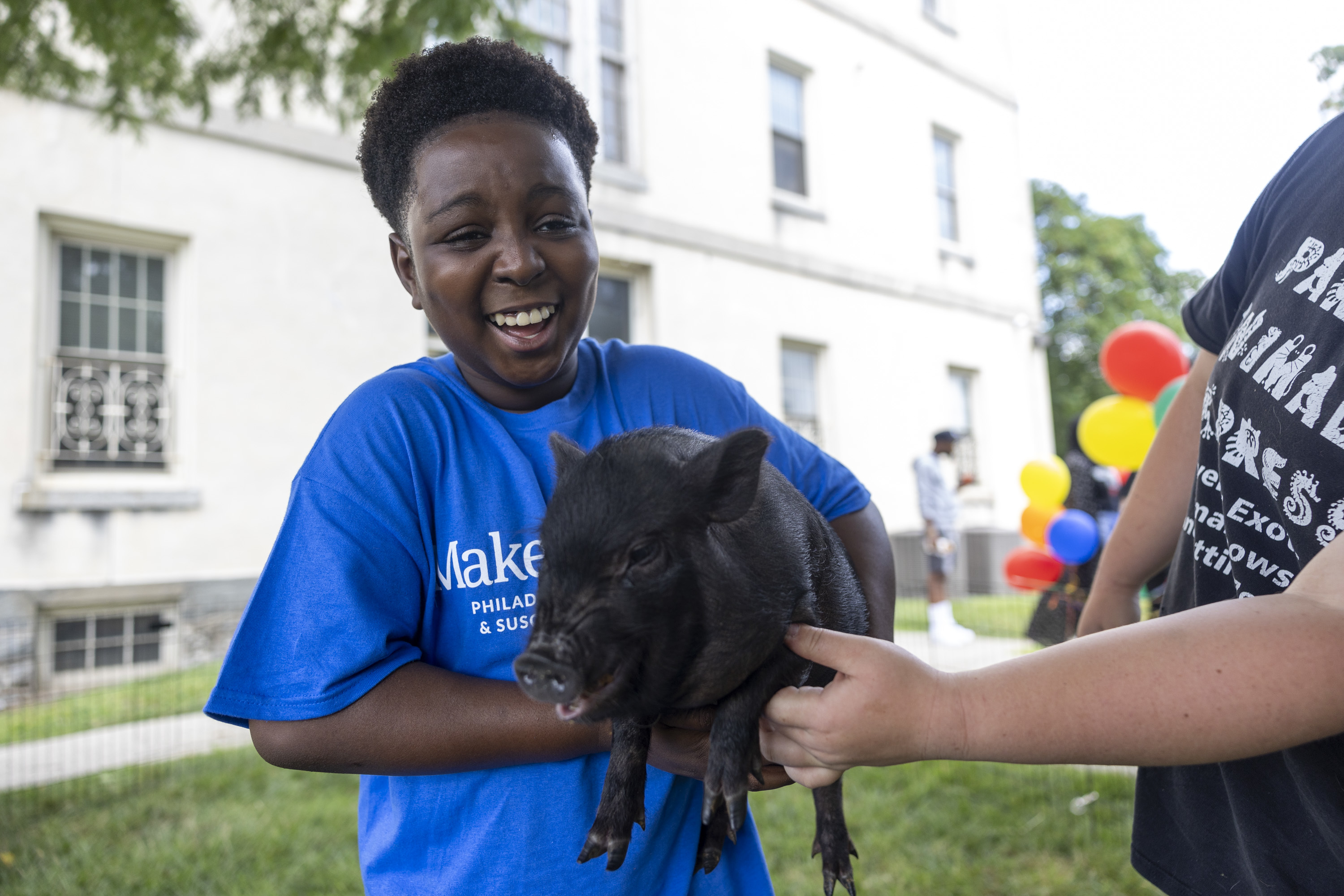
Sam Okyere, 12, is holding Penelope the pig at the petting zoo during his Make-A-Wish donation drive and block party at Families Forward Philadelphia homeless shelter in Philadelphia, Pa., on Wednesday, July 29, 2026.Tyger Williams / Staff Photographer
“Zane, Kai, Lloyd,” he said, pointing at two goats and then the pig, naming all after characters on his favorite show Ninjago, which the uninitiated will be unsurprised to learn is a show about Legos.
Soon a 3-year-old named Saga, wearing a white dress smattered with images of heart-shaped lollipops, entered the petting zoo enclosure, mouth agape as she stood eye-to-eye with the recently named Ashton the goat and gently patted the silver nubs on either side of its bony head. This was her first experience with farm animals.
Her mother, Quechera Jowers, 32, followed closely. The pair have lived at the shelter for about four months.
“I’m not going to lie, it’s a little nostalgic,” Jowers said, taking in the carnival sights as they waited in line for cotton candy, which, based on crystallized red formations encrusted around Saga’s mouth, it appeared she’d already indulged in.
Throughout the afternoon, gleaming toddler cheeks transformed into butterfly wings, kitten whiskers, and dragon scales with face paint. Pink and purple beads were strung into friendship bracelets, and technicolor swimsuits (each child got one through Sam’s donation drive) grew soaked from a sprinkler raining down on the kids as they descended an inflatable slide adjoined to the bounce castle. Navigating the pipe system of the old converted asylum-turned-shelter facility was the challenge of the morning, Main said.
Beyoncé blared from a portable DJ booth, chubby fingers grasped balloons on strings and absentmindedly released them into the stratosphere, and a topless toddler with wild curls boogied near the mouth of a bubble machine, a diaper band peeking out from his khaki shorts.
Sam Okyere, 12, is trying out the DJ set with Nashirah Felder, of Fishtown, during his Perfect Day Make-A-Wish donation drive and block party at Families Forward Philadelphia homeless shelter in Philadelphia, Pa., on Wednesday, July 29, 2026.Tyger Williams / Staff Photographer
Sam, meanwhile, alternated between the Lego games, petting zoo, and basketball station.
After discreetly lowering his game controller in the middle of a Lego joust, allowing a friend to overtake his spacecraft and win the game, Sam sauntered over to the goats situated in a kennel in the back of a truck to bid them farewell.
Sam Okyere, 12, plays against Corey Samuels, 41, of Princeton, N.J., a LEGO Masters winner, during his Make-A-Wish donation drive and block party at Families Forward Philadelphia homeless shelter in Philadelphia, Pa., on Wednesday, July 29, 2026.Tyger Williams / Staff Photographer
“I don’t want them to leave,” he mused as he delicately scratched a tan one on the chin and, with an understated graciousness rare to find in adults, let alone children, allowed the petting zoo staff to take them away.
As the afternoon drew to a close, Sam settled into a chair in the hallway full of donations and futzed with a small Lego vehicle. An event organizer informed him that the Lego store employees offered to gift him all the leftover toys. Sam politely declined and requested they instead be given to the kids at the shelter.
Asked in the final moments what could have made Sam’s Perfect Day more perfect, he contemplated.
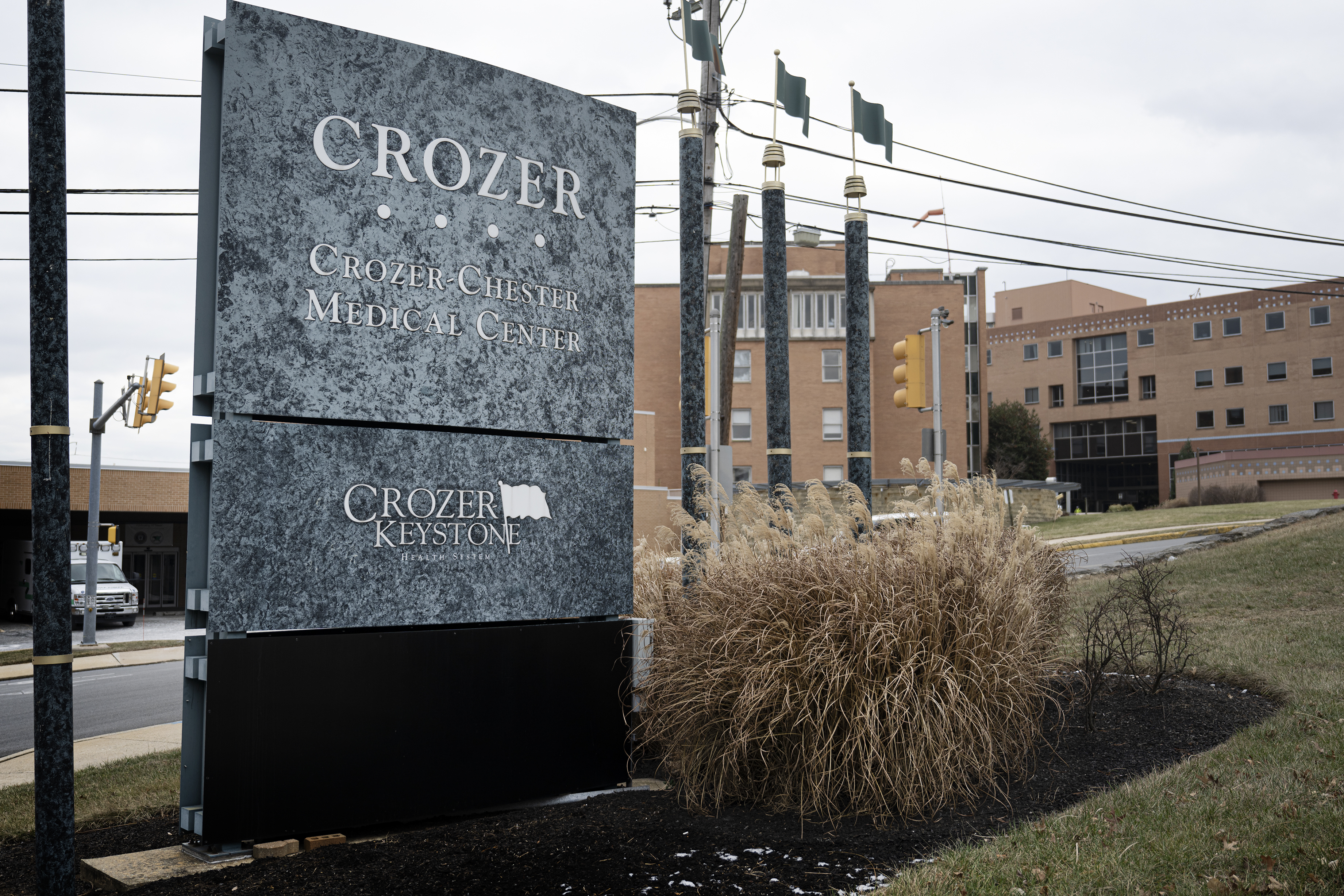
Prospect Medical Holdings Inc. had a $7 million bid for Crozer-Chester Medical Center and a $3 million bid for Springfield Hospital ahead of an auction held in the afternoon, an attorney for the bankrupt company said at a hearing Friday.
Neither the winning bidders nor the top bids were identified publicly after the auction. Prospect did not respond to a request for information about the prospective buyers. Community members have been pushing for the restoration of hospital services to Crozer-Chester in particular.
At the same hearing, U.S. Bankruptcy Judge Stacey Jernigan approved Prospect’s plan to “abandon” the two shuttered Delaware County hospitals if the sales fail to close promptly because the properties have become a financial burden to the bankruptcy estate.
Prospect used a similar tactic last summer in the case of Crozer Health’s two other closed hospitals, Delaware County Memorial Hospital in Drexel Hill and Taylor Hospital in Ridley. Both of those hospitals have since been sold.
In a court filing Friday morning, Prospect said it had reached agreements with local tax authorities to set the assessments on Crozer-Chester and Springfield at the sale price for this year and next year.
The properties had elevated assessments because of Prospect’s financial maneuvers since the California for-profit acquired the county’s largest health system in 2016. The current assessment on Crozer-Chester is $114.6 million, according to public records. That figure is $10.9 million for Springfield
The filing also said school districts and others would accept general unsecured claims in the bankruptcy. Those claims are unlikely to have much value.
Much of Friday’s hearing on the abandonment motion was taken up with discussion of complications at Springfield. An attorney for Springfield Township said his client had not agreed to the tax deal outlined in the abandonment motion and was not part of the discussions.
That’s because Springfield Township has not filed a bankruptcy claim for back taxes, according to Prospect’s attorney, Maegan Quajada, of Sidley Austin. A hurdle in any sale is a deed restriction on the Springfield property that requires the operation of an emergency department that is open all the time.
When Prospect announced late last month that it would hold an auction for Springfield and Crozer-Chester, it said any bids had to have no conditions on them, such as the resolution of tax matters or the Springfield deed restriction.
But then Prospect changed its mind and accepted conditional bids and rejected one that was unconditional, an attorney said in court Friday.
Quajada said the unidentified contingencies are being taken care of. “We already know we can meet them,” she said.