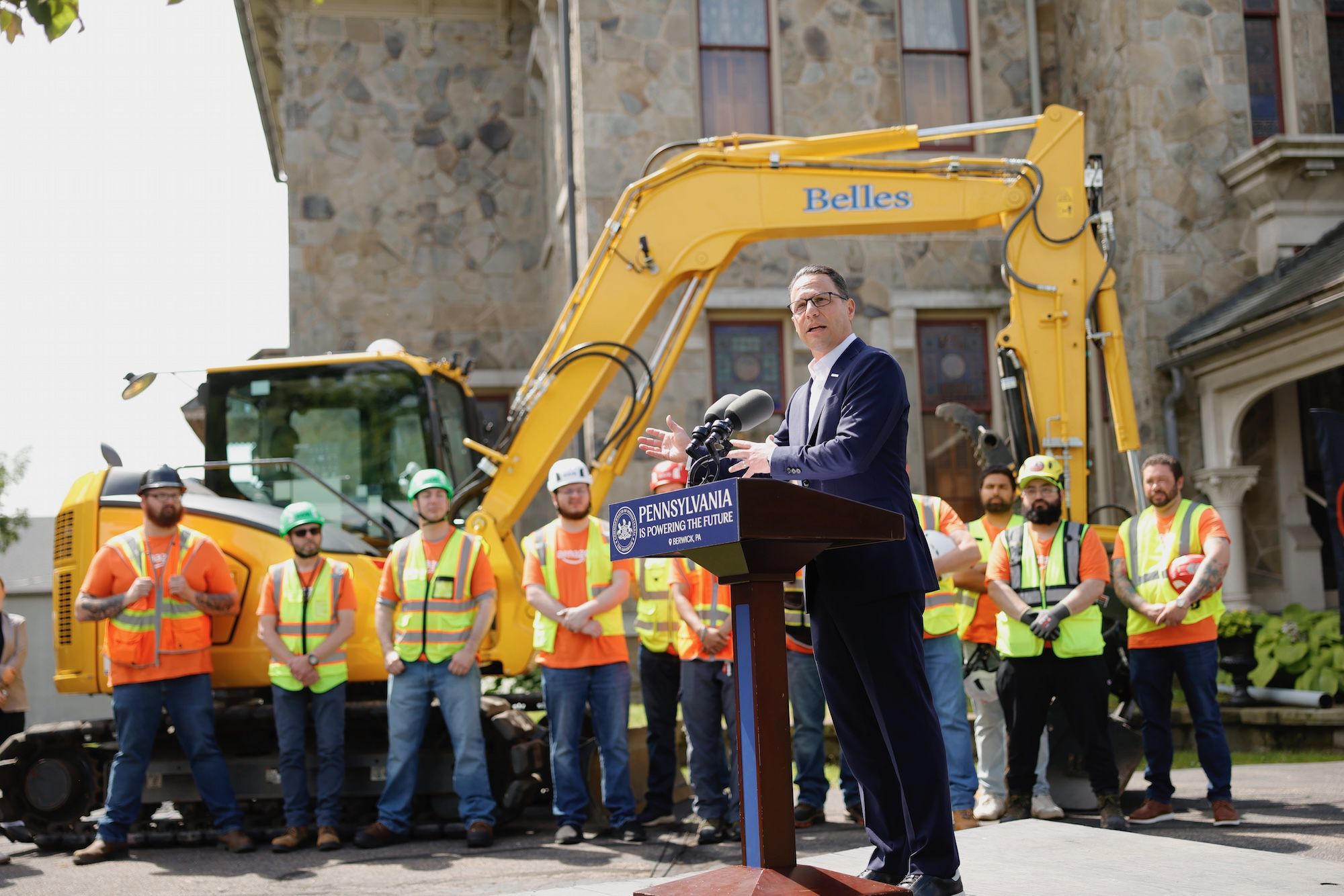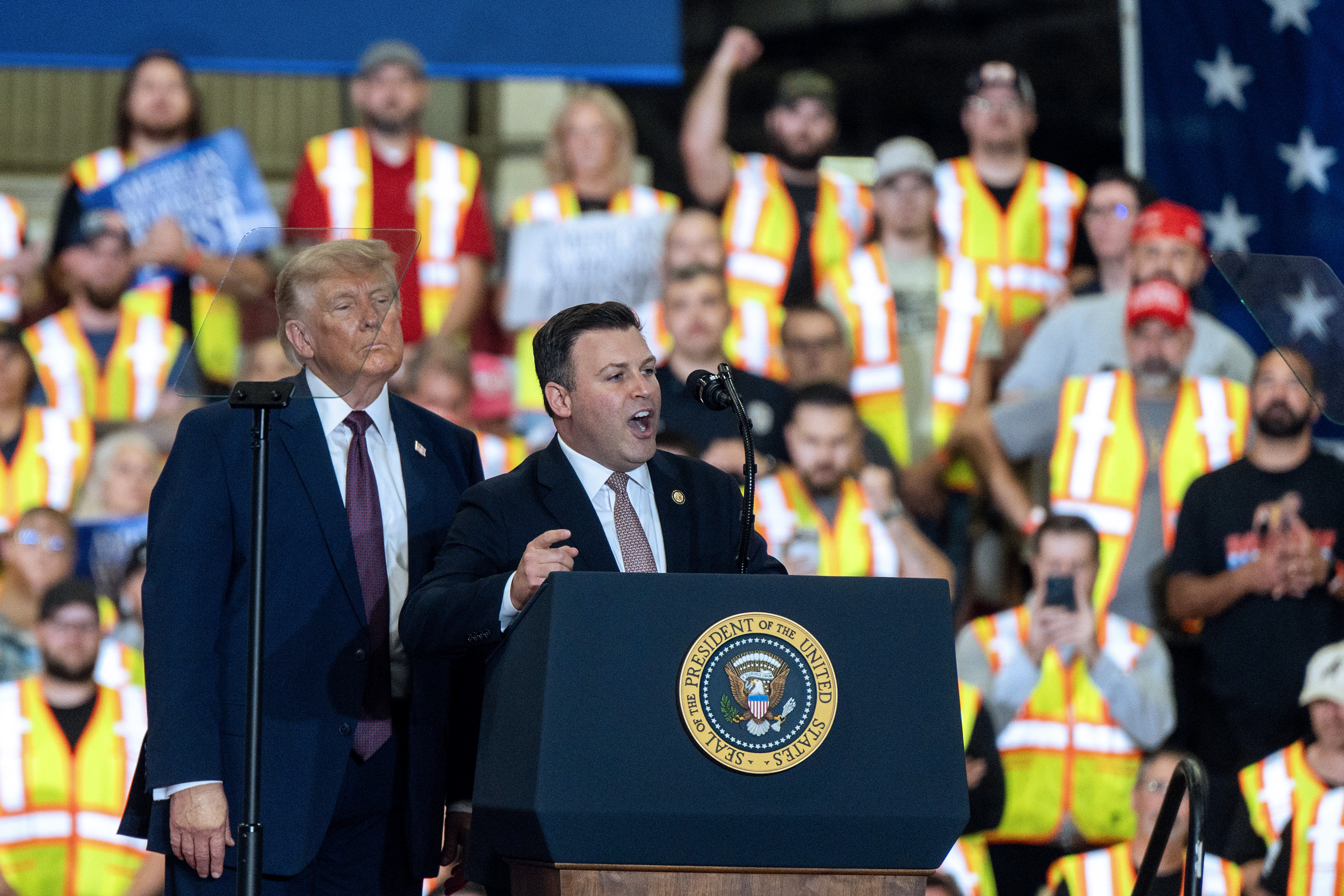
Tag: Doug Mastriano

  • Pa. Republicans offered plenty of reasons for their midterm losses, but maybe voters just like Gov. Shapiro | Shackamaxon

    Pa. Republicans offered plenty of reasons for their midterm losses, but maybe voters just like Gov. Shapiro | Shackamaxon

    This week’s edition of Shackamaxon covers the fight over property assessments, a horrific failure in the system designed to protect children, why Gov. Josh Shapiro and the Pennsylvania Democrats won so big, City Council finally holding the sheriff’s office accountable, and a surprising admission from the city’s law department.
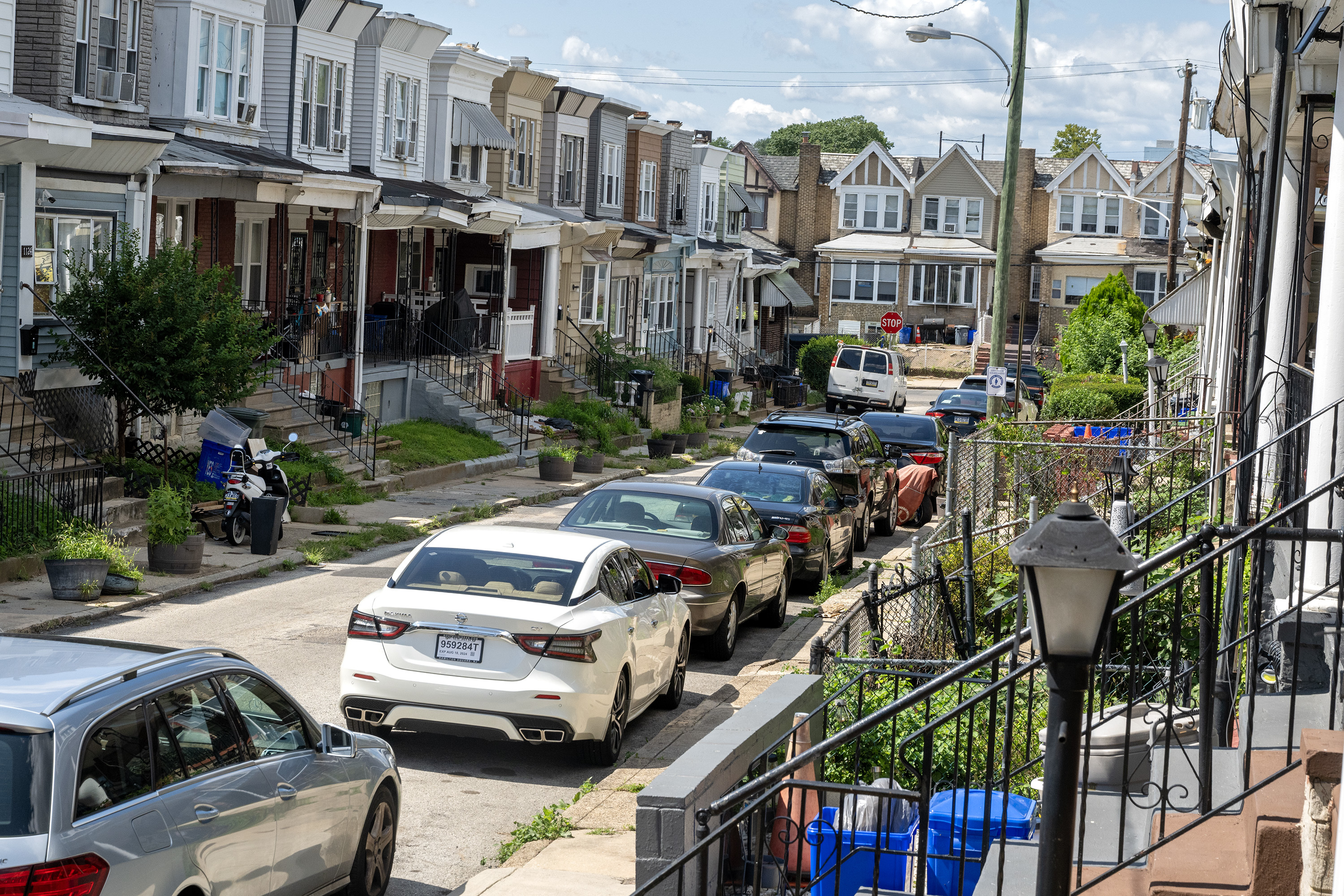
    The 1100 block of Ruby Street, Wednesday, Aug. 21, 2024, is one of the blocks with the highest new property tax assessments in the city.Tom Gralish / Staff Photographer

    Values vs. valuations

    Property tax reassessment is one of the most contentious, and essential, parts of city government. For years, Philadelphia used out-of-date valuations that left some paying far too much and others paying far too little. After Mayor Michael A. Nutter instituted the Actual Value Initiative, the system has become significantly more accurate. To some, however, regular reassessment simply feels unfair.

    That group seems to include most members of Philadelphia City Council, who have faced a flood of phone calls from residents who have seen significant increases in valuation from the Office of Property Assessment.

    At Monday’s hearing on assessments, however, I could not help noticing that the debate was less about the specifics of OPA’s methodology and more about the inability of Council to control the real estate market that determines valuations. After all, experts at the hearing praised OPA’s accuracy. Monty Wilson, an attorney at Community Legal Services, went as far as calling it the best office in the state, even as he acknowledged that this isn’t good enough.

    What frustrated the city’s legislators wasn’t the process but the results — including large increases in Kensington and other low-income areas. While the significant investments the city has made in combating the drug trade, reducing homicides, and cleaning up the streets (and the measured success of these efforts) means that some increase is expected, many residents were shocked that the home they once stepped over needles — or even people — to get to could now cost so much.

    The good news is the city has the tools to help. Instead of pausing reassessments, which would slowly take us back to the days of widespread inaccuracy, Council can increase the Homestead Exemption, which is the only exception to statewide uniformity rules. This would eliminate the tax burden for the city’s poorest homeowners and lessen it for everyone else. Panelists also suggested extending the appeals period.
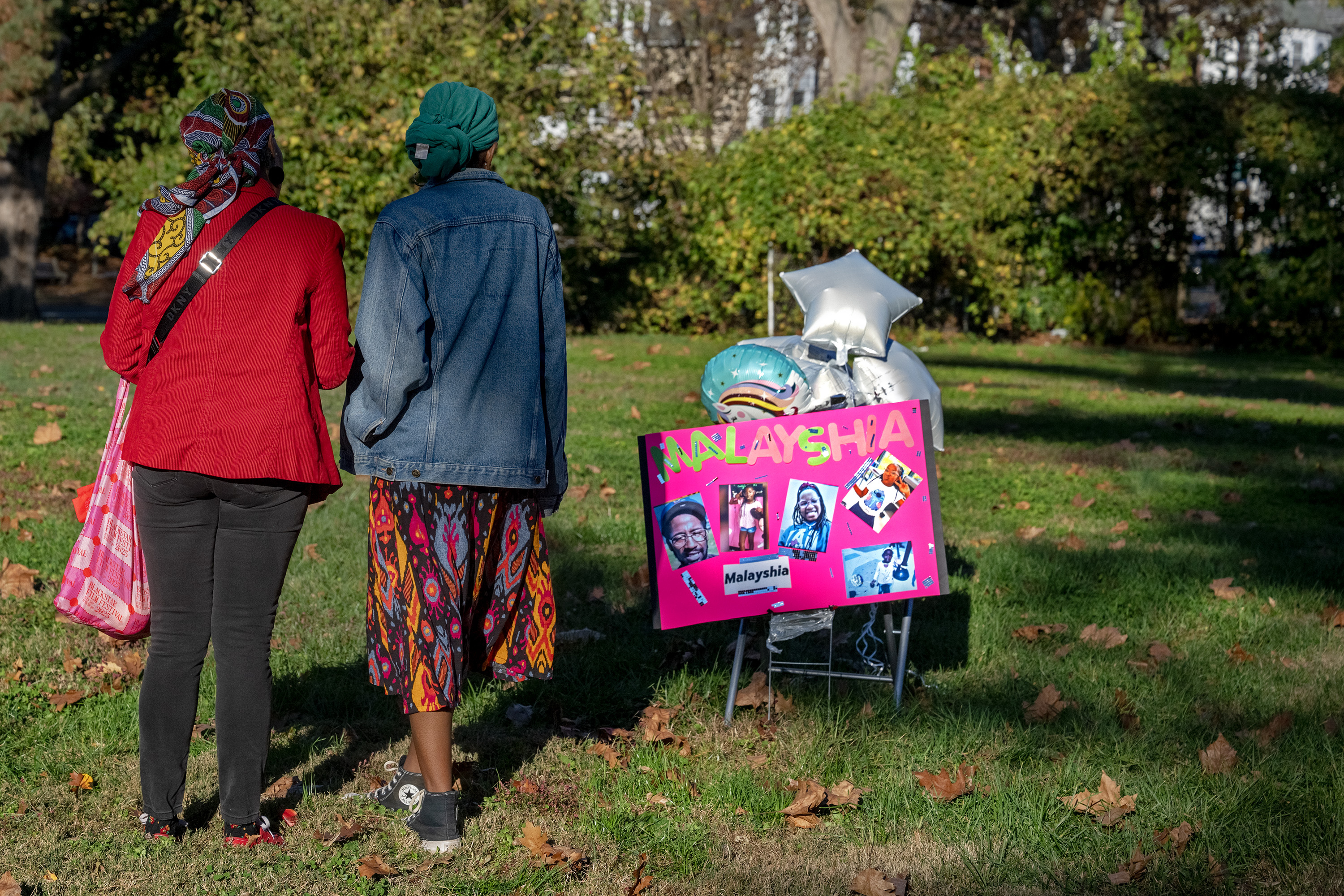
    Family and friends of Malayshia Allford gather on Nov. 8 in Morris Park in Overbrook to remember the young girl.Tom Gralish / Staff Photographer

    Demand answers

    The murder of Malayshia Allford has refocused attention on Philadelphia’s foster care system. I know firsthand how important human services are. My younger brother and I are both adoptees, my older sister served as a social worker for years, and my parents fostered several newborns before adopting me.

    I understand there are times when the state must intervene in the private affairs of families to protect the interests of vulnerable children. At the same time, Philadelphia separates children from parents at the highest rate of any major city — four times the rate of Chicago.

    This separation can induce its own form of trauma. While infants like my brother and I benefited from placements with families, older children are often forced to live in group homes. This can be a miserable experience. My parents and the families that fostered my brother and me treated the babies in their homes like their own children. That’s less likely to happen in a group facility.

    What happened to 10-year-old Malayshia, however, went beyond denial of the love and support all children need. Authorities failed her. Her foster mother, Caprice Williams, is now accused of her murder. Making matters worse, Williams has prior abuse allegations, and state officials had recommended not placing any more children in her care. How Williams was able to maintain her job as a public school teacher given these claims is also worth further exploration.

    Three different Council members have moved to authorize hearings, and Mayor Cherelle L. Parker has vowed to investigate. This is a good start. But we’ve investigated the system before, and it still failed to protect Malayshia. This round must be different.
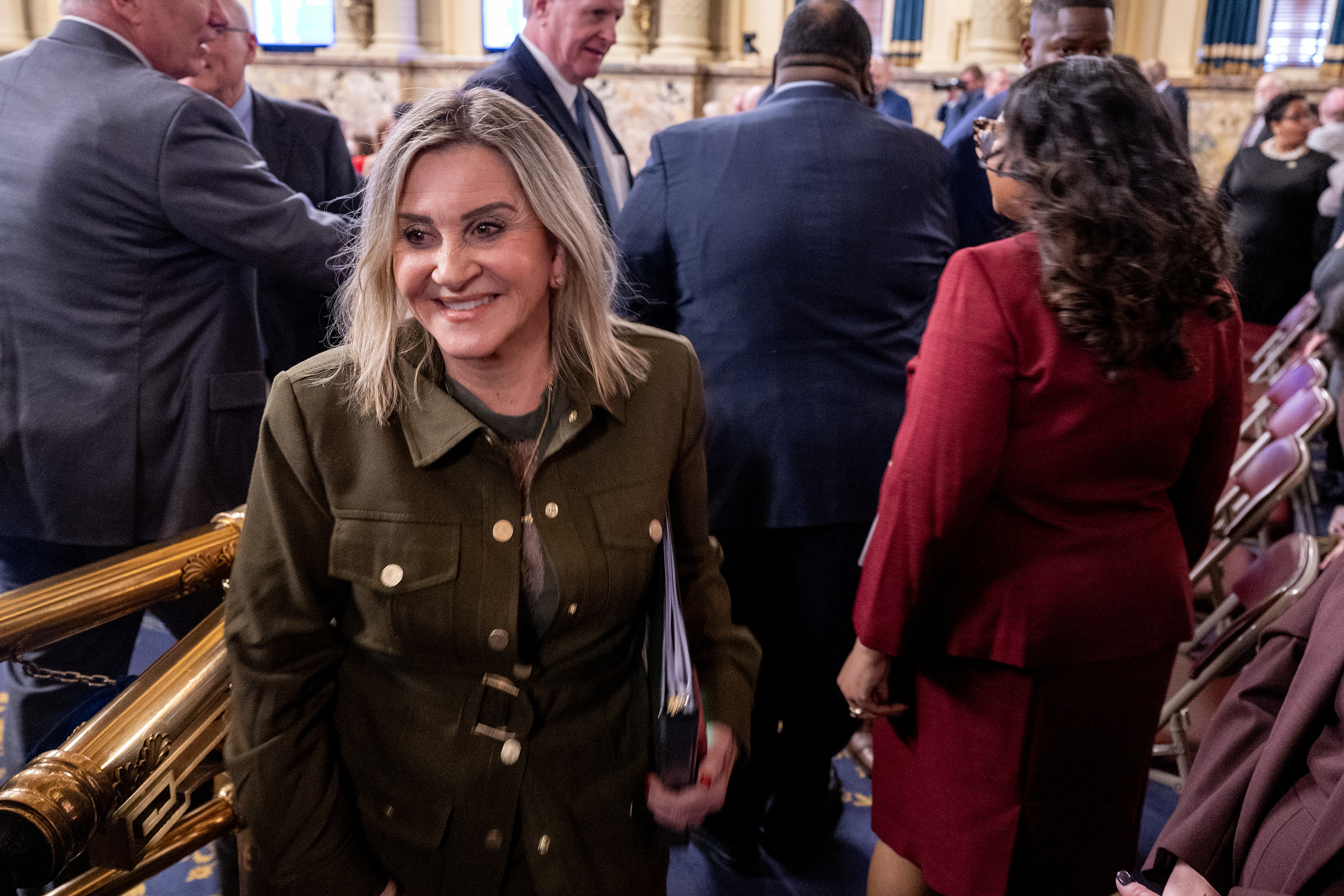
    Senate President Pro Tempore Kim Ward leaves the House chamber following Gov. Josh Shapiro’s annual budget proposal in February.Tom Gralish / Staff Photographer

    Illuminating exits

    After last week’s landslide election, politicians and pundits gave their own interpretation of the results. Soon-to-be former state Senate president pro tempore Kim Ward blamed “national headwinds” for her party’s poor results. Supporters of State Sen. Doug Mastriano, who ran and lost to Shapiro in 2022, took to social media to blame Pennsylvania Republican insiders for anointing state Treasurer Stacy Garrity all the way back in September of 2025, bypassing the primary process that had previously selected Mastriano.

    Pollster Jim Lee, with Susquehanna Polling, has his own theory for why Shapiro won big: Pennsylvanians, including a significant chunk of Republicans, just like the guy.

    In his organization’s exit polling, they asked why voters selected Shapiro and Garrity. In Shapiro’s case, 53% said he was doing a good job, while another 23% said they agreed with the Ambitious Abingtonian on the issues.

    As for Ward’s suggestion that President Donald Trump doomed her colleagues by bombing Iran and inflating gas prices, there are mixed signs. On the one hand, just 6% of Shapiro’s voters picked “standing up to Trump” as a reason he earned their vote. On the other hand, 44% of voters said they voted mostly for Democrats to send a message to the president. Still, that’s not enough to win, let alone score the first Democratic trifecta in decades. This means Shapiro and other Pennsylvania Democrats also did well with the 33% of voters who said Trump did not affect their vote this year.

    In fact, Democrats across Pennsylvania did exceptionally well with Republican voters in this election. Around 44% of voters selected a straight Democratic ticket, while just 33% of voters voted for just Republicans.

    It’s not all good news for Harrisburg Democrats, however. While their candidates may have earned Republican votes this year, these folks have not become progressives overnight. About 43% of voters identified themselves as Republicans, just one point shy of the 44% who called themselves Democrats. This means that going too far afield from the causes they campaigned on could erode their gains.
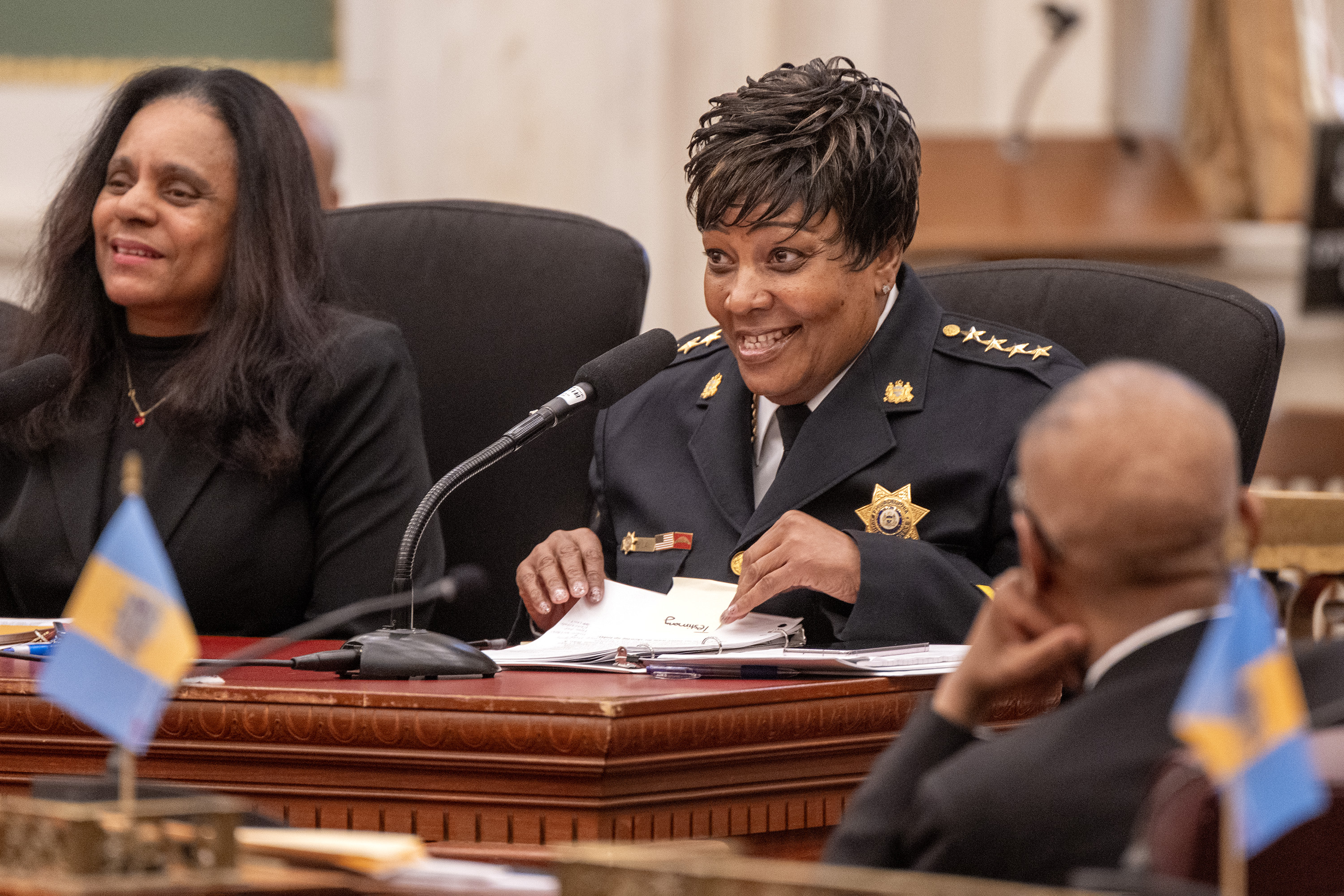
    Sheriff Rochelle Bilal testifies in City Council during its annual budget hearing in April.Tom Gralish / Staff Photographer

    Accountability at last?

    After years of scandals, City Council has finally seen fit to hold hearings into the Philadelphia Sheriff’s Office, which is led by Rochelle Bilal. From the very beginning of her tenure, whistleblowers have alleged that Bilal has misused public funds and failed to perform the essential functions of her office. During that time, City Council has refused to hold her accountable, at one point even honoring her via resolution.

    On Thursday, that finally changed. Council President Kenyatta Johnson moved to hold hearings into the operations and policies of the office, with the aim of restoring public confidence.

    This is a good start, but the best way to improve the office remains abolishing it.
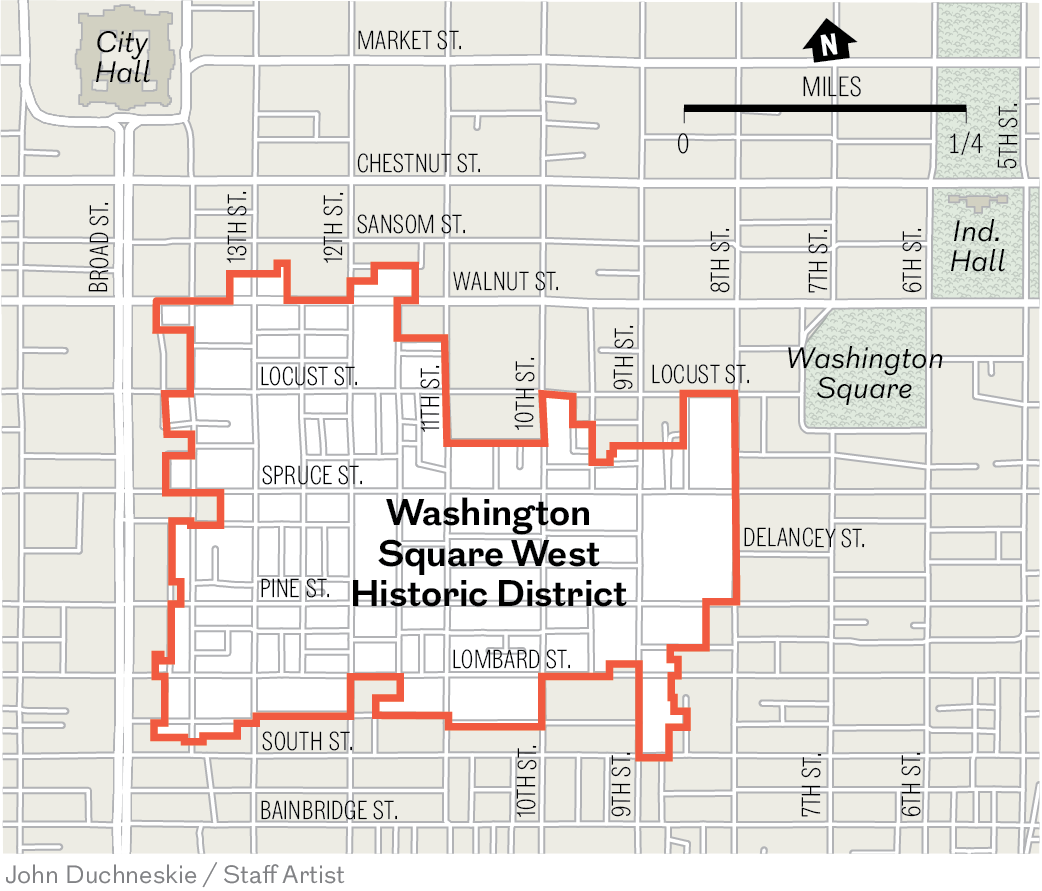
    Map of the Washington Square West Historic District.

    No comment

    My newsroom colleague Jake Blumgart has chronicled the most recent chapter in the fight over the Washington Square West Historic District. The city’s appeal of the court ruling abolishing it, however, makes an interesting claim.

    It said Judge Christopher Hall should not have considered public comment in his ruling, because “The record does not reflect the overall views of affected owners, businesses, or residents, but only the self-selected bias of the limited number of persons who provided public comments.”

    Policy experts have raised similar concerns about public comment for years. Research shows that people who testify at public hearings are unrepresentative of the community at large.

    At the same time, city officials often lean on this testimony while making decisions. I expect developers and institutions to cite this filing going forward when their own ideas meet a skeptical public.
  • Gov. Josh Shapiro cruised to reelection in Pennsylvania. Now the real campaign begins.

    Gov. Josh Shapiro cruised to reelection in Pennsylvania. Now the real campaign begins.

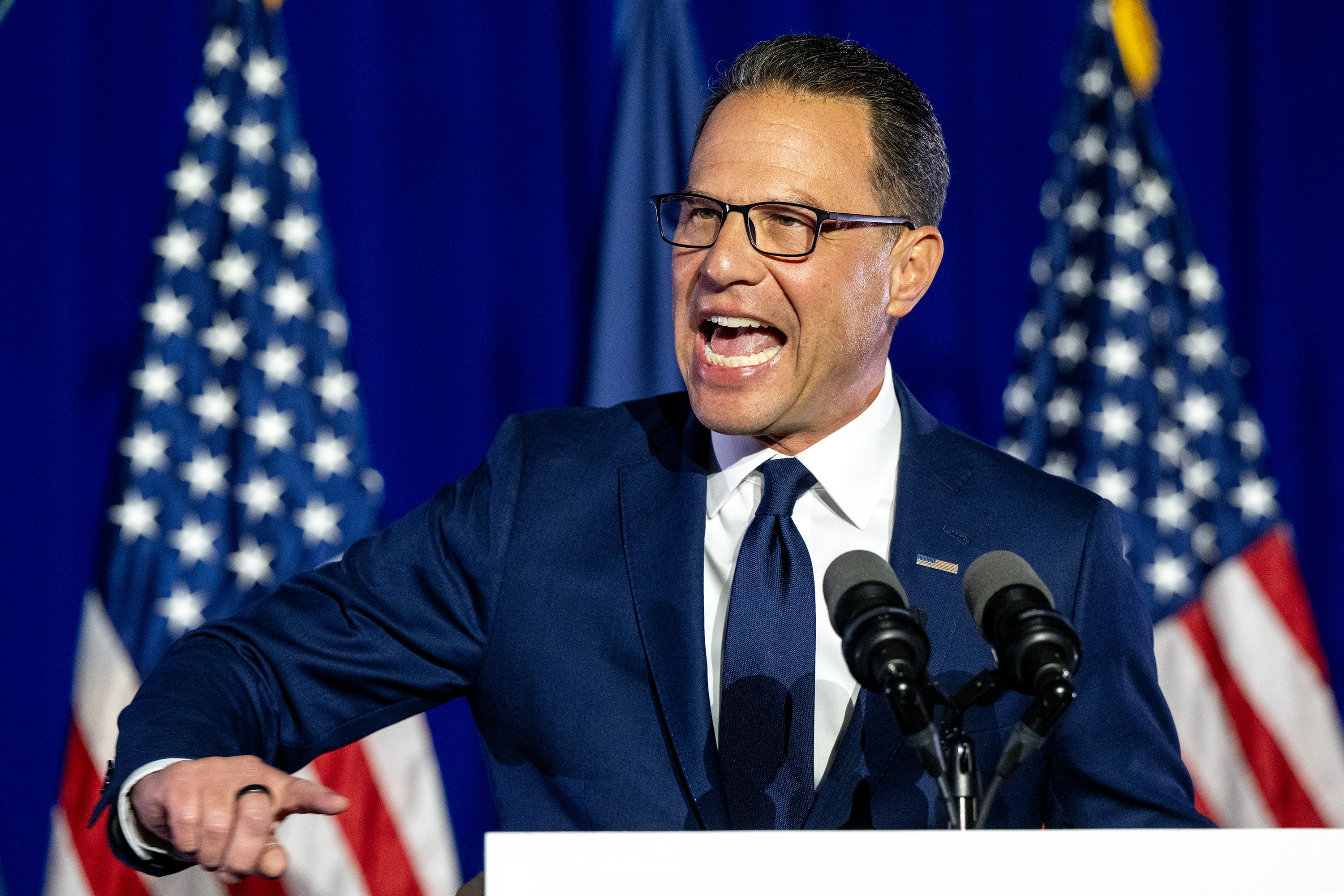
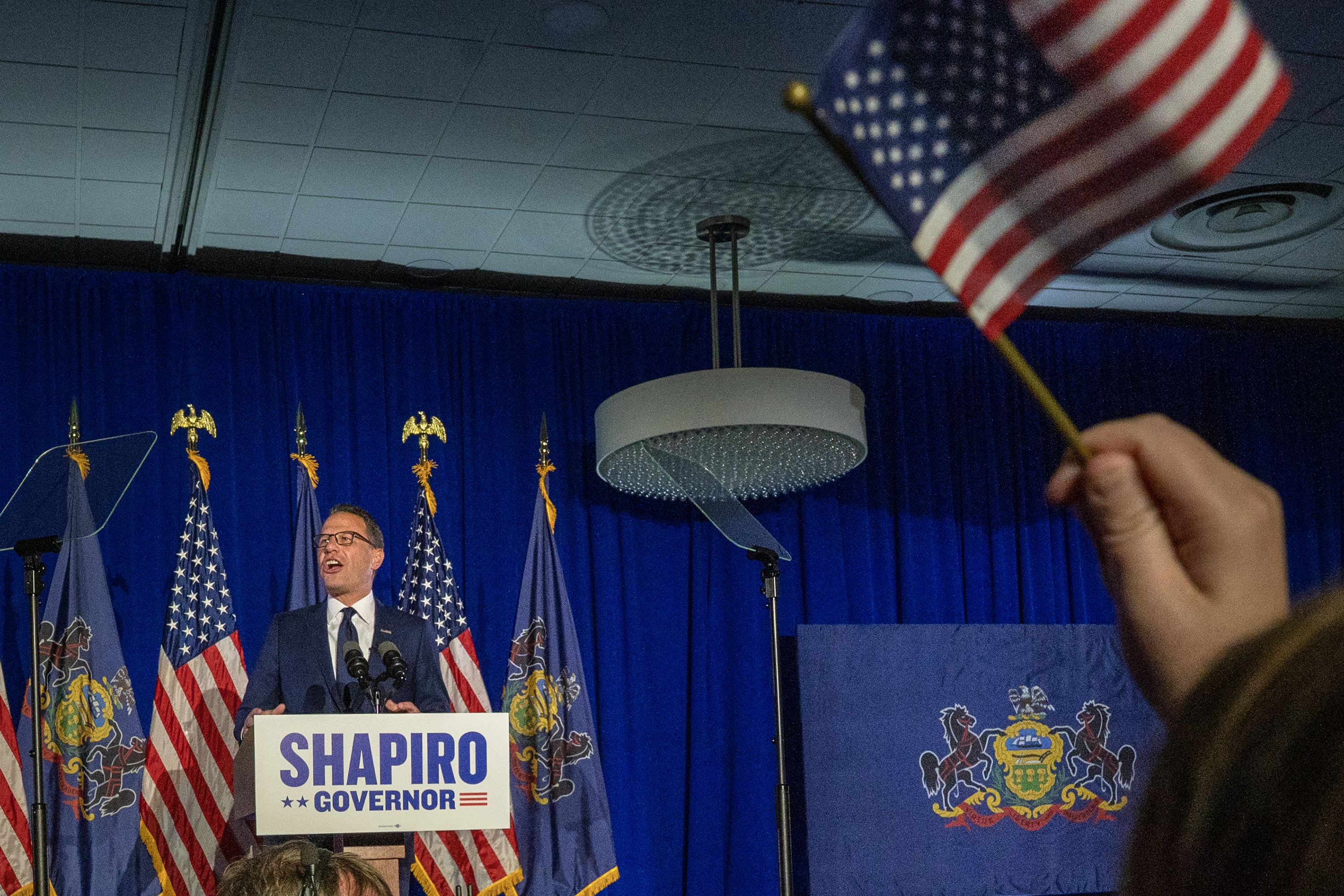
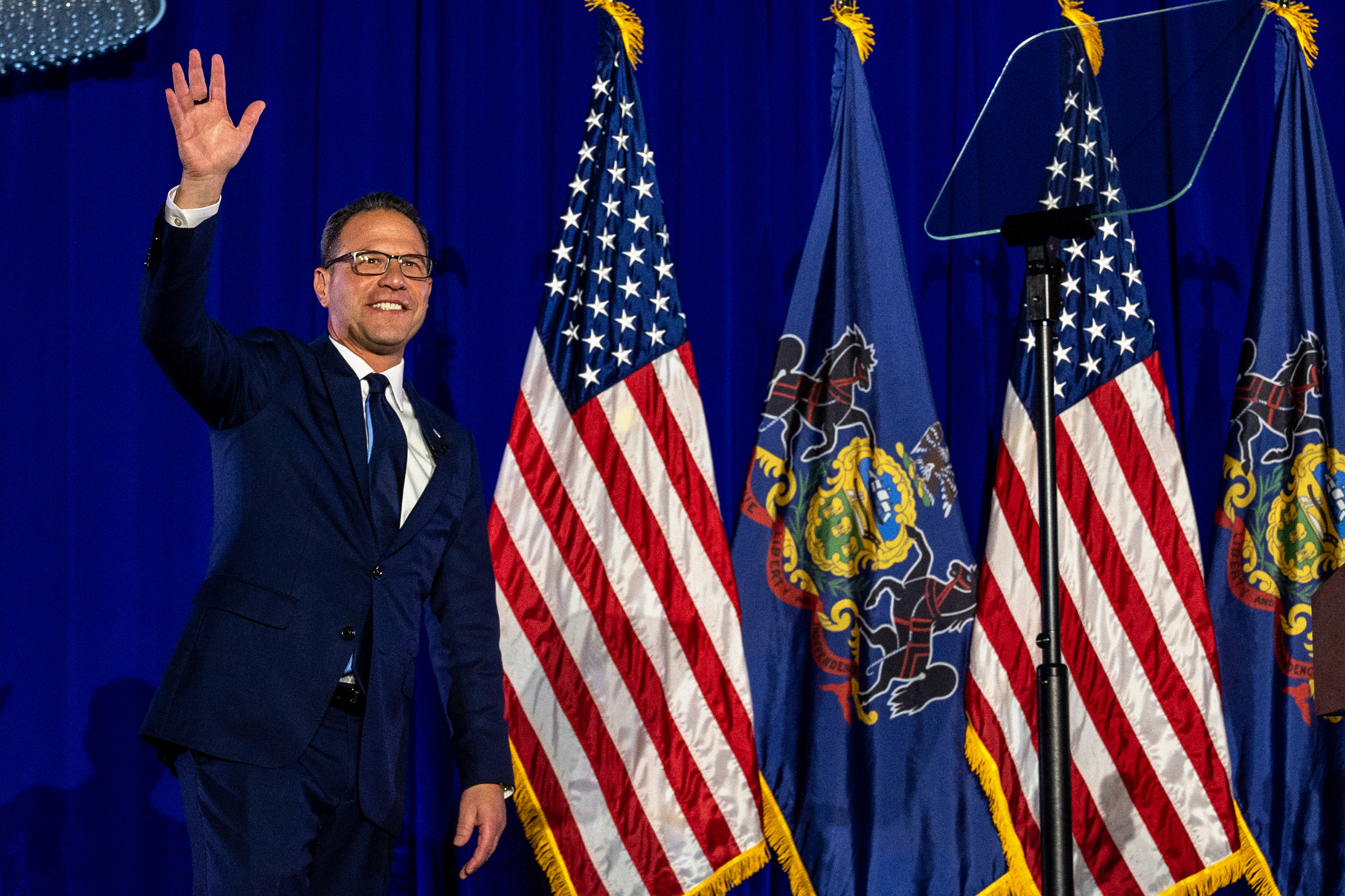
    CAMP HILL, Pa. — Gov. Josh Shapiro cruised to reelection on Tuesday, trouncing his Republican opponent, Stacy Garrity, in a decisive victory that strengthens the Democrat’s prospects for a 2028 presidential run.

    The Associated Press called the race for Shapiro a minute after polls closed across the state. The resounding win for Shapiro, 53, of Abington Township, cements his dominance in the critical battleground state that voted for President Donald Trump just two years ago.

    But a more substantial test of Shapiro’s strength came later Tuesday, as he staked his reputation on helping Democrats win up and down the ballot. The move could bolster his national standing at a time when the Democratic Party searches for a new leader to carry it into the post-Trump era. Shapiro invested $10 million of his campaign war chest to successfully flip four congressional seats, and to win a Democratic trifecta of control in Harrisburg for the first time since 1993.

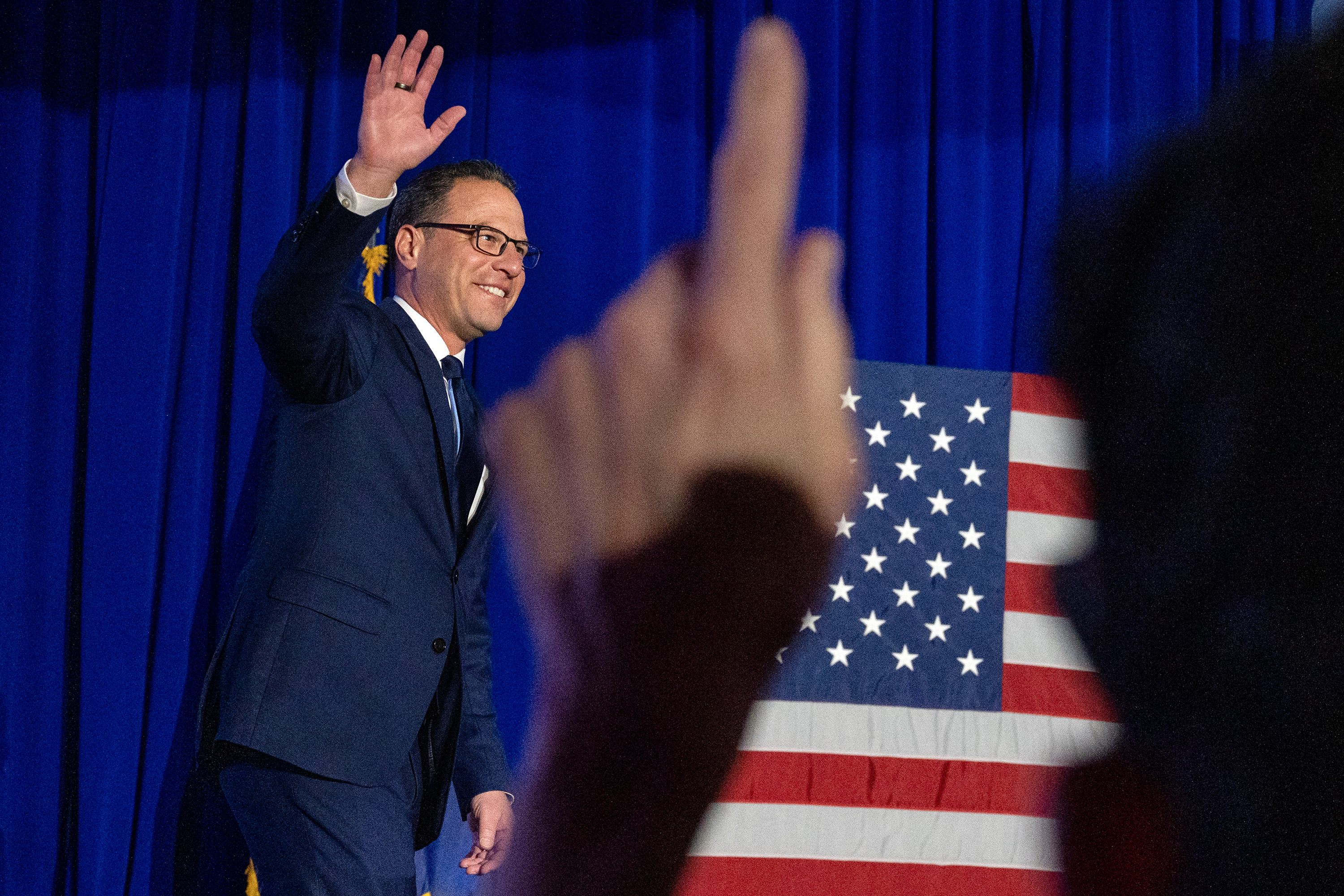
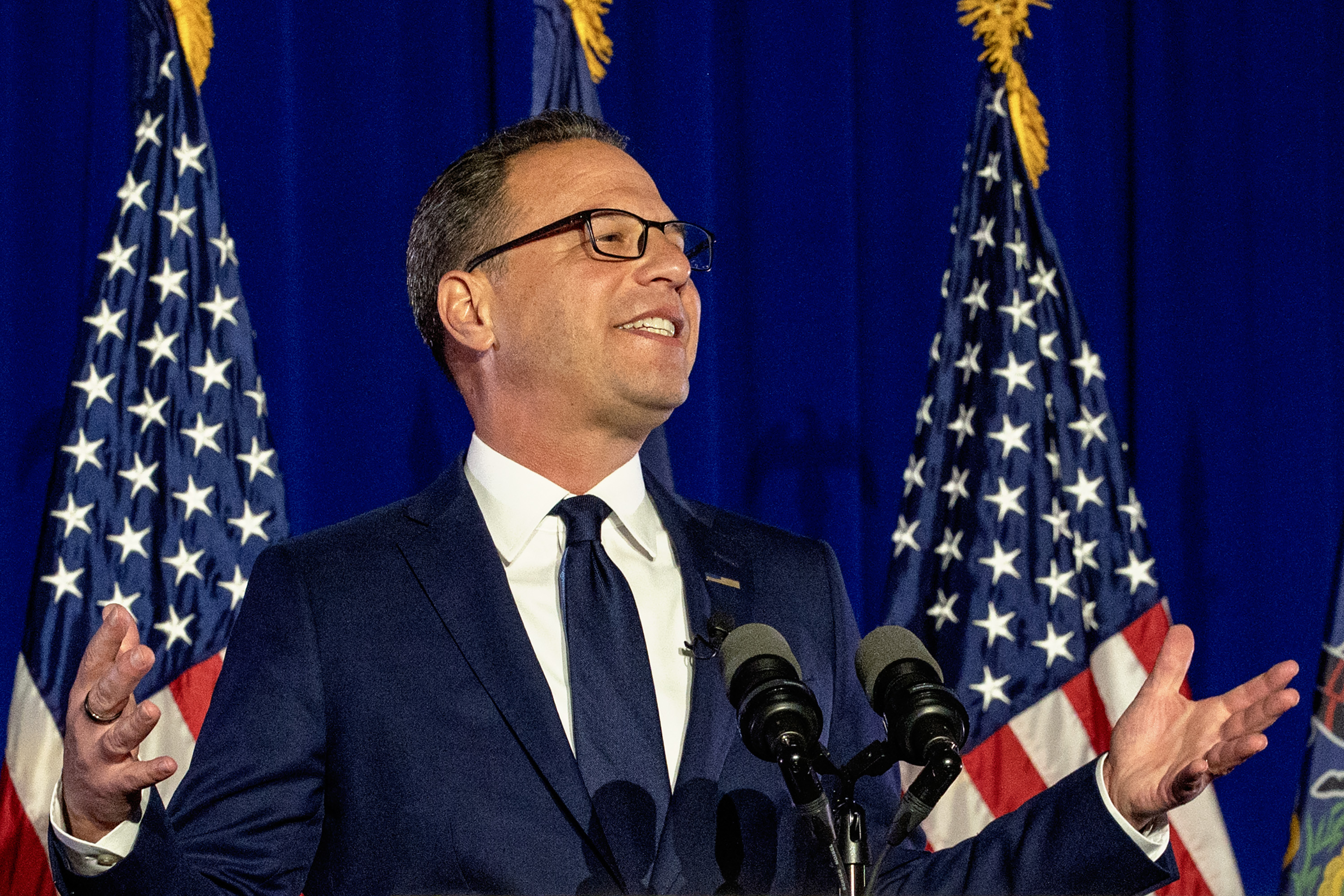
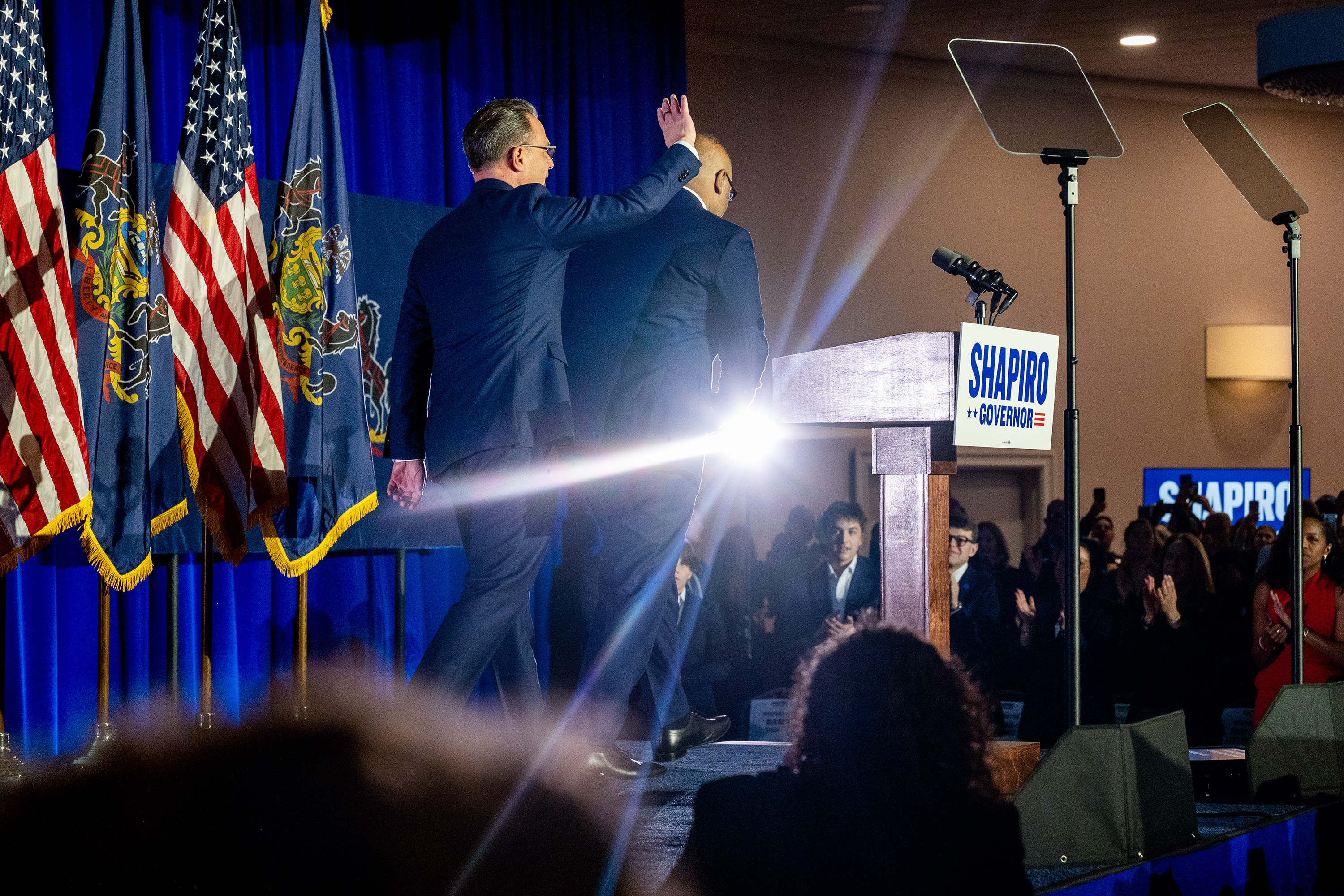
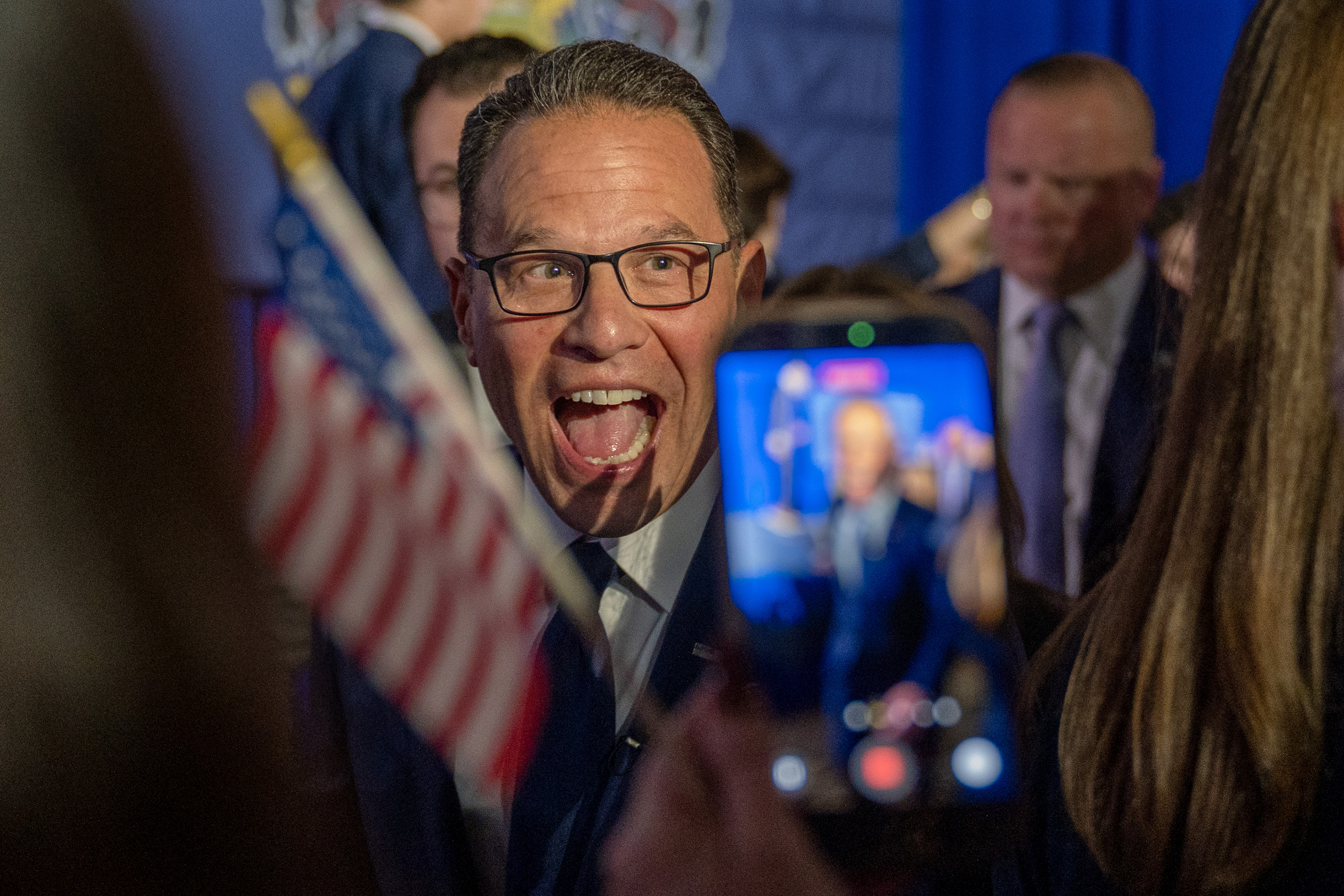
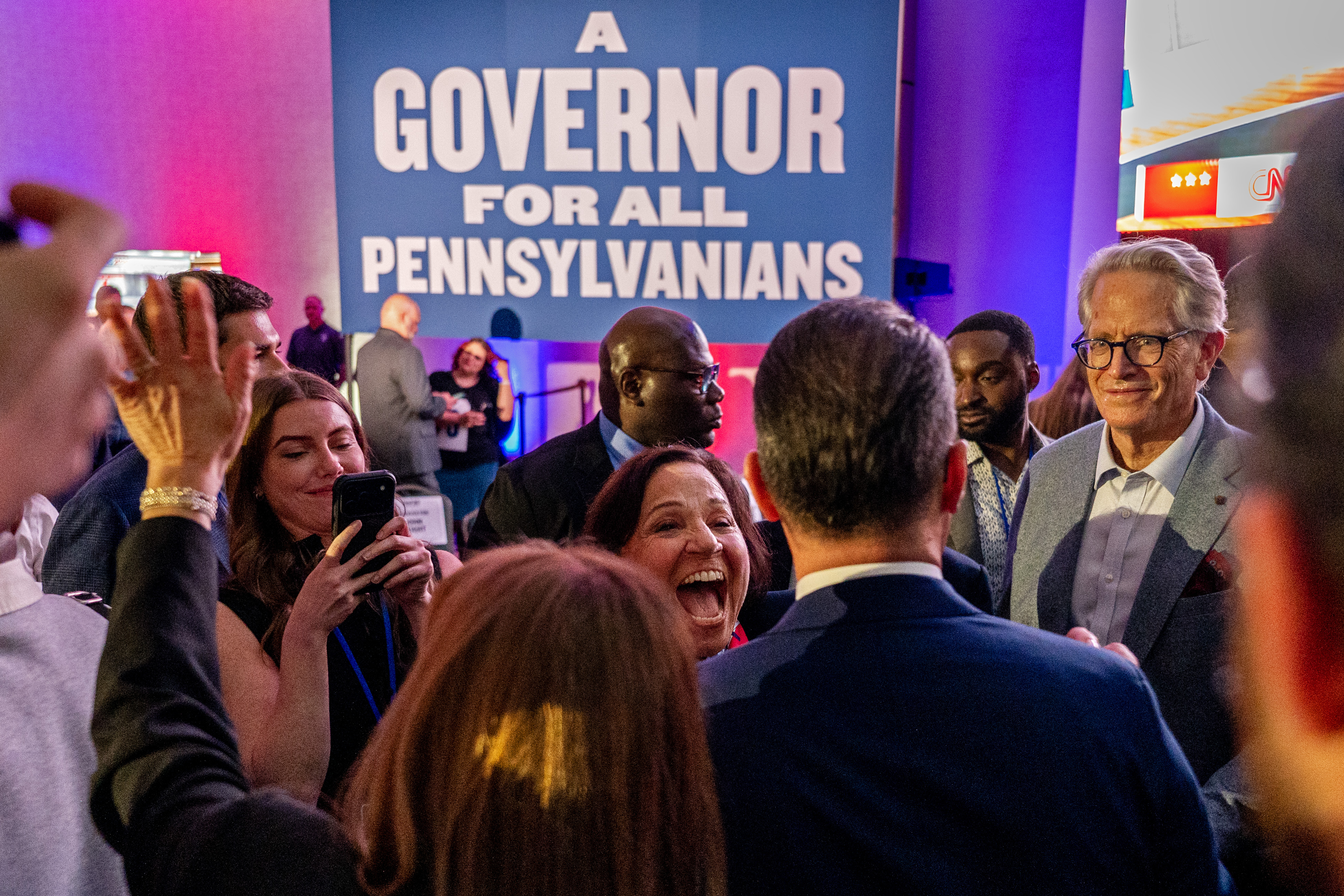
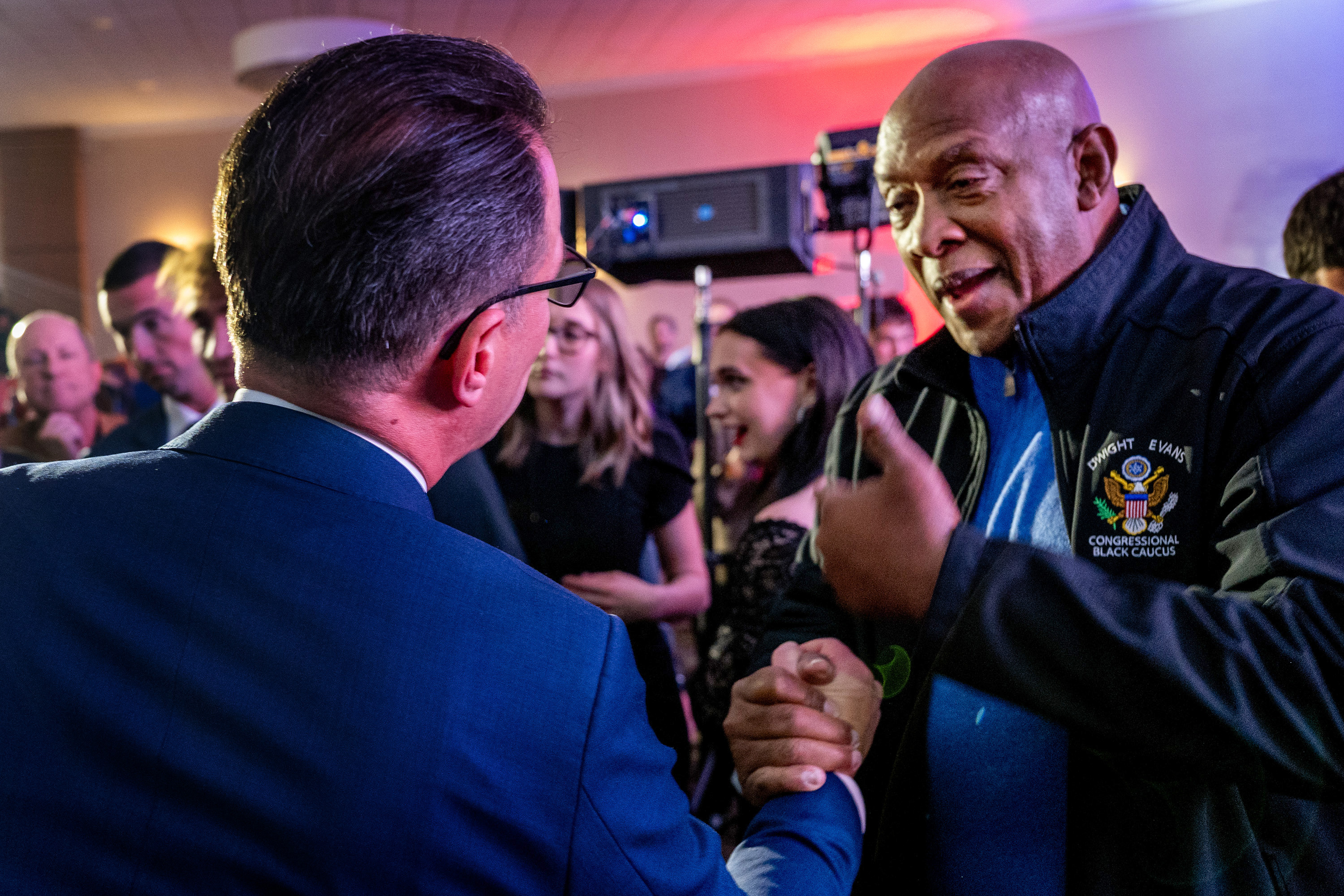
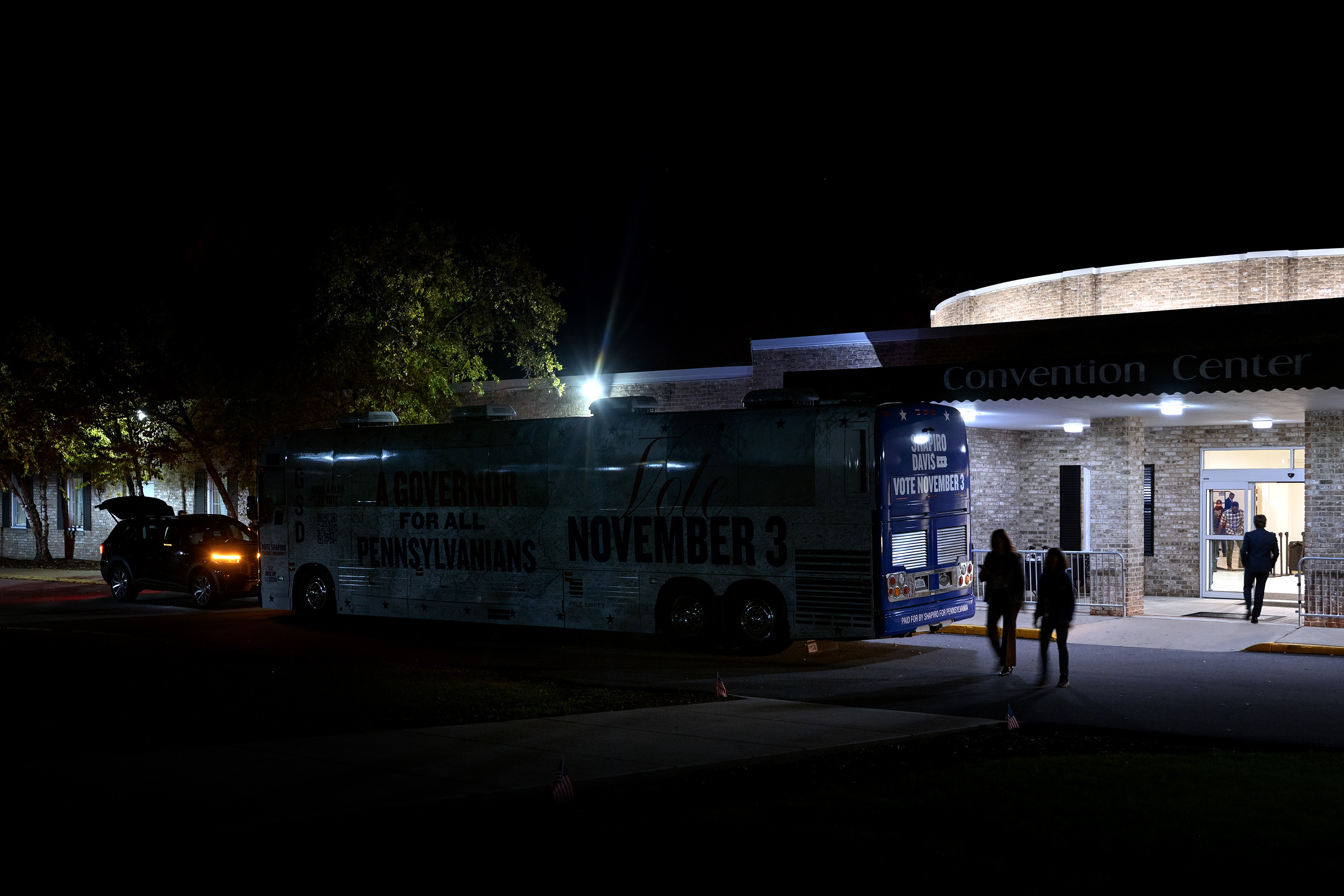
    “Thank you, from the bottom of my heart, for the trust and the confidence,” Shapiro said, addressing supporters in Camp Hill. “This is a good night for our commonwealth. It’s looking like it could be a pretty good night for our country, too.”

    (function () {window.addEventListener(‘message’, function (e) { var message = e.data; var els = document.querySelectorAll(‘iframe[src*=”‘ + message.id + ‘”]’); els.forEach(function(el) { el.style.height = message.height + ‘px’; }); }, false); })();

    Garrity, 62, meanwhile, struggled to persuade GOP donors to contribute to her campaign against the popular incumbent, despite receiving the state Republican Party’s endorsement unprecedentedly early in September 2025 and an endorsement from Trump in January.

    A poll conducted by The Inquirer, New York Times, and Siena University found a quarter of GOP voters in the final weeks of the campaign still did not know enough about Garrity or her platform to form an opinion of her. For months, she was unable to purchase TV ads, while Shapiro was spending millions defining her as data centers’ “No. 1 fan.” An eleventh-hour push by skill games industry backers allowed Garrity to gain some advertising momentum in the final days of the campaign, but it was not enough to change Tuesday’s result.

    In an election night speech in Tunkhannock, Garrity congratulated Shapiro, adding that “his success is our success.”

    “It is my hope that the campaign we’ve run, the issues we’ve addressed, and the solutions we’ve presented are a reminder to them that Pennsylvania just doesn’t deserve but needs a full-time chief executive,” Garrity said.

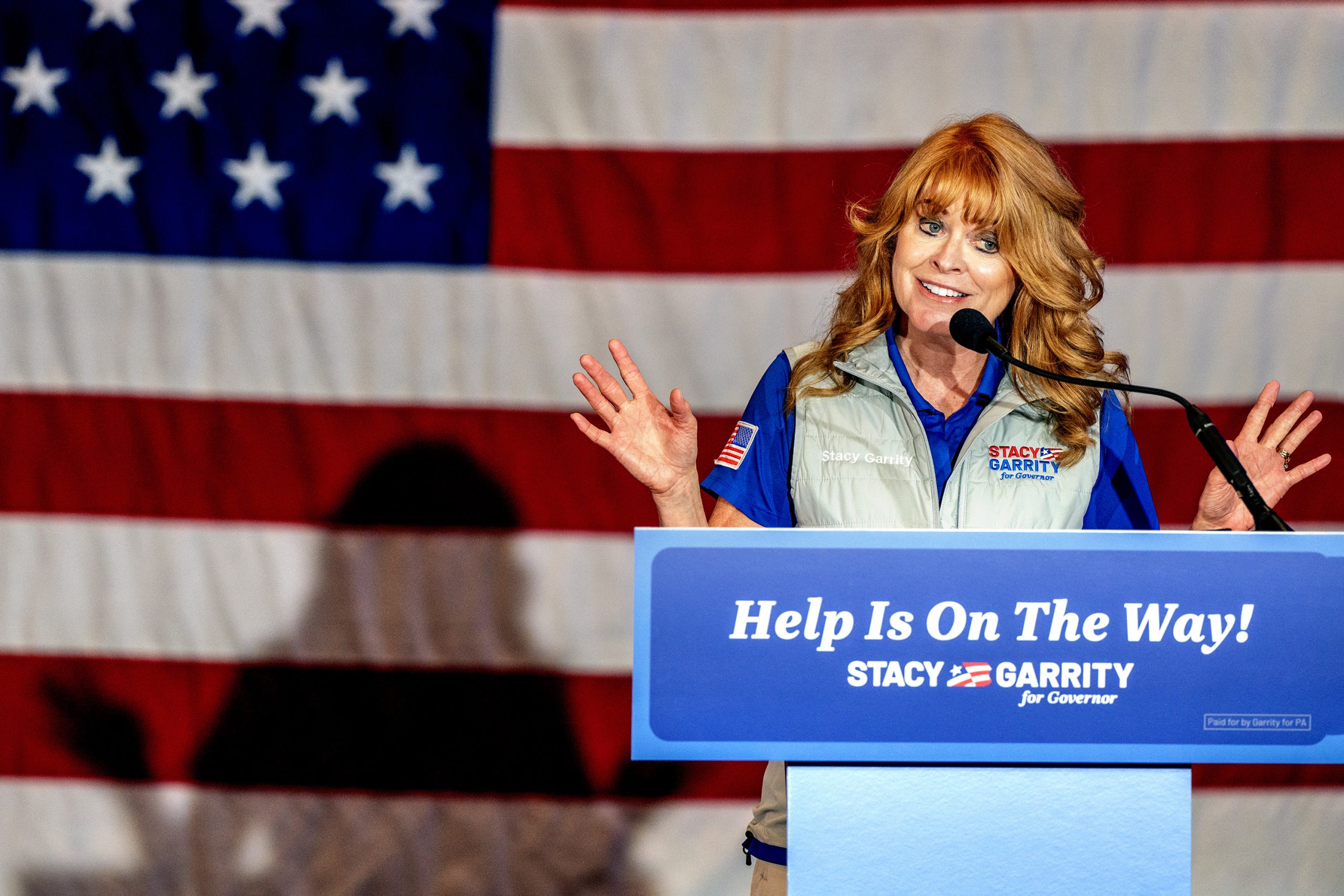
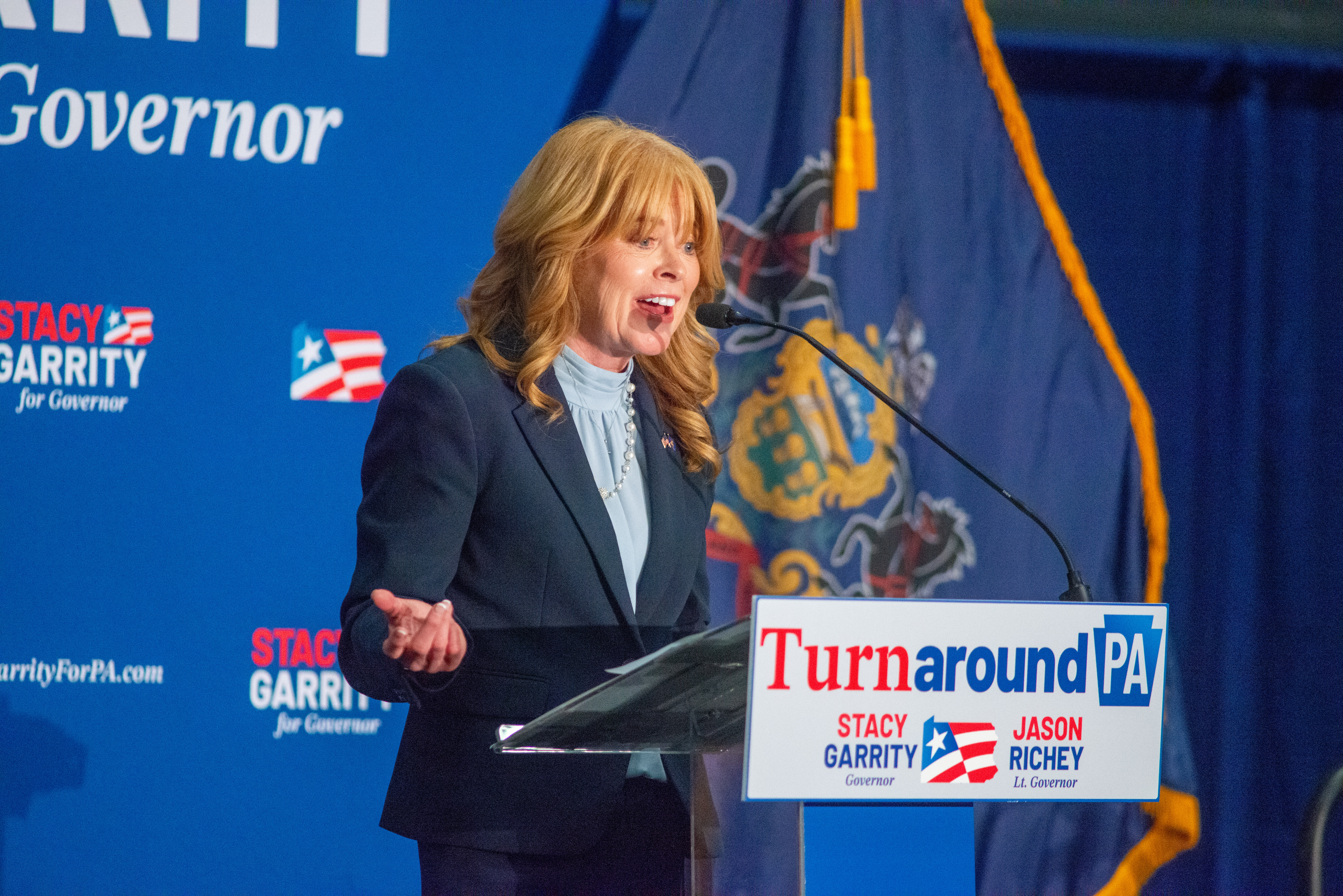
    Stacy Garrity, Republican candidate for Pennsylvania governor, makes remarks at her final rally before Election Day Monday, Nov. 2, 2026 at Newtown Athletic Club in Newtown, Pa.William Thomas Cain / For The Inquirer

    Beyond the governor’s race

    For months, public opinion polls showed Shapiro holding a double-digit lead over Garrity with strong backing from his Democratic base, solid favorability from independent voters, and even a notable sliver of support from voters who backed Trump two years ago. He also maintained record-high job approval ratings among modern Pennsylvania governors at the same time Trump’s approval ratings hit new lows.

    Shapiro’s strong polling lead allowed him to focus his attention on rebuilding and securing his grip on the Pennsylvania Democratic Party, coordinating across state and congressional campaigns for a unified strategy in an election year that was already likely to benefit Democrats as the party out of power in Washington.

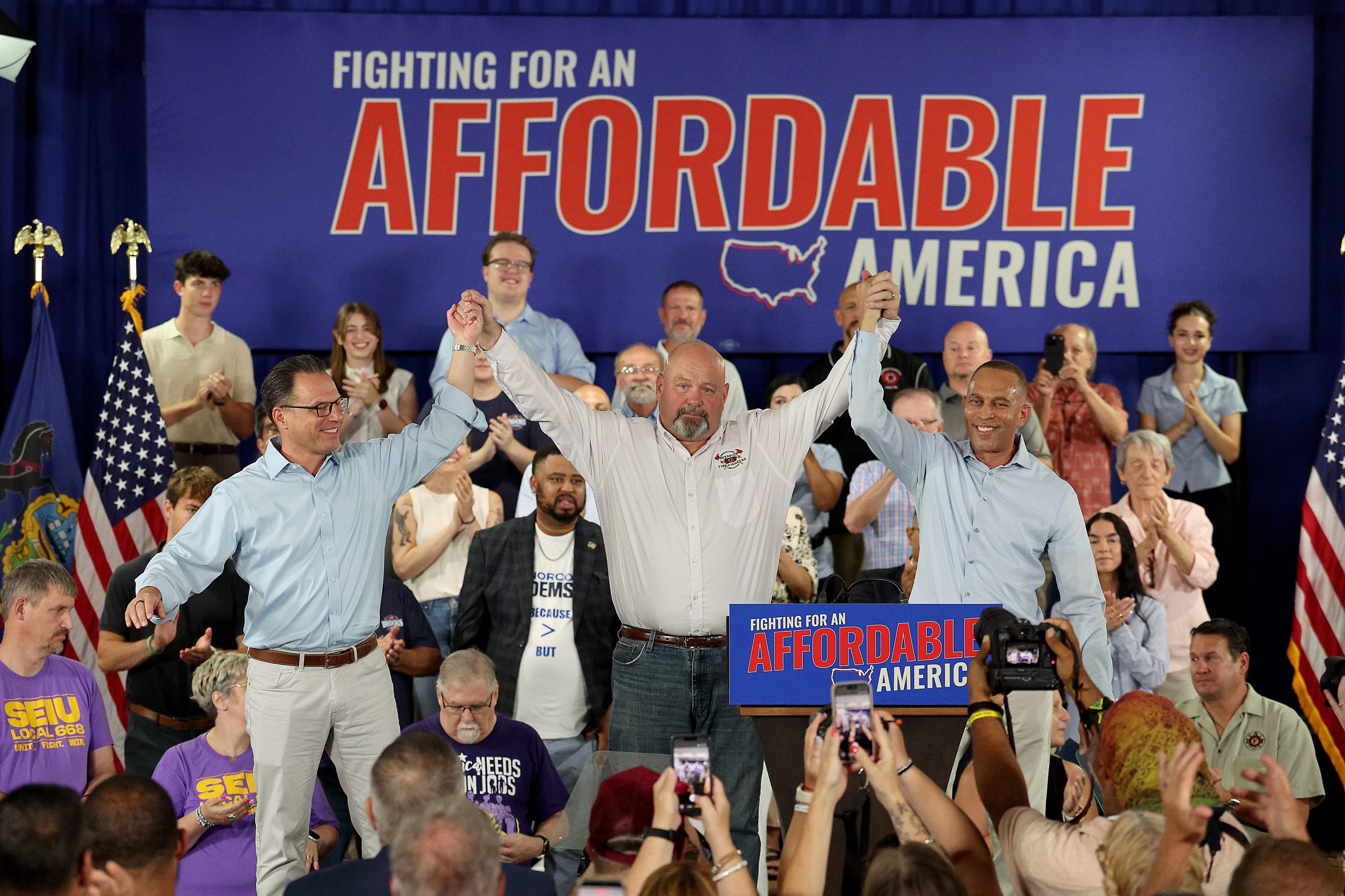
    Governor Josh Shapiro (left) and Minority Leader Hakeem Jeffries (right) pose after rally for Congressional candidate Bob Brooks (center) at the United Steelworkers Union Hall in Bethlehem, Pa. on Sunday, July 26, 2026.David Maialetti / Staff Photographer

    Shapiro over the last year has more clearly signaled his intentions to enter the 2028 presidential race. In his second four-year term as Pennsylvania governor, he may need to navigate a delicate balancing act in his job leading the nation’s fifth-most-populous state while campaigning nationally. Pennsylvania voters are split over whether they want to see him run for the nation’s highest office, an Inquirer/New York Times/Siena poll found. (He would not have to resign to campaign for president, but would be required to resign if he was elected.)

    Shapiro has been an elected official for two decades, previously serving as Pennsylvania’s attorney general, a Montgomery County commissioner, and a state representative. In 2024, he was on the short list to become Vice President Kamala Harris’ running mate, boosting his name recognition on the national stage. Since then, he has continued to elevate his profile and lay the groundwork for a White House run, including publishing a memoir, sitting for national network TV interviews, and creating a federal political action committee that he can use to fundraise nationally and more easily fund a presidential bid.

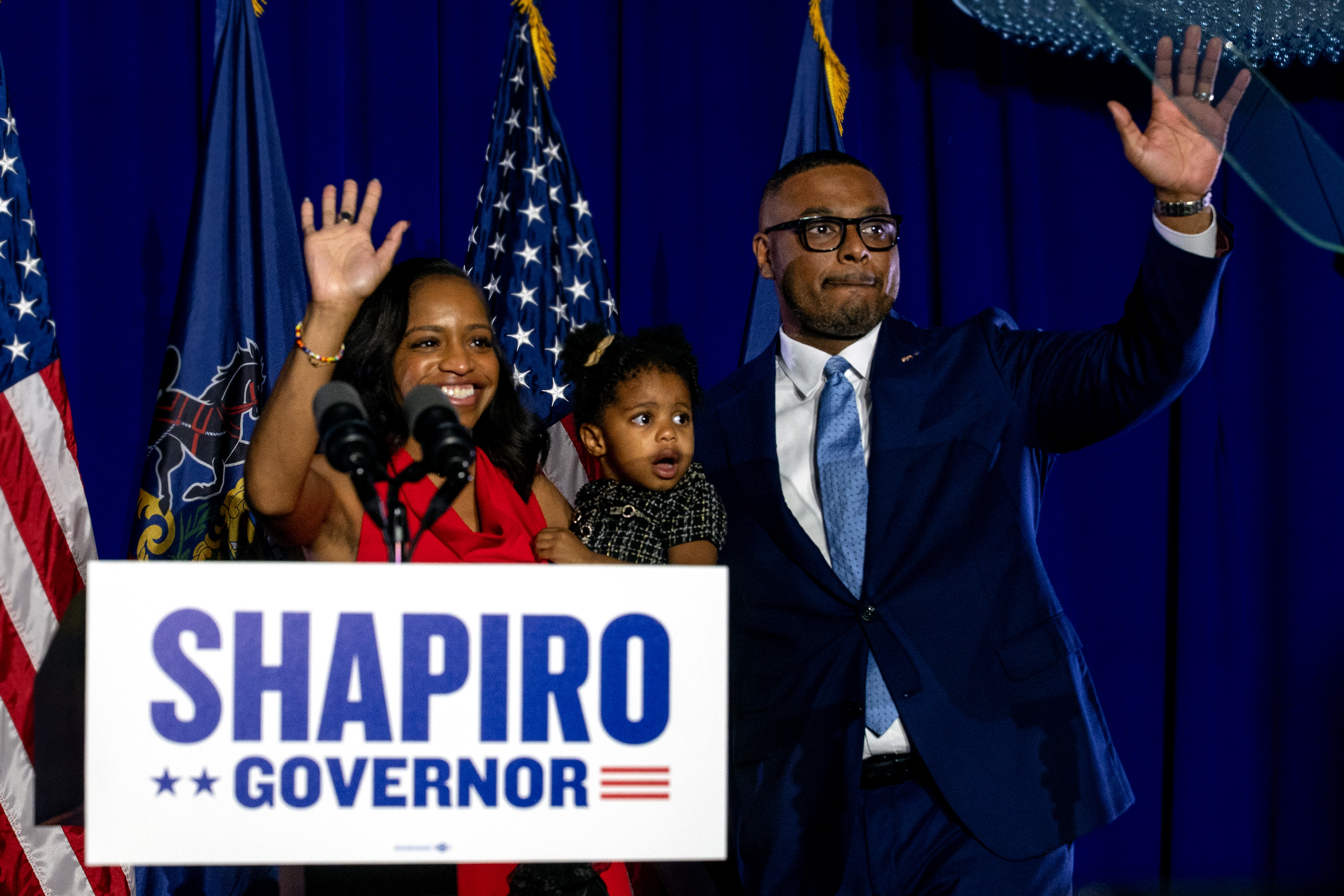
    Lt. Gov. Austin Davis is joined by his wife Blayre Holmes Davis and daughter Harper at the Shapiro-Davis Election Night party in Camp Hill, Tuesday Nov. 3, 2026.Tom Gralish / Staff Photographer

    Shapiro on Tuesday ran alongside Lt. Gov. Austin Davis, a former Democratic state lawmaker from outside Pittsburgh, and the first Black person ever elected to Pennsylvania’s executive branch. Davis, 37, will return to his position as the presiding officer of the state Senate — a role that could take on new importance, depending on how far Shapiro makes it in a presidential campaign.

    (function () {window.addEventListener(‘message’, function (e) { var message = e.data; var els = document.querySelectorAll(‘iframe[src*=”‘ + message.id + ‘”]’); els.forEach(function(el) { el.style.height = message.height + ‘px’; }); }, false); })();

    A high-stakes bid

    Shapiro wagered his electoral success in the midterm election not on his own reelection, but on his ability to help Democrats flip four Pennsylvania congressional seats and secure the U.S. House, which they did.

    He pitched himself and other Democrats on the ballot as a backstop to Trump’s “chaos, cruelty, and corruption” — an appeal that broke through to multiple voters Tuesday. Some said they want to see him run for higher office soon.

    In East Bradford Township, Doug Swartz said he cast a vote for “future President Shapiro.”

    Swartz, 66, said he has been impressed with the governor’s political career, starting when he was a state representative.

    “I think he’s the kind of guy who can be a consensus builder, and shown that he can reach across the aisle and play well with everyone,” Swartz said. “He’s got a great record on taxes, and, obviously the cost of living is out of his control.”

    (function(){function e(){window.addEventListener(`message`,function(e){if(e.data[`datawrapper-height`]!==void 0){var t=document.querySelectorAll(`iframe`);for(var n in e.data[`datawrapper-height`])for(var r=0,i;i=t[r];r++)if(i.contentWindow===e.source){var a=e.data[`datawrapper-height`][n]+`px`;i.style.height=a}}})}e()})();

    Shapiro also staked his political capital into flipping the state Senate to Democratic control, in efforts to bring a Democratic trifecta to Harrisburg. The governor has set an aspirational agenda to pass a number of top Democratic policy priorities that have been on the back burner for decades, including increasing the state’s minimum wage to $15 per hour, codifying abortion and LGBTQ+ rights, and allocating a new funding stream for mass transit. Clearing the way to pass those policies notches another win for Shapiro and strengthens his list of achievements headed into a 2028 Democratic primary.

    The Pennsylvania Senate Democratic Campaign Committee noted that while Democrats held a trifecta in 1993 after a member changed party registration, it had been more than 50 years since voters elected a Democratic state Senate.

    If Republicans had maintained control of the state Senate, Shapiro — who has long branded himself a bipartisan dealmaker — risked again leading a split legislature that had become known for its dysfunction and gridlock.

    Garrity, for her part, ran her campaign on a message that under Shapiro’s leadership, Pennsylvania is lagging other states in national rankings in its economic growth, education, and more. But that message hardly reached voters until the final days, when she received more than $6 million from skill games industry backers after she voiced her support for the industry during the race’s lone debate on Oct. 7.

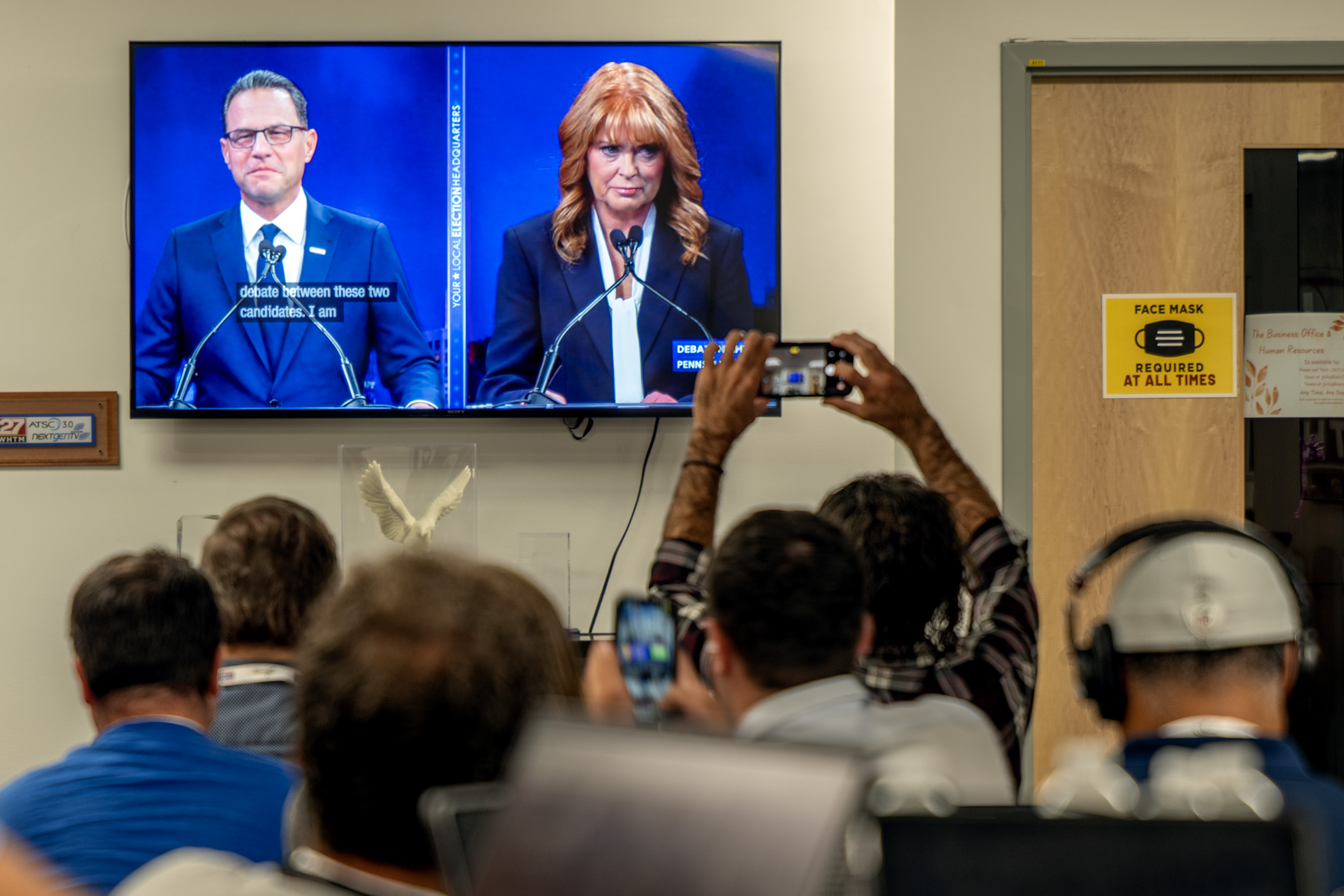
    Monitor at the WHTM-TV studios in Harrisburg Wednesday evening Oct. 7, 2026, during the lone debate between Gov. Josh Shapiro and Republican challenger Stacy Garrity.Tom Gralish / Staff Photographer

    Initially, Garrity was poised to be a more formidable candidate against Shapiro, after Republicans coalesced around her early in an effort to avoid suffering another double-digit defeat, as in Shapiro’s race in 2022 against far-right State Sen. Doug Mastriano (R., Franklin). Republicans at the time blamed Mastriano for downballot losses and vowed not to repeat their mistakes. (On Tuesday, Shapiro spoke from the same stage at the Penn Harris Hotel where Mastriano held his election night party in 2022, though the Republican took days to concede.)

    In the end, Garrity was unable to raise the millions of dollars necessary to rival Shapiro’s campaign hauls, and saw little national support as national Republicans focused elsewhere. Top Republican groups stayed out of the race, instead opting to invest in contests they saw as more winnable in a particularly challenging midterm year for the GOP.

    “In politics, you learn very quickly that not everyone follows through on their promises,” Garrity told the crowd gathered for her election night watch party.

    Caria Knight of Mount Airy changed her party affiliation from Democratic to Republican specifically because of Garrity. She was impressed by her military experience as a retired U.S. Army colonel, as well as her tenure as treasurer.

    Knight recognized that Garrity’s chance of winning the governorship was “slim” but said she was happy to support her anyway because of her values.

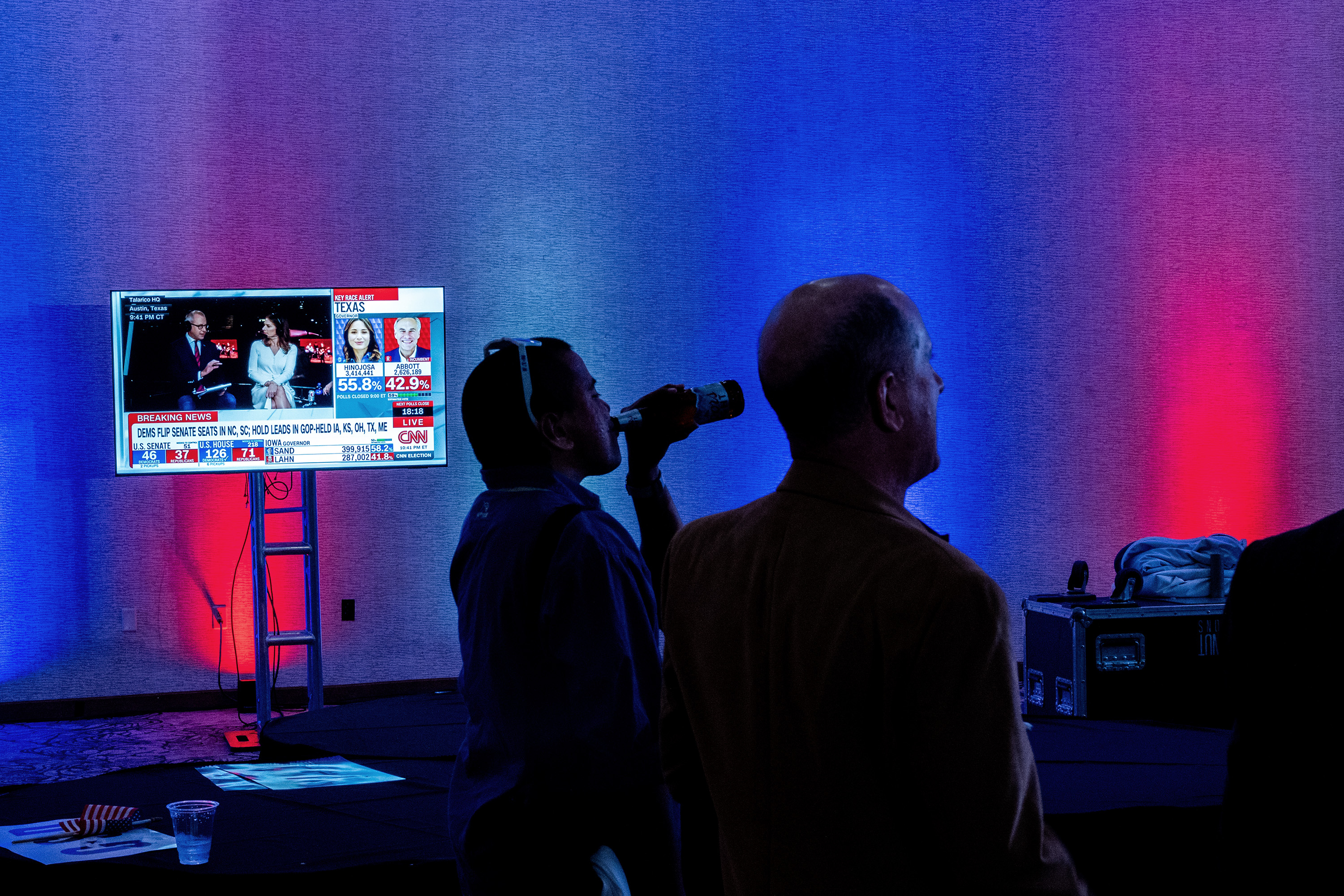
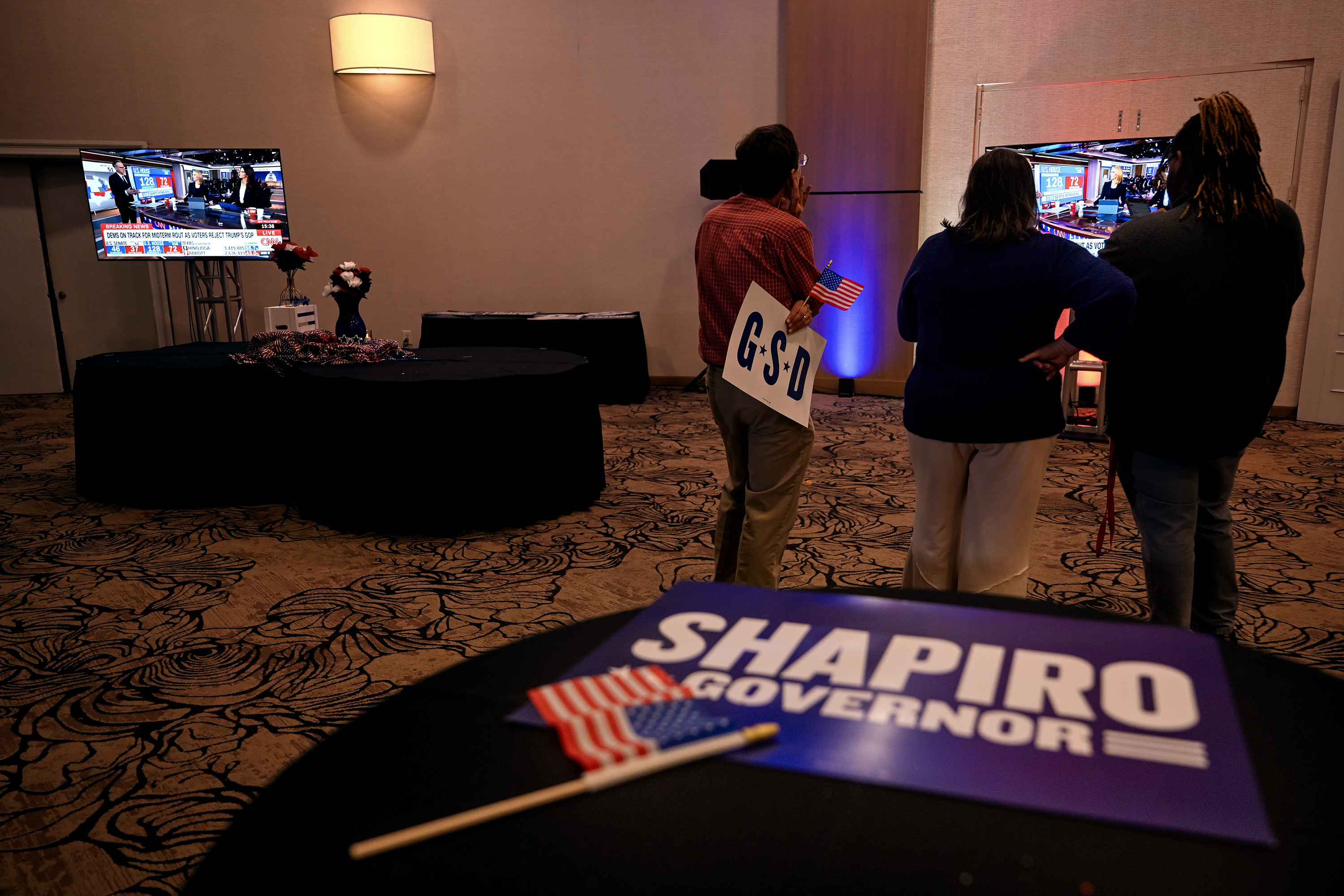
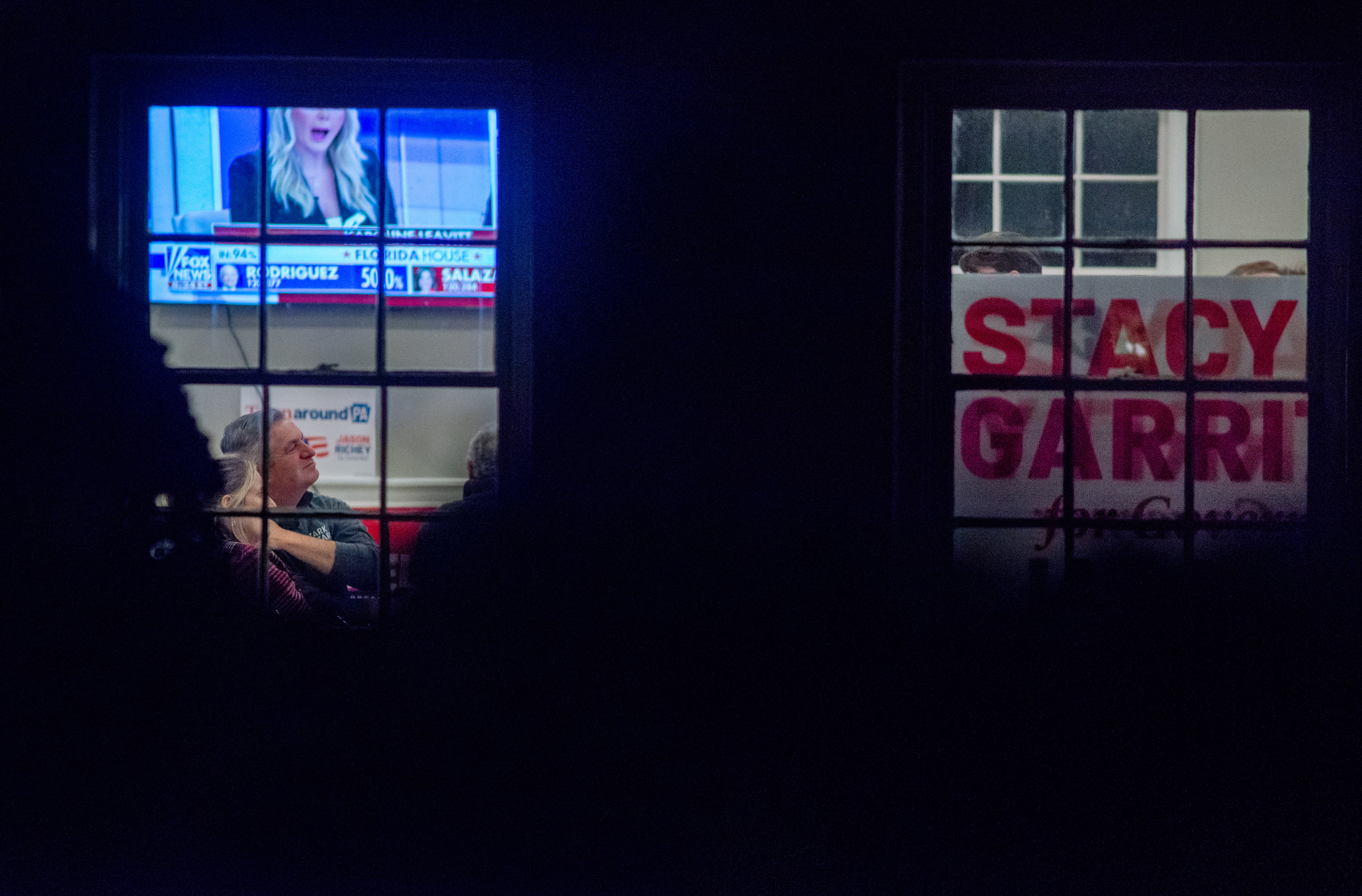
    People watch the evening election returns on television Tuesday, Nov. 3, 2026 at Bucks County Republican Committee Headquarters in Doylestown, Pennsylvania. The Bucks County Republican Committee Headquarters was closed to the public and media Tuesday night for a private event.William Thomas Cain / For The Inquirer

    Successes, challenges, and gridlock

    Shapiro’s first term as governor was marked by several attention-grabbing successes, including reopening a collapsed portion of I-95 in 12 days that bolstered his administration’s “get stuff done” motto and his focus on speeding up government approvals for licenses and permits. During his first term, lawmakers also developed a new state tax credit for working families, created a new funding system for public education, and delivered a pension increase for retired teachers, police officers, and firefighters. He also has touted implementing the “strictest guardrails in the nation” for data centers in August — a major shift in stance after previously supporting the increasingly unpopular developments.

    But his term was also marked by a number of challenges, particularly in navigating the split legislature. He struggled as a dealmaker after a 2023 misstep in state budget negotiations over a deal on a school voucher program led to tarnished relationships with top Senate Republicans.

    Some voters on Tuesday said they still had not forgotten his backtrack on school choice.

    “He ran last time on education and kids and having vouchers,” said Lisa Mallon, 62, a Republican committeewoman in Abington. “As soon as he got in office, he pulled back on it.”

    Around the same time in 2023, a longtime top aide, former State Rep. Mike Vereb (R., Montgomery), abruptly resigned after he was accused of sexual harassment by a female staffer in the governor’s office, resulting in the state paying the accuser a $295,000 settlement. His resignation came just before news of the allegations were reported by The Inquirer, and Shapiro has repeatedly said he had no knowledge of the investigation into Vereb.

    More recently, Shapiro has attempted to lead the state through its worst measles outbreak in more than three decades, which has seen the deaths of at least six Pennsylvania residents. The deaths led to a public clash between Shapiro and U.S. Health and Human Services Secretary Robert F. Kennedy Jr., an anti-vaccine activist, whose agencies have refused to classify three of the state’s six deaths as caused by measles.

    Shapiro also grappled with an increasingly dangerous job as a public figure, causing him to consider whether he should continue in elected office moving forward. He has been outspoken against political violence for years, but in April 2025, that violence came to his front door: A Harrisburg man firebombed the state-owned governor’s residence on the first night of Passover while Shapiro and his family slept inside.

    The man, Cody Balmer, whose family said he was having a mental health crisis, later told police he wanted to kill Shapiro because of his perceived support for the war in Gaza. (Shapiro has called for a two-state solution in the Mideast and has called for more U.S. aid to be sent to people living in Gaza.) Balmer later pleaded guilty to arson and attempted murder of Shapiro.

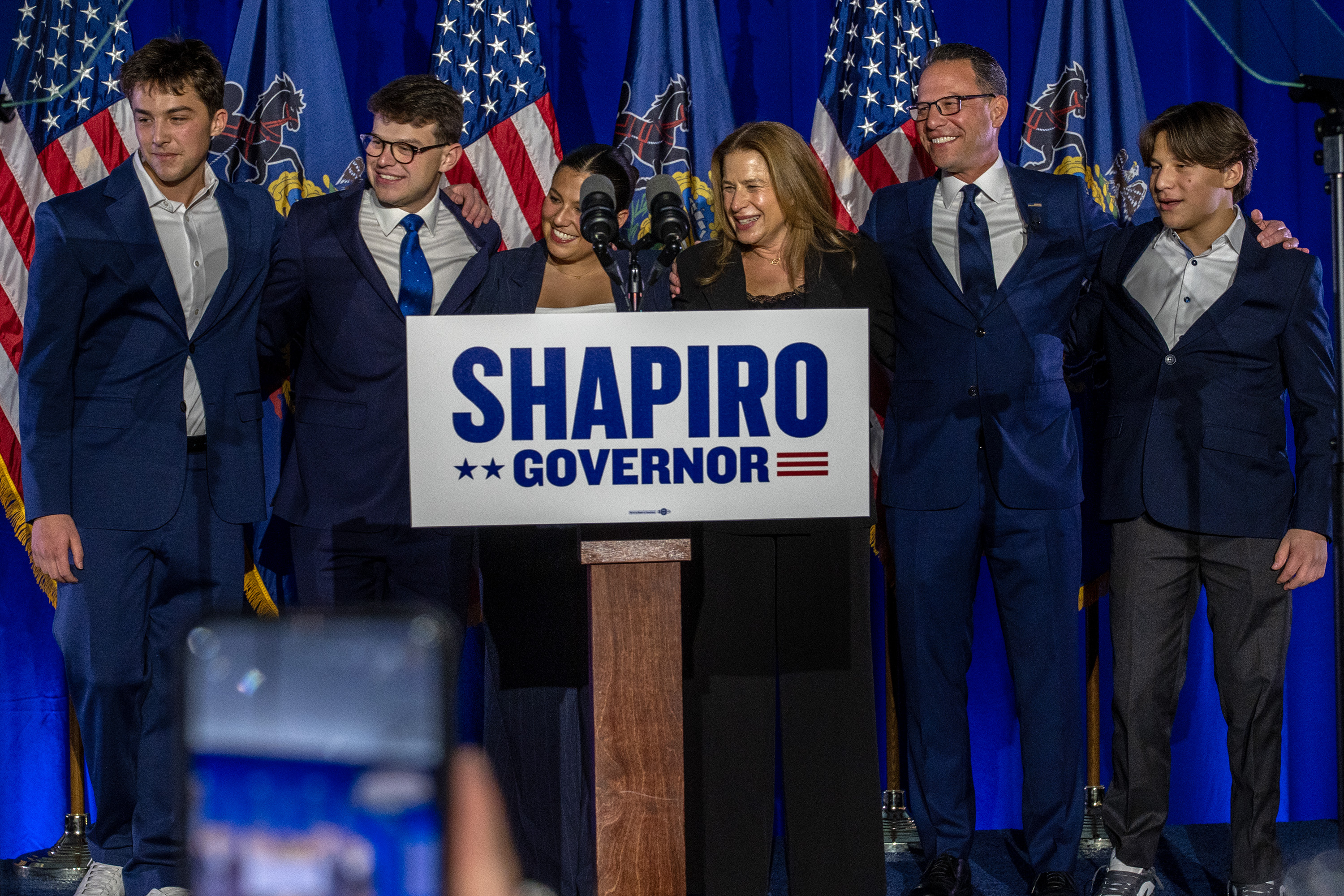
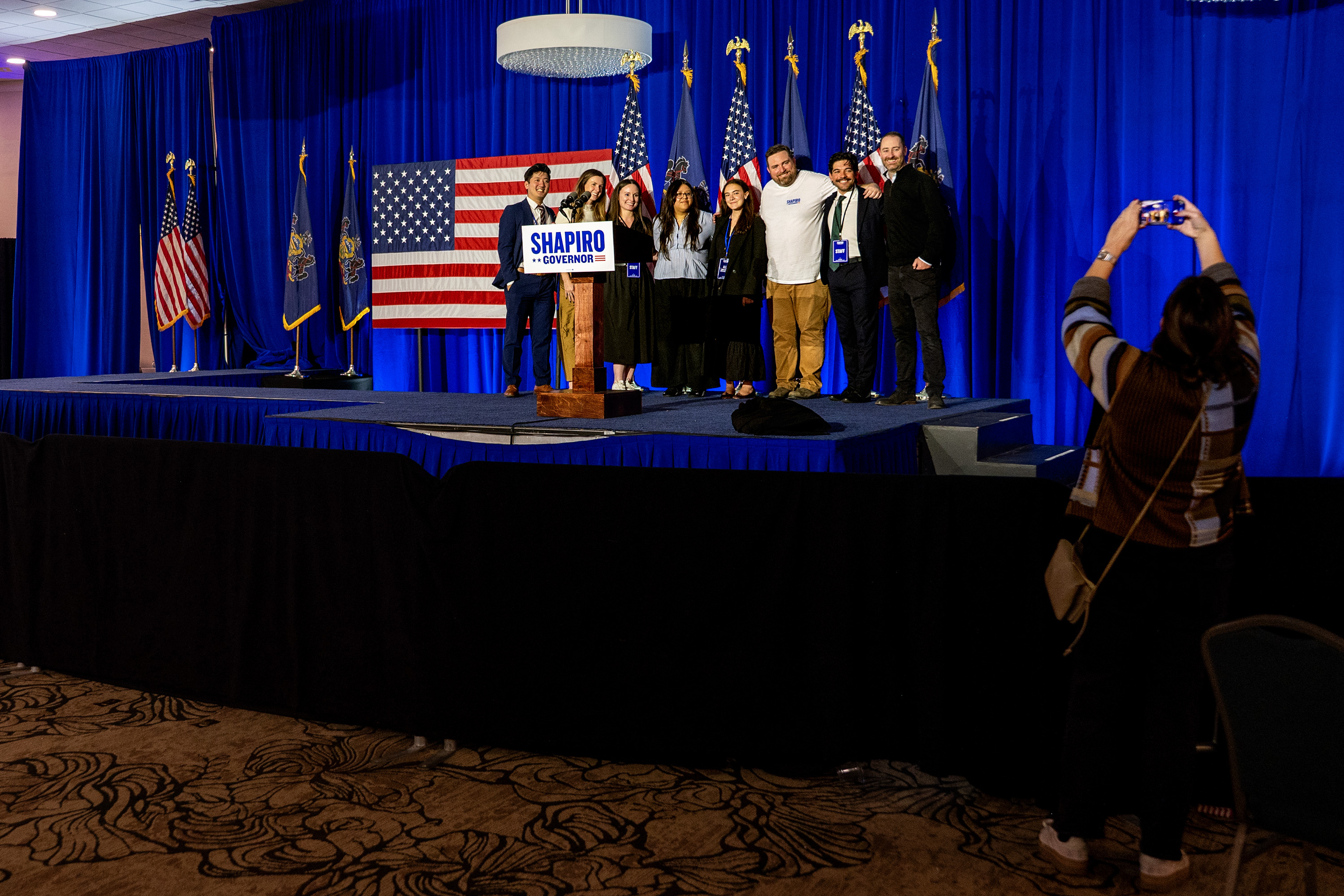
    Gov. Josh Shapiro is joined by his family on stage at his election night party in Camp Hill, Tuesday Nov. 3, 2026.Tom Gralish / Staff Photographer

    Shapiro on Tuesday recognized the sacrifices his wife, Lori, and their four children have made for his successful career in public service.

    “You have all been through so much,” Shapiro said. “It’s been hard. Frankly, sometimes it’s been terrifying.”

    Shapiro concluded his 20-minute remarks with a message to his supporters: ”I love this commonwealth, and I love you.” He walked off the stage to Tom Petty’s “I Won’t Back Down.”

    While Democrats celebrated successes nationally, Shapiro’s success was pretty simple for voters like Jay Zide.

    Zide, 61, of West Chester, said he believes Shapiro is a competent governor who “seems to work well with both sides,” and who would do a much better job in the White House than the current presidential administration.

    “Shapiro is well-spoken,” he added, “and he seems like a nice fella, for being a politician.”

    Staff writers Vinny Vella and Zoe Greenberg contributed to this article.

  • Josh Shapiro for governor of Pennsylvania | Endorsement

    Josh Shapiro for governor of Pennsylvania | Endorsement

    If the polls are accurate, Gov. Josh Shapiro, who was twice elected Pennsylvania’s attorney general, should cruise to his fourth statewide election on Nov. 3.

    In these divided political times, in one of the most evenly split states in the country, that says a lot about Shapiro’s ability to appeal to a broad swath of voters across the commonwealth.

    While the two political extremes on the right and left generate the most noise, Shapiro sits in the moderate middle. That rankles many on the far left and the right, but it is smart politics in Pennsylvania.

    While Shapiro is pragmatic, he is also tough and empathetic. He takes public service seriously but is also a regular guy from Abington who is passionate about Philly sports. He is welcome in boardrooms, Black churches, and even red counties.
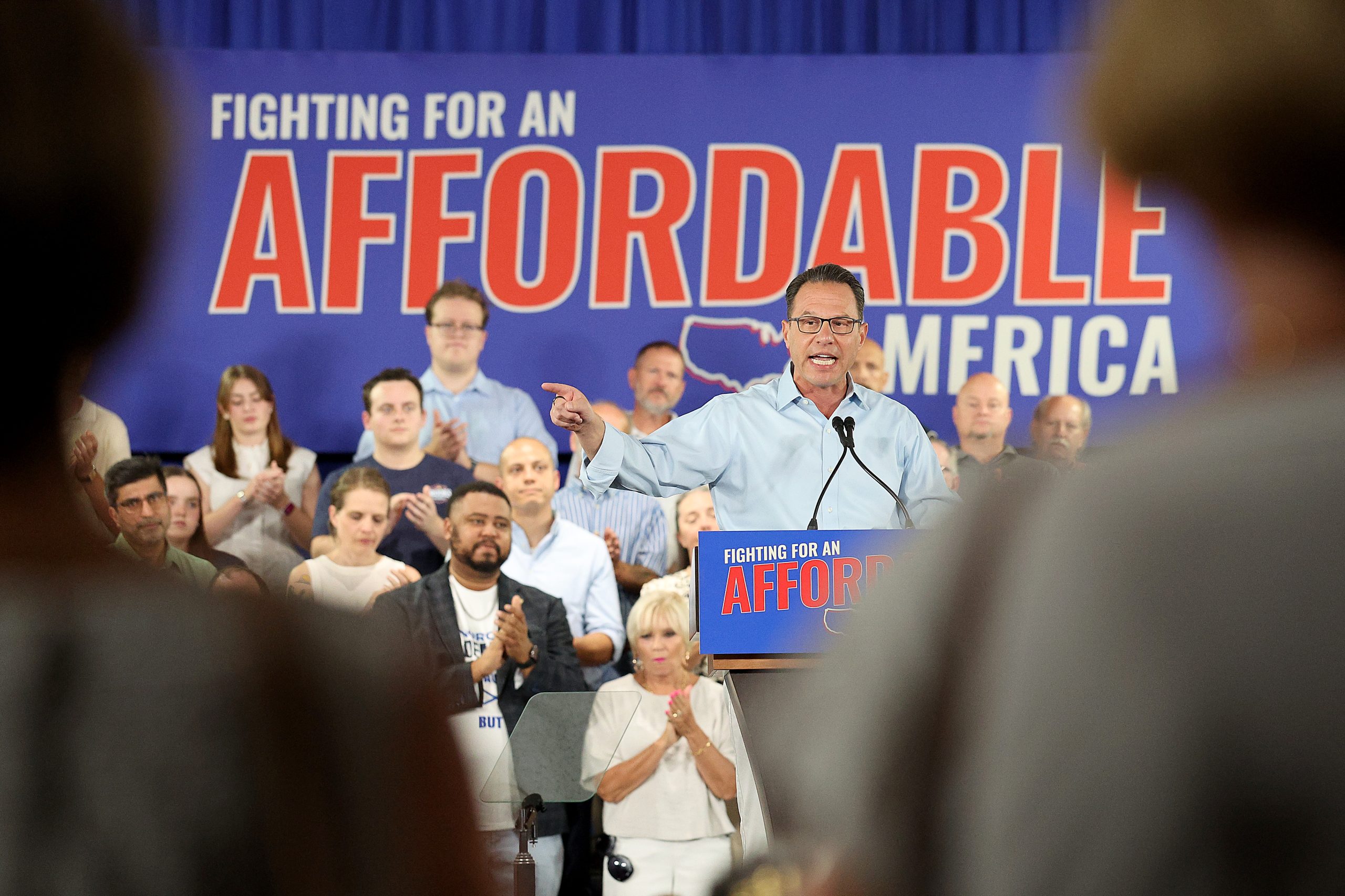
    Shapiro surrounds himself with competent people and prides himself on getting stuff done. His administration has been largely free of drama and major scandals — a stark difference from the chaos, corruption, and incompetence coming from the Trump administration.

    As state attorney general and governor, Shapiro repeatedly stood up to Donald Trump. He went 43-0 defending flimsy lawsuits Trump filed to overturn the results of the 2020 presidential election. Shapiro also brought some accountability to opioid companies, racist mortgage lenders, and decades of sexual abuse within the Roman Catholic Church.

    As governor, Shapiro has sued the Trump administration two dozen times, opposing efforts to slash federal funding for Pennsylvania and roll back environmental regulations. Shapiro — and Al Schmidt, the Republican he appointed to run state elections — are ready to defend against Trump’s efforts to subvert the 2026 election.

    As democracy teeters, Shapiro’s legal bulwark against Trump is reason enough to keep him in the governor’s mansion. But his commonsense policies, willingness to stand up for what is right, and ability to work across the aisle cements the case for why The Inquirer Editorial Board endorses Josh Shapiro for a second term as governor.

    This was not a difficult decision, because his opponent, Stacy Garrity, the Republican state treasurer from Bradford County, has a slim record. Even worse, she supports Trump’s disastrous MAGA agenda as well as data centers and sleazy skill games — three big strikes.

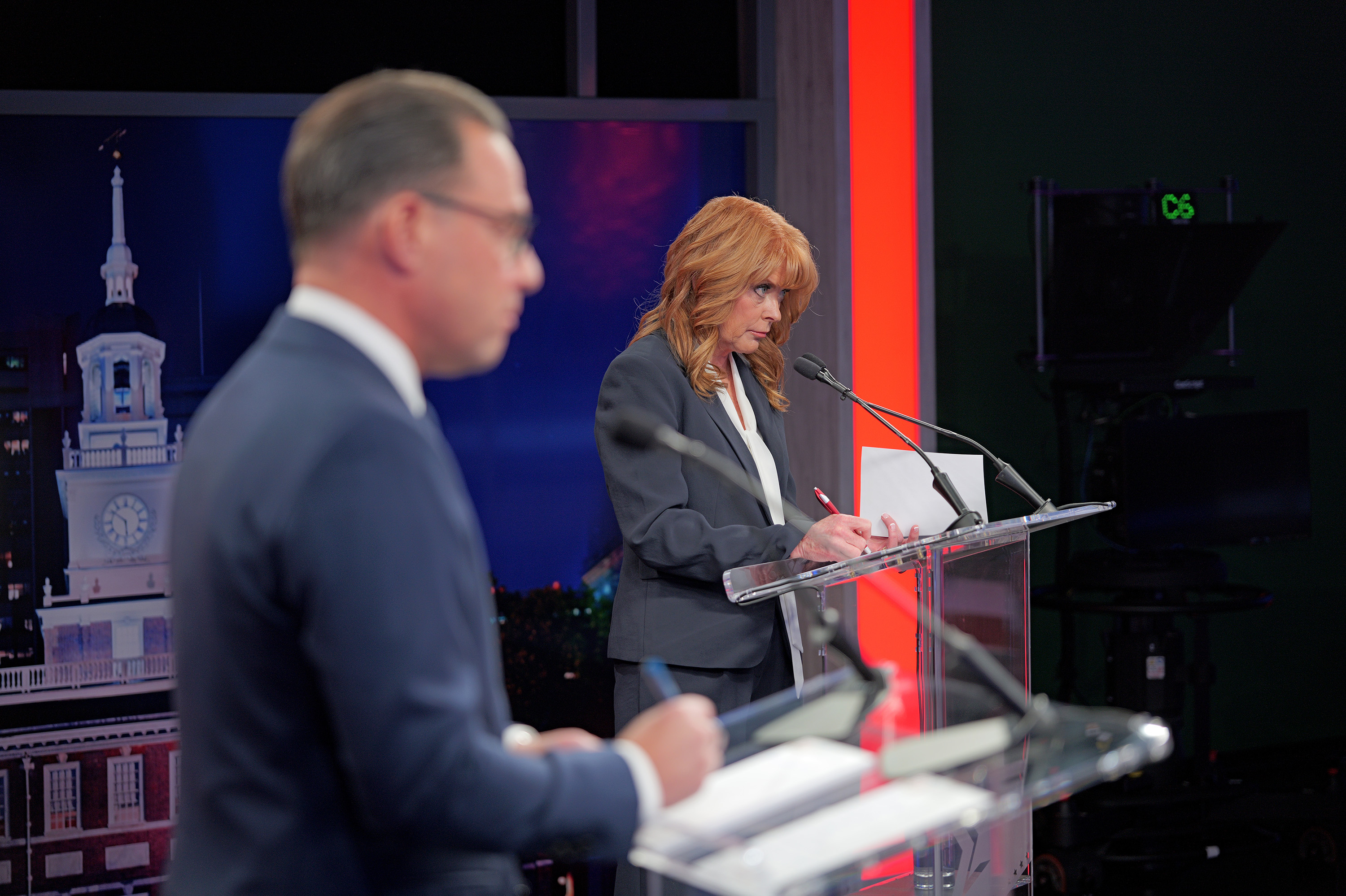
    Gov. Josh Shapiro and Republican challenger Stacy Garrity at the WHTM-TV studios in Harrisburg, Oct. 7, during their lone debate ahead of next month’s gubernatorial election.Kaylee Lindenmuth / WHTM

    Garrity’s main accomplishment as treasurer has been returning unclaimed property to Pennsylvanians and hundreds of unclaimed military decorations to veterans. That constitutes a practical, down-to-earth baseline for her role to be sure, but Garrity’s resumé lacks the kind of expansive, broad-based signature achievement to suggest that she would bring a truly transformational approach to governing. Her biggest donor is Robert Asher, a longtime GOP power broker from Montgomery County who was convicted of bribery in 1986.

    Garrity’s best argument may be that she is not Doug Mastriano, the GOP’s 2022 gubernatorial nominee, who dressed up in Confederate garb and helped plan Trump’s Jan. 6, 2021, coup attempt.

    The Editorial Board invited Garrity to advocate for her candidacy, but she did not respond to multiple requests to meet. Shapiro, on the other hand, has a compelling case to make, which explains his commanding lead in the polls.

    Shapiro’s most high-profile accomplishment was rebuilding the stretch of I-95 that collapsed in Northeast Philadelphia after a tanker truck fire in 2023. The highway closure along the main artery connecting the Northeast trucking corridor was expected to take many months to fix.

    But Shapiro mobilized federal, state, and local officials, used accelerated emergency contracting rules, and hired a Philadelphia-based construction firm that worked round the clock to reopen the highway in 12 days.

    It was a case study in how government can do good under the right leadership. It’s also a stark contrast to Trump’s multiple, ongoing fiascos, including the botched reflecting pool repairs, the costly White House ballroom, and the sabotaging of the John F. Kennedy Center for the Performing Arts.

    Under Shapiro, the commonwealth has lowered taxes for some, increased public safety, and pushed policies to make housing more affordable. Unlike Trump’s relentless efforts to restrict voting, the governor expanded voter registration by making it automatic for eligible voters when they renew or receive a driver’s license or ID at driver and photo license centers.

    Gov. Josh Shapiro visits Vare-Washington Elementary School in July.

    Shapiro has also increased funding for public education by hundreds of millions of dollars. Pennsylvania remains far below adequate funding levels, even after a state court found in 2023 that the state’s funding system was unconstitutional.

    Shapiro’s efforts to close the education funding gap faced opposition from the Republican-controlled state Senate. The recalcitrant GOP has stymied other efforts to adequately fund mass transit, increase the minimum wage, and tax skill games at the same rate as slots.

    But it is not due to a lack of effort by Shapiro. The divided legislature makes Harrisburg largely ungovernable. That is why Shapiro is working to help Democrats flip at least two seats to win control of the state Senate and maintain their thin majority in the state House.

    The last time Democrats controlled all three chambers of government was in 1993. As a result of the chronic stalemate, a lot hasn’t happened in Harrisburg beyond keeping lobbyists employed and lawmakers in power. Just getting the budget passed is an annual ordeal.

    If Shapiro’s coattails can power Democrats to control of the House and Senate, the first bill he plans to sign will be to increase the minimum wage to $15 an hour. Other major initiatives on Shapiro’s to-do list include increasing mass transit funding and codifying abortion and LGBTQ rights.

    “I’ve got a lot more to do, which is why I’m running again,” Shapiro told the Editorial Board.

    Of course, the governor is far from perfect. He was for data centers before he was against them. (But he listened to voters and adjusted.) He supports legalizing and taxing skill games — which are more predatory than slot machines — rather than banning them as Kentucky did.

    Gov. Josh Shapiro announces a $20 billion investment by Amazon in Pennsylvania data centers in Salem Township and Falls Township.

    Shapiro has been largely mum on efforts to reform or better yet repeal Act 12, which has allowed for-profit companies to buy public water and sewer utilities, and jack up rates for residents. (He did force Peco to withdraw a double-digit rate-hike request.)

    Shapiro helped attract thousands of new jobs to Pennsylvania, often dangling financial incentives like the ones used to lure the Burlington Stores headquarters and a Chobani facility to Philadelphia. Another pricey deal that included more than $600 million in state and federal money combined is expected to add 6,000 jobs at the Philadelphia Port. (Attracting jobs is nice, though there is an argument to be made as to whether the state should use tax dollars to pick winners.)

    It is widely assumed Shapiro will run for president in 2028. That campaign will begin early next year, raising concern if Shapiro enters the race that he may be distracted from his day job while campaigning in South Carolina, Iowa, New Hampshire, and beyond.

    Since the road to the White House leads through Pennsylvania, Shapiro may be uniquely positioned to clean up Trump’s mess. But a White House win means Shapiro would not complete his gubernatorial term. Though two years of Shapiro is certainly better than four of Garrity.

    When asked about running for president, Shapiro told the Editorial Board, “The only thing I’m running for is governor.” (Check back in a few months and see how well that quote ages.)

    During recent campaign events with students at the University of Pennsylvania and at an event at a Black church in Abington, Shapiro looked beyond his own reelection and painted a picture of what could happen if Democrats take control of the state Senate and the House in Washington.

    “You have the power to make a difference,” Shapiro told the Penn students.

    At Salem Baptist Church, Shapiro told the crowd of mostly Black women their votes could give hourly workers a raise, increase funding for mass transit, and protect reproductive rights.

    Shapiro’s reelection could bring positive change across Pennsylvania — and maybe propel the governor to new heights.

  • 1 in 4 Pa. GOP voters doesn’t know who Stacy Garrity is as Josh Shapiro widens lead in governor’s race

    One in four likely Pennsylvania GOP voters has not heard of the state’s Republican candidate for governor, as Gov. Josh Shapiro continues to pull ahead with less than six weeks remaining until Election Day, according to a new poll.

    Shapiro, a Democrat seeking reelection and a potential 2028 presidential candidate, is ahead of his Republican challenger, State Treasurer Stacy Garrity, by 21 percentage points among likely Pennsylvania voters, according to the poll, conducted by The Inquirer, the New York Times, and Siena University.

    According to the poll, Shapiro’s lead has now expanded beyond the advantage he held the month before the 2022 election against State Sen. Doug Mastriano (R., Franklin). Shapiro went on to beat Mastriano in that election by nearly 15 percentage points, or 800,000 votes — a drubbing that the GOP vowed not to repeat.

    (function(){function e(){window.addEventListener(`message`,function(e){if(e.data[`datawrapper-height`]!==void 0){var t=document.querySelectorAll(`iframe`);for(var n in e.data[`datawrapper-height`])for(var r=0,i;i=t[r];r++)if(i.contentWindow===e.source){var a=e.data[`datawrapper-height`][n]+`px`;i.style.height=a}}})}e()})();

    Pennsylvania Republicans endorsed Garrity in September 2025 — an unprecedented early nod to unify behind her in an effort to put up a stronger fight against Shapiro after the party largely withheld its support for far-right Mastriano. Garrity has won statewide twice and received the most votes in Pennsylvania history for a statewide office, a record previously held by Shapiro. In January, President Donald Trump endorsed Garrity, calling her “an America First Patriot.”

    But building on that early enthusiasm has proven to be a challenge for Garrity, who for months has struggled to raise money, compete with Shapiro’s $60 million war chest, and gain name recognition in the critical battleground state where registered Democratic voters narrowly outnumber Republicans.

    Garrity, 63, who entered politics in 2020 after a long career in the U.S. Army Reserve, raised only $1.8 million this summer and spent $1.5 million, according to her latest campaign finance filing, posted Tuesday. Shapiro raised $13.3 million during that time and spent $31 million.

    Gov. Josh Shapiro addresses the audience during a rally for congressional candidate Bob Brooks at the United Steelworkers Union Hall in Bethlehem, Pa. on Sunday, July 26, 2026.David Maialetti / Staff Photographer

    And while Shapiro has dramatically increased his advertising spending on TV and streaming services to top $27 million this year, Garrity has spent a total of $744,000 on ads so far, according to media tracking firm AdImpact.

    Both Shapiro and Garrity have released ads attacking each other for their past support for data center development, an increasingly unpopular issue among both Republicans and Democrats. Garrity’s ad criticizing Shapiro has been viewed about 802,000 times in the Philadelphia media market, according to AdImpact. Shapiro’s commercial labeling Garrity as “Pennsylvania’s number one fan of data centers” has been viewed 416 million times.

    (function(){function e(){window.addEventListener(`message`,function(e){if(e.data[`datawrapper-height`]!==void 0){var t=document.querySelectorAll(`iframe`);for(var n in e.data[`datawrapper-height`])for(var r=0,i;i=t[r];r++)if(i.contentWindow===e.source){var a=e.data[`datawrapper-height`][n]+`px`;i.style.height=a}}})}e()})();

    “Within the data right now, Josh Shapiro is a favorite son in the state of Pennsylvania, and they see him as doing a fantastic job,” said Don Levy, the director of the Siena Research Institute, which conducted the poll of 615 likely Pennsylvania voters from Sept. 15 to 21. “Barring double lightning bolts or a triple rainbow, he’s going to win.”

    Garrity’s lack of campaign spending has allowed Shapiro to define her in the race, experts have said.

    George Stanton, 77, a registered Republican from Lebanon County who participated in the poll, said he will support Garrity in November. He said Shapiro’s attack ad about Garrity’s past support for data centers, which he said he agrees with, helped him learn more about her positions.

    Voters trust Shapiro more than Garrity on all of the top issues facing them, the poll found, including the state’s economy, the cost of living, data centers and artificial intelligence companies, and vaccine policy. In recent weeks, Shapiro has been embroiled in a battle with U.S. Health and Human Services Secretary Robert F. Kennedy Jr., whom he has blamed for spreading misinformation as Pennsylvania experienced a deadly measles outbreak. And at a summit in Pittsburgh last week, Shapiro called for more regulation of AI companies but said innovation of the technology should still be harnessed.

    (function(){function e(){window.addEventListener(`message`,function(e){if(e.data[`datawrapper-height`]!==void 0){var t=document.querySelectorAll(`iframe`);for(var n in e.data[`datawrapper-height`])for(var r=0,i;i=t[r];r++)if(i.contentWindow===e.source){var a=e.data[`datawrapper-height`][n]+`px`;i.style.height=a}}})}e()})();

    Scott Byers, 79, a Republican from Westmoreland County who supported Trump in 2024, is planning to vote for Shapiro this fall because “he just seems to be more in line with the public, with the feelings of his constituents.”

    That includes Shapiro’s position on AI and data centers, which Byers believes should be more difficult to build. All he knows about Garrity’s views is what he catches on commercials — but it does not feel comprehensive, said Byers, who participated in the poll.

    “I think technology in itself is going a bit beyond what is necessary. I feel that it’s hard to pinpoint, but I just feel that there’s too much emphasis on technology,” Byers said.

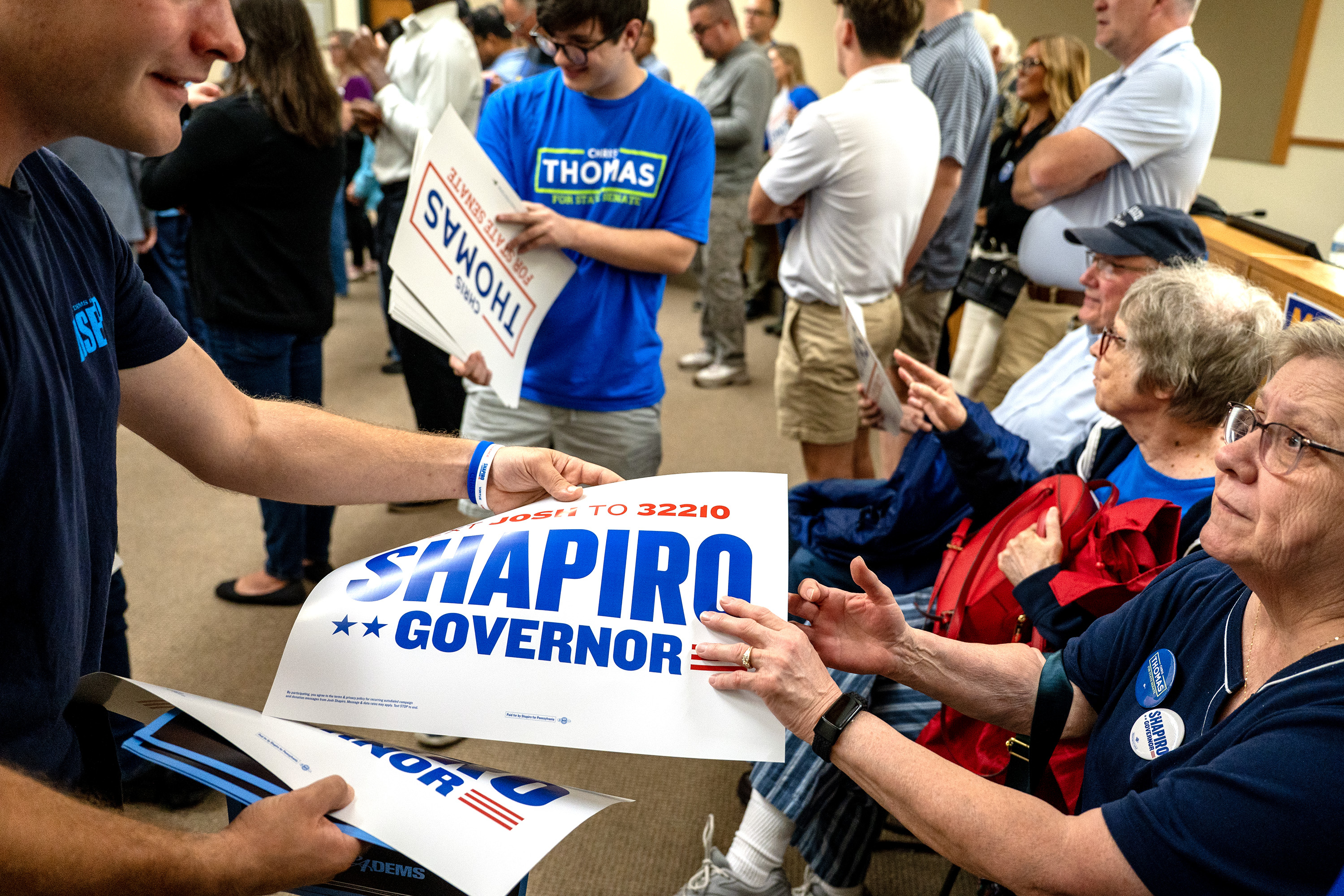
    Campaign volunteers hand out signs to supporters of Gov. Josh Shapiro and Democratic Pa. Senate candidate Chris Thomas at a rally in Towamencin, Montgomery County before heading out to canvass on Sunday, Sept. 29, 2026.Tom Gralish / Staff Photographer

    Approximately 60% of likely voters strongly approve or somewhat approve of the job Shapiro is doing as governor, according to the poll. That includes 30% of Republican voters, 89% of Democratic voters, and 59% of independents in the critical swing state where Shapiro maintains high popularity.

    As a moderate politician, Shapiro has been able to capture most independent voters and even win over some Republicans, according to the poll.

    Lesa Yeager, 63, considers herself an independent voter with centrist views who voted for a third-party candidate in the 2024 presidential election. She is an ardent union supporter and also thinks the nation should have a strong border. She said she trusts Garrity, as the state’s treasurer, to do a better job handling Pennsylvania’s economy.

    But she is supporting Shapiro this November, in large part, because of his work on schools.

    “I like that he’s very pro-education,” she said. “I am a fan of charter schools because I sent my kids to charter schools.”

    Two of her children, now 35 and 37, benefited from smaller classroom sizes and adjustable curriculums, she said.

    Yeager said she has also reached her limits with Trump’s behavior during his second term and believes Shapiro would continue to represent the state positively.

    “I just think Trump is such a bully and so mean and just does whatever he wants, and I just want someone who isn’t that,” Yeager said.

    She appreciates the Republicans who distance themselves from Trump. “But it’s tough to tell who is and who isn’t, a lot of times, and I would rather vote for someone I know isn’t going to support Trump on a lot of the things that he does,” she added.

    Still, Garrity has found some backing among Pennsylvania’s electorate, though even some of those supporters say they don’t know much about her.

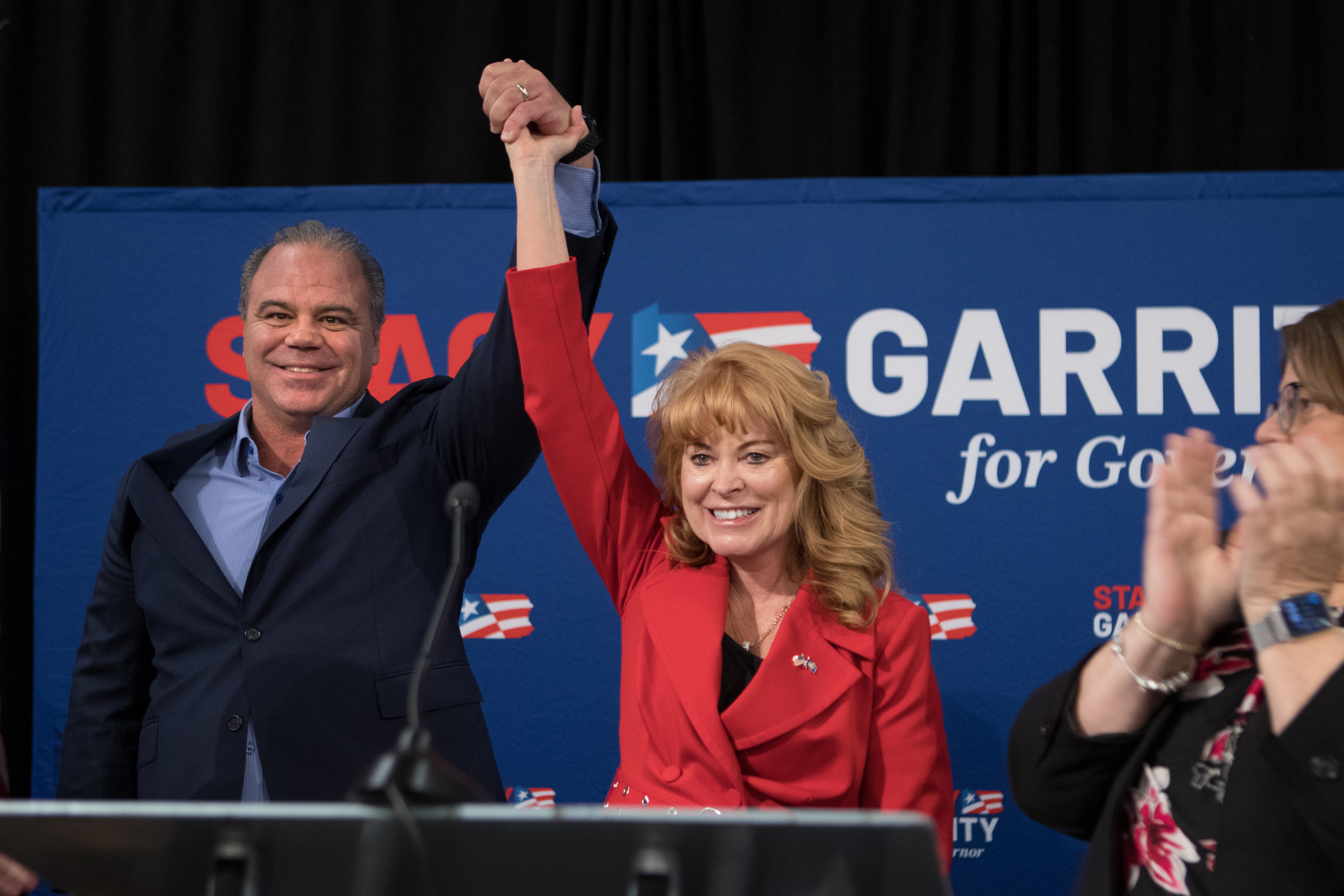
    GOP gubernatorial nominee Stacy Garrity and her running mate Jason Richey hold up their arms in Harrisburg, Pa., Saturday, February 7, 2026. Kalim A. Bhatti / For The Inquirer

    Susan Roller of Lancaster said she plans to vote for Garrity this fall because “she’s more responsible and will protect our freedoms.” Roller, who is retired, said she is particularly distressed about Shapiro’s positions supporting access to abortion and encouraging vaccines.

    But as far as getting to know more about Garrity, Roller, 72, said she has not “seen a lot” of messaging on television about her.

    Shapiro and Garrity are set to face off in a televised debate on Oct. 7.

    In 2022, Shapiro did not participate in any debates while he maintained a double-digit lead over Mastriano, declining the Republican’s requests as an “unserious stunt.” Shapiro held a 13-percentage-point lead over Mastriano in a New York Times/Siena poll conducted that October — a closer margin than Shapiro’s lead over Garrity this year.

    (function(){function e(){window.addEventListener(`message`,function(e){if(e.data[`datawrapper-height`]!==void 0){var t=document.querySelectorAll(`iframe`);for(var n in e.data[`datawrapper-height`])for(var r=0,i;i=t[r];r++)if(i.contentWindow===e.source){var a=e.data[`datawrapper-height`][n]+`px`;i.style.height=a}}})}e()})();

    The 2022 midterm election was a much different political moment for Democrats, said Levy of the Siena Research Institute.

    “That was a point in time when the Democratic star was on the decline,” he added. “Everything was a bit of a referendum on Democrats, on the job that [former President Joe] Biden was doing, how we were coming out of the pandemic.
    “The overall political climate in which the ’26 election is taking place vs. ’22 is really kind of night and day,” Levy said.
    Staff writers Joe Yerardi and Fallon Roth contributed to this article.

  • Gov. Josh Shapiro spent more than $2.4 million on ads this week. His GOP opponent, Stacy Garrity, spent $672.

    Gov. Josh Shapiro spent more than $2.4 million on ads this week. His GOP opponent, Stacy Garrity, spent $672.

    Gov. Josh Shapiro is dominating Pennsylvania’s media markets in his reelection campaign, spending more than $24 million with less than seven weeks left until the Nov. 3 election — and trouncing his GOP challenger, State Treasurer Stacy Garrity, who has spent a small fraction of that on ads.

    Shapiro, a Democrat seeking reelection and potentially a 2028 White House bid, has spent more than $2.4 million on advertisements per week since Aug. 25 from his campaign war chest of more than $50 million, according to media tracking firm AdImpact. One ad pitches Garrity as “Pennsylvania’s #1 fan of data centers,” and in another, Shapiro boasts about his efforts to cap energy costs. He has also released a number of audience-specific ads to reach Black and Latino voters, including a radio advertisement in Spanish in the Lehigh Valley.

    A clearer picture of Shapiro’s full campaign haul will become public this week, with updated campaign financial filings due Tuesday. The last filing deadline for state candidates was in June. But Shapiro’s multimillion-dollar flurry of ad buys offers early insight into his strategy heading into November in a race where he holds a double-digit polling lead — and where he is hoping to achieve downballot wins in the statehouse and critical congressional districts.

    Garrity has spent just $743,000 on ad buys so far, and paid out only $672 last week, according to AdImpact. No top GOP groups, such as the Republican Governors Association or the Jeffrey Yass-backed Commonwealth Leaders Fund, have purchased TV ads supporting Garrity, and she has struggled to fundraise to compete with Shapiro, a popular incumbent who has raised more money than any governor since at least 2010.

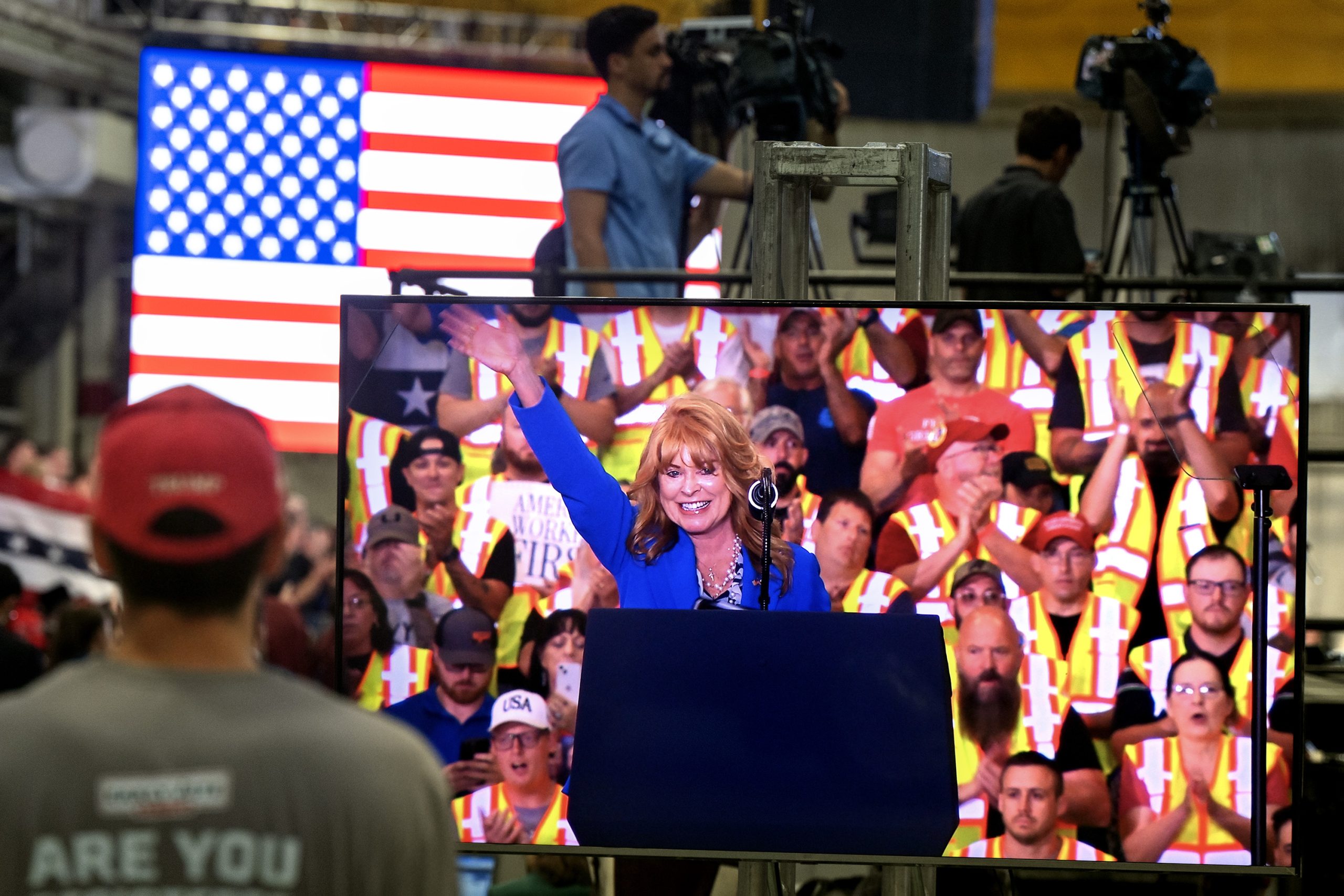
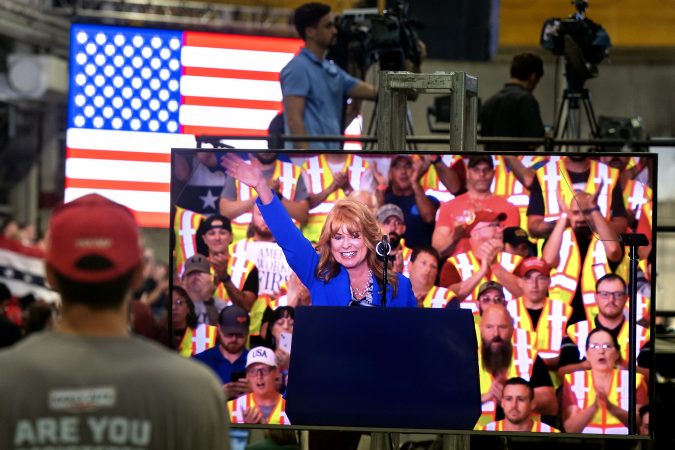
    State Treasurer and Republican candidate for governor Stacy Garrity is seen on a big screen as she speaks to supporters before the arrival of President Donald Trump at Mack Trucks in Macungie Tuesday, June 23, 2026. Tom Gralish / Staff Photographer

    Shapiro’s mass ad buys despite his commanding lead in the polls indicate the governor is a risk-averse politician, said Christopher Borick, a political science professor at Lehigh University.

    “He’s cautious. He wants to make sure nothing goes awry, and to do that, you buy insurance,” Borick said.

    “The governor has also been clear that the midterms run through Pennsylvania — and he is leading the fight to win critical races up and down the ballot in order to flip the House, put a check on Donald Trump’s chaos, cruelty, and corruption, and get even more stuff done,” said Manuel Bonder, a spokesperson for Shapiro’s campaign.

    Garrity, meanwhile, has spent the lion’s share of her ad buys on a digital social media video campaign called “Twilight Justice,” which promises the future release of bombshell details about Shapiro. She has also released an attack ad about Shapiro’s past support for data centers, but it has been seen by far fewer eyes than those Shapiro is reaching in his multimillion-dollar ad campaigns. Both Shapiro and Garrity initially embraced data centers, though both shifted their positions as the projects became increasingly unpopular among Democrats and Republicans.

    Matthew Beynon, a spokesperson for Garrity’s campaign, declined to comment on whether top GOP groups will get involved in the Pennsylvania governor’s race in the coming weeks. But he said any pro-Shapiro mailer or TV ad “is just another reminder to the people of Pennsylvania that Josh Shapiro sold them out.”

    “All the money in the world will not help Josh Shapiro paint over his administration’s failed economic record or erase his ethics scandals that have cost the taxpayers of Pennsylvania and embarrassed the entire commonwealth,” Beynon added.

    Data center power play

    The regulation of data centers and artificial intelligence have become key issues in midterm races nationwide, including in the Pennsylvania governor’s race, where Shapiro’s past support for the projects appeared to be the biggest test of his popularity.

    Shapiro changed his position last month and subsequently began running attack ads against Garrity for her past support of the unpopular centers. Garrity has also changed her position, from initially advocating for the rapid development of data centers around Pennsylvania to now calling for “a pause” on their development. Shapiro, in an executive order signed last month, will now require any prospective data center developers to meet a number of environmental and energy factors in order to build in Pennsylvania.

    “That’s why you’ve seen this enormous ad buy that she can’t even come close to matching, when, in reality, he’s as exposed as her on the issue, but she doesn’t have the resources,” Borick said.

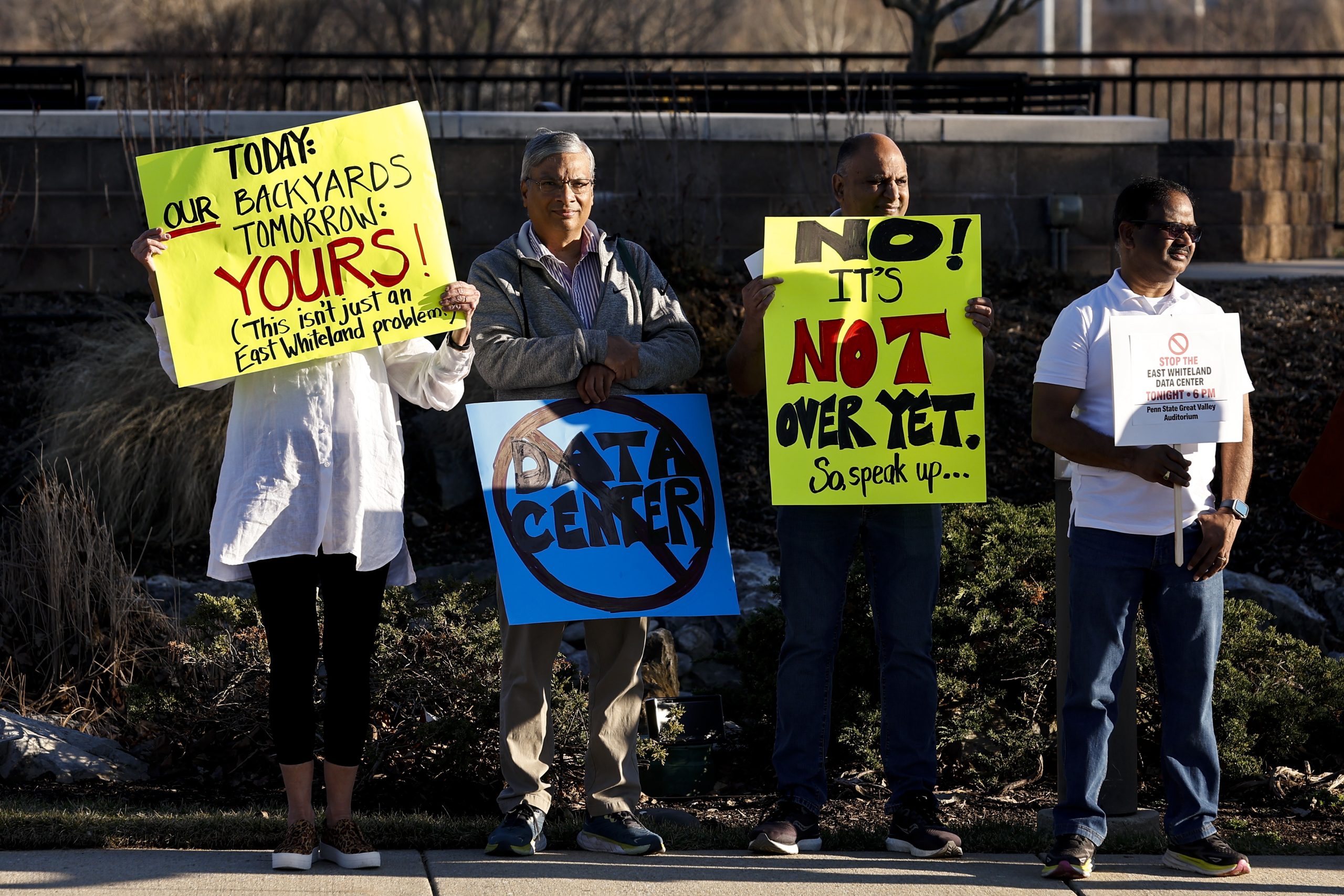
    People protest the expanded data center before the East Whiteland Planning Commission meeting held at Penn State Great Valley on Monday, March 9, 2026 in Malvern, Pa.

    Pennsylvania Republicans endorsed Garrity in September 2025 — an unprecedented early nod that helped clear the field for her as the party’s nominee. President Donald Trump endorsed her in January, calling her an “America First Patriot.” She ran unopposed in the primary election, and top GOP leaders said they wanted to wage a stronger fight against Shapiro this time than in 2022, when far-right State Sen. Doug Mastriano (R., Franklin) won the endorsement in a crowded field and the state GOP largely did not financially support his candidacy.

    Despite all of the additional time to drum up support, Garrity has struggled to raise funds and has yet to be able to cash in on Trump’s backing. As of Thursday, she had spent just $300,000 more than Mastriano had at this point in the race. Shapiro, meanwhile, has spent less this election than he did at the same point in 2022, when he spent $28 million as of mid-September.

    “When you’re making comparisons to the amount of money Doug Mastriano raised, it’s a really troubling sign,” Borick added.

    Garrity and Shapiro will face off in a televised debate on Oct. 7 hosted by ABC27 in Harrisburg.

  • Philadelphia’s police union endorses Gov. Josh Shapiro for his reelection bid

    Philadelphia’s police union endorses Gov. Josh Shapiro for his reelection bid

    Philadelphia’s police union on Tuesday endorsed Gov. Josh Shapiro’s reelection bid, announcing its continued support for the first-term Democratic governor while touting his commitment to law enforcement.

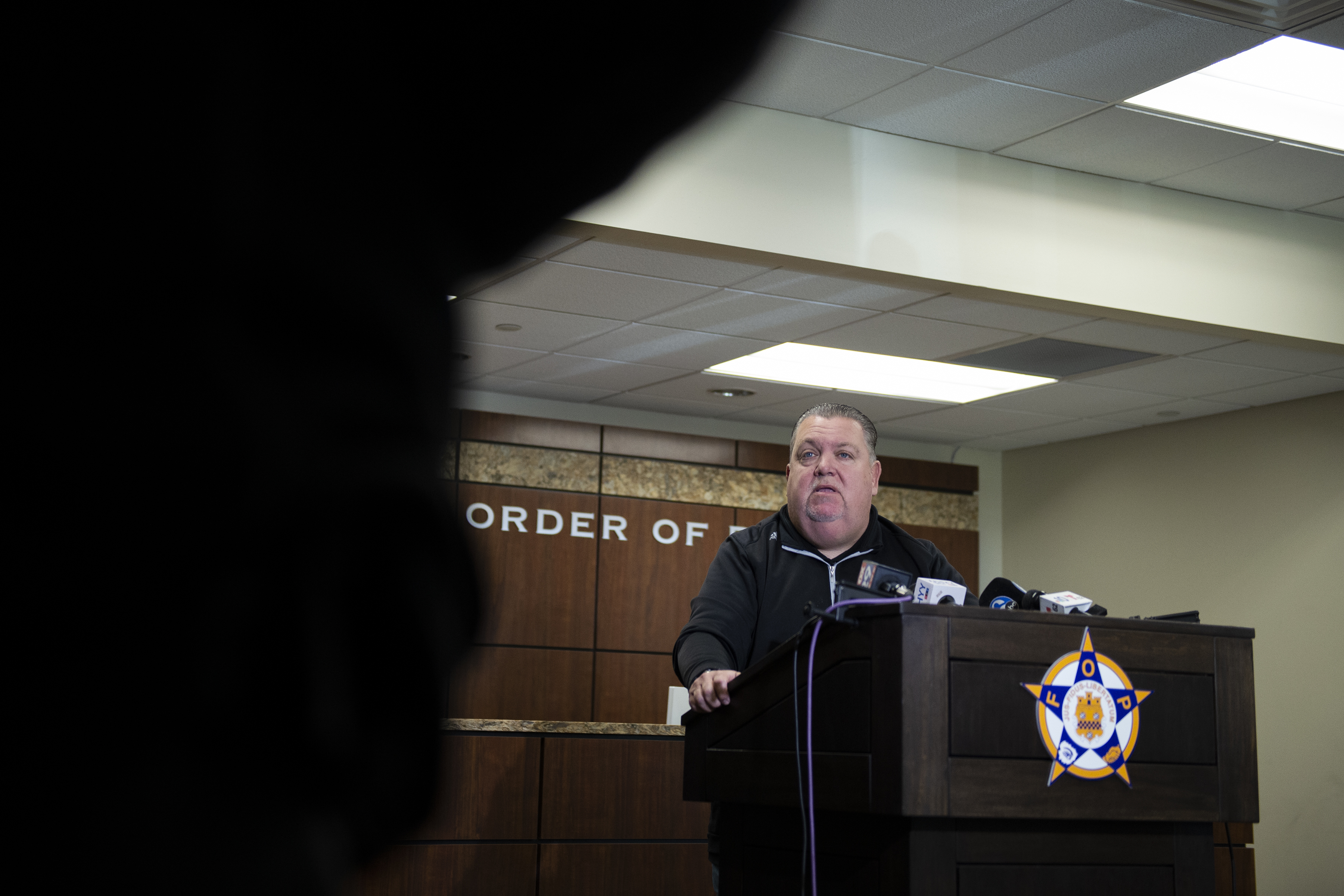
    “Every day, he has shown a commendable ability to work with local law enforcement and deliver the resources and support we need to protect and serve our friends, families, and neighbors,” said Roosevelt L. Poplar, president of the Fraternal Order of the Police Lodge 5, which represents over 14,000 active and retired Philadelphia police officers and sheriff’s deputies.

    In a statement, Shapiro said he was “honored” by the endorsement.

    “I’m going to keep fighting for the brave law enforcement officers who work to keep Philadelphia safe every single day,” he said. “I believe all Pennsylvanians deserve to be safe and feel safe in their communities — and we have focused every day on funding law enforcement and supporting the men and women that protect and serve our Commonwealth.”

    It marks the second time the police union has embraced Shapiro for governor after endorsing him in 2022 over Republican candidate Doug Mastriano, who the then-president of the union said couldn’t be trusted to protect their collective bargaining rights. Shapiro, a former state attorney general, was a reliable government official who the union said was “there to help us with whatever we need to do.”

    This election cycle, Shapiro holds a commanding lead over his Republican opponent, Treasurer Stacy Garrity, according to a recent poll from The Philadelphia Inquirer, the New York Times, and Siena University. The union has previously supported President Donald Trump, but Shapiro attracted its backing over Garrity, who Trump has endorsed in the Pennsylvania governor’s race.

    Shapiro has also received support from other organized labor unions, including the Pennsylvania AFL-CIO and the Pennsylvania Professional Fire Fighters Association. On Monday, he received the backing of the Pennsylvania State Troopers Association.

    Shapiro has maintained a comfortable relationship with law enforcement, and his campaign noted that he has signed multiple state budgets funding 2,000 additional officers across Pennsylvania and allocated more than $1 billion in community-based violence prevention grants.

    Roosevelt Poplar, president of Fraternal Order of Police Lodge 5, on Jan. 26, 2024.Elizabeth Robertson / Staff Photographer

    In his statement, Poplar also commended Shapiro for providing funding for police department needs.

    “The Governor has delivered on his promise to invest in public safety, he has shown up with us in times of tragedy, and he has proven his commitment to keeping our officers and the communities we serve safe,” he said.

    The police union’s endorsement of Shapiro is notable for an organization that just a few years ago was seen by some Philadelphia Democrats as politically toxic.

    In the aftermath of the 2020 Minneapolis police killing of George Floyd, protests by racial justice activists swelled in Philadelphia and across the country with many of the movement’s participants calling to “defund” or abolish the police. They pressed local lawmakers to redirect police funding to social services, and Philadelphia City Council in June 2020 canceled a planned increase to the Philadelphia police budget.

    Amid the calls for reform, the FOP was a major point of contention, as was its bombastic former leader, John McNesby. Activists — and many of their allies in elected office — said the union was too resistant to change and protected bad cops.

    Former FOP president John McNesby holds a news conference on Oct. 19, 2022.Joe Lamberti

    At the time, Shapiro was running for reelection as the state attorney general, and his campaign presented him as a “progressive reformer” who had established a unit in his office to review criminal convictions that may have been unfairly applied and a council to support people leaving prison with housing and employment opportunities. The FOP endorsed Shapiro’s 2016 and backed his 2020 campaign for attorney general.

    Unlike some Philadelphia Democrats, Shapiro — who has rumored ambitions for a presidential run in 2028 — did not embrace the “defund” movement. He argued during a 2020 trip to Philadelphia that addressing structural inequities in the department and having strong law enforcement, especially in communities with high levels of poverty, were not mutually exclusive endeavors.

    “We reject that poverty or institutionalized indifference and marginalization should mean that some people don’t get to have a safe community to live in,” he said. “We won’t give up on the belief [of] law enforcement showing up in a community to make people feel safer.”

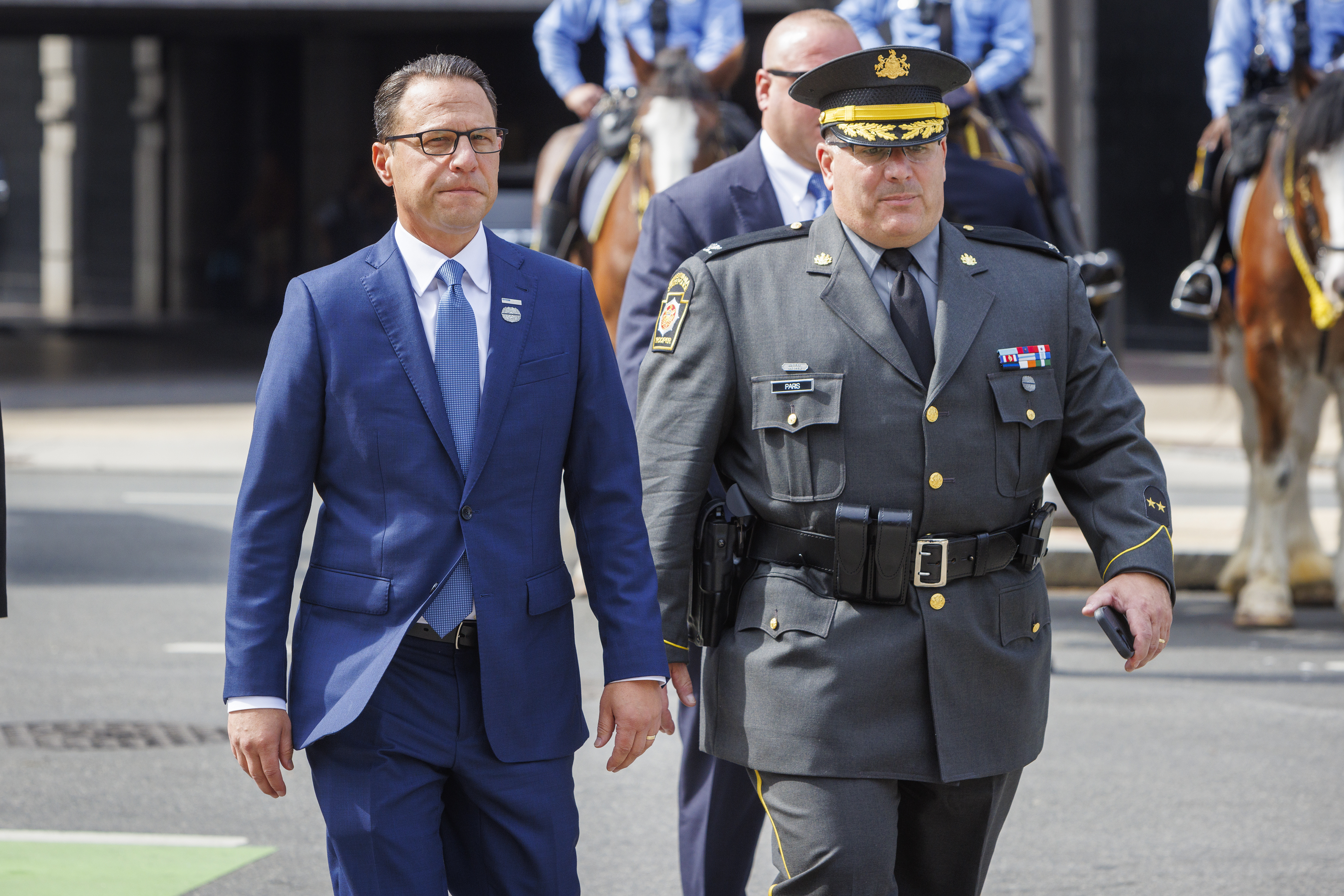
    Gov. Josh Shapiro with Pennsylvania State Police Col. Christopher L. Paris. They were attending the funeral for Philadelphia police officer Jaime Roman at the Cathedral Basilica of SS. Peter and Paul on Sept. 19, 2024.Alejandro A. Alvarez / Staff Photographer

    In the years following 2020, public support for police in Philadelphia appeared to grow. The city saw a historic spike in gun violence, and Republicans nationally portrayed Democrats as soft-on-crime. When a half-dozen Democrats were fighting for the mayoral nomination in 2023, polling showed that most voters saw public safety as the No. 1 issue driving the race. None of the candidates embraced “defund,” and most of them supported proposals to provide additional resources to the police department as it sought to solve shootings.

    In the end, the tough-on-crime mayoral candidate — then-City Councilmember Cherelle L. Parker — won decisively.

  • Will Donald Trump and national Republicans help Stacy Garrity’s campaign from falling flat against Josh Shapiro?

    Will Donald Trump and national Republicans help Stacy Garrity’s campaign from falling flat against Josh Shapiro?

    Seated behind his desk in the Oval Office earlier this month, President Donald Trump spoke directly to the camera in front of him. He turned to his right and looked up at the Pennsylvania Republican who, as he had indicated just a few weeks earlier, might very well lose her race for governor this fall.

    “I think you can win,” he said this time, extending his hand to Stacy Garrity. It was a change in tune for Trump, who last month at an event in Pennsylvania said Garrity’s opponent, Democratic Gov. Josh Shapiro, was “expected to” and might win.

    The president’s confidence in Garrity — and whether his support will extend beyond a handshake and a 17-second video with her at the White House — has become a critical question in the final stretch of the Pennsylvania governor’s race.

    Down in the polls and lagging behind Shapiro’s unprecedented fundraising, Garrity has cultivated the president’s support and the potential boost, both financially and in Republican enthusiasm, that could come with it.

    It is a risky strategy for a swing-state candidate whose party holds the White House, and particularly as polls show Trump becoming increasingly unpopular. Shapiro and his allies have enthusiastically promoted instances when Garrity, the twice-elected state treasurer, has leaned into Trump’s agenda and brand of politics.

    But with less than three months before Election Day, it is not clear to what extent Trump or other key national Republicans will pitch in on her campaign.

    State Treasurer and Republican candidate for governor Stacy Garrity holds a rally in Bucks County at the Newtown Sports & Events Center in this 2025 photo. Tom Gralish / Staff Photographer

    Trump has not yet stumped in any significant way for Garrity in Pennsylvania, a swing state where he was a near-constant presence during his winning 2024 campaign. And he has not lent his vast political resources — including a Trump-aligned super PAC flush with $400 million — to Garrity or other Republican candidates as his party faces tough campaigns across the country in the midterm elections that will determine control of Congress.

    Several gubernatorial races around the country are considered competitive, a reality that also pits Garrity against GOP nominees who polling suggests have better shots of success. The same circumstances have doomed the most recent other Trump-endorsed Pennsylvania Republican nominees for governor — former State Sen. Scott Wagner in 2018 and State Sen. Doug Mastriano in 2022 — who never ended up with national support and lost by double digits.

    Campaigns typically heat up after Labor Day, and there is still time for Garrity’s national allies to converge to boost her. But observers say the political reality is also evident.

    “The president kind of looks toward two things,” said Samuel Chen, an Allentown-based Republican strategist who is not affiliated with Garrity and who previously worked for Tom Corbett, Pennsylvania’s most recent GOP governor.

    “One is loyalty to him. Garrity has been loyal, but has not necessarily been as vocal as some others have. The other side of it is he likes winners. He wants to endorse people who win,” Chen said. “Everyone in Trump’s orbit knows that Garrity has a very uphill climb.”

    Not supporting ‘lost causes’?

    The level of involvement from groups like the Republican Governors Association has been a key indicator of whether the party believes its nominee has a chance at winning recent gubernatorial elections in Pennsylvania.

    The RGA is made up of GOP governors who collectively support one another’s agendas and campaigns. Democratic governors have a similar alliance.

    In 2010 — the last time a Republican won the governor’s mansion in Harrisburg — the group was the largest donor to then-Attorney General Corbett’s gubernatorial campaign, giving him $6 million starting in August of that year. Four years later and helmed by then-New Jersey Gov. Chris Christie, the RGA was once again Corbett’s biggest donor. It donated more than $5.8 million as Corbett became the first sitting Pennsylvania governor in decades to lose a reelection bid. Christie, preparing to run for president in 2016, stumped with Corbett multiple times.

    The picture was starkly different in 2018 and 2022, when Republican voters nominated two candidates closely associated with Trump. Neither Wagner’s campaign against Democratic Gov. Tom Wolf nor Mastriano’s campaign against Shapiro ever became highly competitive — and the RGA and other national groups decided to sit out.

    “We’re watching Pennsylvania very closely,” Arizona Gov. Doug Ducey, then the chair of the RGA, said in September 2022. He added that the group would not support “lost causes” or “landslides.”

    The RGA would spend nothing in the state that year, even with Mastriano and former Trump lawyer Jenna Ellis pleading for assistance. Shapiro went on to trounce Mastriano by nearly 15 percentage points.

    This year, RGA chair and Montana Gov. Greg Gianforte has not publicly weighed in on Garrity’s chances since issuing a brief, generic statement congratulating her after her unchallenged primary in May.

    And the competitive landscape Republicans are facing across the country may mean Pennsylvania’s GOP nominee once again gets the short end of the stick. The RGA did not respond to requests for comment.

    Even with Pennsylvania’s status as a preeminent swing state that went for Trump two years ago, there are nearly a dozen more competitive gubernatorial races across the country this fall, according to the Cook Political Report, a nonpartisan group that provides election analysis.

    Georgia, Iowa, Nevada, Ohio, and Wisconsin — some of which voted overwhelmingly for Trump just two years ago — are all considered toss-ups. Four other states with Democratic governors — Oregon, Arizona, Michigan, and Kansas — are also considered more competitive than Pennsylvania, which is ranked as “solid Democratic,” according to Cook, despite Republicans like Garrity and Trump having won statewide two years ago.

    The RGA, according to its most recent filing with the Federal Election Commission, had less than $1.7 million in its RGA Right Direction super PAC after spending about $16 million so far in the current election cycle.

    Its recent spending has focused on Iowa, where Democrats are attempting to capture the governor’s office for the first time in two decades, and Kansas, where the RGA launched an ad this month.

    “There’s always competition for limited resources,” Charlie Gerow, a longtime Harrisburg-based Republican strategist who also ran for governor in 2022, said of the intraparty competition for donors. “There’s only so much campaign funding to go around as everybody’s trying to get a piece of it.”

    Trump hosted a fundraiser for Garrity in March at his Mar-a-Lago estate in Florida. He has also visited Pennsylvania twice this summer, though not for events specifically with Garrity — and in one in case he did not mention her among a list of candidates he was supporting.

    In July, Shapiro’s campaign announced he had raised $50 million since January 2025. The next financial filing deadline for statewide candidates is in September, but as of the last reporting cycle, he had outraised Garrity 10-1.

    President Donald Trump brings U.S. Rep. Ryan Mackenzie (right) to the stage as he holds an event in Mackenzie’s Lehigh Valley district at Mack Trucks in Macungie Tuesday, June 23, 2026.Tom Gralish / Staff Photographer

    But Matthew Beynon, a spokesperson for Garrity’s campaign, said she “does not expect, nor does she need, to go dollar-for-dollar with Josh Shapiro.” Instead, he said, she “just needs the resources to prosecute her case against Josh Shapiro … and she is on pace to be able to do so.”

    Garrity looks forward to “continued support” from the RGA, he said.

    Other national attention on Pennsylvania

    After Mastriano’s disastrous performance in 2022, Republicans coalesced around Garrity — whose 3.5 million votes in 2024 were the most ever for a statewide candidate in Pennsylvania — as their best shot at defeating Shapiro.

    But in the year since she received the party’s endorsement, Garrity has barely moved the needle. A Quinnipiac University poll in July found Shapiro leading Garrity 53% to 40% among registered Pennsylvania voters. Trump saw even lower scores: Just 39% of those polled approved of the president’s job performance.

    A poll from a Republican-leaning firm promoted by Garrity showed her down, 50% to 43%.

    Across Pennsylvania, she has also competed for attention and resources as her party prioritizes other major election battles this fall.

    Four Republican-held congressional districts — based in Bucks County, the Lehigh Valley, Scranton, and Harrisburg — are seeing a rush of national attention and money as their outcomes could decide control of the narrowly divided U.S. House.

    Shapiro has also invested heavily in trying to flip the state Senate to Democratic control for the first time in three decades, putting Republicans further on their heels. The $3.3 million that Shapiro committed to the effort is more than Garrity has raised in her entire campaign.

    Pennsylvania Gov. Josh Shapiro addresses the audience during a rally for Democratic congressional candidate Bob Brooks at the United Steelworkers Union Hall in Bethlehem, Pa. on Sunday, July 26, 2026.David Maialetti / Staff Photographer

    On the other side of the aisle, Pennsylvania’s top elected Republican — U.S. Sen. Dave McCormick — has endorsed Garrity but has not appeared to join in her public campaign efforts so far. A Trump ally and former hedge fund leader, McCormick has raised millions since his election in 2024, and political action committees associated with him have donated to other PACs working to elect Pennsylvania Republicans in Congress.

    McCormick has hosted events and campaigned for Garrity, and he “will keep doing everything he can to help her win,” said Mike DeVanney, a spokesperson for the senator.

    “He believes she demonstrates the kind of leadership we need and the kind that President Trump and many others have recognized as one that can move our commonwealth forward,” DeVanney said.

    Gerow said McCormick undoubtedly could help Garrity down the stretch.

    “He’s a prolific fundraiser. He has the connections, and he has the personality to raise large amounts of money. And he can be very, very helpful with the Garrity campaign if he weighs in with full weight,” Gerow said.

    Garrity’s campaign said McCormick has been an “incredible supporter,” including with his early endorsement and connections to supporters.

    Shapiro has also cultivated across-the-aisle relationships with some Pennsylvania Republicans who would be expected to promote Garrity.

    In an April interview with Punchbowl News, U.S. Rep. Brian Fitzpatrick, a Bucks County Republican running for reelection in the nationally watched 1st Congressional District, said he thought Shapiro would win his reelection contest and should run for president, adding: “I think Josh is very, very smart.”

    And during his 2022 run, Shapiro collected endorsements from other prominent Republicans, including Jim Schultz, a former Trump White House lawyer, and former Republican U.S. Rep. Charlie Dent.

    The final stretch

    Though the November election is less than three months away, that is still plenty of time in politics. Most ad spending does not start until September, and ground game efforts — door knocking, phone banking, and get-out-the-vote campaigns — get underway in the fall.

    Winning Pennsylvania is a priority for Trump in the midterms, and Garrity’s campaign said she is “grateful” for his continued support.

    On the state level, James Markley, a spokesperson for the Pennsylvania GOP, said the party is “fully invested” in helping Garrity beat Shapiro. Those efforts include training “thousands” of volunteers and working on education programs around early voting and casting mail-in ballots.

    “The more Pennsylvania voters learn about Stacy Garrity, the more they love her,” he said in a statement. “The more Pennsylvania voters learn about Josh Shapiro, they realize he has no record to stand on.”

    Gerow said Garrity’s challenge, with limited funds compared with Shapiro, is whether she has enough money to get her message out.

    “The major concern for her immediately is to be able to tell her story,” Gerow said. “She doesn’t have the resources to tell that story effectively right now, and she has a great story.”

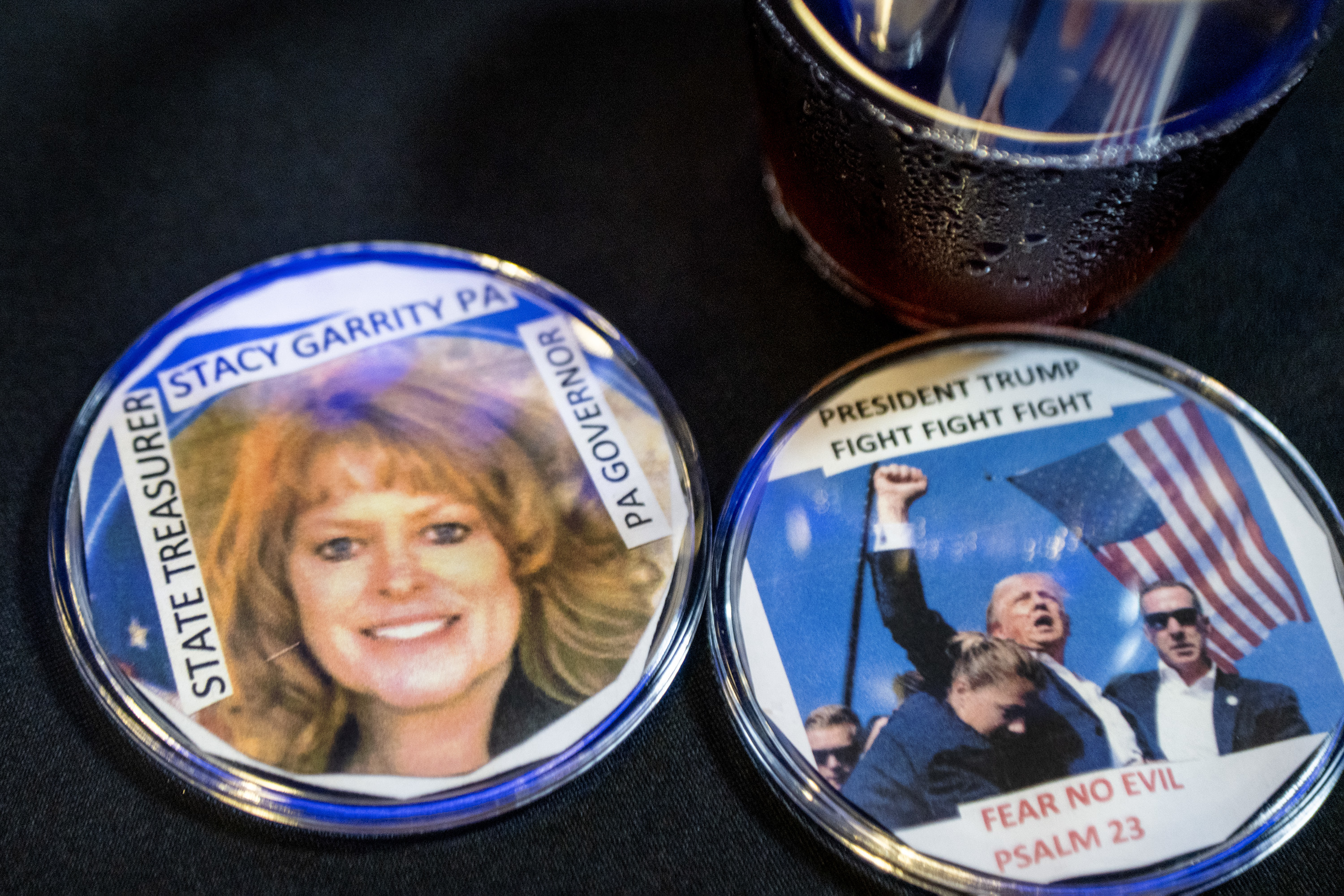
    Buttons for State Treasurer Stacy Garrity and President Trump are left on a table following a VIP reception before a Garrity rally in Bucks County Thursday, Sept. 25, 2025. Tom Gralish / Staff Photographer

    Throughout her campaign, Garrity has hammered Shapiro on several issues she said reveal his lack of transparency as a public official. She has held roundtable discussions blasting Shapiro for his early embrace of data centers, a position he has since distanced himself from after calling for new guidelines for their development. Her campaign released a video series online that questions his handling of criminal investigations. And she has repeatedly insisted that Shapiro, who is widely rumored to be running for president in 2028, is “more interested in Pennsylvania Avenue than helping Pennsylvania families.”

    Samantha Reposa, a spokesperson for Shapiro’s campaign, disputed Garrity’s framing and emphasized that she has stood in lockstep with Trump on most of his positions.

    “Garrity is now running to be nothing more than a rubber stamp for Trump and his agenda that’s hurting Pennsylvania families — and we will continue to hold her accountable,” Reposa said.

    A new ad from Shapiro’s campaign paints her as “100% MAGA,” highlighting her support for Trump’s tariffs.

    Given Garrity’s fundraising deficit, Chen said, he would advise her to focus on meeting individual people in the community, if he were running her campaign.

    “Forget the GOP dinners. Start going to fairs. Start going to places that Republicans don’t show up. Start retail politics, and start introducing yourself to the state outside of Donald Trump, outside of modern Republicanism,” he said. “Tell the state what you’ve done for them and what you would do differently [as governor].”

    Staff writer Joe Yerardi contributed to this article.

  • Democrats accuse Green Party candidate in Lehigh Valley district of Republican meddling

    Democrats accuse Green Party candidate in Lehigh Valley district of Republican meddling

    WASHINGTON — In a Pennsylvania election where a few thousand votes could make all the difference, the last-minute entrance of a Green Party candidate with a background in Republican politics has sparked the second allegation of election meddling in three months and complicated one of the nation’s most competitive U.S. House races this fall.

    The Lehigh Valley-based 7th Congressional District matchup features U.S. Rep. Ryan Mackenzie, a Republican who won the seat by 1 percentage point in 2024, and Bob Brooks, a Democratic union leader and retired firefighter.

    Both parties are prioritizing the race as control of the U.S. House could come down to a few seats nationwide.

    But the emergence of a third-party candidate has alarmed both Democrats — who have long claimed that Green Party candidates pull votes from their nominees — and the Green Party of Pennsylvania, which said it does not know the person now representing its platform in one of the state’s highest-profile races.

    “It sounds a lot like somebody’s just fooling around and trying to use the Green Party name, which is a well-known thing that happens in many states,” said Tim Runkle, cochair of the state party.

    Andrew Tupone, 37, of Northampton County, filed his nomination papers with the state last week ahead of a Monday deadline for third-party candidates. He was the only candidate to file to represent the Green Party in a Pennsylvania race for Congress.

    Unlike the Green Party’s endorsed candidate for governor — Tony Dastra of Lancaster County — Tupone does not have a long association with the party or its left-leaning policies. In 2021, he was the Republican nominee for a Northampton County magisterial court seat. Voter registration records show he changed his party affiliation from Republican to Democrat in February, and then from Democrat to Green in April.

    In an interview, Tupone rejected accusations that he remained affiliated with the Republican Party or that he was asked to run in a way that would draw votes away from the Democratic nominee. He described a leftward shift in his political views after voting for President Donald Trump in 2020, though he said he could not recall whom he voted for in the 2024 presidential race between Trump and Democratic Vice President Kamala Harris.

    “A lot of people are disillusioned with both parties,” Tupone said. “They’re sick of all the stuff that’s going on.”

    Tupone also said he did not pay anyone to help gather signatures for his nominating papers, which he turned in with upward of 9,000 signatures — more than twice as many as required. Runkle said Green Party members encountered paid canvassers for Tupone who declined to say who was funding the effort.

    According to a copy of the nominating papers obtained by The Inquirer, only one of the 22 individuals who gathered signatures is from Pennsylvania. The rest are from all over the country. Multiple have worked for Republican campaigns, according to public records.

    Colin McEvers, who gathered signatures for Tupone in Lehigh County, is a Republican candidate for the Maryland General Assembly who is also listed as the contact for the Maryland White Republican Council. Others — including individuals from Illinois and Michigan — have been paid to canvas for GOP campaigns, according to Federal Election Commission records.

    Tupone said he had no knowledge of anyone paying his canvassers.

    “I went around and I gave a lot of my nominating papers to friends to give to other people, and I sent it to them as well,” Tupone said. “And as I went around, I recruited people and asked them.”

    While the signatures appear to be based in the district — which stretches from the cities of Allentown, Bethlehem, and Easton into the more Republican-leaning Poconos — the other candidates have until Aug. 10 to challenge their legitimacy.

    Such challenges are common, and the Brooks campaign is reviewing its options to decide whether to bring a challenge, according to a source familiar with the campaign’s thinking.

    ‘No one’s paying me to run’

    Jenna Kauffman, Brooks’ campaign manager, in a statement described the situation as a GOP-initiated and “desperate scheme to meddle in this race.”

    She connected it to a last-minute $1.7 million advertising campaign against Brooks in the May primary that appeared to be run by Democrats but was actually funded by a Republican political organization.

    The spending, by a political action committee called Lead Left, was aimed at boosting another Democrat who observers considered to have a worse shot at beating Mackenzie in the November election. But the effort was anonymous, and records that became public only after Brooks won show that it was funded by the Conservative Americans PAC.

    The effort to prevent Brooks from emerging from the Democratic primary came as he coalesced support from across the ideological spectrum with high-profile endorsements ranging from moderate Democratic Gov. Josh Shapiro to U.S. Sen. Bernie Sanders (Ind., Vt.), a democratic socialist.

    “Voters deserve to know who is paying for this effort and whether Ryan Mackenzie and his Republican backers are involved,” Kauffman said, painting Tupone’s candidacy as a continuation of the move in the primary.

    Mackenzie’s campaign did not address that comment when asked about it Monday.

    Tupone said that the inference was “just false,” and that he instead likes the values of the Green Party, which he said included supporting the environment, social justice, and “stopping the corruption and also the genocide in Gaza.”

    “No one’s paying me to run. No one’s asked me to run for this office. I’m running on my own, hopefully with a lot of hope from everyone who wants to volunteer,” Tupone said. “I’m not associated with the Republican Party anymore. I’m not a candidate for them.”

    For years, Democrats have voiced concerns about the Green Party and other third-party candidates “spoiling” elections, from Jill Stein in the 2016 presidential race that first put Trump in power to the 2024 U.S. Senate race in Pennsylvania, when Democratic U.S. Sen. Bob Casey lost to Republican Dave McCormick by about 15,000 votes. In that 2024 election, a Green Party candidate won about 66,000 votes, a Libertarian candidate won almost 90,000, and a Constitution Party candidate won more than 23,000.

    In the 7th District in 2024, Mackenzie defeated incumbent Democrat Susan Wild by 4,062 votes out of more than 403,000 cast. That was the narrowest margin out of any of the state’s 17 districts, making it a key tossup district this year.

    That margin is also significantly different from the one Shapiro potentially faces during his reelection campaign this year as he maintains a sizable lead over Republican Stacy Garrity, and as a Green candidate officially filed to run on Monday. Shapiro defeated Republican Doug Mastriano in 2022 by almost 793,000 votes; the Green Party candidate won just over 24,000 votes.

    Runkle said that nobody solicited the Green Party’s endorsement in a Pennsylvania congressional race this year, and that a conversation he had with Tupone left “a lot of questions.”

    He said the party is concerned about its reputation and about being targeted in ways that do not lift up its platform, which focuses on environmental protections and liberal positions on healthcare. But he also pushed back on concerns that the party should be considered a spoiler.

    “I do solidly believe that the Green Party policies and the values we represent has a solid bloc of voters,” Runkle said. “If people think that’s spoiling the race, then they should try harder to speak to the issues that we speak to.”