Tag: Curious Philly

  • Is there an age limit for serving on a jury in Pennsylvania? No, but you can get an exemption.

    Is there an age limit for serving on a jury in Pennsylvania? No, but you can get an exemption.

    Benjamin Franklin once said there were two certainties in life: death and taxes. Then, the Jury Selection and Service Act of 1968 codified a third: getting summoned to jury duty.

    While some people may get called more often than others, all qualified citizens who receive a summons are required to show up unless they meet one of the legal exemptions.

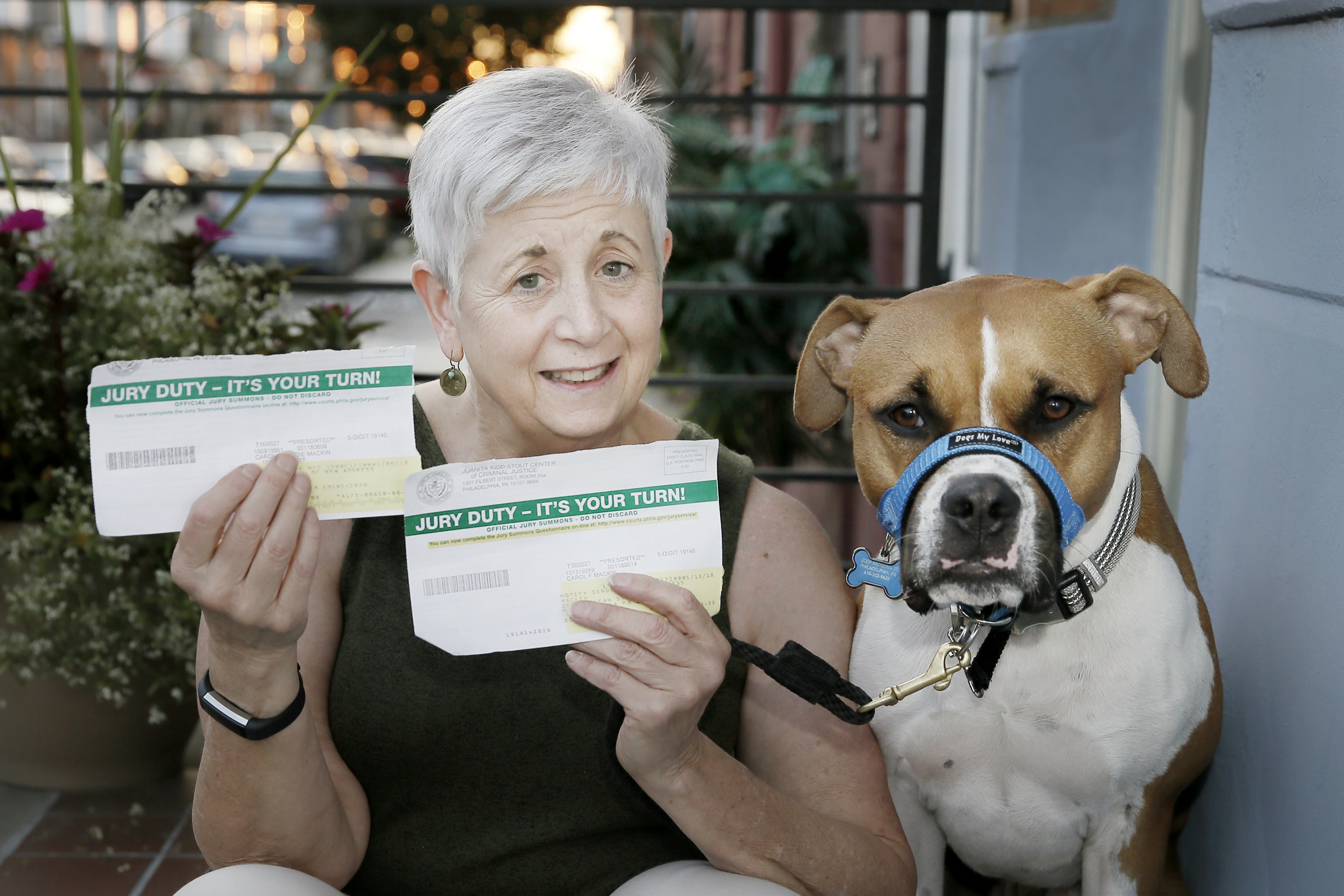
    For senior folks, age could be the qualifying factor to excuse them, leaving a reader to ask Curious Philly, The Inquirer’s forum for questions about the city: Is there an age limit on serving for jury duty in Pennsylvania?

    » ASK US: Have something you’re wondering about the Philly region? Submit your Curious Philly question here.

    As long as you are an adult citizen, residing in Pennsylvania, and have a beating heart, frankly, the answer is no.

    Anyone with an able body and mind who can read, write, and speak English and has never been convicted of a felony or crime punishable by more than a year in prison is can participate in jury duty well into their sunset years.

    That said, in Pennsylvania state courts, people 75 years and older can request an exemption from fulfilling jury duty to not have to show up, under state law.

    The process, however, isn’t as easy as just choosing not to appear.

    Ages for excusal from jury duty

    In federal courts, summoned jurors can often be excused as early as their 70th birthday, said Corey McCrea, a courts public affairs specialist.

    The precise age, however, depends on the district court a person is summoned to; some may have higher or lower age requirements, McCrea said.

    Septuagenarians and older citizens can request to be excused from jury duty, but can still choose to fulfill their jury service if they want to, McCrea said.

    State courts also have varying ages for exemptions.

    Across the river, in New Jersey, residents must be 75, like in Pennsylvania. They have to prove their date of birth to the jury management office.

    But in Mississippi, people 65 years old and older can be excused, and only need to file an online form.

    Folks in the state of Washington, on the other hand, need to reach 80 years old before qualifying for an age-related excuse. Even then, they need to prove they can’t serve due to health reasons through an attestation form.

    Requesting an age-related excusal for jury duty in Pennsylvania

    Older Pennsylvanians who are summoned for jury in state court may request to be excused, with the specific procedure varying by county.

    Those summoned in federal court — the Eastern District of Pennsylvania for residents in Berks, Bucks, Chester, Delaware, Lancaster, Lehigh, Montgomery, Northampton, and Philadelphia Counties — must send an email to ejuror@paed.uscourts.gov within five days of getting the summons to submit their excusal request.

    Change on the way?

    Seven decades might soon become the rule for all Pennsylvanians, including those summoned in state court.

    A new bill in the Pennsylvania General Assembly proposes to lower the jury duty age exemption for all Pennsylvanians to 70.

    “When you see people that are 75 years old having trouble just walking into there, to me that’s a bring it down, bring it down to 70,” said Nancy Guenst, the Montgomery County Democrat sponsoring the bill.
  • How South Philly’s full-block light displays work

    How South Philly’s full-block light displays work

    The twinkling of colorful lights can make everything feel more vibrant — like the Miracle on South 13th Street display during Christmas.

    For some South Philadelphia blocks, however, holiday lights are not enough: They light up the night all year round.

    Wondering about the blocks with iconic lights strung across the street, a reader asked Curious Philly, The Inquirer’s forum for questions about the city: “How does one get the decorative street lights and who looks after them?”

    » ASK US: Have something you’re wondering about the Philly region? Submit your Curious Philly question here.

    For many residents, the lights had inhabited the streets before they even moved in, so the answer is not straightforward. But it seems to fall on block captains and rely on the neighbors agreeing and paying the bill.

    Anthony Scola III, 66, remembers when the decorative lights were set up on his block, the 1600 block of South 13th Street. He was 6 years old and his father, Anthony Scola II, was part of the neighborhood group that organized putting them up, he said.

    At first, Scola said, neighbors wanted the holiday lights only on the trees, then around their homes, and soon the light show continued to grow.

    He doesn’t remember the organizing process, or how the adults got the lights, and with his 94-year-old father recently dying, that part of neighborhood history remains untold.

    But, as he pointed to the tree outside, Scola showed how the lights connect through a window to an outlet inside his home. Most of the lights are on year-round, he said, but Christmas lights are not lit until the Saturday after Thanksgiving.

    If the lights are affecting his electric bill, he said, he hasn’t noticed it.

    At the end of the block, Julia Morrison and her husband, Michael Edmonds, are settling into the neighborhood. The couple moved in over the summer, after having lived around the corner for six years.

    “We always thought the lights were owned by the city, but the neighbors told us that everyone has to pay for the cost,” Edmonds said.

    According to Peco, how the string light displays are paid for depends on the specific installation and location.

    Some connections go directly into homes, and the cost comes out directly in each homeowner or resident’s electric bill. Other displays, however, can be paid for through a separate account specifically for the lights. Then that account gets billed instead of each individual neighbor with lights connected to their home.

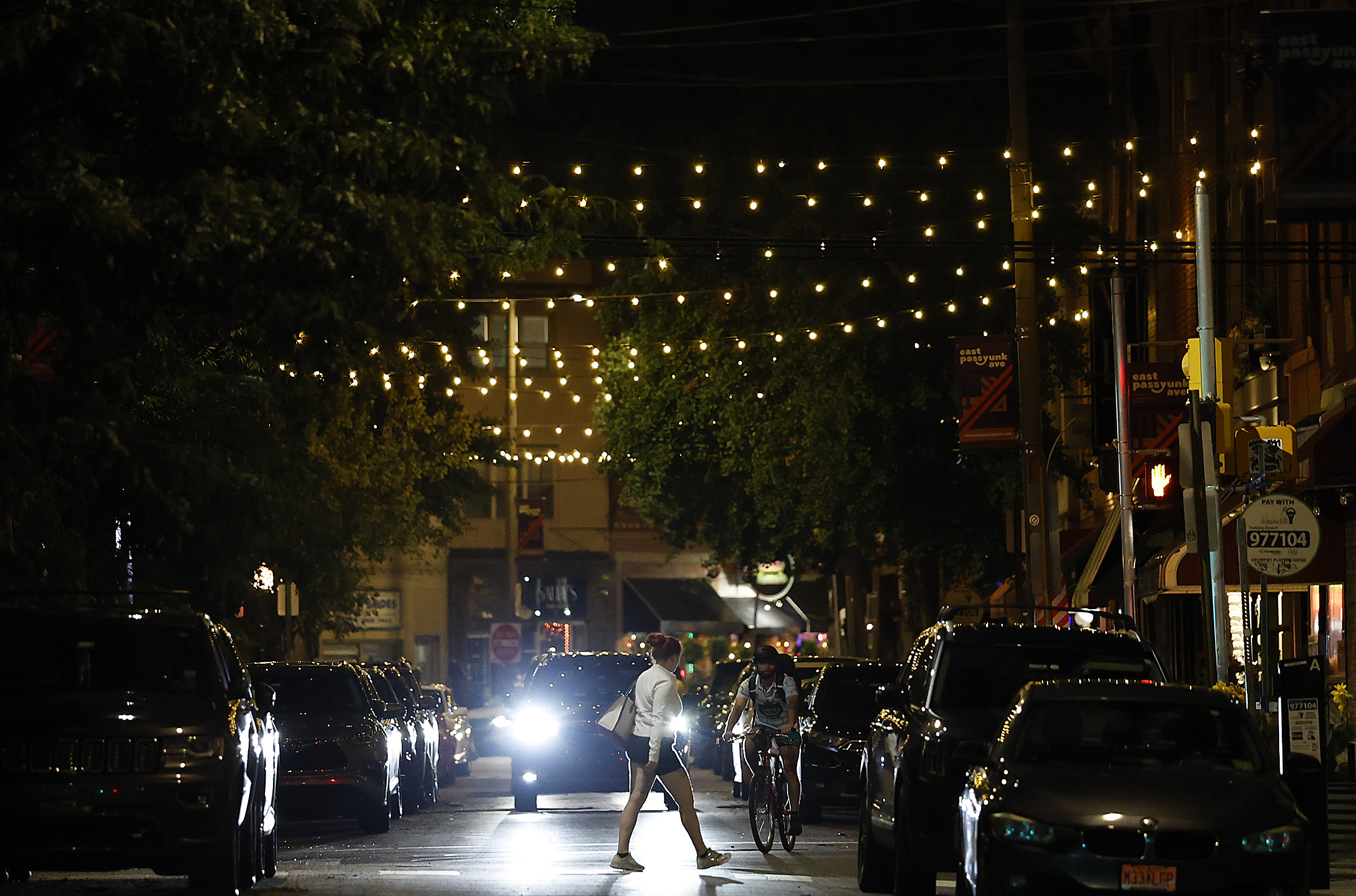
    Lights string across the street along East Passyunk in South Philadelphia on Thursday, Sept. 3, 2026.Yong Kim / Staff Photographer

    The couple is not sure how much the bill will be for the year-round lights. They are hoping to find out more after Thanksgiving, when everyone in the block comes out to set up the Christmas lights.

    Whatever the cost, they said, it is worth it for the effect on the block.

    “It brings the people together, and it’s just cheer,” Morrison said. “It brings the community street together, makes people feel closer.”

    On the 1200 block of Wolf Street, tiny blue, yellow, and red light bulbs dance in the wind on a zigzag above the street.

    They have been there for as long as Maryann Mooney, 69, remembers.

    “When I was a kid, it was magical to see the lights,” Mooney said.

    Over the years, she said, the tradition shrank to only putting big lighting displays out for Christmas, but small light fixtures remain all year round.

    She has moved away from the block but works at a hair salon in the area, and the lights continue to make her feel like “the block is alive,” she said.

    Karen Farrell, the salon owner, said the block captain comes to collect the money for the light bill, usually in December. He also is in charge of replacing any broken bulbs throughout the year, she said.

    “Last year they asked for $35,” Farrell said. “I like it. I think it is pretty. It makes it festive.”

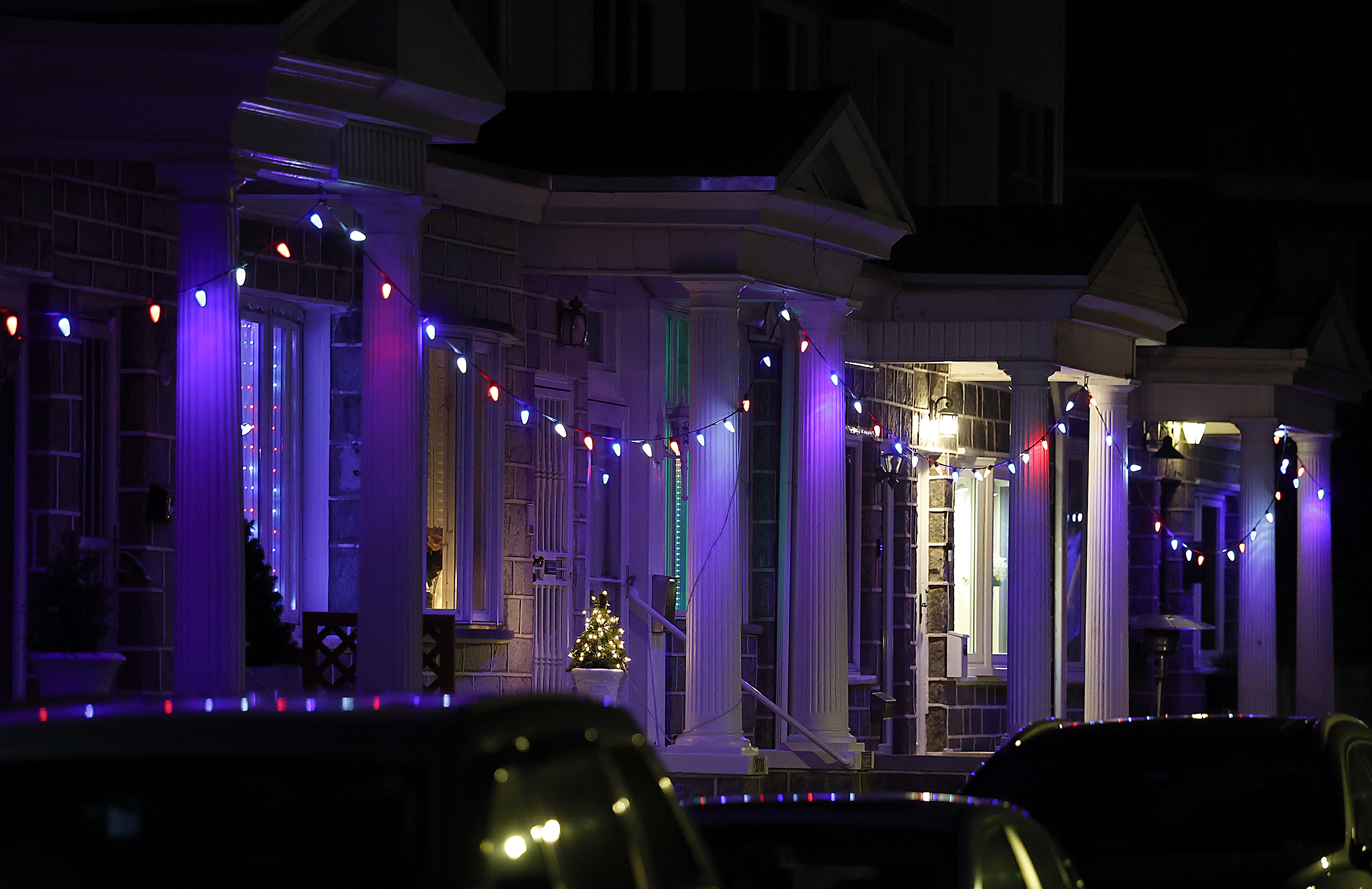
    On the 2700 block of South Smedley Street, blue, red, and white lights hang from every house. They put up Christmas lights, too, but these ones are up all year long.

    Ryan Schubert, 31, moved to the block in 2022. The house, he said, belonged to his wife’s grandmother, so the lights hanging from his front porch preceded their ownership.

    Schubert does not know when exactly the lights arrived, but he keeps a postcard from 1991 that already features the lights across the home’s porch.

    “Right now, they are red, white, and blue for the Fourth of July, but the light bulb colors are changed depending on the occasion,” Schubert said.

    As far as Schubert knows, the block captain is in charge of changing the bulbs and asking neighbors for collaboration to pay the bill.

    “We chip in once a year. It’s not a requirement, and it’s a pretty cool time,” Schubert said.

    The most he has contributed is $100, but he has also given $20, he said.

    According to Peco, neighbors looking to set up an additional account for this type of lights can contact customer service for information through an online form or by calling 1-800-494-4000.

    “The Christmas display can be a little annoying because lots of people come, but I love it and it’s worth it because everyone seems happy,” Schubert said. “The all-year lights feel unique to our street, but to be honest I’m so used to big displays that I don’t even pay much attention or register the little ones.”

  • That ‘curious’ lane switch in the middle of the Manayunk Bridge? Planners say it’s on purpose.

    That ‘curious’ lane switch in the middle of the Manayunk Bridge? Planners say it’s on purpose.

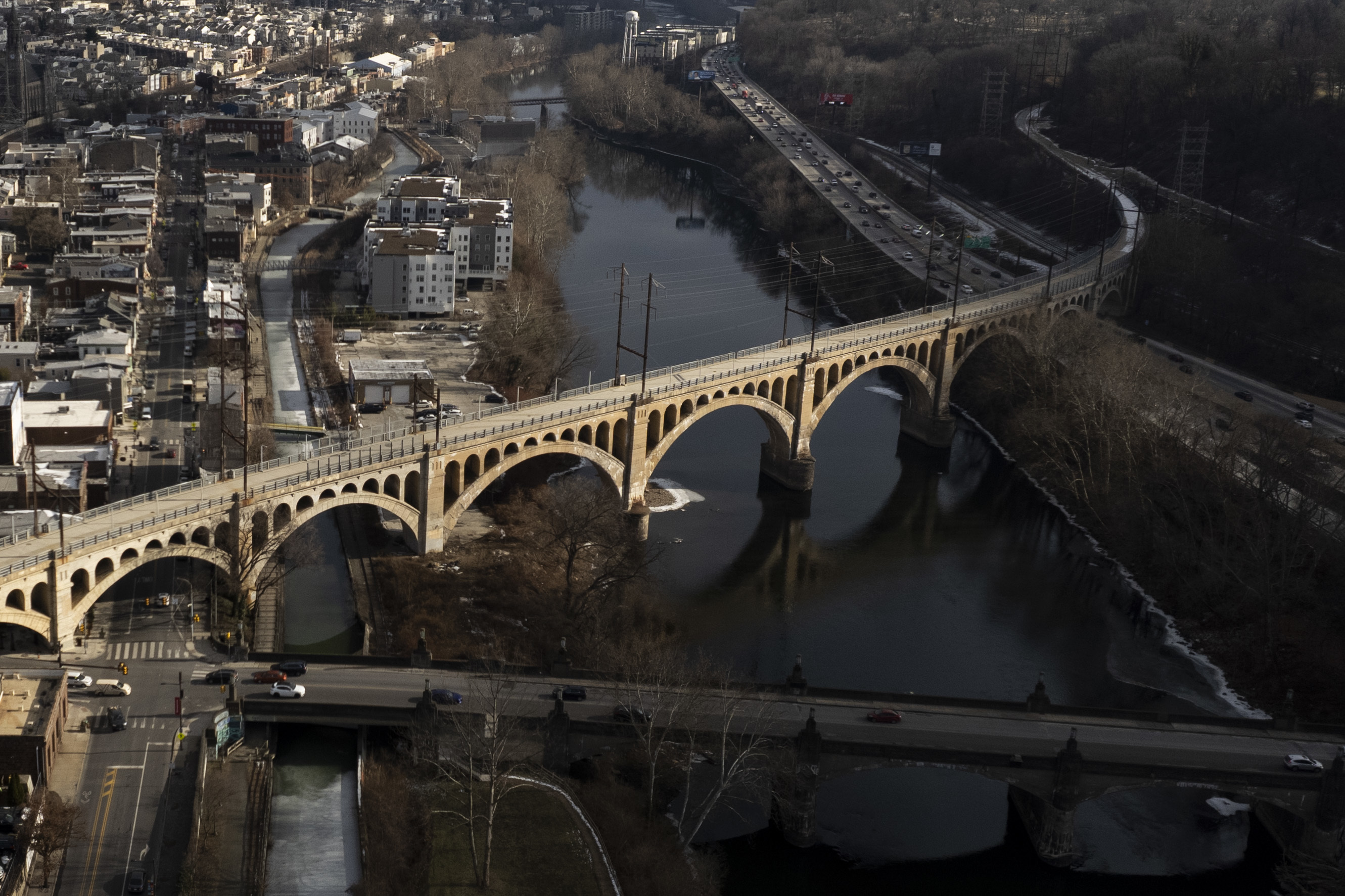
    Towering 80 feet above the Schuylkill and shaped by its colossal concrete arches, the Manayunk Bridge is a key connector in the region’s trail system and a link between Philadelphia and its suburban neighbor, Lower Merion Township.

    While the trail is beloved by city dwellers and suburbanites alike, a mid-trail traffic pattern switch for bikers and pedestrians has confused some users and prompted one reader to write in, asking The Inquirer to investigate. According to city and township officials, the traffic flow switch-up midway across the bridge is no accident.

    The Manayunk Bridge connects Manayunk to Bala Cynwyd. Monica Herndon / Staff Photographer

    The Manayunk Bridge connects the 80-plus mile Schuylkill River Trail with the Cynwyd Heritage Trail, a 2-mile multiuse path that runs along an unused segment of SEPTA tracks in Lower Merion. Much of the trail was once SEPTA’s Ivy Ridge line, which connected Philadelphia with Manayunk via Bala Cynwyd, but was truncated in the 1980s due to poor track conditions. The trail’s completion in 2011, and extension in recent years, has marked a major transformation for the previously underutilized corridor of Bala Cynwyd.

    Penn Valley resident J.J. Cutuli enjoys running and biking with his kids on the Cynwyd Trail.

    “We really love the pedestrian bridge. We really love the trail,” Cutuli said.

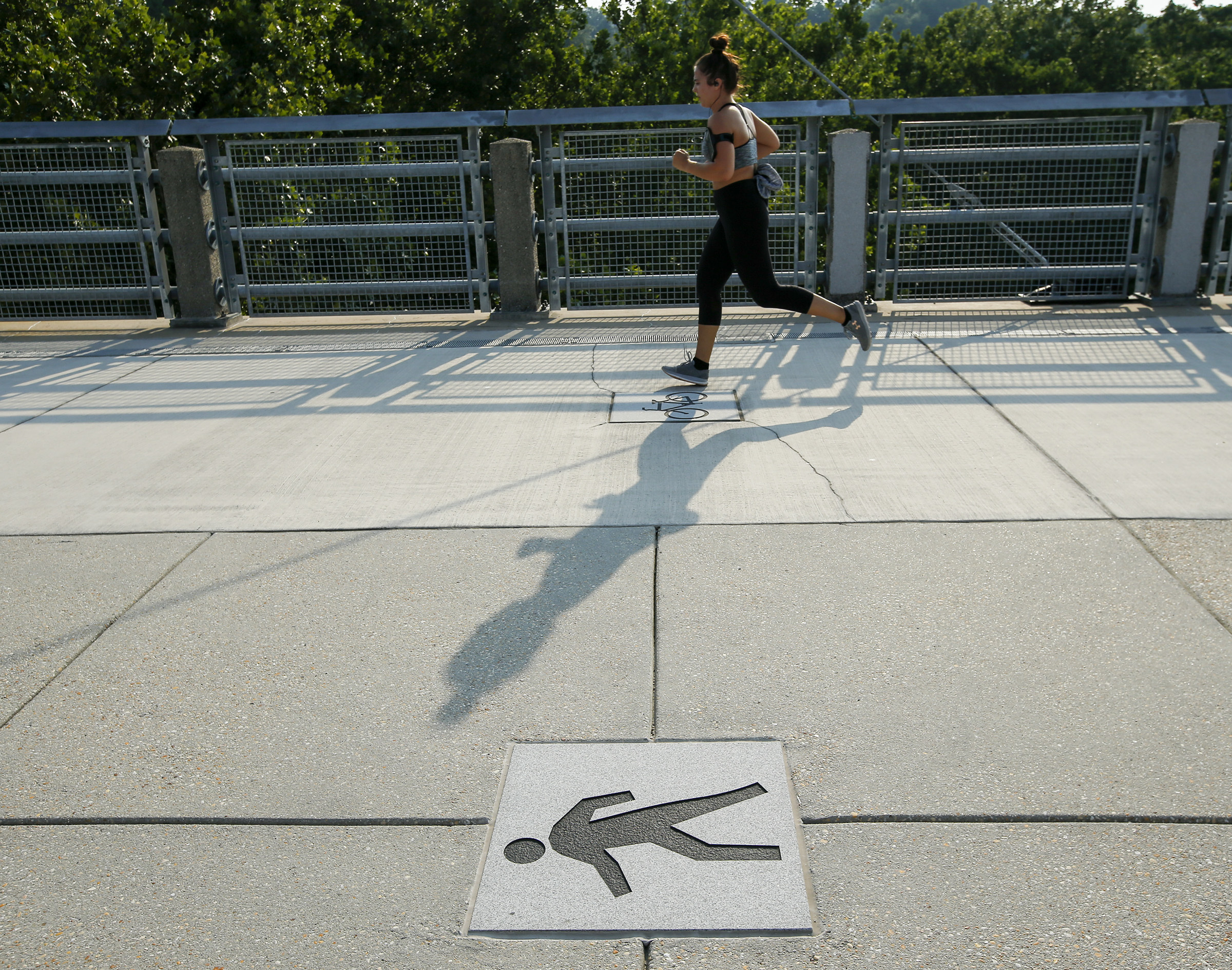
    But halfway across the Manayunk Bridge, “there’s this curious little thing that happens,” Cutuli said. The trail’s traffic pattern switches. The bicyclist side becomes the pedestrian side, and vice versa.

    “I’m kind of a rule-follower. One of my kids is a rule-follower, and he asked me that question. He was like, ‘What side should I be on? Should I be on this side? Should I be on that side? What are the rules of the road?’” Cutuli said.

    Unable to summon an answer himself, Cutuli wrote into Curious Lower Merion, The Inquirer’s forum for answering questions about the Lower Merion community.

    » ASK US: Have something you’re wondering about in Lower Merion? Submit your Curious Lower Merion question here.

    Chris Leswing, Lower Merion’s director of building and planning, said the traffic pattern switch was a deliberate choice to slow bikers traversing the downward slope from Lower Merion to Manayunk.

    It’s “easy to speed through areas where people may linger and watch the river” and the “idea was that bikers would need to be aware of the pavement markings to check their speeds,” Leswing said in an email.

    The city concurred.

    The switching of the bike and pedestrian zones was designed to slow bikes down and allow users to “experience both sides of the bridge and the amazing views,” Ra’Chelle Rogers, spokesperson for Philadelphia’s parks and recreation department, said in an email.

    The traffic pattern switch was in response to “what was heard from the public and stakeholders,” according to Rogers.

    Are trail users following the rules? Not completely.

    On one Reddit post, cyclists said the traffic pattern change and accompanying signage “makes zero sense” and “could not be more Looney Toons.” Most cyclists and pedestrians just stay to the right, commenters said.

    This suburban content is produced with support from the Leslie Miller and Richard Worley Foundation and The Lenfest Institute for Journalism. Editorial content is created independently of the project donors. Gifts to support The Inquirer’s high-impact journalism can be made at inquirer.com/donate. A list of Lenfest Institute donors can be found at lenfestinstitute.org/supporters.

  • The Frank Rizzo statue is repaired, and the search for a new location is underway

    The Frank Rizzo statue is repaired, and the search for a new location is underway

    In the case of Frank Rizzo, out of sight does not always mean out of mind.

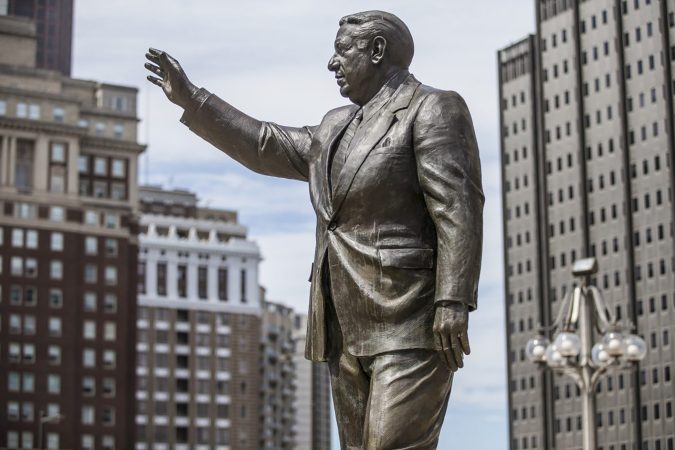
    The former mayor and police commissioner died 35 years ago. A 10-foot bronze statue reminded Philadelphians of his presence for decades, until civil rights protests in 2020 culminated in the monument’s removal from public display.

    It might have lost its prime spot outside the Municipal Services Building, across from City Hall. But, six years later, the statue remains a subject of interest, leaving reader JJ Cutuli to ask Curious Philly, The Inquirer’s forum for questions about the city: “Where is the Frank Rizzo statue, right now?”

    The short answer? Now that repairs have been made, the search for a new home is on. Here’s how we got here.

    » ASK US: Have something you’re wondering about the Philly region? Submit your Curious Philly question here.

    The last thing Cutuli heard on the Rizzo statue saga was that it was set to be returned to the Frank L. Rizzo Monument Committee, after a settlement was reached with the Philadelphia Art Commission last summer.

    “I am very much against the statue, against the man, against what it all represents,” Cutuli said. “But sweeping it under the rug or sending it to a scrap yard might take away the opportunity to deal with the issues that it represents.”

    Rizzo has long been a controversial figure. During the 1960s and 1970s, he was accused from different fronts in the city of having allowed police to function with little oversight, putting people of color in a vulnerable spot.

    Between 1970 and 1978, police shot civilians at a rate of one per week, according to an Inquirer investigation. That led critics to condemn Rizzo as a racist, and protesters even put a Ku Klux Klan hood on the statue’s head in 2016.

    “The statue is a deplorable monument to racism, bigotry, and police brutality for members of the Black community, the LGBTQ community, and many others. The treatment of these communities under Mr. Rizzo’s leadership was among the worst periods in Philadelphia’s history,” then-Mayor Jim Kenney said in a statement in 2020, when the city removed the statue overnight.

    For supporters, however, the South Philly native was a beacon of Italian American pride whose tough approach on crime could have been misunderstood.

    “He was a brute in some respects. But it wasn’t racist,” George Bochetto, an attorney for the Frank L. Rizzo Monument Committee, told The Inquirer in 2016. “It was law and order, it was crime, and I think he got a bad rap, frankly.”

    The agreement left the committee with an $80,000 payment from the city for damages caused to the statue during its removal.

    “They put it on the back of a flatbed truck and a piece of the base broke off so they had to replace that base,” Bochetto said. “There were also a lot of scratches and gouges on the body of the statue, which had to be repaired too.”

    The bronze Rizzo has been at a foundry undergoing “expensive five-figure repairs,” Bochetto said.

    Restorations are now done, according to the lawyer. The next frontier is finding a new home for the Rizzo statue.

    As part of the 2025 agreement, the statue should be displayed on private property, and in a way that makes it “not visible from the public right of way,” the agreement states.

    An exception can happen if the committee gets approval from Mayor Cherelle L. Parker or the managing director. Bochetto said that’s something the committee is working on. Bochetto did not describe locations being considered for the statue.

    The city did not reply to a request for information. So, the status of the monument’s home remains uncertain.

    Controversy aside, Bochetto said, it’s important to recognize that the statue is part of Philadelphia’s history.

    “People say that symbols like this from the past are a part of our history and that is true,” Cutuli said. “But as part of history perhaps these things do have a place in museums or perhaps they don’t, perhaps the story and the facts can exist without the statue.”

  • SEPTA’s bus numbering system is a relic from the streetcar era

    SEPTA’s bus numbering system is a relic from the streetcar era

    While waiting for his SEPTA bus, Jake McGovern, 28, noticed at least three routes go by his corner in Point Breeze.

    He wondered if route numbers had any particular meaning: Maybe 7 indicated a north-south route, and 9 meant east-west.

    “There has to be some logic to it,” he thought.

    No amount of looking at the bus maps proved helpful in deciphering the pattern, so McGovern asked Curious Philly, The Inquirer’s forum for questions about the city: “Is there any rhyme or reason for the SEPTA bus numbering system?”

    » ASK US: Have something you’re wondering about the Philly region? Submit your Curious Philly question here.

    Places like New York City have bus lines with a combination of letters and numbers that show the borough they serve: Bx (Bronx), B (Brooklyn), M (Manhattan), and even S for Staten Island.

    Philly, on the other hand, has always vibed to its own logic, even when that might mean not having one.

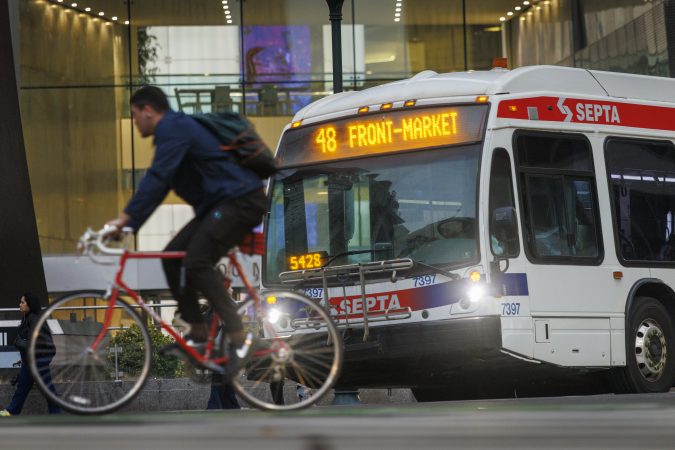
    SEPTA operates more than 120 bus routes, including the lines to the suburbs. But bus numbers in Philly do not indicate where routes go or which streets they operate on, according to SEPTA spokesperson John Golden.

    SEPTA bus numbers above 90 are lines driving to the suburbs.

    The routes below 90 were formerly Philadelphia Transportation Co. streetcar routes, Golden said.

    The bus numbers in Philly are a relic of a time when Philadelphians moved through streetcars pulled by horses.

    Back then, the lines were named in the order they were introduced, Billy Penn reported in 2020. When bus routes replaced them, the route numbers were retained.

    For areas with new bus routes, letters were assigned as the route identifier. Eventually, new bus routes were numbered in the high 80s, Golden said.

    The letter system ended in February 2025, when SEPTA renamed bus routes named after letters into numbers, turning:

    • The G into 63
    • The H into 71
    • The J into 41
    • The L into 51
    • The R into 82
    • The XH into 81

    Upon hearing the explanation McGovern said, “Oh, jeez” between laughs.

    “It’s kind of a letdown, but it’s funny that it worked out like that,” McGovern said. “I imagine the randomness is probably useful to other people in the city as well, because it makes it very unique.”