Tag: Cory Booker

  • Andy Kim and Cory Booker call on N.J. lieutenant governor to resign after report finds evidence of sexual harassment

    Andy Kim and Cory Booker call on N.J. lieutenant governor to resign after report finds evidence of sexual harassment

    New Jersey’s two senators in Washington echoed Gov. Mikie Sherrill’s call for Lt. Gov. Dale Caldwell to resign just hours after she released a report that said he sexually harassed a woman and made advances to others even after he was warned to stop.

    Sen. Andy Kim, a Burlington County Democrat, said in a statement on social media that the lieutenant’s governor was “unacceptable” based on the findings in the 61-page report based on a months-long investigation by an outside law firm.

    “New Jerseyans deserve to have public servants who work to earn and keep their trust, not undermine it,” Kim said.

    “The Lt. Governor should resign immediately,” he added.

    Sherrill’s office released the documents Thursday evening in her first acknowledgement of the investigation into Caldwell, who has denied the findings of the report.

    Sherrill said Caldwell “engaged in serious, repeated violations of state policy and failed to uphold the responsibilities of his office.”

    The governor called on Caldwell to step down from his post as her No. 2 by Friday, but statements from his attorneys show no indication he plans to adhere to that request. He’ll likely face increasing pressure over the course of the day.

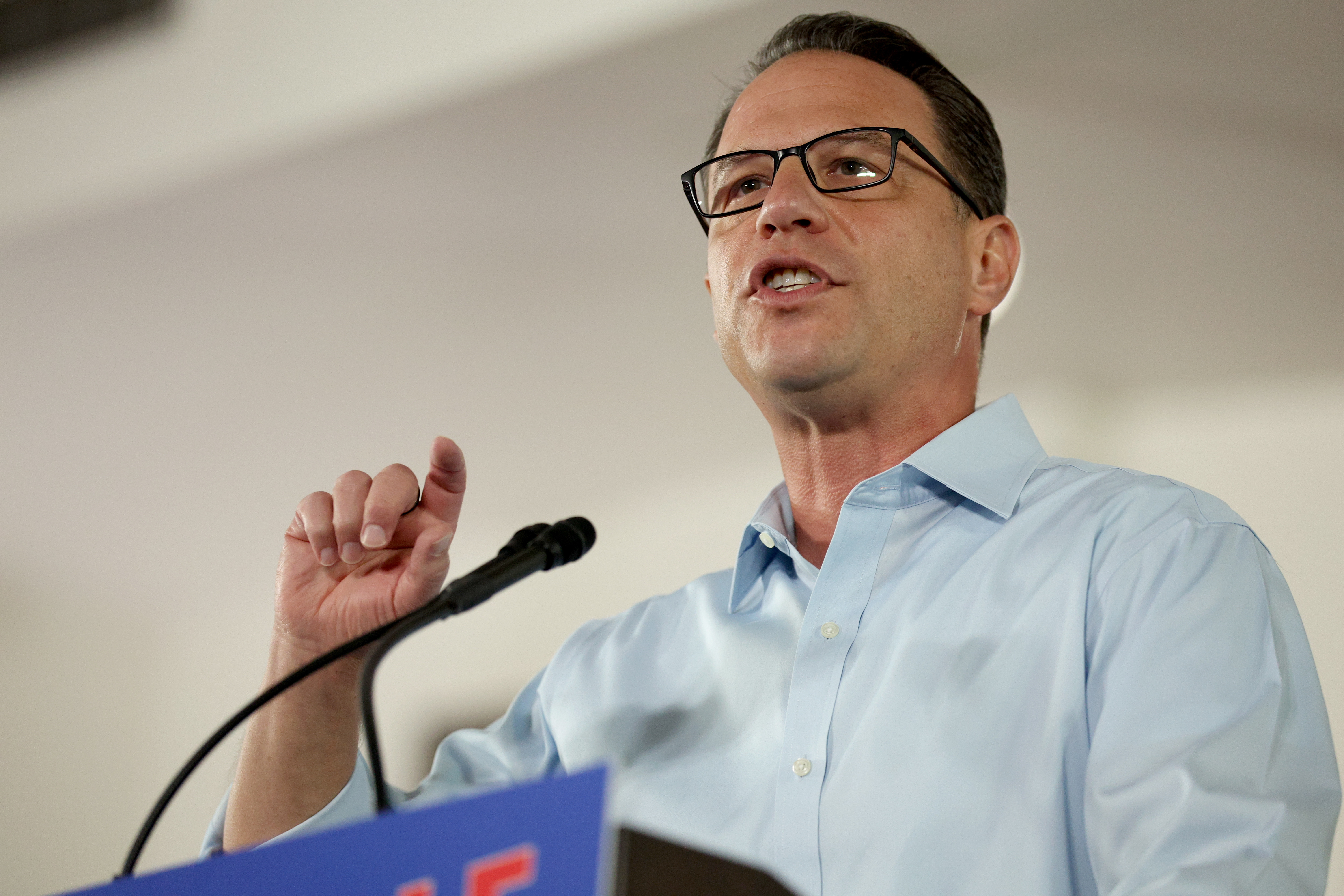
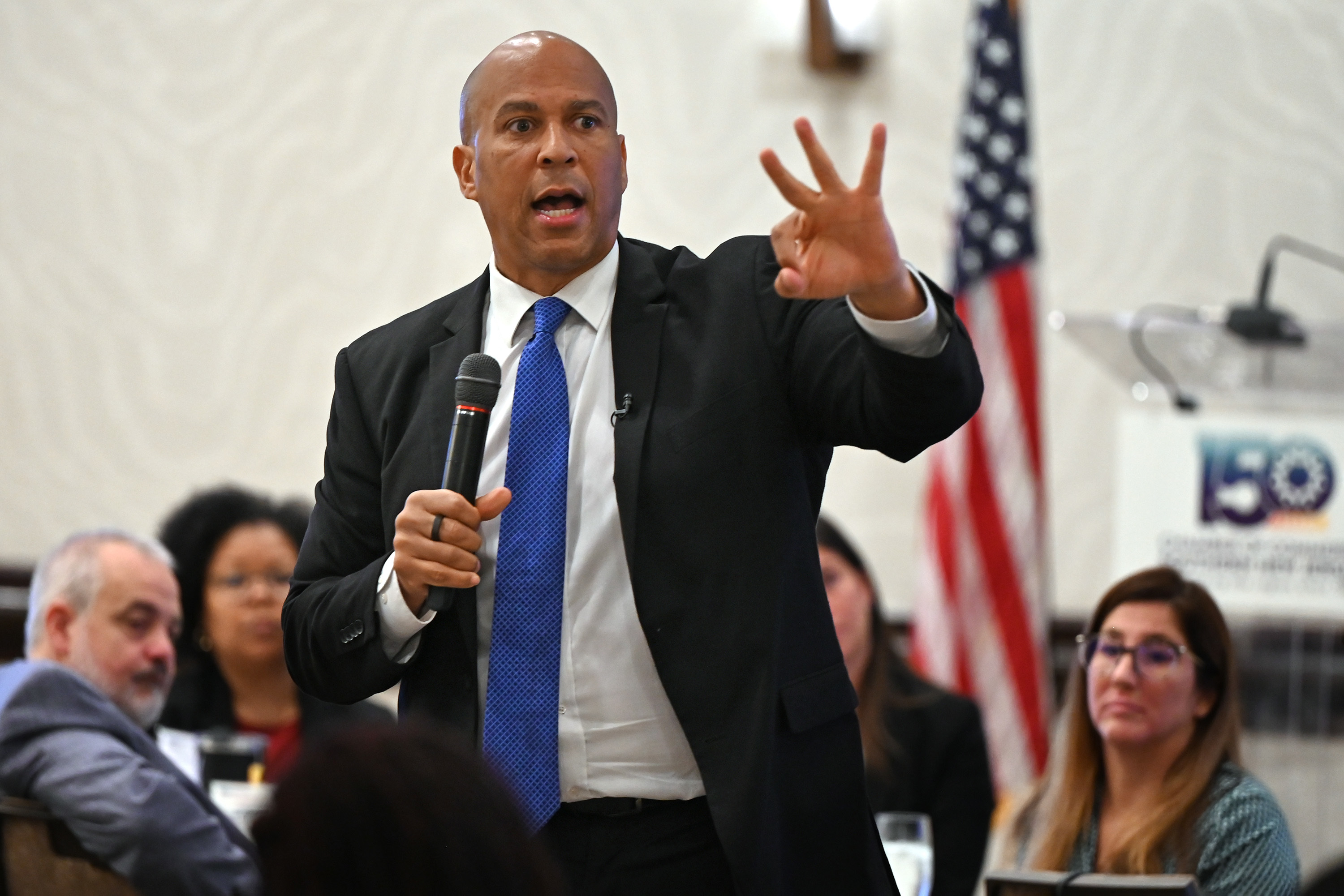
    USE AS DESIRED: U.S. Sen. Cory Booker addresses members of the Chamber of Commerce of Southern New Jersey in Mt.Laurel Aug. 29, 2023.Tom Gralish / Staff Photographer

    Sen. Cory Booker, a Newark Democrat, said Caldwell should resign “for the sake of our state” in a statement on social media.

    “Governor Sherrill is absolutely right the conduct described in the investigative report is totally unacceptable,” he said.

  • Sizing up the 2028 Democratic presidential contenders

    Sizing up the 2028 Democratic presidential contenders

    The Democratic field for president is still wide open and unsettled. The very early list includes former presidential candidates, governors, senators, House members and celebrities. While no one on this list has officially declared, some candidates have been more open than others about wanting to run.

    Ahead of November’s midterm elections, the field is starting to take shape as a major debate roils the party: Is the surging progressive movement helping or hurting Democrats’ chances to take back the White House in two years?

    Some Democrats argue it’s time to embrace bold, progressive policies to boost their party’s popularity among working-class voters. Others think centrists will stand out.

    “I think Democratic voters are going to get incredibly pragmatic when it comes to 2028,” said John Anzalone, who served as the chief pollster for President Joe Biden’s winning 2020 campaign.

    Here’s how the field is shaping up. (This is our fourth ranking so far. Our most recent ranking of potential Republican candidates is here.)

    The standouts

    Jon Ossoff, Wes Moore, Raphael Warnock and other newish names: The Democratic base seems hungry for new leaders right now. Ossoff, the 39-year-old Democratic senator from Georgia, is fitting that bill in a big way. He’s getting millions of views for his sharp social media posts and campaign speeches that mercilessly criticize President Donald Trump.

    “This is the cruelest and most arrogant group of people who have ever ascended to high office in modern American history,” Ossoff told supporters in July.

    He is running for reelection in Georgia, and his race will be one of the most competitive in the country.

    Other Democrats point to Ossoff’s fellow senator from Georgia, Raphael Warnock, as a potentially strong contender. (Warnock is not up for election in November.)

    “For the first time since Obama, there’d be a candidate that unites the progressive Democratic lane and Black voters,” Texas-based Democratic pollster Nancy Zdunkewicz said.

    Moore, the first-term Maryland governor and only sitting Black governor, is described by some Democrats as young and vibrant.

    “Ossoff is currently on fire,” Anzalone said, “and Moore is also the type of guy who could really catch fire.”

    Kamala Harris: This summer, Democrats recommended South Carolina vote first in the 2028 Democratic nominating process. That boosts Black voters’ representation in picking the nominee and Harris’s fortunes, given the former vice president and 2024 nominee is probably the candidate on this list with the most support among Black women. She’s been rallying voters for the midterm elections by touting her “controversial” plan to abolish the electoral college and add justices to the Supreme Court. “They are ruthless! We need to be ruthless too,” she said recently of Republicans. Some Democratic insiders don’t see her as a viable candidate, given she lost to Trump.

    Gavin Newsom: The other California Democrat on this list aside from Harris has used his position as governor of the largest Democratic-run state to consistently oppose Trump. This summer he announced he and his wife were under federal investigation. (The Post has reported prosecutors are looking into potential tax crimes related to a nonprofit Newsom’s wife is linked to.) Newsom framed it as a compliment: “He’s coming after me because I’m considering running for president,” Newsom said of Trump.

    Josh Shapiro: The popular Pennsylvania governor has had a relatively low-profile summer compared to other candidates on this list. He appeared in a music video. He has declined to take sides on the progressive-versus-centrist split in the party (at least for now). His breakout moment may be coming. He’s up for reelection in November and is trying to help Democrats take back control of the House by helping his party win four of the most competitive races in the nation, all in his state.

    Alexandria Ocasio-Cortez: Democratic socialists are having their own moment. After helping elect New York City’s mayor earlier this year, they and the broader progressive movement ousted longtime members of Congress in deep blue cities and won a hard-fought primary in Michigan. Ocasio-Cortez, a congresswoman from New York, was one of the first members of the Democratic Socialists of America to win federal office, and she’s an obvious pick for the broader progressive movement to get behind if she runs for president. She hasn’t ruled it out, though she could also run for Senate.

    Mark Kelly: The senator from Arizona has emerged as a forceful pushback against his party’s turn to the left. He’s also a candidate some Republicans say scare them: He’s a former astronaut (at a time when astronauts are cool again) and an astronomical fundraiser from a swing state.

    Pete Buttigieg: President Joe Biden’s transportation secretary is cited by Democrats as one of the party’s best messengers and another young candidate who can catch fire. Despite not currently holding office, he’s near the top of several polls of Democratic primary voters.

    The middle of the pack

    Any other number of governors: JB Pritzker, the billionaire governor of Illinois, has urged his party to focus more on economic issues than Trump: “You don’t win elections talking to the public about democracy,” he said.

    Kentucky’s Democratic governor Andy Beshear has been pitching himself as someone who can turn rural America against Trump. When Sen. Mitch McConnell (R-Kentucky) was hospitalized for weeks without many updates, Beshear demanded McConnell prove his “capacity to serve” or resign his seat.

    Jared Polis is on his final year as governor of Colorado. He’s a wealthy businessman who has received some credit for turning a reddish state more blue. He recently shocked his party by commuting the prison sentence of former election official Tina Peters, who was convicted on charges tied to Trump’s efforts to stay in power after losing the 2020 presidential election.

    No longer on our list is Gretchen Whitmer. This year marks her final term as governor of Michigan, and she’s repeatedly indicated she’s not interested in running.

    Any other number of U.S. senators: Sen. Cory Booker of New Jersey is a fiery presence in the Senate. Last year he broke the Senate record for the longest individual floor speech. This month, in a committee hearing he declared Republicans’ food stamp cuts as “effing ridiculous.”

    Sen. Elissa Slotkin of Michigan, one of the few women on this list, served combat tours as a CIA analyst and represents a swing state. She’s crisscrossing the Midwest to connect with voters. The centrist could play an interesting role in trying to help left-wing Democrat Abdul El-Sayed win the state’s other Senate seat in November.

    Sen. Chris Murphy of Connecticut has been a prominent Democratic voice on foreign policy for many years. Like many candidates on this list, he’s been critical of Israel’s violence in the Gaza Strip. He also made headlines recently saying he’d support a “bad deal” with Iran to end the war.

    “There’s only a couple of Democrats that are thinking of running for president that have won red states,” Sen. Ruben Gallego of Arizona said recently. “I’m one of them. There’s only a couple of Democrats that can speak to working-class America, especially Latino men. I’m one of them.”

    Rahm Emanuel: The former Chicago mayor was previously President Barack Obama’s chief of staff. Emanuel is leaning hard on policy. He outlined a proposal for Israeli-Arab peace while traveling to Israel last month. Back home, he’s proposed a national social media ban for children, a mandatory retirement age for federal politicians and judges, and bringing back accountability systems for teachers.

    Ro Khanna: The congressman from California has the eye of some progressives for being one of the first voices in the House to speak out against Israel’s military action in Gaza, for playing a leading role in bringing the Justice Department’s Jeffrey Epstein files to light, and for being willing to regularly go on Fox News.

    The dark horses

    A celebrity or other political figure: ESPN commentator Stephen A. Smith is considering a run as a centrist. United Auto Workers president Shawn Fain is popping up as a possibility among some on the left.

    Democrats I’ve talked to say to leave room for surprise candidates. “There may be someone running we’ve never thought of,” Anzalone said.
  • N.J. Democratic delegation asks President Trump to reverse FEMA aid rejection for deadly February snowstorm

    N.J. Democratic delegation asks President Trump to reverse FEMA aid rejection for deadly February snowstorm

    Every Democrat in the New Jersey congressional delegation signed a letter to President Donald Trump asking him to reverse his rejection of disaster aid for a deadly blizzard earlier this year.

    The lawmakers sent the letter, which was first obtained by The Inquirer, to the White House on Friday in support of Gov. Mikie Sherrill’s appeal of the president’s rejection. Their plea comes after Trump denied an $84 million request to the Federal Emergency Management Agency (FEMA) for relief for a late February blizzard earlier this month.

    “Severe blizzard conditions led to widespread damage—overwhelming State and local capacity,” the lawmakers wrote. “Tragically, this fatal event resulted in 12 confirmed weather-related fatalities across nine counties, the most out of any impacted state.”

    The letter was led by U.S. Sens. Cory Booker and Andy Kim, both Democrats. All members of the New Jersey delegation were invited to join, Booker’s office said, but all three of the state’s Republican members opted out. Even U.S. Rep. Jeff Van Drew, a South Jersey Republican, sat out of the effort despite initially backing the request in April.

    Van Drew joined Booker, Kim, and six Democratic House members in an April letter of support for the request in which they said the public assistance and hazard mitigation funds “are crucial to the recovery of the communities” impacted by the storm.

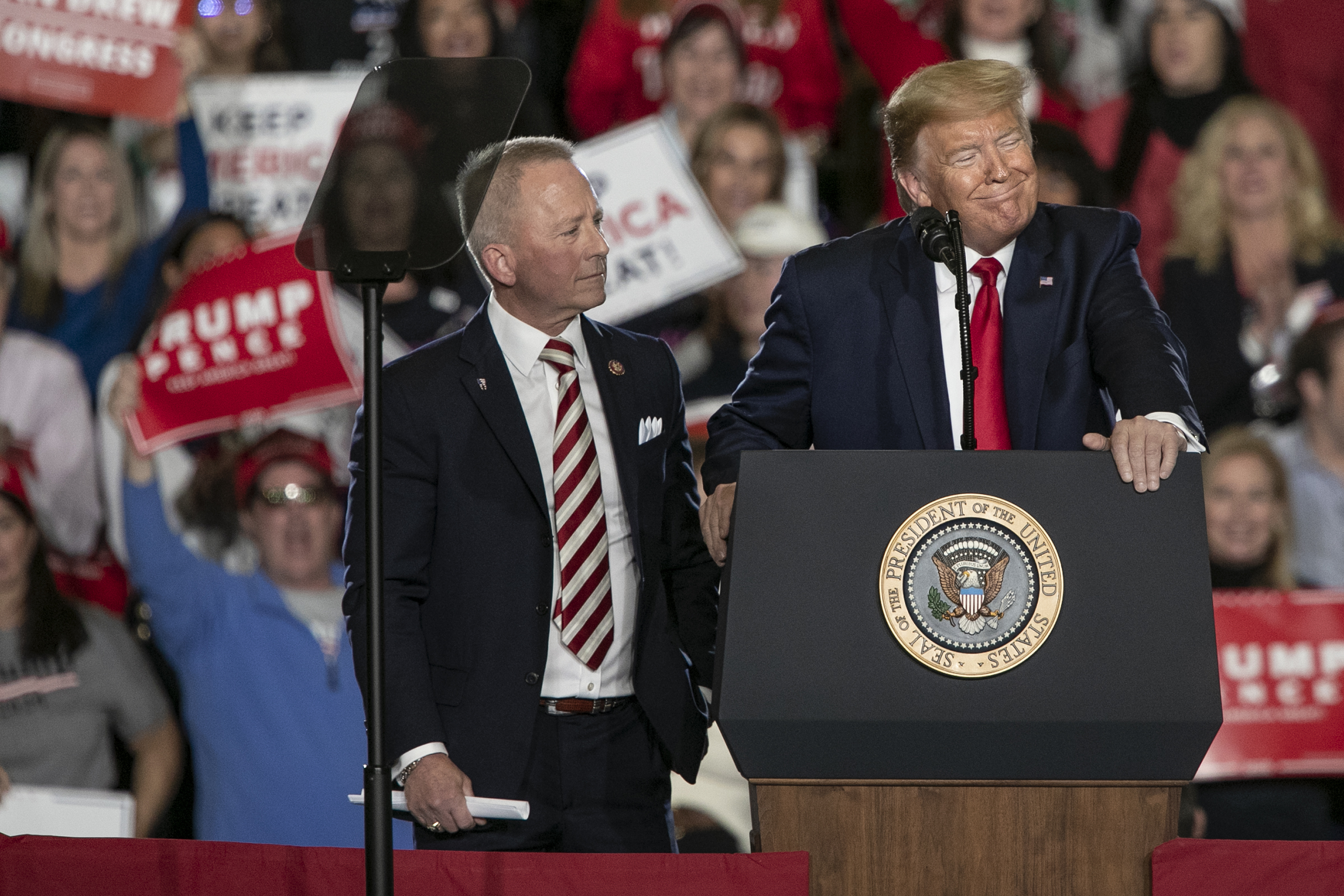
    President Donald Trump smiles while Rep. Jeff Van Drew (R-NJ) stands next to him at a Keep America Great campaign rally in Wildwood, NJ on Tuesday, Jan. 28, 2020.HEATHER KHALIFA / Staff Photographer

    The request sought money for every county in Van Drew’s district for costs related to the snowstorm, including damage from moderate coastal flooding in Atlantic County and his home county of Cape May. Van Drew, a Trump ally and former Democrat, faces a challenge from Cape May Mayor Zack Mullock for his reelection in November.

    Van Drew did not respond to a request for comment.

    In the Friday letter, the Democratic lawmakers’ tone was direct but they did not reference accusations that Trump’s decision was politically motivated. Those concerns come amid a revelation that the Trump administration has been rejecting Democratic states at a particularly high rate. A Wednesday Politico report found Trump recently overrode regional FEMA assessments when he rejected aid for four Democratic states.

    The request included assistance for the vast majority of the state’s counties – including all of South Jersey – as well as hazard mitigation funding statewide, according to the Friday letter. Preliminary damage assessments across those 19 counties documented “extensive emergency work” such as snow and debris removal and “damage to critical infrastructure and public facilities.”

    The New Jersey Office of Emergency Management estimates that disaster costs will exceed $100 million, which is more than five times more than the state’s threshold of about $18 million to qualify for federal disaster assistance.

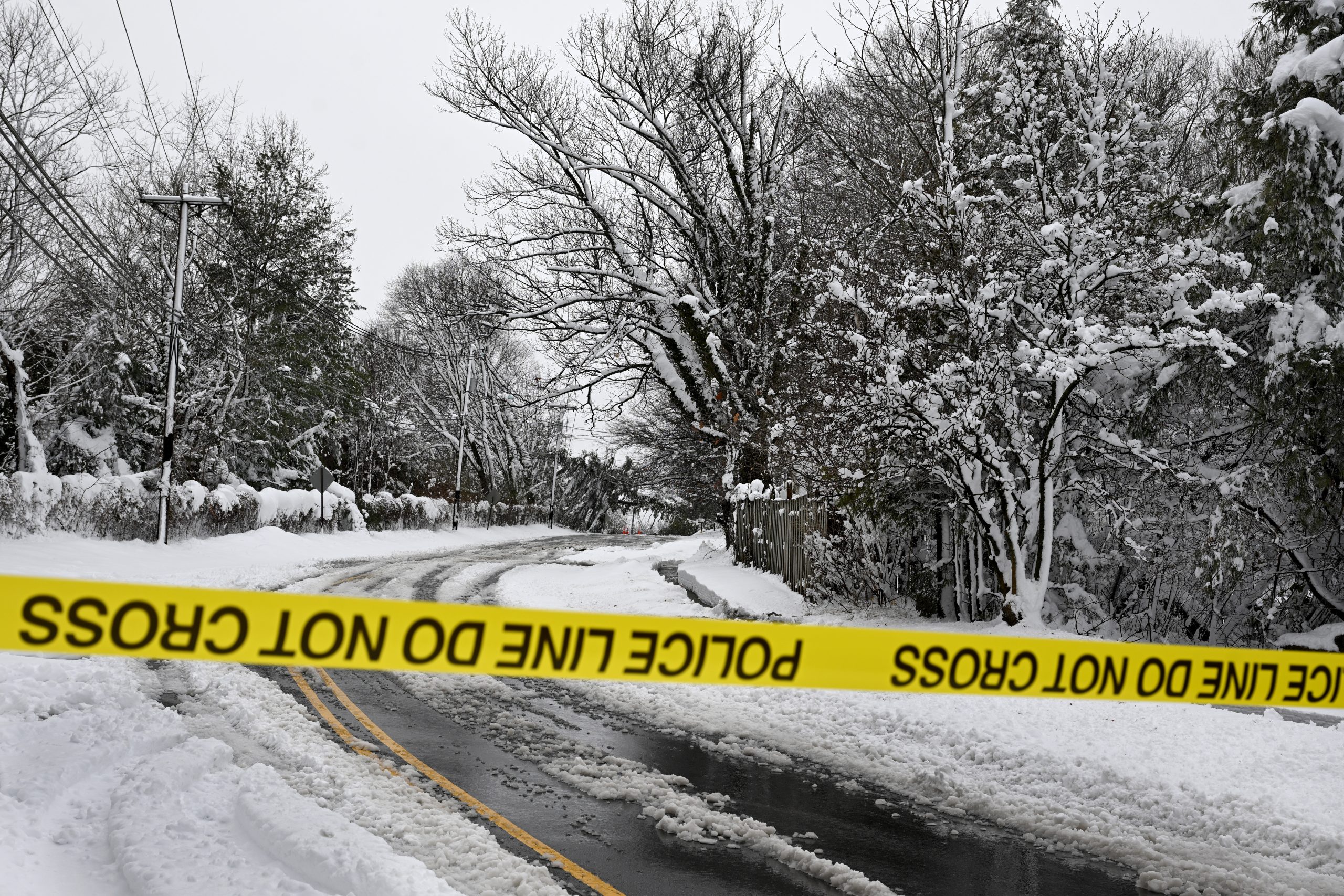
    Covered Bridge Road in Cherry Hill is Monday Feb. 23, 2026 after a power line was knocked down by the Sunday night snorwstorm.Tom Gralish / Staff Photographer

    “The extent of the damage, the operational burden throughout the State, and the cumulative impacts of recent and related extreme weather all provide overwhelming evidence that New Jersey’s request must be granted,” they wrote. “While we commend the actions of the State and local governments to respond thus far, full recovery will require your approval of federal resources.”

    The lawmakers cite National Oceanic Atmospheric Administration data that found approximately 24 inches of snow fell in less than 24 hours across central and eastern parts of the state, and eight of the state’s 21 counties recorded record or near-record snowfalls.

    Power outages during the storm impacted more than 127,000 customers in the state and there were 544 motor vehicle accidents and 1,518 motor vehicle-related assists, according to the letter.

    They also argued that Trump should consider that the state already had a “strained capacity to respond” because of another severe snow and ice storm weeks earlier, as well as six open federal disaster declarations — in reference to prior disasters for which the state is still working on recovery projects.

    “We look forward to working with you to ensure all Americans receive protection and support from the federal government in the aftermath of a serious disaster,” they wrote.

    On Thursday, Sherrill spokesperson Sean Higgins noted in a statement that the costs of the February snowstorm “didn’t care about political boundaries” and that the governor will fight for funding “regardless of political party,” in a nod to the accusations Trump is putting his thumb on the scale based on partisan favoritism.

    White House spokesperson Abigail Jackson said in a statement Thursday, before receiving the letter, that the president “provides a more thorough review of disaster declaration requests than any Administration has before him” and that he responds to FEMA requests “with great care and consideration, ensuring American tax dollars are used appropriately and efficiently by the states to supplement—not substitute, their obligation to respond to and recover from disasters.”

    She also said the Trump administration is committed “to empowering and working with State and local governments to invest in their own resilience before disaster strikes, making response less urgent and recovery less prolonged.” The Trump administration previously tried to cut disaster prevention funding because it was too “focused on ‘climate change” before a group of states including New Jersey sued.

    Kim, the ranking Democrat on the committee that oversees FEMA, said in an interview Thursday that he is concerned that politics were involved in the latest rejection but couldn’t say for sure.

  • Shapiro, Democrats blasted Trump’s ‘conspiracy theories.’ That message has not changed after New Jersey’s noncitizen voting revelation.

    Shapiro, Democrats blasted Trump’s ‘conspiracy theories.’ That message has not changed after New Jersey’s noncitizen voting revelation.

    The day after President Donald Trump delivered a prime-time speech contending, among other claims, that 250,000 noncitizens were registered to vote in just four states, Pennsylvania Gov. Josh Shapiro derided it as “a whole bunch of conspiracy theories that are just simply not connected to reality.”

    A week later, when New Jersey revealed that 6,600 noncitizens were improperly registered to vote in the state and nearly 400 cast a ballot due to a glitch, Shapiro’s message was nearly identical — that Trump is pushing “baseless conspiracy theories” as he seeks more power over state-run elections.

    Pennsylvania and New Jersey were both on the list of Democratic-led states that Trump claimed had thousands of noncitizens on their voter rolls. The methodology of how the Trump administration arrived at that figure remained unclear, but his administration has sought to leverage the New Jersey disclosure as evidence of a larger problem.

    But Shapiro and other national Democrats have not shifted their messaging on the issue ahead of the high-stakes midterm elections. They are refusing to cede to the GOP any suggestion that New Jersey’s voter rolls are evidence of widespread voter fraud and are warning that the changes Republicans seek would make it tougher for many Americans to vote.

    Shapiro, a likely presidential contender in 2028, joined 25 other Democratic officials from across the nation in a lawsuit last Thursday challenging the administration’s ramped-up attempts to coerce states to share their raw voter data by threatening to withhold money for homeland security and disaster preparedness.

    “Withholding this funding will make our communities less safe and would be dangerous under any circumstance, but doing this in an attempt to undermine states’ authority over elections is reckless and unconstitutional,” Shapiro said.

    Kentucky Gov. Andy Beshear, another potential 2028 candidate, also joined the suit. (Both Shapiro and Beshear lead states with Republican attorneys general.)

    The day after Trump’s speech, Shapiro challenged the administration to present “real evidence” of noncitizen voting, which Pennsylvania election officials say is extremely rare.

    In addition to Pennsylvania and New Jersey, the White House also targeted Nevada and California for additional scrutiny over their voter rolls, according to a document posted to the White House website last week shortly after Trump’s speech.

    California Gov. Gavin Newsom, one of Trump’s most vocal critics in the Democrats’ potential 2028 field, said the president’s speech was fueled by debunked lies.

    “It was unhinged. Unfounded allegations of election fraud — it’s madness. But he’s setting it up. He’s setting you all up. You know what he’s doing. He’s doing it in plain sight. He’s socializing all of this to normalize all of this,” Newsom said last week, during a news conference that took place the same day as New Jersey’s announcement.

    Trump has repeatedly promoted conspiracy theories about California elections in recent weeks — including in two Pennsylvania speeches — despite no evidence that fraud occurred.

    For U.S. Sen. Cory Booker (D., N.J.), pushing back against Trump presents a tougher challenge.

    Booker, also a likely 2028 aspirant, must balance the governing changes he sees as needed in New Jersey with the larger politics of the moment. He said the failure of the software was “not acceptable” but rejected Trump’s efforts to portray the entire election system as faulty.

    “There are those who will choose to weaponize this issue to undermine confidence in our elections,” Booker said in a statement. “We cannot allow that.”

    But Republicans have pointed to New Jersey as proof that a sweeping overhaul is needed for November’s results to be trusted.

    Trump’s allies are pushing the SAVE America Act, which would require voters to provide proof of citizenship when registering to vote and to show photo ID at the polls. The effort has stalled in Congress amid concern, even among Republicans, that the bill’s restrictions on mail voting could make it harder to cast a ballot and that many citizens could wrongly be blocked from voting if they do not have access to required paperwork.

    Vice President JD Vance, widely viewed as a 2028 Republican candidate and a potential political heir to Trump, seized on New Jersey’s revelations as a renewed opportunity for the legislation’s relevance.

    “If only there was a way to stop this type of ‘software error’ that allowed non citizens to vote in our elections,” he wrote in a post on X that targeted Booker and Sen. Andy Kim (D., N.J.), both of whom are unlikely to support the Republican-led bill.

    But the registration glitch happened despite these individuals answering “no” when asked on a keypad whether they were U.S. citizens. They were added to the system “through no fault of their own,” New Jersey Gov. Mikie Sherrill said last week, so it is not clear that showing additional documentation would have prevented the error.

    Sherrill ordered her chief counsel to investigate the issue, which occurred under her predecessor, former Democratic Gov. Phil Murphy, and promised to hold those responsible for the error accountable.

    Talking about this issue can pose an obstacle for both parties now that New Jersey’s glitch has been identified, said Sam Chen, a Pennsylvania strategist who has worked for former Gov. Tom Corbett and other Republicans.

    Republicans have overplayed their hand and are not seen as an authoritative voice on voter fraud, but Democrats have spent the same amount of time dismissing all of Republicans’ concerns, including some that are legitimate, Chen said.

    “When you’ve got an entire party saying, ‘No, this is never happening,’ and now you see what you see in New Jersey, it is going to leave a serious credibility issue for them,” Chen said.

    Democrats, like Shapiro, could build more credibility if they acknowledged the positive parts of the SAVE Act, he contended.

    “Grab what’s good, vehemently oppose what’s bad, and states can blaze their own path,” he said.

    But J.J. Balaban, a Philly-based Democratic ad maker, said it does not make sense for Democrats to go along with the SAVE Act because the charges are being made in bad faith.

    While many Democrats would support efforts to make election systems more secure, Balaban said, that is not what the Trump administration is trying to do — and New Jersey does not change that.

    “Voter fraud was shockingly rare a month ago. It remains shockingly rare today,” he said.

  • Josh Shapiro has fundraised $50 million since the beginning of last year, his campaign says

    Josh Shapiro has fundraised $50 million since the beginning of last year, his campaign says

    Gov. Josh Shapiro’s teeming campaign war chest continues to grow.

    The first-term Democrat raised a whopping $12 million toward his reelection bid for Pennsylvania governor between April and June, his campaign said Wednesday — bringing his total fundraising to $50 million since January 2025.

    The announcement from Shapiro’s campaign came months ahead of the next financial filing deadline for Pennsylvania candidates, on Sept. 22.

    But the news of the governor’s eye-popping fundraising figures — topping the $10 million he raised between January and March — came the same week that federal elected officials and candidates are required to submit their financial reports.

    Shapiro is widely speculated to be considering a 2028 presidential run, though he has demurred when asked about any presidential ambitions. Several members of Congress, including U.S. Sens. Cory Booker of New Jersey, Mark Kelly of Arizona, and Chris Murphy of Connecticut, and U.S. Reps. Ro Khanna of California and Alexandria Ocasio-Cortez of New York — all of whom were due to file their latest fundraising totals by Wednesday night — are also seen as prospective candidates for the Democratic presidential primary.

    However, federal officials face different limits on the amounts of money they can receive. Individuals can give only $3,500 per candidate per election. In Pennsylvania, state law allows unlimited spending for candidates, and multiple donors have contributed five- and six-figure dollar amounts to Shapiro’s campaign.

    A spokesperson for Shapiro declined to comment on the timing of his fundraising announcement.

    If Shapiro decides to run for higher office, the money he has raised would not follow him. State campaigns are not permitted to transfer money to a presidential run. But his connections could provide a vast network of donors if he pursues the White House.

    Shapiro, who has boasted high popularity ratings in Pennsylvania throughout his term, has also consistently polled well ahead of his Republican gubernatorial opponent, State Treasurer Stacy Garrity.

    Garrity’s campaign did not provide its latest fundraising numbers. Full reports for both Garrity and Shapiro, including who gave the money and how much was spent, will be available in September. In the 2022 Pennsylvania governor’s race, Shapiro spent a historic $73 million to beat Republican State Sen. Doug Mastriano.

    During the last reporting cycle, Shapiro outraised Garrity 10-1 as she struggled to compete with Shapiro’s large donations from across the country. Her campaign has previously emphasized that most of her contributions came from individual Pennsylvanians.

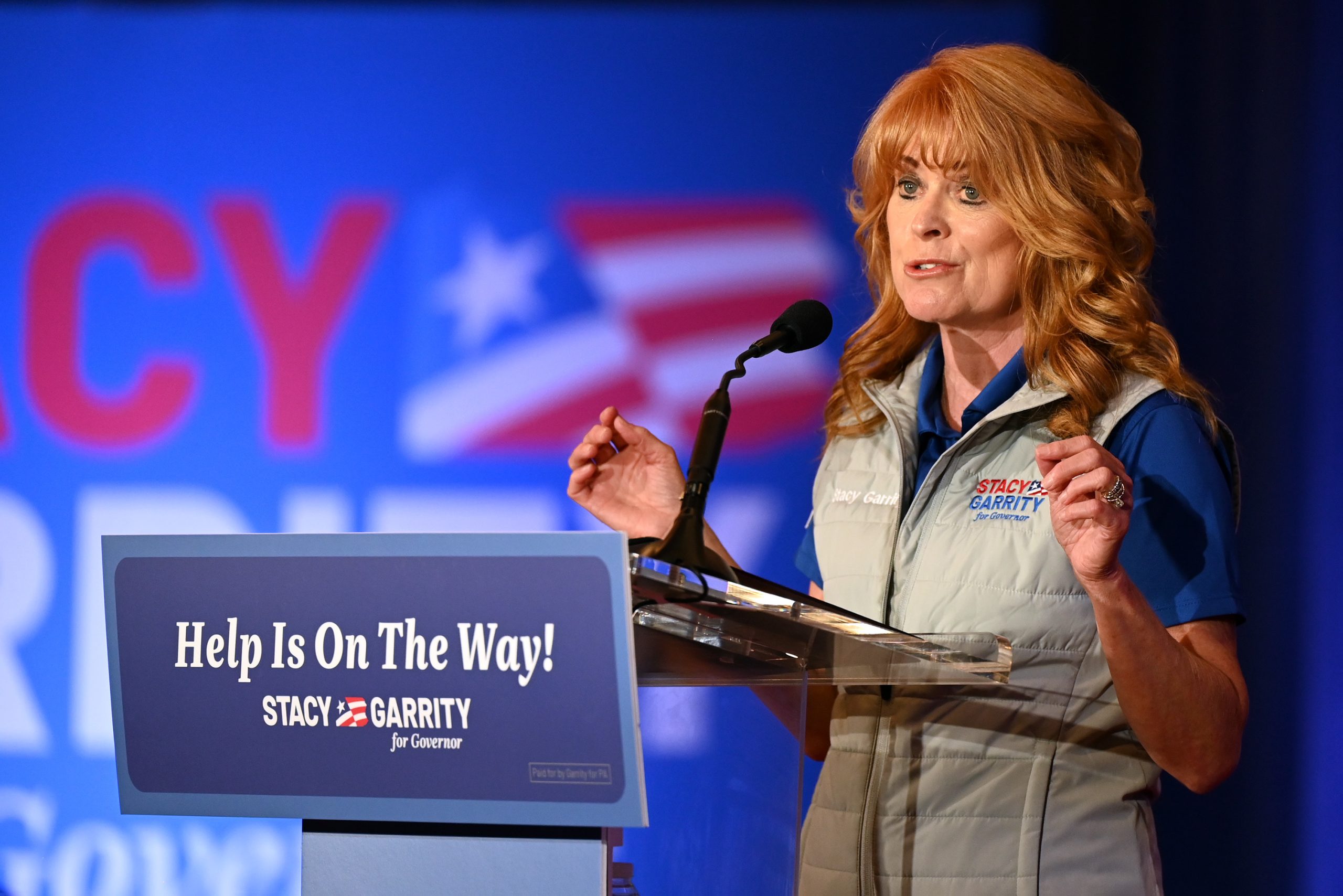
    State Treasurer and Republican candidate for governor Stacy Garrity holds a rally in Bucks County Sept. 25, 2025 at the Newtown Sports & Events Center.Tom Gralish / Staff Photographer

    On Tuesday, Garrity stopped in Philadelphia for an event with Florida Gov. Ron DeSantis at the Union League about issues related to affordability, according to an event flyer. Media were denied entry into the private event.

    Shapiro was also in the city on Tuesday, touting the boost to education funding in the new state budget.

    The governor has repeatedly said his focus is on the November election in Pennsylvania, where he is vying not only for reelection but also to rally enthusiasm down-ballot in efforts to flip control of the state Senate and elect Democrats to four nationally watched congressional seats in attempts to flip the U.S. House.

    Shapiro has taken on a more prominent role in the state’s Democratic Party over the last year. A longtime ally, Larry Hailsham Jr., became the party’s executive director in October 2025, and since then, the governor has continued to invest in the party.

  • Democratic leaders threaten self-destruction after wins by popular left-wing candidates

    Democratic leaders threaten self-destruction after wins by popular left-wing candidates

    For years, I have summed up American politics in one sentence: Republicans have no principles, Democrats have no spine. Now, Democrats seem intent on proving they have no brains to go with that wobbly backbone. Following James Carville’s lead, some frightened Democrats appear determined to snatch defeat from the jaws of victory.

    Carville worked magic nearly 35 years ago, helping mastermind Bill Clinton’s 1992 win. He has since become the epitome of the conventional-wisdom consulting class. Only a split within the party could darken the Democrats’ bright electoral prospects this year and beyond. Yet, Carville seems determined to promote precisely that division.

    Appointing himself the party’s membership czar, Carville openly advocates for an intraparty “schism,” pushing out the democratic socialists whom voters just elected in Democratic primaries. Sparing no expletives, he said, “I actually do think it’s time for Democrats to talk the S-word: schism.”

    Even the word reeks of futility. Schism is most closely associated with the Great Church Schism, which culminated in 1054. The schism irreparably split the Christian Church into Eastern Orthodox and Western Roman Catholic, and weakened Christianity for centuries. It led to Western Crusaders sacking Constantinople in 1204, and left the Eastern Orthodox exposed to the rising Ottoman empire, which took the city in 1453.

    The Democratic Party has always thrived on diversity. In the 1930s, Sen. “Cotton Ed” Smith and fellow conservatives held the party’s right flank while Sen. Robert Wagner and the liberals held its left. That coalition built the majorities that enabled Franklin Delano Roosevelt to enact the New Deal and to lead the nation through World War II.

    One of FDR’s few political missteps was his attempt to purge conservatives in the 1938 primaries. The failed purge, which party chair James Farley called a “bust,” drove Southern Democrats into a conservative coalition with Republicans and shattered FDR’s aura of invincibility. Though not the primary cause, it contributed to staggering Democratic losses that November: 72 House seats and eight Senate seats.

    Carville’s schism has no upside. A handful of democratic socialists will not turn America into Cuba. They sit much closer to the Democratic mainstream than Cotton Ed’s bloc sat to FDR’s. A September Gallup poll found that 66% of Democrats hold a positive view of socialism. And these are not hard-line socialists; they more closely resemble the social democrats of Scandinavia, who would regulate capitalist enterprise, rather than have the state seize it.

    The downside, though, is immense. A divided party wins fewer elections. The most likely outcome of a Democratic schism is MAGA rule for the foreseeable future, posing grave danger to American democracy itself.

    Carville’s promotional flair has won his idea wide coverage, and some Democrats have signed on. The Nation blared that “Establishment Democrats Are Embracing Loserdom.” The author warned that “Some centrists would rather have Trump triumph than forge an alliance with the left.”

    Former Democratic Party chair Jaime Harrison told left-wing Democrats: “If you hate the Democratic Party, then please don’t run for our nomination. Don’t use our resources. Don’t rely on our volunteers. Don’t use our infrastructure.”

    Democratic Rep. Josh Gottheimer of New Jersey agreed. “Are we going to let them take over the party? Or are we going to stand up and fight back?” he said. “Many of us believe, as I do, that if you’re a socialist, you’re not a Democrat.”

    Democratic Sen. John Fetterman of Pennsylvania, although not explicitly endorsing Carville’s call for schism, blasted left-wing Democrats. He said that the victory of democratic socialists has “just been the dancing days of the dirtbag left. You know, some of these candidates are outrageous.”

    Carville and his backers should remember the words made famous by football coach Vince Lombardi: “Winning isn’t everything; it’s the only thing.” Stopping Donald Trump and his cronies from subverting our democracy is not the most important thing; it is the only thing.

    A united Democratic Party, not a top-down purged one, holds the only hope of achieving that end.

    Instead of panicking over left-wing candidates’ victories, mainstream Democrats should learn why those wins sparked such voter enthusiasm. Democrats should also reject Carville’s siren song and heed Sen. Cory Booker’s response to Fetterman’s slamming of the “dirtbag left.”

    “If you want to heal a country, you can’t be picking fights,” he said. “Our party is not homogeneous. One of the things that makes the Democratic Party great is that it’s a big-tent party. We need to stay that way. The focus has got to be the November elections.”

    Allan J. Lichtman is a distinguished professor of history at American University. He is also the author of “Great American Presidents: The Twelve Who Transformed the Nation,” out from Bancroft Press in September.

  • Sen. Cory Booker said police departments should follow Camden County’s lead in using ‘cutting edge’ tech

    Sen. Cory Booker said police departments should follow Camden County’s lead in using ‘cutting edge’ tech

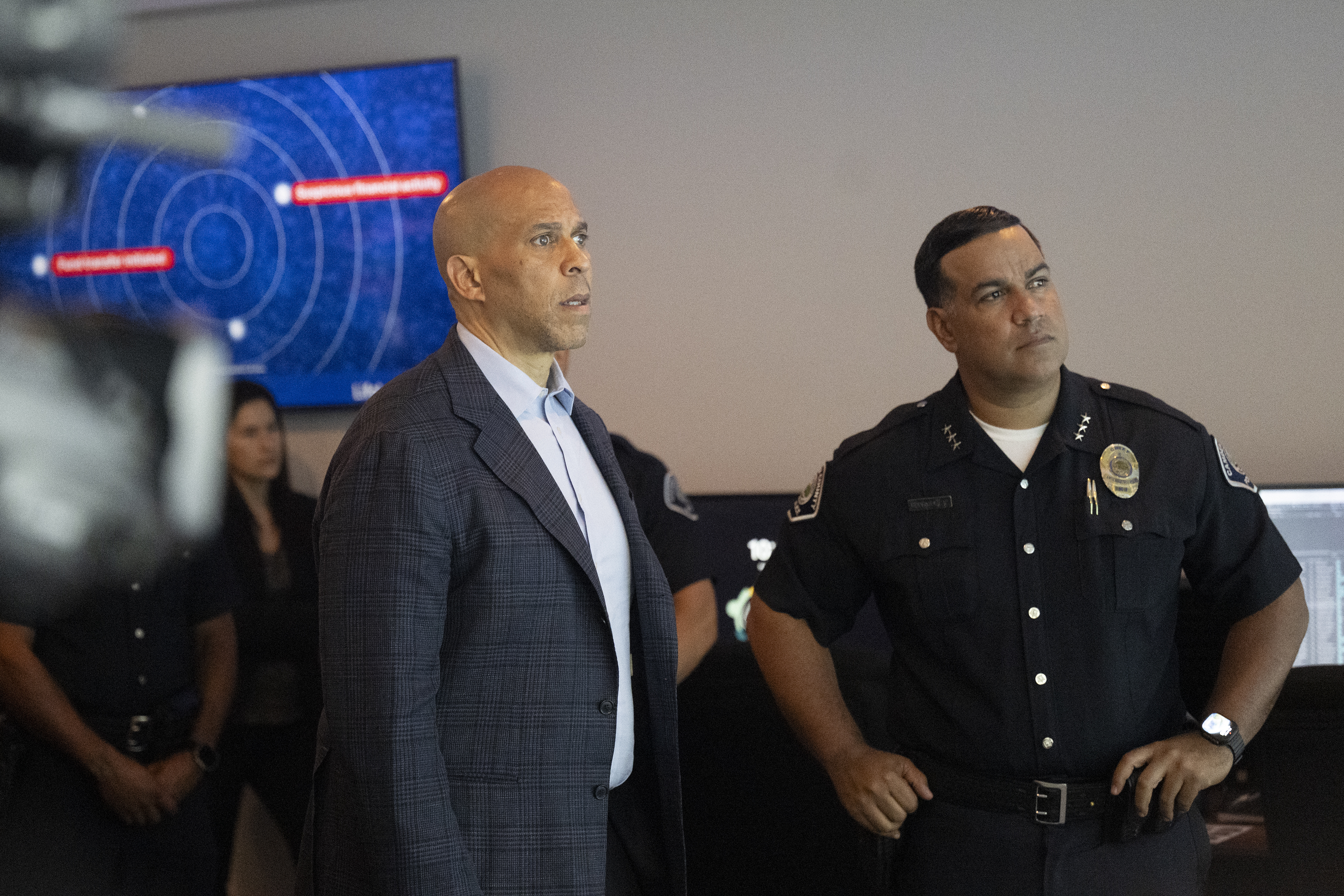
    U.S. Sen. Cory Booker stood Friday in the basement of the Camden County Police Department headquarters in downtown Camden, surrounded by floor-to-ceiling video screens displaying a lifelike training scenario: a distraught man teetering near the edge of a bridge, threatening to jump.

    A young officer stepped forward and addressed the digital figure: “Just step back from the edge,” the officer said, “and come talk to me.”

    The immersive simulation is part of a system the department uses to train officers to respond to volatile encounters without resorting to force — one piece of a growing suite of technology it has embraced over the last decade. Department officials credit those tools, along with broader policing reforms and community-engagement efforts, with helping reduce crime in a city once regarded as among the nation’s most dangerous.

    Today, Camden’s homicide total sits at a four-decade low, while robberies, sexual assaults, and other violent crimes have also declined, according to police data.

    Booker toured the department Friday to see those tools firsthand as he promotes federal legislation designed to help other law enforcement agencies adopt similar technology.

    The proposal, known as the Violent Incident Clearance and Technological Investigative Methods Act, or VICTIM Act, would establish a Department of Justice grant program to help police departments increase staffing, purchase investigative technology, and train personnel to use it. Booker, a New Jersey Democrat, reintroduced the bipartisan legislation in March 2025 alongside Sen. John Kennedy, a Louisiana Republican.

    The measure comes as violent crime has fallen sharply in many cities across the country in recent years, a trend Booker said lawmakers should sustain through continued investment.

    “What they’re doing here is so innovative and cutting edge,” Booker said after the tour, pointing to Camden as an example for other departments to follow.

    Inside the Camden County Police Department’s Real Time Tactical Operations Intelligence Center, analysts monitor live camera feeds, 911 calls, and data streams from license plate readers and other sources. The center provides officers with real-time information during emergencies, helps investigators track suspects, and identifies crime patterns throughout the city, said Chief Gabriel Rodriguez.

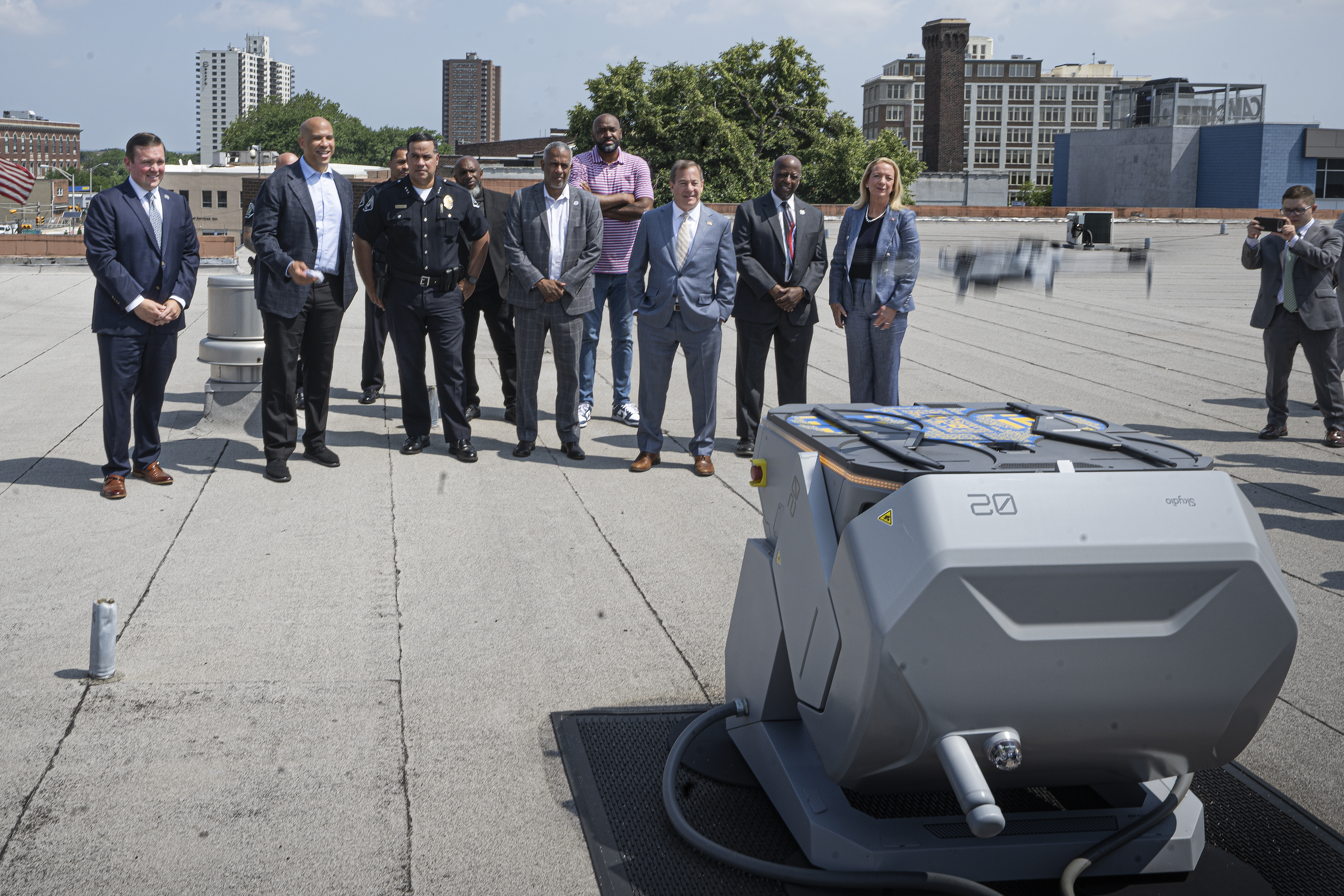
    The intelligence center works in tandem with the department’s drone unit.

    U.S. Sen. Cory Booker, joined by city officials, watches a drone demonstration atop the Camden County Police Department on June 12, 2026.Jose F. Moreno / Staff Photographer

    Rodriguez said those tools, combined with training programs such as the simulation Booker observed Friday, have helped drive crime to new lows.

    The city recorded 12 homicides in 2025, down from 17 the previous year and the fewest since 1985, according to department data. Violent crime also fell 6% last year, while robberies declined 12% and sexual assaults dropped 32%.

    Camden has spent more than a decade reshaping its approach to policing, adding new technologies and investigative tools as funding became available. Booker said departments across the country cannot afford to stop investing in technology as criminal investigations become increasingly reliant on digital tools and real-time information.

    “Technology is moving rapidly,” he said. “We’ve got to stay ahead of the curve, and that’s going to take constant investment.”

    Several local officials joined Booker on the tour, including Camden Mayor Victor Carstarphen and Camden County Commissioner Director Louis Cappelli Jr., who highlighted the city’s crime reductions and broader public-safety gains as they walked through police headquarters.

    Even so, police who have adopted technologies such as automated license plate readers and large-scale camera networks have drawn scrutiny from civil-liberties groups nationwide. And on Friday, Rodriguez acknowledged that some residents are skeptical of the department’s use of technology.

    But he said many have also come to view it as a benefit, pointing to faster emergency response times and the department’s efforts to address quality-of-life concerns such as illegal dumping.

    Some residents, Rodriguez said, are even curious enough to tour the facility themselves.

    “A lot of communities often feel like they have too much of the policing they don’t want and not the policing that they need,” Booker added. “Standing here in Camden, where we’re finding ways … to make tremendous progress … the key for me is making sure that we can continue to get better and better as a state.

    “Overall,” he said, “crime is going down in New Jersey. But we want to continue that momentum and not just see crime rates go down, but community strength and community partnerships go up.”