Last November, Mayor Cherelle L. Parker announced with great fanfare that Philadelphia could create a property tax break to spur the conversion of derelict buildings, such as empty Center City office towers and vacant school facilities, into apartments.
She had worked with legislators in Harrisburg to change state law to allow Philadelphia to pursue the legislation, which would create a 20-year property tax abatement for conversions of “deteriorated” properties.
But 10 months later, no such legislation has been introduced in City Council, and Parker on Wednesday called on city lawmakers to consider her 20-year abatement idea for distressed properties.
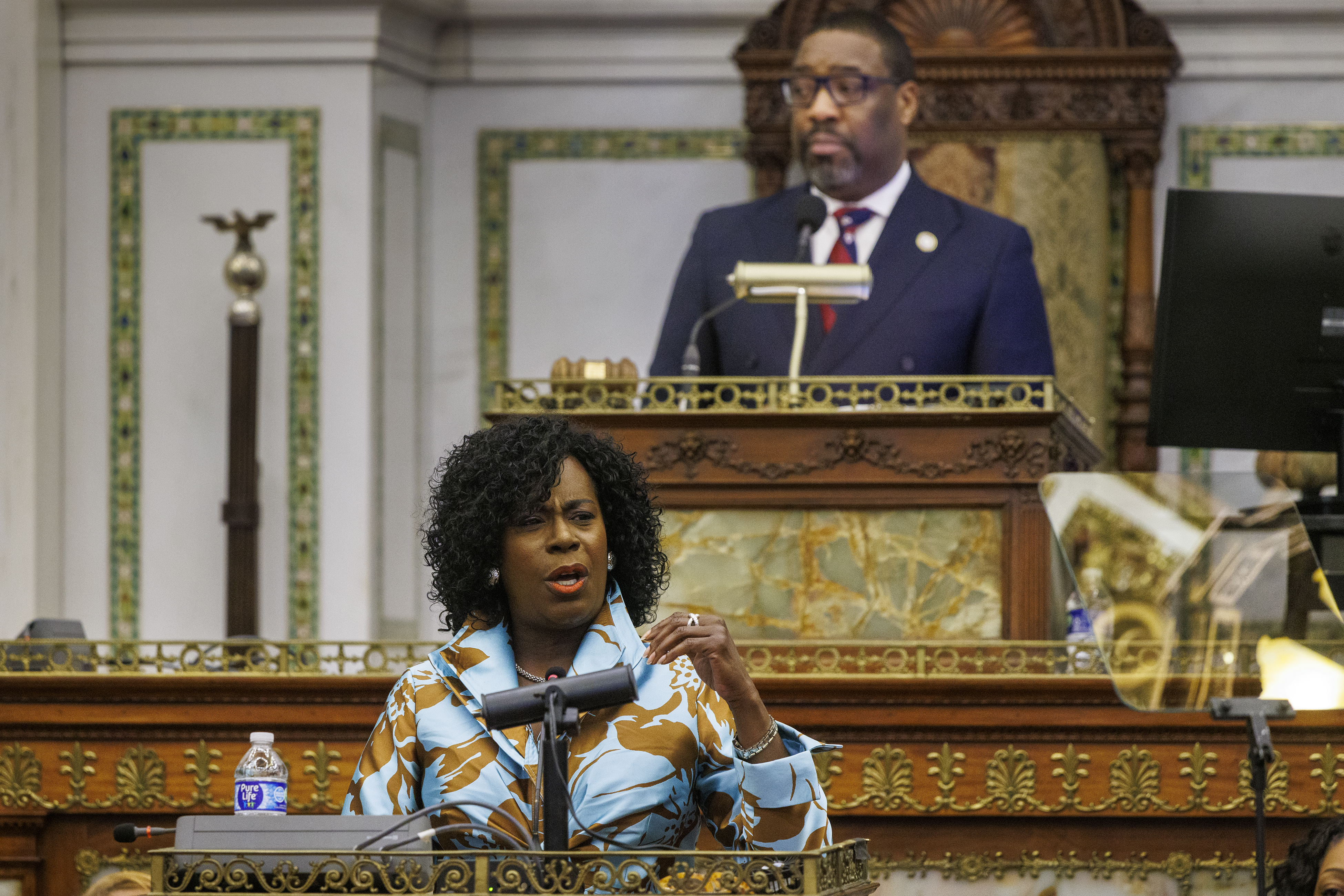
“We have an affordability crisis here in the city of Philadelphia,” Parker told reporters Wednesday. “What if we marry that challenge with these persistently vacant buildings that have gone underutilized, and we put them to their best and their highest use to incentivize affordable housing?”
Parker’s administration, however, has not yet transmitted a draft of the bill to Council, which is typically the first step for lawmakers to consider legislation championed by the mayor.
“Tell them, ‘Send the bill over,’” Council President Kenyatta Johnson told reporters Thursday. “We haven’t seen any piece of legislation regarding 20-year tax abatement at this particular point in time.”
Asked about the delay, Tiffany W. Thurman, Parker’s chief of staff, said Thursday that city agencies “are collaborating to ensure the proposed legislation is legally sound and can withstand constitutional scrutiny.” She added that Parker “remains firmly committed to presenting City Council with a bill that incentivizes the development of affordable and workforce housing on vacant, publicly owned land.”
On Thursday, several members of Council questioned the lack of specifics from the mayor’s office, and others were less than enthused about the idea of approving a new tax break when the Philadelphia School District is facing a funding crisis.
“I continue to appreciate an effort to make sure that we have access to affordable housing in the city of Philadelphia,” Councilmember Nicolas O’Rourke said. “At the same time, I am very much so laser-focused and desirous of the city getting the revenue that it needs.”
A controversial policy
Property tax abatements have long been controversial in Philadelphia, with opponents contending that they starve the city and school district of needed revenue while favoring real estate developers.
Philadelphia’s 10-year abatement program, which was established in the 1990s, previously exempted owners from paying real estate tax on all new construction or improvements on any type of property for 10 years.
That program was long hailed as key to the city’s turnaround in the early 2000s. But concerns about its impact on neighborhood inequality and school funding grew over time, and Council in 2019 roughly halved the value of the tax break for new construction.
Parker argues that the idea behind her legislation is different: She wants to see a far more narrowly targeted bill that would only help developers who seek to redevelop large, derelict buildings.
“We’re talking about … persistently vacant school buildings that have been vacant from three up to 30 years,” Parker said Wednesday.
The mayor also noted that the development environment has worsened dramatically since Council cut the 10-year tax abatement’s power, with soaring interest rates and construction material inflation as factors that weigh heavily on complex and large-scale projects.
Still, many Council members are skeptical of tackling a potentially controversial measure that is seen to favor developers ahead of next year’s municipal elections, when all 17 city lawmakers will be on the ballot.
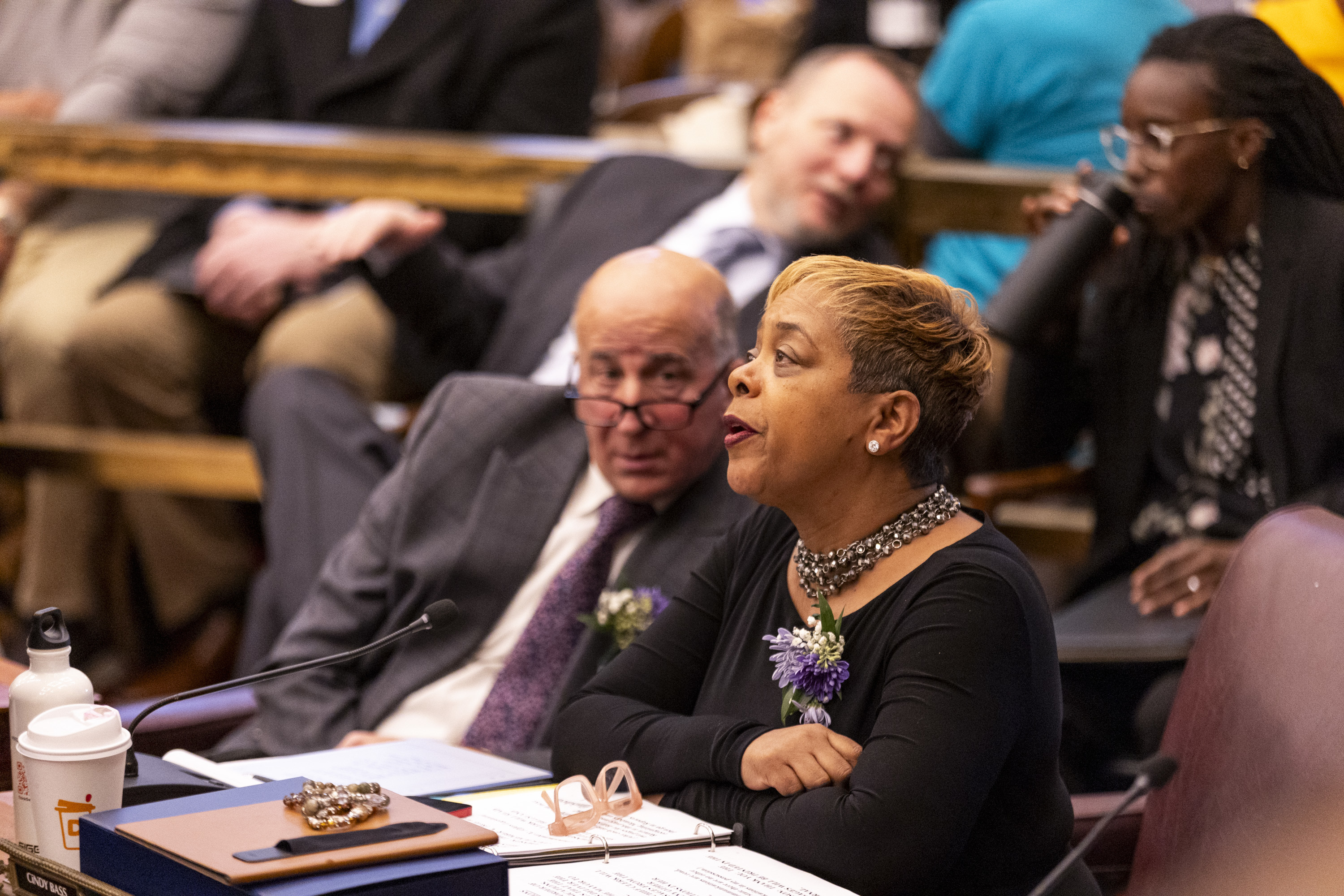
“I’d like to get more information on exactly what the plan is because the tax abatements are, as you know, hugely unpopular,” said Councilmember Cindy Bass, who represents parts of North and Northwest Philadelphia.
Bass said that while the abatement has spurred needed growth, she would need to see any expansion of it balanced with the needs of lower-income Philadelphians who are struggling with rising costs and property taxes.
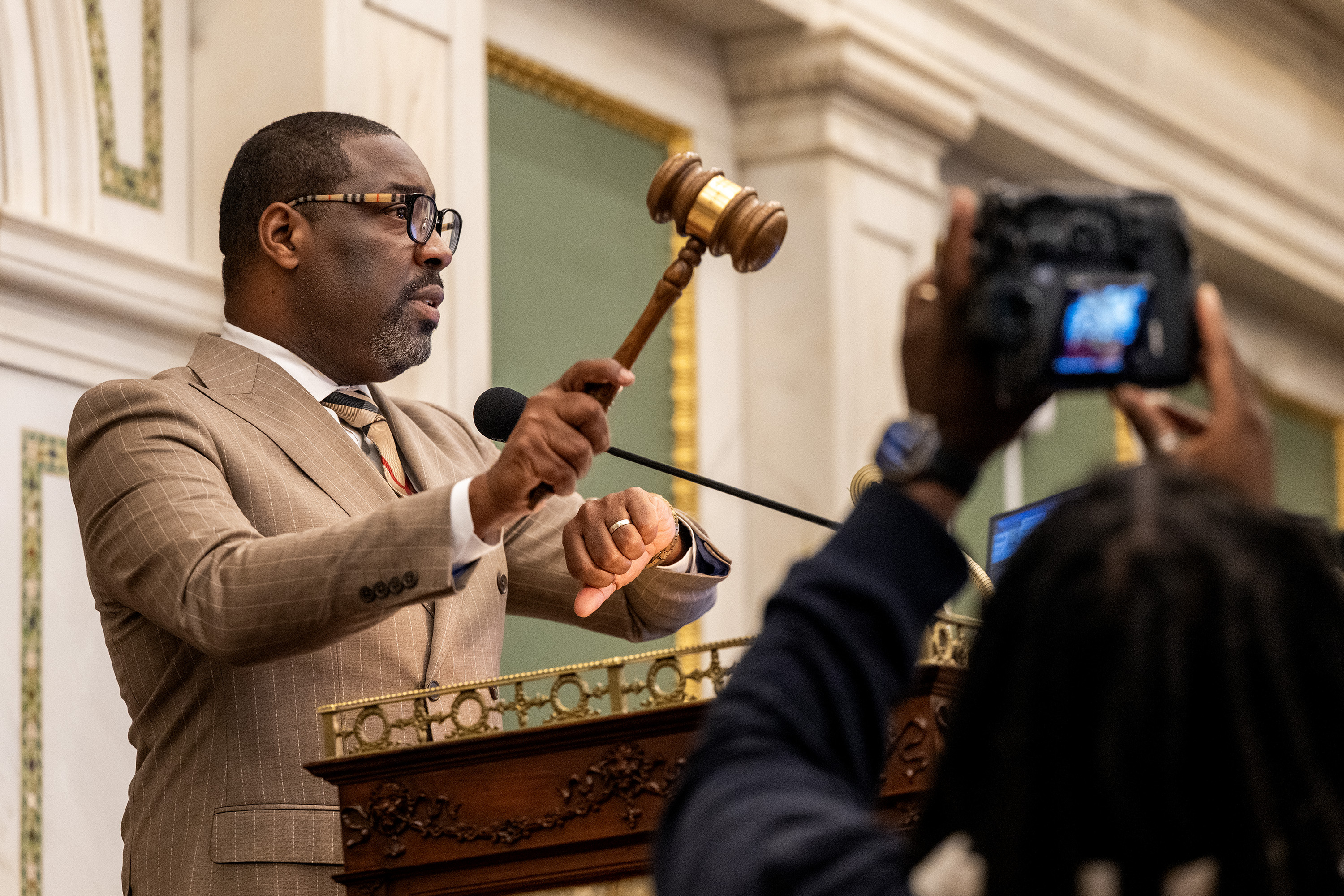
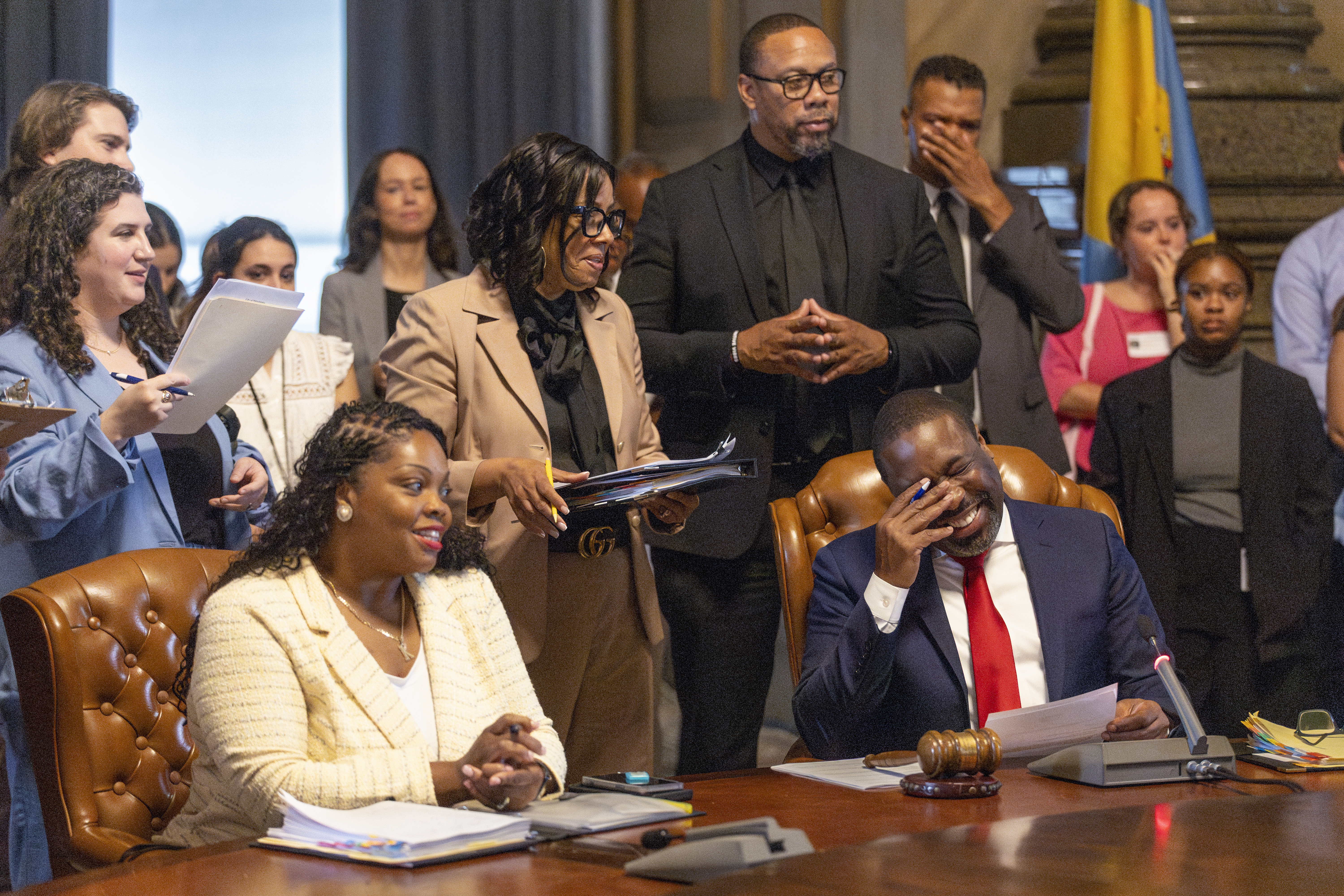
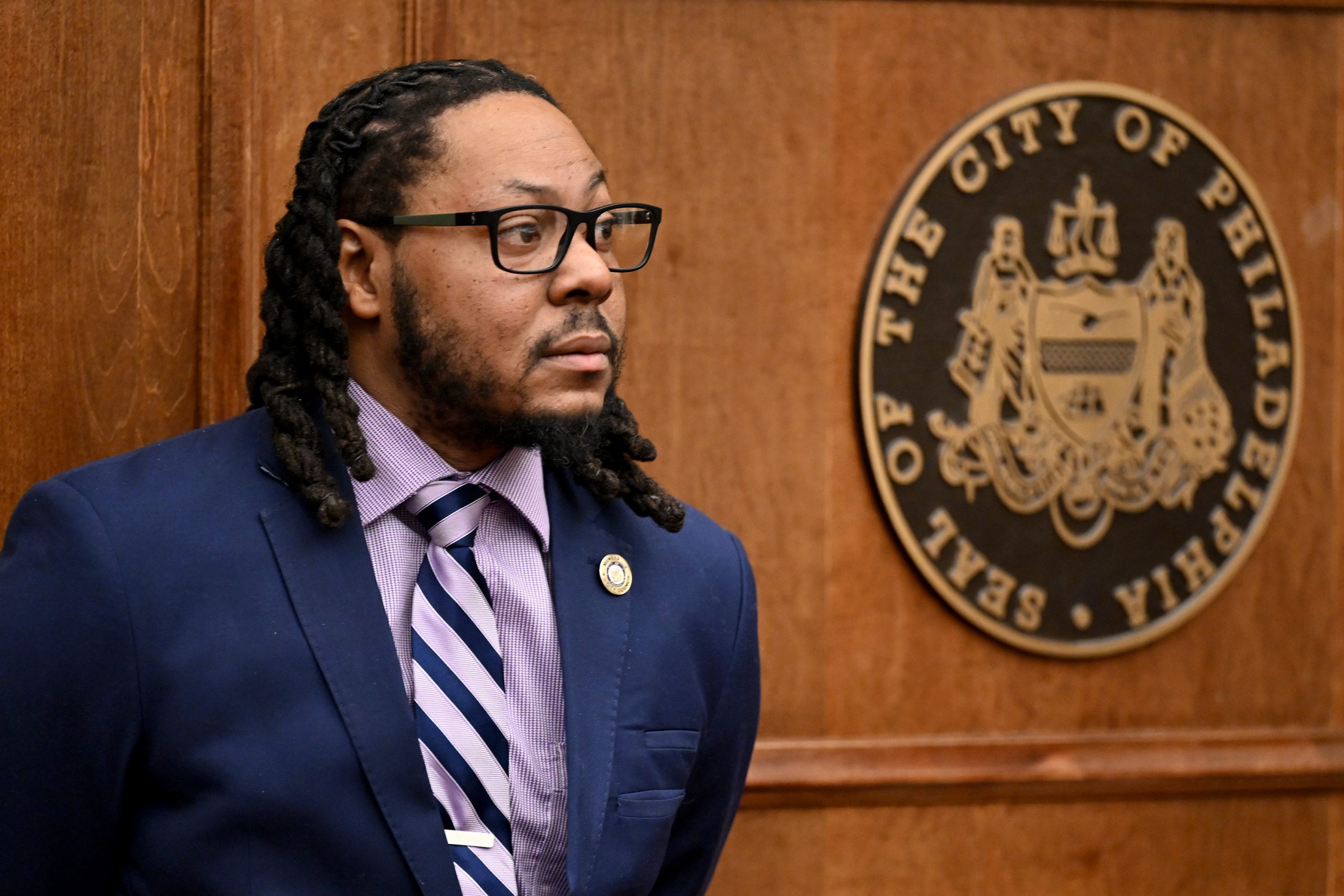
President Kenyatta Johnson checks his watch and gavels City Council into session on Sept. 17, as the body returns for start of its fall session.Tom Gralish / Staff Photographer
And Johnson on Thursday reiterated his comments from earlier this year that he would like to see the newly authorized 20-year abatement include a provision that requires an affordable housing component of the projects it enables.
“Any type of legislation like that should really focus on making sure that we’re providing a level of affordability, also senior housing,” he said. “Obviously, the devil’s always in the details.”
But it is not clear that state law would allow Philadelphia to mandate affordability in an abatement bill, and Parker cautioned against doing anything that would exceed the city’s authority.
“We have to make sure that whatever we are proffering, that it is directly connected to what has been enabled,” Parker said. “It has to pass legal muster for no one to question the constitutionality of what it is that we’re doing.”
Persistently vacant schools
A 20-year abatement would apply to empty office buildings in Center City and long-vacant industrial buildings. But Parker and administration officials have focused their pitch on revitalizing empty public schools.
“We need to pass it because it’s going to be extremely beneficial for challenging properties,” John Mondlak, chief of staff of the Philadelphia Department of Planning and Development, said Wednesday. “You think about schools in 10 years, 20 years — they are very difficult to reposition.”
That pitch, however, runs up against another policy issue festering between Parker and Council.
Thomas and other Council members vigorously protested the plan and are still pressing for the board to reconsider it.
“That’s our priority,” Thomas said Thursday. “I don’t want to have a conversation about schools that are vacant until we have a conversation about schools that are occupied.”
Philadelphia real estate developers see the writing on the wall.
As progressives have toppled centrist Democrats in nationally watched races, some local development interests are wary that the same trend could reshape Philadelphia City Council this spring, when every member is up for reelection. They see a growing progressive faction as a threat to business.
Enter the incumbent protection plan.
Nearly a dozen local developers are already pouring hundreds of thousands of dollars into Philly For Growth, a group that in the past two Council election cycles spent millions on advertising campaigns to back business-friendly Democrats, according to a source familiar with the planning.
Philly For Growth is an independent expenditure group, also known as a super PAC. It can raise and spend unlimited amounts of money to influence an election, but there are rules barring super PACs from most forms of coordination with the candidates they support.
In 2023, the group was the biggest special interest group involved in that year’s Council races, and it provided a substantial boost to its chosen candidates by outspending individual campaigns.
Ahead of the May primary election, Philly For Growth plans to spend $1.5 million to support pro-business Democrats, most of whom are sitting Council members, according to the source, who spoke on the condition of anonymity because they were not authorized to discuss the plans. The group will not fund negative advertising about Council’s four incumbent progressives, the source added.
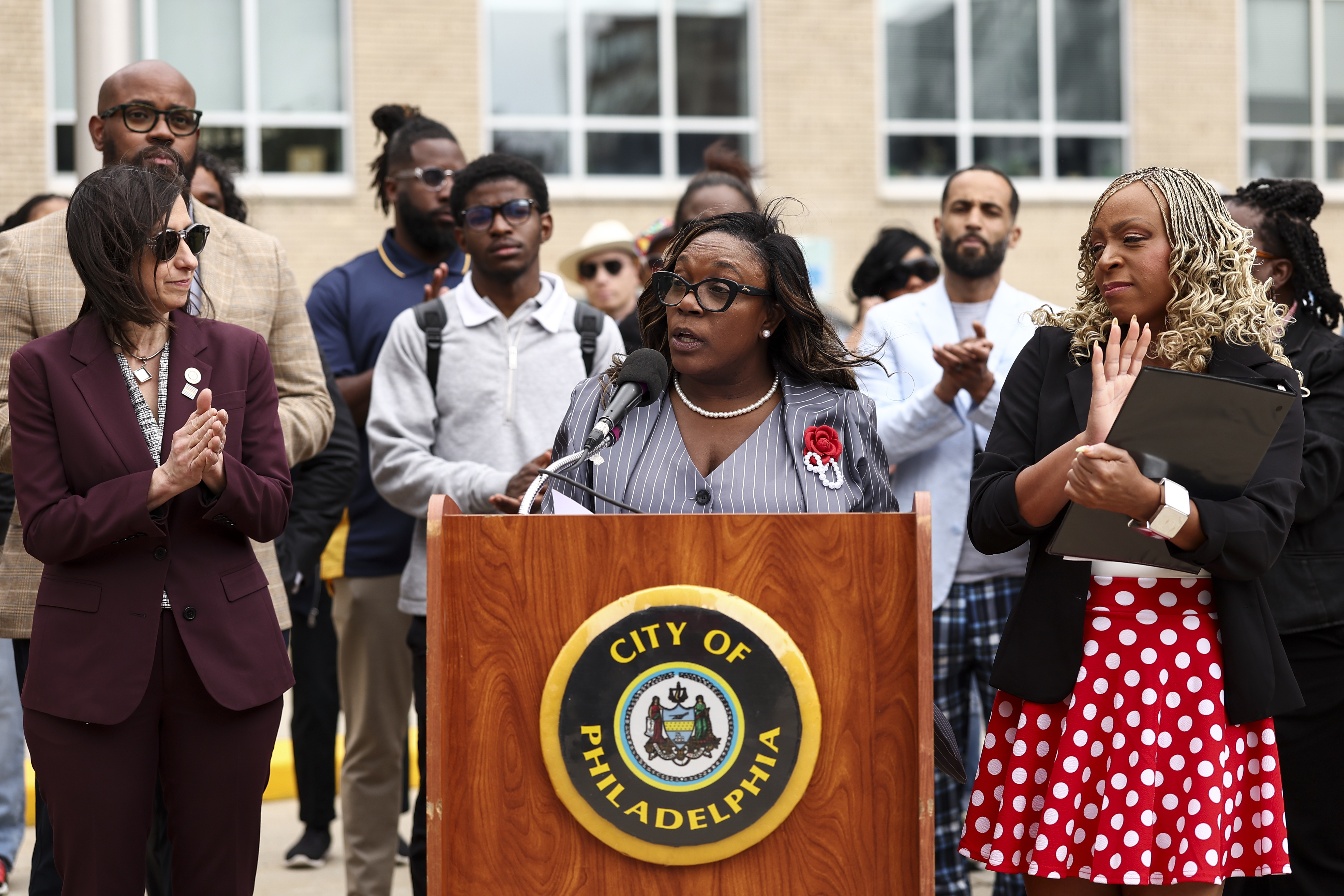
Councilmember Kendra Brooks, of the progressive Working Families Party, speaks during a rally outside of the School District of Philadelphia headquarters in May. At left is Councilmember Rue Landau and at right is Councilmember Jamie Gauthier. All three are members of Council’s progressive faction.Monica Herndon / Staff Photographer
The idea is to keep progressives from growing their power on Council instead of spending money to knock off the leftists who are already there. There are currently four reliably progressive votes out of the total 17 on Council, but some members may be more likely to vote with that faction as Democratic voters nationally revolt against incumbents.
That’s a different strategy than in 2023, when Philly For Growth backed a slate of five candidates — two incumbents and three challengers. Both incumbents won, but all three challengers lost.
Philly For Growth has previously been affiliated with the Building Industry Association of Philadelphia, an advocacy group for development interests. Mo Rushdy, the BIA’s former president who leads the organization’s political activity, declined to comment.
The source said that Philly For Growth will fund advertising to support Council members Mark Squilla, whose 1st District includes parts of South Philly, Center City, and Fishtown; Cindy Bass, whose 8th District is based in North and Northwest Philadelphia; and Quetcy Lozada, whose 7th District includes much of North Philadelphia and Kensington.
All three are seen as more centrist members and have said they intend to run for reelection. No challenger has officially launched a campaign against any of them, but candidates who are aligned with the city’s left-leaning political organizations are expected to emerge as the primary — still eight months away — draws nearer.
The super PAC is making one exception when it comes to supporting incumbent district Council members, the source said. In the 5th District, currently represented by Councilmember Jeffrey Young Jr., the group will support a to-be-decided challenger.
Councilmember Jeffery Young Jr. speaks to other members of Council during a 2025 session.Tom Gralish / Staff Photographer
At least five people have said they are interested in running for the North Philly-based 5th District seat, and Young has drawn opposition from development interests for pushing proposals that would slow or halt some projects in his district.
Young said in a statement that building “sensible, affordable housing” is one of his top priorities and that he has supported city programs like Turn the Key, which provides mortgage support to first-time homebuyers.
“People are free to back those who share their values. These are my values,” Young said. “I am leaving it to the residents of the 5th to determine whose values best reflect them.”
The super PAC will also fund advertising backing four incumbent members who represent the city at-large: Isaiah Thomas, Katherine Gilmore Richardson, Jim Harrity, and Nina Ahmad. That group doesn’t include progressive at-large Councilmember Rue Landau, but Philly For Growth doesn’t plan to oppose her, the source said.
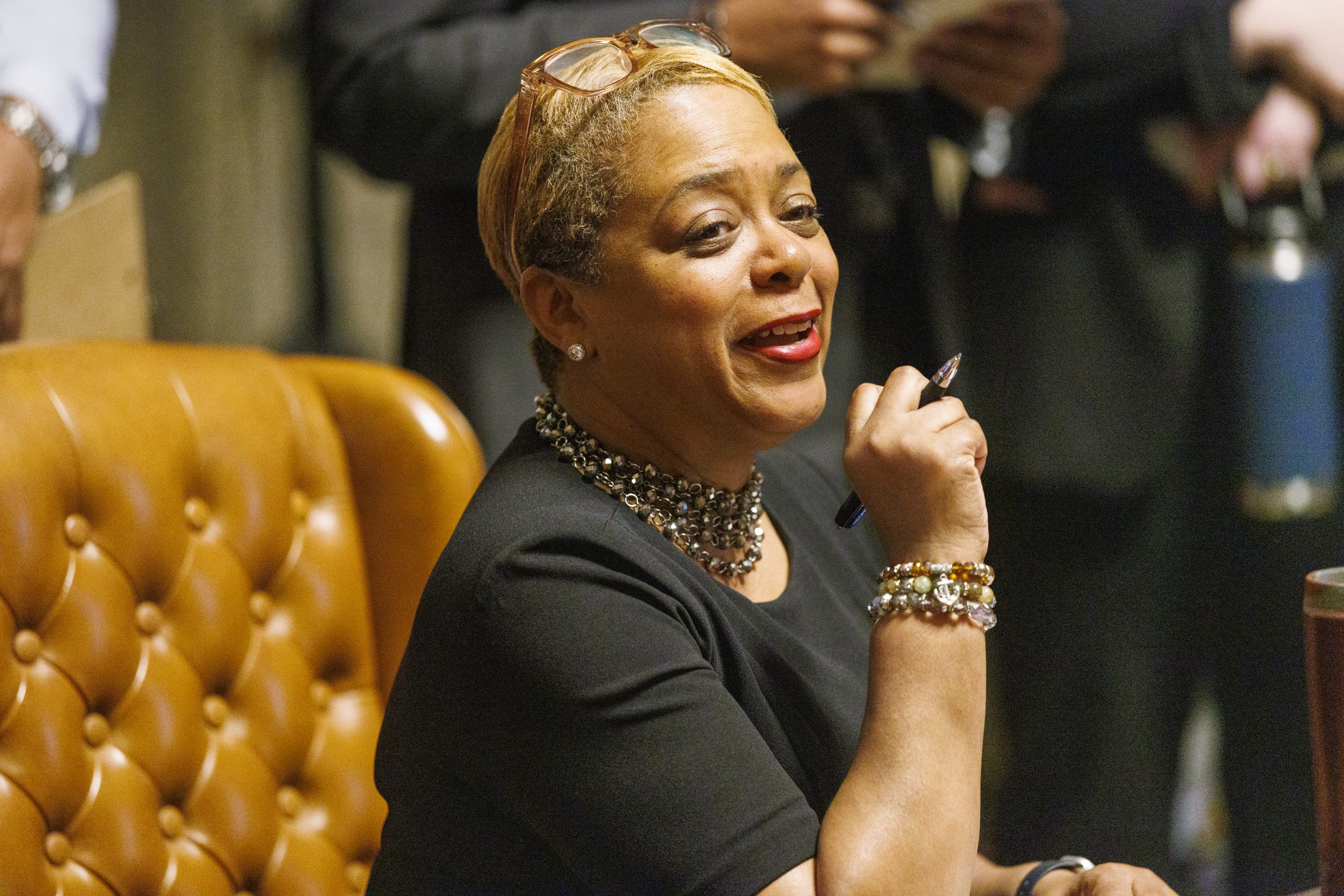
Council President Kenyatta Johnson laughs inside the caucus inside City Hall on June 11.Aidan T. Gallo / Staff Photographer
A spokesperson for Landau’s campaign arm said in a statement that the Council member “stands by her accomplishments for working people, small businesses and vulnerable communities in Philadelphia and looks forward to voters having the opportunity to make up their own minds next year.”
It’s unclear just how competitive the at-large race will be, and candidates have until the spring to decide — nomination paperwork is typically due in March. Seven of Council’s members represent the entire city at-large, and two of those seats are effectively reserved for members of minority parties under the city’s Home Rule Charter.
That has traditionally meant that five seats are held by Democrats, given the party’s massive voter registration advantage in the city. In recent years, Republicans and the progressive Working Families Party have battled for the remaining two seats during the fall general election, and the WFP currently holds both.
Mayor Cherelle L. Parker, who is also up for reelection, and Council President Kenyatta Johnson, who insiders do not expect will see a serious challenger, will likely be on Philly For Growth’s slate, too, the source said.
Philadelphia City Council is already looking to 2027. And with all 17 seats on the ballot next spring, the elections are shaping up to be a pivotal test of whether the city’s established politicians can withstand a rising tide of frustration with the party among Democratic voters.
All of the incumbents have said they intend to run for reelection, and several are likely to face serious challenges from new candidates focused on grassroots organizing and progressive groups — hoping to seize the opportunity presented by a nationwide leftward shift amid President Donald Trump’s second term.
Three districts have emerged as key battlegrounds.
And the city’s progressive organizations, emboldened by a series of wins locally and nationally, are targeting two other districts: the 1st, which stretches from South Philadelphia to Fishtown and is represented by Councilmember Mark Squilla, and the 8th, which includes parts of North and Northwest Philadelphia and is represented by Councilmember Cindy Bass.
“We’re definitely feeling confident,” said Robert Saleem Holbrook, executive director of the progressive advocacy group Straight Ahead. “Anyone who is going to be running under a progressive banner or a progressive movement is going to have to be running against the establishment, not toward it.”
A competitive race also appears to be taking shape for the seven Council seats that represent the city at-large.
Five of those seats are all but certain to be won by Democrats, making the May 2027 primary the key election in deep-blue Philadelphia.
The other two at-large seats — set aside for Council members outside the majority party under the city’s Home Rule Charter — will be decided in the November 2027 general election. Currently, the two minority party seats are held by Councilmembers Kendra Brooks and Nicolas O’Rourke of the left-leaning Working Families Party.
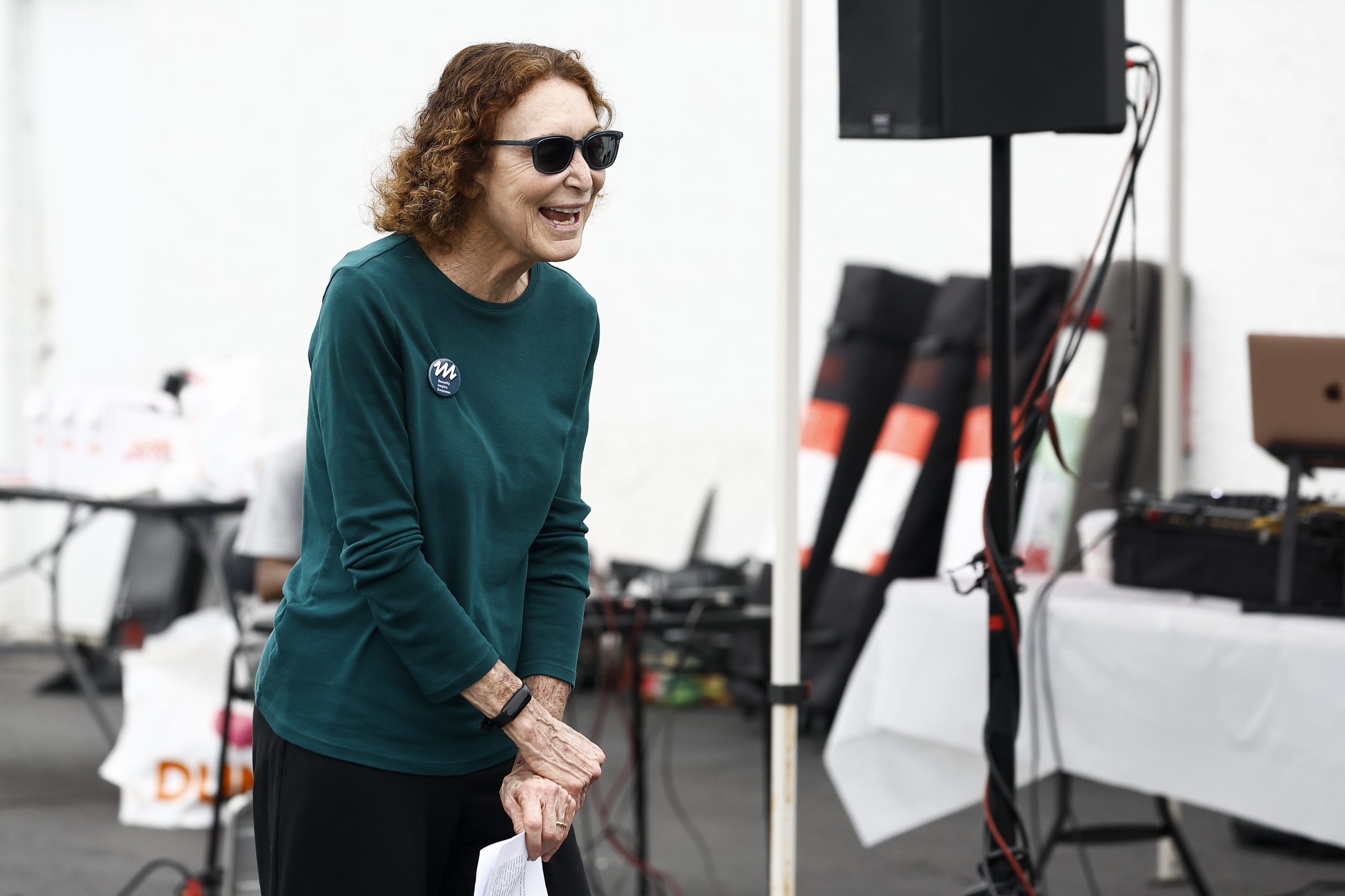
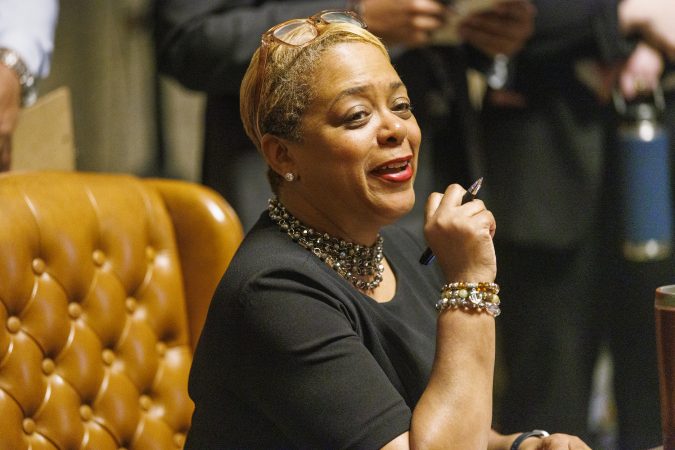
Jane Golden, founder and executive director of Mural Arts Philadelphia, takes the stage during the dedication of the Super Bowl LIX mural at Spike’s Trophies on June 17, 2025 in Philadelphia.Monica Herndon / Staff Photographer
Golden, 73, said last week that she is not currently running for Council, but acknowledged she has thought about it for years.
“It’s always something that is tempting to me, because I just love the city so much,” she said. “I feel honored that people even think of me.”
Progressives eye Bass’ North Philly seat
Philadelphia’s progressive activists this year see two key opportunities to expand the loosely organized left-leaning bloc on Council, which currently consists of four members. Winning additional seats could also grow their influence by enticing more moderate members to vote alongside them if they believe primary voters are moving left.
Leftists have notched high-profile wins in Democratic primaries across the country this year, including in Philadelphia, where democratic socialist State Rep. Chris Rabb (D., Philadelphia) bested more moderate candidates for a seat in Congress representing about half of the city. The district is one of the most Democratic in the nation.
Anderson-Oberman, 55, the executive director of the progressive group Reclaim Philadelphia, said last week that he is “leaning” toward taking another swing.
“We’re in a moment in this country and this city where people have had enough,” he said. “People are looking for new answers. … Cindy represents the old way of doing things.”
Union organizer Seth Anderson-Oberman, running for 8th District City Council, joins in a small rally with community and Happy Hollow Advisory Board members along Wayne Avenue at Happy Hollow Playground in Philadelphia on April 2, 2023.Tyger Williams / Staff Photographer
Another Council run by Anderson-Oberman may test how far progressive momentum can go in Philadelphia. He was a member of the Communist Party USA in his 20s, and has said he is proud of that experience.
Bass, 58, said she is ready for the race no matter who her opponent is.
In June, she survived a contentious fight for another four-year term as Democratic leader of Mount Airy’s 22nd Ward. She was criticized for her handling of the process, and the party ordered a redo of the election.
She and her progressive opponent, Octavius Price, tied, then struck a power-sharing agreement. Through it all, Bass said, longtime residents stuck by her — and she is confident voters will do the same next year.
“My voters are people who are based in this community, committed to this community, intend to stay in the communities that they are in,” she said.
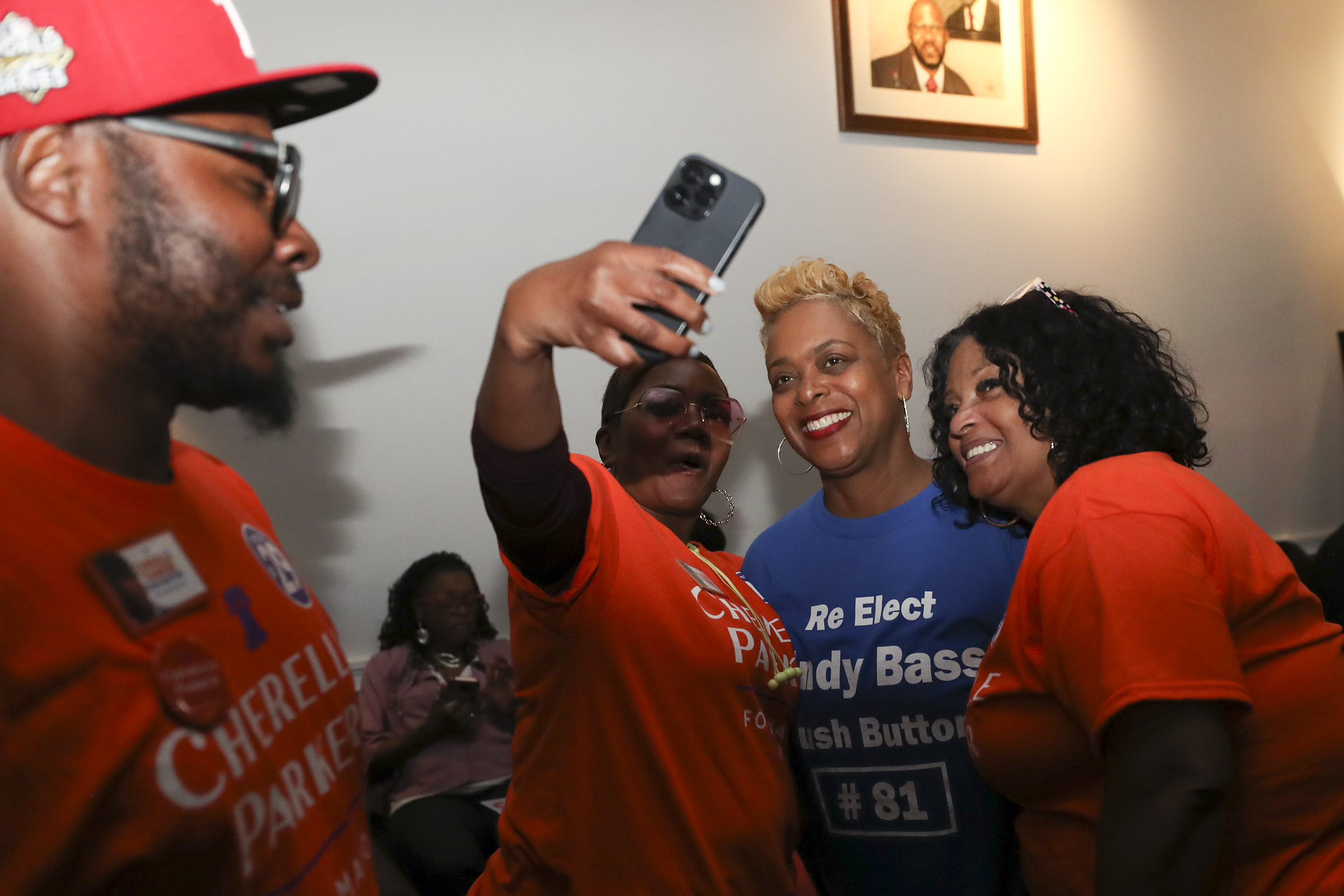
City Councilmember Cindy Bass (center) attends the watch party for Democratic candidate for mayor Cherelle L. Parker at Laborers 332 in Philadelphia on May 16, 2023.Heather Khalifa / Staff Photographer
Jeff Jones, a community leader and social justice advocate from Germantown, has also said he intends to run in the 8th District.
“I want to bring that new vision and a new voice to the 8th District, where residents and children and families can know that their voice matters, their concerns will be heard, and their challenges will be met,” said Jones, 61, a first-time political candidate.
Squilla could see a lefty challenger
Leftists are also eying Squilla’s seat, which represents the area along the Delaware River from Pennsport to Kensington. Since Squilla took office in 2012, the district has transformed from a bastion of working-class white voters to one of the most progressive swaths of the city.
Squilla, 63, who has strong labor ties and is one of the most pro-development district Council members, said being a centrist has likely put a target on his back in the 2027 election.
Another contributing factor may be Squilla’s support for controversial legislation in 2024 to approve the 76ers’ since-abandoned plan to build a new arena in Center City. The project, which would have been in Squilla’s 1st District, was opposed by advocates for Chinatown, which the arena would havebordered.
Councilmember Mark Squilla arrives in Council chambers on Nov. 12, 2024, before the start of a public hearing on a proposed Sixers arena.Alejandro A. Alvarez / Staff Photographer
Despite the fierce objections, Council approved the project with Mayor Cherelle L. Parker’s support in December 2024. Weeks later, the basketball team announced it was abandoning its Center City plan and would instead build its next arena in South Philly.
Squilla said he is prepared to defend his actions, noting that he worked to ensure any arena deal would benefit his district and that many of those promises are moving forward despite the 76ers withdrawing their proposal.
“The goal as an elected official, and also as a leader, is not always to make the popular decision,” he said. “The goal is to have a process to make the decision that would be best for the people around it.”
One prominent opponent of the Center City arena plan was Will Gross, the owner of Ox Coffee in Queen Village and a progressive who is the Democratic leader of the 2nd Ward. He is seen by political insiders and progressive organizations as the most likely candidate to take on Squilla.
Gross declined to comment.
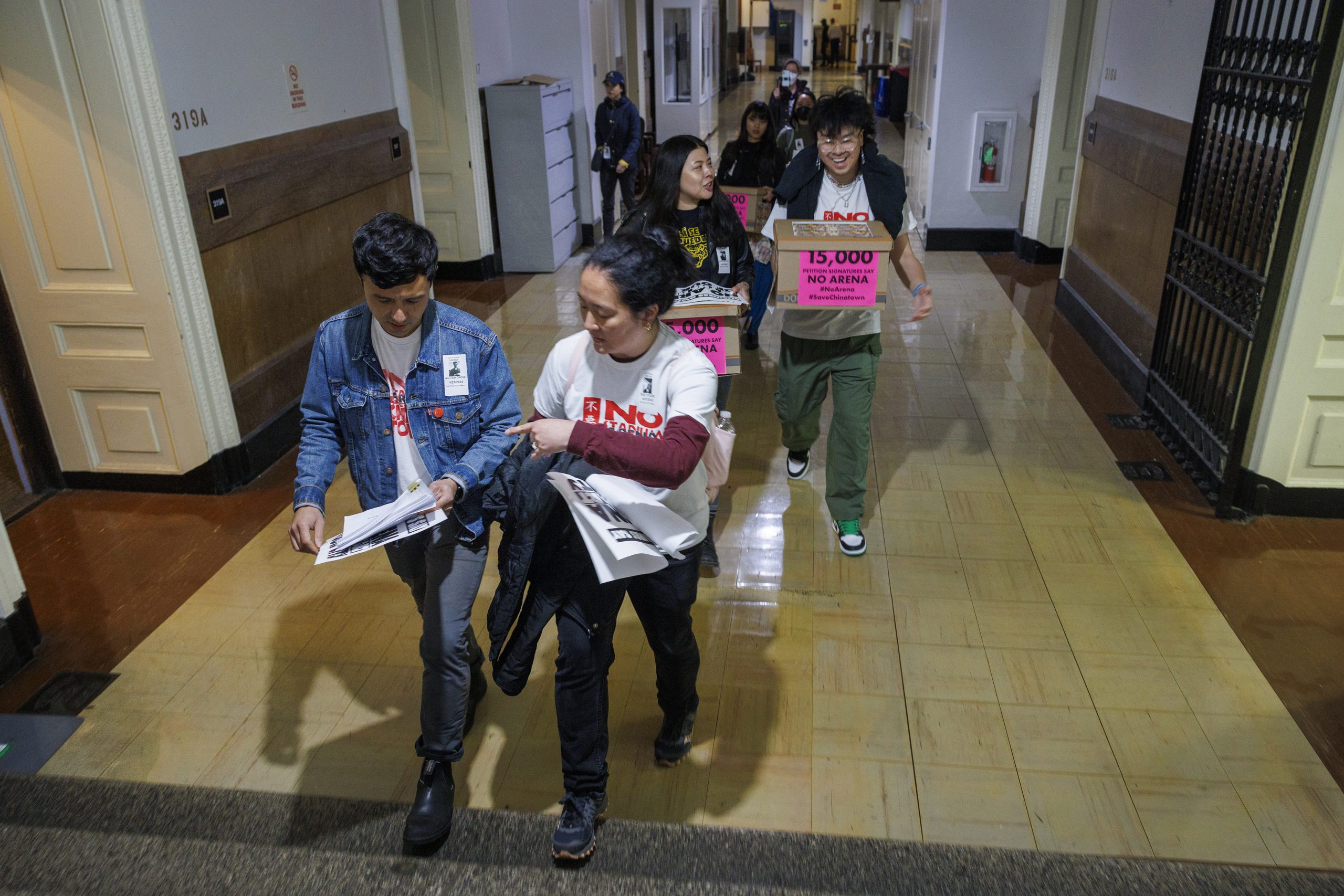
In this 2023 file photo, Will Gross and Kay Yoon, of the No Arena in Chinatown group, deliver petitions to Councilmember Mark Squilla. Alejandro A. Alvarez / Staff Photographer
A progressive challenger may also emerge in the North Philly and Kensington-based 7th District, which is represented by Councilmember Quetcy Lozada.
Some insiders have speculated that Celin may run again. He declined to comment.
Lozada, 55, said she “can’t focus” on potential challengers.
“If I spend my time listening to the buzz about who is running,” she said, “we won’t get any work done.”
A battle takes shape in the 5th District
In the 5th District, a seat that represents parts of North Philadelphia and Center City, a handful of Democratic challengers are lining up to take on Young, 40, who is seen as one of Council’s most vulnerable members.
That is in part because of the unusual way in which he was elected in 2023. He ended up being the only Democrat on the ballot after several others, including party officials’ preferred candidates, were removed amid legal challenges.
Councilmember Jeffery Young Jr. in chambers as City Council meets Dec. 11, 2025.Tom Gralish / Staff Photographer
One of those candidates was Curtis Wilkerson, who was chief of staff to former City Council President Darrell L. Clarke. Two sources, who spoke on condition of anonymity because they were not authorized to discuss the campaign dynamics, said Wilkerson is considering running for the seat again next year.He did not respond to a request for comment.
Also likely to run is Jalon Alexander, an attorney who unsuccessfully ran for an at-large seat on Council in 2023. Alexander, 33, formed an exploratory committee last year and is expected to formally declare his candidacy later this summer.
Two others are also considering running.
Dustin Dove, a lawyer and the president of the Fairmount Civic Association, said neighbors and community leaders have encouraged him to get in the Council race, and he is “taking the possibility of running seriously.”
“I think our city government should work for everyone by keeping our neighborhoods safe and streets walkable, making housing affordable, and ensuring fairness and access in public services,” Dove, 38, said last week.
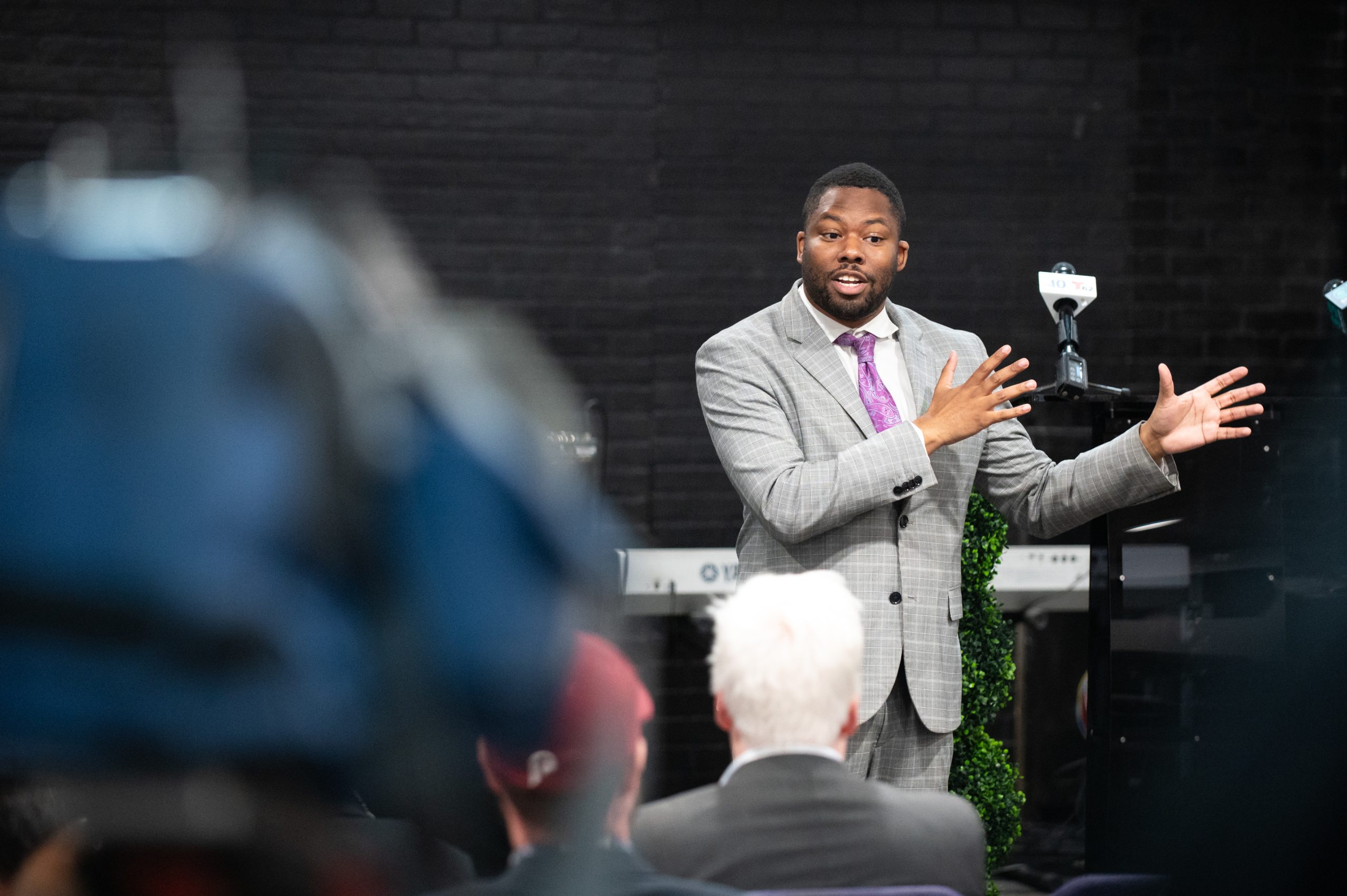
Jalon Alexander, an attorney and community advocate, speaks to attendees at a meeting about potential SEPTA budget cuts hosted at Garden of Prayer Church in Strawberry Mansion on June 9, 2025.Erin Blewett / For The Inquirer
And Max Tuttleman, 37, a philanthropist who unsuccessfully ran for an at-large seat in 2023, said he “cares deeply about the 5th District and would never close the door to serving Philadelphia.”
He added that “Center City and the neighborhoods around it should be growing faster than they are.”
Young said in an interview last weekthat he intends to run for reelection, but that challengers are not his focus.
“I‘m focused on serving my constituency, serving my community,” he said. “The work that we’ve been doing will hopefully earn the support of the residents of the 5th District.”
A smaller, but competitive, at-large field
Over the last several election cycles, dozens of candidates lined up to run for at-large seats during a time of immense turnover in Council.
But with seven incumbents all looking toward reelection in 2027, there may be fewer challengers who line up to take them on. So far, only Golden and a handful of others have emerged as possible contenders.
David Alexander Jenkins, a cultural strategist known for delivering impassioned speeches during Council’s public comment section, said he is considering a run, encouraged by fellow community members.
“When the community that is around you constantly pushes you to intercede on their behalf, then it’s because they have trusted you to do what it is that you do best,” Jenkins, 39, said. “I think it would be incredibly unwise to ignore that.”
And Jude Husein, 28, a Palestinian-born community activist who was raised in North Philly, has already launched her campaign. If her bid is successful, Husein, a former staffer for State Sen. Art Haywood, would be the first member of Gen Z on Council.
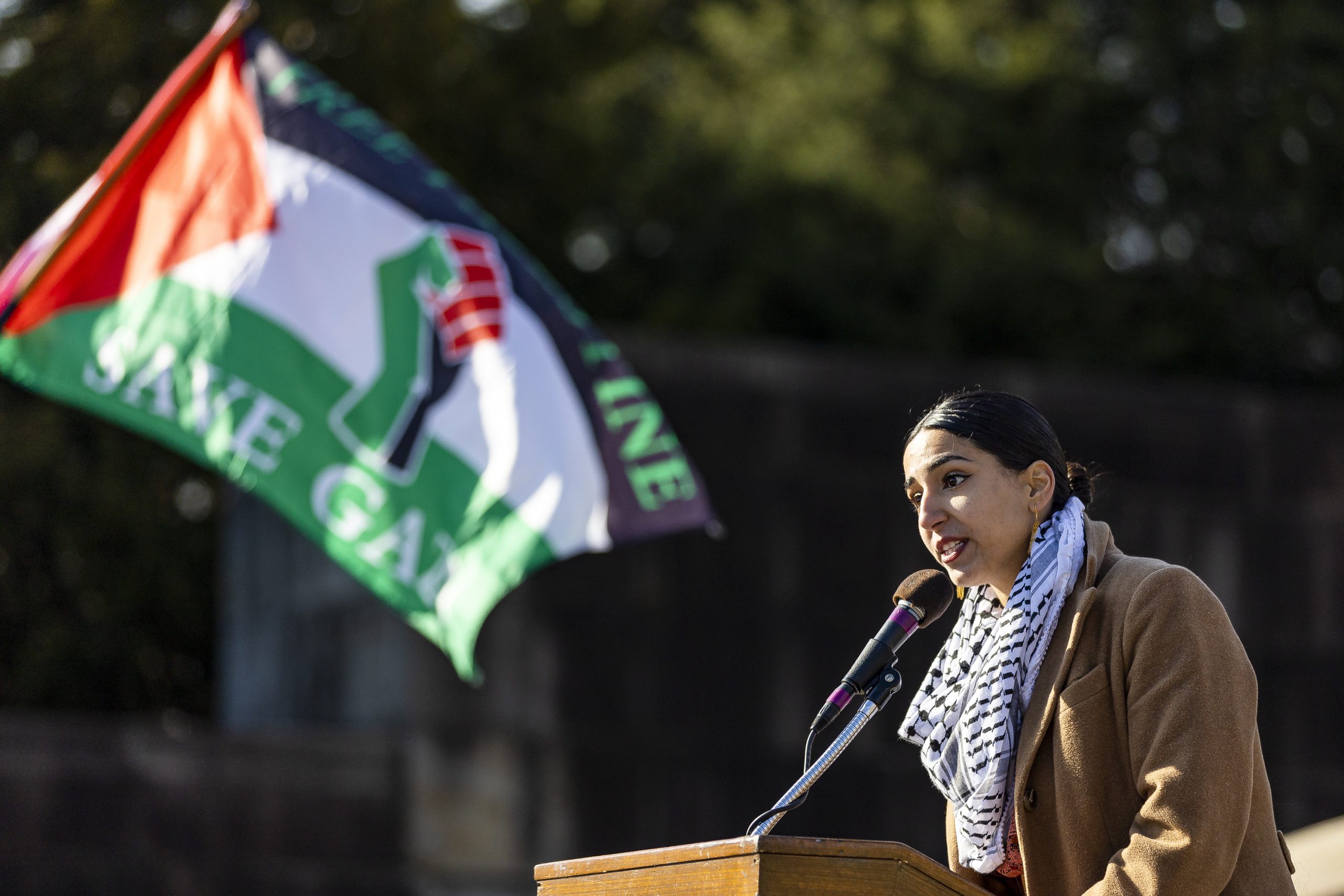
In this 2023 file photo, Jude Husein, of North Philadelphia, speaks at a rally for a Day of Solidarity event at the Art Museum steps.Tyger Williams / Staff Photographer
Leaders of progressive organizations said they are closely watching her candidacy. However, Husein is not exactly running as a leftist. She said that her policy positions are varied and that she will seek endorsements from any institution that is “values-aligned.”
“I’m running because I think government should work for the people who pay for it, and should make neighborhoods affordable and safer,” she said.
Also in the running for Council at-large seats are Billy McCann, 46, a former teacher who lives in Port Richmond, and Isaiah T. Martin, 26, who lives in West Philly and leads a community development nonprofit. The pair, who both said they are progressive, have established something of a slate with Jones, who is challenging Bass in the 8th District.
They said they would prioritize public education, affordability, housing assistance, and government accountability, and they argued that establishment Democrats are failing to connect with voters.
“A new day is coming,” said Martin, another member of Gen Z who would make history on Council if elected. “It’s time we get people who are going to do the actual work and not just sit here and talk about it.”
After a week of heated conflict that left both sides looking worse for wear, the race to become the Democratic leader of Mount Airy’s 22nd Ward came down a tie.
Philadelphia City Councilmember Cindy Bass and her progressive challenger, Octavius Price, each received 27 votes from their fellow committeepeople in the initial rounds of voting during Wednesday night’s redo of the race for ward leader, an influential party position in one of the most voter-rich neighborhoods of the city.
A series of closed-door meetings followed, including a one-on-one meeting between Bass and Price.
Ultimately, Price agreed to allow Bass to remain as ward leader as part of a power-sharing agreement in which he will become ward chair, the No. 2 position. They also agreed to elect a joint slate of officers to fill out the ward’s executive committee.
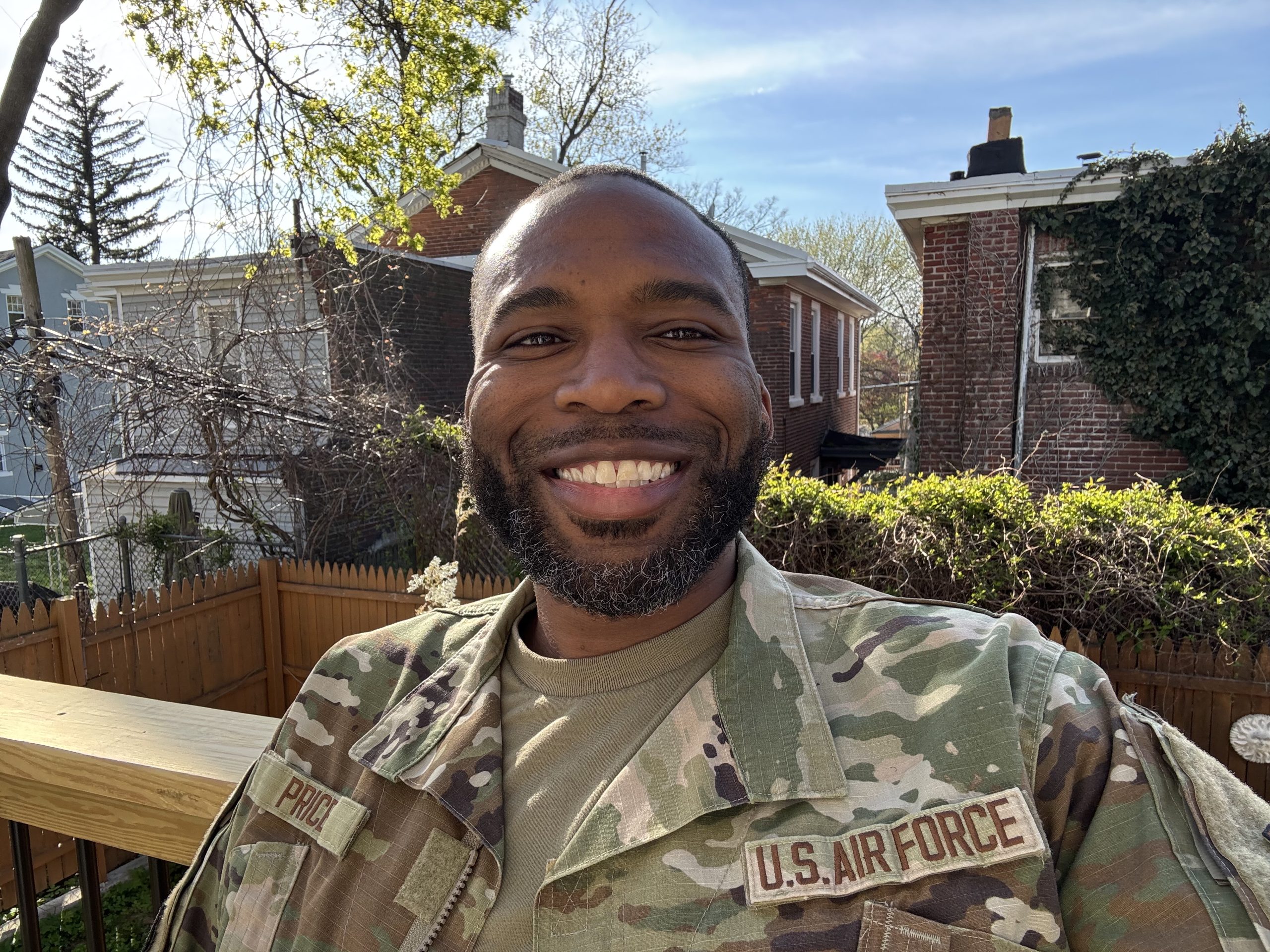
“We both had supporters who weren’t here today, so we would have just kept tying, essentially,” said Price, a fiber optic engineer and a member of the Pennsylvania Air National Guard. “And because I’m committed to the ward, I decided to take a position that was not necessarily a ward leader, but still gives me the time and the capacity to work with my constituents.”
Bass described the outcome as “a win.”
“We’re looking forward to working with everybody,” Bass told reporters. “We’ve got some new members who have joined the ward, and we’ve got some other folks who will be the staples of the organization who can help keep it going.”
The drama began on the evening of June 8, when Bass declared herself the victor of the ward leader race after a divided voice vote of committeepeople during a meeting at the Germantown Seventh-day Adventist Church. The Inquirer published a video of the meeting showing Bass refusing requests to hold a roll-call vote that could have clarified the results, prompting the Democratic City Committee to order a redo of the race.
Both sides spent the ensuing week attempting to win over committeepeople for the rerun.
On Wednesday morning, progressive activist Nate Holt visited committeeperson James Harrison at his home and offered him money while encouraging him to vote against Bass, videos of the encounter obtained by The Inquirer show.
Octavius Price, a fiber optic engineer and member of the Pennsylvania Air National Guard, ran for 22nd Democratic Ward leader. (Photo courtesy of Octavius Price)Sean Walsh
Price condemned Holt’s behavior and said he had “cut all ties with him” in a statement Wednesday evening before the vote.
Holt has not responded to questions about why he offered money to Harrison, but said in a statement he did not court committeepeople at the direction of any ward leader candidate.
As it happens, Harrison’s vote could have been decisive. But he did not attend Wednesday’s meeting.
Additionally, one committeeperson who did show up abstained, declining to vote for either candidate.
Another key vote came from former Councilmember Derek S. Green, a committeeperson in the ward who briefly considered running for ward leader and said he abstained during the initial vote last week, ultimately sided with Bass.
Green said the incident with Holt and Harrison swayed his vote.
“I learned about the video,” Green said, explaining his decision. “I’ve never seen that in the history of politics.”
The redo election took place Wednesday night at party headquarters. The party’s organization committee, which is made up of other ward leaders and chaired by former Councilmember Sharon Vaughn, oversaw the election.
Bass is often at odds with progressive activists in her Northwest Philadelphia-based 8th Council District. She narrowly won reelection in 2023 and likely faces another stiff challenge in next year’s Council race.
Ward leaders and committeepeople, the front-line workers of the party, are charged with getting out the vote for party-endorsed candidates and fielding constituent services requests.
Control of the voter-rich 22nd Ward could play a big role in next year’s Council race.
The 22nd Ward was one of three elections the party ordered to be rerun Wednesday night. In both other races, the candidates who won the initial votes also prevailed in the redos.
In North Philadelphia’s 14th Ward, Valerie Williams defeated the incumbent, Arthur Green, in a 10-8 vote.
And in an open race for the Northwest Philadelphia-based 17th Ward, Tyrone Barge beat Melissa Schley, a former ward leader.
Barge said that his race did not involve significant ideological differences. Instead, committeepeople supported him because he promised “hard work” and increasing efforts to drive turnout for Democrats.
“We’re gonna do some exciting things in the ward,” Barge said in an interview. “It’s gonna be different.”
The results put an end to a dramatic party election cycle that saw longtime Democratic City Committee chair Bob Brady reelected to an 11th term with a new roster of lieutenants led by Vaughn, the party’s new first chair.
Brady said after Wednesday’s election that party leaders at one point considered deciding the race through a coin toss.
“We didn’t know what to do with it. And then the two got together and made an agreement and made life a lot easier,” Brady said. “The best thing can happen is those two factions that they had all agreed on this … and the two are going to work together, and I told them I would come and work with them.”
A progressive activist on Wednesday offered money to a Democratic committeeperson while attempting to convince that person to vote against City Councilmember Cindy Bass in Wednesday night’s 22nd Ward leader election, videos obtained by The Inquirer show.
The activist, Nate Holt, is a former 22nd Ward committeeperson working to support progressive candidate Octavius Price’s bid to unseat Bass from the party leadership post.
The 22nd Ward leader election has already generated considerable controversy. Wednesday night’s vote will be a redo of the contested initial election, which was last Monday.
Both sides have been working to win over committeepeople in advance of the rerun.
In the new videos, Holt is standing on the porch of committeeperson James Harrison. Holt knocks, but Harrison doesn’t immediately come to the door. Holt then appears to shout to Harrison through a window.
“James, this is Nate. Nate Holt, tall white boy. I got your money, man,” Holt says in the videos, which are filmed from a car parked on the street outside the home. “Yo, you know me.”
Holt, who is not a committeeperson, at one point tells Harrison he’s “from the committee.”
Harrison eventually comes to the door.
“Yeah, so you know about this vote tonight? I have some money for you from the previous election,” Holt says in part. “We’re trying to get Cindy Bass out. … Were you going to attend tonight, or do you want to sign a form so that somebody else can vote for you?”
It was not clear what previous election Holt was referencing.
At one point, Harrison says, “Where the money at?”
“Look, I’m going to give you 30 right now,” Holt responds in part.
The audio then becomes difficult to discern as the person shooting the videos — a 12th Ward Democratic committeeperson supporting Bass named Earl Graham — gets out of the car and ends the recording.
Graham confirmed he took the videos and said he went to Harrison’s house while also trying to win his support in Wednesday night’s election.
“I saw somebody at his house banging on the door saying, ‘Hey, I got some money for you,’” Graham said. “I just pulled over and just recorded.”
In a statement, Holt confirmed he “visited the house of a 22nd ward committeeperson” on Wednesday morning and encountered a Bass supporter.
He emphasized that he acted alone and did not approach committeepeople at the direction of any candidate.
Holt did not respond to questions about the money he referenced in the videos.
Bass and other Democratic leaders respond
Ward leaders and the committeepeople that elect them are the neighborhood-based front line soldiers of the Democratic Party, working to get out the vote for party-endorsed candidates and field constituent services requests.
Bass was heavily criticized for her handling of the initial vote, in which she declared herself the victor after a contested voice vote and refused to honor requests for a roll-call vote that could have clarified the results.
Now Bass is saying it is her opponents who are using underhanded tactics.
“It’s very clear what the intent was of this transaction or attempted transaction, and I don’t even know what to say. I’m flabbergasted,” Bass said in an interview after viewing the videos Wednesday.
She added that the videos have been shared with the district attorney’s office election integrity unit.
Spokesperson Marisa Palmer said that, under the office’s policy, she could neither confirm nor deny the existence of an investigation.
“The Philadelphia DAO takes seriously the democratic rights of the residents of Philadelphia and protects those rights even-handedly,” Palmer said.
At his house Friday evening, Harrison on Friday evening declined to talk at length about the ordeal but said Holt did not give him any money.
“He ain’t give me nothing,” Harrison said. “He came asking me to sign for somebody else. … Everybody wants me to do what they want.”
Price on Wednesday said he was “saddened and outraged today when I learned of the video showing community member Nate Holt knocking on a [committeeperson’s] door, and offering him money in an attempt to get him to come to the door and participate in tonight’s election whether in person or by proxy.”
“I did not, nor did anyone on my campaign, advise Nate Holt to offer any committee person money in exchange for their support,” Price said in a statement. “We had no knowledge of his plan to do so. Nate Holt is not a committee person and we have since cut all ties with him. ”
Price also said his “resolve remains stronger than ever … to give voice to all those doing the work to build a stronger and more effective Democratic Party.”
The election will take place at party headquarters on Spring Garden Street, but committeepeople can vote by proxy if they sign affidavits giving their support to one side.
Democratic City Committee chair Brady said the committee had already planned to independently verify all proxies submitted at the meeting before the videos surfaced.
“Any effort to improperly influence these elections, financially or otherwise, is an affront to our democracy and our values in the party,” Brady said in a statement.
Holt’s history with Bass
In a statement, Holt confirmed he “visited the house of a 22nd ward committeeperson” on Wednesday morning and encountered a Bass supporter.
He emphasized that he is not a committeeperson and was not at the moment attempting to get Harrison to sign a proxy voting affidavit.
“I did not coordinate this visit to the committeeperson with anyone else, neither other committeepeople, nor any candidates for ward offices,” Holt said. “I acted alone. I am not currently a committeeperson. I am not voting in any ward election, and I have not collected any proxy votes for any candidate, nor handled any proxy vote forms either physically or digitally.”
But in the videos, Holt at one point explains proxy-voting to Harrison.
“You don’t have to go. You can just sign the form, and somebody else can vote for you,” Holt tells Harrison. “I can get you that form.”
Holt and Bass have history.
Bass in 2024 had the party remove Holt and several others as 22nd Ward committeepeople for allegedly backing Working Families Party candidates for Council. Party bylaws prohibit committeepeople from backing non-Democrats.
Holt has previously worked on a State House campaign for State Rep. Chris Rabb, a progressive who won last month’s high-profile race for Pennsylvania’s 3rd Congressional District race.
Rabb said he was unaware of the incident Wednesday and declined to comment.
Since 1986, Philadelphia has had six different mayors and five City Council presidents. But over those four decades, the city’s Democratic Party has known only one leader: Robert A. Brady.
And he’s not done yet.
Brady, 82, on Monday night won an 11th term as chair of the Democratic City Committee, continuing an astonishing run as the top official in the local party despite growing tensions between the local Democratic establishment and progressive insurgents.
Fresh off democratic socialist Chris Rabb’s victory in last month’s Democratic primary for an open Philly congressional seat, District Attorney Larry Krasner called on Brady to resign, and progressive activists hoped to shake up the local party they blame for Philly Democrats’ lackluster turnout in recent federal elections.
But following last week’s ward leader elections — in which left-leaning candidates notched at least five victories but came up well short of the numbers needed to seriously threaten Brady and his allies — the writing was on the wall.
No challenger stepped forward during Monday night’s leadership elections at the party’s headquarters, the Robert A. Brady Office Building on Spring Garden Street, and the incumbent won another four-year term.
“It‘s pretty nice to get it unanimous — nobody complains at all, no problems whatsoever, and that’s the way I like to have it,” Brady told reporters after his reelection, in which the ward leaders approved his slate of party officers in a unanimous voice vote.
He added that he believes the party’s factions can overcome their differences.
“They know that my heart’s in the right place,” Brady said of the party’s left-leaning critics. “I want to go in the right direction, and it might be the direction that they want to go.”
Mayor Cherelle L. Parker, who leads the 50th Ward, addressed party officials during the election meeting, telling them she is a “progressive with a capital P — because if you want to be a progressive, you got to make some progress.”
“People want results,” Parker said in an interview afterward. “They don’t want to see fighting. They don’t want to see finger-pointing. Let’s focus on an agenda and not try to eat our own.”
Also Monday, the party elected several new officers to serve alongside Brady and ordered reruns of three ward leader elections with contested outcomes.
Brady lives in Overbook, where he is the 34th Ward leader.
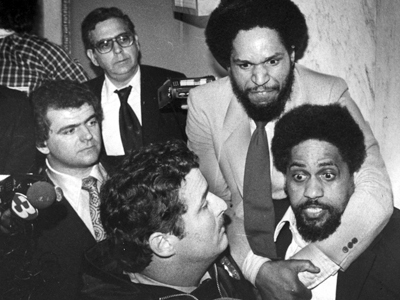
His mother was a committeeperson, and he worked as a union carpenter before his mentor, the late City Council President George X. Schwartz, got him a patronage job as a Council sergeant-at-arms. (Schwartz later went to jail after being convicted on corruption charges as part of the Abscam scandal in the 1980s.)
City Council Sergeant-at-Arms Bob Brady, left, looks on as Councilmember John F. Street, top, and State Rep. Milton Street, right, take part in a near-riot in Council chambers. (Daily News File Photo)
Brady was elected to Congress in a 1998 special election, and eventually chaired the House Administration Committee, which handles behind-the-scenes tasks such as assigning office space to lawmakers.
While in Congress, he ran unsuccessfully for mayor in 2007, losing to Michael A. Nutter, who ran on an anti-corruption campaign.
In 2017, news broke that Brady’s congressional campaign was the subject of a federal investigation over an alleged scheme in which a would-be challenger accepted $90,000 to withdraw from running against Brady in a 2012 primary.
Two of Brady’s aides served prison time, but Brady never admitted wrongdoing. He chose not to run for reelection the following cycle, in 2018.
A modern political ‘boss’
While Brady is often referred to as Philly’s “party boss,“ leading the Democratic City Committee is not the same job as it was in the heyday of big-city machine politics.
Thanks to civil service reforms in the 1950s, there are far fewer patronage jobs to hand out. And Brady’s time is more often spent attempting to maintain peace among the various political organizations around the city, rather than telling them what to do.
“It really isn’t all that easy, you know, keeping everybody together,” Brady said Monday night. “You got all kinds of factions, all kinds of egos, and I try to do the best I can to keep together, like we did tonight.”
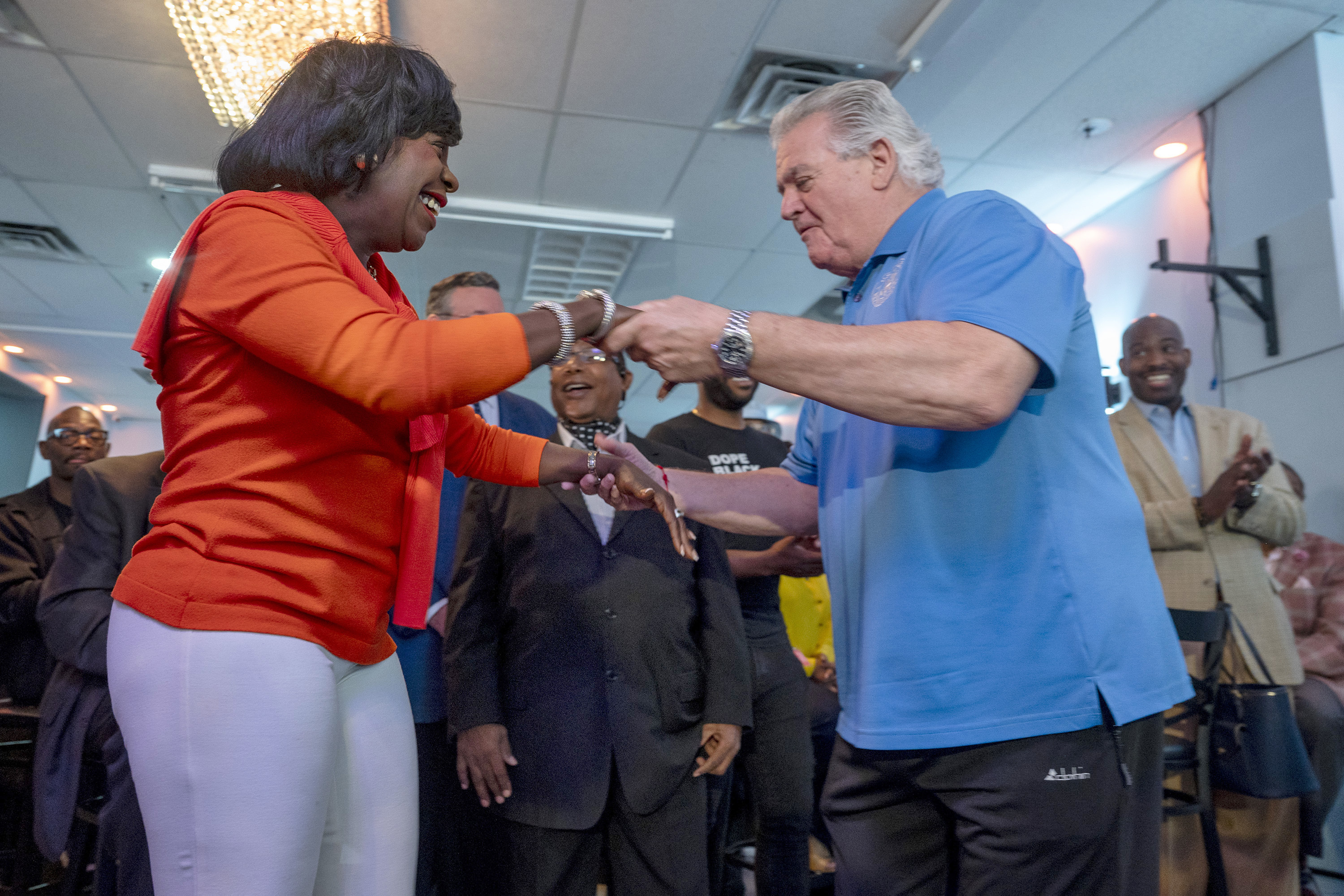
Bob Brady, right, chair of the Philadelphia Democratic City Committee, dances with Cherelle L. Parker at a “unity breakfast” following her victory in the 2023 Democratic mayoral primary. Tom Gralish / Staff Photographer
One area where today’s party does resemble the machine politics of old is local judicial elections. Party-endorsed candidates almost always win seats on the local Municipal Court and Common Pleas Court benches, and many of their staffs are in turn filled with people connected to the local party.
Brady and party leaders have no qualms about admitting what it takes to win their approval: doing favors and free legal work for the city committee, ward leaders, and their constituents.
Philly Democrats’ new No. 2
Although the Democratic City Committee does not have a new chair, ward leaders on Monday elected a new No. 2.
Former Councilmember Sharon Vaughn, who leads the 49th Ward, will be the new first chair of the party, replacing former Councilmember Jannie Blackwell, who did not run for reelection as 46th Ward leader.
Vaughn, who is also a secretary of the Pennsylvania Democratic Party, would temporarily become city committee chair if Brady were to step aside. Brady said Monday he would support her to one day hold the position on a permanent basis as well.
“She’s a great world leader, a former Council person, a hard worker,” Brady said. “What you see is what you get, straight shooter, and she’ll tell you just what it is. And she’s a loyal lady.”
Lauren Rinaldi, the 18th Ward leader who is seen as having relationships with both the progressive and establishment wings of the party, became the second vice chair. She replaces Bass, who has now lost out on her citywide party leadership post regardless of how Wednesday’s 22nd Ward election redo shakes out.
Rinaldi said Monday night she understands her election to leadership was partially an olive branch to the left wing of the party.
“I‘m sure that’s part of it, definitely,” Rinaldi said in an interview. “But I am seeing my role as an advocate — advocating for reform to strengthen the party and modernize the way we do some things and bring more people in instead of shut them out. Basically to rebuild trust with voters.”
The third vice chair remains 7th Ward leader Angel Cruz, and 63rd Ward leader Brian Eddis has replaced Bill Dolbow as fourth vice chair.
Former City Controller Jonathan Saidel will stay on as the party’s treasurer, with John Brady, who is not related to the chair, serving as assistant treasurer.
And 6th Ward leader Pete Wilson was retained as secretary, with 8th Ward leader Elaine Petrossian elected as assistant secretary.
Back-to-back-to-back reruns
The party on Monday ordered the results of three contested ward leader races voided. They will be rerun on Wednesday at the Brady building, with a committee of other ward leaders overseeing the results.
In all three instances, the ward elections were found to have violated the party’s procedures.
The redo for the 14th Ward, in which incumbent Arthur Green lost to Valerie Williams, will take place at 6 p.m.
City Councilmember Cindy Bass, left, speaks with a reporter about her contested 22nd Ward leader election. Aidan T. Gallo / Staff Photographer
That will be followed by a 7 p.m. rerun of the 17th Ward election, which was an open seat in which Tyrone Barge defeated Michelle Schley.
And finally, the 22nd Ward redo will take place at 8 p.m., with progressive challenger Octavius Price taking on Bass.
In all three races, the party will allow submission of “proxy votes” from committeepeople who cannot attend if they are accompanied by notarized affidavits.
Brady said the decision to redo the 22nd Ward vote was an easy one after he saw a video published by The Inquirer showing Bass, who chaired her own reelection meeting, shutting down requests for a roll-call vote that could have clarified the results.
“I don’t think anybody that saw that … was supportive of it,” Brady said. “One ward is one ward, and there’s 68 others, and we’re all going to fix that on Wednesday night.”
Welcome to Shackamaxon, a weekly politics column focused on what’s happening at City Hall and in Harrisburg. It is named for the place where the Lenape chiefs would meet to conduct the people’s business, which is now known as Penn Treaty Park. This week’s column covers ward leader elections, efforts to make community events affordable, and a U-turn on some painful cuts at the Philadelphia School District.
Council member Cindy Bass has been widely condemned for declaring herself the winner of a controversial election for the leadership of the 22nd Ward.Alejandro A. Alvarez / Staff Photographer
The dinosaur groans
After the primary elections three years ago, Philadelphia Democratic Party Chairman Bob Brady was in a celebratory mood. In an open letter posted on social media, Brady boasted that the “dinosaur roared,” a playful, self-deprecating reference to the party establishment’s wins over progressive and reformist alternatives. During this week’s ward elections, however, establishment candidates had little to brag about. Wards That Work, a coalition of left-leaning groups, announced that candidates they supported had won six of the city’s 69 ward leadership positions. While the party’s old guard still holds a significant lead in the total number of ward leader positions, it is clear where the energy and enthusiasm of the party are headed. The insurgent wards, and the wards they’ve contested but haven’t yet prevailed in, are filled with committeepeople. The machine-dominated wards are filled with vacancies.
Fred Dedrick, an elected committeeperson, told me that current ward leader and 8th District Councilmember Cindy Bass had initially told folks to show up by 7:15 p.m. if they wanted to participate in the reorganization vote. After the meeting finally began at 8 p.m., she quickly called for a voice vote, declared herself the winner, ignored requests for a roll-call vote, and sent everyone home.
Under the party’s own rules, Brady told The Inquirer’s Sean Collins Walsh, a roll-call vote must be taken if it is requested.
Bass’ tactics drew widespread condemnation. Even U.S. Rep. Brendan Boyle, who usually stays out of local governmental issues, said he was “absolutely disgusted” by what he saw in a video of the vote, and made a direct comparison to President Donald Trump’s repeated efforts to “obstruct our democracy.”
ThePhiladelphia Democratic City Committee, for its part, is planning to host a revote between Bass and her challenger, Octavius Price.
This is far from Bass’ first controversy. Her tenure on City Council has been characterized by high-profile disputes with some community organizers. Bass’ critics cite what they describe as a lack of consistency, particularly on issues of development: When Bass opposes a project, like the proposed reuse of the Ada Lewis Middle School property, she cites a lack of popular support. When she’s behind an effort — like the decision to grant development rights at the former Germantown YWCA — the community’s viewpoint isn’t taken into account.
That kind of vacillation could be part of why Bass won her most recent primary election in 2023 by just over 400 votes, despite her opponent having little in the way of name recognition.
Former City Council member (and prominent real estate developer) Allan Domb cautioned his colleagues in city government to move slowly before they acquired the former Inquirer building. They probably should have listened to his advice.Tom Gralish / Staff Photographer
Avoidable boondoggle
In 2016, then-Councilmember Allan Domb raised concerns about then-Mayor Jim Kenney’s plan to turn the former Inquirer building on North Broad Street into the new police department headquarters. Domb’s objection was basic common sense. If the city is going to spend a quarter of a billion dollars, shouldn’t we at least get an appraisal first? Especially given that a developer had spent just $22.7 million — a fraction of its expected price tag — to acquire it in the first place.
An Inquirer analysis suggested that the city had, in fact, overbid. The city ended up paying around $90 per square foot, which is higher than the $71 per square foot paid for a comparable property, the former GlaxoSmithKline headquarters that sold three years before. Since 2018, the value of commercial real estate in Center City has declined. The sprawling Centre Square complex near City Hall sold for under $60 per square foot.
In fact, in addition to buying the building without an appraisal, the city also agreed to a yearslong leasing agreement, which allowed the owner, developer Bart Blatstein, to utilize historic tax credits.
Now the bill has come due, with city officials forced to either buy the building outright at its inflated price or pay double in rent payments while searching for a new location, which would also likely cost hundreds of millions of dollars to get up to standards.
While buying the building may be the least bad option at this point, the entire situation is a frustrating reminder of how defensive and parochial city government can be. Despite having a bona fide real estate expert in Domb available to assist their decision-making, city officials embarked on the plan without asking for his input ahead of time.
A report by City Controller Christy Brady found that Philadelphia’s cumbersome rules for event planning are getting in the way of some long-standing civic traditions.Tom Gralish / Staff Photographer
Haphazard hosting
With the World Cup having kicked off and America preparing to celebrate its 250th birthday, you might think the city would be filled with local events, festivals, block parties, and other revelry spreading to all corners of the cradle of liberty. Thanks to the city’s stringent regulations and a stated lack of resources, there will be fewer events than many Philadelphians might have hoped for.
Hosting events in Philadelphia is a slog during the best of times. City Controller Christy Brady issued a report earlier this year that reiterates findings reported in The Inquirer: The high cost of security and convoluted permitting process is shrinking, pushing out, and eliminating many long-standing civic traditions.
This year was supposed to be different, thanks to the Neighborhood Celebrations Grant Fund. But organizers told Inquirer reporters that they are running into unforeseen obstacles, including blackout dates that extend from June 11 to July 18. This means neighborhoods are being restricted at the same time when demand is highest. While security concerns are a legitimate issue, giving people an option to celebrate closer to home could be the key to avoiding the traffic, parking, and crowding concerns that inspire caution in the first place.
Schools switch
After weeks of debate over the proposed rideshare tax and the insistence that a failure to pass it would result in the elimination of 340 positions in the Philadelphia School District, officials have backpedaled. Apparently, there will be no cuts after all.
The district’s revenue needs are what they are, but the way city officials handled the situation fostered confusion and cynicism. Threatening to make cuts without additional revenue, only to cancel the cuts despite failing to secure new money, makes everyone look opportunistic. What was the fight all about in the first place?
The compromise, however, required sacrifices elsewhere. The city had to raid its capital budget and cut some of the Commerce Department’s budget for contracted services, per a statement from City Council President Kenyatta Johnson’s office. More painful cuts could be on the horizon for next year’s budget if a new revenue source isn’t found.
Philadelphia’s Democratic City Committee is likely to take the rare step of ordering a redo of Monday’s controversial 22nd Ward leader election, in which City Councilmember Cindy Bass declared herself the victor after a closely divided voice vote, according to a person with knowledge of the party’s decision-making process.
City committee chair Bob Brady confirmed that Octavius Price, a progressive who ran against the incumbent Bass in the Mount Airy ward, has filed a formal challenge to the election results.
The party’s contest committee, which is made up of other ward leaders, will meet on Sunday to hear from both sides, Brady said. That committee will then make a recommendation on how to proceed that will be considered by the full body of duly elected ward leaders from across the city — excluding Bass. From political endorsements to disciplinary decisions, the ward leaders in the past have almost always followed the recommendations of the party’s committees.
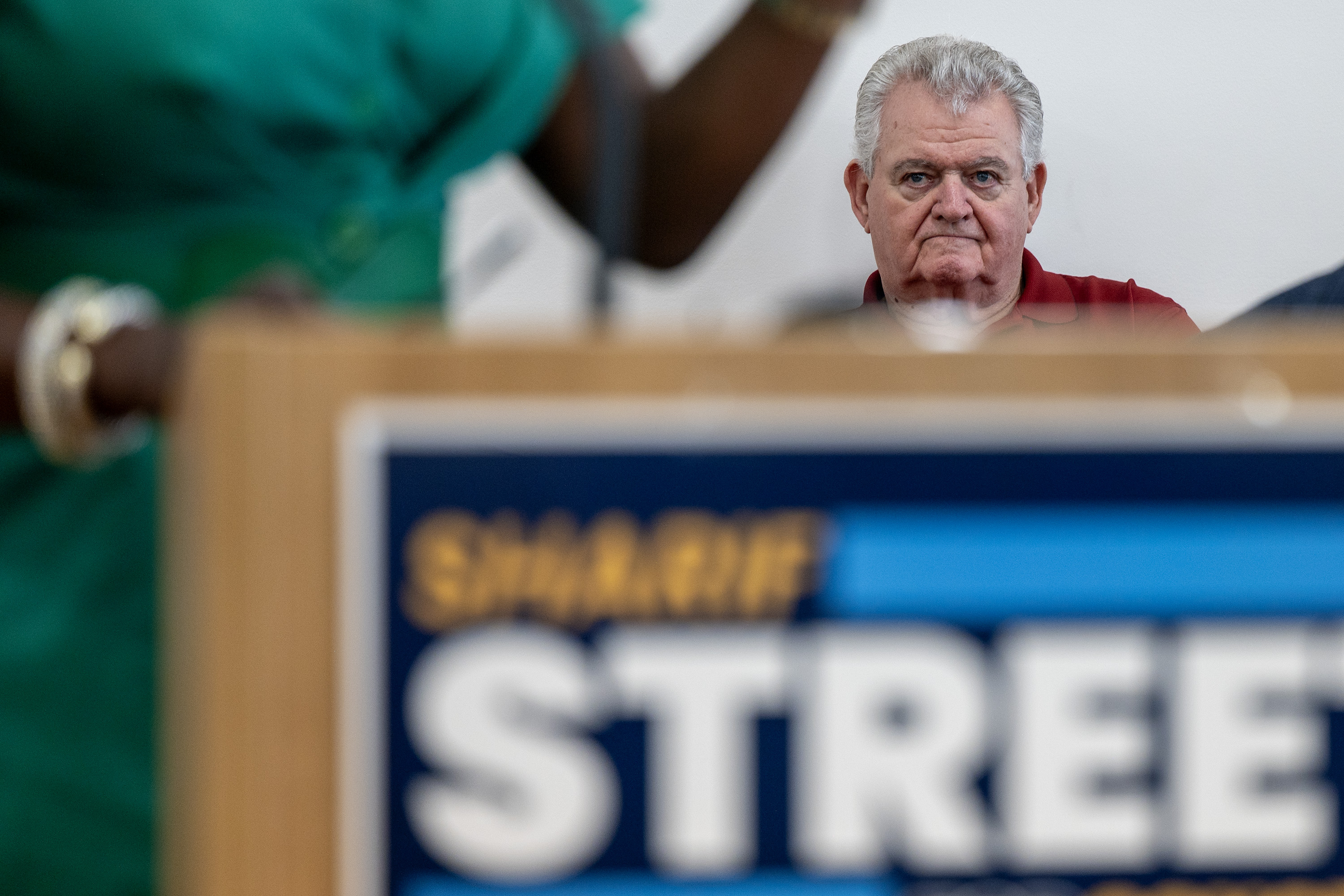
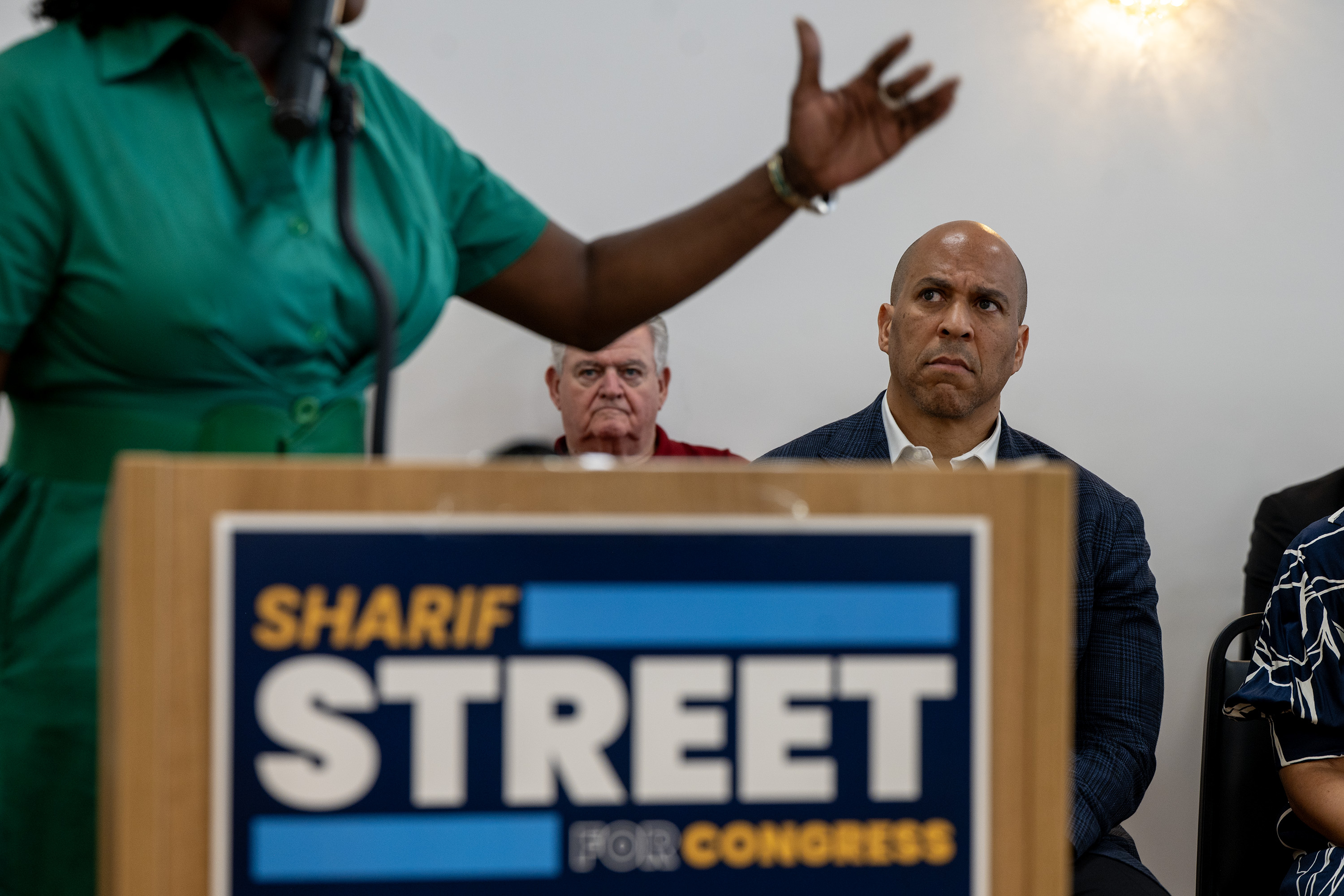
Philadelphia Democratic Party Chairman Bob Brady listens as Mayor Cherelle L. Parker speaks at a rally for 3rd Congressional District primary candidate State Sen. Sharif Street May 18, 2026.Tom Gralish / Staff Photographer
Possible outcomes include the party declaring that either Bass or Price had won on Monday night — or ordering a rerun of the election, in which the ward’s committeepeople would have to meet for another election overseen by a neutral party.
Given reports from Monday — including a video showing Bass adjourning the meeting after declaring victory, while ignoring cries for a roll call to clarify the vote — the city committee is all but guaranteed to order a rerun of the election, according to the source, who was not permitted to discuss the party’s plans publicly and spoke on the condition of anonymity.
That decision would represent a notable rebuke from the city’s Democratic establishment for Bass, a centrist who has been a ward leader since 2018 and holds a leadership role in the citywide party as a vice chair.
Bass has repeatedly clashed with progressive activists in her Northwest Philadelphia-based 8th Council District and was narrowly reelected in 2023. She is likely to face another challenge from the left in next year’s Council election, and control of the 22nd Ward could be an important factor in the race.
Octavius Price, a fiber optic engineer and member of the Pennsylvania Air National Guard, ran for 22nd Democratic Ward leader. Sean Walsh
Bass said she is confident she will have the votes to win another four-year term as ward leader if there is a rerun.
“It’s not in my hands,” she said Wednesday. “It’s totally up to the Democratic City Committee, and I’ll support whatever the decision is.”
Ward leaders and committeepeople are the foot soldiers of the Philadelphia Democratic Party. They are tasked with knocking on doors to get out the vote for party-endorsed candidates, as well as sometimes fielding constituent services requests.
As the incumbent ward leader, Bass chaired Monday night’s election at the Germantown Seventh-day Adventist Church in Mount Airy. A video of the meeting obtained by The Inquirer showed that numerous people voted for Bass and for Price during the voice vote, and that Bass ignored requests for a vote-by-vote roll call that could have clarified who won.
Brady said Monday that while voice votes can be used to decide ward leader elections, any requests for roll-call votes must be honored. He added that having a video of the meeting would provide “great proof” for the contest committee as it tries to sort out what happened.
“There’s always ‘he said, she said,’” Brady said. “But if there’s a video, we gotta take a look at that.”
Price, a fiber optic engineer, said that Democratic City Committee officials have made “no guarantees” to him that there will be a new election. But, he said, they have briefed him on how a rerun would work if the ward leaders order one.
The election would take place at a time negotiated by Price and Bass, he said, and it would be at the city committee headquarters on Spring Garden Street, not in Mount Airy.Price said he was not informed how votes would be cast.
“We just want a fair vote. It’s supposed to be one person, one vote,” he said Wednesday. “I hope that we do get our fair shot. I hope that we get transparency and an opportunity to get our voices heard.”
Former City Councilmember Jannie Blackwell, who has been a fixture of Philadelphia politics for decades, is no longer a Democratic wardleader. State Sen. Sharif Street — weeks after losing the city’s heated congressional race — just became one.
And the Rev. Lewis Nash Sr., who in 2024 was removed as leader of the 47th Ward after The Inquirer reported he was recorded making anti-LGBTQ+ remarks, has returned to the post after being reelected in his North Philadelphia ward Monday night.
Meanwhile, the upstart group Wards That Work, which was backed by progressive activists and sought to recruit hundreds of people to run for committee openings in the May 19 Democratic primary, claimed victories in six wards that were previously seen as aligned with the party establishment or more centrist Democrats.
Despite those notable gains,fewer than one-third of Philadelphia’s 69 Democratic ward leaders are seen as closely aligned with the party’s left wing.
That means Bob Brady, who has led the local Democratic Party since 1986 and is seen by many as the embodiment of the political old guard, will likely coast to victory in party leadership elections — decided by the ward leaders — next week, securing an 11th term as chair of the Democratic City Committee.
The party’s internal politics have become a key battleground in the fight between progressive upstarts and the Democratic establishment. There has also been a renewed push to grow the number of “open wards” — those that allow committeepeople to vote on political endorsements rather than allowing ward leaders to decide unilaterally.
Brady, a former U.S. representative, has over the last few weeks struck a conciliatory tone regarding the party’s left wing after clashing with activists in a series of elections, most notably when the party sought to punish committeepeople who endorsed the elections of Councilmembers Kendra Brooks and Nicolas O’Rourke from the progressive Working Families Party.
“These labels — Working Families, Reclaim, socialist — the best labels they have that I love is they’re Democrats,” he said in an interview, referring in part to Reclaim Philadelphia, a group inspired by U.S. Sen. Bernie Sanders’ presidential runs that organized the local progressive movement’s first successful ward takeovers in 2018.
Now, he said, he is focused on unity as Democrats hope to make gains in this year’s midterm elections and defeat candidates aligned with President Donald Trump in future elections.
“We can come together and beat that nut in the White House,” Brady said.
Philadelphia Democratic Party Chairman Bob Brady (left) and U.S. Sen. Cory Booker (right) listen as Mayor Cherelle L. Parker speaks in support of State Sen. Sharif Street at a get-out-the-vote rally at the Church of Christian Compassion in West Philadelphia Monday, May 18, 2026 the day before Tuesday’s Democratic primary election for the 3rd Congressional District.Tom Gralish / Staff Photographer
Earlier this year, however, Brady acknowledged that the Democratic City Committee funded mailers opposing some of the committeepeople backed by Wards That Work, and many on the left are still hoping for major changes in the local party.
District Attorney Larry Krasner, for instance, recently called on Brady to resign, and State Rep. Chris Rabb, a democratic socialist who last month won the Democratic primary for an open Philadelphia congressional seat, has emerged as a leading critic.
Rabb beat Street, the party’s endorsed candidate, in the 3rd Congressional District race, and has accused the city committee of neglecting the work of turning out the vote, instead concerning itself with backroom dealings among party insiders.
State Rep. Chris Rabb greets supporters on election day. He is arriving to his polling place to vote, Grace Epiphany Episcopal Church, Philadelphia, Tuesday, May 19, 2026.Alejandro A. Alvarez / Staff Photographer
Rabb has not explicitly called for Brady to resign. But he is now calling for a dramatic overhaul of the party, from its leaders to its bylaws to the city’s antiquated ward boundaries.
“What I’m asking for is for the ward leaders — whatever candidate is running for chair, whether it’s Bob Brady or anyone else — that they demand that their first order of business is to overhaul the bylaws by Labor Day [to focus] on building a local party built on transparency integrity and inclusion,” Rabb said in an interview last week.
Progressives make gains
On paper, Philadelphia’s Democratic Party structure is bottom-up. Every four years, during the primaries of presidential midterm cycles, registered Democrats elect two committeepeople from their precincts, as they did this year on May 19. The committeepeople then elect neighborhood-level ward leaders, and the ward leaders in turn elect the top officials in the city party, including Brady.
But in practice, many critics of the city’s old guard see a top-down reality, with Brady and other high-ranking city officials controlling the party’s agenda.
Progressives are hoping to wrest control of the party from the establishment or to force reforms that make it more hospitable to left-leaning candidates. But it remains an uphill battle given the diffuse nature of the party system.
Among the notable progressive wins in Monday night’s ward elections:
5th Ward (Center City): Ryan Alsayegh, a political consultant currently working for State Reps. Tarik Khan and Joe Hohenstein, unseated Mike Boyle.
25th Ward (Port Richmond, Kensington): Alexandria Mercedes Murphy, a neurophysiologist and volunteer with Reclaim Philadelphia, succeeded Tommy Johnson.
31st Ward (Fishtown, East Kensington): Molly Hartman, a staffer for Councilmember Rue Landau, faced no opponents in her bid to succeed Margaret Rzepski.
27th Ward (University City): Benjamin Moss-Horwitz, a staffer for State Rep. Rick Krajewski, won a contested race to succeed retiring ward leader Carol Jenkins, a party stalwart.
46th Ward (Squirrel Hill, Cedar Park): James Bridgeforth, a University of Delaware professor, ran an uncontested race to succeed Blackwell, who retired this year after defeating a progressive challenger for her ward in a contentious election four years ago.
In West Philadelphia’s 60th Ward, State Rep. Amen Brown, a centrist Democrat, was unseated by Lorraine White-Johnson.
White-Johnson, who had the backing of Wards That Work, said in an interview that she is not aligned with one faction and welcomes all Democrats. She added that she plans to explore opening up the ward but has not made formal plans to do so yet.
Philadelphia City Councilmember Cindy Bass on Thursday, September 11, 2025.Alejandro A. Alvarez / Staff Photographer
In Mount Airy’s 22nd Ward, Councilmember Cindy Bass declared herself reelected to a new term in a controversial move by saying she won a contested voice vote of committeepeople and denying motions for a roll-call vote that could have clarified the results. Her opponent, Octavius Price, was backed by progressive organizers and said he plans to challenge the election.
Some notable ward election results did not involve major ideological shifts.
Nash, who on Tuesday denied having made the anti-LGBTQ+ comments that previously cost him his seat, won a three-way race to reclaim the 47th Ward.
“I forgive everybody that was involved with those unforeseen circumstances,” Nash said in an interview Tuesday. “To anyone that was offended by the alleged comments, forgive me and the person who made those comments, allegedly and falsely, and let’s move forward.”
In a statement, Street said he would “take a back-to-basics approach, listening to my neighbors about their concerns and filling vacant committee member seats.”
“Last month’s election results galvanized my belief that we need to build the party from the ground up,” Street said in a statement. “We need to increase voter turnout in Black communities, like North Philadelphia, by demonstrating every day that Democrats are fighting for them.”
Staff writer Anna Orso contributed to this article.
City Councilmember Cindy Bass on Monday night was facing a challenge in her bid to be reelected as the Democratic leader of Mount Airy’s 22nd Ward. Her opponent, Octavius Price, had the backing of a well-organized group of progressive activists, many of whom were newly elected as committeepeople in last month’s Democratic primary election.
As the incumbent, Bass chaired the meeting to determine her own fate as ward leader, and she held a voice vote to determine whether she or Price had more support among the committeepeople assembled at the Germantown Seventh-day Adventist Church.
A video of the meeting obtained by The Inquirer appears to show a narrowly divided room, with many people saying, “Aye,” in support of bothBass and Price. Attendees cried out for a roll call, in which the committeepeople’s votes would be counted one by one, clarifying which candidate had more support.
But Bass immediately announced herself the winner, rejected all motions from committeepeople objecting to the vote, and quickly adjourned the meeting, the video shows.
Bass, a centrist Democrat, narrowly won reelection to her fourth term on Council in 2023 and has clashed with left-leaning activists in her Northwest Philadelphia-based 8th District. A progressive takeover of Bass’ own ward could hinder her reelection chances in next year’s Council election.
She is now facing accusations that she skirted the party’s procedures for ward reorganization meetings by declaring herself the victor while denying requests for a roll-call vote.
Democratic City Committee Chair Bob Brady said Monday night that wards can use voice votes for leadership elections, especially when the results are “overwhelming,” such as when an incumbent is running unopposed. But if a committeeperson calls for a roll-call vote to ensure greater accuracy, he said, the request must be honored.
“You can do a voice vote,“ Brady said in an interview. ”If they do a voice vote and somebody calls for a roll call, you gotta do a roll call.”
On Monday night, Bass, who has been ward leader since 2018, maintained she had the votes to win another four-year term. But she did not respond to a request for comment on why she ignored requests for a roll call.
“We had the votes,” she said in an interview. “No matter what I did, some of these people are not going to be happy.”
Ward leaders and committeepeople are the frontline workers of the local party, charged with getting out the vote for Democratic candidates running for everything from Municipal Court to president.
Fights over control of the city’s 69 Democratic ward leader positions have for years provided flash points in the long-running battles pitting the party establishment against anti-corruption reformers and, more recently, the local progressive movement.
State Rep. Chris Rabb, a Northwest Philly Democrat whose victory in last month’s primary election for the 3rd Congressional District marked a landmark victory for progressives, on Tuesday linked Bass’ reelection bid to his broader criticisms of the Democratic City Committee.
“If she ‘wins’ this battle, the Philly Dem Party will lose the war,” Rabb posted on X. “Either it refashions itself around equity, accountability & transparency OR it just withers away election cycle by election cycle while Dem voters statewide suffer because … as Philly goes, so goes PA.”
Brady, who is expected to be reelected to an 11th term as party chair next week, declined to comment on the result of the 22nd Ward election, but said he expects it will be challenged. Challenges are heard by the party’s contest committee, which is made up of other ward leaders. If Price formally objects, the committee would likely hear the challenge Saturday, Brady said.
“[Price] would have to notify us that he’s contesting the election, and then we’ll hear from both sides,” Brady said.
The committee, he said, could declare a winner if members determine the results are clear, or call for a rerun of the election.
Price, a fiber optic engineer, called Bass’ handling of the election “unjust” and said he plans to file a challenge.
“I initially ran to be a committeeperson because I believe in democracy and I believe in transparency and fairness,” Price said in a statement following the vote.“This was an example of moral decay and emboldened cruelty and corruption that has made so many people disillusioned with participating in politics.”
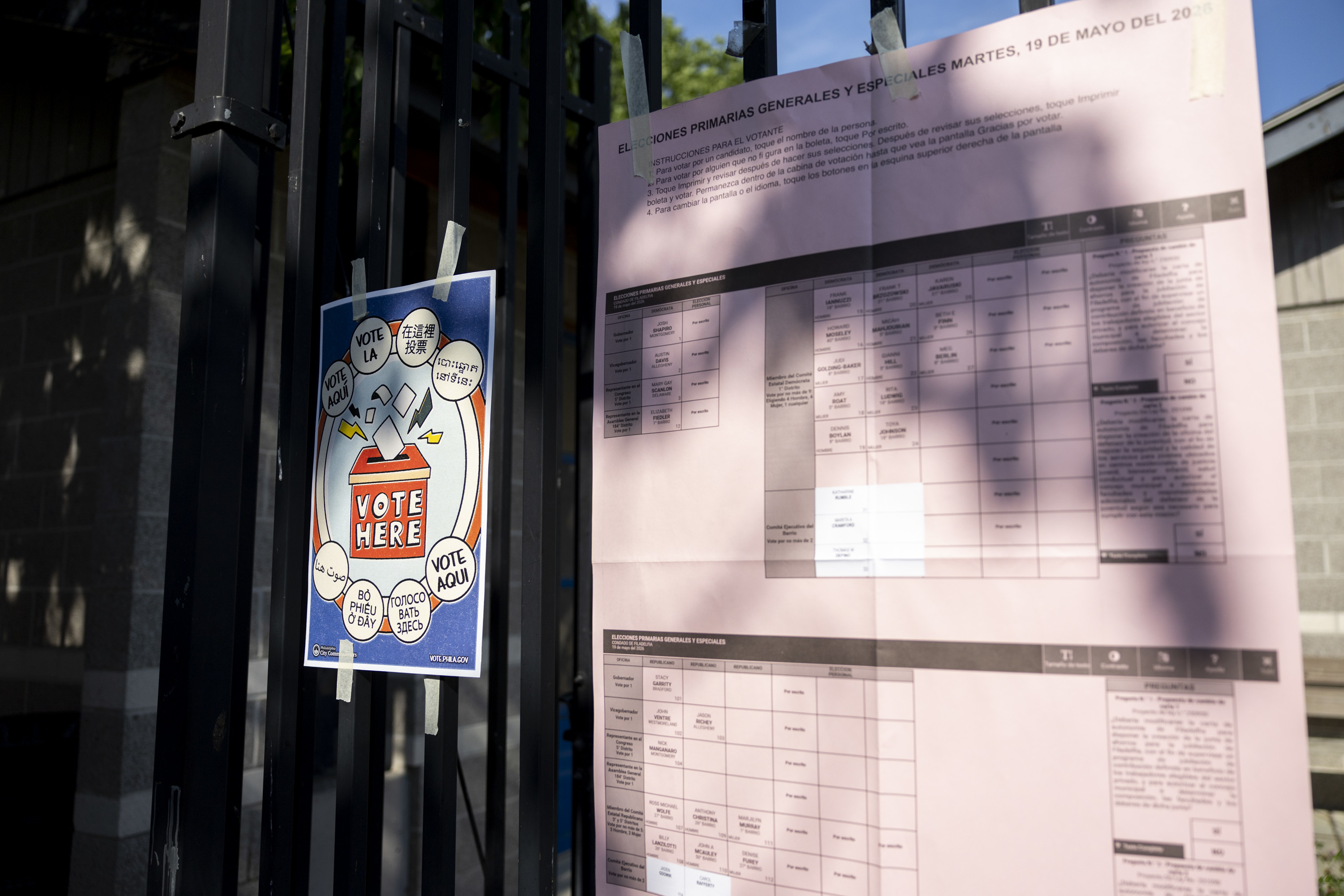
A “vote here” sign outside the polls at Marconi Plaza in South Philadelphia, Pa., on Tuesday., May 19, 2026.Tyger Williams / Staff Photographer
Another point of contention on Monday was the number of people in the room, which could become a key factor in a contest committee review of the election results because it changes the number of votes needed for a majority.
Price, whose supporters whipped votes ahead of the meeting, said that by his count at least 26 committeepeople were planning to vote against Bass and for a candidate who, like him, supports “open wards,” which allow committeepeople to vote on political endorsements rather than letting the ward leader decide unilaterally for the entire jurisdiction.
Price said his supporters counted 48 committeepeople present on Monday evening, meaning he should have had the votes sufficient for a victory.
But a sign-in sheet at the meeting told a different story.
The sheet, a photo of which was obtained by The Inquirer, listed 55 committeepeople and appeared to include a tally of their allegiances before the election was even held. Price said ward organizers who appeared to be working with Bass circulated the sheet at the beginning of the meeting. The paper showed 29 for Bass and 26 for “other.”
“Her sheet has a total of 55 people who voted, but we know for a fact that’s not the case,” he said.
Former Councilmember Derek S. Green, a 22nd Ward committeeperson who ran against Bass for ward leader in 2018, flirted with running for the post again this year. But he did not end up throwing his hat in the ring, resulting in a one-on-one showdown between Bass and Price.
Green, who was present Monday night, declined to comment on the election results.
After Price was nominated during the meeting, Bass launched into the voice vote.
“All in favor of Octavius Price, signify by saying, ‘Aye,” Bass said. “All in favor of Cindy Bass, signify by saying, ‘Aye.’”
In the video recording of the meeting, many people can be heard supporting each of the candidates. Even before Bass announced the winner, a participant can be heard saying, “roll call.”
Bass then said, “In the call of the chair, the ayes have it for Cindy Bass.” The room immediately erupted with objections.
“No, no, no — you’ve got to have a roll call,” one person said. Others shouted: “Roll call!”
“There will be no motions accepted on the floor,” Bass said over the commotion. “We’re going to have to adjourn the meeting. There is no point of order. So the motion has been made — that concludes — there is no additional business for the ward tonight. Thank you for coming.”
The tensions did not end there.
After the election, participants in the meeting clashed outside the church as a man and a woman holding the sign-in sheet refused to let other committeepeople record their attendance on the form, a separate video reviewed by The Inquirer shows.
“Y’all got to get back. Better get back,” the man told a crowd pleading to sign the forms. “Shut up!”
As the man walked away, one person can be heard turning to Green, who was caught in the middle of the fracas.
“Derek, we just wanted to get our sign-in [on] the sheet. He took it from us,” the man said.
“I know. That’s why I came,” Green responded. “It’s not right. It’s not right.”