Tag: Chris Rabb

  • Josh Shapiro is most popular politician among Philadelphia residents — by a long shot

    Josh Shapiro is most popular politician among Philadelphia residents — by a long shot

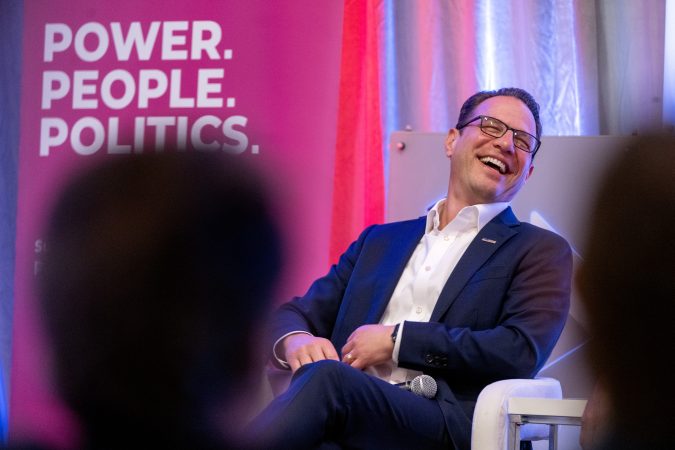
    Gov. Josh Shapiro is by far the most popular political figure among Philadelphia residents, a boost as he looks toward November and beyond.

    In a new Suffolk University/Philadelphia Inquirer CityView poll, 62% of Philadelphians have a favorable opinion of Shapiro, double digits above any other political figure included in the survey.

    Not only did the Democratic incumbent running for reelection win over three-quarters of his own party’s voters in the blue stronghold, he also got positive reviews from almost half the city’s independents and more than one-third of Republicans.

    “He has strong bona fides within his own party, 76% favorable and 11% unfavorable, but he’s also at least somewhat competitive among independents and even some Republicans, so that’s an amazing profile for a candidate who’s an incumbent these days,” said David Paleologos, the polling director at Suffolk.

    Just 16% of residents have an unfavorable view of Shapiro, and only 8% have never heard of the one-term governor, who was on former Vice President Kamala Harris’ short list of potential running mates in 2024.

    (function(){function e(){window.addEventListener(`message`,function(e){if(e.data[`datawrapper-height`]!==void 0){var t=document.querySelectorAll(`iframe`);for(var n in e.data[`datawrapper-height`])for(var r=0,i;i=t[r];r++)if(i.contentWindow===e.source){var a=e.data[`datawrapper-height`][n]+`px`;i.style.height=a}}})}e()})();

    The poll of 500 residents in the city, which was conducted by phone from June 16 to 20, had a margin of error of 4.4 percentage points. Pollsters reached residents in all 66 wards in the city.

    Shapiro clobbers his Republican opponent, Treasurer Stacy Garrity, whom just 9% of the poll’s respondents view favorably.

    That’s not unexpected in a city where Democrats outnumber Republicans 6-1. But it’s Garrity’s lack of name recognition that plays a larger role. A whopping 61% of those surveyed had never heard of Garrity, a glaring figure less than five months until the November election.

    Although the state GOP coalesced around her last year and she faced no challengers for her primary nomination this year, only 26% of Republicans had even heard of Garrity.

    (function(){function e(){window.addEventListener(`message`,function(e){if(e.data[`datawrapper-height`]!==void 0){var t=document.querySelectorAll(`iframe`);for(var n in e.data[`datawrapper-height`])for(var r=0,i;i=t[r];r++)if(i.contentWindow===e.source){var a=e.data[`datawrapper-height`][n]+`px`;i.style.height=a}}})}e()})();

    “She’s kind of a blank slate, and that works to the challenger’s advantage, but if you’re Stacy Garrity you want to start defining yourself quickly before someone else does,” Paleologos said.

    Shapiro can drive up his statewide total if voters in Philadelphia, an overwhelming Democratic electorate, turn out in large numbers — though that has been less reliable in recent years.

    His broad favorability could also help him stretch his bank account further. Shapiro, who hails from nearby Montgomery County, has spent the least amount of money so far in the Philadelphia television market and the most in Pittsburgh, which could show his campaign knows where he is already strong.

    Fetterman is far less popular in Philly, particularly among young voters

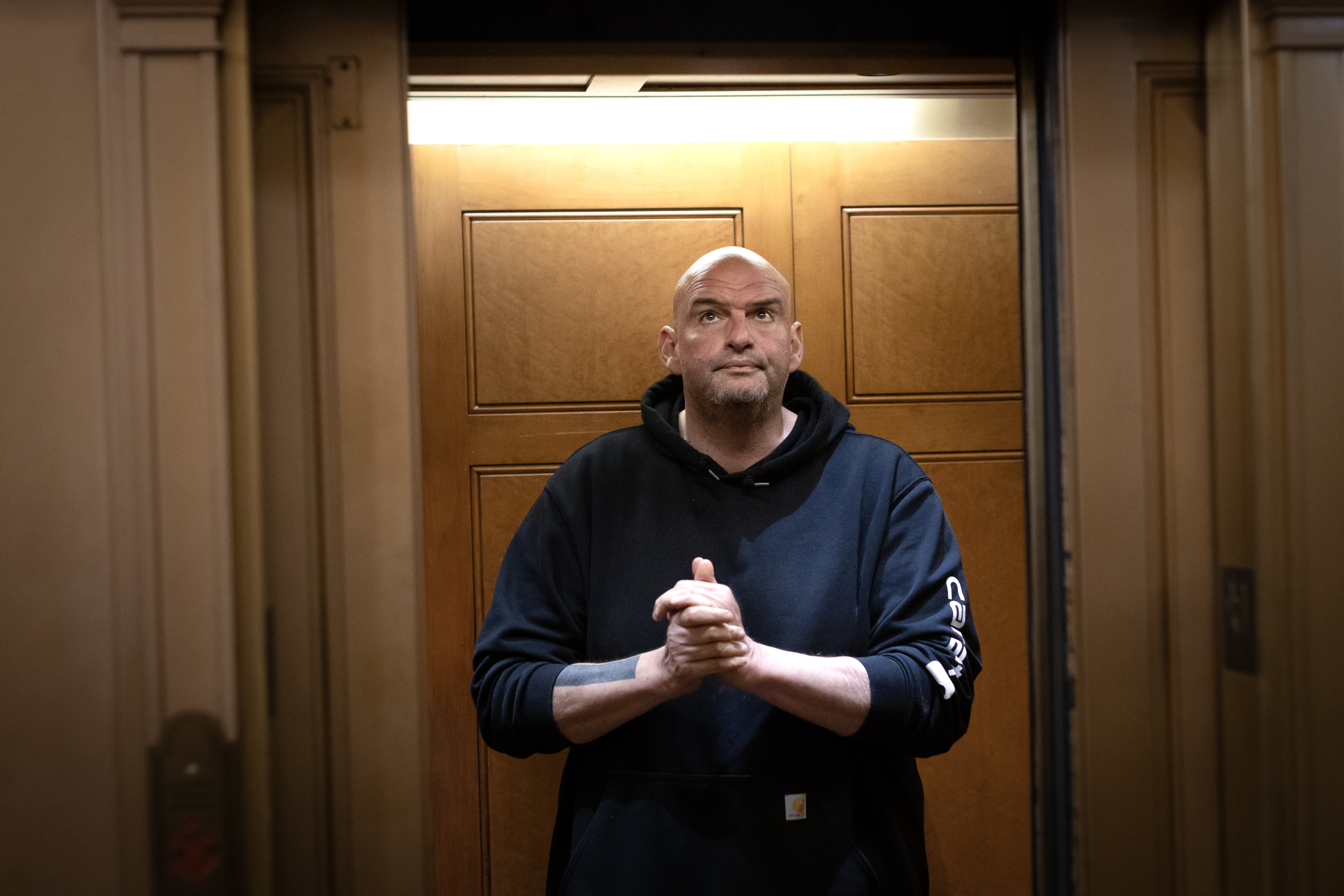
    Shapiro’s popularity in the city stands in stark contrast with the state’s other top Democrat: U.S. Sen. John Fetterman.

    In the swing state’s most Democratic city, the one-term senator is faring poorly.

    Less than one-quarter, 24%, of Philly residents have a favorable opinion of Fetterman, compared with 43% with an unfavorable view. The numbers are even worse within his own party, with just 17% of Democrats holding a favorable view of the senator, who has often feuded with progressives and repeatedly crossed party lines to cast key votes in support of President Donald Trump’s nominees.

    His numbers are particularly sour among voters ages 18 to 24 and 25 to 34.

    (function(){function e(){window.addEventListener(`message`,function(e){if(e.data[`datawrapper-height`]!==void 0){var t=document.querySelectorAll(`iframe`);for(var n in e.data[`datawrapper-height`])for(var r=0,i;i=t[r];r++)if(i.contentWindow===e.source){var a=e.data[`datawrapper-height`][n]+`px`;i.style.height=a}}})}e()})();

    A strong majority of Republican voters, 60%, view him favorably in the poll, but the Pennsylvania Democrat has repeatedly insisted he has no interest in switching parties heading into 2028, when he is likely to face a primary challenge if he runs for another term.

    While slightly more Philadelphians have a favorable view of Fetterman than his GOP colleague, U.S. Sen. Dave McCormick, a greater share of Philly voters have an unfavorable view of the Democrat.

    McCormick earned 17% favorable views compared with 25% unfavorable views, while the rest had not heard of the freshman senator or were undecided.

    But the least popular politician in Philly was Trump, who had just 12% favorability in the city.

    Ninety-two percent of Democrats view Trump unfavorably, and 31% of Philadelphia Republicans do, too. The poll also found that nearly 70% of Philly voters had grown less confident in American democracy under Trump’s presidency.

    Trump made inroads in the deep-blue city in 2024, but Harris still won Philadelphia handily with 78% of the vote.

    The president is a frequent target of Shapiro, who has blamed Trump’s tariffs and other policies for exacerbating the cost of living.

    Taking on Trump may be boosting Shapiro’s popularity as he pursues reelection. His numbers show opportunity as he continues building a national profile, likely with ambitions for higher office. In a city where voters favor liberal and left-leaning candidates, Paleologos said, the polling results could be somewhat extrapolated to a national Democratic primary for president in 2028.

    What Shapiro has going in his favor is high popularity among women, with 69% viewing him favorably. That is good news for the governor, since women consistently make up a large proportion of Democratic primary voters, according to exit surveys.

    “In a Democratic primary, you really want to be strong among women, and he is,” Paleologos said. “If 60% of women are voting a Democratic primary, that really plays to his strength.”

    He also ranks in the 70s for favorability among people ages 45 to 74.

    “Those are people who are bill payers, they’re raising children, they’re taking care of sick parents, they’re very stretched in terms of economics. Just terrific numbers,” Paleologos said.

    Shapiro’s favorability is far above that of other Democratic politicians in the city, including Mayor Cherelle L. Parker and State Rep. Chris Rabb, who won last month’s competitive primary to represent the 3rd Congressional District, which stretches from Northwest Philly to parts of South Philly.

    A majority of respondents had not heard of Rabb despite his recent win. But 26% of respondents said they had a favorable view of the progressive lawmaker, compared with only 7% with an unfavorable view.

    The mayor was viewed favorably by nearly 44% of respondents, compared with nearly 35% who viewed her unfavorably — a net positive rating but a much closer split than Shapiro.

    “There are there are pockets of strength that make her electorally strong, but I wouldn’t call it broad-based,” Paleologos said of Parker.
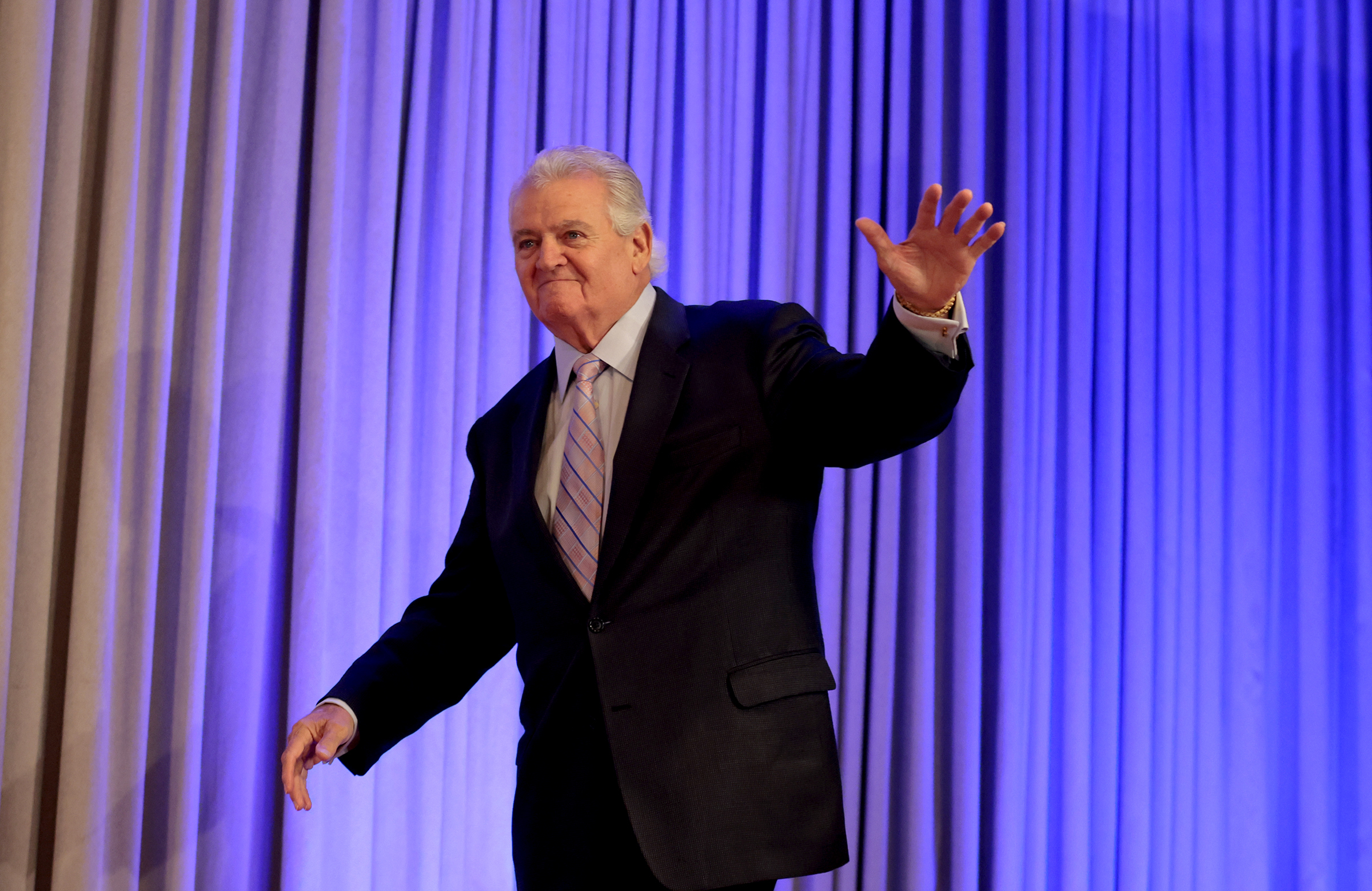
  • Bob Brady has chaired Philly’s Democratic Party since 1986. Ward leaders just gave him four more years.

    Bob Brady has chaired Philly’s Democratic Party since 1986. Ward leaders just gave him four more years.

    Since 1986, Philadelphia has had six different mayors and five City Council presidents. But over those four decades, the city’s Democratic Party has known only one leader: Robert A. Brady.

    And he’s not done yet.

    Brady, 82, on Monday night won an 11th term as chair of the Democratic City Committee, continuing an astonishing run as the top official in the local party despite growing tensions between the local Democratic establishment and progressive insurgents.

    Fresh off democratic socialist Chris Rabb’s victory in last month’s Democratic primary for an open Philly congressional seat, District Attorney Larry Krasner called on Brady to resign, and progressive activists hoped to shake up the local party they blame for Philly Democrats’ lackluster turnout in recent federal elections.

    But following last week’s ward leader elections — in which left-leaning candidates notched at least five victories but came up well short of the numbers needed to seriously threaten Brady and his allies — the writing was on the wall.

    No challenger stepped forward during Monday night’s leadership elections at the party’s headquarters, the Robert A. Brady Office Building on Spring Garden Street, and the incumbent won another four-year term.

    “It‘s pretty nice to get it unanimous — nobody complains at all, no problems whatsoever, and that’s the way I like to have it,” Brady told reporters after his reelection, in which the ward leaders approved his slate of party officers in a unanimous voice vote.

    He added that he believes the party’s factions can overcome their differences.

    “They know that my heart’s in the right place,” Brady said of the party’s left-leaning critics. “I want to go in the right direction, and it might be the direction that they want to go.”

    Mayor Cherelle L. Parker, who leads the 50th Ward, addressed party officials during the election meeting, telling them she is a “progressive with a capital P — because if you want to be a progressive, you got to make some progress.”

    “People want results,” Parker said in an interview afterward. “They don’t want to see fighting. They don’t want to see finger-pointing. Let’s focus on an agenda and not try to eat our own.”

    Also Monday, the party elected several new officers to serve alongside Brady and ordered reruns of three ward leader elections with contested outcomes.

    Those include Mount Airy’s 22nd Ward, in which City Councilmember Cindy Bass controversially declared herself the winner after a contested voice vote.

    All three reruns will take place Wednesday night.

    Soup to nuts in Democratic politics

    Brady lives in Overbook, where he is the 34th Ward leader.

    His mother was a committeeperson, and he worked as a union carpenter before his mentor, the late City Council President George X. Schwartz, got him a patronage job as a Council sergeant-at-arms. (Schwartz later went to jail after being convicted on corruption charges as part of the Abscam scandal in the 1980s.)

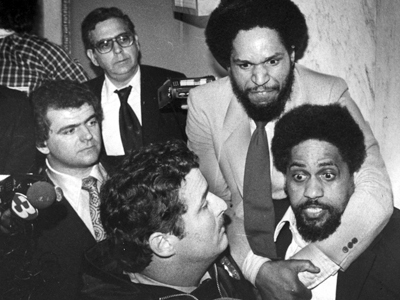
    City Council Sergeant-at-Arms Bob Brady, left, looks on as Councilmember John F. Street, top, and State Rep. Milton Street, right, take part in a near-riot in Council chambers. (Daily News File Photo)

    Brady was elected to Congress in a 1998 special election, and eventually chaired the House Administration Committee, which handles behind-the-scenes tasks such as assigning office space to lawmakers.

    While in Congress, he ran unsuccessfully for mayor in 2007, losing to Michael A. Nutter, who ran on an anti-corruption campaign.

    In 2017, news broke that Brady’s congressional campaign was the subject of a federal investigation over an alleged scheme in which a would-be challenger accepted $90,000 to withdraw from running against Brady in a 2012 primary.

    Two of Brady’s aides served prison time, but Brady never admitted wrongdoing. He chose not to run for reelection the following cycle, in 2018.

    A modern political ‘boss’

    While Brady is often referred to as Philly’s “party boss,“ leading the Democratic City Committee is not the same job as it was in the heyday of big-city machine politics.

    Thanks to civil service reforms in the 1950s, there are far fewer patronage jobs to hand out. And Brady’s time is more often spent attempting to maintain peace among the various political organizations around the city, rather than telling them what to do.

    “It really isn’t all that easy, you know, keeping everybody together,” Brady said Monday night. “You got all kinds of factions, all kinds of egos, and I try to do the best I can to keep together, like we did tonight.”

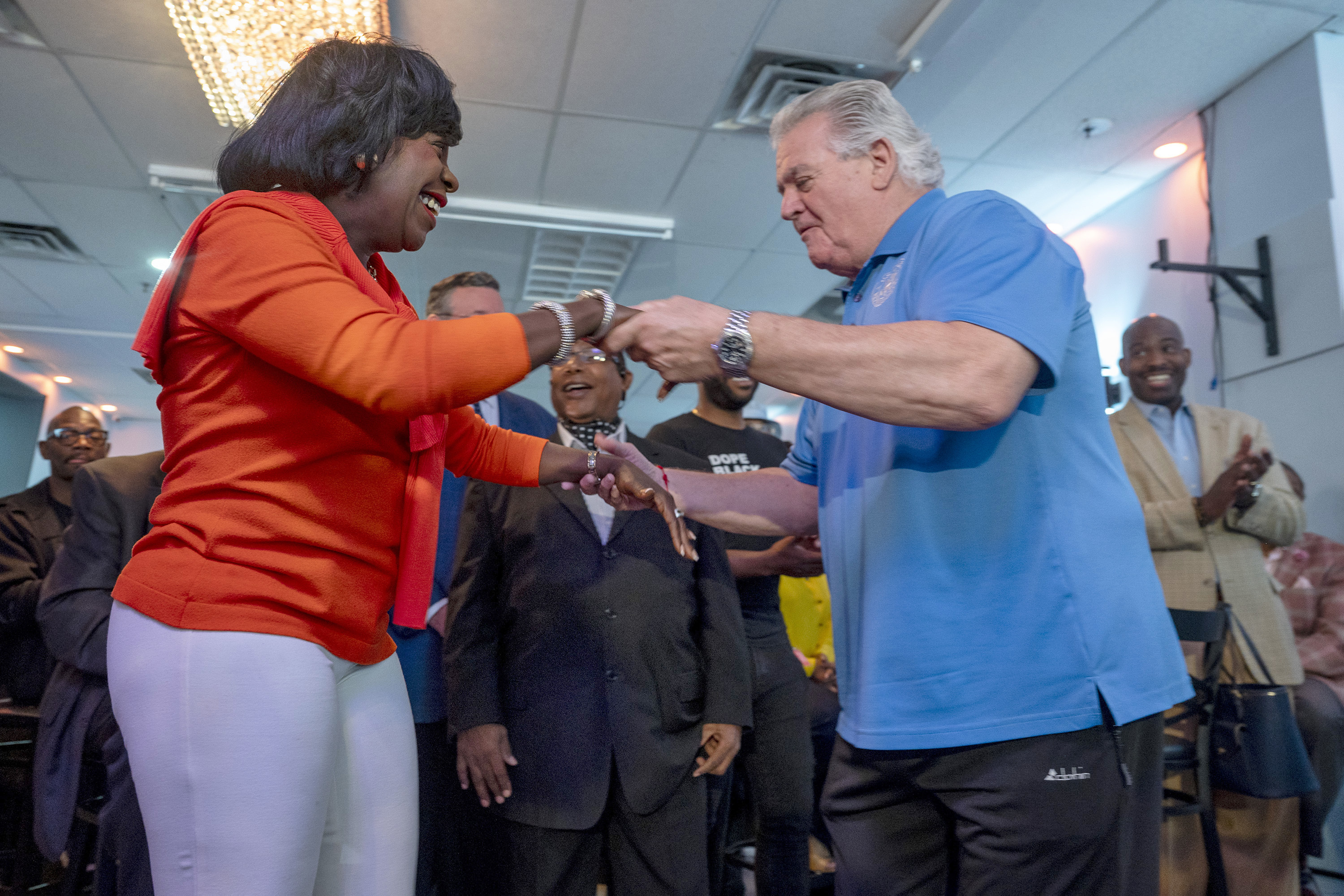
    Bob Brady, right, chair of the Philadelphia Democratic City Committee, dances with Cherelle L. Parker at a “unity breakfast” following her victory in the 2023 Democratic mayoral primary. Tom Gralish / Staff Photographer

    One area where today’s party does resemble the machine politics of old is local judicial elections. Party-endorsed candidates almost always win seats on the local Municipal Court and Common Pleas Court benches, and many of their staffs are in turn filled with people connected to the local party.

    Brady and party leaders have no qualms about admitting what it takes to win their approval: doing favors and free legal work for the city committee, ward leaders, and their constituents.

    Philly Democrats’ new No. 2

    Although the Democratic City Committee does not have a new chair, ward leaders on Monday elected a new No. 2.

    Former Councilmember Sharon Vaughn, who leads the 49th Ward, will be the new first chair of the party, replacing former Councilmember Jannie Blackwell, who did not run for reelection as 46th Ward leader.

    Vaughn, who is also a secretary of the Pennsylvania Democratic Party, would temporarily become city committee chair if Brady were to step aside. Brady said Monday he would support her to one day hold the position on a permanent basis as well.

    “She’s a great world leader, a former Council person, a hard worker,” Brady said. “What you see is what you get, straight shooter, and she’ll tell you just what it is. And she’s a loyal lady.”

    Lauren Rinaldi, the 18th Ward leader who is seen as having relationships with both the progressive and establishment wings of the party, became the second vice chair. She replaces Bass, who has now lost out on her citywide party leadership post regardless of how Wednesday’s 22nd Ward election redo shakes out.

    Rinaldi said Monday night she understands her election to leadership was partially an olive branch to the left wing of the party.

    “I‘m sure that’s part of it, definitely,” Rinaldi said in an interview. “But I am seeing my role as an advocate — advocating for reform to strengthen the party and modernize the way we do some things and bring more people in instead of shut them out. Basically to rebuild trust with voters.”

    The third vice chair remains 7th Ward leader Angel Cruz, and 63rd Ward leader Brian Eddis has replaced Bill Dolbow as fourth vice chair.

    Former City Controller Jonathan Saidel will stay on as the party’s treasurer, with John Brady, who is not related to the chair, serving as assistant treasurer.

    And 6th Ward leader Pete Wilson was retained as secretary, with 8th Ward leader Elaine Petrossian elected as assistant secretary.

    Back-to-back-to-back reruns

    The party on Monday ordered the results of three contested ward leader races voided. They will be rerun on Wednesday at the Brady building, with a committee of other ward leaders overseeing the results.

    In all three instances, the ward elections were found to have violated the party’s procedures.

    The redo for the 14th Ward, in which incumbent Arthur Green lost to Valerie Williams, will take place at 6 p.m.

    City Councilmember Cindy Bass, left, speaks with a reporter about her contested 22nd Ward leader election. Aidan T. Gallo / Staff Photographer

    That will be followed by a 7 p.m. rerun of the 17th Ward election, which was an open seat in which Tyrone Barge defeated Michelle Schley.

    And finally, the 22nd Ward redo will take place at 8 p.m., with progressive challenger Octavius Price taking on Bass.

    In all three races, the party will allow submission of “proxy votes” from committeepeople who cannot attend if they are accompanied by notarized affidavits.

    Brady said the decision to redo the 22nd Ward vote was an easy one after he saw a video published by The Inquirer showing Bass, who chaired her own reelection meeting, shutting down requests for a roll-call vote that could have clarified the results.

    “I don’t think anybody that saw that … was supportive of it,” Brady said. “One ward is one ward, and there’s 68 others, and we’re all going to fix that on Wednesday night.”

  • No Philly mayor has lost reelection in modern history. So does Mayor Parker have anything to worry about?

    No Philly mayor has lost reelection in modern history. So does Mayor Parker have anything to worry about?

    Through much of Mayor Cherelle L. Parker’s first two years in office, most political insiders in Philadelphia assumed she would cruise to reelection.

    After all, no mayor in the last eight decades in the deep-blue city has lost a bid for a second term. And Parker is backed by the city’s long-powerful Democratic establishment, contributing to the foregone conclusion that their allied mayor would win again.

    Even some of Parker’s staunchest critics on the left admitted privately that they were resigned to her serving eight years in office.

    Then last month, conventional wisdom started to crack.

    State Rep. Chris Rabb — a democratic socialist and an anti-establishment firebrand — won a tightly contested battle for an open seat in Congress, prevailing over Parker’s endorsed candidate and even carrying the 50th Ward in Northwest Philadelphia, where Parker is ward leader.

    Now some of the activists who lead the city’s largest left-leaning organizations think that race showed that Philadelphians are ready to pick a progressive over the Democratic establishment. And they are looking at next year’s mayor’s race again, asking the question: Is Parker vulnerable?

    “We would love to have a progressive challenger in this race,” said Sergio Cea, political director of the progressive group Reclaim Philadelphia. “The establishment was really defeated on all fronts this election cycle.”

    In a little more than 10 months, Parker, a centrist Democrat and the city’s first female mayor, will be up for reelection. She has not officially announced a campaign — doing so would trigger strict fundraising rules and limits — but all signs indicate she intends to run again, including an already huge campaign war chest.

    Any challenger to Parker would be considered a significant underdog. The mayor has the power of incumbency, and can point to progress on her 2023 campaign promises to make the city safer and cleaner, not the least of which is a historically low homicide rate. Thousands of residents are getting their trash picked up twice a week, and polls consistently show that more Philadelphians say they think that the city is heading in the right direction now than when Parker took office.

    She even seemed to recover politically after one of her lowest moments: the eight-day municipal worker strike last year that left so much garbage piling up that it became colloquially known as “the trash strike.” Parker, through her signature unyielding negotiating style, muscled her way to an agreement with the union.

    Today, she is supported by most of the city’s elected officials and powerful organized labor groups. Ryan N. Boyer, the head of a coalition of deep-pocketed building trades unions, said recently that any challenger to Parker would face “annihilation.”

    “This is Philadelphia, there are always people who want to run for mayor. But mayoral elections are decided on whether people think their city is moving in the right direction,” said Aren Platt, executive director of People for Parker, the mayor’s political campaign arm. “Mayor Parker has been underestimated her entire career, and she has a habit of proving people wrong.”

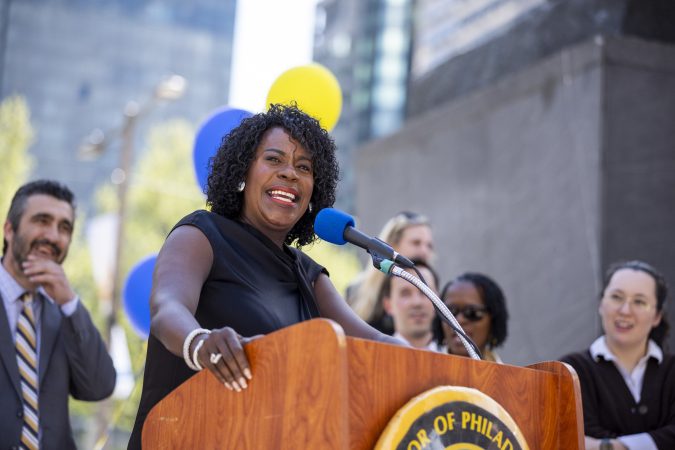
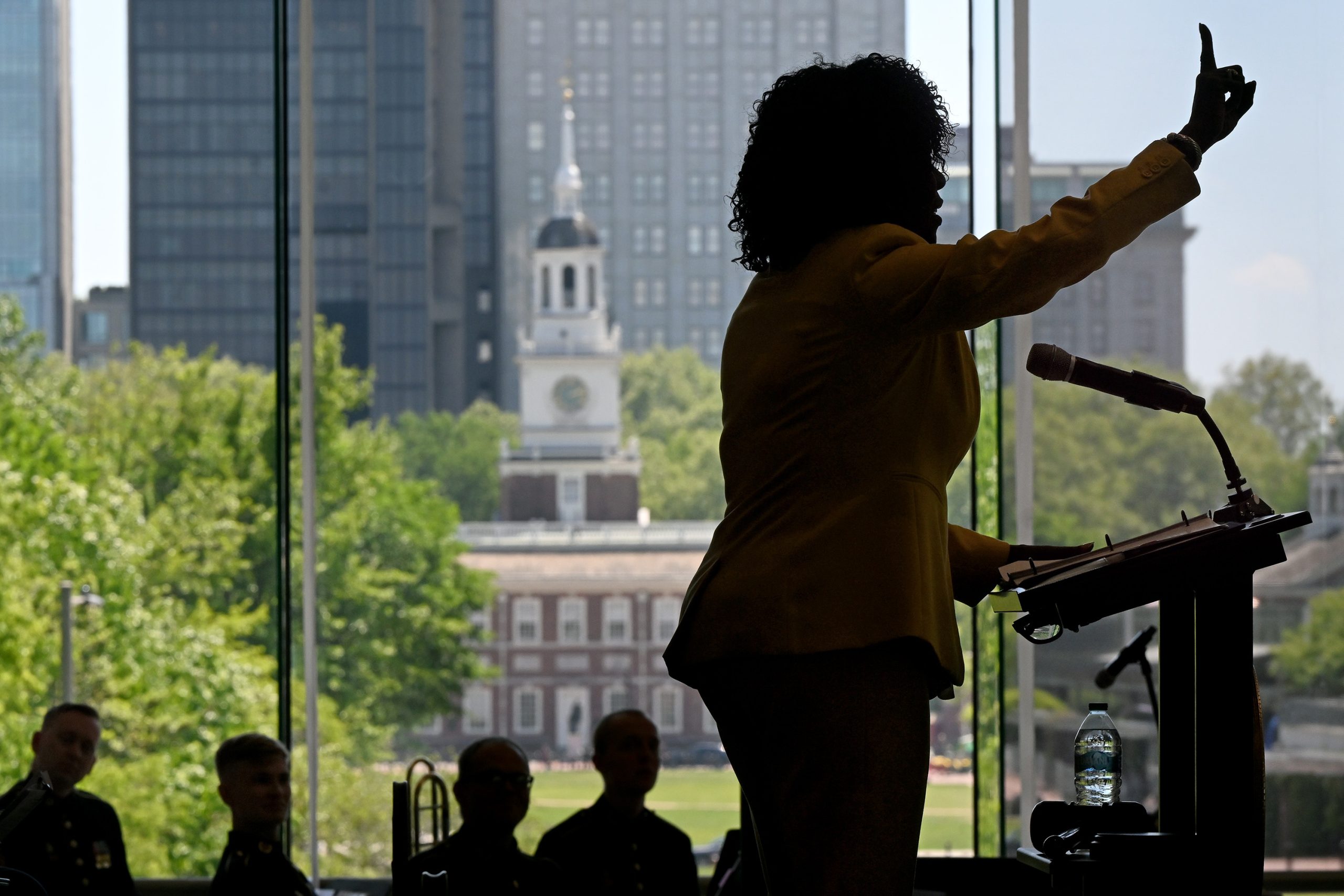
    Mayor Cherelle L. Parker raises a finger with her call-and-response “One Philly, A United City” mantra ending her speech during a ceremonial meeting of the Pennsylvania Senate at the National Constitution Center across the mall from Independence Hall on May 5.Tom Gralish / Staff Photographer

    However, some on the left see a coalescence of forces that could bolster their chances: national frustration with the Democratic establishment that has manifested in leftist wins, a widespread anti-incumbent sentiment, and liberal rage toward President Donald Trump, whom Parker has largely avoided maligning publicly.

    They also see potential signs of Parker’s power waning, including her recent budget battle during which she could not get Democrats in Harrisburg and City Hall on board with her tax plans.

    “If you just have the right candidates that are able to speak to the dissatisfaction of Democratic voters in Philadelphia,” Cea said, “I do think [Parker] is in trouble.”

    But the biggest question for Philadelphia progressives in the approaching mayoral race remains: Who could be their candidate?

    The potential challengers

    Jack Inacker, a Democratic strategist based in Philadelphia, said there are few, if any, challengers to Parker who could pull off a win in 2027.

    “The progressive infrastructure now has built up in a way where, if you squint really hard, you can see a path to a progressive challenger,” Inacker said. “The problem is that [Parker] is one big mistake away from being beatable, but she’s not beatable yet. And people know that.”

    Candidates have plenty of time to decide. Paperwork to get on the ballot likely would not be due until March.

    Perhaps the most talked-about potential challenger so far is District Attorney Larry Krasner, the city’s most prominent progressive. He has not ruled out a run for mayor, and he has recently publicly criticized Parker and some of her closest allies.

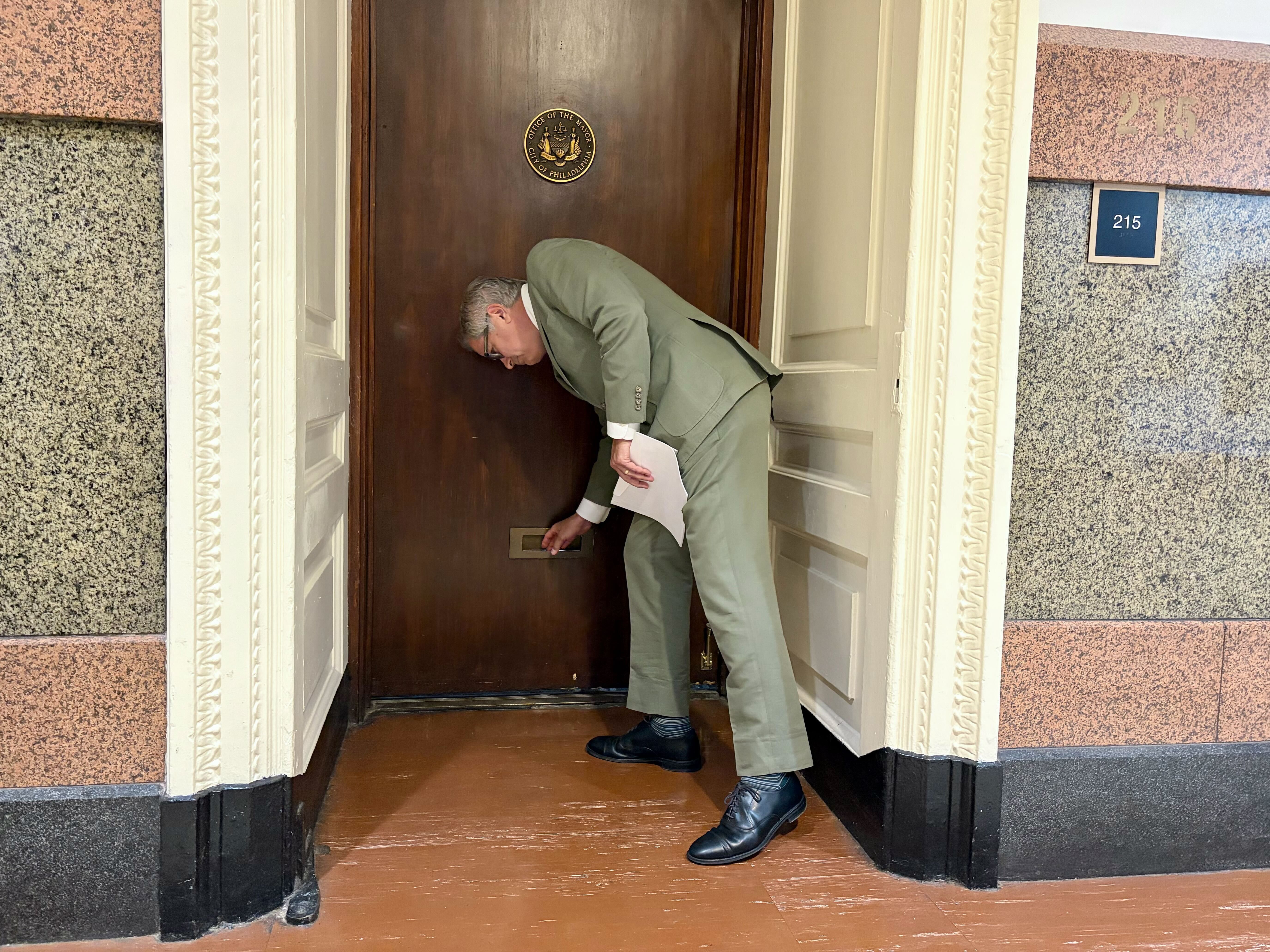
    Last week, he invited media to walk along with him while he hand-delivered a letter to the mayor’s suite in City Hall to express dissatisfaction with his office’s budget. Parker called the move “stunting.”

    Platt, in a thinly veiled shot at Krasner, said in a statement that “what we’ve seen recently is too many politicians focused on generating headlines rather than solving problems: manufacturing controversy, looking for someone else to blame, and confusing political theater with leadership.”

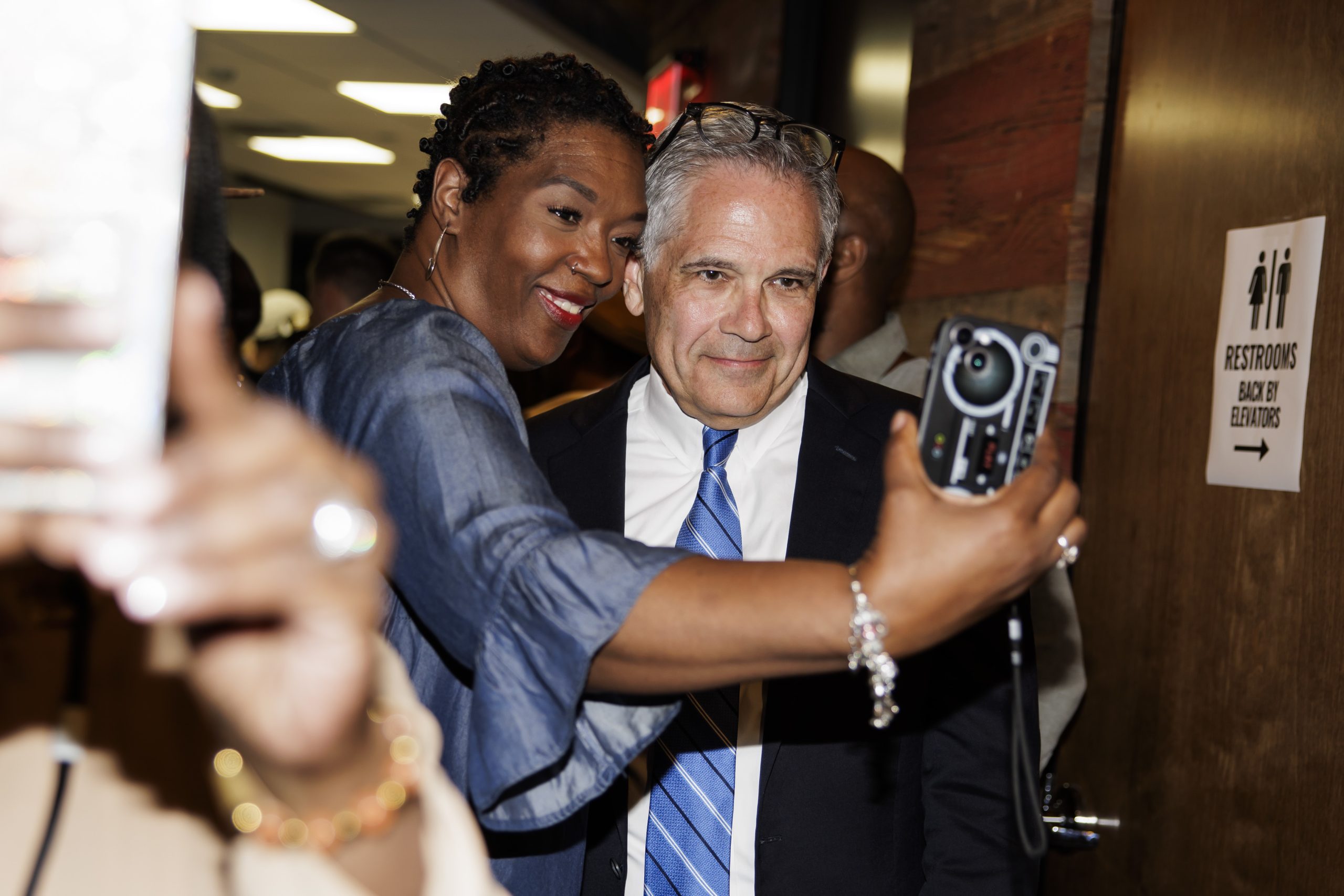
    District Attorney Larry Krasner greets supporters during his election night party at the Pipeline Philly coworking space on May 20, 2025, in Philadelphia. Krasner defeated challenger Patrick Dugan both in the Democratic primary and in the general election.Monica Herndon / Staff Photographer

    Krasner has won citywide election three times, twice winning reelection in landslide fashion. He is one of the nation’s most well-known progressive prosecutors and one of the city’s most polarizing figures. His base of support includes the city’s left, as well as a large swath of Black voters and elected officials.

    But it was Parker’s political family — the vaunted Northwest Coalition of the some of the city’s most storied Black politicians — that was key to Krasner’s political ascent. Challenging Parker could be seen as a betrayal by some in the voter-rich northwest corner of the city, and his base there could fracture.

    Krasner has also in the past struggled to keep up with his opponents in fundraising. Any challenger to Parker would likely need to bring in well over a million dollars, a sum of money that Krasner has never raised before.

    Several other elected officials are seen as potential challengers to Parker, including several sitting members of City Council.

    Councilmember Isaiah Thomas, who represents the city at-large, has long been rumored to have ambitions for higher office. He has been elected citywide twice, and recently was among the most vocal opponents of the Philadelphia School District’s controversial plan to close 17 schools.

    And he has allies both on the left and in the city’s business community, the latter of which has been frustrated with a Parker administration policy shift that increased the tax burden on small businesses.

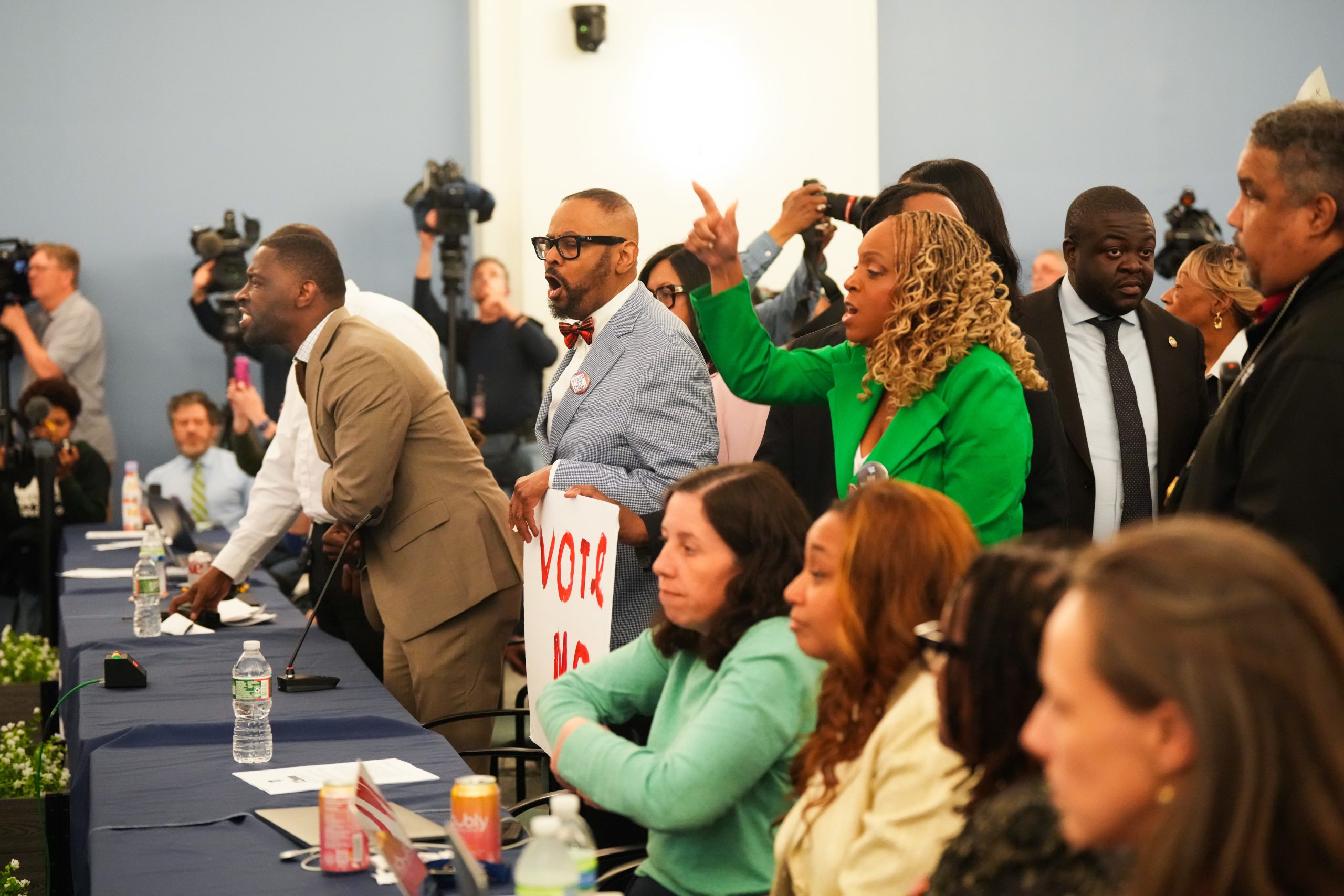
    Councilmembers Isaiah Thomas (from left), Curtis Jones Jr., and Jamie Gauthier protest at an April school board meeting as the board prepared to vote on the facilities plan.Jessica Griffin / Staff Photographer

    Thomas said last week that he is focused on his job in City Council.

    “That job right now is hard enough, looking at the affordability crisis, the crisis around public education, and other issues that we’re facing,” he said.

    There’s also two-term Councilmember Jamie Gauthier, who represents parts of West Philadelphia and has positioned herself as one of Council’s chief critics of the Parker administration. She said earlier this year that running for mayor “could be interesting one day,” but that she would not run if she did not see a clear path to victory.

    She said in a statement that her focus is “finishing what we started on City Council, especially building affordable housing.”

    Gauthier added: “But it’s clear Philadelphians are hungry for leaders who will put working families above big business.”

    And there is Councilmember Kendra Brooks, the de facto leader of the city’s left-leaning coalition and a member of the progressive Working Families Party. Brooks, who represents the city at-large, has twice campaigned and won citywide.

    A political adviser to Brooks said she is focused on her work in City Hall and running for reelection to Council, as well as “building Black progressive political power through the WFP.”

    What do progressive gains mean for the 2027 mayor’s race?

    Parker’s camp sees strength in her numbers.

    In March, the mayor’s political arm commissioned a poll that found that 60% of respondents approve of the job Parker is doing as mayor, while 33% disapprove. Her approval rating was even higher among Black voters, older voters, and residents of Northwest Philadelphia — one of the highest-turnout areas of the city.

    Mayor Cherelle L. Parker (right) hugs Rachel O’Neal, executive of the Friends Childcare Center, at the unveiling of a new playful learning hub at Sisters Cities Park on Thursday.Jessica Griffin / Staff Photographer

    Cornell Belcher, one of the top Democratic pollsters in the nation, has conducted polling for Parker dating back to her mayoral campaign. He said that a key indicator of voter attitude toward an incumbent mayor is the number of residents who think the city is heading in the right direction.

    The results this spring, he noted, were “dramatically different” from when Parker was first campaigning for the office. In April 2023, Belcher measured that 66% of Democratic primary voters in the city were dissatisfied with the direction of Philadelphia.

    Today, he said, 62% are satisfied.

    Still, other polls have shown potential warning signs for Parker.

    In three polls that were conducted this spring in the 3rd Congressional District and obtained by The Inquirer, an average of 48% of Democratic primary voters said they had a favorable view of Parker and 41% had an unfavorable view. The polls, which measured voter attitudes in roughly half the city, were conducted by three different firms, and they were commissioned by different campaigns and organizations.

    Approval and favorability ratings are not apples-to-apples. An approval rating is often considered a more reliable data point for an incumbent executive, because it measures attitudes about job performance, not reputation.

    Belcher, who founded his polling firm 25 years ago and polled for former President Barack Obama, said he would not draw conclusions from polls of a congressional district that includes only half the city and was taken in a different election year. And he questioned other pollsters’ methodology in Philadelphia, a city that is tricky to survey.

    “A city like Philadelphia, with all its different racial and ethnic groups, getting that right is hard,” Belcher said. “The more diverse an area is, the more work you have to put into getting it right.”

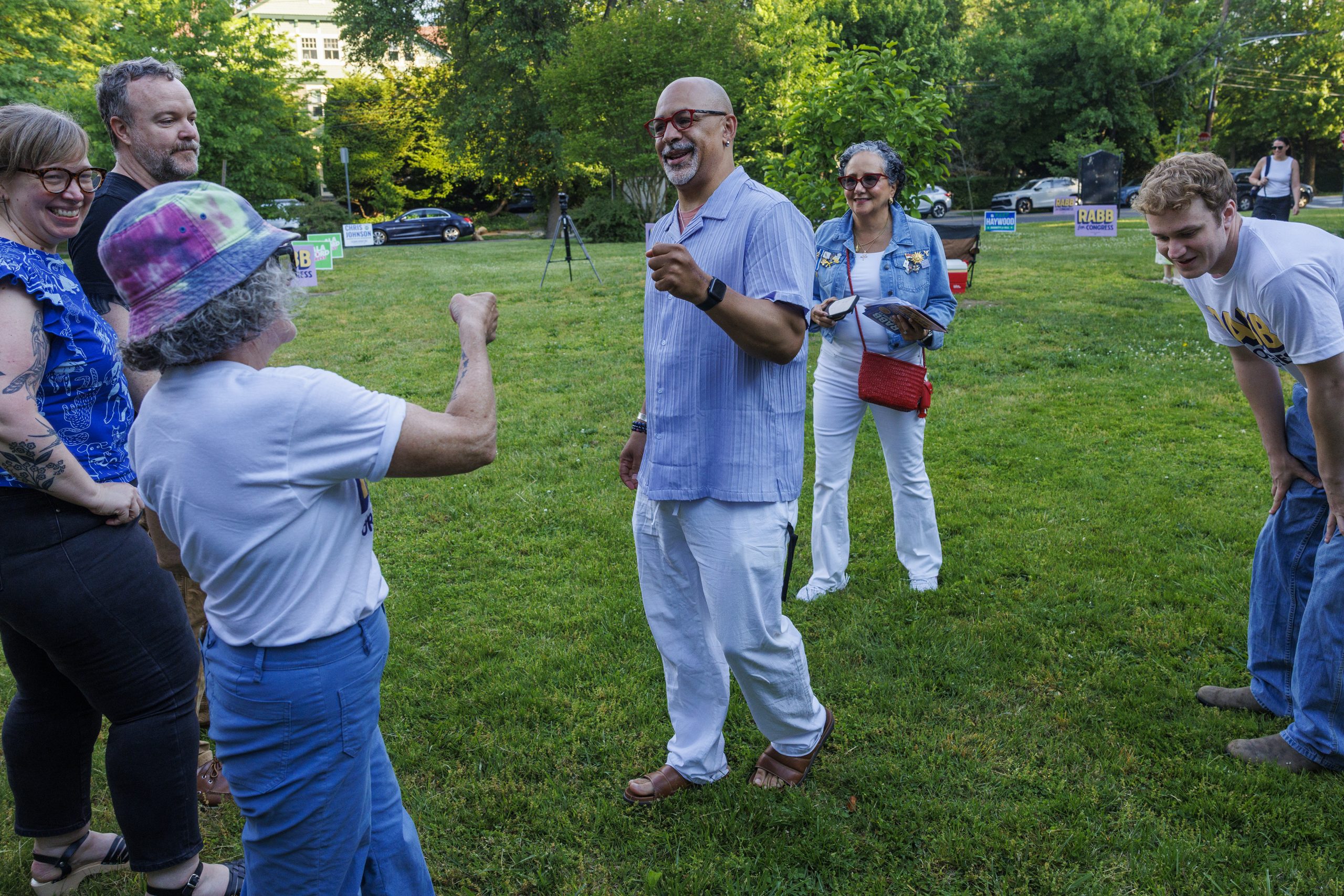
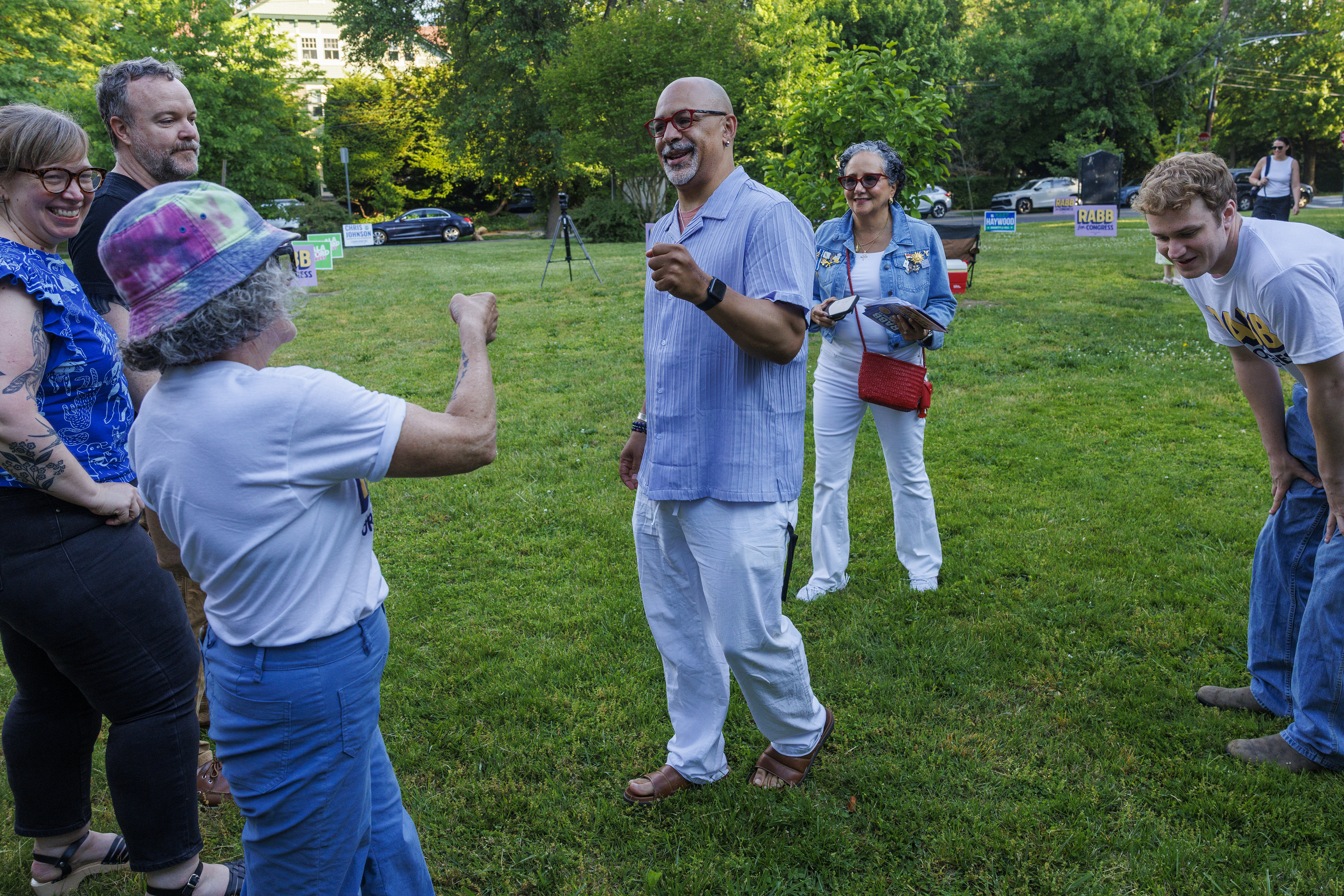
    Chris Rabb greets supporters on election day. He is arriving to his polling place to vote, Grace Epiphany Episcopal Church, on May 19.Alejandro A. Alvarez / Staff Photographer

    The results of last month’s congressional race energized progressives, in part because Rabb performed well in parts of the city that Parker carried when she won the crowded open Democratic mayoral primary in 2023. An Inquirer analysis found that more than a quarter of Rabb’s votes came from divisions that voted for Parker in 2023.

    Rabb won his Democratic primary in a race that included three front-runners. But mayoral reelection battles in Philadelphia have historically been head-to-head, meaning the winner will look to reach 50% of the vote, a more challenging proposition for an ideological candidate.

    Platt said he would caution against concluding that Parker is politically vulnerable based on the outcome of the congressional race.

    And he said Rabb’s win in Parker’s 50th Ward is not a sign of cracks in the mayor’s base. He noted that the ward’s Democratic committeepeople last week unanimously reelected Parker as ward leader.

    “The mayor is organized, and her coalition across Philadelphia is strong,” Platt said. “They may not be active on Reddit, but they’re there, and they believe in what she’s doing because they can see the results in their neighborhoods.”

  • Philly progressives made gains in Democratic ward elections. But party chair Bob Brady remains well-positioned for reelection.

    Philly progressives made gains in Democratic ward elections. But party chair Bob Brady remains well-positioned for reelection.

    Former City Councilmember Jannie Blackwell, who has been a fixture of Philadelphia politics for decades, is no longer a Democratic ward leader. State Sen. Sharif Street — weeks after losing the city’s heated congressional race — just became one.

    And the Rev. Lewis Nash Sr., who in 2024 was removed as leader of the 47th Ward after The Inquirer reported he was recorded making anti-LGBTQ+ remarks, has returned to the post after being reelected in his North Philadelphia ward Monday night.

    Meanwhile, the upstart group Wards That Work, which was backed by progressive activists and sought to recruit hundreds of people to run for committee openings in the May 19 Democratic primary, claimed victories in six wards that were previously seen as aligned with the party establishment or more centrist Democrats.

    Despite those notable gains, fewer than one-third of Philadelphia’s 69 Democratic ward leaders are seen as closely aligned with the party’s left wing.

    That means Bob Brady, who has led the local Democratic Party since 1986 and is seen by many as the embodiment of the political old guard, will likely coast to victory in party leadership elections — decided by the ward leaders — next week, securing an 11th term as chair of the Democratic City Committee.

    The party’s internal politics have become a key battleground in the fight between progressive upstarts and the Democratic establishment. There has also been a renewed push to grow the number of “open wards” — those that allow committeepeople to vote on political endorsements rather than allowing ward leaders to decide unilaterally.

    Brady, a former U.S. representative, has over the last few weeks struck a conciliatory tone regarding the party’s left wing after clashing with activists in a series of elections, most notably when the party sought to punish committeepeople who endorsed the elections of Councilmembers Kendra Brooks and Nicolas O’Rourke from the progressive Working Families Party.

    “These labels — Working Families, Reclaim, socialist — the best labels they have that I love is they’re Democrats,” he said in an interview, referring in part to Reclaim Philadelphia, a group inspired by U.S. Sen. Bernie Sanders’ presidential runs that organized the local progressive movement’s first successful ward takeovers in 2018.

    Now, he said, he is focused on unity as Democrats hope to make gains in this year’s midterm elections and defeat candidates aligned with President Donald Trump in future elections.

    “We can come together and beat that nut in the White House,” Brady said.

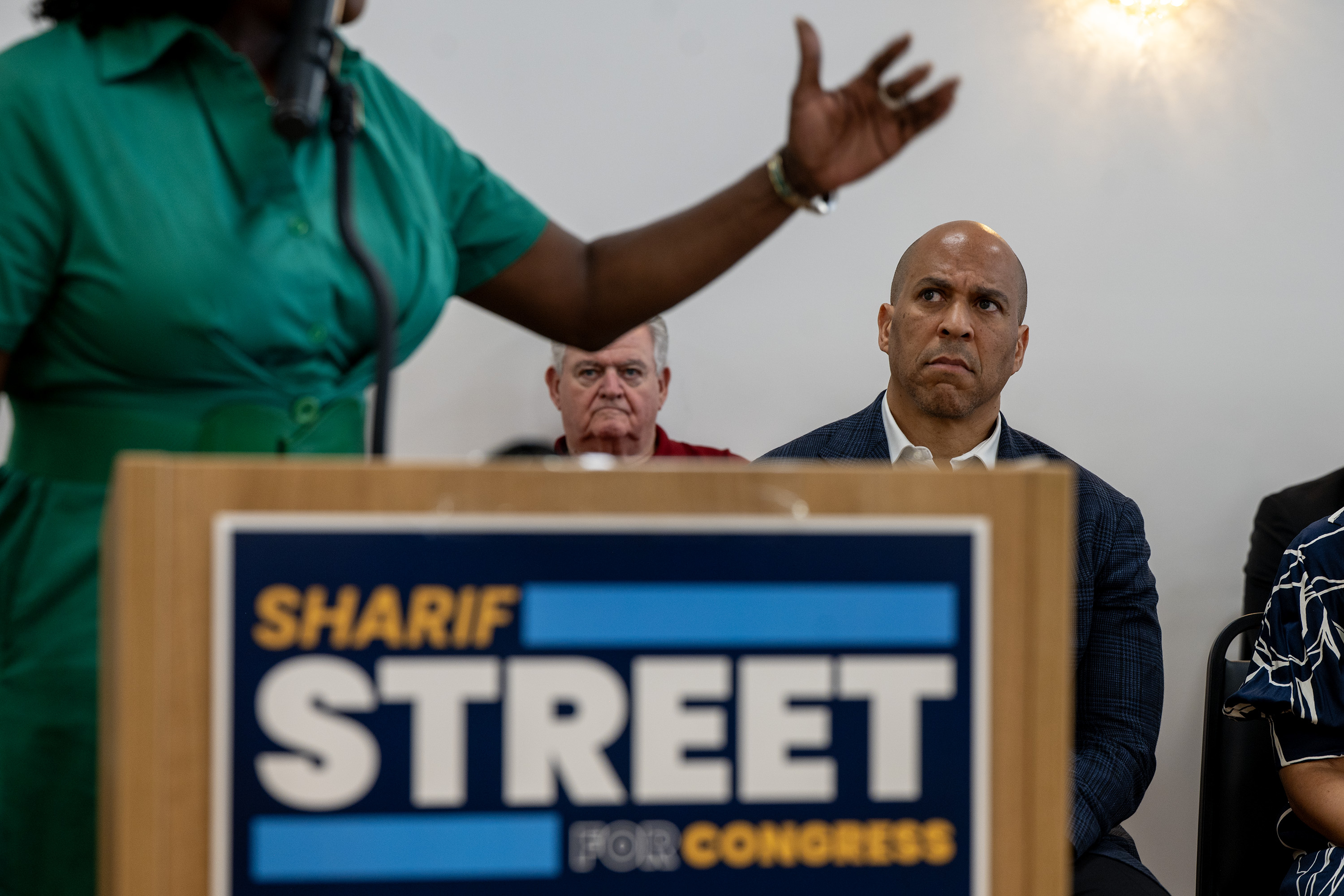
    Philadelphia Democratic Party Chairman Bob Brady (left) and U.S. Sen. Cory Booker (right) listen as Mayor Cherelle L. Parker speaks in support of State Sen. Sharif Street at a get-out-the-vote rally at the Church of Christian Compassion in West Philadelphia Monday, May 18, 2026 the day before Tuesday’s Democratic primary election for the 3rd Congressional District.Tom Gralish / Staff Photographer

    Earlier this year, however, Brady acknowledged that the Democratic City Committee funded mailers opposing some of the committeepeople backed by Wards That Work, and many on the left are still hoping for major changes in the local party.

    District Attorney Larry Krasner, for instance, recently called on Brady to resign, and State Rep. Chris Rabb, a democratic socialist who last month won the Democratic primary for an open Philadelphia congressional seat, has emerged as a leading critic.

    Rabb beat Street, the party’s endorsed candidate, in the 3rd Congressional District race, and has accused the city committee of neglecting the work of turning out the vote, instead concerning itself with backroom dealings among party insiders.

    State Rep. Chris Rabb greets supporters on election day. He is arriving to his polling place to vote, Grace Epiphany Episcopal Church, Philadelphia, Tuesday, May 19, 2026.Alejandro A. Alvarez / Staff Photographer

    Rabb has not explicitly called for Brady to resign. But he is now calling for a dramatic overhaul of the party, from its leaders to its bylaws to the city’s antiquated ward boundaries.

    “What I’m asking for is for the ward leaders — whatever candidate is running for chair, whether it’s Bob Brady or anyone else — that they demand that their first order of business is to overhaul the bylaws by Labor Day [to focus] on building a local party built on transparency integrity and inclusion,” Rabb said in an interview last week.

    Progressives make gains

    On paper, Philadelphia’s Democratic Party structure is bottom-up. Every four years, during the primaries of presidential midterm cycles, registered Democrats elect two committeepeople from their precincts, as they did this year on May 19. The committeepeople then elect neighborhood-level ward leaders, and the ward leaders in turn elect the top officials in the city party, including Brady.

    But in practice, many critics of the city’s old guard see a top-down reality, with Brady and other high-ranking city officials controlling the party’s agenda.

    Progressives are hoping to wrest control of the party from the establishment or to force reforms that make it more hospitable to left-leaning candidates. But it remains an uphill battle given the diffuse nature of the party system.

    Among the notable progressive wins in Monday night’s ward elections:

    • 5th Ward (Center City): Ryan Alsayegh, a political consultant currently working for State Reps. Tarik Khan and Joe Hohenstein, unseated Mike Boyle.
    • 25th Ward (Port Richmond, Kensington): Alexandria Mercedes Murphy, a neurophysiologist and volunteer with Reclaim Philadelphia, succeeded Tommy Johnson.
    • 31st Ward (Fishtown, East Kensington): Molly Hartman, a staffer for Councilmember Rue Landau, faced no opponents in her bid to succeed Margaret Rzepski.
    • 27th Ward (University City): Benjamin Moss-Horwitz, a staffer for State Rep. Rick Krajewski, won a contested race to succeed retiring ward leader Carol Jenkins, a party stalwart.
    • 46th Ward (Squirrel Hill, Cedar Park): James Bridgeforth, a University of Delaware professor, ran an uncontested race to succeed Blackwell, who retired this year after defeating a progressive challenger for her ward in a contentious election four years ago.

    In West Philadelphia’s 60th Ward, State Rep. Amen Brown, a centrist Democrat, was unseated by Lorraine White-Johnson.

    White-Johnson, who had the backing of Wards That Work, said in an interview that she is not aligned with one faction and welcomes all Democrats. She added that she plans to explore opening up the ward but has not made formal plans to do so yet.

    Philadelphia City Councilmember Cindy Bass on Thursday, September 11, 2025.Alejandro A. Alvarez / Staff Photographer

    In Mount Airy’s 22nd Ward, Councilmember Cindy Bass declared herself reelected to a new term in a controversial move by saying she won a contested voice vote of committeepeople and denying motions for a roll-call vote that could have clarified the results. Her opponent, Octavius Price, was backed by progressive organizers and said he plans to challenge the election.

    Some notable ward election results did not involve major ideological shifts.

    Nash, who on Tuesday denied having made the anti-LGBTQ+ comments that previously cost him his seat, won a three-way race to reclaim the 47th Ward.

    “I forgive everybody that was involved with those unforeseen circumstances,” Nash said in an interview Tuesday. “To anyone that was offended by the alleged comments, forgive me and the person who made those comments, allegedly and falsely, and let’s move forward.”

    Also in North Philadelphia, Street, a former chair of the Pennsylvania Democratic Party, unseated 11th Ward leader Dwayne Lilley just weeks after losing his congressional bid to Rabb.

    In a statement, Street said he would “take a back-to-basics approach, listening to my neighbors about their concerns and filling vacant committee member seats.”

    “Last month’s election results galvanized my belief that we need to build the party from the ground up,” Street said in a statement. “We need to increase voter turnout in Black communities, like North Philadelphia, by demonstrating every day that Democrats are fighting for them.”

    Staff writer Anna Orso contributed to this article.

  • DA Larry Krasner publicly criticized Mayor Cherelle Parker as he flirts with running for her office

    DA Larry Krasner publicly criticized Mayor Cherelle Parker as he flirts with running for her office

    District Attorney Larry Krasner said Monday that, in the more than two years since Mayor Cherelle L. Parker was sworn in, he has only met with her three times.

    And despite his visit to her City Hall office on Monday in what Krasner described as “the spirit of hopeful collaboration,” that number did not grow to four.

    The district attorney, along with a phalanx of staff and television cameras, walked across the street from his downtown office to the mayor’s suite on the second floor of City Hall, armed with a letter lamenting his budget as inadequate. In it, Krasner wrote that he needs an additional $5.6 million from the city to bolster shootings investigations, domestic violence prosecutions, and victim services.

    Asked why he was delivering a letter to Parker in person, Krasner said: “There is nothing new and nothing inappropriate about civil rights leaders, activists, and politicians getting the word out.”

    The mayor did not open her door. Krasner pushed his letter through a mail slot.

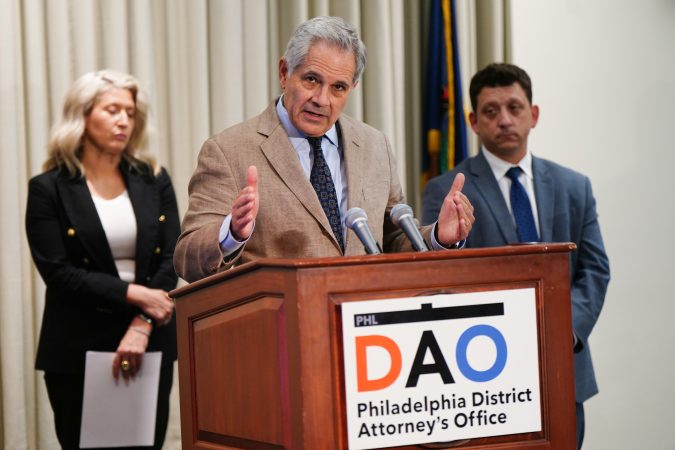
    District Attorney Larry Krasner delivers a letter to Mayor Cherelle L. Parker’s office after hosting a news conference to ask the mayor to consider allocating millions more dollars to his office this year.Anna Orso

    The public plea came just days after City Council gave the green light to a city budget for the fiscal year that begins on July 1, including a record-high $62.4 million allocation to the District Attorney’s Office, which is about $3 million more than it received last year.

    Krasner, who called a news conference at the district attorney’s office before his trip to City Hall, said his office needs additional funding to “prevent potential layoffs,” but he did not specify the number of jobs on the line. The city budget will be up for a final vote in Council on Thursday, and it is unlikely to substantially change before then.

    In response to a request for comment, a spokesperson for the mayor shared data showing that the District Attorney’s Office budget has increased by 55% over the last five years.

    Krasner’s televised appeal to Parker on Monday came as rumors swirl that the third-term progressive may run for mayor next year when Parker, a centrist Democrat, is up for reelection. He has also been floated by political observers as a potential candidate for U.S. Senate to run for the seat currently held by Sen. John Fetterman, a Democrat who has angered many in the party and will be up for reelection in 2028.

    Krasner, who is the city’s most prominent progressive and who won reelection to be the city’s top prosecutor last year, said he is not plotting another run for office.

    But he has done little to suppress the speculation. He recently got into a spat with labor leader Ryan N. Boyer, one of Parker’s closest political allies, and he publicly called on former U.S. Rep. Bob Brady, the longtime chair of the city’s Democratic Party, to step aside.

    And on Monday, Krasner, who was reelected to a third term in November, wouldn’t commit to serving out his entire four-year term. (Philadelphia’s Home Rule Charter requires that city officeholders resign to run for higher office.)

    “Am I running for these offices today? No. Do I have a plan to run for these offices today? No,” Krasner said. “But if you’re asking me to say that I would never, under any circumstance, no matter what was going on locally or nationally, consider some other office, it would be foolish for me to completely rule out those possibilities.”

    He is one of several people who progressive leaders in the city may look to next year to challenge Parker, who is backed by much of the city’s Democratic establishment and organized labor. She has been criticized by some on the left for her law enforcement-driven initiatives to address the Kensington drug market and her cautious approach to President Donald Trump.

    The mayor’s race became even more attractive to Philadelphia’s left-wing faction of the Democratic Party last month after State Rep. Chris Rabb, a democratic socialist, won the party’s nomination for an open seat in Congress.

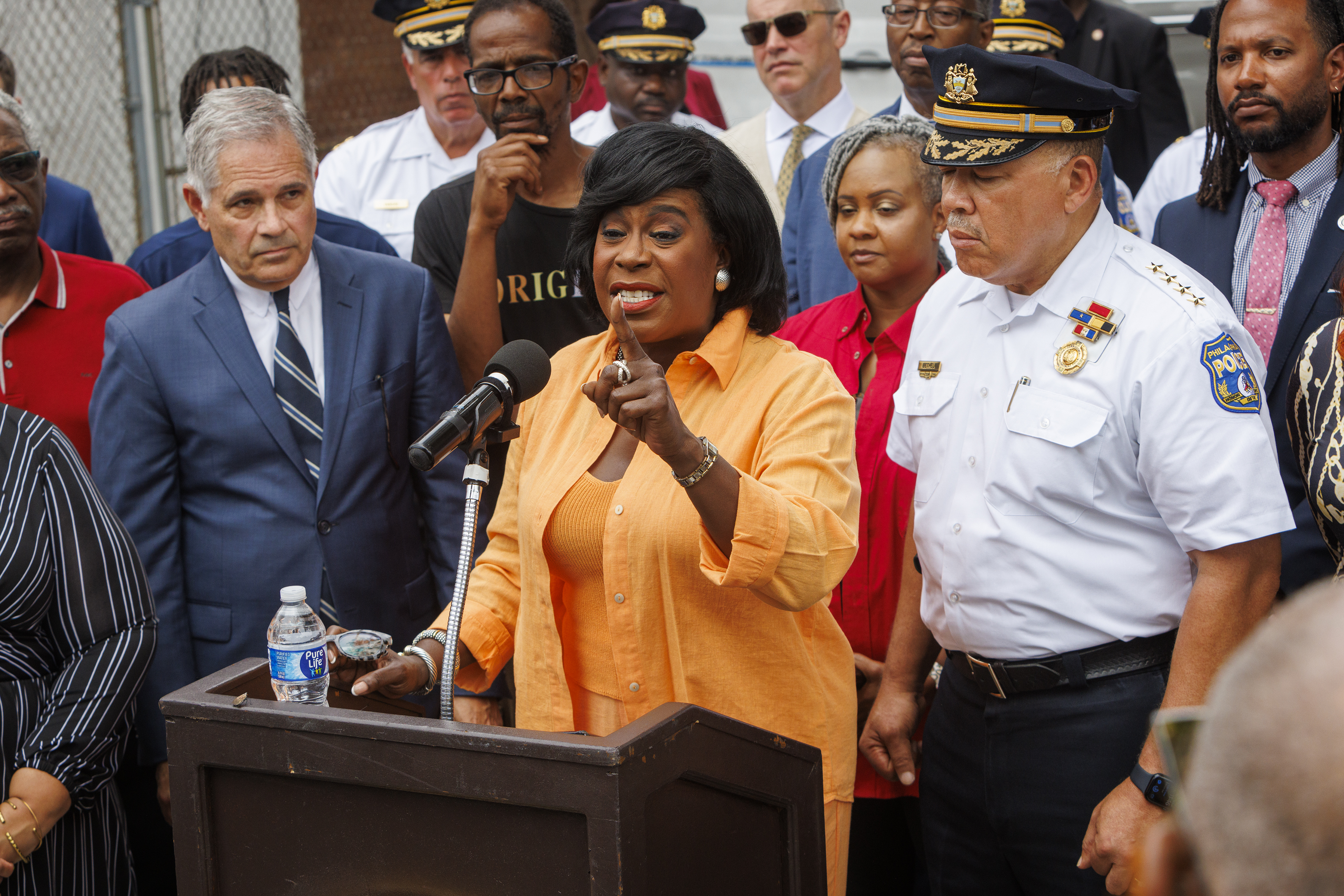
    Mayor Cherelle L. Parker is flanked by Police Commissioner Kevin Bethel and District Attorney Larry Krasner (left) on July 22, 2024.Alejandro A. Alvarez / Staff Photographer

    Krasner’s public criticism of Parker this week is also notable because he and the mayor have, despite not meeting regularly, attempted to maintain a veneer of civility.

    While Parker ran for office on a tough-on-crime message that could be seen as in tension with the district attorney’s progressive platform, she has not directly criticized Krasner. She also campaigned on a promise of close collaboration with other governmental entities after conflict between Krasner and former Mayor Jim Kenney spilled into public view on several occasions.

    Krasner on Monday insisted that his trip across the street to Parker’s office was not intended to inflame hostilities. He cited his letter, which began with thanking the mayor for her “leadership, vision, and goals.”

    The letter ended with Krasner saying that the city’s leaders should “truly model the peace and unity we hope to see within our communities.”

    He added: “We can achieve more together!”

    Staff writer Ellie Rushing contributed to this article.

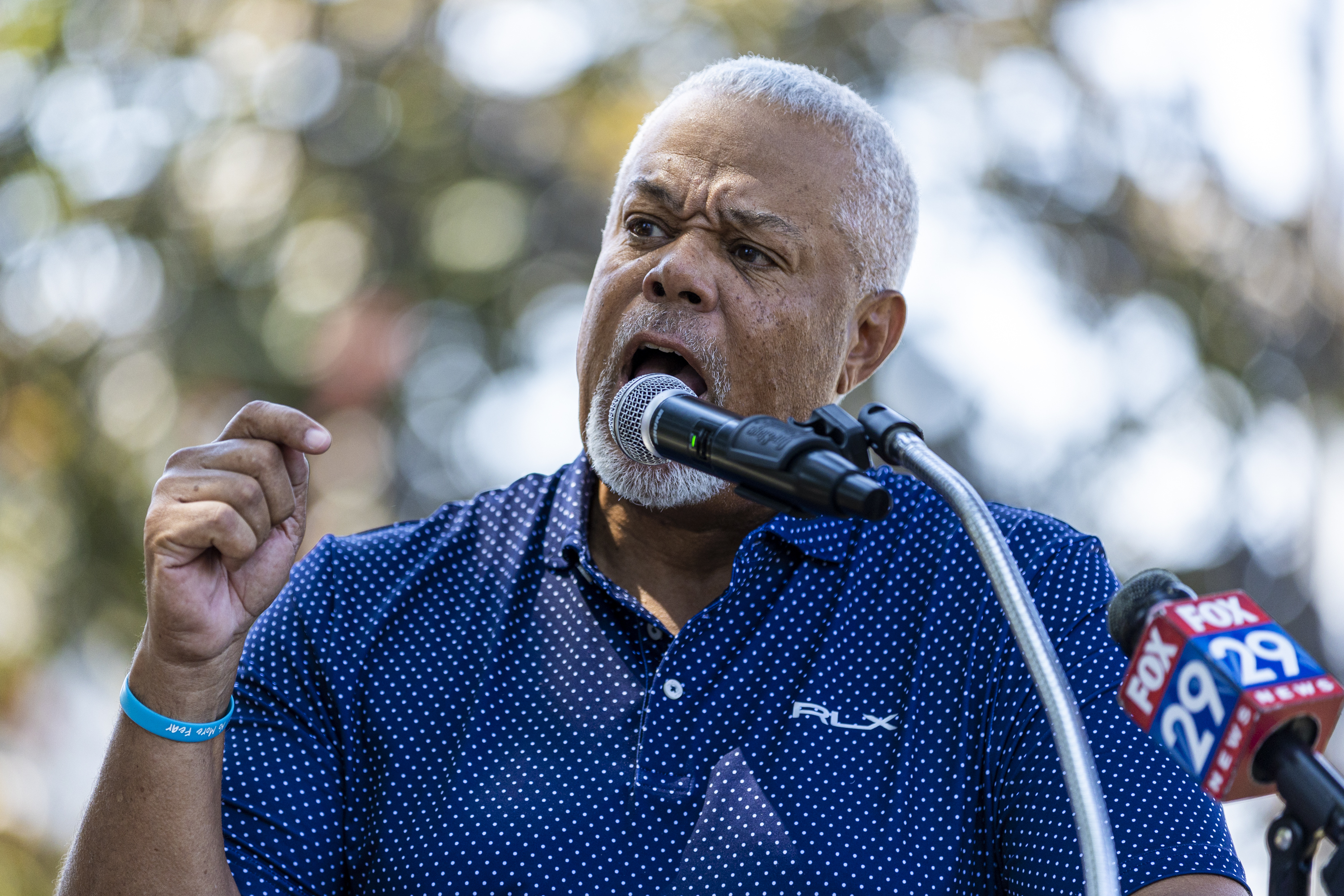
  • Longtime Philly State Sen. Anthony Williams is running for the last time — and won’t commit to fulfilling his full term

    Longtime Philly State Sen. Anthony Williams is running for the last time — and won’t commit to fulfilling his full term

    State Sen. Anthony H. Williams, a veteran state senator from Philadelphia known for his advocacy on school choice and who has led one of the city’s most muscular political factions for decades, says November will be his last time running for reelection.

    But first, he has more work to do for the advancement of Black Philadelphians and the Democratic Party before he retires, he added in an interview this week.

    Williams, 69, did not commit to completing another four-year term, opening up the possibility that he could handpick his successor if he decides to retire early.

    “I’m thinking about getting reelected and serving, that’s all I’m thinking about,” he said. “I’m here, I’m gonna run to November, and we’ll see what happens after that.”

    Williams ran unopposed in 1998 for the seat after his father, the late Hardy Williams, decided within hours of the filing deadline he would not run for reelection. At the time, the move was was widely seen as an intentional play by the late Williams to hold the seat for his son. Now, Anthony H. Williams says that recollection excluded a key piece of information as to why his father retired so suddenly: He had been diagnosed with dementia just before he decided not to run.

    “We didn’t have a plan for me to take over,” the younger Williams said, noting that former State Rep. James Roebuck Jr. had filed to run, too, but ultimately withdrew from the race due issues with his petitions. “It wasn’t like I got a free pass.”

    When a state legislator resigns before the end of his or her term, a special election is called to fill the vacancy. The ward leaders in that district then get to choose who should take over the seat, dodging a competitive primary and largely deciding the outcome in closed-door meetings.

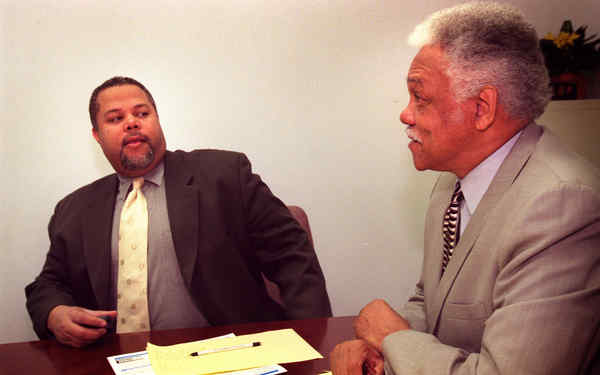
    Anthony Hardy Williams (left), seen here in 1998, when he was a state representative and his father (right) was a state senator.File photo

    Williams —who has been in state government, both as a representative and senator, for nearly four decades — is seeking his sixth term to represent parts of Southwest Philadelphia and Delaware County in Harrisburg. He recently won his primary election over Democratic challenger David Goldsmith Jr. and will not face a Republican challenge in November.

    Williams has had a far-reaching — and at times, turbulent — legacy in Harrisburg and the city, running twice unsuccessfully for Philadelphia mayor in 2015 and 2019 and once unsuccessfully for governor in 2010.

    Over 37 years in Harrisburg, Williams has mentored numerous young Philadelphians who started as aides in his Senate office, who have gone on to become top legislative leaders. That list includes: House Speaker Joanna McClinton, Philadelphia City Council President Kenyatta Johnson, House Appropriations Chair Jordan Harris, Superior Court Judge Timika Lane and more.

    State Sen. Anthony H. Williams, State Rep. Jordan Harris and Councilman Kenyatta Johnson at the Inaugural Dorys Erving Fit Youth Foundation Celebration at the Ritz-Carlton on Friday, November 15, 2013. (HughE Dillon/Philly.com)

    “It’s a testament to his dedication and his commitment to seeing Black independent politics grow and mentoring young people to get into office — not to just be there, but to do something,” Harris said Friday.

    Looking at Williams’ list of mentees who now outrank him in office shows his legacy and humility, Harris added. And Williams is willing to have spirited disagreements with his mentees, Harris said.

    “He’s mentored people who vehemently disagree with him on certain issues, but the endgame of upward mobility for underrepresented people is all the same,” Harris said.

    Johnson, in a statement, credited Williams for playing a formative role in his political climb, and for always being willing to “share his wisdom, offer candid advice, and invest in the next generation of leaders.”

    “Philadelphia is a better city because of [Williams’] service, and I am proud to call him both a colleague and a friend,” Johnson added.

    In an interview, Williams said that he’s seen Harrisburg change tremendously since he first was elected to as a state representative in 1989. Today, Democrats control the state House after flipping the chamber in 2022 for the first time in 12 years, a Black woman from Philadelphia leads the House, and a democratic socialist leads Philadelphia’s delegation to Harrisburg in the Senate. Democratic lawmakers successfully fought to change how Pennsylvania’s public education system is funded, and they’ve advanced gun reforms.

    And, he said, it’s no longer a place for career politicians like him.

    Philadelphia elected officials State Rep. Rick Krajewski (from left), State Sen. Nikil Saval, and State Sen. Anthony Williams attend a rally at the University of Pennsylvania Mar. 20, 2025.Tom Gralish / Staff Photographer

    But Williams said there are still critical issues of policy and politics that he wants to address with his time left in office.

    First, he wants to be a bridge between generations of Democratic leaders — though he dislikes how Democrats currently label themselves as “progressive” or “moderate” to differentiate their views. He said he’s been speaking frequently with progressive leaders since State Rep. Chris Rabb, a democratic socialist, won the party’s nomination to represent Pennsylvania’s 3rd Congressional District in Congress.

    “The Democratic Party as it’s currently constituted is something that’s not current, and not visionary about moving forward,” Williams said.

    “I want to spend time working with those folks who are in that progressive community who will identify with the fact we have common ground on a lot of these areas. We have a different rhythm, or as they say, a different vibe,” he added.

    Throughout his time in office, he said he’s had his ideas stolen and boasted by white leaders, including a successful illegal gun task force. He’s cut deals with top Republicans for impactful programs that still exist today, such as an apprenticeship program that helped increase diversity in the building trades. He’s been an outcast at times as one of few Democrats to advocate for school choice options, a label that he knows follows him.

    News conference hosted by Pennsylvania State Senator Anthony H. Williams (podium) outside the Penn Carey Law School, Tuesday, Feb. 25, 2025. At rear from left are Councilmember Jamie Gauthier, law professor Stacy Hawkins, State Rep. Napoleon Nelson, Rev. Marshall Mitchell, Penn Trustee Board, State Rep. Rick Krajewski, State Sens. Nikil Saval and Art Haywood.Alejandro A. Alvarez / Staff Photographer

    Now, he wants the buy-in of state legislators and the private sector to address economic inequities among Black Philadelphians. Black residents make up the largest racial or ethnic groups in Philadelphia, but have one of the highest poverty rates in the city with 22.3% of Black residents living in poverty in 2024, according to a Pew Charitable Trusts survey released this year. Instead, Black residents should be driving the economy, Williams said.

    “Fundamentally, we have to take hold of the economy in the city,” he said. “We collectively have the power to do something about it. Not individually, collectively.”

    He sees more school choice options — and reimagining the whole public school system if necessary — as part of this solution. He’s faced criticism throughout his career for his support of school choice efforts, citing his big-dollar support from Pennsylvania’s richest man Jeffrey Yass, who solely supports candidates willing to send state money to private schools.

    Yass, who usually supports Republican candidates, was among the sole funders of Williams’ failed bids for governor and mayor. Williams has been criticized for taking money from a top GOP supporter who wants to divert money away from Pennsylvania’s public school system.

    “People think I’m a one-hit wonder,” Williams said of his support for using public dollars to send some students to private schools. “We have to be honest about what we’re doing and not doing and have honest, hard conversations about how we’re gonna change how we do this.”

  • What Chris Rabb’s win in Philly could mean for the 2028 Democratic battle to replace John Fetterman

    What Chris Rabb’s win in Philly could mean for the 2028 Democratic battle to replace John Fetterman

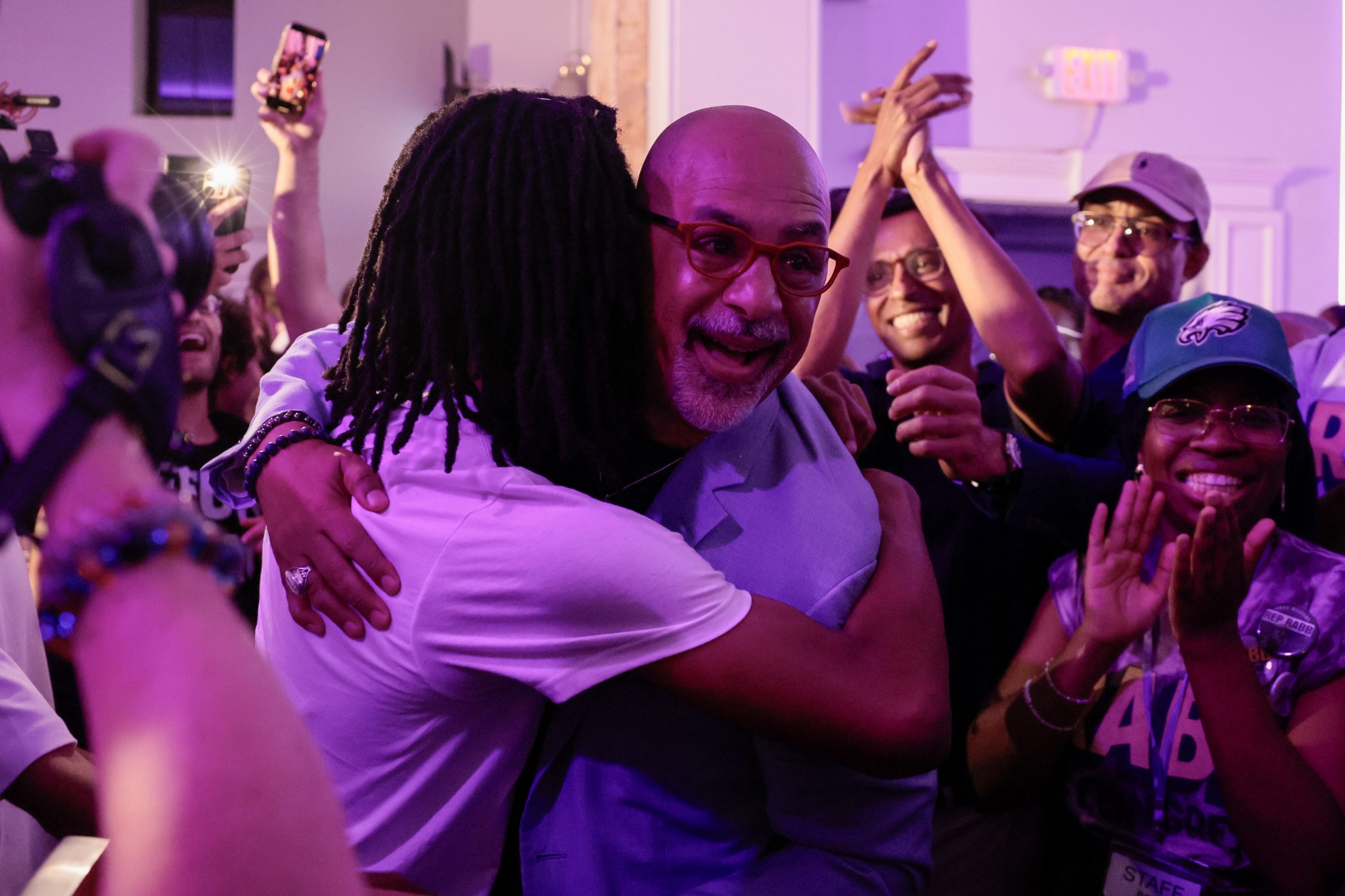
    The euphoria at Chris Rabb’s election night party last month hadn’t even started to wane before the democratic socialist and his supporters — dancing and hugging after capturing a rarely open Philadelphia seat in Congress — spoke of setting their sights even higher.

    Taking on the city’s Democratic establishment to defeat a pair of more centrist candidates in the heated 3rd Congressional District race was a momentous win on its own. But the reckoning, they promised, wouldn’t be confined to Philadelphia’s borders.

    “It’s going to change not just our city, but our entire commonwealth,” Rabb said in an interview amid the celebration at a Germantown banquet hall.

    It was a sentiment echoed that night by key figures in Rabb’s coalition — from the head of the Working Families Party to Pittsburgh’s U.S. Rep. Summer Lee, the only other democratic socialist representing a part of Pennsylvania.

    With the 2026 Pennsylvania Democratic primary in the rearview mirror, that conversation has broadly and quickly turned to the next biggest prize in the state: the U.S. Senate seat held by Democrat John Fetterman.

    The senator has not said whether he will run for a second six-year term in 2028. But in an unusual situation for an high-profile elected official, a robust intraparty competition to replace him is expected to start either way in the next year as Fetterman increasingly sides with Republicans and as polls show that his support among Democratic voters has nose-dived.

    State Rep. Chris Rabb is hugged by his son, Issa Rabb, during his primary election night event at Victorian Banquet Hall on May 19.Elizabeth Robertson / Staff Photographer

    Some Democrats who watched Rabb emerge from a competitive race, notching one of the left’s biggest wins yet in Pennsylvania, see an opportunity — one that extends the energy and momentum to boost a well-organized, progressive, anti-establishment candidate in the Senate primary.

    Other strategists and activists say that’s a tall task, particularly in a swing state that rarely strays from electing more centrist politicians statewide.

    “Anytime you have success, it breeds enthusiasm, which translates into more volunteers, into more money — everything you need to run a campaign,” said Mike Mikus, a Pittsburgh-based Democratic strategist. “But every election cycle is different. Every campaign’s different. The quality of candidates are different. And anybody who says that any one race signifies a permanent change within a party is mistaken.”

    ‘A huge impact on the political landscape of Pennsylvania’

    In his campaign to succeed U.S. Rep. Dwight Evans, Rabb, a five-term state lawmaker, won 44% of the vote. He was up against State Sen. Sharif Street, who had the backing of the city Democratic apparatus, and physician Ala Stanford, a political newcomer endorsed by Evans.

    Rabb and others have said his success, in part, was the culmination of a decade of progressive organizing that began in the city after U.S. Sen. Bernie Sanders’ 2016 presidential campaign.

    That progressive infrastructure — the coming together of different groups to knock doors, make calls to voters, and unleash a significant independent advertising campaign in a way that rivaled the official Democratic Party organization — is likely the most important way that the left can use the experience of Rabb’s campaign to replicate its success elsewhere, strategists said.

    It’s a template that could have “a huge impact on the political landscape of Pennsylvania,” said Rotimi Adeoye, a Philadelphia-based Democratic strategist who worked in the office of former U.S. Sen. Bob Casey.

    In a district packed with Democratic voters, Rabb’s ability to turn out progressive voters should draw the attention of anyone looking to win the state’s Democratic Senate primary in 2028, Adeoye said.

    “If a Democrat running statewide can learn from some of these organizational groups to build a strong, relational and community-based organizing campaign in Philadelphia and the surrounding suburbs in Montgomery County, Bucks County — they’re going to have a really big chance of winning,” Adeoye said.

    In a sign that those efforts could coalesce around a Senate candidate, one of the groups that helped usher Rabb to victory remains the only major Democratic entity in the state to have publicly started laying the groundwork for a challenge to Fetterman.

    The Working Families Party, which backed Fetterman in the 2022 general election after originally endorsing State Rep. Malcolm Kenyatta in the primary, said in November it would organize an effort to oust him. A “Primary Fetterman” website launched in January is equipped with a “Fetterman sell-out tracker” — highlighting his votes for Trump’s cabinet nominees and opposition to war powers resolutions that would rein in his military strikes, for example — and instructions for donors on how to request a refund from his campaign.

    The website remains the extent of the group’s efforts so far to rally public support and back a new candidate, though its work is expected to pick up after this year’s midterm elections. For now, the party is looking forward to bringing new members who worked to elect Rabb into its fold.

    “Our goal is always to keep building on the work we do each cycle and the success we have each cycle,” said Nick Gavio, the Working Families Party’s Mid-Atlantic communications director.

    One PA, another statewide group in that progressive coalition, has not yet had internal discussions about the Senate race but it supports the Working Families Party’s position as a member of its steering committee, executive director Steve Paul said. He said more than 150 members of One PA mobilized for Rabb by talking to thousands of voters.

    Winning a high-profile congressional race only helps add to that organizational infrastructure, making them “sharper for the next thing,” Paul said.

    “I think it shifts what’s possible, politically — what people can envision,” he said.

    Potential progressive roadblocks

    Mikus said progressives have increasingly surpassed “more establishment Democrats” in their ability to run strong campaigns, including in his area of Western Pennsylvania where candidates like Lee have emerged in the last decade.

    Democratic primary voters are also more progressive than they were 10 years ago, he said. But campaigning on a far-left — or a far-right — platform doesn’t often equate to success on a statewide level in Pennsylvania, a swing state where successful candidates tend to walk a “fine line” that appeals to both swing voters and a message that excites their partisan base, Mikus said.

    “You’ve seen this time after time in presidential elections here in Pennsylvania,” Mikus said. “Hillary Clinton versus Bernie Sanders. Joe Biden versus Bernie Sanders. The vast majority of voters in Pennsylvania will go with the more mainstream Democrat.”

    J.J. Balaban, a Philadelphia-based Democratic strategist and ad maker, said the party runs the risk of “drawing too big of a conclusion” based on a single election — particularly one like Rabb’s where candidates only needed to appeal to Democrats.

    “Democrats really need to think hard about what it will take to win statewide in a purple state, which Pennsylvania clearly is,” Balaban said. “What it will take to win a general election in Pennsylvania is very, very different than what it will take to win in literally the most Democratic congressional district in the country.”

    After recent years of tough losses — including the ousting of Casey by now-U.S. Sen. Dave McCormick, a Republican — Democratic voters will likely have a “tremendous thirst for candidates who have a credible case to make that they can win the general election,” Balaban said.

    Fetterman, whose office did not comment for this story, has insisted that Pennsylvania’s purple state status means he should appeal to both sides of the aisle and not demonize the other side.

    He’s also lamented the direction he sees his party going with candidates like Rabb, particularly around a growing sentiment that Israel has gone too far in its war against Hamas. Fetterman acknowledged last year that his unwavering support of Israel could cost him his Senate seat.

    “Look at the people that are winning the primaries in our party right now, and look at their views on Israel,” Fetterman said at an American Jewish Committee conference in Washington this week.

    On stage with McCormick and the head of the Jewish advocacy organization, Fetterman painted Graham Platner, the expected Democratic nominee for a U.S. Senate seat in Maine, as a “Nazi sympathizer” and connected him to Rabb.

    “People also in our state, too. Rabb, he won, and he ran on being a very, very anti-Israel guy,” Fetterman said. “It’s actually a virtue [in the modern Democratic Party] … It’s heartbreaking for me. And if it isolates me, then so be it.”

    Who might run?

    Of the Democrats widely considered to be eyeing a campaign to replace Fetterman, the public jockeying has so far been limited to criticisms of the incumbent.

    U.S. Rep. Brendan Boyle, a moderate who represents the other half of Philadelphia next to Rabb’s soon-to-be seat, has repeatedly called Fetterman “Trump’s favorite Democrat.”

    Former U.S. Rep. Conor Lamb, a moderate who represented a suburban Pittsburgh district before Fetterman beat him in the 2022 Senate primary, has frequently lambasted him.

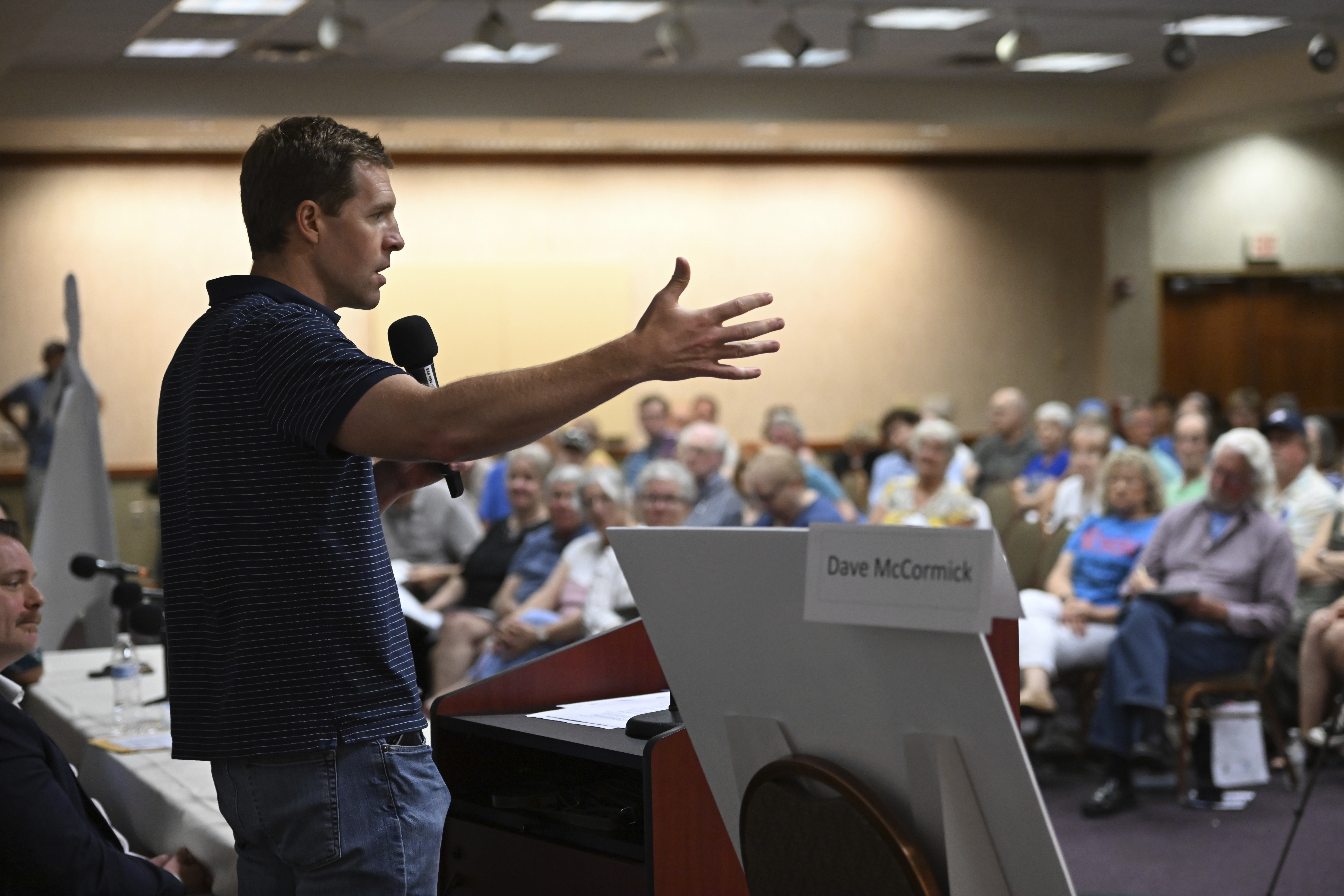
    Conor Lamb speaks to the crowd at a town hall-style event organized by progressive groups at Central Penn College on June 22, 2025, in Enola, Pa. Marc Levy

    And U.S. Rep. Chris Deluzio, who succeeded Lamb and leaned into progressive economic populism, has taken a less direct tack while noting the differences between himself and Fetterman over issues like Trump’s military interventions abroad. Deluzio has occasionally reposted others’ criticisms on social media — including one from Gavio, the Working Families Party spokesperson, last week that called Fetterman’s reversal on eliminating the filibuster “a new low” and “an indescribably massive backtrack from everything he ran on.”

    None of the three have ruled out running.

    Boyle is expected to weigh a Senate campaign vs. staying in the House to take a rare opportunity to lead the powerful budget committee if Democrats win the majority in November. Lamb, who’s remained highly active in Pennsylvania politics, said in an interview that he’s hoping to serve again and would run for office if he feels he “can be of service to the state.” Deluzio, who is also heavily involved in helping Democratic candidates across the state, said he’s focused on his reelection this year and that “we’ll see what 2028 holds.”

    “I am not at all interested in seeing us lose this Senate election, and I certainly have gotten a lot of encouragement to look at 2028,” Deluzio said.

    Progressives have also mentioned Lee, the Rabb ally who’s been a vocal member of the leftist wing on Capitol Hill while taking leadership roles in areas like securing the release of the Jeffrey Epstein files.

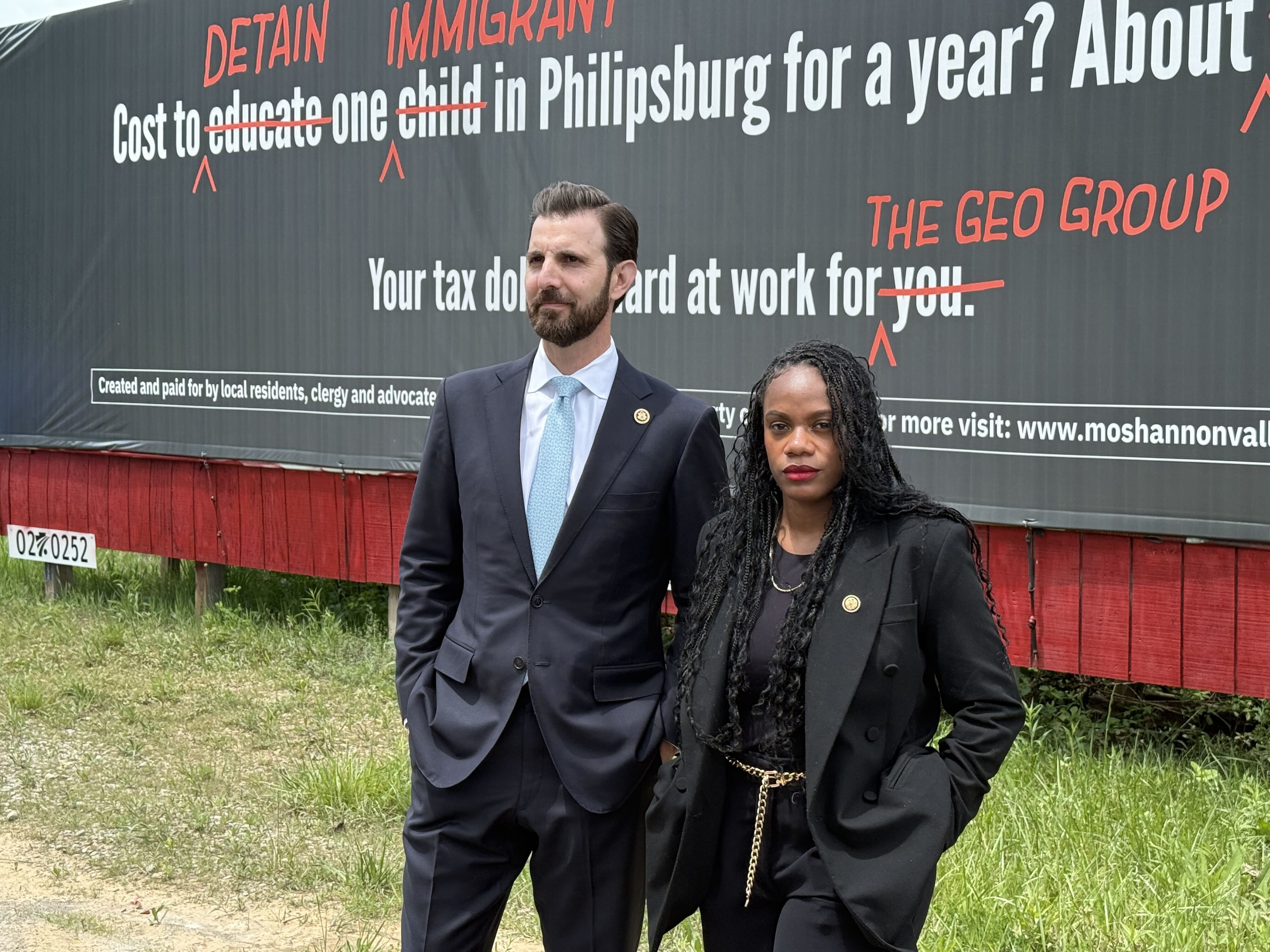
    U.S. Reps. Summer Lee and Chris Deluzio, both Pittsburgh-area Democrats, speak outside the Moshannon Valley Processing Center in Clearfield County on May 28 after getting a tour of the facility, the largest detention center for undocumented immigrants in the Northeast.Sam Janesch / Staff

    With potential candidates still several months away from making their decisions, it’s unclear who might try to take up the progressive mantle if Lee does not run, strategists say.

    The field could also grow considerably. Other potential candidates could jump in, including the three other current Pennsylvania Democrats in Congress or former lawmakers like Susan Wild, who lost a swing congressional district in the Lehigh Valley in 2024. Wild said she’s “not ruling out” a run but she’s more interested in thinking about good female candidates in general since no woman has ever won a Pennsylvania U.S. Senate seat.

    On the prospects of a battle between different factions of the party, Lamb said he believed Democrats had broadly learned a lesson — from Fetterman’s election in 2022, where he ran on being a reliable Democratic vote in the Senate — that was beyond ideological policy tests.

    “Fetterman taught Democrats in Pennsylvania that you have to have a character test. Anybody can run around the state promising you these further left solutions, and that they’re going to be a thumb in the eye of the establishment, and they’re going to channel all your anger and dissatisfaction. And then that person can turn on you on a dime,” Lamb said. “The fact is that we have to evaluate our candidates based on whether they have integrity and they’re going to keep their word and, honestly, whether they have the work ethic to be a senator day in, day out.”