Nearly six years after the Union launched Mark McKenzie to his career in Europe, the centerback is coming back to Chester.
Multiple sources with knowledge of the deal confirmed to The Inquirer that the 27-year-old will rejoin his old team in January, moving from French club Toulouse. The Union will pay a transfer fee of around $2.5 million, a number first reported by The Athletic.
Along the way, he became one of the top American centerbacks in Europe, and a regular with the U.S. national team. McKenzie has 30 caps, was part of this summer’s World Cup, and narrowly missed out on the 2022 squad.
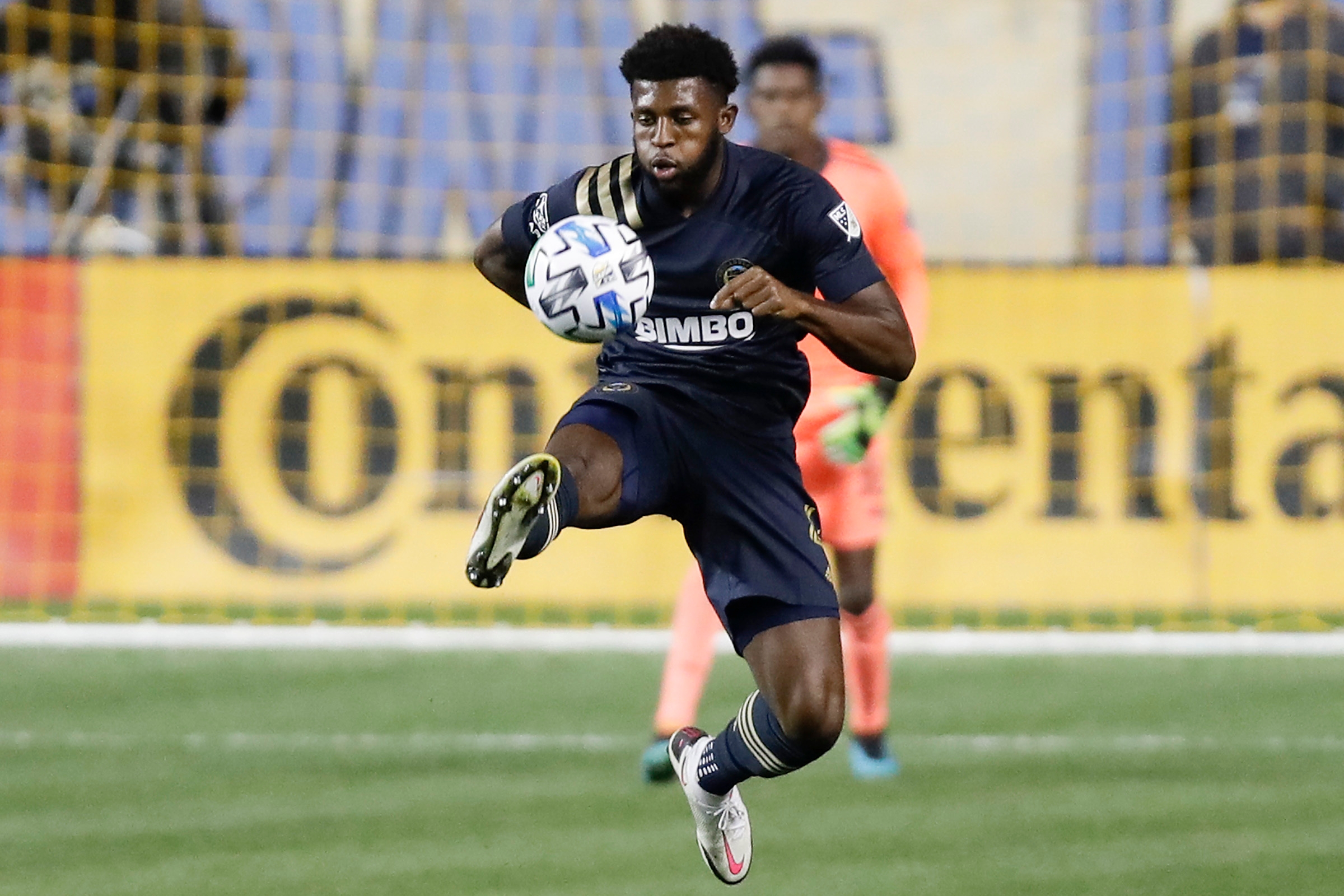
Mark McKenzie during his playing days with the Union.YONG KIM / Staff Photographer
Now the expectation is he will form a centerback pairing with one of the Union academy’s newest gems, Neil Pierre. The 6-foot-7 18-year-old is drawing raves from scouts around the world, reportedly including Spain’s Barcelona. Of course there could be a big offer for Pierre at some point, but it is clear that the Union want McKenzie and Pierre to play together.
There’s also the intrigue of the “sprint season” to start 2027 that will lead to MLS’s calendar flip in the summer. Bringing in McKenzie in January could put the Union in a strong place for that competition, with Cavan Sullivan not leaving for Manchester City until the end of the calendar year.
The transfer fee will make him a Designated Player, at least for as long as MLS’s current roster rules stay in place — they might change next year along with the calendar flip. The salary might, too, when the time comes, though that isn’t known yet. But it’s a certainty that McKenzie will immediately become be a cornerstone of the club.
McKenzie is still young enough to have good reason to stay in a top European league for a while, perhaps with one more move on from Toulouse if he could earn it. And he did have to be convinced that coming back to Philadelphia was the right move for soccer reasons.
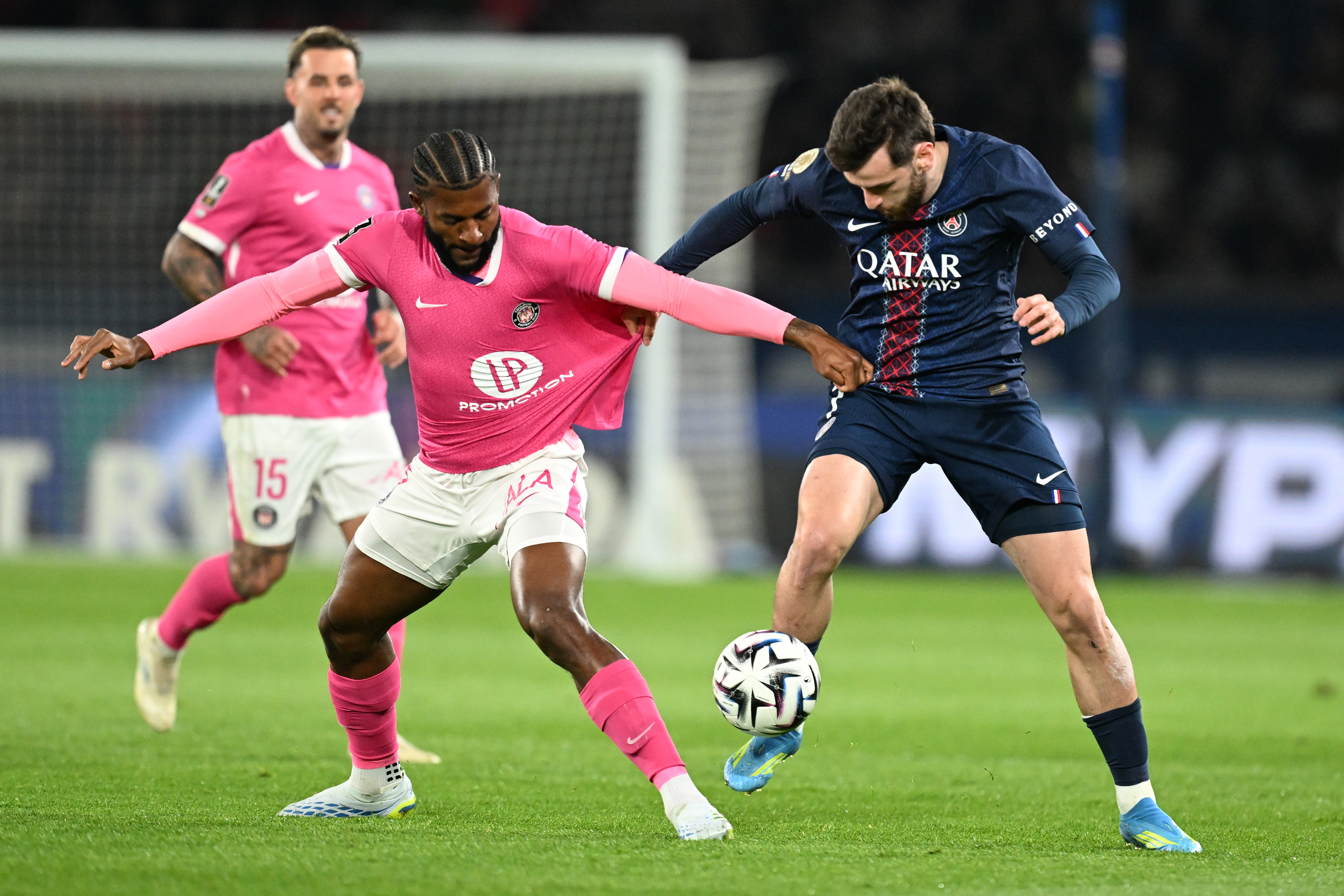
Mark McKenzie (left) playing for Toulouse against French powerhouse Paris Saint-Germain last season.Emma Da Silva
But the Union have wanted for some time to bring him back. They made a strong sales pitch, starting before the World Cup. McKenzie was receptive to it.
The soccer side of it had to come first. Once he was on board, the off-the-field side could make sense, too — especially raising his young son in the United States. McKenzie is a strong family man, and many of his relatives traveled around the country to watch him at the World Cup.
NEW YORK — The Union came from behind in stunning fashion to beat New York City FC, 3-2, at Yankee Stadium on Sunday night.
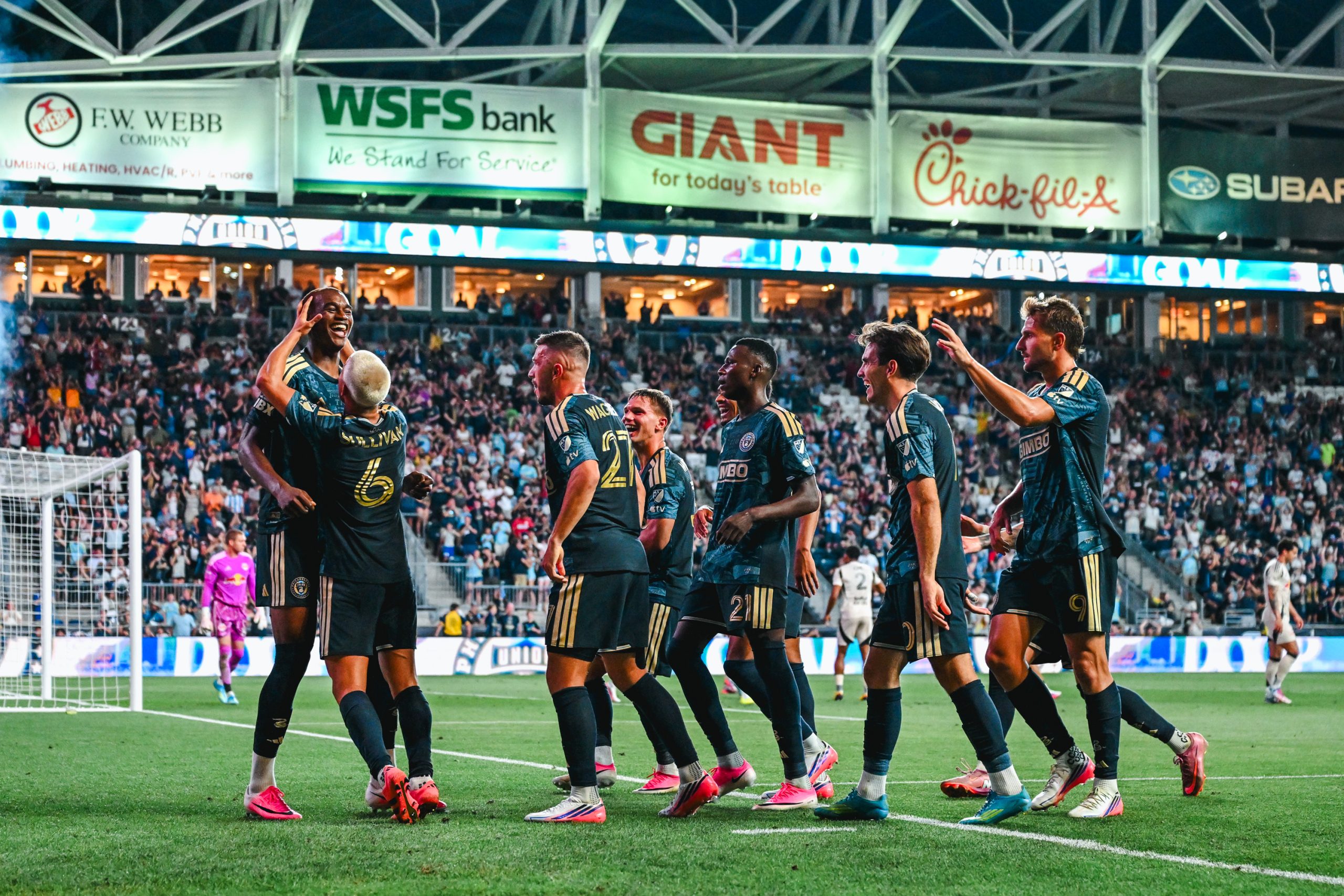
Cavan Sullivan and Bruno Damiani were the stars of the show, with Sullivan notching two assists and Damiani scoring the last two goals after Danley Jean Jacques struck the first.
Here are our takeaways on the wild game.
A foul first half
It’s always been hard enough for the Union at Yankee Stadium: they had just two wins in nine all-time trips to the Bronx entering this game. But they put themselves in a hole within three minutes, thanks to Neil Pierre’s takedown in the box of New York (and former Union) midfielder Andrés Perea.
Bénie Traoré, an Ivorian winger whom City signed for a club record $10.1 million this summer, duly stepped up and converted from the spot.
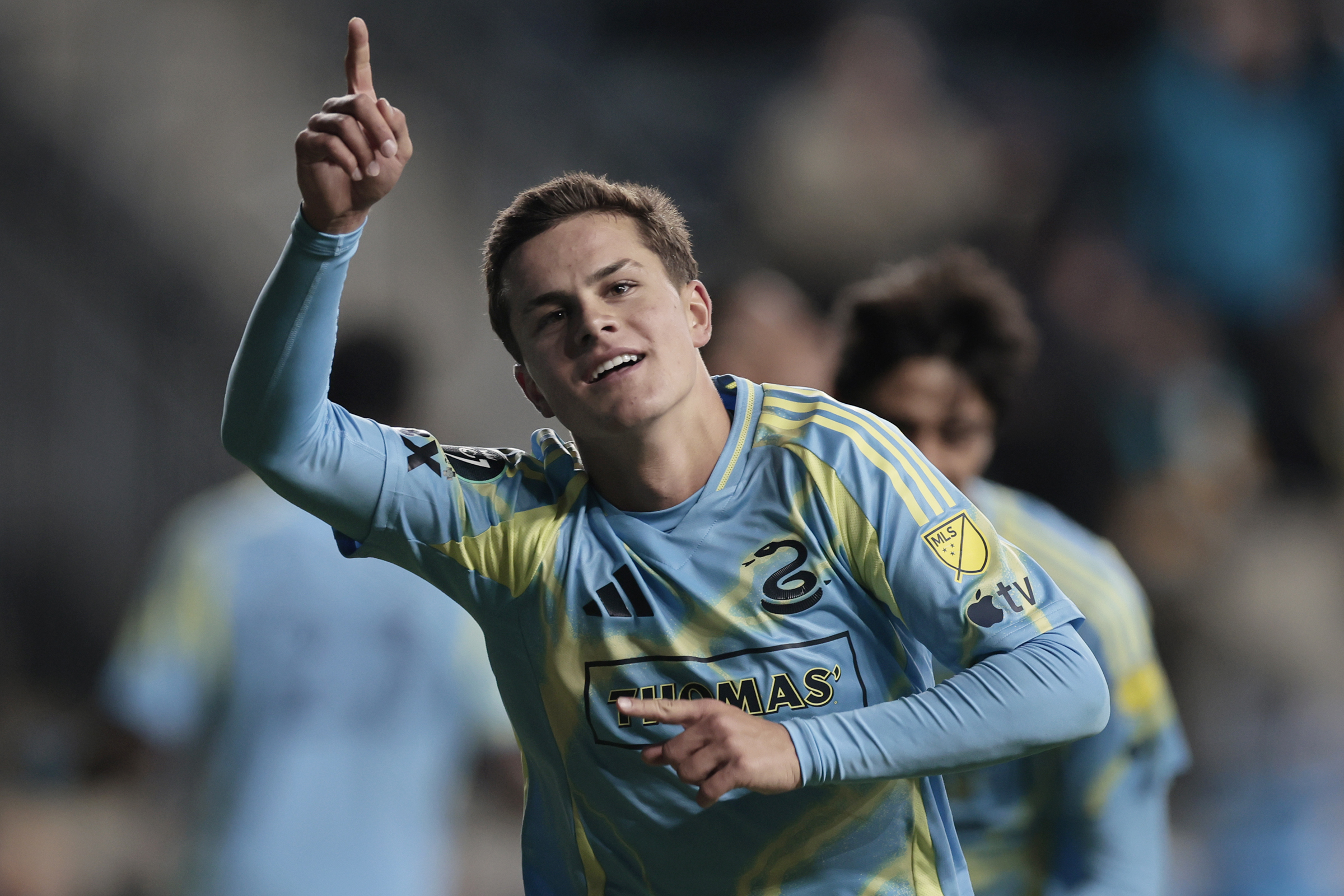
Stutter step, post and Bénie Traoré has his first MLS goal! ☝️
Money isn’t everything in MLS, but it’s a lot. That fee is more than twice what the Union have ever paid for a player, and it’s just $1.5 million than the club’s entire roster payroll — salaries, though not including transfer fees — this season.
It’s worth knowing that for as well as Traoré and fellow newcomer Luighi (on loan from Brazil’s Palmeiras with a $6 million purchase option) played, New York entered this game with nine players absent due to injury or suspension. They included key attackers Nicolás Fernández Mercau, Alonso Martínez, and Thiago Martins.
The Union, meanwhile, had their first-choice starting squad available after interim manager Ryan Richter’s lineup rotation in the Leagues Cup group finale. They were still overrun far too often, and referee Sergii Demianchuk had a quick whistle for their fouls.
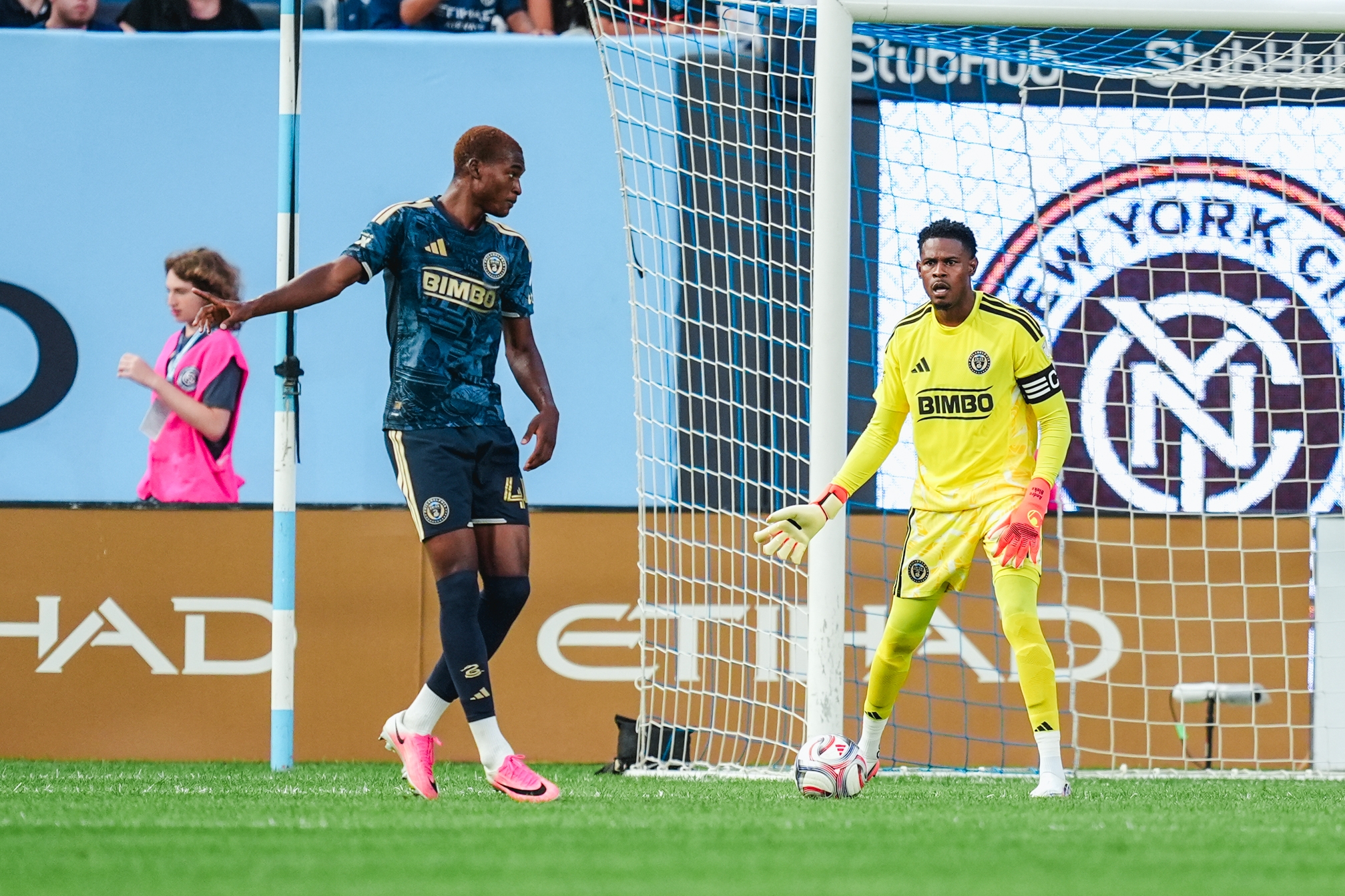
Neil Pierre (left) talks with Andre Blake during the first half, when the Union fell behind 2-0.Philadelphia Union
In the 44th minute, that led to a yellow card for Jovan Lukić which earned a suspension from Wednesday’s home game vs. Lionel Messi’s Inter Miami (7:30 p.m., Apple TV) for card accumulation. And just seconds later, Indiana Vassilev was whistled for a handball in the box, with Demianchuk not interested in claims it hit his shoulder.
Luighi converted this one, with Andre Blake barely moving on his line for the second straight time.
Though the Union played well at times in between New York’s goals, the hole felt awfully big at halftime. Yet they dug out of it, with Cavan Sullivan leading the way.
The first goal of the comeback came just three minutes into the frame. Kai Wagner served a free kick from the left wing, Sullivan flicked the ball on in the box, and Danley Jean Jacques controlled an awkward bounce before slotting past Matt Freese from close range.
Danley Jean Jacques comes through for Philadelphia to cut the New York City lead in half! 💪 pic.twitter.com/fwraurT9p0
Sullivan did even more on the equalizer. Milan Iloski set him free on the right wing after a drive up the middle, and Damiani was wide open to receive Sullivan’s pass.
No doubt some Union fans held their breath when Damiani got the ball, for how many easy chances he has missed this year. But he calmly stuck this one home.
The third goal was Quinn Sullivan’s creation. Five minutes after entering as a substitute, he dashed down the left wing, doing well to evade James Sands’ tackle along the way. Sullivan had a decent look to shoot, but he squared for Damiani instead and the striker struck a nice first-time hit.
This can’t fully excuse how badly the Union (5-10-4, 19 points) played in the first half, but it bears saying anyway. The grass covering the infield dirt was in poor shape, clearly worse than it has traditionally been for soccer games here.
There was also a big diagonal seam through the six-yard box along the first base line, and a shorter seam by the sideline nearer to home plate at that end.
Is it a coincidence that the first five goals of the night were all scored at the other end, left and center field in baseball games, where the grass was cleaner?
Fortunately, this won’t matter for too much longer. NYCFC (7-7-5, 26 points) will open its own soccer stadium next summer in Queens, across the street from the Mets’ Citi Field.
Etihad Park will have a capacity of 25,000 seats, and its construction cost is expected to total $780 million — all privately financed, though with a 49-year lease on the land instead of it being bought. That means the team won’t pay property taxes, which New York’s municipal budget office said is worth $516 million over the lease term.
With the new venue coming, Sunday’s game might have been the Union’s last at Yankee Stadium. Next year will start with a “sprint season,” in which each team in the Eastern Conference will play each other just once.
As the schedule isn’t out yet, we don’t know if the Union’s matchup with NYCFC will be at home or away; and if it’s away, whether it will be in the Bronx or at Citi Field, where the Pigeons have also played home games in recent years.
Cavan Sullivan leads the Union over to the away fans’ section to celebrate the win:
Ryan Richter knew the odds when he stepped onto the podium at Subaru Park on Sunday night.
Though the Union still have a mathematical chance to advance to the Leagues Cup quarterfinals, it would take a blowout win over Santos Laguna on Thursday in Chester (7 p.m., Apple TV) and so many results by other teams that it’s barely worth thinking about.
“It will be a little different, that’s the reality,” he said after Sunday’s win over Necaxa.
But while the chance for a trophy has sailed down the Delaware River — the least important of the trophies the Union can win, as the low attendances have once again proved — that doesn’t mean the team has failed here. In fact, something quite important has happened.
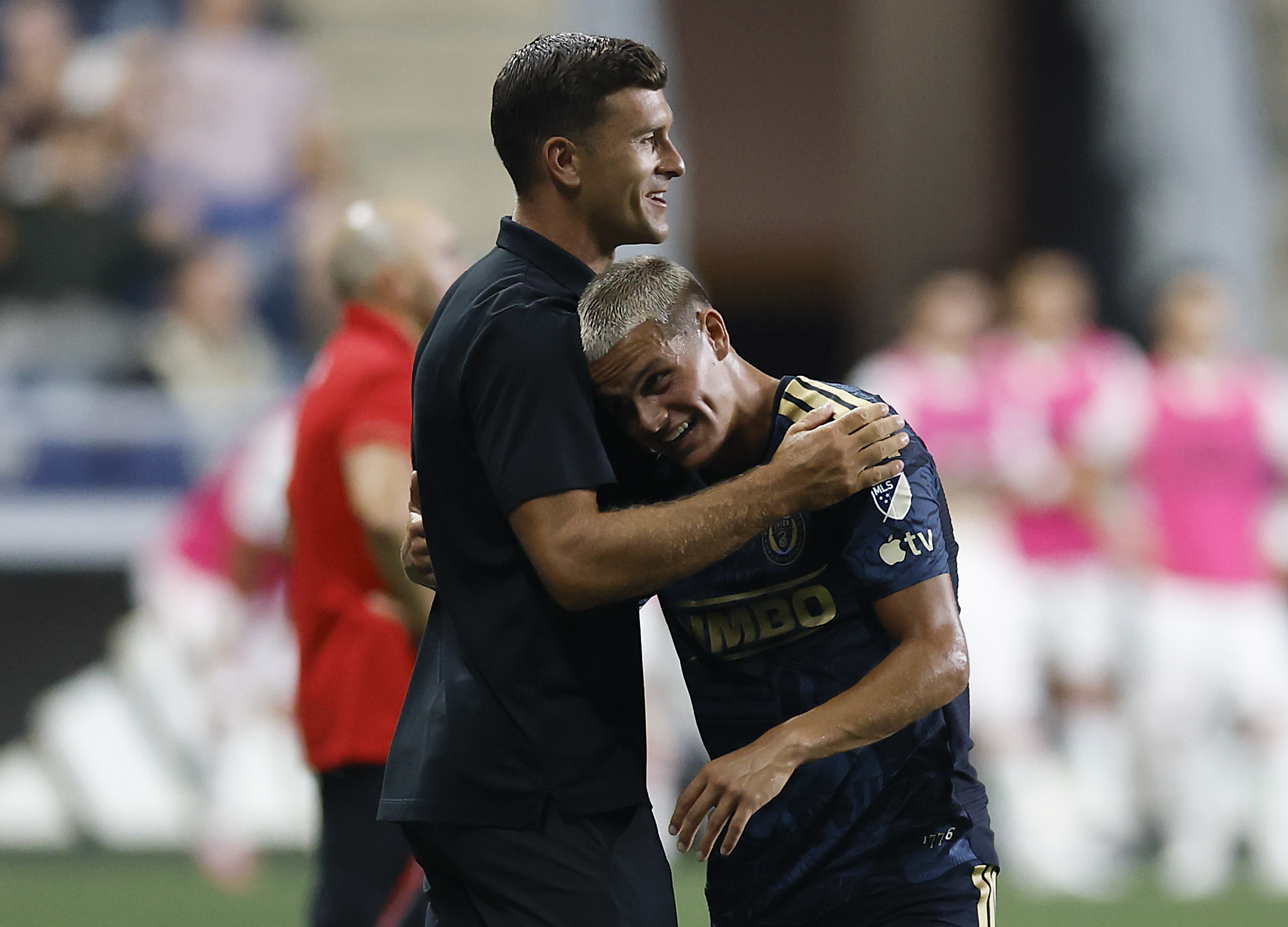
Ryan Richter (left) embraces Cavan Sullivan after subbing Sullivan out of the Nexaca game, where the 16-year-old had a goal and an assist.Yong Kim / Staff Photographer
For a young American player with dreams of representing the country on soccer’s biggest stages, there’s no experience like facing teams from other Concacaf nations early in your career. No amount of teaching in the Union academy’s classrooms can match learning by doing, and a slew of Union players have done it this summer.
“You see the physicality, and almost the cleverness,” Richter said. “The way that they are able to use their bodies, the way they’re able to position themselves. The physicality is just a little bit different, I would say, and the style of player.”
As an example, he cited “the way the striker, [when] the ball comes in [to] him, you’re getting the elbow early in your stomach to make the 2 yards of space for himself. It’s a very savvy way of playing.”
It’s also the sort of thing that makes new soccer fans recoil — until, of course, their own player does the same thing and benefits from it.
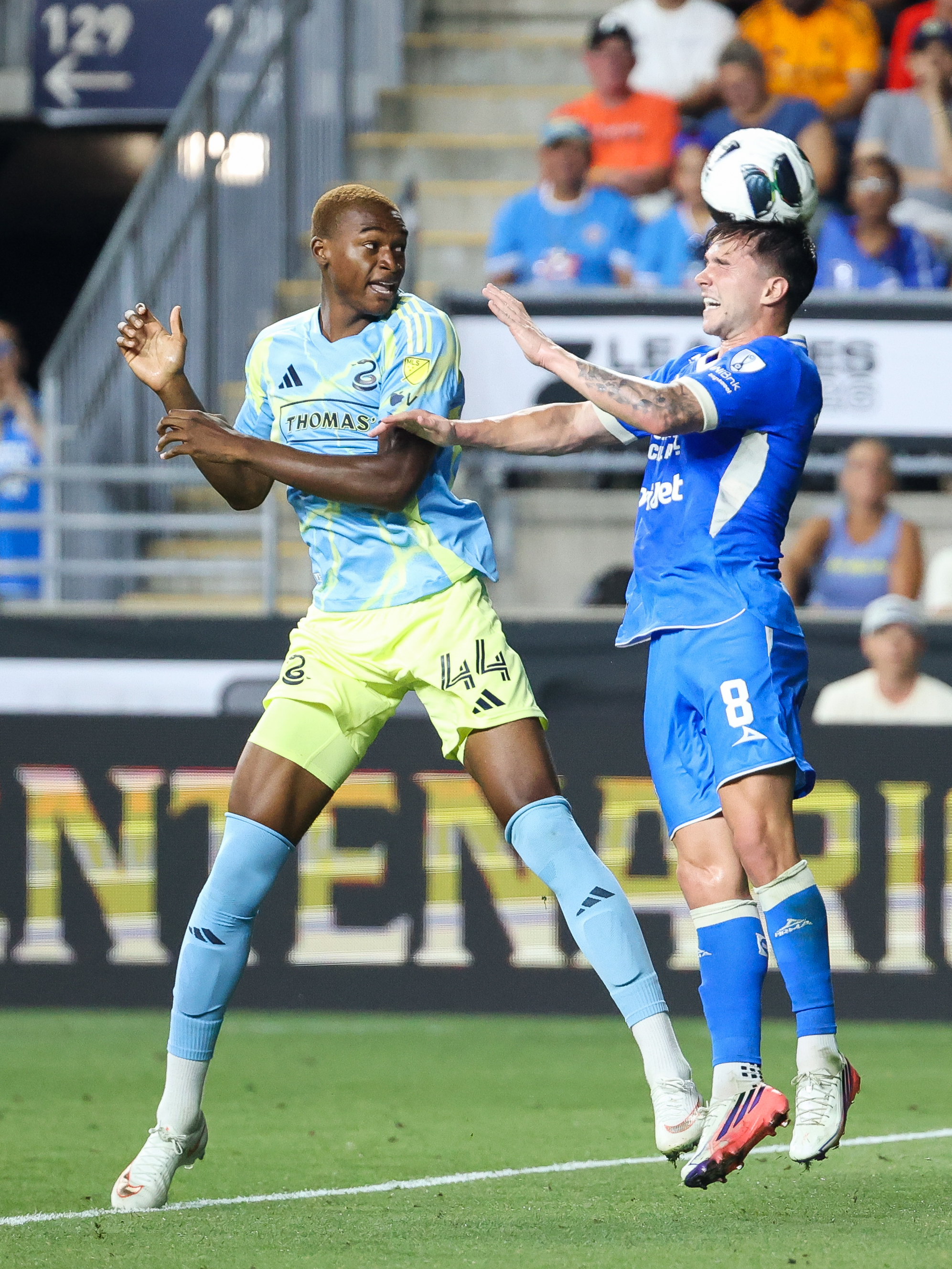
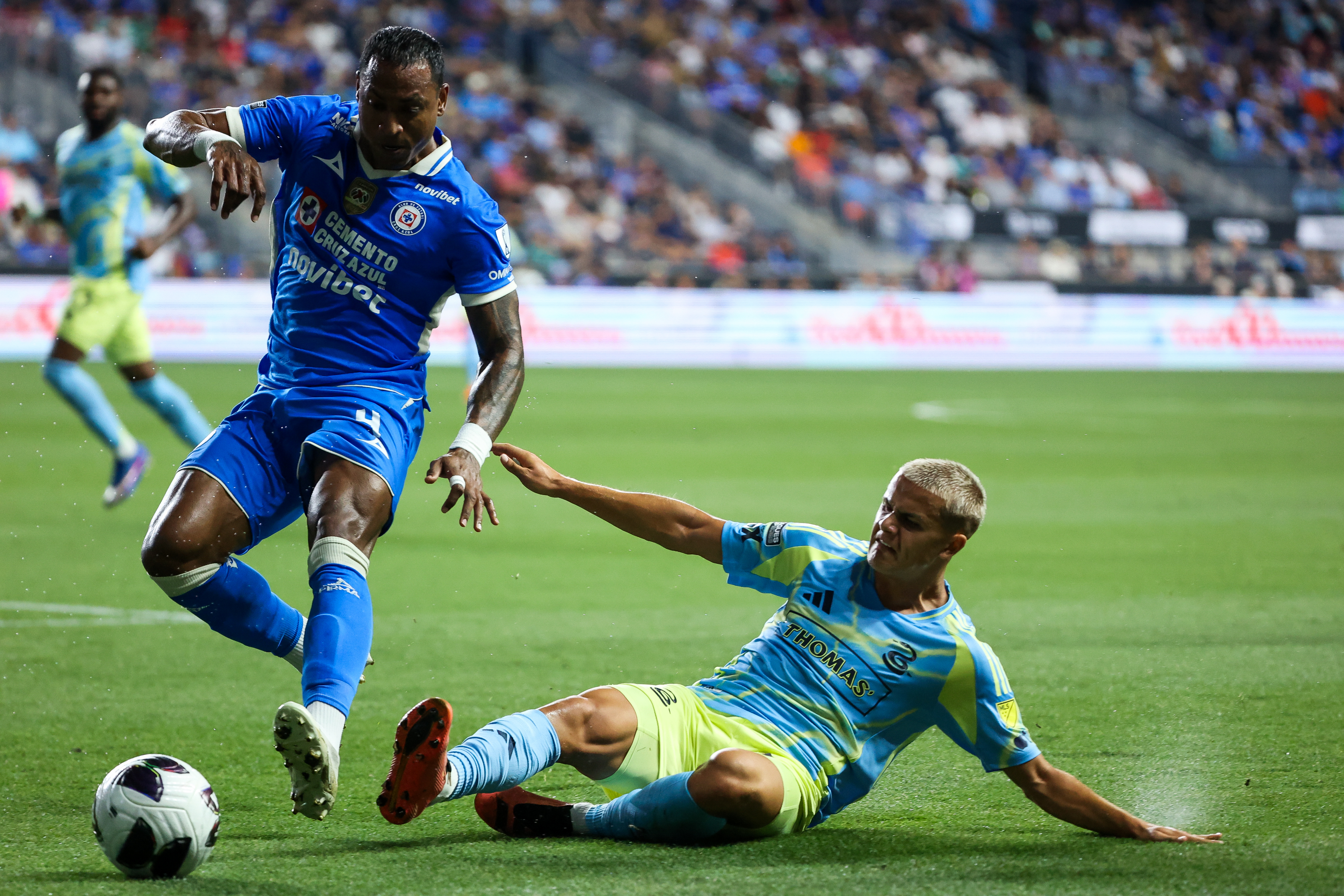
Frankie Westfield (right) going up for a header against Cruz Azul.Isaiah Vazquez / For The Inquirer
‘That Concacaf feel’
Which Union players have gained the most from these two games? Cavan Sullivan tops the list. He was a force in both, and he knew exactly what he was getting into.
“It’s a different element than MLS, so it’s great experience,” said Sullivan, who was a U.S. stalwart at last year’s under-17 World Cup. “More of that Concacaf feel: that gritty, aggressive battle, games that are just battles. So I think it’s great for us, great for young guys.”
Quinn Sullivan has fit right back in during his first games back from the long injury absence. Obviously he has needed time to ramp up to full fitness, but he’s now showing he’s close.
Neil Pierre has continued a breakthrough summer at centerback that has left scouts across the sport raving. Spanish superpower Barcelona was reportedly already monitoring him before he returned to Chester from his loan to Denmark’s Lyngby, and you can be sure the line of suitors will keep growing.
Neil Pierre (left) battling Cruz Azul’s Agustín Palavecino.Isaiah Vazquez / For The Inquirer
Andrew Rick has built upon his priceless experience with the U.S. World Cup team, starting in net for both Leagues Cup games and playing especially well against Necaxa. (It wasn’t his fault that a breakdown in front of him left Japhet Sery Larsen having to mark two attackers at once, leading to the visitors’ goal.)
Last, but a long way from least, Frankie Westfield has continued his impressive rise at left back, despite making the error that led to Cruz Azul’s goal in the Leagues Cup opener.
Perhaps this all seems strange to be saying about a team that not only won’t win the Leagues Cup, but might now call just making the playoffs a successful season after years of higher aspirations.
But a broader look could explain it.
We were just getting settled! 🤯⚽ Nathan Harriel came down the wing and opened the scoring with a great shot for @PhilaUnion!
The continuing afterglow of the World Cup includes Mauricio Pochettino’s renewal with the U.S. men’s national team. He has pledged to look at new players for the 2030 cycle, and his first opportunity to do that will come in the four friendlies that start late next month.
Since the two FIFA windows after that (in November and next March) are reserved for the serious business of the Concacaf Nations League, there’s ample reason for Pochettino to leave some veteran stars home for the friendlies and give newcomers a chance.
Cavan Sullivan is on the list of candidates. Quinn Sullivan might be, too, since Pochettino knows him from last summer and respects his game.
“Obviously that’s a goal,” Quinn said, though he was quick to add, “Right now I’m really focused on building my fitness back.”
Quinn Sullivan on the ball in the Necaxa game.Yong Kim / Staff Photographer
It’s also worth remembering the manager’s praise for Nathan Harriel last fall, though other defenders are higher up the priority list right now. The 25-year-old has a lot of experience under his belt now, not just the tactical kind but the streetwise kind.
“All these opportunities you get to play against these Mexican teams are good learning moments for sure,” Harriel said. “Those games you get up for [them]. And it’s difficult, it’s hard, there’s tough moments, but you learn and you can grow from it.”
Is Pierre on the list, still a raw talent at age 18 but in that impossible-to-miss 6-foot-7 frame? The senior national team might be a step too far at the moment. But there’s also the 2028 Olympic team to consider, an under-age-23 squad. He could definitely be of interest to that group’s head coach, Steve Cherundolo, now and over the next two years.
The same goes for Rick, as Cherundolo and Pochettino ponder what to do with a crop of young goalkeepers that is interesting but has no standout yet.
Andrew Rick (center) in action against Cruz Azul.Isaiah Vazquez / For The Inquirer
Obviously, Rick has to contend with being Andre Blake’s backup, and the limited playing time that results. But he has amply proved his abilities to the Union, and likely to the U.S. staff, too.
Westfield has perhaps the most potential for the Olympic team. Outside backs are always hard to come by, and the 20-year-old from Morrell Park in Northeast Philadelphia can play either flank. If he keeps playing this well, his stock should be quite high.
“Everyone’s going to be shooting for the Olympics and World Cup, and we have big dreams,” Quinn Sullivan said. “These smaller versions of the big thing are always helpful.”
And as Harriel said of his journey: “Anything’s possible — I thought I had no shot, and I ended up being there.”
The Leagues Cup has helped show why these players do have a shot.
Jesús Bueno prefers to answer interview questions in his first language of Spanish.
Still, when it came to what he believed should have been a penalty kick for the Union in the 89th minute of their 1-0 Leagues Cup loss to Liga MX’s Cruz Azul on Thursday, the Venezuelan midfielder was comfortable dipping into his English vocabulary.
“Clearly [a] penalty,” Bueno said after the match. “Disgusting situation.”
The situation Bueno references seemed simple. As the Union pressed for an equalizer late Thursday night, Milan Iloski received a ball from Frankie Westfield inside the 18-yard box and tried to center it for a teammate.
Iloski’s back-heeled cross contacted the wrist and lower forearm of Cruz Azul’s Gonzalo Piovi. Play stopped as the ball trickled out of bounds, but as the Union shouted for a handball, referee Juan Gabriel Calderon Pérez awarded a corner instead.
Brothers Quinn and Cavan Sullivan both stayed mum on the non-penalty post game, but interim head coach Ryan Richter’s summation of the incident was even more straightforward than Bueno’s.
Did the interim manager think it was a penalty?
“Yes,” Richter said.
Simple enough.
Richter’s side wouldn’t get the benefit of a golden opportunity to equalize. If the Union had converted from the spot, where they are 3-for-4 this season, it would have sent the game to a penalty shootout to decide the winner thanks to the tournament’s “no ties” format.
Taking the match to a shootout would have secured the Union at least one point in Phase 1 of the Leagues Cup, potentially two had they won in penalties.
Instead, the Union walked away without any points for a regulation loss, likely quashing their run in the Leagues Cup before the club’s second game. They’ll get back to work quickly as Necaxa, complete with former Union striker Julian Carranza, comes to Subaru Park on Sunday (7:30 p.m., Apple TV, UniMas).
The Leagues Cup, which features 18 Liga MX teams and 18 qualified teams from MLS, adopted its current format in 2025. After each team plays three Liga MX vs. MLS matchups in Phase 1, the top four teams from each league’s standings advance to a knockout bracket.
The Union can earn a maximum of six points from their next two Leagues Cup matches, starting with Necaxa on Sunday. But even if the Union were to win out, it would not ensure that they advance.
“We obviously know the two games coming up are big,” Cavan Sullivan said. “At the end of the day, it still might not be enough. That’s just the reality of the Leagues Cup. But the Philly mentality is to go out and win no matter what, so that’s what we’re going to do.”
In 2025, none of the MLS teams with losses in Phase 1 earned enough points to qualify for the knockout rounds.
Ahead of Thursday’s match, Richter said he planned to approach the tournament with his first team until “it’s not possible.”
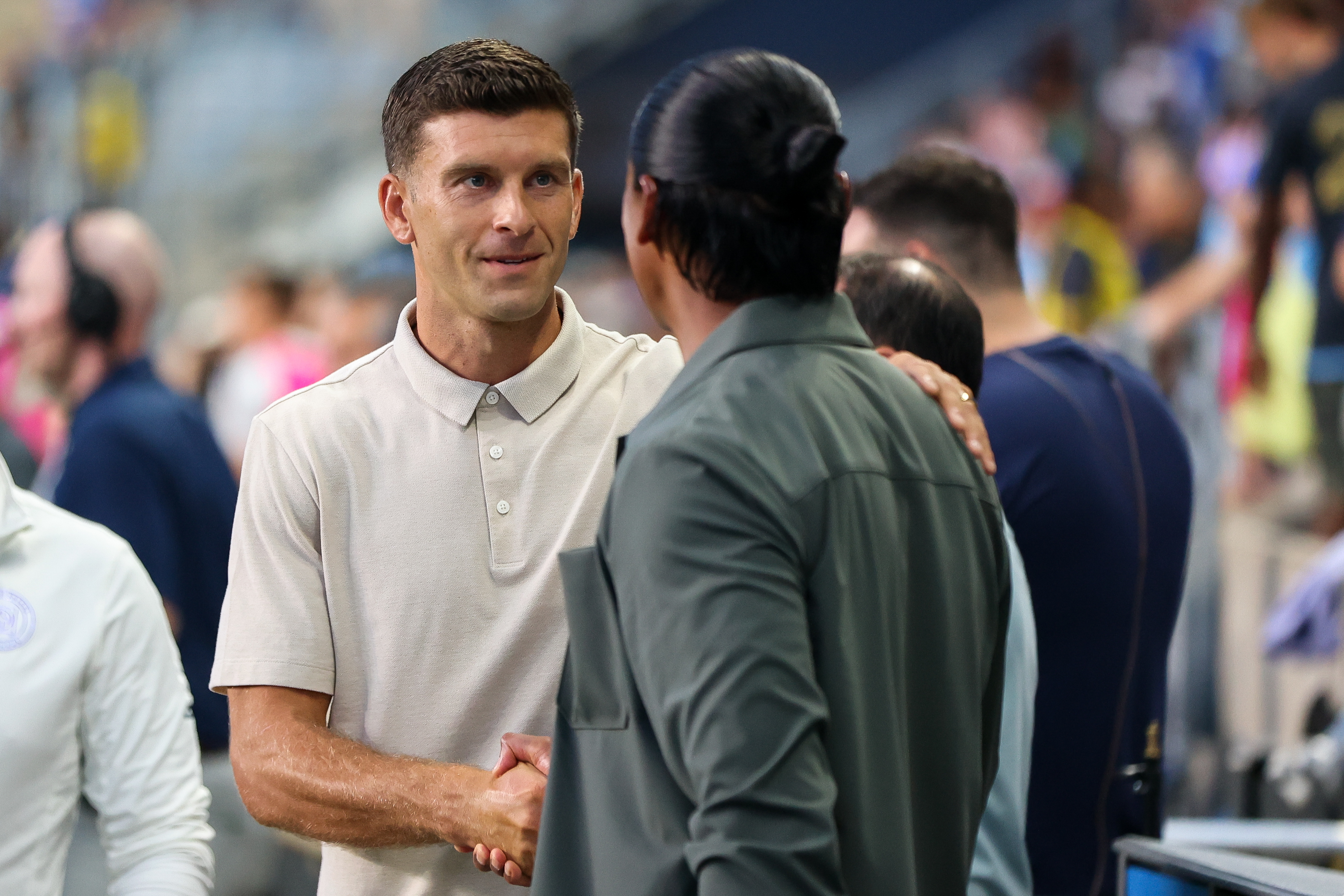
Union interim head coach Ryan Richter shakes hands with Cruz Azul head coach Joel Huiqui before the Leagues Cup match at Subaru Park on Thursday.Isaiah Vazquez / For The Inquirer
Then perhaps having their first match come against Cruz Azul, the tournament’s No. 4 seed and the third-ranked team in the Concacaf Club Ranking Index, was a blessing for the Union.
The club is not mathematically eliminated from the Cup, but it has slim odds of advancing to the knockout rounds. The remaining Leagues Cup fixtures could be an opportunity for Richter to rotate his squad before the club returns to MLS play, especially considering the Leagues Cup allows for an expanded 30-man roster.
“We have to be smart,” Richter said. “If we look at it, and it doesn’t look possible to advance to the next round, then we have to play these games the way we do, try to win and approach them with the right energy and keep building on the positive momentum that we had from the first three league games.
“We don’t want to lose that base. That’s really important for us, that we don’t just use these two games and throw them to the side … But we also have to be realistic. We have a very busy stretch coming up in the season. We have to make sure that we’re not setting ourselves back by the way we approach these next two games.”
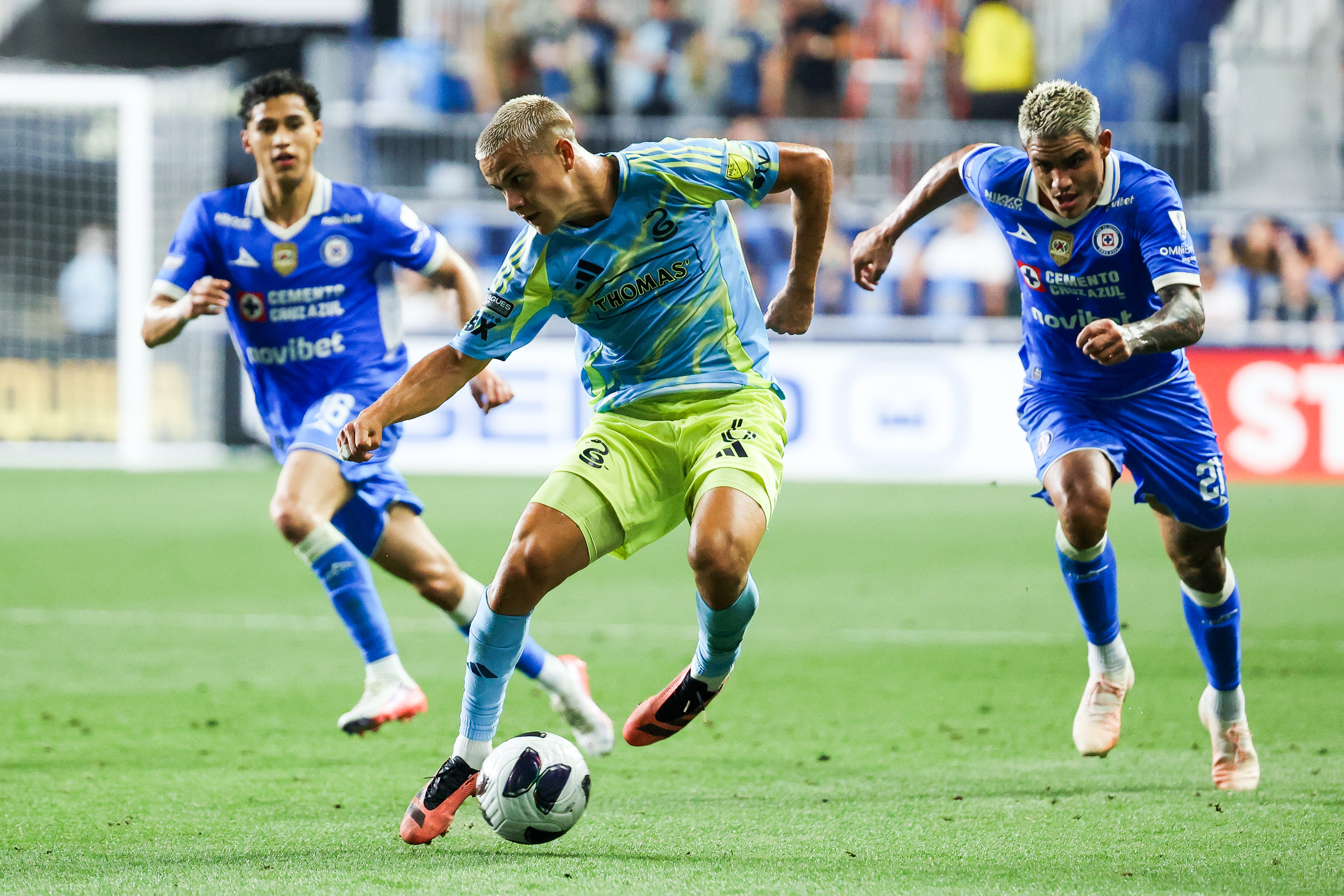
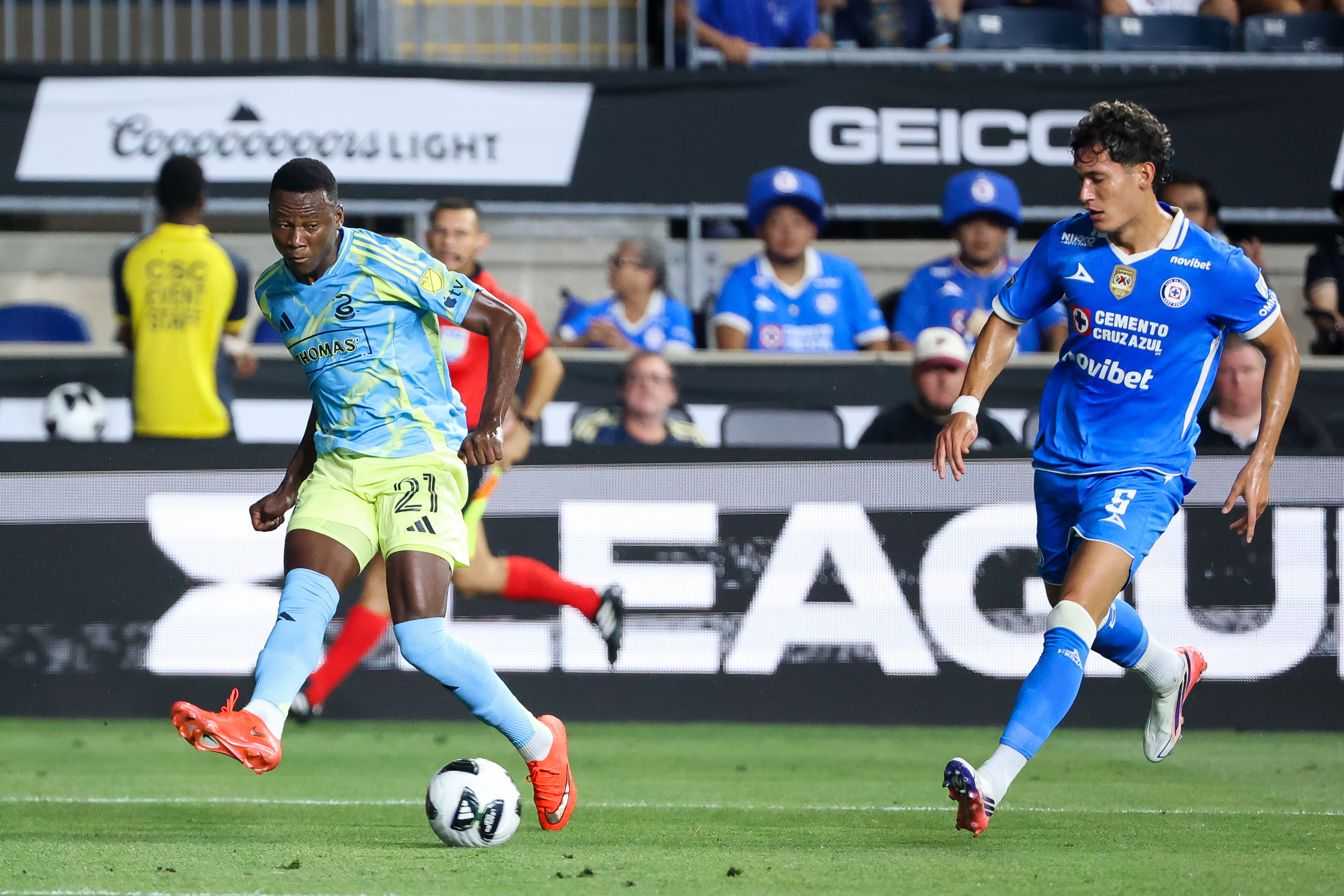
Union midfielder Cavan Sullivan (6) controls the ball against Cruz Azul at Subaru Park on Thursday.Isaiah Vazquez / For The Inquirer
Sullivan shines
Despite his age, 16-year old Cavan Sullivan looked at times like the best player on a pitch full of professionals during Thursday’s match.
Sullivan completed 22 of his 32 passes and was credited with two chance creations by soccer stats platform FotMob.
He also took two shots, the better of which came in the 59th minute. Iloski played Sullivan through on goal in the left side of the penalty area, but Sullivan’s left-footed, driven shot veered wide of the right post.
Aside than the unawarded penalty, it was the Union’s best scoring chance of the evening.
“I want to take responsibility,” Sullivan said. “I think there were two that I missed. I’m not happy about that. They need to be put to bed … In the Leagues Cup, every chance matters. It could affect us in the future. That one, those ones are going to keep me up at night. Can’t dwell on it. I’ve got to move on.”
Sullivan and the rest of the Union will need to shed Thursday’s loss quickly. Necaxa will come to Subaru Park on Sunday fresh off a 2-0 loss to Chicago Fire FC in its first Leagues Cup match.
“I think we’ll have to rotate guys,” Sullivan said. “It’s been tough on the bodies. You know that these teams are going to come in strong, and come in with some away fans. The dark arts, they’re going to try and get in your head, little fouls. Just got to deal with it and, of course, try and get those three points.”
The Union dropped the first of three Leagues Cup matches, 1-0, to Cruz Azul Thursday at Subaru Park.
José Paradela scored a third-minute goal that put the Liga MX side in control of the match, securing three points for fourth-seeded Cruz Azul in the Cup’s Phase 1 standings.
The loss severely dampens the No. 5 seed Union’s odds of advancing to the knockout stage of the tournament, which pits 18 Liga MX teams against 18 qualified MLS teams.
After three Liga MX vs. MLS matchups, the top four teams from each league advance to a single-elimination bracket.
This is the Cup’s second season utilizing an eight-team bracket. In 2025, no MLS team that lost in regulation in any of its three matches advanced to the knockout stage.
Paradela’s goal for Cruz Azul came before some spectators had settled into their seats.
Paradela launched a left-footed strike from the edge of the 18-yard box that beat an outstretched Andrew Rick, who started in place of usual goalkeeper Andre Blake.
¡Goool de Cruz Azul! 💥⚽️
Paradela takes an impossible shot for the goalkeeper
While one could question how much stock the Union should place in the Cup competition amid the attempted revival of their MLS campaign, Ryan Richter approached Thursday with a mostly first-choice lineup, aside from Rick.
Quinn Sullivan returned to the starting lineup for the first time since tearing his ACL at the end of the 2025 season, across from his younger brother Cavan Sullivan.
“[It throws] you into the fire,” Quinn Sullivan said of his first start back. “I love it. We know any Mexican team’s going to bring the intensity and the fight, the hitting and the afters. I’m all for it, as long as it’s not too out of line. … Physical match. Sixty-five minutes on my legs. I’m definitely going to be sore tomorrow.”
It is the second time the Sullivan brothers started together for the Union. They also started together against the Pittsburgh Riverhounds in the 2025 U.S. Open Cup.
“It was great to see [Quinn] back,” Cavan Sullivan said. “Obviously he still has some restrictions, but it’s great to see him back, [being] dynamic, beating guys. We had a couple linkups, some unsuccessful, some successful. I’m really happy.”
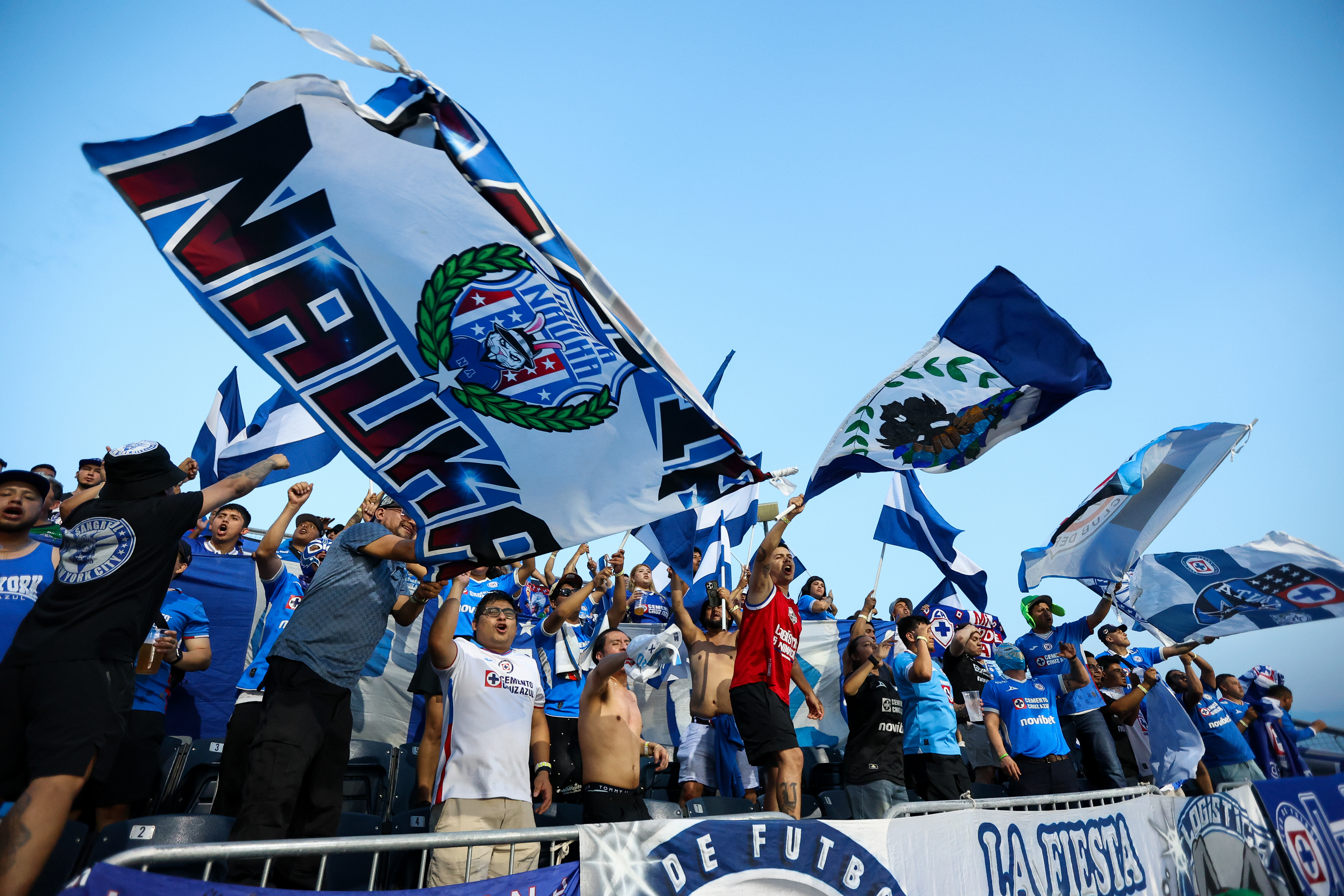
Cruz Azul fans cheer on at the start of the Leagues Cup match against the Union in Chester.Isaiah Vazquez / For The Inquirer
Seven minutes after his goal, Paradela was shown yellow for obstructing a free kick awarded to the Union at the edge of the attacking third.
It appeared Omar Campos added a second goal to Cruz Azul’s lead in the 13th minute, but a Video Assistant Referee check determined Gabriel Fernández was offside in the build up, disallowing the goal.
Jesús Bueno was shown yellow in the 23rd after a dangerous challenge on Cruz Azul’s Érik Lira. Bueno, making his first start for the Union since April, brought his left leg up near Lira’s shoulder to contest the possession.
Under high heat and oppressive humidity that necessitated a hydration break past the 30th minute, Cruz Azul held on to its 1-0 lead through a physical opening half. Both the Union and Cruz Azul finished the first half with an equal number of shots and fouls (3).
The Union continued to press in the second half, registering seven shots between the 45th and the 65th minutes. Both Cavan Sullivan and Milan Iloski registered near misses on potential equalizers in the 59th and 61st, respectively.
“I was very proud of the way we went for this game in the end,” Richter said. “The goal just didn’t come. But there [were] a lot of positives we can take from it.”
Richter made his first pair of changes in the 66th minute, bringing on Indiana Vassilev for Quinn Sullivan and Bruno Damiani for Ezekiel Alladoh.
Another trio of swaps came in the 79th minute, with Neil Pierre, Agustín Anello and Jovan Lukić replacing Japhet Sery Larsen, Nathan Harriel and Bueno.
Union midfielder Danley Jean Jacques (left) on the ball during the first half against Cruz Azul.Isaiah Vazquez / For The Inquirer
Iloski broke through on goal in the 85th, but his shot sailed over the crossbar. Iloski was held scoreless Thursday, snapping a six-game scoring streak.
The Union wanted a penalty in the 90th minute after Iloski’s cross appeared to make contact with the arm of a Cruz Azul defender inside the 18-yard box, but referee Juan Gabriel Calderon Pérez did not award a spot kick.
Today’s newsletter is all about things I thought I was done writing about: COVID-19, Kamala Harris, and the World Cup. Regarding the latter, FIFA strongman Gianni Infantino walked off the pitch after last month’s final like the hero in Steve Miller’s “Take the Money and Run”: He got the money — an ungodly $15 billion in revenue — thinking he got away. But instead, just like Icarus, Infantino flew too close to the sun. A plan to make even more cash off the world’s greatest sporting event — by selling a share to private investors led by the brother of Donald Trump’s son-in-law — outraged so many folks that the FIFA chief could lose his job. What a shame.
The right can’t shut up about COVID-19 because it needs your outrage against experts
Workers move bodies to a refrigerated truck from the Andrew T. Cleckley Funeral Home in the Brooklyn borough of New York in April 2020.AP
Honestly, I thought — and hoped, frankly — that I’d written about the COVID-19 pandemic for the last time by the end of 2021. The issues it raised — about everything from public health preparedness to conspiracy theories — had seemed important enough, but I was more than ready to move on from empty baseball stadiums and masks in the supermarket.
I thought most folks felt the same way — that we were all eager to put the coronavirus in the rearview mirror. Clearly, I was wrong. The people we call MAGA still can’t stop yelling about it.
Last week brought the acid flashback of the government’s communicable disease czar when the pandemic erupted in 2020,Anthony Fauci,getting dragged before a U.S. Senate committee in a Joe McCarthy fashion, forced to take the Fifth Amendment to avoid any perjury traps that would satisfy the senators’ mouth-breathing constituents’ raw lust to imprison the 85-year-old public health icon.
The realization that they weren’t going to send Fauci — who was pardoned for his past actions in January 2025 by outgoing President Joe Biden to protect the good doctor from GOP wrath — up the river led these Republican statesmen to do the only thing left: scream at him.
“Who the f— do you think you were for doing that?” Ohio Sen. Bernie Moreno yelled at Fauci, even as it’s hard to understand what “that” was, except for working tirelessly to give Americans the best information about a rapidly evolving, deadly pandemic. “It is a total disgrace what you did to this country.”
The baseless attacks on Fauci by right-wingers — who’ve convinced themselves that the real crisis of 2020-2021 wasn’t the invisible virus that caused the early death of more than 1.2 million Americans, but an authoritarian government (led at the time by Donald Trump, but no matter) making them wear those masks and avoid those baseball games — were both infuriating and unconscionable. Still, maybe because of my aversion to reliving the pandemic, I was going to let the subject slide.
But then the current government’s top health official, Health and Human Services (HHS) Secretary Robert F. Kennedy Jr., went on CNN to double down on the Trump regime’s Big Lies about what really happened during the COVID years. And like Moreno, RFK Jr. turned the volume up to 11.
“Anthony Fauci was mismanaging the COVIDpandemic and was doing it under the Biden administration. President Trump wanted to end the lockdowns,” Kennedy loudly told CNN’s Dana Bash, inventing a farcical, backward timeline. An agitated RFK Jr. insisted the government’s priority during COVID-19 should not have been saving lives, but “protecting constitutional rights,” yet to make this fiction sound less ridiculous, the HHS chief also had to lie about the extent of thecrisis.
“There were ICUs that were empty all over the country, including in New York, at the height [of the pandemic],” Kennedy insisted.
This can no longer be ignored. There are two very important points that need to be made here.
First, when a high-ranking government official tells a lie on national television, this must be debunked immediately. The truth here is that the hospital emergency rooms and intensive care units, especially in New York City but other locales as well, were overwhelmed in the spring of 2020. So were many morgues and funeral homes, which struggled to keep up with the dead.
“I worked for New York’s largest medical center at the start of the pandemic,” Lucky Tran, a Columbia University scientist, posted on Bluesky. “There were morgue trucks on the streets. They set up emergency medical tents in Central Park. Healthcare worker colleagues died. It is horrific that RFK Jr is on national TV lying that ICUs were empty.”
Of course, this is just one of a number of lies about the pandemic — that the vaccines released to the public in early 2021 are dangerous (they’re not), that the virus came from a Chinese lab (it almost certainly didn’t) and not animal-to-human contact, and that Fauci led some kind of Watergate-level cover-up (his personal diaries, obtained by the senators, revealed exactly the opposite) — that are matters of faith among the political right.
Which brings us to the second big thing: Why? Why are all of these petty grievances about inconveniences we experienced six years ago still so gosh-darned important to these yelling people in 2026? Why do they want to send an octogenarian Fauci — a grandson of Italian immigrants whose life was the kind of American dream 20th-century Republicans would have celebrated — to prison?
The real virus here is anti-intellectualism — a strain that has always existed in American life, as the historian Richard Hofstadter famously wrote in 1964 — that has metastasized from a small, well-contained syndrome to overtaking the entire Republican Party. So-called rural resentment leads angry voters to think people like college professors or doctors in white coats are looking down on them.
It’s an antisocial worldview that was encouraged from on high by the likes of Big Oil executives who love it when the masses scoff at climate scientists. But the rejection of expertise reached a whole new level in 2020 when doctors like Fauci started telling Americans to wear masks or avoid social gatherings to slow the spread of COVID-19.
Sure, there were tough calls around issues like how long to close schools, but in real time, health experts were erring on the side of caution — the right thing to do — while shell-shocked regular folks stewed about an assault on their liberty.
As the revived Fauci controversy continued online this week, Mike Adams, whose website has been accused of spreading medical disinformation, posted Monday on X that getting a COVID-19 vaccine “reveals a twisted and artificial obedience to the falsified appearance of authority. People like that should never be trusted, because they are not in control of their own minds.”
They believe experts like Fauci don’t want to help you, but control you — welcome to the far right’s Bizarro World.
But still, why? At the end of the day, these extremists might care somewhat about thwarting climate science or not wearing masks, but the real reason they despise educated experts is because facts shatter the ancient, lie-based hierarchies such as white supremacy, the patriarchy, or homophobia that give meaning to their broken world.
I think some of the reason they still care so much about Fauci is that the pandemic spring of 2020 also brought the police murder of George Floyd and the subsequent Black Lives Matter marches that shocked many of the communities where they occurred. In their minds, all of it — masks, diversity training, vaccines, calls to “defund the police” — merged into one giant threat.
Which brings us to: Why now? There’s no question that the lingering resentments of 2020-2021 over both the coronavirus and the Floyd protests were the rage fuel that revived Trump, who looked dead in the water after his failed coup of Jan. 6, 2021. Now, it’s less than 100 days until a new election that could cripple Trump and his MAGA movement. And they are desperately waving the bloody shirt of COVID-19.
We must never forget the truth about 2020, Fauci, or the necessity of public health in a true democracy. Our anti-science government is seeing rising cases of measles and of the bacteria that causes explosive diarrhea (which has now been linked to two deaths), and God only knows what elseis in the pipeline.
Experts like Fauci aren’t here to tell you how to live your life — just how to not die.
Yo, do this!
I remain fascinated with the hidden history of American reactionary movements, which is coming out of the shadows during the Trump era. I’ve been listening to the audiobook of The Biggest Lie: The Prehistory of American Fascism, 1818-1915 by College of Charleston historian Joseph Kelly, which looks at how the defense of slavery in the antebellum South, Jim Crow, and the early 20th century revival of the Ku Klux Klan all bore the defining characteristics of an American strain of fascism, often for the self-preservation of monied interests. In the same mode, I highly recommend a recent New York Times guest essay, “It Wasn’t a Civil War. It Was the Slaveholders’ Rebellion,” by history writer Anthony Conwright, who argues persuasively that the name most of us have always used to describe the 1861-1865 conflict is actually a whitewash pushed by the South. The piece is a real eye-opener.
Did I mention that 2026’s summer of soccer isn’t over? The Philadelphia Union have emerged from the two-month World Cup break with a completely different look from the group that tanked in the first half of the MLS season, with the return of Kai Wagner (from England) and Quinn Sullivan (from injury) and rising young stars Neil Pierre and Cavan Sullivan, Quinn’s brother. They’ll also get a fresh start for a trophy opportunity with the arrival of the Leagues Cup tournament against the best teams of Mexico’s Liga MX. Check out their first match Thursday night at 8 p.m. against traditional powerhouse Cruz Azul, live at Subaru Park in Chester and on Apple TV.
Ask me anything
Question: Do you believe the Dems have a chance to take the Senate in November? — Elise (@bnat4.bsky.social) via Bluesky
Answer: Elise, I’d almost bank on it happening, and here’s why. Since the early months of the Trump 47 presidency, Democrats — who need to gain four seats for a majority — have consistently run double digits ahead of past performance in special elections. That should put seven states in play, with the strongest possible candidates in places like North Carolina (ex-Gov. Roy Cooper), Alaska (ex-Rep. Mary Peltola), and Iowa (Josh Turek). Maine voters will forget the Graham Platner fiasco long before they forget Sen. Susan Collins’ vote to confirm Justice Brett Kavanaugh. Ironically, the battle to hold a Democratic seat in Michigan looks toughest, but likely primary winner Abdul El-Sayed is an excellent campaigner. As Trump’s popularity plummets, there’s even a chance for shockers in places like Florida or with independent candidates in Nebraska or Idaho. For me, the bigger question is whether 51-plus Dems will dump Chuck Schumer as their leader after November. Stay tuned.
What you’re saying about …
Many of you had great ideas for a fall Democratic message that’s about more than just “affordability” — the preferred mantra of the party’s consultant class. Many sought to widen the conversation to issues around corruption and inequality. Here are some pithy ones. Roberta Soules wants to “take power away from the large corporations and oligarchs.” Meg Berlin suggested “More Butter. Fewer Guns.” Dane Madsen prefers “Stop the Trump Crime Family,” while Frank Friedman went with an even simpler, “We will be honest with you.” Stephen R. Rourke wrote simply, “Peace, prosperity, and justice for all.”
📮 This week’s question:CNN is reporting that the Pentagon recently took the highly unconventional step of asking rank-and-file troops for creative new ideas on how “to punish Iran.” But what should be done about this mess? Can the United States simply walk away at this point? Or do big problems like the flow of oil through the Strait of Hormuz or Iran’s nuclear ambitions require a response, and what is that, exactly? Please email me your answer and put the exact phrase “Iran war ideas” in the subject line.
Backstory: Is Kamala Harris ‘the new Nixon’?
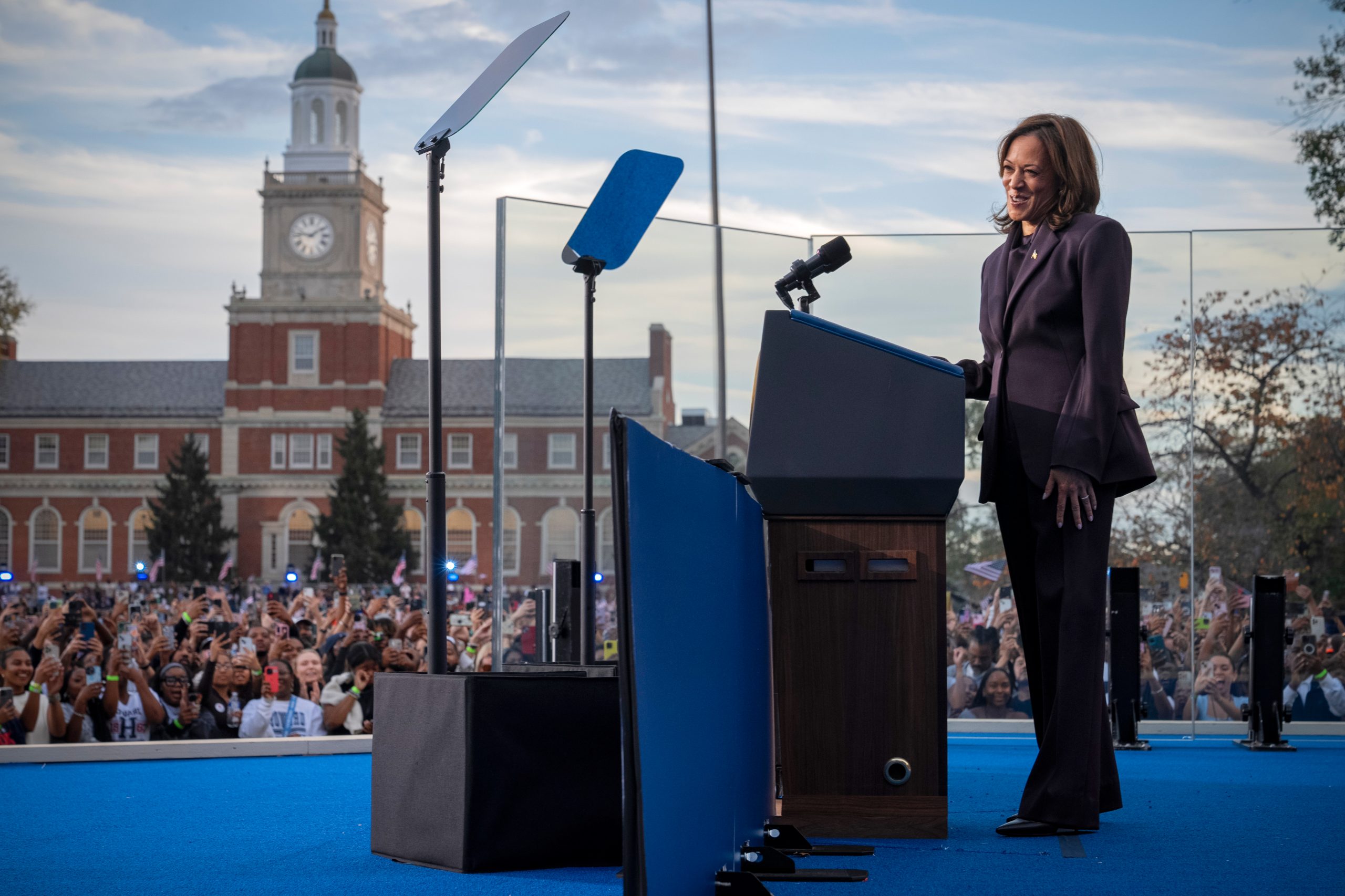
Democratic presidential nominee Vice President Kamala Harris delivers a concession speech for the 2024 presidential election, Nov. 6, 2024, on the campus of Howard University in Washington. Jacquelyn Martin
Although it’s true that, as a 5-year-old kindergartner in 1964, I nearly got into a fight with a kid who said he supported Barry Goldwater, the first presidential election I really followed came four years later in 1968. I was probably waiting for the baseball scores when I saw news reports that the GOP front-runner was a “New Nixon,” which made this 9-year-old wonder what was wrong with the old one. Indeed, a Californian who’d lost a presidential election (and a gubernatorial race just two years later) stunned America with the political comeback that made him the 37th president. We’d spend the next six years of Kent State and Watergate learning the kinder, gentler Richard Nixon of 1968 was all a lie.
It would be a Nixon-level comeback if Kamala Harris were to win the Democratic nomination in 2028, let alone the presidency. Like Tricky Dick, Harris is a child of the Golden State and former vice president to the oldest-ever POTUS at that time (Dwight Eisenhower was 70 when he left office, which was unprecedented before Ronald Reagan, Joe Biden, and now Donald Trump), and a failed nominee, although shewas smart enough not to run for governor when she returned home. People forget the brief lightning bolt of excitement when she replaced Biden on top of the 2024 ticket, and so the smart money has been that her moment has passed, as the Democratic base looks for new blood.
But it feels like the earth has shifted a bit, and the reason can be summed up in two words: South Carolina. Last week, the Democratic National Committee unveiled its list of the first six presidential primary states, and the South Carolina primary tops the list. The same South Carolina where, in 2020, the state’s main Democratic voting bloc — older, center-left, Black members of the middle- or working classes — turned the race around for Biden, the man who then tapped Harris as his veep. The same South Carolina whose Democratic power broker, Rep. James Clyburn, is close to Harris. A state that seems tailor-made for a Harris comeback.
But the Palmetto State isn’t the only reason to start taking a Harris return seriously. In politics, your weakness is often also your strength, or vice versa. Harris has long been a political chameleon — from tough 2010s prosecutor to a sharp left turn during Trump’s first term that she backpedaled away from in 2024. Today, Harris is feeling the zeitgeist. She is drifting left again, but perhaps more importantly, she understands the desire by core Democrats to support fighters, not milquetoast cowards.
“They are ruthless,” Harris told the annual gathering of the National Urban League in Nashville on Friday, referring to Republicans. “We need to be ruthless, too” — explaining that Democrats should not be “cruel,” but “uncompromising.” She added: “For example, and I know this is going to be controversial coming from me, in particular, we need to revisit the Electoral College. We need to revisit the point of expanding the court to 13 justices, like we have 13 district courts. We need to revisit, if they so want, statehood for Puerto Rico and D.C.” Harris has also been holding extensive meetings with some of the pro-Palestinian activists who often clashed with her over Israel policy in 2024.
She’s running? It sure sounds like it.
To be clear, while I thought in the fall of 2024 that Harris had thepotential to become a very good president, and I still do, I’m also very much in the “new blood” camp when I think about 2028. I’d love to see what someone from the progressive Bernie Sanders-Alexandria Ocasio-Cortez wing of the movement could do in wiping away the stain of Trumpism. But establishment Democrats, intentionally or not, have thrown Harris a lifeline with their South Carolina gambit. The coming months will reveal whether this former vice president can be “the new Nixon” of the left.
What I wrote on this date in 2013
I was reminded that the 25th anniversary of the 9/11 terror attacks is almost upon us. Expect a lot of what you might call negative nostalgia about that wretched day in 2001, but also the bad times that followed. Do you remember the terror alerts? Many of us thought those would vanish when George W. Bush left the White House, so it was a little jarring when Barack Obama continued the practice, including this major one 13 years ago. I wrote that “the problem with the terror warning of 2013 is not the warning itself but the decade of government baloney that preceded it. Washington needs to acknowledge the reality: If it wants to do a better job of keeping the public safe, it will need to start doing a much, much better job of telling the public the truth.”
The Trump regime’s cruel campaign against our immigrant neighbors is the biggest story of our time. Last week, I traveled to a tiny borough in Central Pennsylvania, Mount Holly Springs, where a budding partnership with U.S. Immigration and Customs Enforcement has seized 32 immigrants in just four months, and angrily divided a rural community. Pennsylvania’s small towns are becoming the front line of mass deportation. Over the weekend, the immigrant crackdown was central to my essay about the rising death toll that’s attributable to Trump’s misrule, which includes murdered deportees in Guatemala, a woman left by ICE agents to die at a Pittsburgh bus terminal, the latest civilian bombing victims in Iran, and many, many more. It’s a humanitarian crisis that demands our immediate attention.
No two people define the world-class journalism that we regularly produce here at The Inquirer more than my longtime friends Wendy Ruderman and Barbara Laker, who could have rested on their laurels after winning the Pulitzer Prize for investigative reporting in 2010. Instead, both are working harder than ever. Ruderman has applied her talent for digging to Philadelphia’s leading industry, healthcare, with remarkable results. Check out her latest exposé about a Main Line psychiatrist who lost her license after a wildly inappropriate affair with a troubled younger client. Laker remains a linchpin of The Inquirer’s investigative unit, and — joined by her colleagues Ryan W. Briggs, Max Marin, and Ellie Rushing — she has been digging into the dark tale of a Philadelphia pornographer and his family’s mysterious ties to two missing women. Investigative reporting is essential to democracy and forging better communities, but it’s costly, time-consuming, and won’t happen without your support. Subscribe to The Inquirer today.
By submitting your written, visual, and/or audio contributions, you agree to The Inquirer’s Terms of Use, including the grant of rights in Section 10.
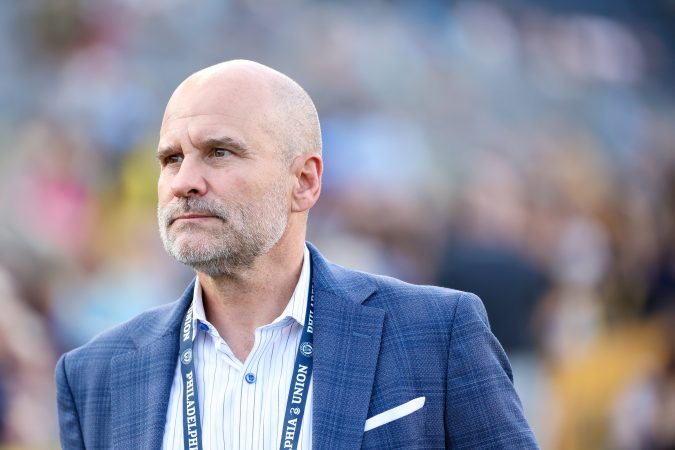
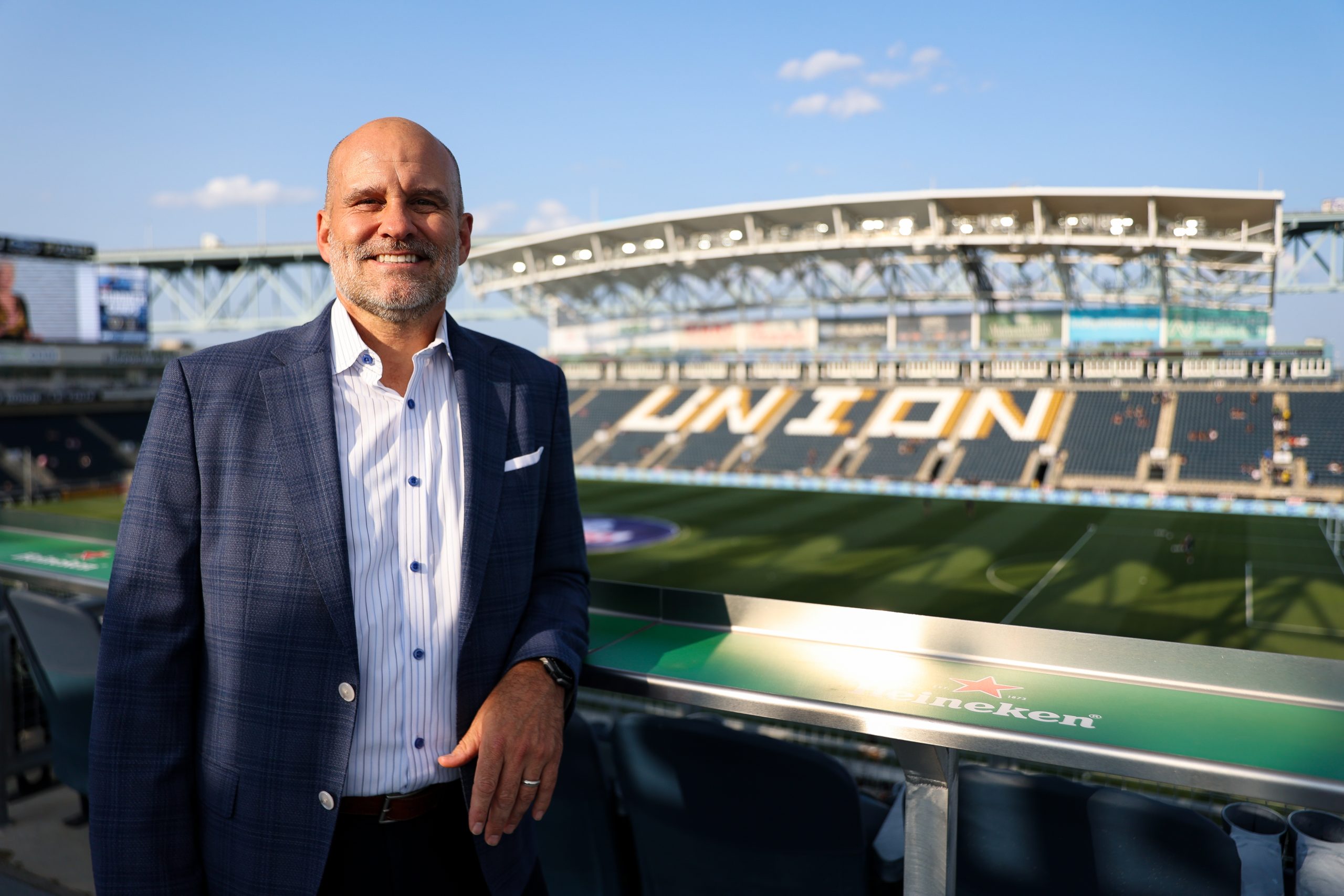
Union president Tim McDermott wants to clear a few things up.
McDermott, 51, who has hit multiple stops along the Philly professional sports highway as a former executive with both the Eagles and Sixers, is in his 11th year with the Union.
He’s been able to do a lot with what some might view as a little by resource standards when it comes to the first team — though he readily contends the money is there from ownership “should the right situation present itself.”
But in a town like Philadelphia, he’s well aware that success, when it comes to sports teams, is a year-over-year proposition. From an optics standpoint, after finishing off another successful season last year, winning their second Supporters’ Shield under a first-year head coach, depending on who you ask, the team has temporarily fallen off the precipice of relevancy — at the worst possible time.
With the eyes of the world on soccer courtesy of this summer’s FIFA World Cup, this was supposed to be the Union’s moment, showcasing itself as a powerhouse club in America’s domestic league situated in a city fortunate enough to be one of 16 that hosted FIFA’s grand event.
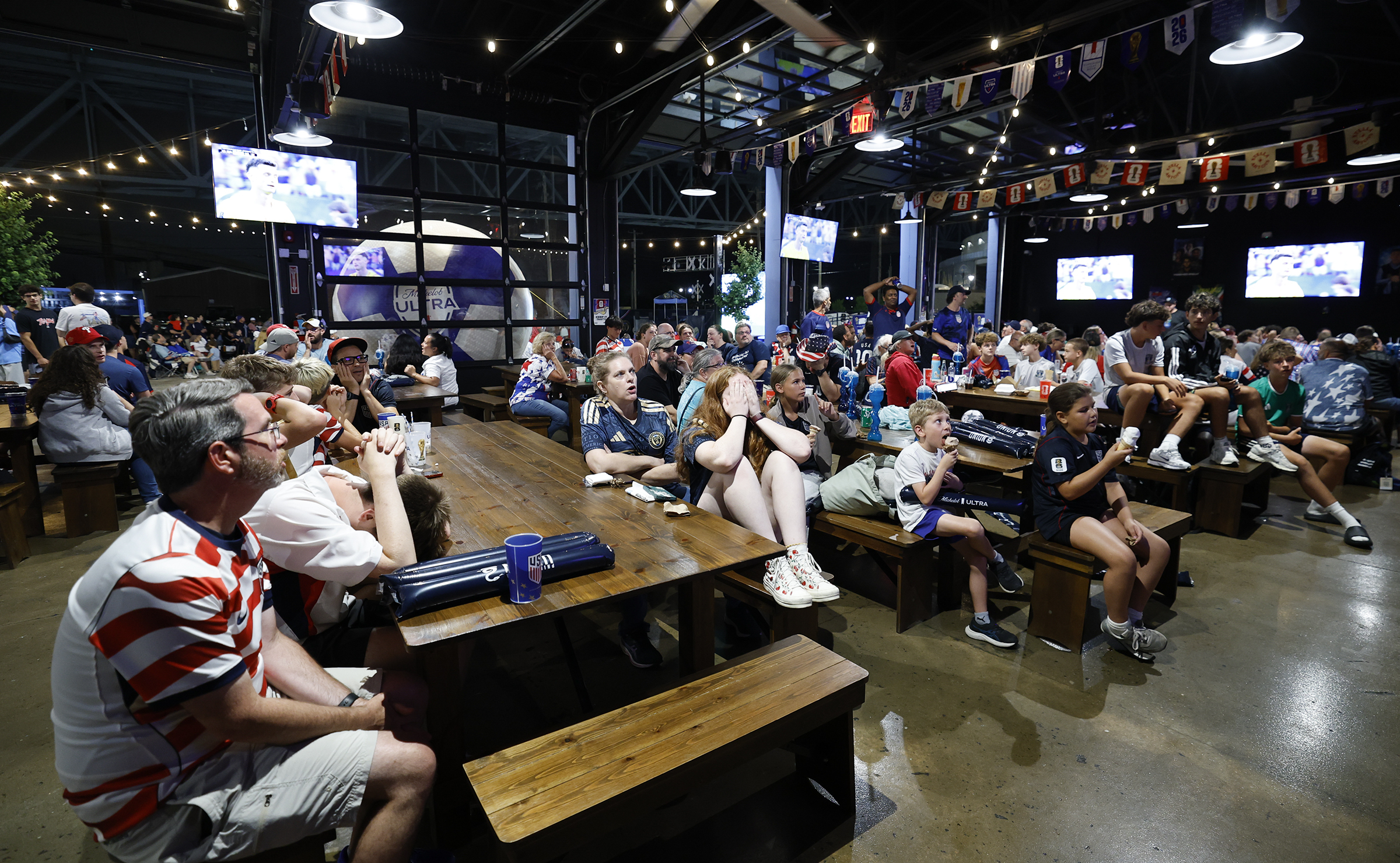
The Union hosted a series of jam-packed watch parties for the World Cup at Union Yards in Chester. However, it went into the World Cup break with just one win and was forced to take a hard look at where the club was going. Yong Kim / Staff Photographer
Instead, the Union limped into MLS’ World Cup break with issues both on and off the field, winning just one game and mired in the drama of its head coach losing a locker room and its sporting director undergoing league-mandated sensitivity training after allegations of misconduct were substantiated.
It forced a reset of almost everything. Ownership let both the coach and sporting director go, ushering in a fresh start in the player personnel department for a team that desperately needed it.
That lack of success has also ushered in reflection, as McDermott explained during a recent interview with The Inquirer. A reset that forced everyone from ownership on down to take a look at the club, not just in its current state, but visualize what the future looks like with the sport getting fresh eyes, courtesy of the World Cup.
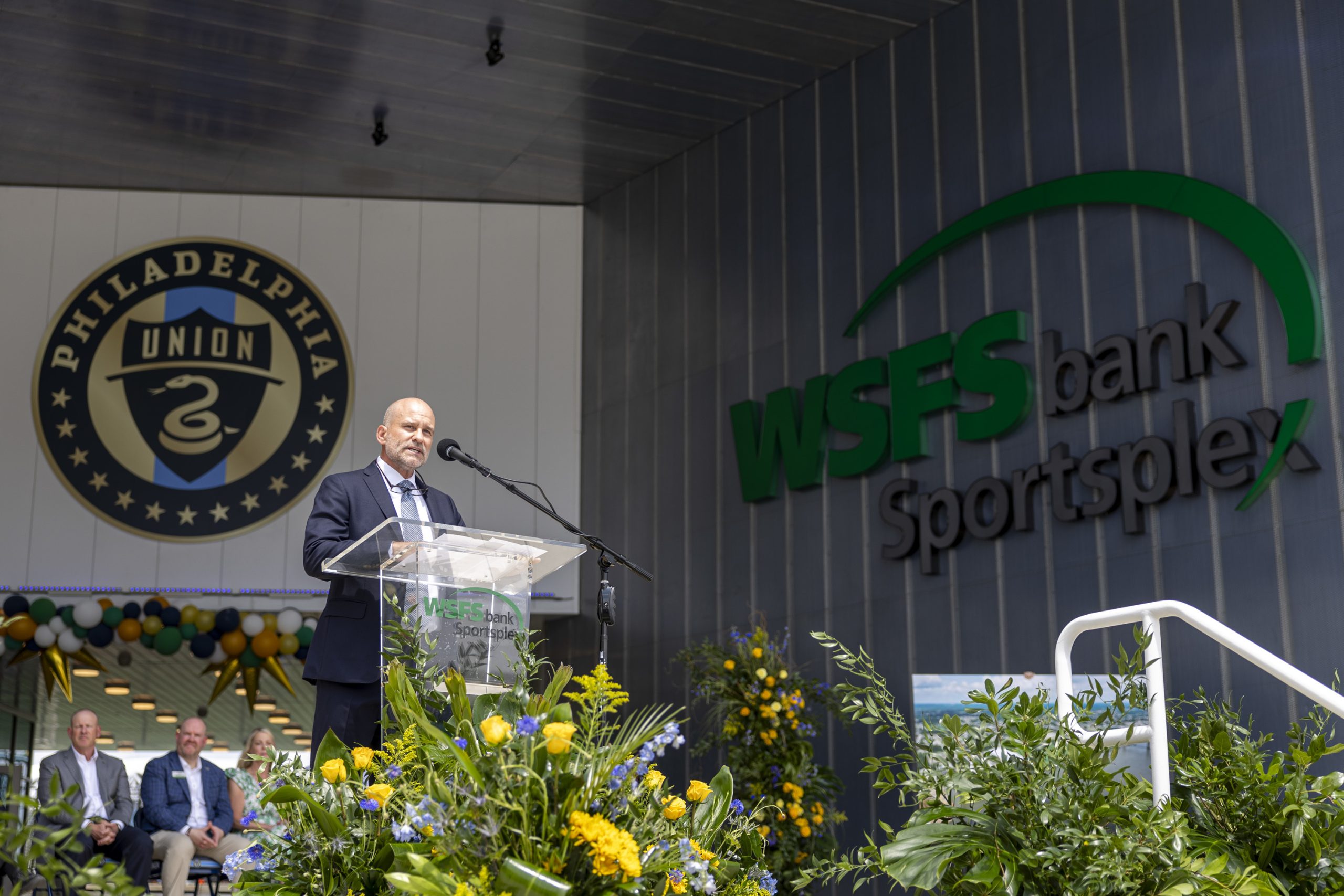
Tim McDermott spearheaded the launch of the WSFS Bank Sportsplex in Chester, a 170,000-square-foot indoor facility complete with a series of outdoor fields, which opened last July. Tyger Williams / Staff Photographer
It’s a wide-ranging analysis, and it comes in two tiers. On one hand, you have devout ticket-paying supporters of the club, who contend that the Union doesn’t spend enough, that they rely on youth over experienced, world-renowned talent to win games.
Some say that among a hodgepodge of players, where is the one that you can build a team around? They’ll point to teams like defending champions Inter Miami, whose budget and star power dwarfs that of the Union.
Or Los Angeles FC, or Orlando City, or Vancouver, or…
McDermott will stop you right there. While he admits that those teams have readily found success with bringing in European stars to build a roster around, their model is very different. McDermott told The Inquirer that an annual investment of $10 million is spent on developing within the Union’s academy system, fostering the growth in everything from its school, YSC Academy, to coaching staffs, to maintaining the sprawling WSFS SportsPlex, basecamp for the Union’s youth movement.
“If you look at the entirety of how we do things, it does rely heavily on youth development,” said McDermott. “We’ve been very good at that, and we’ve been recognized as being the best at that.
“If you look at our [first team] payroll, we’re toward the bottom, and that’s what I think people get upset about, and it’s a fair statement. But what I would say is there’s lots of ways to bring players in, right? You can go free agency, you can go to transfers, you can transfer in the market, or you can bring people in from the league, outside the league, etc. There’s lots of different ways to do it. And we’ve chosen many of those methods, but we’ve [also] chosen heavily in youth development.”
But that’s the other issue. Retention of those young players. Over the last few years, the Union has brokered many of those it groomed within its system for substantial transfer fees to and from other clubs.
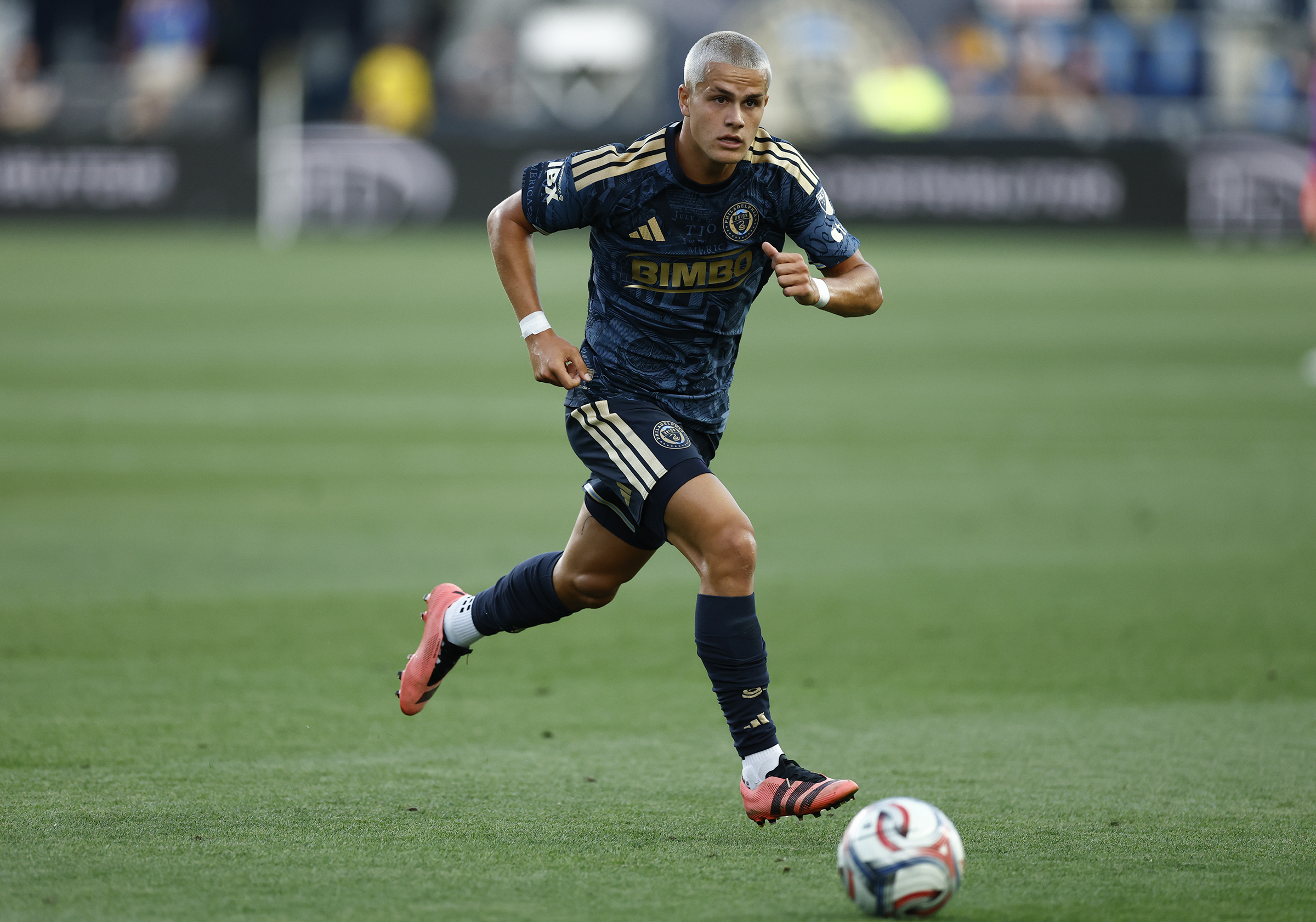
Perhaps its biggest young star at the moment, midfielder Cavan Sullivan, is set to move to Manchester City upon turning 18, and U.S. men’s national team standouts like Brendan Aaronson, Mark McKenzie, and Matt Freese were all shipped elsewhere. All of this has prompted the Union to be labeled as a “selling club” by many who say that comes first and that the franchise and ownership are content with just getting into the postseason but not doing anything more to lift a trophy.
Union midfielder Cavan Sullivan, a rising American star who hailed from the Union’s youth academy, is set to head to Manchester City as part of a $5 million transfer fee to the English club. Yong Kim / Staff Photographer
“I totally agree. I don’t think they’re wrong; I don’t think they’re wrong at all, but I think that’s more of a big picture problem that’s out of our immediate control,” McDermott said. “I want this not just for the Philadelphia Union, but for the MLS to grow. There needs to be a point in time where the players that are coming through our youth academies are starting to say, ‘No, I don’t want to leave. I want to do it here in my hometown.
“I think it has to also be on the players themselves [who] are not always looking overseas. We’re developing players, and we’re transacting in MLS, but keeping them in the lab right here is what’s going to elevate MLS to a higher profile.”
‘Our goal is to win’
As McDermott tells it, new sporting director Jon Scheer has been “working the phones heavily.” He says the club knows it needs to bring in new players, and added that there’s a board with “bigger name players” that they’re “actively working” to bring in. However, he contends it has to be a player that fits the club’s current methodology, a high-pressing team that will attack opponents from the outside, and frustrate defenders with dizzying diagonal runs wherever space allows.
The World Cup has offered a great look into some potential names, but at the time of this report, it seemed like it was only a discussion.
“I’ll just tell you right now, we’ve fielded calls for potential players over the last two weeks,” said McDermott. “We have a weekly call with ownership, myself, and Jon Scheer, and these names come up. But the question is always what does that do for our team?
“On the other side, we field calls about our own players and we may or may not transact on a player because we want to make sure that our focus is winning, right? What’s the point of the transaction if it’s going to make us less competitive? Maybe now’s not the time to do it. But you’re always balancing that.
“If somebody makes you an offer, you don’t know if that offer will be there a year from now, right? So you’re always trying to balance that. Our focus is we must win. The goal is not just to develop players to sell them. Our goal is to win.”
Bringing back players like Union left back Kai Wagner (27) cements that the team is looking to align itself with players that want to play in Philadelphia. Isaiah Vazquez / For The Inquirer
A place in Philly
McDermott inherited a hurdle when he joined the Union in 2016. How do you maintain relevancy as Philadelphia’s Major League Soccer representative from 18 miles away in Chester?
He knows that while the team’s marketing efforts aim to keep a grip on the collective consciousness of a city, as it’s stood since its inception, the Union’s success of filling up a stadium each game day heavily relies on people getting in their vehicles and navigating the I-95 corridor. But there begs a question. How many more fans could the club have with a stadium or a facility in Philly proper, situated somewhere fans can access the team by SEPTA, their bike, or even walk?
When asked the question, McDermott noted that the Union isn’t unique in being the only MLS franchise with a stadium outside city limits, and he’s right. Several clubs represent cities with stadiums outside their city limits, but many have begun to realize that there’s a real need to inhabit the city that emblazons your crest.
One of the more recent examples is the Chicago Fire, which last year announced plans for a $750 million, 22,000-seat stadium to be constructed downtown, financed entirely by team ownership.
It’s the type of move that inherently brings interest, and aligns the team more with being a part of the city. McDermott recognizes that too, and didn’t disagree that there is a connection lost by way of the Union’s footprint in Chester. However, in the same breath, he acknowledges just how good Chester has been for the growth of the club.
For the last 16 years, the Union have enjoyed an immense amount of success at Subaru Park, which opened as PPL Park in 2010. Philadelphia Union
But, according to McDermott, that doesn’t mean that the Union isn’t “actively studying” how to replicate what Chicago did.
“We have a great relationship with Delaware County and with Chester; that’s been phenomenal, and they’re incredible supporters of ours,” McDermott said. “But I would say at a more macro level, if you look at all of the teams that have come into the MLS in the last decade, where are they located? A lot of them, not all, but a lot of them are in a downtown location. That fact is not lost on us. I think it’s fair to say we’re proactively studying is that something we need to look at in the future? And is our future in an environment that looks like that?”
The exterior of WSFS bank Sportsplex in Chester.Alejandro A. Alvarez / Staff Photographer
As it stands, the Union sits on infrastructure, to the tune of over $300 million, when you consider the cost to build the stadium in 2010 for a reported $122 million, the newly designed WSFS SportsPlex, which came in at a $100 million price tag just last year, in addition to its annex for the first team, offices, and school in the adjacent Wharf Building.
“We are very comfortable where we are right now,” McDermott said. “It’s been a fantastic relationship. I think we’ve done a lot in terms of the development that we’ve done in Chester. But thinking about what a move downtown or some other place [within the city] would look like, I think it’s fair to say we have to be aware of it, studying it and being thoughtful to see if our future would be brighter if we were in a situation like that. So, I can say that yes, we’re actively studying that process and what that would look like.”
‘Still have our homework to do’
Perhaps the portion of the sitdown with McDermott where his eyes lit up was the notion that growth and expansion of the club comes from getting people out to matches. It’s a fair point, considering the Union’s gameday experience has been repeatedly lauded as one of the best in MLS, winning a J.D. Power Award for best fan experience just a year after McDermott joined the club in 2017.
Amanda Young Curtis, the club’s vice president of communications, told the Inquirer that fans who attend just three matches are significantly more likely to lock in as season ticket holders.
She said that it comes down to a few facets beyond just increasing brand awareness, but it’s everything from capturing new fan data to wooing potential first-time attendees with discounted tickets to, and perhaps most importantly, “converting attendees into repeat visitors.”
The Sons of Ben have been a devout supporters group for the club. To McDermott, a goal of ushering in more fans to the Union brand has to be the ultimate goal. Isaiah Vazquez / For The Inquirer
McDermott agreed, and added:
“We need to make sure that not only do they come and have a good time, but we’re actively always thinking about how do we get them back two more times. The likelihood of locking them in jumps pretty significantly. It’s why we’ve initiated this whole concept around trial and retention, and I believe that the momentum from the World Cup offers a major strategic opportunity for us to do that.”
But an area where McDermott says the Union still has their work cut out for them is cultivating stronger partnerships with youth clubs from an awareness standpoint so young players and their parents gravitate to the Union as supporters.
And for the youth coaches clutching pearls thinking that the Union is trying to woo a player away from their club, McDermott says it’s not about that. In fact, this notion transcends recruiting. Kind of…
“I think there’s two parts,” McDermott said. “There is the fan development part, and there’s the kind of talent identification part, and they somewhat link together. I’ll go back again to when my kids were 6, 7, 8 years old, and I was on the sideline of my daughter’s games. I looked down the sideline, and I saw all these parents wearing Eagles green.
Union president Tim McDermott contends that while the team has celebrated an immense amount of success, more is yet to come through the planning being done behind the scenes. Isaiah Vazquez / For The Inquirer
“I know we’ll be successful when I look down the sideline at a kid’s game and they are wearing blue and gold. I had many different instances like that where I felt like parents and the kids that were in the youth soccer ecosystem weren’t necessarily matriculating to being a Philadelphia Union fan, and we still have our homework to do to change that.”
McDermott knows the Union has work to do across the board from a grassroots perspective on up. In the immediate, righting the ship in an forgiving league like MLS is the goal, and the club is off to a strong start coming out of the World Cup break, winning two consecutive matches for the first time this season following wins against Red Bull New York and an impressive Saturday win over Seattle, two teams that if the season ended today would be playoff-bound.
It’s a great start in the eyes of a guy like McDermott, who contends his approach has always been to win. And listening to him speak now, it appears that talks are happening between ownership and team leadership about doing so — at all costs.
“As president, my job is solely focused on how can we win, across the board,” McDermott said. “I want to win; everyone in this organization wants that, but the culture is always and has to be first and foremost. You gotta have guys that want to play for each other, that believe in the system, that care for each other, that love one another and that are good quality character people.
“I think on the whole, we’ve really been doing a great job with that over the years. I’m not just talking about where we’re at today, but I’m talking about the last six, seven, eight years; we’ve been building towards having success, and we’ve had success. We’ve won a lot over the last five, six years, so our design works. I think [this reset] provides a real look at what we need to do to get back to that, and in the conversations we’re collectively having daily, I have no doubt that we’ll get there. None.”
Purchase the front page reprint of The Philadelphia Inquirer from Saturday, July 25, 2026, featuring LeBron James following the news that he was joining the 76ers.
The anger over the U.S. men’s soccer team’s ugly exit from the World Cup is starting to turn to the next stage of grief: looking forward to a new era of players.
No one needs to tell Cavan Sullivan that he’s on many observers’ prospect lists. He already knows. And the 16-year-old got a taste of what could come for him in four years when he attended the U.S.-Belgium game with the big-time agency that represents him, The Team (formerly called Wasserman).
“It was my first USA game,” he said. “It was an amazing experience — Seattle’s a great soccer city. Just listening to the anthem and hearing 70,000 people singing, it was just truly sick to see, and I can’t wait to be there one day.”
But the point stands: Sullivan will be 20 by then, starting to enter the prime of his career, and, the hope is, progressing at his future club home, the English Premier League’s Manchester City. If he plays well with the Union and U.S. national teams, the hype around him will continue to grow.
Cavan Sullivan has played 772 minutes over 17 games for the Union this year in all competitions.Elizabeth Robertson / Staff Photographer
“I do feel supported by the U.S. fan base, and it is really cool to see,” he said. “I love this country. I love representing it. … But I’m not too focused on what critics or other people have to say, whether it’s good or bad. I’ve said that for a while now: I’m just focused on myself and getting better.”
There won’t be a lack of opportunities. Over the year and a half Sullivan has left in Chester, there will be an under-17 World Cup, an under-20 World Cup, and the start of the under-23 team’s preparations for the 2028 Olympics in Los Angeles.
Perhaps there could even be an invitation to the senior team’s Concacaf Gold Cup squad next year if the manager in charge decides to take young prospects.
Right now, though, none of that is on his mind.
“I’m just focused on my stuff here with the club and any youth national team call-ups I get,” he said. “Everything’s an opportunity to show what I can do, and I’m looking to show the world what I can do this next part of the season and with whatever’s thrown my way.”
Cavan Sullivan played for the U.S. at last year’s Under-17 World Cup.Chris Ricco
The Union’s season resumes July 22 with a home game against Red Bull New York, which has own much-touted young Americans in forward Julian Hall and midfielder Adri Mehmeti. (Sullivan is close friends with Hall and said he sent a text message joking that “I’m going to kick him the first chance I get.”)
By then, it will have been 59 days since their last official contest on May 24. Players who weren’t going to the World Cup got around two weeks off, then returned to Chester on June 16 to resume training.
Sullivan spent some of the time with his family at their Shore place in Sea Isle City and training with his father Brendan, a teacher at the Union’s high school and former pro player, up the road in Ocean City. He also spent plenty of time in Chester, including an appearance with the Union’s reserve squad in a friendly game against Ivory Coast when Les Éléphants were in town for the World Cup.
“I was just trying to stay fit because I know that this second half of the season will provide a lot of opportunity,” he told The Inquirer. “And possibly some great moments. Because I do feel confident we can turn this season around. … And it’s great to be back, with a new coach, and see the guys again.”
Cavan Sullivan (left) in action during Union II’s exhibition game against Ivory Coast last month.Philadelphia Union
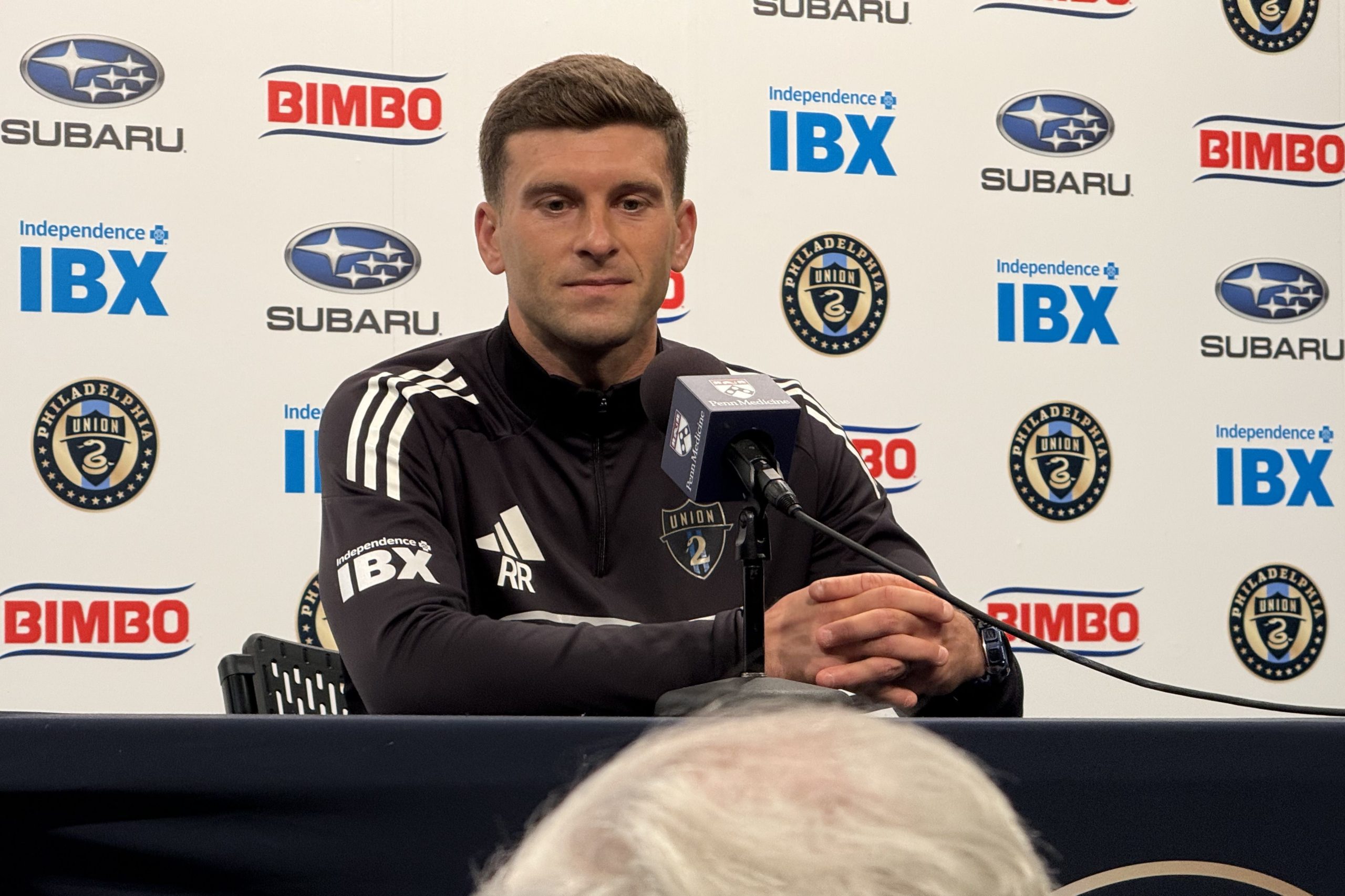
Indeed, three days after the World Cup break began, the Union fired manager Bradley Carnell and promoted reserve team coach Ryan Richter to the top spot as an interim. While it remains to be seen whether Richter can steer a team with the league’s worst record (1-10-4, 7 points) to this year’s playoffs, he assuredly has a close bond with Sullivan. That should translate into a robust amount of playing time.
“Obviously, I’m really familiar with Richter and [assistants] Henry [Apaloo] and Fred,” he said. “Not just from my work with the second team, but also Ryan since I was like 9 years old. We have a great relationship, so it’s exciting, man. New beginnings.”
While waiting for the season to resume, the Union have played closed-door scrimmages in Chester vs. Houston and New England and on the road at New York City FC. There will be one more closed scrimmage next week against D.C. United at the University of Maryland.
From all accounts, Sullivan has played well in all the contests.
One thing is for certain, Cavan Sullivan is getting his chances, playing with a ton of confidence, and is a spark for the Union.
Here are some clips from the 60'-65'ish minutes today… he gets a couple quality shots, including a fantastic volley that goes on target (4th clip),… pic.twitter.com/UXmbUkRRZF
“He’s been great in the three games: he’s affecting the games and being decisive in the games,” Richter said. “You saw flashes of it in the beginning of the season, and then the last couple games, he definitely came on really strong before the break. He needs to take that step now, where it’s not just things that look good, but it’s being decisive, and he’s done that in every game so far.”
Though it can be hard to draw too many judgments on the team, given all the substitutions, there does seem to be an uptick in players’ spirits.
“We’ve got a new energy to us and a new style, and we’re moving the ball a lot, and we’re keeping that same identity in terms of defensive press and the aggressiveness,” he said. “But we’re moving the ball a lot, and seems like we’re doing well and getting chances from it. So just looking to keep that up and be dangerous in the season.”
As bad as the record is, MLS is eternally forgiving. Nine of each conference’s 15 teams make the playoffs, and the 11-point gap to ninth-place D.C. United can be closed in the 19 league games that remain. Sullivan was emphatic when asked if he believes this team can do so.
“Yeah,” he said. “I mean, we’re a playoff team, so we’ve got to act like it, and we’ve got to get there.”
The Union wanted to host a closed-door friendly against the New England Revolution at Subaru Park on Thursday morning to help prepare for MLS’s return after a six-week break for the FIFA World Cup.
Mother Nature had other plans.
After lightning extended the exhibition’s halftime break, the game entered a second delay in the 66th minute after a loud clap of thunder sent the players off the pitch. The match, which was initially planned as a 120-minute exhibition, was relocated and finished with a 45-minute half inside the WSFS Sportsplex.
New England won the disjointed friendly, 3-2. Milan Iloski and Ezekiel Alladoh scored for the Union.
Despite the interruptions, the friendly gave an early glimpse of what the Union may look like under interim manager Ryan Richter, who took over after the Bradley Carnell’s dismissal in May.
Here’s three things we learned from the Union’s exhibition against New England:
Union uniformity
Those expecting the dismissal of Carnell to change the Union’s identity will be disappointed.
Richter has kept the Union’s structure and shape the same through the club’s World Cup break.
The Union came out for Thursday’s friendly in their usual shape, with four backs, two defensive midfielders playing centrally, two attacking midfielders stretching wider, and two strikers atop the formation.
Interim manager Ryan Richter kept the Union’s shape the same during Thursday’s friendly.Jonathan Tannenwald / Staff
The club’s shape stayed consistent through both portions of the outdoor friendly. The Union trotted out an entirely different lineup of players after the second delay moved the friendly indoors, but the shape stayed the same.
The Union pressed New England in their own defensive third, as they have done to all of their MLS opponents this season. Richter is well-versed in the way the Union want to play. The Warminster, Bucks County, native, who played college soccer at La Salle, has been on the Union coaching staff since 2018 and spent last season as the head coach of Union II.
Players in place
The personnel on the field looked a bit different during the friendly. Olwethu Makhanya and Danley Jean Jacques, still recovering from World Cup runs with South Africa and Haiti, respectively, did not play.
Andre Blake started in goal, and Nathan Harriel and Frankie Westfield took their usual spots at outside back. Japhet Sery Larsen played in central defense alongside Neil Pierre, the 18-year-old center back currently on loan at Lyngby, a Danish club the Union own a minority share of.
“He can clearly hang with the physicality,” Richter said of Pierre. “He’s improved so much in the way he’s reading the game and his decision making. … There’s no reason why he can’t compete at this level.”
Indiana Vassilev and Jesús Bueno made up the defensive midfield, Ben Bender and Cavan Sullivan started in attacking midfield, and Bruno Damiani and Iloski made up the starting striking partnership.
The lineup remained unchanged after the lengthy lightning delay at halftime. Richter made a pair of changes in the 65th, bringing in Alladoh for Damiani and Jovan Lukić for Bender, shortly before the second lightning delay.
Ezekiel Alladoh, shown in May, scored the Union’s second goal on Thursday when the friendly moved indoors.Philadelphia Union
The Union made mass substitutions after the friendly moved indoors. Geiner Martinez, Philippe Ndinga, Finn Sundstrom and Agustín Anello, among some Union II players, were brought into the lineup for the indoor portion of the match.
Alladoh scored the Union’s second goal once the match moved indoors. Ndinga made a run into the right side of the 18-yard box before playing the ball across the face of goal to Anello, who set it for Alladoh. The 20-year-old Alladoh laced a shot from close range that beat New England’s keeper.
The Union got a chance to see their depth in a competitive environment, which may prove important as the club restarts its match schedule. After two MLS matches in July, the Union will play eight matches in August as they start the Leagues Cup, a competition between MLS and Liga MX.
“You can train well, but you can’t hide once the game actually starts,” Richter said. “You see exactly how guys fit in, what they’re capable of, what their role could possibly be.”
Sullivan starts
Sullivan played well in the friendly, creating the Union’s first goal with a run down the right flank and a cross into the box for Iloski, who headed the ball in.
Sullivan created a few other chances that didn’t end up in the back of the net and put a free kick from the edge of the 18-yard box on frame. He was brought off the pitch after the friendly moved inside.
Sullivan, 16, made nine starts across all competitions during the first half of the Union’s season, including five of the last six matches before the World Cup break. He scored twice in the Concacaf Champions Cup and scored his first MLS goal against Orlando City in May.
It is yet to be seen if Sullivan, set to depart the Union for English Premier League side Manchester City at the end of 2027, will start to play a bigger role for the Union as they close out the 2026 season.
The Union will return to MLS play on July 22 when they host the New York Red Bulls (7:30 p.m., Apple TV+).
Cavan Sullivan slammed his book bag down and told the teacher that he had had enough of those boring, dull readings.
Animal Farm? The House on Mango Street? No, not those.
It was the passages Mark Franek assigned four years ago to the class of ninth-grade soccer phenoms about the sport’s history in America that made Sullivan irate. They weren’t just uninteresting. They were negative.
“You can just take a look at the books and the titles of them,” said Franek, who teaches at YSC Academy, the soccer-specific high school that funnels students to the Union. “One is Why the U.S. will never win a World Cup. Who wants to read that? Let alone, Cavan Sullivan.”
Franek, 57, taught at Penn Charter in the 1990s before becoming a lawyer and then returning to the classroom in 2022 to teach at YSC, the high school for elite boys’ soccer players that produces World Cup players and sits across the parking lot from the Union stadium in Chester.
The school moved from Wayne to Chester in 2023, taking over space in an old power station on the banks of the Delaware River. It is an incubator of soccer talent, and three players on the U.S. World Cup squad — Mark McKenzie, Auston Trusty, and Brenden Aaronson — graduated from YSC.
Sullivan, a 16-year-old who already plays for the Union and has a deal to play for Manchester City in the English Premier League when he turns 18, graduated last month. He might be the future of American soccer. First, Sullivan had to learn the history of American soccer. And it was Franek’s job to make that subject more engaging.
“If you think about where someone is in their formative years and this really critical point of development in mid-adolescence and learning about themselves and the world and the soccer world,” said Jared Micklos, YSC’s Chief Strategy Officer. “Then understanding what comes before them is also this optimistic way to give them hope and confidence and belief that they might be able to write the literal next chapter is something you need to reinforce and you need to inspire.”
The Union’s Cavan Sullivan wrote the foreword for the book written by his former teacher, Mark Franek.Elizabeth Robertson / Staff Photographer
Back to school
Franek grew up in York and played soccer at Duke University before starting his teaching career in Montgomery, Ala. He wanted to teach American Literature and coach varsity soccer. An Alabama high school, Franek said, was the only place that would let him. He moved four years later to Penn Charter, where he coached Chris Albright and Bobby Convey — teammates on the 2006 U.S. World Cup team — and taught Matt Ryan.
Franek left Penn Charter in 2007 and enrolled at Temple’s Law School after realizing there was money in litigation. He used to charge his neighbor $20 to mow his grass while his wife — a lawyer — made much more for providing a few hours of legal aid for the neighbor’s painting business.
He landed a job with a big firm, enjoyed the money, but hated the hours. Franek was in his early 40s when he passed the bar, but he was working like someone in their 20s. He worked almost every weekend and could see he would soon be missing his son’s soccer games. Something had to give.
He went to YSC to meet Brendan Sullivan shortly after Quinn Sullivan — Cavan’s older brother — signed with the Union in 2022. Franek wanted Sullivan to autograph a jersey for his son. And there he saw Nooha Ahmed-Lee, the former administrator from Penn Charter and current YSC Head of School.
“An hour later, I realized she was actually vetting me and trying to figure out if I was happy being a lawyer,” Franek said. “I talked to my wife and said, ‘I’m going to call Nooha and say if you’re serious about an English position, then I’m serious about getting out of the law and back into teaching.’ It was the right time for me.”
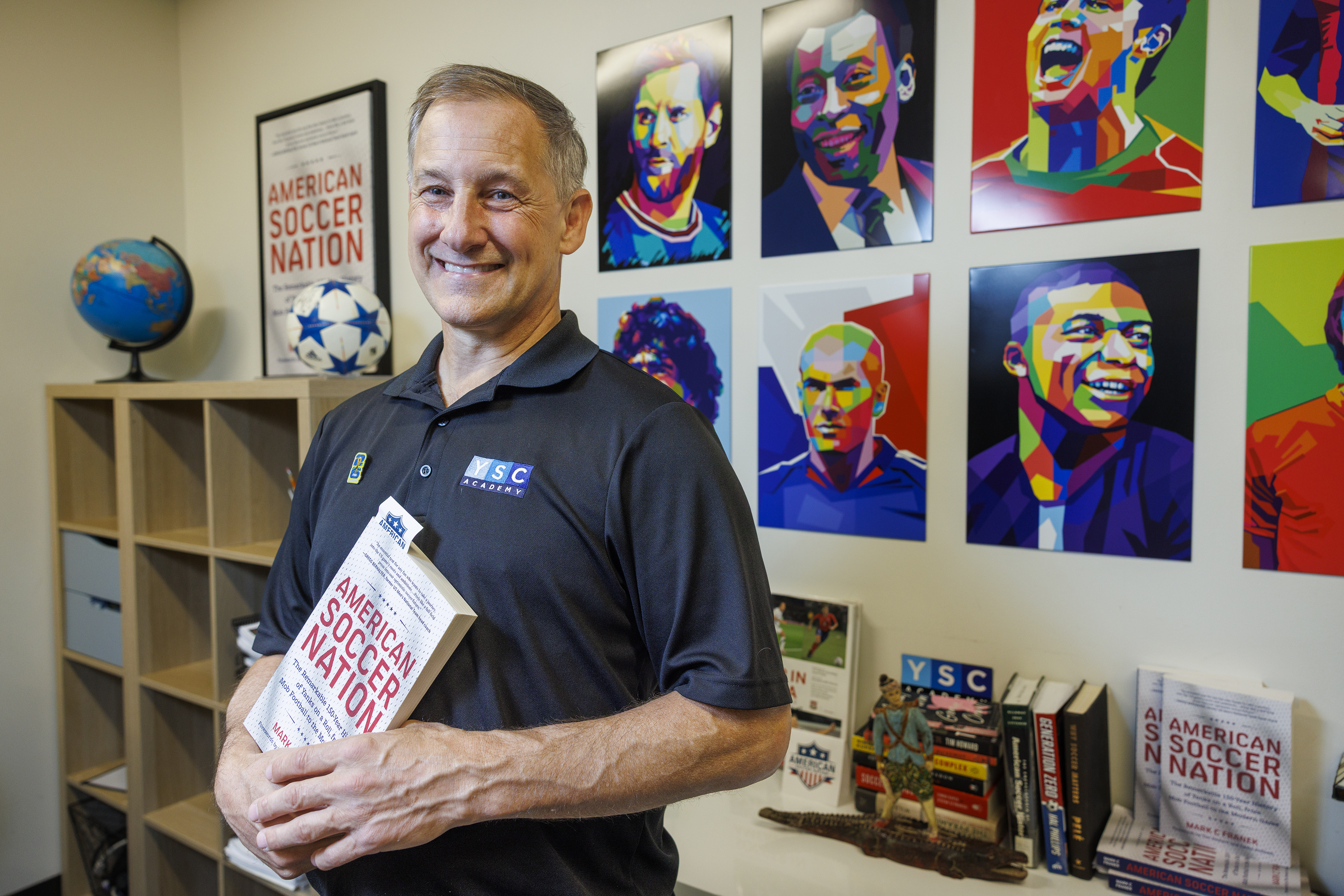
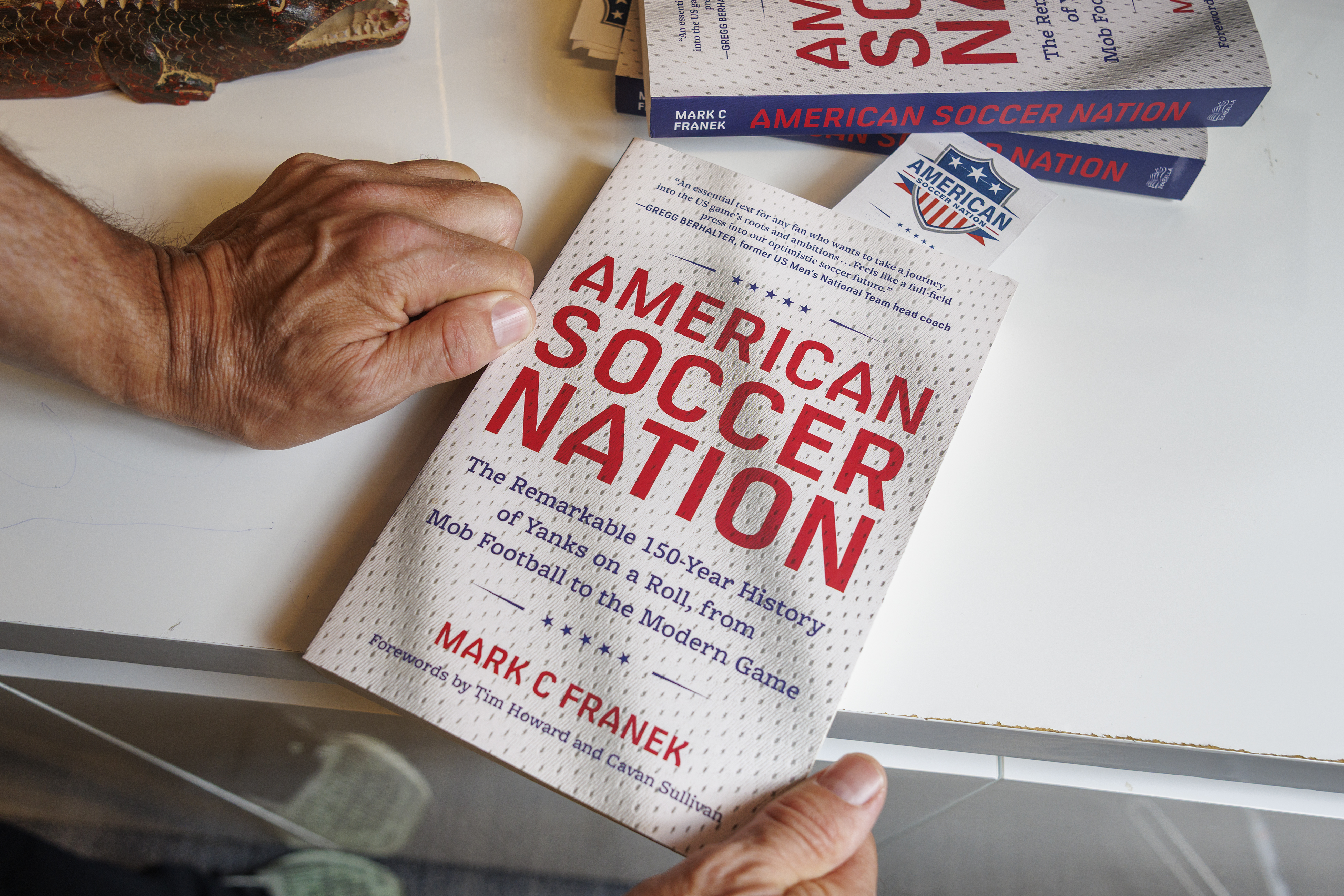
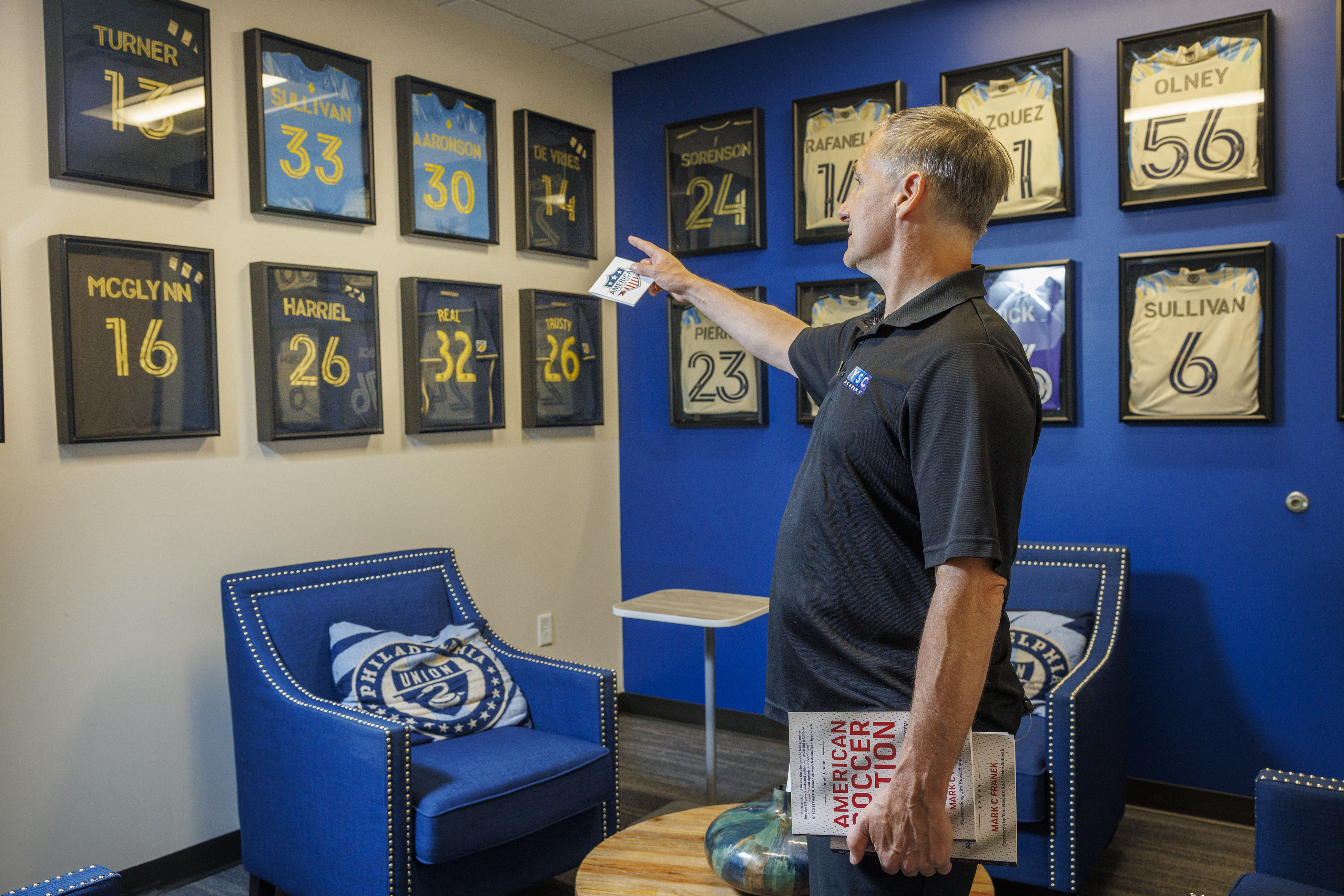
Mark Franek shows his book, “American Soccer Nation: The Remarkable 150-Year History of Yanks on a Roll, from Mob Football to the Modern Game.”Alejandro A. Alvarez / Staff Photographer
Writing the book
Ahmed-Lee heard about Sullivan’s reaction to those readings and challenged Franek to design a course about the history of American soccer that he could weave into his English class. Franek accepted. He tracked down every book he could find about U.S. soccer, combed through internet articles, and learned everything he could.
But Franek failed to find something that covered the whole story. So Franek wrote his own: a nearly 300-page book that was published earlier this year titled American Soccer Nation. It is a thorough history of American soccer that tries to deliver the story with optimism. It’s something Sullivan would want to read. He even wrote the foreword.
“It’s incredibly rewarding to see an idea that began in our classrooms grow into a resource that is now helping students and soccer enthusiasts better understand the game,” Ahmed-Lee said.
Franek uses the book in class at YSC as he assigns a chapter every week. The kids who dream of playing professionally learn about the pro league that rivaled baseball in the 1920s and the one that recruited Pele in the 1970s. Yes, there was pro soccer before the MLS. And Franek’s book does not ignore the mistakes that plagued those early leagues or the challenges the MLS faces today.
“I have the best job in the world,” Franek said. “I get to teach young men in small classes who are living the dream. They’re grinding in the pitch and the classroom, trying to get better, and they have little tolerance for busy work or boring work or work that won’t help them get better whether it’s on the pitch or in the classroom.”
The final chapter of Franek’s book details YSC and why he believes that “total immersion” is soccer’s path to success in America. The Union paired their soccer academy with a high school that is centered around soccer.
Mark Franek shown in the “jersey room” at YSC Academy in Chester. Alejandro A. Alvarez / Staff Photographer
“Imagine what the United States could do on the international level if one-third or one-half of the 30 MLS teams were able to build an academy and then surround that soccer environment with a learning environment that works for their setting and their community where you’re supercharging the dream and helping the kids along to the college dream,” Franek said. “The Union have shown without a doubt that it works.”
YSC says 86% of its students graduate from college and 68 have signed professional soccer contracts since the school opened in 2013. The academics are not secondary at YSC but everyone understands the importance of soccer. The day starts later so students can train in the morning. Coaches and teachers work together to not overload a student’s schedule.
“We have to remind everyone that their ultimate drive and purpose is to be great at soccer,” Micklos said. “Whether that means they’re a pro directly when they leave our doors and walk off the stage or they go to college and become a pro or it means they go to college, play soccer, and that’s the end of their soccer career, but the journey has prepared them for life and a career off the field.
“The thing that drives them and their passion and the reason for the school is to help stimulate that growth and help them on that journey. It’s a hard journey for a young person to have the demands they have. If those things aren’t designed around their schedule then we’re actually doing them a disservice in their day-to-day life by creating a bigger challenge or hurdle than they need vs. saying, ‘Hey, we incorporate everything you need on the soccer field and then integrate that into what we’re doing at the school because an aligned and integrated environment is going to be the one that helps you best prepare.”
Even the food is fit for budding pro athletes.
“I remember two weeks into school and Cavan was eating a T-bone steak in my class,” Franek said. “I’m like, this is weird. I’ve taught for 15 years at Penn Charter and I’ve never seen anyone pull out a T-bone steak with A1 Sauce and then grab House on Mango Street. You’re living with alpha males. There’s a certain energy around the building that’s palpable and it’s glorious. Cavan was great and so is pretty much everyone. They’re moving in a direction and they’re super-focused.”
Franek had Sullivan and his classmates autograph a ball during their freshman year. It was a keepsake of a class that pushed him to write that book. So far, several of them have already signed pro contracts. Sullivan should soon be playing in England for one of the world’s biggest clubs, and he’ll be a contender in four years to make the U.S. World Cup roster. Perhaps he’ll even team with his older brother, who graduated from YSC in 2022. If so, Franek will have more positive stories about American soccer to share with his students. And his book will need some more chapters.