Tag: Calder Gardens

  • Drexel agrees to review funded by William Penn and other foundations to assess the future of Academy of Natural Sciences

    Drexel agrees to review funded by William Penn and other foundations to assess the future of Academy of Natural Sciences

    After an initial, non-committal response to an offer from the city’s largest foundation focused on the region, Drexel University has agreed to a review funded by the William Penn Foundation and other philanthropies for a set of studies to produce a vision for the Academy of Natural Sciences of Drexel University.

    The review establishes an advisory board yet to be named and consultants who will work for up to a year on recommendations for the future of the Academy. The goal is a “careful review of current physical and fiscal conditions, and the development of a durable financial model,” according to an announcement Friday from the William Penn Foundation, Connelly Foundation, Hamilton Family Charitable Trust, the Philadelphia Foundation, and the Knight Foundation.

    On Sept. 1, Drexel and the Academy announced the abrupt closure of the Academy’s museum with just 30 days’ notice as the Academy and Drexel boards were attempting to renegotiate the terms of a 15-year-old affiliation agreement.

    In September, before the museum closed, William Penn had offered to cover Drexel’s operating costs to keep the museum open while options for the future could be explored.

    The Academy had said it was open to the offer, but Drexel neither accepted nor declined it, saying at the time that “no proposal has been presented that would provide a permanent, sustainable path forward” for the museum.

    The Academy’s beloved museum closed to the public at the end of the day Sept. 27 after a month of record attendance.
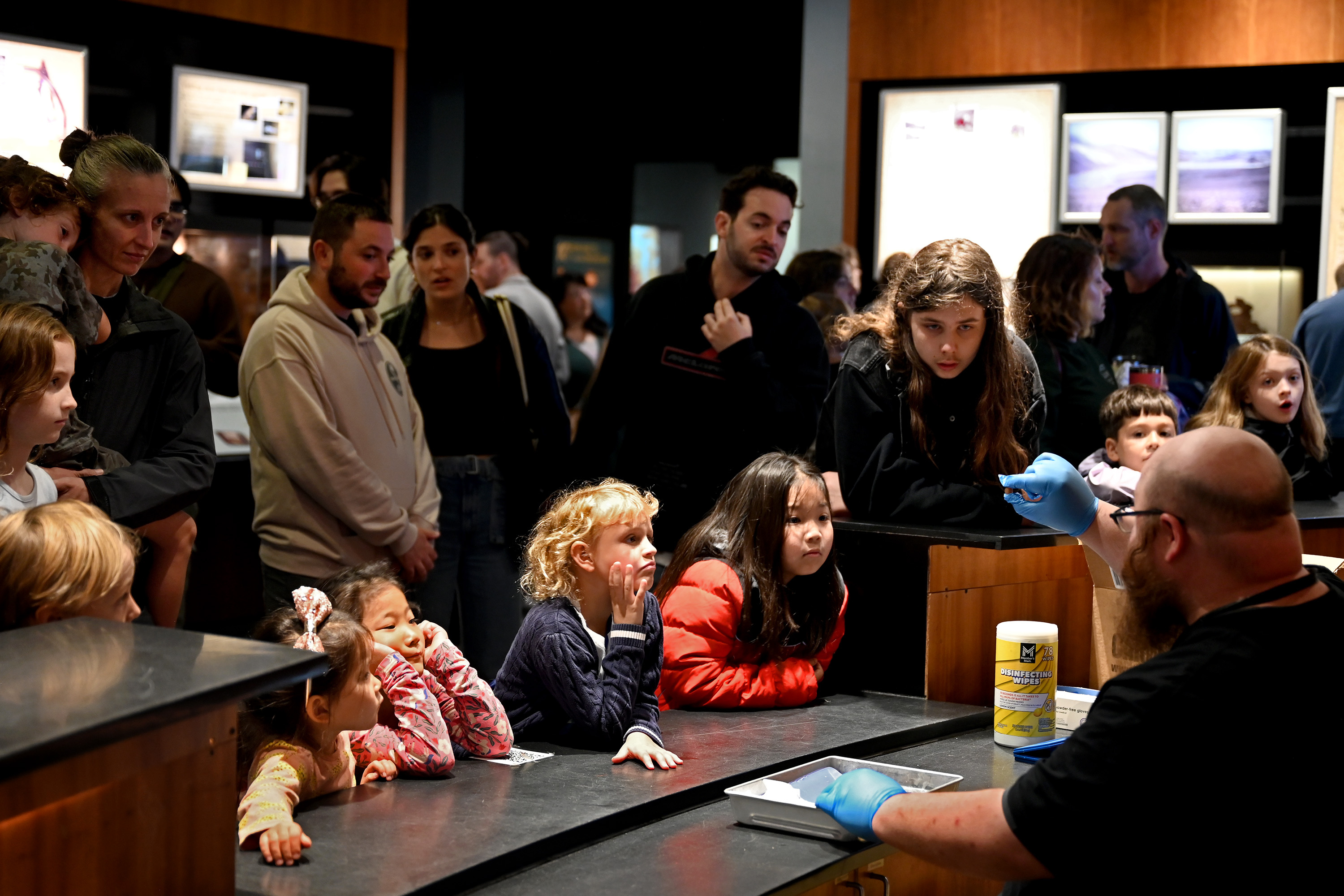
    Science educator Buddy Muhler shows visitors the eyeball of a cow during a talk at the Academy of Natural Sciences of Drexel University, Sunday, Sept. 27, 2026 – the last day the museum was open.Tom Gralish / Staff Photographer

    The arrival of a new advisory board and fresh data on the Academy’s condition and prospects aims to inject an independent, authoritative voice into a civic cause that has alarmed the arts and culture community, spurred the involvement of the governor, mayor and City Council, and left shaken thousands of parents, children, and former children with warm memories of the Academy’s nearly two-century-old museum.

    “It feels like everyone wants to know how to save the Academy, so we were driven by that energy, to try to organize a more formal process around that,” Shawn McCaney, executive director of the William Penn Foundation, said in an interview.

    Reopening museum still uncertain

    But the start of a study doesn’t mean an immediate reopening of the museum, several leaders said.

    As for the potential of a return someday, McCaney said: “I don’t want to prejudge or predetermine what comes out of this process, but we’re hopefully going to look at a full range of options. One may be that the museum stays where it is. Another option might be it’s a different location or that the museum takes a different form somewhat in some way.”
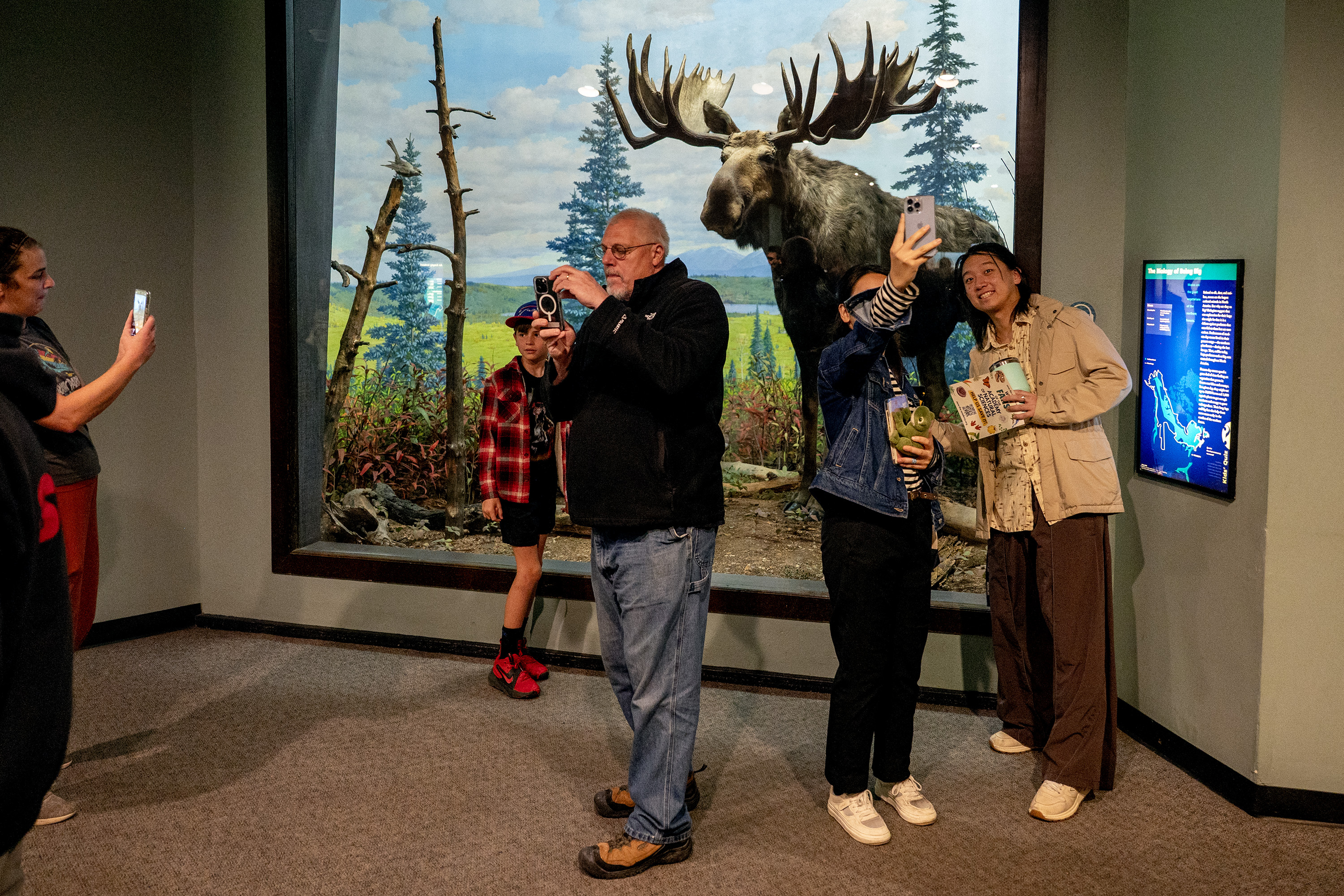
    Visitors take selfies at a North American diorama inside the Academy of Natural Sciences of Drexel University on its last day before closing at the end of September.Tom Gralish / Staff Photographer

    Academy board chairperson Suzanne Biemiller said Friday that she felt “extreme gratitude” for the foundation support and that it’s clear the “foundations share our love and respect for the institution and stepping up in this way is just a demonstration of that support.”

    She said the biggest question the studies could answer is about the building.

    “There are so many different numbers that are out there about what it would take to renovate the building, to serve the Academy into the future — understanding what is that number, what is it really, what are the possibilities?”

    Drexel president Antonio Merlo said he was happy to see such a large coalition come together to focus on the issue.

    “We have had many conversations with the William Penn Foundation, and I was so delighted to see that they were really willing to just look at the broad picture and, in fact, that they were willing to bring others to the table as well,” Merlo said in an interview Friday. “I made it very clear from day one that Drexel was ready to engage in conversations with anybody who was willing to come have a conversation about how do we provide a financially stable long-term model for the Academy of Natural Sciences in Philadelphia … It is clear that Drexel cannot solve these problems by itself.”

    “It’s all about long-term sustainability, something that is feasible, something that is financially viable and financially sustainable, and that’s what everybody’s coming to the table to address,” Merlo said.

    He said he’s looking forward to seeing the recommendations.

    Still, the recommendations of the studies are not binding.

    “Ultimately, the committee cannot force anyone to implement those decisions,” said McCaney, “but I’m hopeful that because of all the stakeholders that are going to be around the table that the support will be there to drive something forward at the end of this effort.”
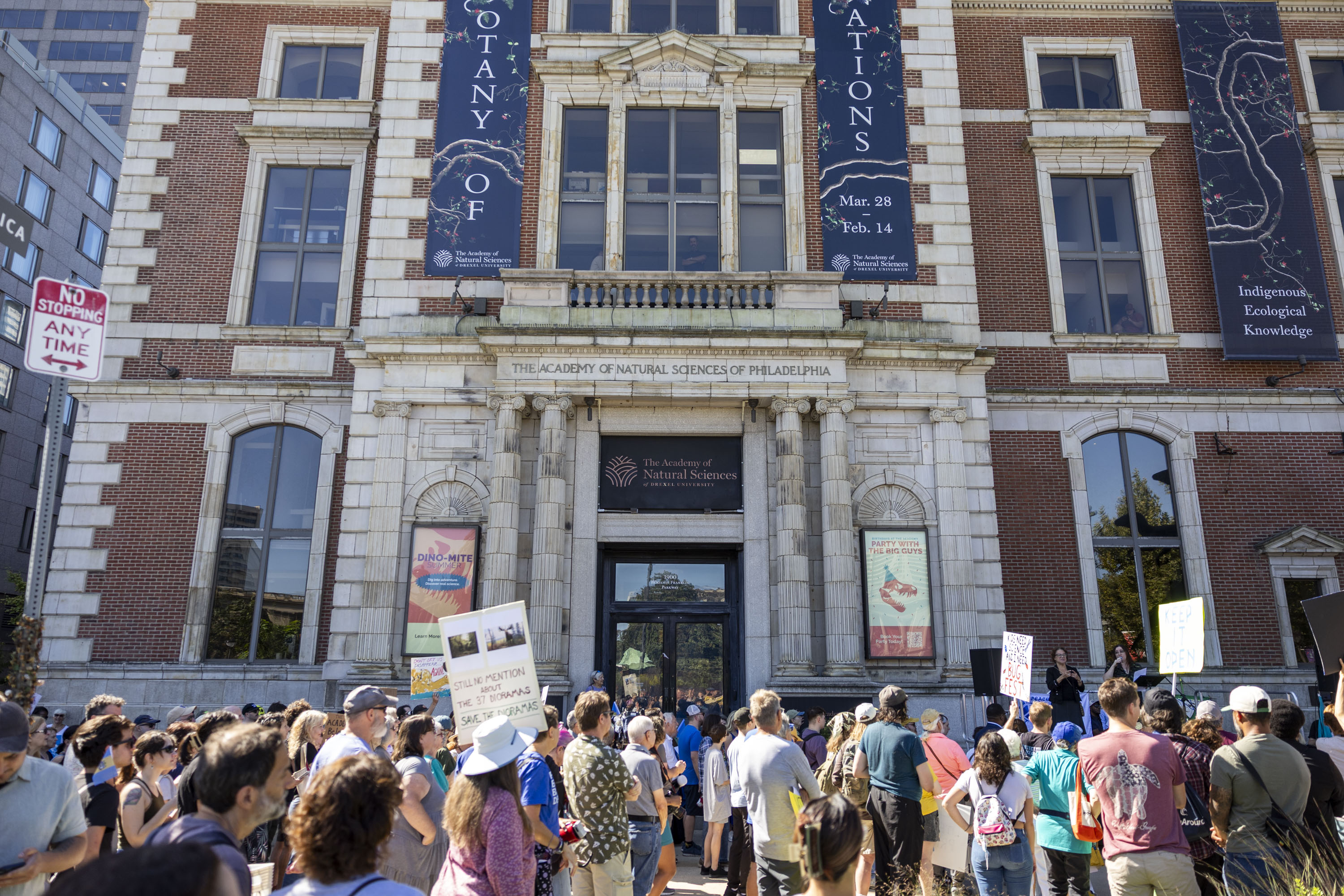
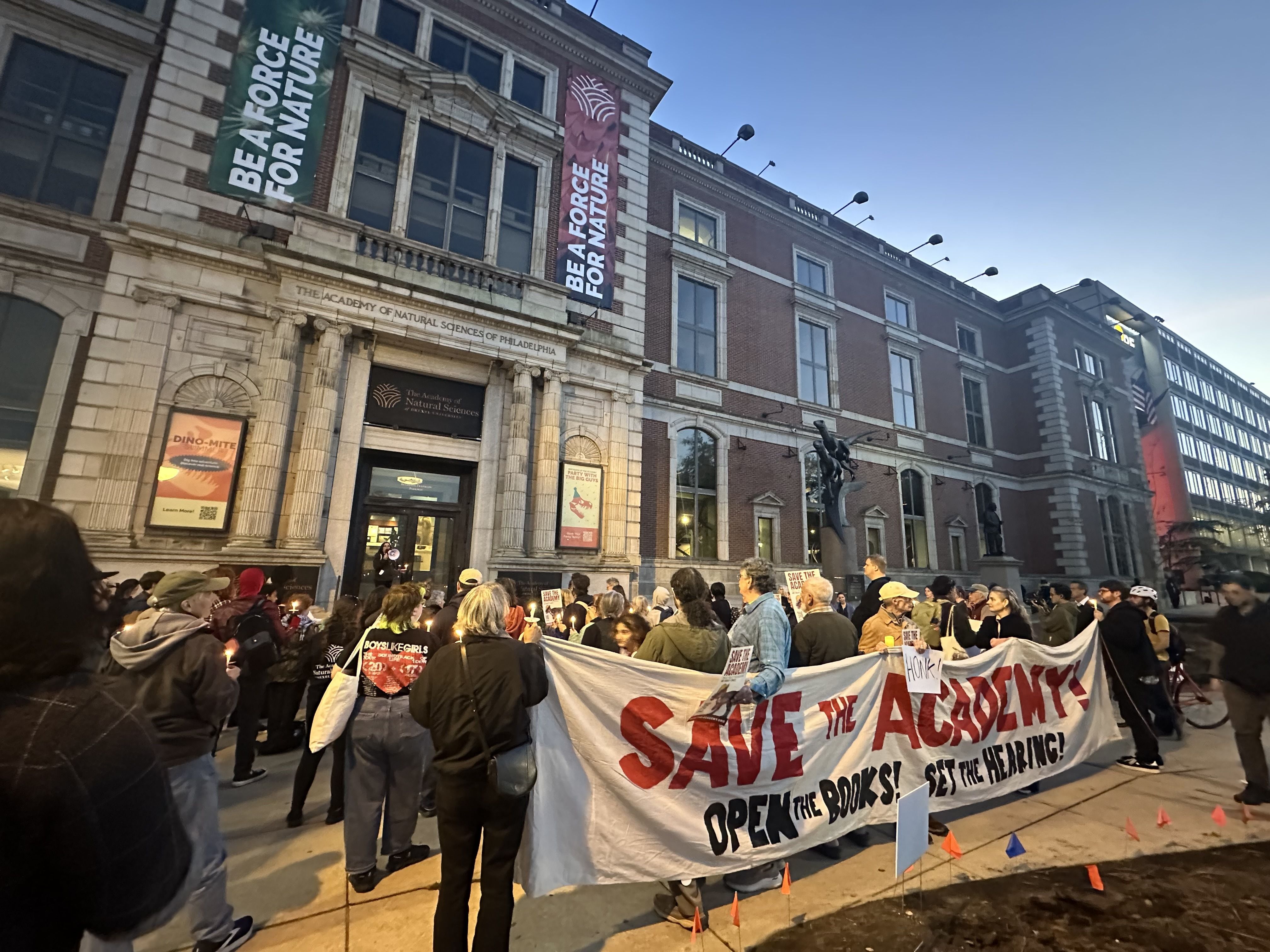
    A rally outside of the Academy of Natural Sciences of Drexel University, Sept. 8, 2026, protesting the museum’s closure.Tyger Williams / Staff Photographer

    What will the advisory board do?

    Among the aspects of the Academy expected to be examined are the condition of the building, the financial picture, and a fundraising study to gauge the level of potential philanthropic support for the future.

    “I don’t want to predetermine how this will all unfold,” said McCaney, “but we’d like to get experts in contemporary museum and exhibit design involved. What would a contemporary or more modern museum look like or public programming look like? So I expect we’ll look at all the elements of the museum. And it’s important to remember that the public museum is just part of it. There’s also a major research institution that is part of the Academy.”

    McCaney declined to say what the total expenditure might be for the studies.

    The process will be overseen by an advisory committee of “respected experts and stakeholders” representative of the public’s interest, local and state government, philanthropy, and specialists in natural history museums, collections care, scientific research, architecture, real estate, facilities, construction, museum operations, education, fundraising and communications, Friday’s announcement said.

    A smaller working group drawn from the committee will provide regular guidance, and the public will be invited to provide input during the process.

    At the end, findings and recommendations arrived at by the advisory board will be released in a public report.

    Significantly, the advisory board will include a member of the Save the Academy Coalition, the group of activists who have protested the museum’s closure and decried what they say has been a lack of transparency around plans for the Academy’s future.

    The Save the Academy Coalition said it welcomed an independent review of the Academy’s future.

    “We hope the review will identify a credible path to reopening the museum, while also ensuring the protection of its collections and sustaining the Academy’s research,” a statement read. “Philadelphians and the scientific community had little opportunity to weigh in before the museum closed. They should have a meaningful chance to shape what happens next, while options are still open.”

    Drexel-Academy talks to continue

    As for the discussions between Drexel and the Academy over their relationship, those talks are at an impasse after the topic shifted toward a complete separation of the two institutions rather than a revised affiliation agreement.

    Talks will continue on a parallel path as the studies on the Academy’s future proceed.
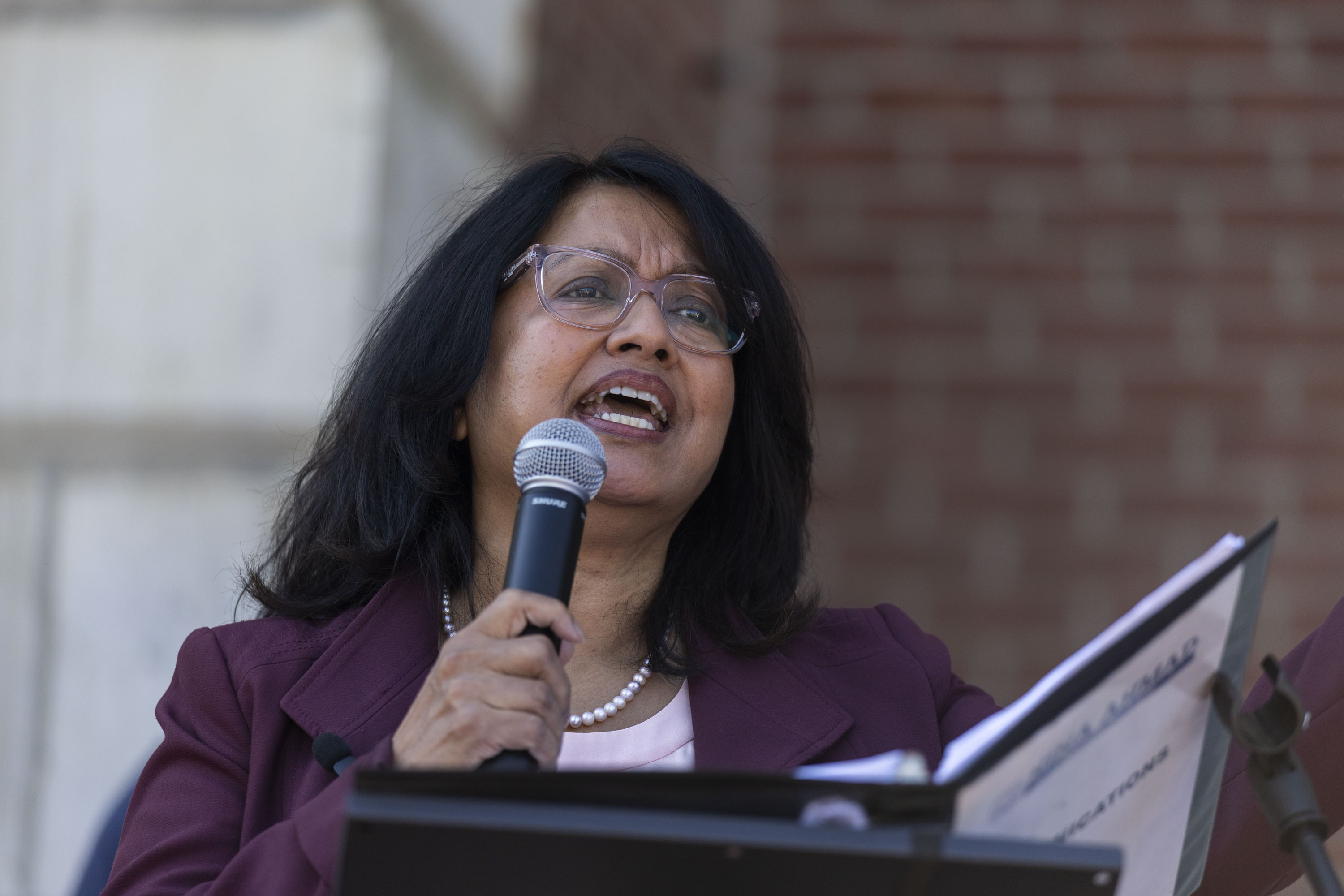
    City Council member Nina Ahmad speaking at a rally outside the Academy of Natural Sciences of Drexel University in September.Tyger Williams / Staff Photographer

    Philadelphia City Council is set to hold a second hearing on Monday discussing the closing of the Academy museum, and this week council voted to approve a resolution to authorize a task force to look into the matter.

    As part of Friday’s announcement, Councilmember Nina Ahmad said the formation of the new foundation-funded studies “to secure a strong future for the Academy is a meaningful resource to align with the efforts of the City Council’s task force.”

    At stake, in addition to the Academy generally — where research and collections work continues — is the potential re-establishment of the institute’s most public-facing function that drew so many for so long with dinosaur cast skeletons, dioramas and, until their recent rehousing to other facilities, live animals.

    “We, the William Penn Foundation and others, have invested for years to reinforce the Parkway as a cultural center of the city, with the Barnes and the new Calder Gardens, and this, losing the Academy [museum] on the Parkway, seems like a reversal of that many years’ effort to strengthen the Parkway as a center of culture for the city,” said McCaney.

    “It’s also a really big part of Philadelphia’s history and the nation’s history, and one of the most important museums in the history of science in our country.”
  • Police shoot and kill armed man on Benjamin Franklin Parkway, officials say

    Police shoot and kill armed man on Benjamin Franklin Parkway, officials say

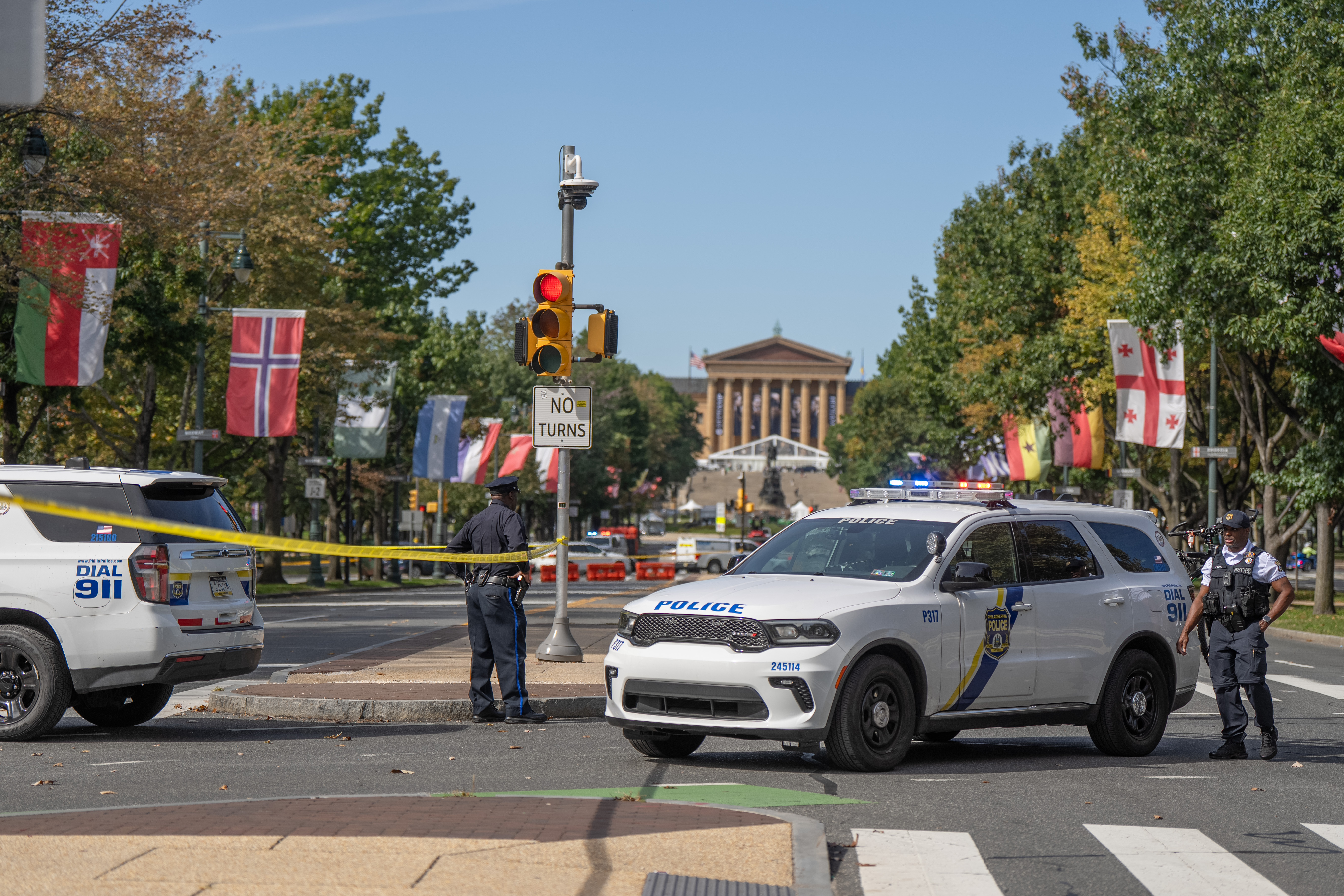
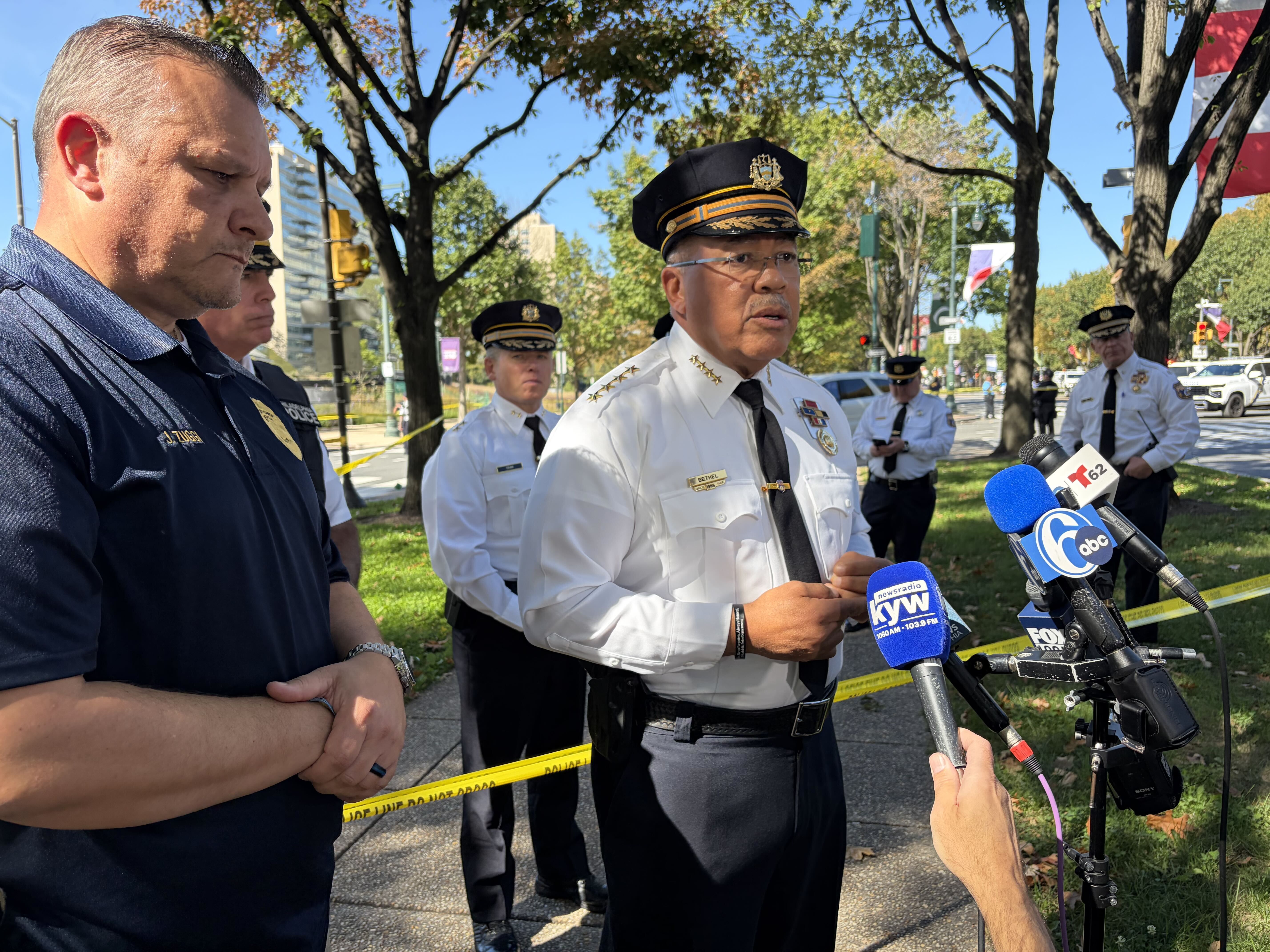
    Philadelphia police shot and killed a man who they said fired a handgun on the Benjamin Franklin Parkway Friday morning, just a few blocks from the Philadelphia Art Museum.

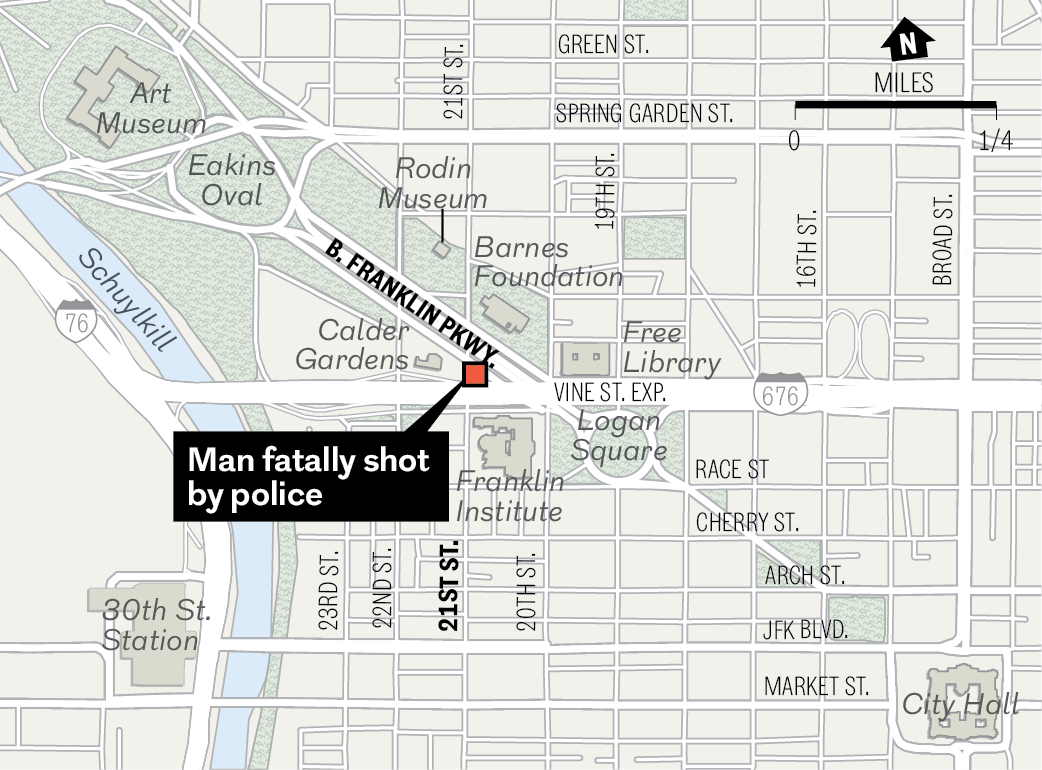
    Police responded to the intersection of 21st Street and the Parkway shortly after 11 a.m. after bystanders reported a man shooting in the area, said Police Commissioner Kevin Bethel.

    No bystanders were struck. Police secured the area and attempted to talk to the man, who was armed with a revolver, through a bullhorn, and defuse the situation, Bethel said.

    Philadelphia Police Commissioner Kevin Bethel speaks to members of the news media near the site of a shooting at the corner of North 21st Street and Benjamin Franklin Parkway on Oct. 9, 2026, in Philadelphia.Anna Orso

    “The individual is just continually pointing the weapon, waving the weapon, and waving the weapon multiple times, pointing it at the officers. The officers all backed away and tried to take as much cover as possible,” Bethel said.

    Then, at some point, the man fired his gun, he said.

    Two officers — one Philadelphia police officer and a SEPTA cop — then each fired their weapons once, striking the man, Bethel said. He was rushed to Jefferson University Hospital, where he died at 11:36 a.m., the commissioner said.

    He said the incident was being investigated as potential suicide by cop. It was not immediately clear how many times the man fired his weapon, he said.

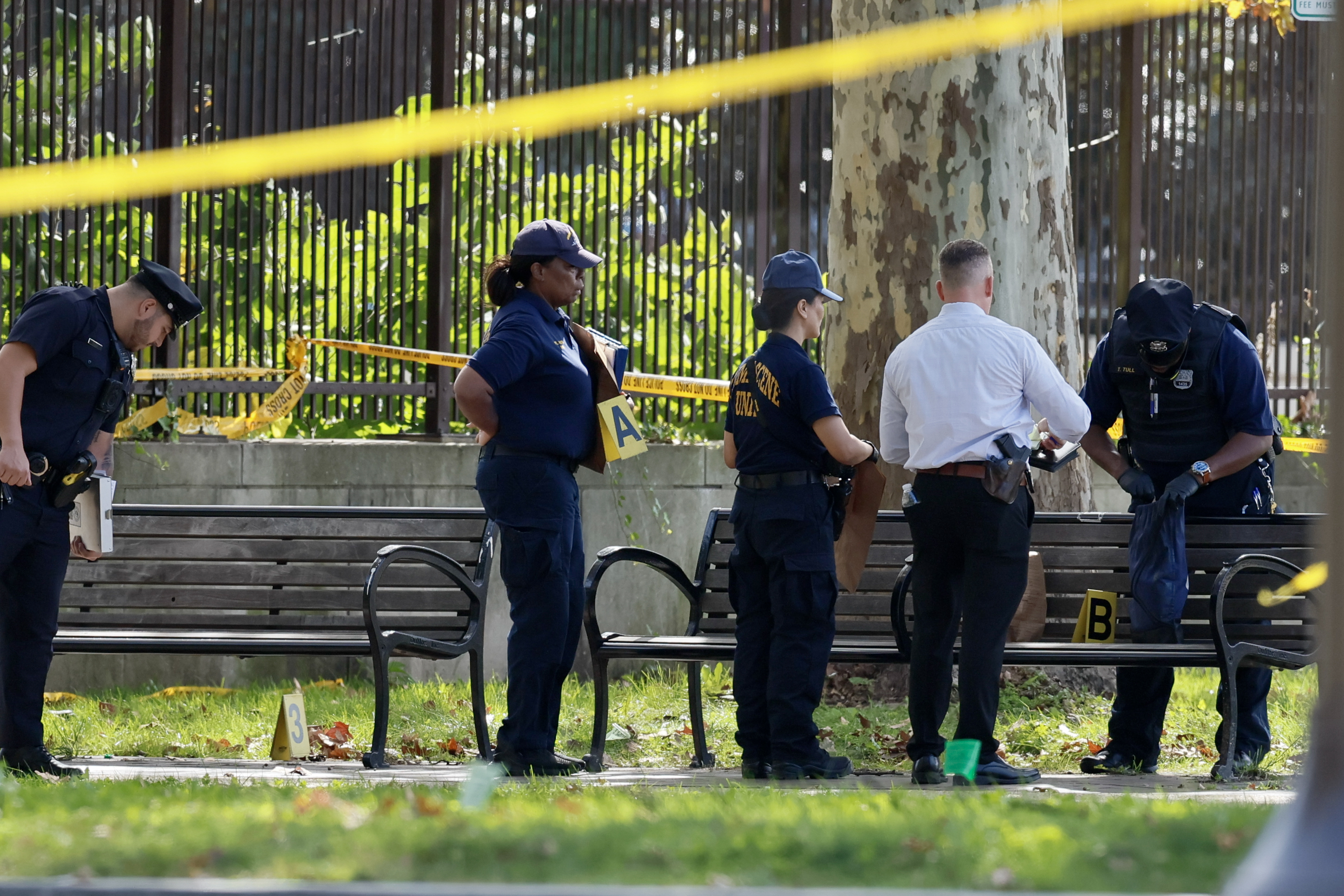
    Police investigate a shooting where officers shot and killed an armed man near 21st Street and the Parkway on Friday.Jessica Griffin / Staff Photographer

    Police did not release the man’s identity or age. Bethel said he appeared to be in his 50s.

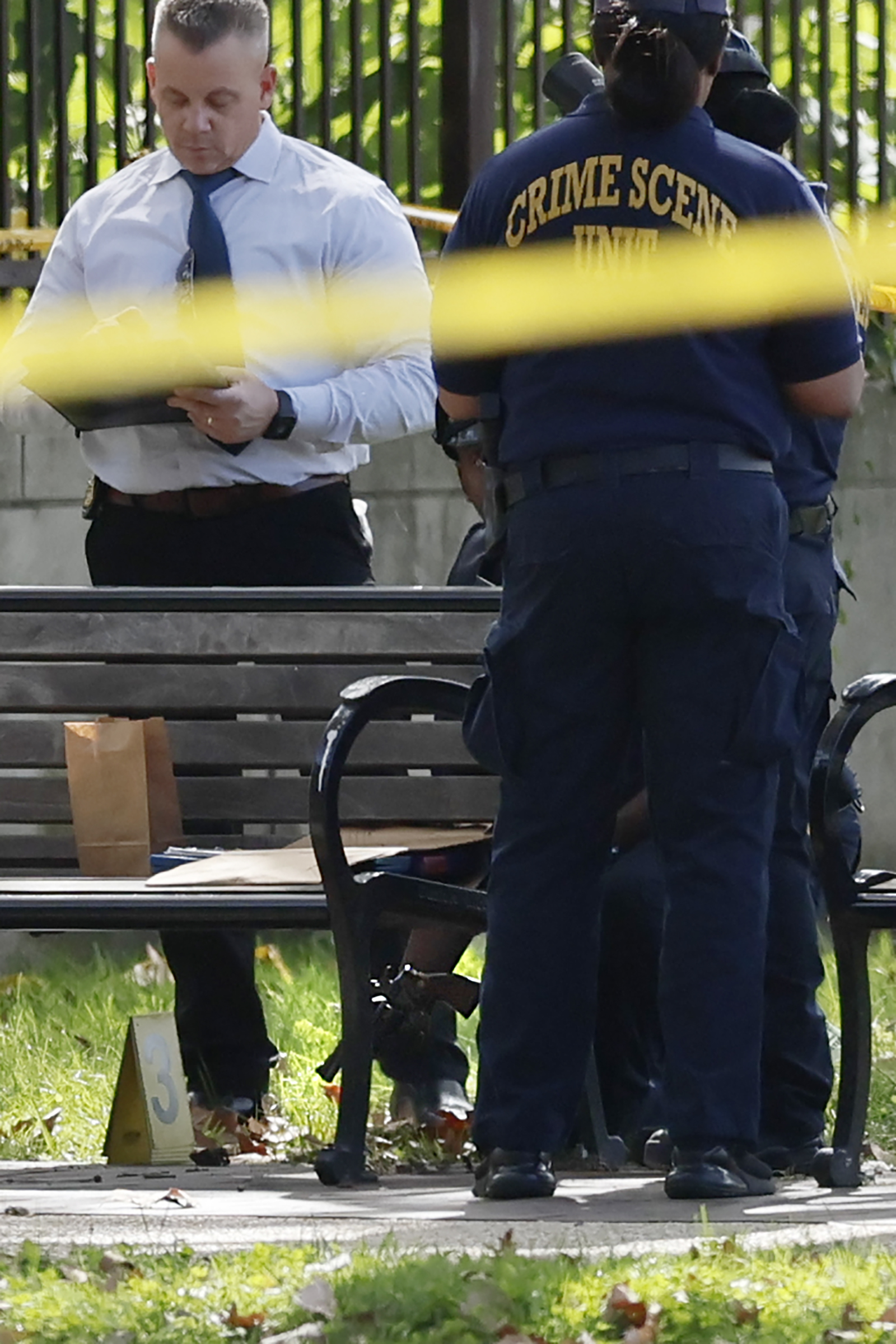
    A section of the Parkway was closed to traffic for several hours Friday as police investigated, gathering evidence that included a gun found under a bench.

    The shooting unfolded as bystanders walked along the idyllic stretch of the city under clear blue skies, and as families visited the many public institutions nearby. The Franklin Institute briefly asked visitors to shelter in place.

    Map of where an armed man was fatally shot by police on Oct. 9 on the Benjamin Franklin Parkway.John Duchneskie

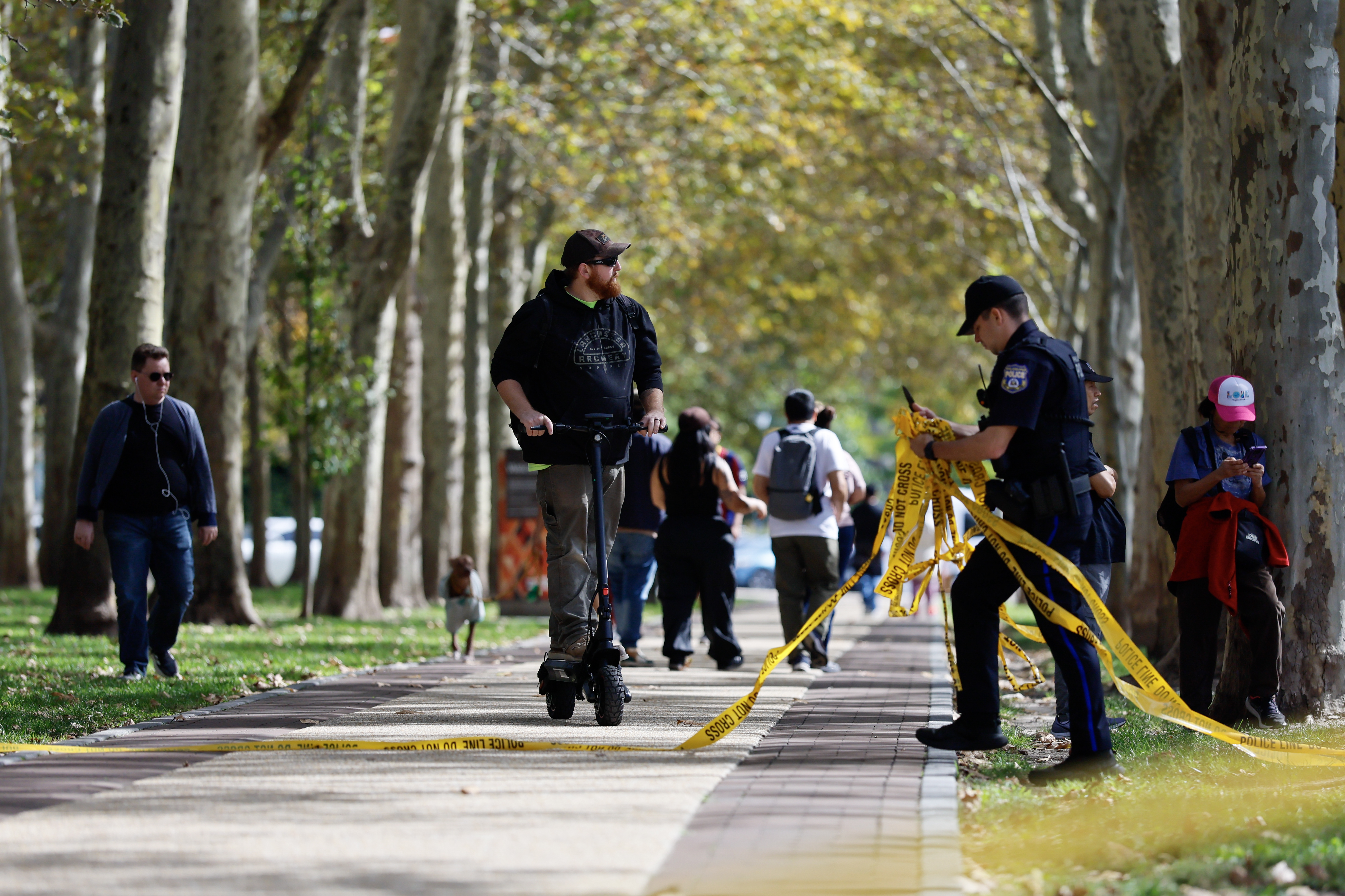
    Outside on Friday afternoon, passersby and tourists stood across from police, gaping at the sight of caution tape leading toward the Art Museum.

    Abby Rosenblum, in town from Seattle for her daughter’s wedding, said she was walking to the Barnes Foundation when she heard the first shot ring out.

    She told herself it was nothing, she said, and kept walking. Her friend’s daughter, Charlene Duty, heard a second shot a short time later.

    “It took a while for the second shot,” Duty said.

    The whole situation, the two women said, was upsetting.

    Marc and Phyllis Donahue, of Chestnut Hill, were walking to Calder Gardens when they learned of the shooting.

    “It’s something we have a hard time comprehending,” said Marc Donahue, lamenting the proliferation of guns.

    “I hope it doesn’t keep people from coming into the city,” Phyllis Donahue said. “But I do get the concern.”

    Police pick up a firearm that was found under a park bench in an area along the Benjamin Franklin Parkway. Elizabeth Robertson / Staff Photographer

    The incident marked the second fatal police shooting in the last week. On Oct. 2, officers in Mayfair shot and killed a 26-year-old man they said was armed with a knife.

    Police tried to stop Jamir Cave after they said he had attempted to break into several cars and a house on the 4100 block of Tyson Avenue.

    Police followed Cave to the 7000 block of Frankford Avenue, and when an officer tried to grab Cave’s arm, they got into a physical struggle, the department said in a statement.

    Cave then produced a kitchen knife, police said. An officer fell during the altercation, and when Cave advanced toward an officer with the knife, police said, two officers shot him.

    Both officers’ body cameras captured the incident, police said. It remains under investigation.

    Police reopen an area near Benjamin Franklin Parkway after it was taped off to investigate a shooting where officers shot and killed an armed man Friday.Elizabeth Robertson / Staff Photographer
  • The Philly legacy of the three Alexander Calders

    The Philly legacy of the three Alexander Calders

    For more than quarter century, Greta Greenberger ended her tours of Philadelphia City Hall at the tower, just below the bronze buckled shoes of William Penn (1892), the shady colossus that Alexander Milne Calder sculpted.

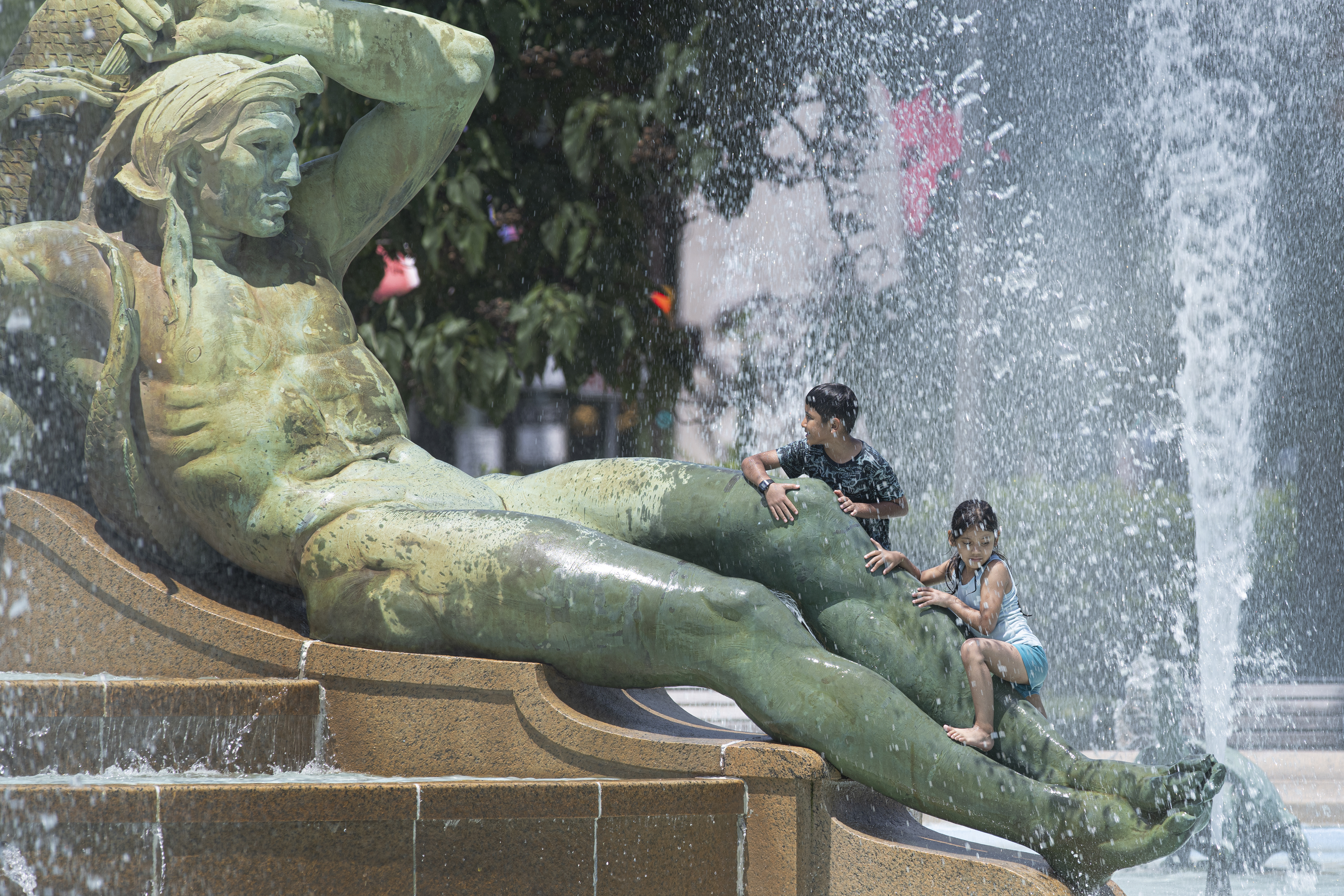
    From there, she’d point up the Parkway to Logan Square, where on hot days children sneak into The Fountain of Three Rivers (1924), created by Calder’s son, Alexander Stirling Calder, to honor the Schuylkill, the Delaware, and the Wissahickon.

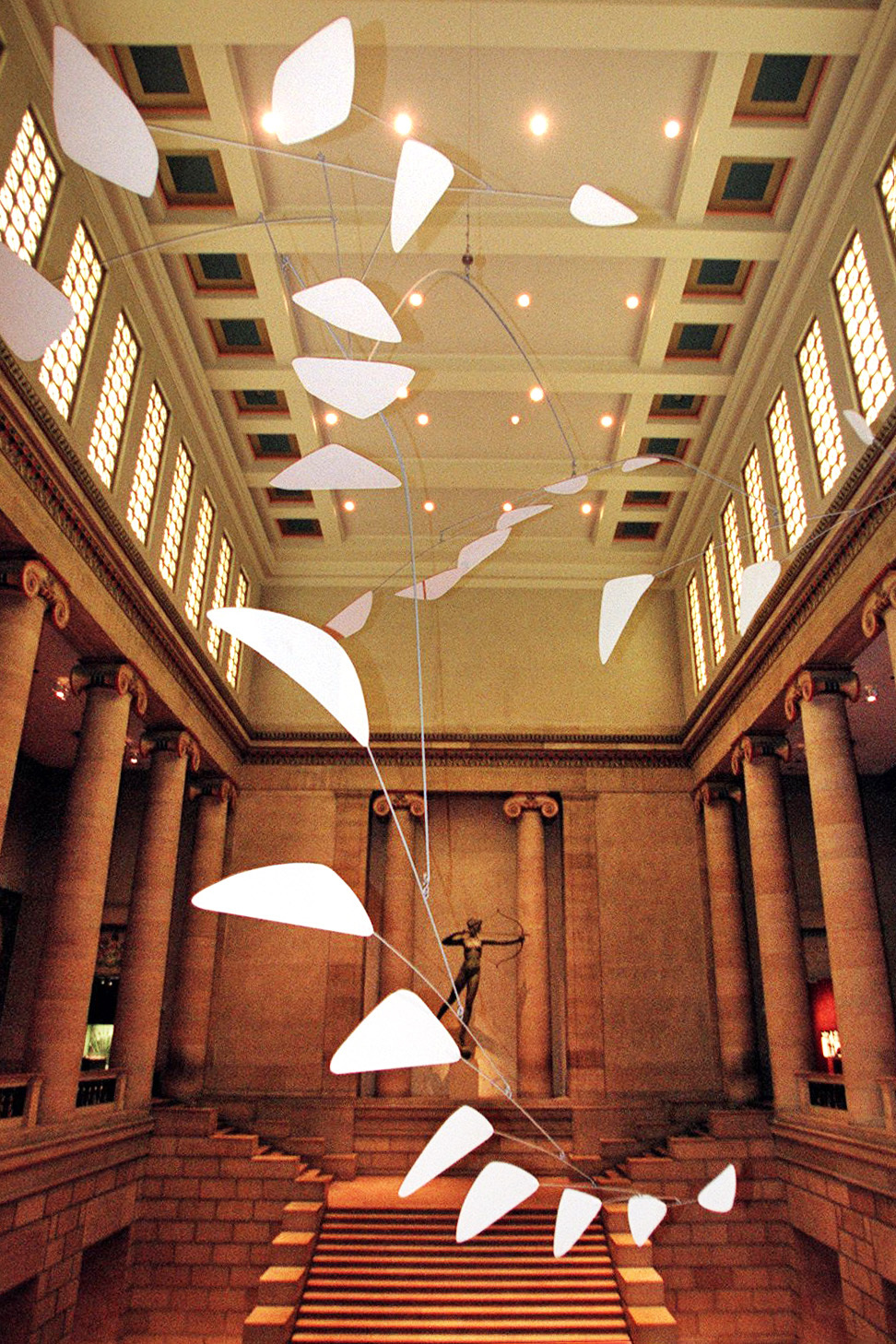
    She’d finish her lesson at the Philadelphia Art Museum, where an unearthly, white mobile, Ghost (1964), designed by the third generation of Alexander Calders, Sandy, sways ever so slightly in the Great Stair Hall.

    “Sometimes, I’d refer to this as ‘The Father, the Son and the Holy Ghost,’” she says. “It tells such a wonderful story.”

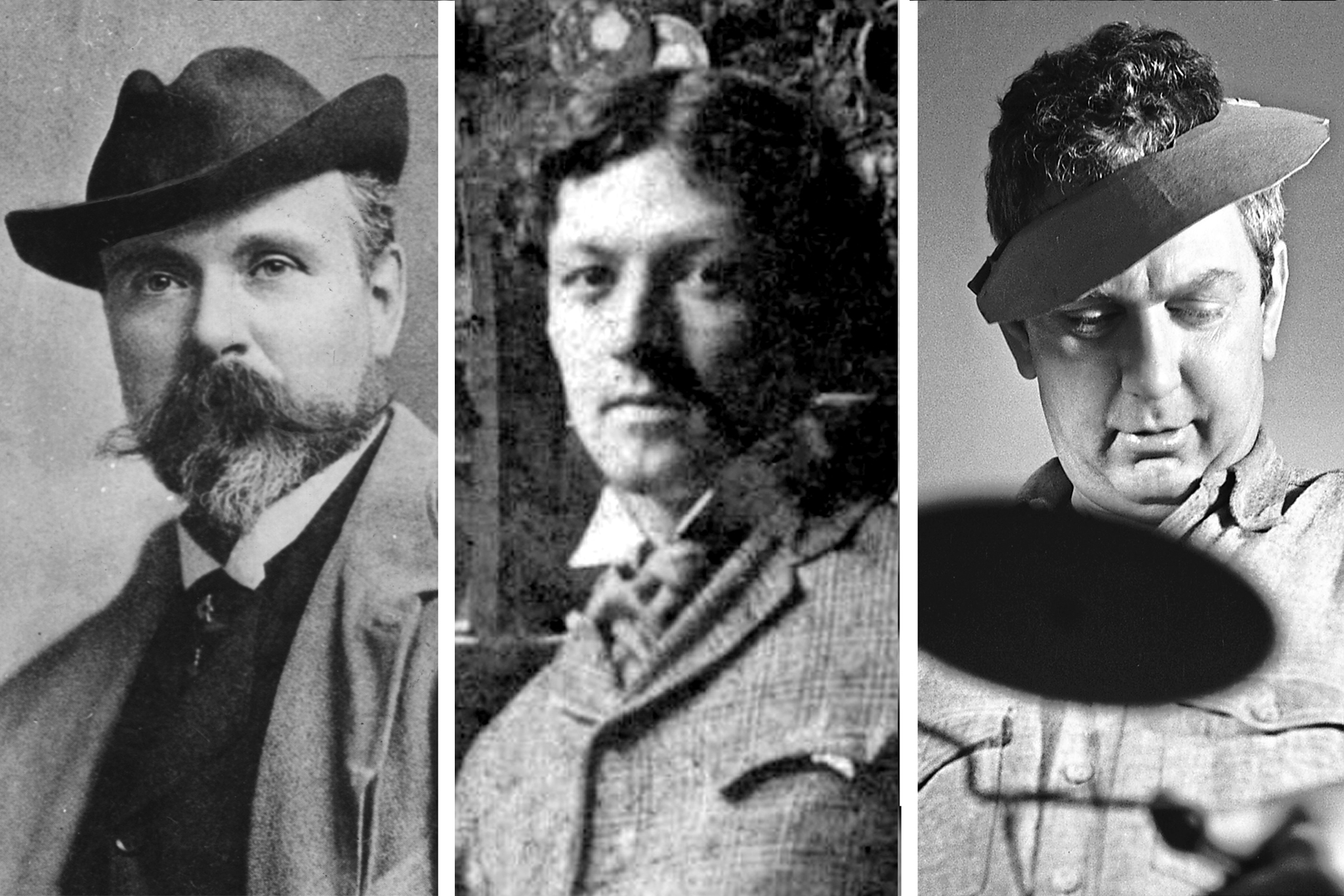
    That story will be easier to tell now, with the opening of Calder Gardens at 21st Street and the Ben Franklin Parkway. The Gardens, focused on the work of the youngest Calder, known as Sandy, brings another opportunity to celebrate the family dynasty’s in Philadelphia: three sculptors named Alexander Calder who have shaped the look of the city and beyond.

    Exterior of the new Calder Gardens on the Ben Franklin Parkway.Alejandro A. Alvarez / Staff Photographer

    “The Calder family is incredibly important to Philadelphia,” said Anna O. Marley, the former chief curator at the Pennsylvania Academy of Fine Arts (PAFA), where so many Calders studied. “They tell us so much about what it means to be an artist in the United States and how an American artistic identity was created in Philadelphia.”

    And their work here offers “a pocket history of art,” in the view of Kathleen A. Foster, the Art Museum’s senior curator of American art.

    “Between the three of them, you really go from the academic realism of the grandfather through kind of shift into Art Deco and modernism in the `20s with Stirling Calder, and then all the way into modern forms, completely abstract shapes and bright colors.”

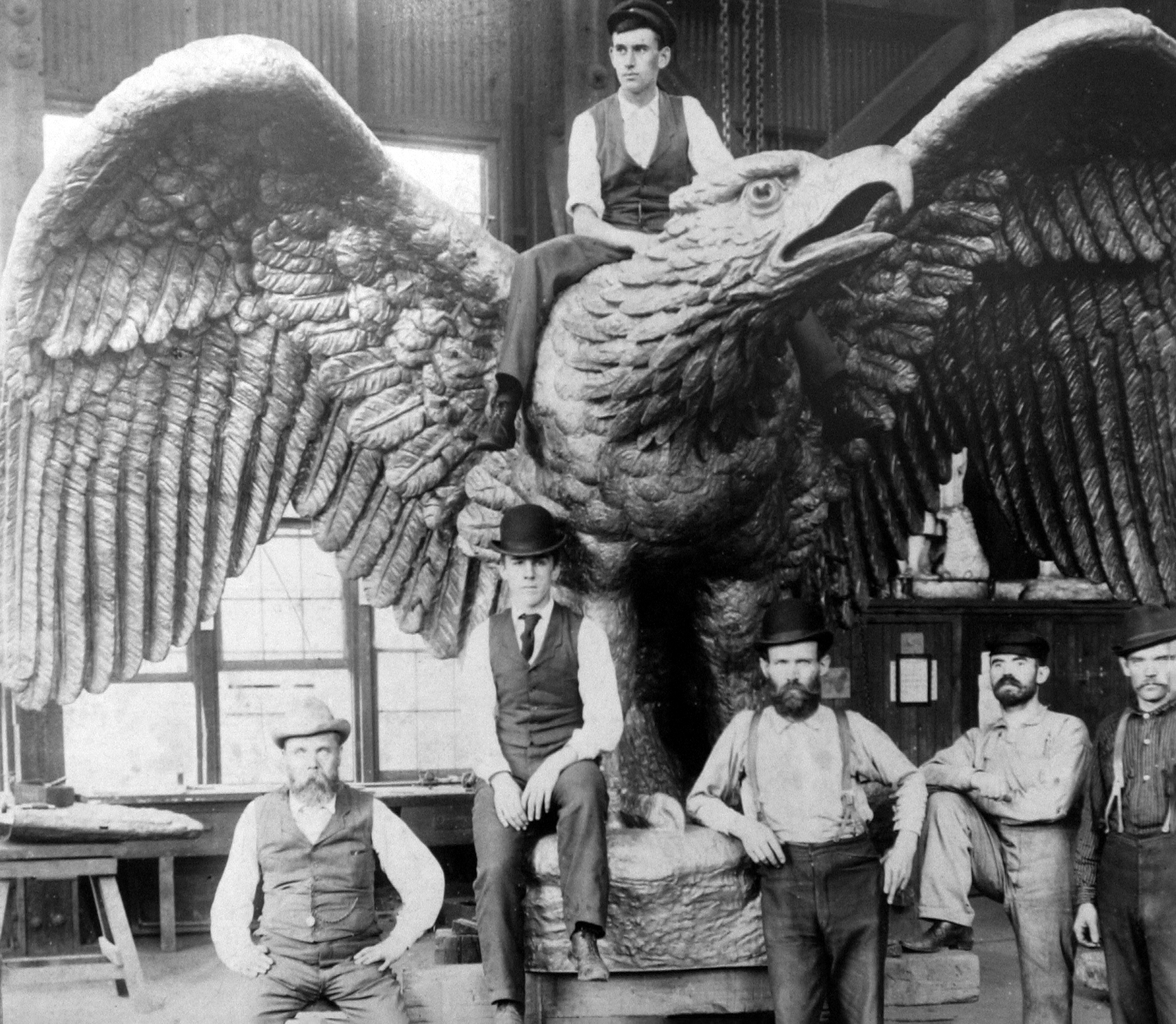
    A photograph of workers and an Alexander Milne Calder eagle sculpture before installation around 1894, on display in the tower at City Hall. Calder created the statue of William Penn atop Philadelphia City Hall — and over 250 other works of sculpture on the exterior and interior of the building — from 1871-1901.Inquirer archives

    ‘One of the greatest’

    The Philadelphia that Alexander Milne Calder, a Scottish stonecutter’s son from Aberdeen, first saw in 1868 was sorely in need of a makeover. The sprawling metropolis was known for building big things like ships and rail engines and a wealth of small manufacturers that earned it the nickname “Workshop of the World.”

    It was also filthy.

    “It’s clear that there is no future for a city that is just increasingly based on its industrial might, on the dirt-producing, noise-producing, the squalor,“ says David Brownlee, emeritus professor of the history of art at the University of Pennsylvania.

    The boundaries of Fairmount Park had just been established the year before and plans would soon begin for a giant celebration of the country’s 100th birthday, the 1876 Centennial, which would show the world the city’s cultural achievements. The Benjamin Franklin Parkway was unfolding, a broad boulevard lined by art and leading to what Brownlee calls “one of the greatest monumental ensembles of sculpture ever created.”

    That would be City Hall, the émigré Calder’s workplace for 22 years as he presided over the creation of more than 250 sculptures from his first floor office in the building’s southwest corner — and the towering figure of the colony’s founder.

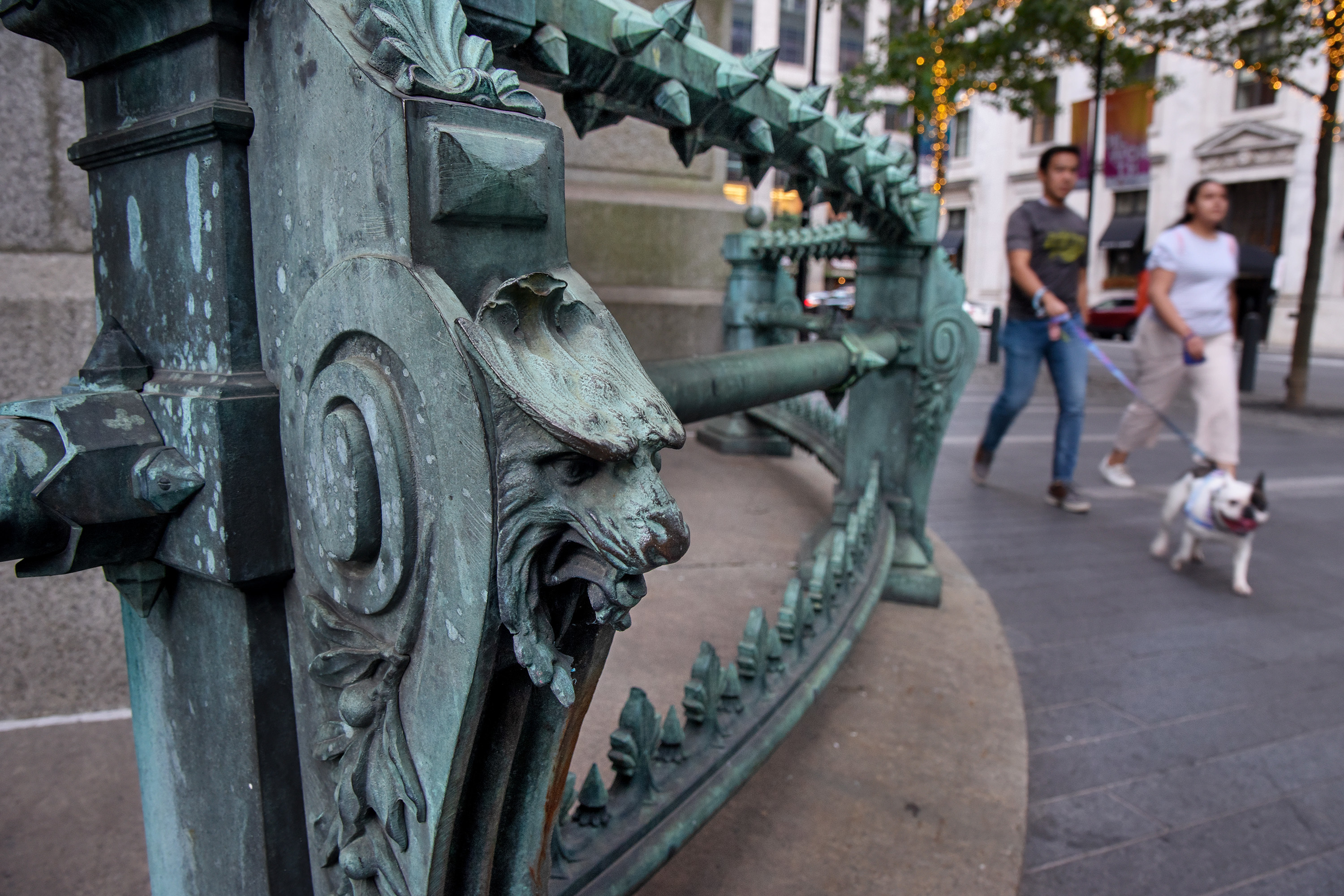
    There were once almost 150 small lion heads on the ornate bronze spiked railing that surrounds City Hall. They, like most of the statuary on the building — including the big one of William Penn — were designed by Alexander Milne Calder. Less than two dozen of the lions remain after 100 years. TOM GRALISH / Staff Photographer

    Calder had worked at the Royal Academy in Edinburgh and on the Albert Memorial in London before sailing to America. He stopped in New York, but chose Philadelphia, armed with a letter of introduction to the city’s most eminent sculptor, Joseph A. Bailly, and to the scion of a monument business, William Struthers. Calder was 22.

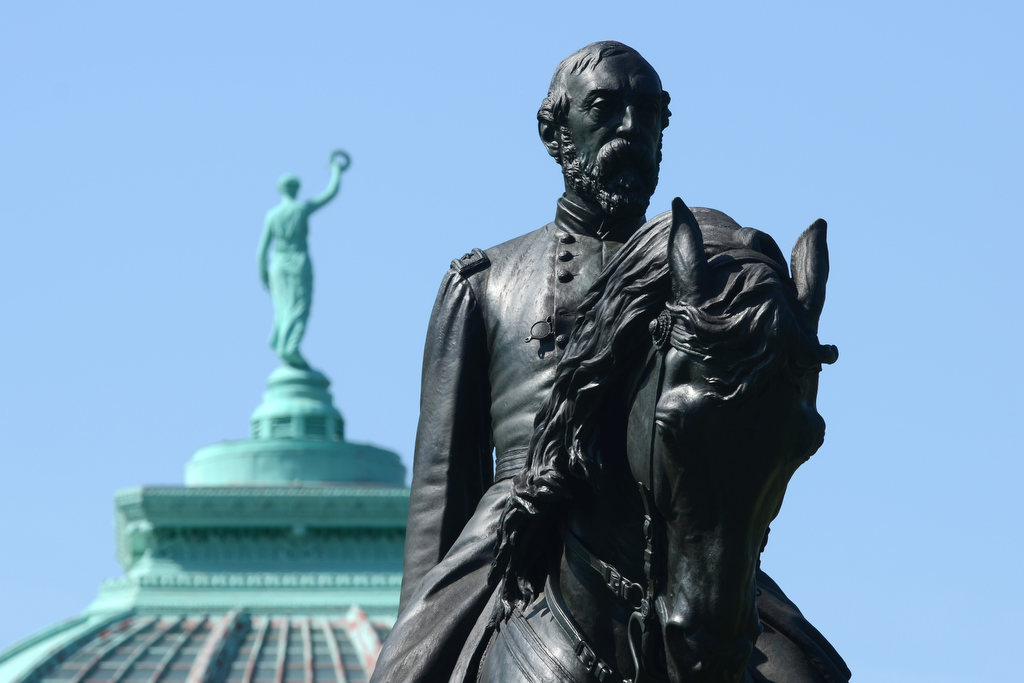
    He registered that year at Pennsylvania Academy of the Fine Arts, the nation’s first art school and museum, and studied “antiques,” drawing from plaster casts of classic sculptures. It was not long before Calder won a prized commission over one of his instructors, to sculpt the likeness of Major Gen. George G. Meade atop his horse, Baldy. Meade, who’d defeated Robert E. Lee at Gettysburg, later designed many of the paths and drives of Fairmount Park. His statue stands now behind the Please Touch Museum on Lansdowne Drive.

    Alexander Milne Calder’s Meade Equestrian Monument in the rear of Memorial Hall. It was cast using captured Confederate cannon for the bronze. Calder rendered Gen. Meade reining in his horse at a moment of crisis during battle.

    When Greenberger gives tours of City Hall — though retired, she still volunteers one day a week — she likes to start in the north portico, where one can sample his expansive vision. Look up to the south, and there are Africans, surrounded by tobacco leaves, a lion. To the east, people from China, Japan, India, and an Asian elephant. West are the Native Americans and pioneers, and a bear. And north is Europe, people from Germany, England, France, maple leaves, and cattle. (She isn’t sure why cattle.)

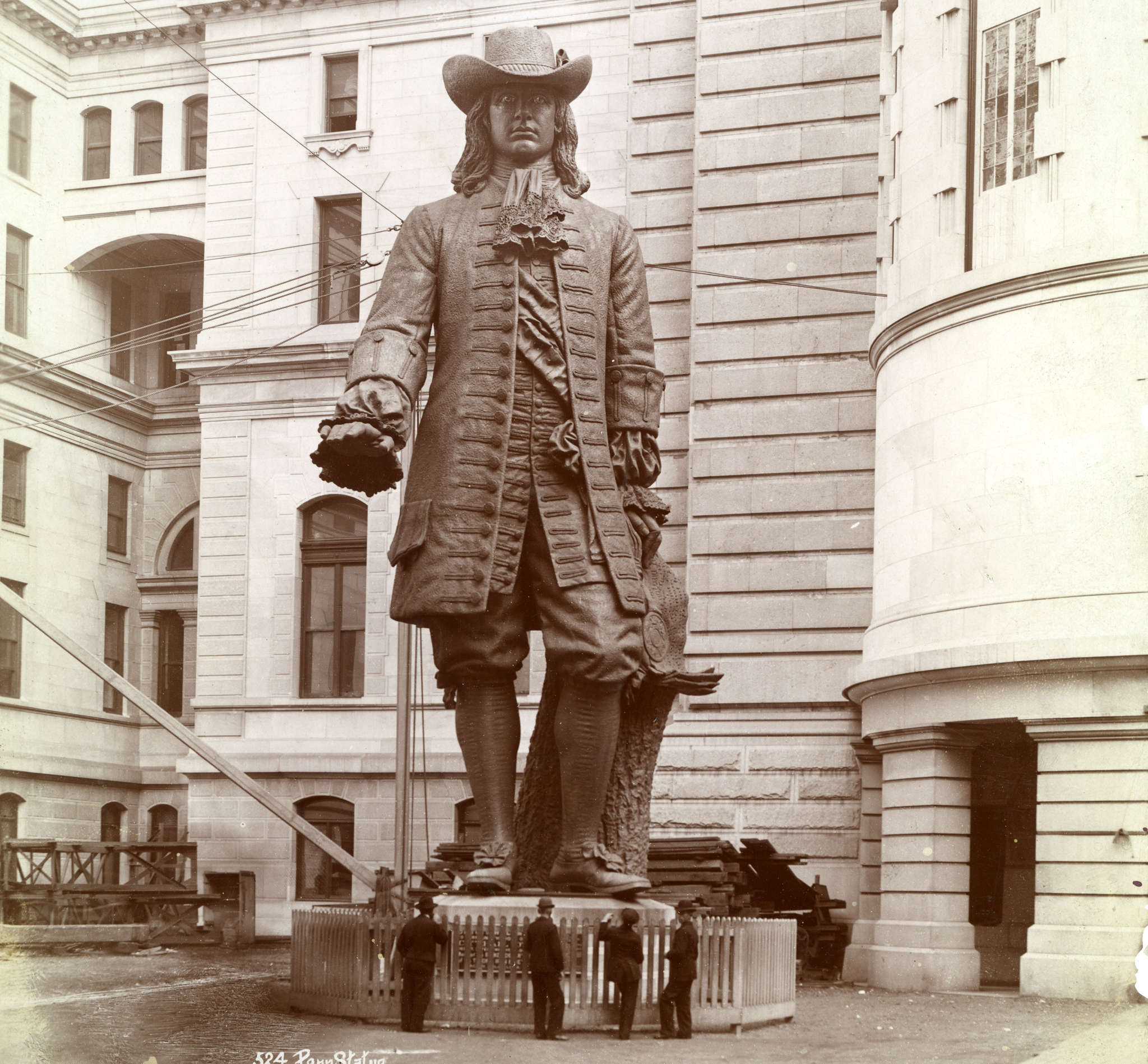
    Calder started on the Penn sculpture in 1886. The iconic figure, now visible from miles away, was the fourth version of the colony’s founder that the sculptor created. Calder’s models were one-tenth the size of the 37-foot high statue. His goal, according to an article at the time in The Inquirer, was to create “William Penn as he is known to Philadelphians; not a theoretical one or a fine English gentleman.”

    The William Penn statue on display in the City Hall courtyard in 1893, the year before it was hoisted, bit by bit, to the top.Historical Society of Pennsylvania

    Four teams of horses drew massive plaster sections of the statue up Broad Street to the Tacony Iron & Metal Works. It wasn’t until Thanksgiving 1894 that the head was lifted onto the statue atop the tower, completing Calder’s colossus.

    He was not happy with the result.

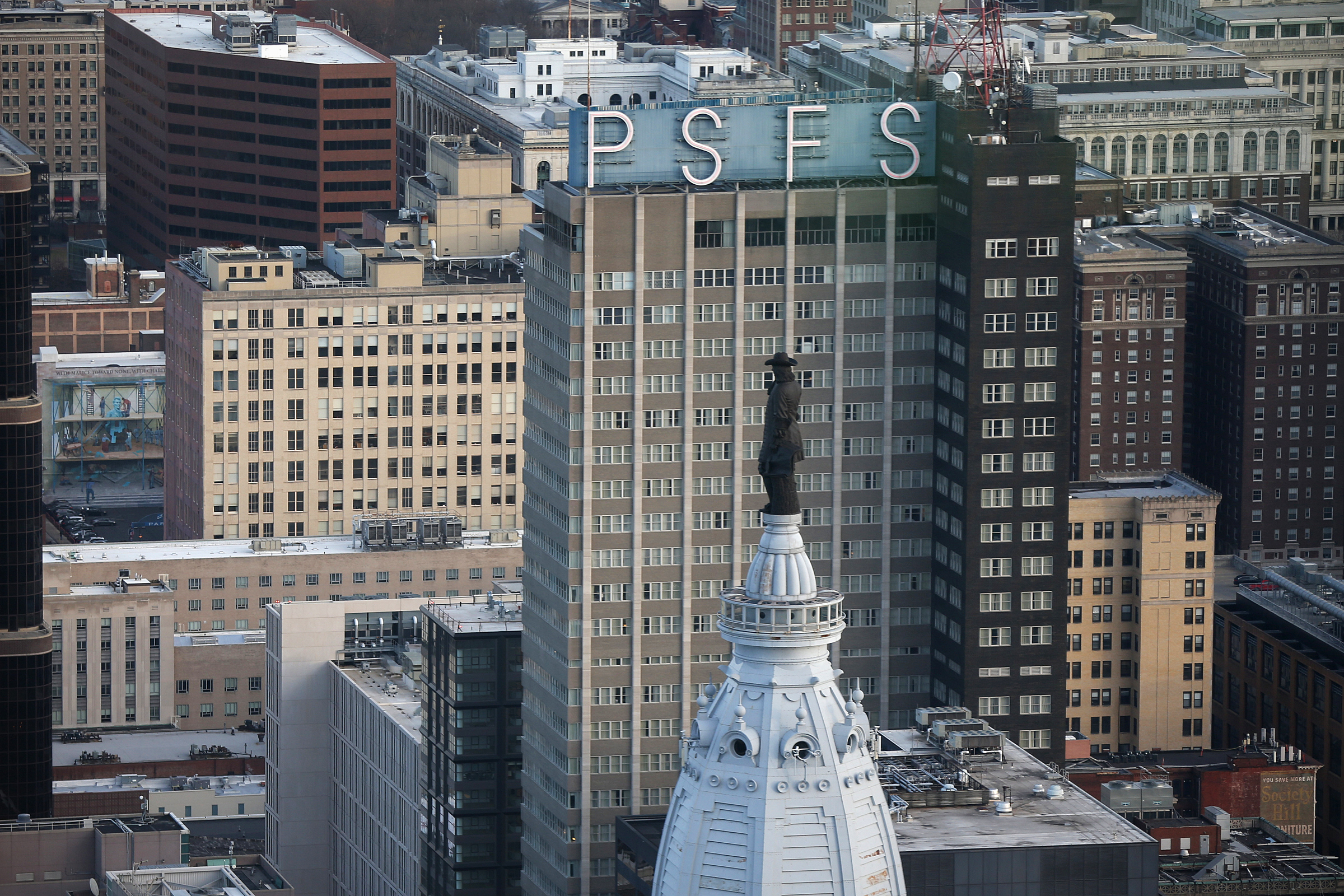
    For most of the day, William Penn’s face is shadowed. That was not the artist’s intent. Calder had wanted Penn facing south, where the sun would light his youthful face and the intricate detail of his garb would be visible for all to admire.

    But members of the Public Buildings Commission wanted Penn facing northeast, toward Penn Treaty Park, the site of the 1683 peace agreement with the Lenni-Lenape.

    In a letter quoted in the Dec. 14, 1894 Inquirer, Calder wrote “I think that you will agree that is very disappointing from every point of view.”

    Calder’s William Penn statue atop City Hall as seen from the Comcast Technology Center in Center City.TIM TAI / Staff Photographer

    While Calder lived in a number of homes around the city — a home at 2020 Bainbridge St. and a studio at 337 Broad — when he registered at PAFA, the address listed was 1903 N. Park Ave., now on Temple’s campus. Decades later, his granddaughter, Margaret Calder Hayes, would remember the North Philadelphia house as “gloomy” — four floors with Empire furniture, a long dark hallway leading to a parlor where children were not welcome unaccompanied.

    Calder had met his wife, Margaret Stirling, soon after his arrival in Philadelphia and married her after a brief courtship.

    Three of their sons would study at PAFA and become artists — Ralph Milne Calder, and Norman Day Calder, and Alexander Stirling Calder. But it was “Stirling,” the eldest who left the biggest mark on Philadelphia.

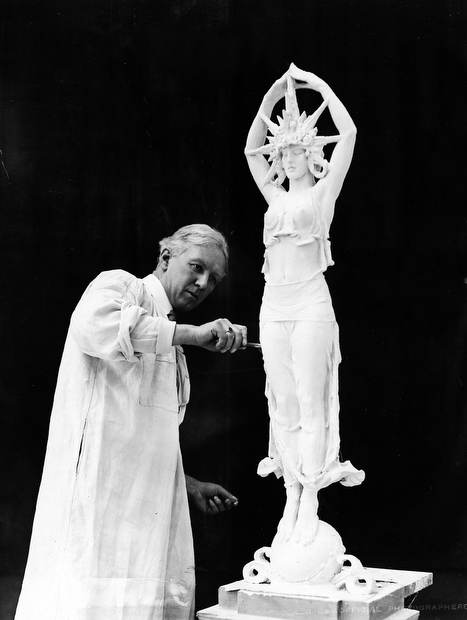
    A portrait of A. Stirling Calder.

    ‘An idealist, somewhat withdrawn’

    In a remembrance kept in the PAFA archives, Alexander Stirling Calder describes art as a fallback. Ever since he was 6 and saw the great Edwin Booth play Hamlet, Stirling Calder wanted to be an actor. But he was too shy. In 1885, he enrolled in art classes at the academy’s new building at Broad and Cherry, and years later recalled the first criticism of his teacher, the artist Thomas Eakins: “Attack all of your difficulties at once.” Eakins urged sculptors to paint, painters to sculpt, and to dissect cadavers to learn anatomy.

    After studying at the École des Beaux-Arts in Paris, he returned home and won a commission to immortalize Samuel Gross with a statue that first stood on the National Mall in Washington, D.C. (It’s since been moved to the Center City campus of Thomas Jefferson University). At 25, he married a fellow PAFA student, Nanette Lederer, a painter.

    To the critic Malcolm Cowley, Stirling Calder was “an idealist, somewhat withdrawn, wholly impractical, creating symbolic figures while brooding on the cruelty of nature.”

    Foster says that looking at the allegorical figures in Logan Square’s Swann Fountain, you can see how Stirling inherited his father’s traditions.

    Children cool off at the Swann Memorial Fountain in 2023.Jose F. Moreno/ Staff Photographer

    “But the figures have a kind of sleek, modern simplicity to them,” she said. “They’re more stylized. So by the 1920s the Swann Fountain represents a kind of moving from the academic past into a more expressive and abstract style.”

    The fence came off the Swann Fountain on a hot July day in 1924. The next evening, 10,000 revelers danced to tangos from a police band. Not everyone was pleased — some wondering if the average Philadelphian would grasp the significance of all that Calder had created.

    He was unbothered.

    “The meaning of works of art is just as mysterious as life itself. It can be explained in many ways by people of different philosophies. …,” he was quoted in the Evening Bulletin as saying. “There are lots of things in life we do not understand; art is no exception.”

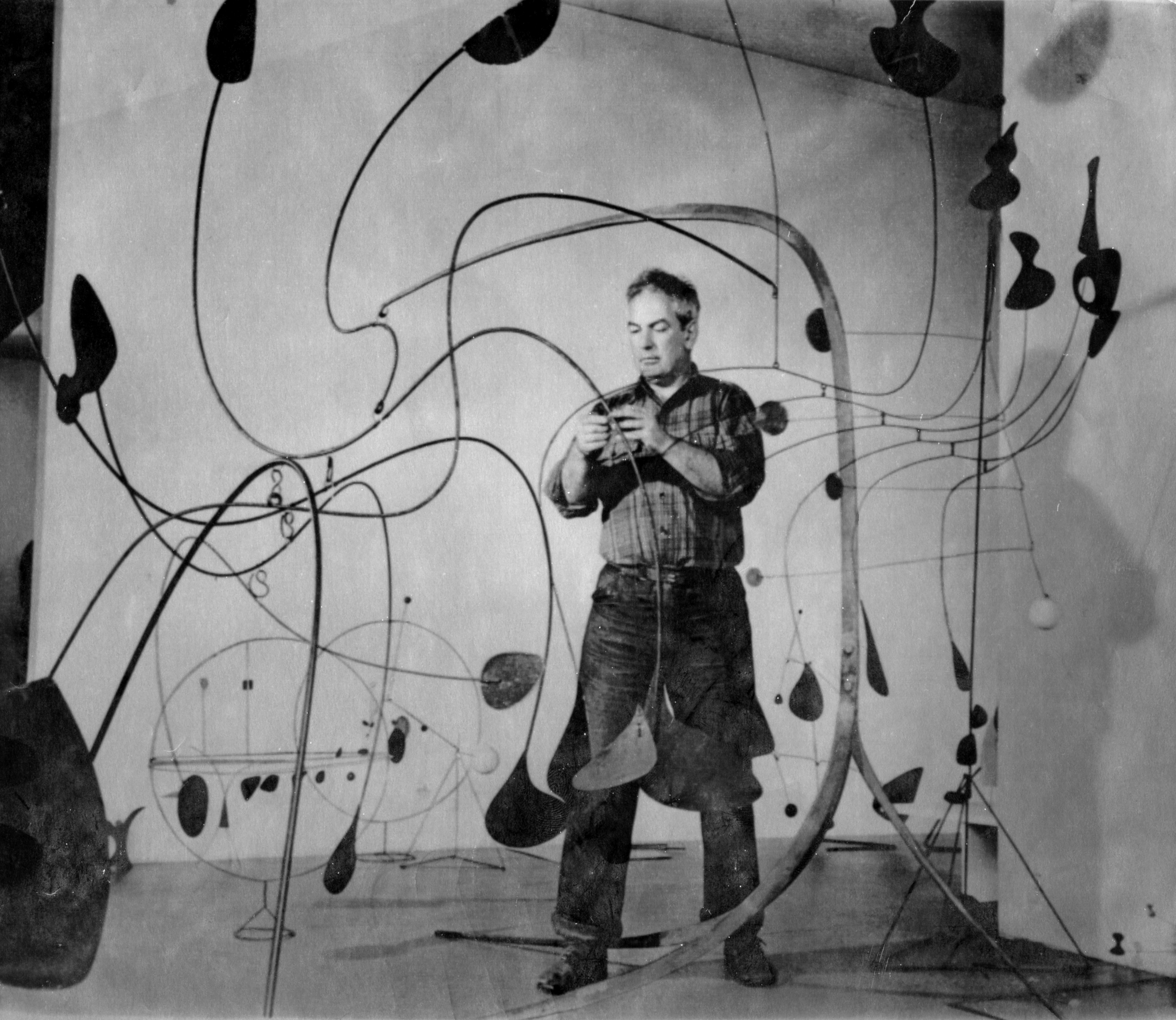
    Alexander “Sandy” Calder installs his “Big Spider” mobile at New York’s Museum of Modern Art in 1943.The Evening Bulletin / Temple Urban Archives

    ‘A big child’

    In his autobiography, Sandy Calder included a photograph of the sprawling mansion in Philadelphia where he says he was born. He called the place Lawnton. In 1898 when Calder was born, Lawnton was a neighborhood in East Oak Lane, served by the Reading Line and lined with grand homes where the wealthy went to escape the summer heat.

    It’s unlikely Calder was born there. David Brownlee has dug into the mystery of the third and most famous Calder’s birthplace. While his family doctor lived in Lawnton, and it is possible that his mother delivered her son nearby, more likely, he was born near the edge of the growing city, at 1203 East Washington Lane in Germantown. City records showed that Stirling Calder rented that country place, while the family still owned a home on North Park Avenue.

    In Margaret Calder Hayes’ memoir, she described how Sandy, two years younger, went to school in Buster Brown suits his mother had sewn and by 8 had built a Noah’s Ark of animals. He enrolled in Germantown Academy, when it was still in the city, but left at age 9 before moving to Croton-on-Hudson, N.Y.

    “We love to claim him, but he only went to school here as a child,” Foster said of the youngest Calder’s time in Philadelphia.

    Yet in some ways, he’s the essence of the city he was born in: practical, playful, unpretentious, no pushover.

    He worked as a fireman on a steamer bound for San Francisco, spent a year keeping time in a Washington state logging camp. Trained as an mechanical engineer, he moved to New York City at age 25 to paint.

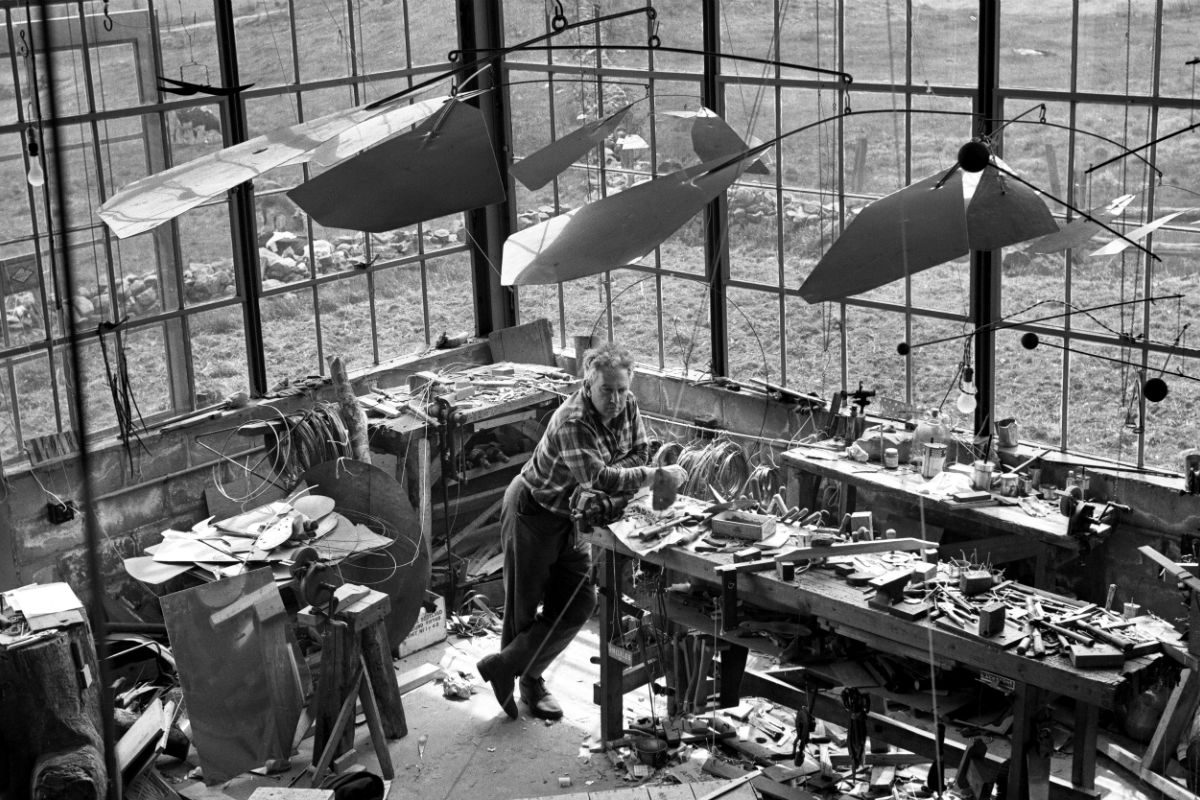
    Calder with Mobile in his Roxbury, Ct., studio in 1941.Herbert Matter

    He is known as a 20th century modernist, the artist who put sculpture in motion.

    After visiting Calder’s Paris studio in 1931 and marveling at his sculptures that relied on little motors, Marcel Duchamp coined the word “mobiles” for these kinetic marvels.

    Parisians took to him, while they scoffed at other American artists. Cowley, in an introduction to Hayes’ Three Alexander Calders had a theory:

    ”Of course his work in itself, continually inventive, playful, and enchanting, was his ticket of admission.” But Sandy and his wife Louisa, “a beauty,” Cowley wrote, entertained generously and simply. Calder was in the tradition of the Noble Savage, “who disregards social conventions and judges everything by his instinctive standards.”

    “A big child,” as his friend the playwright Arthur Miller once put it.

    Sandy Calder created Ghost in 1964 for a retrospective at the Guggenheim in New York City, that included 400 examples of his mobiles, stabiles, toys, jewelry, carvings, tapestries, etc. The Art Museum bought the 34-foot-long showpiece a year later and brought it to the city of his birth.

    Ghost, in the Great Stair Hall at the Philadelphia Museum of Art (now, Philadelphia Art Museum). It was created to hang in the center of the Guggenheim Museum in New York for Calder’s exhibition there in 1964.Steven M. Falk / Staff Photographer

    “It’s a colossal example of the mobile and it’s majestic,” Foster said. “When it moves, it’s just breathtaking, because it, it almost moves like a giant dinosaur or something. In other words, it’s got long spines and fins, and it moves very slowly and grandly in the air currents in the Great Stair Hall. … It’s delightful.”

    “When every baby has a mobile hanging over their crib, you don’t think about Calder as being the genesis of this. I think he would be delighted to know that … because he was such a child at heart. He managed to keep that imagination.”

    Now, Philadelphia will be home to an institution that celebrates that imagination. It’s a fitting homecoming for an artist whose life and legacy was so shaped by his family, who in turn both shaped and were shaped by Philadelphia.

    The weight of a name

    Tú Huynh was working at the National Gallery of Art in Washington, D.C., when he told a job applicant to look for him under the giant Calder mobile that hangs in the East Building.

    That was in 1997. The applicant, Kaleo Bird, landed the job — and later, his heart. Three years later they moved as a couple to Philadelphia, where she started grad school. Soon they married.

    In 2008, when their son was born, they didn’t take long to decide on a first name:

    Calder.

    He’s now 17, a senior at Penn Charter School.

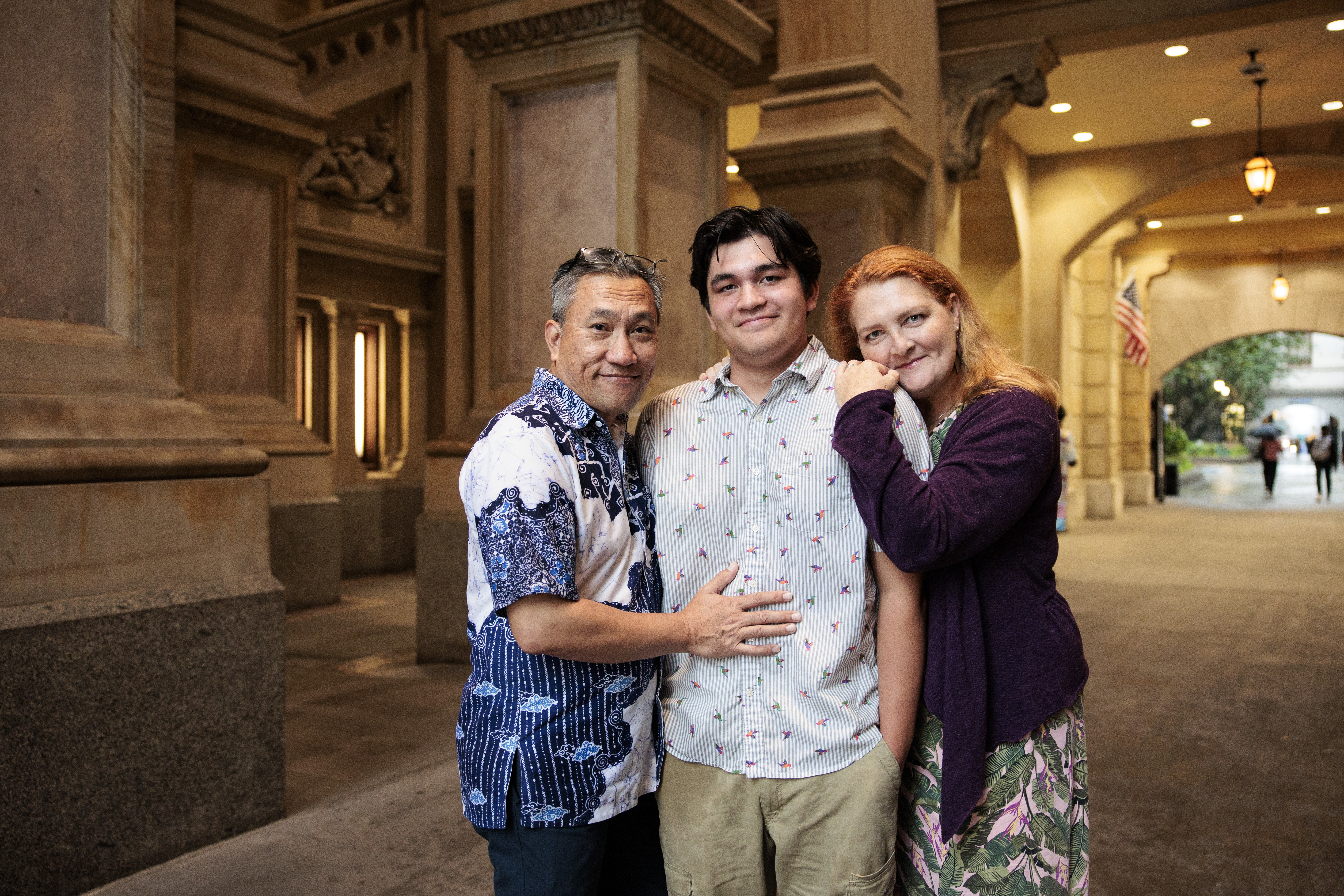
    Tú Huynh, Calder Huynh, 17, and Kaleo Bird at Philadelphia City Hall where more than 250 of Alexander Milne Calder’s sculptures adorn the building, topped by his statue of William Penn. Monica Herndon / Staff Photographer

    “I have yet to meet anyone my age who knows who the whole Calder family was, which is a shame because I feel they’ve had such an impact here, particularly with City Hall,” said the teen. “So many people think Ben Franklin is atop City Hall and don’t know anything about these beautiful sculptures.”

    His father now runs the Art in City Hall program.

    “I tell people that the true art of City Hall belongs to Alexander Milne Calder,” says Tú Huynh. “This was his Sistine Chapel. There are over 250 sculptures, leafs, busts all over this building. And that’s an homage to his ideal of what this city, state and country is supposed to be about. And he doesn’t sugarcoat anything. There are enslaved Africans, Indigenous populations, Europeans. It tells you the folks who’ve contributed to this extraordinary country.”

    Calder Huynh says he feels the weight of his name — in a way that the two generations named after Alexander Milne Calder must have felt.

    He paints, draws in charcoal, creates his own comic books — exploring themes with super heroes and Westerns, always with an eye on his father’s works that line the walls of their home.

    “Naming me after them is such a big thing to put on someone. For me, it is a weight that Alexander Sandy Calder must have felt. A weight to achieve and create something that differs from what his family members had created, which is kind of cool. … Put something in this world that hasn’t been done yet.”

    “The Magic of Calder Gardens” is produced with support from Lisa D. Kabnick and John H. McFadden. Editorial content is created independently of the project’s donors.

    To support The Inquirer’s High-Impact Journalism Fund, visit Inquirer.com/giving

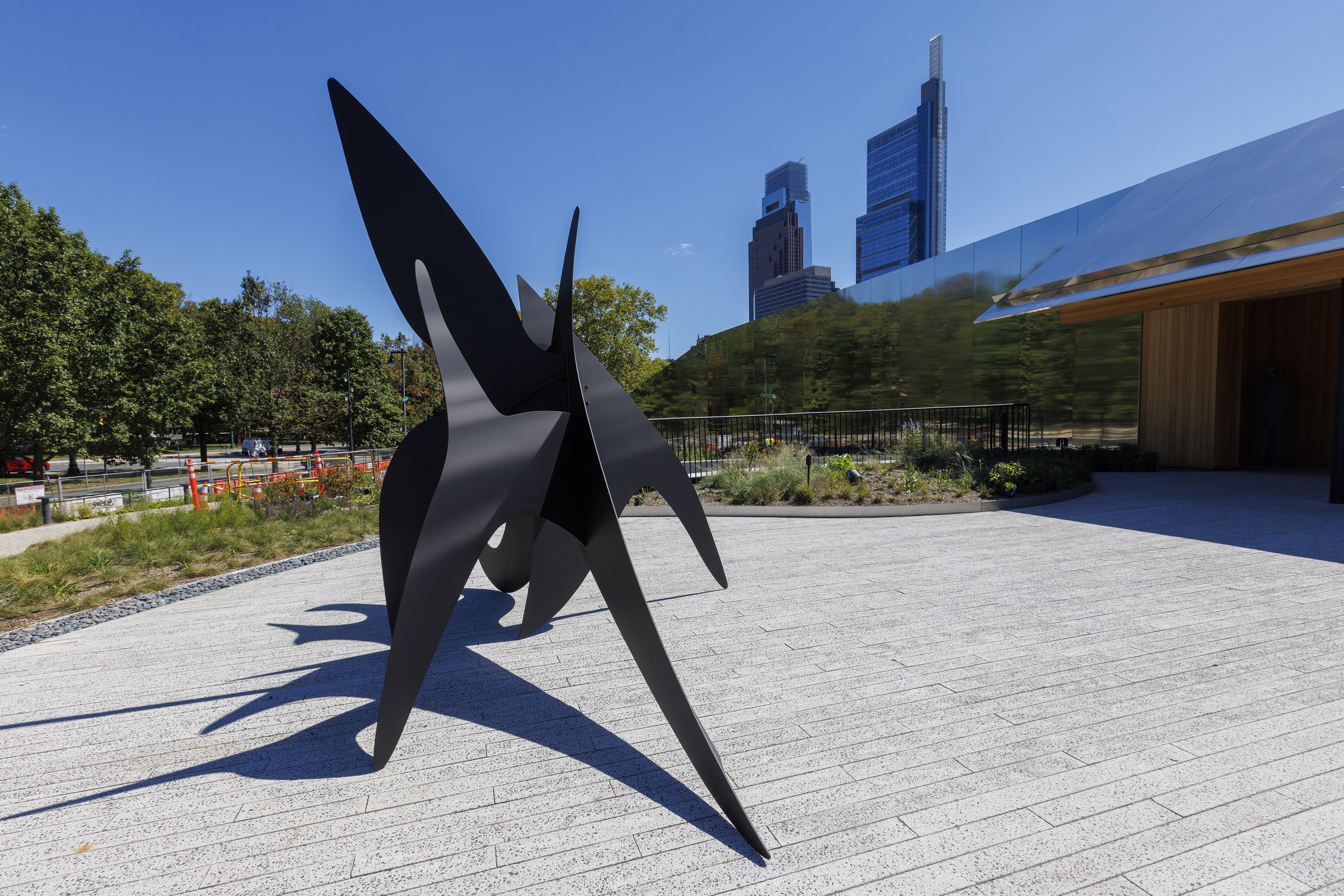
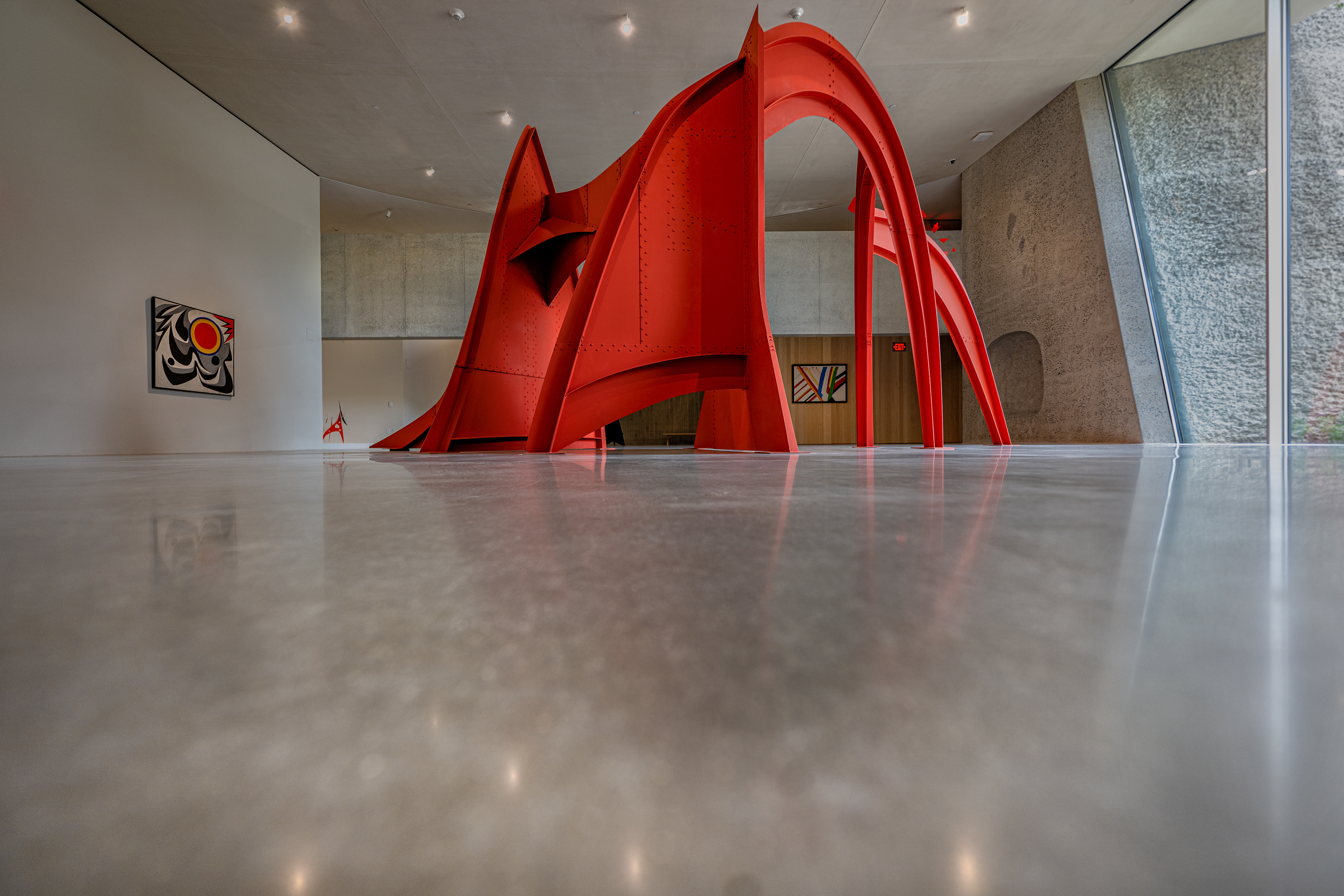
    Jerusalem Stabile II, 1976 by Alexander Calder is shown on display at the Calder Museum in Philadelphia.Jose F. Moreno / Staff Photographer