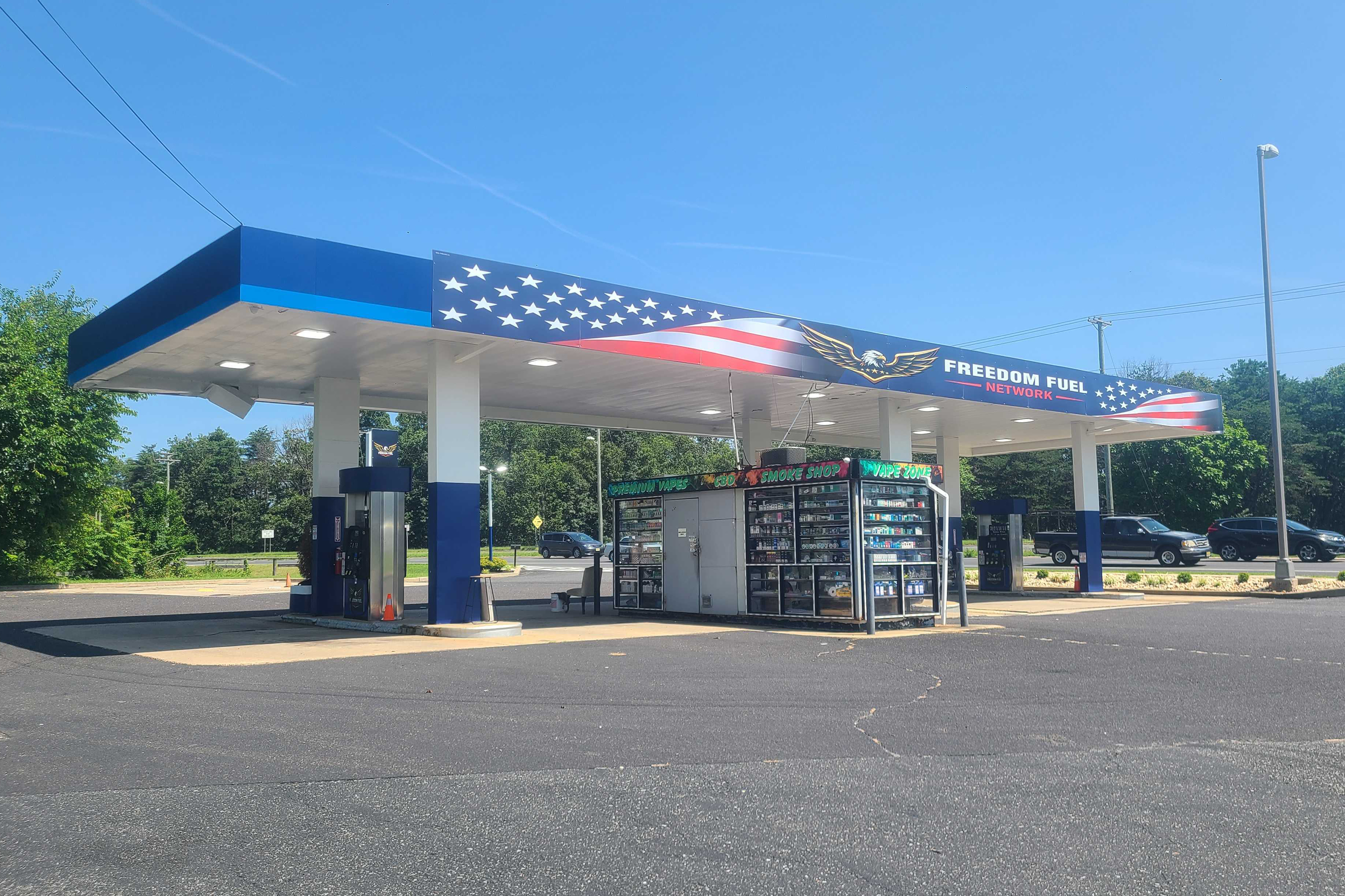
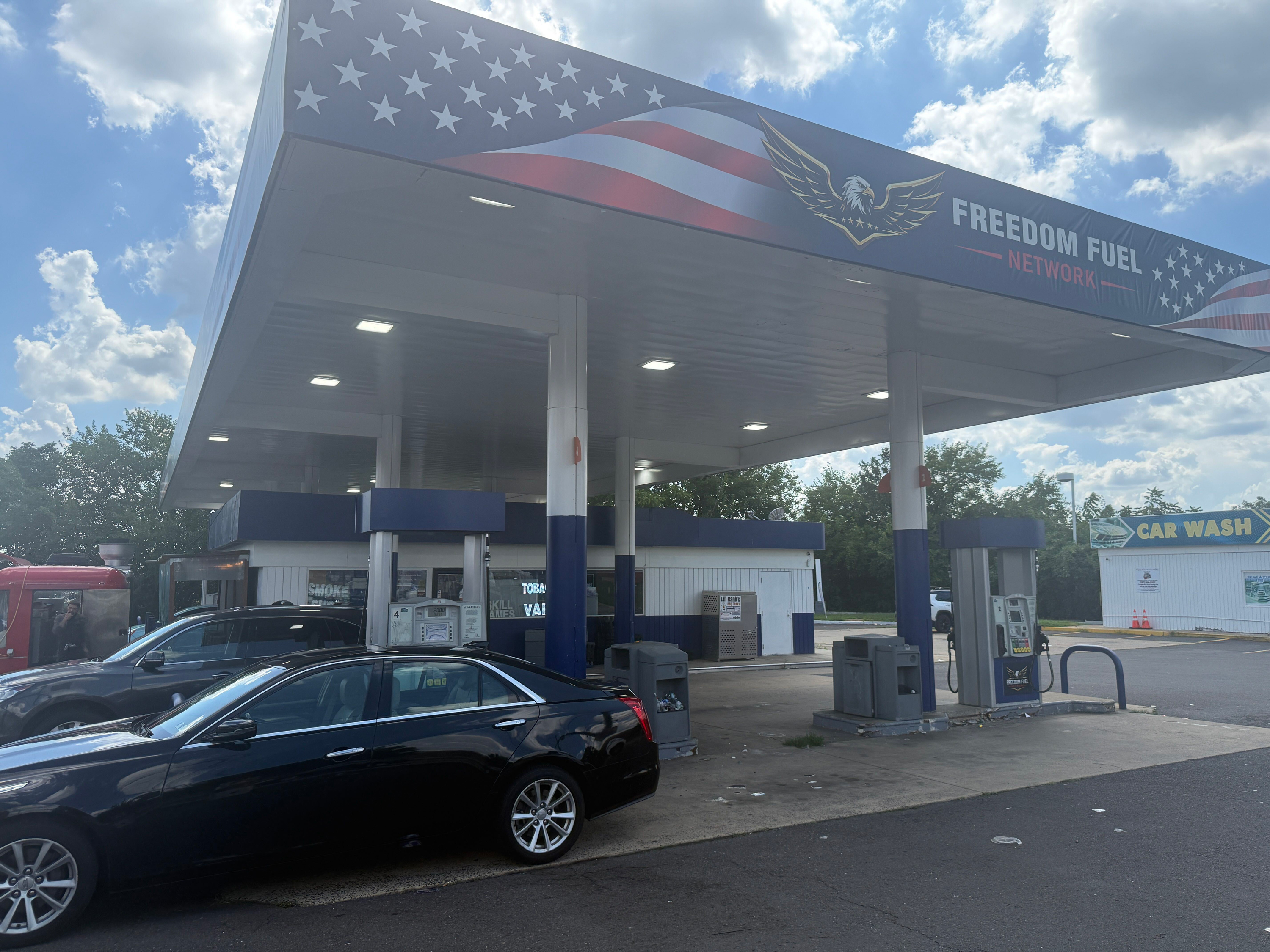
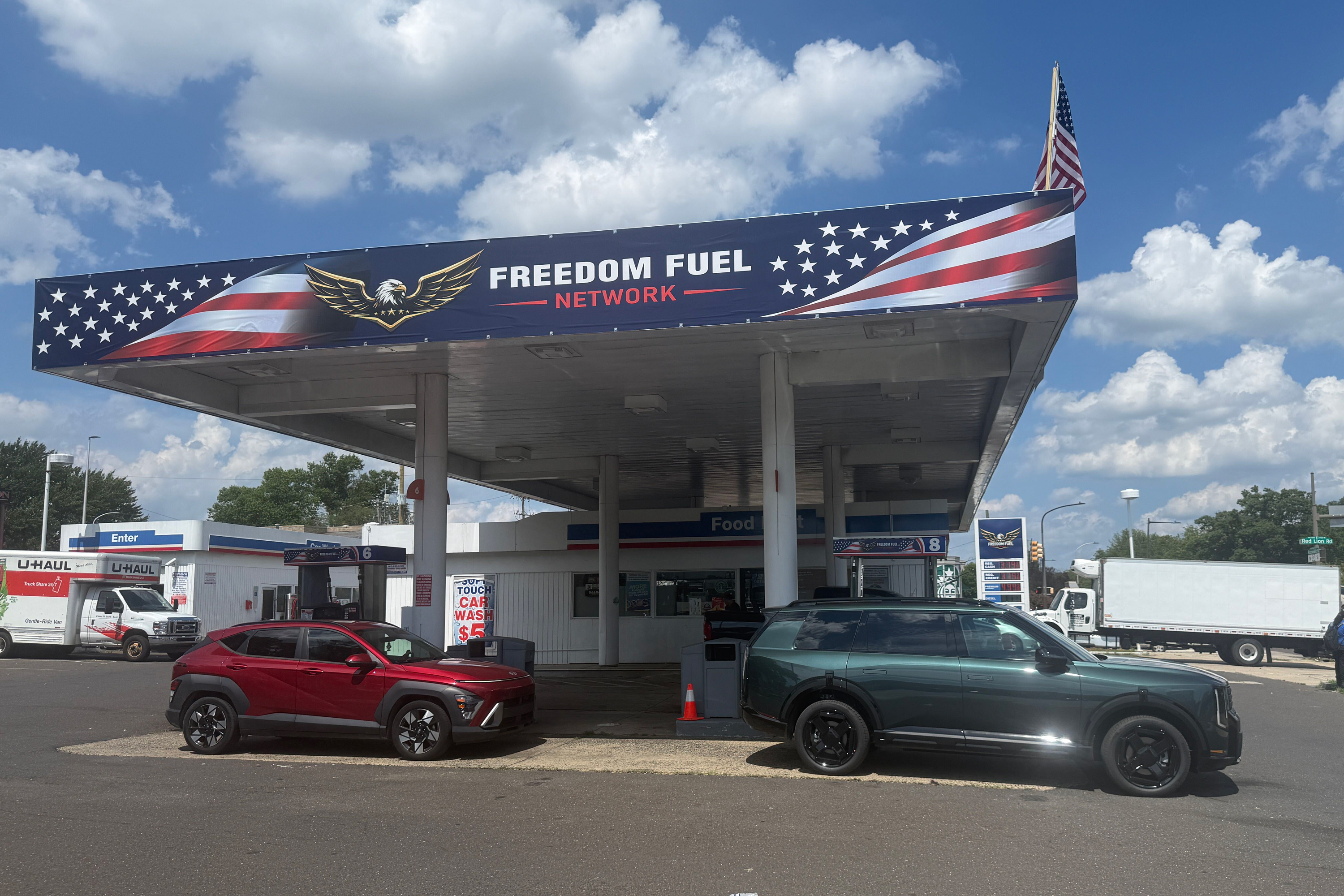
Six South Jersey gas stations that the White House promoted in July, touting below-market fuel prices, have racked up environmental violations with the state dating back to 2023.
The New Jersey Department of Environmental Protection issued close to $430,000 in fines in May to operators who run 17 gas stations, including the six Freedom Fuel locations, for the violations accrued over the years, according to an administrative order first reported by Politico and obtained by The Inquirer. The fines were issued before these stations rebranded to Freedom Fuel.
The Freedom Fuel stations, which made their debut this summer, accrued more than $202,000 in fines, according to department records. All 17 stations are owned by asset manager Blue Owl Capital and operated by Cherry Hill developer Shamikh Kazmi and his brother Syed Kazmi.
Blue Owl and the Kazmi brothers could not be reached for comment.
The owner-operators have requested a hearing, according to DEP spokesperson Larry Hajna, but no date had been set as of Wednesday.
The violations include failing to properly register underground storage tanks, failing to provide overfill prevention for some tanks, failing to cut and cap lines that lead to out-of-service tank systems, and violating delivery bans.
A Freedom Fuel location at 6801 Tilton Rd. in Egg Harbor was issued a fine of $50,000, the maximum penalty for the violation. The location received four deliveries in November 2023, despite having been banned from doing so because it did not properly register its storage tank.
In its justification for the fine, the department described the operator’s actions as a “deliberate and knowing act,” noting it was a major violation.
The Kazmi brothers have been embroiled in at least two lawsuits related to previous gas station ventures, including a 2021 trademark dispute with BP American Inc. and BP Products North America Inc. Additionally, Petroleum Marketing Group Inc., a fuel distribution company, accused the brothers of stealing thousands of gallons of gas from the company.
City won’t shut down Philly Freedom Fuel station
The Freedom Fuel station on Bustleton Ave. in Philadelphia.Dana Munro / staff
The network’s Bustleton Avenue station — also linked to the Kazmi brothers — failed a license renewal inspection at the end of July that could have forced its closure. But the owners remedied the issue and can continue to operate the station, according to a city spokesperson.
More than two months after having been loudly promoted by the White House and PresidentDonald Trump, Freedom Fuel’s owners have remained silent about their discount gas operation.
Baltimore Ravens assistant coach Randy Brown and former commodities trader Yoni Gontownik signed the company’s certificate of formation in Delaware and have not spoken publicly about the highly touted enterprise.
Freedom Fuel launched with prices 40 to 50 cents a gallon cheaper than nearby stations, frustrating competitors and confusing experts who follow the notoriously low-margin business.
“With every new site, we’re driving down gas prices at the pump for more communities,” reads a message on the network’s website.
In recent weeks, prices across Freedom Fuel locations have risen closer to other discount locations.
Take the location on Dreshertown Road in Upper Dublin Township, which was promoted in a video shared by the White House. When it launched at the beginning of July, the station sold gas for $3.47 a gallon — a nod to Trump being the 47th president. But as of Tuesday, the station was selling gas for $3.89 a gallon, about a dime cheaper than a nearby Citgo station and slightly more than Sam’s Club, according to gas-tracking website GasBuddy.
The average cost of a gallon of gas in Philadelphia on Tuesday was $4.15, according to AAA. That was up more than 28% from this time last year, when the cost averaged $3.23.
Northeast Philadelphia’s last traditional Jewish delicatessen will close this weekend, ending a chapter in a food culture that for decades seemed inseparable from the area itself.
Steve Stein’s Famous Deli, in Bustleton’s Grant Plaza, outlasted a food landscape once crowded with Jewish delis, bakeries, butchers, and other specialty shops. Its closing Sunday comes more than nine years after the finale of Jack’s Deli in Bell’s Corner, the Northeast’s penultimate deli. Like Stein’s, Jack’s combined a retail counter with a restaurant.
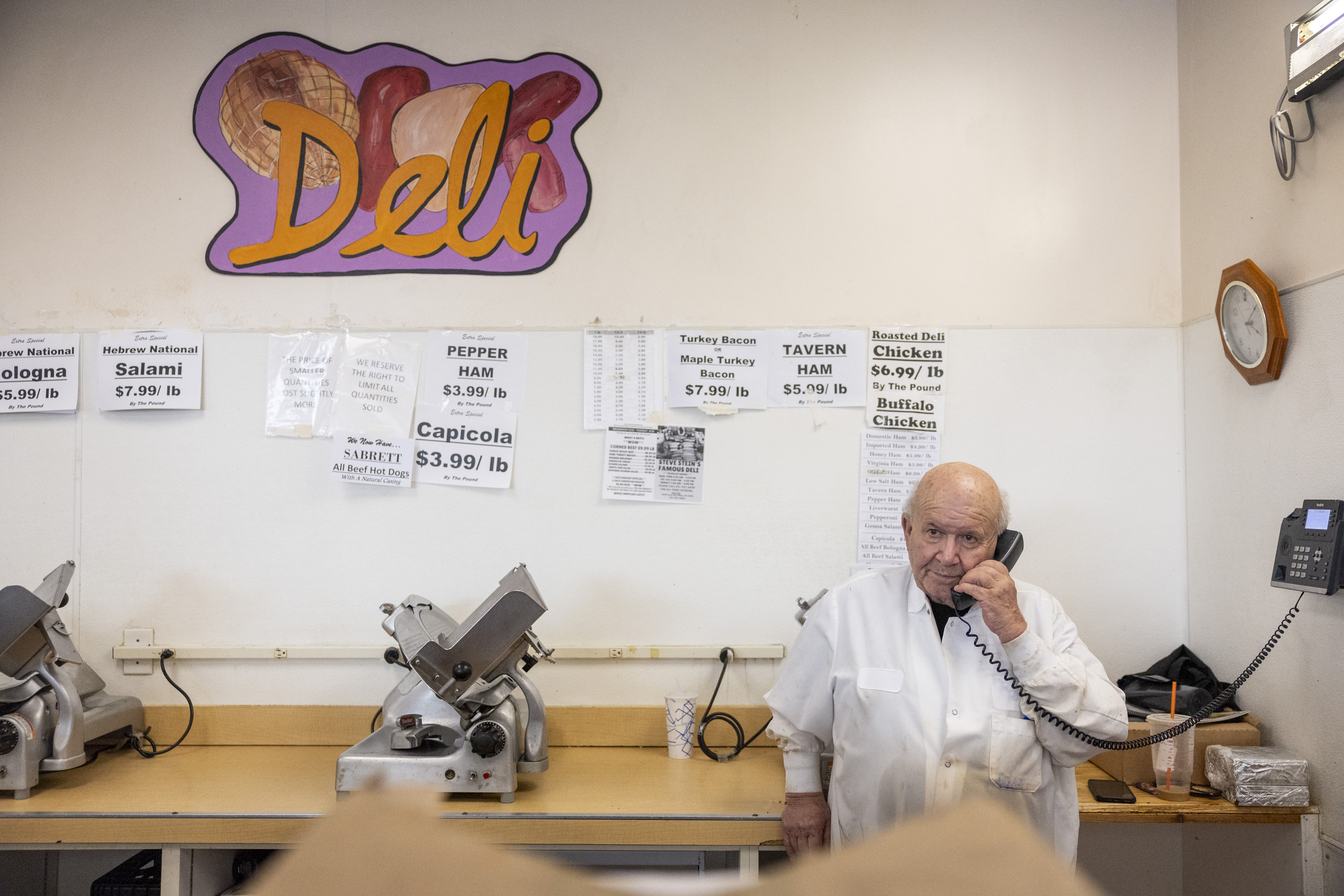
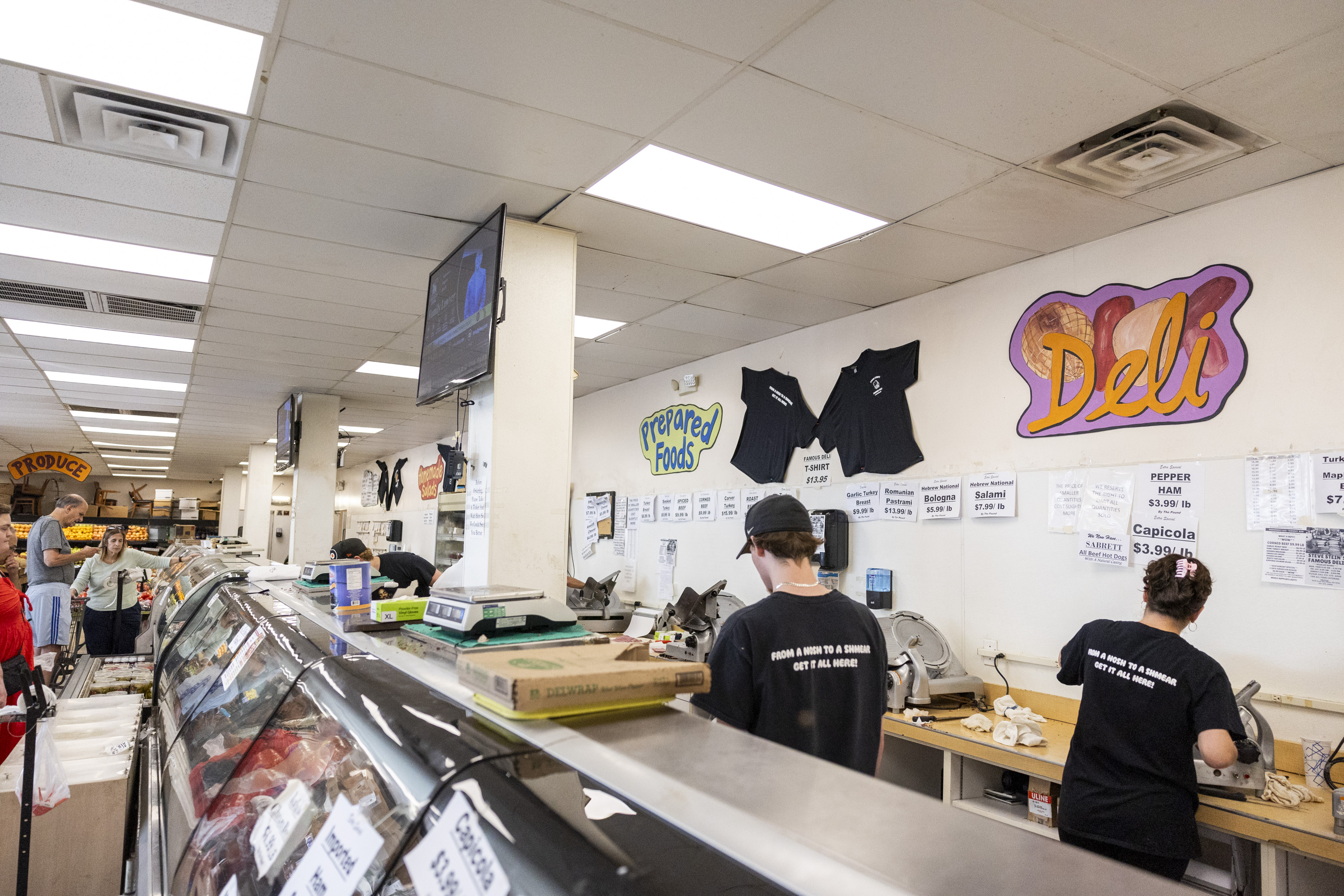
The deli counter at Steve Stein’s Famous Deli on Aug. 14, 2026.Tyger Williams / Staff Photographer
For Steve Stein, 83, the closing will end a family business whose roots stretch back to the late 1950s, when his family became involved with the Famous Deli location at 6826 Bustleton Ave. in Castor Gardens.
Famous was part of an older Philadelphia deli dynasty. Beginning in the 1920s, the Auspitz brothers launched a string of delis around the city, including the flagship at Fourth and Bainbridge Streets in Queen Village, now owned by Al Gamble.
Around 1960, Stein said, the Auspitzes sold the Bustleton Avenue Famous to Stein’s father, Mike, his brother Arnold, and his cousin Jack. The boys had run the produce concession there. Steve and Arnie, who died in 2010, later ran it side by side. Steve now runs the place with his son, Lee, now 57.
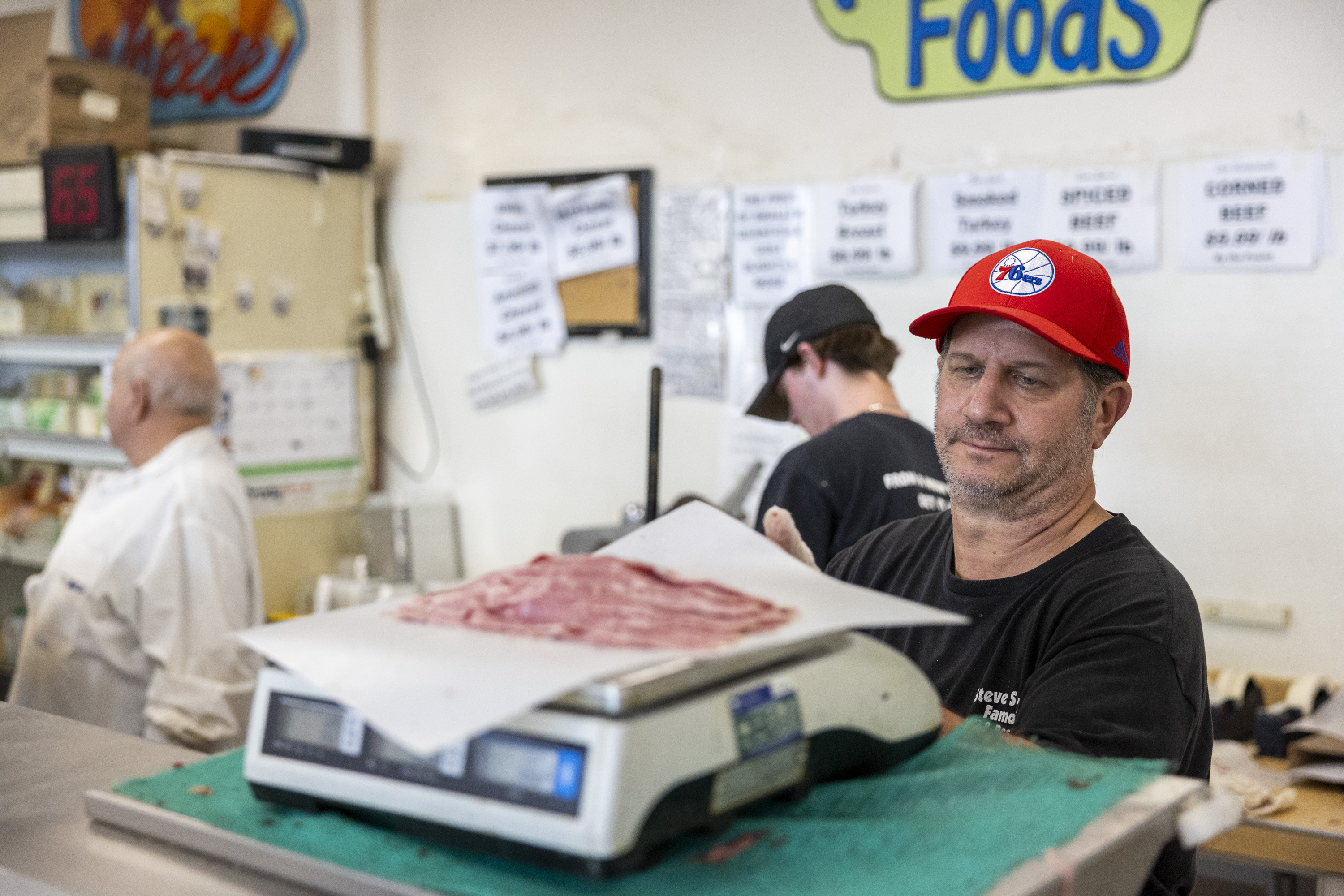
Lee Stein weighs corned beef at his father’s deli on Aug. 14, 2026.Tyger Williams / Staff Photographer
Since Stein announced the closing, customers have been stocking up on corned beef, smoked fish, rye bread, and other foods they fear they will not easily replace. Stein has cut prices as he tries to move inventory.
“Nobody’s charging $9.99 a pound for house-cured corned beef,” Lee Stein said.
On Friday, Tracey Lynn of Fox Chase ordered two pounds of corned beef while plucking garlic-perfumed sour tomatoes from a barrel, telling Stein that she planned to freeze some of the meat.
Lynn said she and her husband have been customers since 1993. She is not sure where she will shop next. “I don’t want whitefish salad from BJ’s or from Costco,” she said.
The closing is partly a retirement story. Stein said problems with his legs have made it increasingly difficult to work.
But it is also about labor costs, food prices, succession, and a neighborhood whose demographics have changed dramatically over the life of the business.
As Jewish families moved farther into the Northeast, Famous followed: first, in the mid-1970s, to Krewstown Road (where it had two locations) and, 14 years ago, to Grant Avenue. Stein, who later also had a short-lived store in Holland, Bucks County, sold the Bustleton Avenue store in the mid-1970s.
In that sense, the history of Famous tracks the movement of Jewish Philadelphia itself.
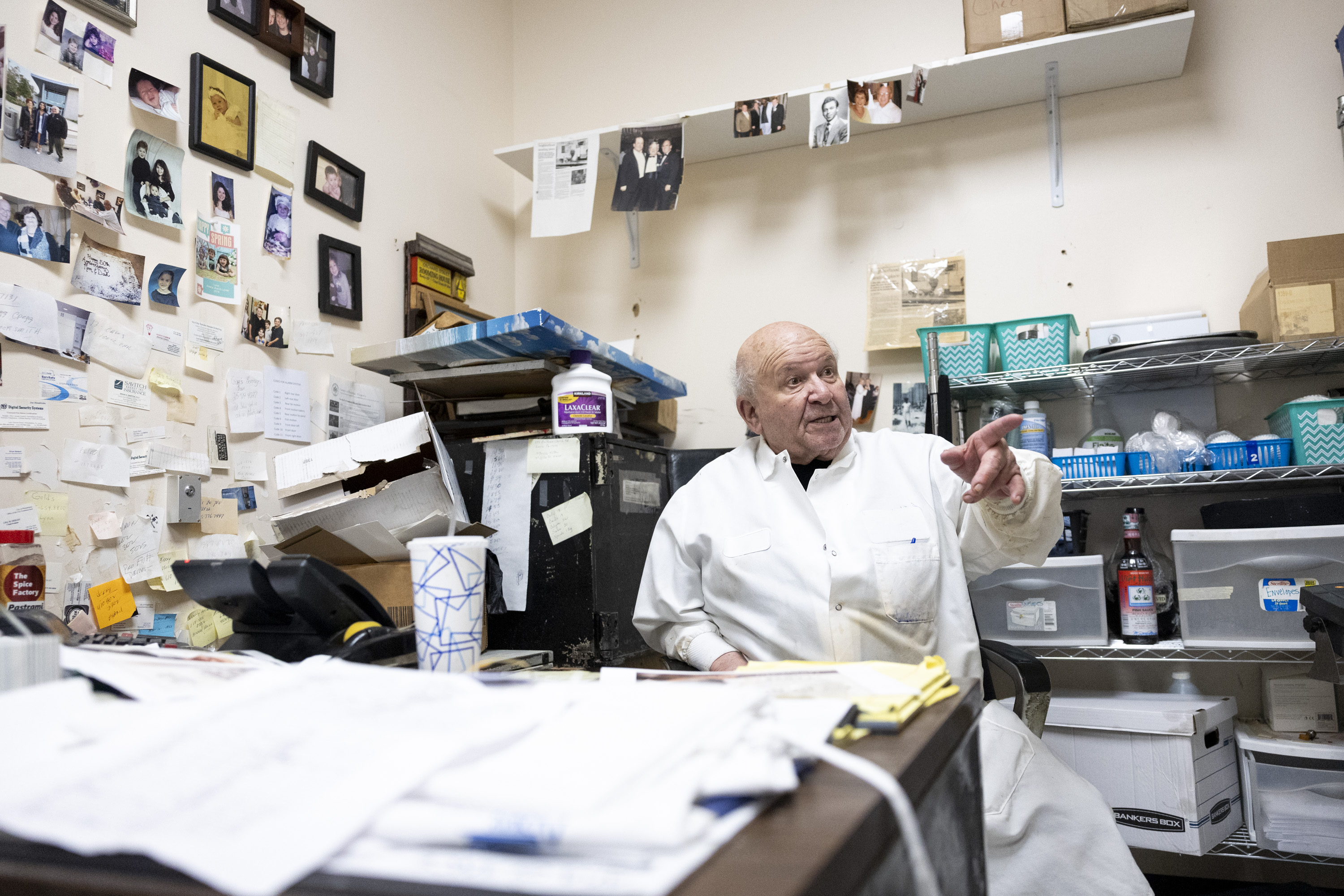
Steve Stein, owner of Steve Stein’s Famous Deli, takes a break in his office.Tyger Williams / Staff Photographer
A suburban diaspora
After World War II, thousands of Jewish families left older Philadelphia neighborhoods such as Strawberry Mansion, Queen Village, and Wynnefield for Oxford Circle, Castor Gardens, Rhawnhurst, and Bustleton in the rapidly developing Northeast. Others moved to Lower Merion and Cherry Hill, which developed large Jewish communities and deli cultures of their own that remain.
By 1970, demographer Ira Rosenwaike estimated, using Census data on Yiddish as a mother tongue, that more than 68,000 Jewish adults 25 and older lived in the Near and Far Northeast.
That population supported an extraordinary density of Jewish food businesses: Abe’s Appetizers, Castor Deli, R&W, Stern’s, Paul’s, Four Lads, Dave’s, Casino, the Nasherei, four Barson-Overbrook locations.
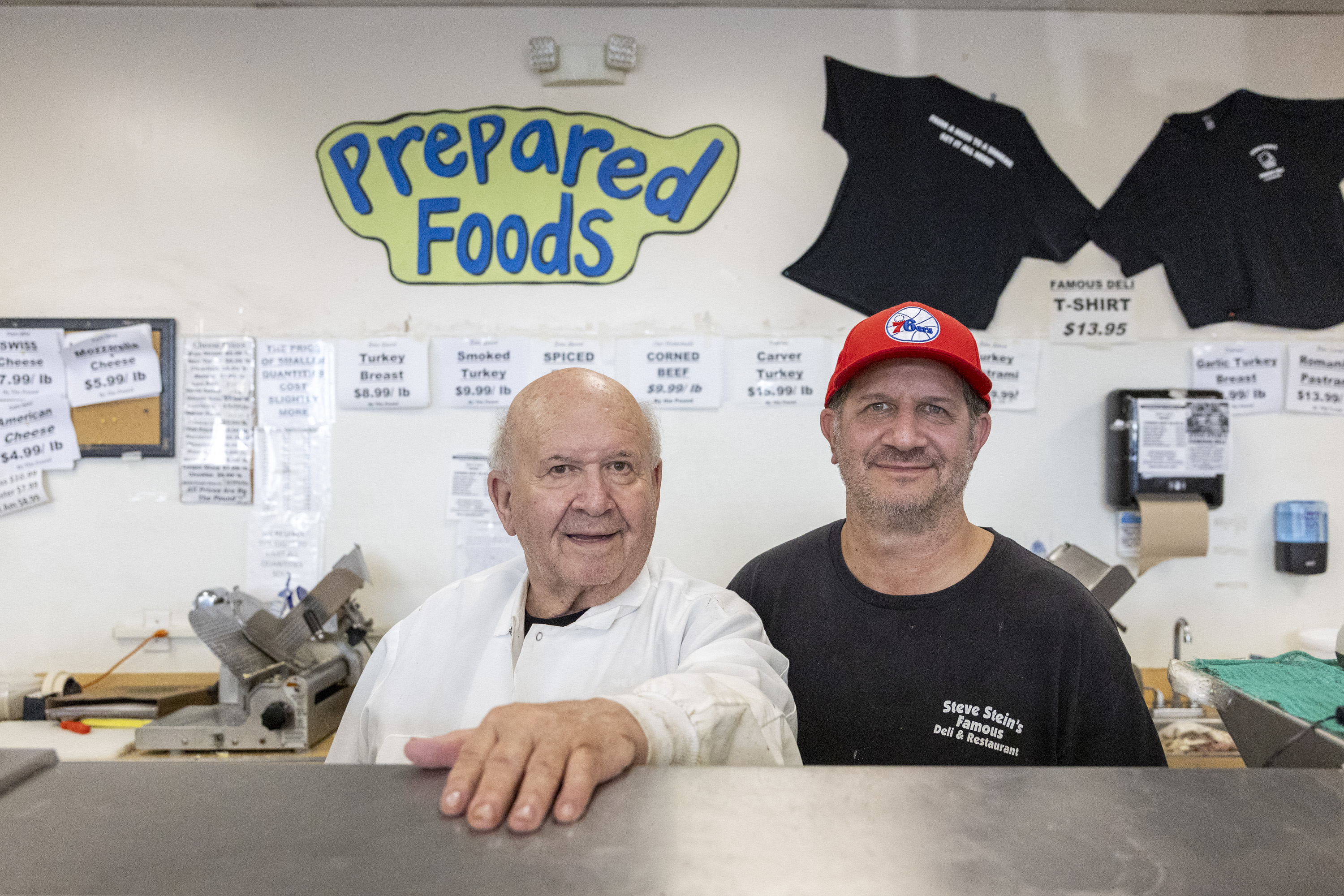
Steve Stein (left), owner of Steve Stein’s Famous Deli, behind the counter with his son, Lee.Tyger Williams / Staff Photographer
To Hasia Diner, a historian and New York University professor who specializes in American Jewish history, the significance of delis was precisely their ordinariness. They were not institutions created to preserve Jewish culture. They were where neighborhood life happened.
“On the one hand, [delis] seem so everyday,” Diner said in an interview. “They’re not great synagogues where religion was expounded, or places where great ideas were pronounced. But they were places where life was lived.”
Some were kosher and others were not. What mattered, Diner said, was that the deli offered a secular Jewish space, rooted as much in neighborhood and food as in religious observance.
By the 1980s, however, those neighborhoods were changing. In a 1987 Inquirer article, Bruce Isakoff of Paul’s Deli, on Castor Avenue near Brighton Street, said his business was doing more lunchtime trade as Jews left the neighborhood and it became a more generic deli. By then, Four Lads, on Castor Avenue at Creston Street in Oxford Circle, had stopped carrying smoked fish and pastrami. Both are long gone.
A ‘kind of shrine’
Many Jewish households moved farther north and into Bucks and Montgomery Counties. A 1996-97 Jewish Federation study found that Philadelphia accounted for 41% of the region’s population living in Jewish households, down from 54% in 1984, while Bucks County’s share had nearly doubled.
The studies used different definitions and geographic boundaries, but the direction was unmistakable: The dense Jewish population that once sustained neighborhood delis had dispersed.
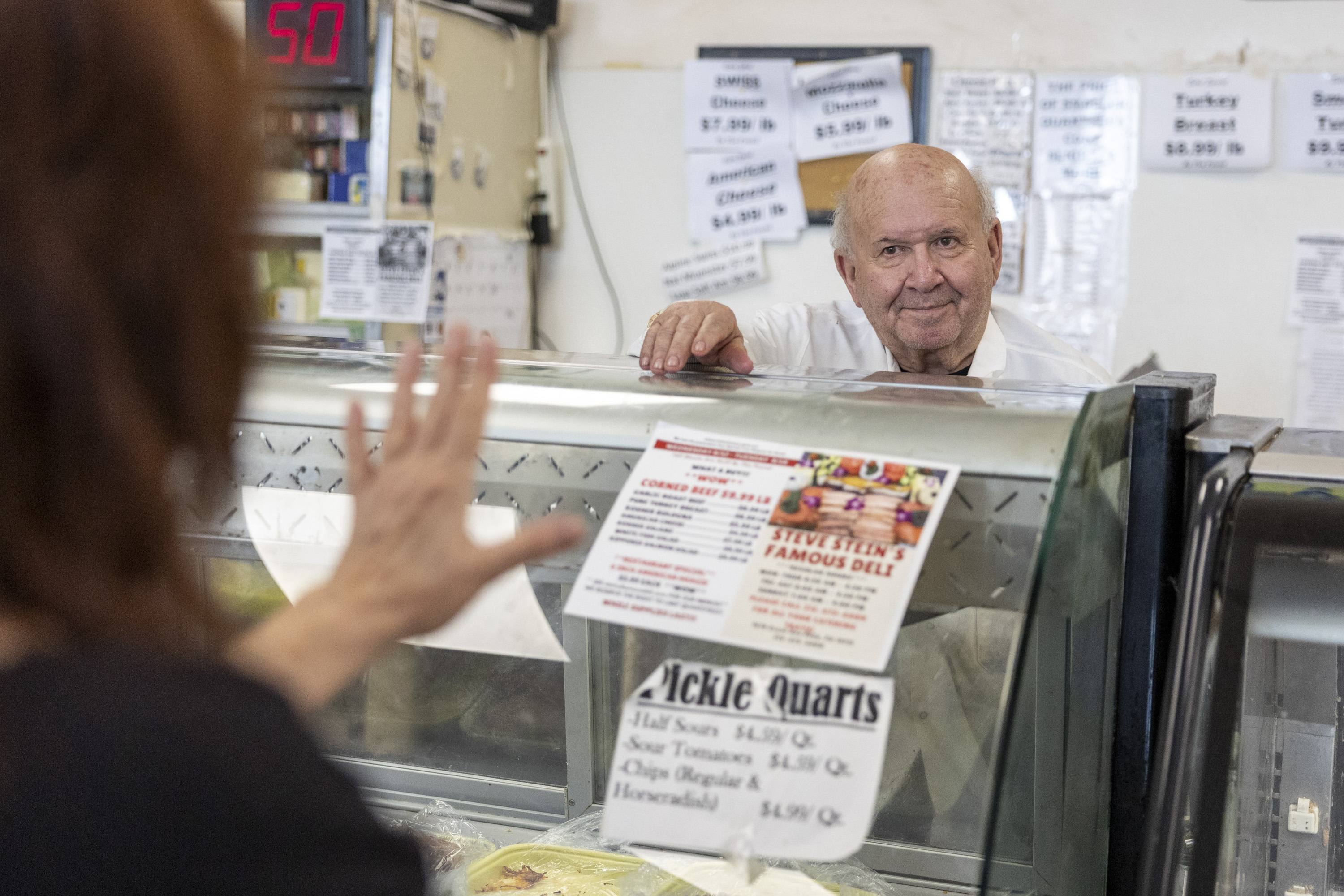
Steve Stein, owner of Steve Stein’s Famous Deli, taking a deli order on Aug. 14, 2026.Tyger Williams / Staff Photographer
The movement itself was nothing new, Diner said. American Jewish communities repeatedly established themselves in neighborhoods and moved elsewhere. What changed was the role of the old neighborhood — and of the deli within it.
“The deli was often the kind of shrine to which they went back,” she said.
The old delis offered something beyond nostalgia. In their heyday, Diner said, they were overwhelmingly Jewish spaces where customers did not have to explain themselves or worry about how they appeared to outsiders.
“These places were so rich with a kind of embeddedness, of comfort and security and, again, letting your hair down,” she said.
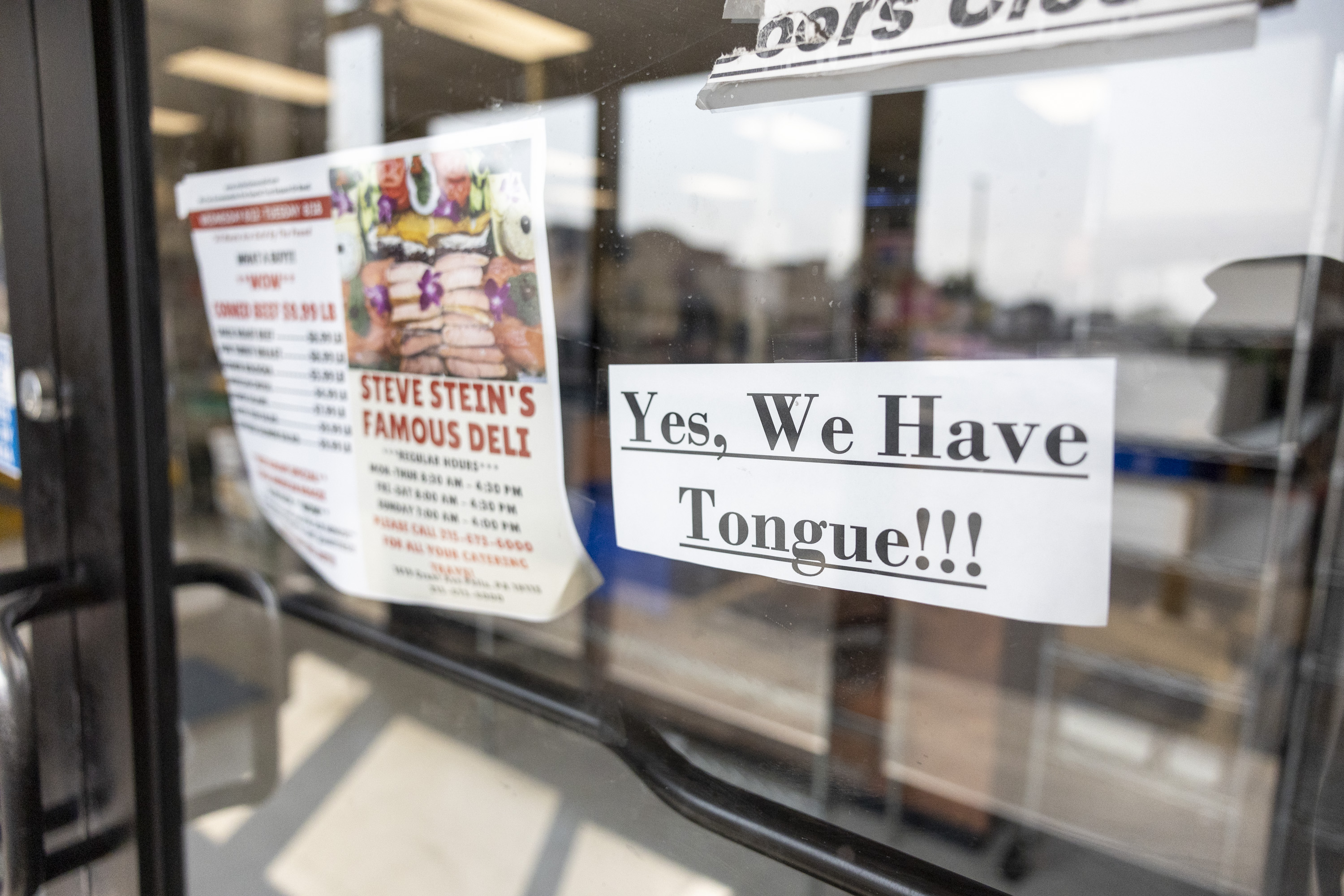
A sign proclaiming, “Yes, We Have Tongue!!!” at the entrance at Steve Stein’s Famous Deli.Tyger Williams / Staff Photographer
Population was only part of the story. Supermarkets increasingly stock foods that once sent customers to specialty counters: corned beef, pastrami, smoked fish, whitefish salad, herring, rye bread, bagels, pickles, and knishes. But not everything. Signs at Famous proclaim, “Yes, We Have Tongue!!!” Not many others do.
More important, Diner said, is what cannot be sold at a supermarket: the deli as a secular gathering place, where being Jewish required neither religious observance nor agreement about politics. “A pastrami sandwich is a pastrami sandwich,” she said.
Costly ingredients
The traditional deli model itself is expensive and labor-intensive, built around extensive preparation and a sprawling inventory. Famous still cures its corned beef and makes its own turkey, pastrami, whitefish salad, and spice beef.
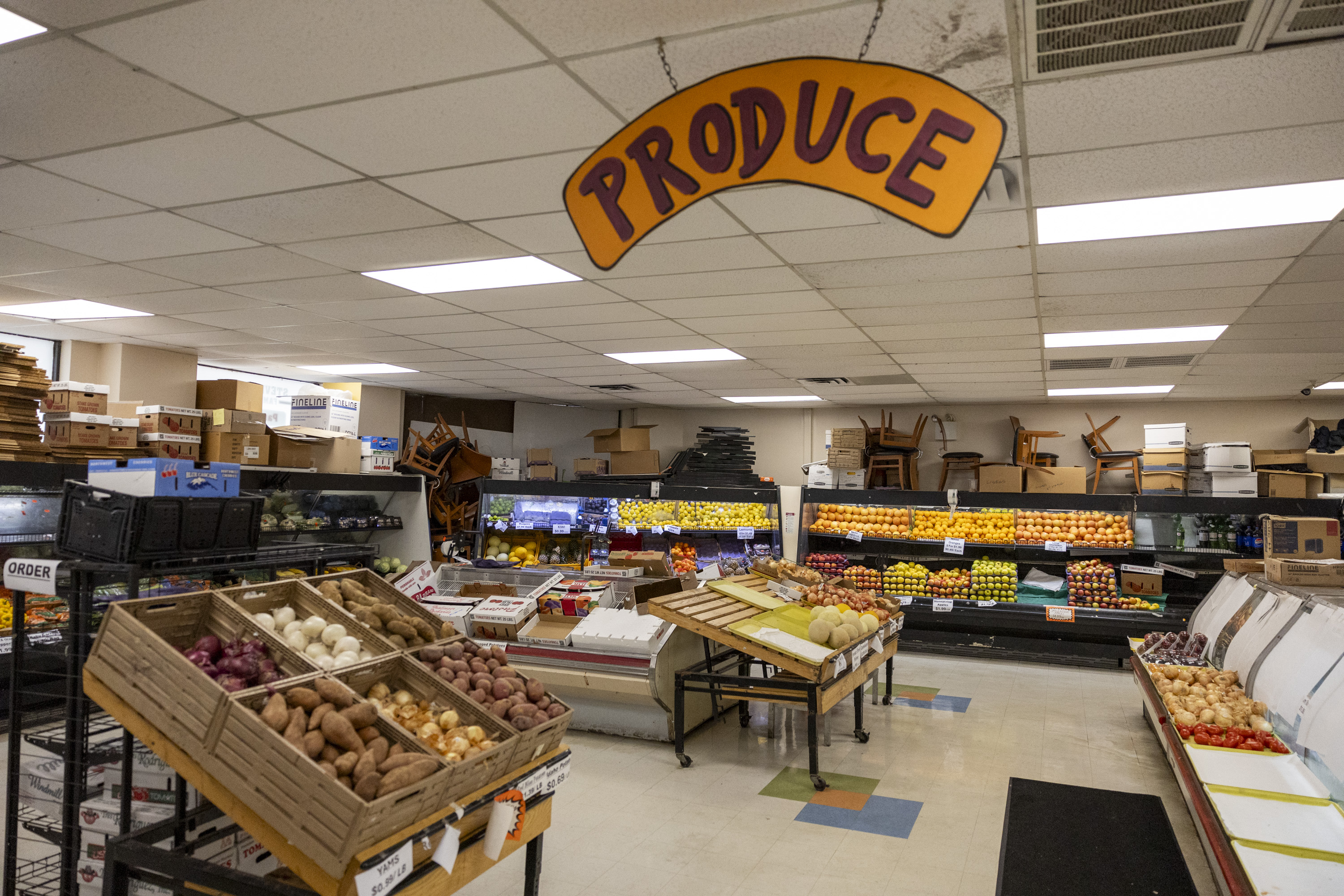
Steve Stein’s Famous Deli is equal parts market, deli counter, and restaurant.Tyger Williams / Staff Photographer
Steve Stein said finding employees has become increasingly difficult. Lee Stein said prospective workers have easier options, such as driving for Uber or making deliveries for Grubhub.
The deli has about 35 employees, many part-time. Some are placed through SPIN, the Philadelphia nonprofit that supports people with intellectual, developmental, and autism spectrum disabilities.
Survival has also required adapting to the customer base, increasingly non-Jewish. Lee said he remembers when Famous carried a single canned ham, hidden behind the counter. Though few Jewish delis are kosher, pork traditionally has been another matter.
“Nobody was allowed to say the word ham,” he said.
Today, their case holds about a dozen varieties.
Rob Woloshin, 40, owner of Manny’s Deli Stop in Willow Grove, grew up going to Stein’s Famous with his father. His deli represents a leaner version of the old model: counter service, a few tables, online ordering, and delivery, with traditional deli sandwiches alongside chicken cutlets, wraps, and other contemporary offerings.
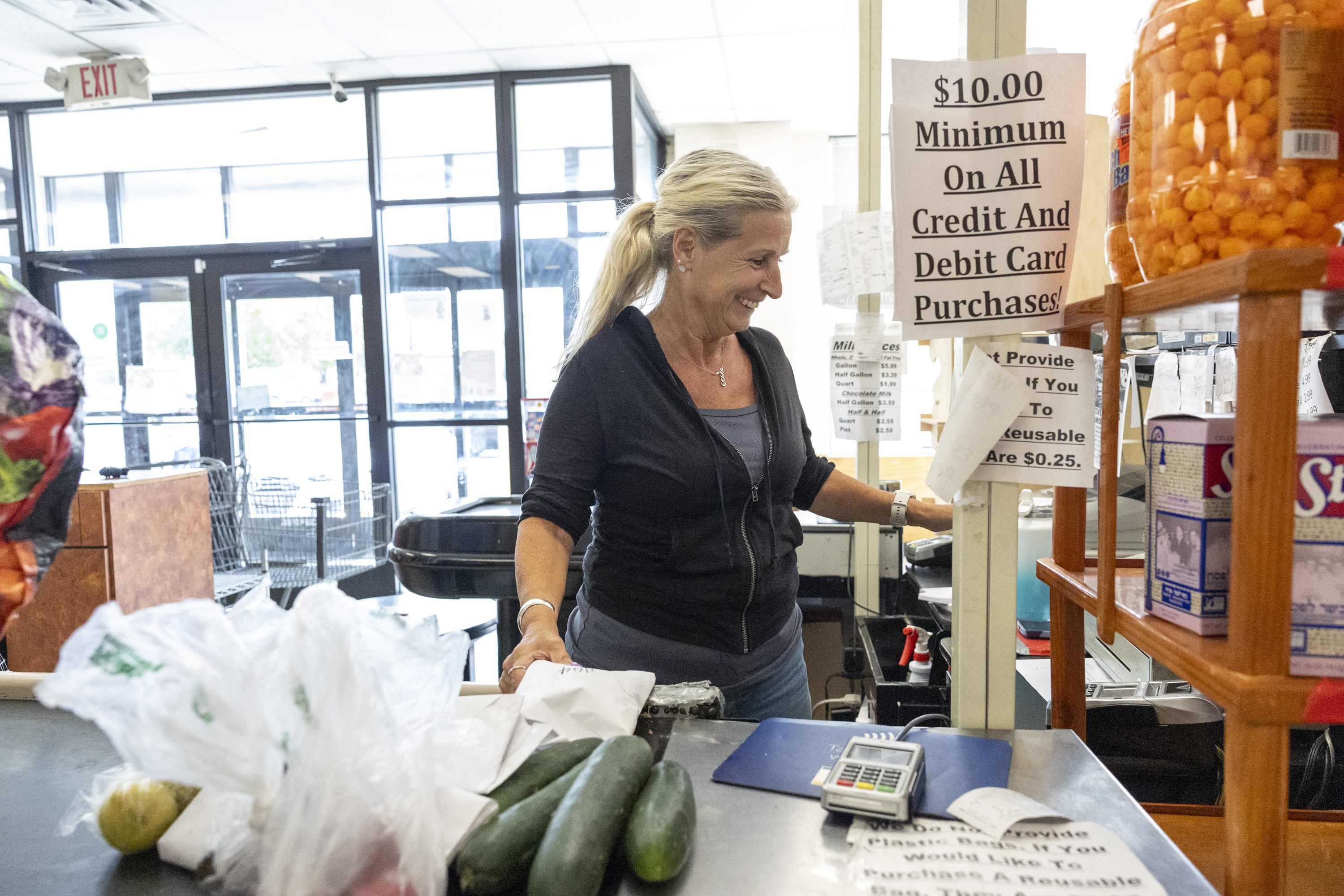
Cashier Linda DiNenno, who has worked at Steve Stein’s Famous for about 13 years, checks out a customer.Tyger Williams / Staff Photographer
“We’ve kind of modernized, I guess, as much as the Jewish deli can be modernized,” Woloshin said.
Famous may yet have an afterlife. Lee Stein said he is talking with the landlord about a deal that could keep him in the space, under another name, in time for the Jewish High Holy Days, which begin Sept. 11. If not, he might offer catering from a synagogue kitchen.
For longtime cashier Linda DiNenno, the closing is less about corned beef than the people around the counter. She said she will miss the family atmosphere among employees and customers who have been calling to say goodbye.
“I’ve got customers calling on the phone, like, ‘Oh my God, I’m gonna miss you, Linda,’” she said.
Since it’s noontime on the first Thursday of the month, eight residents of Wesley Enhanced Living at Pennypack Park are chatting at the long table in the middle of the main dining room at Kelly’s Seafood in Northeast Philadelphia.
Back in the kitchen, twin brothers Brian and Brett Kelly and Brian’s son Tommy are knocking out the lunch orders. Crab cakes sizzle in sauté pans. Snapper soup bubbles in the kettles.
For the Wesley residents, this is the end of a longtime ritual.
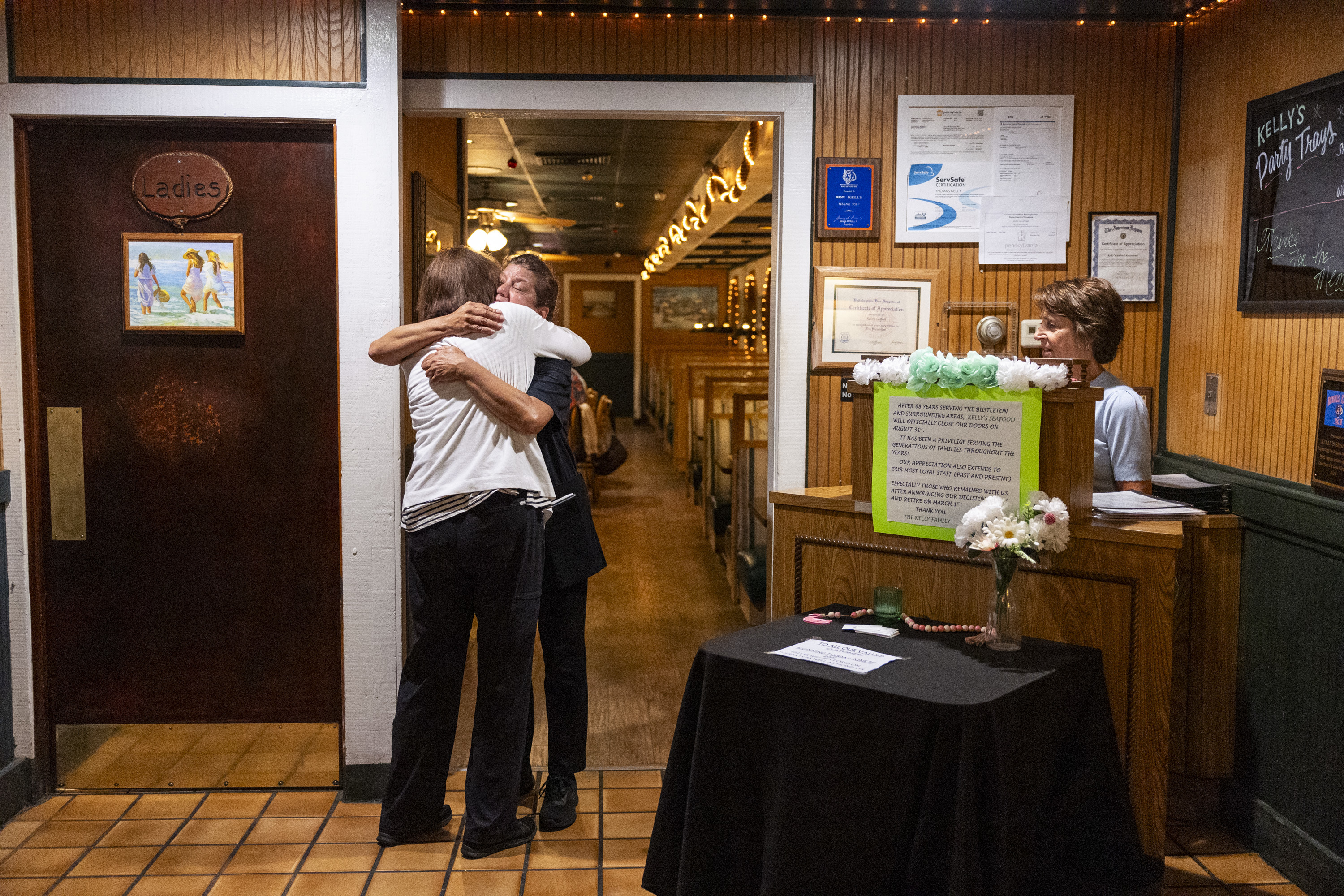
Kelly’s Seafood, whose history stretches back 68 years, will close Aug. 31.
“When they leave today, we’ll all be crying,” said server Chris Brown, who has worked at Kelly’s since 1988. The Kelly brothers’ sister, Denise Barreras, nodded.
A few minutes later, their checks paid, the residents rose from the table.
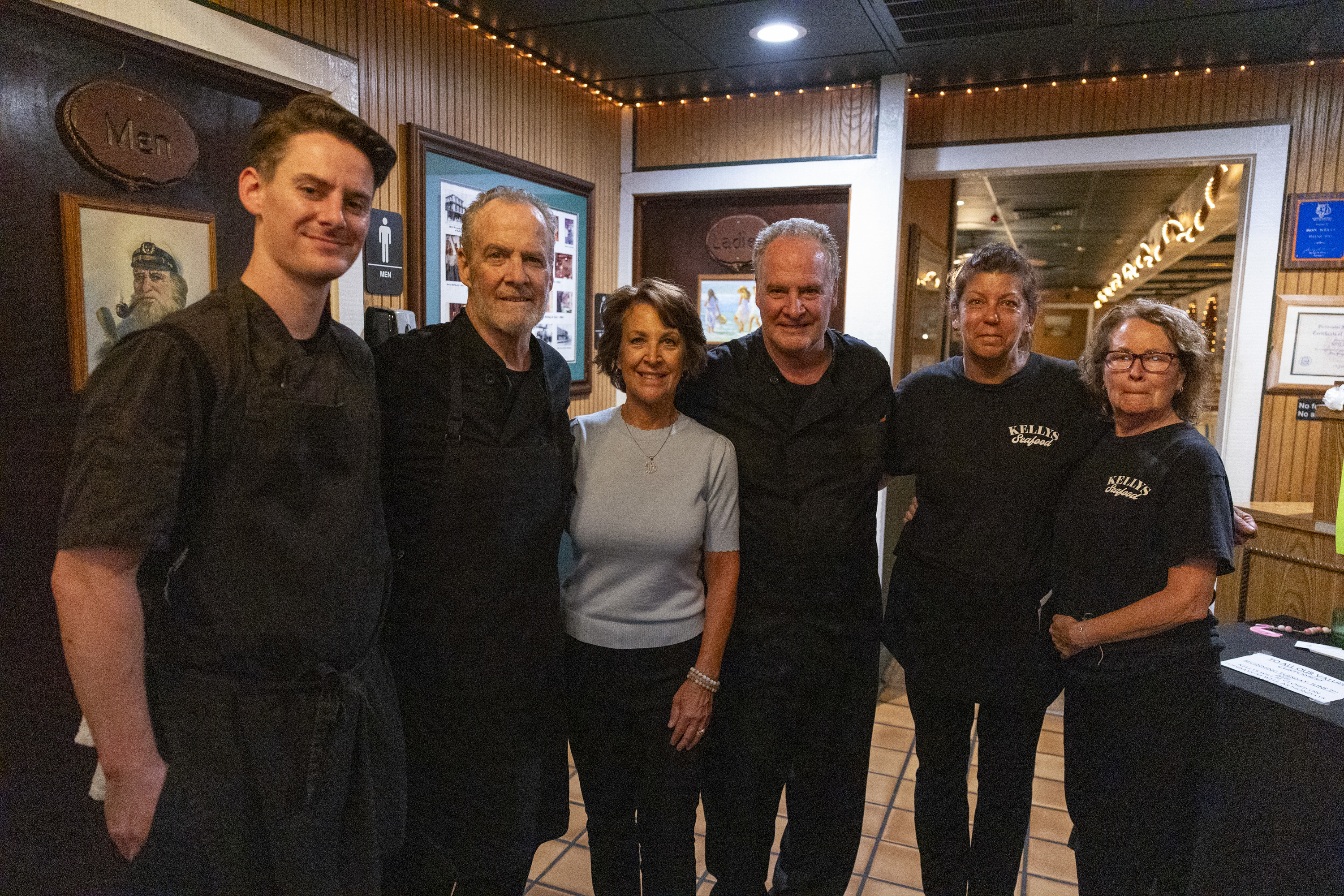
The crew at Kelly’s (from left) Tom Kelly, siblings Brian Kelly, Denise Barreras, and Brett Kelly, server Chris Brown, and bartender Cathy Sims.Tyger Williams / Staff Photographer
And just as Brown had called it: tears and hugs.
Where will September’s first-Thursday lunch be? They’re not sure.
Kelly’s, one of the last of the Northeast fish houses, has been the setting for countless rituals like theirs, a place where people who came as children later brought their own children.
“People my age are saying they’ve been coming here since they were 10 years old,” said Brian Kelly, 62, who has been reading customers’ recollections since the closing was announced. “They’re talking about christenings, baptisms, graduations. It really makes you realize how many people have come through these doors over the years.”
The Kellys had hoped to make it to 70 years. Instead, the family has reached the point where keeping the restaurant going would require more than they are willing — or able — to give it.
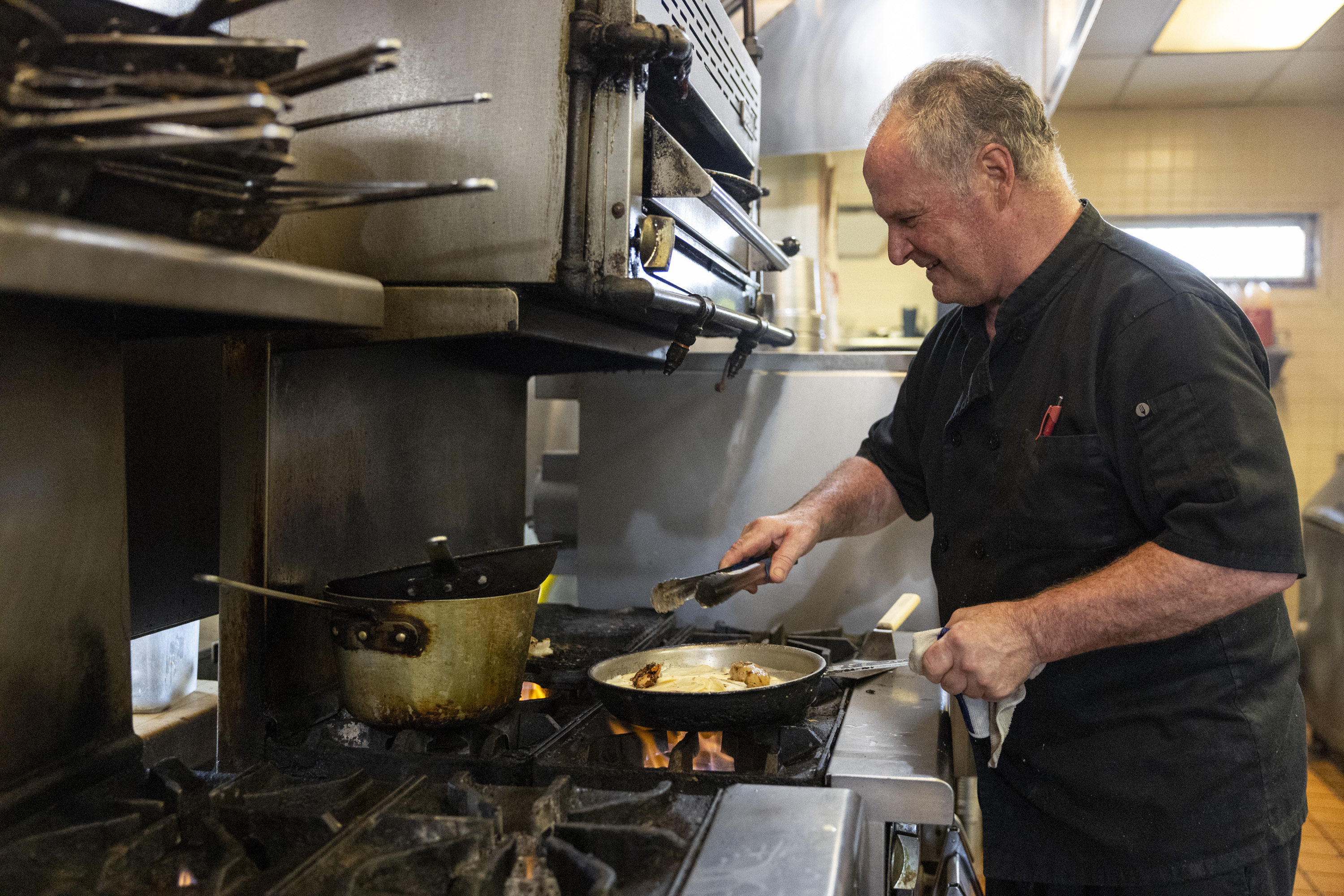
Brett Kelly working the stove at Kelly’s.Tyger Williams / Staff Photographer
Brian and Brett’s father, Ron, died in July 2023 at age 87. Of his nine grandchildren, only Brian’s son Tommy now works at the restaurant. An illness has sharply limited how much Brian can work, leaving Brett to pull double shifts since October.
The family announced on March 1 that Kelly’s was on the market, hoping to give employees and customers plenty of warning. In late July, with the restaurant still unsold, they decided that they needed to set an end date.
Kelly’s Seafood history
The story began in 1958, when Ron Kelly and his father, William T. Kelly, opened Kelly’s Grille, a luncheonette in a shopping center a few blocks from the current restaurant.
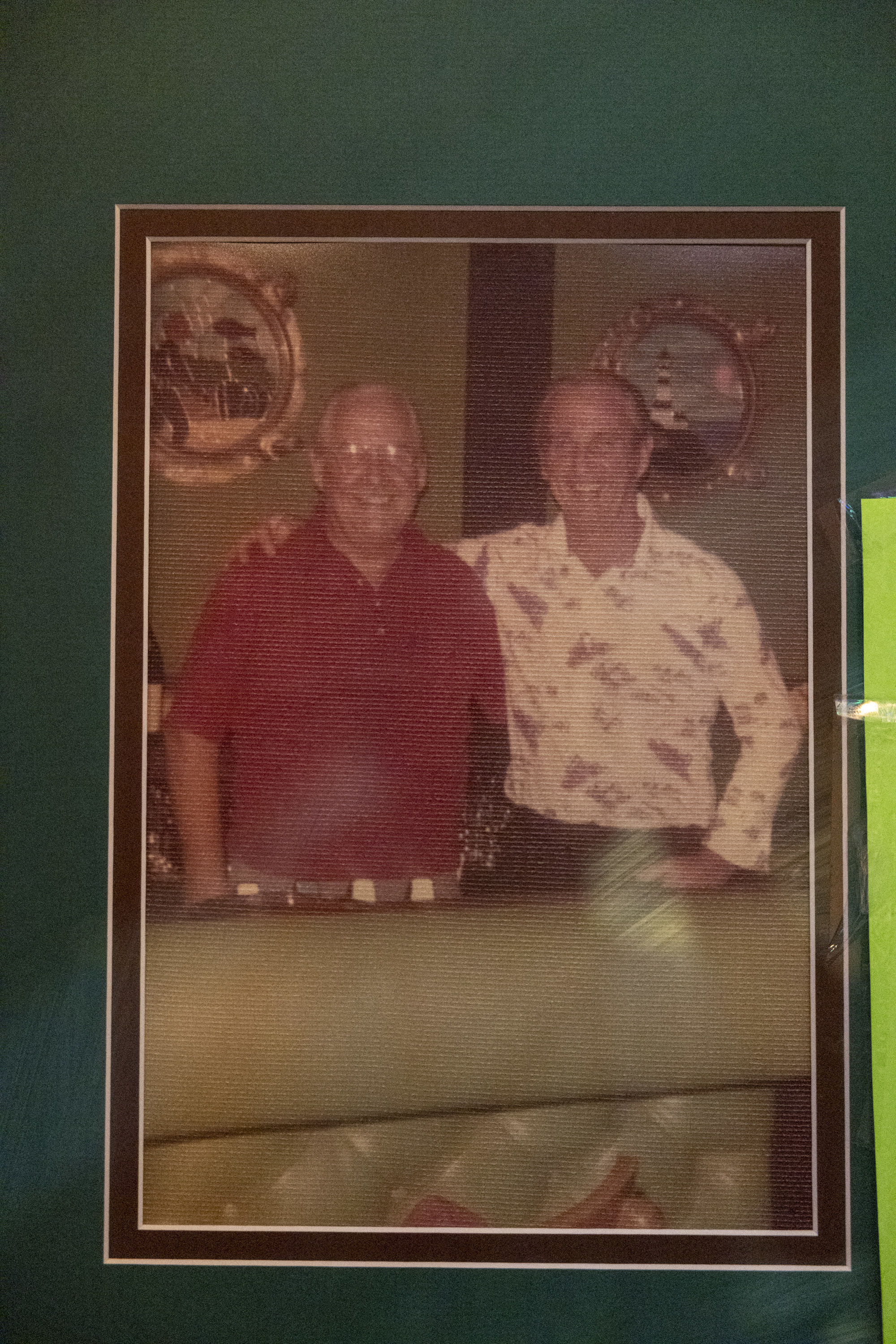
Founders William (left) and Ron Kelly, in a photo hanging at Kelly’s Seafood.Tyger Williams / Staff Photographer
William had worked on a milk wagon. Ron, newly out of military service, wanted to get into the restaurant business, and his father went along with him.
In 1964, they moved Kelly’s to 9362 Old Bustleton Ave., just off Bustleton Avenue and Welsh Road, and Kelly’s Seafood took shape. (It is unrelated to the long-ago Kelly’s on Mole Street in Center City.)
The family and restaurant became difficult to separate.
William lived in the apartment above Kelly’s and cleaned the bathrooms every morning. Ron and Jean Kelly’s four children — Denise, Tim, Brian, and Brett — all grew up working there.
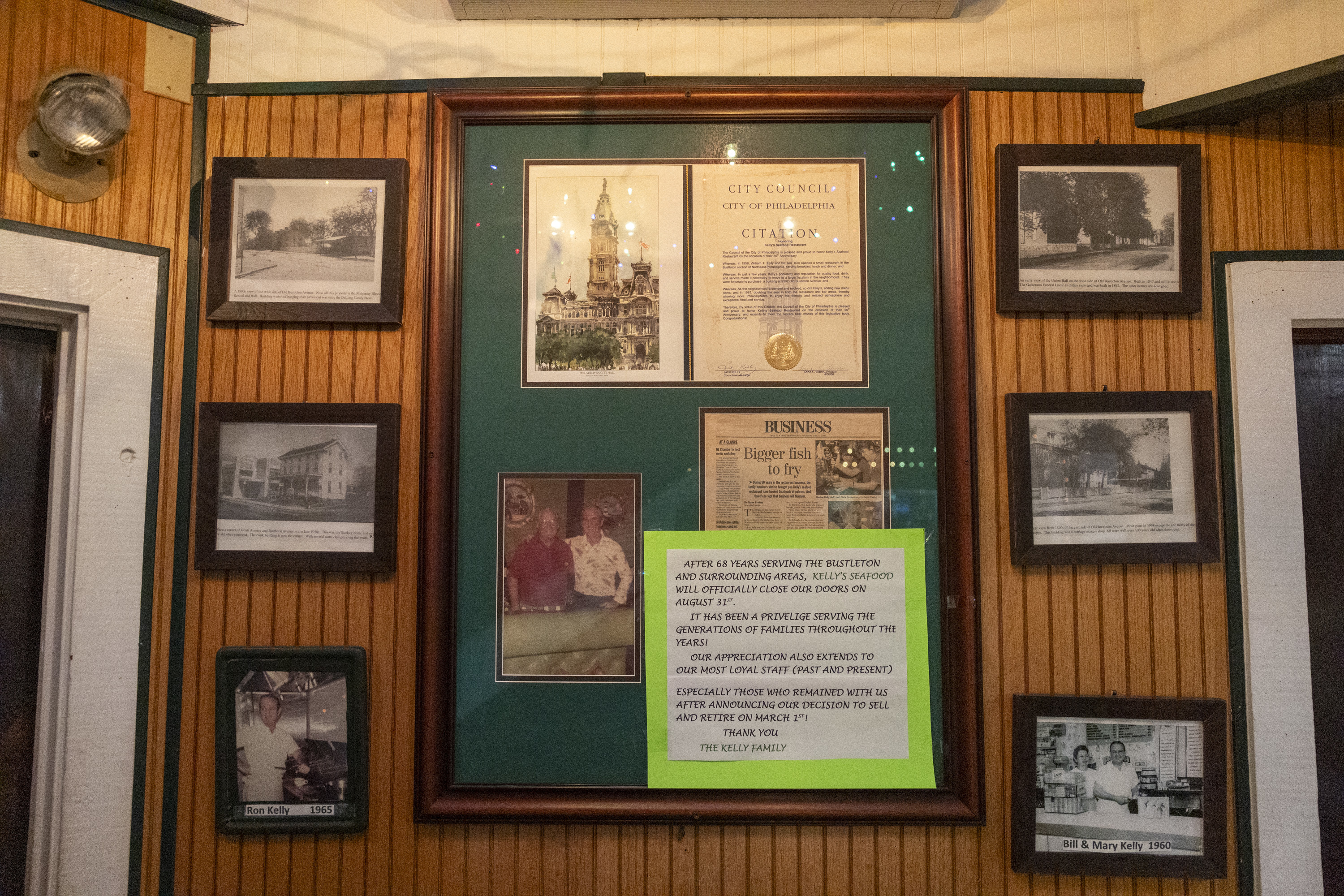
Kelly’s Seafood lines its walls with memorabilia.Tyger Williams / Staff Photographer
Brian and Brett walked over after school and spent Wednesdays and Thursdays in the basement, which they called “the dungeon,” breading shrimp and other seafood.
“We were about 12 years old,” Brian said. “Today they’d probably shut us down for child labor. Back then it was just part of growing up in the family business.”
Their brother Tim, now 63 and living in Florida, also started young, walking over after school to help. Eventually, all nine of Ron and Jean’s grandchildren worked at Kelly’s in some capacity.
The restaurant itself looks as if it has been accruing memories for nearly seven decades.
Seashells hang from netting at Kelly’s.Tyger Williams / Staff Photographer
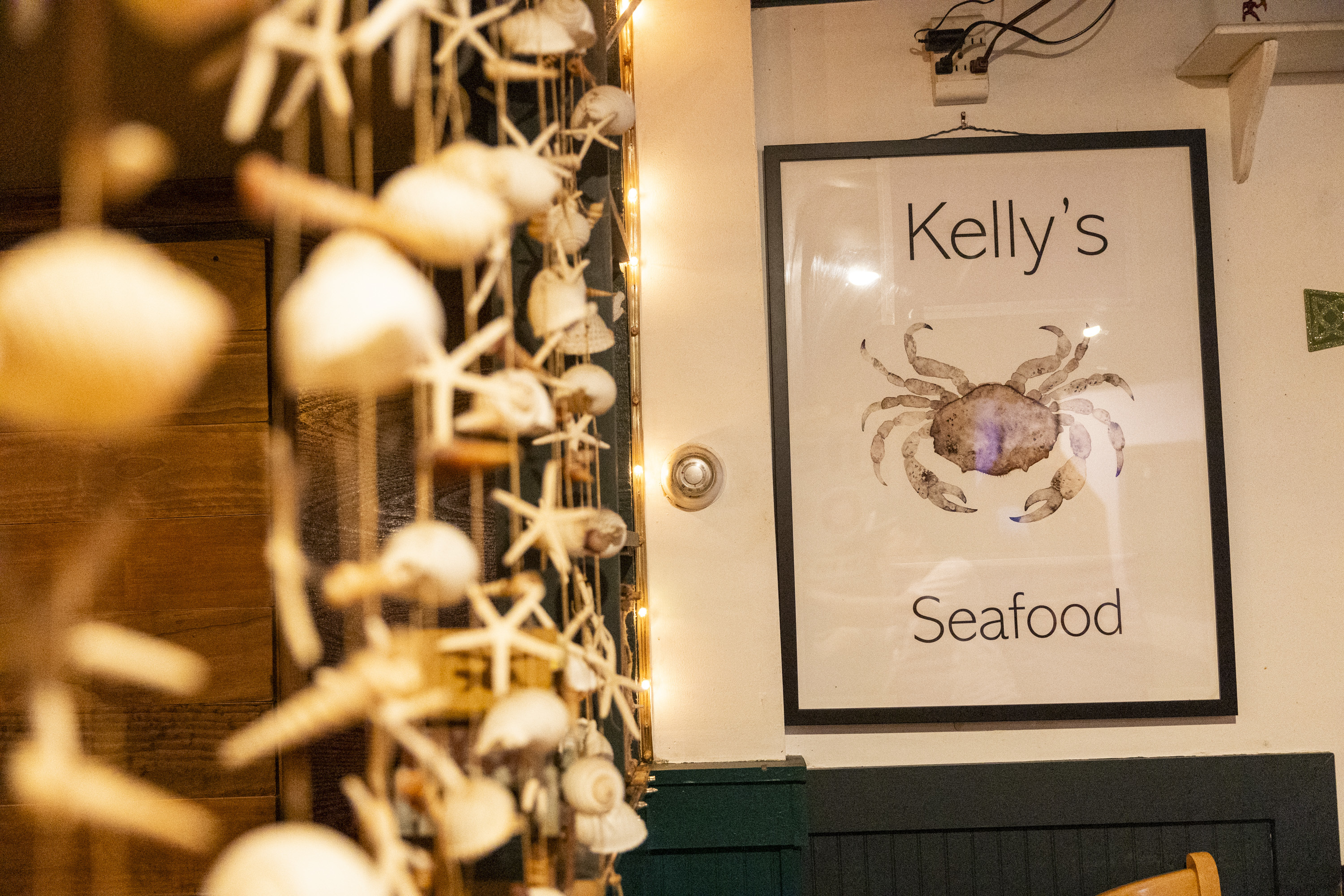
The decorating scheme includes a decades-long accumulation of Shore-life artifacts — wood paneling, striped booths, fish prints, shells, ship models, string lights, and enough nautical memorabilia to outfit a small maritime museum.
The accumulation includes people.
Bartender Cathy Sims first came to Kelly’s as a customer, bringing her daughters here after their ring Mass at St. Hubert’s High. After she graduated from bartending school, Barreras hired her in 1997.
She never left.
“I love them,” Sims said. “They’re my best friends. And then I’ve got all my people who have been coming in for 20 years.”
Brown started waiting tables in June 1988 after a former Dunkin’ Donuts coworker told her that Kelly’s was hiring. “I came over, and the rest is history,” she said.
When the Kellys gathered the 25 employees in March to say the restaurant was for sale, they told them they would understand if anyone wanted to find another job.
Nobody left.
“They all said they’d stay through the end,” Brian said.
Preparing for the finale
The family wanted customers to have the same notice.
“A lot of restaurants close and all of a sudden there’s a note on the door, and sometimes even the staff doesn’t know about it,” Brett said.
The Kellys also wanted customers to have time to use their gift certificates. Brian said they have honored certificates dating to the mid-1990s and will reimburse anyone left with one after the closing.
But the March announcement caused confusion. Some customers thought Kelly’s had already closed.
Once the family set Aug. 31 as the final day, business surged again. One recent Wednesday was the busiest Wednesday Kelly’s had seen in three months.
“A lot of people are saying, ‘We’ve got to get the family out there one last time,’” Brett said.
And some are stocking up, especially on snapper soup.
Customers have been calling Brett to ask whether they can buy it by the quart and freeze it. He tried freezing a bucket during the pandemic and found that, aside from some crystallization, it held up well enough.
Now he is dispensing freezer advice along with soup.
One day last week, he thought he had made enough to get through the following day. That night, customers bought 10 quarts and nine pints. The Wesley group took six quarts. “They were lucky because I just made it,” he said.
Moving on
What Kelly’s cannot stockpile is another generation willing to take over the way the previous ones did.
Brett’s children worked here as teenagers, bussing tables, washing dishes, and doing whatever else was needed, but neither wanted the restaurant business.
“All the nieces and nephews worked here one way or another,” Brett said. “They all did their part here. But nobody wants to basically do what Brian and I did — be hands-on with it. So we knew it would probably end with us.”
Tommy works in the kitchen with his father and uncle, but he can’t run it alone. “Managing the business is a different world,” Brett said. “And we don’t have enough family coming in behind him to back him up.”
Brett has watched what the restaurant demanded of his own generation. “I think the best move for him is to go try something else and maybe enjoy life more than we did,” he said. “Now we’re going to enjoy life more.”
Brian’s illness hastened the decision. “I’m used to working all those hours, and I just can’t anymore,” Brian said. “I come in and help my brother when I can, but it’s not the same.”
The restaurant, meanwhile, keeps demanding attention, even now.
A month ago, an oven the Kellys had used for about 30 years died. It was too old to repair.
“I’m thinking, ‘Geez, I’ve got to get a new oven for, like, three months?’” Brett said.
They bought the oven.
The approximately 7,300-square-foot building — including its liquor license, equipment, furnishings, and attached apartment — is listed for $2 million. The Kellys say there are prospective buyers, though no deal has been completed, and they don’t know whether the next owner will operate it as a restaurant.
Nor do Brian and Brett know exactly what they will do after taking a well-earned break. They have kicked around the idea of someday opening something much smaller, perhaps selling Kelly’s staples such as snapper soup and crab cakes, or even operating a food truck.
Brown expects to find another job eventually. First, she plans to take some time off.
“I need to wrap my head around it,” she said.
After 38 years, she isn’t angry with the Kellys for their decision.
“I’m glad for them,” Brown said. “They deserve it. They deserve it.”
Philadelphia drivers looking to save a few bucks at the pump streamed into the city’s newest Freedom Fuel station Friday afternoon, even while the station’s deep discounts remain a mystery.
The station, located in Bustleton on Roosevelt Boulevard, is one of four new Freedom Fuel locations added this week. The other three are in New Jersey, including one all the way up in Morris County.
The gas network, which was promoted by both the White House and President Donald Trump last month, is now up to 29 stations across the Philadelphia region, stretching east to the Jersey Shore.
(function(){function e(){window.addEventListener(`message`,function(e){if(e.data[`datawrapper-height`]!==void 0){var t=document.querySelectorAll(`iframe`);for(var n in e.data[`datawrapper-height`])for(var r=0,i;i=t[r];r++)if(i.contentWindow===e.source){var a=e.data[`datawrapper-height`][n]+`px`;i.style.height=a}}})}e()})();
Nearly all the pumps were full at Philly’s newest Freedom Fuel spot Friday afternoon, with the station selling a gallon of regular gas for $3.79 a gallon. That’s nearly 35 cents a gallon less than a Wawa just up Roosevelt Boulevard, where a gallon of regular gas went for $4.13 on Friday.
A nearby Lukoil was a bit closer to Freedom Fuel’s prices, offering a gallon of regular gas for $3.99.
An enduring mystery remains how Freedom Fuel has been able to consistently offer lower prices than nearby competitors.
Experts told The Inquirer Freedom Fuel was likely suffering losses for selling fuel at such a low price, especially since many of the company’s stations don’t have robust convenience stores or car washes to create revenue.
“It becomes unsustainable,” Eliezer Fich, a finance professor at Drexel University’s LeBow College of Business, told The Inquirer last month. “Unless prices go down. But if they do, they go down for everybody.”
According to public records, the newest Freedom Fuel station is owned by Celik Plaza II l.l.c., which had previously run it under a “Red Lion Fuel” banner. Engin Celik, who is listed as a principal with the company, according to documents reviewed by The Inquirer, did not respond to a request for comment.
Philly Freedom Fuel station faces closure after failing inspection
The Freedom Fuel station on Bustleton Ave. in Philadelphia. Dana Munro / staff
While Freedom Fuel is adding locations, it could soon lose one in Philadelphia.
The station on Bustleton Avenue, one of at least six locations linked to Cherry Hill developer Shamikh Kazmi and his brother Syed Kazmi, has an expired fuel dispensing license and failed an inspection last week, according to city records.
If unresolved, the station could be forced to close by Sept. 4, according to a city spokesperson.
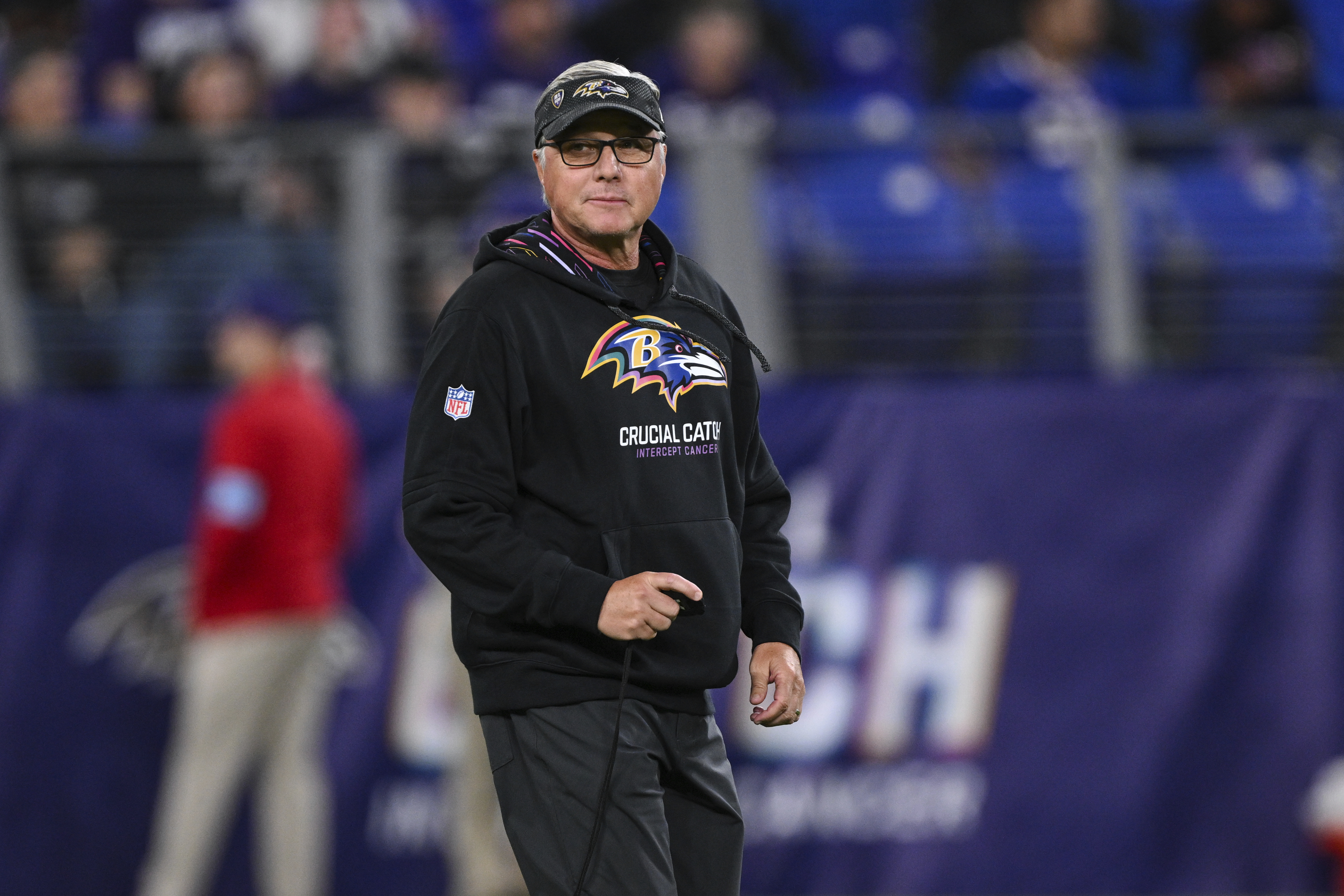
Ravens special teams coach Randy Brown signed Freedom Fuel’s formation papers. Terrance Williams
While Freedom Fuel’s launch was proudly promoted last month by Trump, the company’s owners have remained quiet about the enterprise and how they’re able to maintain low fuel prices.
A White House spokesperson previously told The Inquirer Freedom Fuel is a private company receiving no government subsidies and not accessing fuel at a lower cost.
“Freedom Fuel Network is a privately owned and proudly patriotic company — along with its convenience store operators, haulers, sign companies, and operational partners — that answered President Trump’s call to action to lower prices at the pump,” the company said in a statement on its website.
Baltimore Ravens assistant coach Randy Brown, the former mayor of Evesham Township, N.J., and a self-proclaimed “proud Trump supporter,” signed Freedom Fuel’s certificate of formation in Delaware on June 23. Brown has declined to comment on the enterprise.
Former commodities trader Yoni Gontownik also signed the certificate of formation, and has not responded to requests to comment. Gontownik and his wife, Bellen, have hosted Republican fundraisers through NORPAC, a New Jersey-based political action committee supporting pro-Israel lawmakers in both parties.
Staff writer Ryan W. Briggs contributed to this article.
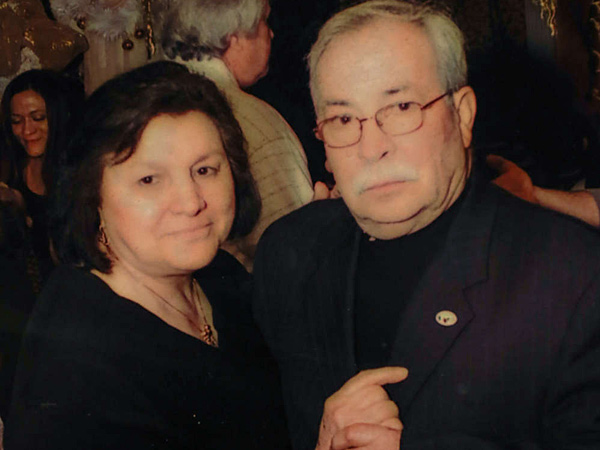
For nearly a dozen years, Vito Maglio’s family has agonized over who could have shot him in the head and neck, torched his SUV, then dumped his body into the Schuylkill.
“I said to myself, maybe I’ll die before I know,” his wife of 40 years, Maria, 75, said from her Bustleton home.
Then, this week, Philadelphia police arrested a 30-year-old woman in connection with Maglio’s death, saying she and others robbed him of his gold ring, phone, and a small amount of cash, then killed him and tossed his body into the river in December 2014.
Melanie Morat was taken into custody at her East Frankford home Tuesday afternoon and is expected to be charged with murder, robbery, arson, and related crimes, police said. Detectives are investigating whether at least two other people were involved in the crime, law enforcement sources said.
The arrest comes as Philadelphia homicide detectives, with more time and resources amid a striking decline in violence, continue to work through a backlog of unsolved cases — a combination of the hundreds of killings from the pandemic-era spike in shootings and higher-profile cases from years past that ran cold.
The killing of Maglio, 69, was among the latter, a disappearance and death that shocked his family and community, and left police struggling to amass enough evidence to make an arrest.
Maglio, a father of six, was a mechanic who owned several gas stations and ran a social club, the Napoli Association in Rhawnhurst, for many years before selling the businesses and retiring in November 2014.
Maria and Vito Maglio had been married for 40 years.
But on Dec. 14, 2014, he did not return to his Bustleton home, and his family reported him missing. Several days later, police found his GMC Yukon in East Germantown, charred and windowless, with a bullet casing inside and a pool of blood beneath the driver’s seat, police said.
His remains were not recovered from the Schuylkill until late March. He was identified by his pacemaker.
The investigation was challenging from the start, officials said, in part because homicide detectives did not take over the case until his body was recovered months after his disappearance. The assigned detective, Gregory Santamala, said in a 2016 interview that police did not know where Maglio was killed because his phone records showed that he was in various neighborhoods on the night he disappeared, and there were no surveillance cameras in the area where his car was burned.
Detectives suspected he had been set up in a robbery that went awry, he said. An early tip led investigators to interview two women in the Northeast, and both failed polygraph tests. But the women immediately hired lawyers and stopped talking, officials said.
Santamala retired in 2022, and the case went cold.
Then, this summer, the case was reassigned to Detectives Joseph Cremen and Robert Daly, who began reviewing phone records and the more than a dozen interviews their colleagues held with suspects and witnesses over the years.
Investigators told Maglio’s family it was not necessarily new evidence that allowed them to make an arrest this week — but a new style of building cases. Years ago, they said, prosecutors had less experience making cases from cell phone location data and circumstantial evidence. Now, they said, law enforcement has greater expertise in understanding those records, which, alongside the witness statements, allowed prosecutors to conclude there was sufficient evidence to charge Morat with murder.
Deputy Police Commissioner Frank Vanore said using today’s technology to solve older cases is the crux of cold case review.
The Philadelphia District Attorney’s Office declined to comment.
Maglio’s family said the developments came as a welcome surprise after a decade of fleeting hope. Sitting in the green-walled living room of their parents’ home Tuesday night, Maglio’s children said they were grateful for an arrest and eager for the court process to begin.
“I’m just glad it didn’t fall through the cracks,” said daughter-in-law Sandra Maglio, 50. “It was our biggest fear. We live in a city where people die every day, sadly. … So I’m just glad that, you know, someone took the initiative to say, ‘Hey, let’s look at this again.’”
They were also struck by the timing. Maglio’s brother-in-law died Monday. And his son, Donato, died three years ago this month at the age of 47.
They imagine them all together now.
“It gives us some kind of closure,” said daughter Lucia Thrasher, 37. “But we already got the outcome we didn’t want to 12 years ago.”
Thrasher’s eyes welled with tears as she looked at her 6-year-old twins, Charles and Thomas, who never got to meet their grandfather. Charles, bouncing in the doorway, asked why everyone was in the living room.
“Nonno,” she told him.
“You know, Nonno,” she said, as he looked away bashfully. “Where’s Nonno?”
He pointed toward a gold-flecked picture frame in the corner of the room.
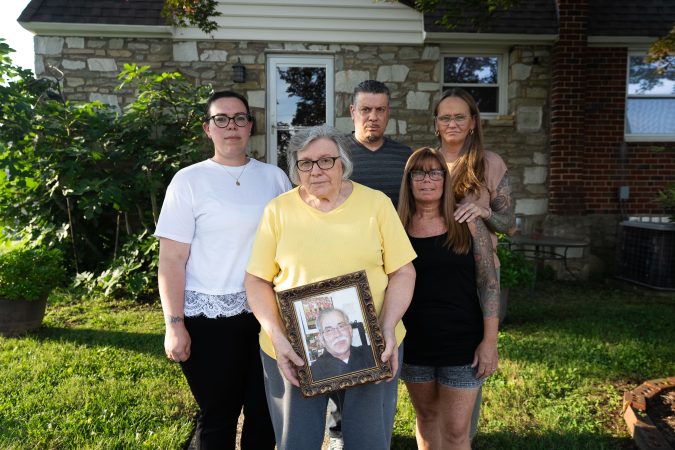
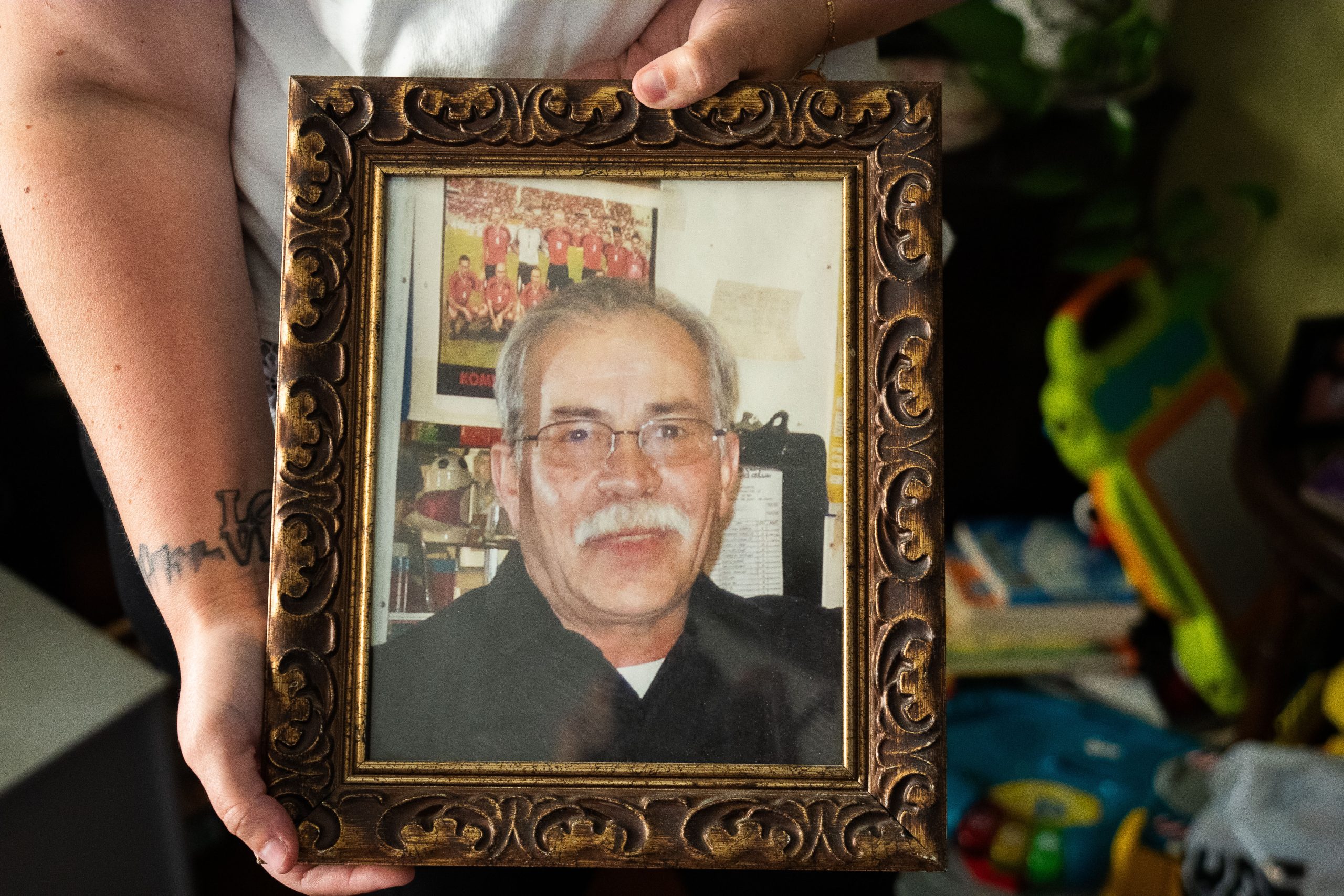
Vito Maglio, 69, was a father of six.Jessica Griffin / Staff Photographer
A 15-year-old boy was struck and killed by a CSX freight train late Monday night in Northeast Philadelphia.
Abdusalom Babaev, who was identified by police Tuesday evening, had been reported missing on Sunday from his home in the city’s Bustleton section.
Babaev was walking south along the railroad tracks near the 1500 block of Grant Avenue near his home when he was hit at 11:19 p.m., according to CSX. No crew onboard the train were injured.
The Philadelphia Police Department responded to the area at 11:30 p.m. for a report of a train striking a pedestrian. Officers’ initial investigation indicated that a CSX train, operated by a 55-year-old man, was traveling north at a “normal operating speed” under dark conditions and limited visibility when the conductor saw Babaev walking along the tracks.
According to police, the conductor immediately initiated emergency braking in an attempt to avoid crashing into the boy, but was unable to stop the train in time.
Babaev was pronounced dead at the scene at 11:44 p.m. by the Philadelphia Fire Department. His body was transported to the city Medical Examiner’s Office for further investigation.
“CSX extends its deepest sympathies to everyone impacted by this tragic incident and will support local law enforcement as they complete the investigation,” a CSX spokesperson said.
Staff writer Robert Moran contributed to this article.
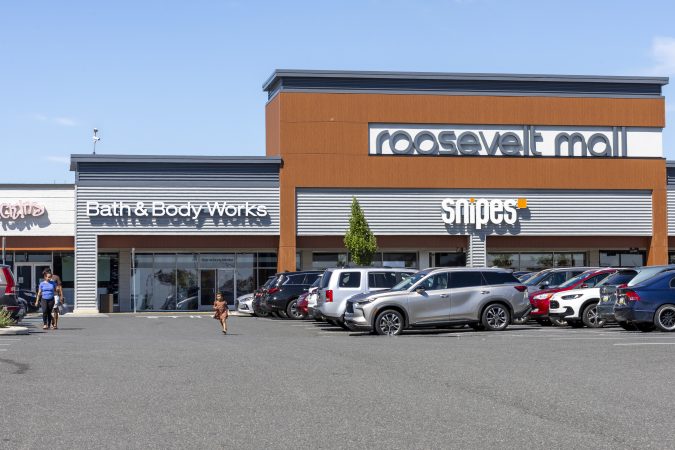
As Brixmor Property Group executives began transforming the Roosevelt Mall, they briefly debated whether to change the name.
After all, the 60-year-old Northeast Philly shopping center is undergoing a more than $70 million makeover that promises to bring it into the modern age with new tenants, upgraded facades, and a better layout.
As Brixmor executives walked around the 620,000-square-foot complex on a recent day, they said they already see the outdoor mall becoming a community hub — with a gym, an organic grocer, and new fast-casual dining options.
Despite these changes, they have decided the Roosevelt Mall should not be rebranded.
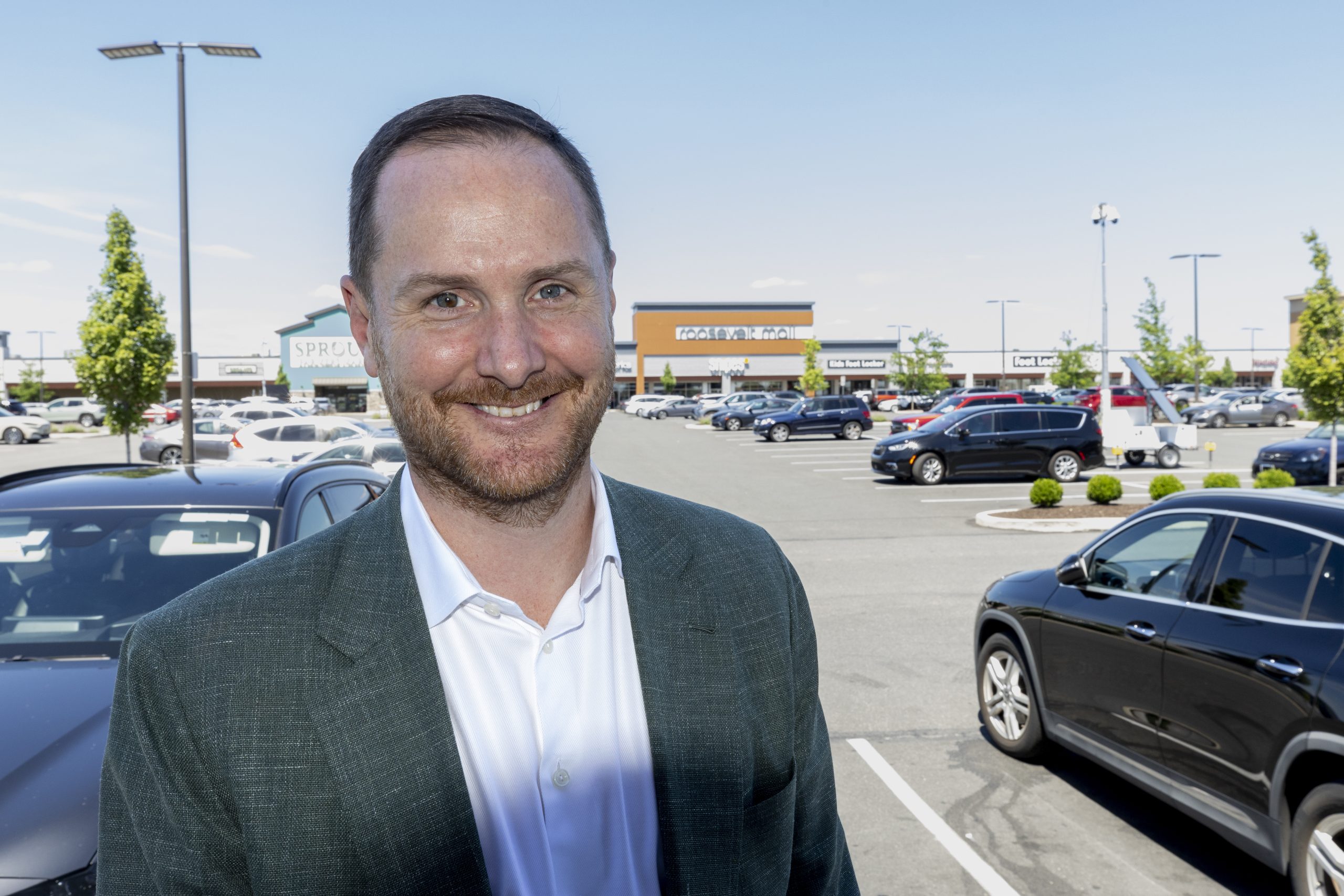
“It’s an iconic name,” said David Vender, Brixmor Property Group’s executive vice president for the north region, who is based in Conshohocken. “People know it as a landmark.”
Brixmor operates about 350 shopping centers nationwide, but some of its top executives — including new CEO Brian Finnegan, who grew up in Roxborough — have soft spots for Philly, forged by personal or family connections to the region.
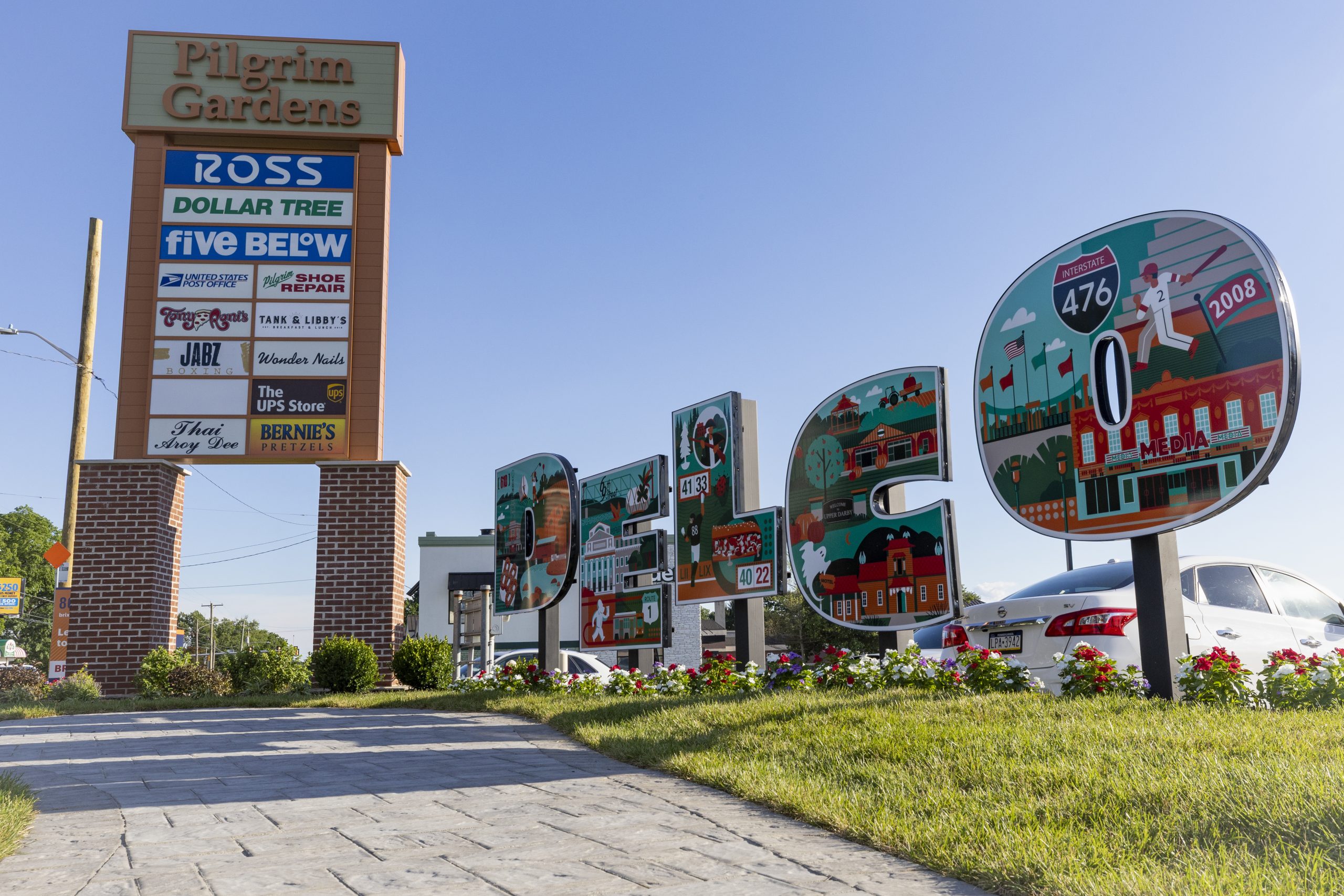
A new Delco sign is shown at Pilgrim Gardens in Drexel Hill on June 16.Aidan T. Gallo / Staff Photographer
And they said their connection to the community around the Roosevelt Mall has only grown stronger since last year’s plane crash, which killed eight people, injured two dozen, damaged nearby homes, and left an 8-foot-deep crater in front of the mall.
Even before the tragedy, they said, they considered how their local redevelopments affected the Philly-area residents who shop, eat, and drive by their centers every day.
At the Roosevelt Mall — which sits on 36 acres between Cottman Avenue, Roosevelt Boulevard, and Bustleton Avenue — these decisions have begun to pay off.
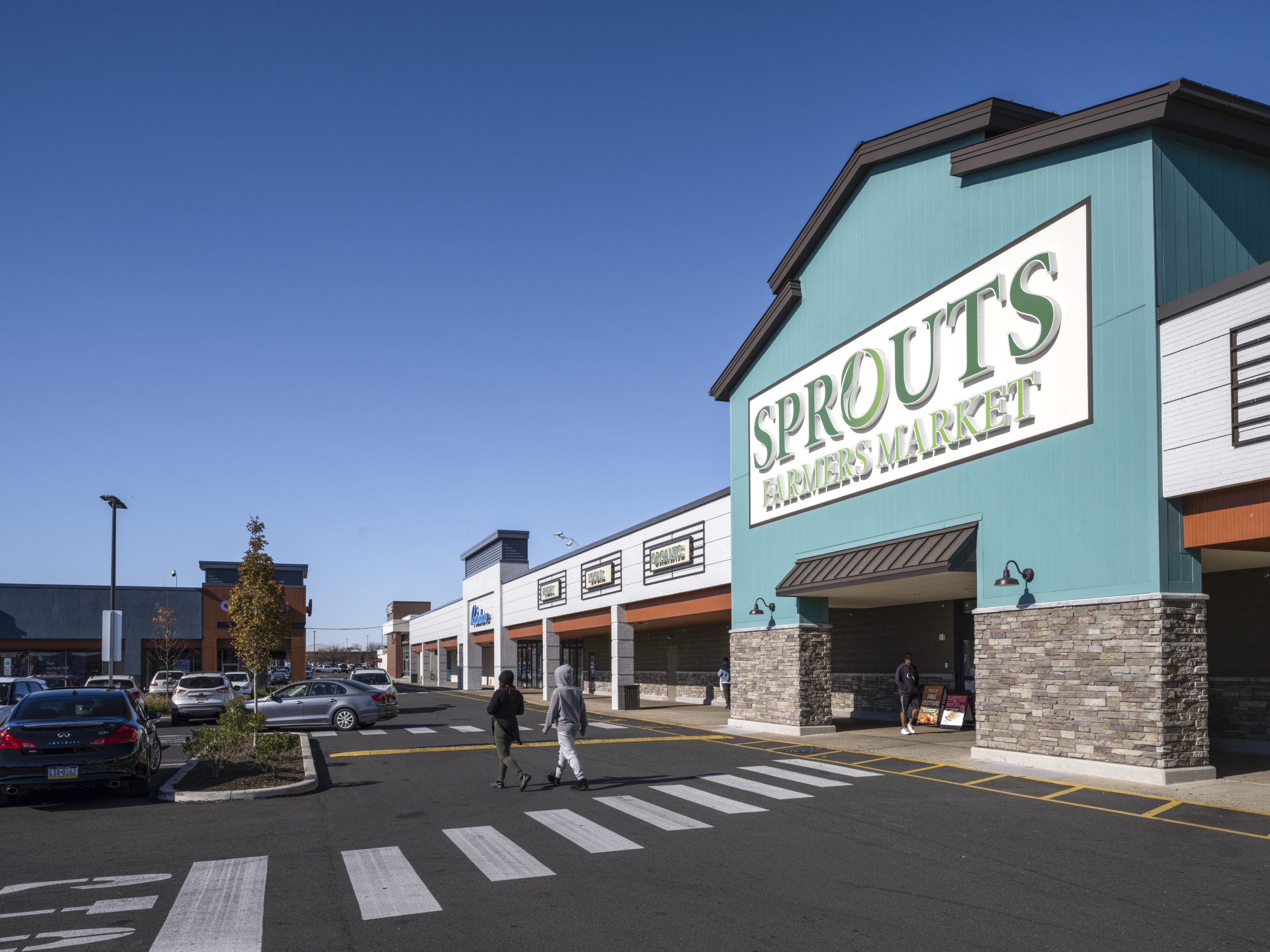
In the last year, the center logged 6.3 million visits, a 5% year-over-year increase and a 19% jump when compared with the 12 months before Sprouts Farmers Market’s 2024 opening, according to company executives.
Occupancy was over 98% this spring, they said, and customers spend about 35 minutes there on average, on par with the national average for all Brixmor complexes.
When you’re able to bring together “higher-quality food and beverage, fitness, service … then you’re also able to attract more elevated retail” stores, said Finnegan, noting that Ulta Beauty and Victoria’s Secret are among the tenants signed on for the next phase of the Roosevelt Mall’s redevelopment.
Brian Finnegan, CEO and president, at Brixmor Property Group, at the Roosevelt Mall in Northeast Philadelphia.Aidan T. Gallo / Staff Photographer
Achieving the tenant mix of a modern shopping center
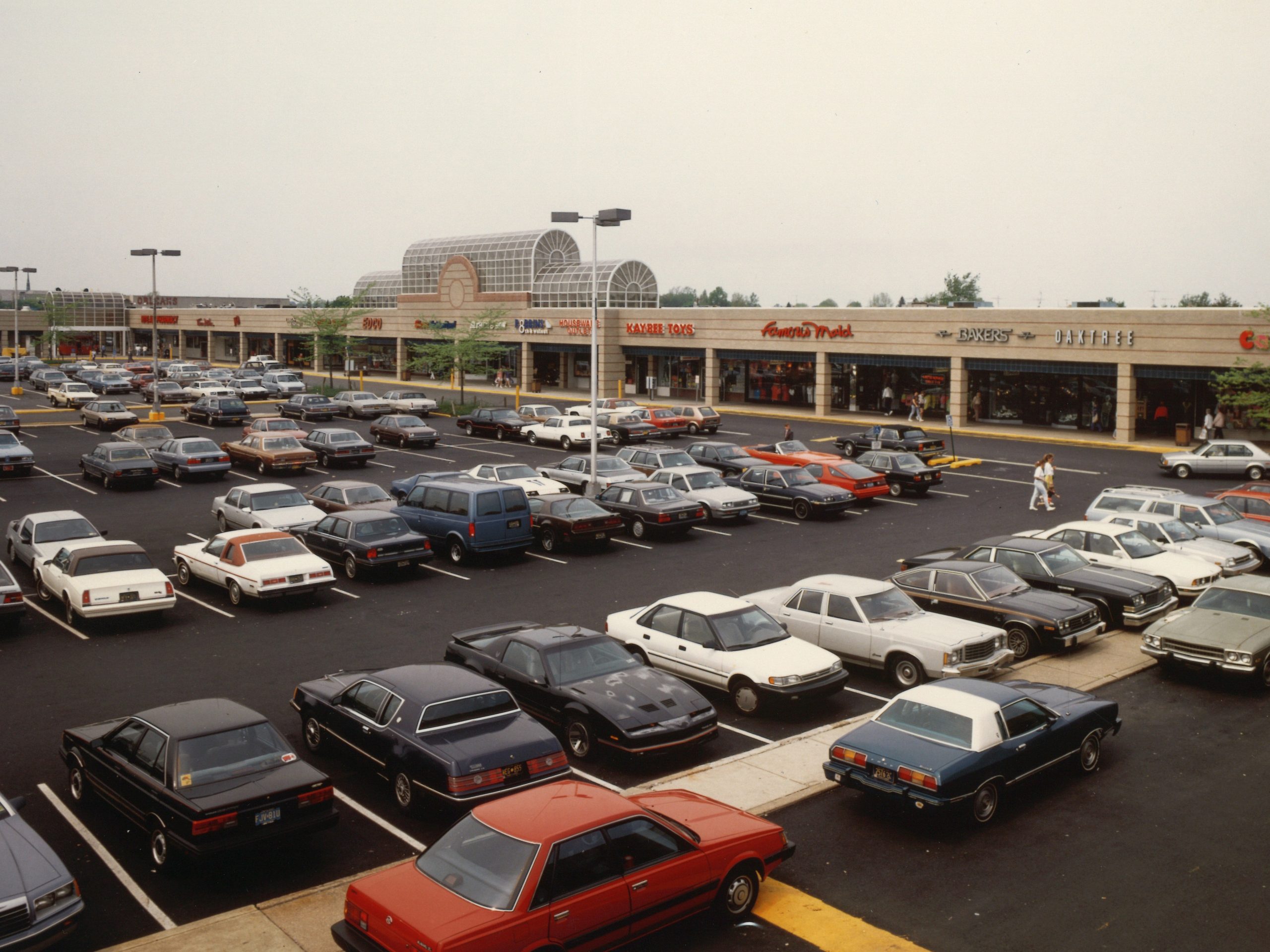
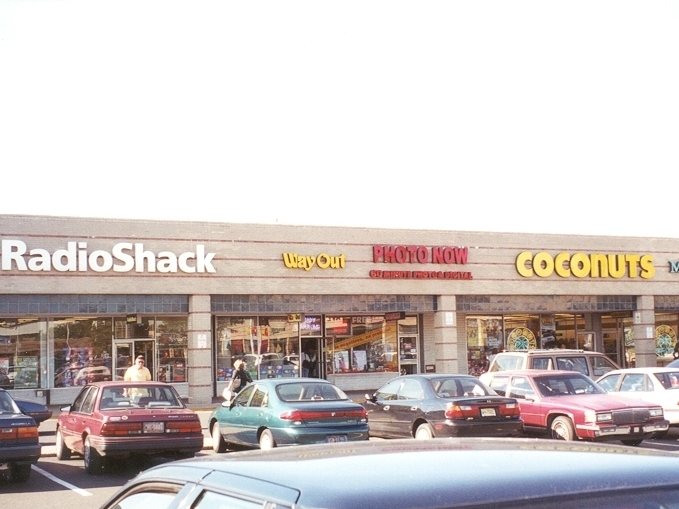
When the Roosevelt Mall opened in 1964, its main promenade was referred to as “Chestnut Street Northeast,” with several outposts of Center City clothing stores, according to an Inquirer article from the time.
The shopping center had apparel shops, such as Baker Shoes and Famous Maid, as well as “the Cavalier, a cafeteria-style restaurant with a game room and a retail bakery,” The Inquirer reported. It was anchored by an S. Klein’s discount department store.
The Roosevelt Mall was built as part of the Roosevelt Boulevard shopping complex, bordered by Cottman and Castor Avenues. The larger development — which also had Gimbels and Lit Bros. department stores — was called the country’s largest “in-town” shopping center at the time.
Roosevelt Mall in Northeast Philadelphia is shown in earlier days, long before Brixmor Property Group remodeled the property.Courtesy Brixmor Property Group
They said they have intentionally brought in tenants that customers may visit multiple times a week and added more pedestrian walkways, open-air plazas, and outdoor seating.
“Historically, shopping centers were very utilitarian, and now they’re really becoming more community assets, so we’re really careful about our merchandising mix,” said Ryan Guheen, Brixmor’s senior vice president of development.
Roosevelt Mall in Northeast Philadelphia is shown in earlier days, long before Brixmor Property Group remodeled the property.Courtesy Brixmor Property Group
The latest redevelopment push began around 2020, when Brixmor opened an LA Fitness outpost on the site of a former Turf Club off-track betting venue, near a new Oak Street Health clinic.
Since then, the company has constructed buildings in underused sections of the parking lot and filled them with popular chain eateries like Raising Cane’s chicken; the American-Chinese food spot Panda Express; and Tous les Jours, a Korean-French bakery and coffee shop.
Annual customer visits to Roosvelt Mall have increased 13% since Sprouts organic grocer opened there in 2024.Courtesy of Brixmor Property Group
The 37,000-square-foot under-construction building, set to house a Victoria’s Secret and an Ulta, will also include fast-casual staples like Shake Shack and Cava, which serves Mediterranean bowls and pitas.
Tenants like these, Guheen said, provide “multiple opportunities for people to stay on property to shop retail, get their workout in, go to the bakery, get a coffee.”
Some mall retailers have found homes in shopping centers
As Brixmor executives diversify the tenant mix at their shopping centers, they say they do not see retail stores going extinct.
Elsewhere in the Northeast, the Franklin Mall, formerly Franklin Mills, has been in decline for years and was recently listed for sale. Real estate investor Dean Adler has said he wants to buy the 137-acre mall and turn it into a youth sports complex with a hotel and Margaritaville-themed water park.
Seven miles away, the Roosevelt Mall is home to several shops that were once found almost exclusively in enclosed malls, such as Bath & Body Works, Foot Locker, and the forthcoming Victoria’s Secret. These companies’ higher-ups have pivoted in recent years, adding more locations in open-air centers.
“It’s not like retailers are leaving malls en masse … at least in the best malls,” Finnegan said. But “as they open stores in open-air shopping centers with grocery stores, with fitness uses, with elevated food and beverage, they’re seeing the sales performance” — and then want to keep investing in shopping centers.
Longer-standing retail tenants are continuing to see success, too. Finnegan said the Roosevelt Mall’s 300,000-square-foot standalone Macy’s is among the company’s top-performing locations in the region, rivaling the King of Prussia Mall store.
The department store is the center’s largest driver of traffic, recording more than 900,000 annual visits, said Brixmor executives, who are not worried about the department store closing as the Center City store did last year.
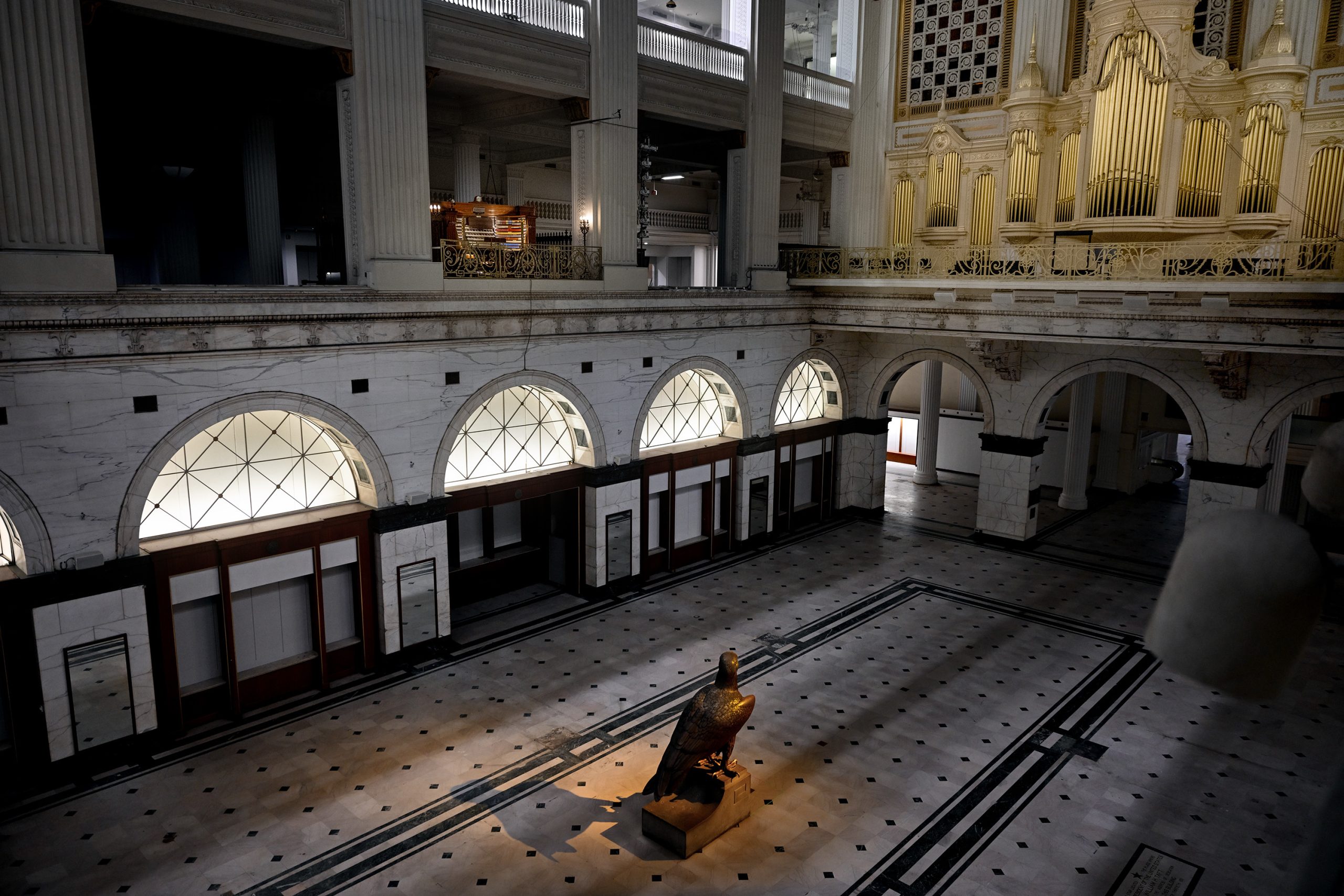
As seen in September, the Macy’s in the Wanamaker Building in Center City now sits empty. It closed last year.Tom Gralish / Staff Photographer
Company executives said they are optimistic this momentum will continue. Along with the under-construction section, redevelopment plans also include another standalone building that has yet to break ground — and the cost of which is not included in the current price tag.
Finnegan put it simply: “Opportunity begets opportunity.”